An hour from Barcelona, is the charming Roman town of Tarragona, which continues to thrive as a peaceful place to shop, explore and relax. This pretty port city is a lesser known escape from the hustle and bustle of Gaudi’s Barcelona.
Tarragona, Write your own story video
I visited Tarragona for an afternoon in June and found it to be much more than I expected. All I knew was that it was Roman. I expected a village with some ruins. It is however a vibrant location where historic artefacts and modern lifestyle has been intertwined to create a remarkable space.
A World Heritage City
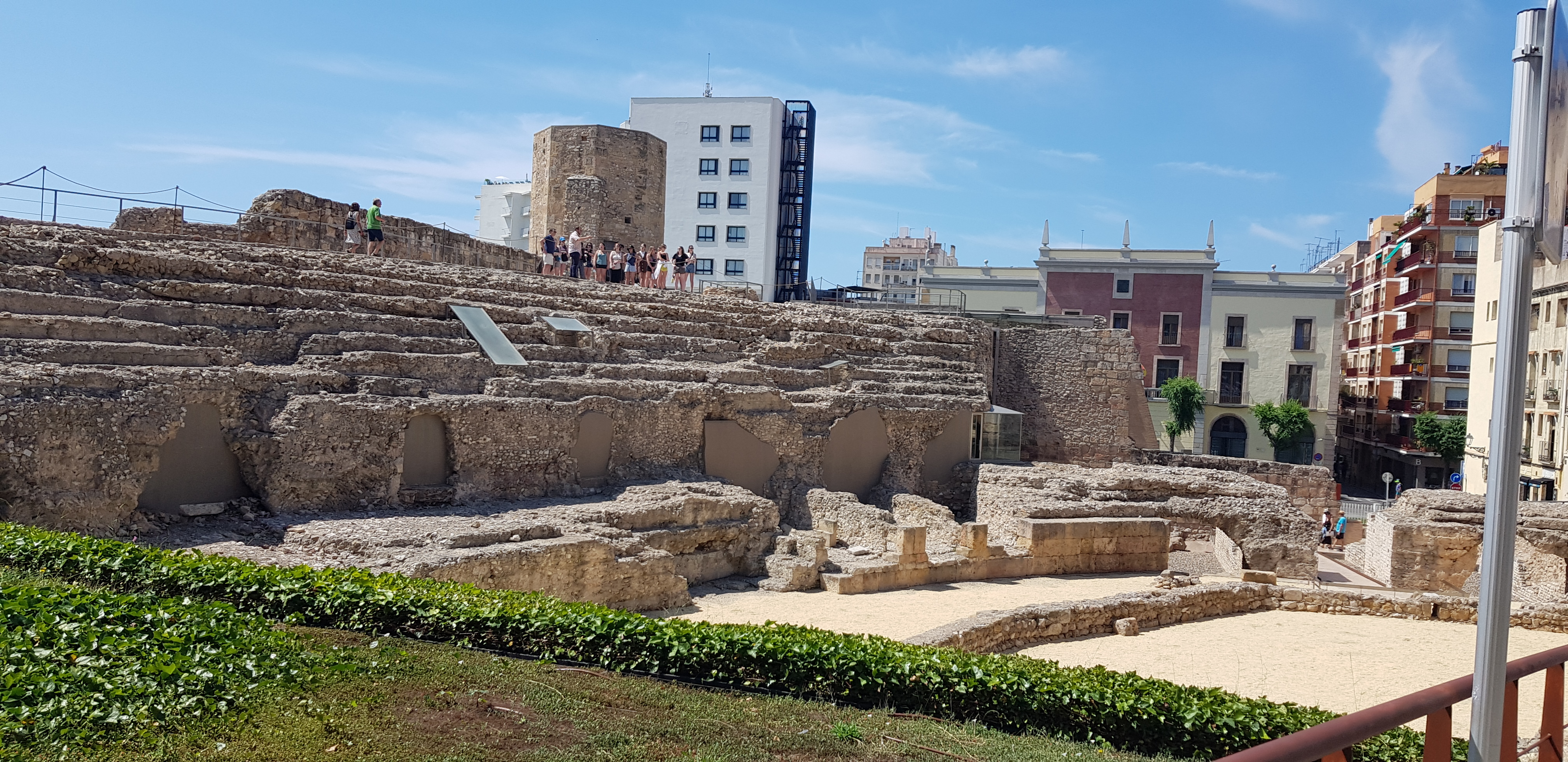
Tarragona is the only World Heritage City in Catalonia, and one of the main reasons is because of its Roman history. It was once the capital of the Roman’s Hispanic empire. The city was extremely important to the empire, and still has many monuments in existence today to visit and see. Not only can you visit individual monuments such as amphitheater, walls, aqueduct, and forum, but the city also offers a themed Roman walking route, tours, and even a Roman festival called Tarraco Viva to celebrate its heritage in May each year.
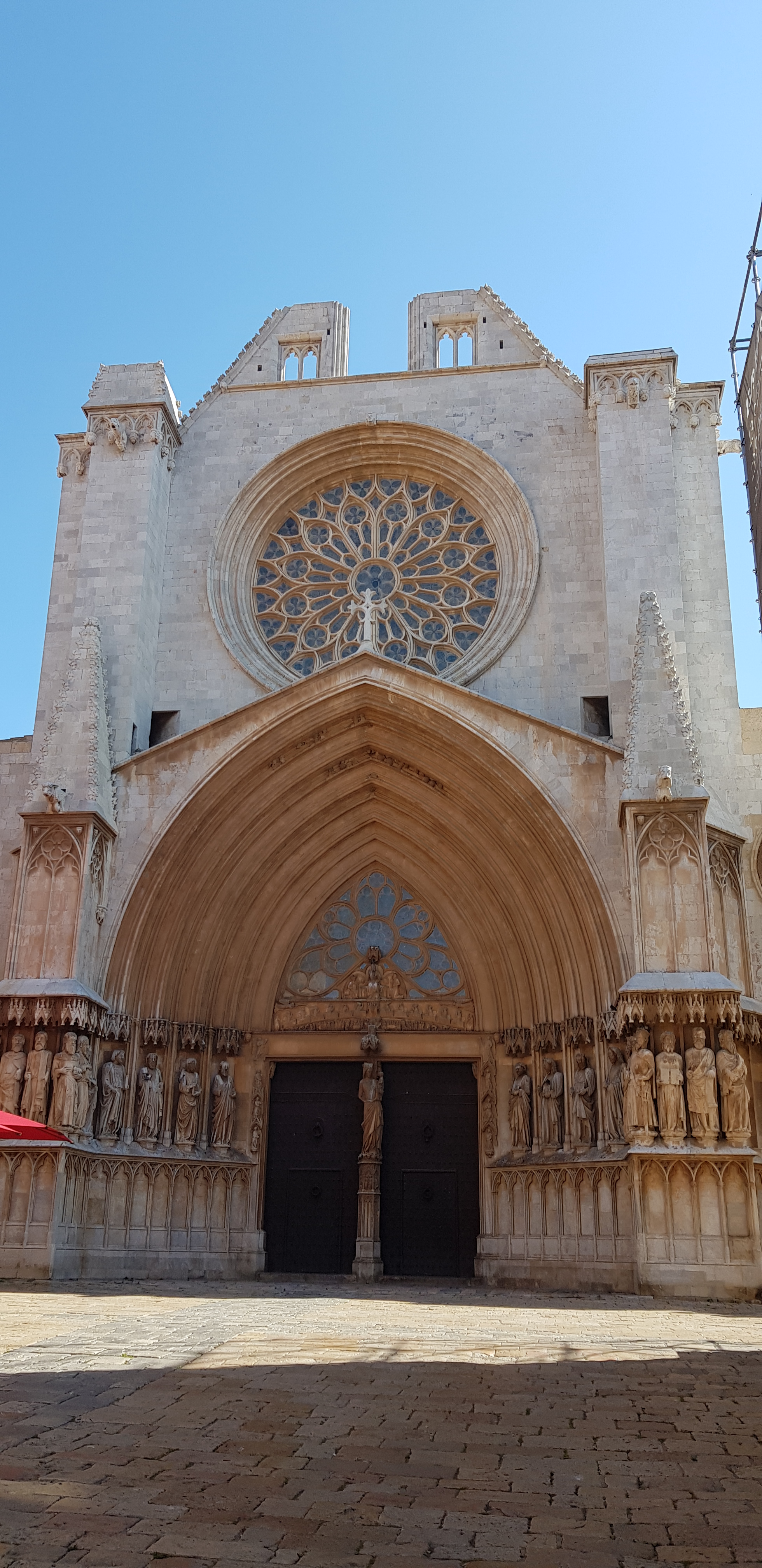
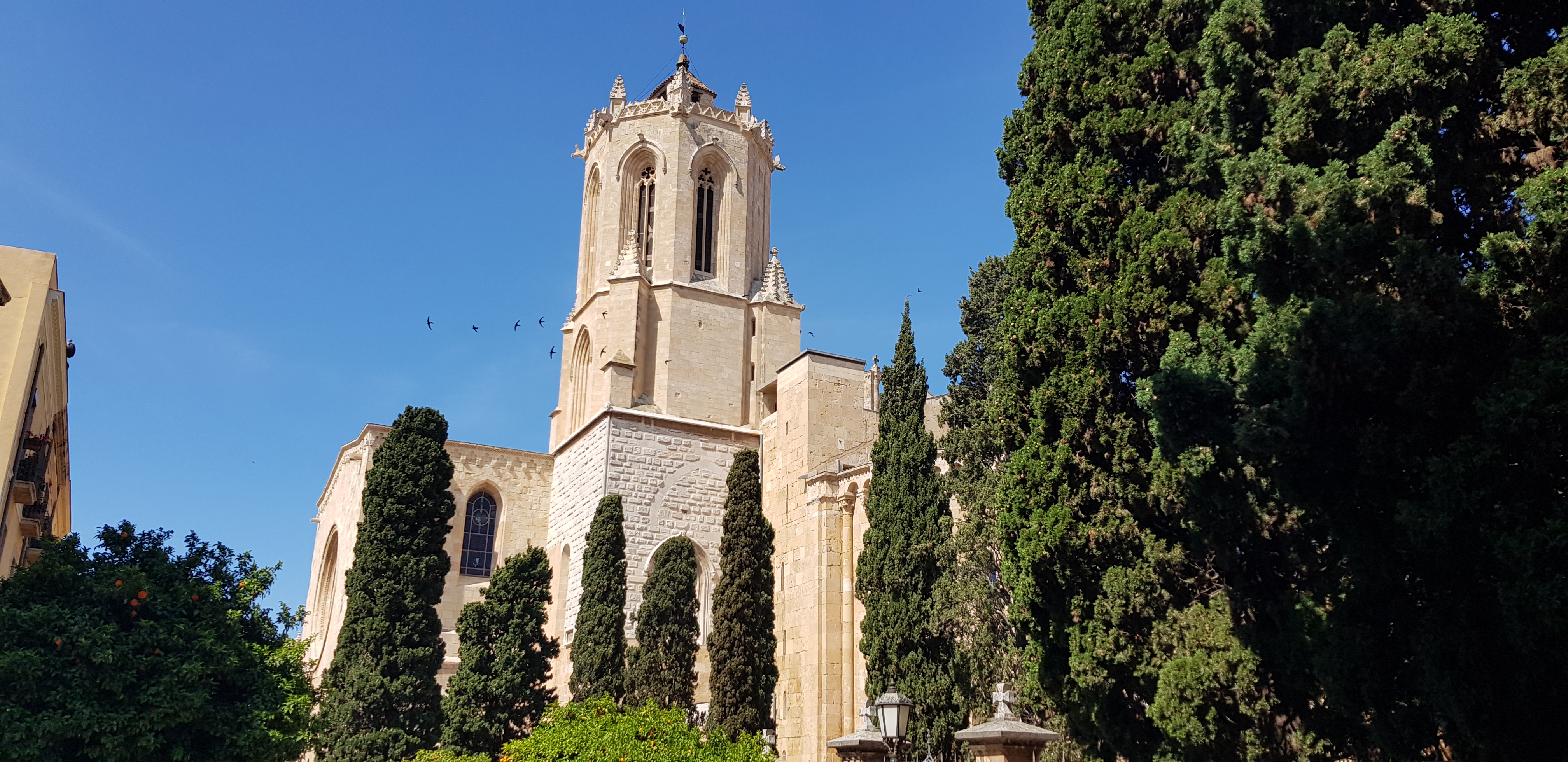
I am a huge history fan and so I was happy to see plenty of old buildings and structures, and hear the stories of the city and its importance to the Romans. I had a whistle-stop walk through of the cathedral, and I would have happily spent more time there as its quite a large space to explore.
The Cathedral is easy to recognize from many travel and culture documentaries, as the location that begins the walk of human towers. Human towers or castles ‘Colles Castelleres’ are exactly how it sounds. Originating in Tarragona from Valencian dancing, the events consist of large teams of people standing on each others shoulders to create a human tower. They then take a walk (as a tower) from the Cathedral and through the streets of the city. Visitors travel for many miles to watch this event and residents will open their balconies up to people to view. I would love to return to see this event from a short distance, but I am not totally convinced that I would want to be anywhere near the bottom of the tower… or the top! Apparently, the top of the tower is normally reserved for the tiniest members of the group, so young children and toddlers get the honor of being the shining star at the top!
Exploring the modern city
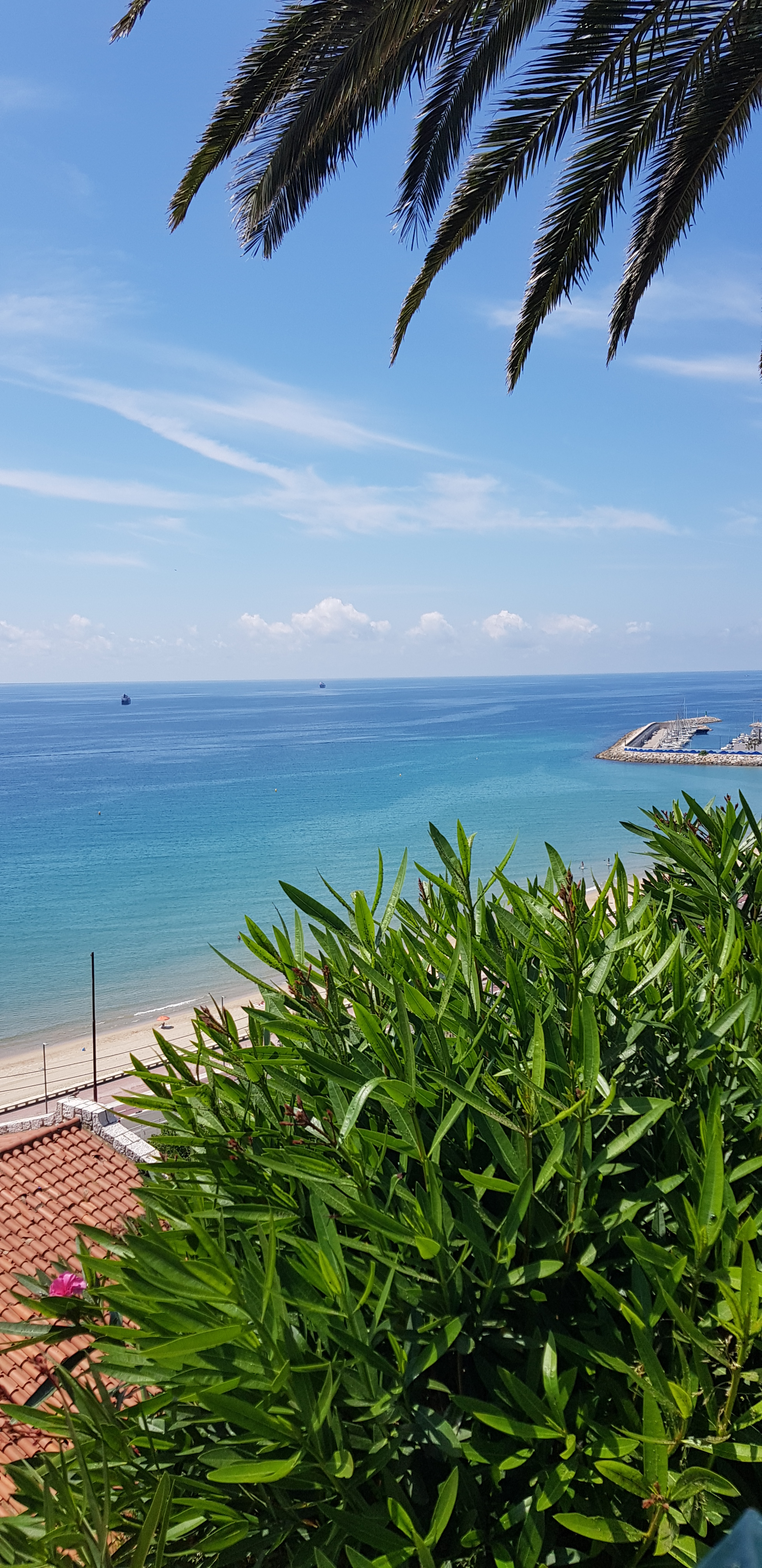
Whilst appreciating the historic framework of the city, you can also enjoy the facilities on offer today. Tarragona offers modern shopping and dining in its high street La Rambla Nova, as well as the opportunity to eat fresh cuisine at its central market. Looking to relax? You can make your way to the ‘Balcony of the Mediterranean’ at the top of La Rambla Nova. Here you can view a straight view along the coastline and relax on a bench or make your way down to the sandy beaches below. The only downside is that the beach and the town are separated by the railway track, so you have to walk quite far before you can cross over into the beach. The long balcony promenade provides a beautiful scene to wonder along the edge of the city and towards the marina.
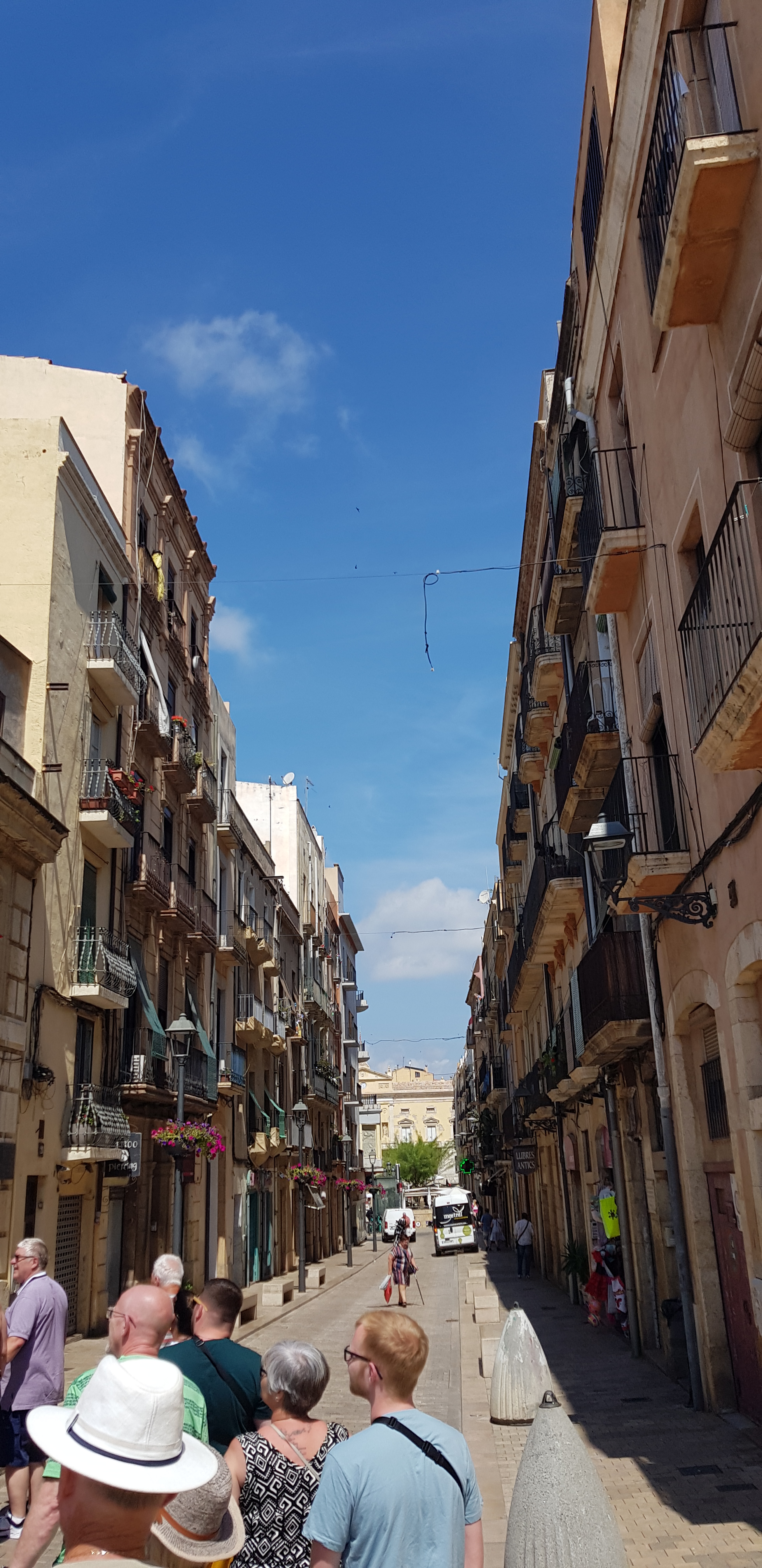
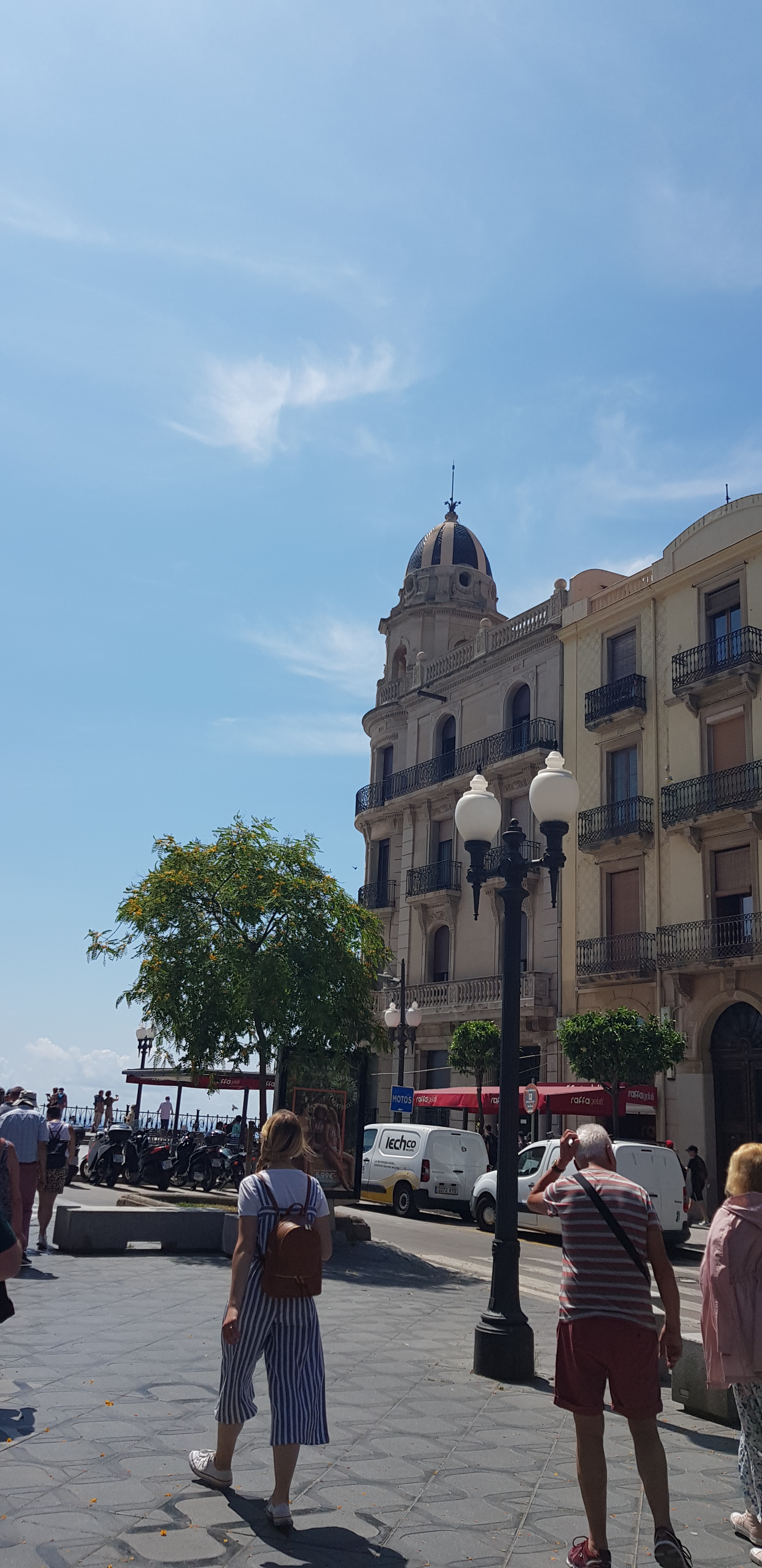
Tarragona streetTarragona La Rambla NovaTarragona Balcony of Med
Port and Serrallo area
In the port area of the city, typical seafood restaurants can be found, as well as beautiful scenery of fisherman pulling in the fresh day’s catch. This also happens to be the city’s museum district, being home to the port museum, archeological museum and the historic lighthouse and city clock.
Generally, I found Tarragona to be a very peaceful city with a lot to offer all in one place. I would happily visit again and even spend a good few days here.
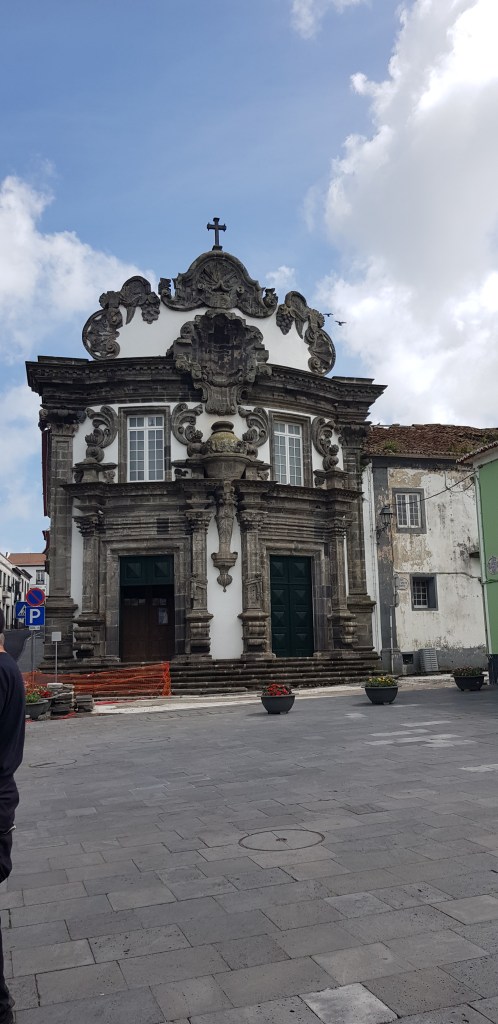
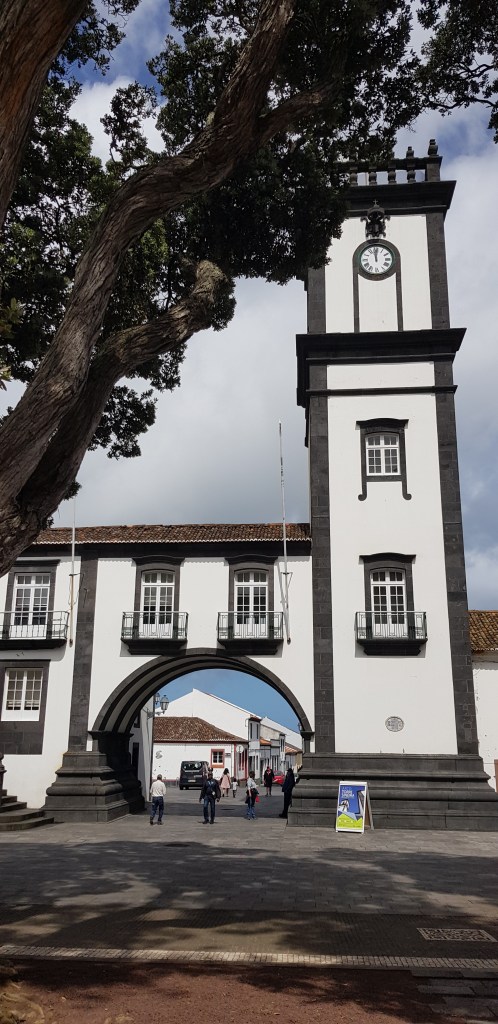
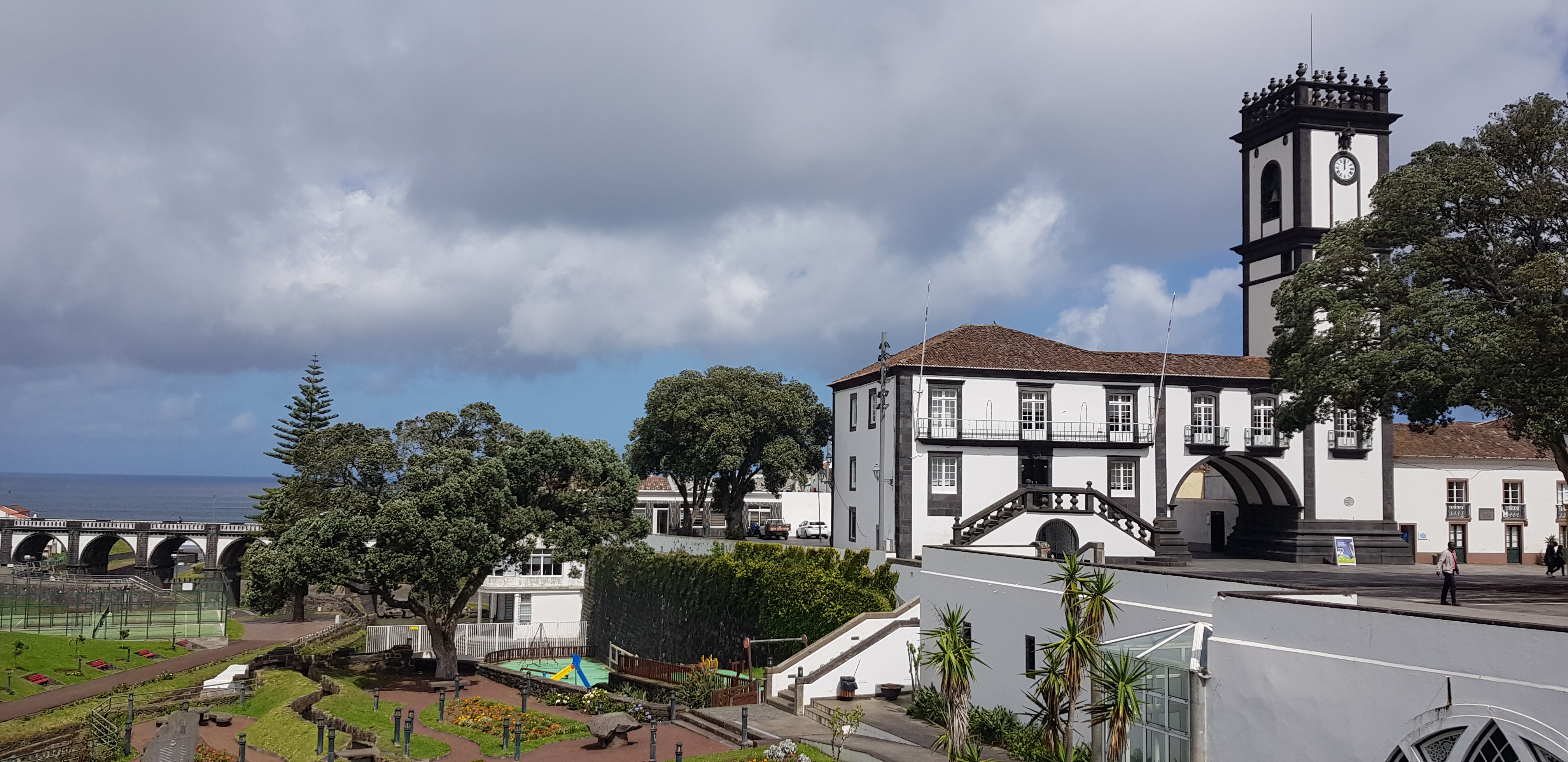
An archipelago of Portuguese islands in the middle of the Atlantic Ocean, I visited two of the nine islands in the Azores, and explored beautiful villages and towns, natural landscapes and learnt about an authentic culture of people.
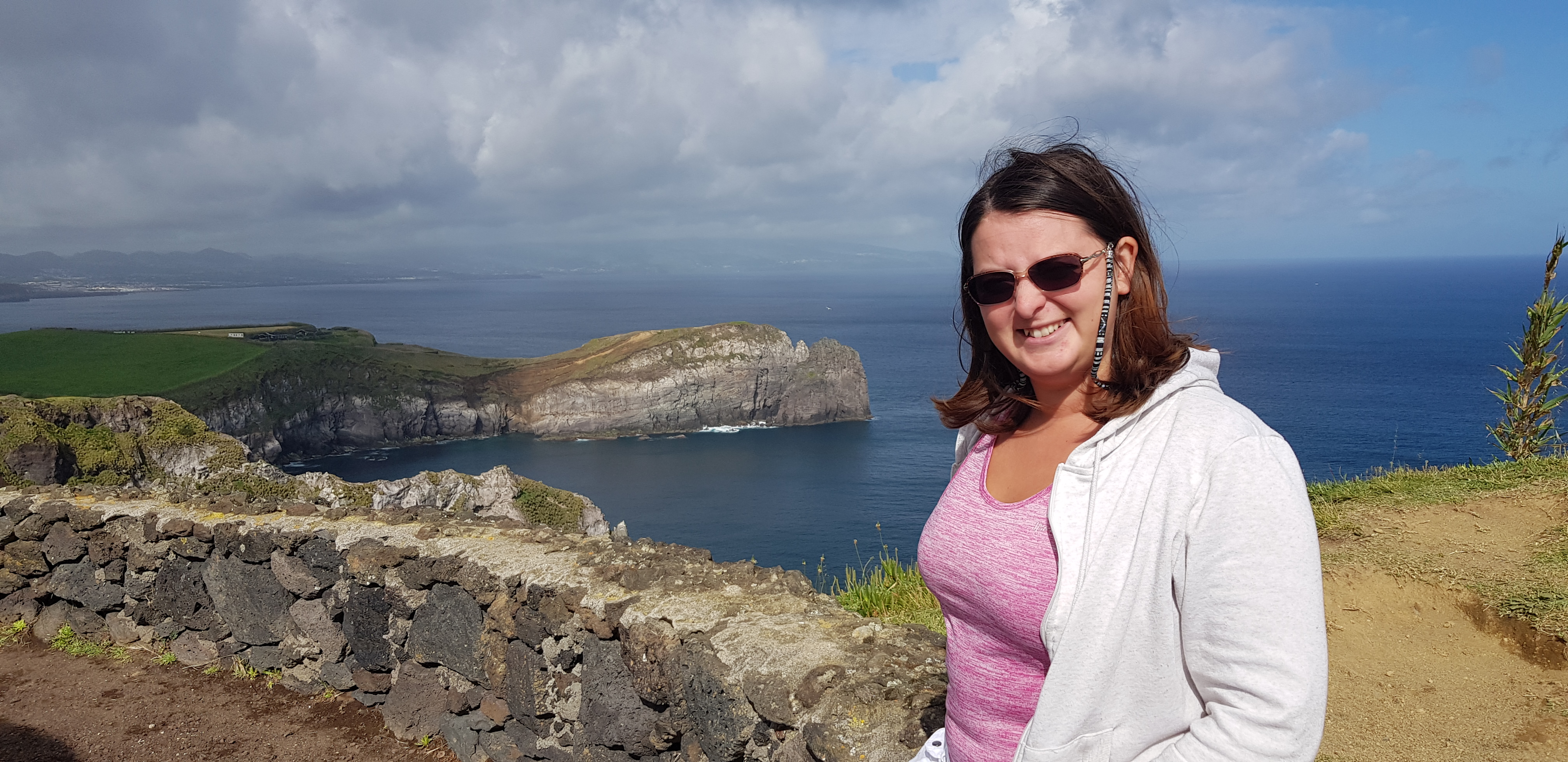
I had wanted to visit the Azores for over a decade, and hoped that one day I would be able to go for my honeymoon, because it looked so beautiful in all the images I had seen… Well, many years later, and no ring on my hand, I decided I could wait no longer, and I booked myself a trip from Lisbon to Sao Miguel, and a group of tours to enjoy across two of the main islands.
Sao Miguel
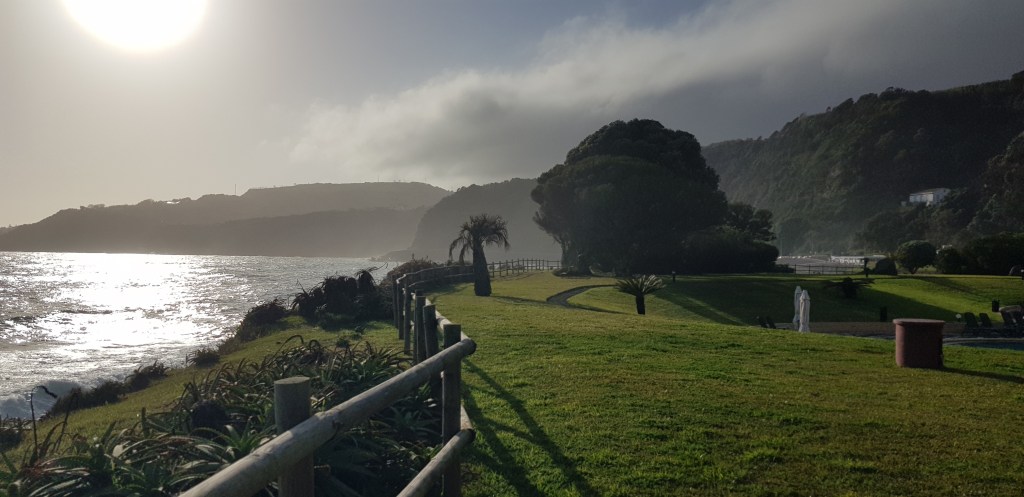
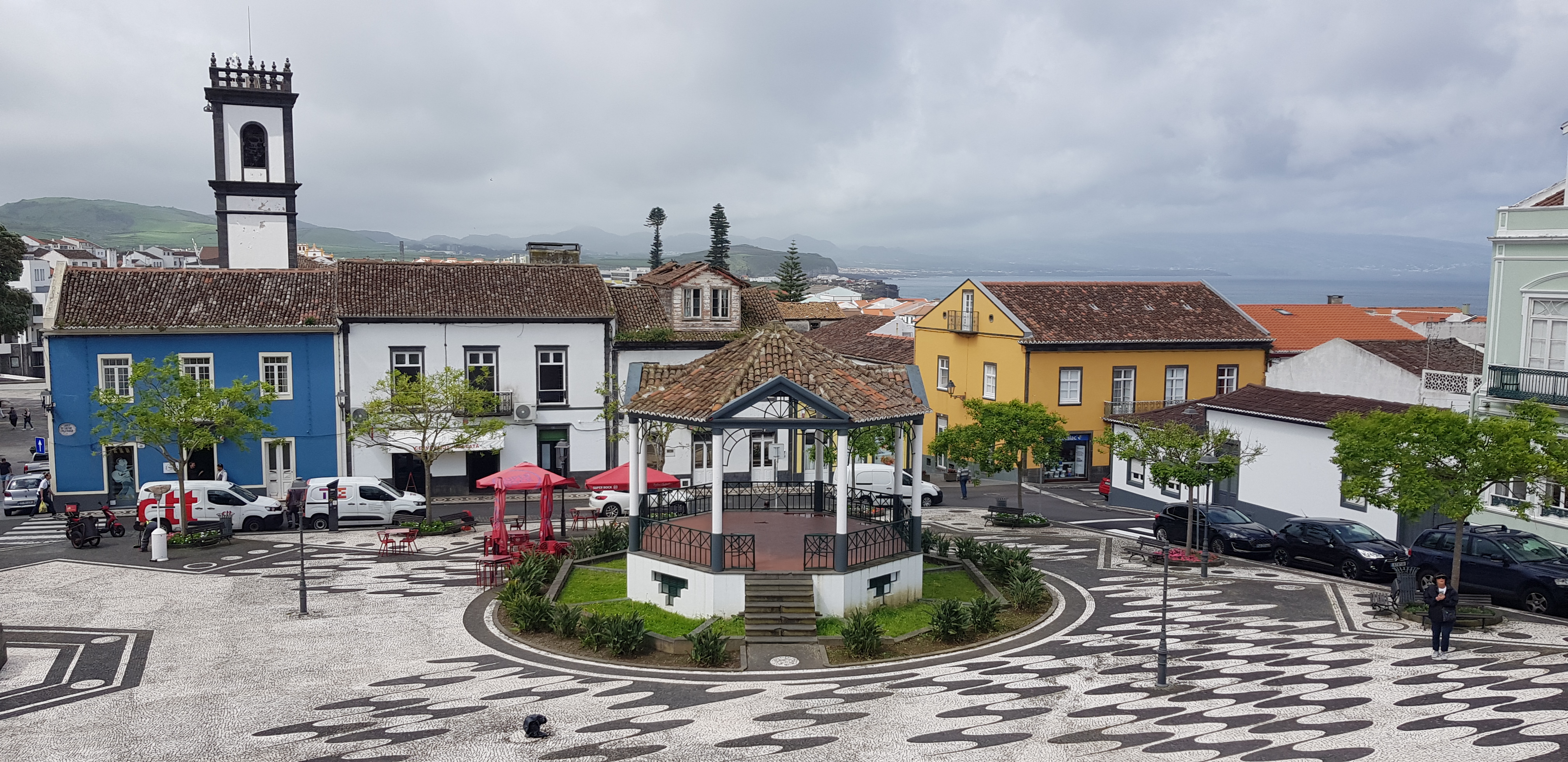
The main island of Sao Miguel is the largest of the group of nine islands, and has the main gateway airport to the other islands. It is also the busiest. The island’s capital, Ponta Delgada, has a vibrant feel with many shops, restaurants and a few hotels. I stayed away from Ponta Delgada in a 5* hotel near a beach, but it was fairly remote. Thankfully, I had two tours booked to see the island, as well as being able to access a local walking trail nearby.
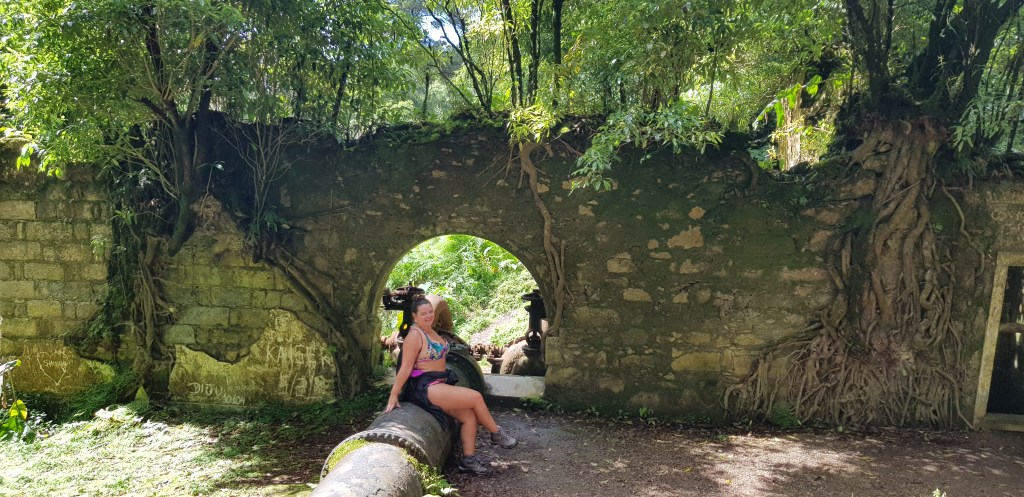
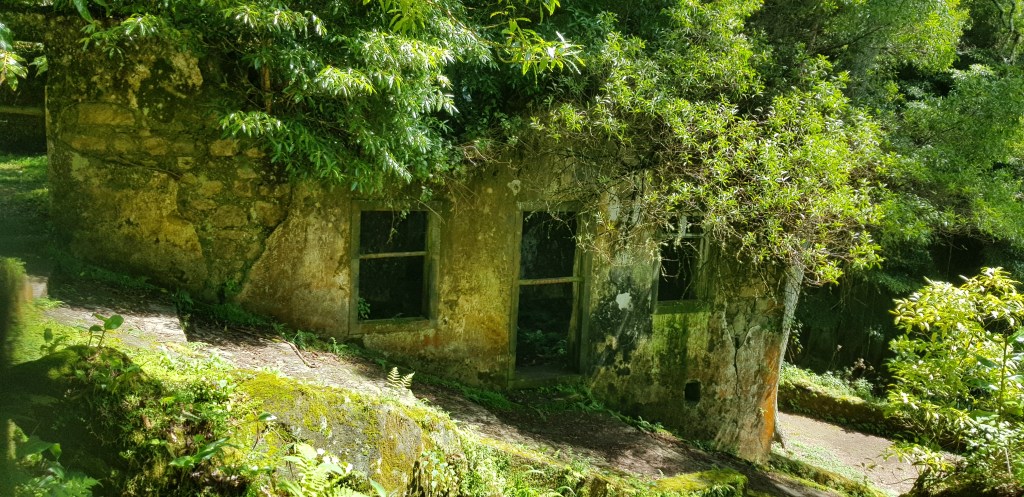
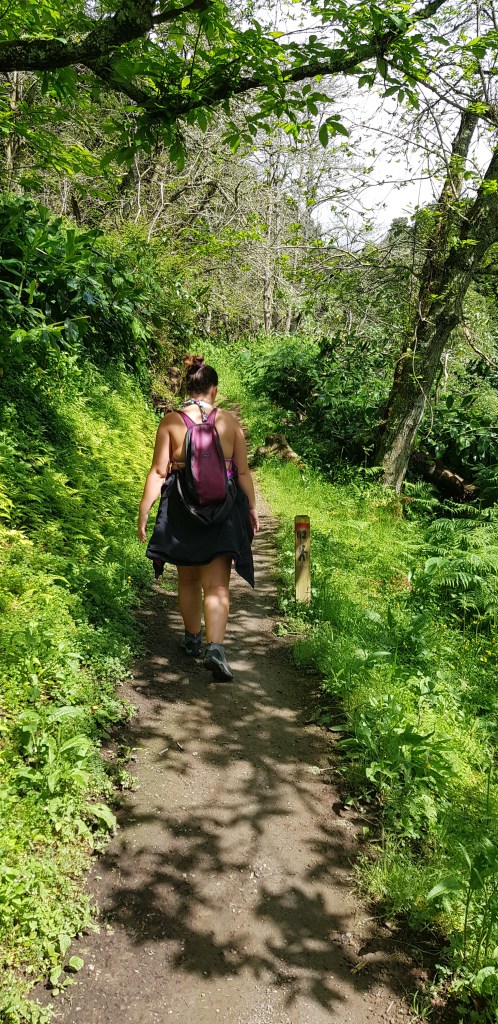
The walk that I decided to do near the hotel was following the river nearby uphill and leading to a set of abandoned hydro-electrical stations in the forest. The Azores islands are known for their efforts in alternative renewable energy, especially hydro electricity and wind farms.
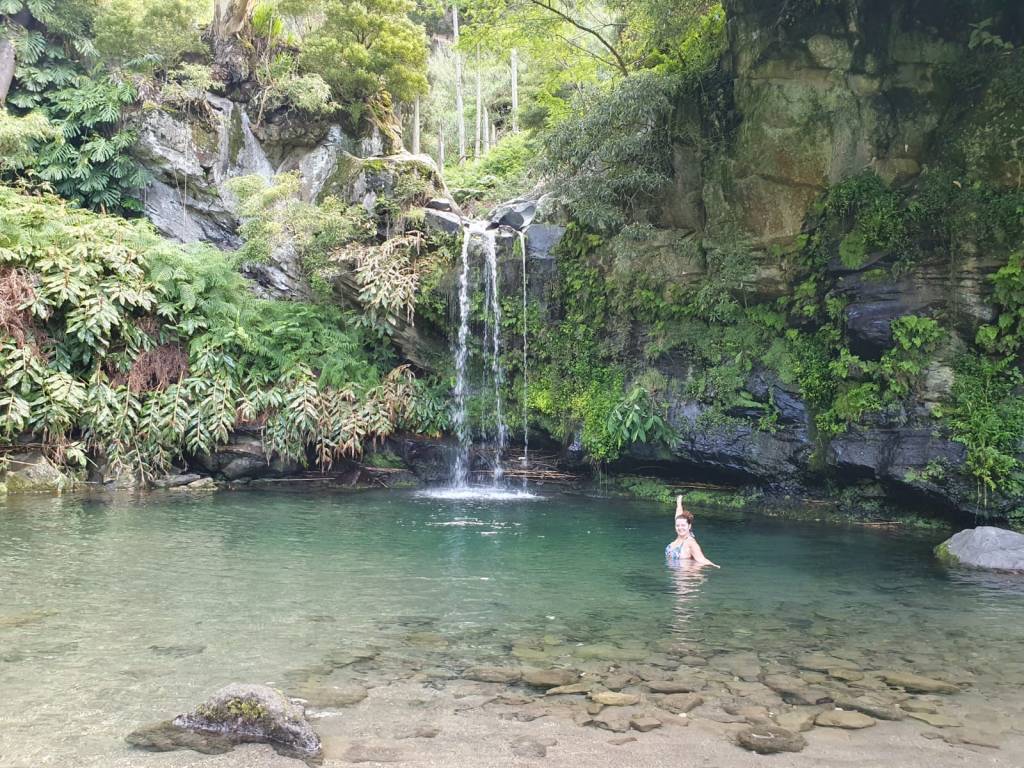
These old stations, combined with a dip in a gorgeous little waterfall, made for an interesting walk with a lot of interest in photo opportunities. I felt like I was in scenery that I remember from the TV series ‘Lost’, with abandoned stations locked between the trees and pipes running through the ground. Like at any moment, I will discover a secret hatch!
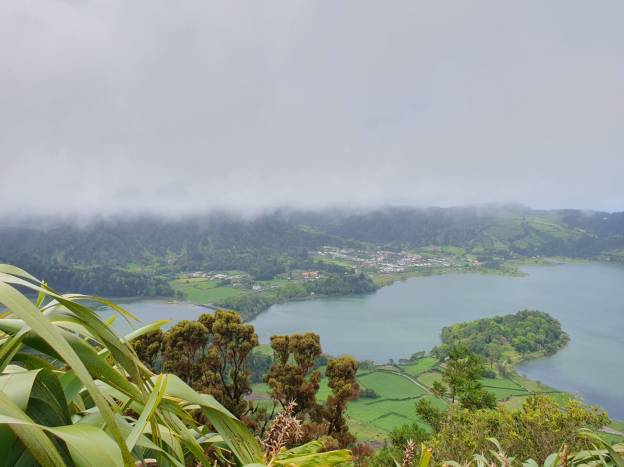
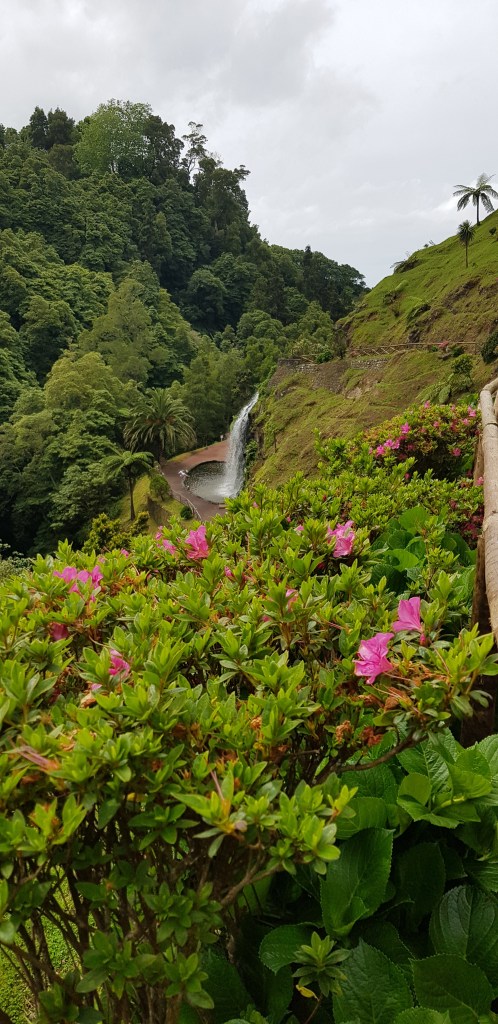
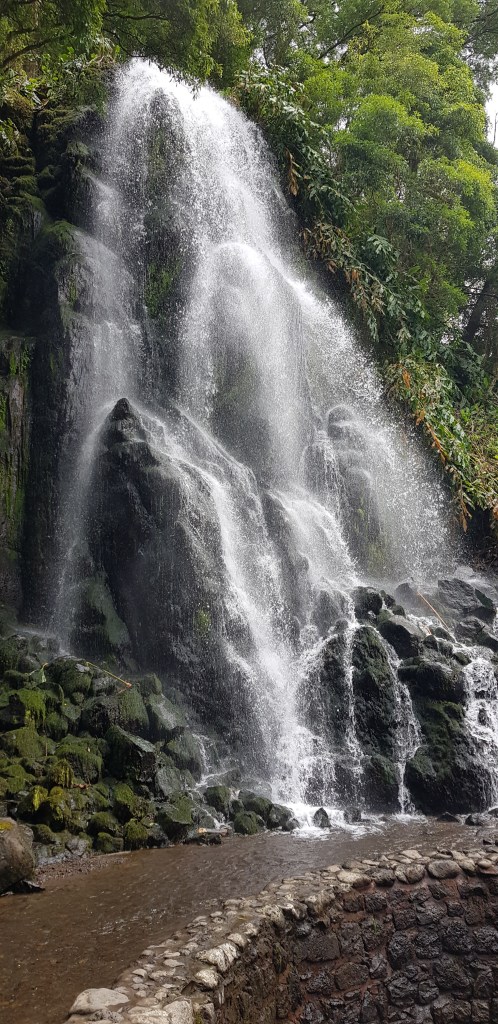
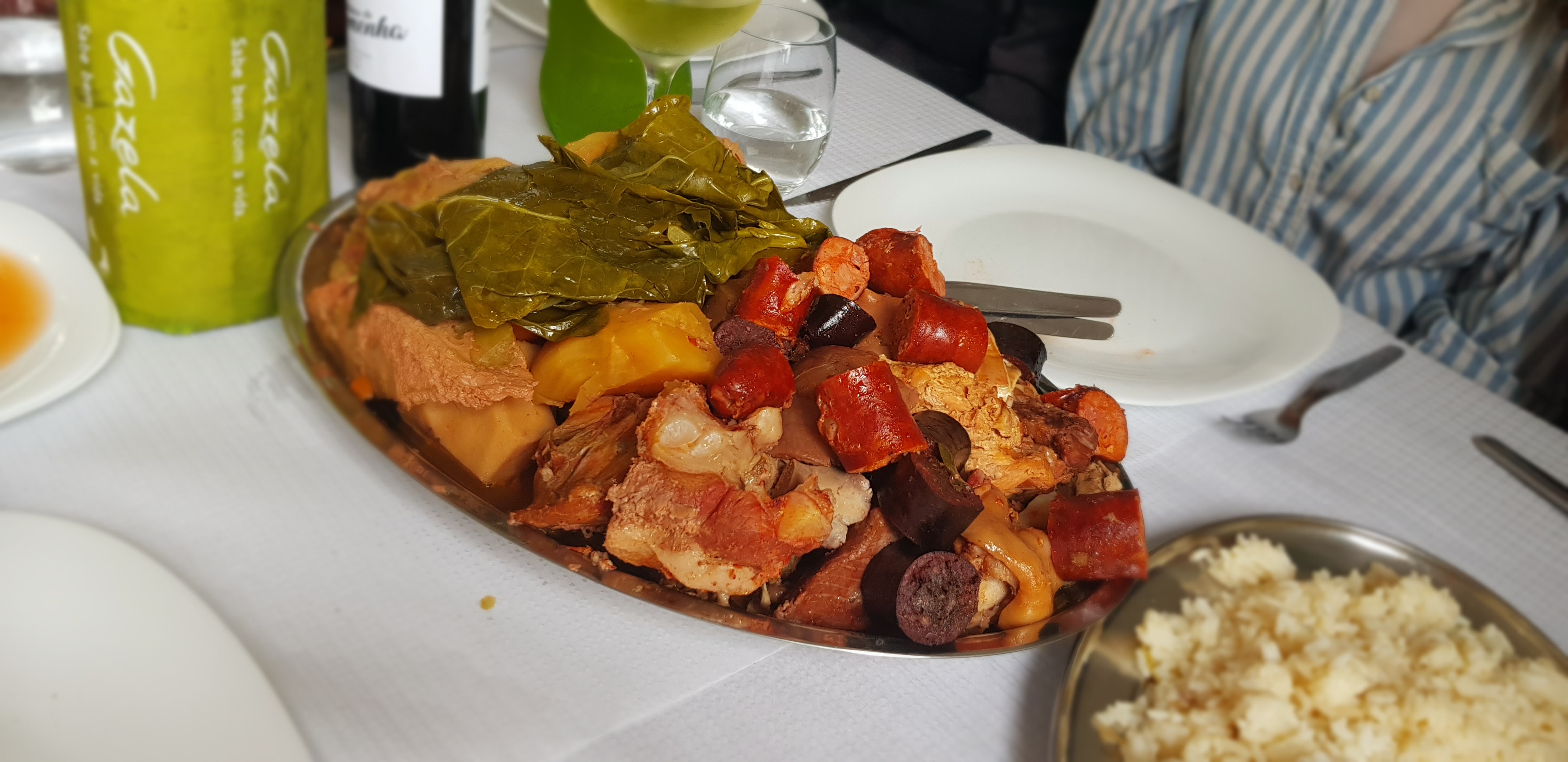
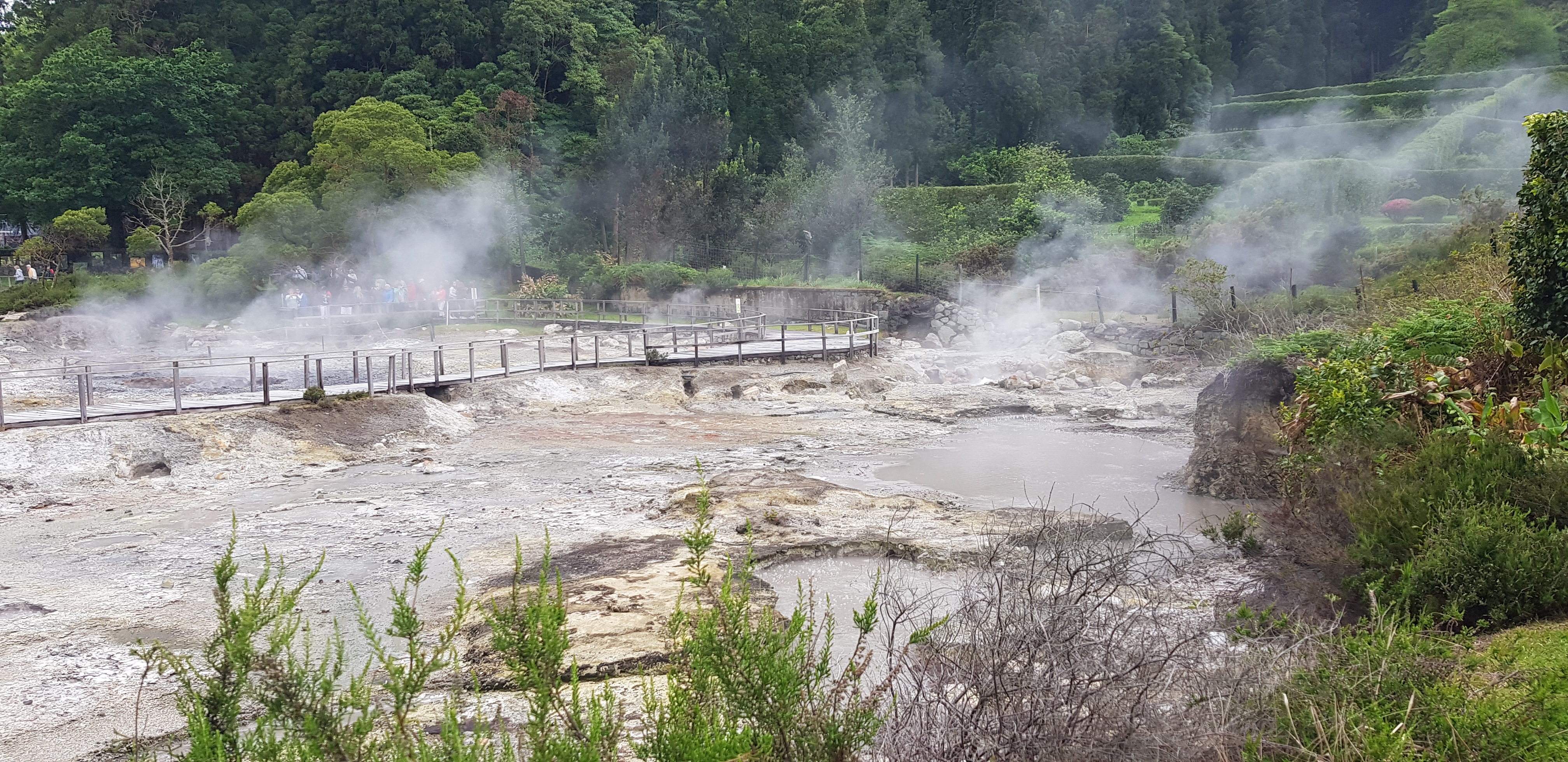
On the tours I’d booked, I was able to visit a variety of lookout points, and some beautiful villages/towns, such as Ribeira Grande (Big Stream) which had lovely scenery. We visited an active volcano area where our lunch (a traditional portuguese recipe) was buried and slow cooked by the warm ground.
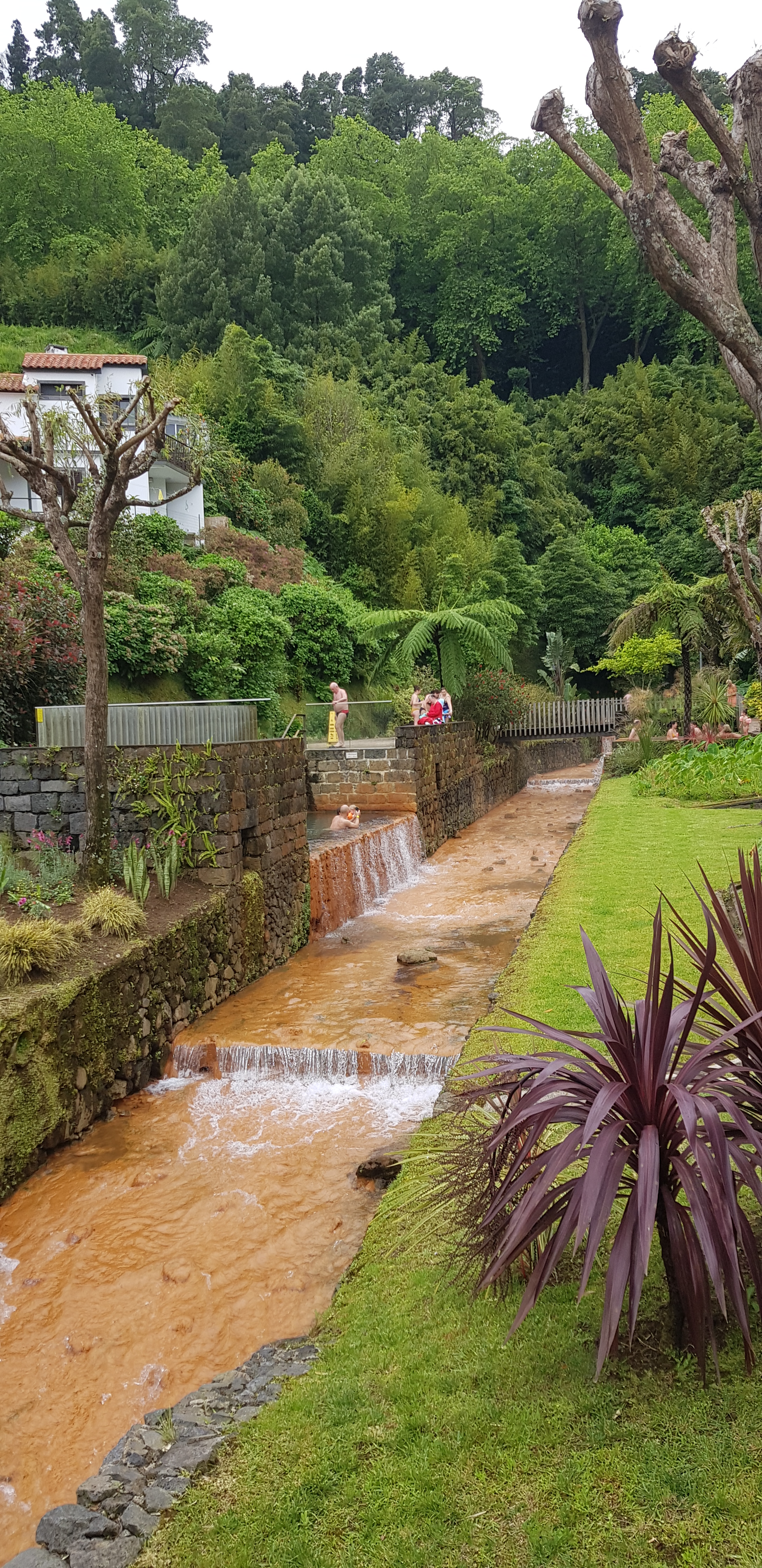
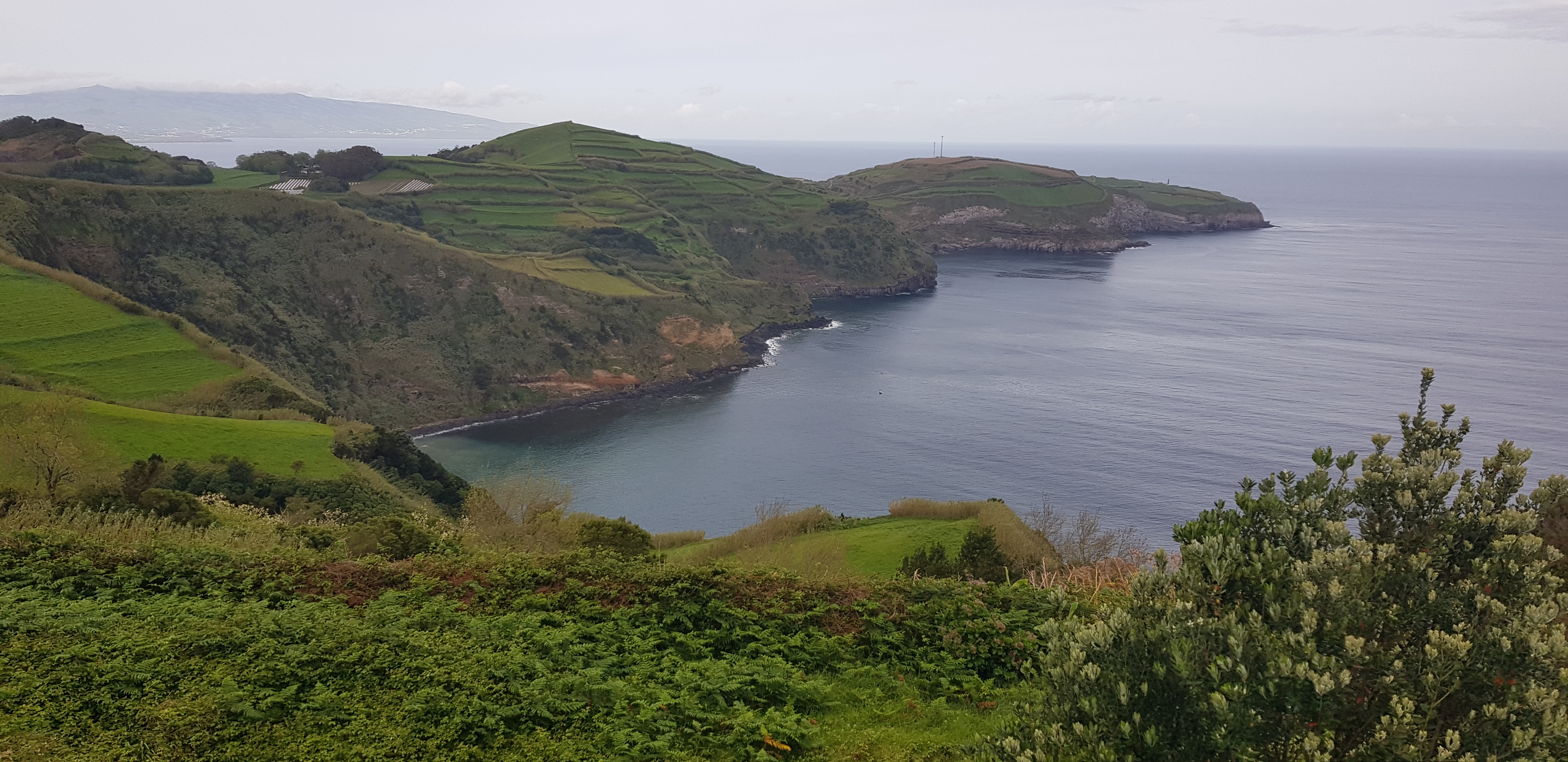
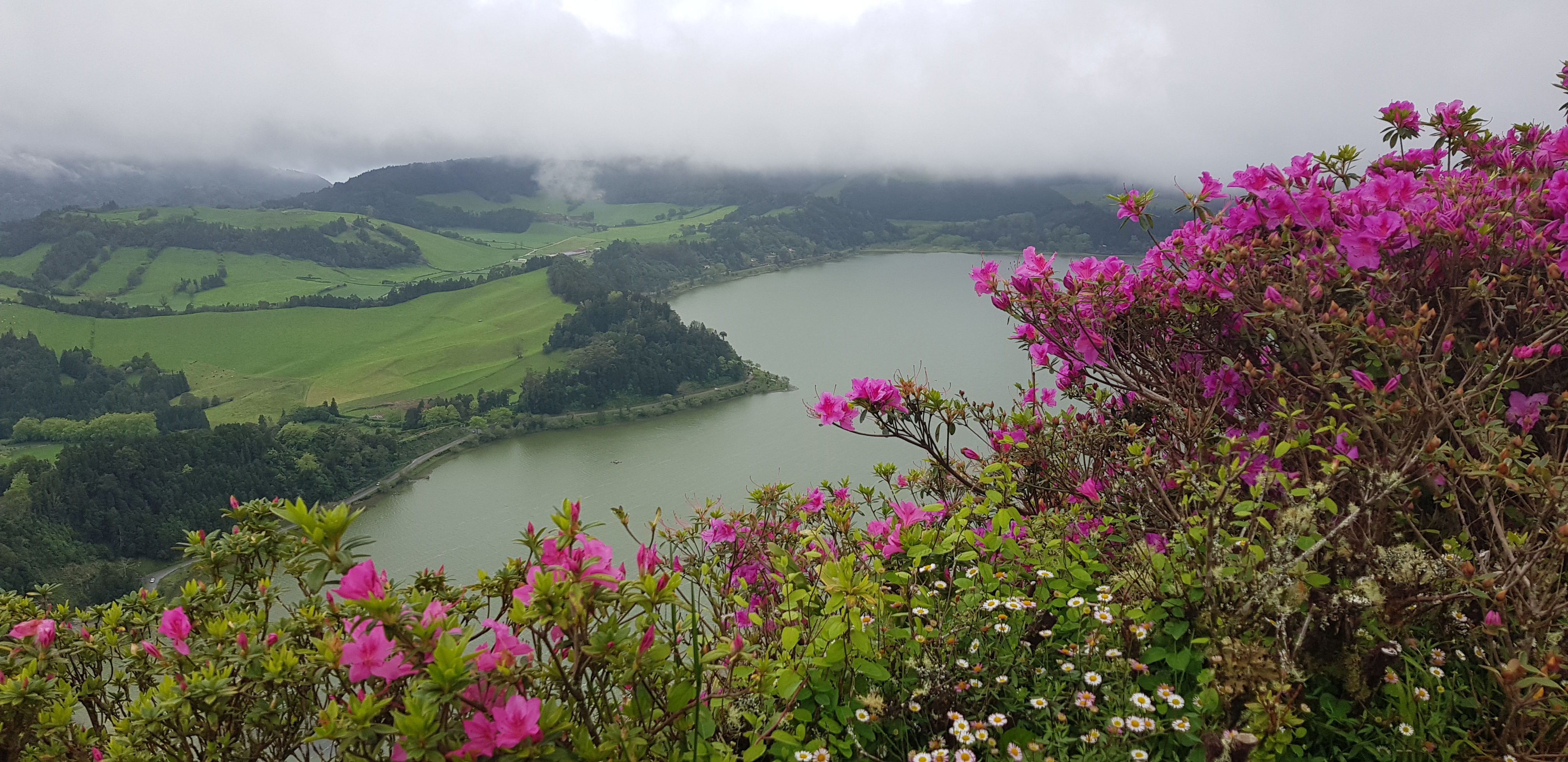
We also visited a geothermal spa, and the well known patchwork viewpoint where you can see thousands of smallholding farms stitched together from above.
Terceira
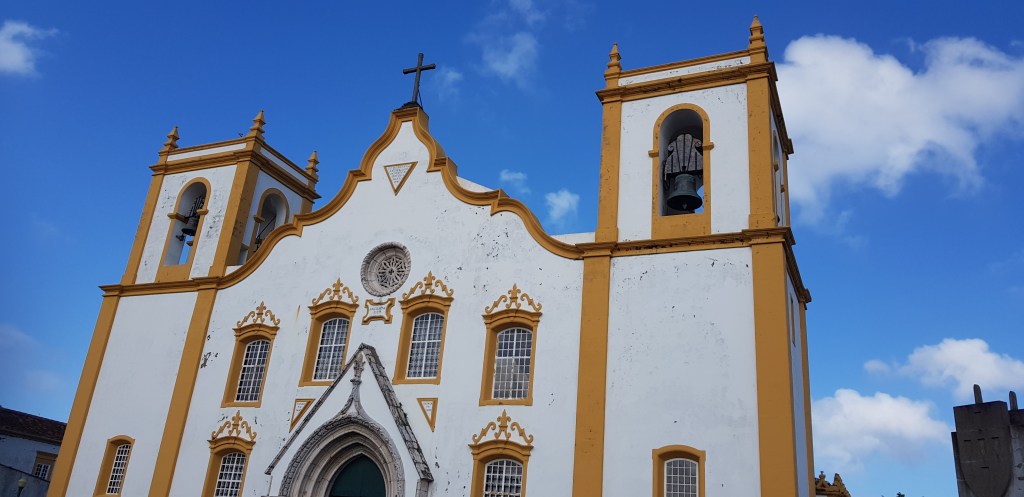
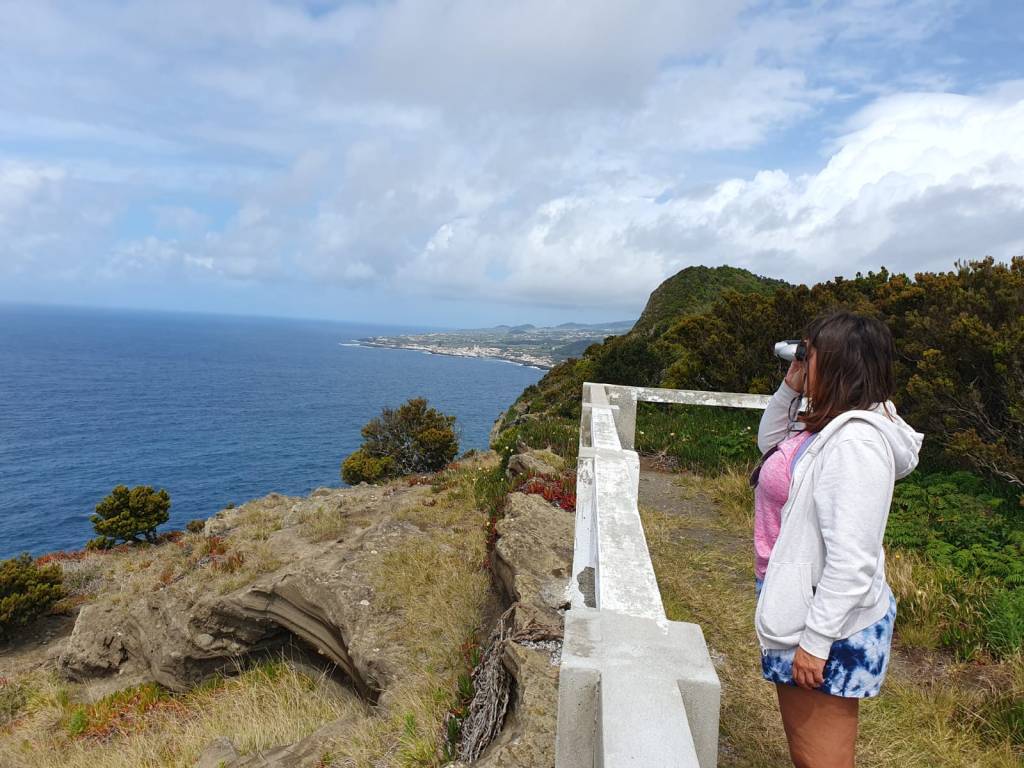
A few days later, and with a 45 minute flight, I was in the second island of Terceira. This lovely round island, has a lot to offer and is not yet as built up as Sao Miguel. I was in a lovely hotel in a secondary town away from the capital of Angra do Heroismo.
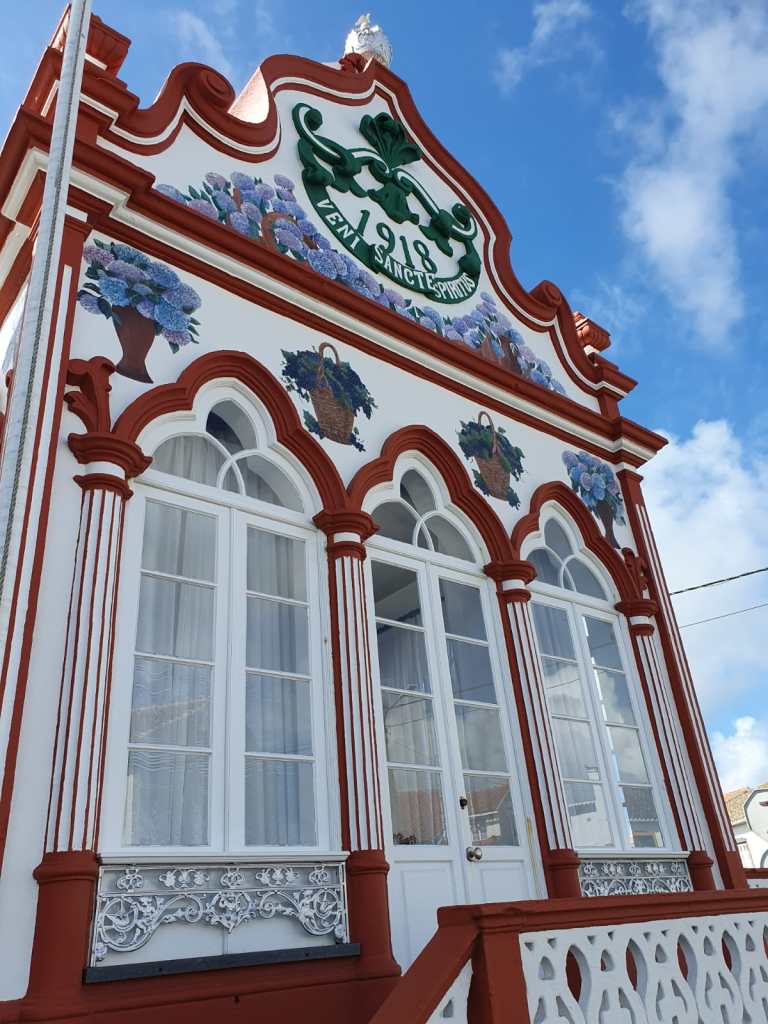
The villages and towns in Terceira are very traditional, and still have many unique customs that they uphold. For example they have a program of events where they have a ‘running of the bulls’ in the streets. This is not to copy the ones in Spain though, it is a unique memorial event to celebrate the farmer and bull heroes that drove the Spanish out of Terceira during a big battle, where the bulls were let loose on the army! Led by a woman villager too! Very cool. You will also find beautiful chapels in every village that are purely for the devotion to the holy spirit, and used at only one time of the year.
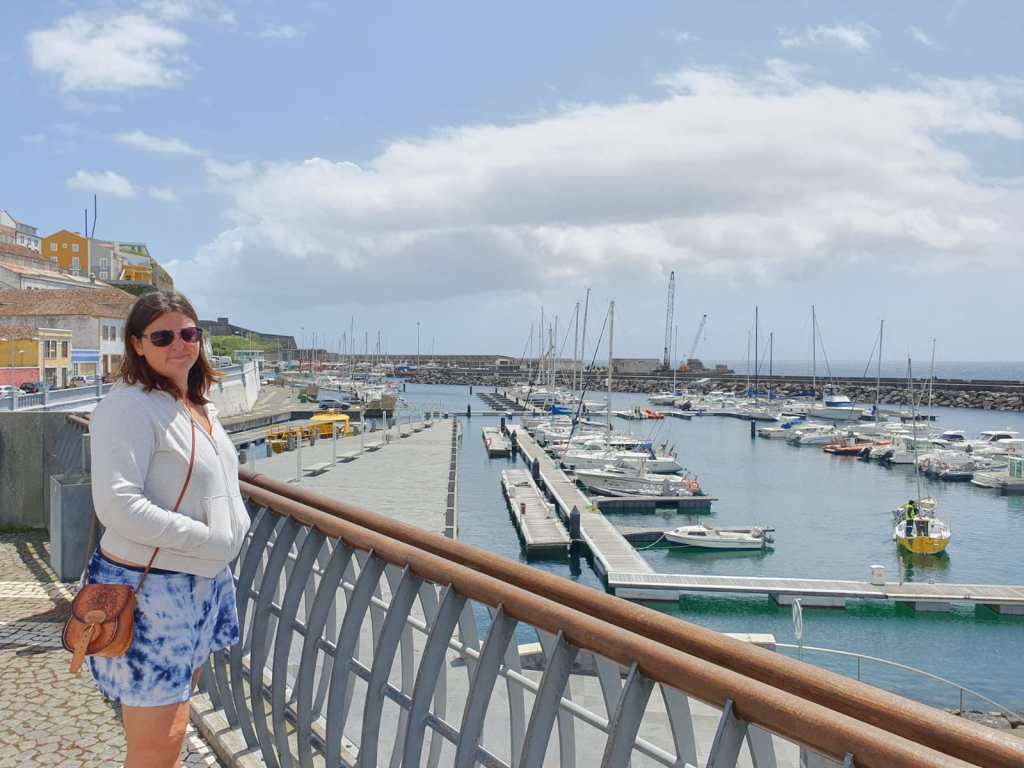
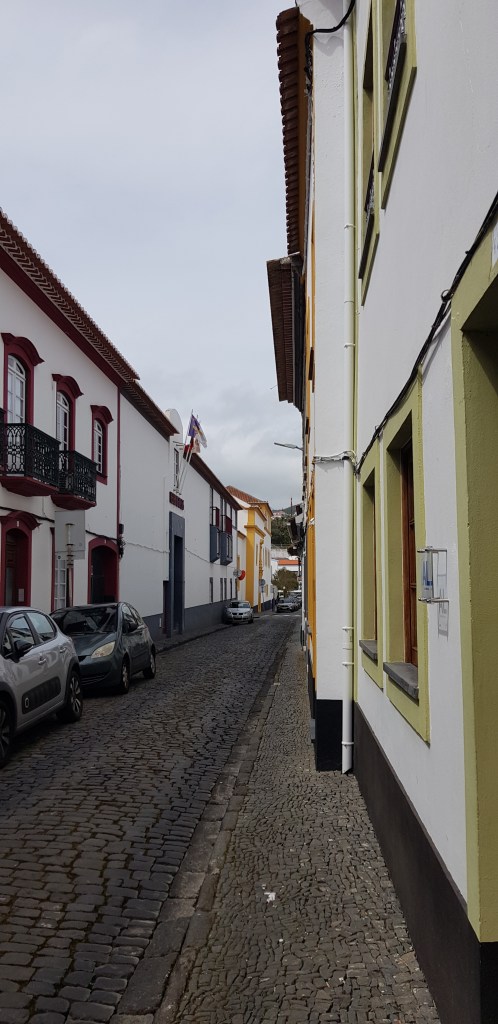
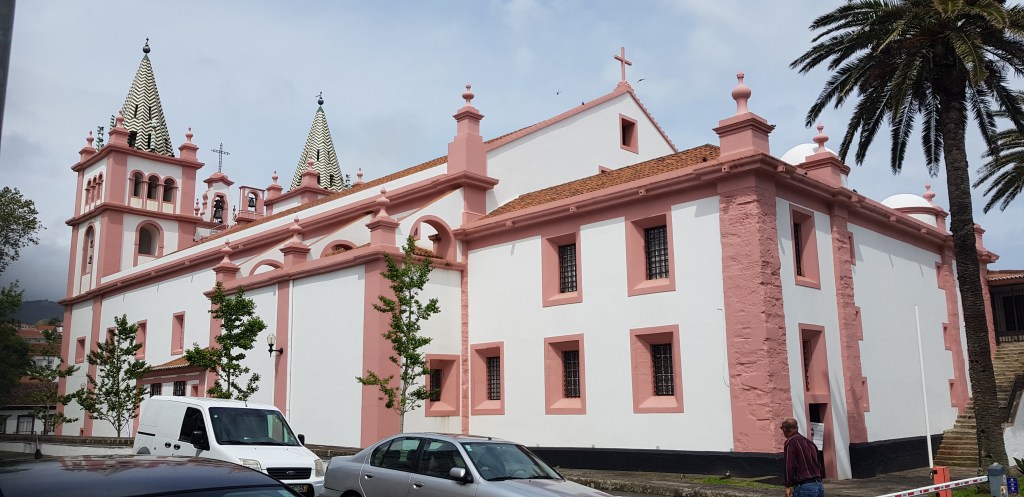
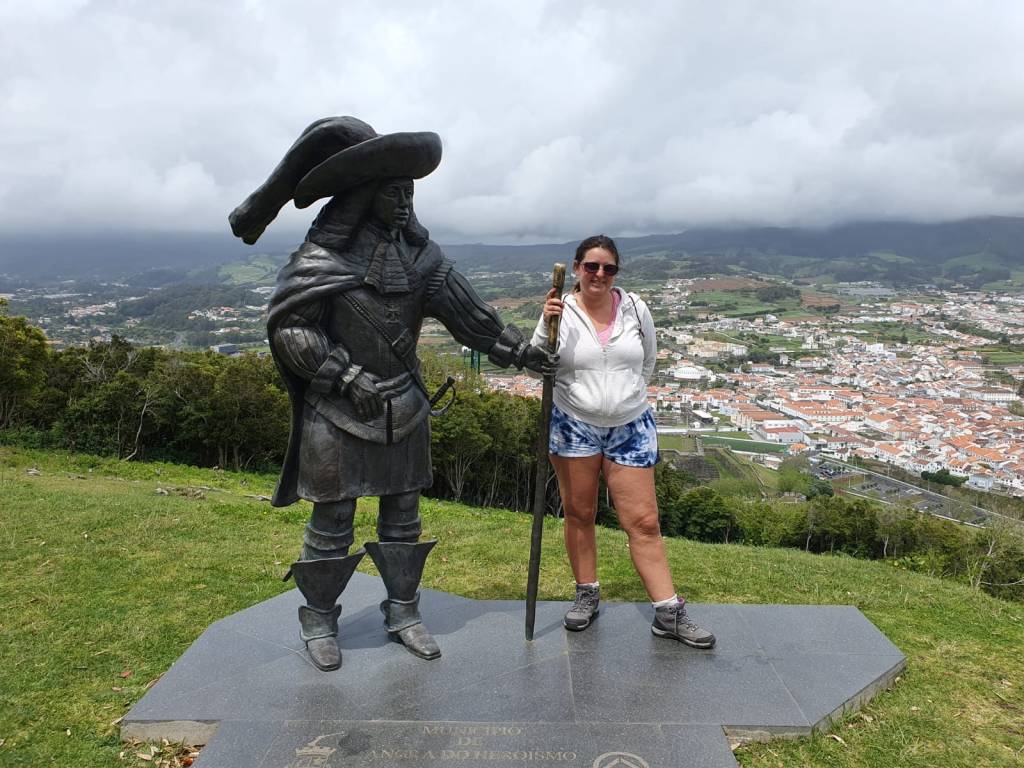
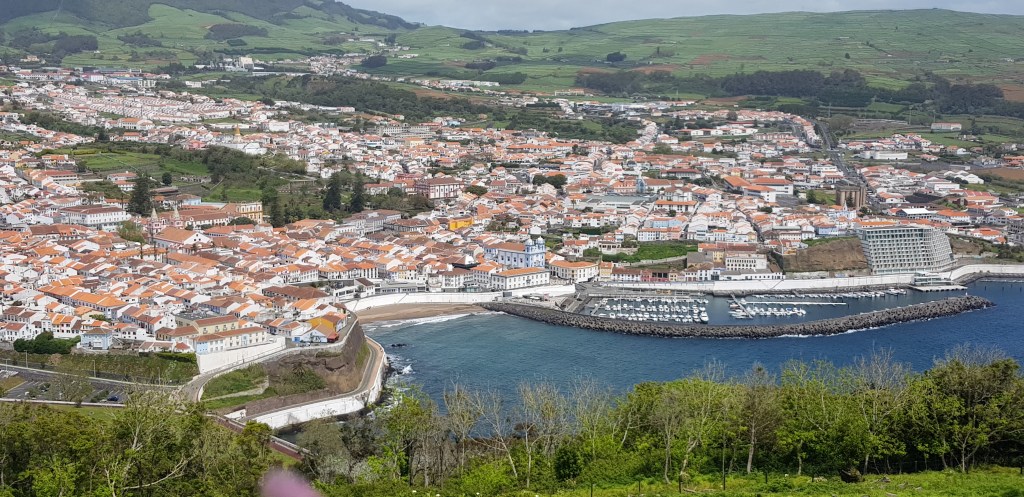
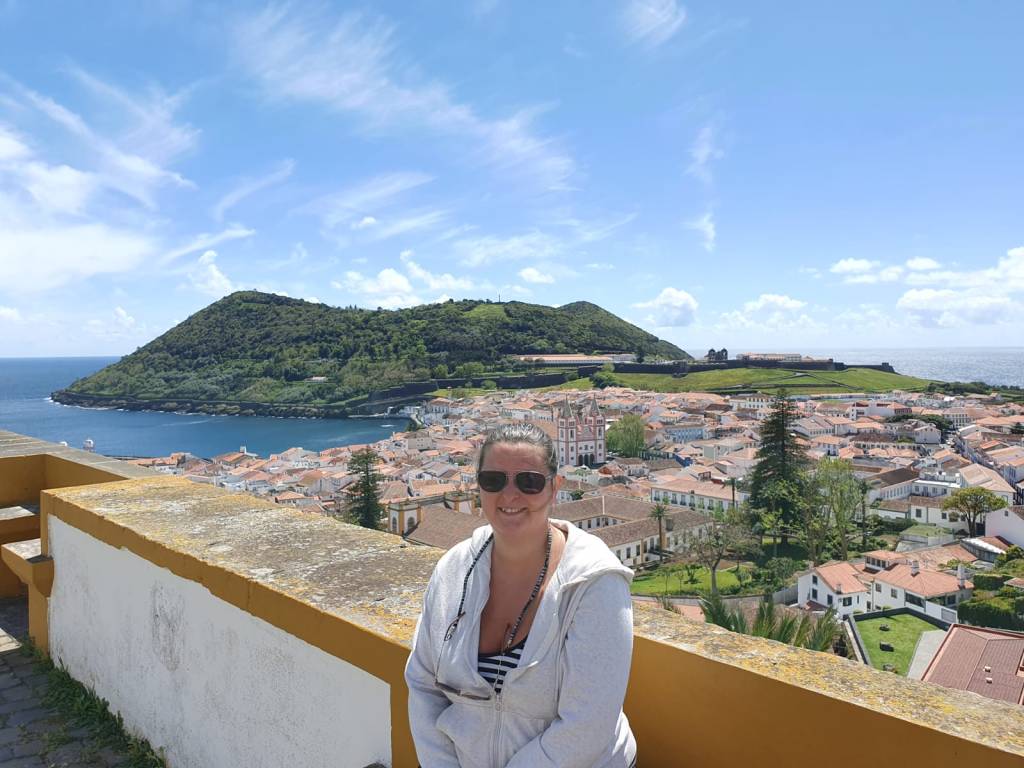
Angra do Heroismo is a beautiful little city with colourful buildings and a pleasant marina area. The colours of the buildings are apparently routed originally in the island’s link to trades with India and the spices and materials that were brought. The island also has been home to an American airfield and base since WW2 and so is rich in an international community. The city is actually a UNESCO Heritage Site due to its historic importance as a transatlantic crossing point, it is head of the diocese of the Azores, and it was actually capital of Portugal twice, replacing Lisbon!
The city also has an active military base for Portugal on their Monte Brazil connected to the main city, it is actually an extinct volcano and now a nature reserve for walkers and family picnics. I spent a morning walking around this mountain where I found there to be a lot of stops to enjoy on the trail, including fort ruins, an old whale watching tower, a viewpoint of the city, and a set of aviaries. When you visit the cross statue viewpoint, you will also find a set of military guns pointing towards the city. I thought this was quite strange, until I discovered that the military base was actually built by the Spanish when they temporarily took over the island, and pointed the guns back on to the city as a way of warning off the very unhappy Portuguese people below!
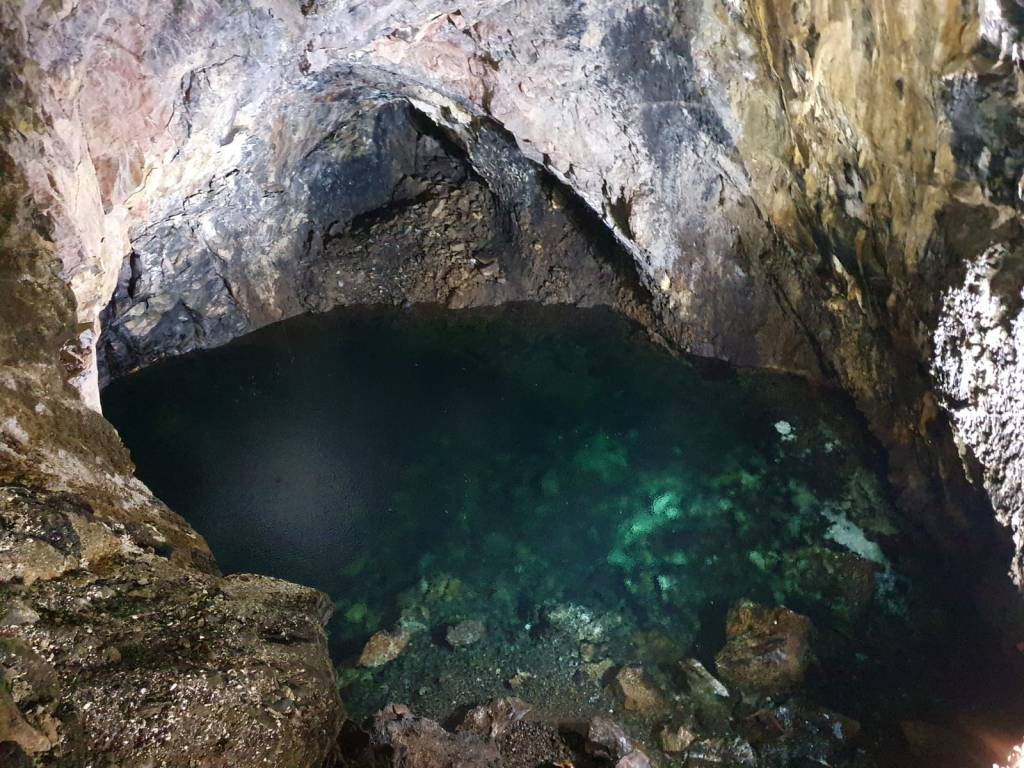
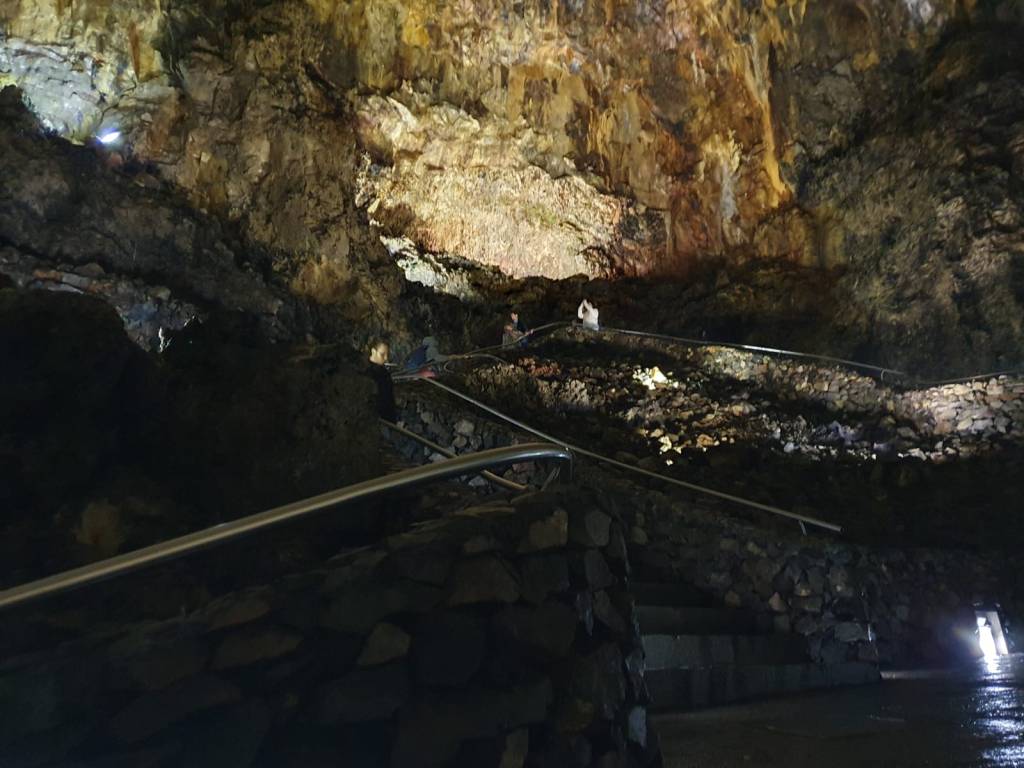
This mountain is just one of many volcanos on the island, the entire Azores group is a collection of volcano eruptions, and have plenty of collapsed, active and also extinct volcanoes. One volcano in Terceira is very special because you can visit the lava canal directly via a tunnel. and walk around over the top of the solidified lava from the last eruption around 2000 years ago. Algar do Cavao is very special and one of the more unique attractions I have been to. It was discovered only in the last century, when a farmer’s cows kept going missing… it turned out that they were falling through the huge crater hole!
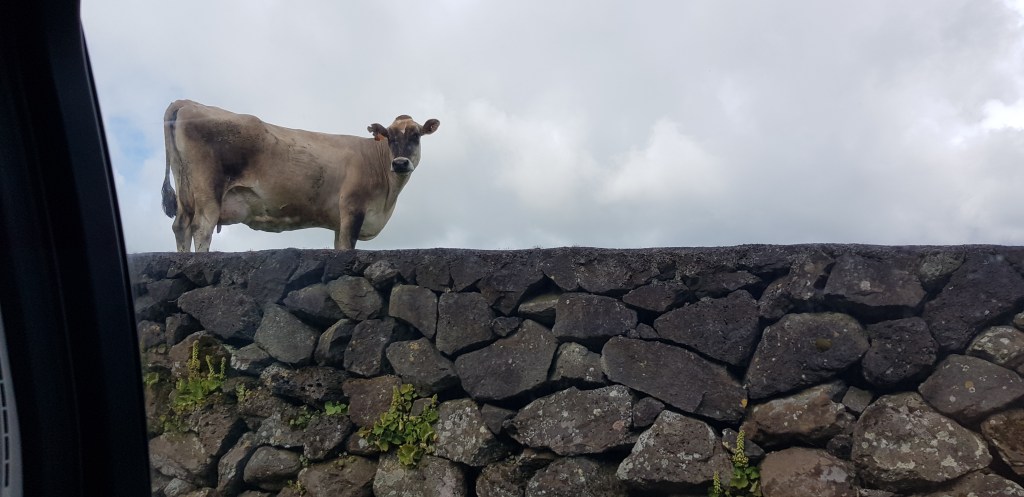
Finally, speaking of cows, there are about 2 cows for every inhabitant on these islands. The biggest industry for these islands is dairy produce, and the amazing thing is that it is all made up of smallholdings and many family ran farms pulling together their resources with other farms across the area to make cheeses, milk, ice cream and more. You are never short of a cow, and someone that knows a lot about them!
Overall, I loved visiting the Azores, and now feel determined to visit all of the nine islands and find my favourite. It is an easy place to visit from Lisbon and I am in Portugal often, so I don’t think it will be long before I am back!
This Easter weekend, I threw my bag over my shoulder and took a six hour train ride to Edinburgh! The capital of Scotland became my base to explore my neighbouring country with friends.
The journey from Norwich was much faster than I expected, and a lot easier than I think driving would be. On arrival in Edinburgh’s train station, we were already surrounded in shopping and restaurant opportunities as well as the gorgeous Prince Street Gardens. A great introduction to the city. We made our way to our AirBnB on the edge of the city centre, and got ready for a night on the town!
Exploring Edinburgh
As a capital city, there is of course a lot of areas to explore during the day and at night. We found the most buzzing area was just down the hill from the castle, where the market takes place and there are lines of restaurants and bars with outdoor seating to enjoy the living city atmosphere. I would say that the city can be expensive for an evening out, especially if you want to enjoy a cocktail… or two… or three! That may have a small part to do with the high number of stag and hen do groups we saw stumbling around town dressed in kilts and veils!
On our first full day we ticked off a bunch of the main attractions and had a fab time doing it, in one of the most rare sunny days that Scotland has mustered!
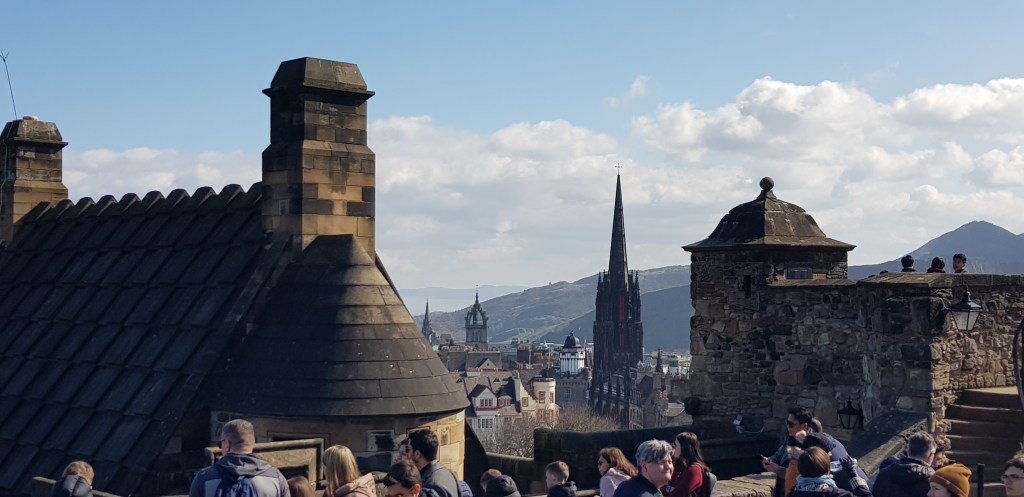
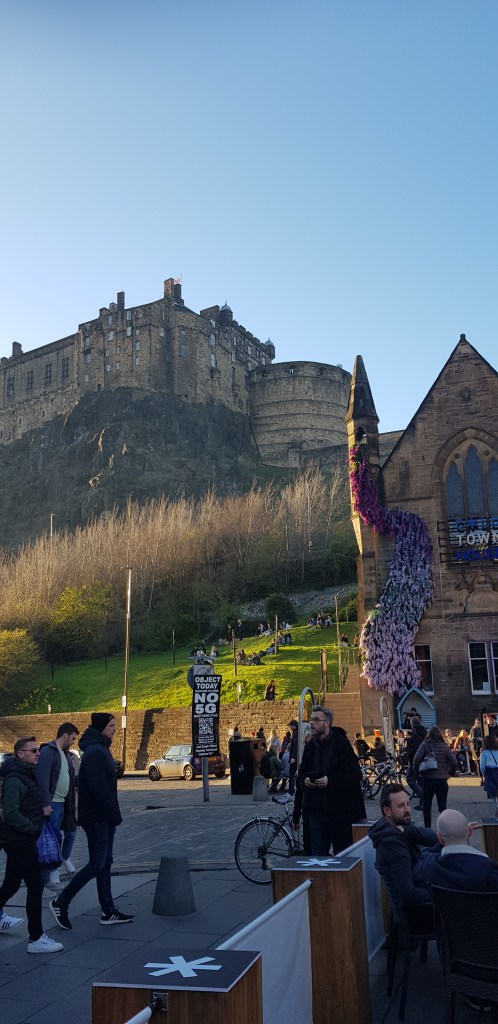
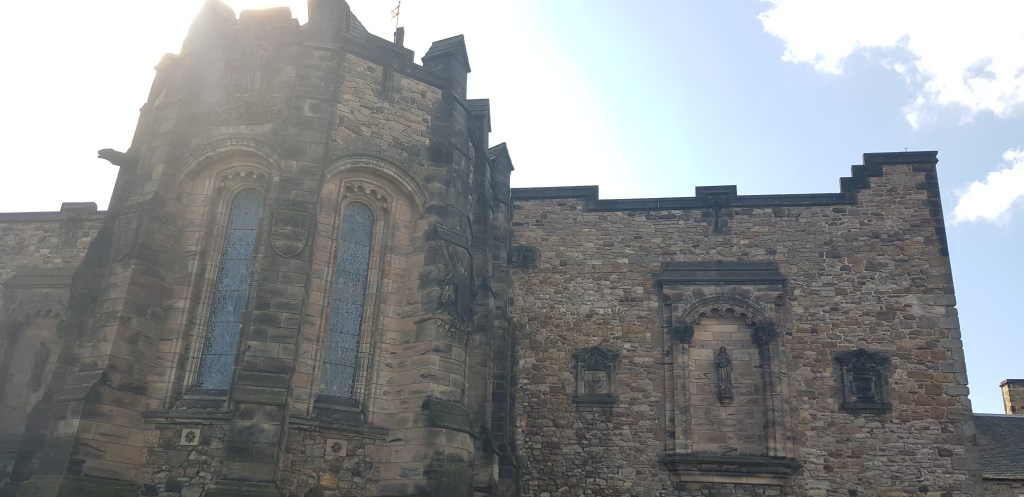
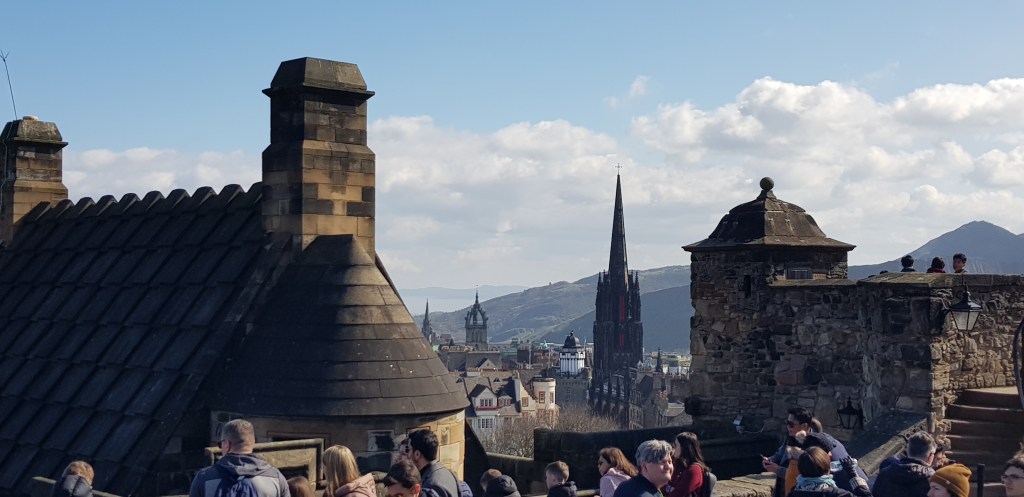
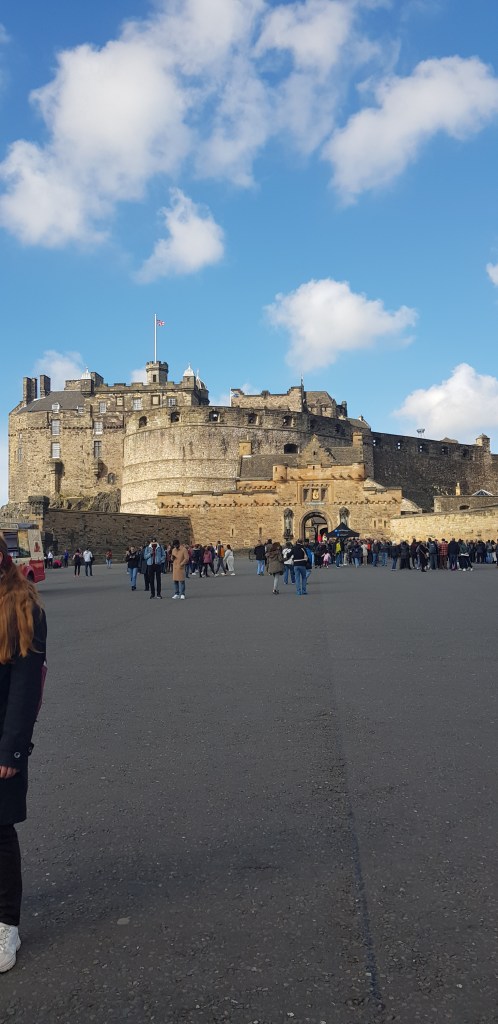
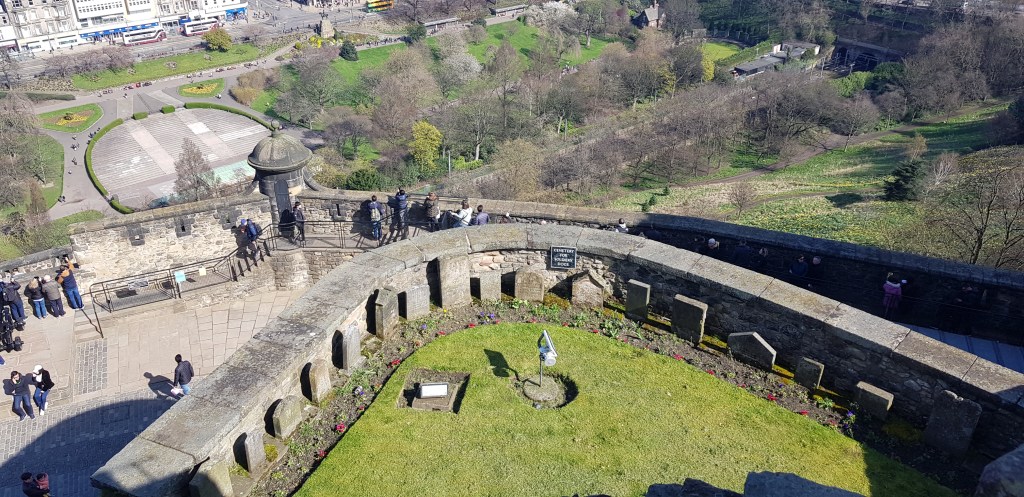
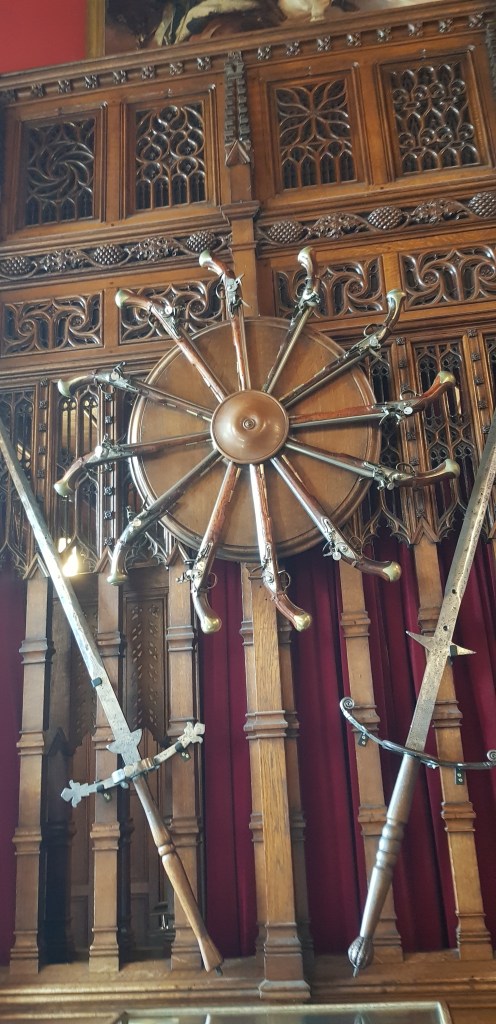
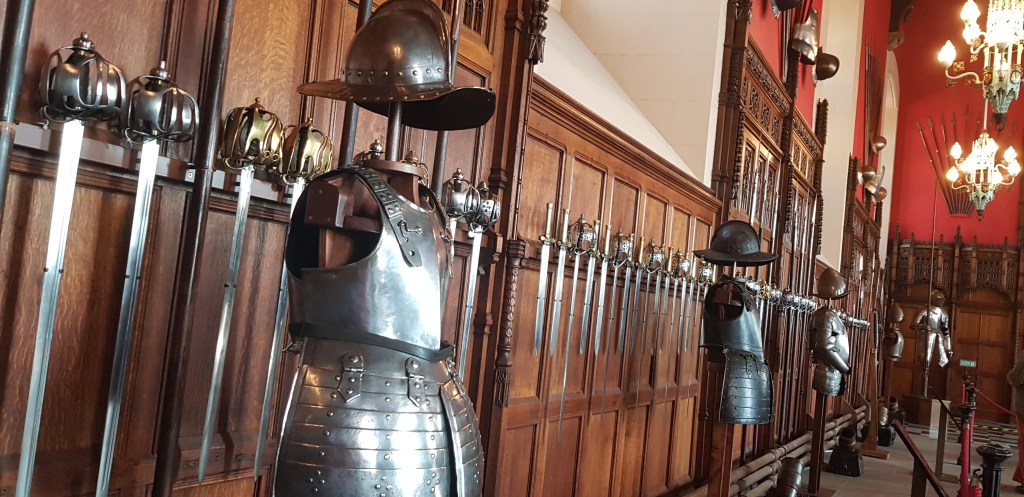
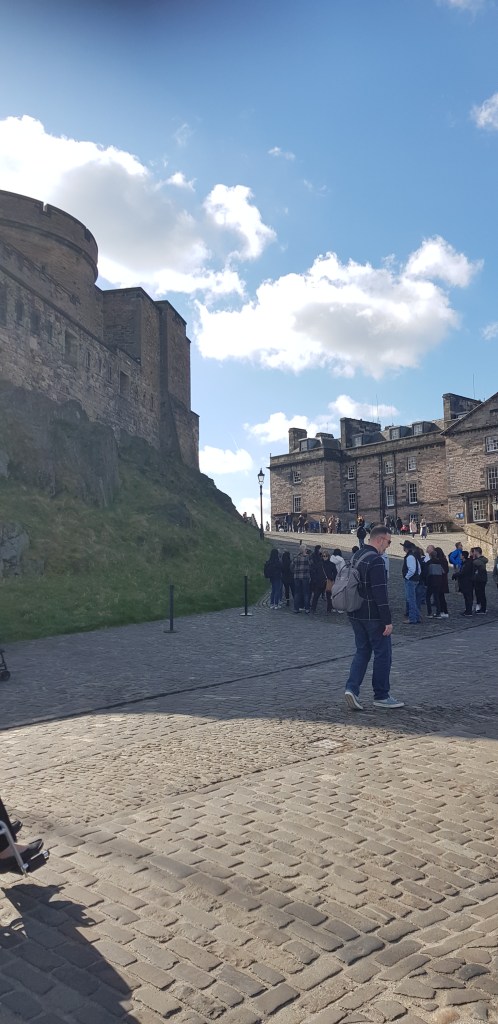
One of the most popular attractions that we saw was Edinburgh Castle. Once I recovered from climbing the steps, I was able to appreciate the awe of the castle that was surrounded by tourists. From the entrance of the castle you can see an amazing view of the city, and as you enter into the castle complex, the views continue from different angles, including far away landmarks, and up close ones; like the soldier’s dog cemetery…
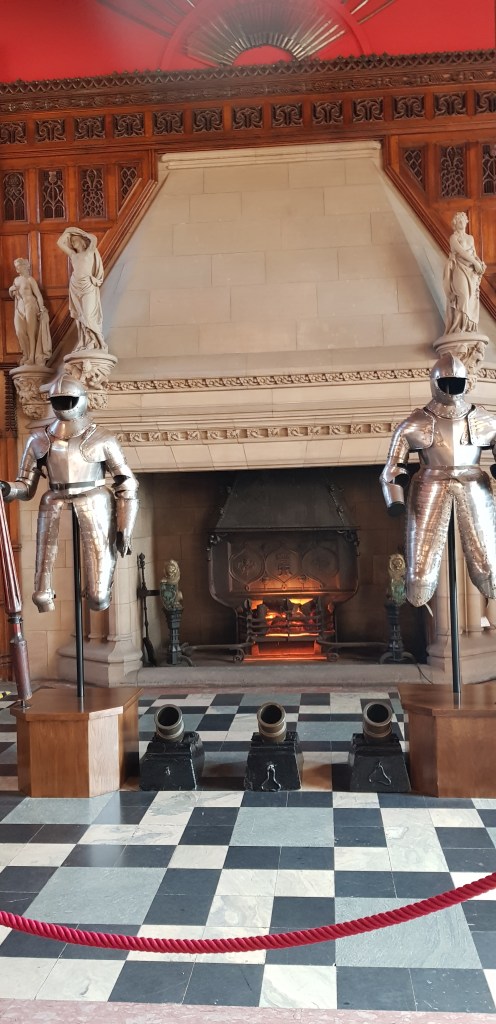
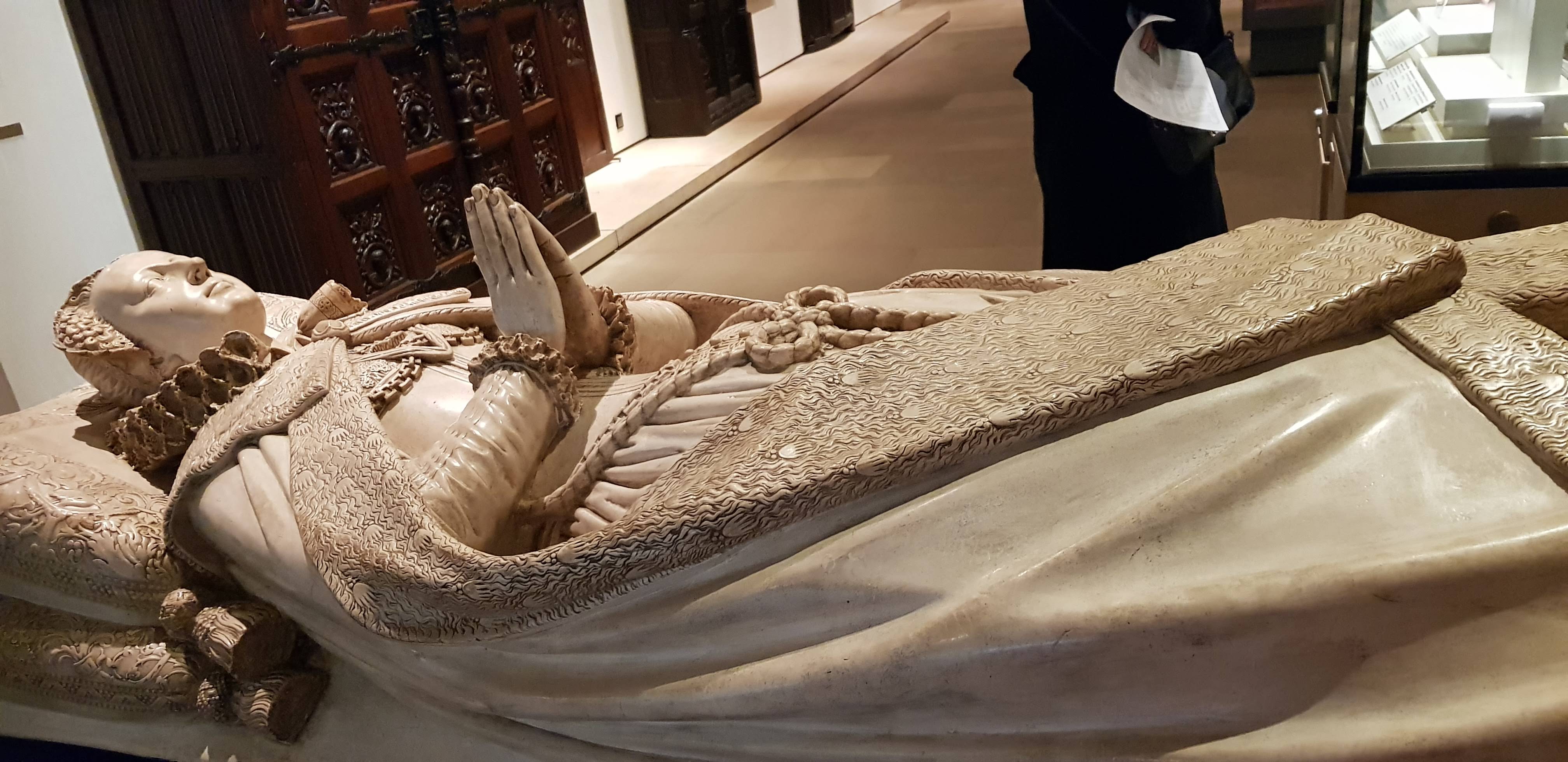
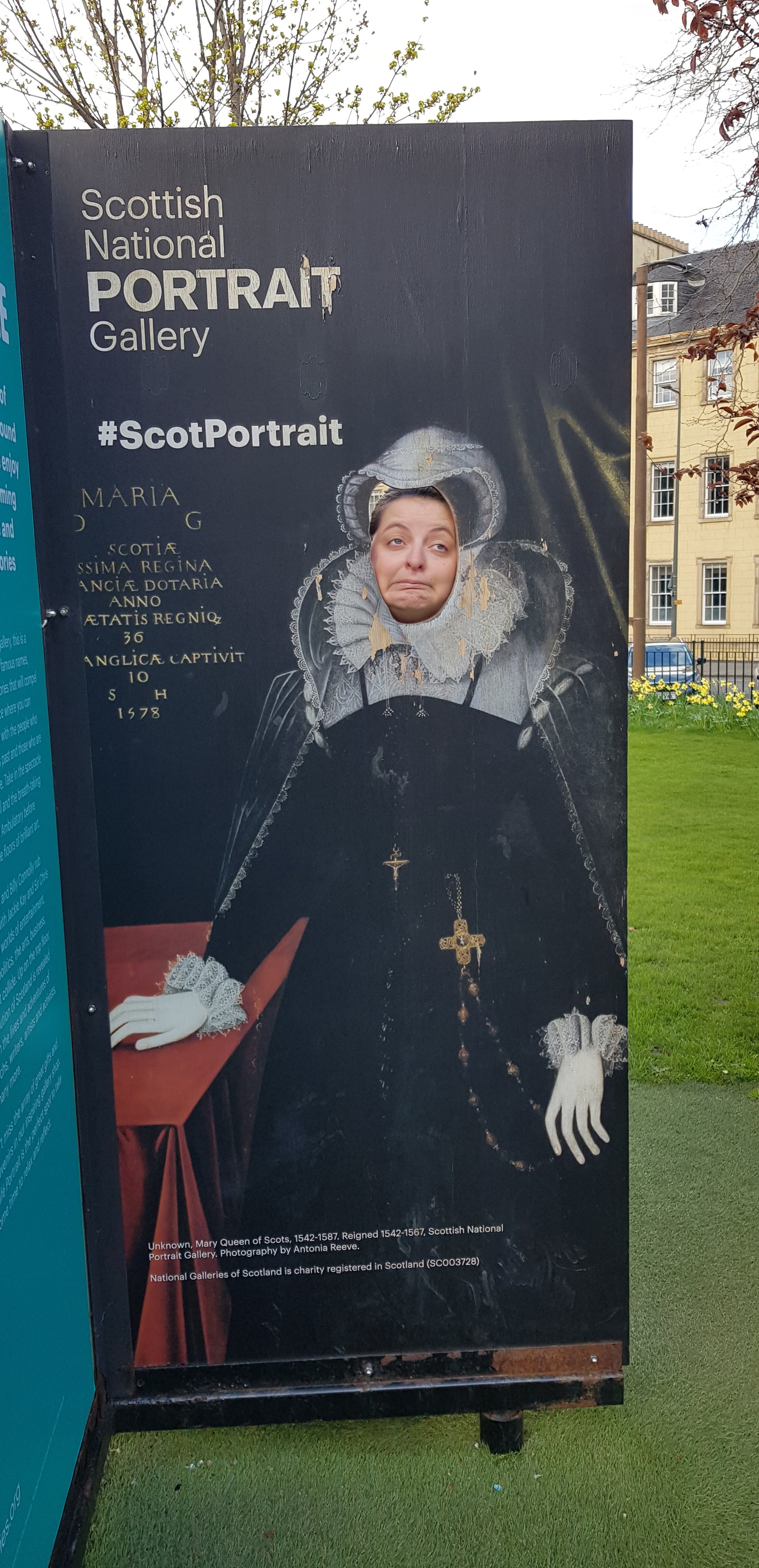
From inside the castle, you can visit the old chapel, prisons, crown jewels, staterooms and much more. The information provided was really good and I particularly enjoyed learning more about the Scottish Monarchy and particularly Mary, Queen of Scots, who is an extremely interesting woman in history. She spent her life fighting for her rights as Queen and being sought out by her enemies, and she was very unlucky in love repeatedly. She still managed though to bring life to the first King of both Scotland and England.
Two very different images of Mary, Queen of Scots
If you only had a few hours to in Edinburgh and wanted to learn about the history and see the whole city at once, the castle is definitely, the ‘must see’ place.
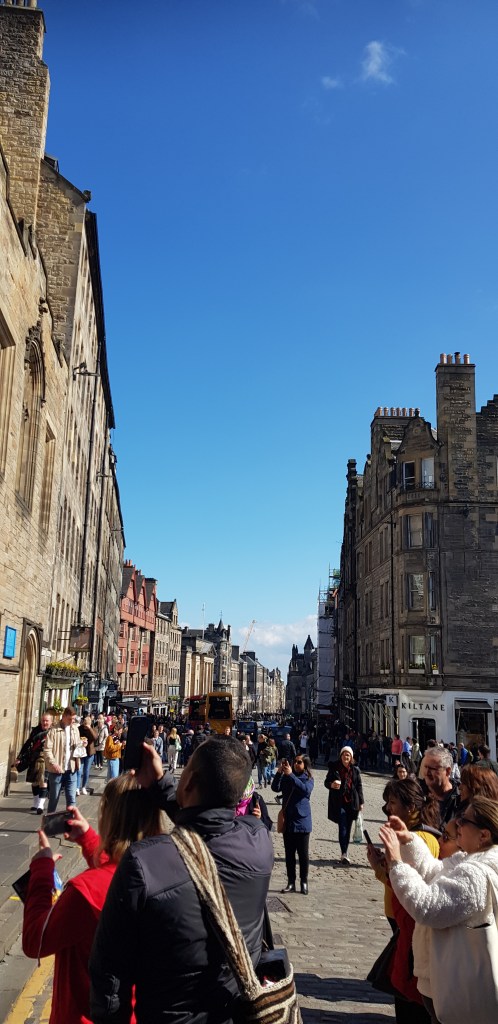
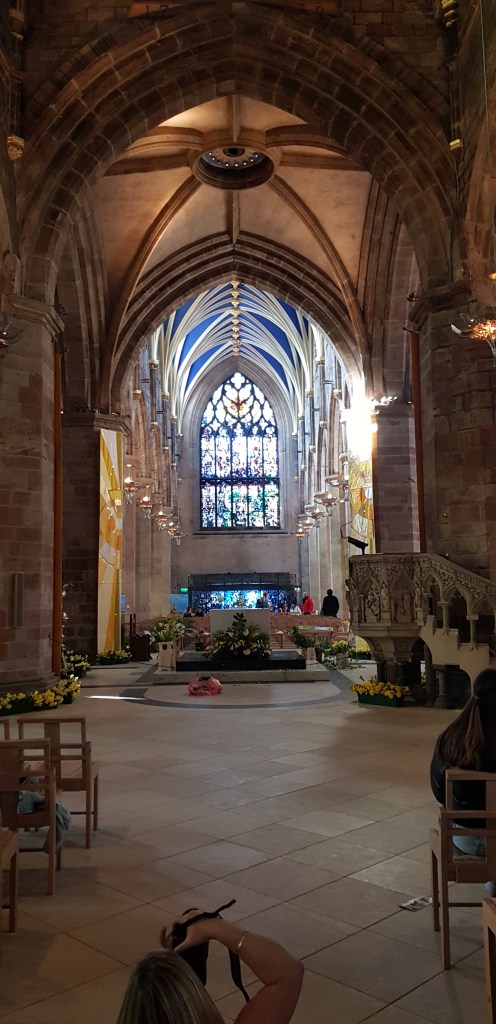
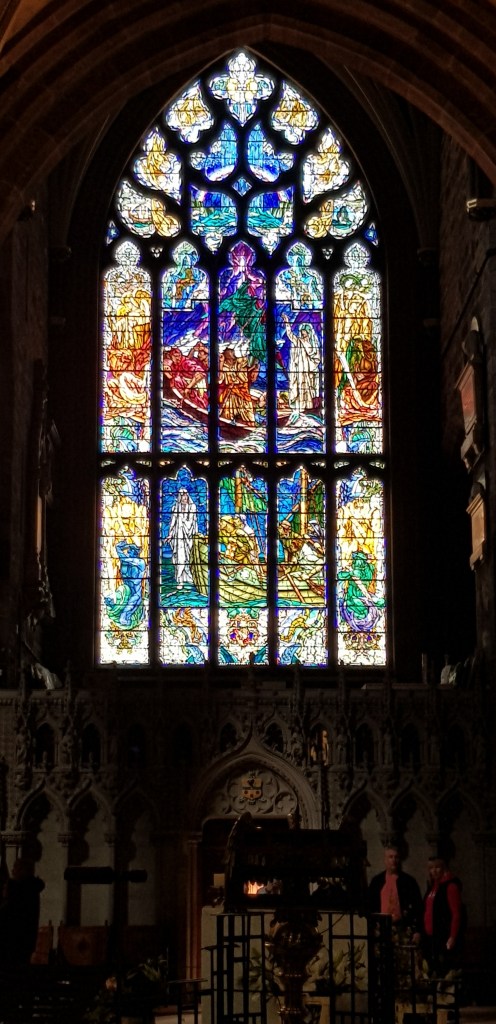
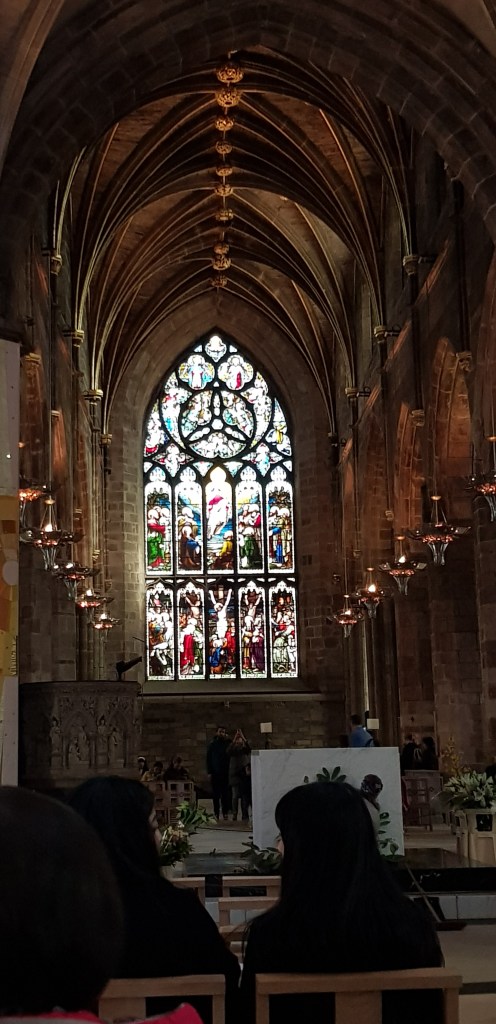
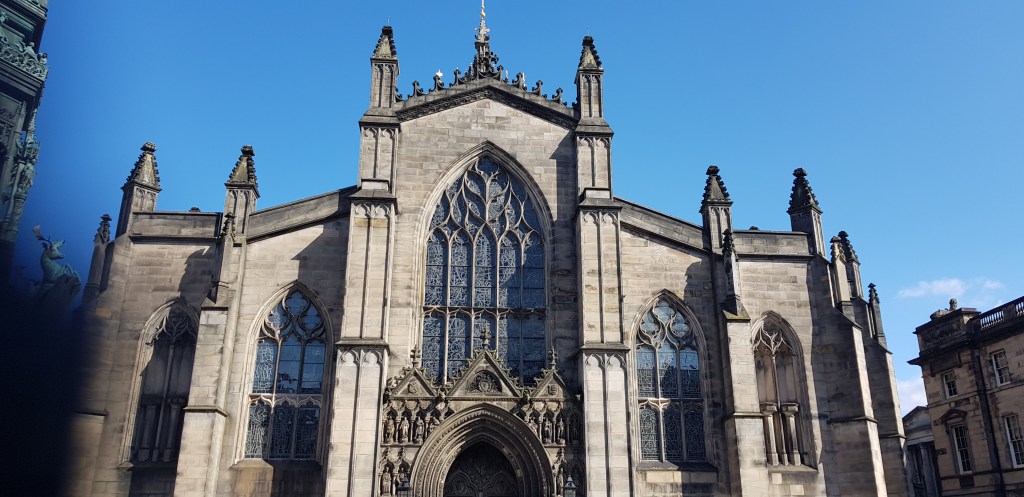
After leaving the castle we wondered down the ‘mile’ which is the long tourist filled street where you are never short of hearing a bagpipe or being able to find yourself your own brand of Tartan. Not far along, I came to the St Giles Cathedral, which was a nice place to just take a seat and enjoy the ambience, and the cool escape from the hectic busy centre outside the doors.
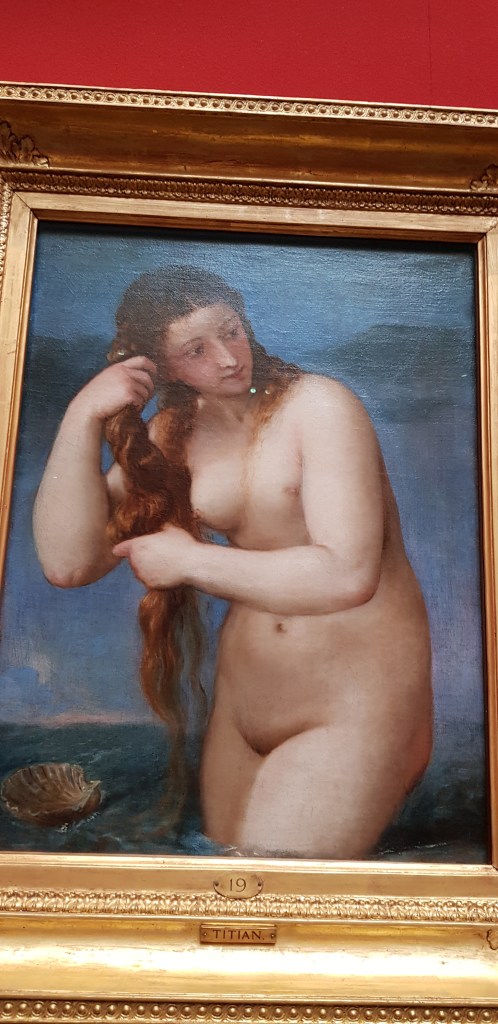
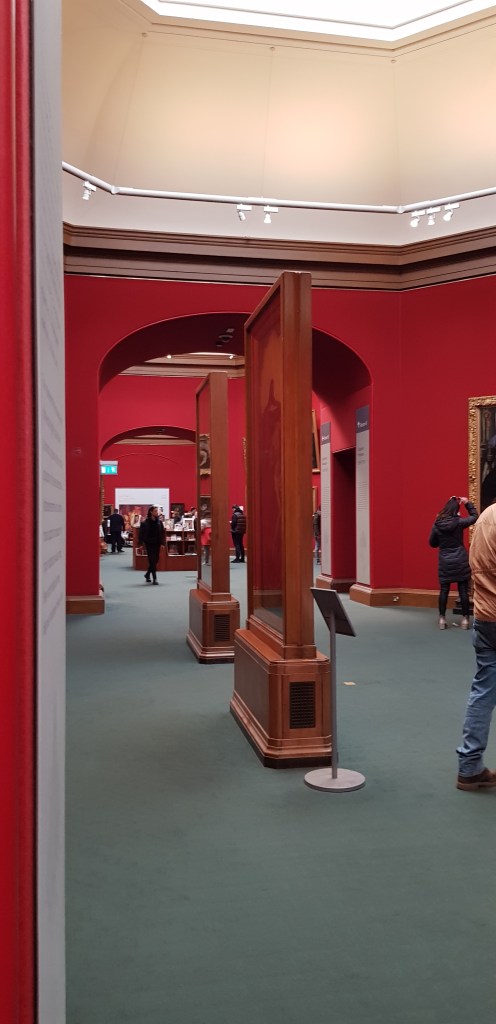
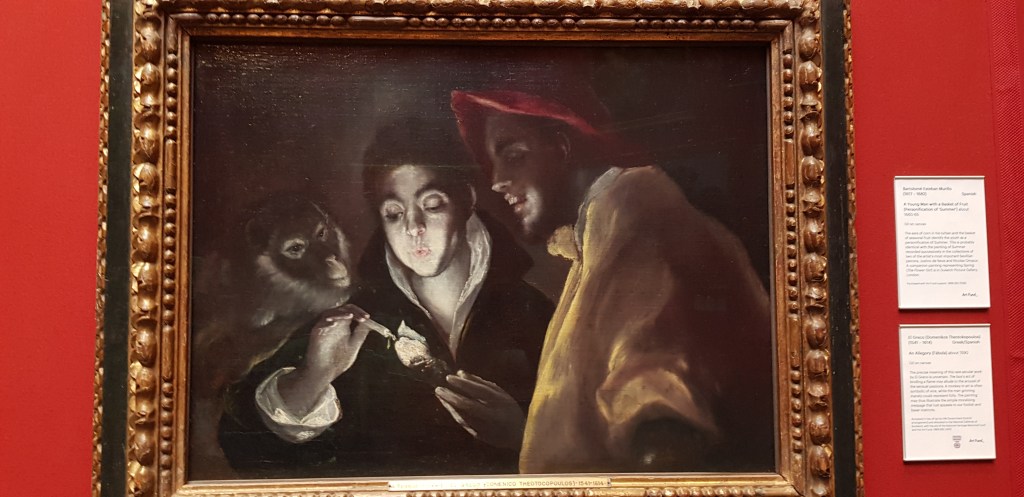
After a little break, I delved into more inspiring arts and information by visiting both the National Gallery and the Museum of Scotland. Both had great information and exhibits, but the gallery was definitely less daunting than the very large museum.
The Scottish Highlands within easy reach…
On our last full day which also happened to be Easter Sunday, we decided to go on a full day tour of the highlands. The tour was on a coach with many other visitors from around the world, and was led by a very good looking Scot in a kilt, who kept insisting he did not feel the cold when he blasted the air conditioning on full and me and my friends were going blue…
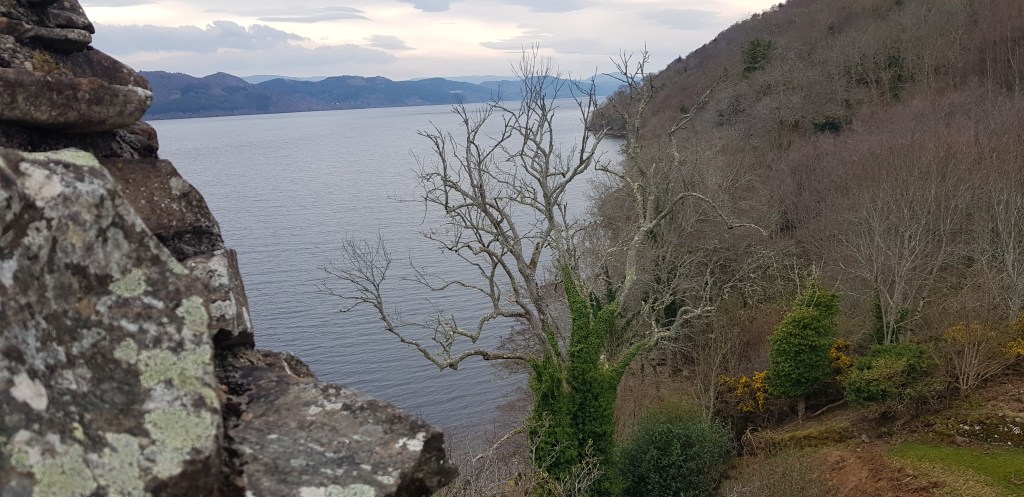
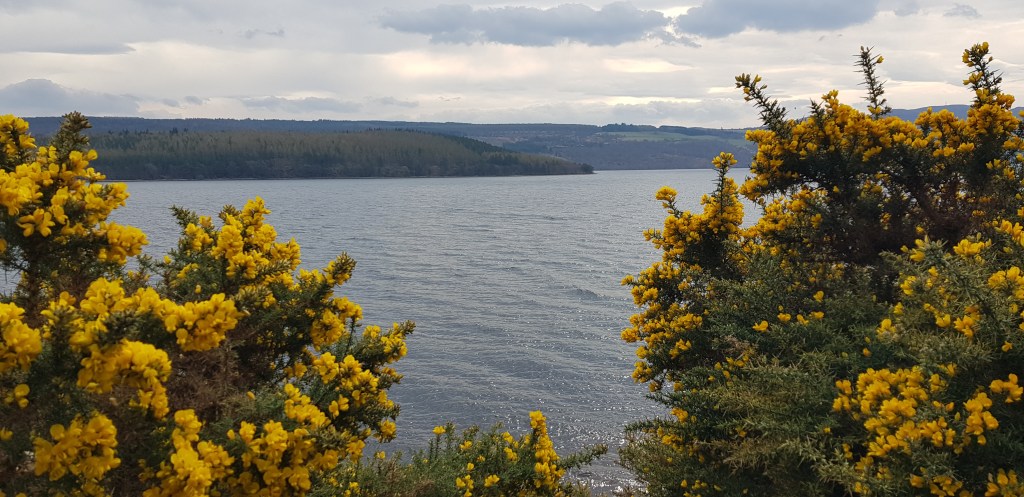
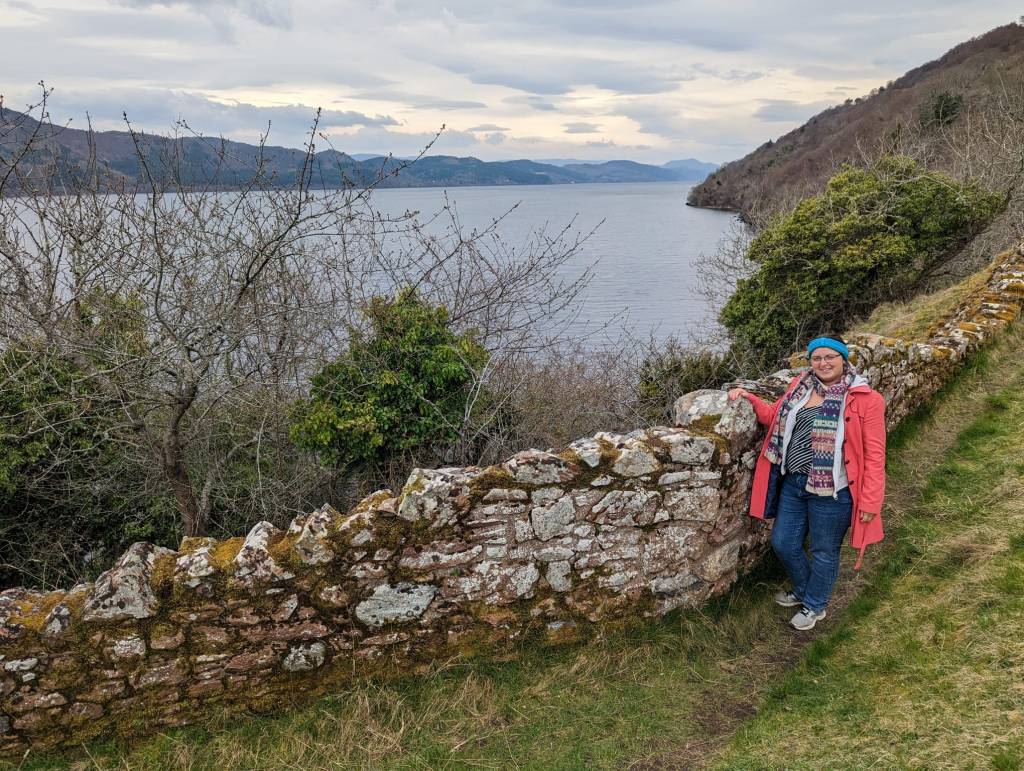
The tour visited some key locations like Glen Coe, and local castles and villages, but the big one was Loch Ness. We visited in by road, and then took a cruise on the lake, which in hindsight was very crowded with tourists, and this was during the beginning of Spring, so not the busiest time of the year. The lake itself though is incredibly large! It apparently is so deep and wide that you could fit the whole population of the world inside several times over. I don’t know why, but I was expecting something a bit smaller, so I was impressed. It is just a shame that this was the day that the Scottish weather came to visit and we were all stuck in the wind and cold, but we did avoid the rain!
Farewell to Edinburgh
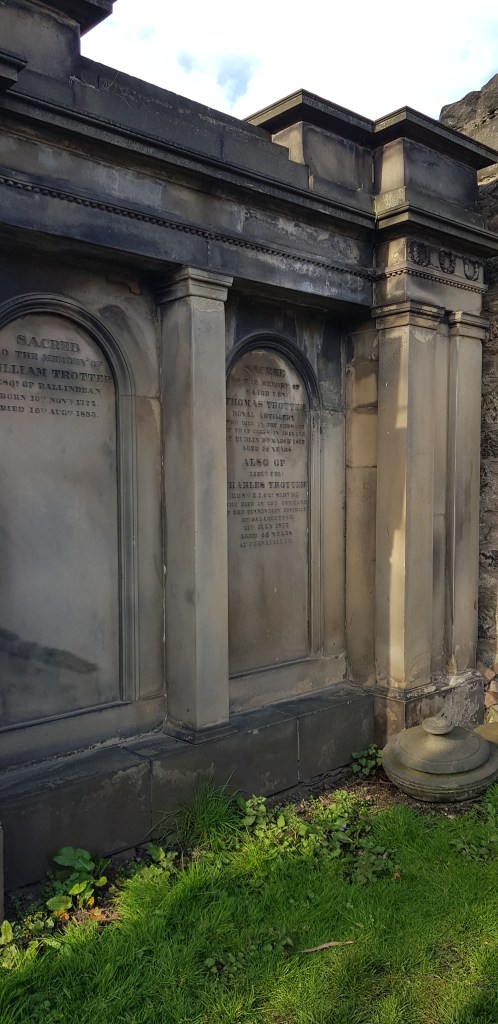
Before leaving the city on our final morning, we did a little exploring of the local cemetery and were able to see and secure photos of the grave of the infamous Thomas Riddle. That’s right, the dark lord himself. Well… actually, it is the grave of someone with the same name, apparently J K Rowling took the names of many of the Harry Potter characters from this very same graveyard. Spooky!
Finally, it was time to jump back on the train and bid farewell to the capital of Scotland. I pondered on it, and decided that I would be happy to return to Edinburgh and see more of the highlands and Isles too, but for now it was just time to take a long nap all the way home…
Whilst the world began to prepare for the Christmas season, I decided to jump on the train (in the middle of a train strike) and take a solo adventure to the North East of England, ticking more cathedrals off my list.
York
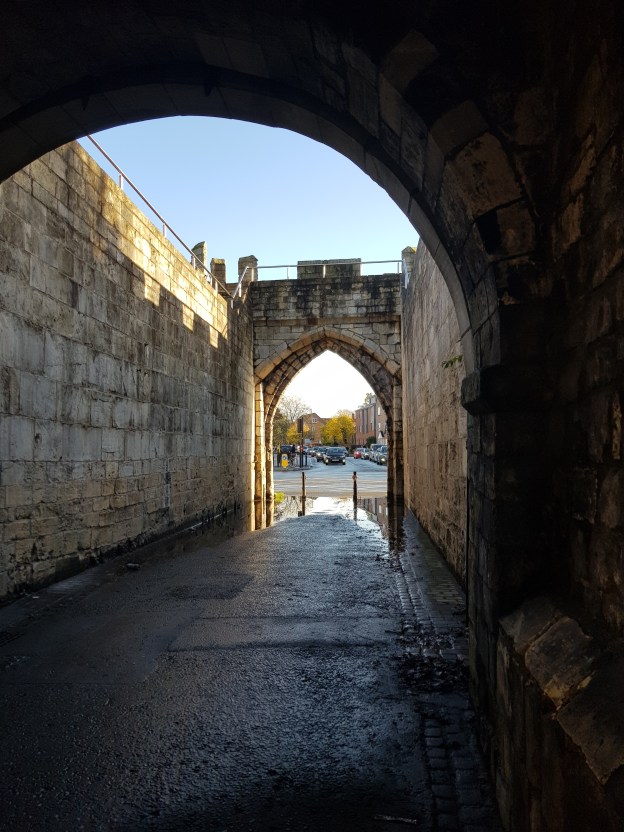
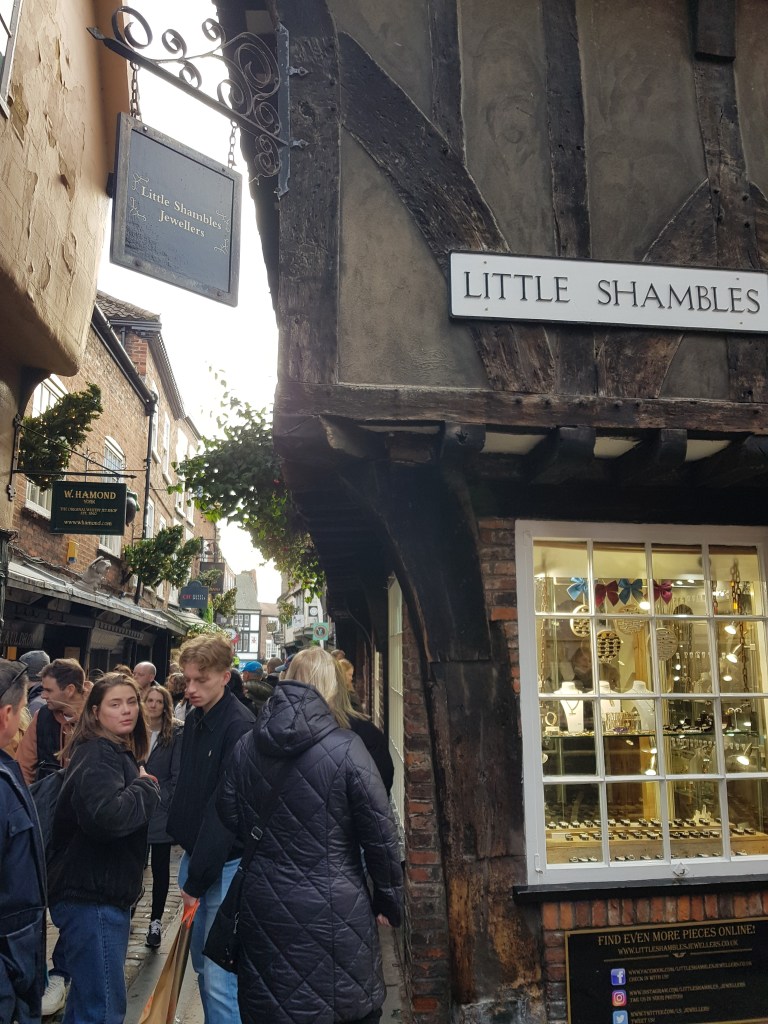
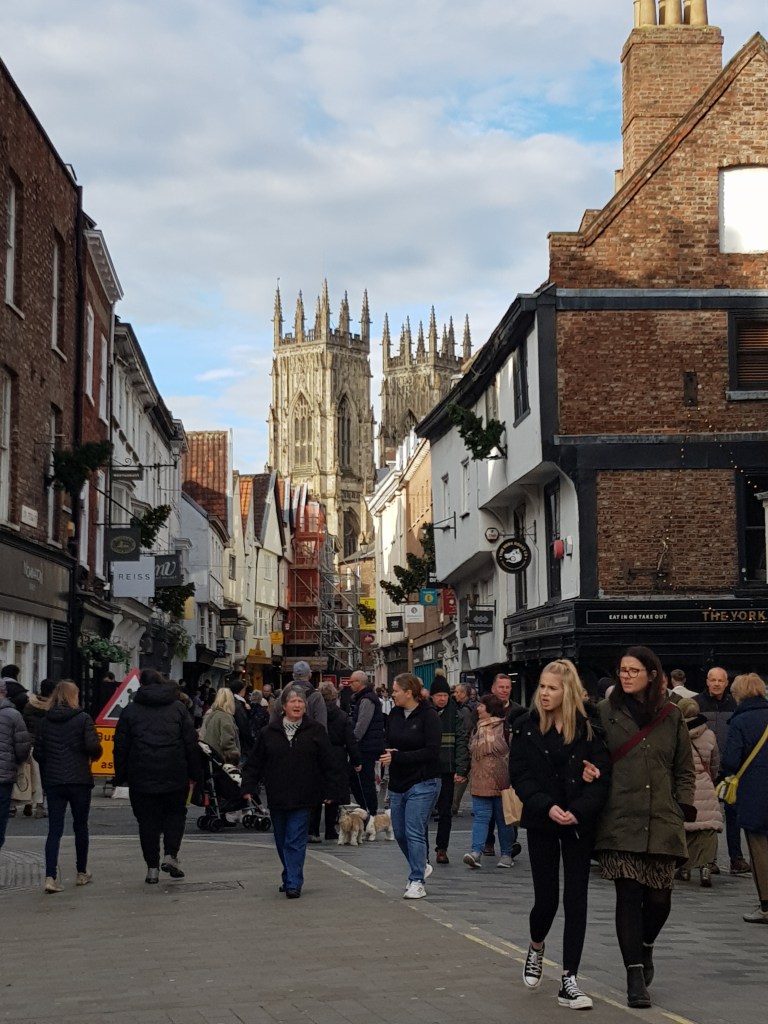
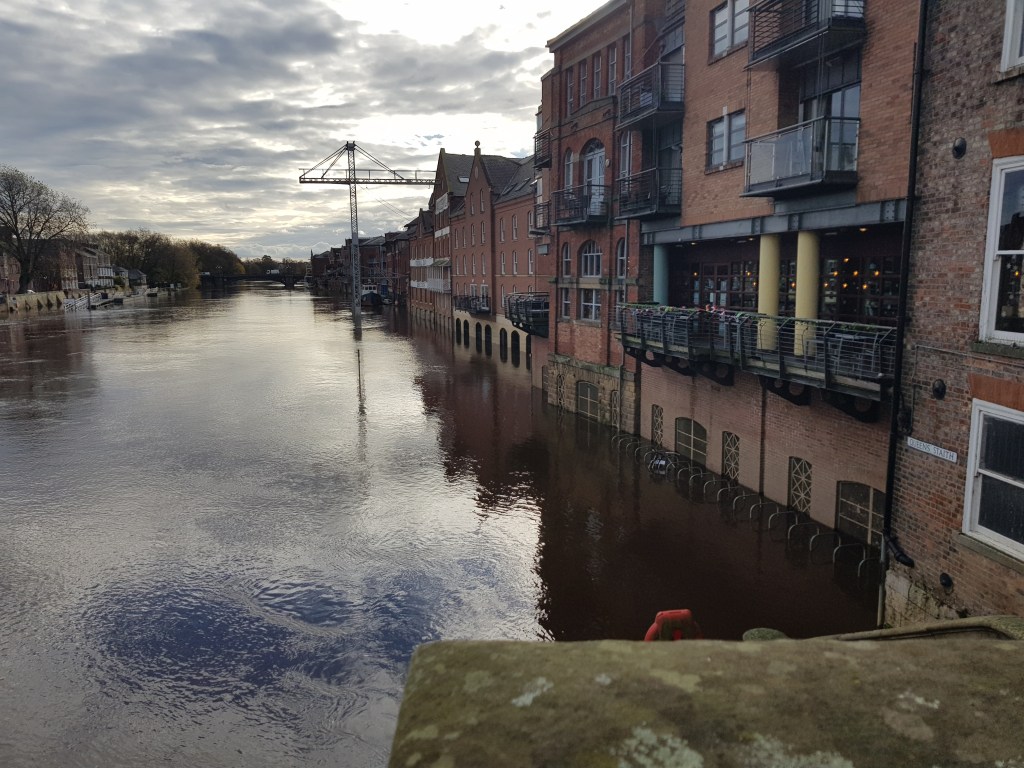
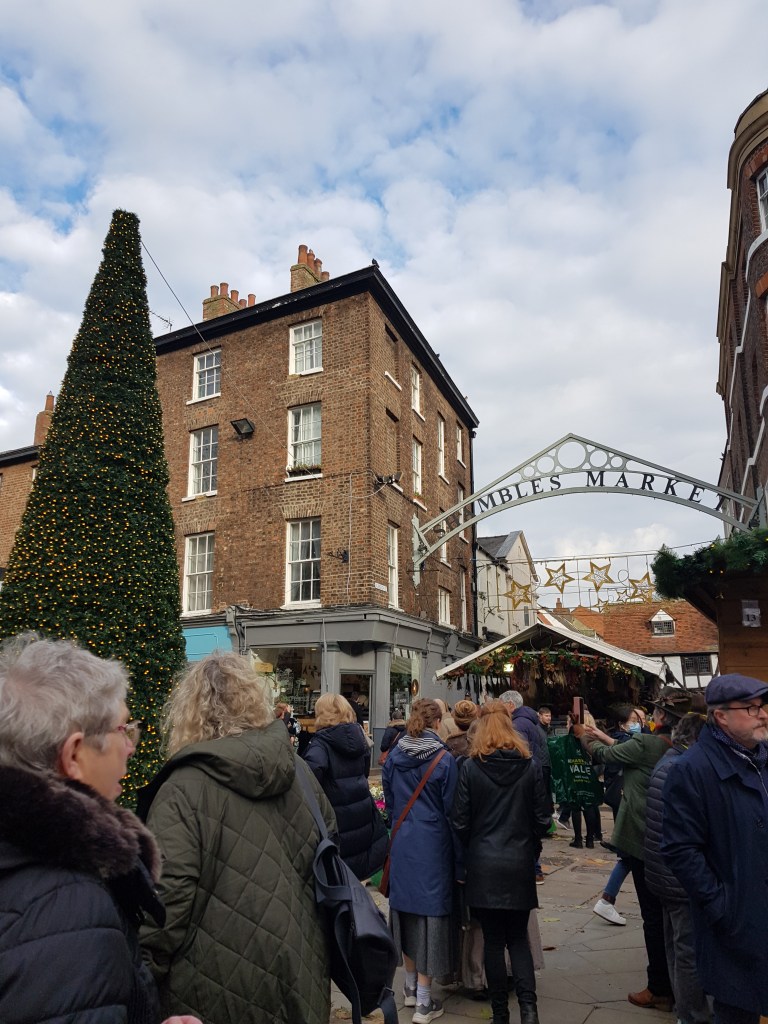
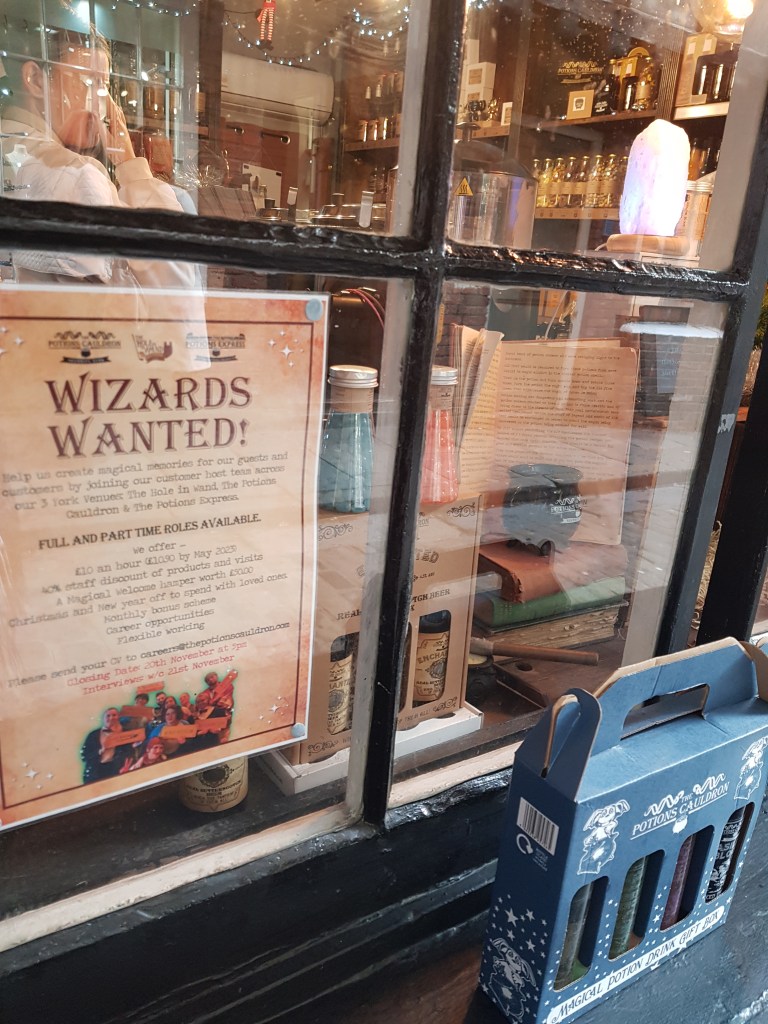
I set up a base in York for my week in the North, at a hostel nearby to the center. York has a lot to offer, being good for shopping, historic walks and interesting attractions. I spent my afternoons there wondering the streets that were used for Harry Potter’s Diagon Alley, which now have wand shops, and novelty potion brewers. As well as a great shopping offer throughout the historic city, you can also walk the entire length of the historic roman walls, this walk takes less than a few hours but it does give you spectacular views of the city and the splendid York Minster.
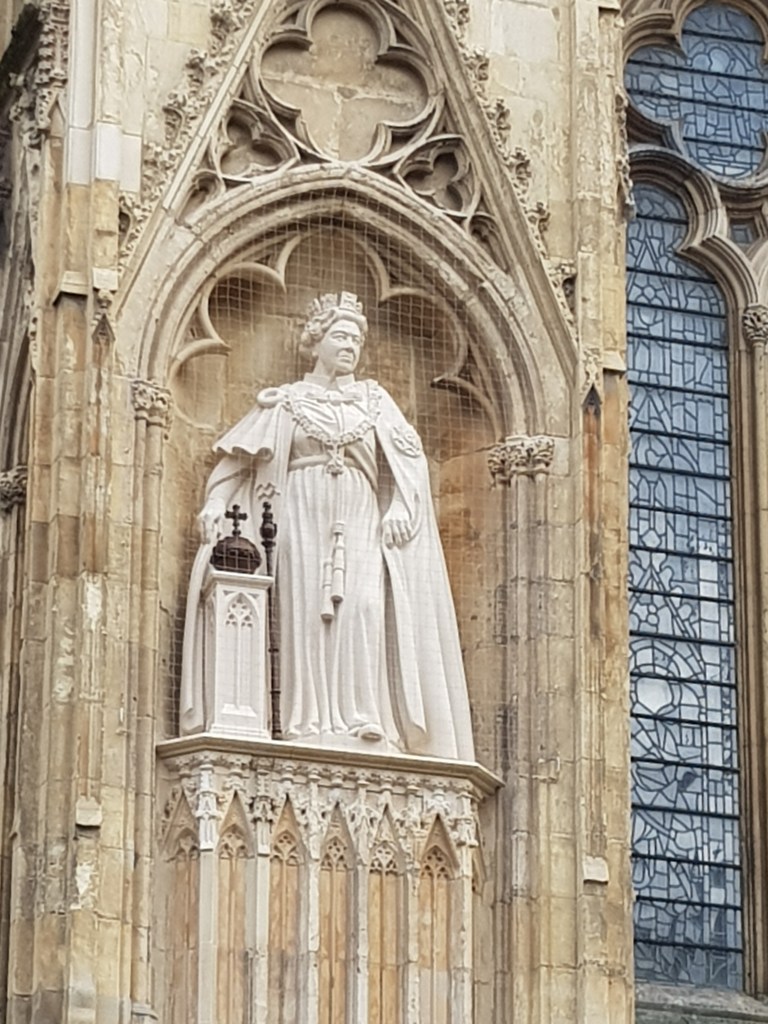
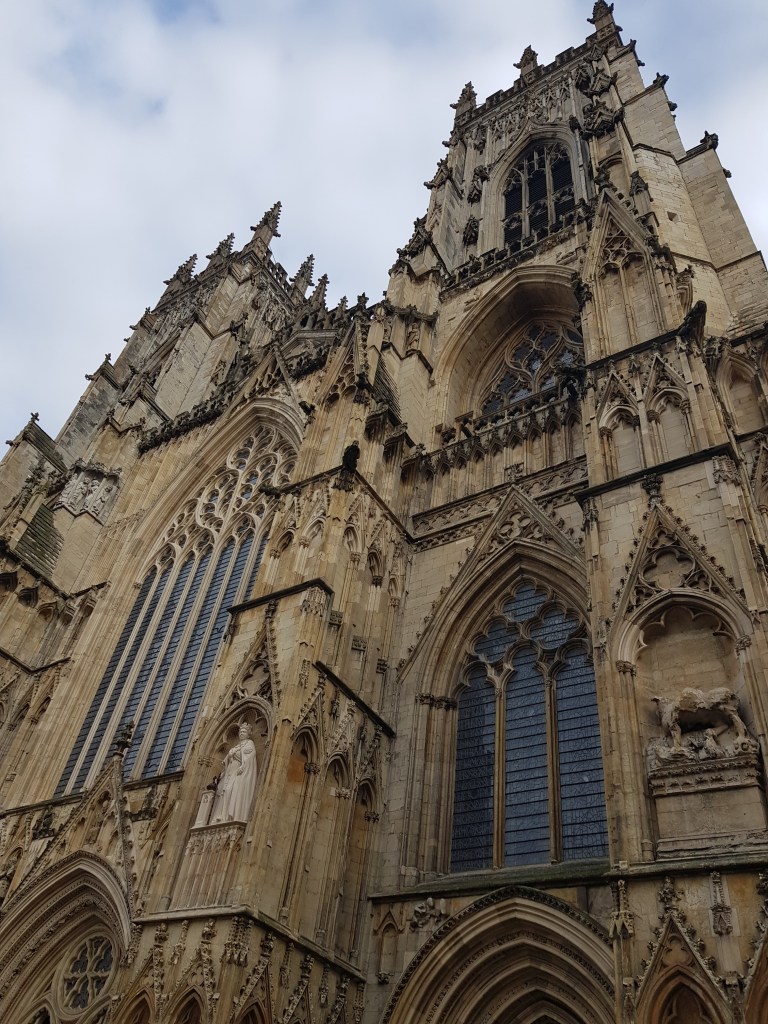
York Minster is the cathedral for the area and the largest gothic cathedral in North Europe. It is dated from 1200s onwards and is a very important venue to the church of England and the English monarchy. The space inside is huge and features a huge rose window with significant symbols of white and red roses relating to the symbols of past monarchs.
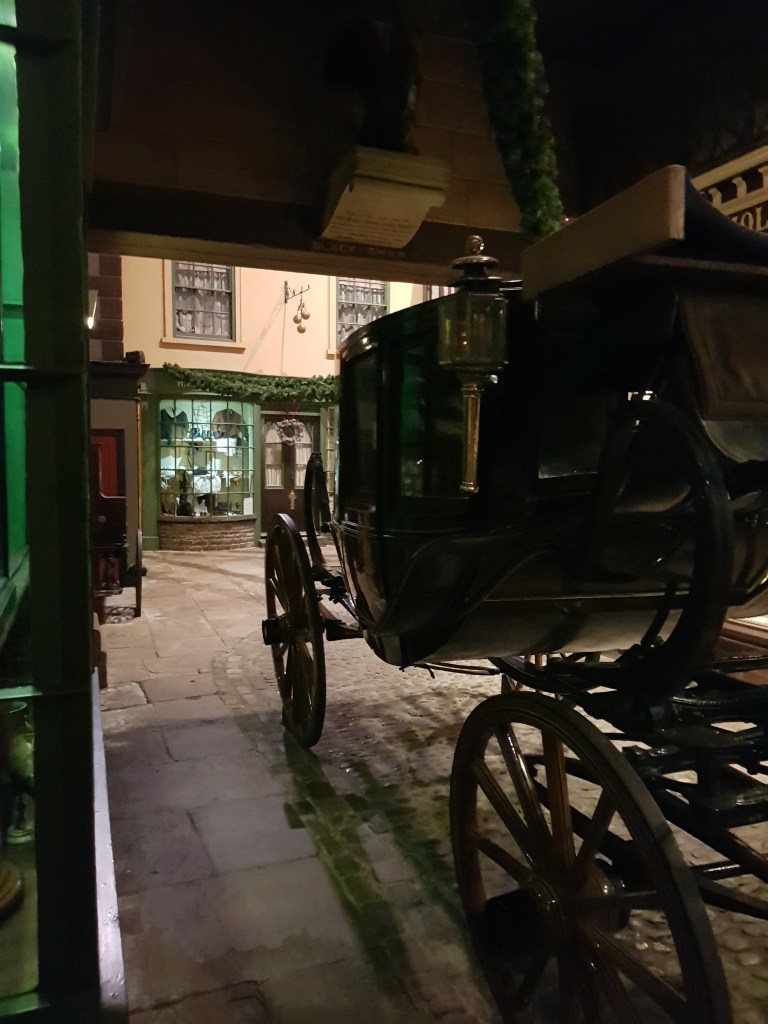
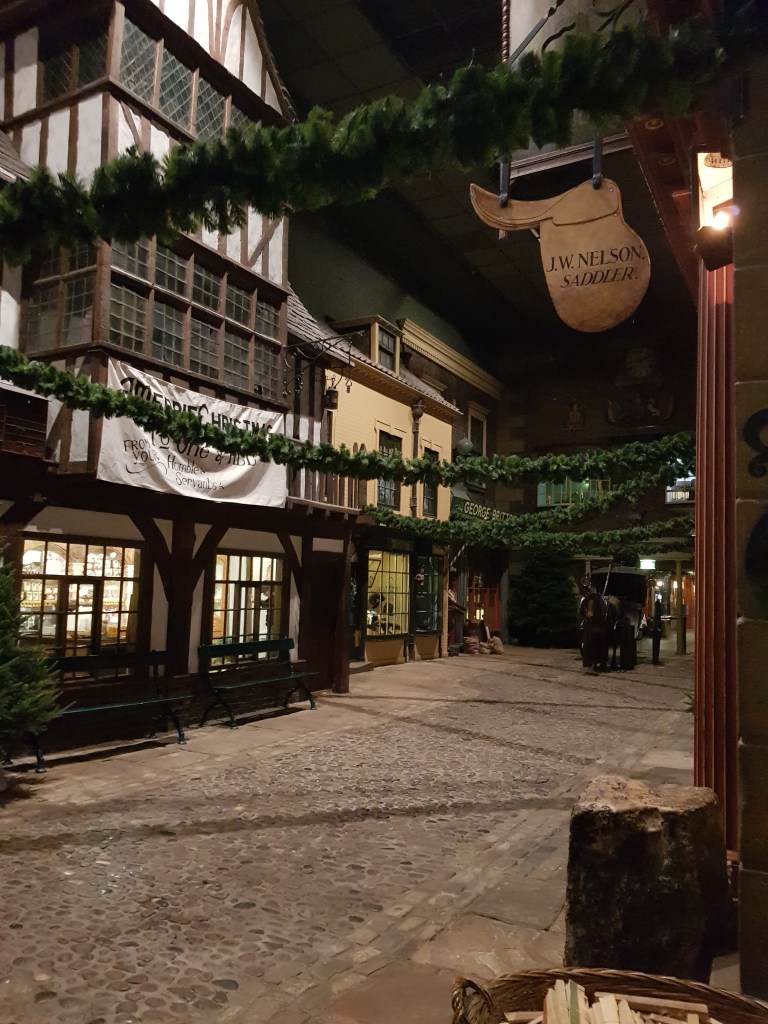
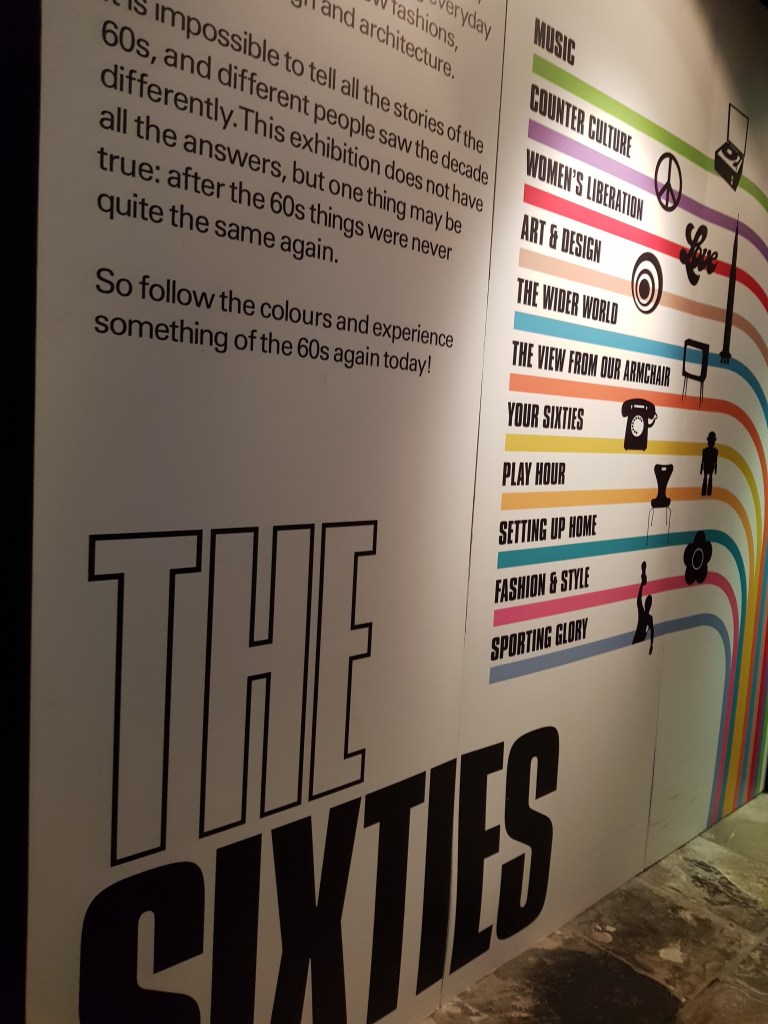
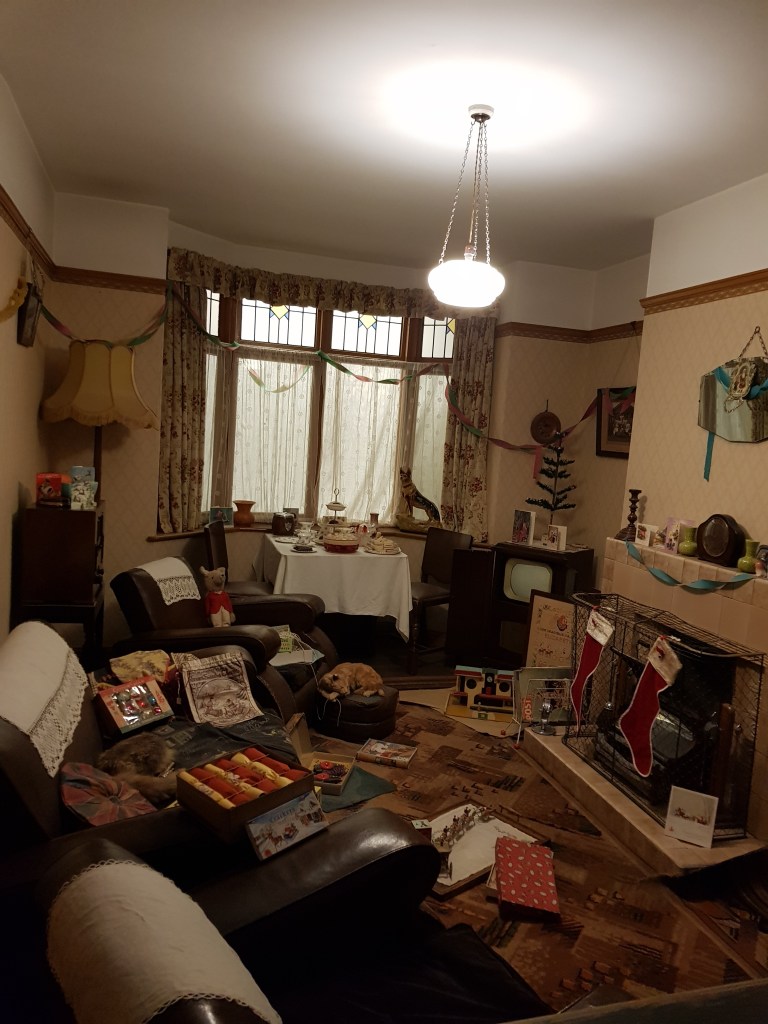
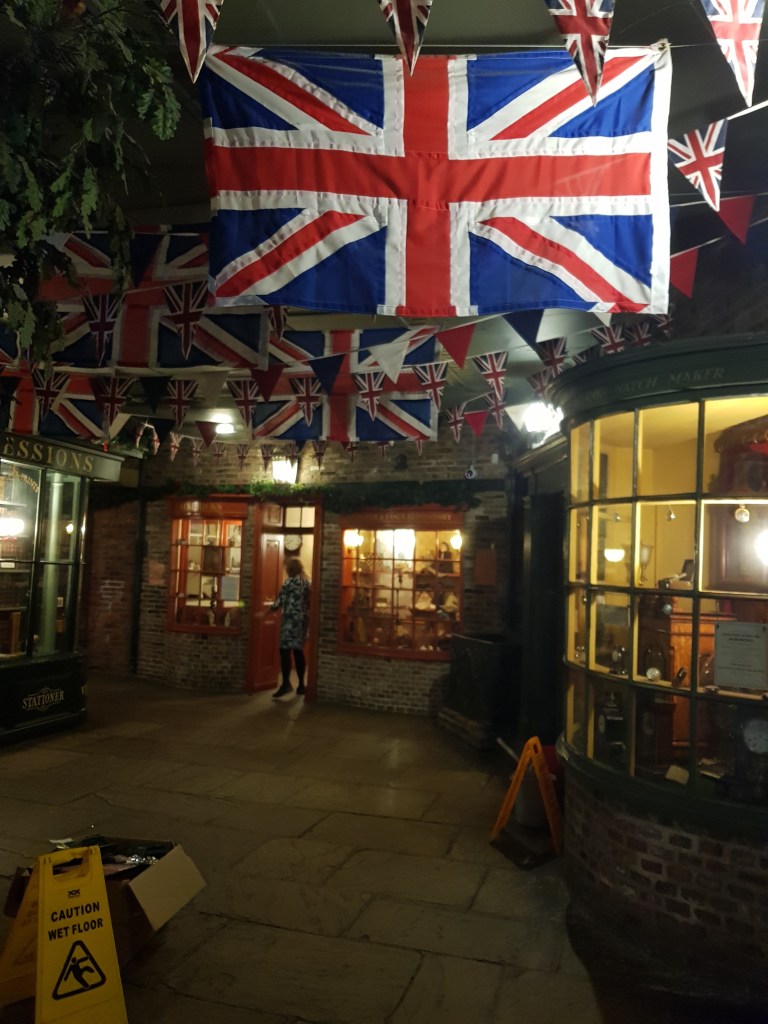
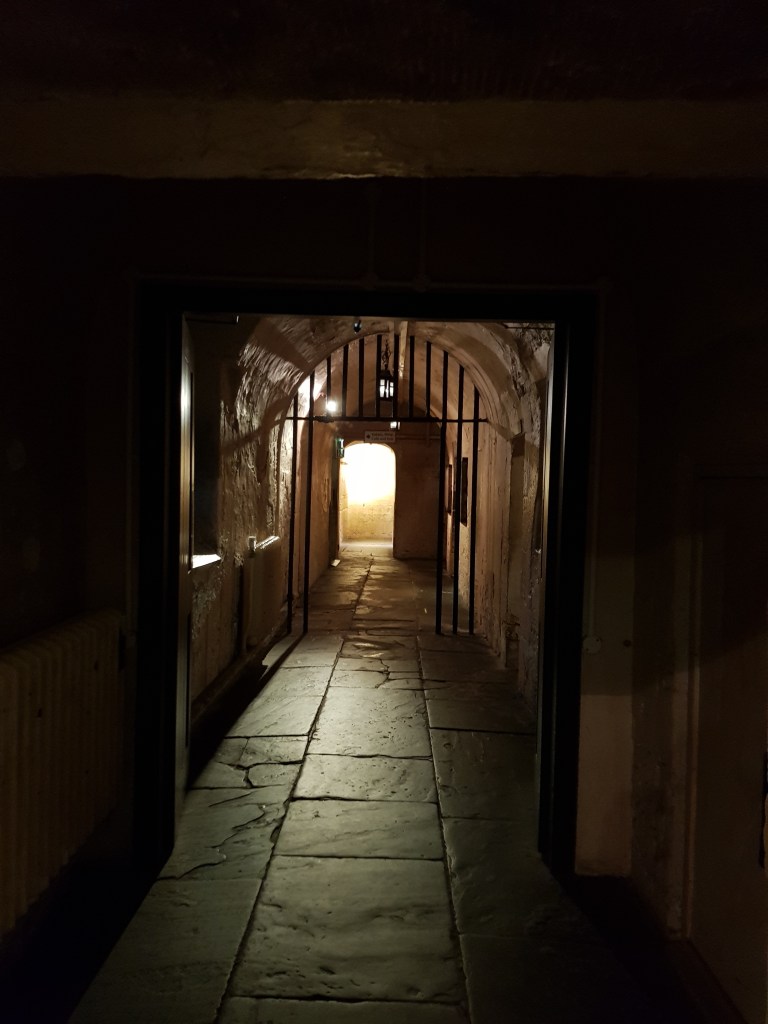
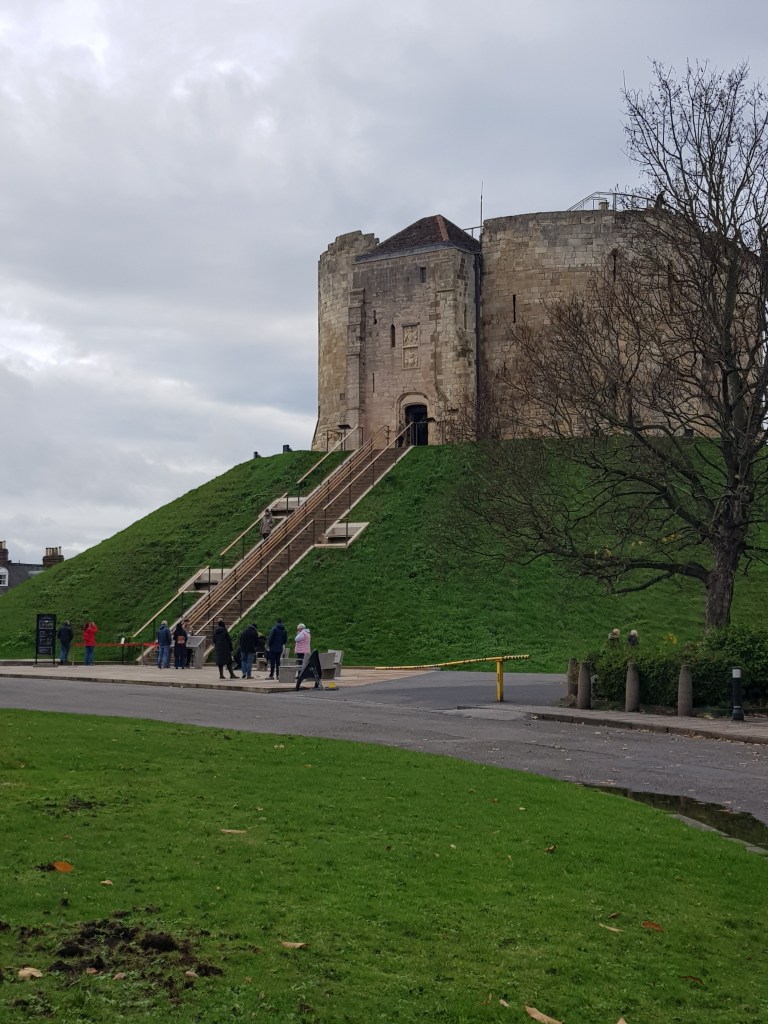
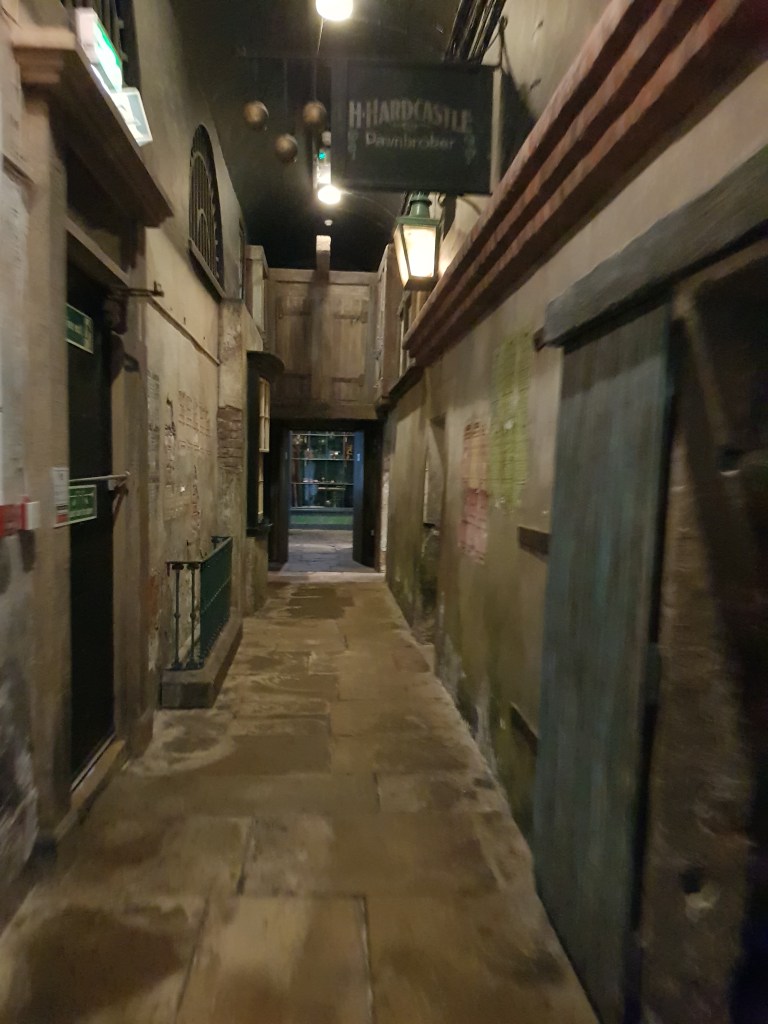
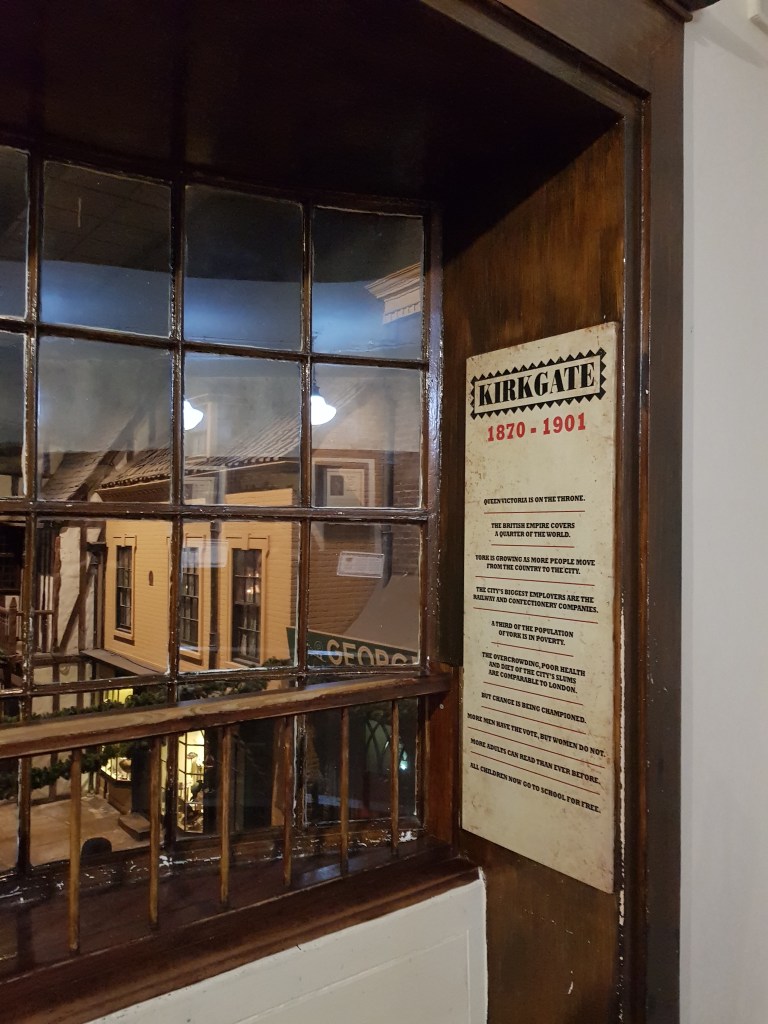
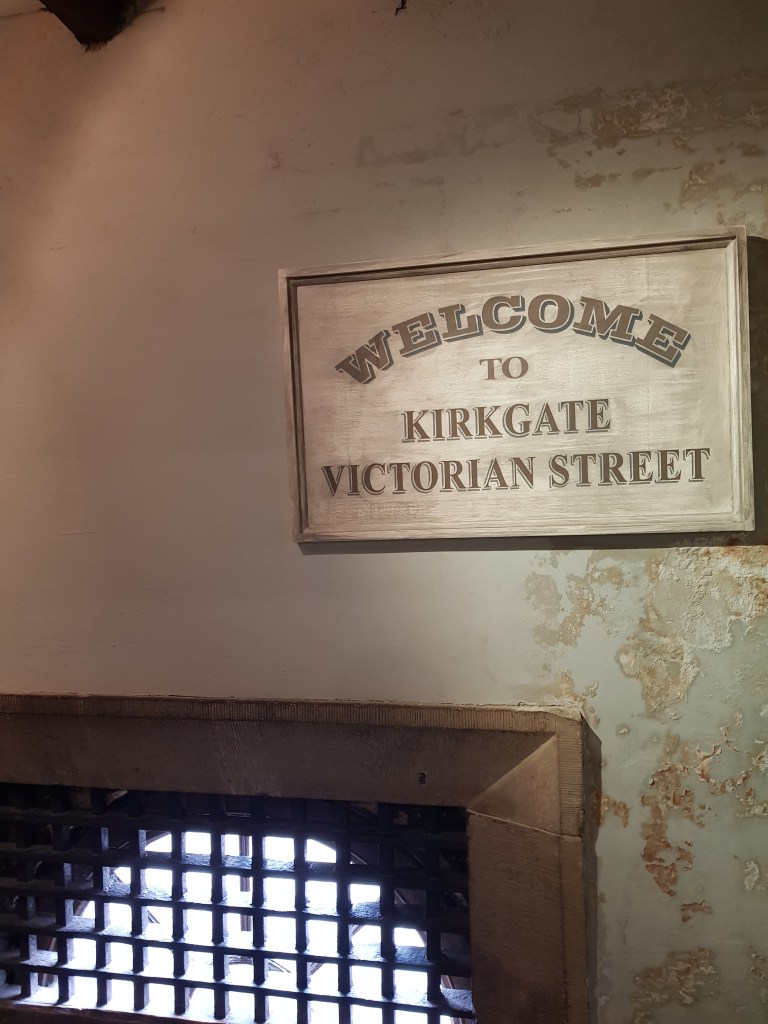
York’s castle and museum is also well worth a visit. The museum has very visual exhibitions, split between the old prison, a sixties exhibit, and a unique victorian street that looks straight out of Oliver Twist! Definitely a fun place to visit!
Going further North
One of the days in the week, I headed further North to Newcastle with a stop in Durham on the way back.
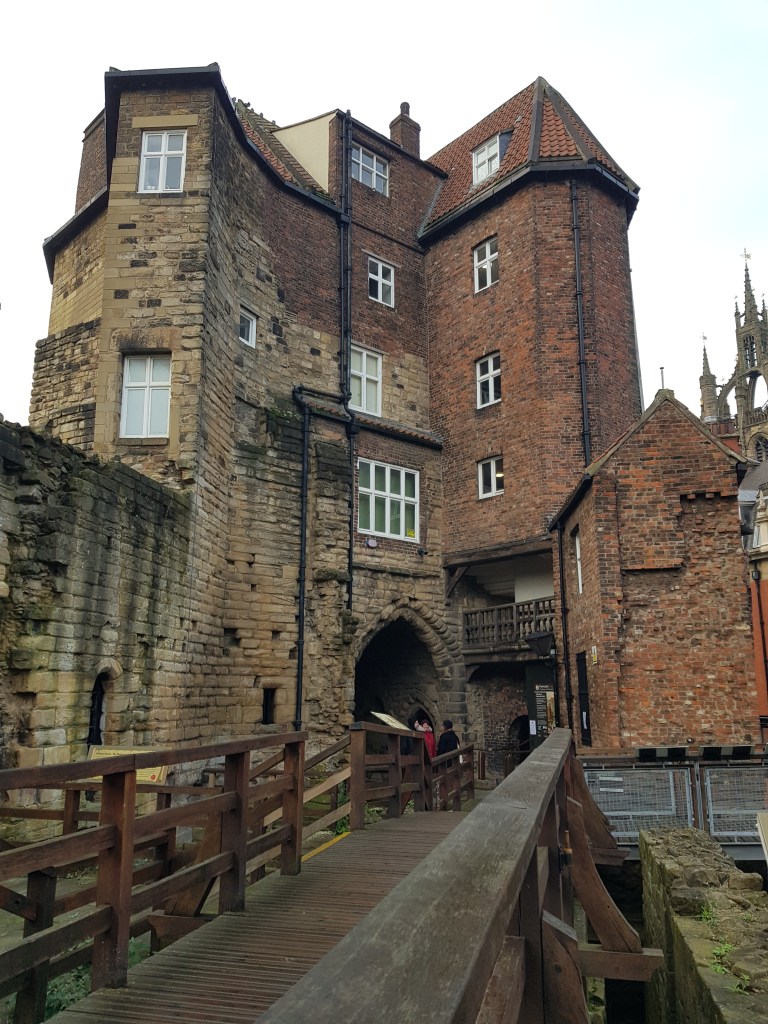
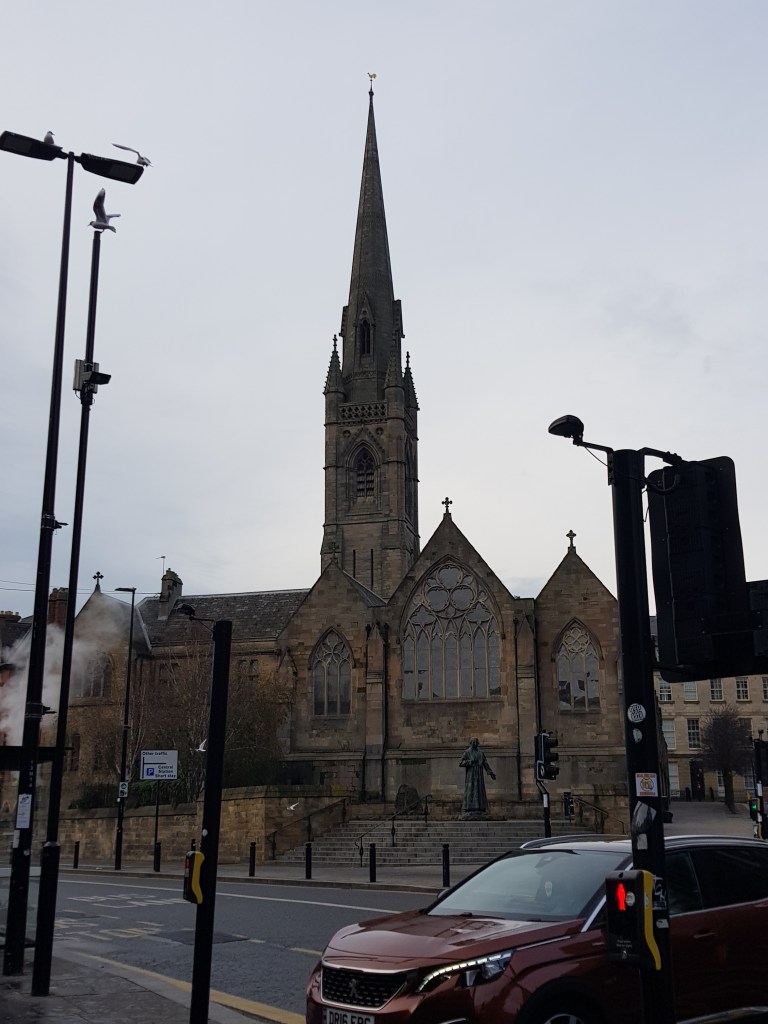
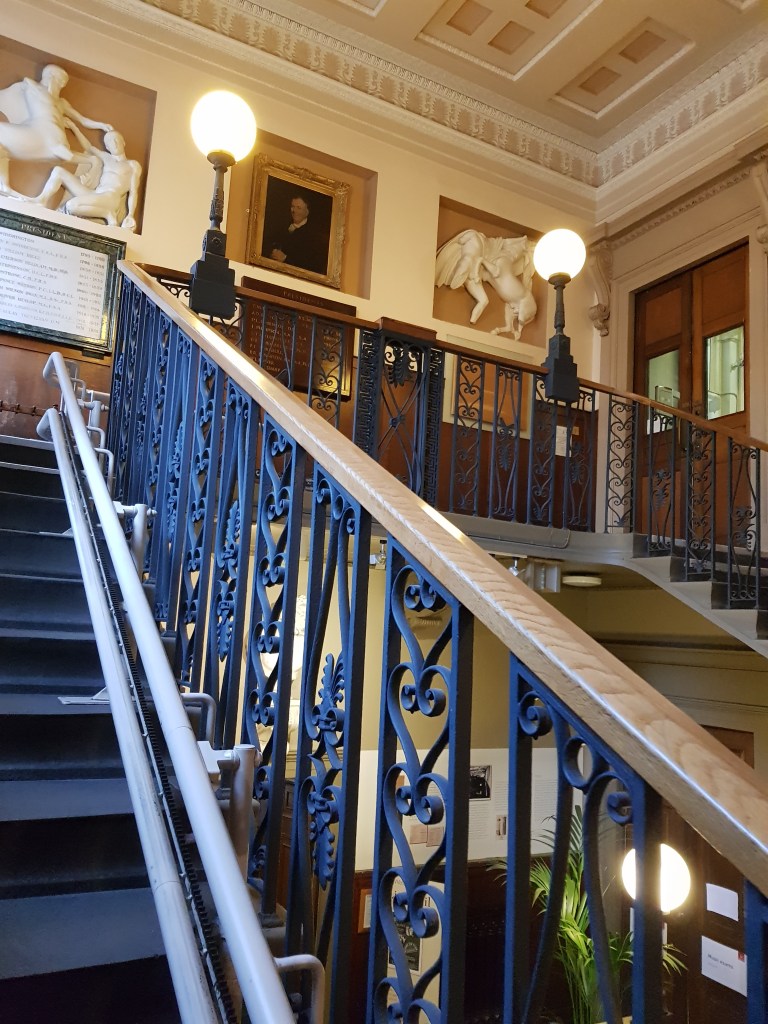
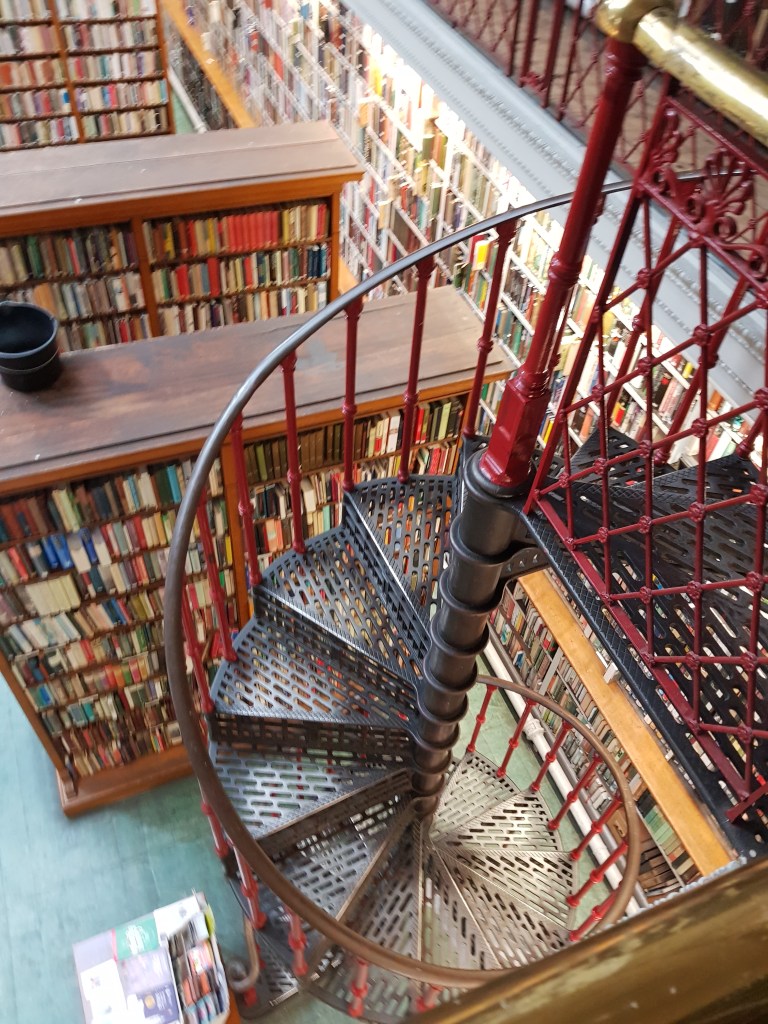
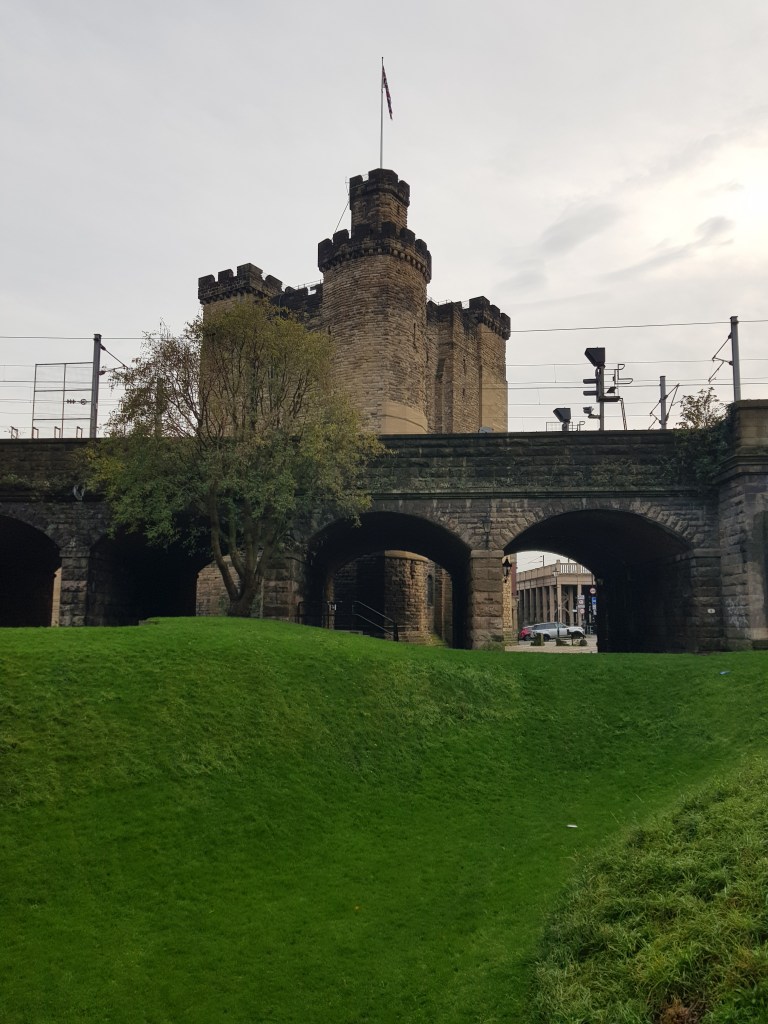
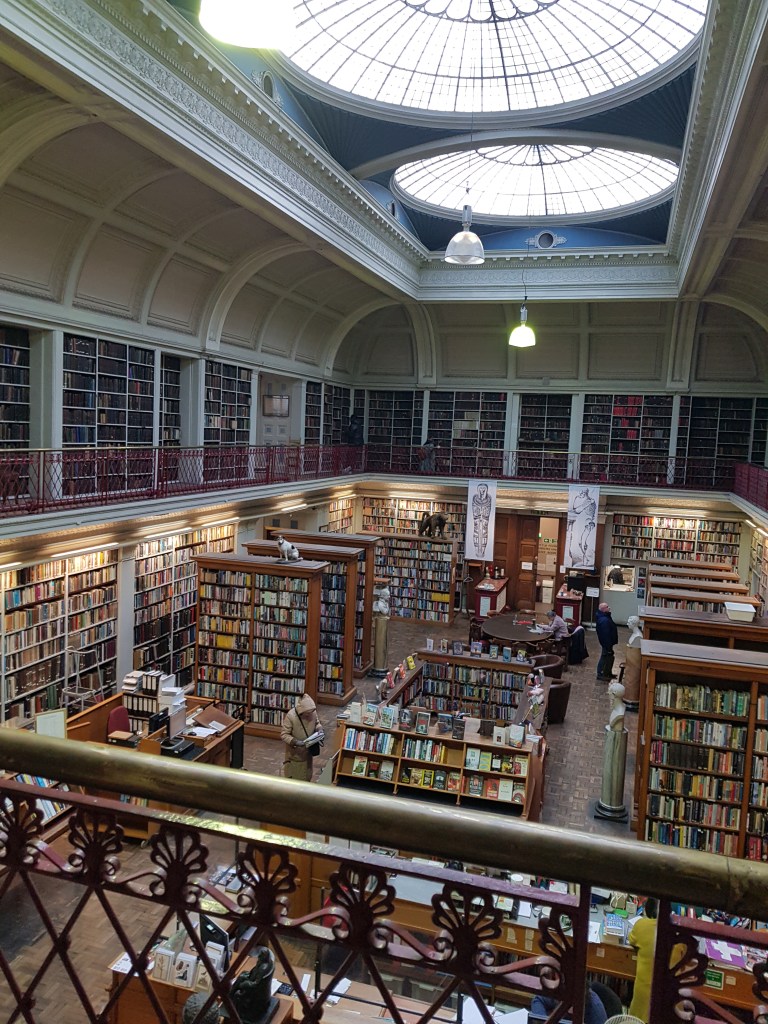
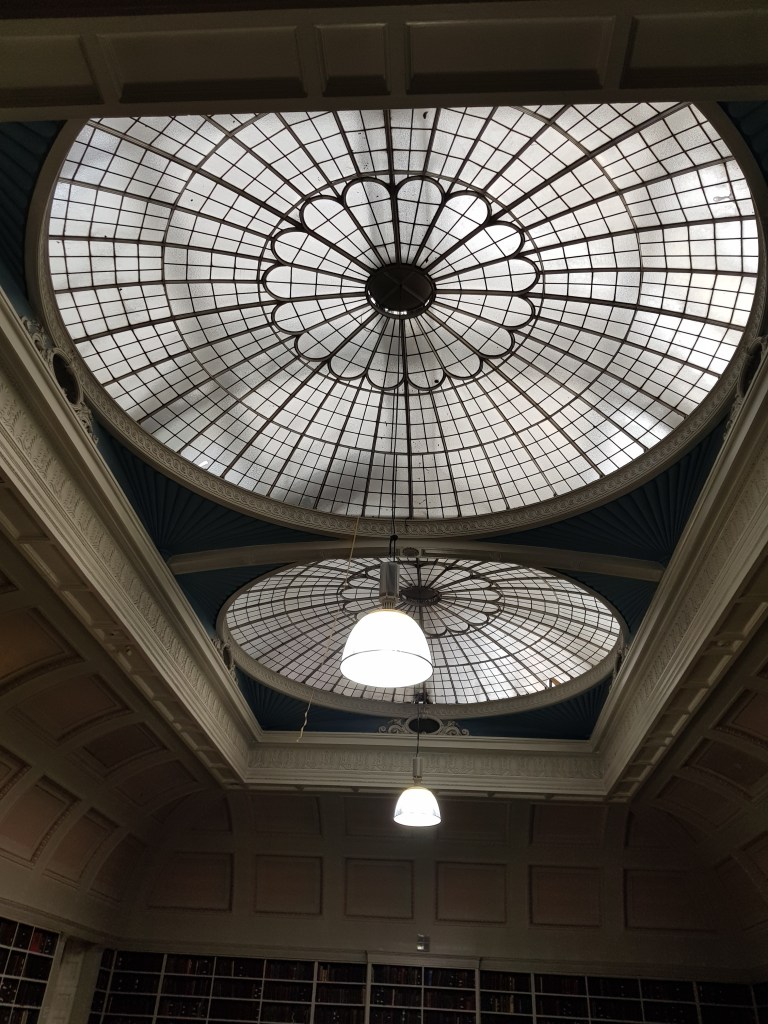
Newcastle was a whistle stop tour with a historic cathedral, the actually castle that the town is named after, which is today in some ruins, and I even found a beautiful historic gallery and library close to the train station on my way back. The library is still open to the public but is a great photo stop!
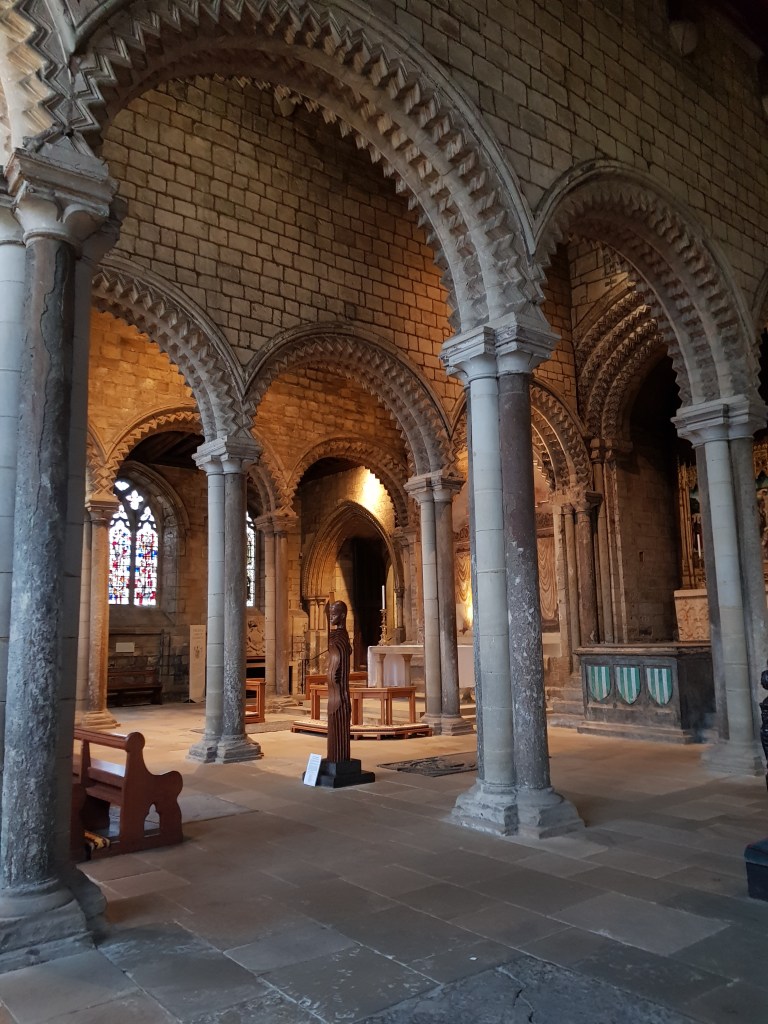
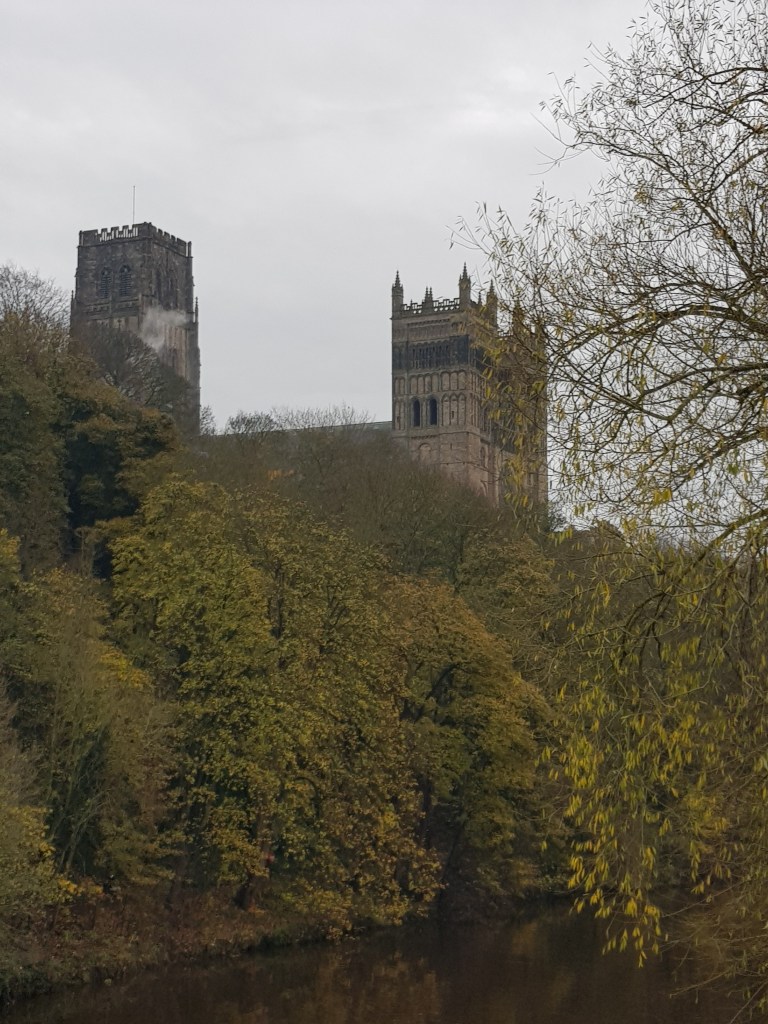
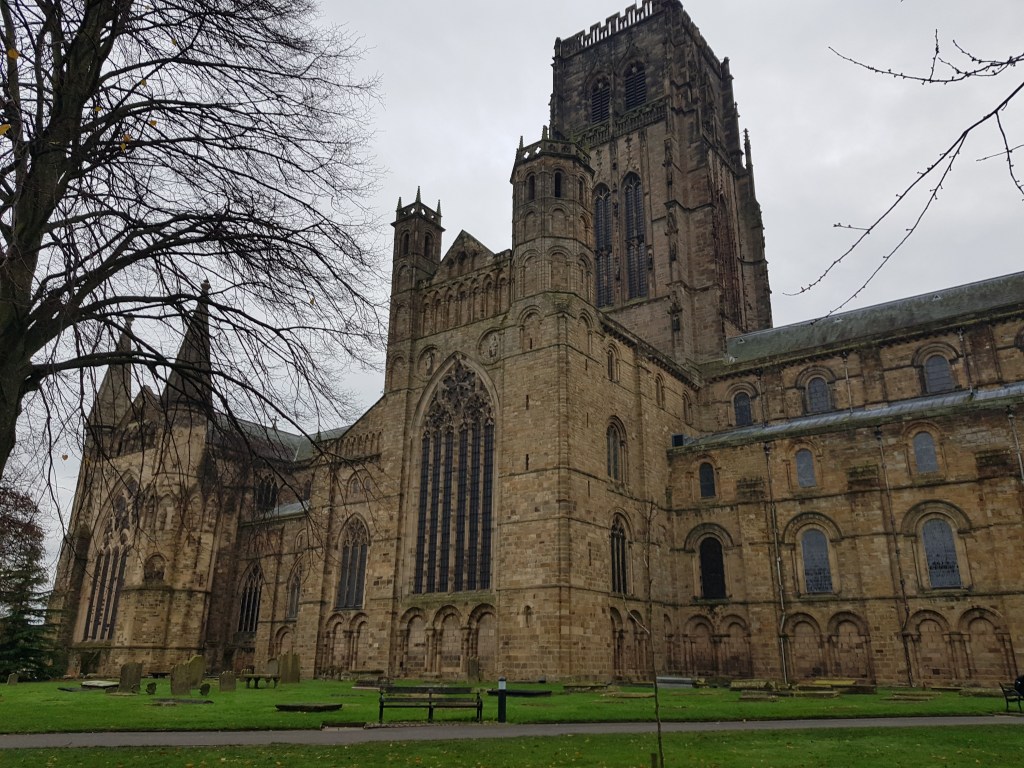
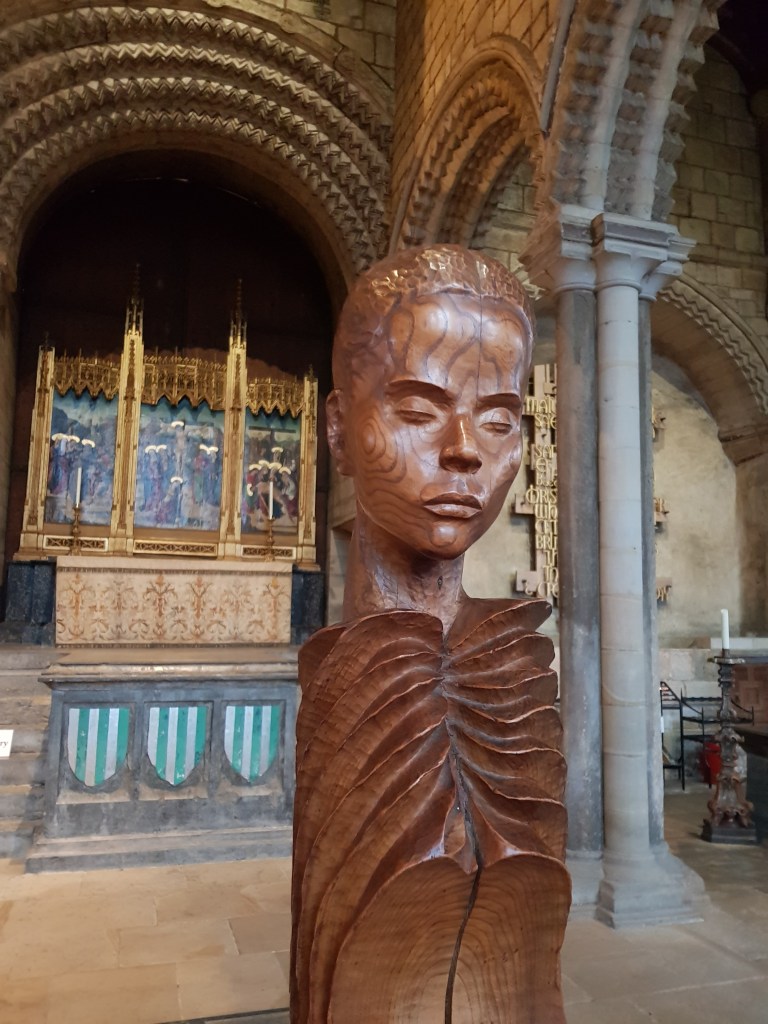
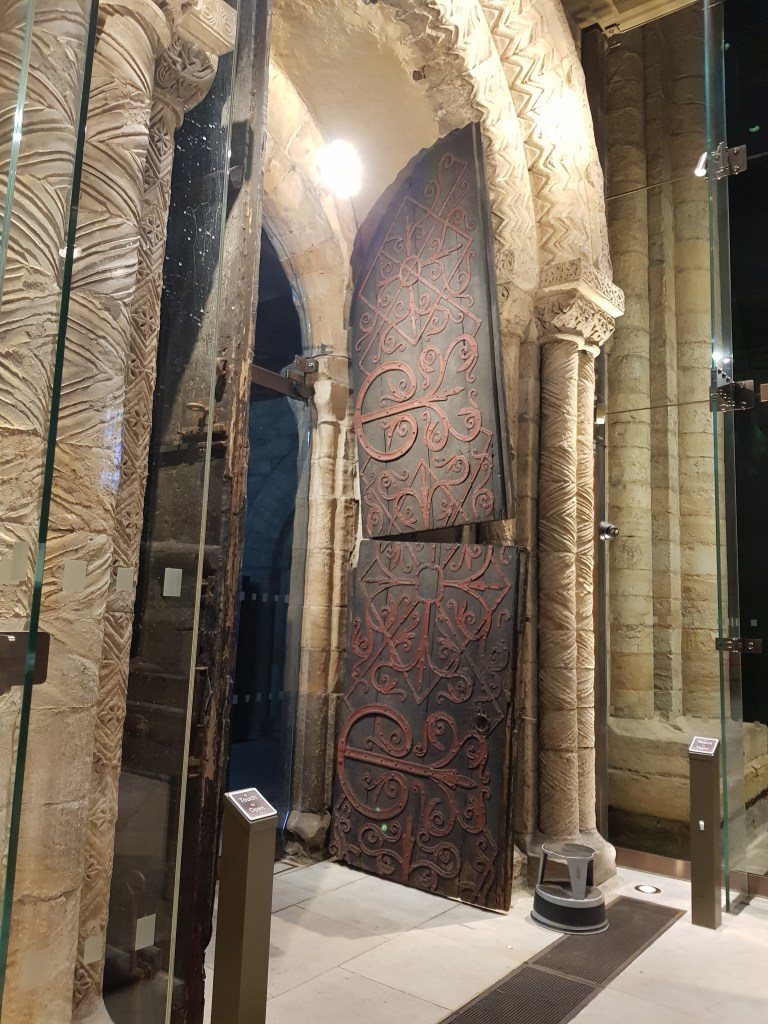
On the return journey, I stopped in Durham, which is a beautiful university city, to see what is thought of by many, as one of the most beautiful cathedrals in the UK. I can see why!
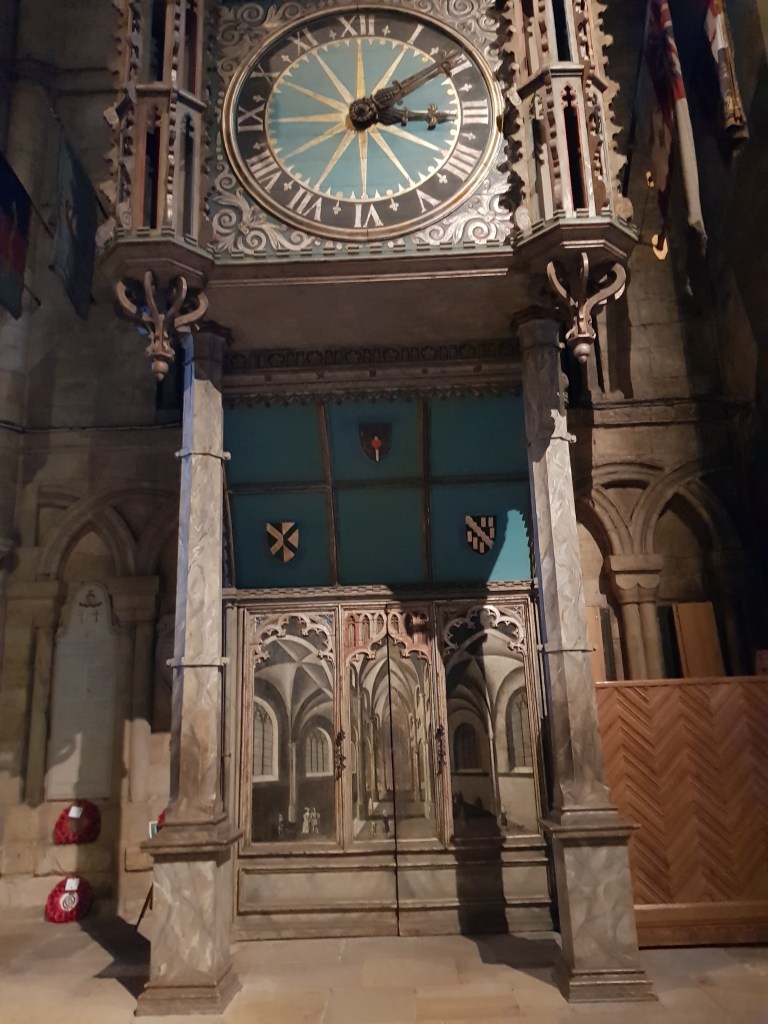
The windows and stonework are beautiful, and the cathedral even has a gorgeous medieval clock. It is next to university buildings and so you cannot help but be jealous of the students that get to live and study in the amazing surroundings.
Finally, I took a half day stop in Bradford in order to visit the small cathedral there, which turned out to be a pretty building to see, and was smack in the middle of a thriving town center and Christmas light display.
I am slowly getting there with my quest to see all the Cathedrals of England! A bit more than a few still to go though!
On my quest to visit all the cathedrals in England, I headed to the center of the country to tour around the cities that offer interesting histories and charming atmosphere.
Nottingham
Making Nottingham my base for the week, I stayed at my sister’s place in the centre of town where I could enjoy all that this historic city has to offer. Nottingham is probably best known for the legend of Robin Hood, where the tales of a hero from Nottingham that steals from the rich to give to the poor and hides out in Sherwood Forest, brings many tourists to the city. Whilst this romantic tale, provides a fairytale backdrop for the city, its current offering also has a lot to be proud of.
Nottingham offers historical charm in old pubs and underground city networks that can be explored, but also a vibrant shopping and entertainment experience. I stayed in the main high street areas, and each night there were the sounds of live music from varying pubs and a lot of activity to be heard. I wouldn’t doubt that some of this is because of the two thriving universities in the city. The city council seem to be very committed to creating free entertainment and events in the city, and I have seen festivities frequently within the main town squares.
My top picks of things to do in and near Nottingham city would be:
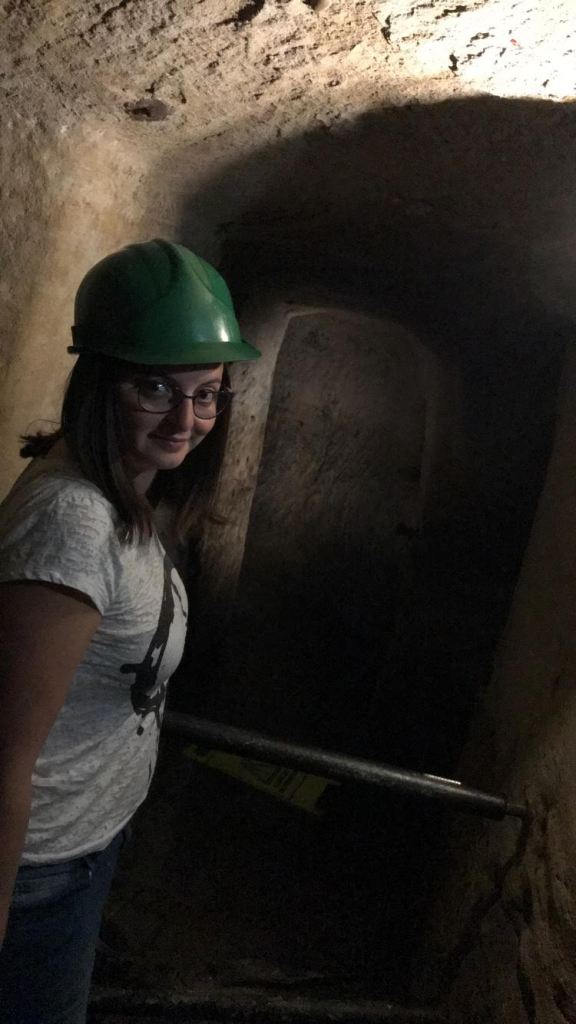
City of Caves – entering from the shopping centre, you can pop on a hard hat and explore the ancient city under the streets of the city.
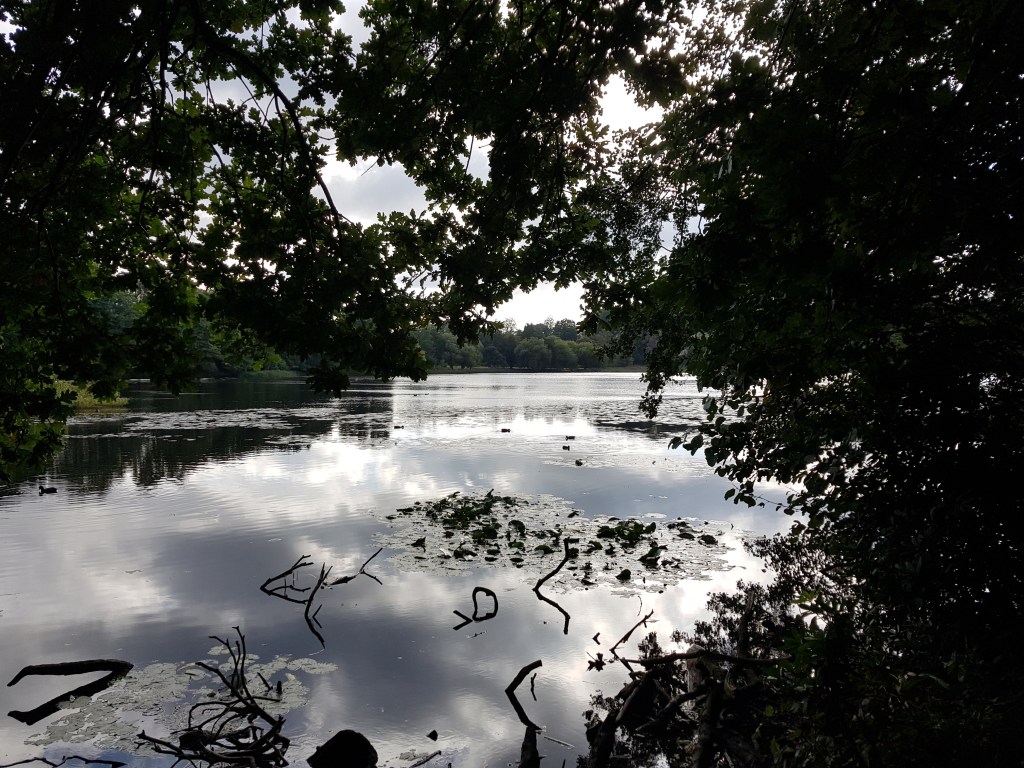
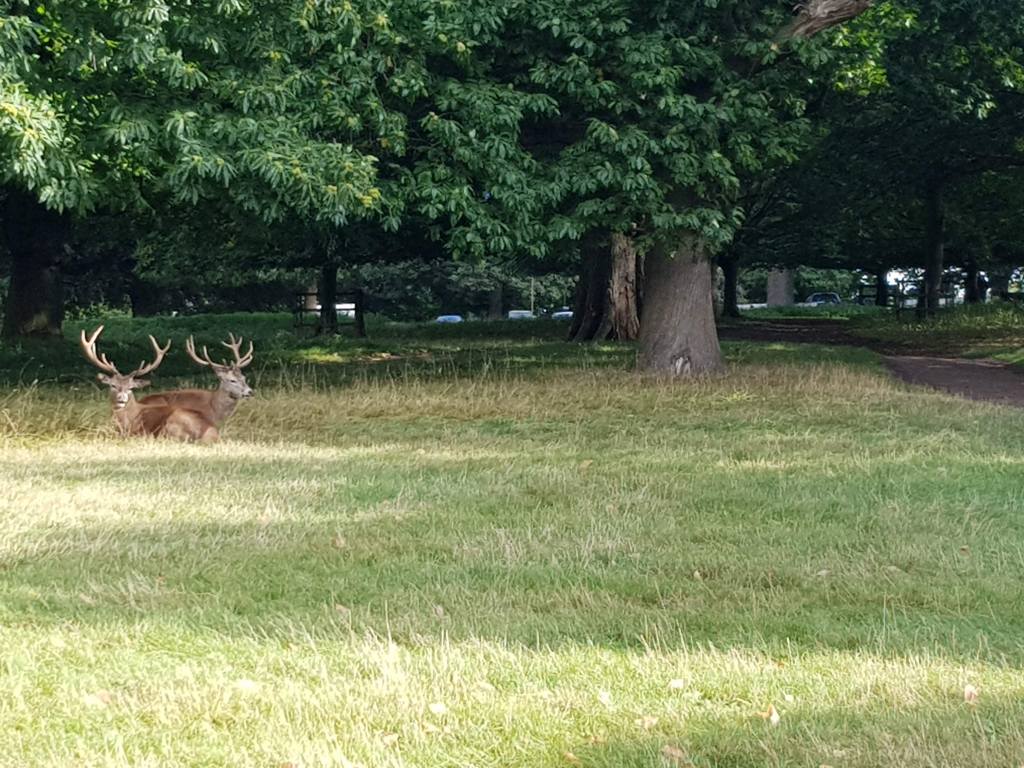
Wollaton Hall – this historic estate and deer park is a beautiful location for taking a walk, and enjoying a picnic. It also hosts many free events to enjoy.
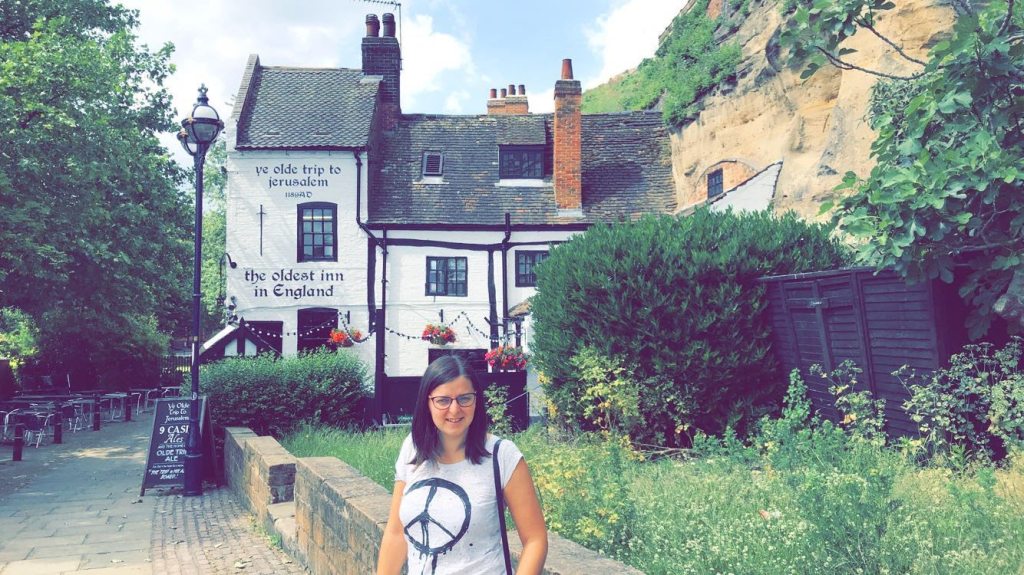
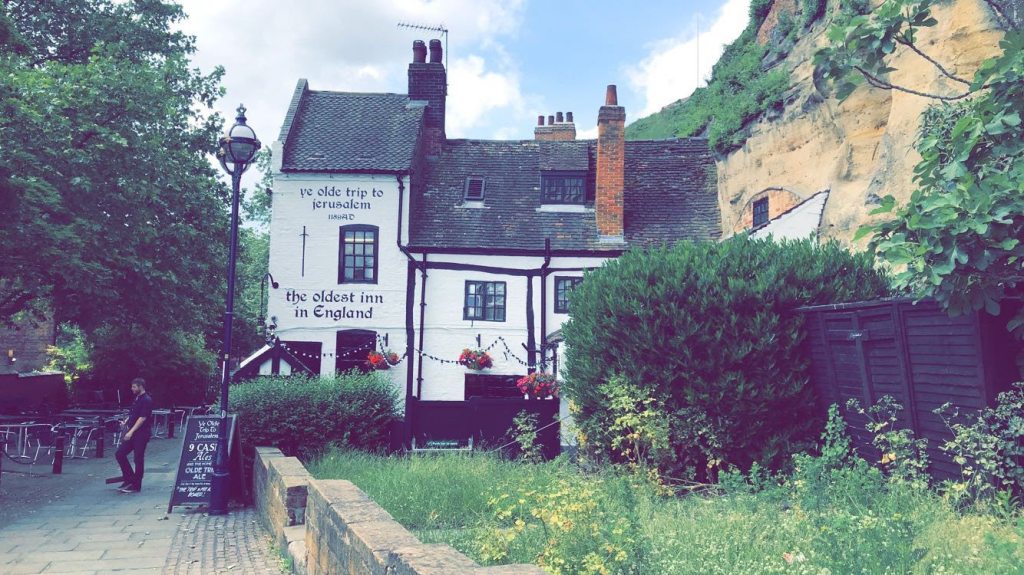
Lunch in ‘Ye Olde Trip to Jerusalem’: The oldest Inn in England – This pretty little pub is a lovely place for a bit of food amongst traditional decor.
Leicester
A short trip from Nottingham, is the city of Leicester. I was not sure what to expect of this little city but in an afternoon I explored the city and had a tasty dinner here. The claim to fame for Leicester is King Richard III.
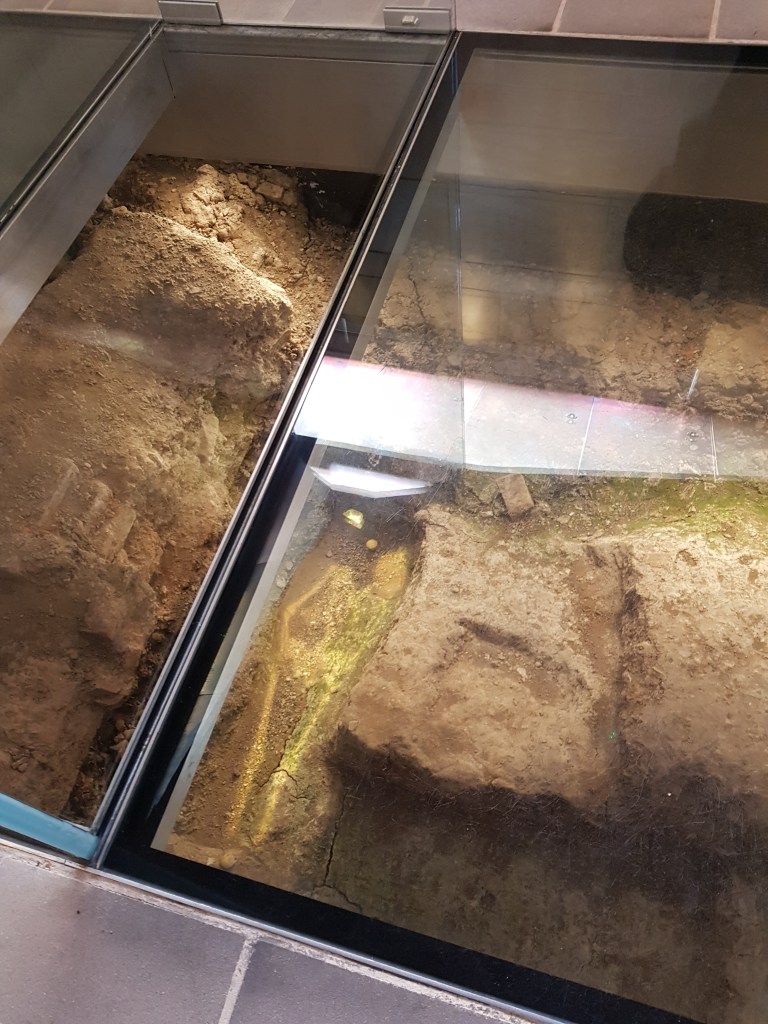
This famous English King was long debated in history as either a deformed monster of a man, or a brilliantly talented soldier. He had been portrayed by Shakespeare and in many other writings. He had died in battle and his body was lost for centuries. Up until 2012, he was lost and debated, but then the news broke, that his remains had been discovered in a carpark in Leicester! His body was recovered and tested, and his story could finally have some evidence to coincide with it.
The car park, is now a visitor centre, and I spent several hours here, learning about his story. It was a really brilliant museum, and he is certainly an interesting character. He now lies to rest in the cathedral, which was unfortunately closed for restoration during my visit. That is okay though, as it gives me more reason to return!
Derby
I have visited Derby briefly a few times over the years, normally when I am between trains and travelling as it is such a central location in the UK, and often I have visited just the shopping area for a little retail therapy and food. This time round I made a choice to spend the morning doing a proper visit to the city, and I found a gem within the city.
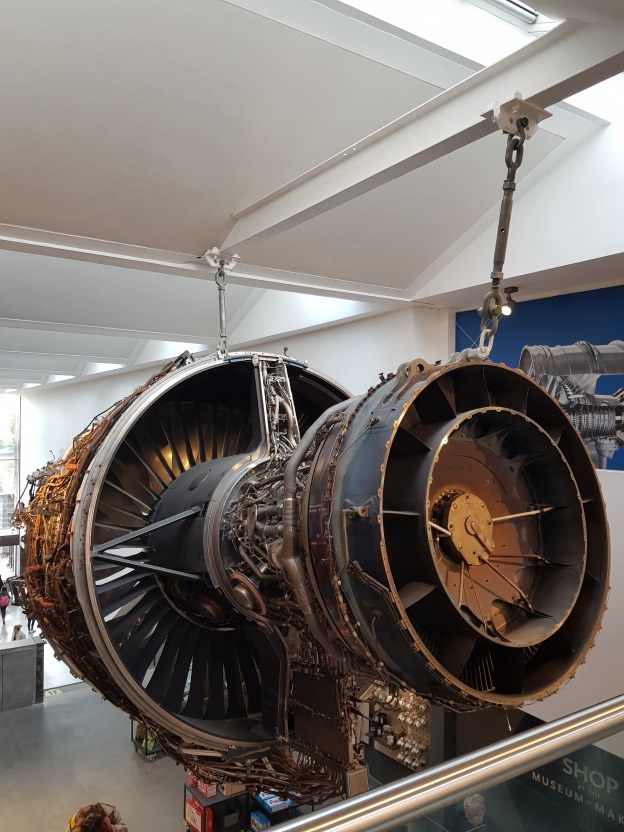
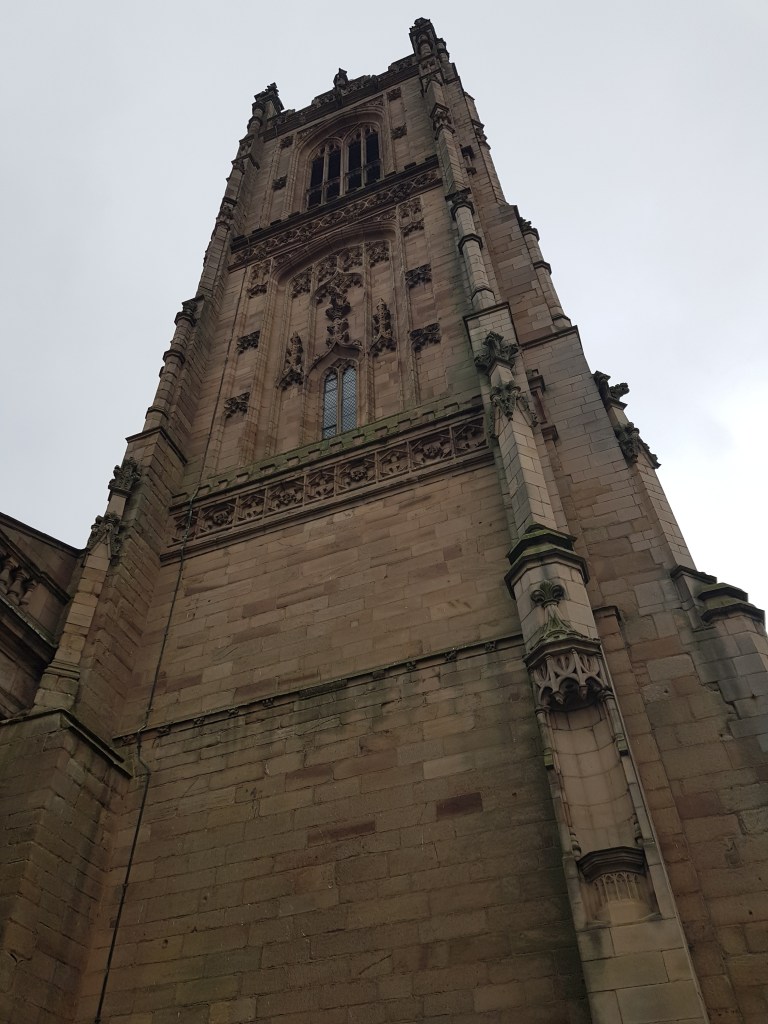
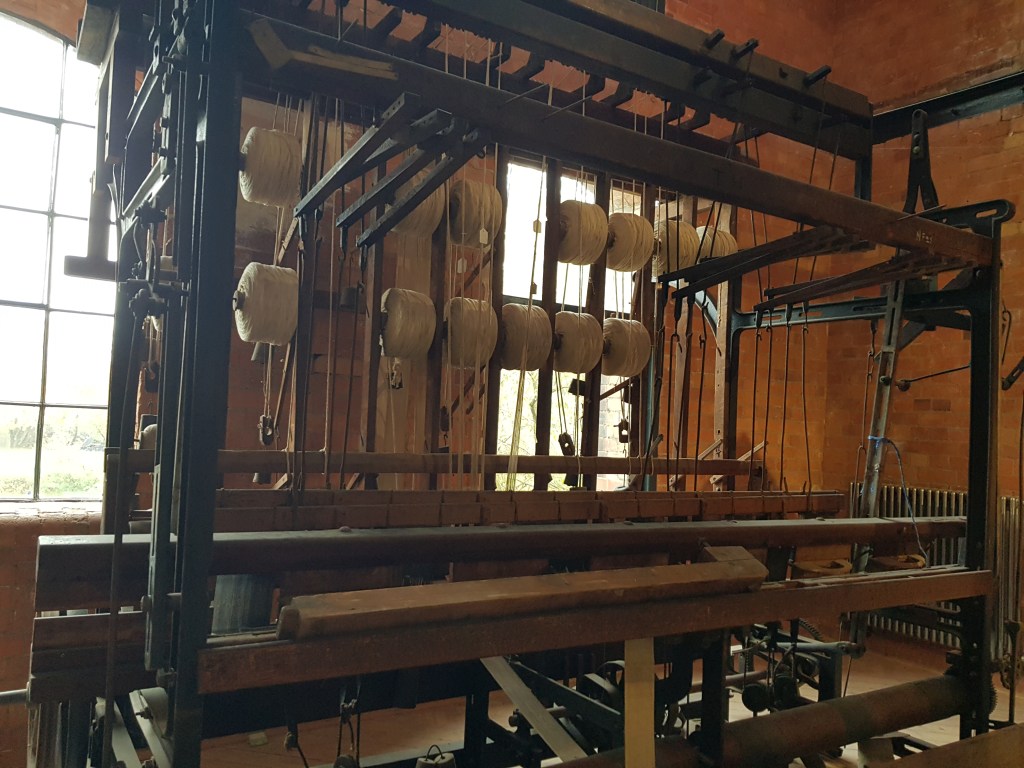
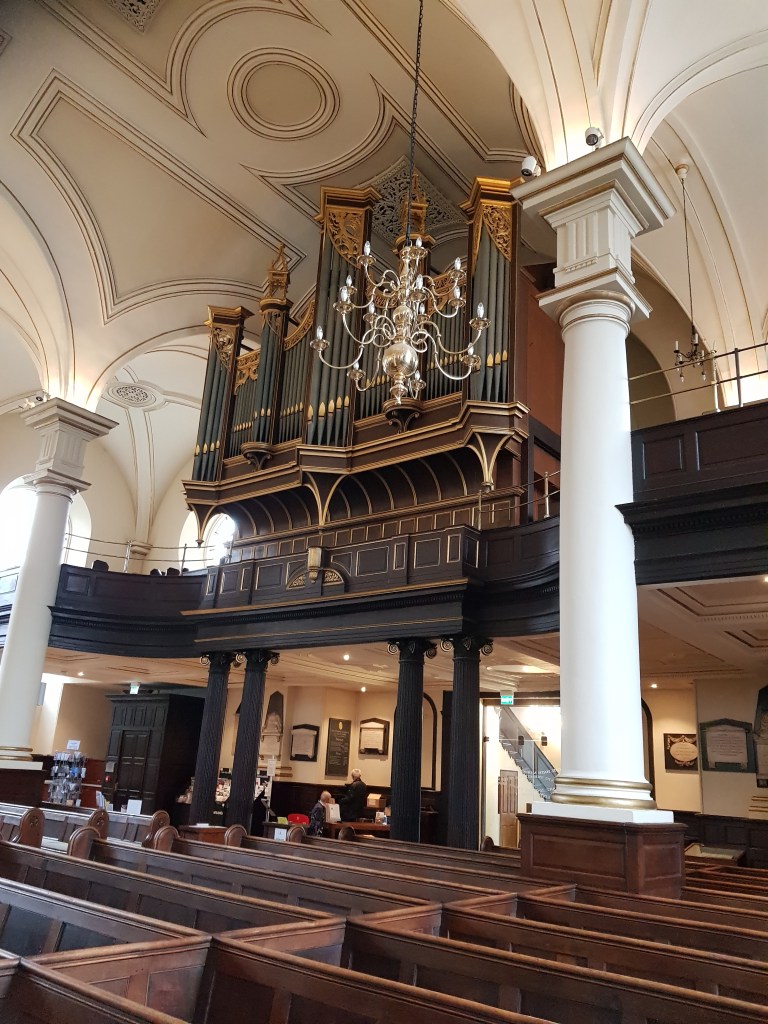
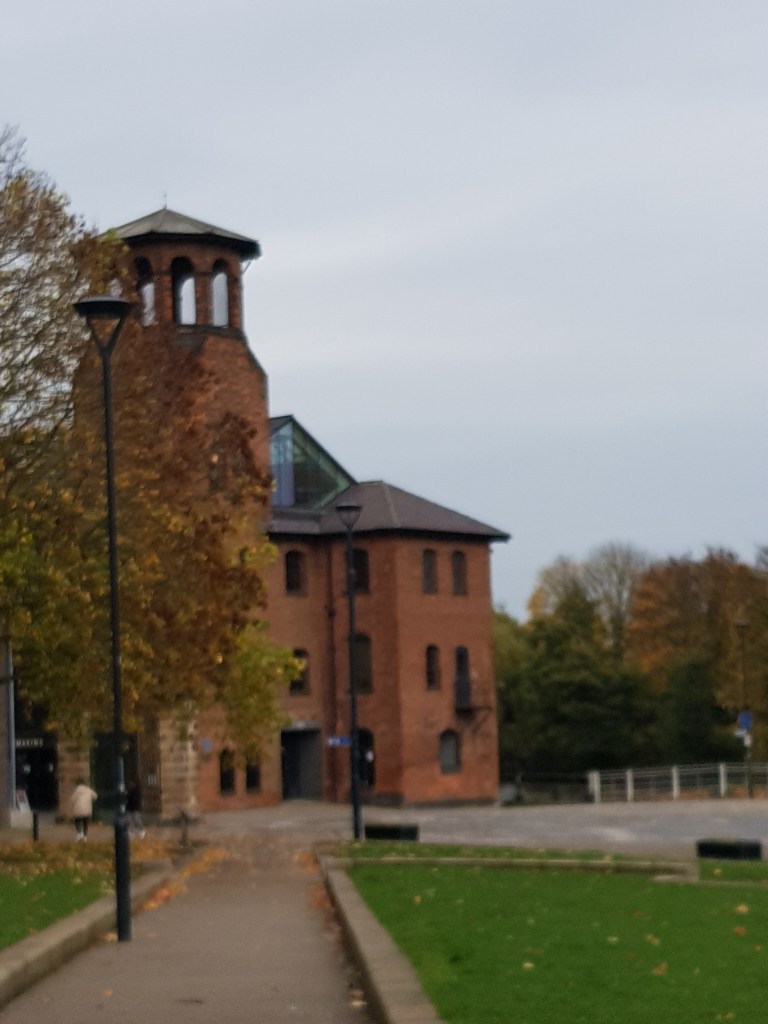
As well as visiting the sweet and simplistic cathedral that Derby has to offer, I wondered along the river and came to a wonderful new attraction called the ‘Museum of Making’. Situated inside a building which is widely regarded as the world’s first modern factory, Derby’s old silk mill. This building draws you in as a curious visitor, and as I am also a keen crafter in my free time!
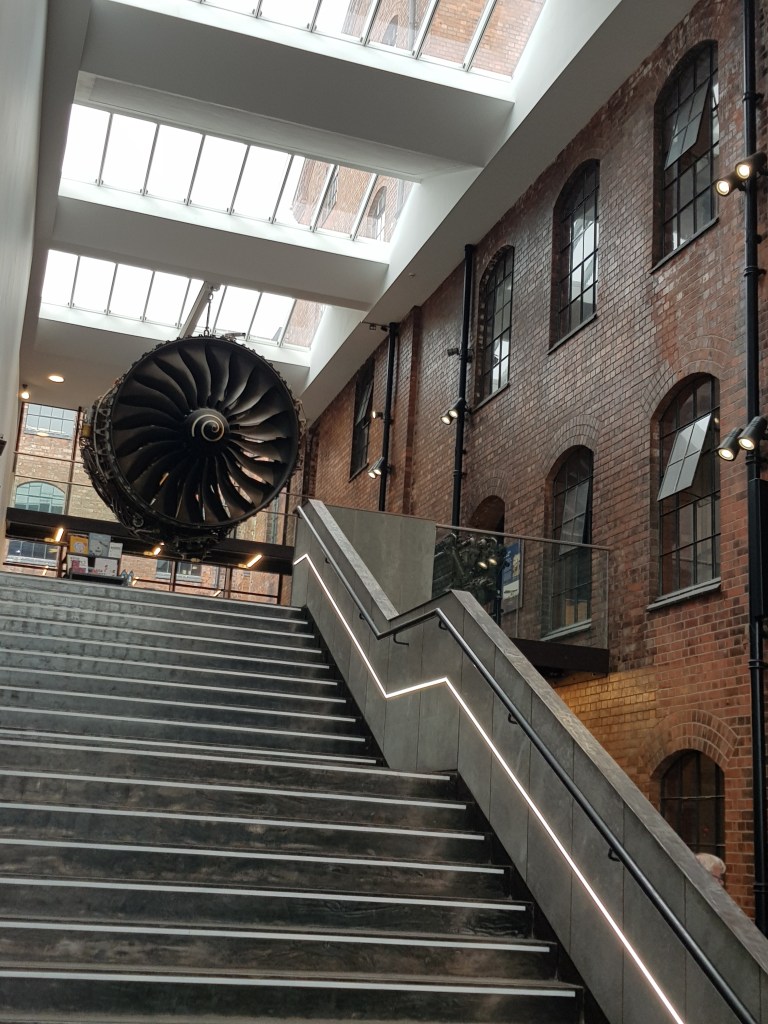
The museum is a very open space and has a restaurant, conference area, workshop space and exhibitions. It is all about learning about different materials and the manufacturing of goods over history, and links very well with the importance that the midlands had,in England’s industrial history.
There are huge examples like aeroplane and car parts taken apart to show the inner workings, but then also an entire section devoted to wood works for example. There is also a large space devoted to the regional train networks that were so important, and a large model train to admire, worked on by volunteers. The museum is a really lovely space to visit and does really well to demonstrate the history of the area and the pride people have in their trades here.
Birmingham
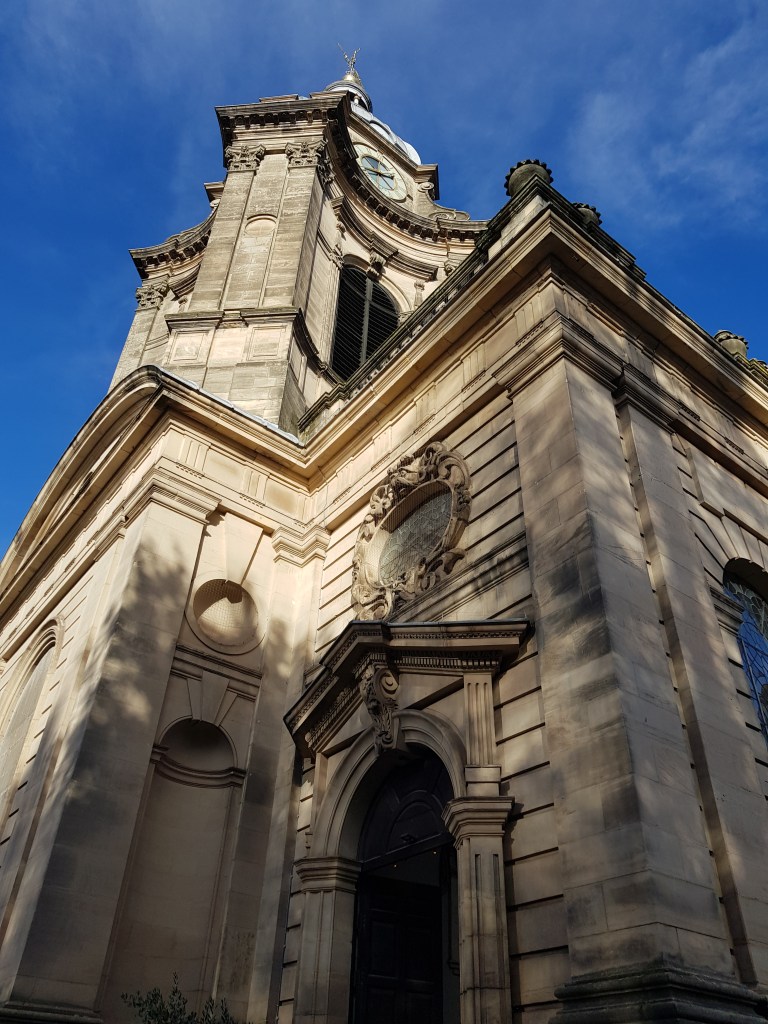
The last stop of the week was a visit to Birmingham. I’ve visited this huge city before for conferences with work, as they have a big meeting and conference offering for businesses in this modern city. On this occasion, I only visited the Cathedral.
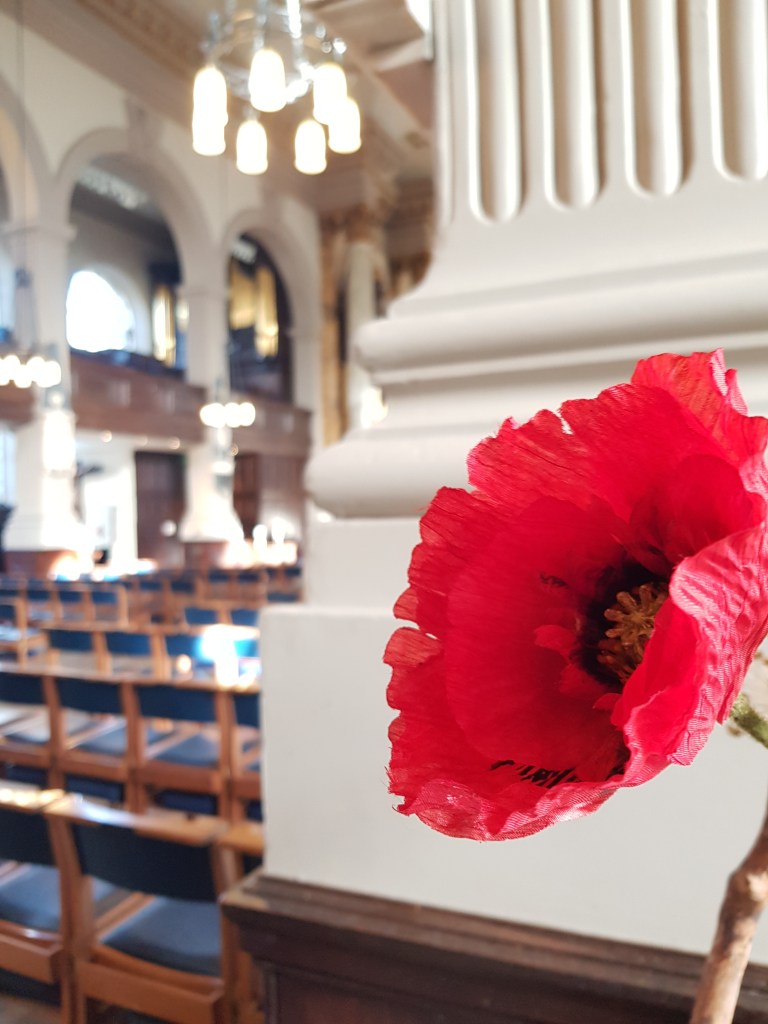
The cathedral is full of colourful stained glass and is in the centre of a bustling city square.
Outside the cathedral, Birmingham offers plenty of museums, galleries as well as family experiences like the Sea Life Centre and Cadbury World.
Now the cathedrals around the midlands area have been taken in, I take my travels North East, as I head to the city of York, in the weeks leading up to Christmas!
I spent the Winter of 2022/23 sailing around the Eastern Caribbean, and discovering what this part of the world has to offer, other than the expected white sandy beaches and sapphire blue waters.
Local life and culture
The Caribbean may dream up different images to different people. Perhaps the white sandy beaches, palm trees, men in dreadlocks and lots of rum. Whilst, this part of the world does have all those things, it’s actually much more complex than just that, with a rich diversity of culture as well as differing social constructs throughout the different islands.
The different islands are grouped and governed separately, some independently and some by European powers. Many of the islands’ native tribes were wiped out by European colonisers and much of this influence still shows today. Some islands speak French because they were once French, and some such as Martinique still are a part of France. There are also islands that are spanish speaking and ones that are Dutch or British.
The influence of a European governing body, will of course affect wealth and opportunities too. Many British influenced islands, have the British legal and education systems. The French and Dutch islands also benefit from the additional European funding and the ease of movement of tourists from the mainland.
In most cases, where islands have separated themselves from their colonizing parent country, they are living in developing world status. Consistent and devastating hurricanes and natural disasters add to this reality.
The situation means that the cost of living can be very high for locals and many people have to be entrepreneurial in order to make an income. That may mean selling tours, setting up a bar, selling coconuts or even offering photos with captured monkeys. It is understandable that locals need to make the most of the incoming load of tourists arriving each year.
The people are also very relaxed and generous. Whilst they can be direct, I have always found the caribbean people to be very uplifting and kind. They follow generally one of two main religions, Christianity or Rastafarian. I never previously realised that this is an actual religion but it very much is. For example the reason for the dreadlocks is because it is considered against the religion to cut your hair as it represents your strength. It’s not just a fashion statement!
I have had some really great interactions with locals whilst working in the area. From direct business partners to a handsome rasta that broke an aloe vera plant in half and massaged me with the sap on the beach. Conversations about life, culture and family. It helps me open my eyes to new ways of living. A more relaxed lifestyle that takes each day as it comes, because in a moment everything can change.
Safe to say, keeping the drinks flowing, the music loud, and the air smelling of ganga is a part of the way of life and it certainly seems relaxing.
Nature
Outside of sandy coastlines, many of the islands I have visited have been full of nature. Especially rainforests.
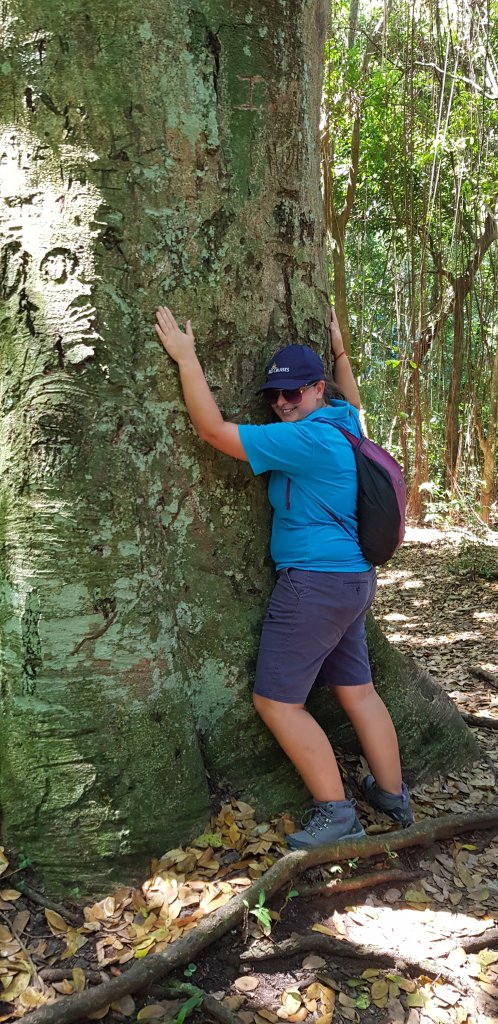
I have been fortunate enough to bathe in mud pools inside an active volcano in St Lucia, discover thorn covered trees and hang from vines in the deep rainforest of St Kitts, as well as cruise past the TV set of ‘survivor’ in a jungle in Dominican Republic.
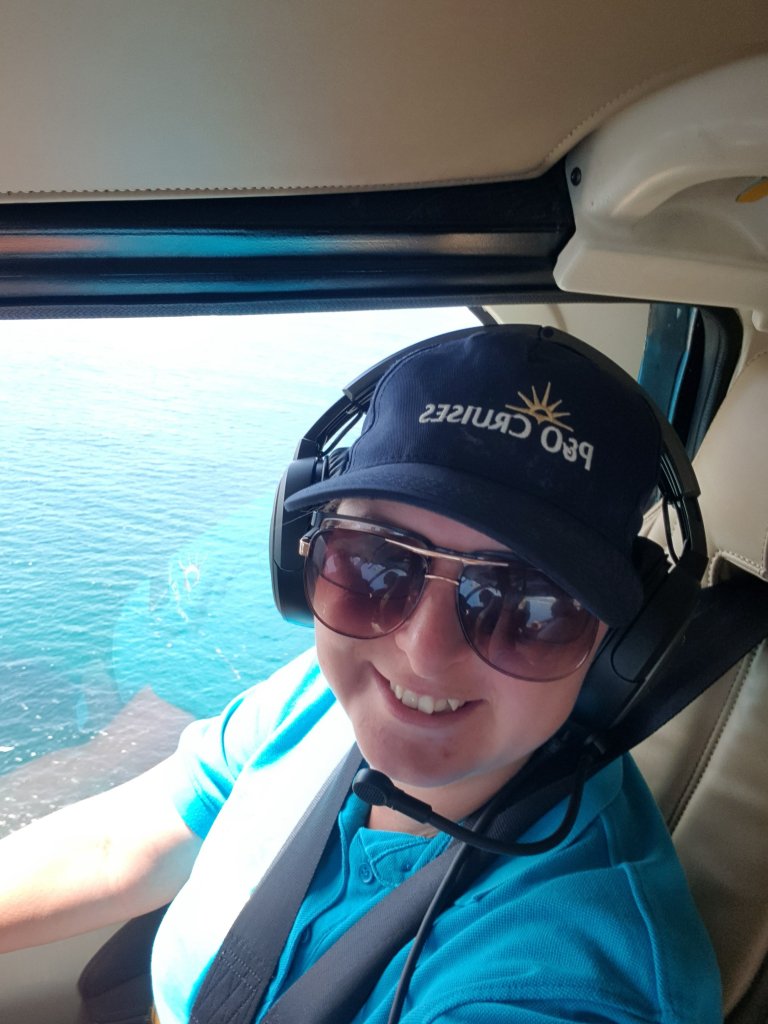
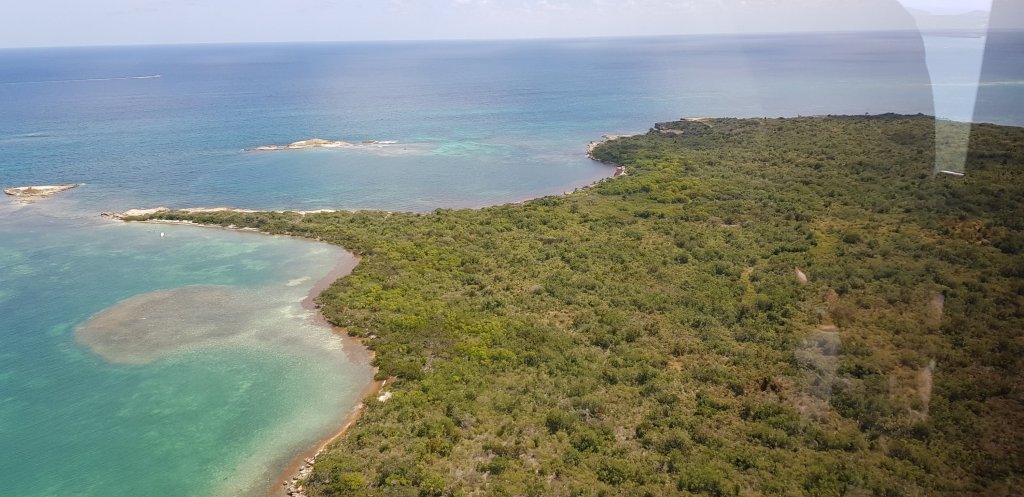
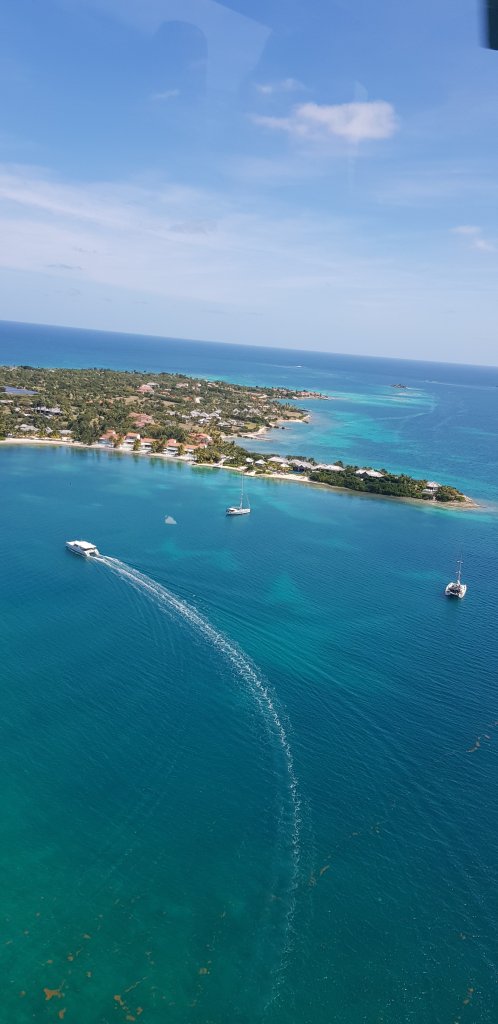
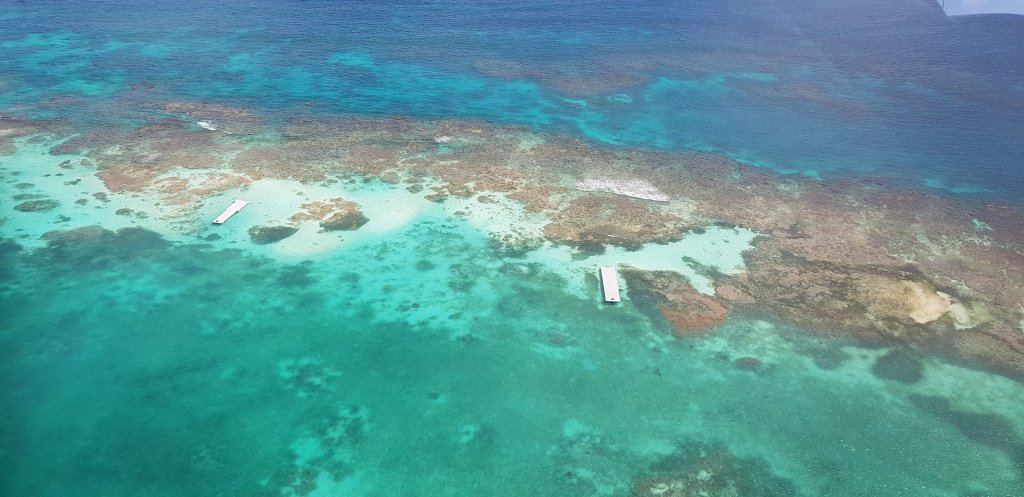
One of my favourite experiences has actually been flying over Antigua by helicopter. In that short flight I was able to see the shape of the island, the changes in the land from recent hurricanes, a good view of large coral reefs and coastal cliffs not accessible from land. During a flight, you can be lucky enough to see dolphins and whales, and you can also get a great bird eye’s view of places like Oprah’s holiday home!
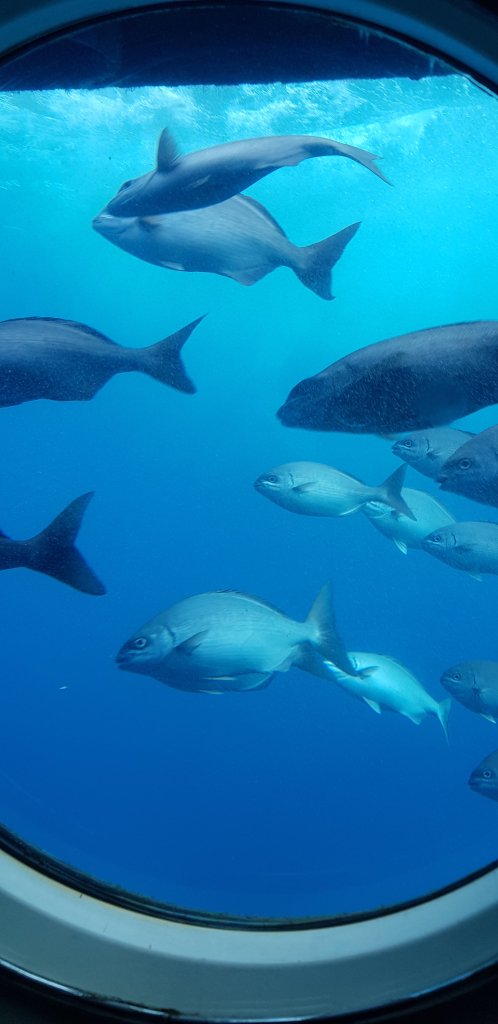
I was surprised that it was not as easy as I expected to see wildlife. Whilst, iguanas and pelicans are commonplace, exotic fish, monkeys and mongoose are not as easy to track down. My best option to see the fish was by snorkelling or submarine, where i had the fun experience of seeing stingray and turtles, not always the easiest to spot when crowds of tourists are also trying to spot them..!
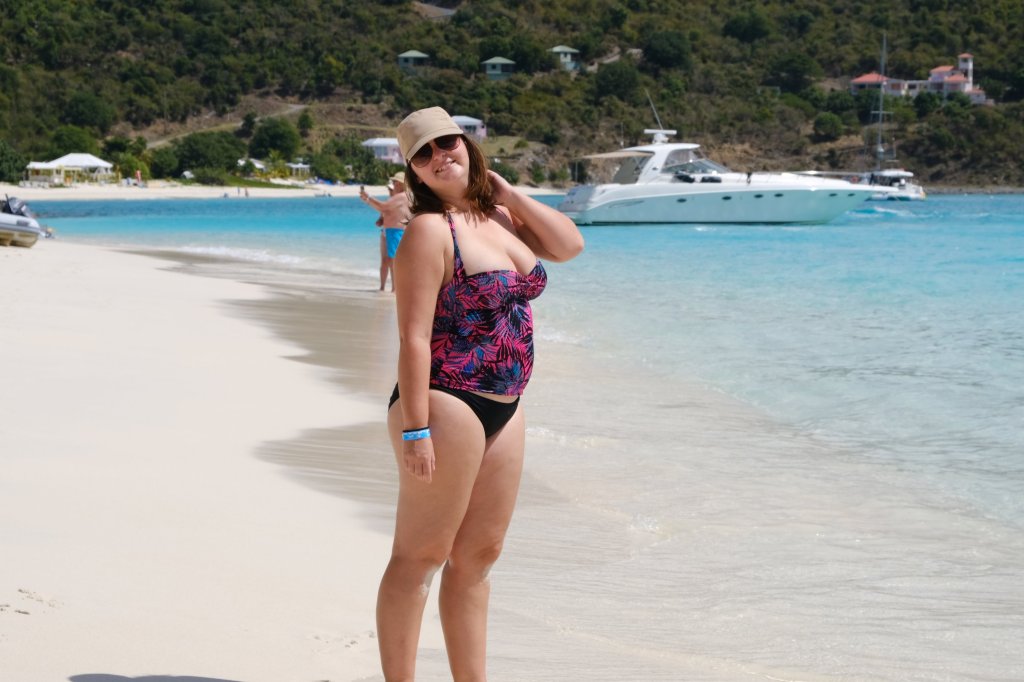
Of course, I can not neglect to mention the coastlines. Not every beach is like the postcard, many are on the Atlantic sea and can be choppy and unclear. But… the ones that are in the Caribbean Sea are magnificent. Antigua and Barbados won the beach lottery, but they also are bitter sweet for me, as the sea claimed two pairs of specs and a hat from me in only a few weeks!
Overall, I liked the Caribbean. It was not everything I expected but in some ways it was more. I think the people are my favourite part of the place, and I will be happy to return again next year!
Following my first trip to Buenos Aires, I returned to the capital city at the end of my three month trip around Argentina to have a final week there, enjoying some attractions I had not been able to visit in my first visit. This time I was joined by a travel companion and was staying in a luxury hotel.
A focus on Evita
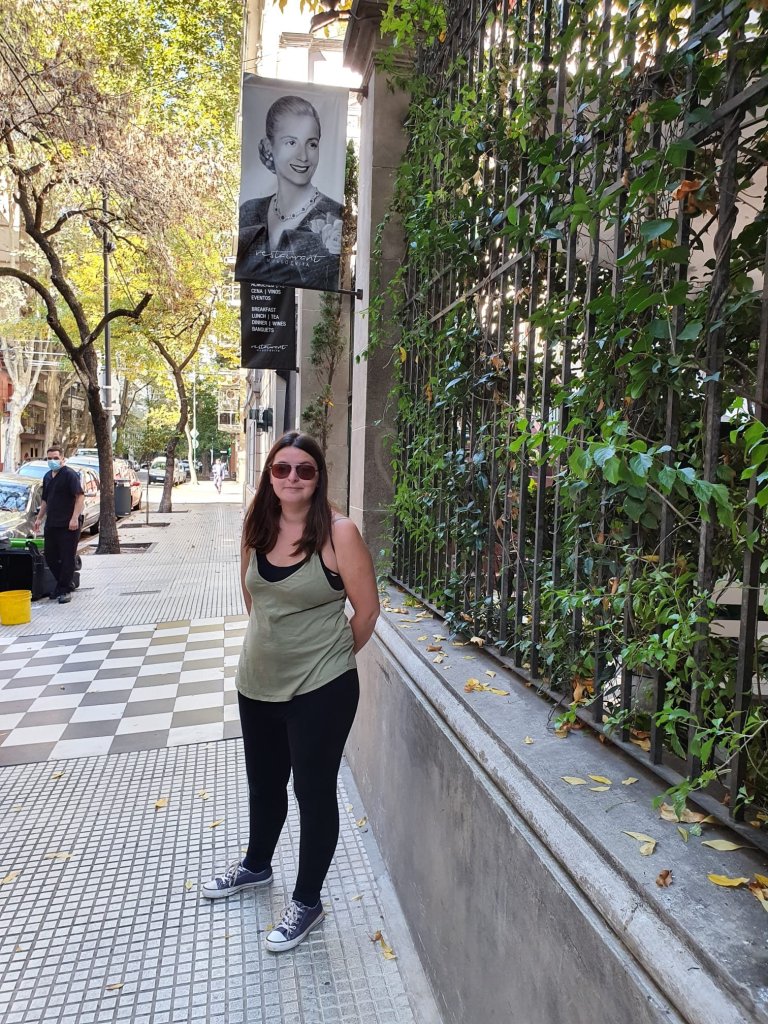
Following my first visit to Buenos Aires, and visiting the grave of Evita, a famous Argentine first lady, this time round, I visited the Evita museum. I was keen to learn more about her life and work for the state. The museum is housed in a previous home for the poor that was set up through a foundation that Evita begun. The museum has several rooms with projections of Evita’s film clips as an actress, her speeches as an activist and also a viewing gallery for her red carpet gowns.
I found the museum to be really interesting but unfortunately photos were not allowed. The information was really good about her early life, career, relationship with president Peron, and her death. I learnt that she had a lot more involvement in charity work than I had realised. She also won the vice presidency but turned it down, which I was not aware of. After finishing our look around the museum, we had a tasty lunch in the museum’s restaurant which has a very nice courtyard.
A walk around the parks
I was able to visit a few more of the park’s in Buenos Aires this time, although not all of them, as the rosalade (rose garden) was closed for upkeep.. very annoying. I did manage to visit both the Botanical Garden and the Eco Parque which are next door to each other. This took a full morning, and both parks were worth a look, and free to enter.
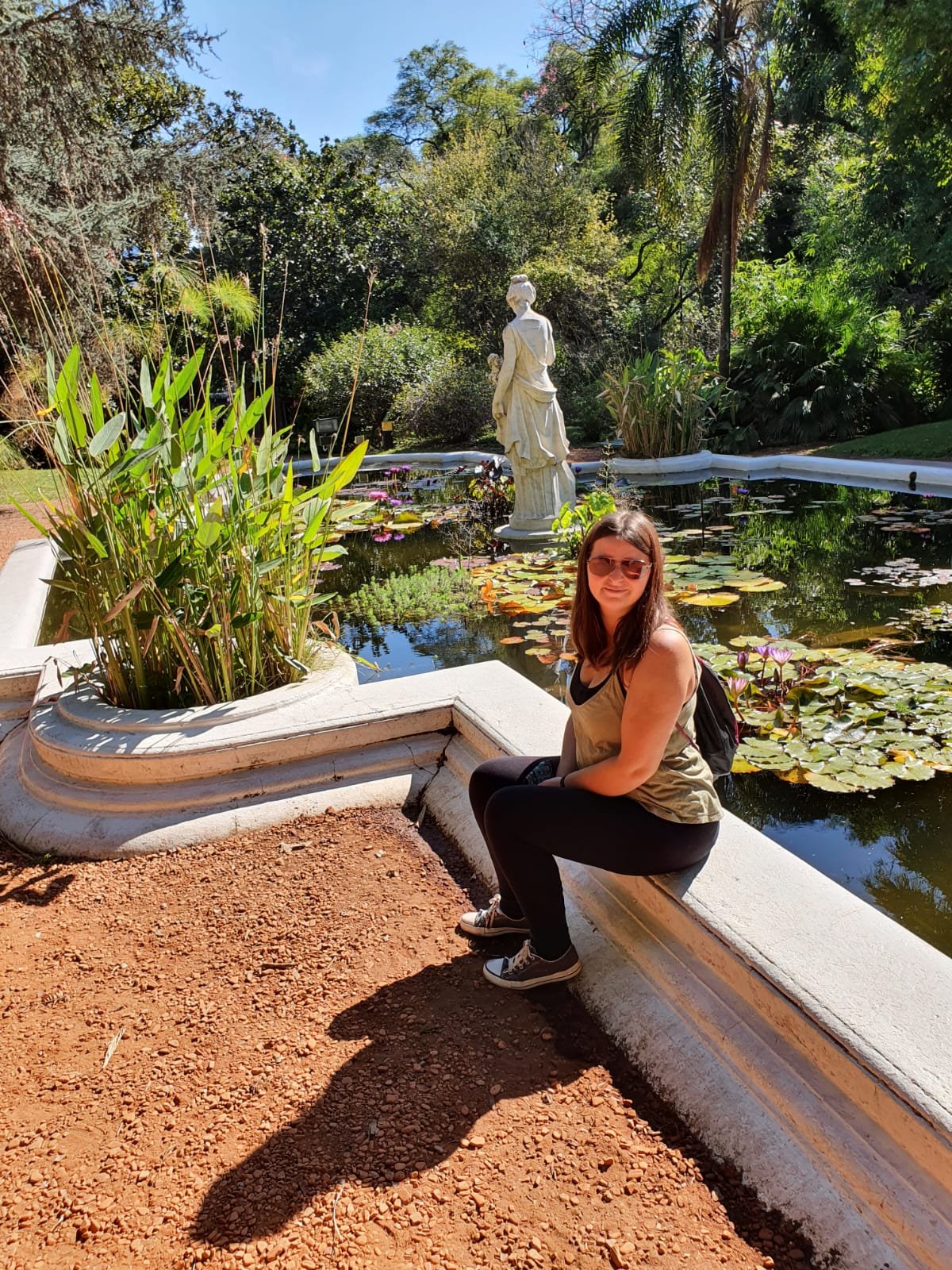
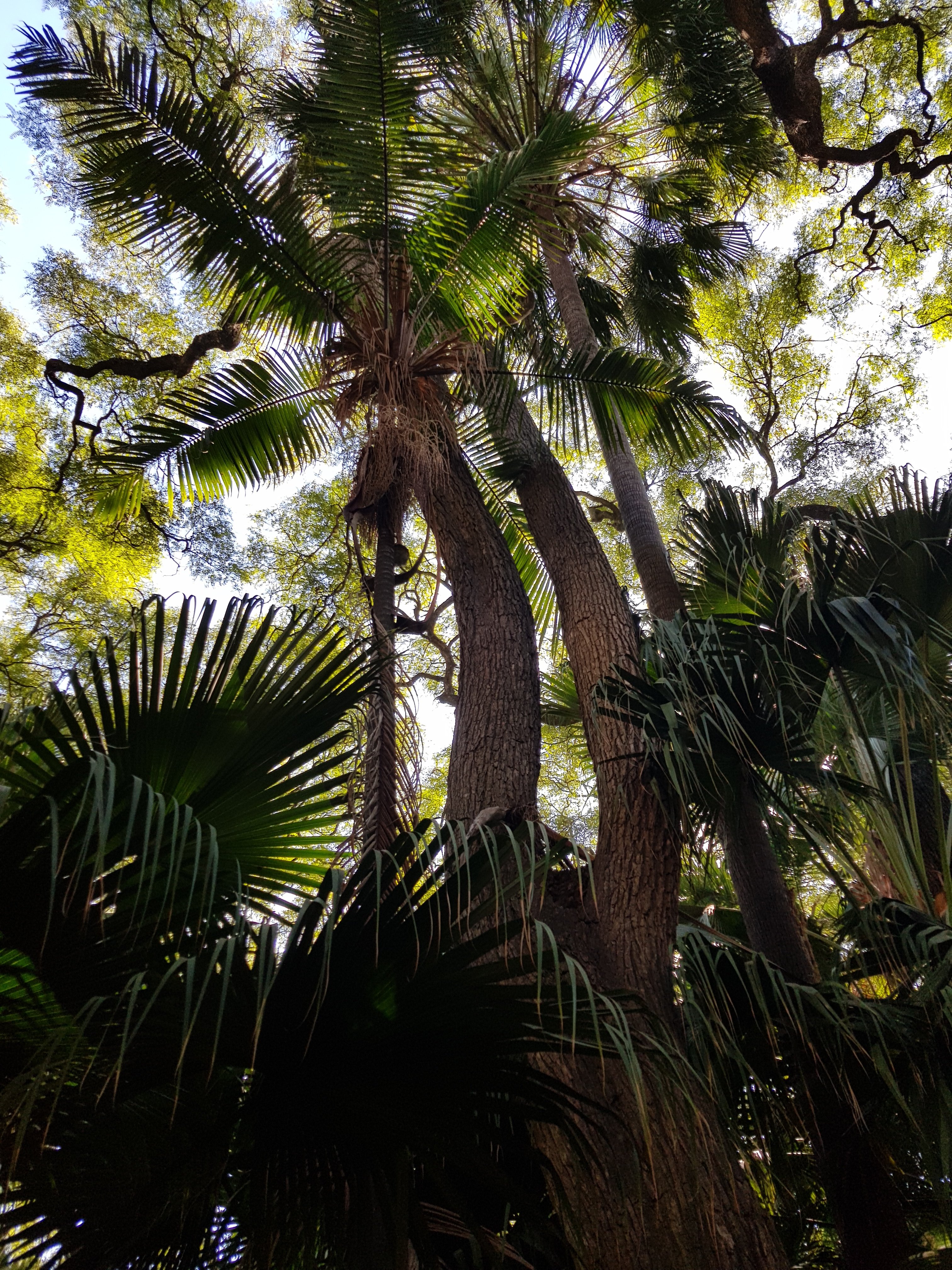
The botanical garden has many exotic plants and large trees as expected, and had attempted to theme different sections by different garden styles, for example french or italian.
The Eco Parque is a very different experience. This pretty park used to be a zoo with many large exotic animals, and elegant victorian styled animal houses. In recent decades, most of the animals have been moved to other locations, or sent back to their natural habitat.
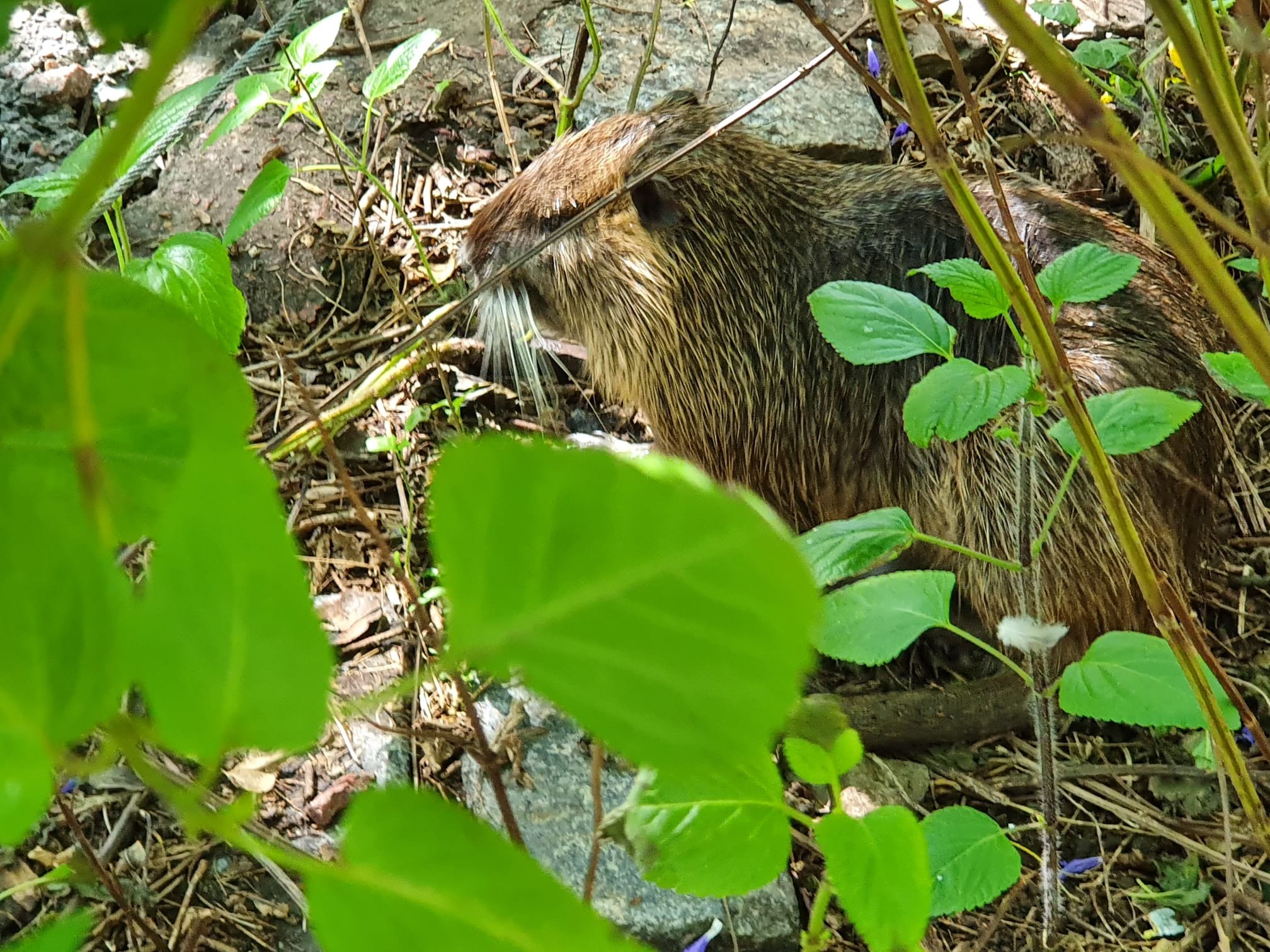
There are a few that still roam through the park though, because they are either too old or unwell to move, or do not need to be relocated. The park still has an old camel, plenty of capybaras, strange half rabbit half deer things, and even some monkeys. It is a pleasant place to take a walk in the middle of this huge city, as you never know what new animal will be around the corner.
Nightlife
In the evening, I was lucky enough to be rejoined by my German traveller friends again as they also finished their journey in BA. We headed out to Palermo Hollywood for a night of clubbing and mischief. After a night that lasted until around 6am, I was glad for my full hotel continental breakfast the next day!
La Plata
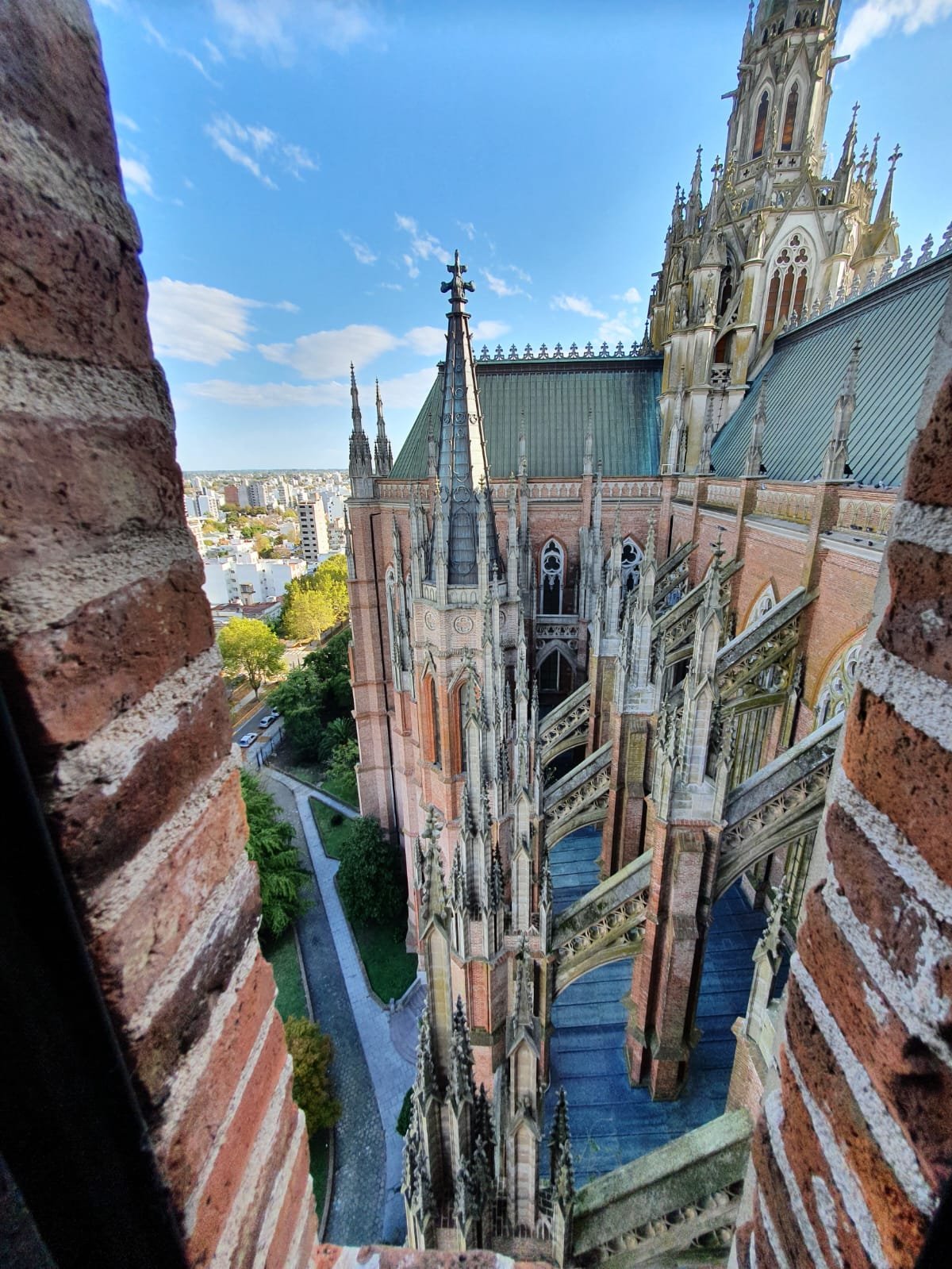
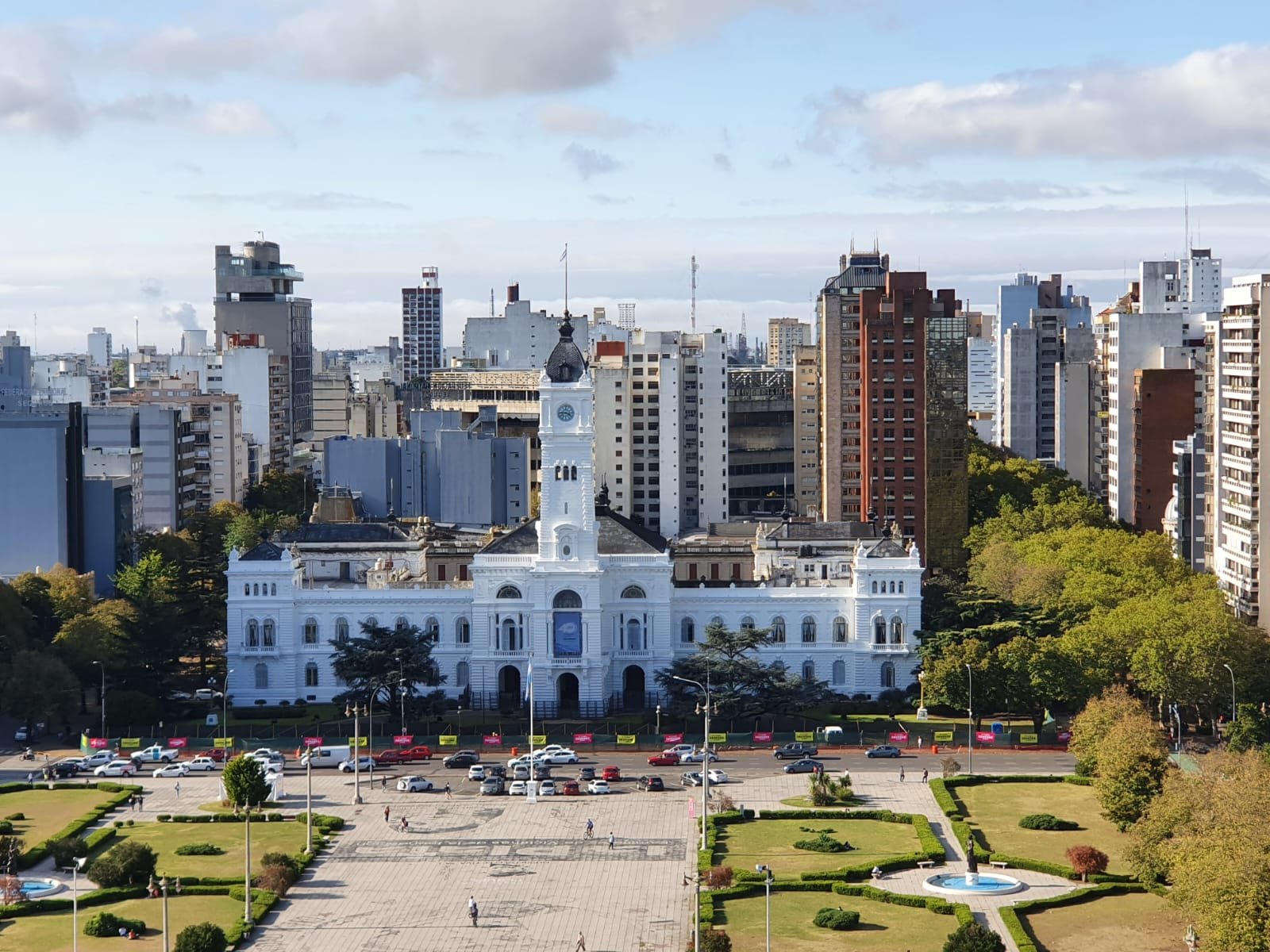
For a day out, we decided to visit the capital of the Province, the city called La Plata. The city was easy to get to, only 90 minutes on the train, and the main attraction there is a beautiful cathedral.
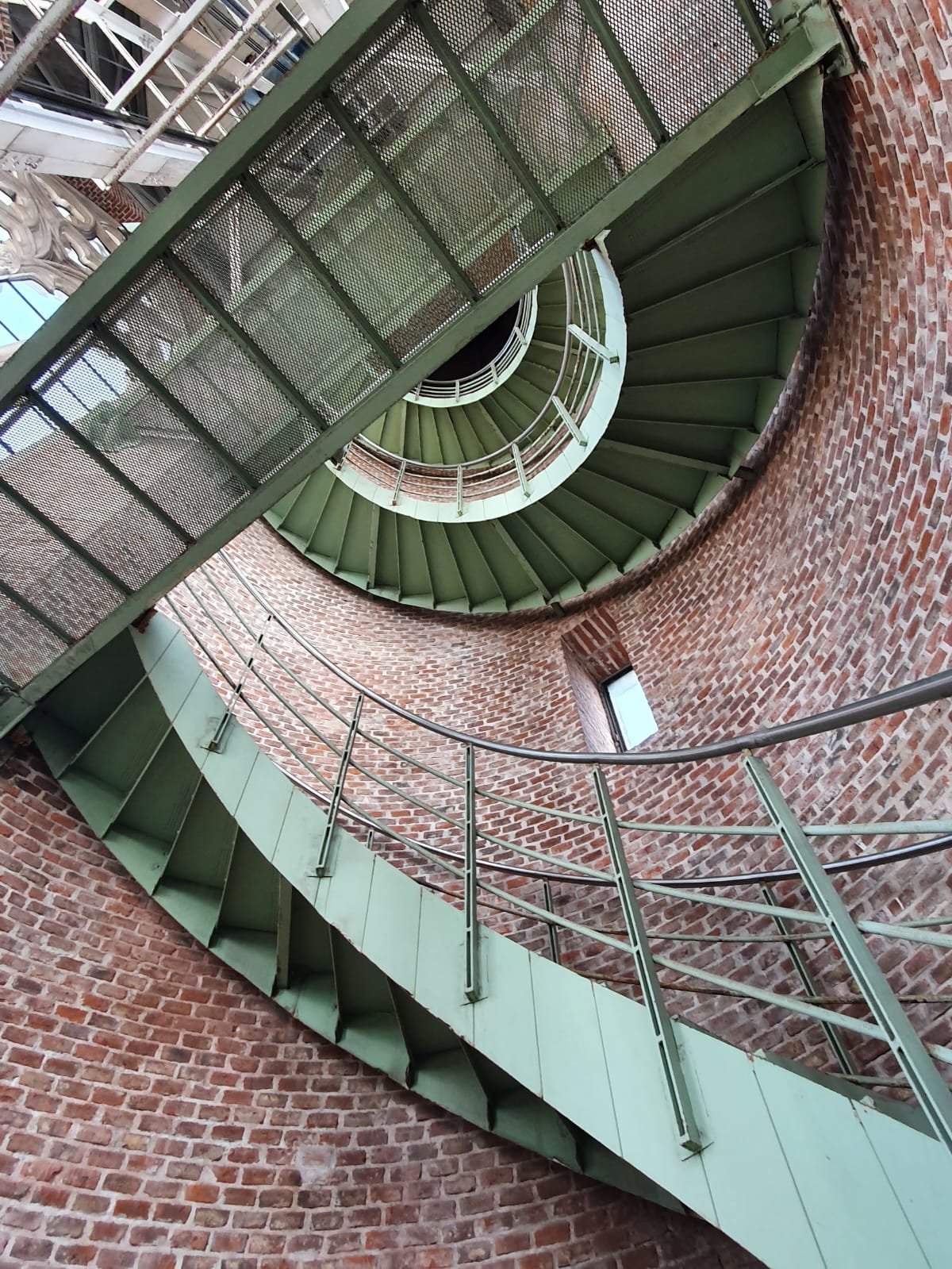
The cathedral is gorgeous on the inside, and as well as the main church, the attraction offers exploration of the crypt with a museum about its construction and original pieces, the opportunity to be lifted up the tower, and a sweet restaurant. A lovely morning out.
Horse riding in the Pampas
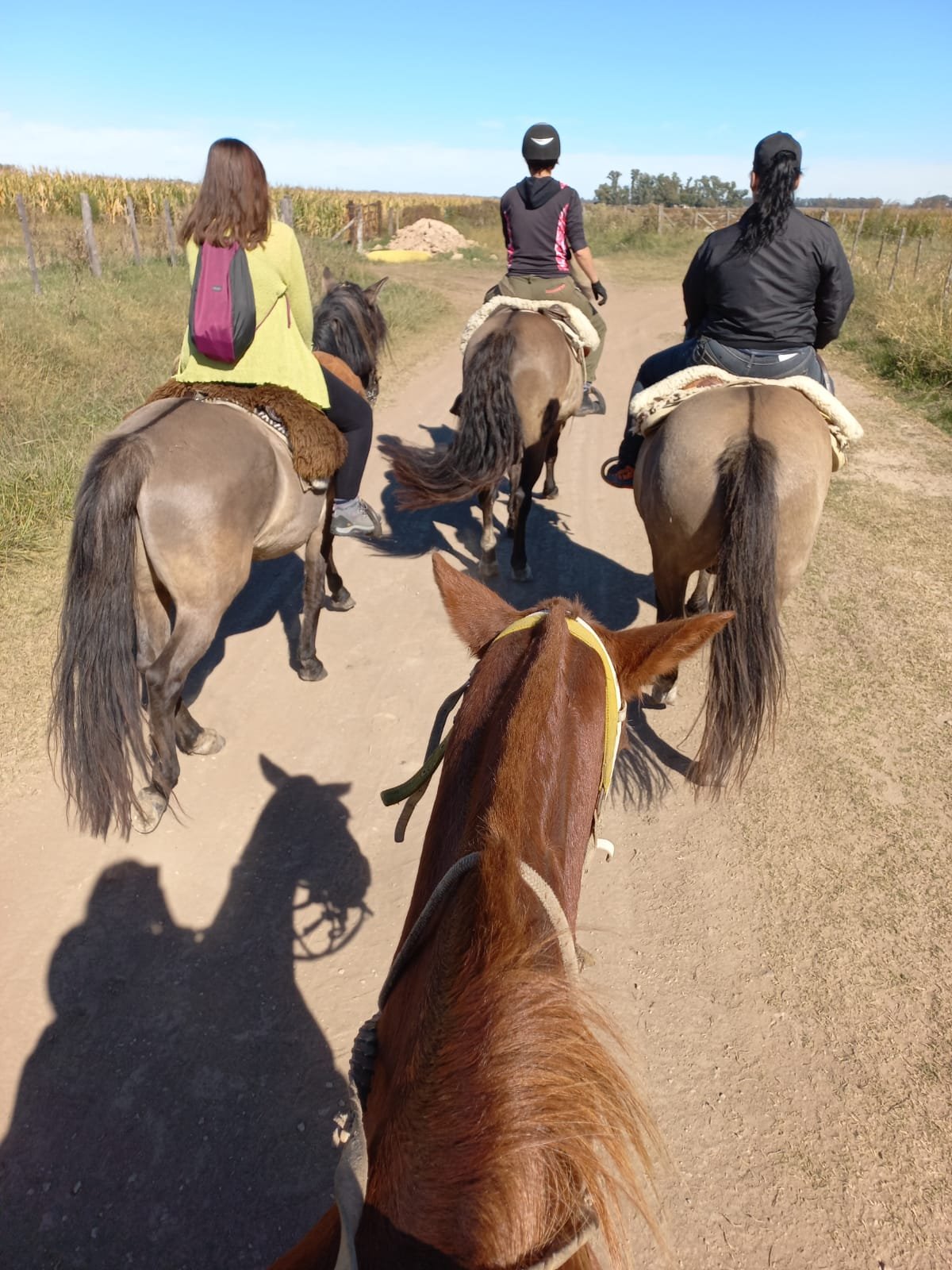
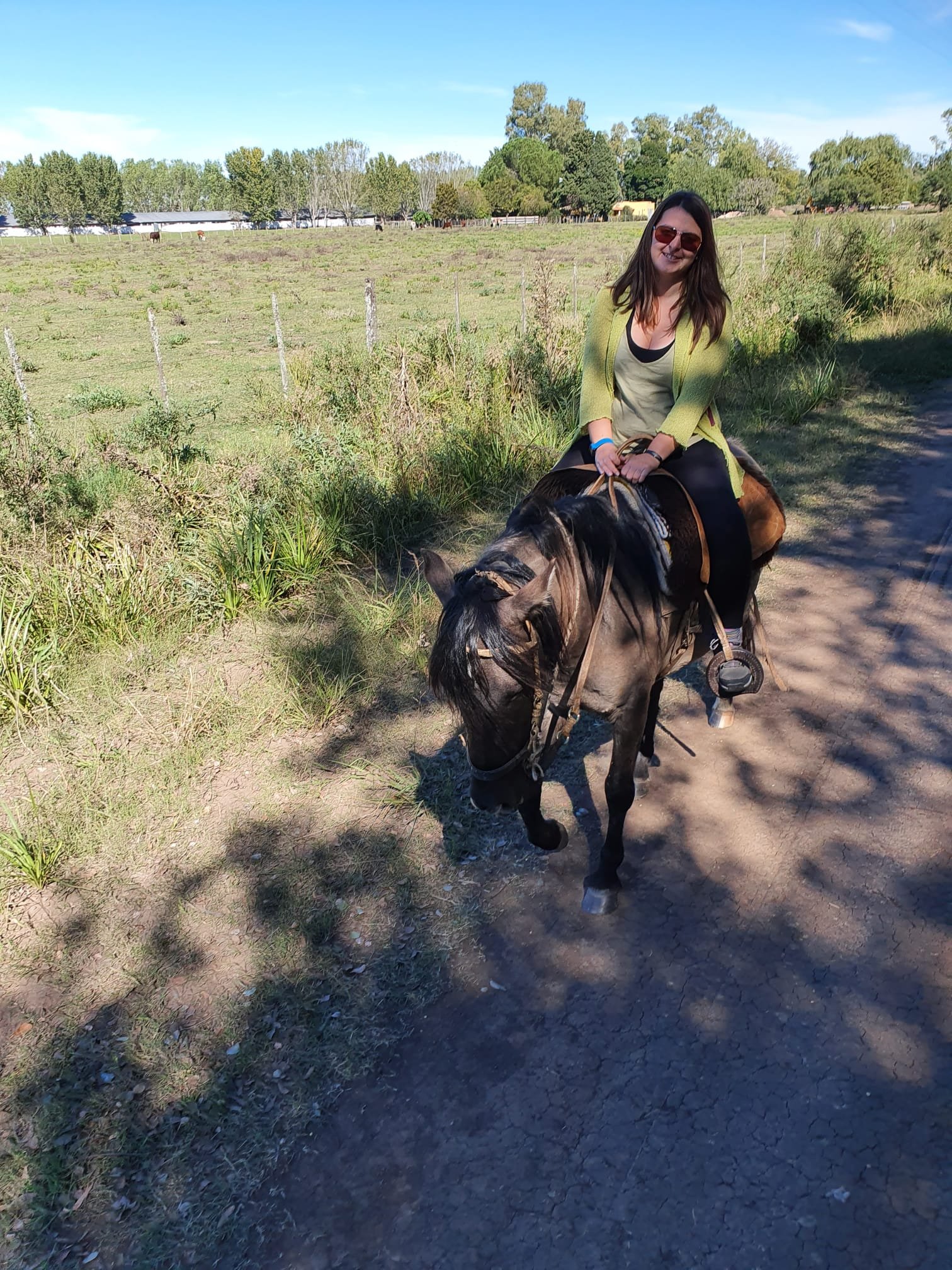
The province of Buenos Aires is part of the ‘Pampas’ region, and this is where the gauchos (Argentine cowboys) farm cattle the most. So, I decided to book us a day of horse riding in the area.
The four hour riding experience included a traditional asado lunch at the house of a local which was pretty special, and the horse riding itself was an unforgettable experience. For good and bad reasons…
The horse I was given, was a little young and barely broken in. This was coupled by the style of gaucho riding which is very different compared to english riding. The saddles and riding kit on the horse is very different and there is no front to the saddles. You are also expected to ride one handed and without a riding hat.
Whilst a little nervous about my horse’s behaviour, I took on the challenge. We rode through long grasses, roads, ditches, and woodlands and after trotting, cantering and a little bucking by my horse, I did manage to stay on the horse! Even though I was a little banged up. The experience was good fun, but the major downer was the extreme amount of mosquito bites I endured all over my legs i was rubbing toothpaste on my legs for days after! (Fun fact: it takes out the itch).
Lunch in Uruguay
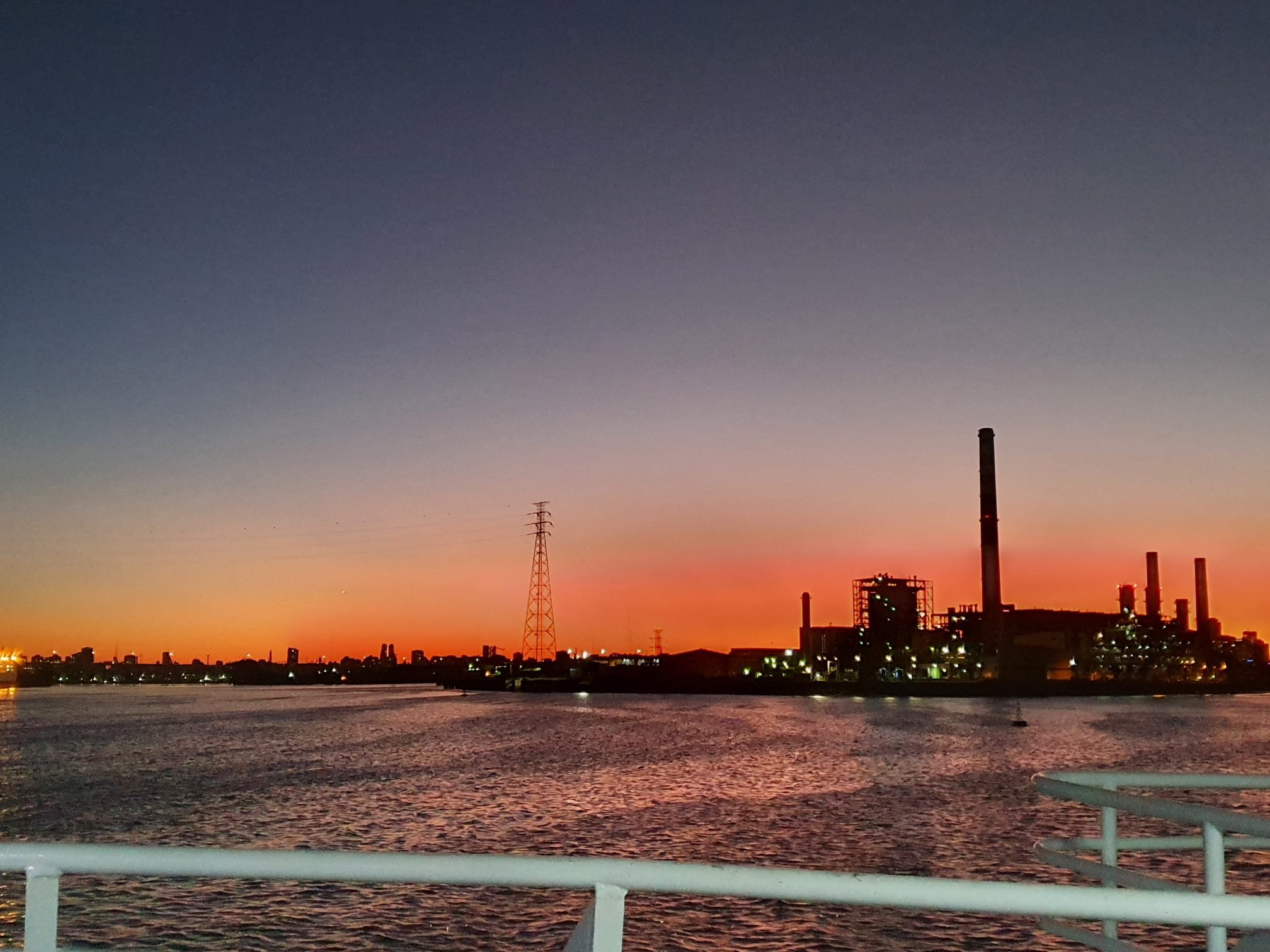
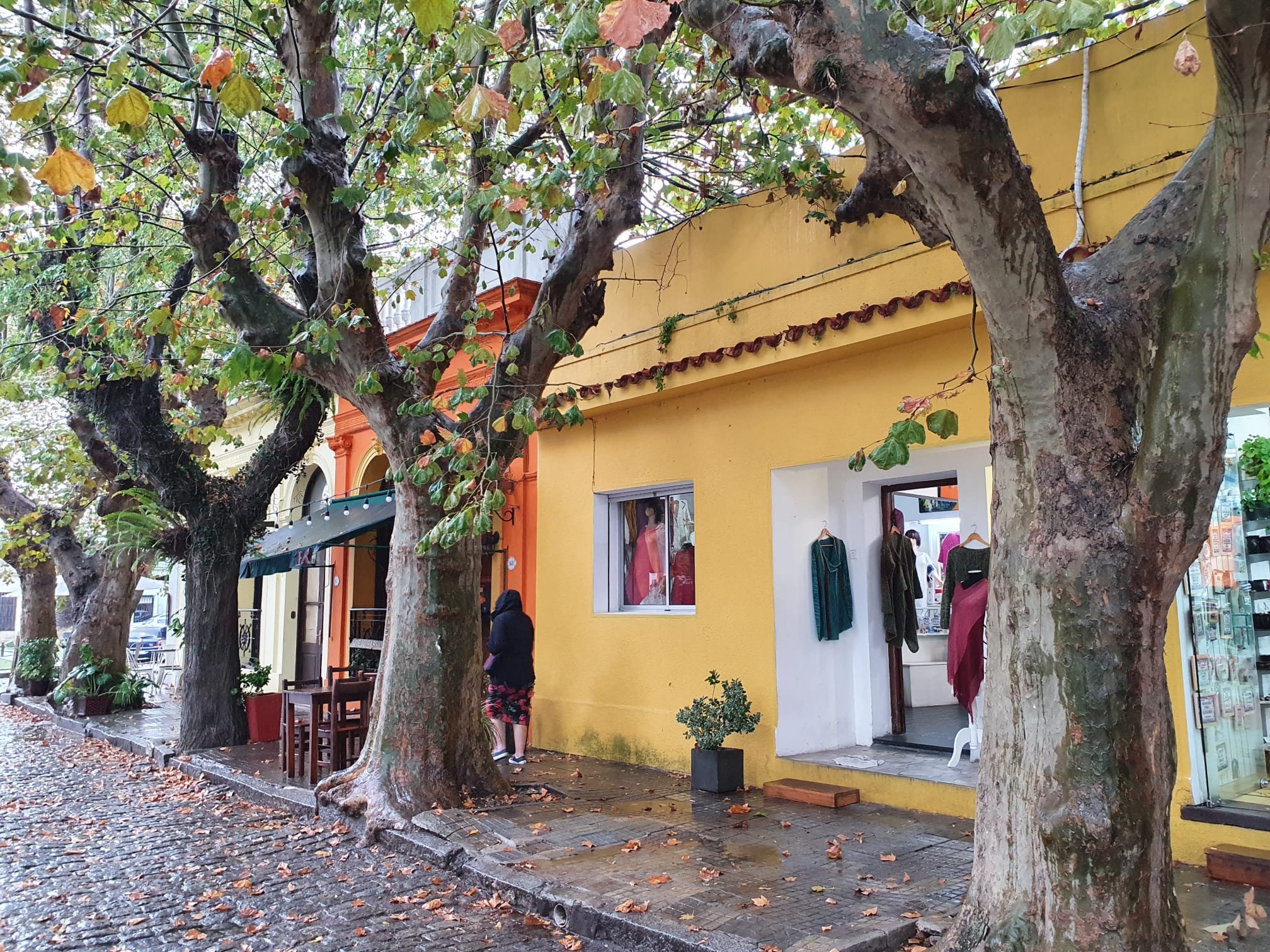
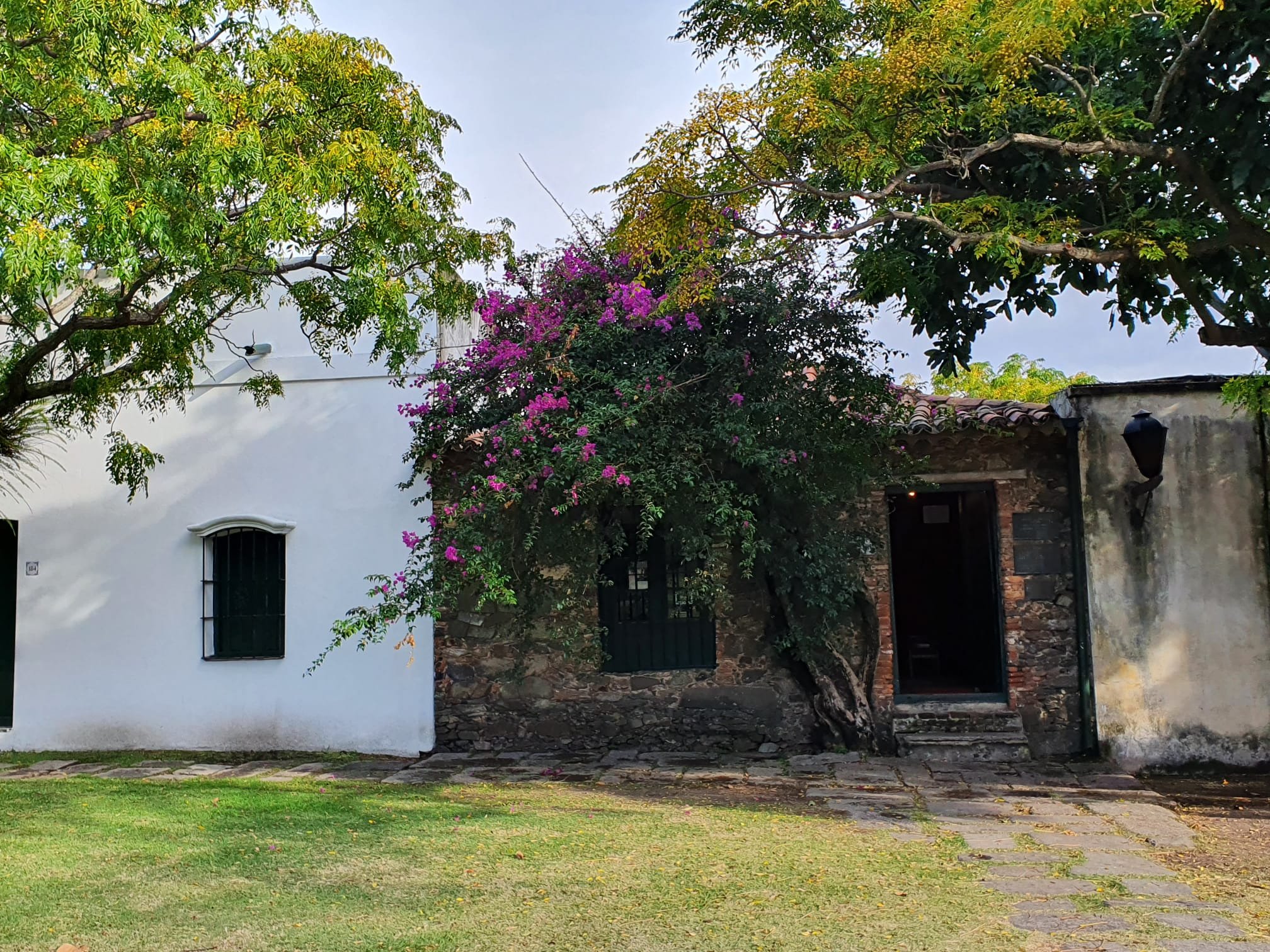
We became aware that you could visit Uruguay easily from Buenos Aires’ port by crossing in the river ferry for around an hour. It’s always tempting to cross another country off the list if the opportunity arises, so we booked our ferry tickets and took the pleasant ride across to a town called Colonia del Sacramento. From here you can also take a bus to Montevideo (Uruguay’s capital) but we decided to save that for another trip. Colonia del Sacramento is a picturesque town with a very portuguese style to it, from when it was colonised by Portugal.
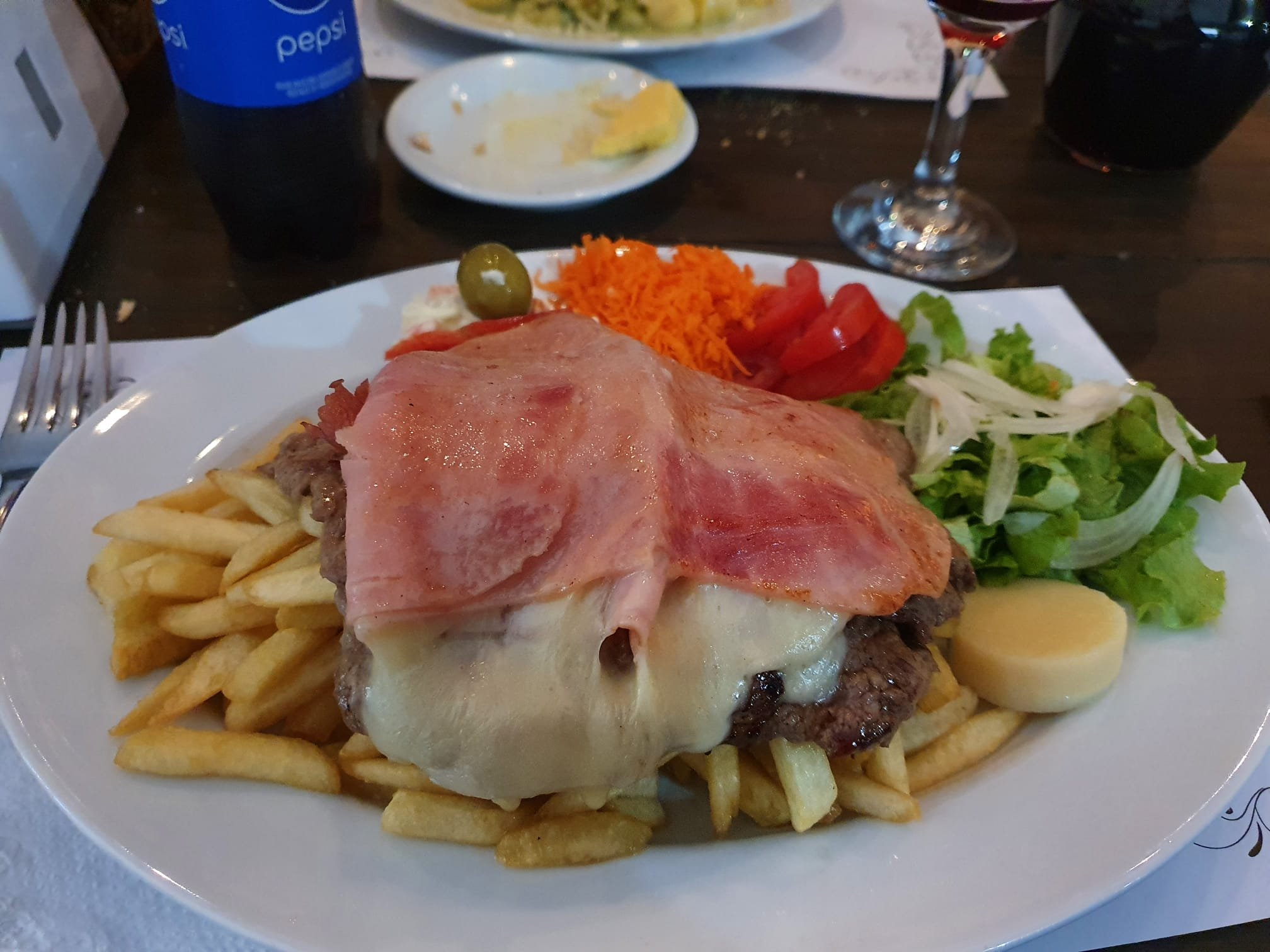
There are a couple of small museums and a church in the town to enjoy, and we had a long and luscious lunch of a traditional Uruguay dish called ‘chivito’. This is like a giant inside out meaty sandwich. Like Argentina, Uruguay also does not skimp on food portions.
Before we knew it, it was time to take the ferry back across the river. We had a good laugh about how we left the country just fot lunch though! 🤣
Tango
You can’t visit Buenos Aires and not watch a little Tango, as the traditional dance of the city. Not only can you see people dance this in the streets of Caminito in Boca, there are also plenty of theatres offering shows and classes. I wanted to do a class but they were multiple hours and I felt too lazy about it, plus I only had walking boots to dance with.
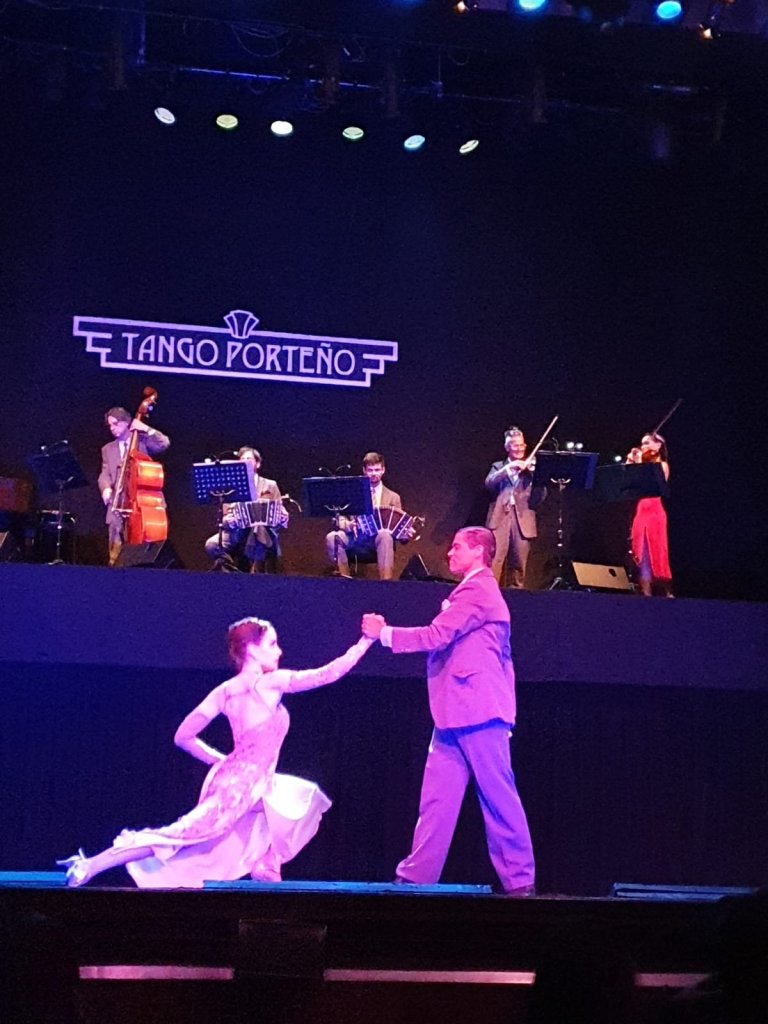
I did decide to book a show and after a little research, I booked a show at Teatro Porteno. You had an option of paying for the show on its own or with dinner included. I chose to purchase just the show which was about £23 but then on arrival, we were also provided with another menu to pick and choose food. We went for some empanadas and a delicious ham and cheeses board.
The show itself was amazing! Focused on locations around Buenos Aires, there was a variety of styles of Tango on display. They also had an act that used drums and cattle whips to create impressive rhythms with the music. I was really glad I visited.
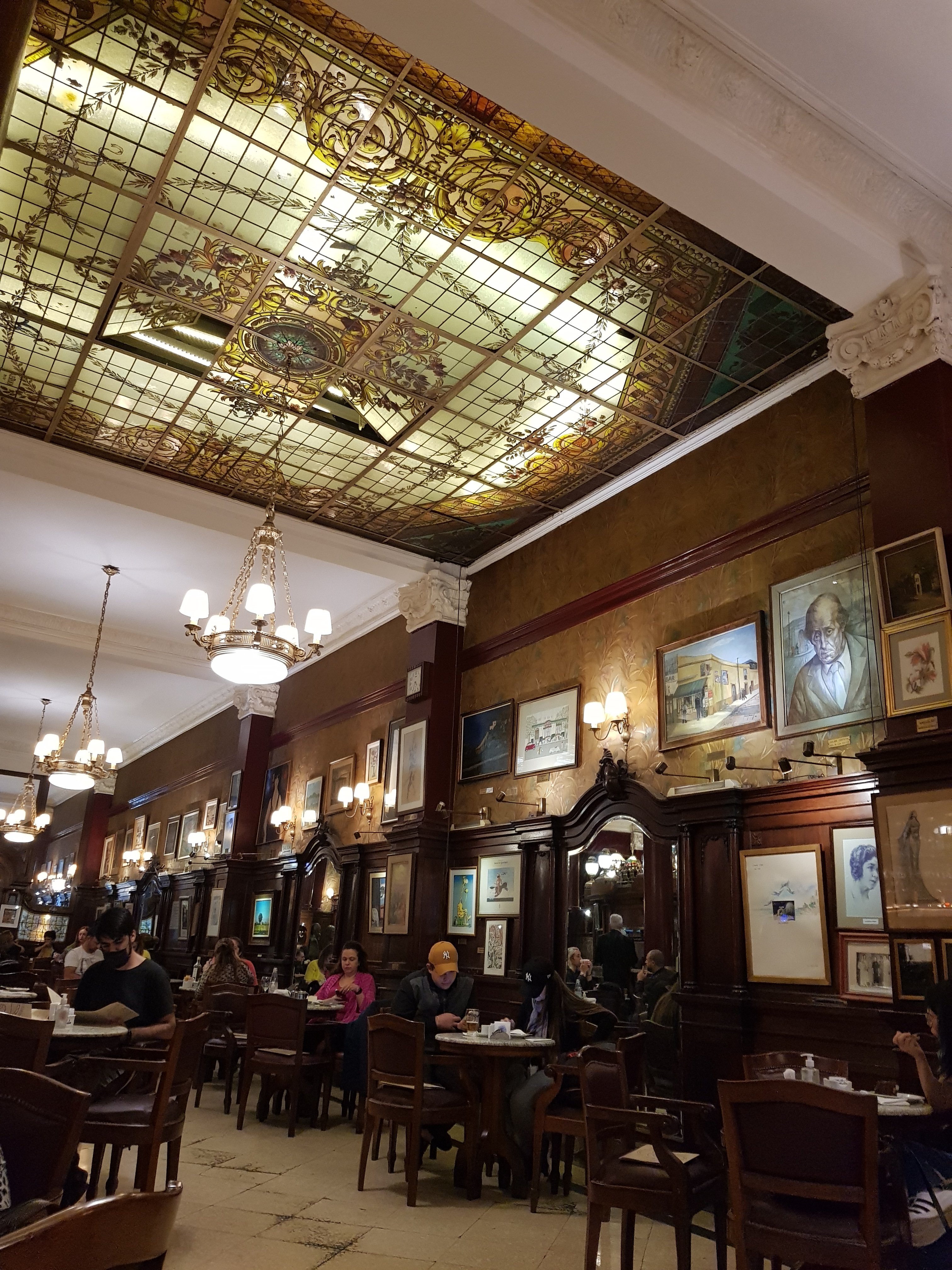
Another location where tango can be viewed and learnt is Cafe Tortoni. This is one of the oldest and most fabulous cafes in Buenos Aires. The decor is very traditional italian/ bohemian and many famous faces have eaten here. We decided to visit for a merienda (afternoon snack) and really enjoyed our visit with some great sandwiches and cake.
There were plenty of other bits and pieces I experienced in this bustling capital, but these were definitely the highlights. My return to the UK following Buenos Aires was a very long journey, but also gave me time to reflect on my amazing journey around this beautiful country.
After my return to the UK, I will soon be embarking on my next journey, working on board a cruise ship around the Mediterranean…
Argentina has a unique identity amongst the countries of South America and whilst I have been exploring the country, I have discovered these 10 interesting facts about this wonderful country.
1. A lot of things are free
A surprising amount of services in the country are free to the general public, this includes healthcare, education (including higher education), and many cultural attractions and events such as music festivals and museums. I found this to be a pleasant idea, as the country is quite poor, but it still prioritises funding to these essential public services.
2. They are football crazy
The Argentines, especially Portenos (people from Buenos Aires), seem to be mad for football. It seems that if you did decide to go out in the city with your football club shirt on, you may well get stopped by someone to ‘discuss’ this. I was quite shocked that some people even knew where I was from (Norwich city) just because of our rubbish football team that goes in and out of the premier league regularly.
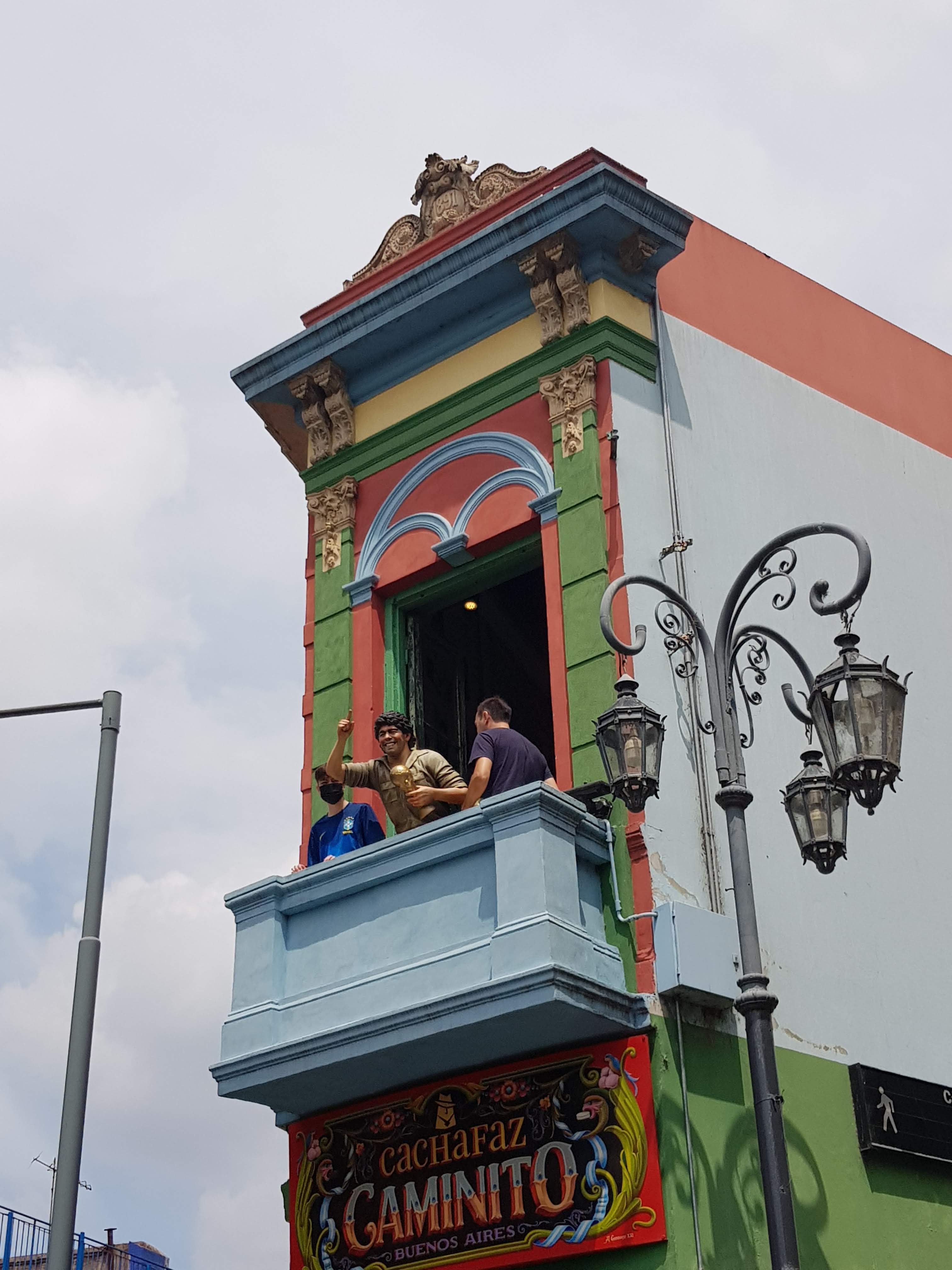
Boca photoshoot opportunity with a footballer
3. They have their own unique pronunciations
Spanish isn’t an easy language, as there is a lot of variety in the grammar, accents, words and pronunciations. Throughout Latin America, the pronunciation of the sounds for ‘c’, ‘ll’ and ‘y’ are different to most of Spain, but in Argentina there is an even more defined difference. Instead of sounding ‘ll’ as (ya) or (ja), they turn it into (sh). Multiple times, I was convinced my spanish was correct, only to realise the people of Argentina didn’t understand me because of this subtle change in sound.
4. They are mad for Mate
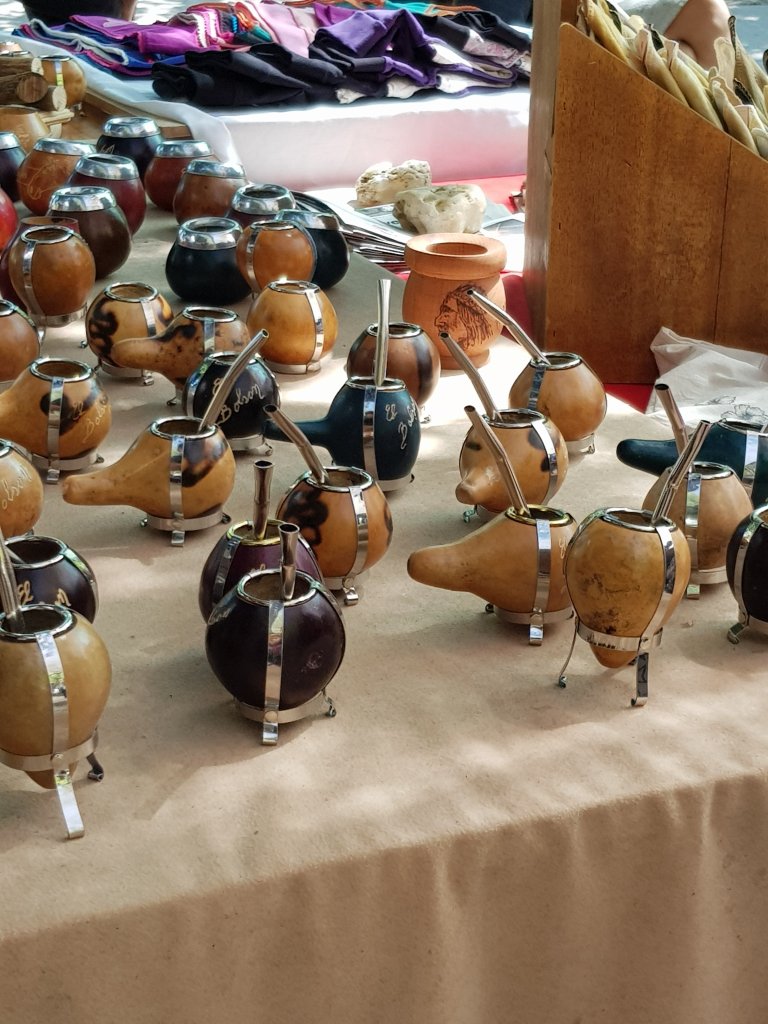
Mate pronounced ‘matay’ is a type of herbal tea that is served in one special cup with a metal straw and shared between a group of friends and family. The people of Argentina are seriously committed to their mate sessions. Most people seem to drink mate throughout the day, and I was offered several mate sessions in my time in Argentina. It was very clear how important this drink was to the locals when I saw people trekking with a kettle and mate cup attached to their backpacks, ready for action.
Mate cups
5. The country’s history is really complicated and includes lots of dates
So it seems that the country has had a lot of politics and conflict since its founding. The culture is clearly very influenced by European heritage here, especially french, spanish and italian. Argentina had a lot of heartache to sever their political ties with Europe though, and become an independent republic. It is definitely worth learning about the history as it is very interesting, and the country is clearly very keen to memorialise their historic events. All the main streets are named after either important historical dates or people. It seems like every town’s main street is named after San Martin, who helped Argentina and other latin american countries become independent.
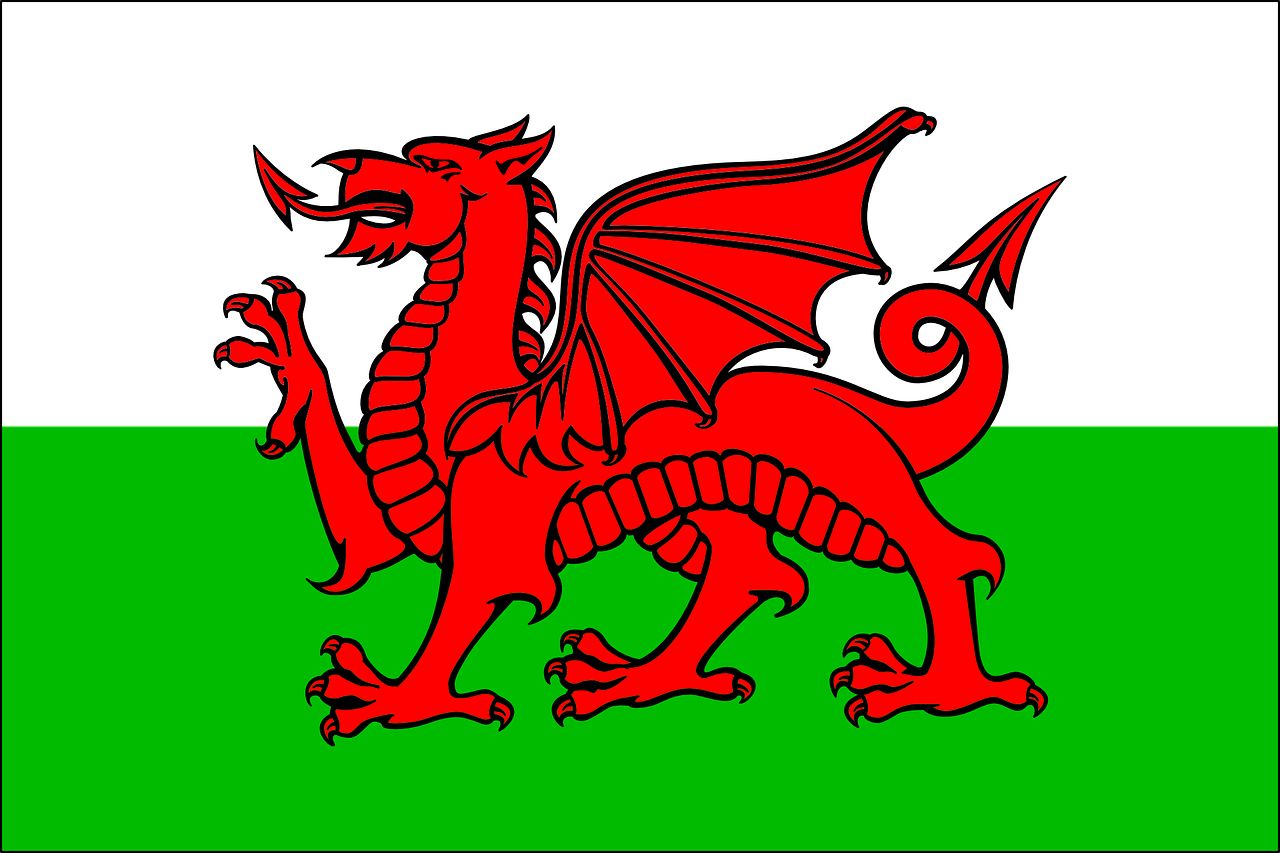
6. They have a whole community of welsh people
Super surprising to me. Within a part of Argentina’s Patagonia, near Puerto Madryn, there is an entire heritage based on settlers from Wales. These settlers wanted to settle in the area when it was still fairly new, so they could keep their culture alive within their own community. Every year, in July, the welsh community celebrate their culture with a schedule of welsh traditional activities. Throughout the year, visitors can enjoy Welsh tea and visit the historic chapels that the settlers built first on arrival.
7. Drugstores do not sell any drugs
Shops are a bit confusing in Argentina, and drugstores are a good example of this. There are a number of stores labeled as drug stores in Buenos Aires, but when you visit you will find it to actually be a convenience store of snacks and drinks. If you go to the supermarket, you will not be able to access any drugs either, I have yet to even see paracetamol sold there. The only place to find any meds is unfortunately a pharmacy, which is normally very pricey.
8. They insult each other and swear quite a lot
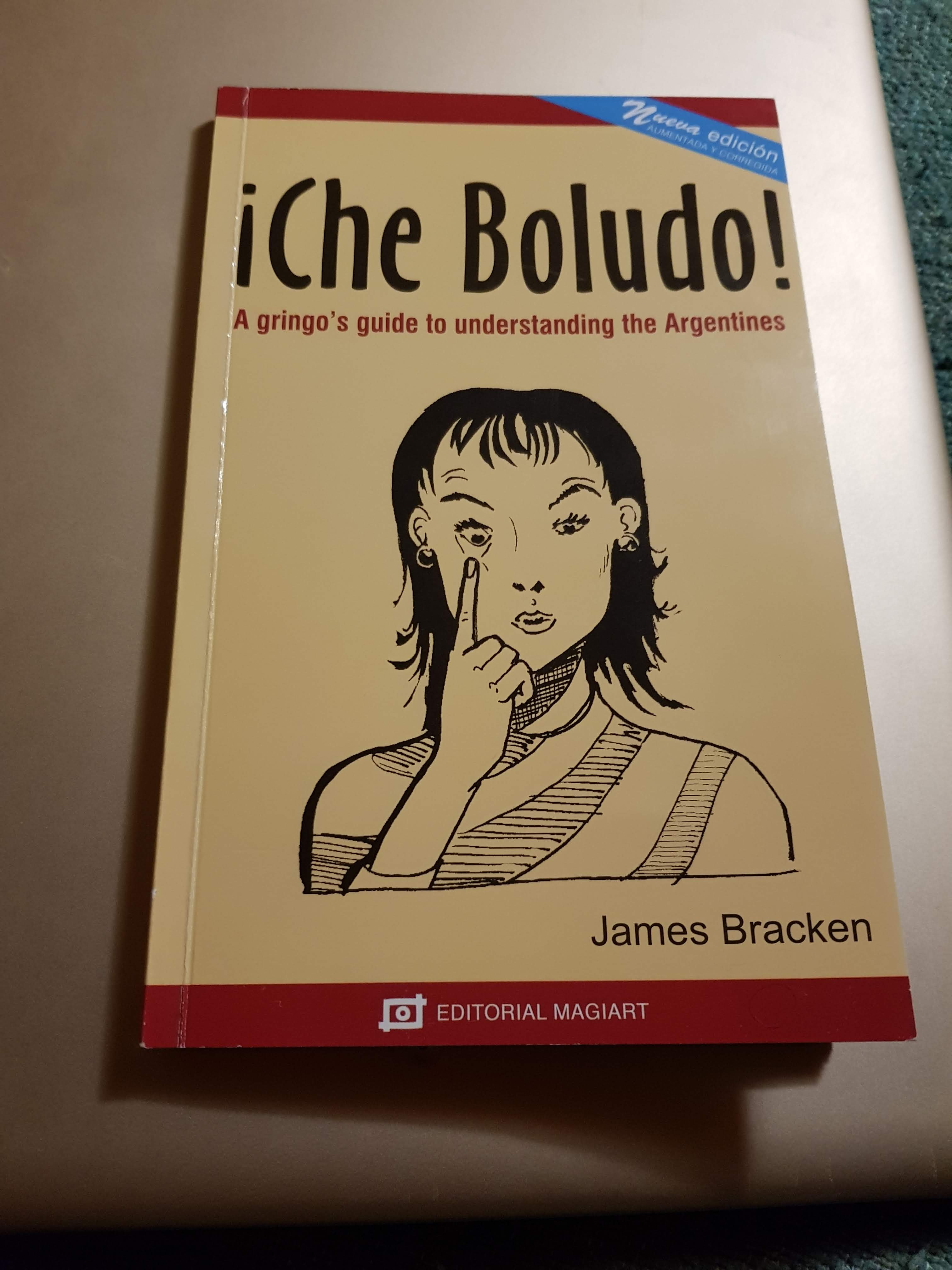
Whilst in Argentina, I decided that I wanted to learn a little of the local slang that is specific to this country. I met a girl from Argentina that taught me some words, but I also found a well known book in a gift shop, ‘che boludo’. This book is devoted to the Argentine slang, and to my suprise, there are a serious number of ways to insult someone, or describe sex, and if they are literally translated, then they are super weird. For example… cerrado como una cola de la muneca… literally meaning closed like a dolls ass… actually they mean someone is narrow minded. Confusing right?
9. Most people live in Buenos Aires province
Maybe you won’t think this is interesting, but I felt it was strange. Considering that Argentina is the eighth largest country in the world, it seems odd that most people I met all lived in the same place. In fact 13 million of the population lives in the Buenos Aires area, where the capital resides. This provides some racional to why there is so little road infrastructure elsewhere in the country, most of it is just wilderness.
10. They love a kiss or a fist pump
So… if you are meeting a bunch of Argentine people at a party or gathering of friends, there is a pretty good chance that you are going to be kissed on both cheeks by every person there. I felt very strange about this as the reserved English lady that I am. My preference was the other national greeting which is much more casual, the traditional fist bump. Made me feel like part of a crew! haha
There are so many more interesting things about Argentina, but these are just a flavour of unique and unexpected customs and facts that I discovered when visiting. I would love to hear if you know of anymore?
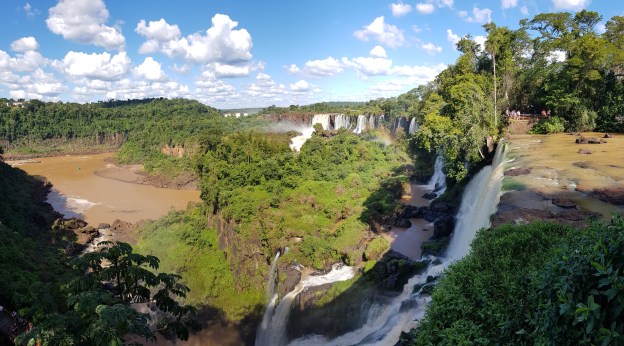
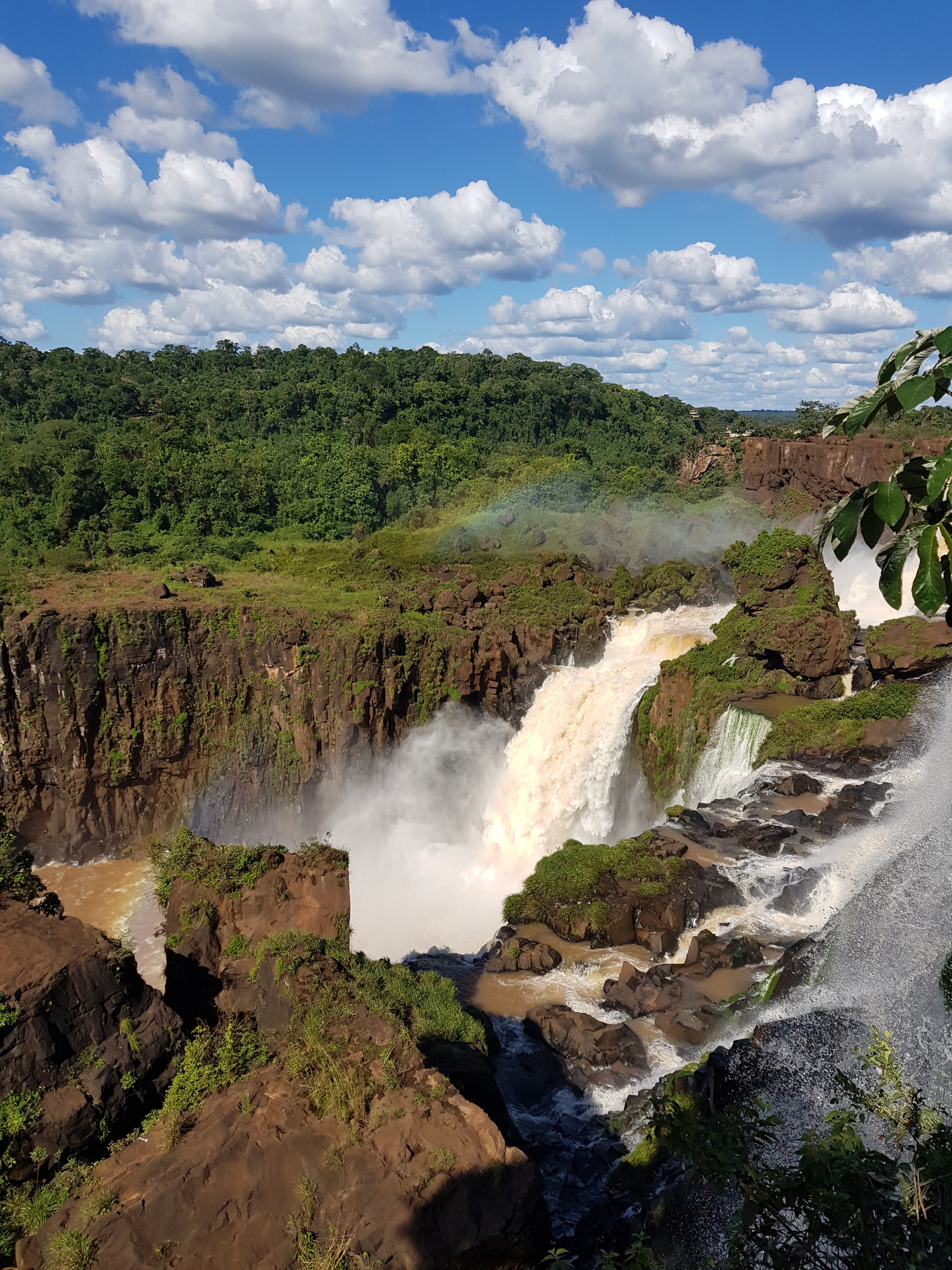
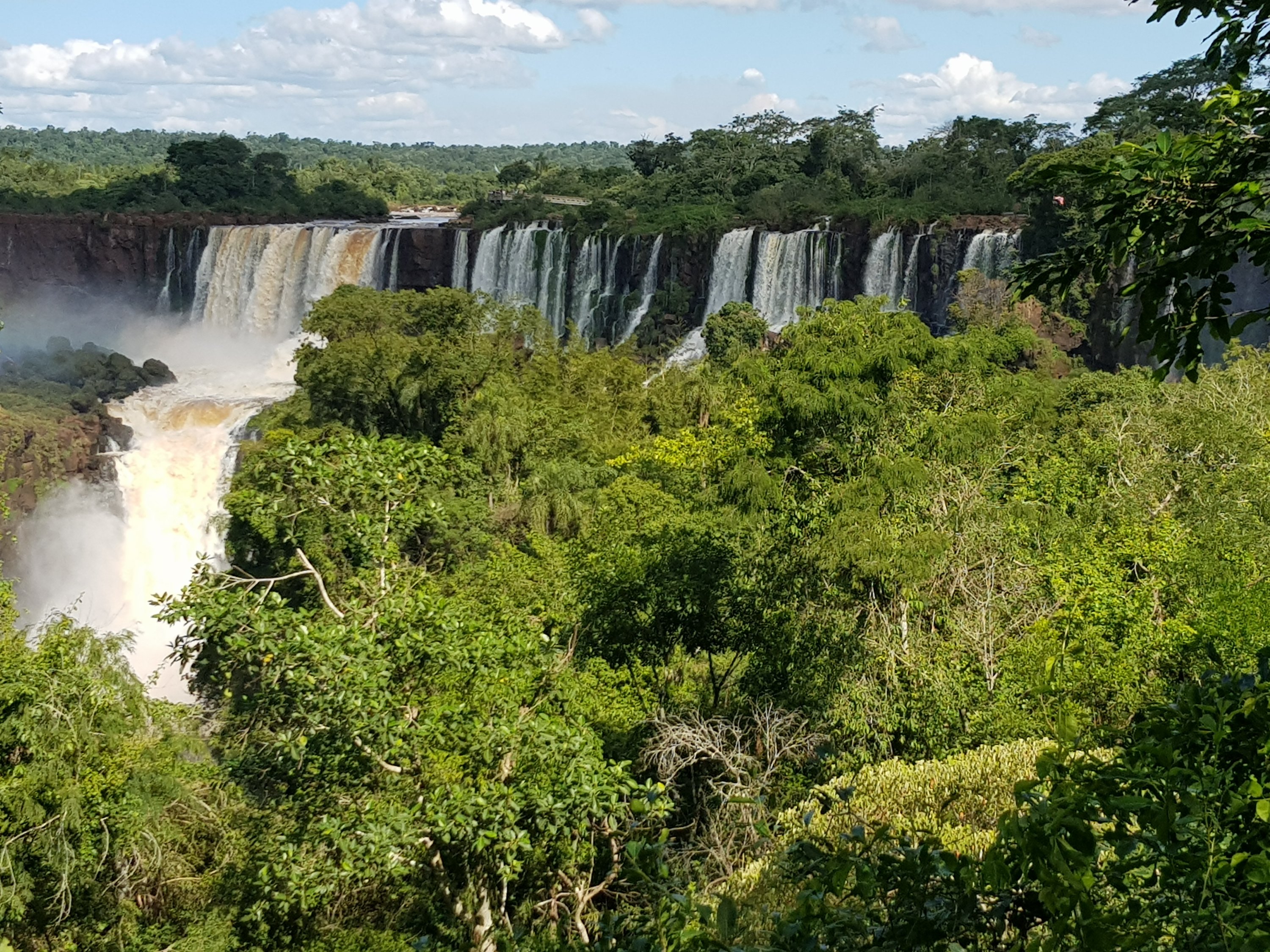
The Iguazu Falls meaning ‘big water’ in the native Guarani language, is a huge set of waterfalls set within the Misiones Jungle, at the Iguazu National Park. This world wonder provides a border between Argentina and Brazil, and a unique habitat for plants, trees, birds and other rare wild animals. I visited Iguazu for two days of exploring in the jungle and relaxing with good food and company.
Arriving in Puerto Iguazu
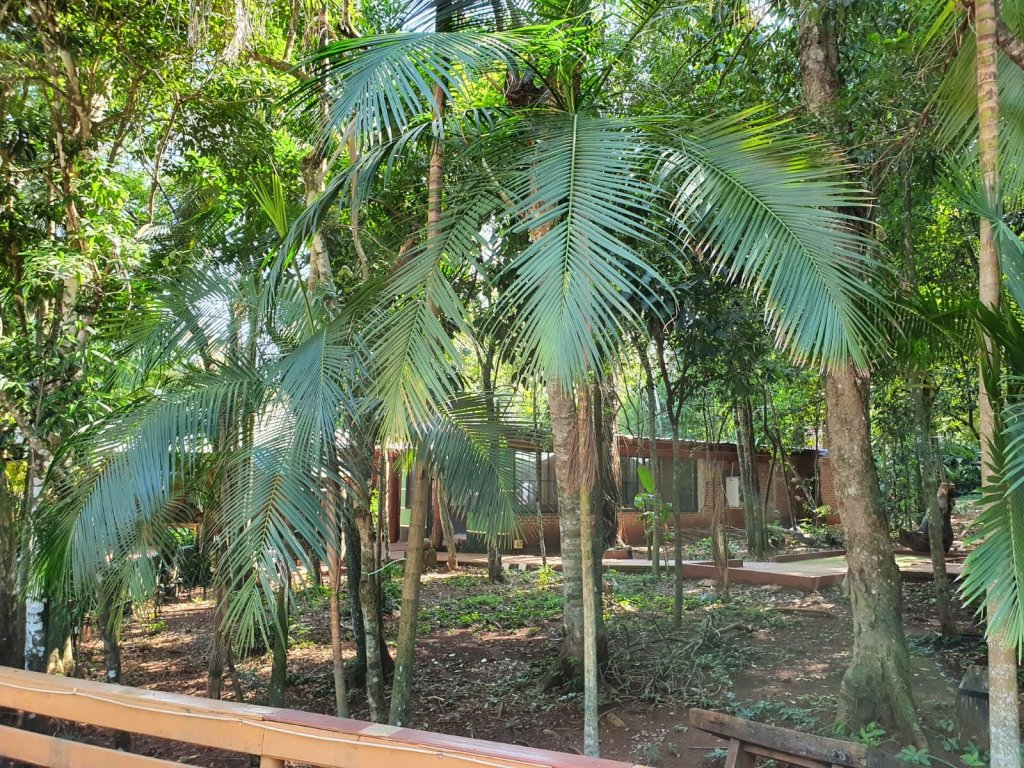
After a fifteen hour bus journey from Corrientes, I finally arrived at Puerto Iguazu. This town is the nearest settlement to the Argentina side of the Iguazu National Park. The town has several hotels and plenty of restaurants for relaxing evenings after exploring the jungle. I met up with a travel companion at this point, and we stayed in a hotel that was surrounded in jungle plants and had a very nice pool!
The jungle by day
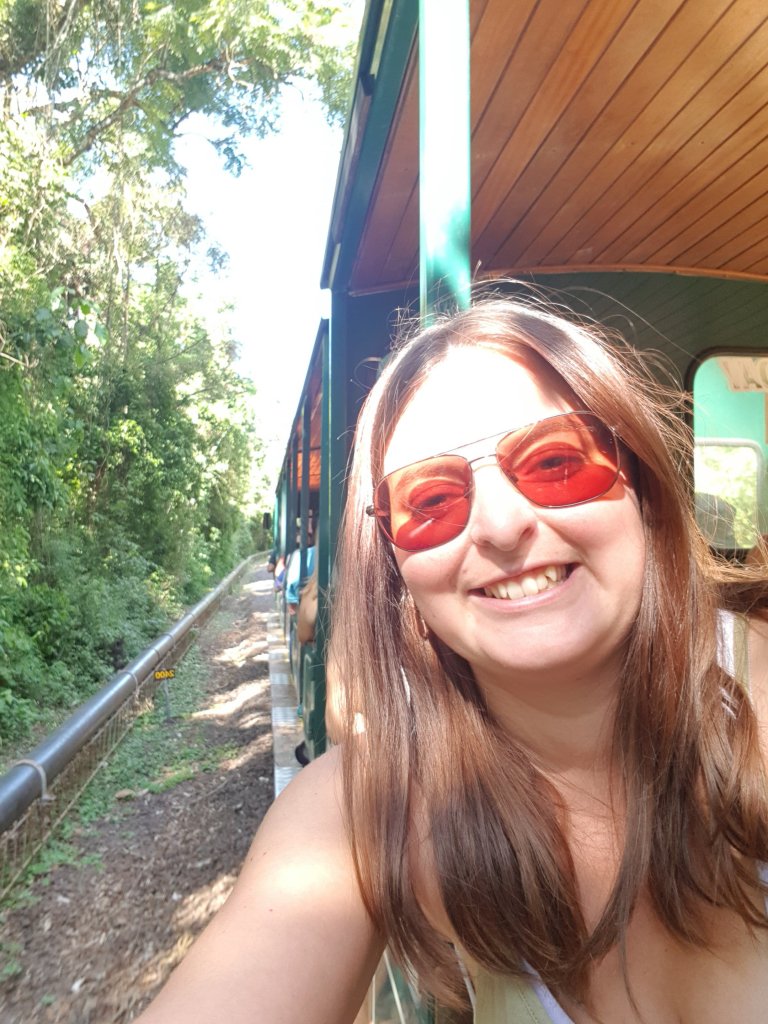
During my two days in Iguazu, I visited the national park on both days. The national park is under 30 minutes from the town, and on arrival there is a large visitor centre, cafe, and ticket offices. The park also has paved pathways to lead you through specific parts of the jungle, and various refreshment points. The most surprising piece of infrastructure was the park’s jungle train. It runs on a 3km track to take visitors to the largest fall that is furthest away, and is included in the admission for the park. It is also worth knowing that your second day in the park gets a discount if you show your previous ticket.
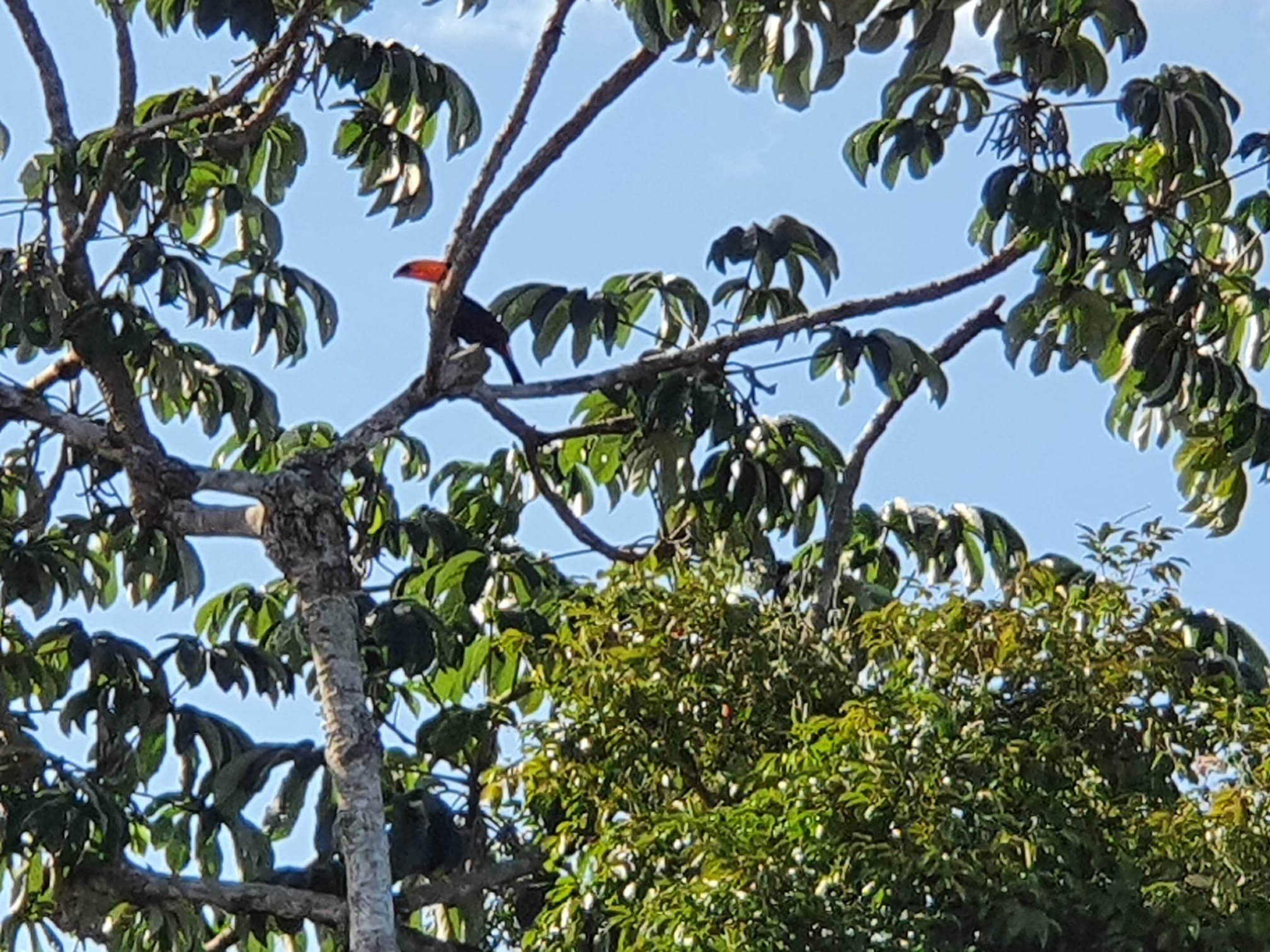
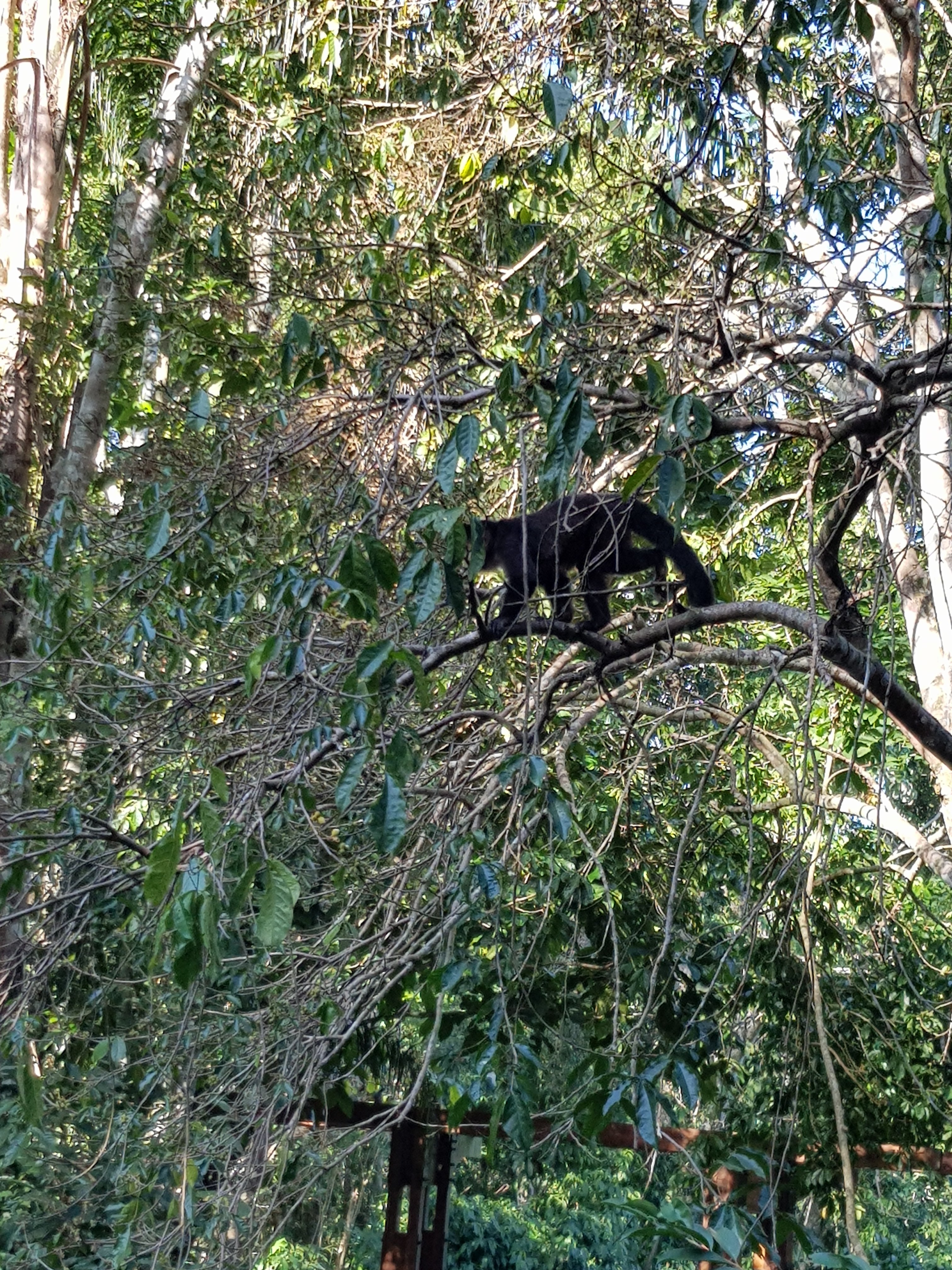
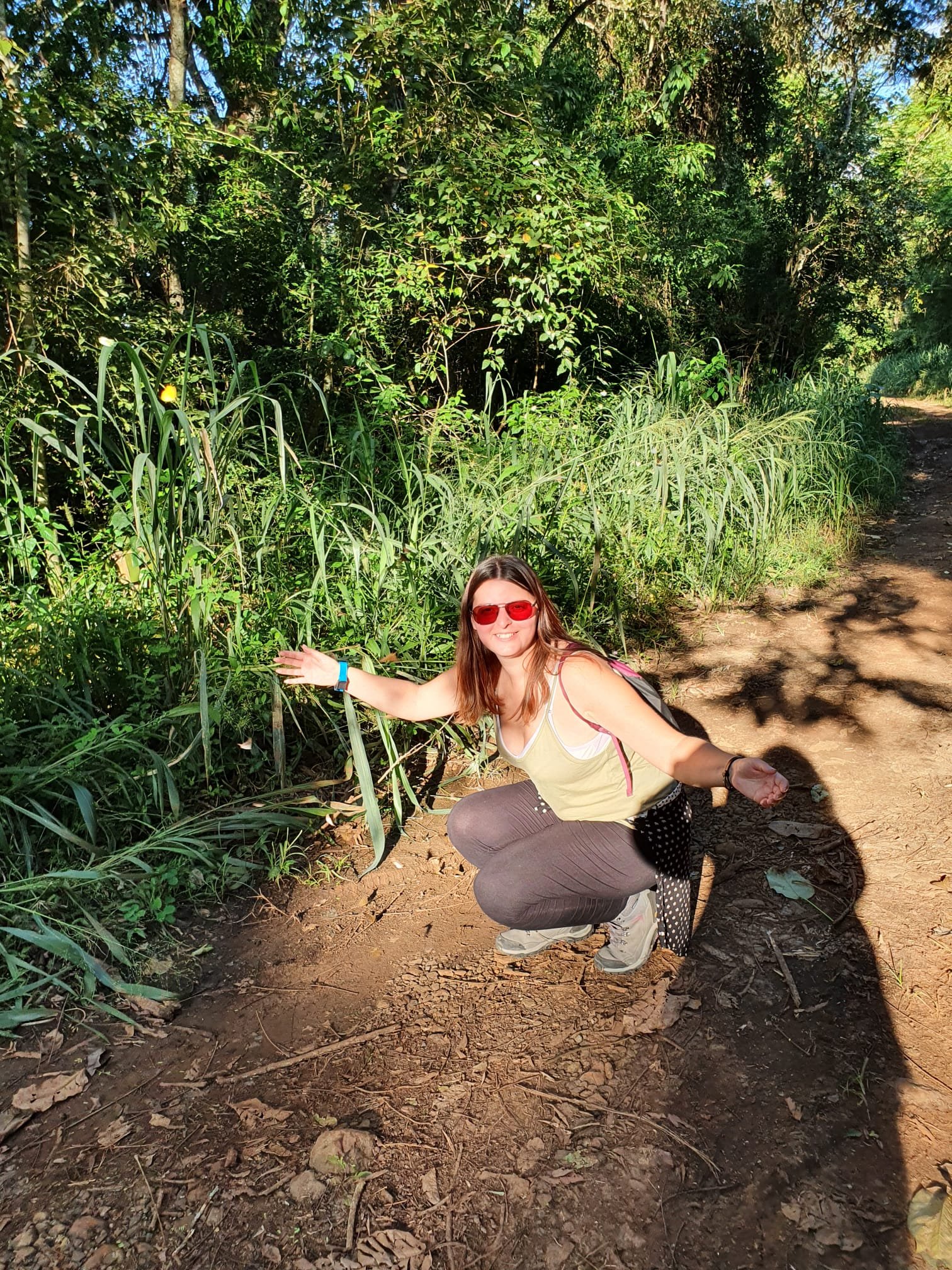
Whilst there was some human structures, the park in no way looked ‘well kept’. It is a very wild area and I was amazed at the amount of animals that I was able to see roaming around. In my short time there I was able to see monkeys, capybaras, coatis, toucans, parrots and condors. There were also beautiful insects to see such as colourful butterflies, and huge ant hills with ants carrying leaves back and forth. There were also pumas and jaguars in the park, but they kept to themselves!
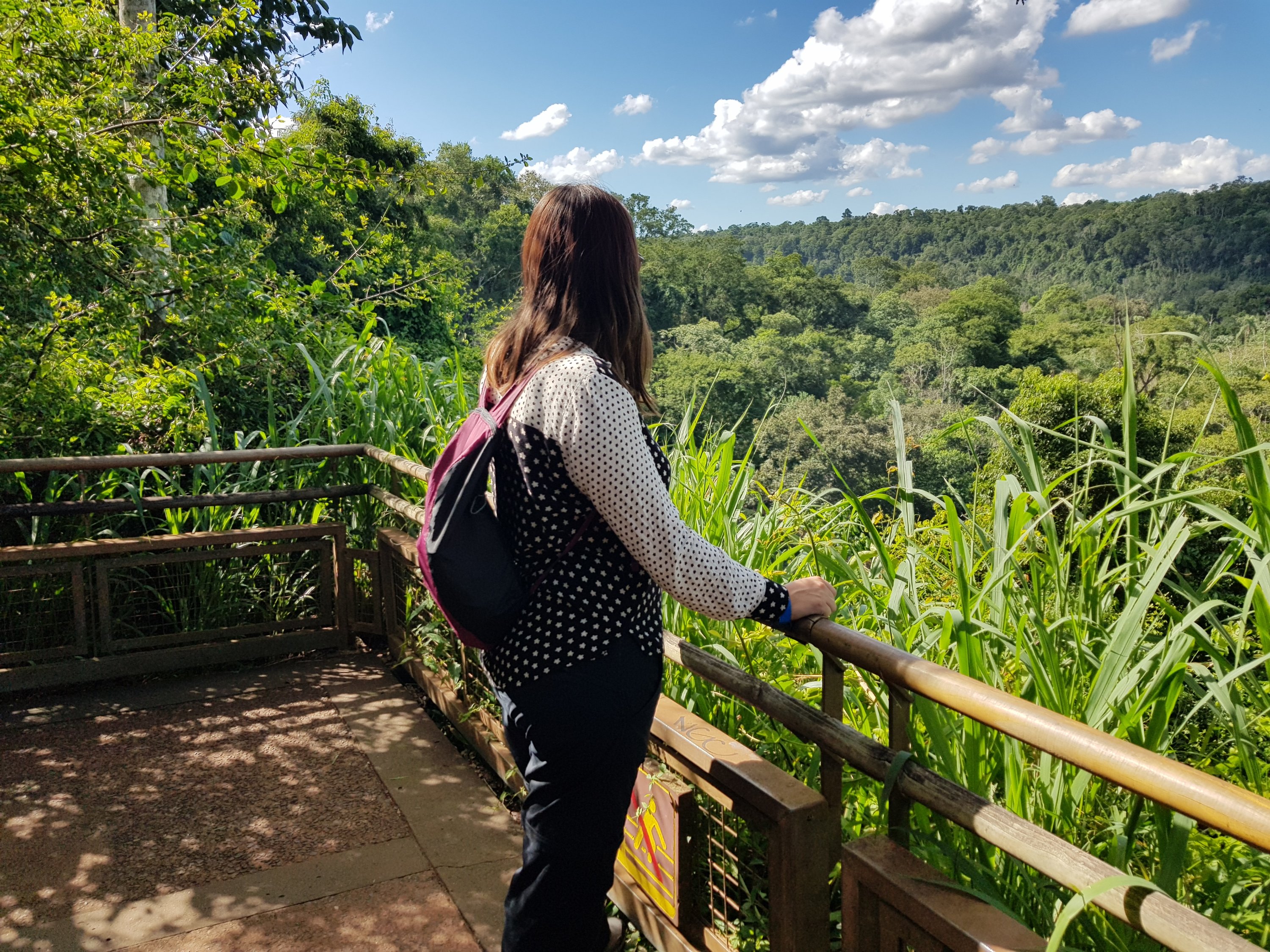
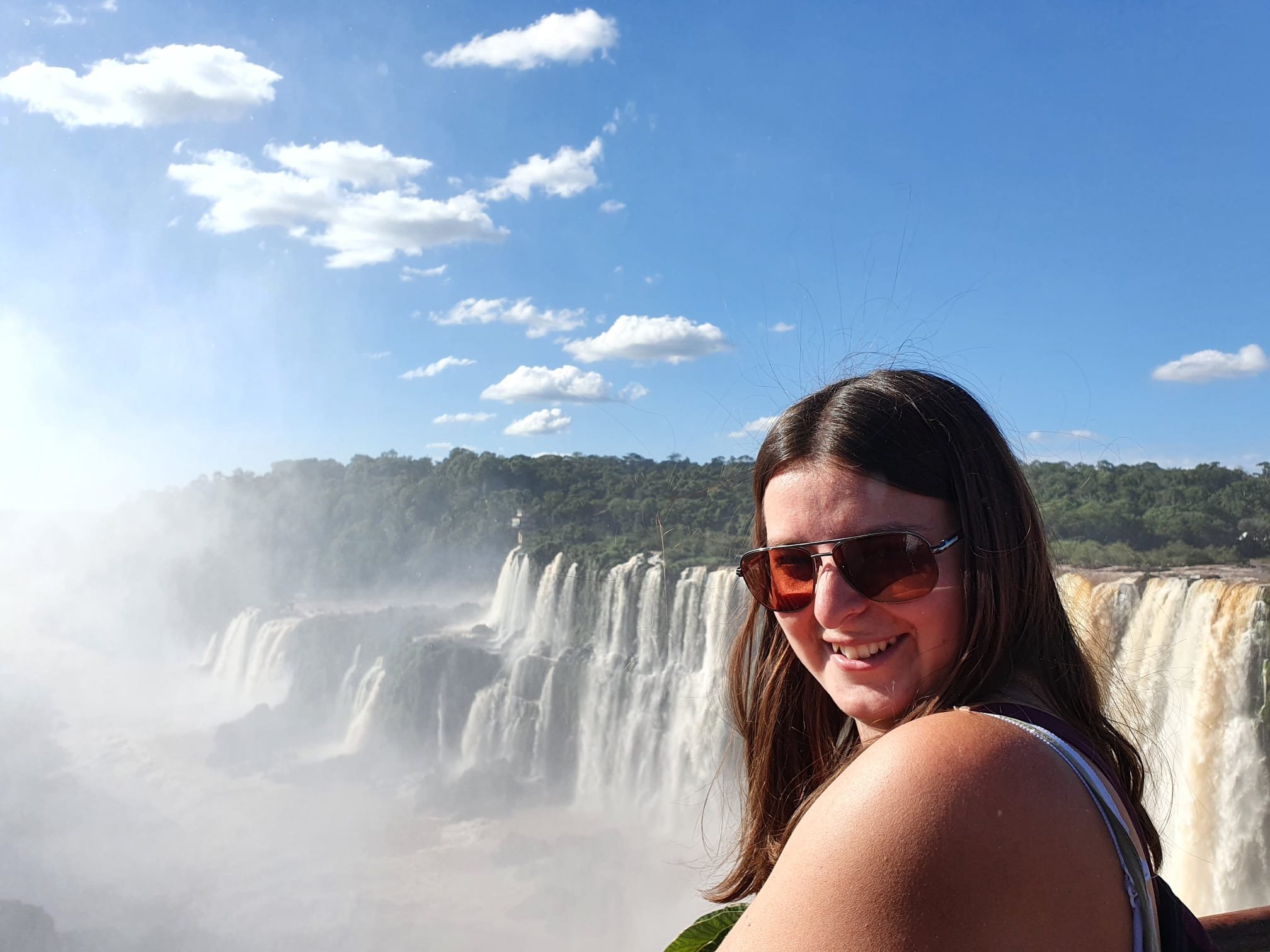
The jungle path led us through overlapping canopies of huge and unusual trees, until we reached the huge Iguazu river that flows through the park. To cross, there is a number of metal bridges to lead visitors to the largest fall ‘Giganta Del Diablo‘ (Devil’s throat). From here you can view the huge fall from a platform. There are several other paths to the other falls and other features of the park too. It seemed that everywhere you turned, there was a new wonder to behold! We only chose to walk around but other experiences are also offered, such as a river cruise, 4×4 drives, and repel experiences.
The jungle by night
Once a month, during a full moon cycle, there are a few days when you can visit Iguazu Jungle during the night, for a moonlight walk. I was excited to book this, and emailed the national park administration in advance to arrange my moonlight walk, followed by a traditional Argentine buffet.
There were at least twenty people in my group walk, and a guide that gave us a little information, but mostly warned us to not stray from the group, as the Jaguars would be out hunting! Slightly terrifying!
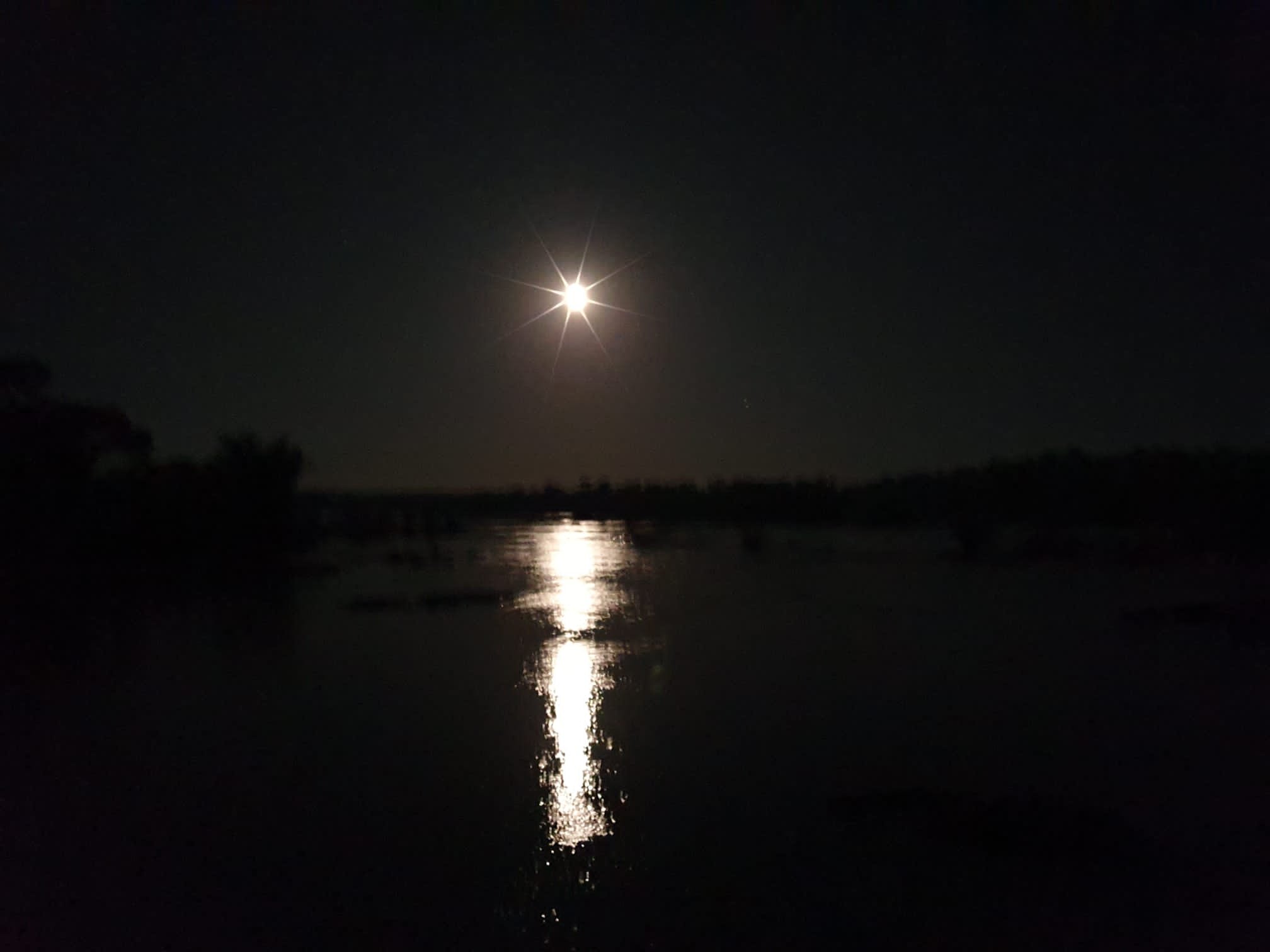
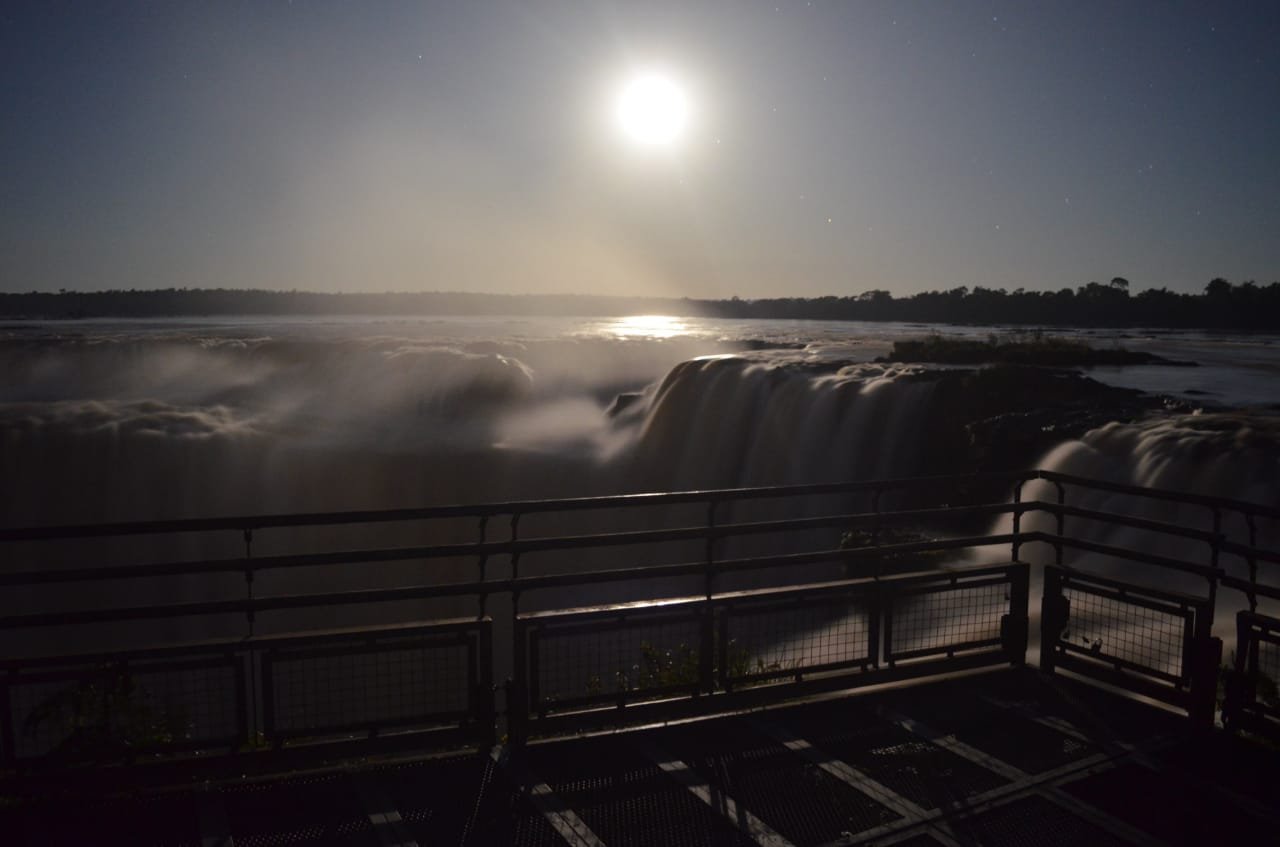
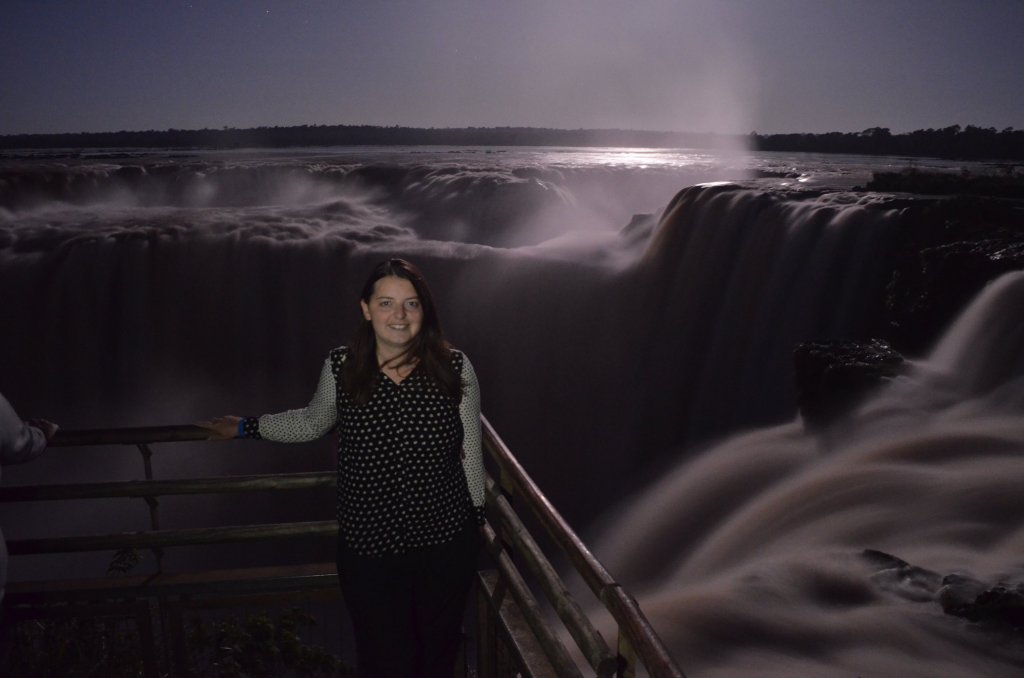
The tour used no lighting at all, not even a flashlight, we were entirely guided by moonlight. This made it quite special, as we could mainly just rely on the sounds of the jungle. We made our way through to the Devil’s Throat, over the many bridges, with the moon reflecting over the river water. The humidity in the jungle during the day had now dropped down to the ground, causing the bridges to be wet and slippery, which really added to the fear factor.
When we finally arrived at the waterfall, it was absolutely beautiful to see by moonlight. It shimmered in white and silver as it fell to the depth below, and the noise of it was deafening amongst the silence.
After the moonlight walk, we wondered to the national park’s restaurant for our traditional buffet. The restaurant was quite fancy, and had a huge parilla barbeque cooking meat of all kinds. I must have had at least three plates of food at that restaurant, as well as a dessert. I was stuffed, but it was also absolutely delicious!
After my weekend in the jungle, I set off to return to Buenos Aires for my final two weeks in Argentina. Iguazu certainly earns its title as a natural world wonder, it is an astonishing place with an abundance of wildlife, and I would be happy to revisit!
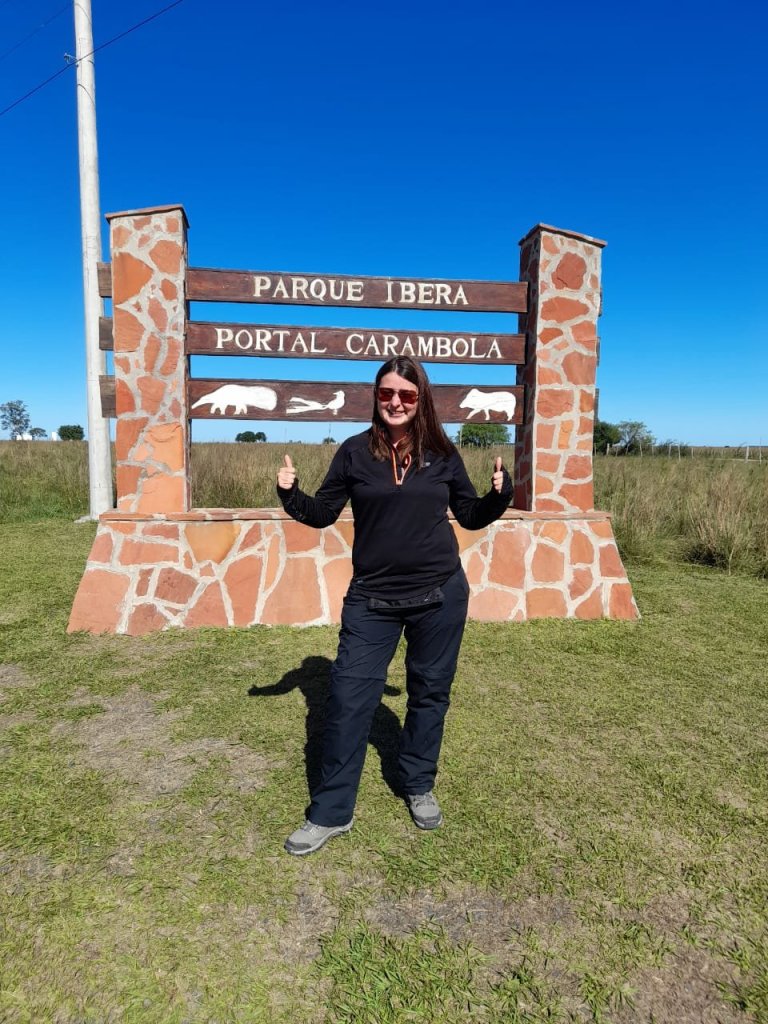
Corrientes city was supposed to just be a stopover on my way to Iguazu National Park, but due to the bus schedules, I had to stay for almost three nights. This ended up being a stroke of luck as not only could I enjoy the city, but especially because I was able to visit Argentina’s biggest National Park, and the world’s second largest wetland, Ibera National Park.
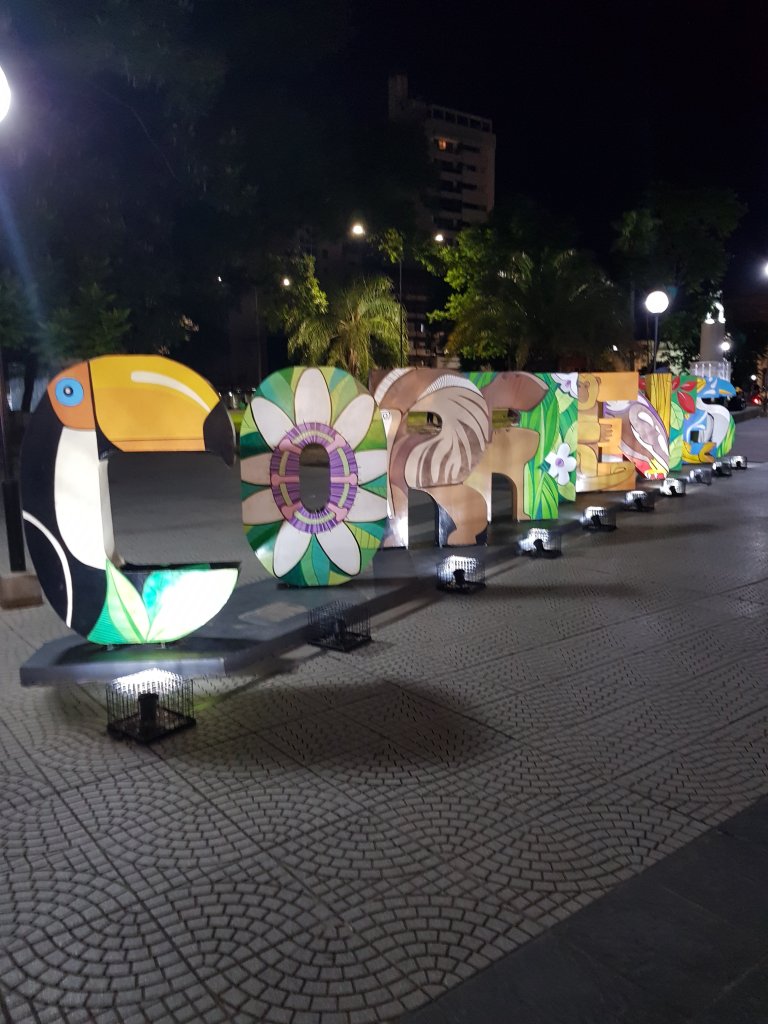
Corrientes city is the capital of the Corrientes province in the North of Argentina. I wasn’t sure what to expect as many people asked me ‘why are you going there?’. There is little publicised about this city or the nearby national park to visitors. It is still one of the world’s less explored locations. I am very happy about this. The city has a mix of some modern amenities but also a lot of old school traditions. Ever seen a road sign that says that pulling your horse and wagon through is prohibited? Now, I can say that I have. There are plenty of people still using horses to get around, and it is brilliant to see. Made me feel that maybe I could get picked up and trotted away by a local cowboy!
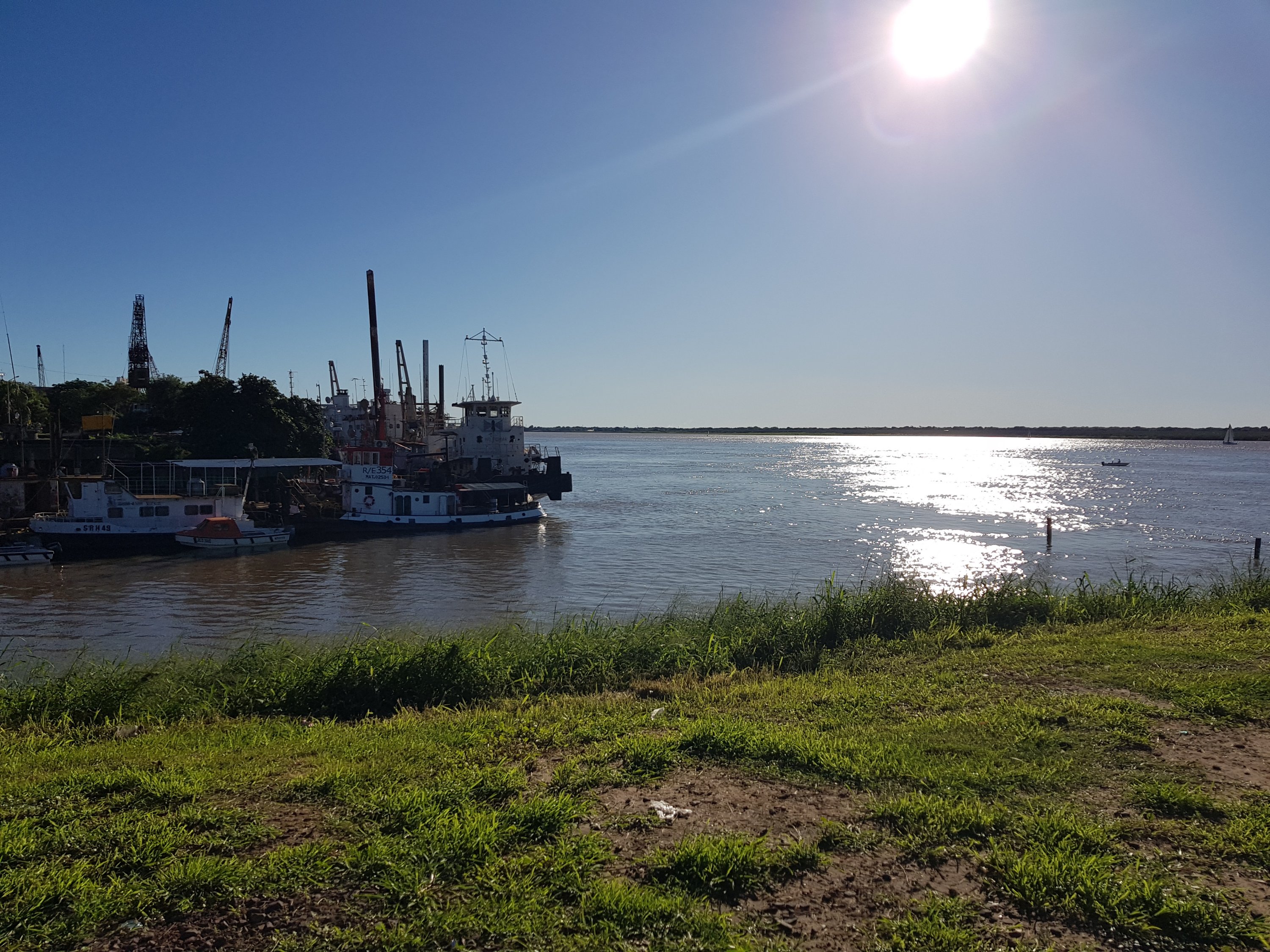
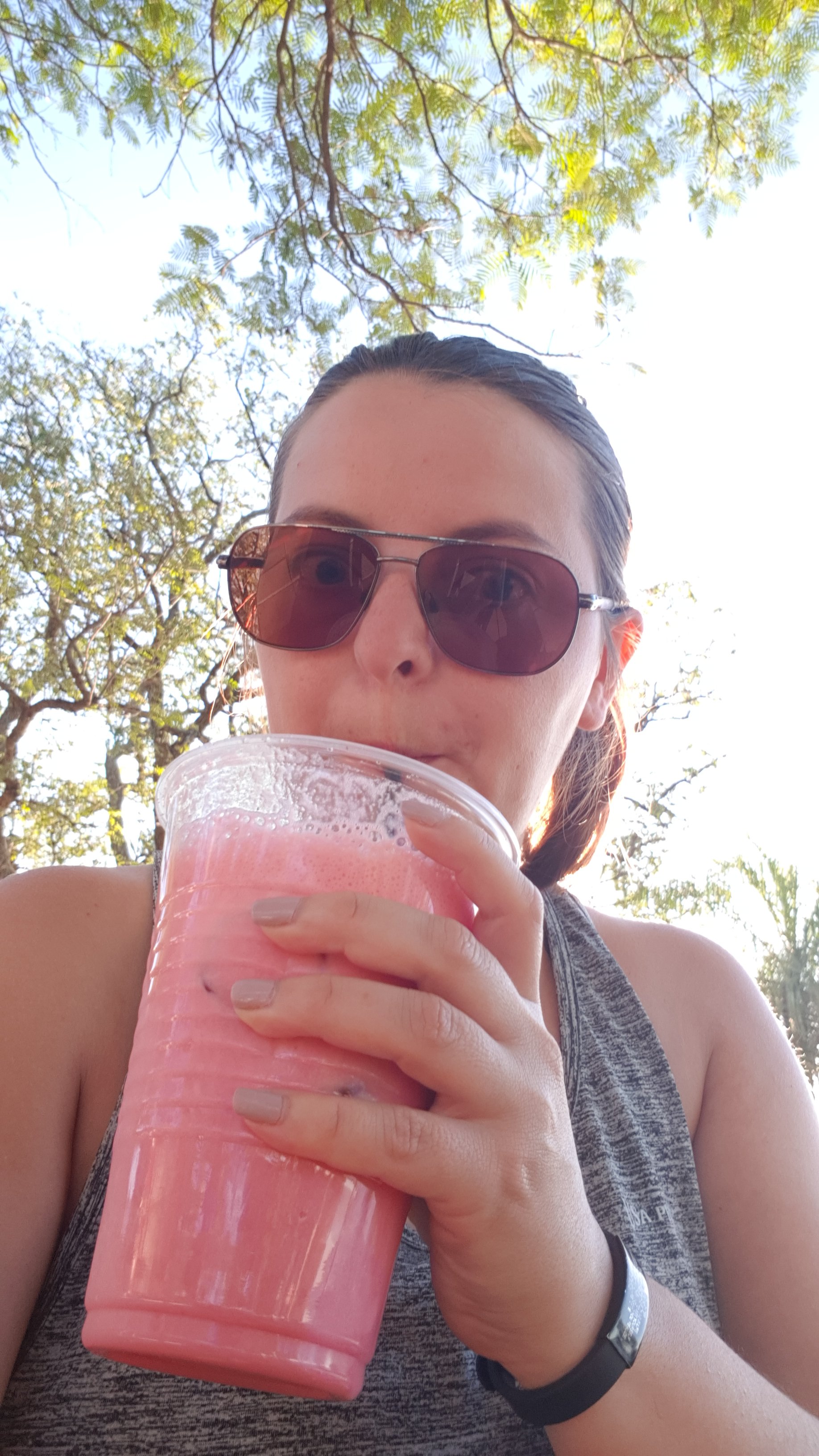
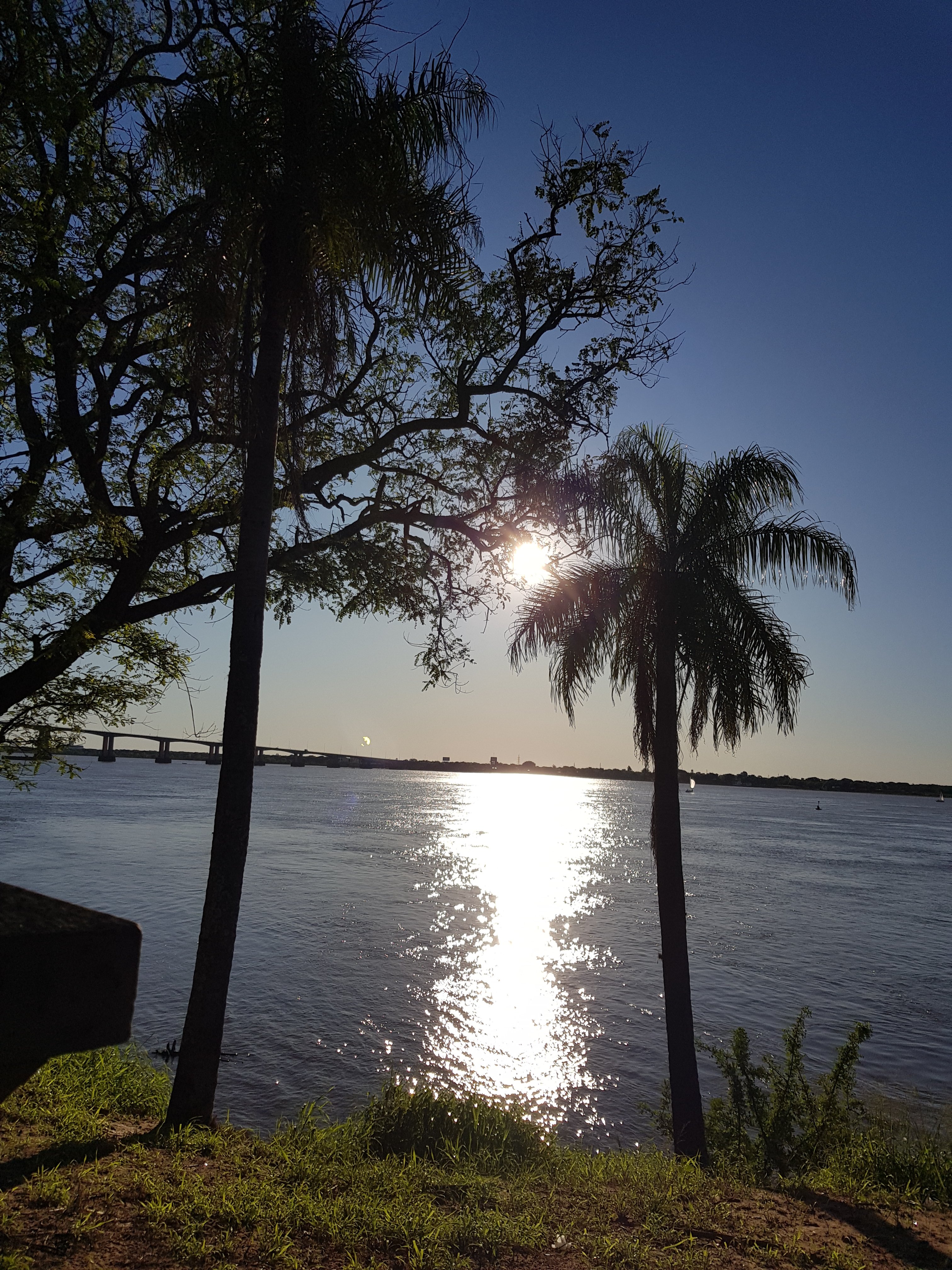
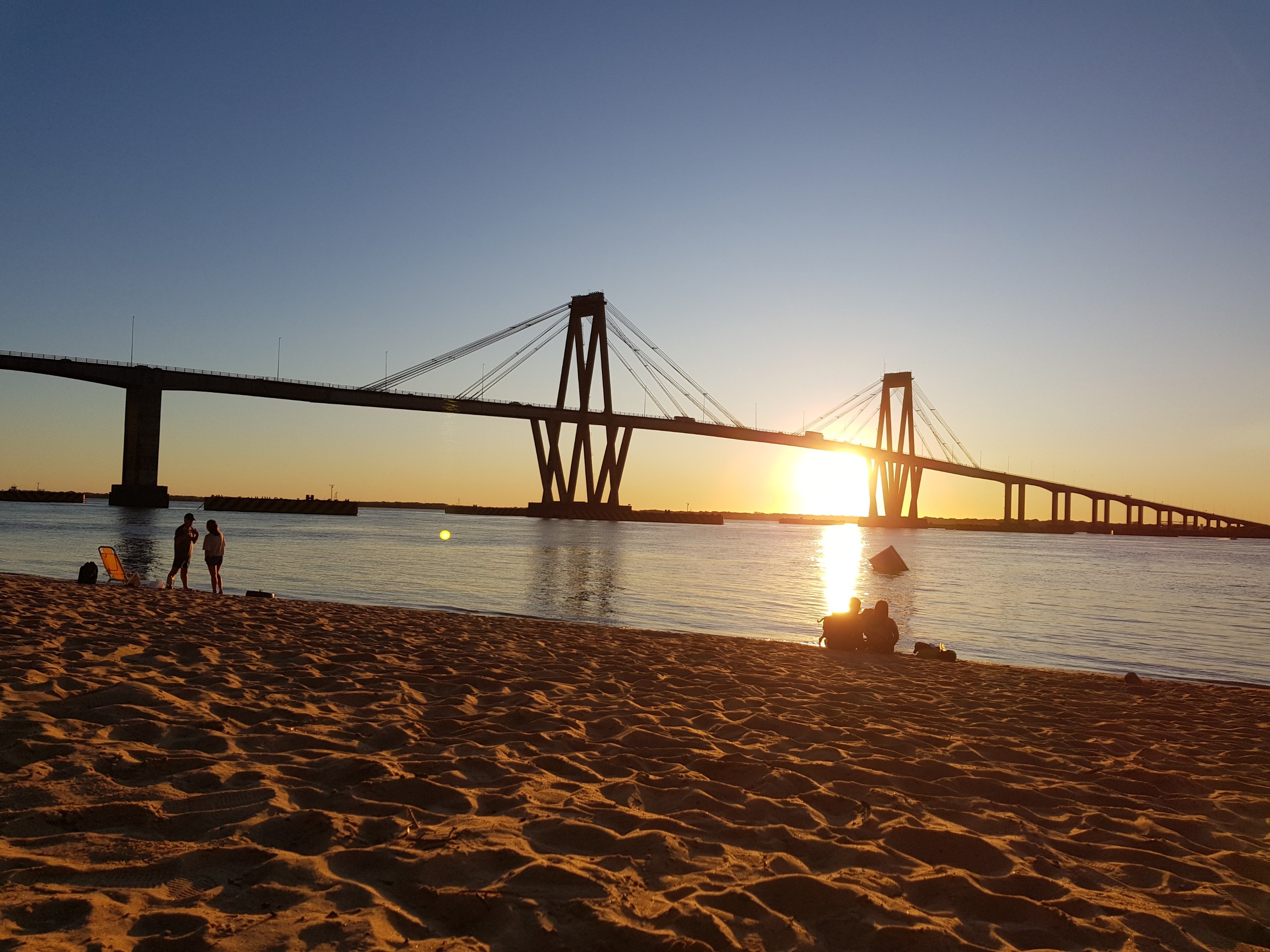
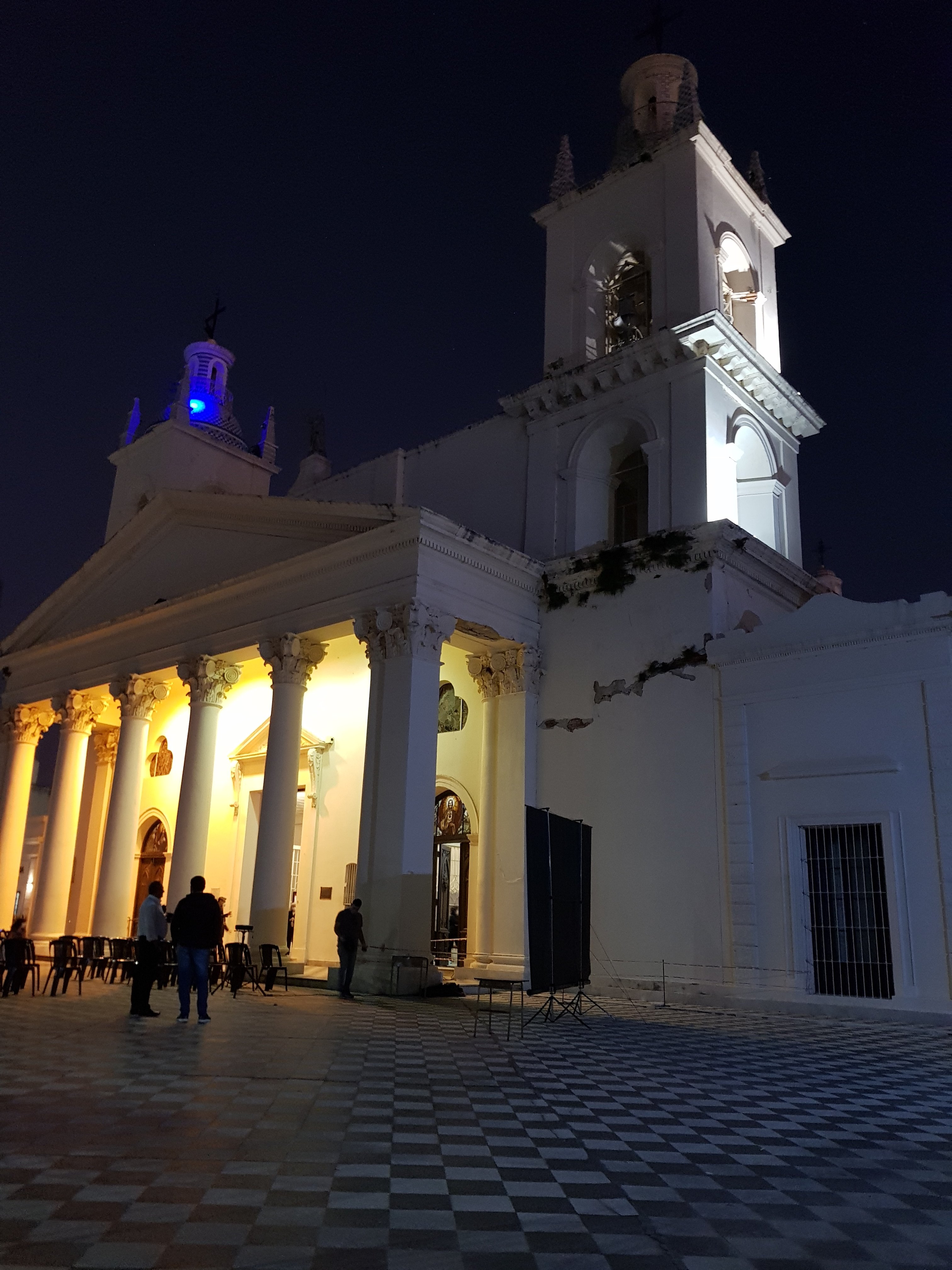
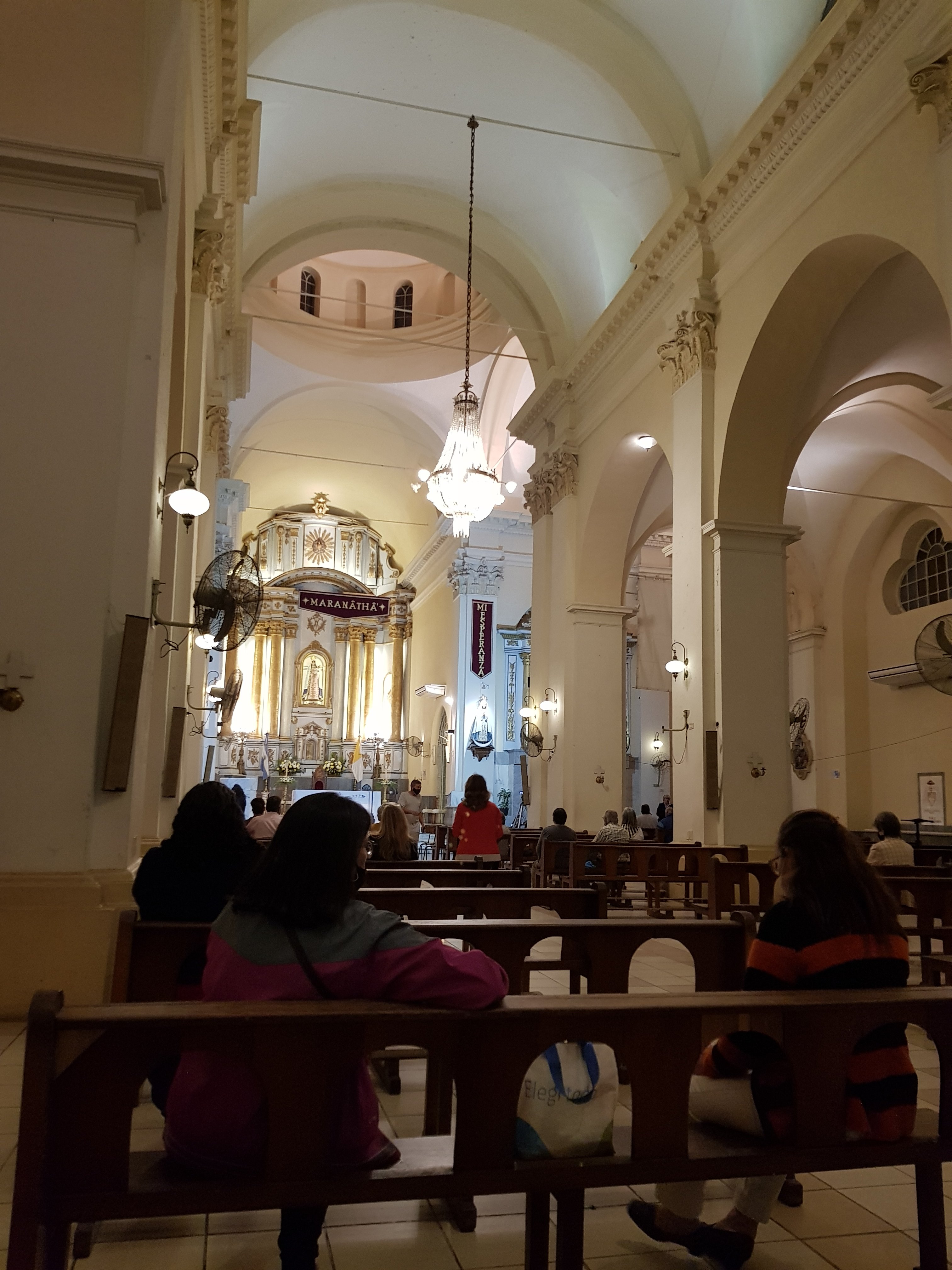
The city sits within this huge wetland area and has the huge Parana river separating it from the next big town. This huge river provides a promenade to enjoy and some beaches, so it is a good place to relax. I enjoyed a local ‘chipa’ (dough cooked over bamboo) and a smoothie whilst enjoying the sunset here. Later in the evening, I had a pleasant experience at the holy week mass in the main cathedral.
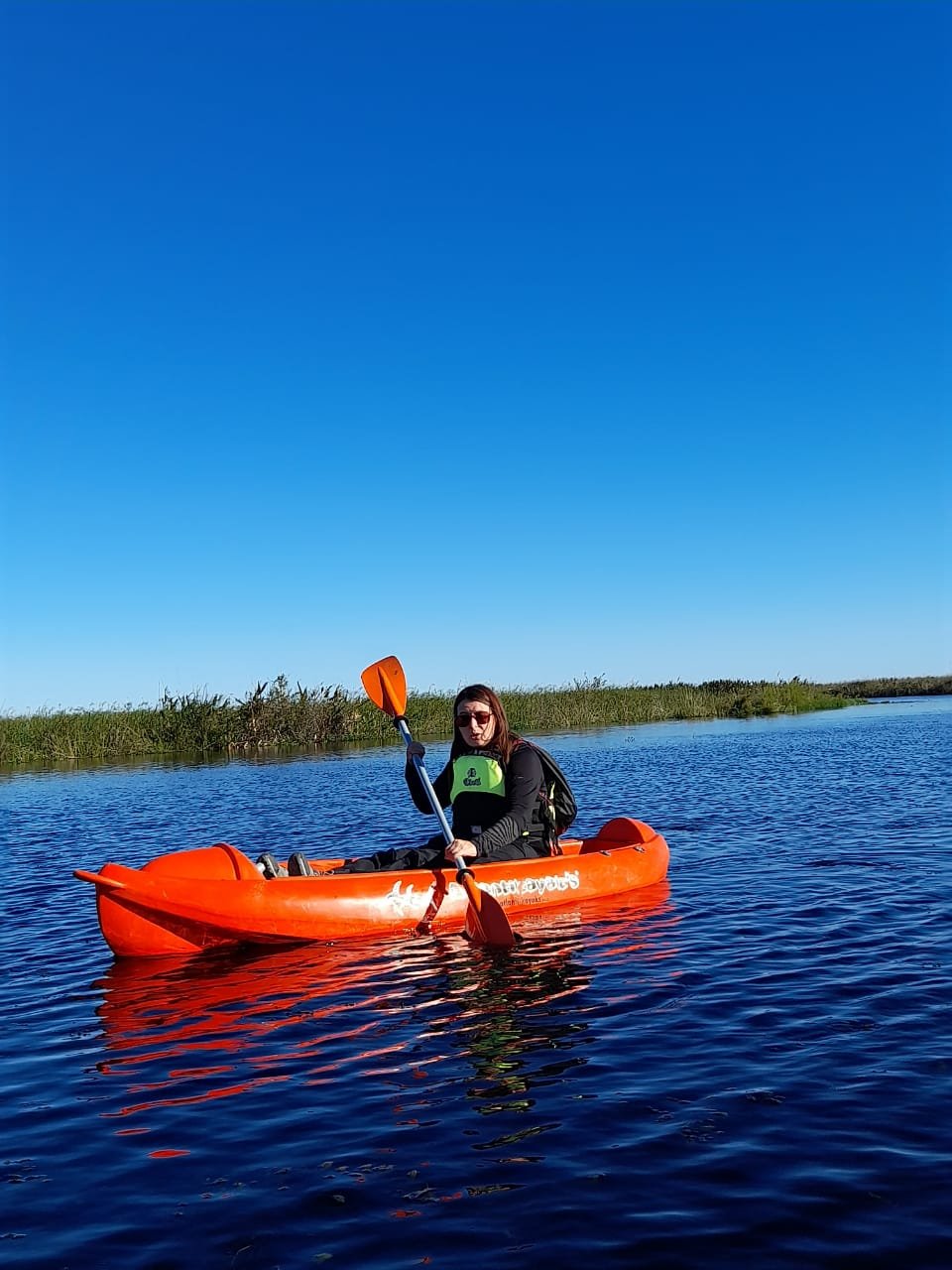
It was the week of Easter when I visited, and so all the local tour agencies were very busy. I was worried I would not be able to get out to Ibera National Park (also known as Esteros del Ibera), as it is 2.5 hours from the city, and I didn’t have the confidence to hire a car alone to this wild area. After some long whatsapp conversations with a few agencies, they managed to arrange a private transfer to Concepcion, which is a town that offers one of the access points into the park, and a long kayak trip on the rivers and bogs!
The Park is about 1 million and three hundred thousand acres in size. It not only comprises of rivers, bogs and lakes, but also grasslands, forests and savannas, depending on the part of the park you are in. The park is abundant in wildlife and is used to reintroduce many indigenous species. Deers, anteaters, caimans, and even tigers called Yaguareté can be found here.
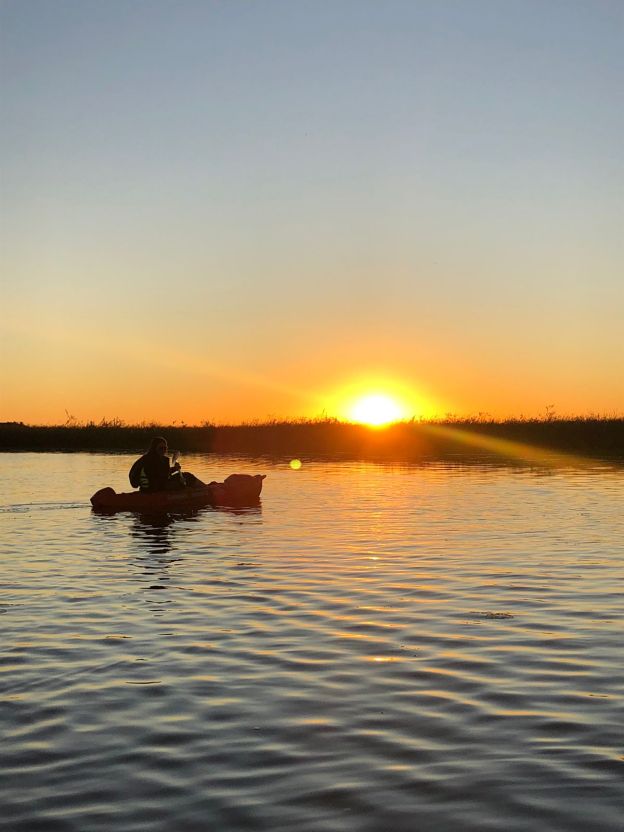
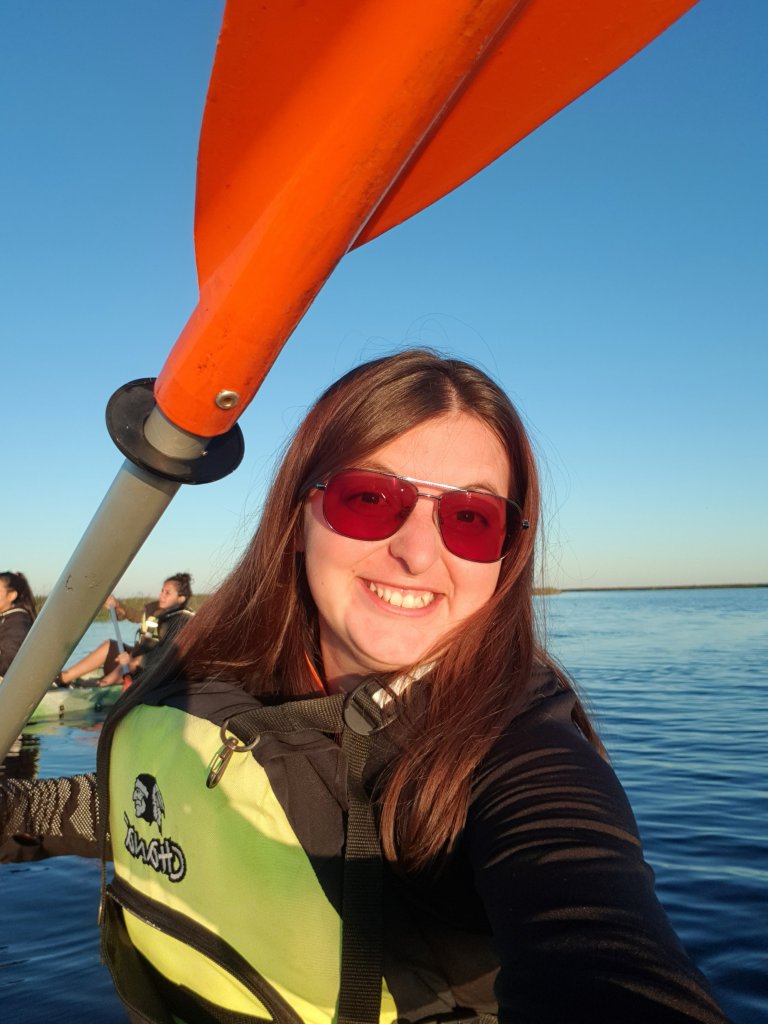
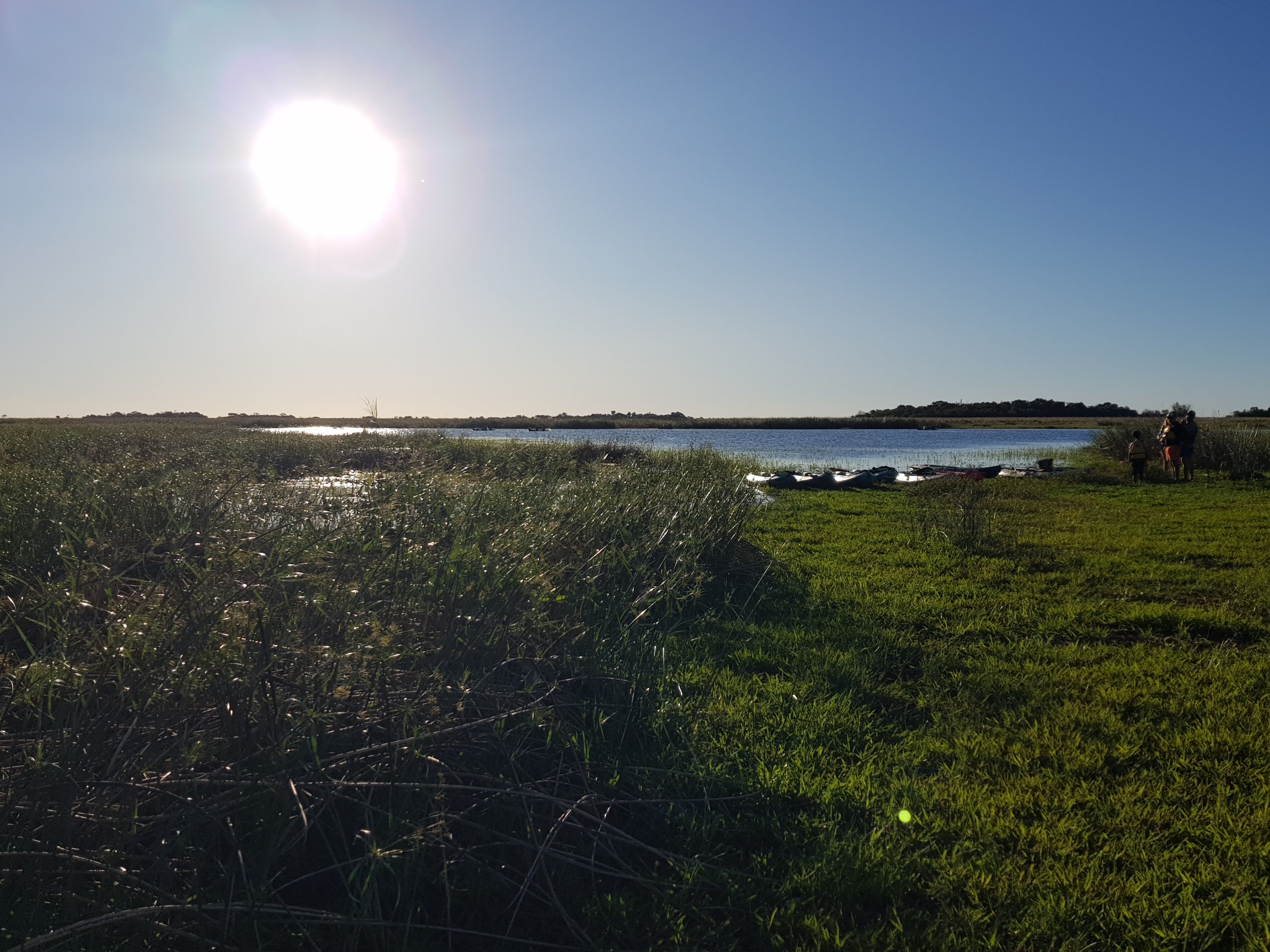
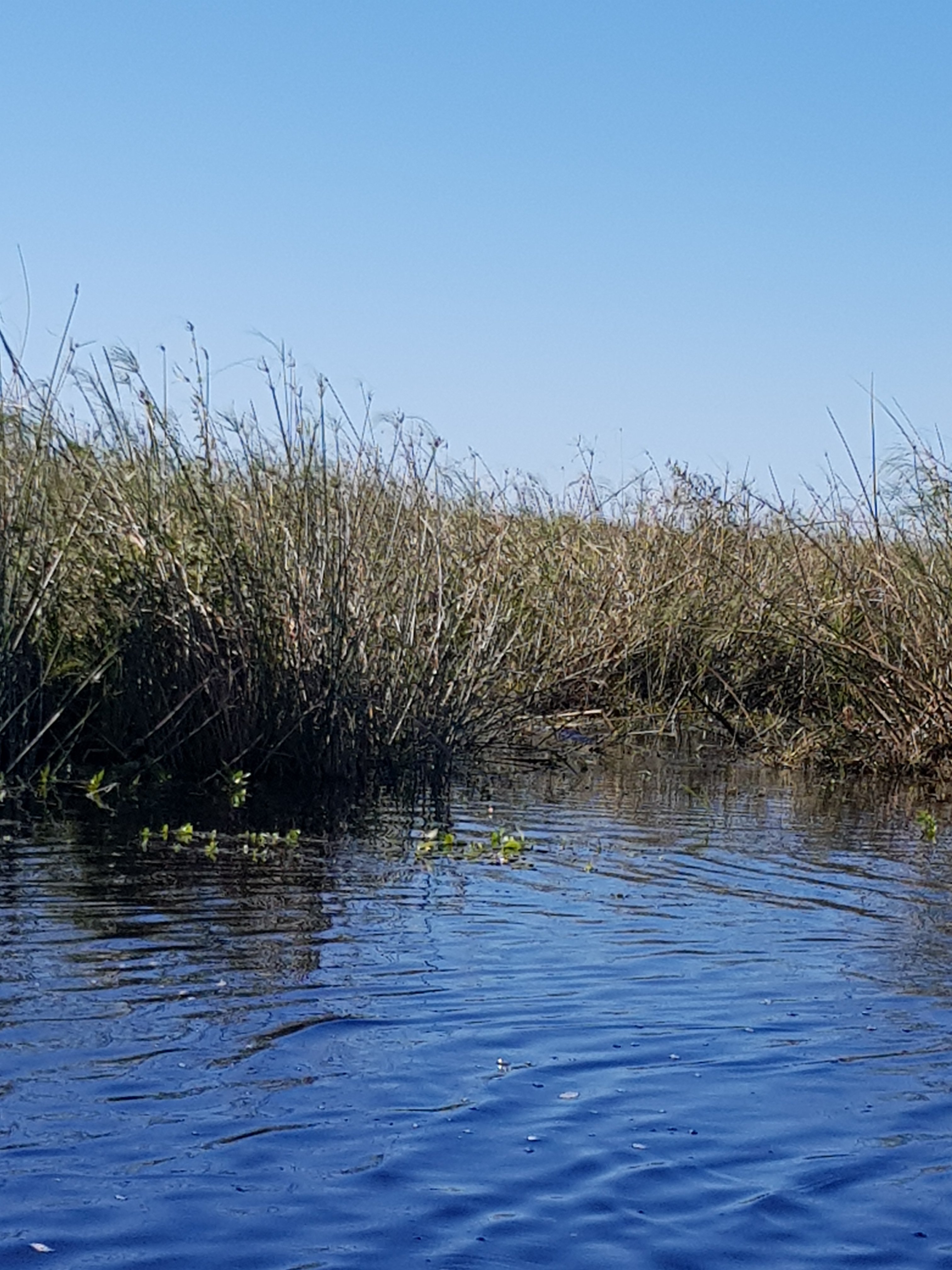
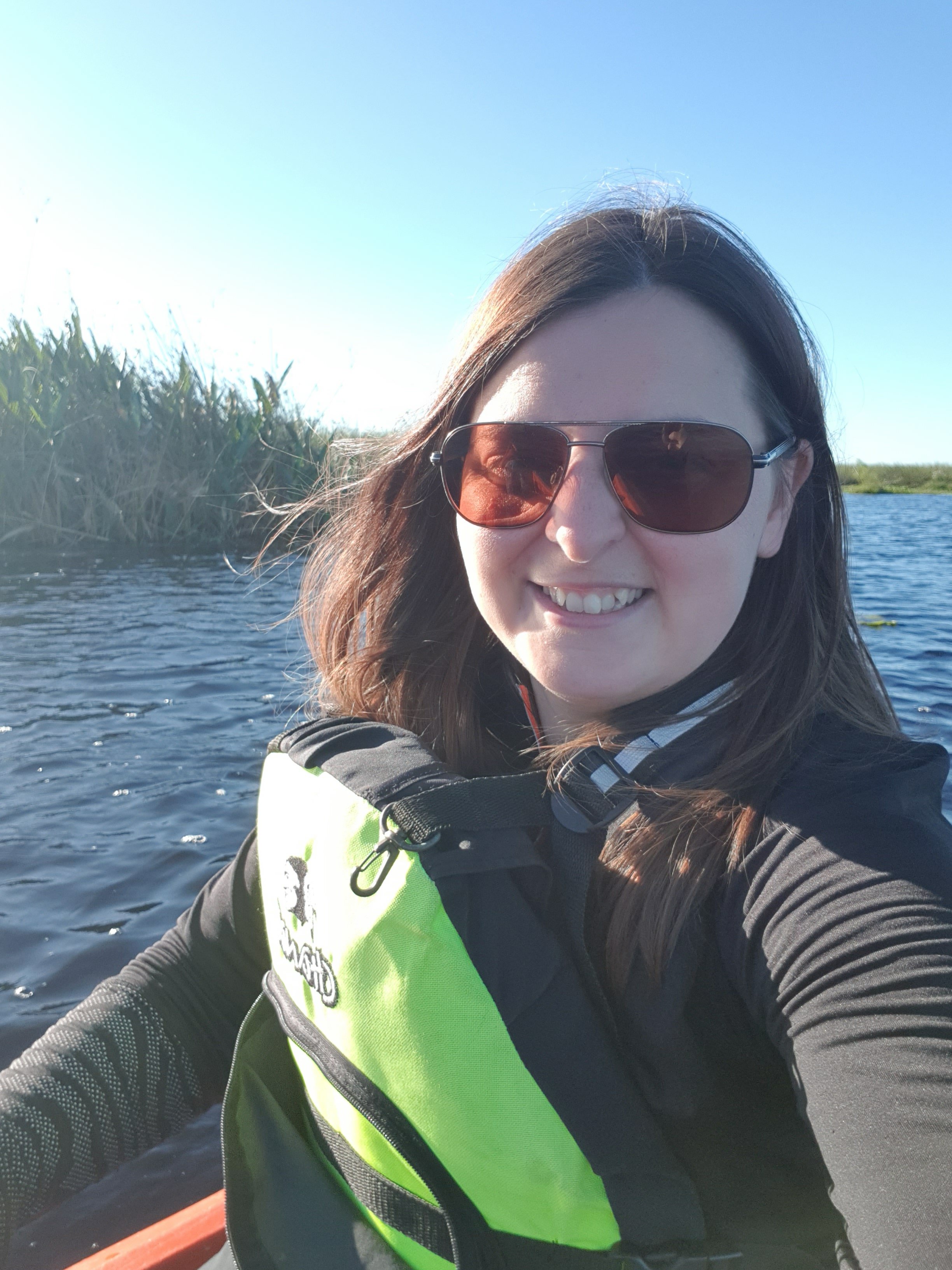
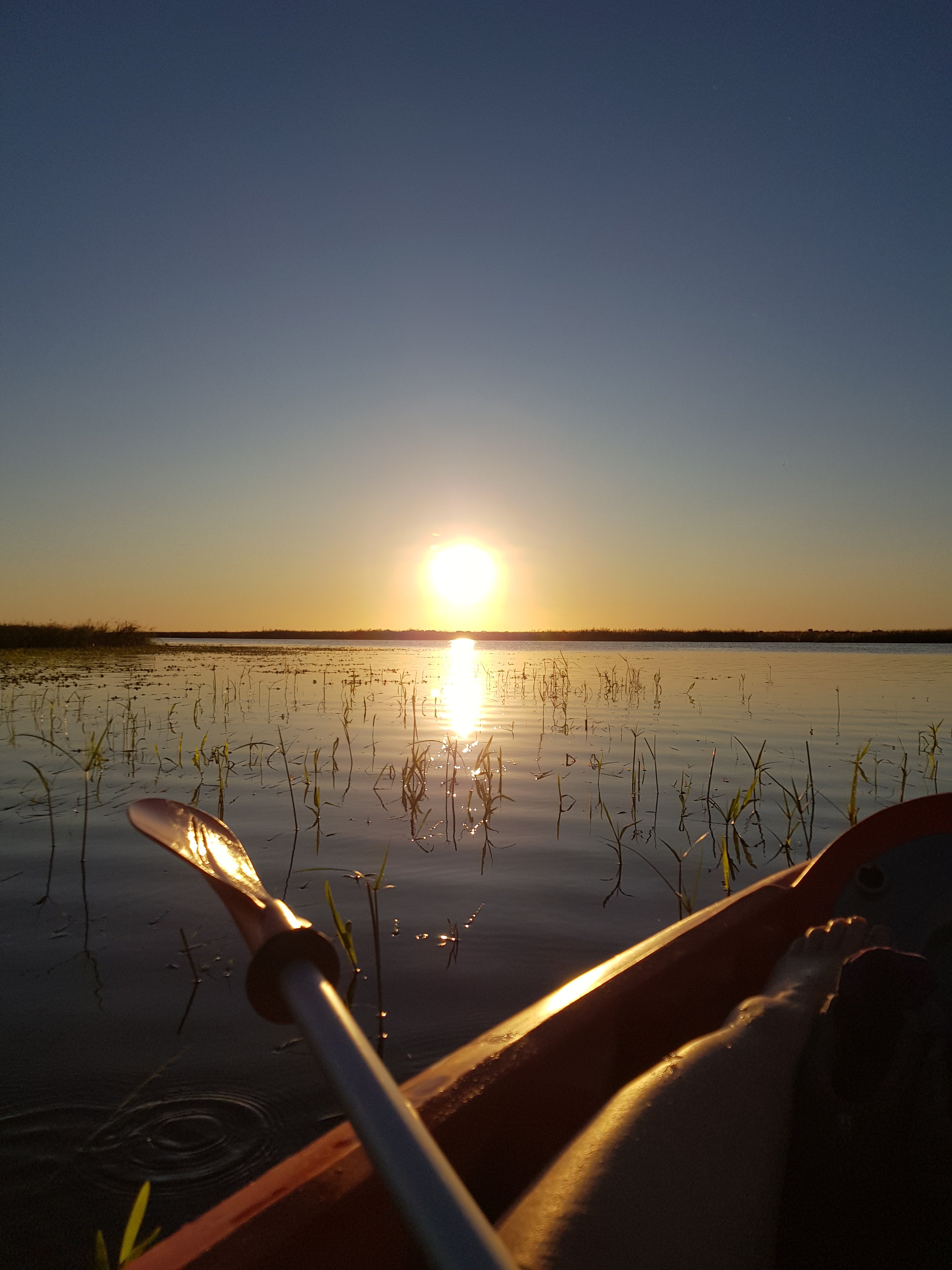
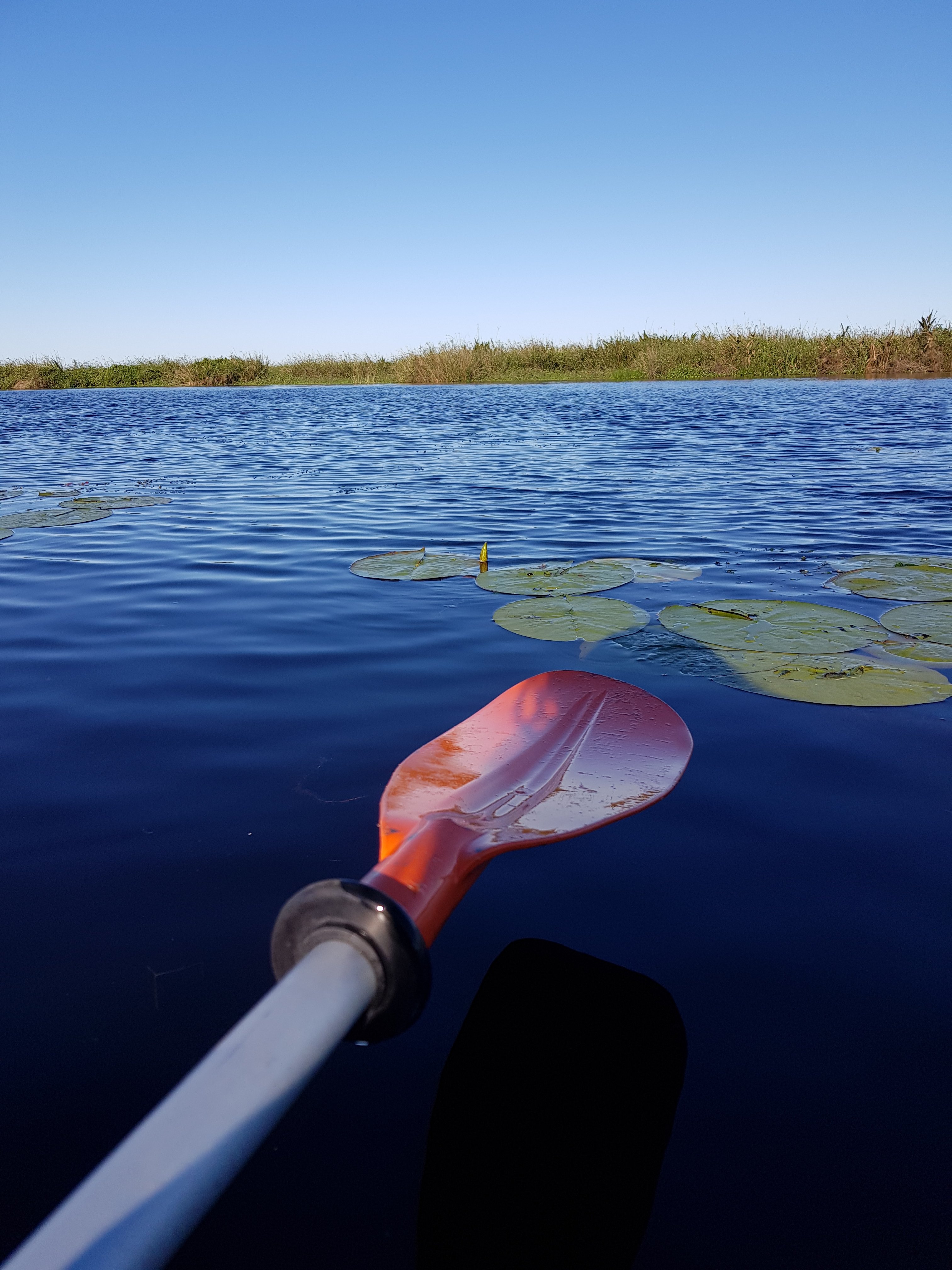
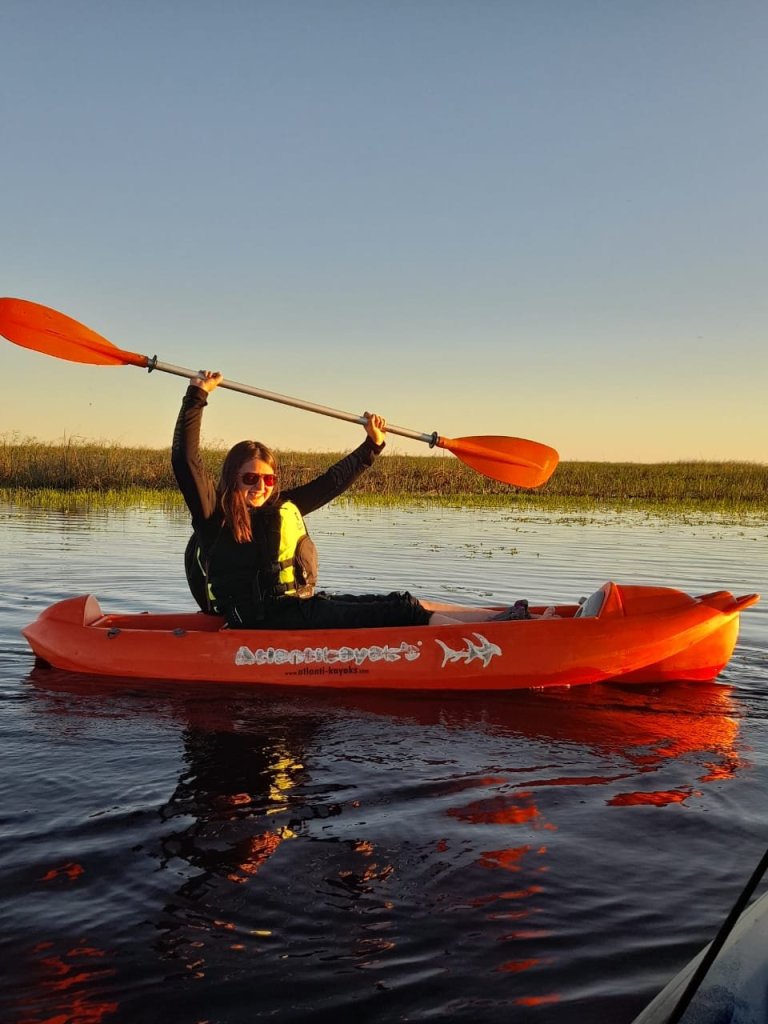
I set off in my kayak with a group of Argentine people surrounded in marshy waters with lily pads all around. Within ten minutes I saw my first caimen, specifically a Yacare caiman which is medium sized (growing up to 3 metres). It was just poking out of the water, until I got a little closer, then I could see it slip away with that long tail swimming side to side. Amazing! Within half an hour, I had seen another two. It was such a cool experience. I was a little nervous, but the guide assured me that they would not attack, and they did seem quite timid really.
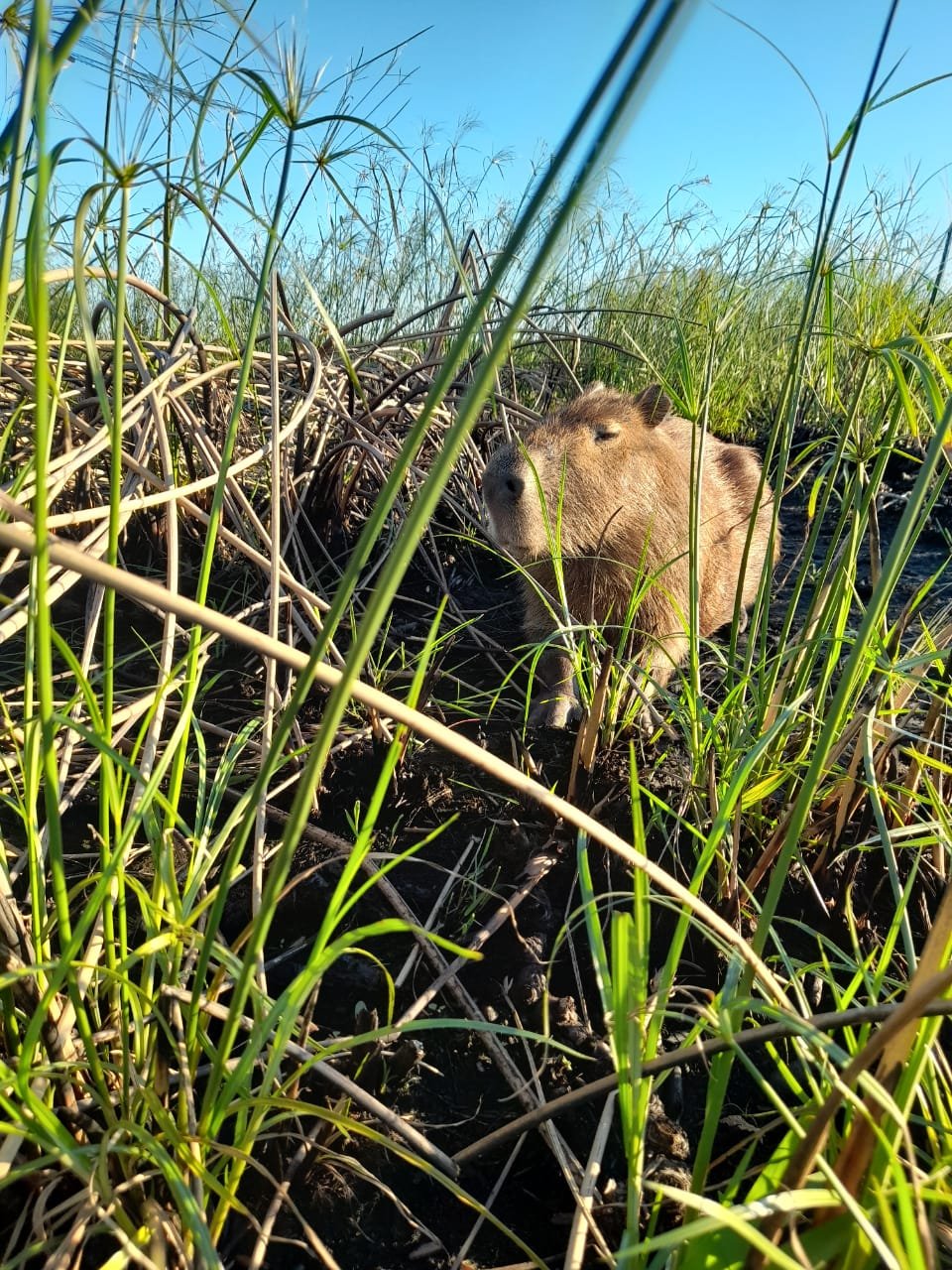
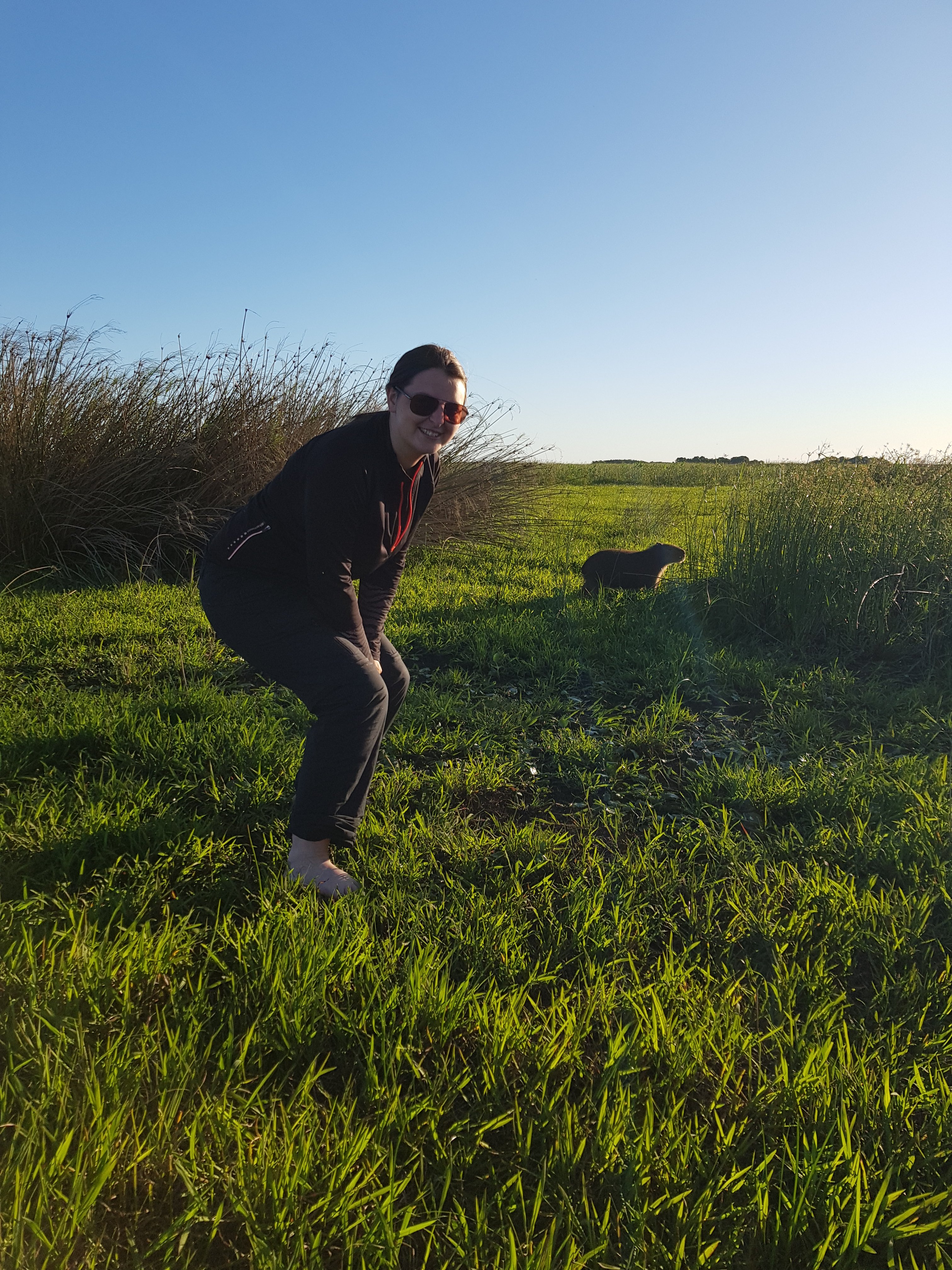
As I continued to row along, I saw beautiful and noisy birds of different colours, and enjoyed the scenery. We stopped for a picnic on top of the grasses, and as we began to dig into our sandwiches, a big Carpincho came by to have a look. These animals are known for being the biggest rodents in the world, and there are plenty of them in this national park. Shortly after this we saw a deer, followed by an owl, and even a south american racoon! I was very happy, I felt like all the animals had come out to see us.
I began to row back with a view of the sunsetting on one side, and a full moon on the other. One of the most beautiful scenes of my life.
The park can be explored by kayak, motor boat and by horse! Although.. you and the horse will have to get a little wet. I would love to return here and stay in the park itself for a few more days exploring other parts, because, just WOW!
The adventure isn’t over yet though, next stop Iguazu National Park! EEEEeeekkkk!



































 Go Go Chlo