Tag Archives: Palaces

A colourful dip into the Baltic

With a few weeks sailing the Baltic sea, I managed to experience an Autumnal viewpoint of a collection of European cities; Helsinki, Tallinn, Visby, Copenhagen and Hamburg. With some glimpses of sunshine and lots of rain, I was able to wonder the highlights of these important places and you will quickly figure out which were my favourite.

Helsinki, Finland

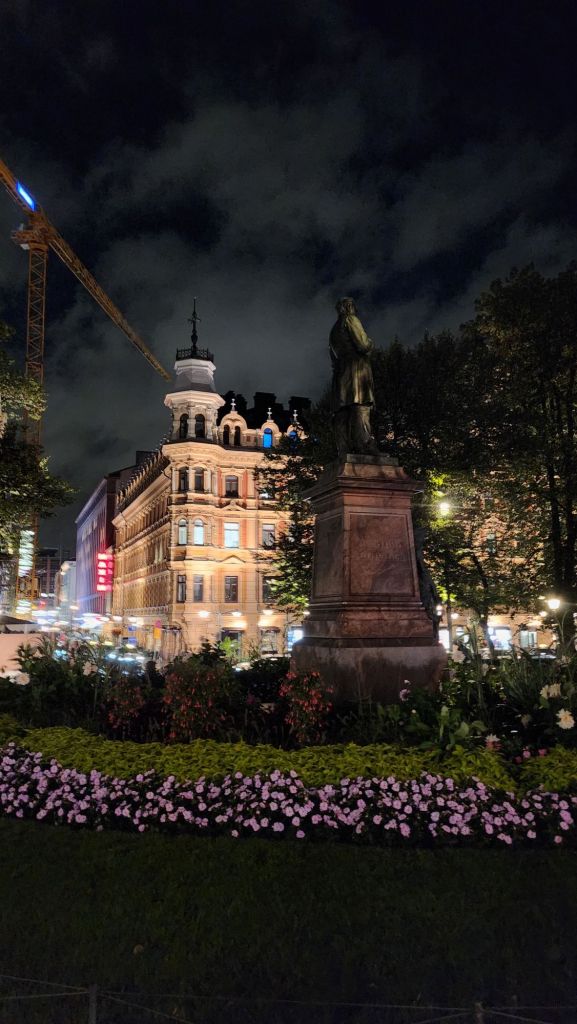
My two day visit to Helsinki was absolutely full of rain, and was very chilly but I still managed to venture out and see some of what was on offer. Just racing around in the back of a Tuk Tuk, I could see that the city was keen on design. There were so many striking buildings of brick and cement, and a clear futuristic feel.
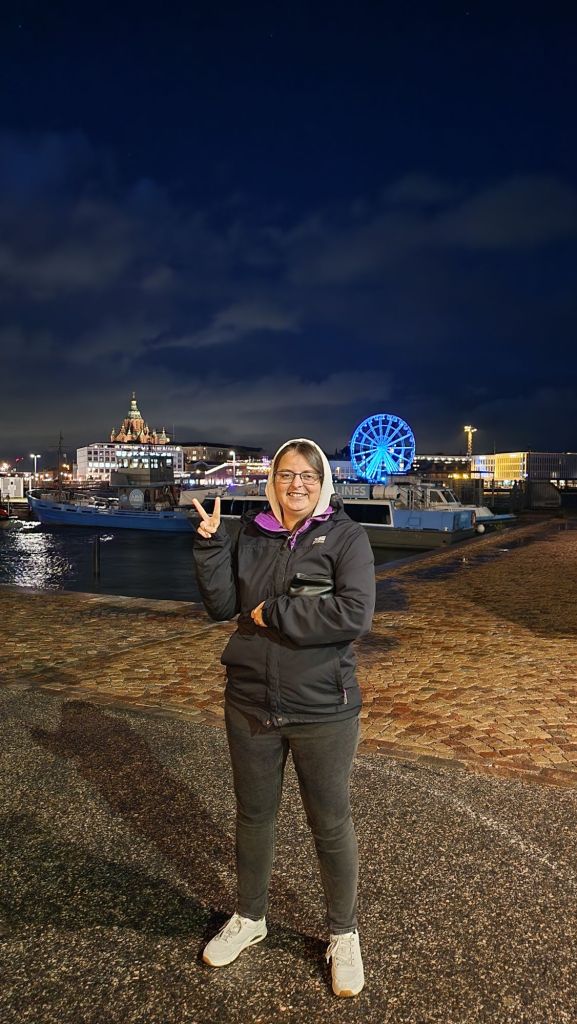
During the day, there seemed to be a reasonable amount of activity, especially in the public saunas where I could see people steaming up and then jumping in the cold waterways that surrounded the city. Sauna culture is huge in Finland, and many people even have saunas in their homes. The Finns are very keen on wellness, which I know first hand from the lovely yoga mad vegan Finnish roommate I once had. She was all about health for the mind, body and soul.

My Finnish friend also loved to be asleep early but now I think she is not uncommon because when I tried to go for dinner out on  a Friday night in Helsinki.. there was not a soul to be seen. There were so little restaurants open, I ended up only going to a Kebab house! And having the wierdest kebab ever, might I add. According to the locals I asked, this is not unusual here. It is definitely the quietest capital city I have ever seen.

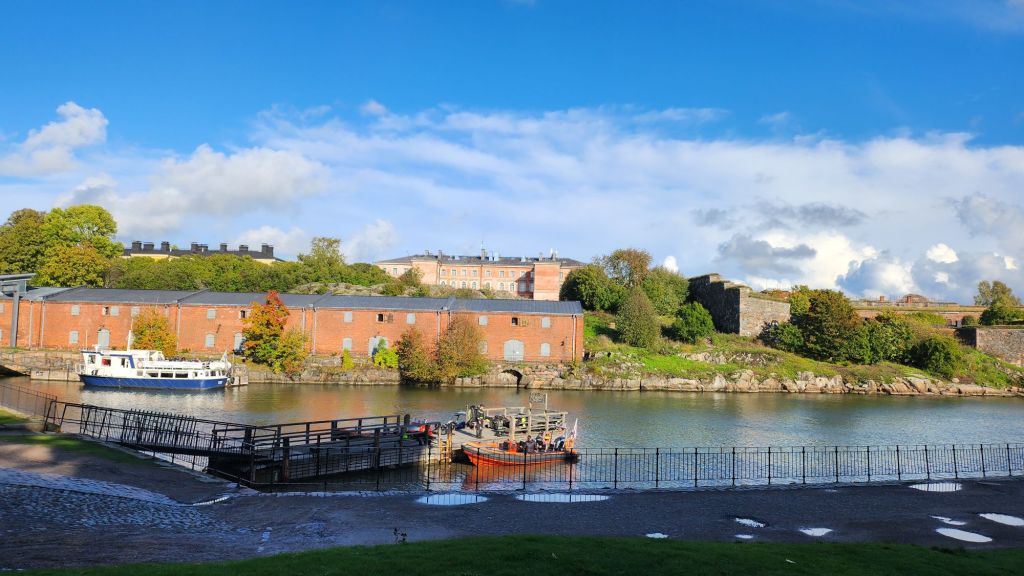
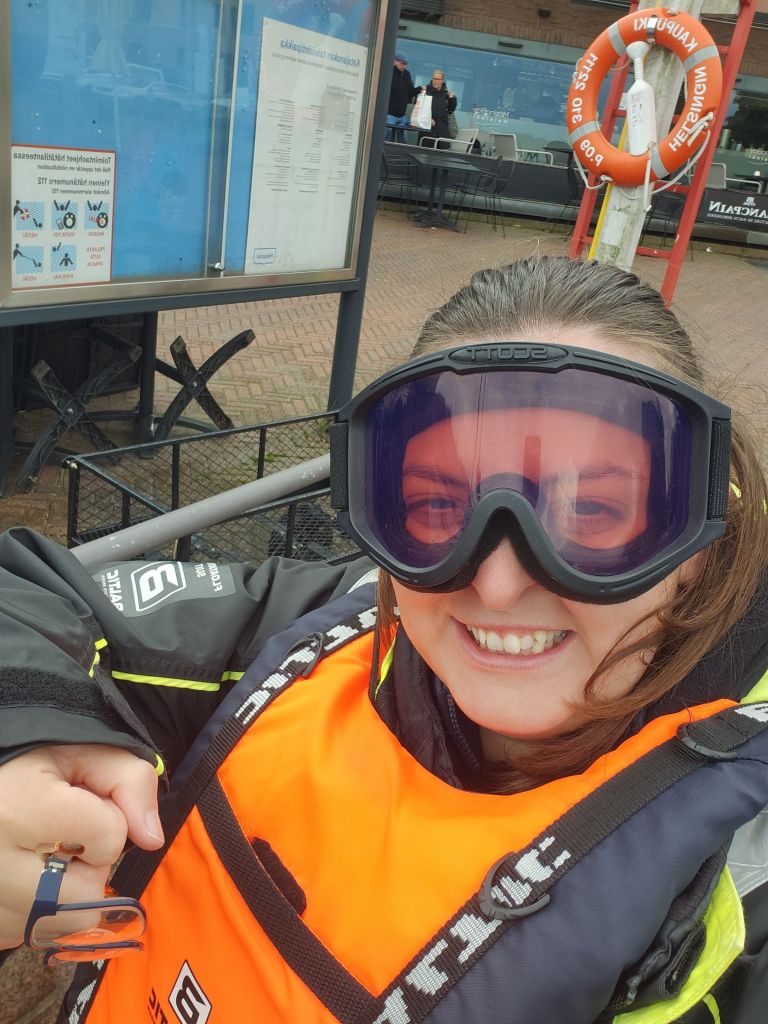
One of the most interesting things about Finland to me, was the history. I learnt a lot more about this country’s past when taking a rib ride to another island in Finland’s huge archipelago of more than 75,818 islands.

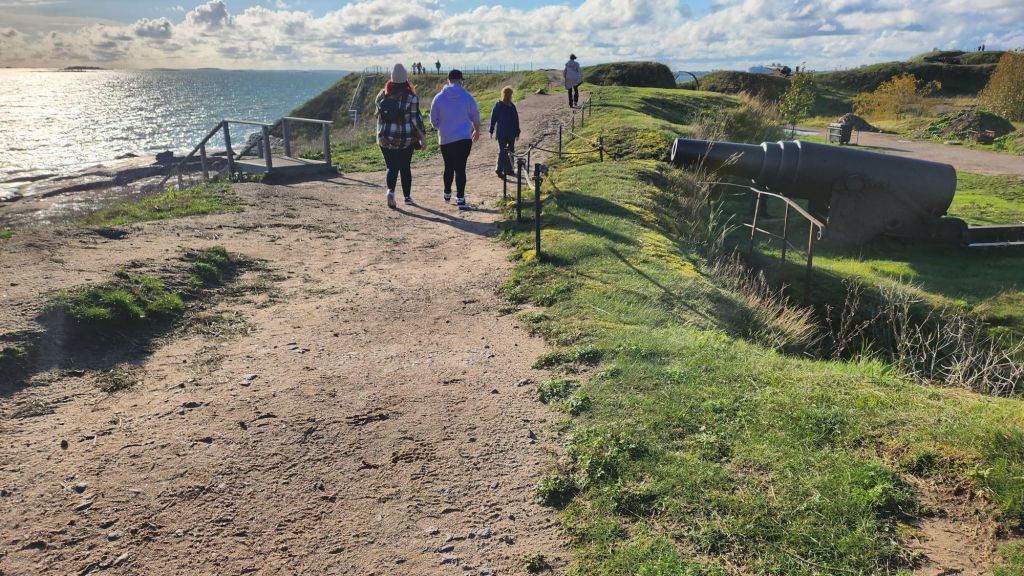
I visited Suomenlinna Island which was once a military base for Sweden, during its rule over Finland.
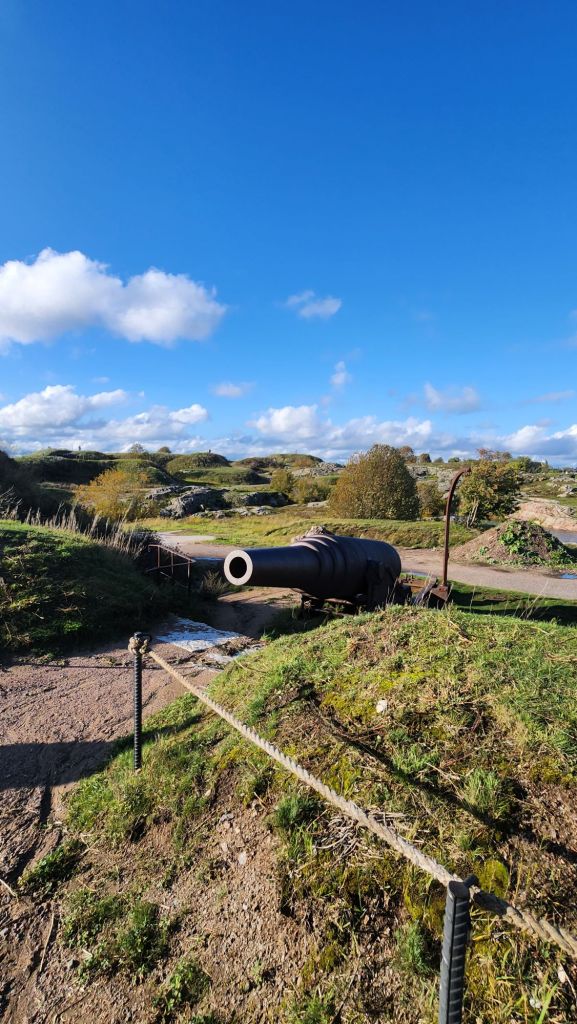
Finland has had a long history of being conquered, with lots of fighting here between Sweden and Russia for territory over Finland. This is one of the reasons why the Finns are now quite multilingual.

The guided walk I took around this island was very enjoyable and had great views  although it was bracingly cold!

Overall, chilly but calm Finland was a good introduction to my Baltics adventure.

Onwards to Tallinn, Estonia...

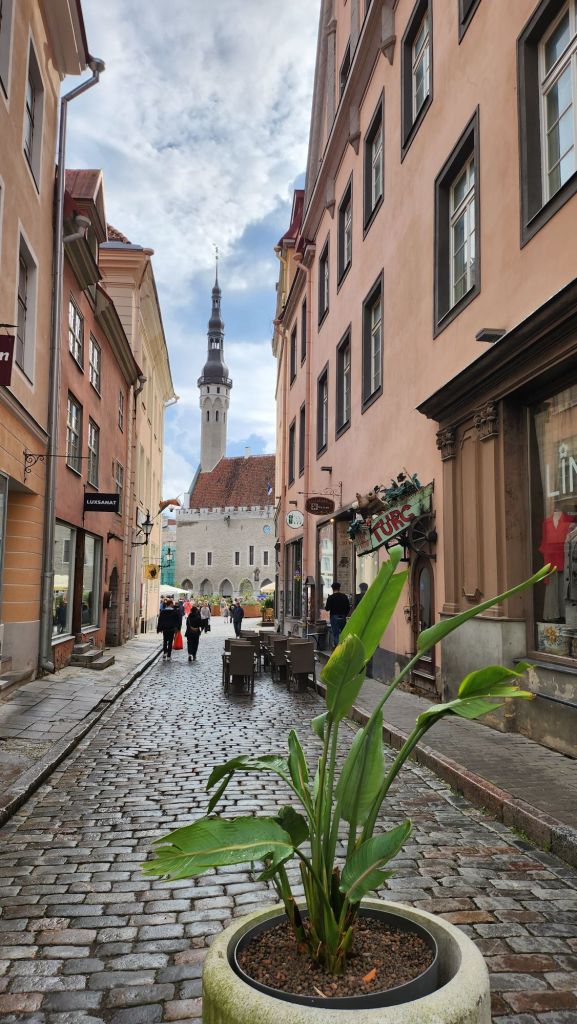
Tallinn’s old medieval town is a UNESCO World Heritage Site, and is a beautiful little place to explore.

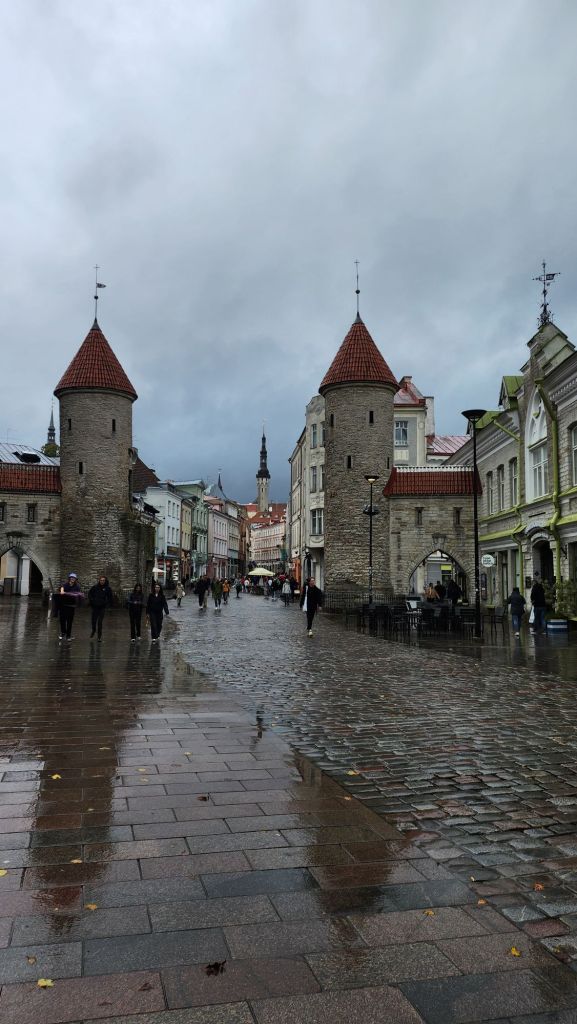
I felt like I had been transported back in time, and into a fairytale book in Tallinn. The city has a beautiful stone gateway with pretty turrets as you enter and then I continued to see more of these Rapunzel type turrets as well as picturesque church steeples and sweet little town squares. There were traditional markets and shops and I found myself a very tasty bakery.
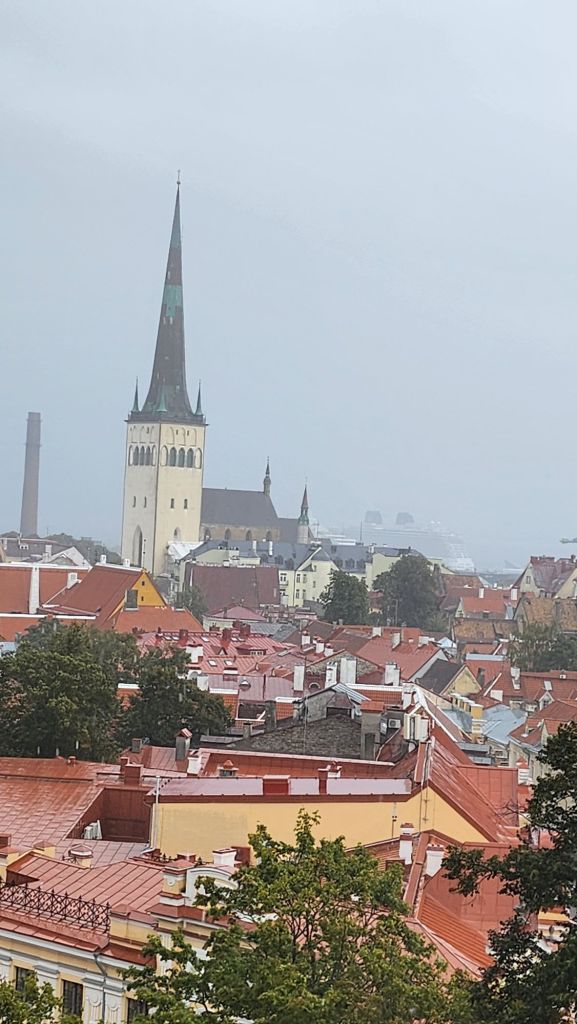
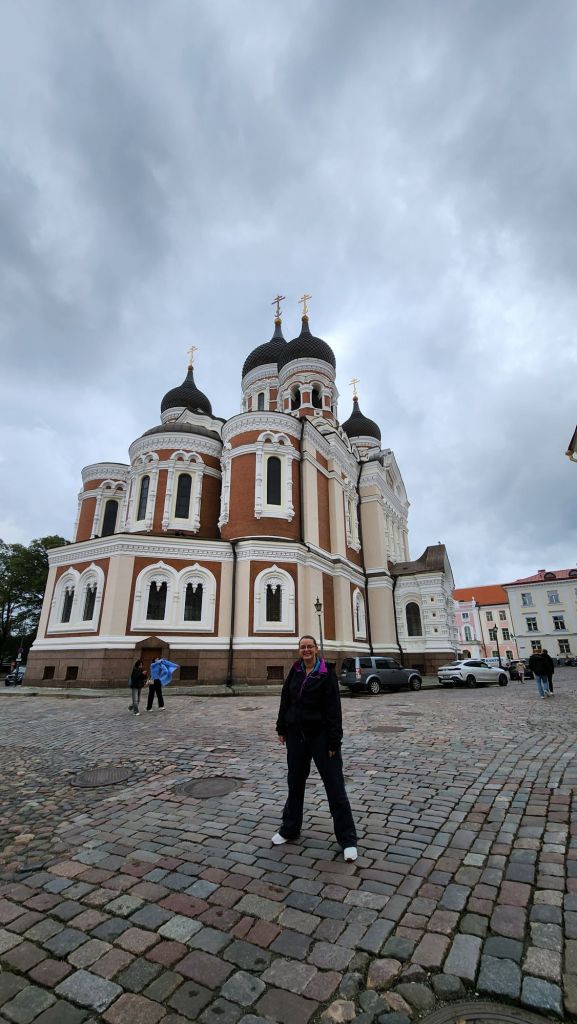
As I walked my way up to a viewpoint on what was becoming a very rainy day, I could also see their Russian built church which whilst beautiful, told the instant story of their conquered history too.

Next stop Visby, Sweden

Now ordinarily, I think Visby must be a very sleepy place. I was lucky enough though to visit when they were having a food festival!

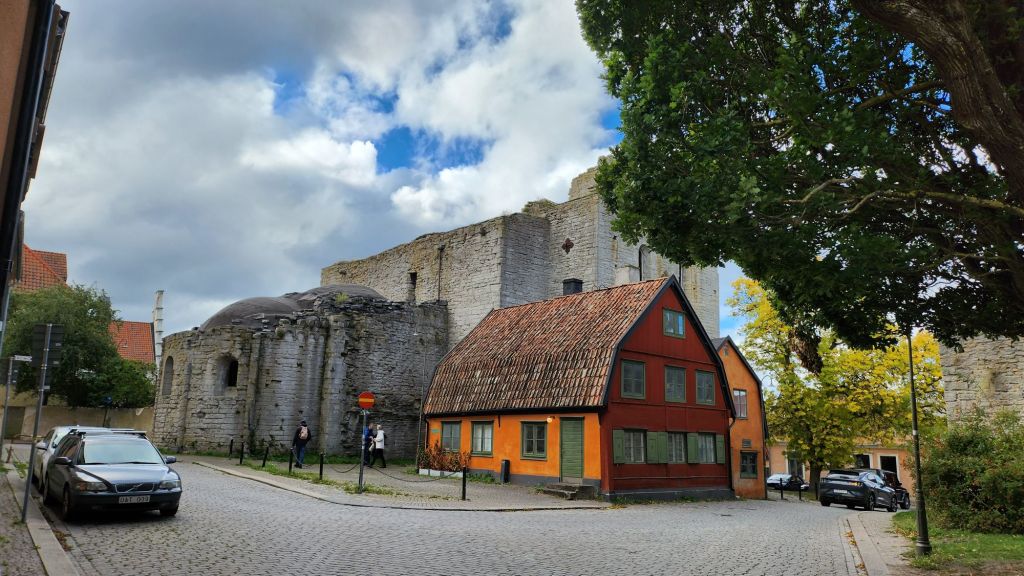
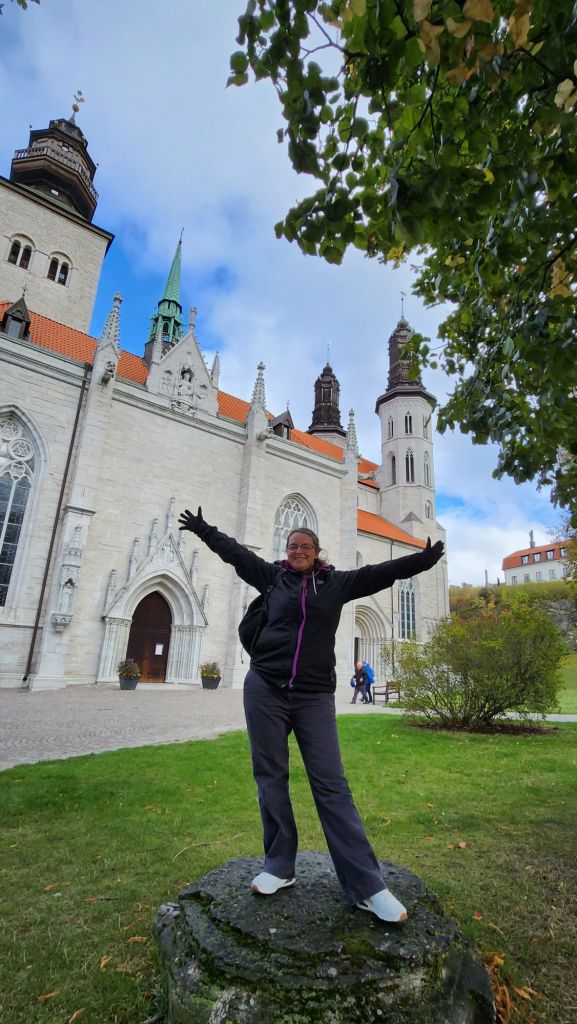
Visby is actually a heritage city on one of Sweden’s islands, named Gotland. This is again a fairytale location but here you get that traditional Viking feel from the design of the place.

The old walls, houses and cathedral are all impressive, but as I mentioned, it was a food festival, so I was taken in by a very tasty and unusual Bison Stroganoff and an amazing selection of cheeses!

After some delicious food and music, I had a wonder around before rejoining my ship to go onwards to Copenhagen.

Copenhagen, Denmark

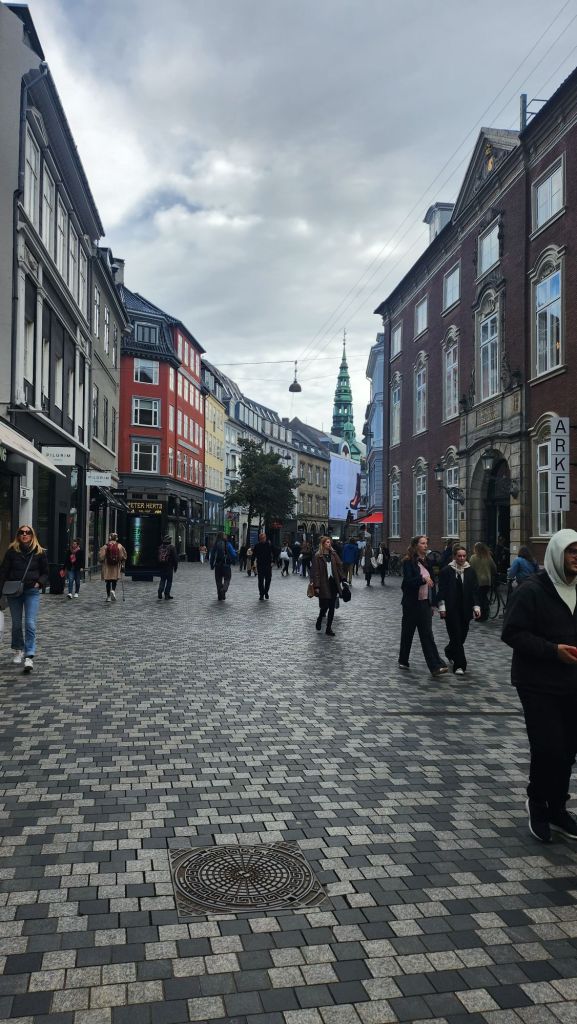
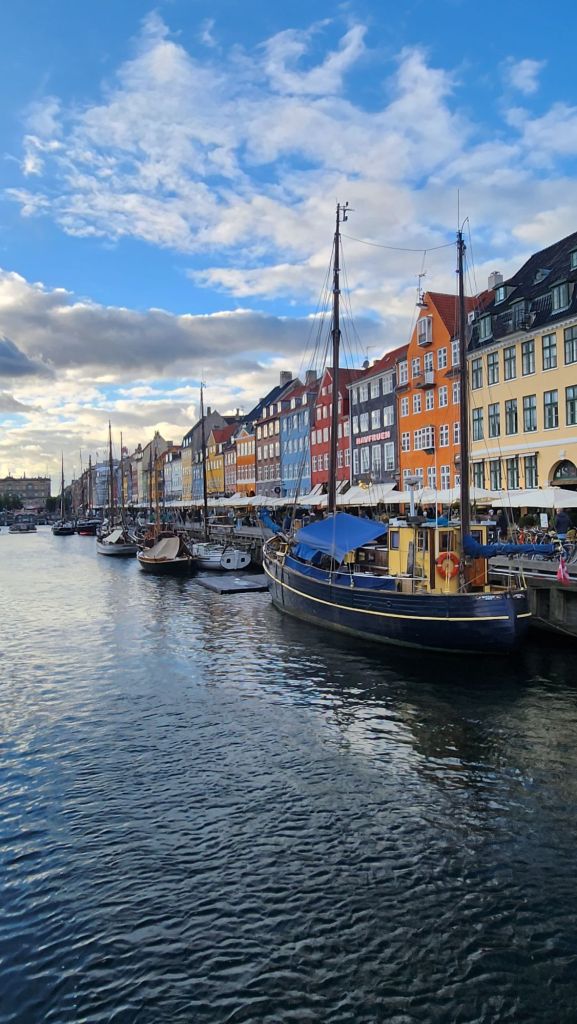
Copenhagen was certainly very colourful in their city vibes and friendly people. The city is full of hustle and bustle, mainly around their famous harbour and in the form of the speedy cyclists that zoom around the city.

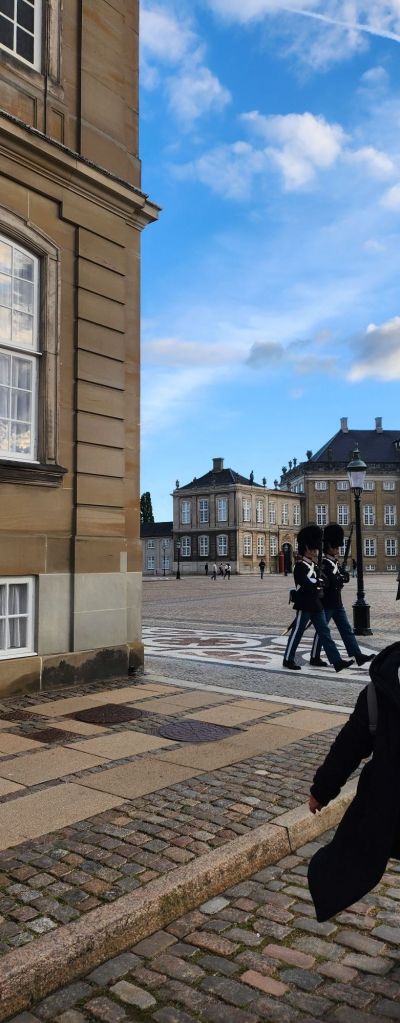
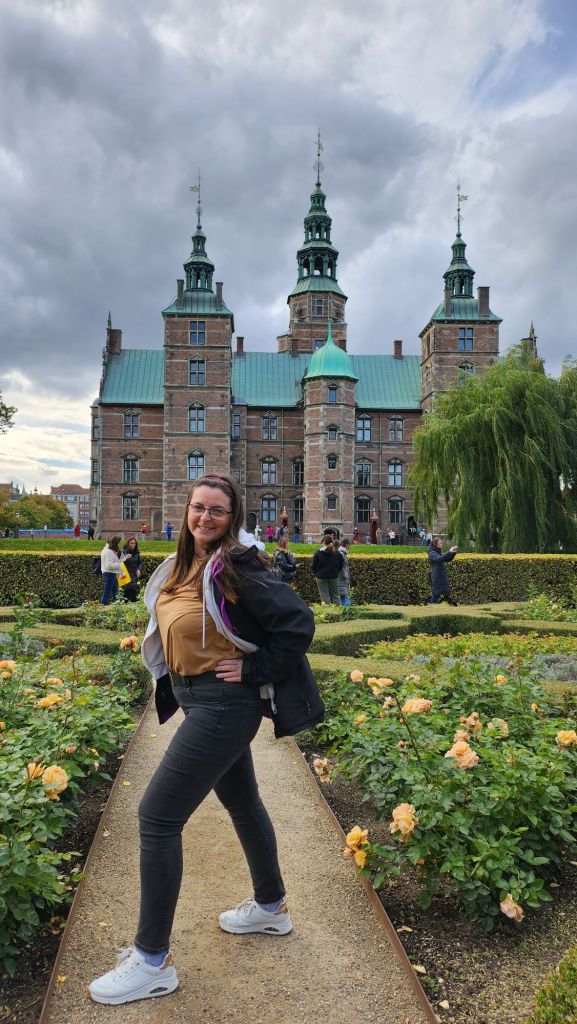
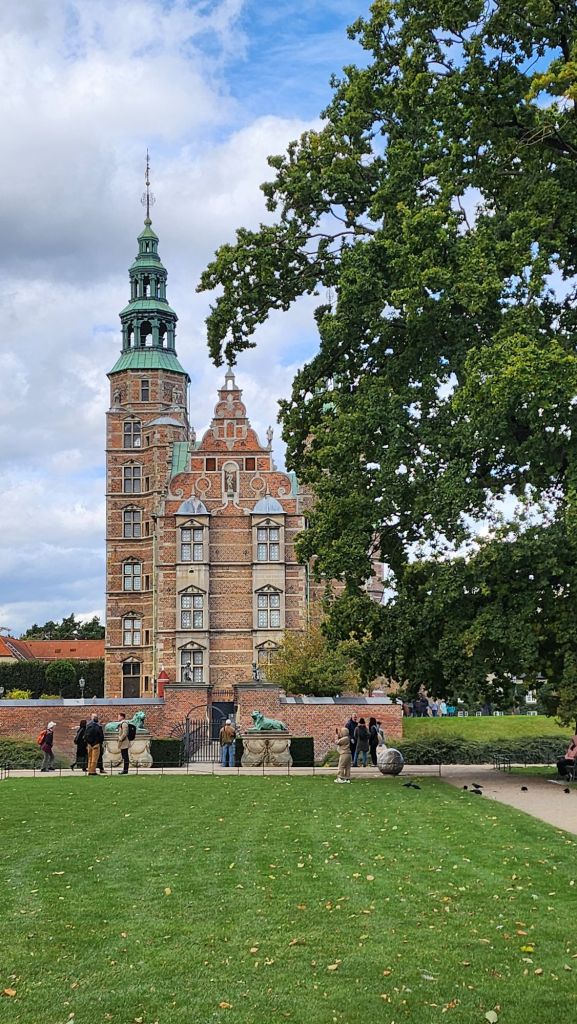
On foot, I explored the impressive palace squares with their palace guards and procession that could easily compete with London’s own. I also ventured further to the gardens of the pretty Rosenborg Castle and tried some very odd plant food from the public food hall which wasn’t half bad. Later, it was time for a relaxing dinner at one of the harbour’s many restaurants where heaters and blankets were much appreciated in the night air.
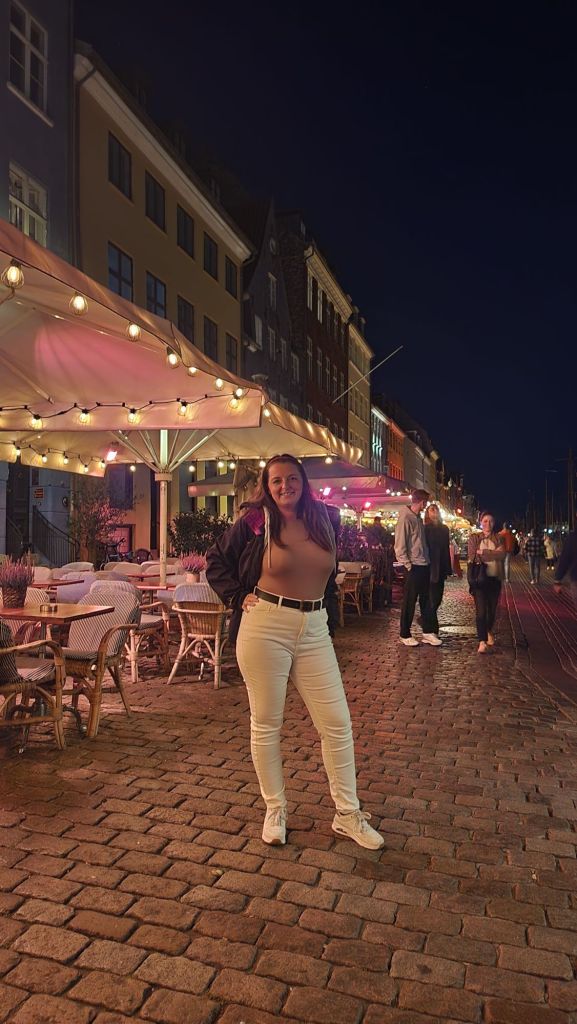
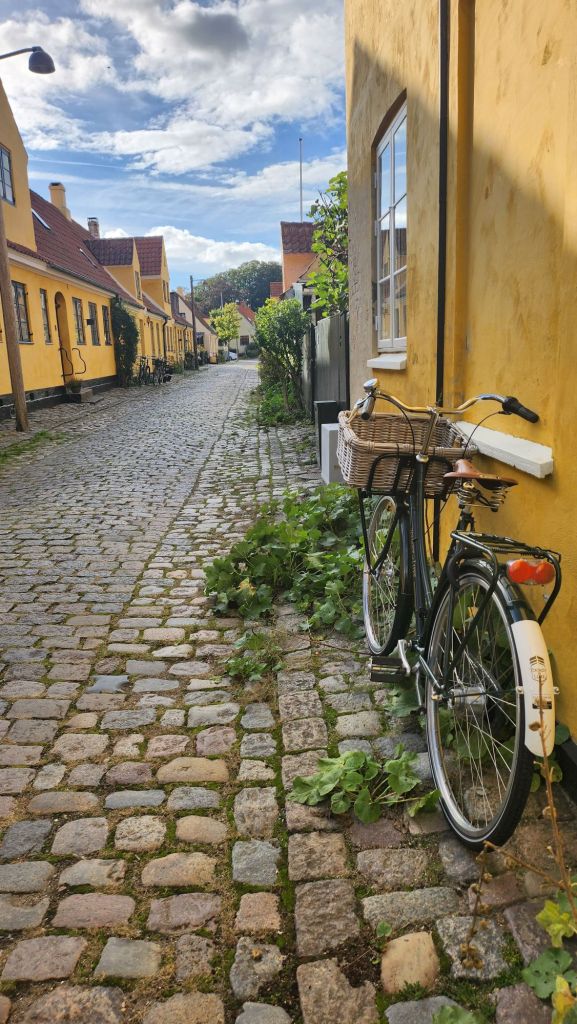
I found myself talking to a guy from Argentina that had moved to Denmark. It seems to be the place for many people wanting to run away to a new country and has a lot of easy visa rules for this. On a visit to a sleepy harbour town outside the city, my guide was also telling me about his move from UK to Denmark, after meeting his danish girlfriend. The girls across all of Scandinavia are known for their beauty.

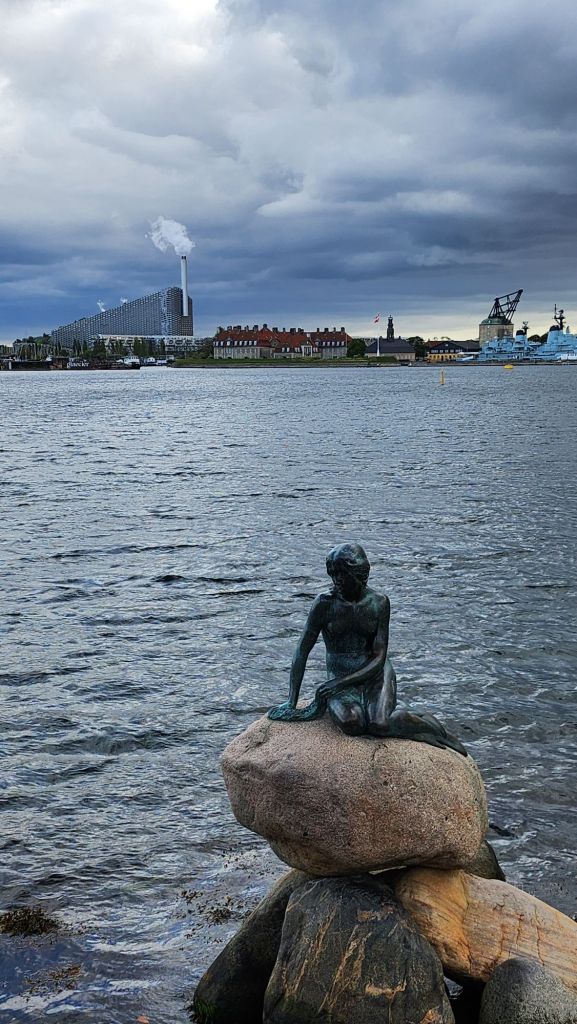
One girl is well known in the city, and that is the little mermaid. A true lurer of men in mythology. The statue sits on the outskirts of the city and is a world famous symbol of Denmark. Whilst well known, for me she was very underwhelming. Sitting alone on the waterside, (except for all the tourists), she didn’t actually look like a mermaid. Apparently, she was actually based on the sculptor’s wife. She was probably the part of the city that was least interesting.
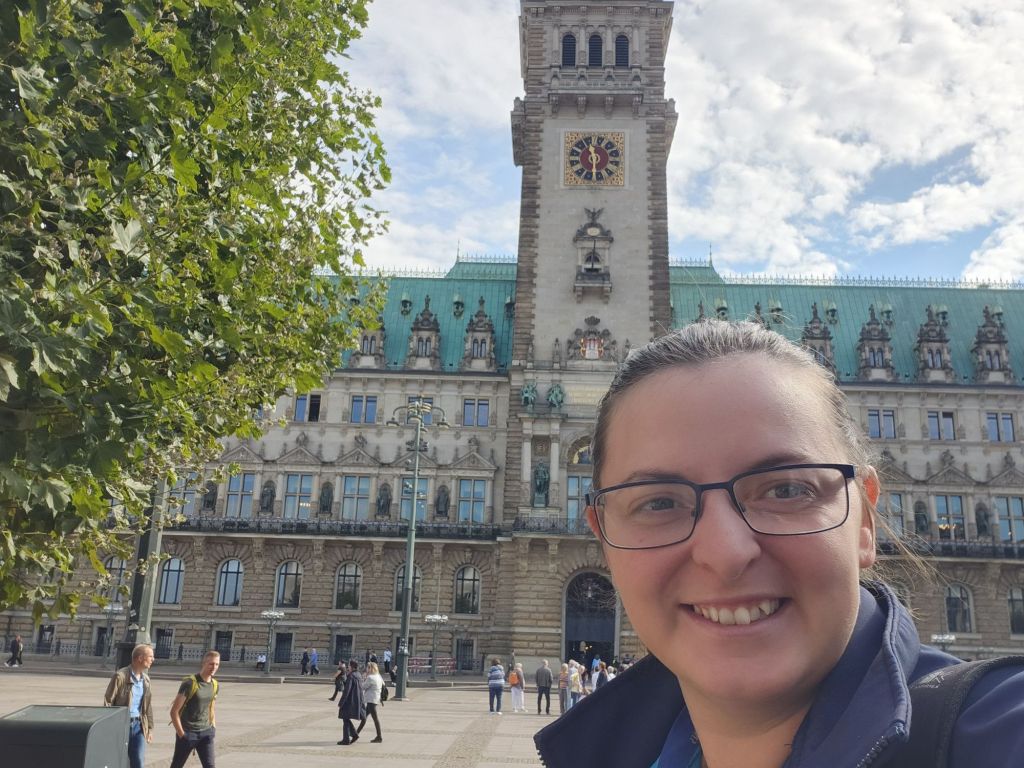
Finally, after all these other places, I can’t forget to mention my afternoon in Hamburg.

Hamburg, Germany

I have been to other parts of Germany and had never thought much about visiting Hamburg. Once there, I was captured by it’s charm.

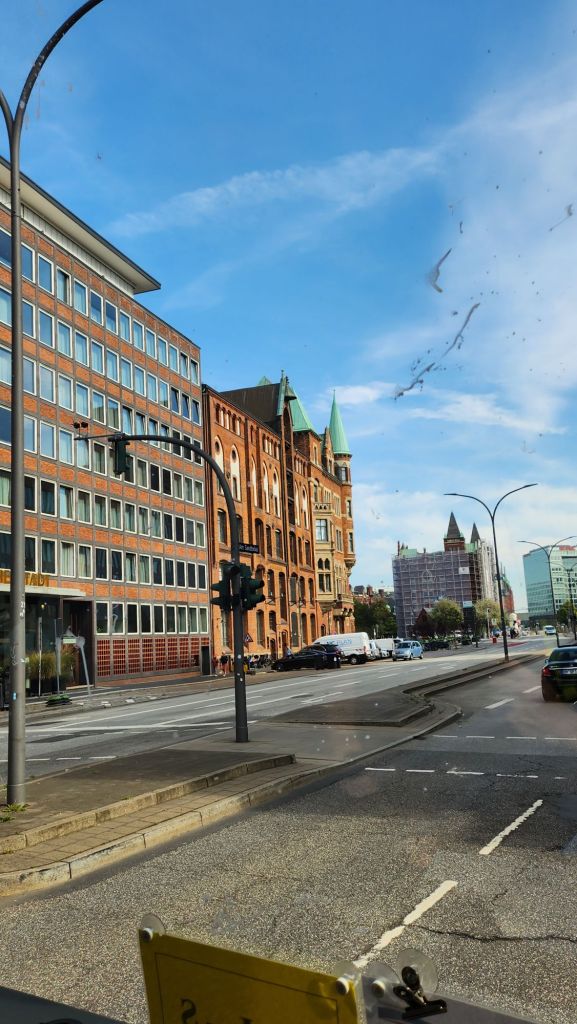
This red brick city has a famous port and historic district called Spiekerstadt, which is full of converted warehouses and factories that gives a post industrial redesign vibe.

Apparently the city has actually grown on land that has been man made over the original marsh areas that were here. Tons of sand is actually brought into the newest HafenCity to raise its level higher, for construction to be done on a more stable foundation. I went to a part of the city that was still being built and could just see masses of sand there. You can get the sense for the different heights of the city just driving around though.
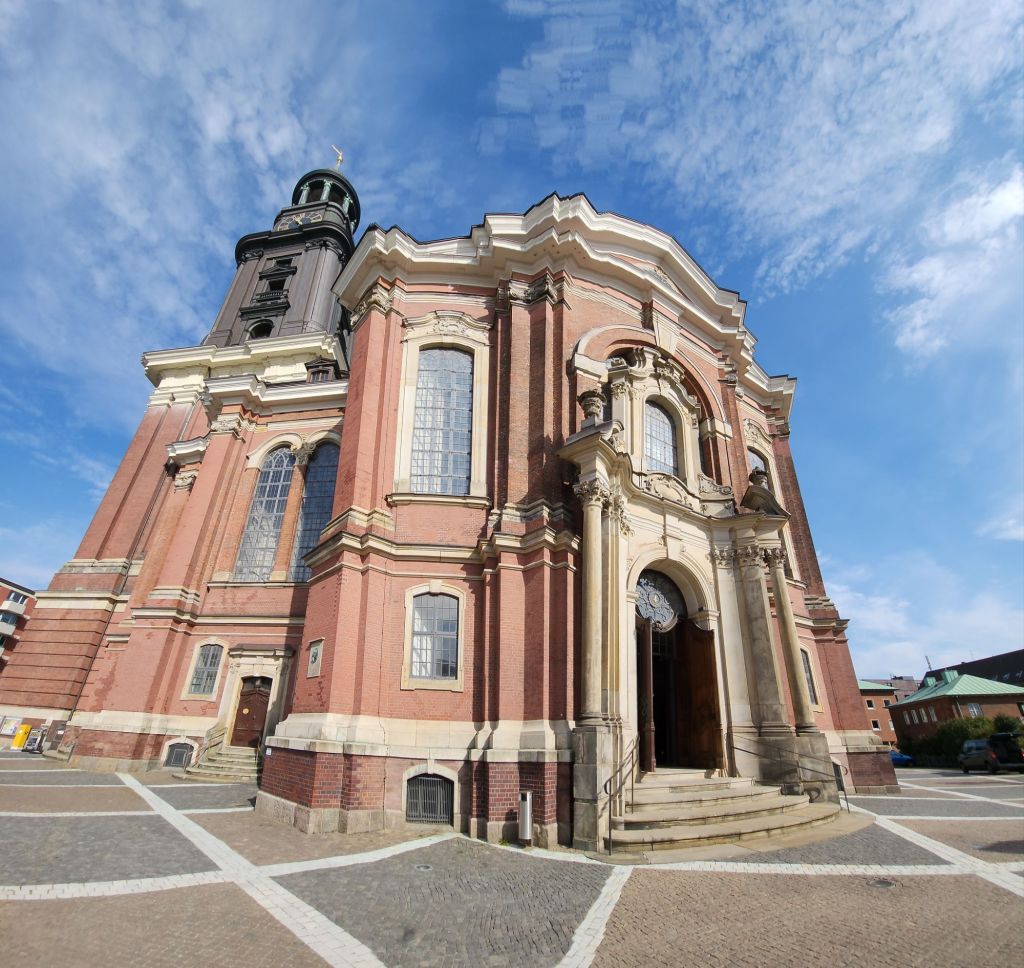
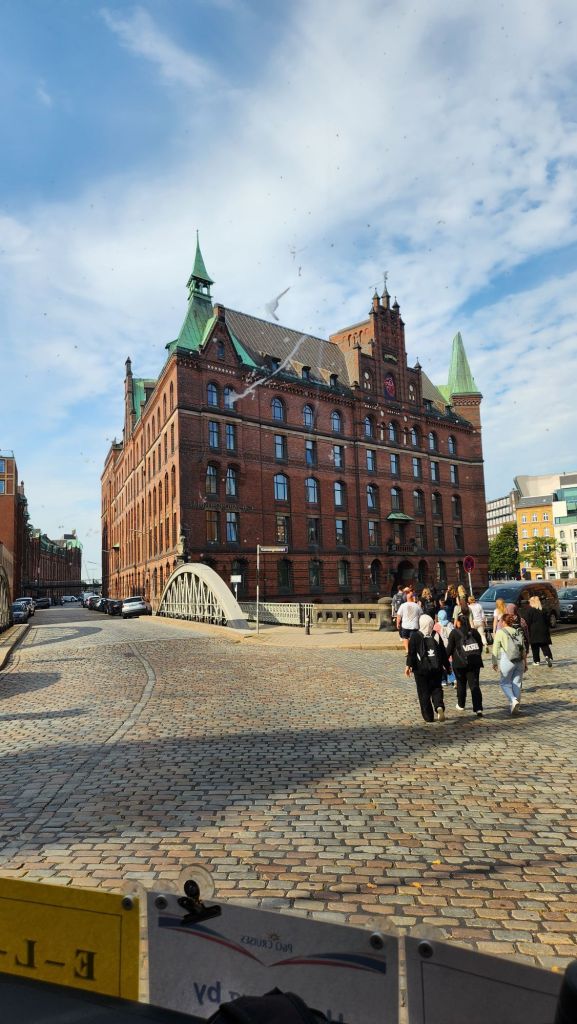
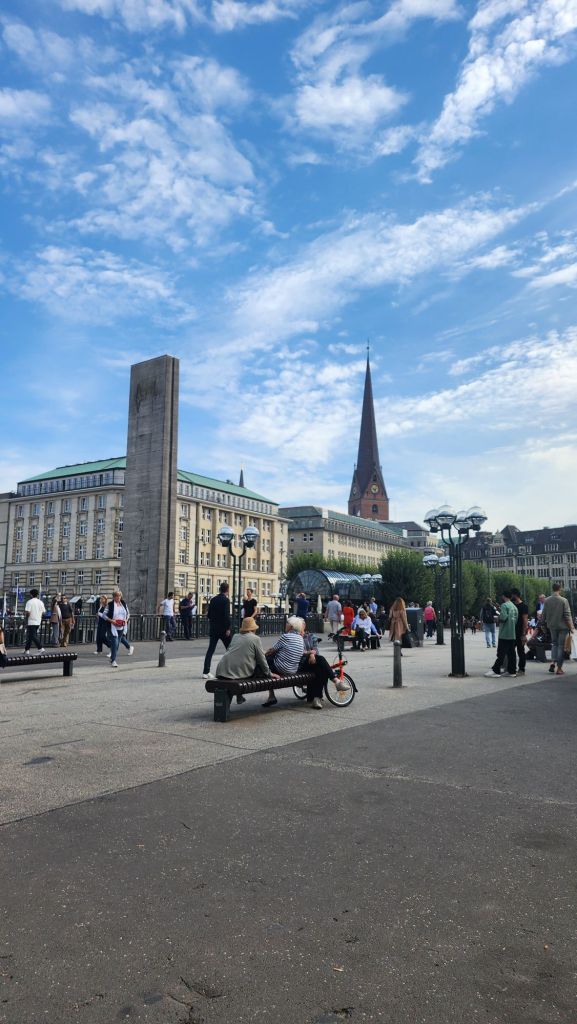
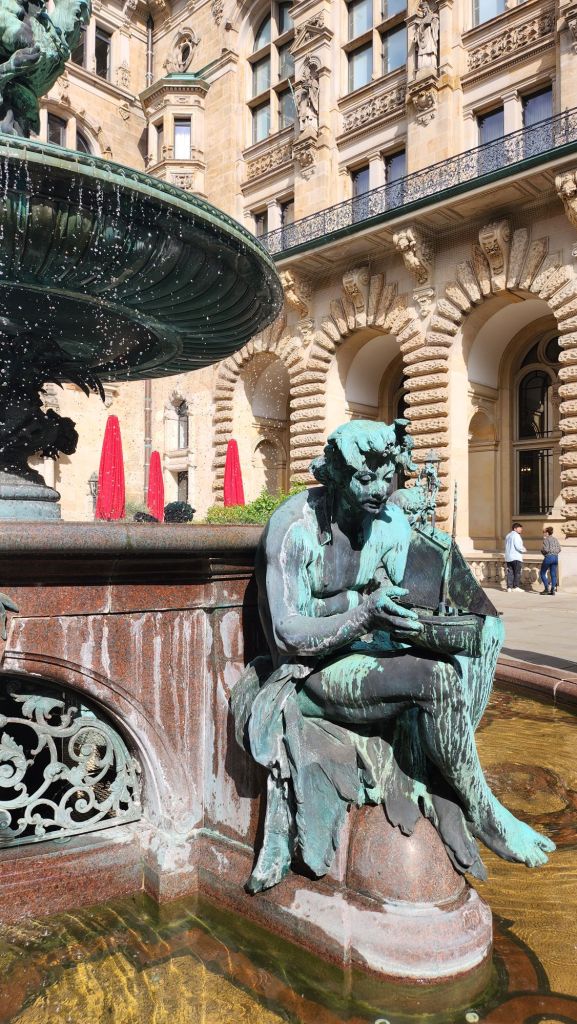
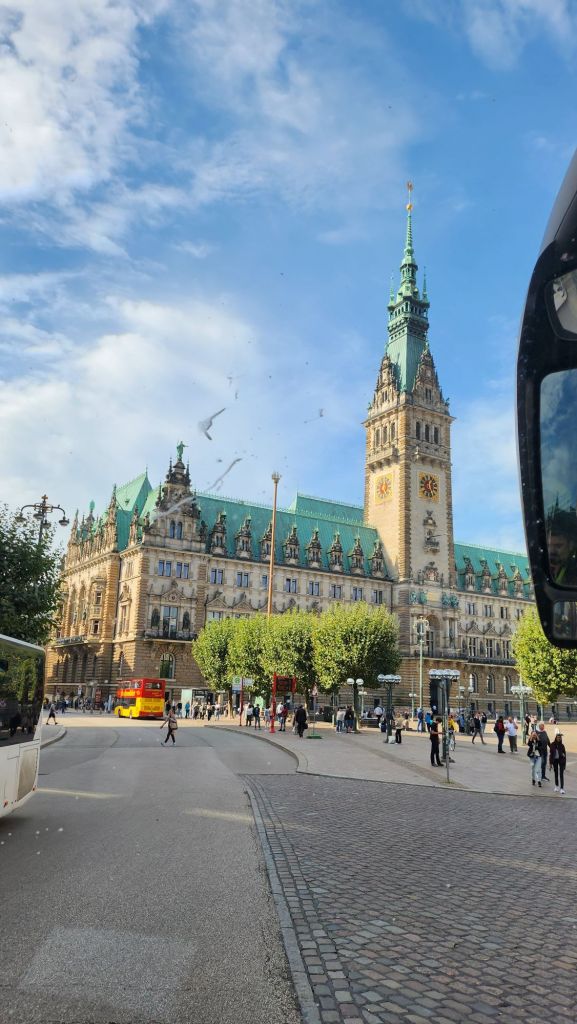
Walking around the city, there is a lot of life in the streets as well as an intricate network of canals and a gorgeous town hall. I really enjoyed my short time here and would love to revisit. I hear that the nightlife is also well worth it!

So overall, my little dip into the Baltic was a great introduction and even though these places are all in the same part of the world, they all definitely had their own unique identity.

India: Where culture, colour and faith collide (Part One)

After years of socialising with my Indian friends, I came across a cheap flight to India and decided to travel there, sometimes alone, and sometimes with friends. I was somewhat prepared for what I might find, but there were still surprises along the way, as I scraped on just the surface of one of the largest countries on the planet, with the largest overall population in the world.

The North – Delhi, Agra and Rajasthan

Dehli

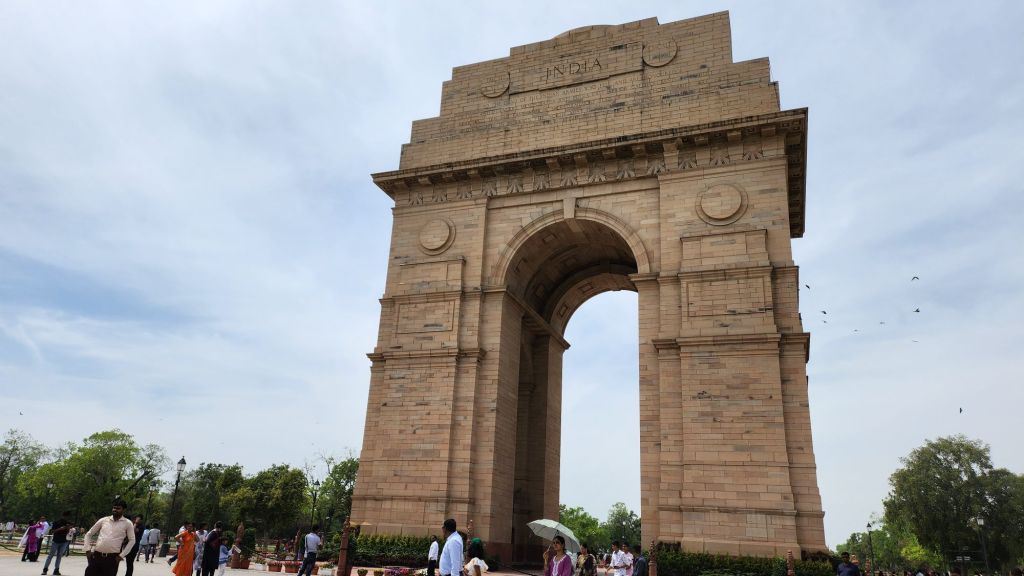
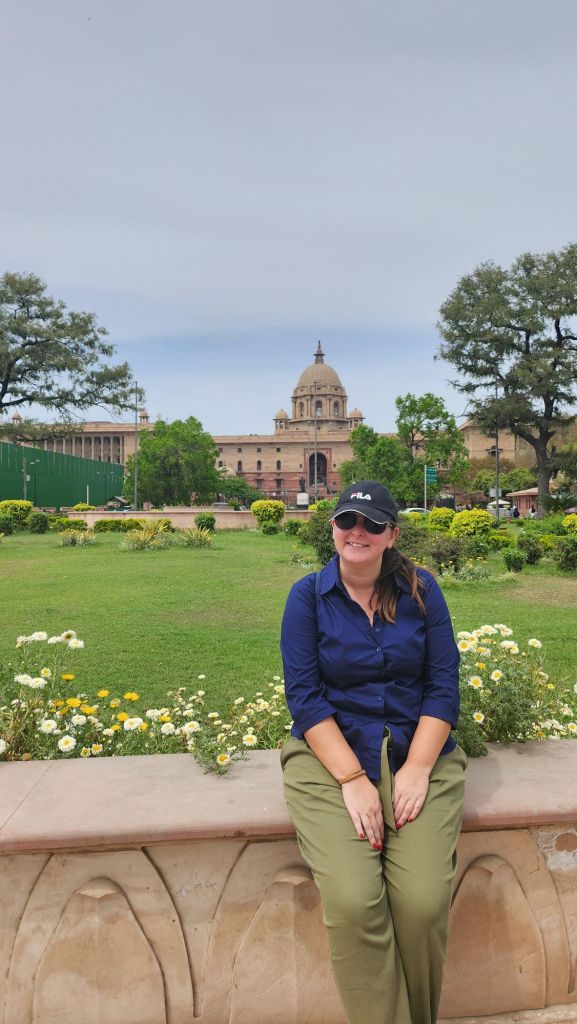
I came into Delhi Airport and was met by a close friend that guided my through the madness and crowds to the city. We hired a tuk tuk for the day and the very enthusiastic driver drove us all around the main landmarks of New Delhi, the Capital of India. The India Gate monument commemorating those lost in the first world war. Surrounded in park and crowds, this looks similar to an ‘arc de triomphe’ in Europe.
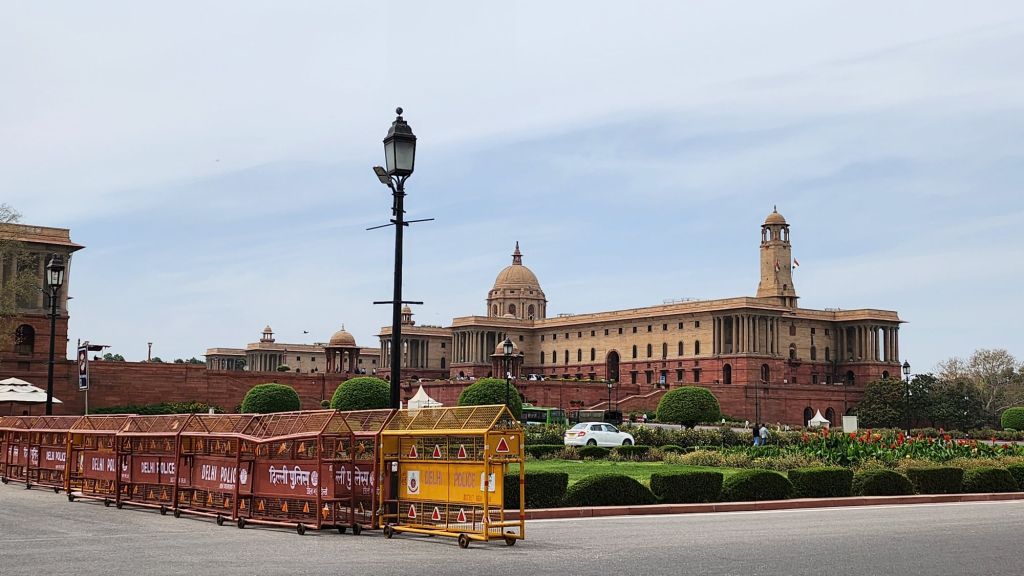
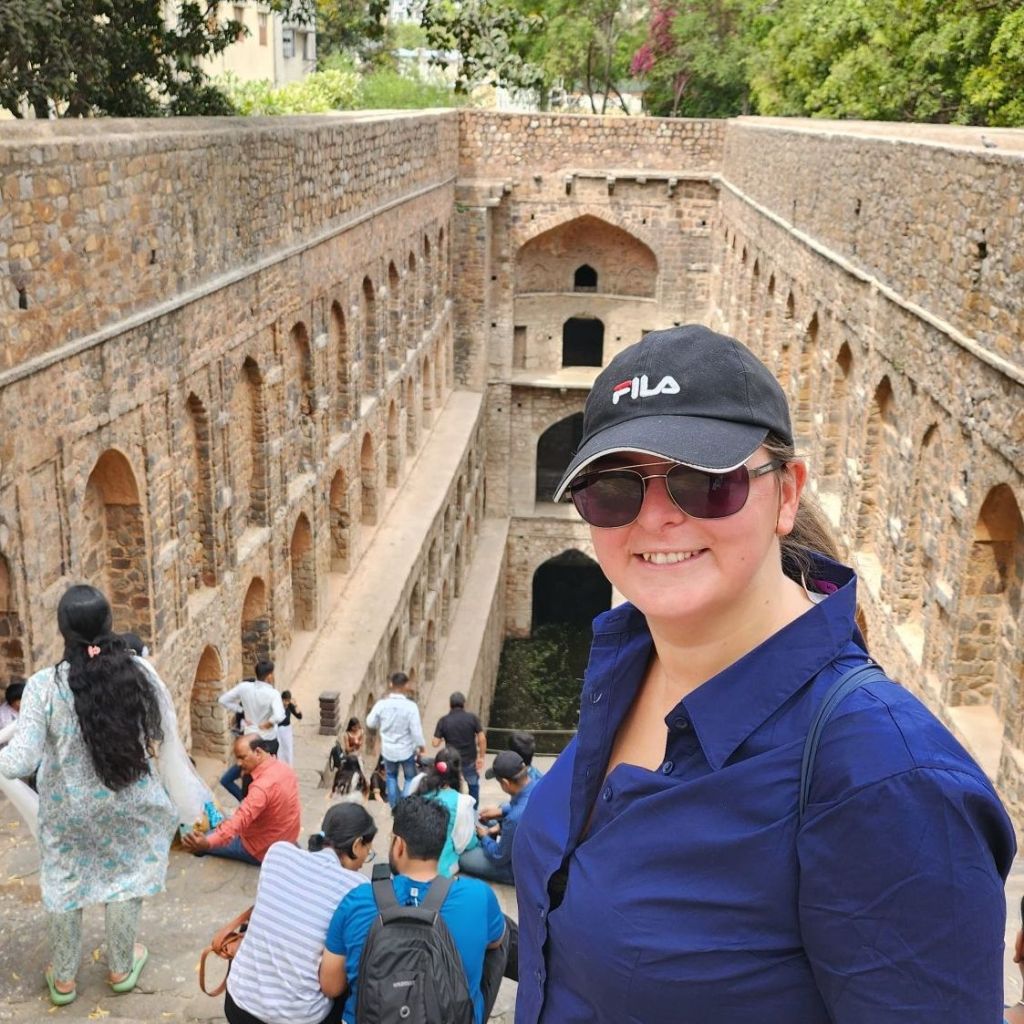
As we jumped back on the Tuk Tuk we saw many more buildings that were government or national monuments like the Red Fort, but I hadn’t realised that as it was Monday (actually Easter Monday), most things were closed, but it was so so very hot, I was happy to see it from the outside and keep moving. With having the local driver I think we actually saw a lot more smaller places that I would not have expected, for example an old water reservoir which was particularly impressive due to its architecture.

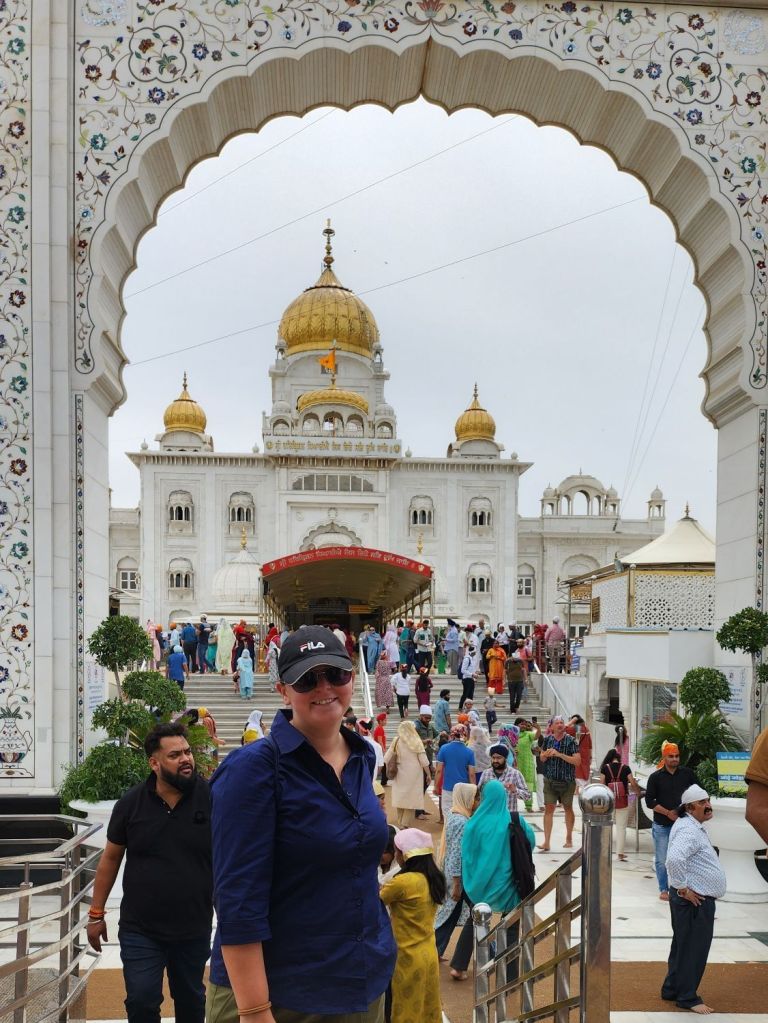
I did manage to visit a few religious spots as well, a beautiful and busy mosque site, which was rammed with muslims for ramadan, and also the Gurudwara Bangla Sahib, or Golden Temple.

The golden temple site is an important location for Sikhs. This beautiful location took you away from some of the hustle and bustle and to a quieter place where it was my first experience taking off my shoes, washing my feet and walking around a sikh space. Outside you could see the impressive golden structure and also some sort of large pole with fabric which sikhs use to replace their turban everyday.

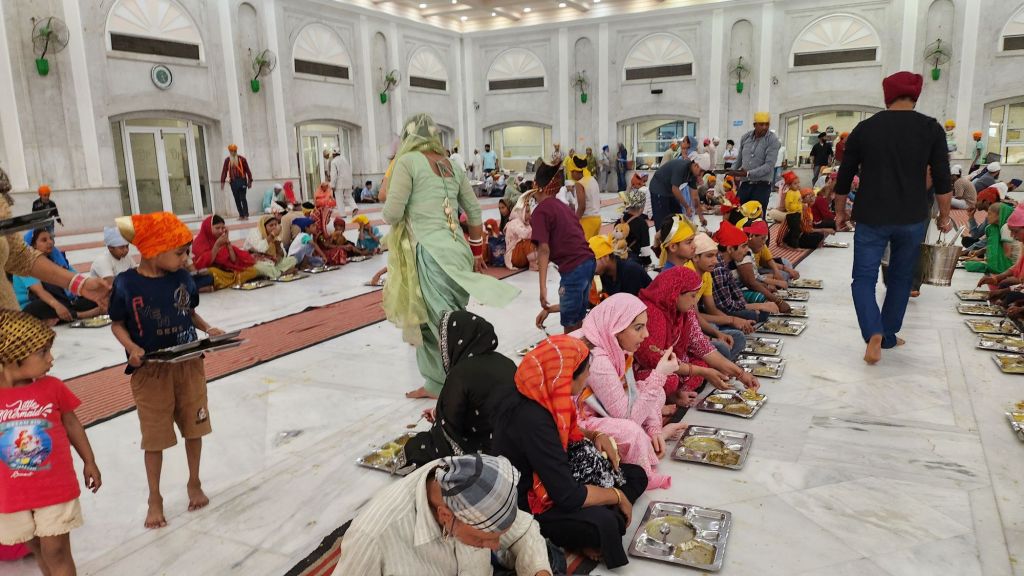
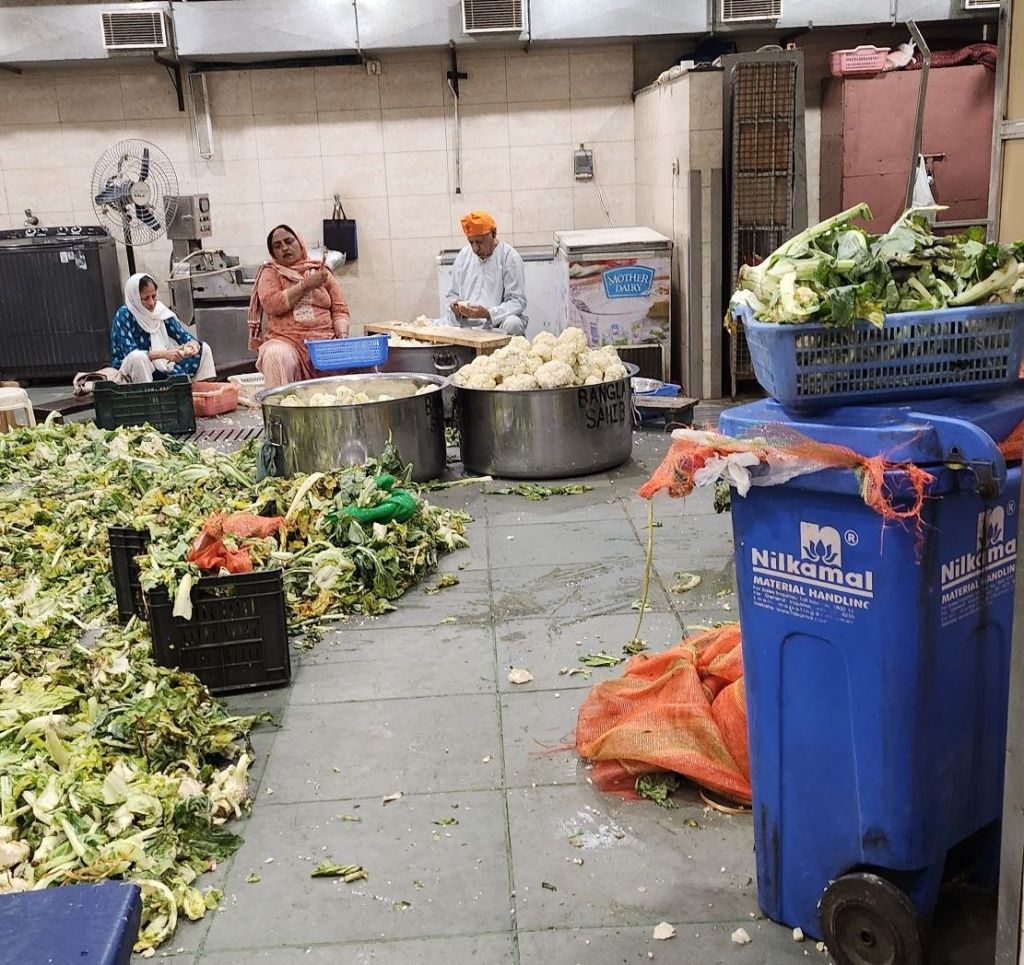
This religious site also houses a large community kitchen and dining hall, where several volunteers come everyday to make free meals for their community. People wait in crowds outside for their turn to take a seat and eat what has been provided. This was a really impressive operation.
There are four main religions in India; Hinduism, Islam, Christianity and Sikhism. The popularity of the religion varies with the region of India you visit, and as I continued on my journey, I learnt more about the ancient and present day conflicts this still causes unfortunately.
At night, as the air cooled, the streets became alive with people selling their wears and street food being available. I was offered things at triple the price due to my obvious foreigner look, so my friend had to purchase what I wanted for me whilst I hide around the corner. He was very successful, coming away with some bangles and clothes for me. I am now all set for my next Indian celebration.

I tried to stay away from the street food, as I had three weeks away ahead of me, and did not want to have a bad belly. (Little did I know this would happen despite me being careful, and last from day 2 to day 12). I went to the best rated restaurants though, and had some delicious curries, and oh my god, I love cheese naan so much. The food in Delhi is supposed to be some of the best, and I would have to agree.

Agra

The next day we were up early in the morning to head to Agra, the home of Taj Mahal. India being a huge place, it takes ages to get everywhere, and this is no exception, Agra is a 3 hour drive from Delhi, and I arranged a private car and tour to take us there and see the sights. There was little to see on the route but that was fine as it started at about 3am.

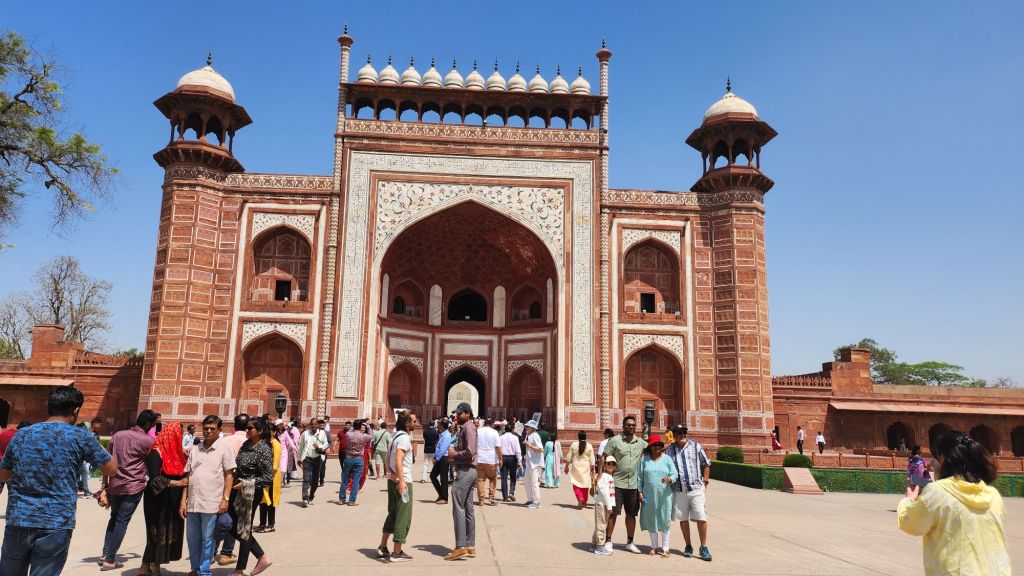
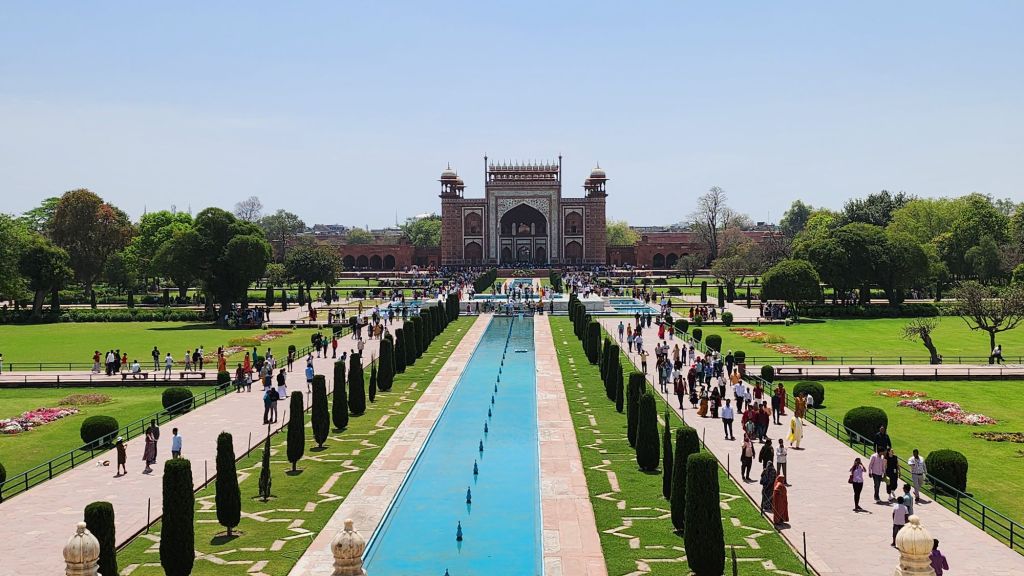
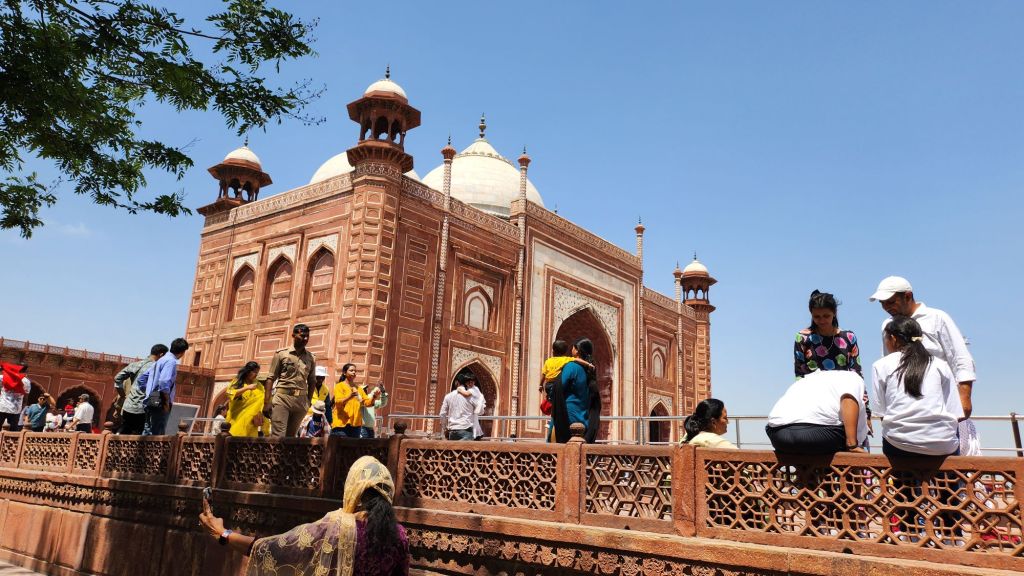
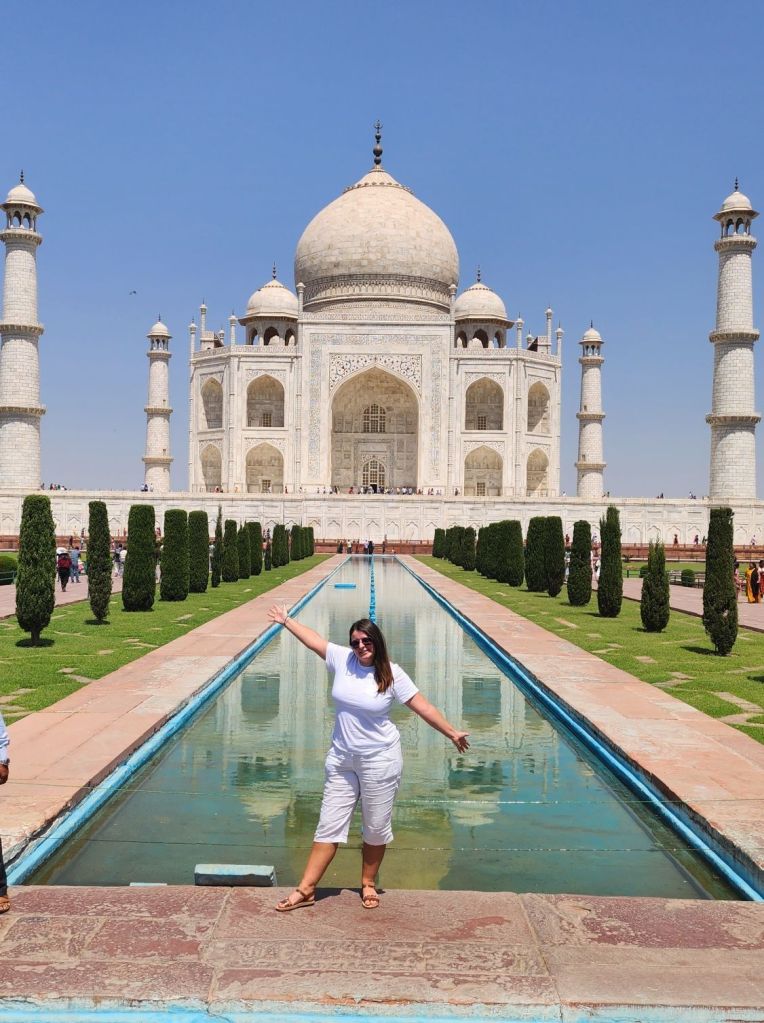
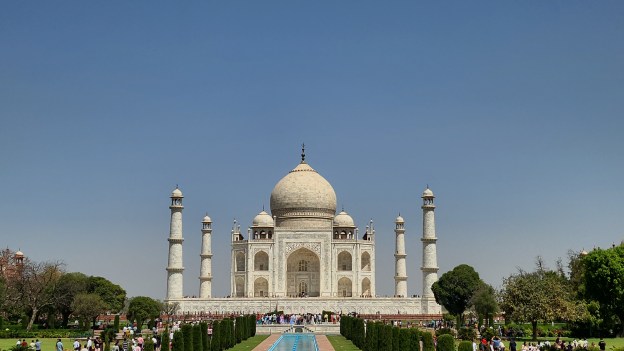
On arrival at Taj Mahal site with our guide, we were seperated in to men and women’s security which is the norm in India, for scanning and privacy. We then went into the huge site and crossed through the impressive gates before our first views of Taj Mahal.

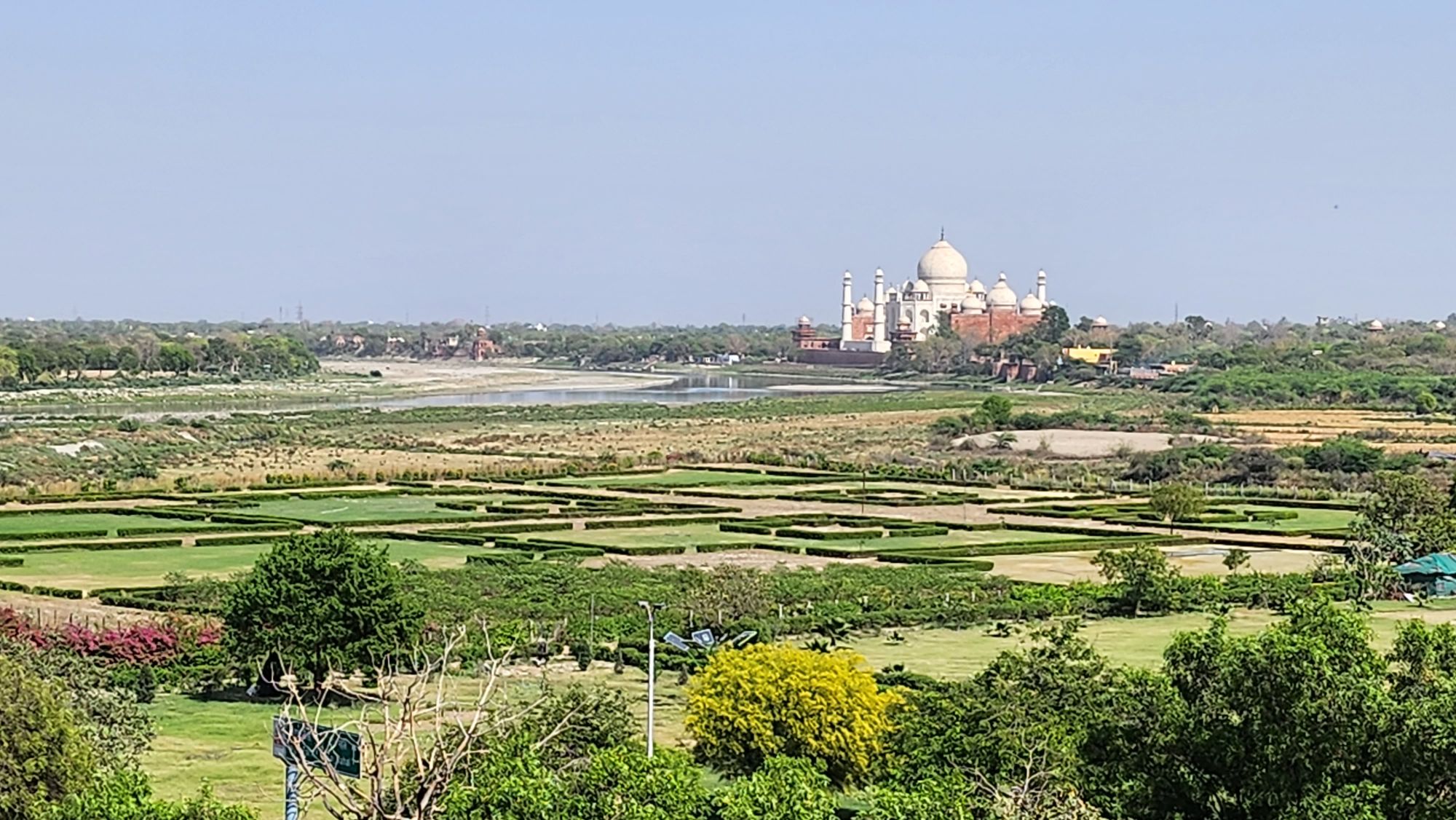
The romantic story behind the building is that it was built as a mouseleum by the Mughal Emperor in the 1600s for his favourite wife Mumtaz Mahal. We also found out that he had actually wanted to build one for himself opposite to the Taj Mahal, on the other side of the river, and it would have been a reflection of the original, but after construction started, his son put a stop to it, as he was spending too much money. His son later led a rebellion and captured his father, imprisoning him in Agra Fort and stealing his throne, eventually leading to the decline of the empire.

As we wandered the grounds, our guide told us many stories of the Emperors or Kings of the different regions and the different dynasties that held power. Many of the dynasties still exist today, and in their regions the royal families are without power but are still wealthy and well respected.

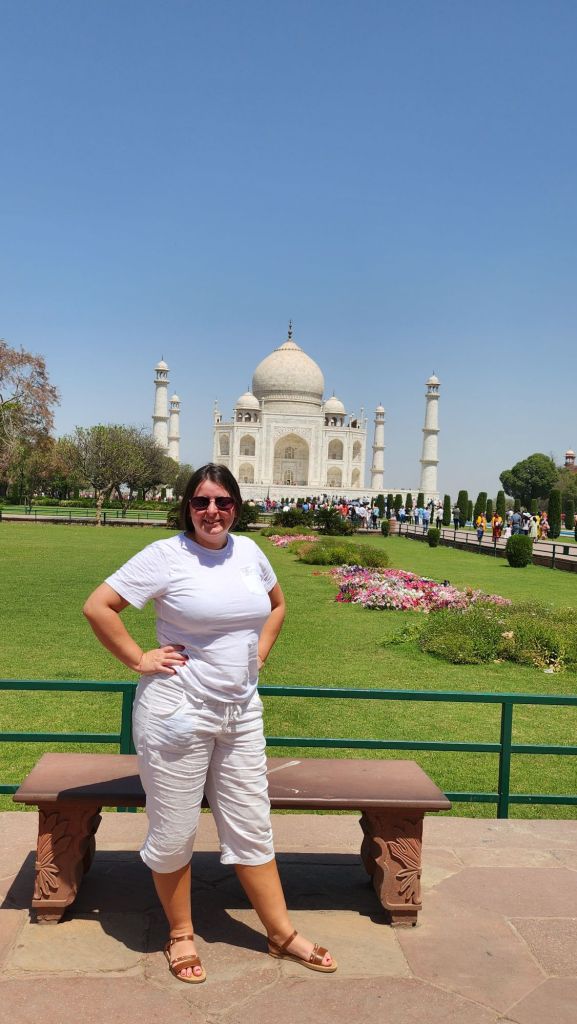
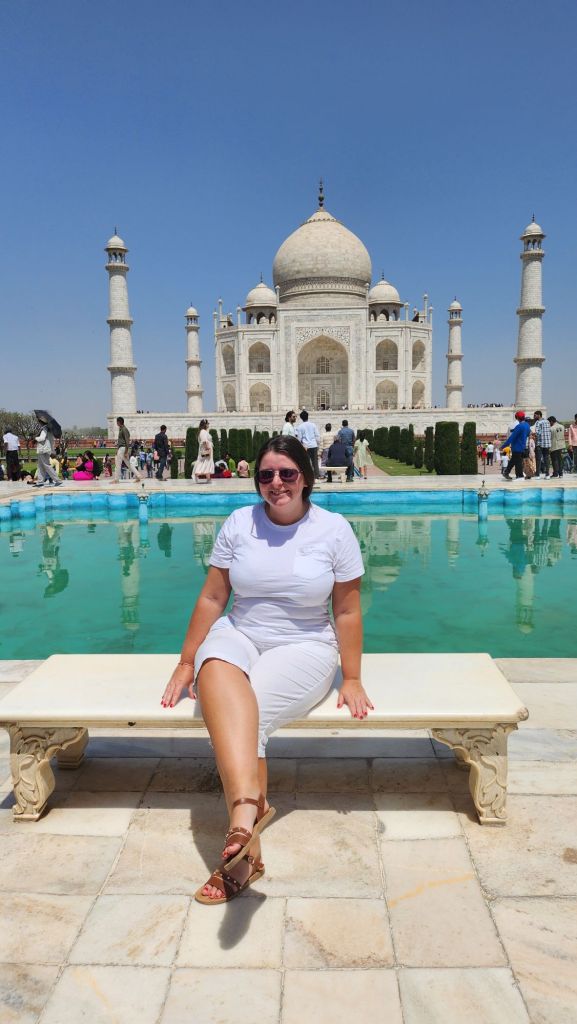
The gardens are well kept and there is a good order of security to allow people to follow the right paths and not allow them to wander all over, and consequently ruin the photos. I even managed to get a photo on the famous Princess Diana bench without too much hassle!

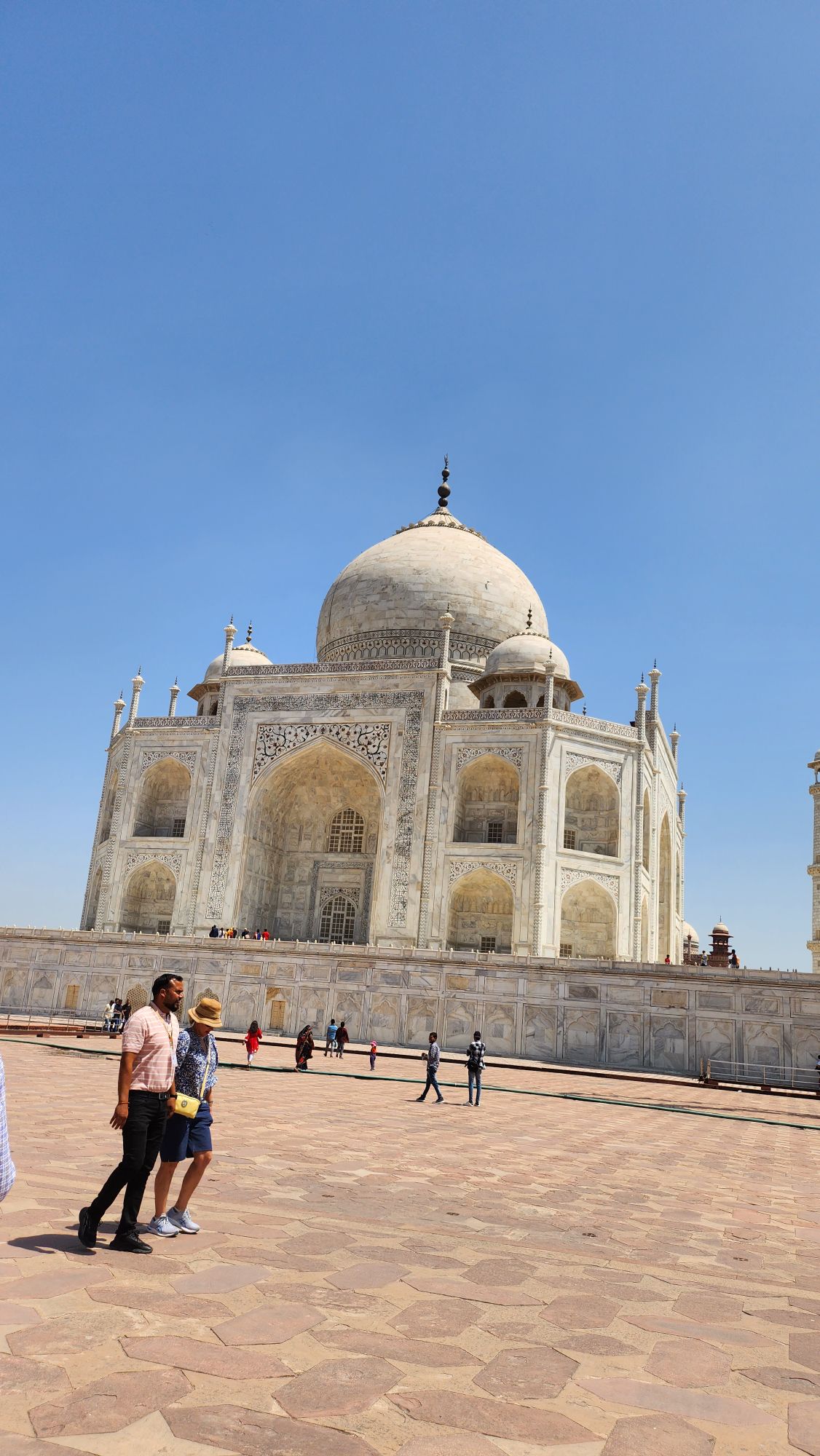
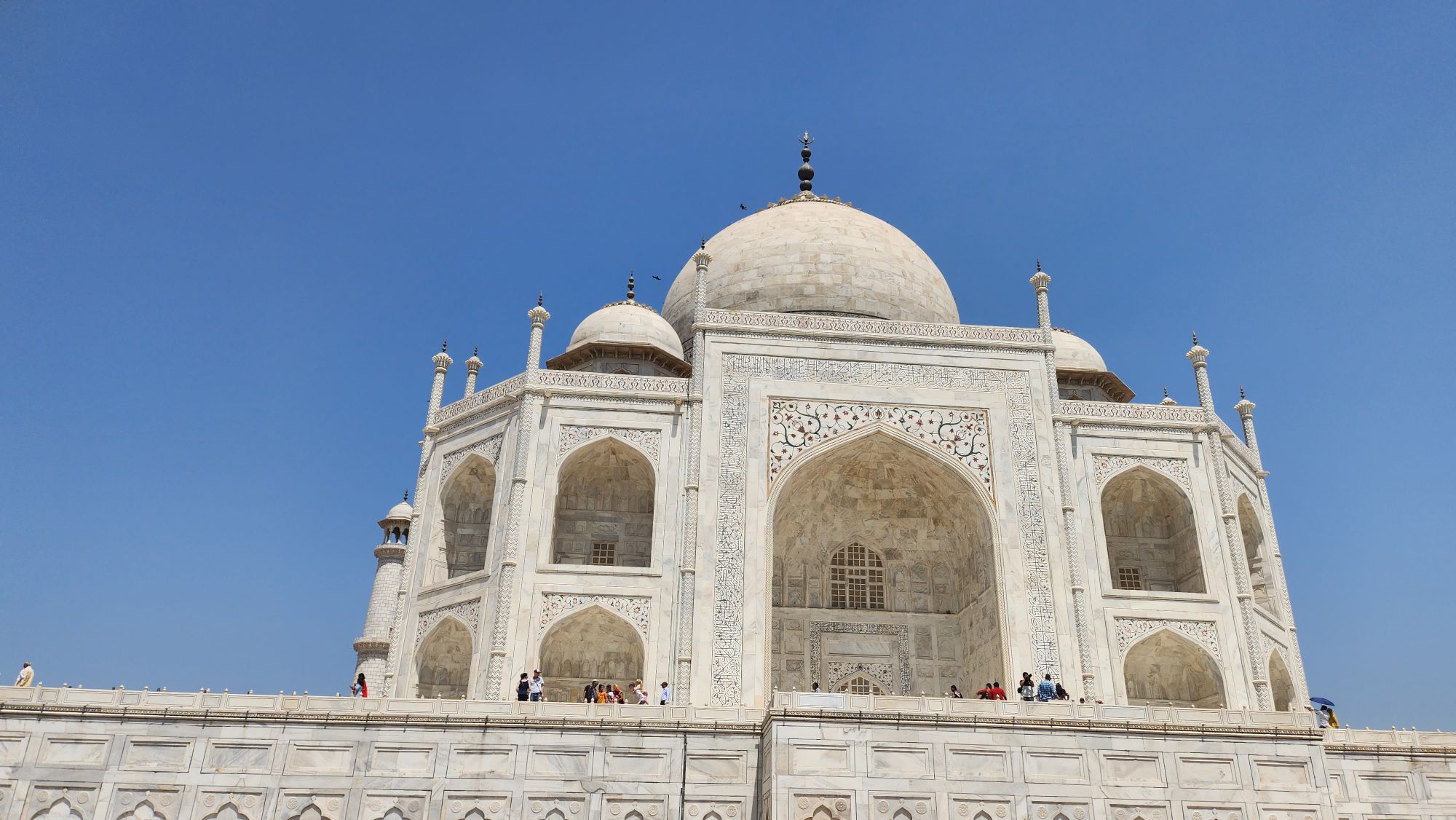
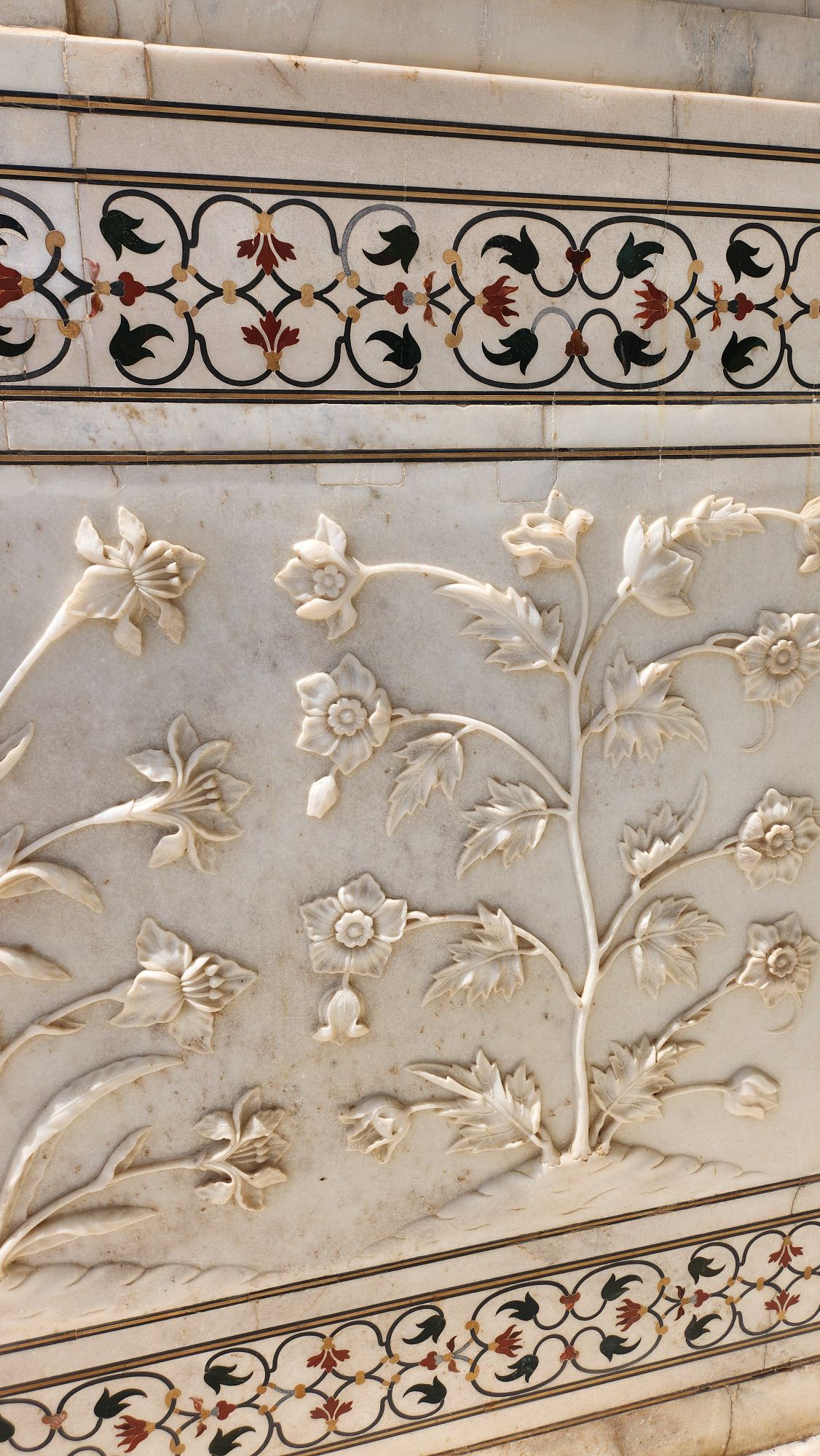
On approaching the mausoleum itself, you start to see the decoration of it. It is inlaid with many jewels that have been flattened down to look as if they were painted, but on touch you can feel that they are real. To my embarrassment, I learnt that the best jewels were taken by the British and one lies in our crown. I had to shake my head at this. Inside the building it is quite plain and small, centred around the tomb.

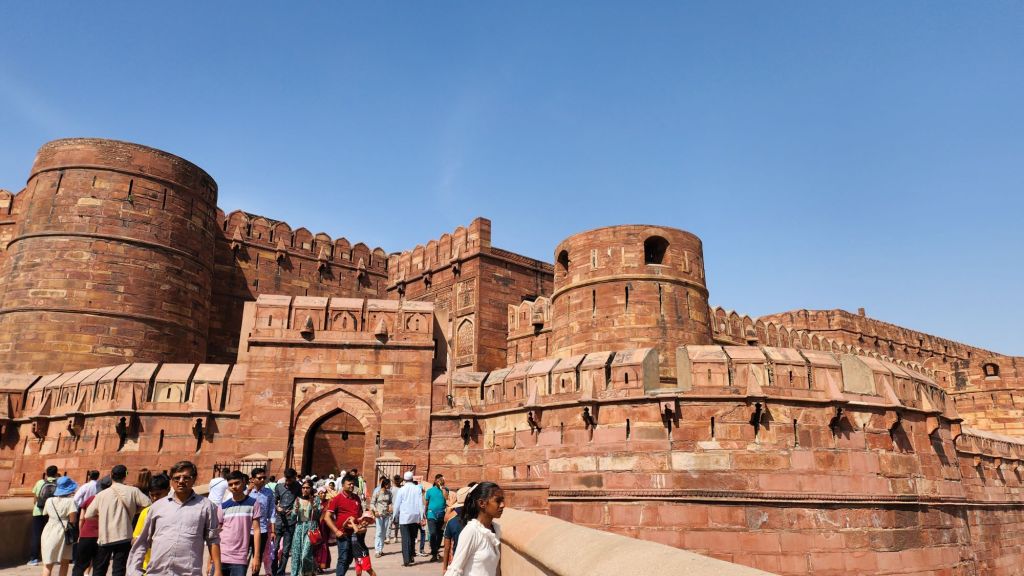
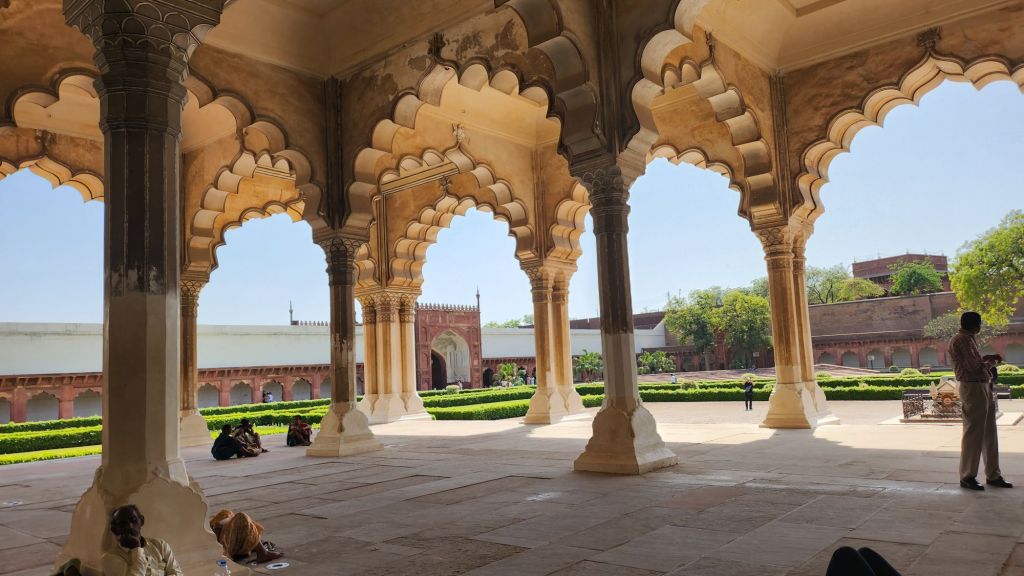
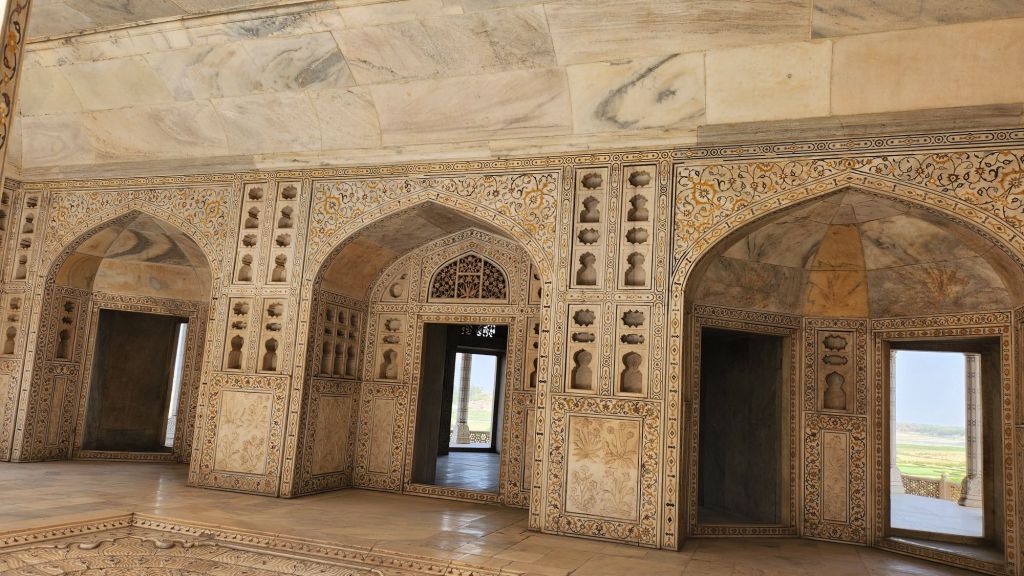
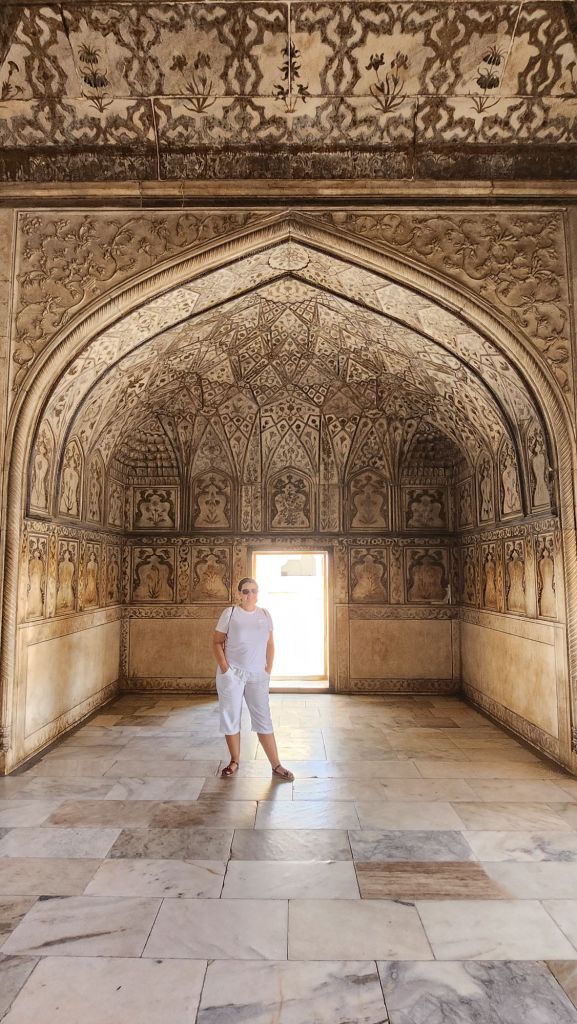
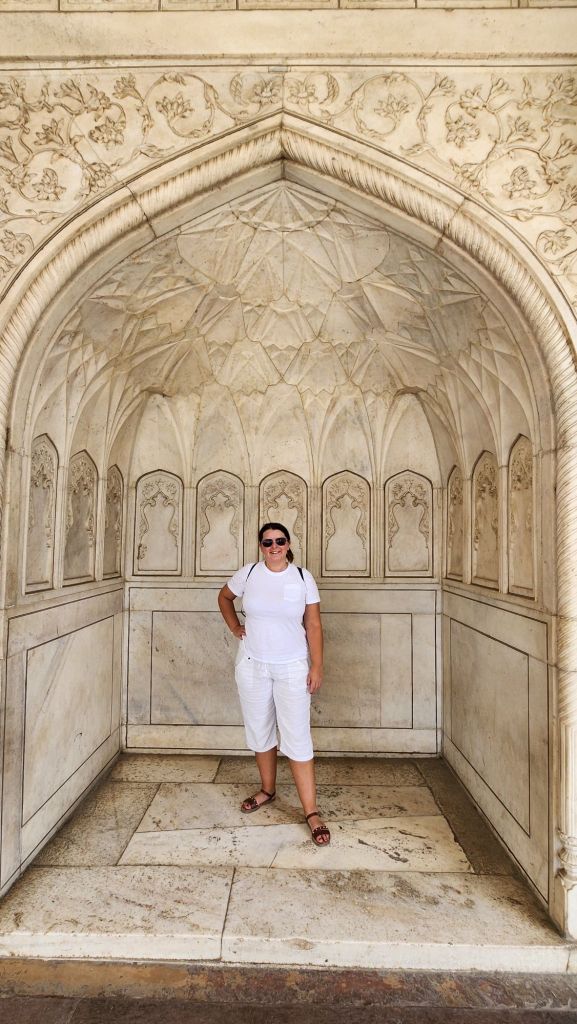
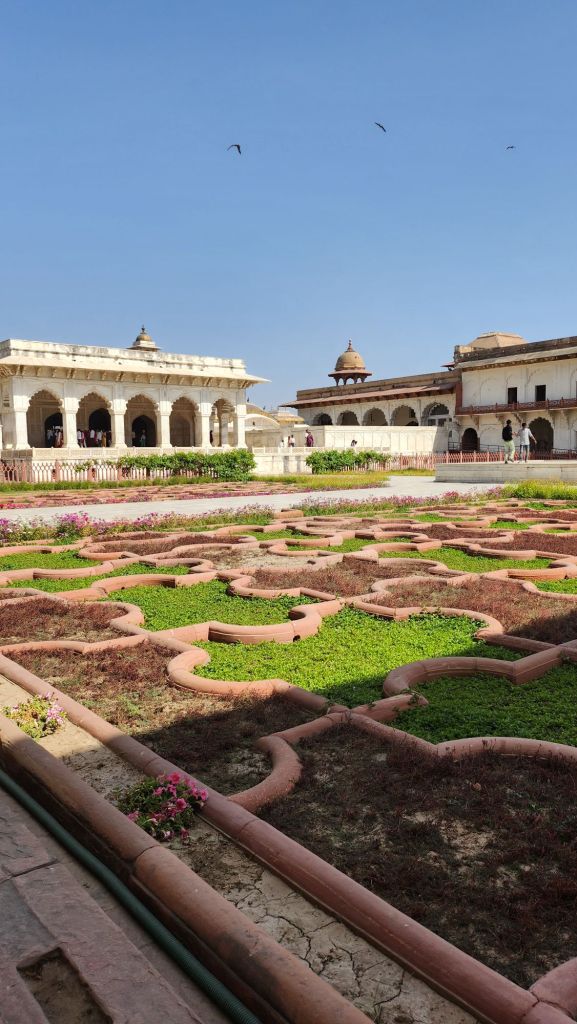
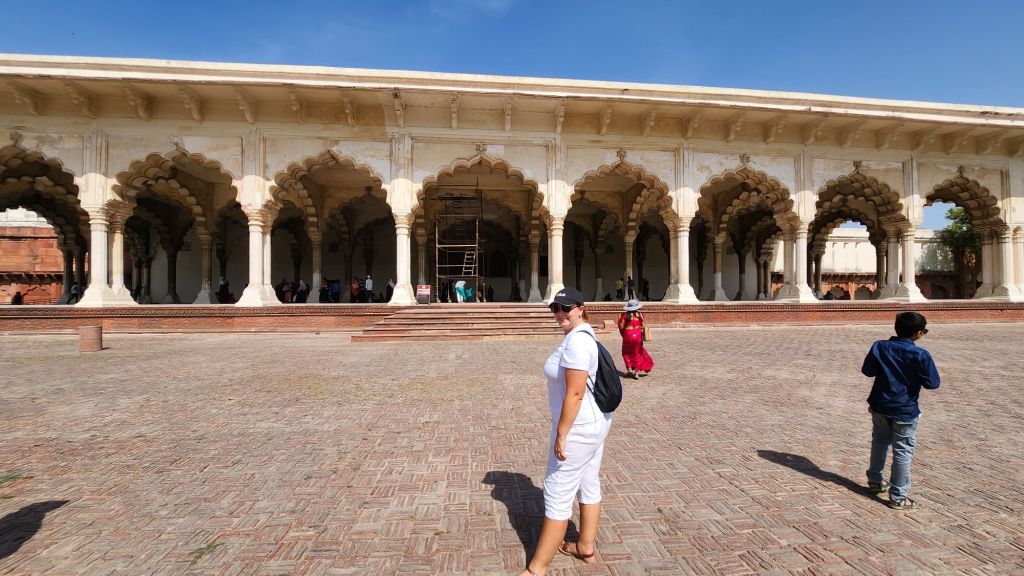
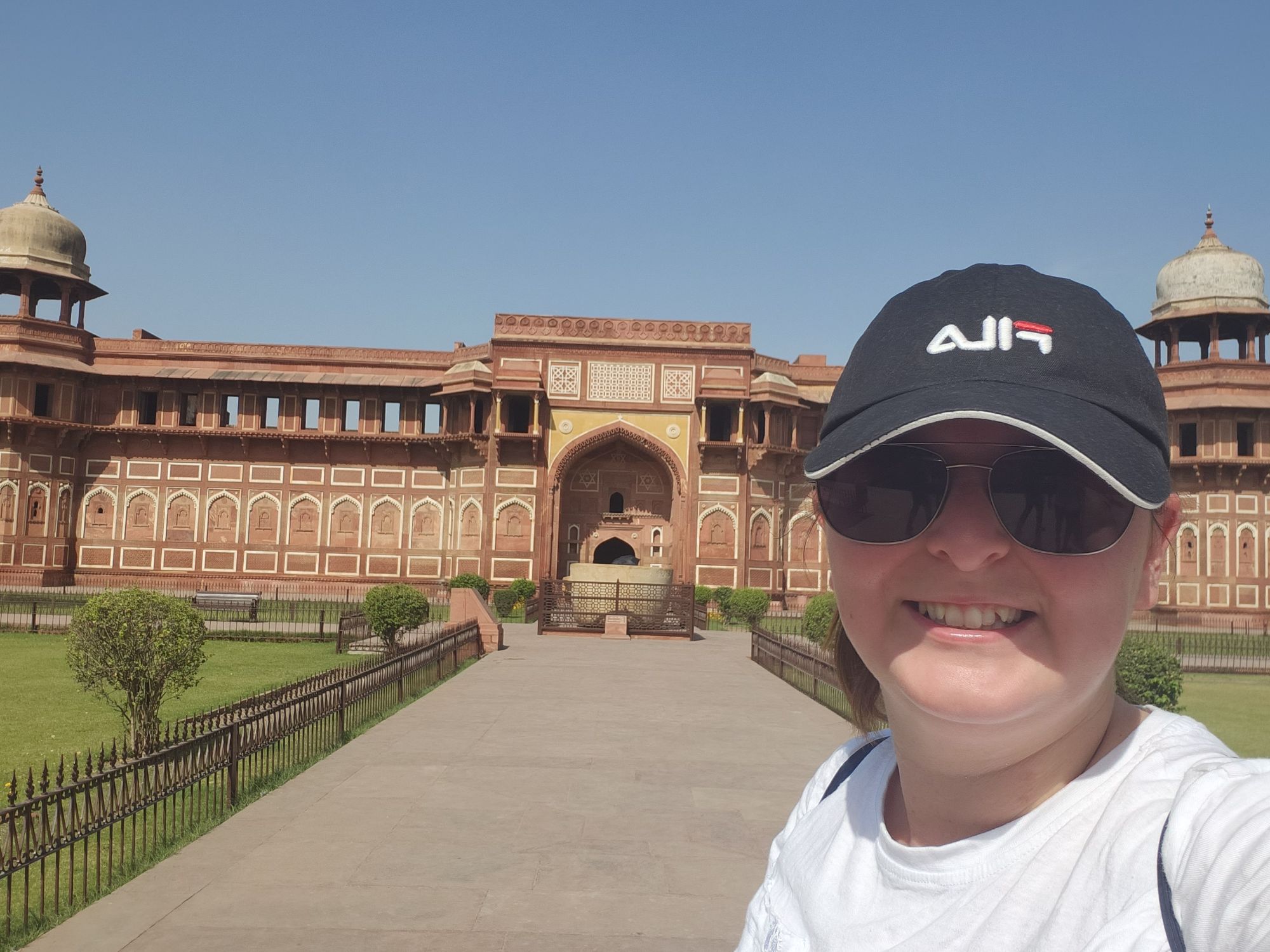
Visiting Agra Fort close by, the location of the emperors captivity, you can see that Akbar the Great, whom built it as a military fort and royal residence, had respect and tolerance for many of the religions. He decorated the Agra Fort with many religious symbols including the swastika which in Western Europe is known for a dark and twisted history but originally is the symbol for hinduism. He even married hindu princesses including Jodha Bai who famously was his favourite wife and his chief consort.

This huge great red coloured fort is vast in passages and areas that would have once housed royal rooms. In one location you can see a strange optical illusion. A view of the Taj Mahal where as you get further away, it looks larger. Completely confused me!

Rajasthan – Jaipur

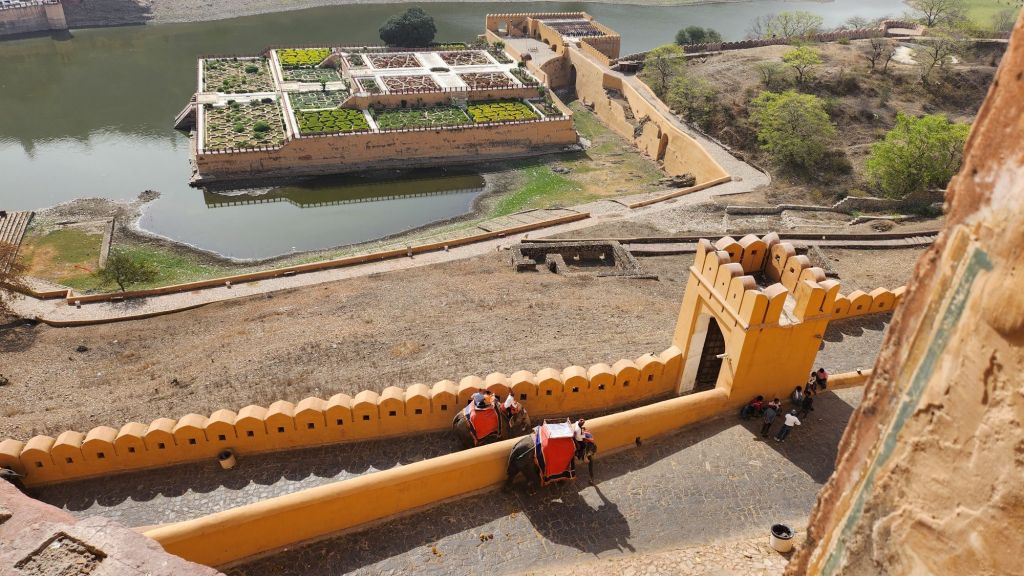
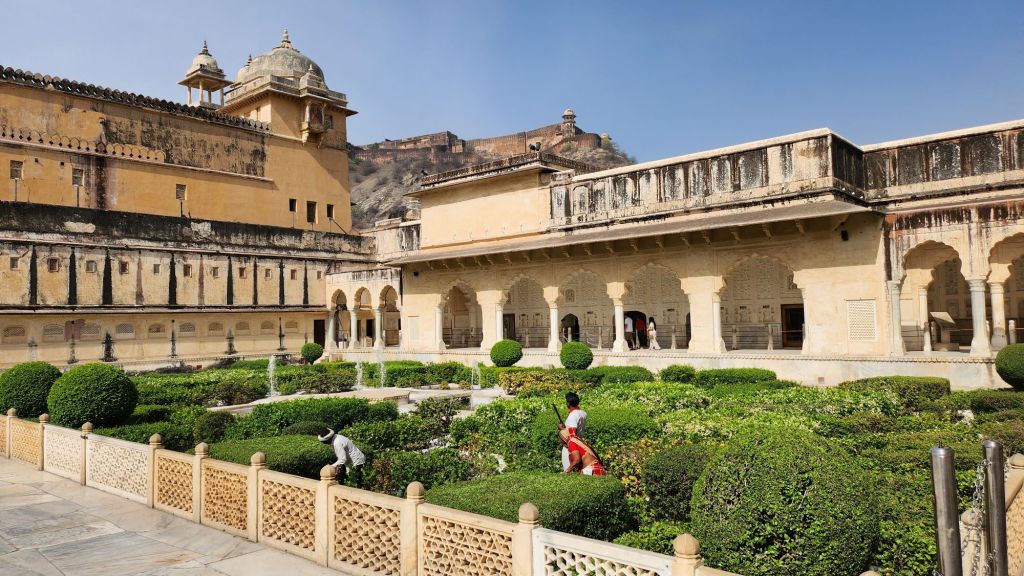
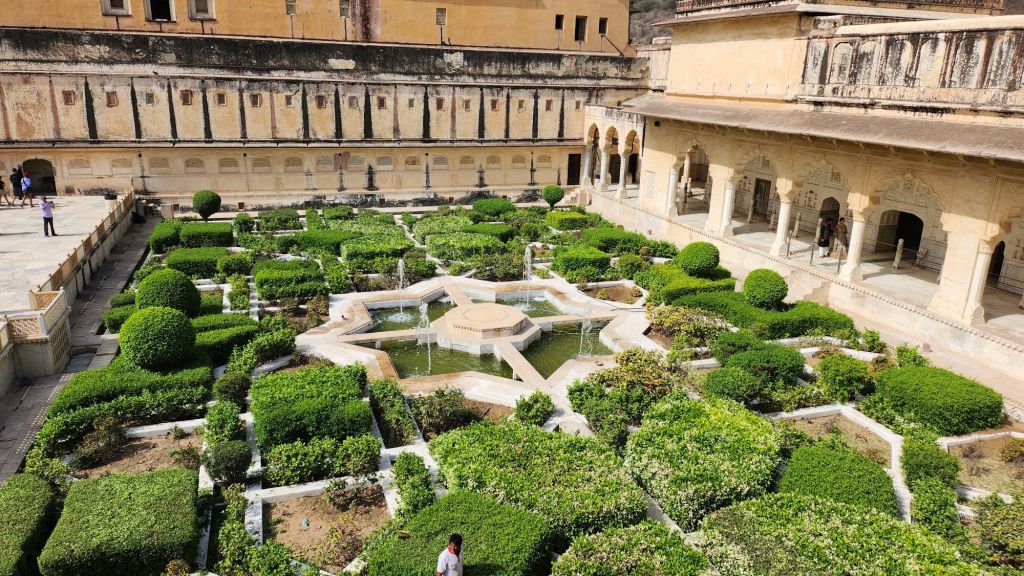
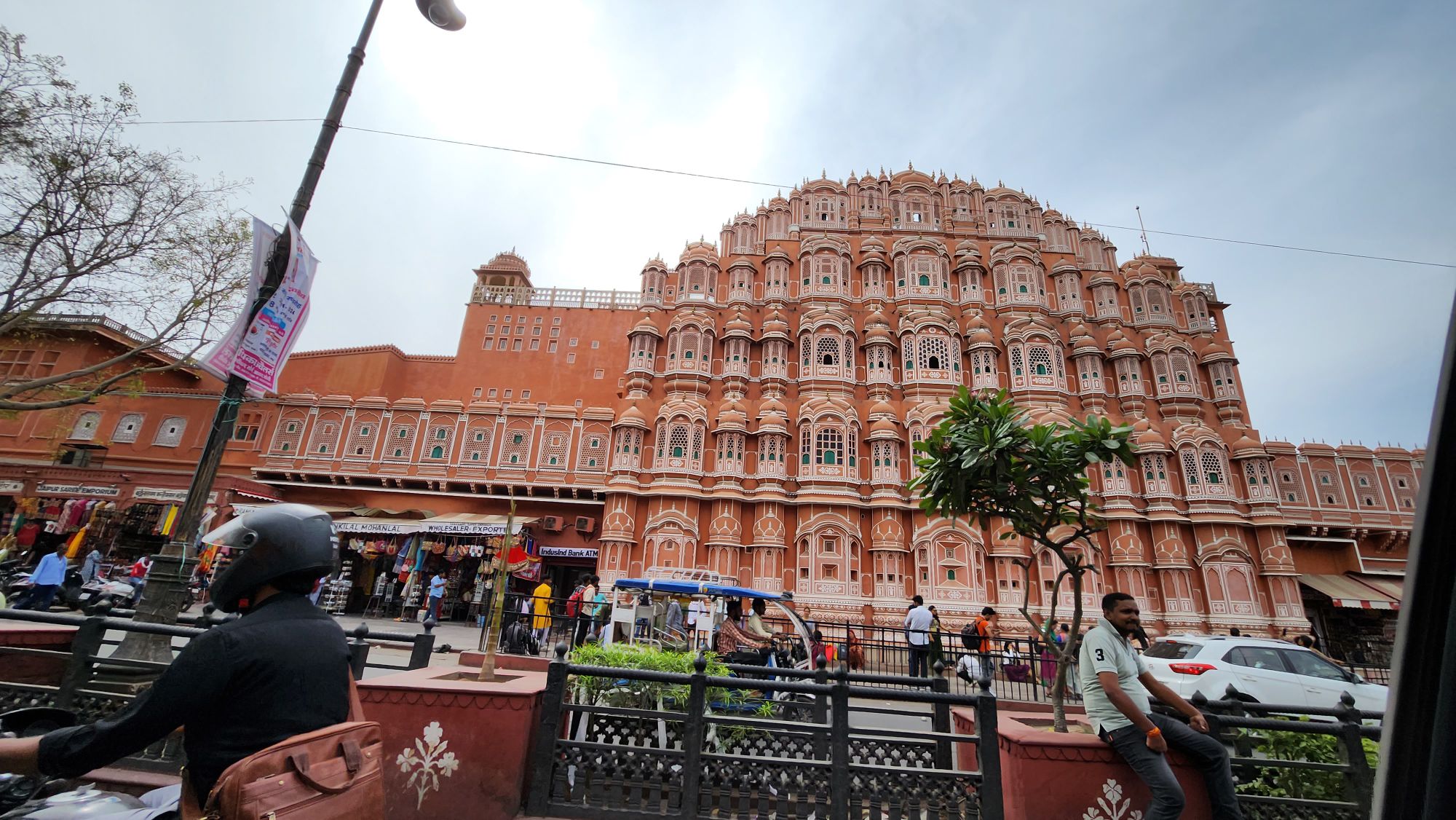
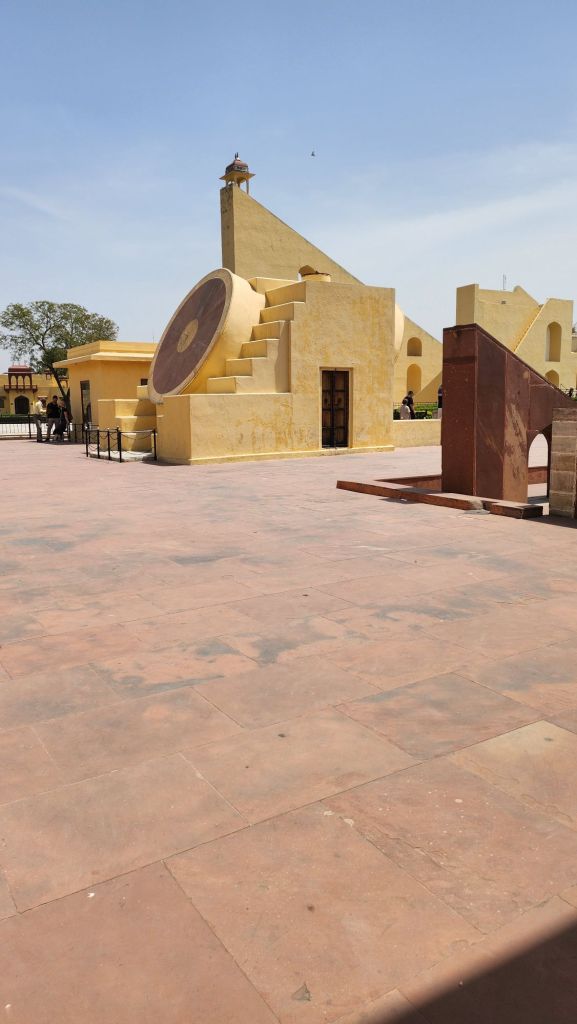
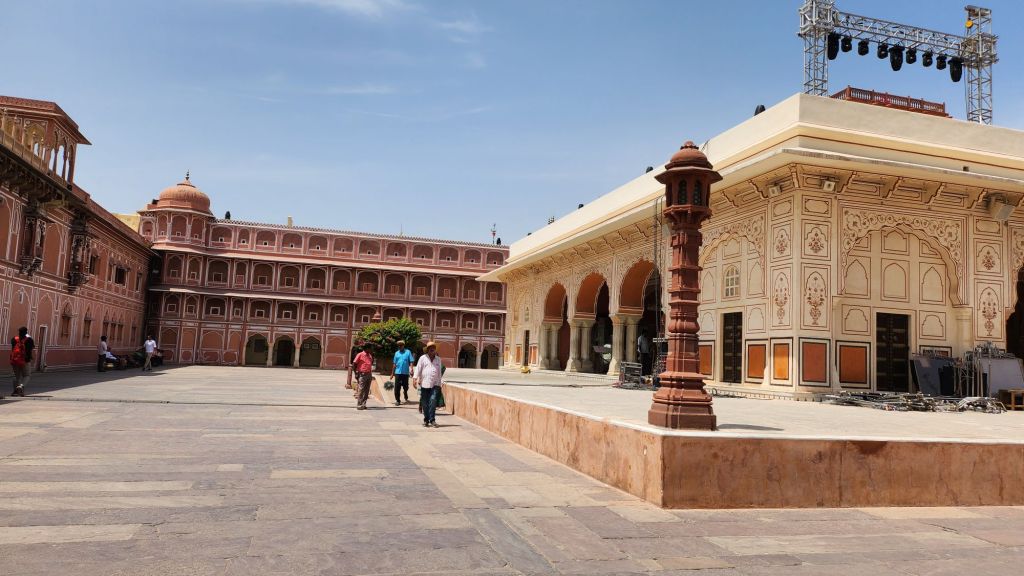
The next day we were on the road to Jaipur. The pink city is the final part of the ‘Golden Triangle’, the famous tourist route, made up of Delhi, Agra and Jaipur. The capital of the Rajasthan region, the city is famous for being the royal home of the region’s king and for its pink buildings making it very recognisable. In the city we travelled with our guide from palace to palace, through a fort and even to an interesting observatory park full of large sundial sculptures.

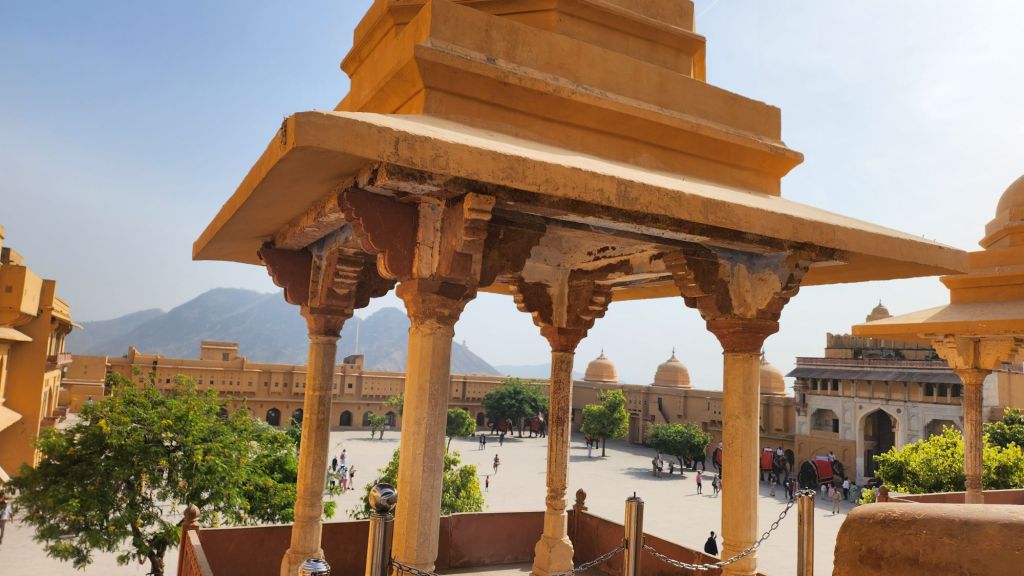
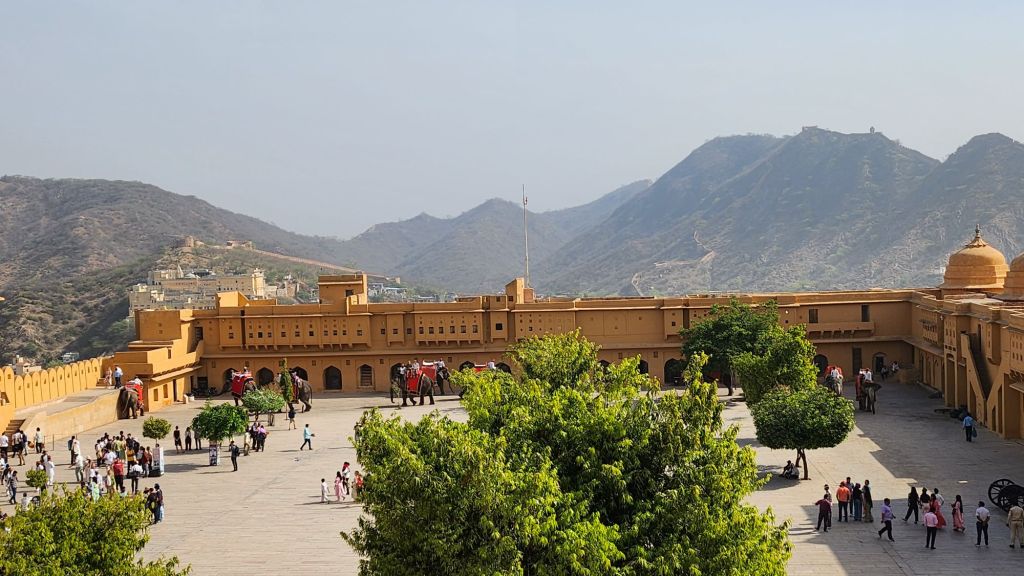
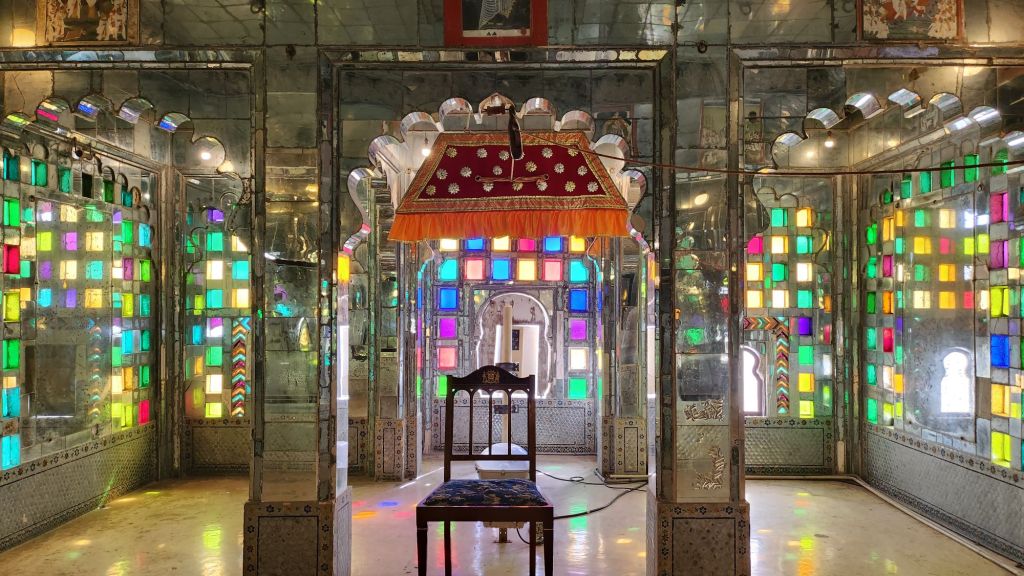
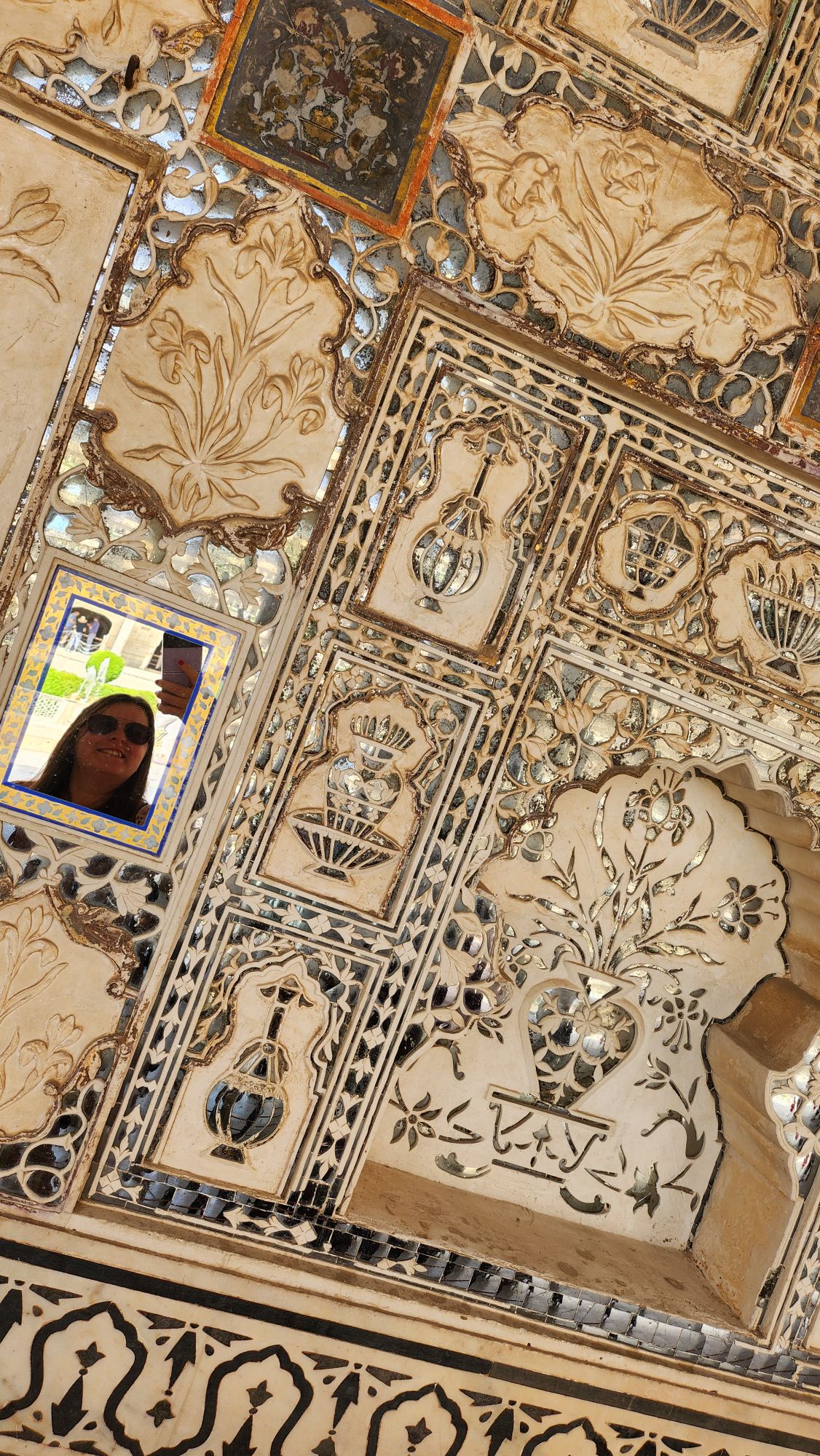
In the palaces, the royals were obviously big fans of mirrors, as there were rooms covered in mirrors, which also seemed to be used for keeping an eye on the other people in the room. Jaipur was obviously trying to keep the royal VIP feeling going as well, as elephants marched through the streets merging with modern traffic, taking tourists up and down the large hills to the palace.

Our guide in Jaipur was sadly not as pleasant as the one in Agra. He seemed to be a lot more bias in his views and heavily supportive in his stories to the hindu people, whilst quite against the islamic people, this did put a spoil on things a little as my friend is a practicing muslim, and I found the guide to be quite rude. This also extended to him, not acknowledging me fully as a woman compared to my male friend. This meant that we did ignore him a little and unfortunately gave us a bad taste in Jaipur.

Whilst the palaces and sights were beautiful, by the afternoon, I was suffering from the heat and struggling. Going at one of the hottest times of the year, was not my smartest move. I was taking lots of opportunities to rest and break, and by the end, I had to say enough was enough, and we made our way to the train station. This was the start of a ‘fast’ train journey of 8 hours to the lake city of Udaipur. My final destination of the North.

Rajasthan – Udaipur

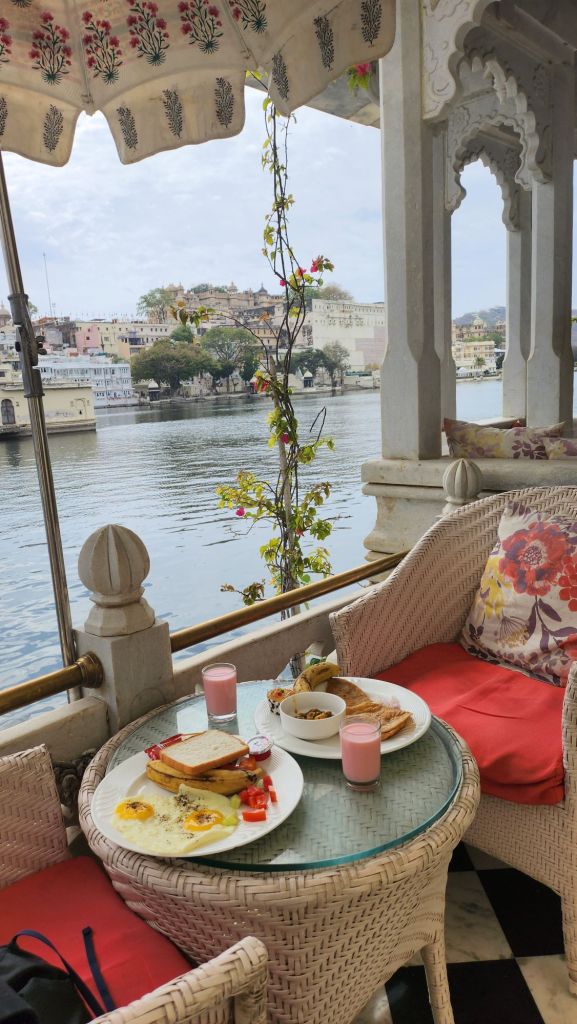
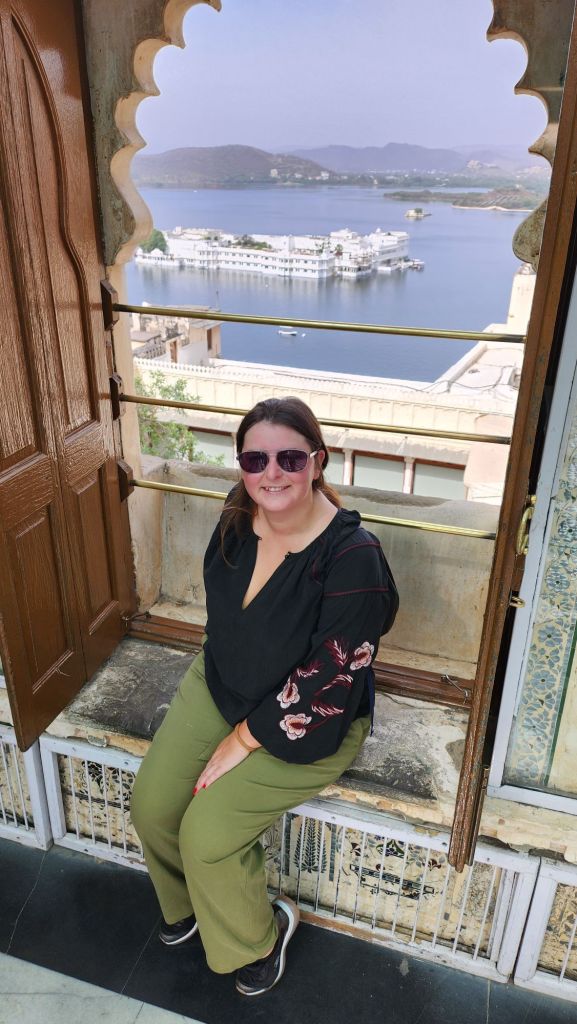
Arriving in Udaipur late at night, I jumped on a tuk tuk to my hotel, Lake Pichola. A beautiful hotel on the picturesque lake and a room with a intricately carved balcony to sit in. It was a gorgeous hotel, with a charming building, beautiful views, and a flute player to serenade me during breakfast. What more can you want!

The other guests staying there were clearly very wealthy, and its no surprise as it was the most luxurious place I had stayed. I did end up in an amusing conversation with one family, when the father could not wrap his head around me being alone there, and kept re-asking me if I was with anyone, and each time I said no, he was shocked and his wife and daughter were laughing at him. I don’t think those girls had quite the same freedom… As I continued to discover in my trip, the women and young people in general in India are quite restricted.

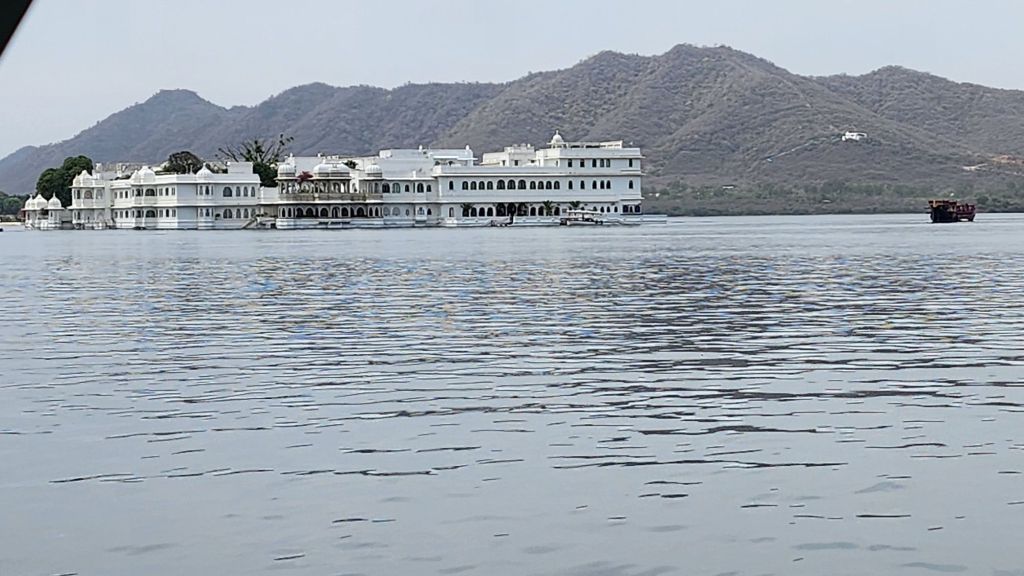
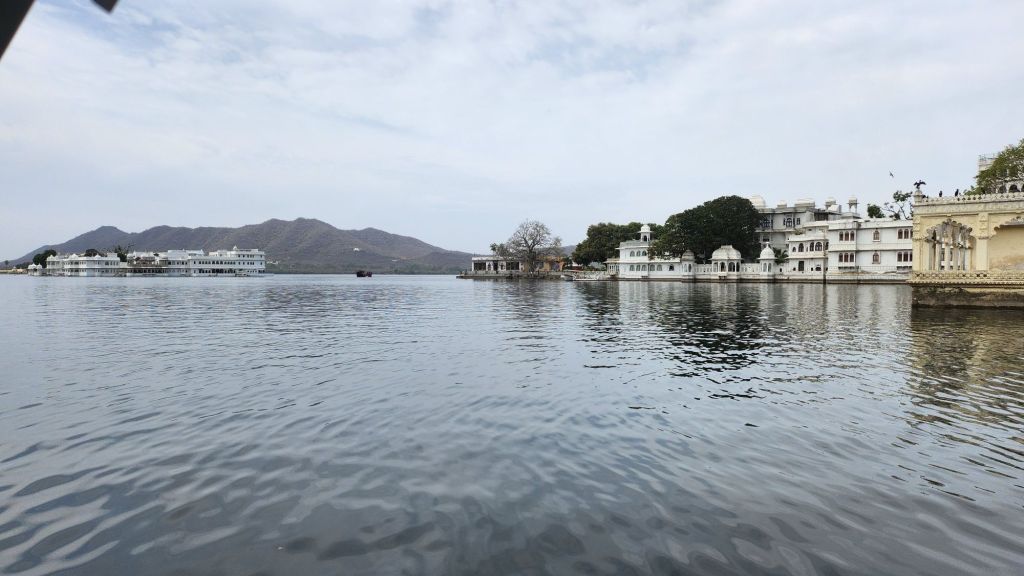
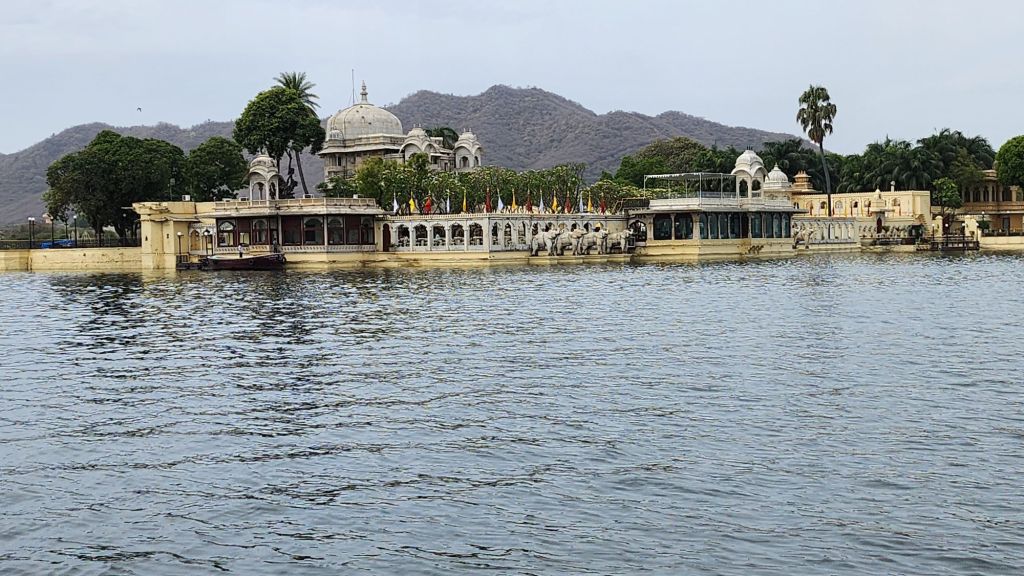
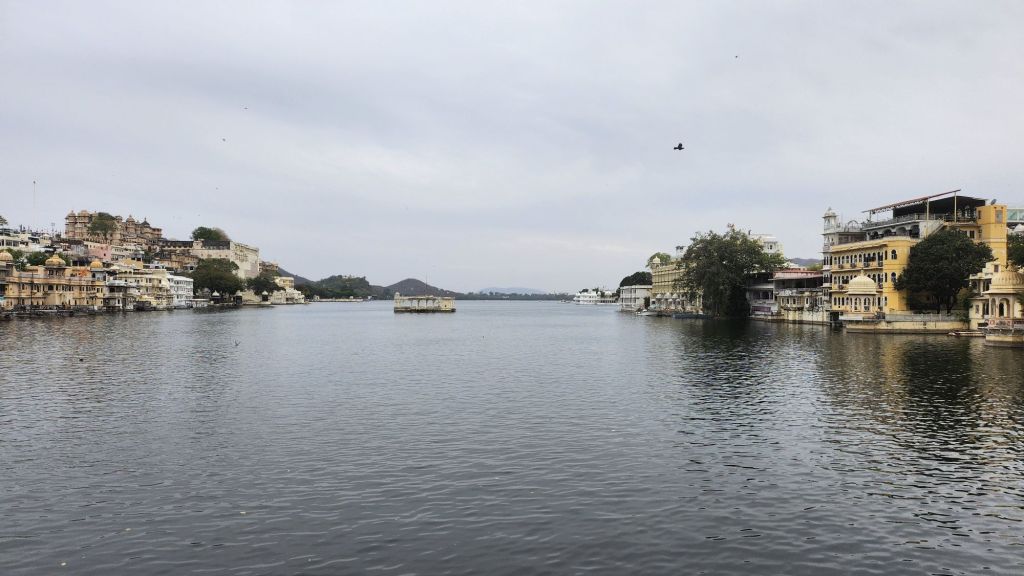
I had one full day to enjoy, and so I took a boat trip of the lake to see more of the views around me, and saw the famous Taj hotel owned by the king, floating in the middle of the lake, and only accessible by boat. I then wondered the streets by myself, making connections with some of the people that called the city home.

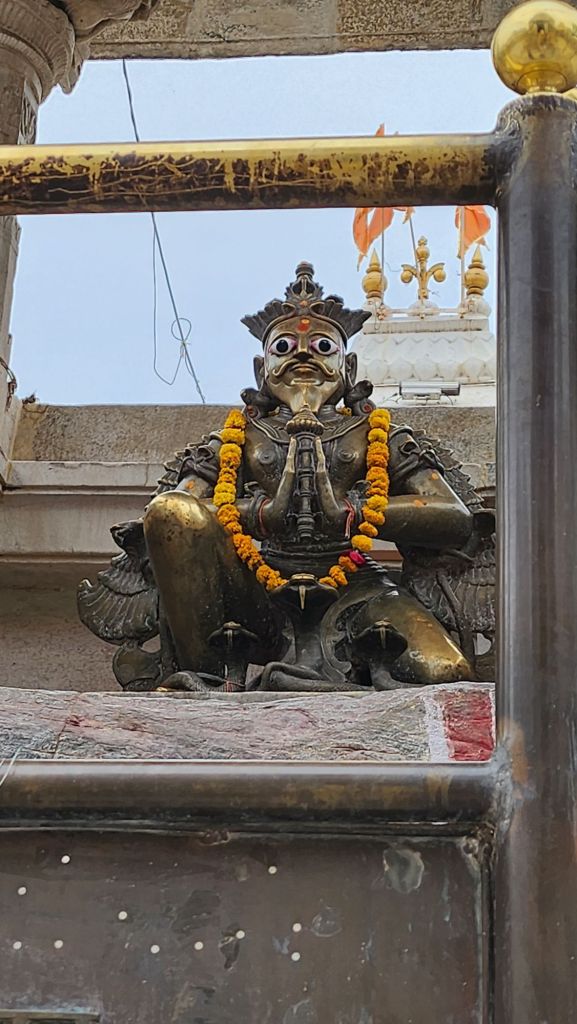
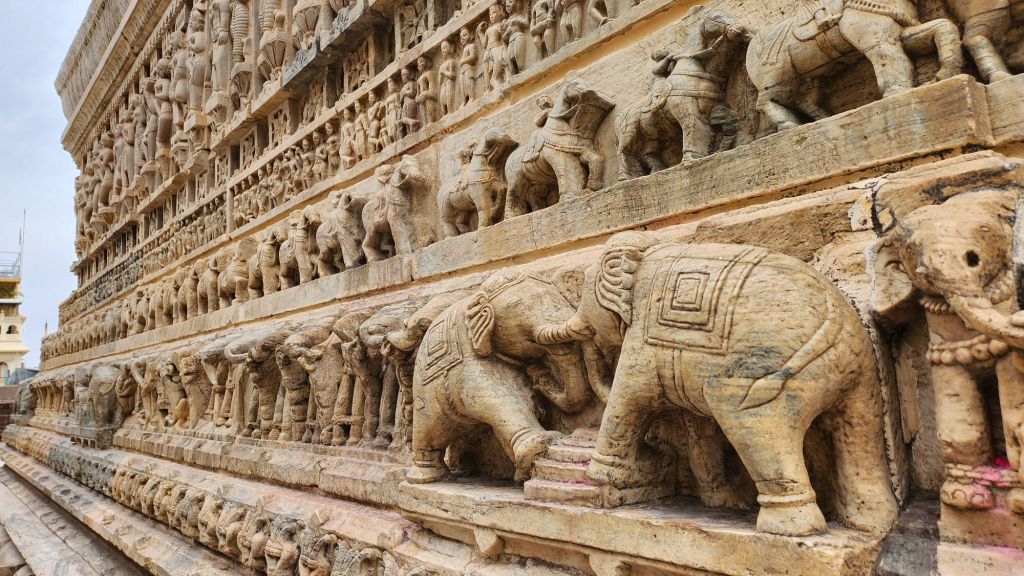
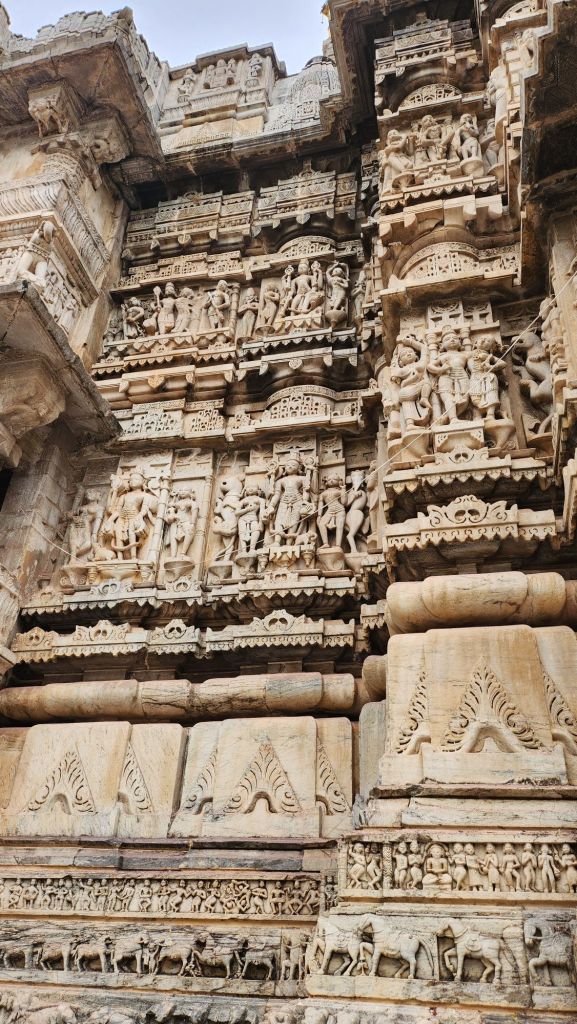
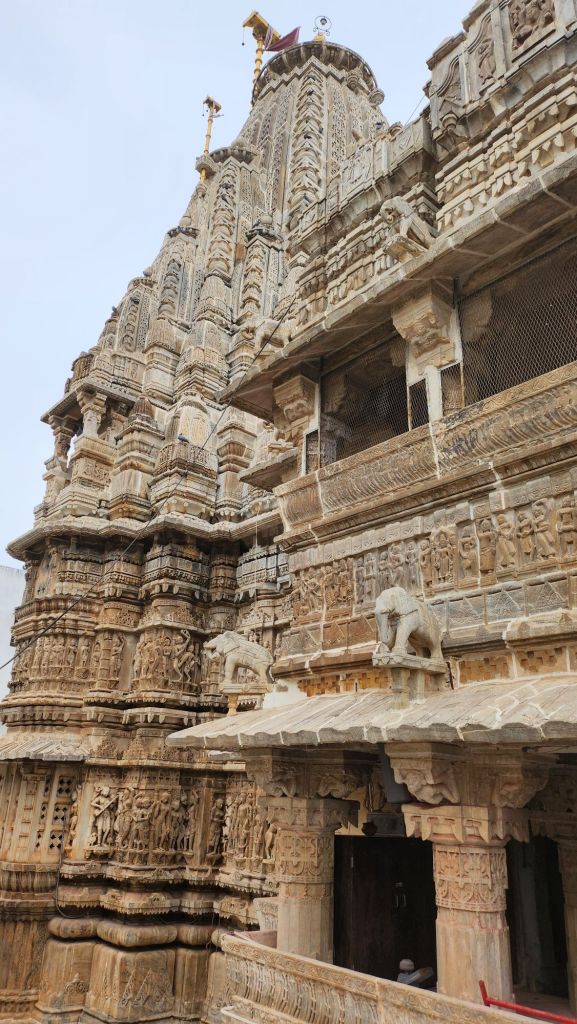
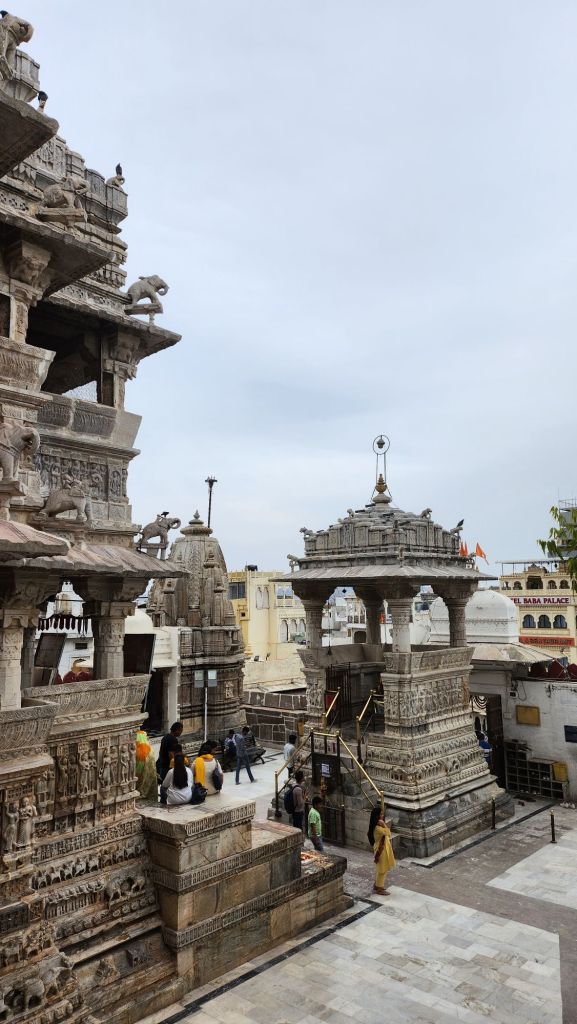
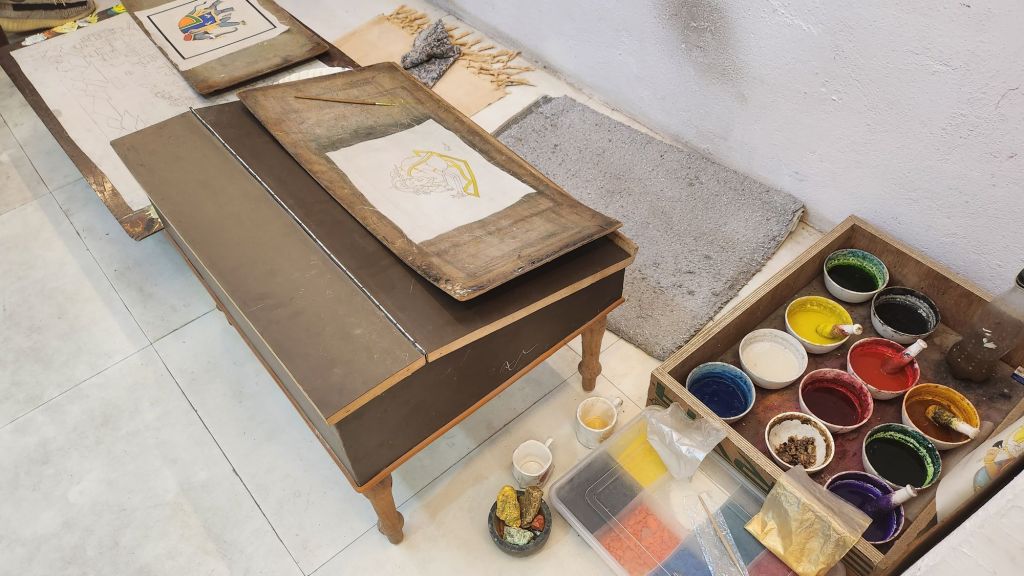
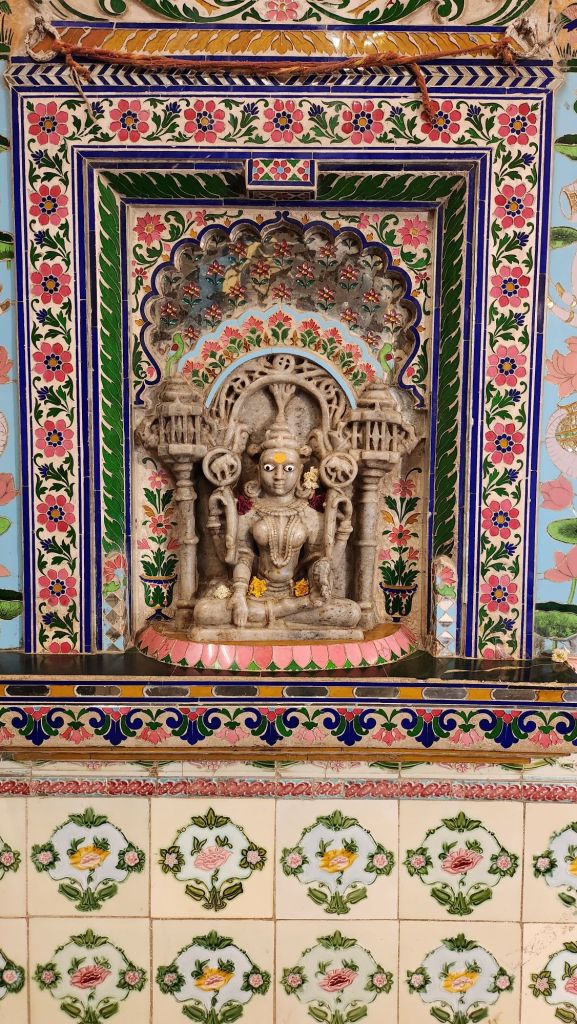
I visited a hindu temple that was made of old stone and was covered in hundreds of carvings, depicting different people, gods and elephants especially. One of the caretakers of the temple showed me around and explained the manner in which I should enter. Shoeless and in a clockwise route. I gave a donation of flowers and thanked him for his time before I ventured into the old cellar home there where people lived and worked painting art with traditional minerals, stones and vegetables, and of course I bought one for my collection.

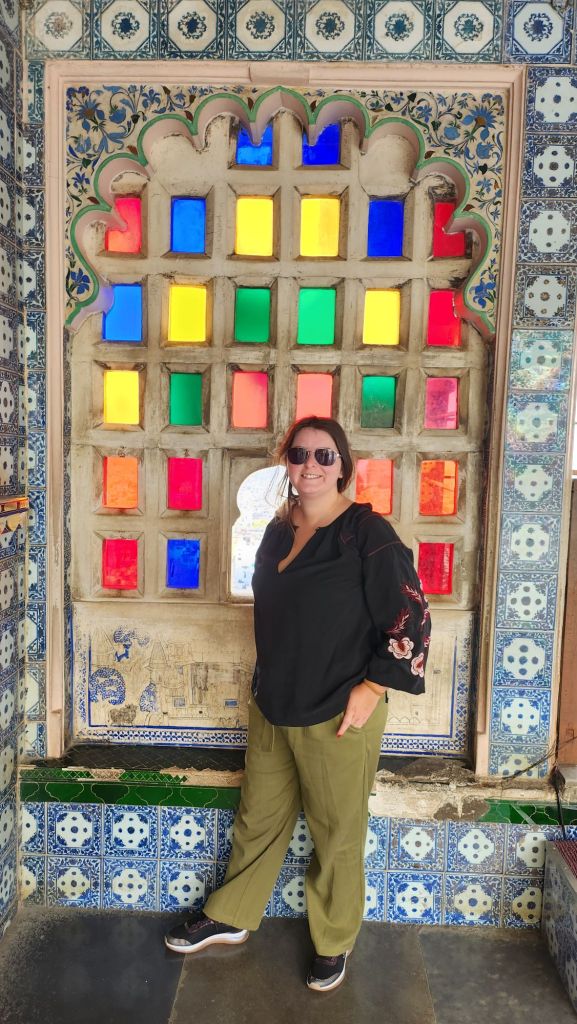
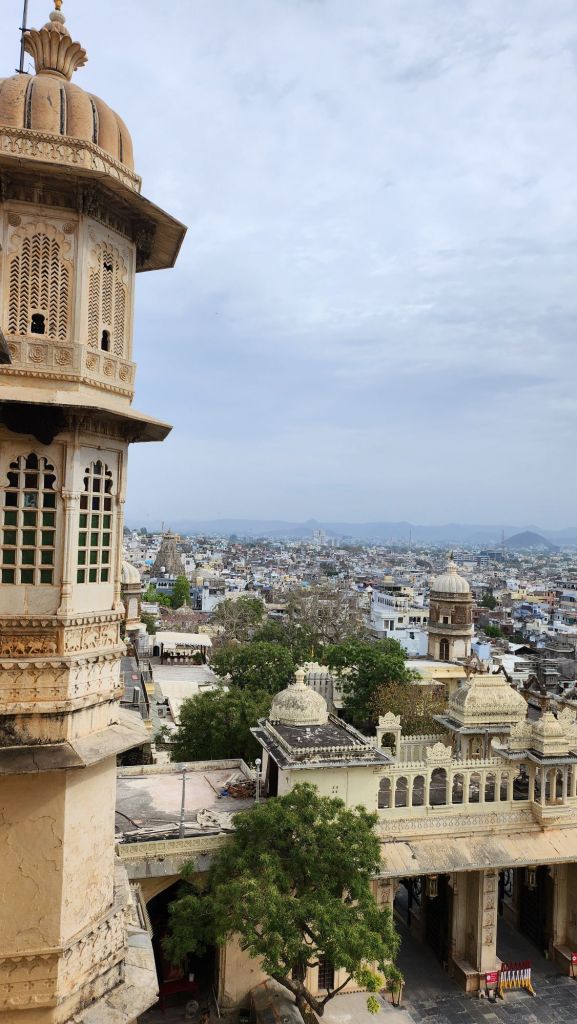
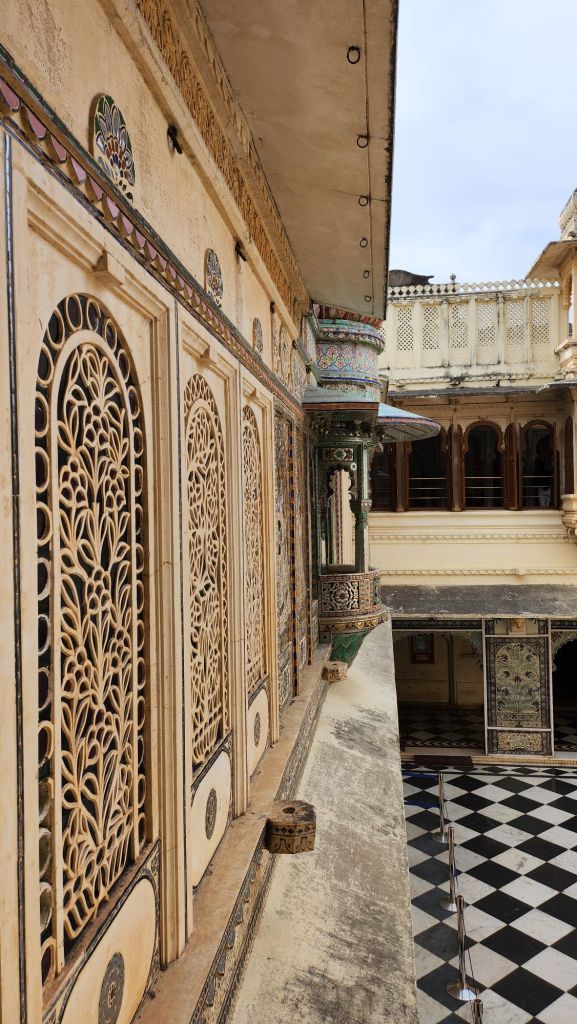
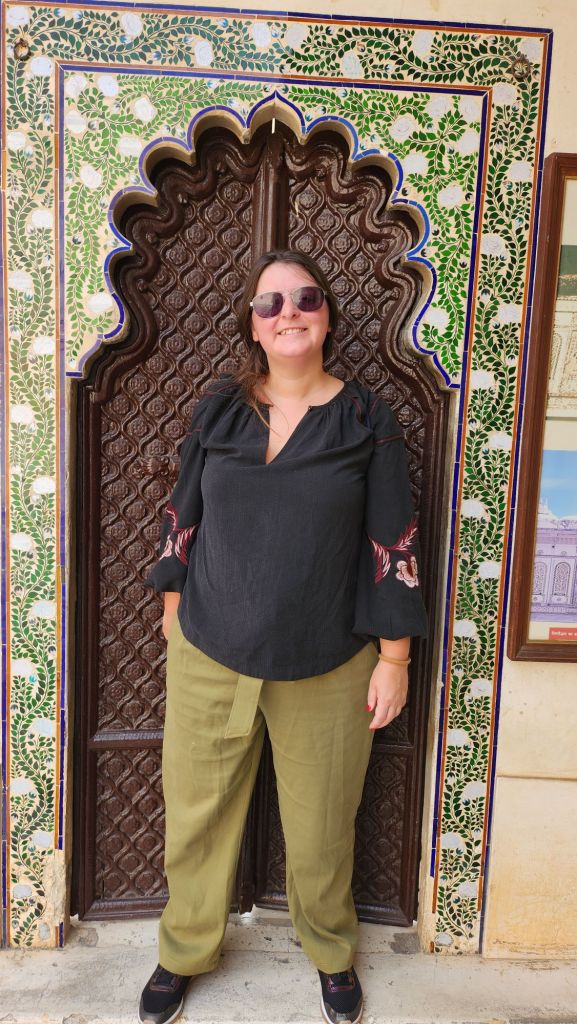
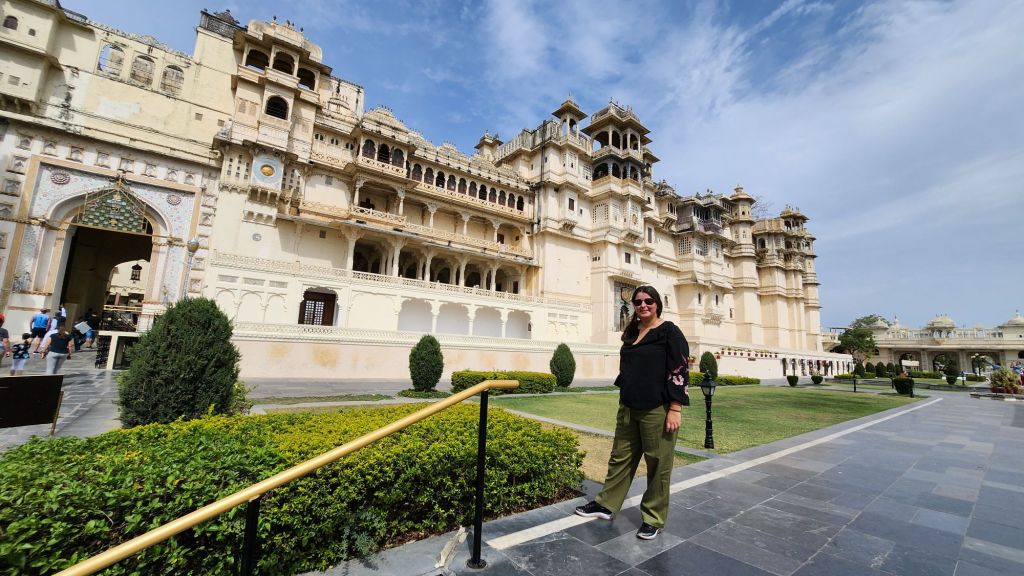
I met another man that invited me out to the hindu celebration that was taking place in the evening and showed me a walking route around the town that I could follow back to the hotel. Lastly, I visited the city palace and learnt a bit more about the royal family there. Apparently the current prince comes to work there everyday alongside everyone else to make the best of the attraction. I was quite surprised to hear that he works as another ordinary man.

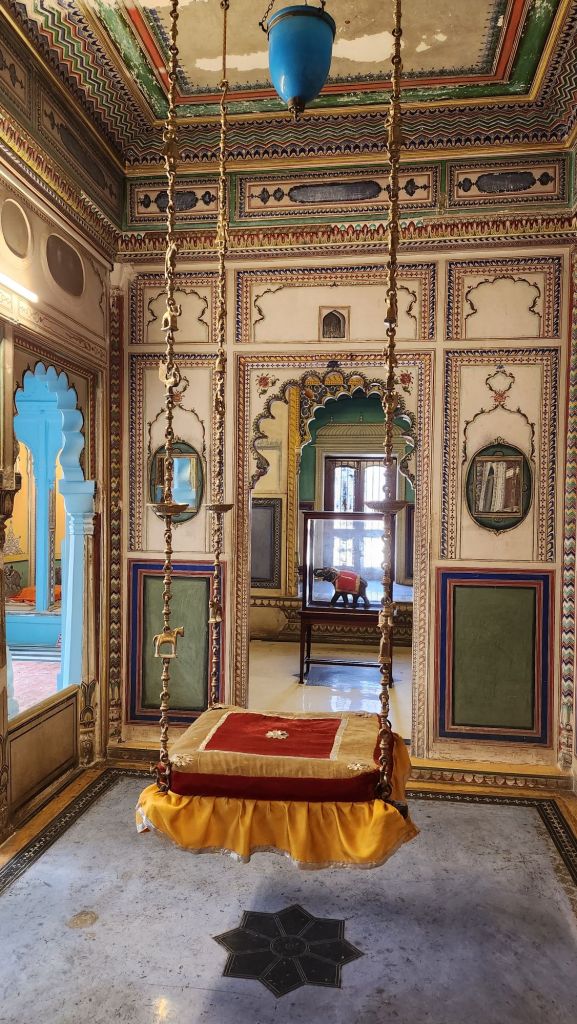
The palace was another impressive sight and had beautiful rooms, and artwork, old elephant carriages, and I was even told about the event of elephant trunk ‘tug of war’ where people would come to watch and take bets on which elephant would be able pull the other forward when their trunks were tied together. This was a bit sad, but it did explain some of the art work I had seen and been confused about.

I really liked Udaipur and it was very romantic, I would love to return with someone special and stay longer. That was the North part done for me for this trip, and it was really culturally enriching with so much history, it was hard to not get confused by it all! But now it was time to fly South to Goa…

Lisbon: The City of Seven Hills

I have visited Lisbon several times for short day trips, but this Spring, I stayed over for a two night break between destinations. This city with what feels like many more than just seven hills, is full of life and culture throughout.

Travelling to Lisbon

I travelled to Lisbon by Train on this occasion from the Algarve’s Lagos, in the South. This was about a four hour journey with one change, and then once in Lisbon there are several main stations you can arrive in. From there, buses, trams and metro are possible.

Neighbourhoods: Alfama and Barrio Alta

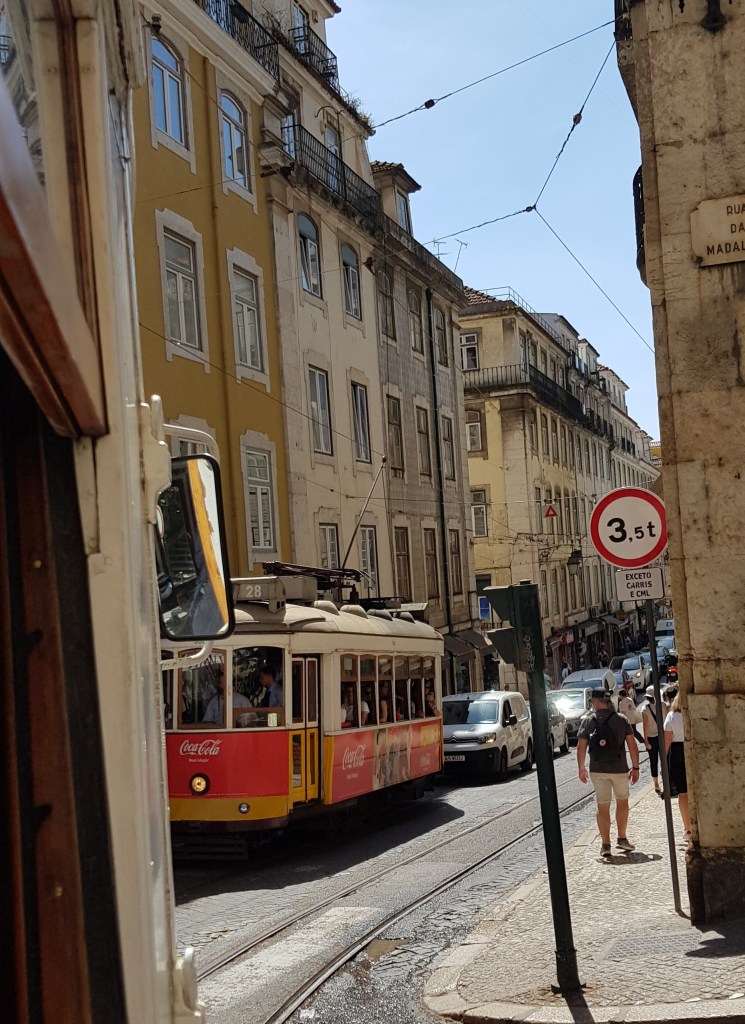
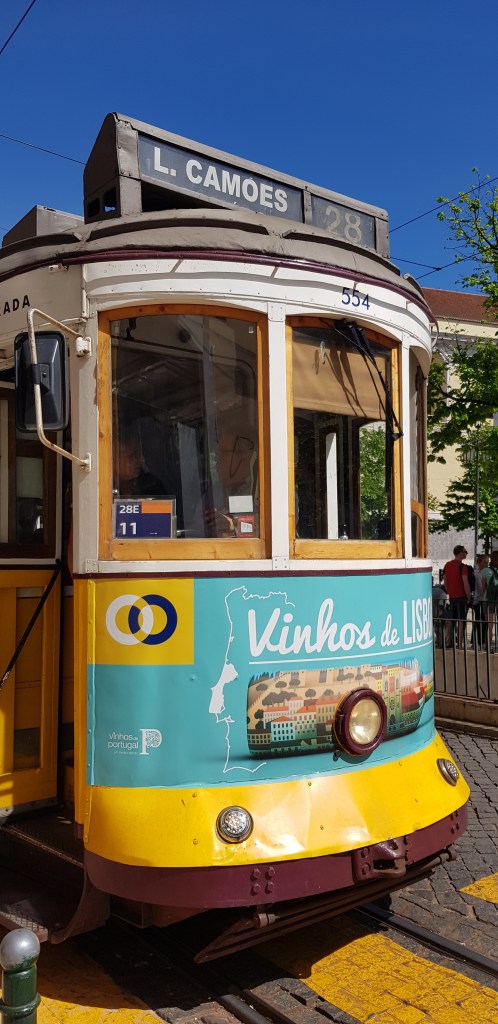
I stayed in the neighbourhood of Alfama which is one of the oldest parts of the city near to the river. I selected this area of the city because it is rich in culture, close to tram 28 which is the main tram to run through the touristic areas, and its an area with many fado houses.

I chose to stay in Convento de Salvador, which is a beautifully refurbished convent on the hill. It was very clean and minimal and still had the old layout and foundations of the convent. Our view of the river and downhill street was wonderful aswell.

It is easy to follow the river from Alfama along the promenade towards the Belem tower, or you can jump on the tram to head either towards the castle in one direction or towards Barrio Alto.

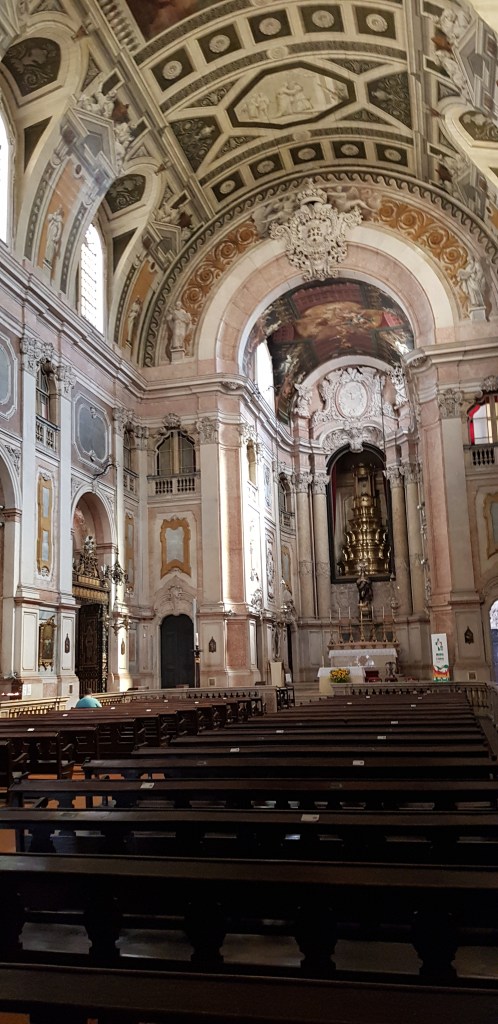
Barrio Alto is a bustling area full of shops, restaurants and squares with street performances at night. Wondering the squares to listen to music, enjoying a pastel de Nata and venturing to some of the local gardens can all be enjoyed within walking distance from here. There are also some wonderful churches, I visited two churches from the italian community that were very beautiful.

The must see monuments / attractions

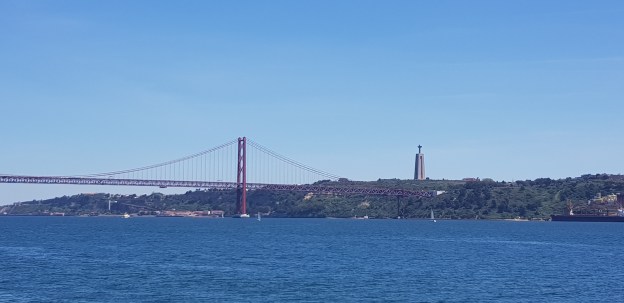
  • Belem Tower – A monument to remember the power and colonisation by Portugal, it sits at the riverside and you can also see the bridge and christ statue from here.
  • Jeronimos Monastery – A huge monastery facing large public squares and standing to the front of the botanical gardens and presidential palaces.
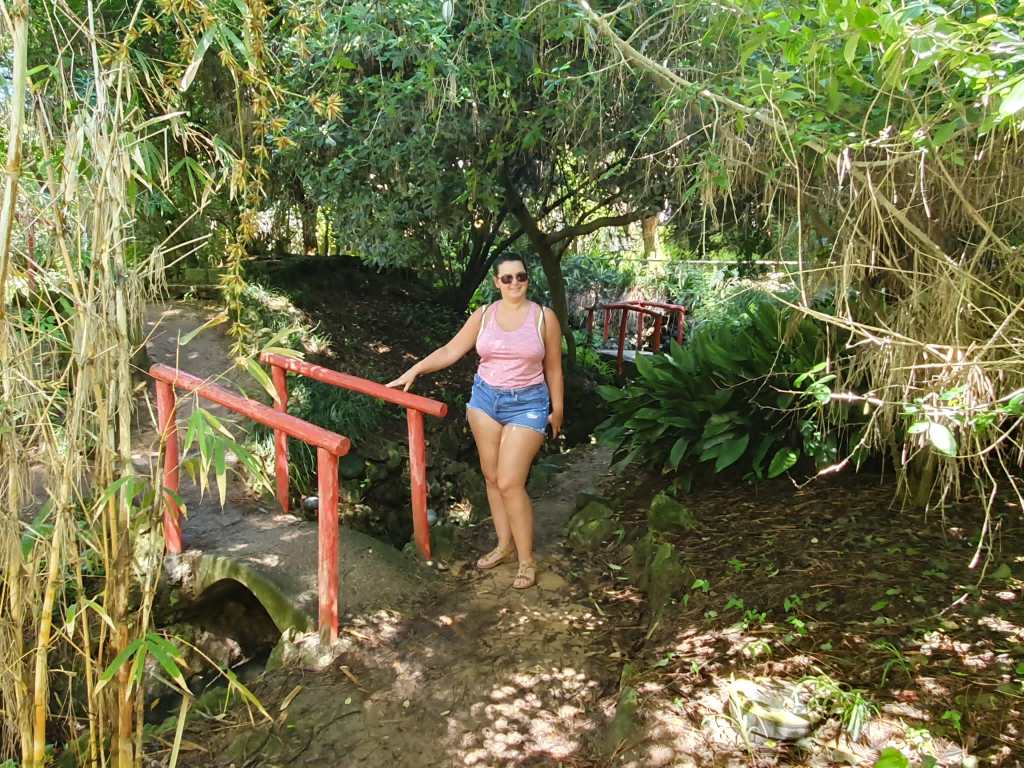
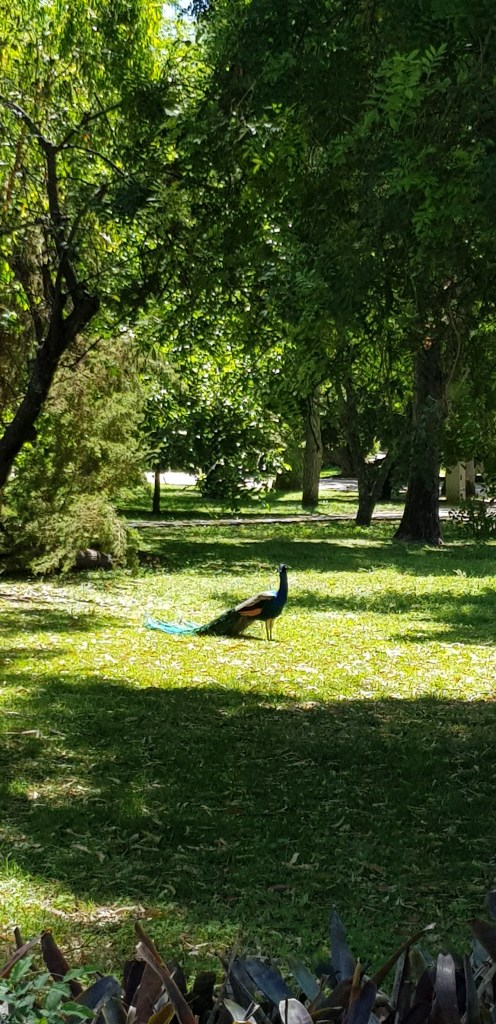
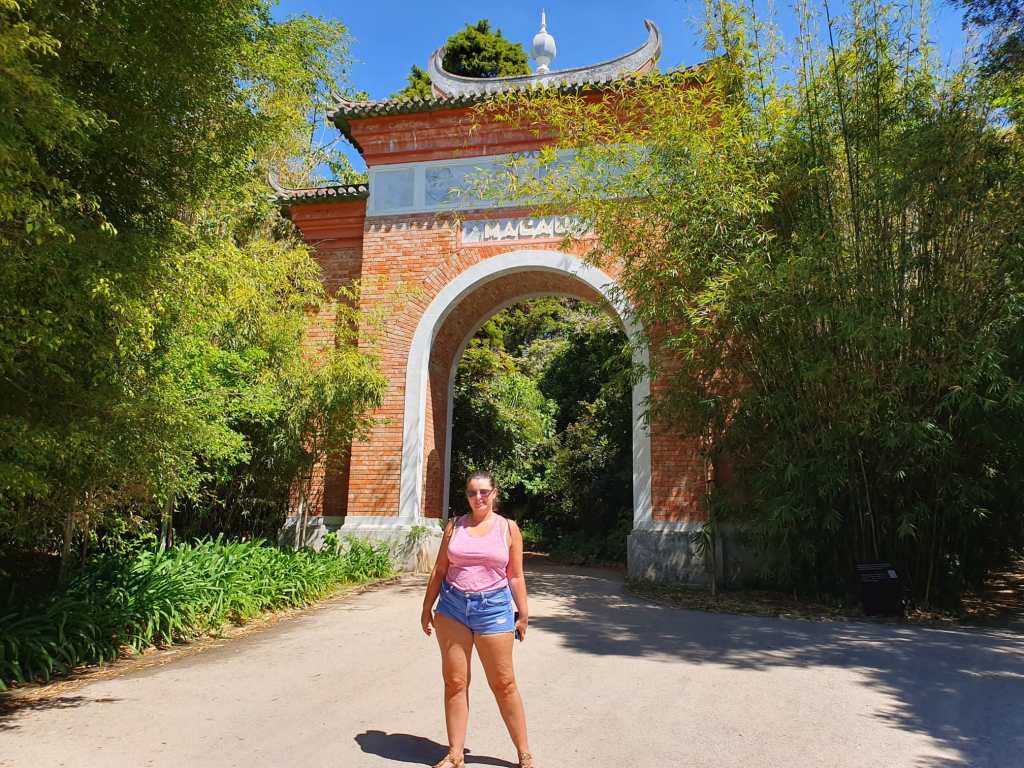
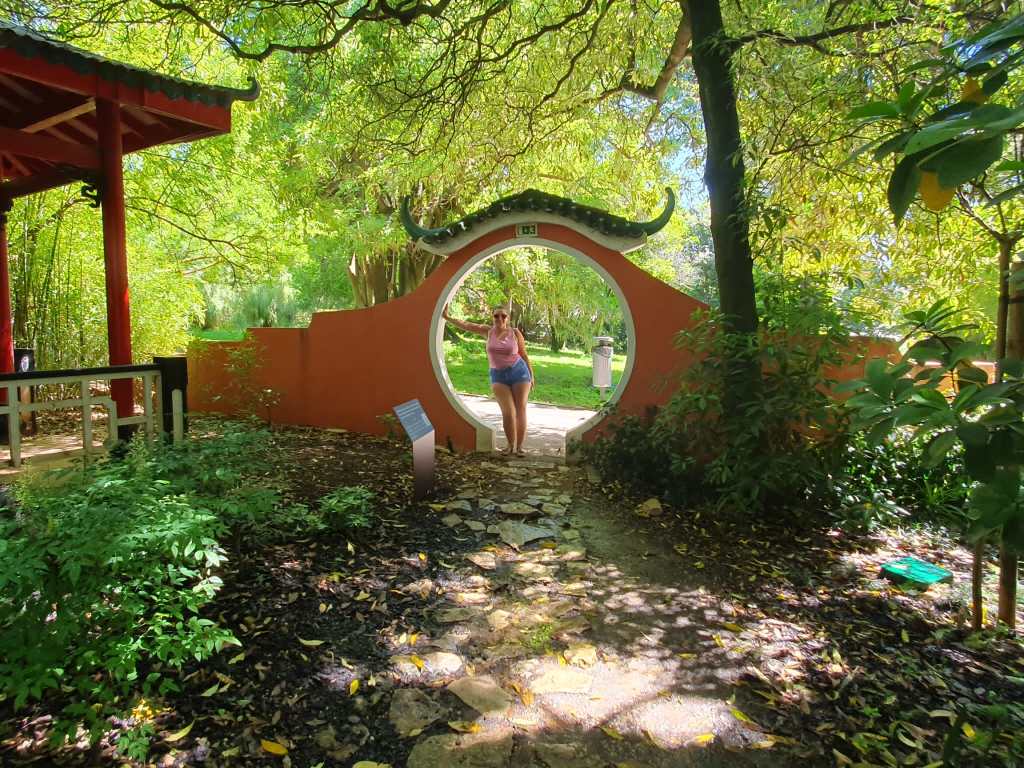
  • Botanical Gardens – A beatiful setting to spend some hours in the afternoon seeing a variety of interesting trees and flowers, an oriental garden, old buildings, african sculptures and many peacocks.
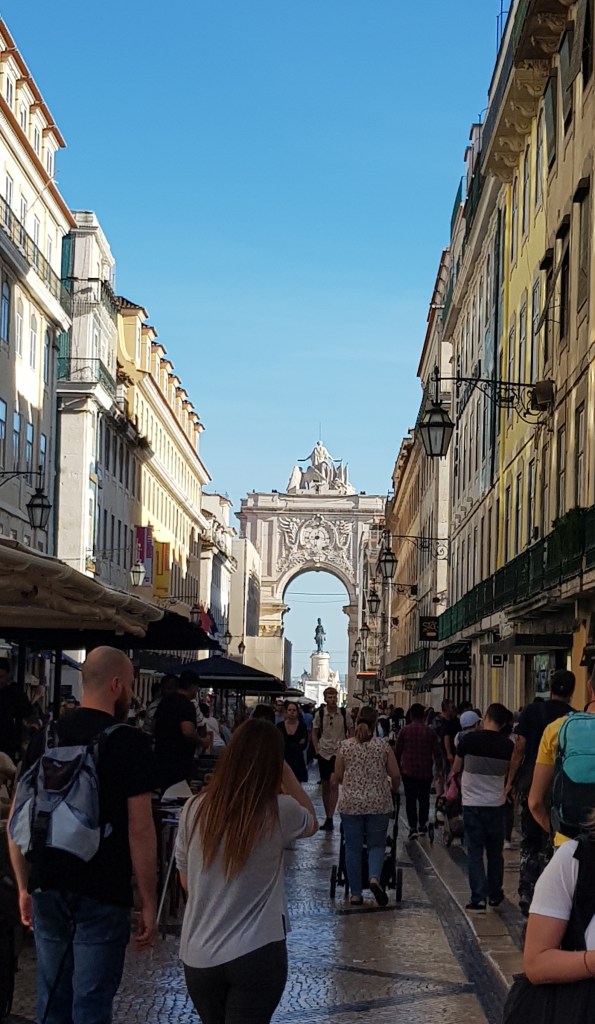
  • Commercial Plaza – The location of a huge statue, the tourist information offices and a great gathering place for events.

Fado

Near my hotel were several Fado houses. These are traditional houses which have evening shows (normally with dinner) of traditional portuguese fado music. This is deep, very sad singing and guitar, supposedly derived from the soul.

The music is very relaxing to listen to, and when visiting the fado house, it was of the utmost importance that guests did not talk and food was not served out by staff during the music out of respect. So, several breaks were needed to dish out food and for conversation. This was good for me as it meant I actually slowed down and savored my food.

There is also a Fado museum downhill in Alfama. It has a lot of information about Fado but it is difficult to navigate and understand the information at hand, and I felt a lot more could be done to improve its guest experience.

To conclude…

I like Lisbon a lot, it is one of my favourite cities. It is vibrant and proud of its heritage. Next stop is another portuguese area, the Azores…

Salamanca: The Golden City

After completing my journey to Santiago de Compostela, I hit the road again, and made my way to the beautiful city of Salamanca for an overnight stay.

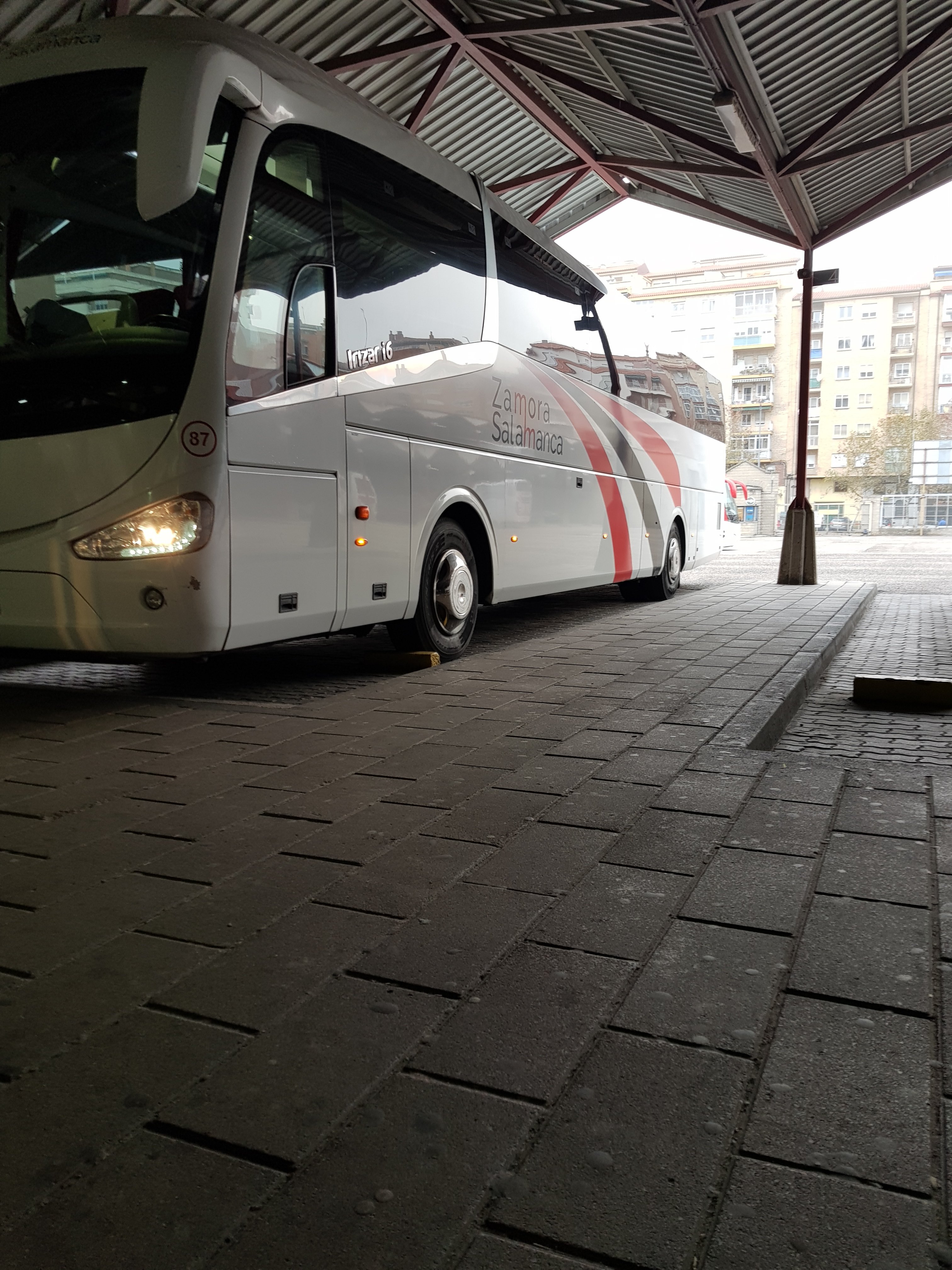
Salamanca is a small city in the North West of Spain. Whilst it is not dramatically far from Santiago de Compostela, it was not the simplest to get to. I had to take a train to another town, and then a local bus to Salamanca. After this long journey, I was too early for check in, and decided to start on the sightseeing straight away.

I knew nothing about Salamanca before visiting. Only that it was a city that looked nice in pictures, and had a name that I enjoyed saying out loud… SAL – A – MANCA 😄

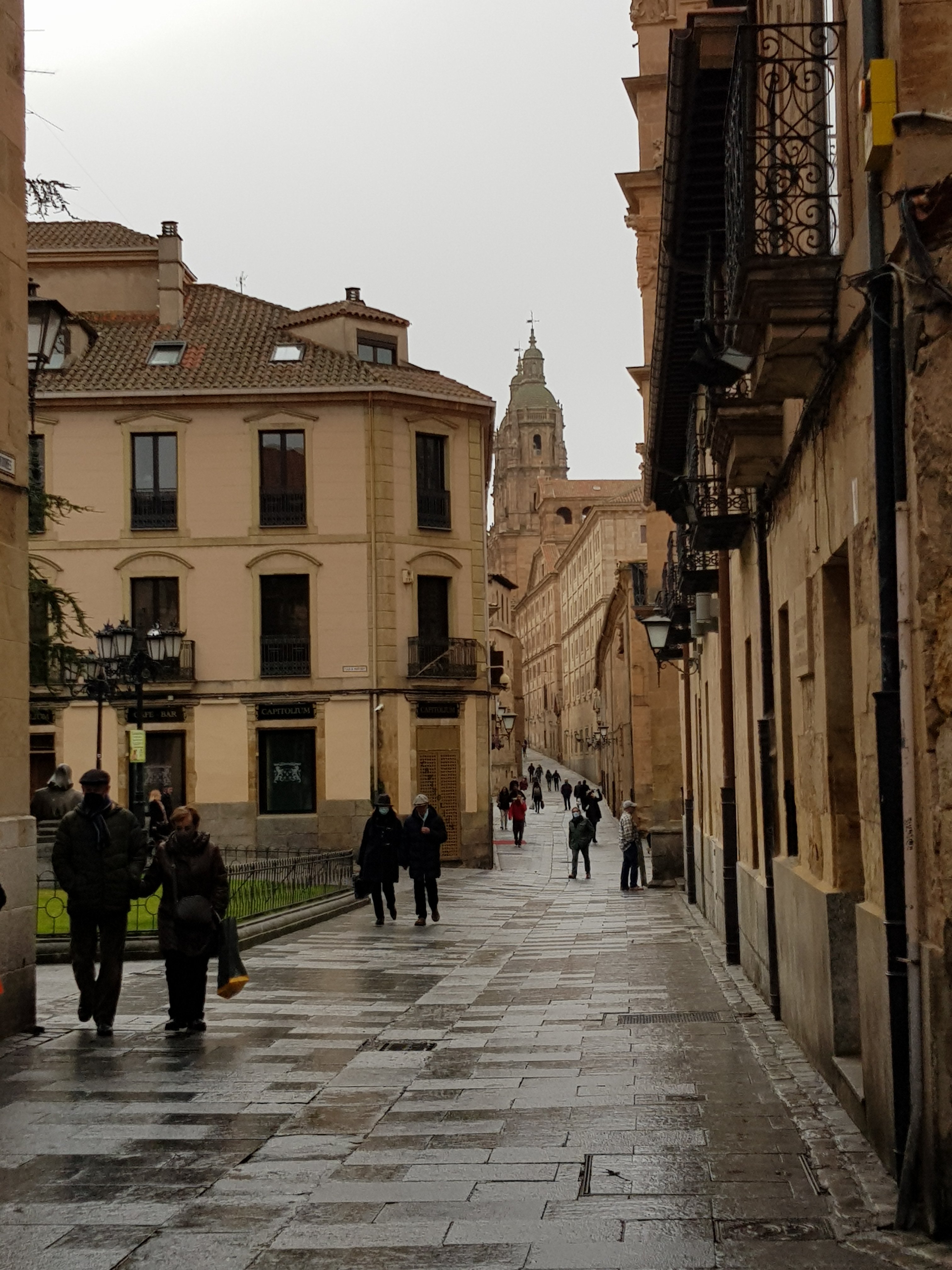
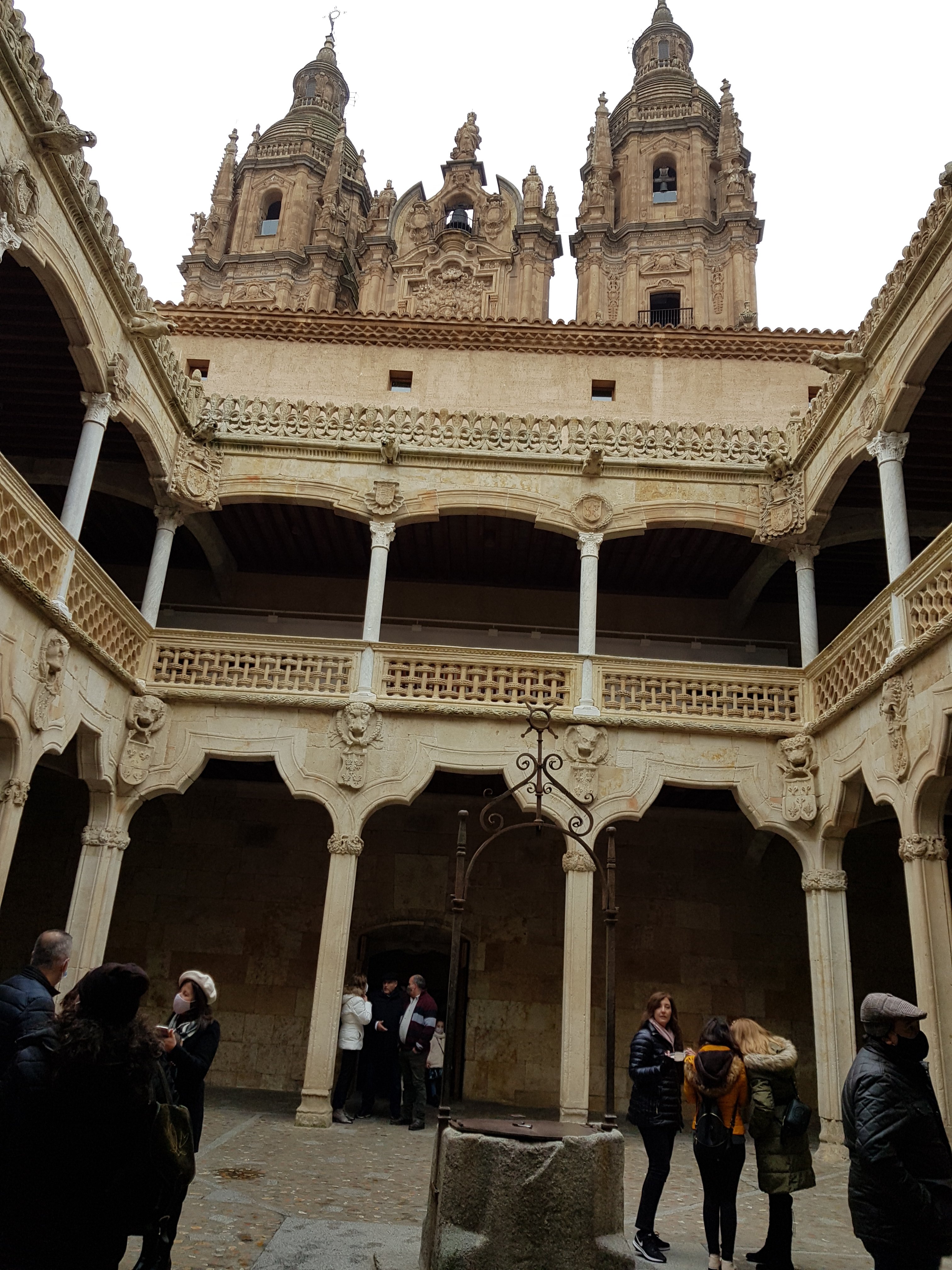
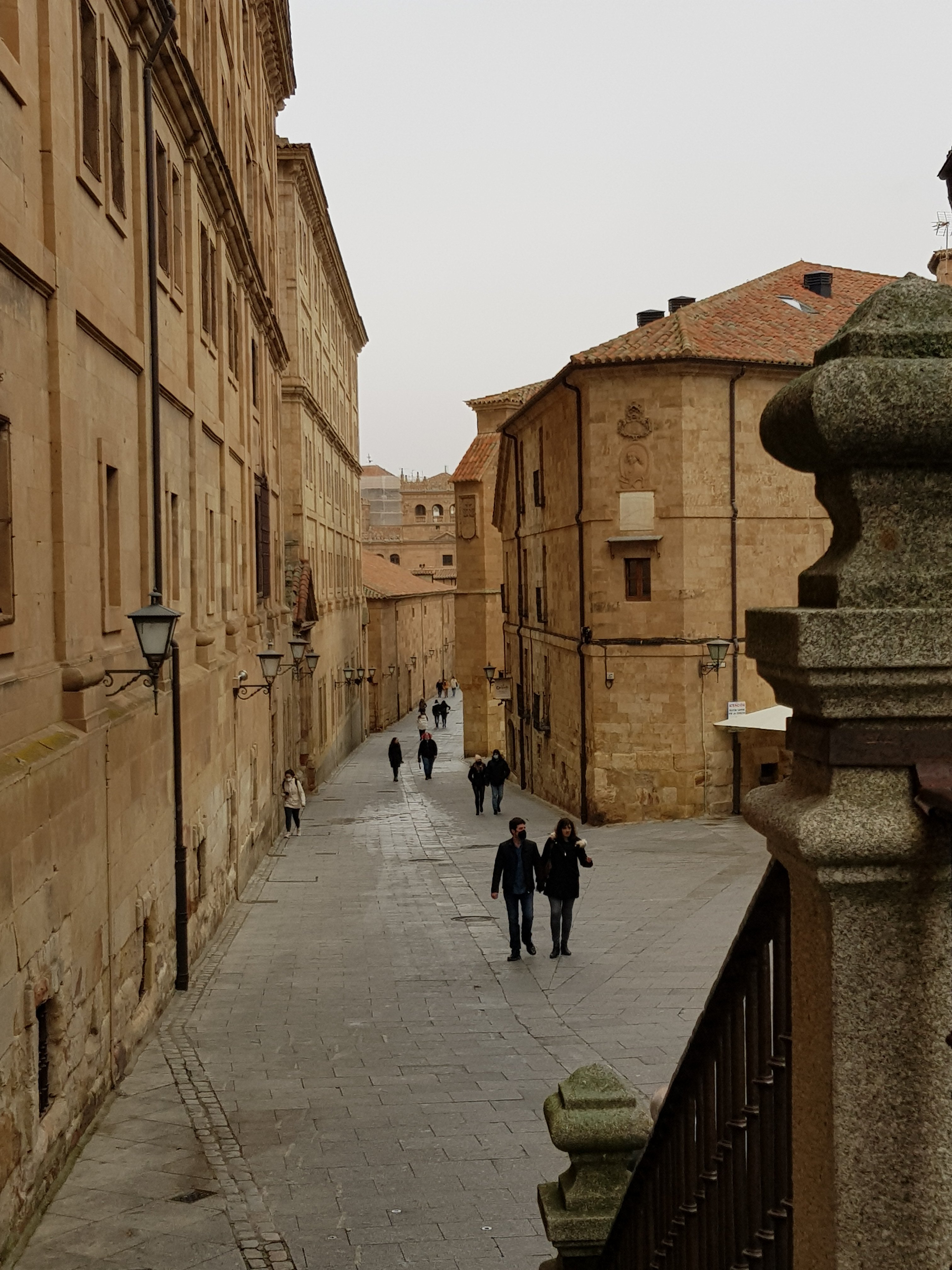
It turns out that Salamanca is also known as the ‘Golden City’ because of the golden orange colour of the buildings throughout the old town. The colour definitely does make you feel as if you were in an arabian paradise, but Northern Spain really doesn’t fit that profile! 😄 The city’s old town has a mix of palaces, religious buildings, and university buildings.

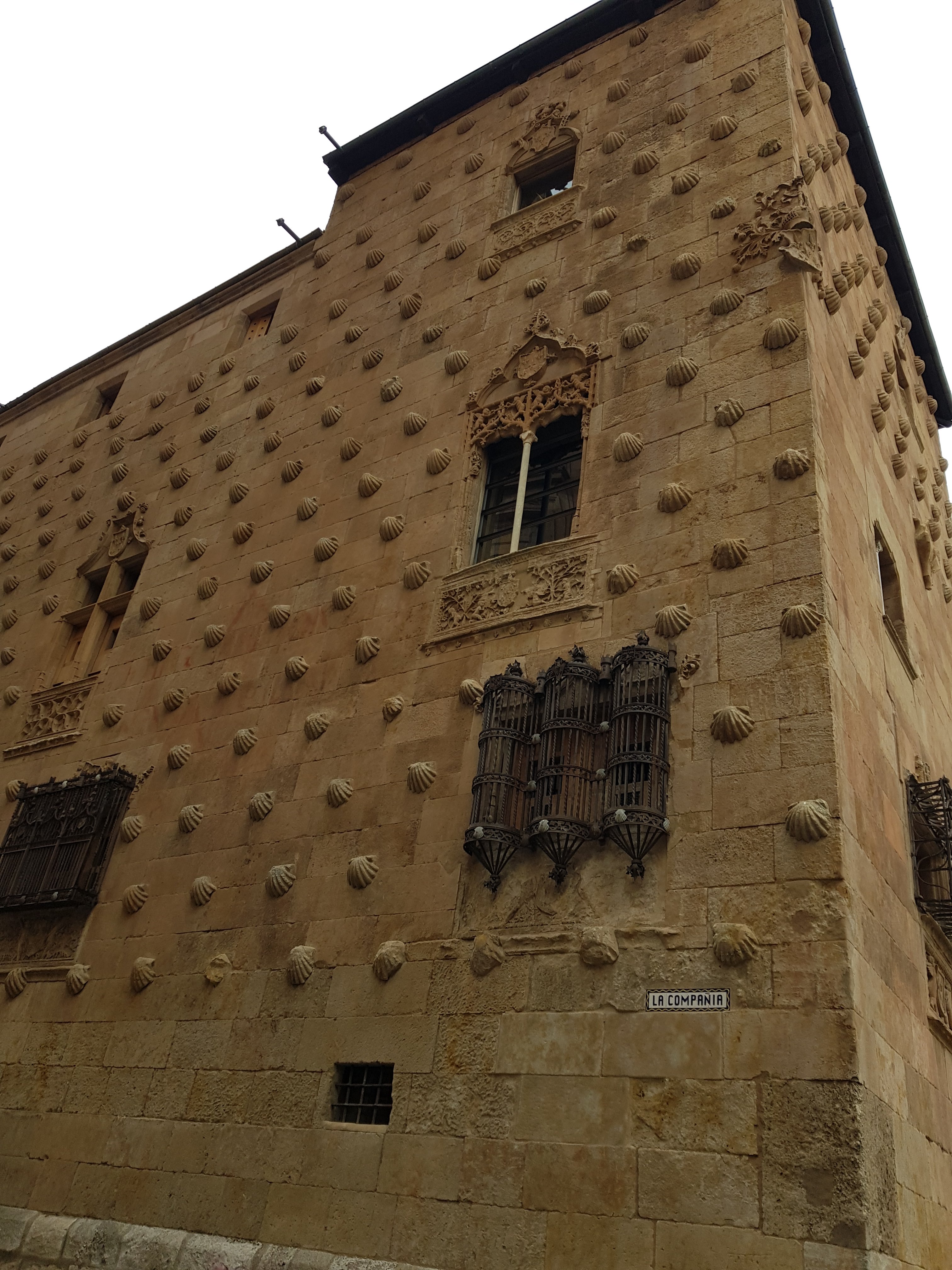
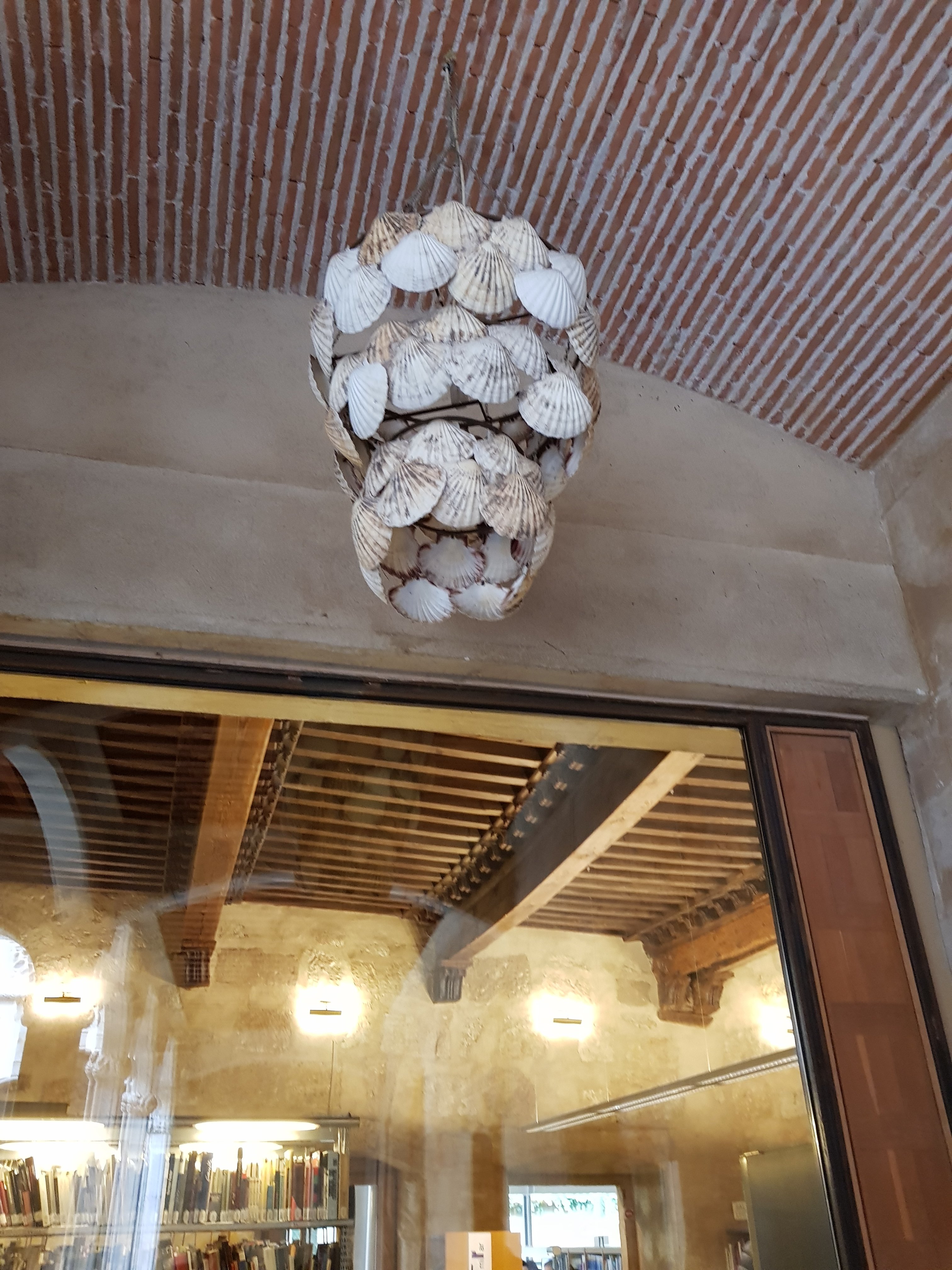
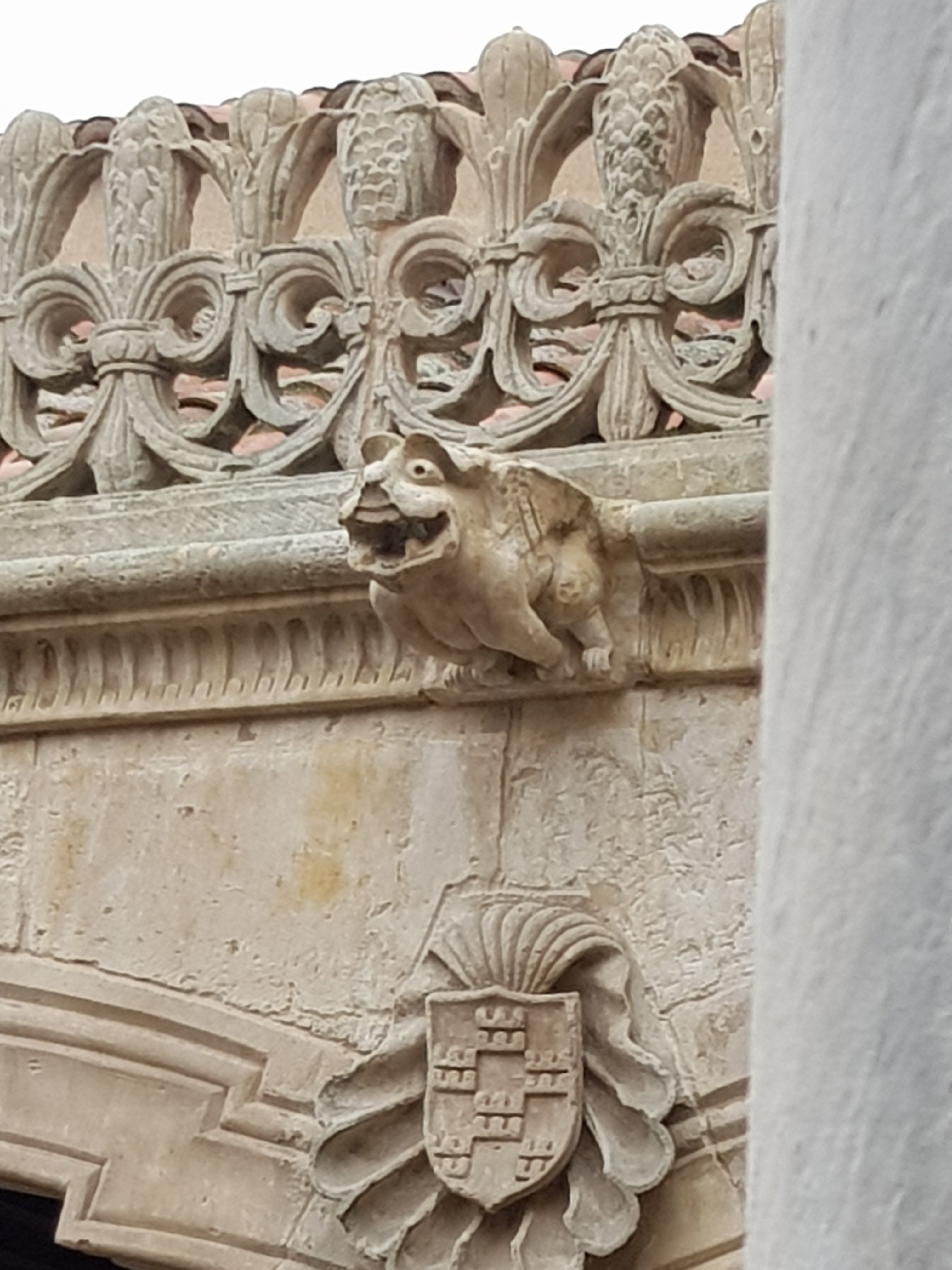
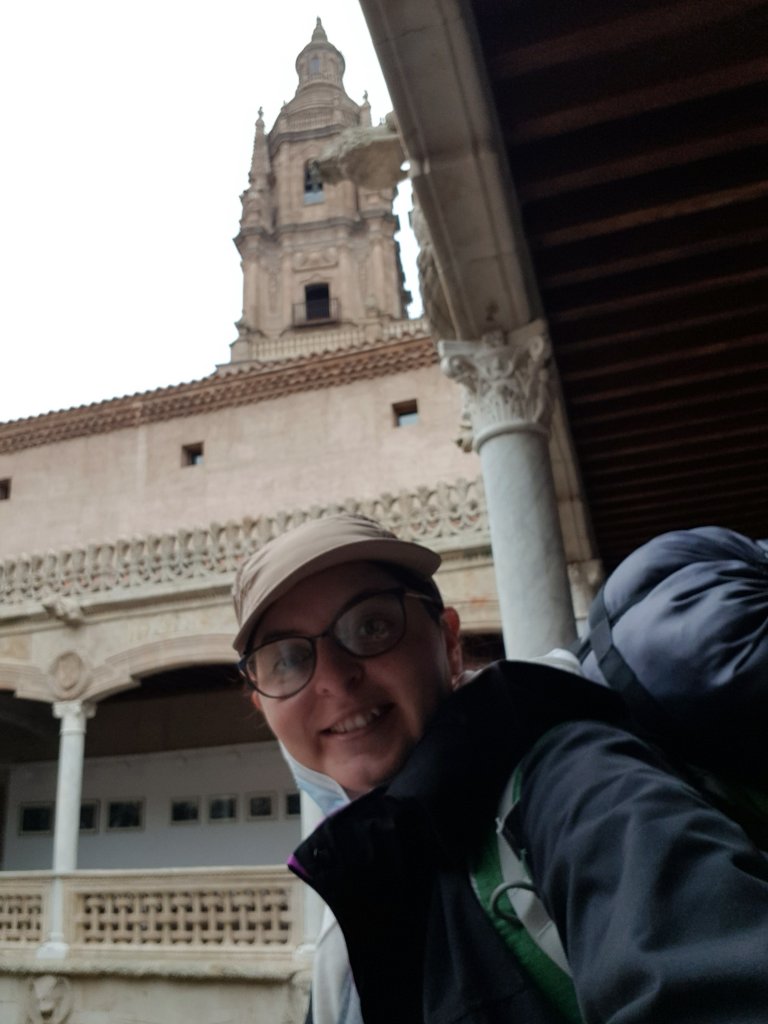
It seems that the University of Salamanca is very well renowned in Spain, as the first university that existed in the country. Many of the oldest buildings in the city are under use of the students still today. The public library can be visited for free, and is particularly unique as a building completely covered in the image of shells, giving it the name ‘Casa de las Conchas’. This was interesting to me, as shells are the symbol of the Camino de Santiago that I have just completed. On this occasion, they are related to the marriage between two noble families.

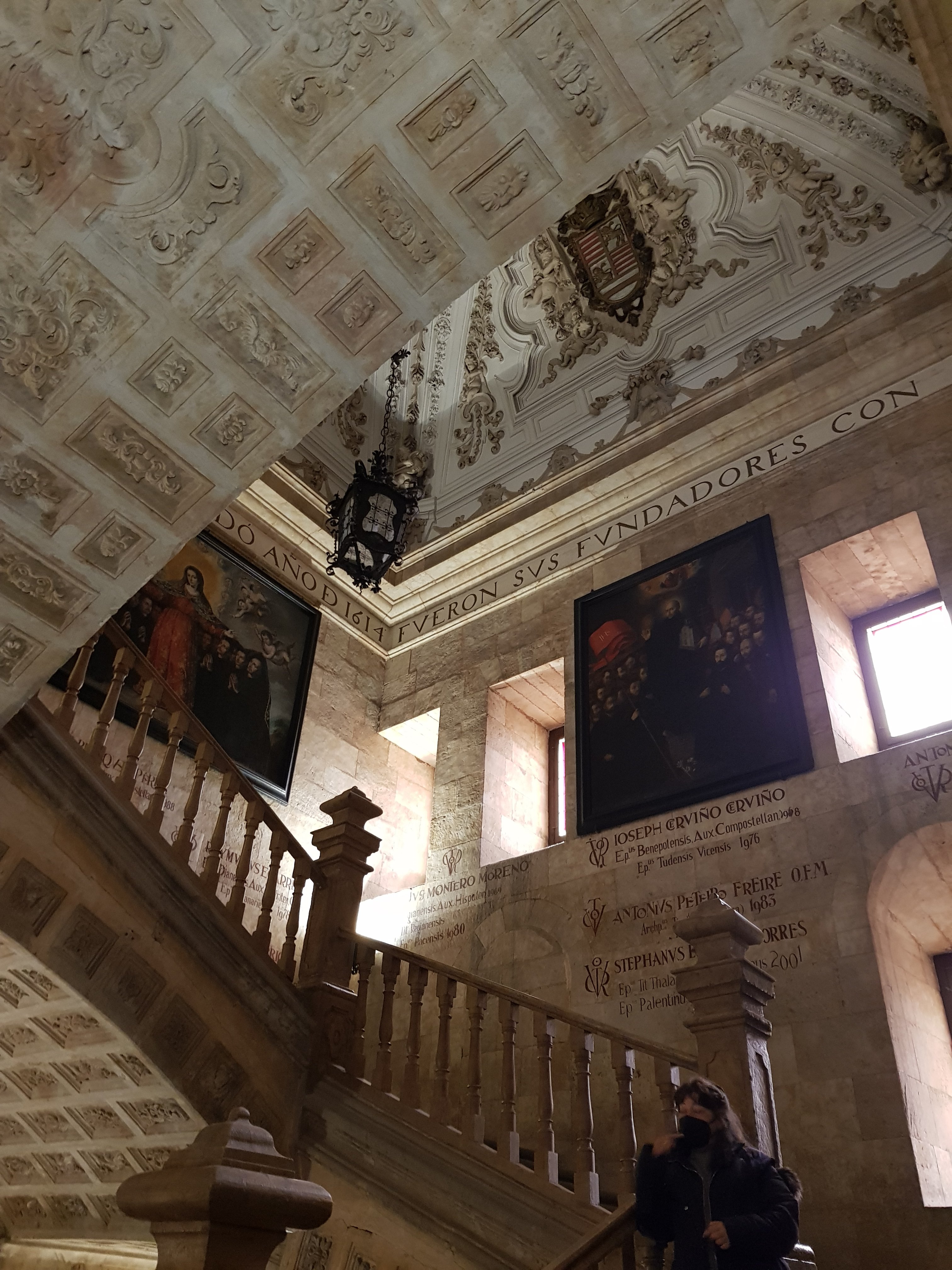
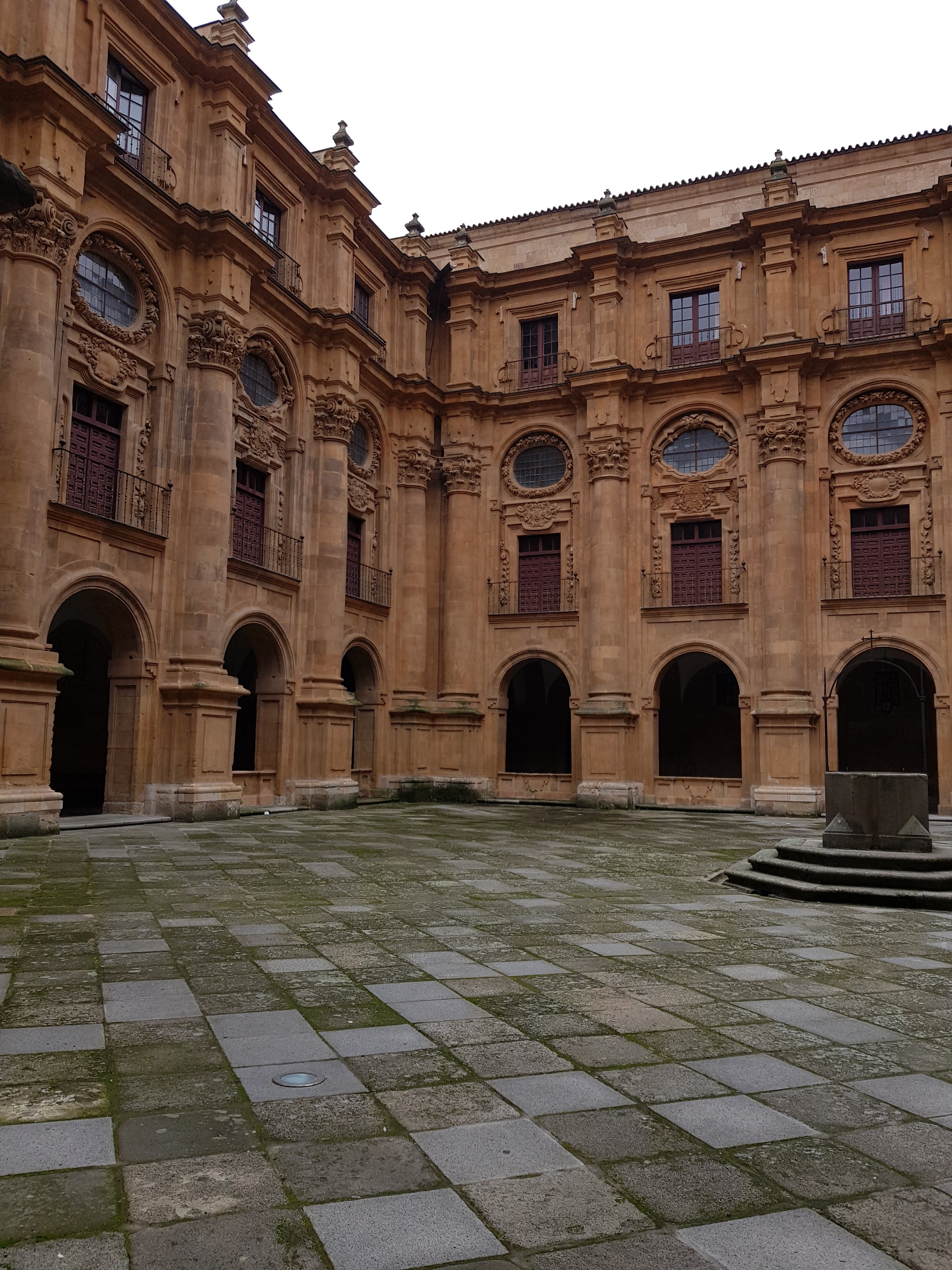
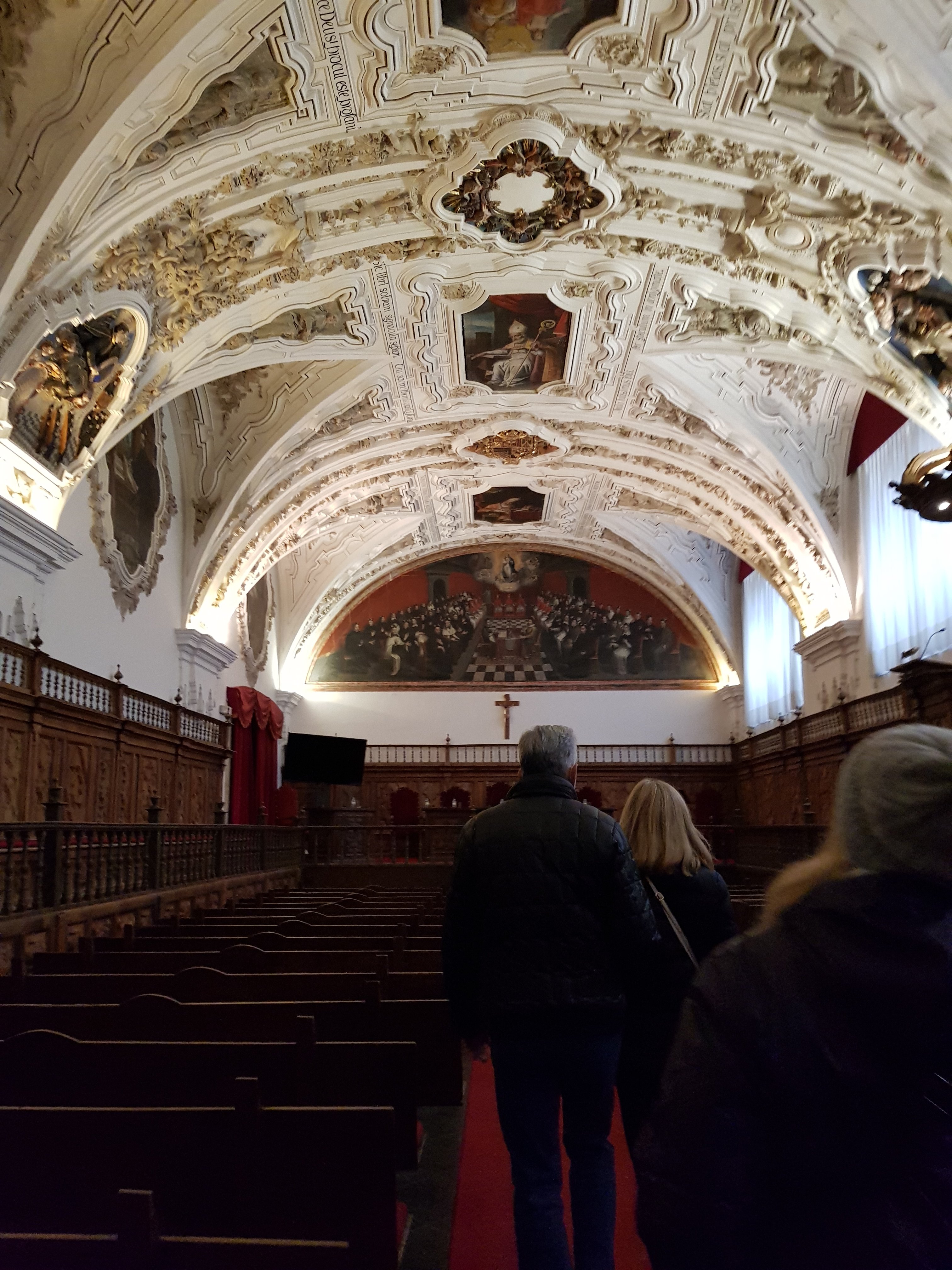
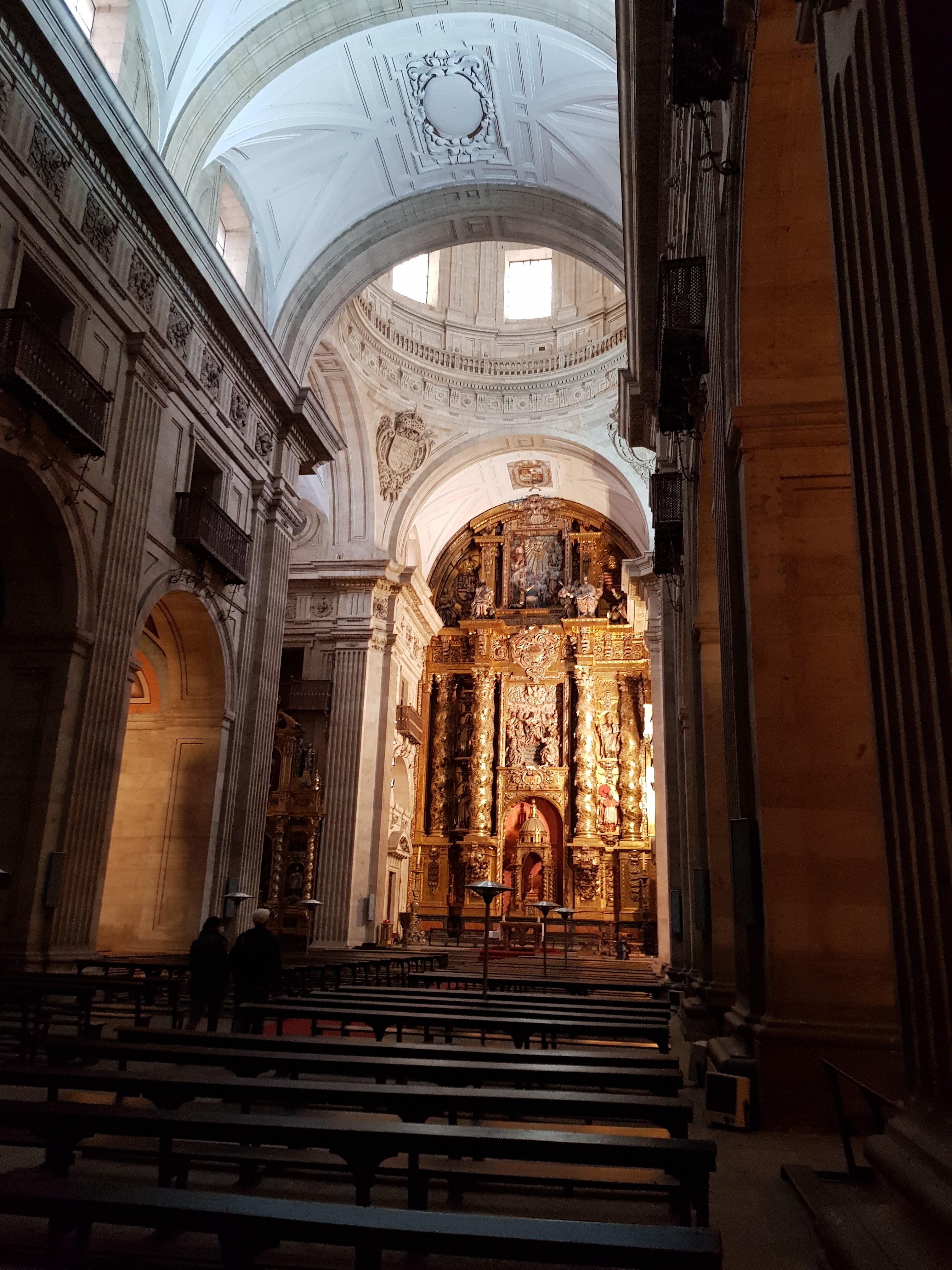
I also paid for the guided tour of the Pontificia university building, which is a separately owned catholic part of the university for theology and law schools, and has an adjoining church. This tour was in Spanish so there was a lot of me trying to follow what was being said, but the general jist of it consisted of a very fancy staircase, cloister and some sort of debate room.

The building was very fancy, and there were many references to important figures from Christianity, the history of the university, and the monarchy. I think you would be very lucky to study in these surroundings.

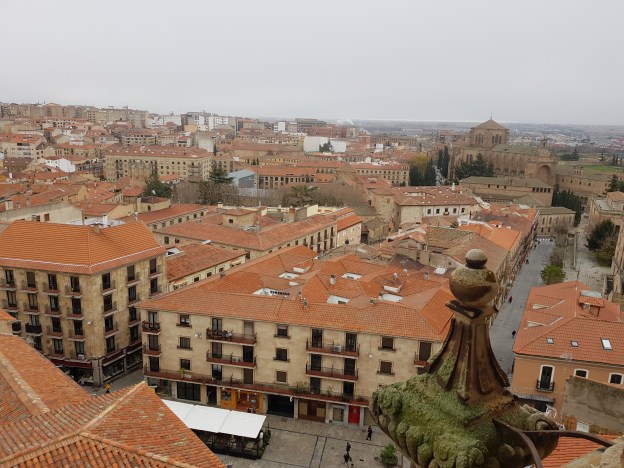
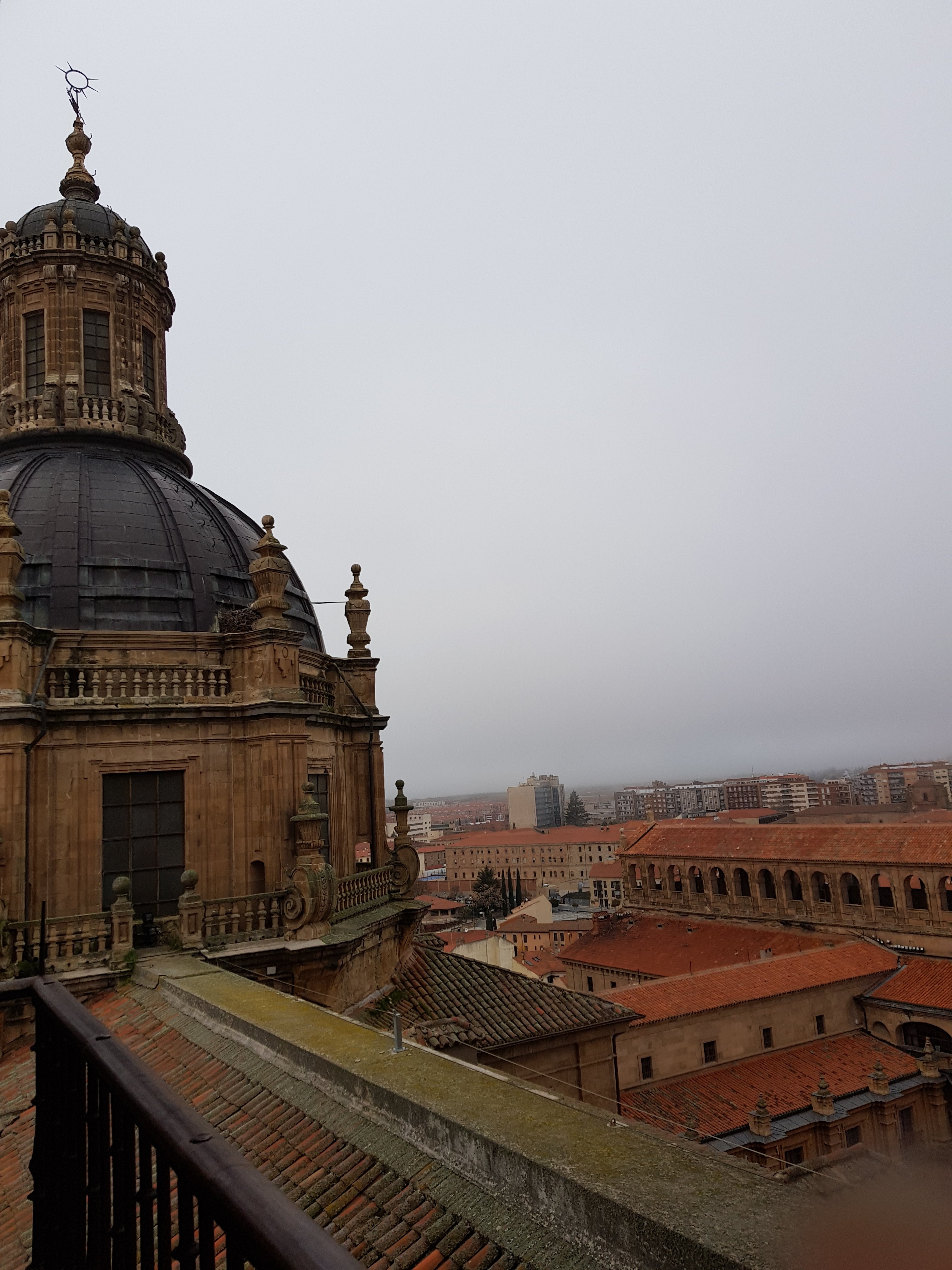
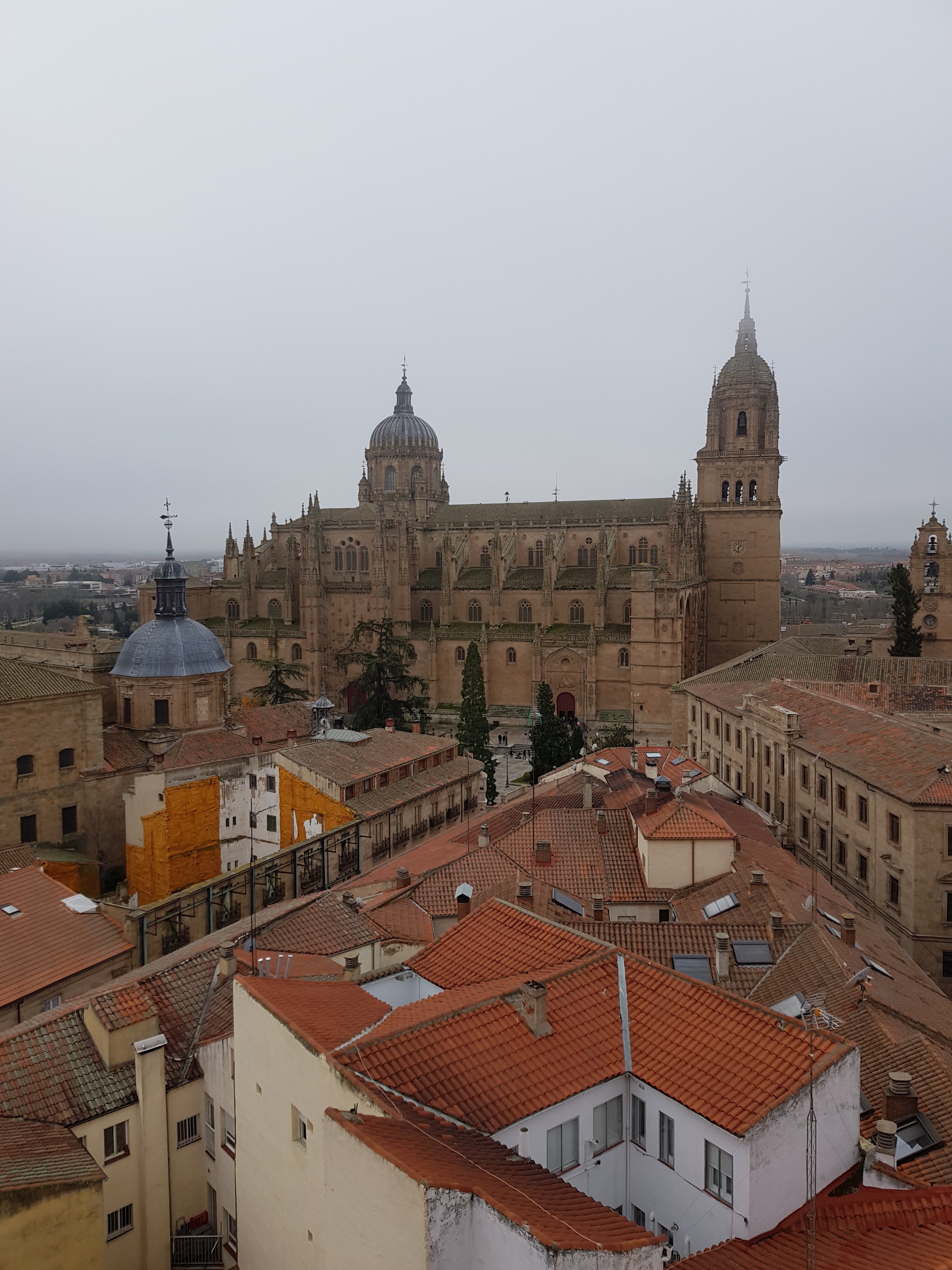
You can also climb the towers of the buildings and walk around the outside of them. The views of the city are great here, and I enjoyed seeing the bells. The only downside was that it was a foggy day!

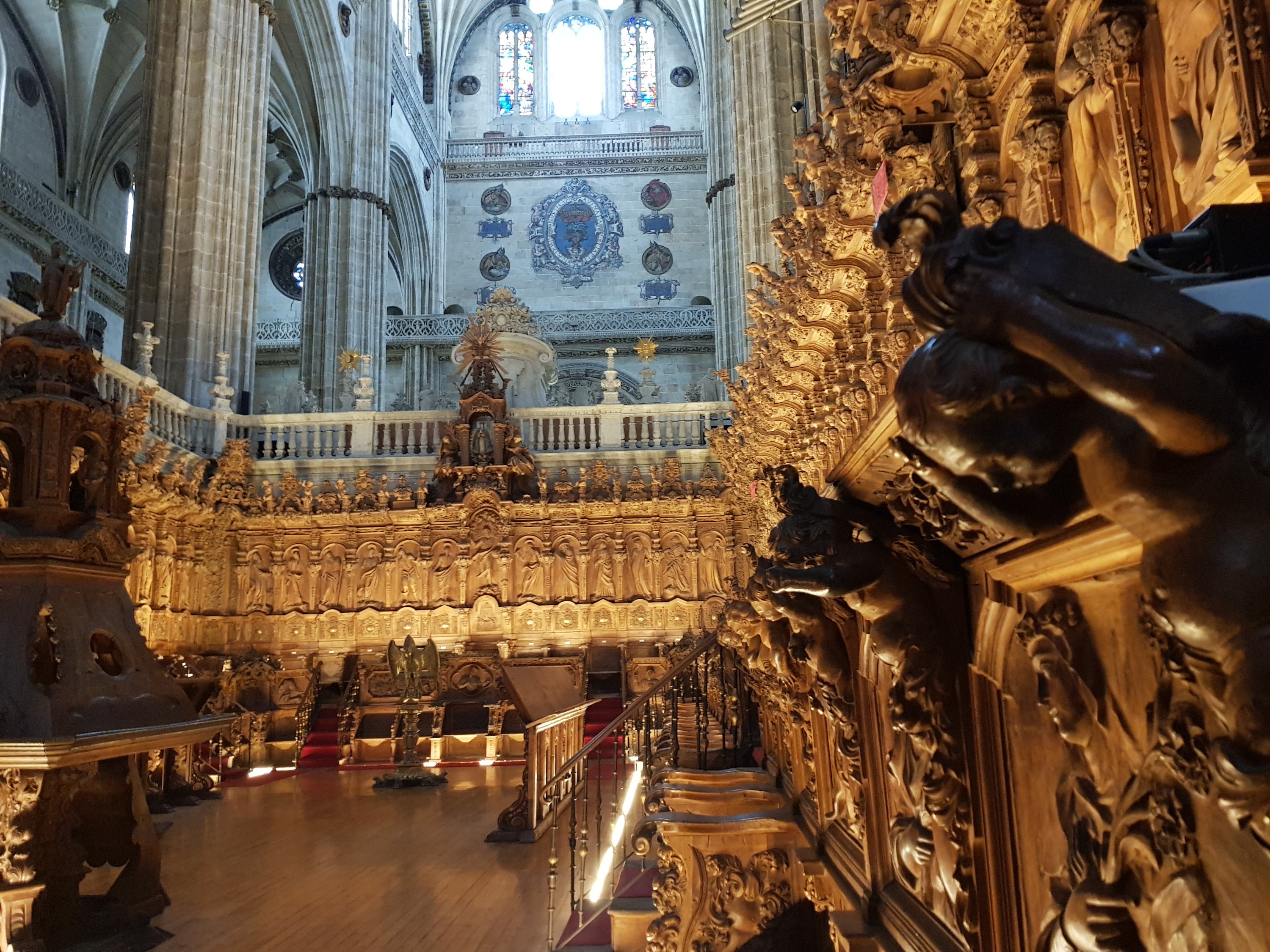
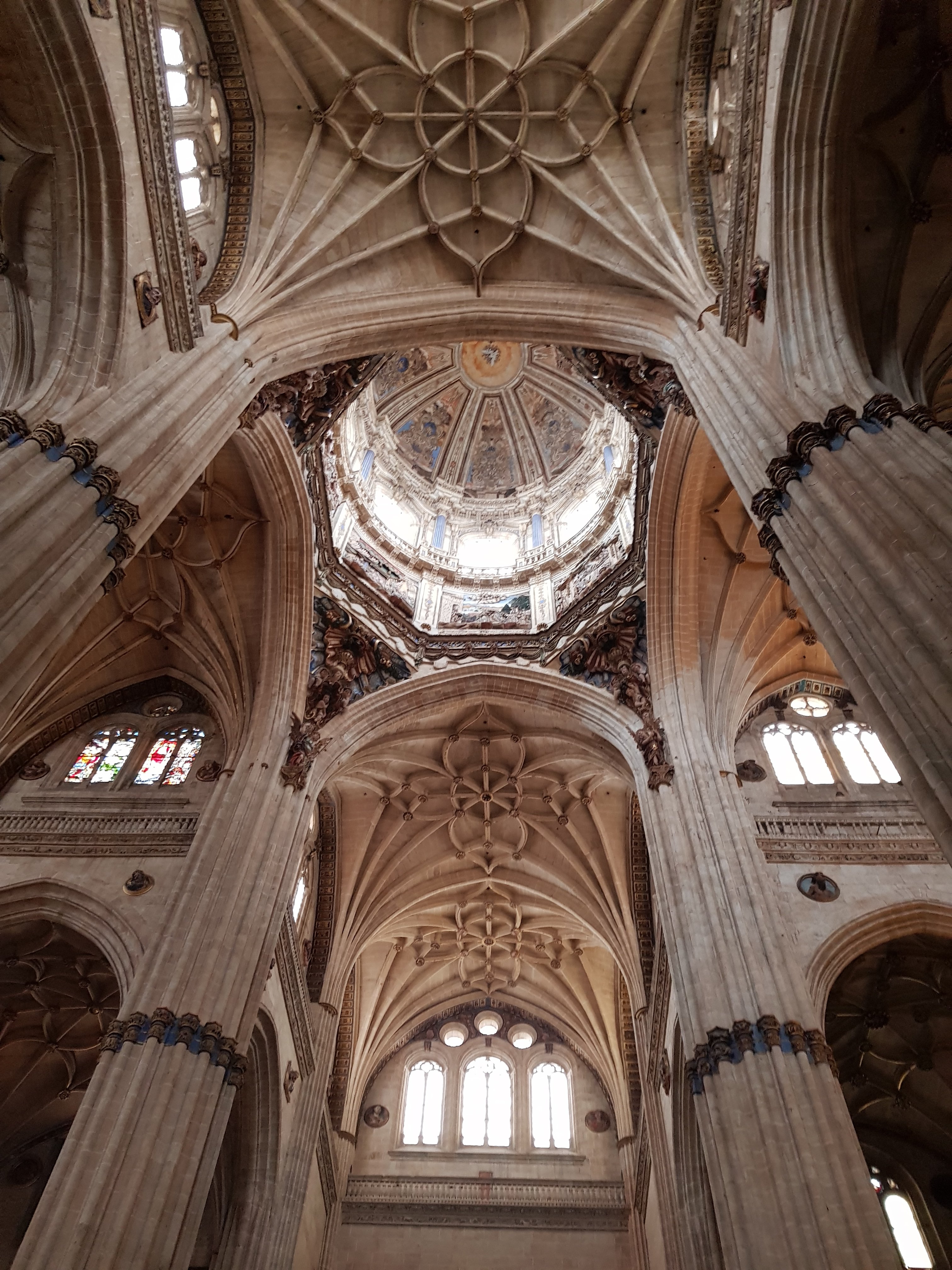
Of course, I also visited Salamanca’s Cathedral. You actually get two for the price of one when you visit, as the old cathedral resides inside the new cathedral. When the new one was built, the city decided not to tear the old one down but instead incorporate it. They are very different and make it a very large space to visit. A useful audio guide is included in the visit and pilgrims receive a discount.

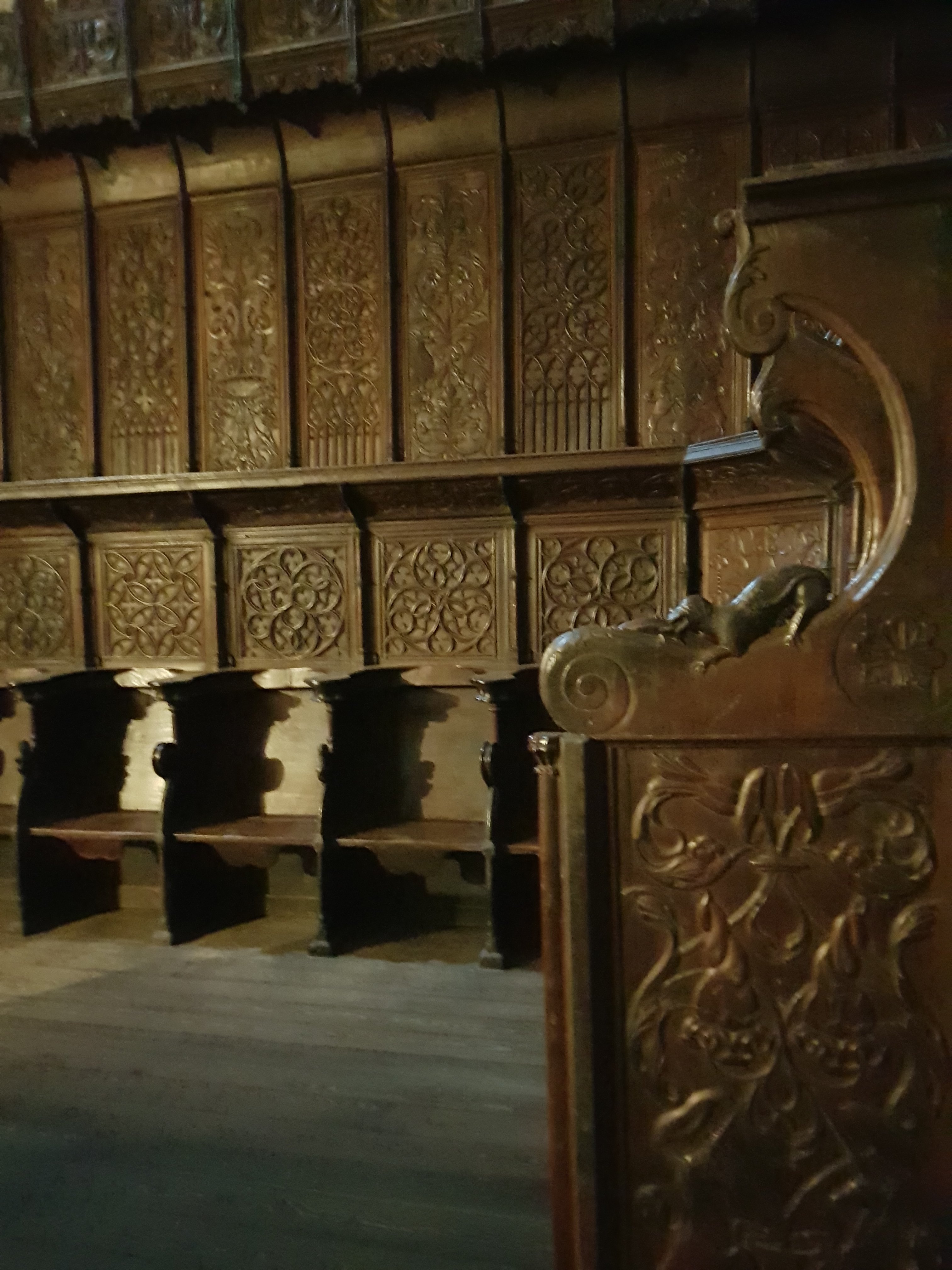
The new cathedral has many chapels and lots of detail, as well as two beautiful organs that can be admired from the front and back. The choir carvings are also exquisite. It is a brilliant place to take photographs. Later, on the self guided tour, I entered the old cathedral, which has a much more plain and simple feel to it. Though the architecture is simple, it does still have many chapels as well, and many more ancient wall paintings to admire. The cathedral also has a small museum space to enjoy.

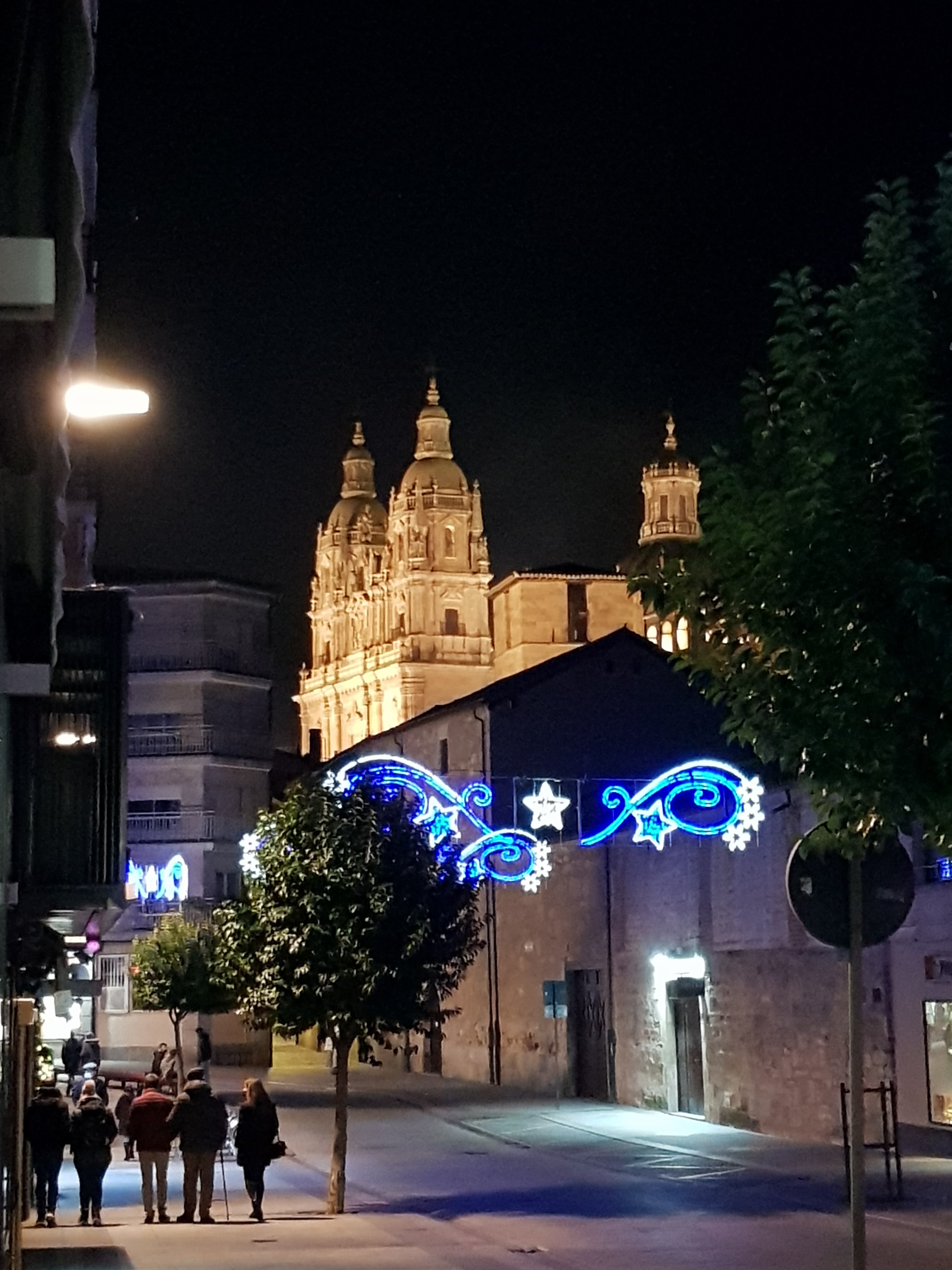
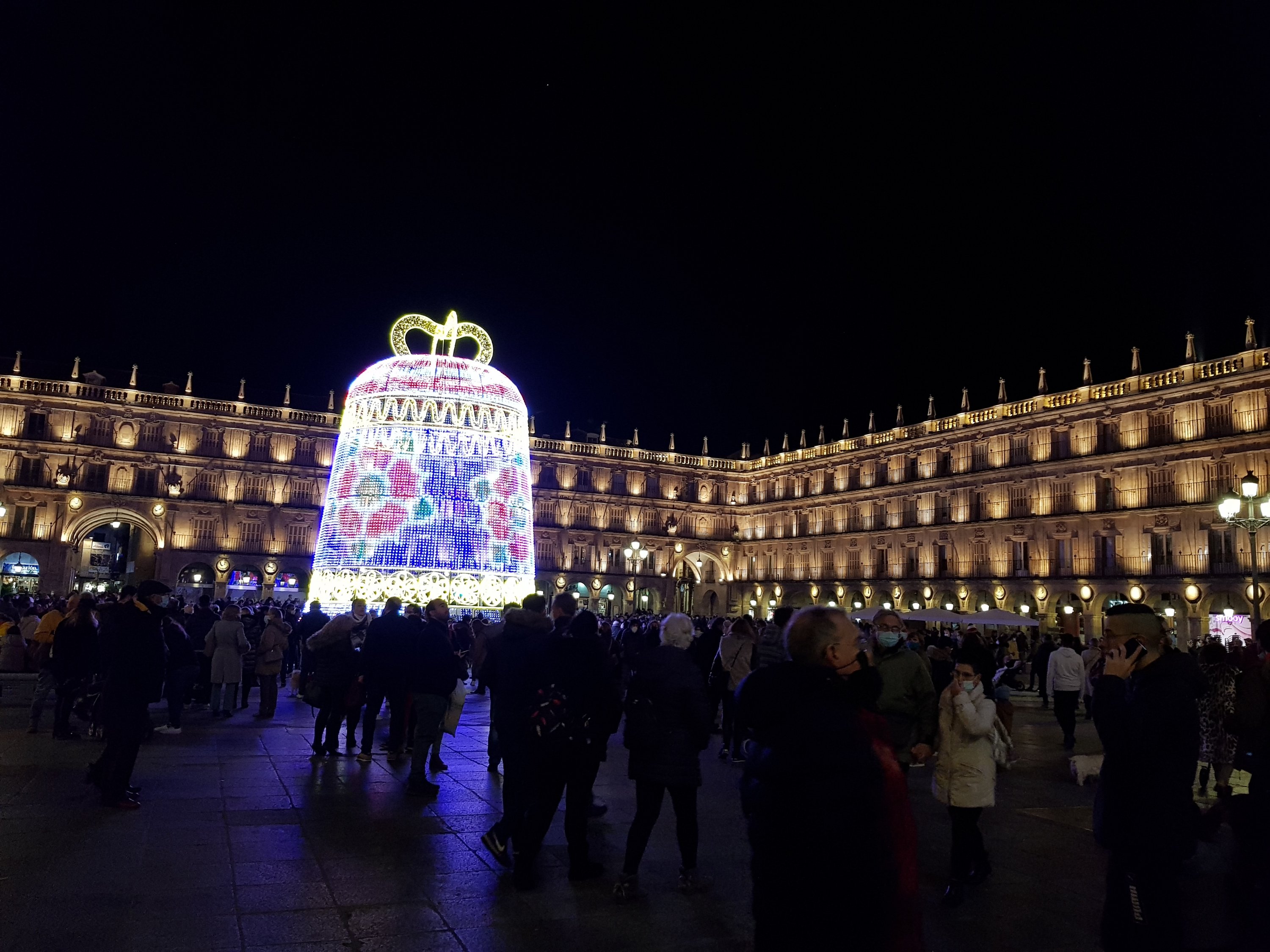
In the evening, Salamanca’s golden stonework, lights up the streets and the shopping areas and main plaza is bustling after 8pm. I happened to be here after the christmas decorations were up, so I was able to dine outside in the plaza with a lovely meal and a heater, and watch the christmas display with hundreds of local people.

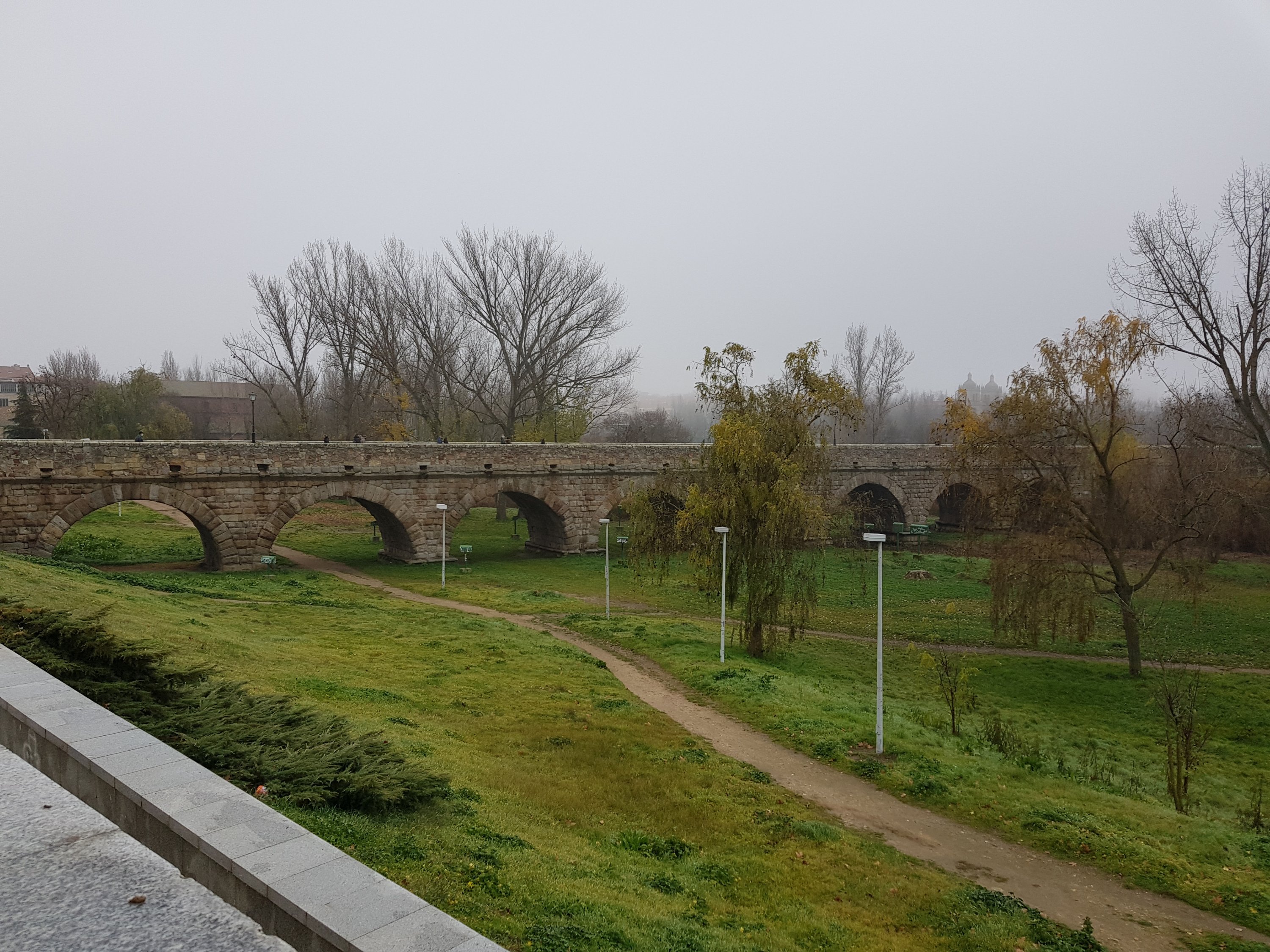
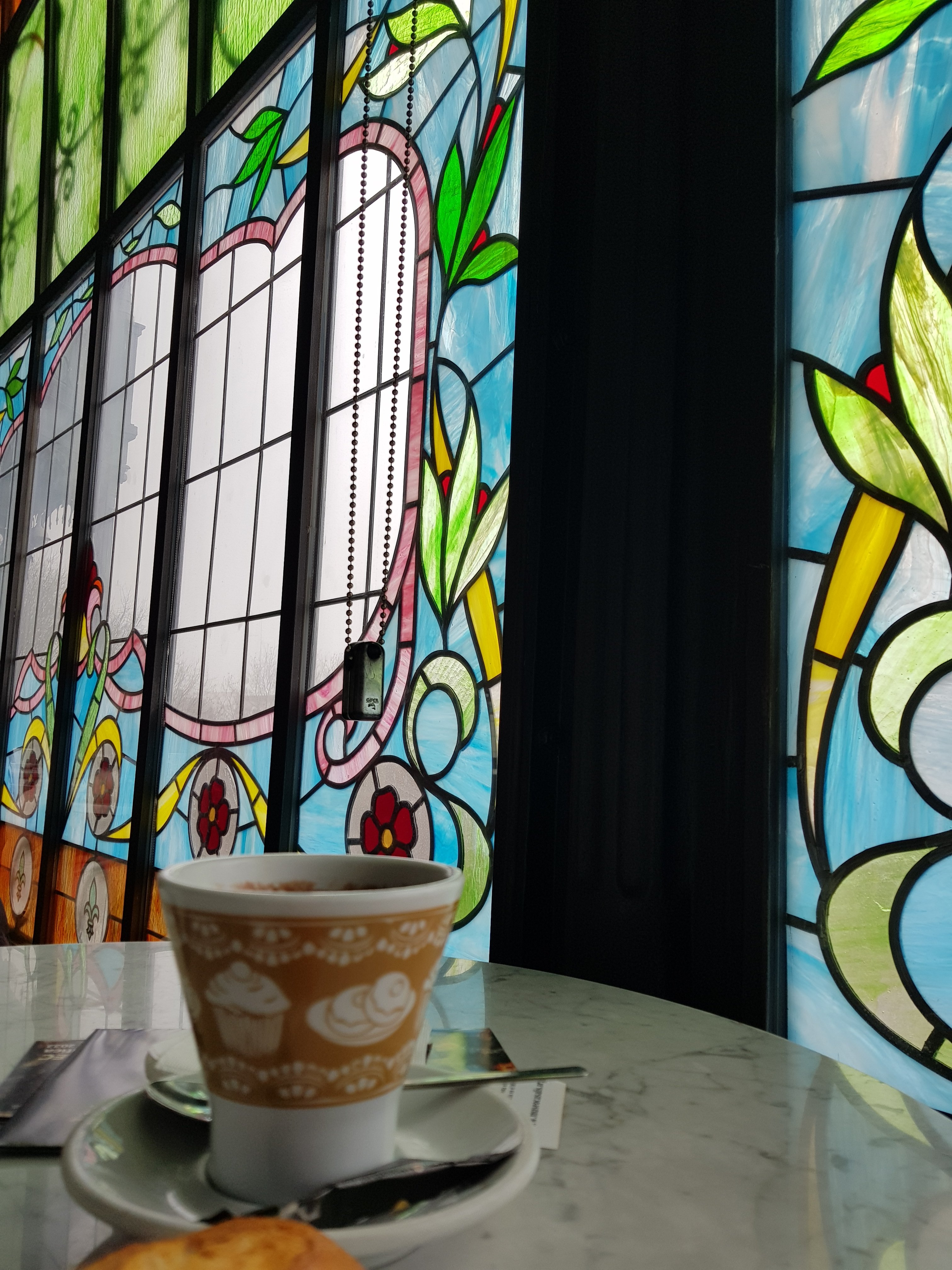
The next morning, I wondered along the riverside, took a look at the roman bridge and visited an art nouveau and art déco museum, within a beautiful building called ‘Casa Lis’. The building has gorgeous stained glass windows and a stained glass roof. Unfortunately, no photos were allowed except for in the cafe, so there is only a photo of my hot chocolate! This was delicious 😉

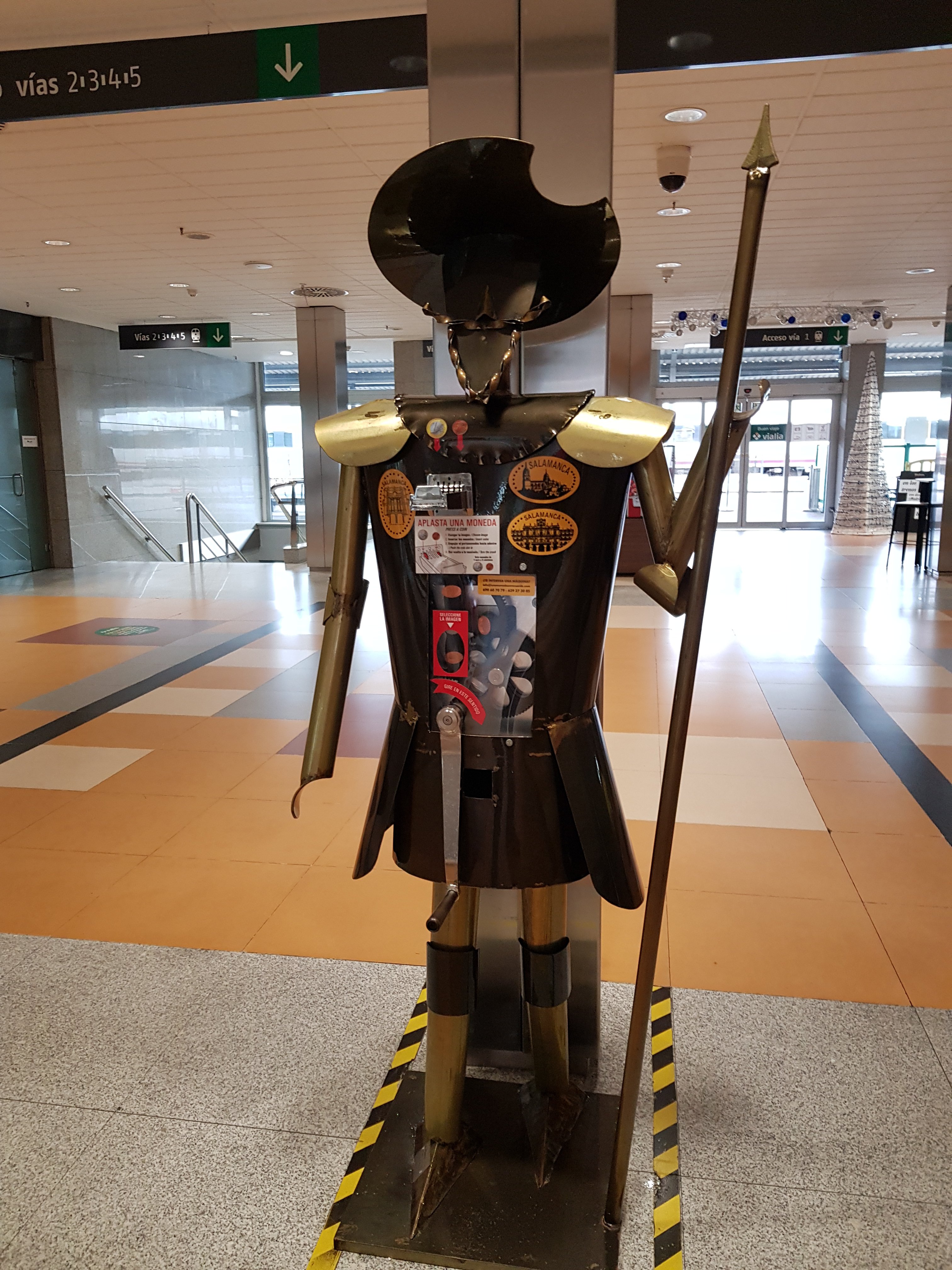
Finally, I made my way to the train station for my next stop. I was delightfully surprised by the train station in Salamanca. It is huge and has many restaurants and a cinema attached within the building.

Overall, Salamanca was a pretty little city, with a good few things to see that are all very close together. I would be happy to return and visit more of the university, noble houses and palaces next time.

Camino de Santiago: Vilalba to Santiago de Compostela (FINAL 100km)

This week was my final 100km to Santiago de Compostela. Many people begin their entire route from here, for me, it was the beginning of the end, of a very long walk.

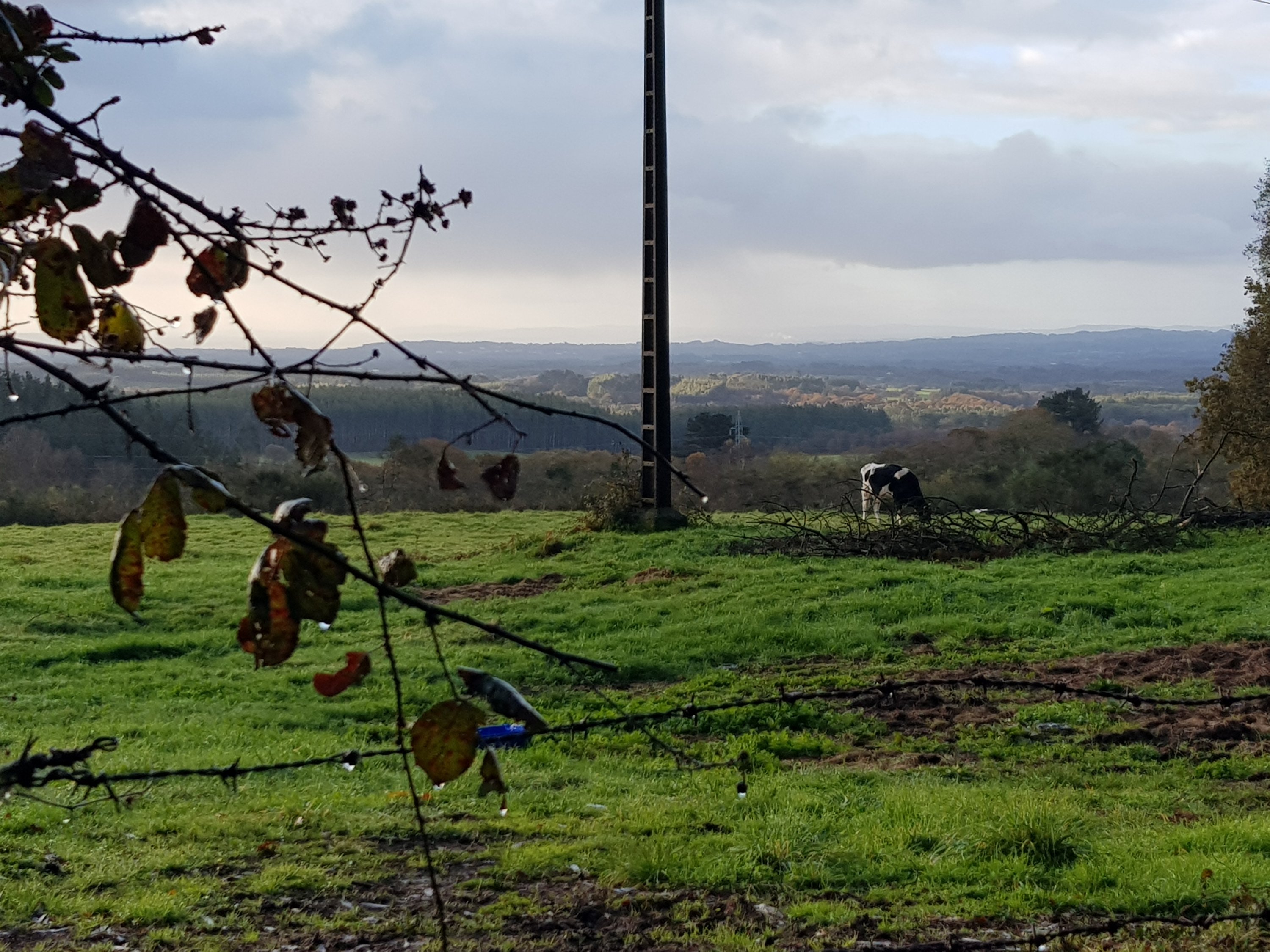
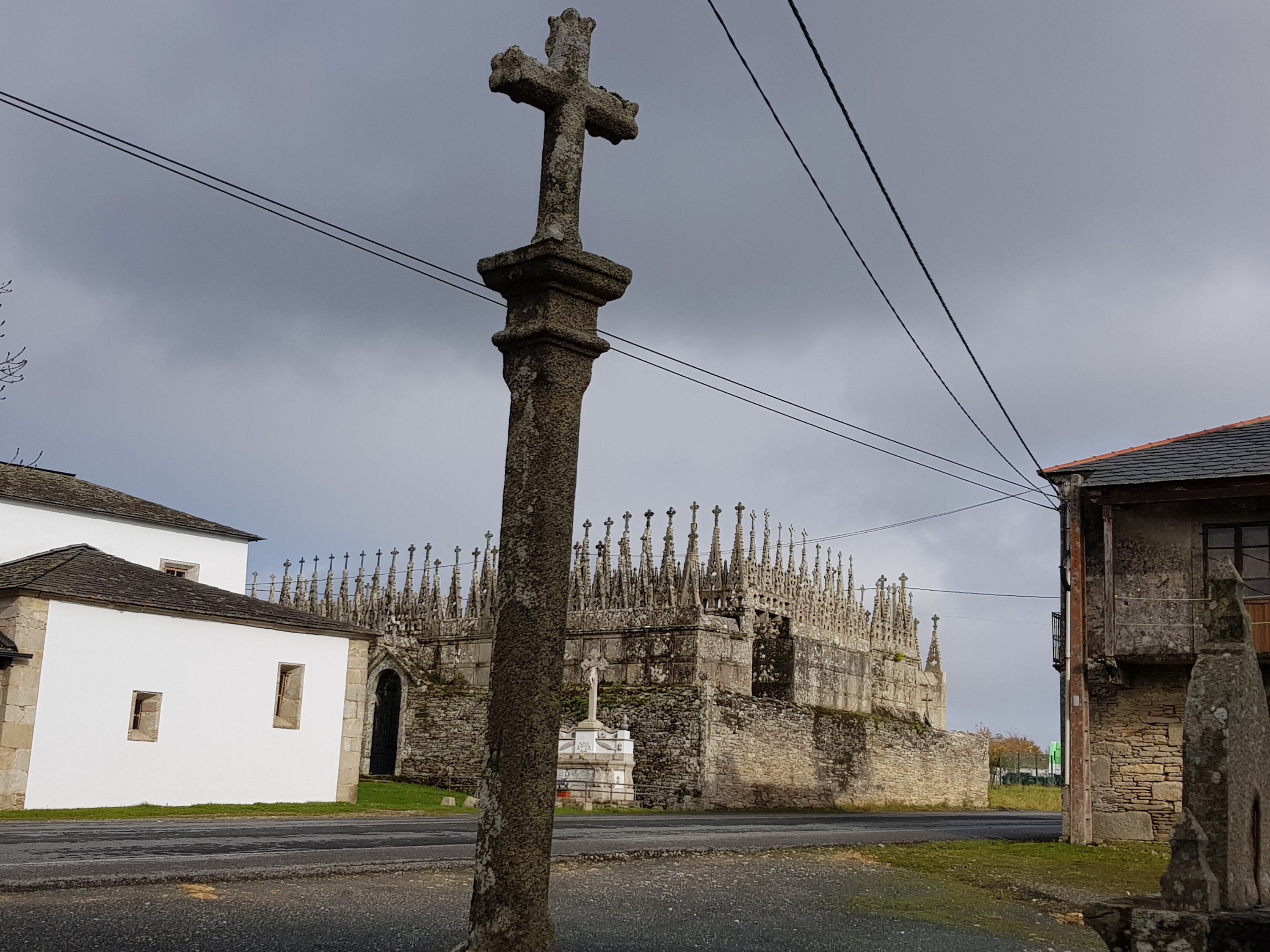
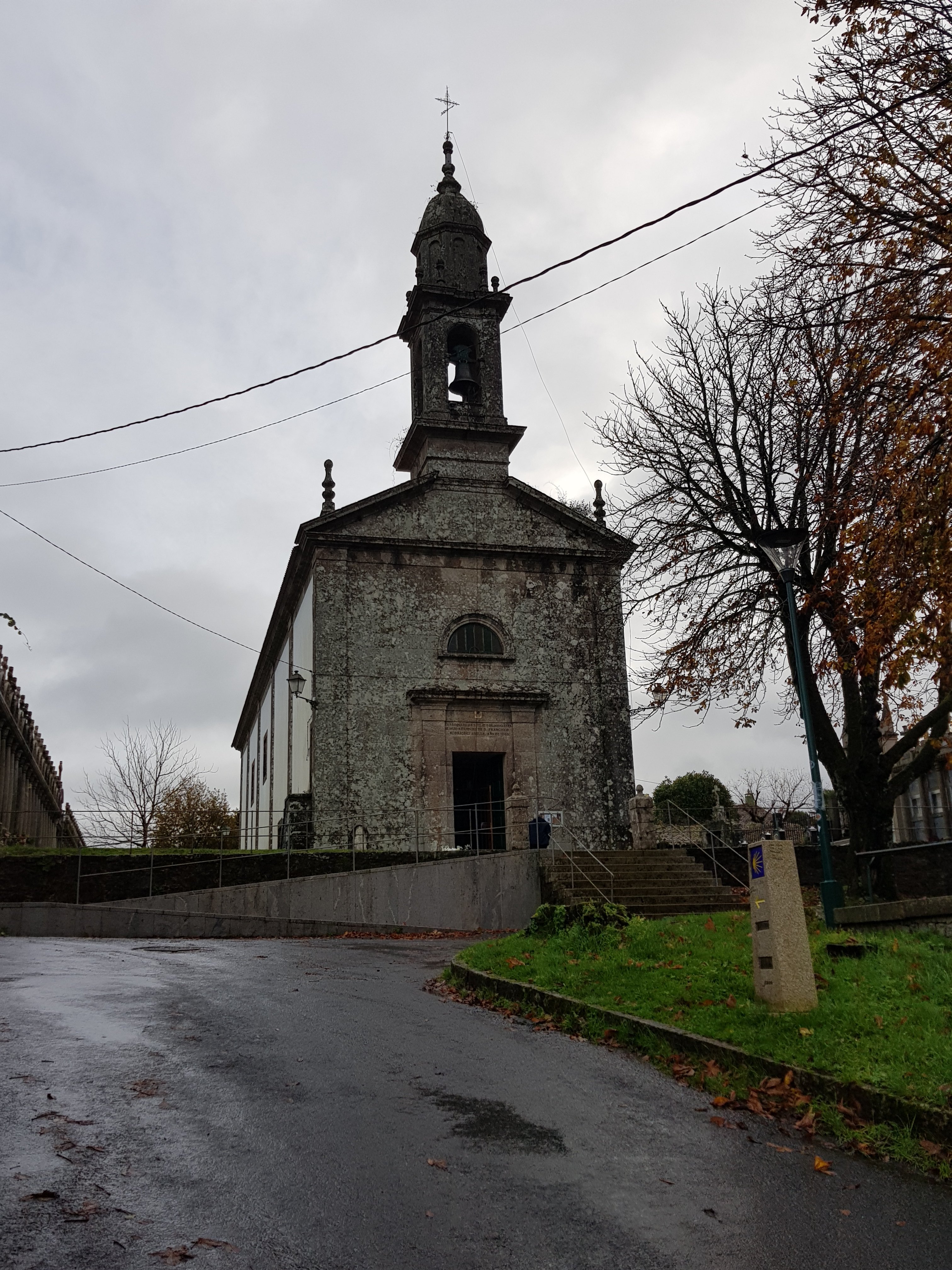
Now that I am in Galicia, a new language has been introduced again, a subtle change in culture and architecture. It is so interesting to see the subtle changes. The terrain is flatter and now includes many forests, and little services.

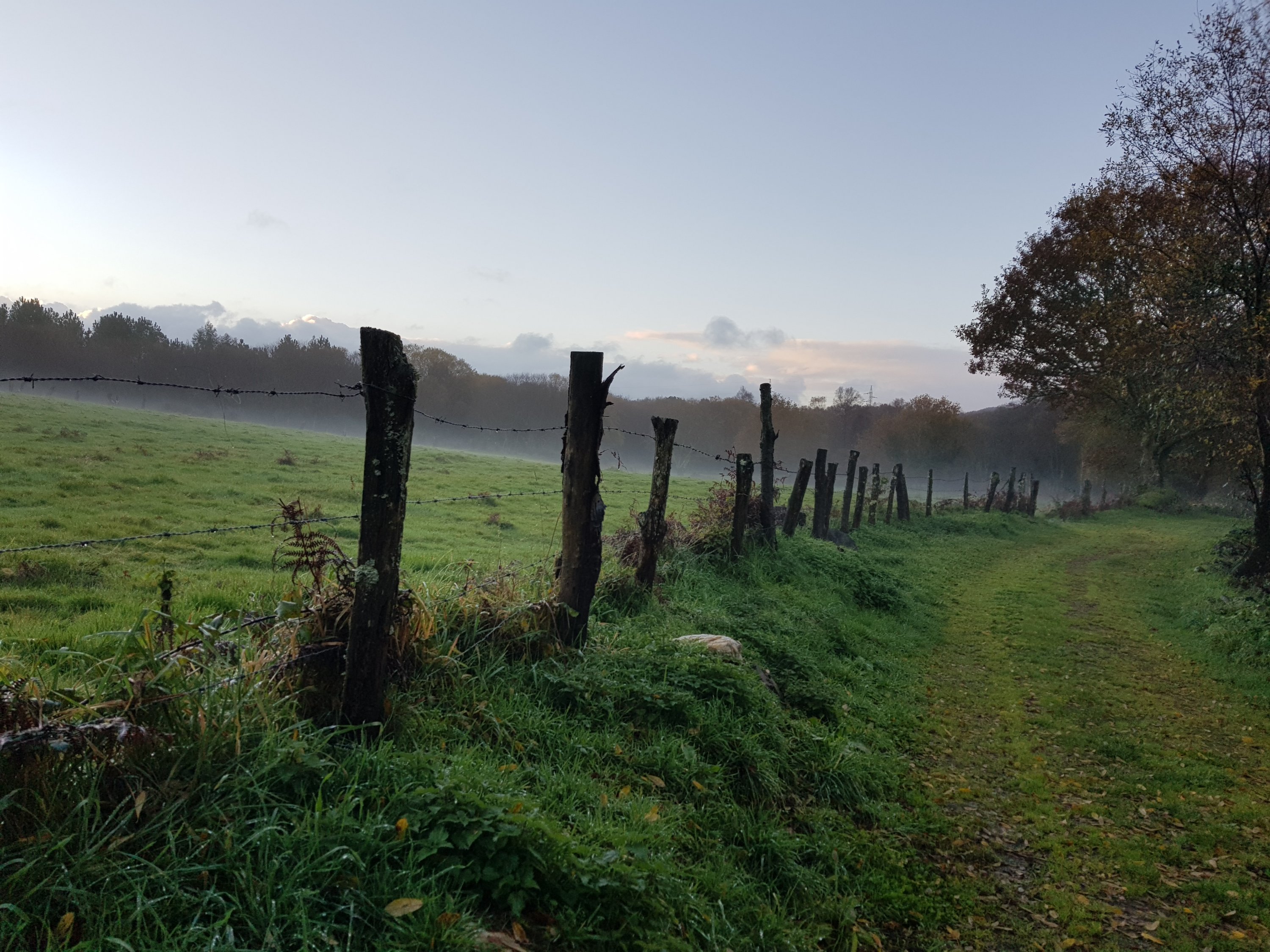
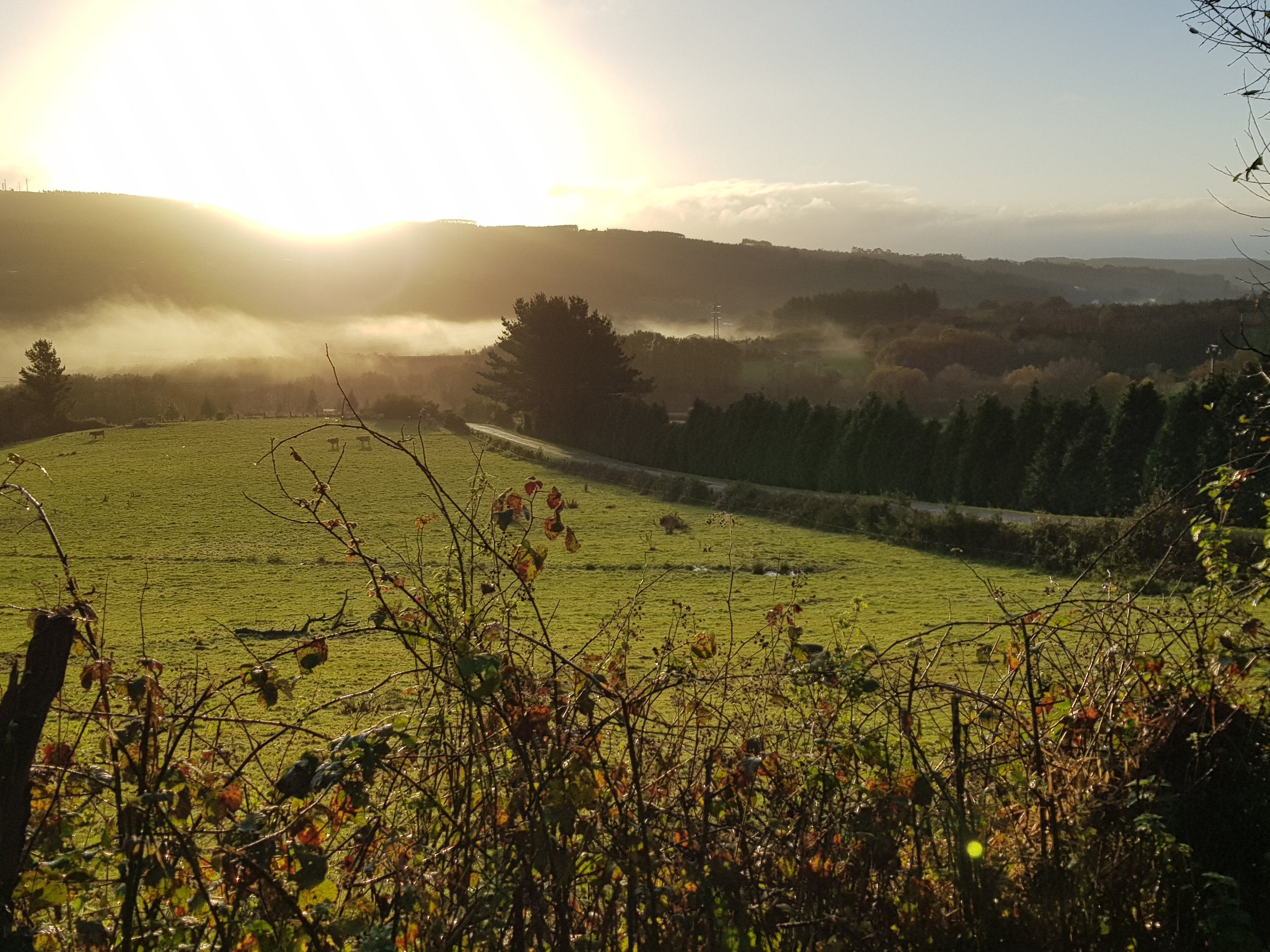
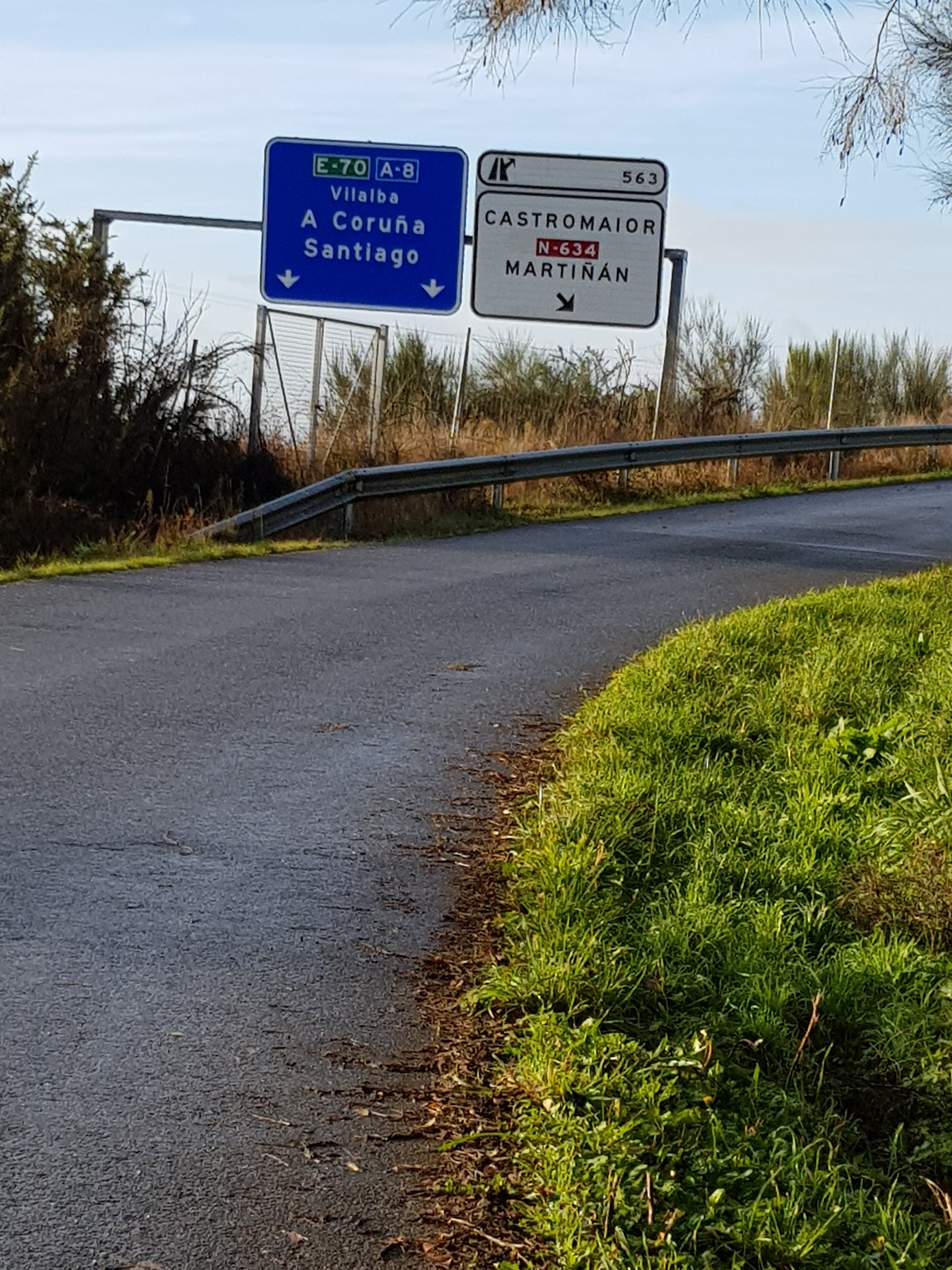
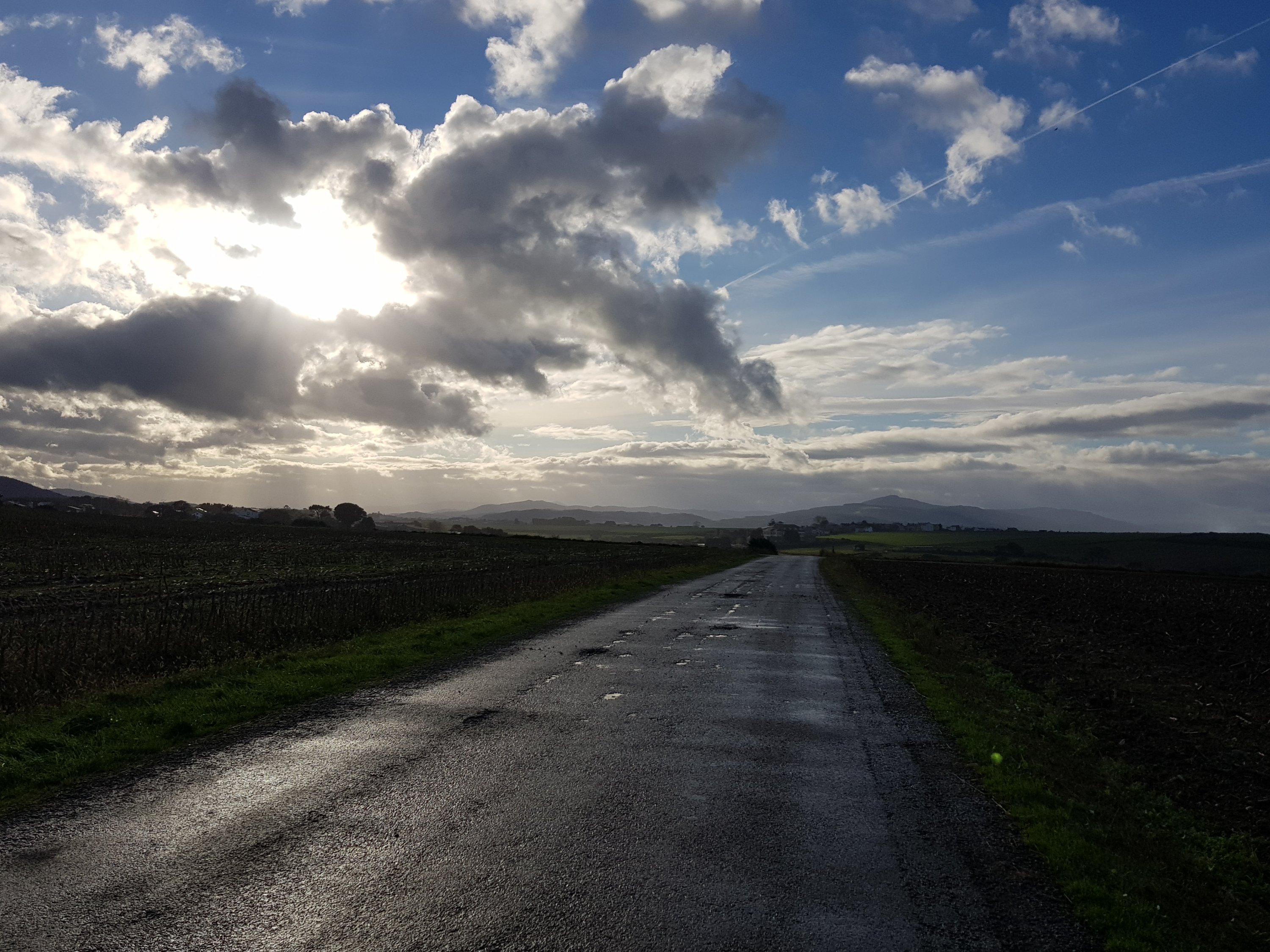
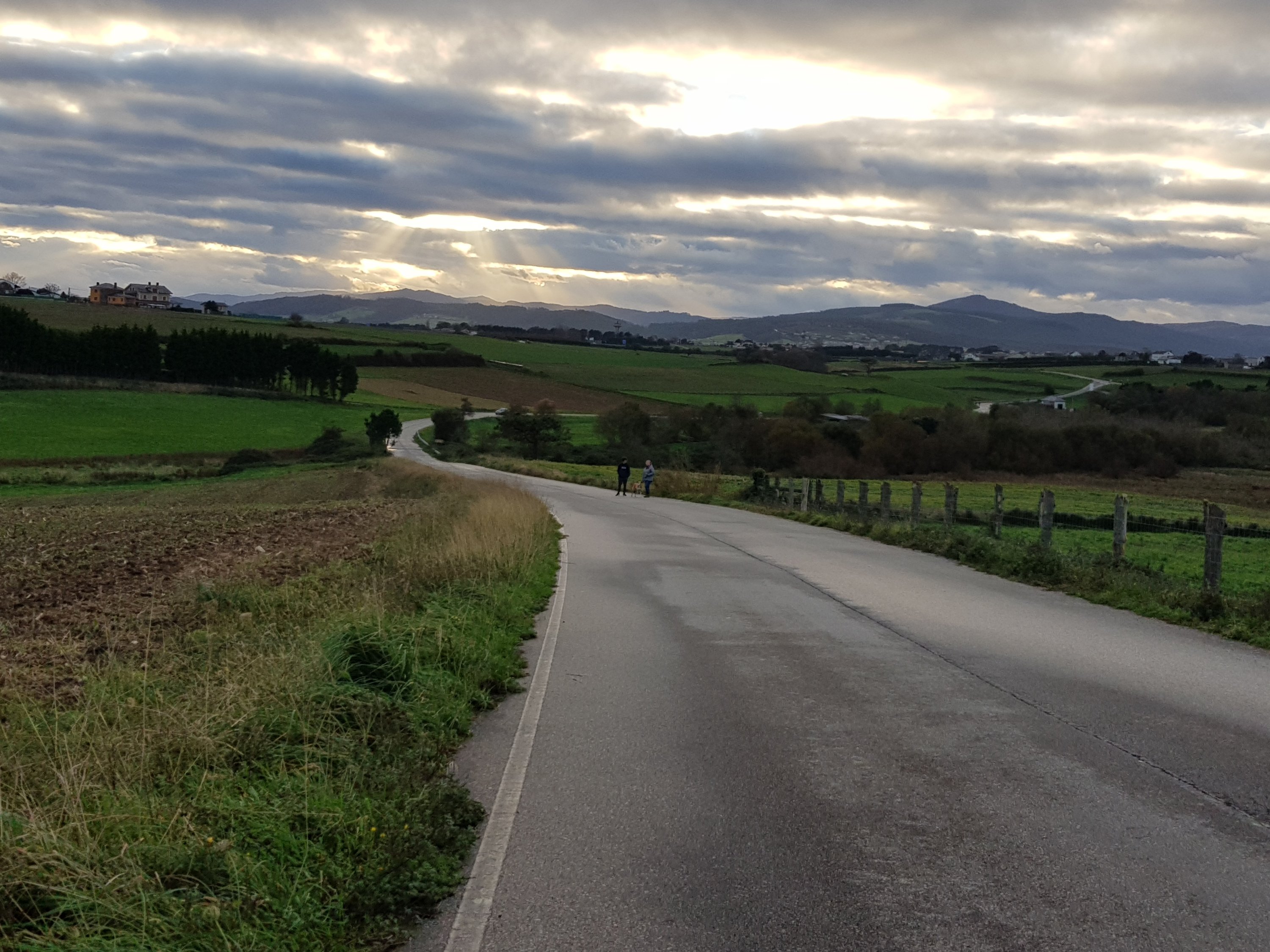
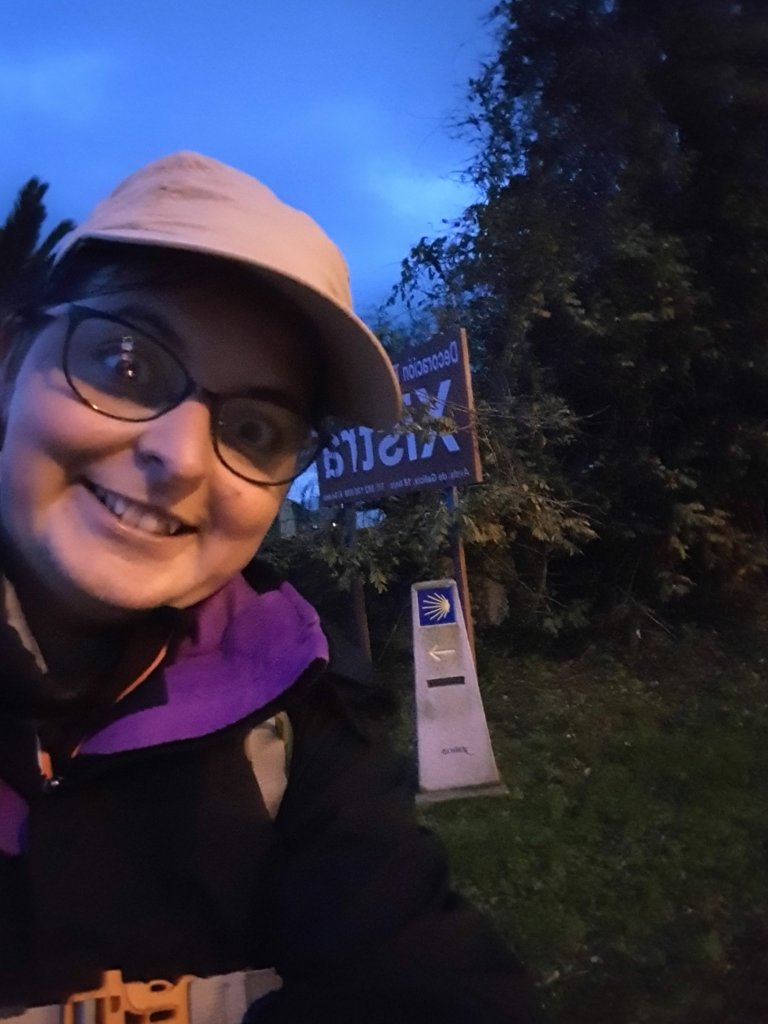
The week began great, leaving before sunrise to walk to Vilalba, I enjoyed my first walk in mostly sunshine for many days. I got some brilliant photos, and whilst my foot was sore, I was full of positivity. Especially once I saw the first road sign to Santiago! It finally felt within reach!
I made my way to a cafe, which I found then to be closed, but hung around outside looking sad until the nice spanish lady let me in! She opened up just for me and I had a hot chocolate, and a long conversation in spanish about politics and Galicia. Very good practice.

Before I knew it, I had made it to the hostel. I was all on my own at the hostel, and it was 1km outside of town, so I had an interesting attempt at ordering a delivery. After a long struggle, I finally had my cheeseburger and chocolate brownie, snuggled up in my sleeping bag.

Vilalba is a nice town, with lots of shops and services, a little castle. It would make a good rest day stop, if I had not been so eager to finish!

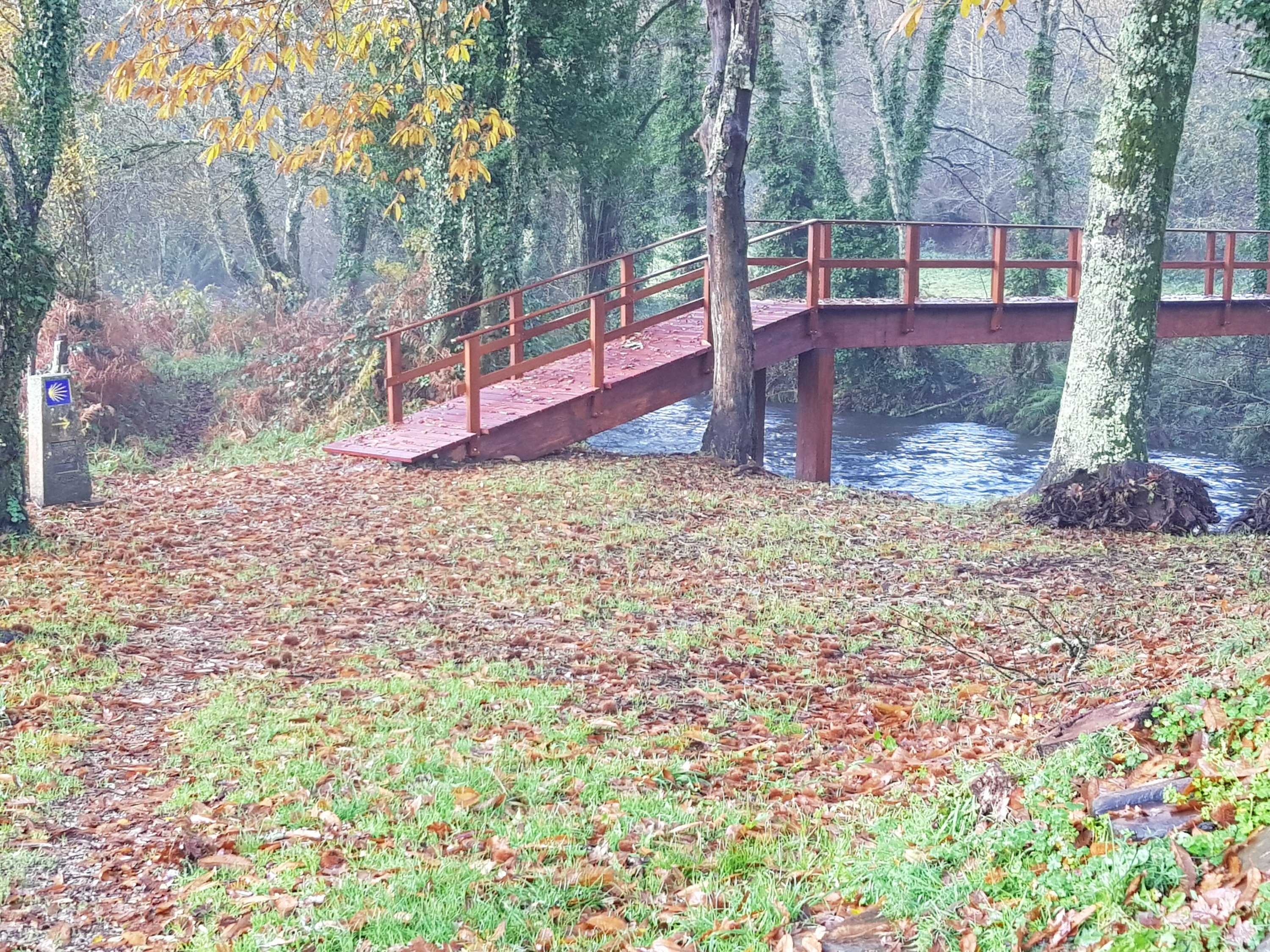
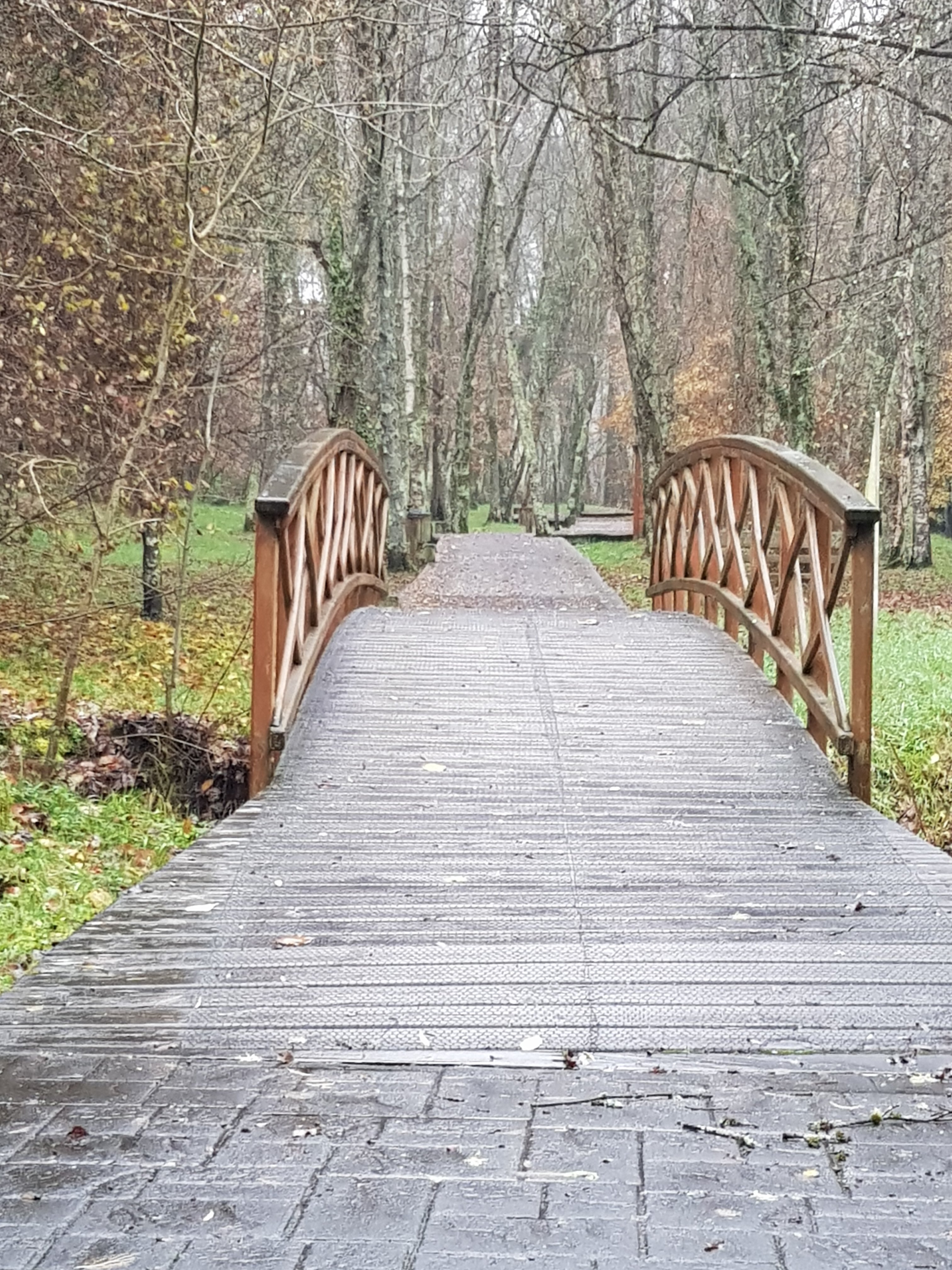
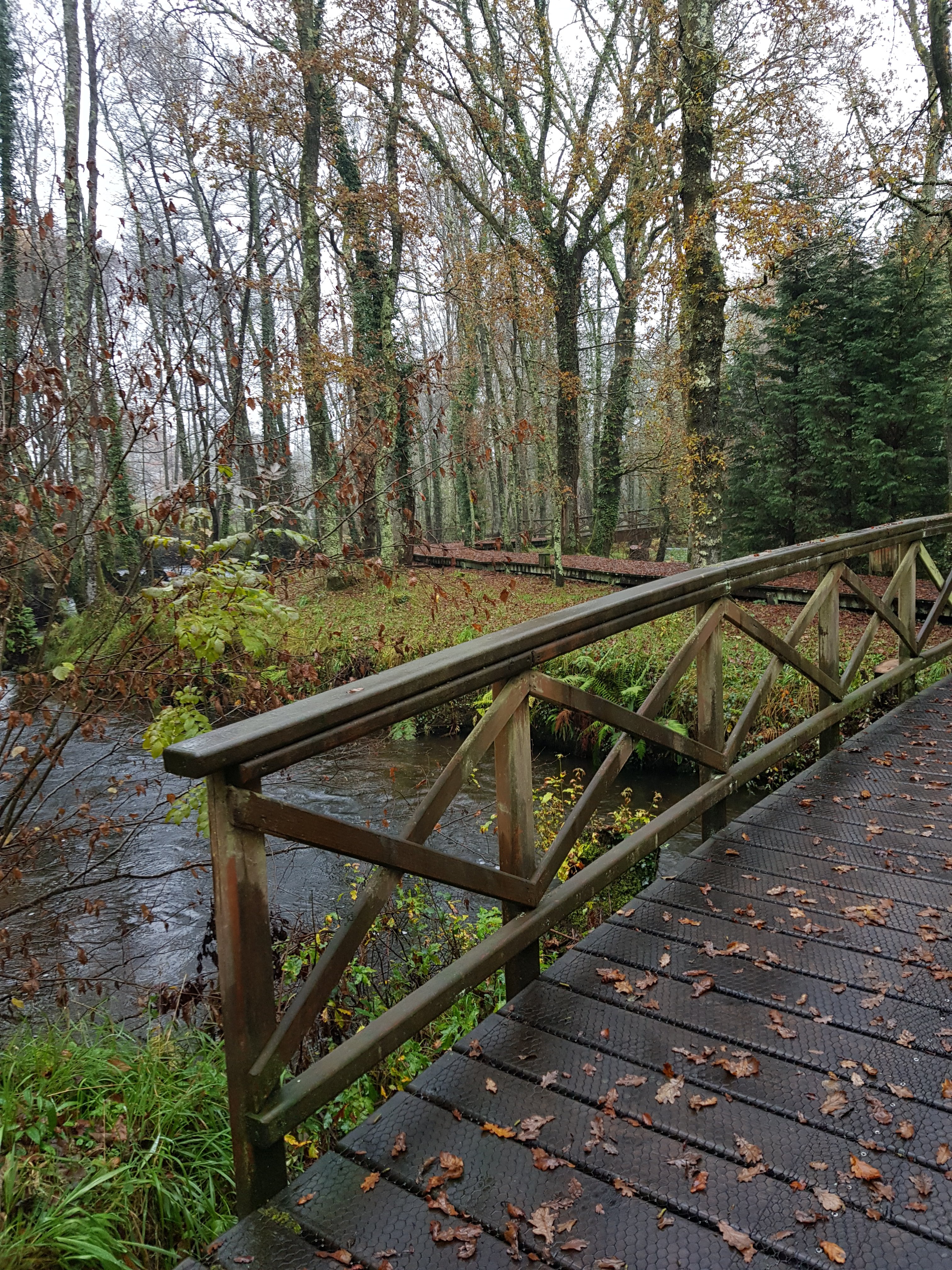
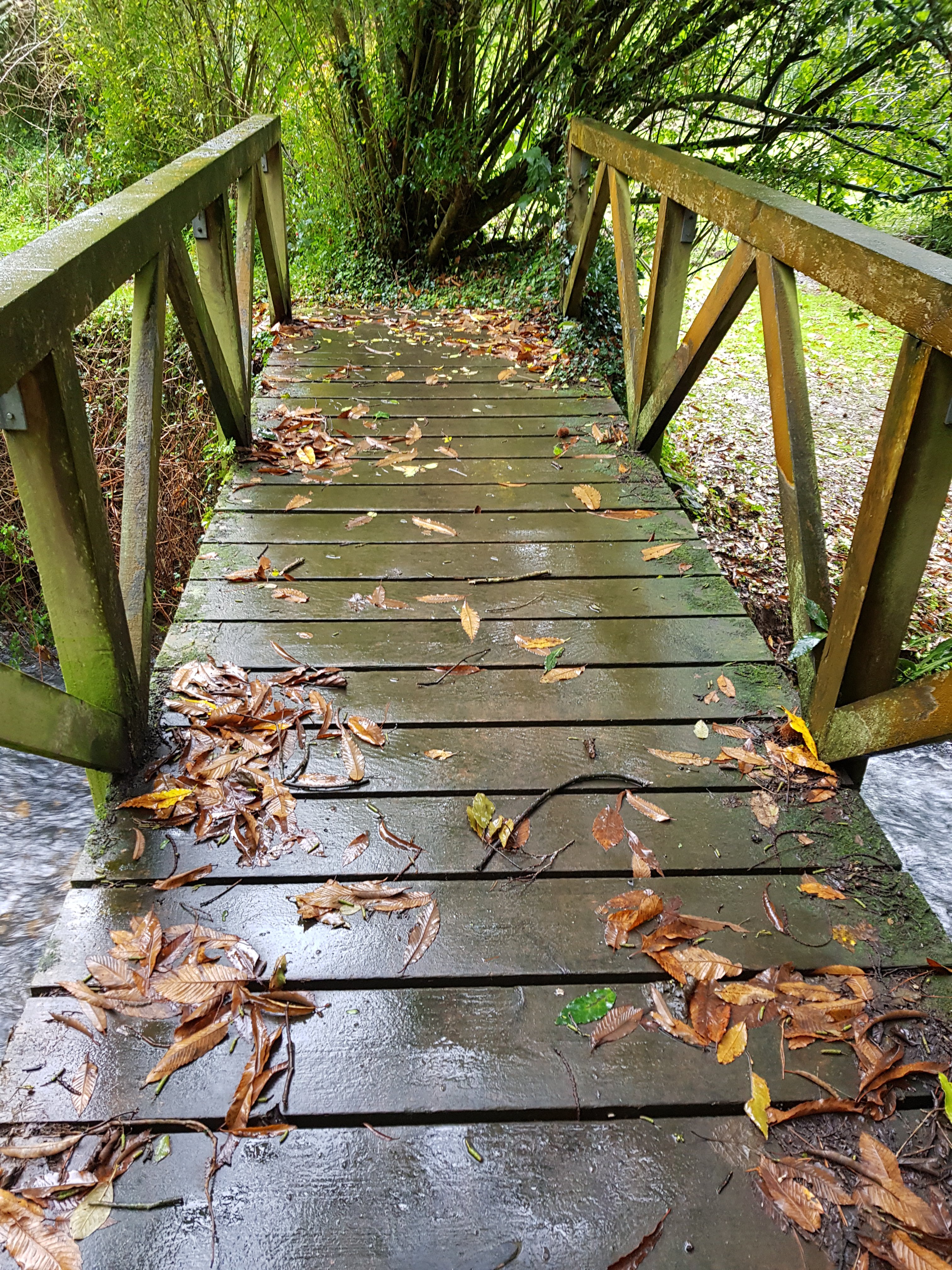
The walk to Baamonde was very rainy and had many roads, except at the beginning where there was a pretty boardwalk route through a park along the river. It was ‘only’ 22km but a big struggle with an already very sore foot and knees. Thankfully, I had some company in the second half, in the form of a lovely pilgrim from Switzerland. He had already walked 2000km, and was already ready to get to Santiago by now. I love walking alone, but it is nice to have someone else to listen to other than your own thoughts sometimes. Eventually, we made it to our hostel, and enjoyed a lovely dinner together of baby squid again, of course.

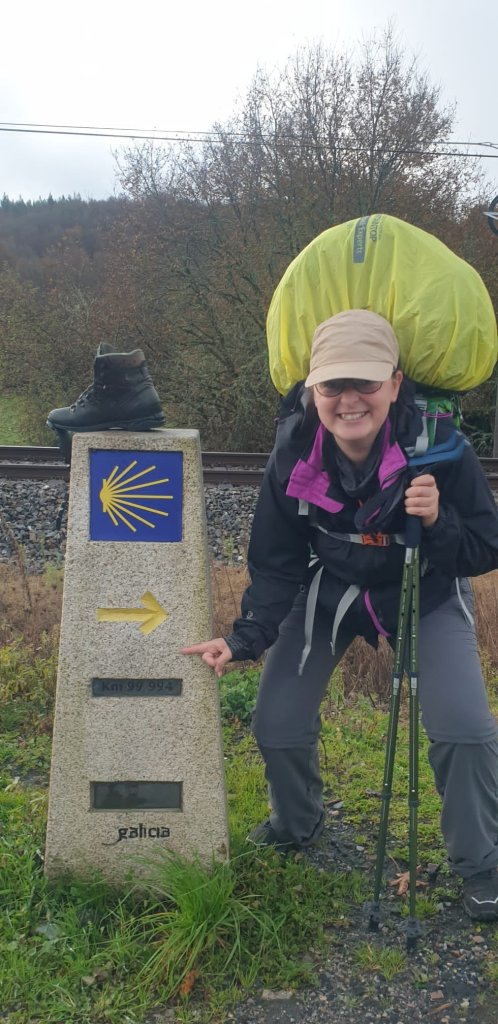
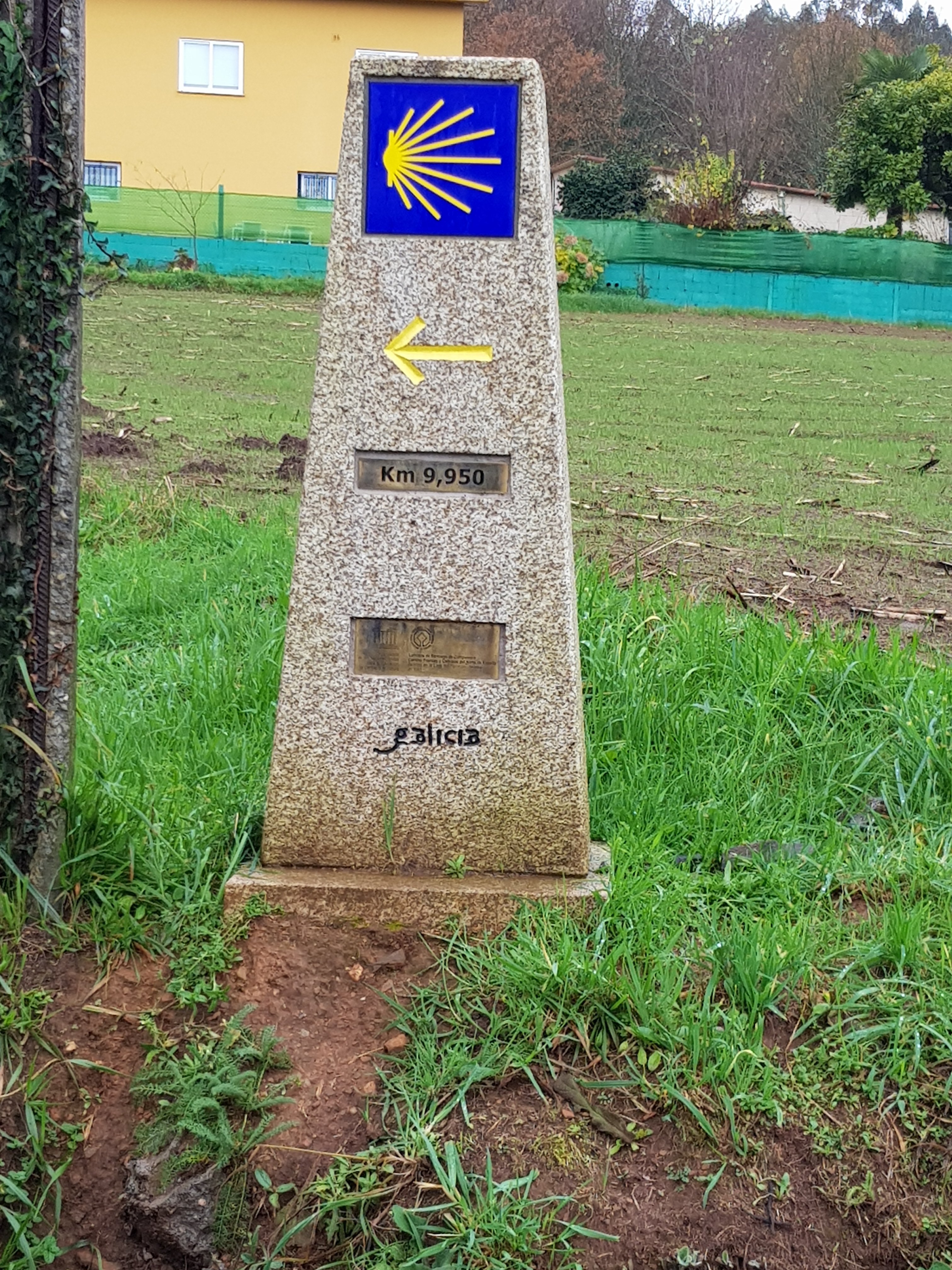
Baamonde is a very small place, but it is also the marker point for being 100km from Santiago de Compostela. This makes it a starting point for many people’s journey. For me, it was a beautiful sign that my journey was almost complete.

The next day I had a choice to make. I could do one long day of at least 32km to the next stage, or take another route over two days (doing 15km, then 25km). The guy from Switzerland wanted me to join him for the big hike, but my foot hurt too much. I decided to stick with my plan of long afternoon rests and went with two days. So we went our separate ways, with an agreement to celebrate together in Santiago.

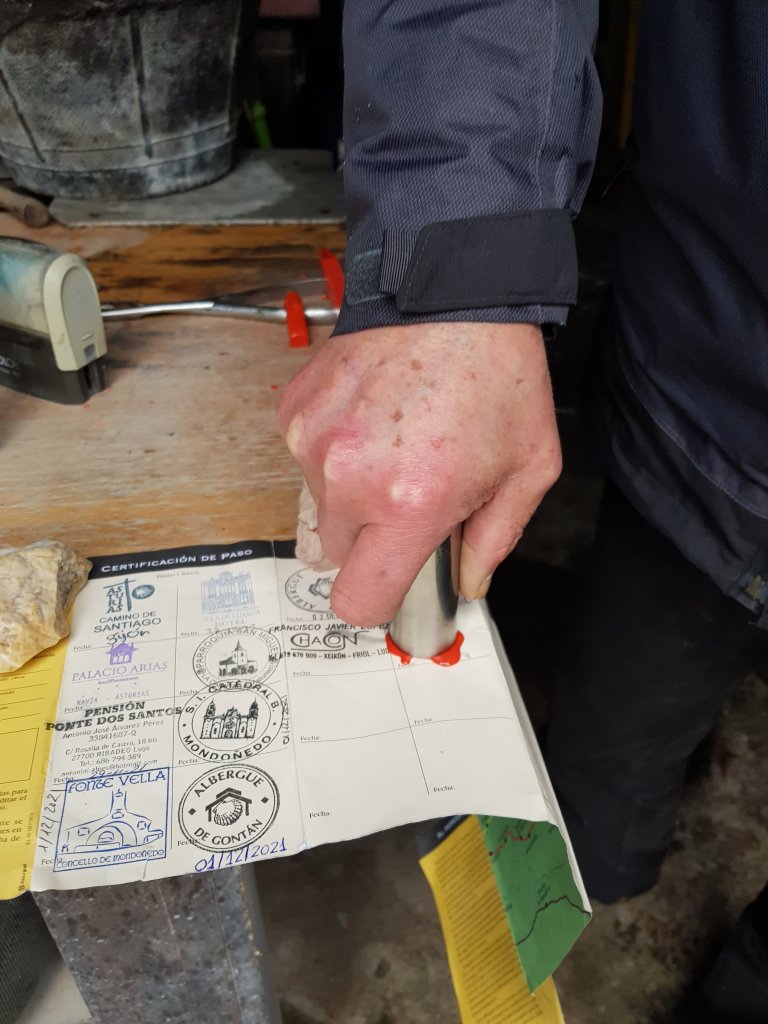
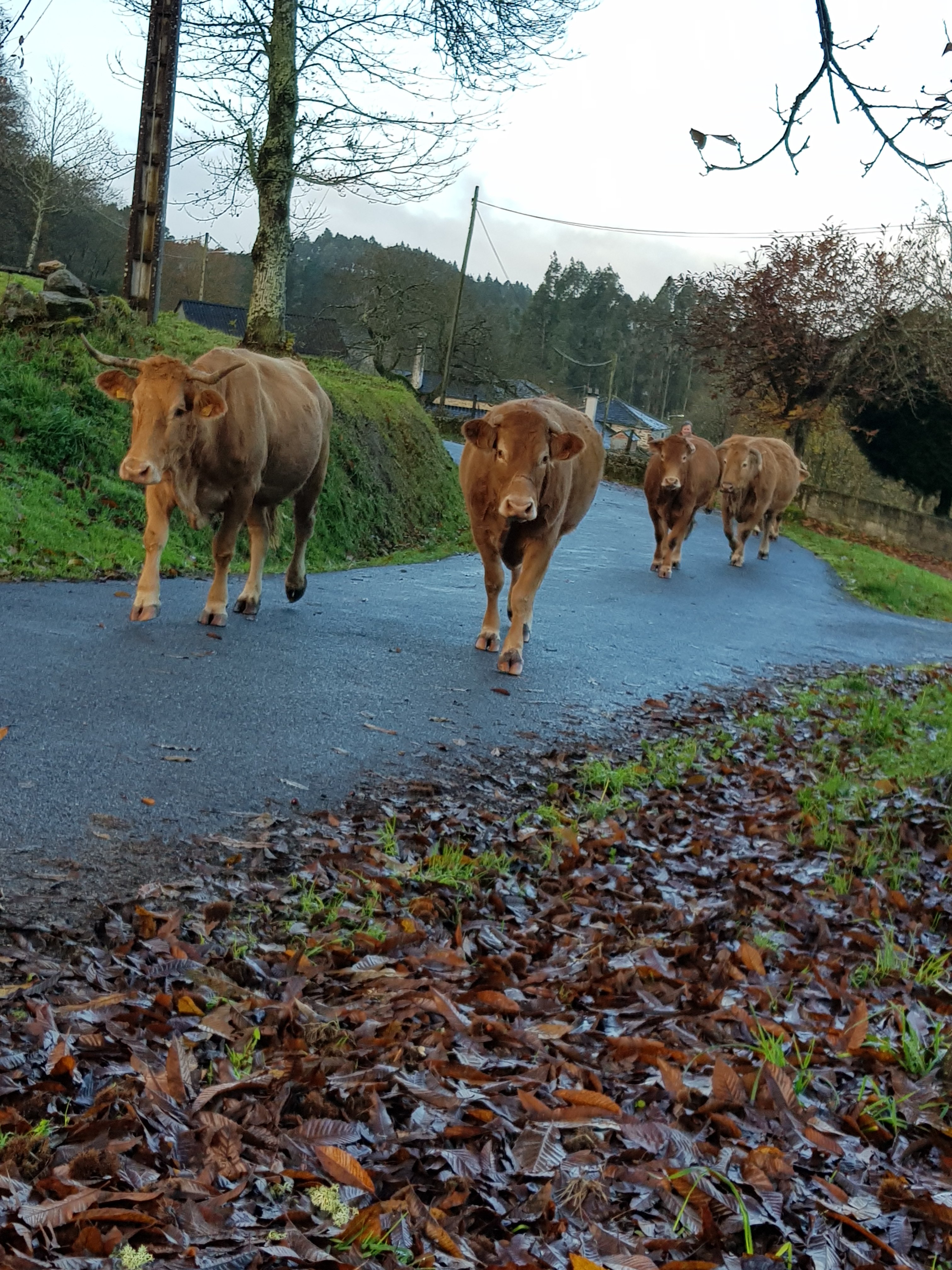
The 15km to the little village of Miraz, turned out to be really enjoyable, despite my pain. The sun came out for me, and I could take lots of breaks as the walk was shorter. I walked with a herd of cows for at least 1km which was a fun experience, and I even came across a house where the owner made his own special pilgrim stamp. I knocked on the door, and he especially came out, lit a fire, melted some wax and stamped my passport.

On arrival to the village, I relaxed, soothed my feet and counted the days to Santiago.

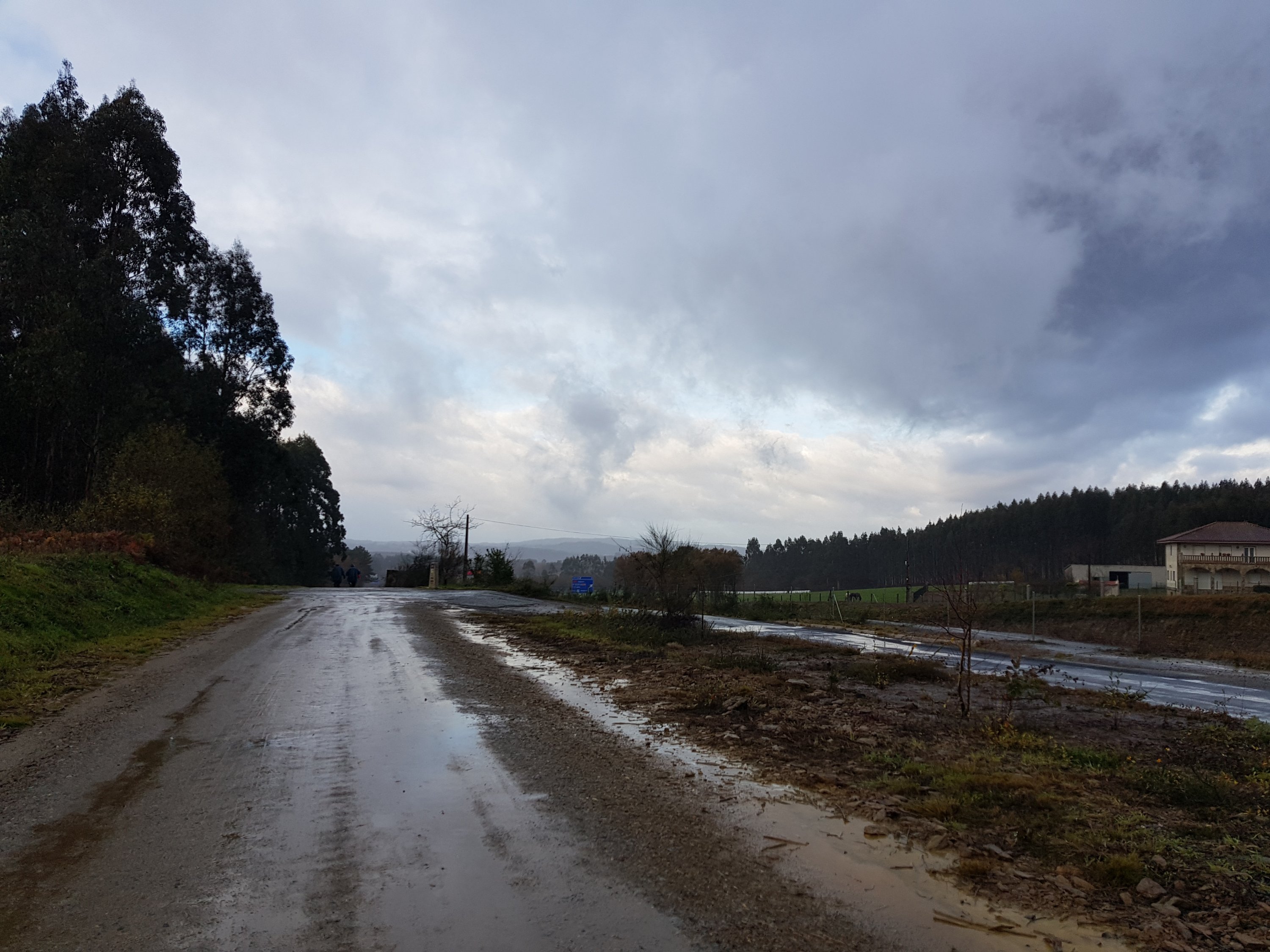
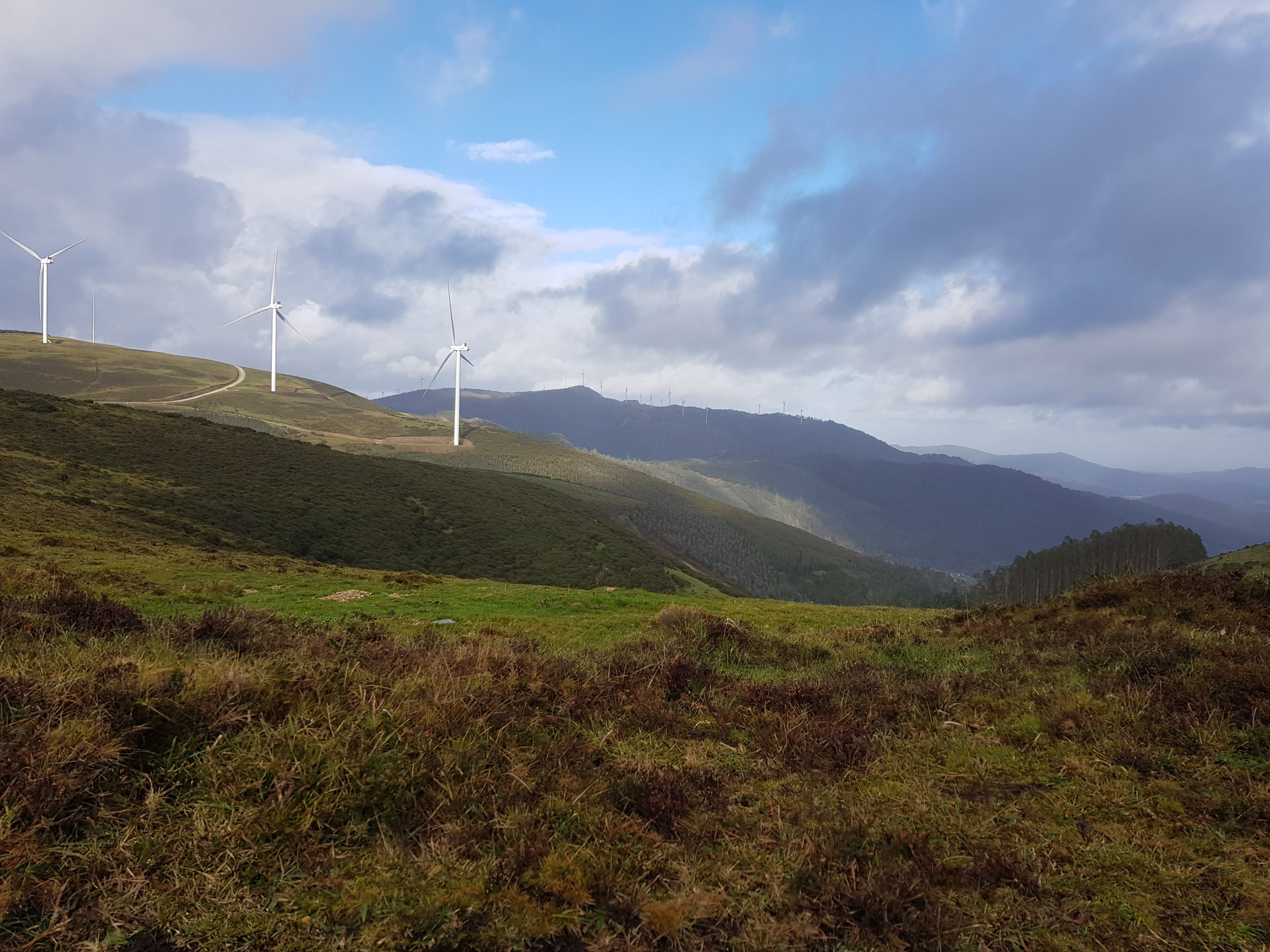
The next day was my last walk over 25km, to Sobrado dos Monxes. The weather was very bad again, and the poncho was on all day. There were very little places to sit and no bars to use as refuge until I was an hour from the end. The landscape was quite different, more boulders and I could sense that I was now very high from sea level, making it much more windy.

I did spend two hours of the walk with three local spanish guys. We chatted in espanol, which was great practice for me. They walk the last 100km of the camino every seven years (on holy years) on the run up to christmas. So, they were fresh to the walk, on their first day, and so much quicker than me, who at this point is limping! I have been limping for about five days now… After a few hours I told them to go ahead of me, so I could take a break. Several hours later I arrived in Sobrado.

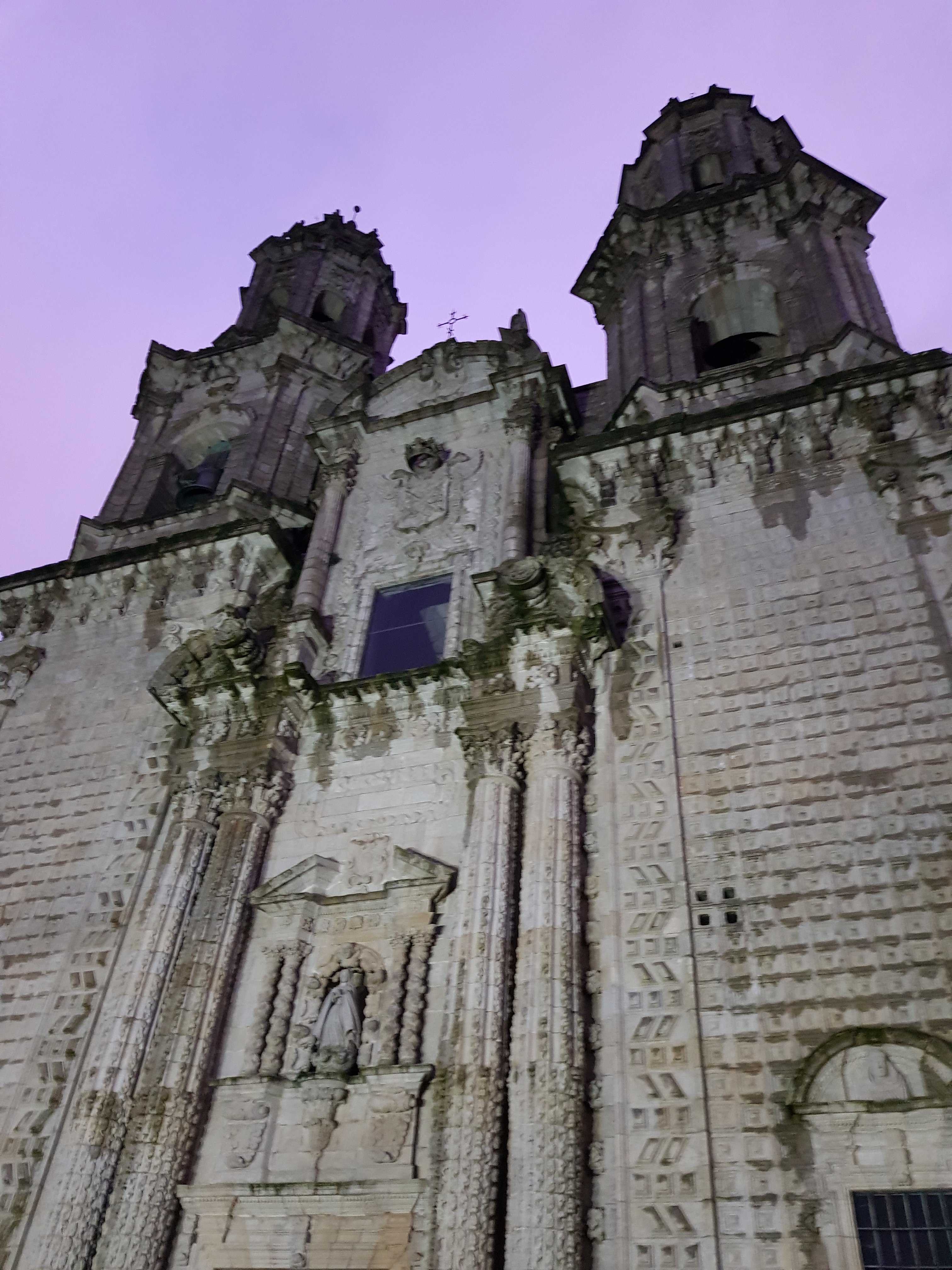
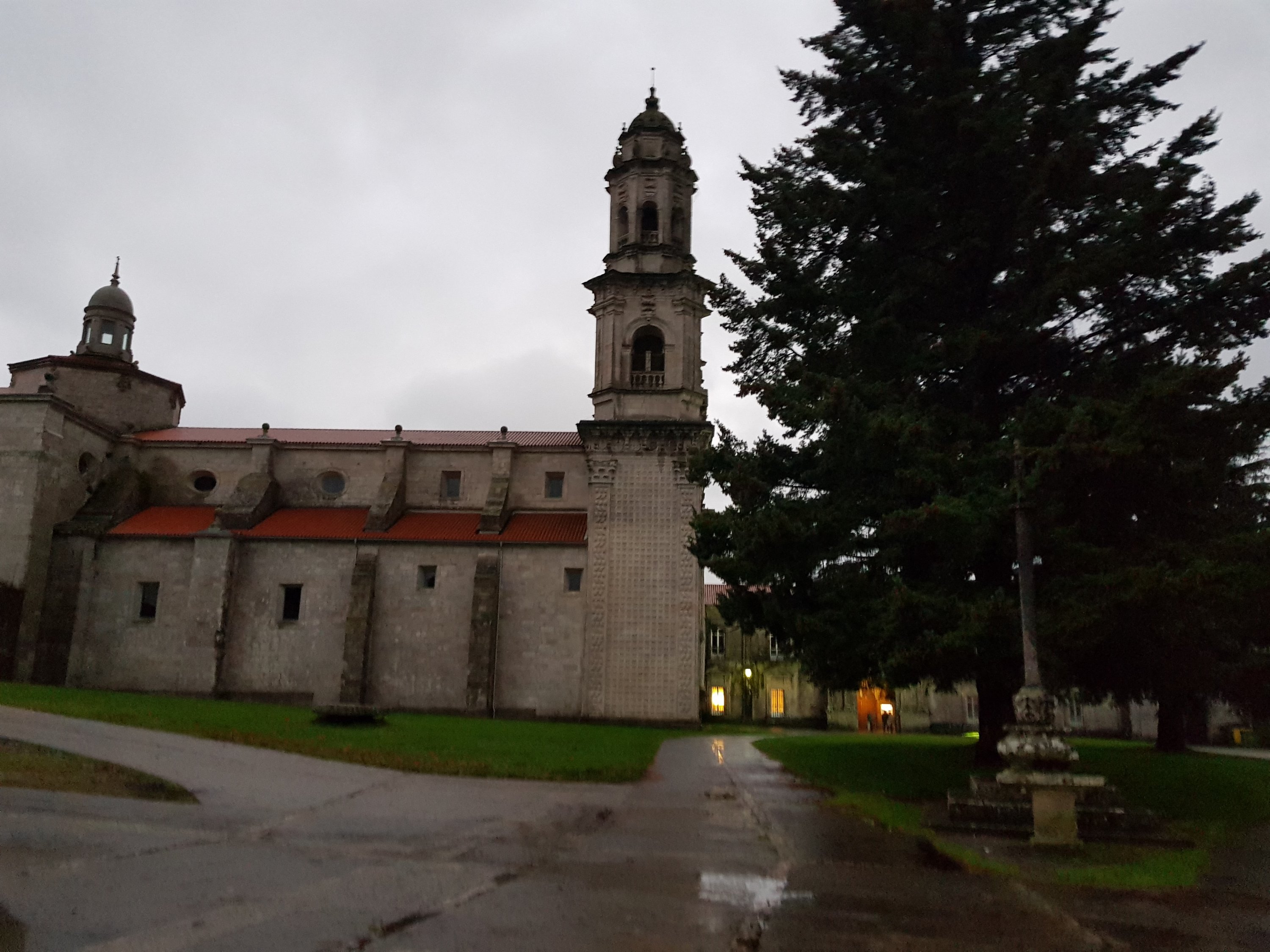
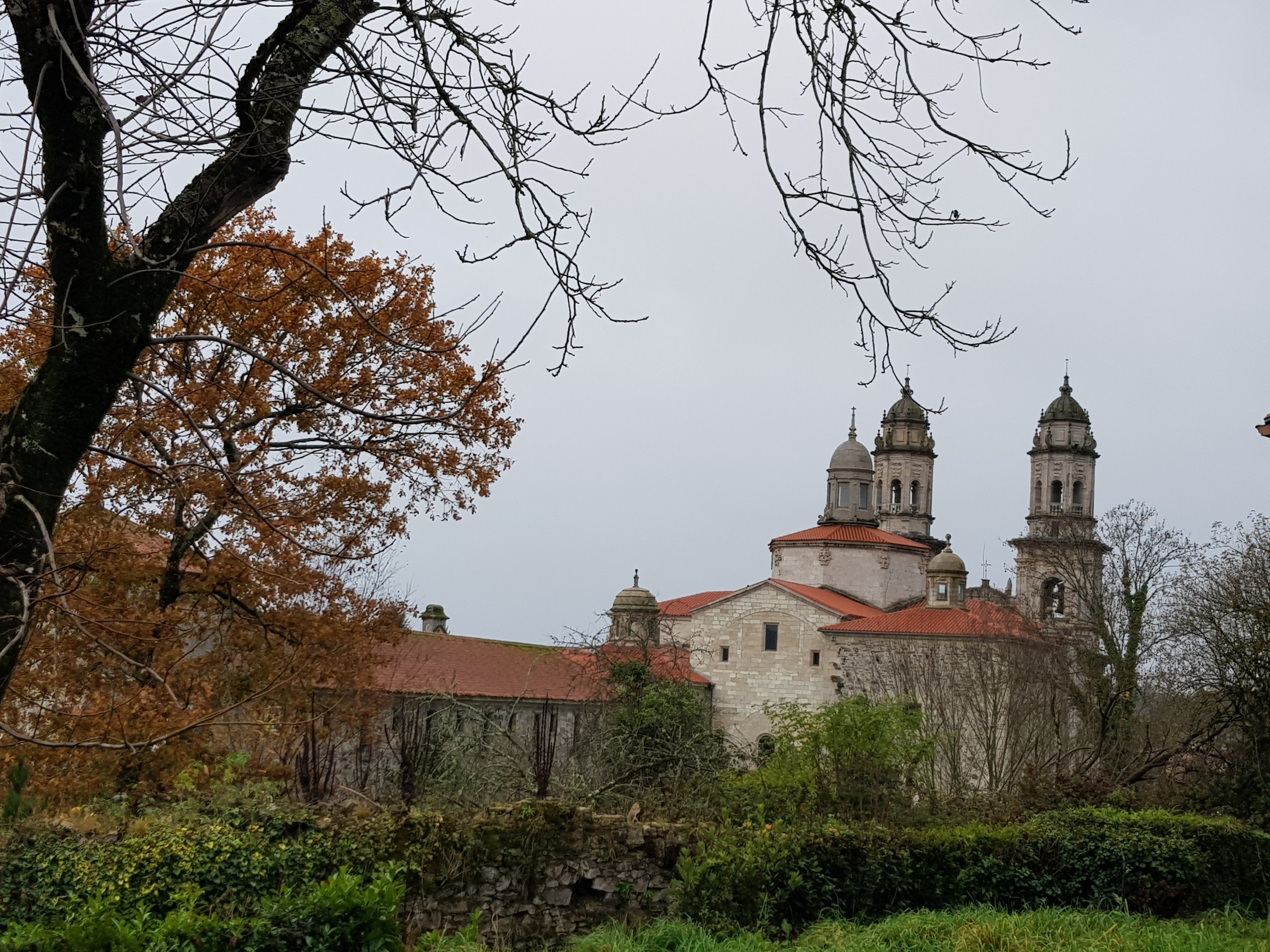
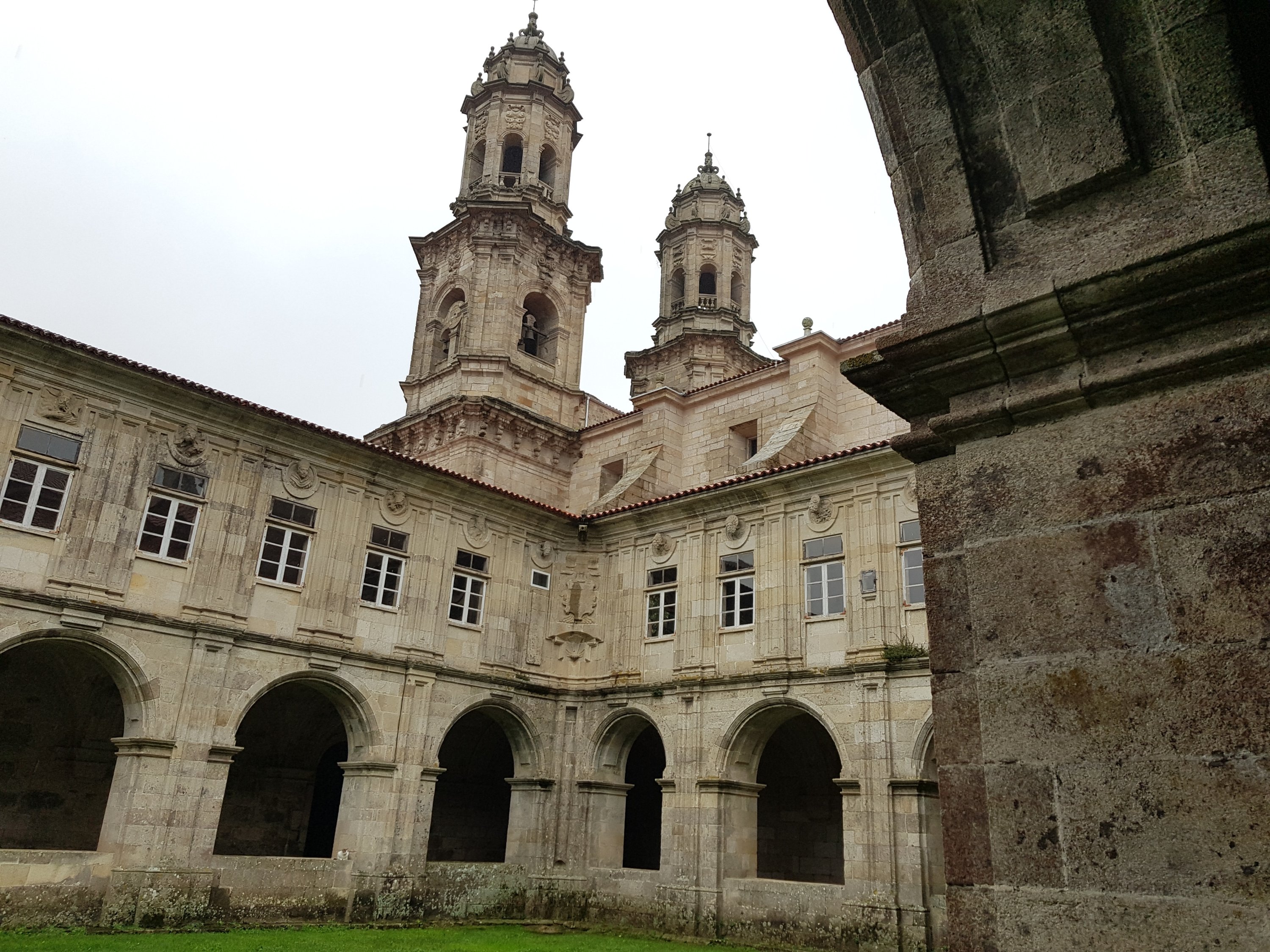
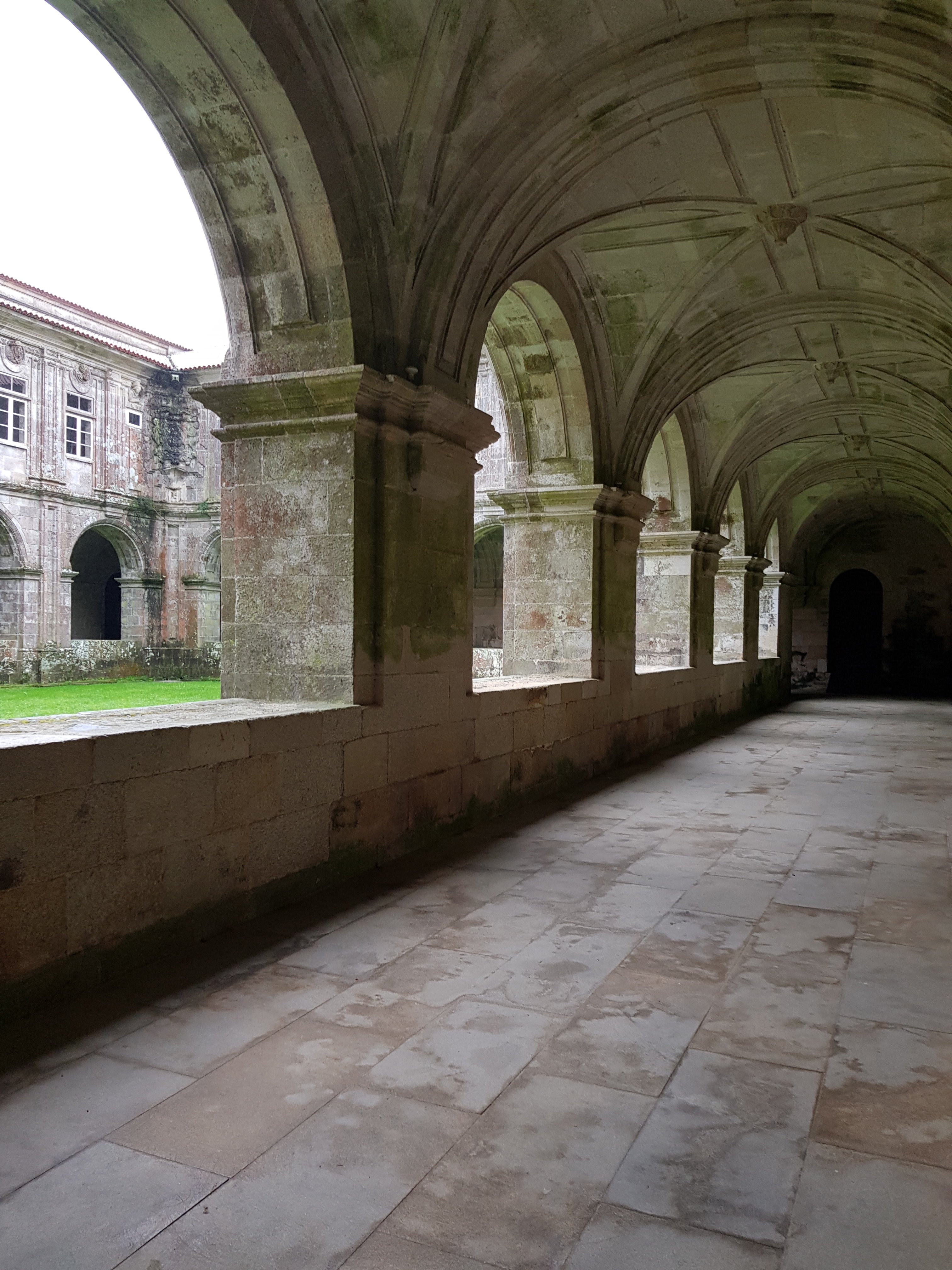
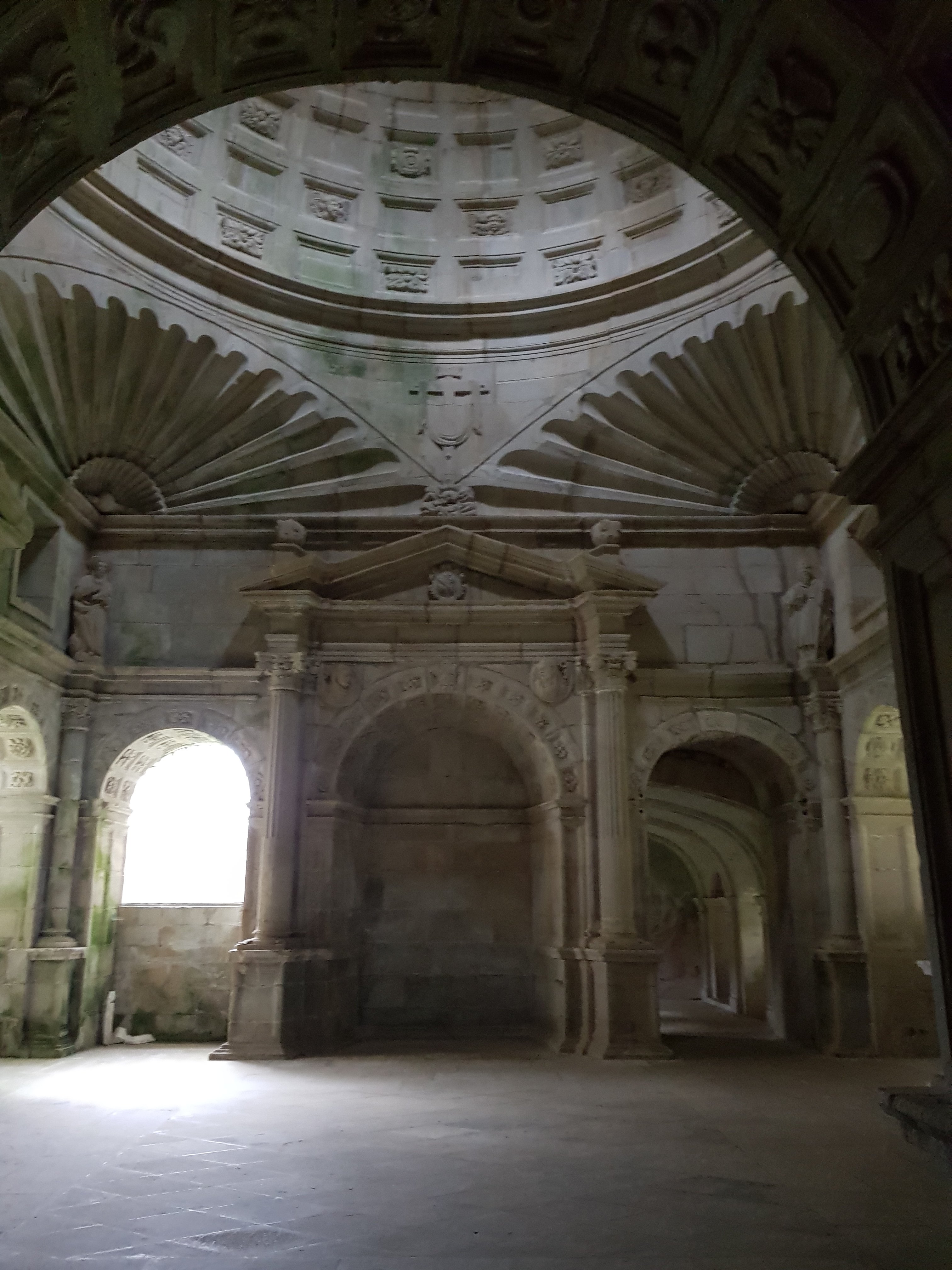
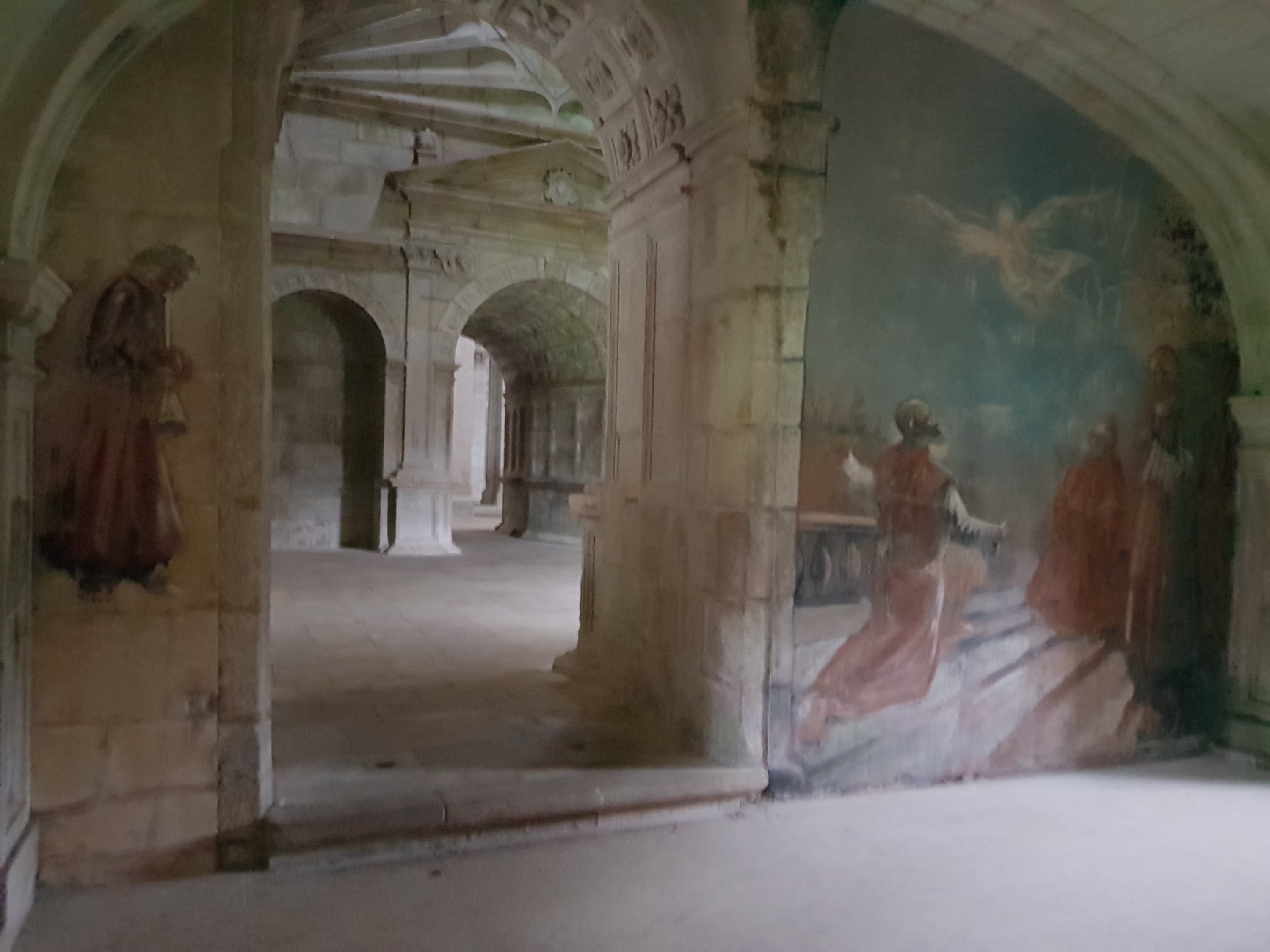
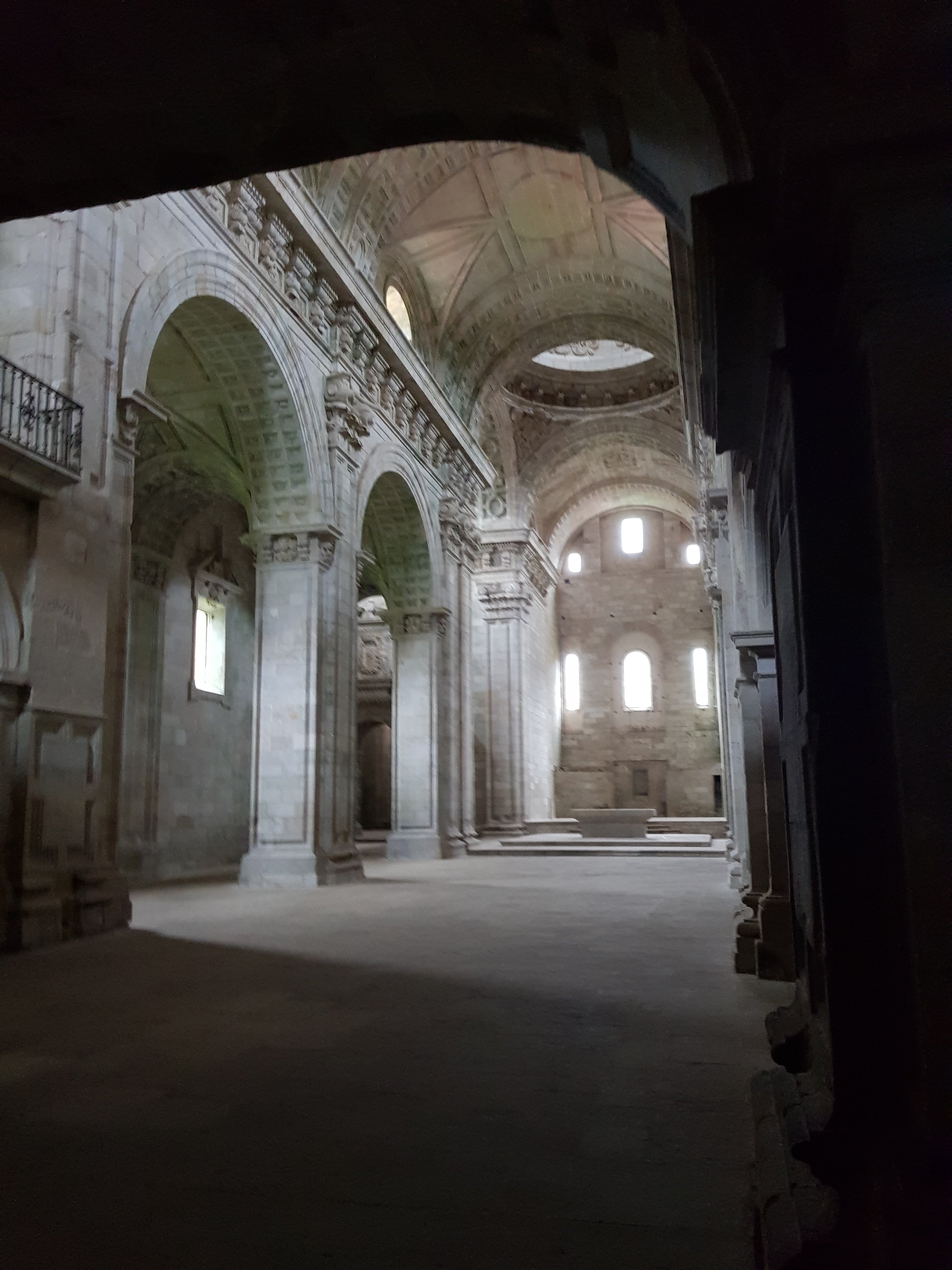
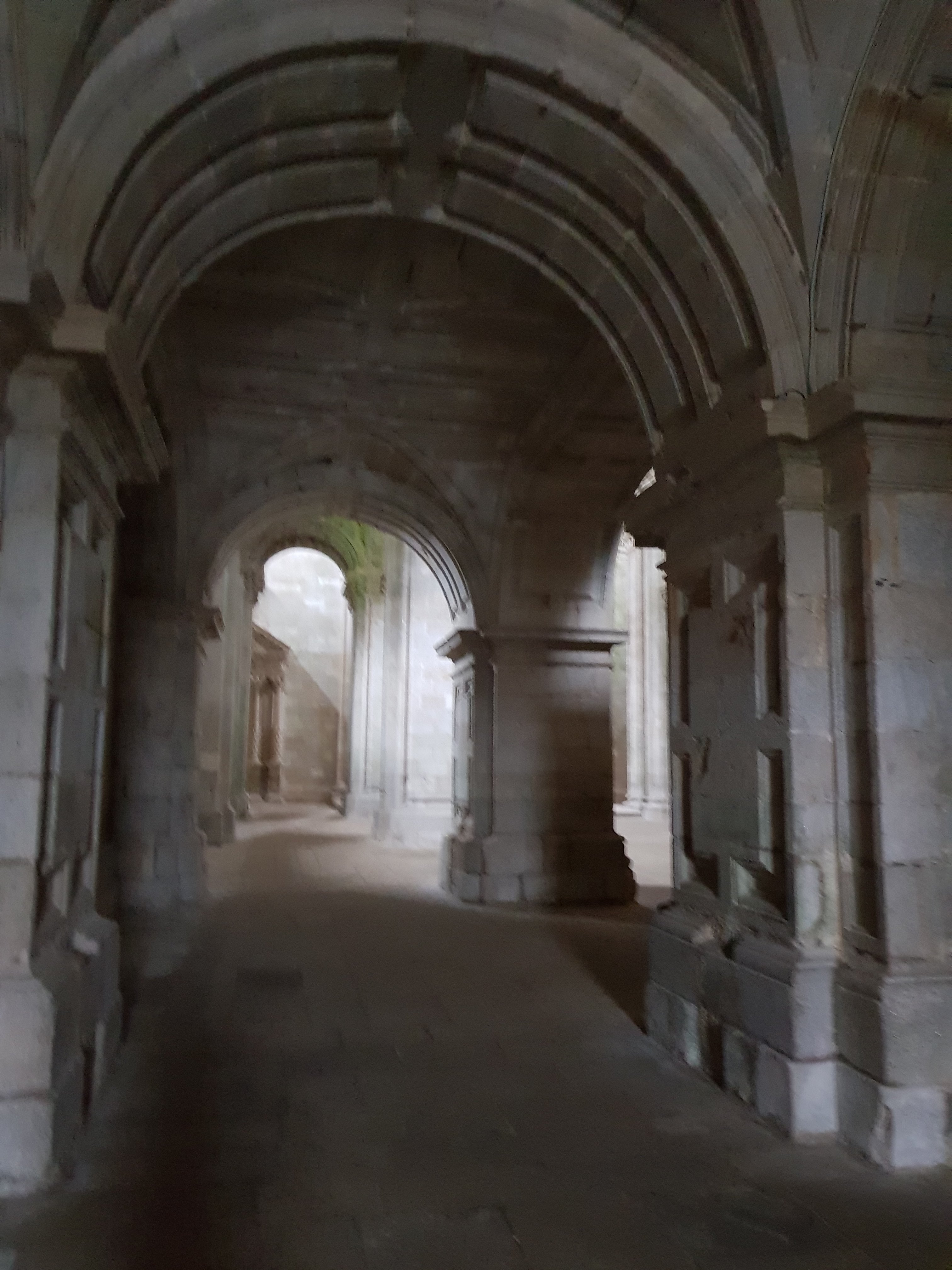
I was in a lovely hotel this night that overlooked the monastery in town. There was an option to sleep in the monastery with the monks, but at this point I just needed comfort and a hot bath. It was amazing to lay in hot water and soothe my muscles. The next day I left a bit later so that I could explore the beautiful monastery. I wanted to take the mass but the timings did not work with my schedule. The monastery is beautiful, and I almost missed a massive section of it where the door was out of sight! Thankfully, a nice monk pointed me in the right direction, and we had a good chat. Apparantly, they don’t use the large part of the church for masses anymore, instead it can be used for weddings. Very fancy!

Then by 11am, I was on my 22km walk to Arzua, and on to the home stretch now!

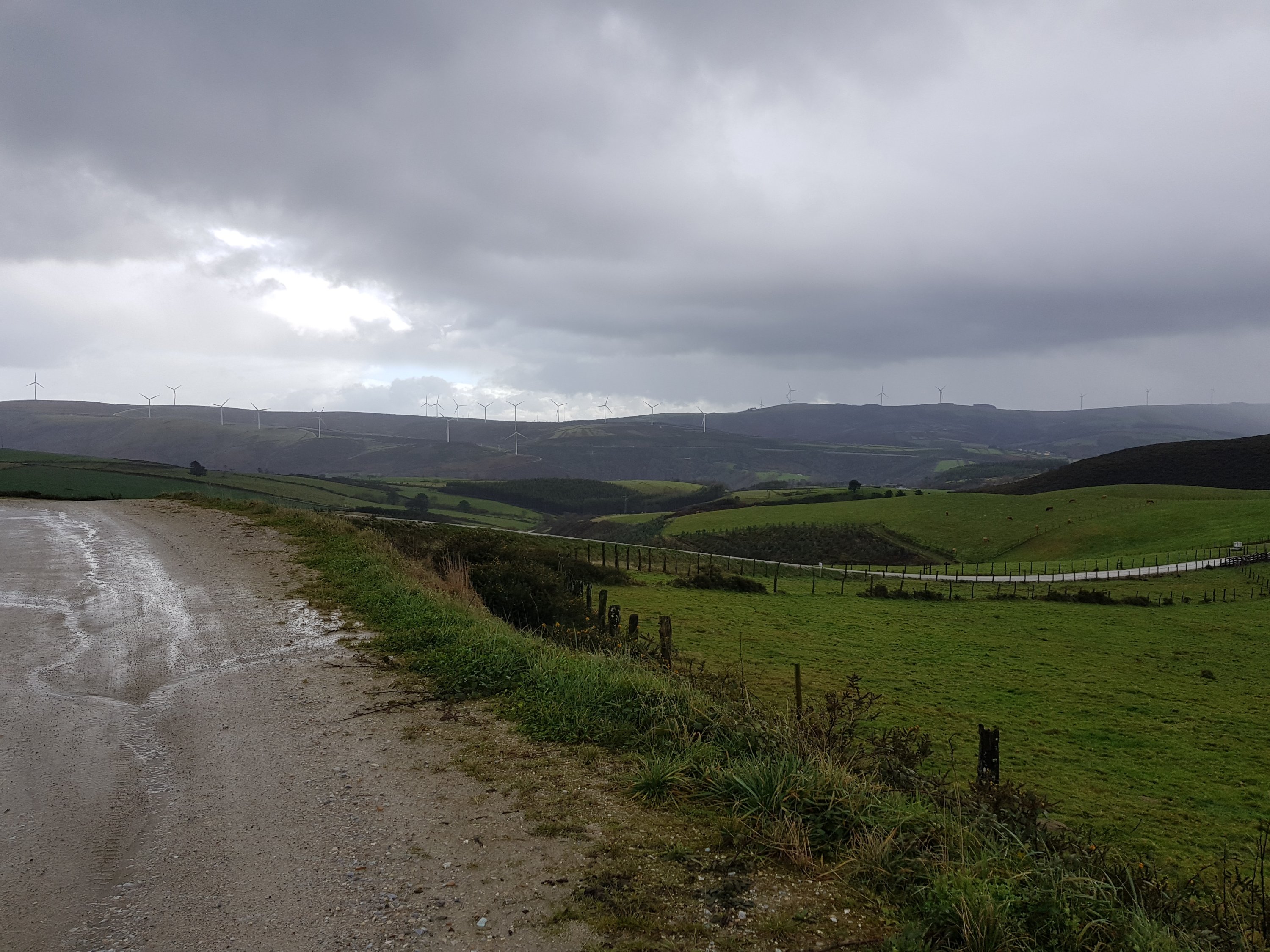
I cannot say anything good about this stretch of the walk. The rain never stopped, and I was in agony. I actually attempted to change my socks (in wet shoes) at one point, and squeezed about a pint of dirty water from them. There were many roads, and little places to rest. When I made it to Arzua, I was relieved and exhausted. 

Arzua is quite a big town, and the joining point for the camino del norte with the more popular camino frances. This meant I would finally be able to send my backpack ahead of me for two days. Now that my entire body is sore, this is great news!

The next day started with irritation to get my backpack sent off, and with trying to fight for a chance to use the one plug outlet to charge my phone, that was shared by 40 people.

The rain this day was the worse there has been throughout, plus strong wind. I did not have my backpack though, so I felt light and quick for the first time in months. It was great. Whilst, I was still in pain and very wet, I found myself feeling very grateful, for life. Grateful to have the opportunity to be alive and here.

I also saw many other pilgrims along the way now, and I was able to get some sick satisfaction that I was not suffering the path alone. I can now identify a pilgrim with ease. The key identifiers are:

  • Backpack and poncho
  • Obsession with stamps
  • Hiking boots and poles
  • Tortured look in eyes
  • Broken spanish or use of the phrase ‘tanta lluvia’
  • Sports wear
  • Dirty and smelly looking
  • Walking with a limp, we all have the same one.

This day I spent the afternoon walking with a very lost looking 20 year old girl from China. She had only started a few days before, and was not well prepared. She only had a small puffer jacket, trainers,a little bag, no sleeping bag, and an umbrella that consistently turned inside out. She was struggling to find her way, and so I offered to help. We walked through absolute rivers to get to the next stop in Pedrouzo but whilst I was ankle deep in water, all I could do was accept it, laugh and keep singing along.

After one final night in a pilgrim hostel, a very cold damp night, I finally made my last big walk to just outside Santiago, Monte del Gozo.

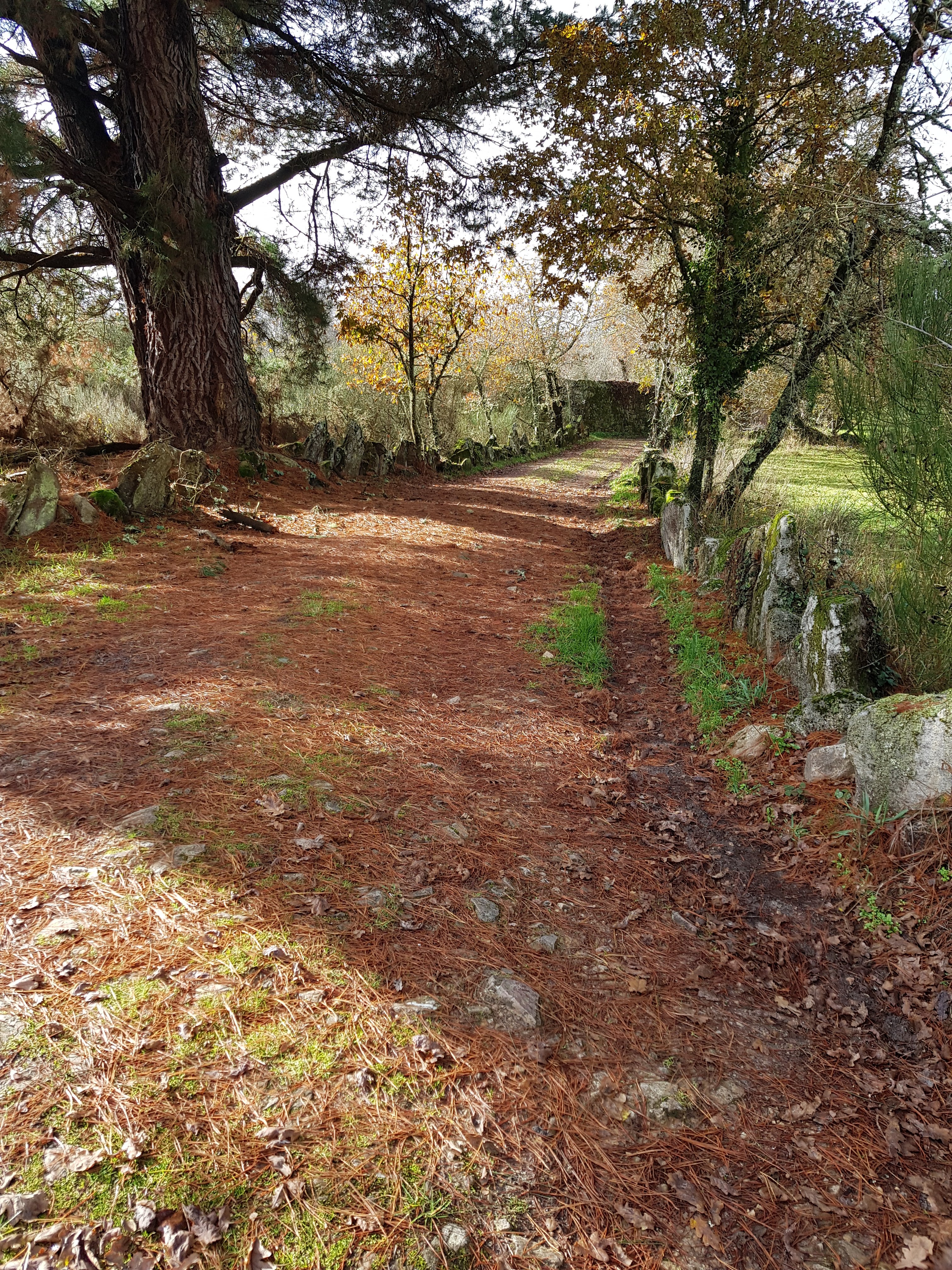
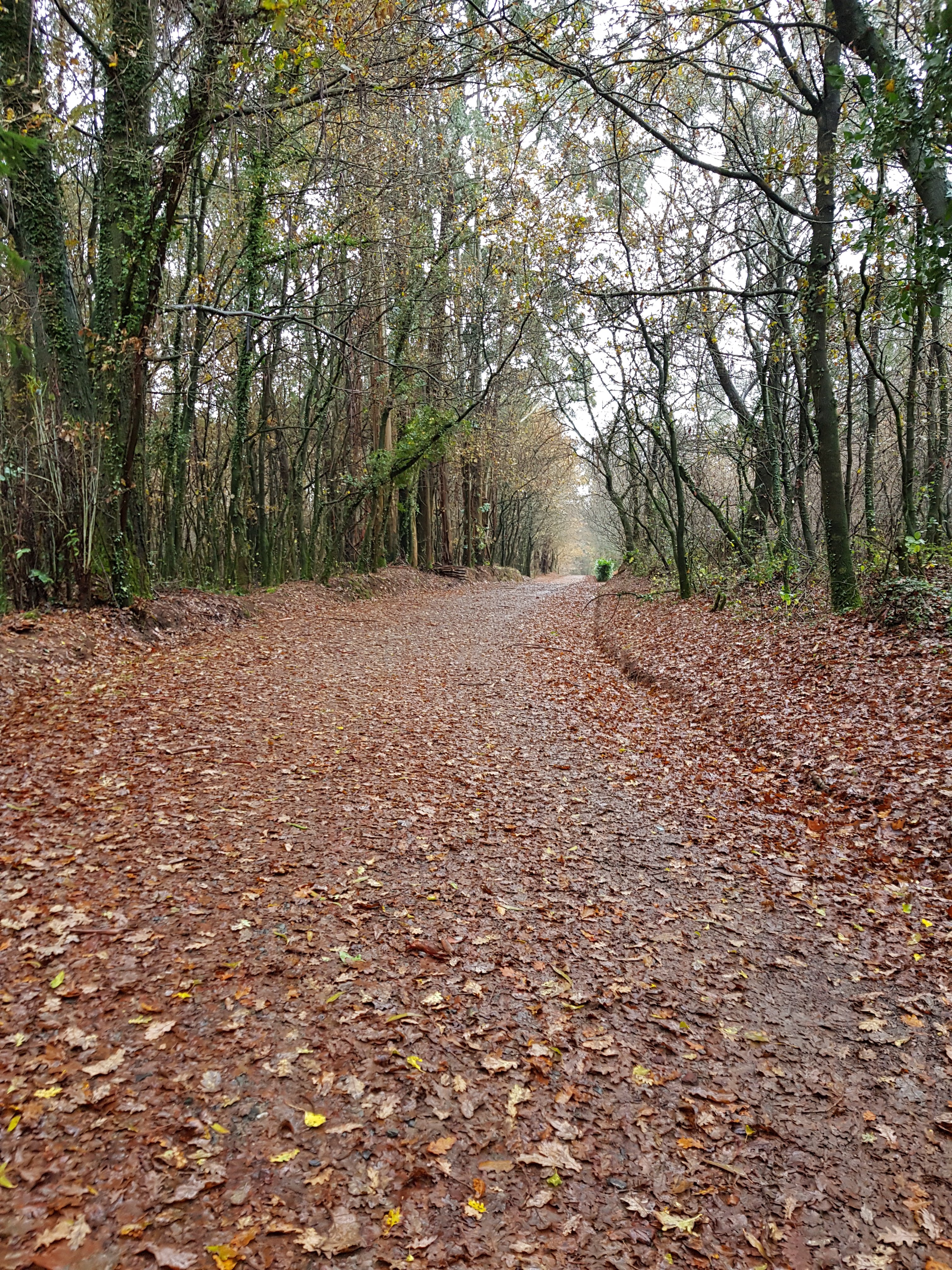
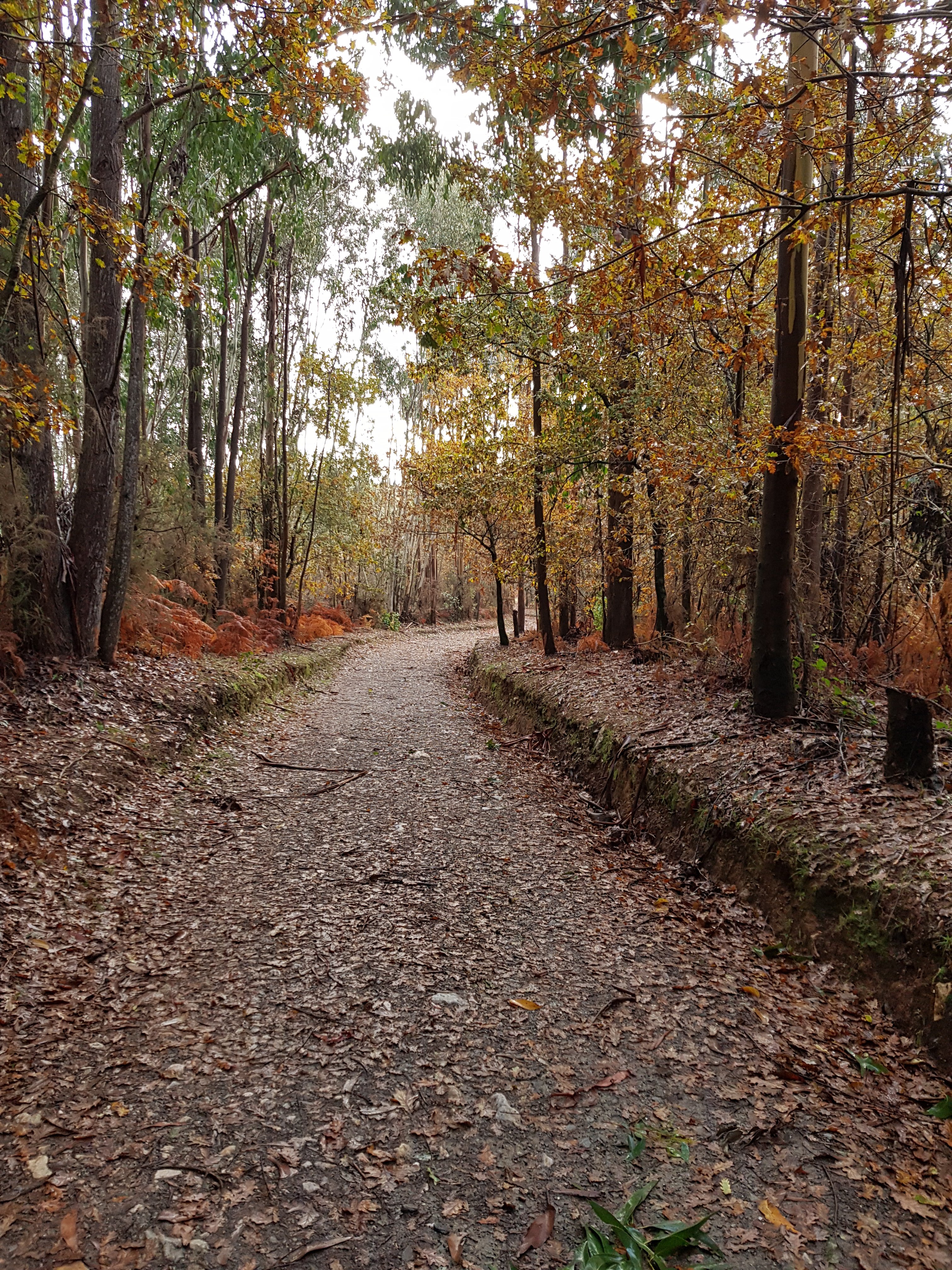
The walk was a lot drier, only raining half the day. It was also an even mix of walking through woodland and road, which was good for the feet.

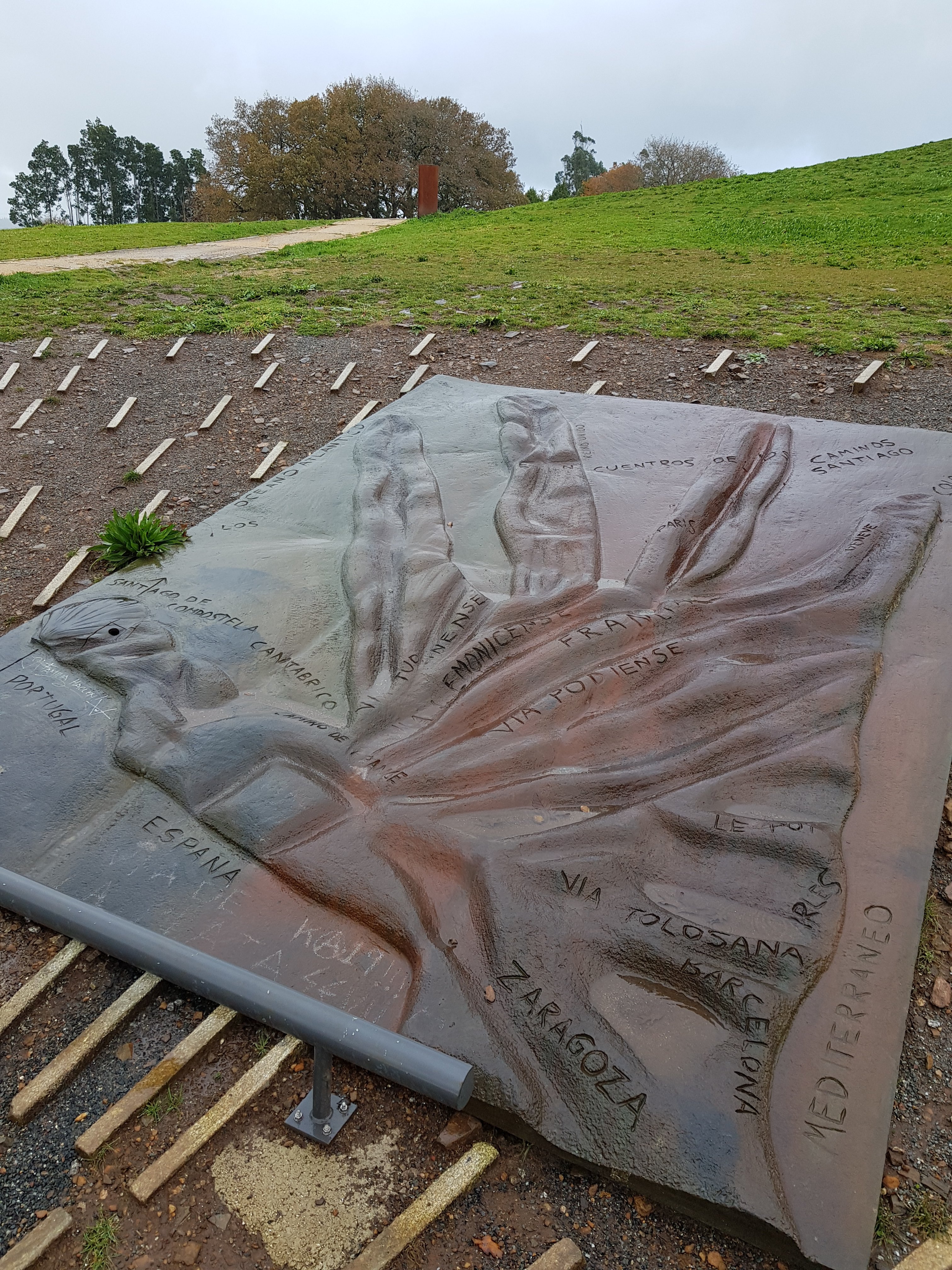
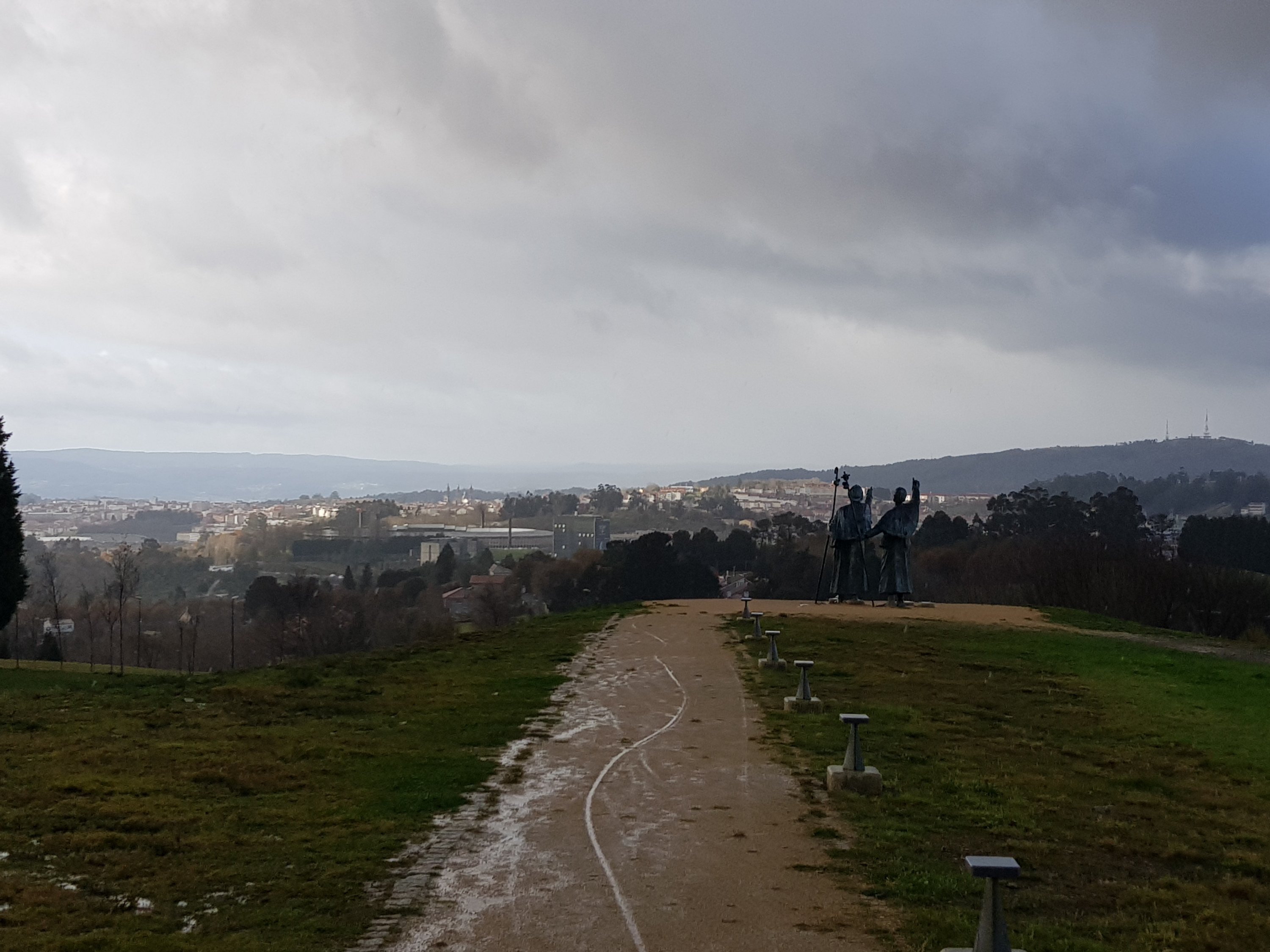
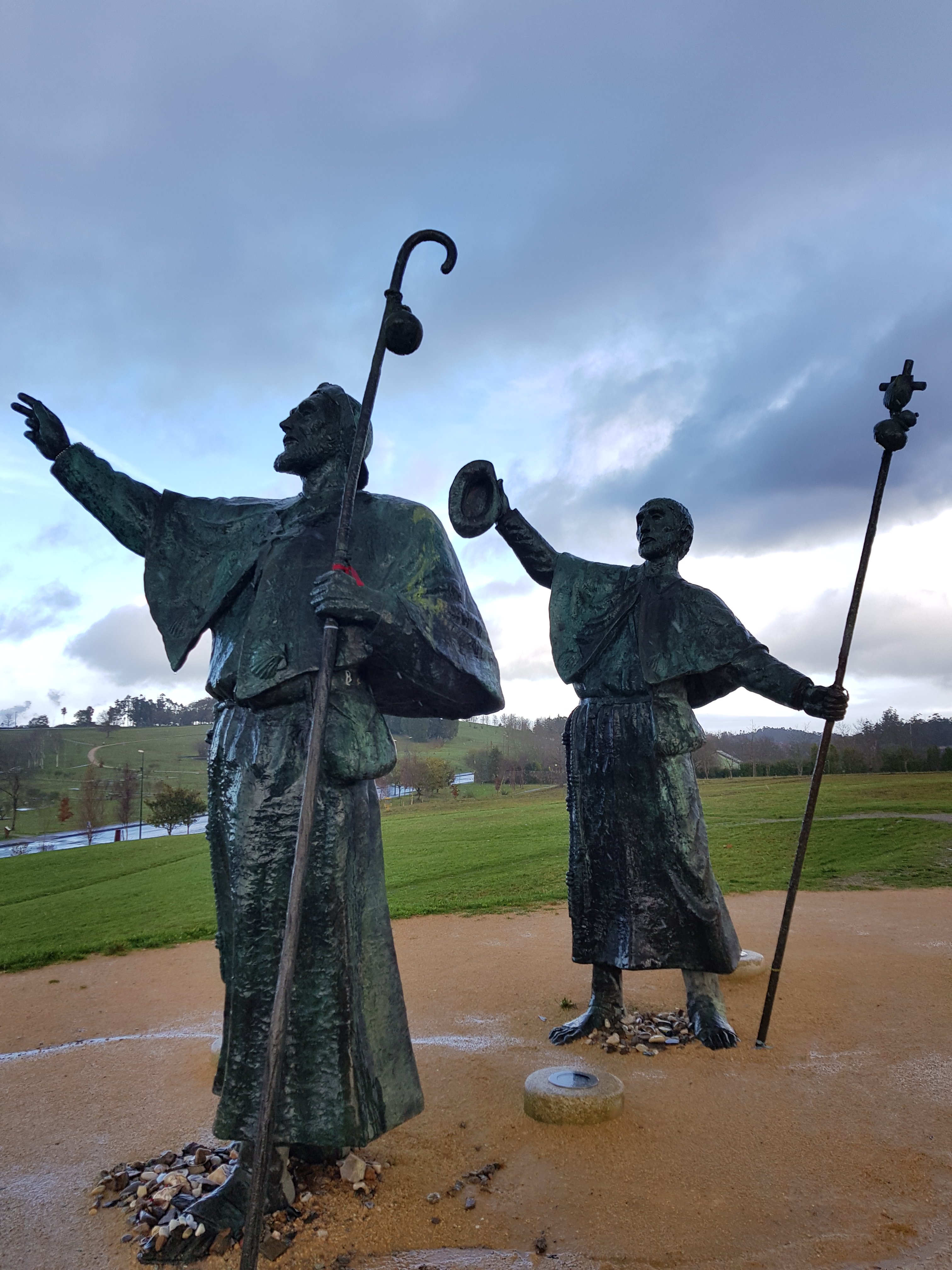
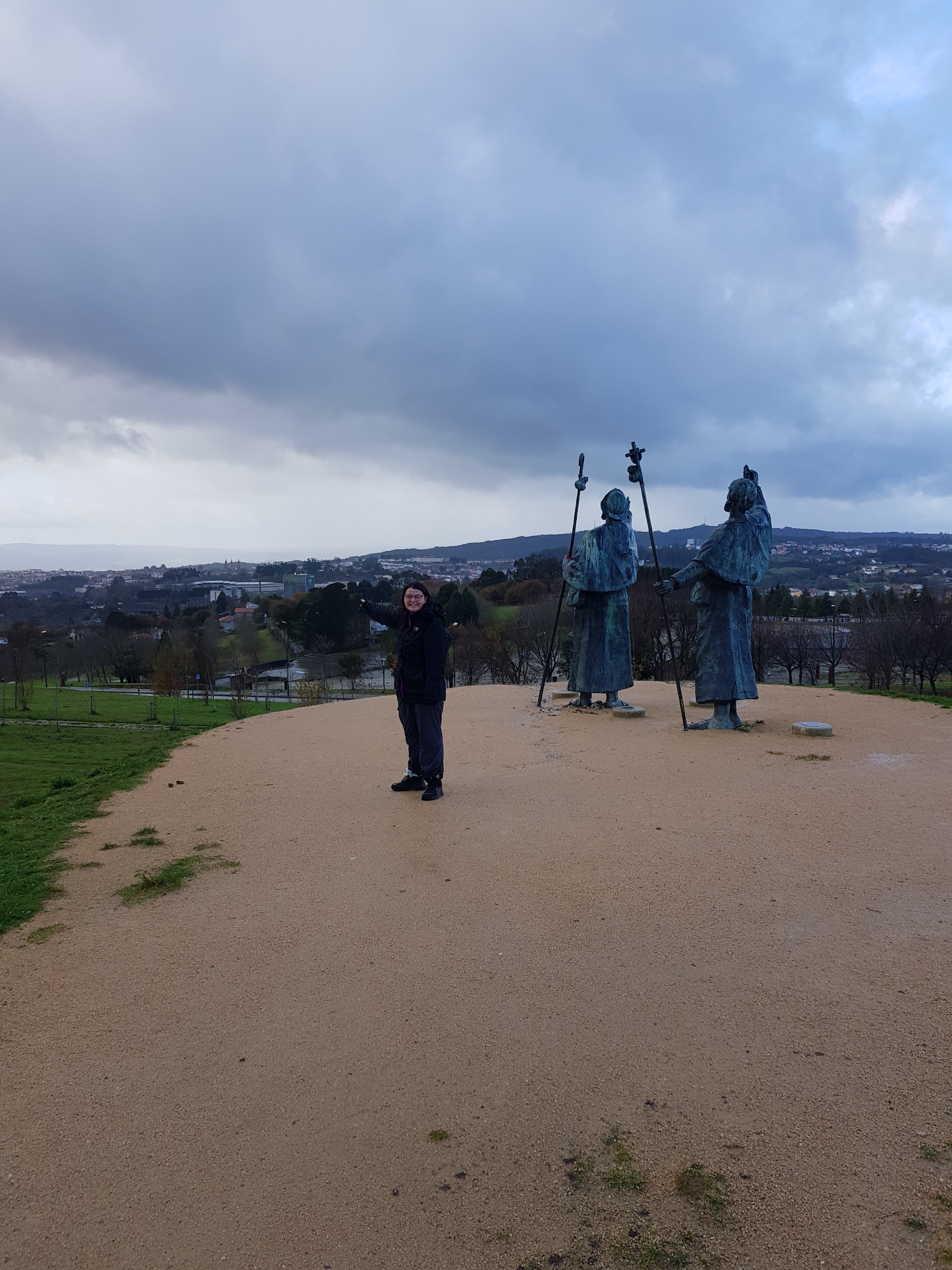
The best part, came at the end, when I visited the pilgrim monument overlooking my final destination, Santiago de Compostela. The monument is 600 metres off route on a hill, but worth the view. After this, I took a well deserved rest at a hotel outside the city, and found some much needed moisturiser for my poor feet.

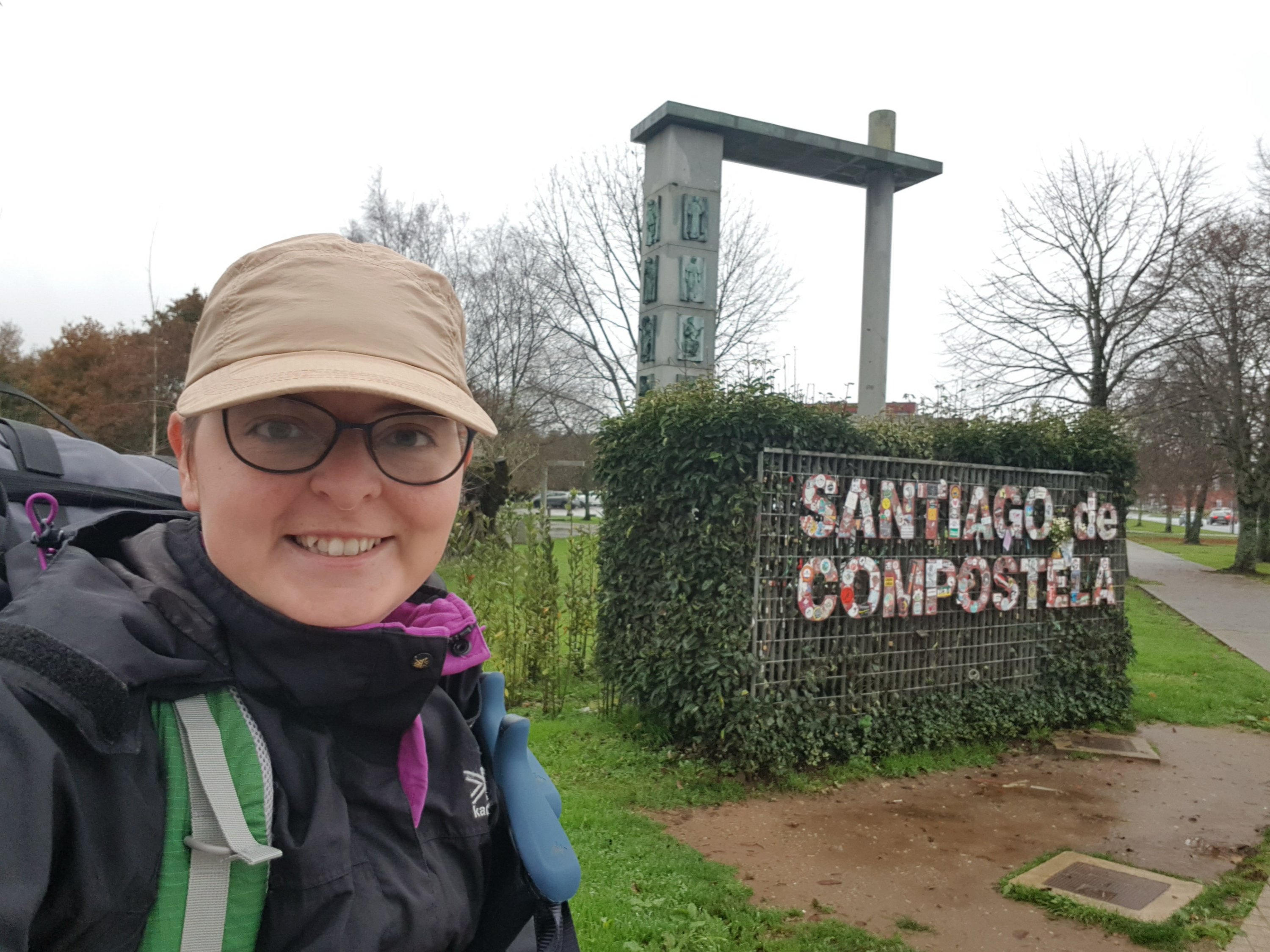
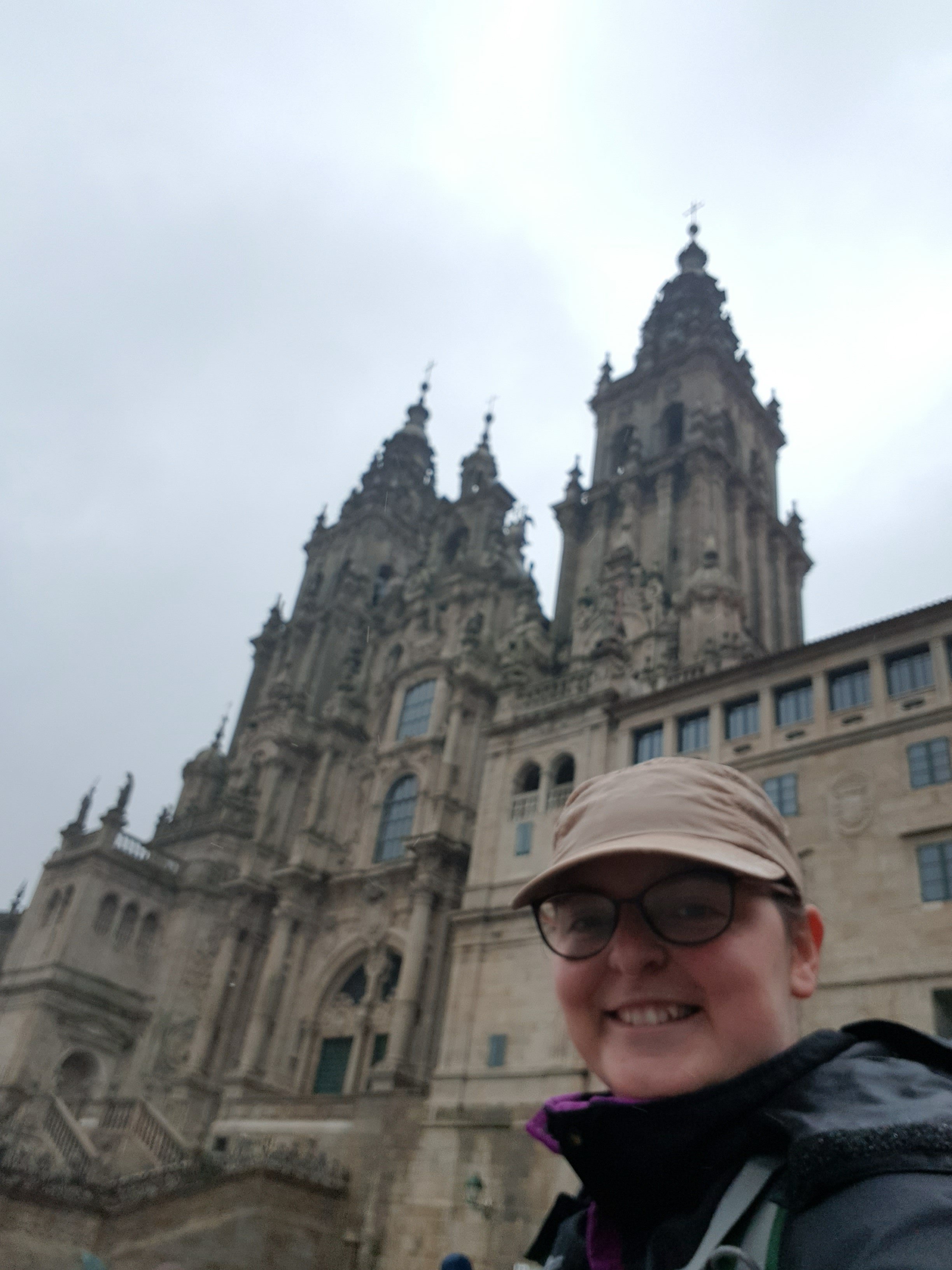
The last part of my pilgrimage came the next morning, with a final 4km walk to the cathedral, and to receive my certificate!

Santiago de Compostela

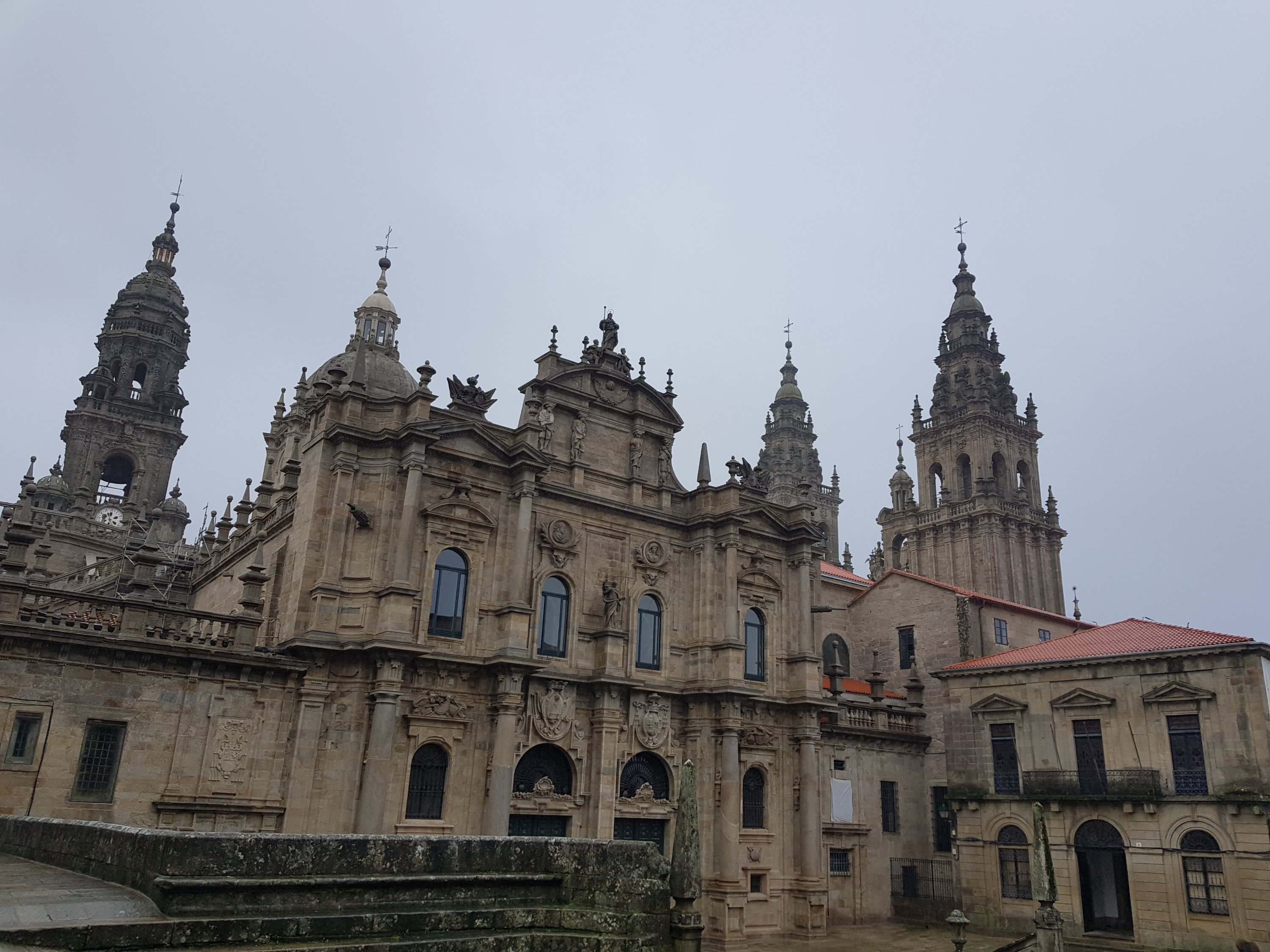
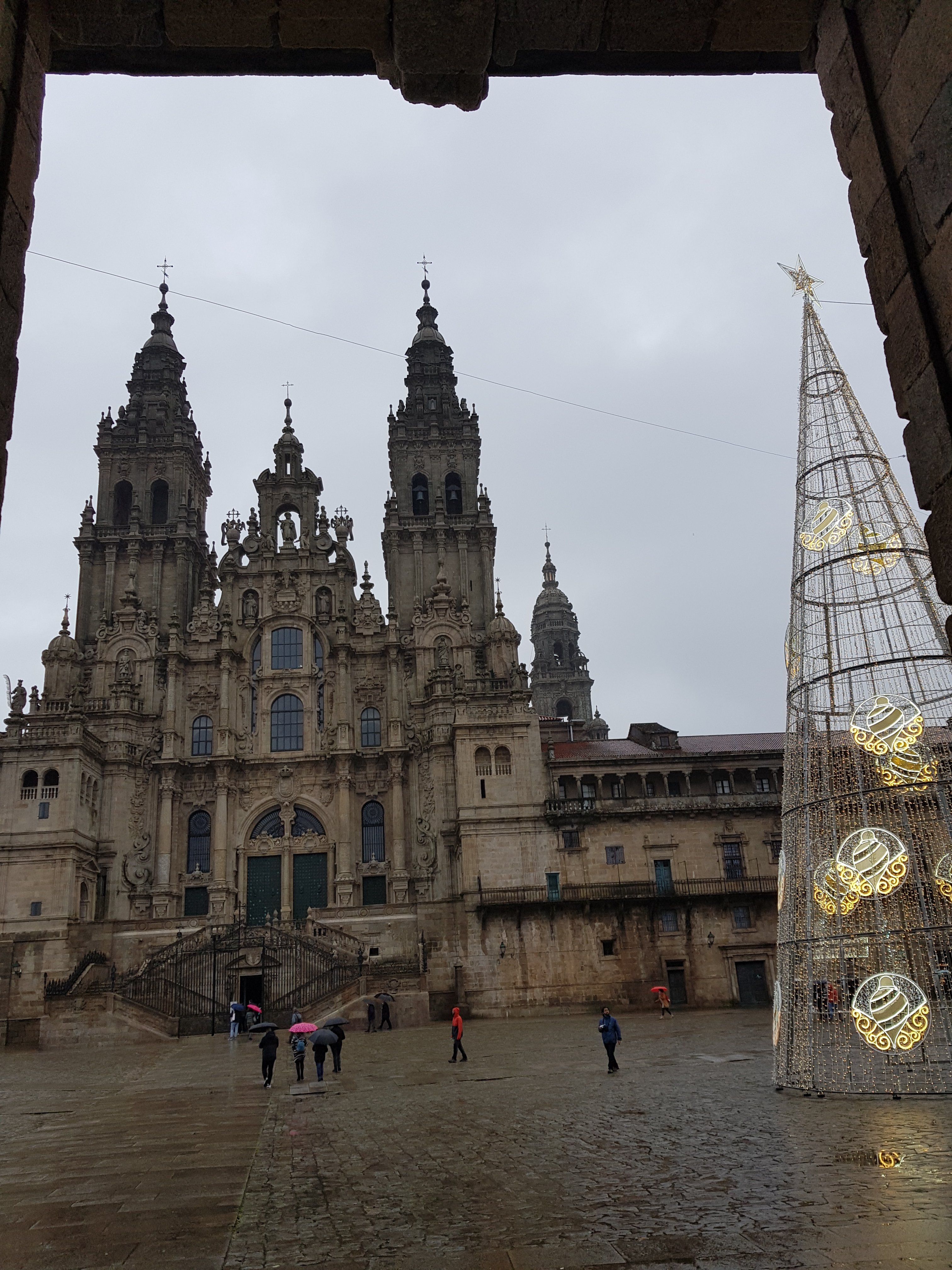
The outside of the city is modern and industrial, with many neighbourhoods as you would expect. The exciting part is when you arrive in the old part of the city. There are many small plazas, arch covered walkways and historic buildings. I began to see the towers of the cathedral from quite far out, and as I approached it, the streets became more winding and maze like. The closer I got to the cathedral, the more pilgrims I saw, from all over the world, and with all the different gear on their backs or bikes. No one arriving on horseback though!
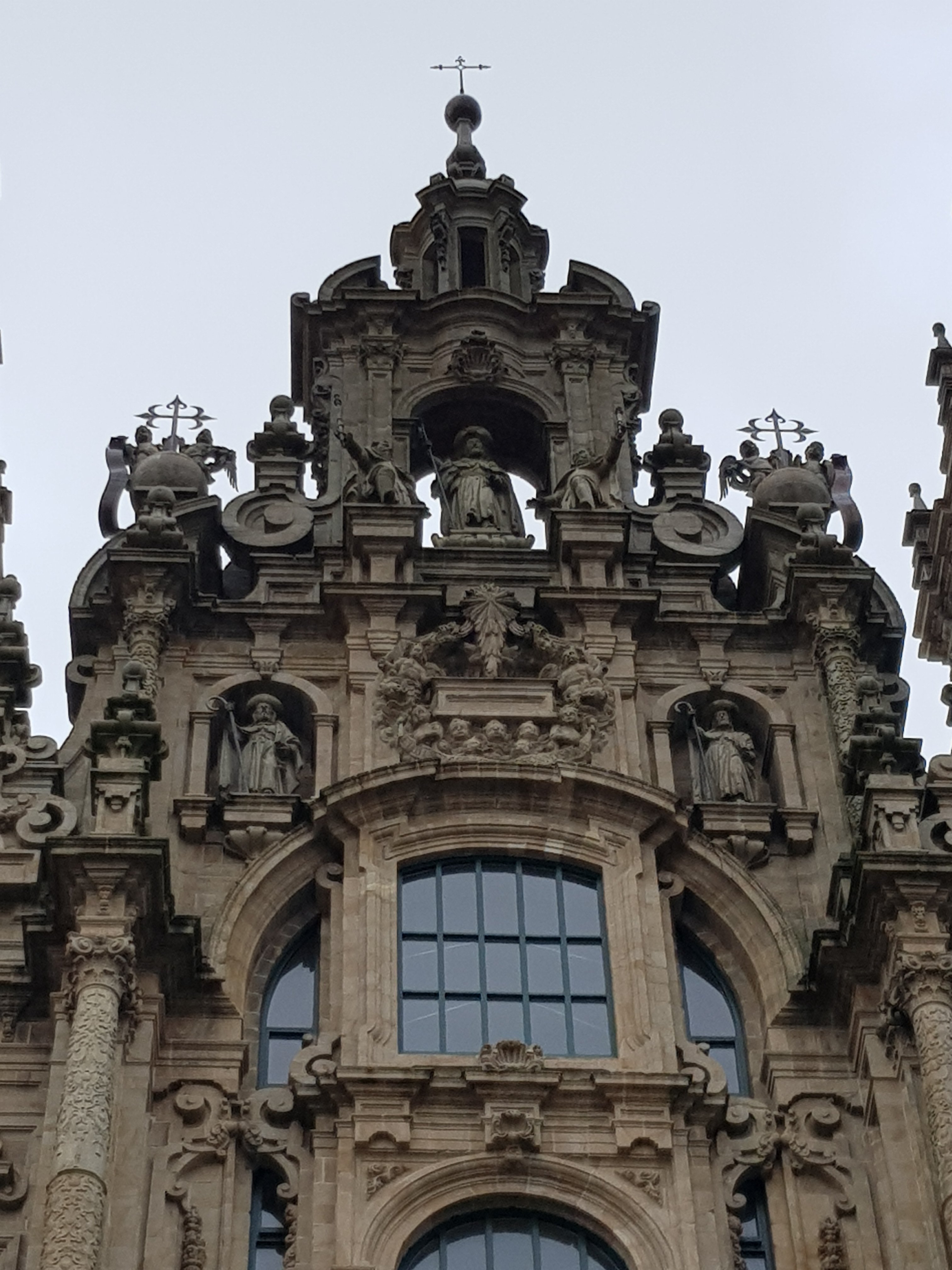
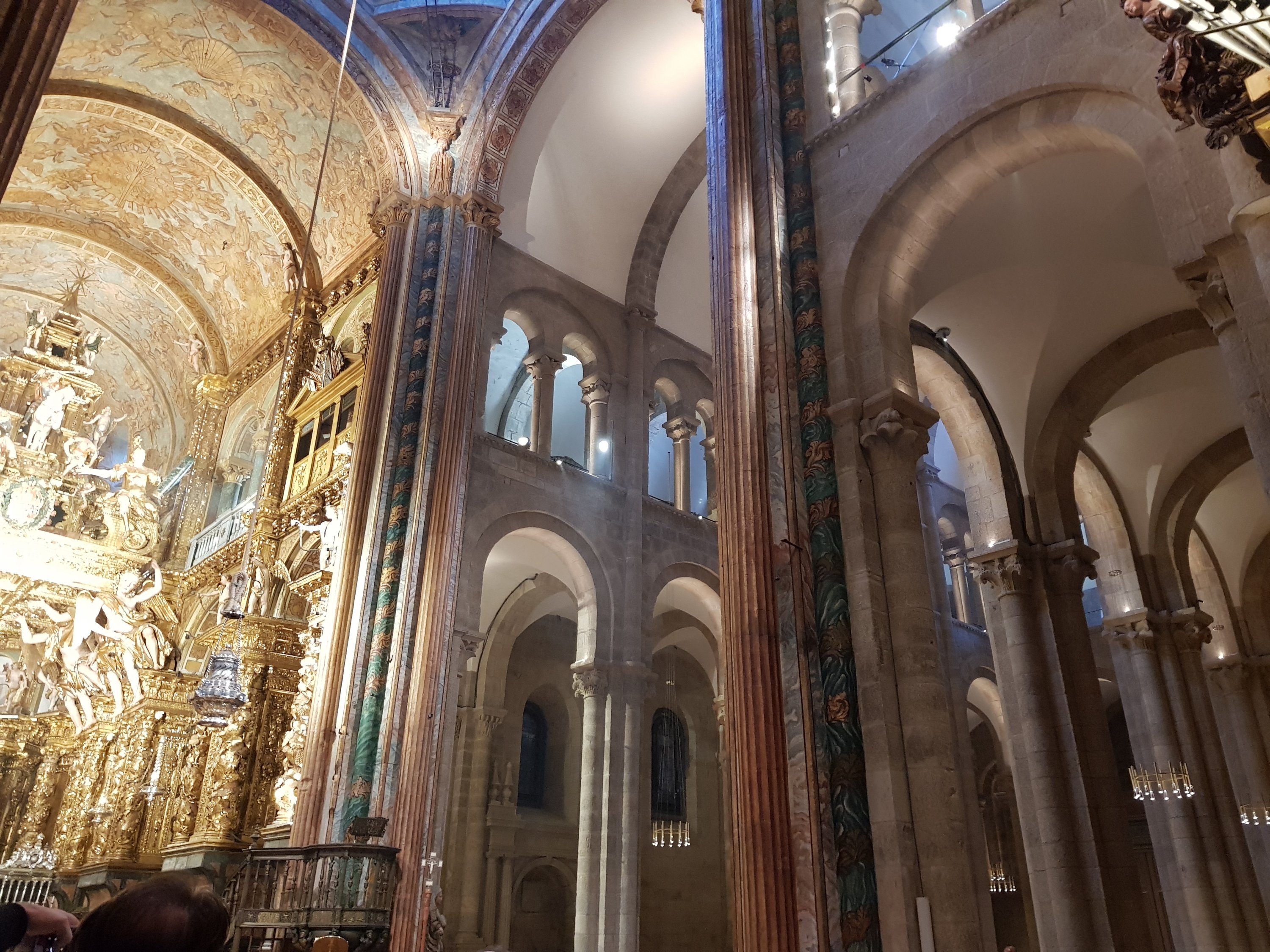
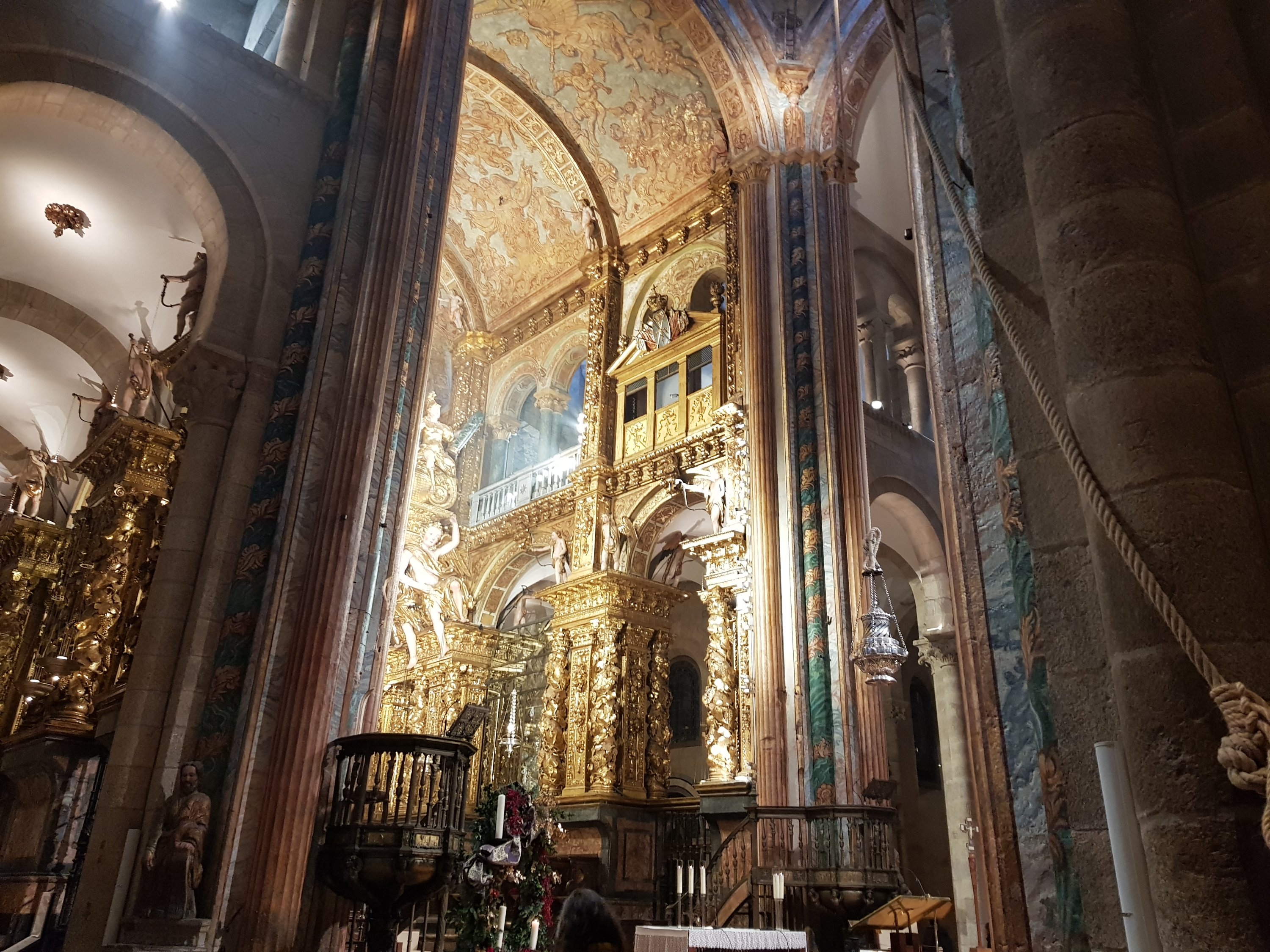
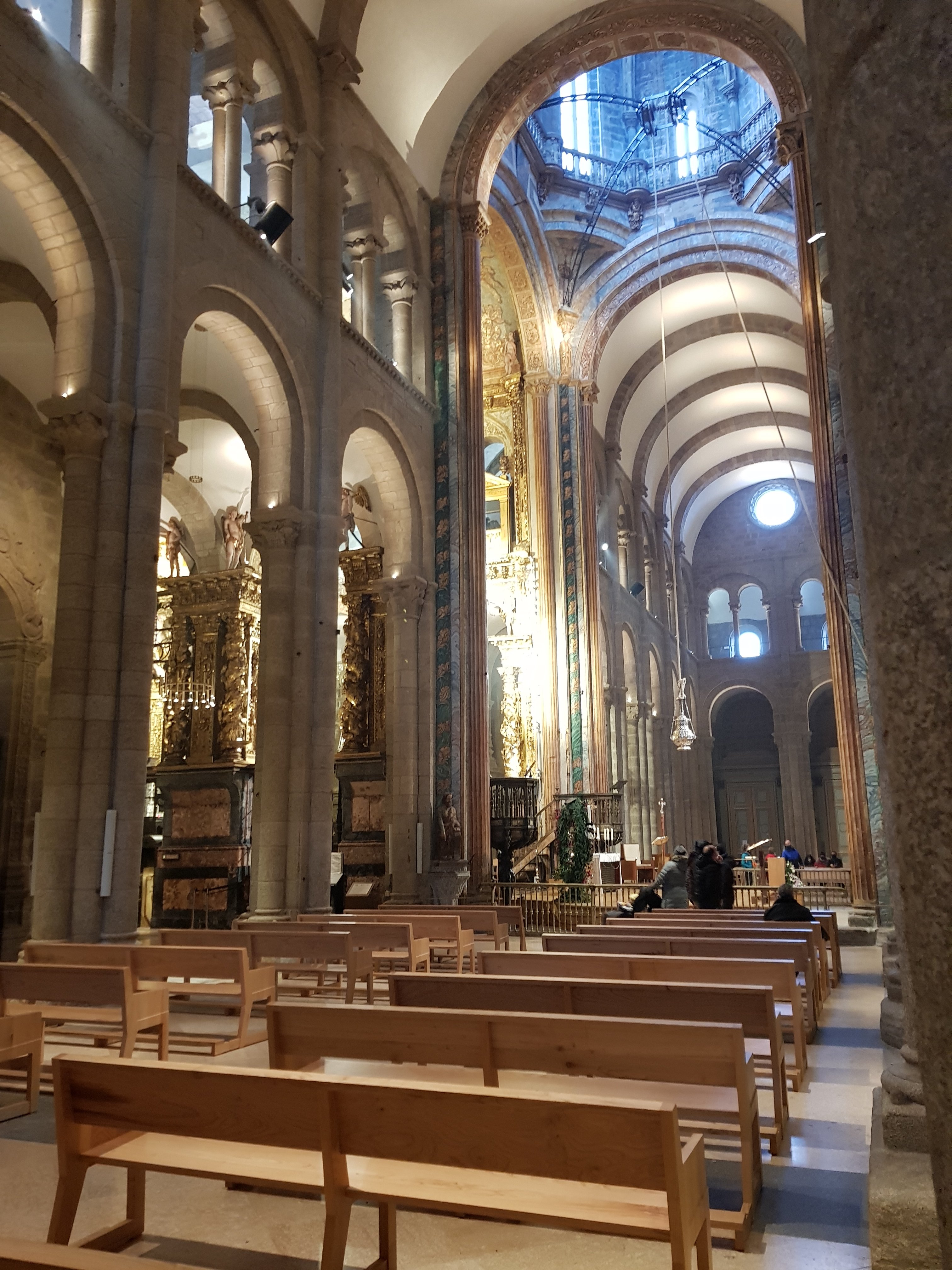
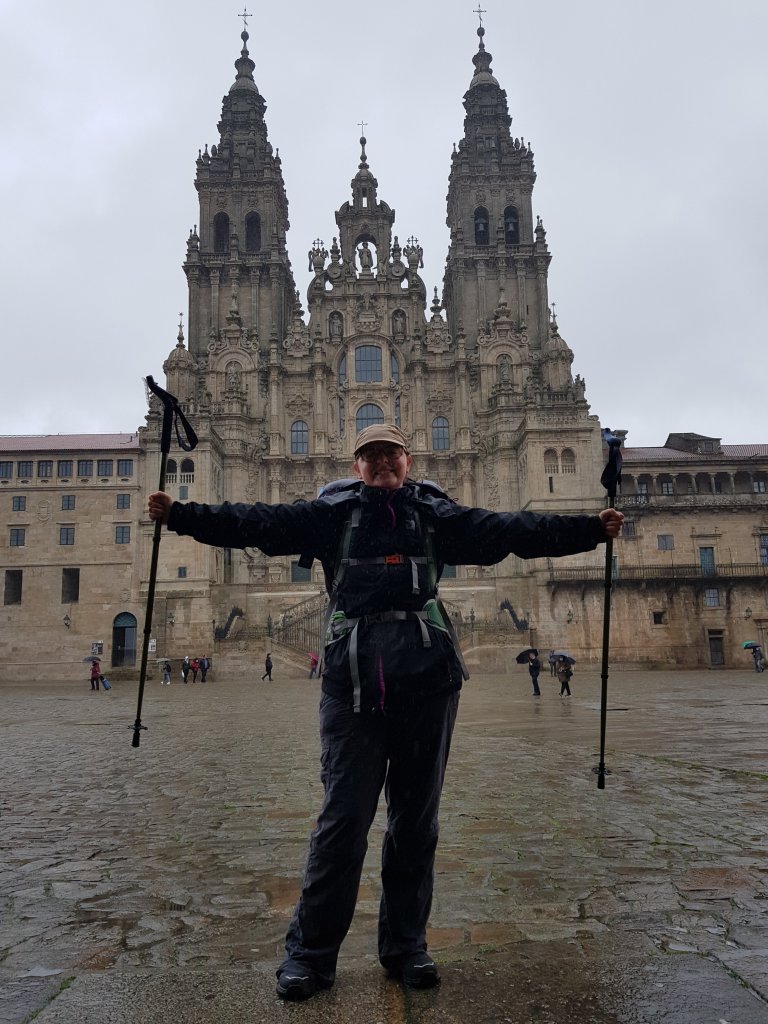
A large plaza faces the breathtaking cathedral, with three other historic buildings, one of which is a very pricey hotel. I was lucky to arrive when it was not raining, and we were all angling for the best shots. After admiring the outside decoration for a while, I made my way to the Pilgrim’s Mass.

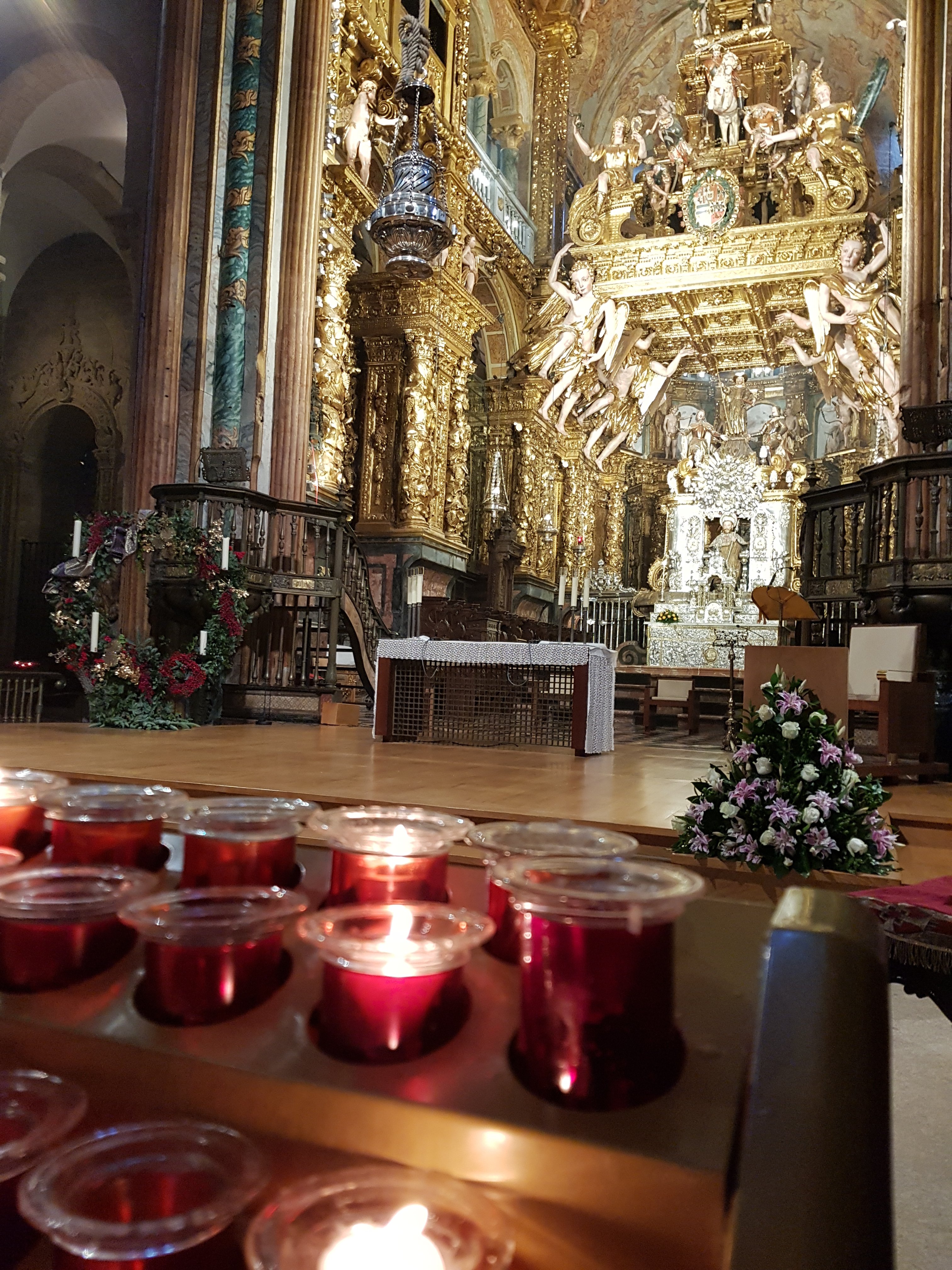
All in spanish, the mass was difficult to follow, but the vibe was still nice, and unexpectedly they swung the Botafumeiro (big incense burner) across the cathedral transcepts, which is a well recognised symbol of the church.

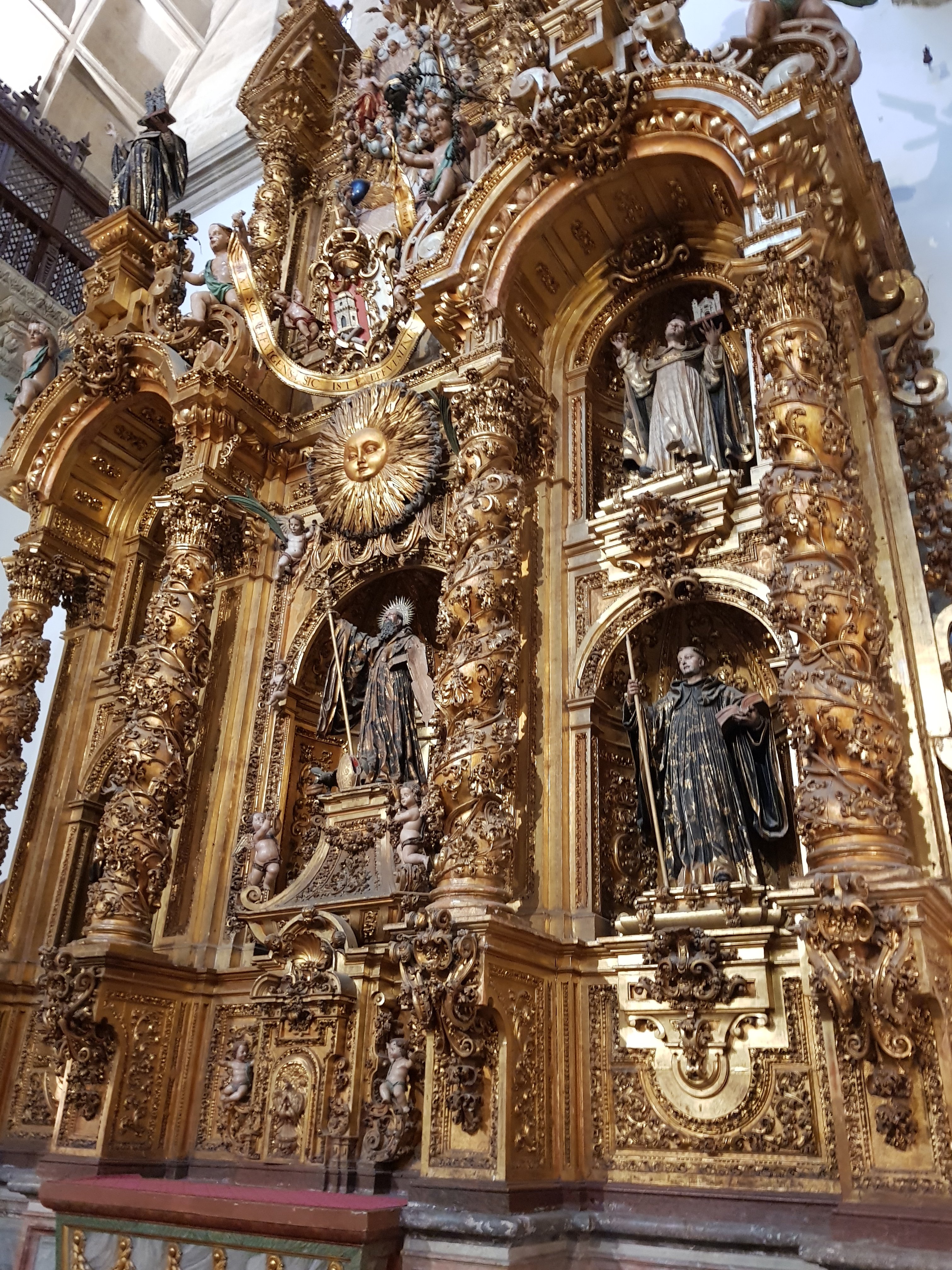
After mass, I spent some time admiring the cathedral, and went a little crazy buying souvenirs. I then wondered around a little and came across another christian building that seemed to be quite intriguing. The monastery of San Martín Pinario, now partially used for a hotel, school, and museum. The main church is actually magnificent! Possibly more impressive in artwork than even the cathedral.

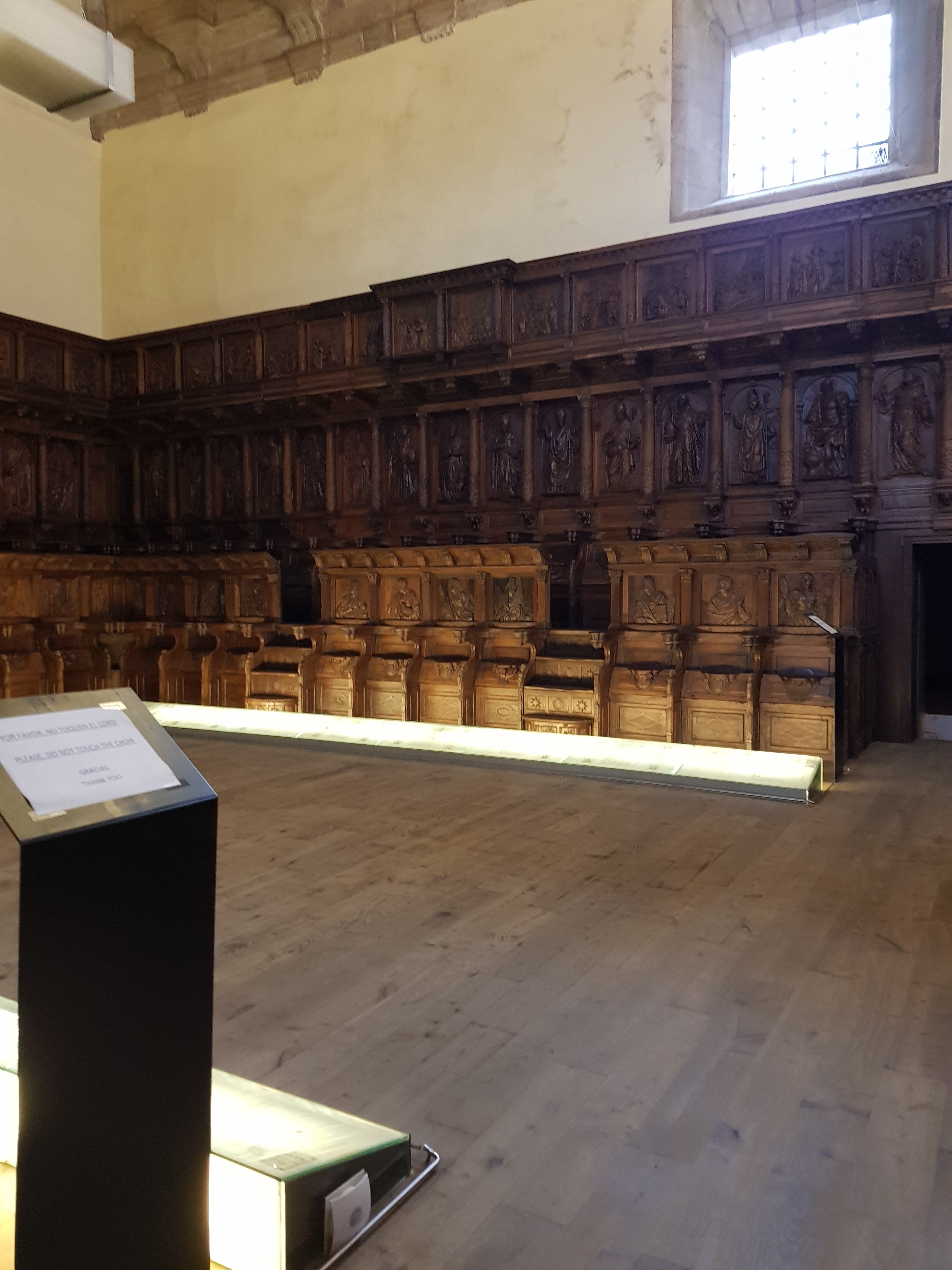
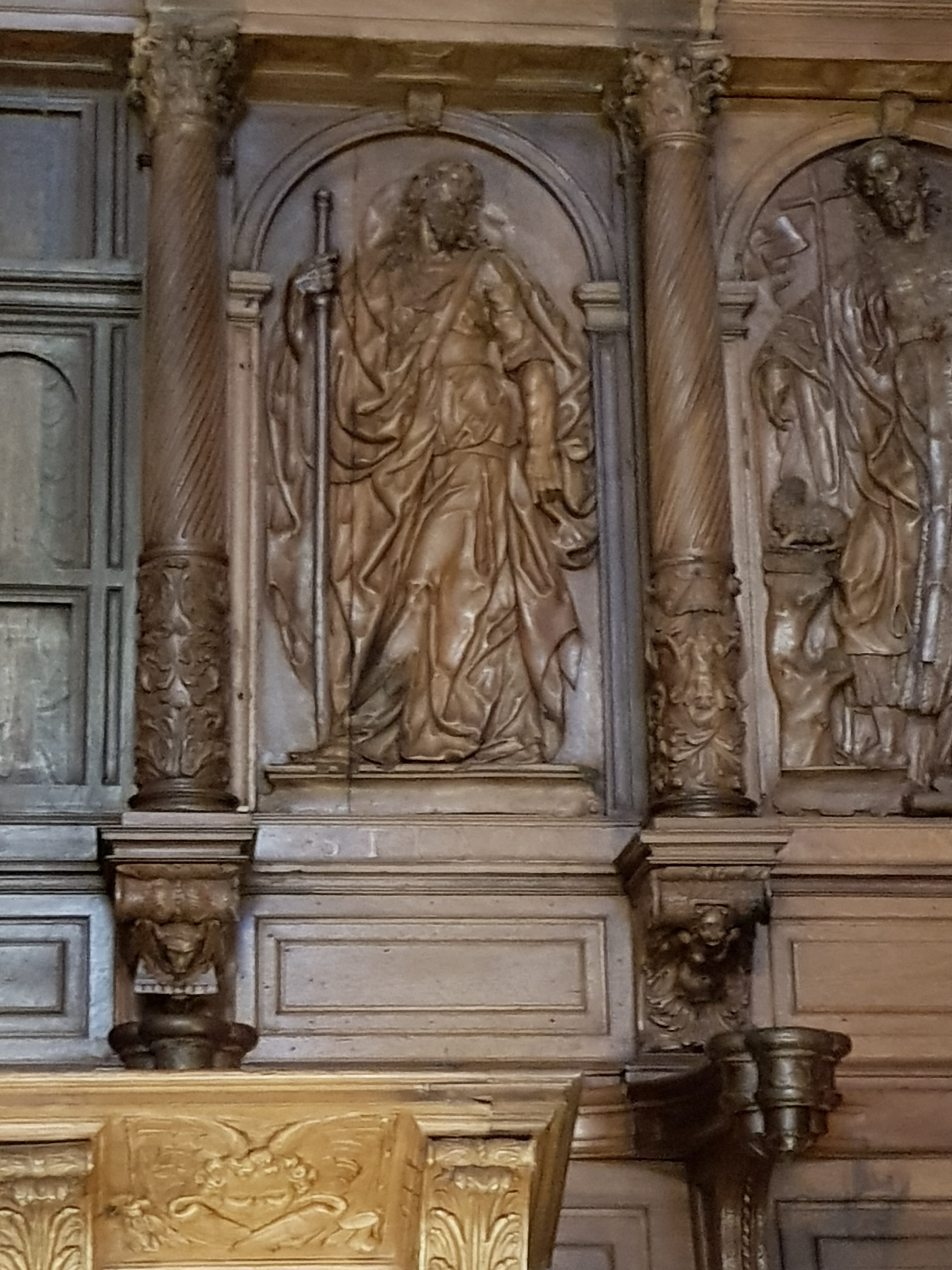
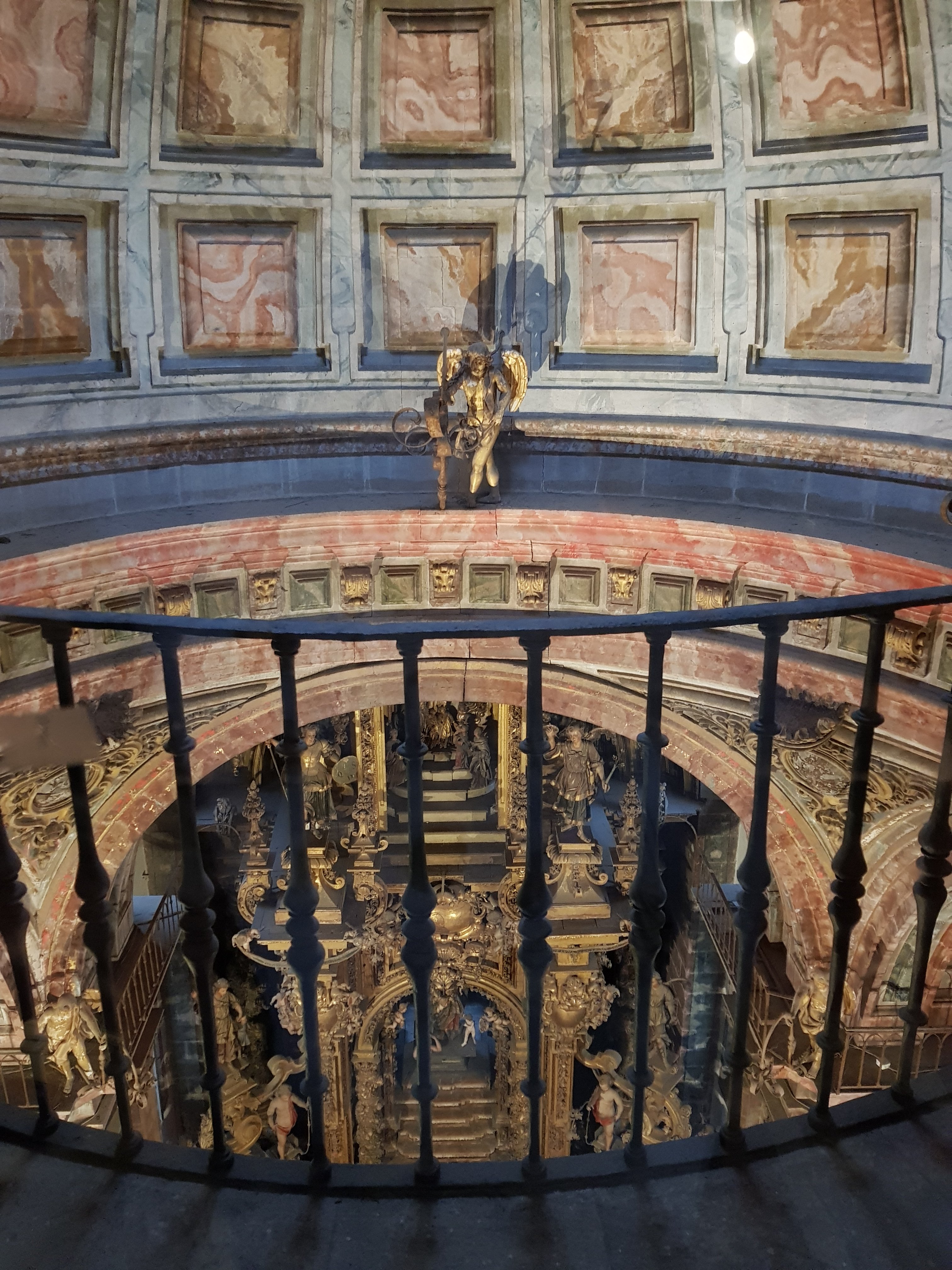
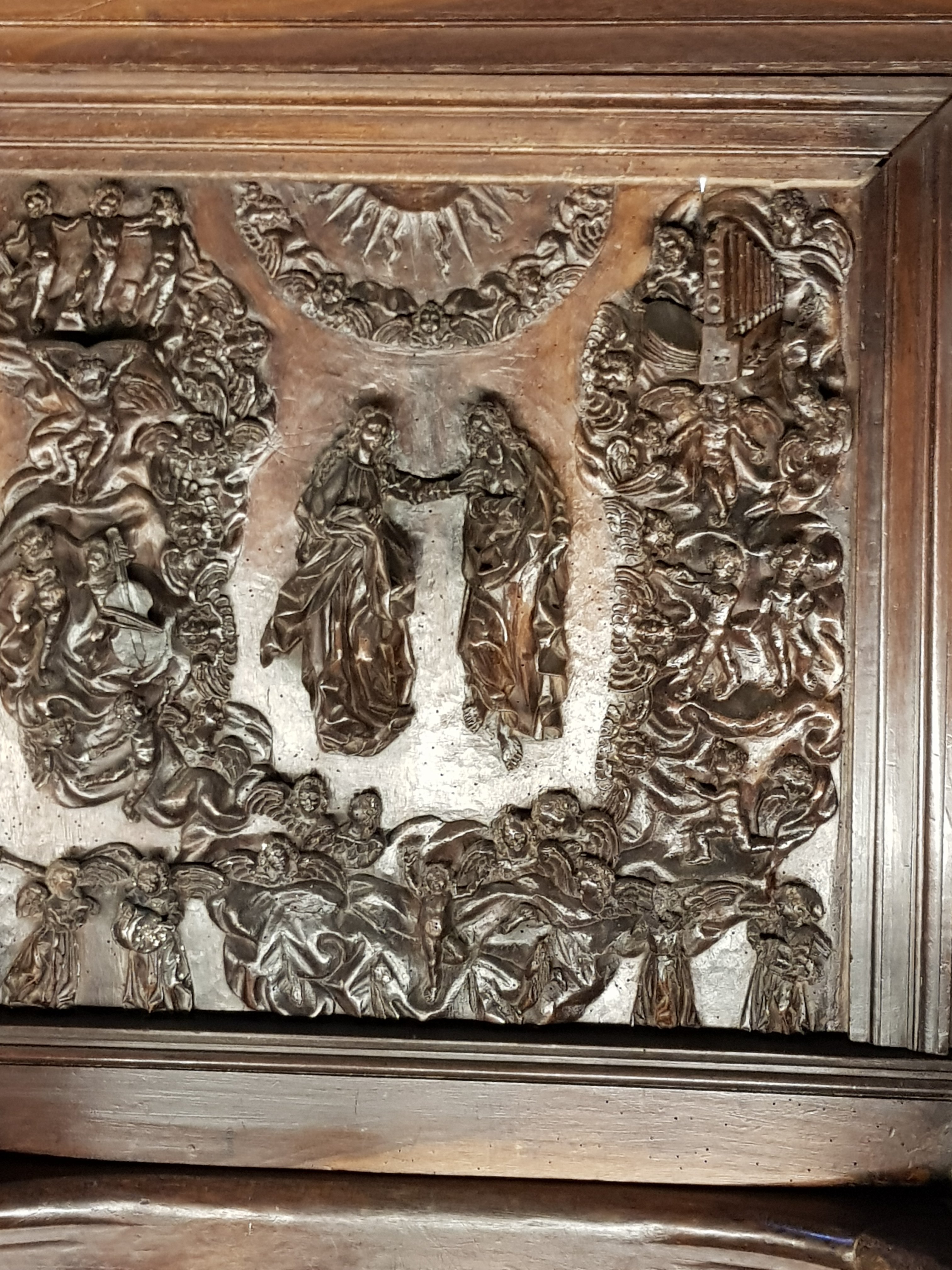
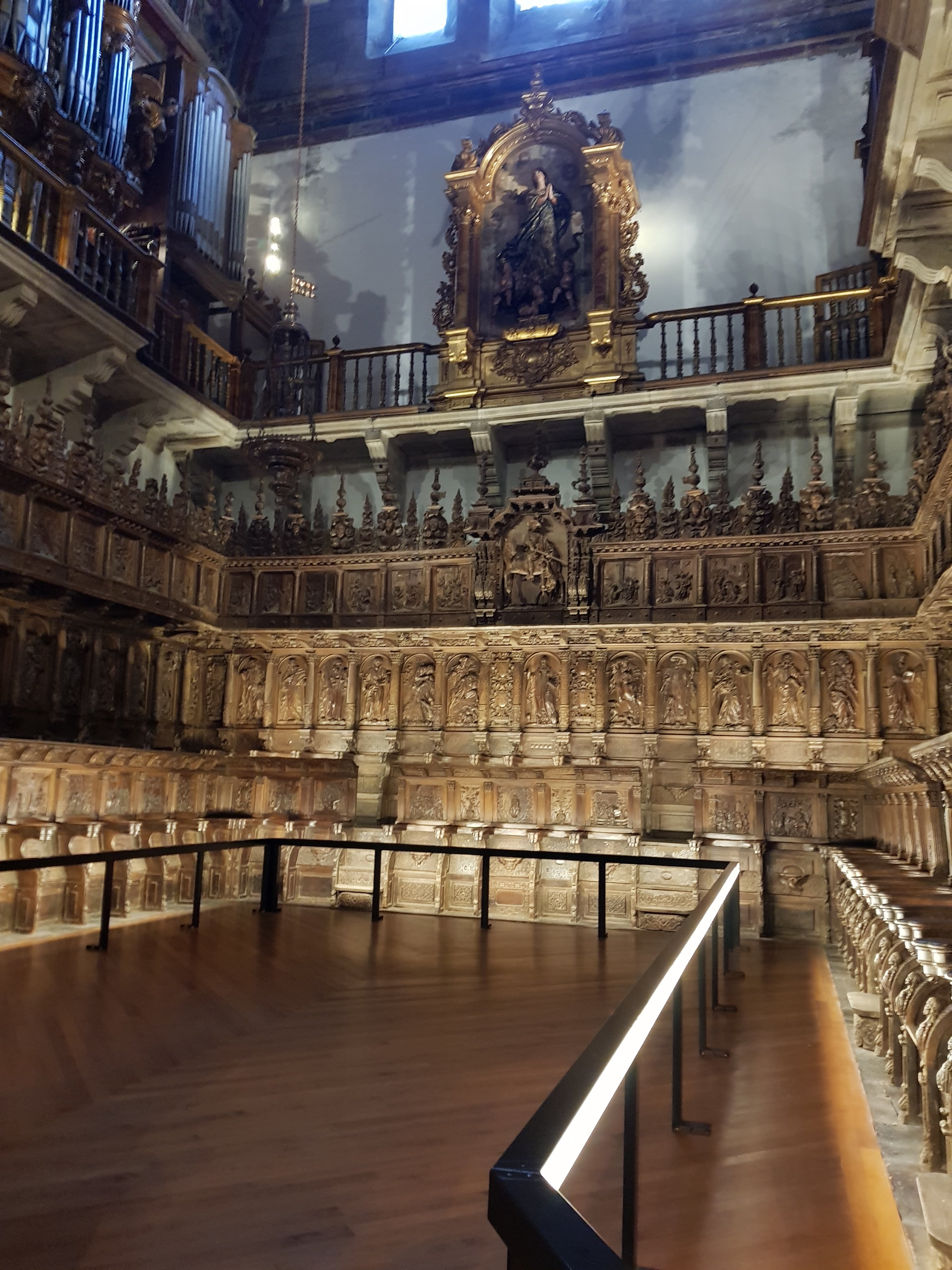
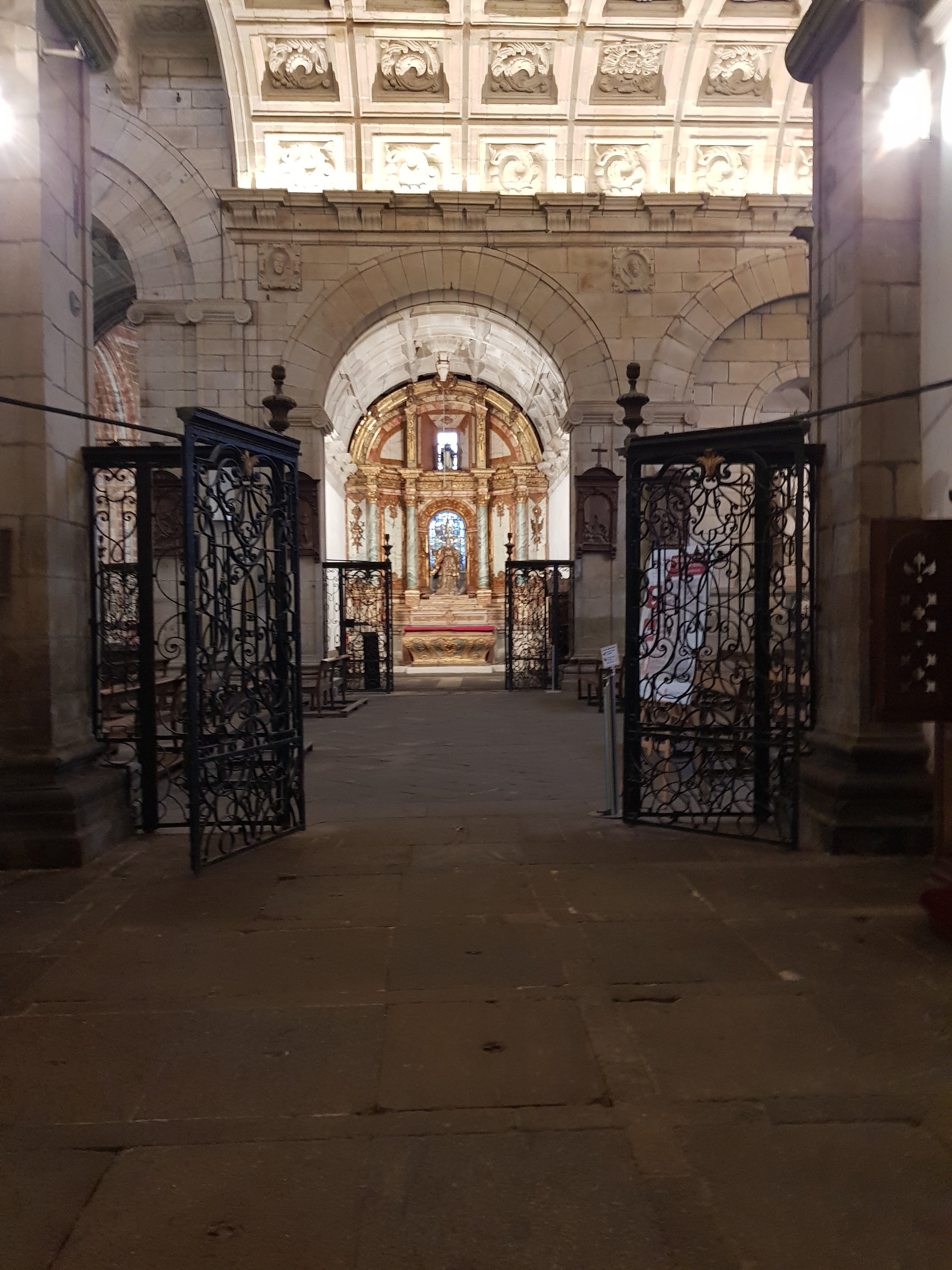
The choir sits behind the main altar, which is unusual, and so you can actually go to the back of the main altarpiece, and admire some amazing fine carpentry. You can also go upstairs and view the church from the galleries where a second choir resides! This was a lovely surprise. There is also an opportunity to look directly at the dome ceiling art. The museum also had some good pieces to admire, and this large attraction was only a few euros.
That night I met up with my new friend from Switzerland for our celebratory dinner, and we toasted to our success in making it to the end. He had arrived a few days before me, and told me where he had been shopping for new clothes. Now that I had walked into the city in literally rags, I decided I needed to prioritise a bit of shopping.

I took a bus from Praza Galicia for only €1 out to a big shopping mall, and spent a long while tracking down the right pair of jeans.. 😍 I don’t know why the Spanish only sell skinny jeans?! I have now walked 828km and these thighs still cannot fit in them! In the end I found some ‘mum style’ ones, a bit embarrassing but oh well. It is good to be back in denim.

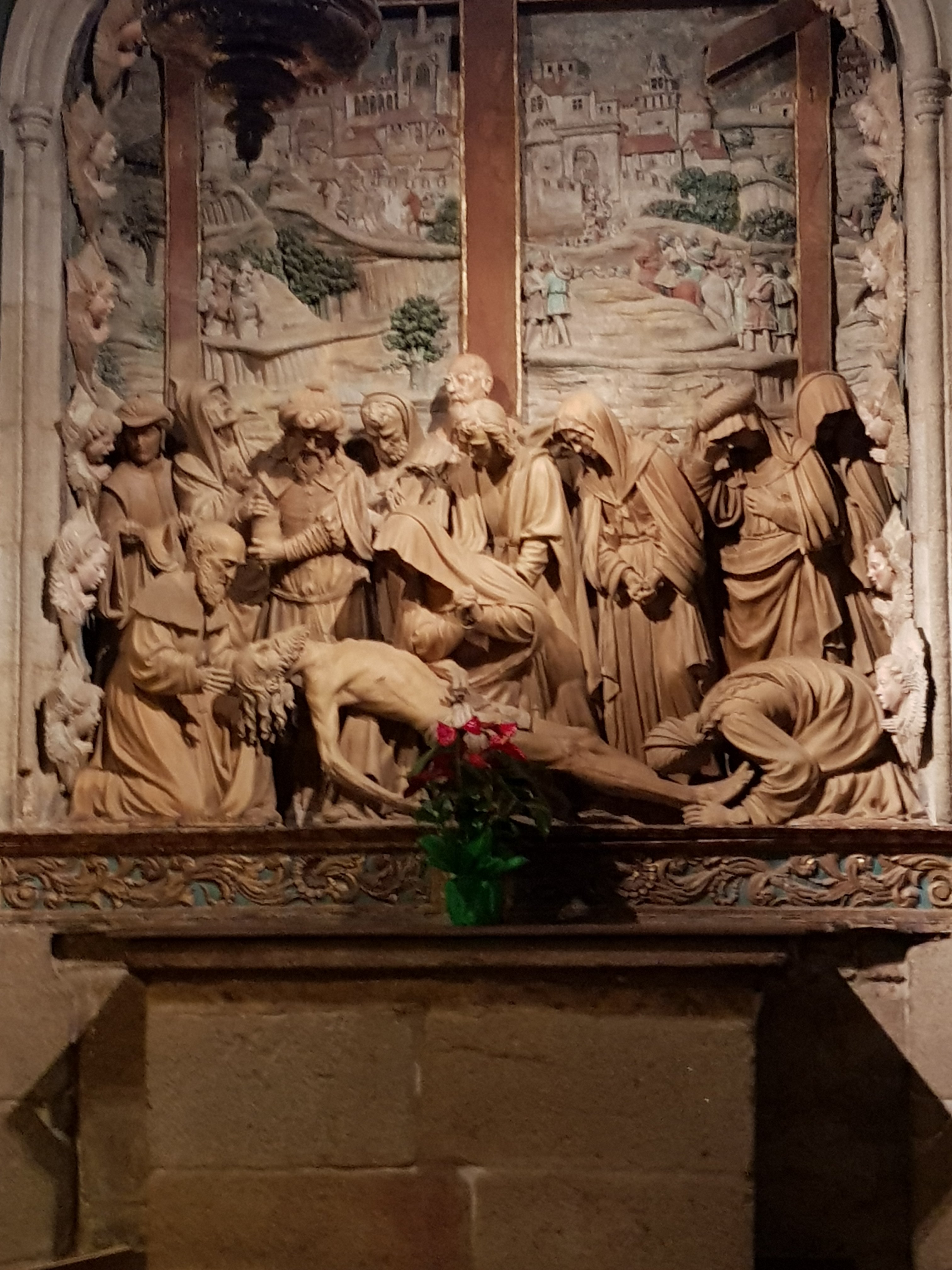
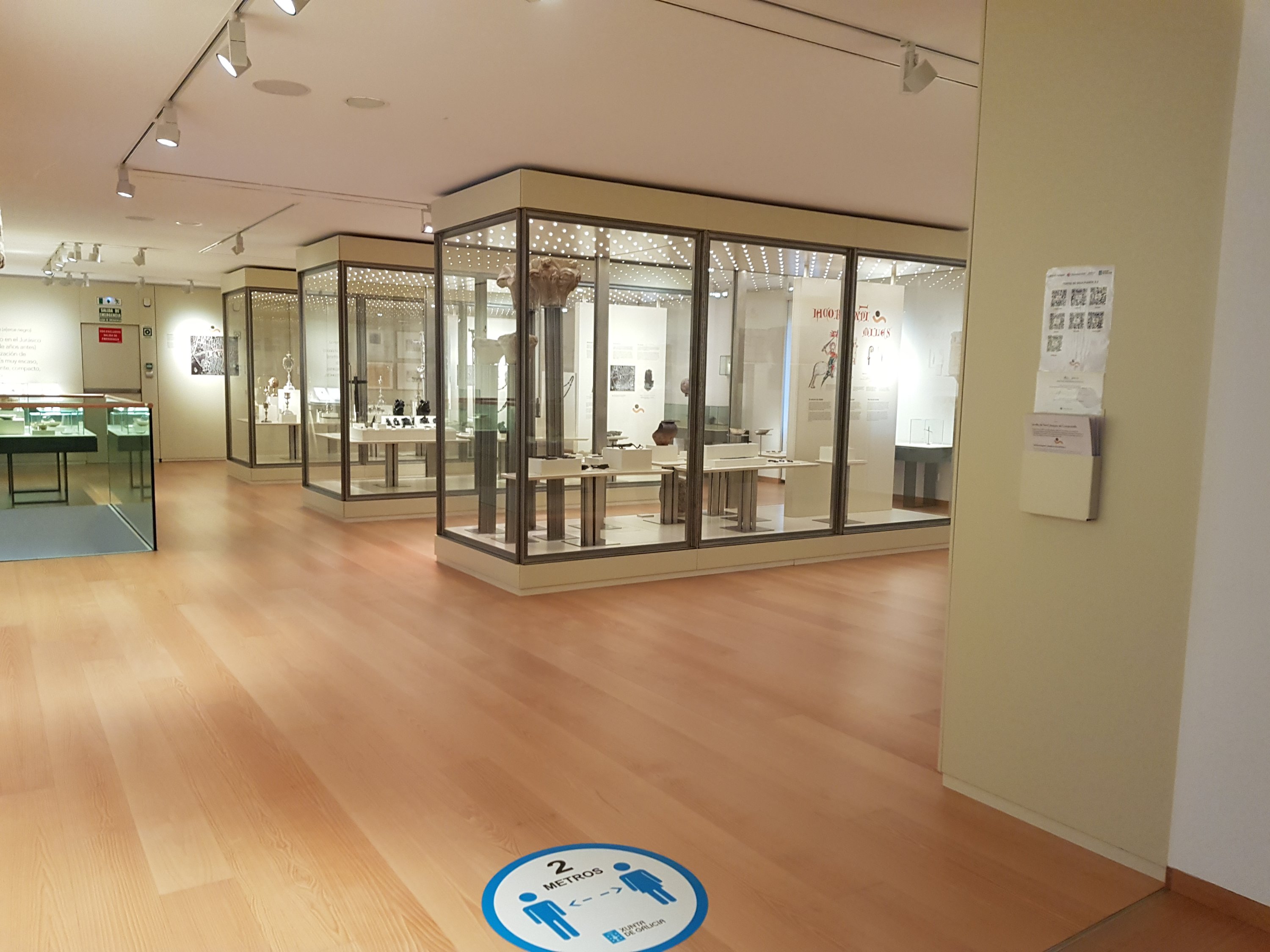
After my shopping spree, I decided to make a visit to the Museum of Pilgrimage. This museum is four floors and pilgrims can enter for free. 👍The museum holds a mix of photographic exhibitions, historic artefacts, and paintings. The collections explain the origin of the Camino de Santiago (way of St James), who James was, and how his tomb was discovered in Santiago. The museum also explains how the pilgrimage route has become more popular over the centuries and many pilgrims’ experiences. The other pilgrimages from around the world and different religions are also discussed.

This was very inspiring to me, and I was glad to see that the reasons I chose to walk the journey were echoed by others.

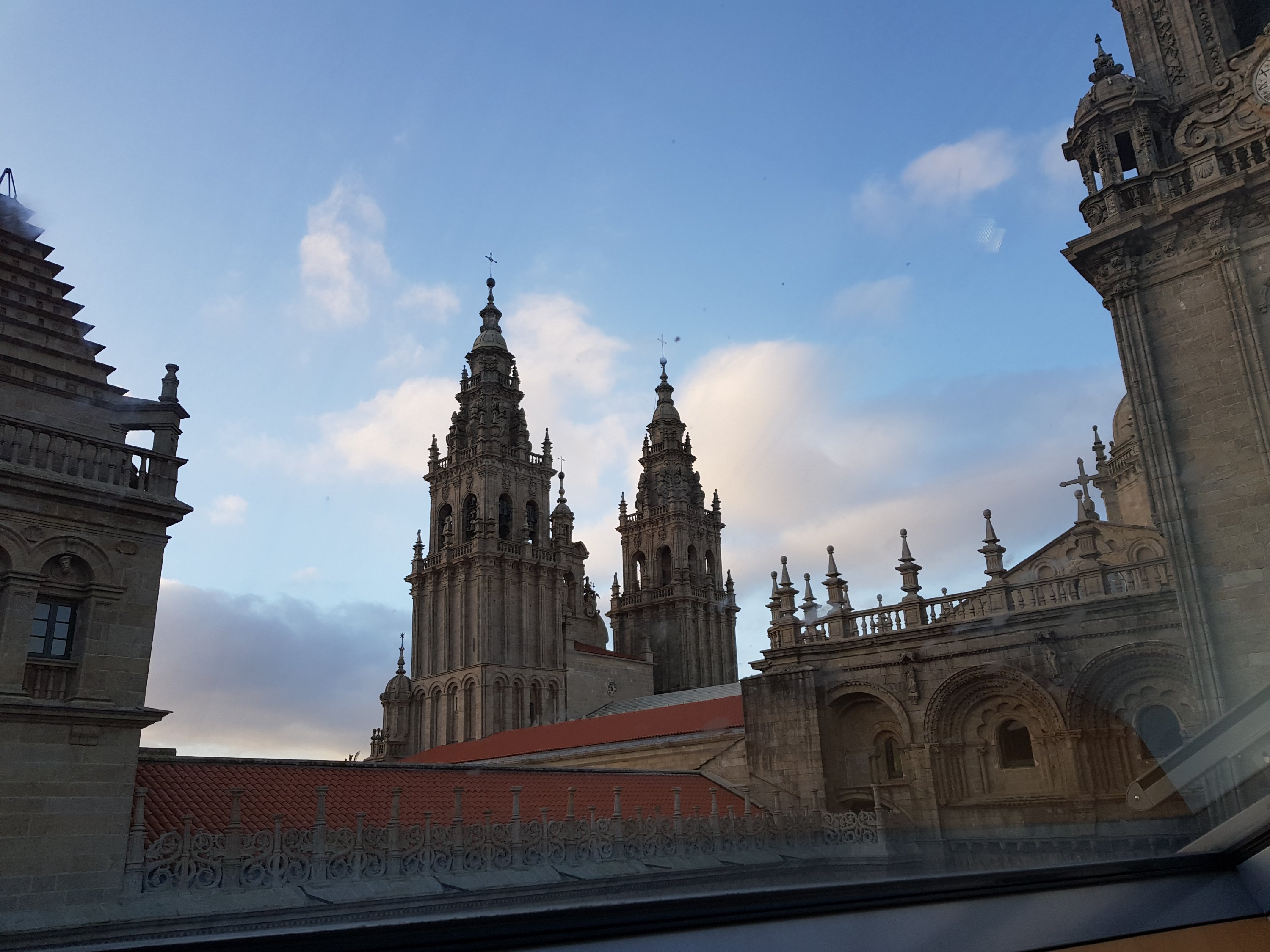
Something else not to be missed at the museum, is going to the top floor. Here, I found up close views of the cathedral towers.

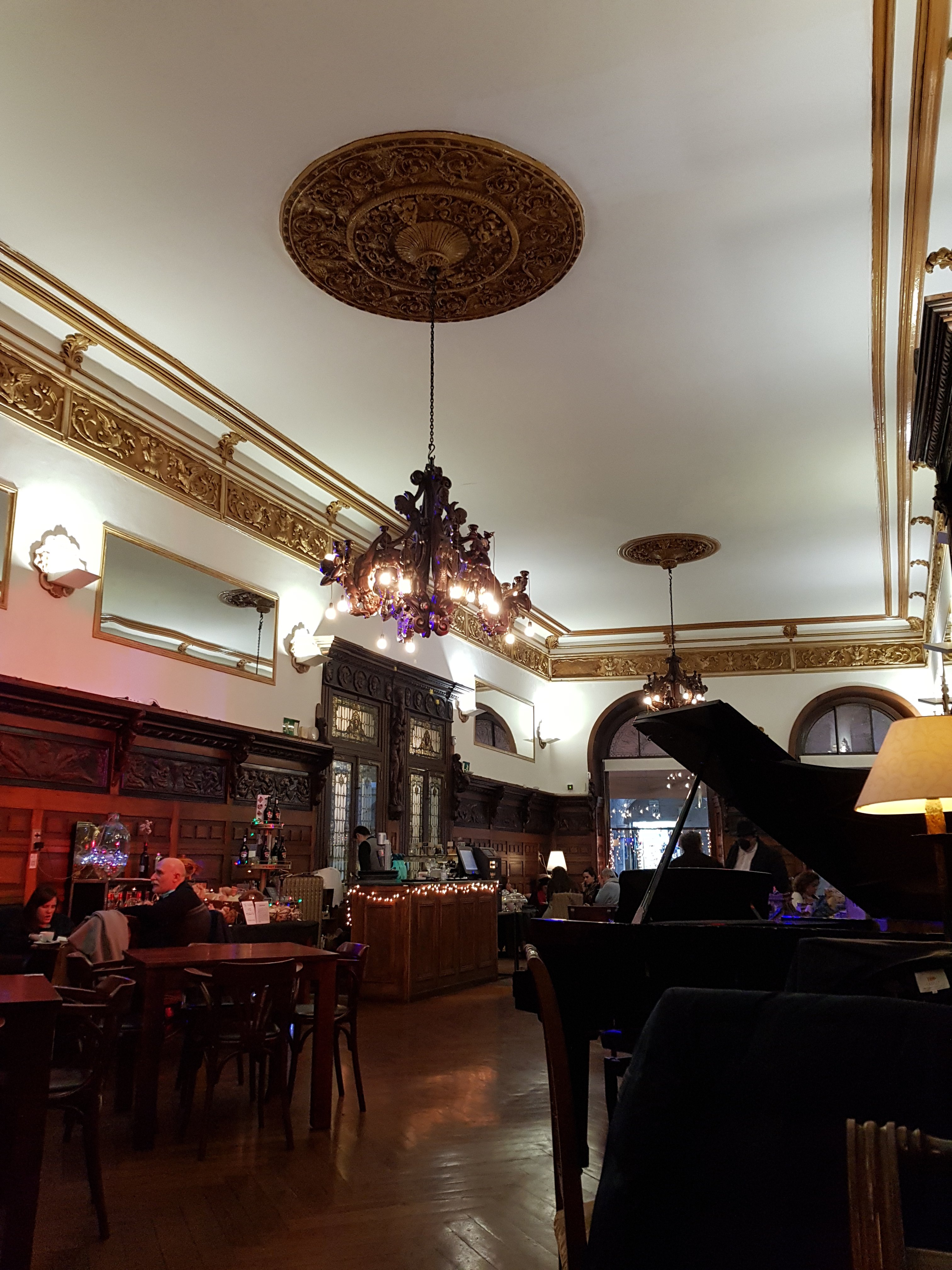
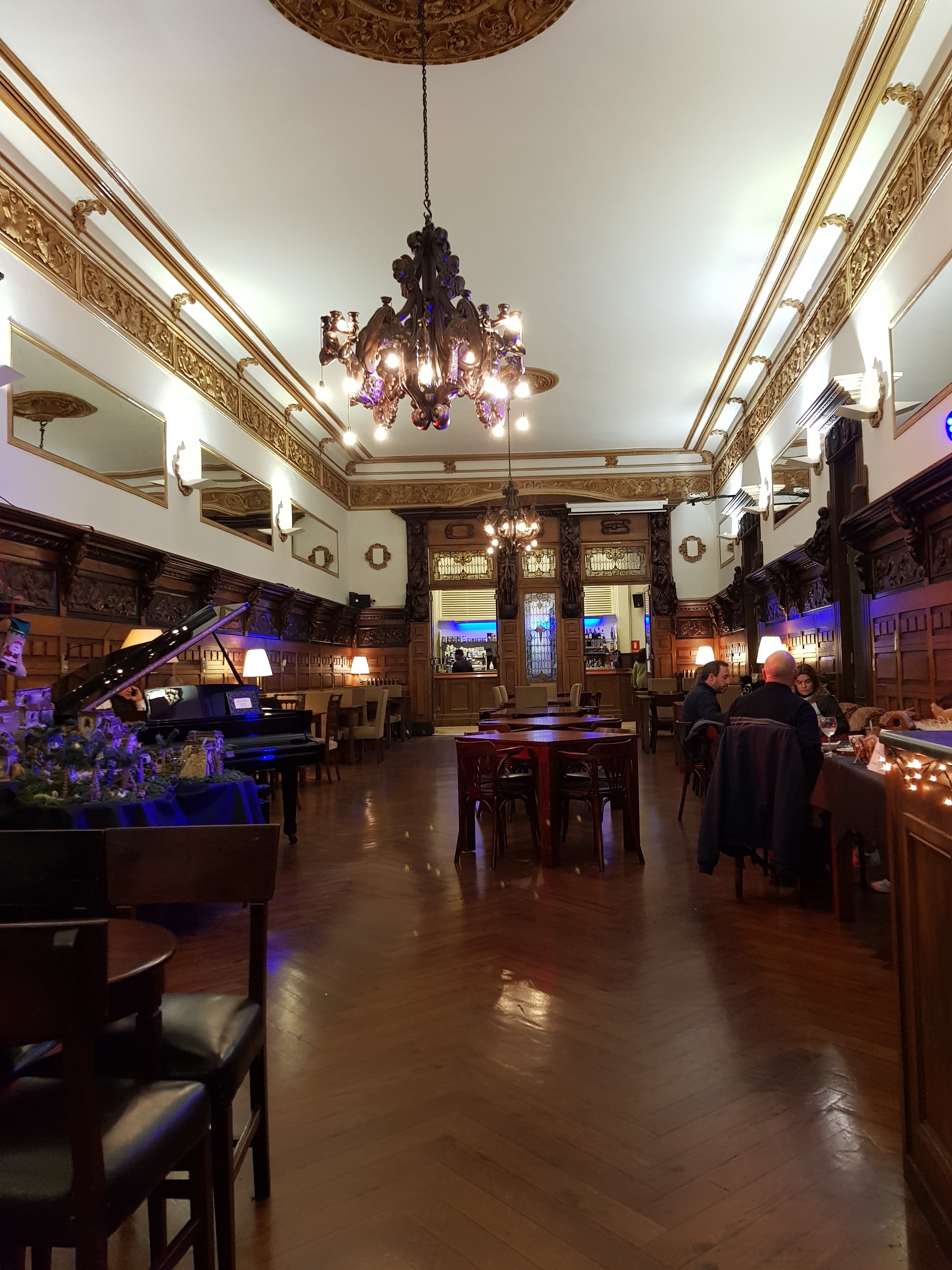
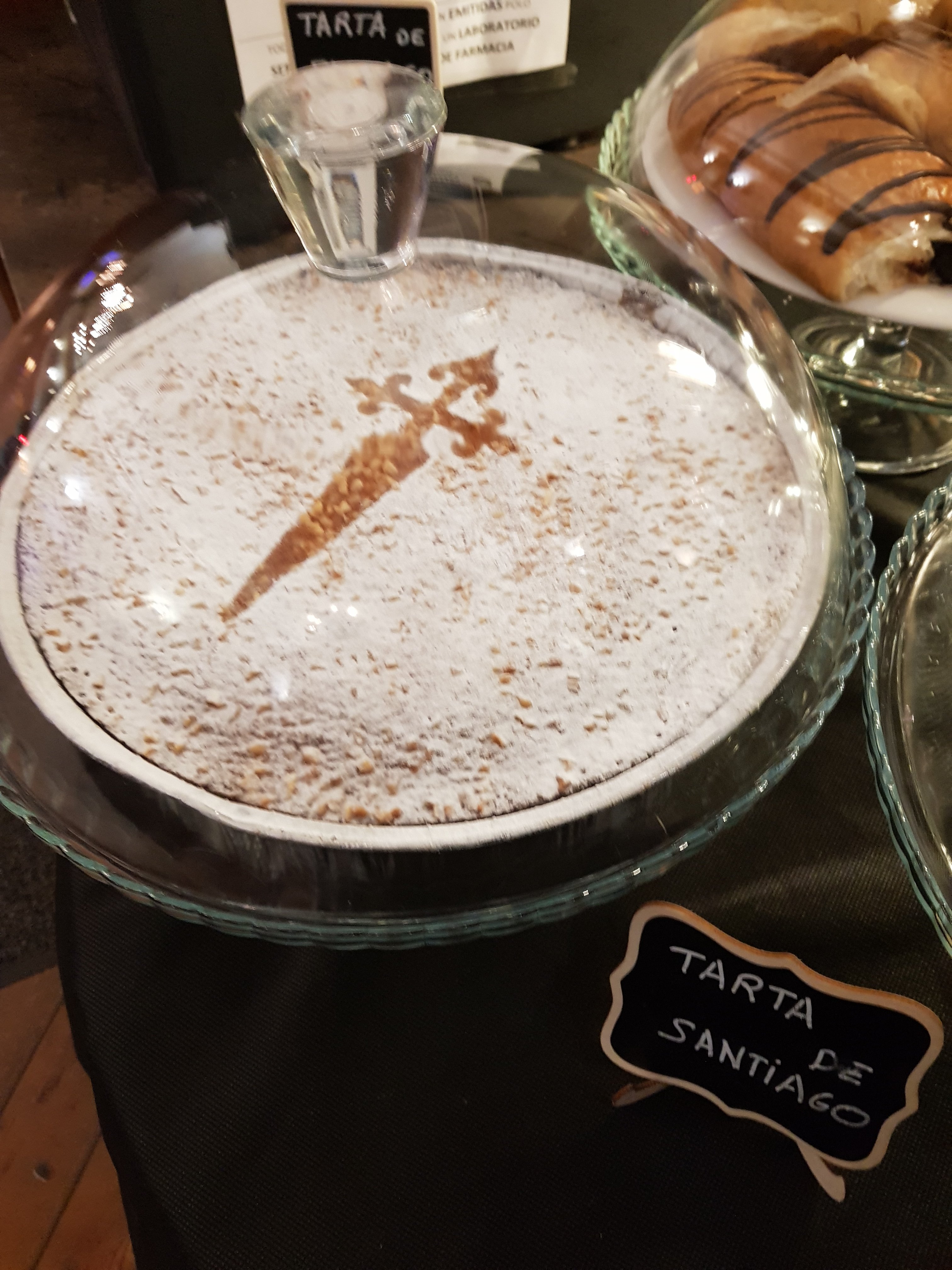
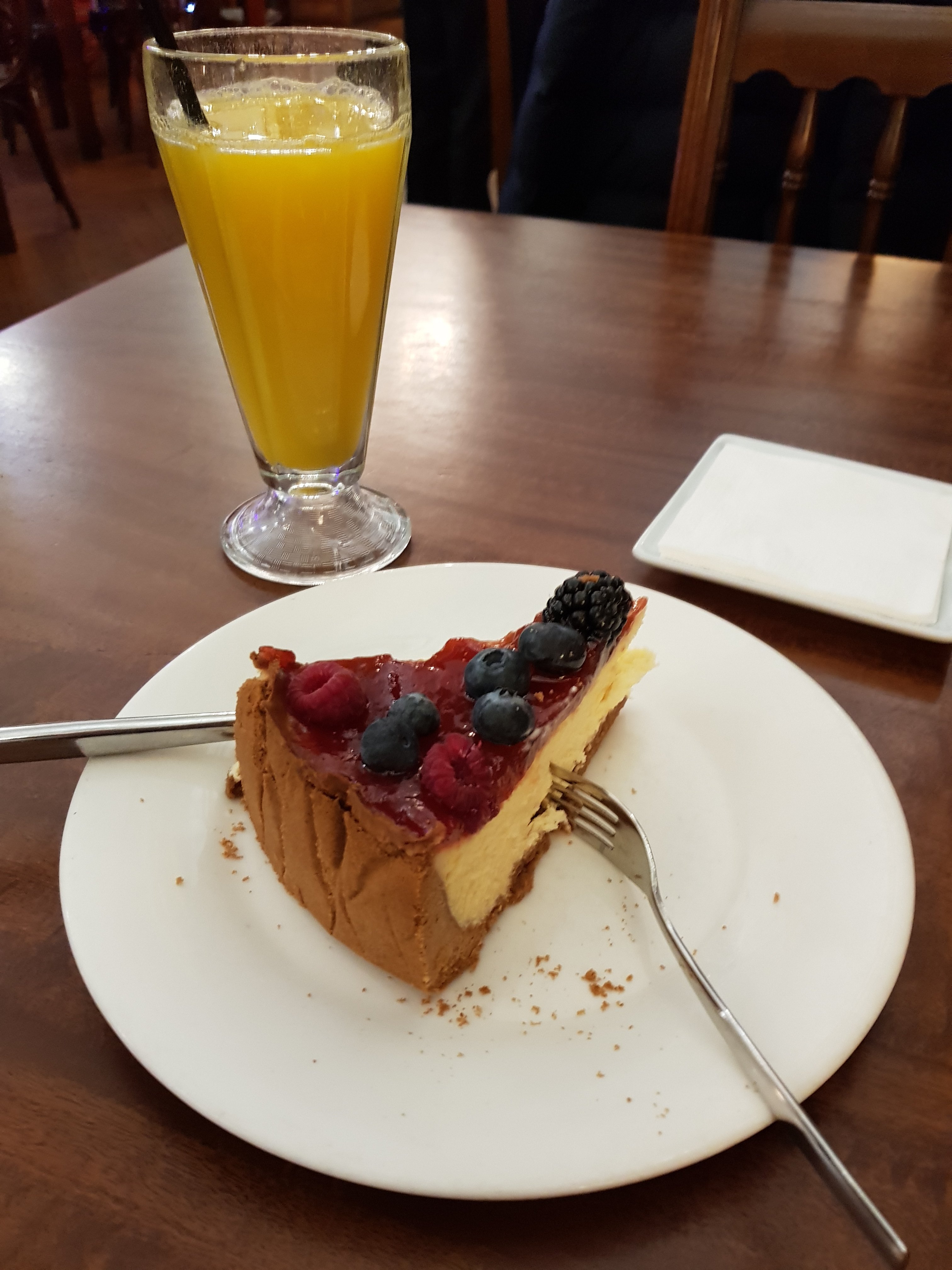
The final thing I did before I went to bed, was visit the cafe casino, opposite my hotel for a little cheesecake. This is a gorgeous building that is now a swanky cafe and even has a grand piano being played, to really make you feel at peace.

Overall, the Camino de Santiago has been a very unique experience. It has been a great opportunity to travel slowly, and see beautiful landscapes, as well as small villages and towns, that you would not likely stop in, if you were travelling to your destination directly. The people I have met, and culture and traditions experienced can never be replaced. I had said that I could never walk so far again, but the more I think about it, the more I think I could be convinced…

Camino de Santiago: Aviles to Gontan

This week I entered my final third of the walk, and as the rain poured down, the paths became rivers, but I powered on!

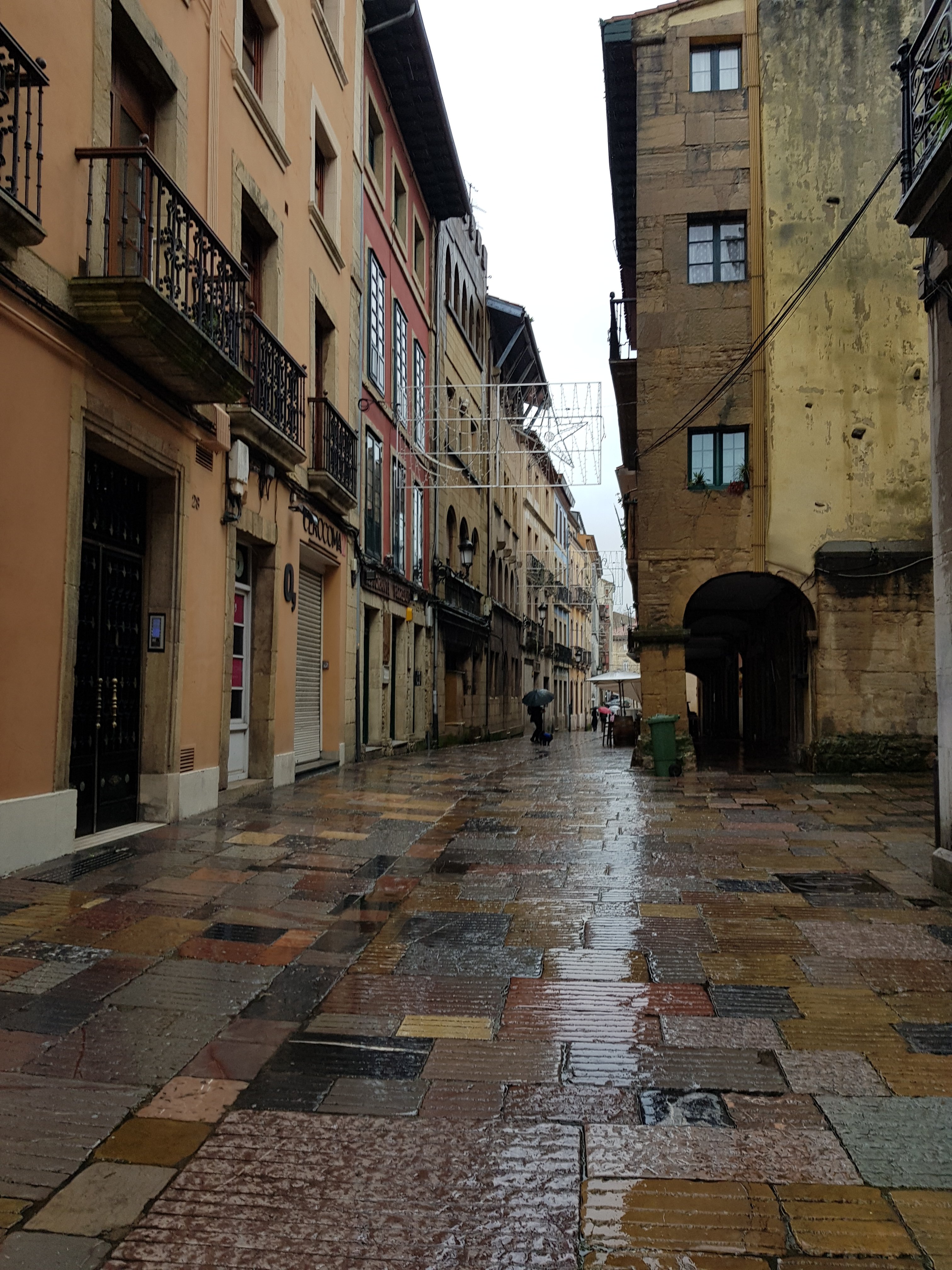
The week kicked off with a stop in Aviles, which is a large town. It has charming streets full of arches, old chapels and former monasteries, and a fountain of dribbling monks!

I stayed all alone in a large pilgrims albergue for the cheap fee of 8 euros and prepared for the week ahead.

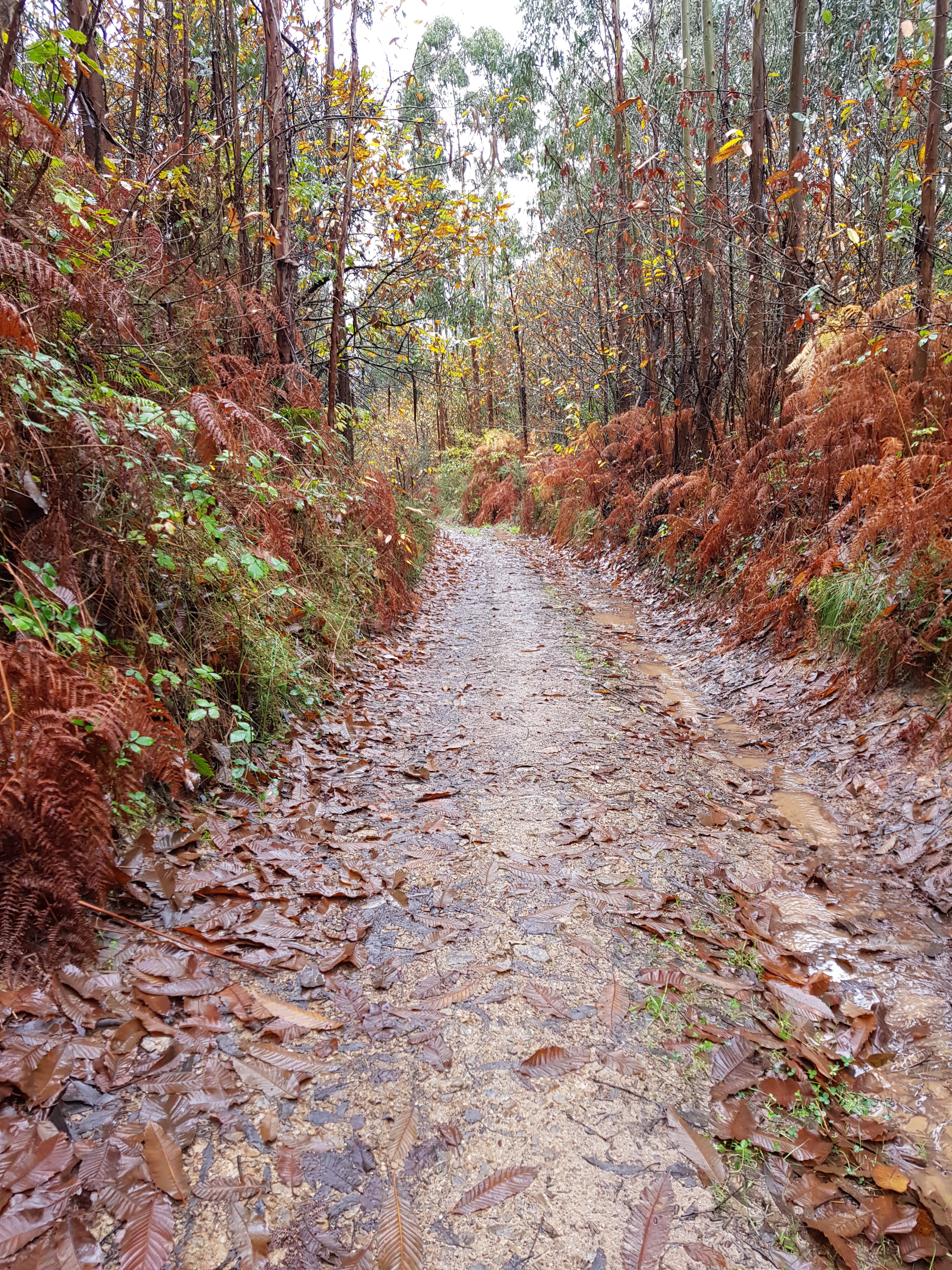
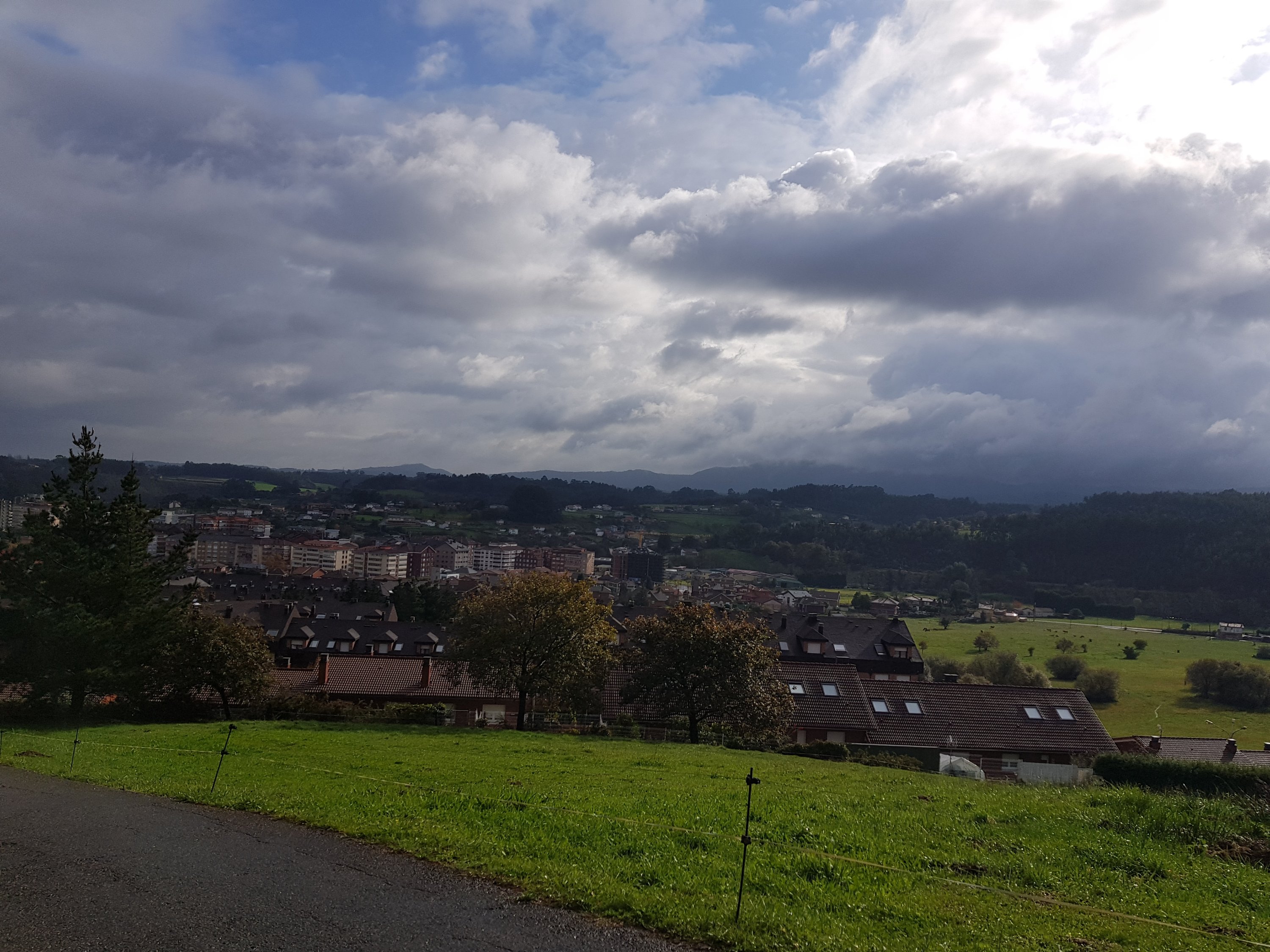
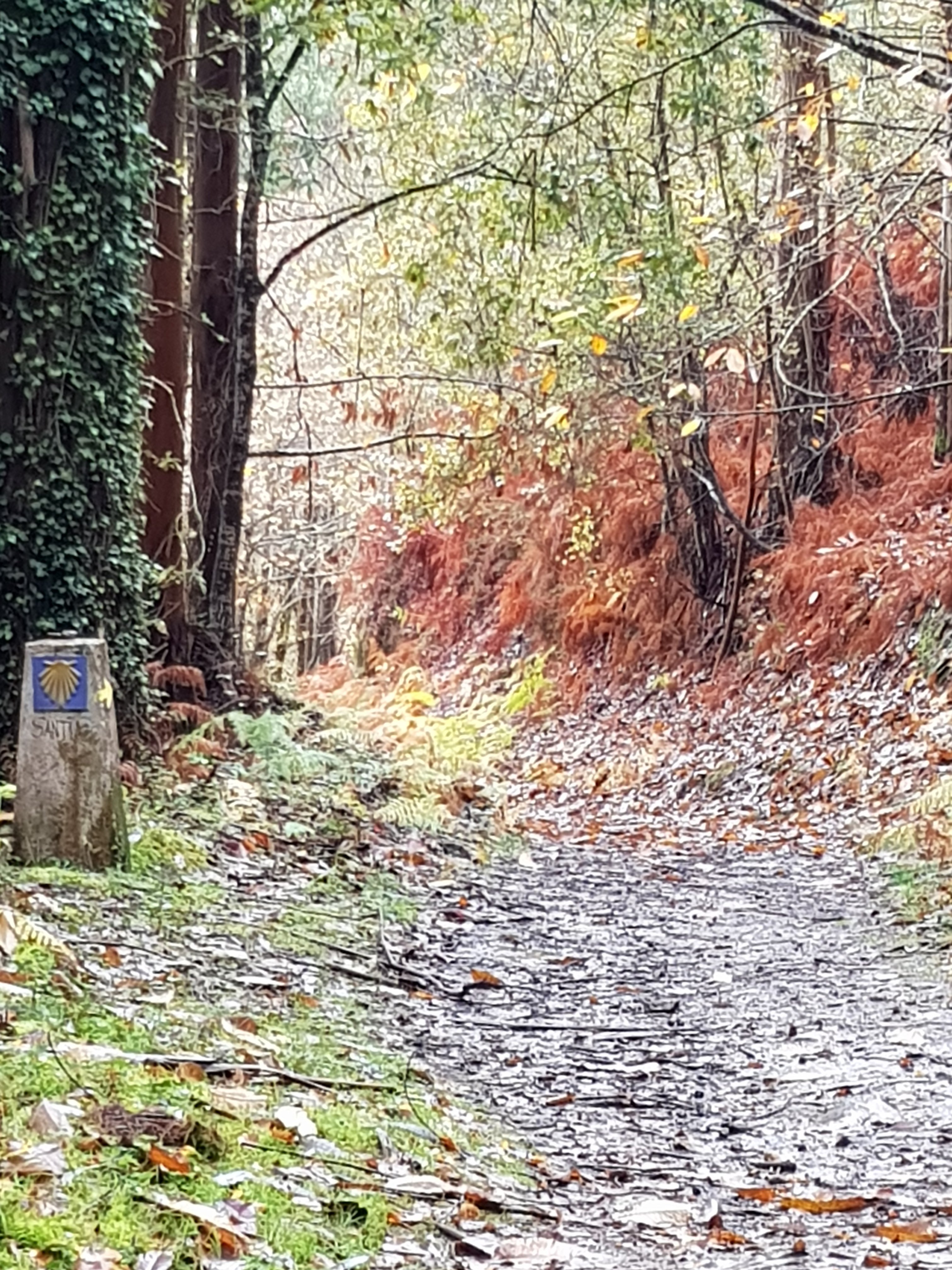
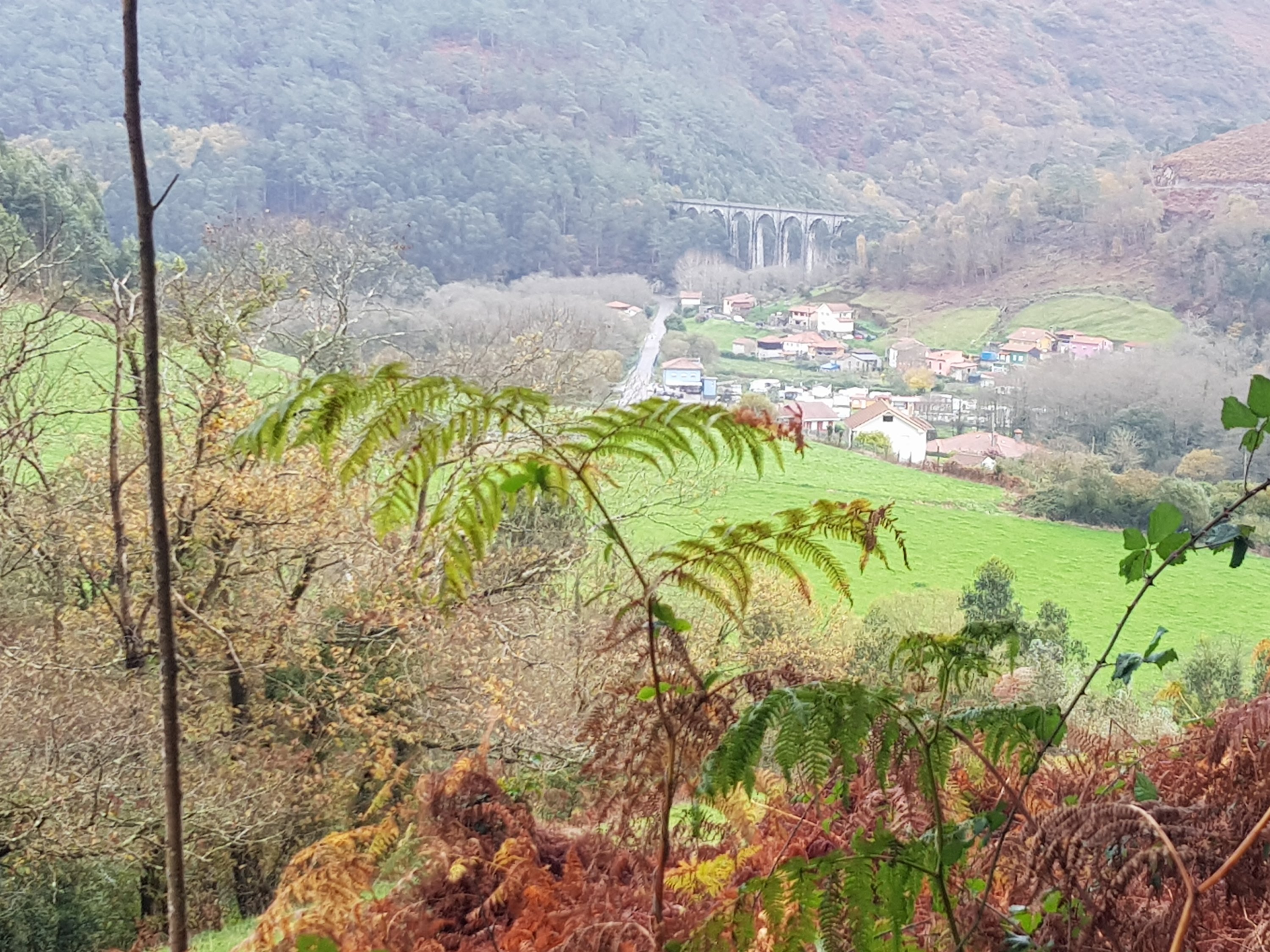
Next was my soggy 20km to Soto del Barco. Most of the walk was through forests with deep red ferns and overflowing rivers.

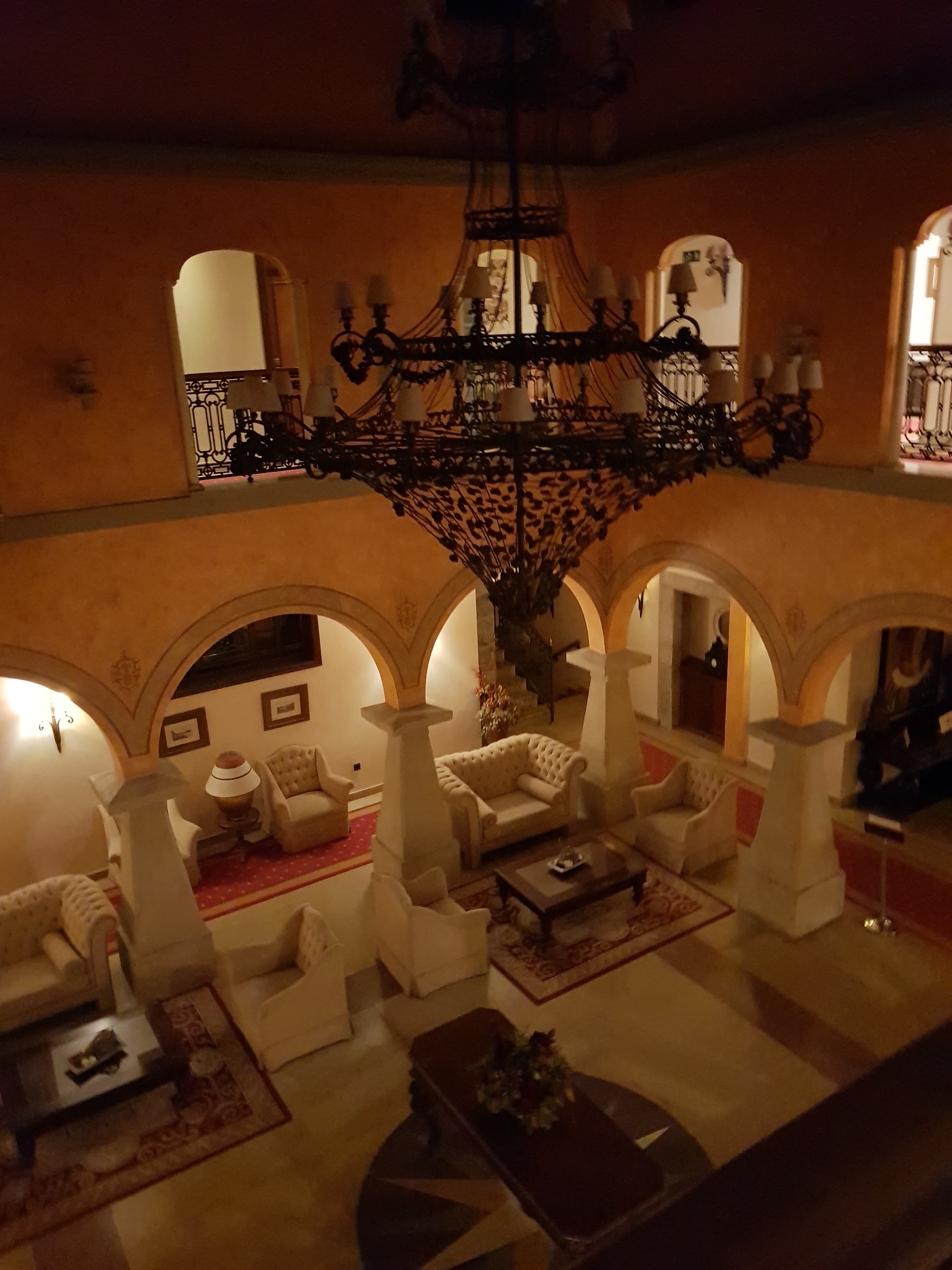
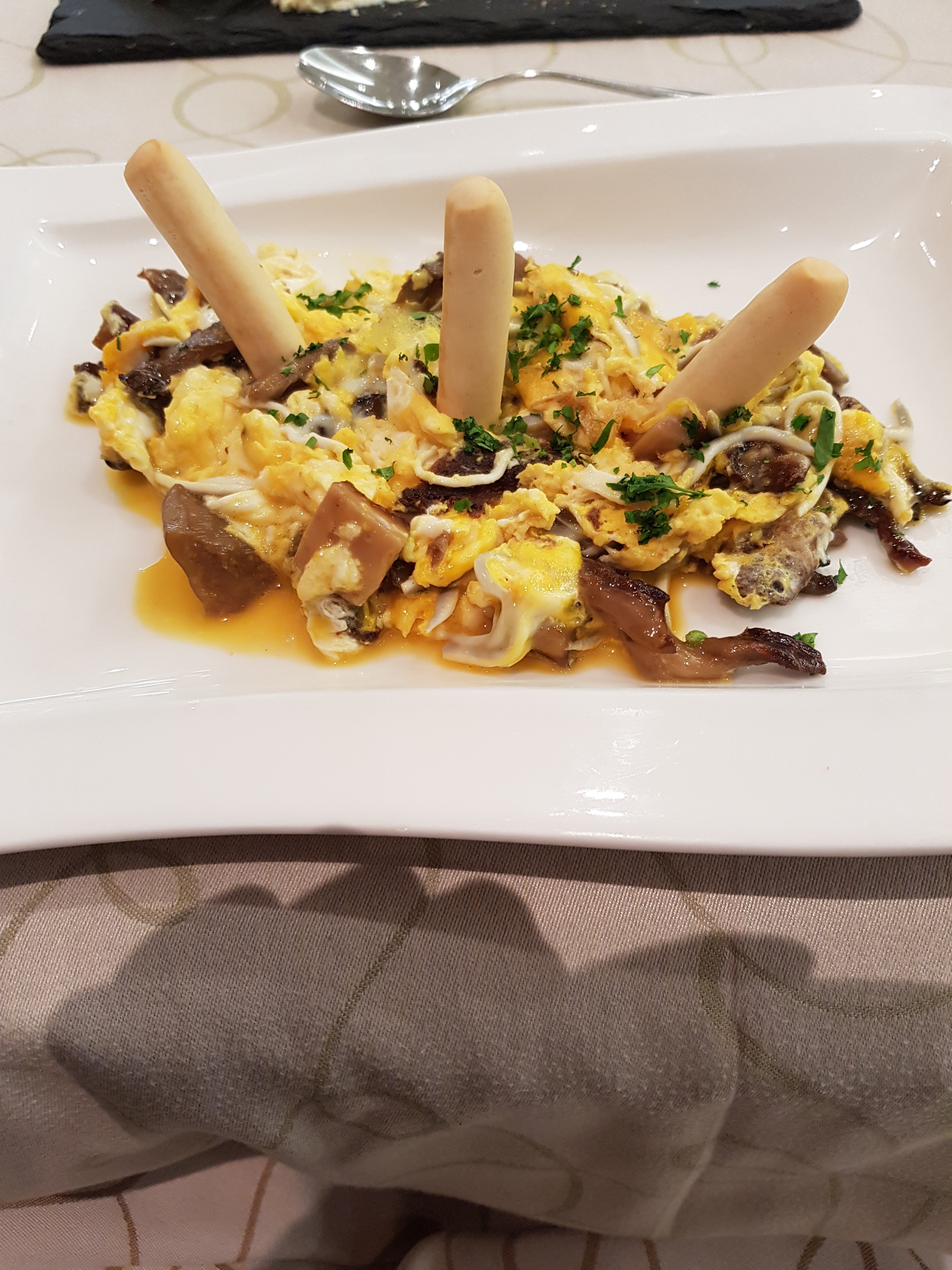
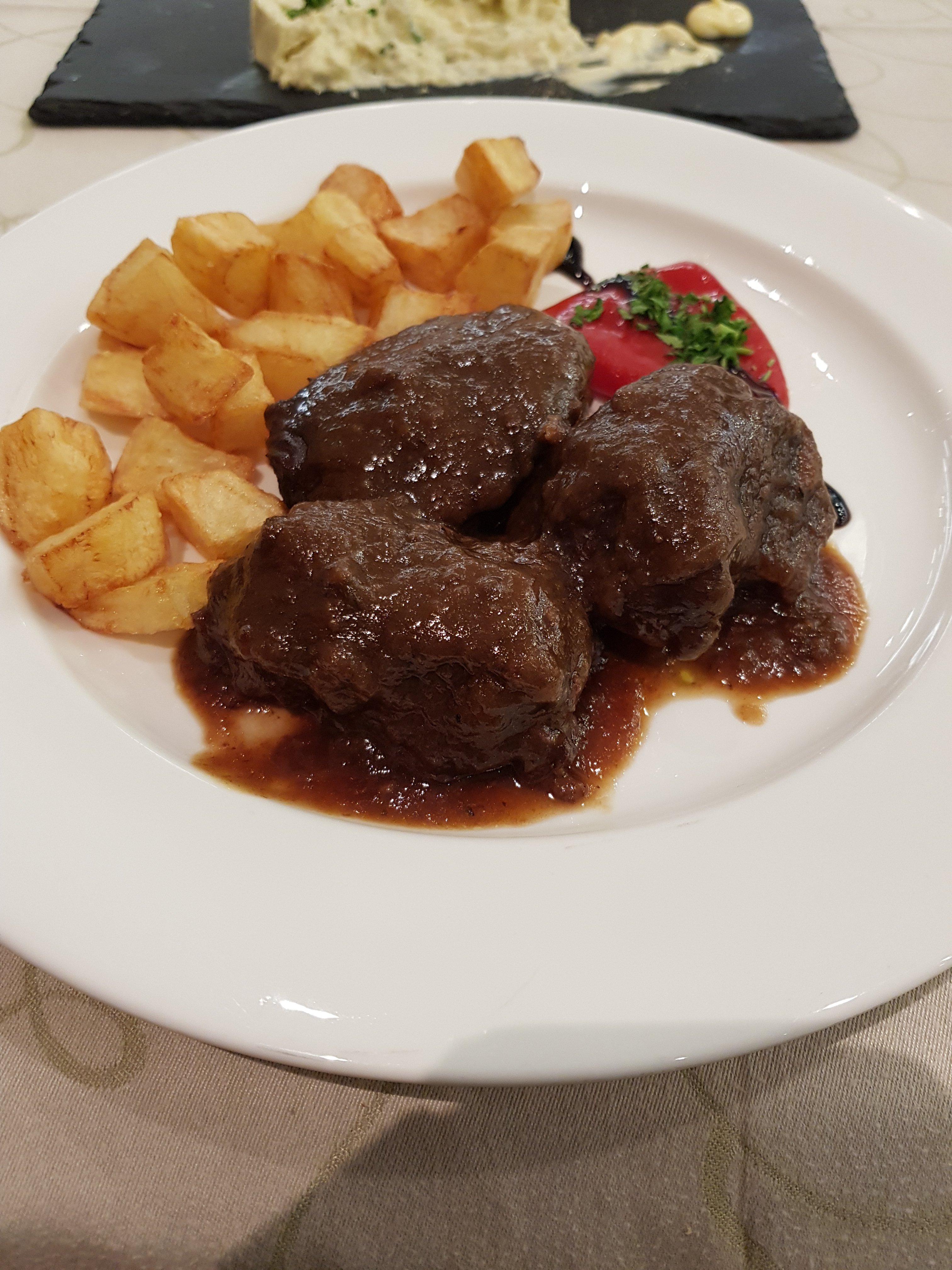
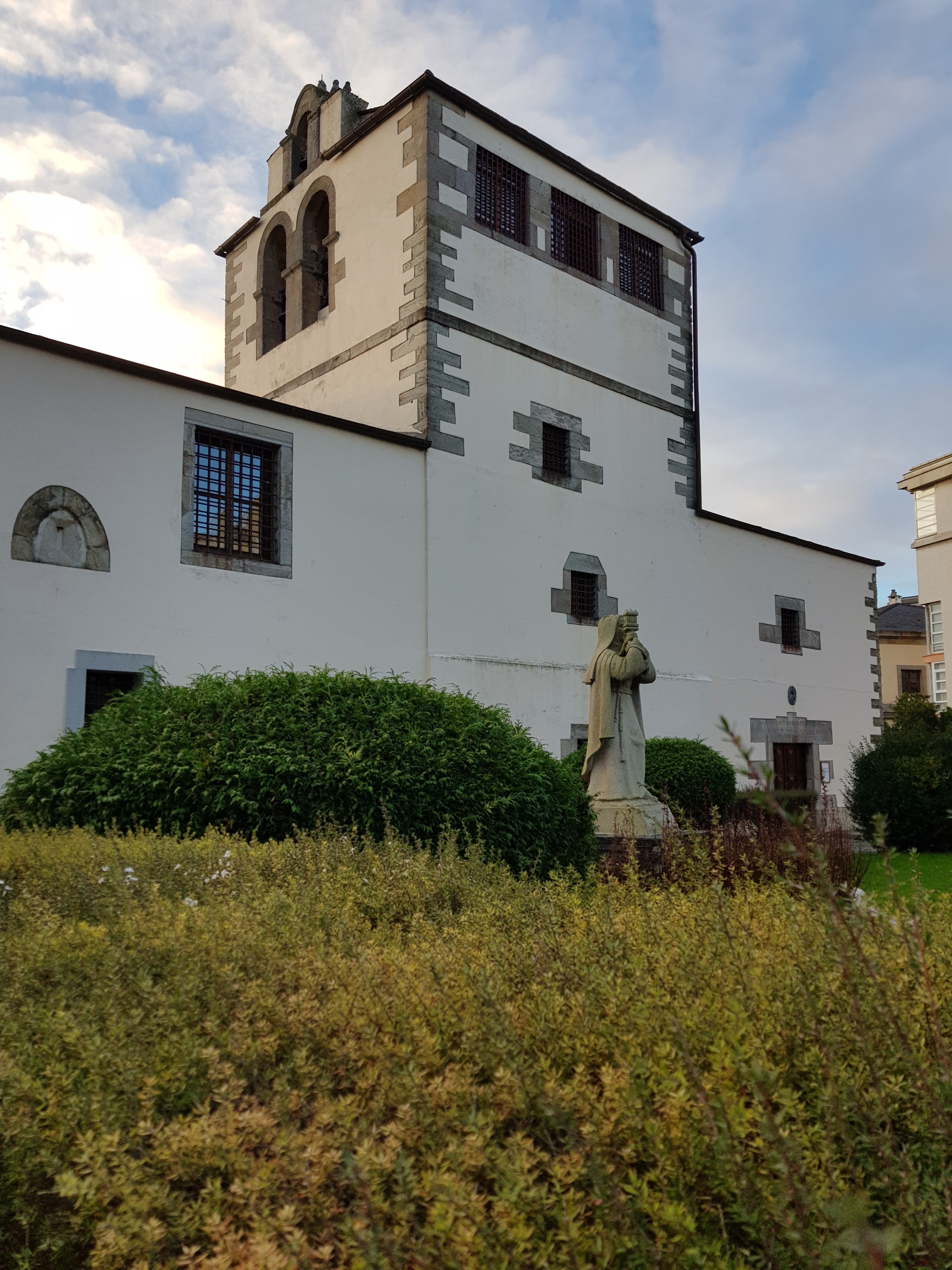
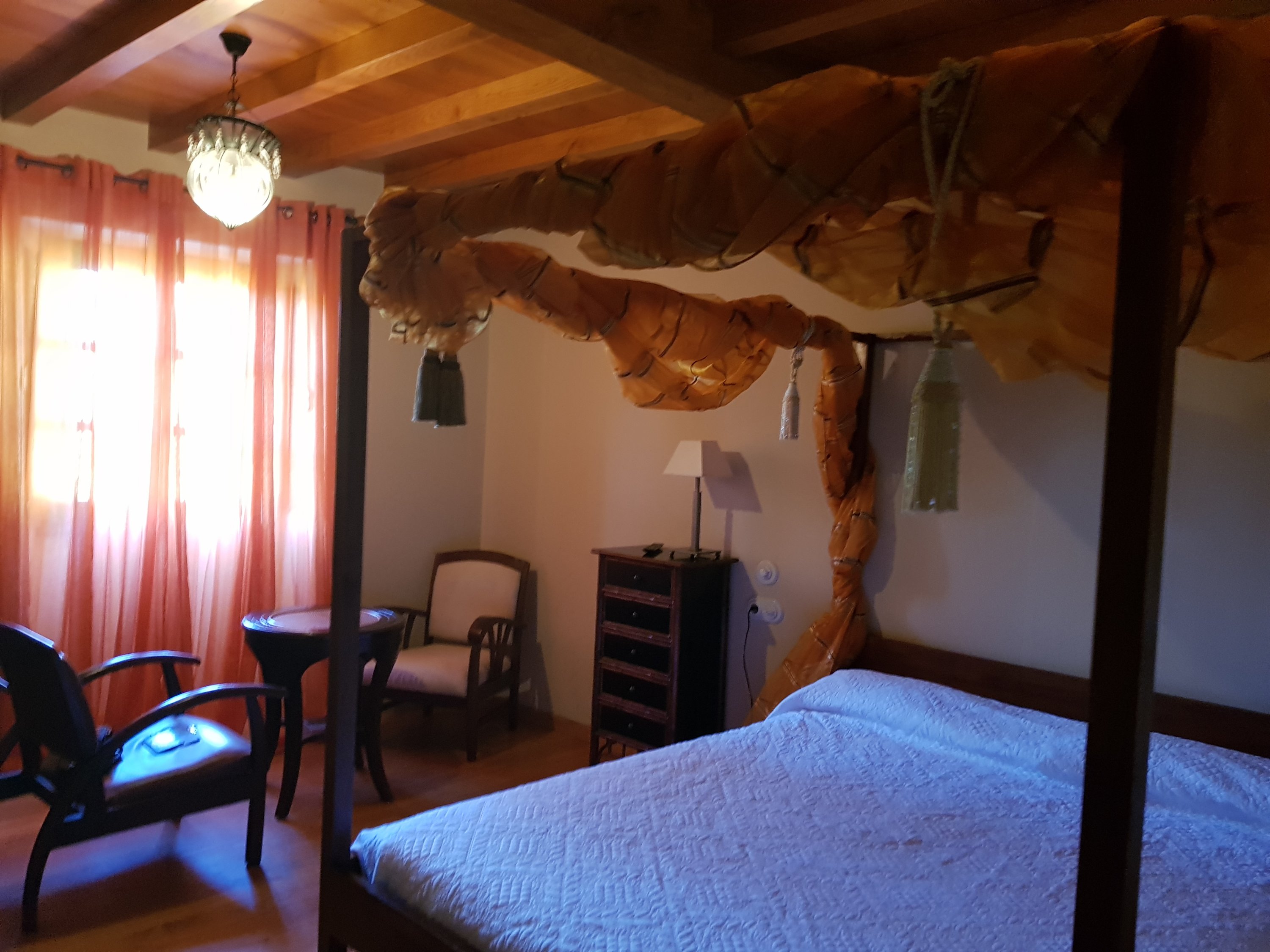
I had hoped to find a cheap place to stay, but it was all pricey in this village at the bottom of the valley, so I decided to stay in a hotel. The hotel was beautiful as it was a former 18th century palace, and so enjoyed a little luxury and a slap up meal, of food that I could not identify!

The next day I walked to Soto de Luina. The rain continued and I had only been able to have a few small pastries and a piece of fruit for breakfast. I’d thought I would pass a cafe but all day I didn’t. The day was spent walking through forests.

Thankfully, forests and woodland are in my opinion, the easiest terrain on the joints, as the ground is so bouncy. I grew up in the woods (in a house not in the trees), and feel in my element within them.

The overflowing rivers and lack of food was making this very hard for ‘only’ a 22km walk. The day was full of ups and downs, and I had to stop frequently. A few times I thought I might pass out.

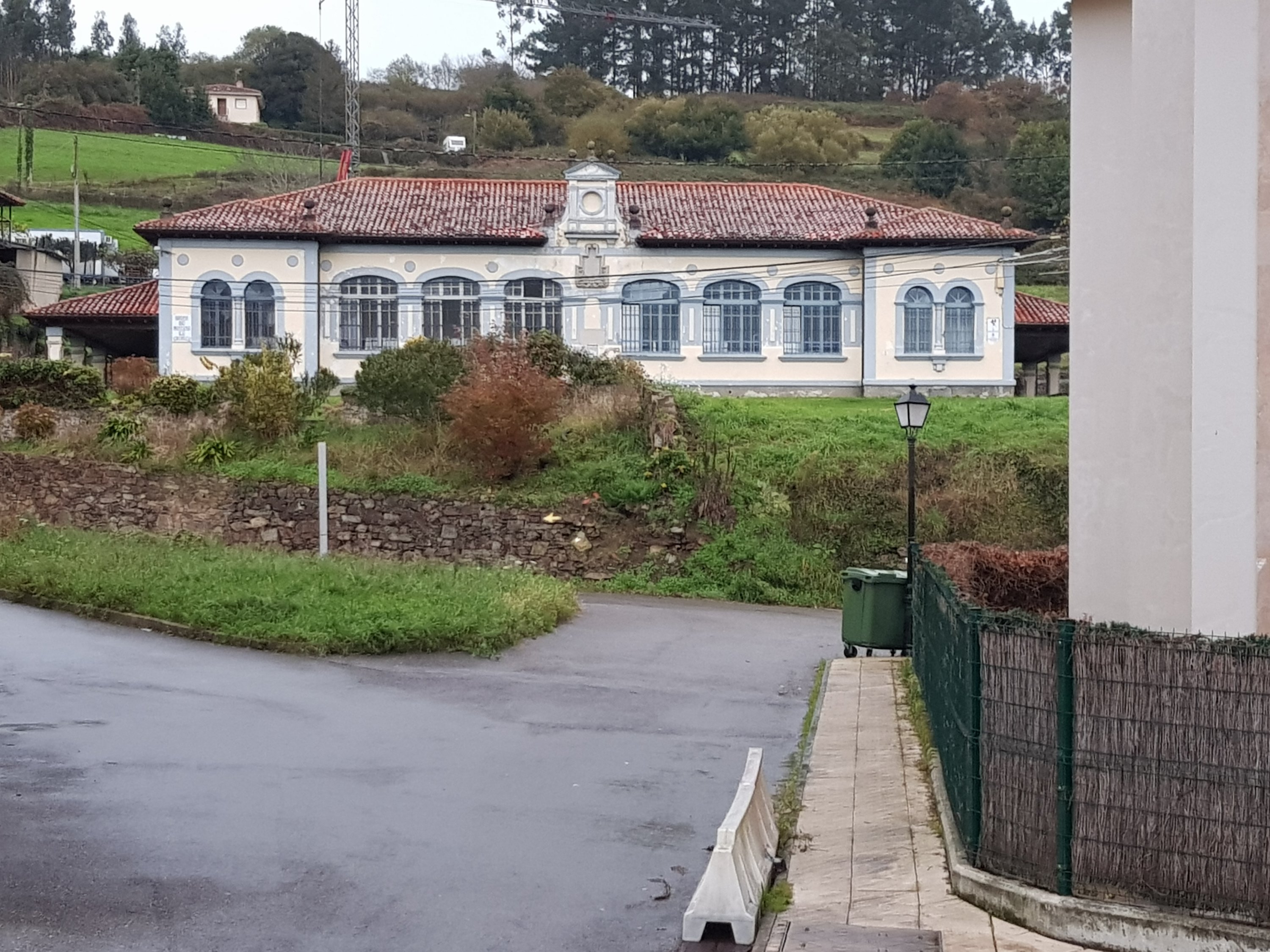
When I finally arrived in Soto de Luina, I made my way to my bed for the night, in an old abandoned school building. No heating, and no kitchen, but its all part of the experience… right? 😣

When I looked at my map, I found that my next stop in Luarca was up to 40km away (that is maybe 12 hours walk), and the morning came and my shoes were still wet, and my body still weak. So I decided to journey by train this day. I felt a bit guilty, but sometimes you have to know when to give yourself a break.

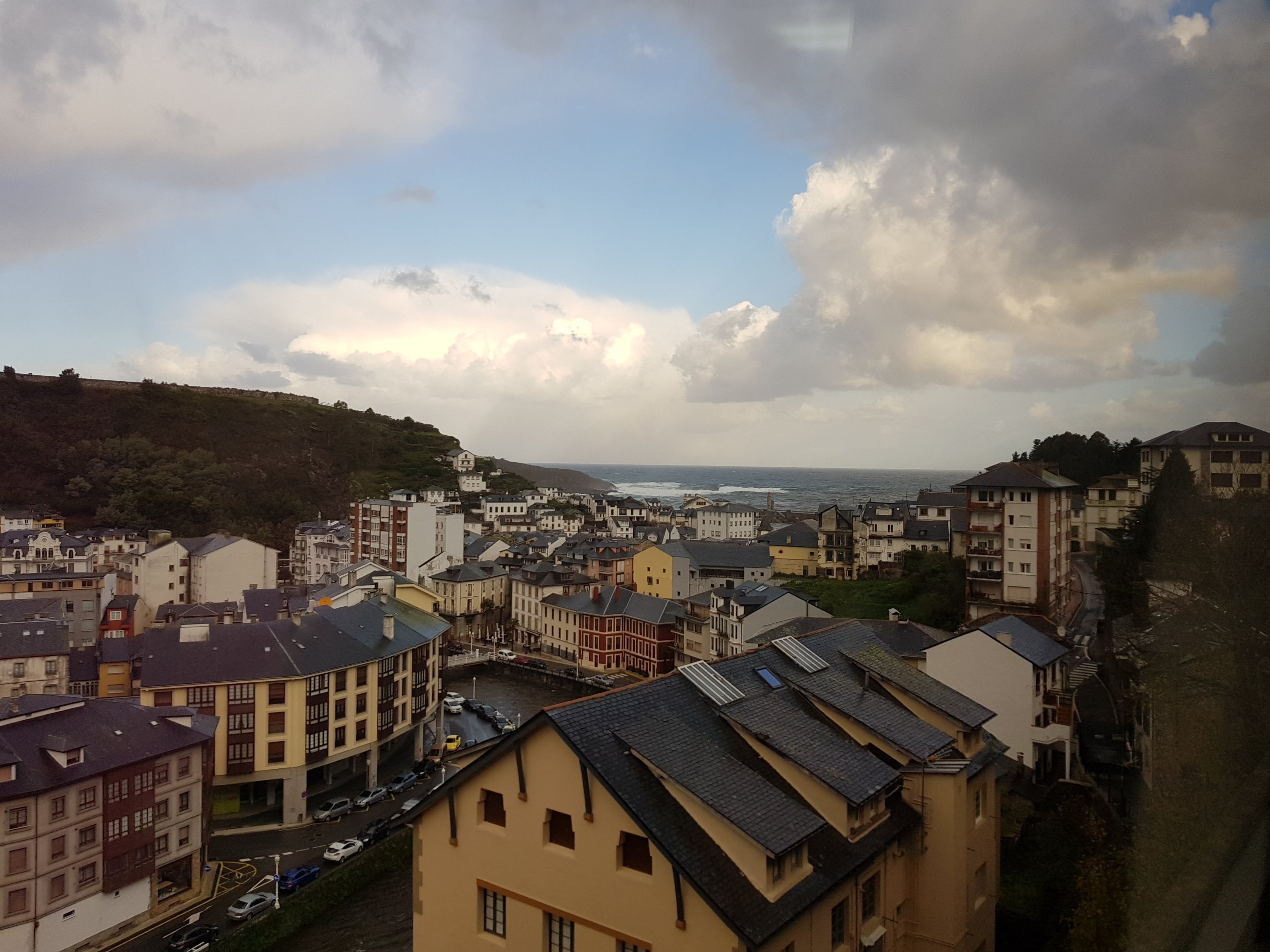
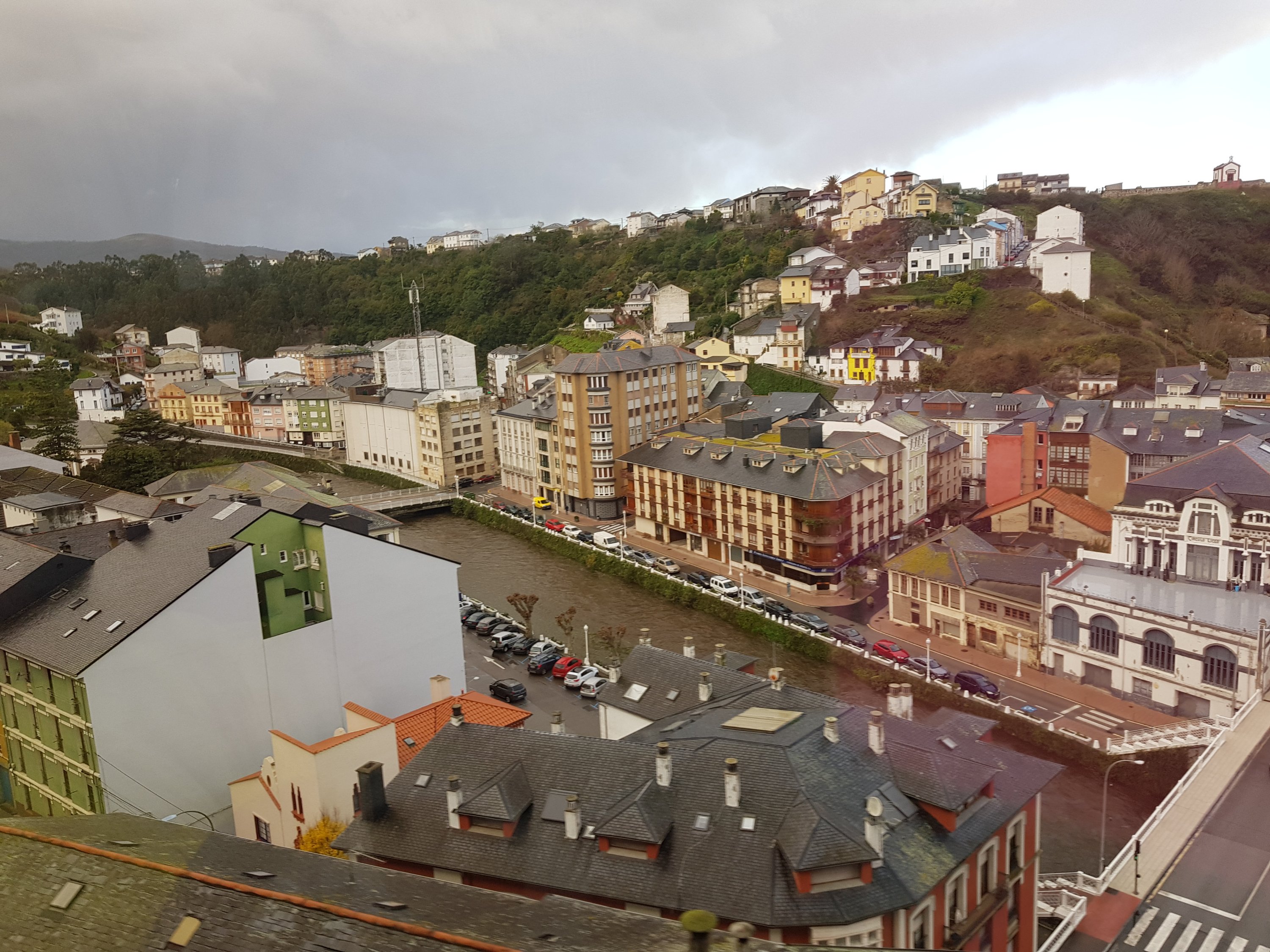
It was also a great place to do the train, as the track rides over the town of Luarca, and provides great views. The train driver was really nice too. We chatted in spanish, he showed me when to take photos, gave me some paper for my shoes, and showed me the control room! It also gave me a chance to nose around the town for longer, and just recover a little.

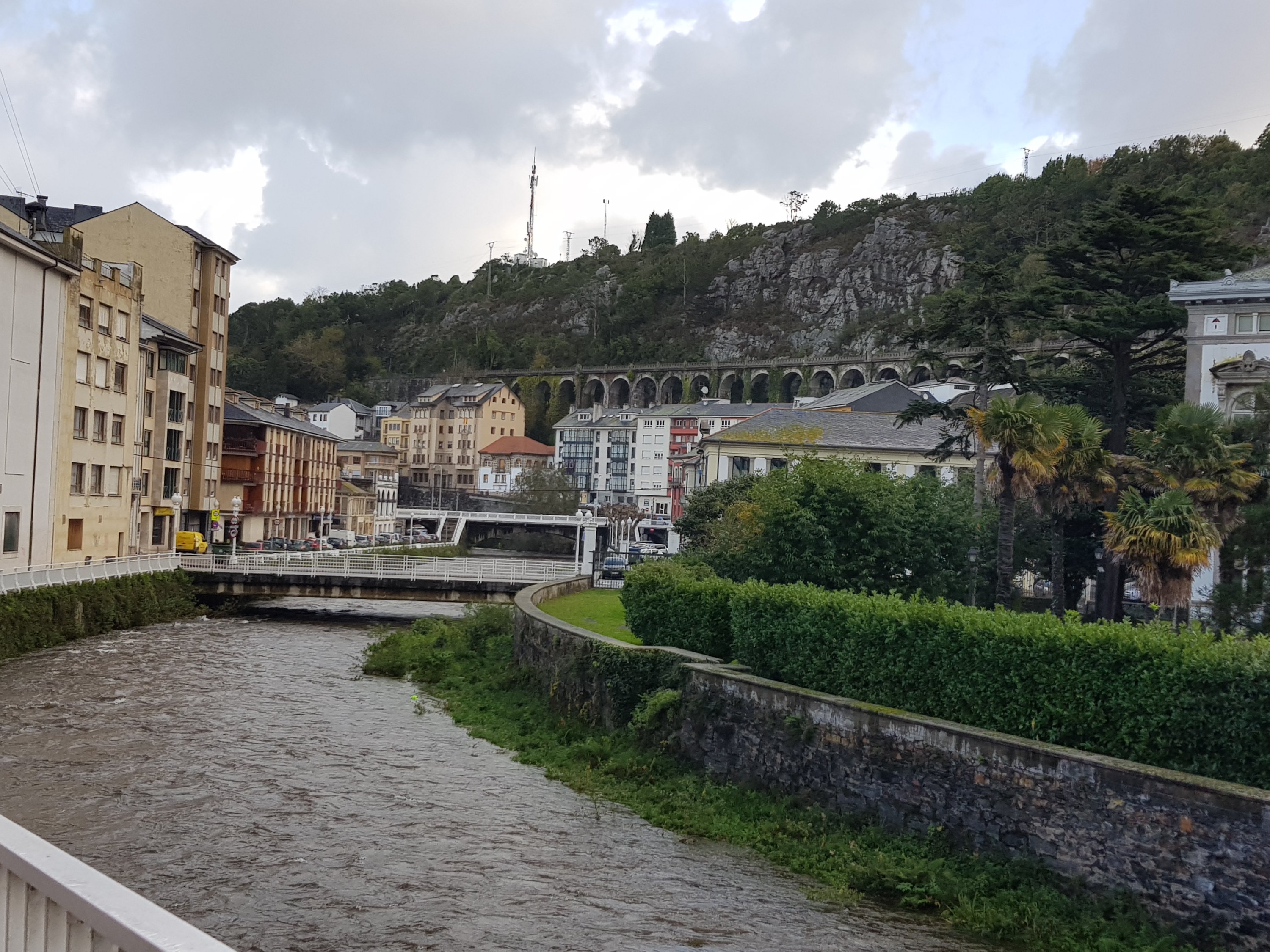
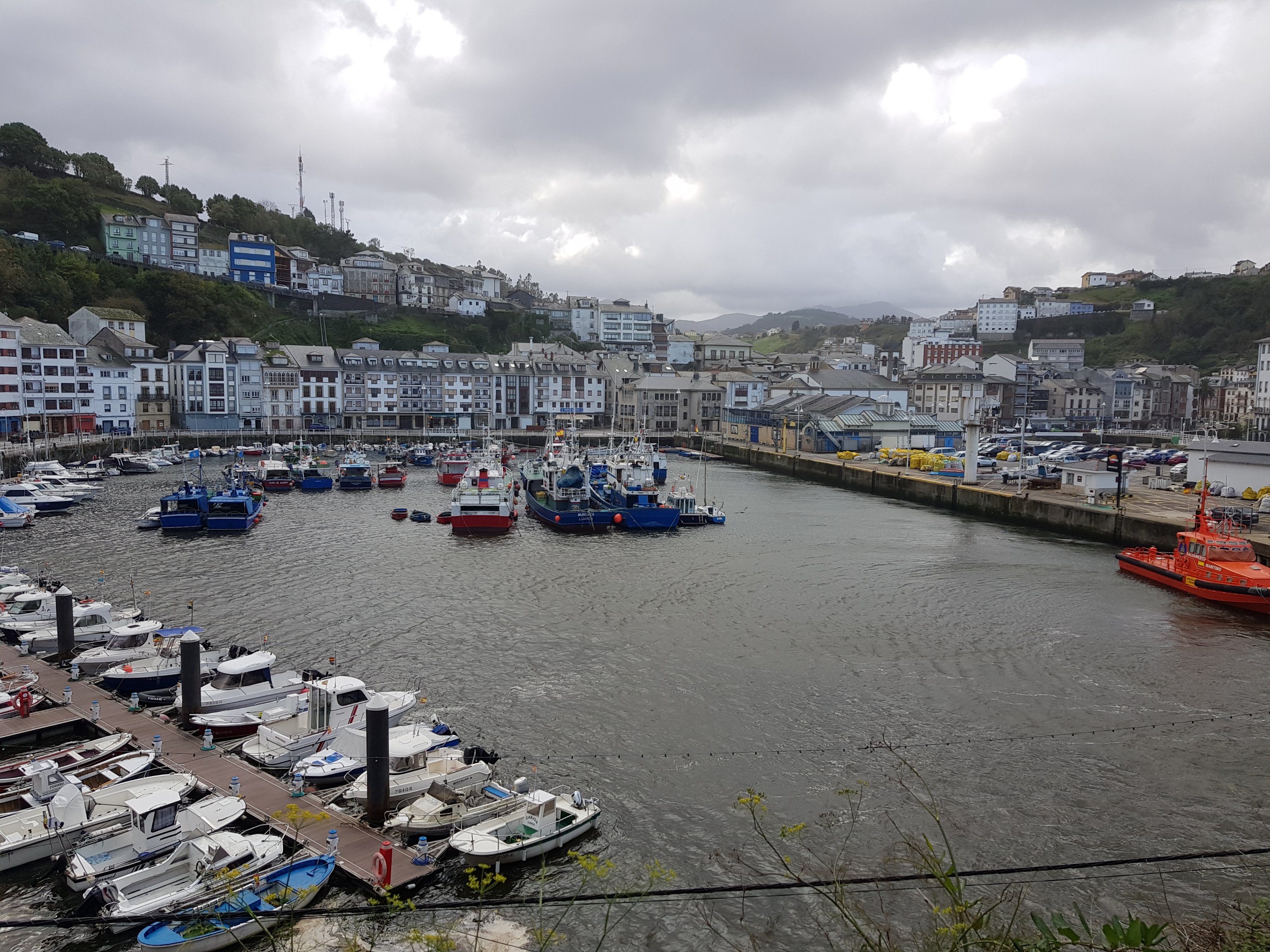
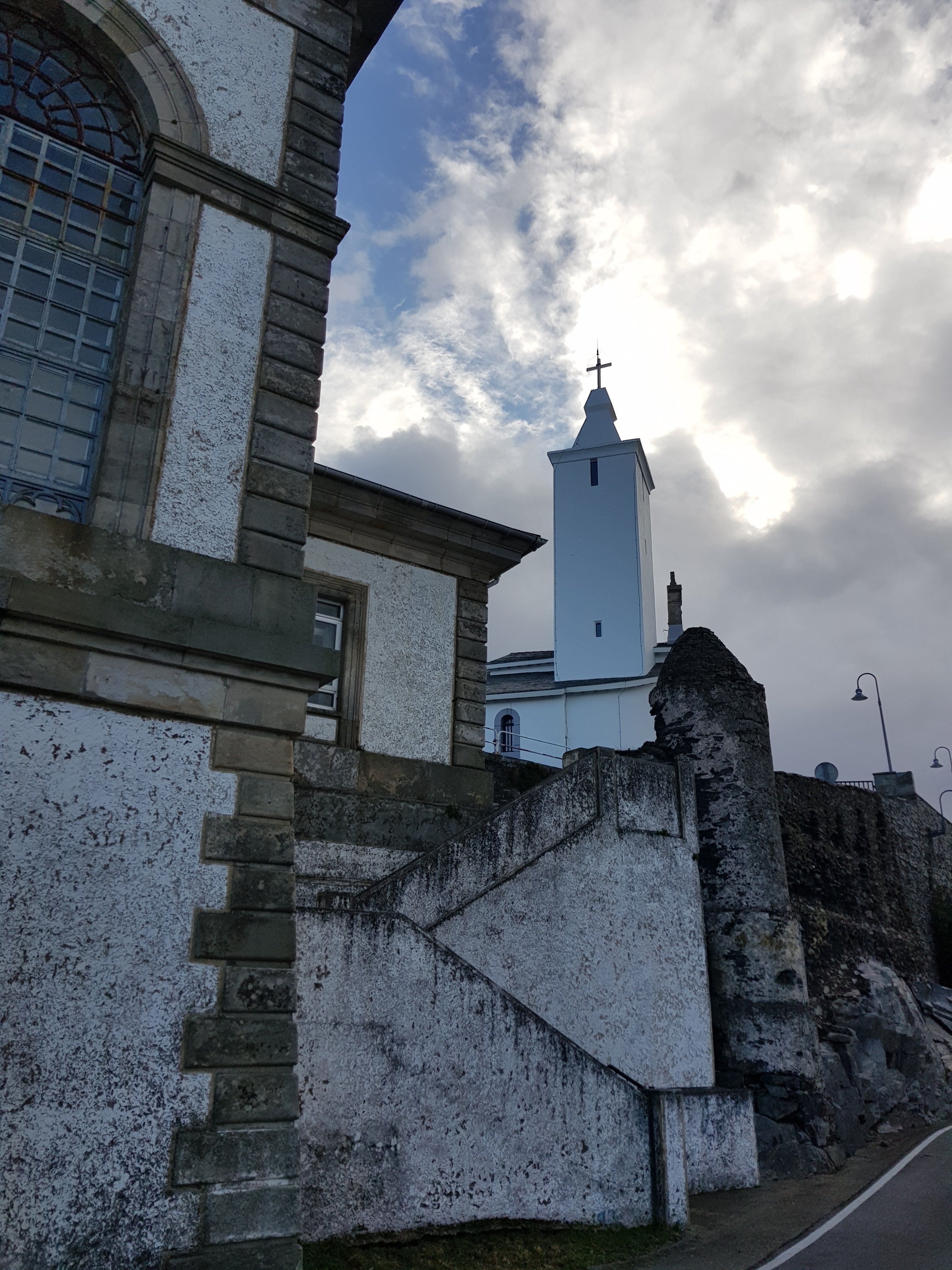
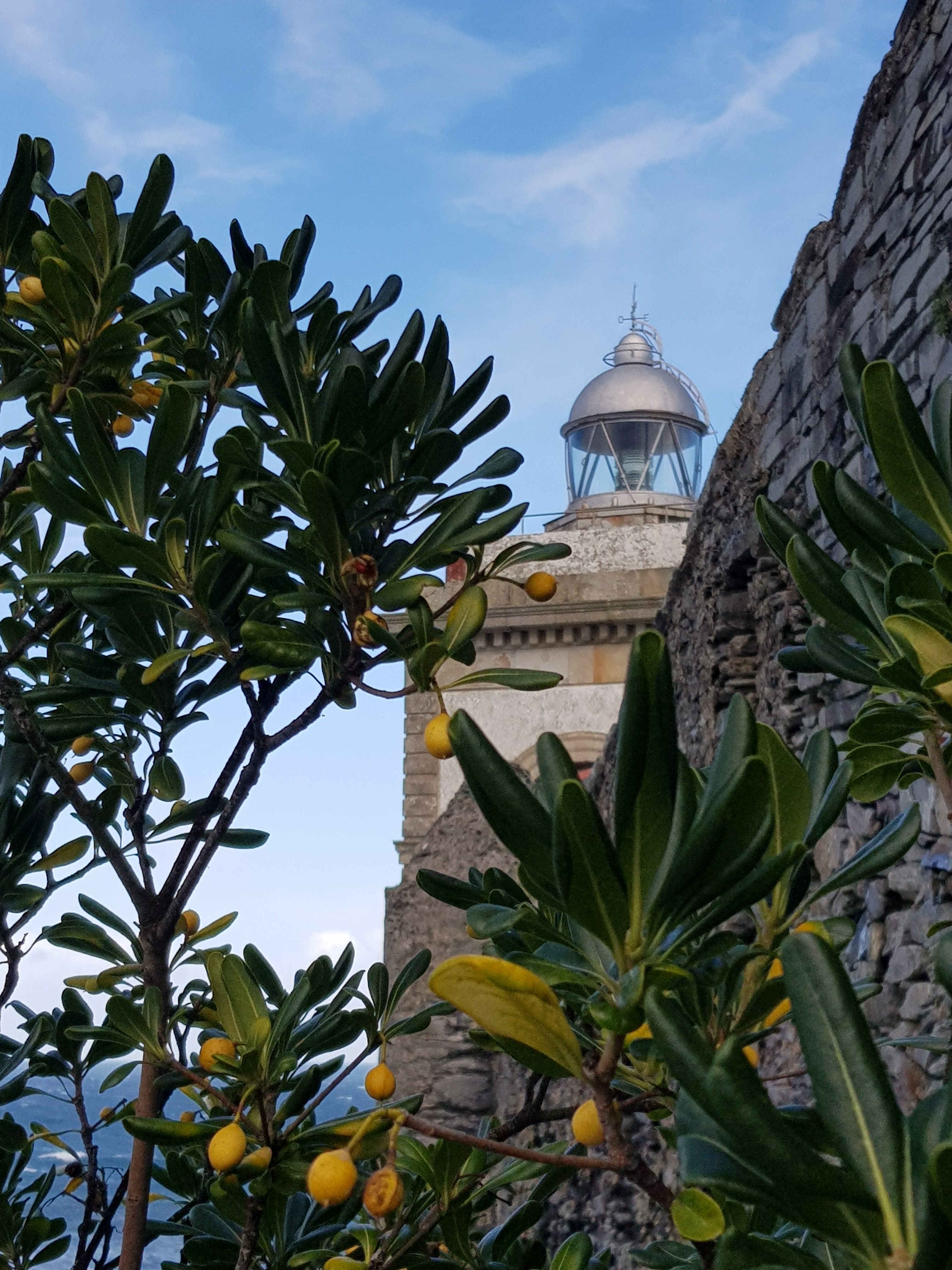
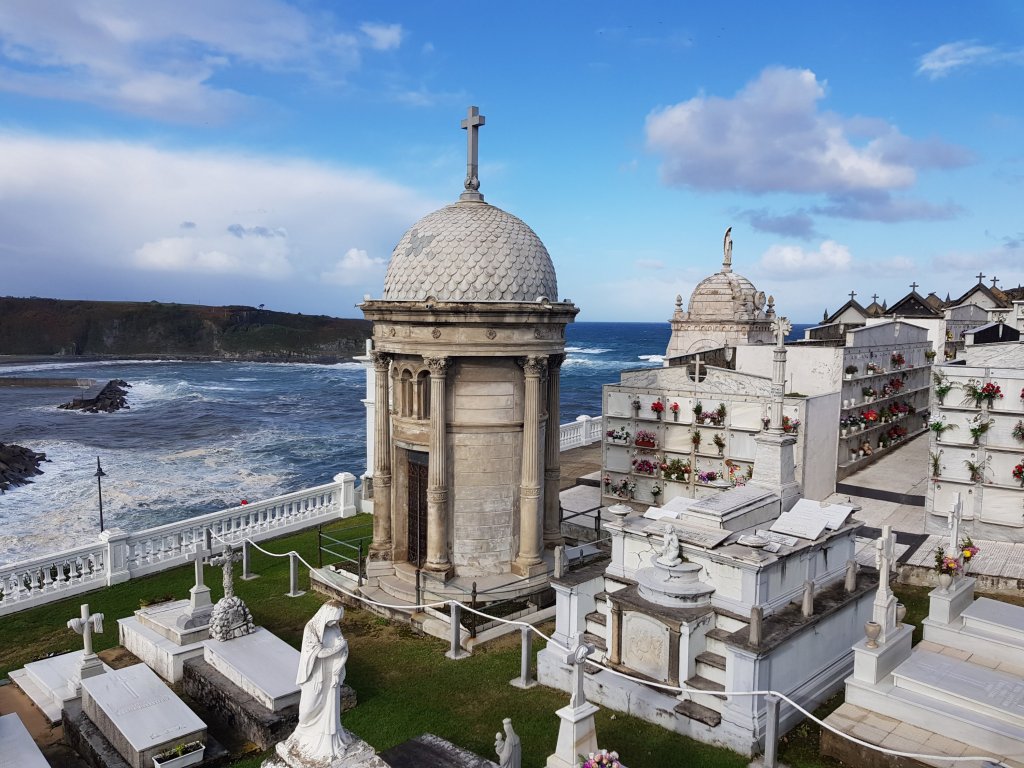
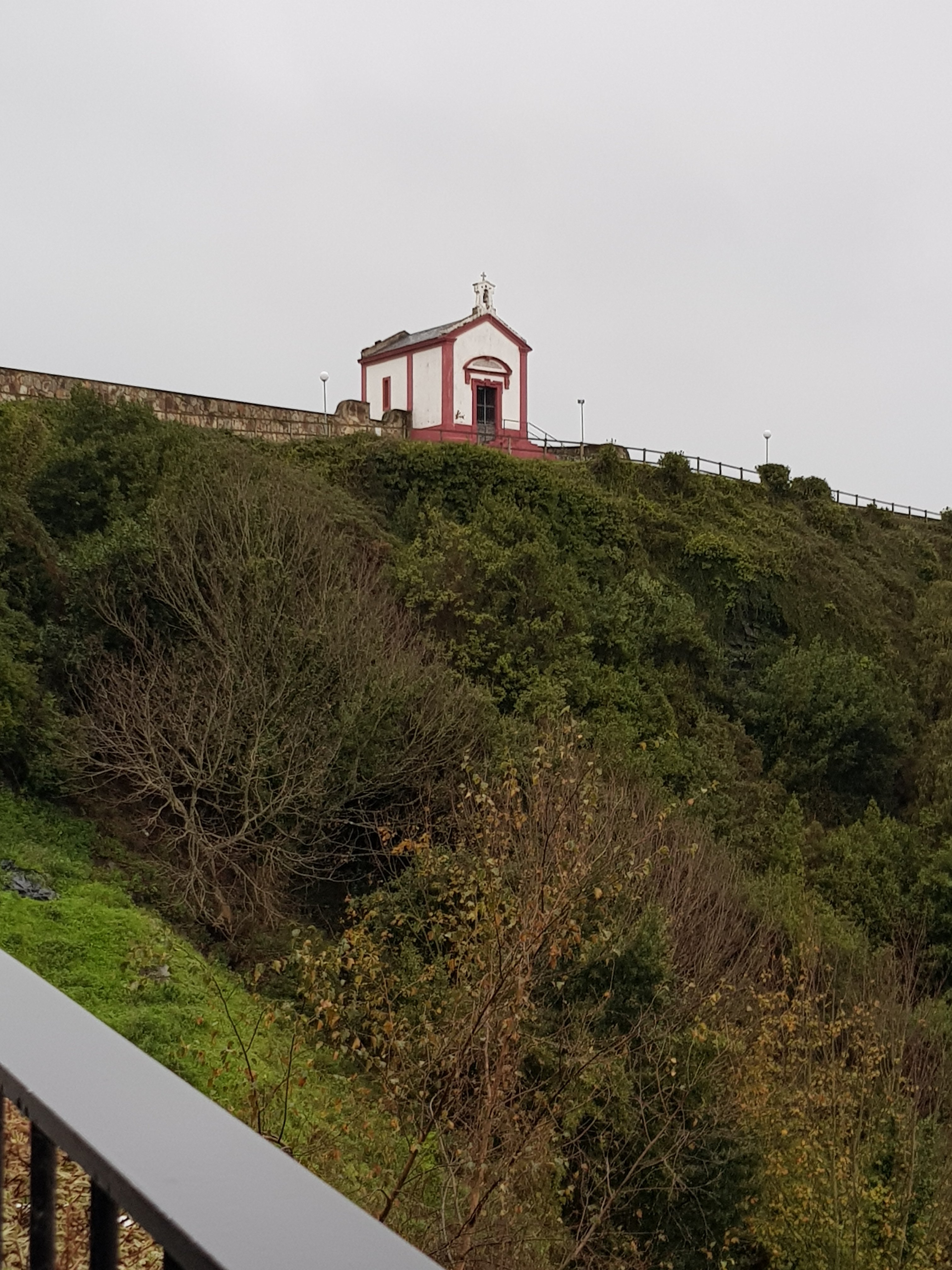
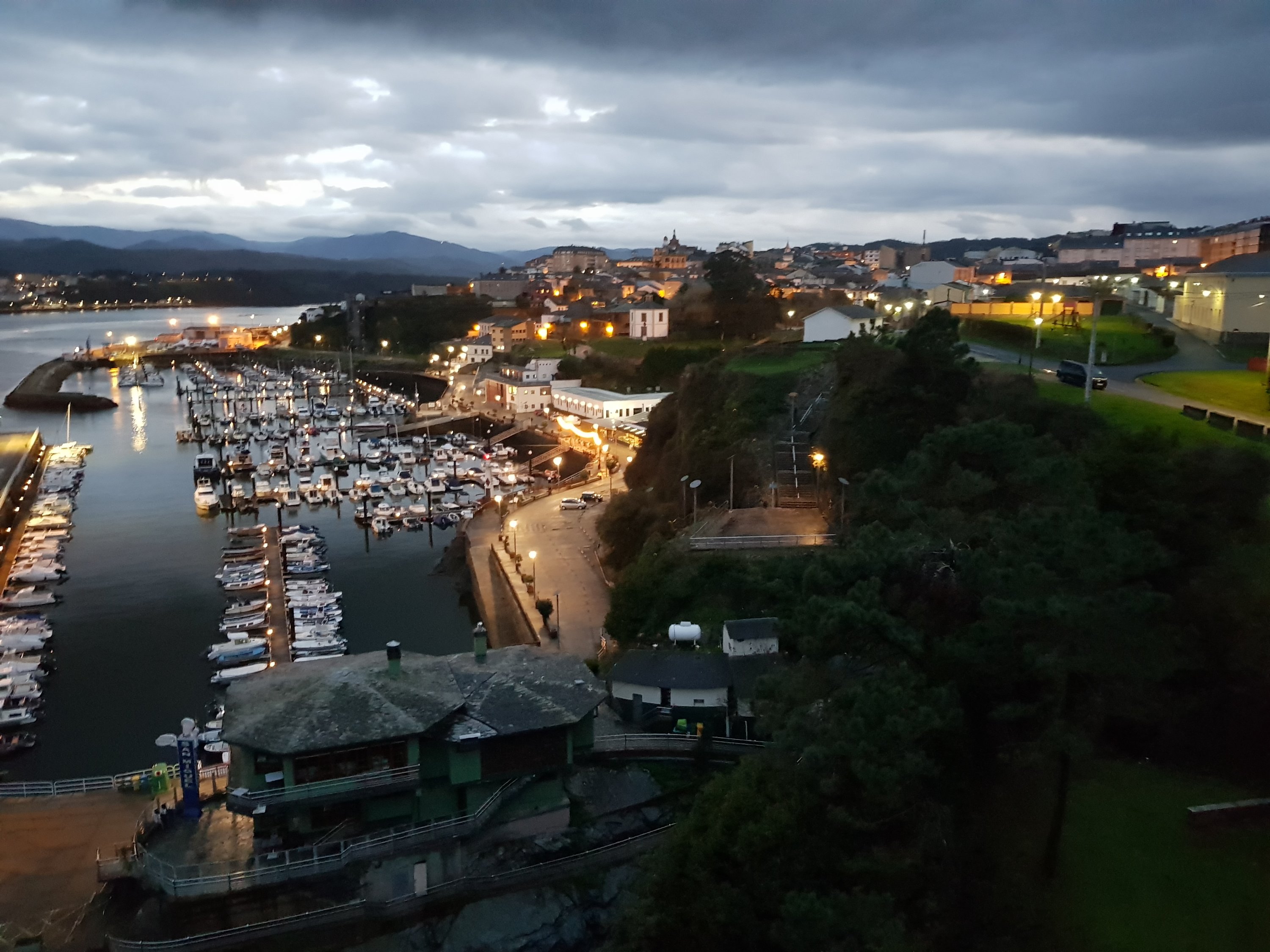
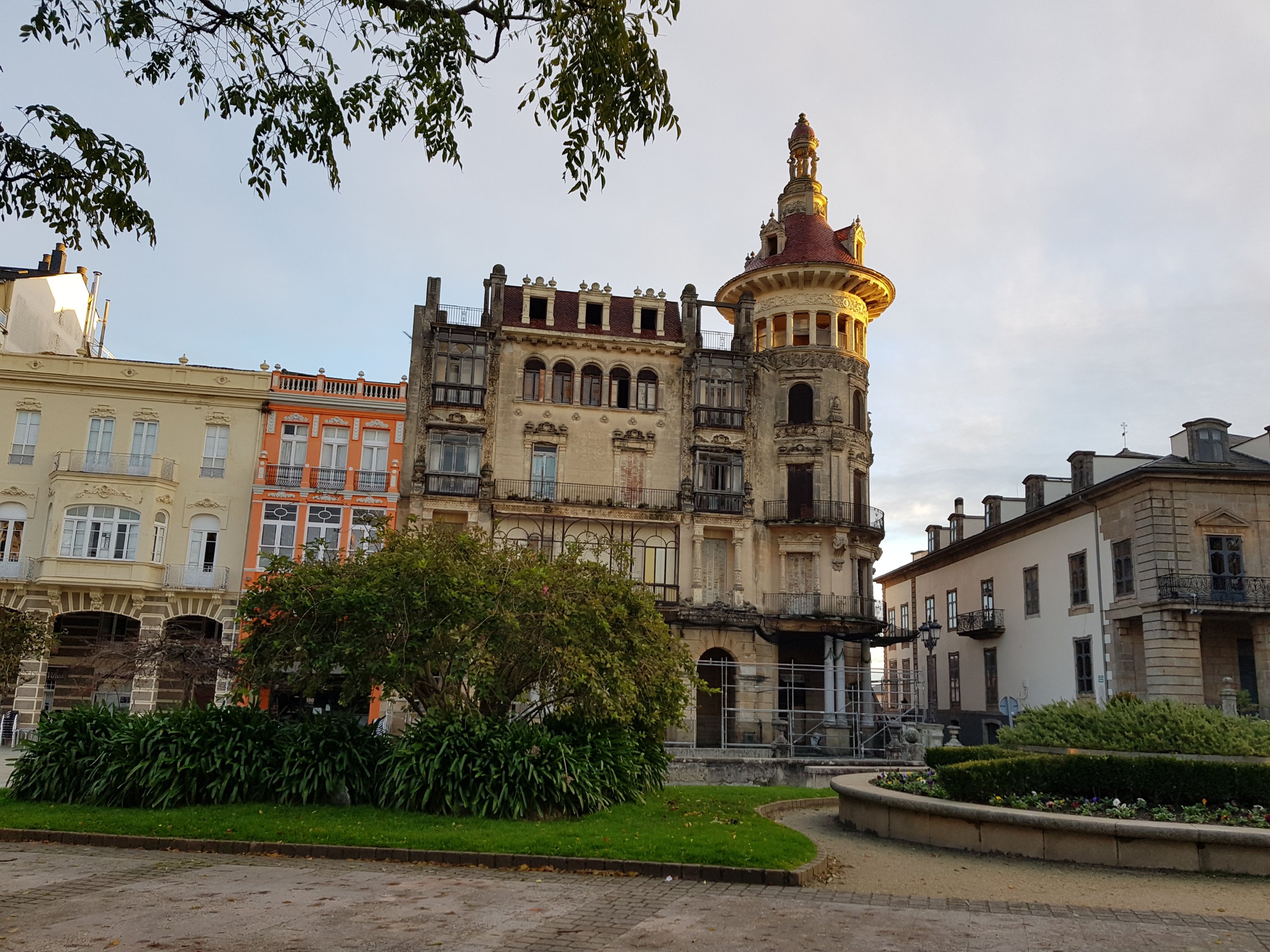
Luarca is a small town which was founded on fishing, especially for whales. The town has a winding river running through its centre and a reasonable amount of bars, restaurants and shops. As you walk through the town, which is full of grand indiano buildings, you are led to the harbour, two beaches and a climb to the lighthouse, cemetery and hermitage.

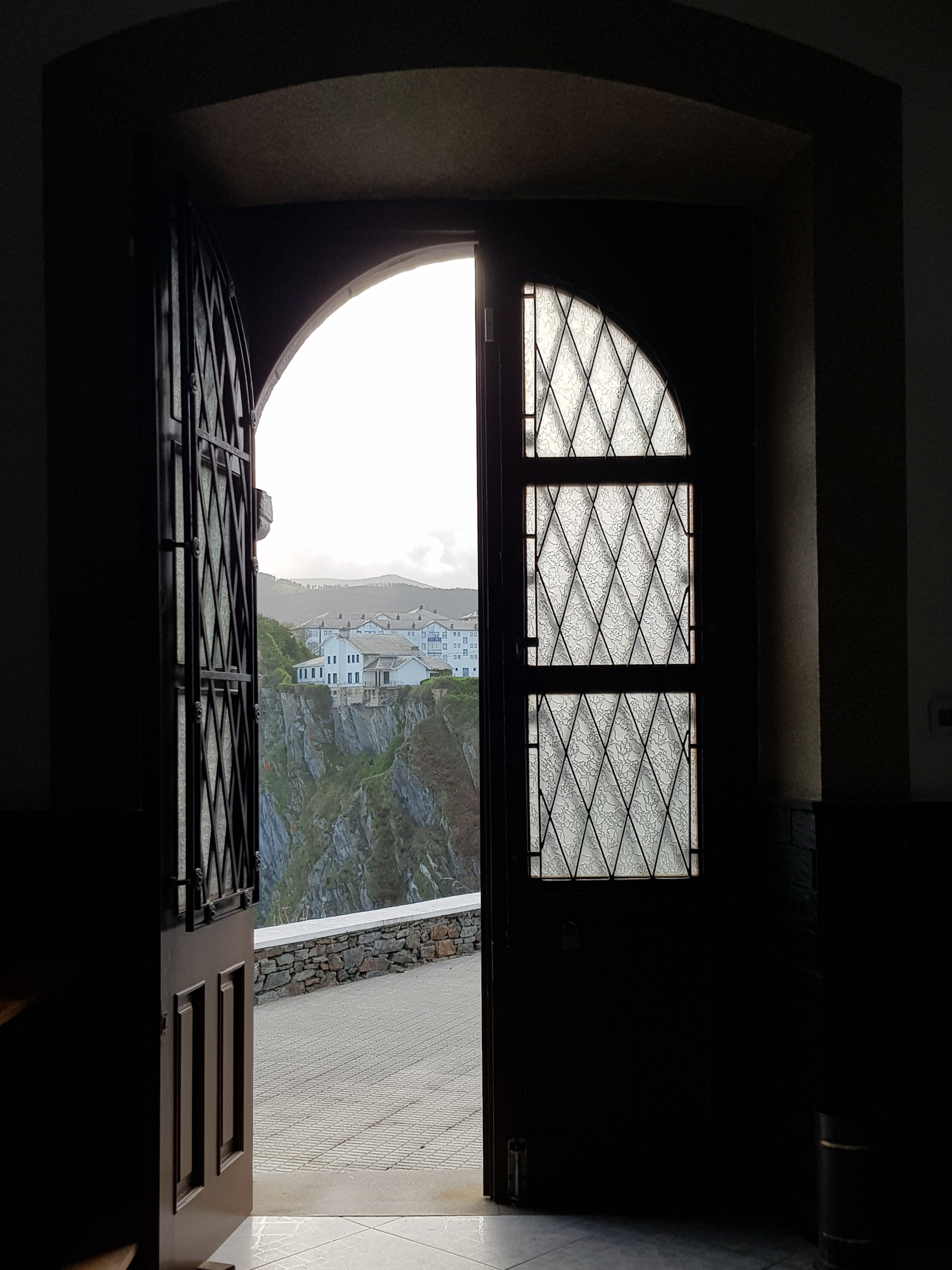
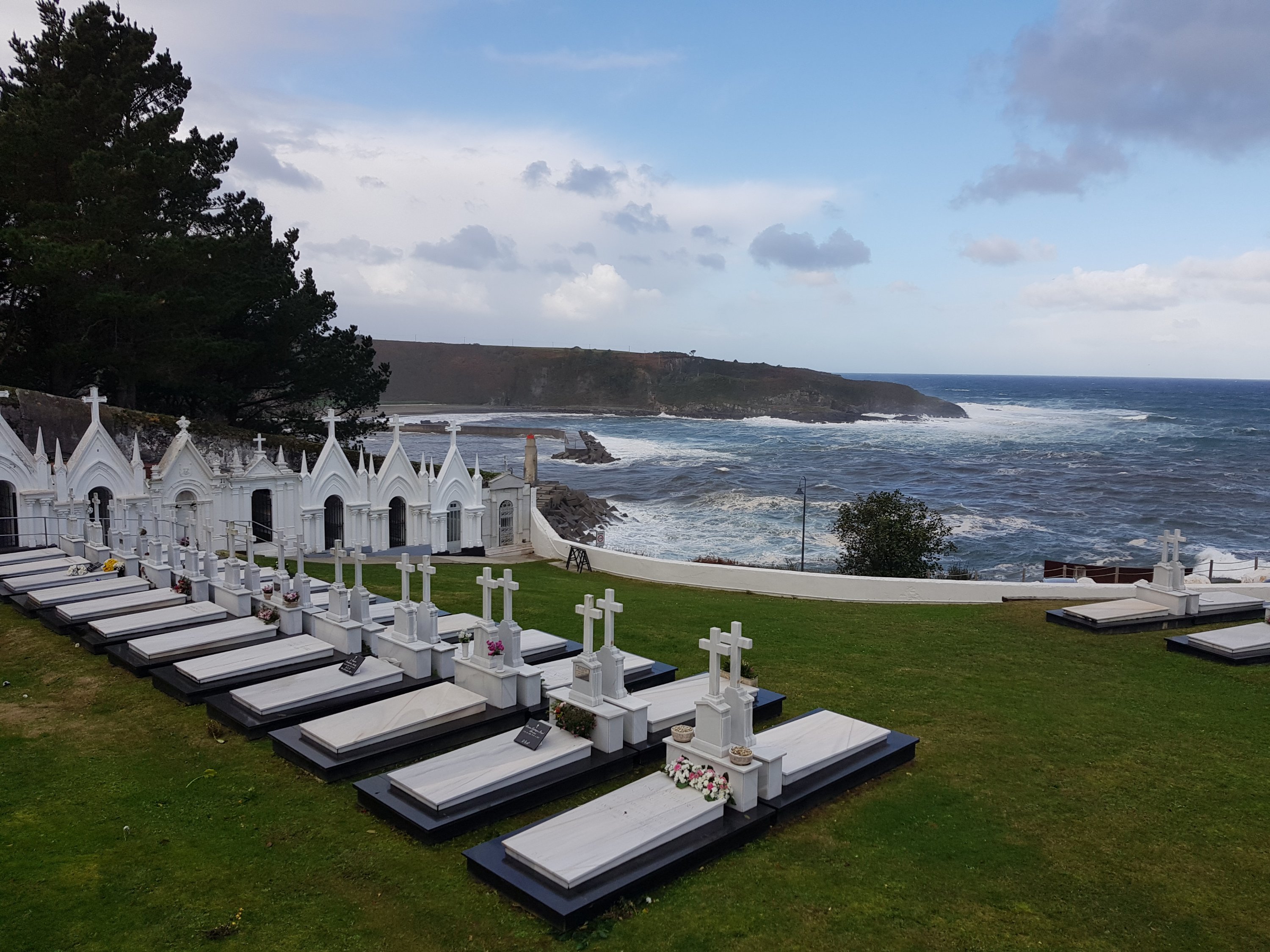
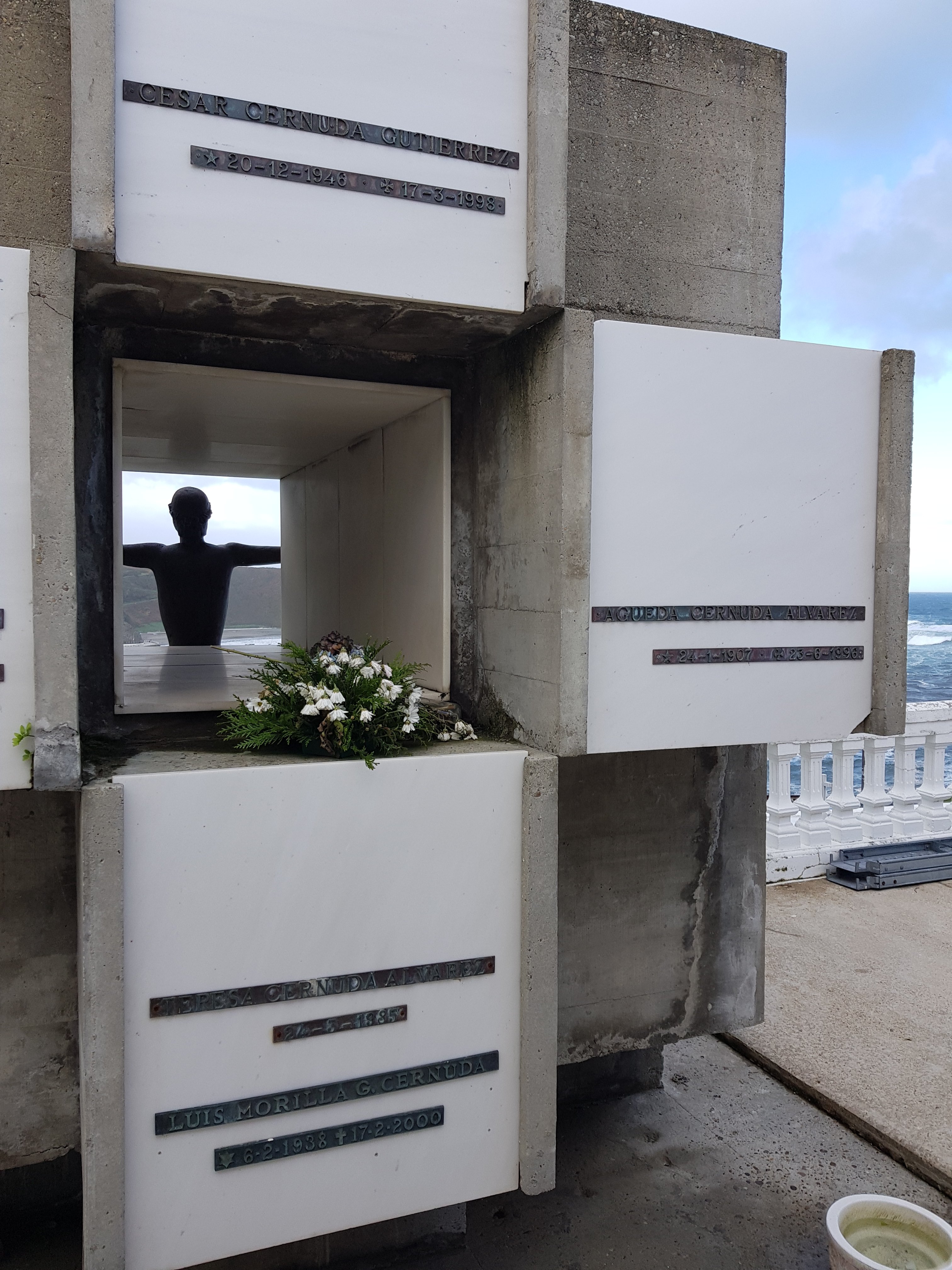
The hermitage is open to explore, and the cemetery can also be visited, and has some local famous figures within it.

The scenery is lovely, and whilst I was up against strong winds, I did manage to wonder around and look at the sites before the big storm hit! When I could hear thunder, and see snow, I knew the train had been the right decision this day..

The next morning, I headed to Navia. The rain started early and kept on coming, changing from small drops to monsoons without a second to react. I kept myself motivated by singing along to myself ‘hit me with your best shot!’ And it definitely did, when it began to thunder, I started to freak out that I was in the middle of nowhere holding metal sticks!

I pulled myself together and carried on, assuming that I was the only person mad enough to be out here, when another pilgrim appeared behind me.

This peregrino from down under, had managed to leave from Irun a week after me and was now overtaking me! Bit embarrassing… After walking together for an hour though I realised he had been doubling up trail lengths each day, not taken any rest days and was not stopping to look at things. Whilst I may end up being the last pilgrim of 2021, I still think slow and steady is a better experience. I do hope I’m home for Christmas though…

The arrival in Navia was met with a big smile from me, and in the pouring rain, and frozen to the core, I arrived at my hotel. Navia is a reasonable sized town and the hotel I stayed in was pleasant. One cheeseburger, and a warm bath later, and all was restored.

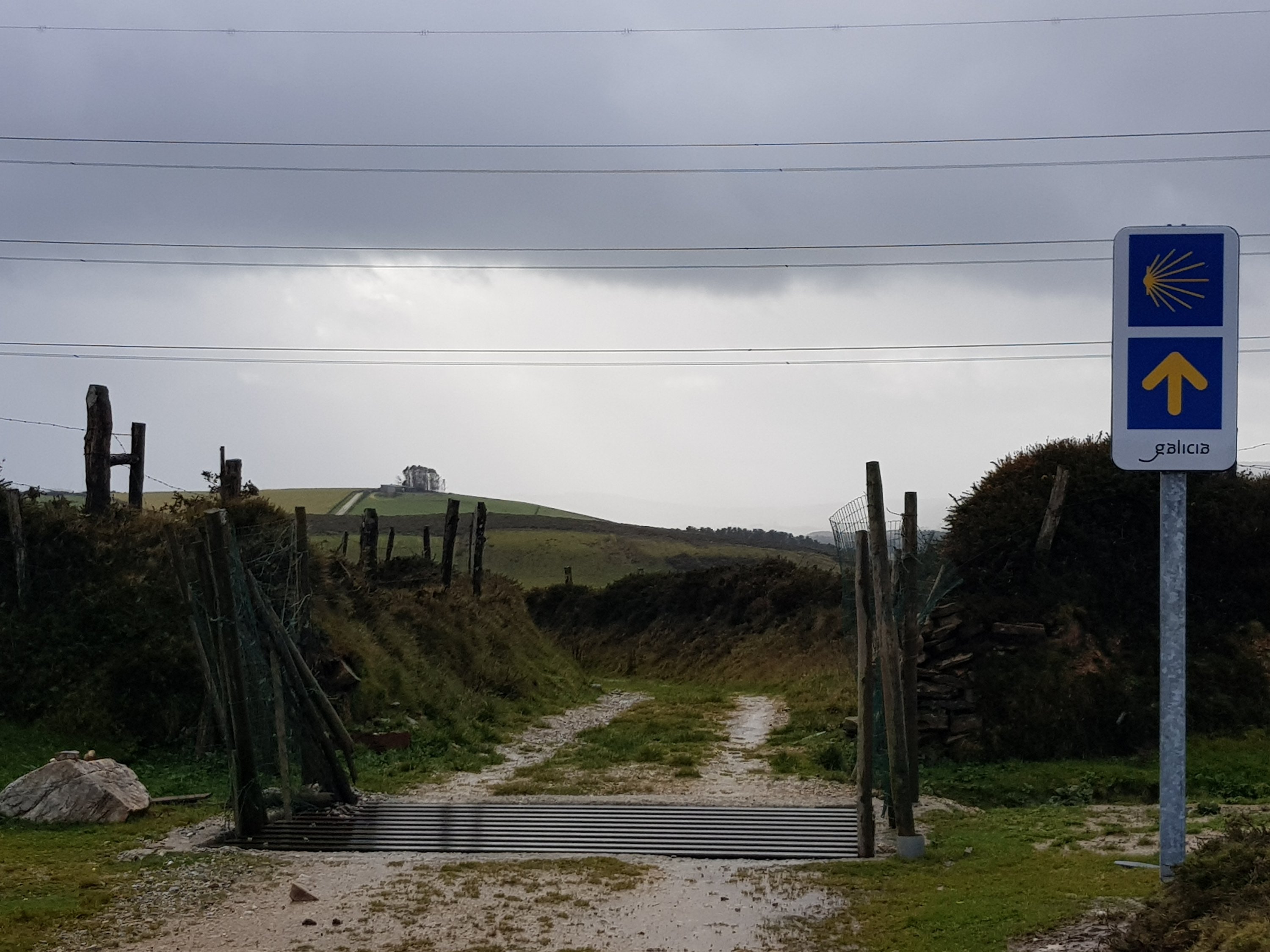
The next day was a big one, about 33km to Ribadeo, and into the final region of my camino, Galicia. It feels like forever that I have dreamed of standing in front of that beautiful Galicia sign. A sign that I have travelled over 600km and I am almost there!

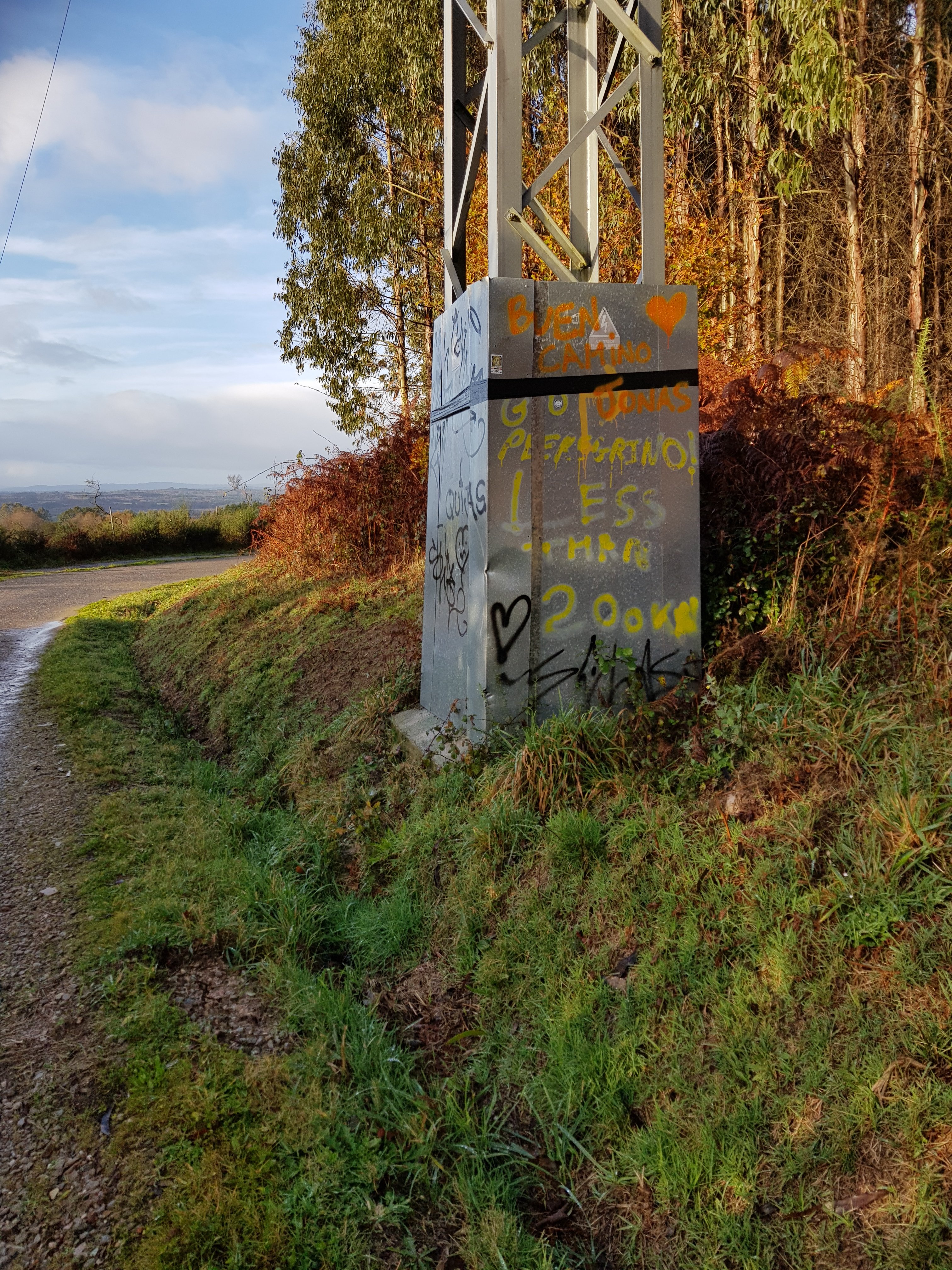
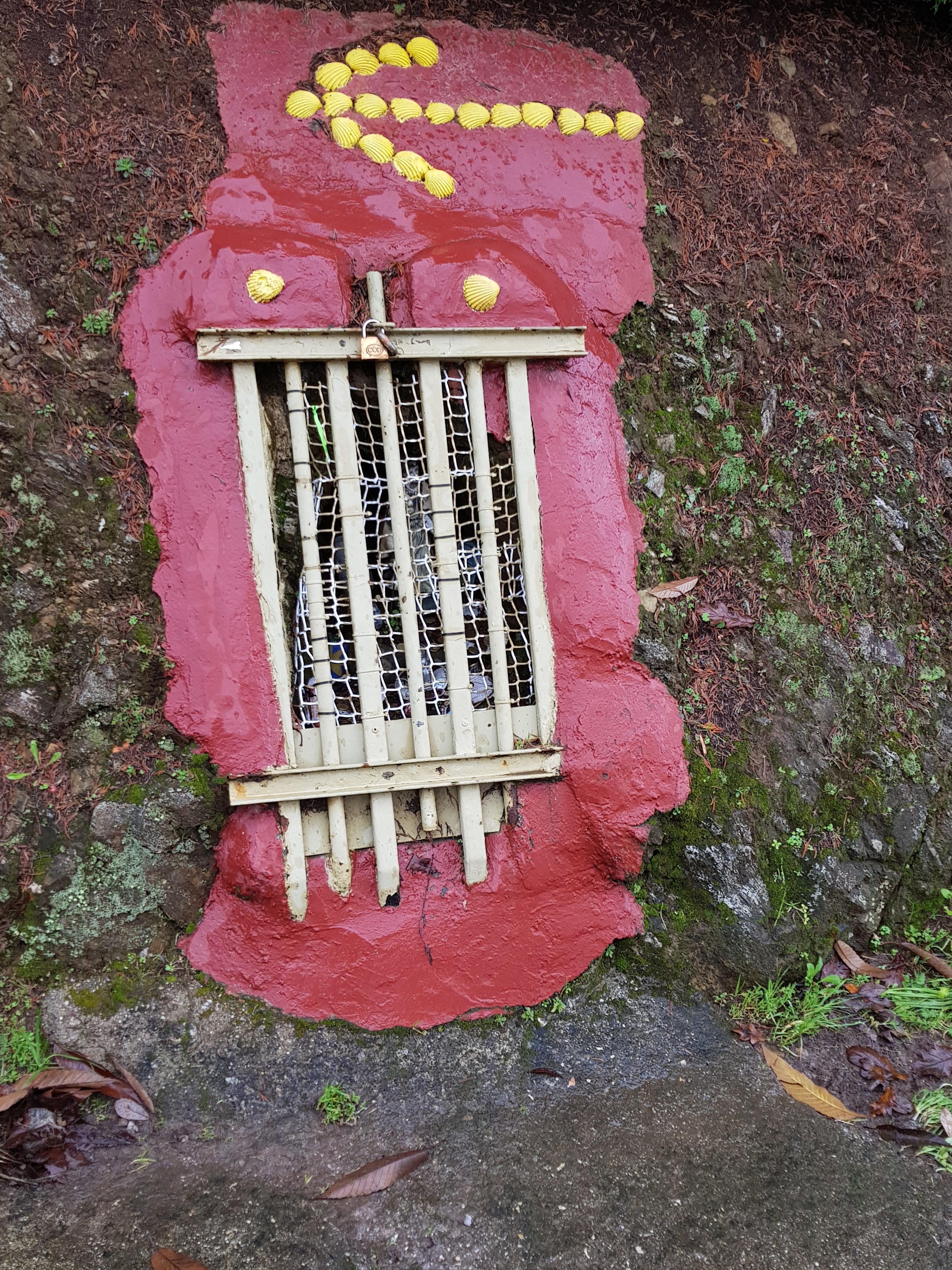
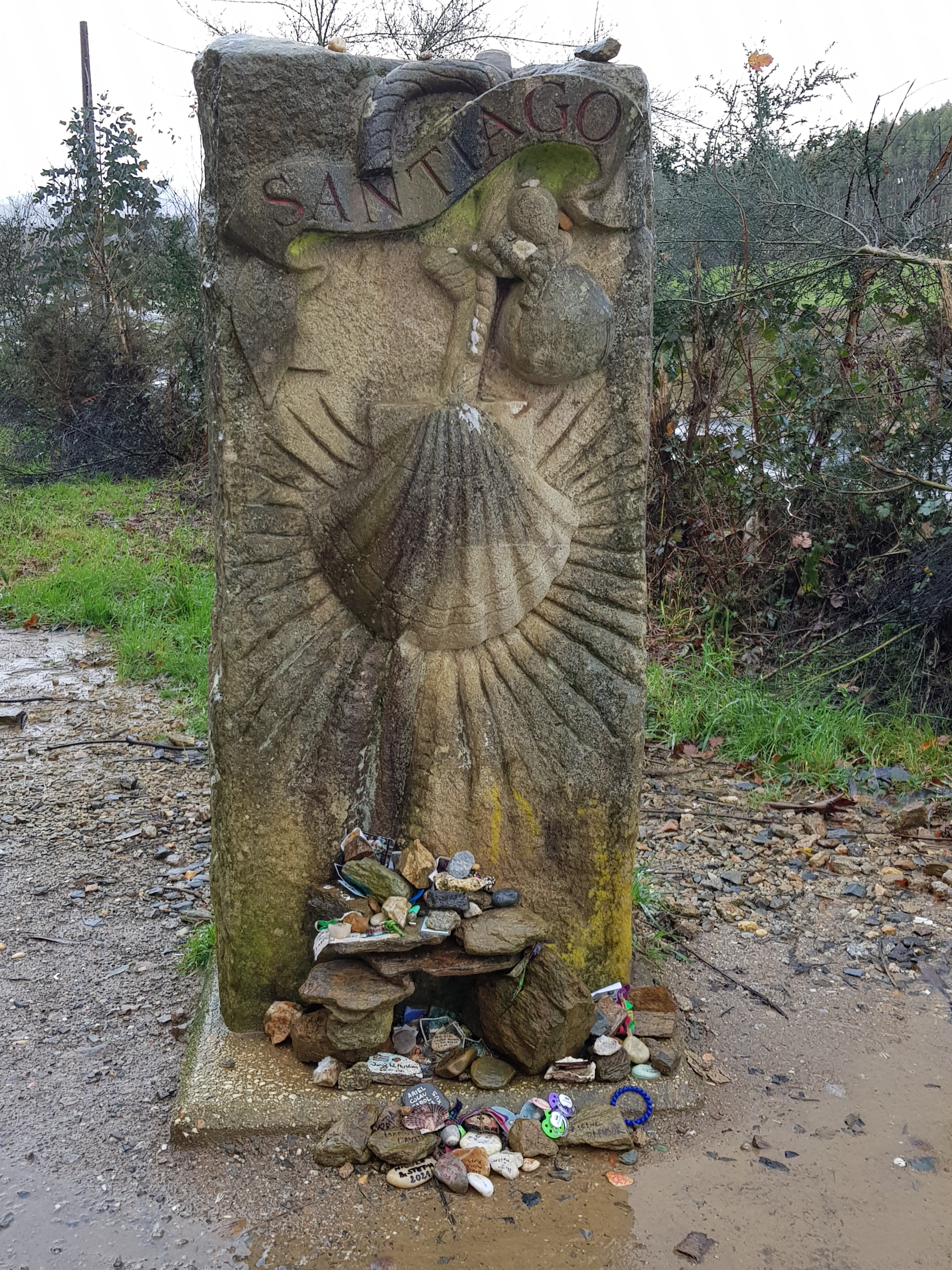
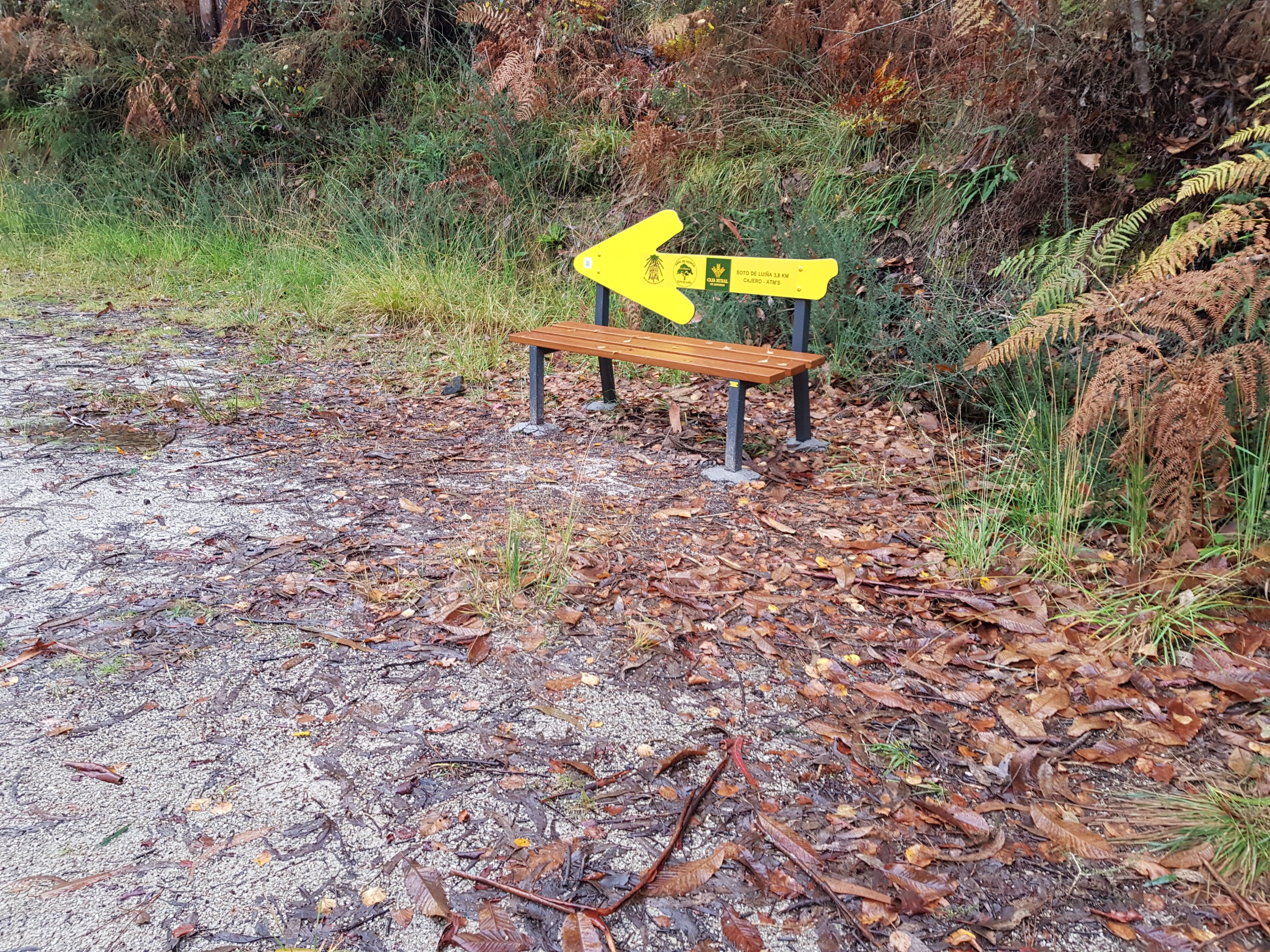
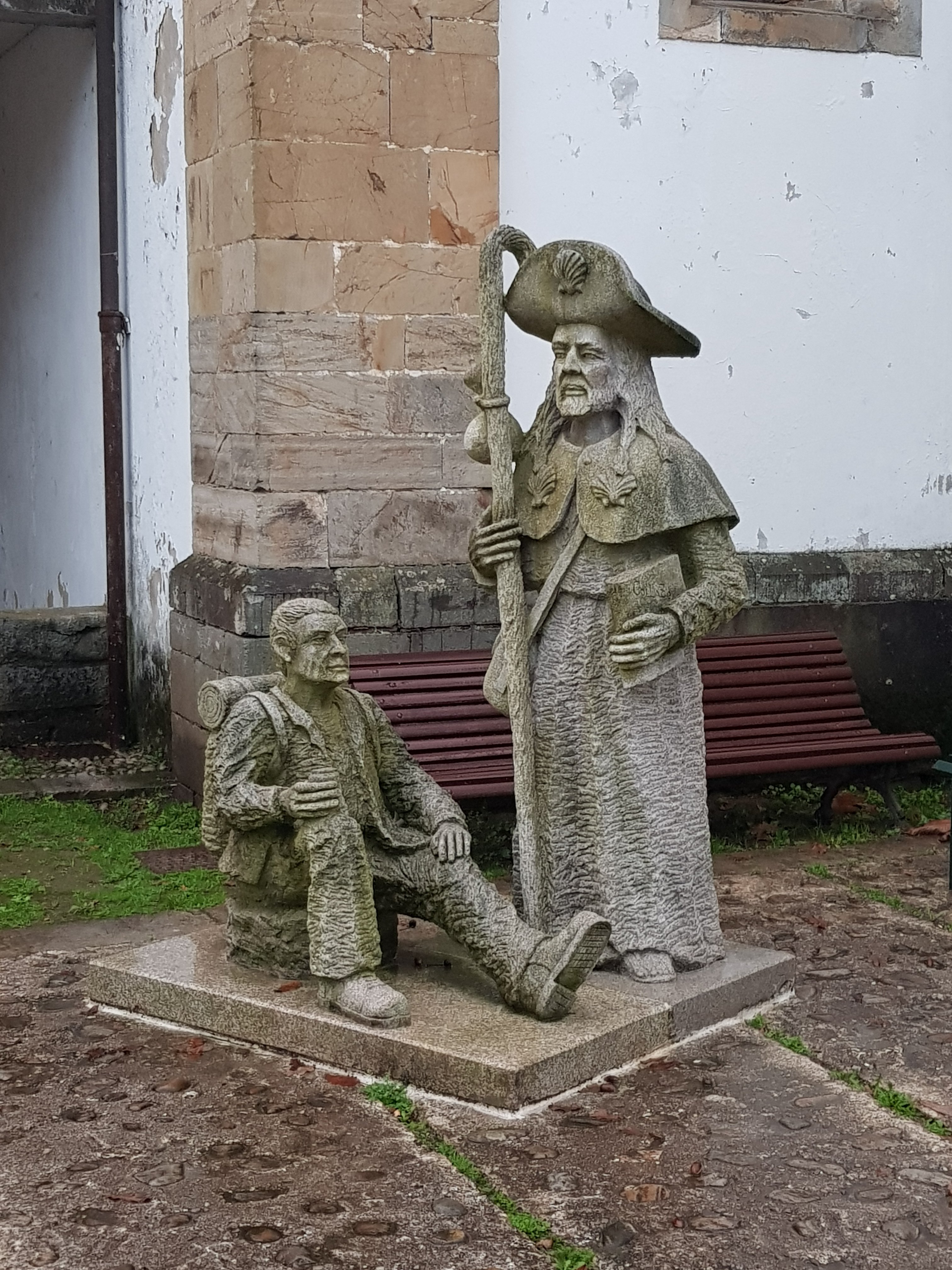
I walked from sunrise to sunset, and the day started with the rain but by the afternoon there was some sunshine. There was also plenty of uplifting camino related signs, statues, and artworks. The day covered a mix of landscape; some forest but mostly road.

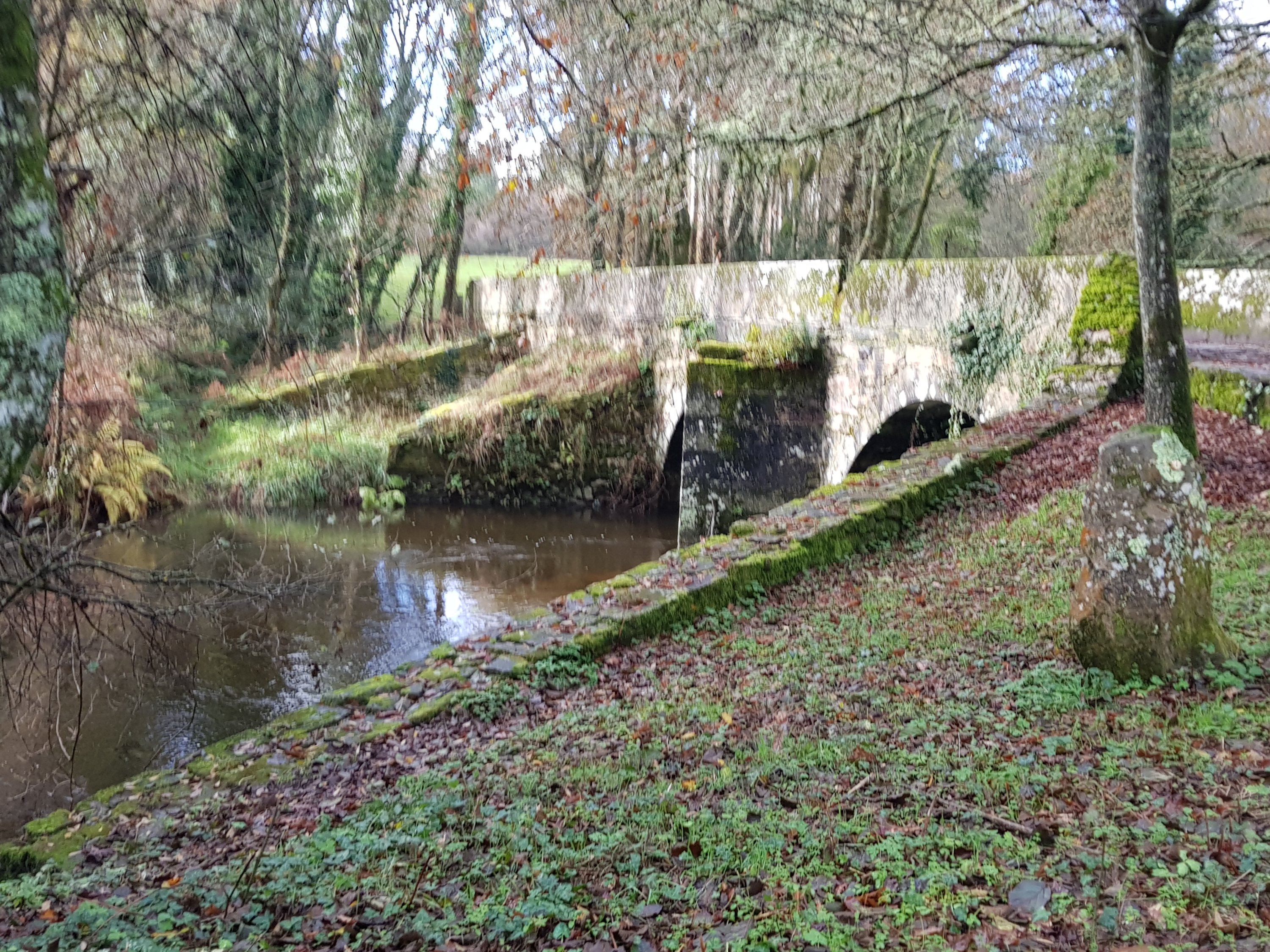
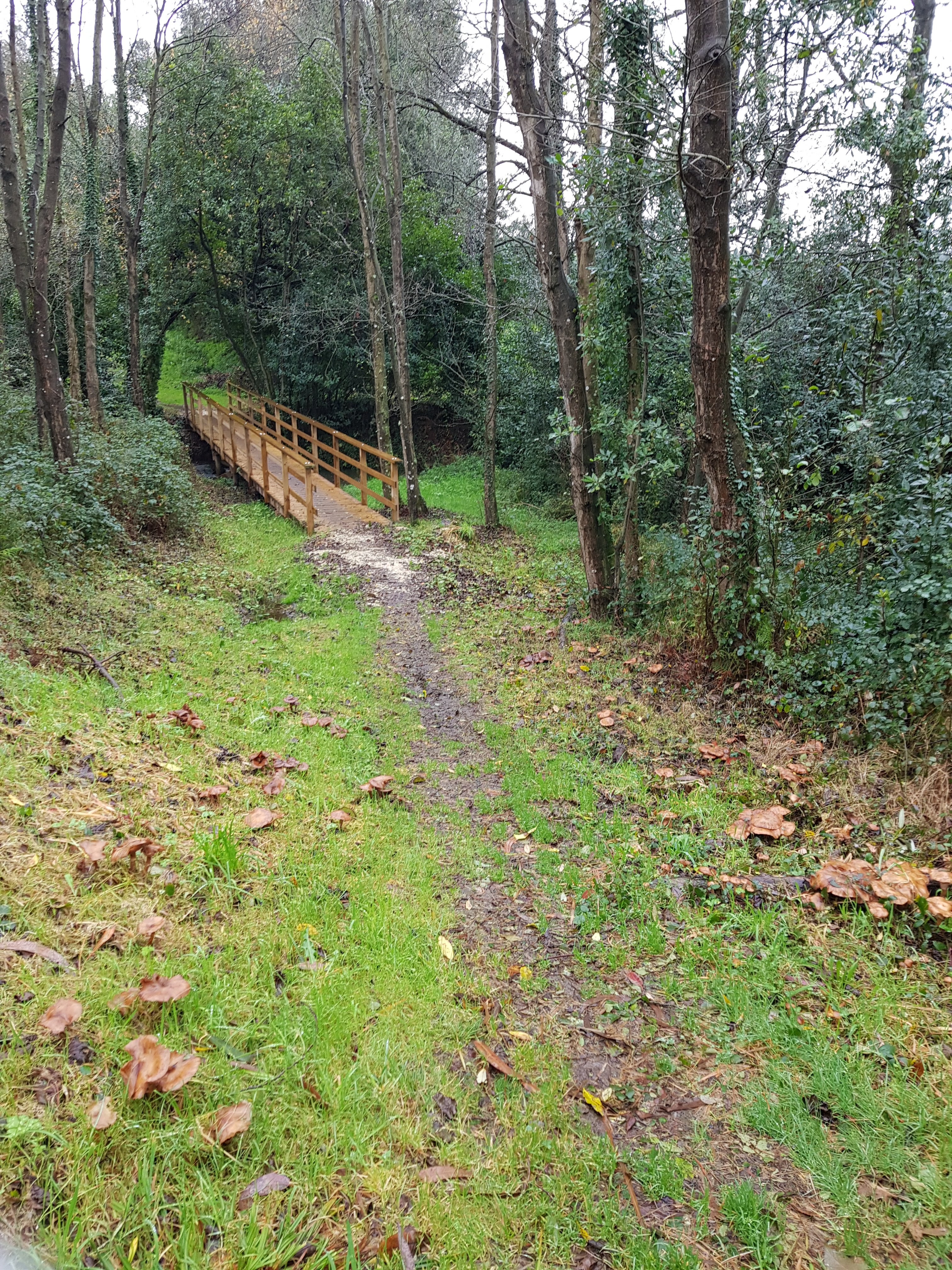
I did have a very natural river experience, when the river had overflowed the footbridge. I had to take my shoes off and cross bare footed. It was freezing, but fun!

At one point, I was given a choice of two routes, an inland one, and a coastal route. I chose the coast, so I had something to distract me from my ongoing pains, and because now I spend a lot of time trying to read the sky for clues of what direction the clouds will blow. It looked clear that way.

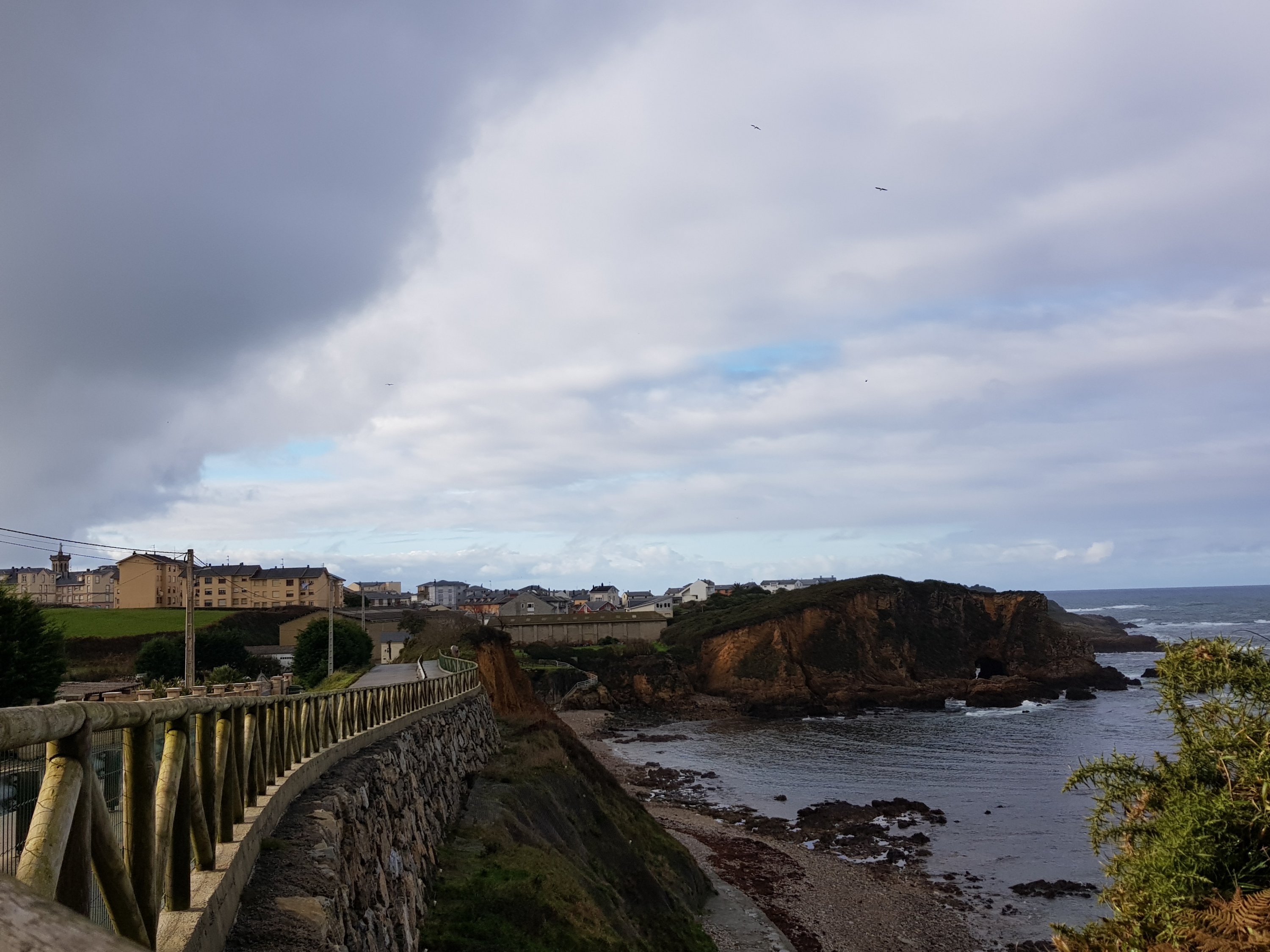
I made the right choice! I had 360′ views of nearly clear skies, with the ocean on one side and mountains on the other. This really was a nice surprise.

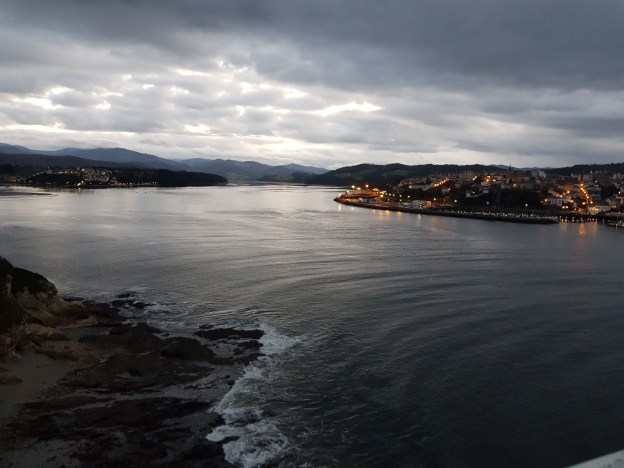
After 10 hours on the road I had to really push myself to make it over the bridge into Ribadeo as the night sky rolled in, and it began to rain again. The bridge is massive, and the views of the city are stunning, especially lit up at night. Then I got to the other side and finally saw the Galicia sign… and gave myself a big pat on the back.

Ribadeo is a must see stop, as it has lots of services and shops, and some gorgeous buildings.

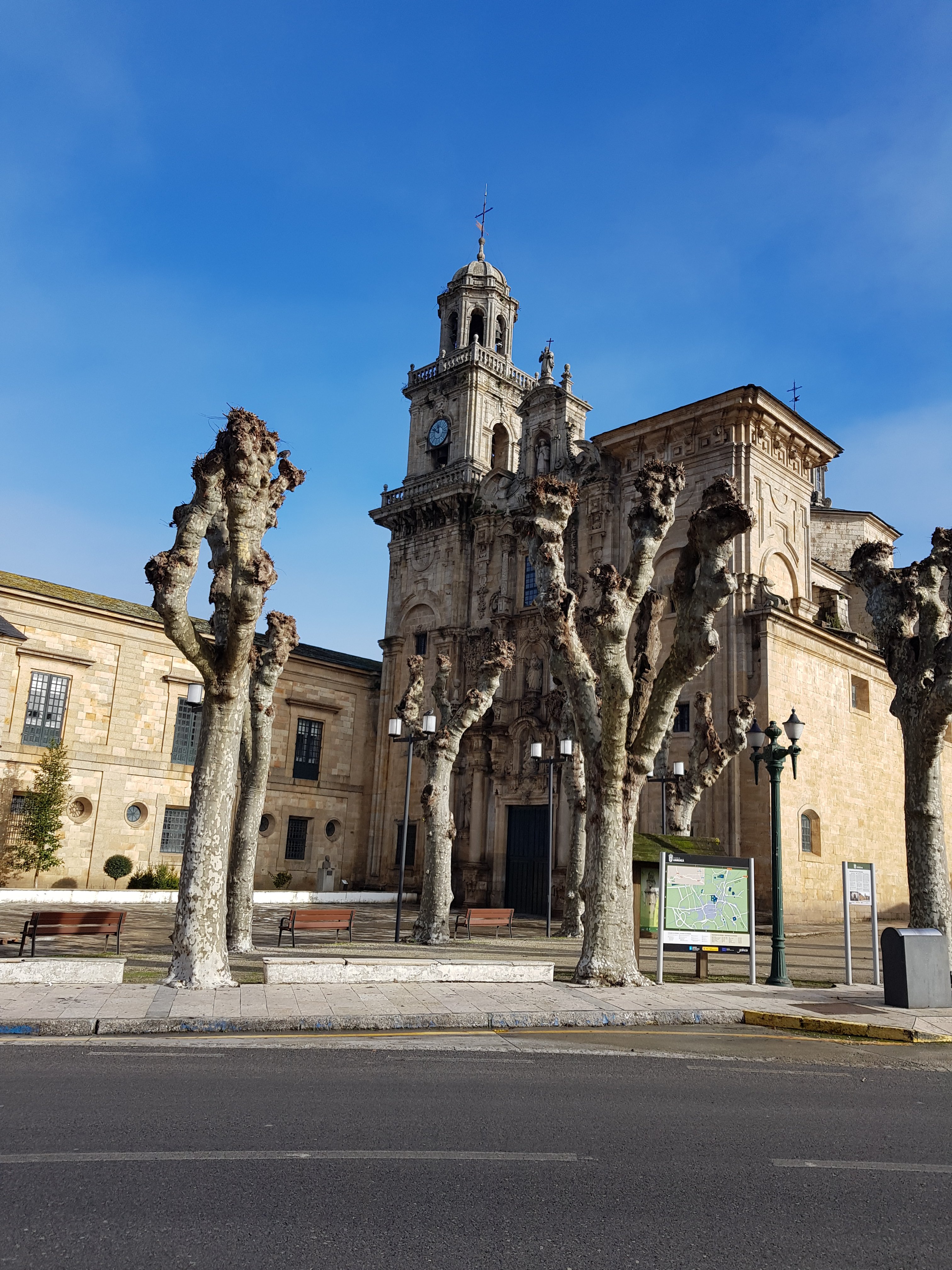
The next morning, my body felt ruined, everything hurt and my foot was inflamed. I was facing another 10 hour walk, and there was no way I could do it. It was a sunny day, and I did not want to waste it or fall more behind. I spent some time in the nun’s convent praying for strength, visited the pharmacy for more ibuprofen, and took the one daily bus part of the way to Lourenzá.

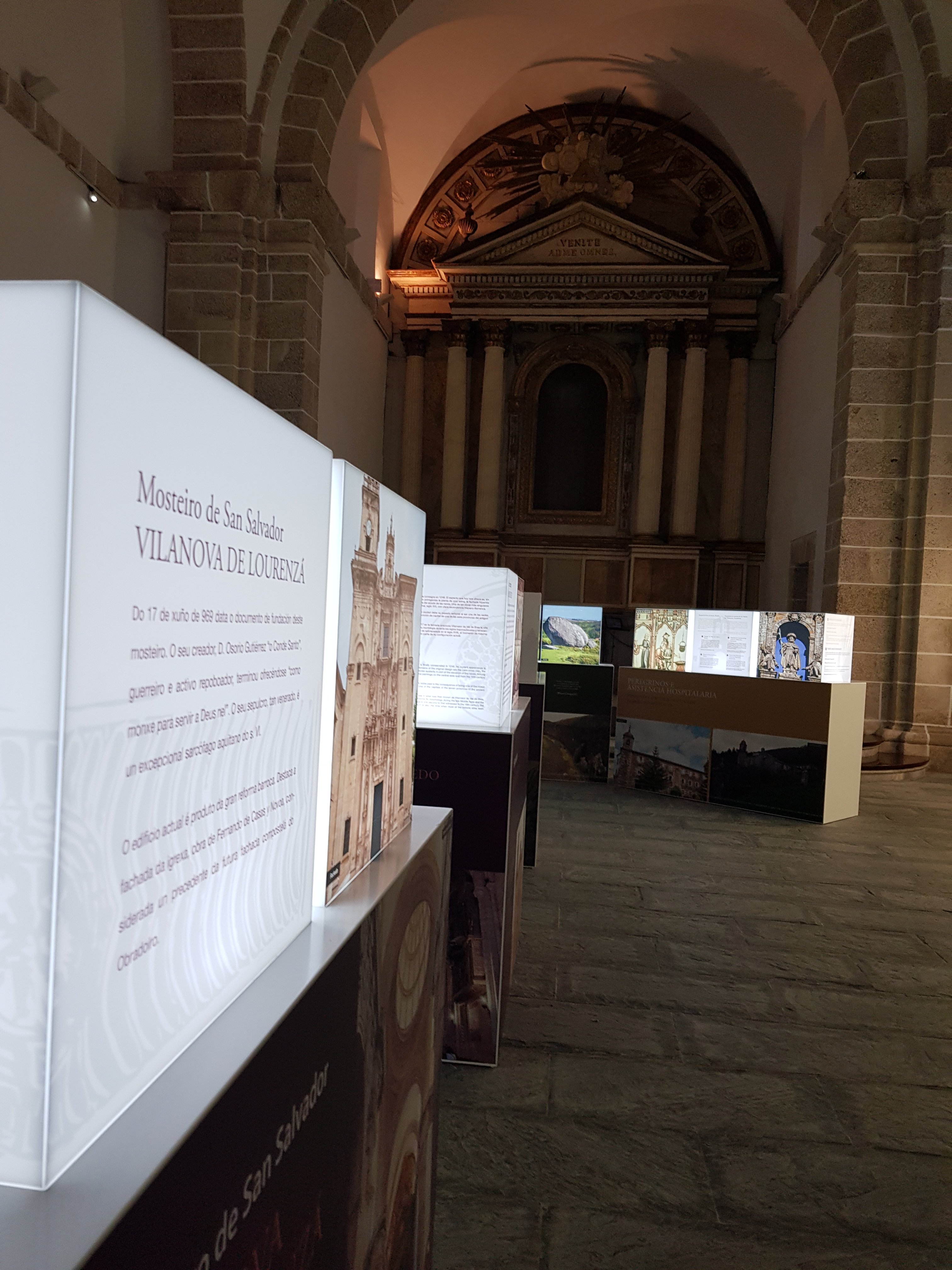
I stopped here for a few hours and took a look around the outside of the gorgeous monastery which unfortunately was closed. I had some octopus and bread, and I walked a short 4km through forest to a nearby country lodge to rest my injuries. A while later that day, the Aussie stumbled in, and I was shocked to see that he wasn’t days ahead. It turned out, he had worked too hard, and was suffering with an injury now as well. There is no getting out of this walk unscathed!

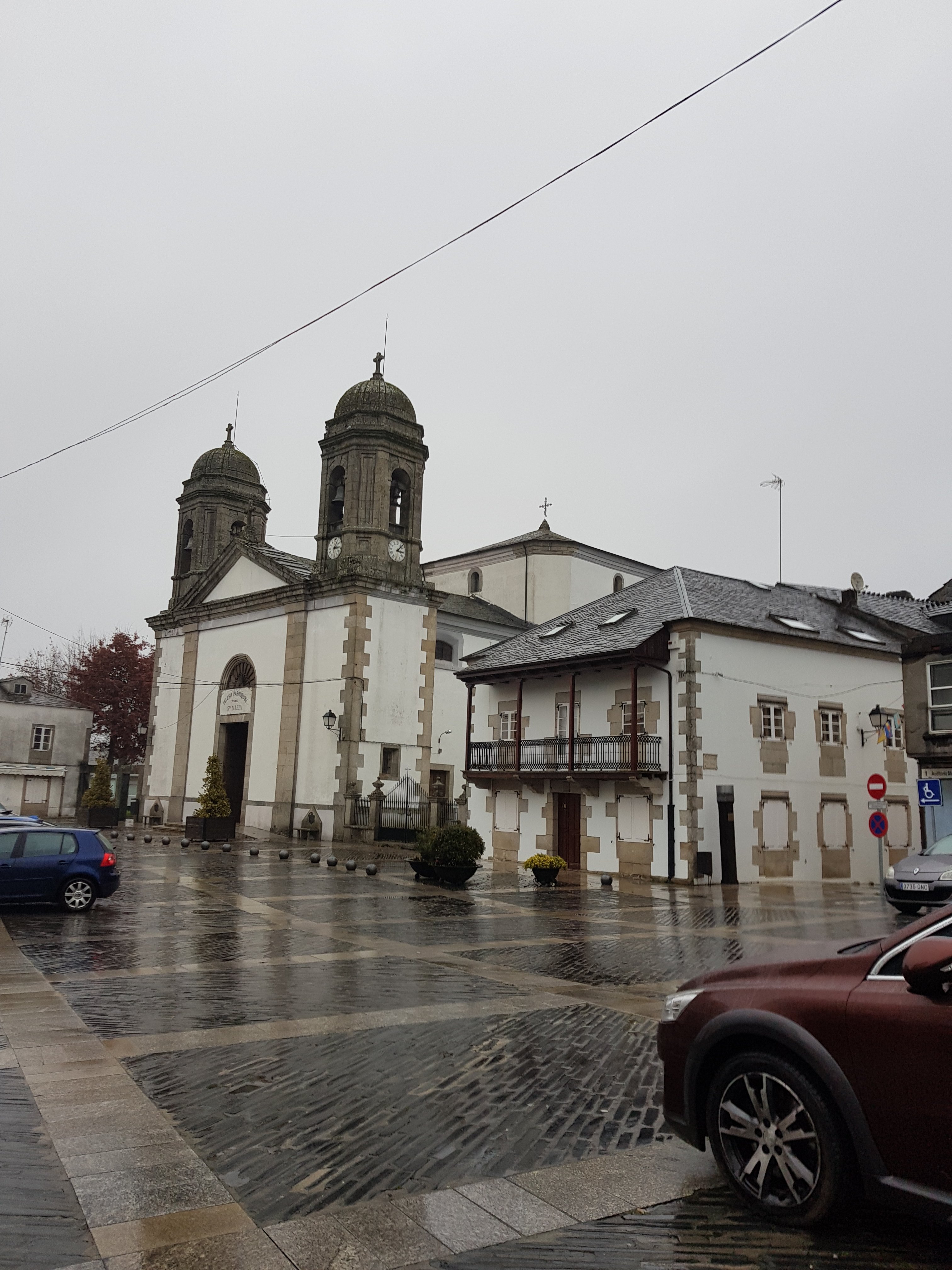
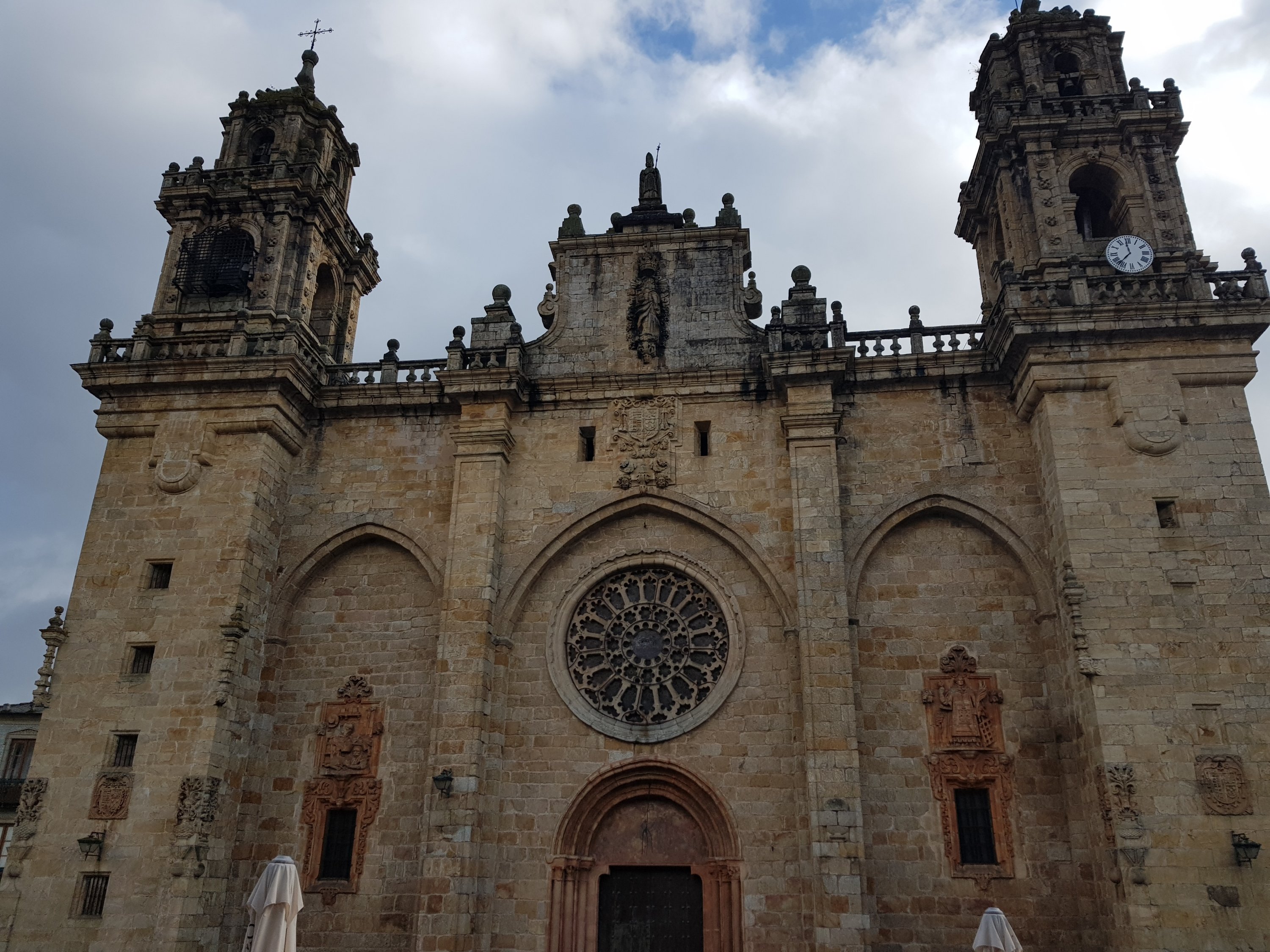
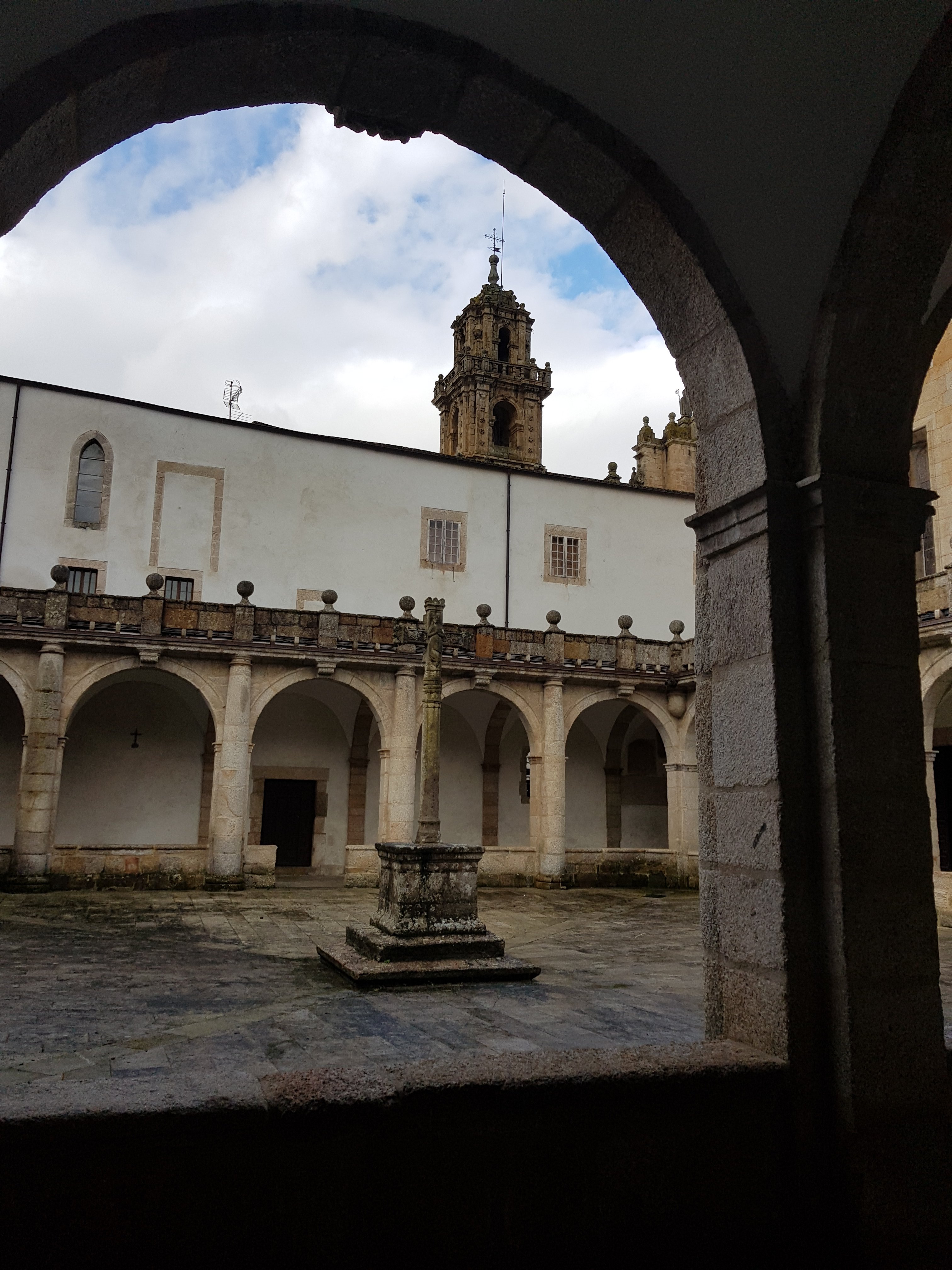
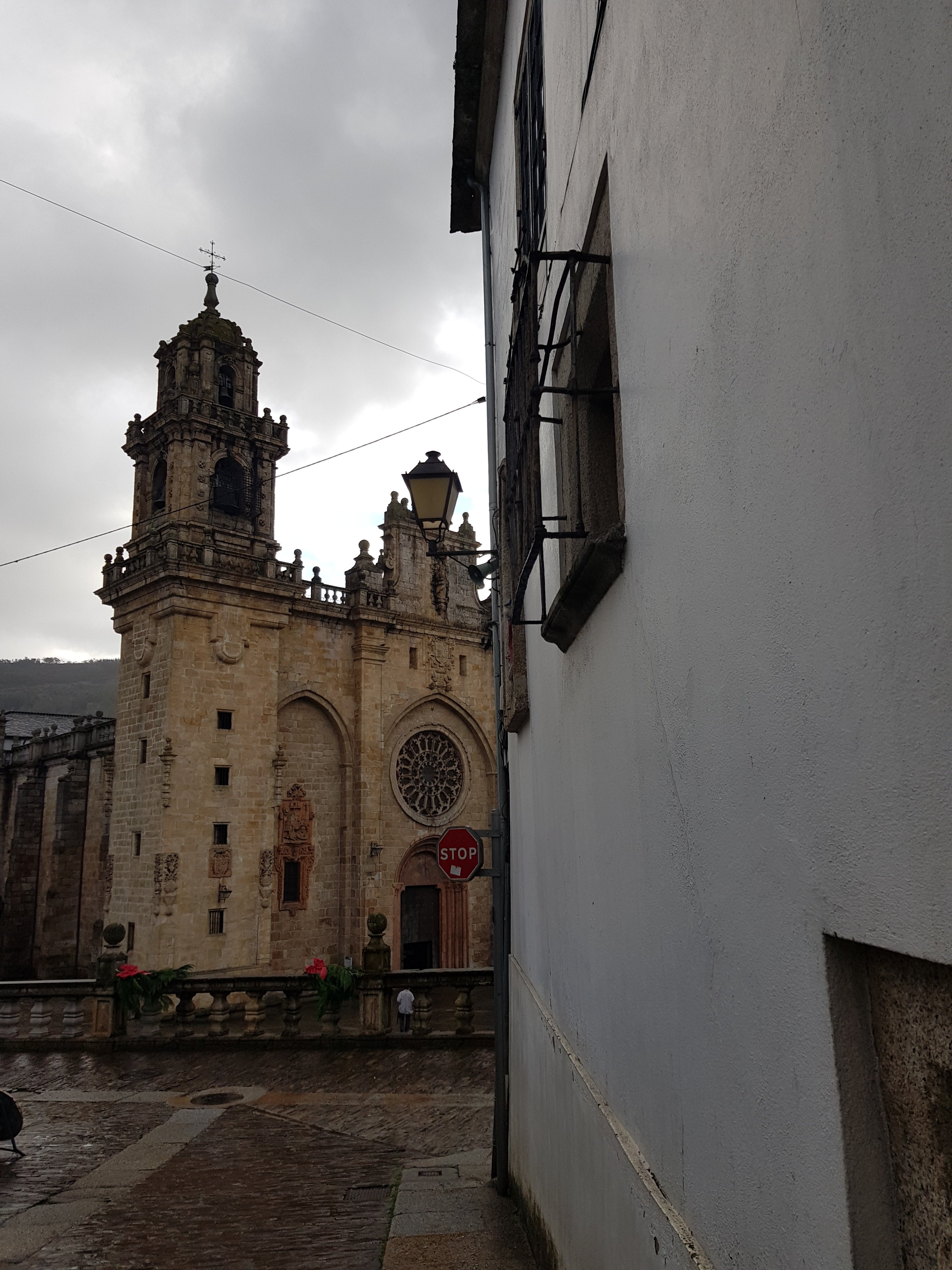
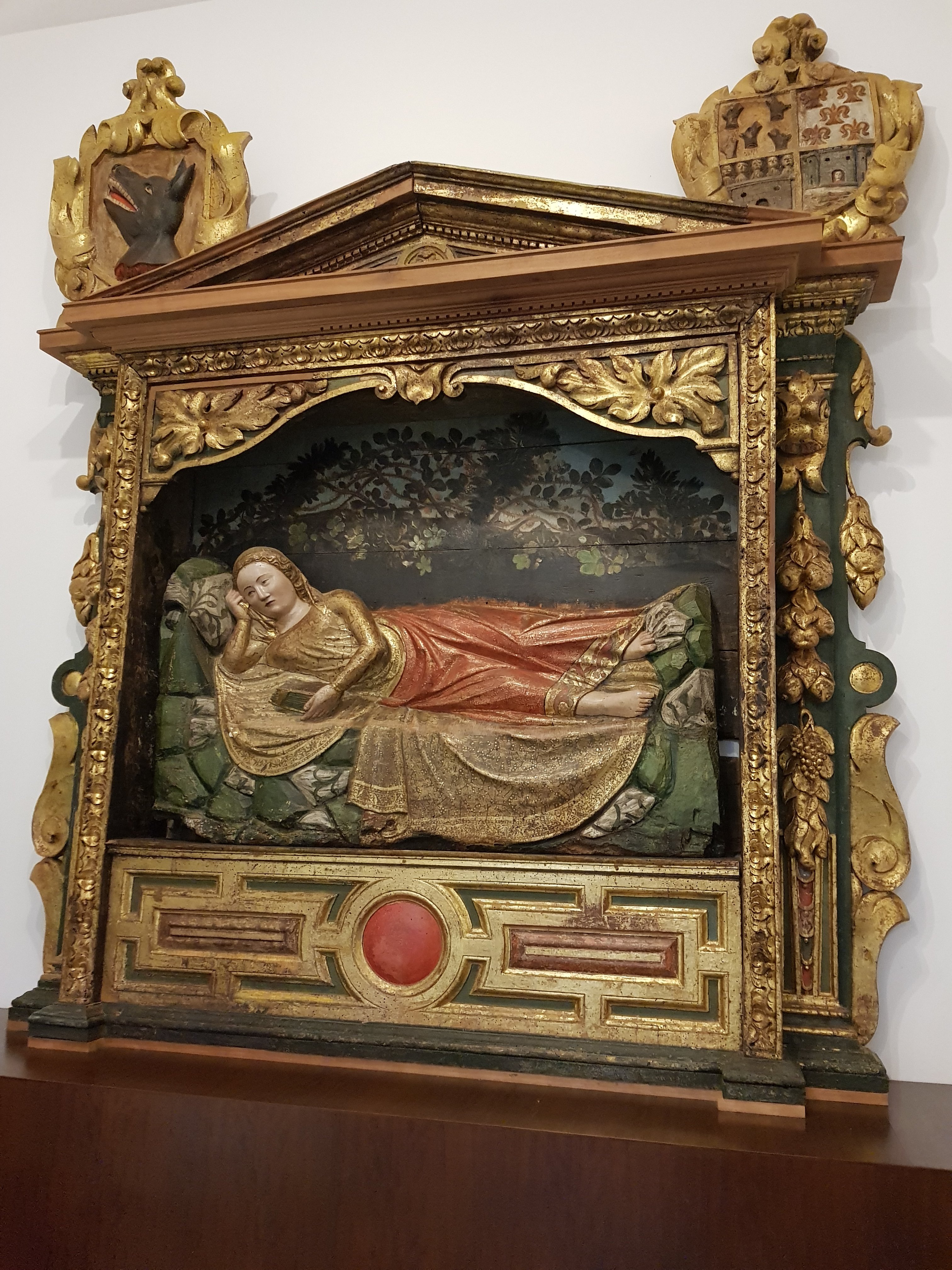
The next day was supposed to be an easy 18km. The rain kept coming but I made it to my first stop in Mondenedo, this little city has a cathedral, that I was keen to visit. It was 3 euros to enter but did include an audio guide. The cathedral has a strange layout following many extensions, it has three naves, a chapel in the center, a small cloisters and a small museum inside. It is worth a visit, as the art work and choir in particular are lovely.

The city has a few other historical buildings, and an exhibition about Camino del Norte inside an old church. The man looking after it was very chatty and helped me to consider my next stages of the walk. He also warned me of an upcoming bank holiday when all the shops will be shut. The exhibition itself was quite interesting focused on the upcoming locations on the walk, within Galicia.

Once I had walked out of Mondenedo, I began a very long and vertical ascent. This eventually took me to the other side of forest, and I then walked about 10km through farmland. There are no services here, just me, the cows and two horses that took a run at me! I was entirely soaked, but singing along to my motivational playlist, which helped.

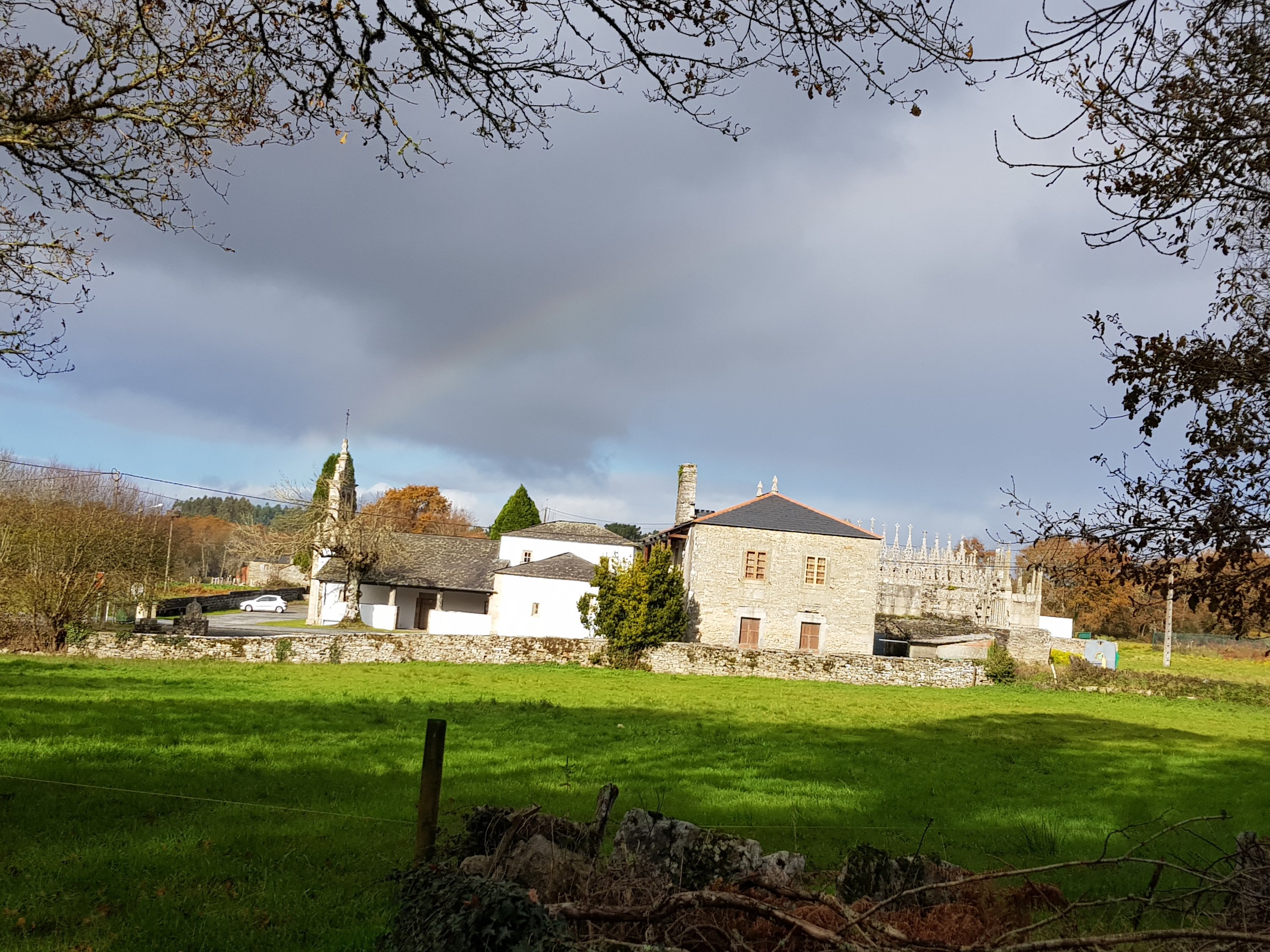
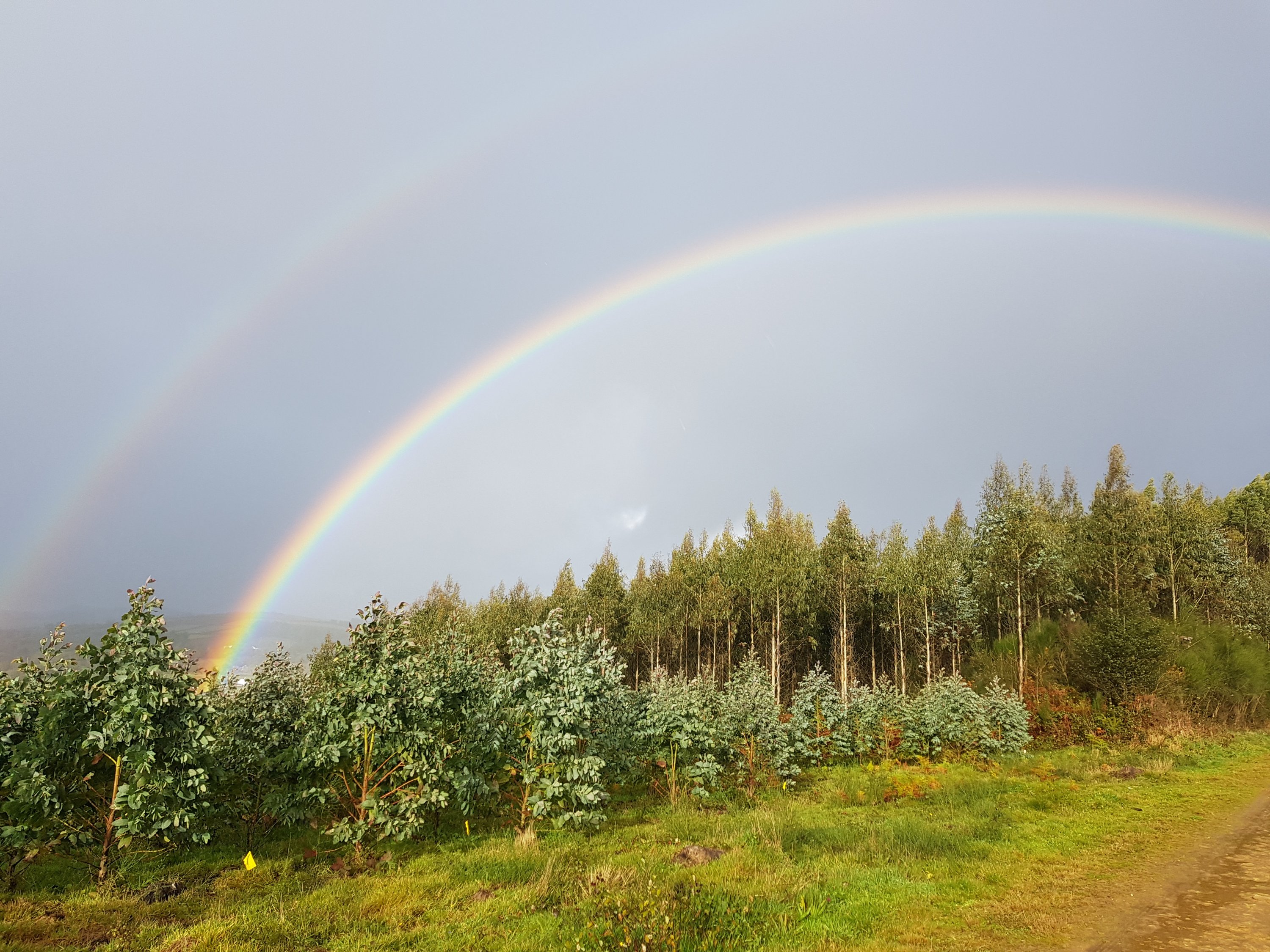
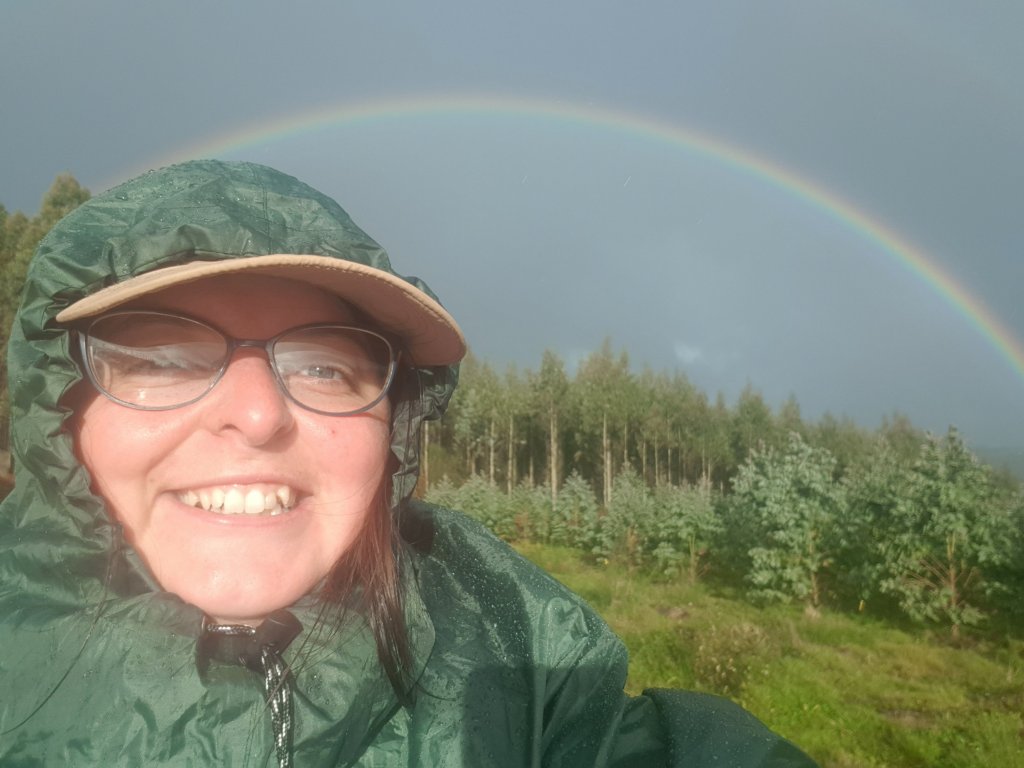
Then I decided to look back, and there was a double rainbow! Just the pick me up I needed, and lucky that I saw it. A minute later it was gone. An hour later, I finally arrived at Gontan’s pilgrim hostel. My clothes (2 outfits) were washed and dried for the first time in a week, and I fell into a coma.

The week has brought me a mix of emotions. There have been a lot of times when I have considered abandoning the camino, but I am still here, and still persevering. Pilgrimages are never meant to be easy, and with Santiago de Compostela so close now, I cannot turn back! Fingers crossed I can keep my body going until then…

Zaragoza: hidden gem of Aragon

Last week, I made it into Aragon, (which until now, I had thought was a made up place…), and into the pretty city of Zaragoza!

I left Madrid with a full blown hangover, and met up with a local, Alejandro, who was driving to Zaragoza for work. I used the rideshare app ‘Bla Bla Car’ to link up with him, and this saved me over a hundred euros in train fare. It also made his car journey more efficient!

I had hoped that it would be a good opportunity for me to practice my spanish… Unfortunately, I had been having too much fun the night before in Madrid, and had to make my entire focus of the journey, not being ill…

Anyway… back to Zaragoza! I had been told by a man in Madrid ‘why are you going to Zaragoza, its really small, and nothing there’. This worried me, as I already had my stay booked. I am happy to report that he was quite wrong though!

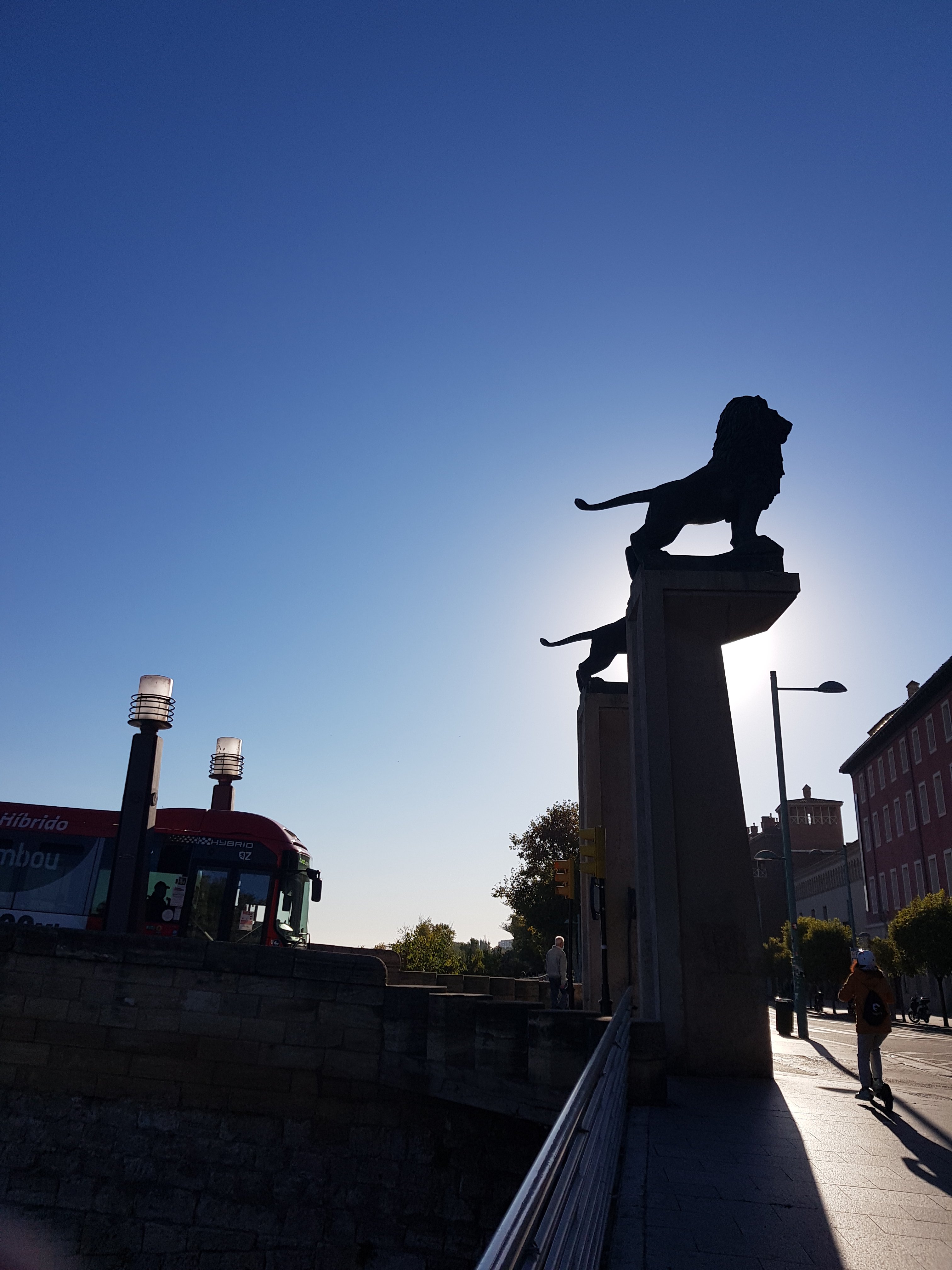
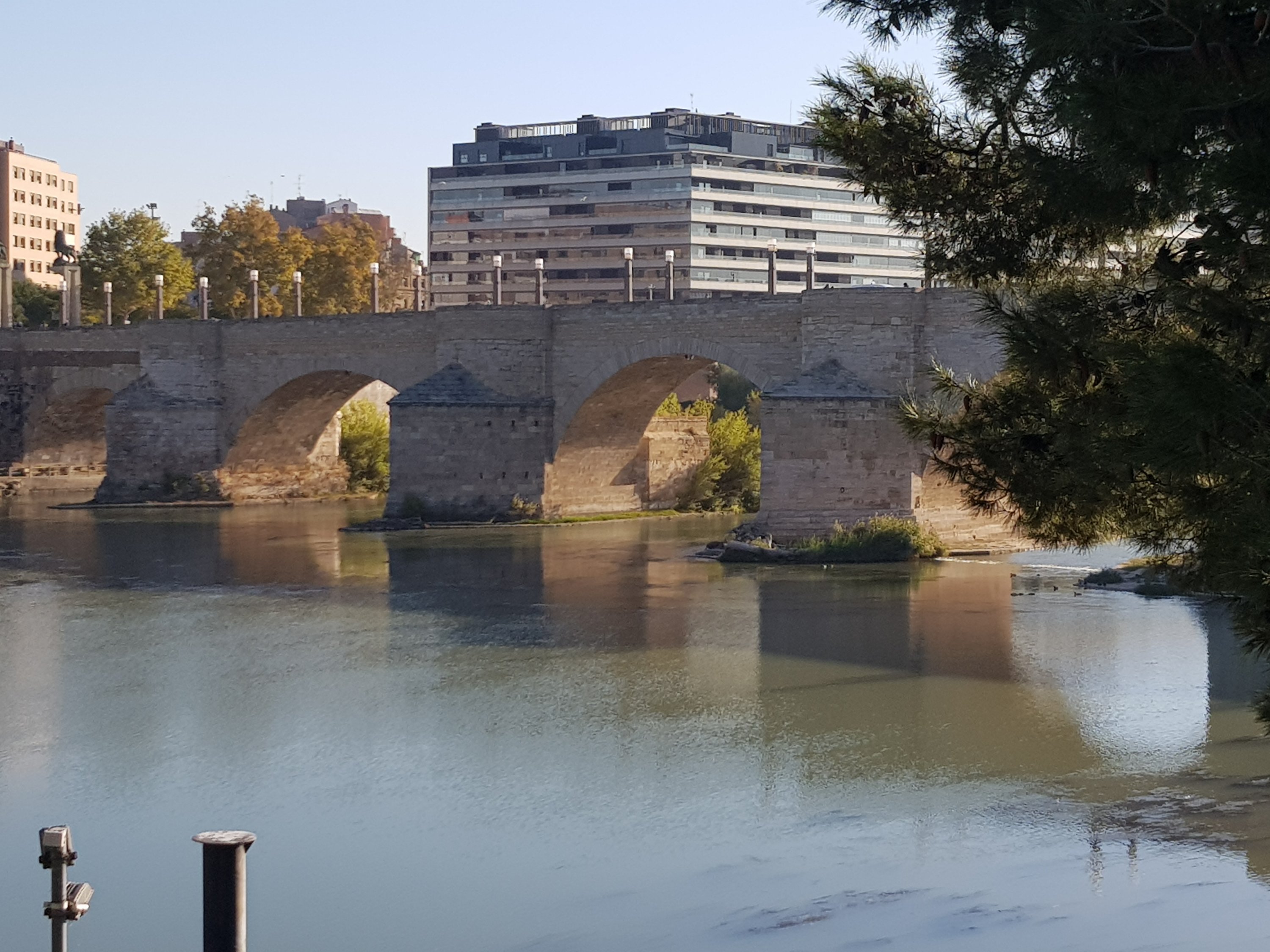
Zaragoza is actually the fifth largest city in Spain. As someone, that personally walked 22km around the centre exploring, I can confirm that there is a fair bit there..

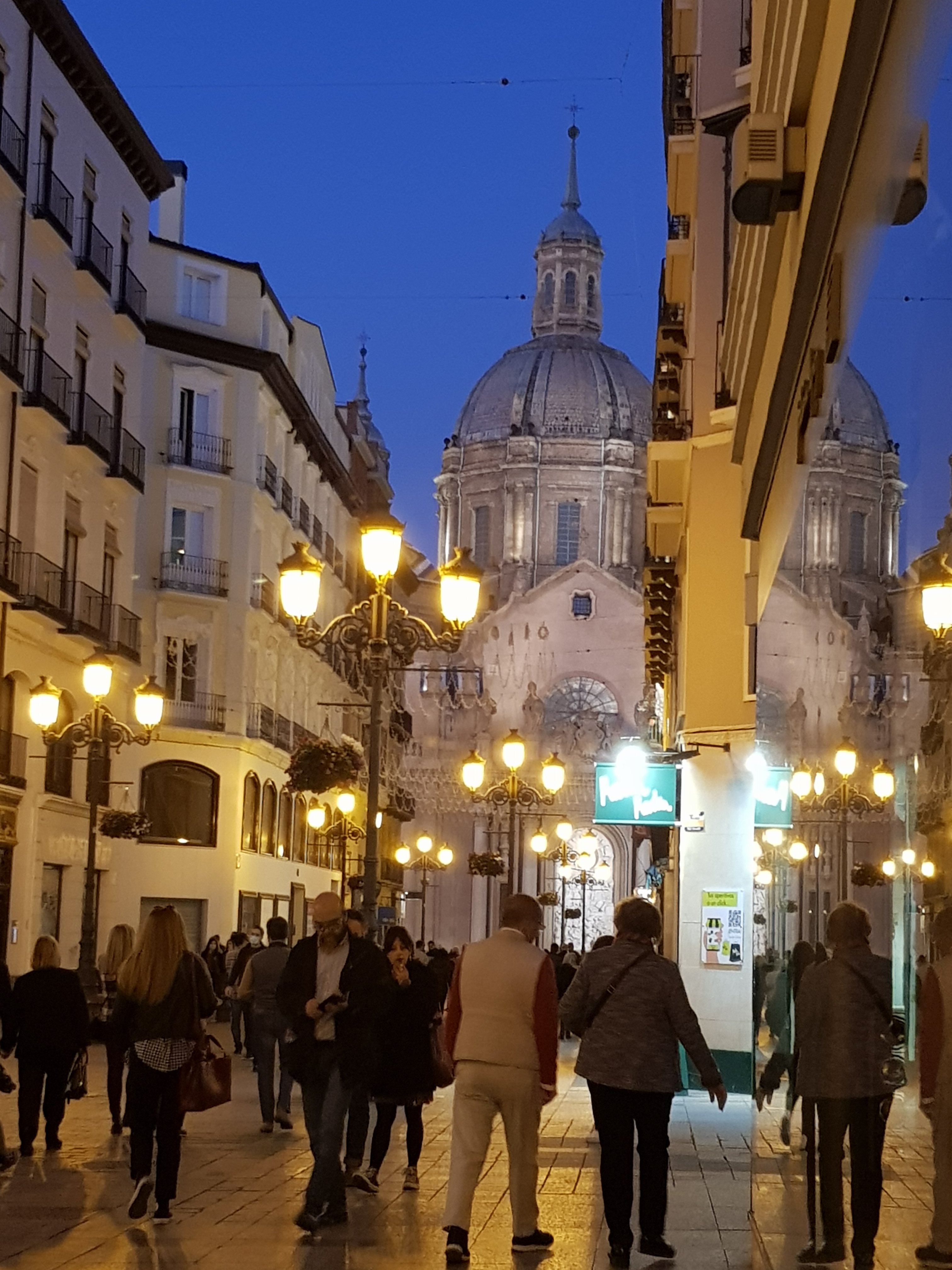
As soon as I ventured into the ‘old town’, I was greeted with beautiful architecture and a pleasant and huge plaza to enjoy.

Seo Cathedral & Pilar

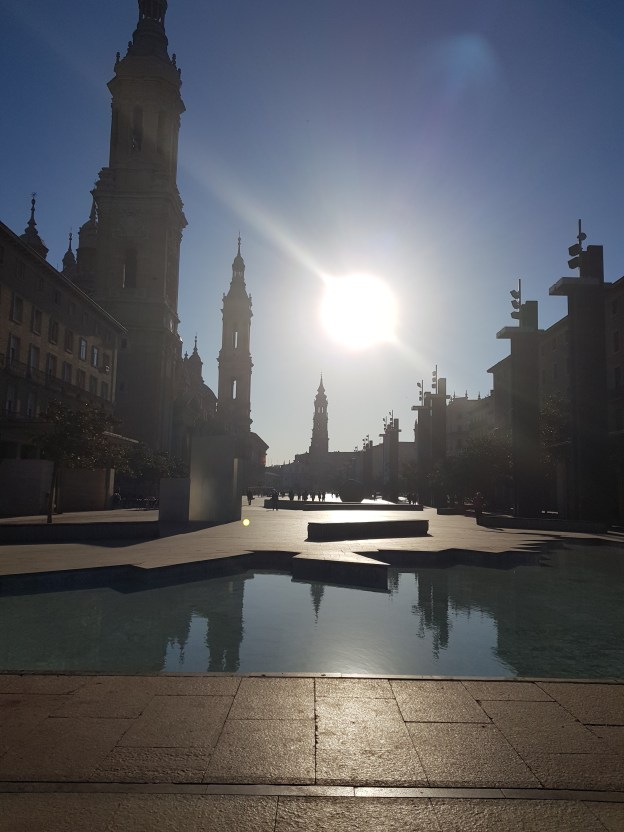
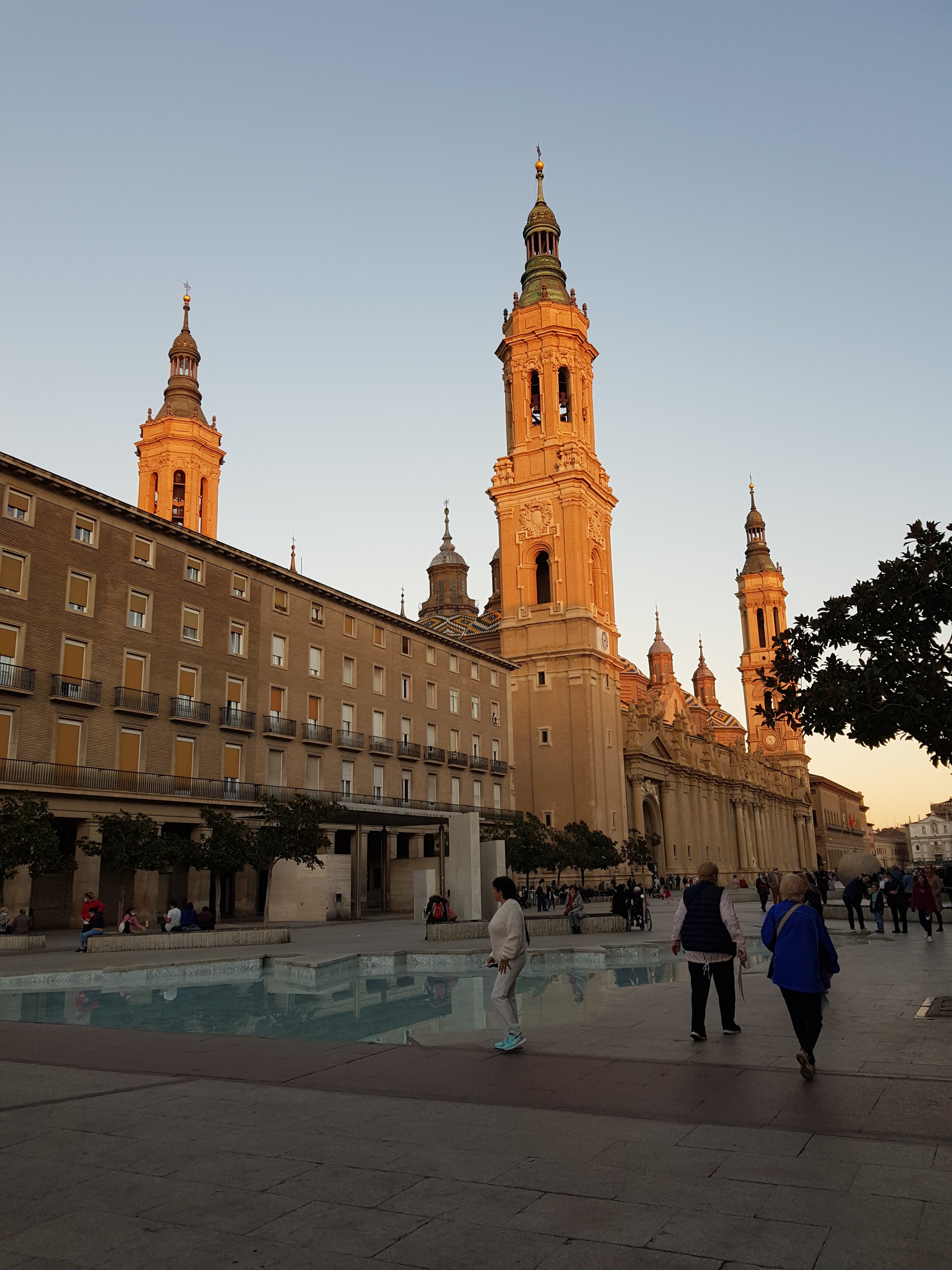
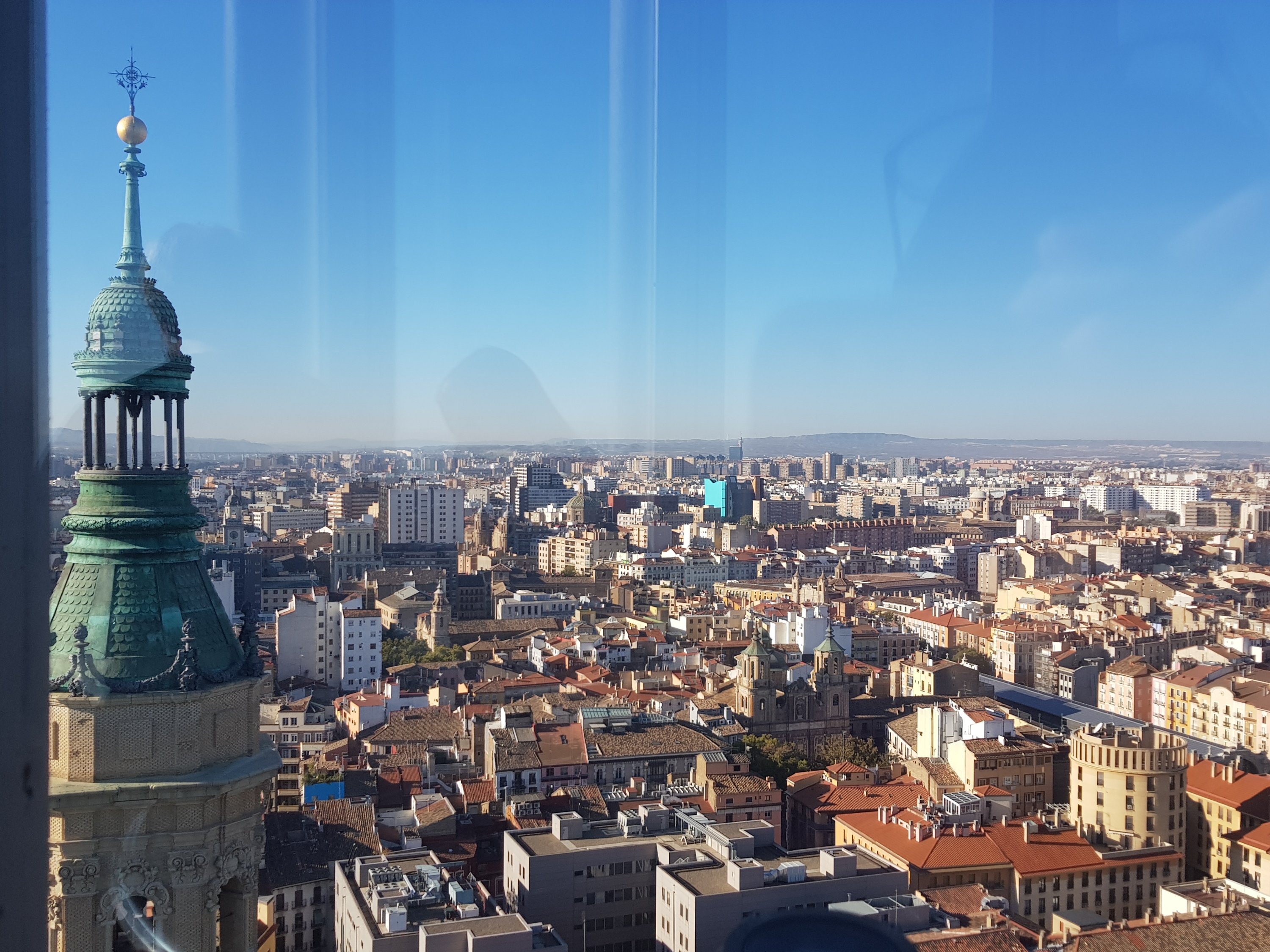
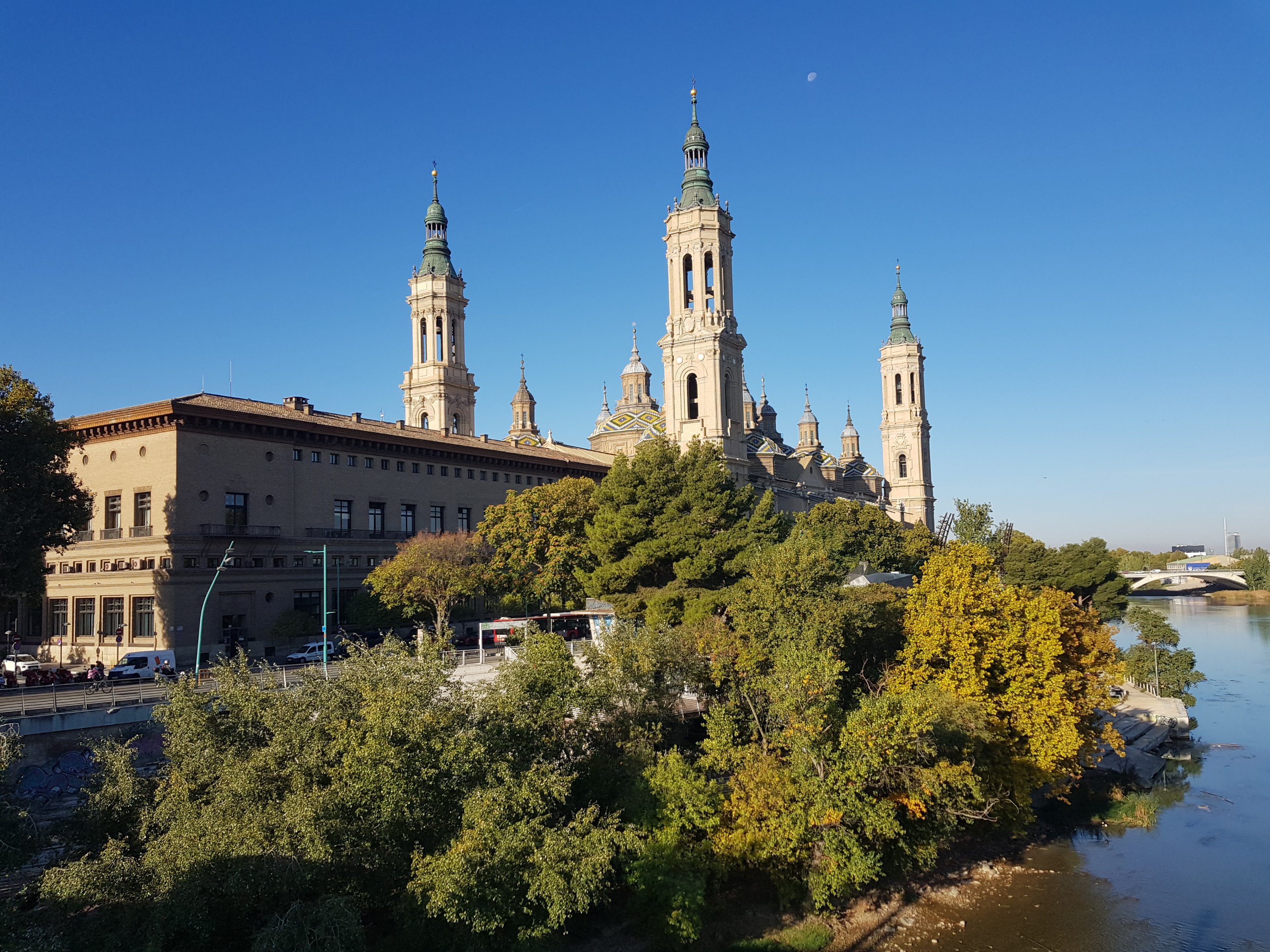
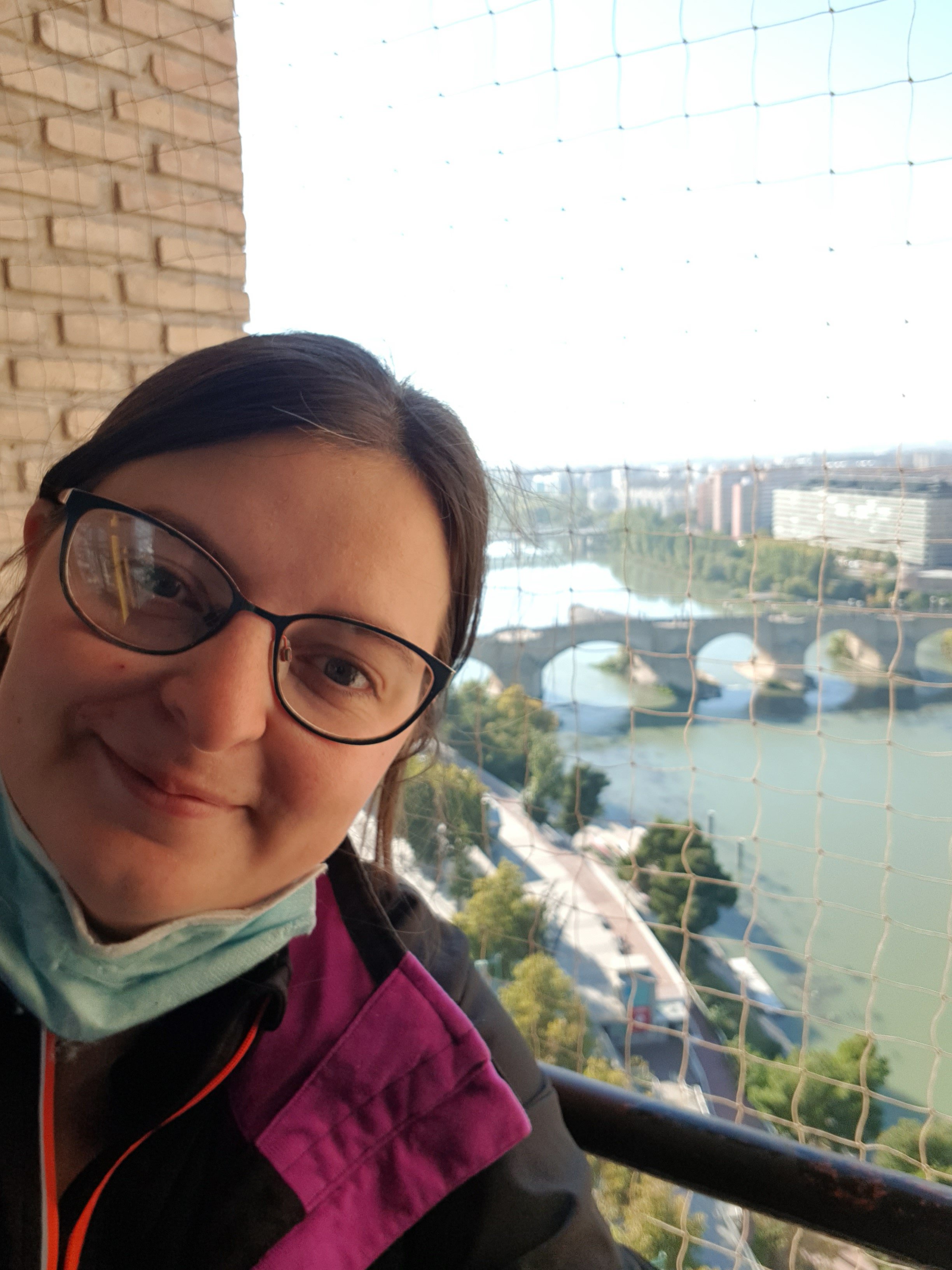
There are two cathedrals to see, and helpfully, they are next door to each other! That is the Basilica de Nuestra Señora del Pila and the La Seo: Catedral del Salvador. They also share one joint ticket (although you don’t need a ticket for the Pilar, but this way you are supporting them). It also gives you access to other attractions in the city, and for one euro more you can access the top of the tower for a panoramic view. I did opt for this, and was pleased to see an elevator. 😍

The views are quite pleasant and for only a euro it is worth it!

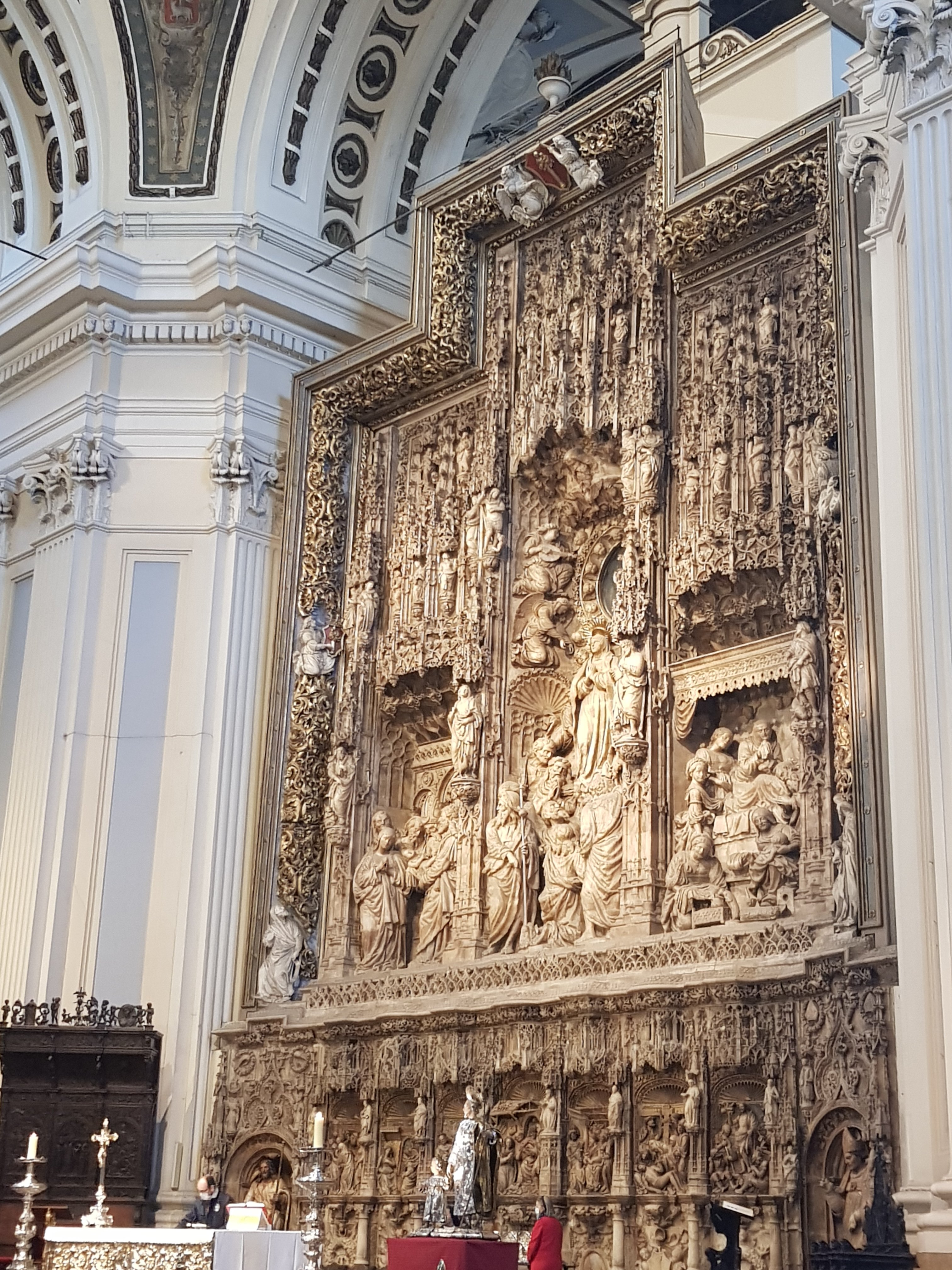
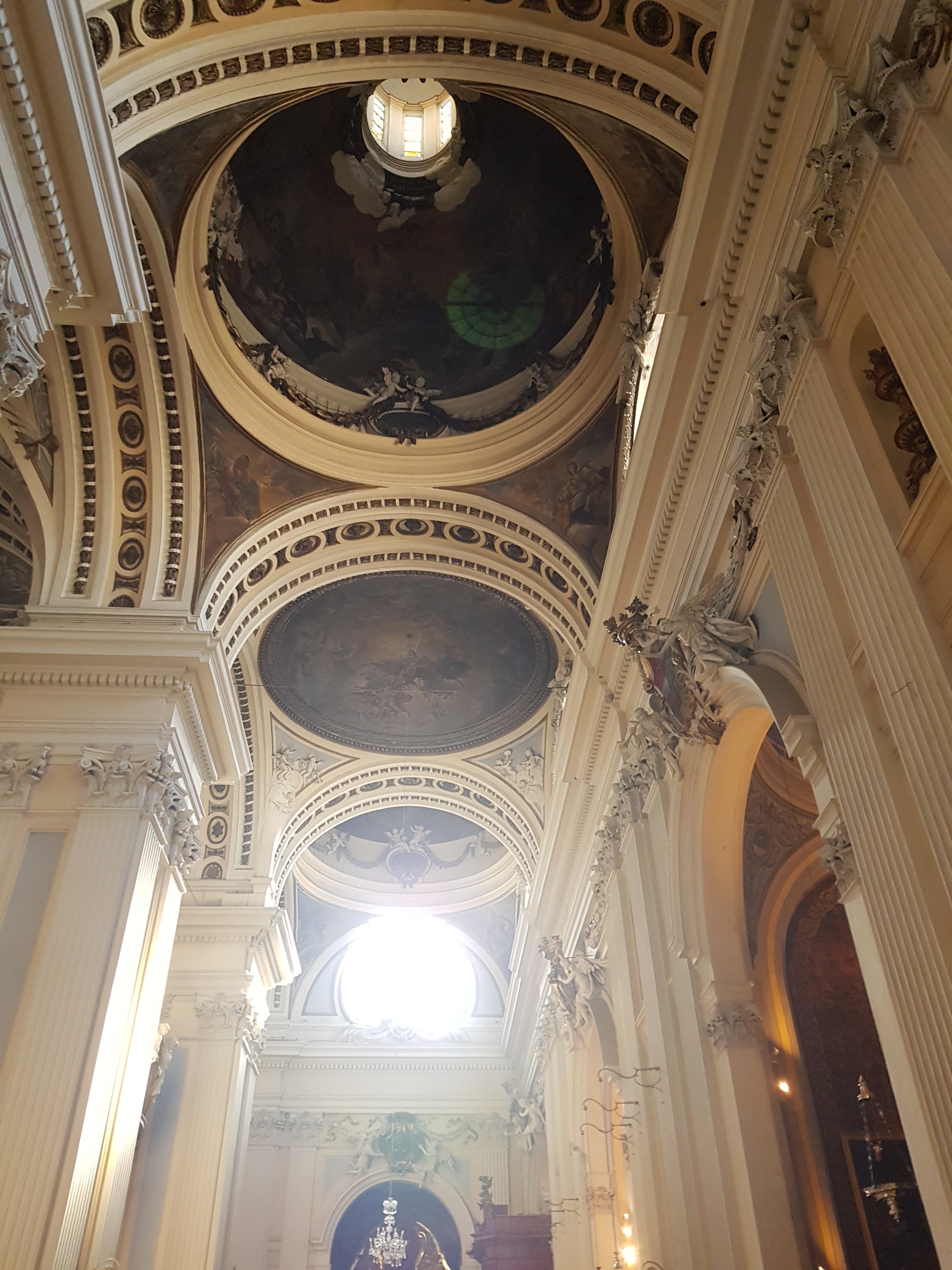
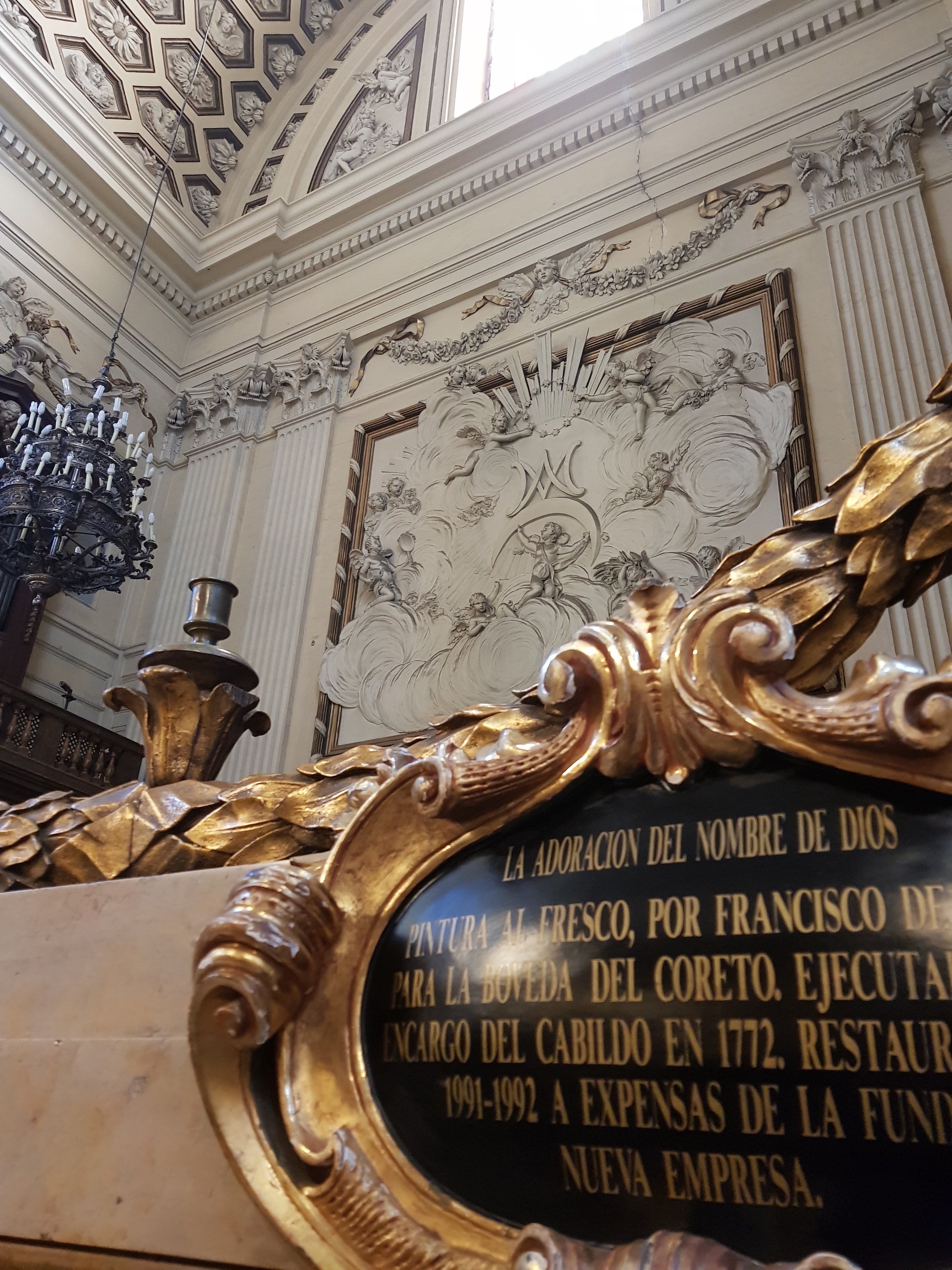
Both the Pilar and the Seo Cathedral are beautiful, but the weird thing I found was that both looked one way on the outside and was the opposite on the inside. For example, the Seo Cathedral looked fairly ordinary from the outside, but inside, it was stunning. Sadly, they do not allow photos, so I only have my memories… I can tell you that the ceilings and alters were beautifully designed though.

The only frustrating limitation to these two sites, and in general with religious buildings in Spain, is that they all shut during midday. I had a train at 5pm, so I had to squeeze both buildings into the morning. The receptionist told me that I should spend an hour in the Cathedral. I only had 20 minutes… I managed it though! Even managed to sit on a pew for a minute. I am very church efficient!

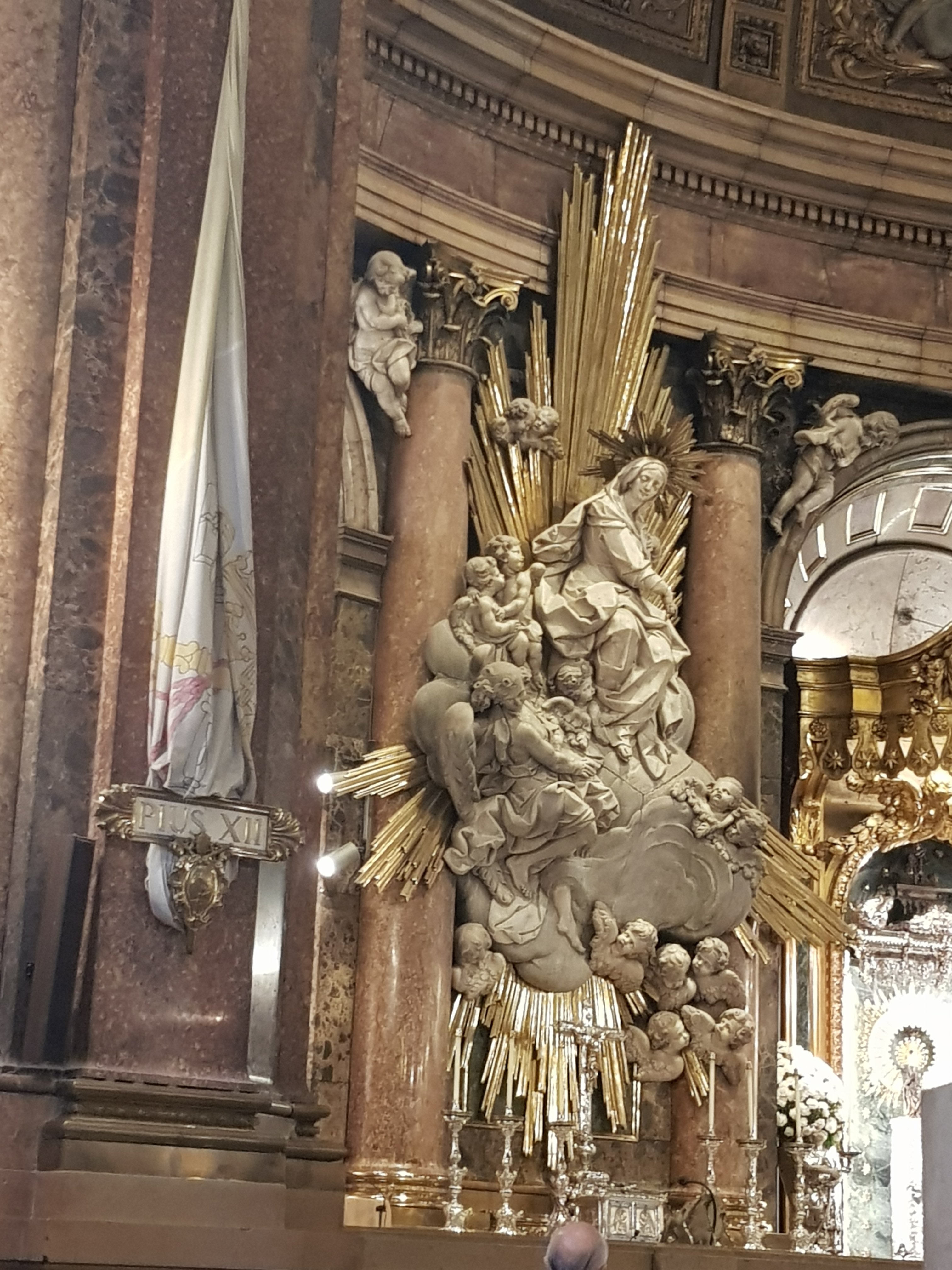
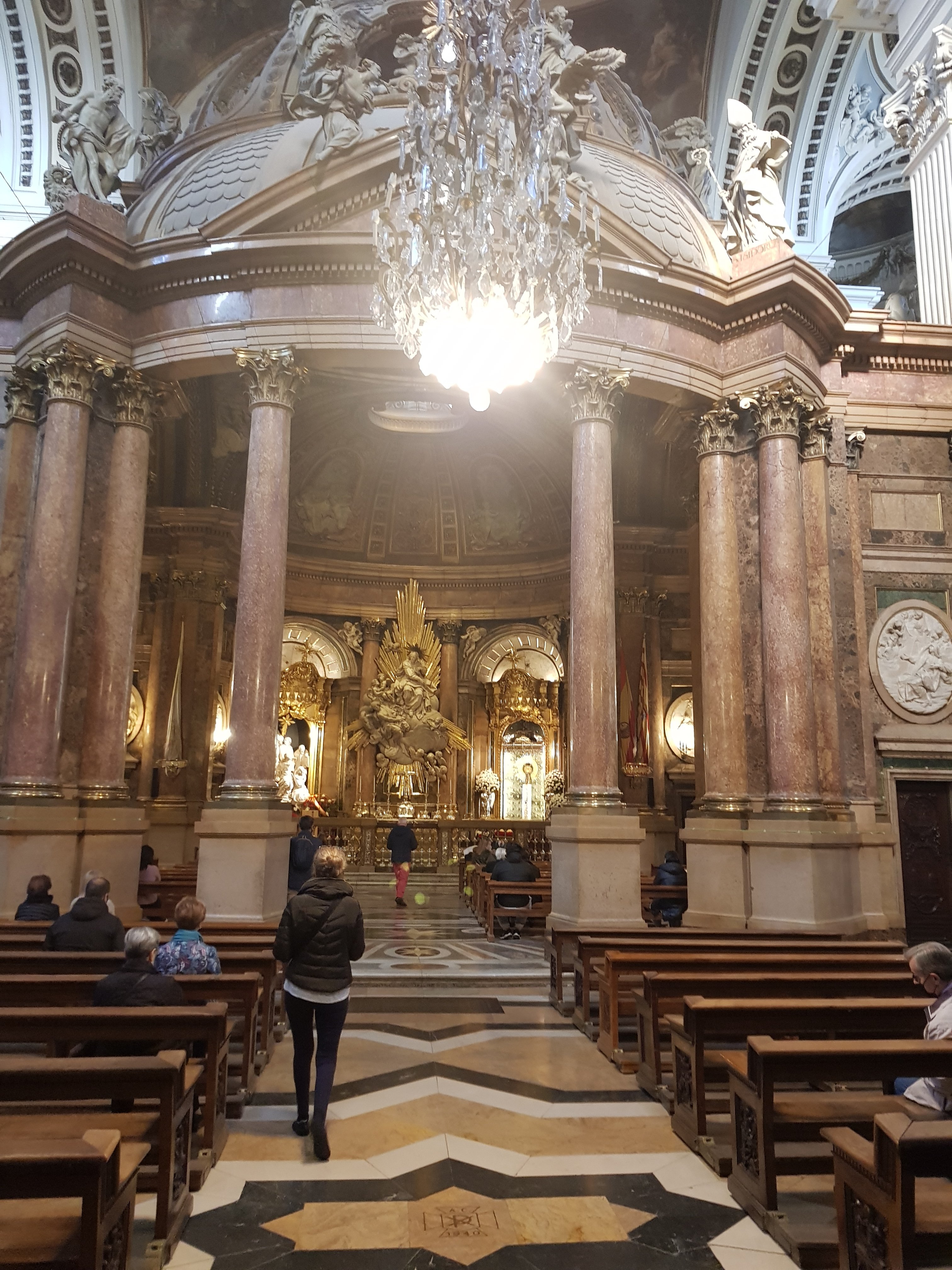
With the Pilar, it was impressive outside, but generally traditional inside. I think I am just spoilt at this point to be honest! The special thing in El Pilar and why it is called this, is because this is supposed to be the location that Santiago (St James- Patron Saint of Spain) was approached by the Virgin Mary when he was feeling discouraged. Mary gave him a jasper pillar and told him to build a temple to her in that place. James did this, and supposedly it became the first church dedicated to Mary. There is a huge chapel dedicated to it inside, and many people make pilgrimage to see the spot where the pilar is thought to be.

Courts of Aragon / Palace of Alajaferia

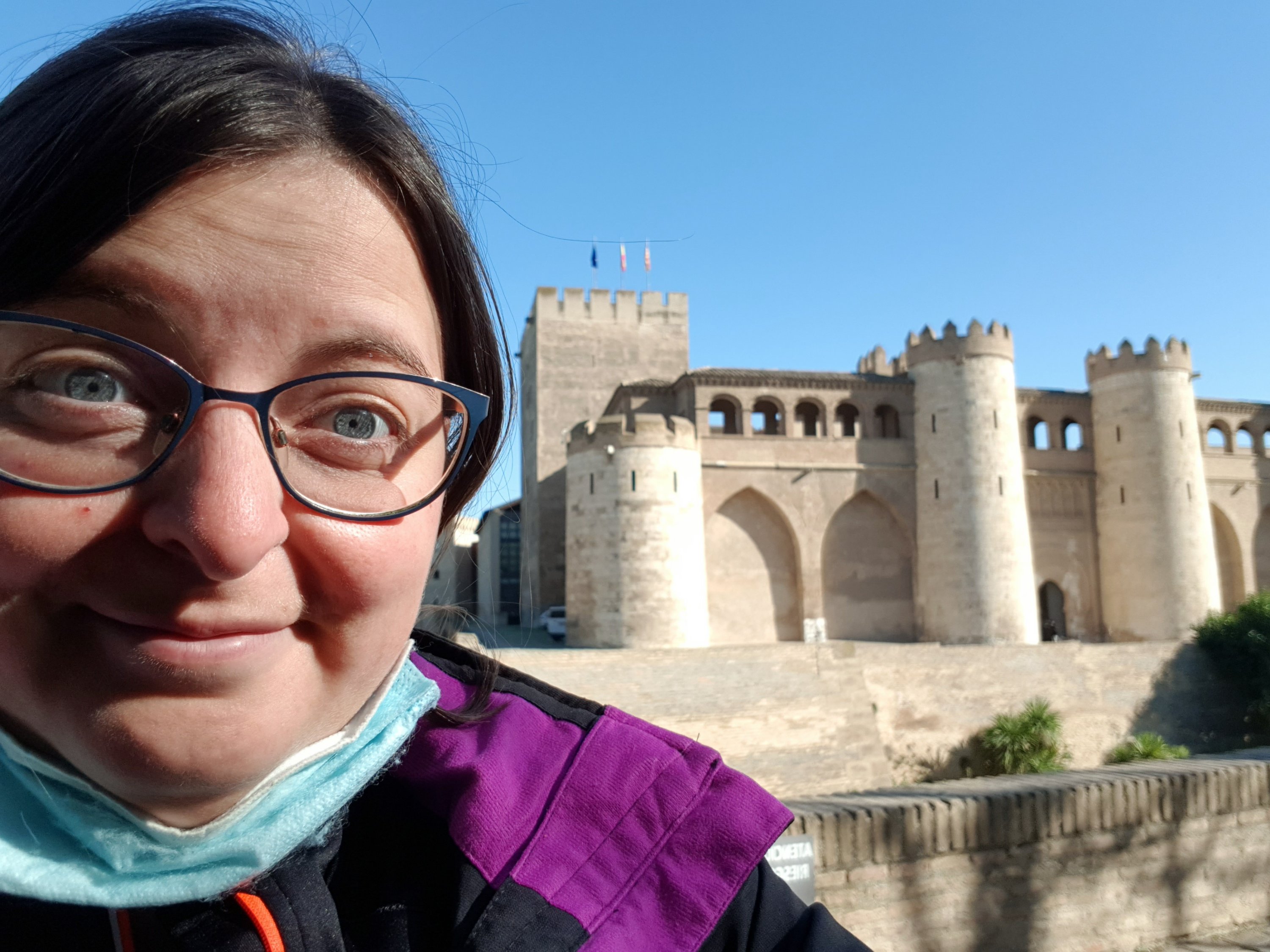
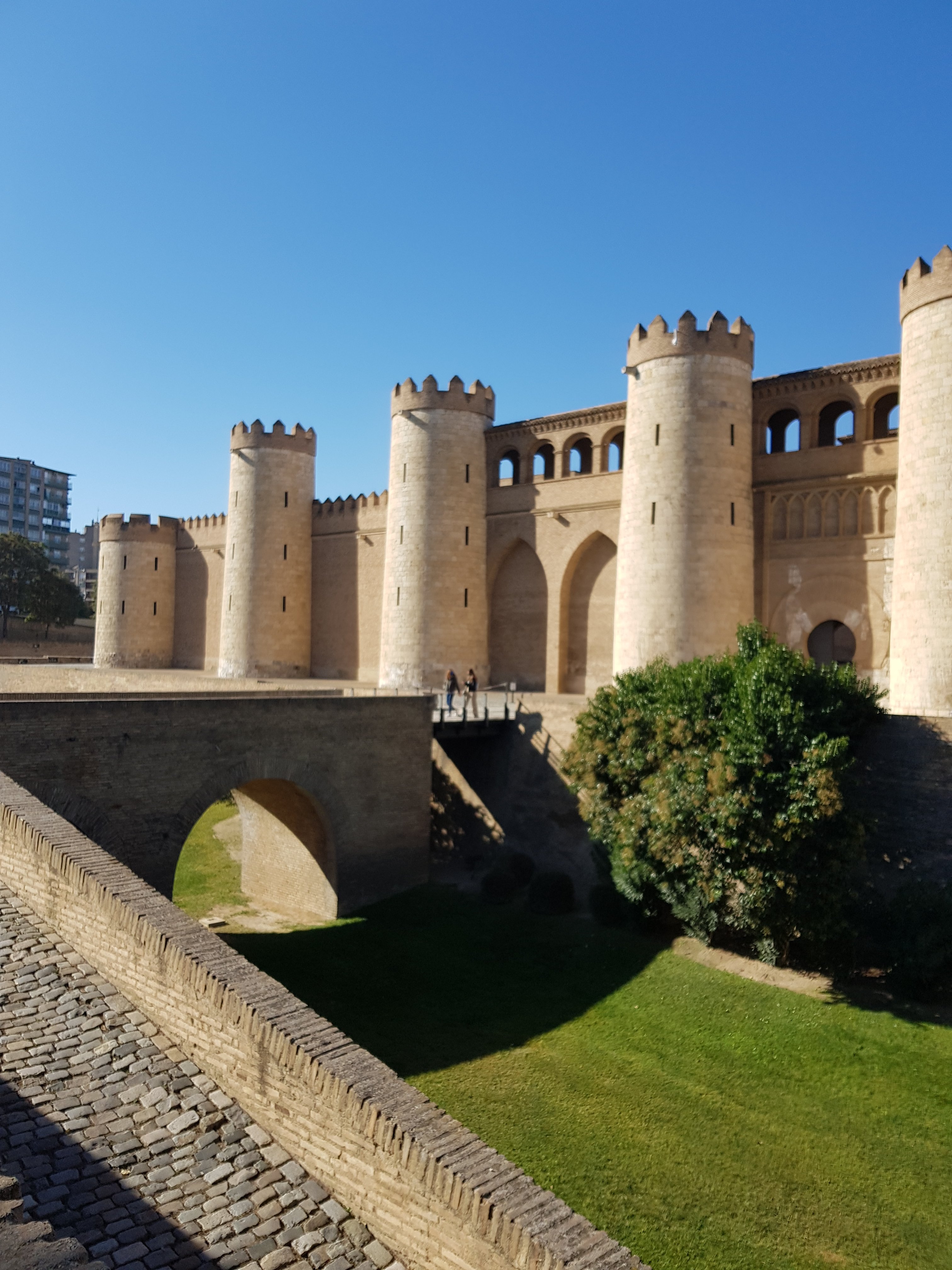
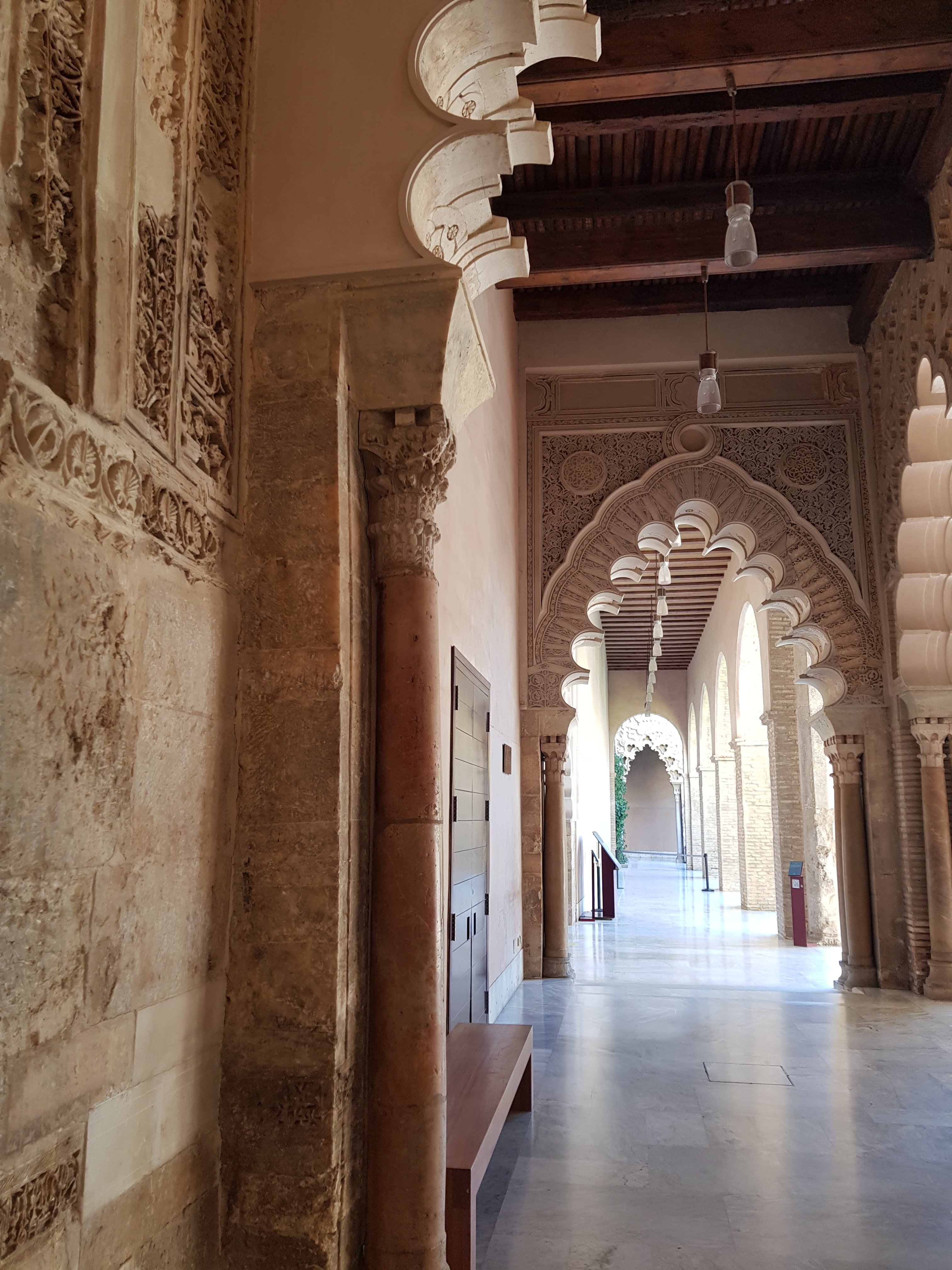
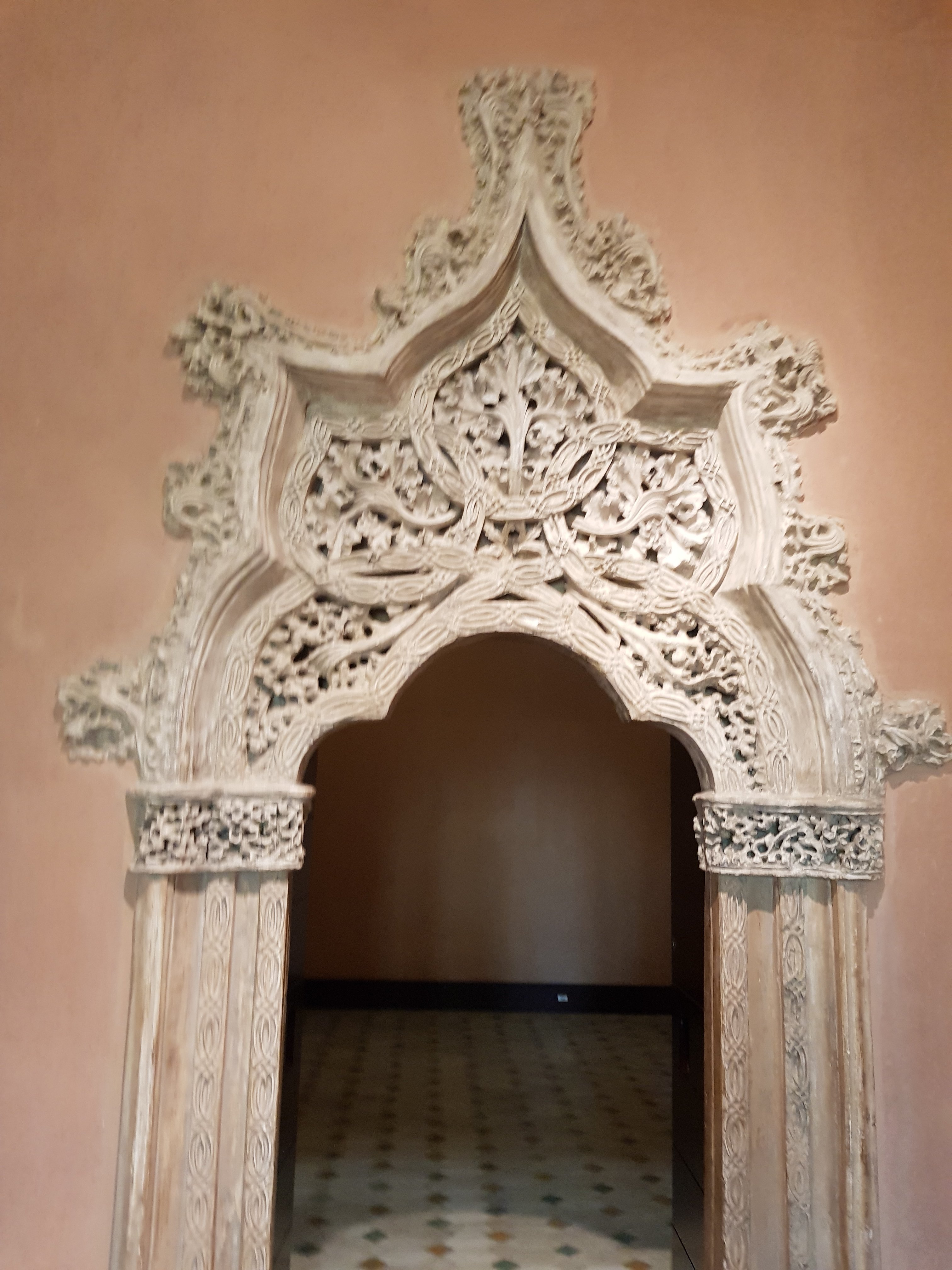
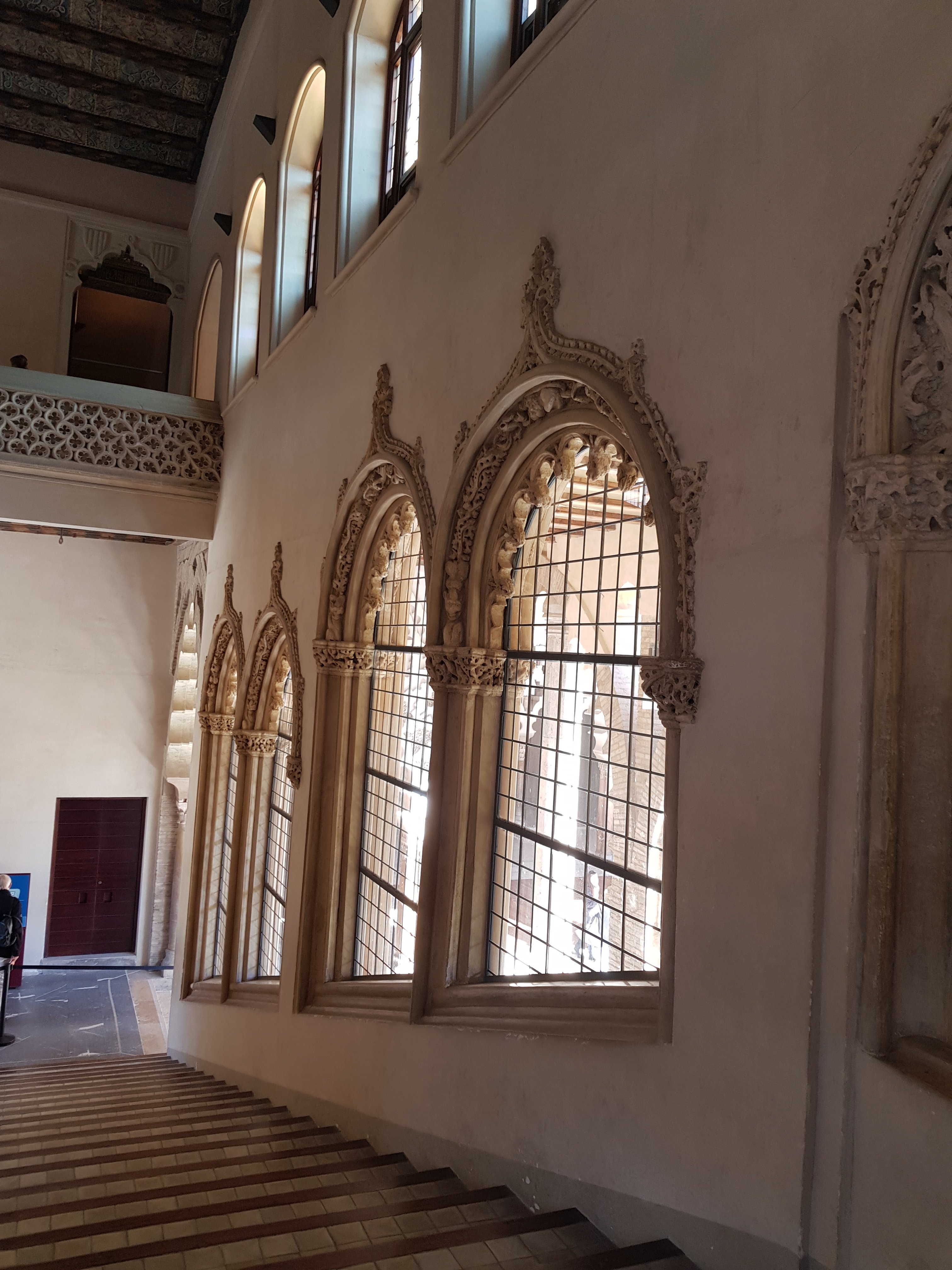
I made a special effort to reserve a visit to the former palace (now courts building) whilst I was visiting. This was very cheap (€5), and you just needed about an hour. The palace still retains lots of muslim designed decor, which I thought was unique to see outside of Andalucia.

The really great thing about the visit was that the tickets are limited to small numbers of visitors. So this is a great opportunity for taking photos and looking at the detail in this sort of architecture, without crowds. Once you go through security, you can make your way round the one way route of the site, unsupervised, very special.

Parque Grande José Antonio Labordeta

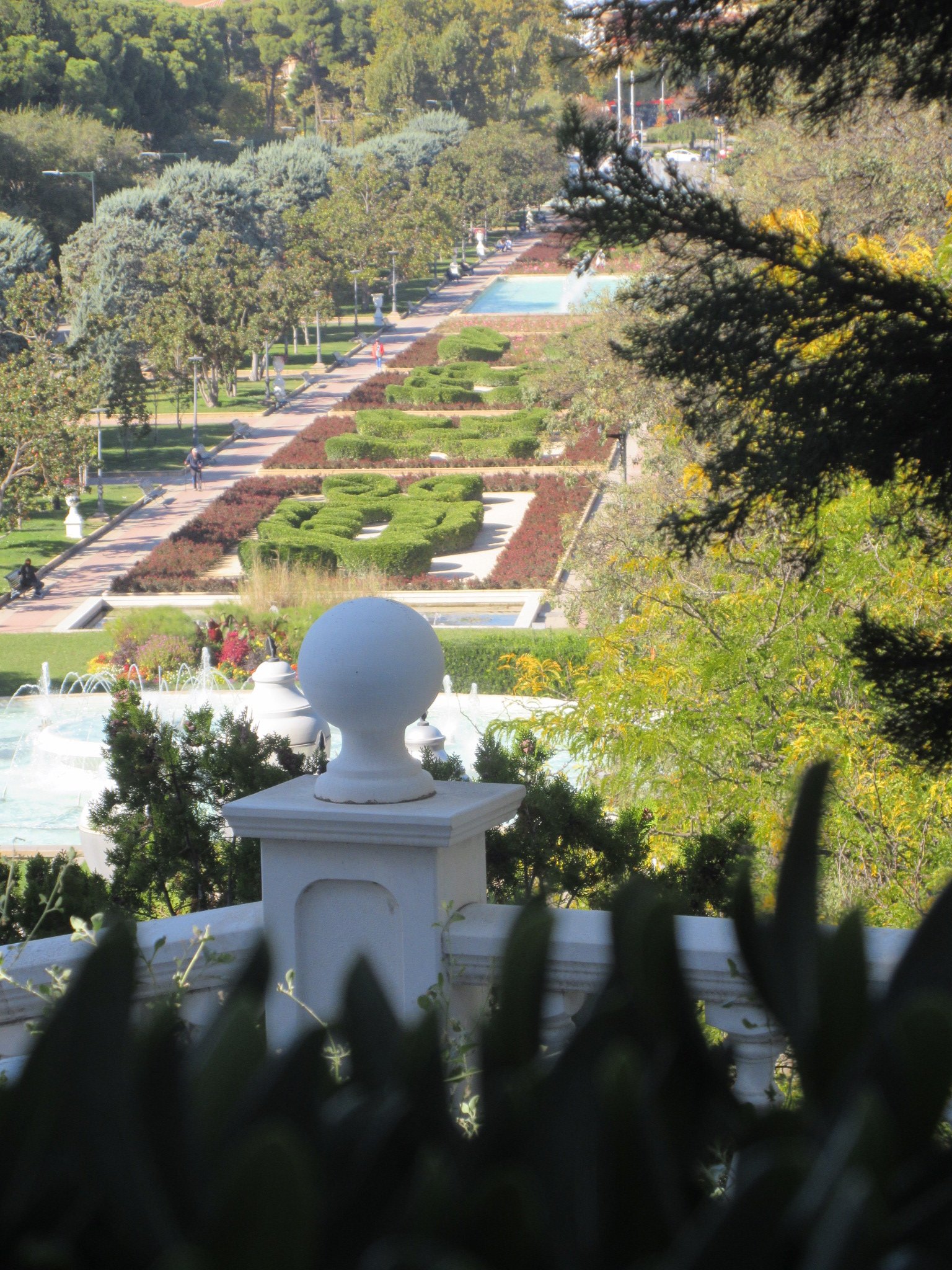
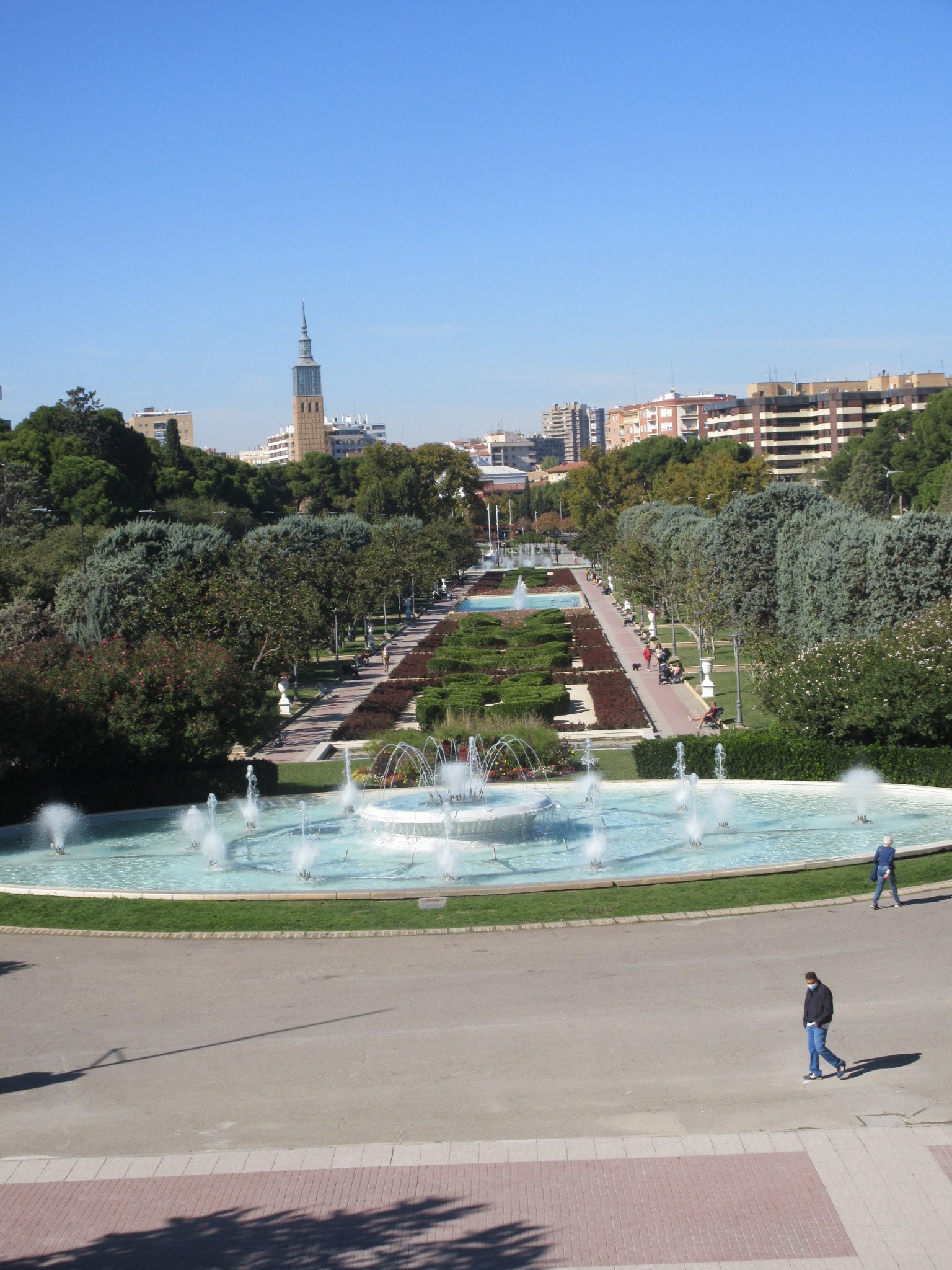
After a long walk across the city, whilst everyone was taking their siesta, I managed to make it to the park that I wanted to explore. The city’s biggest green space, Parque Grande Jose Antonio Labordeta.

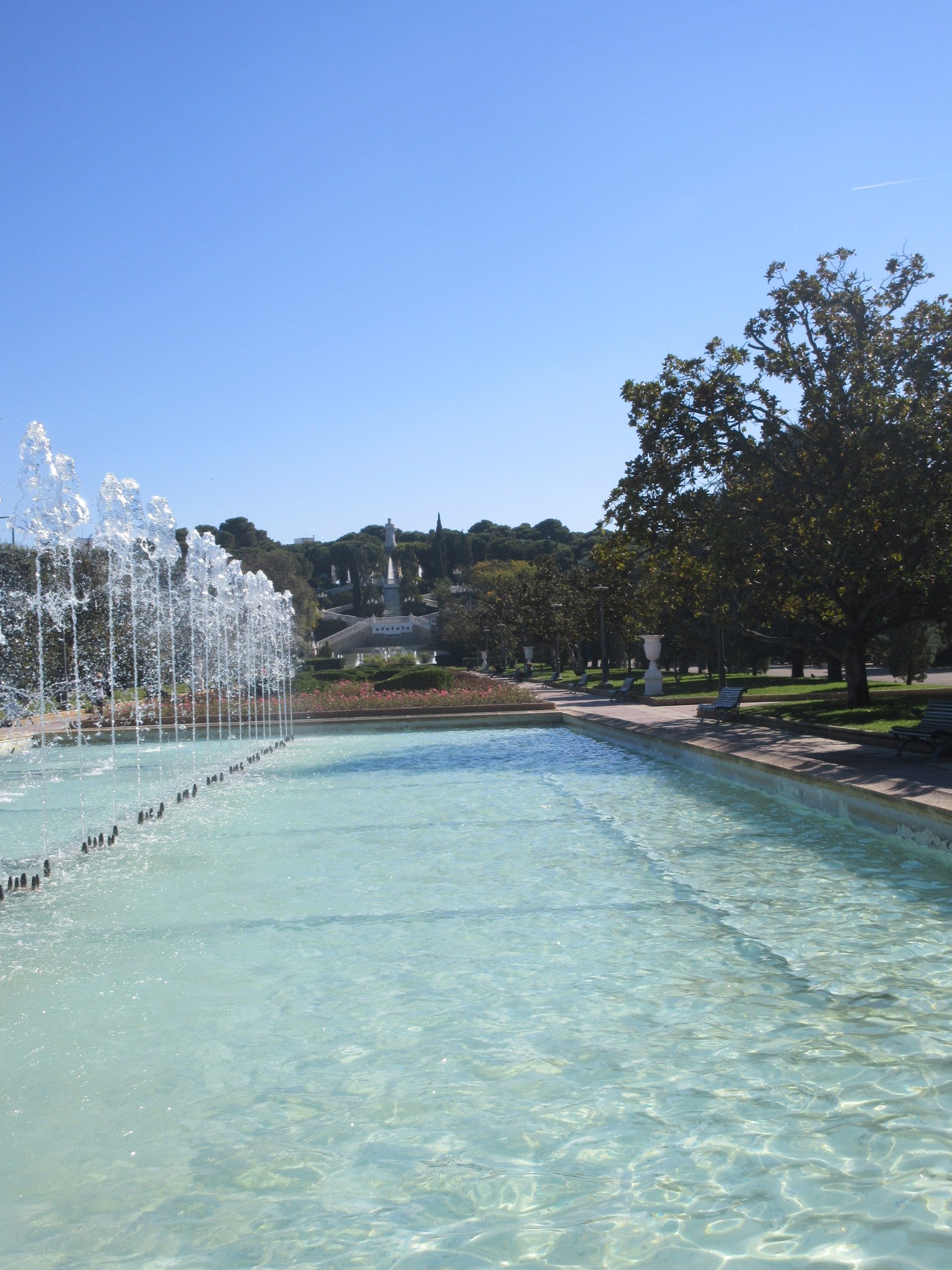
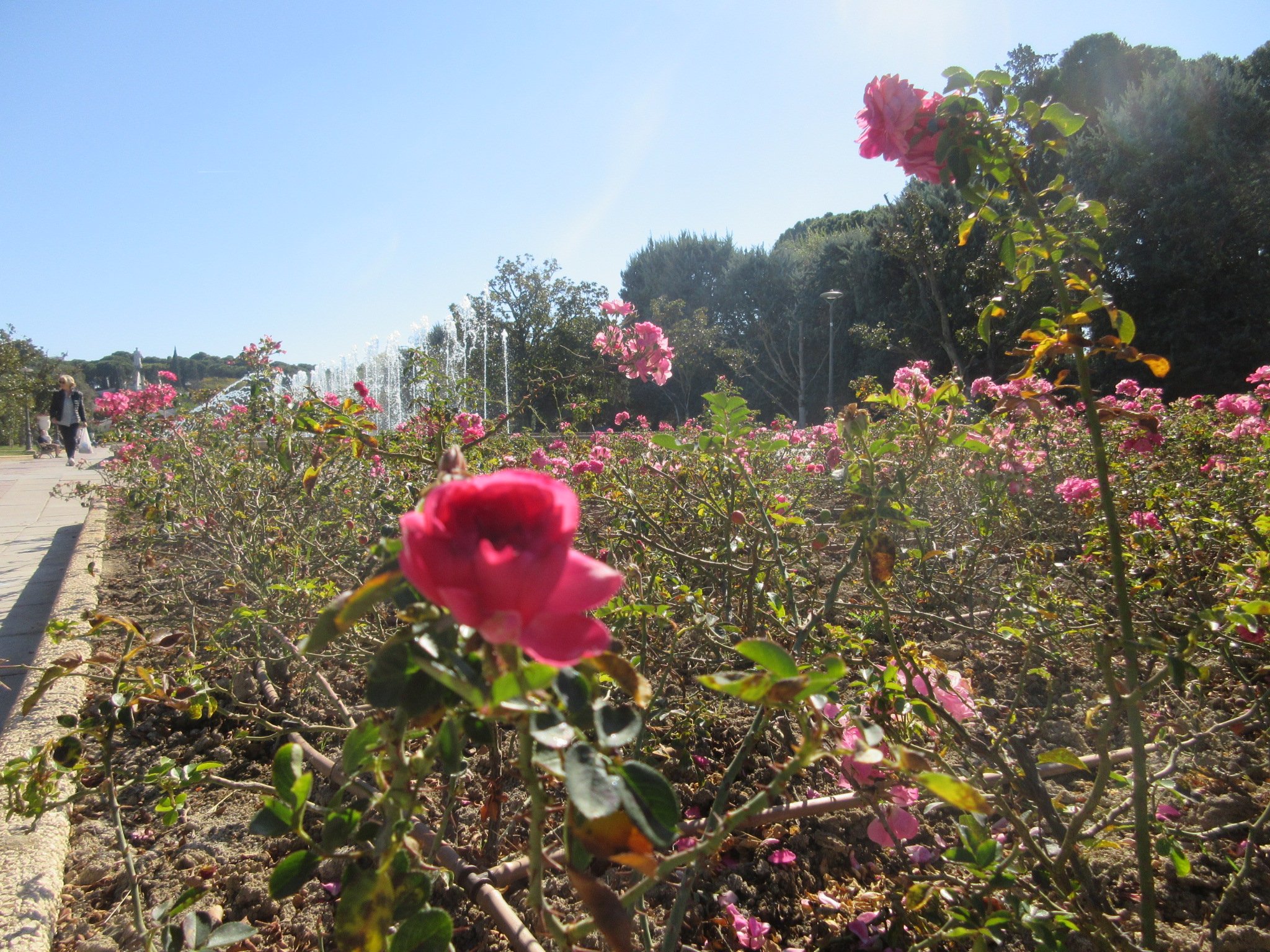
Public parks in Spain are generally gorgeous, with sculptures, fountains, and roses. This one in particular has one very good first impression. On entering the park, you are greeted with a line of fountains in a row, and overshadowed by a grand white staircase with a waterfall. Very fancy!

It was quite a big walk to get to the park, and in hindsight, it would have been better if I was there for more than one day, as I was rushing through it too much. It deserved a good lounge around with a sketch book in hand.

So overall, Zaragoza definitely has some great things to shout about. Most of all, I just thought it was a very relaxing place to be.

Next stop… Irun, for the beginning of my Camino!

Sevilla: Pearl of Andalucia

Following on from a week in Portugal, I decided to travel four hours by bus, to one of Andalucia’s best known cities, Seville (or Sevilla).

The journey to Seville was reasonable by bus, and cost only about €30 from Lagos, Portugal. There was no border restrictions and I didn’t even have to go through a passport check. The only downside was that the bus was very hot! It was 30’c outside and hotter inside the bus. Thankfully, we made plenty of service station stops to get some air and water.. (makes me sound like a car haha).

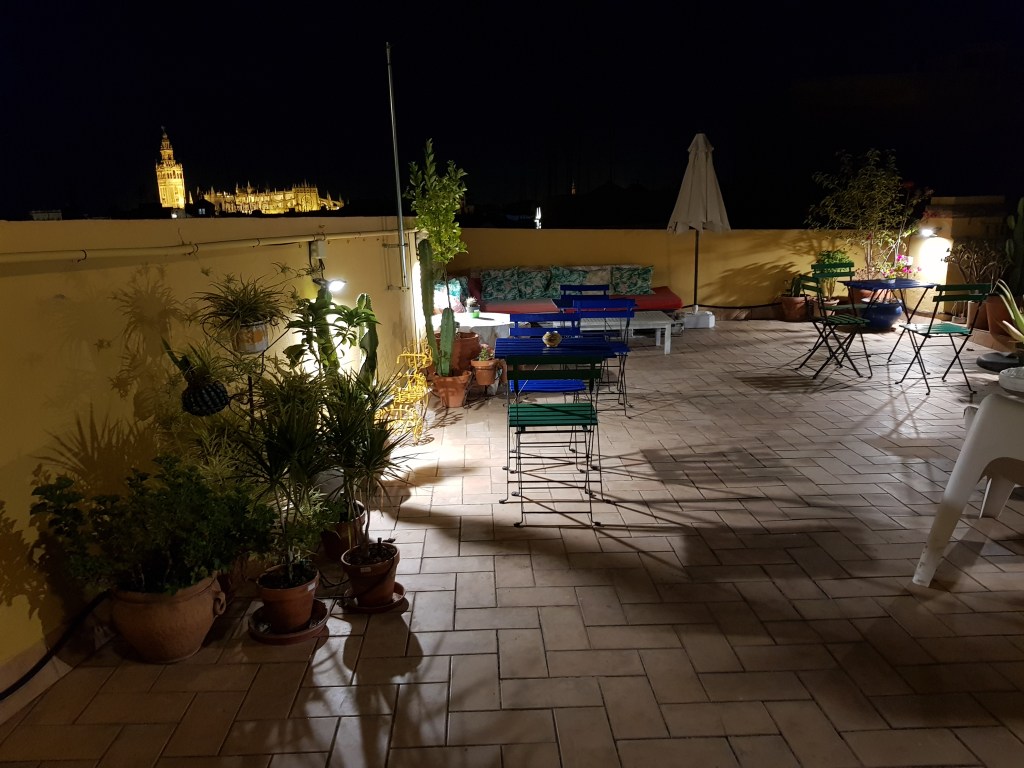
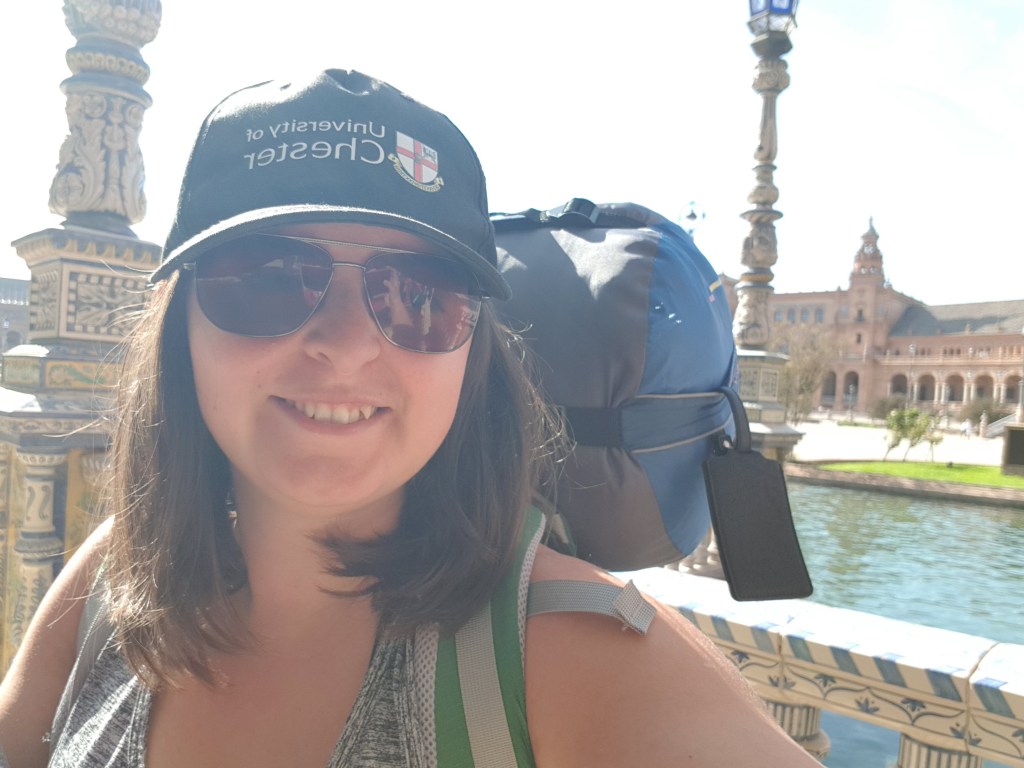
On arriving to Seville, I was able to walk the short route to my hostel. I definitely had lots of strange looks though, carrying a huge backpack and sleeping bag on my bag in 30’c weather. I must have looked mad, in a place where no one even owns a coat, as apparently it hasn’t rained for five years! I stayed at the La Flamenka hostel in the city centre, and this was a lovely place to stay. The staff and volunteers were very friendly and helpful and the environment makes it really sociable. Due to a chilled out kitchen and terrace layout, I was able to strike up conversation and befriend a Brazilian, a Norweigan, an Austrian, and a Barcelonina. Great practice for my language skills! All guests were solo travellers too, so we all had that in common.

La Flamenka hostel terrace at night

Alcazar

On my first day, I had prebooked a visit to Seville’s Alcazar through Viator, which also included a guided walk of Santa Cruz neighbourhood, and a visit to the Cathedral & Giralda.

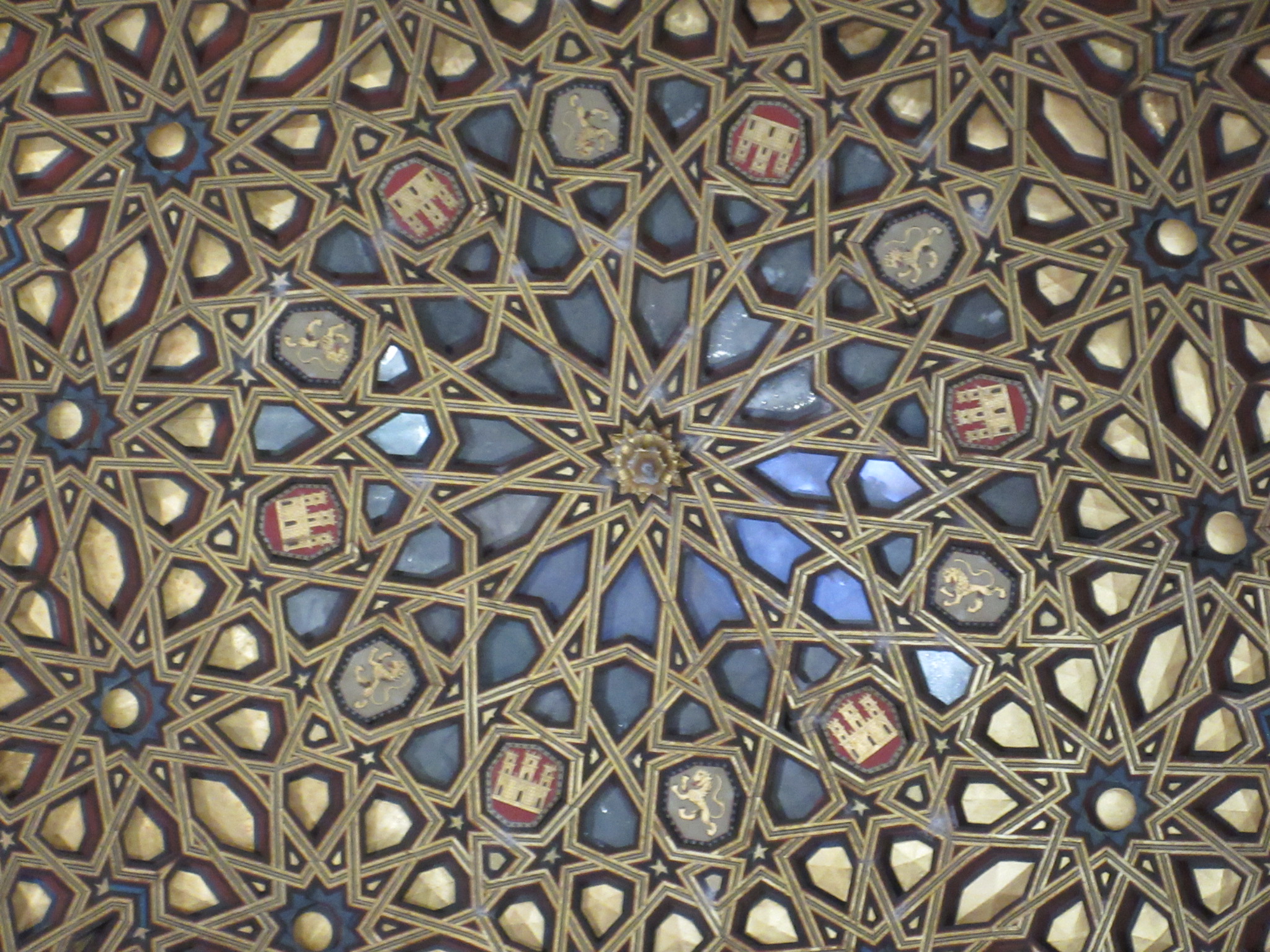
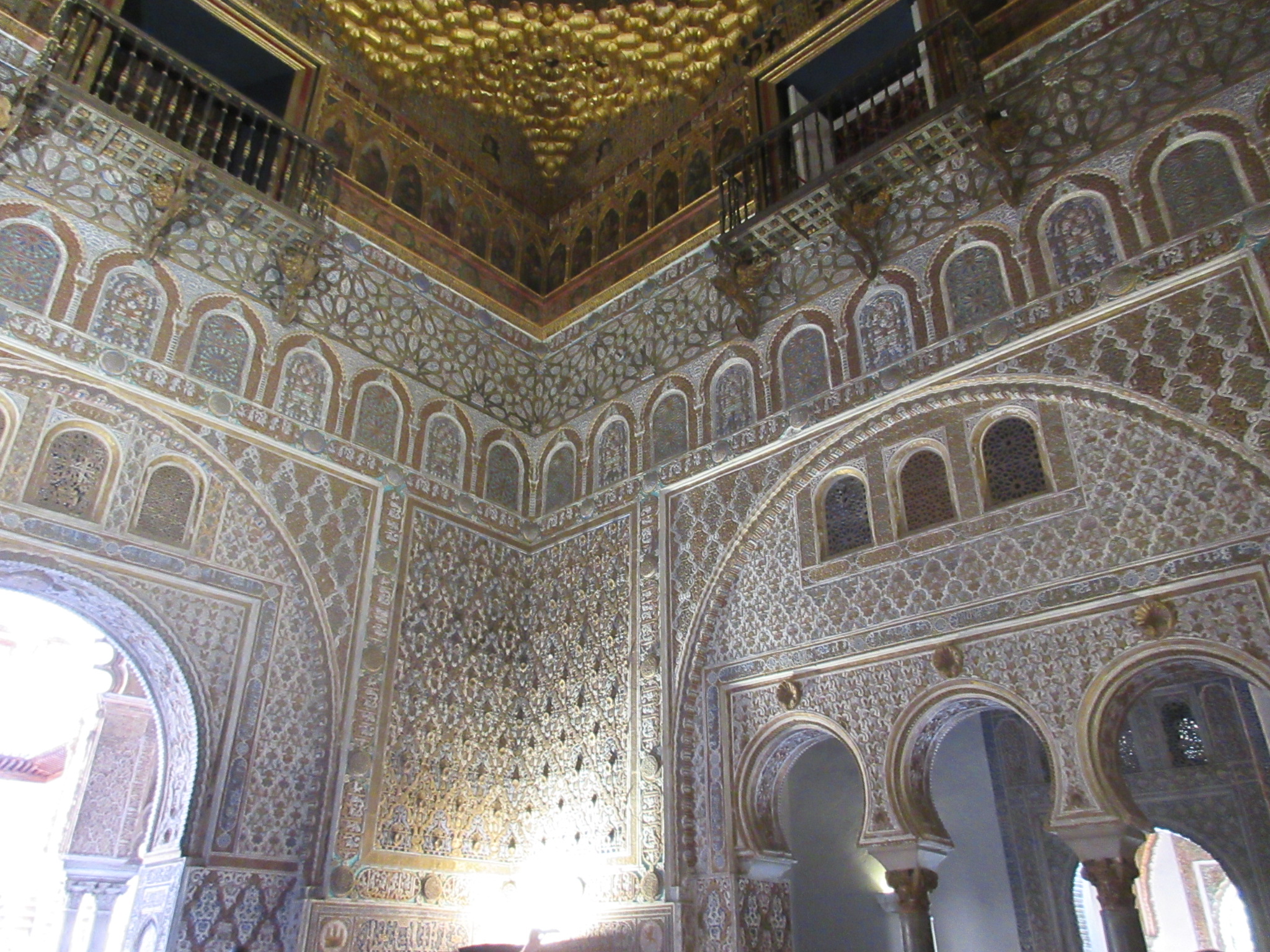
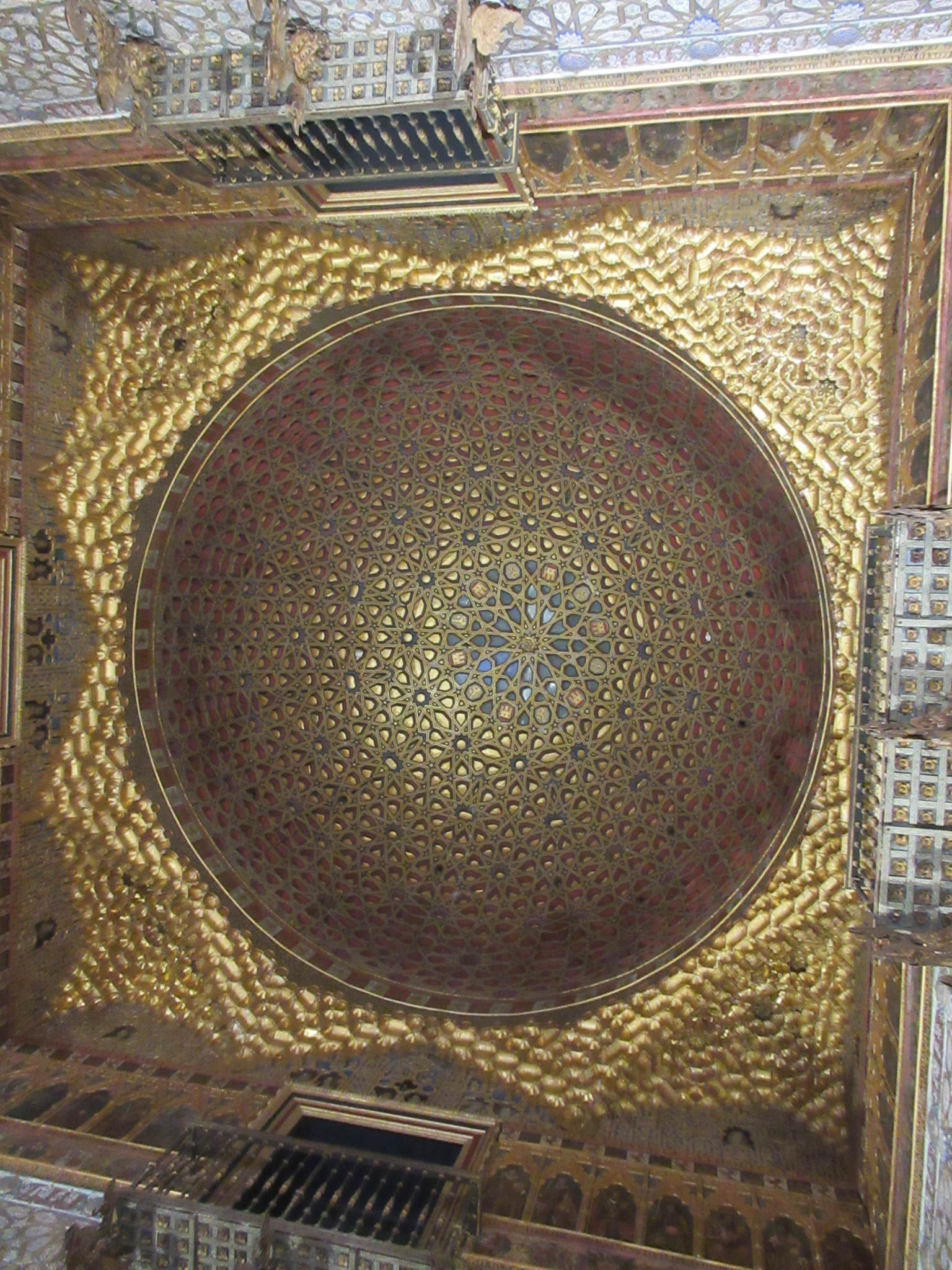
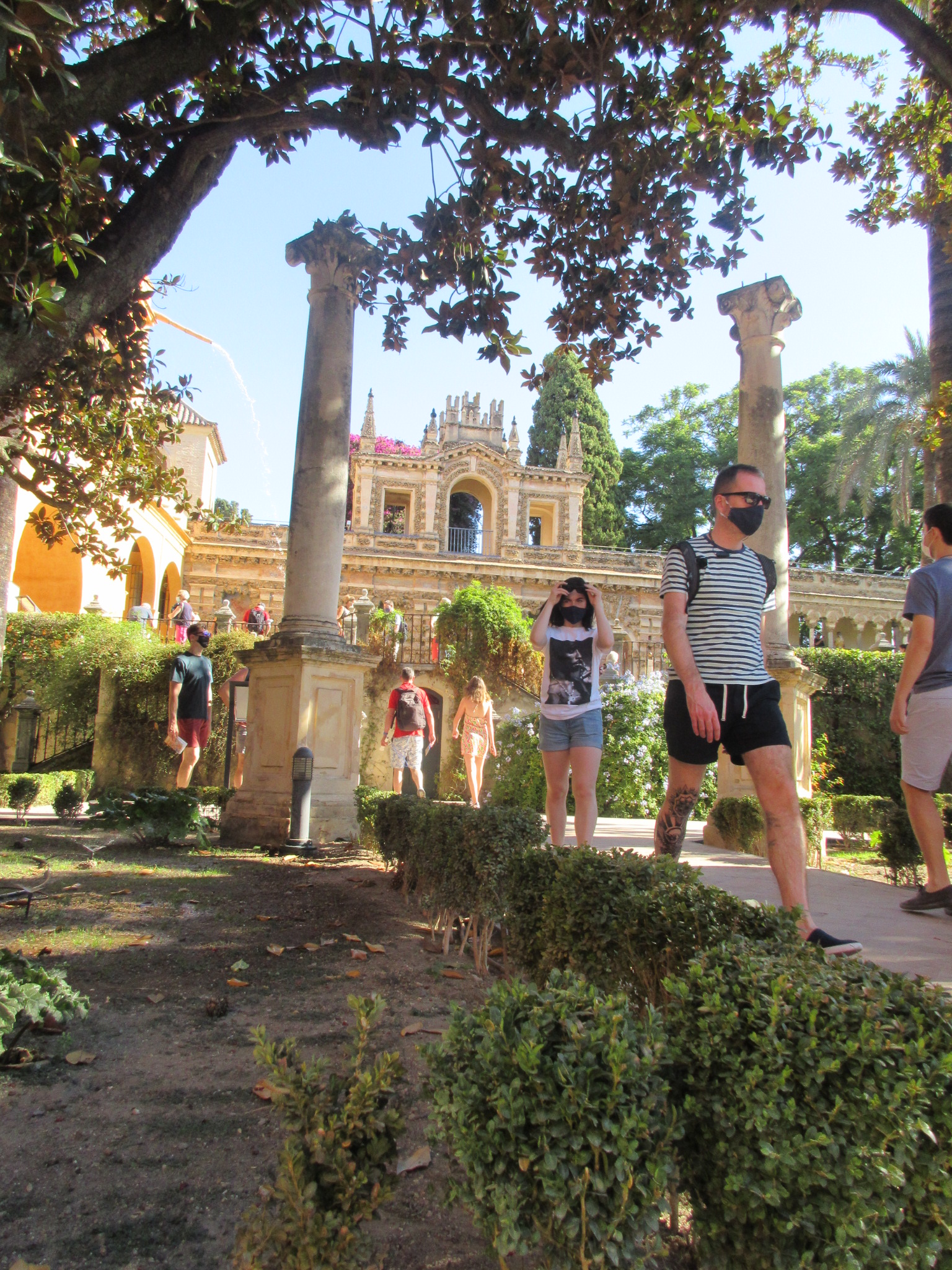
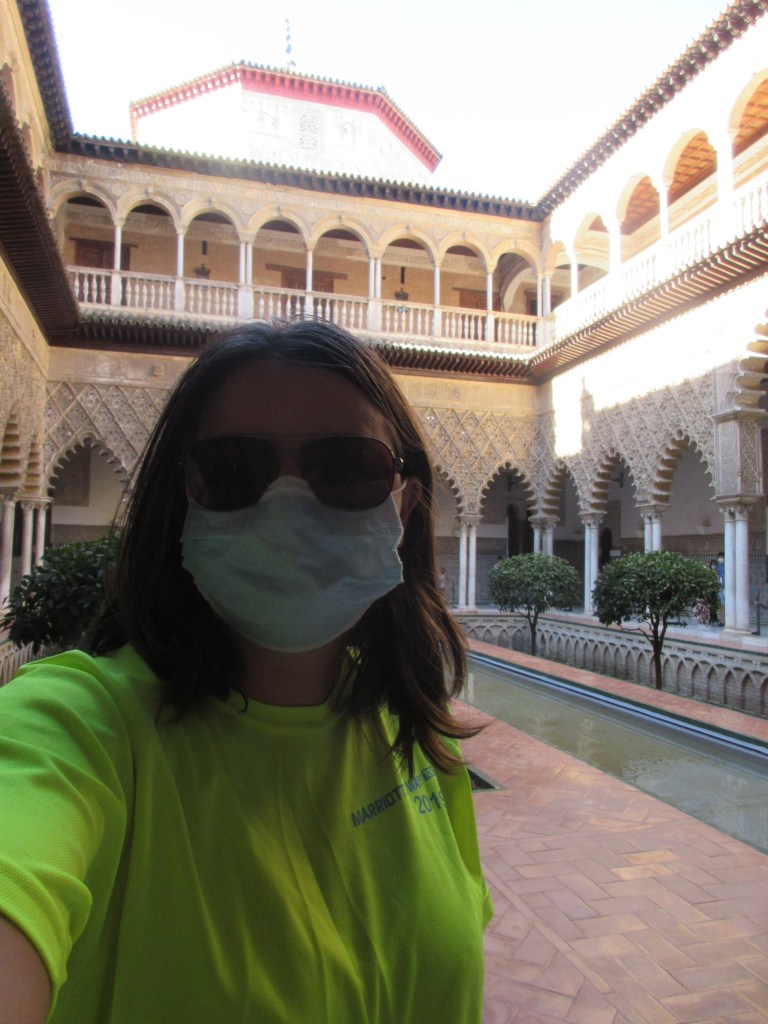
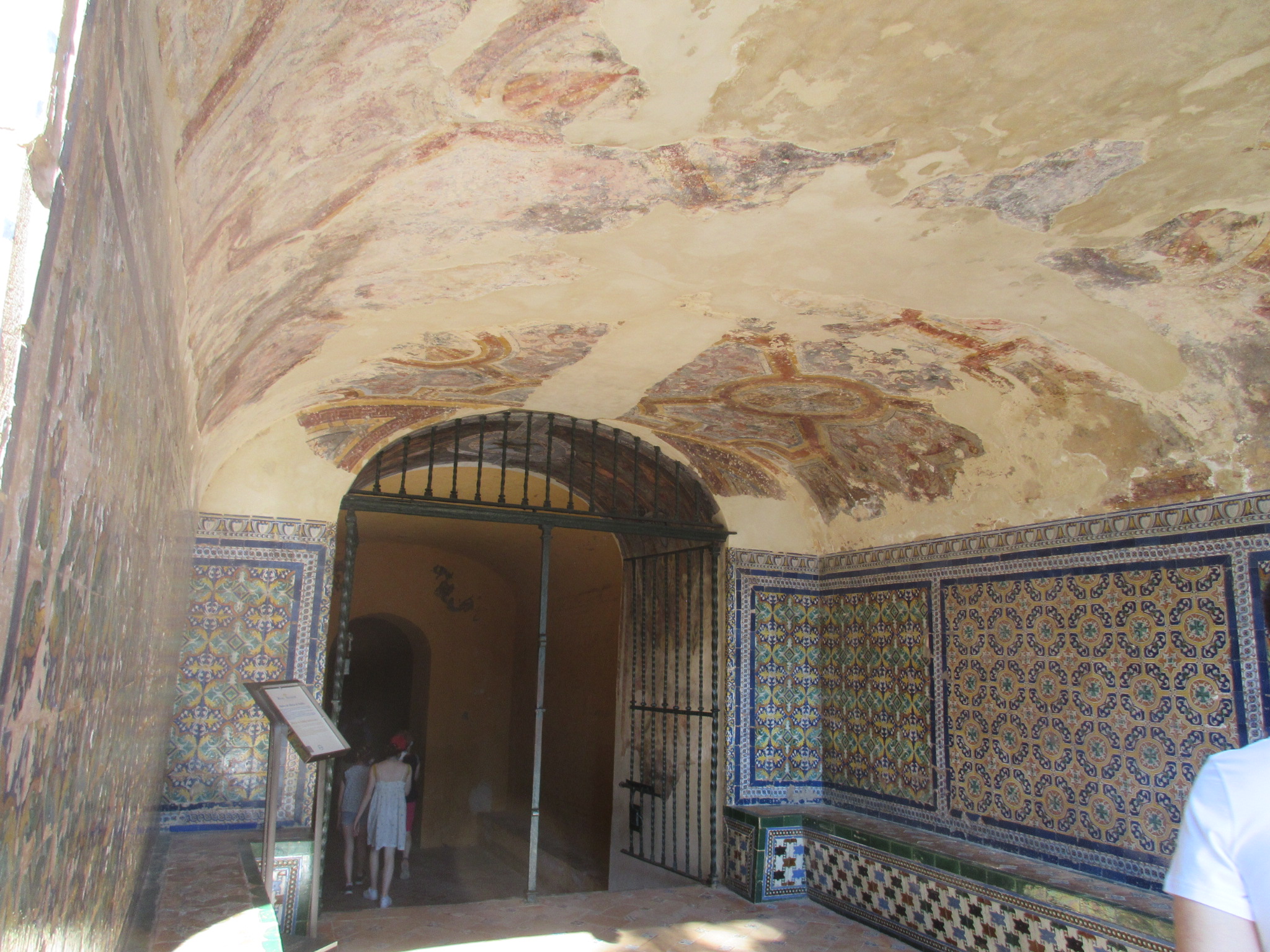
I have visited Granada’s Alhambra on a previous trip, so I knew somewhat of what to expect in this Alcazar visit. The Alcazar in Seville is still beautiful though, and has its own charm. It seemed to have a lot more gold in the decoration and many more tiles and christian influence too.

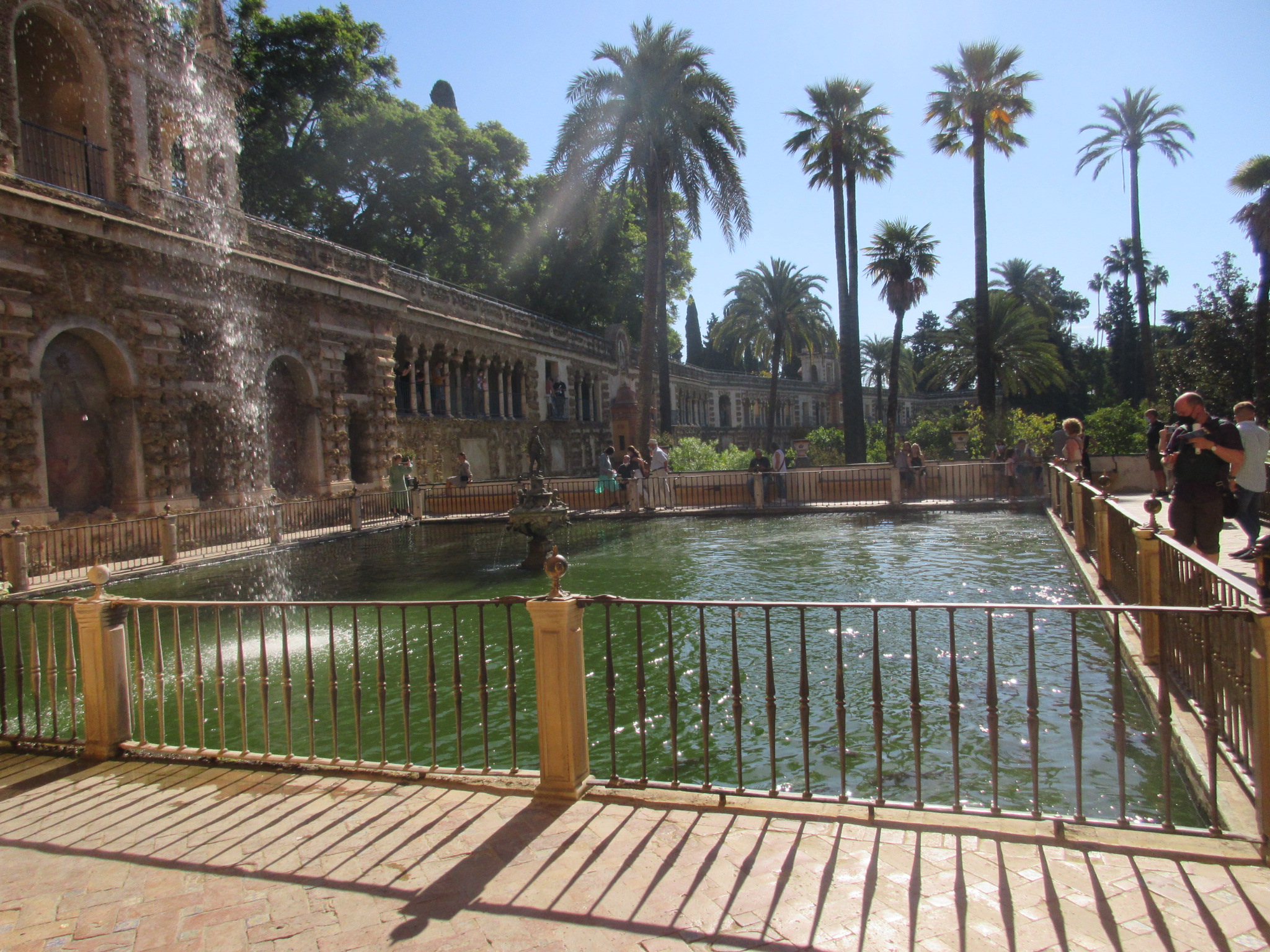
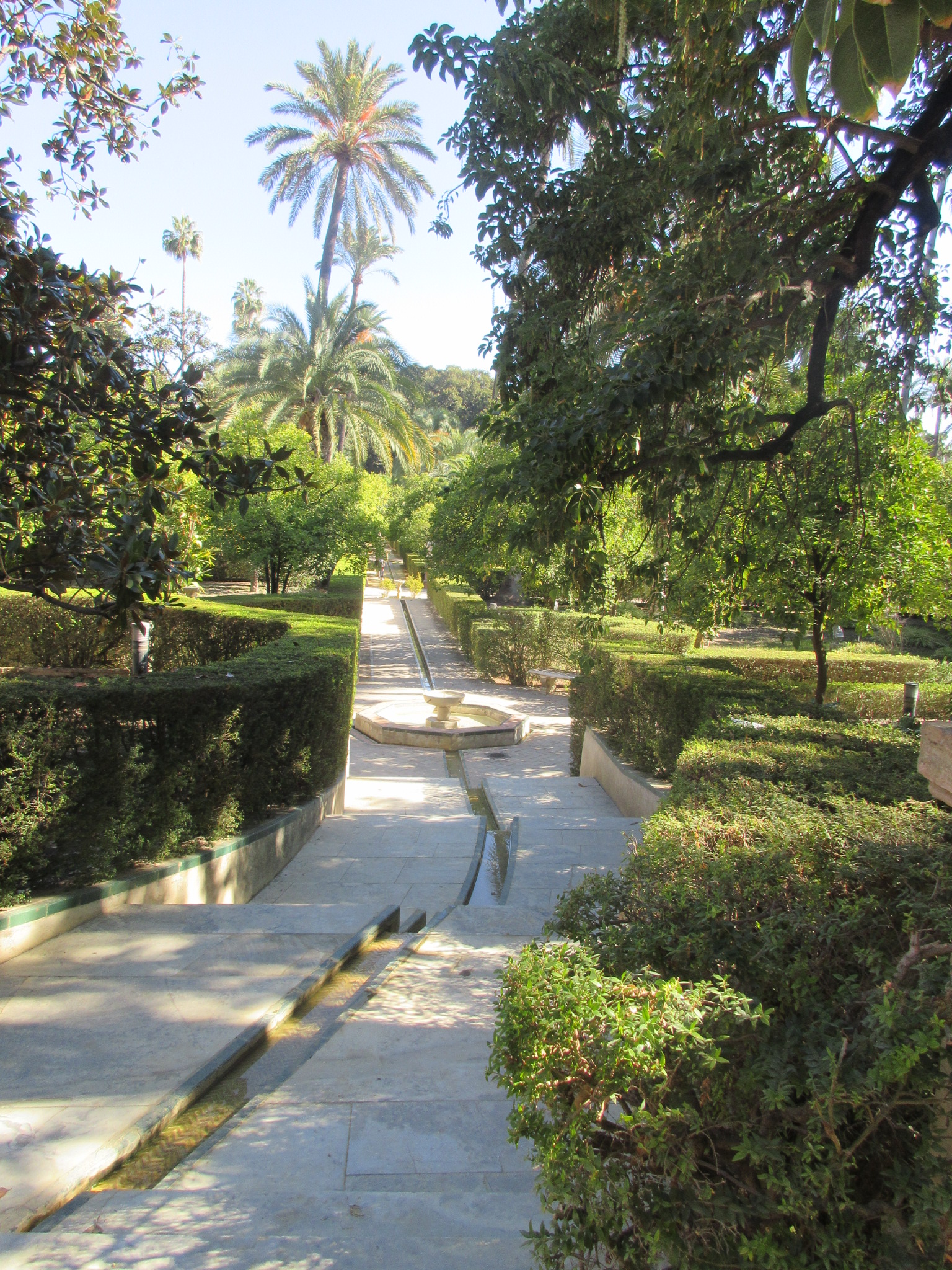
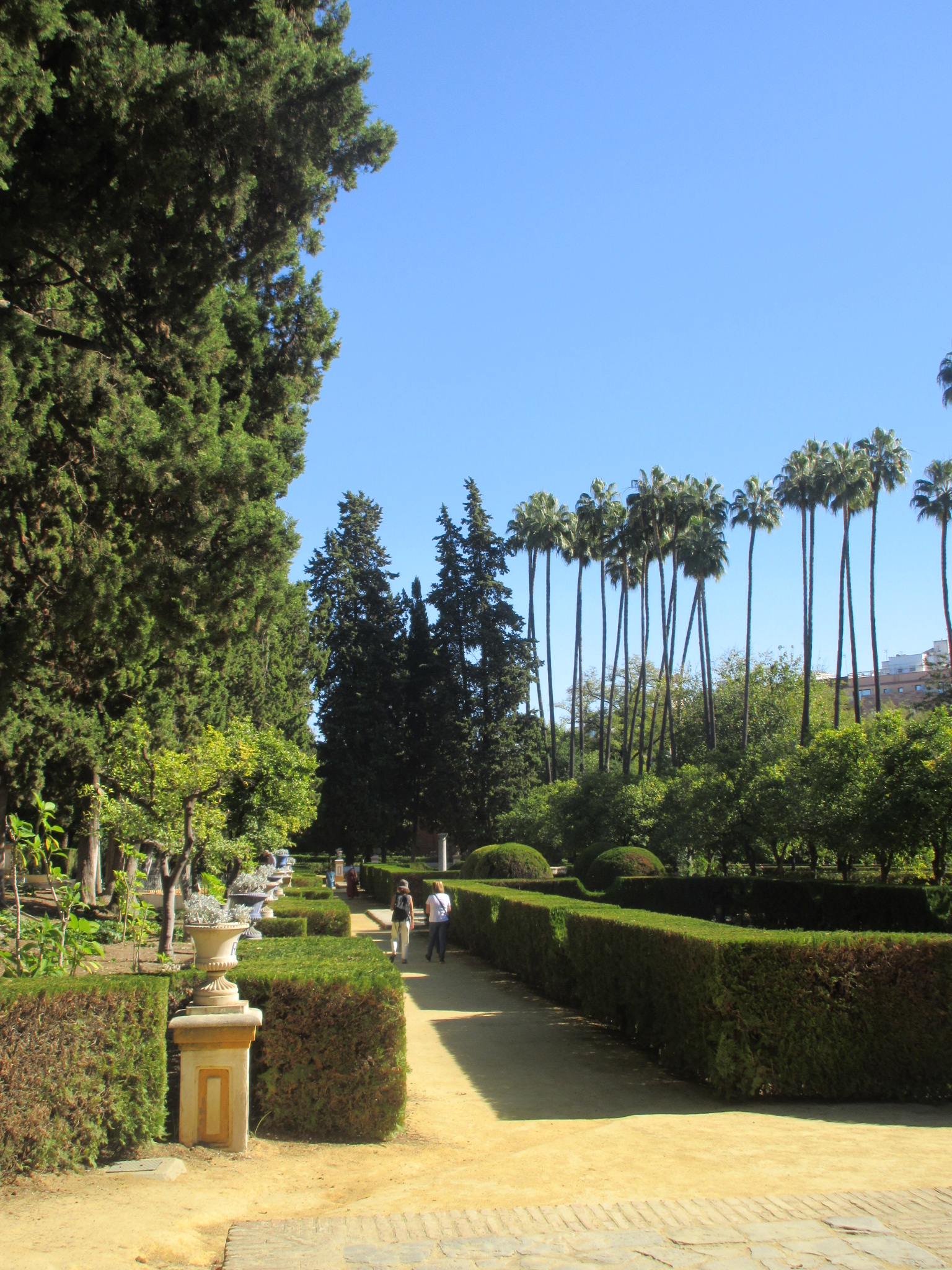
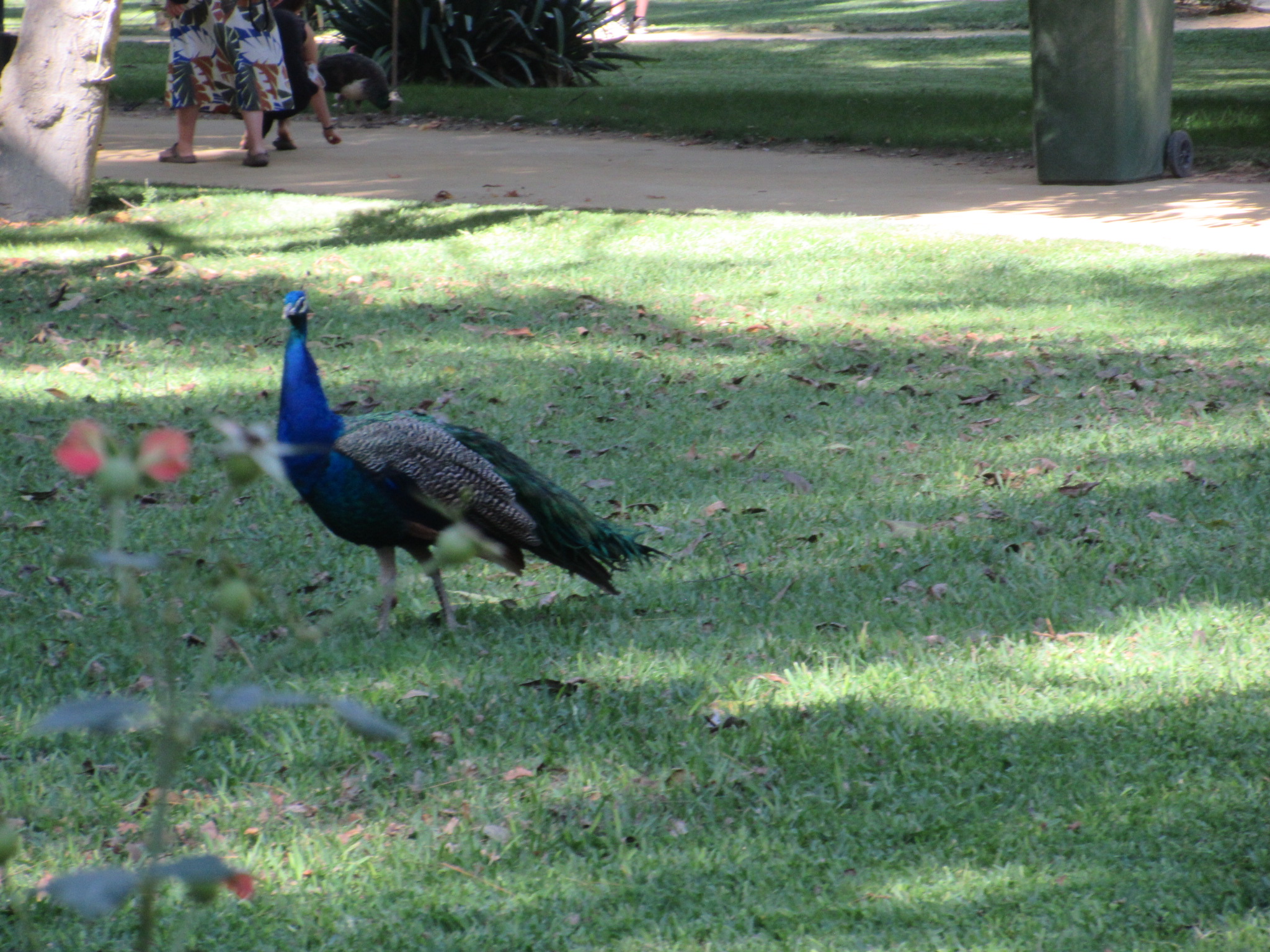
The site also had several lovely gardens which set themselves apart as unique, due to different sections being created based on different styles from around the world. There is a french garden, italian, and even english! The english garden is home to many wondering peacocks, I was wondering if I had missed something in this, are peacocks English…? 🤔

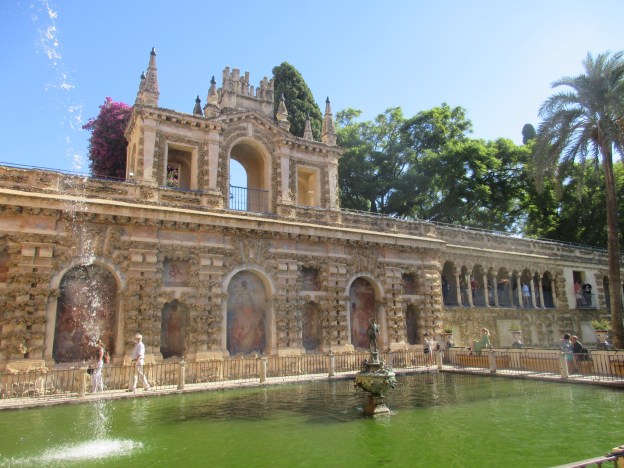
I also ticked off another Game Of Thrones filming location from my list! The site was used as one of the locations for imaginary kingdom of ‘Dorne’. ✅✅✅

GoT location in Seville’s Alcazar

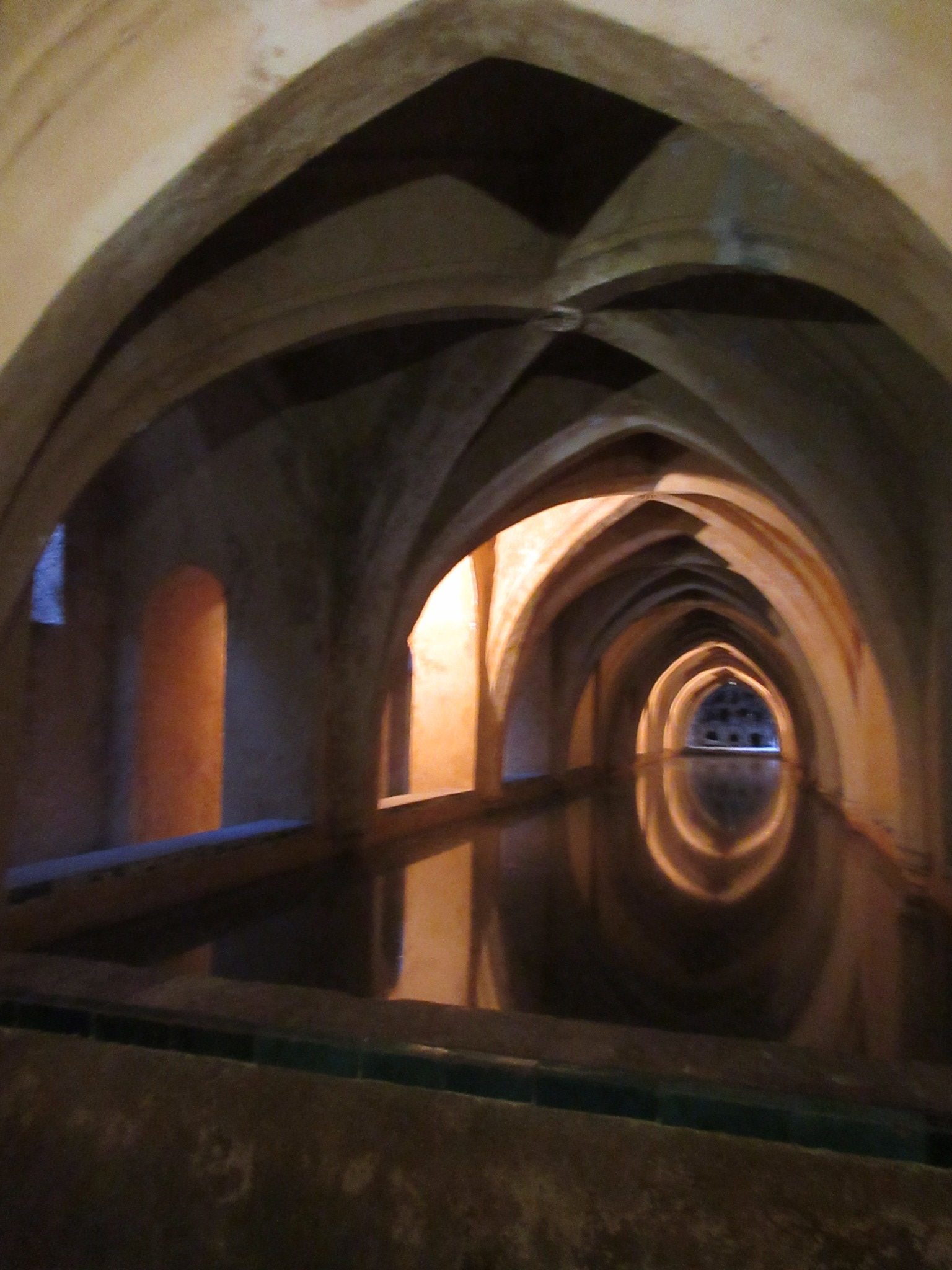
There is also a hidden away area in the garden which is quite cool. That is the mistress’ bath underground. Apparently, the Peter ‘the cruel’ built this bath for the the lady he was wooing, so she would have somewhere refreshing to relax. Considering the heat here, that seems like an act of true love to me! The bath is accessed through a tunnel and is a very pretty space.

Seville Cathedral

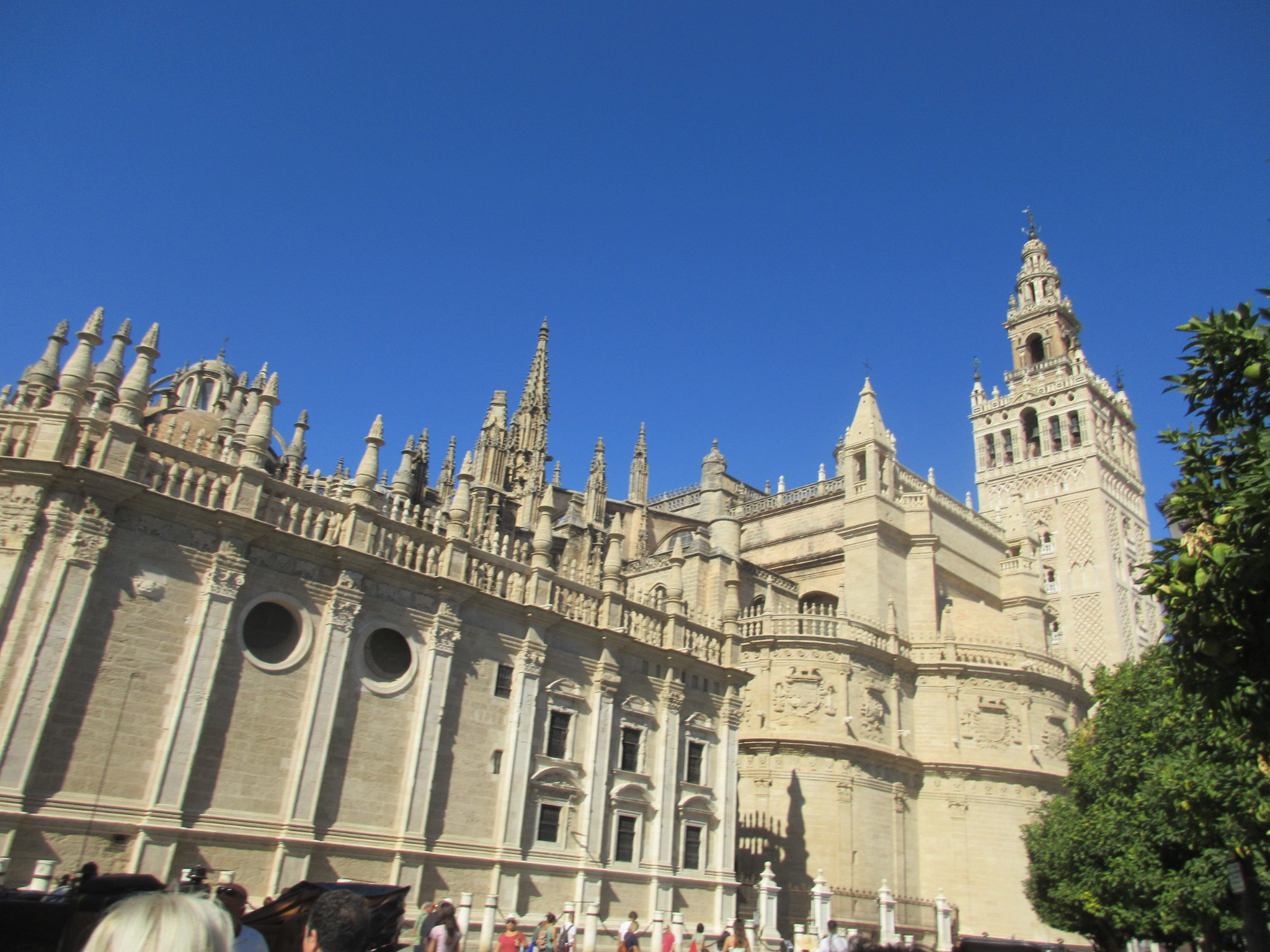
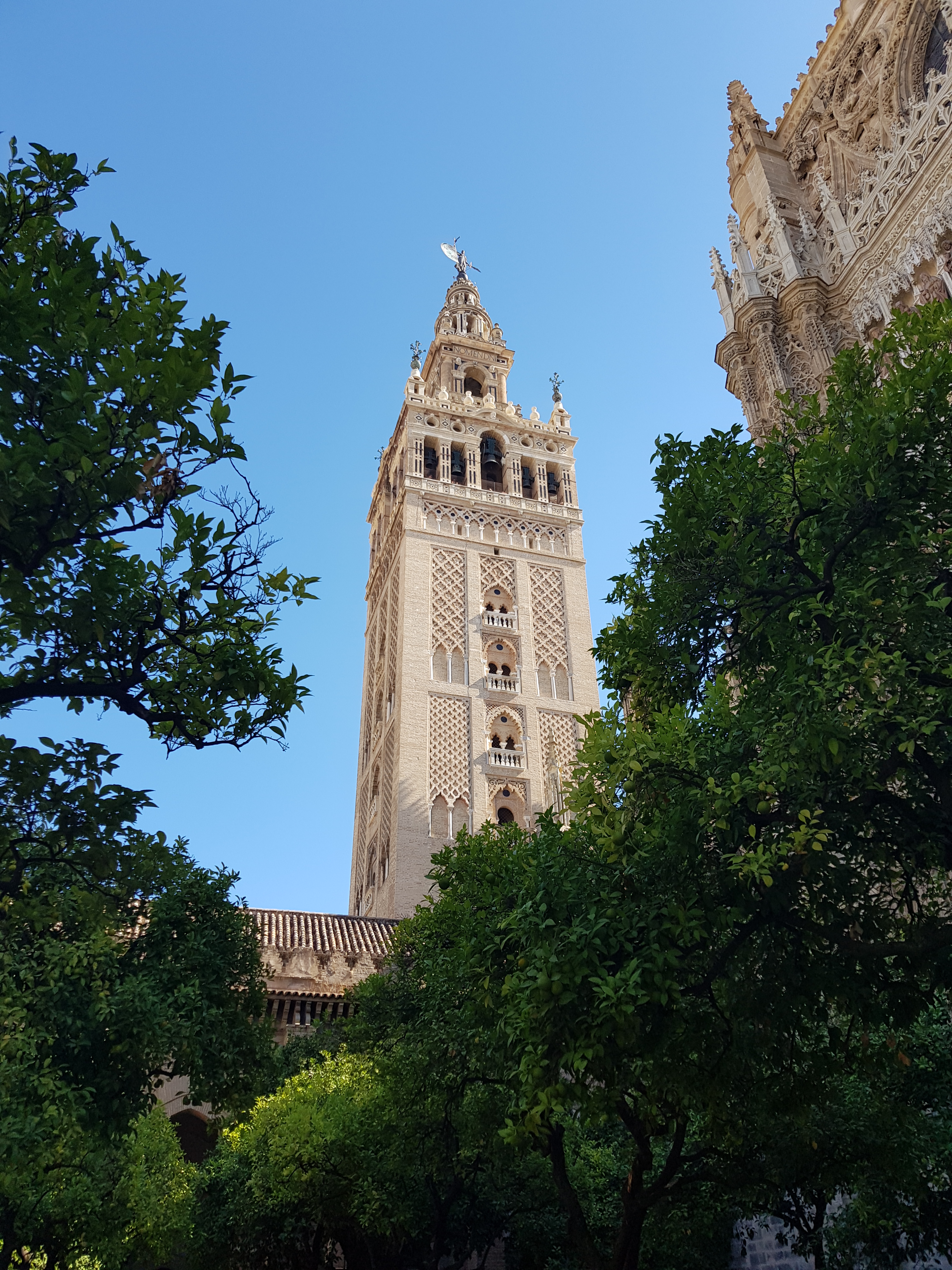
Connected to the Alcazar, is Seville’s Cathedral. The Cathedral is built on the site of the former mosque. The mosque was gradually destroyed after the Christian conquest of 1248, except for the minaret or Giralda that remains today. The cathedral is very grand inside as you would expect from any catholic cathedral, but it does have some additional advantages.

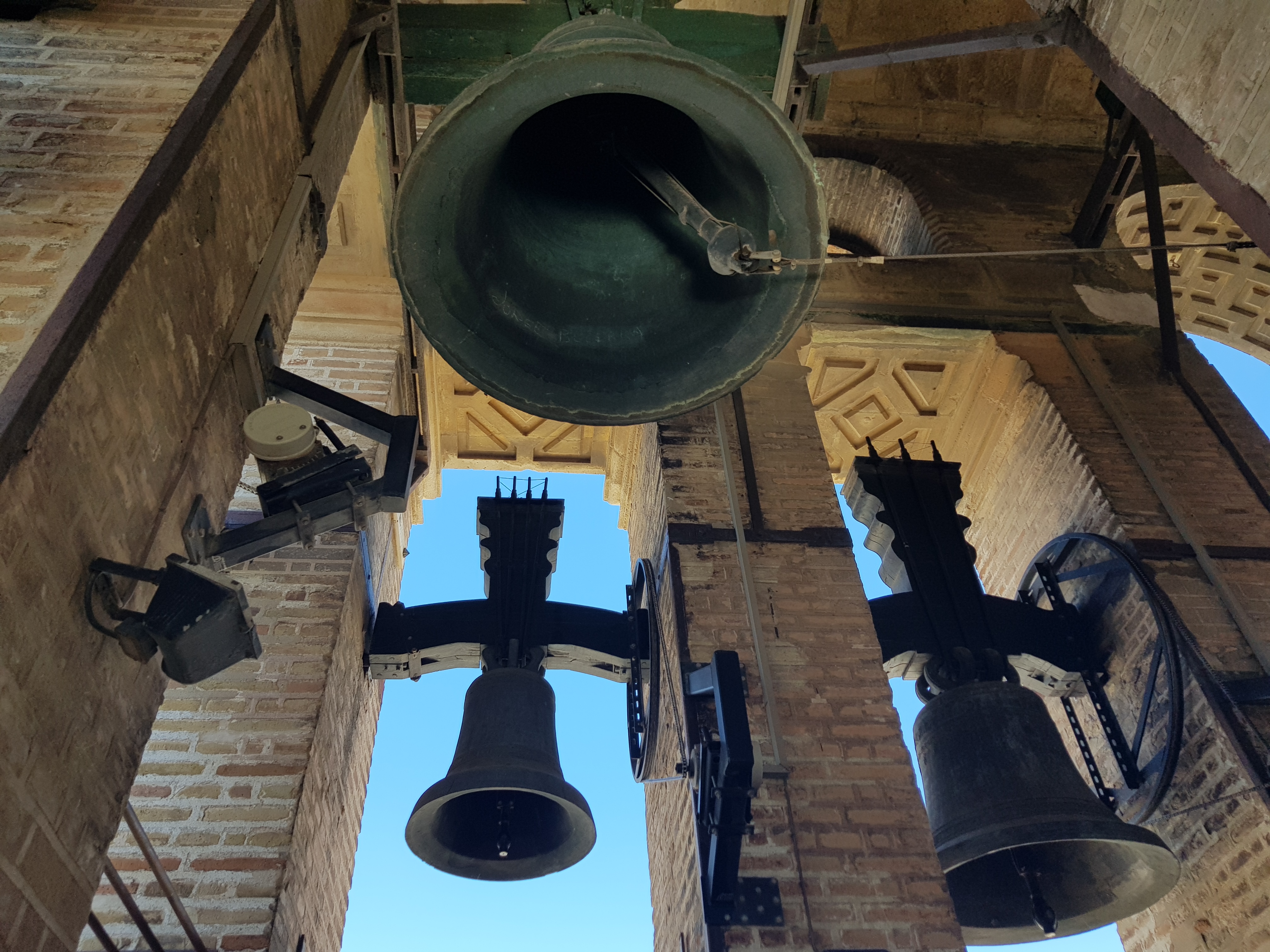
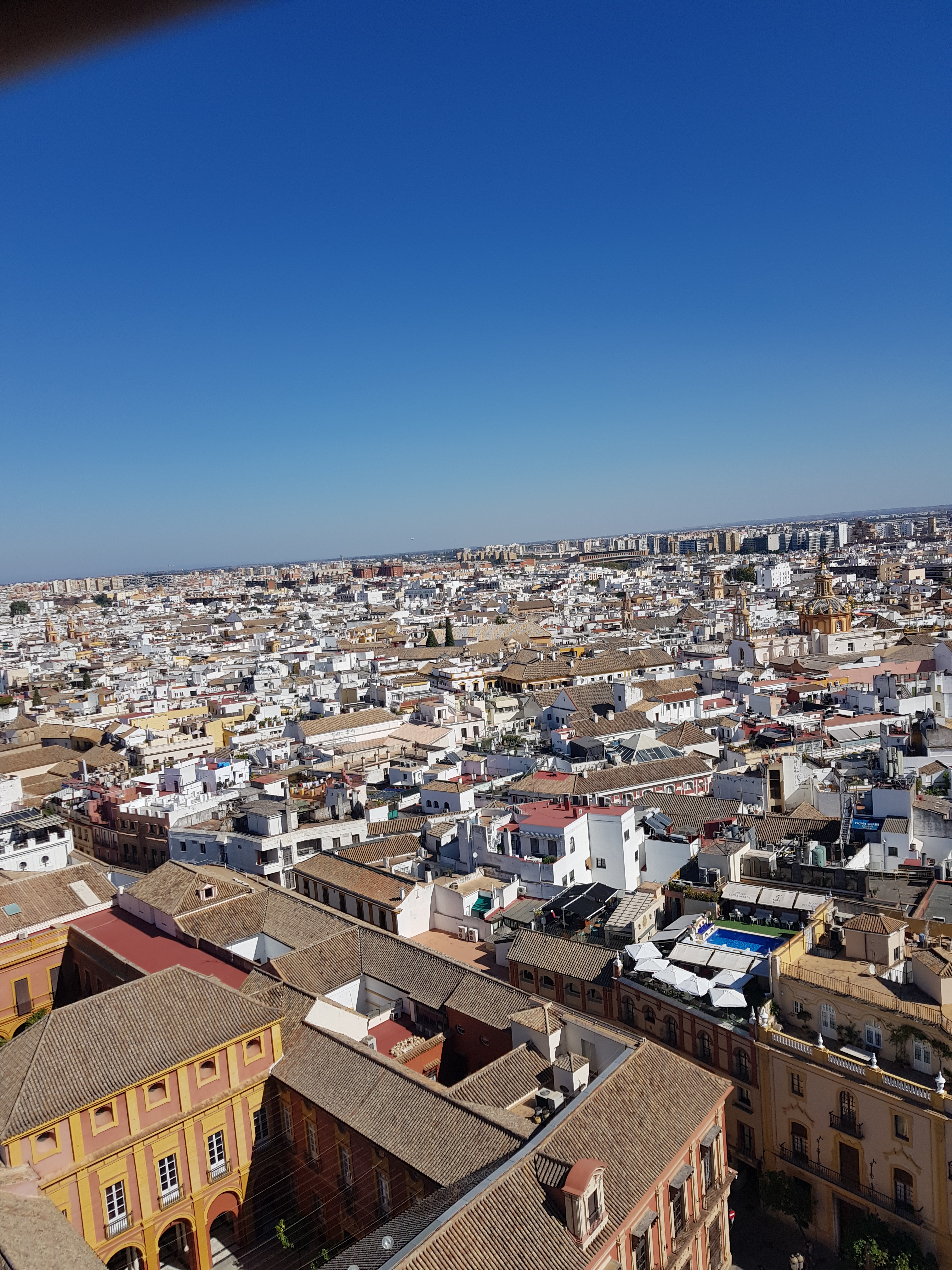
There is the Giralda, which actually means ‘weather vane’, (I had to question the guide about this as I knew tower is ‘torre’.) You can climb this to the belfry area and get a good view of the city. Wierdly, it has 35 ramps rather than staircases, so there really is no excuse!

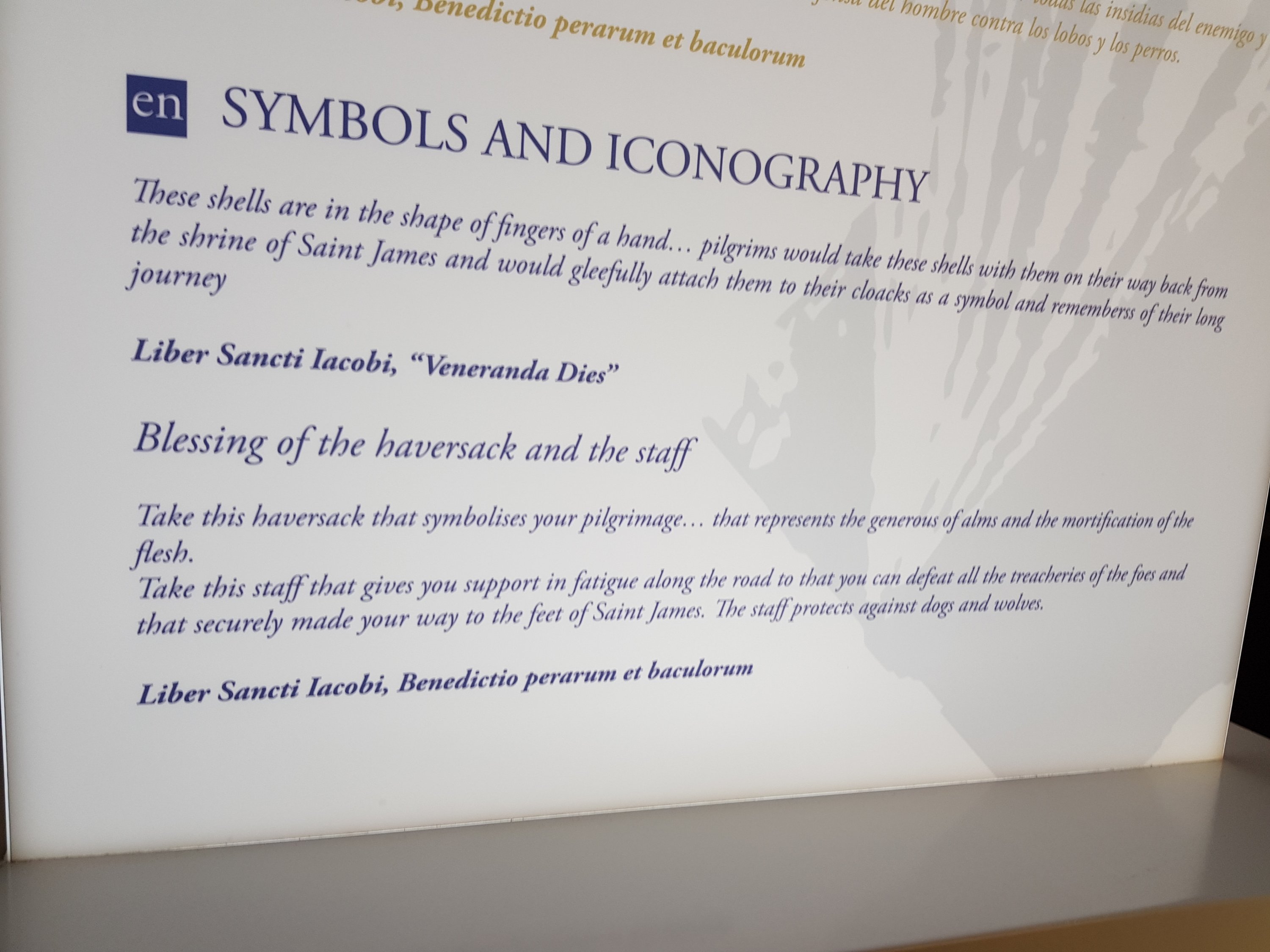
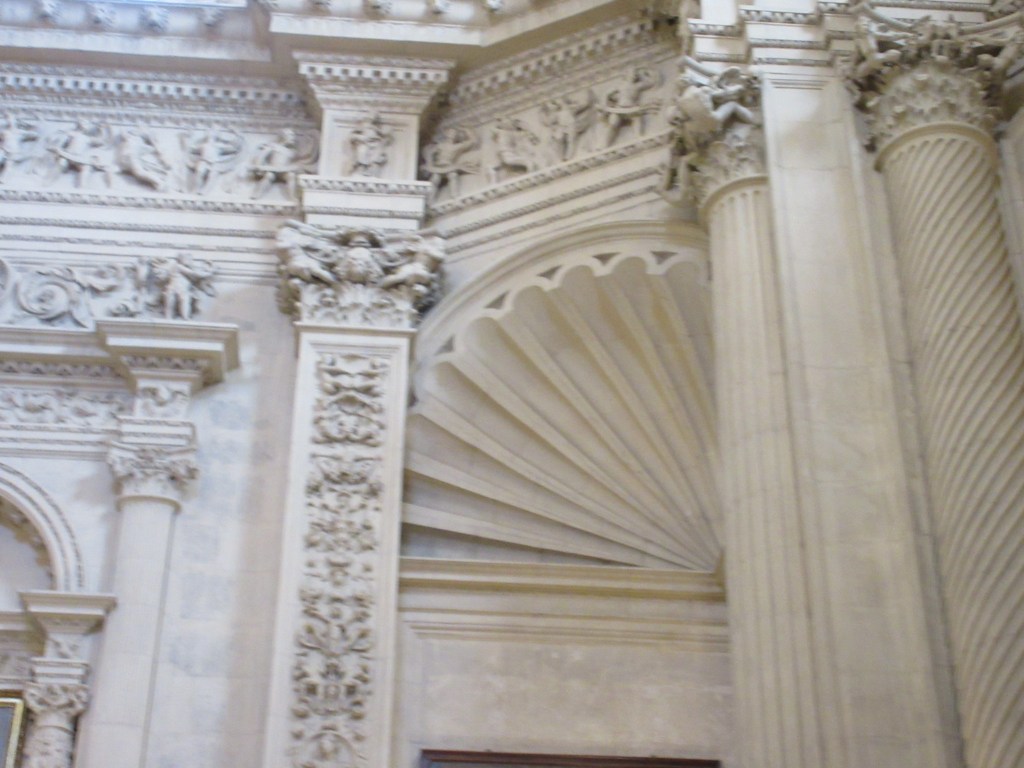
The cathedral also makes links to lots of important figures. I was very excited about the abundance of seashells used as shapes in the decor to symbolise Saint James (Patron Saint of Spain) and the symbol of my upcoming pilgrimage.

Sign of St James

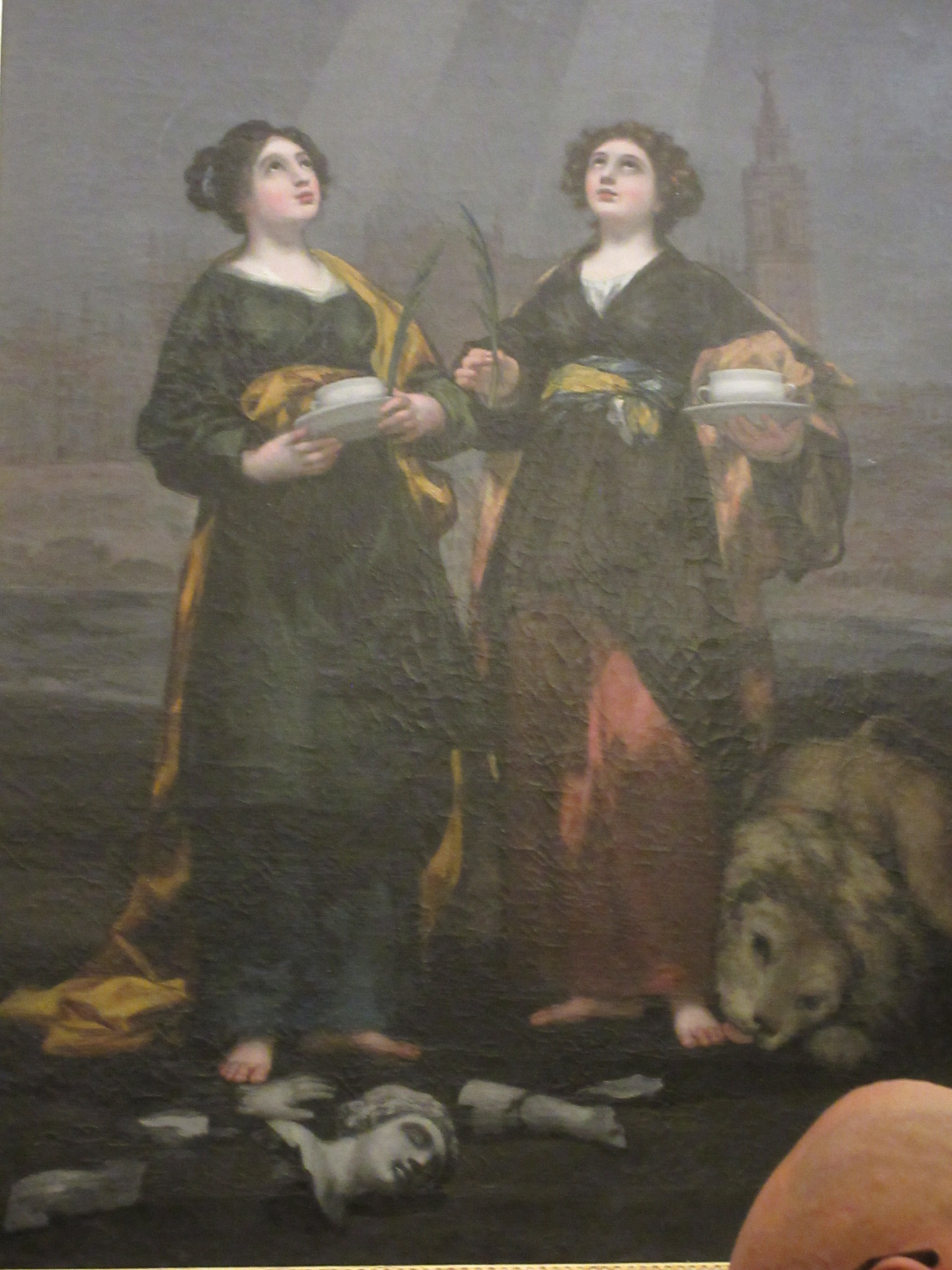
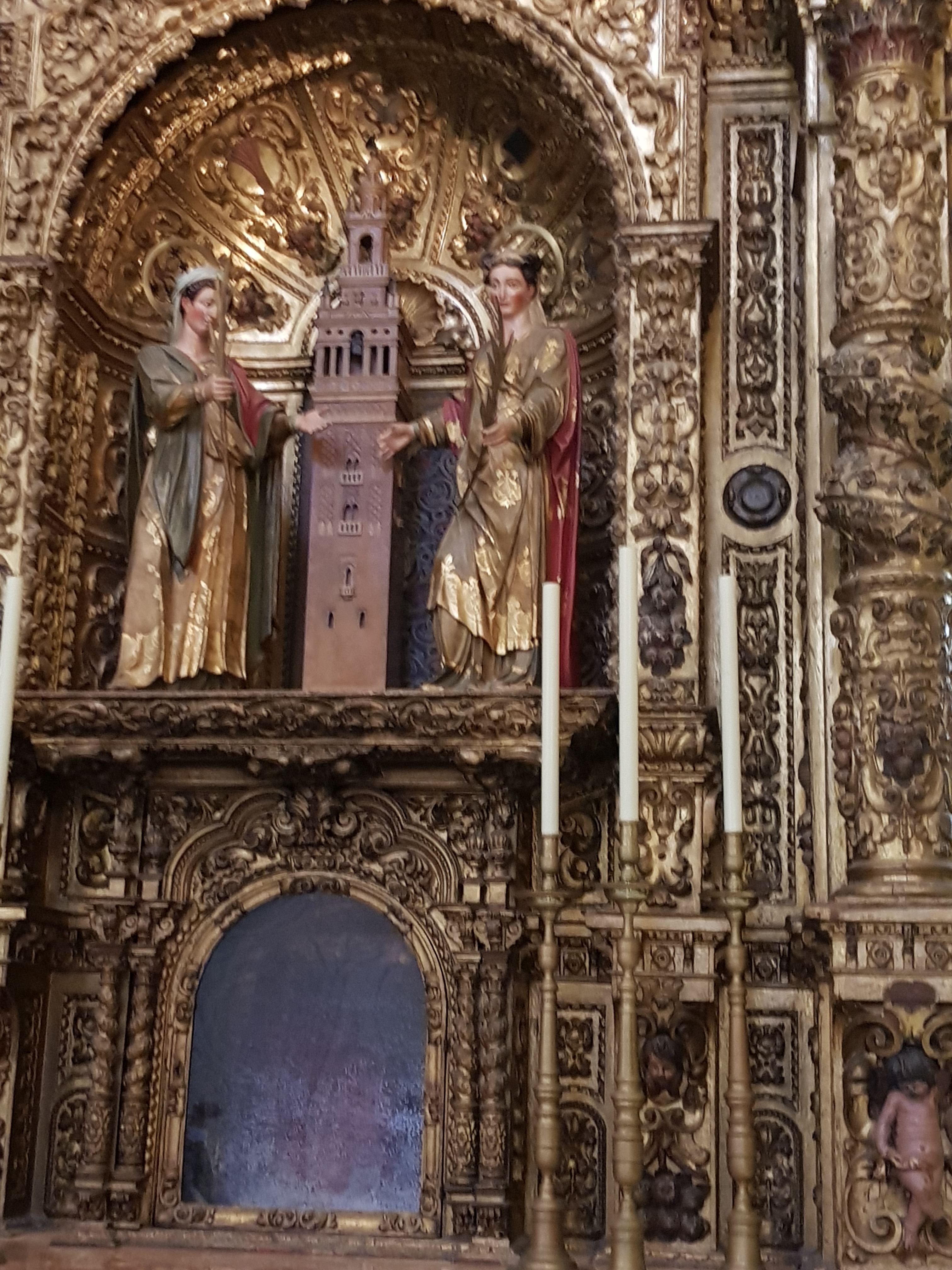
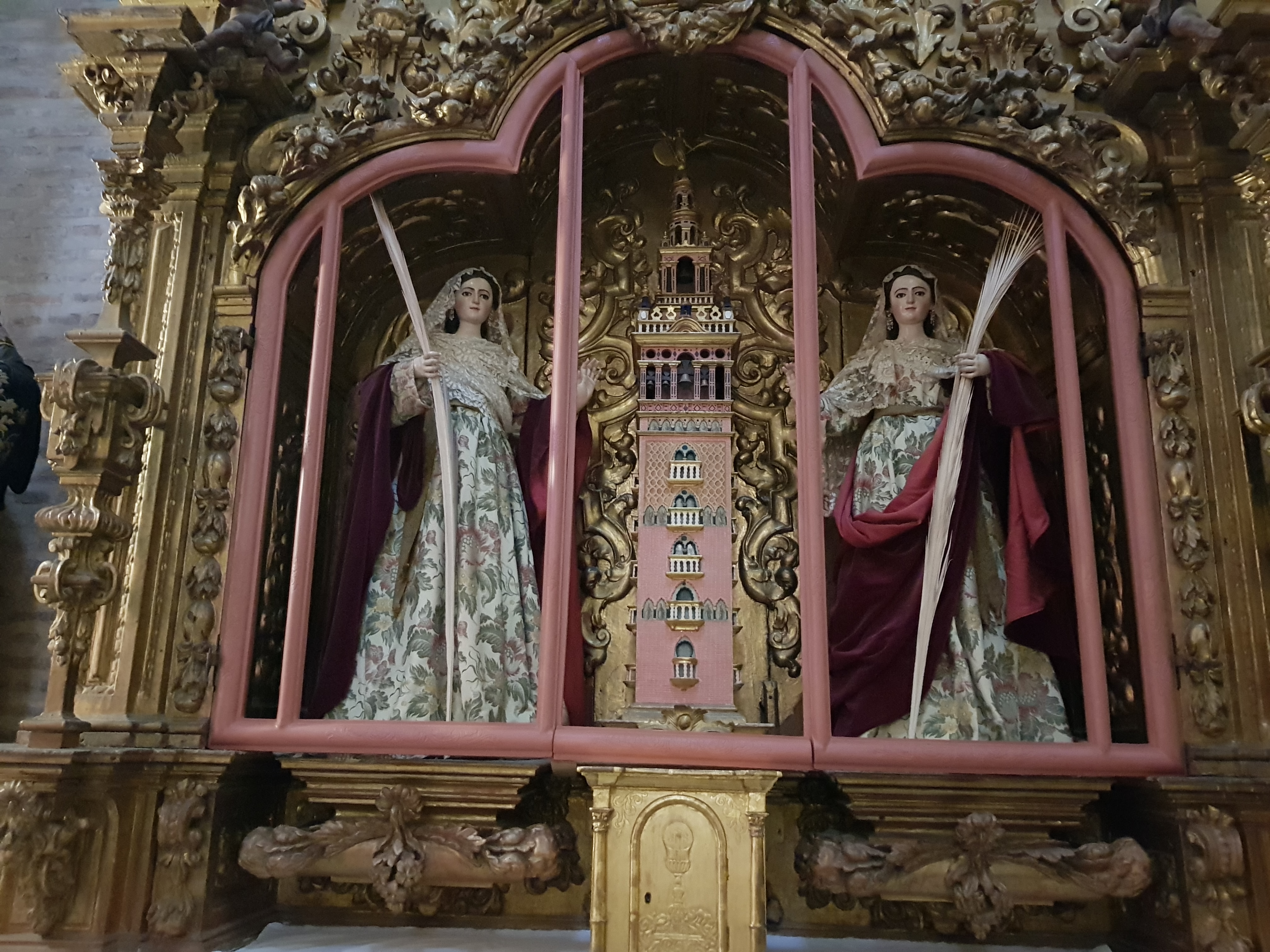
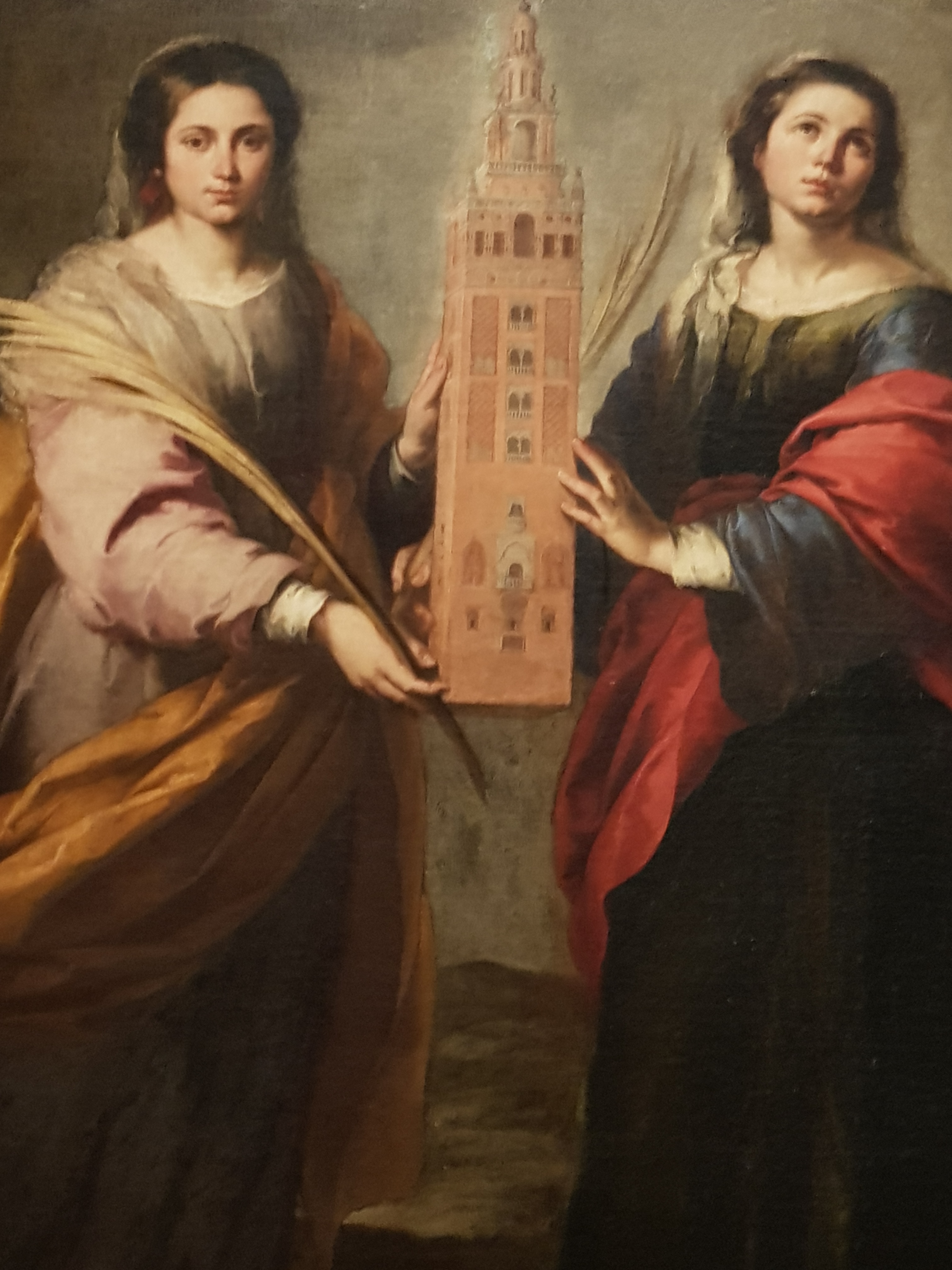
They also pay tribute to Justa & Rufina, in the cathedral and all over the city. These were two sisters who lived as potmakers across the river, in 3rd century. They became martyrs when they refused to take part in a pagan festival due to their faith and broke a statue of Venus. For this, the authorities, imprisoned, tortured, starved and killed them. They are remembered all over the place!

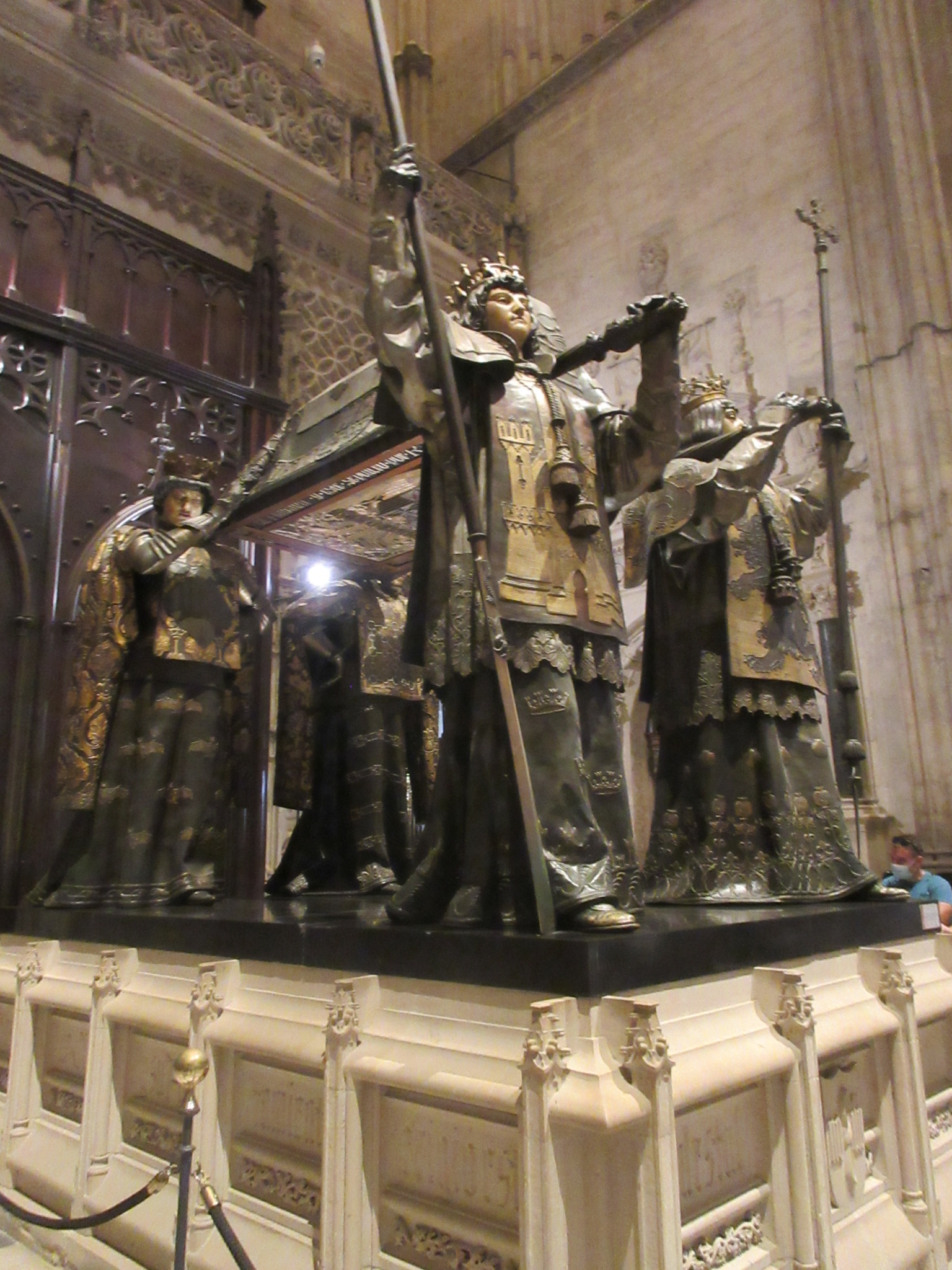
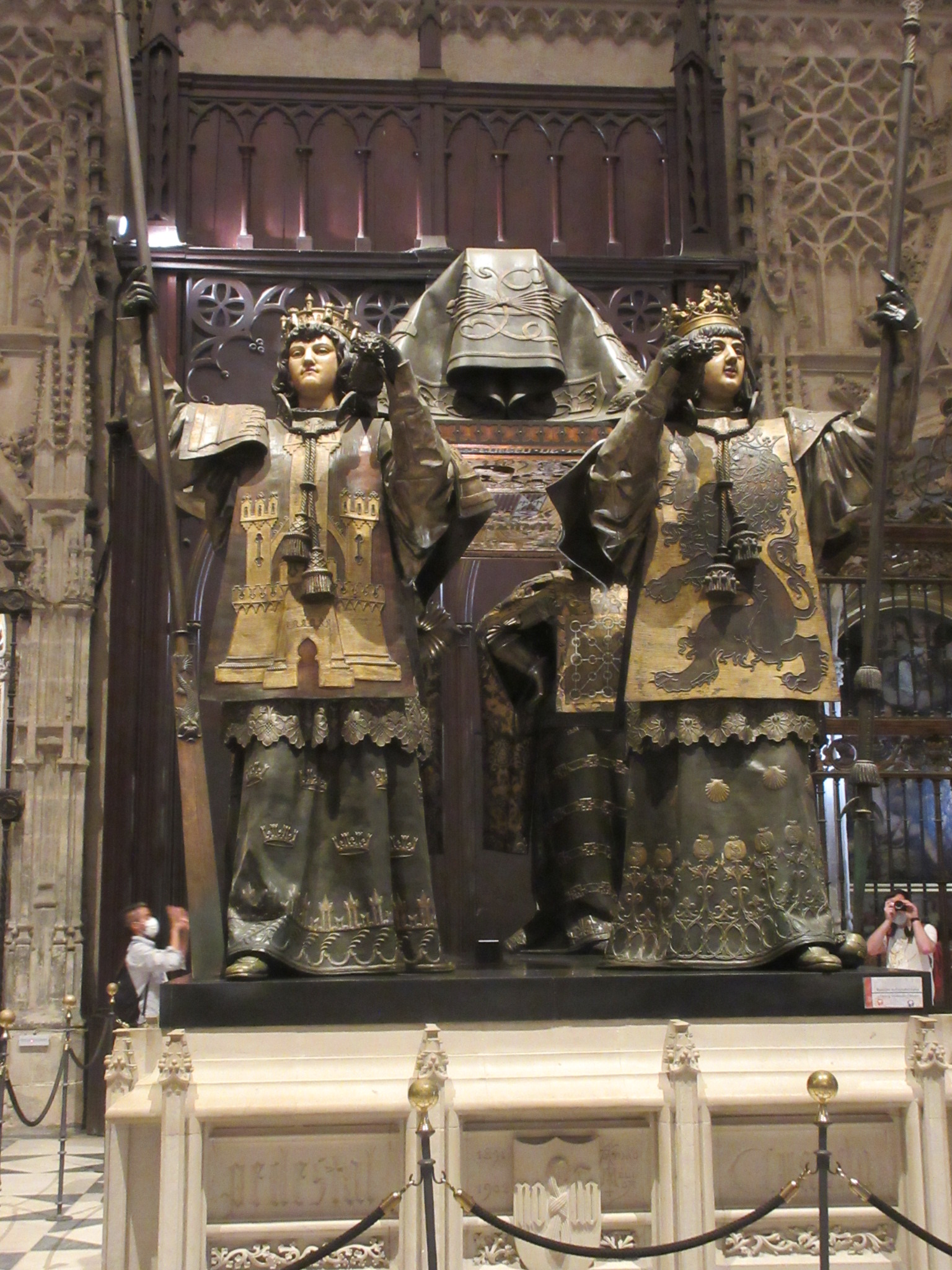
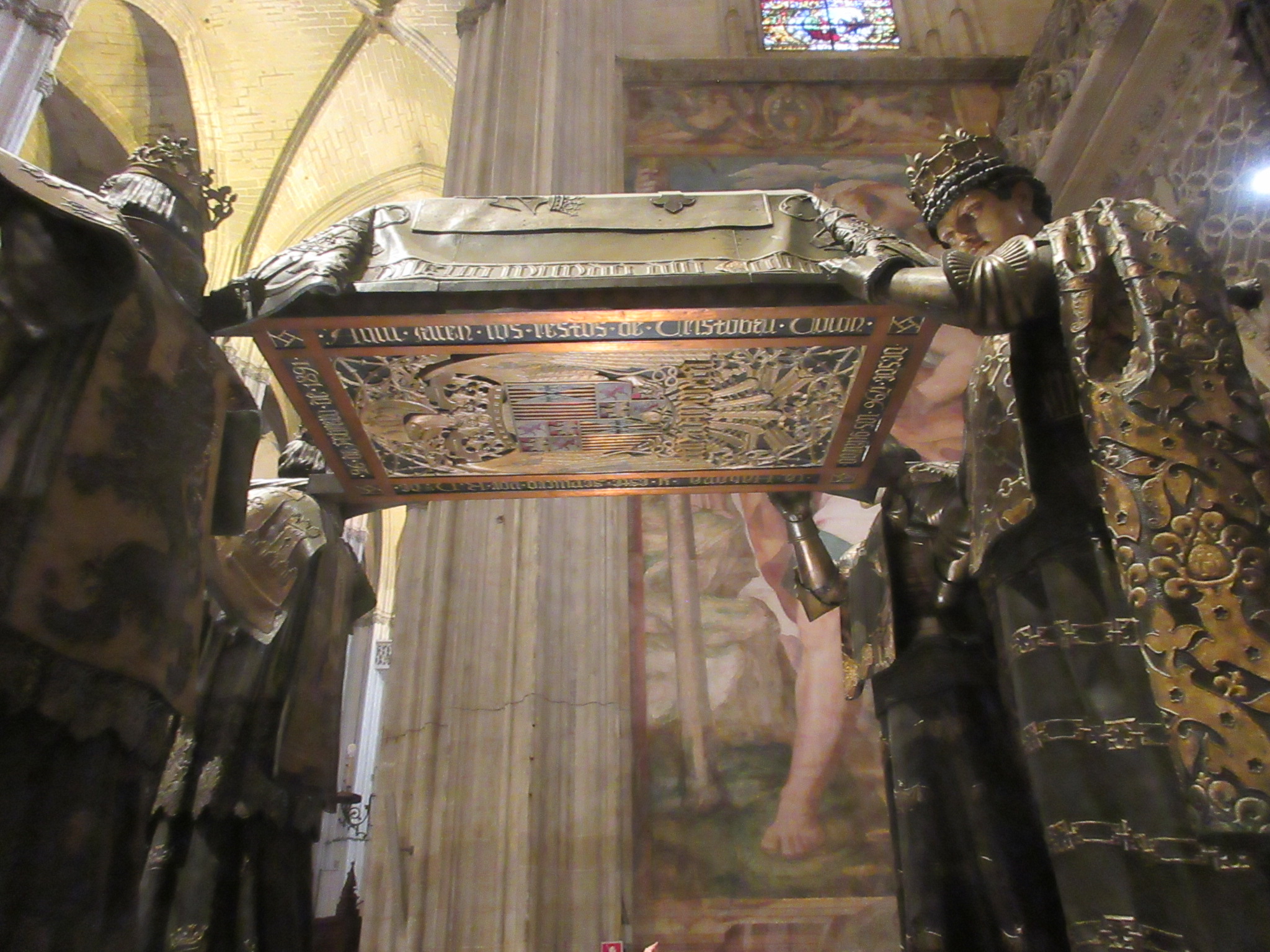
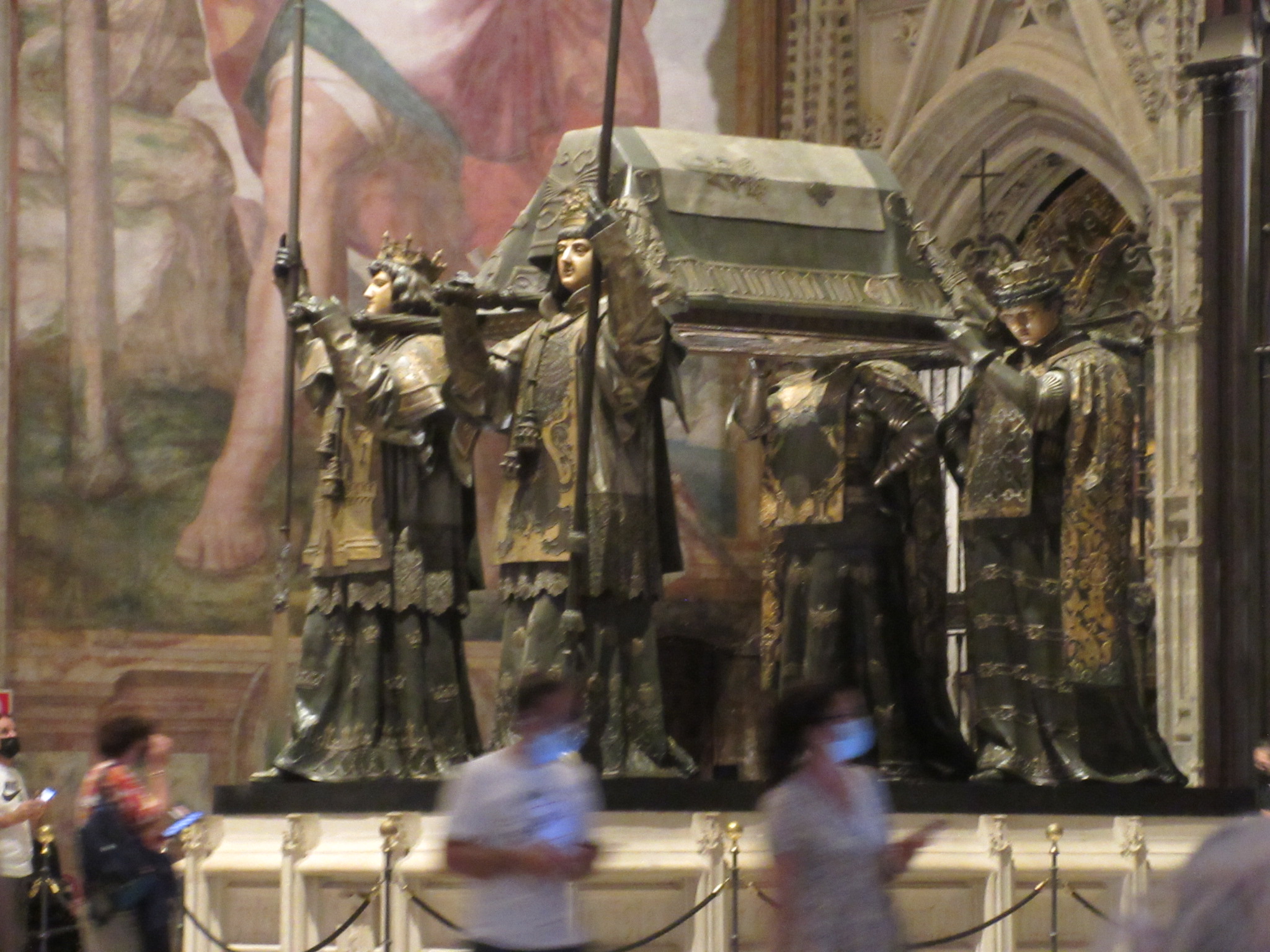
Lastly, the Cathedral is the place that you will find the only DNA certified tomb of Christopher Columbus. His body has moved around the world to different countries before finding its way back to Spain. It makes sense that he is in Seville, as he set sail from nearby town of Huelva, before first discovering America.

Not only is this an interesting figure but the tomb itself is very beautiful and unique. Columbus is not buried underground, but is actually overhead. His tomb rests on the shoulders of four men which represent the different kingdoms of Spain (Castile, Leon, Aragón and Navarre) symbolising that not one kingdom can claim his accomplishments, but they belong to all of Spain as a union.

More art

As well as seeing beautiful art and sculptures at the Cathedral and Alcazar, there are many pieces in city plazas, numerous churches and galleries/museums.

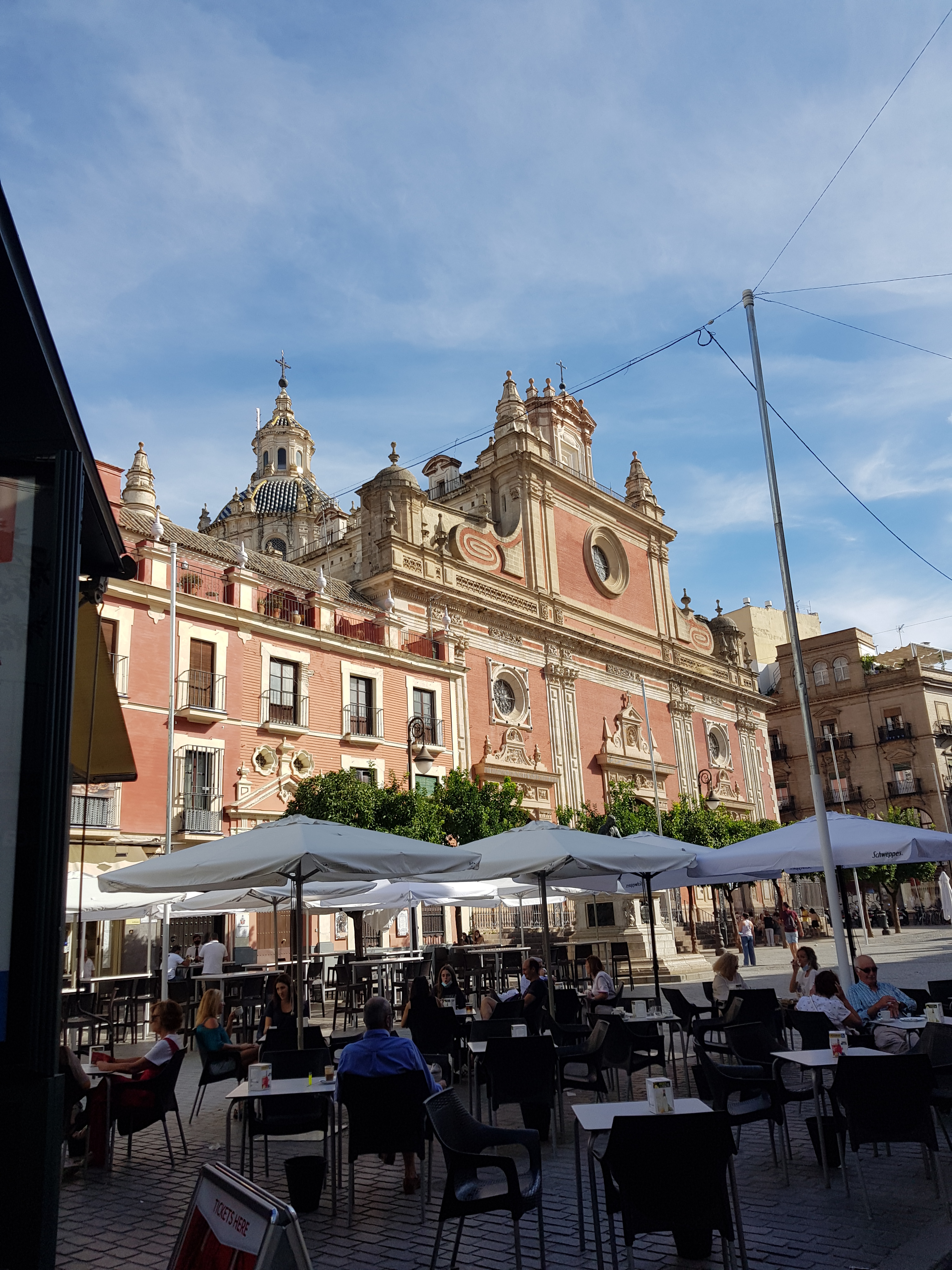
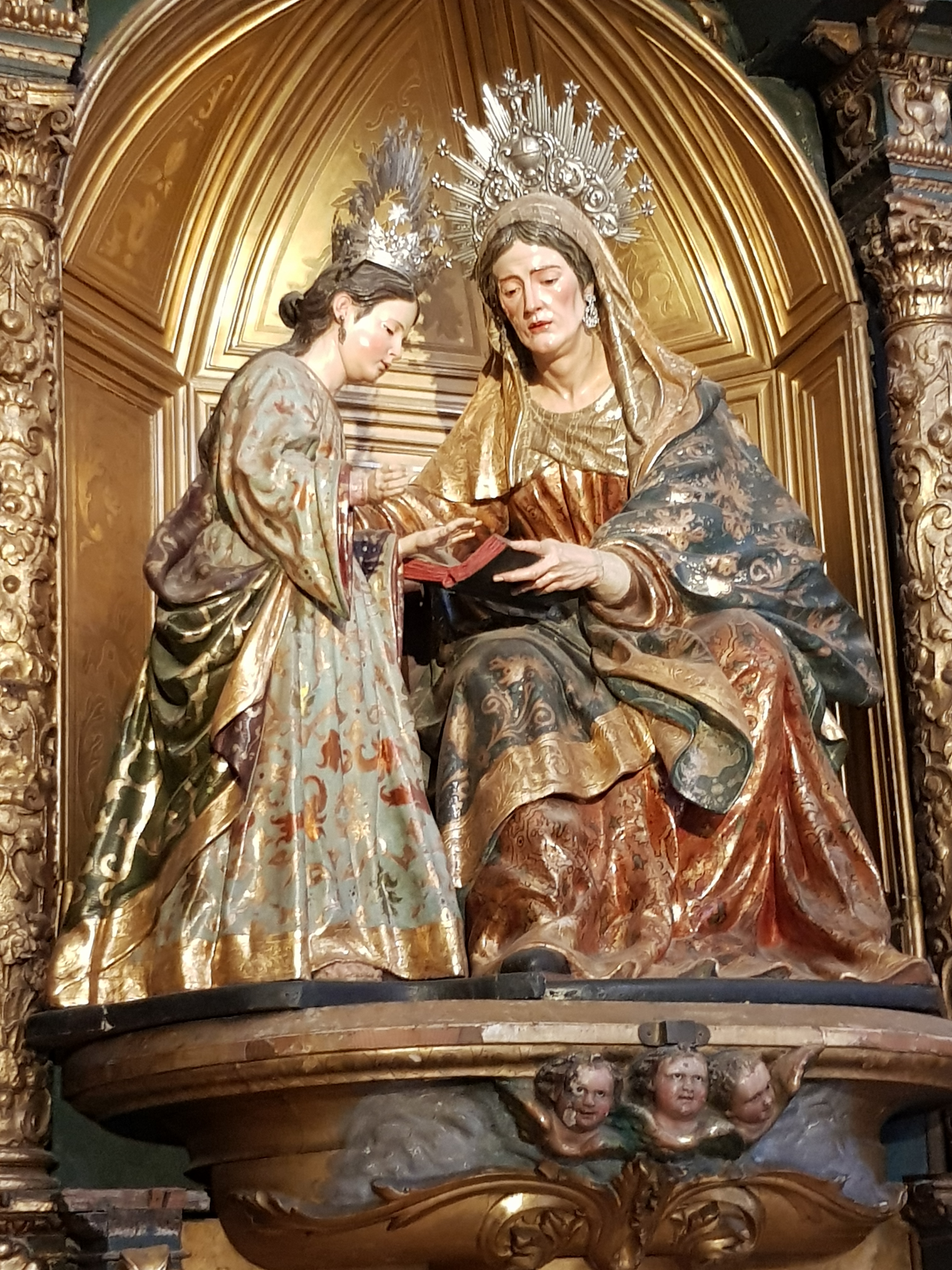
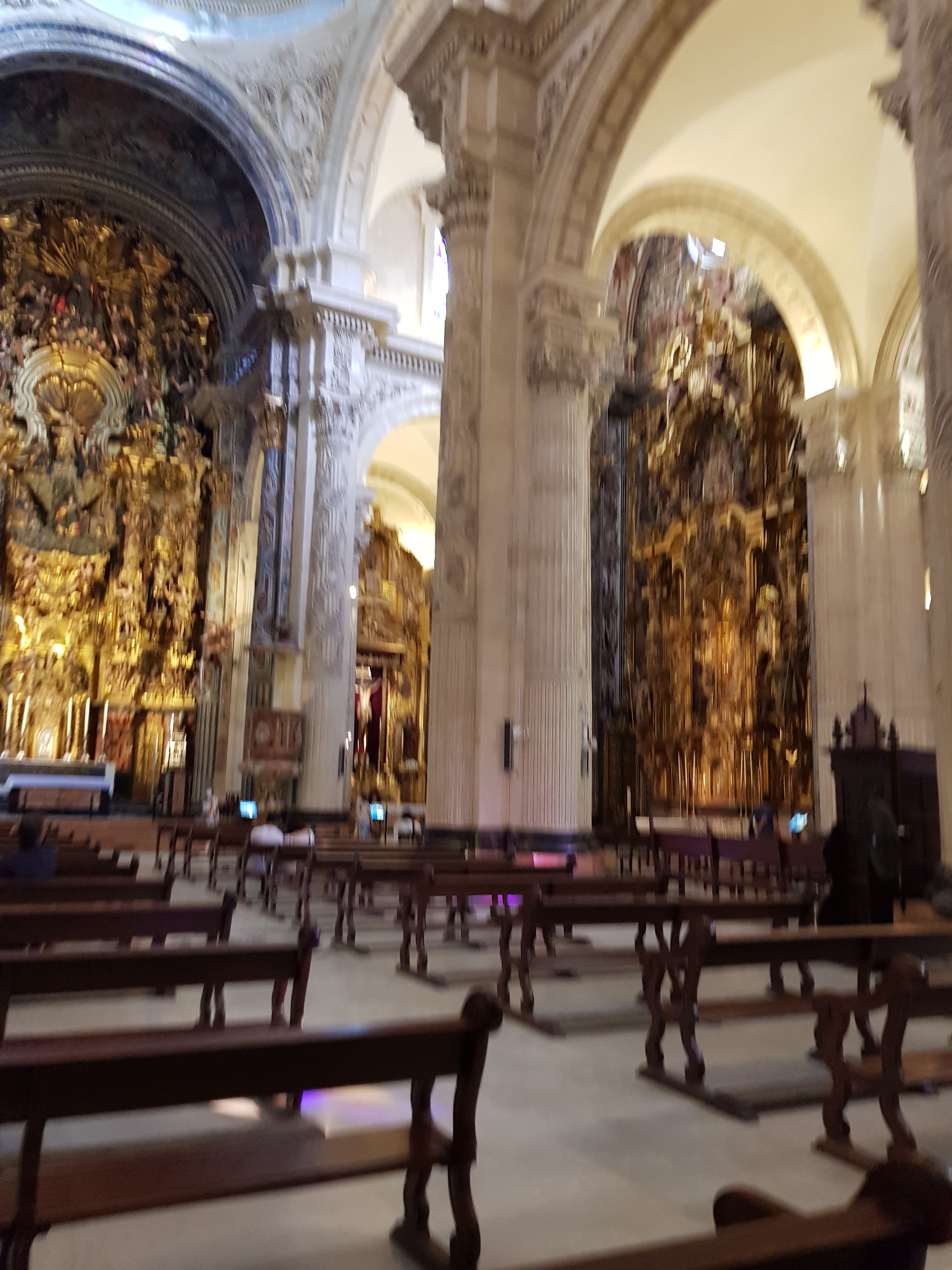
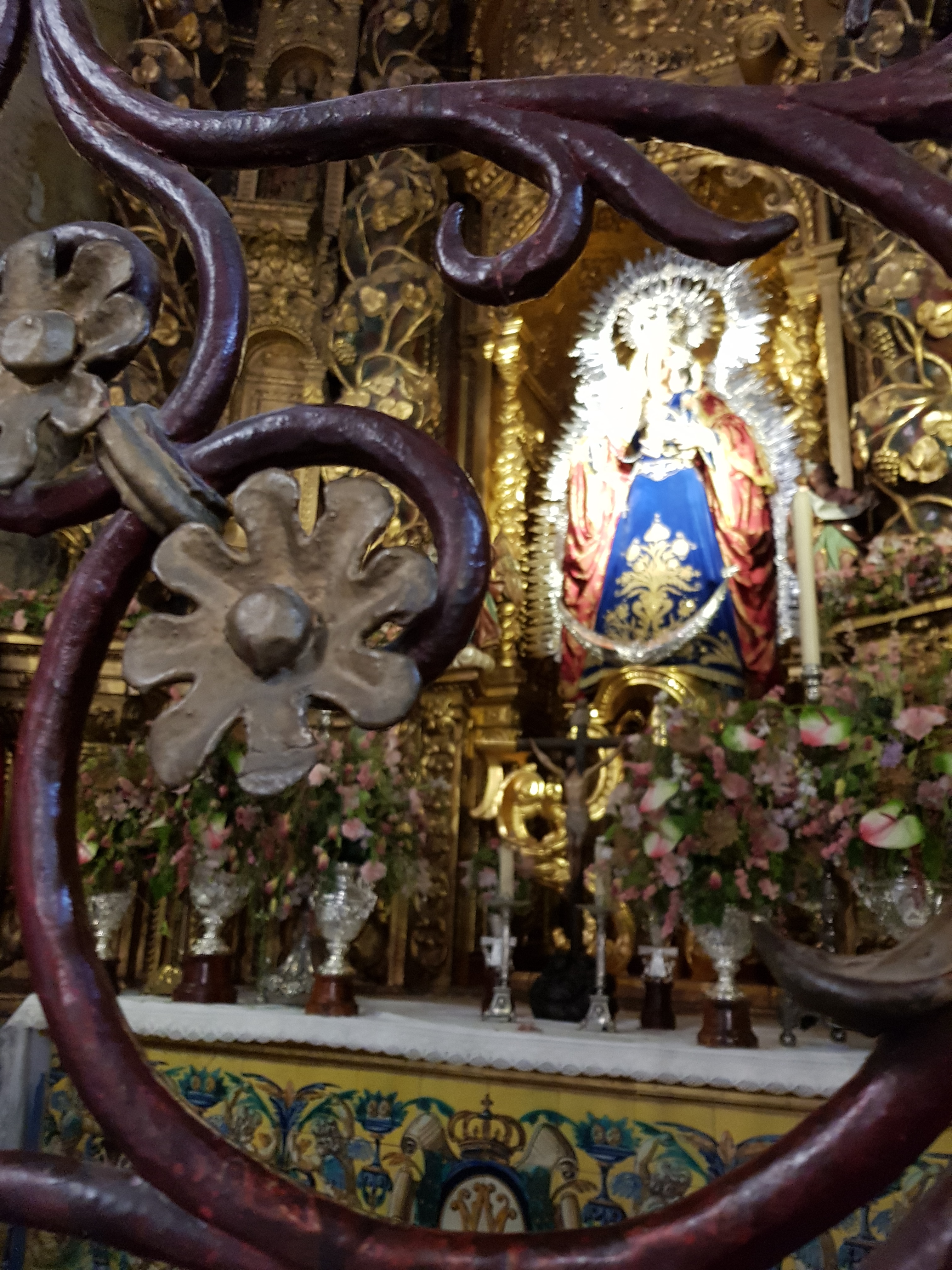
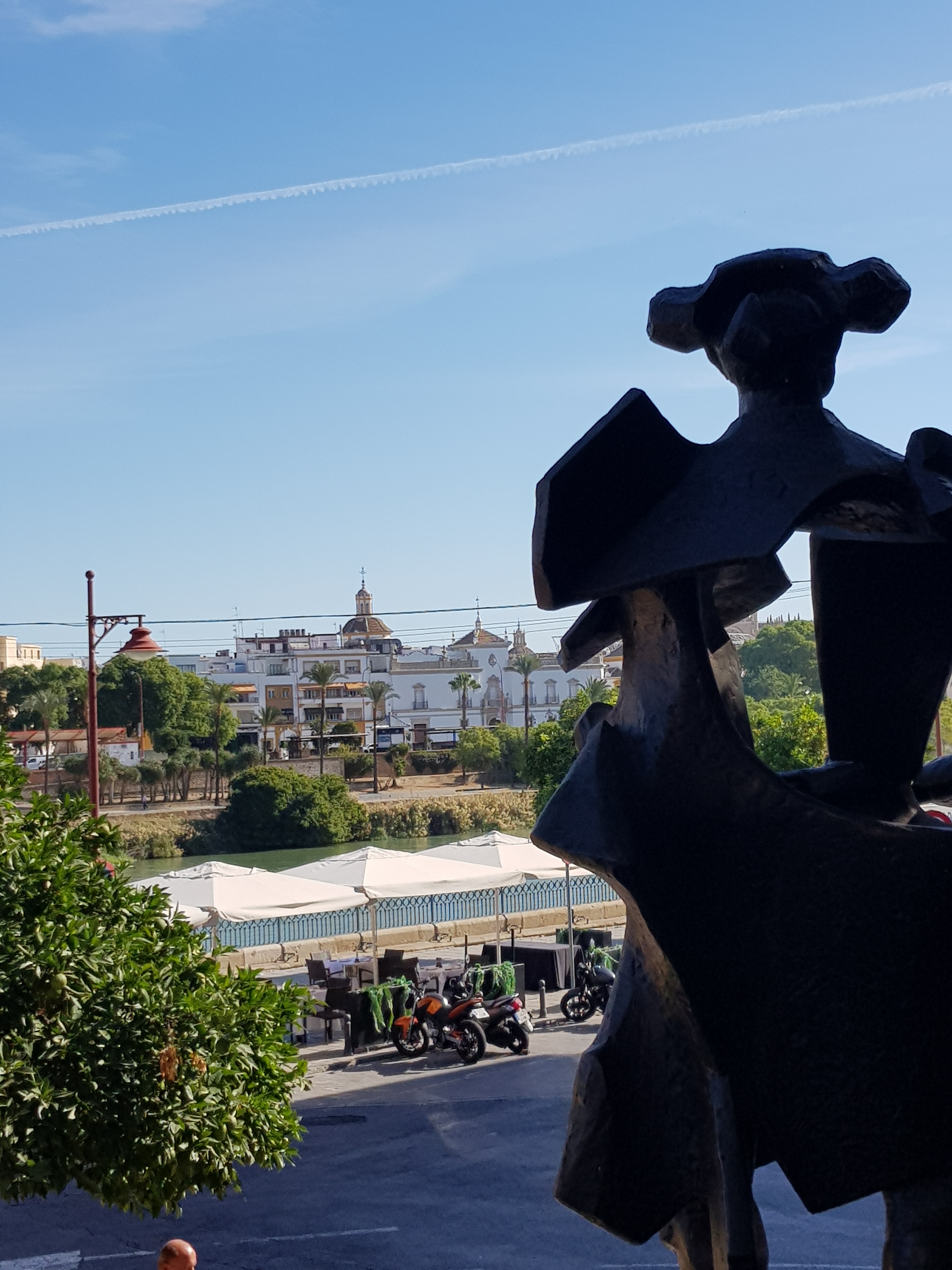
I visited both the church of San Salvador in the centre and Santa Ana church in the neighbourhood across the river, called Triana. I would definitely recommend wondering into Triana, as it has a very sociable vibe and lovely views from across the river. Prices are slightly better too. Both these churches were very cheap to visit, under 5 euros each.

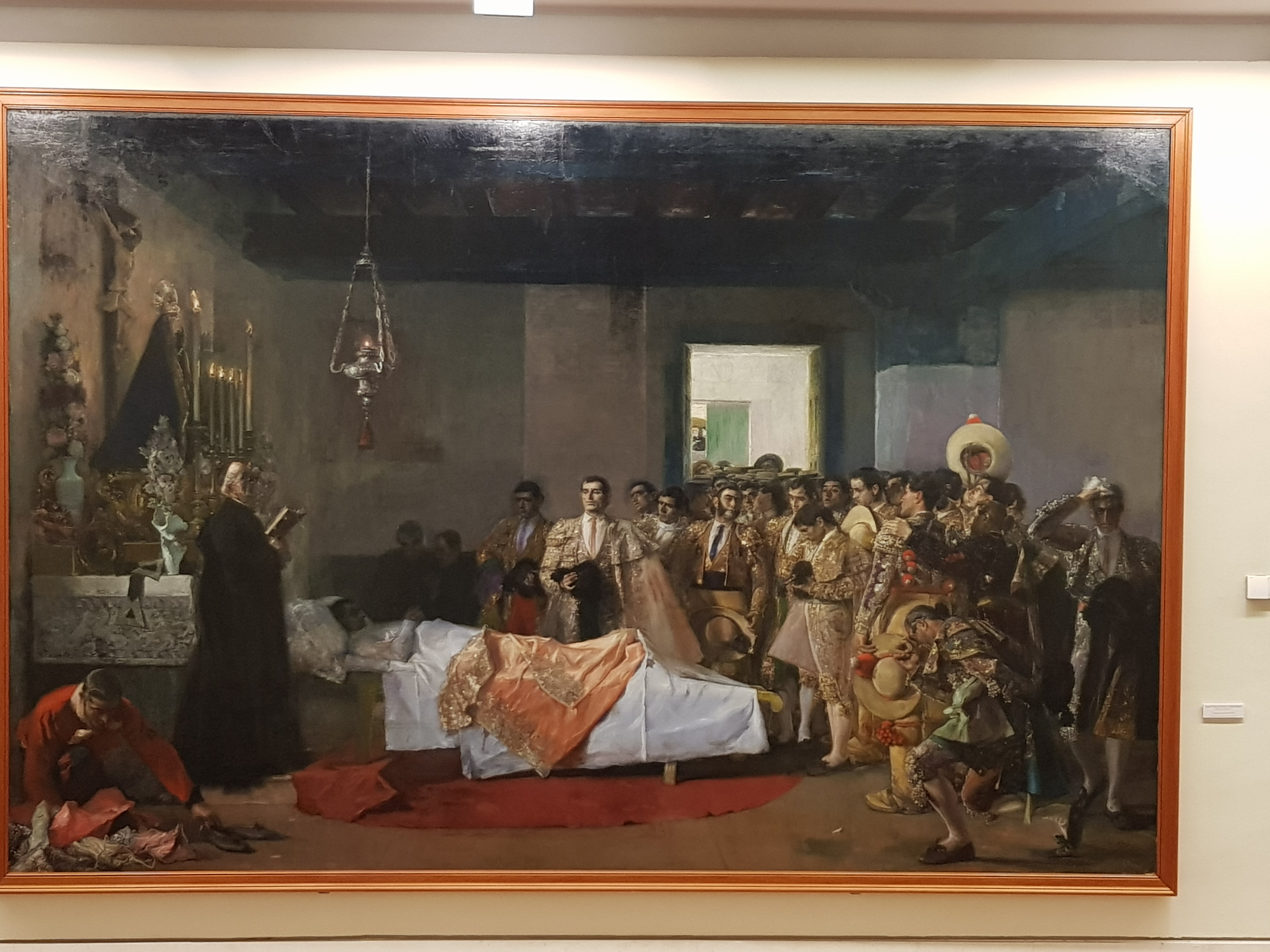
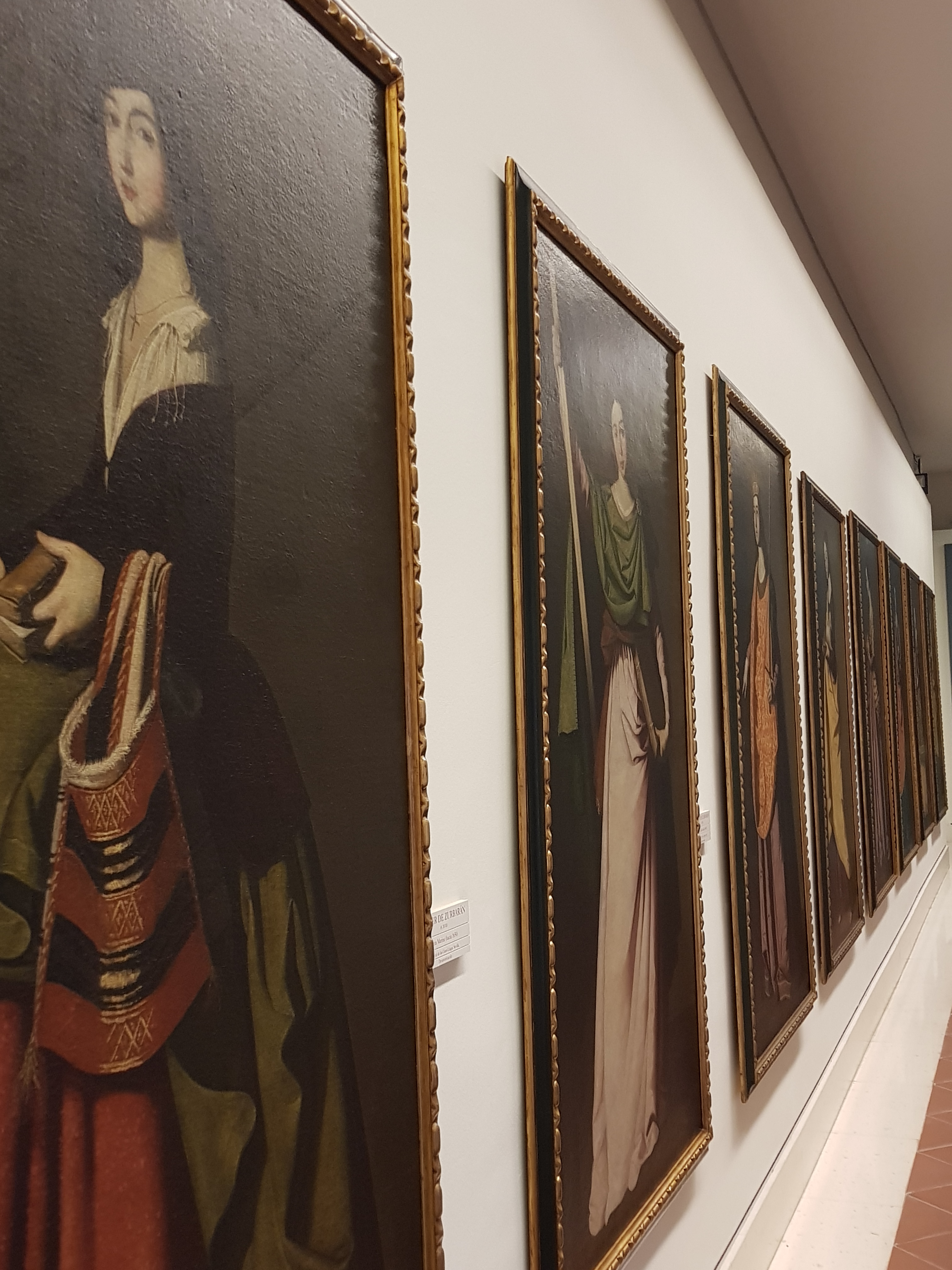
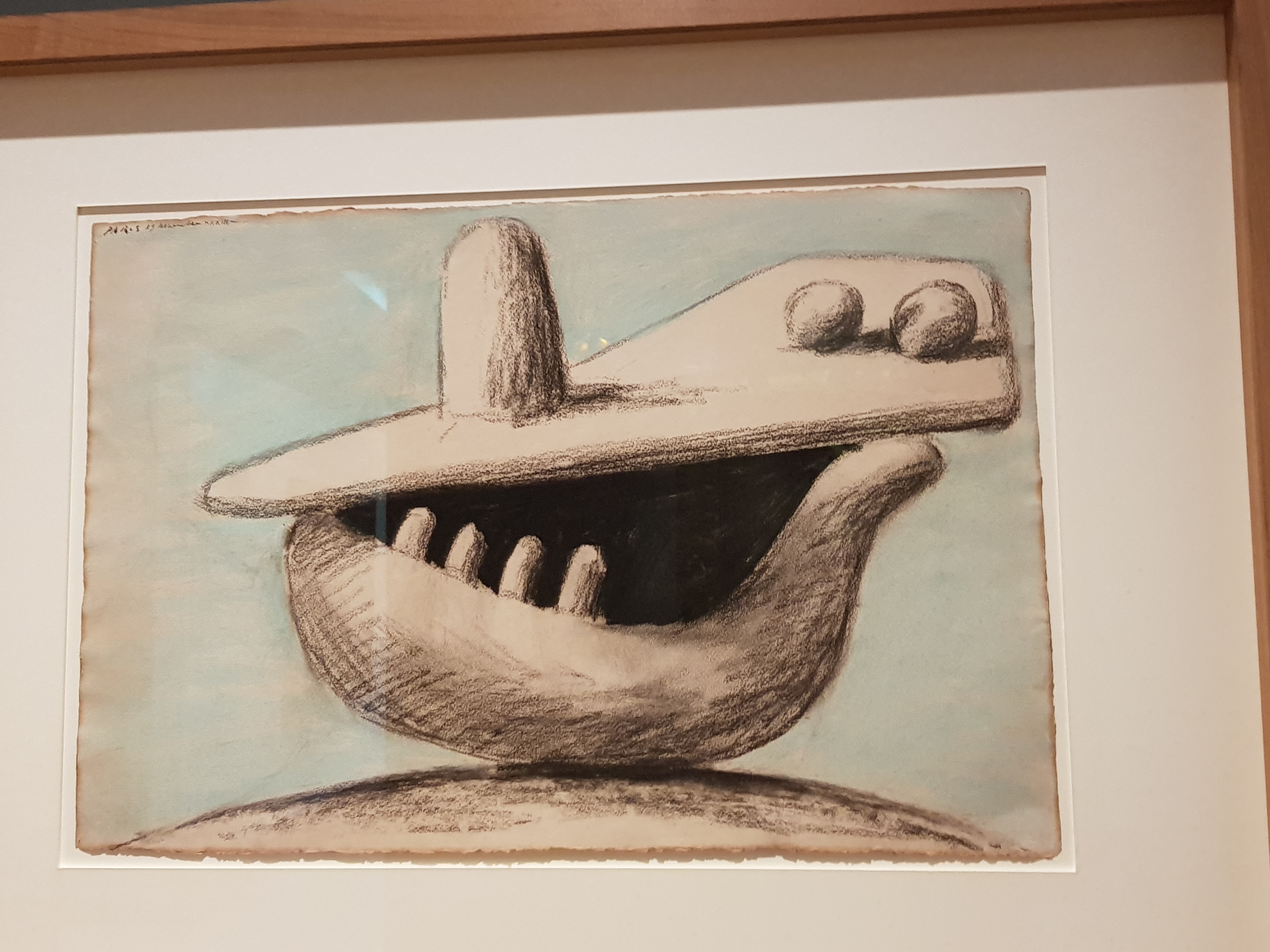
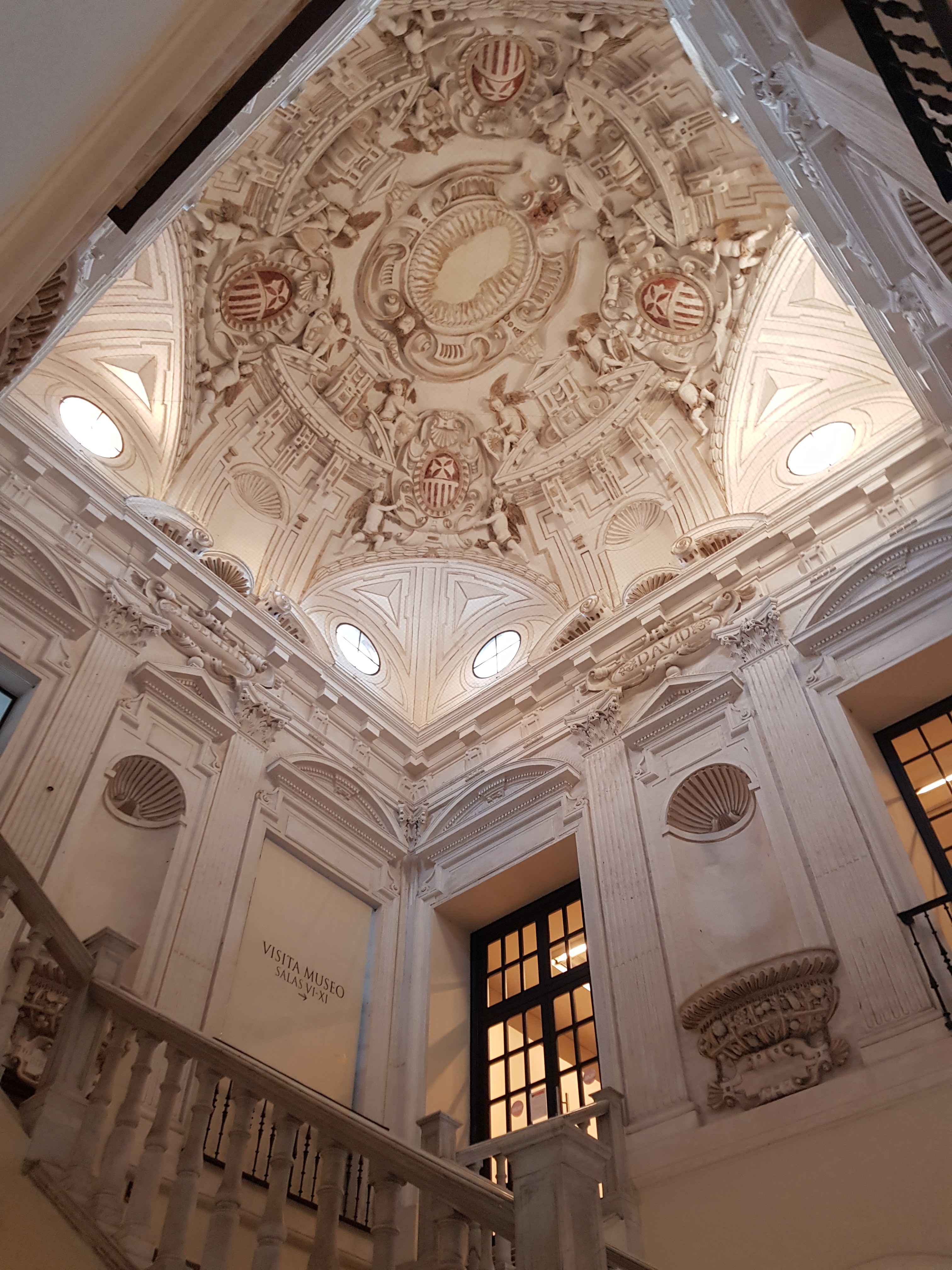
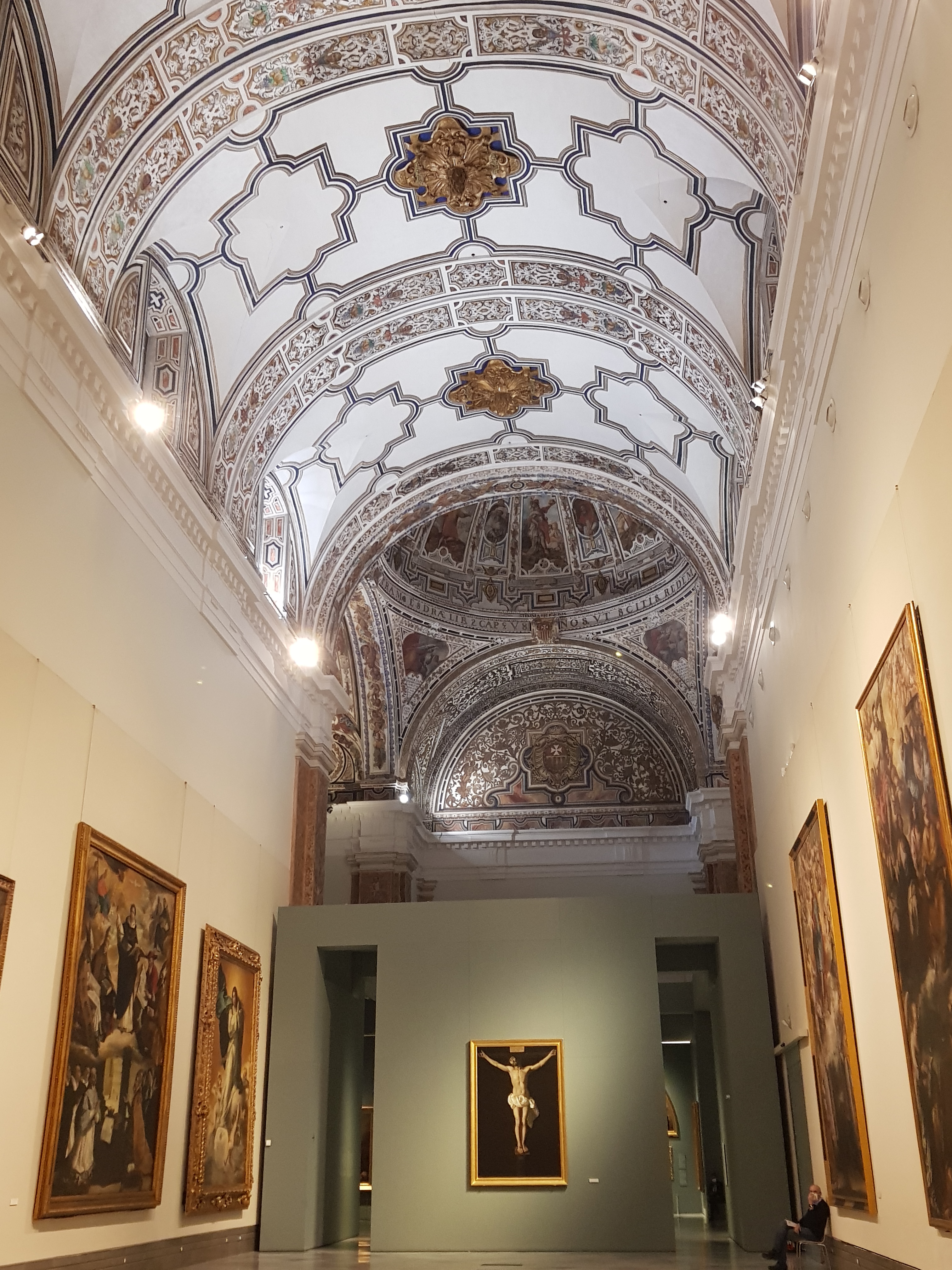
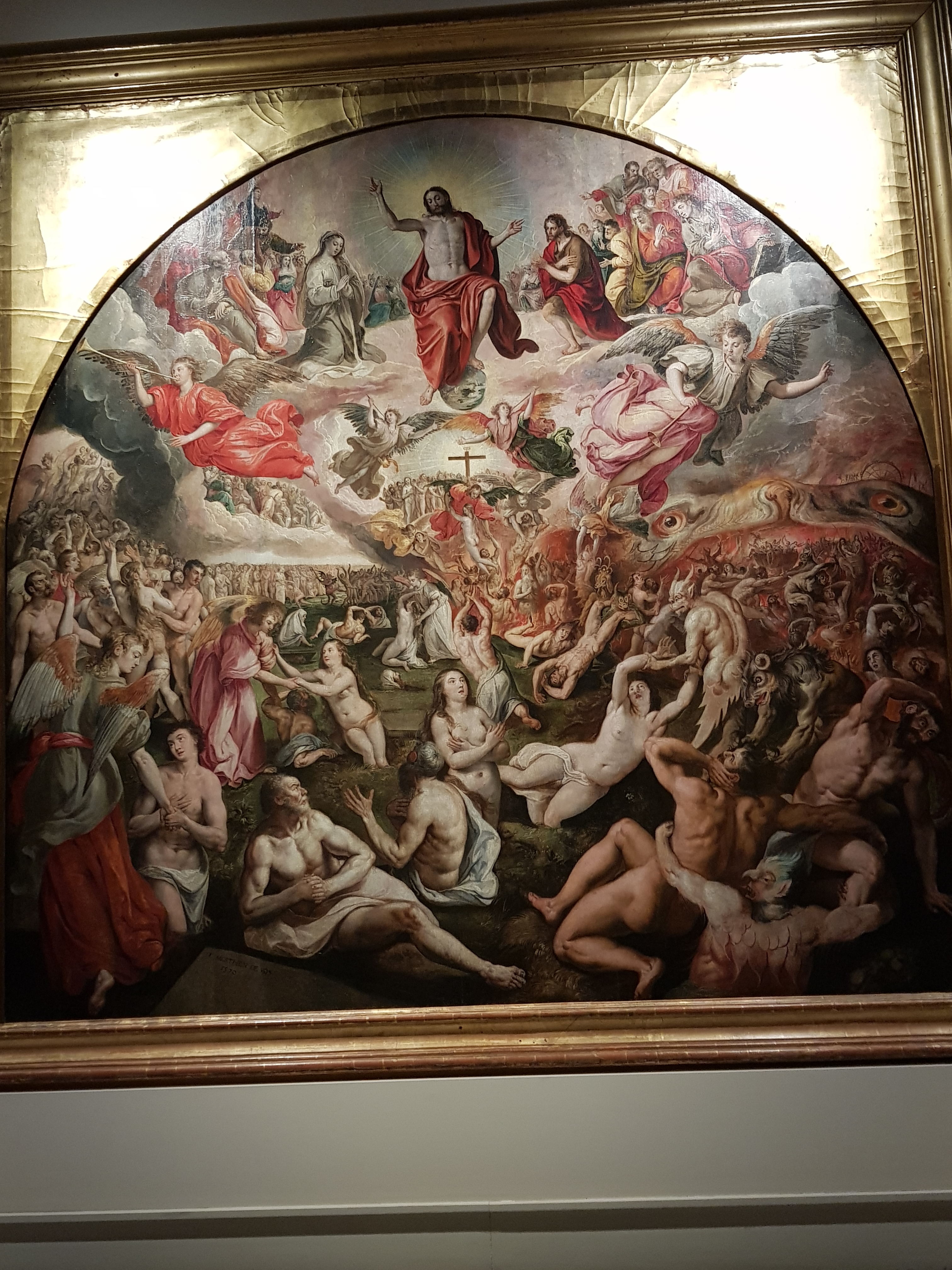
I also enjoyed free admission and air conditioning 😀 from the art museum ‘Museo de bellas artes de Sevilla’. The art displayed in this ex- convent is a mix of very renowned artists such as Murillo and Picasso. I must admit that I was not a fan of all the Picassos as they are so odd. There were many portraits and religious art that I loved though. The building is really beautiful and has many courtyards to sit and relax in. The gallery is only two levels so not too intense which is nice.

Other ideas for a fun time in Sevilla:

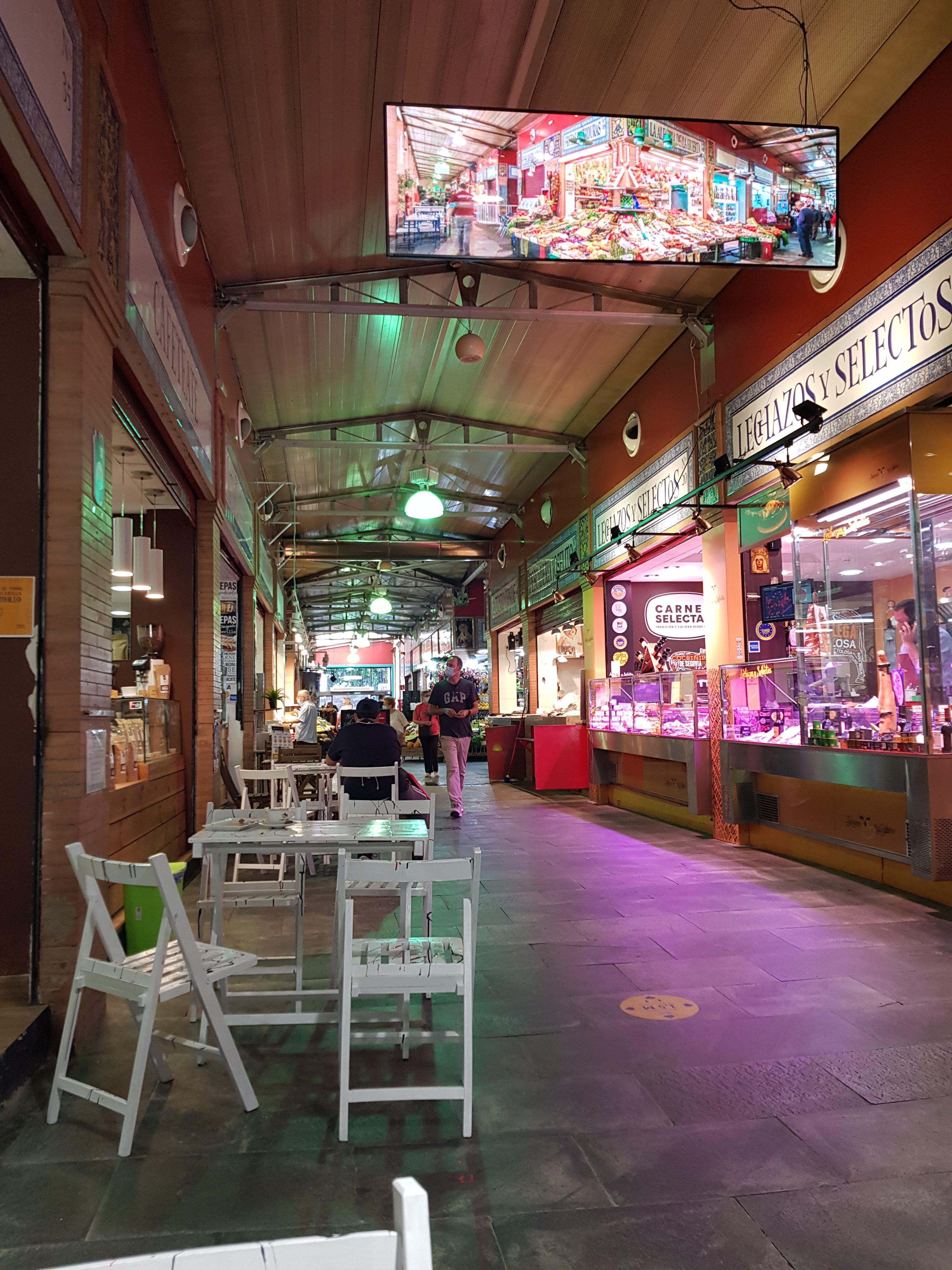
  • Spend some extra time across the river in Triana. The atmosphere is great here and you can also visit the local food market at the bridge for an affordable and fresh lunch.
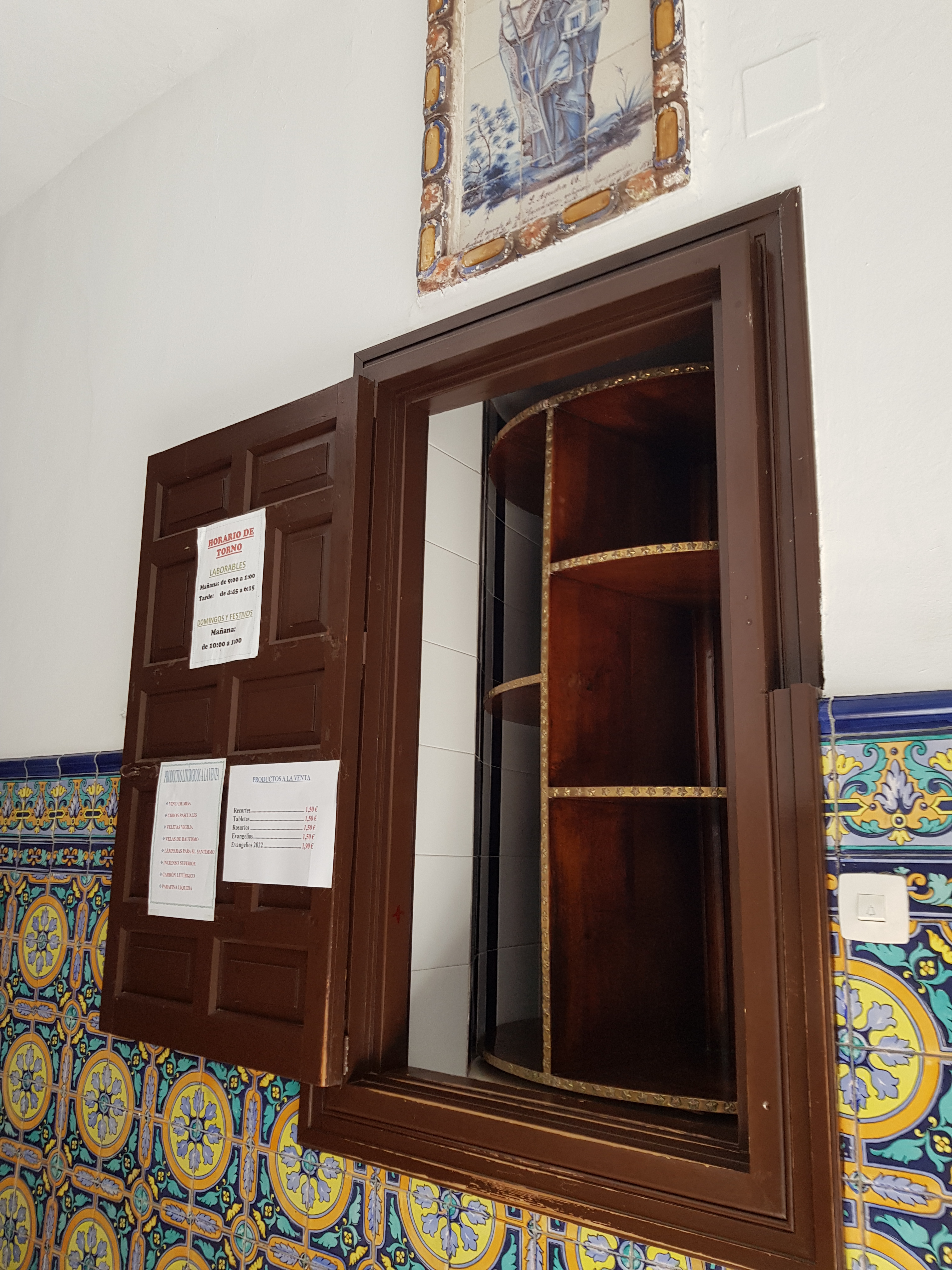
  • Visit one of the many convents in the city and purchase something from a nun. Many convents and monasteries sell goods to sustain themselves, often you can get homemade sweets. I went to one in Sevilla, and bought from a nun though a strange turntable window!
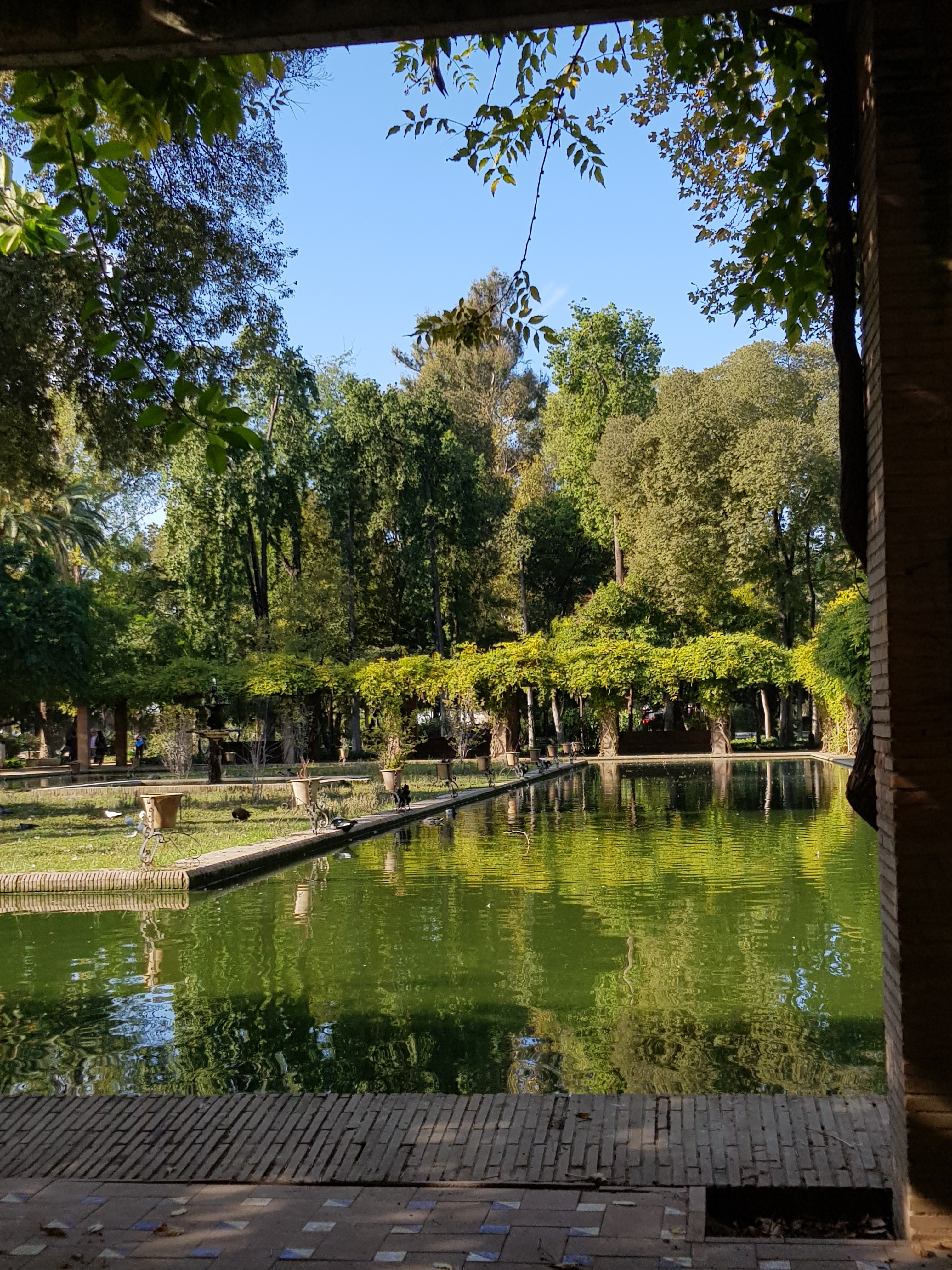
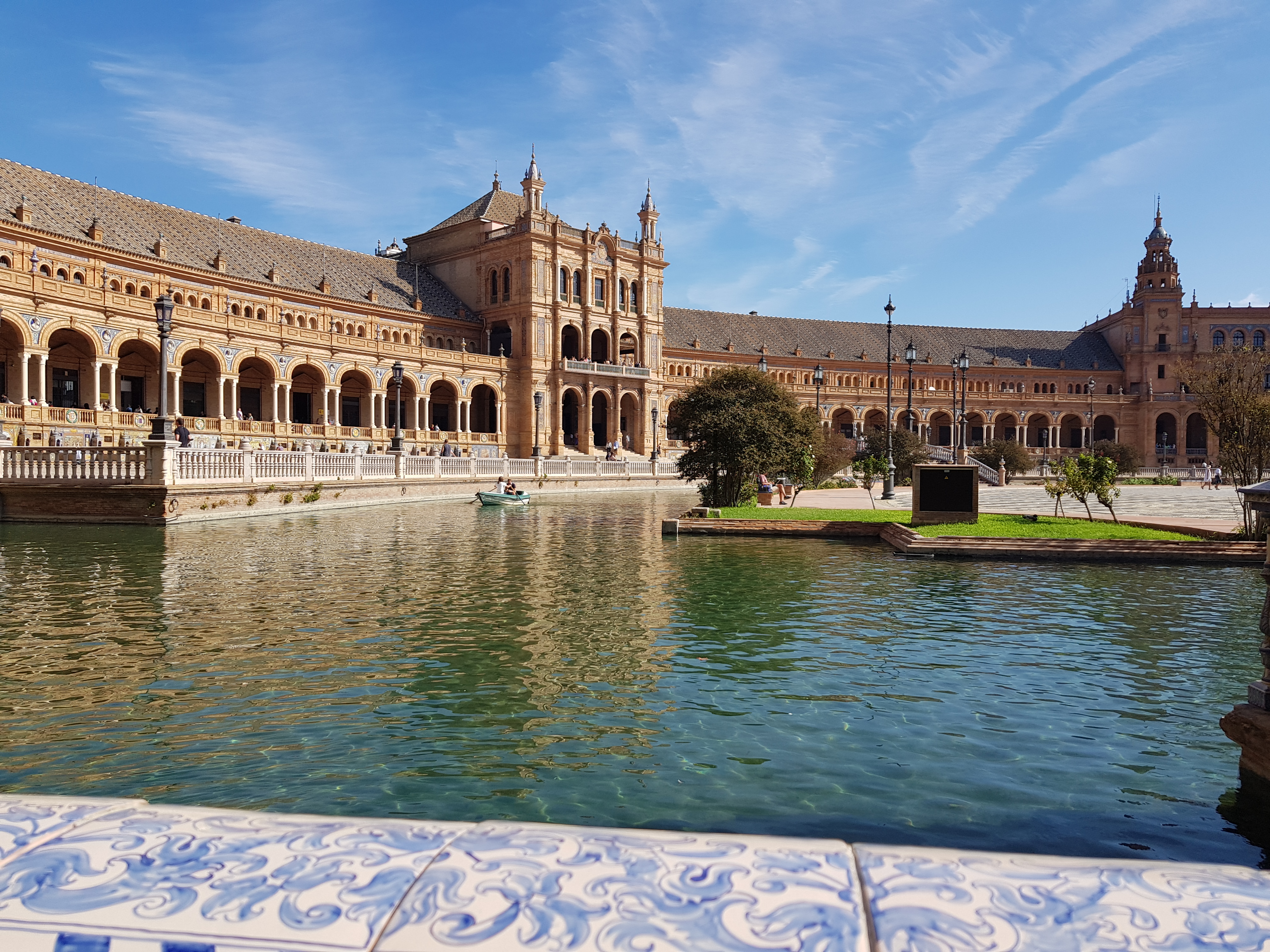
  • Visit the Plaza de Espana and the park. The plaza is an obvious tourist spot, and very pretty, but the adjoining park of Marie Luis, is full of beautiful places to sit and relax in the shade.
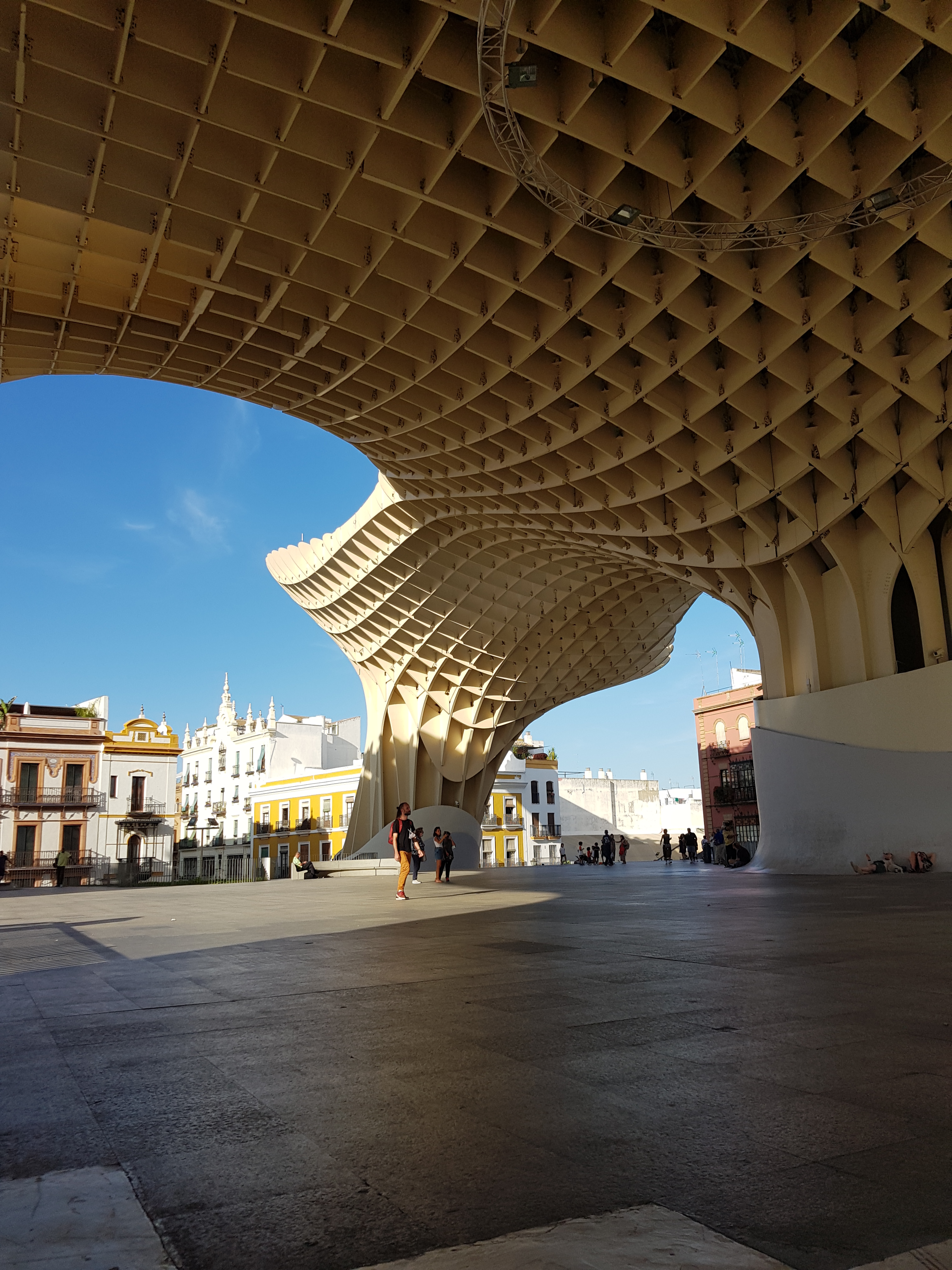
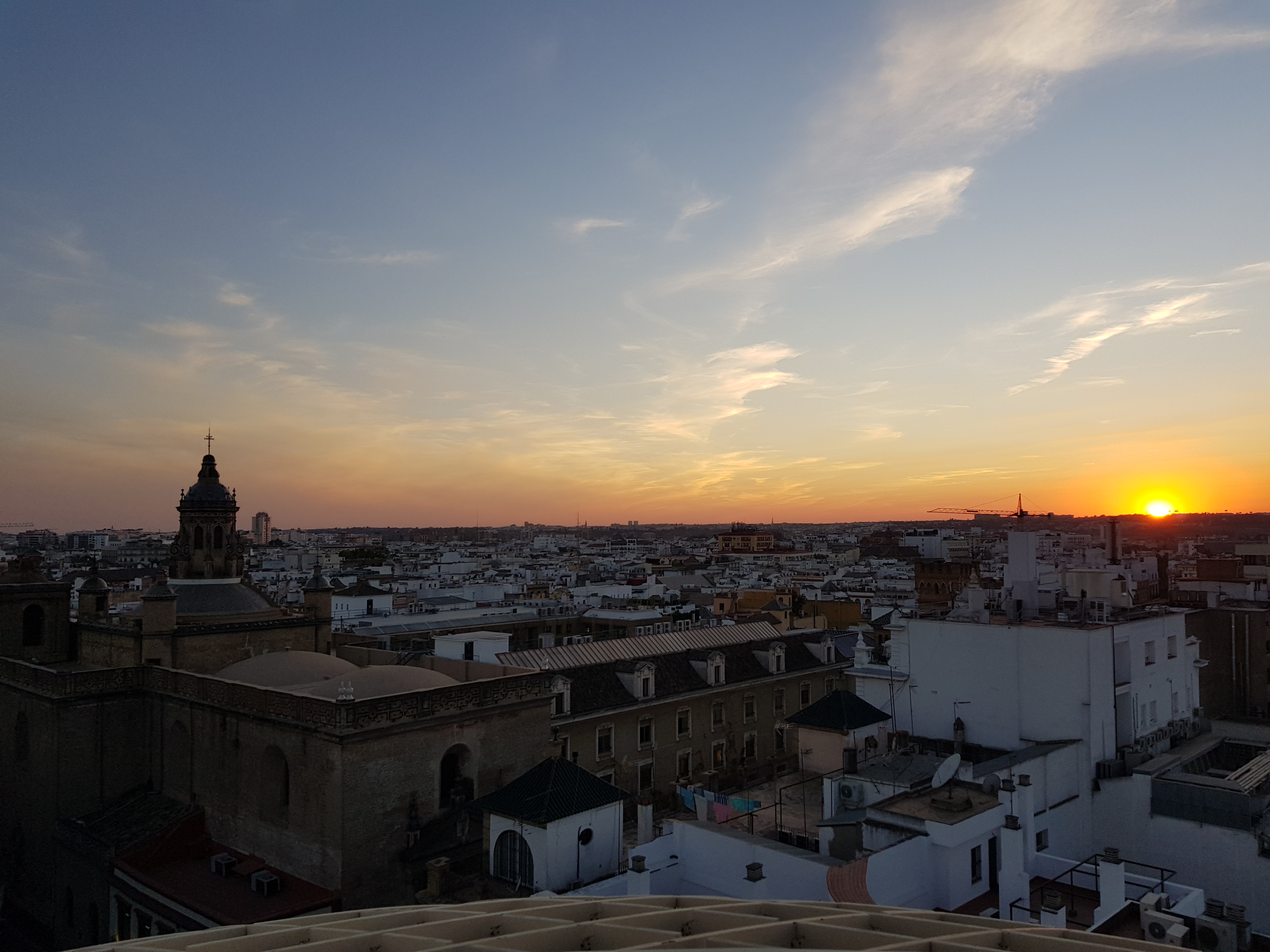
  • Head to the big mushrooms in the sky! The huge ‘setas’ monument is named this because it is the shape of mushrooms. Get there a little before sunset, and you will see wonderful views of the city.

Overall, I thought Sevilla was a very romantic and beautiful destination. It was also easy to walk around and had good transport connections, and of course reliable weather! I would certainly visit again.

Next stop… Cordoba!

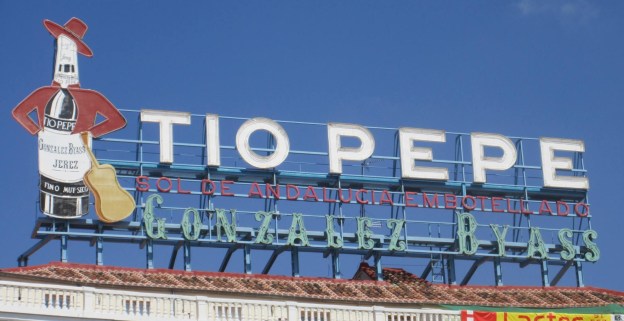
Tio Pepe sign in Plaza Mayor, Madrid

Madrid: Memoirs of fancy parks and poor pronunciations…


Last week, I travelled to the capital of Spain with the aim of having a relaxing week away with my partner and put the nine months of Spanish lessons i have had into practise. The holiday in the end was quite different to what I expected.

After some very difficult months, I packed my bag and was on my way to my budget flight to Madrid, crossing my fingers and toes that the flight wouldn’t be delayed and the infamous airline wouldn’t take my cabin bag from me. Thankfully the flight was okay but I did realise that I had forgotten probably the third most important item on this holiday… the Spanish dictionary and phrasebook! What a plonker! Well now I knew that the holiday would be somewhat more challenging…

We decided to take the Metro into Madrid from the airport, which would have been fine if I had done any sort of research previous to the holiday, but instead we got to the platform and realised we had no idea where we were going. Embarrassing for me really. Eventually we realised what we needed to do but the ticket options weren’t great, we ended up opting for the 10 trip ticket + airport travel but in hindsight this was a bit of a waste because we walked almost everywhere and returned to the UK with four unused journeys. Never mind! But a tip for those of you thinking about a visit, just get the airport ticket, because your 10 trips don’t count towards your journey back to the airport and you may find yourself having to pay extra to get back through the security gates… (Not that I’m talking from experience or anything *cough* cough*)

On arrival to the address of our apartment, (another AirBnB bargain) we had to enter a local hair salon to get the keys, and the apartment owner did not speak a word of English. But thankfully! I remembered the word for keys! LLAVES! Remember that one, you never know when you might need it. So after a lot of challenging conversation and frantic hand gestures, we made it into the apartment which was in the centre of Madrid, and a great price at £49 per night, although was missing some essentials.. like toilet paper. But just a minor thing!

Next on the list was to plan our visits to attractions and local hot spots for the week, of course I was trying to relax so managed to narrow this down to only about three locations per day, not bad I’d say. We were on a serious budget, but there is a surprising amount to do for free in Madrid, even some of the top ranking attractions.

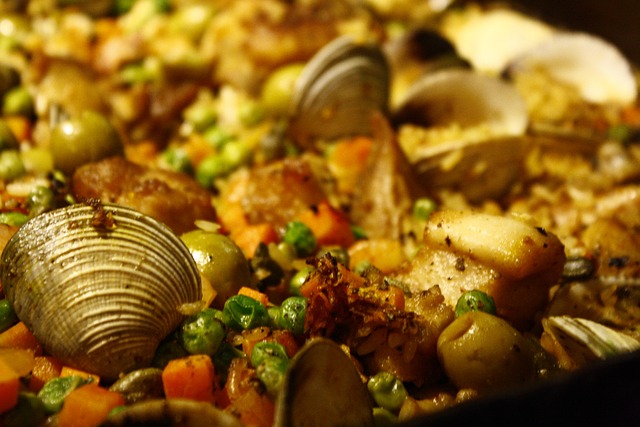
We headed out to fill our apartment with those must have essentials at the local supermercado, and then hit the Mercado de San Miguel, a classy market full of local cuisine for the all important Tapas ingredients. This market is one of many in Madrid devoted to stalls of Ham, Olives, Fruit & Veg and lots of seafood.

paella seafood

Parks

It was boiling hot when we were there and so we wanted to take advantage by strolling in the local parks, we spent a full six hours within the El Retiro Parque in the East of the city. This popular park is full of attractions to enjoy.

There is a lake which you can sail around and a beautiful monument alongside it with strange figures of mermaid like women riding various animals. There is also a few gorgeous buildings, one is a glasshouse with a pond in front of it filled with turtles.

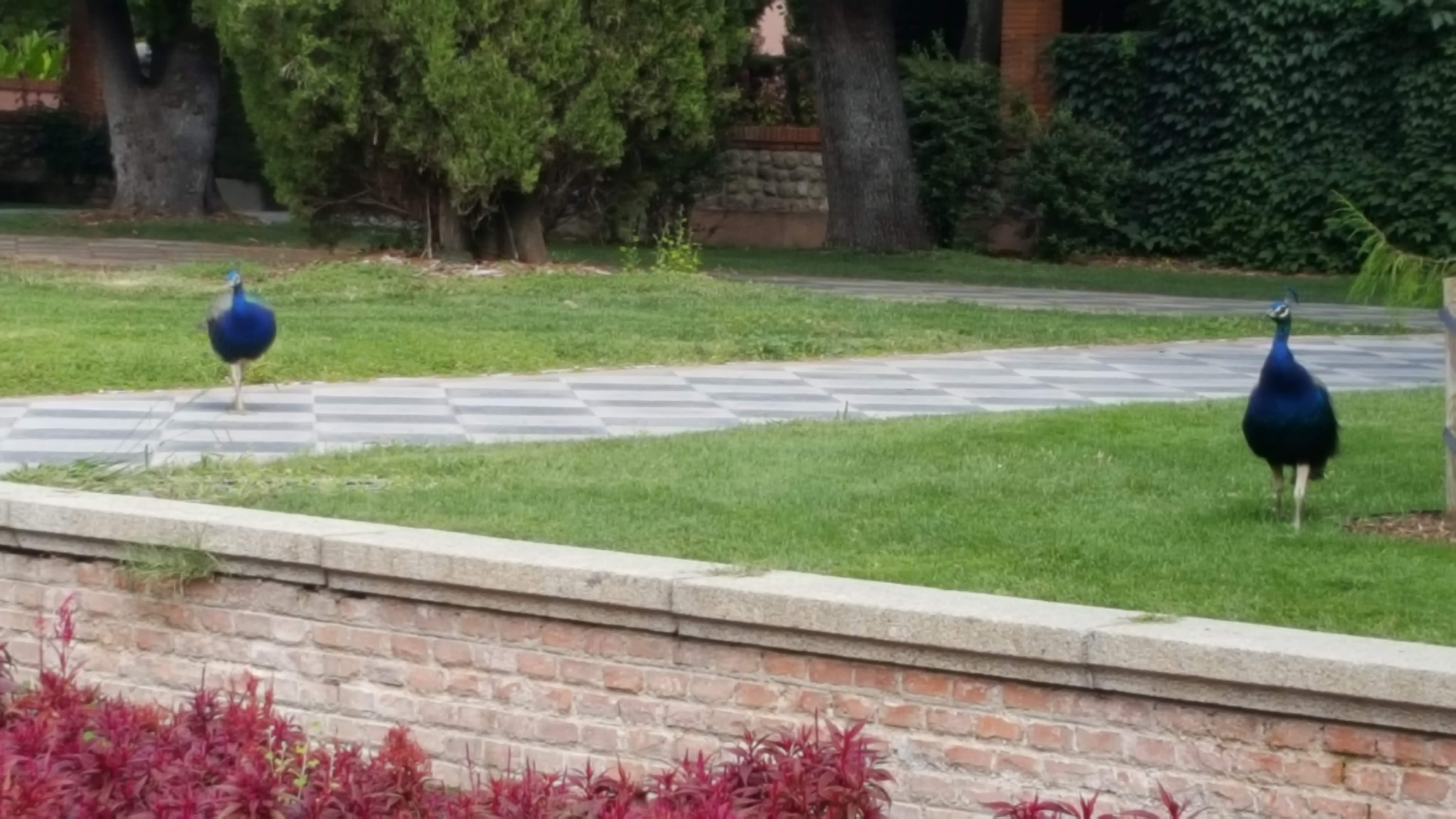
Hidden away on one end of the park is also a peacock park where you can spot the birds hiding in every corner and formal hedge lines and fountains.

Peacock Park in Retiro Park

Peacock Park in Retiro Park

My favourite part of the park though is the Rosaleda or Rose Garden, which is very pretty, full of fountains and neatly trimmed rose bushes. Very beautiful.

There are so many other parks and gardens in the city to relax in as well, they all seemed to be taken well care of, and are clean and tidy.

One of the other reasons we spent so long in the Retiro park was because it was close by to the Prado art museum which is worth a visit. The museum is free during the week between 6pm and 8pm and we waited outside ready to go in, but turned our back for a moment and there was a queue of hundreds of people that had been formed. It would have taken an hour so we decided to give up and come back another day and pay, which was worth while because we ended up getting buy one get one free! The museum was full of paintings and sculptures, including some really brilliant work showing examples of heaven and hell and the artist’s perceptions of those journeys.

The palace is also a lovely monument to view, we didn’t pay to go in, as the queue was quite long and we didn’t feel like it but the outside was pretty and it is right next door to the Cathedral. The Cathedral has great colours everywhere and a variety of chapels.

Evenings

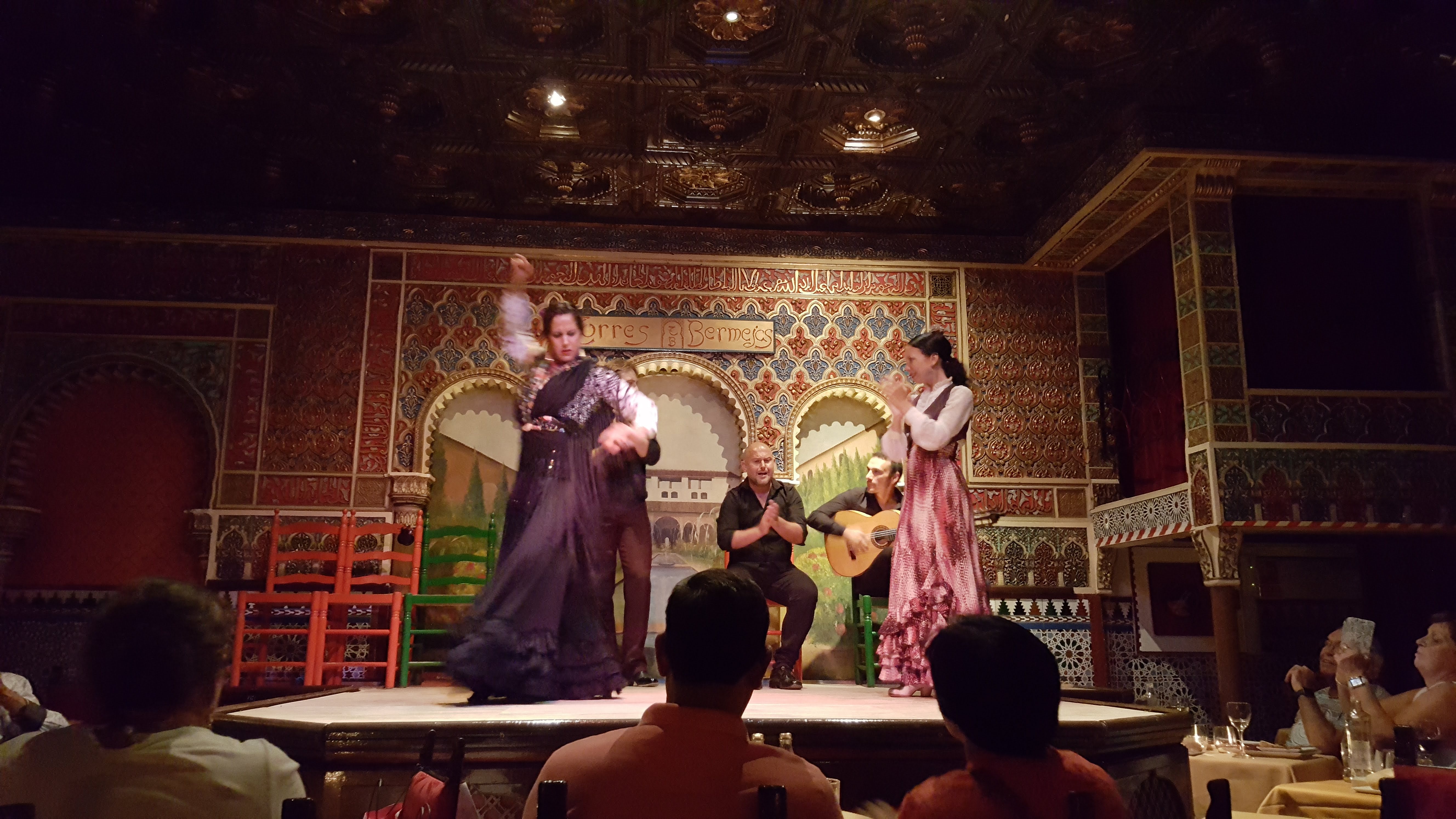
In the evening, the city becomes very vibrant with street performers in all the large plazas, and the Spaniards have their late night dinners and high street shopping trips. One of the nights we stayed in Madrid we booked to enjoy a tapas dinner with a show in one of the many tablaos.

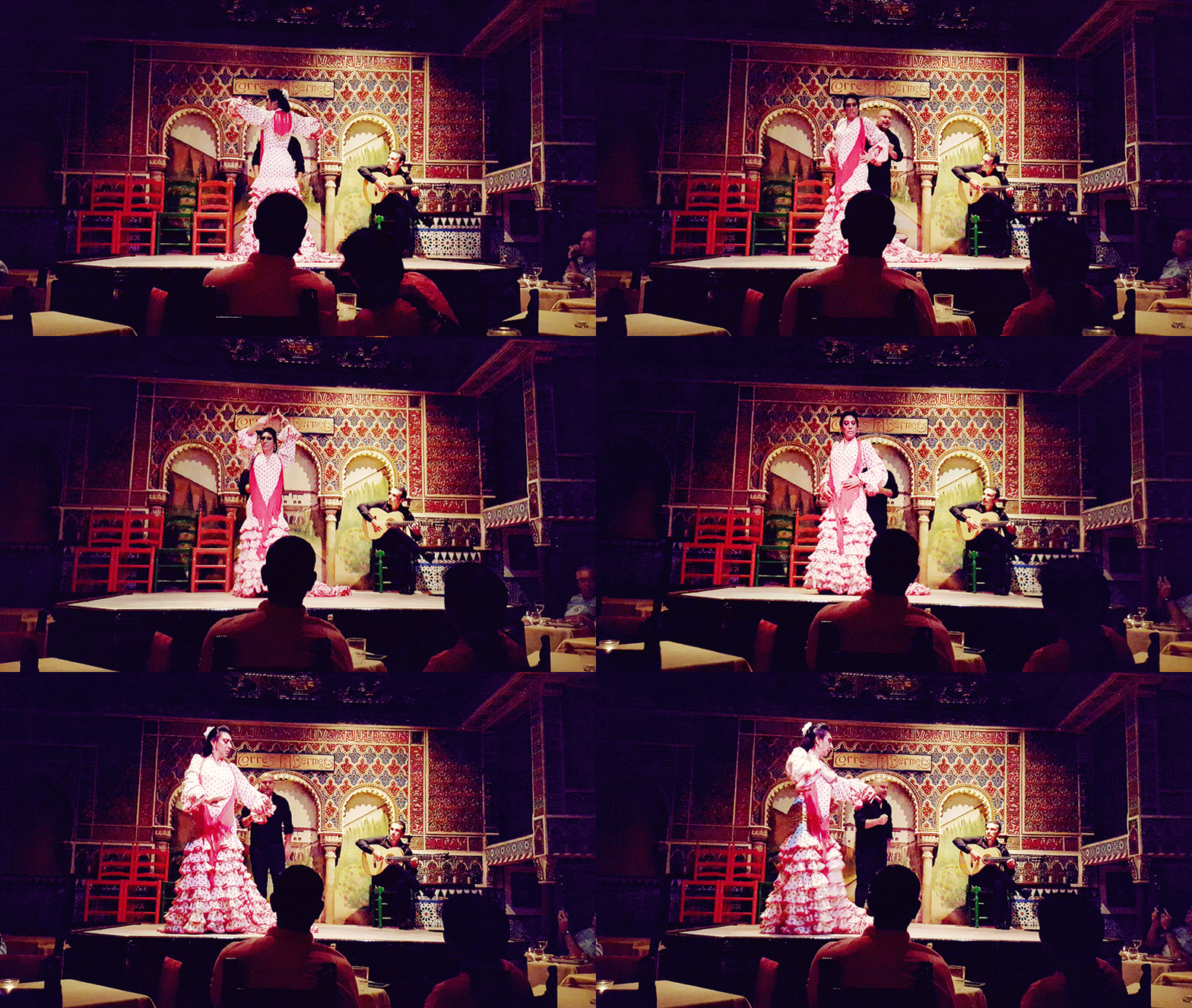
20180904_211034-ANIMATION

We chose to visit Torres Bermejas because of the wonderful decor replicating the interior of the Bermejas Towers of the Alhambra in Granada , which has a great Arabic feel to it. We watched an hour (with a break in the middle) of Spanish Flamenco dancing, singing and guitar playing, which was excellent. You could watch the show and just have drinks for about 30 Euros, but add another 25 Euros and you will get your dinner thrown in, ( a tapas that is, of course). The food was lovely as well, so generally a splendid night of entertainment and food.

20180904_214212

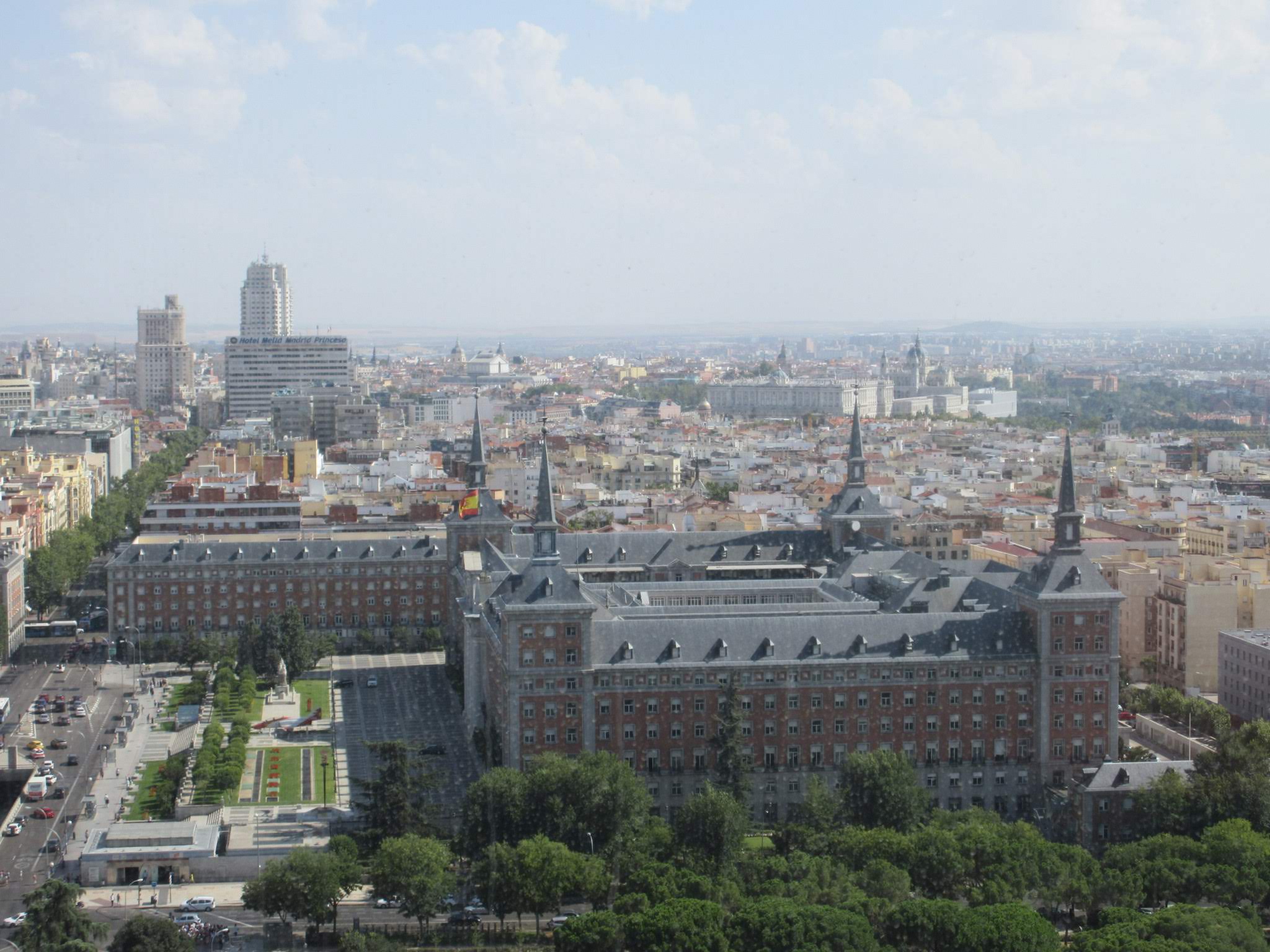
There are also a few good view points to oversee the city; the Temple of Debod which is a park with ancient Egyptian monuments as well as the tower, Faro de Moncloa, which is a little towards the outside of the city but cheap to do – only three Euros. The downside of this attraction is that it has no facilities other than a vending machine so make sure you get some food on the way from one of the many restaurants alongside the Oeste Park next door.

View from Faro de Moncloa

An overview of the city

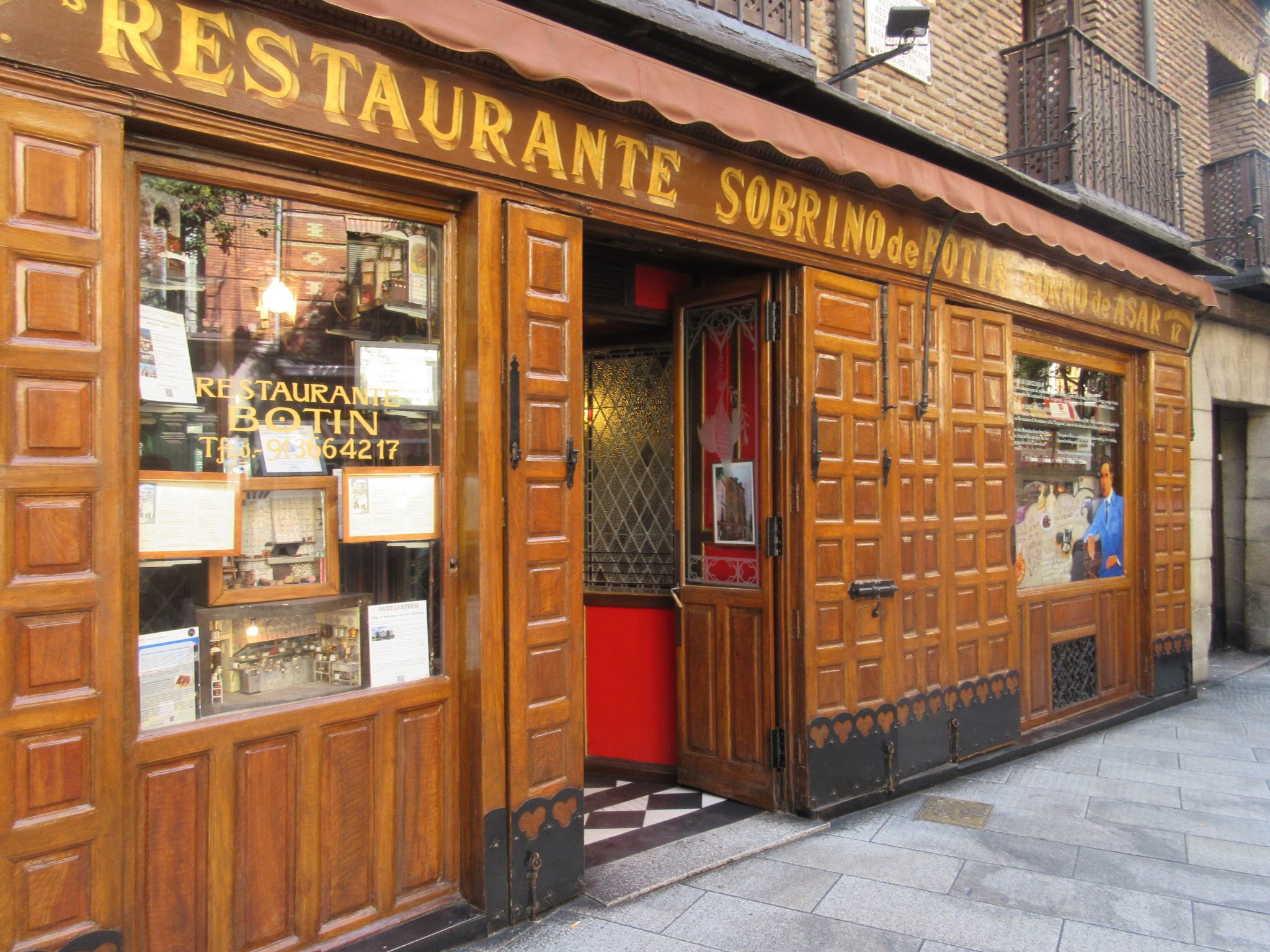
One of the other great things to do, to get a real feel for the city is to take a tour of Madrid. We spent some time considering whether we should do a bus tour or a walking tour but after looking at reviews and considering costs, decided to go for a walking tour. We took a free city tour with a gent named Miguel, which gave us a great overview of the city and its history and allowed us to discover a number of streets, alleys and landmarks that we would have never noticed on our own. For example did you know Madrid hosts the world’s oldest restaurant? Or that in many of the convents you can go and buy freshly baked cookies from the local nuns?!

World's Oldest Restaurant, Madrid

I never knew until we had the tour that we had been walking around a city with such a mixture of origins. I had been passing through streets of Austrian, African, French and Roman influences. Much of the city is also influenced by the different religions and cultures that came with these countries.

We heard that the origin of the Flamenco music and dance that we had enjoyed a few nights before was an outcome of the oppression in Madrid and the persecution of Gypsies, Jewish and Muslim people within Spain during various invasions. It remained very dominant in Andalusia in the South of Spain where much of the original African migrants were dominant. We plan to see a bit more of the Flamenco art during our stay there next Summer.

Unfortunately, we took the tour at the end of the week but it would have been much more useful to go at the beginning. That’s what we get for being indecisive!

In general, it was a pretty nice place to visit, with lots of places to see cheaply, and the culture was really interesting. Word to the wise though, many of the people living and working here do not speak English, so don’t assume that you’ll get by because your a tourist going to tourist places. Remember your phrasebook! I think my boyfriend is pretty thankful that I knew enough Spanish to ask for food and beer, shame I still haven’t mastered understanding the responses back though.

Adios!


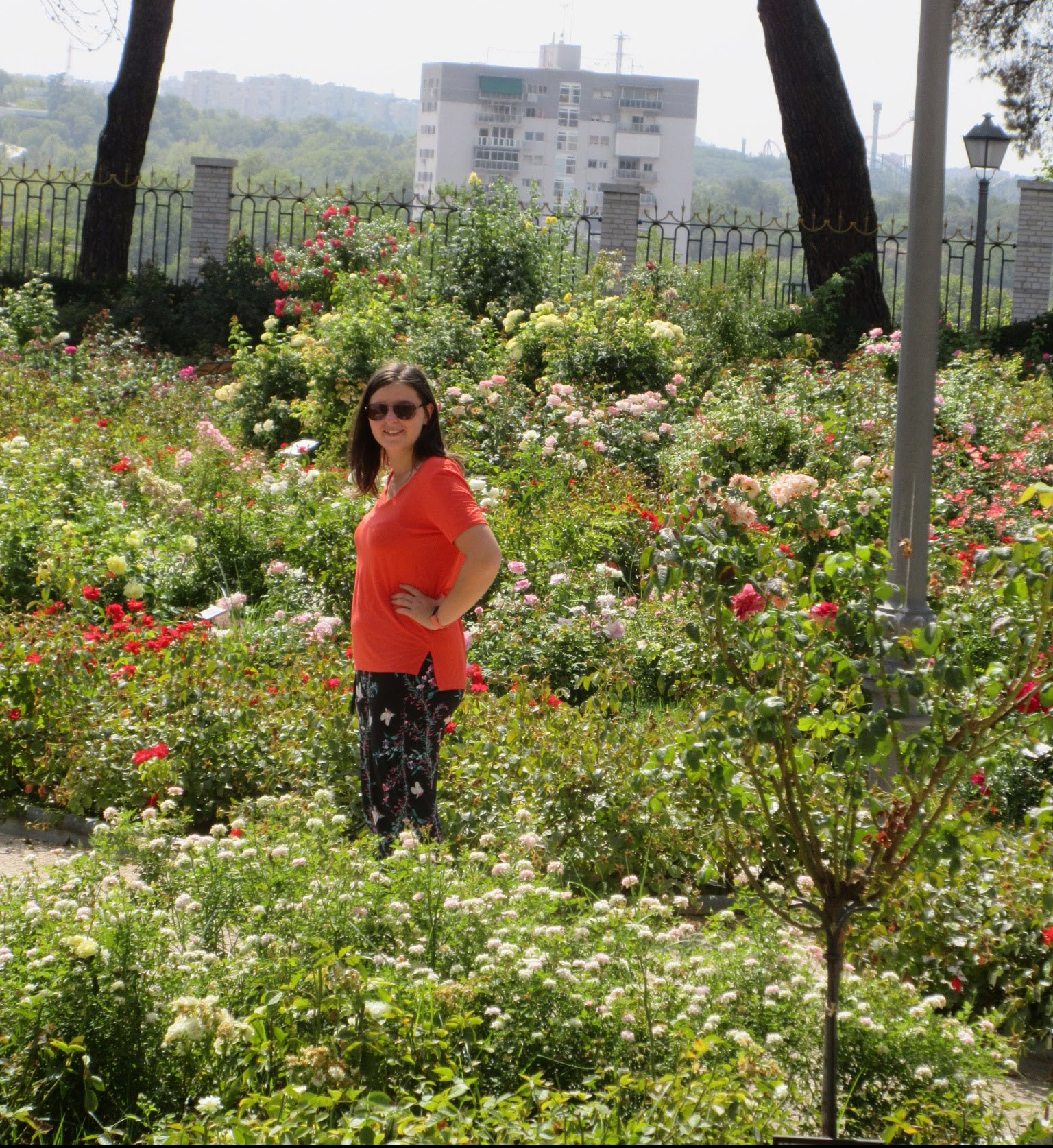
Me at Oeste Park