Tag Archives: history

Quirky day trip ideas!

Many of us have been unable to travel lately due to the pandemic. This means that we have needed to get a little creative with how we spend our spare time to keep it interesting. Day trips out are a big part of this, and in this blog I will give you some tried and tested quirky day trip ideas for you to explore!

With most of our leisure time being spent nearer to home this year, why not try something a bit unusual in your area.

Metal detecting
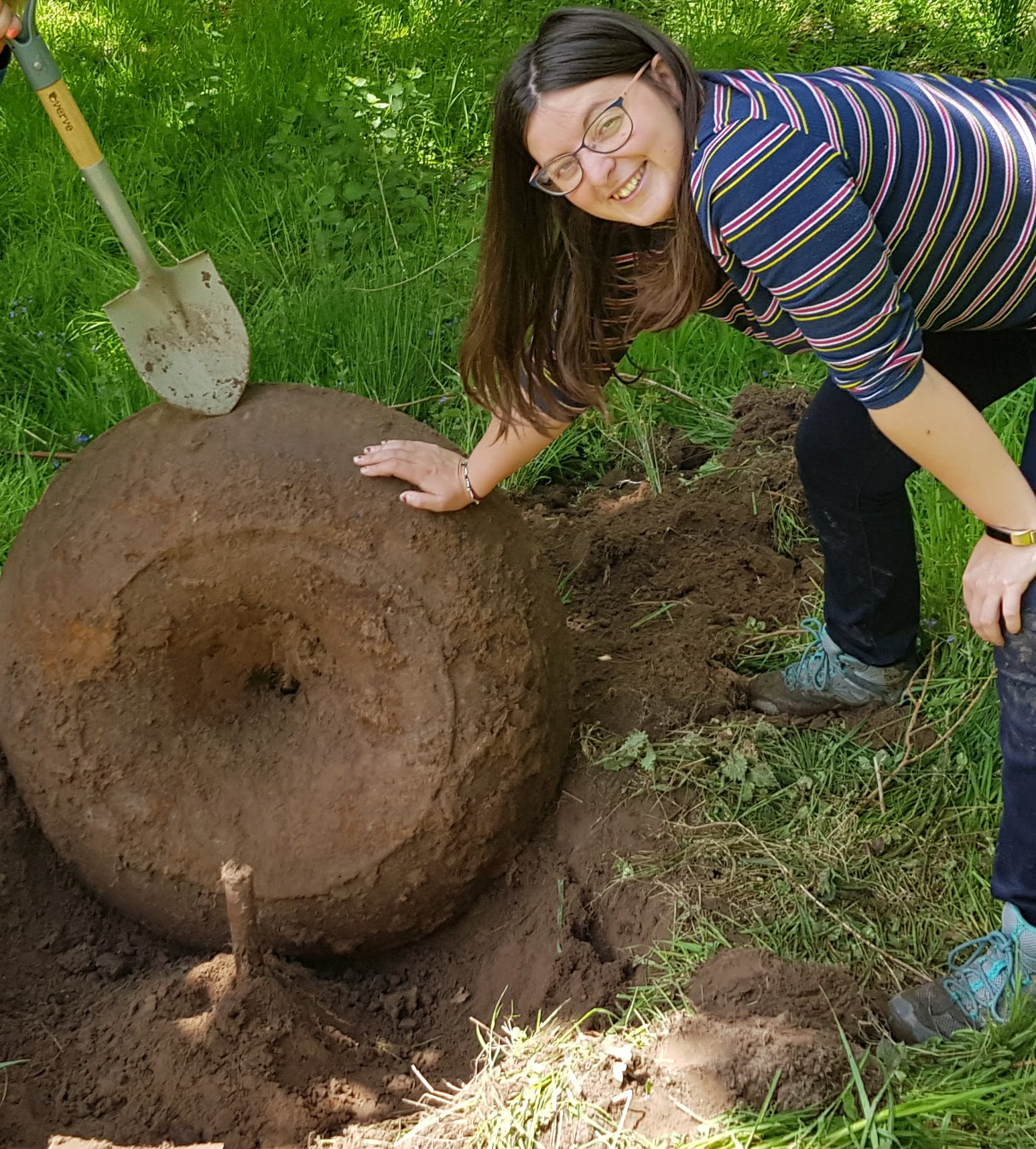
Metal detecting dig find

Many people have an interest in metal detecting with so many TV programmes about discoveries and salvages. I decided to have a go, and see if I could find some long lost treasure. A lot of people head to beaches, and back gardens with their metal detectors, and you do have to consider permissions from landowners when you do this. You might also need to agree the split you will get from any profit you make!

I wanted to try some fields, and my dad happens to have some land that I could investigate. The fields have been used for a few centuries by nurseries, farmers, scrap yard owners, and for other unknown purposes. This makes it a very mysterious place under the earth.

In the first two hours around 20 items were found, including several door handles, a light switch and a pig feeder, which could be recycled into a lovely bird bath.I didn’t find my fortune on that occasion, but I will keep looking. Either way, the experience is a fun one, and you do get a thrill from digging something out and trying to figure out what it is!

If you get really into this activity, you can apparently upgrade to a smarter metal detector which will tell you exactly what the metal is, so you can narrow your searches. This is a fun way to spend half a day with a friend or as a family, just bring your metal detector, a spade for everyone involved, and be prepared for everyone to get filthy!

Beach cleaning/litter picking

I like to keep the planet clean, and so naturally I hate litter! Of course, within waterways and oceans, the pollution, especially plastics, is extremely harmful for animals and us. If you want to do your part, or teach your kids about giving back, and the harm of littering, then a clean up event is great fun!

Photo by Catherine Sheila on Pexels.com

Many local groups and national charities such as the Marine Conservation Society, will organise beach and river clean ups, and other litter pick events regularly. These tend to be with a group of differently aged volunteers, and the group leader will provide you with a high viz, litter picker, gloves and bin bags. These events are especially popular during the off season when less people are visiting the beaches and riversides. ‘Keep Britain Tidy‘ creates several campaigns throughout the year in Britain, to encourage people to take pride in their open spaces and keep them litter free, such as the ‘Great British Spring Clean’ event.

I have done several litter picks before, and I always feel good afterwards, it is also a great way to get some exercise, and enjoy outdoor spaces that you may have not visited before. It can be quite addictive, and you can become quite competitive about how much you pick up. I got so into it, at one event, that I was climbing the sea barriers to retrieve a discarded shoe and fishing nets!

Foraging

Ever wondered if you could survive an apocolyptic event? Well, a day out foraging, might give you some idea. You may have tried the odd herb, or picked blackberries before, but you can go much further!

Foraging is becoming more popular as people become more interested in their green spaces, and lots of people are providing information on how to do this, and what greens to look out for in your area. You can even go on foraging tours and events to learn all about it. The Woodland Trust provide a great monthly calendar on what to look out for when you are out and about. The organisation will also allow you to forage in several of their woodlands, as you must ask permission before foraging in an area. You should also be sure of what you are picking, no poison berries! Lastly, you should minimise your impact, by only picking the fruit (not the plant) and only take what you need.

chestnut husk

On my visit to the woods, I downloaded two apps on my phone to identify edible plants and see how they were to be consumed. Woodland Trust also has an app for identifying trees. I have previously collected blackberries, nettles, dandelions and chestnuts. I have been able to use these items to make teas, desserts, and soups, but I know there are lots of recipes available to try. Autumn is certainly the best time for this activity, I would like to try to find more varieties of nuts in the woods… if I can beat the squirrels to them! I would also be really interested in spending a day with an experienced forager, to learn about some of the more unheard of plants.

Exploring community gardens
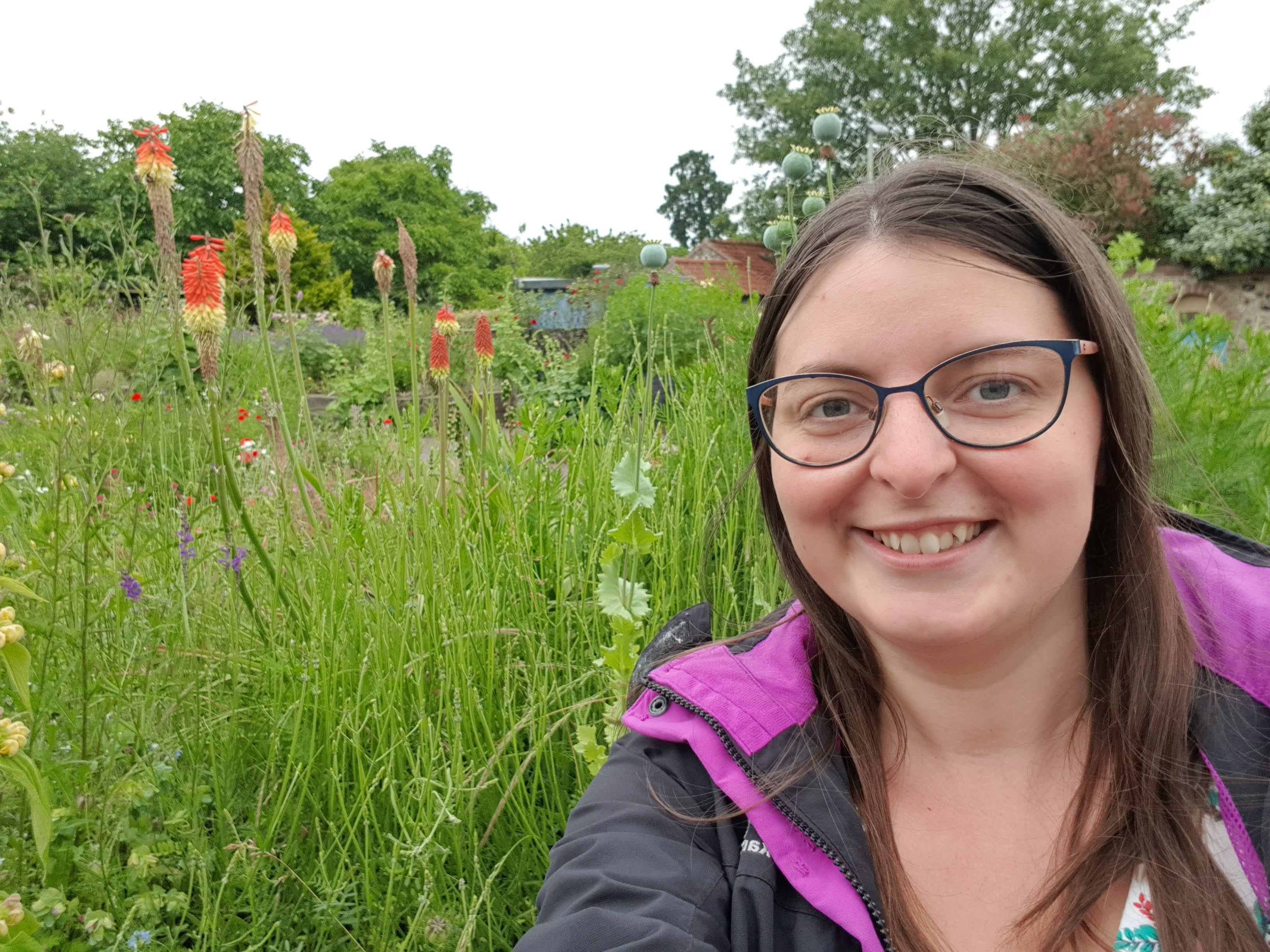
If you live in an urban area, you may be unaware of a network of community gardens that are taken care of by locals. There is more and more demand for green spaces within towns and cities, and locations that locals could grow their own food & cutting flowers. There are a few national schemes that you can use to look up gardens and social farms in your area, some are open all the time, and some have set open days. Some examples are Social Farms & Gardens, Community Supported Agriculture, and National Garden Scheme. You can also speak to your local parish council about what is nearby to you.

I love to explore local community gardens and allotment areas when I am out walking. You can see the individual styles that have been incorporated across the plots and garden spaces, and get some really quirky ideas for your own gardening. It is a lovely contrast to a formal garden at a stately home, and it is also free, so lots of reasons to visit! If you explore enough that you like, you might even find that you want to volunteer to get involved with one local to you.

Geocaching

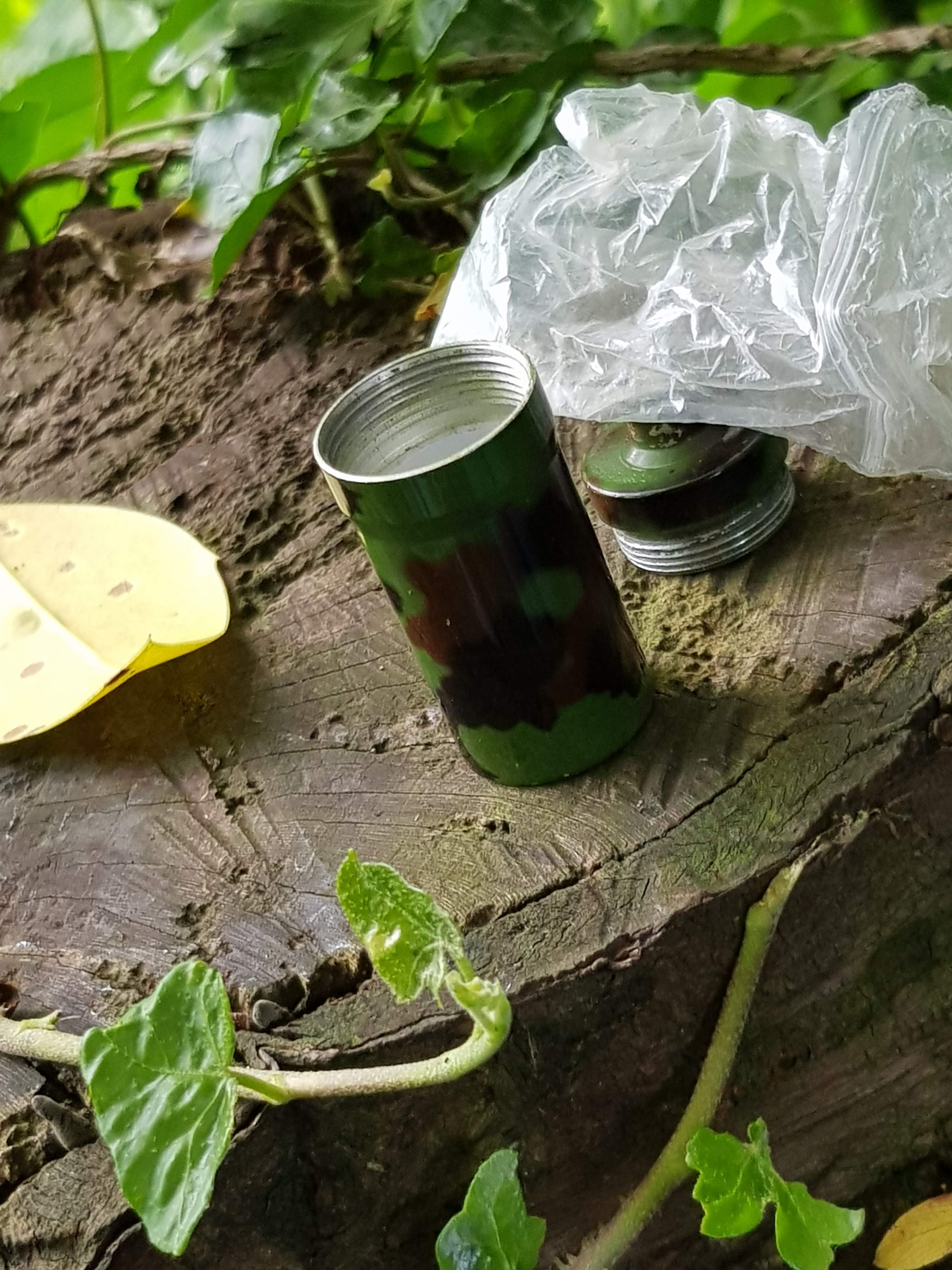
Geocaching is an activity of following GPS co-ordinates to find hidden containers that others have placed. Often these are hidden in very creative hiding spots, and when you find the container, you can add your name to a list of finders inside. Geocaching has a huge following, and is a great way to make your next walk a bit more interesting. Geocaching.com calls the activity ‘the world’s largest treasure hunt’ and invites you to download the application onto your phone for free and get started!
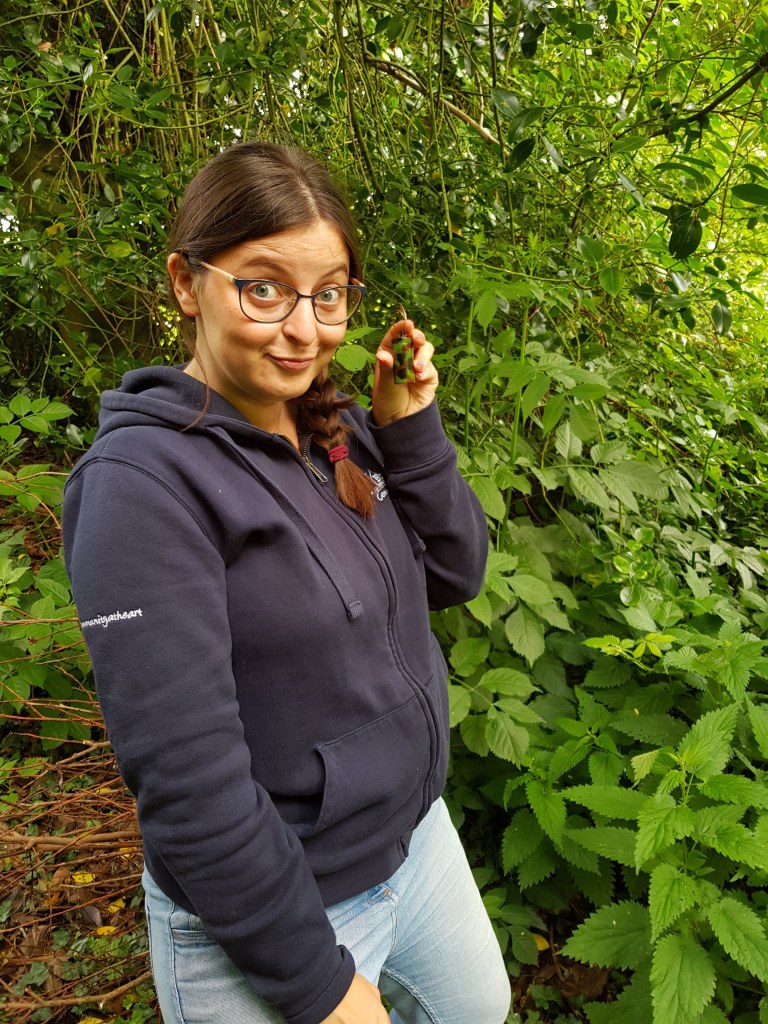
I have done this with quite a few different friends, and some containers are easier to find than others. A friend of mine once had me looking around all of Covent Garden for a specific geocache, for over an hour. We found it though! The buzz of finding it is quite satisfying, and I can see why people get really into doing this on their days out. Geocaching is so popular, you are very likely to have some in your area, so why not give it a go?!

Bird watching

If you love getting outside and experiencing nature then birdwatching is a popular hobby to take up. There are so many nature reserves dedicated to wildlife conservation, and offering brilliant facilities for ‘twitchers’ to enjoy. I have enjoyed visiting various RSPB nature reserves in my time, and have my own pair of binoculars! You can take it as seriously as you want to, but the more dedicated you are, the more likely you are to spot a rarer bird.
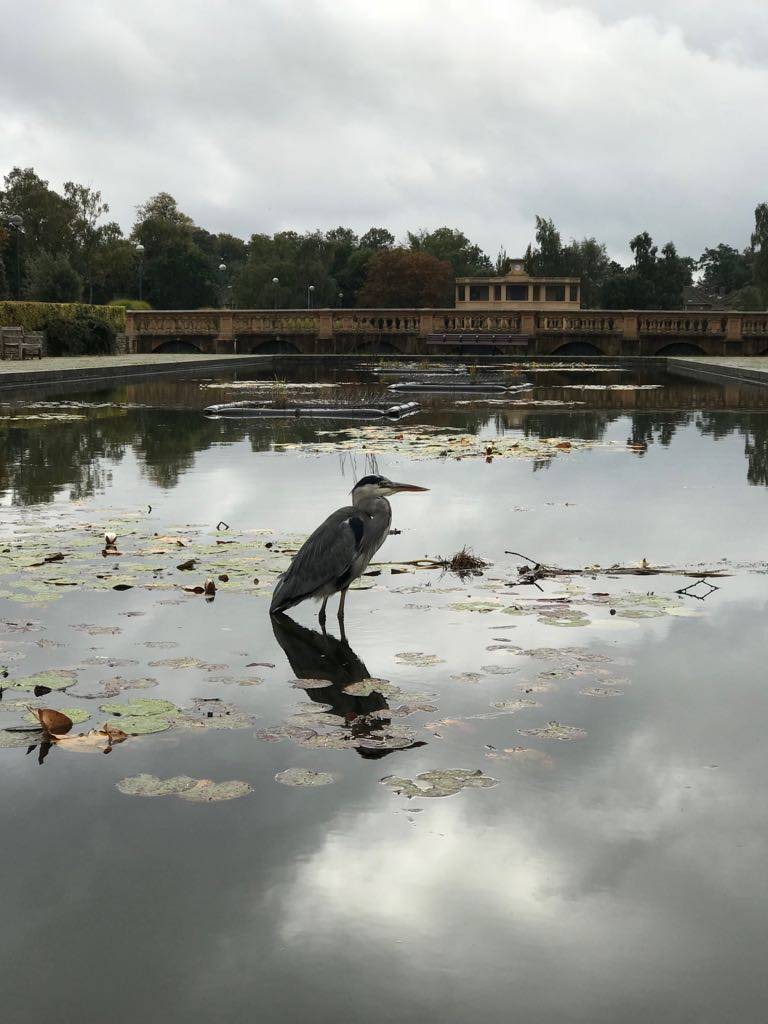
Heron at Eaton Park

I am happy with whatever bird I see, as long as it surpasses the status of a pigeon… It is quite interesting to learn the different bird names though, and actually try to identify what you are looking at. You can equally do the same thing with creepy crawlies, if you are more that way inclined!

Crabbing & Rockpooling

Just a ‘ponds throw’ from bird watching… (see what i did there..) looking for crabs can be quite a fun way to spend a few hours, especially for kids. This is a really popular activity where I am from, in Norfolk. Every day that the sun is shining, there are people sitting at the edge of a beach pier, hanging bacon from a string, in the hope of catching a crab. Equally, you will see kids jumping over rocks to dig for crabs in the shallow pools of the beach.
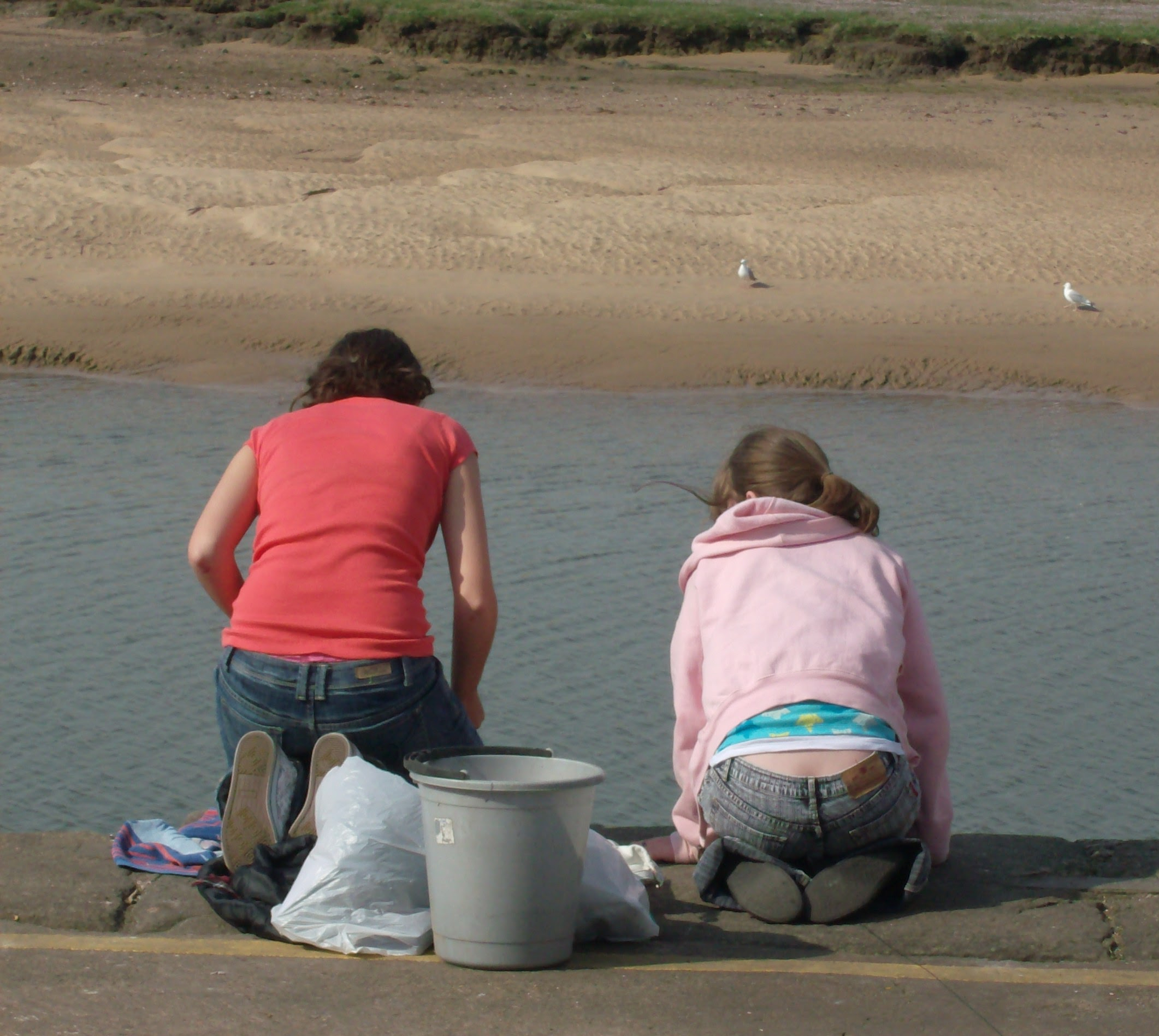
Norfolk crabbing
Norfolk crabbing

I have done this with my family, although with little success (my fishing skills are lacking). My sisters were normally the ones to find the crabs, and then we would enjoy looking at the little fellow for half an hour, before gently releasing him back into the sea.

Church / Cemetery crawling

Those of you that like history, and specifically ancestry, may find this to be a particularly wonderful day out, especially in the days where you want to be indoors or in the shade. There is so much history to a parish church, and most are open all the time for visitors to walk in and explore. Equally cemeteries have become an attraction in themselves…
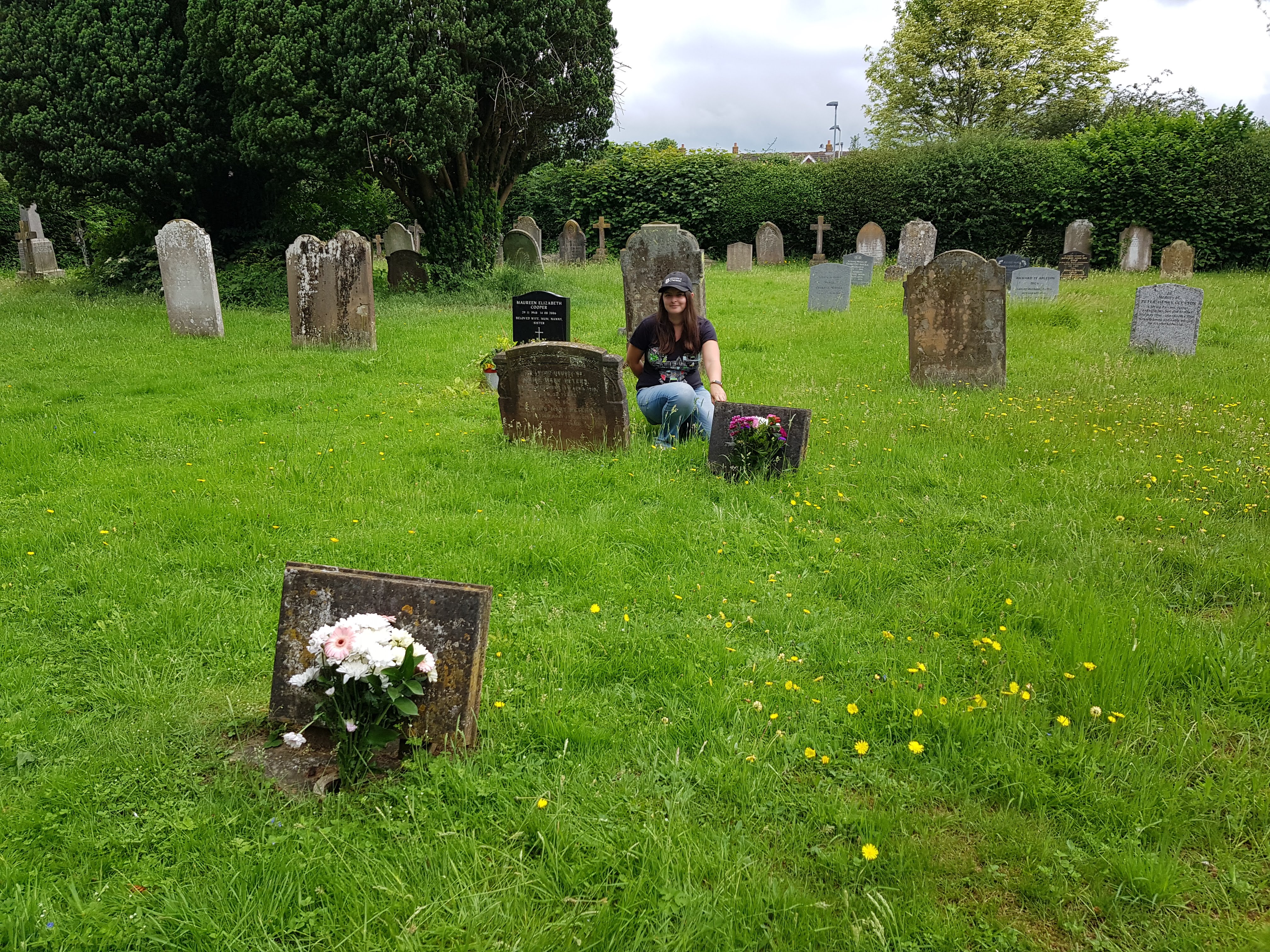
I started to take an interest in walking around cemeteries so that I could find specific graves of ancestors, and discovered Ancestry.co.uk and a website where you can find and record grave stones in local cemeteries to keep records up to date, and digital for all researchers. Once I then started visiting the cemeteries more, I began to appreciate the artwork, verses and style of the various tombstones. A lot of people also like to visit cemeteries as part of tours, or on their own, to pay respect to well known public figures that are buried there.

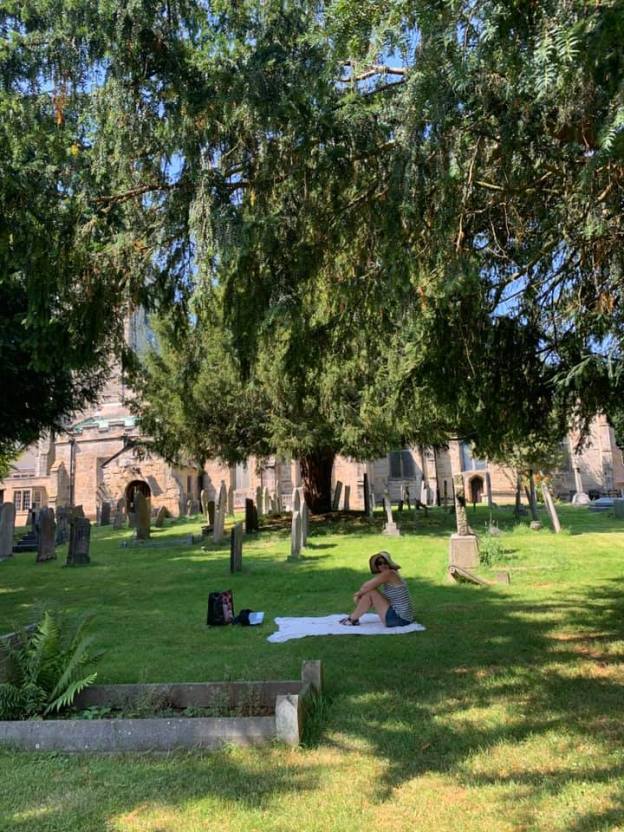
A final reason that they are nice to visit, is that they are generally beautiful, peaceful and often wild places to relax in. Many UK cemeteries have become accredited as mini nature reserves, for their wildlife credentials. I have even had a picnic in a cemetery before, as it was a pretty spot and also pleasantly shady on a warm day!
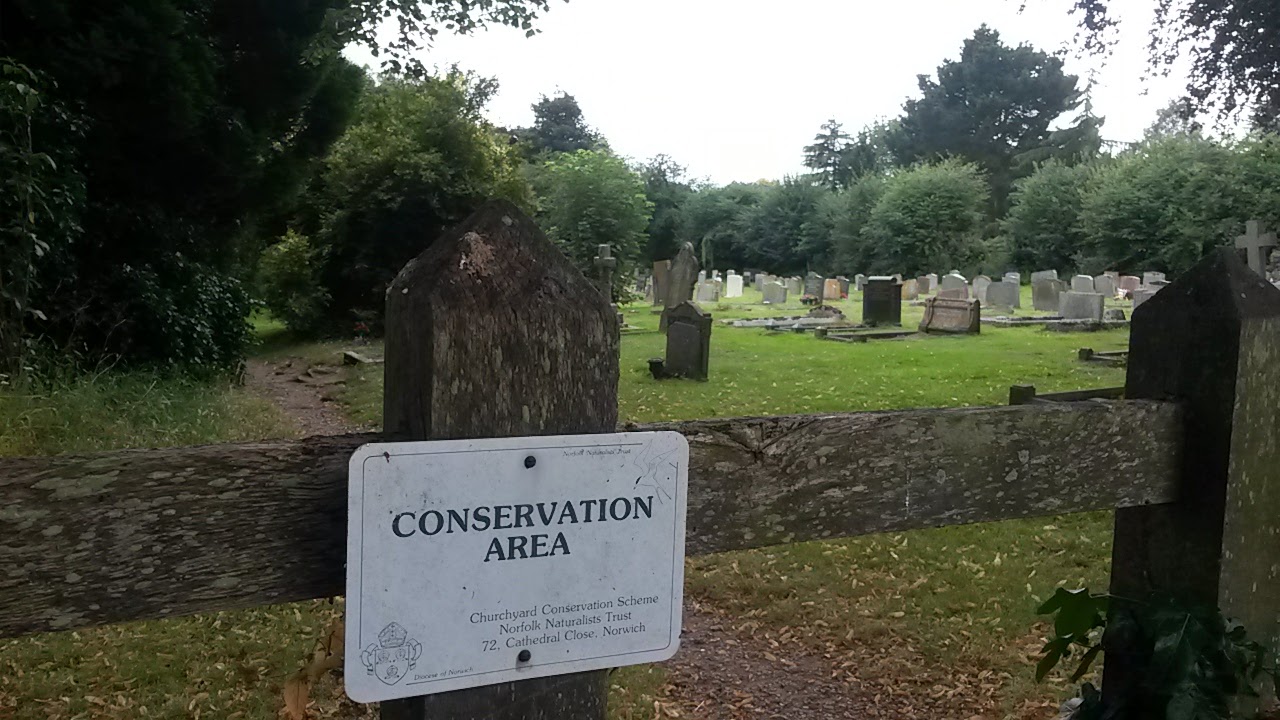
Cemetery conservation area

Fossil hunting and Flint knapping

If you want to do something that is really unique and one to write home about, then consider the world of geology! There are several locations across the UK where you can get permission to go fossil hunting, or join an organised event. The UK Fossils Network seems to be a great source of information about locations within the UK, and also guidance on how to do this activity safely. I have so far been unsuccessful in my lone wonderings to find fossils, but I may try one of the group events as it seems that they provide the equipment and safety bits you need to get more serious about it.

If you want to do something even more niche, then you may want to consider learning about flint knapping! I haven’t tried this myself, but I understand that you can take workshops in this, in my home county. Flint knapping is the act of finding flints, and then hitting them into the shape of weapons, that you would have used in prehistoric times!

Self guided tours/ trails

Taking yourself on a self guided tour of a city or town is a really traditional and easy way to spend a day out. Lots of locations will provide you with a map or app for following a trail of blue plaques, or local murals. In some locations, you can even walk up to a local statue and listen on your phone to a recording about who the figure was. This is part of the ‘talking statues‘ scheme.

I have walked several self guided trails in different cities, and have found that the more interactive, and unusual, the better. I especially like to do trails where you have to follow clues, as i find this more challenging. ‘Treasure Trails‘ is a great scheme that offers trails with clues to solve at different levels, across the UK.
To summarise…

If you are heading out for the day, why not make a proper day of it, and try an experience you won’t forget! I hope the above ideas may have tickled your imagination, and made you think about what is nearby to where you live.
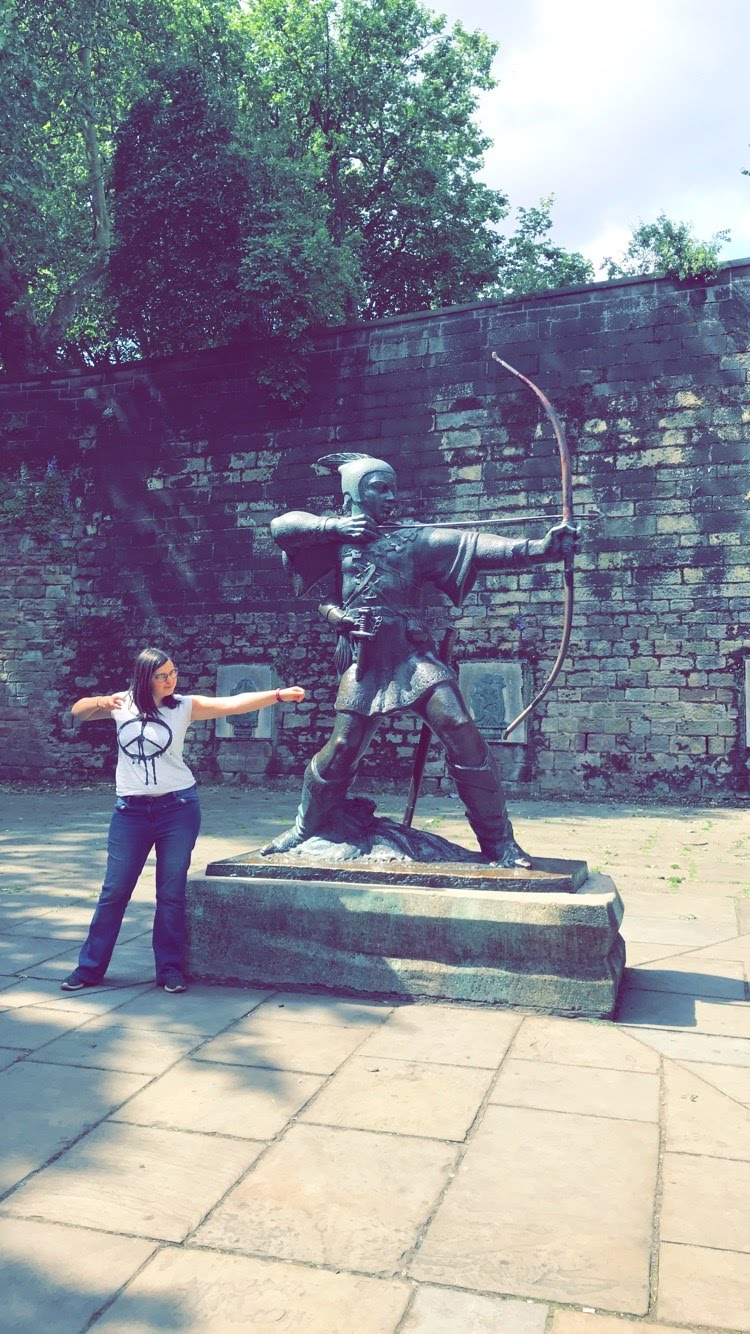
me and robin hood nottingham

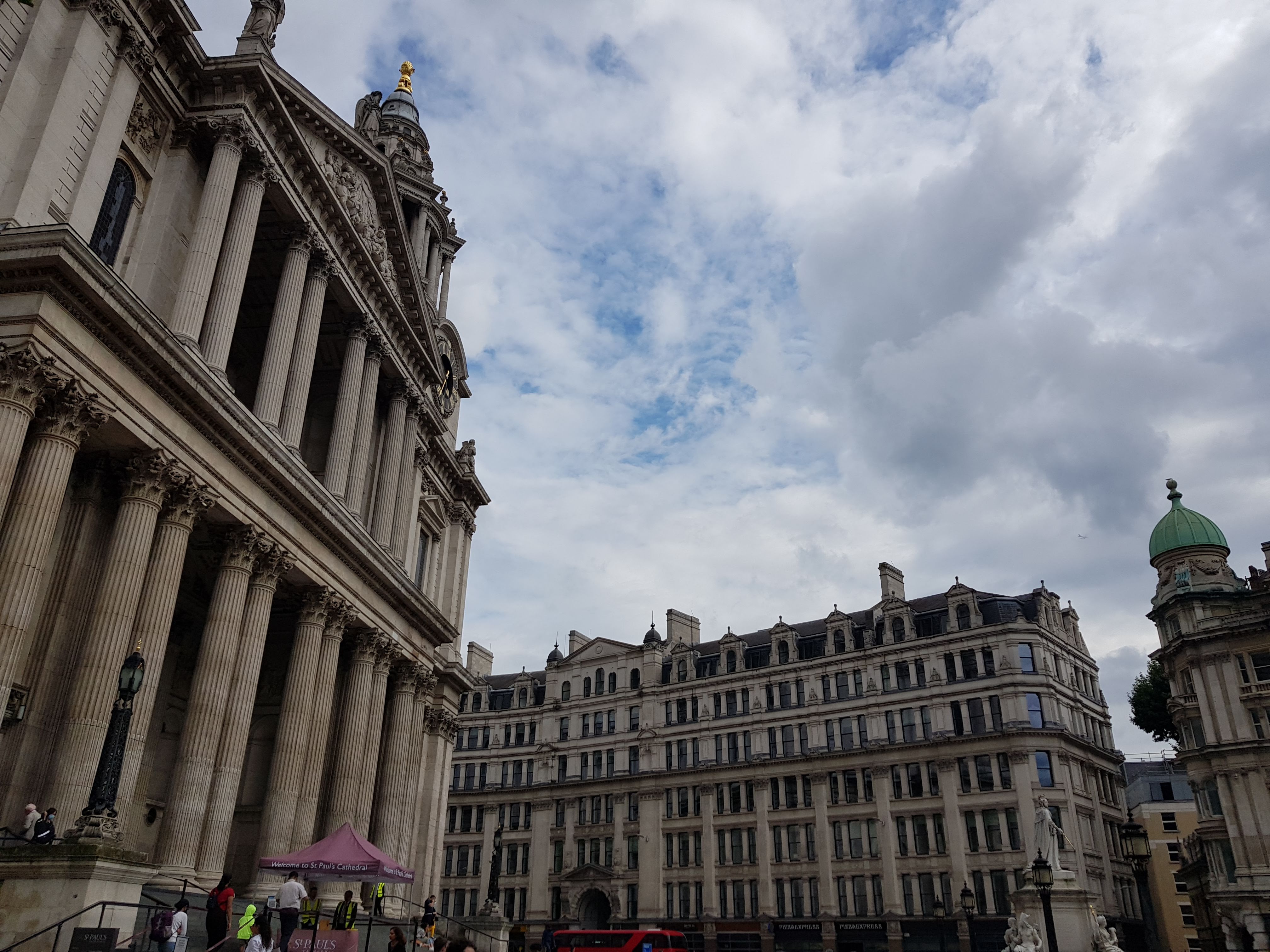
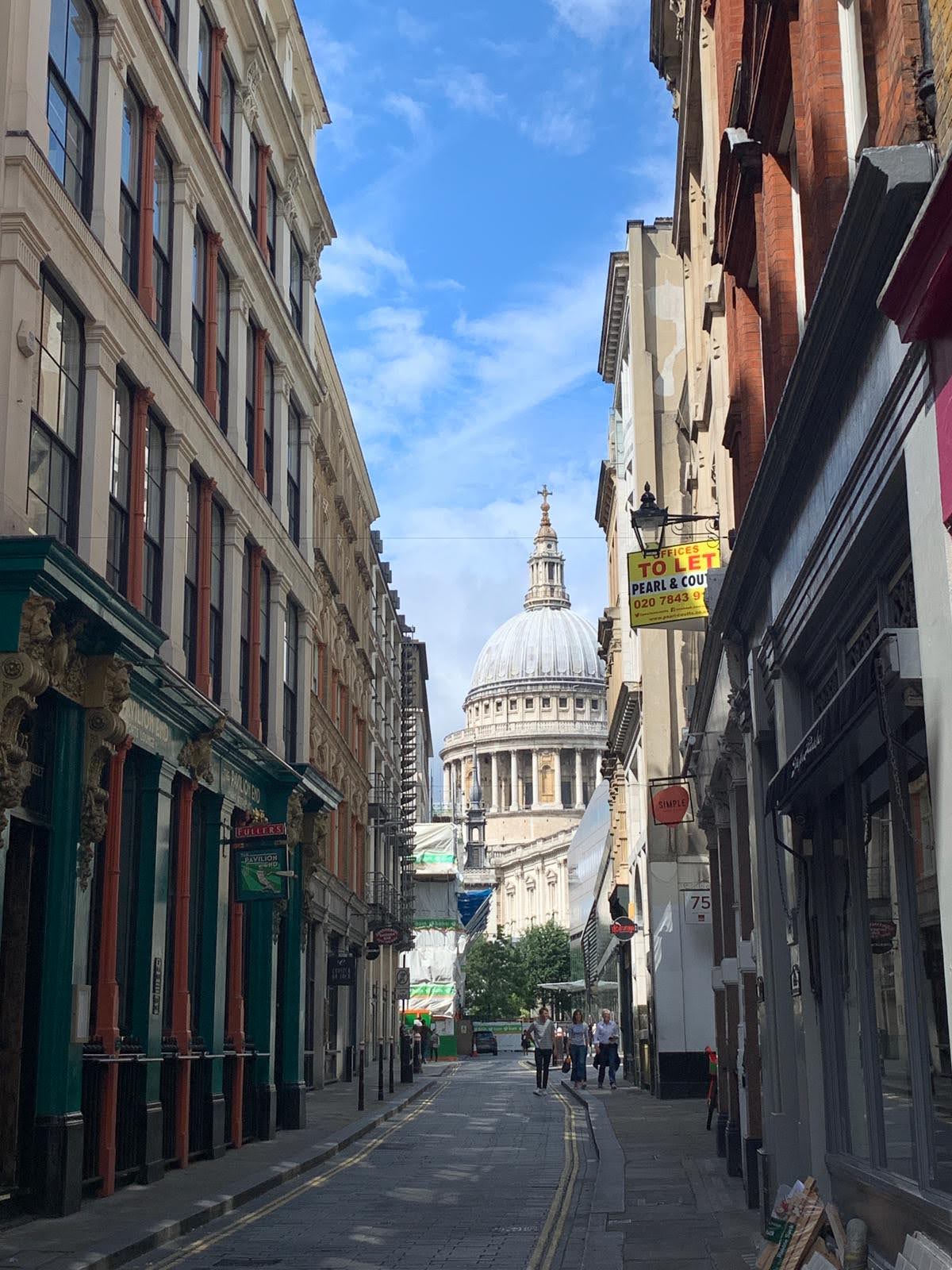
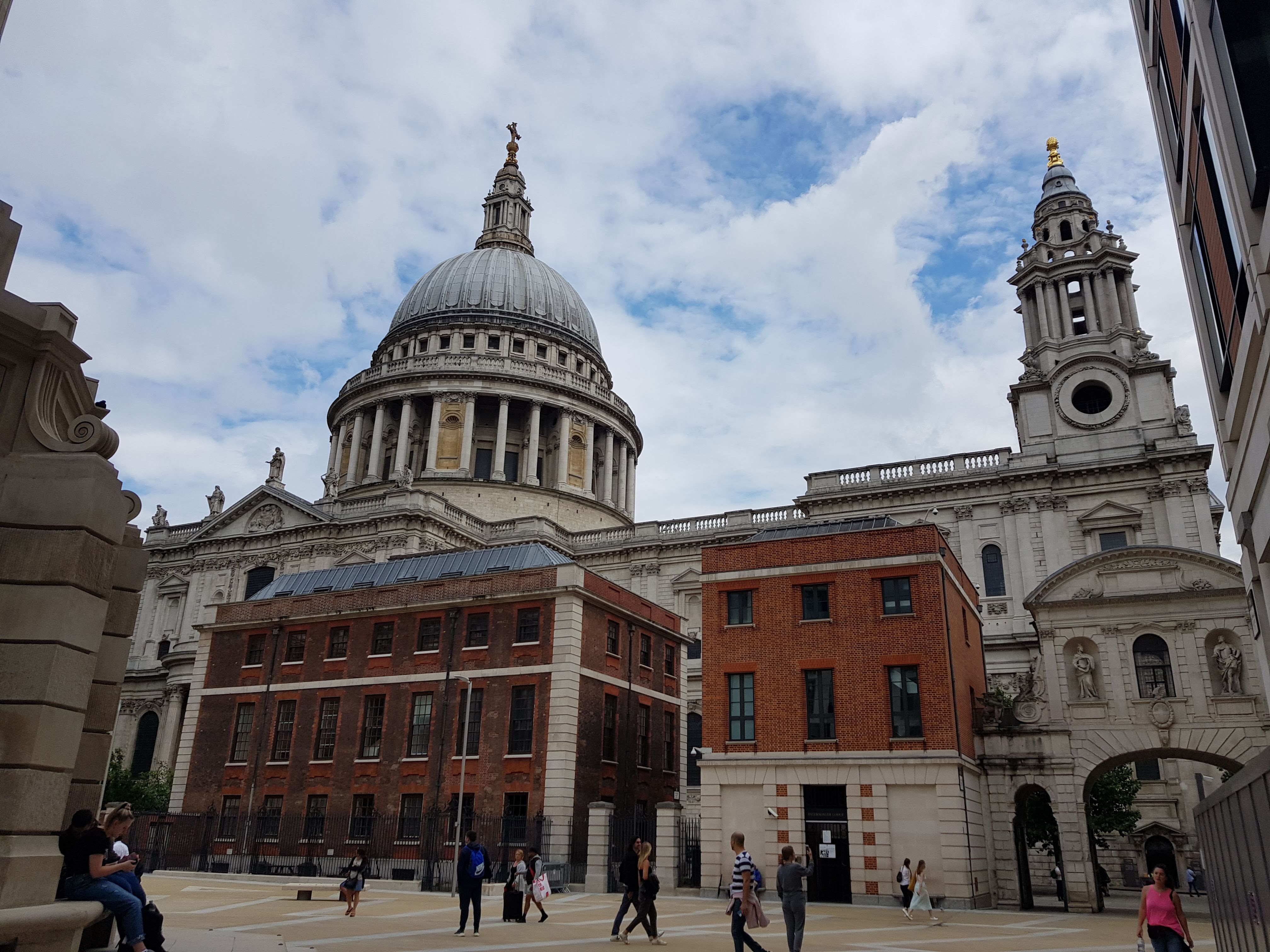
St Paul’s Cathedral: A very English icon inspired by Europe

I recently had a visit to St Paul’s cathedral in central London, and found it to be a stunning example of architecture, art and history. This church is recognisable across the world as an important site for ceremonial events, and a centrepiece to the historic London skyline.

Surrounding St Paul’s

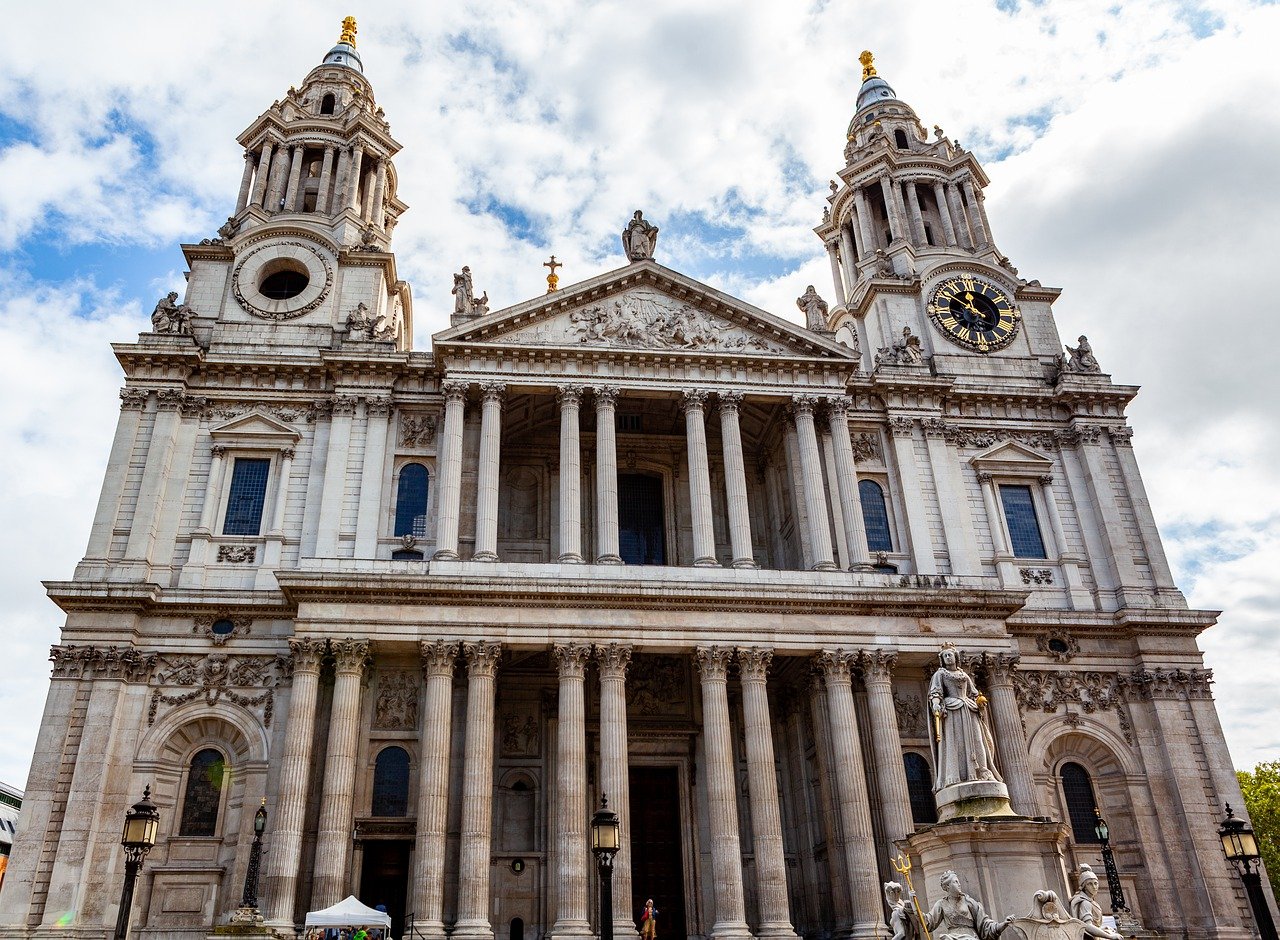
St Paul’s cathedral is in the centre of London and has a dedicated underground station down the street, St Paul’s station. It is recognisable from a distance, by its large dome, but I also think of the front of the building and its iconic steps and open space…. this may be somewhat led from my childhood memories of watching Mary Poppins! The church is used in the film for the song ‘feed the birds’…

Feed the birds!!!!

I know you’re probably singing it along in your head now! Oops! Sorry!

Around the cathedral, there is a plethora of shops and restaurants to enjoy, and on the site, St Paul’s also has a well kept set of gardens and cemetery to meander within. St Paul’s is also in close proximity to the iconic Millennium bridge, and the Museum of London.

What’s on offer

We booked our tickets into St Paul’s the day before, and this was well worth doing, as we were able to walk straight into a clear queue, past many people that had just walked in. As part of your ticket, you can access an audio guide and headphones that have lots of useful information about the cathedral. It breaks the content up into different sections of the cathedral geographically, by topic, or how much time you have. So, if you only want the highlights version then you can still benefit from an audio guide.

There are also guided tours freely available throughout the week at lunch times, as well as private tours which you can book. If you want to slip into the background and enjoy the atmosphere, you can also take part in a daily service of Eucharist or Evensong. The full schedule of services can be found on the St Paul’s website.

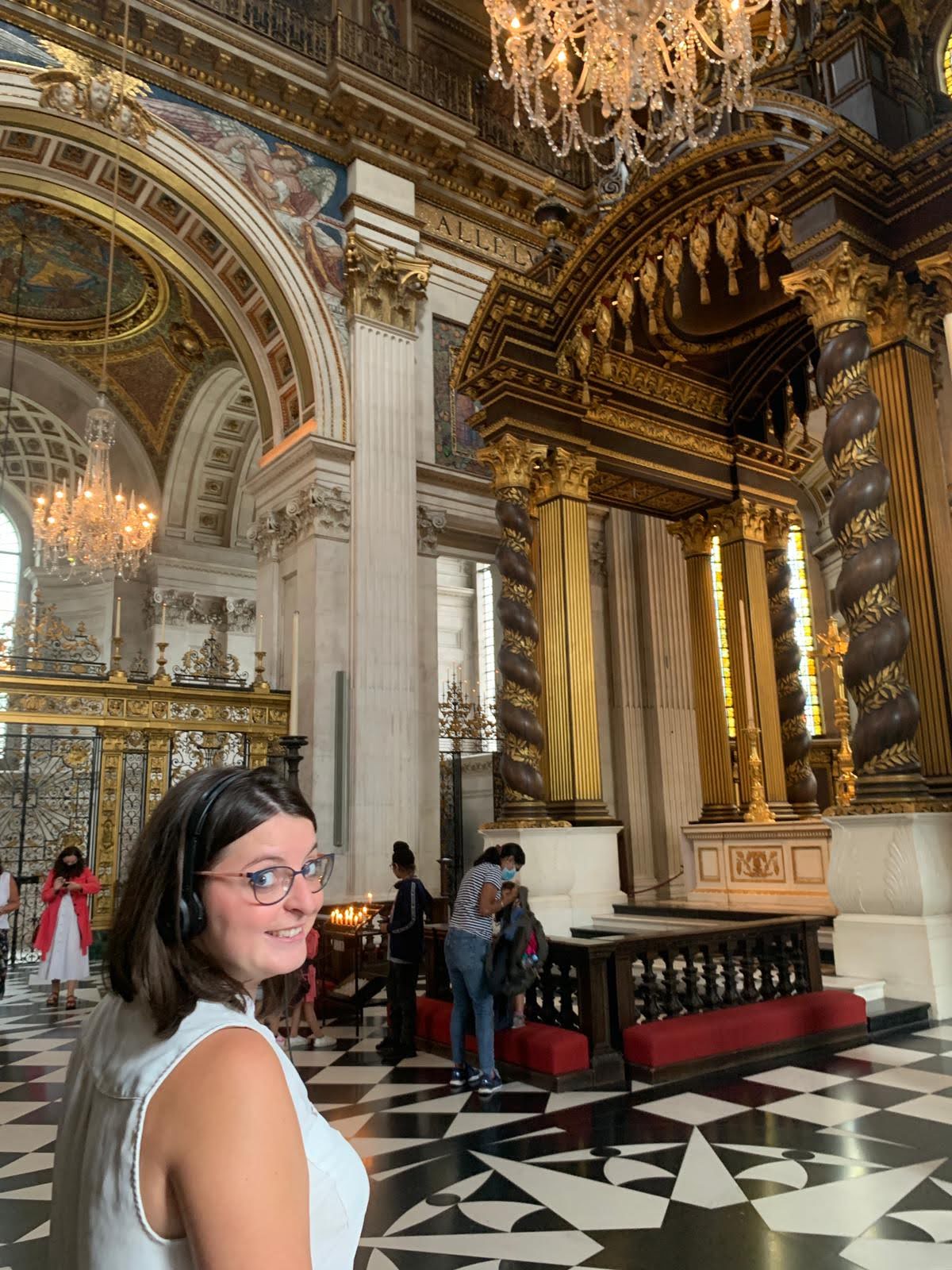
Me listening to my audio guide

Architecture

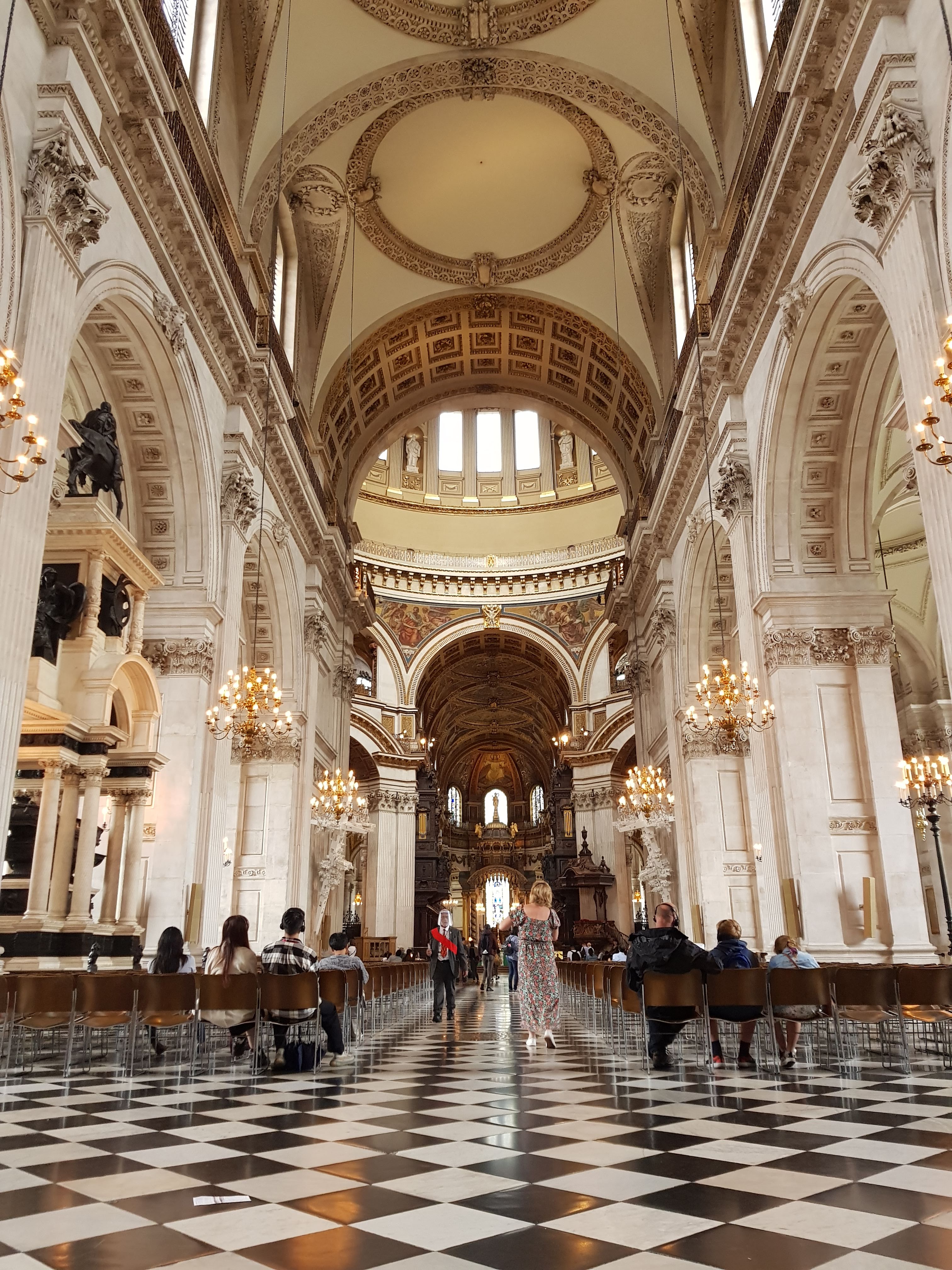
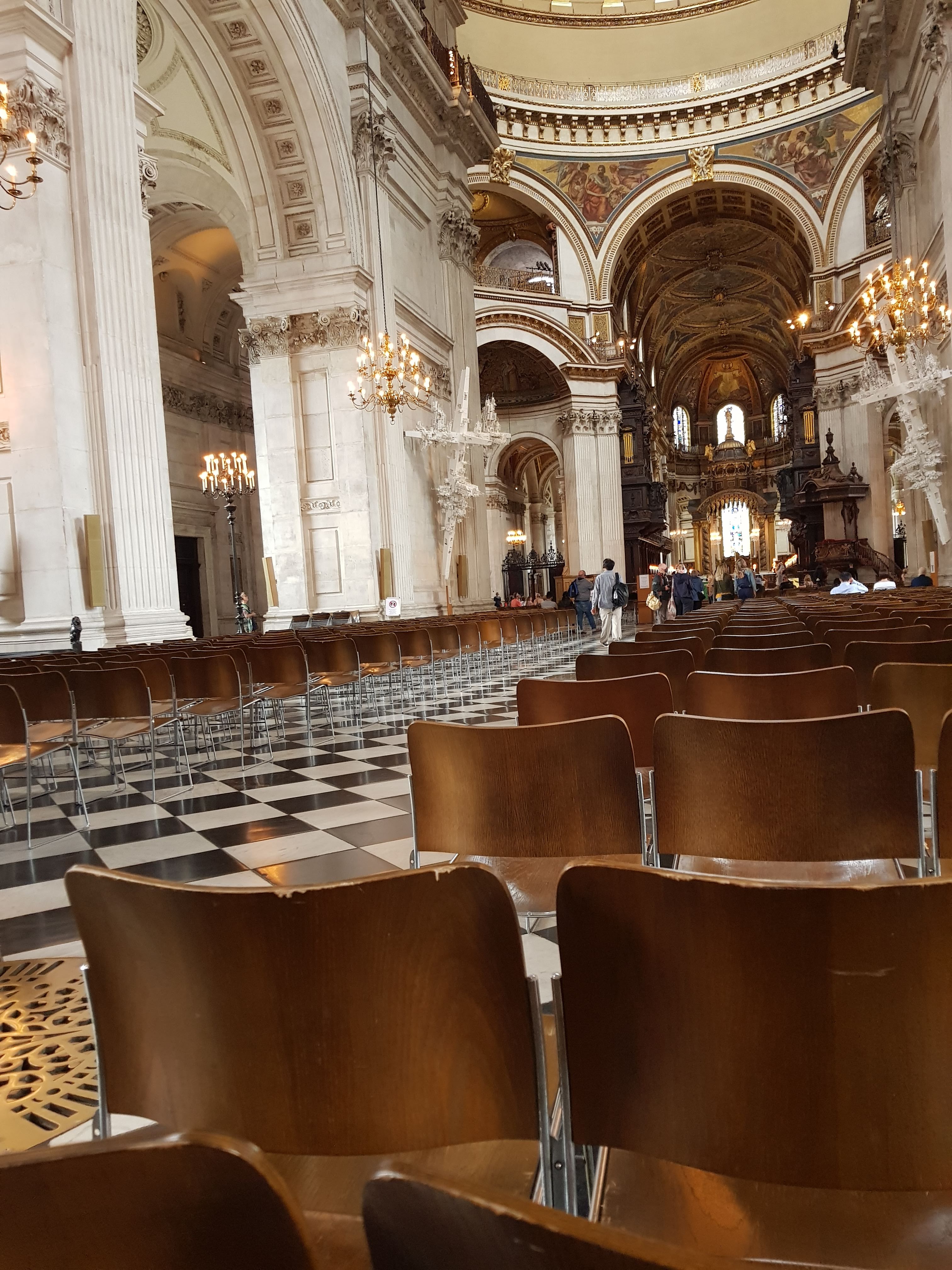
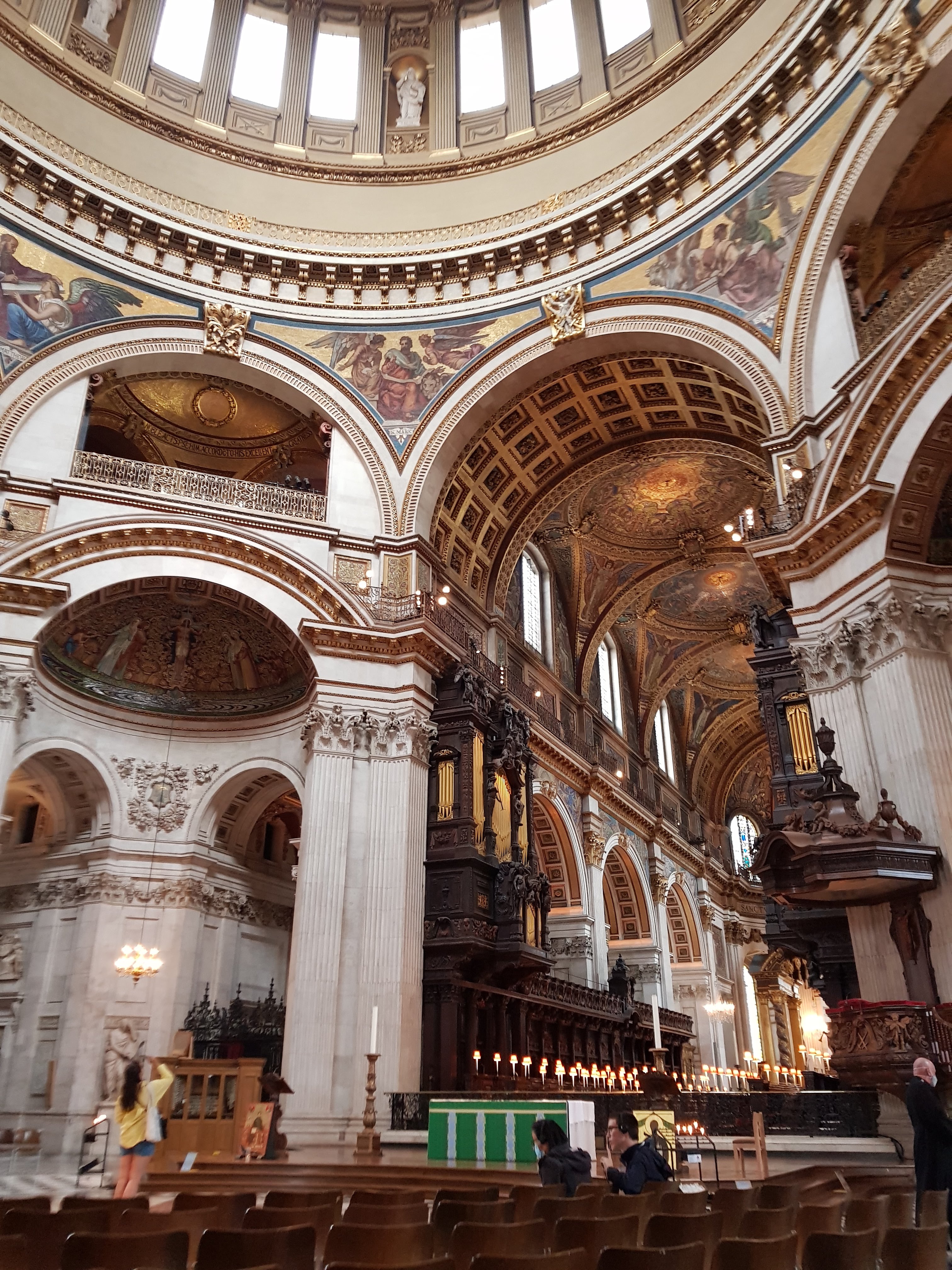
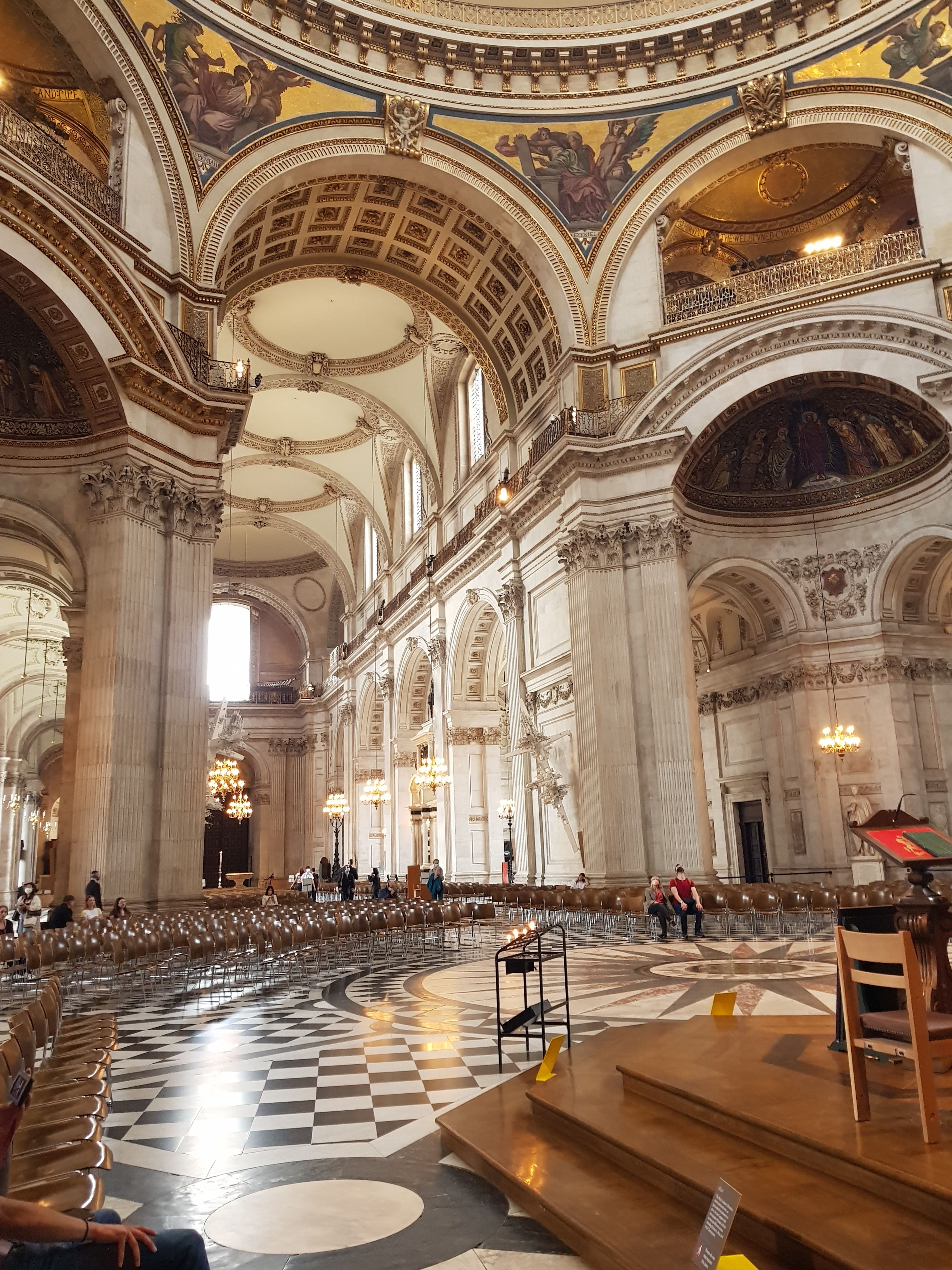
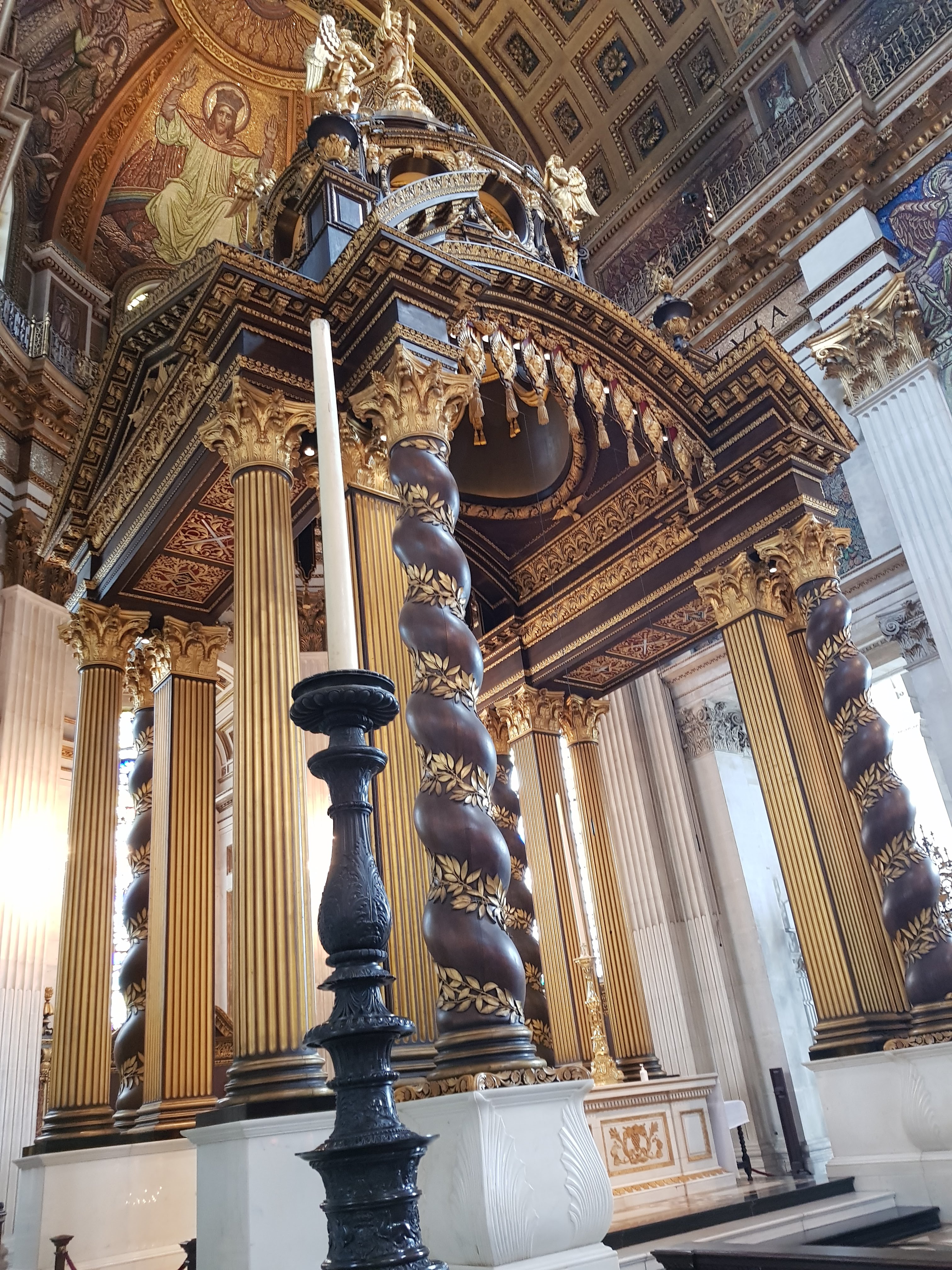
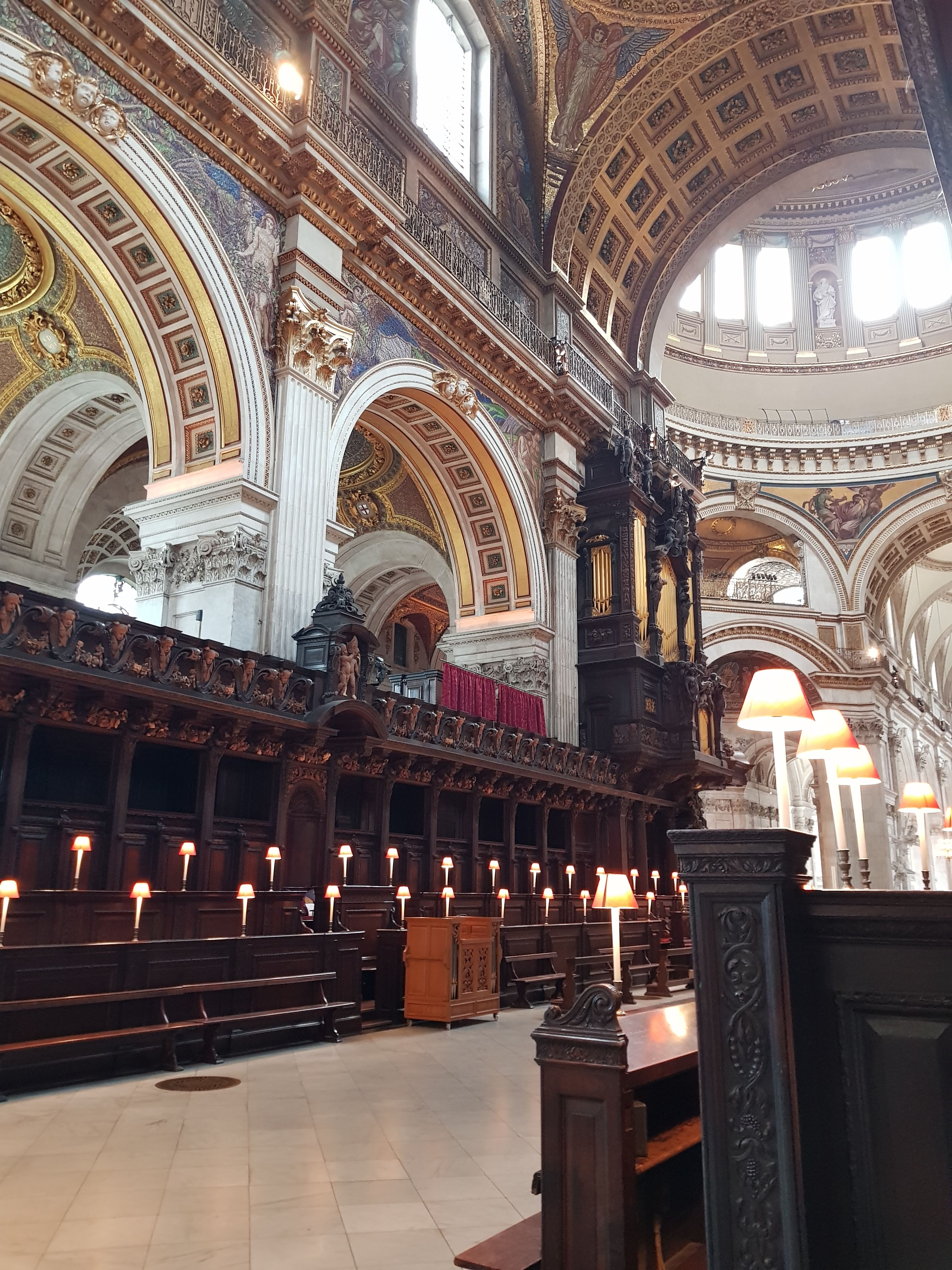
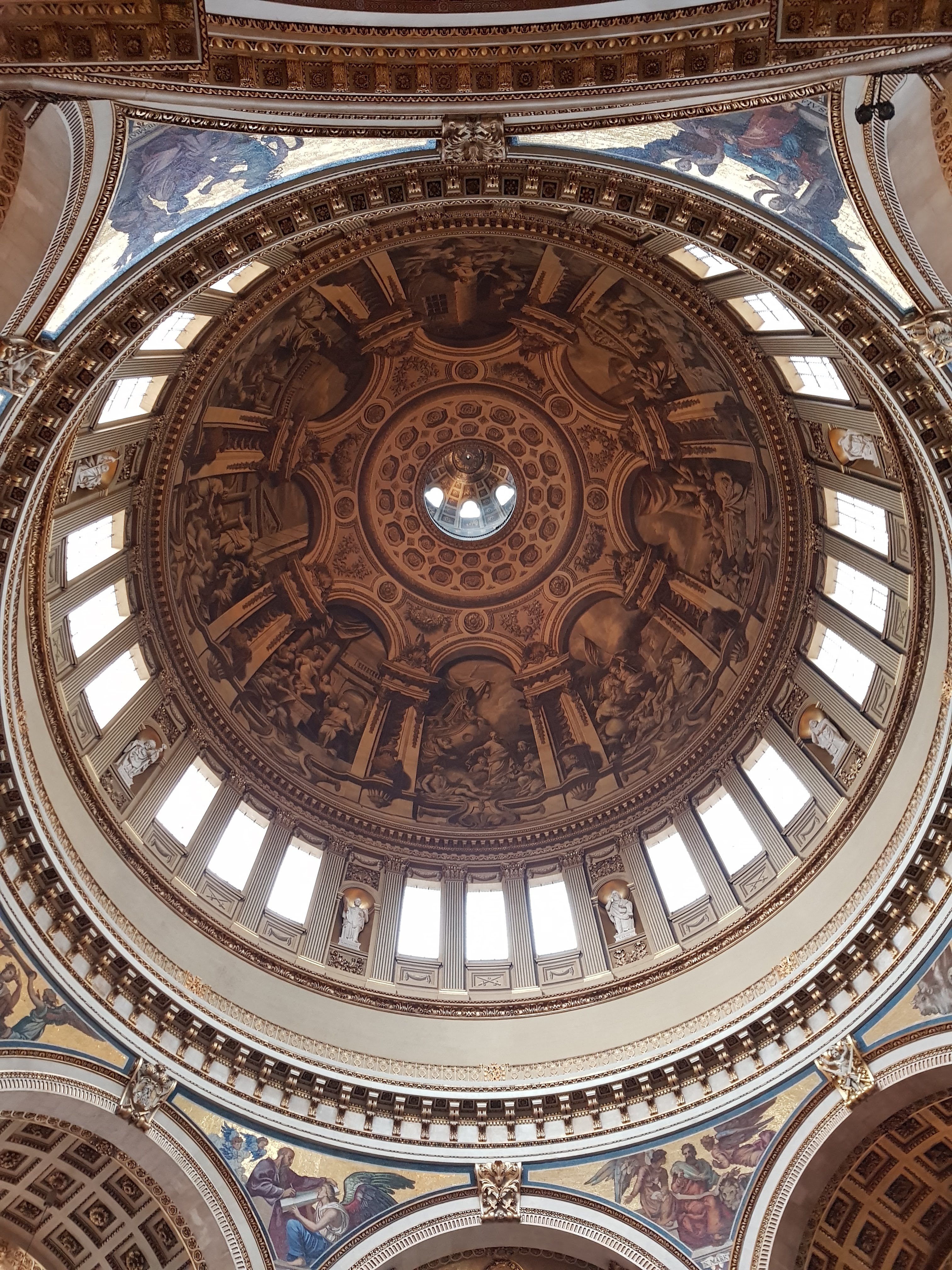
The architecture within the cathedral is very striking. I really enjoyed taking photographs of the church from different angles, as there are so many arches, curves and also geometrical shapes, both high and low. The styles and colours of white and gold, did remind me more heavily of a European cathedral, specifically, ones I have seen in Italy. The church certainly did not feel English. I think this is rather ironic, considering it is one of the biggest religious attractions that international visitors see, and represents the country across different medias around the world.

The original St Paul’s was much more English looking, and looked similar to cathedrals of Salisbury, Canterbury or Norwich. That church was destroyed in the Great Fire of London, and this new structure was built between 1675 and 1710. The architect, Christopher Wren, attempted to approve several designs before the King eventually signed off on the plans. It seems that Wren attempted to put his own twist on the Baroque style which was becoming popular in Europe at the time, interestingly as a counter action against Protestantism. He coined this as ‘English Baroque’.

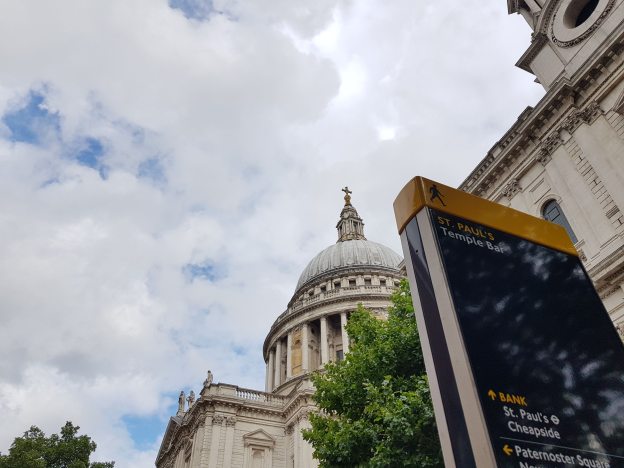
The similarities between the two styles are obvious though, if you take a look at the two images below of the towers of St Paul’s vs Santiago de Compostela, Spain… you can see for yourself!

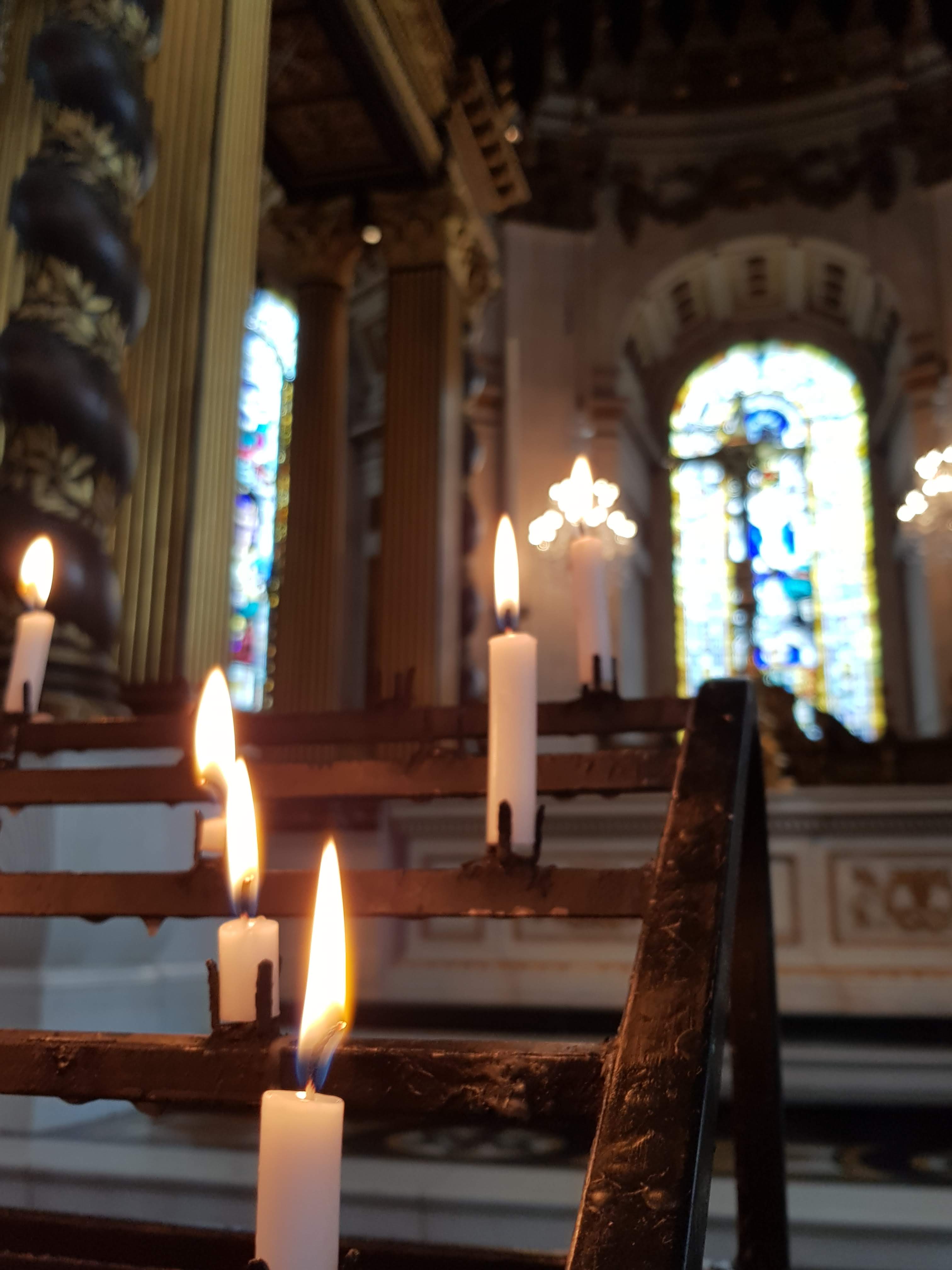
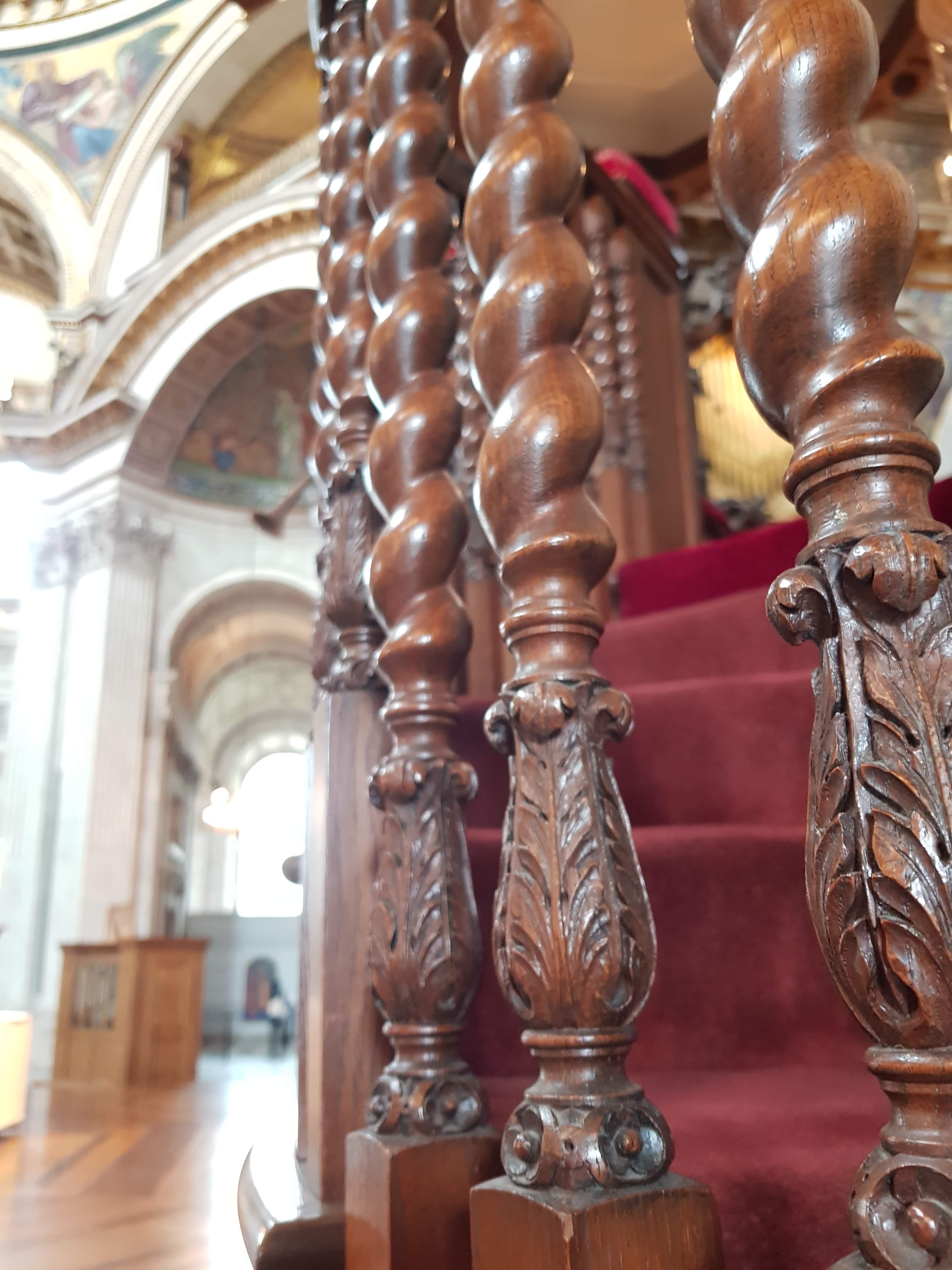
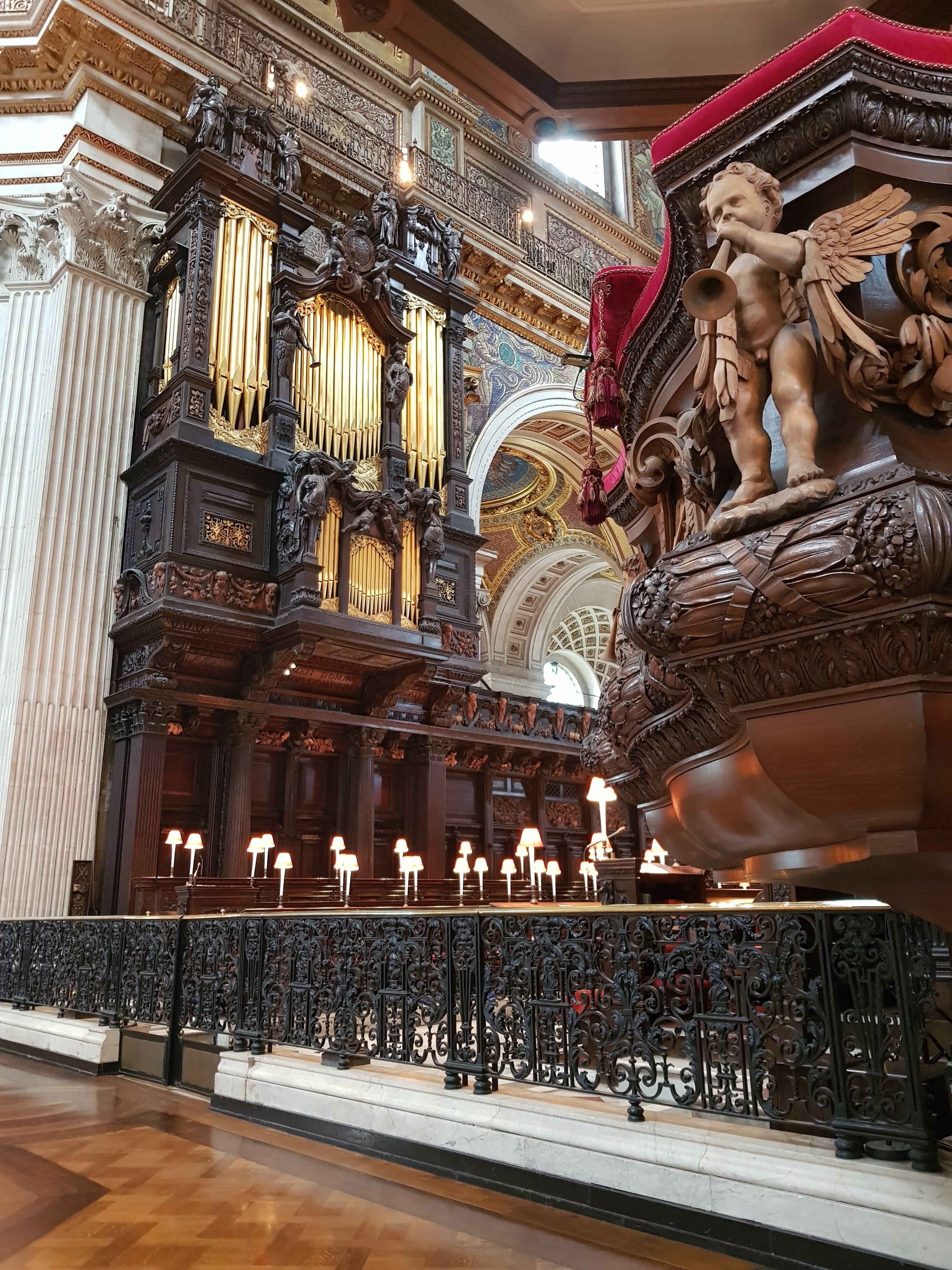
St Paul’s also boast some very beautiful English features, including 18th century delicate wooden carpentry, the third largest organ in the UK, and of course a good level of stained glass windows!

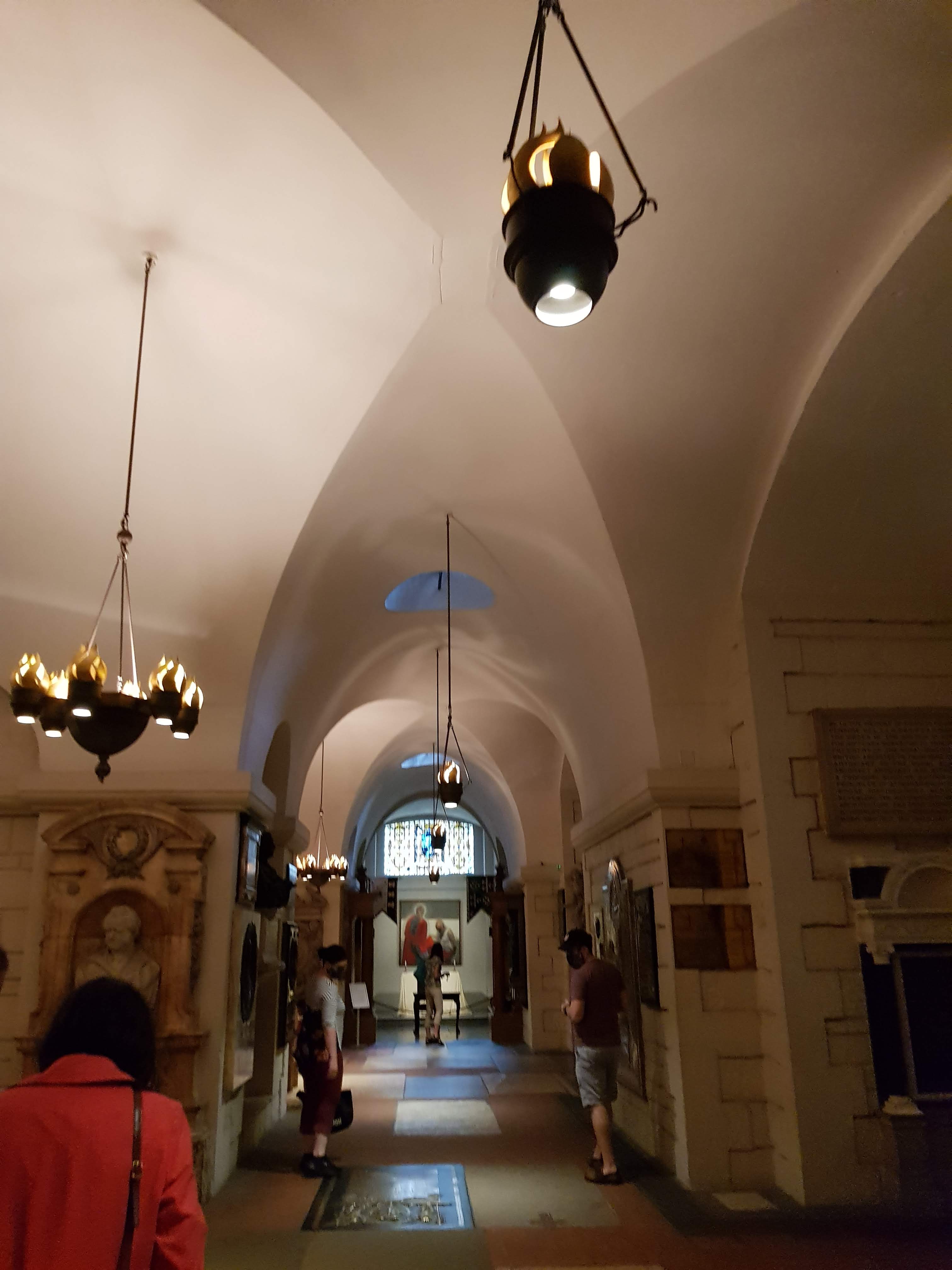
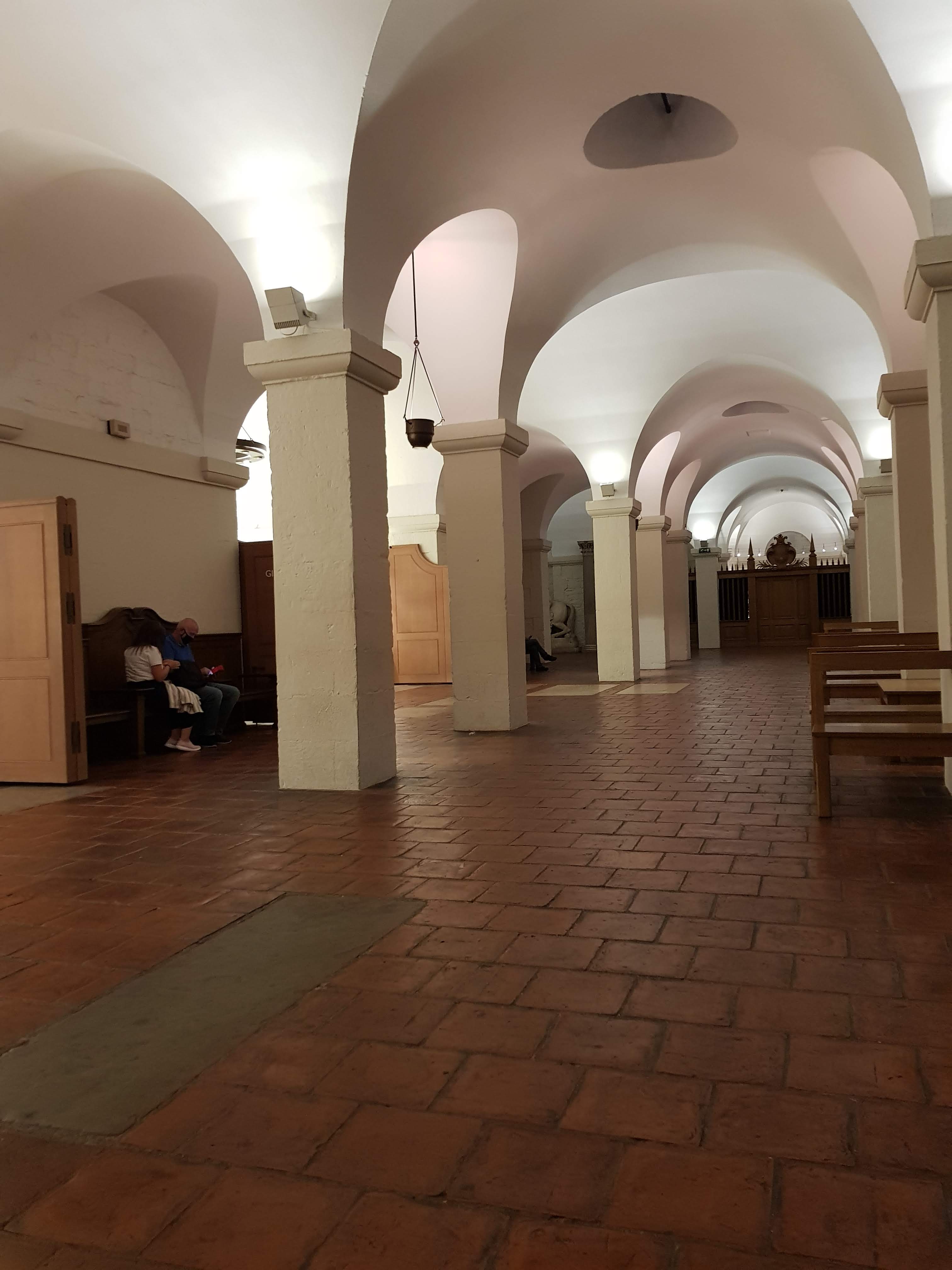
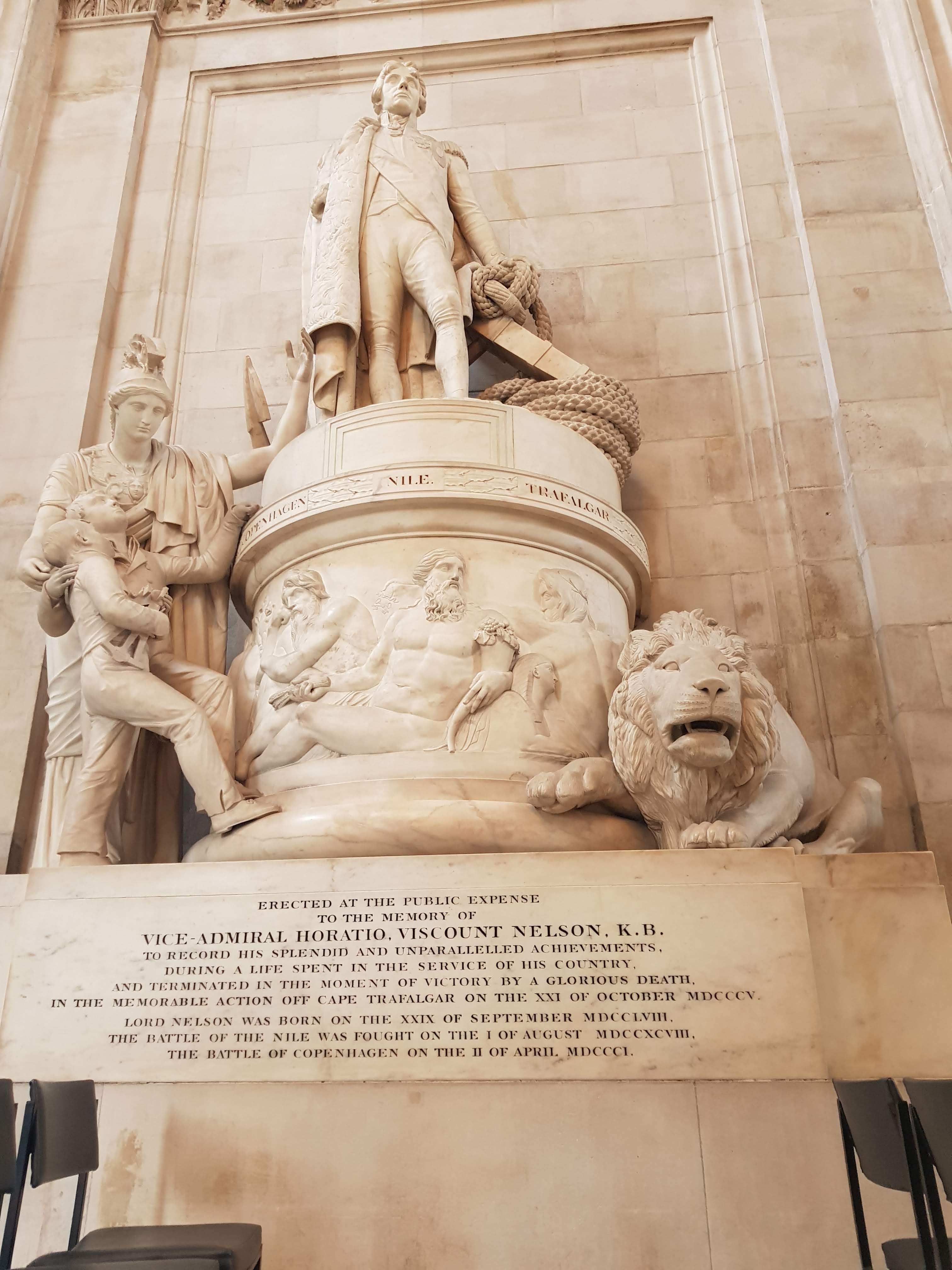
The ground floor of the cathedral is not the only level available to visitors. Visitors can also go up to the galleries, and go downstairs into the crypt of the cathedral. Other crypts that I have seen, have had very rough walls, dingy smells and pokey spaces. This is not the case at St Pauls, I was really suprised at the look and feel of the crypt. It is a large, reasonable open, and light space. It actually has a very modern, and contemporary feel to it. This seems so strange, in such a historic building. In this part of the cathedral, there are some memorials and tombs of important figures from English history, such as Norfolk’s very own Horatio Nelson. There is also a chapel space to sit peacefully, toilets and a gift shop!

Artwork

There is a mix of artwork at the cathedral, from beautiful ceiling paintings, to wooden and stone sculptures. The focus is clearly on the magnificent ceiling paintings of bible figures and scripture such as the apostles, and so in the nave, the sculptures/memorials are fairly thinned out except for a few large pieces. On the other hand, in the south aisle alongside the nave, there are several memorial sculptures detailing key figures in English history and their achievements.

Steps to roof and galleries

Arguably, the most iconic part of St Paul’s Cathedral is the dome, and within the dome and below it are two galleries that visitors can see. Unfortunately, these were both closed when I visited, but I still had the ‘pleasure’ of climbing the 376 steps to the roof, before I discovered I could not access the galleries that day. On the bright side though, whilst the stairs left me breathless (not in a good way), there were lots of seats to stop at on the way up, and medieval graffiti carved into the walls that i could appreciate whilst trying to stabilise myself!

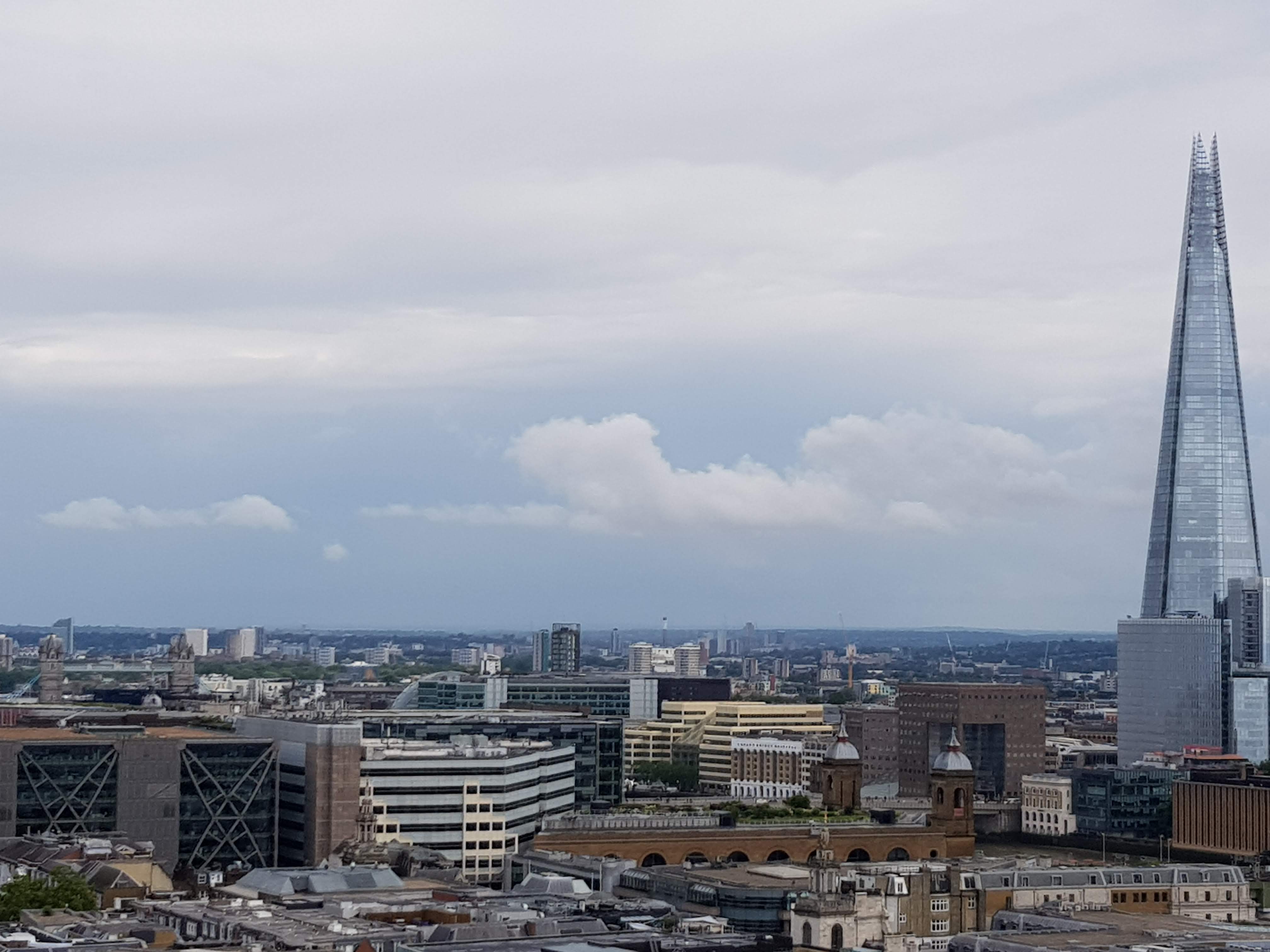
View from St Paul’s – Shard

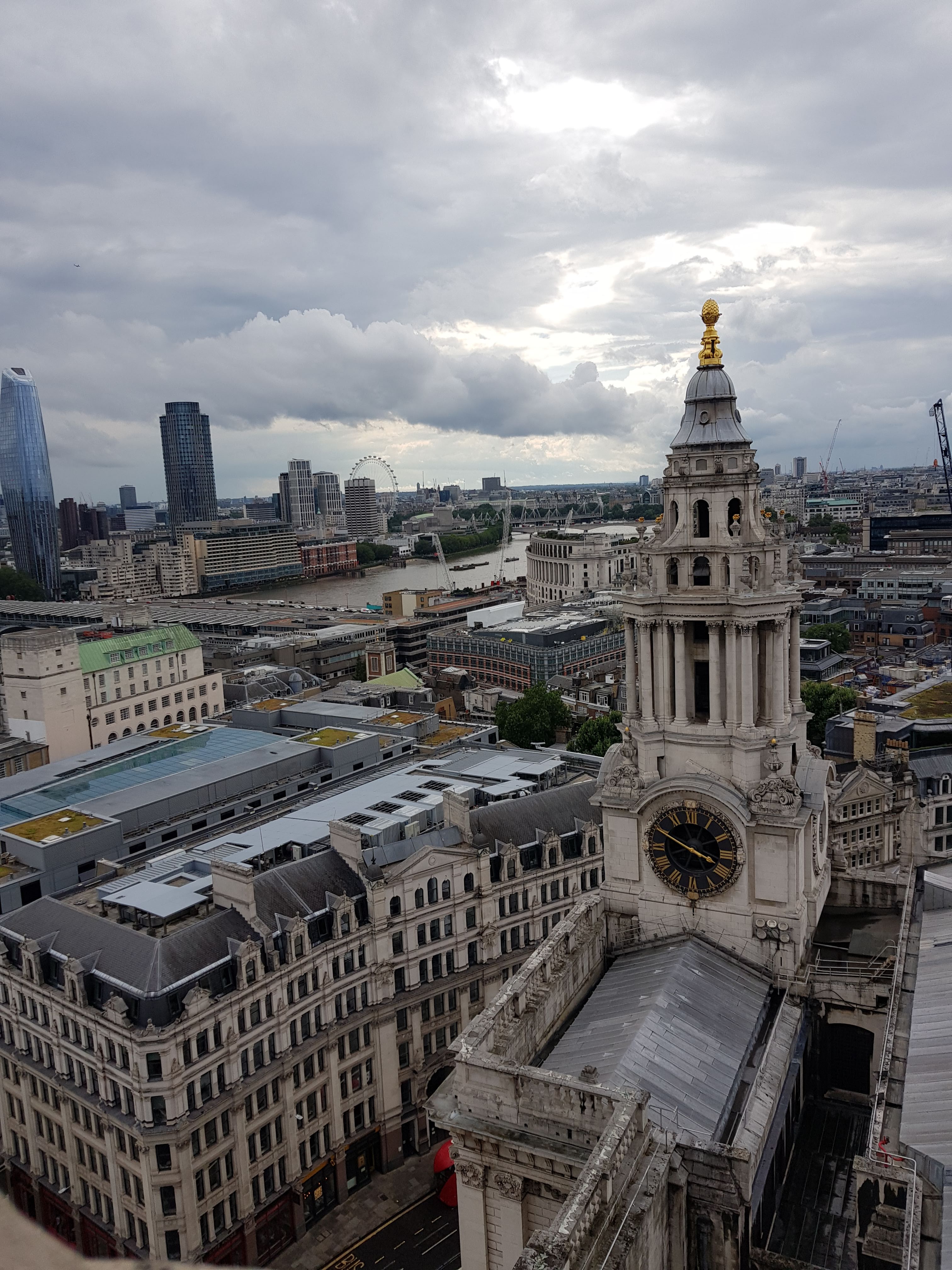
The climb wasn’t a waste! From the roof, you can still walk around the dome and see the London skyline, including the shard, sky garden, london eye, and look more up close at St Paul’s bell towers. I actually happened to be on the roof when the bells were ringing out, which I thought was pretty special.

Overall, I think that St Paul’s was very interesting, had a great booking system, and good content. I was disappointed that I could not see the galleries, but the views made up for it, and I understand their need to do renovations, especially whilst they are quieter. I would recommend a visit, and if you are brave enough, climb the steps and listen to the bells…. equally if you really do struggle, there is an elevator… they just wouldn’t let me use it!

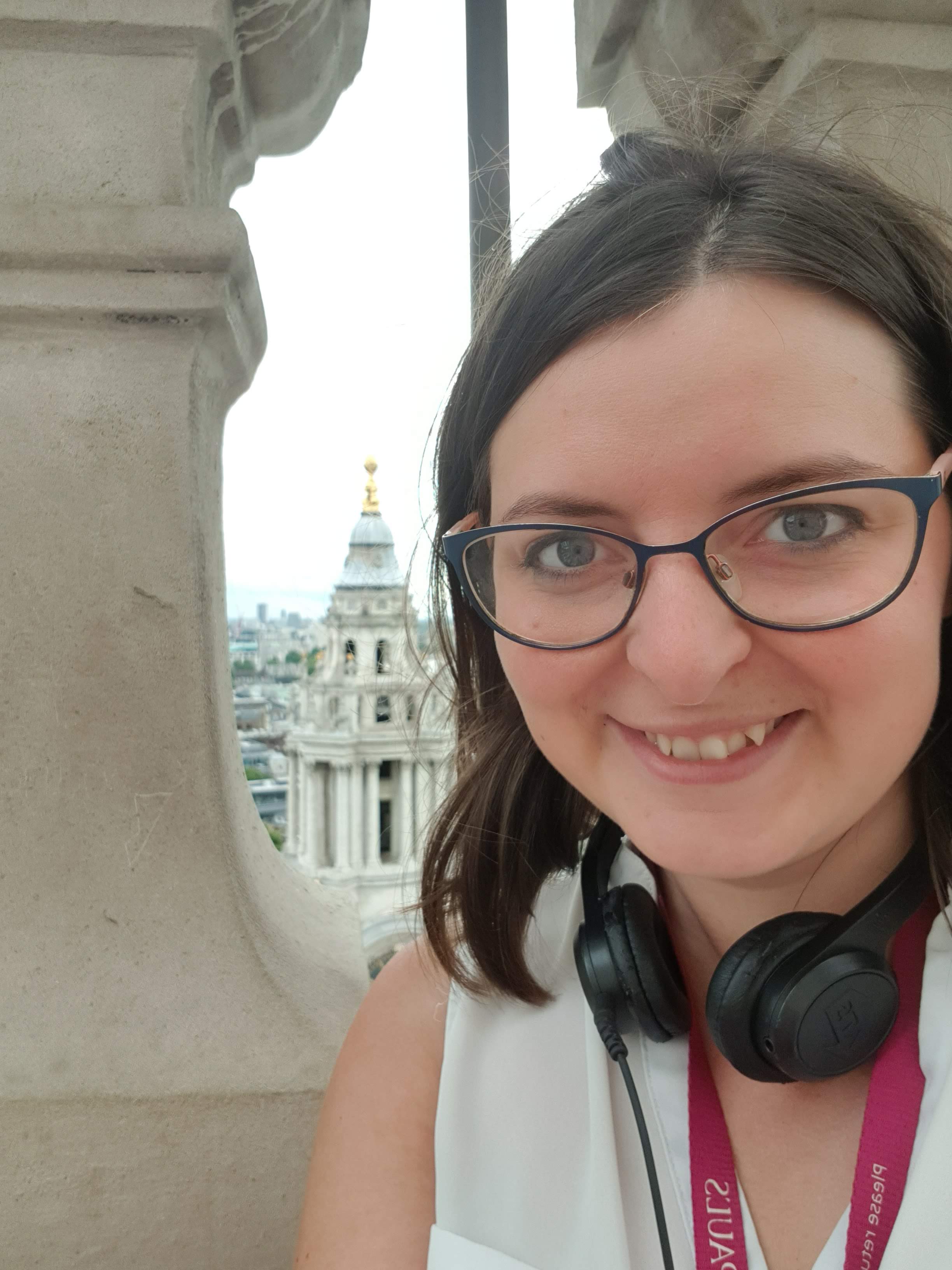
Me at St Paul’s Cathedral London

City of Culture 2021: Coventry

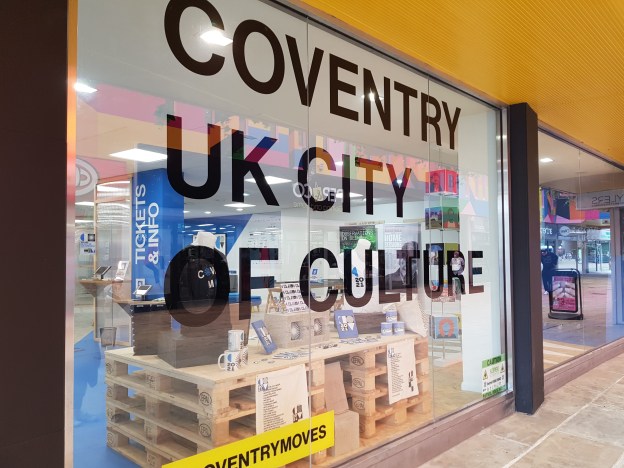
Coventry has been declared the city of culture in the UK this year, and it is not hard to see why. On a weekend away in Coventry, a few weeks ago, I discovered that the city is bursting with culture, art and life!

I always like to visit new places, and Coventry was a great choice when deciding on a weekend away this year, as it is smack bang in the middle of the country, and so was easy for me to meet a friend there, who lives across the other side of the UK.

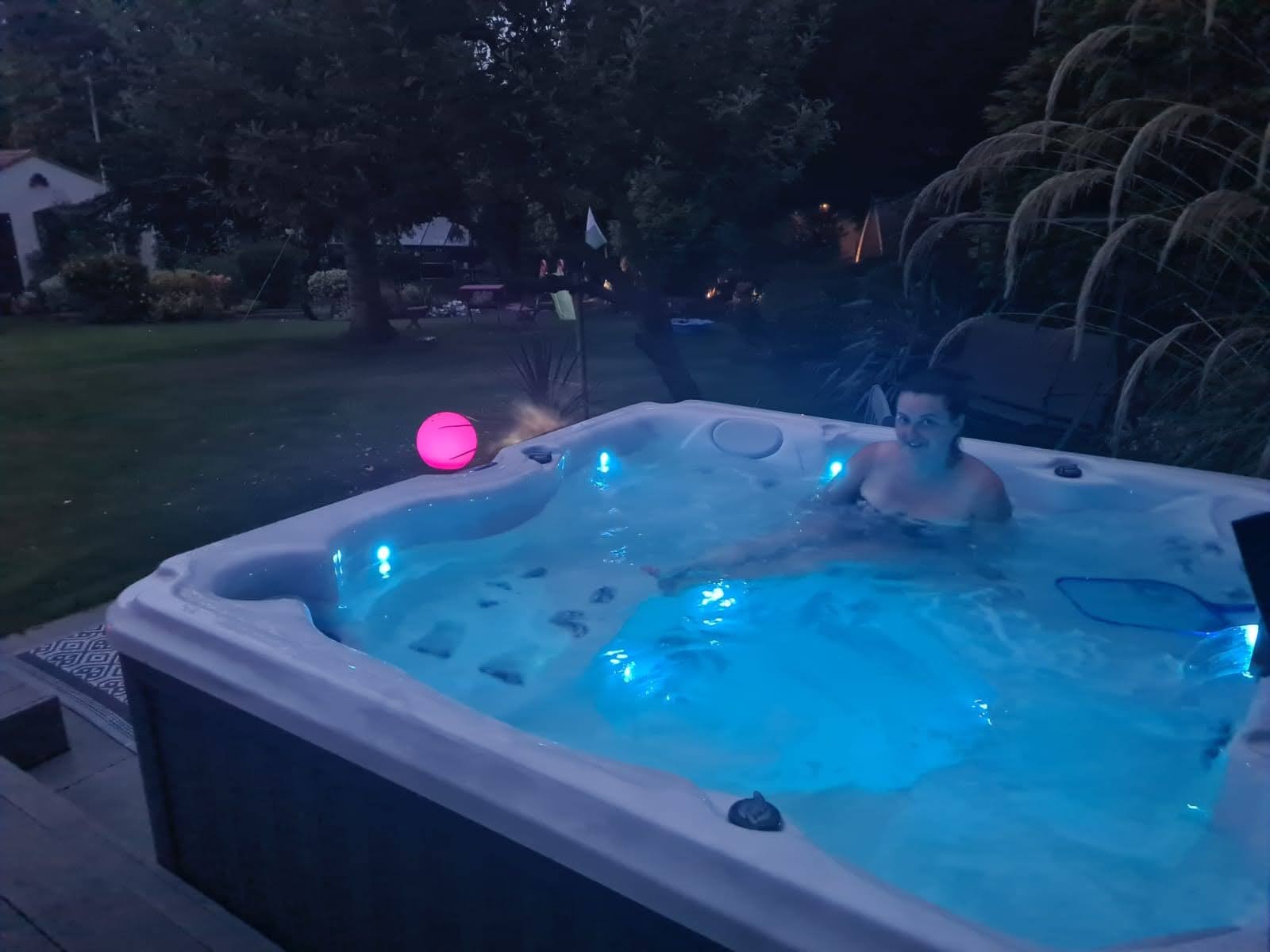
We stayed in a gorgeous AirBnB only ten minutes from the city centre. Within our accommodation, we enjoyed a full entertainment system, a garden and barbecue, a hot tub and even a lovely welcome pack of snacks. We enjoyed some late night cocktails in the tub and even saw a fox in the garden, at the ‘Foxes den‘, I would definitely recommend a stay.

I thought it would be a good idea to use the nearby park and ride to travel into the city, and better for the environment, but this ended up being a moral about never assuming you already know what is best! The park & ride ended up costing us about £8 and we still had to wait 30 minutes for a bus. I believe that just simply using the bus service from our accommodation would have been cheaper. Equally, we discovered on the second day, that there are actually some ridiculously cheap car parks in Coventry city centre, so never assume! It is always worth checking out Just Park or Parkopedia to be sure!

Visual arts

I was aware that Coventry had been declared the City of Culture this year, but I wasn’t sure how much culture was on offer. My previous experiences of the city had been rushed conferences and a university open day many years ago. From the first day of wondering the city though, I could see the reasons it had achieved this accolade.

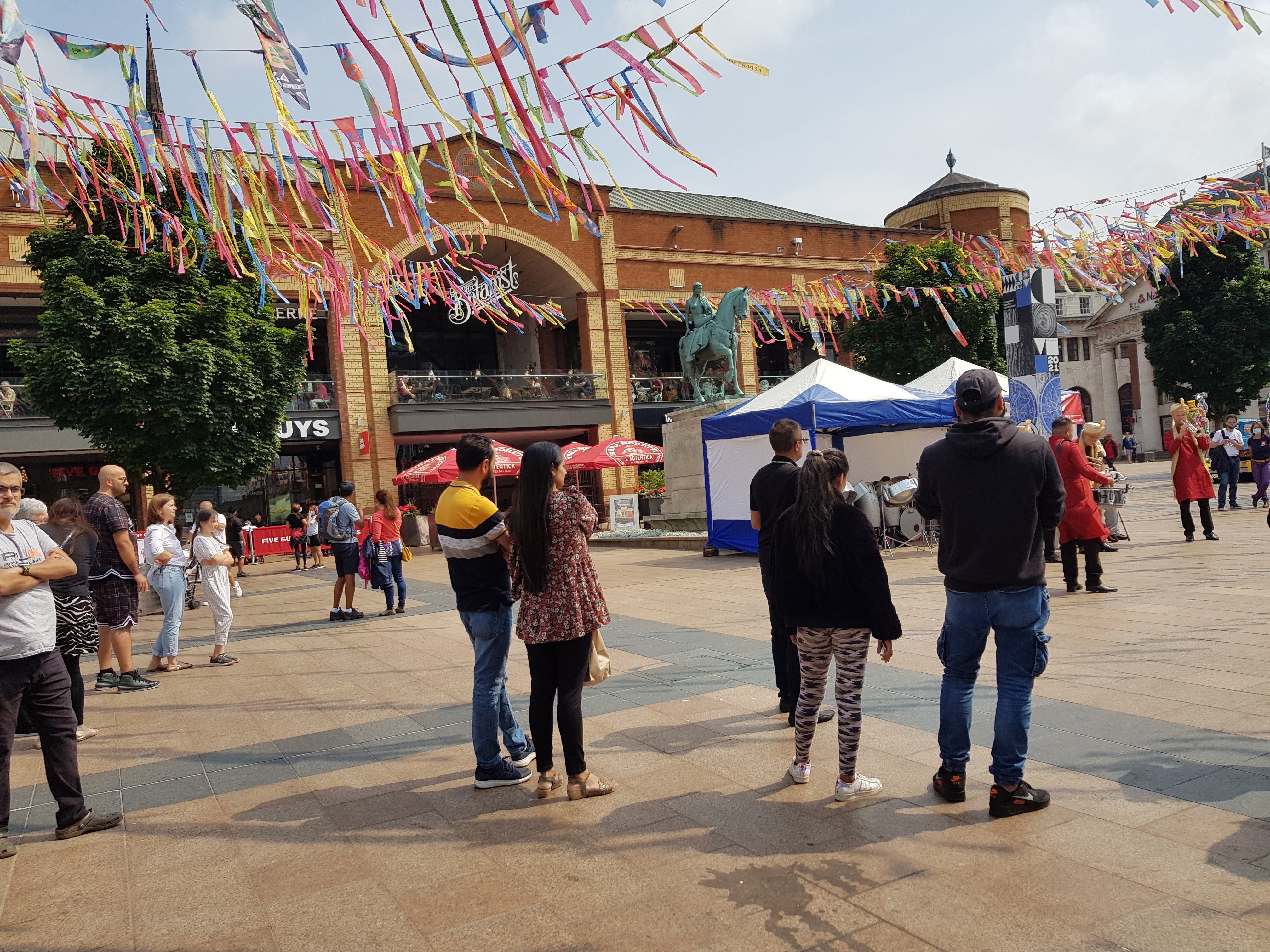
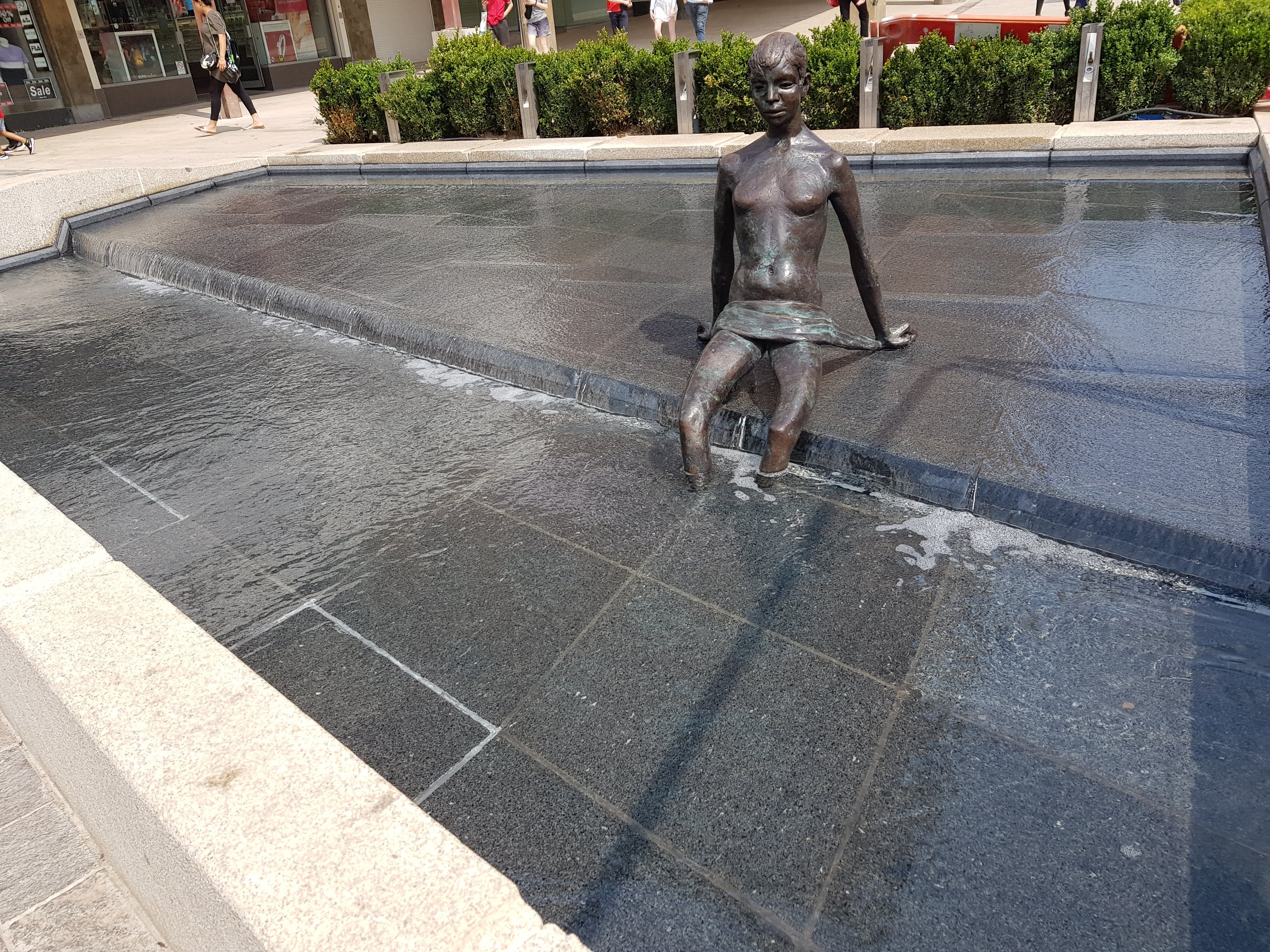
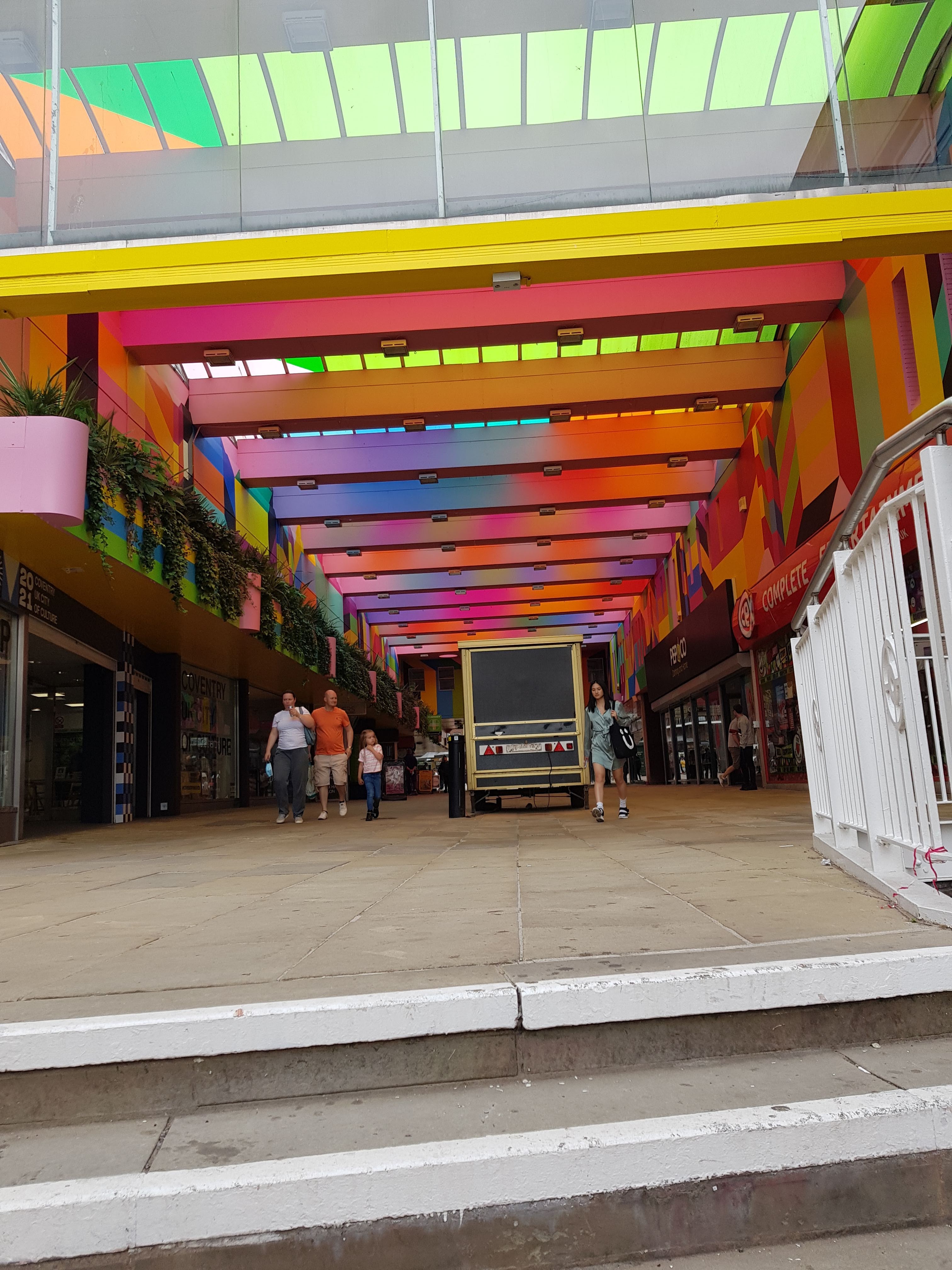
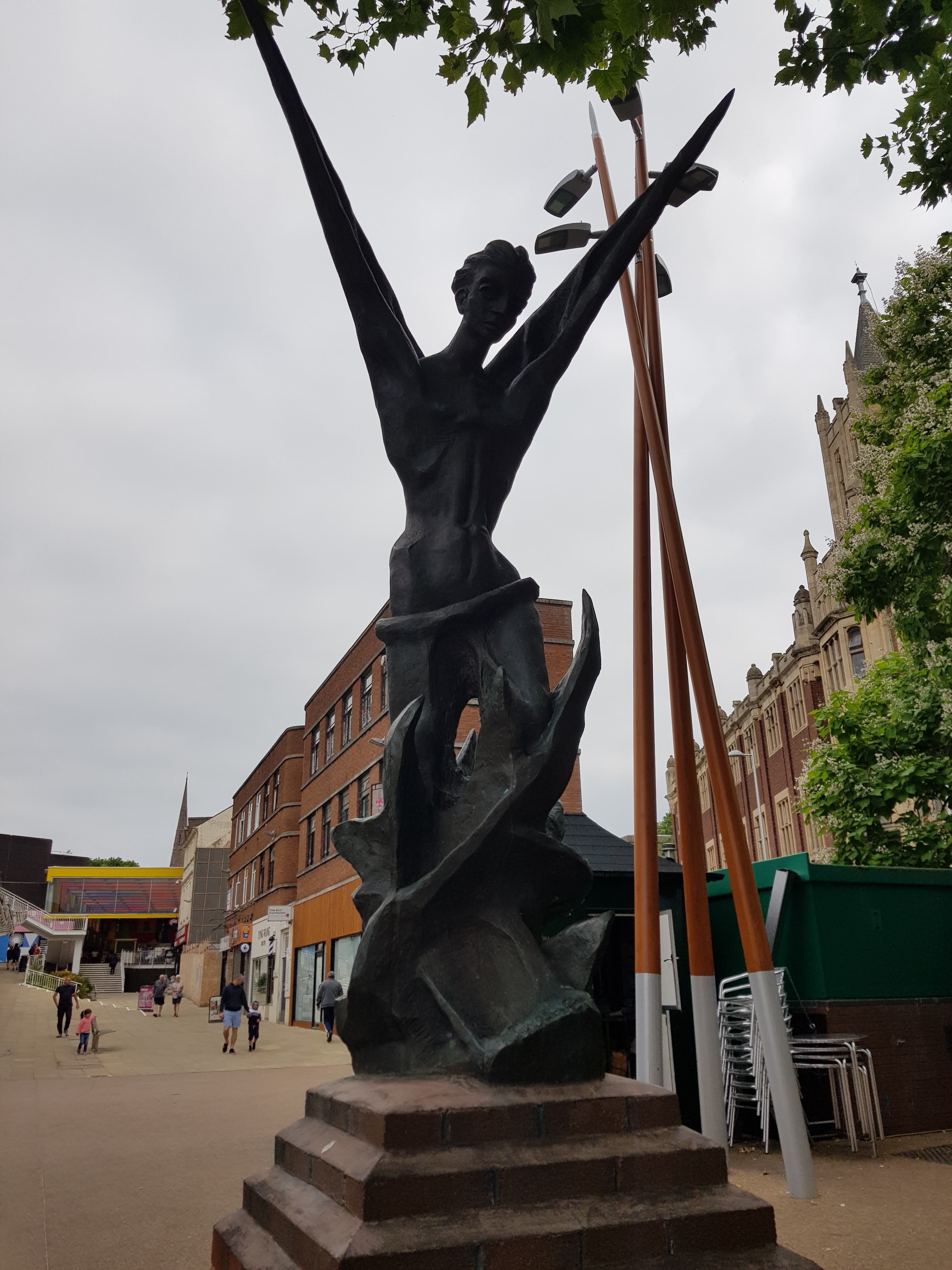
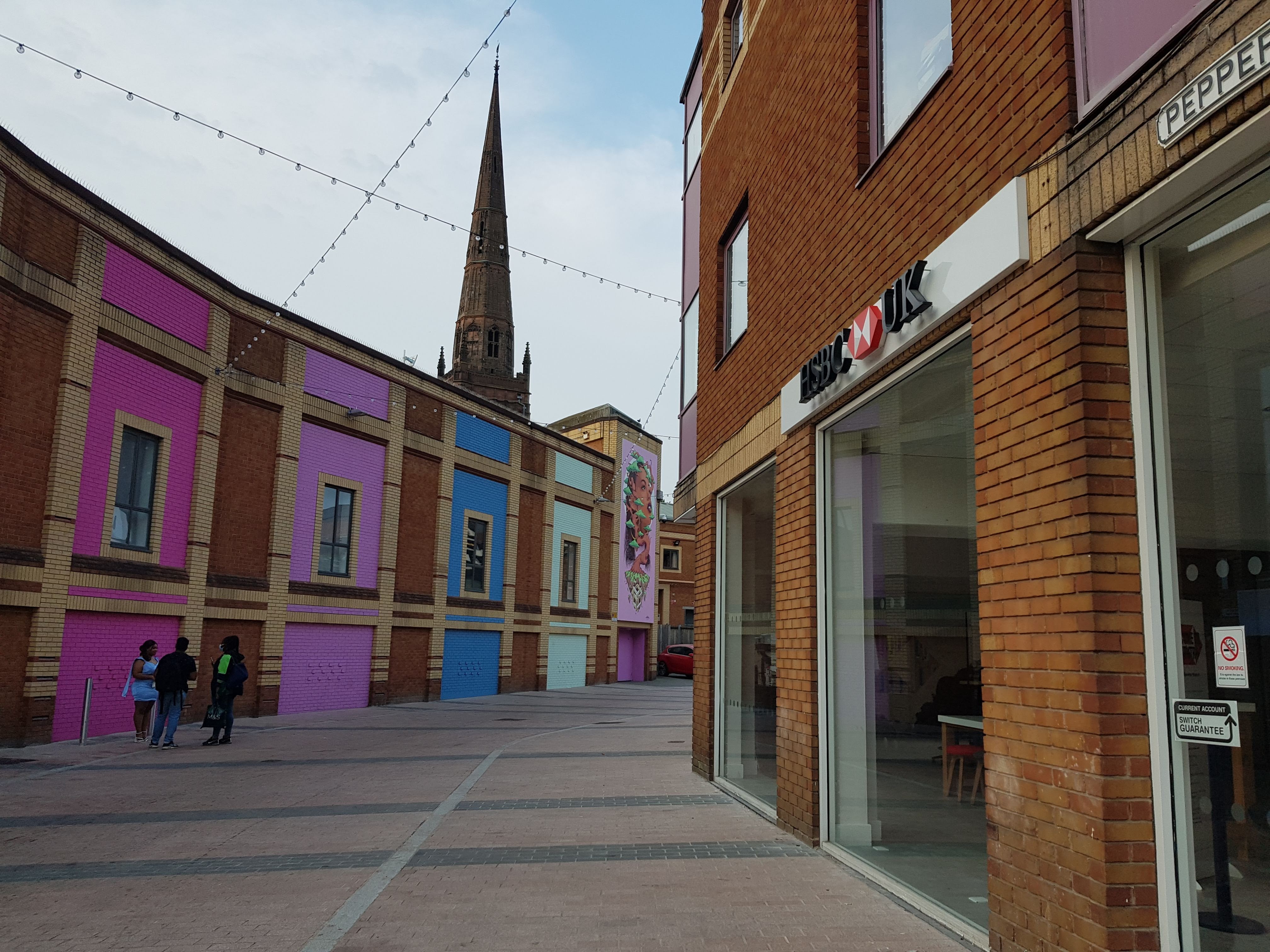
There are thought invoking sculptures and visual art pieces throughout the city, as well as various performances and events. There were lots of colours around through walkways, decorations and painted buildings. I especially enjoyed a rolling fountain instalment in front of one of the main shopping centres.

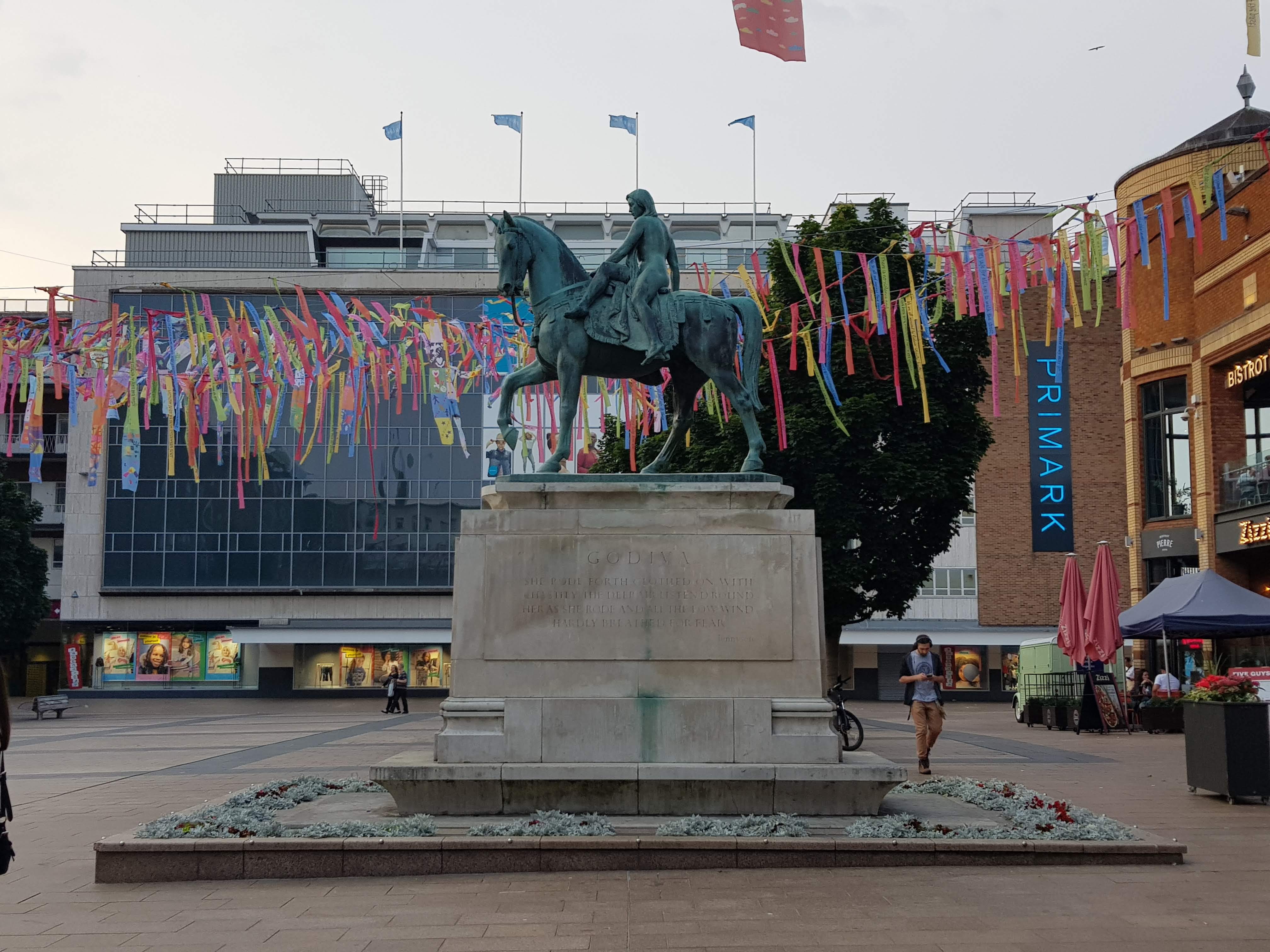
Lady Godiva

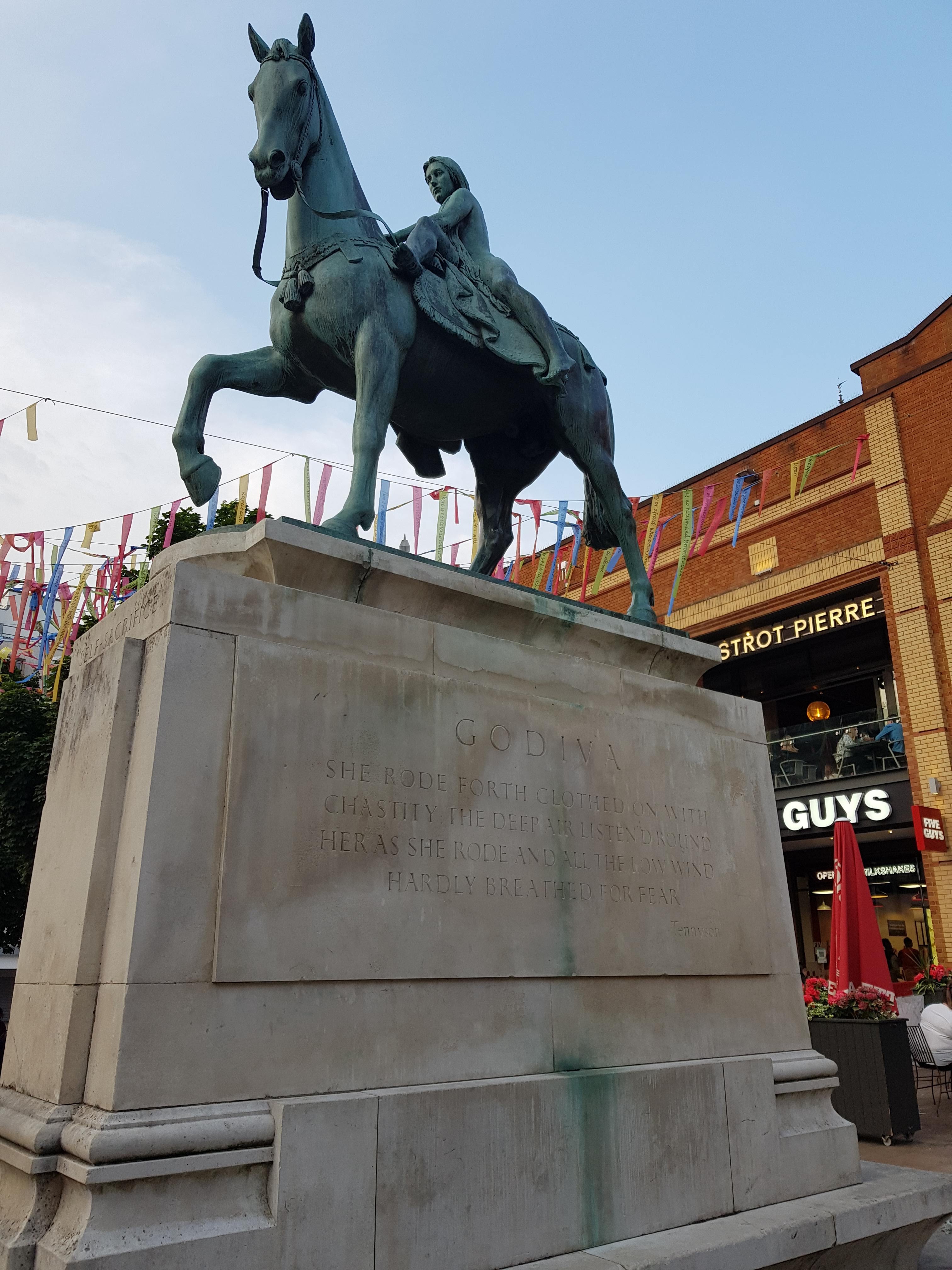
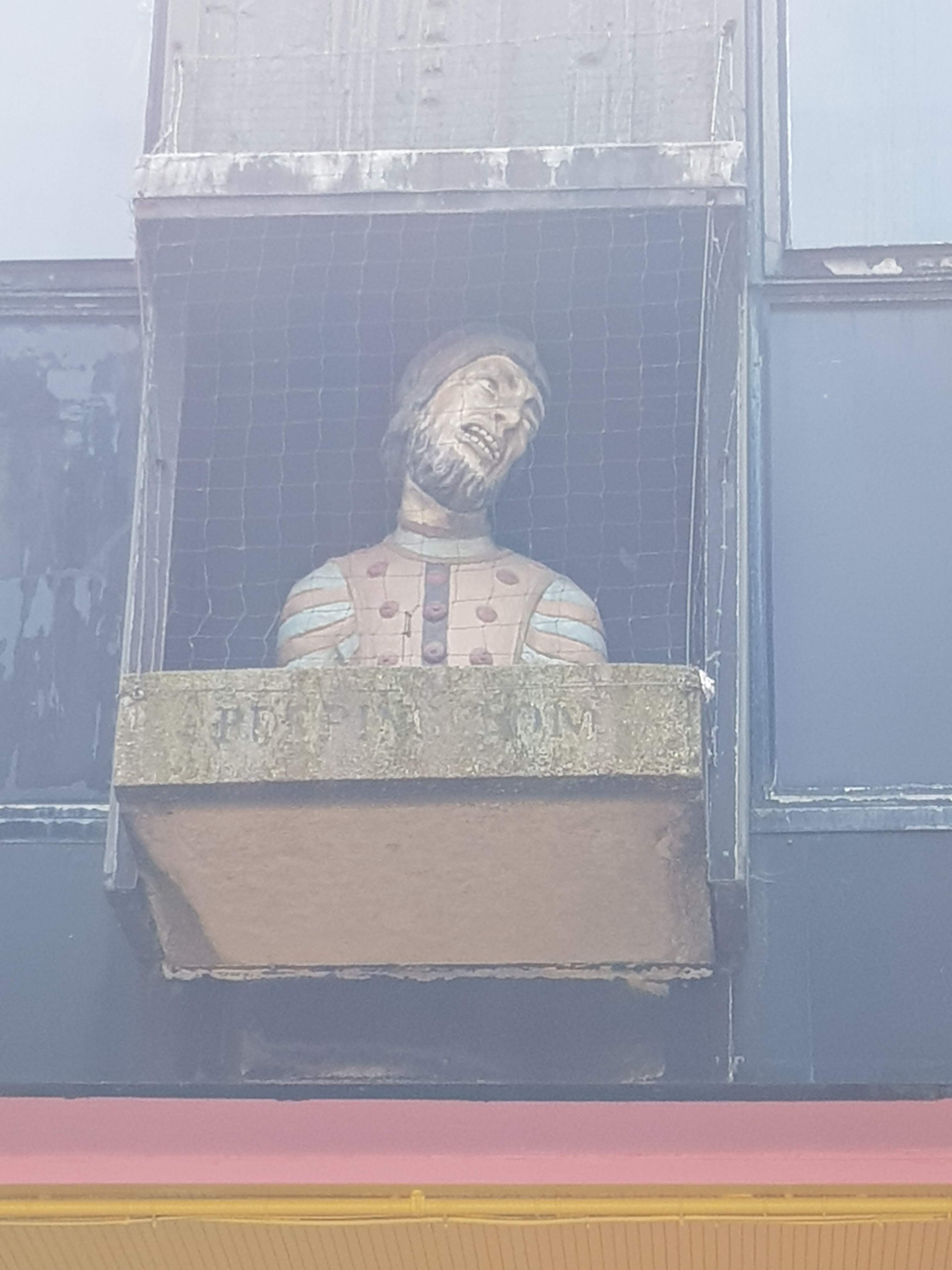
There is quite a lot of references to Lady Godiva around Coventry. Including a large statue in the centre of a vibrant square full of restaurants. According to legend, Lady Godiva was a woman who rode through the city of Coventry, completely naked in protest against her husband’s high taxes of the poor people of the city. The story says that she asked all the town people to close their window shutters and not look upon her, but one man looked and was immediately blinded as a result. This was ‘peeping Tom’. Obviously, this story is very debatable, but it is nice to have folk stories like this and Lady Godiva, as a key figure, is clearly well celebrated by the city.

History

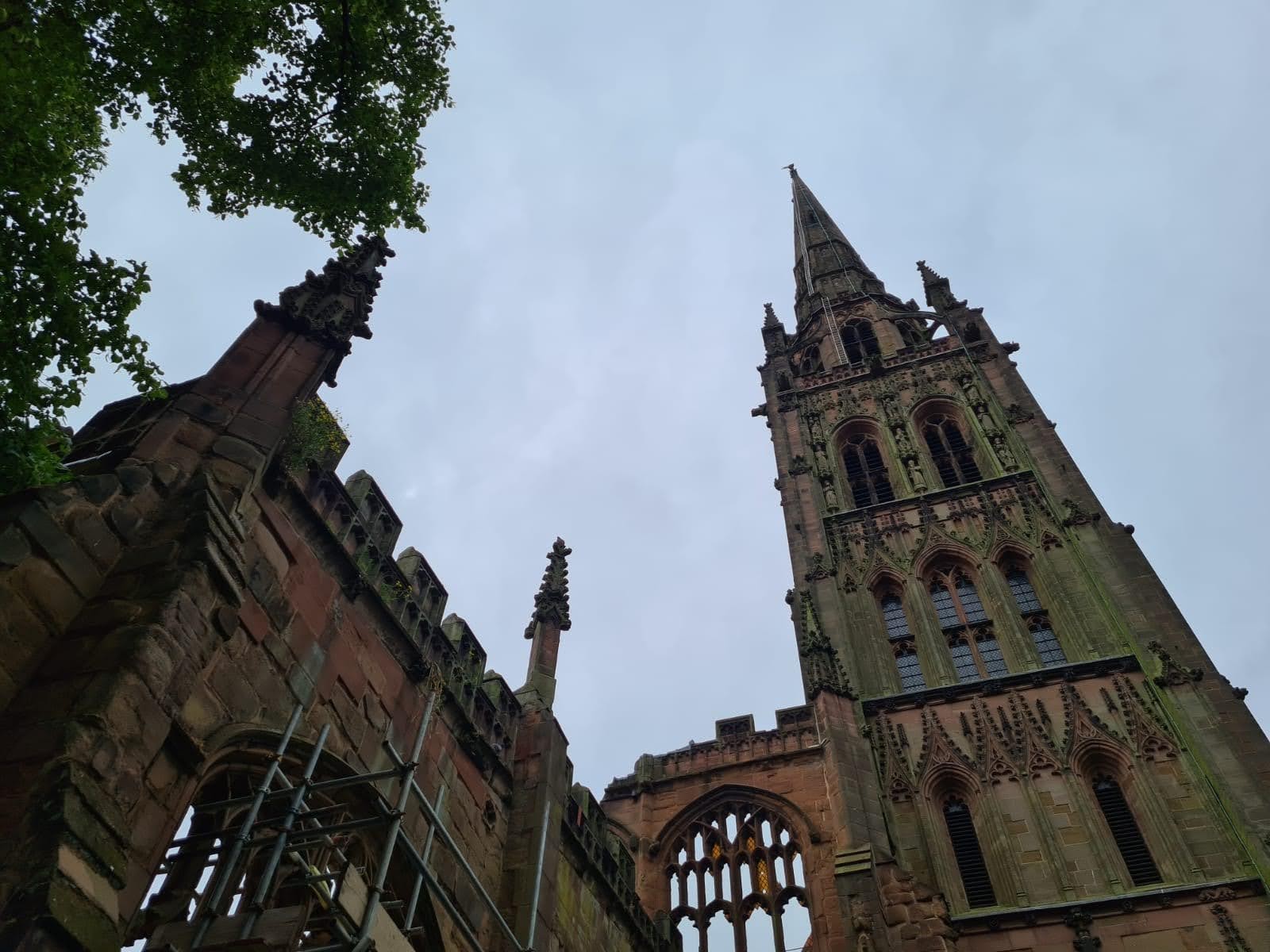
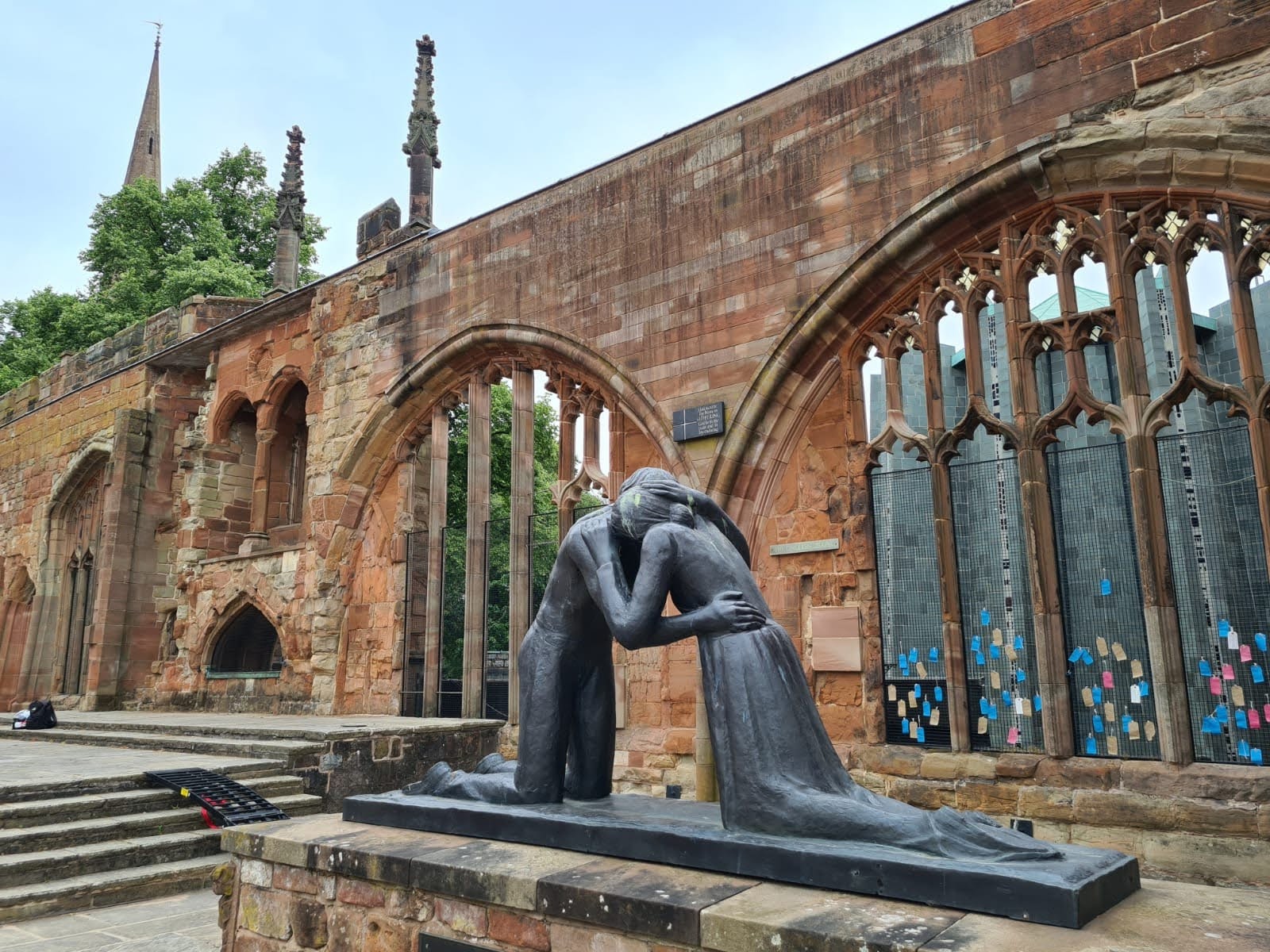
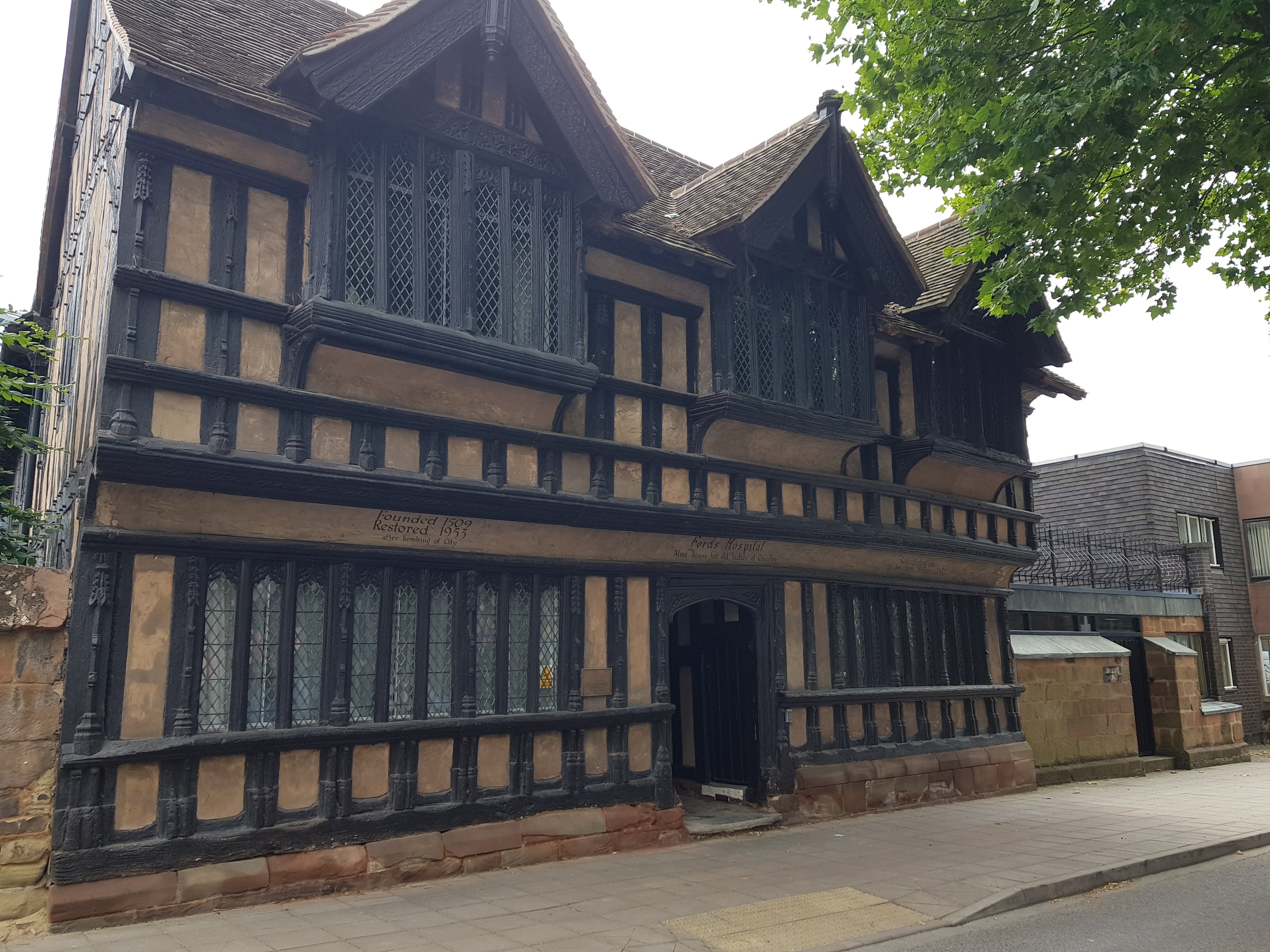
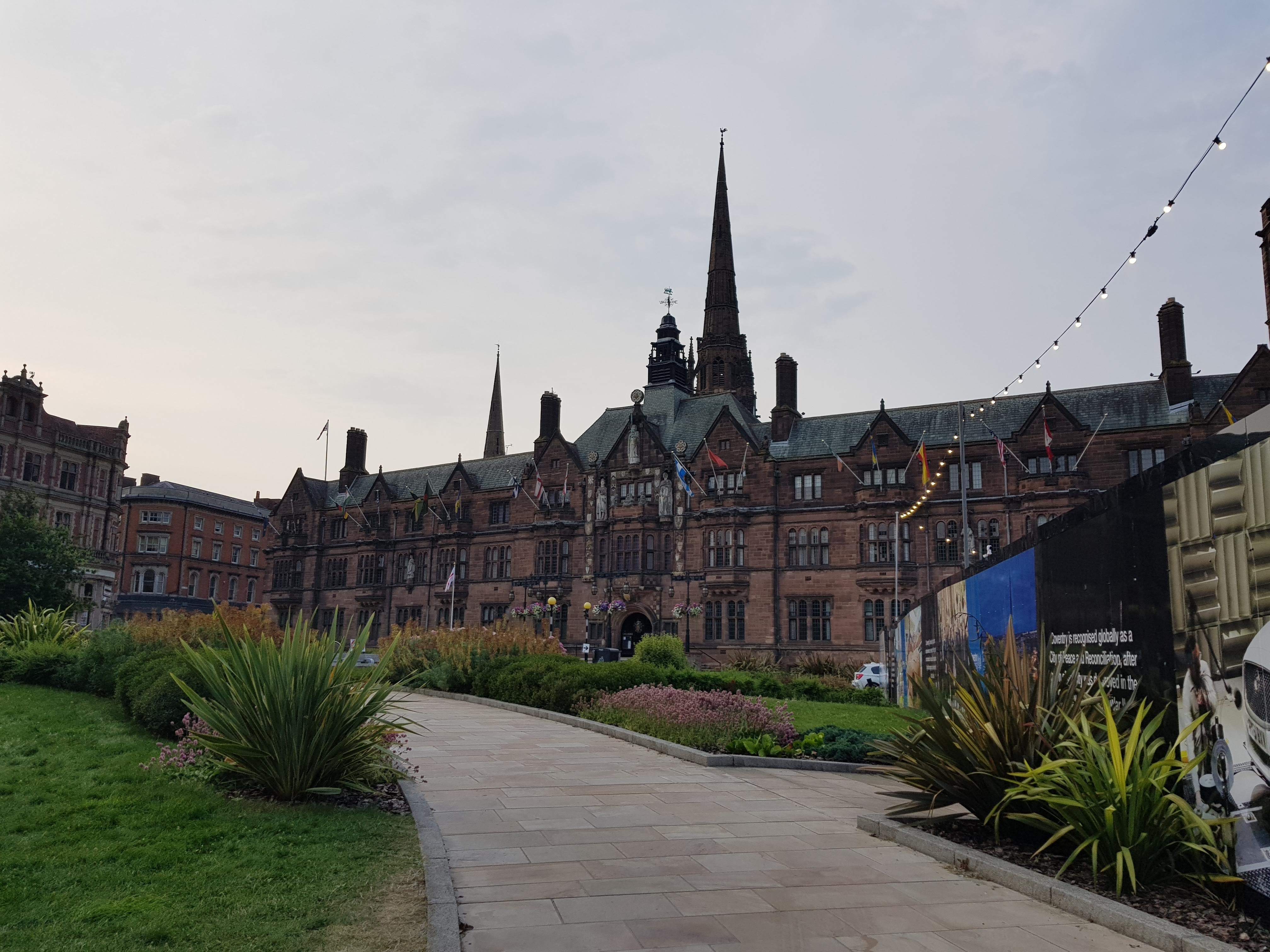
The city of Coventry has been around since before the Norman invasion of 1066, and dotted around the city are small remnants of the old walled city that once stood here. You can wonder through the old priory gardens, a medieval almshouse that is known as one of the finest examples of a timber work building in England, and of course the old cathedral ruins. The original cathedral was a priory dedicated to St Mary, and was founded as a Benedictine community by Leofric, Earl of Mercia, and his wife, Lady Godiva in 1043. This fell into neglect following the dissolution of the monasteries, under Henry VIII. Later, the parish church of St Michael was consecrated as the cathedral of Coventry in 1918. This cathedral did not stand for long though, as it was unfortunately the victim of bombing during the second world war, and was burnt down a long side many other buildings in the city. Shortly after, the community decided to rebuild the new and current cathedral as an act of faith, trust and rebirth. The building was consecrated in 1962 and still stands today next to the ruins of the old cathedral.

The old cathedral still has fragments of original stained glass hanging in place, easy for passersby to see. It is also a useful open space now, which can be used for events and exhibitions. There was even a classic car show inside the space when I visited. The space also has a number of sculptures that are captivating to the eye, especially the reconciliation statue. This symbolises the reconciliation and reunion of neighbours, loved ones, and countries following the second world war.

The new cathedral

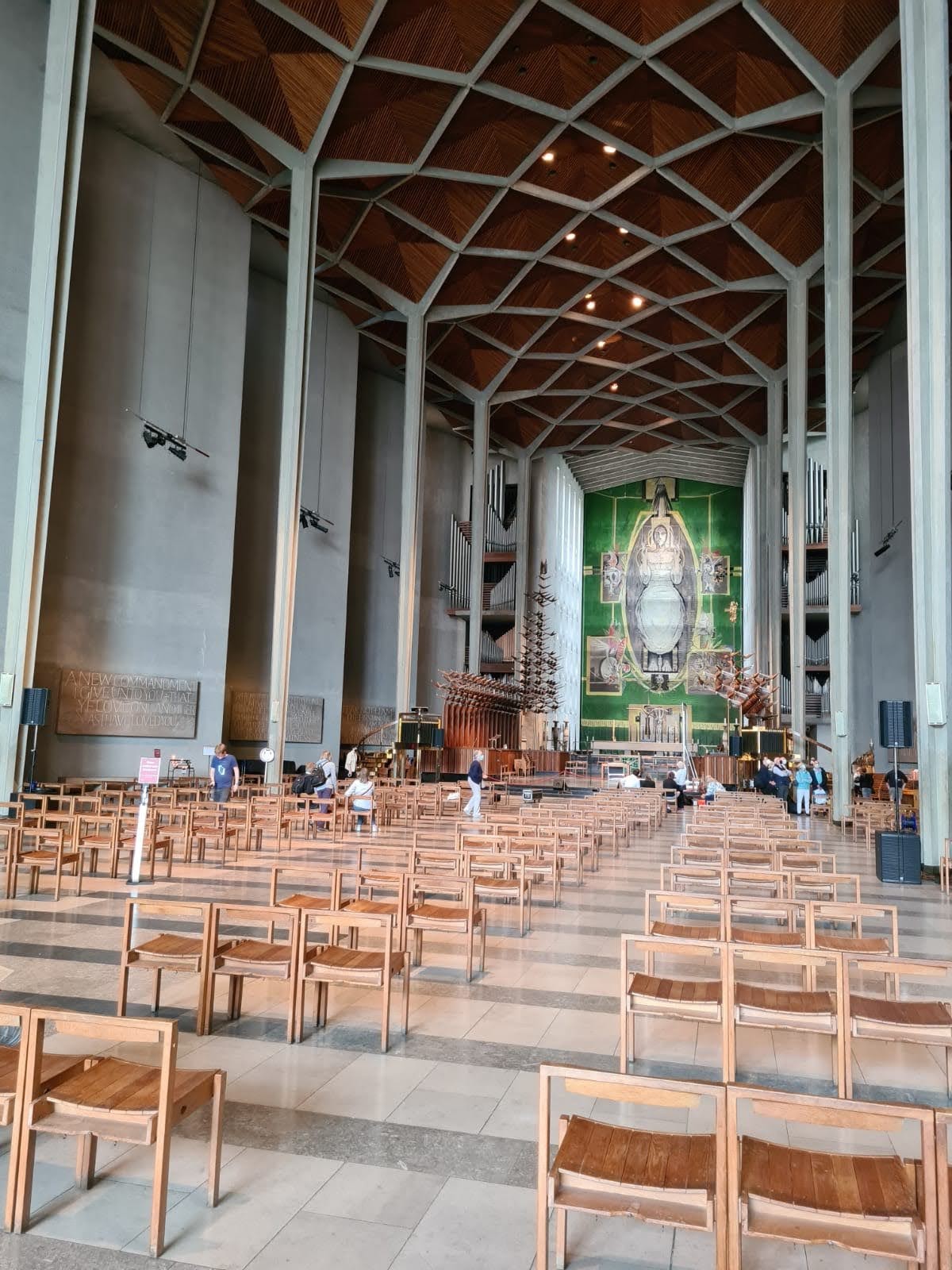
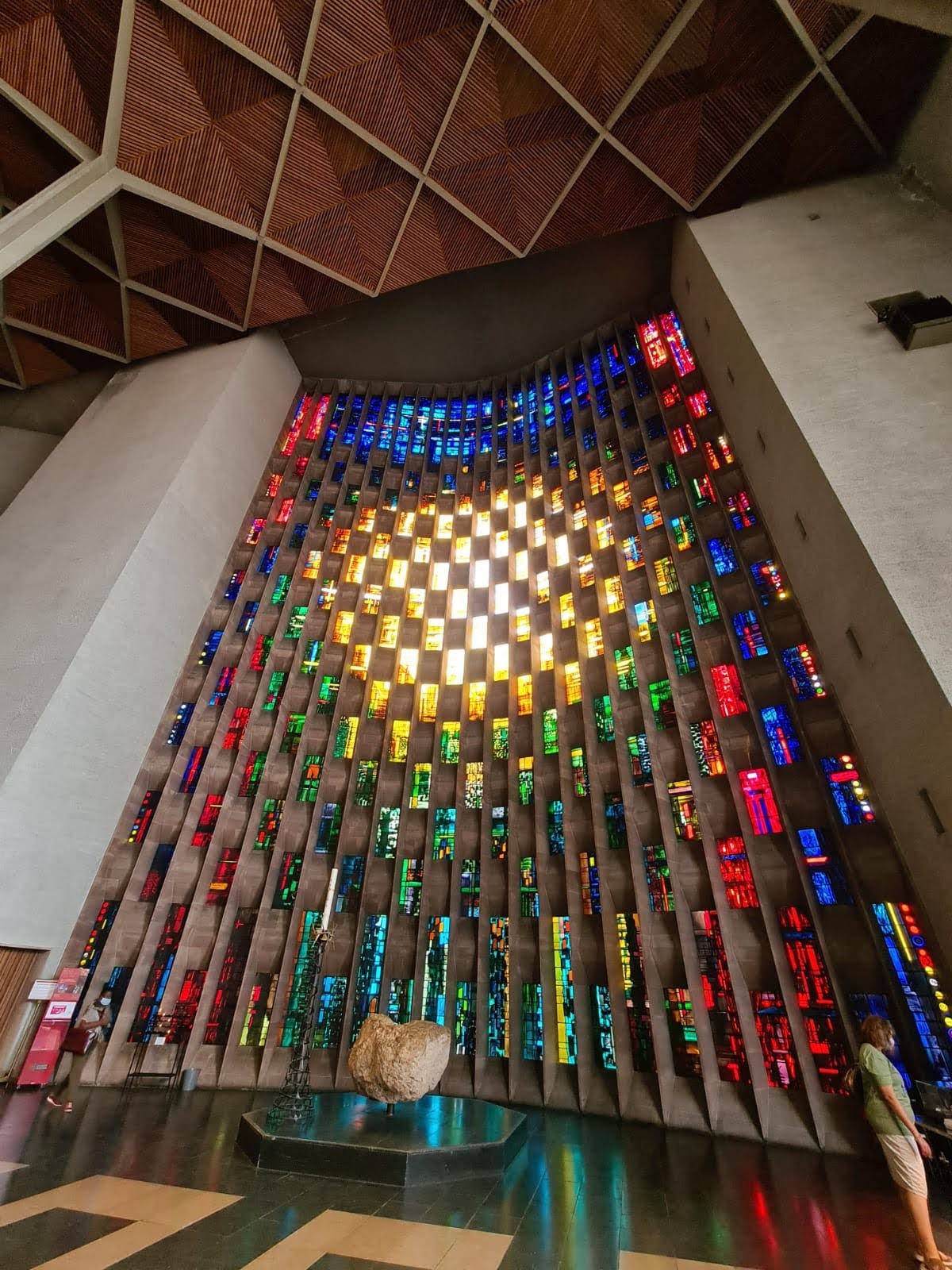
The current cathedral is a work of art in itself, it is a large cement based building, but has huge stained glass windows, and wide open spaces. It is a great example of a modern cathedral that has still mastered being a place of peace and reflection. We did have a booked time slot for the cathedral, but this wasn’t actually checked when we arrived, and we were able to just walk straight in.

Nightlife

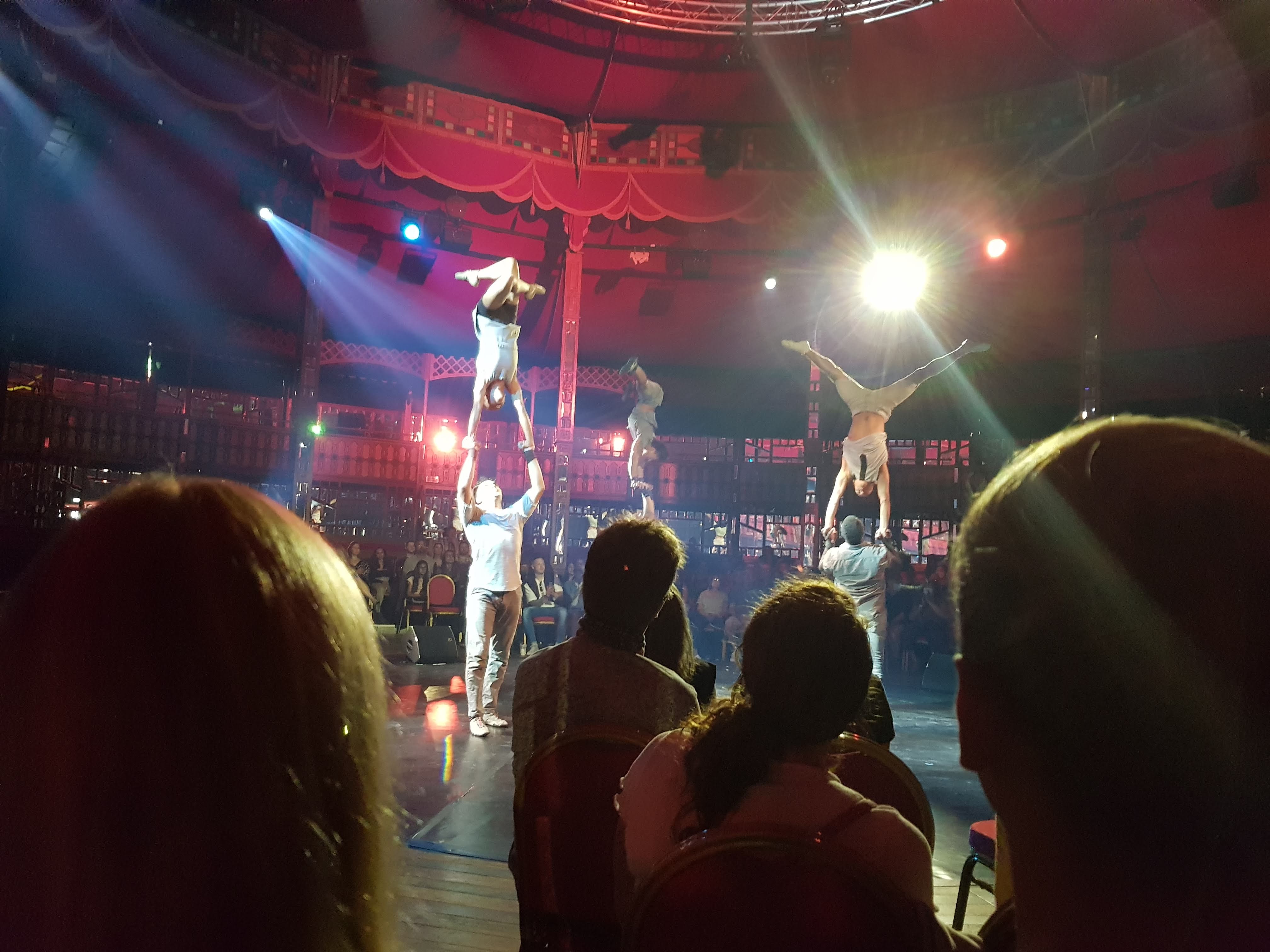
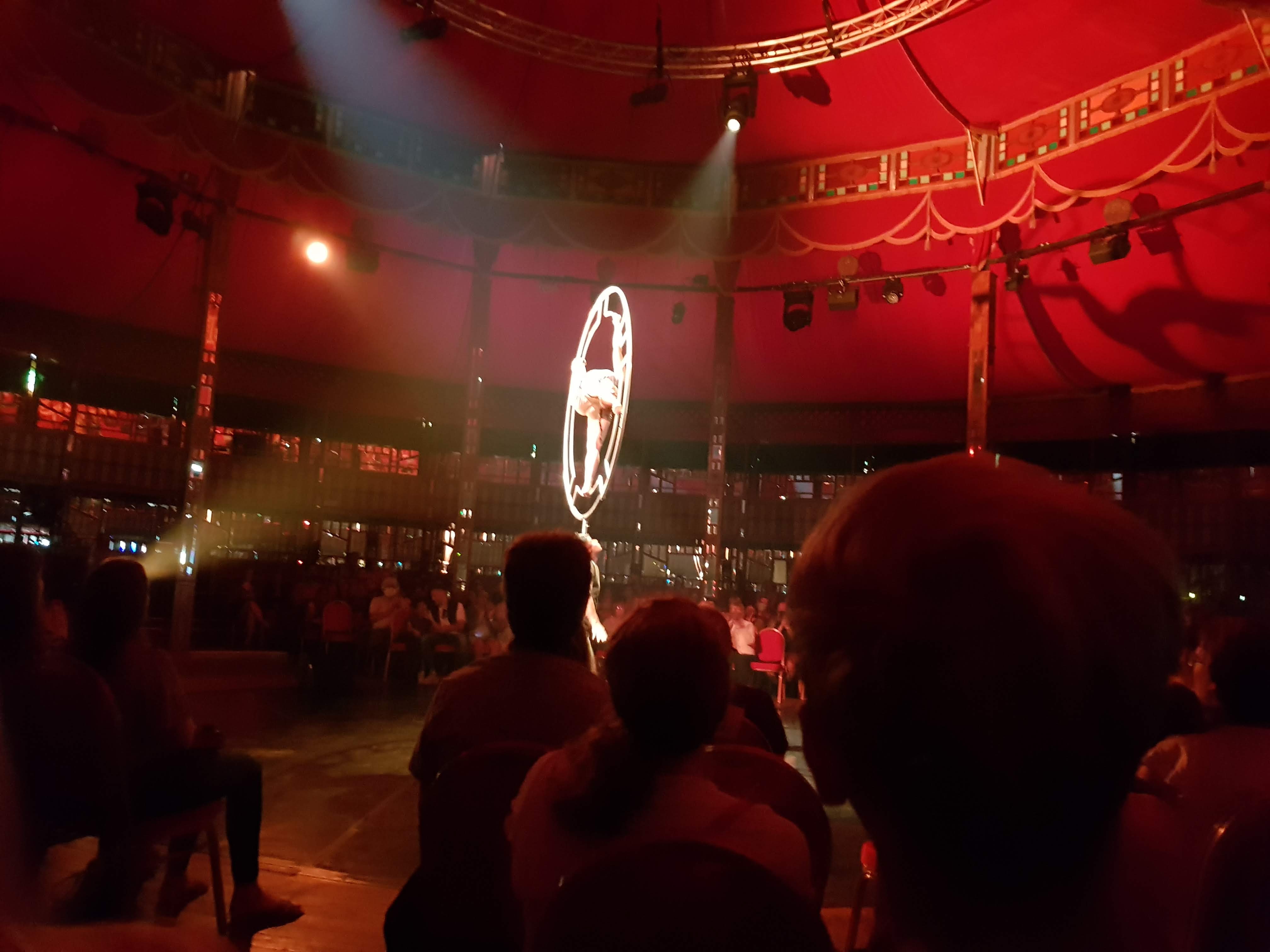
Whilst I was visiting, the city centre was holding a cultural festival in the assembly garden grounds, which seemed to be a pop up seating area with bars, mobile catering, stages and performance tents. Something that we booked for only £20 each was the Circolumbia show, which was brilliant value for money, and a great start to the evening. This was a circus, acrobatics, singing and dancing performance, that was done entirely by Columbian artists and themed on Columbian culture and music. This was so brilliant, and i spent a lot of the time during the show, gripping my seat, as the performers were doing things like standing on top of each other’s heads!

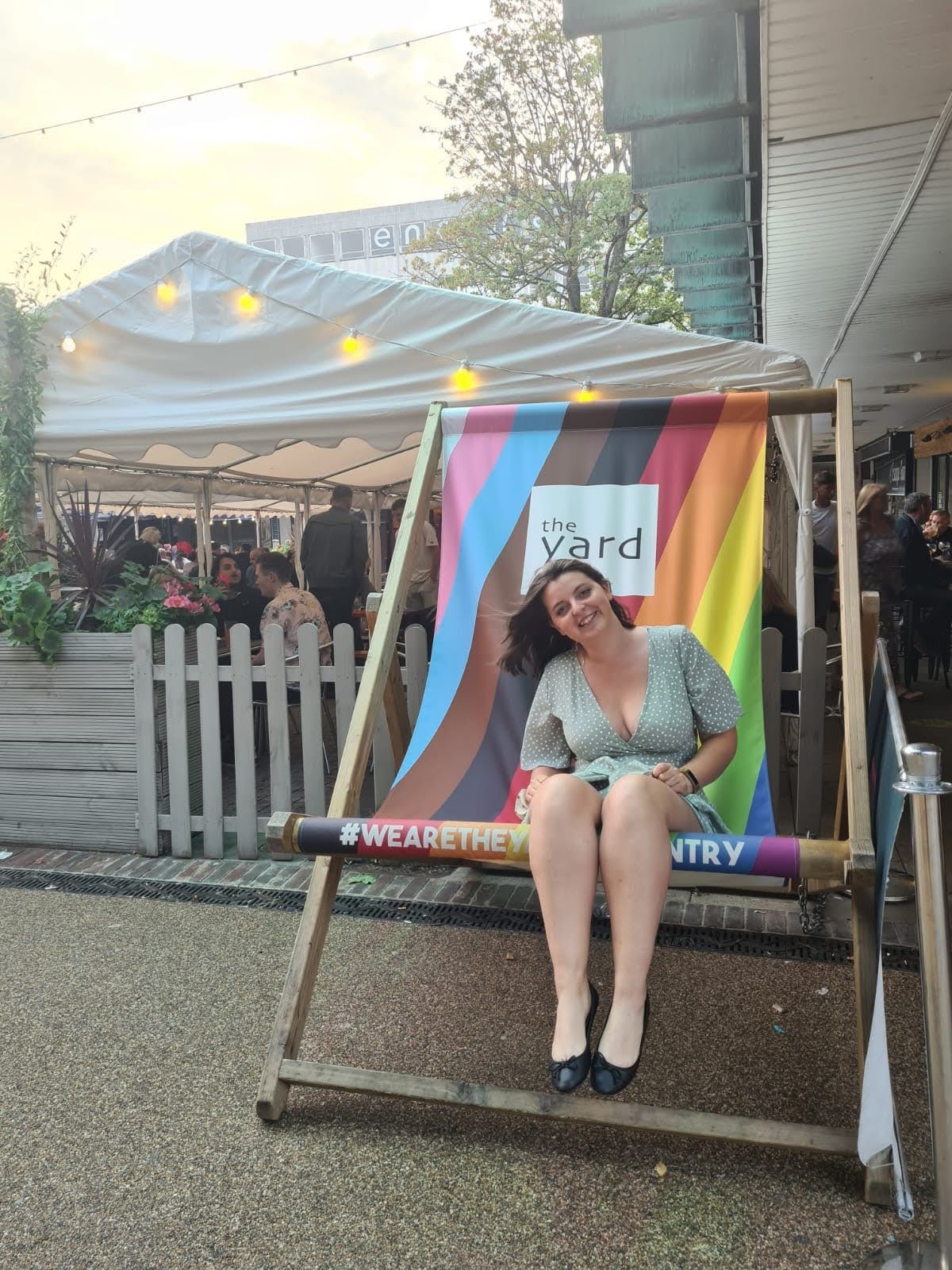
I also had a brilliant night at a bar/club called ‘The Yard’, which is known as the best and biggest LGBTQ+ venue in the city. The venue offered such an amazing time, we were there on a Saturday night, and they run a drag / cabaret show every weekend, so we were able to enjoy this. There was seating inside and outside, and we spent the evening dancing away with cocktails in hand, and managed to get an Uber back very cheaply at the end of the night.

In conclusion, I think Coventry is certainly full of culture, and a great place to let your hair down and just have a relaxing time, with lots of entertainment and engaging arts to be engrossed in. I would definitely revisit. It is also worth mentioning that it is in close proximity to Leicester, Nottingham & Birmingham, if you wanted to make multi centre tour out of the trip!

Brighton: the “London-by-the-Sea”

Now the lockdown has been lifted, I decided to make a visit to the seaside location of Brighton, to spend time with my mum and visit my sister whom lives in the area. The city is certainly a busy location for visitors with a wonderful mix of urban appeal, coastal scenes and a national park close by.

Brighton is a colourful, and quirky area on the coast, within the city of Brighton and Hove. It is only 47 miles or about an hour on the train from London. I drove to the area from Norwich, and stayed in a lovely AirBnB place just 20 minutes away in Hassocks. In order to truly appreciate the town, it seems important to wonder through the entire breadth of the area there.

Brighton has great public transport links with multiple train and bus connections into the town. Whilst car parking is available in the town, it is very expensive in general. You can access much of the on street parking after 8pm and if you use websites such as ‘JustPark’, you can find cheaper parking spaces that are privately rented out. We took the train on one day, which was great quality and cheap, and we also found free car parking via ‘JustPark’ in a bingo hall car park.

On first arriving, the coastal promenade and pier seemed quite similar to many other UK seaside towns, and my first impression was not good. It seemed quite dirty, and ran down, with a horrible mix of 1960s buildings, letting down the setting of neighbouring Victorian architecture.

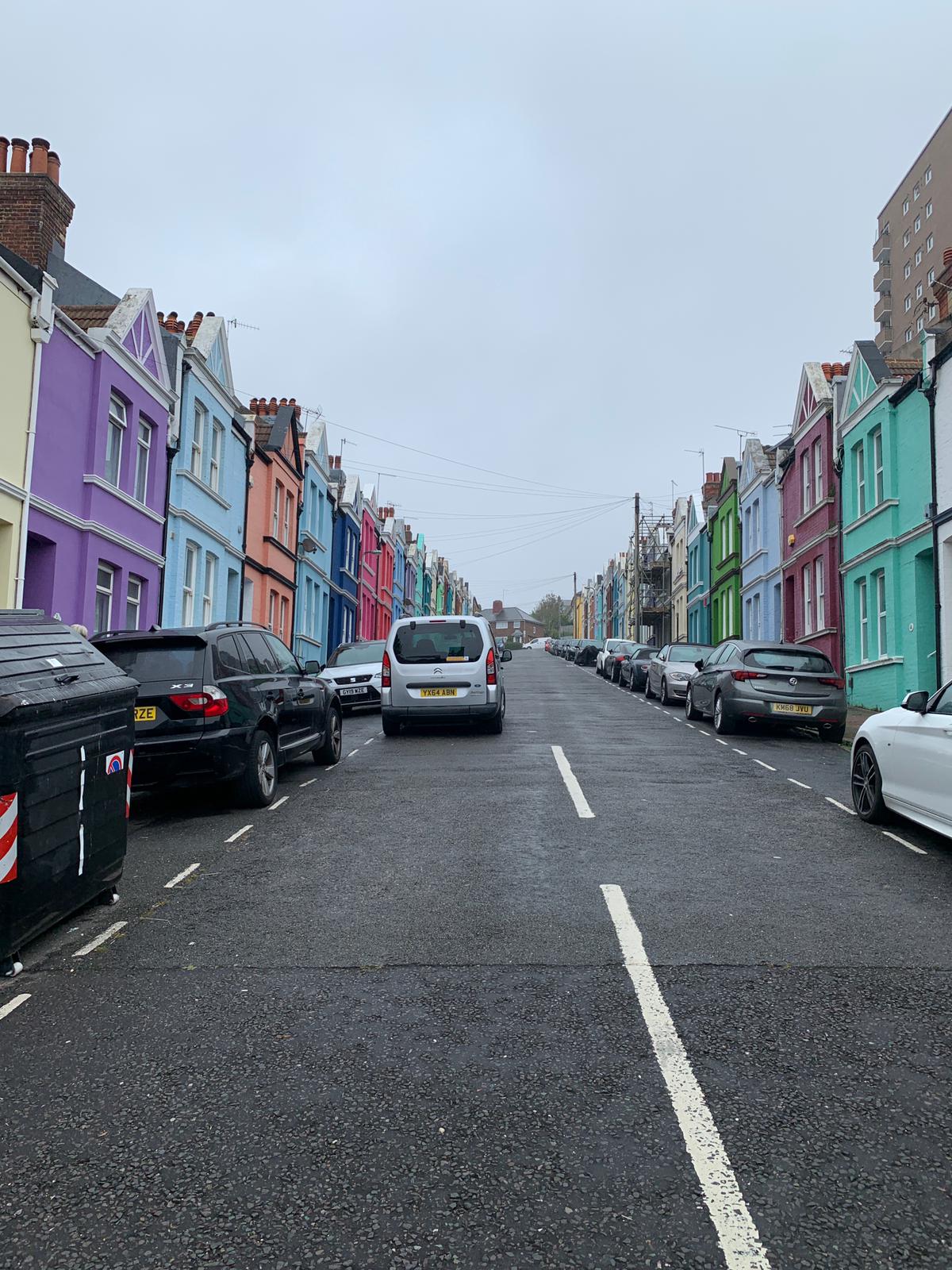
As I explored other roads though, it became clear that different elements of the town have their own feel, and have been transformed to meet the leisure demands of visitors and residents. The town has several hills running up from the coast, and as you wonder around, you will find streets that have been painted different colours and other buildings linking to the rainbow icon that is linked to Brighton’s LGBTQIA+ scene.

LGBTQIA+ (Lesbian, Gay, Bisexual, Transgender, Queer, Intersex, Asexual) scene

Brighton has historically become a sanctuary for those in the LGBTQIA+ community to express themselves, thrive, and a base for challenging prejudice behaviour. Many key locations such as the Marlborough pub & theatre or ‘the marly’ and Kemp town have been created as landmark locations.

Photo by 42 North on Pexels.com

There is also a collection of landmark events such as ‘Brighton Pride‘ and ‘Trans Pride‘, and famous names that have made the town their haven and home, including key figure Oscar Wilde. In recent years, the community have struggled to keep hold of these statement locations, due to increased demand for development of housing, gentrification and the use of the LGBTQIA+ identity becoming an attraction itself, perhaps unethically, through the promotion of tourism. This has led to political friction between economics of the town, and the community identity. Currently, a large part of the LGBTQIA+ community are protesting against Brighton Pride, and other activities that create the feel of LGBTQIA+ people becoming a circus attraction. This phenomenon is known as pink washing.

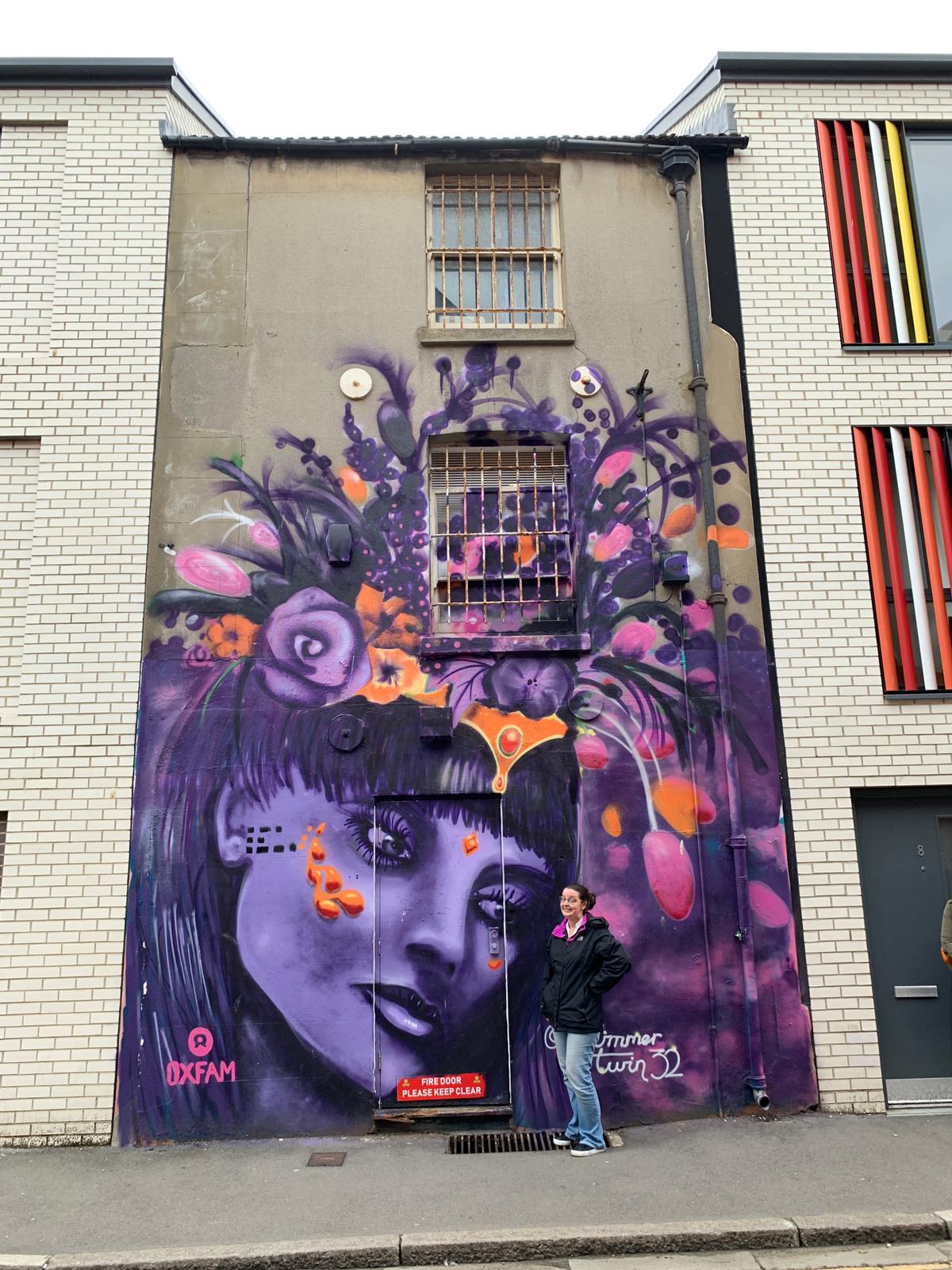
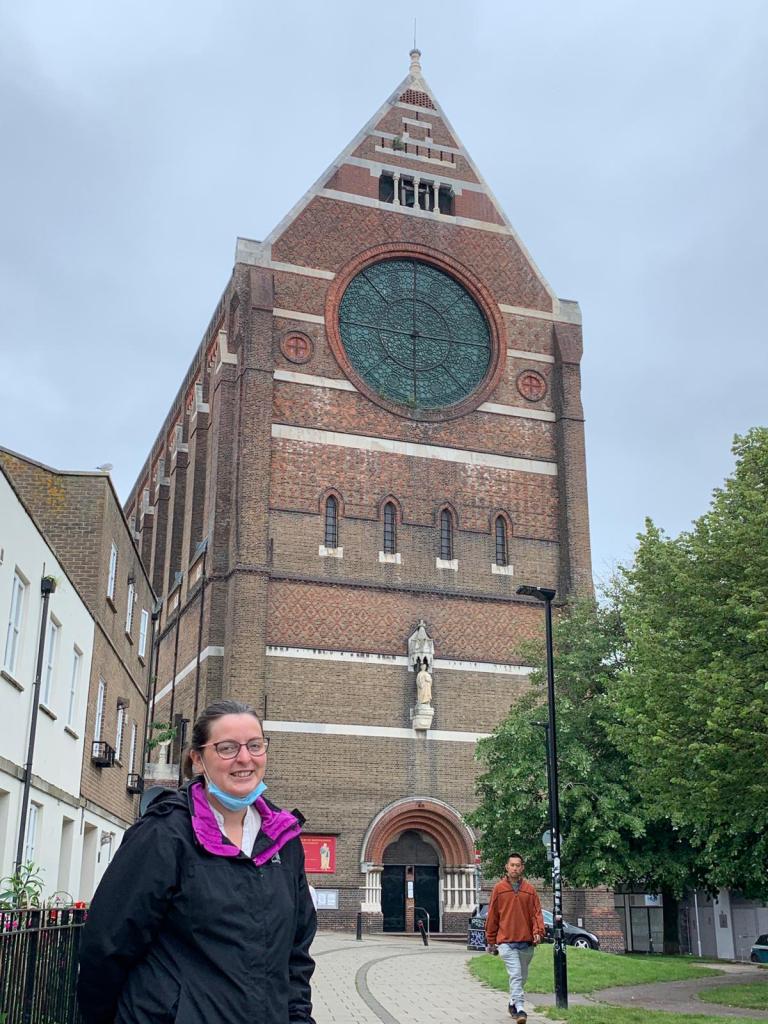
Throughout the town, there is lots of street art expressing different social issues, topics and just generally impressive art. There is no cathedral in the city but a church that is considered to be the area’s nearest best thing, is St Bartholomew’s church, which is very large. The reason for this, is that the Victorian building was created to be approximately the size of Noah’s Ark, upside down. There is also an upside down house in Brighton… what a strange place!

The Lanes & other popular spots

When it comes to spending your pennies, and enjoying food/drink as well as shopping, it seems that there are three main spots that are popular.

There are several chain stores and restaurants in the cheaper ‘marina’ area down the coast from the centre. This is accessible on foot by walking along the coast, a 20 minute bus ride, or by car.

When walking along the beach promenade below the road, you will see a number of restaurants, shops and attractions in what is known as the ‘seafront arches’. We visited the queer friendly ‘Loading Brighton’, a gaming café linked to ‘the marly’, and spent a few hours there enjoying milkshakes and board games in a few comfy sofas. You will also find the Brighton fishing museum in this stretch of bricked arches.

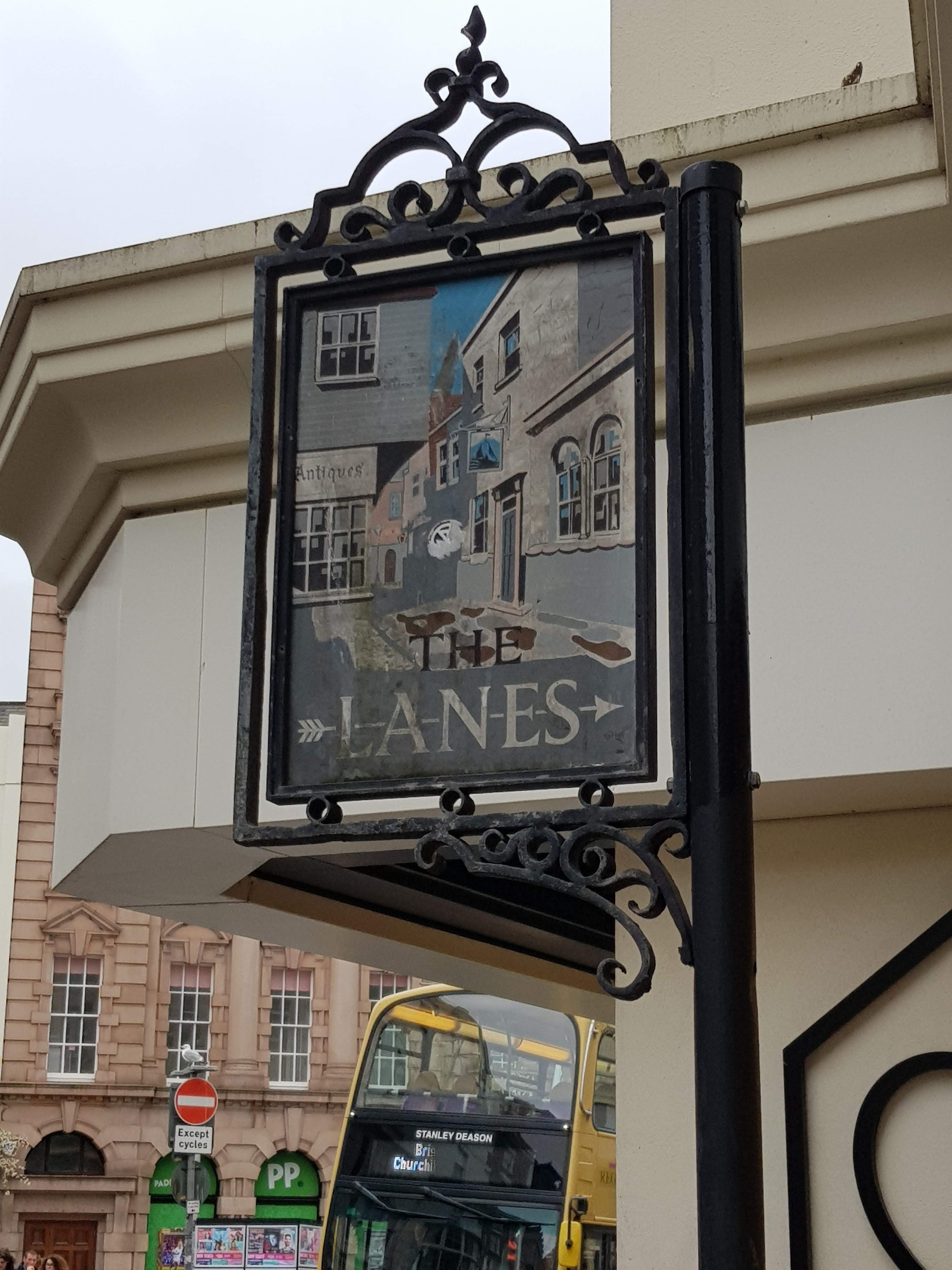
The most well known location for shopping and eating is an area further within the town, named ‘the lanes’. I had a feeling of what to expect here, as Norwich also has ‘the lanes’ as a concept. In Brighton, it is a network of small streets and alleys, that are bustling with independent shops and eateries. We also went down one road that was temporarily closed, which I can only assume was a Covid related innovation by the council. The retailers and restaurant owners were using this an opportunity to spill out into the street, and create a great market vibe. It was very busy, and full of bargains!

the lanes
The Lanes

Royal Pavilion

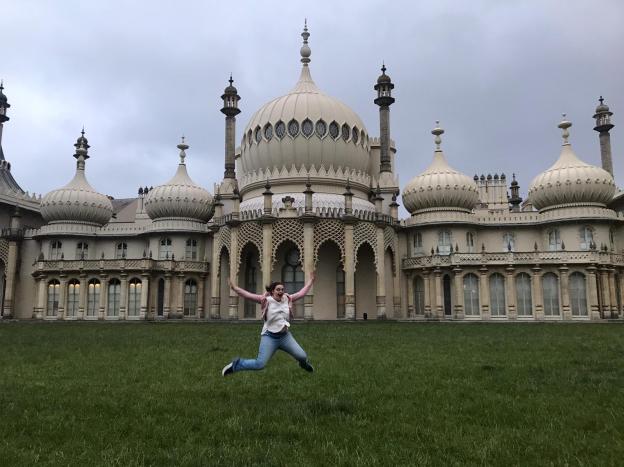
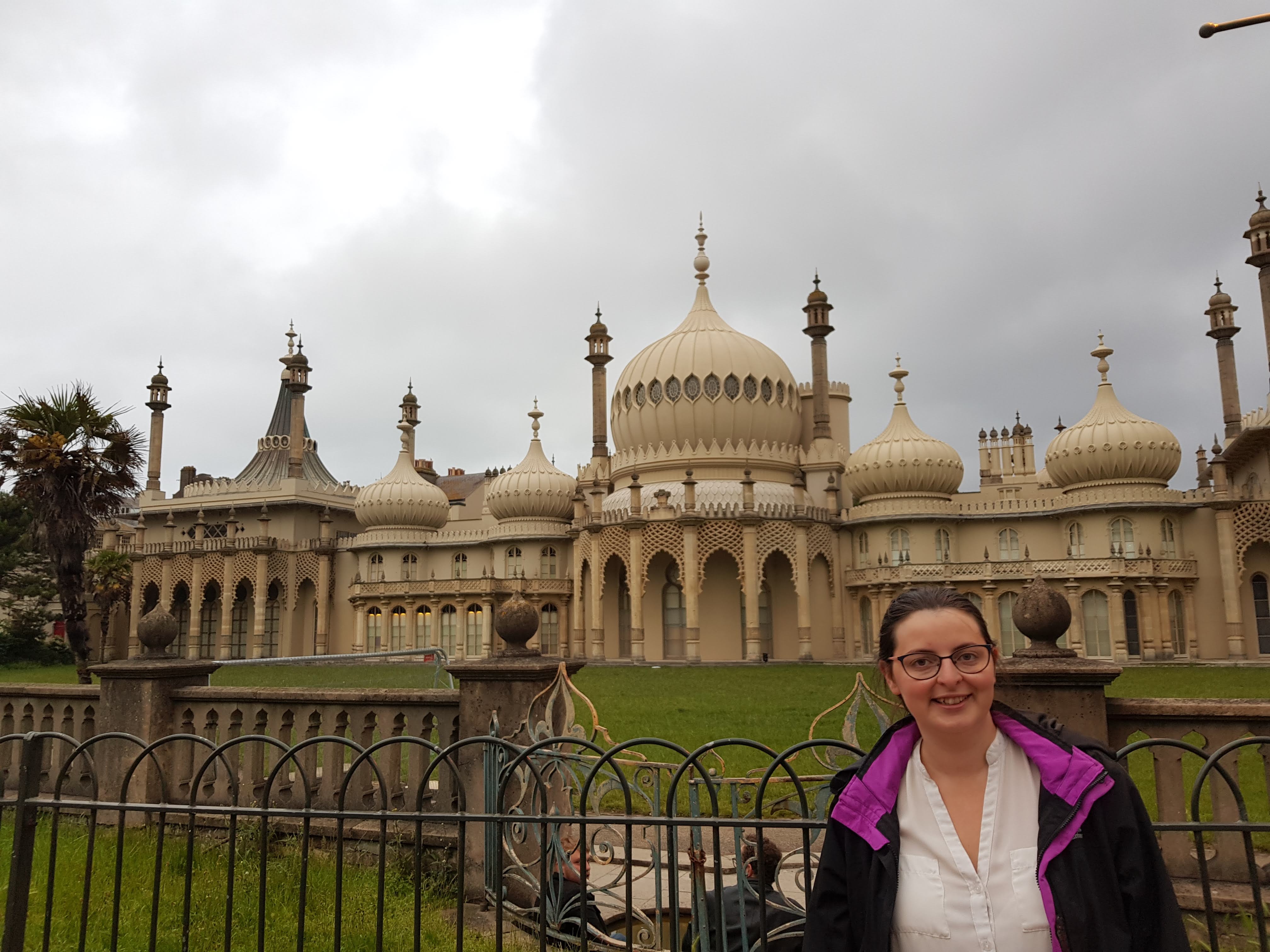
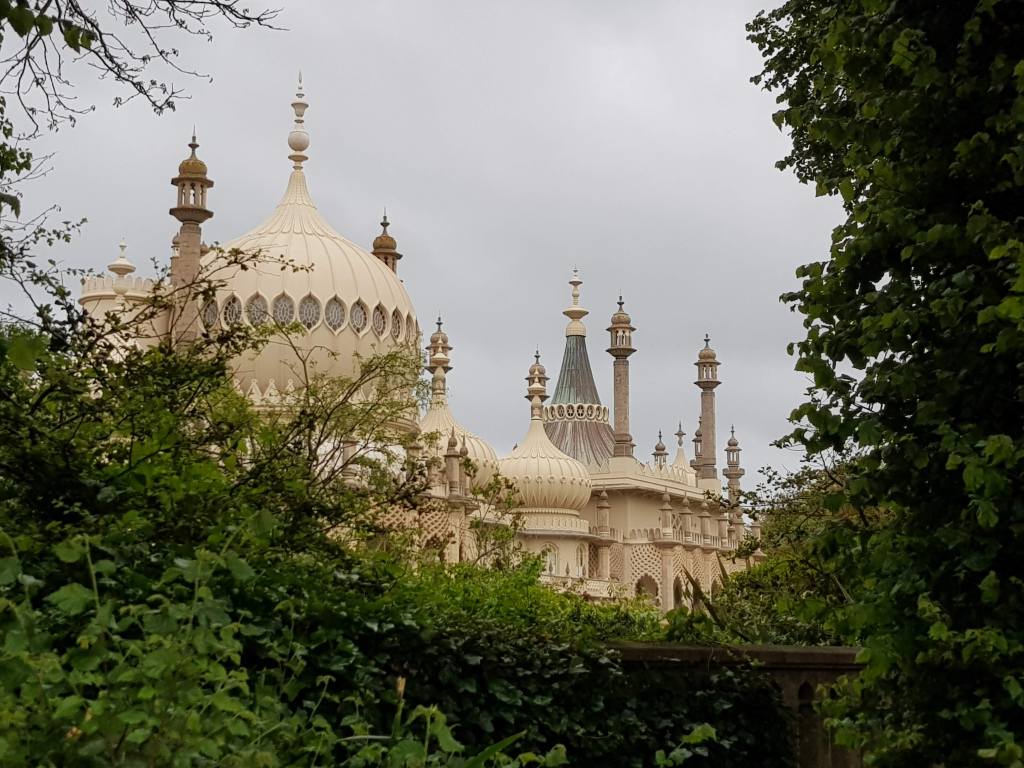
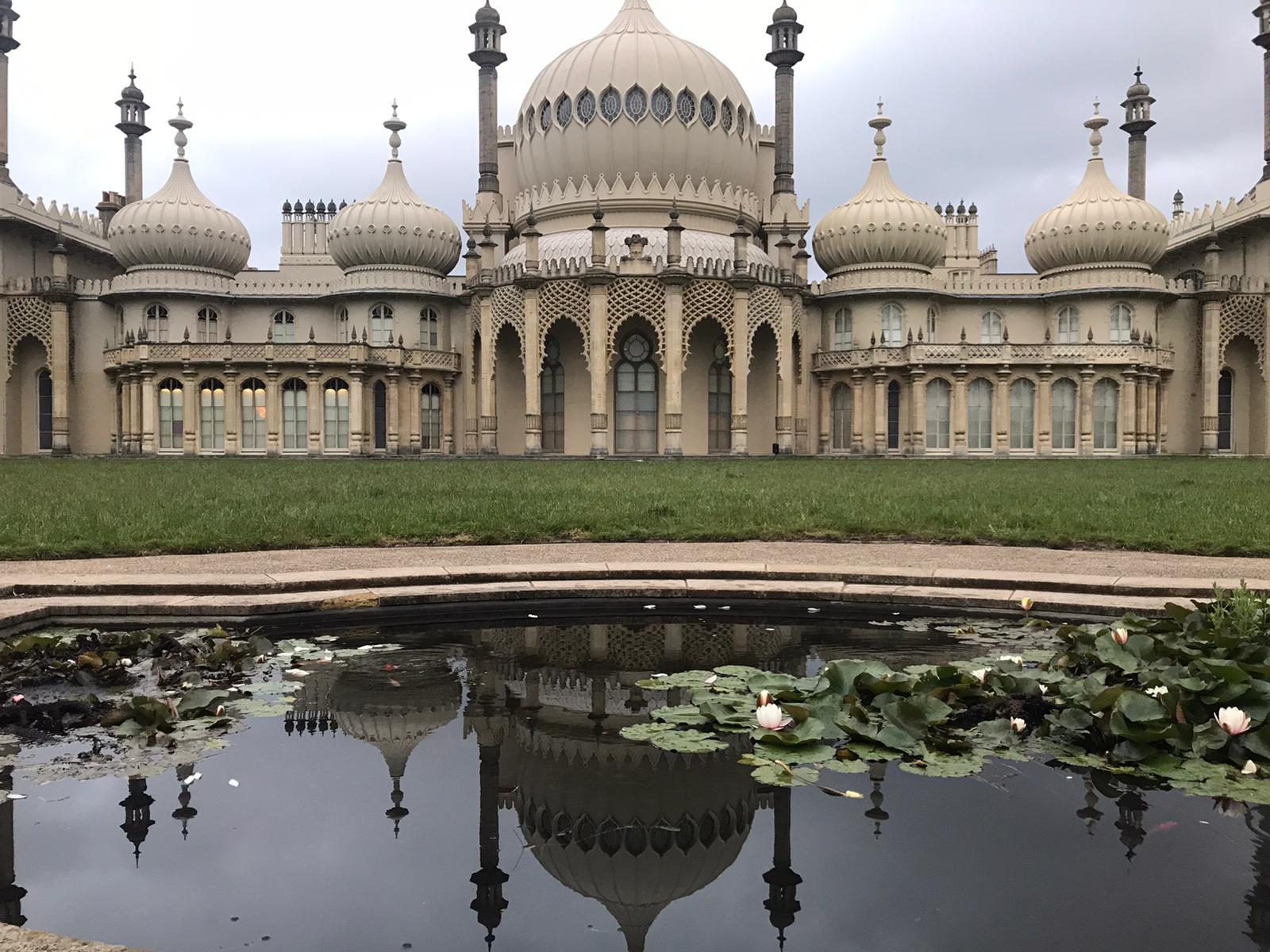
Just beyond the lanes, you will enter into the cultural quarter, this is the home of the world famous Royal Pavilion and Brighton Dome. This estate in the centre of the city is a Grade I listed former royal residence. Building work began in 1787, and acted as a seaside retreat for King George IV. George had an interest in Asian stylings and wanted to design the building and its interior to reflect his interest in Indian & Chinese design, although he never visited these countries himself. John Nash is the architect responsible for the current design, which was interesting to me as I am familiar with this well known Georgian designer. John Nash has also done a lot of work within Norfolk (my home county), in partnership with landscape designer, Humphry Repton, who also influenced the pavilion’s design.

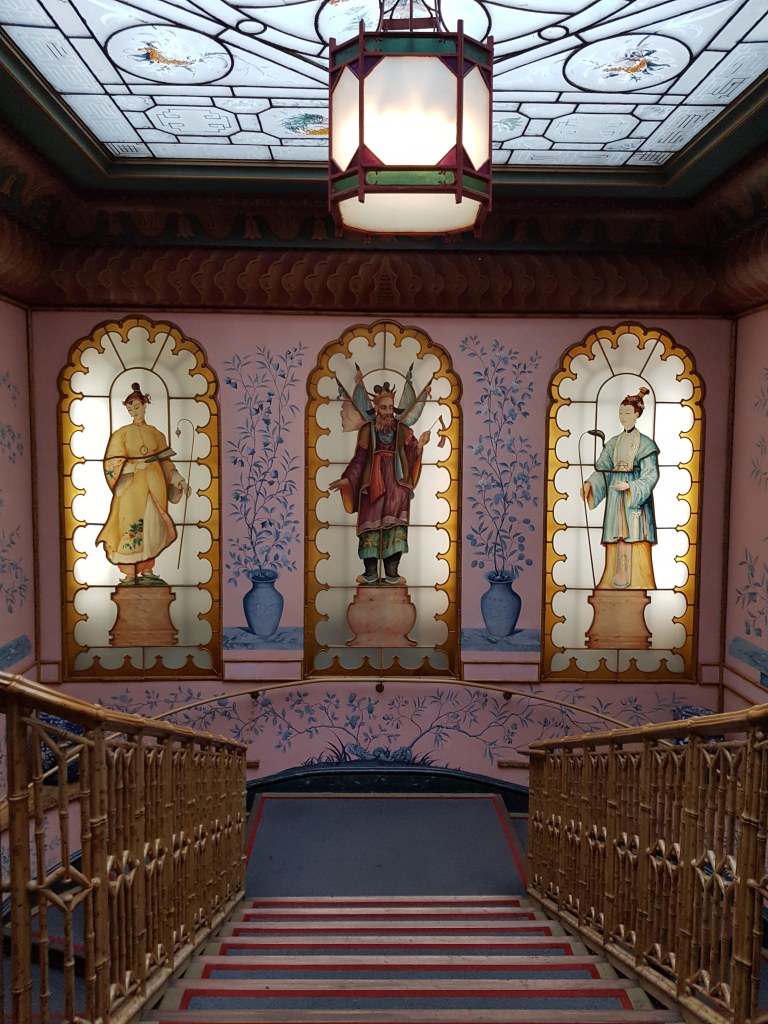
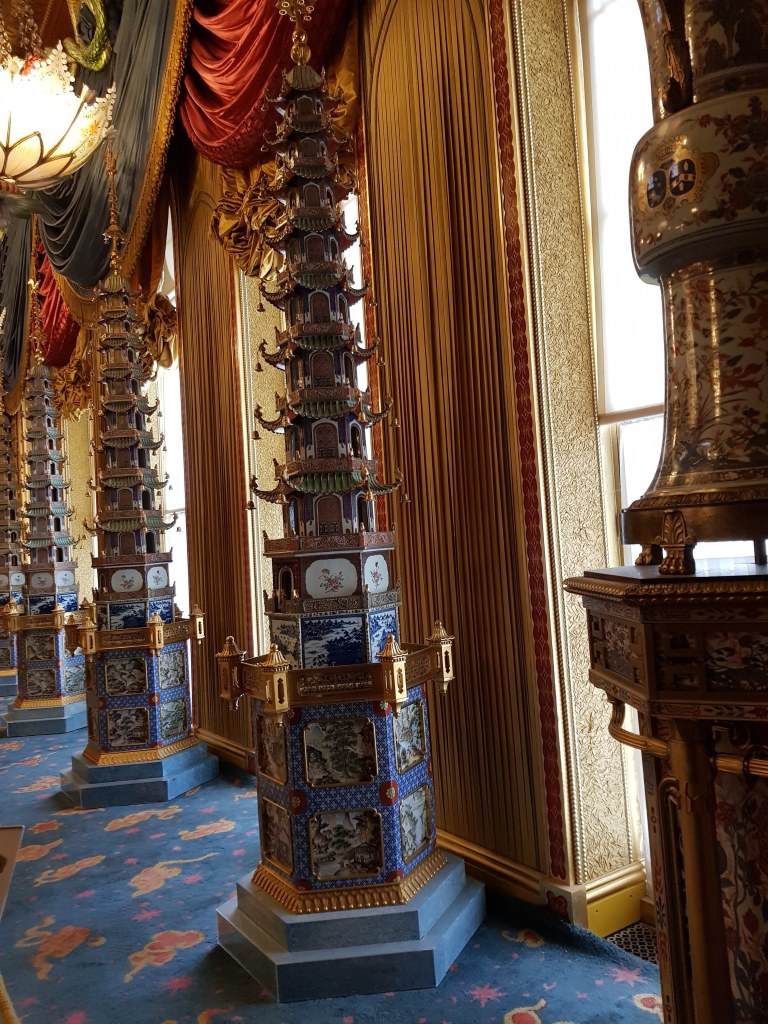
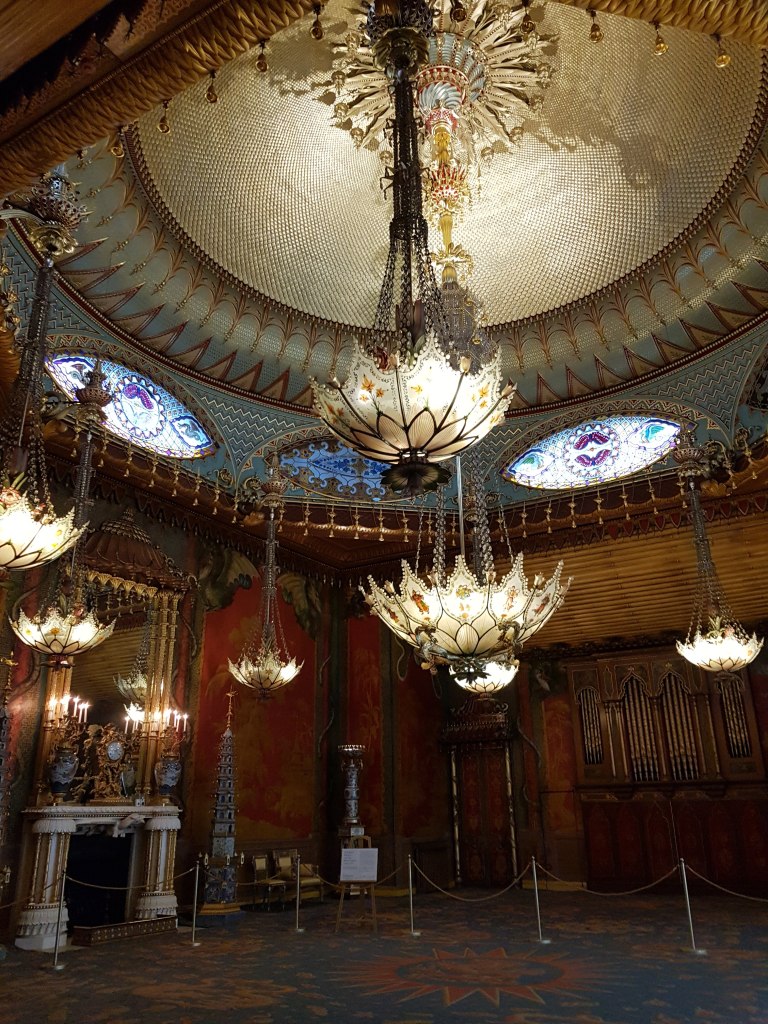
The detail of the decorations within the many rooms is very inspiring to see. Visitors are constantly coming face to face with images of dragons, fish and snakes. Giant chandeliers and beautiful stained glass also hangs overhead. The palace buildings are also surrounded by charming gardens full of roses and shrubberies, the gardens are open to the public at all times.

Once built, this extravagant building was used as a pleasure palace for the King, and later, was a retreat for Queen Victoria, and her family. The building has a room dedicated to information about Queen Victoria’s visits, based on historic records including her own diary entries. She wrote in her first visit “The Pavilion is a strange, odd Chinese looking thing, both inside and outside; most rooms low, and I only see a little morsel of the sea from one of my sitting-room windows, which is strange, when one considers that one is quite close to the sea.” She visited several times with her family, and enjoyed the easy rail connection between London and Brighton. Eventually, she decided to sell the building, as she felt too much amongst the public in the centre of town. It was later sold to the town council, and is the only royal palace in the country that is currently not owned by the crown.

During the First World War, it was transformed into a hospital for Indian soldiers. This was partially as a political move, to provide propaganda to India as an important country within the British empire. This element of the pavilion history is also exhibited within your visit to the attraction.

I truly expected to enter a shell of a building, and was hoping that at £16 per ticket, it would not be a waste of money. I was pleasantly surprised! The pavilions exterior and interior are amazing, and the information available for visitors is widely ranging. The attraction offers an audio tour that you can use on your phone, regular signs, and volunteer guides on duty. We were also told that our tickets would act as an annual pass, which is brilliant, and meant I could come back the following day for a second look!

Surrounding Brighton

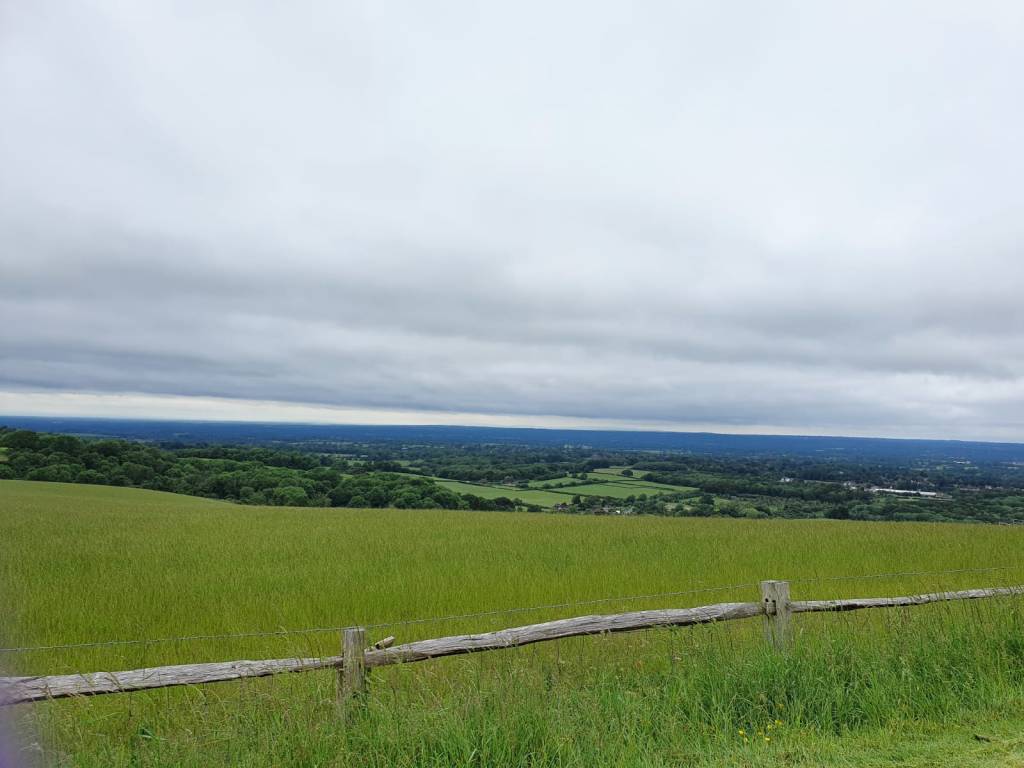
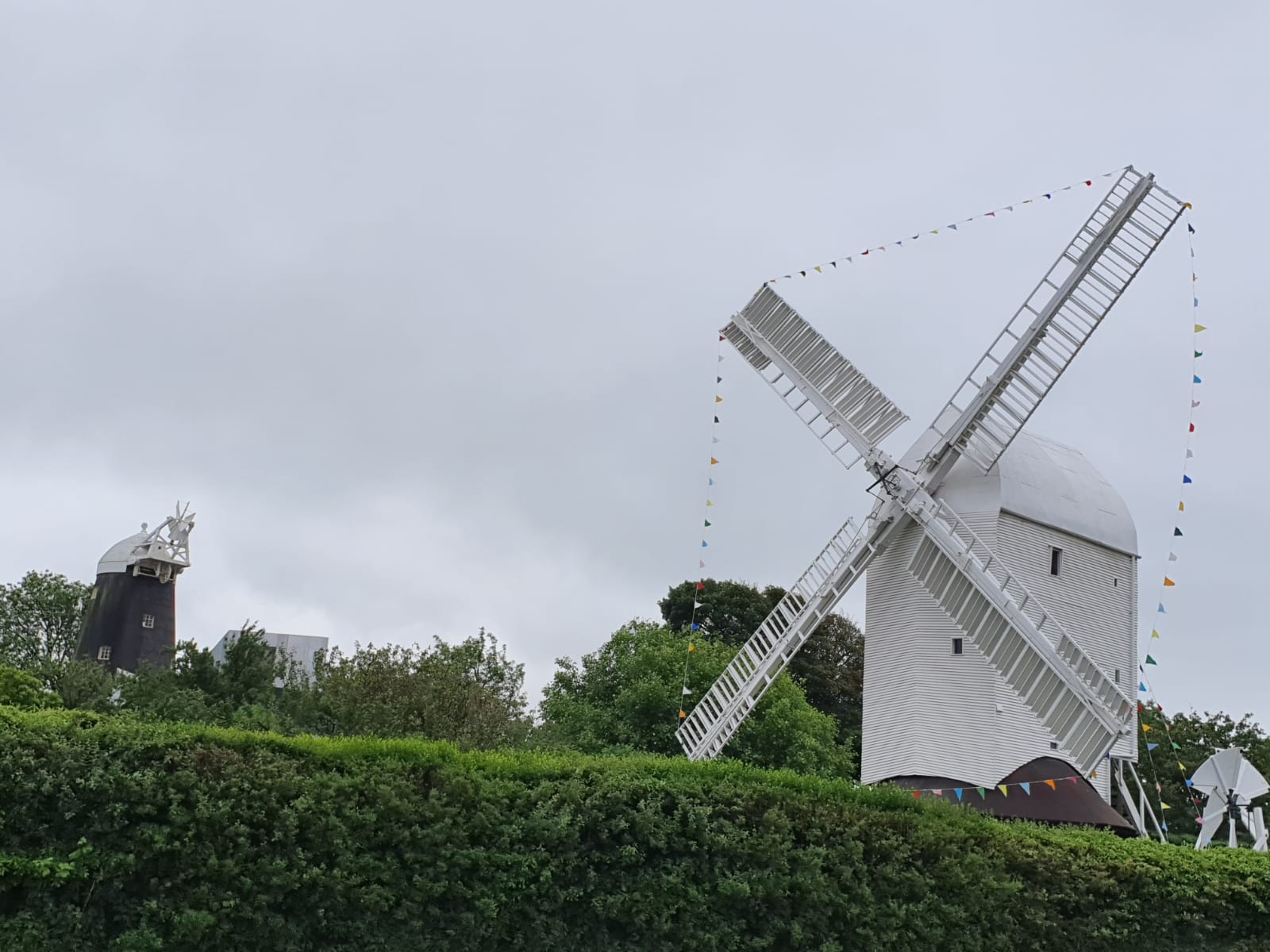
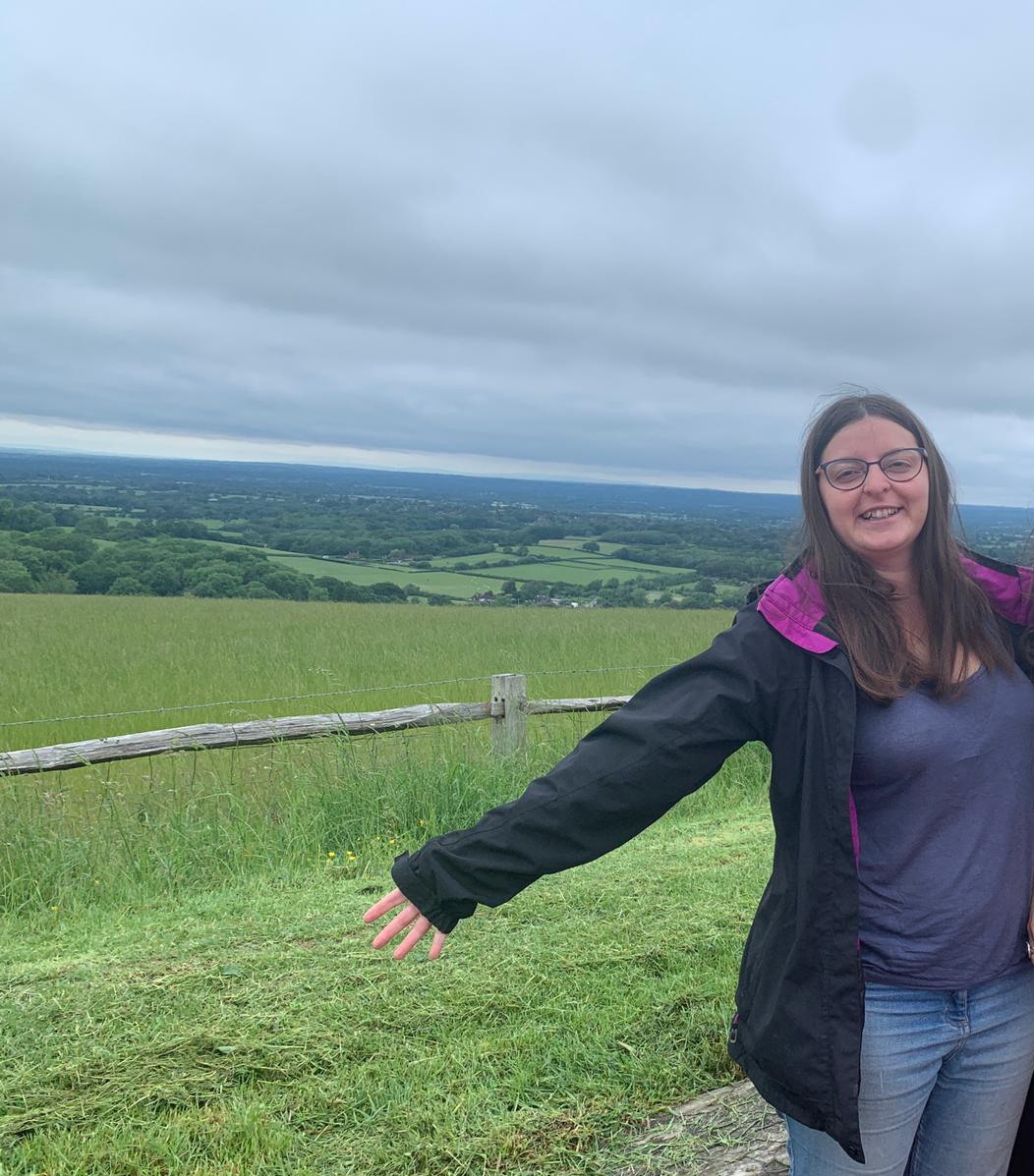
We were staying slightly outside Brighton and had access to a car, meaning it was easy to discover surrounding areas. We decided to visit the Jack & Jill Windmill which provided a beautiful view of the South Downs National Park, and we also visited the lovely town of Lewes.

Lewes is built on the hills of the Ouse Valley, and is a delightful country town, with plenty of historic buildings and pleasant green surroundings to enjoy.

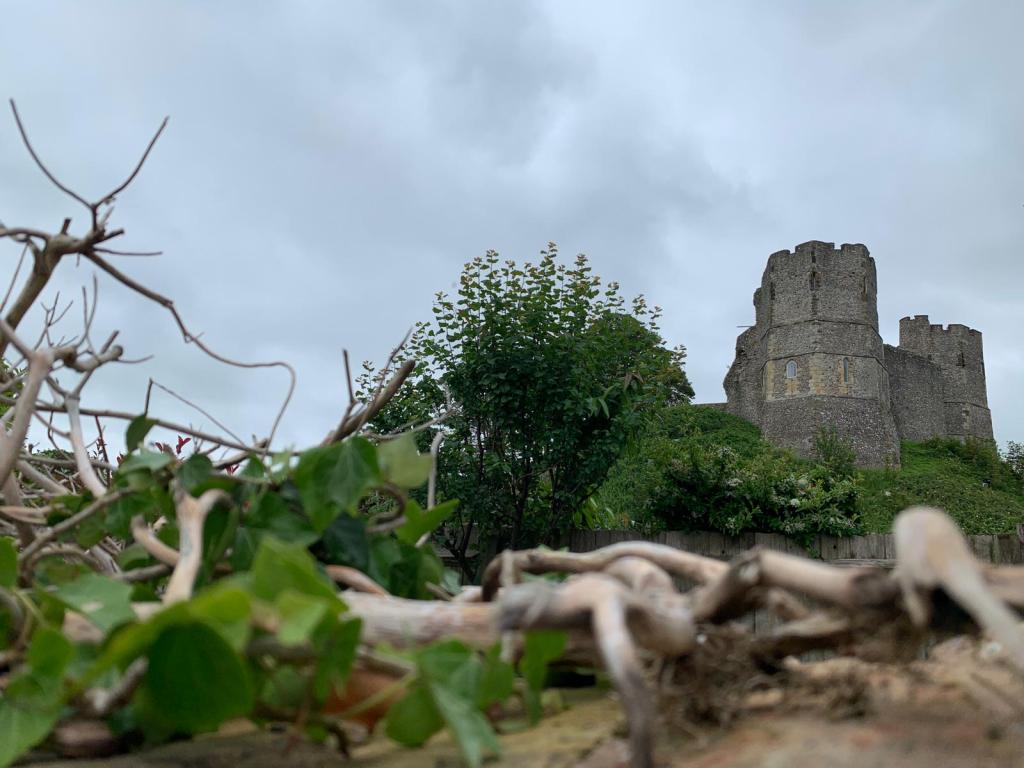
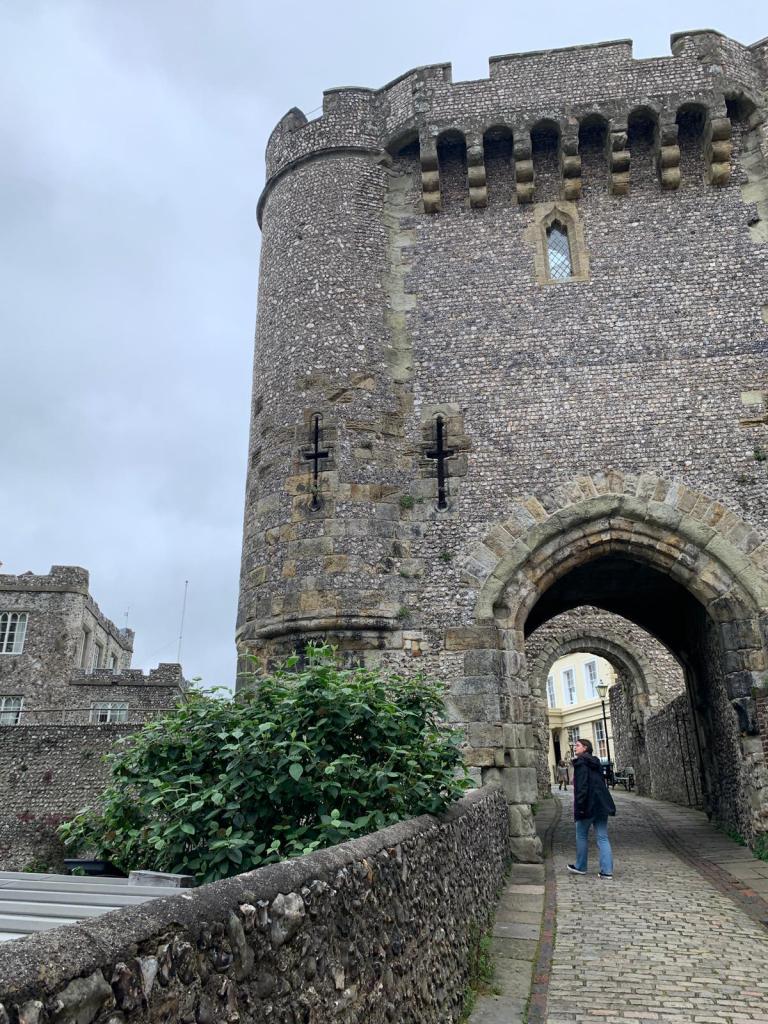
At the top of the hill is the castle which was built shortly after the Norman invasion in 1066. The battle of Lewes took place here and was one of two important battles within the Second Barons’ War. King Henry III was staying within the safety of the castle and nearby priory before heading into battle against the 6th Earl of Leicester, Simon de Montfort. The king was defeated in this battle. There are several pieces of interpretation around the site that you can access for free, that provide information about the battle and key locations. You can buy a ticket to enter the castle enclosure and museum, or walk around the castle walls and through the castle gate for free, as it is part of the public walkways.

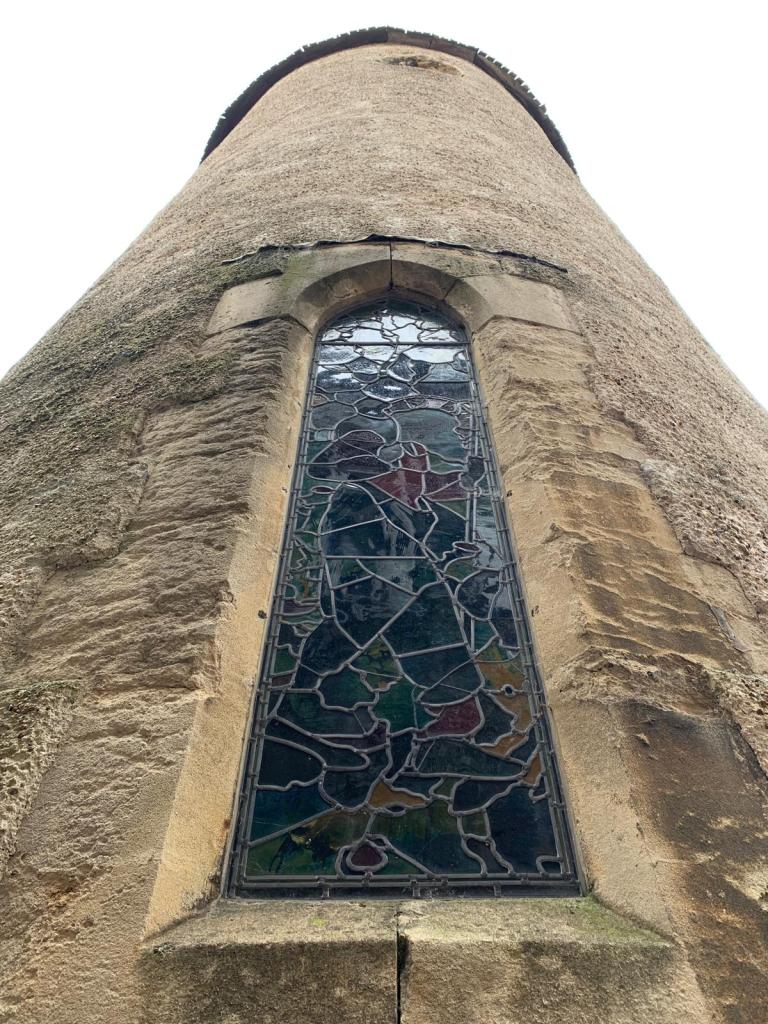
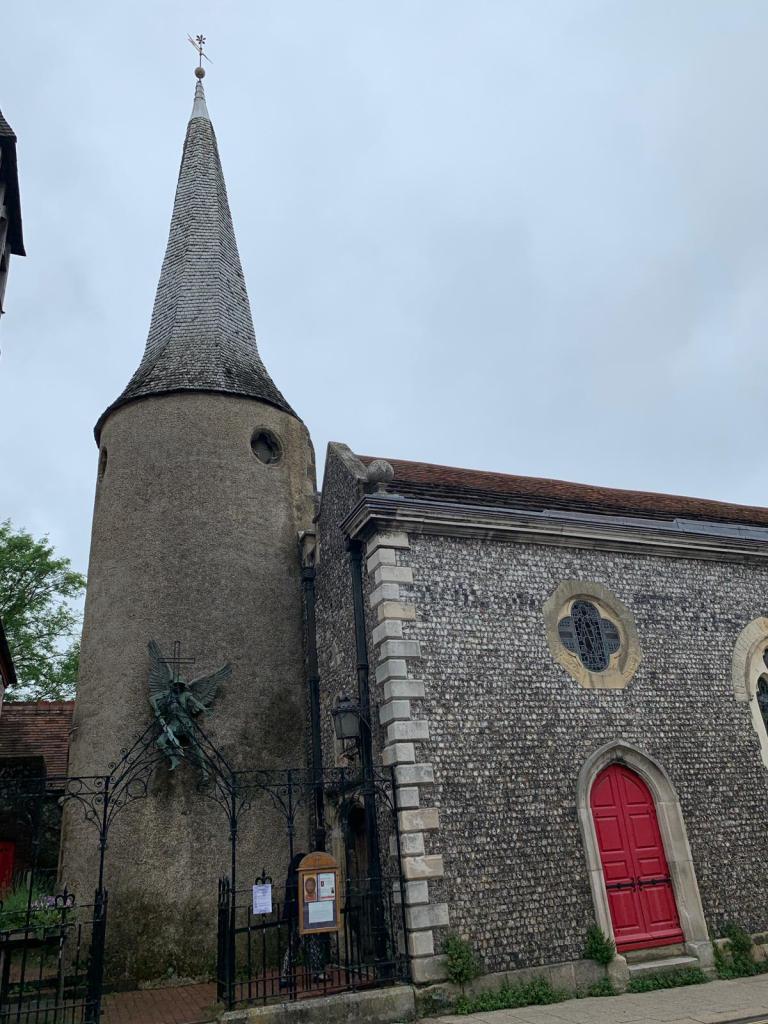
Within the town, you will also find several other buildings varying in age, from Norman, to the Tudor period and beyond. Some key locations include the priory, Ann of Cleves house, and also the pretty St Michael’s church which has a round tower dating from around 1200.

The town has many of the normal shops and chain cafes, but also hosts many independent retailers with unique goods to trade, and lots of information on the walls to tell you the significance of the street you are on.

Overall, I was very happy with my weekend in Brighton and the surrounding area. It definitely offers a diverse range of activities depending on your interest. I know that I have only scratched the surface though, so I look forward to going deeper into the area’s offering in the future.

Historic Ely and Stained Glass Museum

As I sit in my room, unable to travel due to Covid -19, it seems like a good time to catch up on my draft blogs! So… this short piece is all about a day trip we made to the city of Ely.

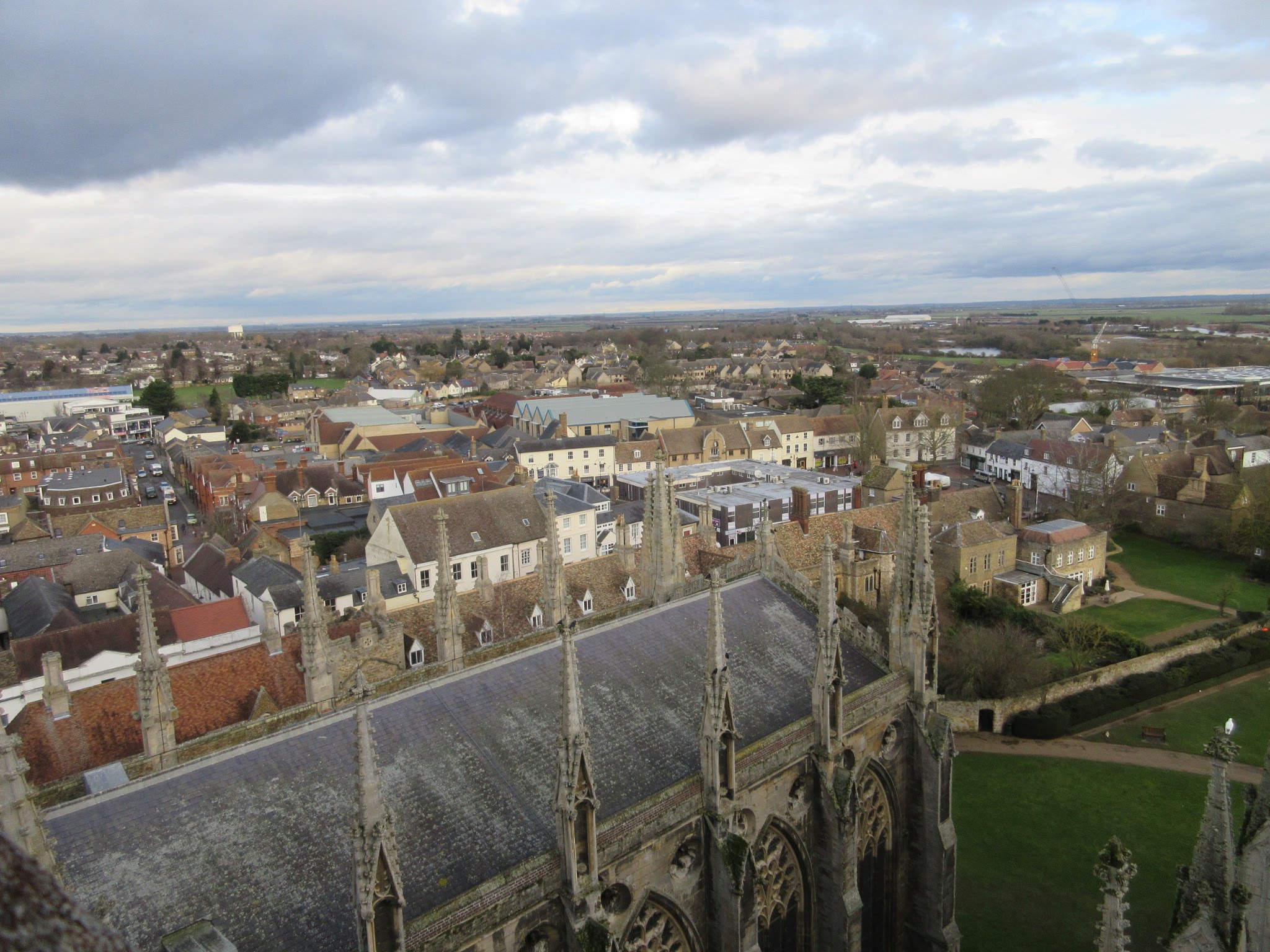
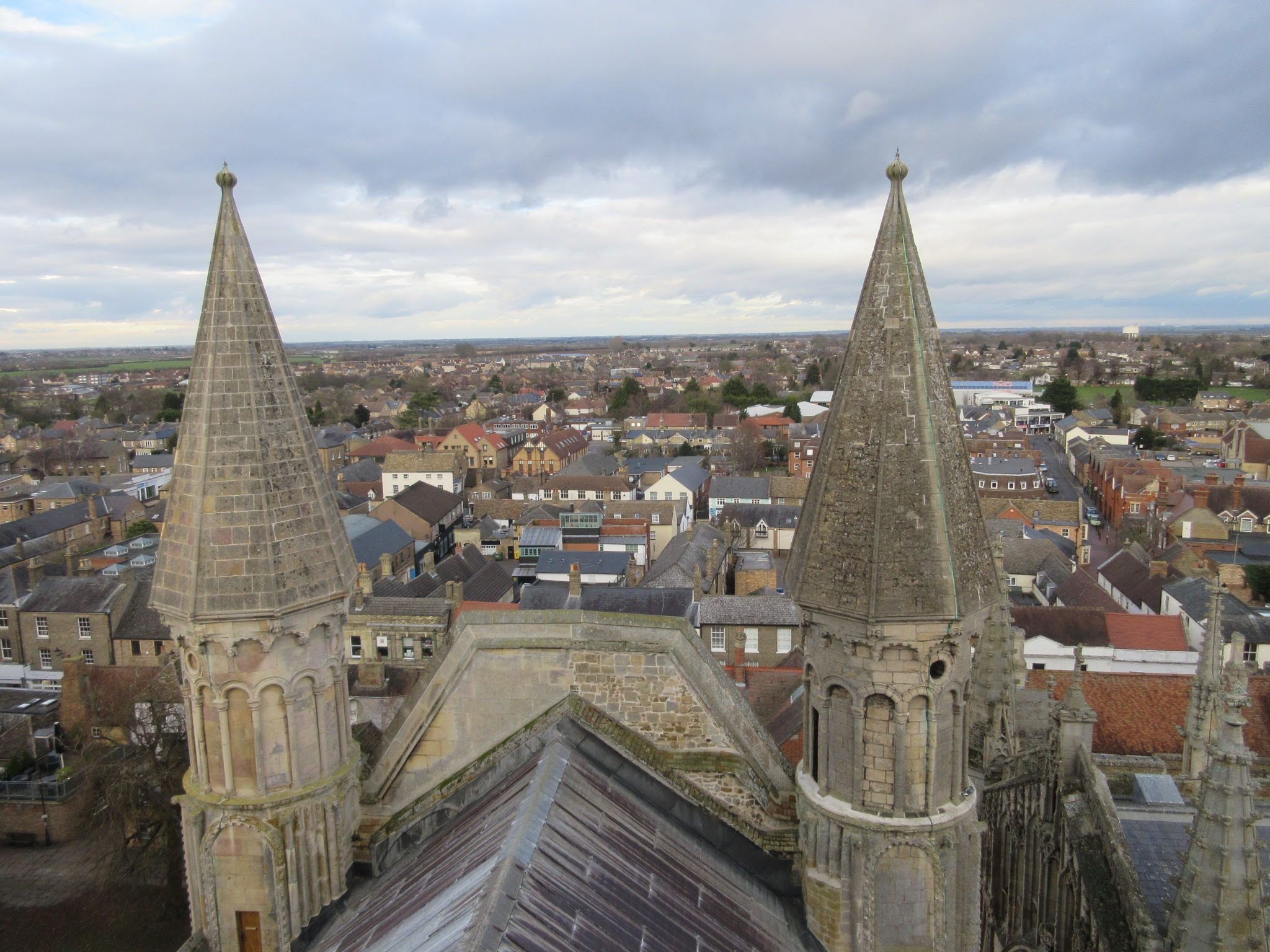
View from Ely Cathedral roof

Ely is a small city (second smallest in England) in Cambridgeshire, less than two hours drive or train journey from where I live. If you have read my previous blogs you will see that I have a strong interest in history, and especially churches. So for my birthday a few years ago, we decided to visit Ely as I heard lots of good things about the cathedral there and the special Stained Glass Museum!
It was really easy to travel to the city and park and the drive was actually quite pleasant as you pass by many long stretching fenlands. The area is actually so clear and flat that you can see the cathedral dominating the landscape as you approach the city.

Ely Cathedral

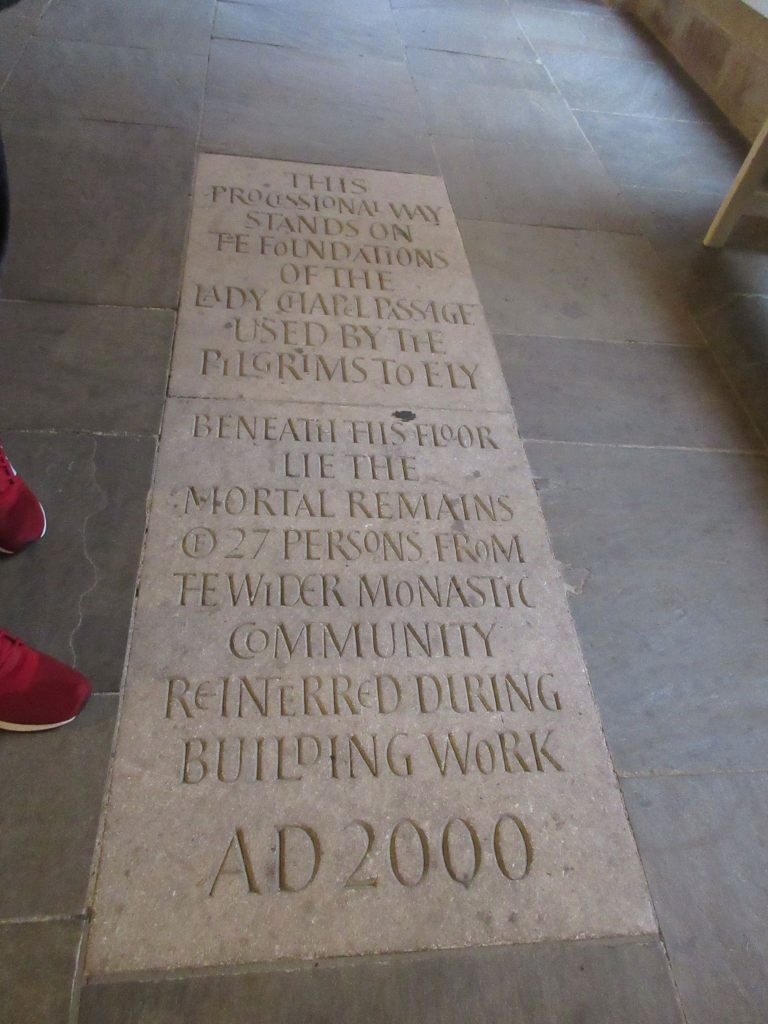
The Ely cathedral site was originally a monastery founded by St Etheldreda, the granddaughter of an East Anglian King. She died of ill health, and later became a saint, and a shrine was built for her at the site, which pilgrims to the area would visit. In 970 it was refounded as an abbey for Benedictine monks (same as the Norwich Cathedral)! The current building was created in the 11th century and the abbey became a cathedral in 1109. It continued to have a monastic purpose until 1539 when Henry VIII dissolved all the monasteries in England. Unfortunately, St Etheldreda’s Shrine was destroyed due to this, but there is a marker within the cathedral, to show visitors where it once stood, and St Etheldreda is still remembered there.
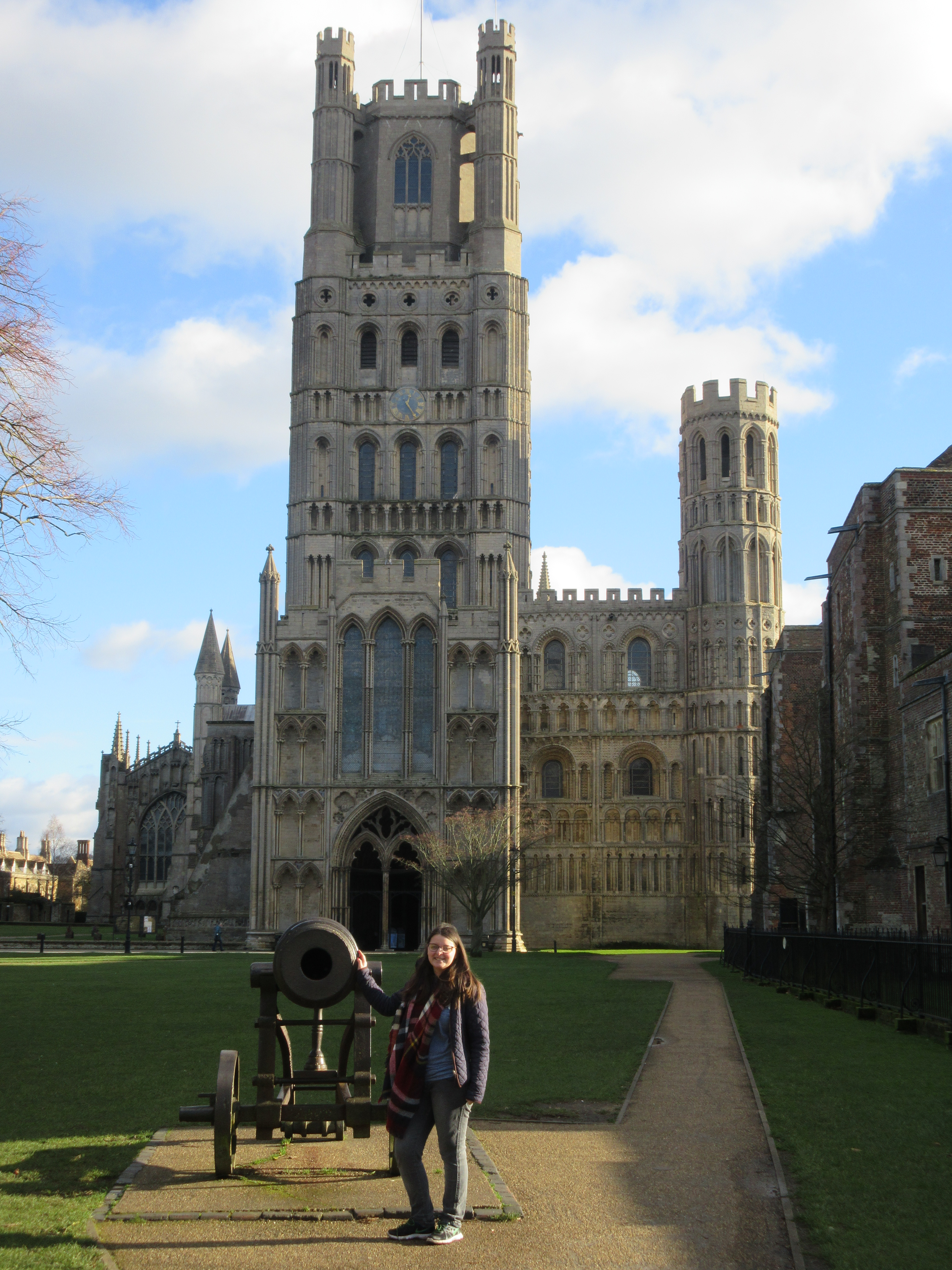
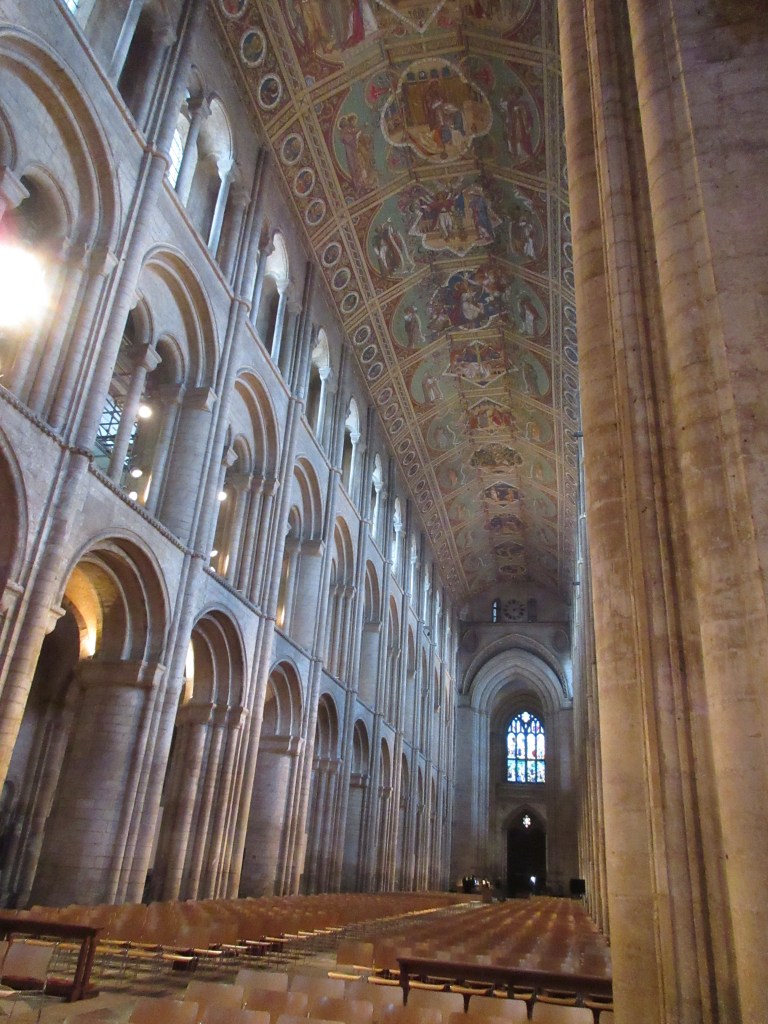
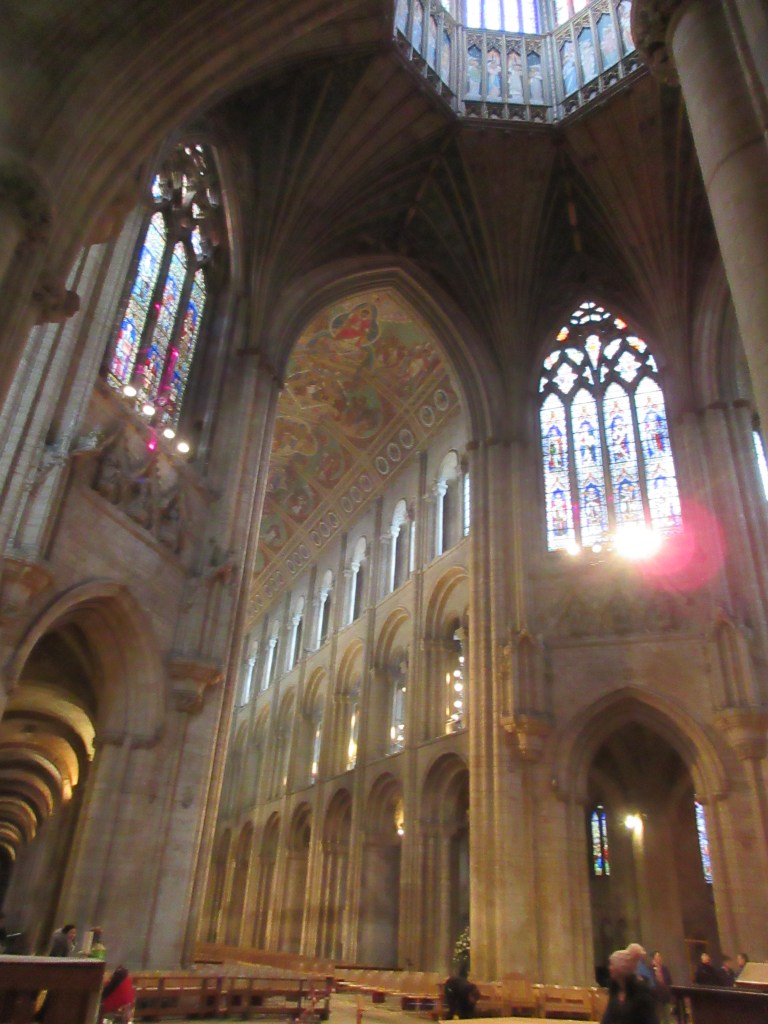
The cathedral itself is famous for its unique Octagon tower and for being a very long cathedral (fourth longest in the country at 537ft). It does seem as if the cathedral goes on forever and it looks quite magnificent against the landscape there. It is actually nicknamed the ‘ship of the fens’. When we went, we found lots of interesting features to discover inside, especially some of the poses of various statues and the grandeur of the lady chapel and art there.
Tower Tour

We were welcomed quickly on arrival by volunteers, and decided to book onto a tower tour to climb the various levels of the cathedral, see the lantern area and get up onto the roof! At the time, I think that we paid around £20 each for this, but from looking at the website today, it seems that they are charging more at the moment, due to the extra safety measures in place.

The views throughout the tour were brilliant! It seemed extremely high when climbing the steps, and you had to be a little careful in places. As you’d expect, the higher you get, the more narrow and un-nerving the climb can become. Getting up to the roof is well worth it though, to see the detailed stone work of the roof design up close, and the view of the city and fens stretching out in front of you.

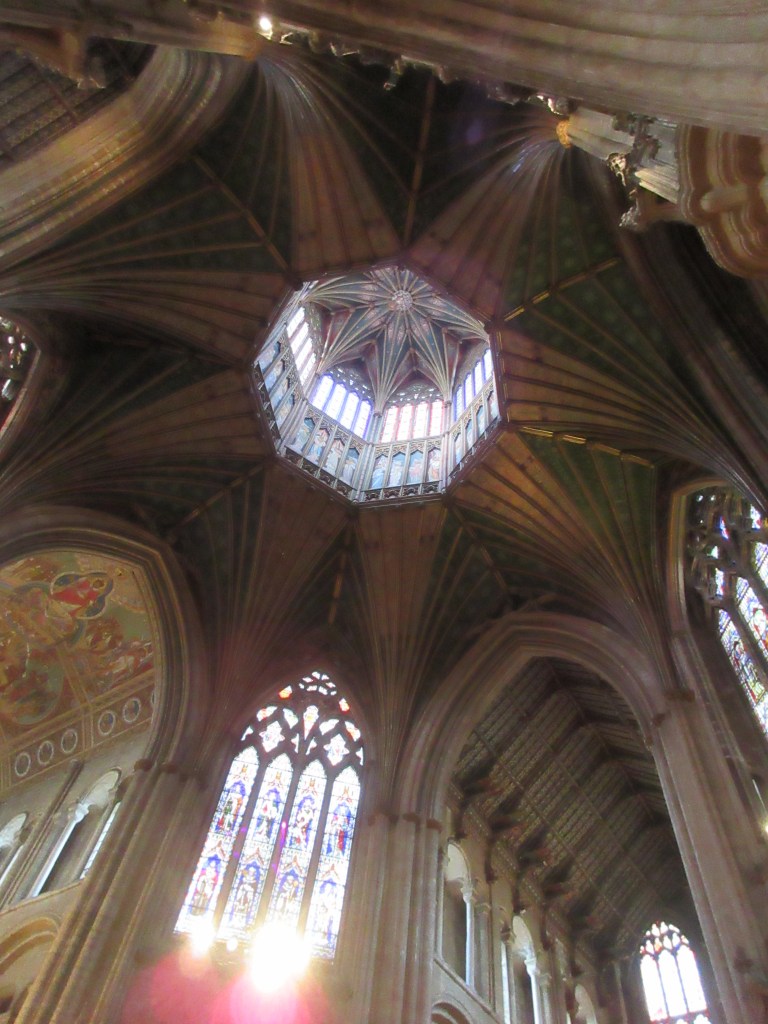
The coolest part of the tour, in my opinion… was the lantern area. The octagonal shape came about following a rethink of the tower when the original Norman one was replaced. It took eighteen years to build and apparently the shape is a symbol that relates to the link between earth and heaven, and time/ eternity. The whole cathedral is centred around the octagon.

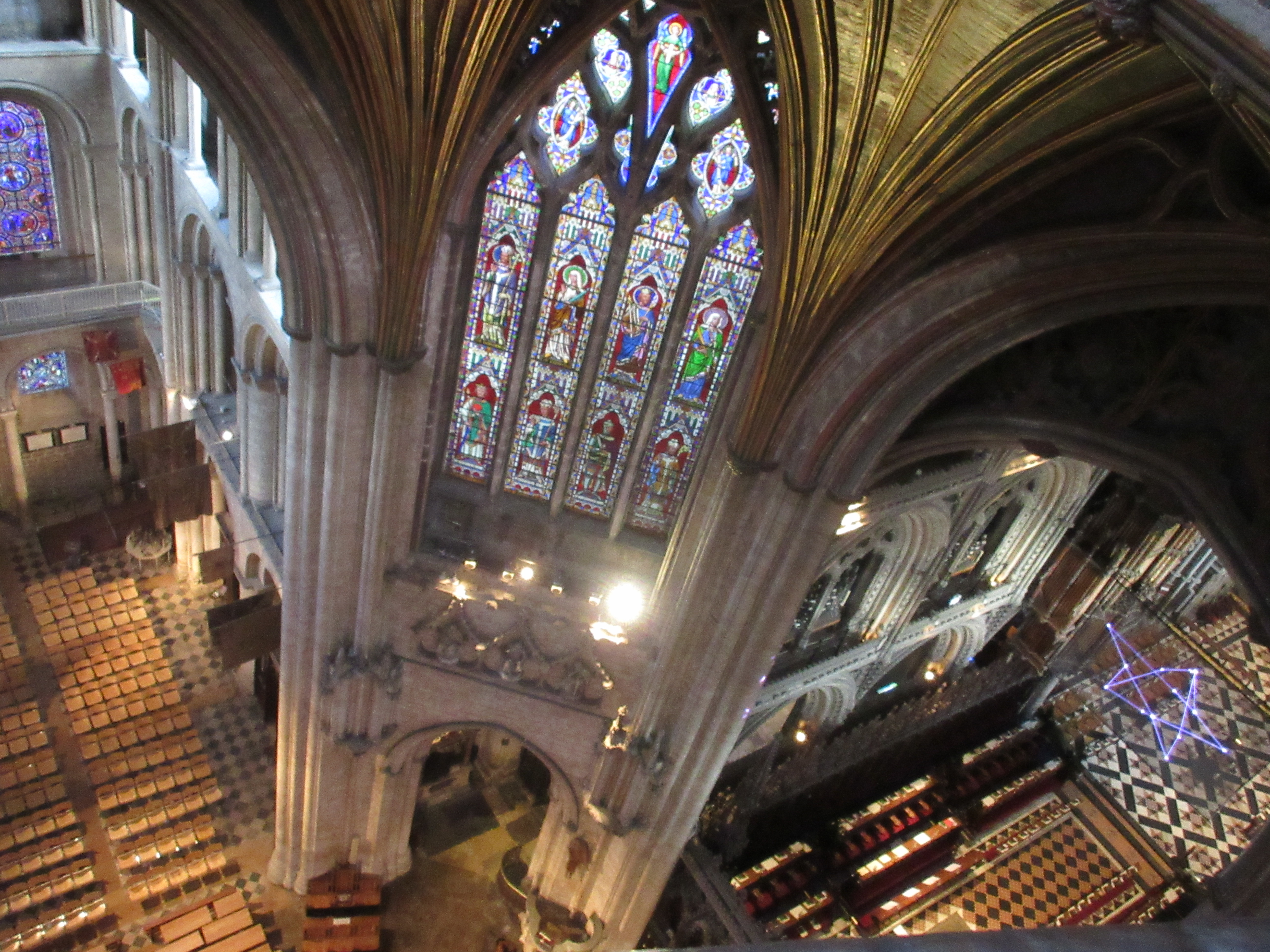
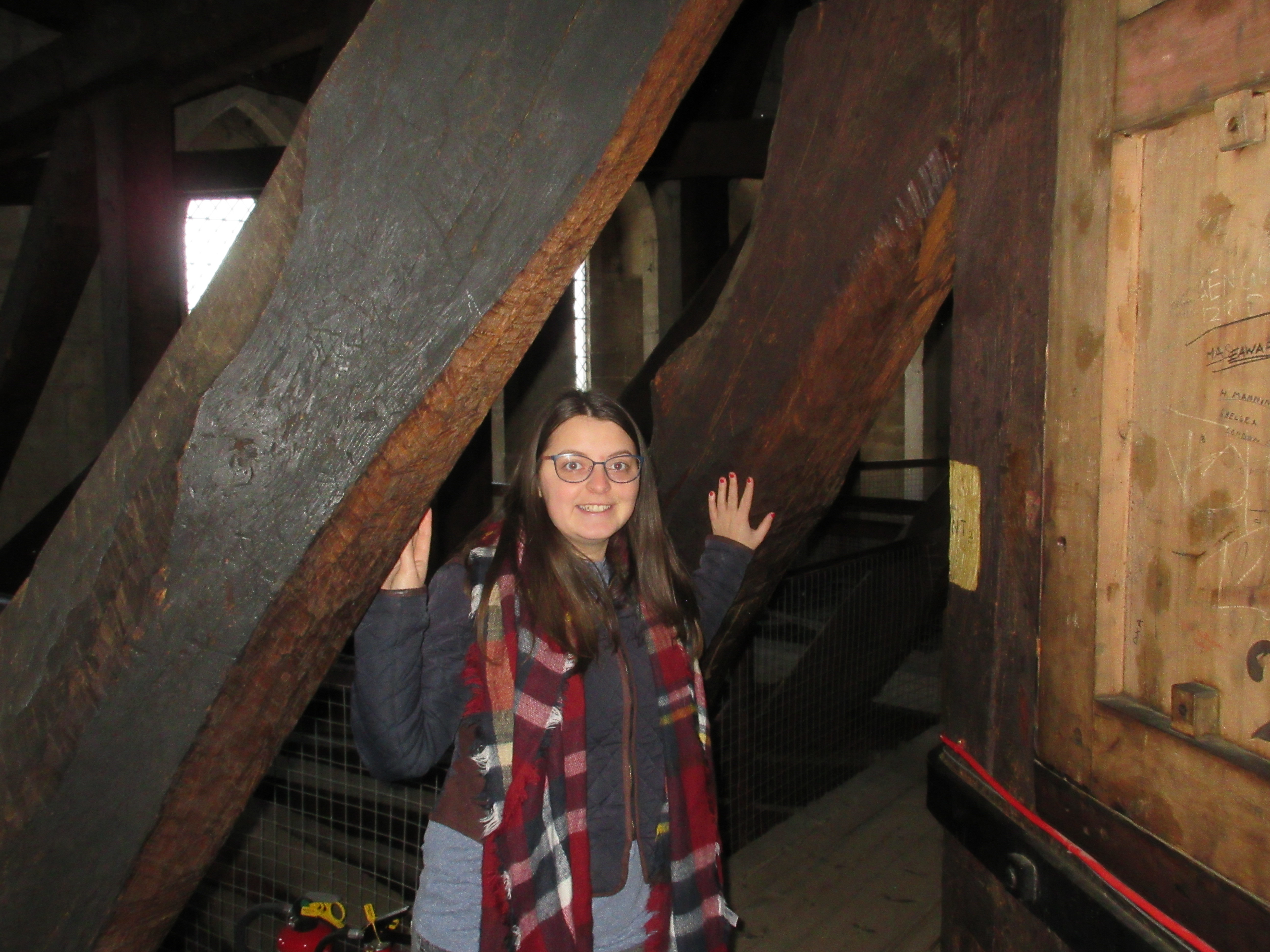
The lantern (an internal open space within the tower structure), really blew me away. Mostly, because of the materials used. The lantern area is constructed by hundreds of tons of wood and lead. You can see how raw this wood is up close though, the giant (60ft long) oak beams are pretty much entire trees diagonally stretching the space. Each one is around 1000 years old and still extremely strong. When we went on the tour, you could look up close and touch the wood, and it feels like you are actually able to visualise the ancient forests that these would have travelled from. The oak beams also have a number of graffiti markings carved in from key times in history, which adds to how special it is!

Amazing lantern area

Stained Glass Museum

Of course, the other amazing thing to see in the cathedral is the Stained Glass Museum! I love stained glass, and had been hearing about the museum for a while. I believe there is only the Ely museum and a museum in central London that specialises in the history of stained glass. In Ely, you can pay a little more for your cathedral ticket, so that it includes the museum entry too.

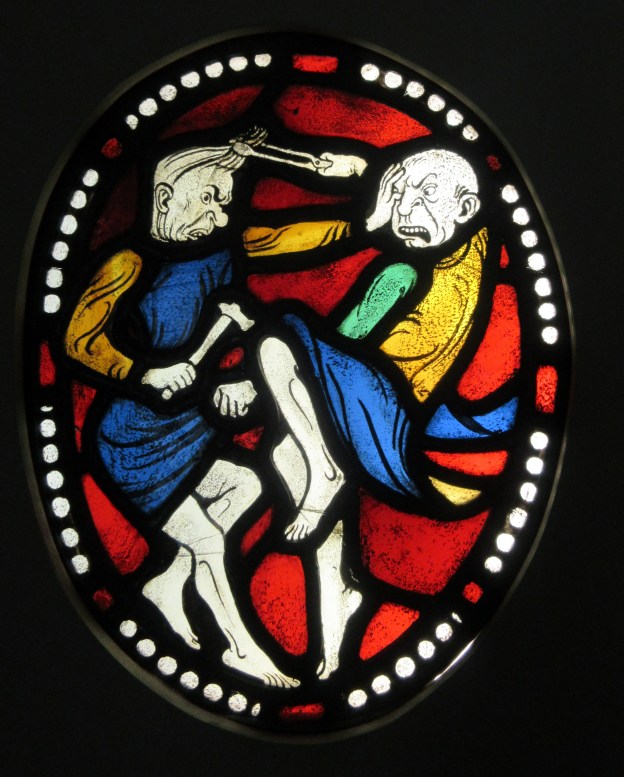
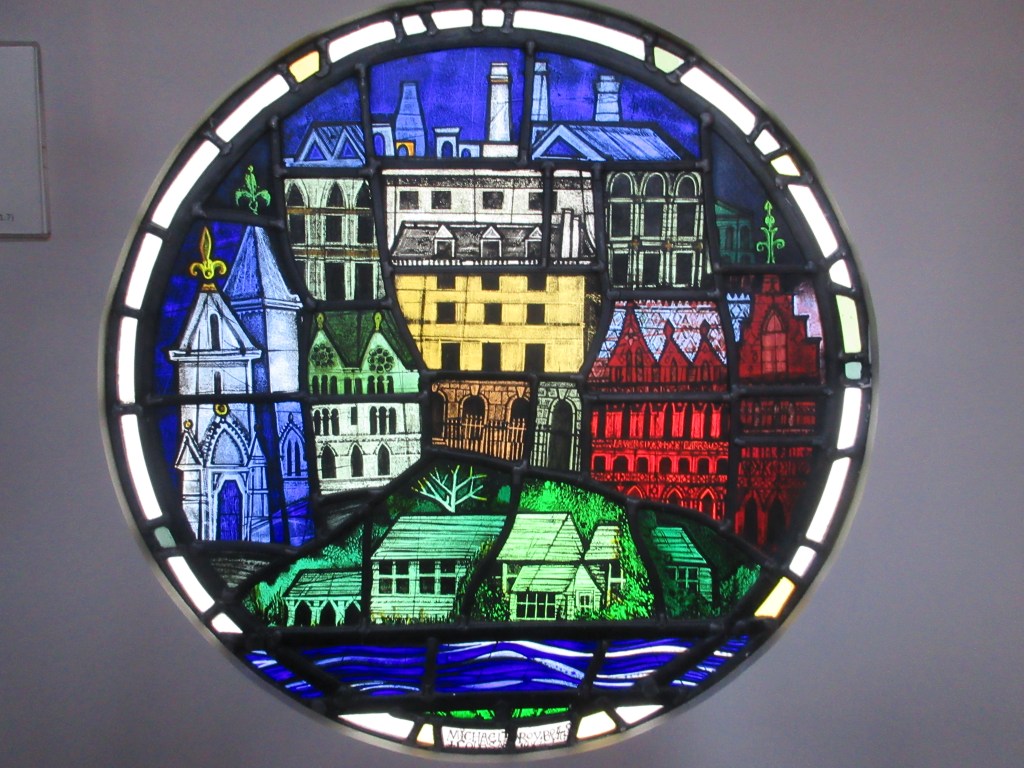
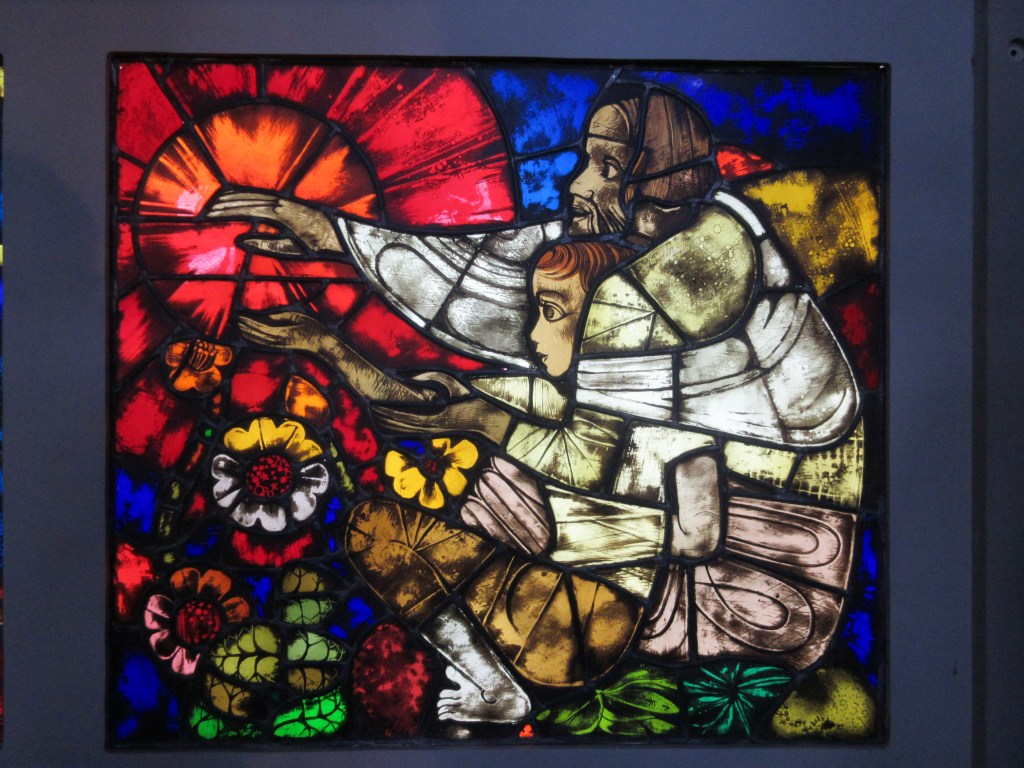
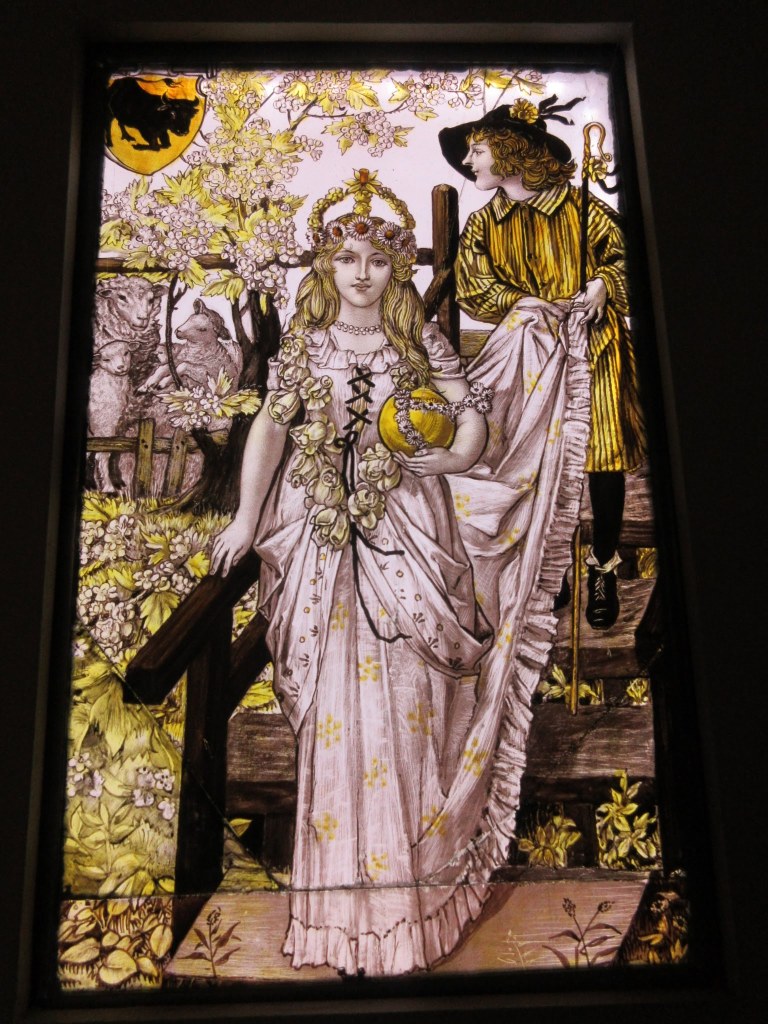
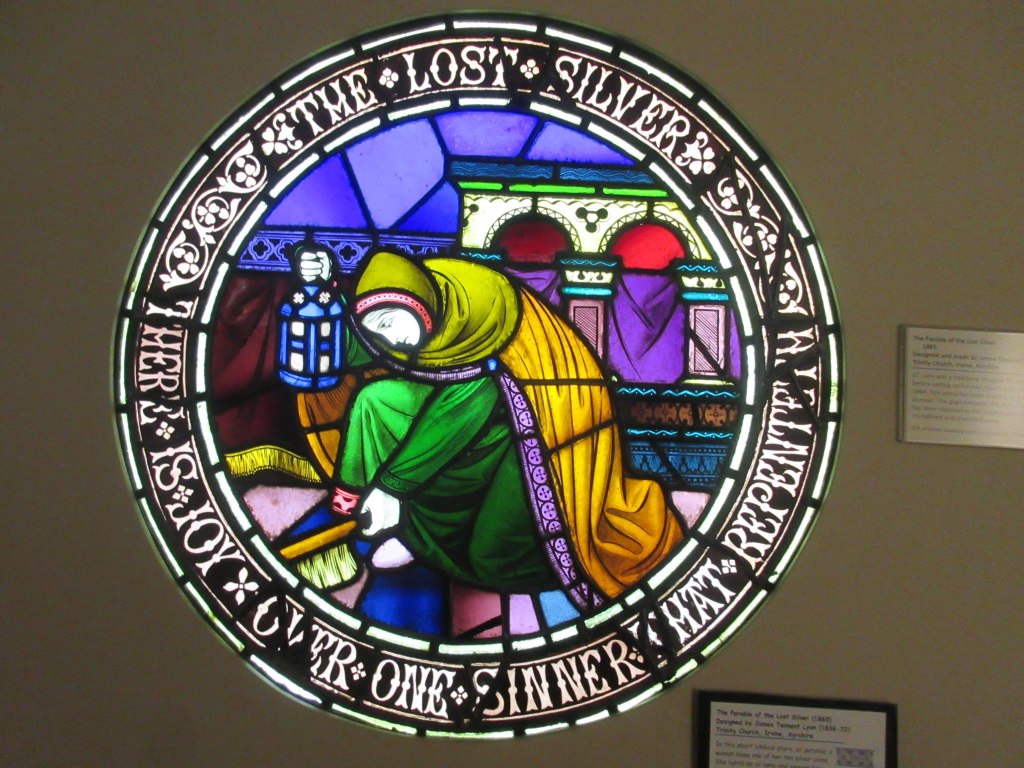
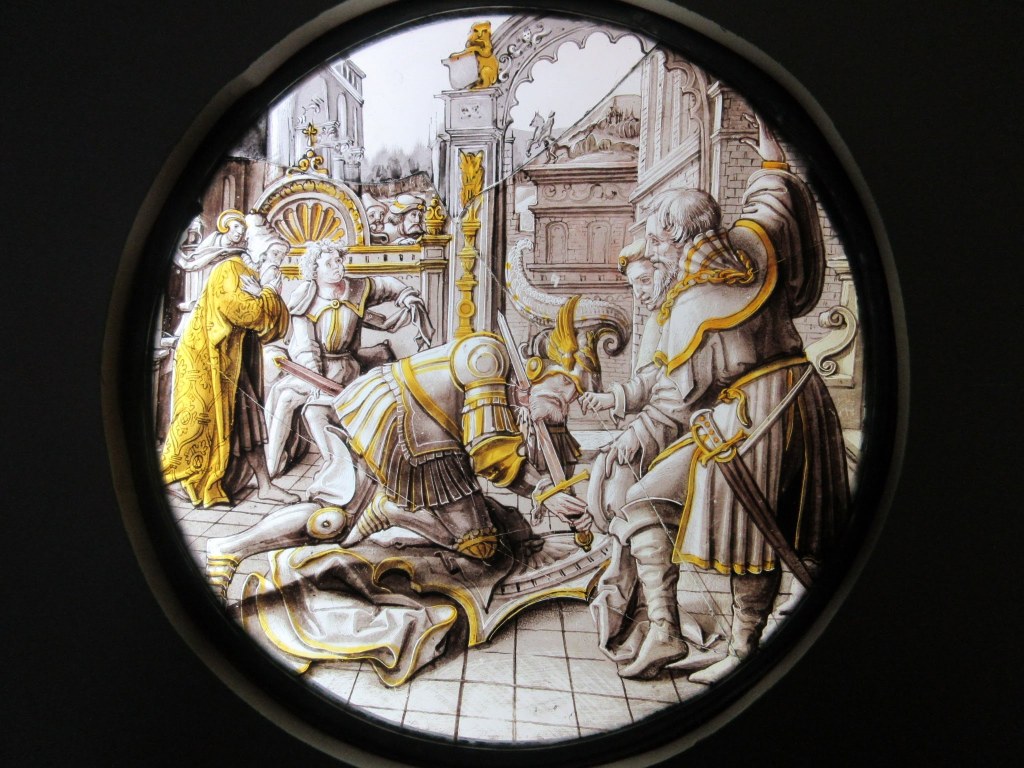
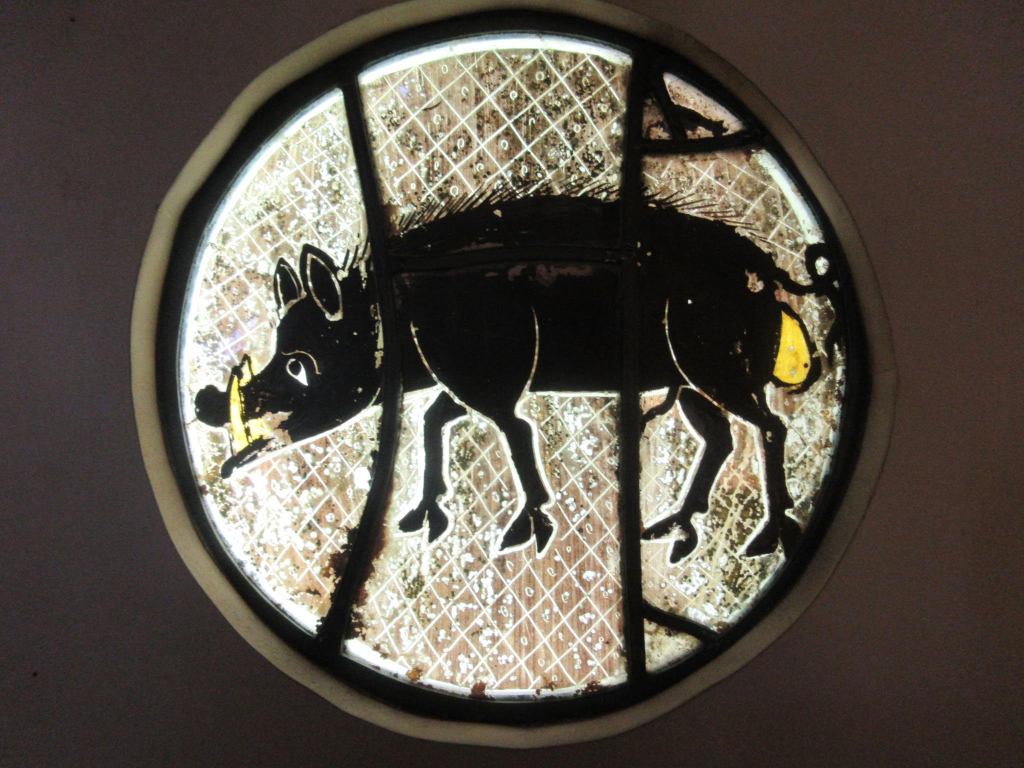
When we visited, the museum was under some refurbishment, but we were still fully able to enjoy our visit. There was an introductory video explaining to visitors how stained glass was originally made, and some of the history. They then have a full gallery of stained glass over time from different locations. The varying images and stories within the stained glass was really interesting and the craftmanship is so professional that you can really respect this ancient art. Something that I picked up from the visit which I have found useful since, was the fact that you can tell the older glass from the later glass, from the colour pallette used. Originally the artists only had use of a very limited number of colours and methods to place them on the glass. Artists used yellow frequently, so if it is heavy in yellow and little else, it is probably quite old!

Loved all the below windows!

We spent a lot of time enjoying the cathedral, our tower tour and the stained glass museum, and with the addition of lunch, the day was almost gone. We did have time for a final short walk around the city and lovely waterside before heading home, though. This is when we realised that Ely was also the home of Oliver Cromwell!

Oliver Cromwell was an English General who took over the ruling of the British Isles in 1653 under the name of Lord Protector. This was after he led armies against King Charles I during the English Civil War. He ruled the country as a dictator until his death, five years later.

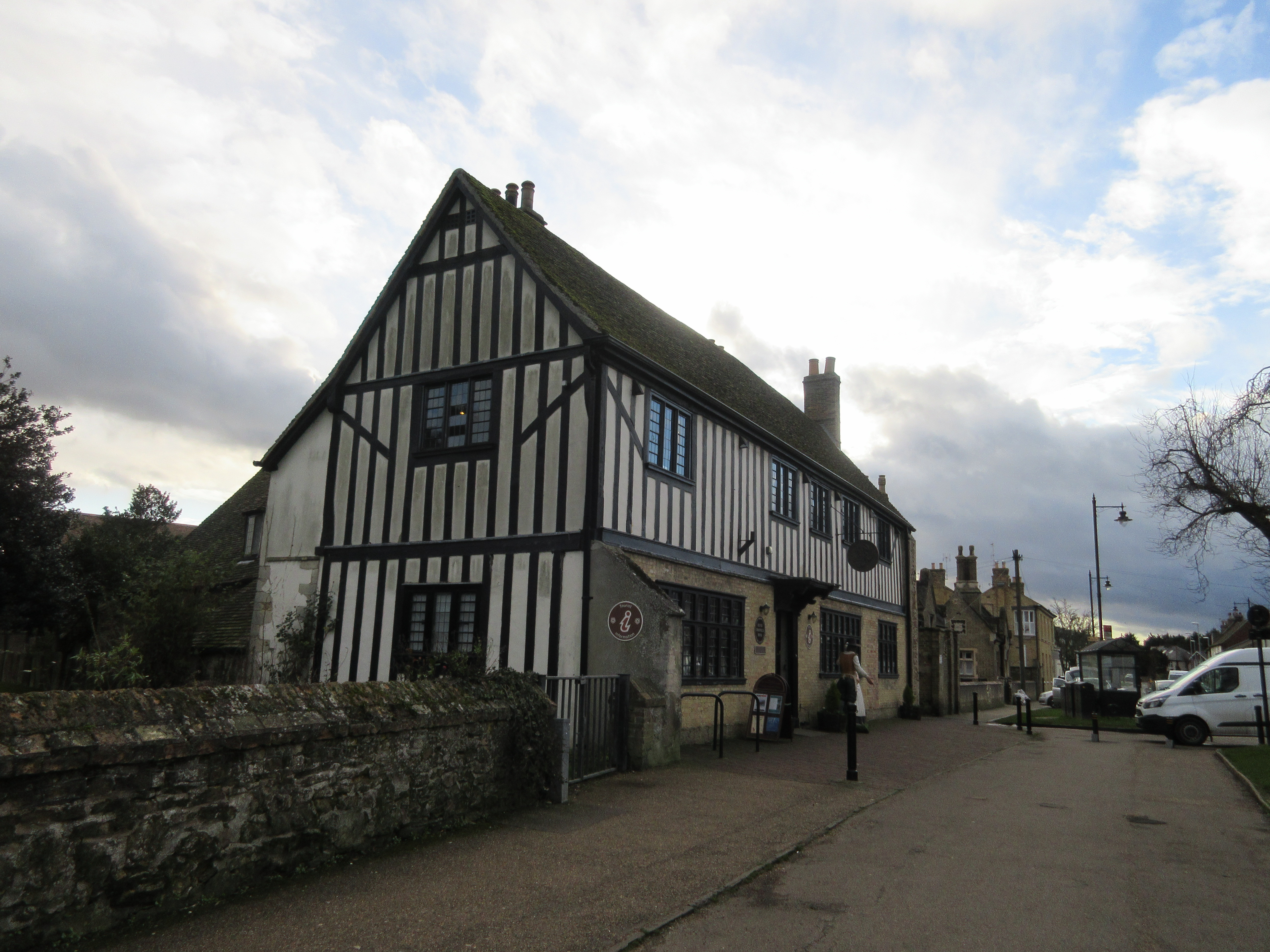
Oliver Cromwell’s parents were from Ely and he lived here with his own family for about ten years. You can visit their former house which also houses information about the civil war and doubles as the Tourist Information Centre. Unfortunately, we didn’t have enough time left to visit, but I certainly would like to come back and visit this as the English Civil War seems really intriguing to learn about, when the Parliamentarians (Roundheads) and Royalists (Cavaliers) fought for power over the way Britain was governed.

Cromwell’s house

Overall, I thought Ely was very pretty, and the history is fascinating. I will definitely return as it is so close to Norwich, and perhaps spend the weekend there, next time.

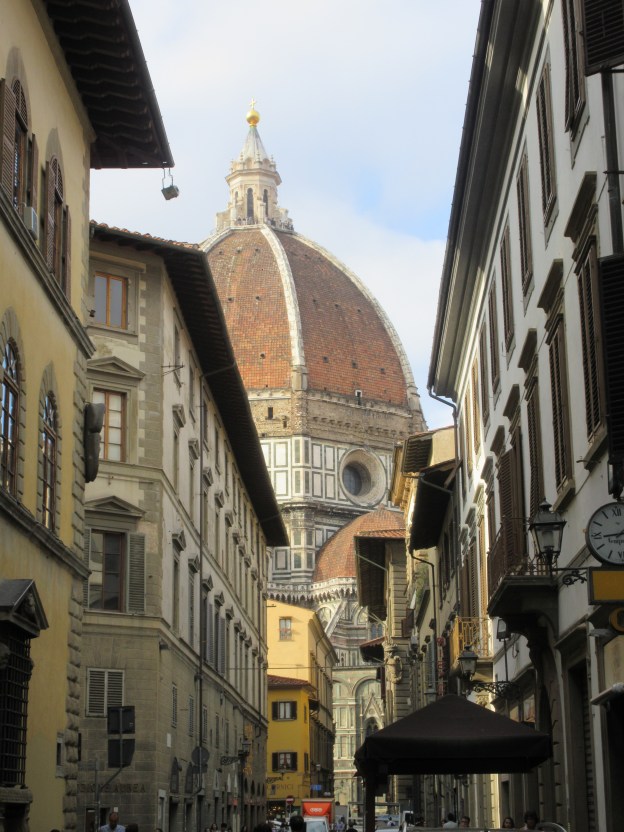
Street with Duomo of Florence (Cathedral)

The best of Tuscany; Florence & Pisa

This is a blog that I meant to post a while back but didn’t get around to it. Hopefully, it will make some good post lockdown reading… Please check the actual websites for attractions for Covid-19 related information, I have not updated the information to reflect any new rules.

Last Autumn I visited Florence and Pisa with a friend and it was a great opportunity to do a fun twin centre trip within the Tuscany area.

We decided to visit Florence as it is a bucket list destination known for its beautiful architecture and cultural atmosphere. We wanted to make the most of the close location to Pisa and so decided to spend two nights in Florence and then travel by train to Pisa and stay one night there. This was especially convenient because our flight was from Pisa.

A city of art

Florence is well known for its art galleries, specifically art from the Renaissance period.  We visited the two main galleries; Uffizi and Accademia, but everywhere you went housed some sort of artistic reference. Even the walls of buildings had sculptures, frescos and patterns to admire.

With the style of art that is popular here, you can see hundreds of different views and interpretations of the same religious stories over and over again. Some really popular ones included of course; The Annunciation (Mary finding out from Gabriel that she would give birth to Jesus), The adoration of the Magi (the presentation of gifts to Jesus by the three kings), and The Crucifixion of Christ (I think everyone knows this story).

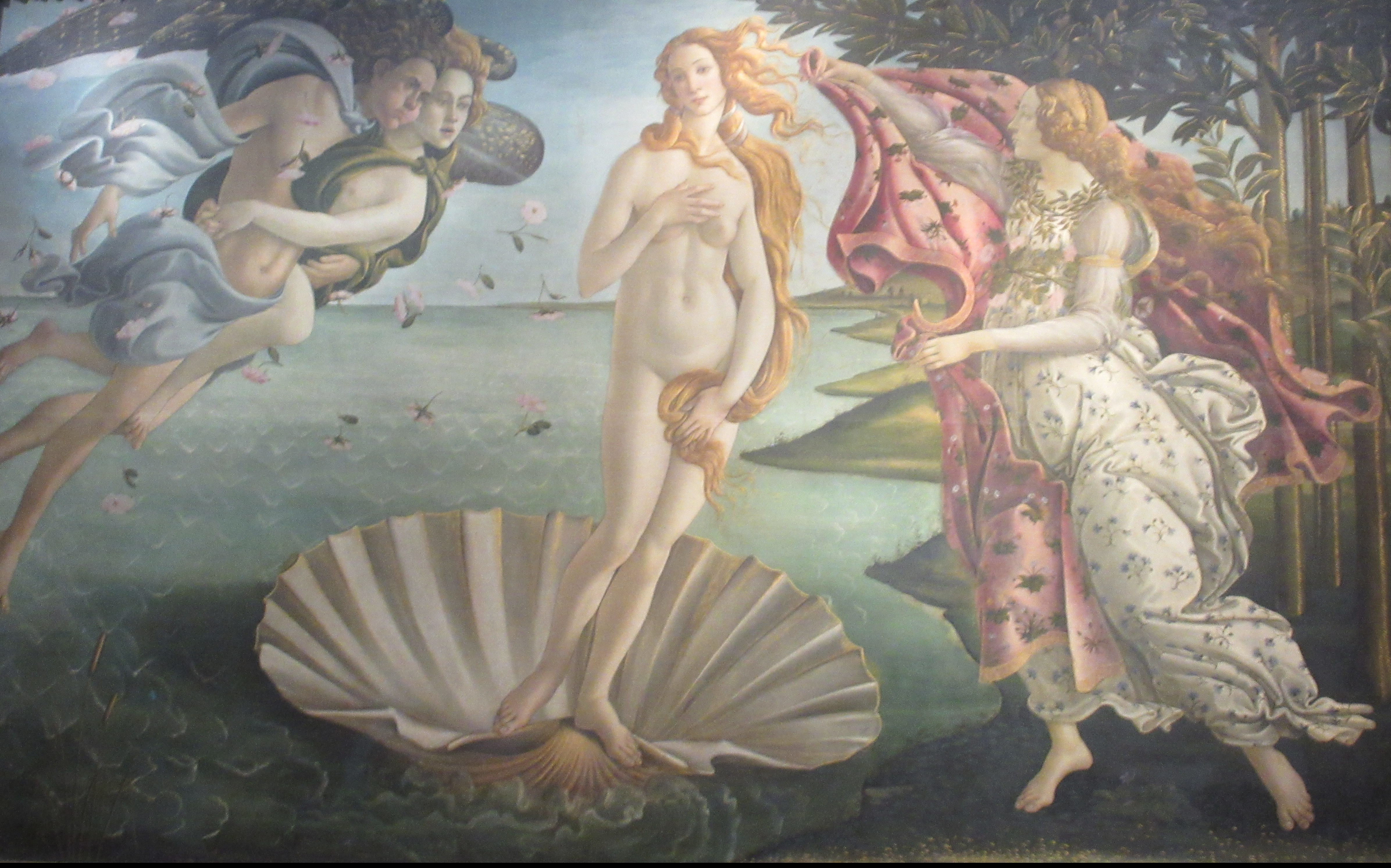
There were also some really odd ones that caught my eye such as the ‘Birth of Venus’ by Sandro Botticelli. This painting from the 1400s shows the Greek goddess, Venus arriving nude on the shore of what is most likely Cyprus, fully grown in a large clam shell.

Birth of Venus

Birth of Venus

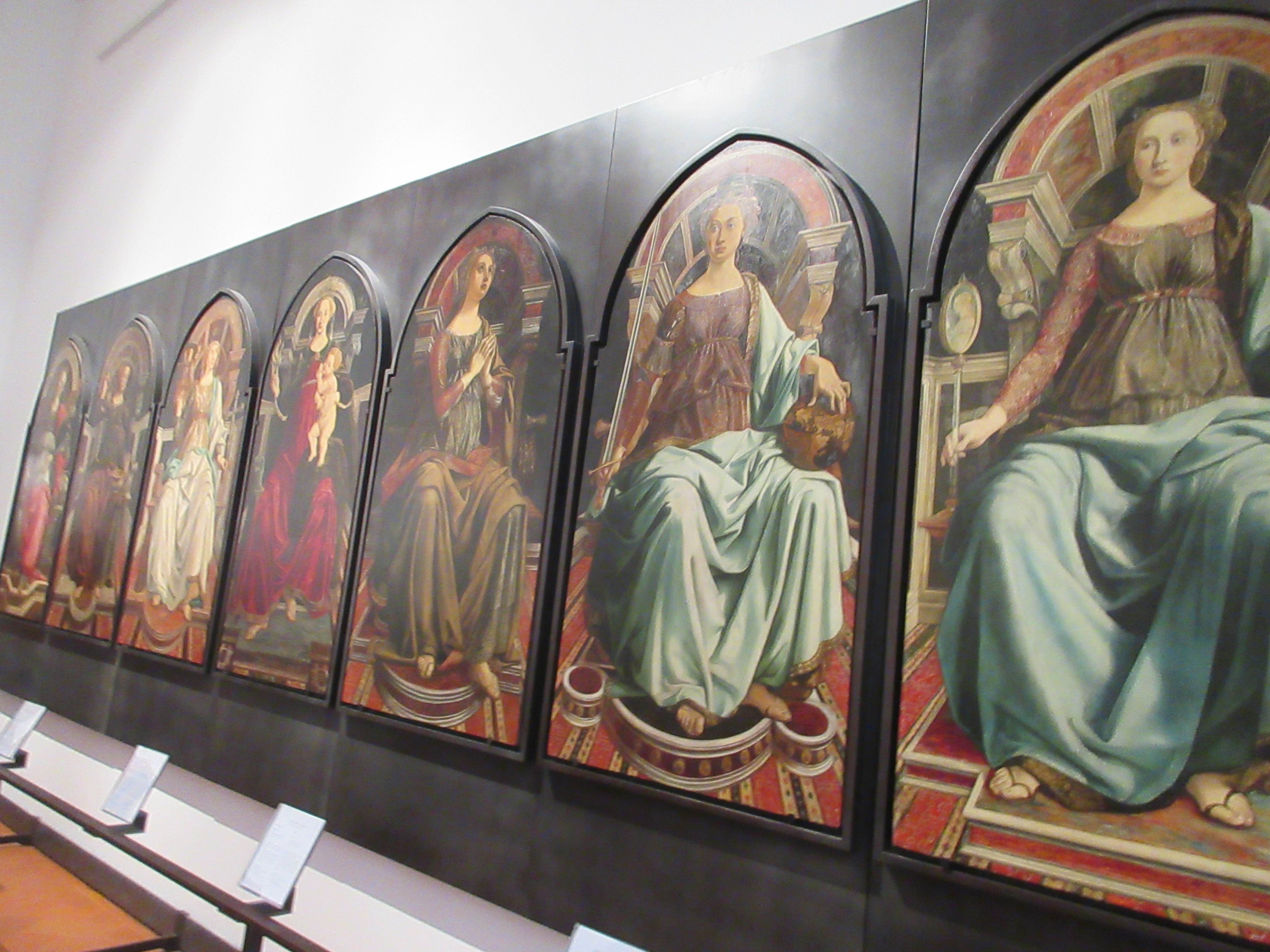
Another interesting piece that I really liked was ‘The Seven Virtues’ by Piero del Pollaiolo which Botticelli helped complete. It was commissioned by a court, for the judges’ high seat backs. The court decided that they wanted a painting of each of the virtues — the “three Christian values” (Faith, Hope, and Charity) and the “four universal values” (Temperance, Prudence, Fortitude, and Justice). These were really interesting, with each lady looking different in their expressions and holding something different in their hand; for example faith who holds a crucifix, justice who holds a sword and globe, and hope who holds her hands in prayer.

IMG_5617

Seven Virtues

The Uffizi gallery is probably the most popular attraction in Florence and holds a massive collection of paintings across an absolutely huge building. People can spend a whole day in this gallery, but on average you should allow up to 3 hours. There is also a good chance that you will have to queue for a long time! We waited over an hour to get into the building.

The Accademia Gallery is much smaller and it houses many sculptures.


It is also home to Michelangelo’s David, the most famous statue in the world. Originally located in Piazza della Signoria where there is now a copy in its place. There are other copies of this icon around the city including a bronze statue at the Piazzale Michelangelo.


The amount of art in this city was simply overwhelming and after a few galleries we felt completely mind boggled by it all. If you have no interest in art at all, this probably isn’t the place for you!

The historic buildings

With strong catholic connections, Florence holds many historic churches and buildings. The most popular one to see is the Duomo (Cathedral) along with the Giotto’s Campanile (Bell Tower) and Baptistery. You can get access to all these buildings and the museum on one ticket, but again be prepared to queue for a long period of time to get into the cathedral, and also for the bell tower.

You can pay extra to climb the dome of the cathedral which we considered doing, but after climbing the 414 steps of the Campanile we didn’t have the energy to climb, plus the tower is actually taller than the Duomo so the views were probably just as good if not better.


The opening times of the buildings can be quite frustrating as they don’t open until 10am so if you want to make an early start then you have to find some way to fill your time before you can go in. We had an extra large breakfast! Also be aware that these are catholic buildings where you will be required to cover up! We kept light cardigans and leggings in our bags so we could quickly cover up without carrying around too much weight the rest of the day.


The Santa Maria Novella church was also a lovely place to visit though we did find the pricing very difficult to understand as it didn’t seem to be well communicated to us when we tried to go in.

Viewpoints

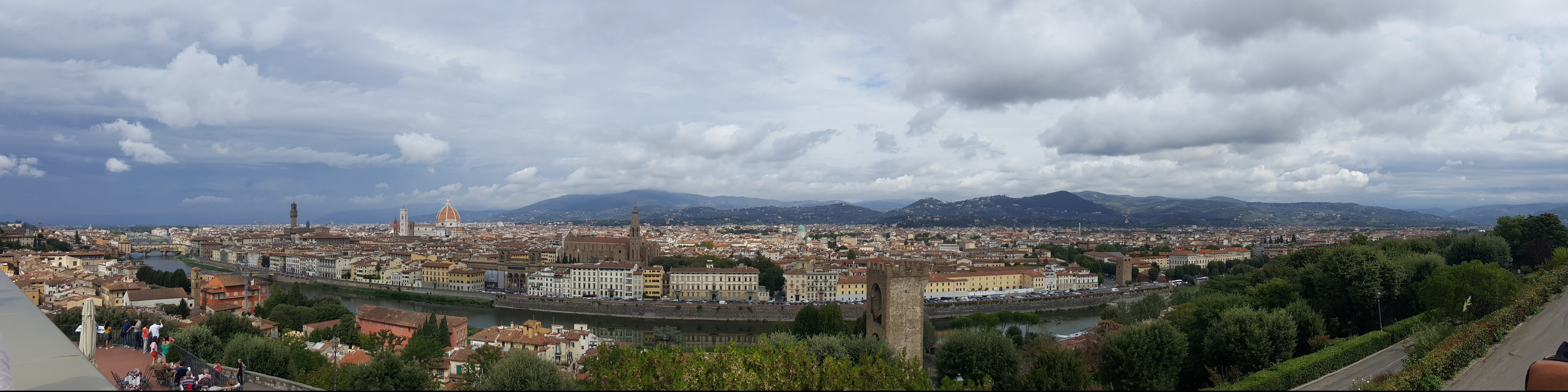
There were a couple of great viewpoints that we found in Florence, including Piazzele Michelangelo, which is quite far from the centre, and is best travelled to by bus. Especially as to reach it by foot you have to climb a lot of very steep steps! The Piazzele is very popular for tourists and can be quite busy; with people, vehicles and food vans. Apparently it looks great at sunset but we only saw it during the day, it looked very pretty during the day as well though.

Piazzele Michelangelo

Piazzele Michelangelo

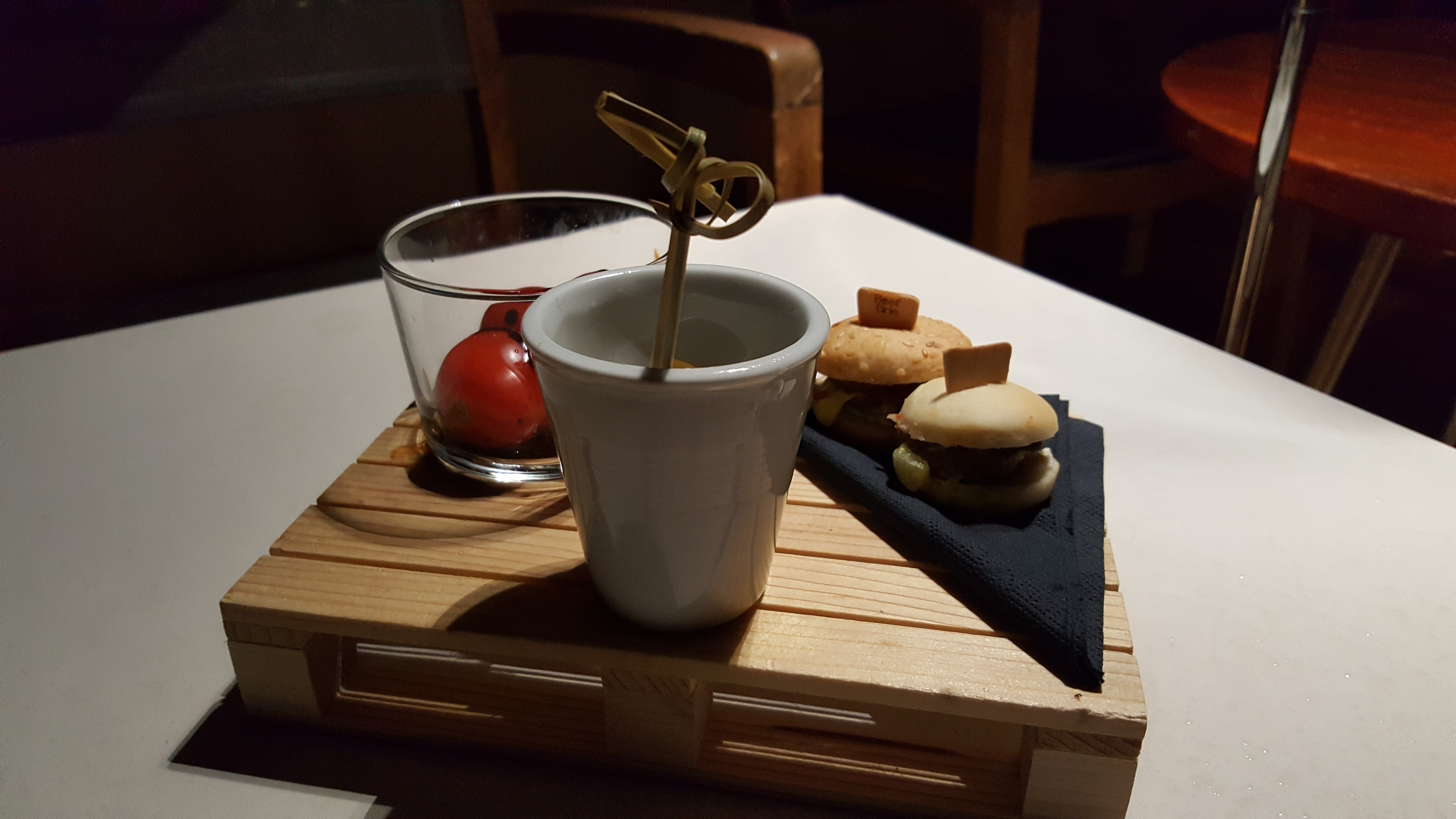
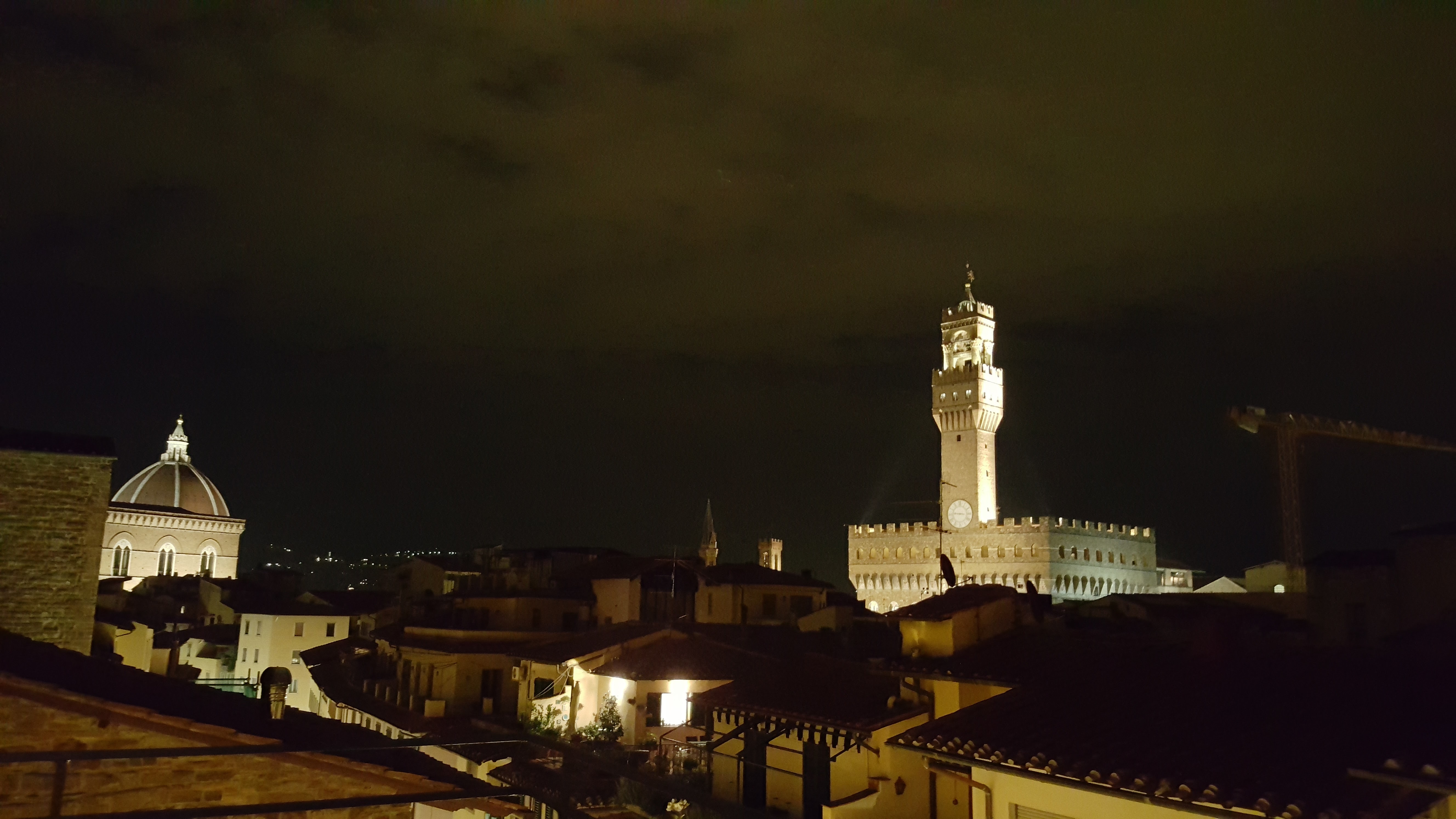
La Terrazza Continentale is also a great place to view some of the city centre. This was more of a special find… a roof bar tucked on top of the Continental Hotel. This is a very fancy bar and quite expensive, so we just had the one cocktail with our free snacks! It started raining too so we didn’t stay long but it was great to see the views and feel part of the Florence night scene. Also the elevator was very cool, but I will leave you to discover that yourself!

La Terrazza Continentale

A couple of free sliders at La Terrazza Continentale

La Terrazza Continentale

La Terrazza Continentale

The town of Fiesole

Whilst in Florence I wanted to take the opportunity to visit the town of Fiesole just 300 meters up the hill from Florence. My grandmother had often told me about the town as she lived their with my mother around 30 years ago and so I was curious to see it for myself.

This has a very different feel to the City of Florence as a very quiet local town only a short bus ride away which has great views of Florence and what seemed to be local vineyards and farmlands. There was also a lovely little church and a site of Roman ruins to see. We were only there for around two hours so I am sure there is plenty more to explore in the town for next time I visit the Tuscany area.


The train journey to Pisa was only around 10 Euros and takes about one hour. This short journey meant we could still have a full day in Florence before leaving for Pisa to have dinner in a lovely Pizzeria in Pisa and explore the city in the evening as well as the following day.

Pisa

The city of Pisa is normally just an excursion for many tourists but it was really interesting to see the city by night as well as day. The city actually has a booming nightlife with a large university residing over the river, the city fills with students by night and has a number of bars and cheap eateries to enjoy.

During the day we looked around the shops, saw Pisa’s Duomo, and baptistery and also their bell tower better known as ‘the leaning tower of Pisa’. The tower is normally open for tower tours but was sold out when we were there, I also don’t know that I would want to climb up a tower that is mid way through falling down! Apparently the tower keeps falling and so every so many years they have to refill the dip with cement again and prop it back up… sounds a bit risky to me!

There was also a museum that gave some background about the tower and an exhibition of different fresco paintings available to see.

Overall, this was a fun area to spend a few days, and I would definitely return. I would probably book more time away next time and spend some time in the rural parts of the region to see the contrast, and taste some of the local foods.

Me in Florence

Me in Florence


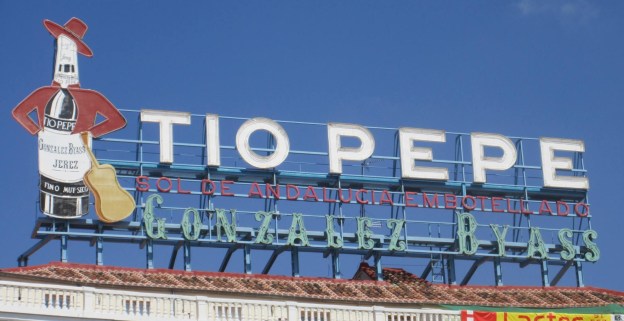
Tio Pepe sign in Plaza Mayor, Madrid

Madrid: Memoirs of fancy parks and poor pronunciations…


Last week, I travelled to the capital of Spain with the aim of having a relaxing week away with my partner and put the nine months of Spanish lessons i have had into practise. The holiday in the end was quite different to what I expected.

After some very difficult months, I packed my bag and was on my way to my budget flight to Madrid, crossing my fingers and toes that the flight wouldn’t be delayed and the infamous airline wouldn’t take my cabin bag from me. Thankfully the flight was okay but I did realise that I had forgotten probably the third most important item on this holiday… the Spanish dictionary and phrasebook! What a plonker! Well now I knew that the holiday would be somewhat more challenging…

We decided to take the Metro into Madrid from the airport, which would have been fine if I had done any sort of research previous to the holiday, but instead we got to the platform and realised we had no idea where we were going. Embarrassing for me really. Eventually we realised what we needed to do but the ticket options weren’t great, we ended up opting for the 10 trip ticket + airport travel but in hindsight this was a bit of a waste because we walked almost everywhere and returned to the UK with four unused journeys. Never mind! But a tip for those of you thinking about a visit, just get the airport ticket, because your 10 trips don’t count towards your journey back to the airport and you may find yourself having to pay extra to get back through the security gates… (Not that I’m talking from experience or anything *cough* cough*)

On arrival to the address of our apartment, (another AirBnB bargain) we had to enter a local hair salon to get the keys, and the apartment owner did not speak a word of English. But thankfully! I remembered the word for keys! LLAVES! Remember that one, you never know when you might need it. So after a lot of challenging conversation and frantic hand gestures, we made it into the apartment which was in the centre of Madrid, and a great price at £49 per night, although was missing some essentials.. like toilet paper. But just a minor thing!

Next on the list was to plan our visits to attractions and local hot spots for the week, of course I was trying to relax so managed to narrow this down to only about three locations per day, not bad I’d say. We were on a serious budget, but there is a surprising amount to do for free in Madrid, even some of the top ranking attractions.

We headed out to fill our apartment with those must have essentials at the local supermercado, and then hit the Mercado de San Miguel, a classy market full of local cuisine for the all important Tapas ingredients. This market is one of many in Madrid devoted to stalls of Ham, Olives, Fruit & Veg and lots of seafood.

paella seafood

Parks

It was boiling hot when we were there and so we wanted to take advantage by strolling in the local parks, we spent a full six hours within the El Retiro Parque in the East of the city. This popular park is full of attractions to enjoy.

There is a lake which you can sail around and a beautiful monument alongside it with strange figures of mermaid like women riding various animals. There is also a few gorgeous buildings, one is a glasshouse with a pond in front of it filled with turtles.

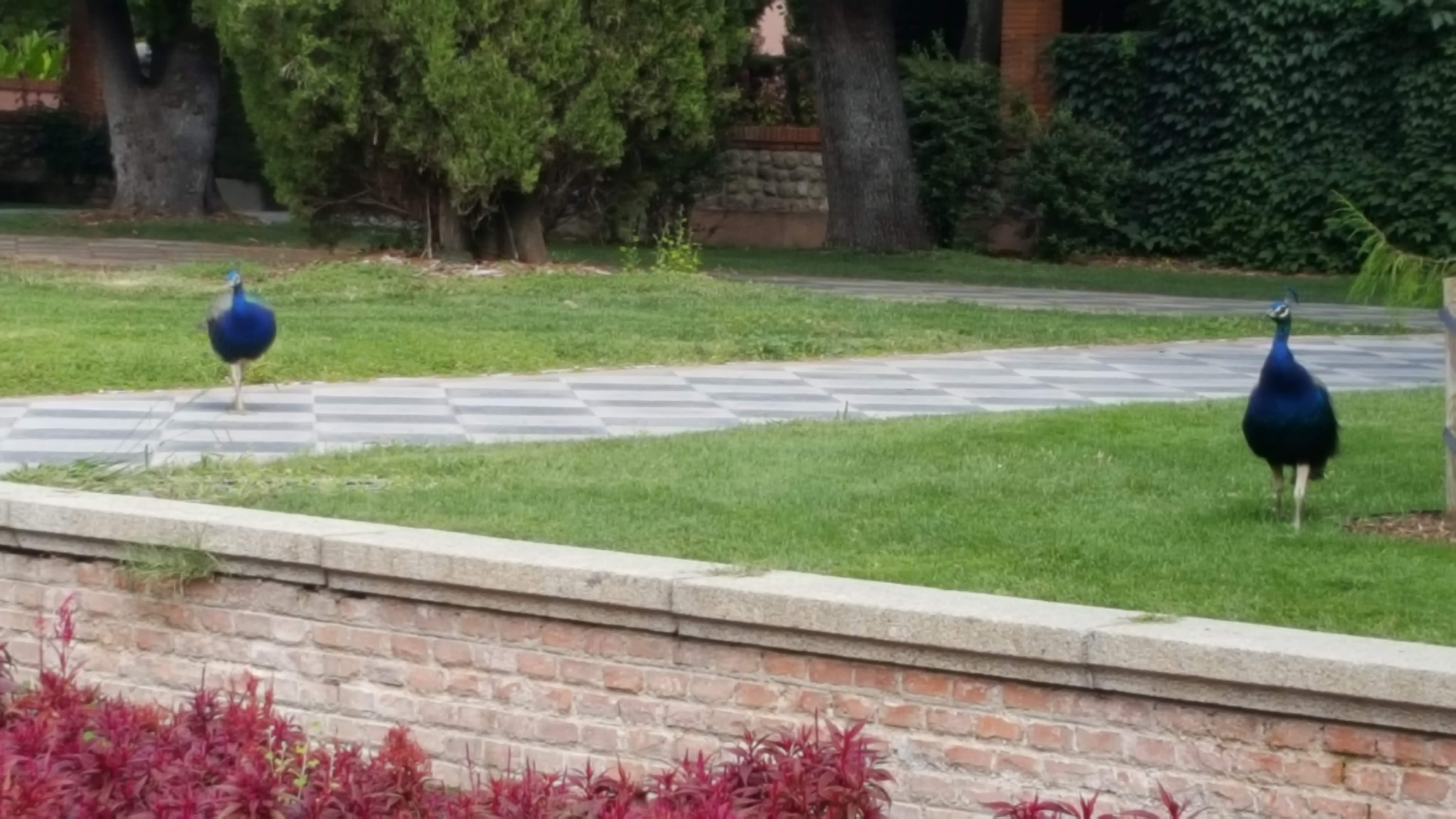
Hidden away on one end of the park is also a peacock park where you can spot the birds hiding in every corner and formal hedge lines and fountains.

Peacock Park in Retiro Park

Peacock Park in Retiro Park

My favourite part of the park though is the Rosaleda or Rose Garden, which is very pretty, full of fountains and neatly trimmed rose bushes. Very beautiful.

There are so many other parks and gardens in the city to relax in as well, they all seemed to be taken well care of, and are clean and tidy.

One of the other reasons we spent so long in the Retiro park was because it was close by to the Prado art museum which is worth a visit. The museum is free during the week between 6pm and 8pm and we waited outside ready to go in, but turned our back for a moment and there was a queue of hundreds of people that had been formed. It would have taken an hour so we decided to give up and come back another day and pay, which was worth while because we ended up getting buy one get one free! The museum was full of paintings and sculptures, including some really brilliant work showing examples of heaven and hell and the artist’s perceptions of those journeys.

The palace is also a lovely monument to view, we didn’t pay to go in, as the queue was quite long and we didn’t feel like it but the outside was pretty and it is right next door to the Cathedral. The Cathedral has great colours everywhere and a variety of chapels.

Evenings

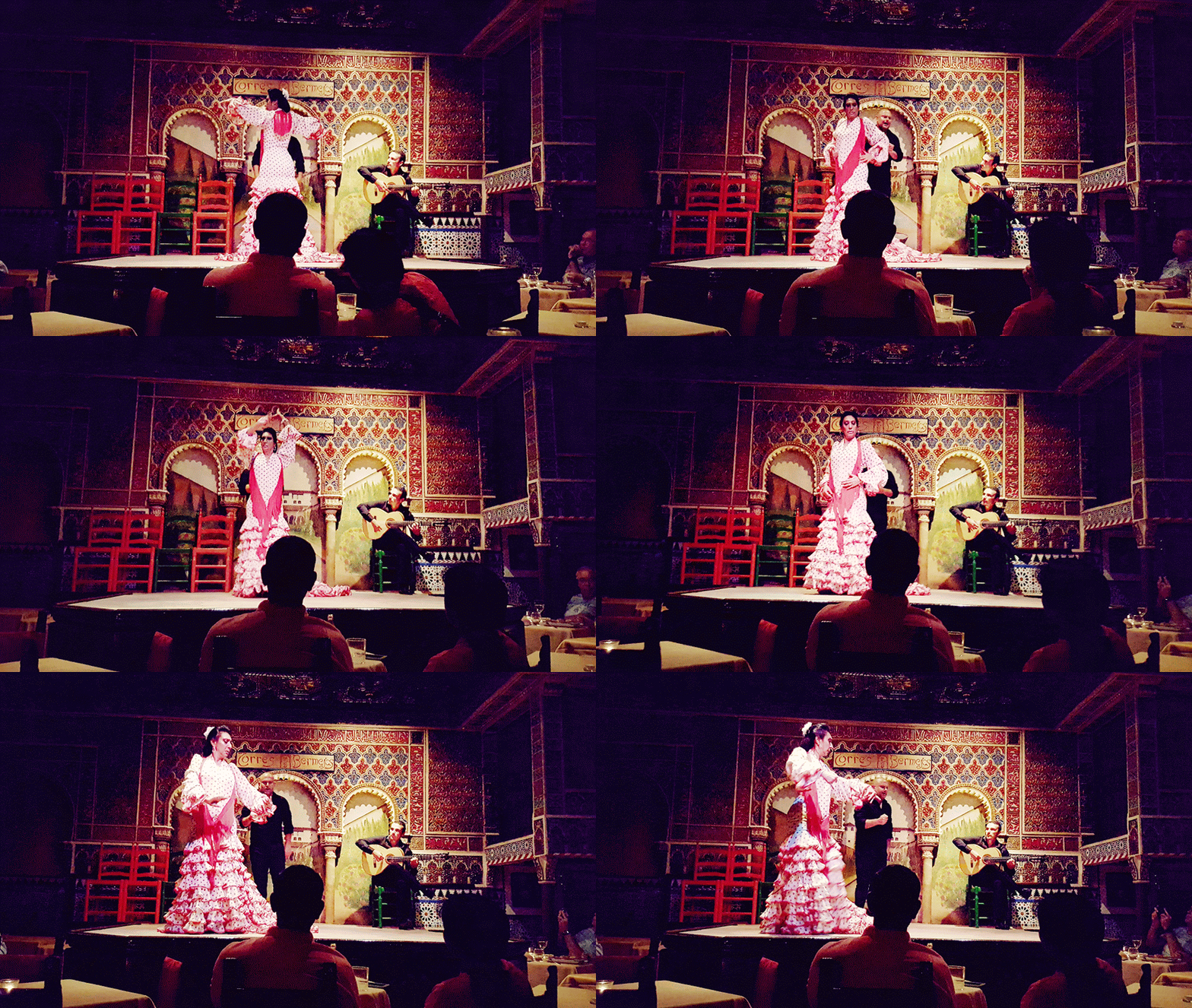
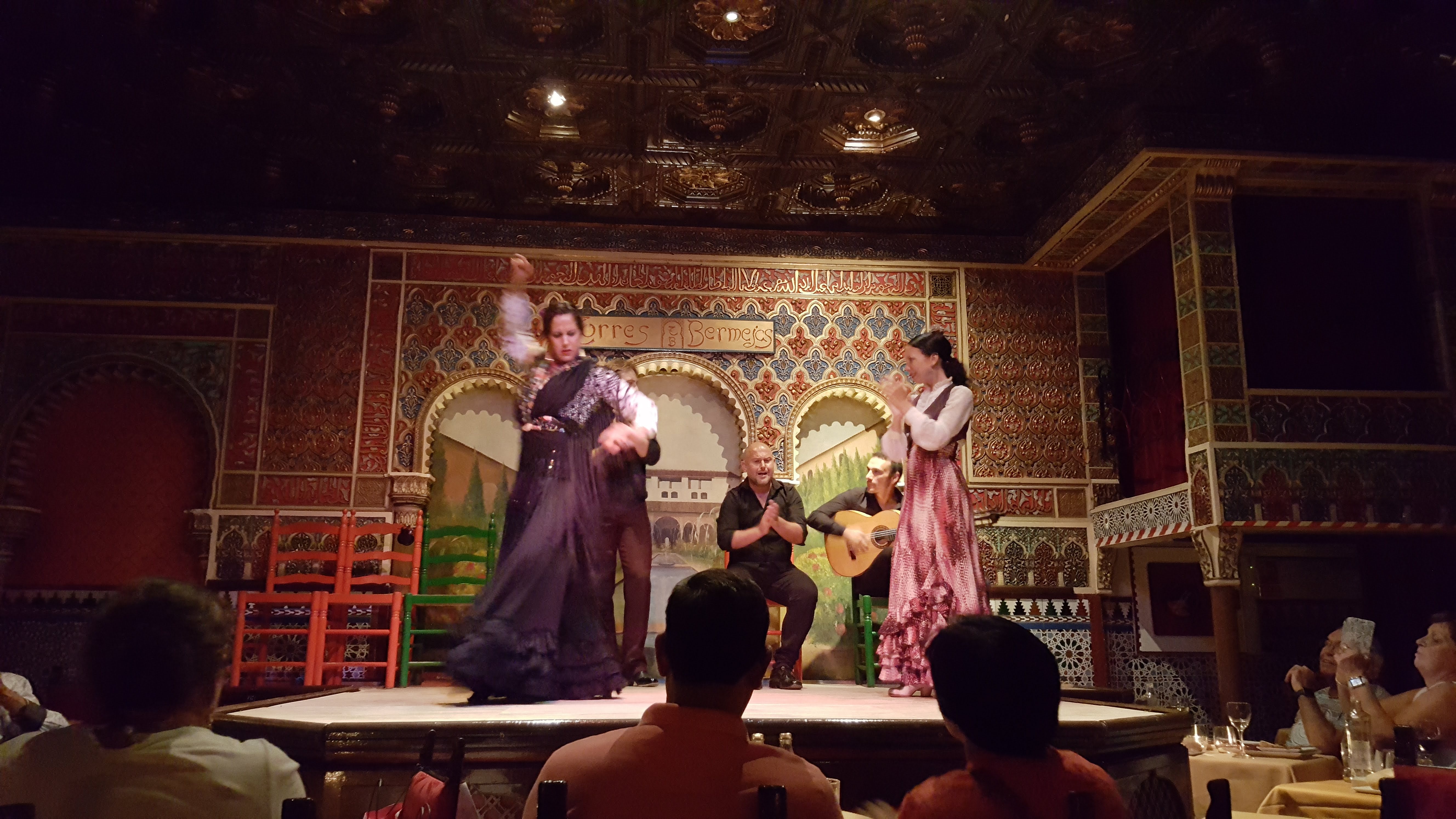
In the evening, the city becomes very vibrant with street performers in all the large plazas, and the Spaniards have their late night dinners and high street shopping trips. One of the nights we stayed in Madrid we booked to enjoy a tapas dinner with a show in one of the many tablaos.

20180904_211034-ANIMATION

We chose to visit Torres Bermejas because of the wonderful decor replicating the interior of the Bermejas Towers of the Alhambra in Granada , which has a great Arabic feel to it. We watched an hour (with a break in the middle) of Spanish Flamenco dancing, singing and guitar playing, which was excellent. You could watch the show and just have drinks for about 30 Euros, but add another 25 Euros and you will get your dinner thrown in, ( a tapas that is, of course). The food was lovely as well, so generally a splendid night of entertainment and food.

20180904_214212

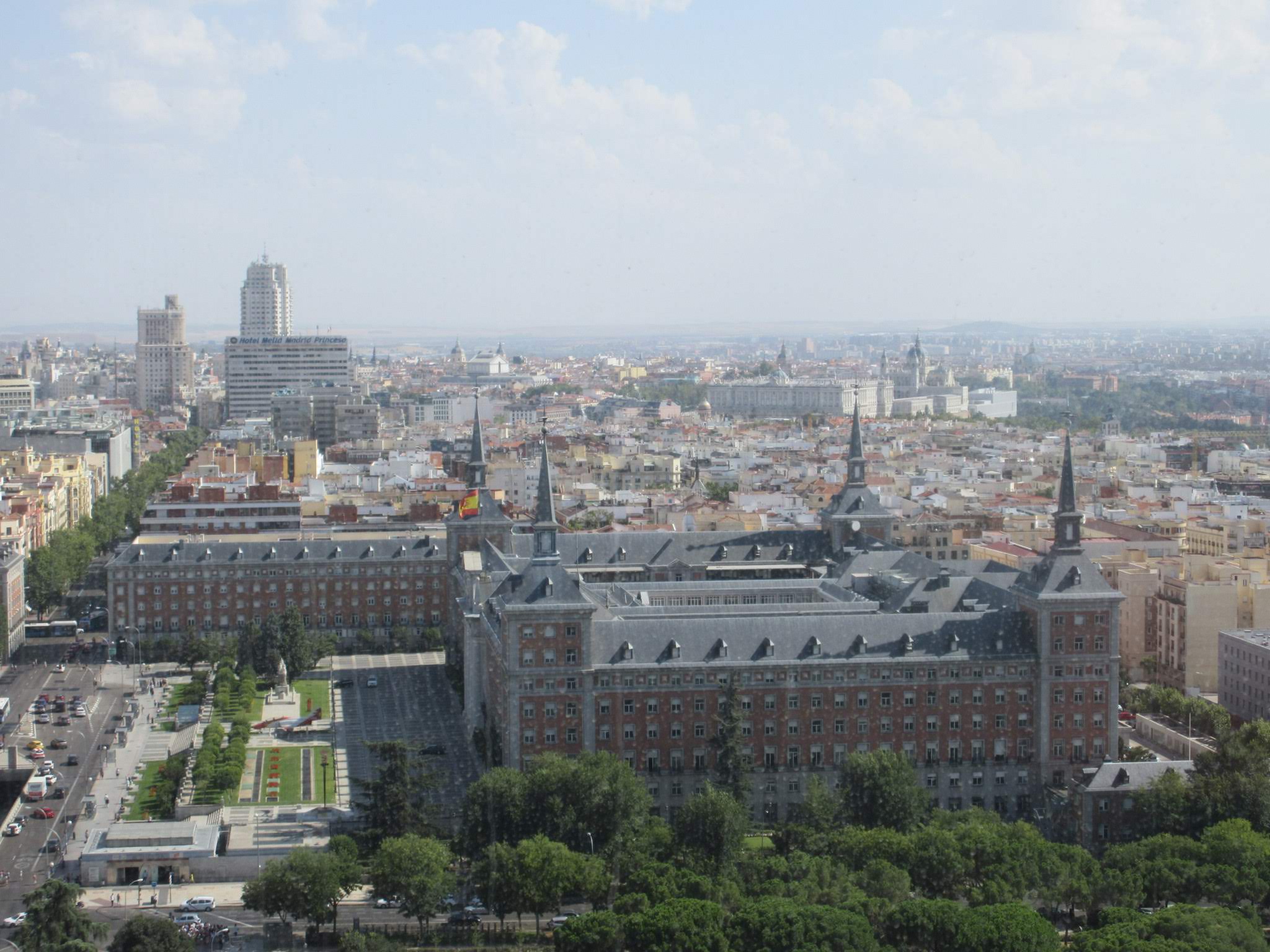
There are also a few good view points to oversee the city; the Temple of Debod which is a park with ancient Egyptian monuments as well as the tower, Faro de Moncloa, which is a little towards the outside of the city but cheap to do – only three Euros. The downside of this attraction is that it has no facilities other than a vending machine so make sure you get some food on the way from one of the many restaurants alongside the Oeste Park next door.

View from Faro de Moncloa

An overview of the city

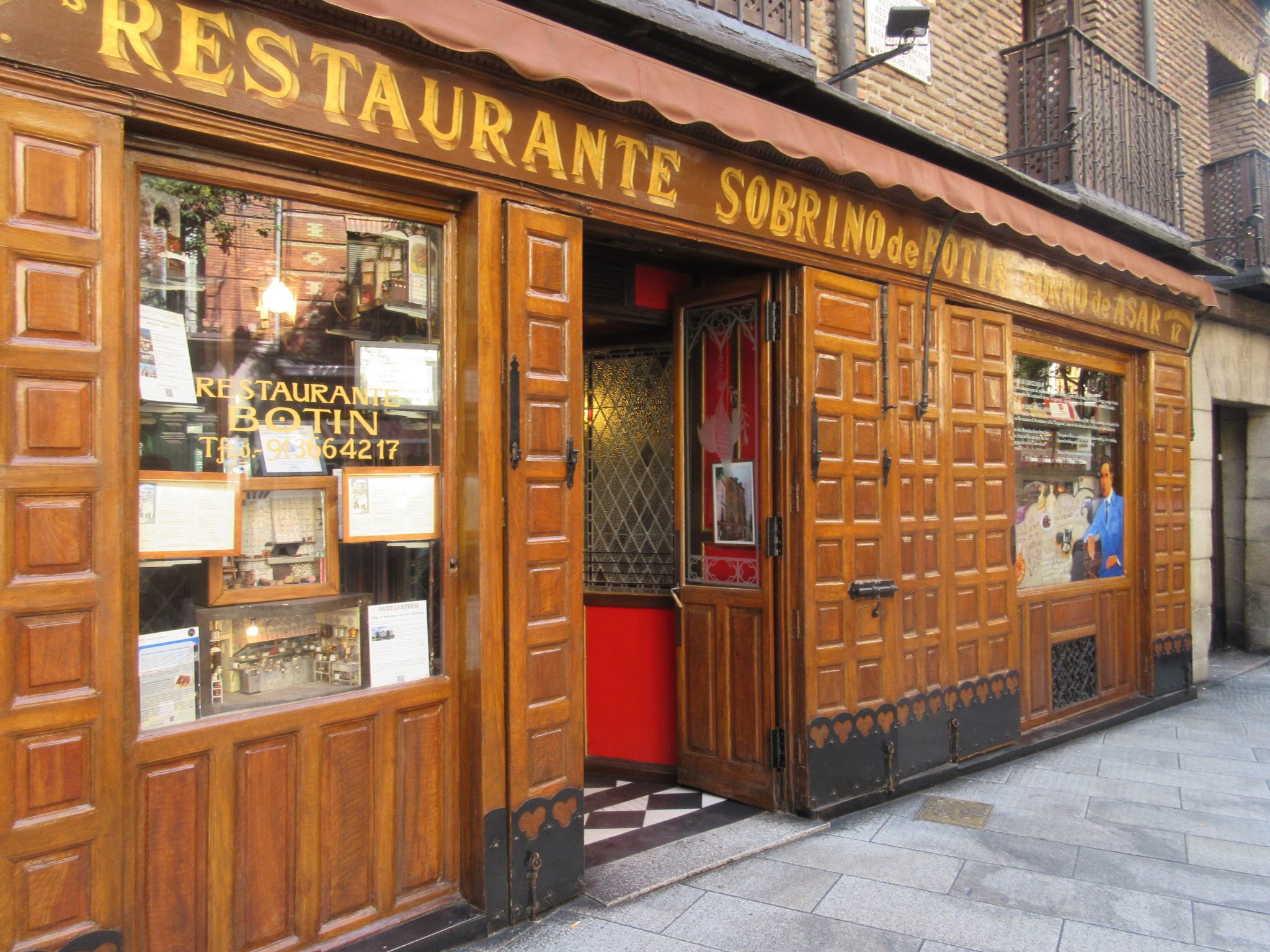
One of the other great things to do, to get a real feel for the city is to take a tour of Madrid. We spent some time considering whether we should do a bus tour or a walking tour but after looking at reviews and considering costs, decided to go for a walking tour. We took a free city tour with a gent named Miguel, which gave us a great overview of the city and its history and allowed us to discover a number of streets, alleys and landmarks that we would have never noticed on our own. For example did you know Madrid hosts the world’s oldest restaurant? Or that in many of the convents you can go and buy freshly baked cookies from the local nuns?!

World's Oldest Restaurant, Madrid

I never knew until we had the tour that we had been walking around a city with such a mixture of origins. I had been passing through streets of Austrian, African, French and Roman influences. Much of the city is also influenced by the different religions and cultures that came with these countries.

We heard that the origin of the Flamenco music and dance that we had enjoyed a few nights before was an outcome of the oppression in Madrid and the persecution of Gypsies, Jewish and Muslim people within Spain during various invasions. It remained very dominant in Andalusia in the South of Spain where much of the original African migrants were dominant. We plan to see a bit more of the Flamenco art during our stay there next Summer.

Unfortunately, we took the tour at the end of the week but it would have been much more useful to go at the beginning. That’s what we get for being indecisive!

In general, it was a pretty nice place to visit, with lots of places to see cheaply, and the culture was really interesting. Word to the wise though, many of the people living and working here do not speak English, so don’t assume that you’ll get by because your a tourist going to tourist places. Remember your phrasebook! I think my boyfriend is pretty thankful that I knew enough Spanish to ask for food and beer, shame I still haven’t mastered understanding the responses back though.

Adios!


Me at Oeste Park

ancient bath house

Bath: England’s Natural Spa

My partner and I decided to visit Bath in Somerset on our way from Norwich to Pembrokeshire in Wales. This was a great place to stop as it was a nice half way point to break the journey up and had lots to keep us busy during our one night stay. I hadn’t realised until arriving that Bath is actually the only place in England with hot springs and just how important it was to this city’s initial existence.

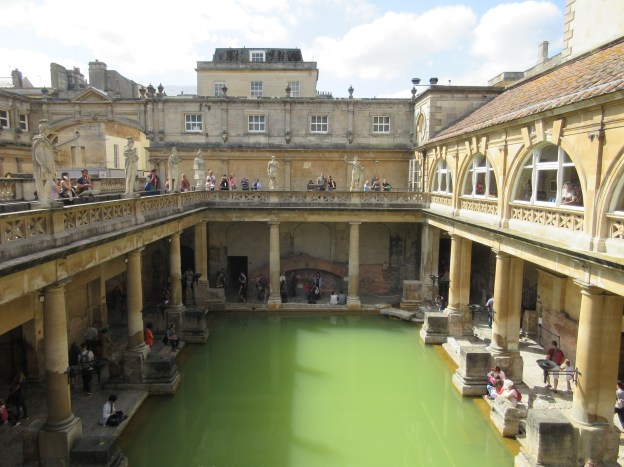
IMG_4494.JPGThe Roman Baths

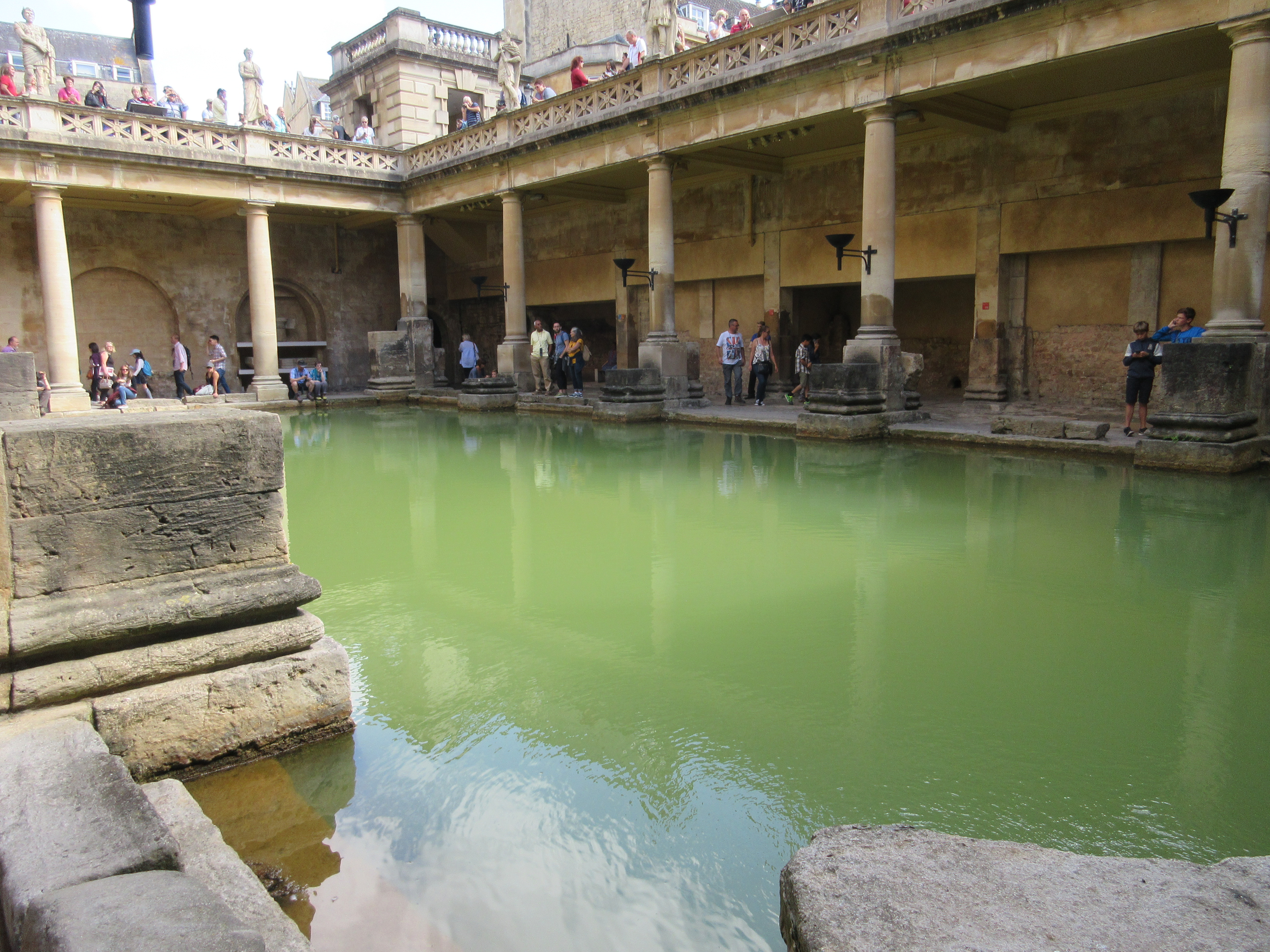
Of course we visited the historic Roman Baths that Bath is famous for. The visitor attraction was well laid out taking you through different parts of the building and the museum before you arrived outside by the main bath. Self guided audio equipment was available to use and there were regular free guided tours to enjoy that gave some insight into the history. It turns out that the springs in Bath were first discovered as warm bubbling mud by the Celts who thought it was a gift from the goddess Sulis. Later when the Romans came along they recognised the water with the god Minerva, but not to upset the locals, they kept the Celt name, and the area became known as Aquae Sulis, “the waters of Sulis”.

The tour was brilliant and explained to us all the strange beliefs that the Romans had which the baths played a key part in. For example 130 metal tablets were found at the bottom of the baths which Romans visiting the bath had written on and thrown in, in an attempt to curse people they didn’t like, mainly people that had stolen their clothes. We were also able to handle replicas of the sort of tools servants would use to shave and clean the visitors to the baths and the process in which people came in and used the facilities.
The baths were lost for a number of years when they fell into disrepair, however they were rediscovered by the Victorians whom rejuvenated them. This is evident in the baths when visiting, the only original remains is the building work from the knee down, above that is Victorian & Georgian additions, which were put in place to replicate the original Roman layout.

Overall the museum and attraction experience were top notch, we even got to try a taste of the water at the end… although I was not a fan of the taste, it was a nice touch!

Thermae Bath Spa

Previous to visiting the town, we had read that going to the Thermae Bath Spa to bathe in the spring waters was a must, so I was really excited to do this. The Spa experience was expensive though and difficult to decide on, because you are given an option of either paying for the single small Georgian bath to bathe in, or the more expensive package of all the modern other baths, wellness suite and rooftop bath, but this excludes the Georgian bath. So already before going in you have to decide if you want the historical atmosphere or the relaxation factor.

We went for the more expensive package to get more out of our ticket and see more of the attraction, in hindsight though I think this might have been the wrong choice. Whilst the facilities were good inside, and quite clean (which is a very important factor in a public bath), I did find the experience to be quite underwhelming and overpriced. The main bath indoors just had the feel of a leisure center pool, and the rooftop pool had uninspiring views and crowds of people inside it. The wellness suite was somewhat interesting but each room was quite less than you expected, except for the Roman steam room which was quite good because it had just SO much steam and felt slightly more authentic and themed than the rest of the spa.

For the price we paid, I had hoped to be amazed by the spa but if you weren’t reading signs that said you were in the spring water, you wouldn’t even know you were in a Bath spa, rather than any other spa in the country. Having spent time abroad at the Blue Lagoon in Iceland and at Turkish and Roman spas elsewhere, it was quite disappointing.

Bath Abbey & Georgian Architecture

All around the town of Bath is Georgian architecture and the matching Bath stone. This includes at the Bath Abbey which was beautifully designed with huge and detailed stained glassed windows. The building was unusually covered throughout with wall and floor memorials, many more than you would normally see in a church or cathedral of this size. We were very lucky to witness the choir whilst visiting as well giving us a great atmospheric visit, and whilst inside we could hear the hymns, stepping outside was a square full of musical busking.

The town center has plenty to offer shoppers with a variety of local independent and chain stores, as well as street traders and entertainment. We really enjoyed looking around and seeing what was on offer, including having a delicious dinner at the Aqua restaurant. We read the great reviews for the restaurant and decided to see if they could squeeze us in. We managed to get a table and had a lovely evening. The restaurant was set out to match the bath theme with blue mosaics and was set in a former church so immediately got a ‘big tick’ from me. We had a great waiter that offered us a selection of Italian cuisine. I had the Linguine Gamberoni & my partner had Pork Cheeks, both meals were amazing. I would highly recommend the restaurant for a bit of fine dining.

In general, we really enjoyed Bath and I would be happy to stay there again on my next trip to the West side of the country. It has great history, shopping and lots of outside places to enjoy.

IMG_4527

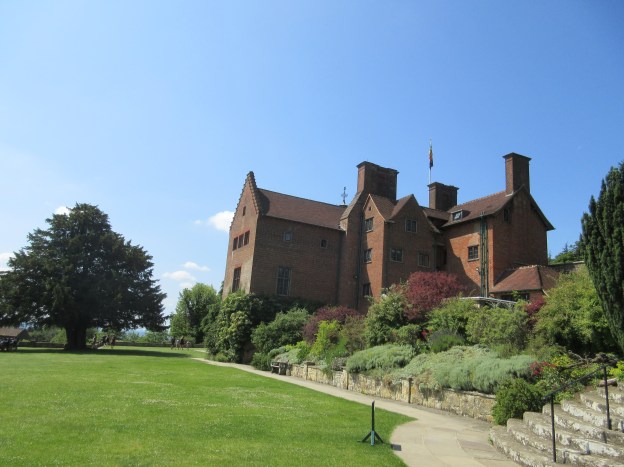
Chartwell House

Surrey on a hot weekend!

Last month, myself and my partner visited Surrey’s Kingswood village and the nearby national trust venues. This is a great area to spend exploring the English countryside and traditional English gardens.

Kingswood in Surrey is a lovely small village with beautiful homes, quality shops and quality dining choices. This also happens to be the home of my grandfather and so I had the pleasure of spending time there.

Whilst in Kingswood, we enjoyed a fabulous meal in the Kingswood’s Arms which I decided to write a seperate review of…

Very close to Kingswood village are the beautiful views of Box Hill and the Surrey Hills. This is a great area to take a walk and explore the countryside, and you can see across Surrey from this viewpoint. With this being a National Trust site, there is also a cafe, shop and toilet facilities available.

There are also a number of National Trust properties surrounding the wider area. We decided to make a visit to the popular ‘Chartwell’, which was once the home of PM Winston Churchill.

I had expected this to just be a house, but on arrival I realised that this was not only the house the Churchill lived in but also an entire estate of rose gardens, parkland, large ponds and trails. You can enjoy self guided tours of Churchill’s home, and discover his best works of art within his old studio. It was a brilliant place to spend time in the sun, and learn about one of England’s most important figures in history. With it being a National Trust site again, it also had all the visitor facilities you could need.

I only had a few days in Surrey this time, but I know there is lots more available to do there. In previous visits I have taken quick trips into London (only 40 mins away), and taken drives down to the coast. You’re also close to the South Downs National Park, Epsom Downs Racecourse, and Albury Park.

More destination reviews coming soon!

Bournemouth – A winter break in ‘Boccy’

A little late but oh well…

This January I traveled down south to one of the UK’s most popular coastal towns, Bournemouth. I stayed with a good friend right on the seafront in the suburb known as Boscombe or ‘Boccy’ East of the town. This was a great weekend get-away with lots to do nearby.

Boscombe

This suburb at the end of the beach is home to its very own pier, shopping area, and a lively community. I stayed with a friend in among a set of flats facing the beach where I could walk easily a long the sand to Bournemouth. This is definitely a great area to look at to keep the price down and still get the same quality views from accommodation like this one.

Whilst staying in the town we went for some drinks at the lovely Chaplin’s Cellar Bar. This was a great choice for a night out as it had the perfect mix of cocktails, atmosphere and entertainment. The prices weren’t bad either!

Wonder down the golden sandy beach and you will find yourself in the popular and thriving town of Bournemouth.

Bournemouth

Bournemouth is well known for its events and festivals, including the Bournemouth Air Show, which I was fortunate enough to see the year before and would definitely recommend as a must see UK travel experience! Although I would not bring a car… a bit of a traffic nightmare..

Bournemouth also benefits from various gardens, a great nightlife and a bustling shopping area. The town is also home to the Bournemouth Oceanarium, which has hundreds of sea life creatures from across the globe, and an interactive dive cage which I plan to check out next time I’m in town!

Although my friend and I are normally quite partial to a traditional cream tea when we are together, this time we went for something a little different at lunch by trying Koh Thai. We received some delicious Thai cuisine to warm us up from the cold January wind. They also made us some lovely refreshing strawberry smoothies which went surprisingly well with the Thai food.

You could tell that Bournemouth is a great place for young people to get loose and have some fun, with plenty of bars and clubs to enjoy. I could definitely see myself enjoying the beach in the day followed by partying in the evening only a few years back!

Corfe Castle

If you have an interest in history or even just nice views it is definitely worth taking the ferry across to the Studland area and making your way to Corfe Castle. This village built around the ruined castle that sits upon the hill, is a pretty little nugget of traditional English lifestyle. It consists of not only the castle and the connecting National trust shop and cafe (in which a tasty cream tea was consumed by myself) but also; independent shops, pubs, restaurants, tearooms, a church and two free museums.

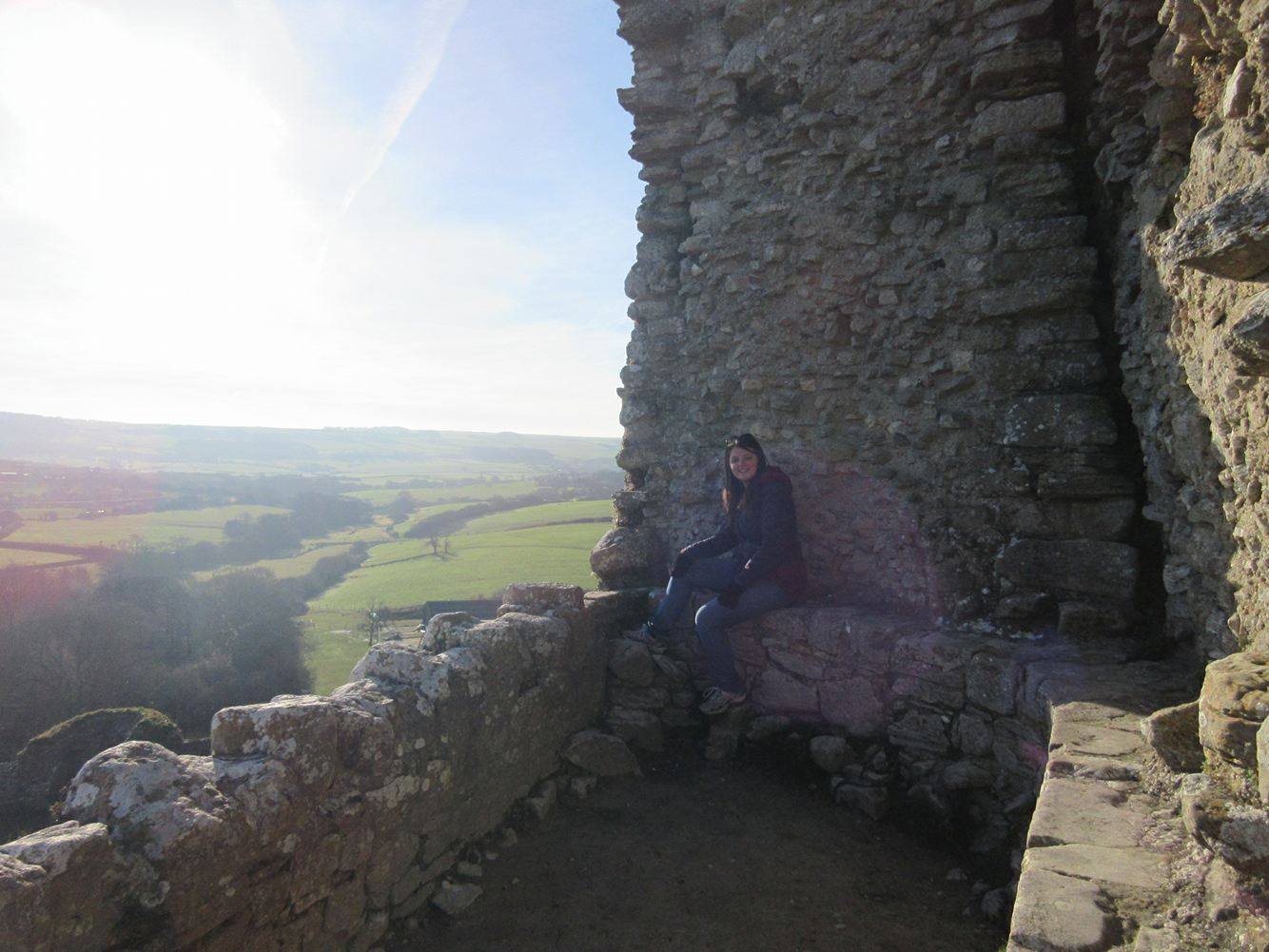
The castle itself dates back to the 10th century and is a massive site surrounded with roaming sheep, and covered with lots of nooks and crannies for the eager photographer. We attempted to take some nice photos but being an amateur many of mine were just bad selfies! As well as the National Trust property having regular events, there is also various information boards and a blacksmith’s workshop showing you how things were made, way back when! This castle has been through a lot, changing use between a defensive structure in the Saxon and Norman periods then to a royal palace and even family home. So as you go round you will see many stories of murder, imprisonment and war!

The views from the castle are also spectacular being perched up high on a hill and with beautiful countryside and small stone buildings surrounding it. That said… I would say to think considerably about visiting this castle if you struggle to walk up steep hills, as there is some difficult terrain to deal with.

New Forest

Lastly, I just wanted to add a note about the beautiful New Forest National Park. I only had time to make a quick detour to the village of Burley in New Forest on my way home from Bournemouth, but being as the park is only half an hour drive from Bournemouth, it is well worth fitting this into your holiday.

Burley was a quirky little village in the park, known for having been home to a famous white witch named Sybil Leek in the ’50s. She was often seen walking around Burley in her long cloak with her pet bird sitting on her shoulder. She later moved to the states but her presence clearly had an impact, with the village now being renowned for its mystical gift shops which sell wands, crystals and all sorts of weird and wonderful things. I of course had to buy myself some souvenirs here and went away with a necklace and a crystal.

The best thing about it all was as I was driving out of the village, I saw the famous wild horses that New Forest are known for, roaming near the side of the road. This was the perfect end to my short trip down South.

18195579_10156072787694278_24275866_o.jpg

Me at Corfe Castle