Tag Archives: Day trip

Vietnam: North to South – Part One

Booked only a week before, after my trip to Israel was cancelled last minute, I decided to have my first go at Asia this month. Vietnam was on offer so I went for it and discovered a crazy and unique way of life with amazing food and very friendly people.

Getting there

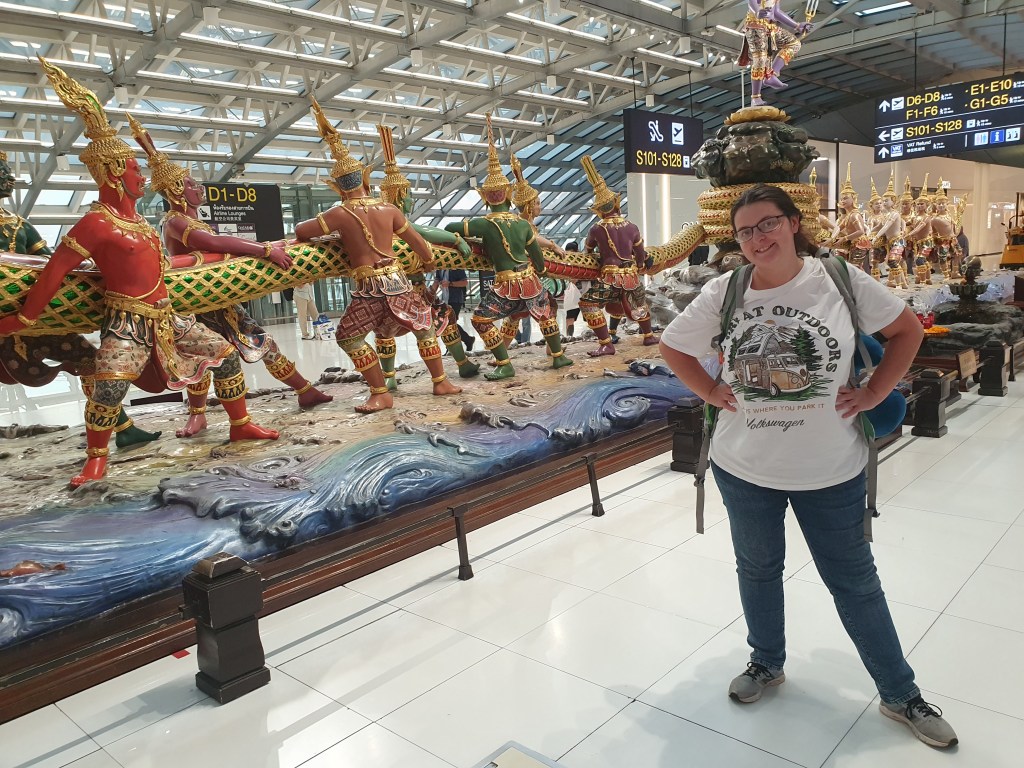
The travel to Vietnam was very very long, whilst the flight duration may say 16hrs by the time we had travelled to Heathrow, and waited around in Bangkok and then traveled to the hotel we had stacked up over 24 hrs of travel. I had thought I’d planned out to miss my jetlag but it actually took 3 days of waking up at 3am to get over it.

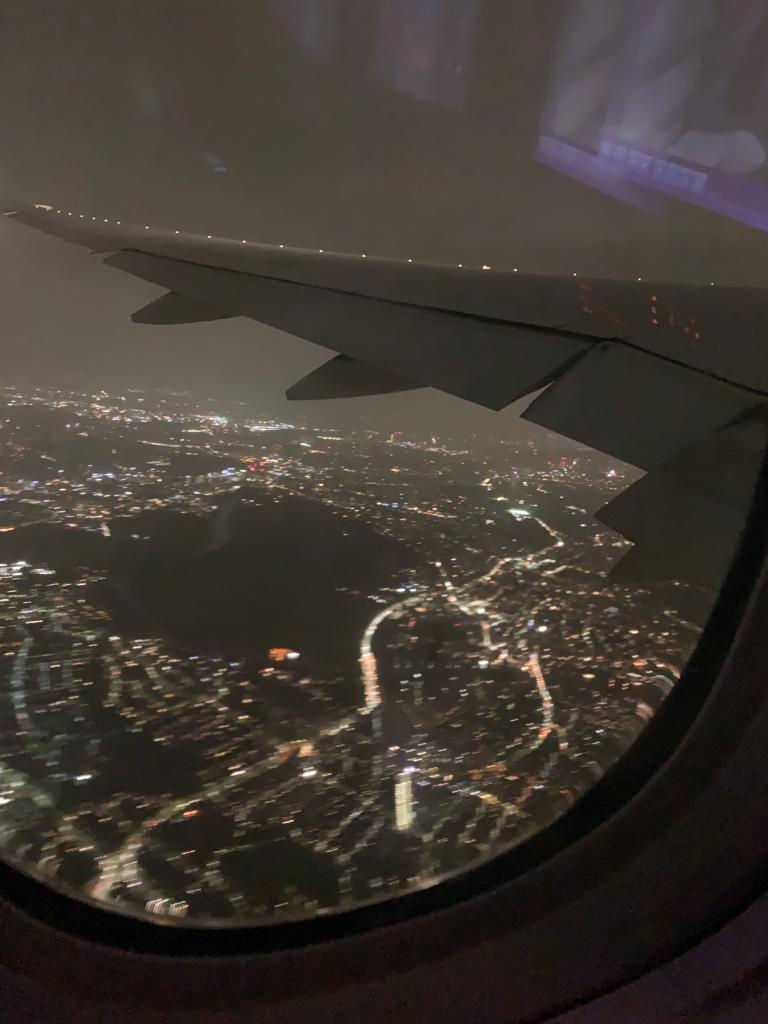
We flew with Thai Airways which had tight seating but plenty of hospitality from the crew and the aeroplane food was some of the best I have had. On arrival to Hanoi airport, our taxi driver was waiting for us and we got to our hotel in about half an hour, after seeing some of the cityscape lit up at night.
Hanoi

We stayed in a hotel for our first few nights in Hanoi city. The hotel was immediately a relief with a welcome drink on arrival, a porter to carry our bags and a free upgrade to a very nice room. It was all going well, until my 3am visit to the bathroom…

That is when I discovered scuttling across the floor, the biggest cockroach I have ever seen. When you are already sat on the toilet half way through a wee too, the only choice is to throw your legs in the air! I found myself doing toilet balances at 3am to avoid it. Unsure what to do I spent the rest of the night with a light on unsure what to do and worried if I fell asleep I would wake up with a cockroach on my face. It took me a few days to get past this fear and just accept the potential for creepy crawlies around me.

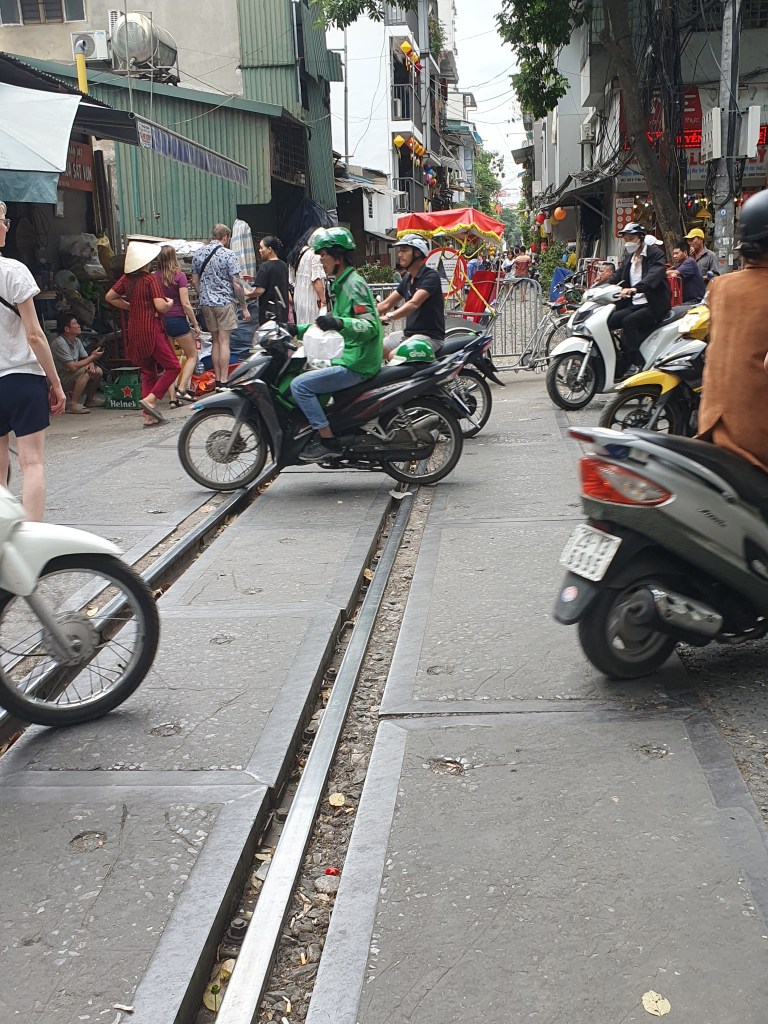
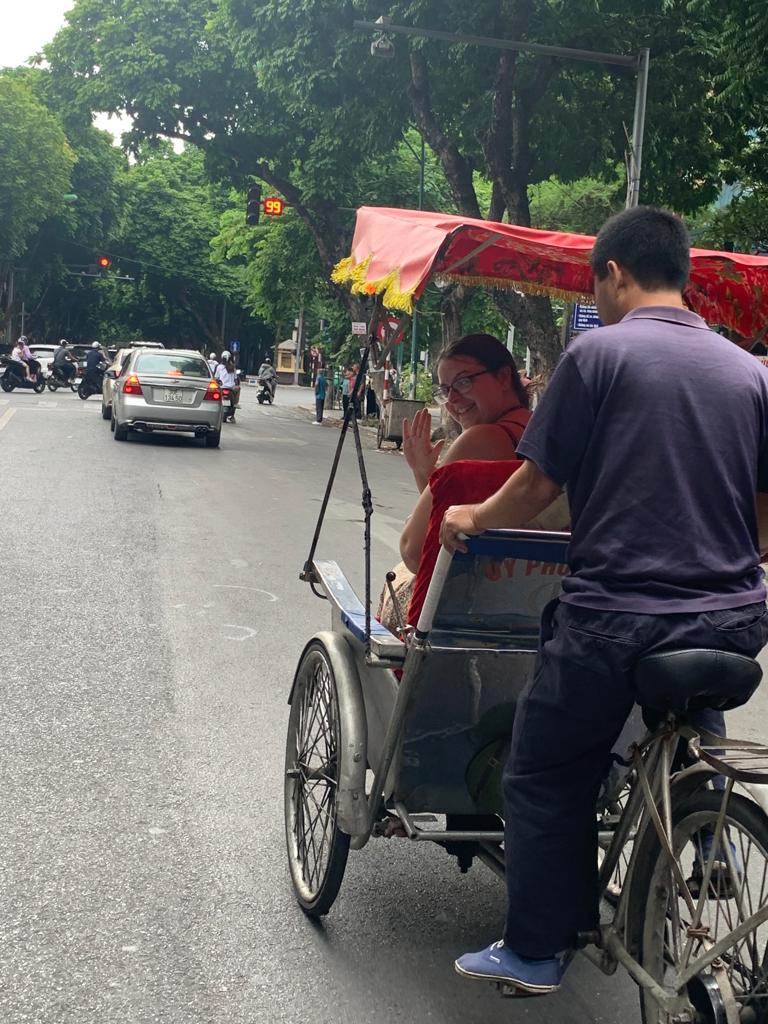
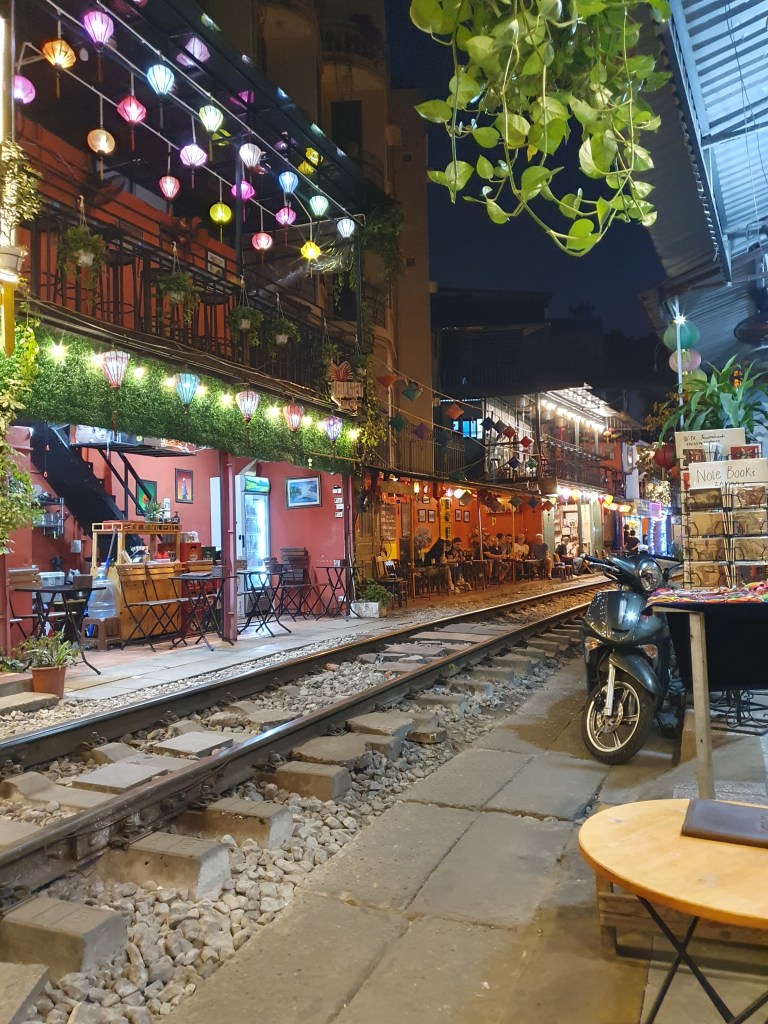
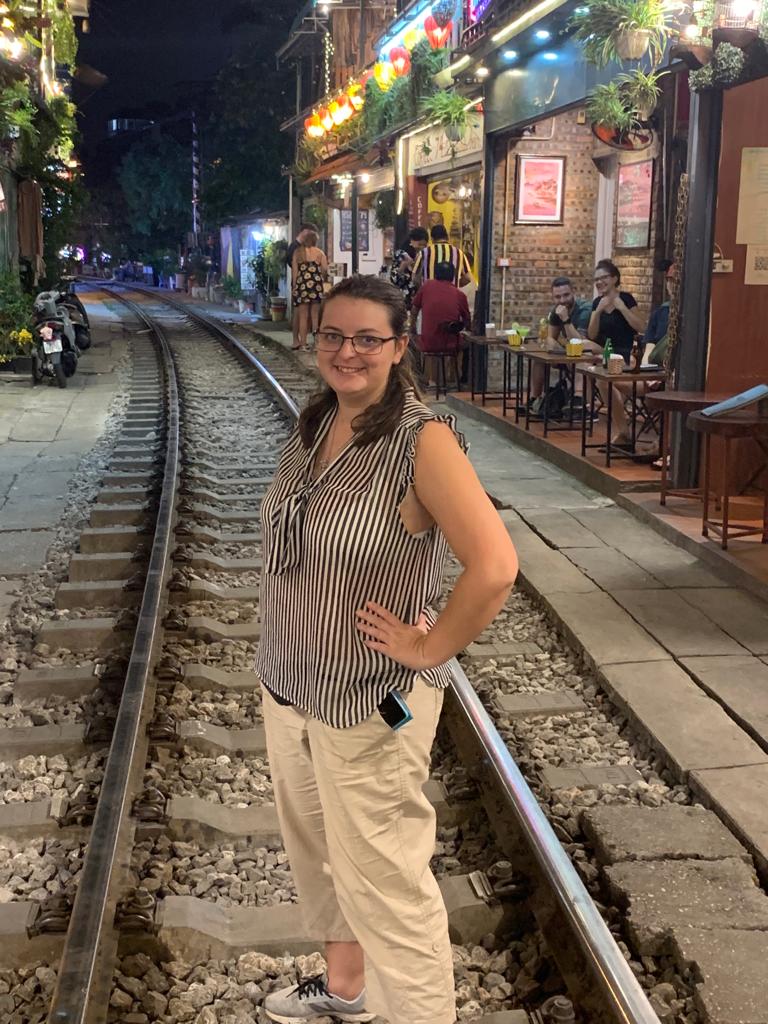
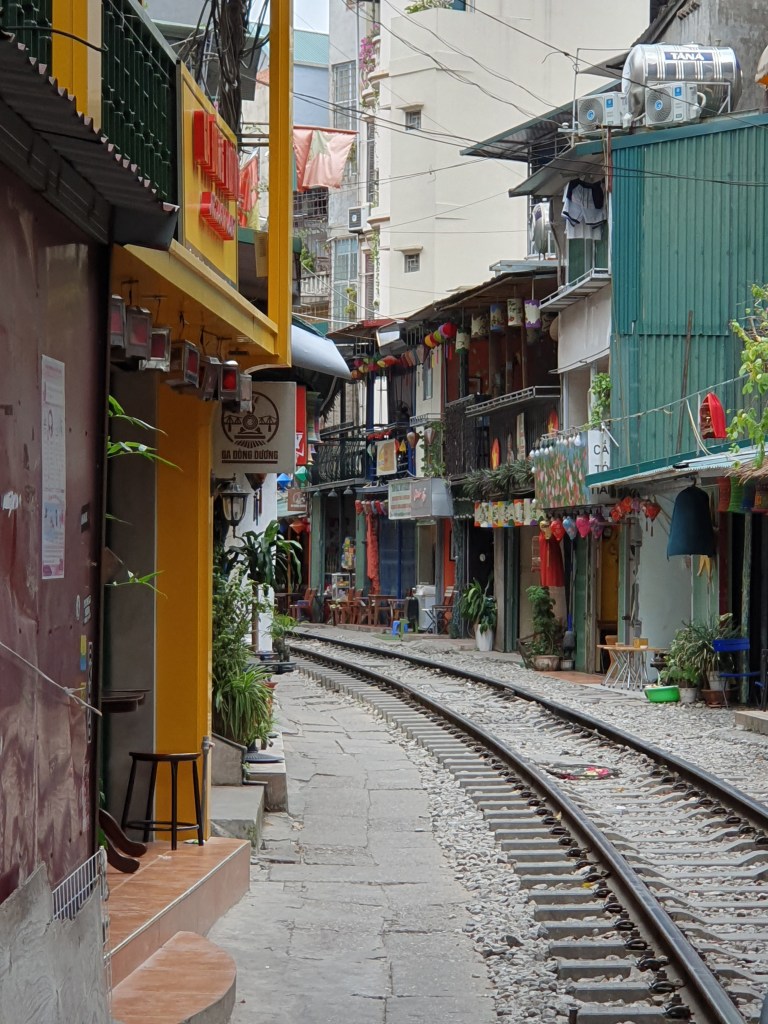
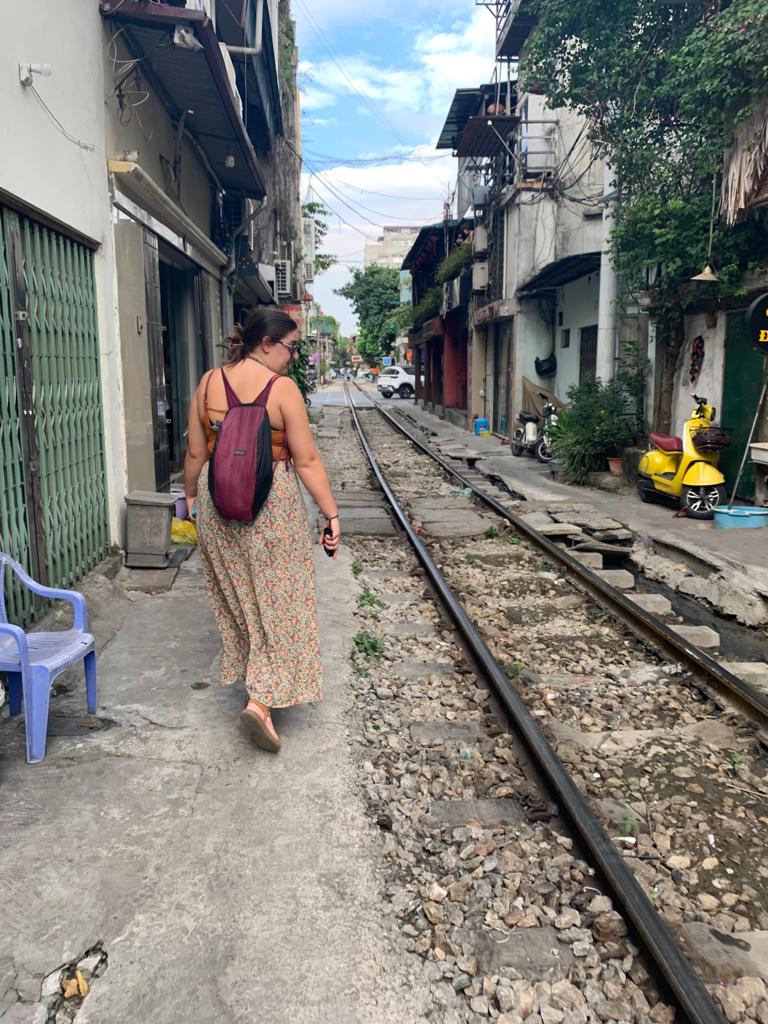
Venturing out of the hotel into the city was another experience of taking your life in your hands. The traffic is some of the craziest I have ever seen. There is no pavement due to mopeds being parked all over it and to cross the road you must do what the locals do and just walk slowly and confidently over (like you’re sleepwalking) and hope nothing hits you! The roads here are so congested that they even have a street that is famous for a train that comes through as well as all the pedestrians and bikes and ends up about an inch from your face!

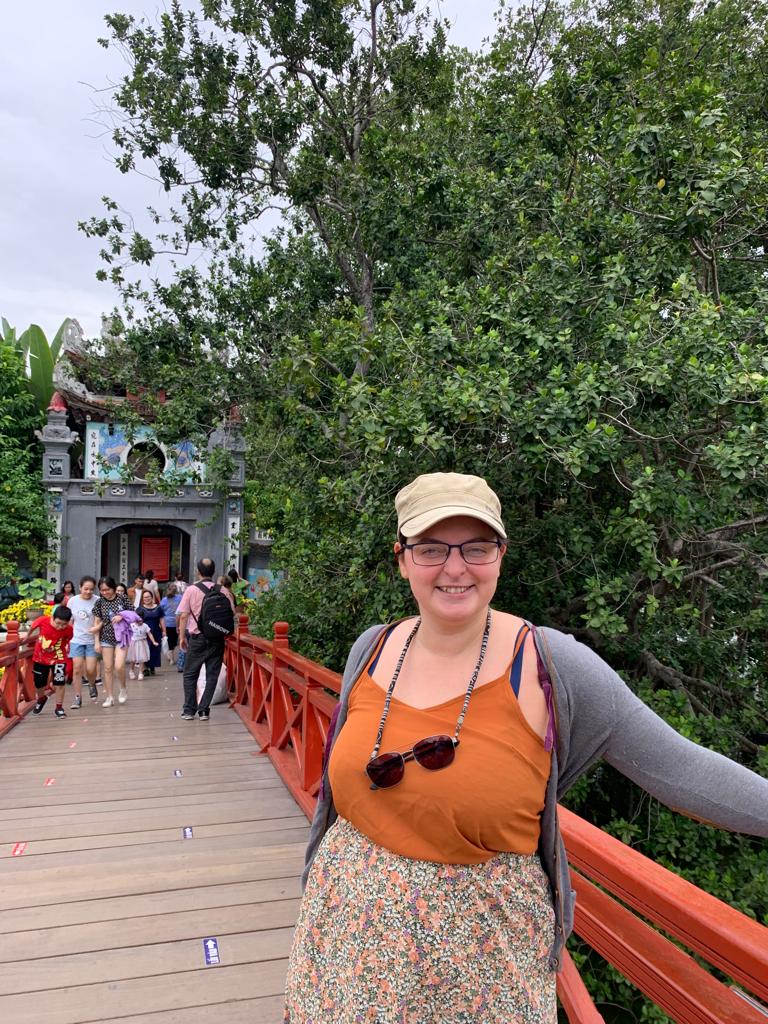
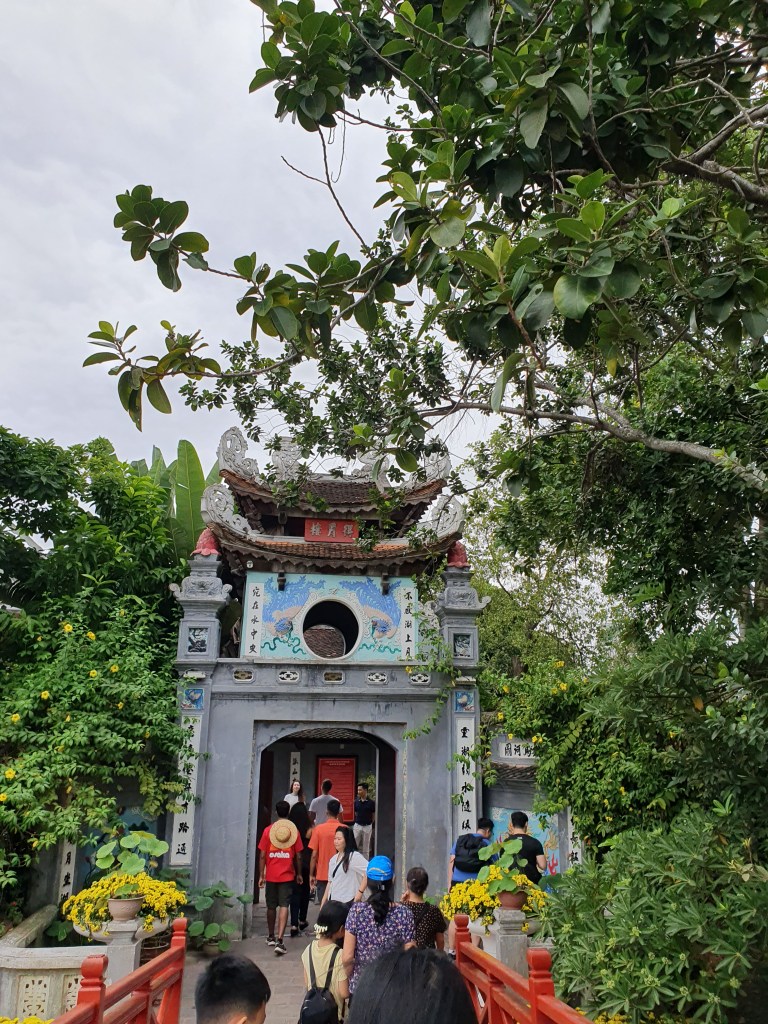
We cautiously took the steps from our hotel down to the famous lake which thankfully is pedestrianised around the edge and began to explore our first attractions.
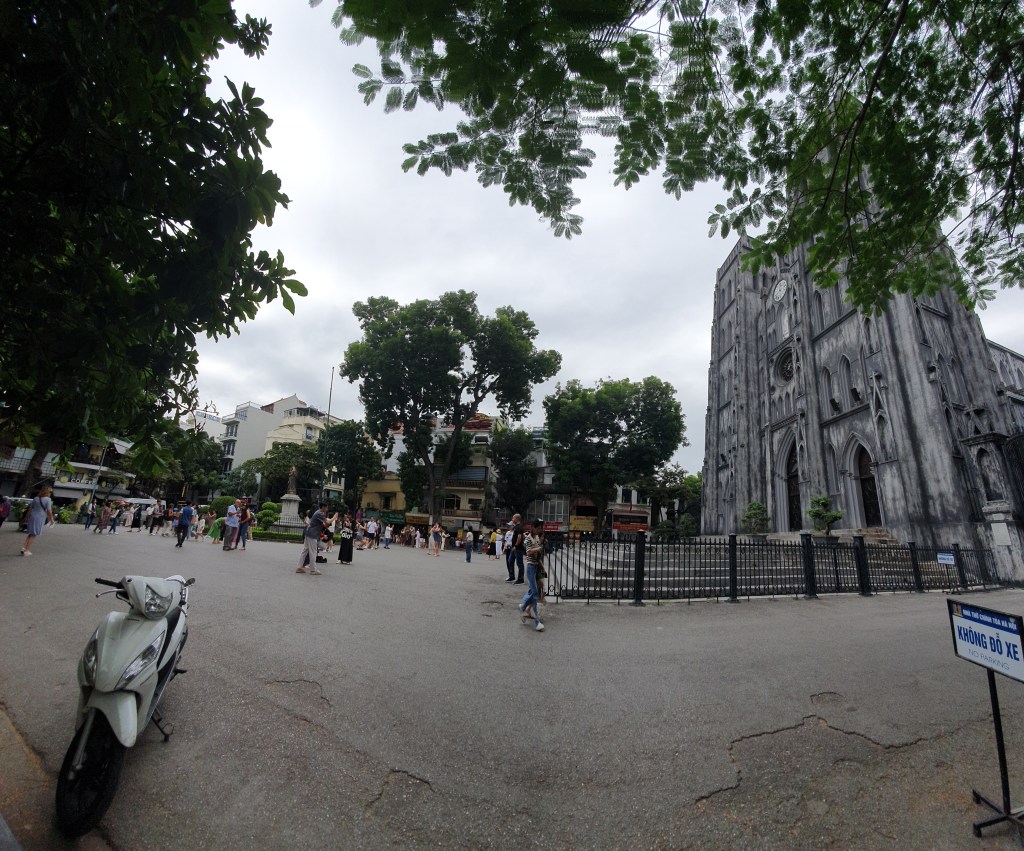
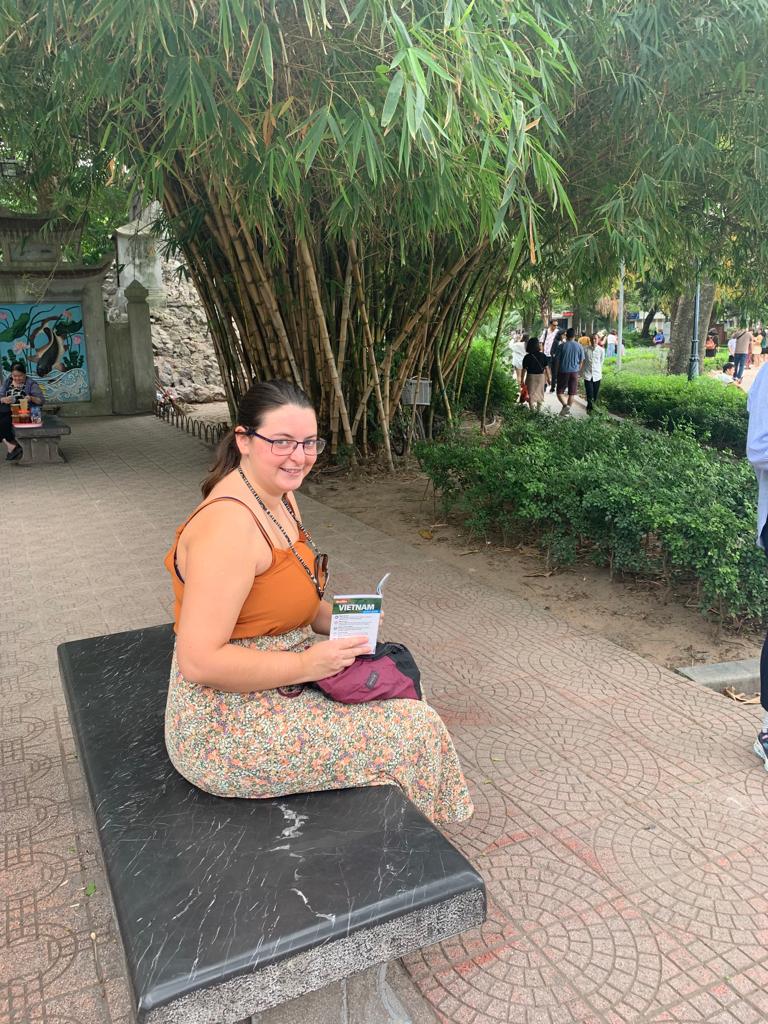
First on the agenda was a few impressive buddhist temples, and also the St Joseph Cathedral. This gothic cathedral looks so strange with all the little asian shacks around it and motorbikes everywhere. I couldn’t go in unfortunately but I imagined it was similar to other catholic ones I have seen. A little bit of Europe in the middle of this crazy South East Asia whirlwind. I later found out from my guide that the french actually governed Vietnam for centuries and is the reason for some catholism here and that they now use alphabetic letters instead of chinese characters. Something to be grateful for as a tourist!

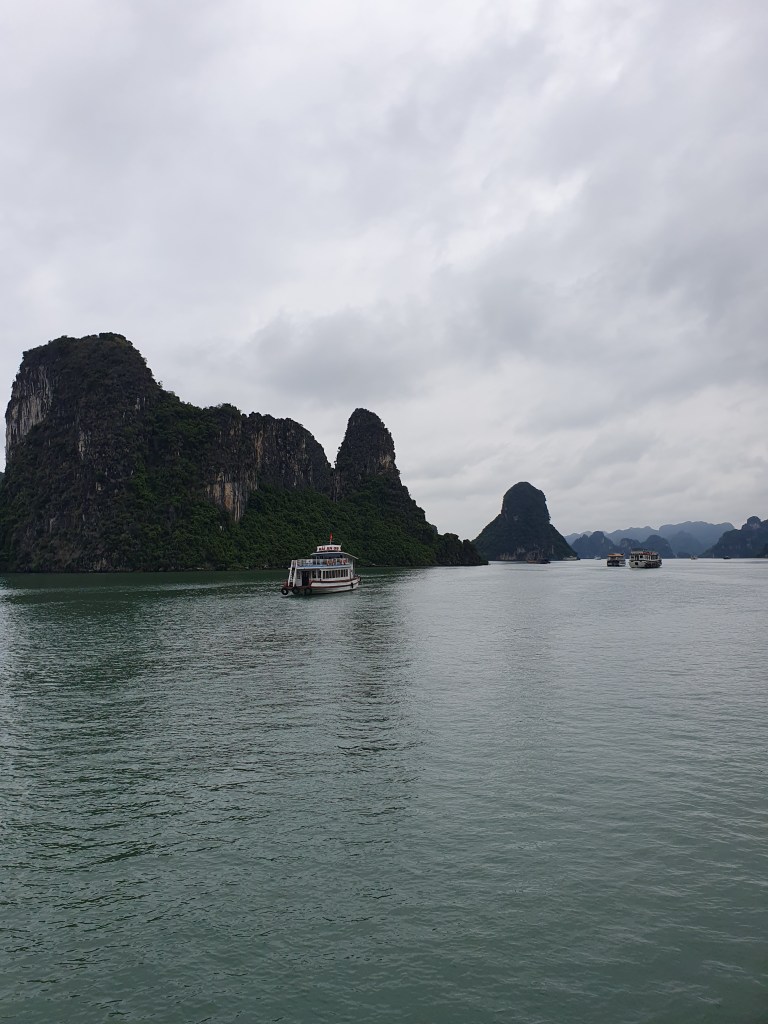
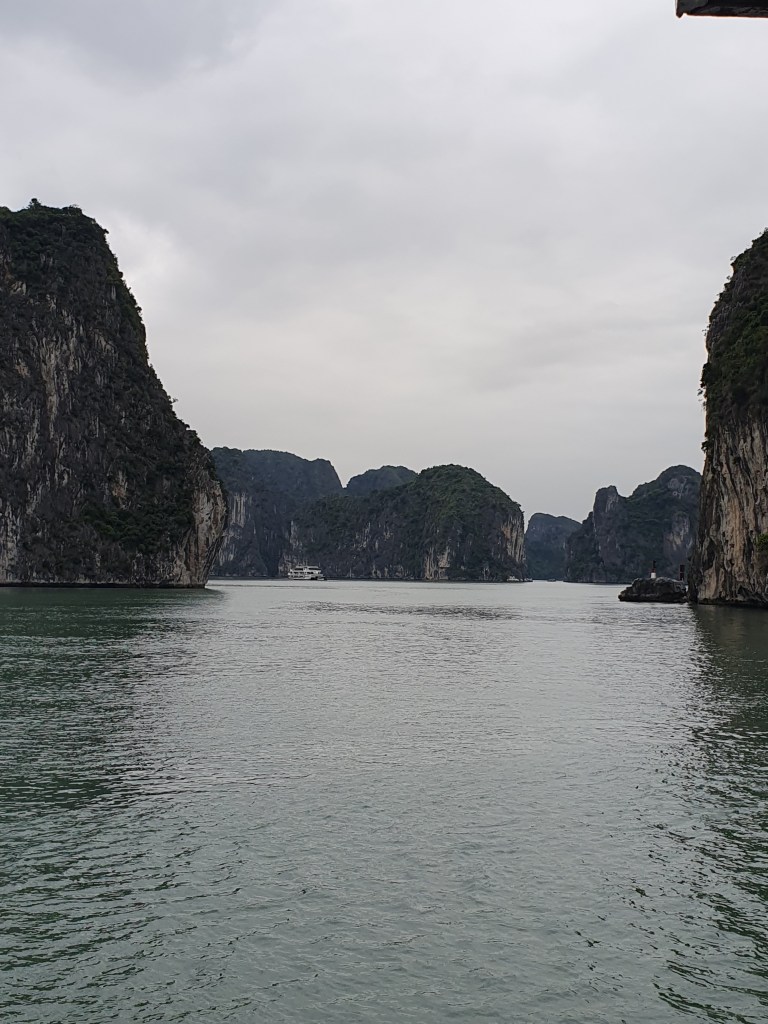
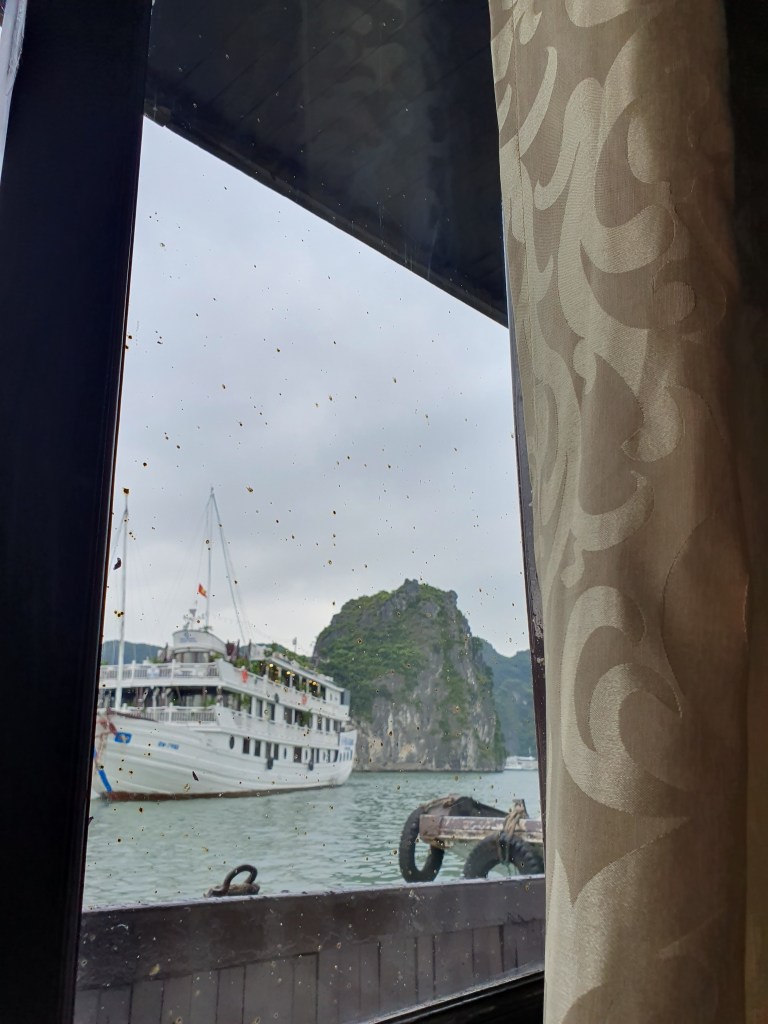
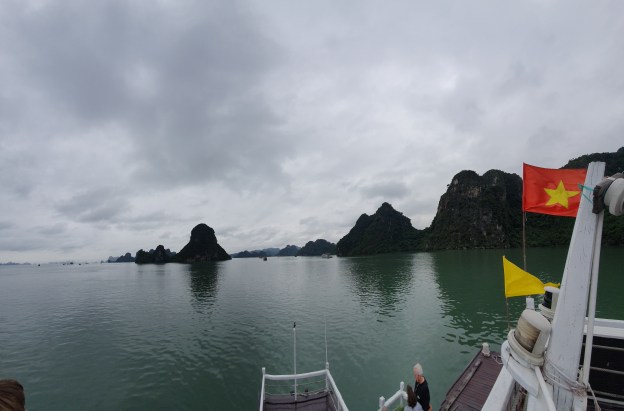
Another day in Hanoi took us on our four hour bus ride to Halong Bay, the famous world wonder that is an absolutely huge bay and once a very important port full of huge bouldering islands. We had a relaxing overnight boat cruise here where the service was amazing and we enjoyed an impressive selection of seafood and bar service on a boat all to ourselves in our small group of nine.
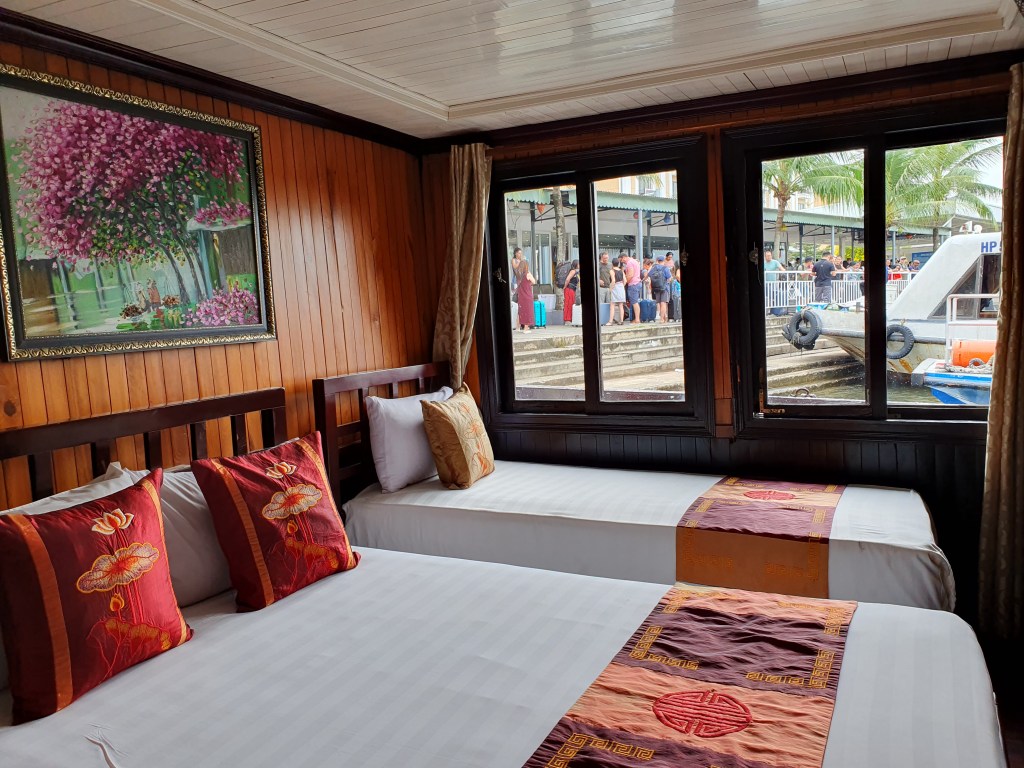
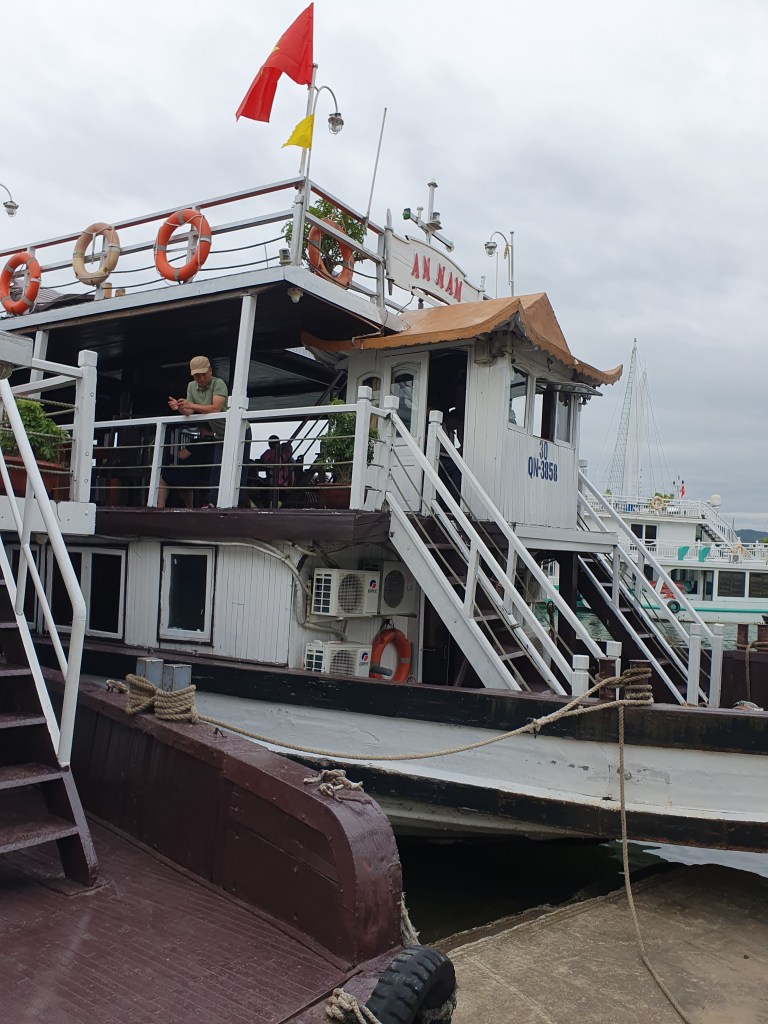
There are many local caves on the islands to explore and we ventured into one, and then towards dusk I had the pleasure of exploring an empty and calm section of the bay by kayak. The only thing that was man made around me was a small floating pearl farm where oysters were floating below growing pearls for fine jewellrey.

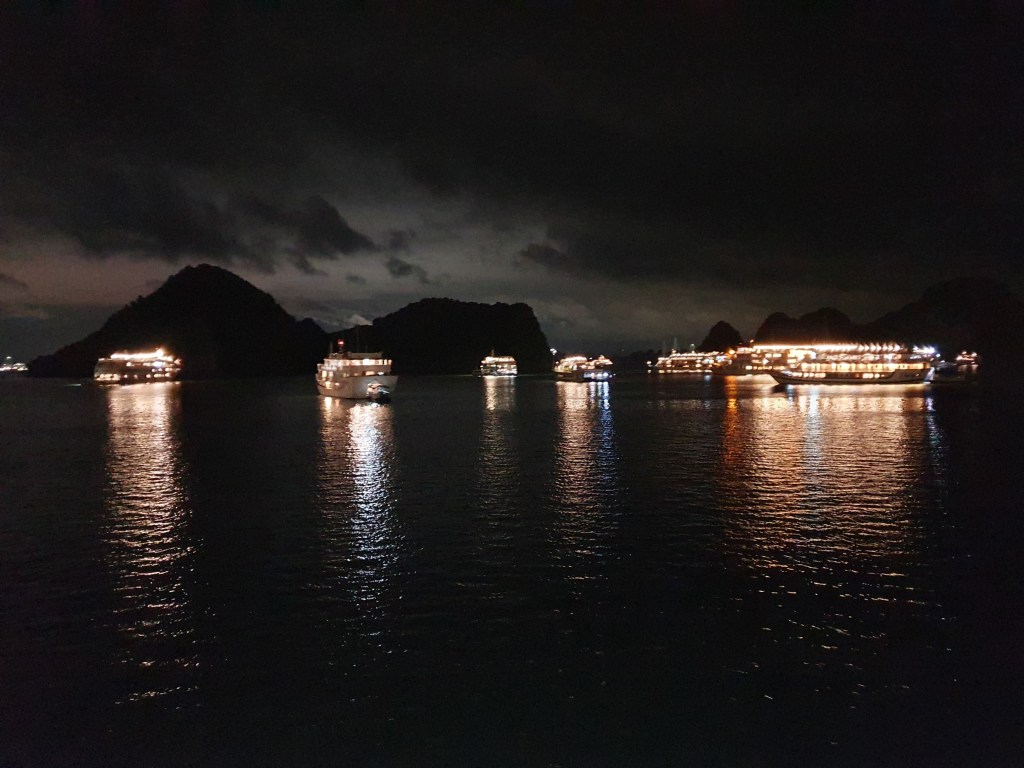
At night all the boats have to gather in one part of the bay so you can enjoy the sounds of distant karaokes and good times from your neighbours all around you.

We also got the opportunity to see some amazing charitable organisations on our route from Halong Bay. Two groups of crafters that were helping their community by making things to sell, one was doing it for the environment and the other for the disabled. I will touch more on this in a later blog.

Back in Hanoi, we had one more opportunity to look around. We tried for a third time to see the train on train street, but this time at night. The train schedules on the internet were all wrong, so we got there badly timed and when we tried to wait the police made us leave, even though we were half way through a paid meal. Overall, I would say only go to train street if you are happy to waste a lot of time and maybe only see the tracks.
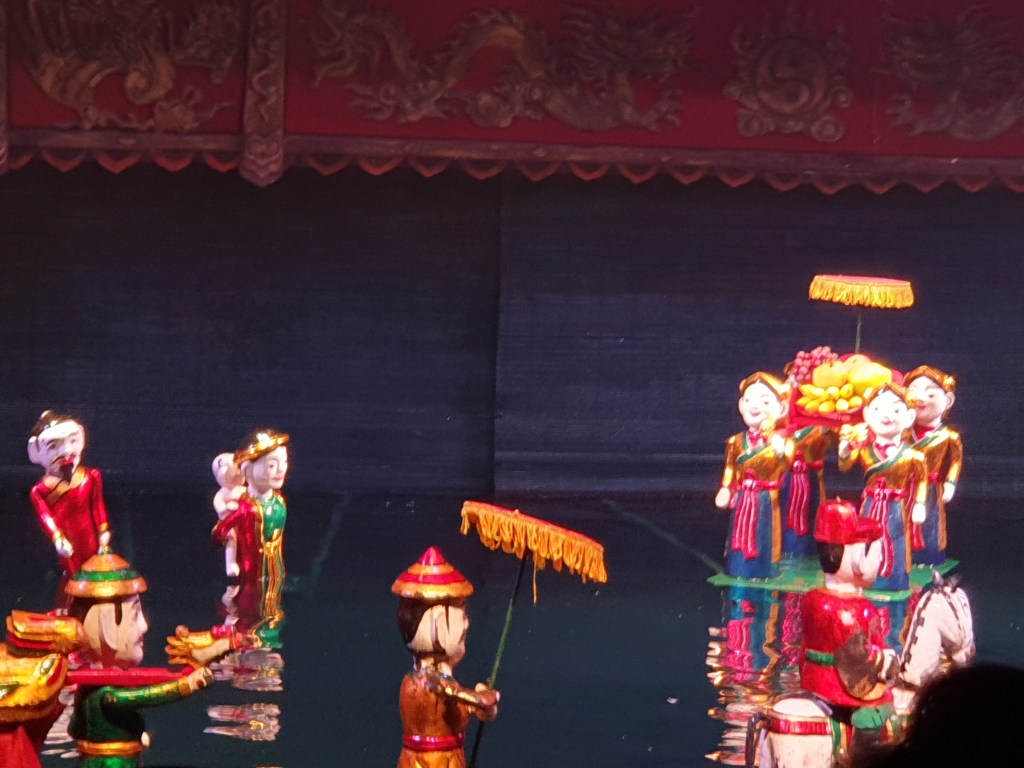
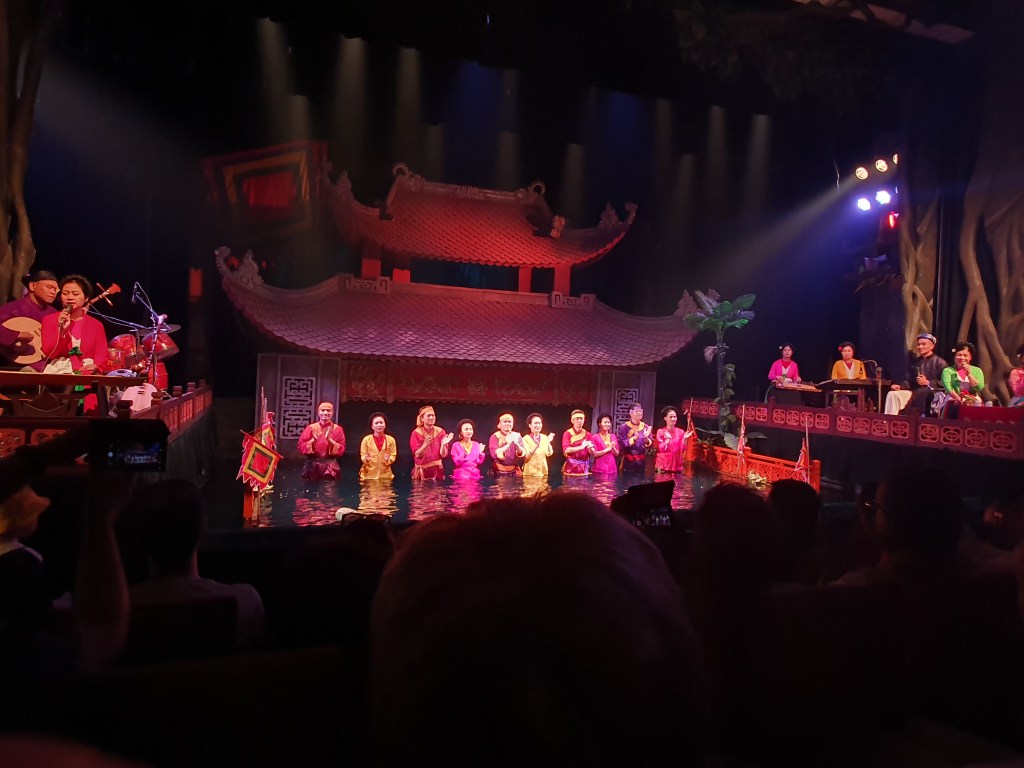
Something that was well worth it for only about £6 and 1 hour was the Thang Long water puppet show by the lake. This show was a traditional artform telling folk stories of Vietnam in their language and with singing, using puppets within a big pool of water.
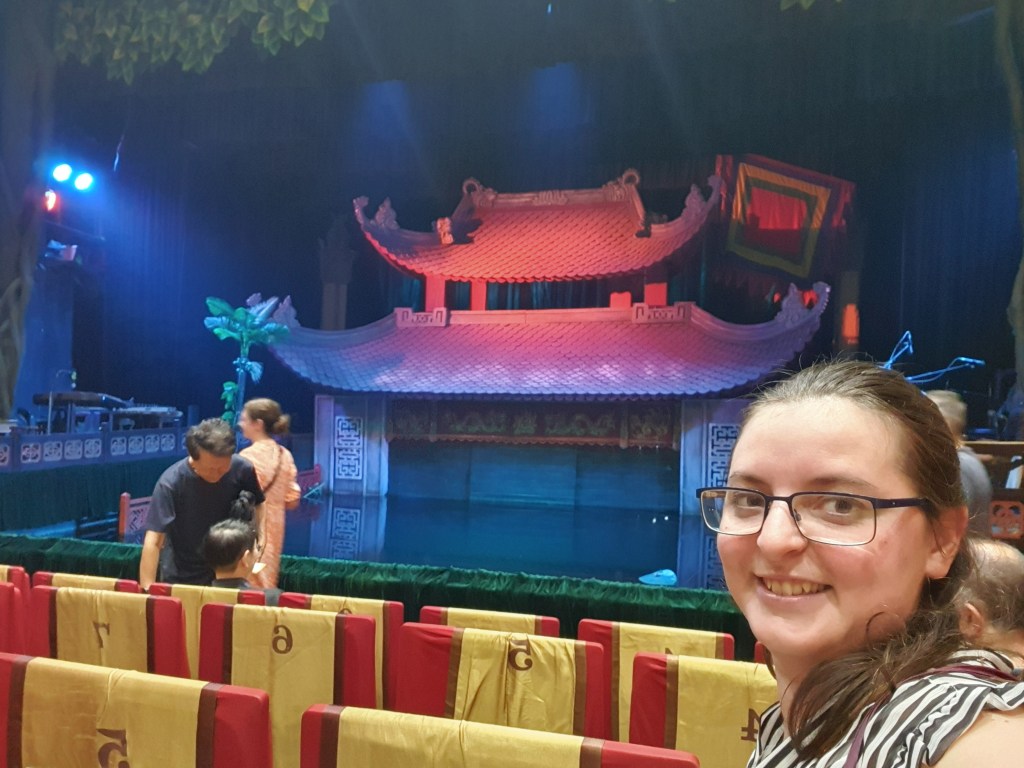
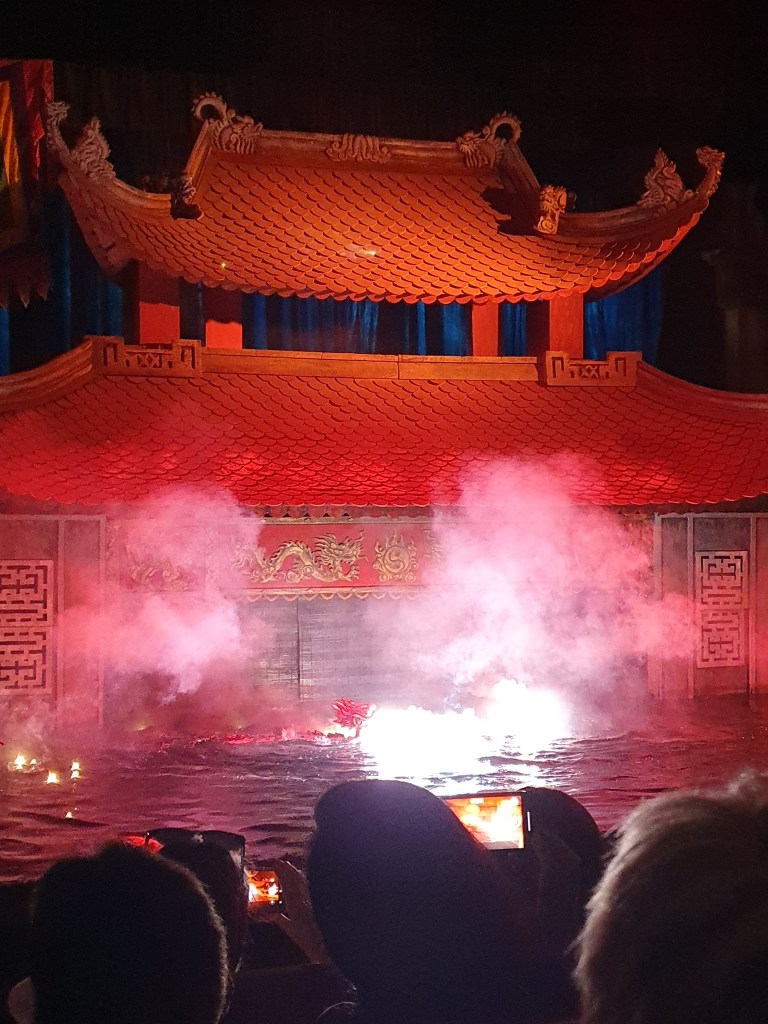
I wasn’t sure if it would be entertaining enough, but it was actually very funny at times and the show somehow managed to use smoke and fireworks on the water aswell which I dont even understand how. The best part may have been the music though. There was an orchestra of local folk musicians playing traditional and strange instruments and all in vietnamese formal wear. Overall it was super impressive!

Hue

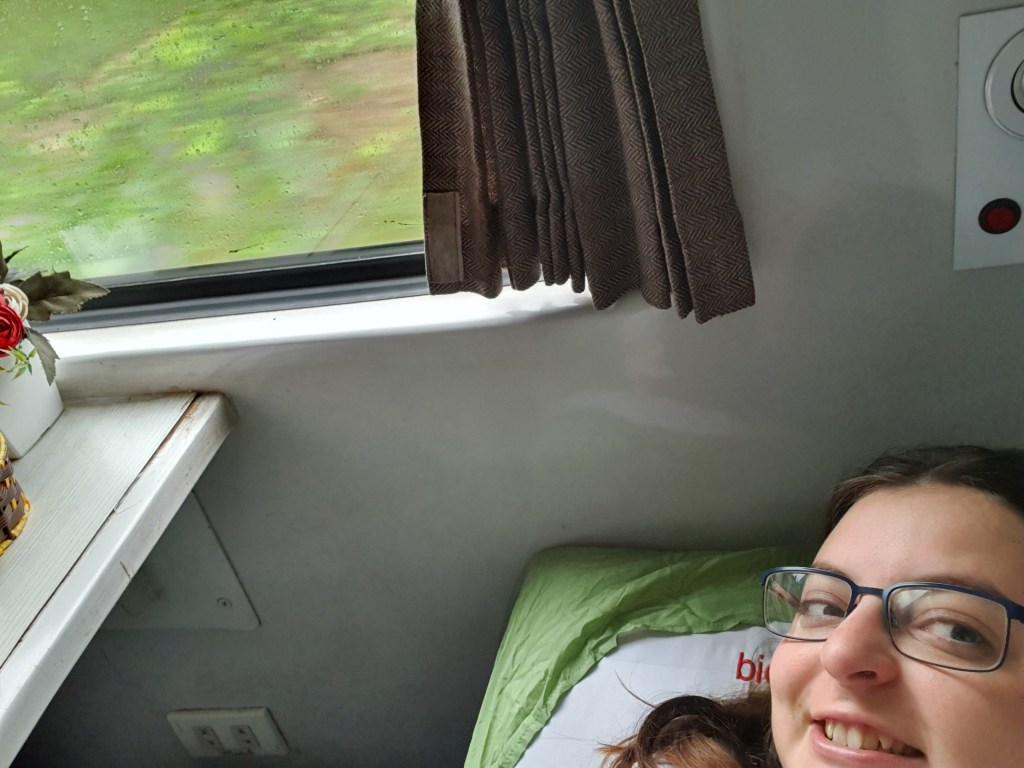
Writing this section of the blog at 4am from a twelve hour sleeper train from Hanoi to Hue. Sharing a bunkbed in a room with three other travellers, I feel quite at home and I am enjoying the bumpy swaying of the carriage more than expected.

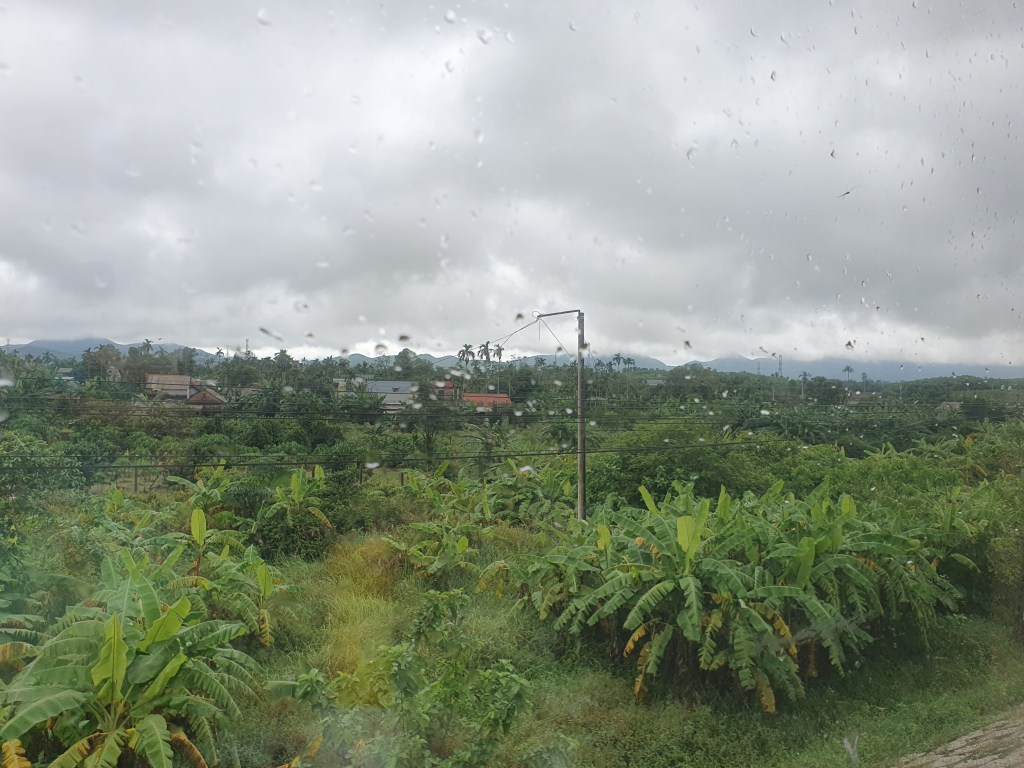
At night I can see the reflections of the train in nearby waters and marshlands and the odd distant light of a farmer or two working in the fields and by day the scenery becomes many small villages and plenty of rain!
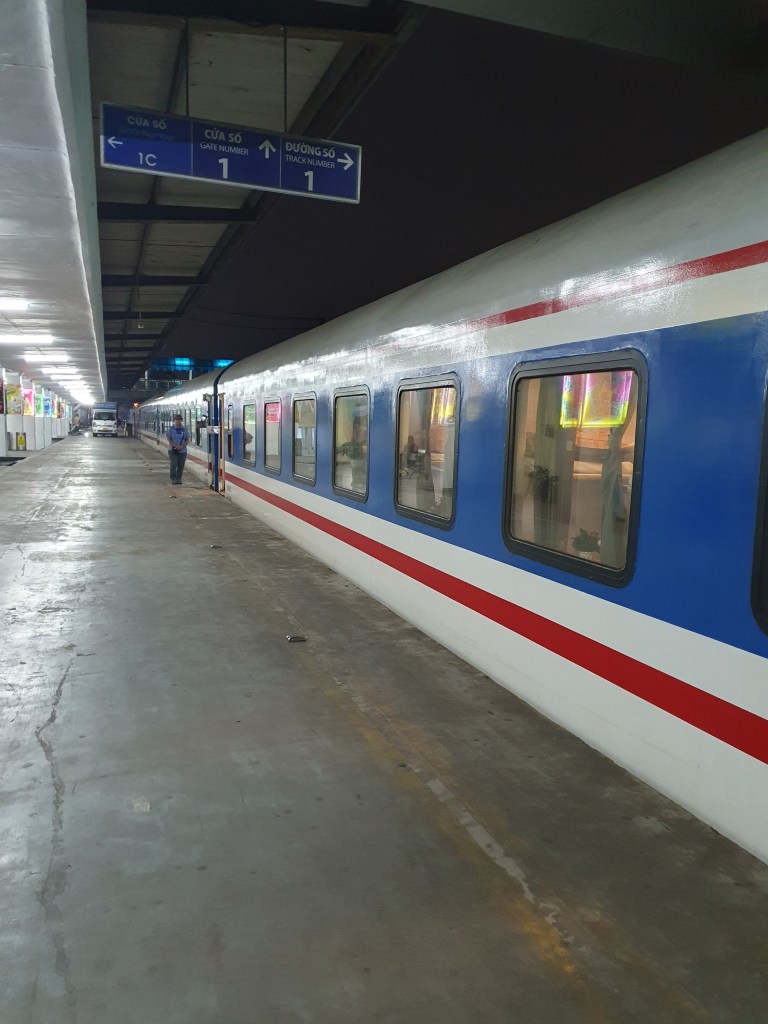
The train has different classes, we are in a 4 berth, but there are 6 berth and then soft reclining seats and hard seats (for those true hardasses – literally). My room is quite good with a little mattress, space under the bed and a table with a selection of sweets.

The only thing that has been a horror is as expected, the bathroom situation. There is either a squat room for guess what.. squatting, or there is a western style toilet. The toilet started off okay but now I can tell you that by 4am it is not okay. Its a horror show. I am trying to figure out how I can not pee now until 11am. Note to self, must purchase a she-wee for travels!

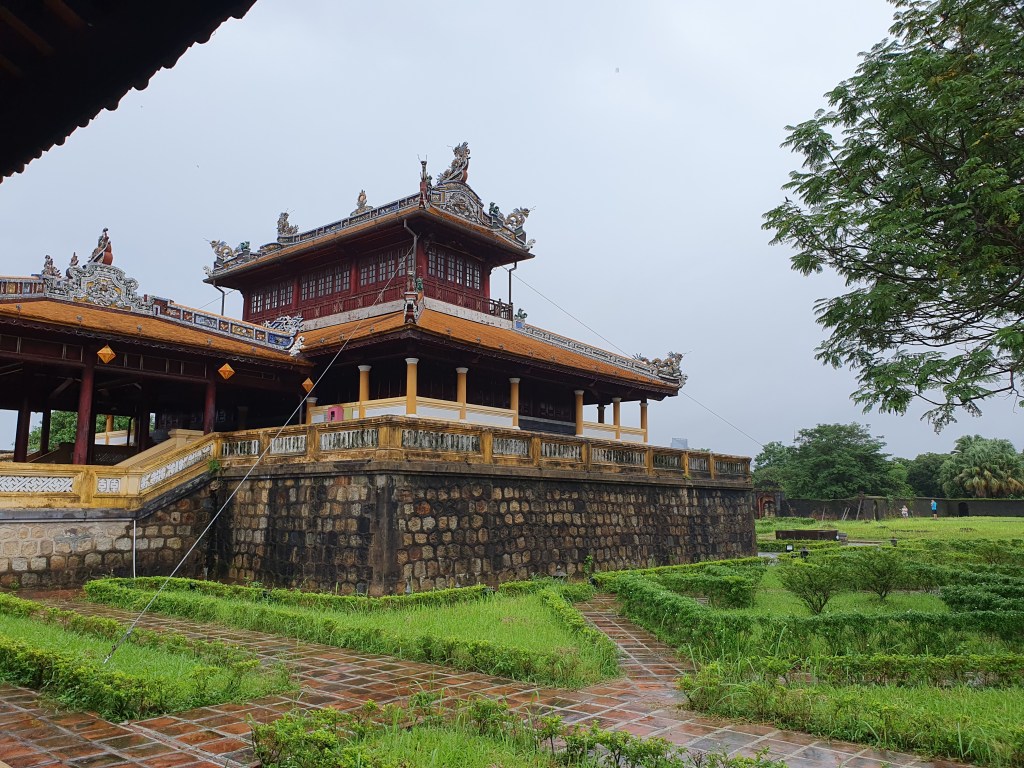
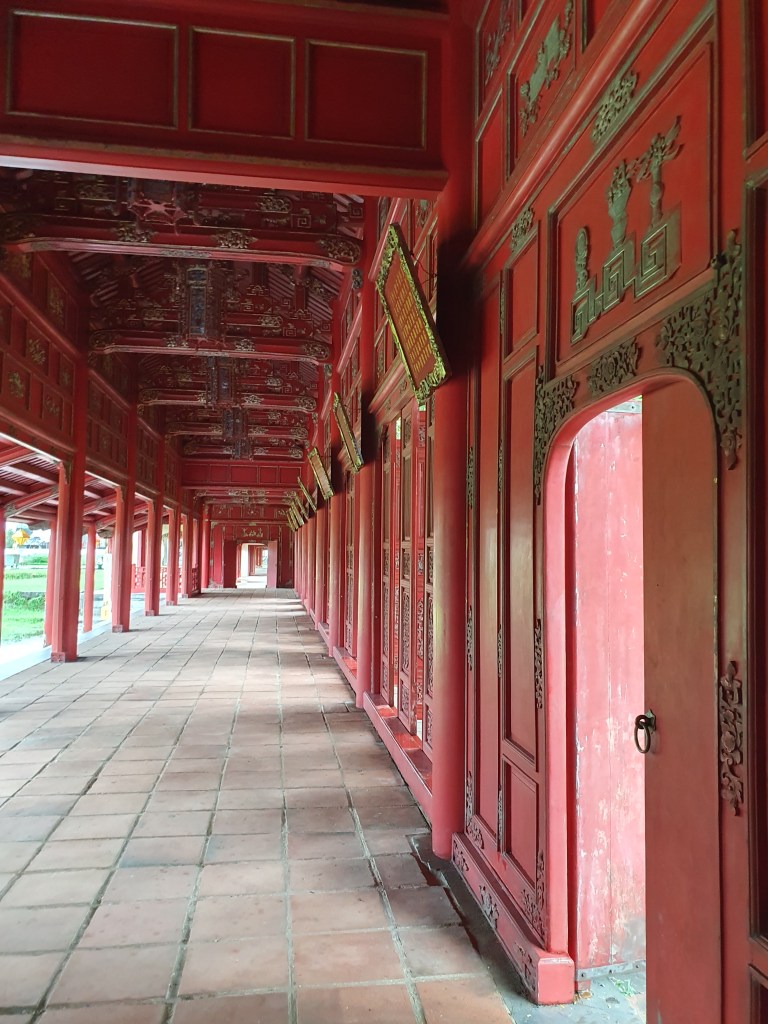
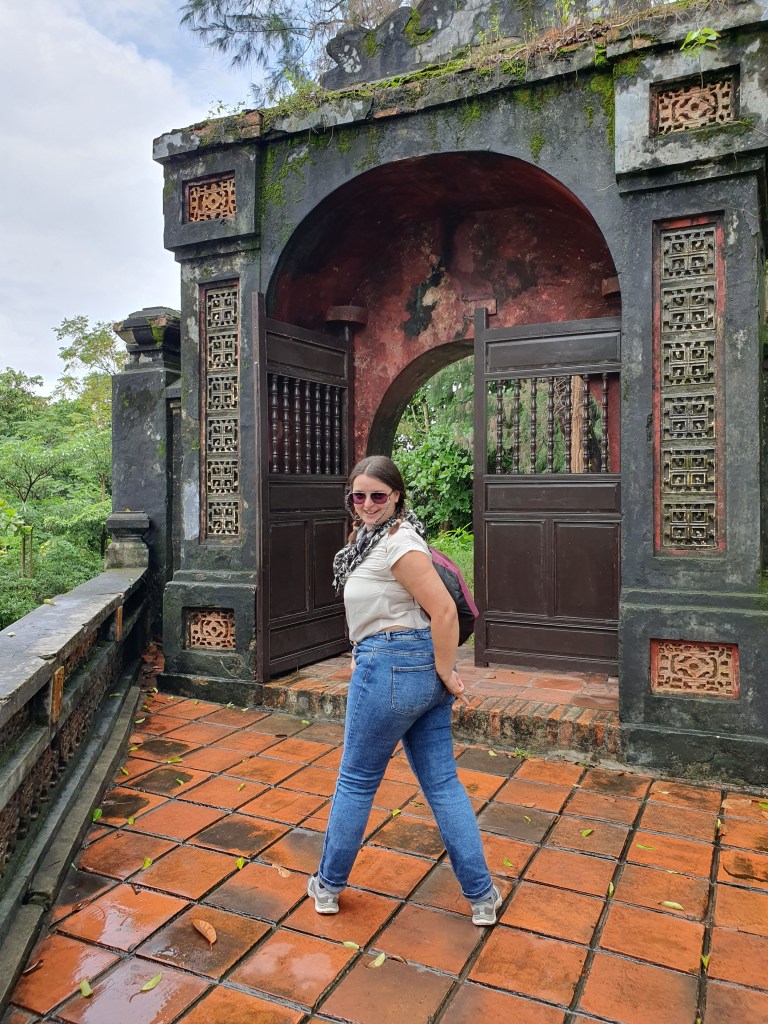
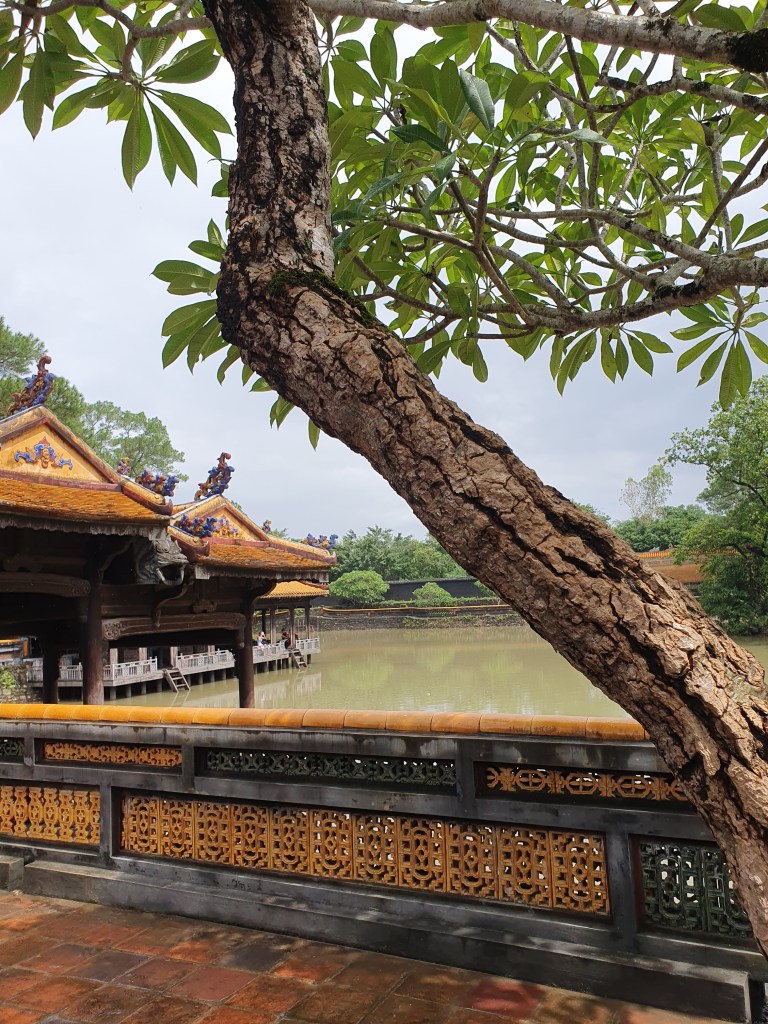
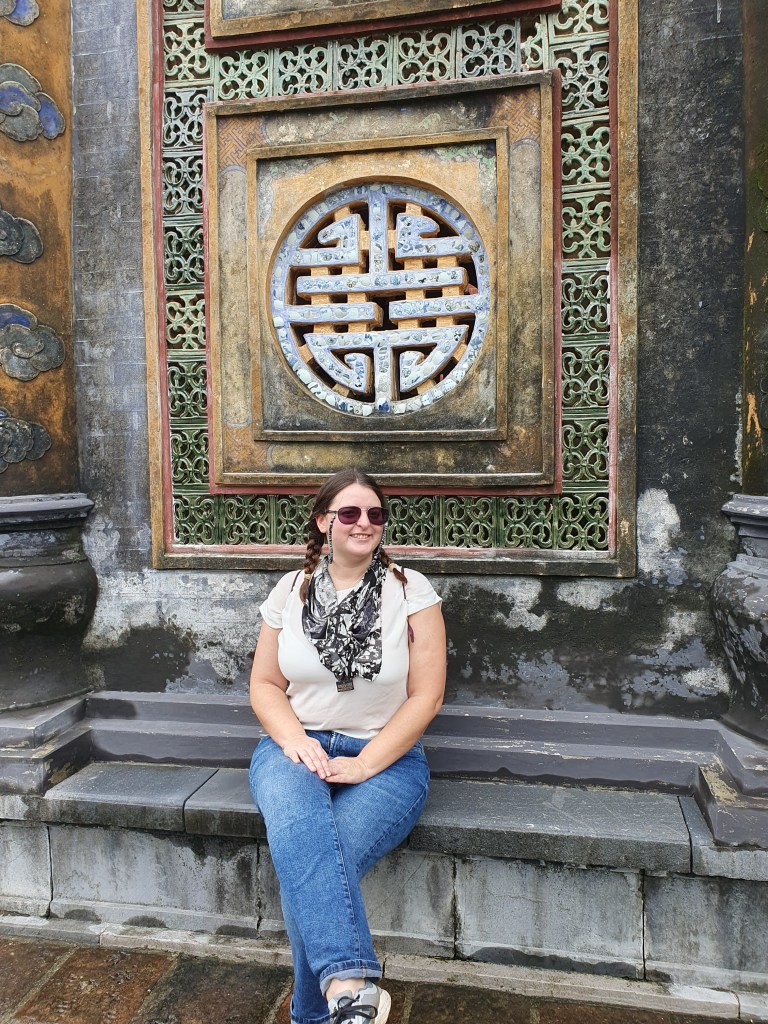
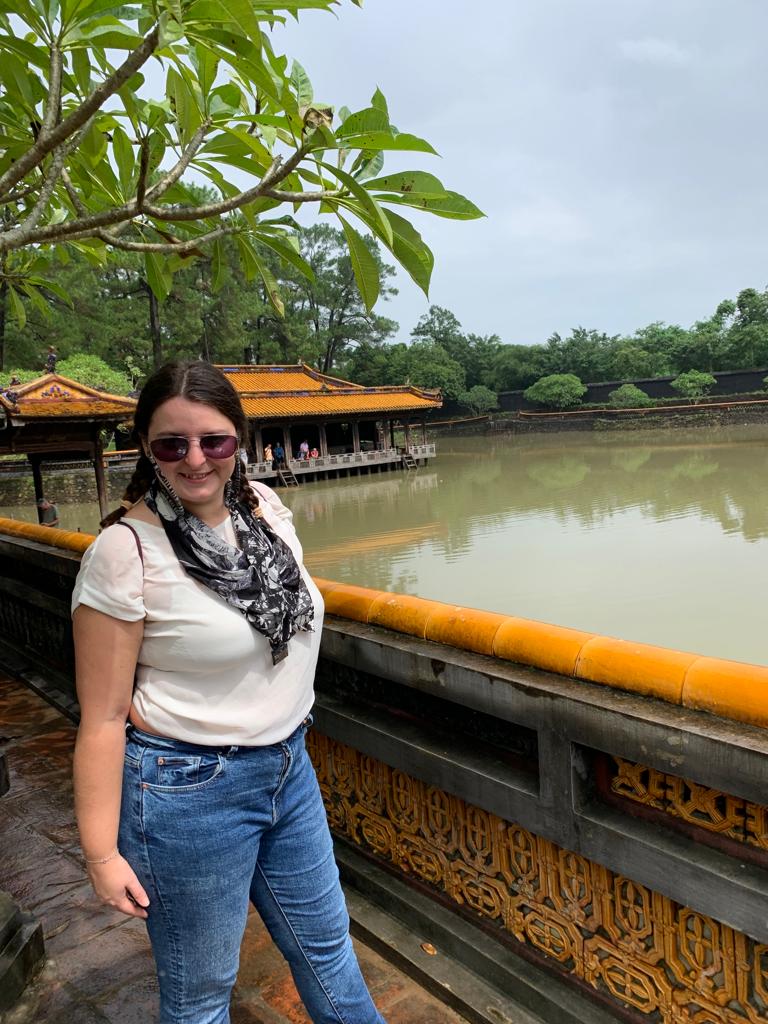
Once we got to Hue and freshened up at our hotel, with an umbrella in hand, we were guided to the ancient citadel. Hue was historically the imperial capital and home of the kings of Vietnam. It still has the 21 metre thick walls surrounding it and many of the original buildings either still exist or have been rebuilt or are in the process of being rebuilt after collapsing from weather or war bomb damage.
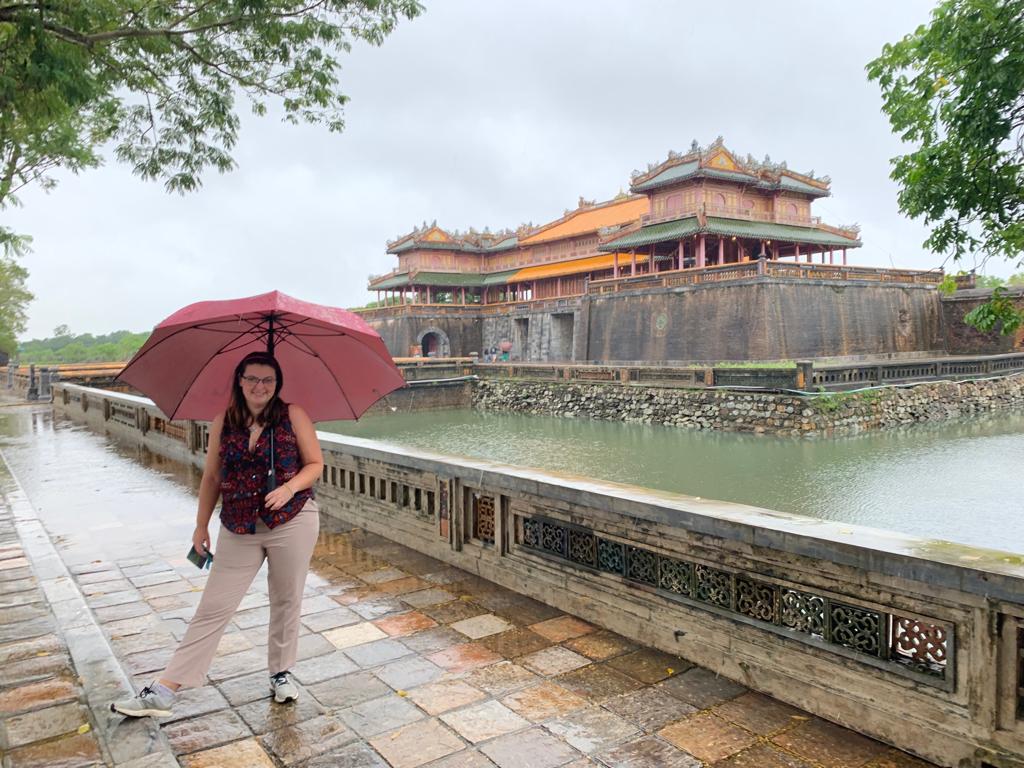
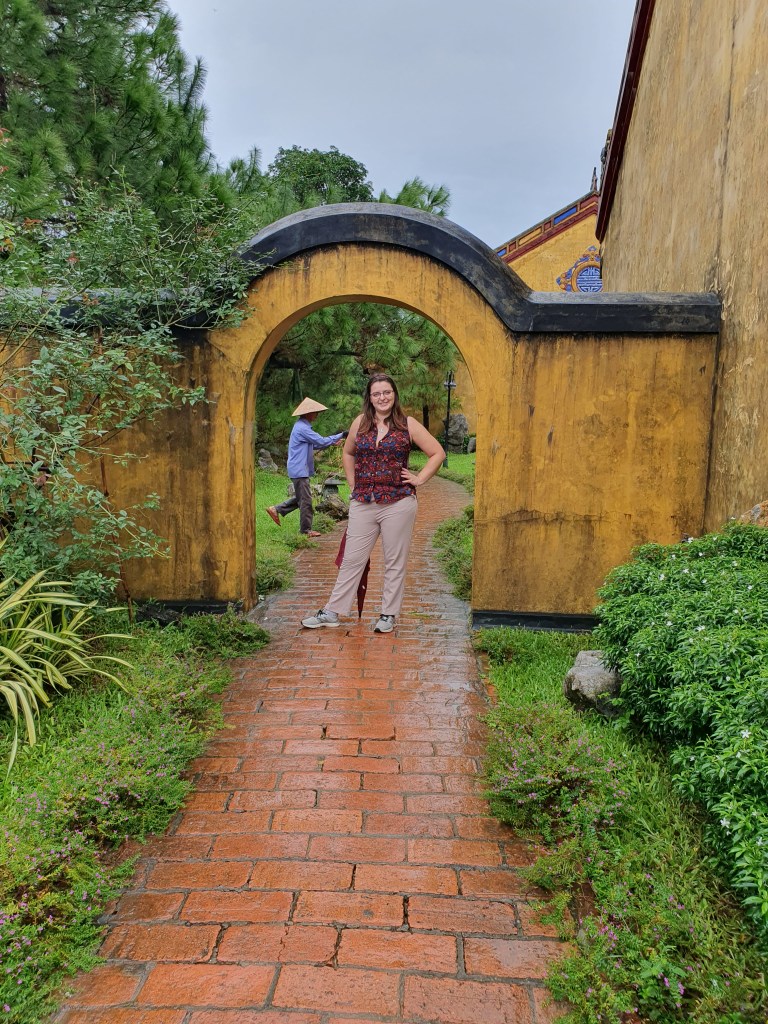
The site is very pretty and a bit of a maze to walk around if you do not have a guide. It is mostly an outside visit except for a few locations where you can visit inside after slipping off your travelling shoes. I Particularly enjoyed the king’s gardens with many bonsai trees and bright green foliage. Obviously, due to all the rain, but green is my favourite colour so I’m okay with that!

The stories about the kings were interesting too. Kings were seen as Gods by the people, but for many centuries the kings were actually puppets for the french to put their influence over Vietnam. The kings ranged from 7 year old boys to a man that went from being a king to a french pilot. So random!

Later in the evening I had dinner with a local family that had been there for generations and the lady’s grandfather had been a direct servant of the king. The family now are well off in the area but still cannot afford to travel much and still work very hard. It is becoming apparent how hard people in Vietnam work to make a minimal living.
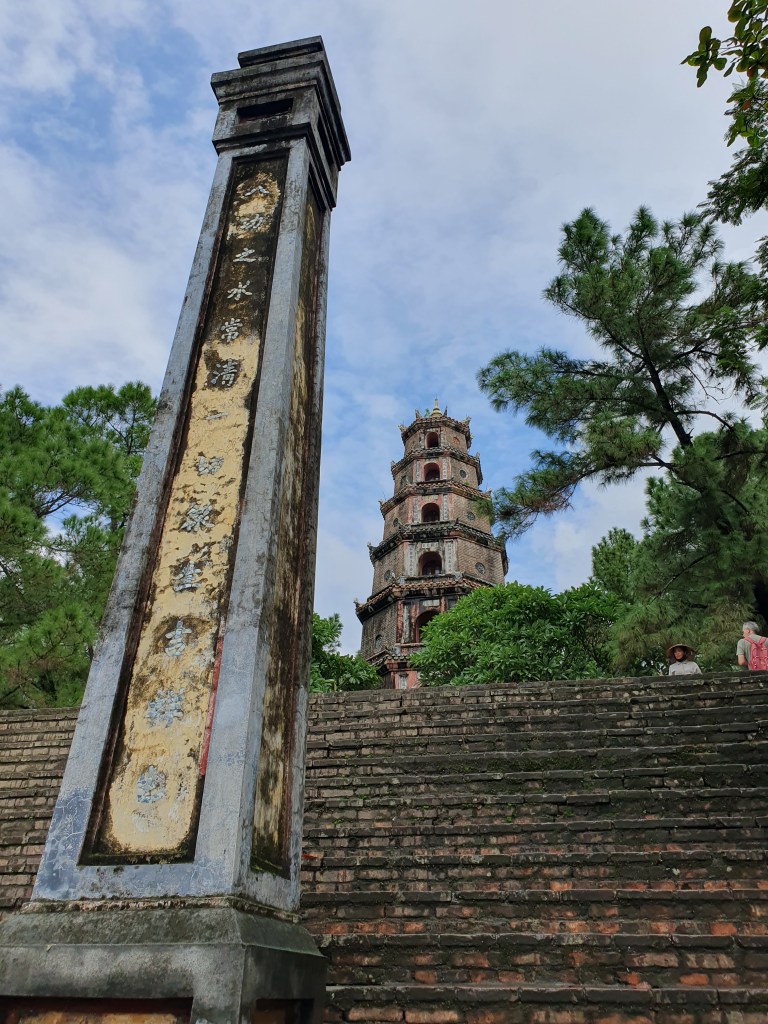
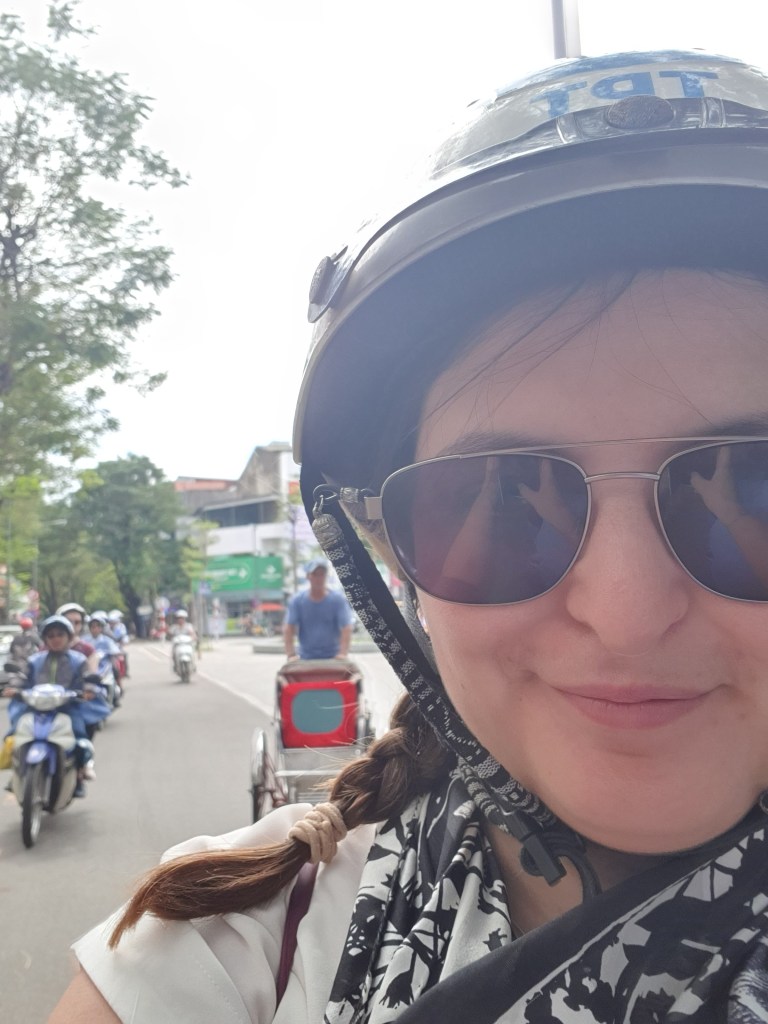
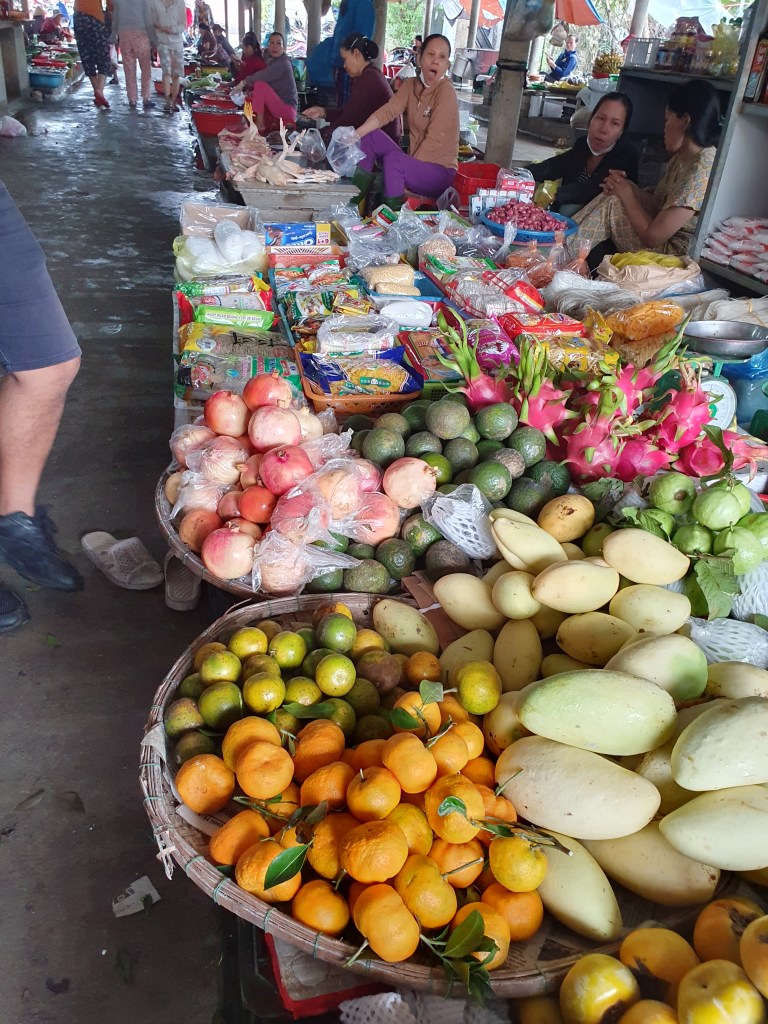
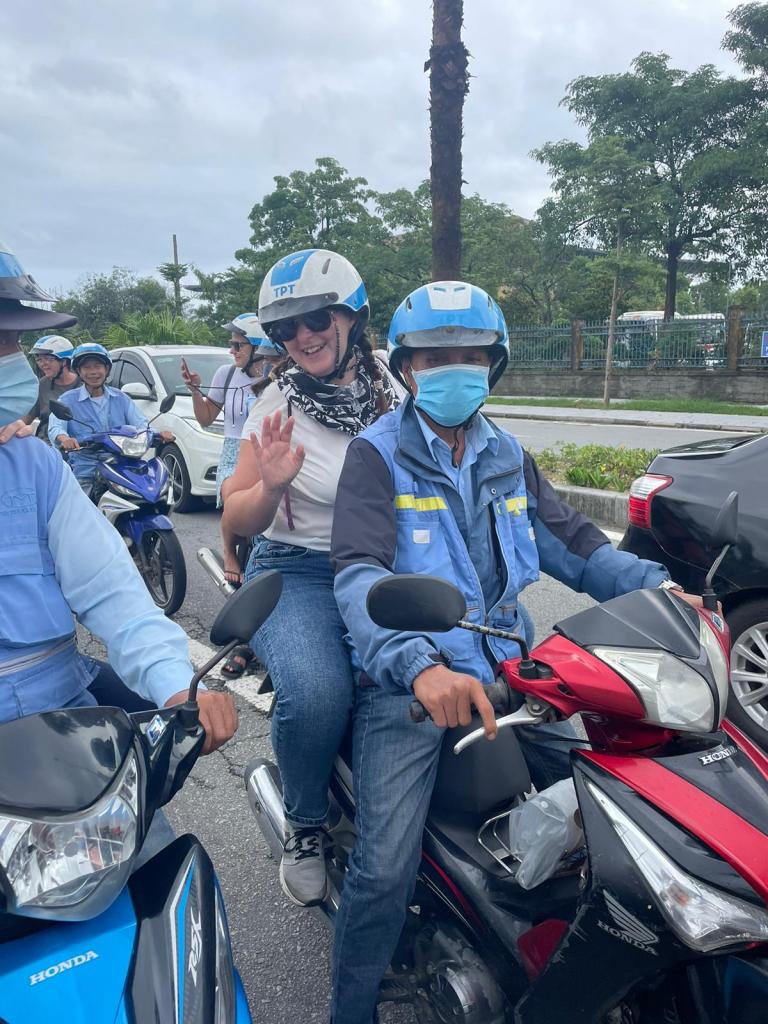
The next day in Hue, we ventured around the surrounding countryside and the town centre by motorbike. This thrilling experience was one I will never forget I imagine, it was an adreline rush full of beauty and culture. As I rode pillion to a Vietnamese man named (‘kern’) I explored a king’s final resting place, a local fresh market (where it is so fresh that the animals are still alive), and a local monk community. What a thrill!

Next day we move on to the South to Hoi An… in my part 2 blog.

Me at Halong Bay

Lisbon: The City of Seven Hills

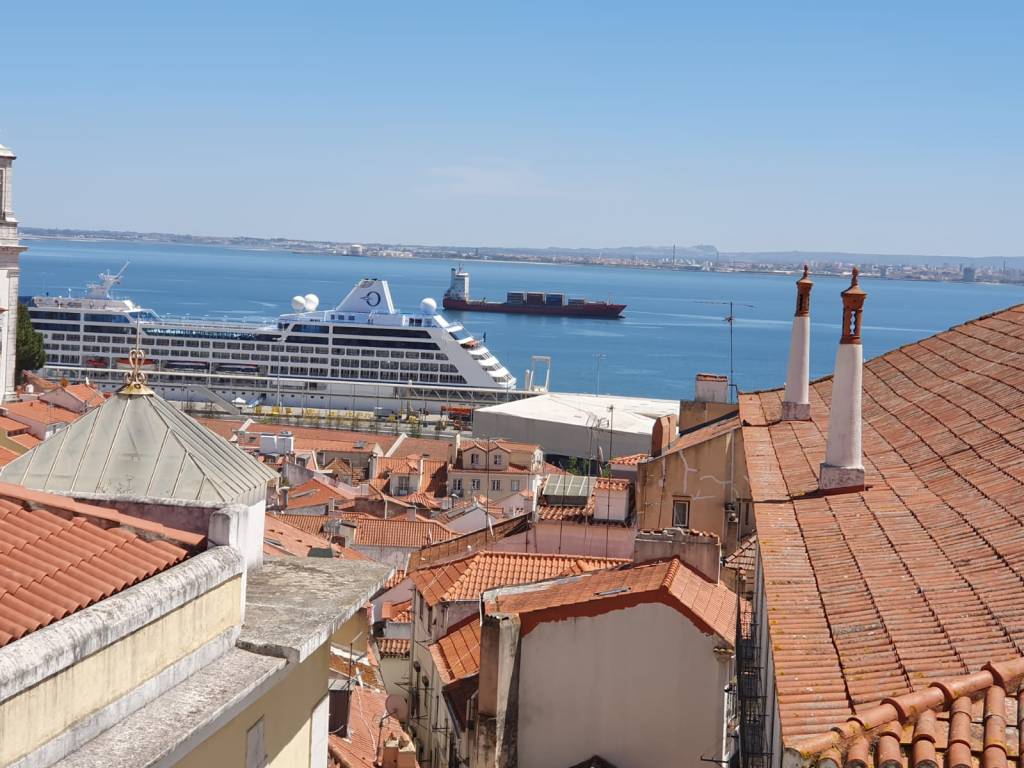
I have visited Lisbon several times for short day trips, but this Spring, I stayed over for a two night break between destinations. This city with what feels like many more than just seven hills, is full of life and culture throughout.

Travelling to Lisbon

I travelled to Lisbon by Train on this occasion from the Algarve’s Lagos, in the South. This was about a four hour journey with one change, and then once in Lisbon there are several main stations you can arrive in. From there, buses, trams and metro are possible.

Neighbourhoods: Alfama and Barrio Alta

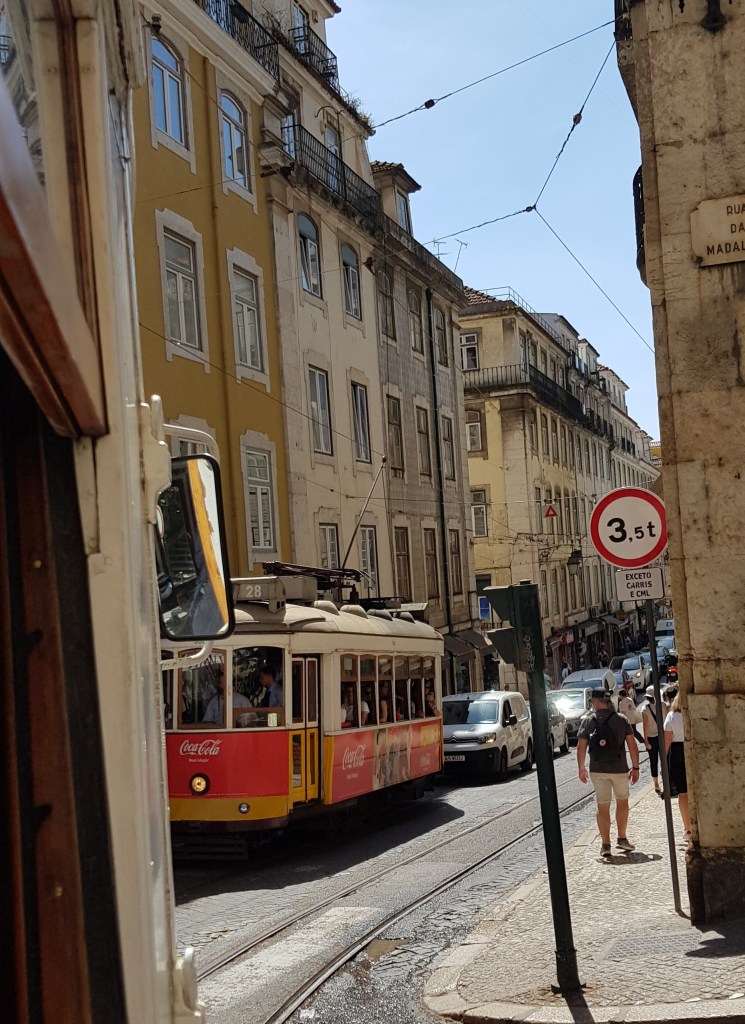
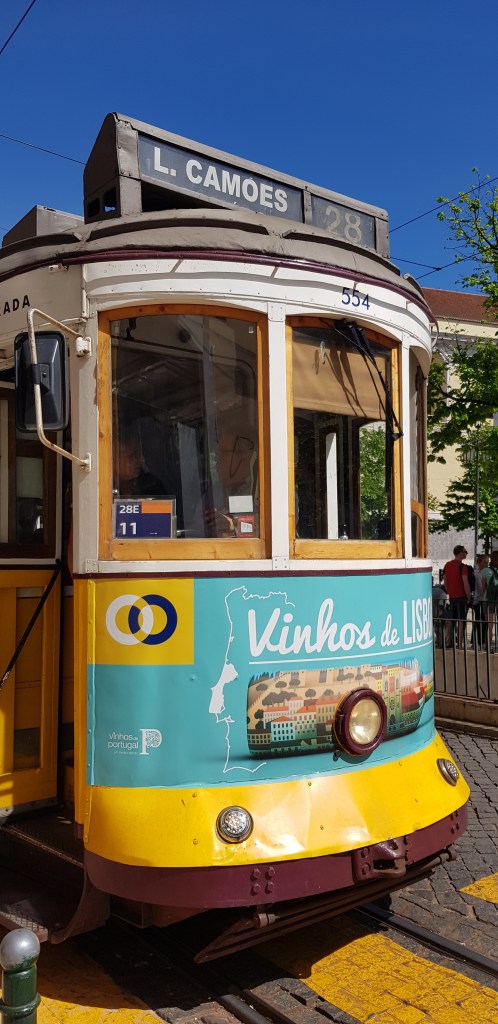
I stayed in the neighbourhood of Alfama which is one of the oldest parts of the city near to the river. I selected this area of the city because it is rich in culture, close to tram 28 which is the main tram to run through the touristic areas, and its an area with many fado houses.

I chose to stay in Convento de Salvador, which is a beautifully refurbished convent on the hill. It was very clean and minimal and still had the old layout and foundations of the convent. Our view of the river and downhill street was wonderful aswell.

It is easy to follow the river from Alfama along the promenade towards the Belem tower, or you can jump on the tram to head either towards the castle in one direction or towards Barrio Alto.

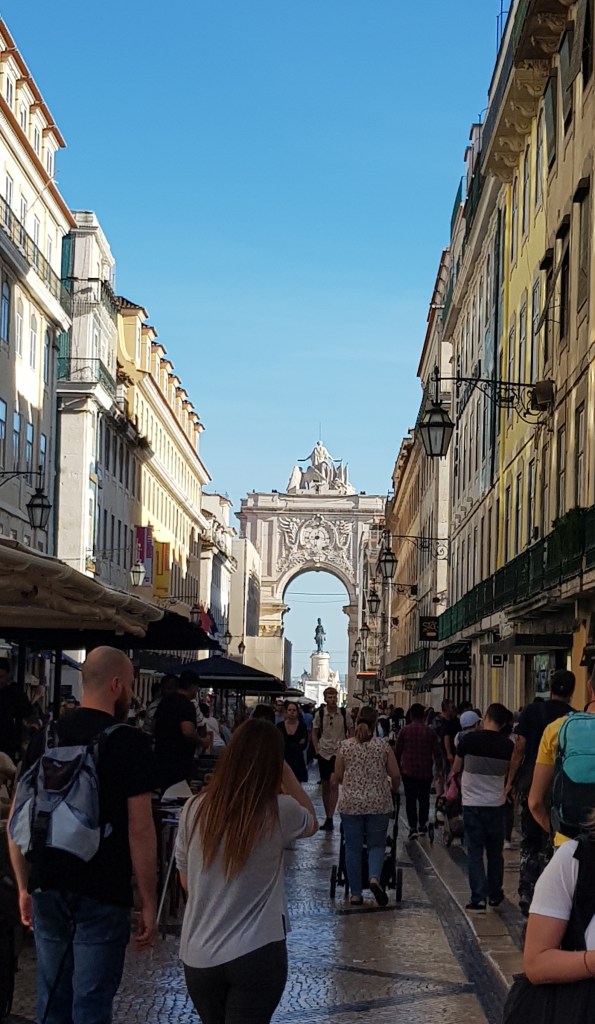
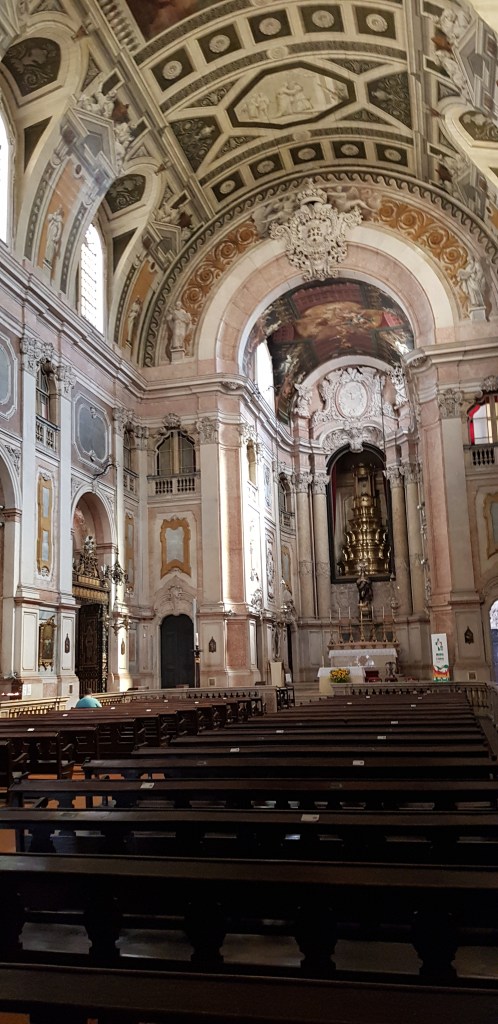
Barrio Alto is a bustling area full of shops, restaurants and squares with street performances at night. Wondering the squares to listen to music, enjoying a pastel de Nata and venturing to some of the local gardens can all be enjoyed within walking distance from here. There are also some wonderful churches, I visited two churches from the italian community that were very beautiful.

The must see monuments / attractions

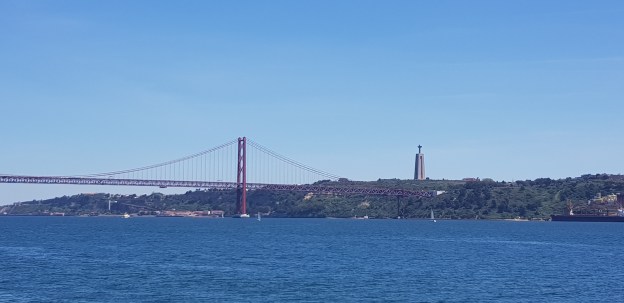
  • Belem Tower – A monument to remember the power and colonisation by Portugal, it sits at the riverside and you can also see the bridge and christ statue from here.
  • Jeronimos Monastery – A huge monastery facing large public squares and standing to the front of the botanical gardens and presidential palaces.
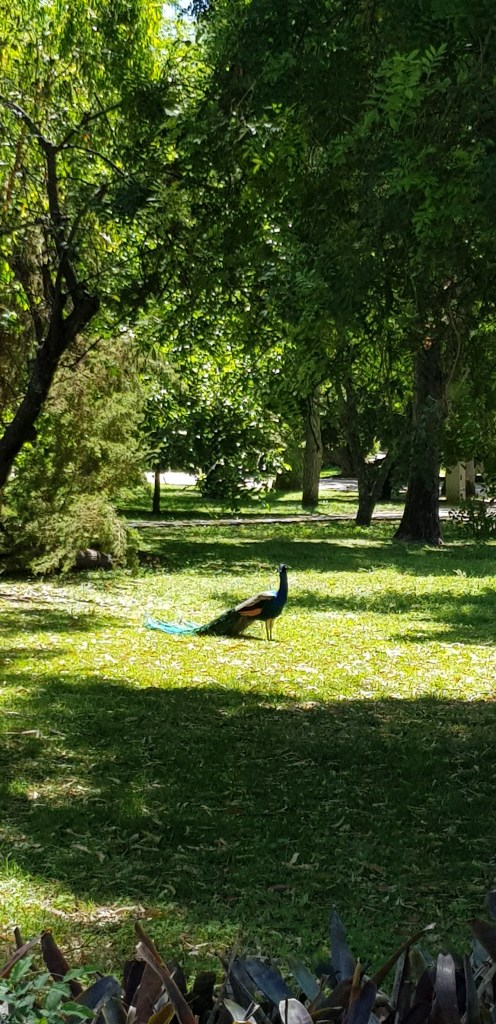
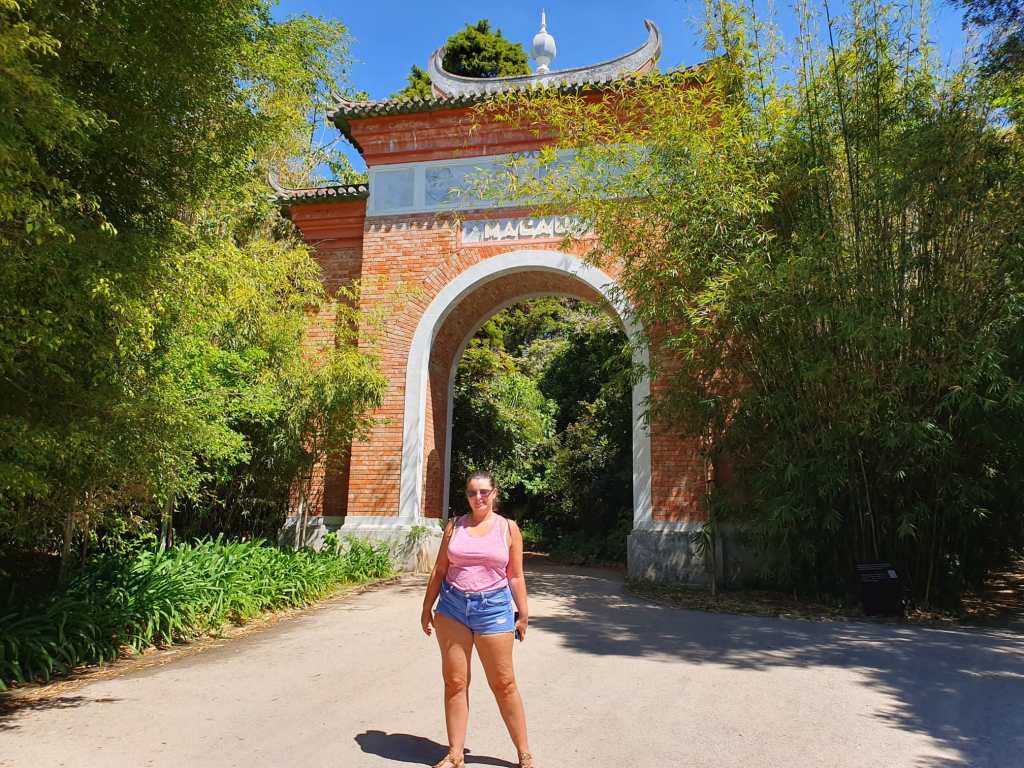
  • Botanical Gardens – A beatiful setting to spend some hours in the afternoon seeing a variety of interesting trees and flowers, an oriental garden, old buildings, african sculptures and many peacocks.
  • Commercial Plaza – The location of a huge statue, the tourist information offices and a great gathering place for events.

Fado

Near my hotel were several Fado houses. These are traditional houses which have evening shows (normally with dinner) of traditional portuguese fado music. This is deep, very sad singing and guitar, supposedly derived from the soul.

The music is very relaxing to listen to, and when visiting the fado house, it was of the utmost importance that guests did not talk and food was not served out by staff during the music out of respect. So, several breaks were needed to dish out food and for conversation. This was good for me as it meant I actually slowed down and savored my food.

There is also a Fado museum downhill in Alfama. It has a lot of information about Fado but it is difficult to navigate and understand the information at hand, and I felt a lot more could be done to improve its guest experience.

To conclude…

I like Lisbon a lot, it is one of my favourite cities. It is vibrant and proud of its heritage. Next stop is another portuguese area, the Azores…

Buenos Aires, Argentina: Paris of the Americas (Part Two)

Following my first trip to Buenos Aires, I returned to the capital city at the end of my three month trip around Argentina to have a final week there, enjoying some attractions I had not been able to visit in my first visit. This time I was joined by a travel companion and was staying in a luxury hotel.

A focus on Evita

Following my first visit to Buenos Aires, and visiting the grave of Evita, a famous Argentine first lady, this time round, I visited the Evita museum. I was keen to learn more about her life and work for the state. The museum is housed in a previous home for the poor that was set up through a foundation that Evita begun. The museum has several rooms with projections of Evita’s film clips as an actress, her speeches as an activist and also a viewing gallery for her red carpet gowns.

I found the museum to be really interesting but unfortunately photos were not allowed. The information was really good about her early life, career, relationship with president Peron, and her death. I learnt that she had a lot more involvement in charity work than I had realised. She also won the vice presidency but turned it down, which I was not aware of. After finishing our look around the museum, we had a tasty lunch in the museum’s restaurant which has a very nice courtyard.

A walk around the parks

I was able to visit a few more of the park’s in Buenos Aires this time, although not all of them, as the rosalade (rose garden) was closed for upkeep.. very annoying. I did manage to visit both the Botanical Garden and the Eco Parque which are next door to each other. This took a full morning, and both parks were worth a look, and free to enter.
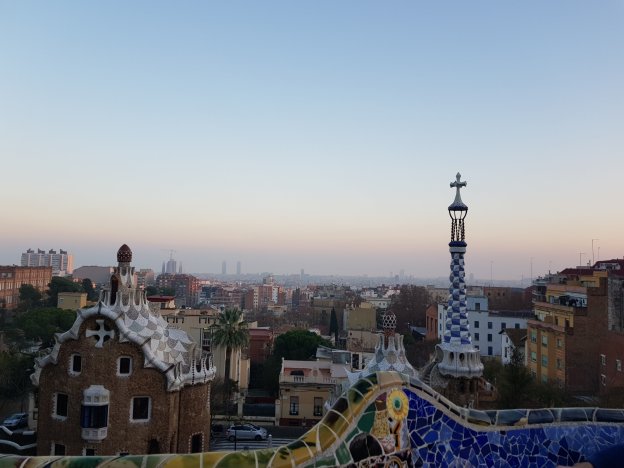
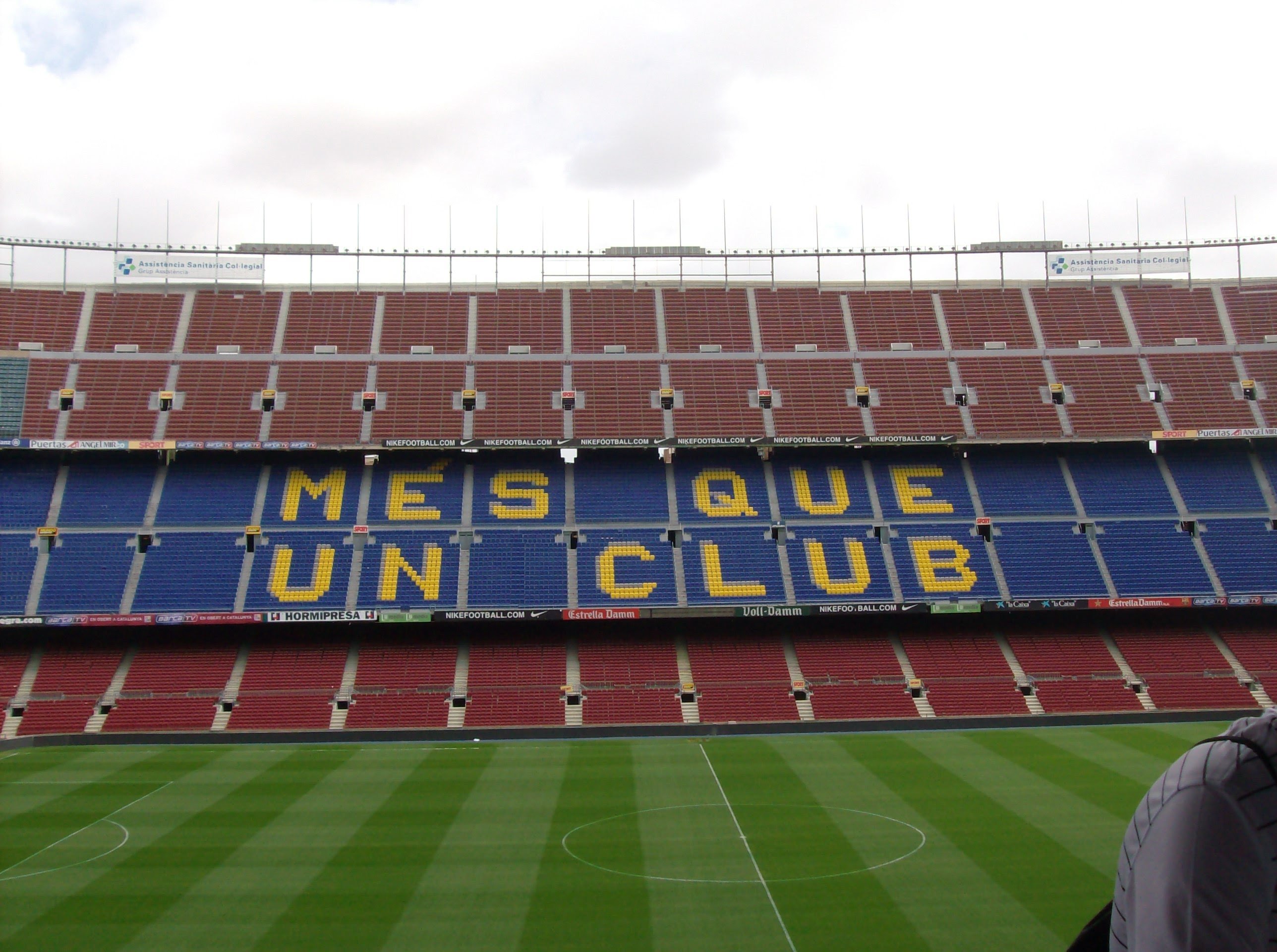
The botanical garden has many exotic plants and large trees as expected, and had attempted to theme different sections by different garden styles, for example french or italian.

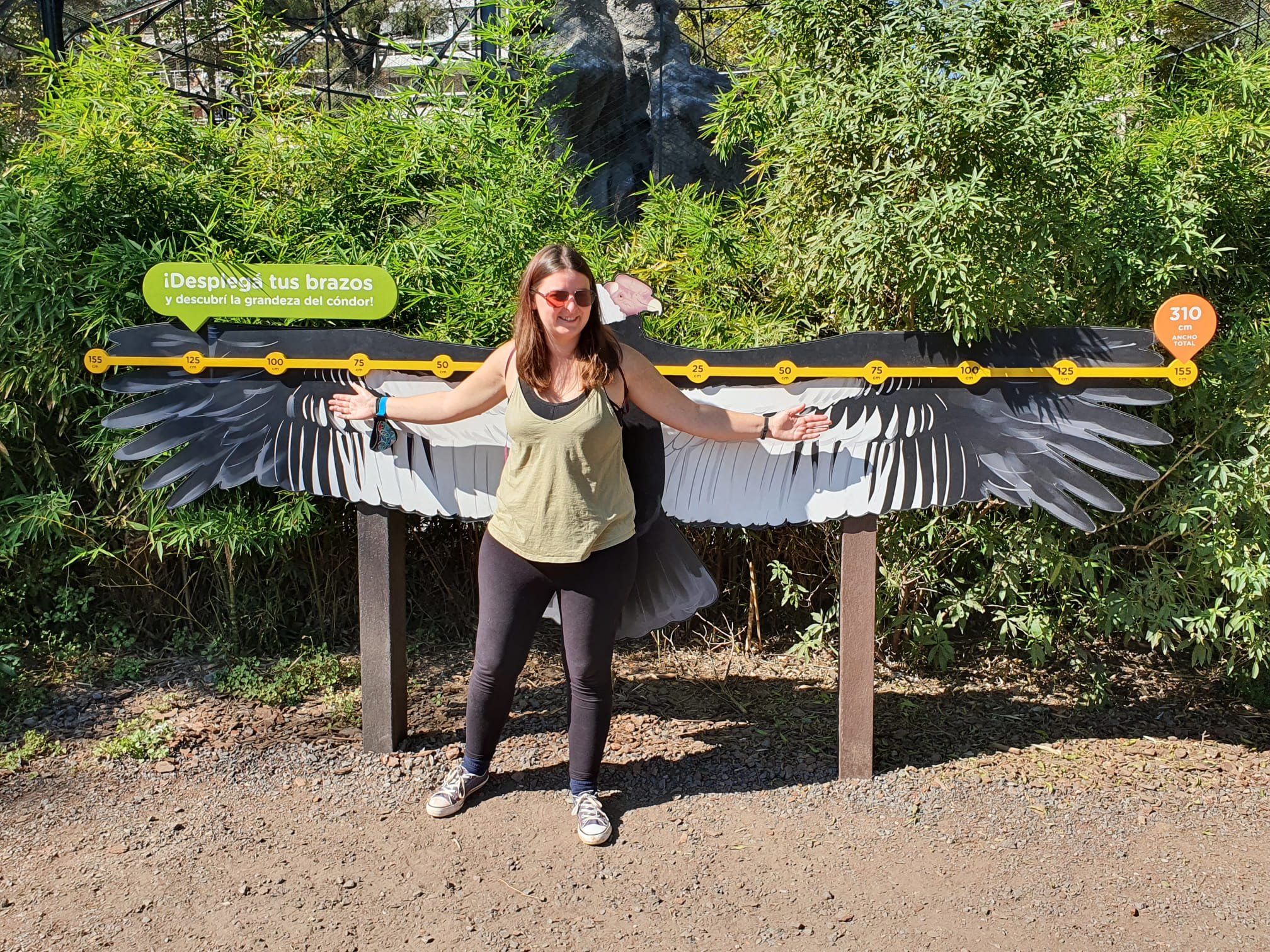
The Eco Parque is a very different experience. This pretty park used to be a zoo with many large exotic animals, and elegant victorian styled animal houses. In recent decades, most of the animals have been moved to other locations, or sent back to their natural habitat.

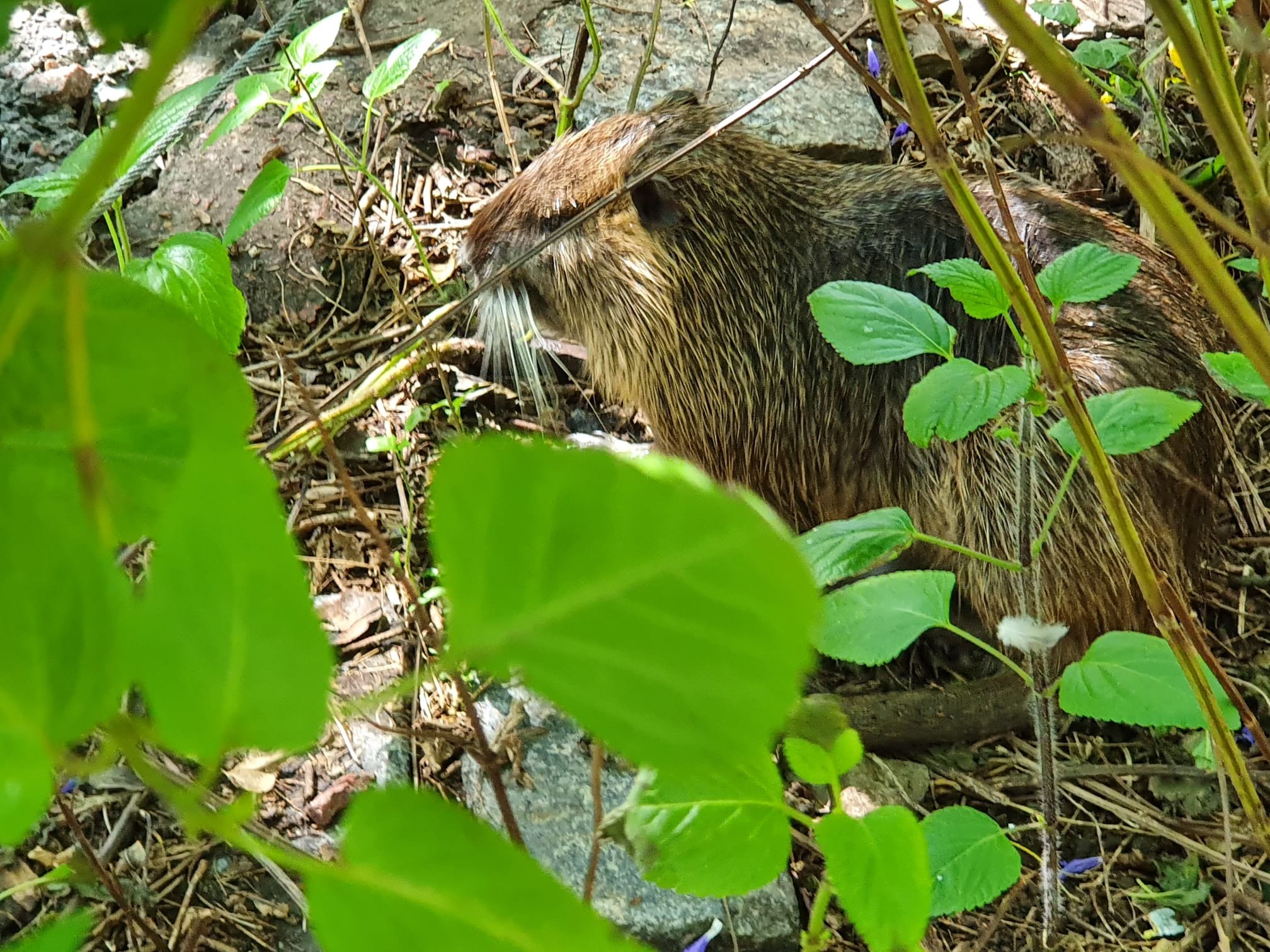
There are a few that still roam through the park though, because they are either too old or unwell to move, or do not need to be relocated. The park still has an old camel, plenty of capybaras, strange half rabbit half deer things, and even some monkeys. It is a pleasant place to take a walk in the middle of this huge city, as you never know what new animal will be around the corner.

Nightlife

In the evening, I was lucky enough to be rejoined by my German traveller friends again as they also finished their journey in BA. We headed out to Palermo Hollywood for a night of clubbing and mischief. After a night that lasted until around 6am, I was glad for my full hotel continental breakfast the next day!

La Plata

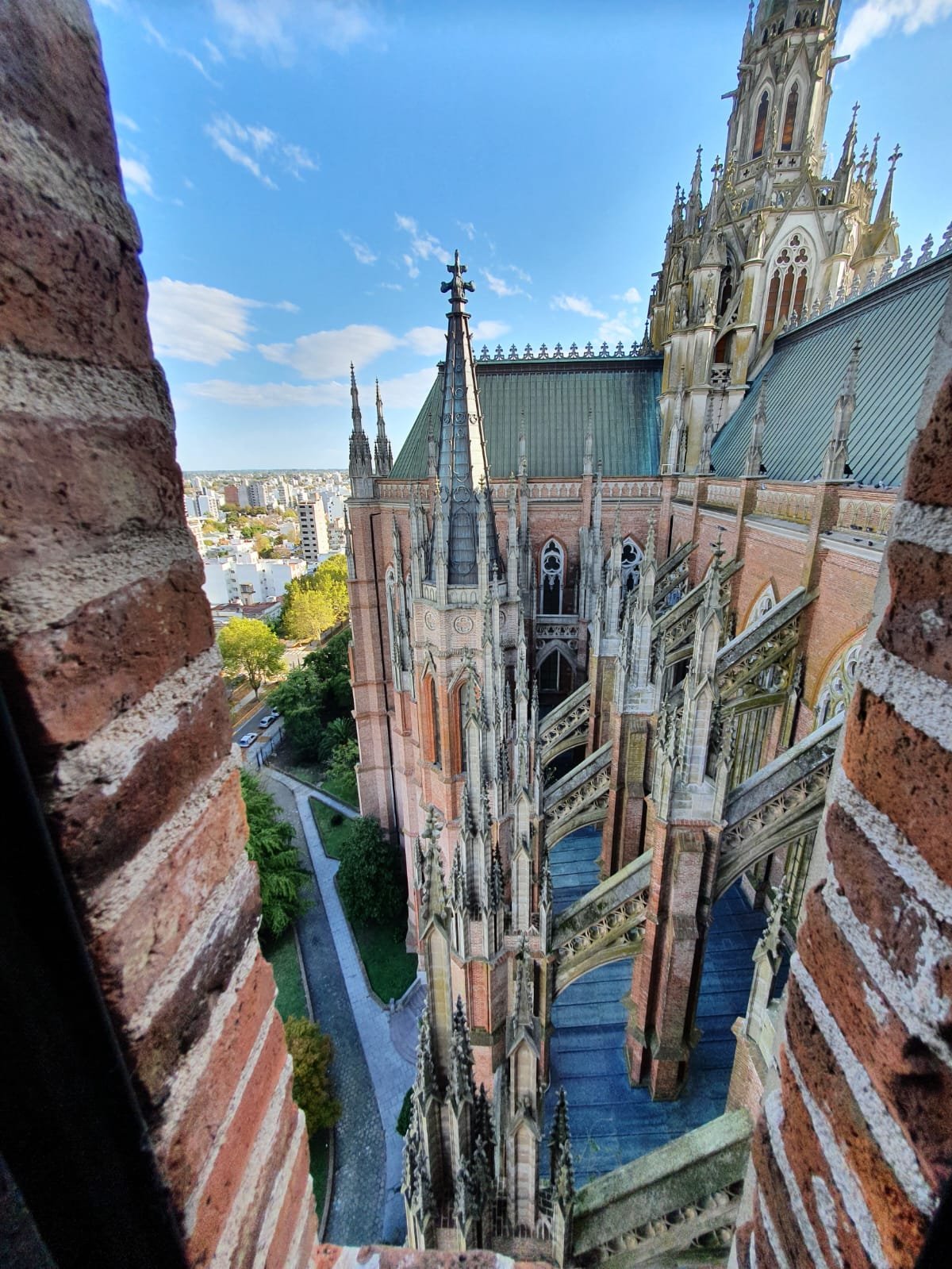
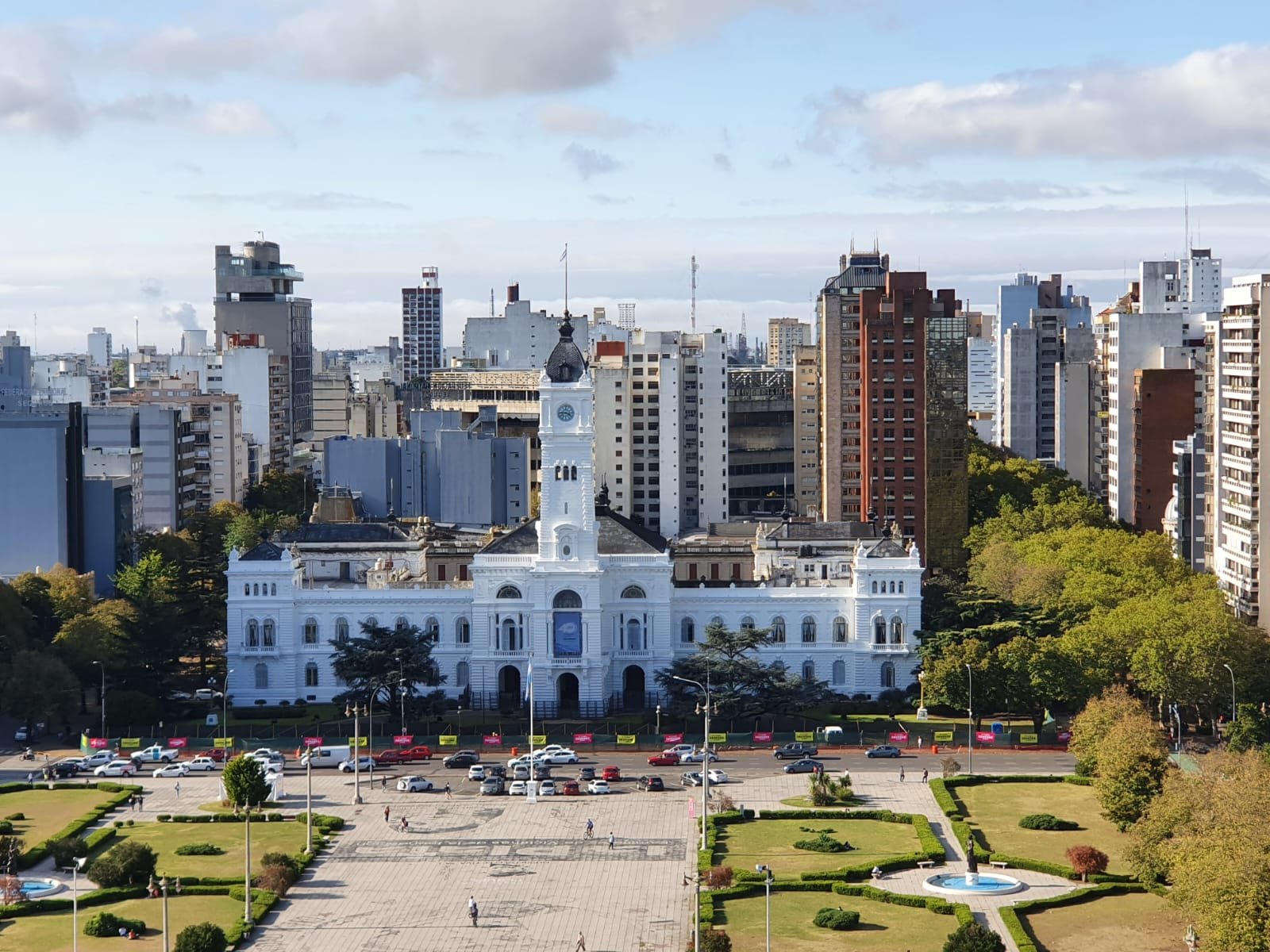
For a day out, we decided to visit the capital of the Province, the city called La Plata. The city was easy to get to, only 90 minutes on the train, and the main attraction there is a beautiful cathedral.

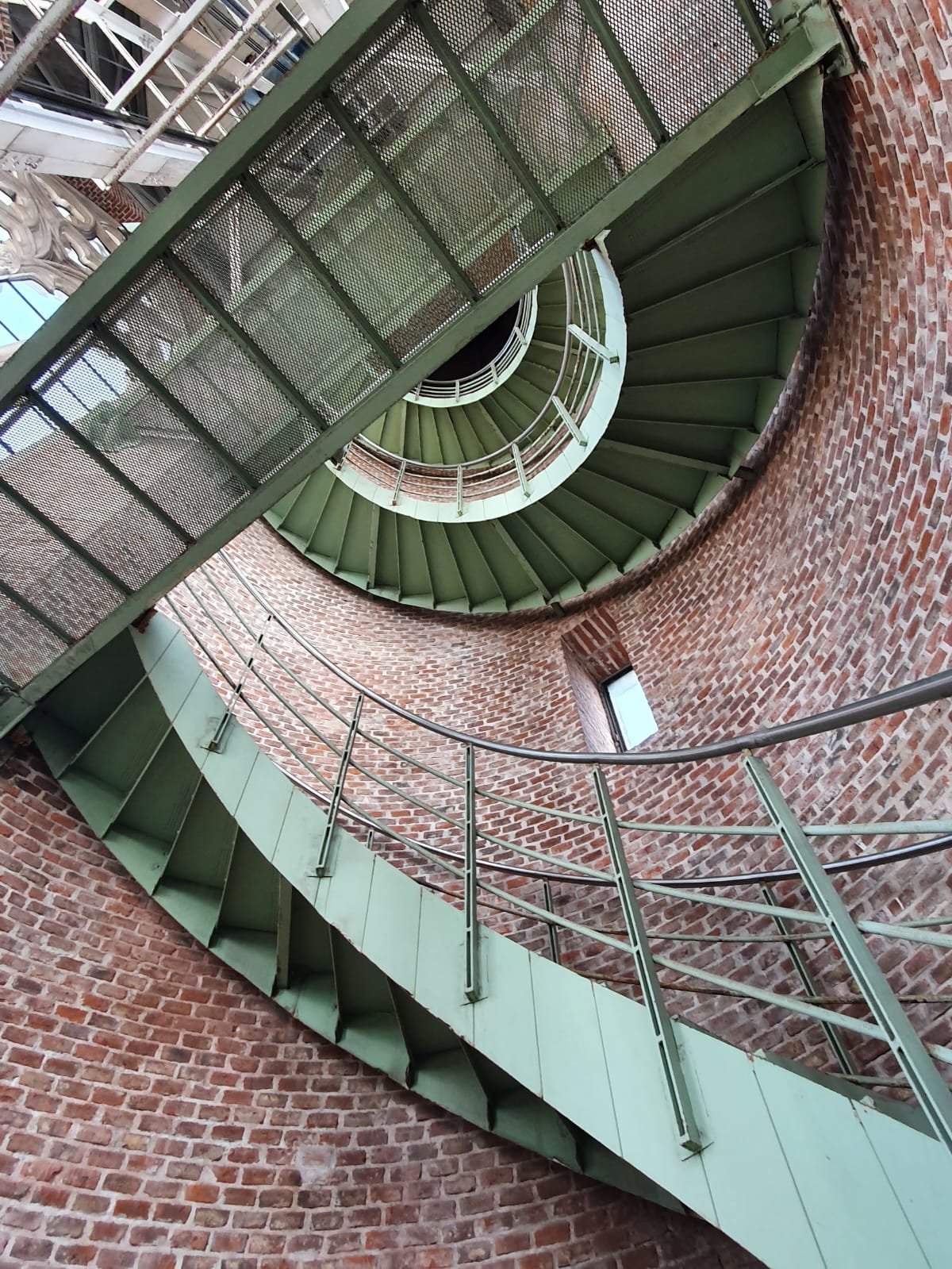
The cathedral is gorgeous on the inside, and as well as the main church, the attraction offers exploration of the crypt with a museum about its construction and original pieces, the opportunity to be lifted up the tower, and a sweet restaurant. A lovely morning out.

Horse riding in the Pampas

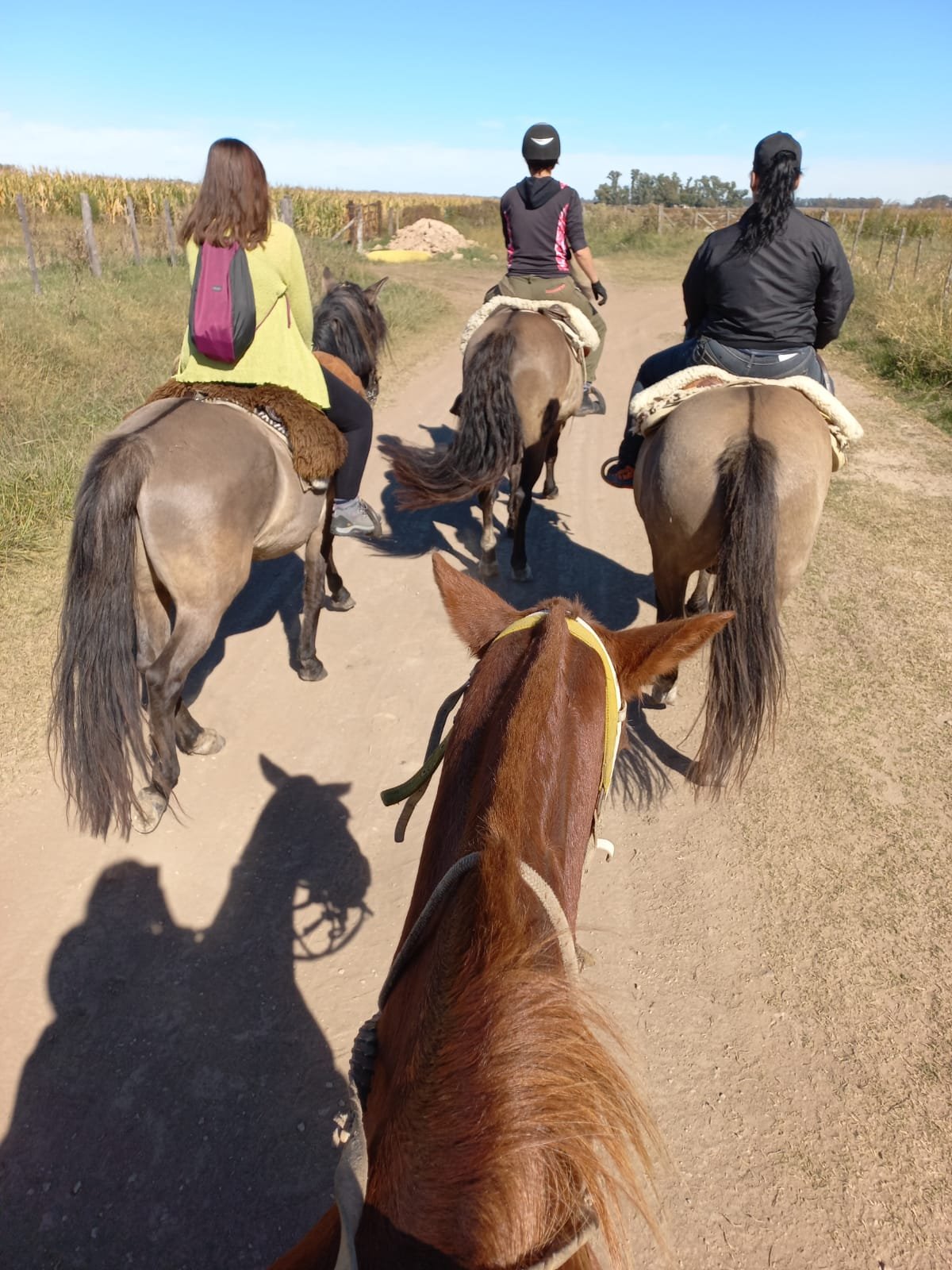
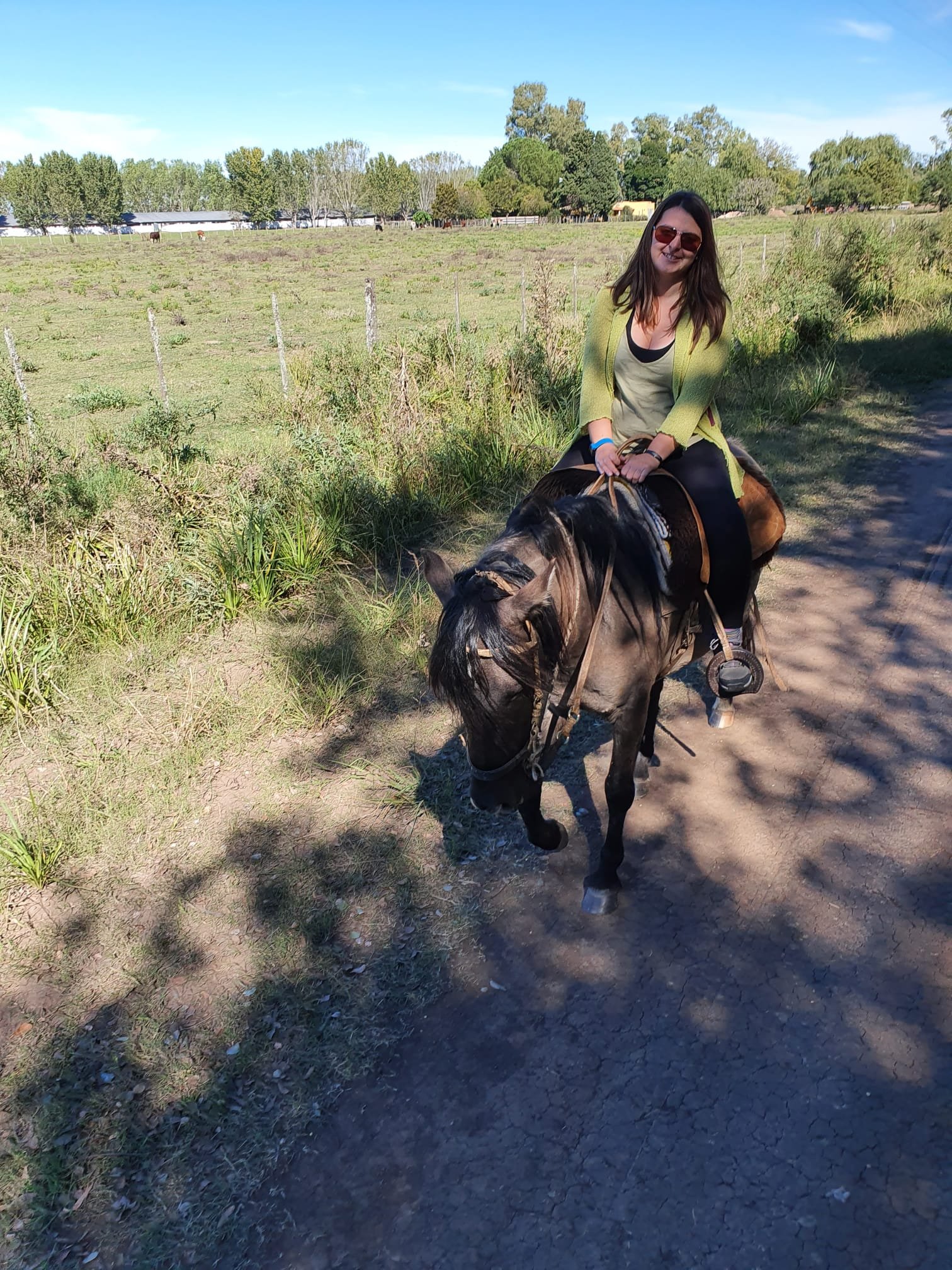
The province of Buenos Aires is part of the ‘Pampas’ region, and this is where the gauchos (Argentine cowboys) farm cattle the most. So, I decided to book us a day of horse riding in the area.

The four hour riding experience included a traditional asado lunch at the house of a local which was pretty special, and the horse riding itself was an unforgettable experience. For good and bad reasons…

The horse I was given, was a little young and barely broken in. This was coupled by the style of gaucho riding which is very different compared to english riding. The saddles and riding kit on the horse is very different and there is no front to the saddles. You are also expected to ride one handed and without a riding hat.
Whilst a little nervous about my horse’s behaviour, I took on the challenge. We rode through long grasses, roads, ditches, and woodlands and after trotting, cantering and a little bucking by my horse, I did manage to stay on the horse! Even though I was a little banged up. The experience was good fun, but the major downer was the extreme amount of mosquito bites I endured all over my legs  i was rubbing toothpaste on my legs for days after! (Fun fact: it takes out the itch).

Lunch in Uruguay

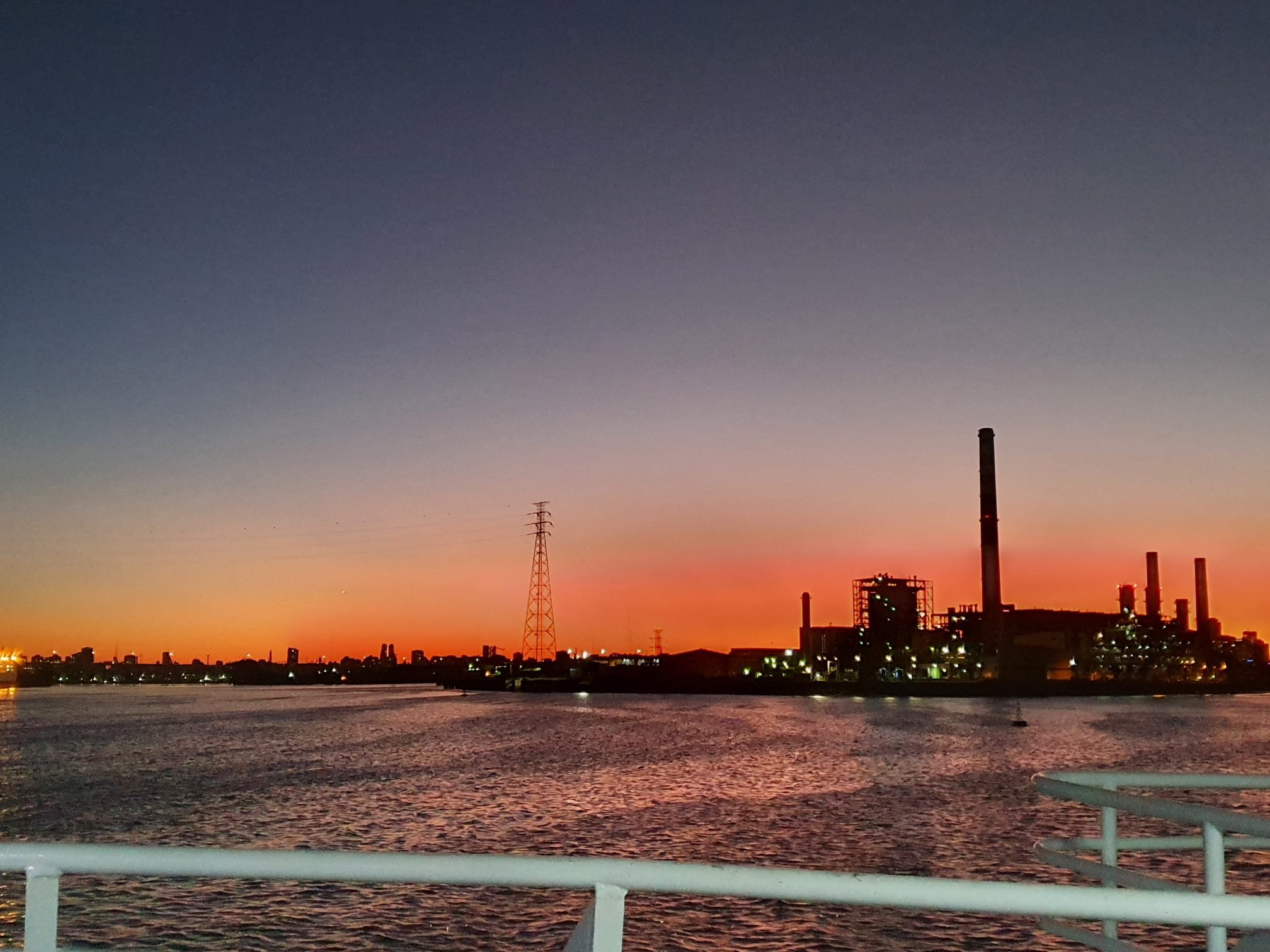
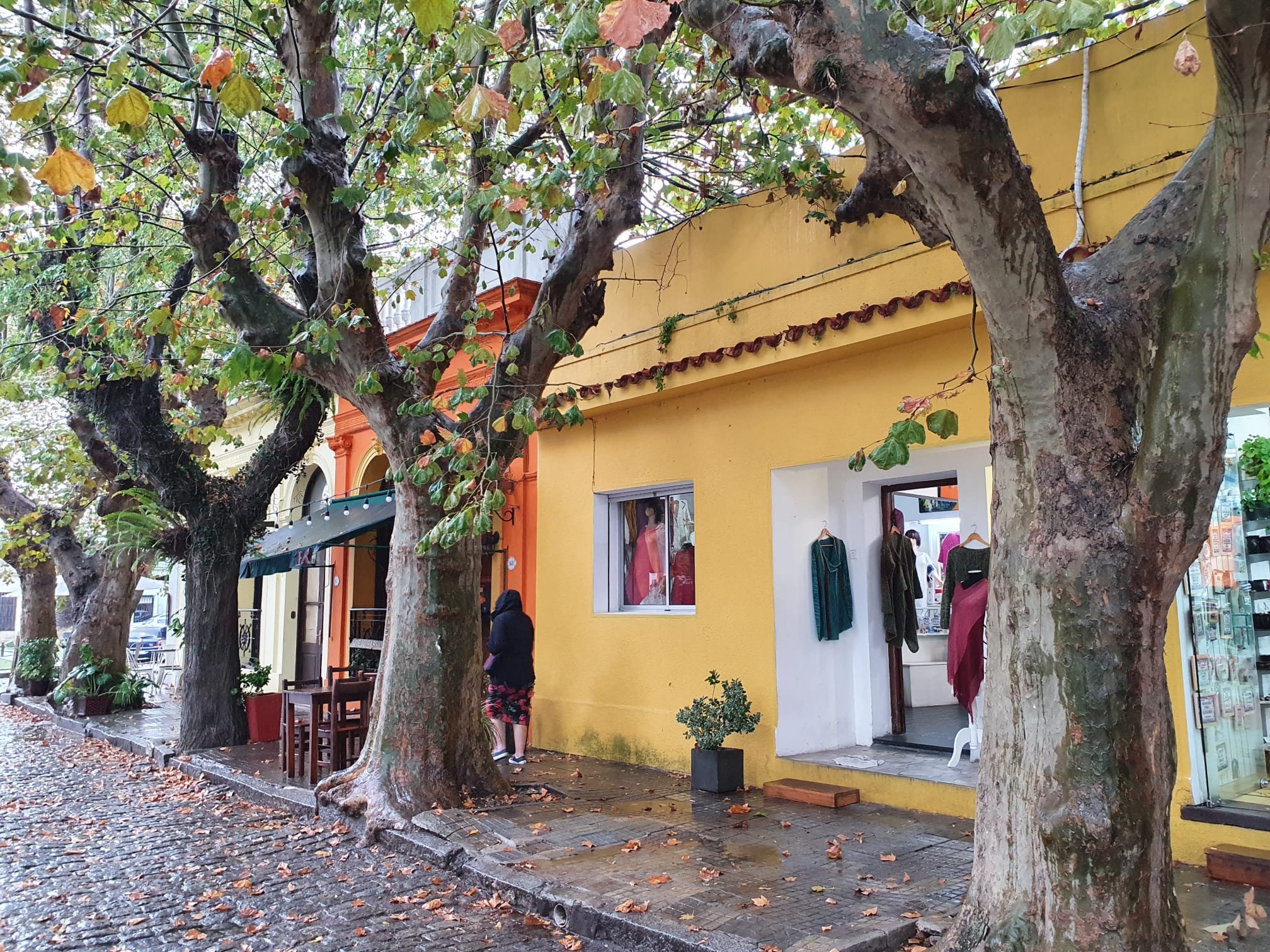
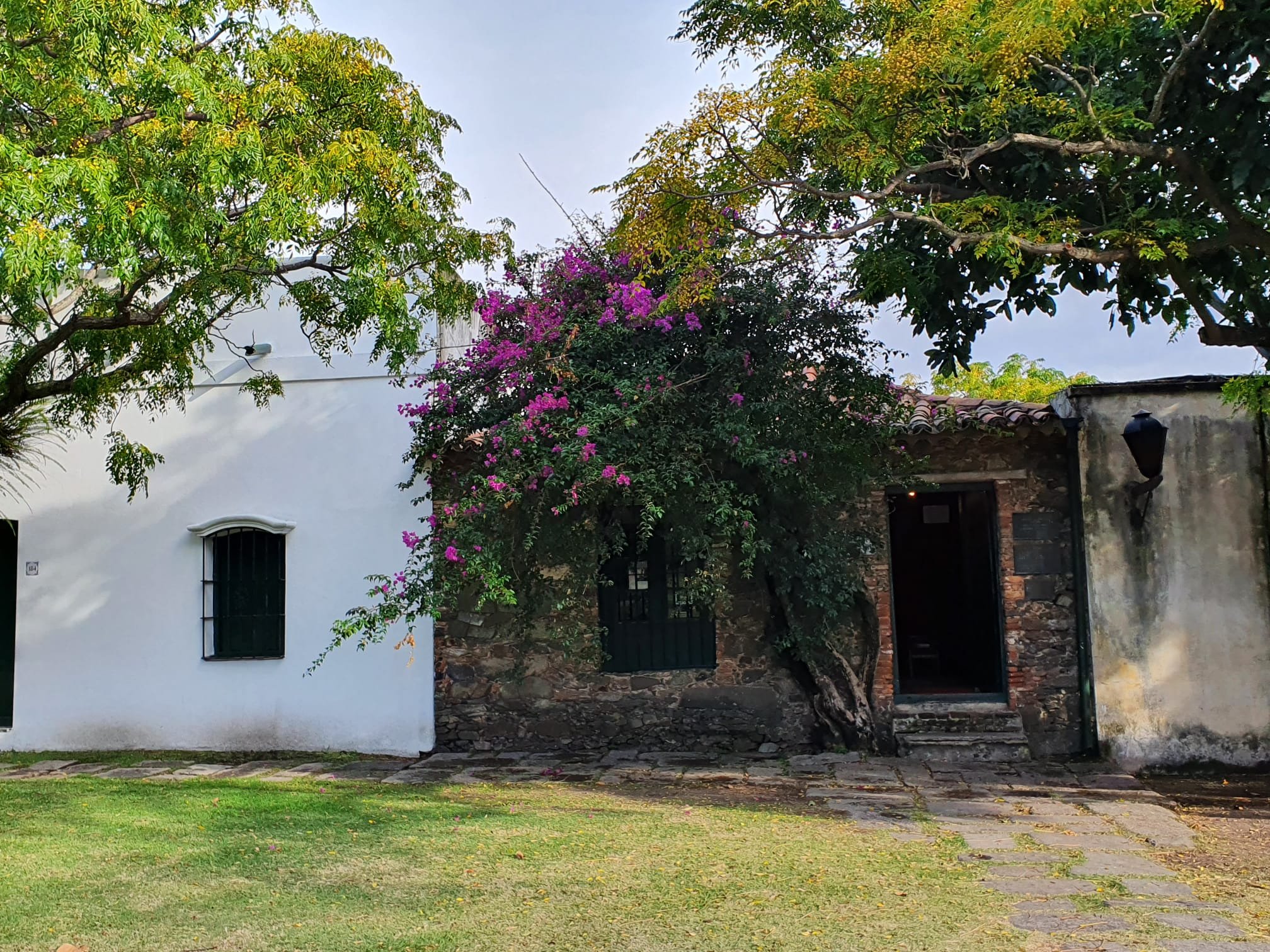
We became aware that you could visit Uruguay easily from Buenos Aires’ port by crossing in the river ferry for around an hour. It’s always tempting to cross another country off the list if the opportunity arises, so we booked our ferry tickets and took the pleasant ride across to a town called Colonia del Sacramento. From here you can also take a bus to Montevideo (Uruguay’s capital) but we decided to save that for another trip. Colonia del Sacramento is a picturesque town with a very portuguese style to it, from when it was colonised by Portugal.

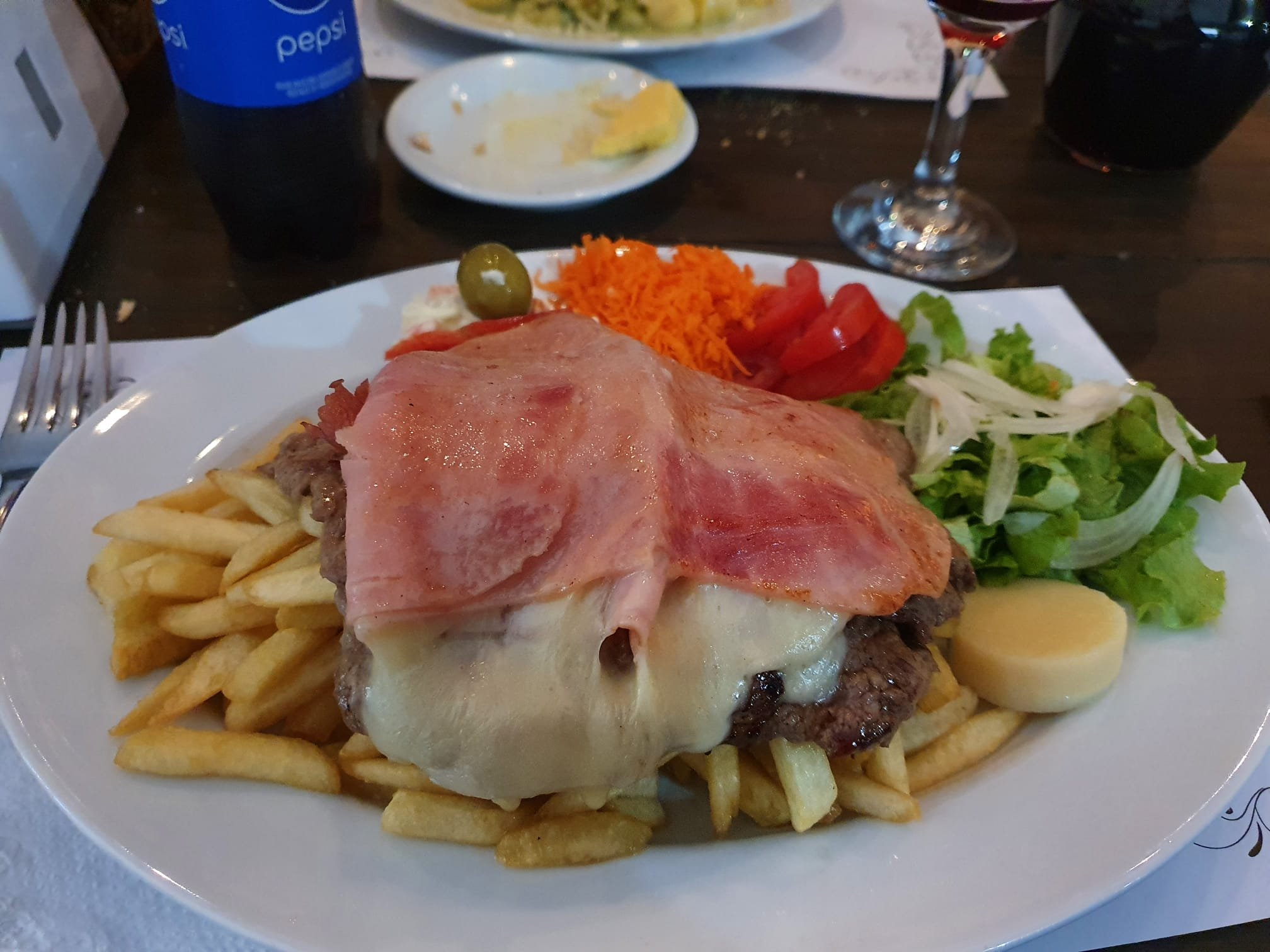
There are a couple of small museums and a church in the town to enjoy, and we had a long and luscious lunch of a traditional Uruguay dish called ‘chivito’. This is like a giant inside out meaty sandwich. Like Argentina, Uruguay also does not skimp on food portions.

Before we knew it, it was time to take the ferry back across the river. We had a good laugh about how we left the country just fot lunch though! 🤣

Tango

You can’t visit Buenos Aires and not watch a little Tango, as the traditional dance of the city. Not only can you see people dance this in the streets of Caminito in Boca, there are also plenty of theatres offering shows and classes. I wanted to do a class but they were multiple hours and I felt too lazy about it, plus I only had walking boots to dance with.

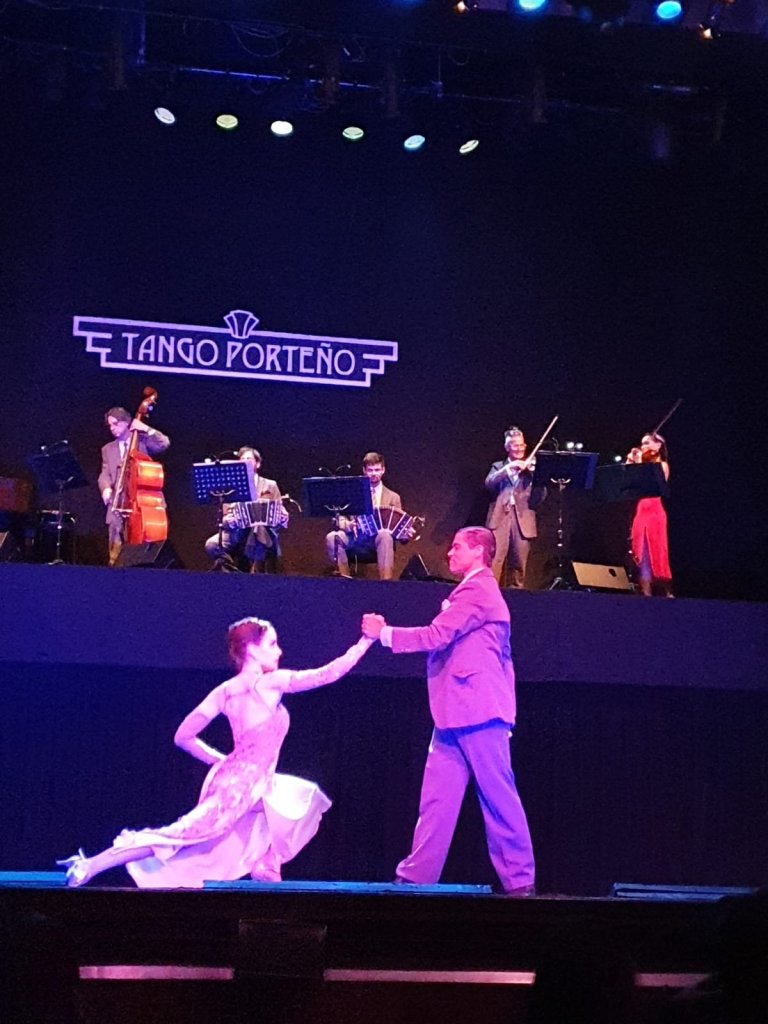
I did decide to book a show and after a little research, I booked a show at Teatro Porteno. You had an option of paying for the show on its own or with dinner included. I chose to purchase just the show which was about £23 but then on arrival, we were also provided with another menu to pick and choose food. We went for some empanadas and a delicious ham and cheeses board.

The show itself was amazing! Focused on locations around Buenos Aires, there was a variety of styles of Tango on display. They also had an act that used drums and cattle whips to create impressive rhythms with the music. I was really glad I visited.

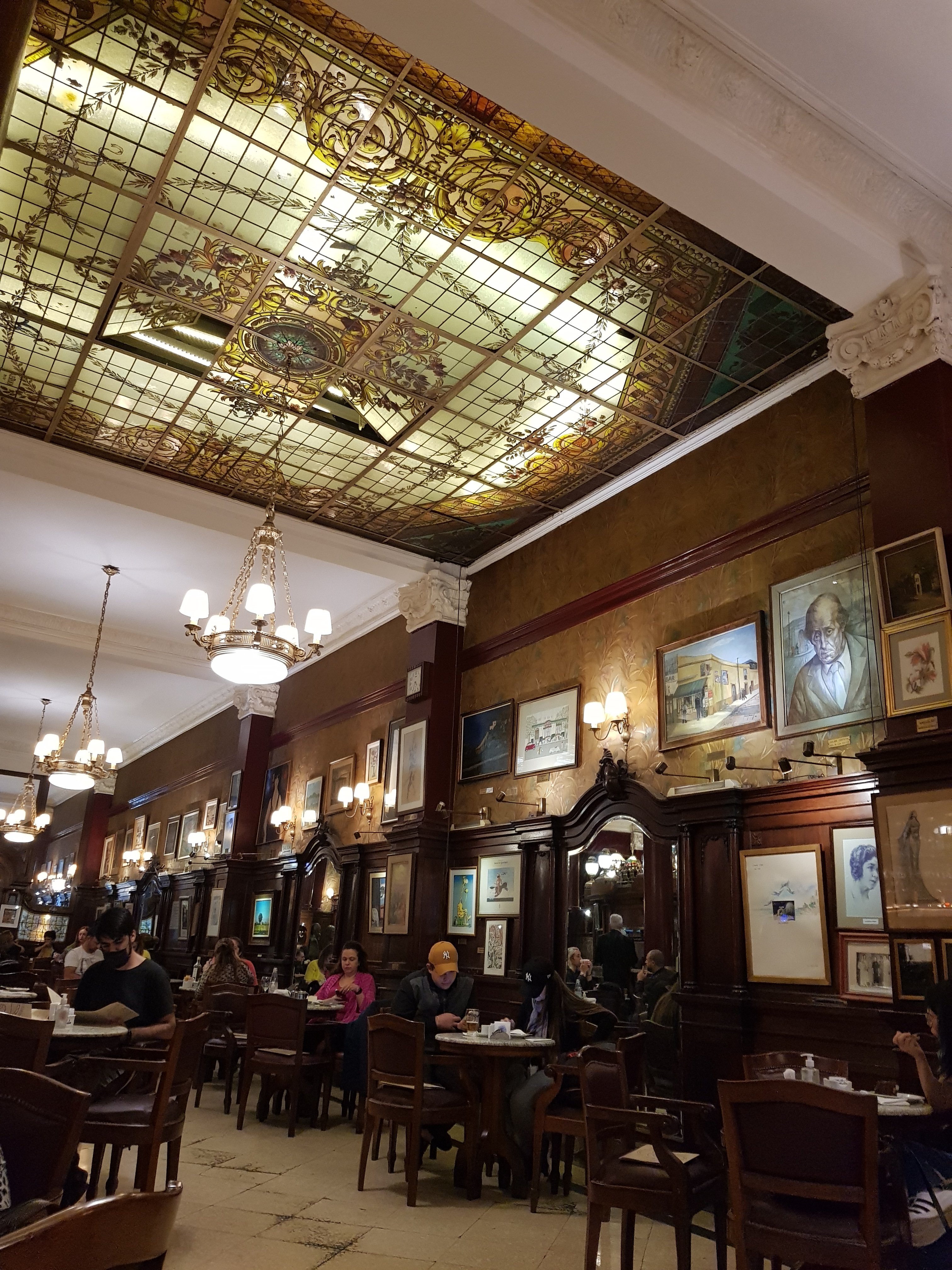
Another location where tango can be viewed and learnt is Cafe Tortoni. This is one of the oldest and most fabulous cafes in Buenos Aires. The decor is very traditional italian/ bohemian and many famous faces have eaten here. We decided to visit for a merienda (afternoon snack) and really enjoyed our visit with some great sandwiches and cake.

There were plenty of other bits and pieces I experienced in this bustling capital, but these were definitely the highlights. My return to the UK following Buenos Aires was a very long journey, but also gave me time to reflect on my amazing journey around this beautiful country.

After my return to the UK, I will soon be embarking on my next journey, working on board a cruise ship around the Mediterranean…

Barcelona & Girona: From a theme park to a quiet space

I arrived in Barcelona by train and made my way across the underground network to my hostel ‘Yeah – Barcelona Hostel’. Whilst very busy, the subway system there is a great way to move around the city, you can pay for single journeys or multi day trips, and it is very affordable. I would also say that it has some of the cleanest underground stations and trains, that I have ever experienced, especially when you compare it with grimy subways like NYC’s network.

I didn’t realise until I arrived, that the hostel I had booked is actually a sister luxury hostel to the one I stayed in within Madrid. The hostel is very trendy and only 15 minutes walk to very big attractions. There is a comfortable lounge with access to Netflix and games etc, a rooftop terrace with a pool (though it was too cold for me to use), and the rooms are very comfortable. I also decided to have the breakfast, which can be very ‘hit and miss’ in hostels, but I was impressed with this breakfast, for five euros, I accessed an all you can eat continental buffet, which had a ‘make your own’ pancakes table with all the syrups! Delicious!

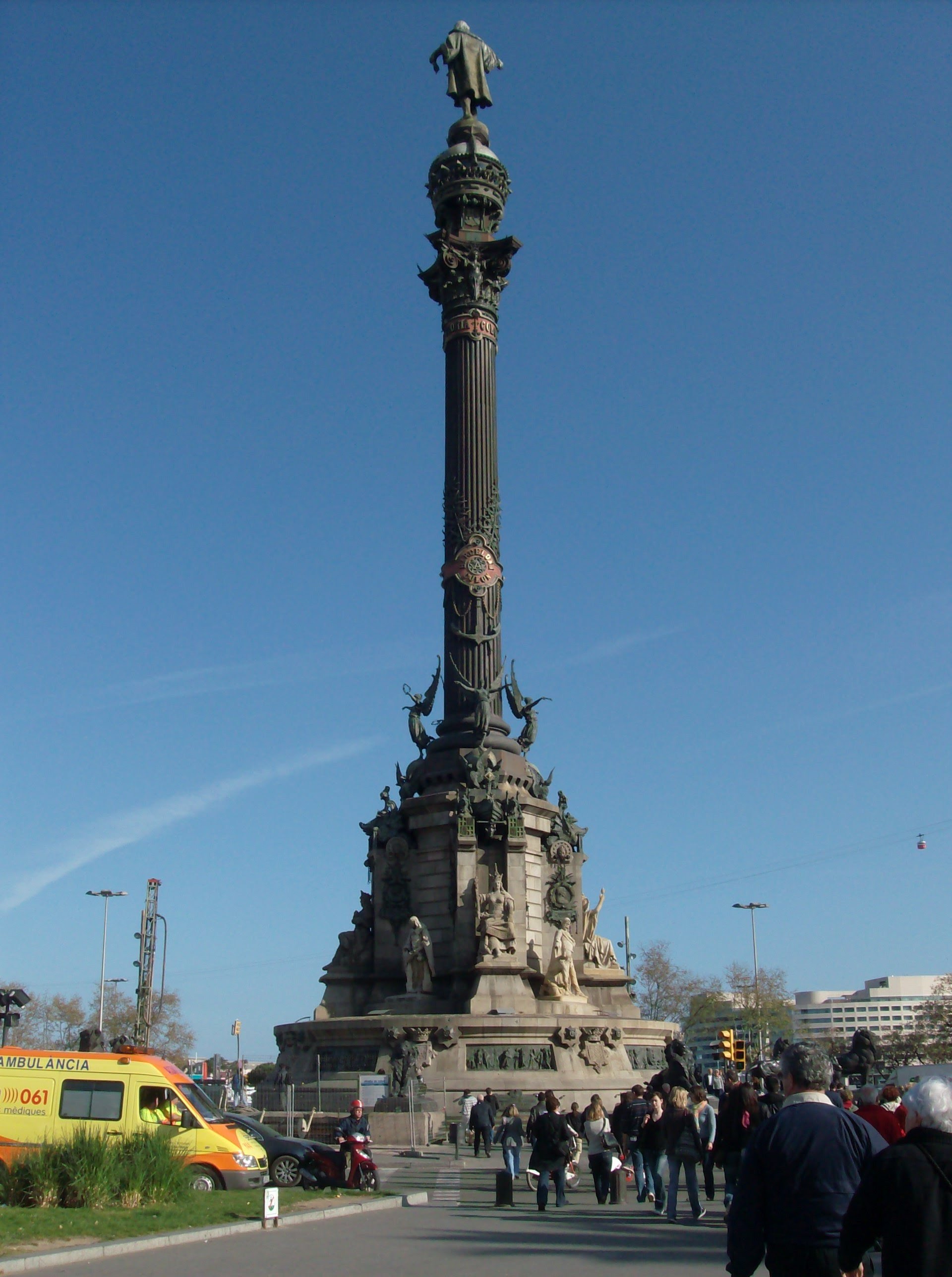
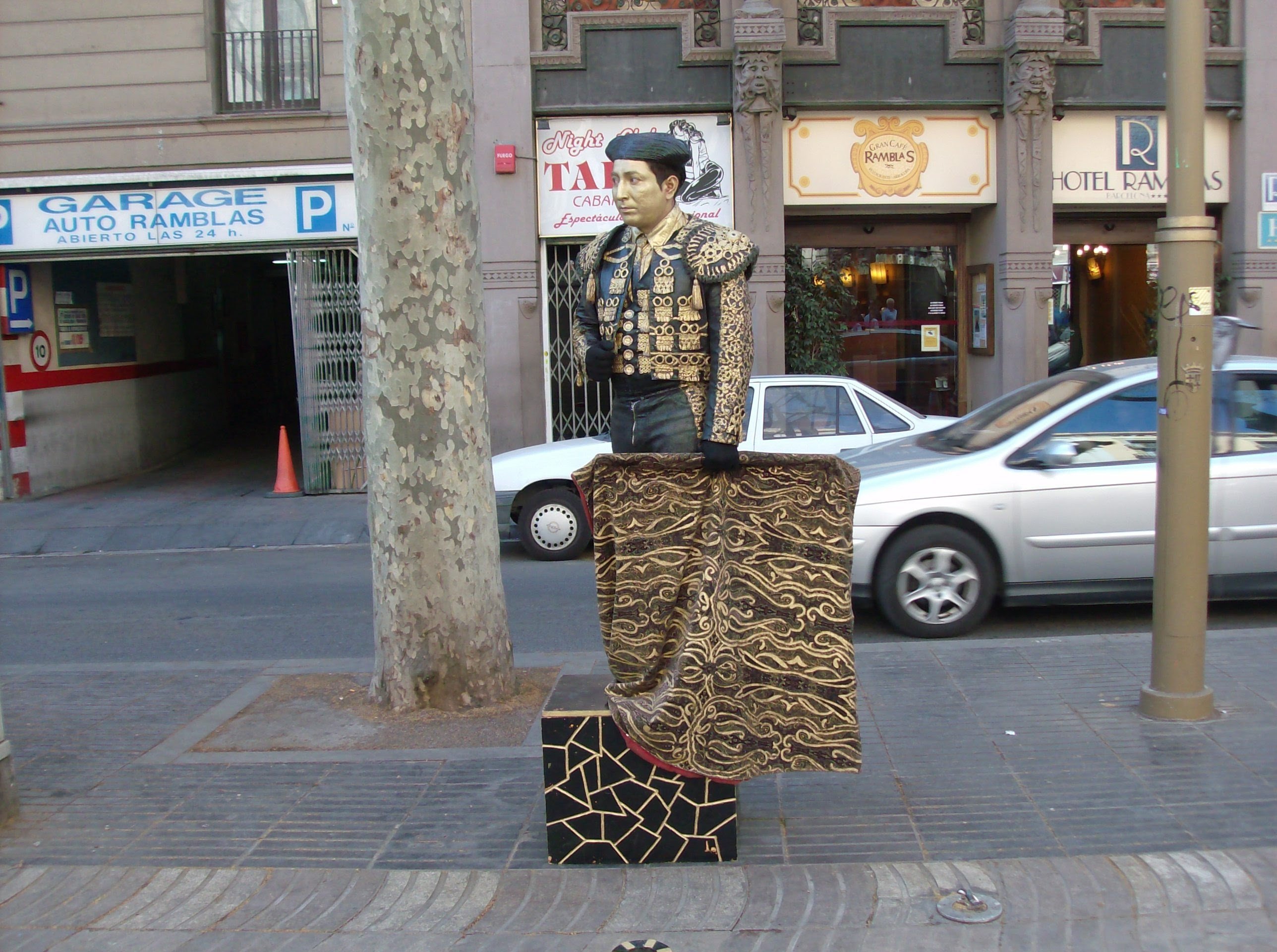
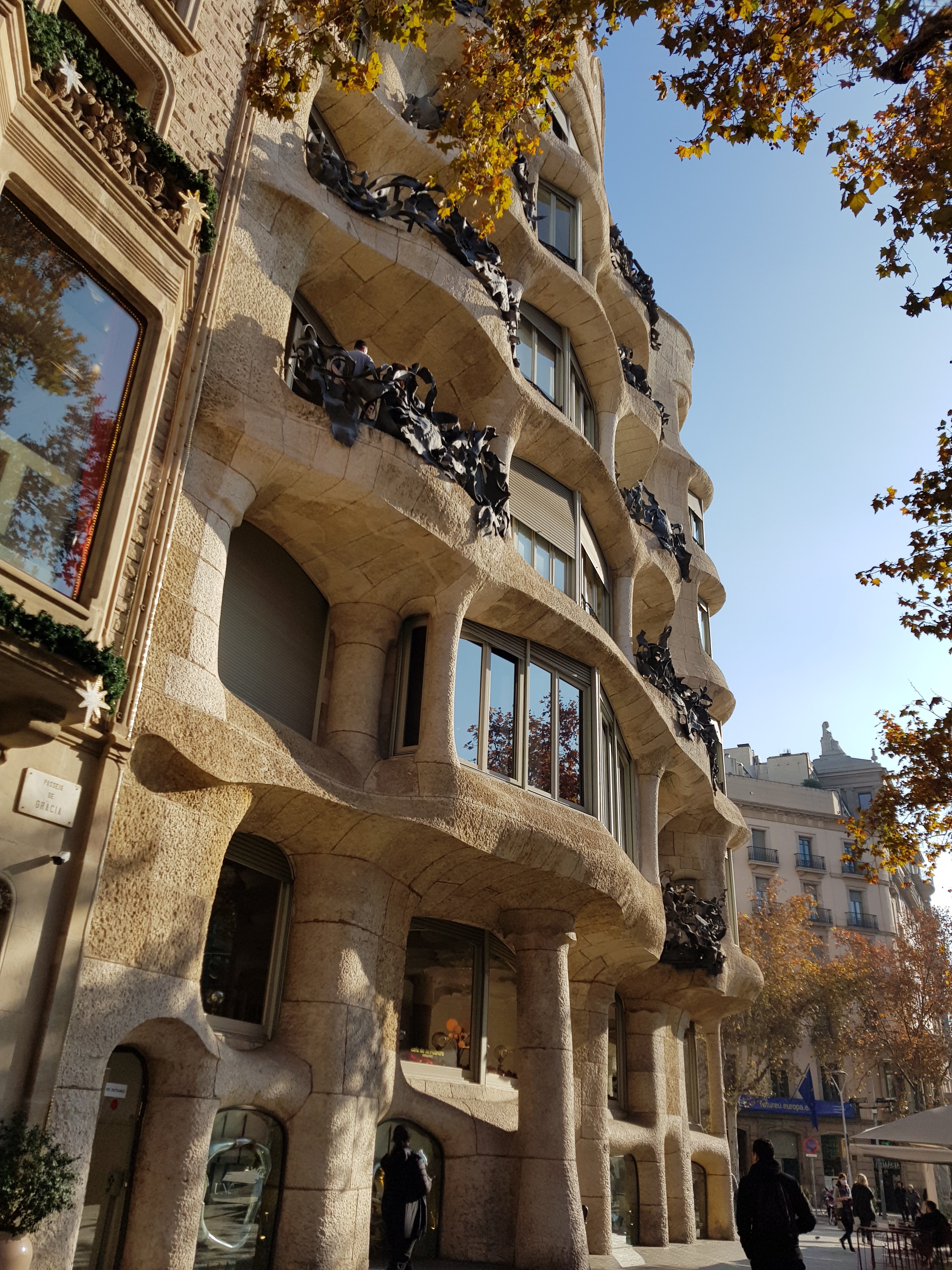
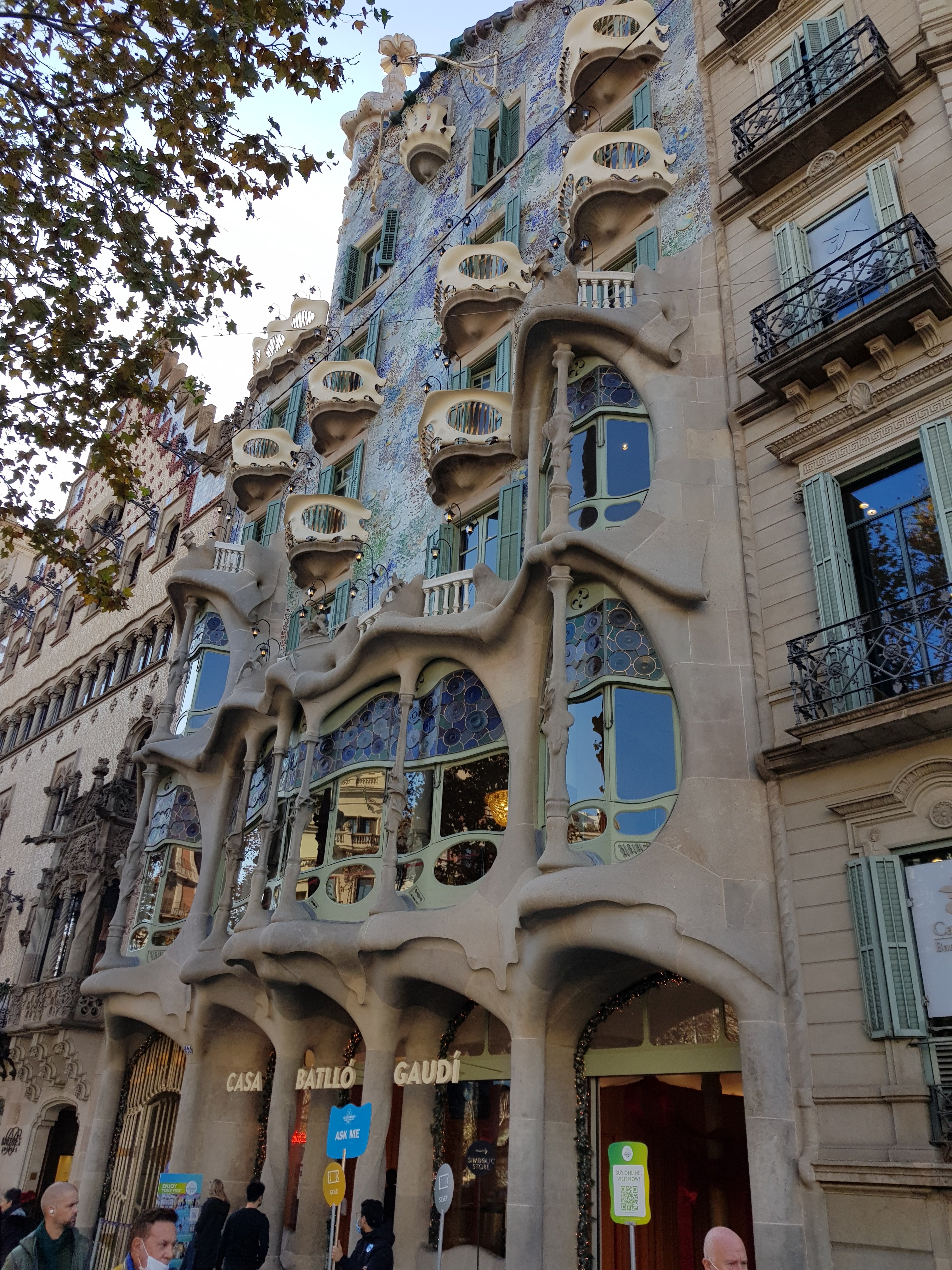
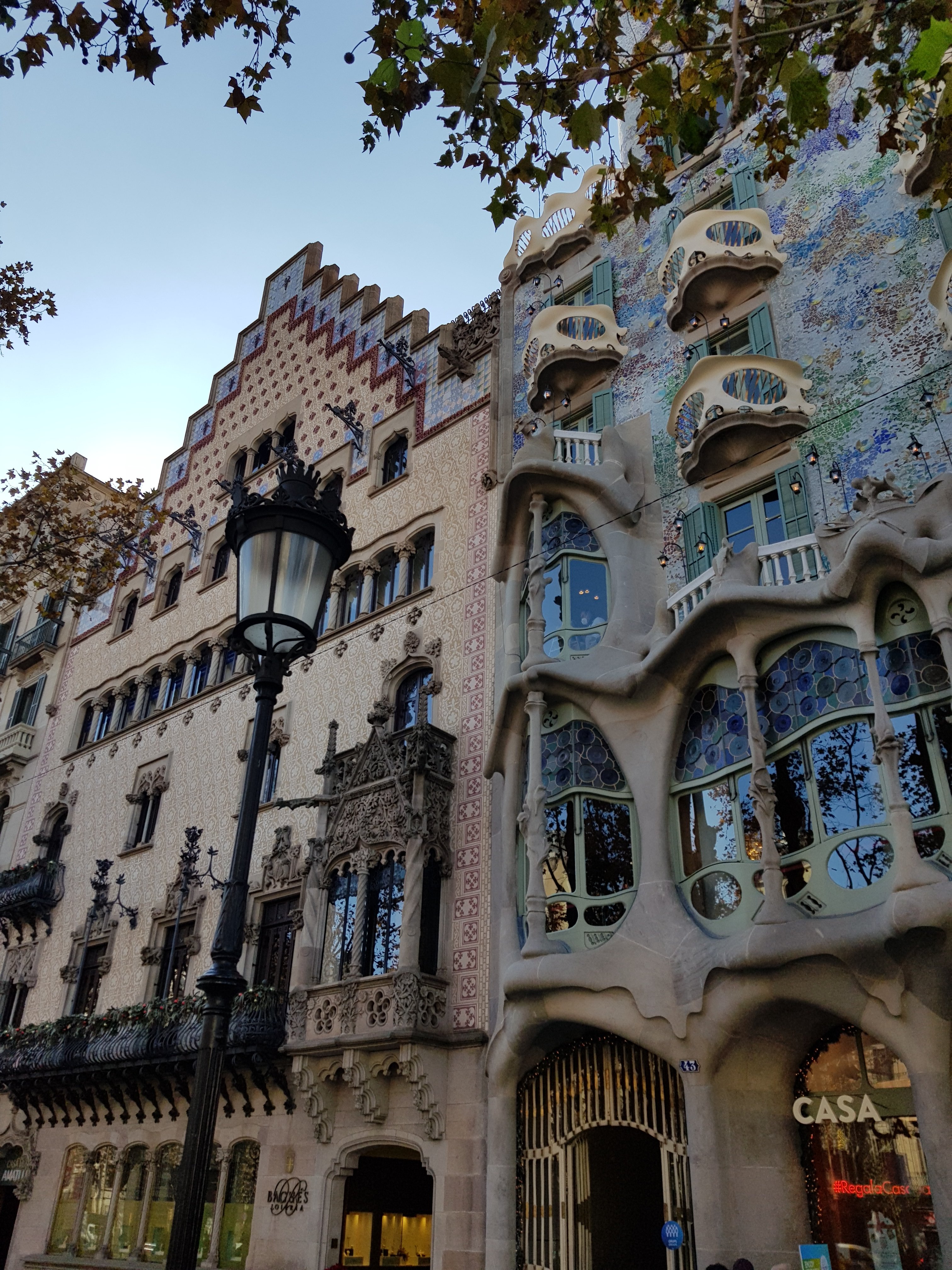
It had been a decade since I last visited Barcelona, and I recalled that the last time, I had found the city quite stressful. I wanted to give it another chance, but I knew that I would be avoiding the tacky tourist spot of La Rambla. This is the longest street, with living statues, novelty shops, and lots of pickpockets. I wanted to try to understand more of the Gaudi vibe in the city. Barcelona is famous for the architect and artist, Guadi. His works are very unique with lots of busy shapes and colours, and a vast amount of tile mosaic use. There are several buildings in the city that were designed by him, including Casa Batlló, and Casa Mila.

I left the hostel in the morning to explore and find these locations, and hopefully visit. I don’t know how, but I managed to get lost a couple of times. It seems strange to me that one can get lost in this city, because the entire centre is designed as a grid, with no alleys or shortcuts. This is frustrating though, because it takes ages to walk everywhere, you cannot cut across diagonally to get to your destination faster, you must walk along very long wide streets until you eventually get to the side street you want. The city is so busy and has so many buildings and wide roads, it can be quite overwhelming, especially when you are struggling to find any fingerpost signs to point you the right way!

After some irritation I found my way to Casa Batlló, and the outside of the building is very striking. It is definitely worth a photo. I wanted more information, and began to queue to visit inside. When I realised the cost of admission though, I quickly exited… I am a budget traveller right now, and running low on cash. Most attractions I have visited in Spain, have been less than ten euros to visit. The Casa Batlló wanted 35 euros for admission, which would have been blowing my budget on the first place, for an experience that would probably be less than an hour. It was the same situation when I wondered down to the next Casa Mila, so I just enjoyed the views from the outside and decided to use my imagination for the inside!

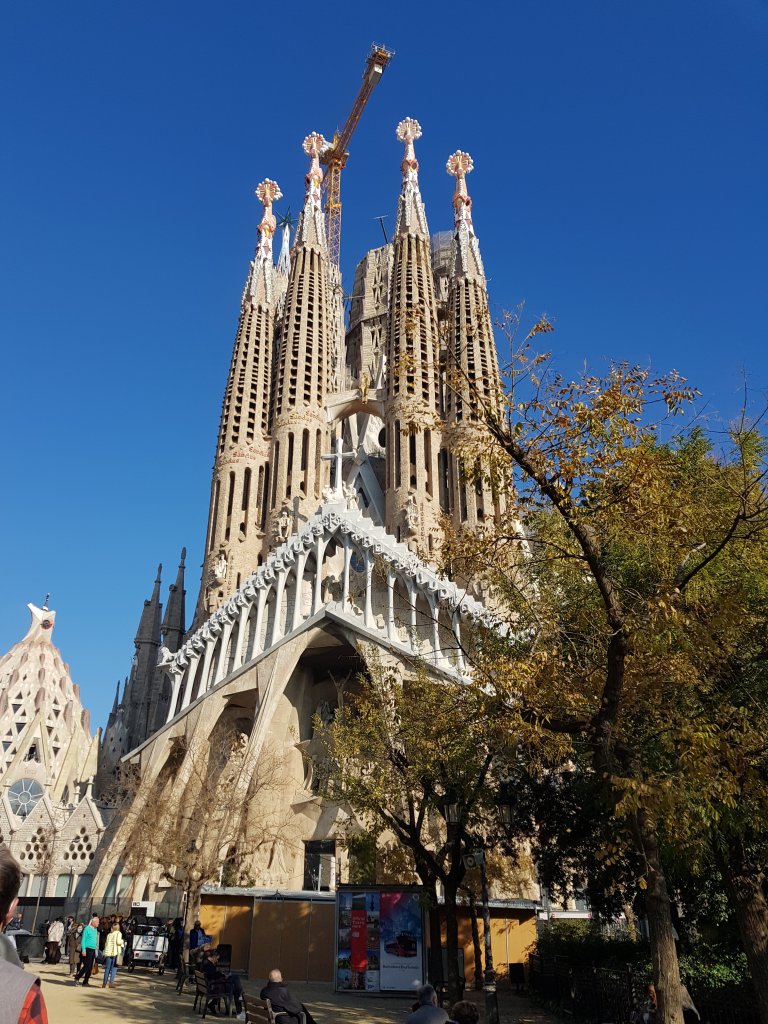
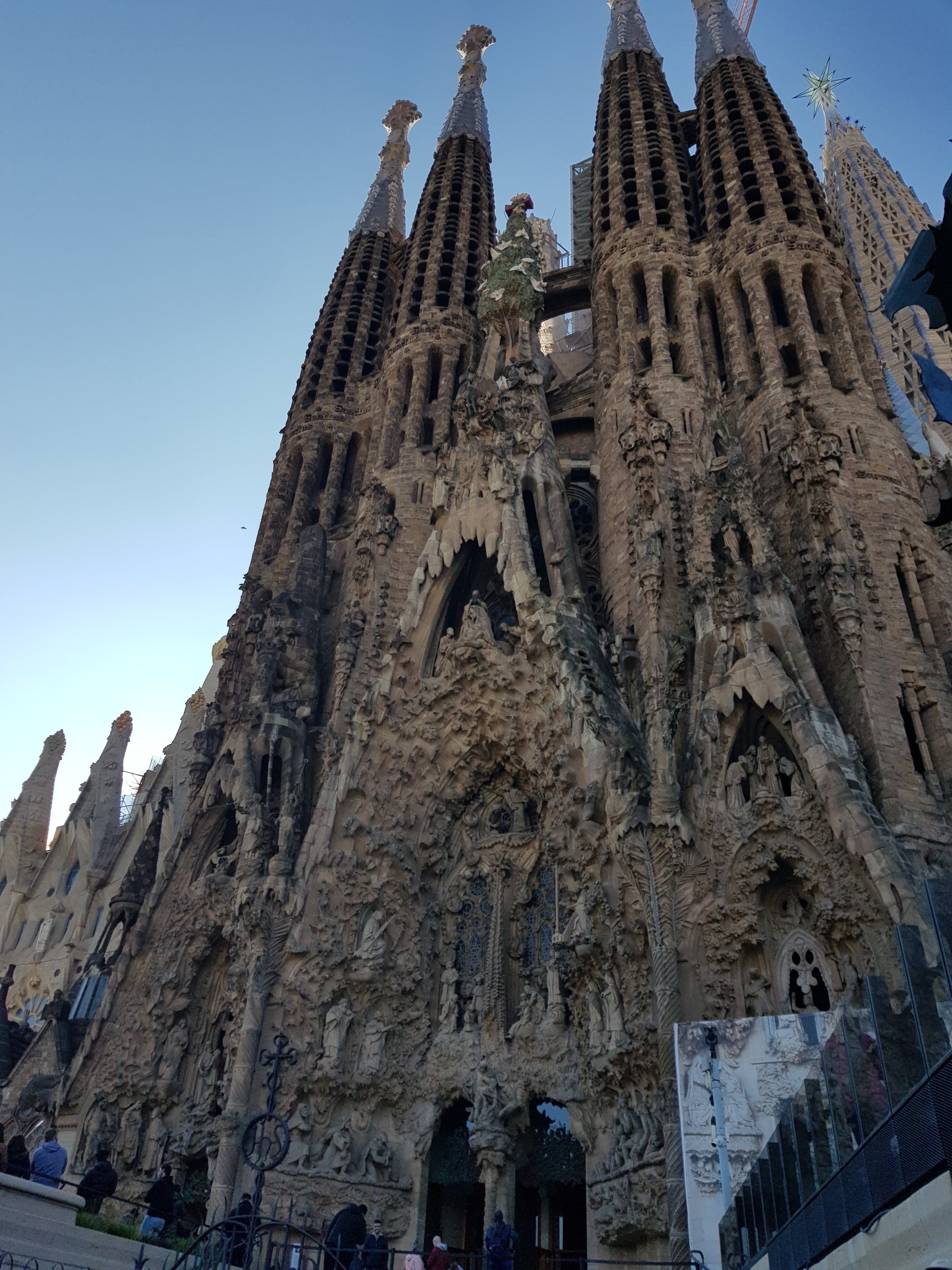
I knew I wanted to make a visit to the Sagrada Familia, which is Barcelona’s world famous basilica, designed by Gaudi. It is well known as a complex example of architecture, that 135 years from being started, is still not complete, and construction is ongoing.

I found my way to the building and wanted to visit a ticket office to buy my ticket, as I had no internet data left on my phone to go on their website. I wondered around the perimeter of the building, struggling to find the ticket office. When I decided to ask one of the security officers, I found out that the attraction does not have an office. You must buy tickets online… very unhelpful to me. Alternatively, you can buy a ticket from the tourist information centre, so I then had to get my paper map out, and begin the search for the TIC. When I eventually found it, I had to wait in a long queue, and was given my self guided admission ticket. I also asked the vendor about my intention to visit a park attraction later in the day, assuming this would be no problem as it is a park. She told me that this must also be booked in advance, for an allocated time, and she only had one slot left, so I grabbed that to.

When entering the Sagrada Familia, there is an audio guide available, but you must download their app to use it. Thankfully, the attraction has free WiFi that you can sign up for. I got the app, and began to make way from point to point around the outside and then inside of the church.

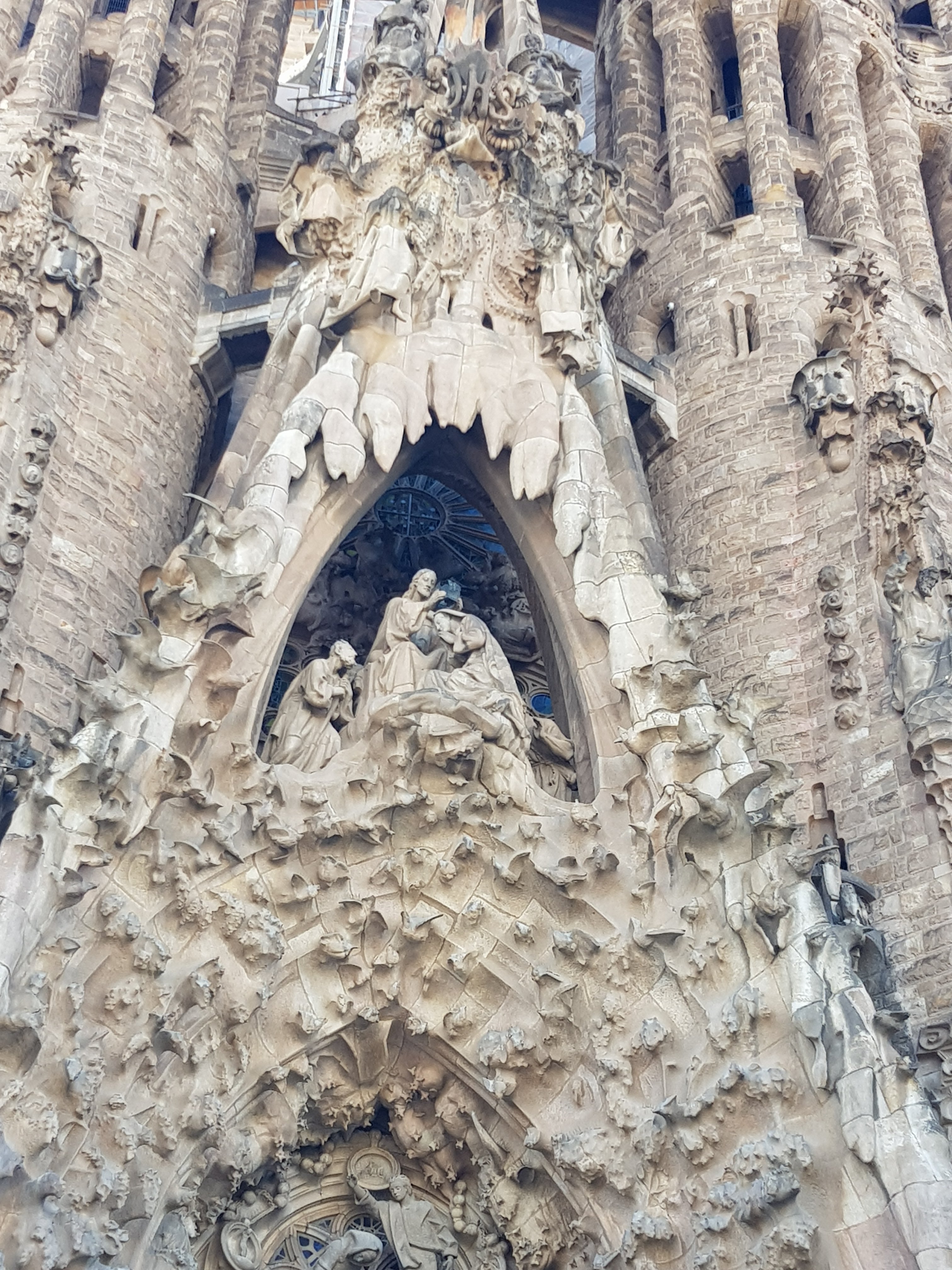
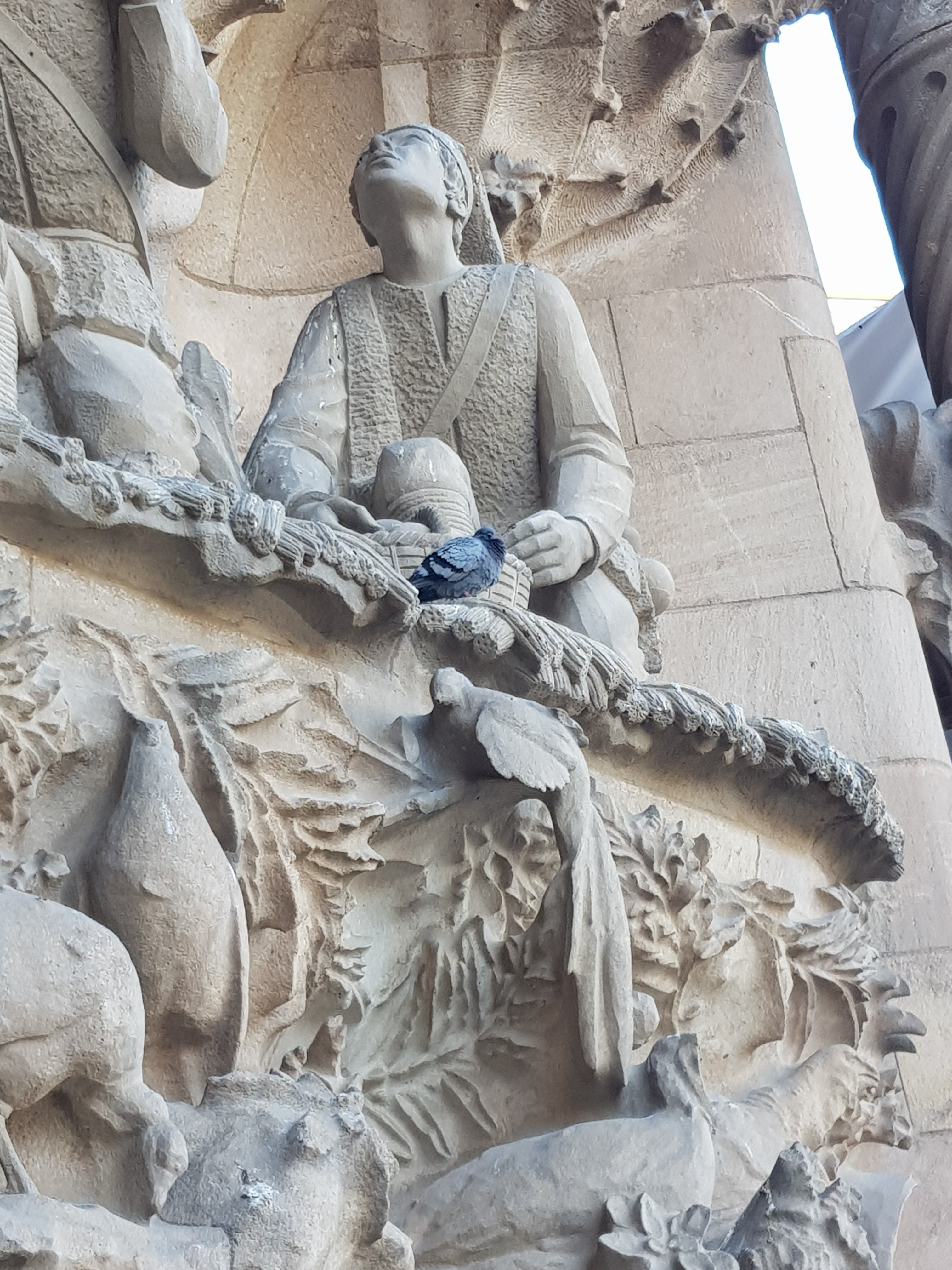
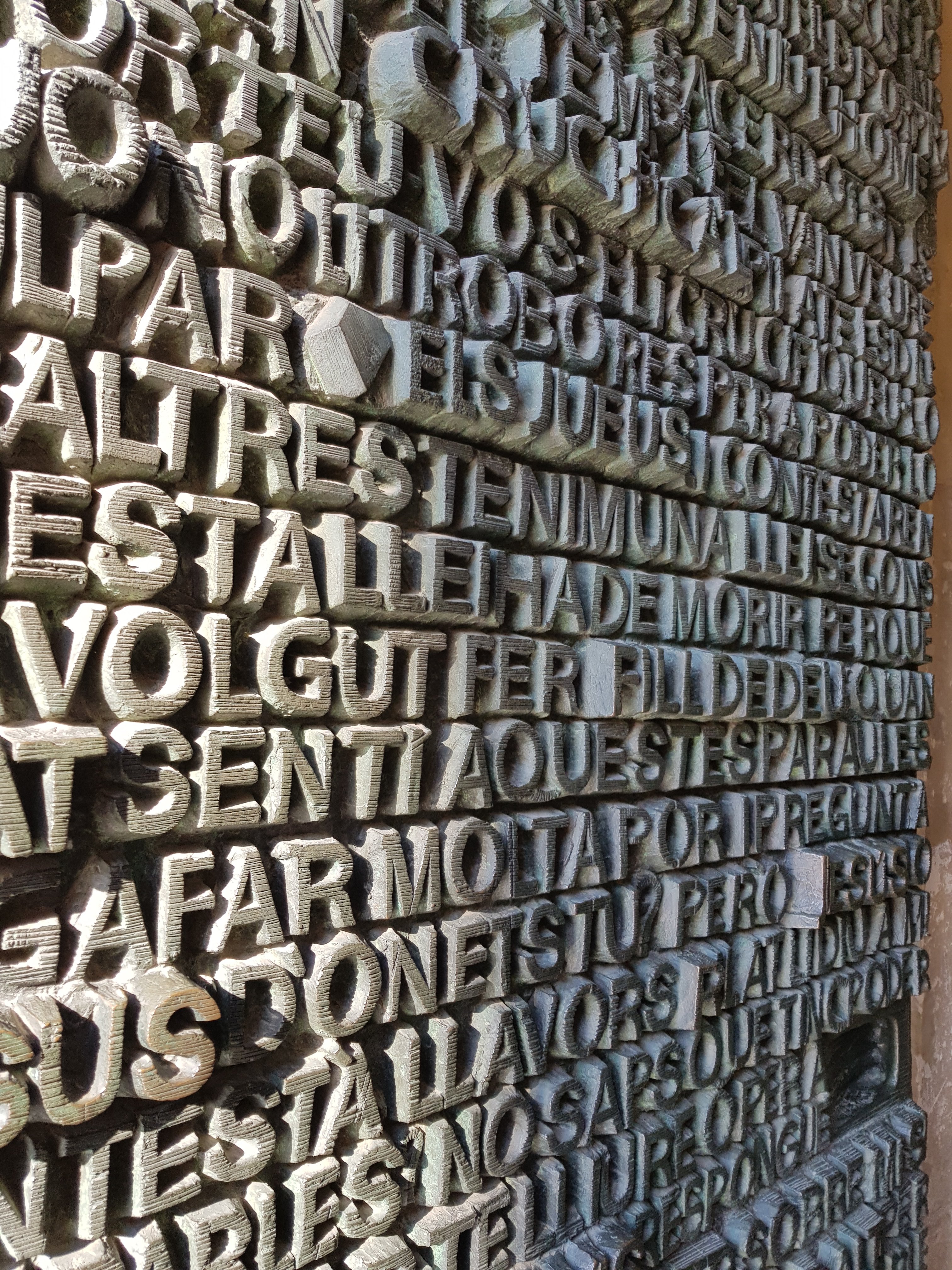
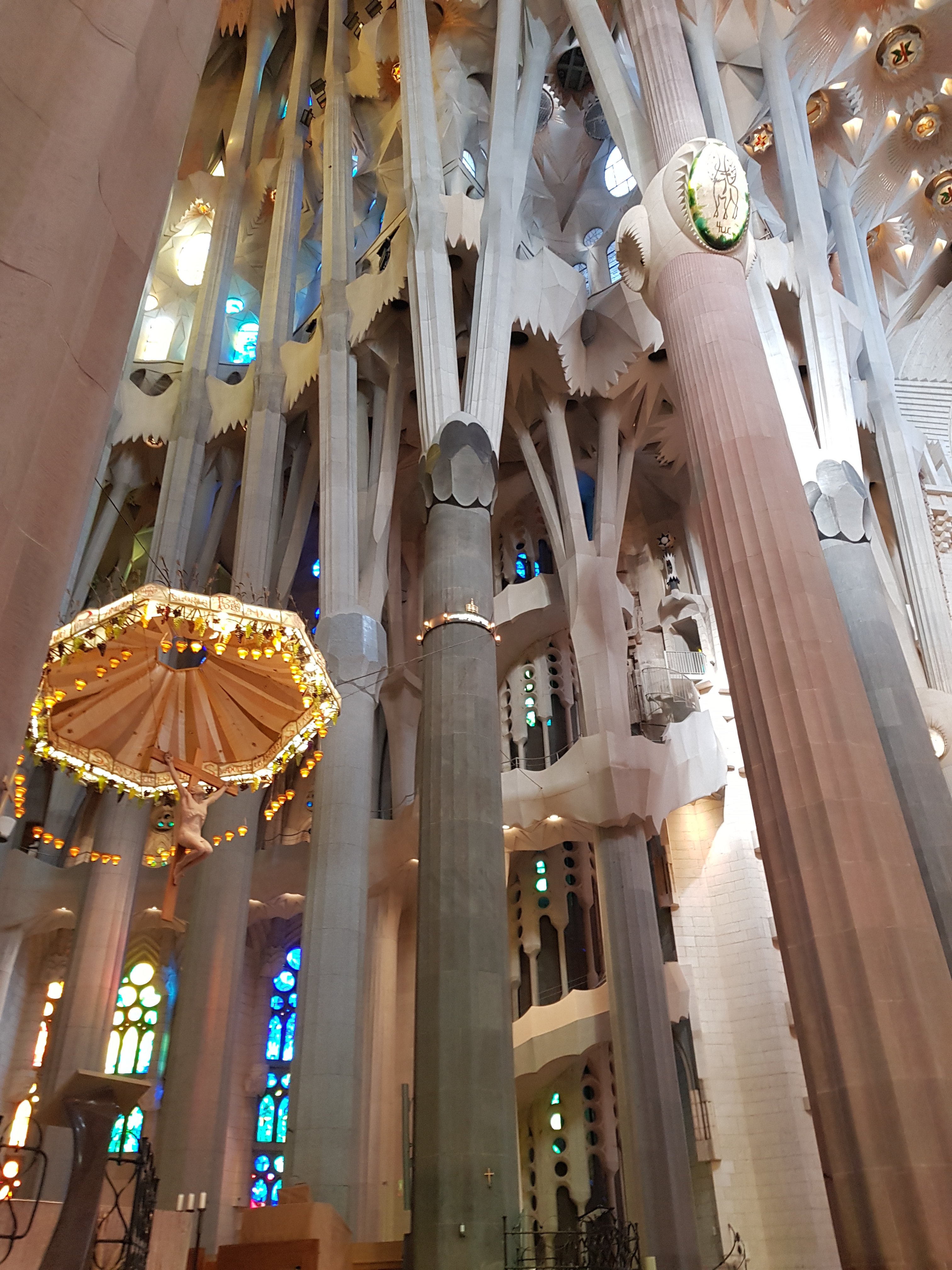
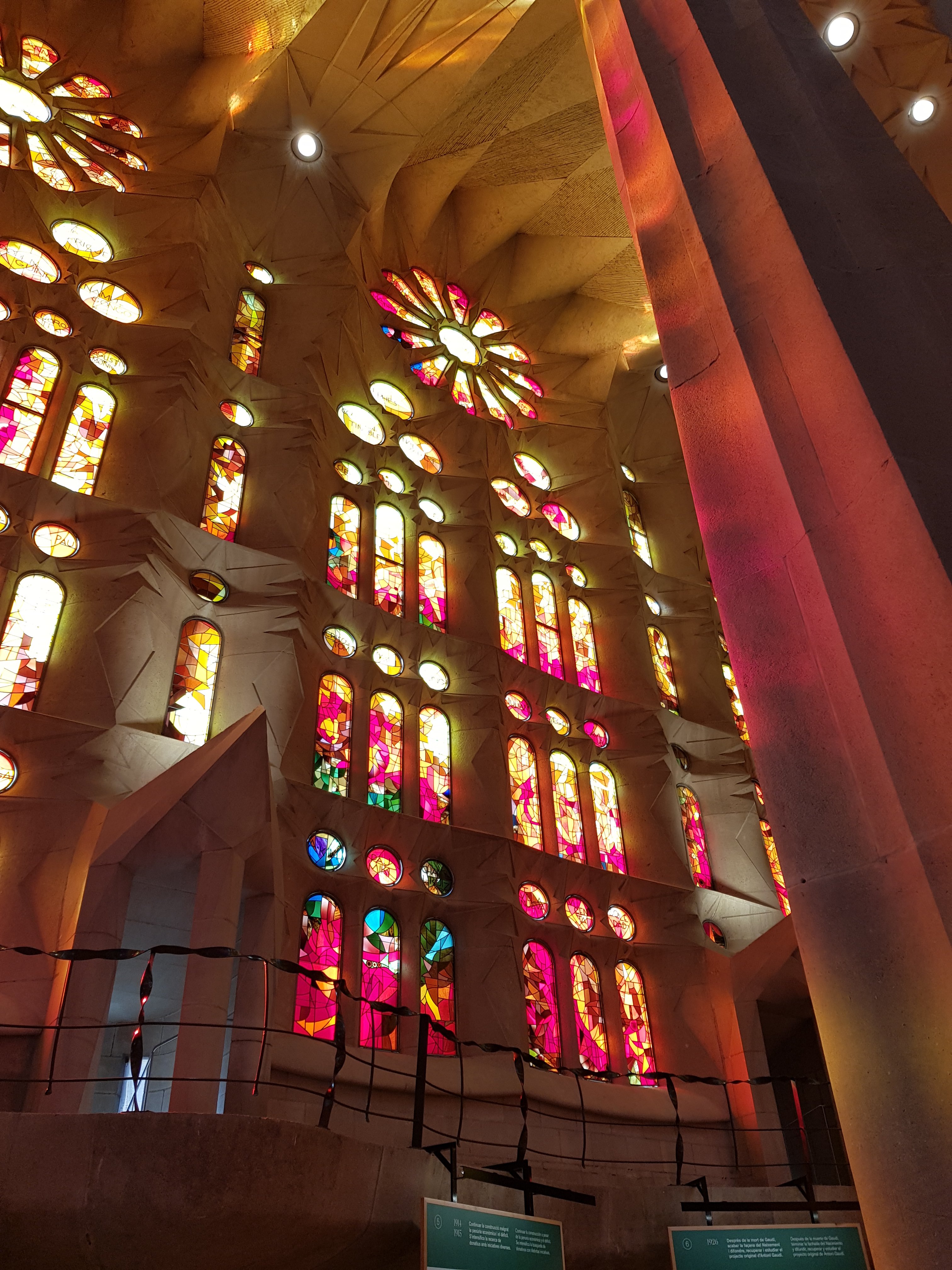
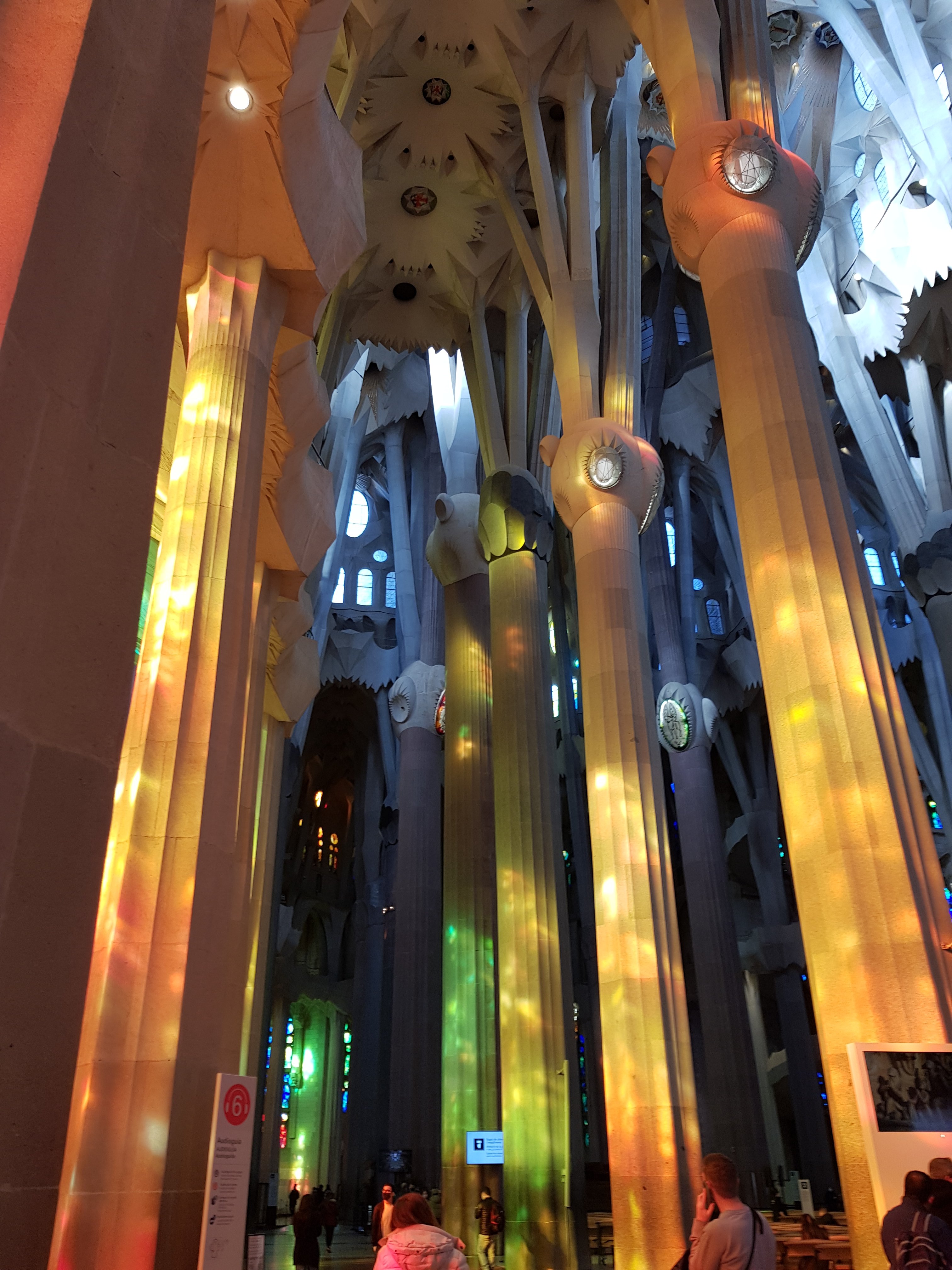
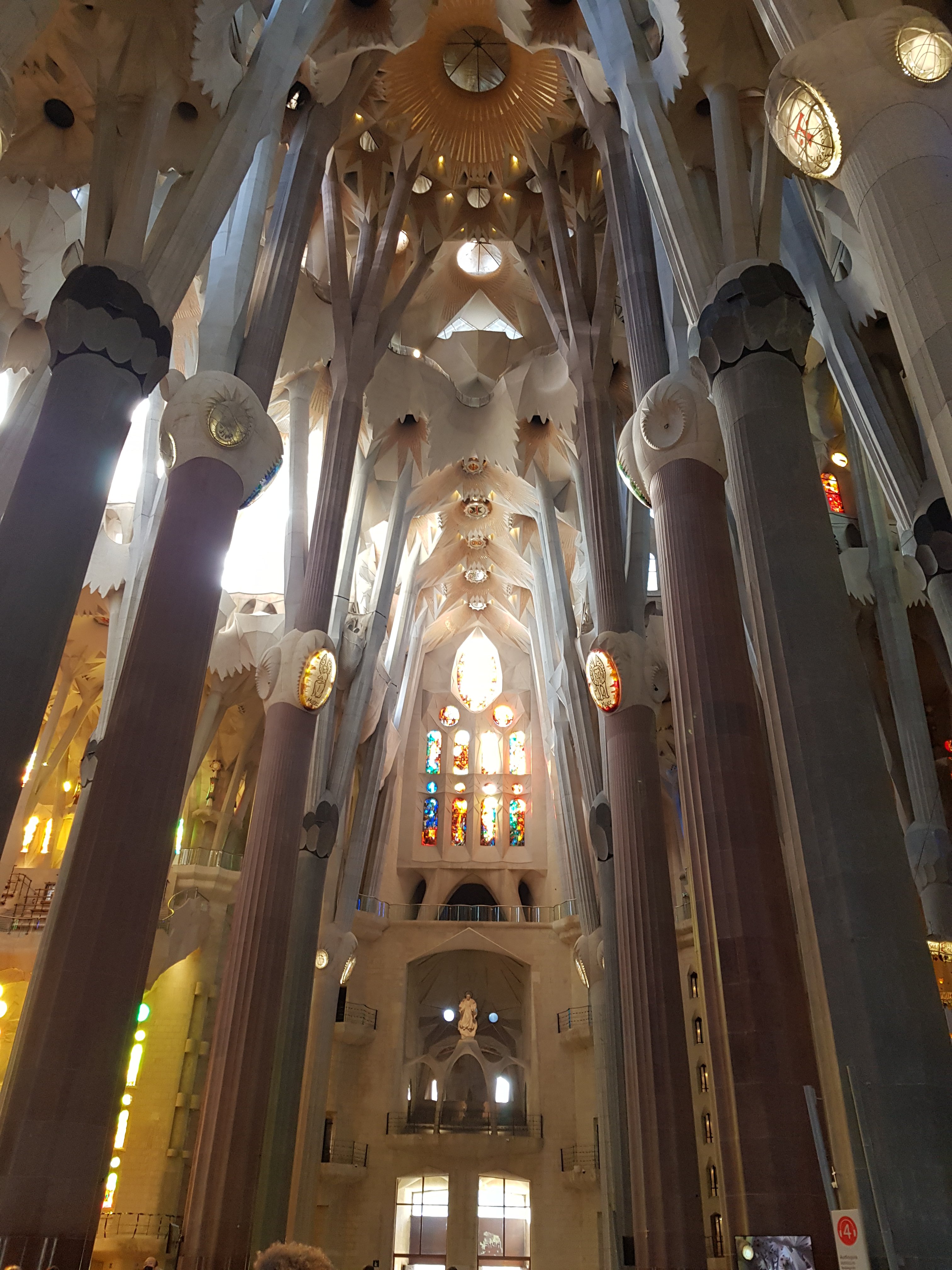
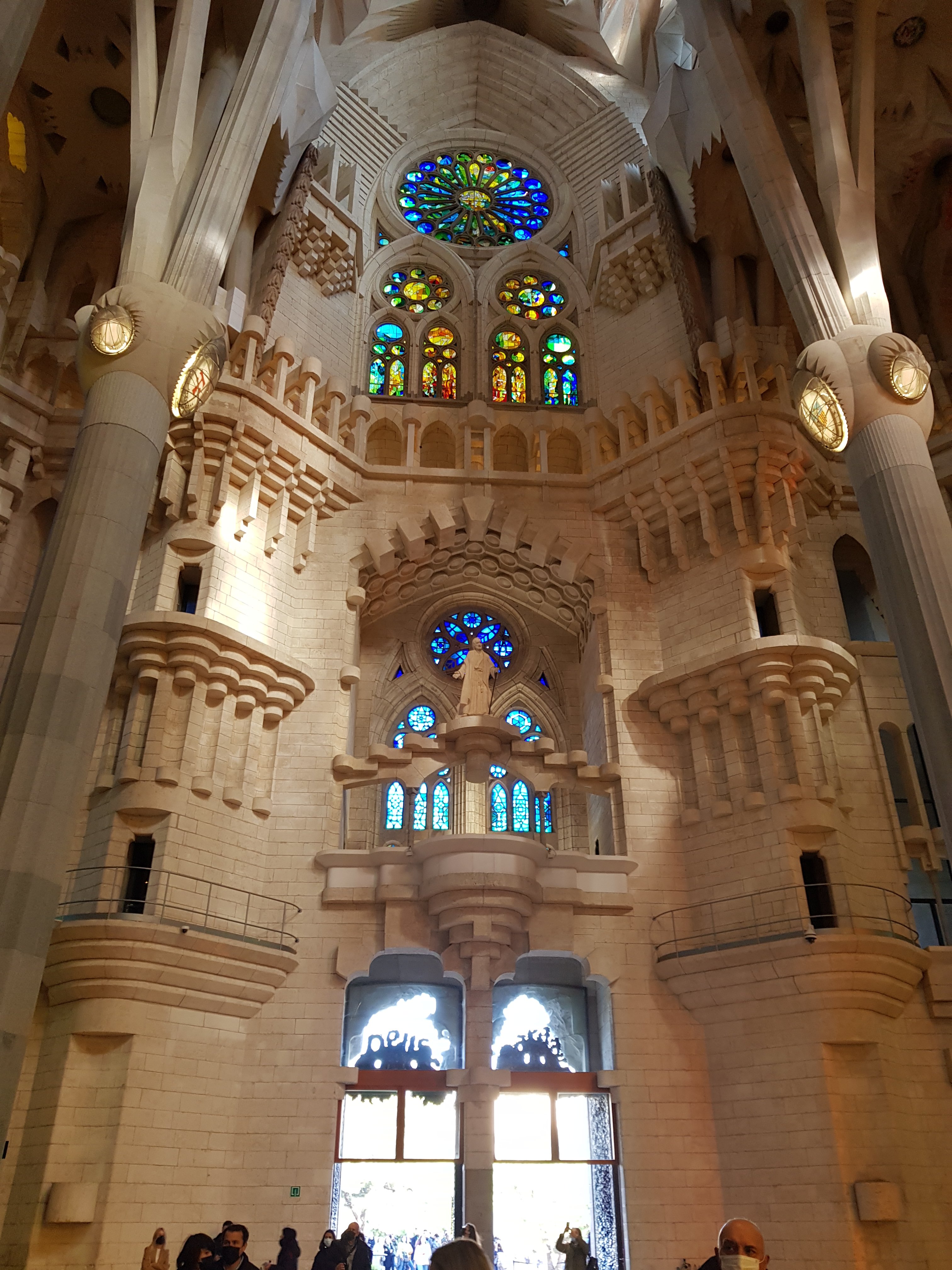
There is no question that the design of the building is remarkable and unique, I especially liked the turtles holding up the columns at the front entrance. The inside columns are also designed to make you feel as if you are in a forest space, which I think provides the space with an unusual feel. There are many sculptures of the holy family (which the church is named after), and they are especially prominent over the main doorways. The stained glass in the building provides a multitude of colours in the space, and generally, there is so much intricate design going on inside the building it is hard to know where to look.

According to the information provided, Guadi made a special effort to make sure that the building’s height did not exceed the nearby mountain, because he said that no work of man should surpass a work of god. It seems that Gaudi did intend for the space to honour god, but for me, the space did not fulfil this purpose.

I have visited many holy spaces over the years, and in the past few months, I have been to countless churches within Spain. Sagrada Familia is the only one of all of them where I would not feel at peace, or have the comfort and security I needed to worship God.

The space feels very hectic. Whilst the design is beautiful, the crowds of tourists, the noise, and even the security ropes strung across the pews just made me feel as if it was more of a theme park attraction than a church. I loved the sculptures and the colours, but I did not feel a holy connection here, and the atmosphere was actually very stressful.

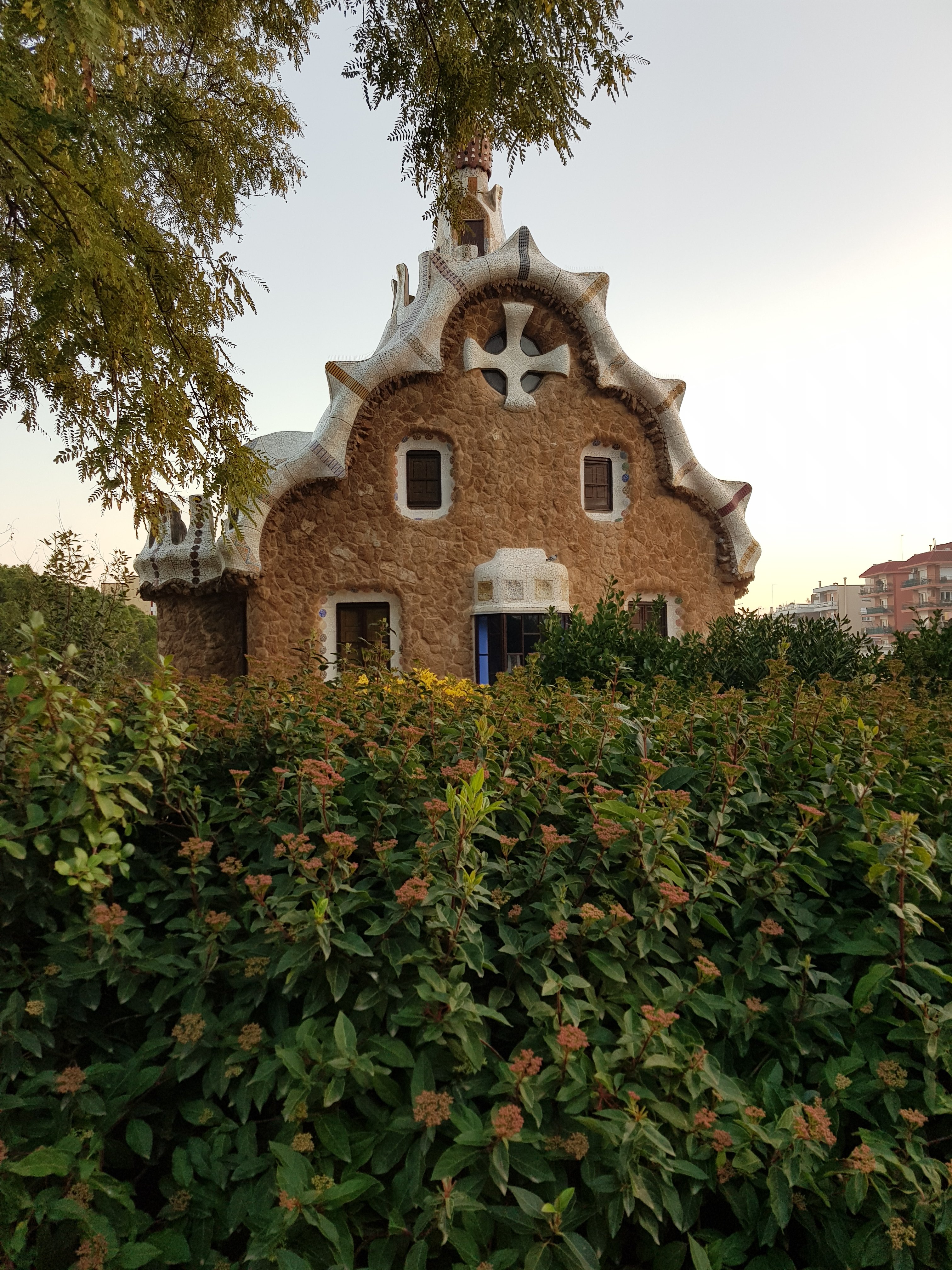
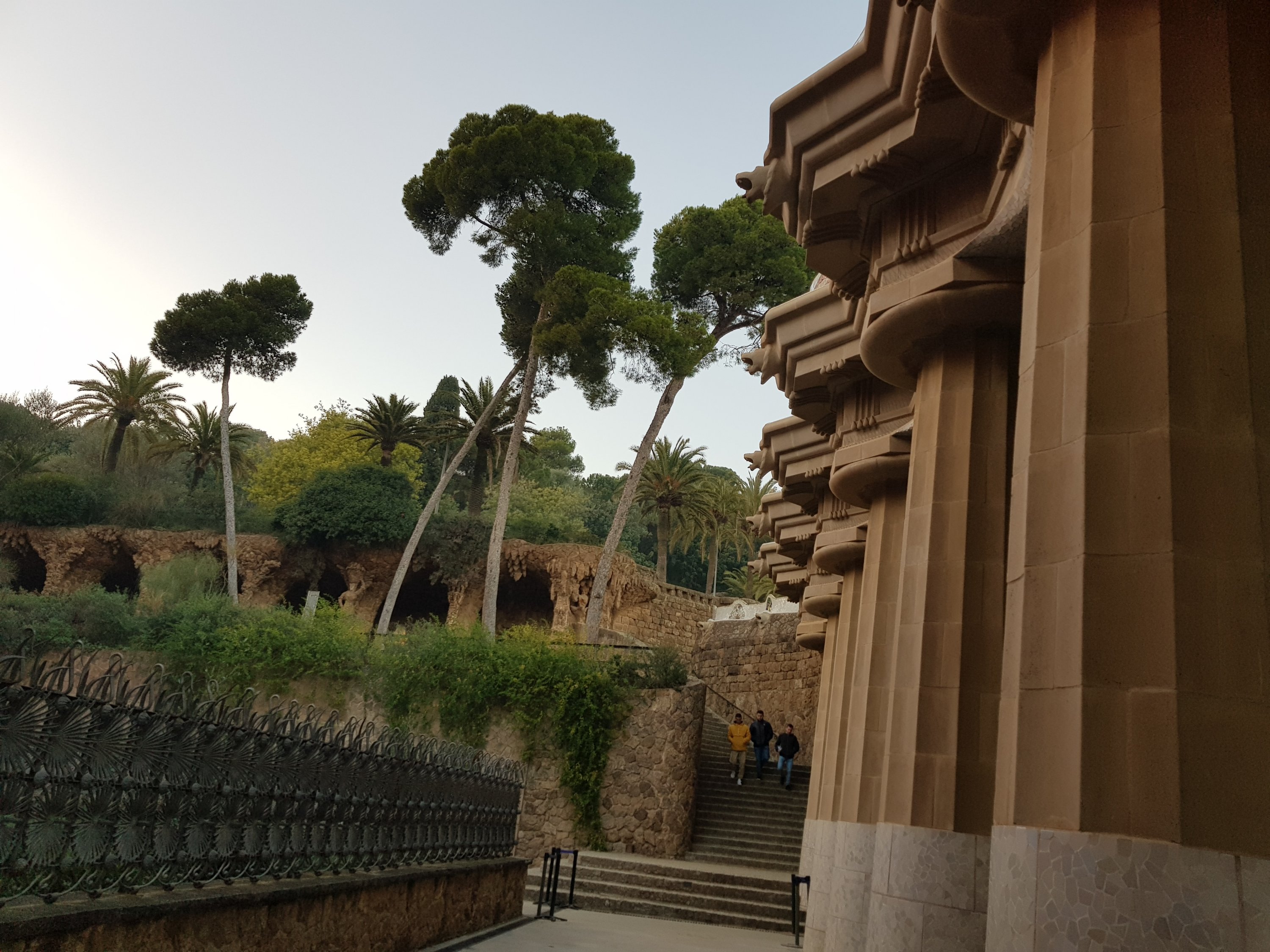
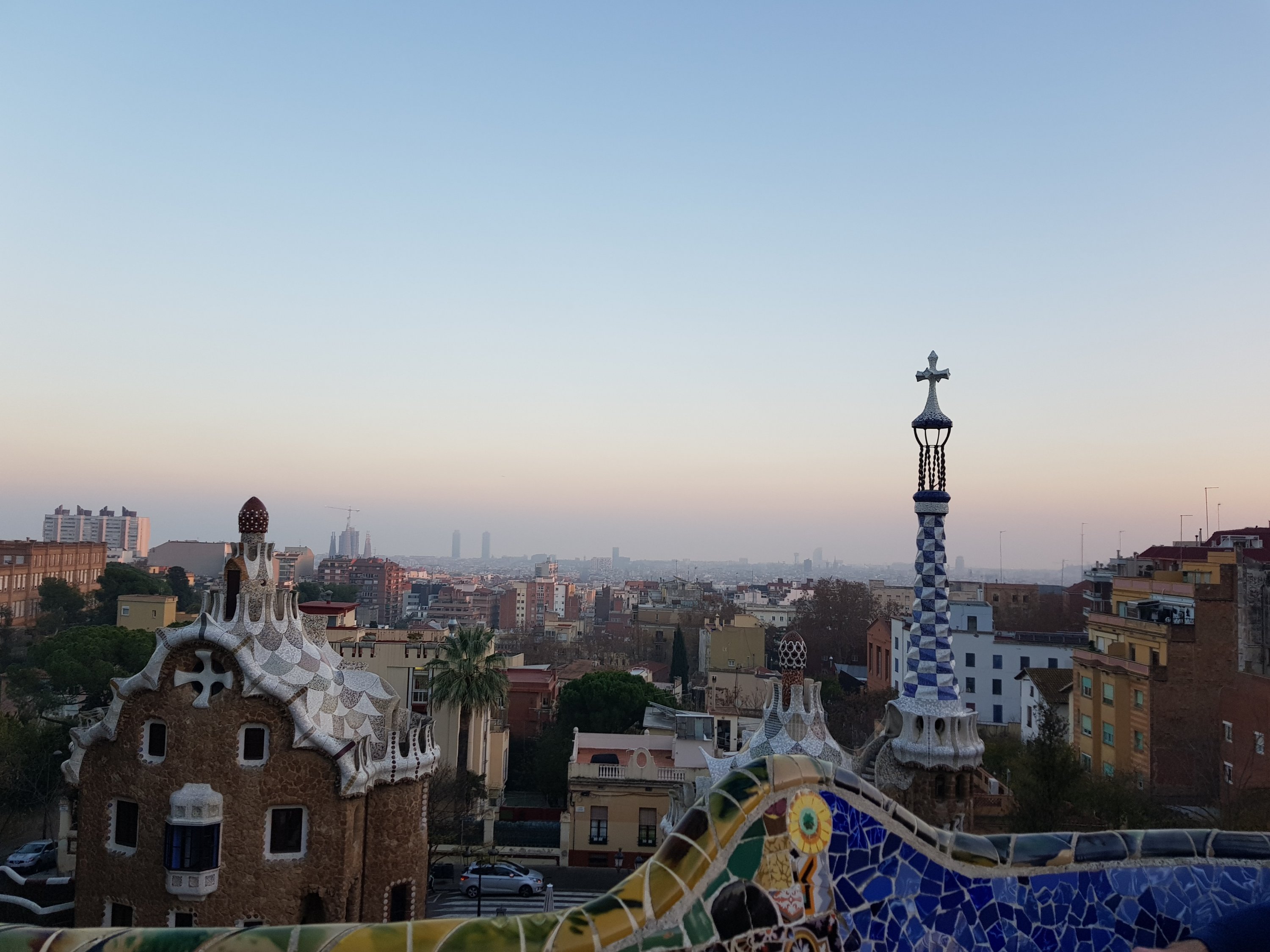
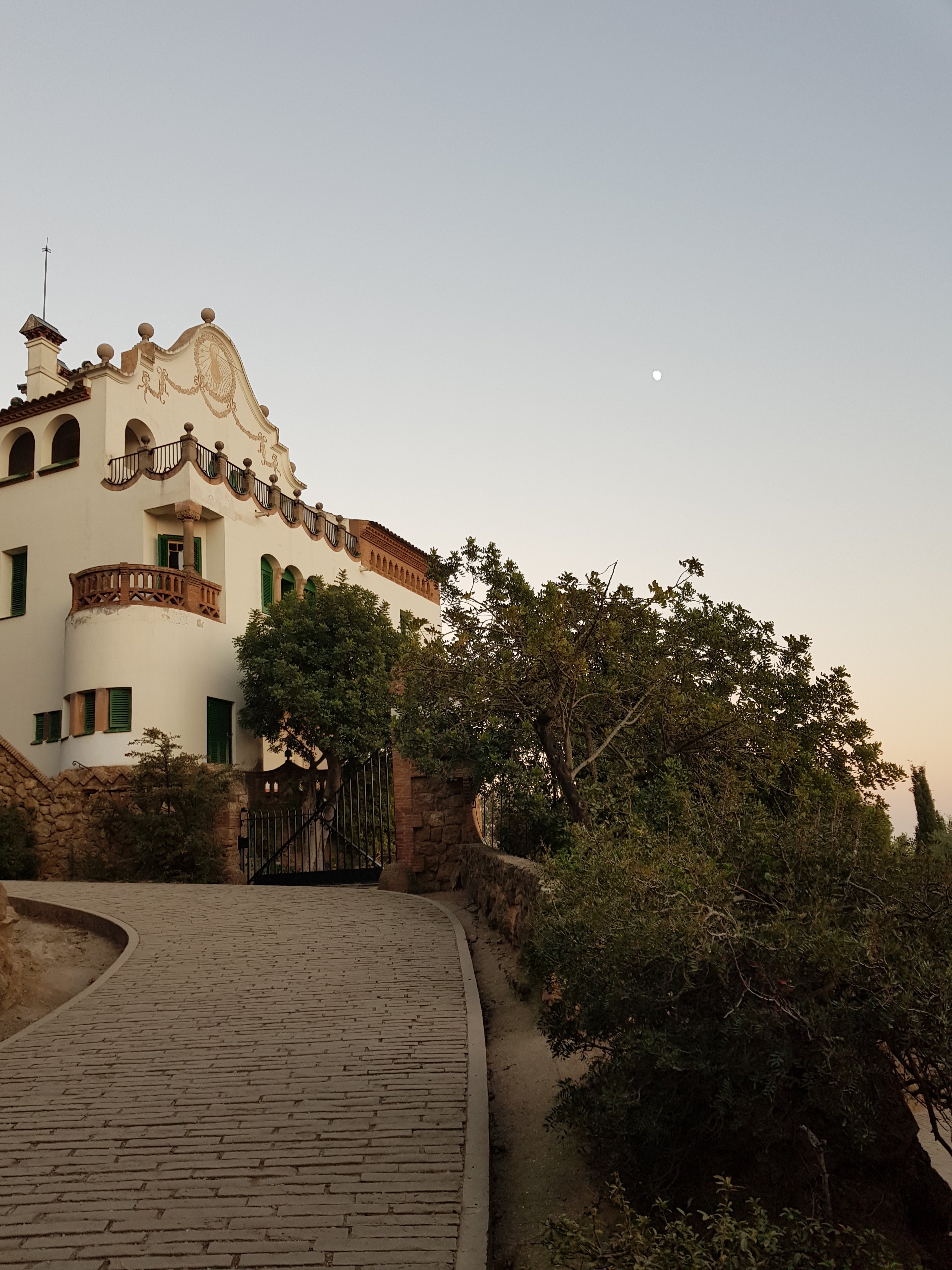
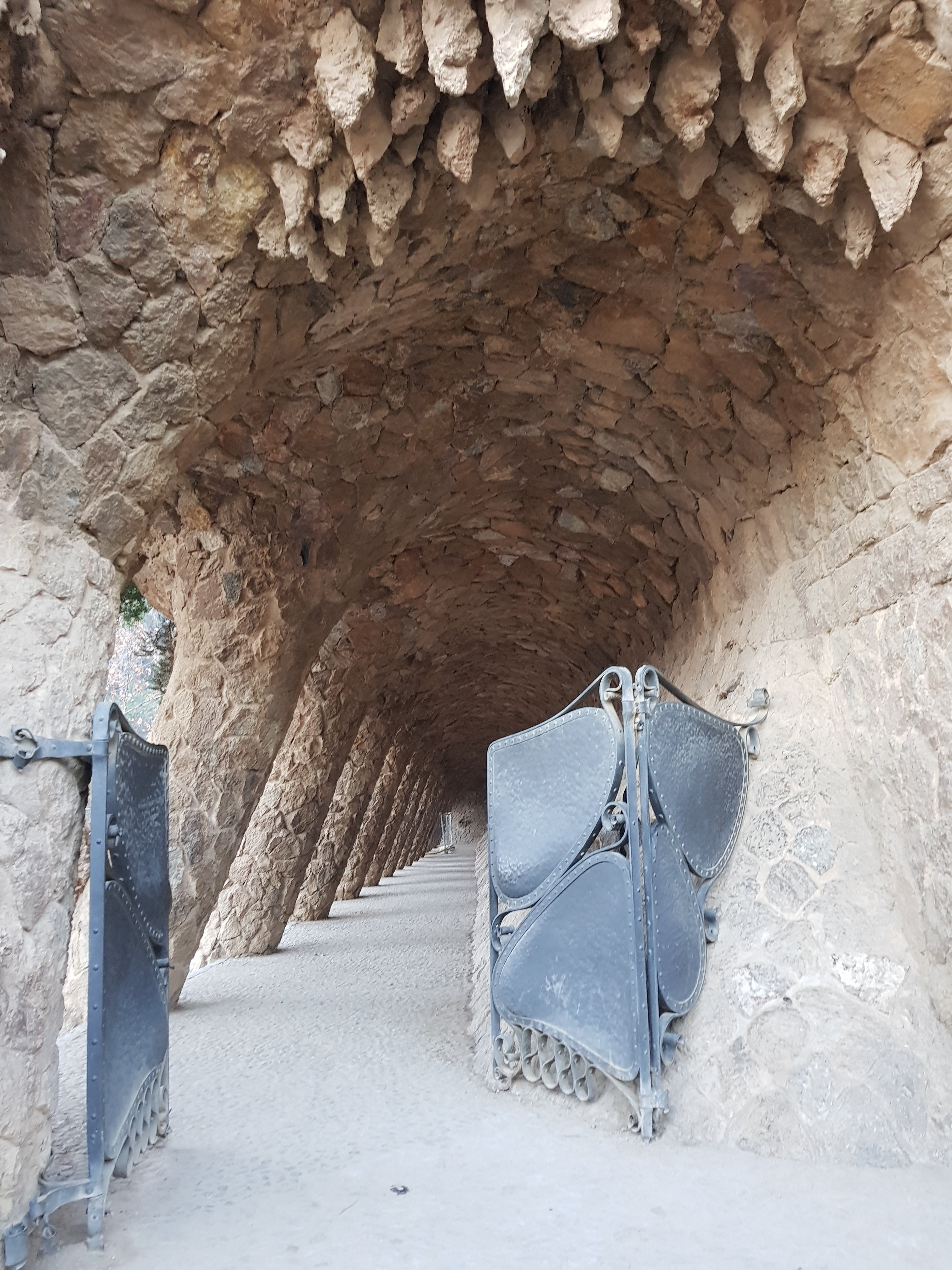
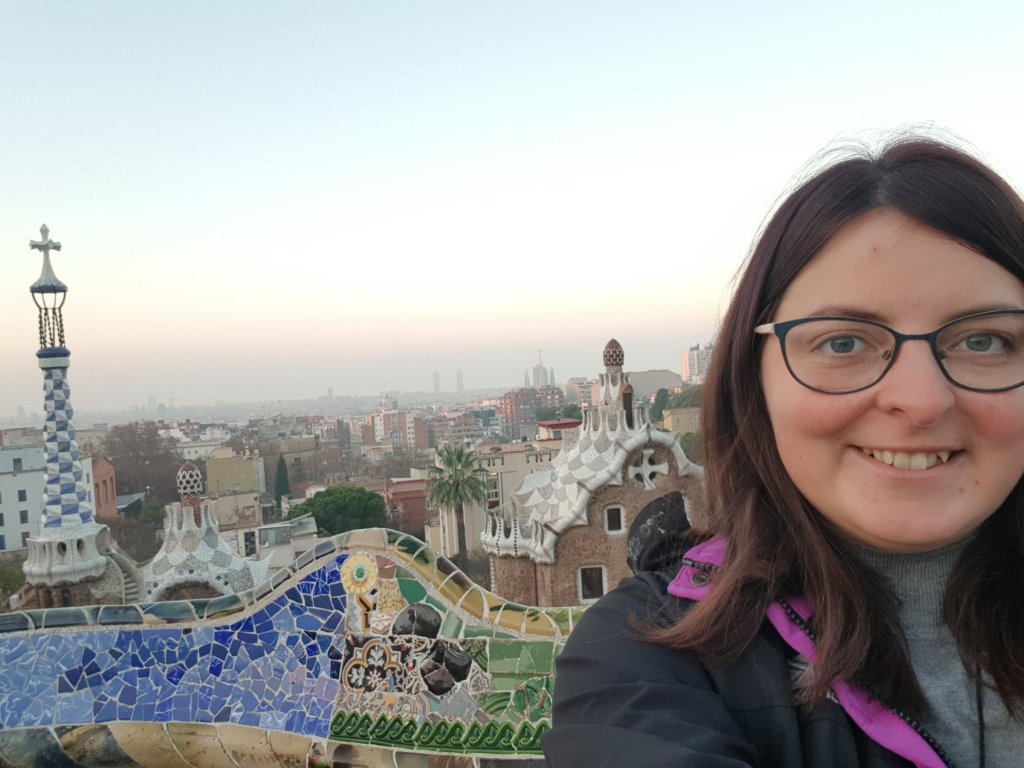
Later in the day, I made my way to Park Güell  for sunset. This park has a collection of buildings and spaces inspired by Gaudi, and it is also at the top of a large hill, so is a viewpoint of the city skyline. I enjoyed seeing some of the views and there were many people gathered here to watch the sunset.

It did not take me long to realise though, that we were not facing West. The sun was on the other side of the mountain, and it wasn’t going to be as good of a sunset as I hoped. It was still pretty but nothing like some of the other sunsets I have seen on my travels. This is the problem, I have been spoilt rotten!

After this, I walked back down the hill, and joined a friend living locally for some well deserved dinner. This was very relaxing, and the best part of the day for me.

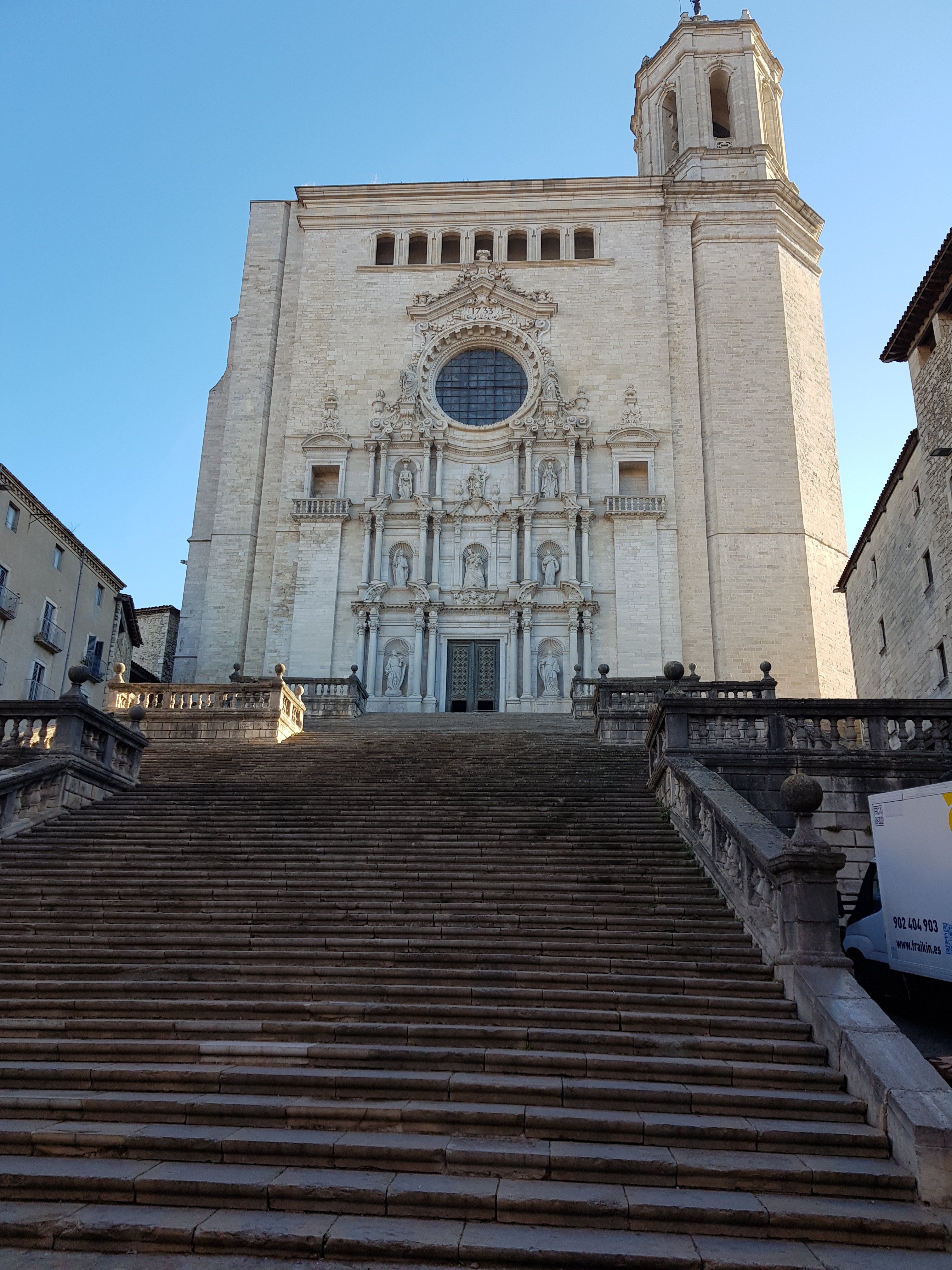
Before flying home, I wanted to take the opportunity to visit nearby city of Girona. I had heard it was pretty, and I also knew that the cathedral was the filming location for some scenes in King’s Landing in Game of Thrones. So, of course, I had to go!

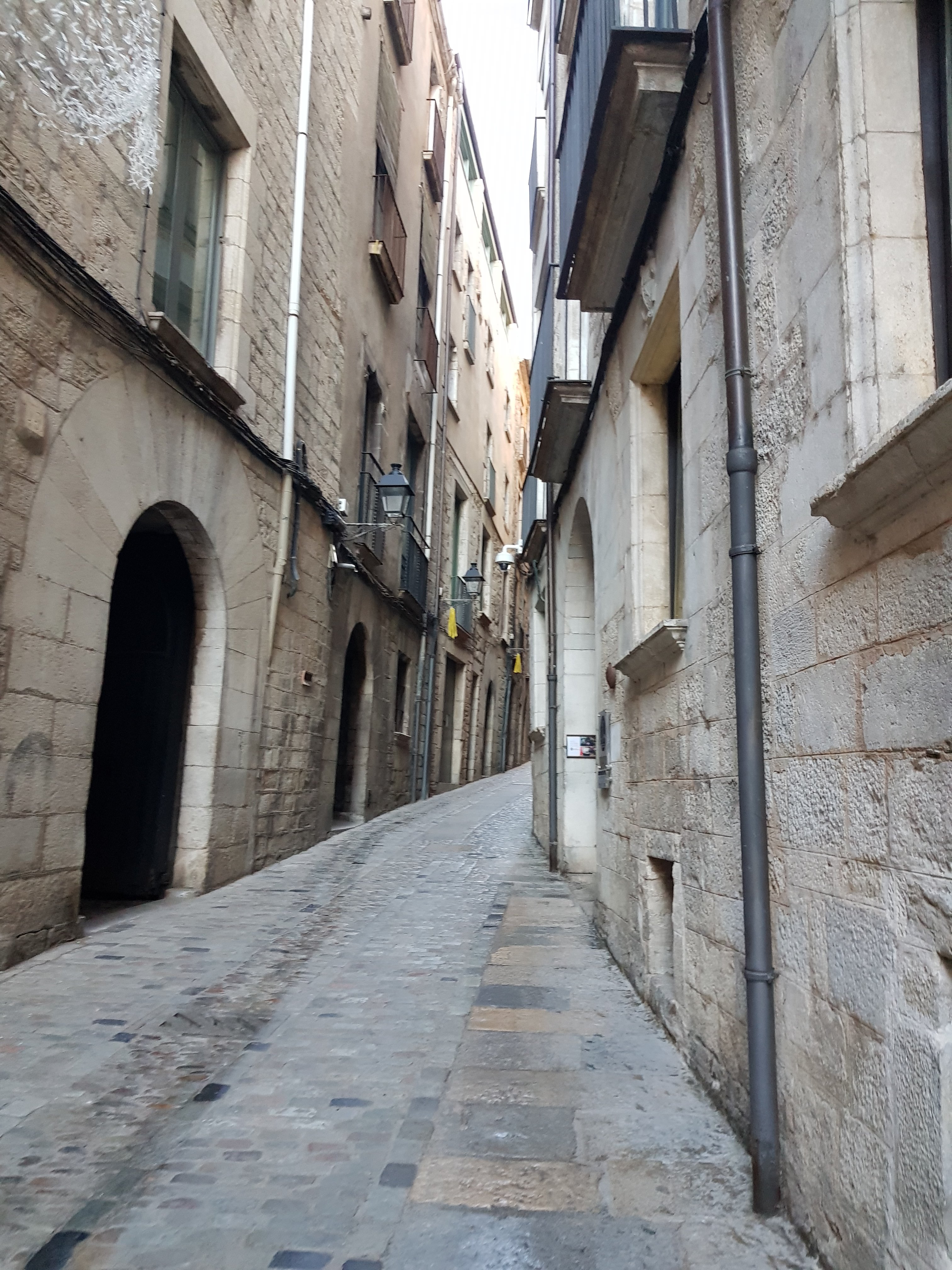
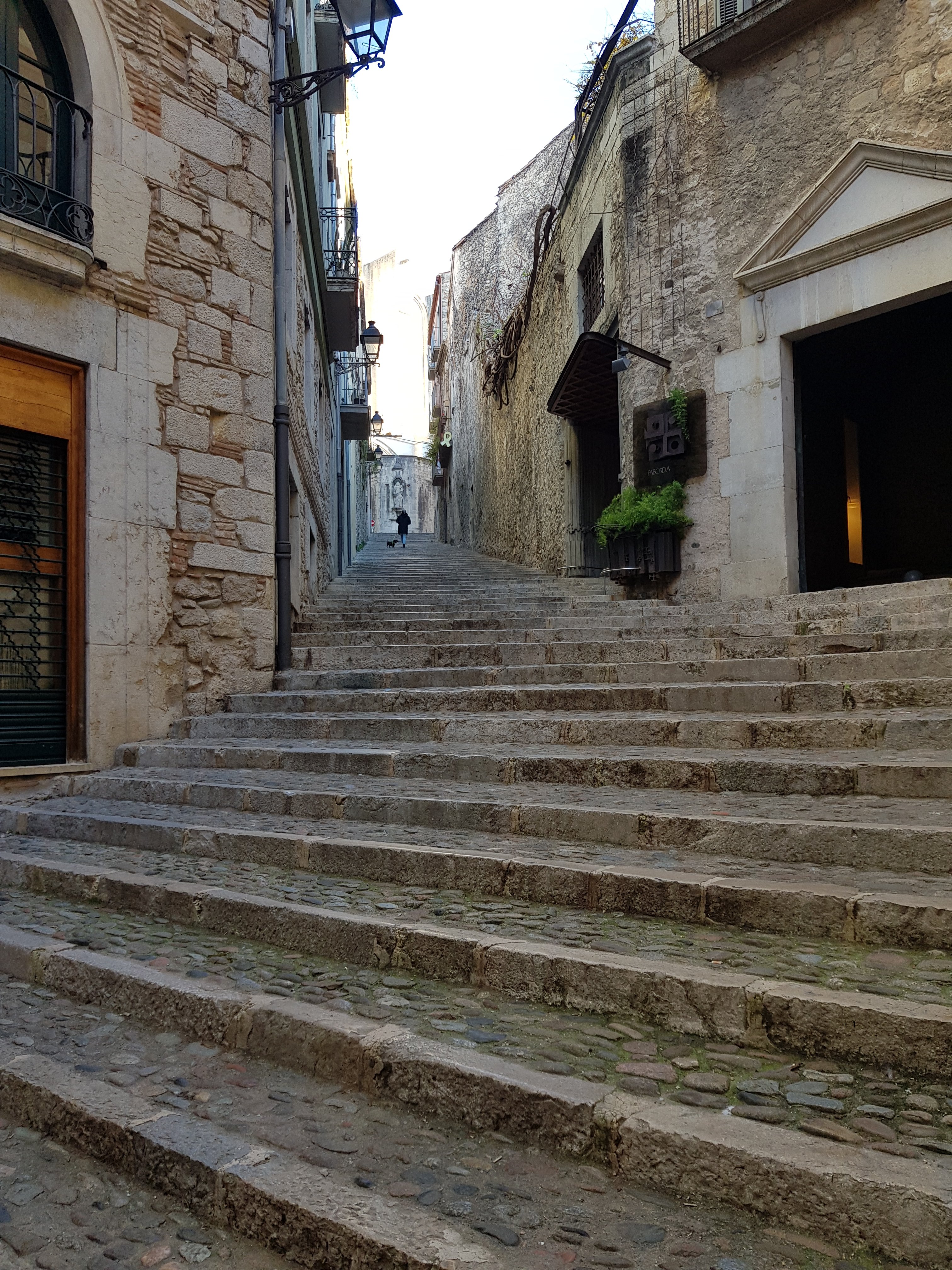
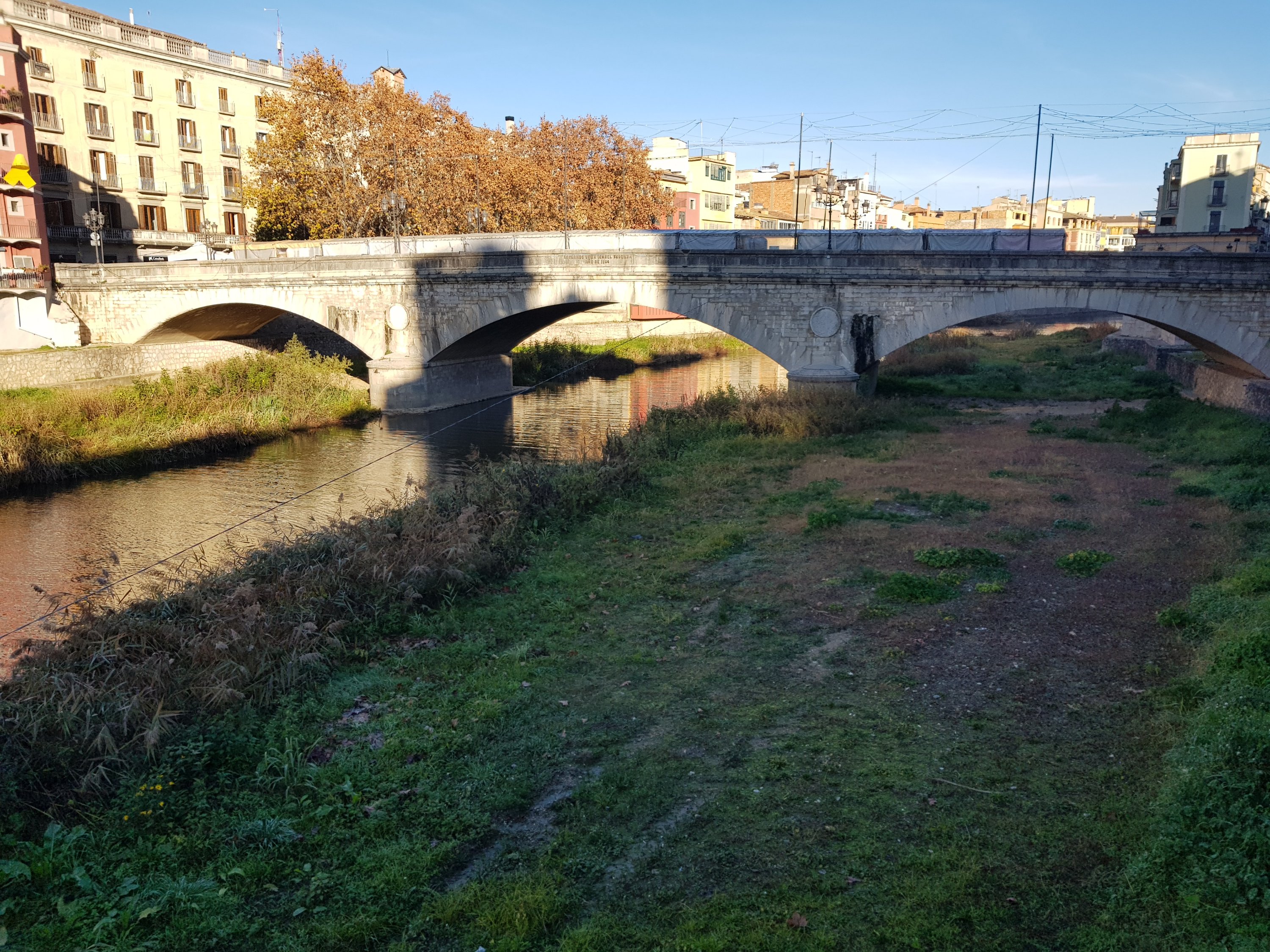
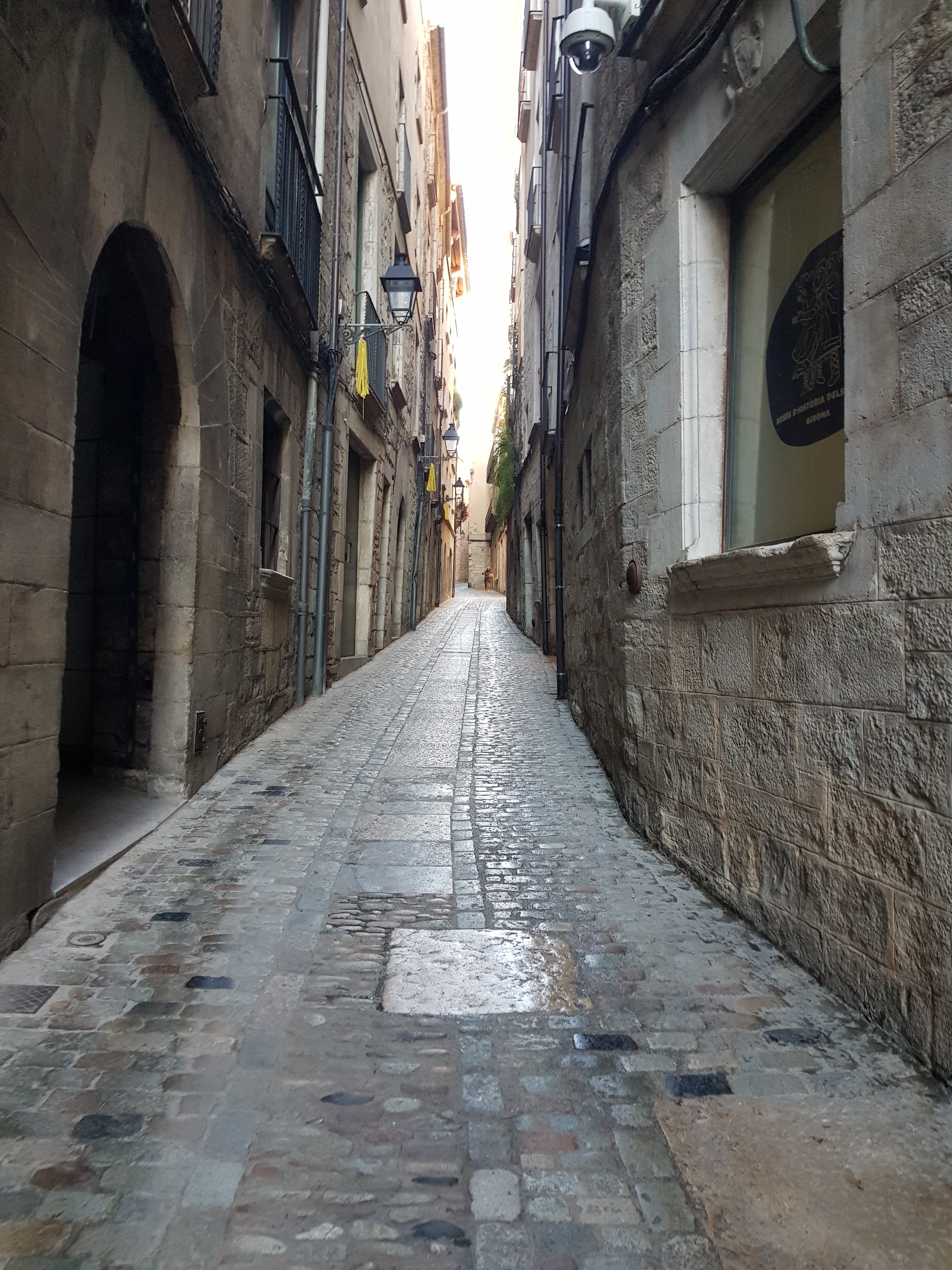
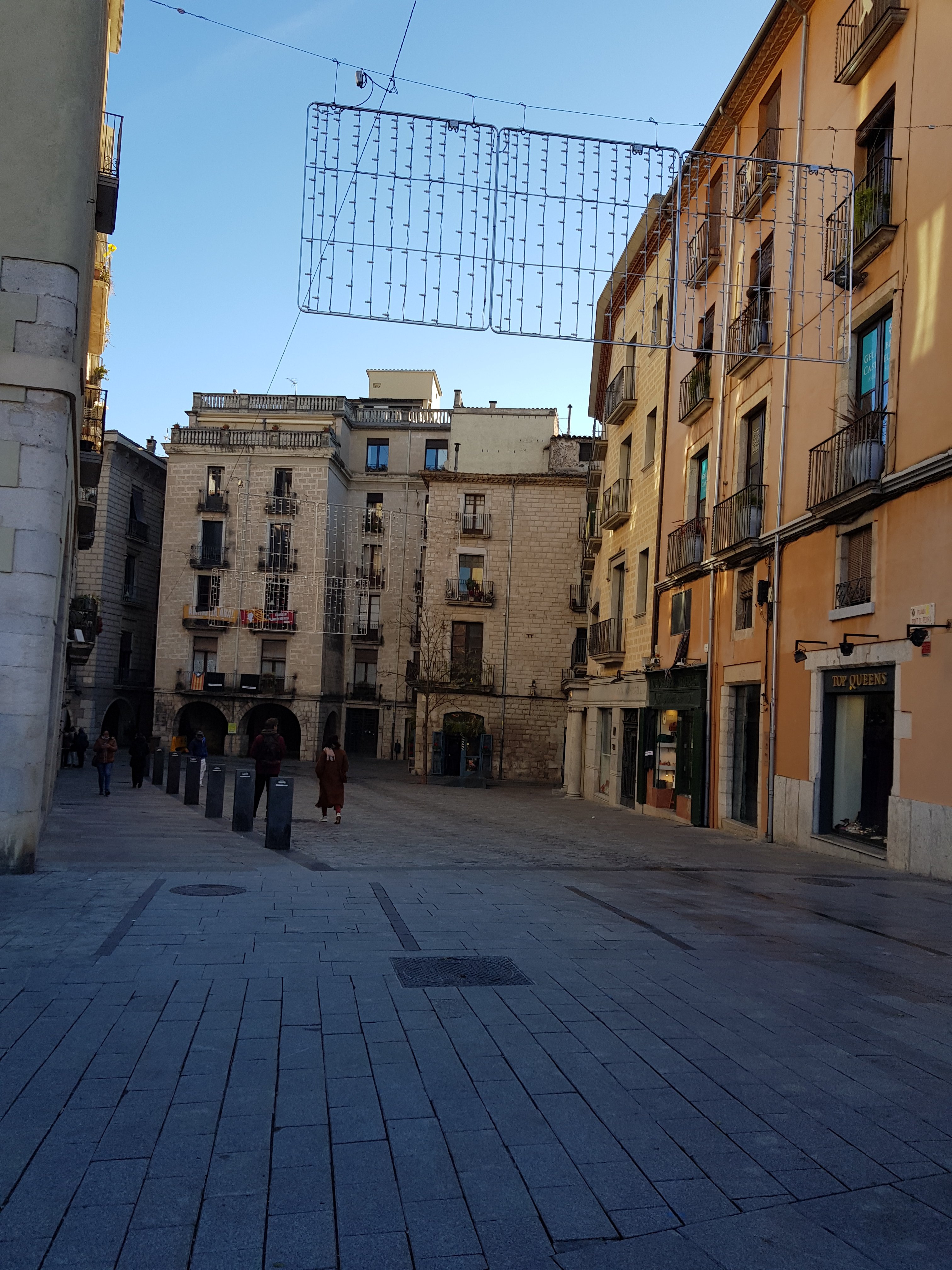
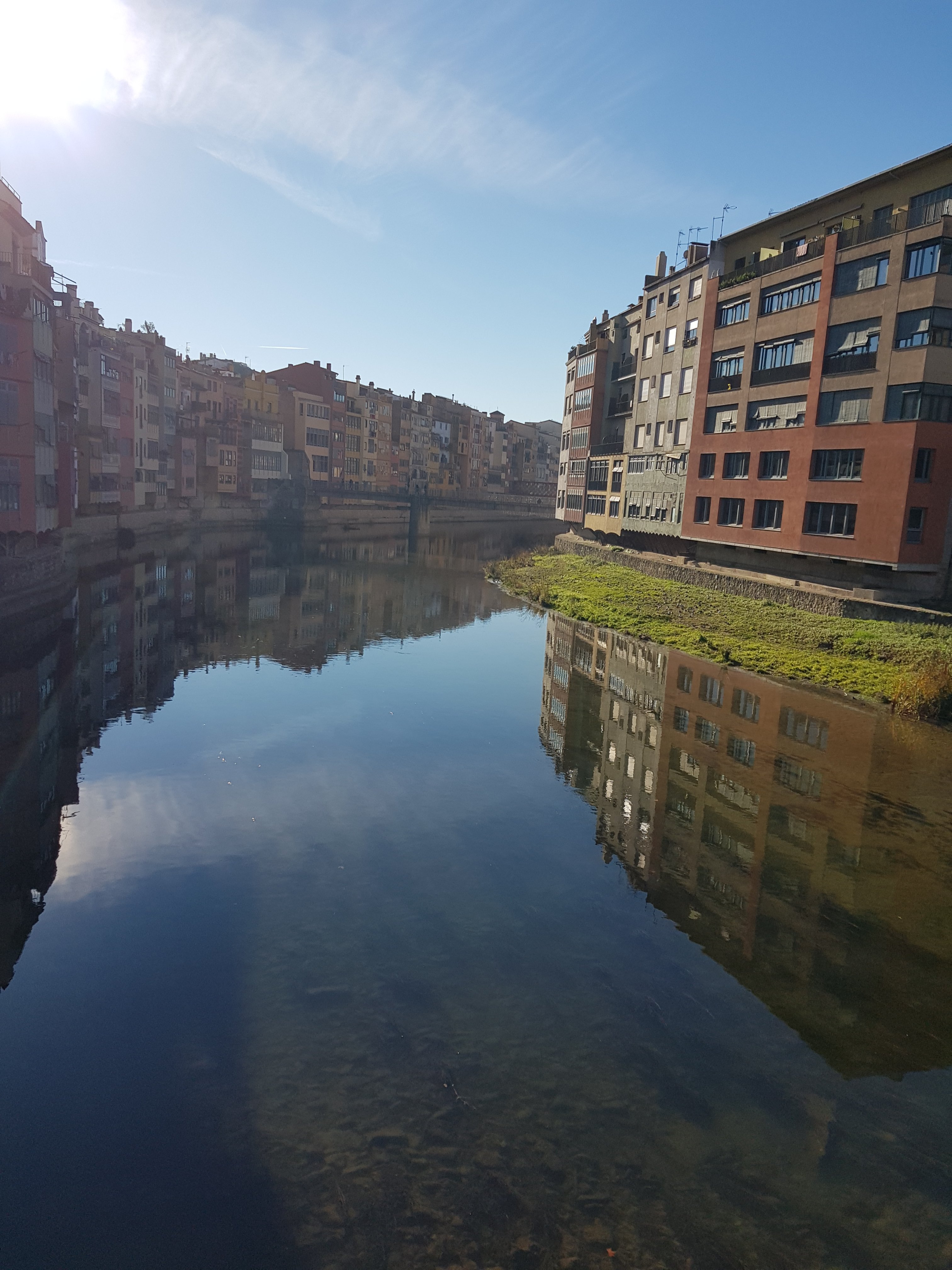
The train journey was a comfortable 90 minute journey on high speed railway. The train station is then only a 20 minute walk from the cathedral. I only had about two hours to enjoy Girona, in the mid morning. On arrival, I could tell that the city had more of a traditional spanish feel, that I am now accustomed to. There is a river running through the centre of the city, and a set of old bridges to cross, before you come to a quaint high street, and pleasant plazas. As I continued to walk closer to the cathedral, I began to ascend up various alleys and steps, to this special church that could just slightly be seen from the bottom of the hill.

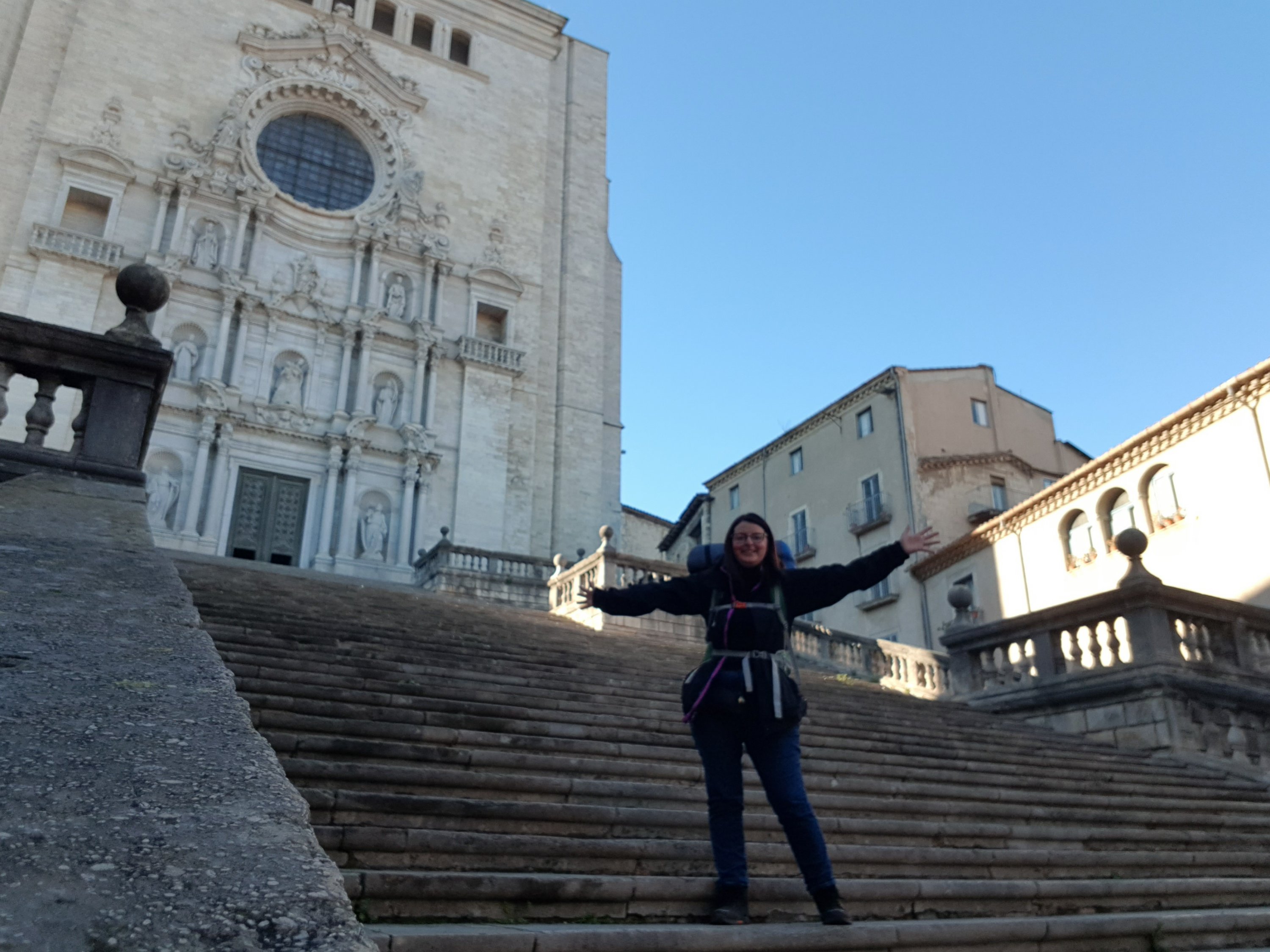
On arrival to the cathedral, one can stand in the shadow of the striking building, that towers over hundreds of steps. The steep stairs could easily rival the ‘rocky’ steps in Philadelphia, in terms of my ‘puffed out’ factor. The steps and front facade at the entrance was the view that was used within Game of Thrones for many notable scenes, such as the ‘walk of shame’ and many grand arrivals to the ‘King’s Landing’ location.

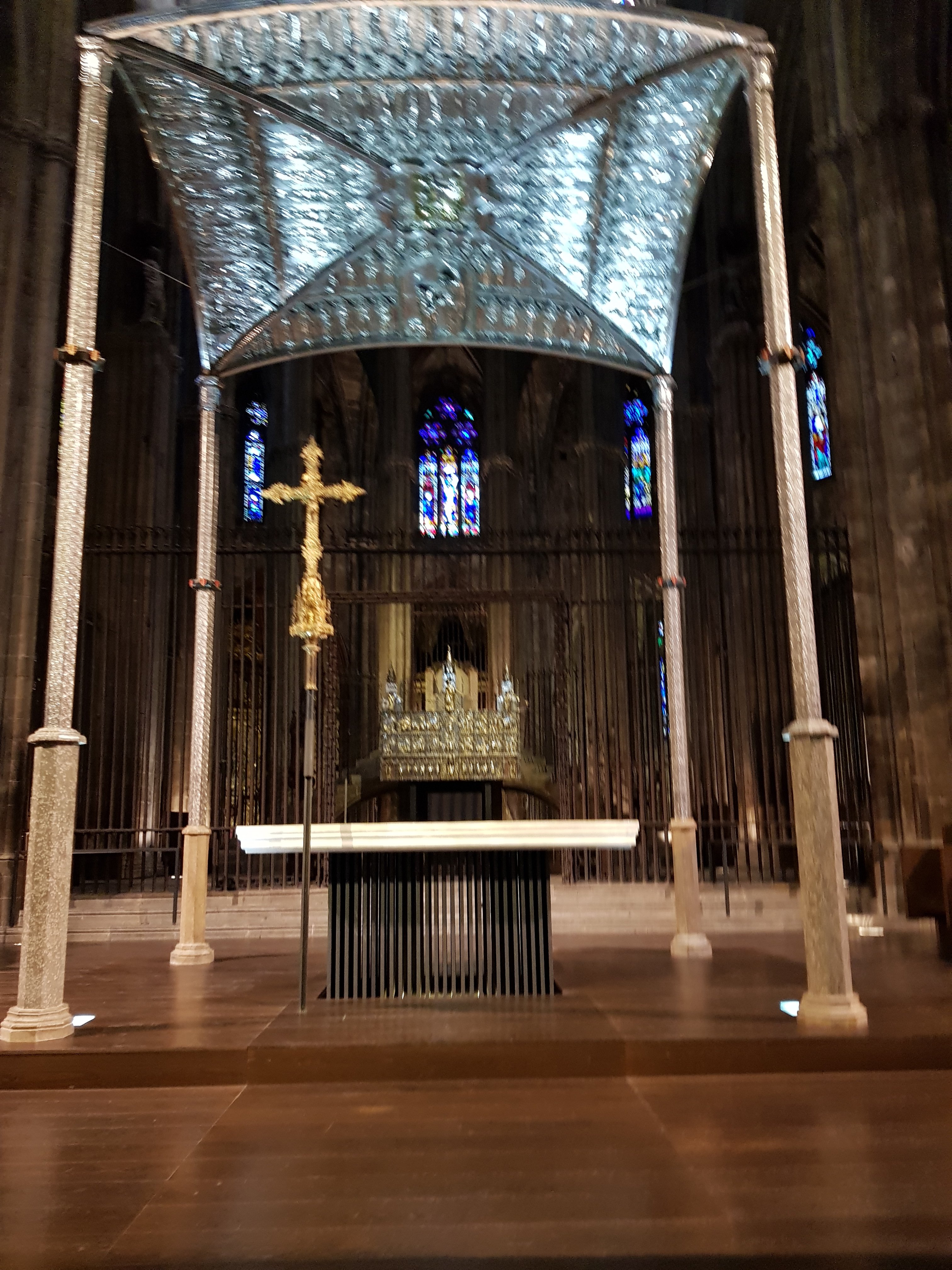
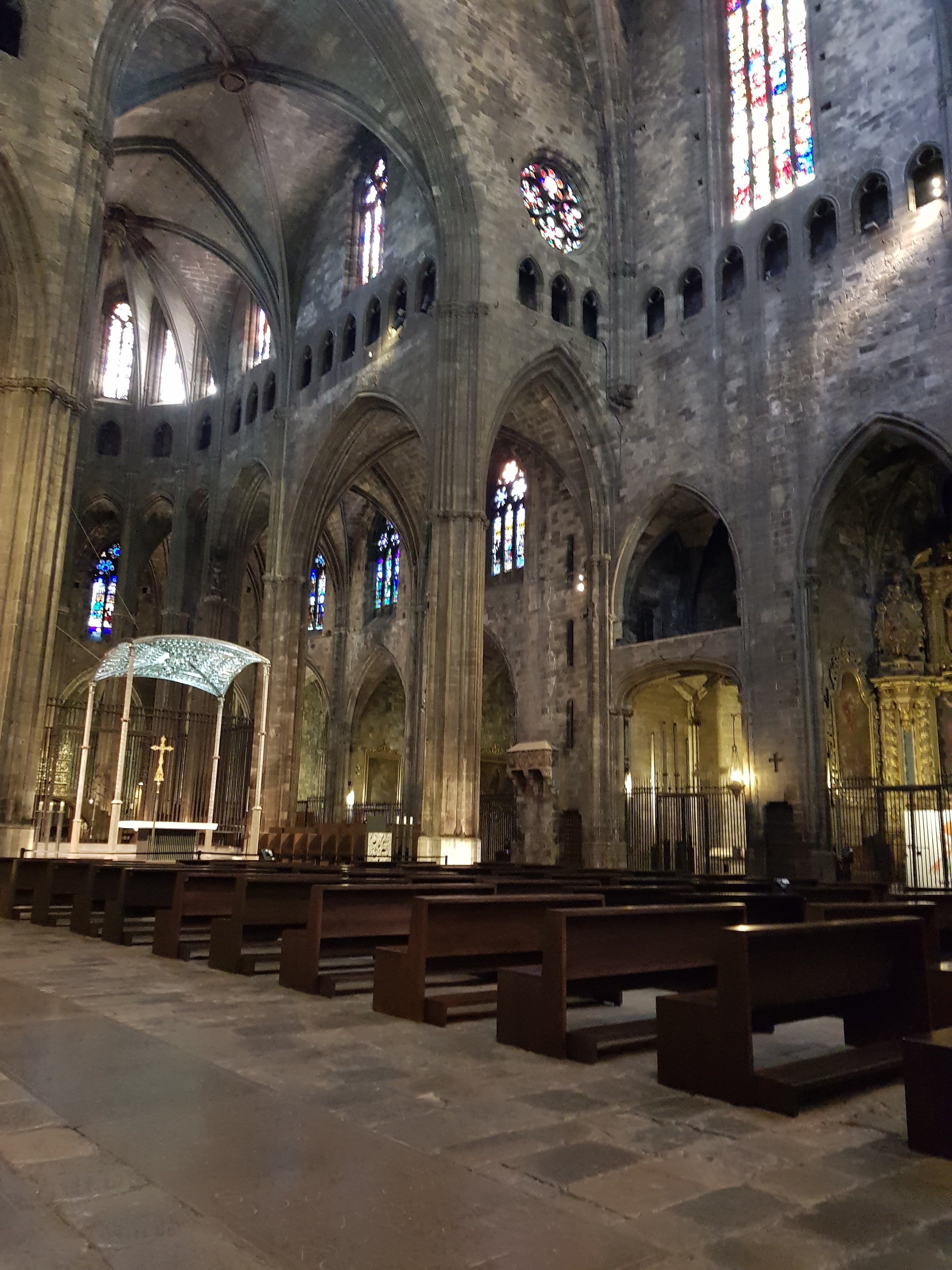
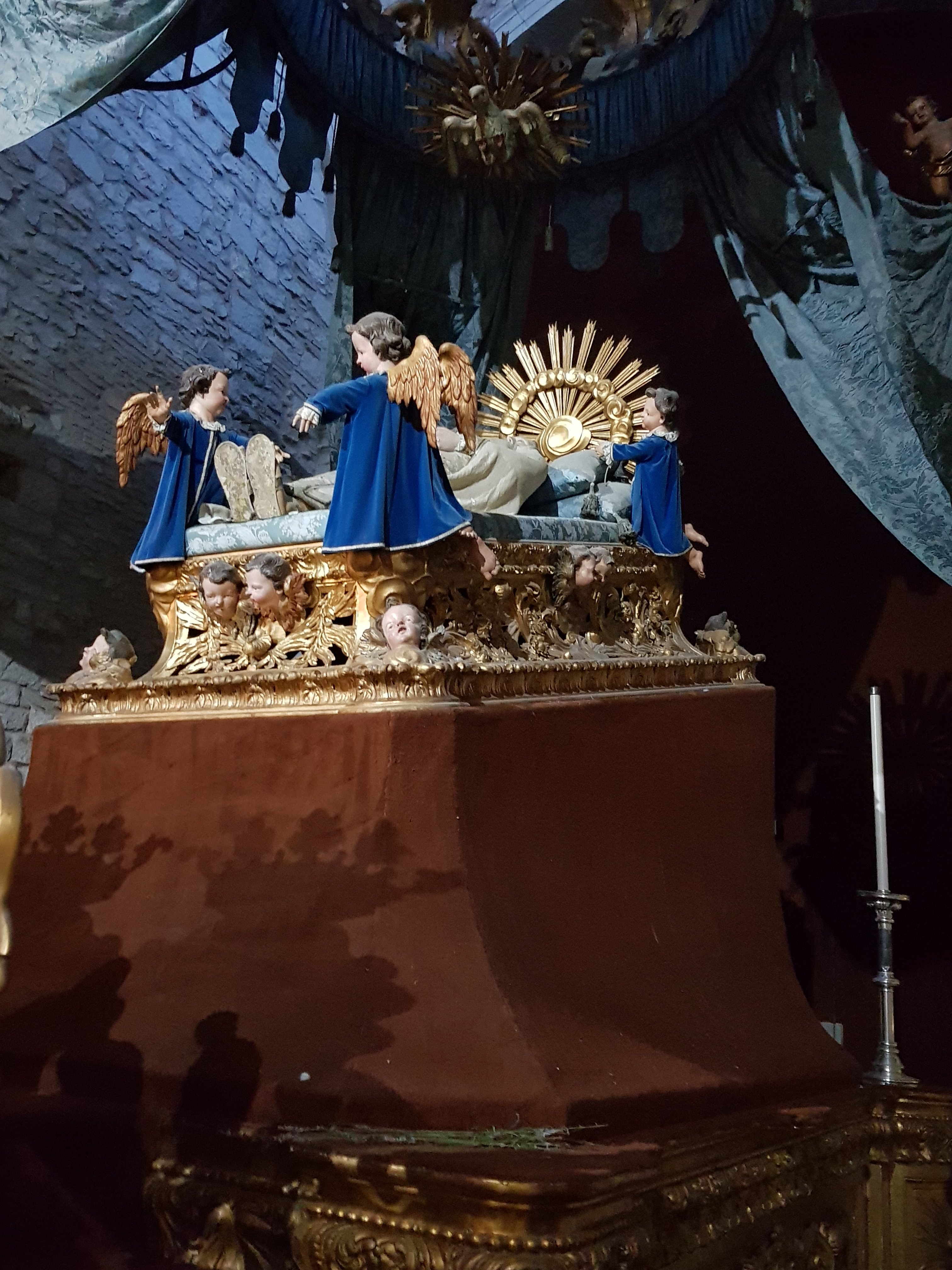
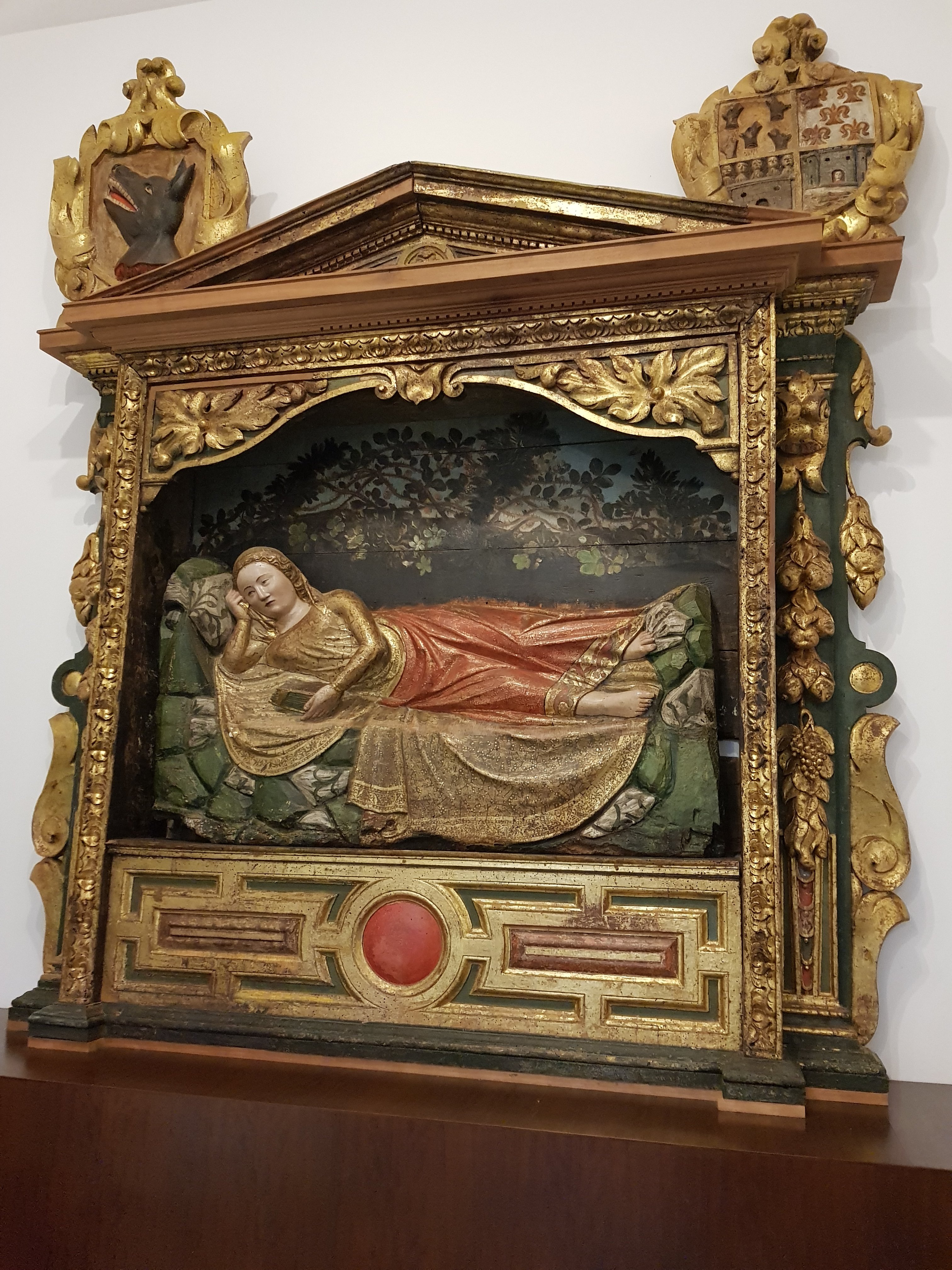
The cathedral admission was very reasonable, and also included entrance to the basilica next door. The cathedral has a very wide nave that is quite unique in architecture, and provides the space with more sunlight. There were also some chapels, and a room with a unique sculpture of the sleeping Virgin Mary. I have never seen anything similar to this before.

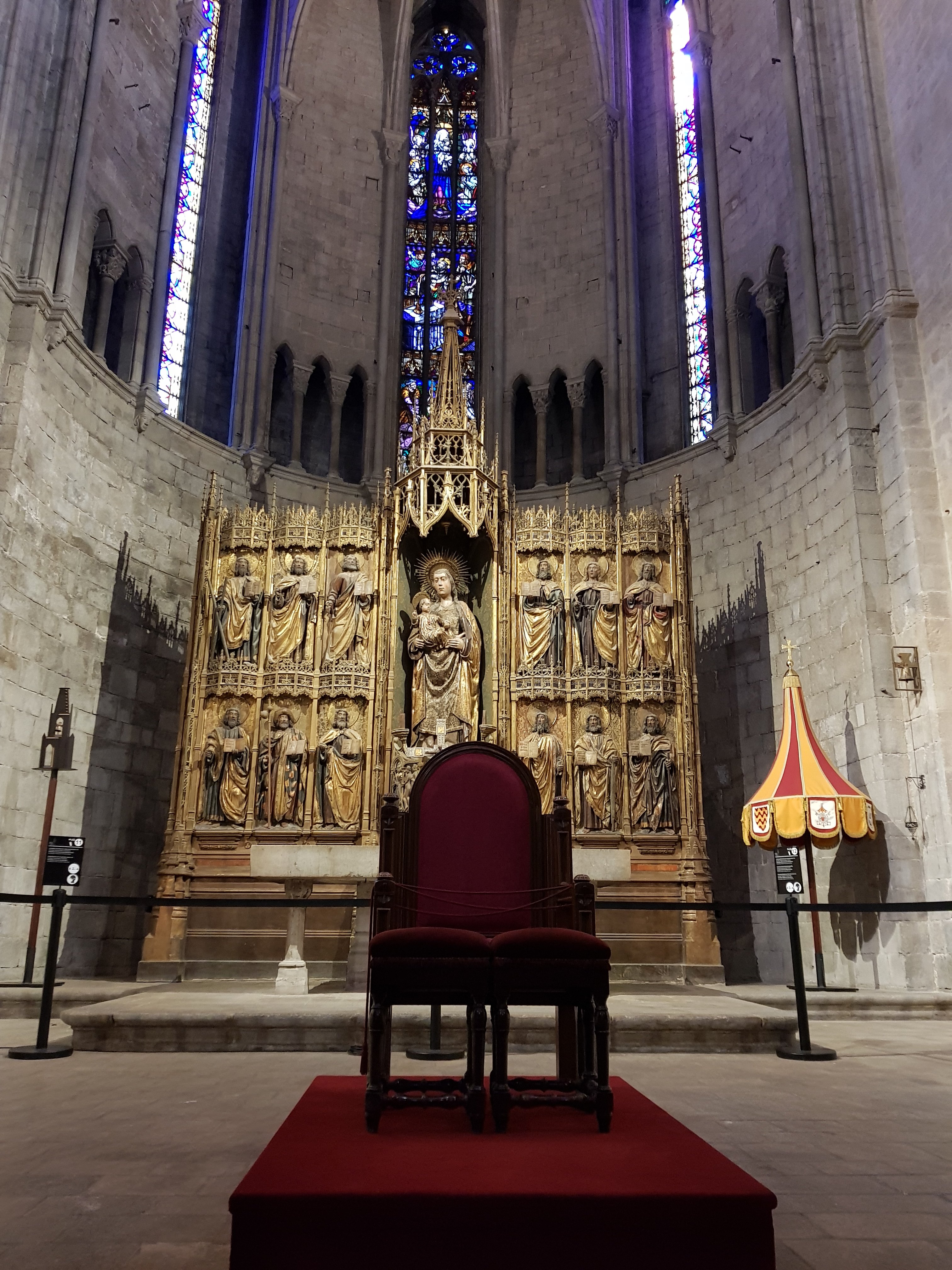
The basilica is just across the road from the cathedral, and is a smaller space. It still benefits from beautiful designs and art in its chapel, and a lovely altarpiece as well.

After this quick walk around Girona, I headed back to Barcelona, for my flight home to the UK.

Barcelona, and Girona are so close to each other, but have such different vibes. I really liked Girona, because it has a fairytale look to it within the old town, and had a very traditional vibe. It felt authentic. Barcelona also has a fairytale look in many locations, thanks to Gaudi, but instead of feeling relaxed, I find the city very stressful to be in, due to its popularity and ‘overtourism’. It actually feels more like a bustling theme park, with overpriced product, crowds, queueing and a confusing layout. The city is so large and important though, I know that I will likely visit again. Next time, I will try to see more of the neighbourhood areas of the city, as I am sure somewhere in this city, I will find my fit!

Salamanca: The Golden City

After completing my journey to Santiago de Compostela, I hit the road again, and made my way to the beautiful city of Salamanca for an overnight stay.

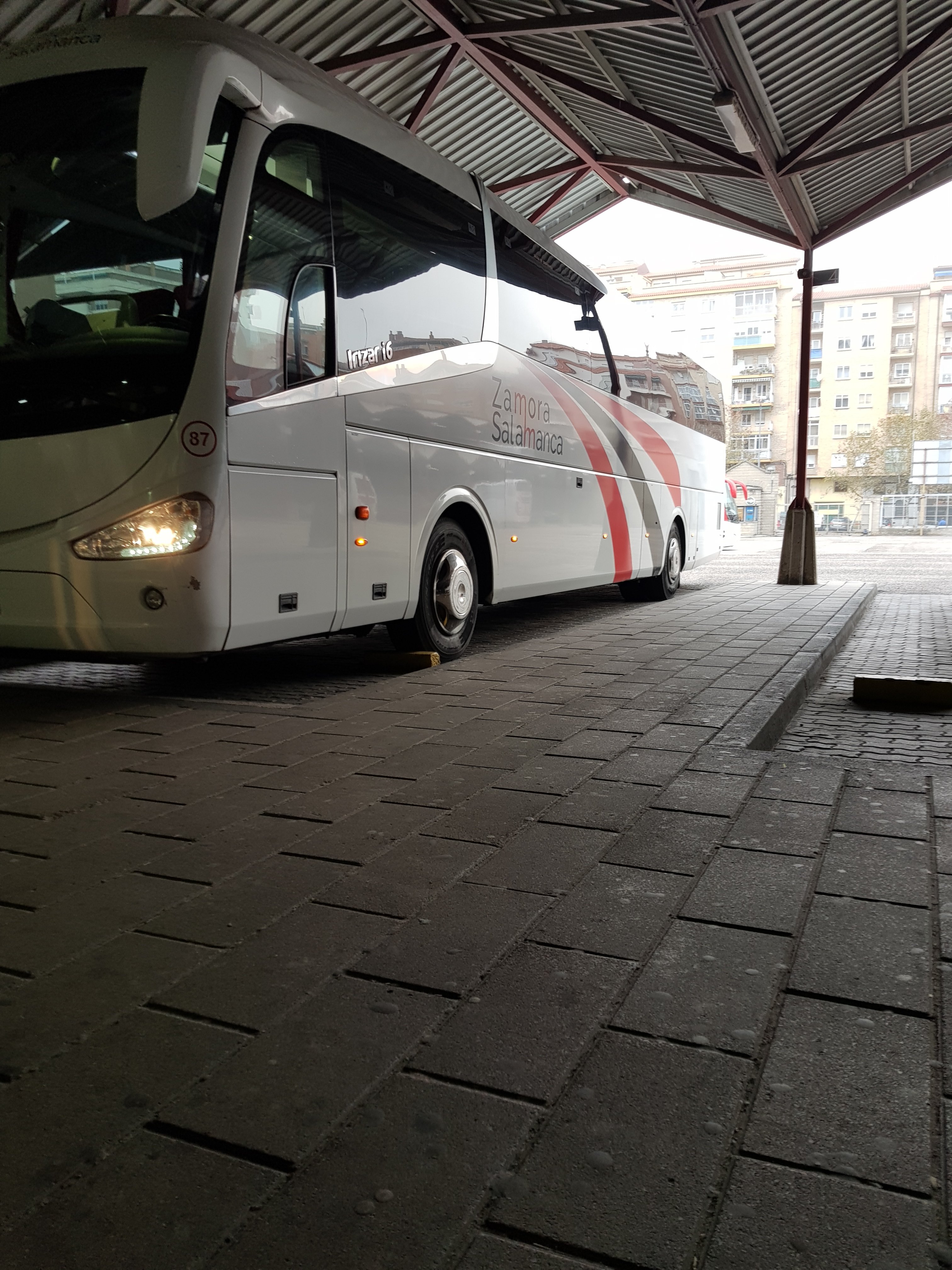
Salamanca is a small city in the North West of Spain. Whilst it is not dramatically far from Santiago de Compostela, it was not the simplest to get to. I had to take a train to another town, and then a local bus to Salamanca. After this long journey, I was too early for check in, and decided to start on the sightseeing straight away.

I knew nothing about Salamanca before visiting. Only that it was a city that looked nice in pictures, and had a name that I enjoyed saying out loud… SAL – A – MANCA 😄

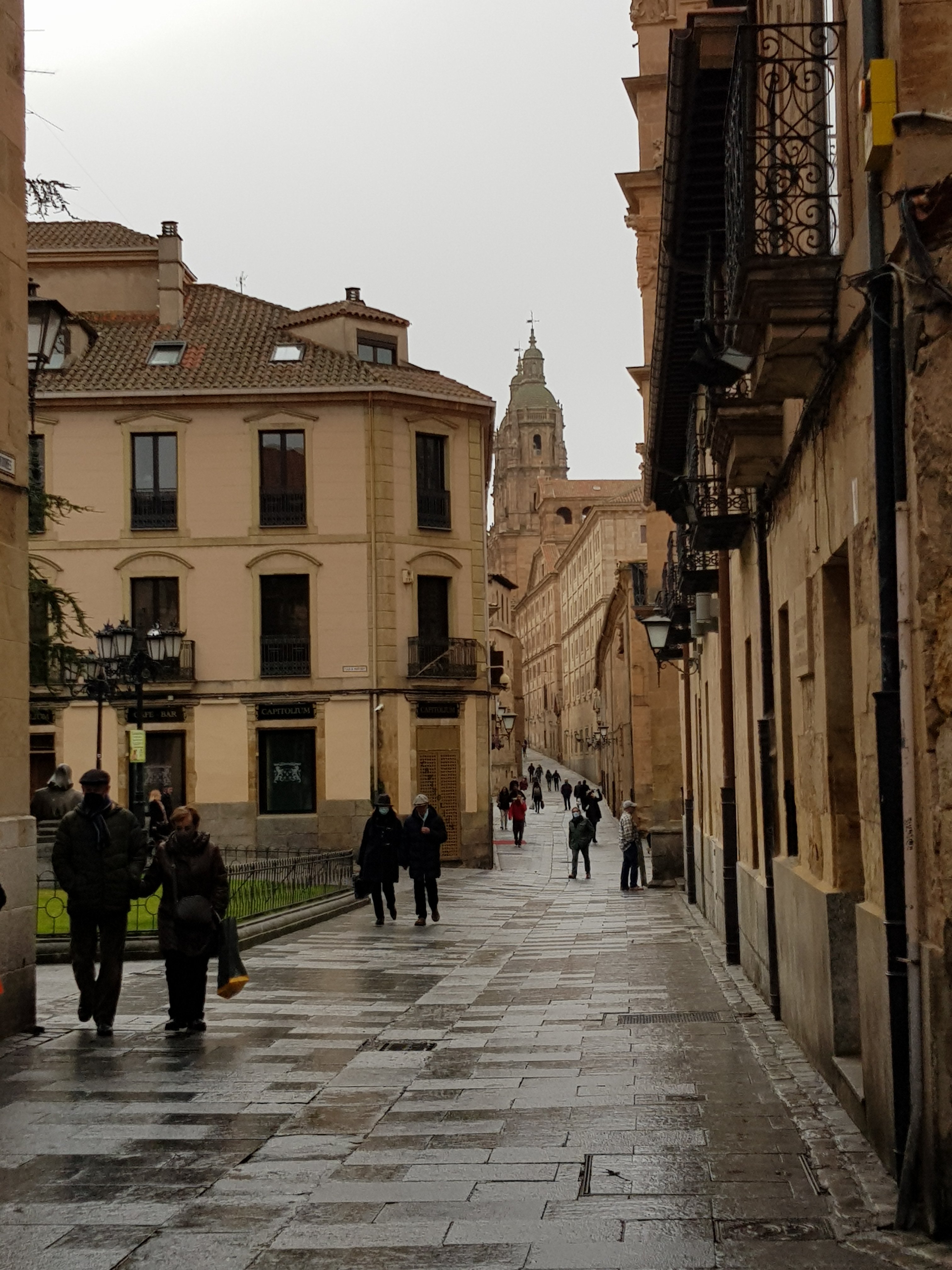
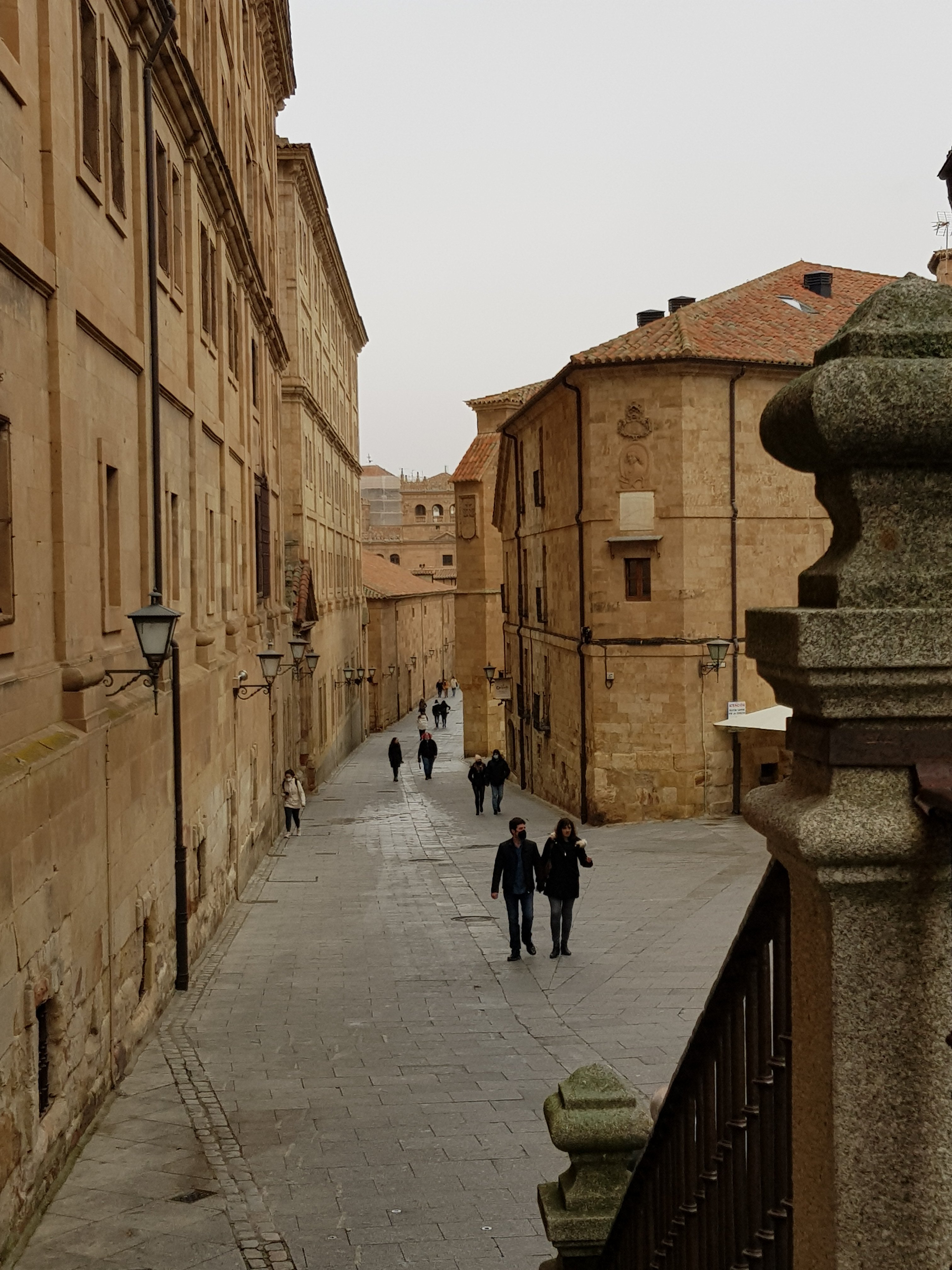
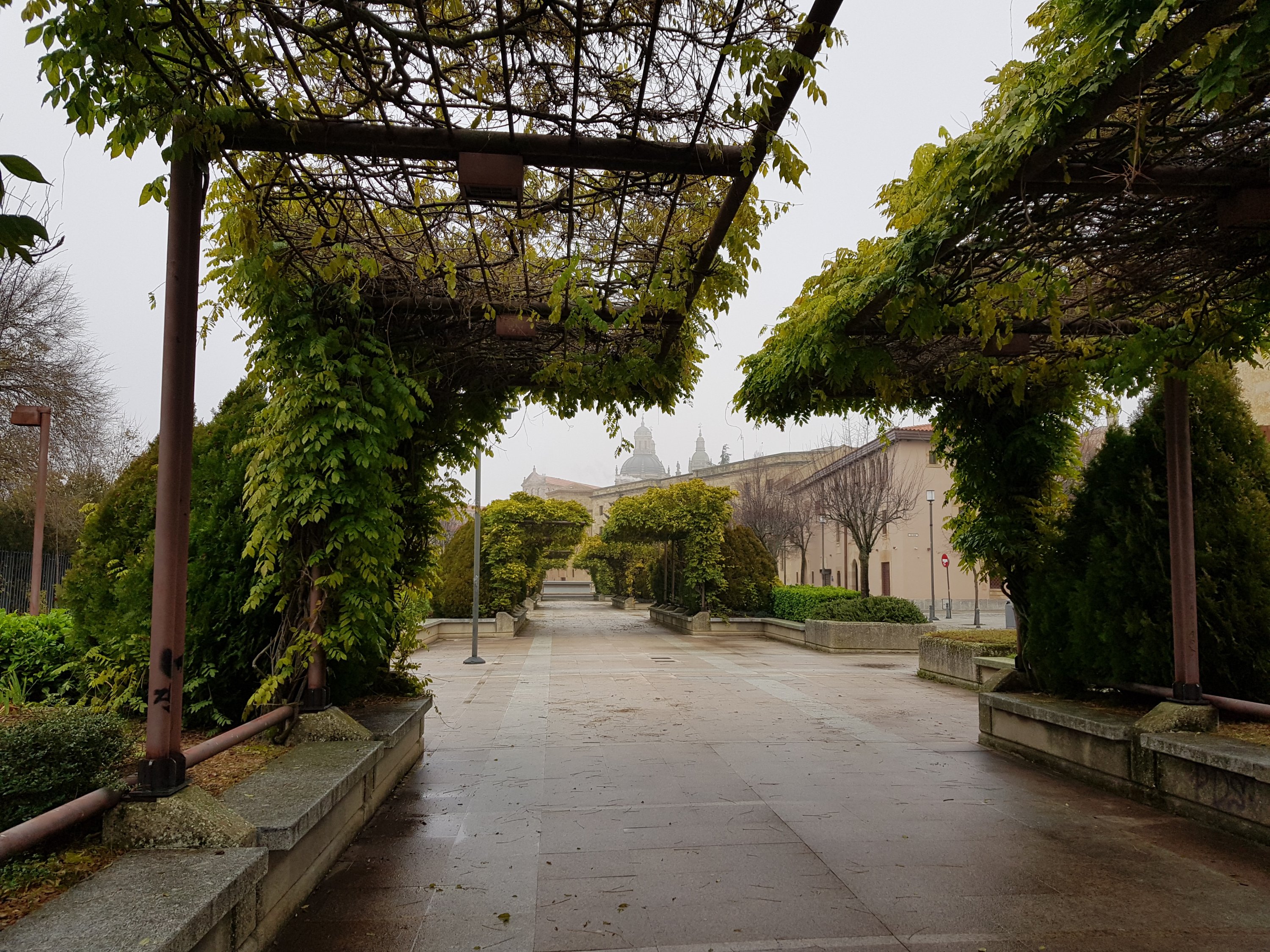
It turns out that Salamanca is also known as the ‘Golden City’ because of the golden orange colour of the buildings throughout the old town. The colour definitely does make you feel as if you were in an arabian paradise, but Northern Spain really doesn’t fit that profile! 😄 The city’s old town has a mix of palaces, religious buildings, and university buildings.

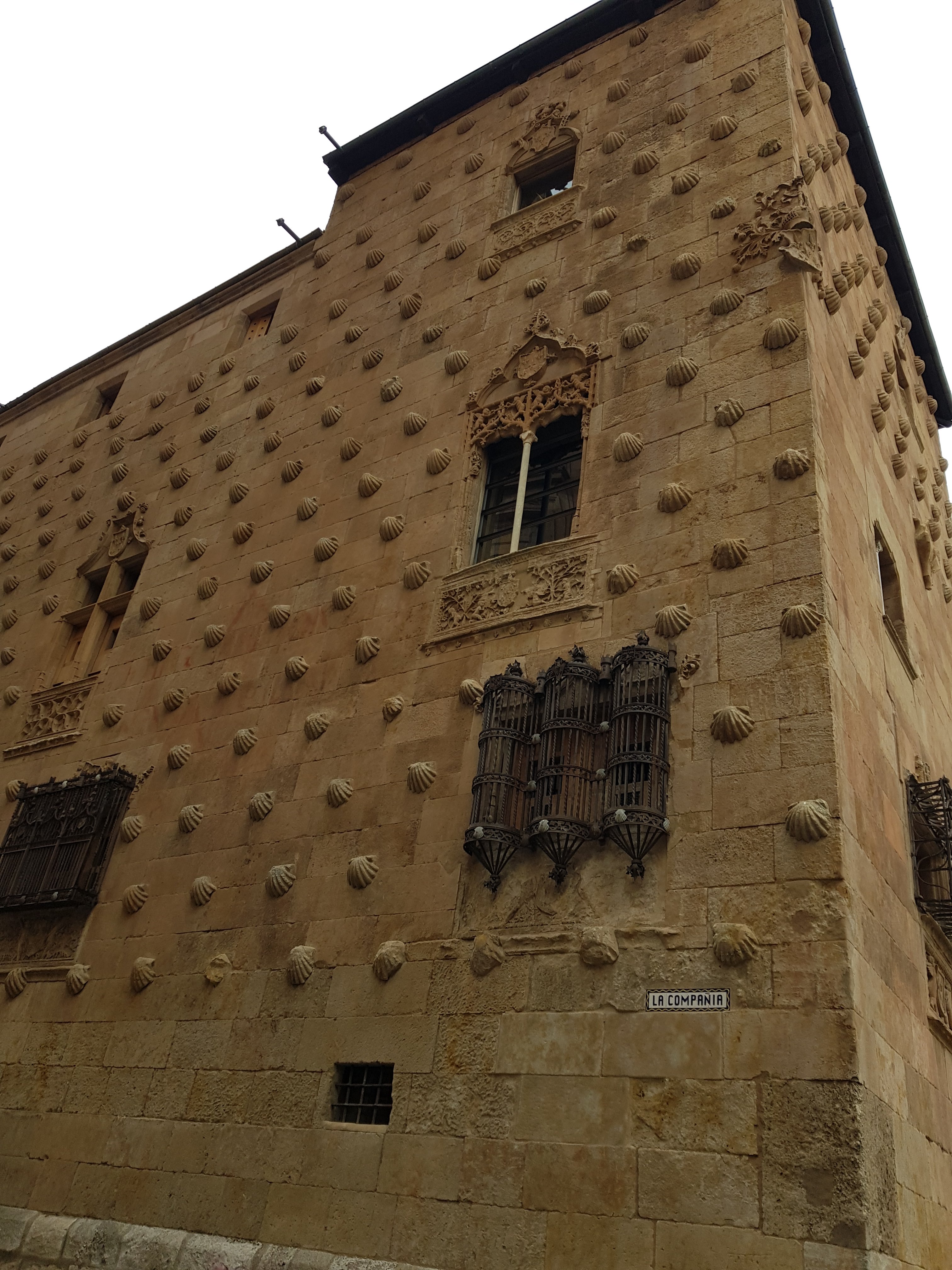
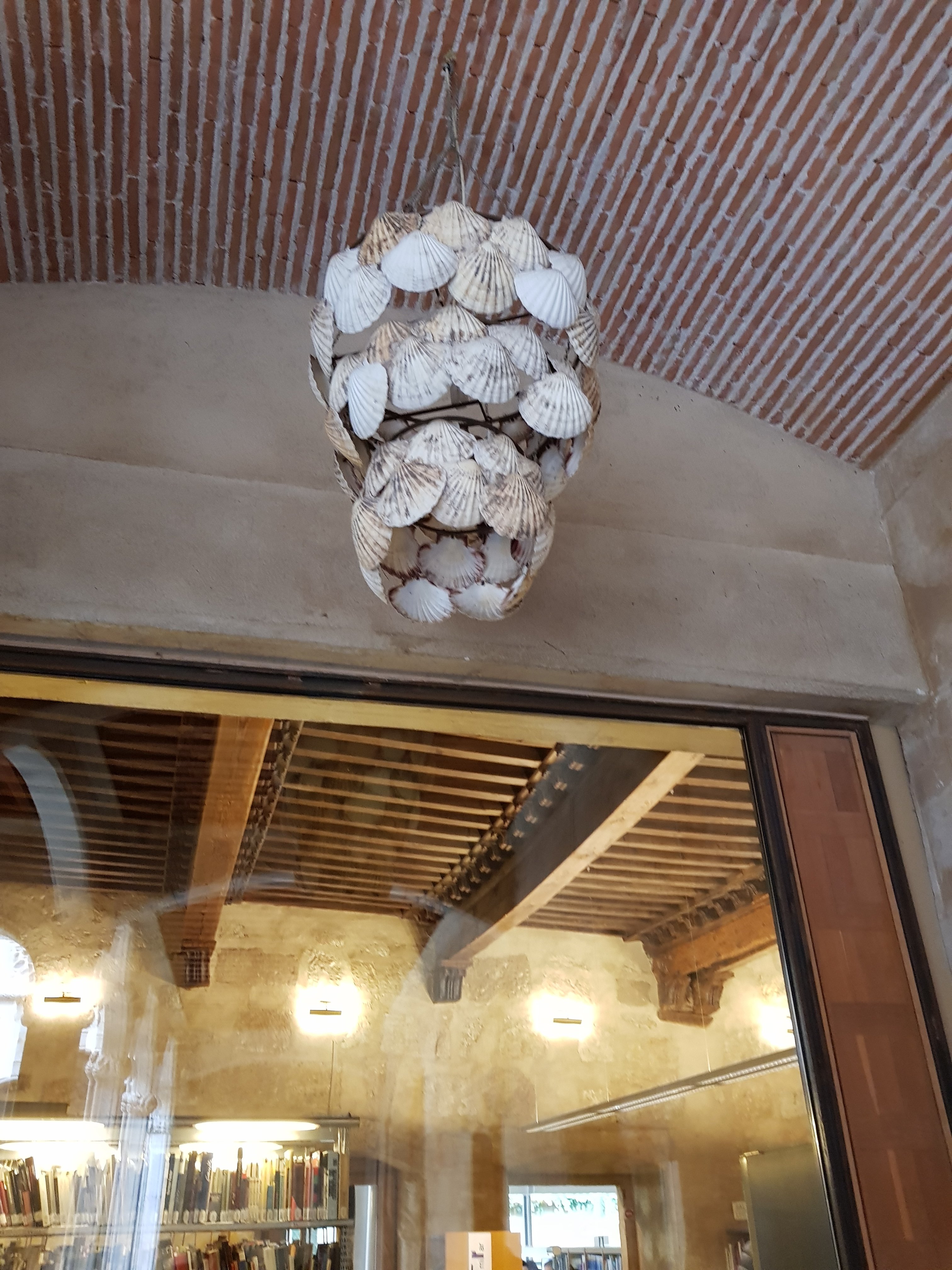
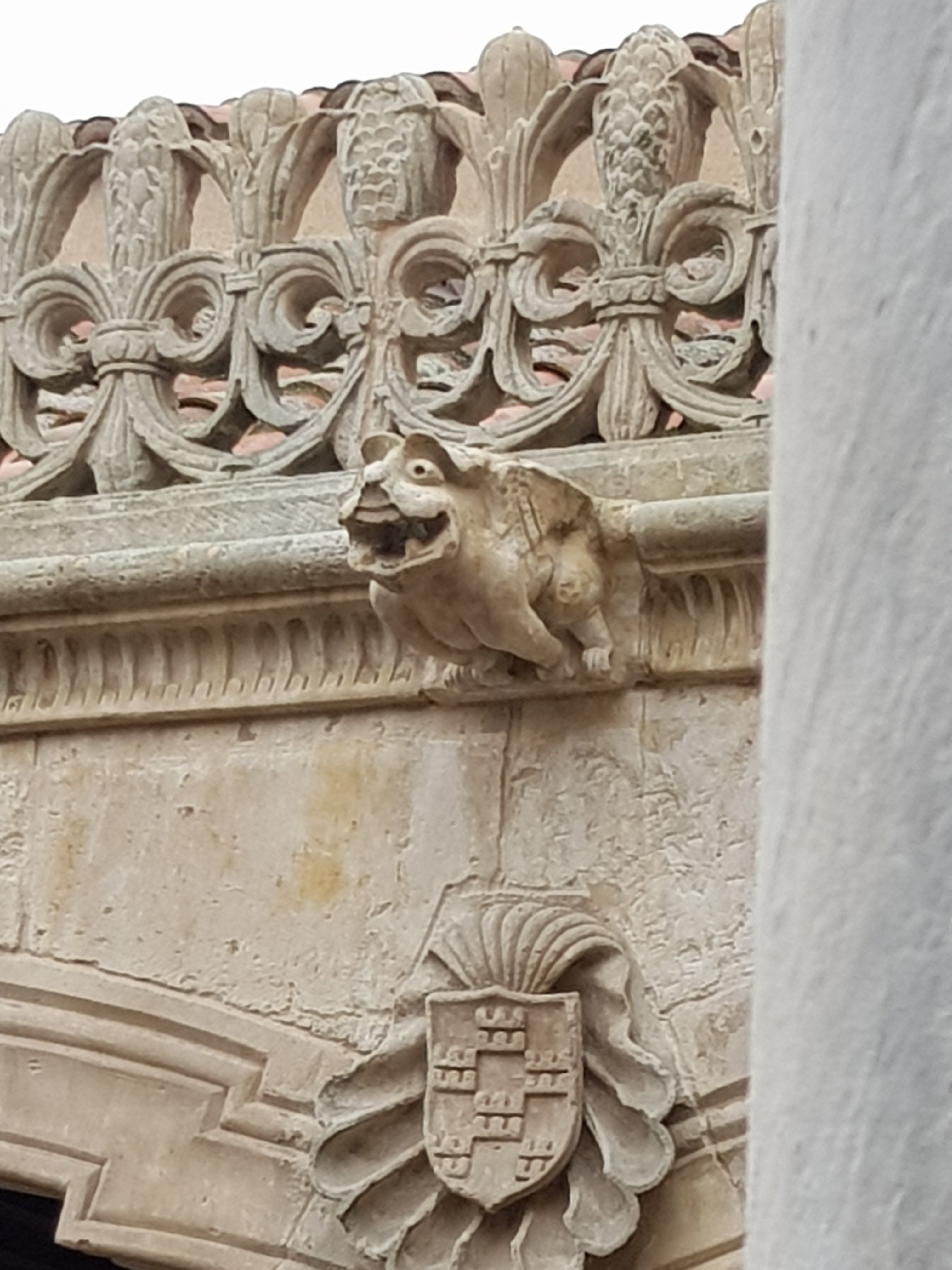
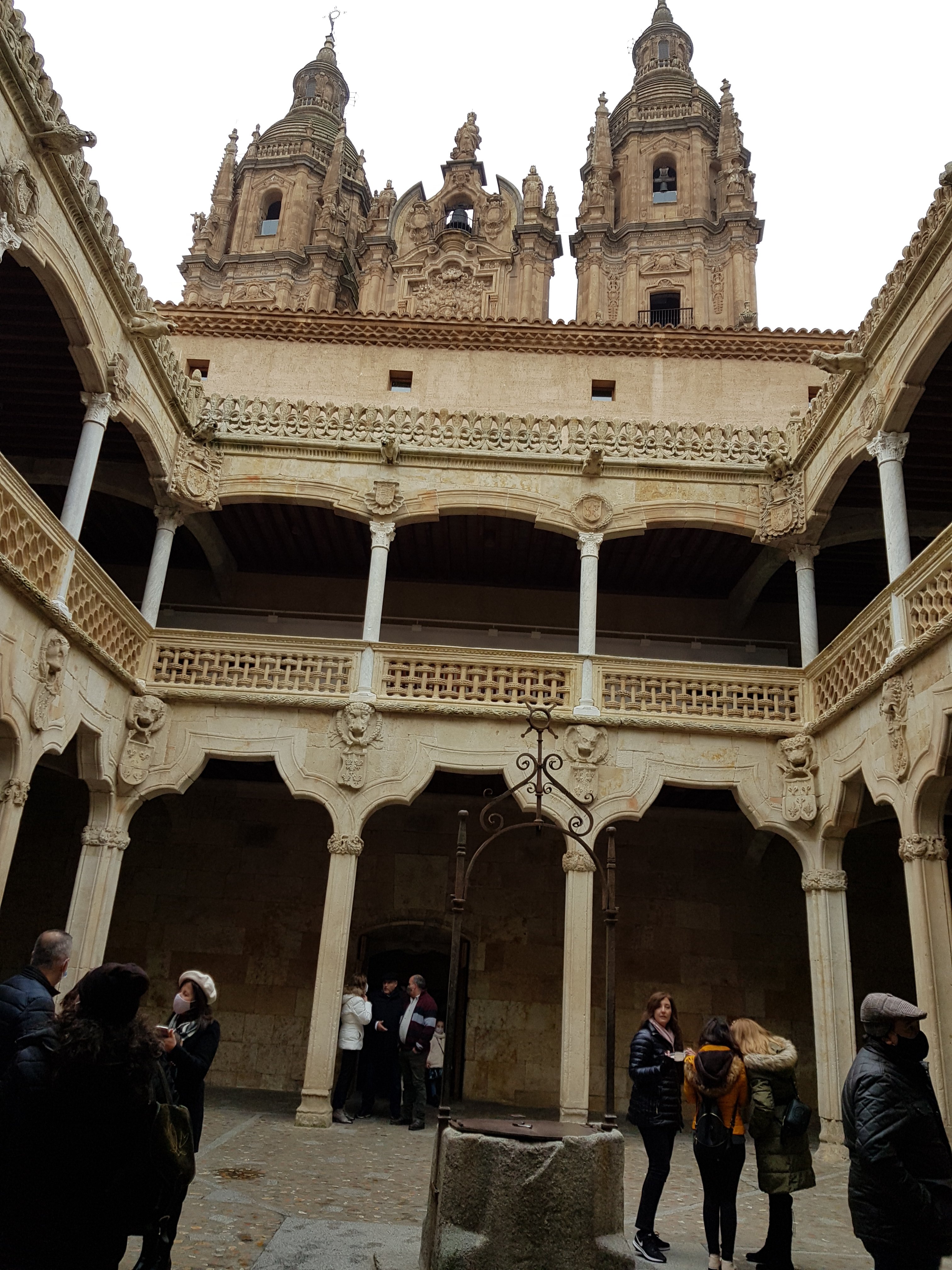
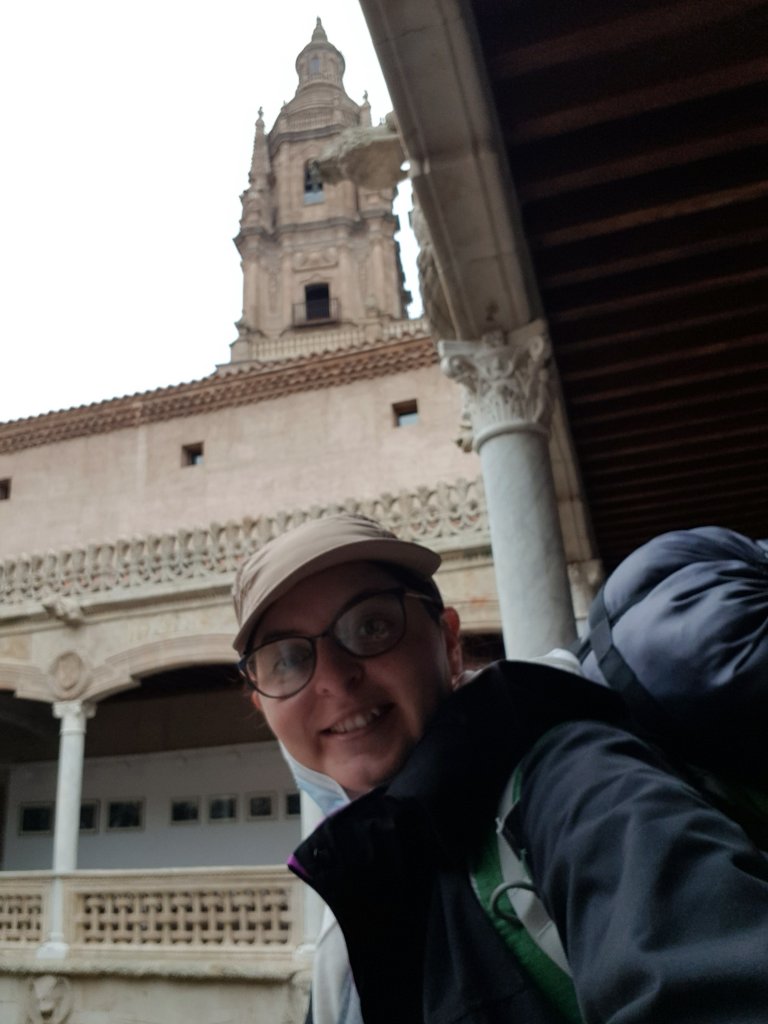
It seems that the University of Salamanca is very well renowned in Spain, as the first university that existed in the country. Many of the oldest buildings in the city are under use of the students still today. The public library can be visited for free, and is particularly unique as a building completely covered in the image of shells, giving it the name ‘Casa de las Conchas’. This was interesting to me, as shells are the symbol of the Camino de Santiago that I have just completed. On this occasion, they are related to the marriage between two noble families.

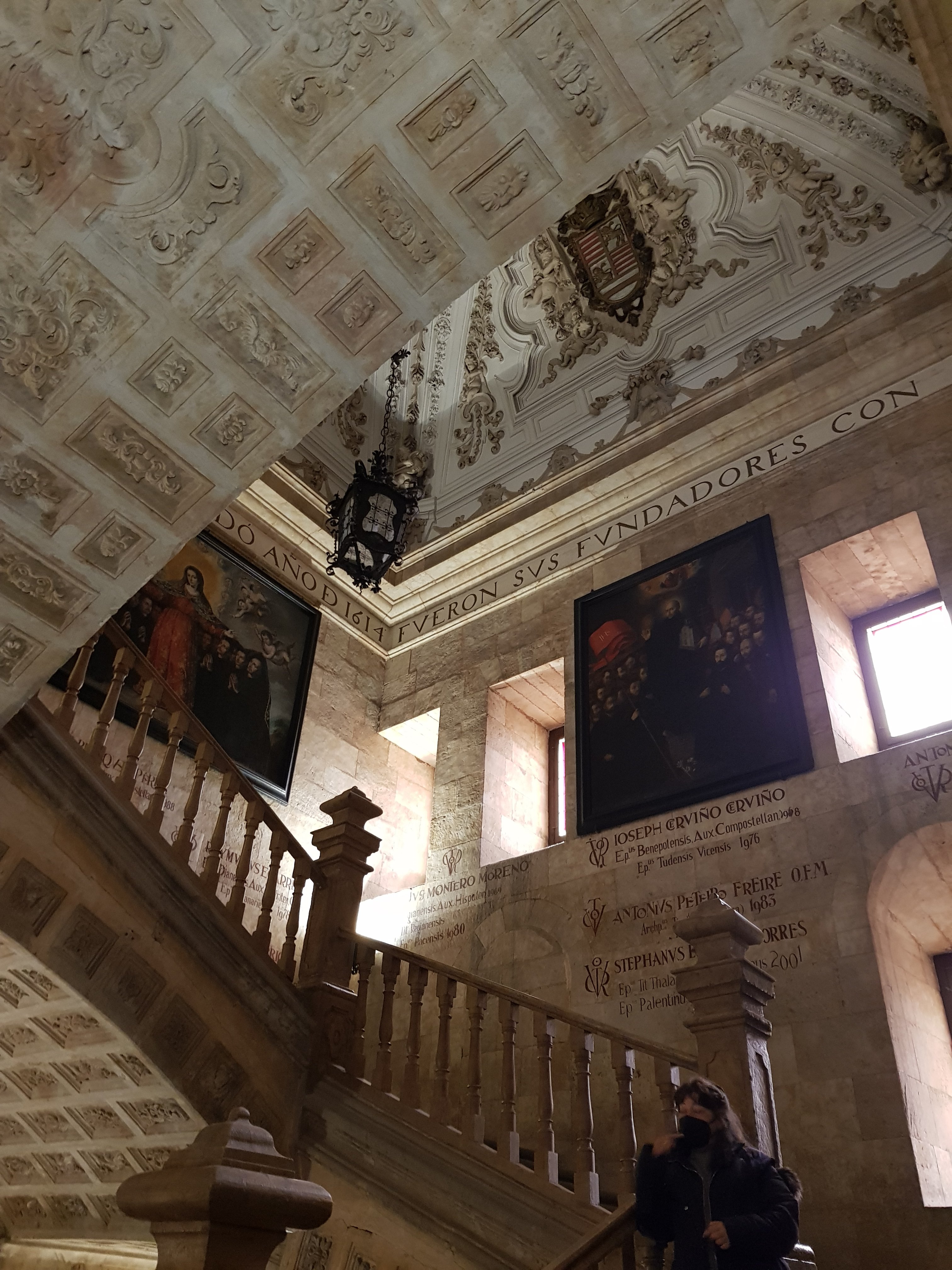
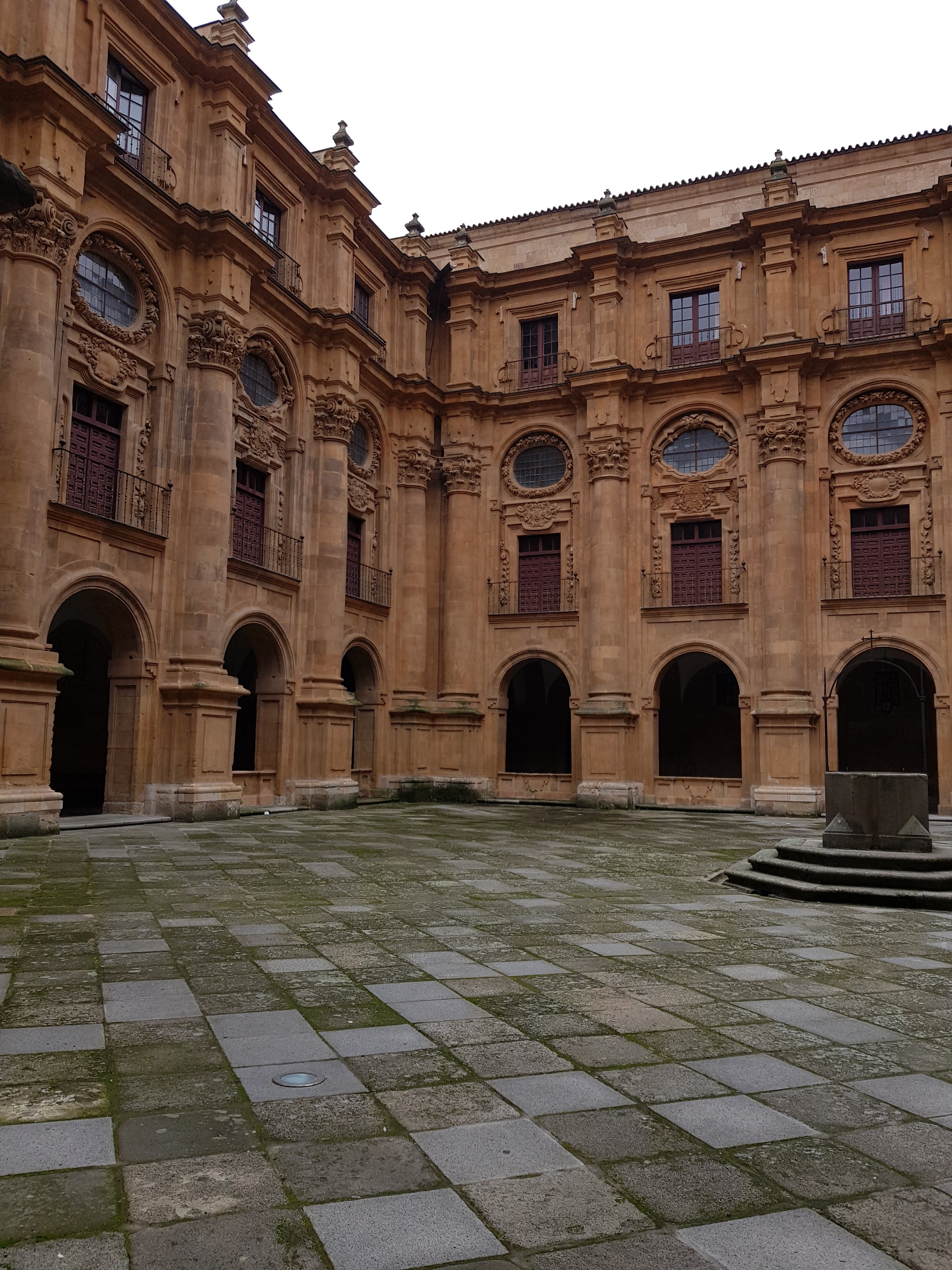
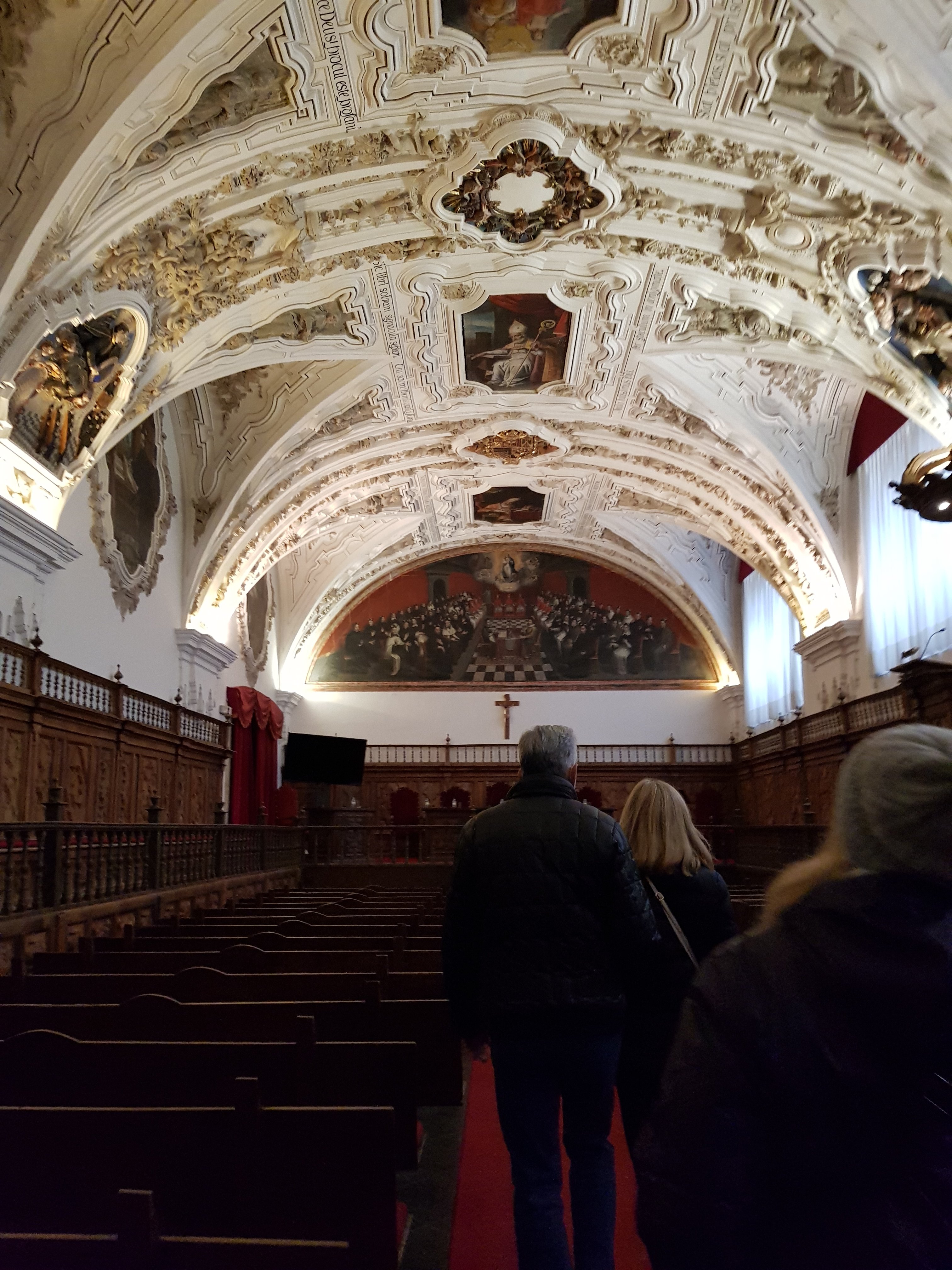
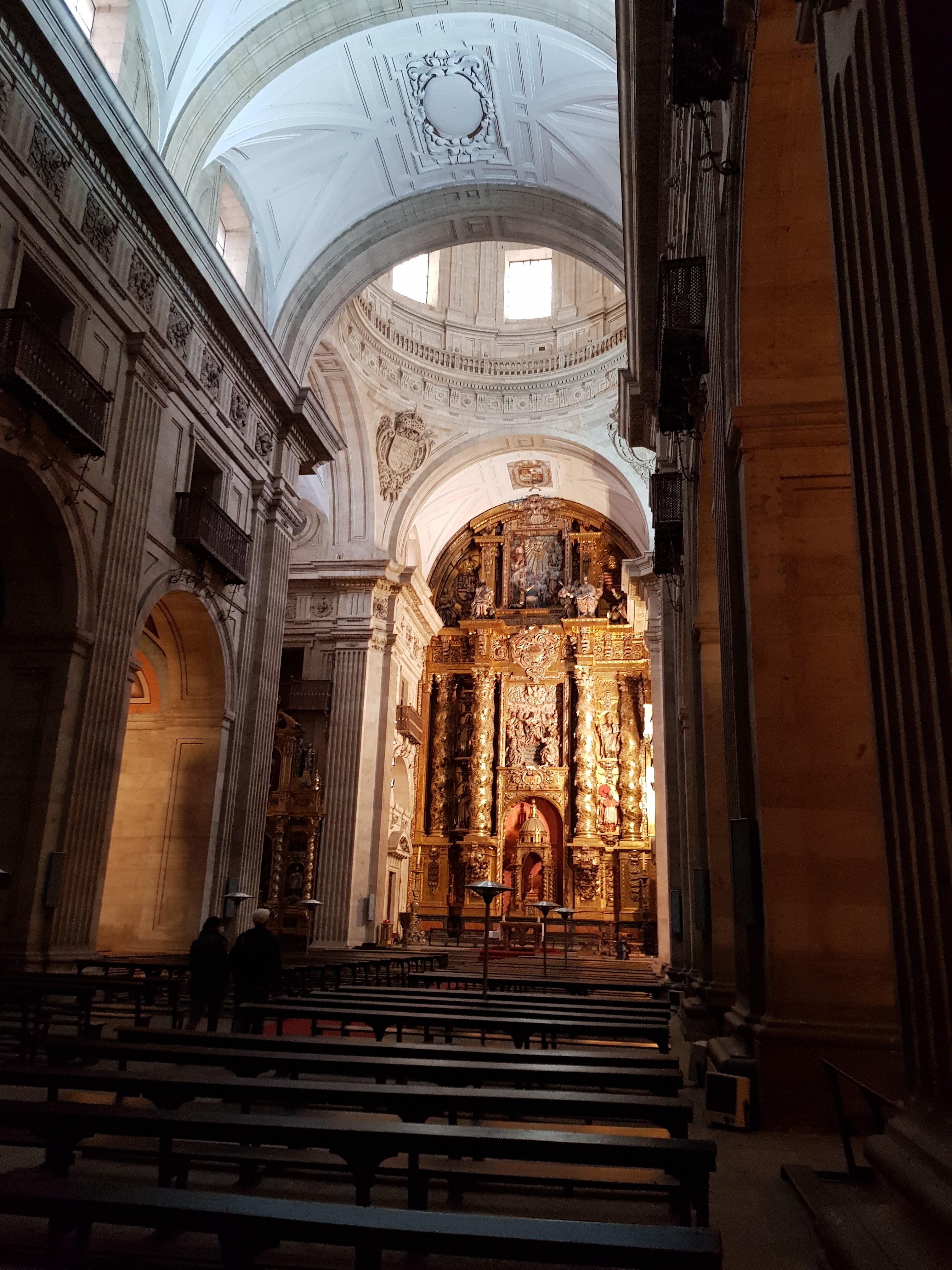
I also paid for the guided tour of the Pontificia university building, which is a separately owned catholic part of the university for theology and law schools, and has an adjoining church. This tour was in Spanish so there was a lot of me trying to follow what was being said, but the general jist of it consisted of a very fancy staircase, cloister and some sort of debate room.

The building was very fancy, and there were many references to important figures from Christianity, the history of the university, and the monarchy. I think you would be very lucky to study in these surroundings.

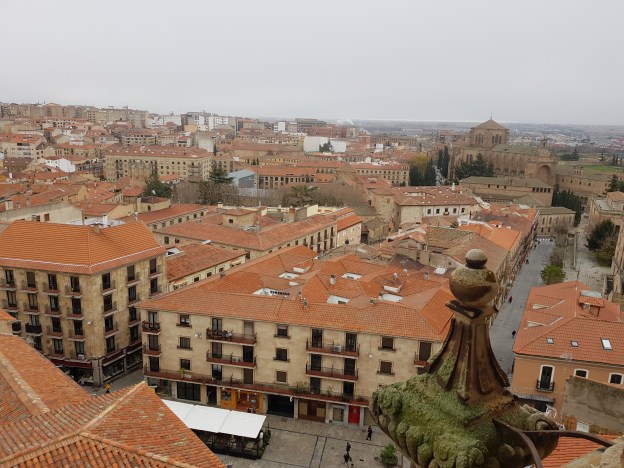
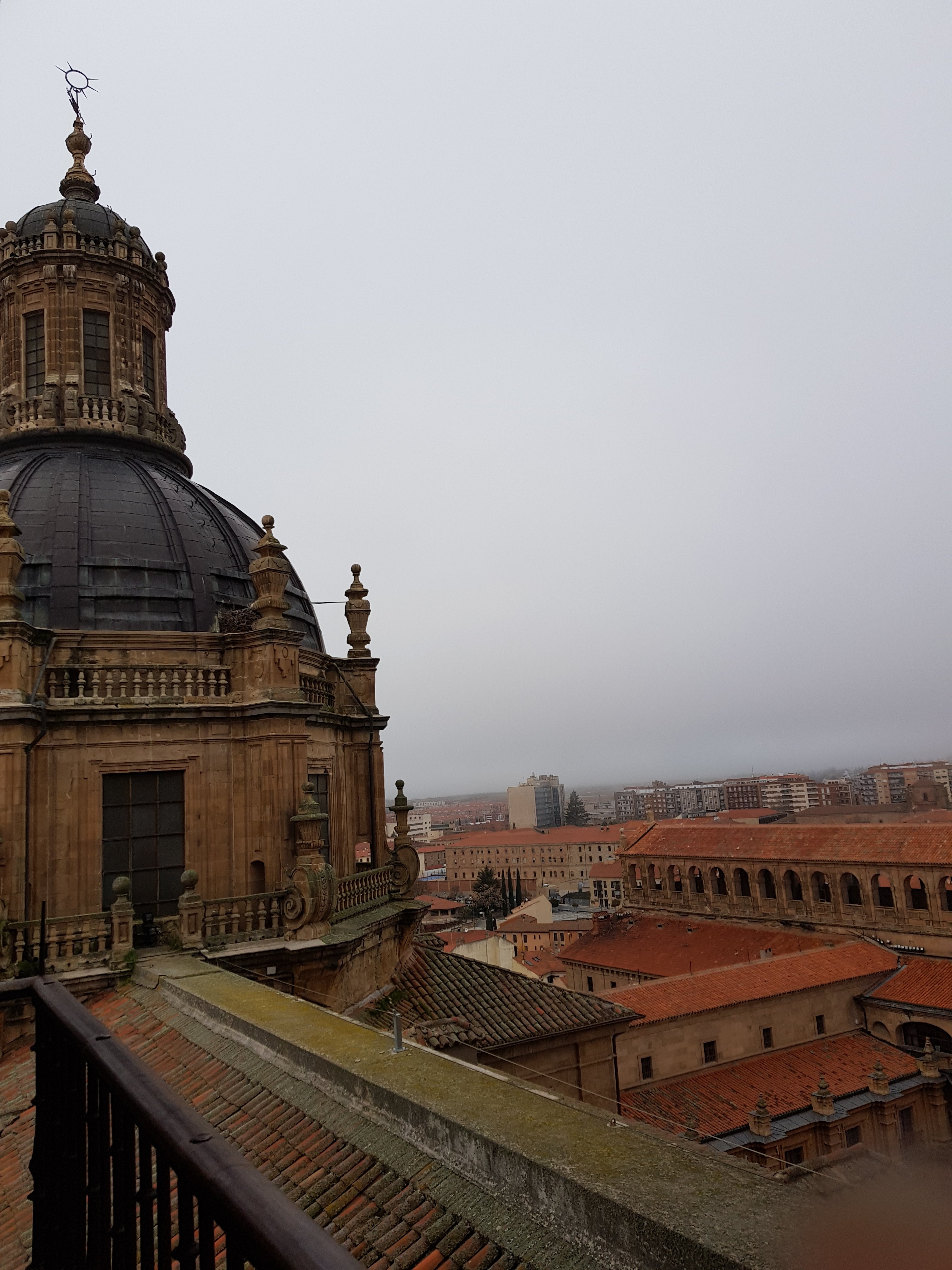
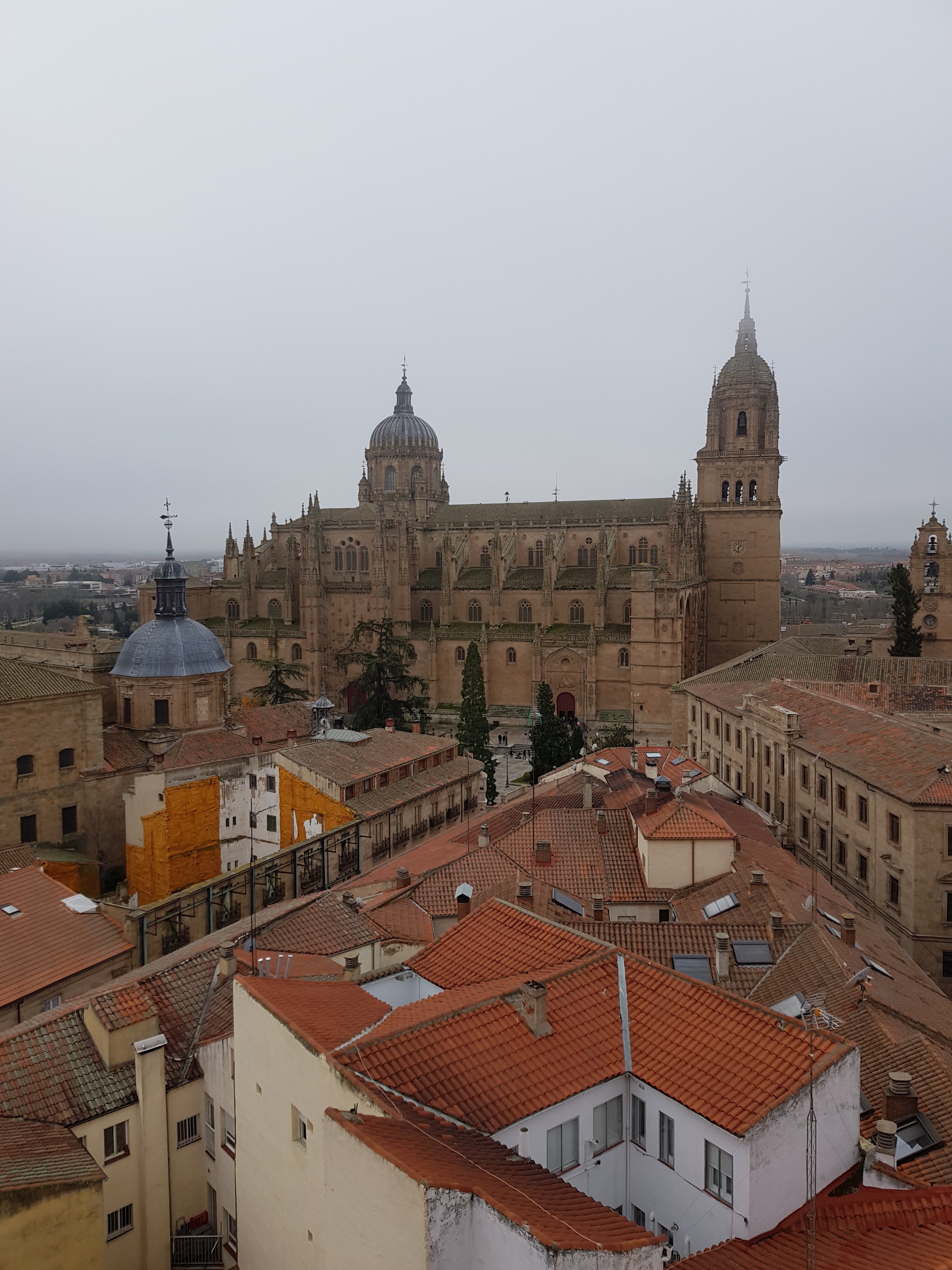
You can also climb the towers of the buildings and walk around the outside of them. The views of the city are great here, and I enjoyed seeing the bells. The only downside was that it was a foggy day!

Of course, I also visited Salamanca’s Cathedral. You actually get two for the price of one when you visit, as the old cathedral resides inside the new cathedral. When the new one was built, the city decided not to tear the old one down but instead incorporate it. They are very different and make it a very large space to visit. A useful audio guide is included in the visit and pilgrims receive a discount.

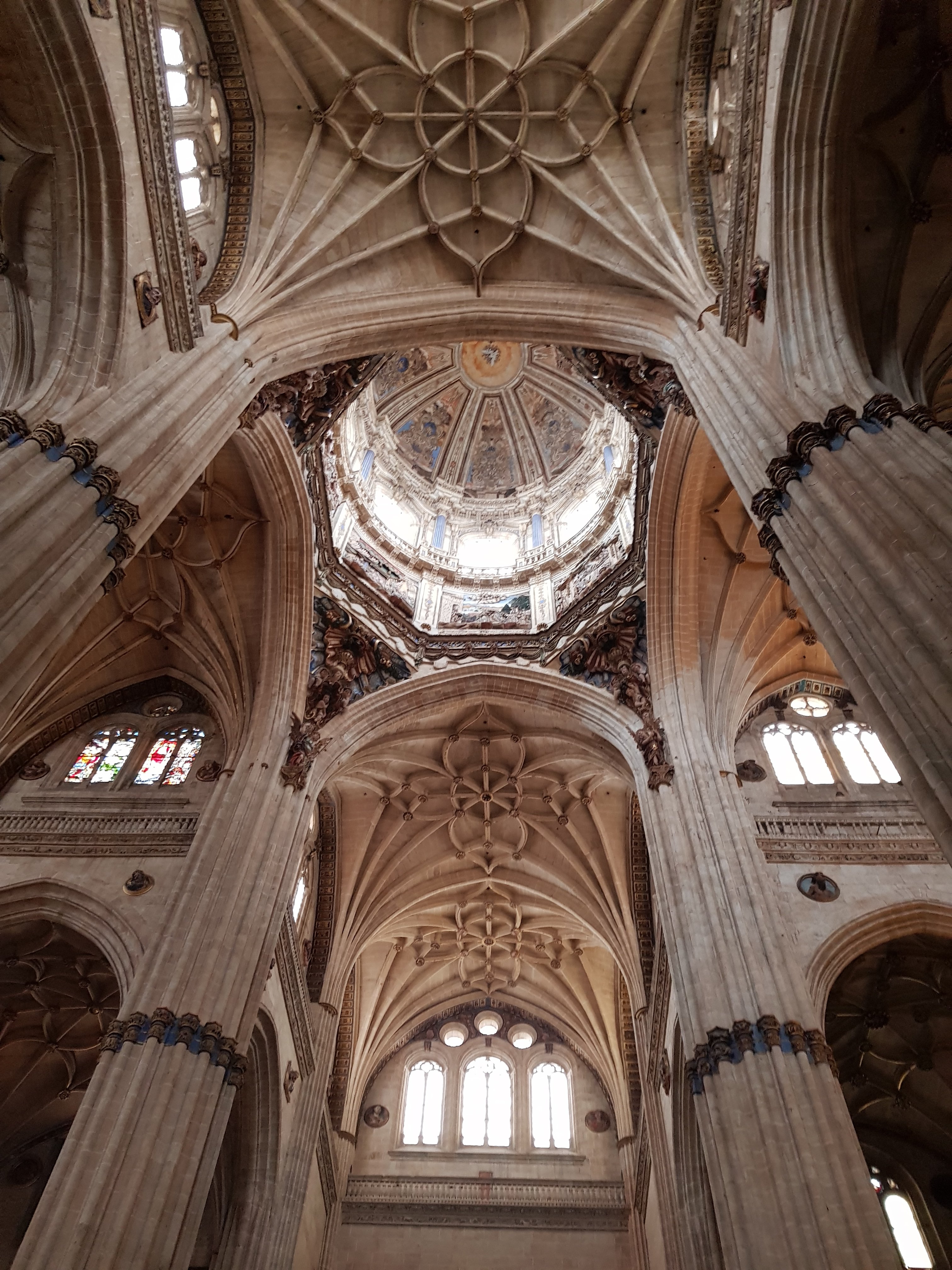
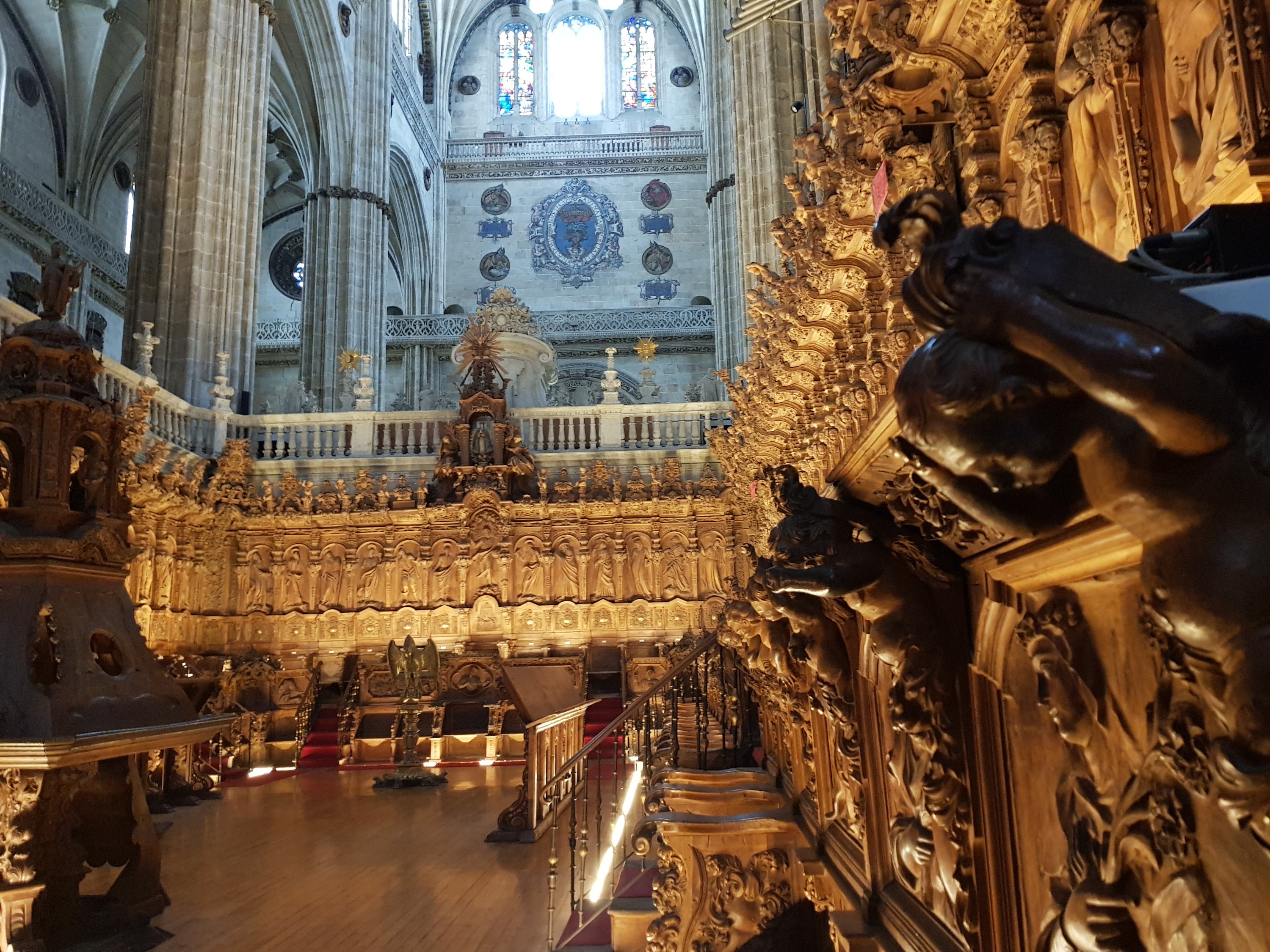
The new cathedral has many chapels and lots of detail, as well as two beautiful organs that can be admired from the front and back. The choir carvings are also exquisite. It is a brilliant place to take photographs. Later, on the self guided tour, I entered the old cathedral, which has a much more plain and simple feel to it. Though the architecture is simple, it does still have many chapels as well, and many more ancient wall paintings to admire. The cathedral also has a small museum space to enjoy.

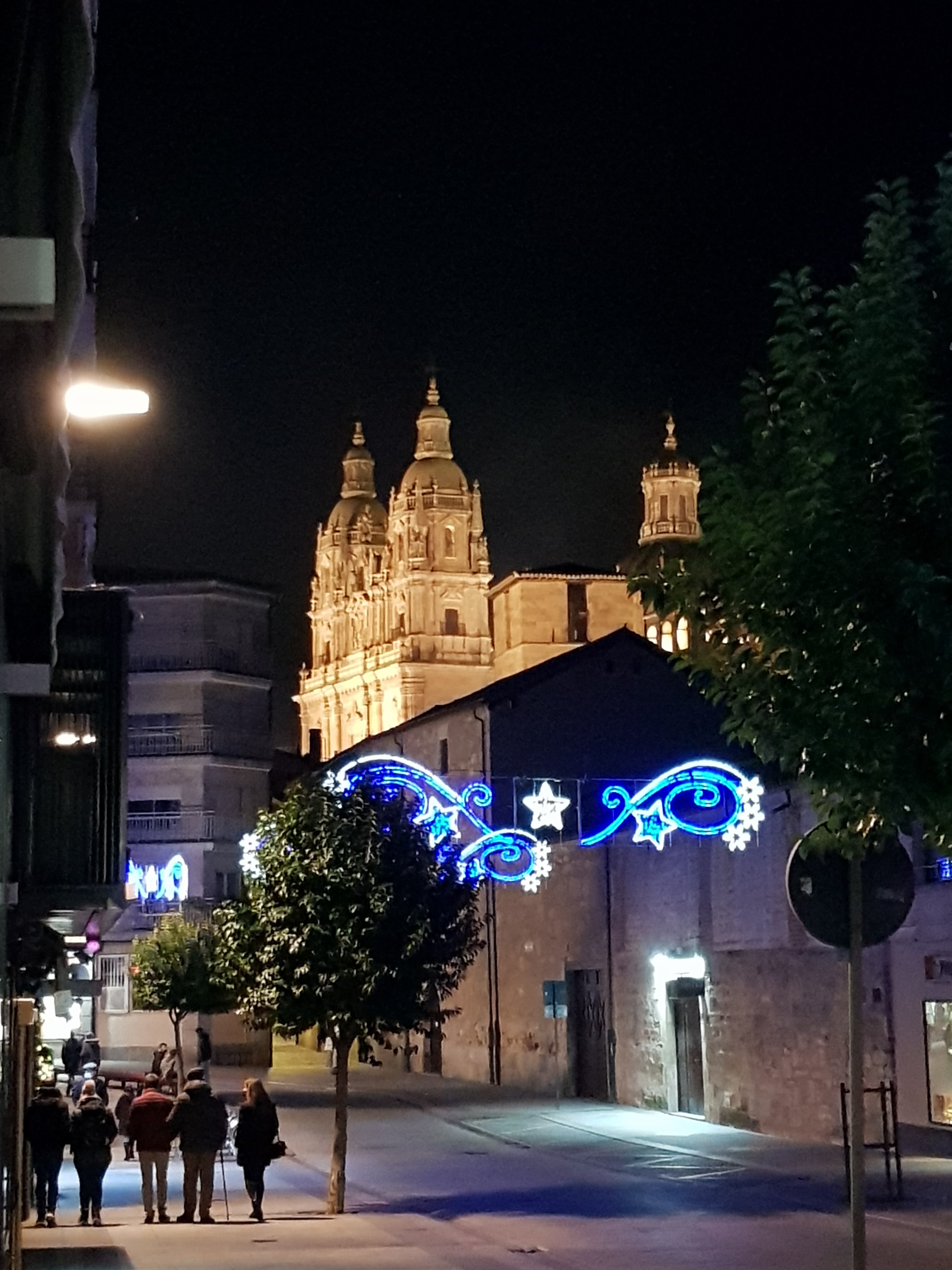
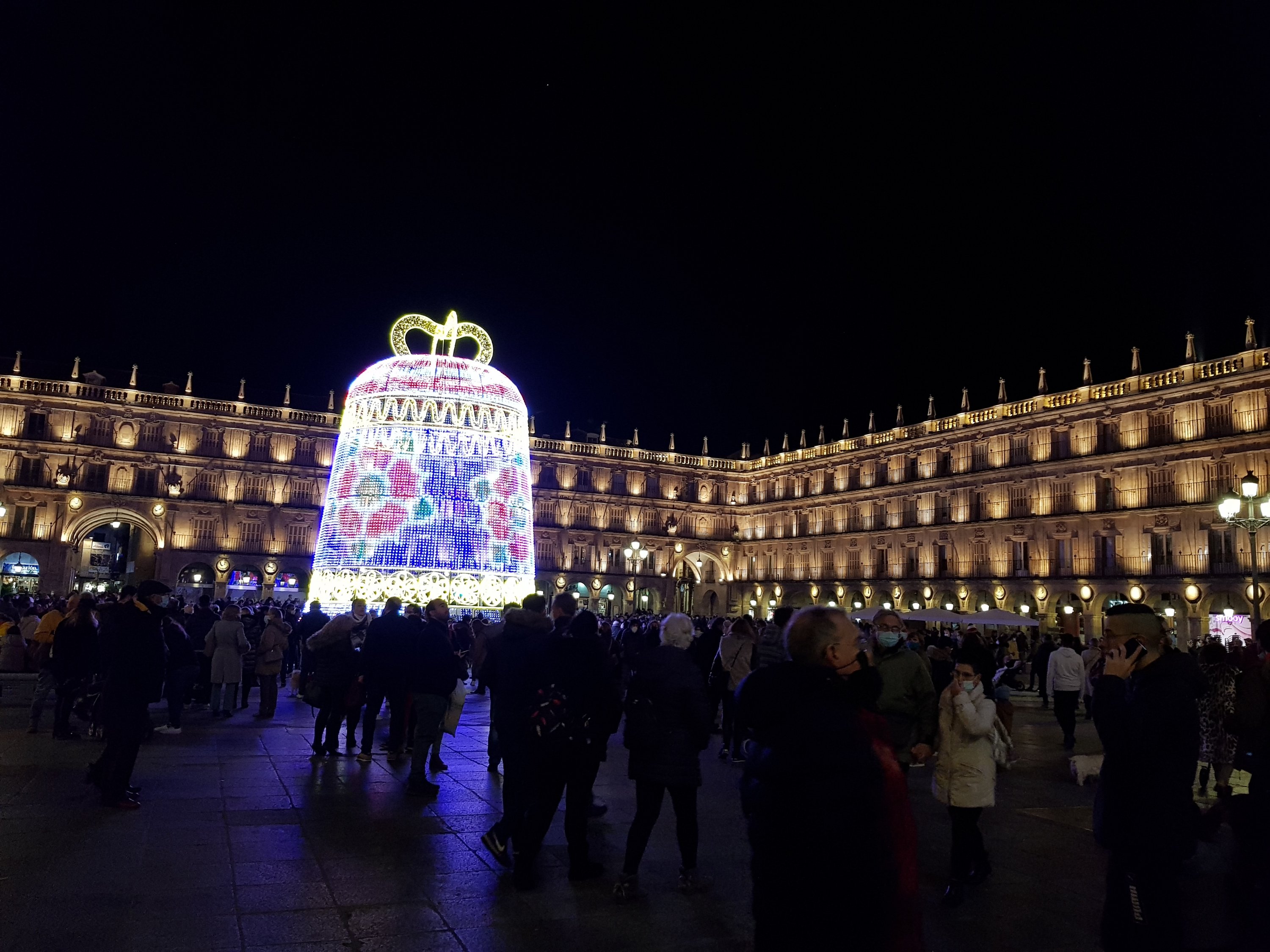
In the evening, Salamanca’s golden stonework, lights up the streets and the shopping areas and main plaza is bustling after 8pm. I happened to be here after the christmas decorations were up, so I was able to dine outside in the plaza with a lovely meal and a heater, and watch the christmas display with hundreds of local people.

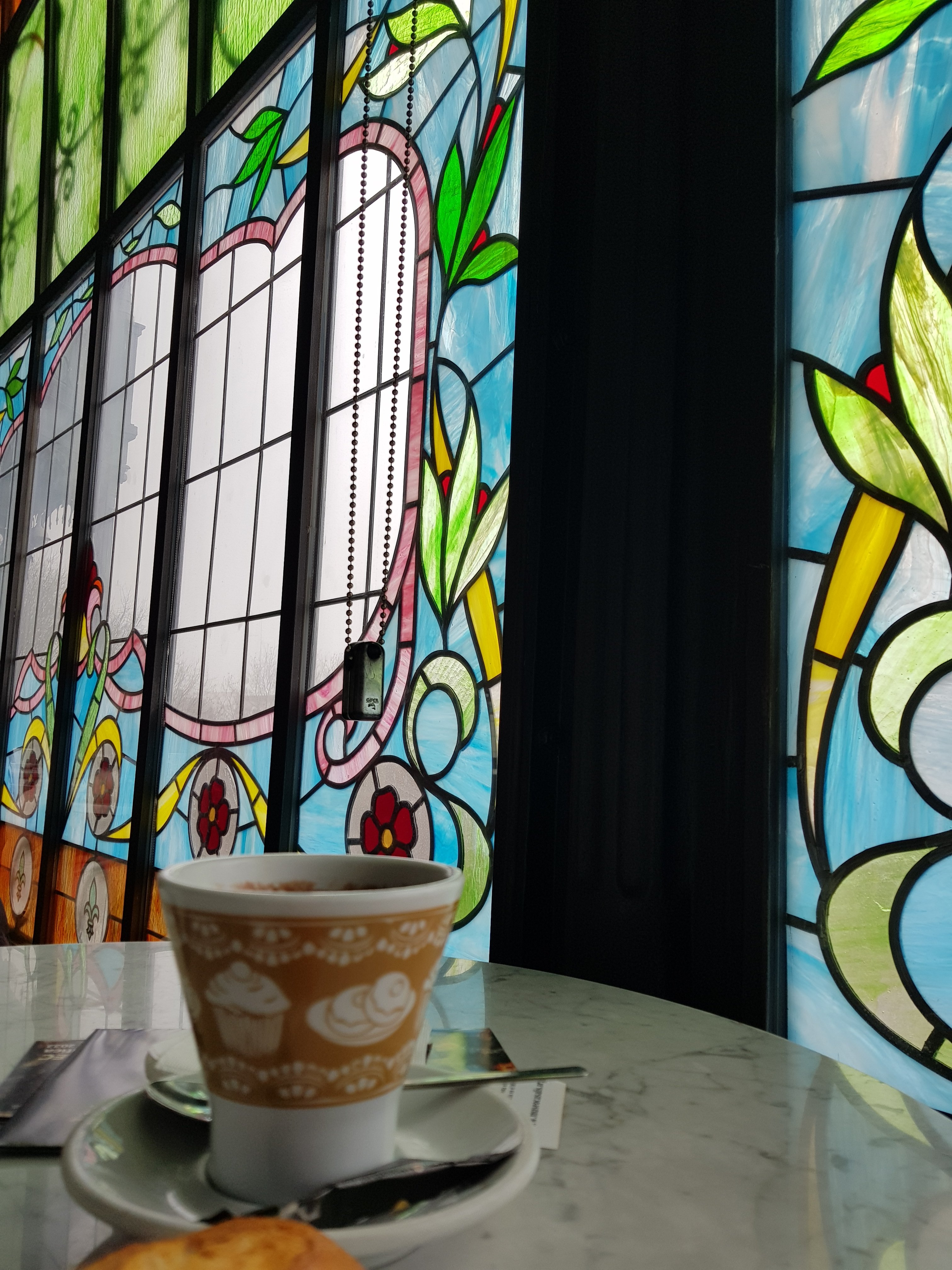
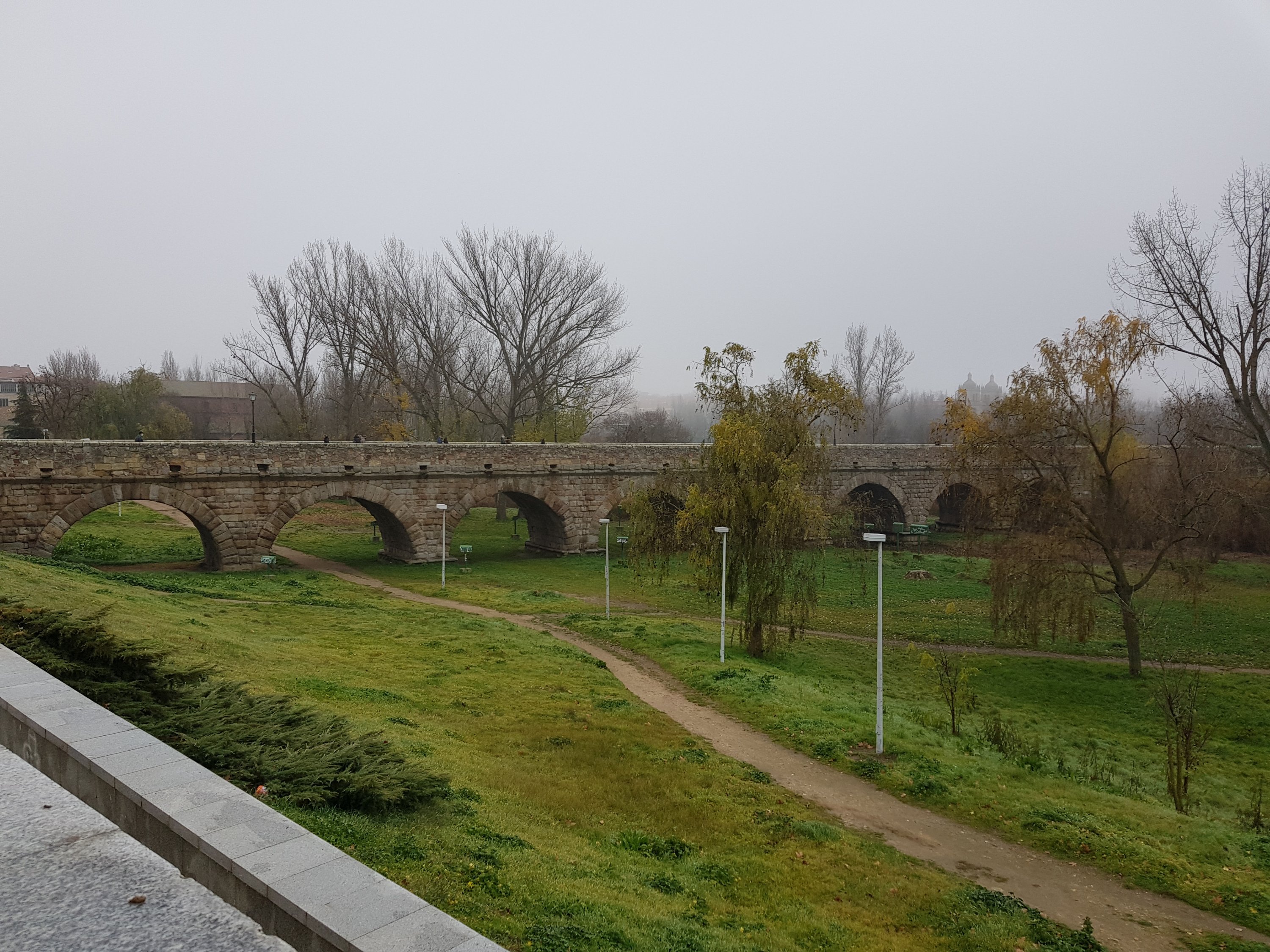
The next morning, I wondered along the riverside, took a look at the roman bridge and visited an art nouveau and art déco museum, within a beautiful building called ‘Casa Lis’. The building has gorgeous stained glass windows and a stained glass roof. Unfortunately, no photos were allowed except for in the cafe, so there is only a photo of my hot chocolate! This was delicious 😉

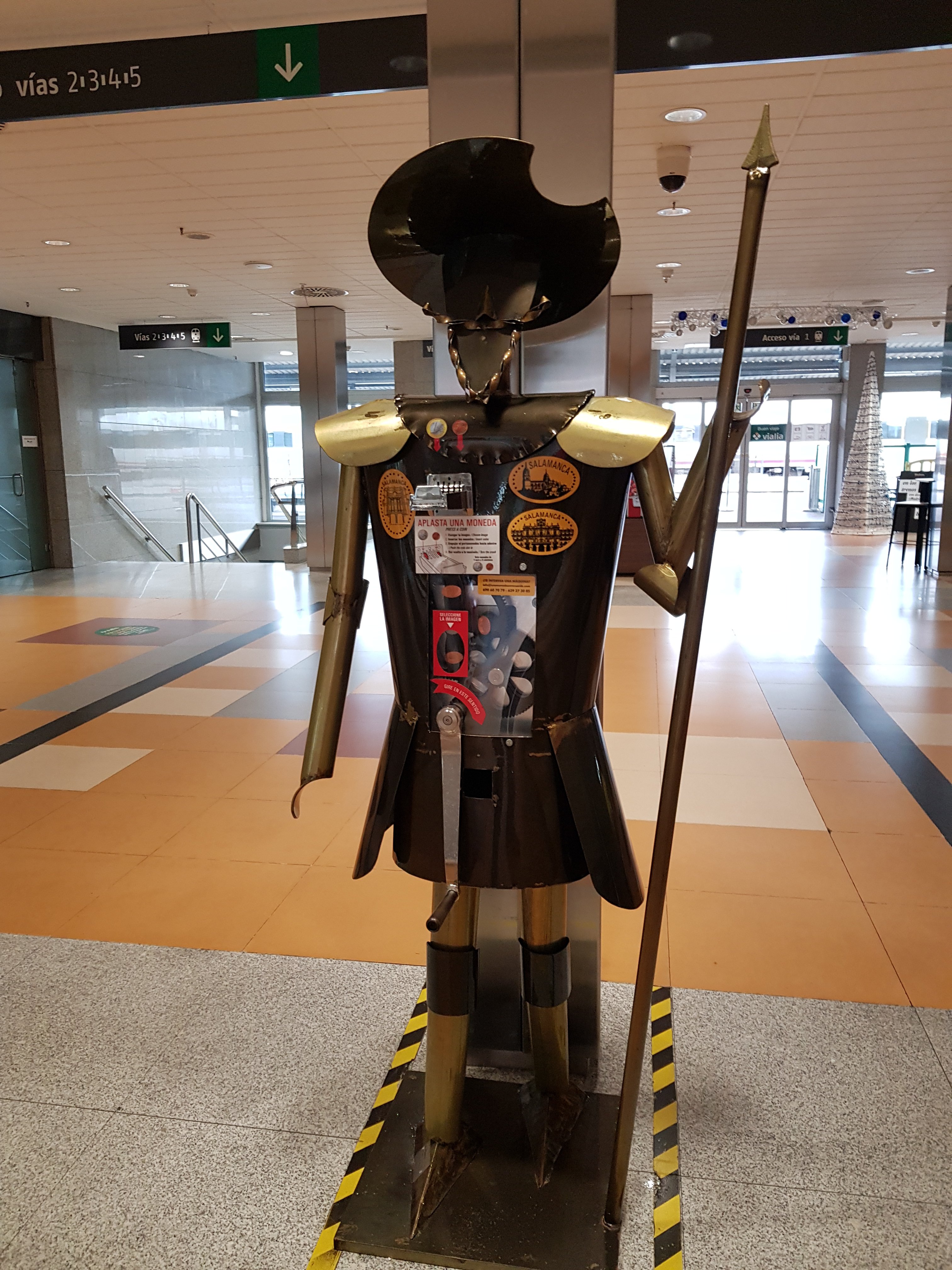
Finally, I made my way to the train station for my next stop. I was delightfully surprised by the train station in Salamanca. It is huge and has many restaurants and a cinema attached within the building.

Overall, Salamanca was a pretty little city, with a good few things to see that are all very close together. I would be happy to return and visit more of the university, noble houses and palaces next time.

Camino de Santiago: Aviles to Gontan

This week I entered my final third of the walk, and as the rain poured down, the paths became rivers, but I powered on!

The week kicked off with a stop in Aviles, which is a large town. It has charming streets full of arches, old chapels and former monasteries, and a fountain of dribbling monks!

I stayed all alone in a large pilgrims albergue for the cheap fee of 8 euros and prepared for the week ahead.

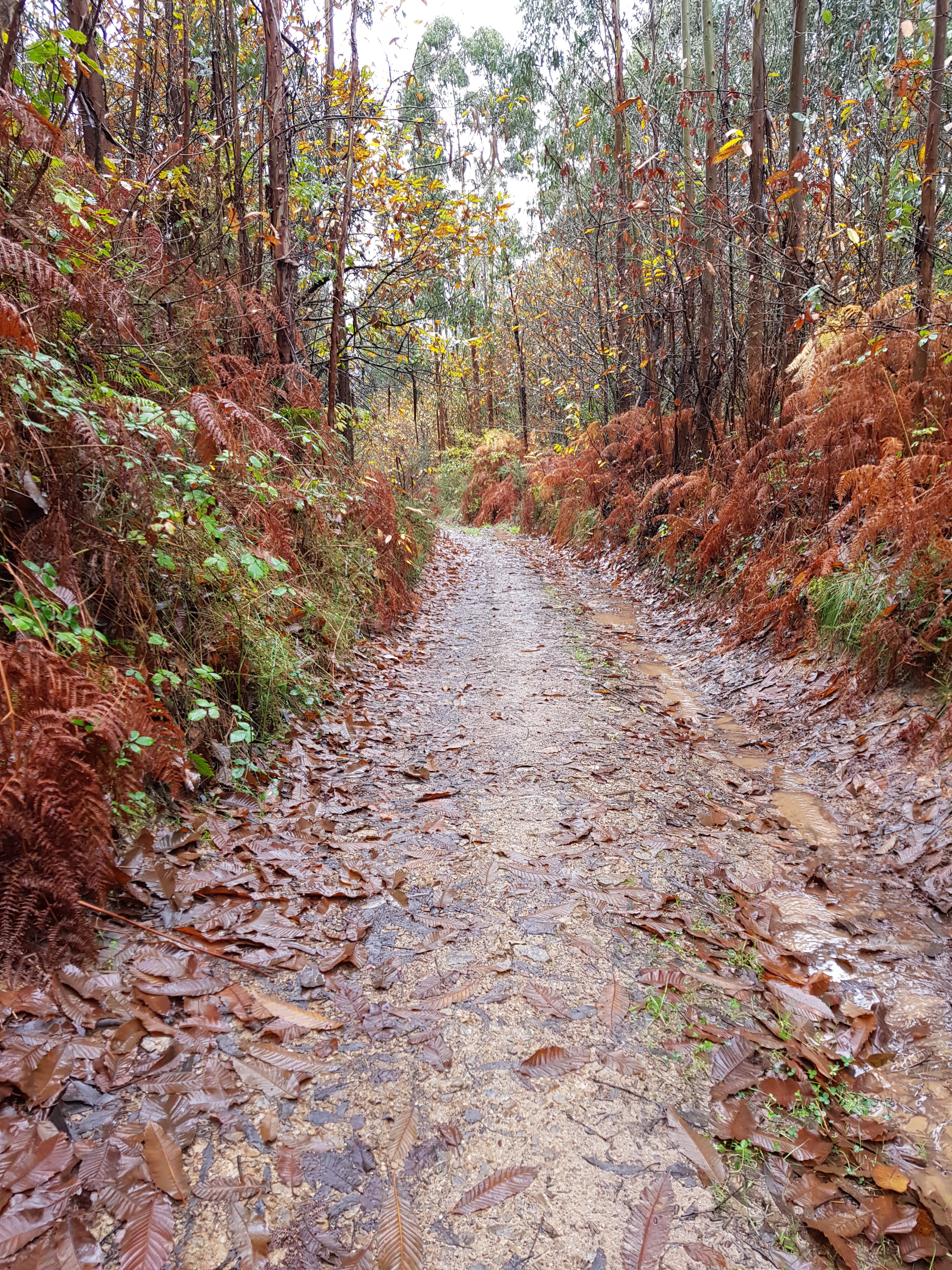
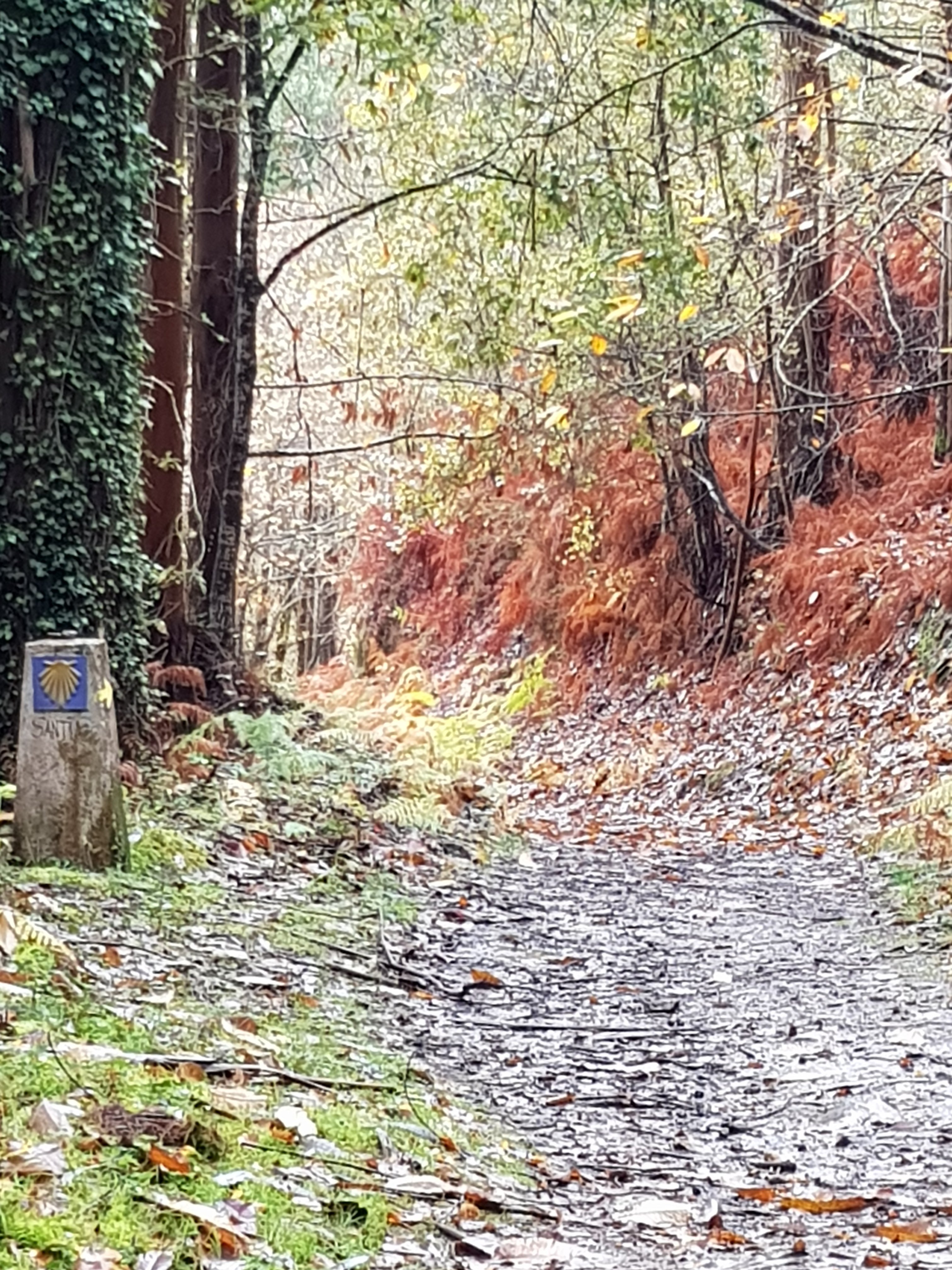
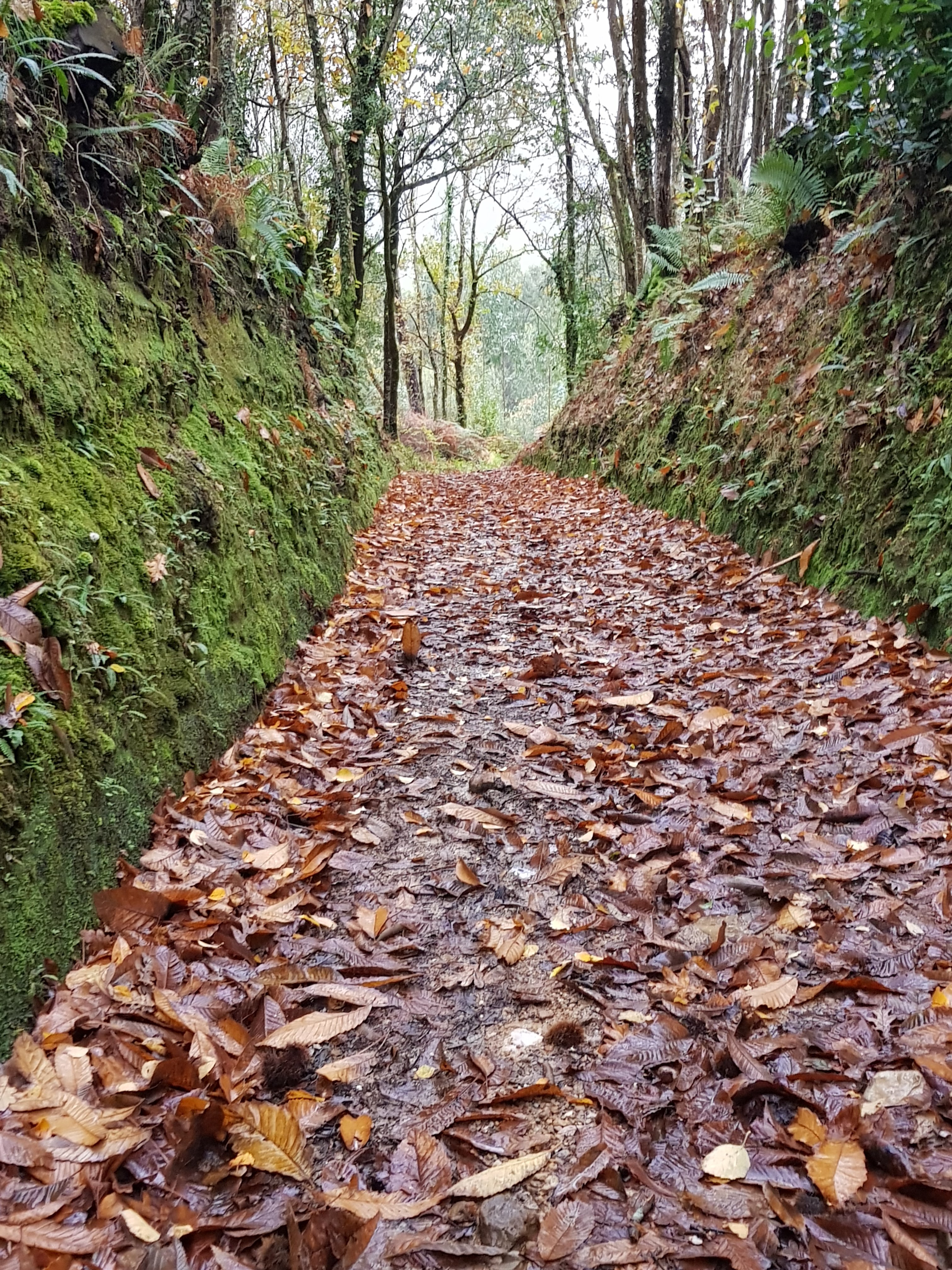
Next was my soggy 20km to Soto del Barco. Most of the walk was through forests with deep red ferns and overflowing rivers.

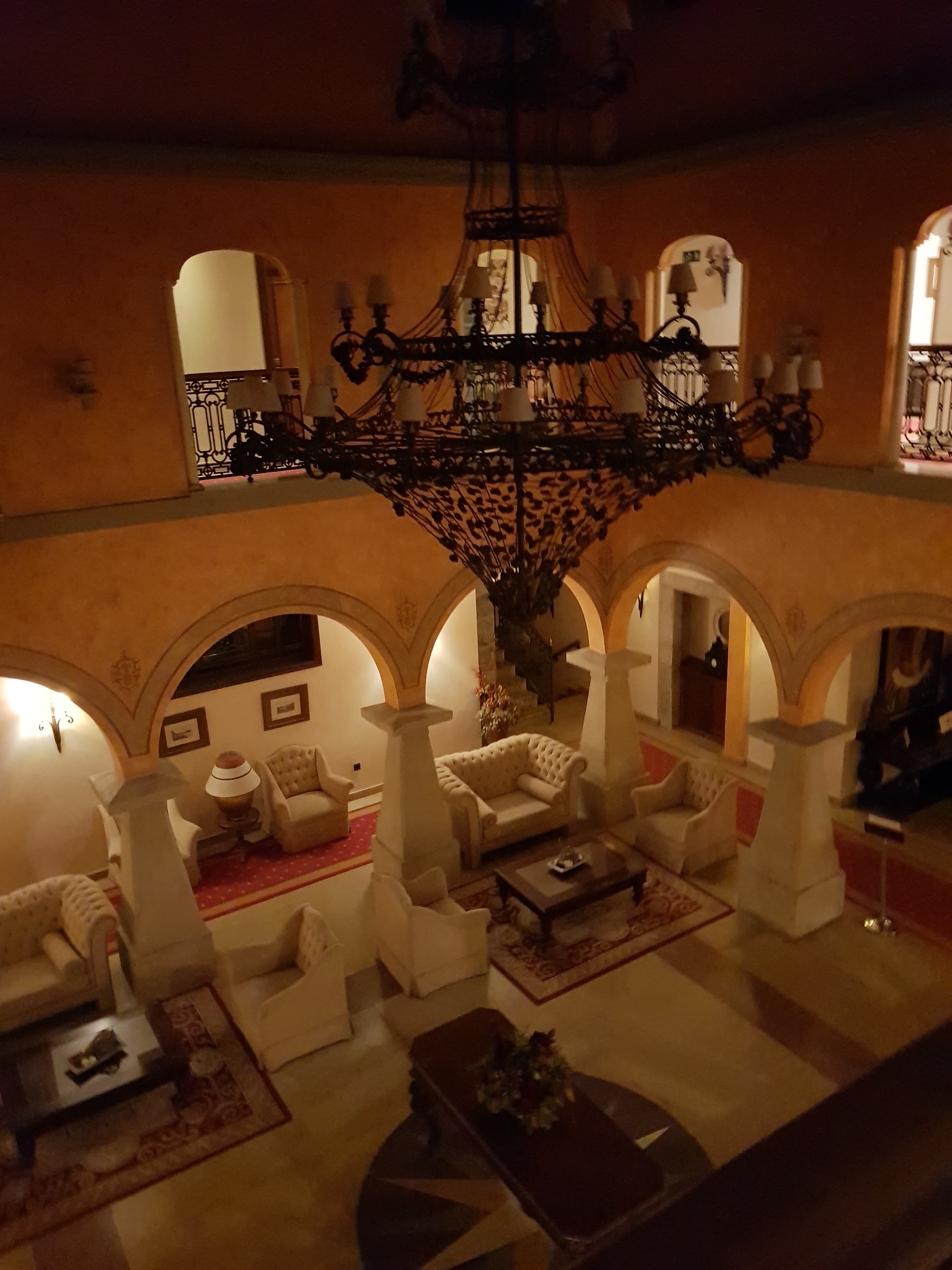
I had hoped to find a cheap place to stay, but it was all pricey in this village at the bottom of the valley, so I decided to stay in a hotel. The hotel was beautiful as it was a former 18th century palace, and so enjoyed a little luxury and a slap up meal, of food that I could not identify!

The next day I walked to Soto de Luina. The rain continued and I had only been able to have a few small pastries and a piece of fruit for breakfast. I’d thought I would pass a cafe but all day I didn’t. The day was spent walking through forests.

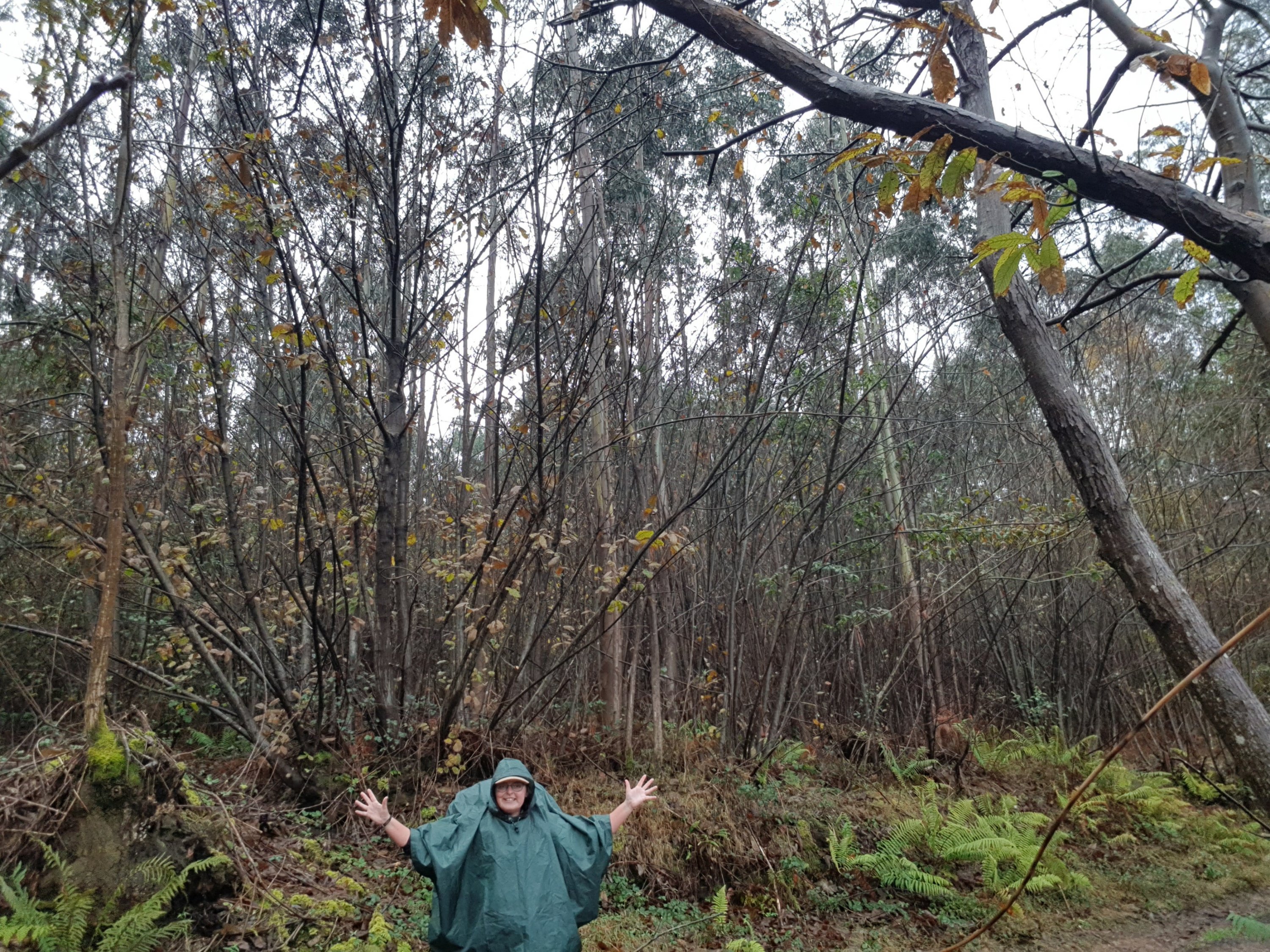
Thankfully, forests and woodland are in my opinion, the easiest terrain on the joints, as the ground is so bouncy. I grew up in the woods (in a house not in the trees), and feel in my element within them.

The overflowing rivers and lack of food was making this very hard for ‘only’ a 22km walk. The day was full of ups and downs, and I had to stop frequently. A few times I thought I might pass out.

When I finally arrived in Soto de Luina, I made my way to my bed for the night, in an old abandoned school building. No heating, and no kitchen, but its all part of the experience… right? 😣

When I looked at my map, I found that my next stop in Luarca was up to 40km away (that is maybe 12 hours walk), and the morning came and my shoes were still wet, and my body still weak. So I decided to journey by train this day. I felt a bit guilty, but sometimes you have to know when to give yourself a break.

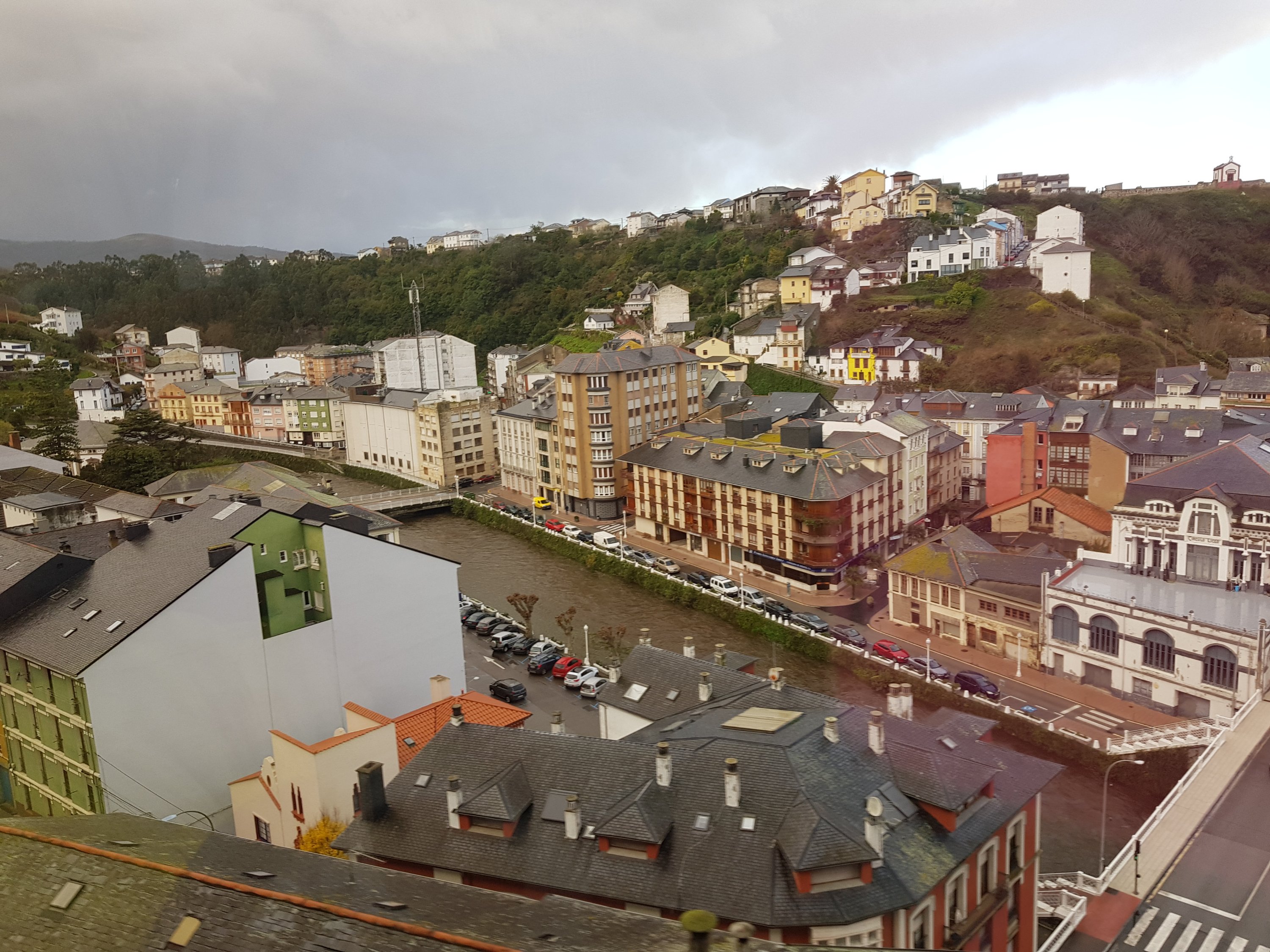
It was also a great place to do the train, as the track rides over the town of Luarca, and provides great views. The train driver was really nice too. We chatted in spanish, he showed me when to take photos, gave me some paper for my shoes, and showed me the control room! It also gave me a chance to nose around the town for longer, and just recover a little.

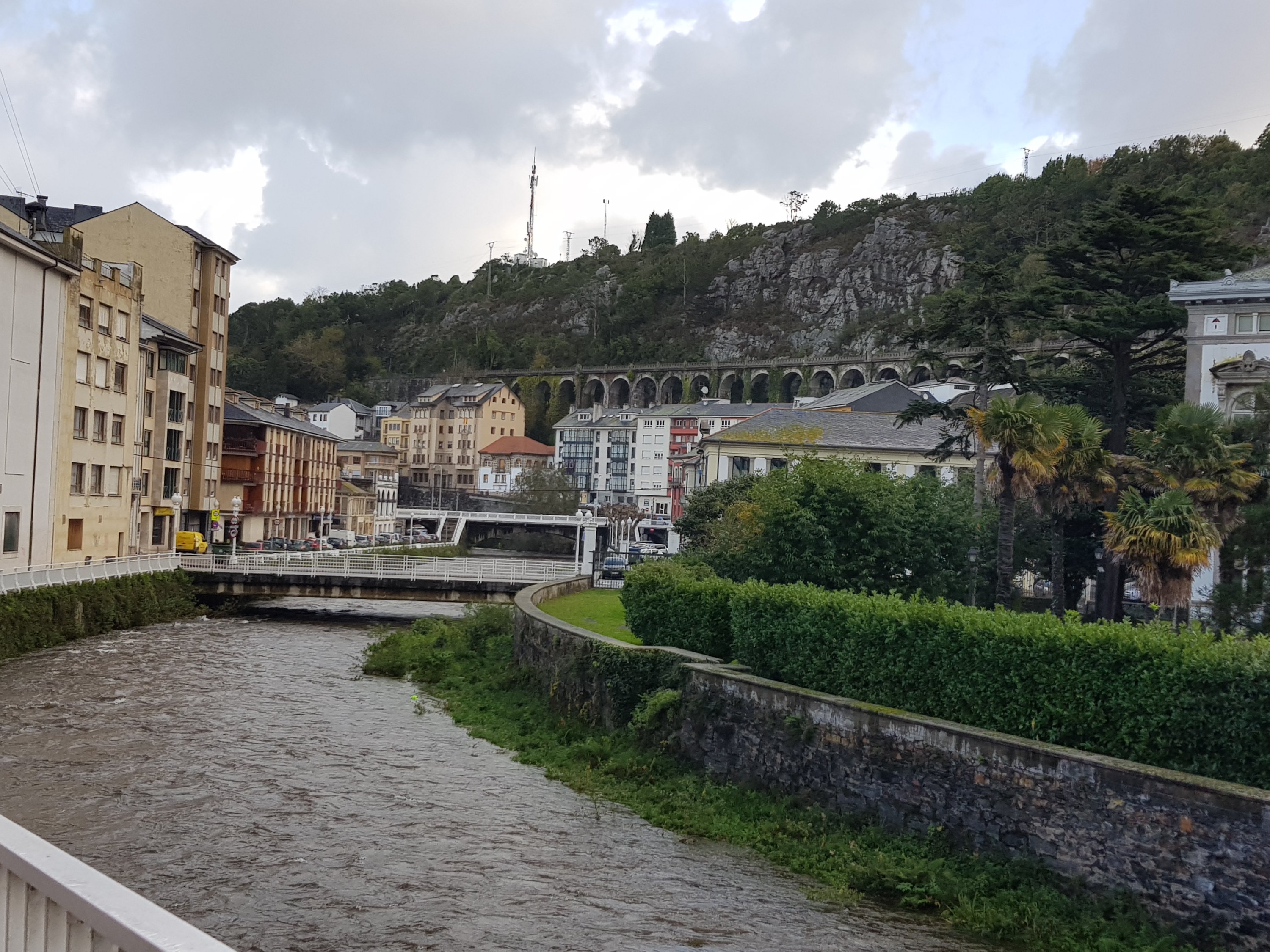
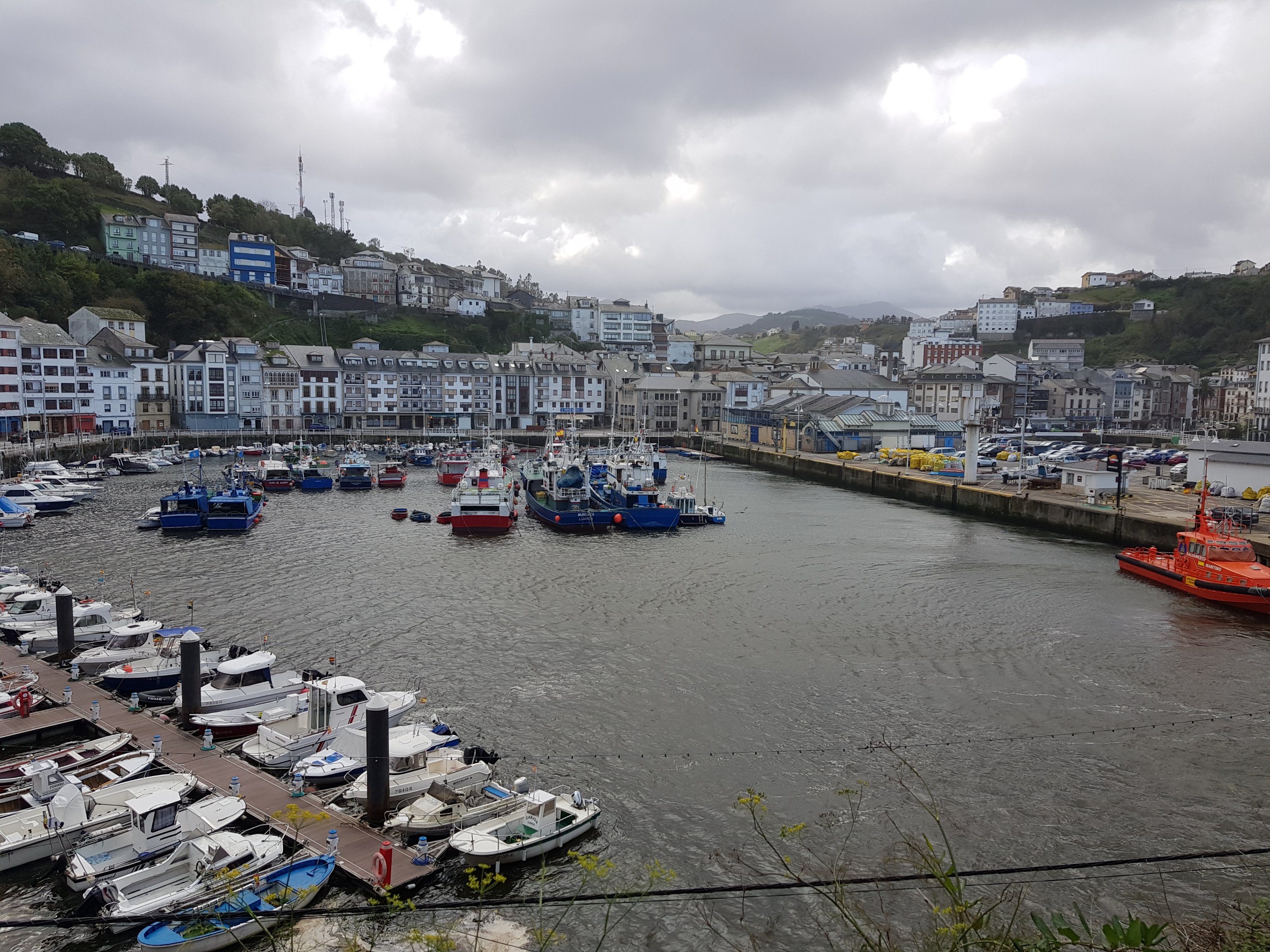
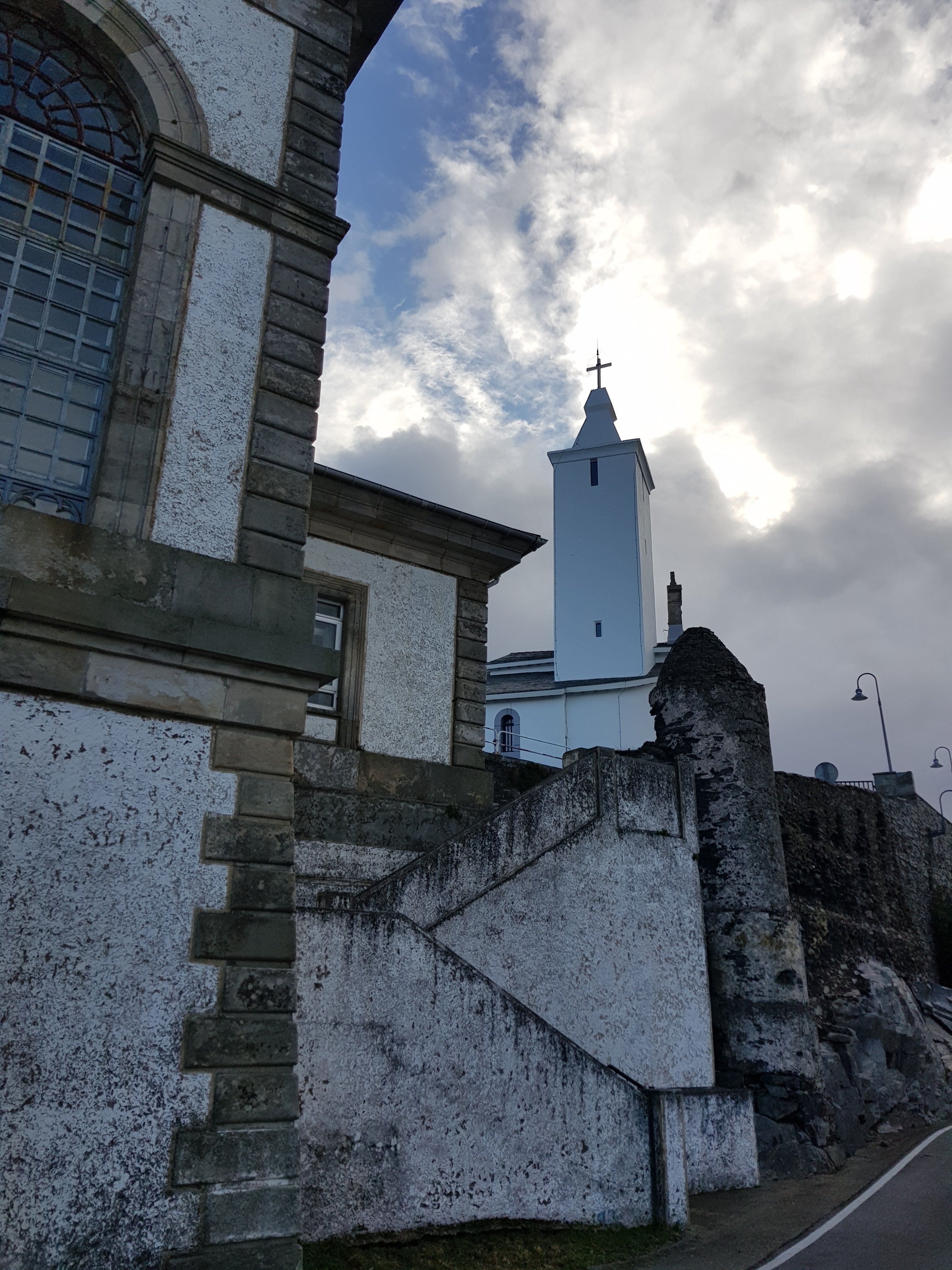
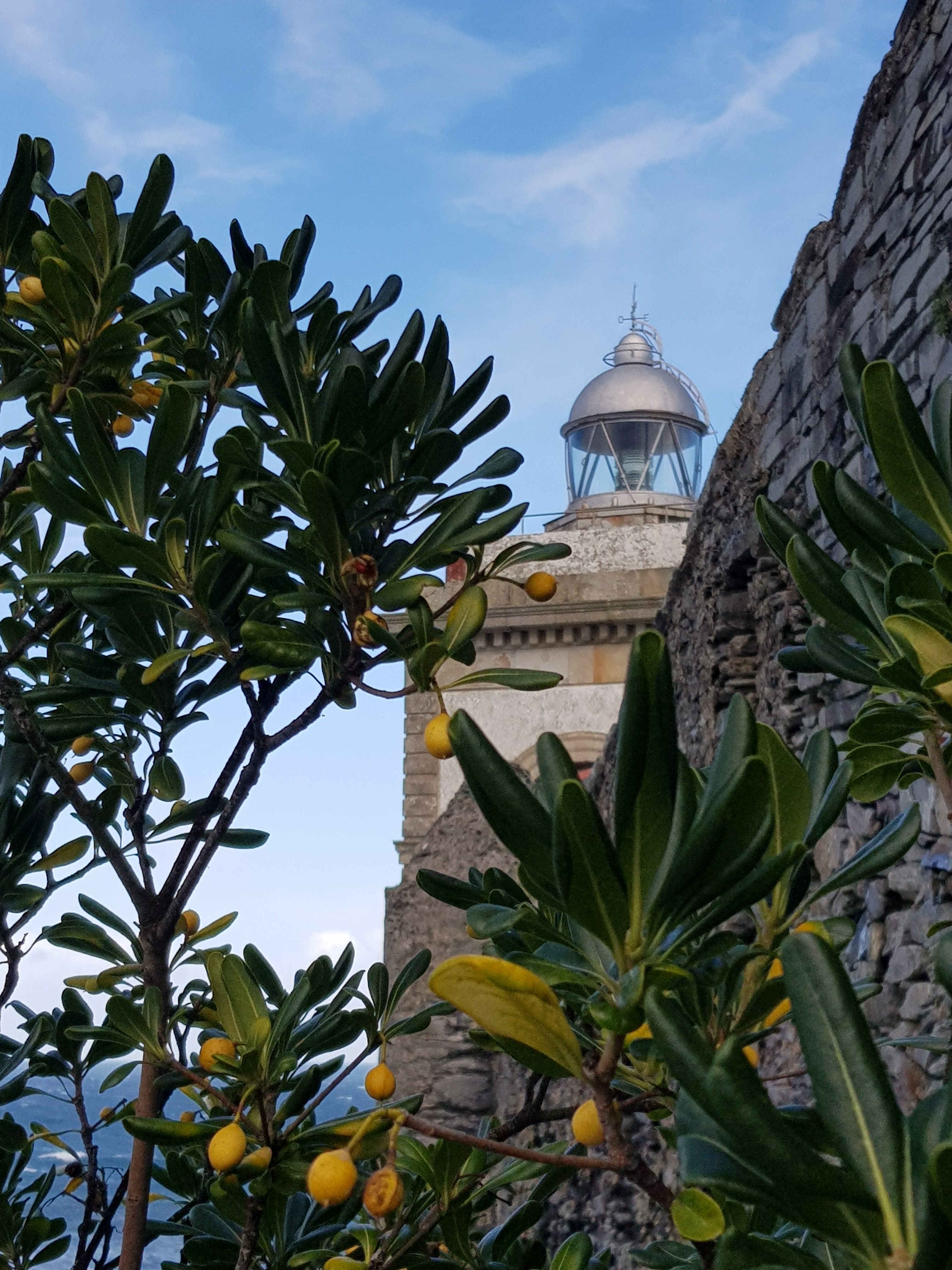
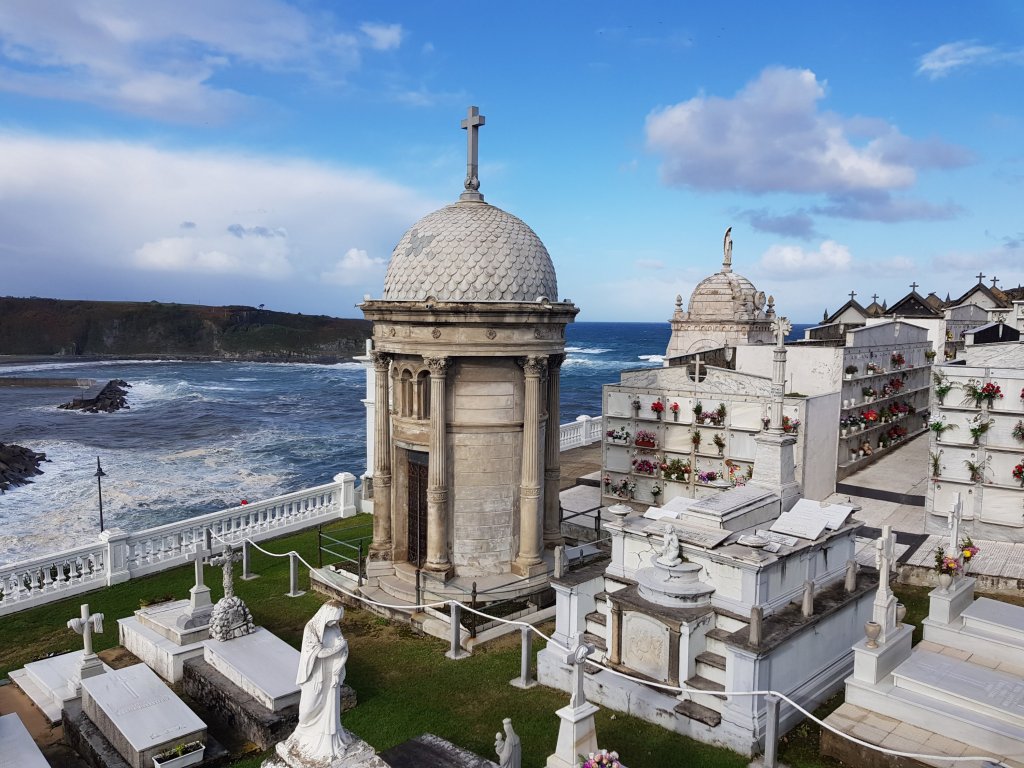
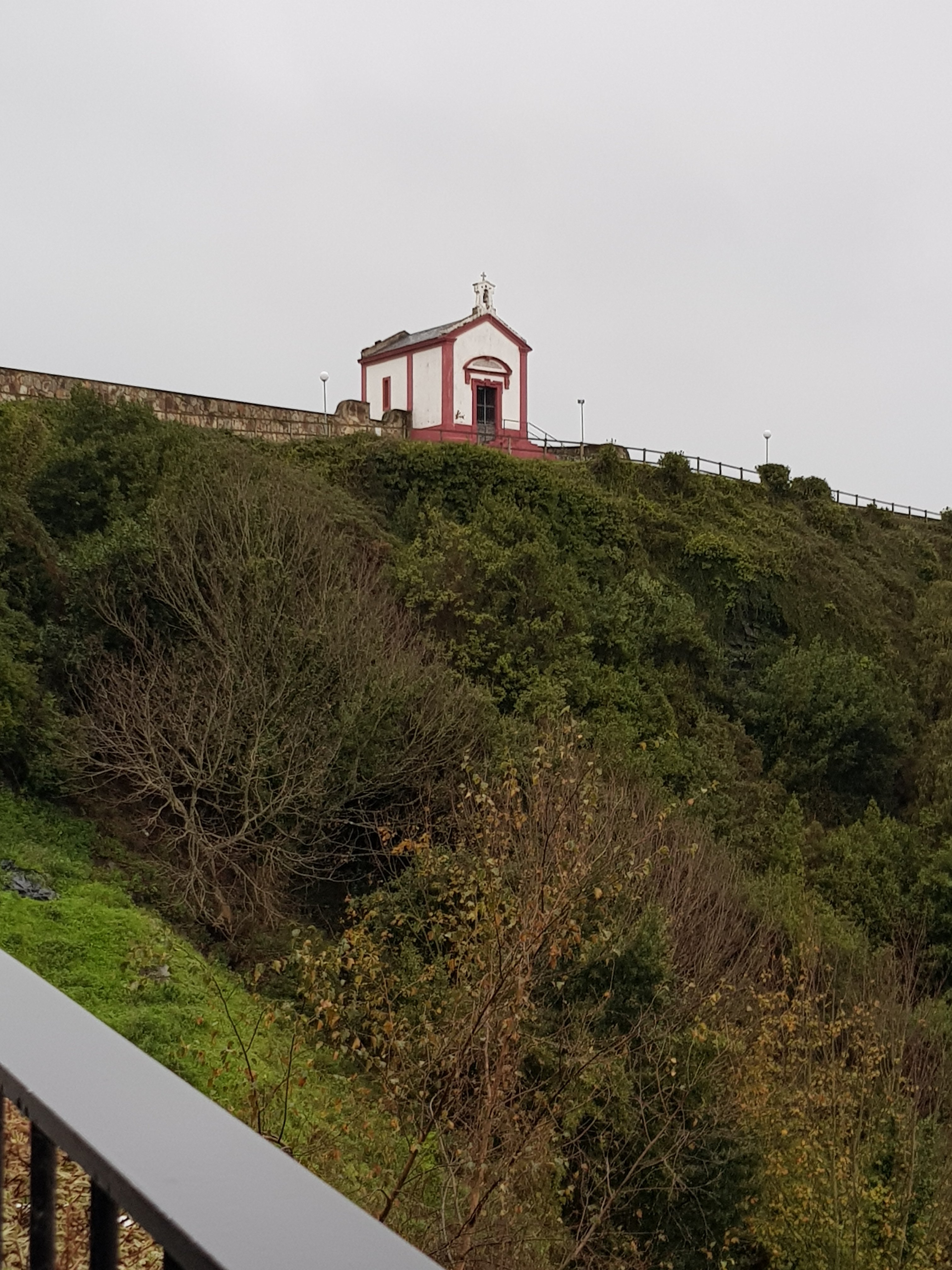
Luarca is a small town which was founded on fishing, especially for whales. The town has a winding river running through its centre and a reasonable amount of bars, restaurants and shops. As you walk through the town, which is full of grand indiano buildings, you are led to the harbour, two beaches and a climb to the lighthouse, cemetery and hermitage.

The hermitage is open to explore, and the cemetery can also be visited, and has some local famous figures within it.

The scenery is lovely, and whilst I was up against strong winds, I did manage to wonder around and look at the sites before the big storm hit! When I could hear thunder, and see snow, I knew the train had been the right decision this day..

The next morning, I headed to Navia. The rain started early and kept on coming, changing from small drops to monsoons without a second to react. I kept myself motivated by singing along to myself ‘hit me with your best shot!’ And it definitely did, when it began to thunder, I started to freak out that I was in the middle of nowhere holding metal sticks!

I pulled myself together and carried on, assuming that I was the only person mad enough to be out here, when another pilgrim appeared behind me.

This peregrino from down under, had managed to leave from Irun a week after me and was now overtaking me! Bit embarrassing… After walking together for an hour though I realised he had been doubling up trail lengths each day, not taken any rest days and was not stopping to look at things. Whilst I may end up being the last pilgrim of 2021, I still think slow and steady is a better experience. I do hope I’m home for Christmas though…

The arrival in Navia was met with a big smile from me, and in the pouring rain, and frozen to the core, I arrived at my hotel. Navia is a reasonable sized town and the hotel I stayed in was pleasant. One cheeseburger, and a warm bath later, and all was restored.

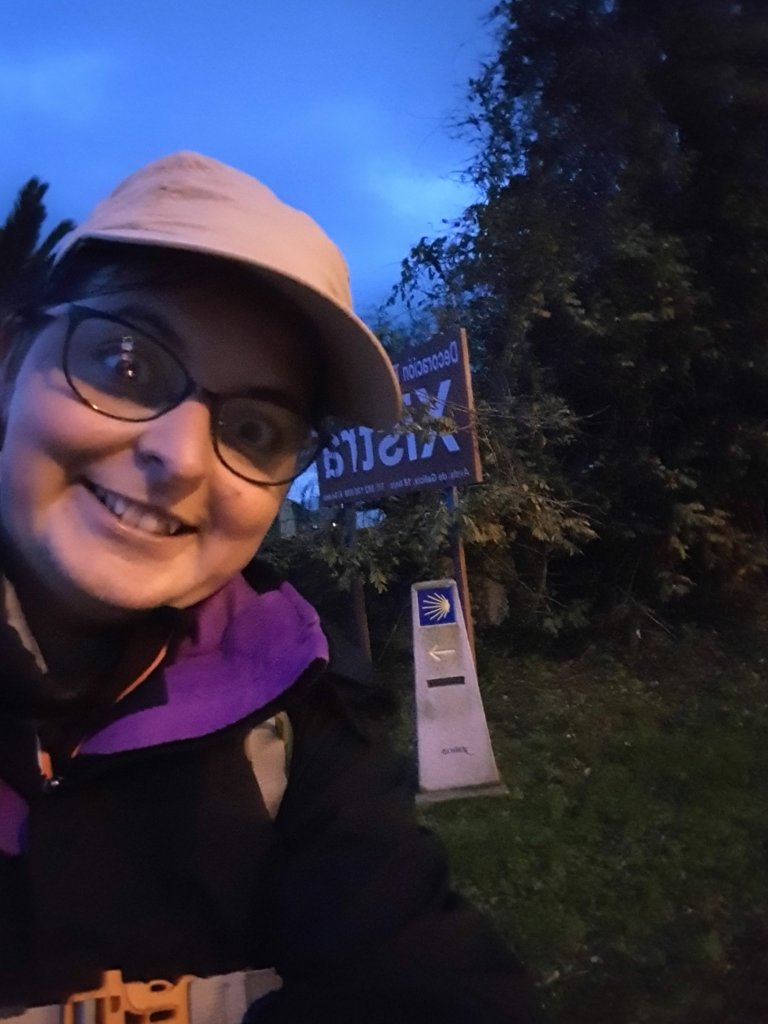
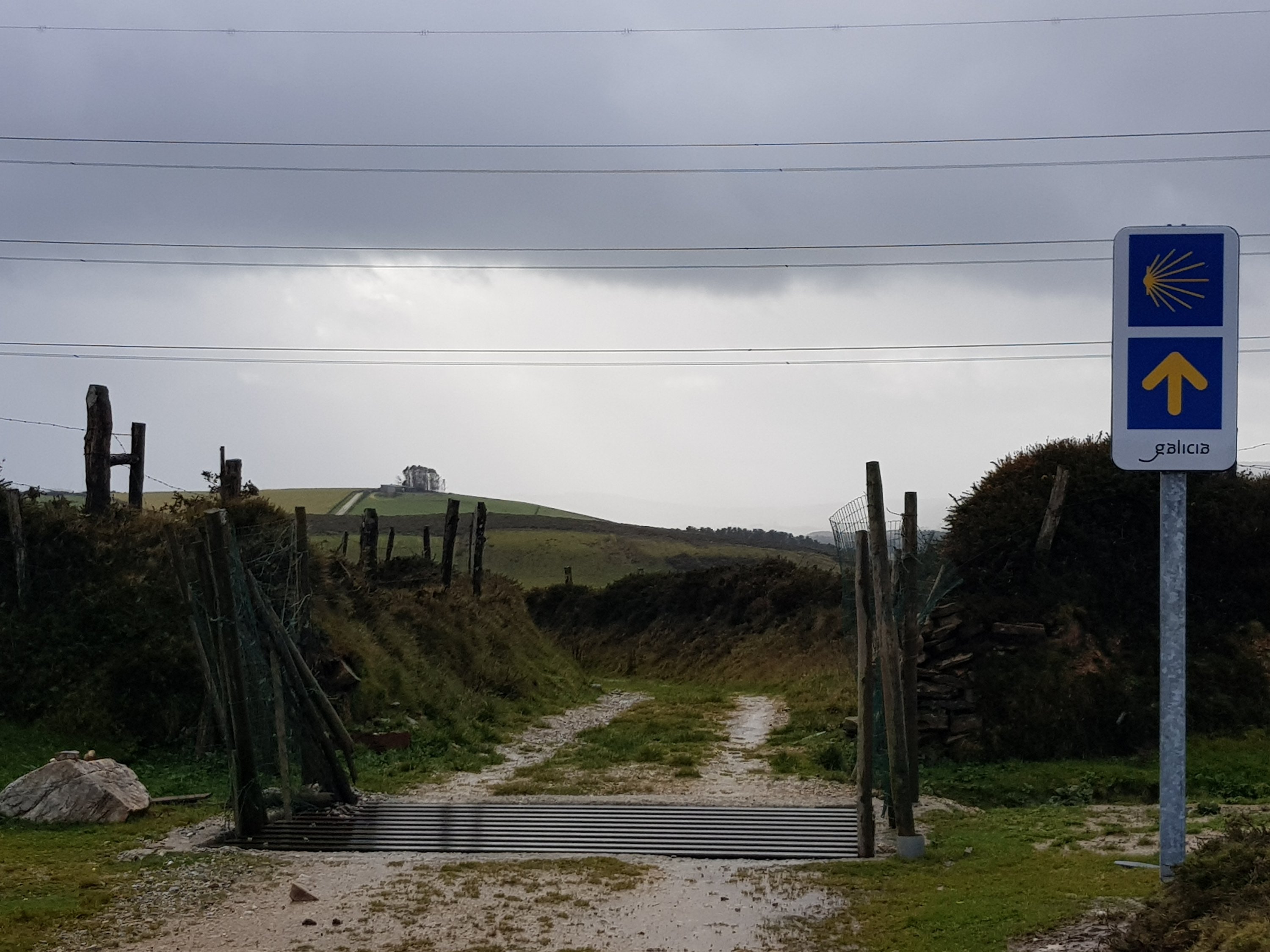
The next day was a big one, about 33km to Ribadeo, and into the final region of my camino, Galicia. It feels like forever that I have dreamed of standing in front of that beautiful Galicia sign. A sign that I have travelled over 600km and I am almost there!

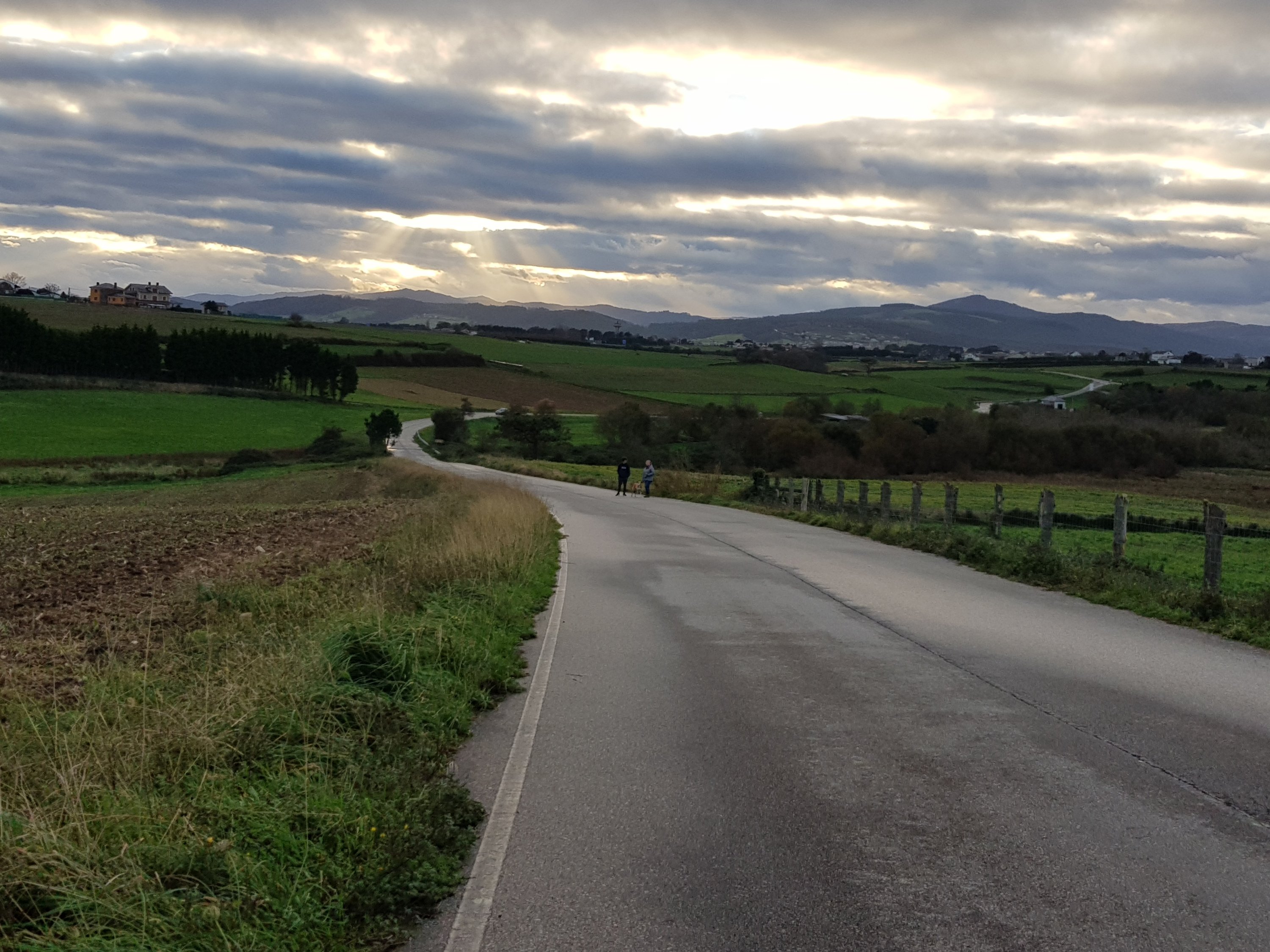
I walked from sunrise to sunset, and the day started with the rain but by the afternoon there was some sunshine. There was also plenty of uplifting camino related signs, statues, and artworks. The day covered a mix of landscape; some forest but mostly road.

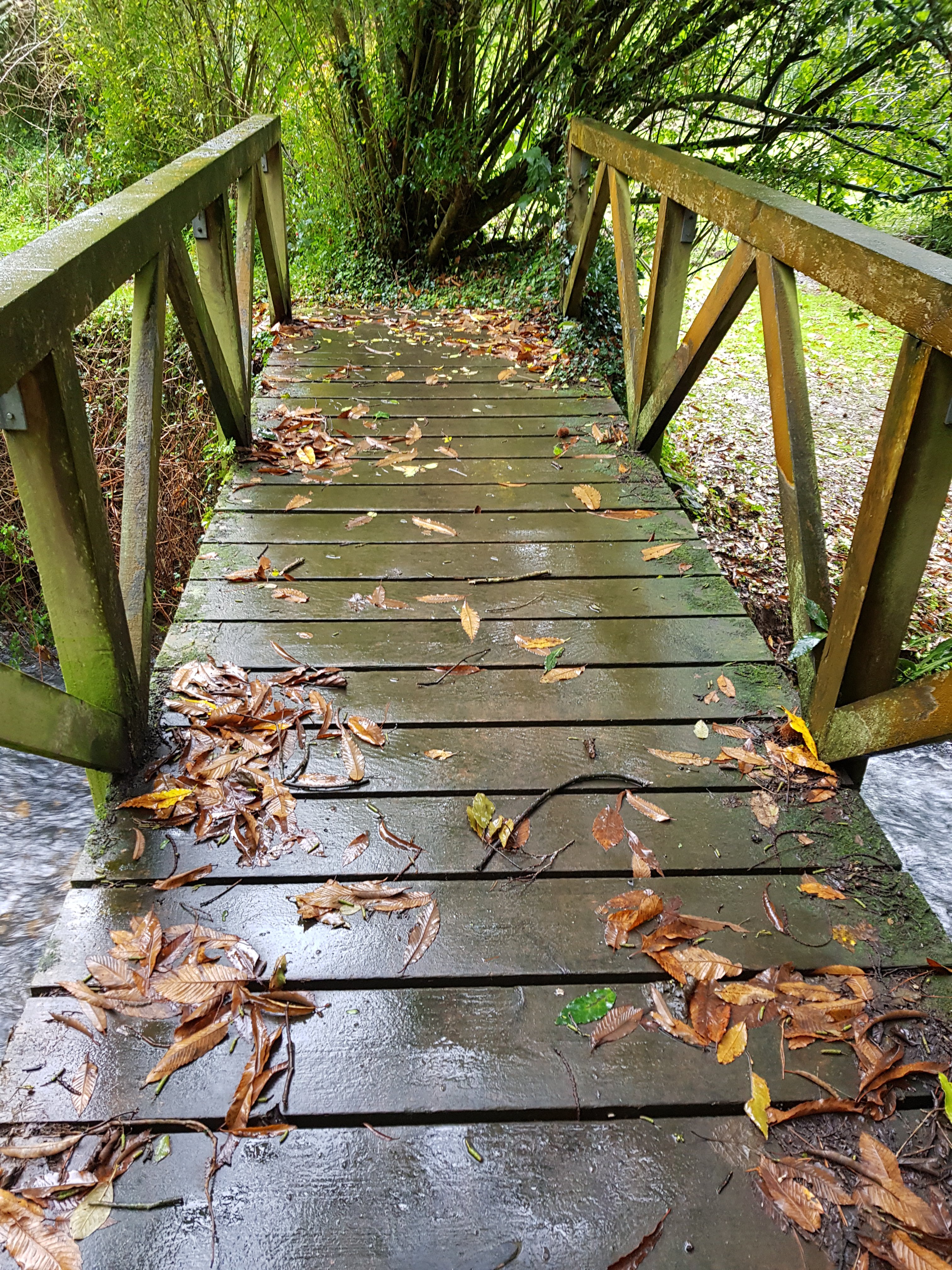
I did have a very natural river experience, when the river had overflowed the footbridge. I had to take my shoes off and cross bare footed. It was freezing, but fun!

At one point, I was given a choice of two routes, an inland one, and a coastal route. I chose the coast, so I had something to distract me from my ongoing pains, and because now I spend a lot of time trying to read the sky for clues of what direction the clouds will blow. It looked clear that way.

I made the right choice! I had 360′ views of nearly clear skies, with the ocean on one side and mountains on the other. This really was a nice surprise.

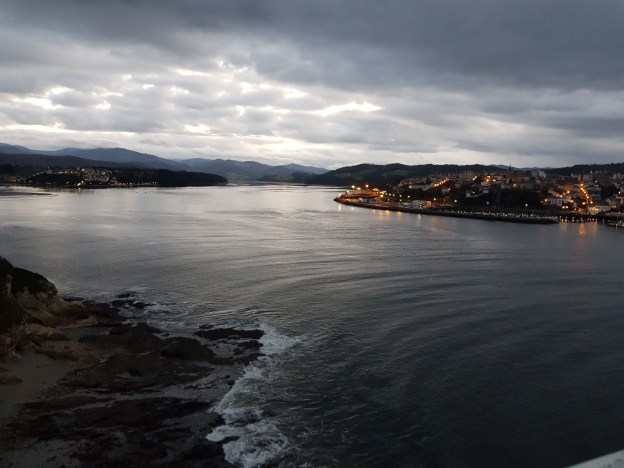
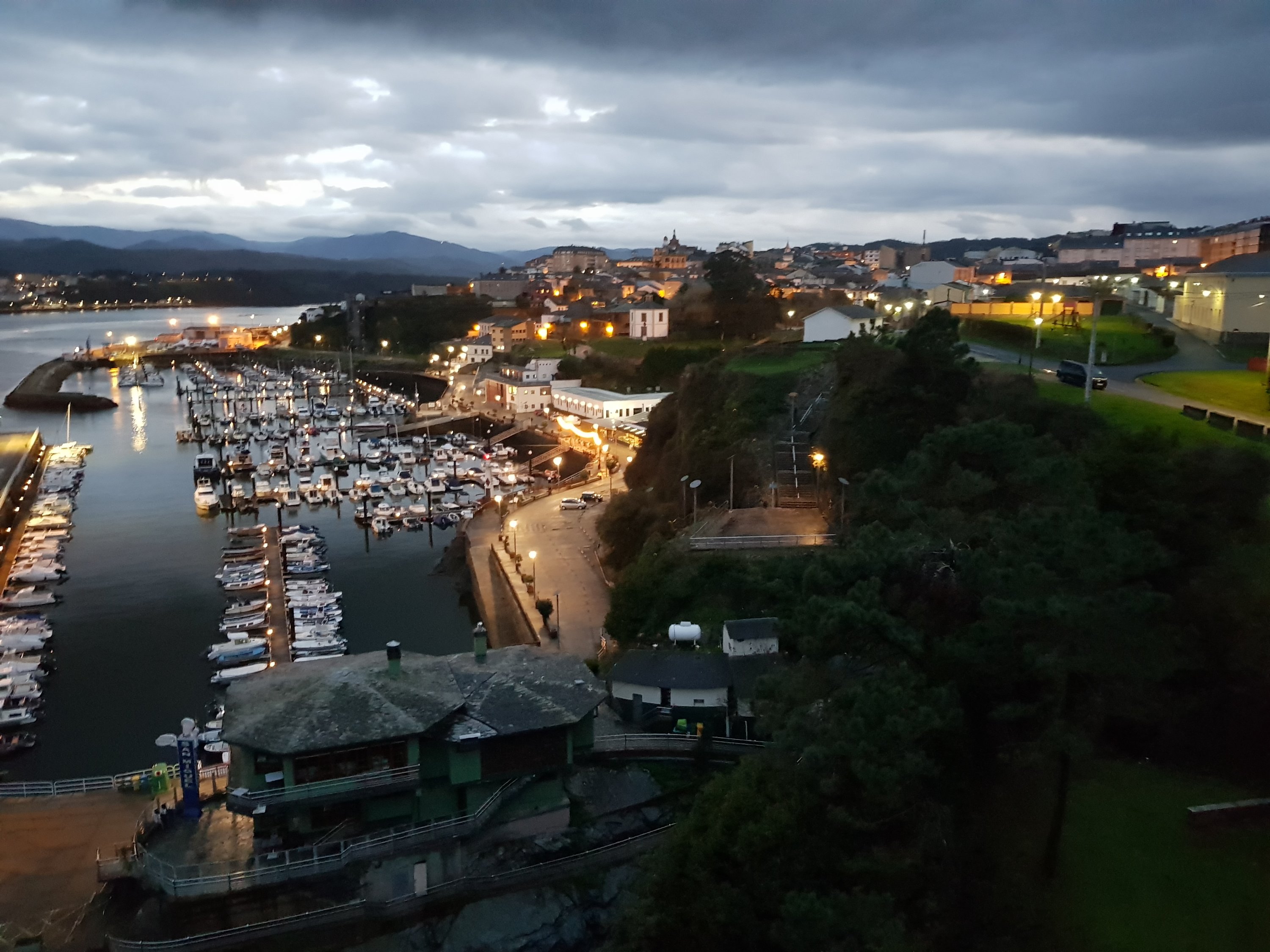
After 10 hours on the road I had to really push myself to make it over the bridge into Ribadeo as the night sky rolled in, and it began to rain again. The bridge is massive, and the views of the city are stunning, especially lit up at night. Then I got to the other side and finally saw the Galicia sign… and gave myself a big pat on the back.

Ribadeo is a must see stop, as it has lots of services and shops, and some gorgeous buildings.

The next morning, my body felt ruined, everything hurt and my foot was inflamed. I was facing another 10 hour walk, and there was no way I could do it. It was a sunny day, and I did not want to waste it or fall more behind. I spent some time in the nun’s convent praying for strength, visited the pharmacy for more ibuprofen, and took the one daily bus part of the way to Lourenzá.

I stopped here for a few hours and took a look around the outside of the gorgeous monastery which unfortunately was closed. I had some octopus and bread, and I walked a short 4km through forest to a nearby country lodge to rest my injuries. A while later that day, the Aussie stumbled in, and I was shocked to see that he wasn’t days ahead. It turned out, he had worked too hard, and was suffering with an injury now as well. There is no getting out of this walk unscathed!

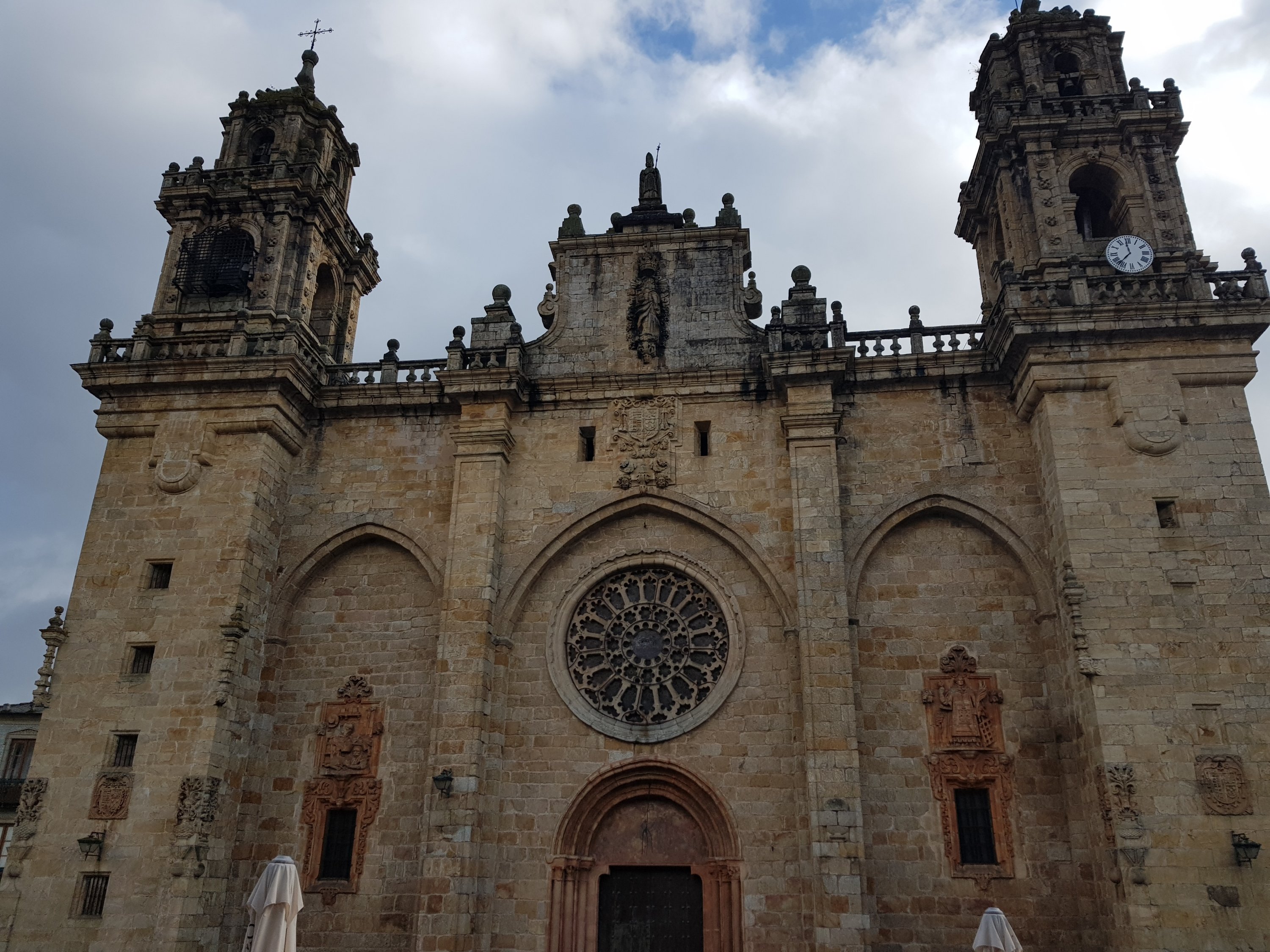
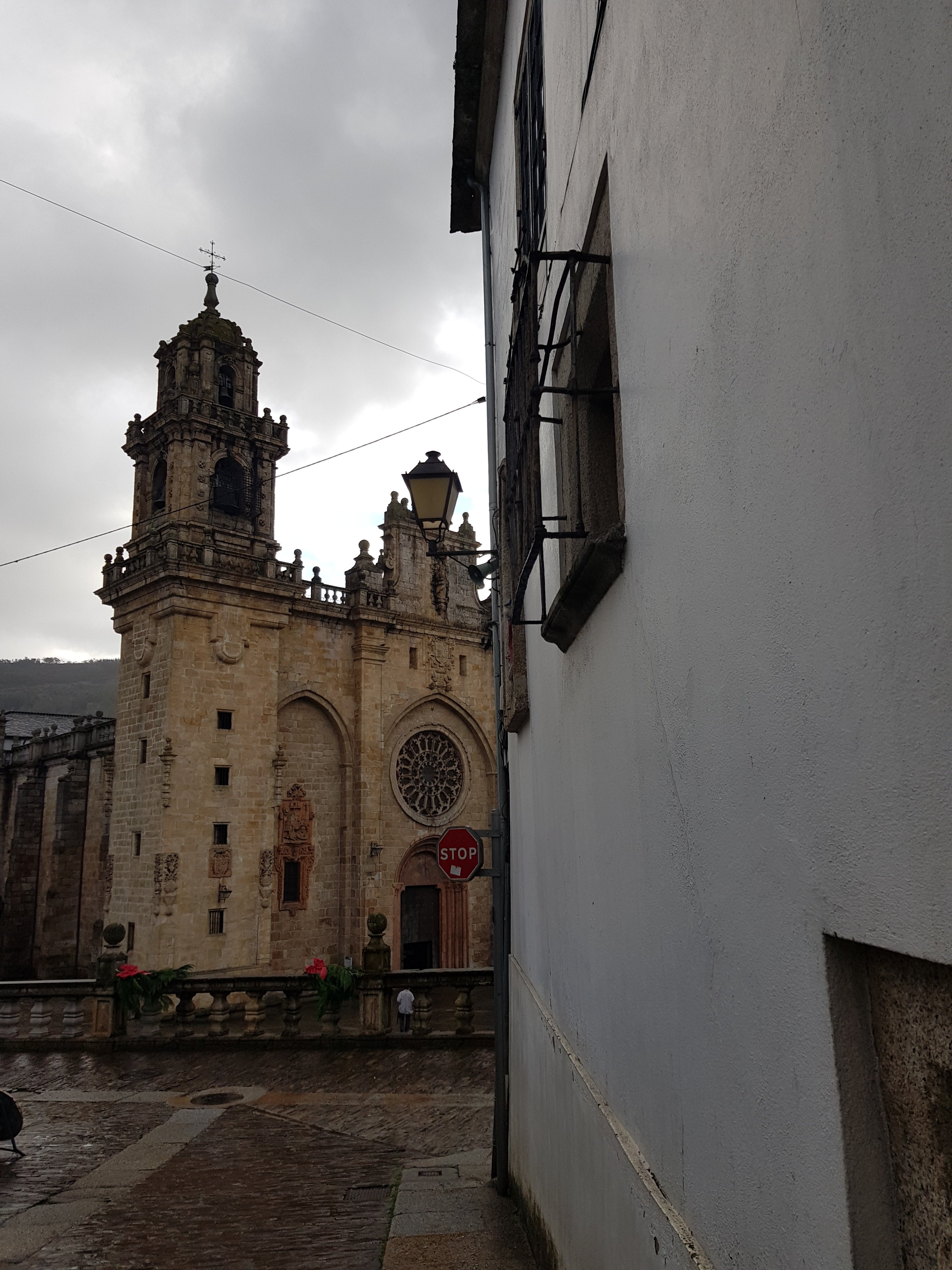
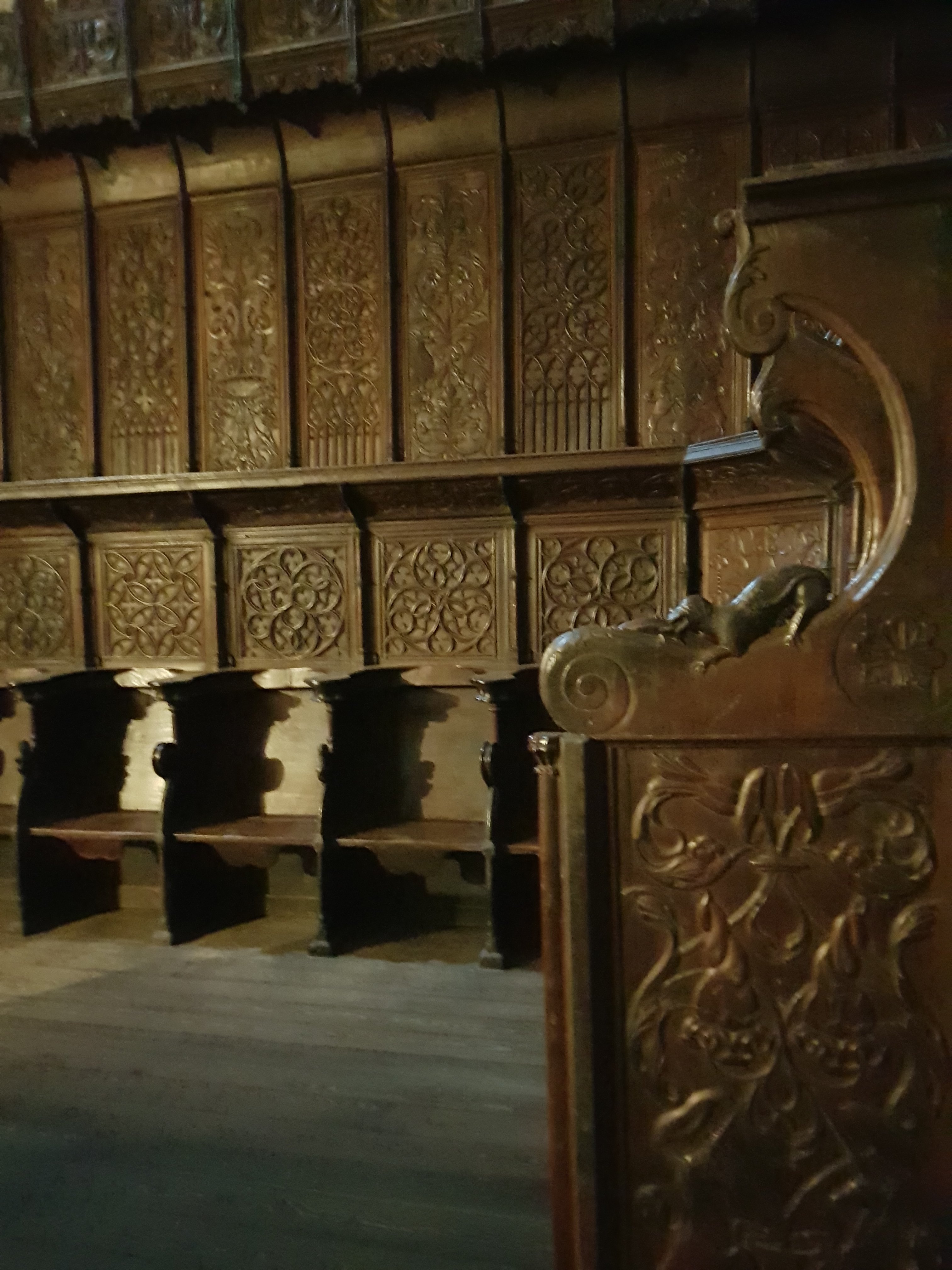
The next day was supposed to be an easy 18km. The rain kept coming but I made it to my first stop in Mondenedo, this little city has a cathedral, that I was keen to visit. It was 3 euros to enter but did include an audio guide. The cathedral has a strange layout following many extensions, it has three naves, a chapel in the center, a small cloisters and a small museum inside. It is worth a visit, as the art work and choir in particular are lovely.

The city has a few other historical buildings, and an exhibition about Camino del Norte inside an old church. The man looking after it was very chatty and helped me to consider my next stages of the walk. He also warned me of an upcoming bank holiday when all the shops will be shut. The exhibition itself was quite interesting focused on the upcoming locations on the walk, within Galicia.

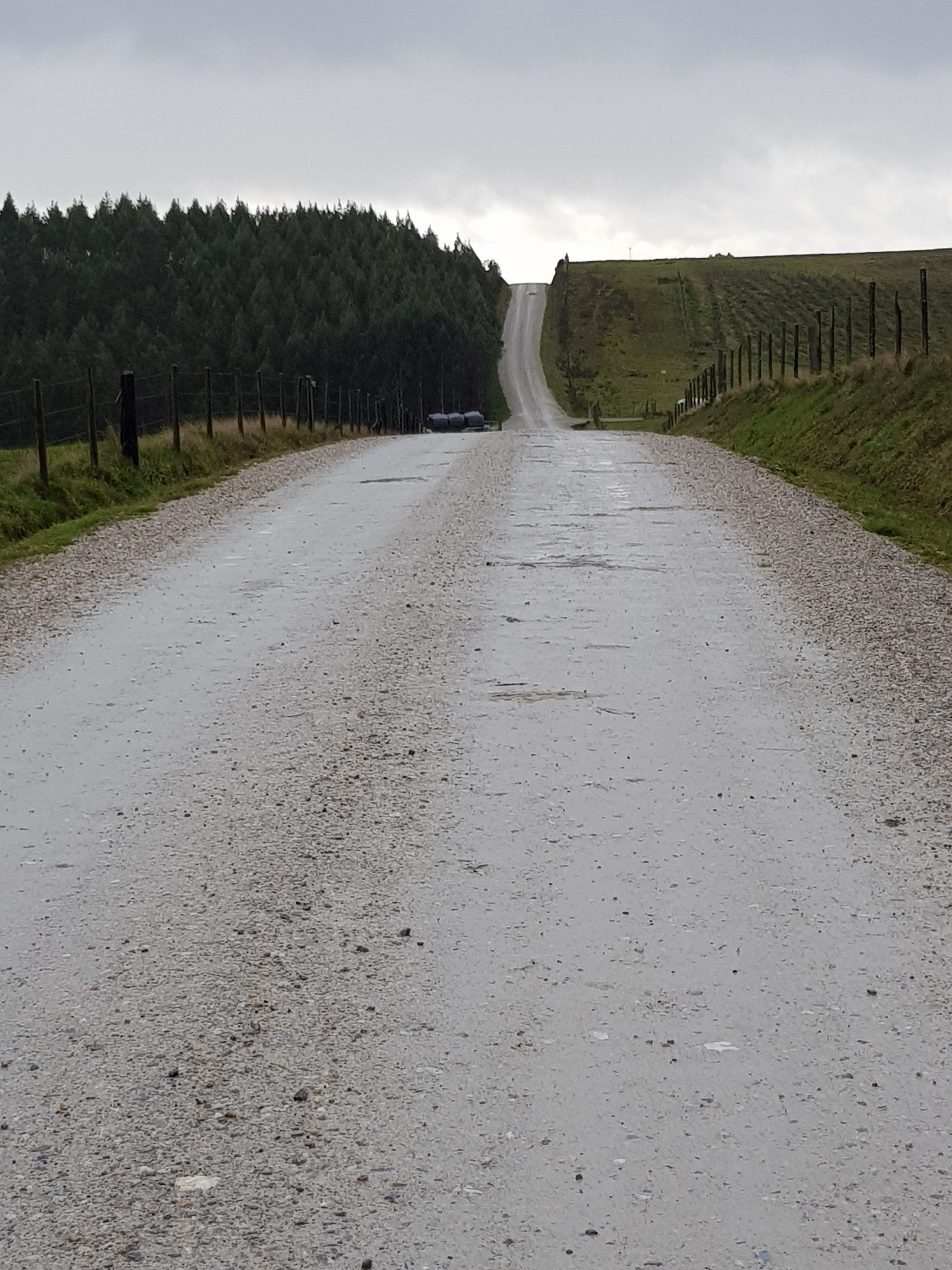
Once I had walked out of Mondenedo, I began a very long and vertical ascent. This eventually took me to the other side of forest, and I then walked about 10km through farmland. There are no services here, just me, the cows and two horses that took a run at me! I was entirely soaked, but singing along to my motivational playlist, which helped.

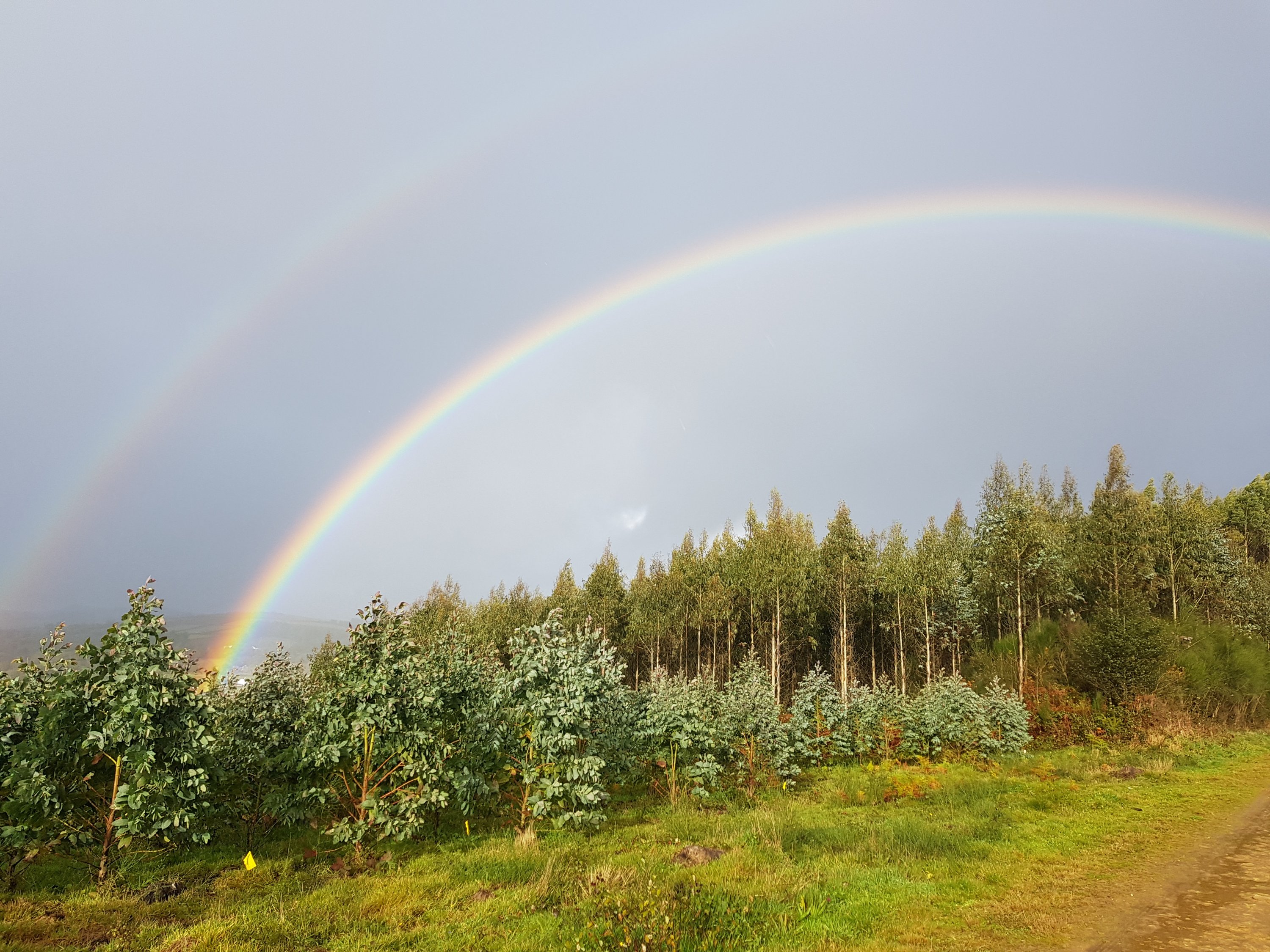
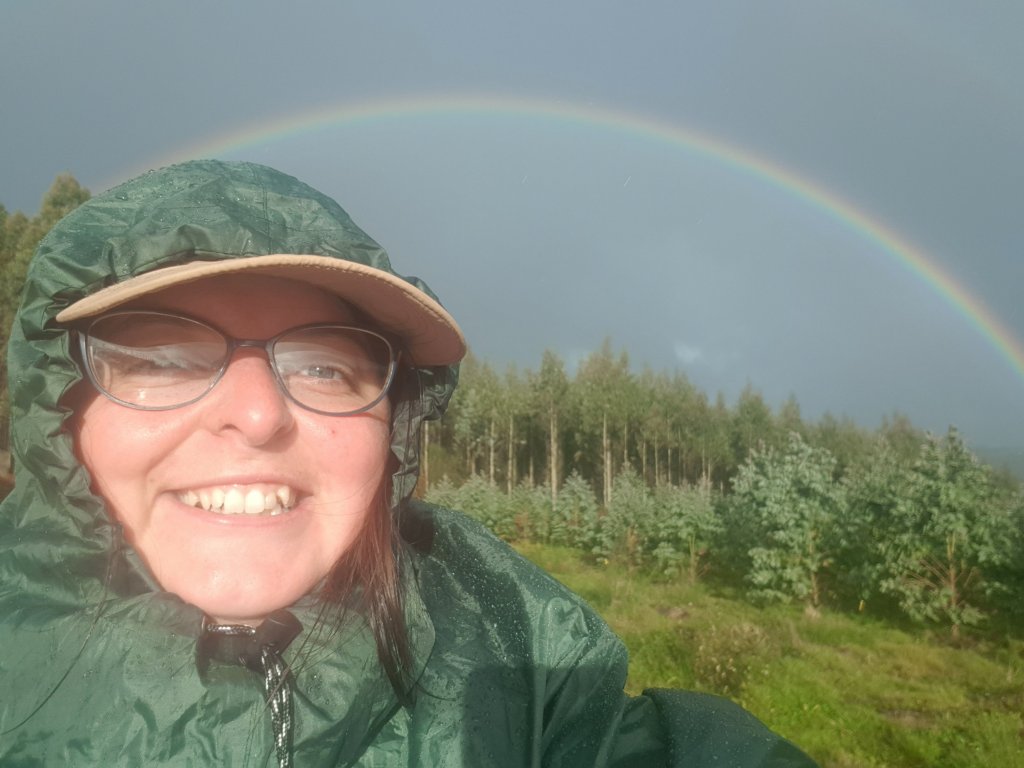
Then I decided to look back, and there was a double rainbow! Just the pick me up I needed, and lucky that I saw it. A minute later it was gone. An hour later, I finally arrived at Gontan’s pilgrim hostel. My clothes (2 outfits) were washed and dried for the first time in a week, and I fell into a coma.

The week has brought me a mix of emotions. There have been a lot of times when I have considered abandoning the camino, but I am still here, and still persevering. Pilgrimages are never meant to be easy, and with Santiago de Compostela so close now, I cannot turn back! Fingers crossed I can keep my body going until then…

Oviedo: Capital of Asturias

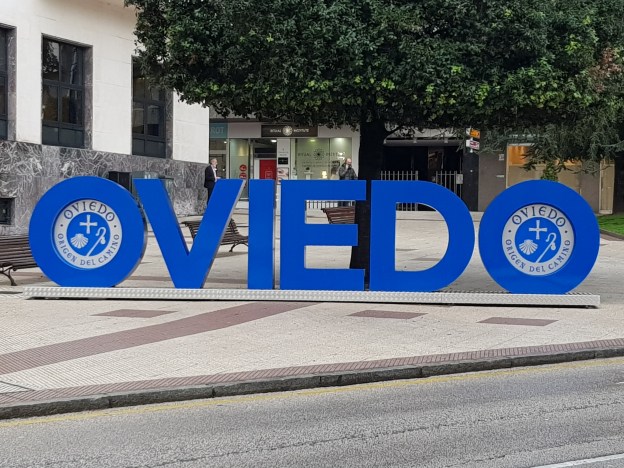
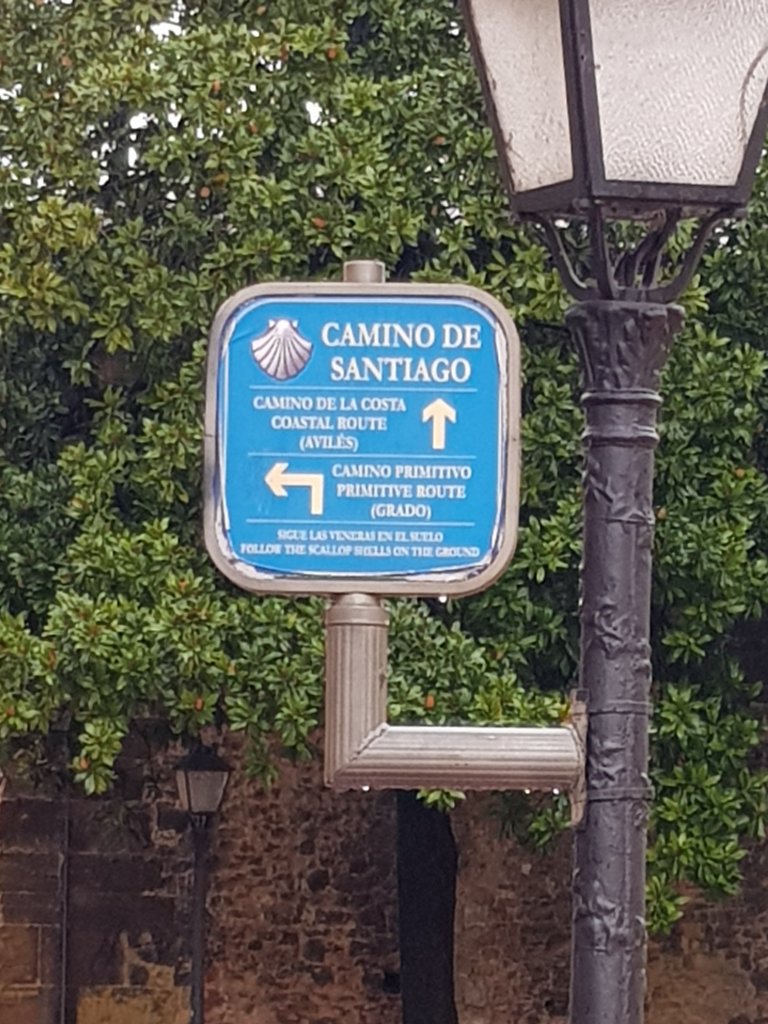
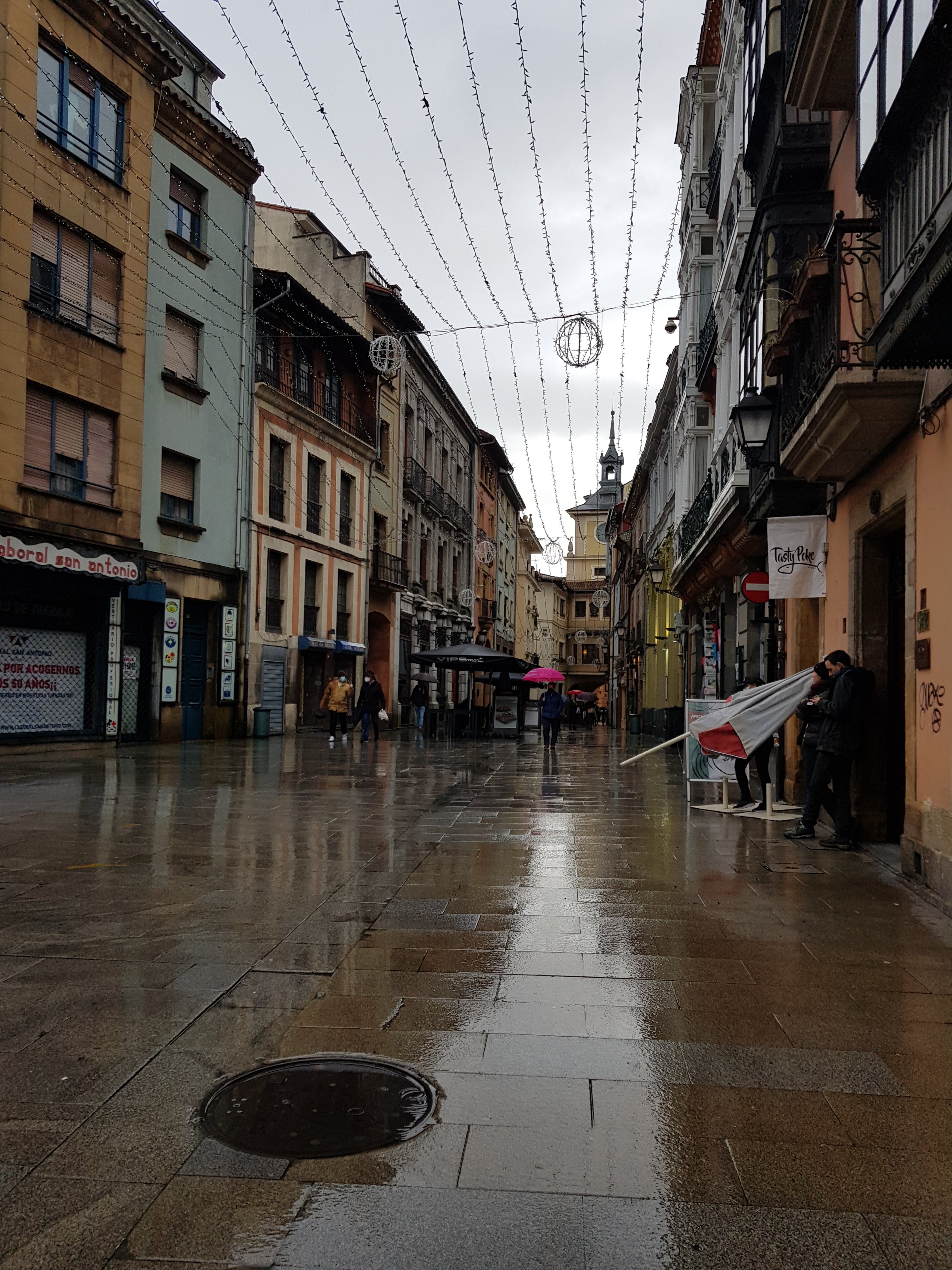
I spent a morning in Oviedo whilst I was travelling the Camino de Santiago. The city is the main city of Asturias and the starting point of Camino Primitivo.

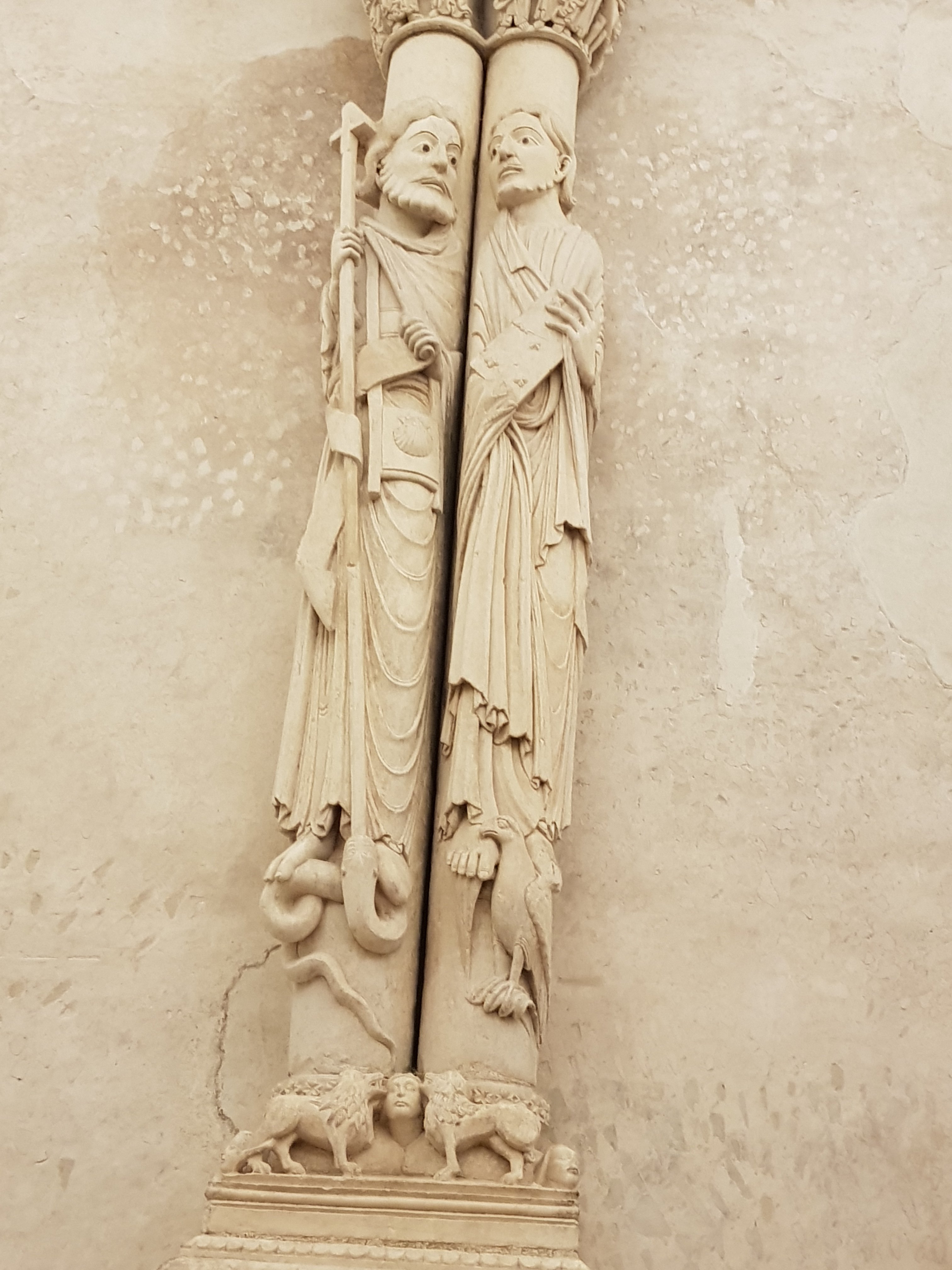
This great city has a romantic charm to it, and boasts of its connections to the origin of the Camino de Santiago. This is because the first pilgrim to make the journey to see St James’ tomb was King Alfonso II ‘the Chaste’, in 834, he set off from Oviedo. This is also why the Primitivo route that begins here is thought to be the original route.

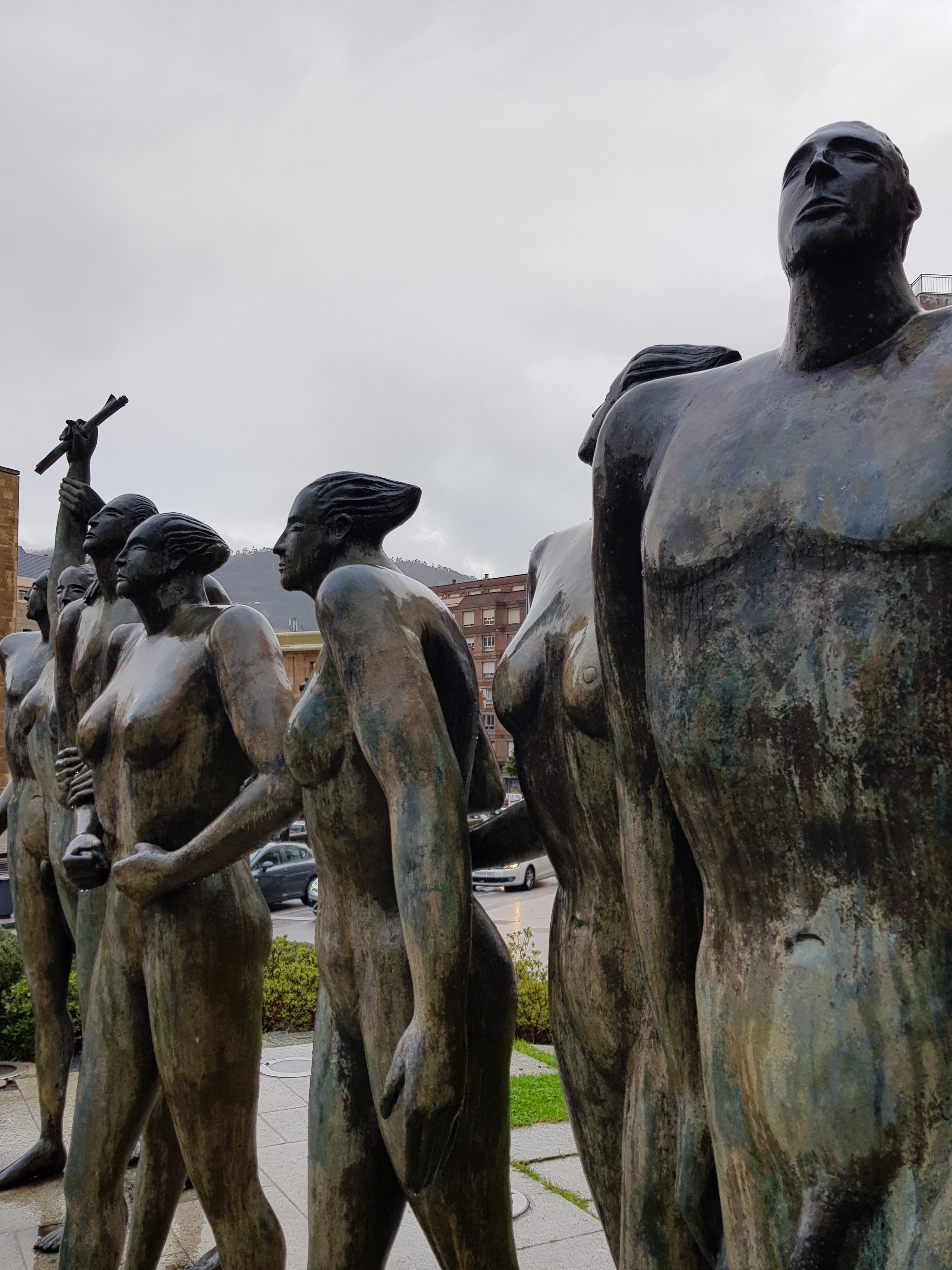
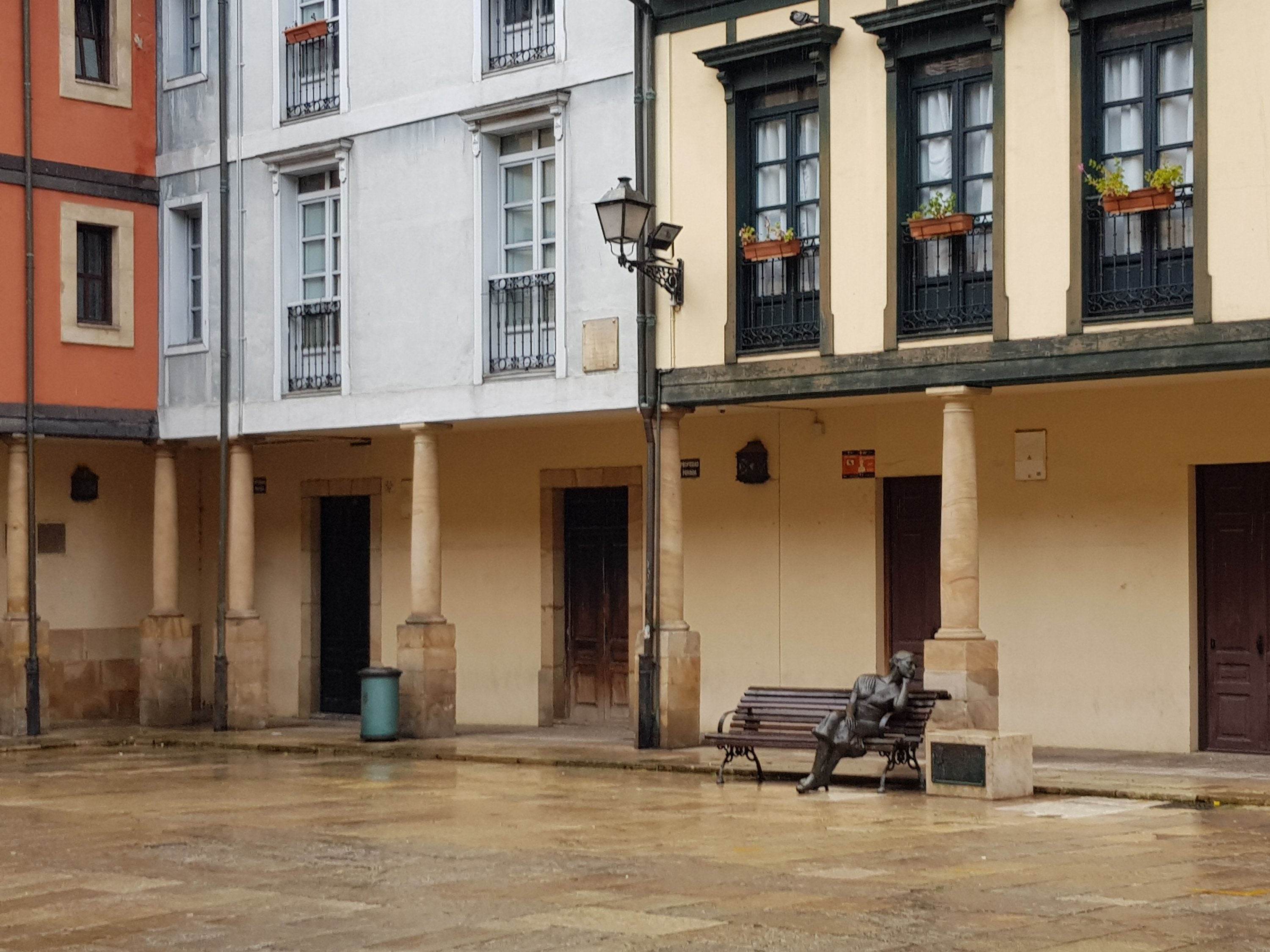
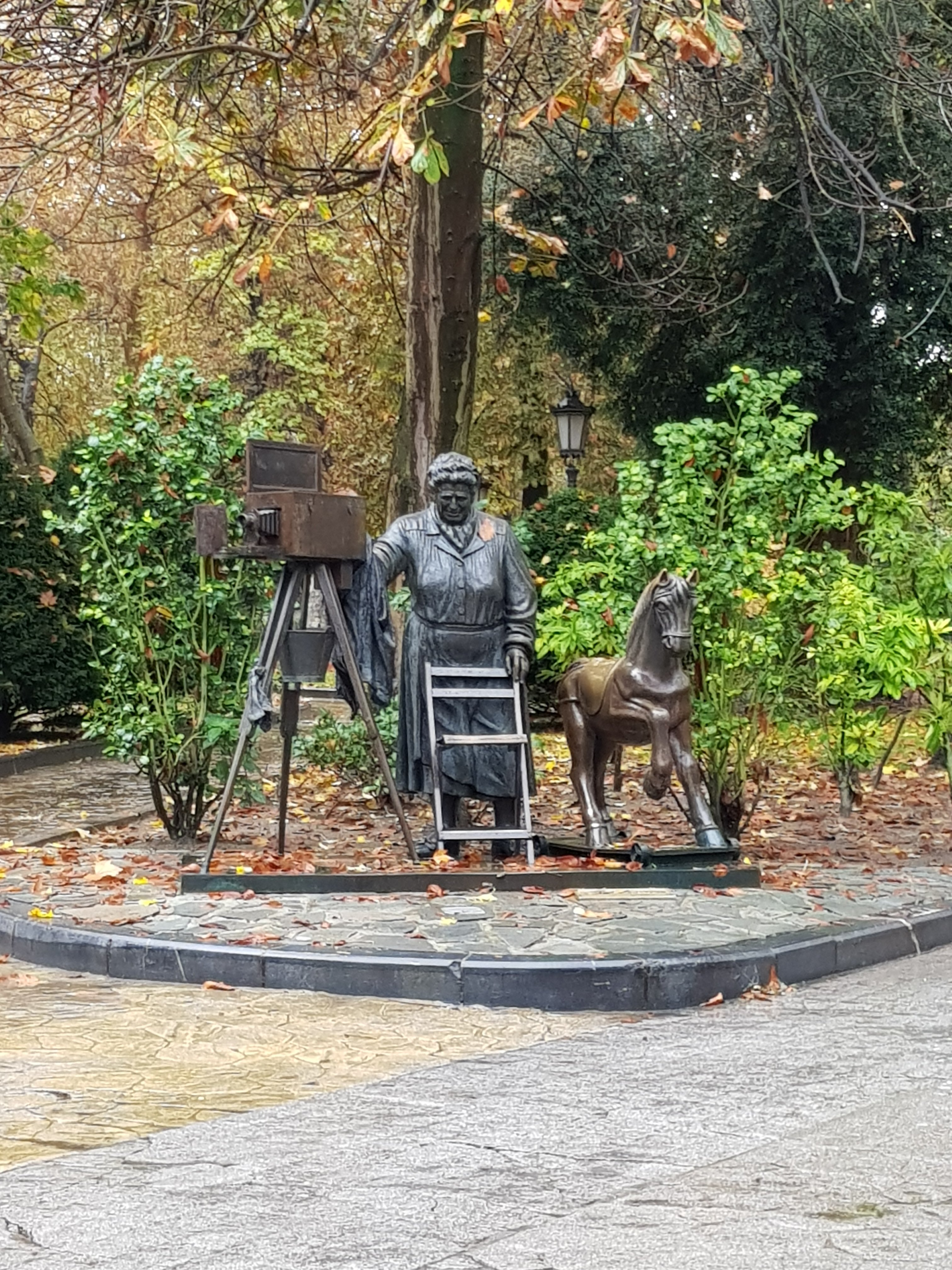
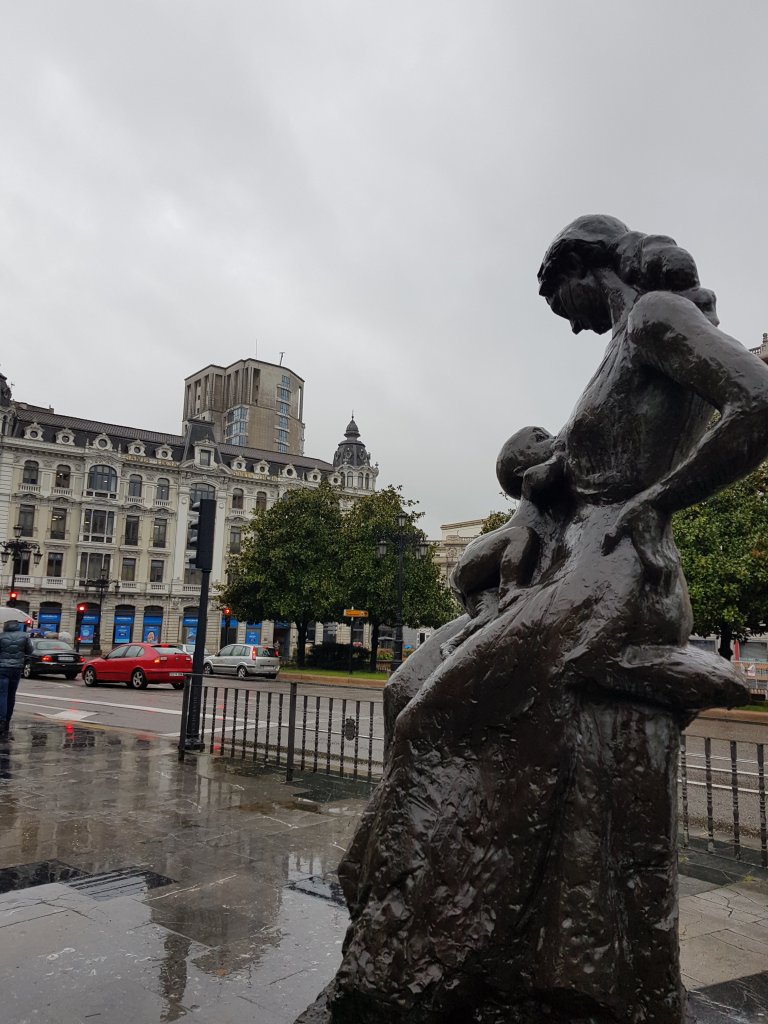
The city has all the shops and restaurants you could need, as well as some very pretty plazas, and hundreds of sculptures and other works of art. I particularly liked one of a lady sitting on a bench in Plaza el Fontán called ‘La bella Lola’. She is just looking out on the plaza and seems to be just letting her mind wonder. It made me think of how I must look so often on this journey.

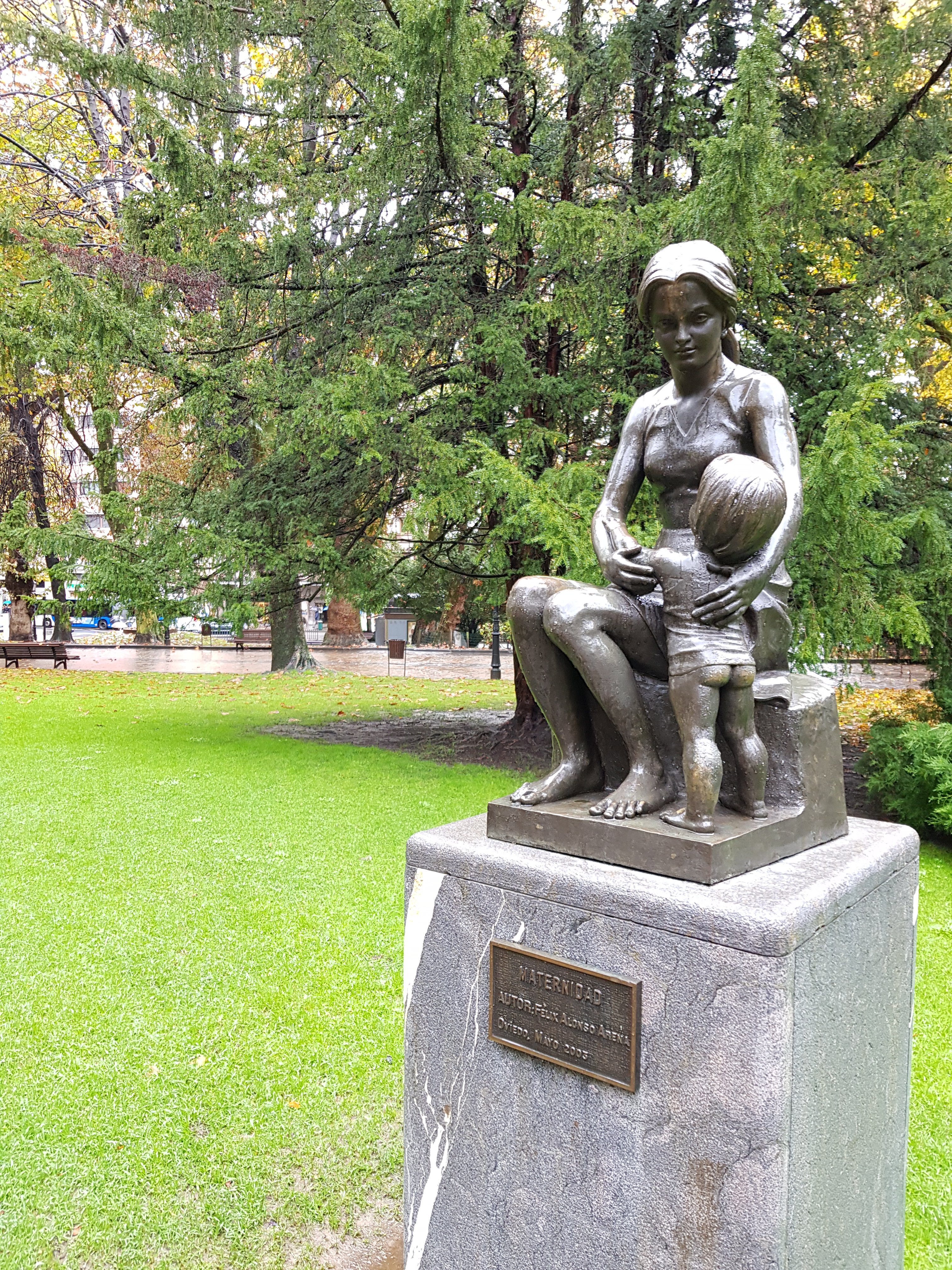
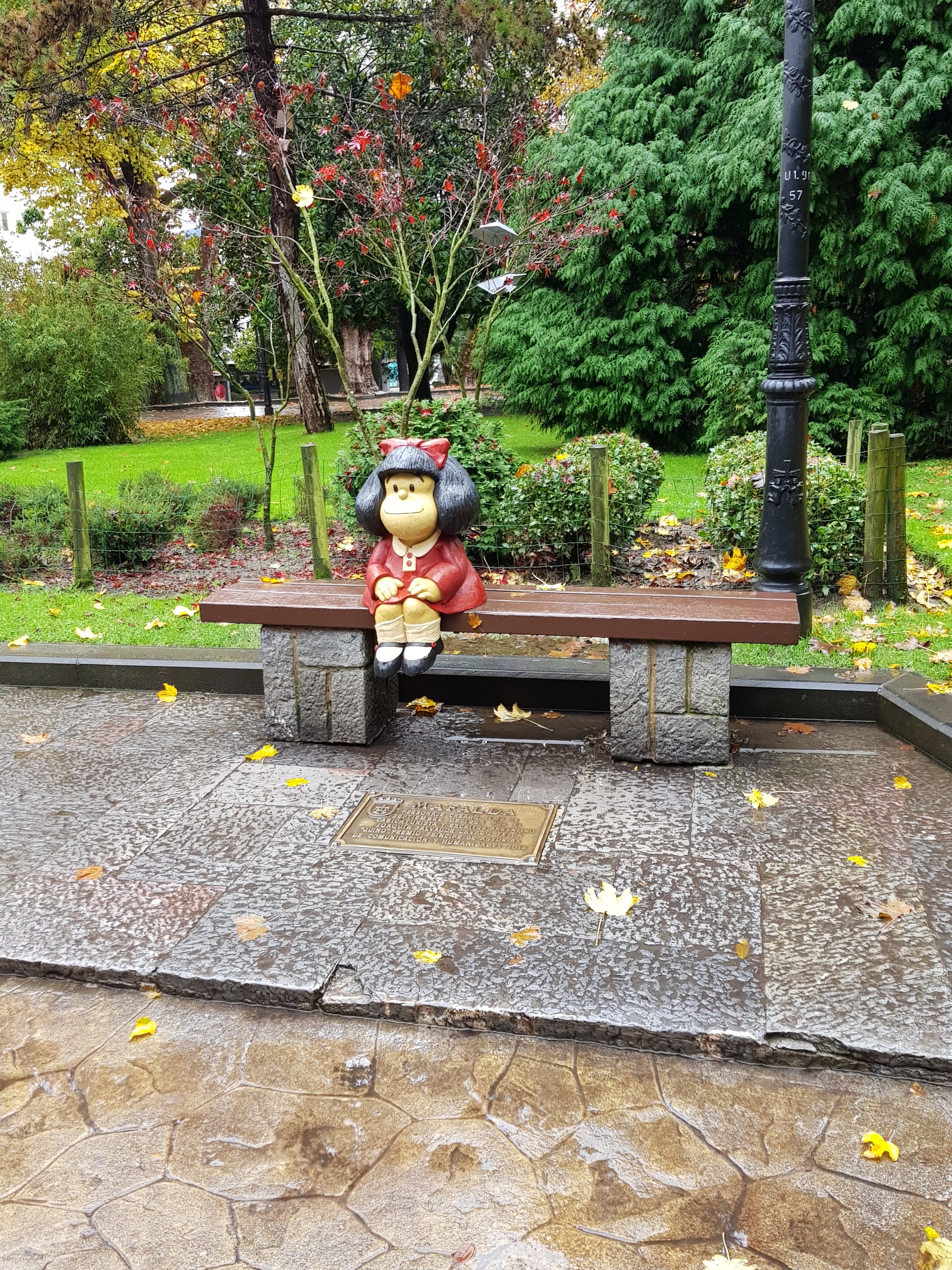
I also visited San Francisco park, which boasted of further sculptures including a famous Argentinian cartoon character called ‘Mufalda’. The park is a former convent garden, and has a number of features to explore. I was most surprised to see the date of my visit cut in grass at the edge of the park, I guess someone must cut the new date and change it every day!

The Pilgrim’s Cathedral

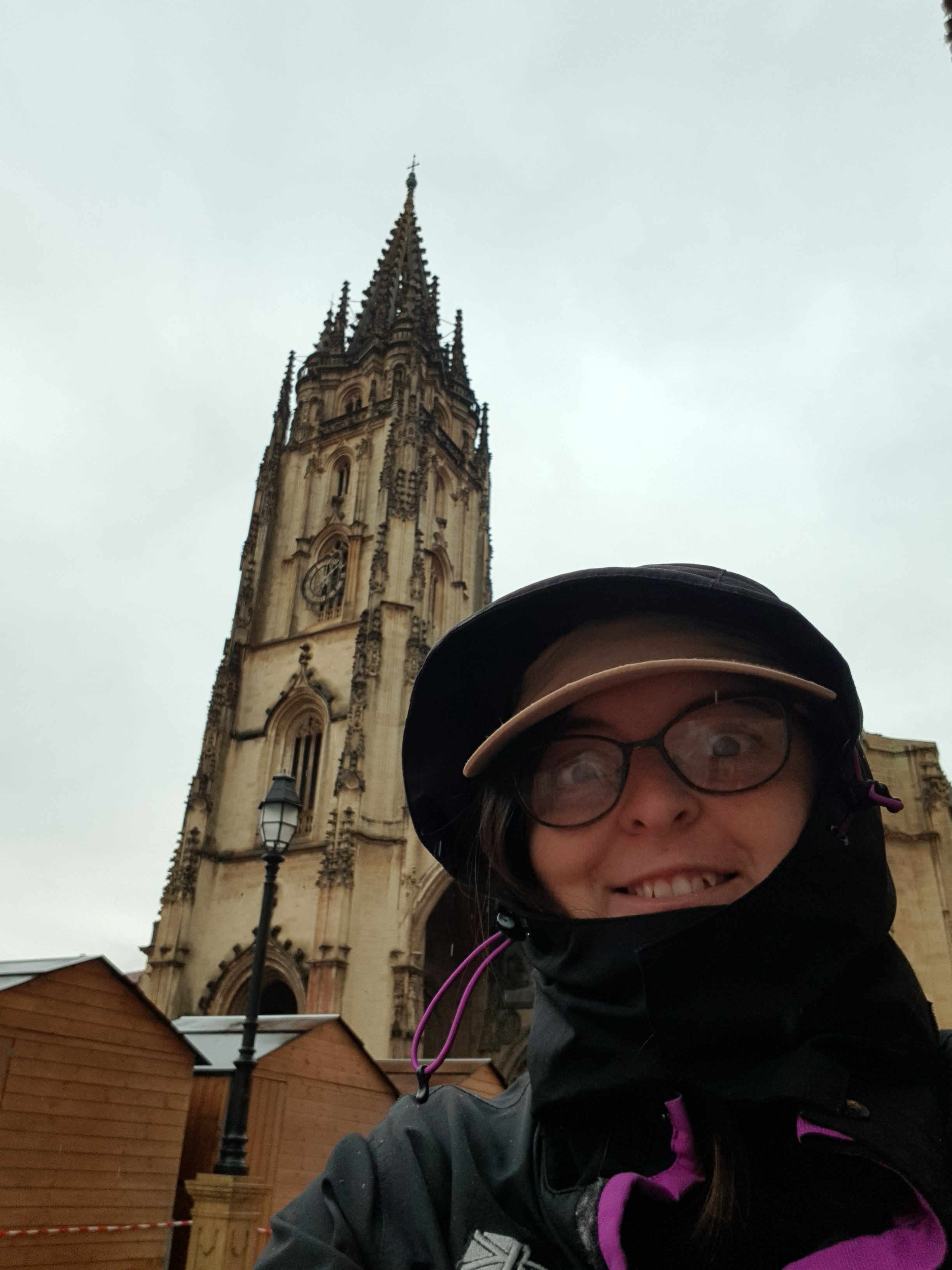
Oviedo’s Cathedral, is also known as the Pilgrim’s Cathedral, as it is a ‘must see’ for all peregrinos. There is a saying related to the connection, which promotes the importance of any pilgrim to visit…

“Whoever comes to Santiago and does not come to San Salvador, the Cathedral of Oviedo, visits the servant, but forgets the Lord.”

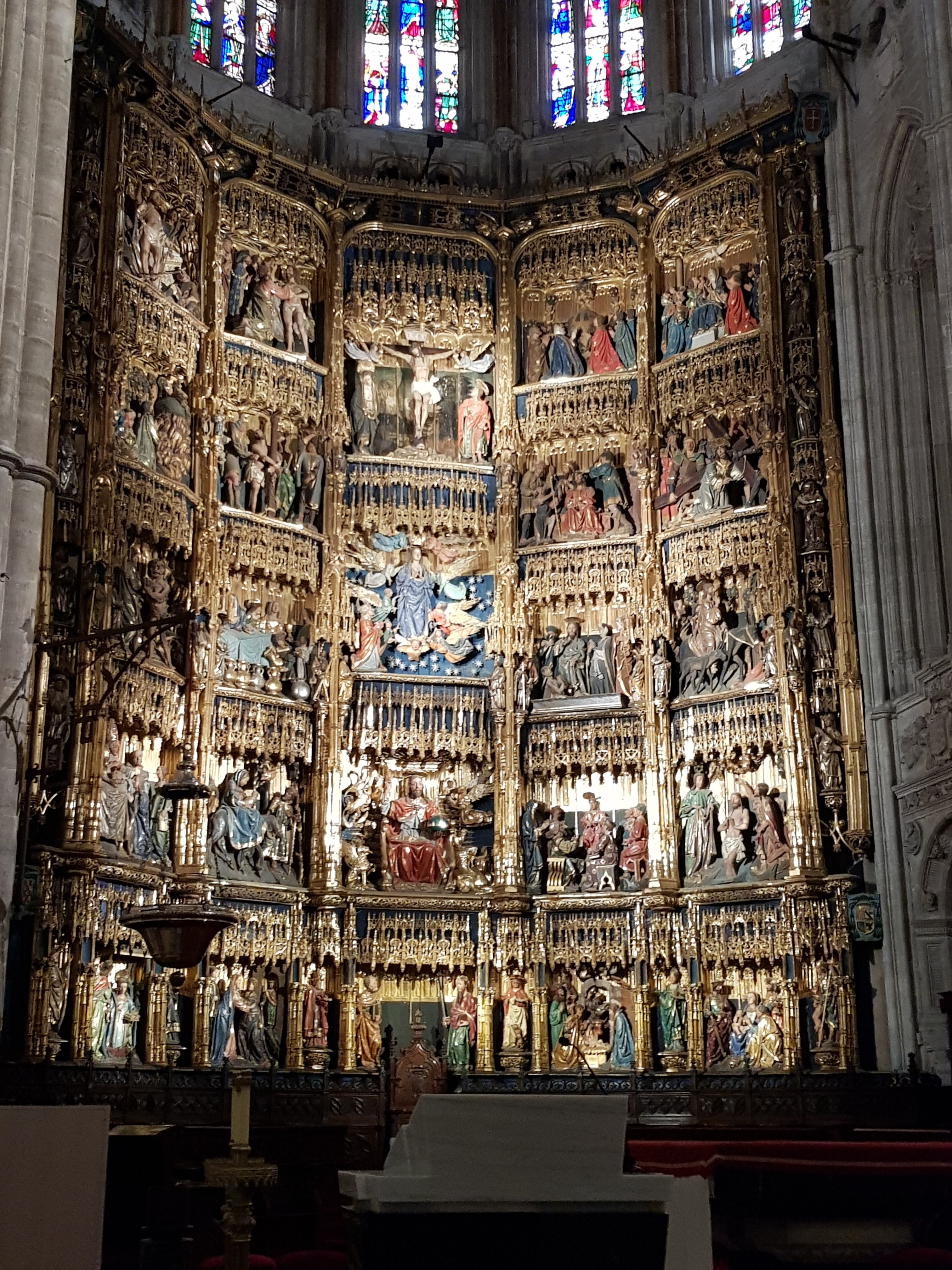
The cathedral is very large, and holds many beautiful chapels. Pilgrims can enter for a discounted price, and an audio guide is given for free, which is definitely worthwhile, as there is so much to explore.

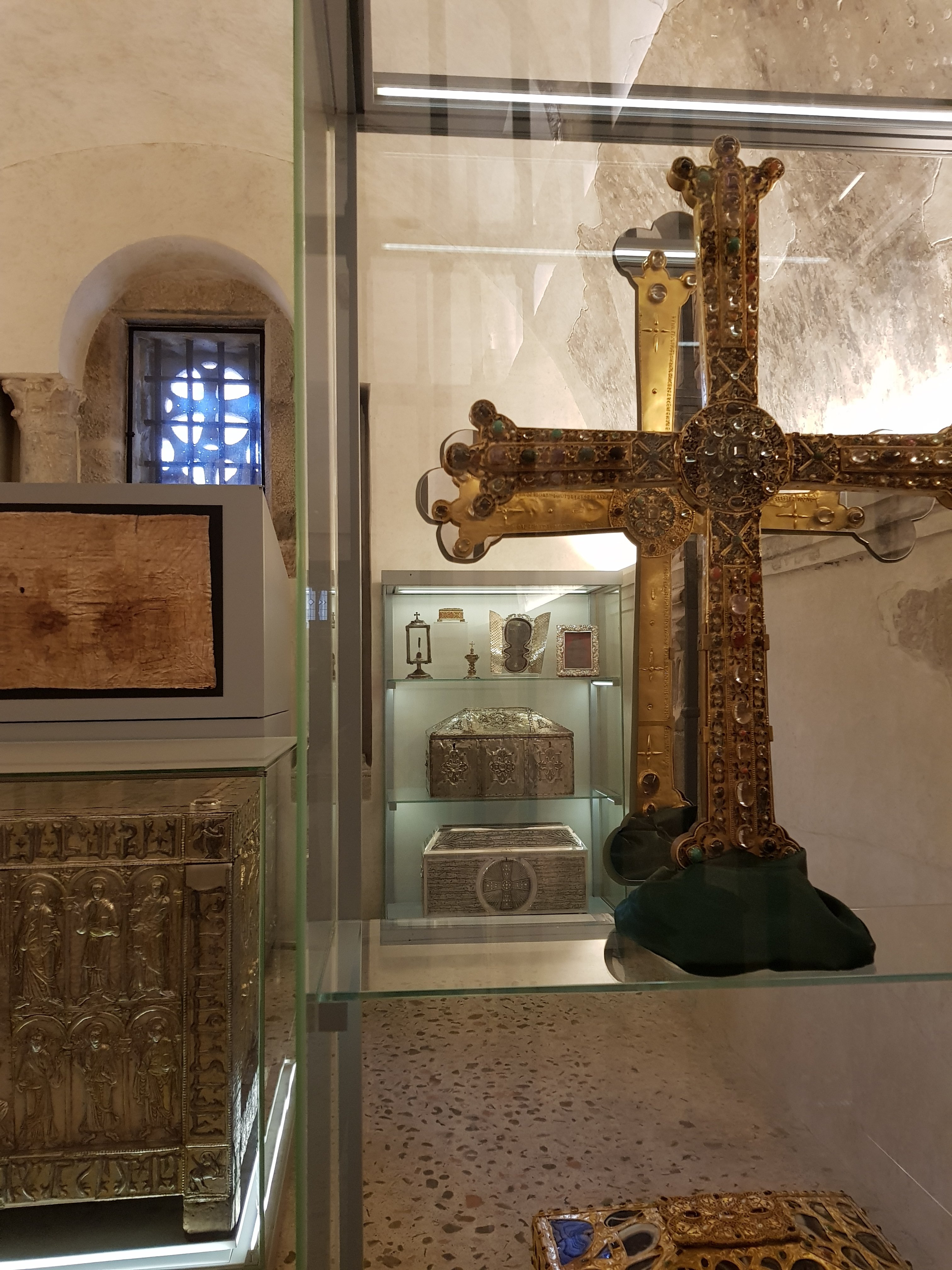
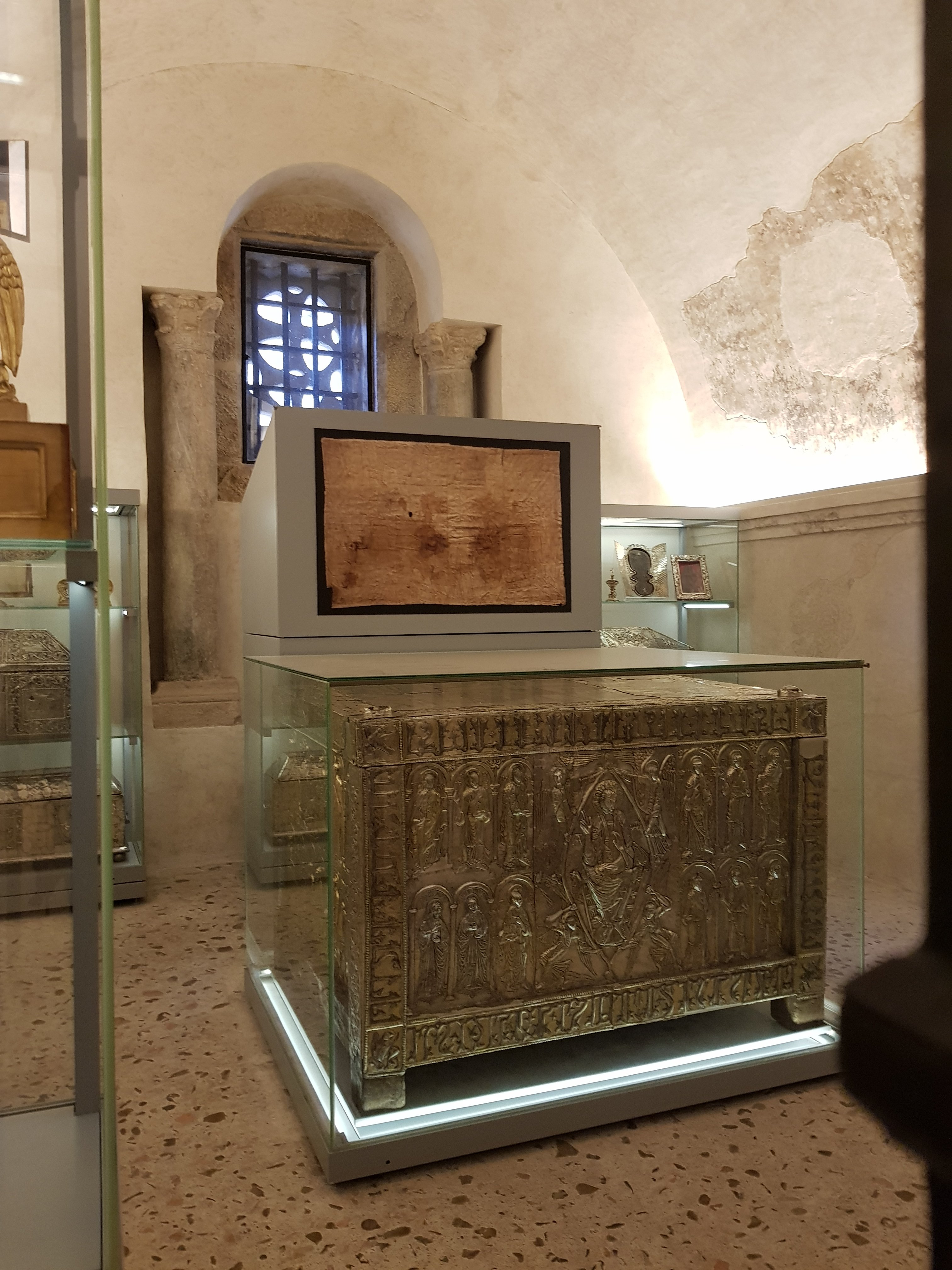
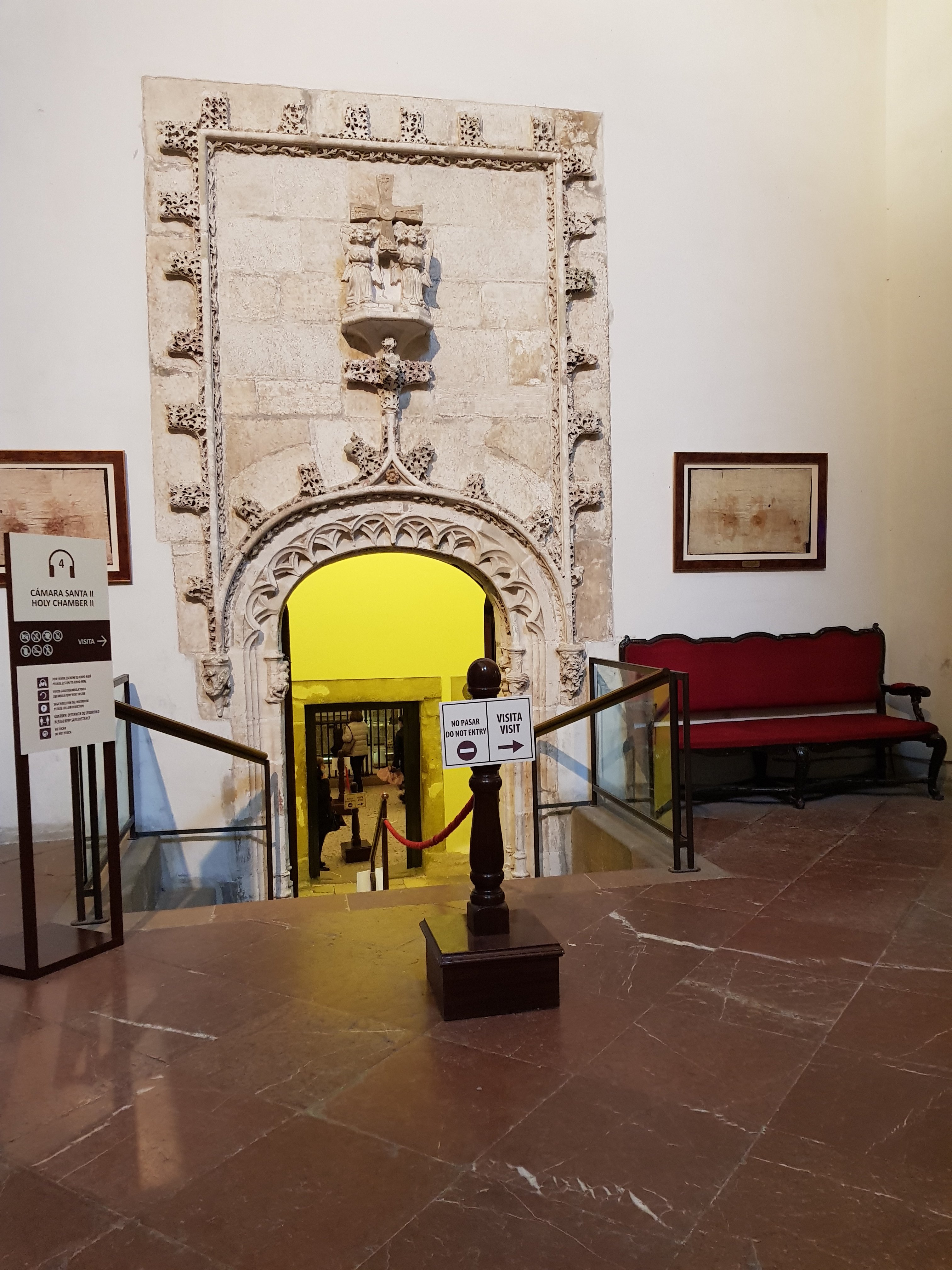
The biggest draw of the cathedral is the holy chamber. This important area of the cathedral is where many relics from Jerusalem and the holy land were placed by King Alfonso II. This includes soil from the home of the Virgin Mary, a cross thought to be made by two angels, a piece of wood from the cross, and the blood stained cloth that was wrapped over Jesus’ head during his burial. This makes the sanctuary very special and a popular place for people all around the world to visit.

I am really glad that I made the trip to Oviedo, and it was only 5 euros on the bus from Gijon, so there would have been no good reason not to!

I would certainly recommend it as a must visit location in Northern Spain, and I hope to return again when I have more time in the area.

Cordoba: A city of craftsman

After an excellent and short train journey from Seville, I arrived in Cordoba. Once the Capital of Islamic Spain, this city is a beautiful mix of styles and culture.

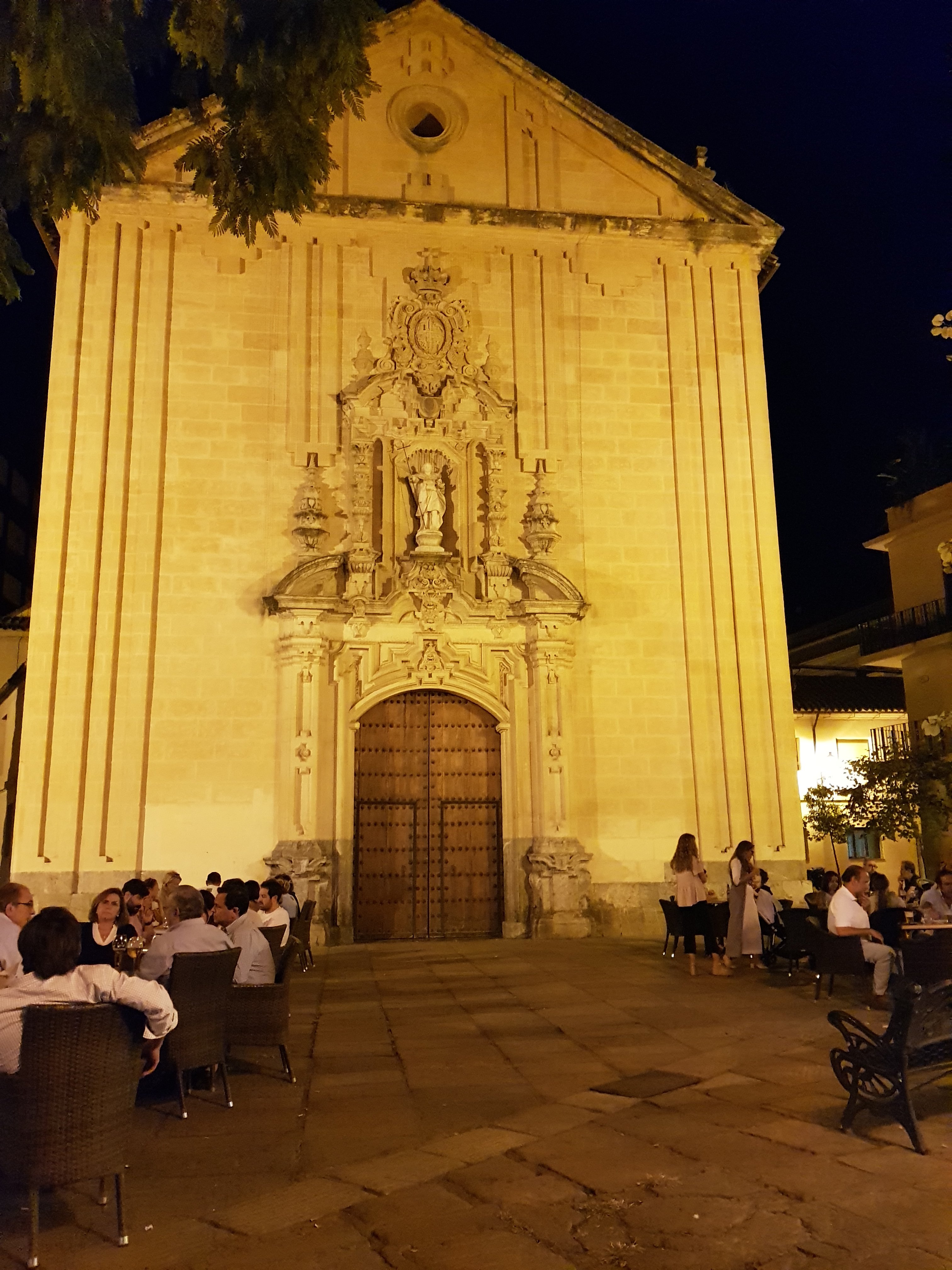
I arrived in the evening and enjoyed the lively atmosphere of the city as it was filled with people bustling to shops and restaurants under the sunset sky. The city actually reminded me a lot of Pisa, the sort of place that is usually seen as a day trip, and is quite suburban, but actually has a lot to offer.

I had a wonder around the city outskirts, and came back around along the riverside. The city’s river is its focal point, and most of the historic area is by the riverside.

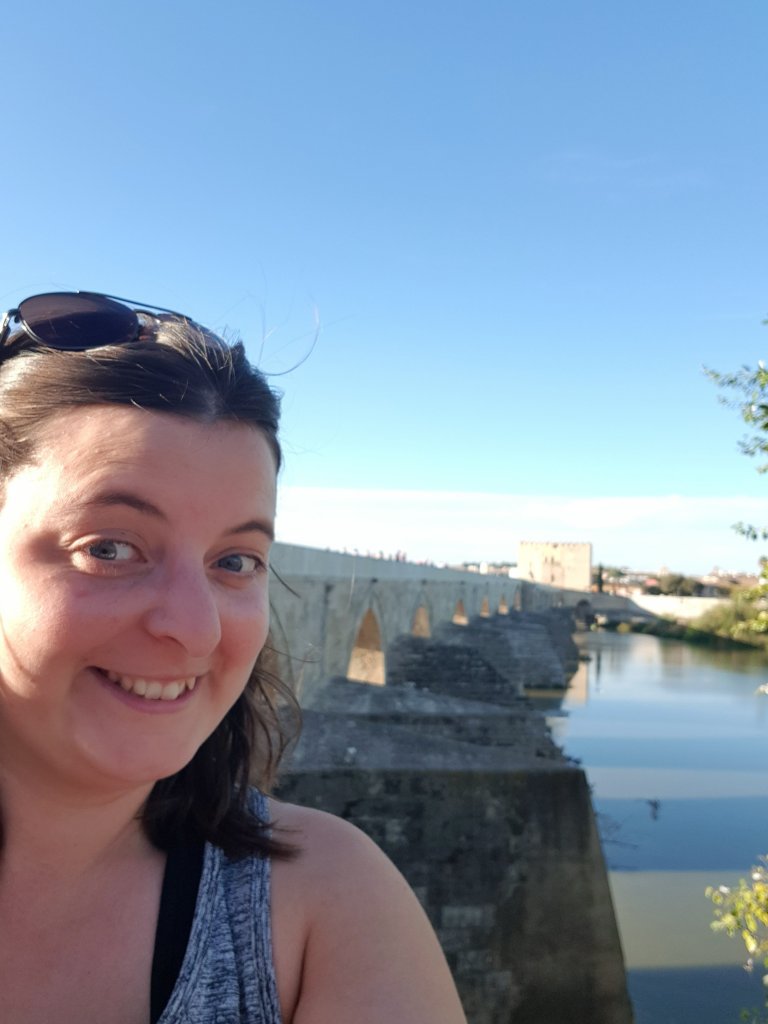
The river is also home to the beautiful Roman bridge, which happens to be another Game of Thrones location! It was actually used with CGI to create the bridge to ‘Volaris’, still counts though. Another one off the list. ✅✅✅

Me at roman bridge in Cordoba, another GoT location.

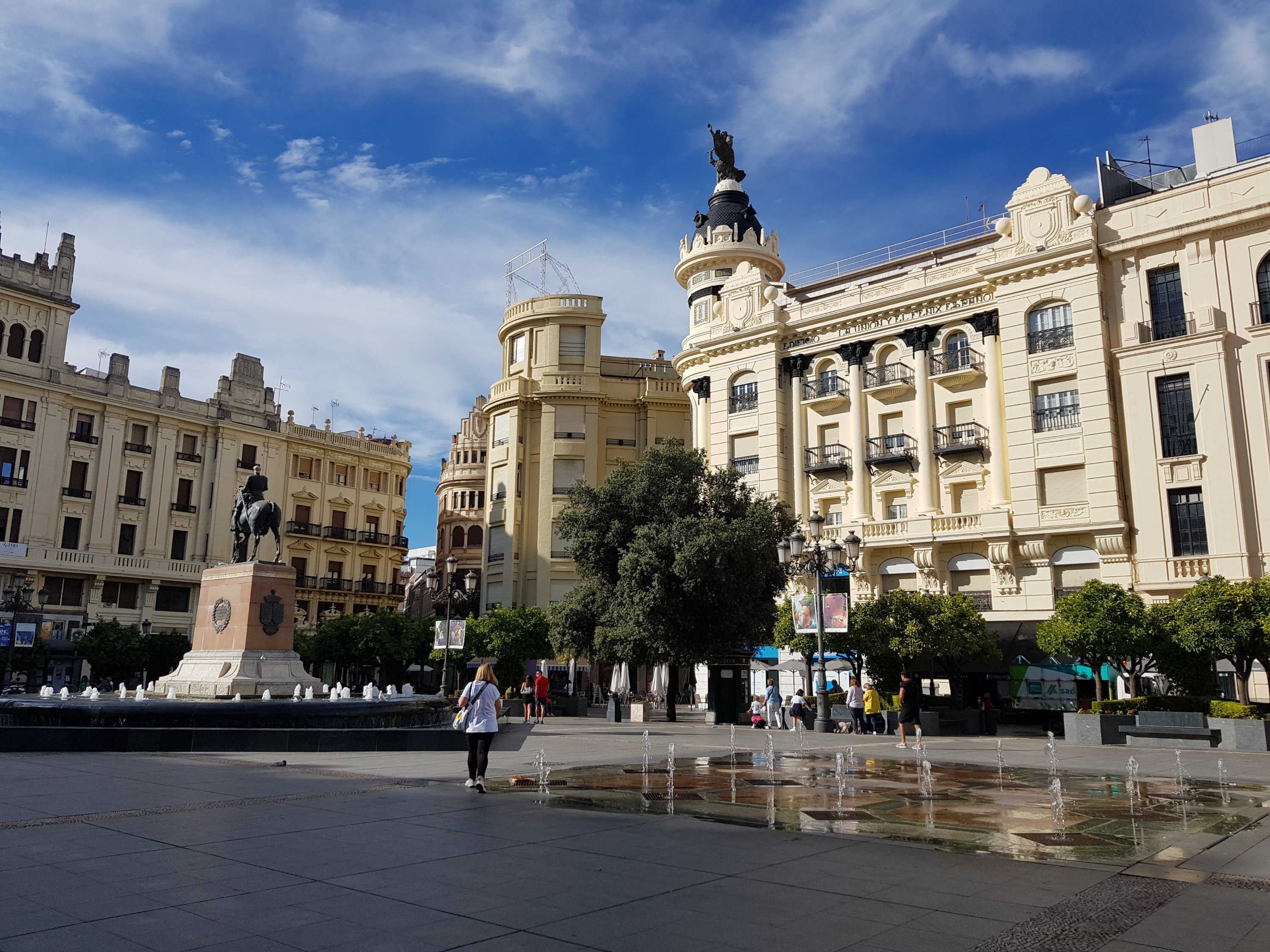
The buildings around the city are also very pretty, and often you can spot silversmiths, leather workshops and tile shops. These have been the ancient crafts of this town for quite sometime, and still are now. If I could carry a tile in my backpack, I would have got one to stick somewhere at home.

The town also boasted an unusual amount of ice cream and cake restaurants. I was struggling at one point to find regular food! I did enjoy my ice cream milkshakes though, as temperature was still around 30’c.

Mesquita Cathedral

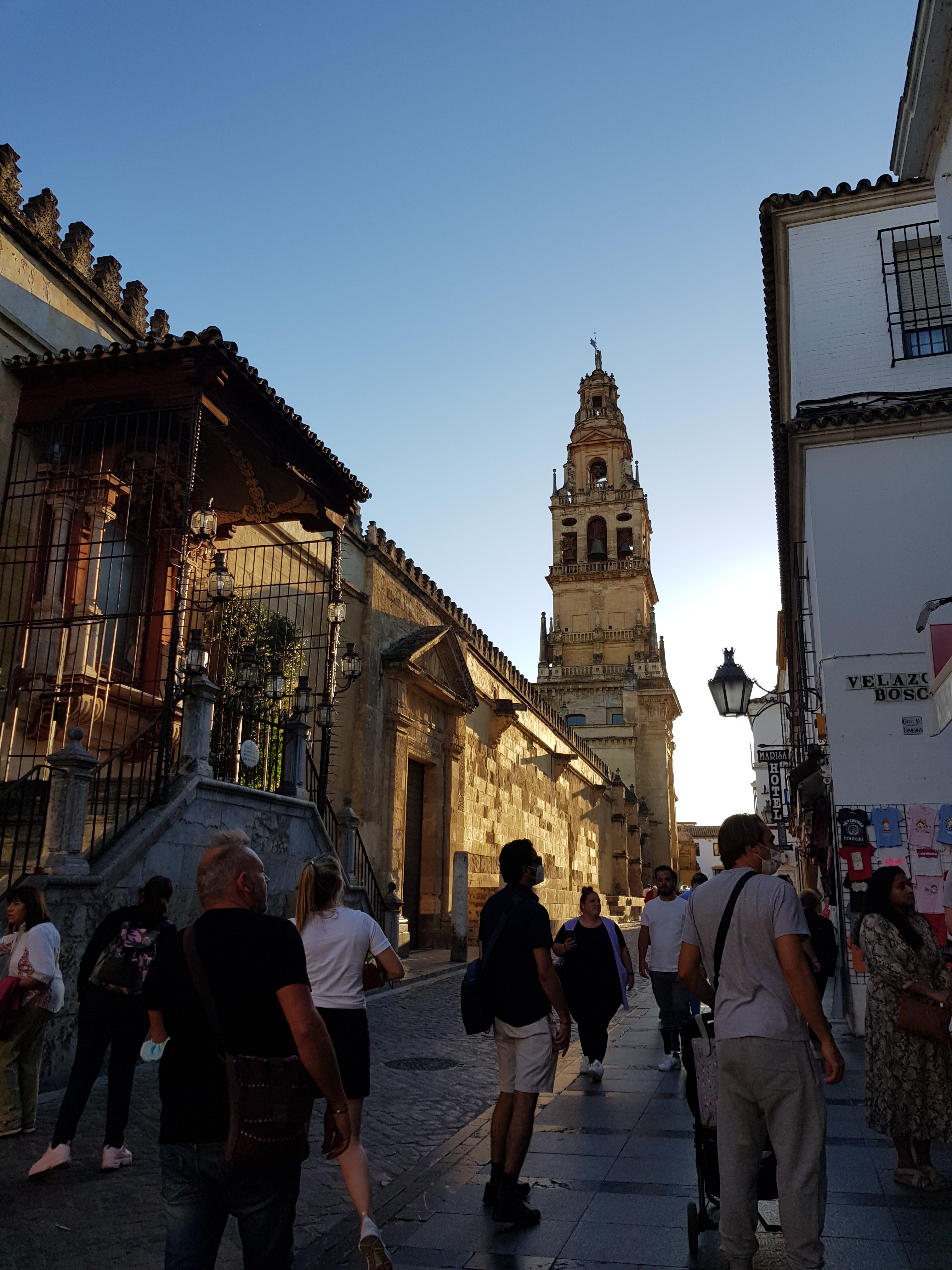
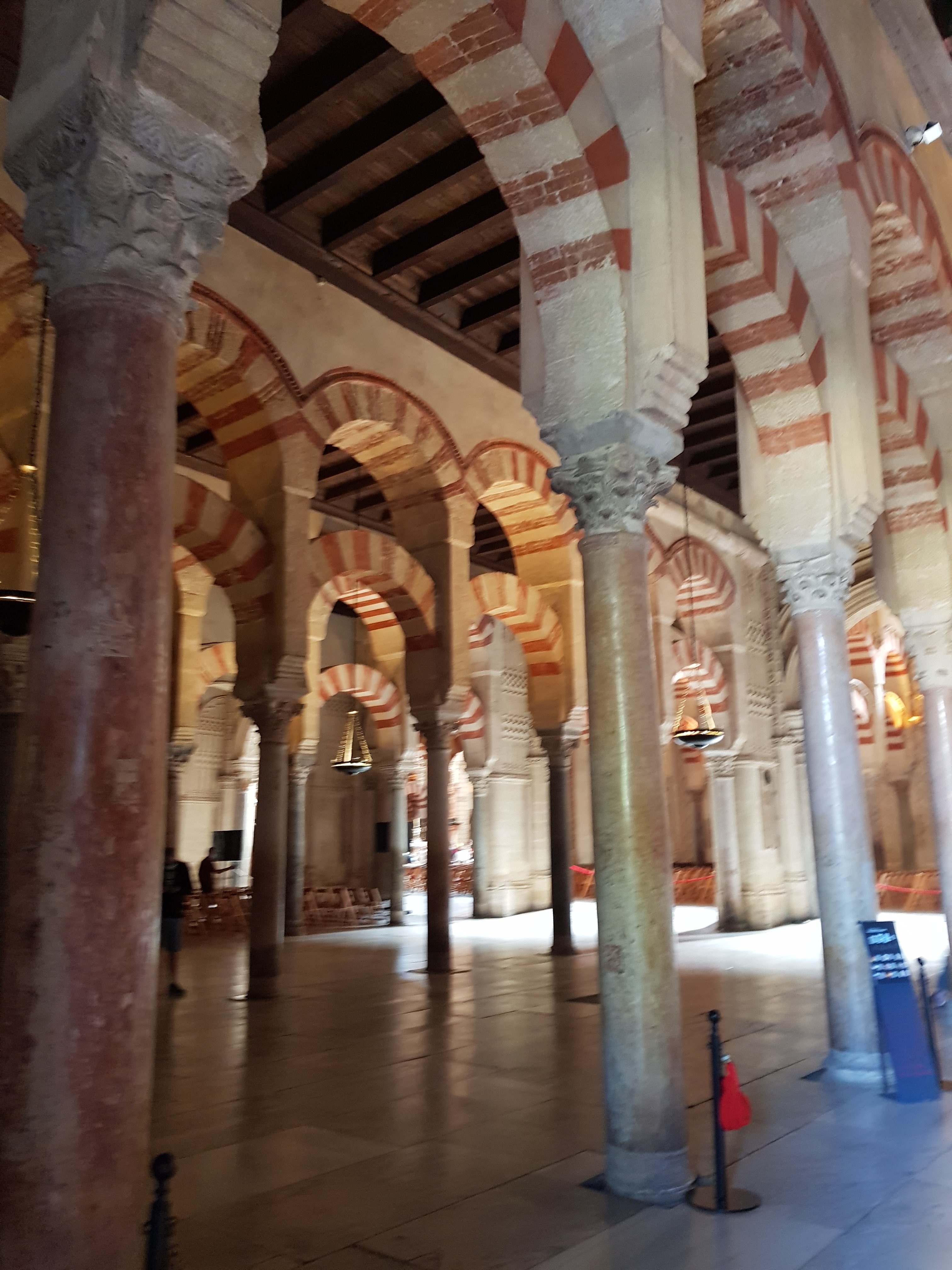
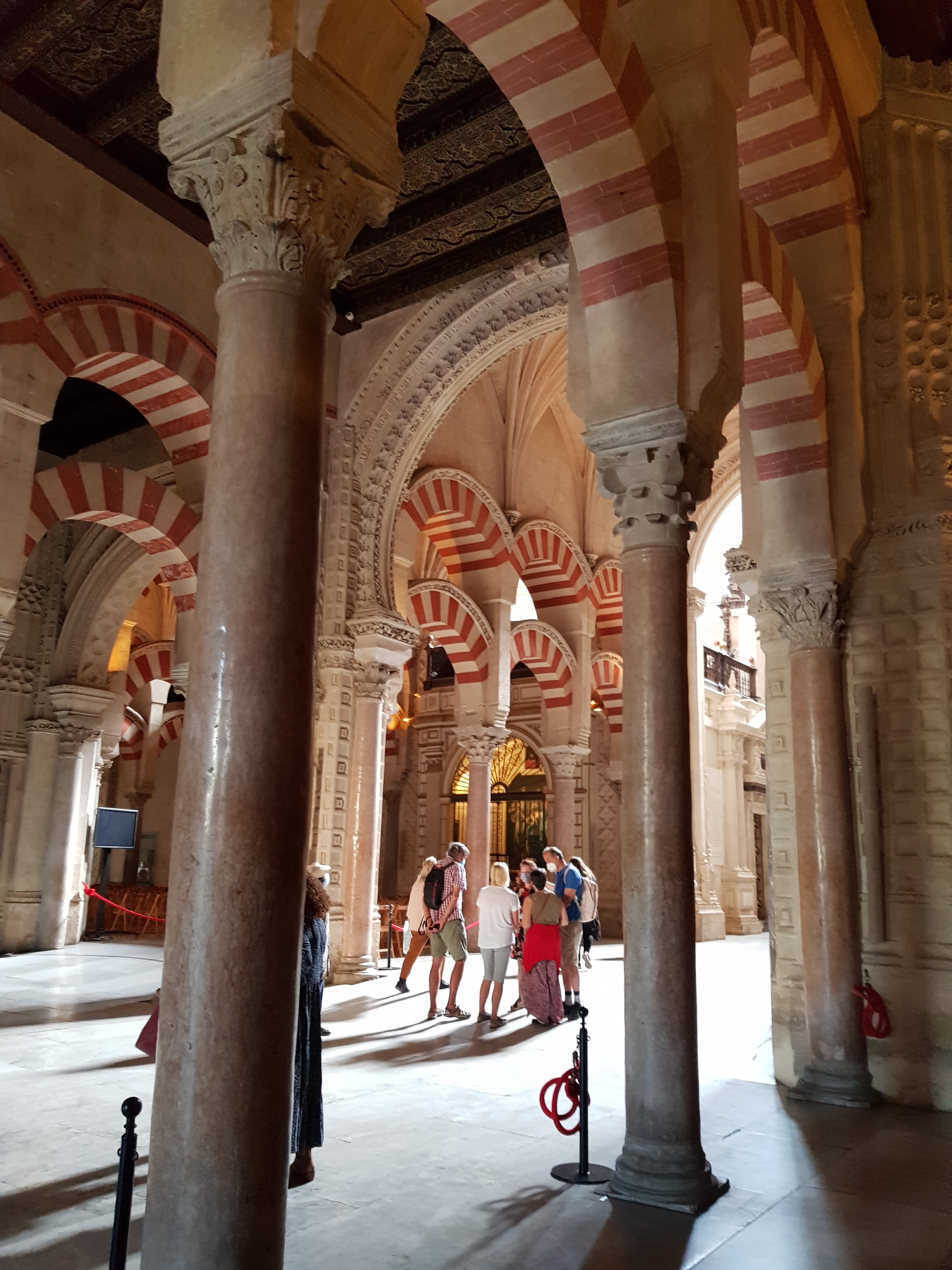
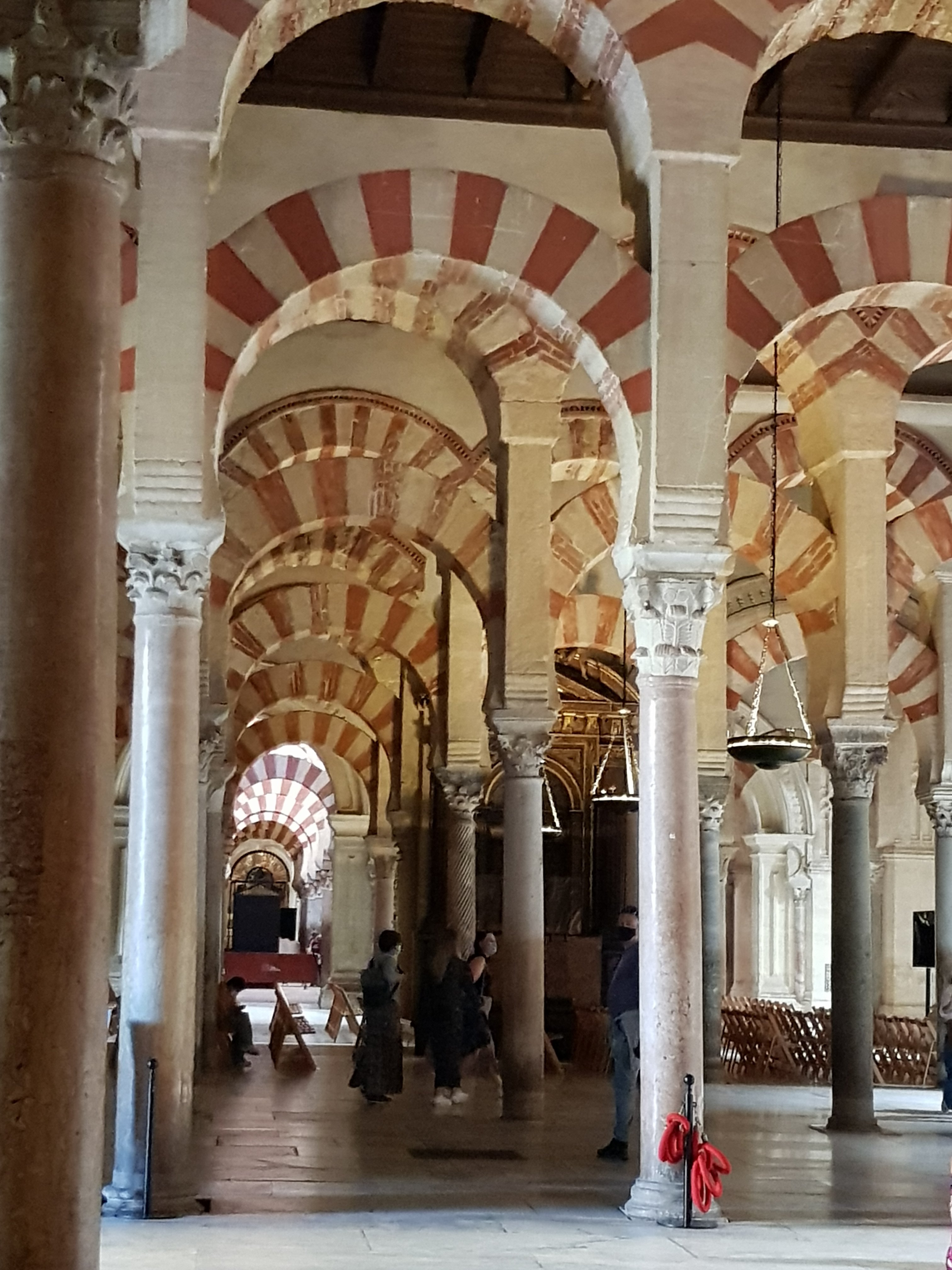
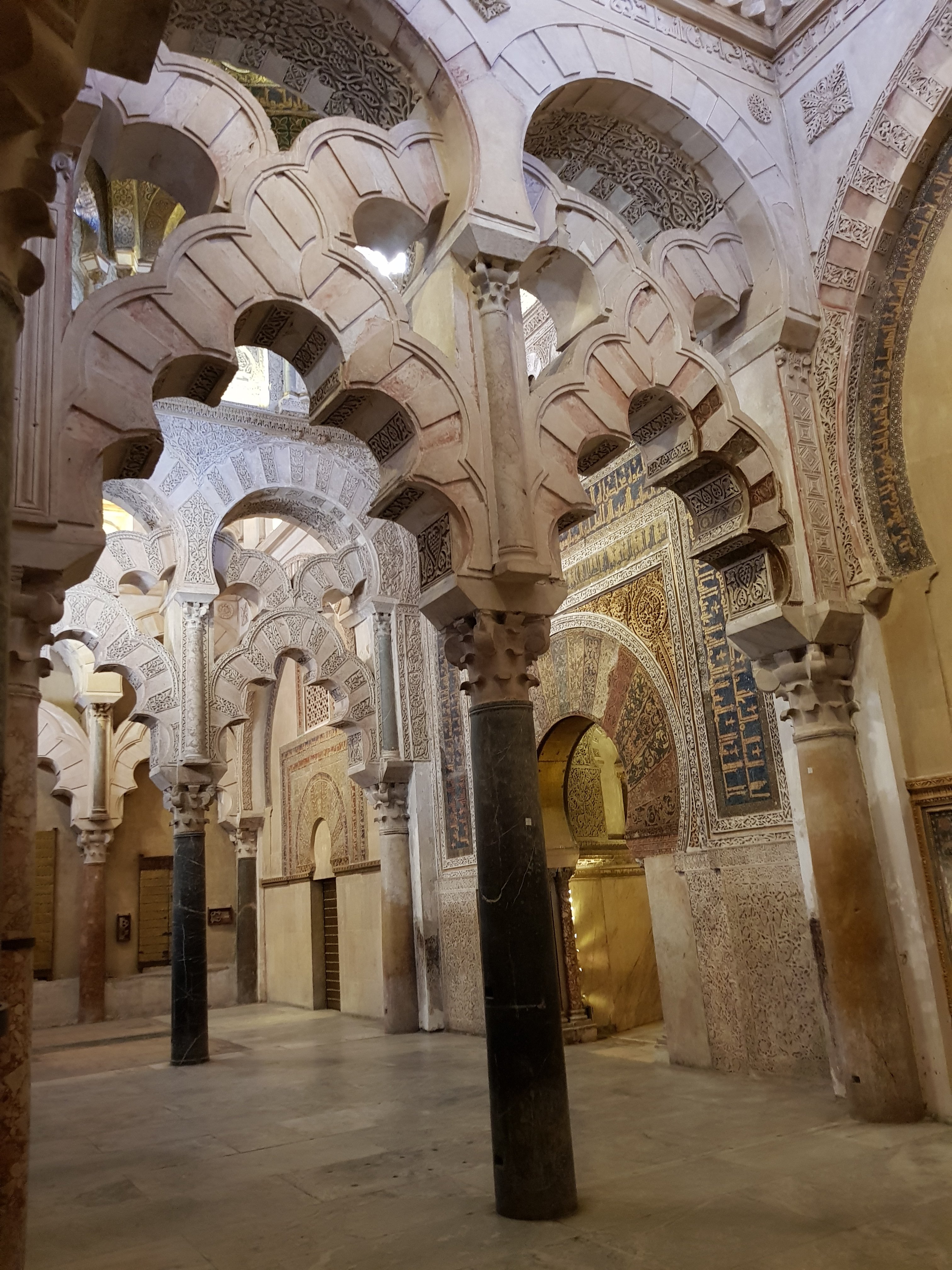
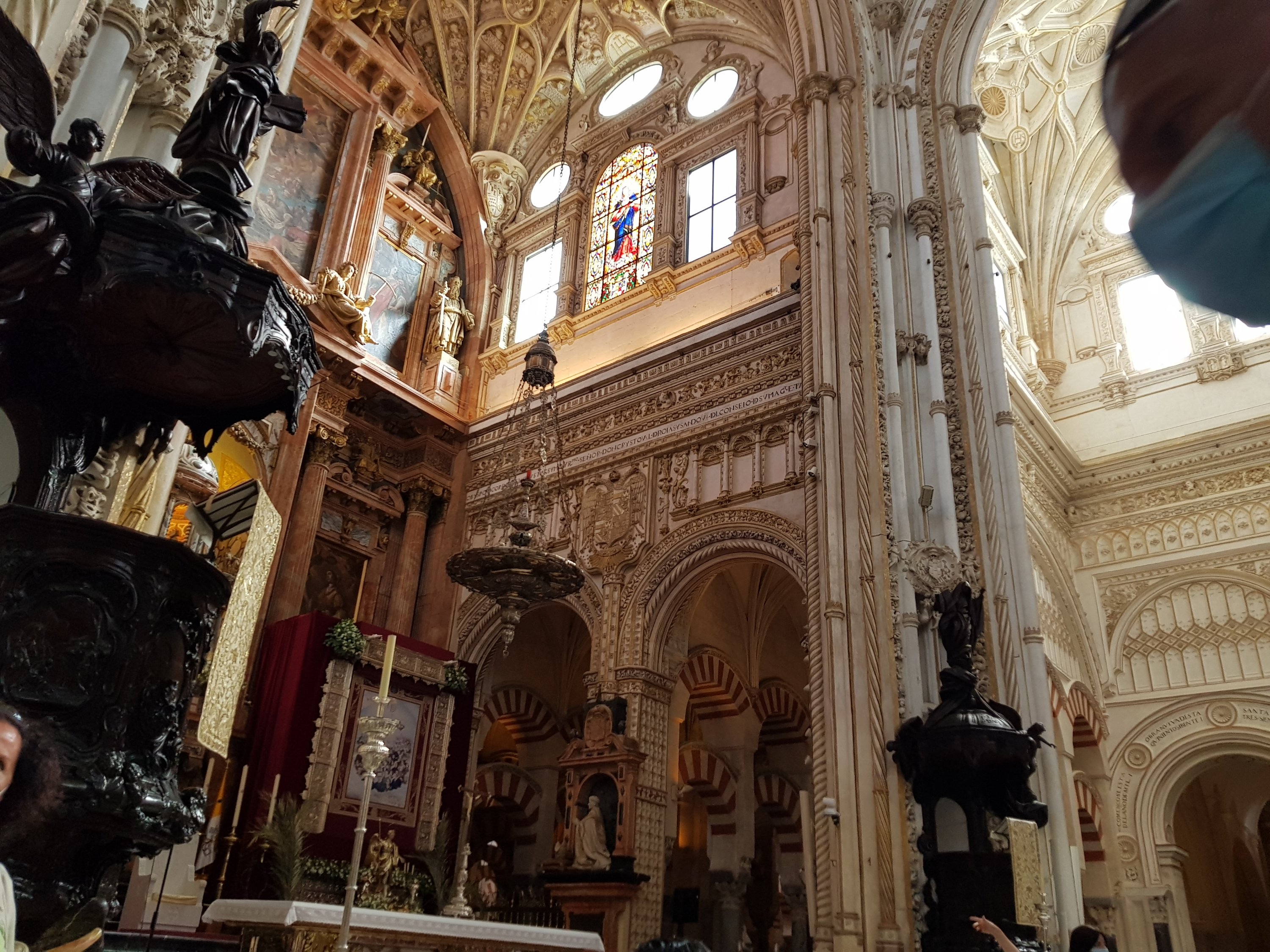
The Mesquita (meaning mosque) is what most people visit Cordoba to see. You can see why when you visit. I was excited to see the building but it truly left me speechless, (well other than repeatedly saying ‘WOW!’)

The site was originally home to a roman temple, but later the foundations were used to build a mosque,when Spain was under muslim rule. When the catholics conquered the area, the mosque became a cathedral. The original mineret tower was wrapped around with a christian structure, and much of the mosque internally was maintained as it was so remarkably beautiful. The christians did do three extensions to the building over the time though. This included getting permission from the King to build a traditional catholic chapel inside. Whilst pretty, most people agree that it is very out of place within this beautiful mosque.

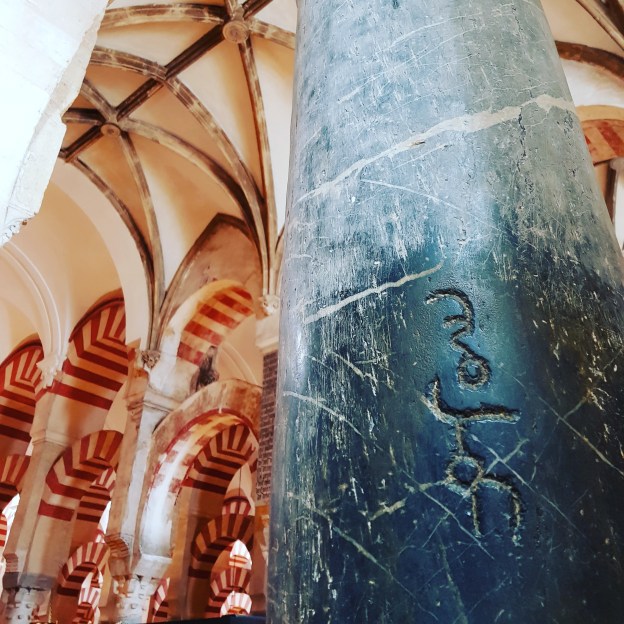
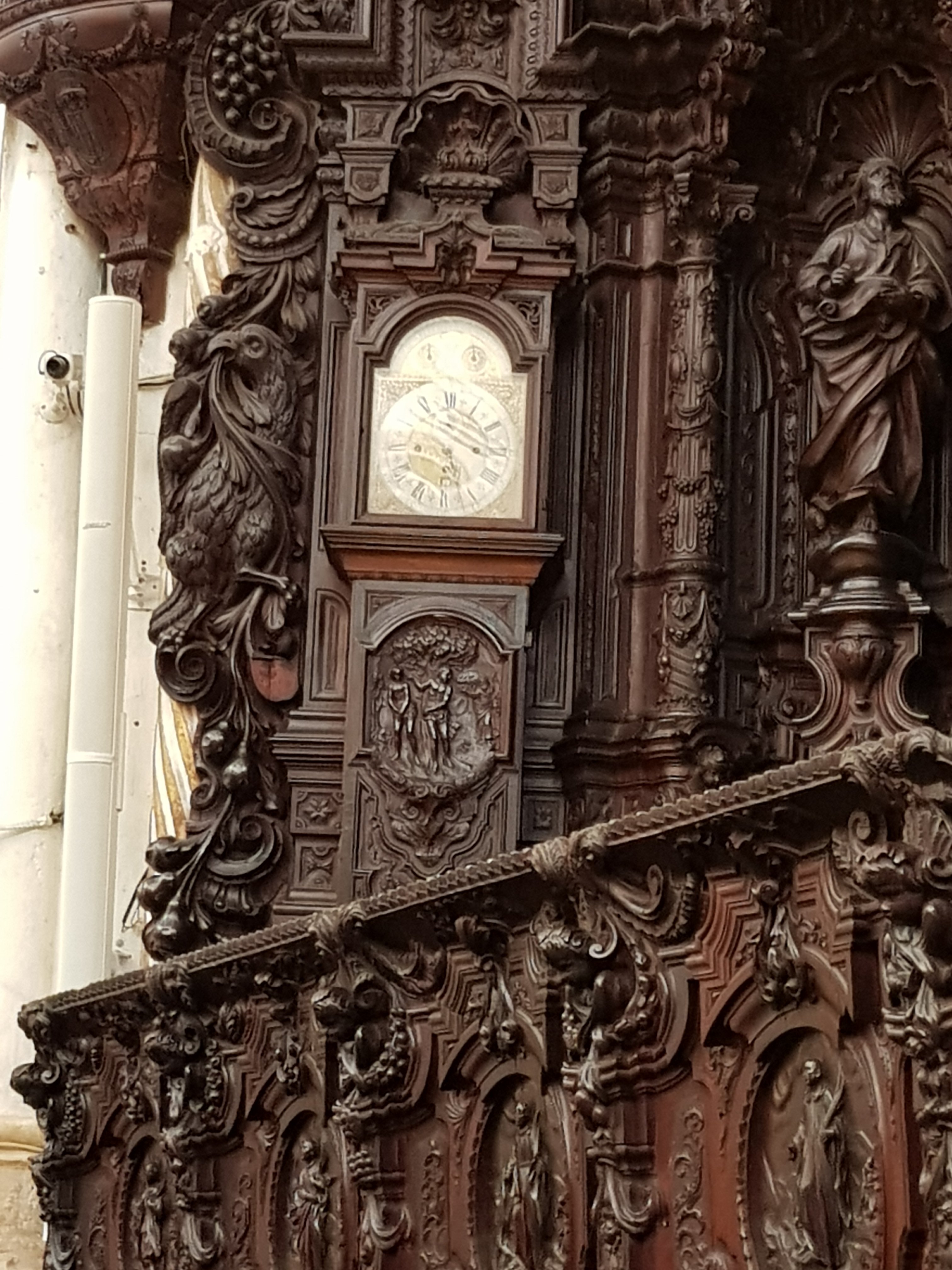
Within the mosque, the builders actually reduced costs by recycling columns and pedestals from the previous roman temple, which makes each one unique. The craftsman that provided some of their columns also left their trademark logo and signature on their pieces provided, which can still be seen. I love a bit of ancient graffiti!

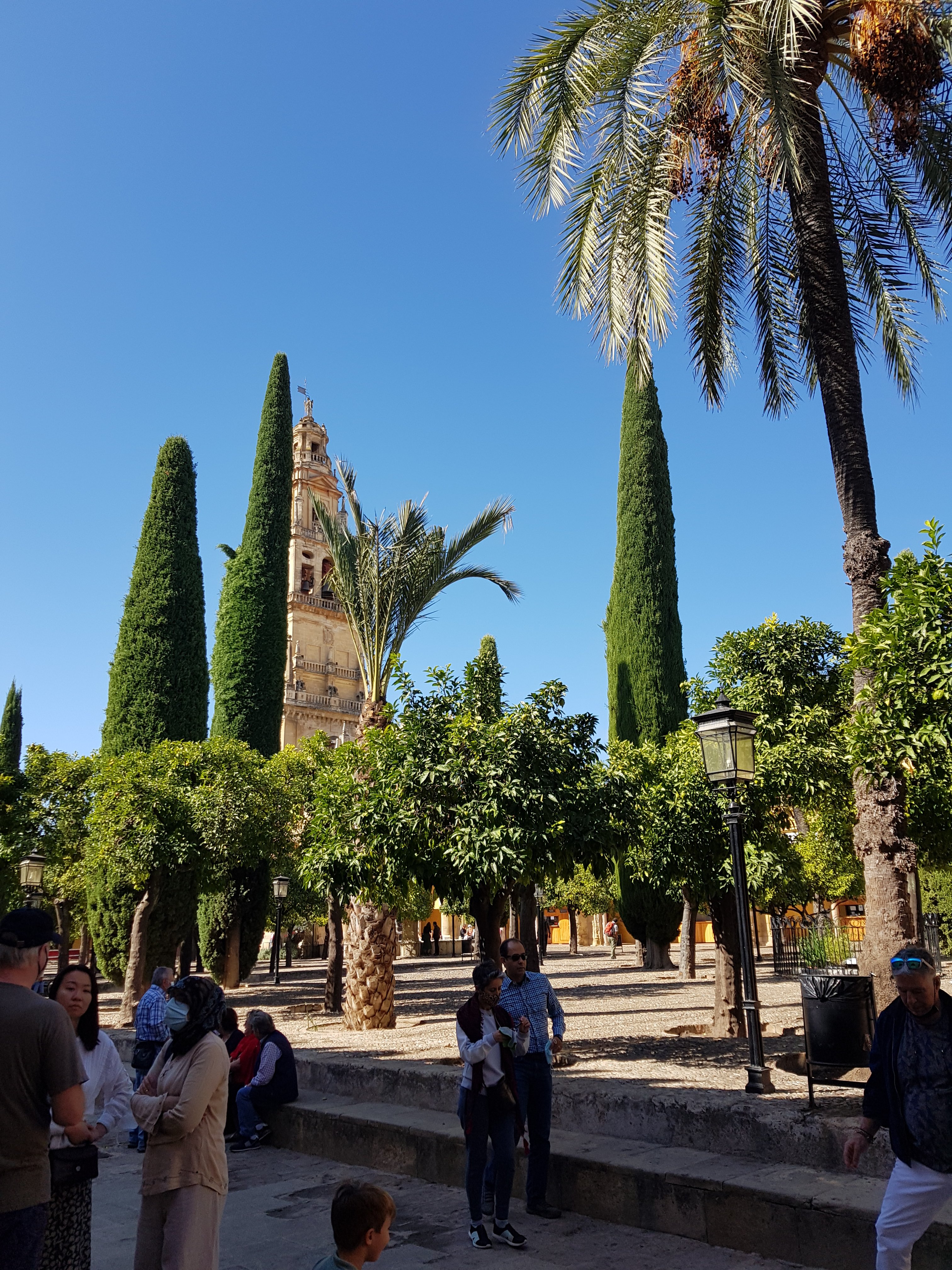
I had a guided tour during my visit which was very helpful. The guide provided a lot of detail about the history and showed us what to look for. The entrance area / plaza is actually available for anyone to visit for free. It is only the inside of the temple that is ticketed, and this is limited and to restricted hours.

My tour also included a tour of the jewish quarter and a former synagogue. These are free to see generally. The jewish apparently moved into the centre of the city after the muslims were expelled for a period.

Alcazar Gardens

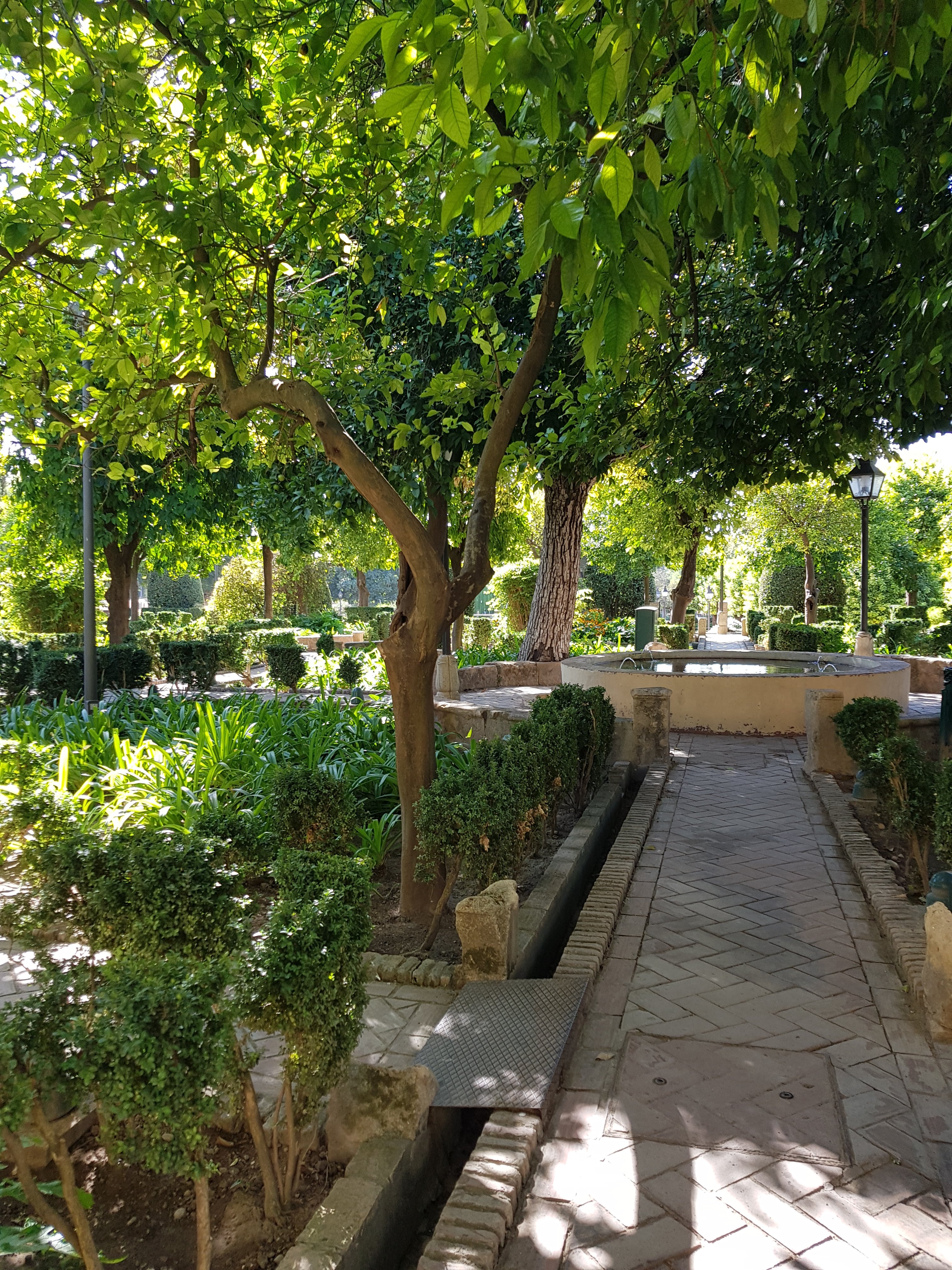
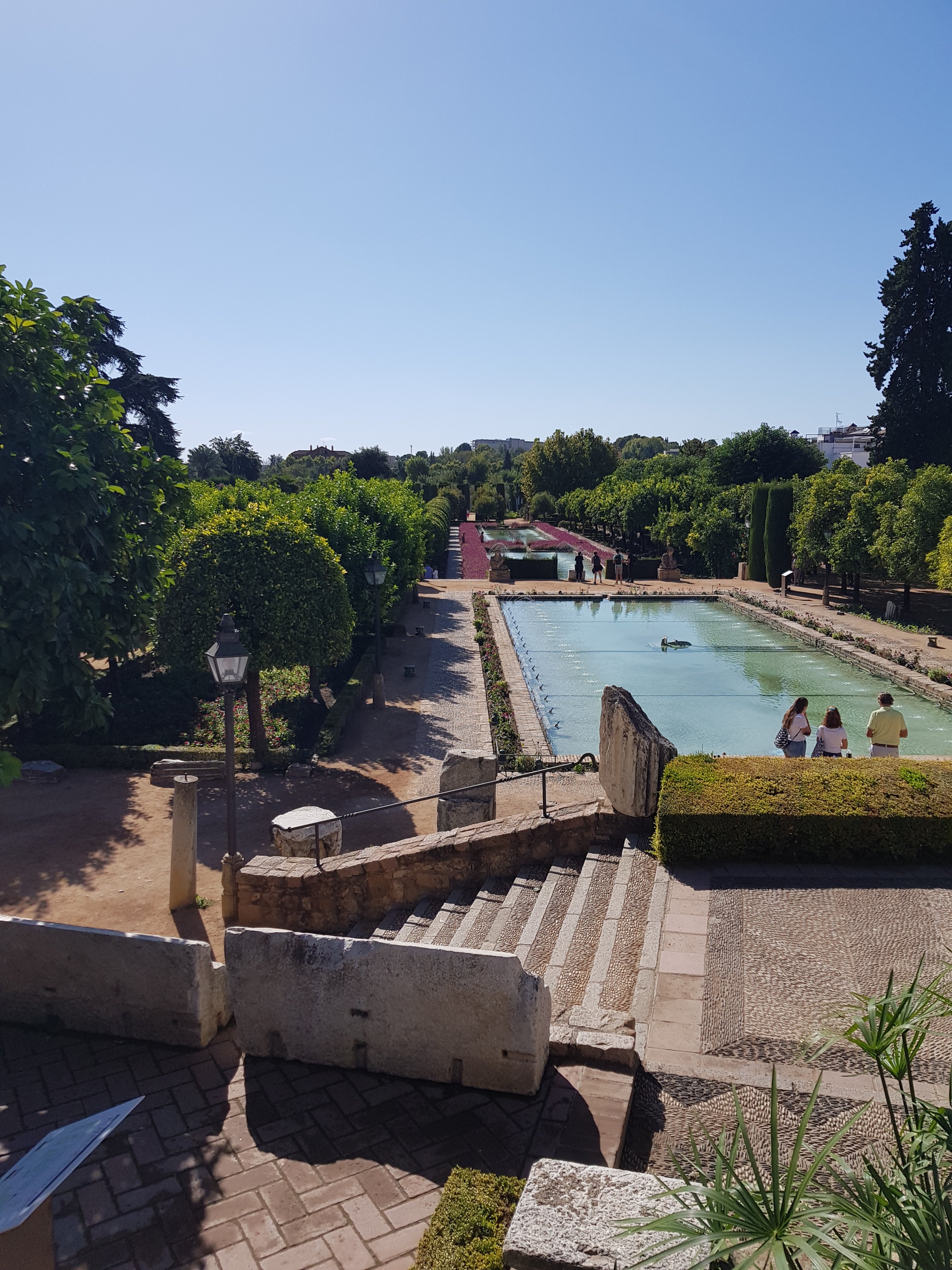
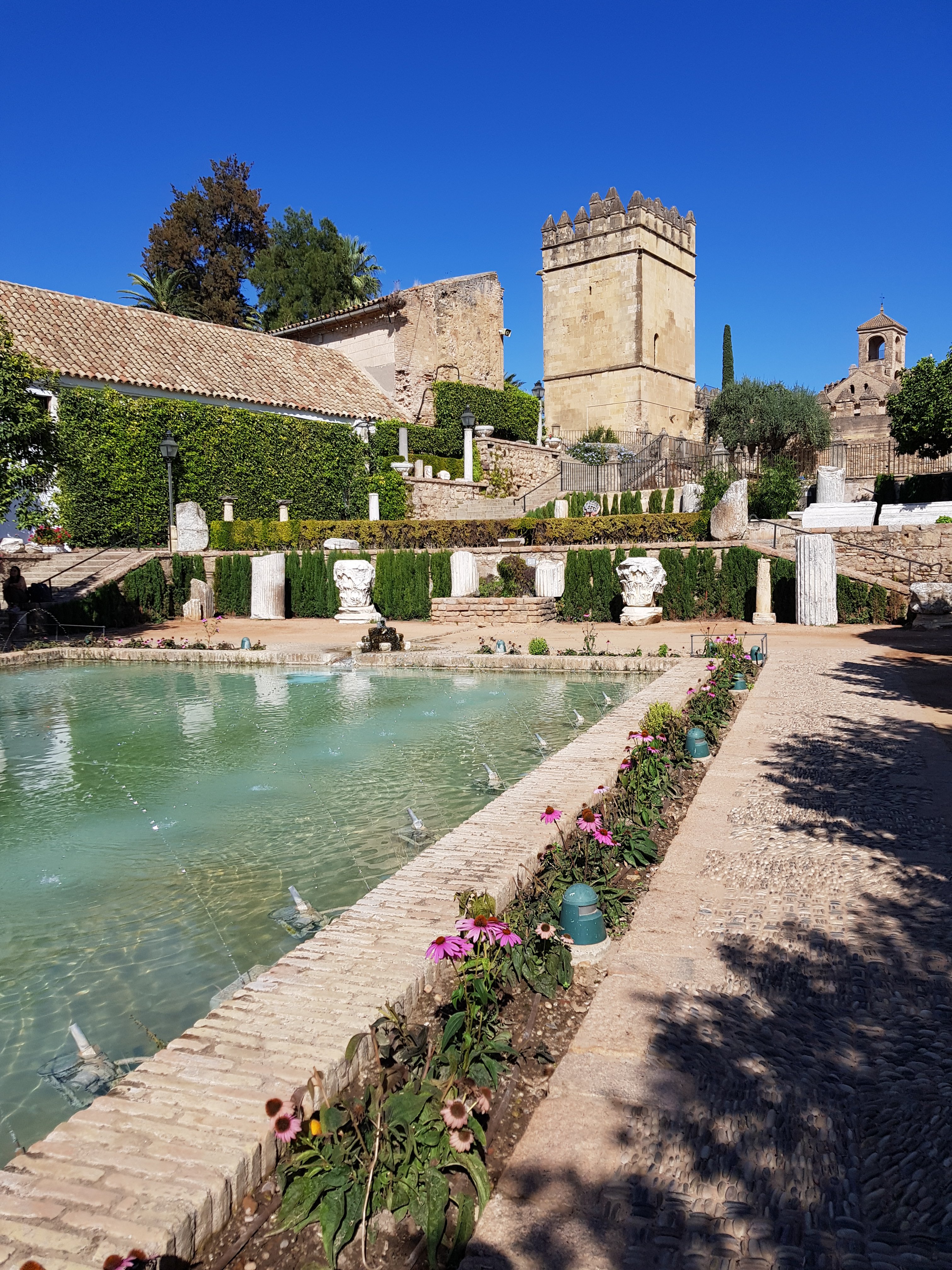
In my short visit to the city, I also decided to book a visit to the Alcazar there. You must have a reserved time slot, and the website is abit tricky, but just persevere with it! It is only five euros and worthwhile. The Alcazar building itself was quite small and hollowed out, but I went for the gardens. They were lovely…

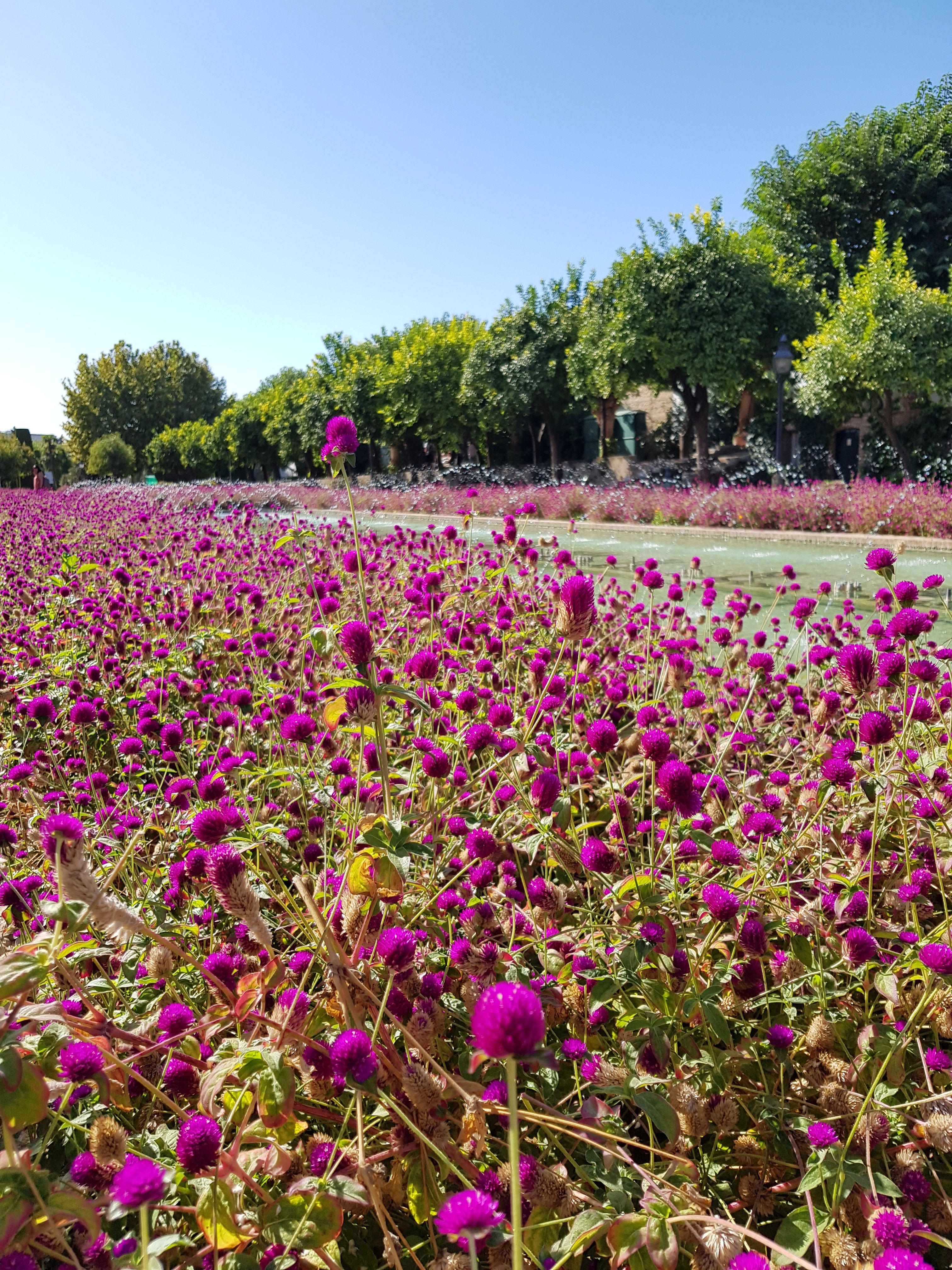
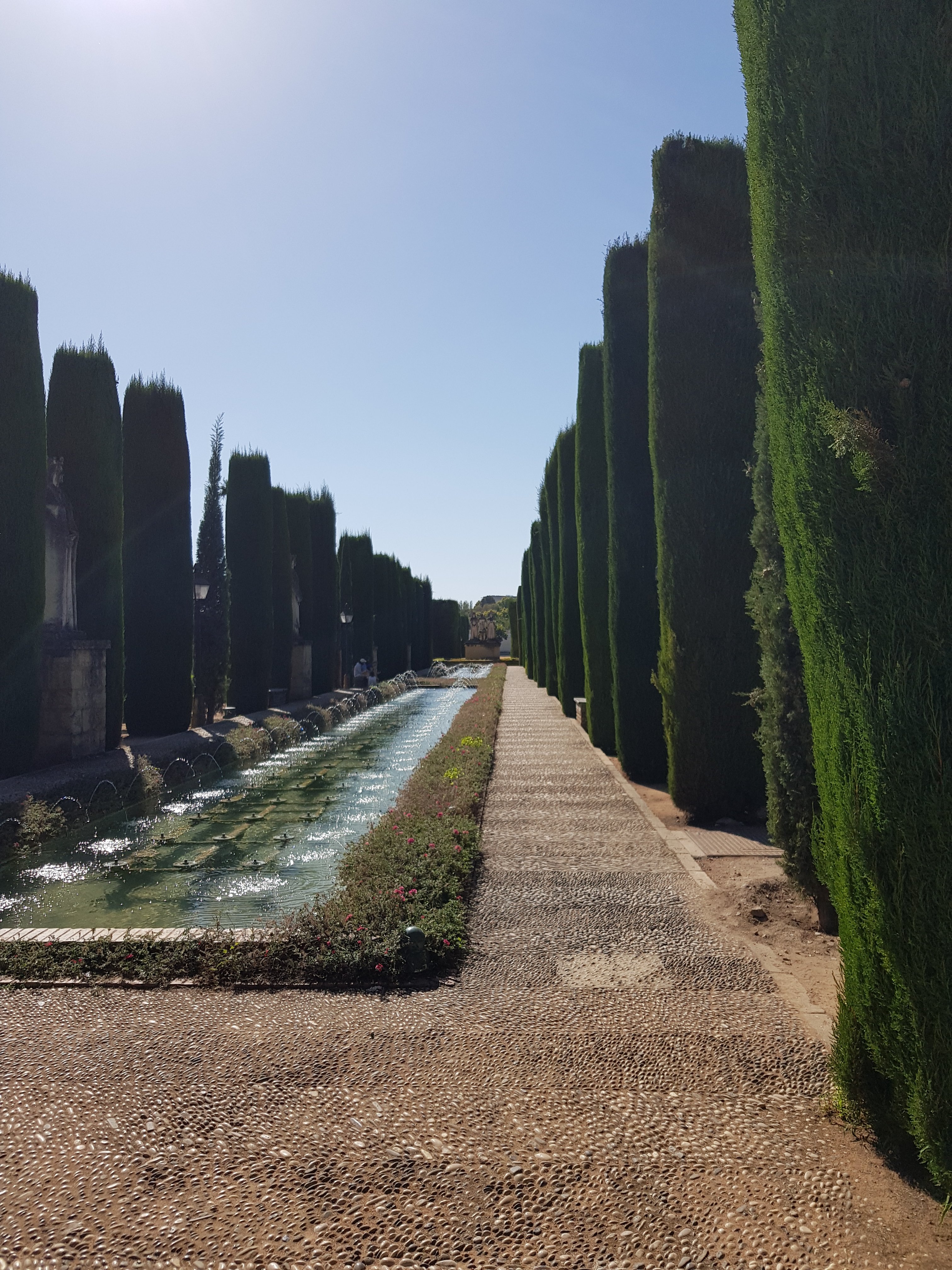
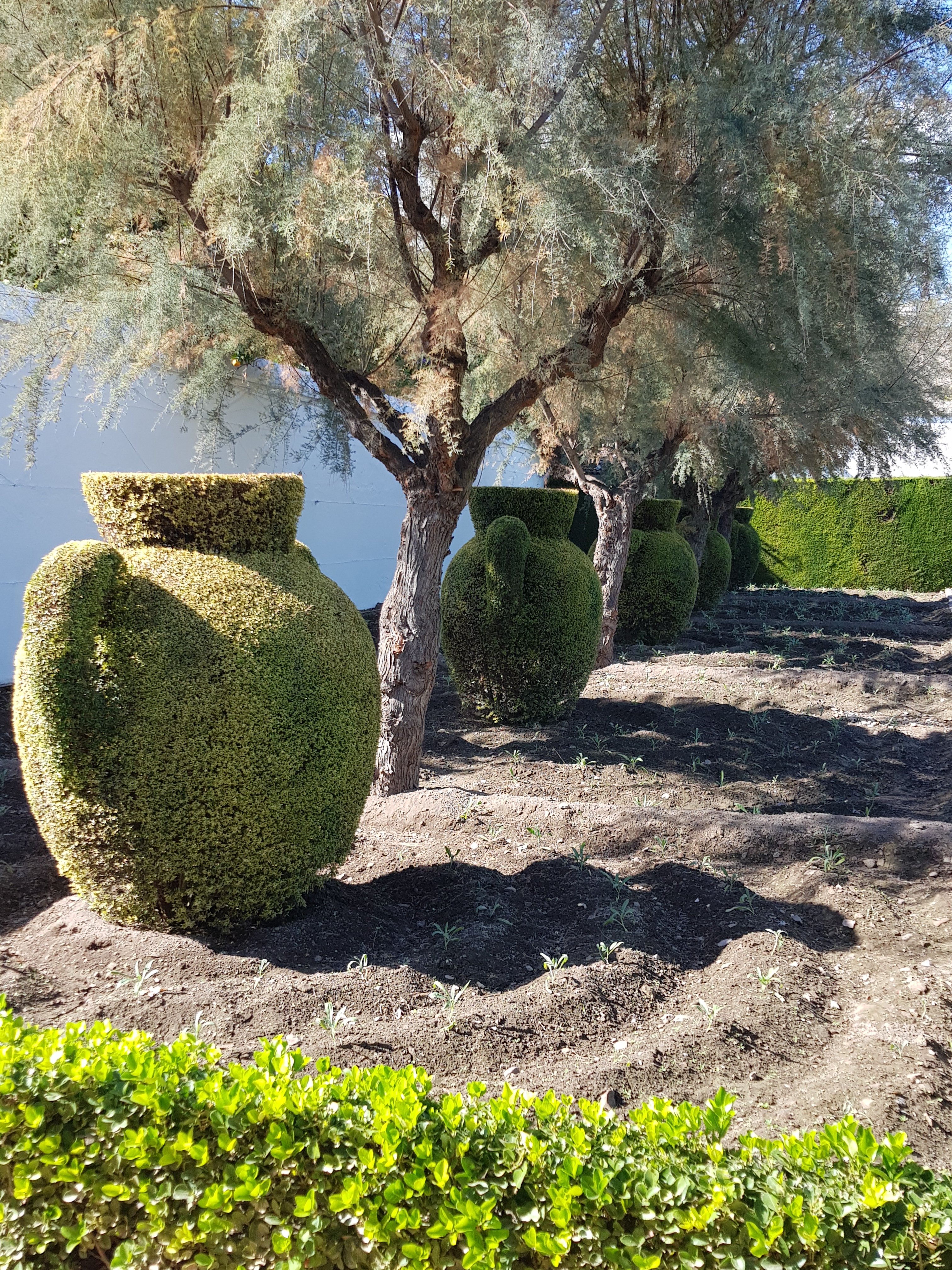
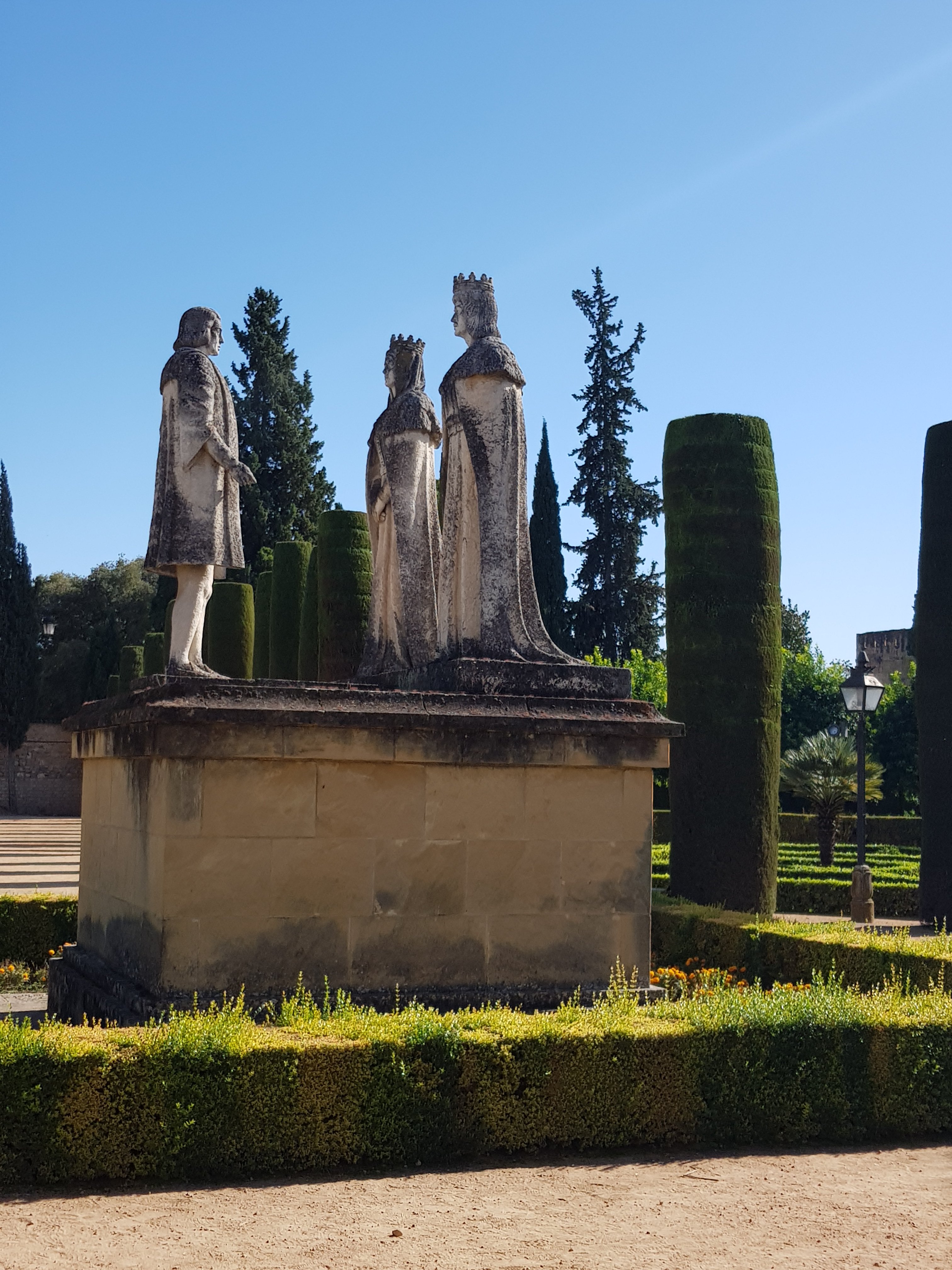
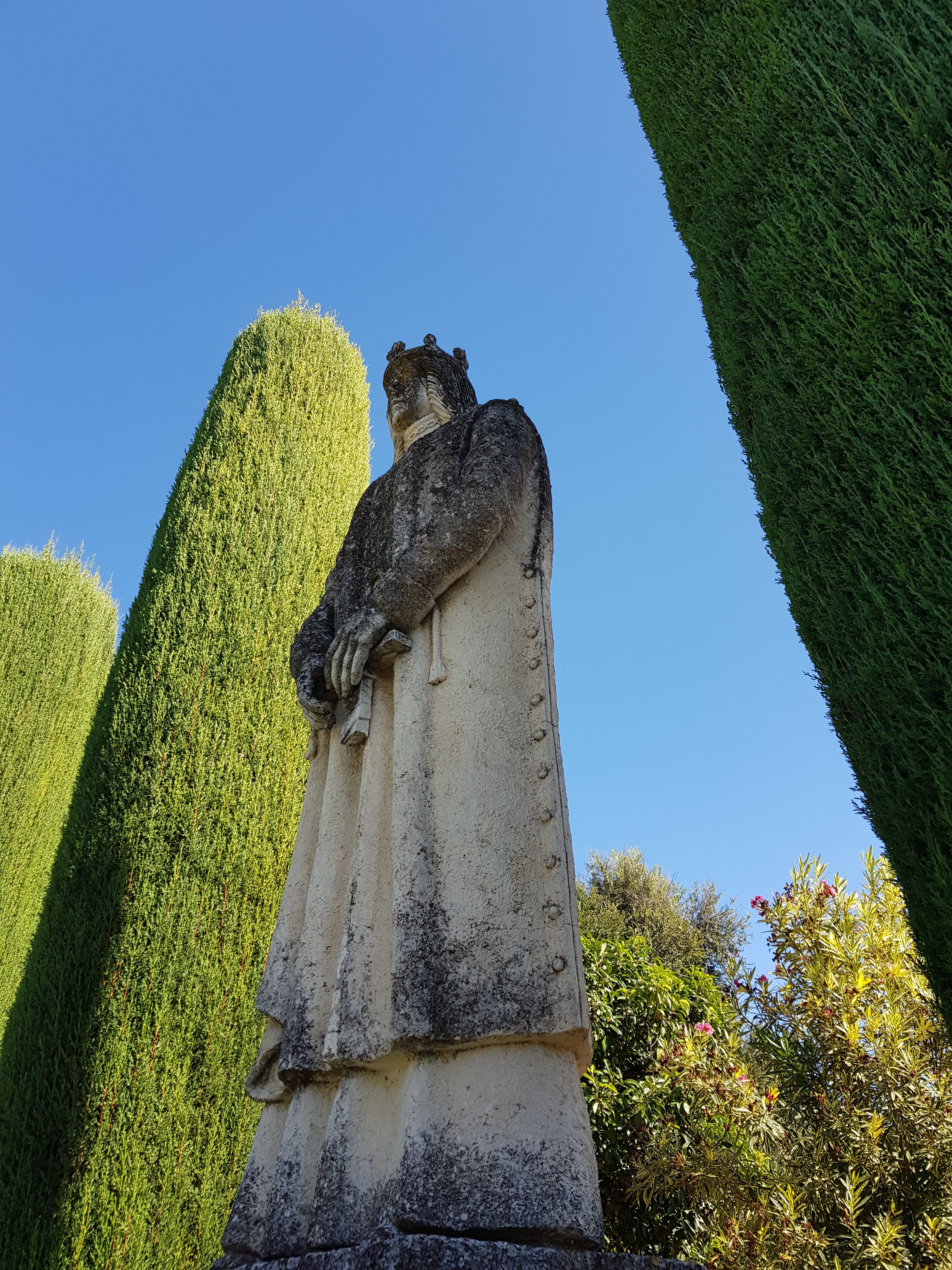
Full of fountains, flowers, sculptures and impressive topiary, I parked myself on a bench, and sketched the scene in the sunshine for an hour.

Before I knew it, time was up and I had to head to the bus station. Cordoba should definitely be on your list to visit. There is so much culture here, and it has a very friendly feel.

Next stop… Madrid!

Quirky day trip ideas!

Many of us have been unable to travel lately due to the pandemic. This means that we have needed to get a little creative with how we spend our spare time to keep it interesting. Day trips out are a big part of this, and in this blog I will give you some tried and tested quirky day trip ideas for you to explore!

With most of our leisure time being spent nearer to home this year, why not try something a bit unusual in your area.

Metal detecting

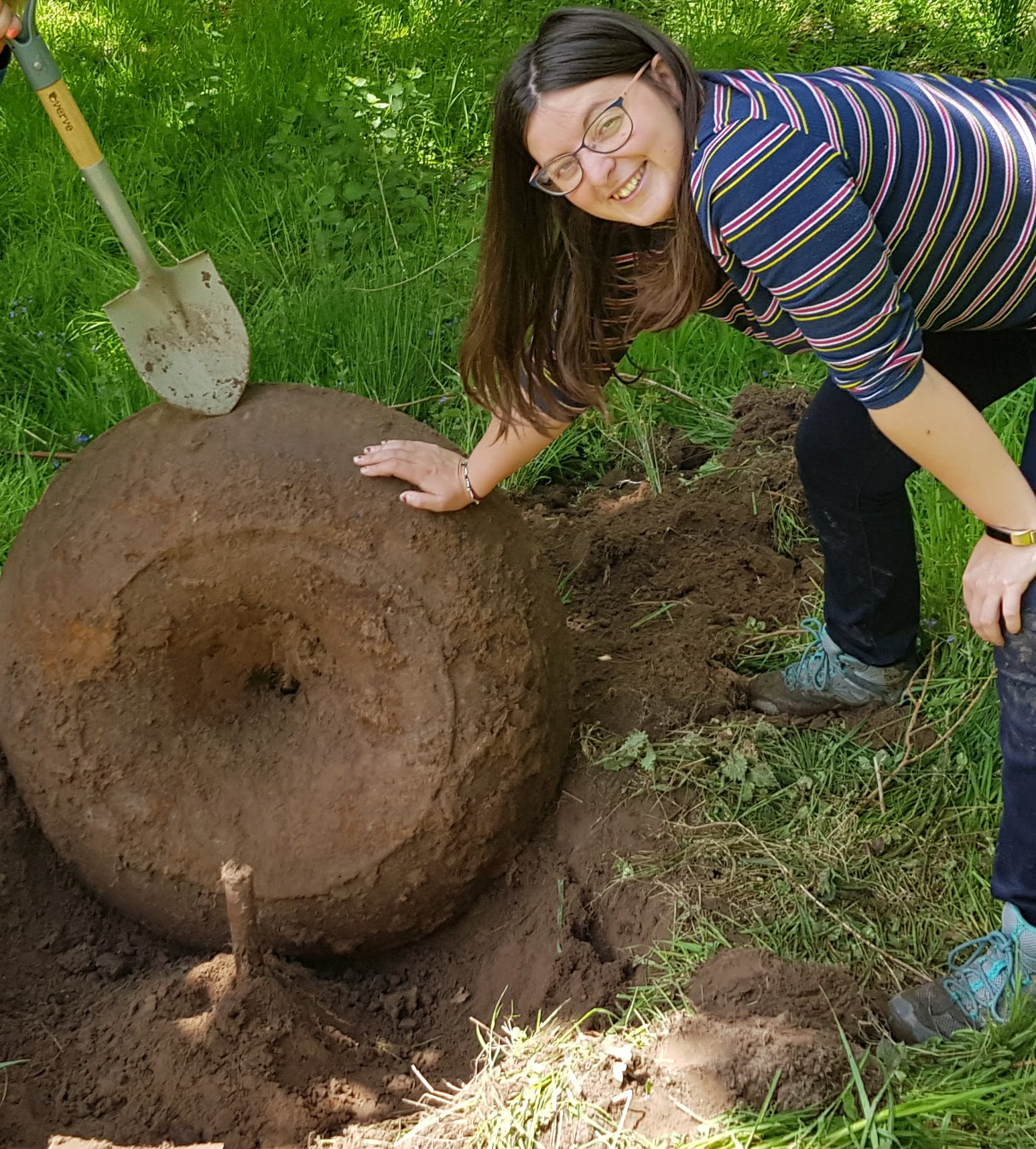
Metal detecting dig find

Many people have an interest in metal detecting with so many TV programmes about discoveries and salvages. I decided to have a go, and see if I could find some long lost treasure. A lot of people head to beaches, and back gardens with their metal detectors, and you do have to consider permissions from landowners when you do this. You might also need to agree the split you will get from any profit you make!

I wanted to try some fields, and my dad happens to have some land that I could investigate. The fields have been used for a few centuries by nurseries, farmers, scrap yard owners, and for other unknown purposes. This makes it a very mysterious place under the earth.

In the first two hours around 20 items were found, including several door handles, a light switch and a pig feeder, which could be recycled into a lovely bird bath.I didn’t find my fortune on that occasion, but I will keep looking. Either way, the experience is a fun one, and you do get a thrill from digging something out and trying to figure out what it is!

If you get really into this activity, you can apparently upgrade to a smarter metal detector which will tell you exactly what the metal is, so you can narrow your searches. This is a fun way to spend half a day with a friend or as a family, just bring your metal detector, a spade for everyone involved, and be prepared for everyone to get filthy!

Beach cleaning/litter picking

I like to keep the planet clean, and so naturally I hate litter! Of course, within waterways and oceans, the pollution, especially plastics, is extremely harmful for animals and us. If you want to do your part, or teach your kids about giving back, and the harm of littering, then a clean up event is great fun!

Photo by Catherine Sheila on Pexels.com

Many local groups and national charities such as the Marine Conservation Society, will organise beach and river clean ups, and other litter pick events regularly. These tend to be with a group of differently aged volunteers, and the group leader will provide you with a high viz, litter picker, gloves and bin bags. These events are especially popular during the off season when less people are visiting the beaches and riversides. ‘Keep Britain Tidy‘ creates several campaigns throughout the year in Britain, to encourage people to take pride in their open spaces and keep them litter free, such as the ‘Great British Spring Clean’ event.

I have done several litter picks before, and I always feel good afterwards, it is also a great way to get some exercise, and enjoy outdoor spaces that you may have not visited before. It can be quite addictive, and you can become quite competitive about how much you pick up. I got so into it, at one event, that I was climbing the sea barriers to retrieve a discarded shoe and fishing nets!

Foraging

Ever wondered if you could survive an apocolyptic event? Well, a day out foraging, might give you some idea. You may have tried the odd herb, or picked blackberries before, but you can go much further!

Foraging is becoming more popular as people become more interested in their green spaces, and lots of people are providing information on how to do this, and what greens to look out for in your area. You can even go on foraging tours and events to learn all about it. The Woodland Trust provide a great monthly calendar on what to look out for when you are out and about. The organisation will also allow you to forage in several of their woodlands, as you must ask permission before foraging in an area. You should also be sure of what you are picking, no poison berries! Lastly, you should minimise your impact, by only picking the fruit (not the plant) and only take what you need.

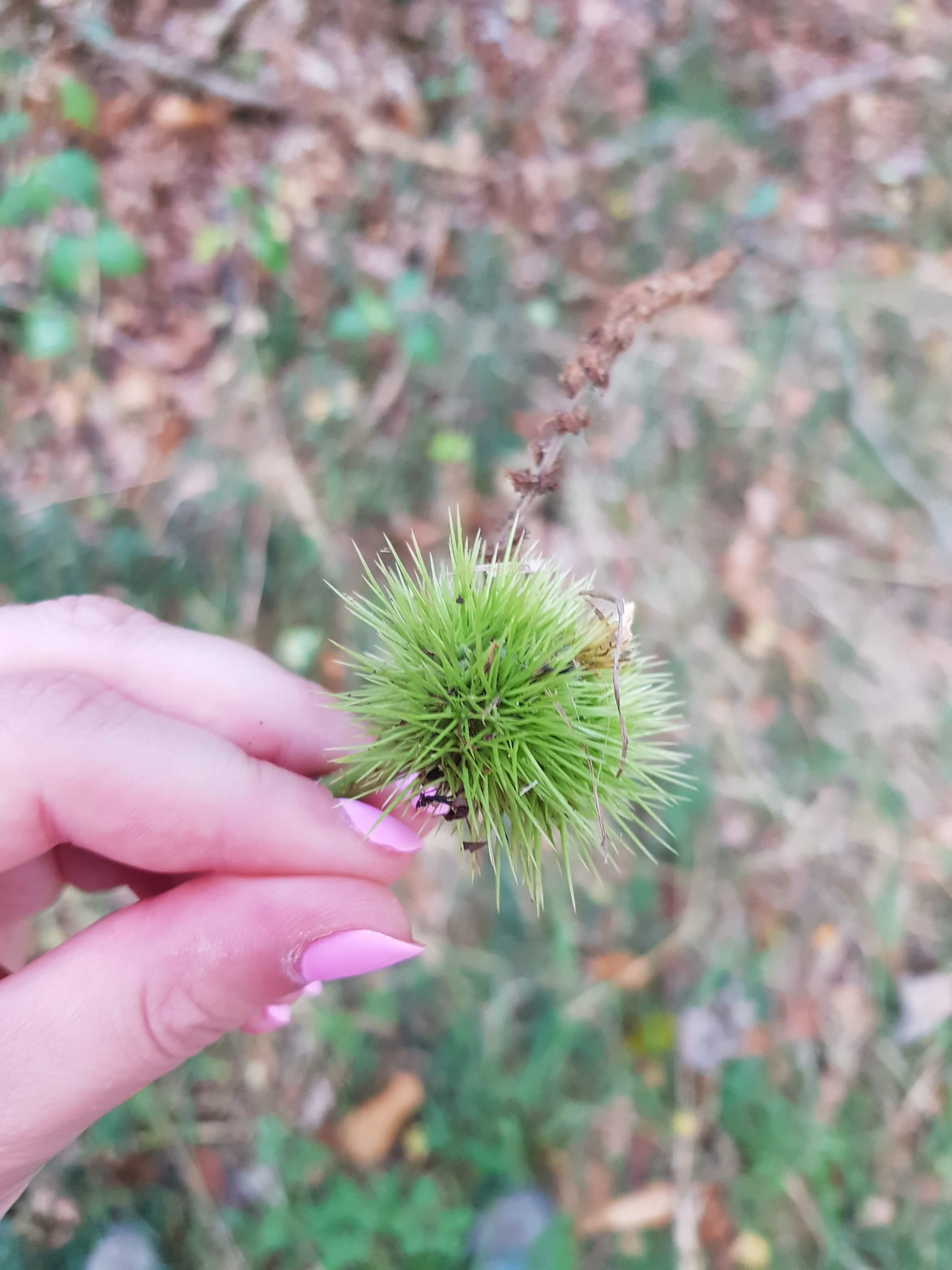
chestnut husk

On my visit to the woods, I downloaded two apps on my phone to identify edible plants and see how they were to be consumed. Woodland Trust also has an app for identifying trees. I have previously collected blackberries, nettles, dandelions and chestnuts. I have been able to use these items to make teas, desserts, and soups, but I know there are lots of recipes available to try. Autumn is certainly the best time for this activity, I would like to try to find more varieties of nuts in the woods… if I can beat the squirrels to them! I would also be really interested in spending a day with an experienced forager, to learn about some of the more unheard of plants.

Exploring community gardens

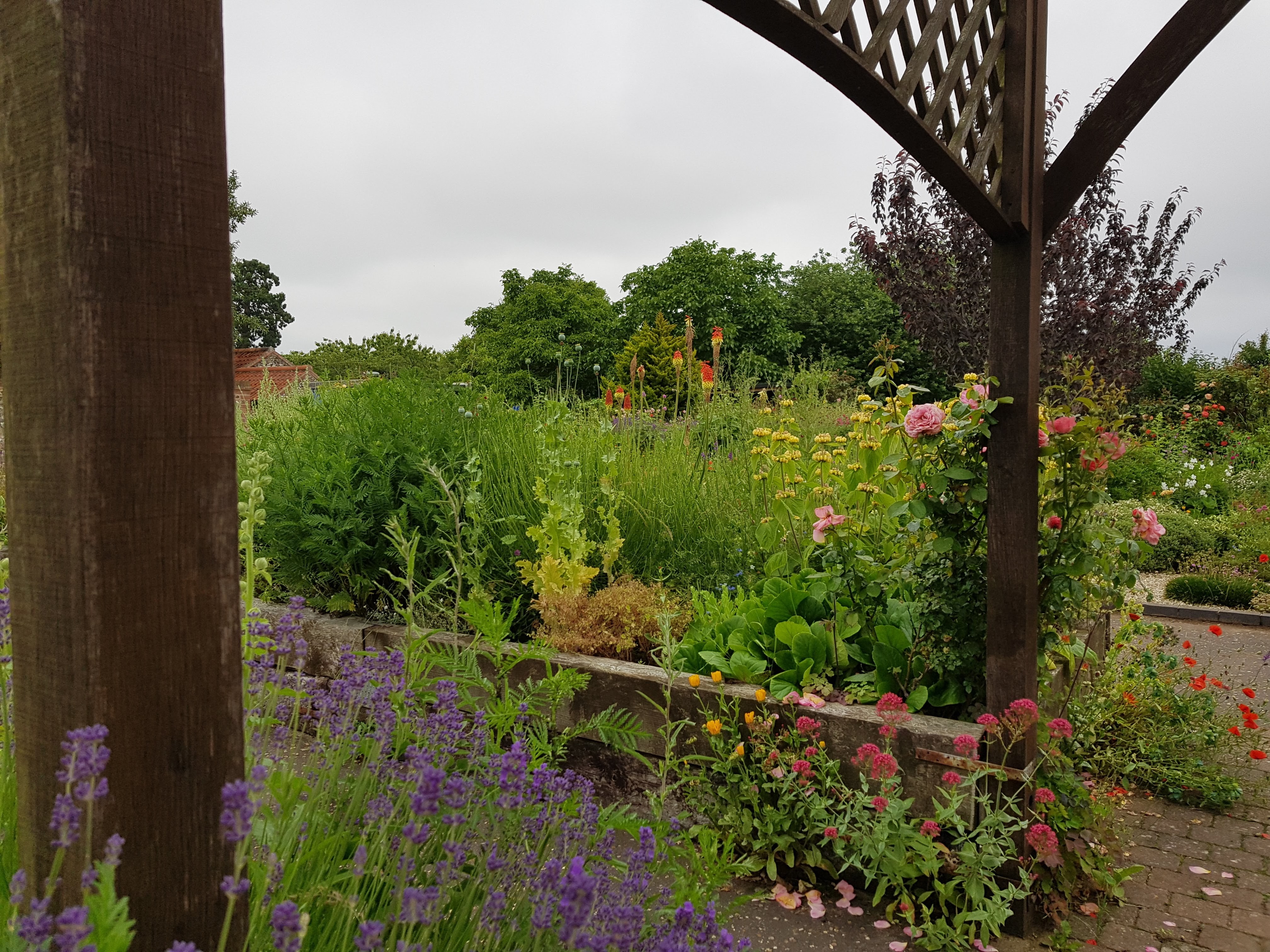
If you live in an urban area, you may be unaware of a network of community gardens that are taken care of by locals. There is more and more demand for green spaces within towns and cities, and locations that locals could grow their own food & cutting flowers. There are a few national schemes that you can use to look up gardens and social farms in your area, some are open all the time, and some have set open days. Some examples are Social Farms & Gardens, Community Supported Agriculture, and National Garden Scheme. You can also speak to your local parish council about what is nearby to you.

I love to explore local community gardens and allotment areas when I am out walking. You can see the individual styles that have been incorporated across the plots and garden spaces, and get some really quirky ideas for your own gardening. It is a lovely contrast to a formal garden at a stately home, and it is also free, so lots of reasons to visit! If you explore enough that you like, you might even find that you want to volunteer to get involved with one local to you.

Geocaching

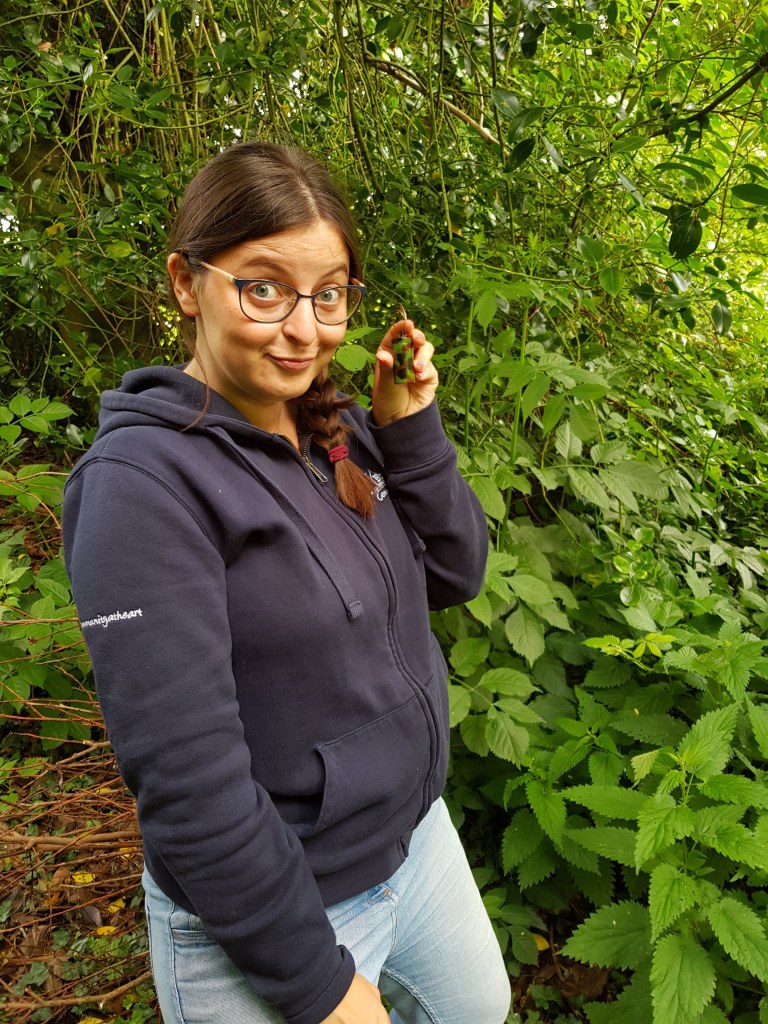
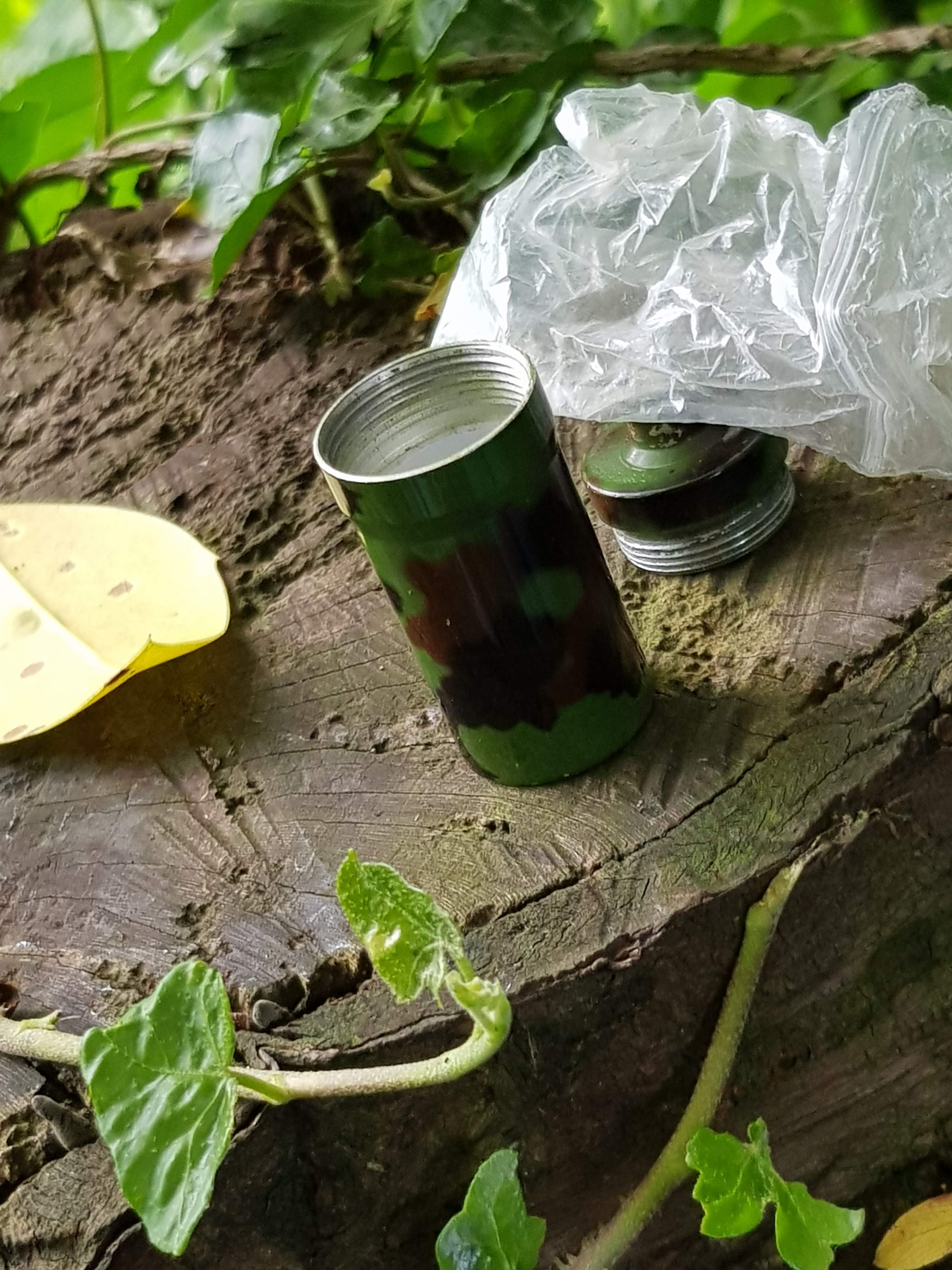
Geocaching is an activity of following GPS co-ordinates to find hidden containers that others have placed. Often these are hidden in very creative hiding spots, and when you find the container, you can add your name to a list of finders inside. Geocaching has a huge following, and is a great way to make your next walk a bit more interesting. Geocaching.com calls the activity ‘the world’s largest treasure hunt’ and invites you to download the application onto your phone for free and get started!

I have done this with quite a few different friends, and some containers are easier to find than others. A friend of mine once had me looking around all of Covent Garden for a specific geocache, for over an hour. We found it though! The buzz of finding it is quite satisfying, and I can see why people get really into doing this on their days out. Geocaching is so popular, you are very likely to have some in your area, so why not give it a go?!

Bird watching

If you love getting outside and experiencing nature then birdwatching is a popular hobby to take up. There are so many nature reserves dedicated to wildlife conservation, and offering brilliant facilities for ‘twitchers’ to enjoy. I have enjoyed visiting various RSPB nature reserves in my time, and have my own pair of binoculars! You can take it as seriously as you want to, but the more dedicated you are, the more likely you are to spot a rarer bird.

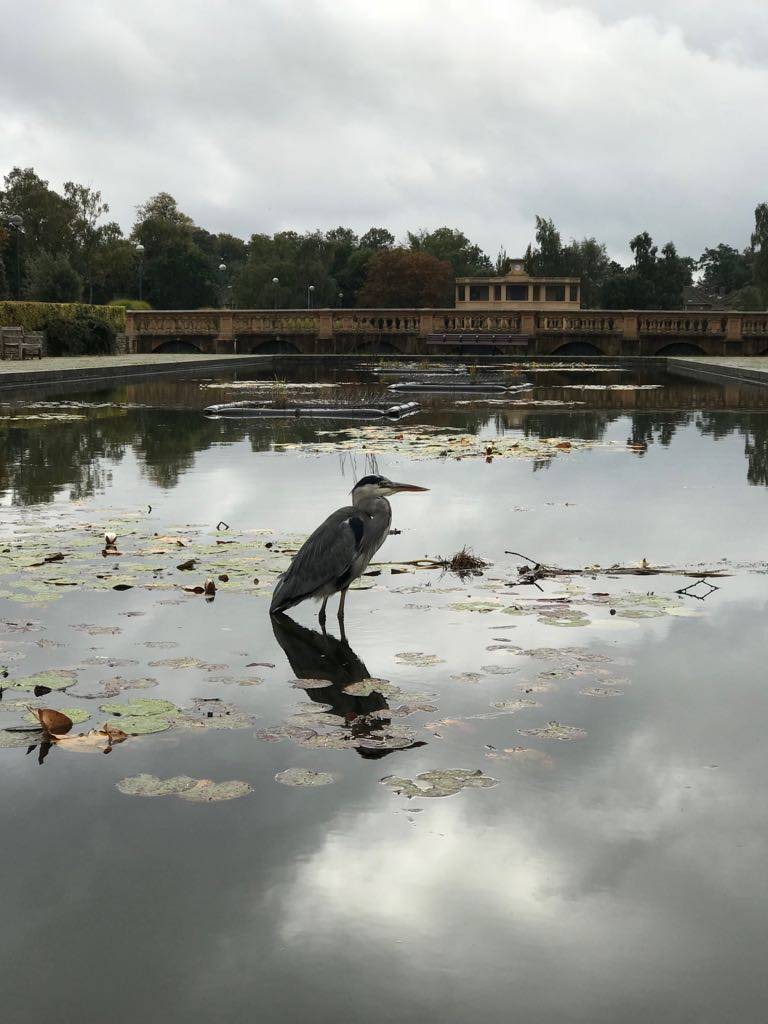
Heron at Eaton Park

I am happy with whatever bird I see, as long as it surpasses the status of a pigeon… It is quite interesting to learn the different bird names though, and actually try to identify what you are looking at. You can equally do the same thing with creepy crawlies, if you are more that way inclined!

Crabbing & Rockpooling

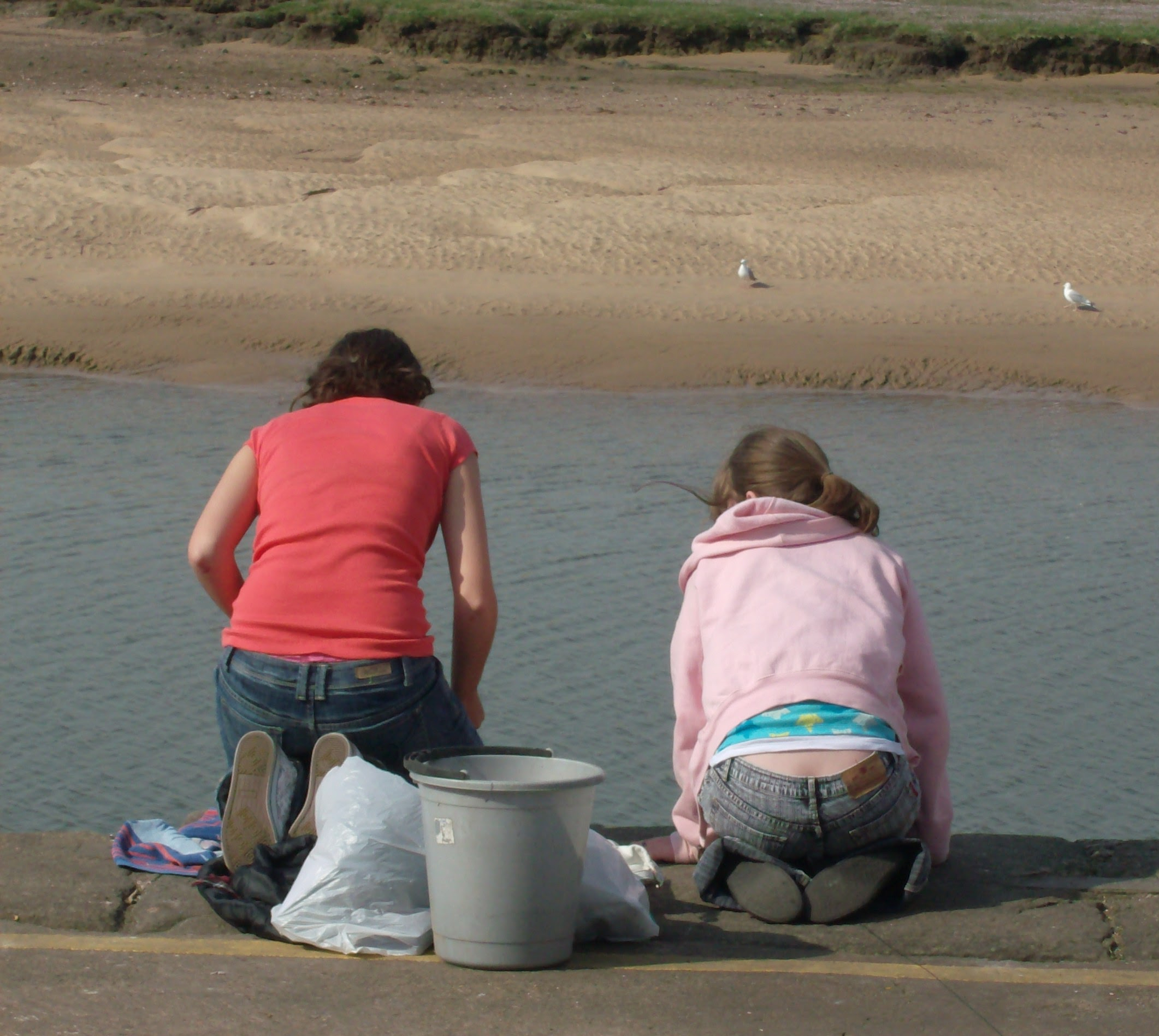
Just a ‘ponds throw’ from bird watching… (see what i did there..) looking for crabs can be quite a fun way to spend a few hours, especially for kids. This is a really popular activity where I am from, in Norfolk. Every day that the sun is shining, there are people sitting at the edge of a beach pier, hanging bacon from a string, in the hope of catching a crab. Equally, you will see kids jumping over rocks to dig for crabs in the shallow pools of the beach.

Norfolk crabbing
Norfolk crabbing

I have done this with my family, although with little success (my fishing skills are lacking). My sisters were normally the ones to find the crabs, and then we would enjoy looking at the little fellow for half an hour, before gently releasing him back into the sea.

Church / Cemetery crawling

Those of you that like history, and specifically ancestry, may find this to be a particularly wonderful day out, especially in the days where you want to be indoors or in the shade. There is so much history to a parish church, and most are open all the time for visitors to walk in and explore. Equally cemeteries have become an attraction in themselves…

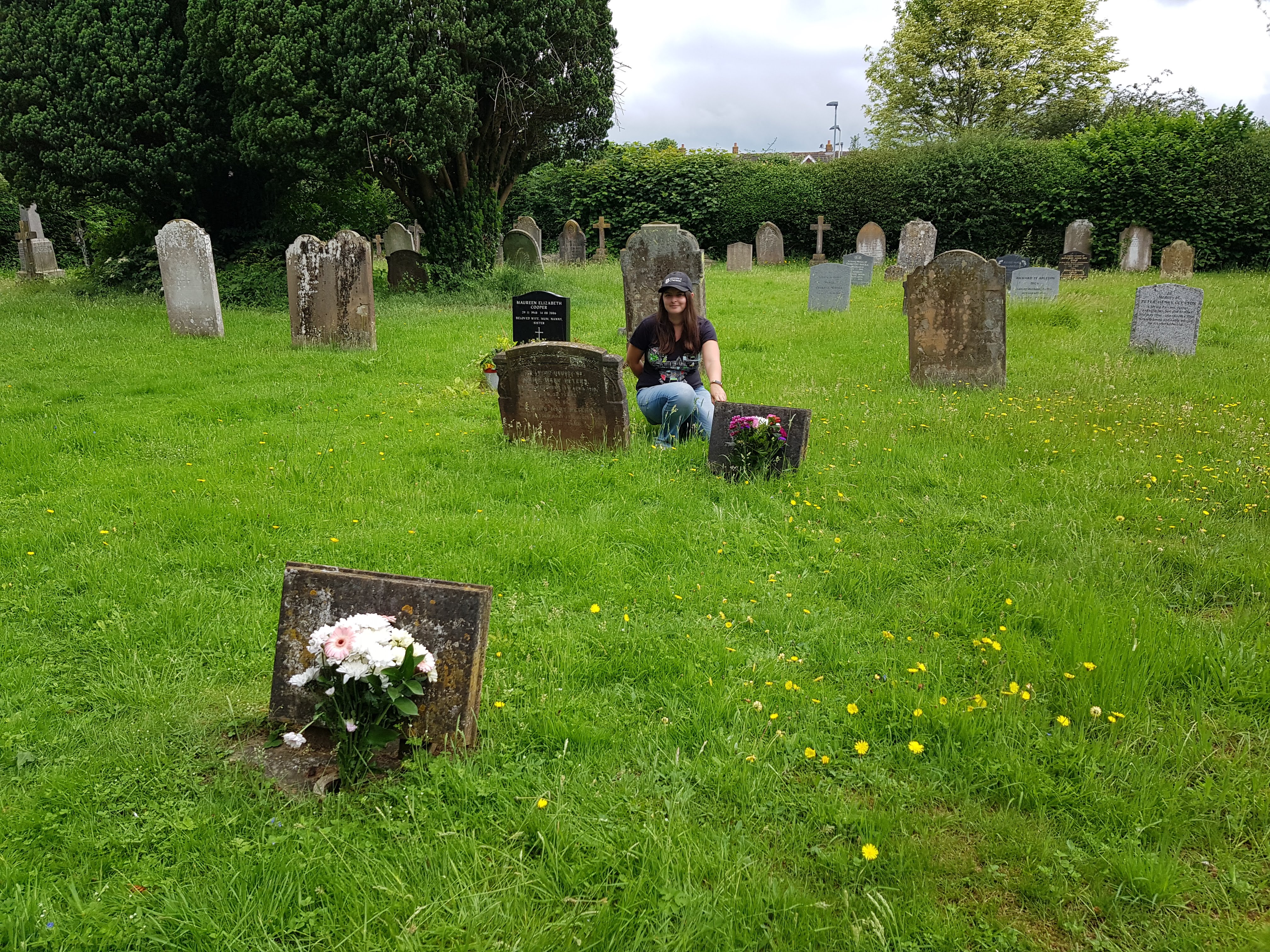
I started to take an interest in walking around cemeteries so that I could find specific graves of ancestors, and discovered Ancestry.co.uk and a website where you can find and record grave stones in local cemeteries to keep records up to date, and digital for all researchers. Once I then started visiting the cemeteries more, I began to appreciate the artwork, verses and style of the various tombstones. A lot of people also like to visit cemeteries as part of tours, or on their own, to pay respect to well known public figures that are buried there.

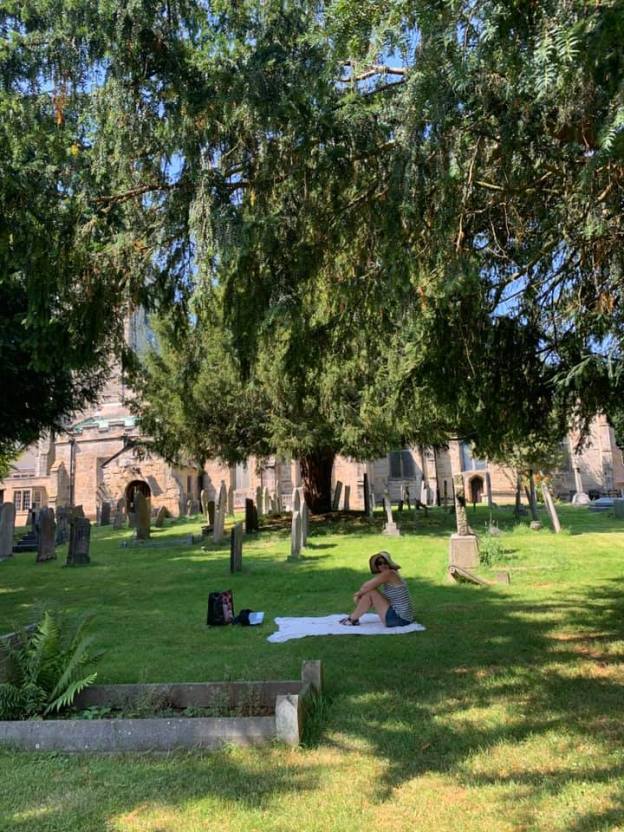
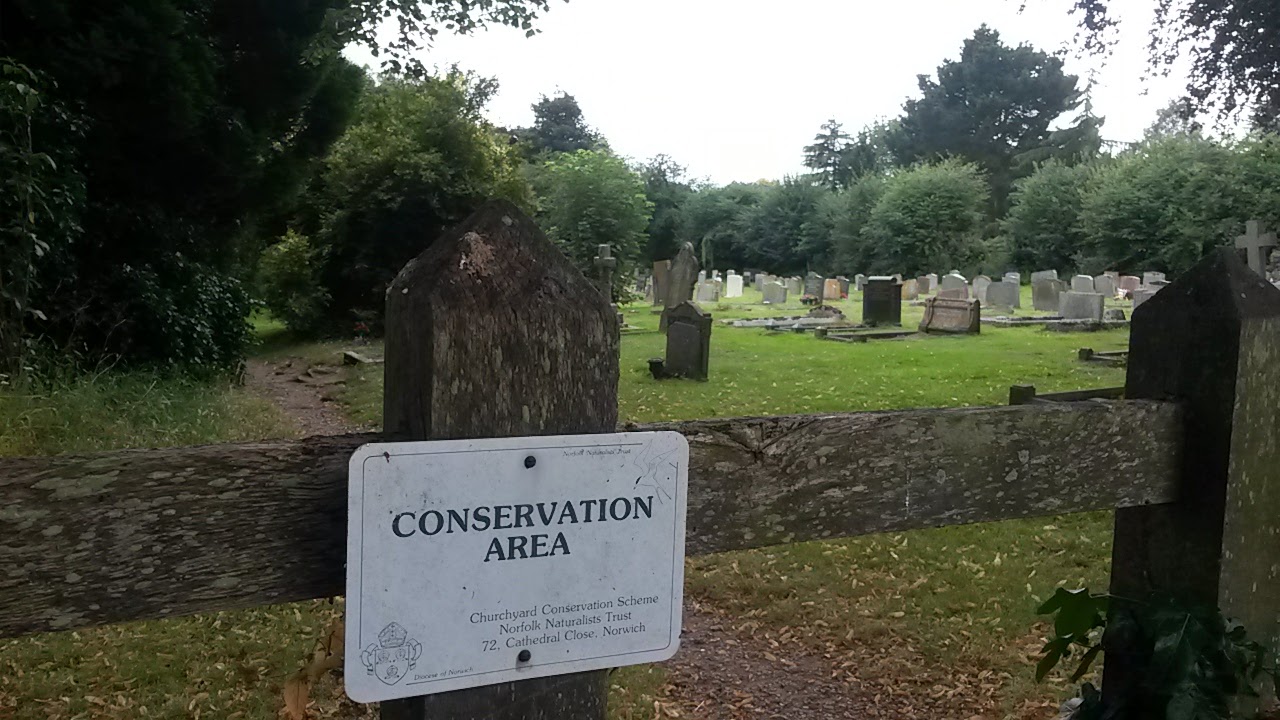
A final reason that they are nice to visit, is that they are generally beautiful, peaceful and often wild places to relax in. Many UK cemeteries have become accredited as mini nature reserves, for their wildlife credentials. I have even had a picnic in a cemetery before, as it was a pretty spot and also pleasantly shady on a warm day!

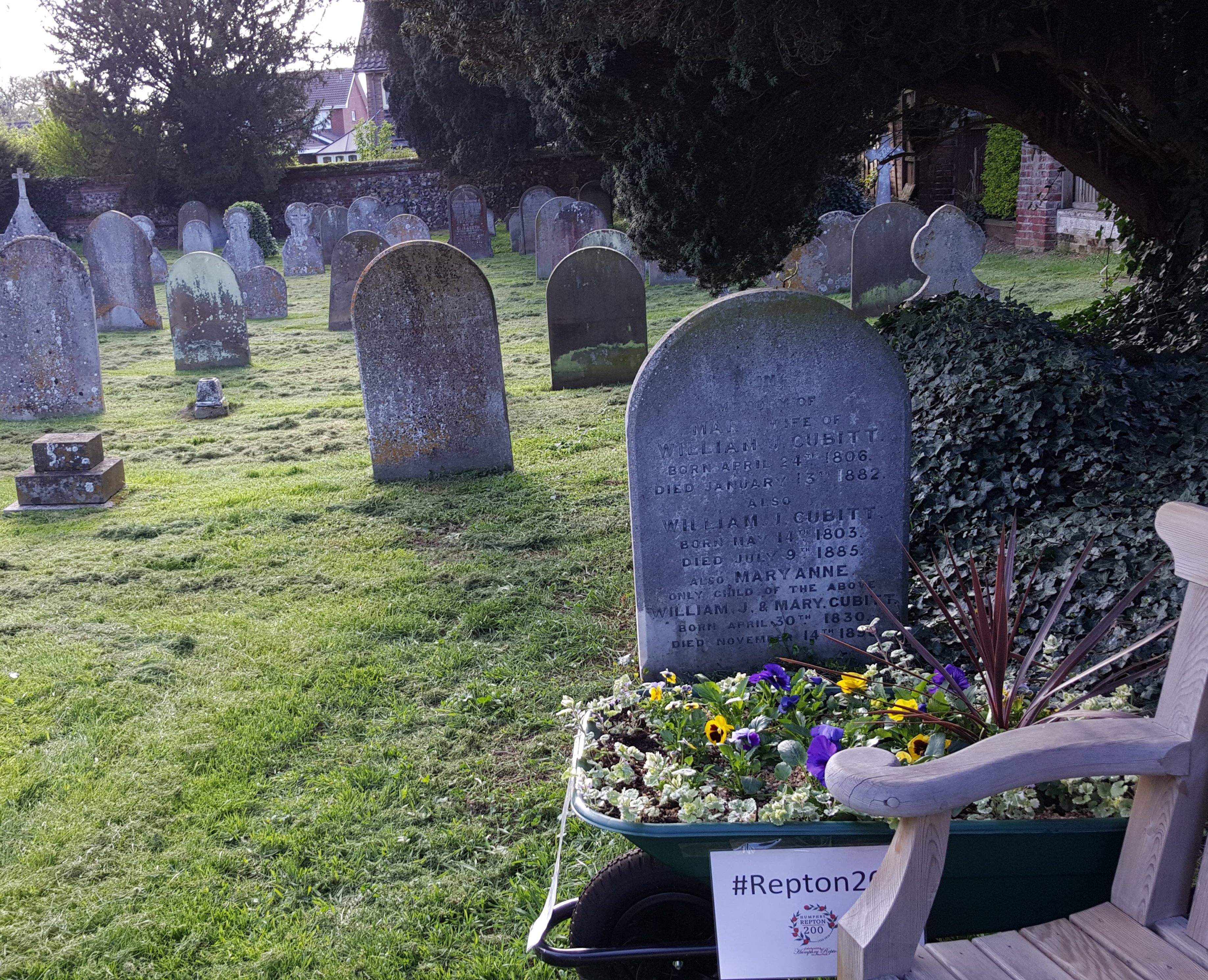
Cemetery conservation area

Fossil hunting and Flint knapping

If you want to do something that is really unique and one to write home about, then consider the world of geology! There are several locations across the UK where you can get permission to go fossil hunting, or join an organised event. The UK Fossils Network seems to be a great source of information about locations within the UK, and also guidance on how to do this activity safely. I have so far been unsuccessful in my lone wonderings to find fossils, but I may try one of the group events as it seems that they provide the equipment and safety bits you need to get more serious about it.

If you want to do something even more niche, then you may want to consider learning about flint knapping! I haven’t tried this myself, but I understand that you can take workshops in this, in my home county. Flint knapping is the act of finding flints, and then hitting them into the shape of weapons, that you would have used in prehistoric times!

Self guided tours/ trails

Taking yourself on a self guided tour of a city or town is a really traditional and easy way to spend a day out. Lots of locations will provide you with a map or app for following a trail of blue plaques, or local murals. In some locations, you can even walk up to a local statue and listen on your phone to a recording about who the figure was. This is part of the ‘talking statues‘ scheme.

I have walked several self guided trails in different cities, and have found that the more interactive, and unusual, the better. I especially like to do trails where you have to follow clues, as i find this more challenging. ‘Treasure Trails‘ is a great scheme that offers trails with clues to solve at different levels, across the UK.

To summarise…

If you are heading out for the day, why not make a proper day of it, and try an experience you won’t forget! I hope the above ideas may have tickled your imagination, and made you think about what is nearby to where you live.

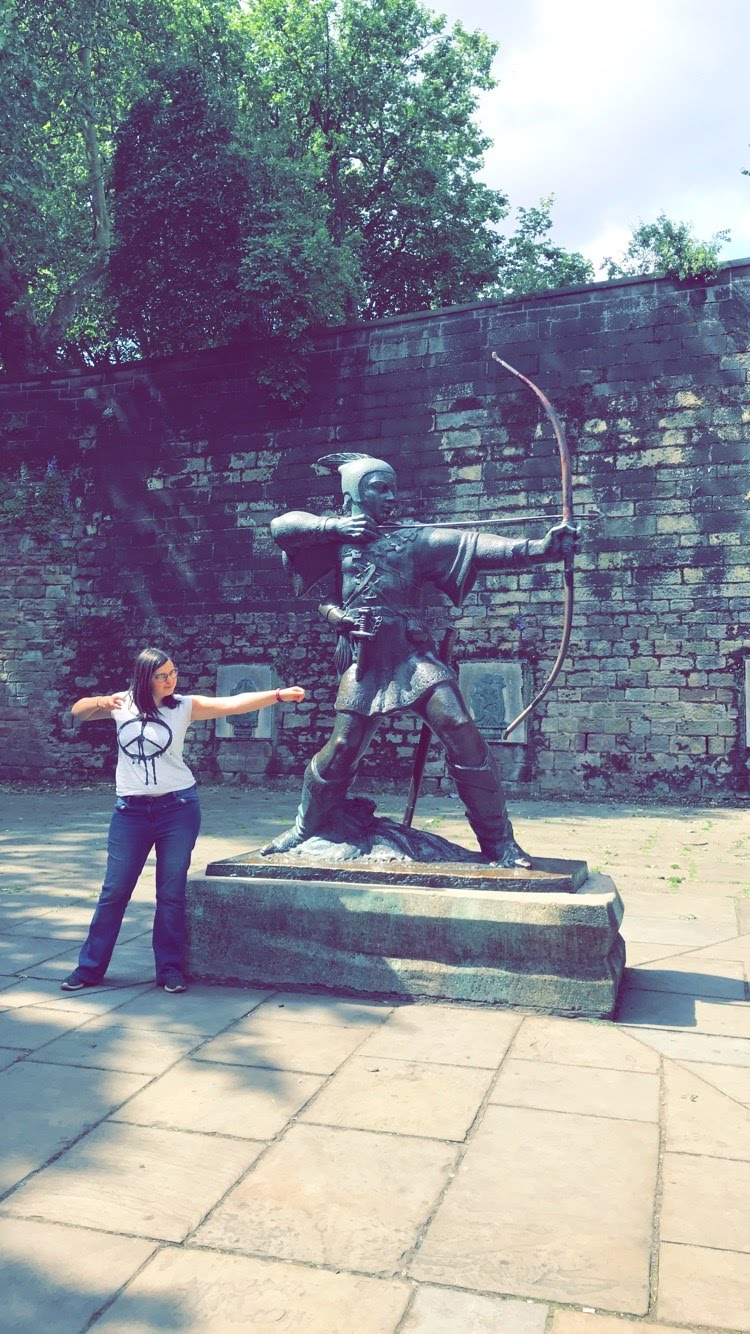
me and robin hood nottingham

St Paul’s Cathedral: A very English icon inspired by Europe

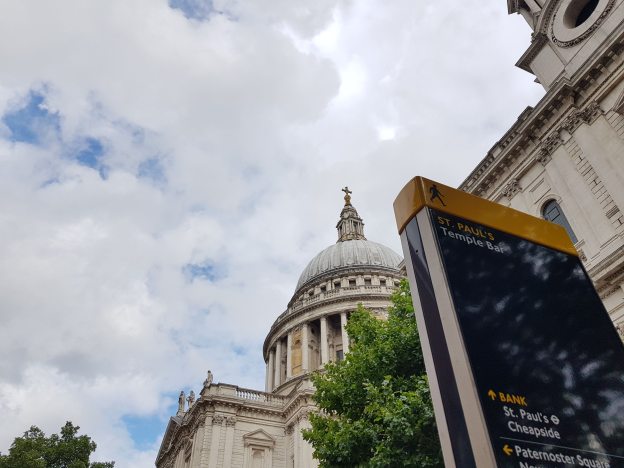
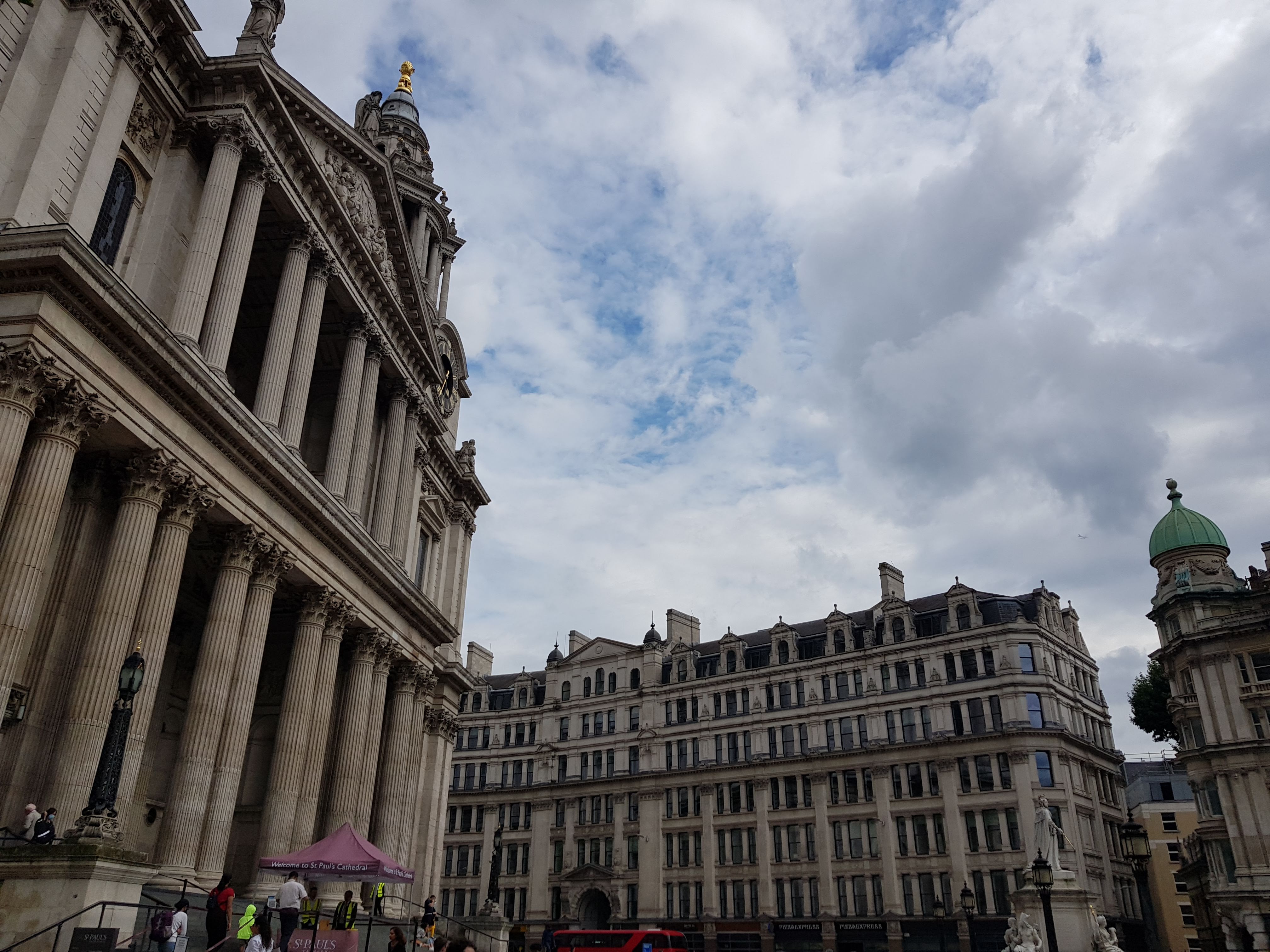
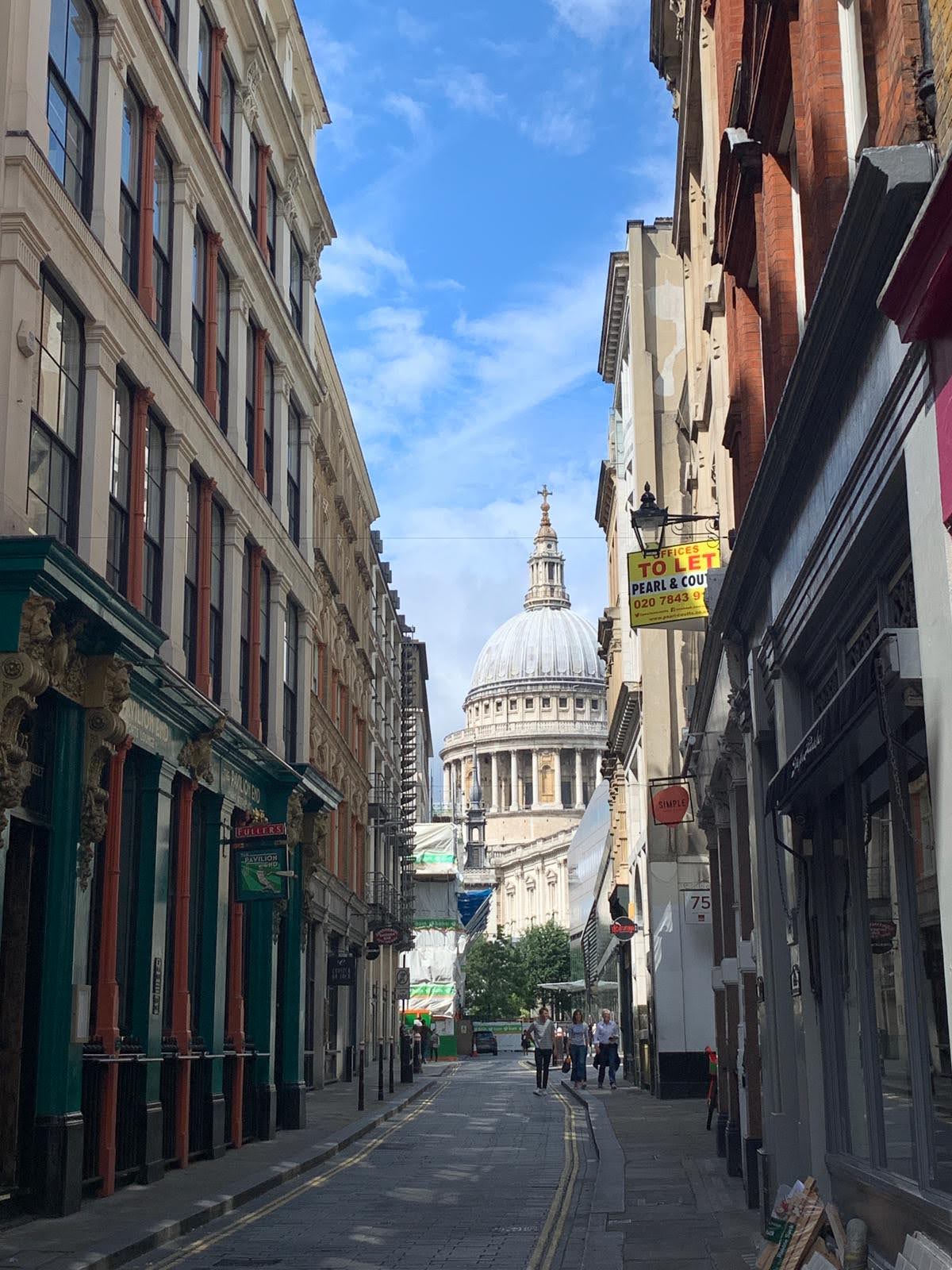
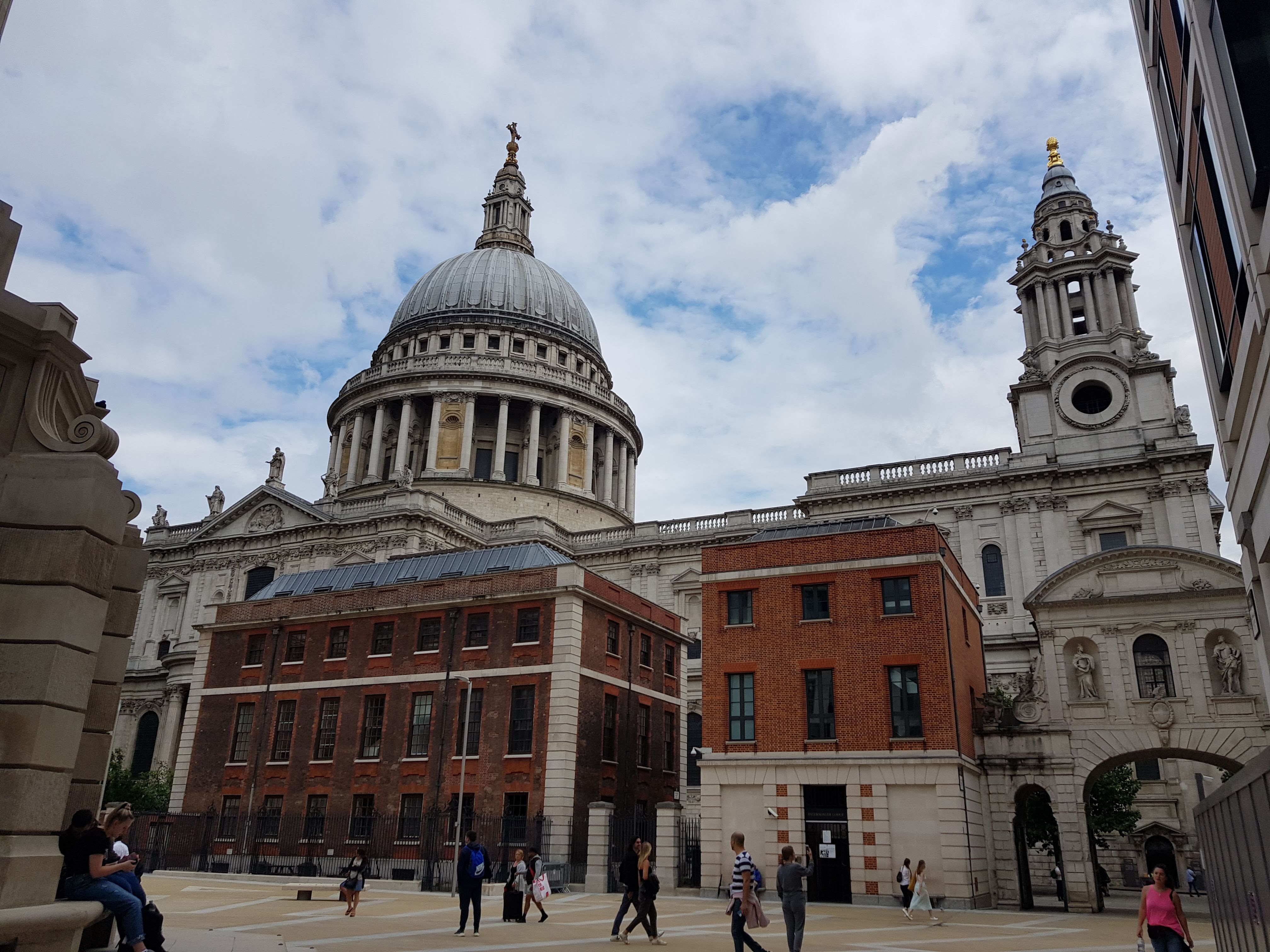
I recently had a visit to St Paul’s cathedral in central London, and found it to be a stunning example of architecture, art and history. This church is recognisable across the world as an important site for ceremonial events, and a centrepiece to the historic London skyline.

Surrounding St Paul’s

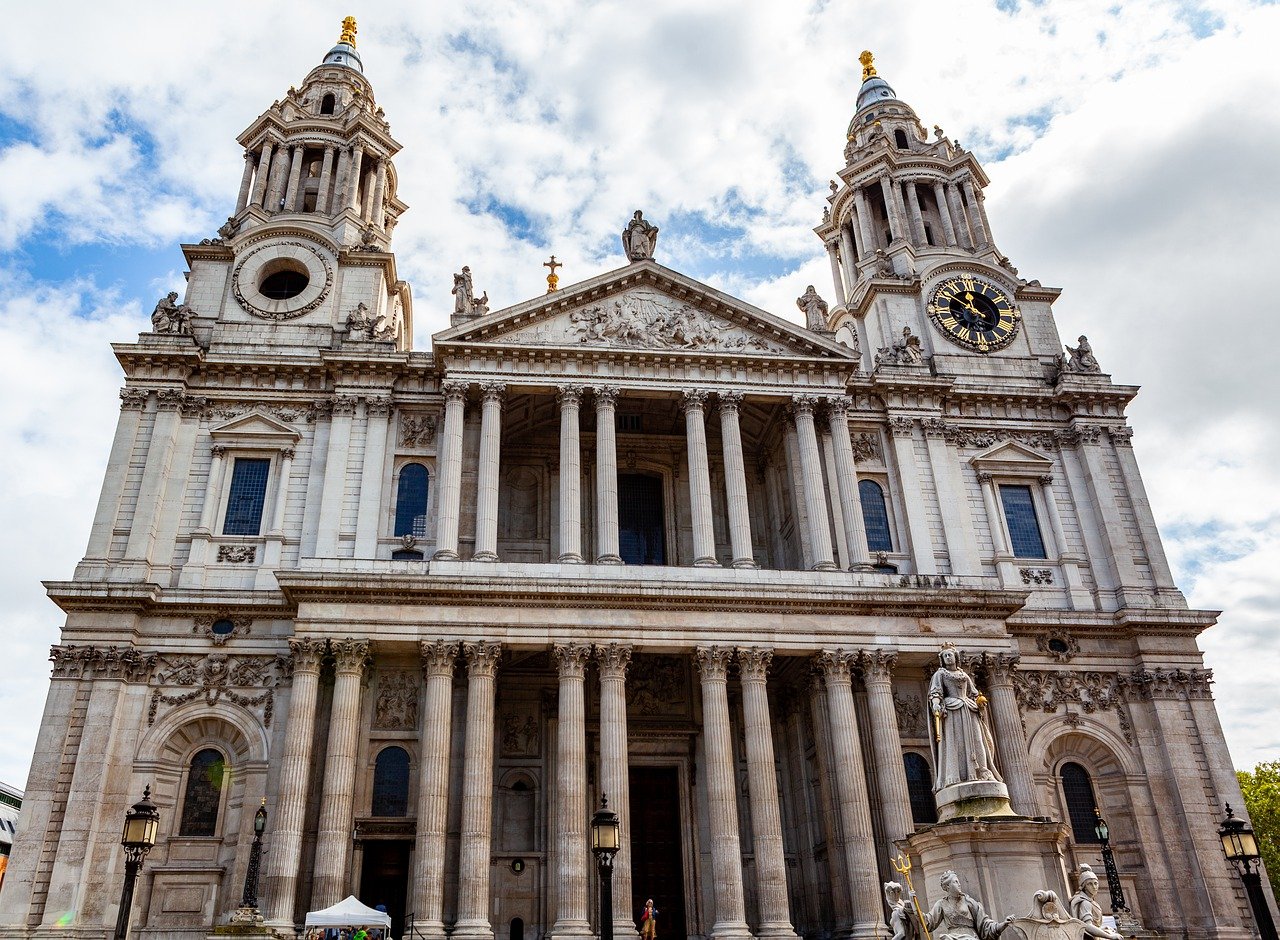
St Paul’s cathedral is in the centre of London and has a dedicated underground station down the street, St Paul’s station. It is recognisable from a distance, by its large dome, but I also think of the front of the building and its iconic steps and open space…. this may be somewhat led from my childhood memories of watching Mary Poppins! The church is used in the film for the song ‘feed the birds’…

Feed the birds!!!!

I know you’re probably singing it along in your head now! Oops! Sorry!

Around the cathedral, there is a plethora of shops and restaurants to enjoy, and on the site, St Paul’s also has a well kept set of gardens and cemetery to meander within. St Paul’s is also in close proximity to the iconic Millennium bridge, and the Museum of London.

What’s on offer

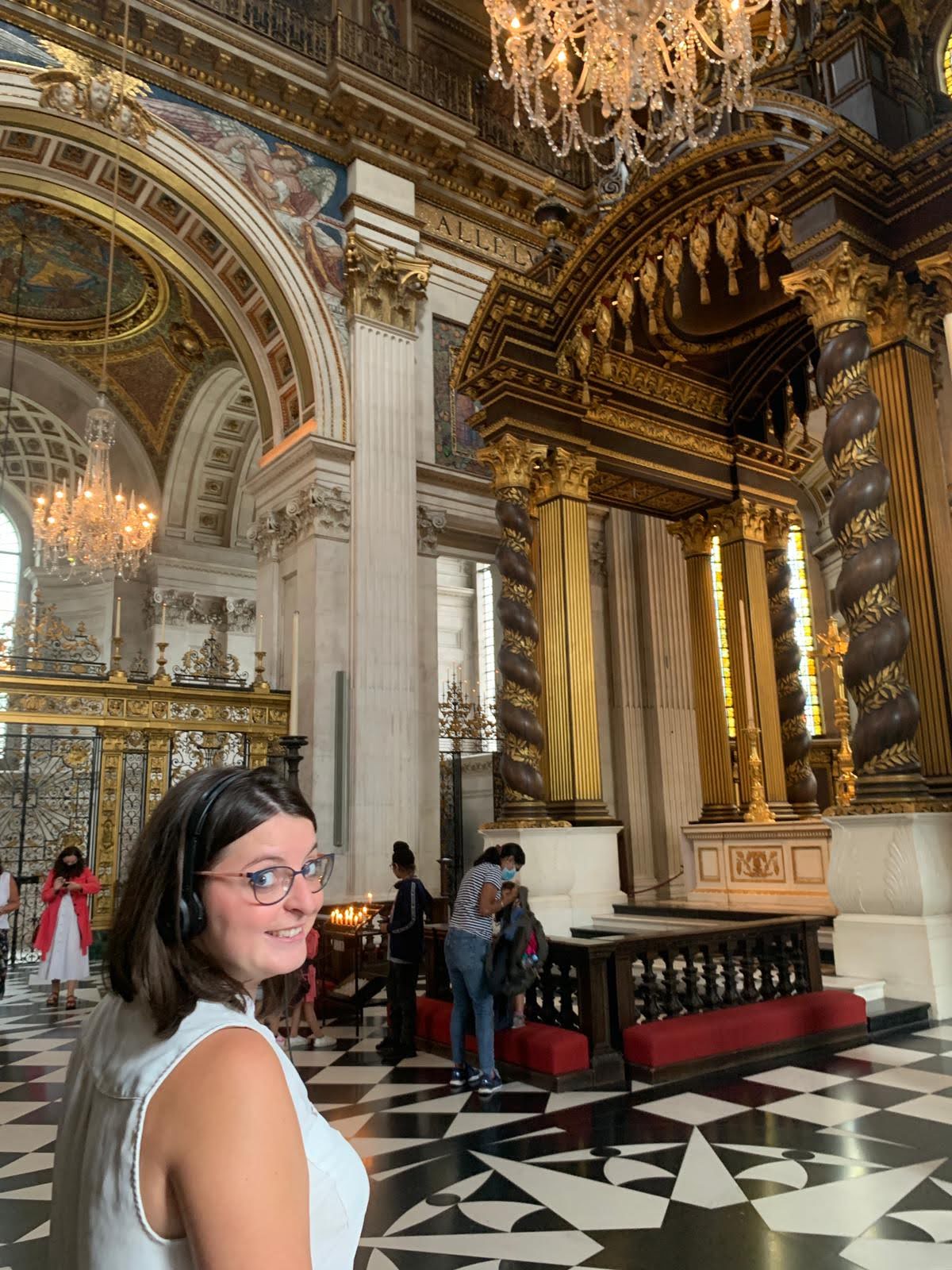
We booked our tickets into St Paul’s the day before, and this was well worth doing, as we were able to walk straight into a clear queue, past many people that had just walked in. As part of your ticket, you can access an audio guide and headphones that have lots of useful information about the cathedral. It breaks the content up into different sections of the cathedral geographically, by topic, or how much time you have. So, if you only want the highlights version then you can still benefit from an audio guide.

There are also guided tours freely available throughout the week at lunch times, as well as private tours which you can book. If you want to slip into the background and enjoy the atmosphere, you can also take part in a daily service of Eucharist or Evensong. The full schedule of services can be found on the St Paul’s website.

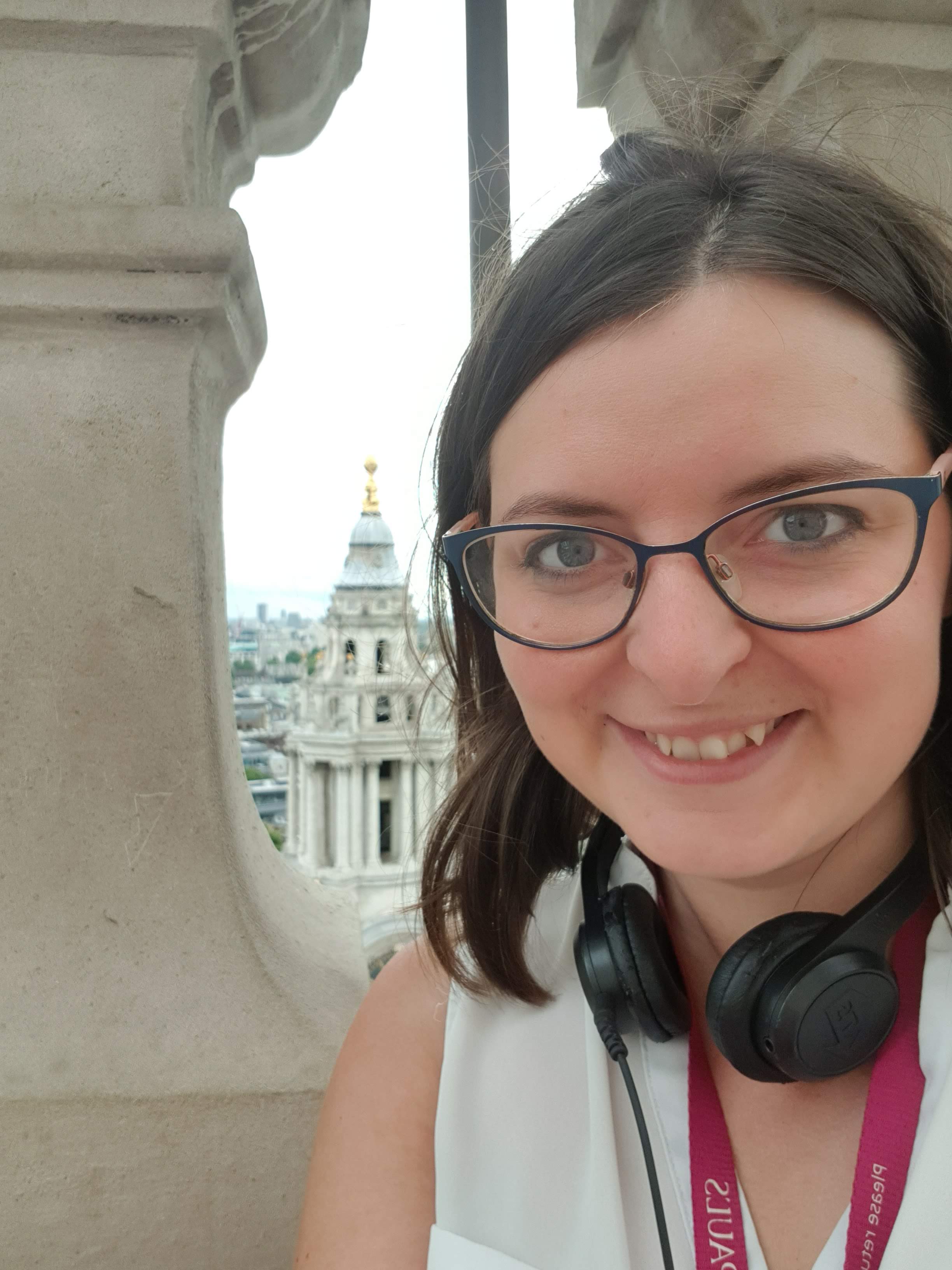
Me listening to my audio guide

Architecture

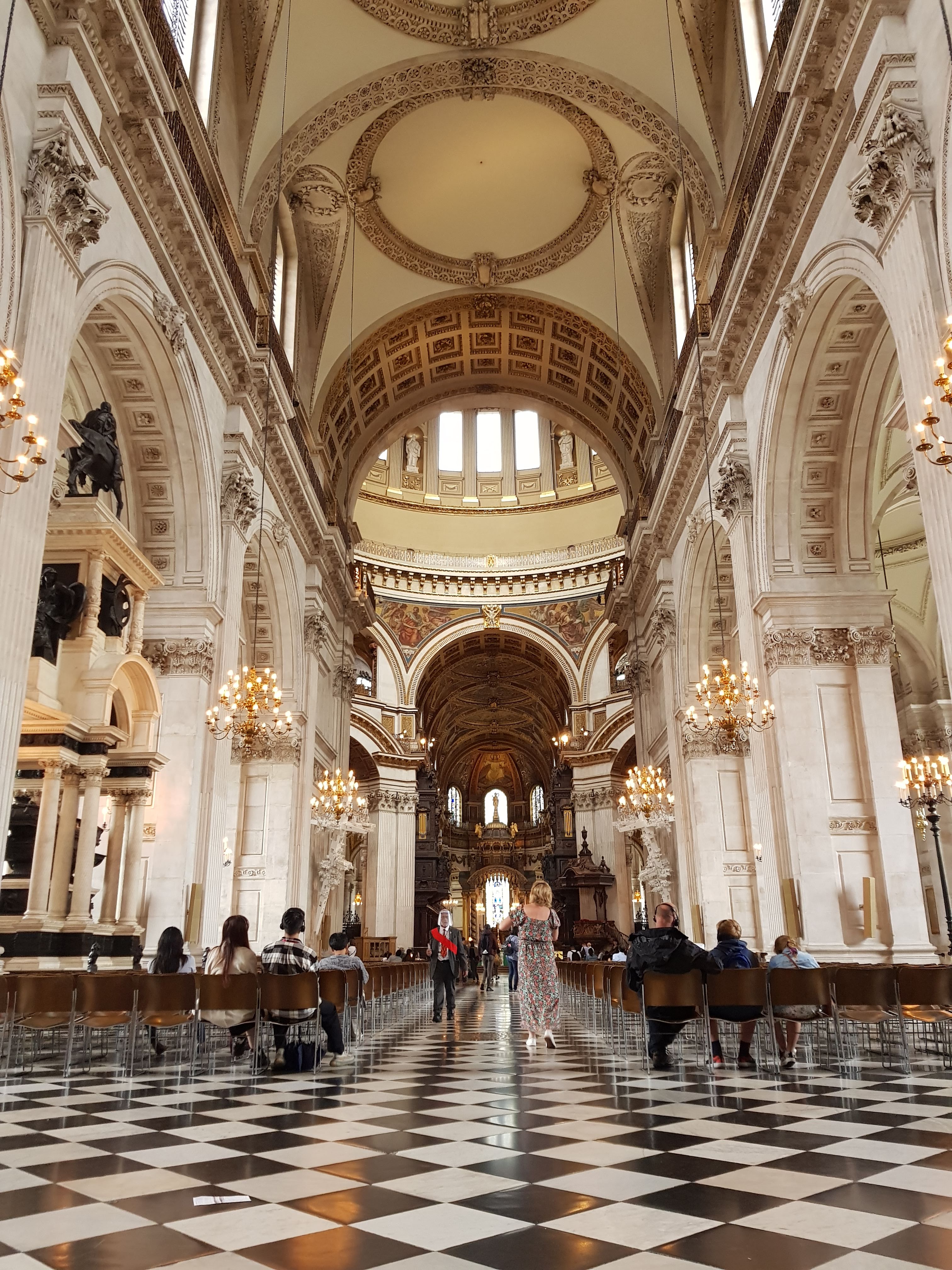
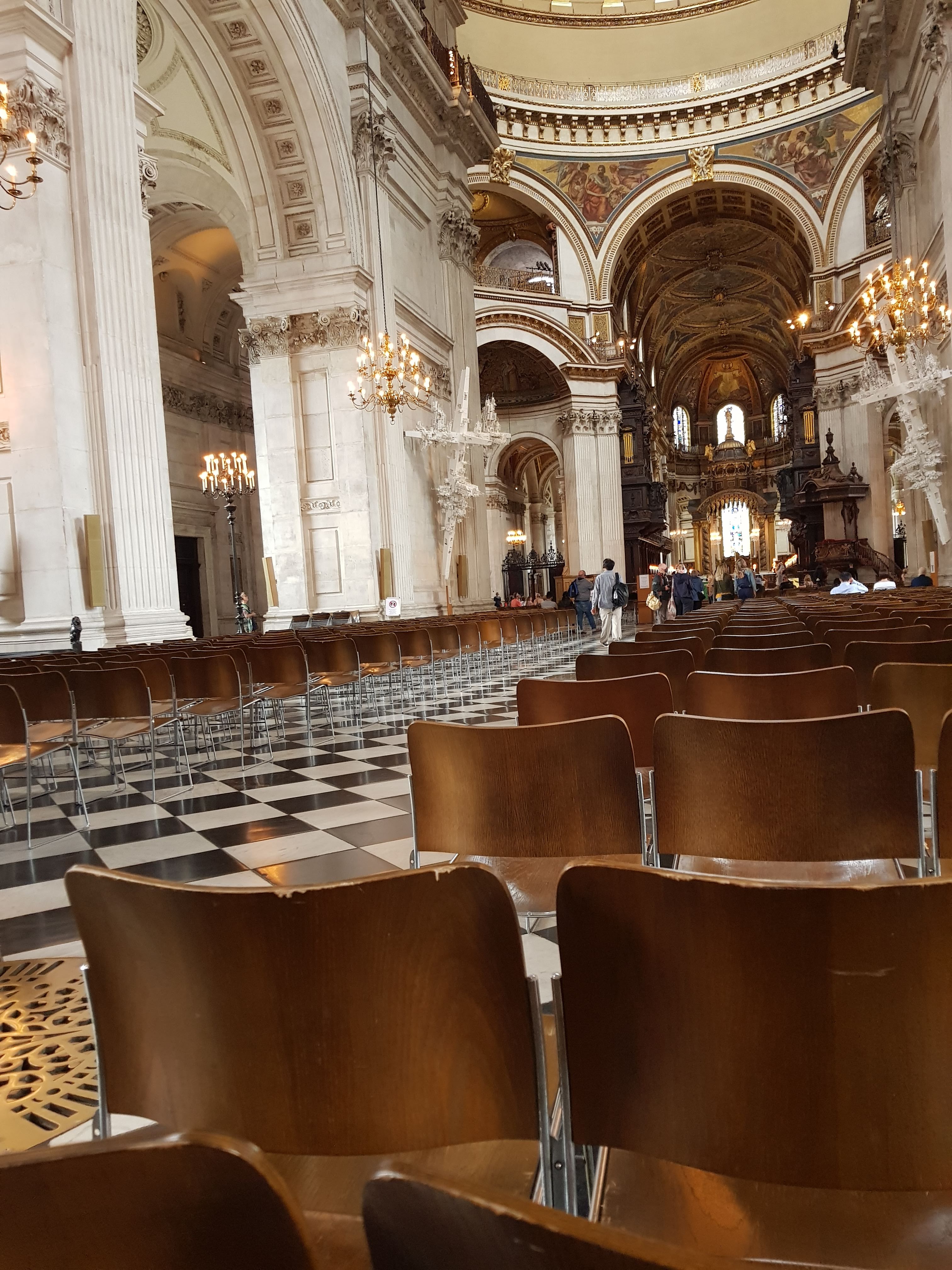
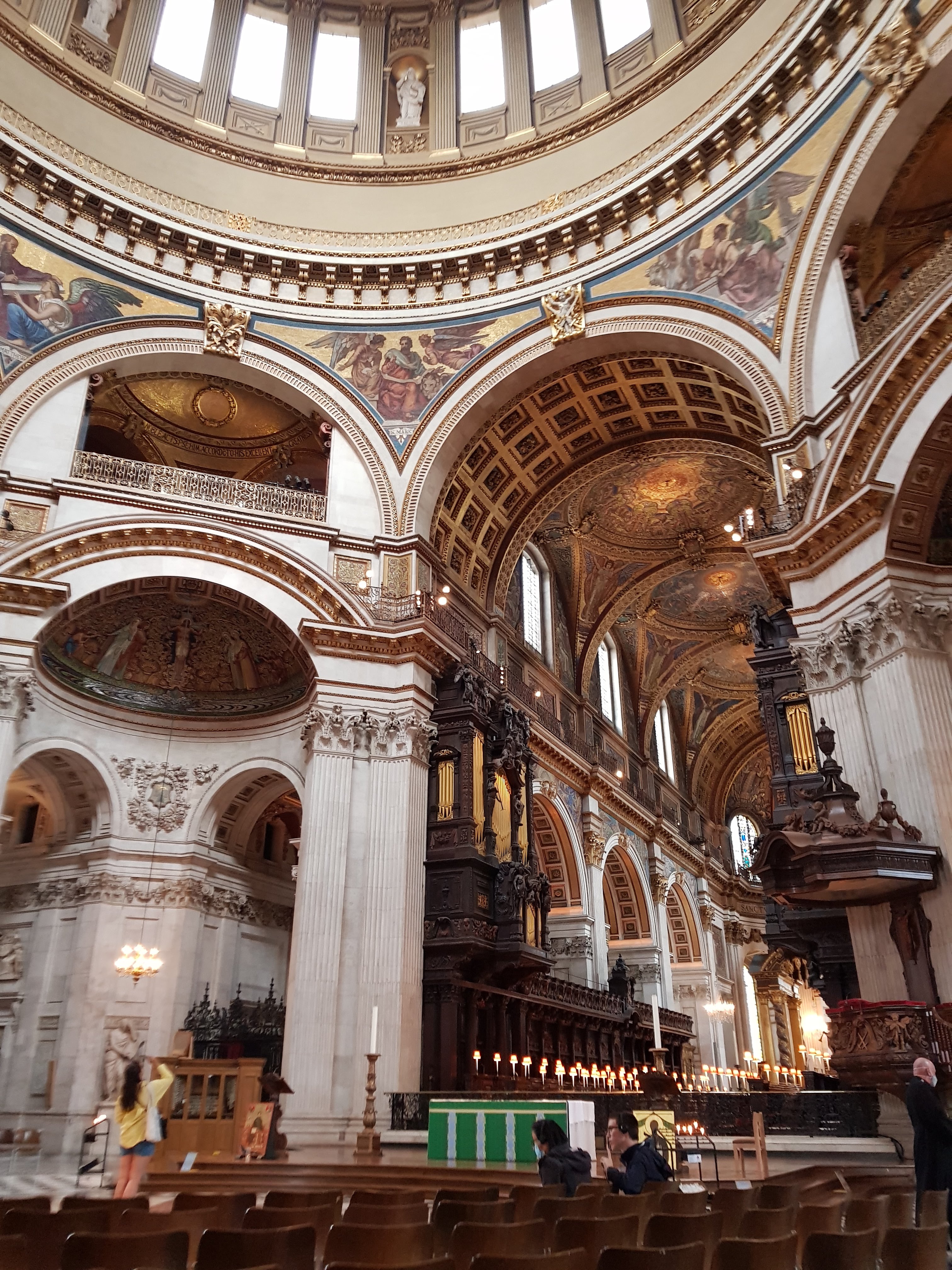
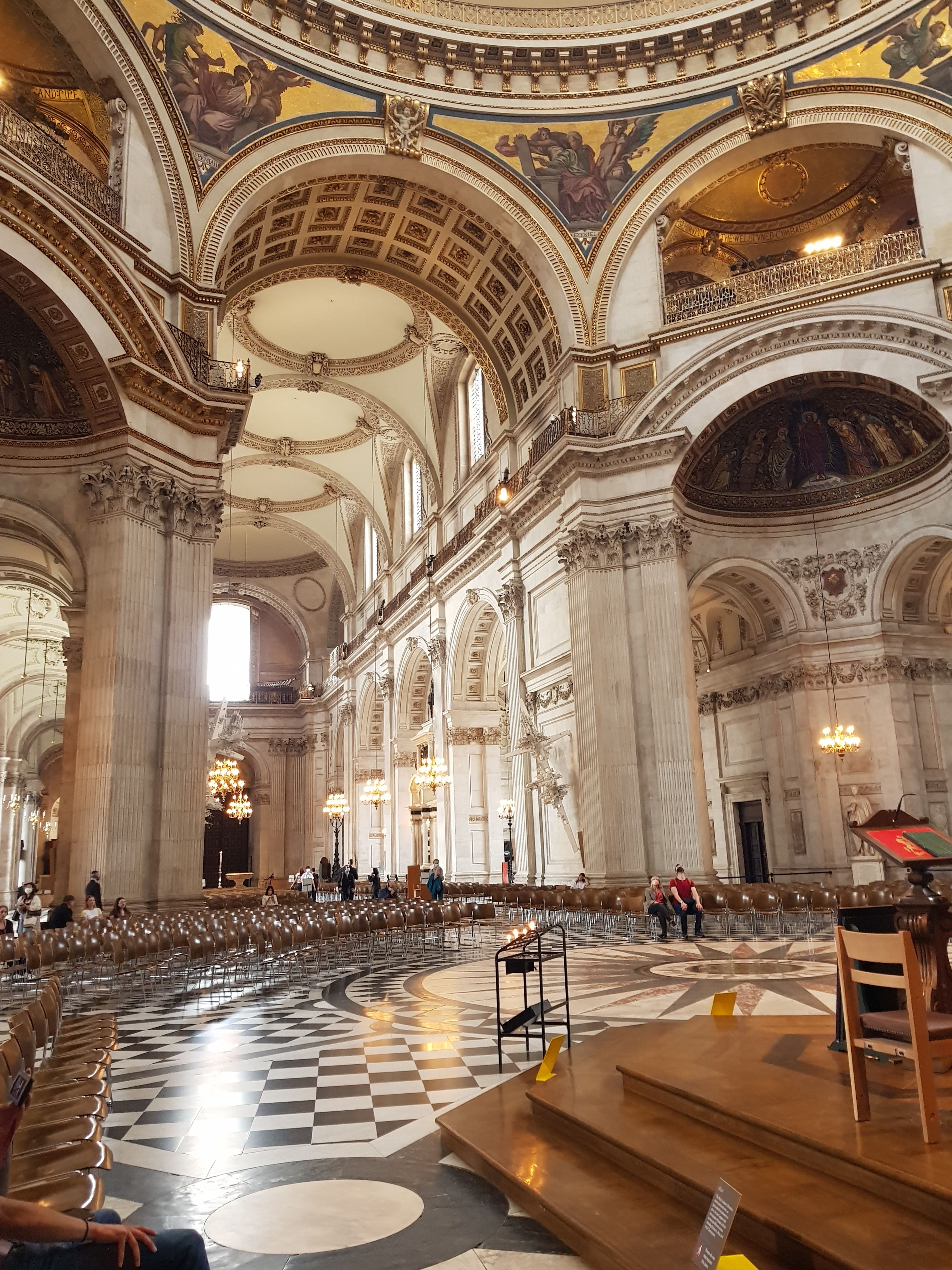
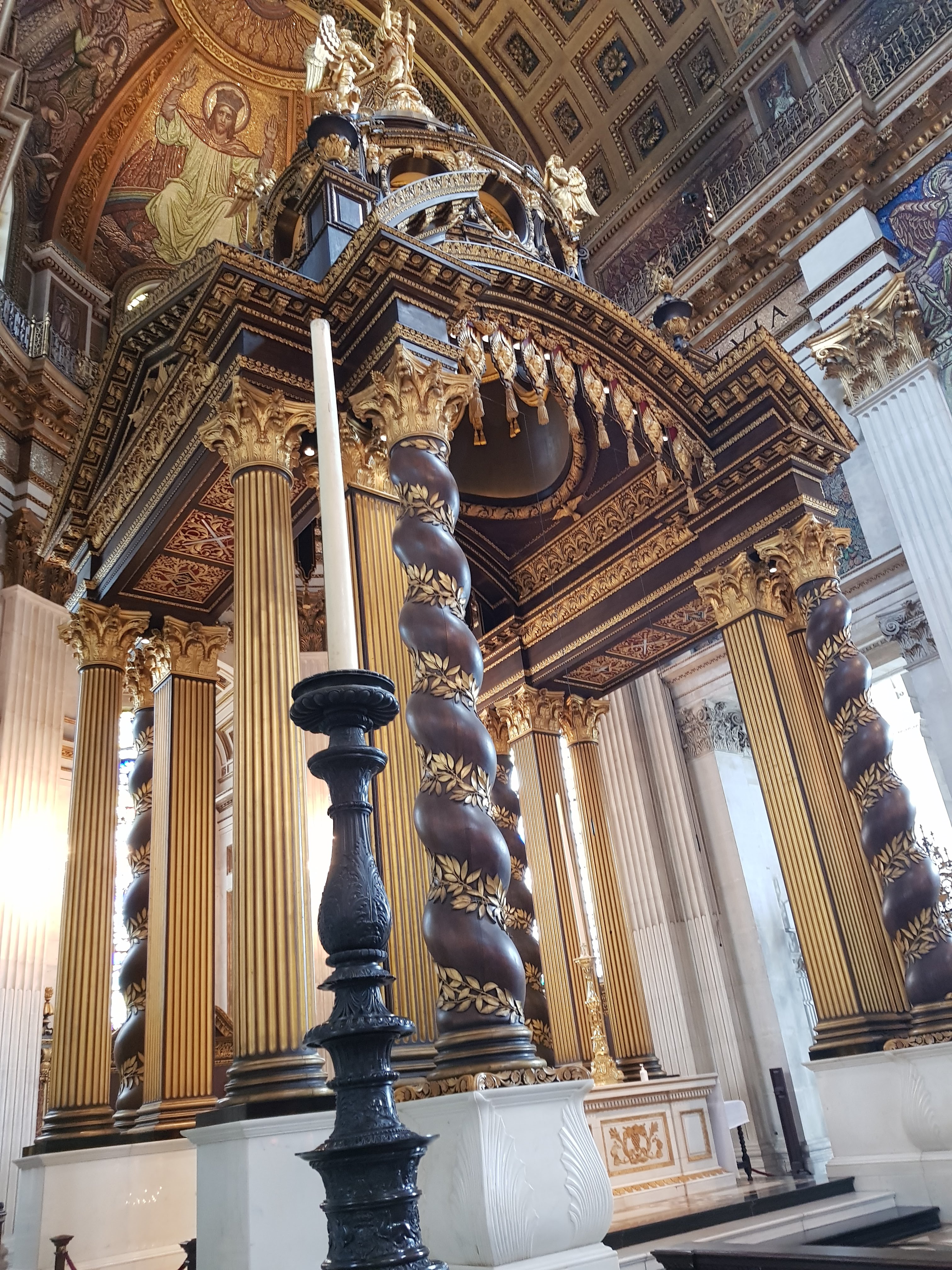
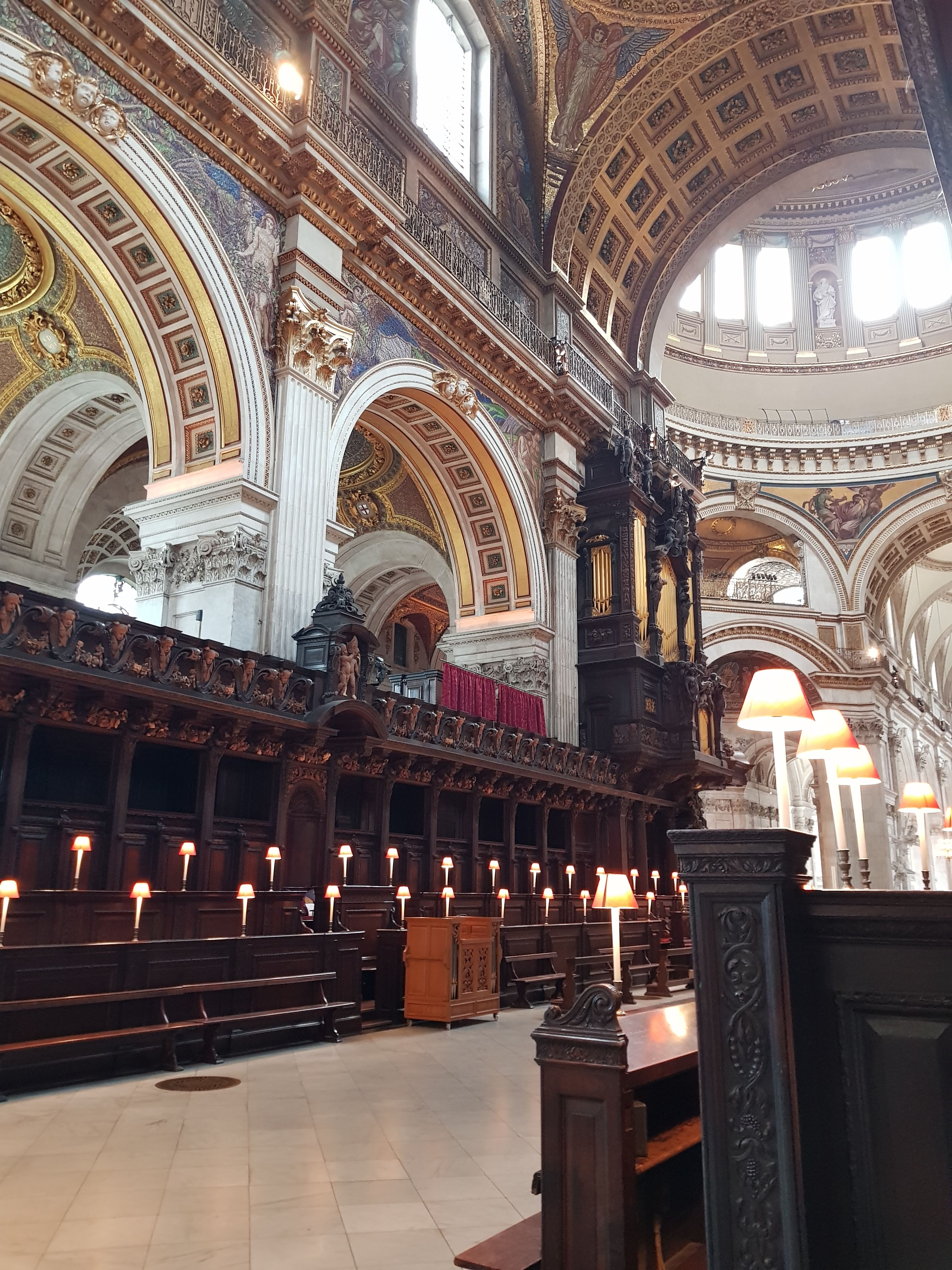
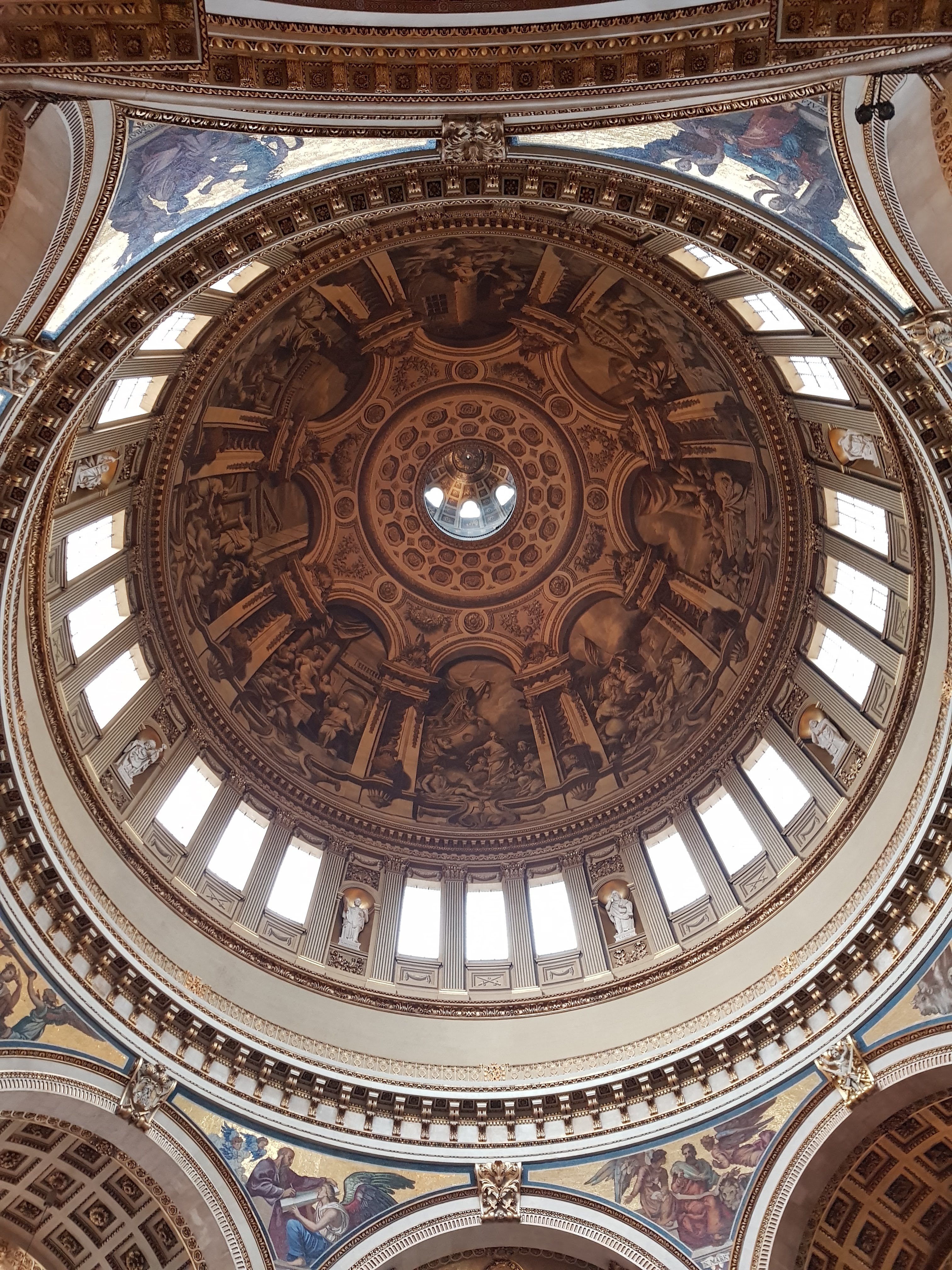
The architecture within the cathedral is very striking. I really enjoyed taking photographs of the church from different angles, as there are so many arches, curves and also geometrical shapes, both high and low. The styles and colours of white and gold, did remind me more heavily of a European cathedral, specifically, ones I have seen in Italy. The church certainly did not feel English. I think this is rather ironic, considering it is one of the biggest religious attractions that international visitors see, and represents the country across different medias around the world.

The original St Paul’s was much more English looking, and looked similar to cathedrals of Salisbury, Canterbury or Norwich. That church was destroyed in the Great Fire of London, and this new structure was built between 1675 and 1710. The architect, Christopher Wren, attempted to approve several designs before the King eventually signed off on the plans. It seems that Wren attempted to put his own twist on the Baroque style which was becoming popular in Europe at the time, interestingly as a counter action against Protestantism. He coined this as ‘English Baroque’.

The similarities between the two styles are obvious though, if you take a look at the two images below of the towers of St Paul’s vs Santiago de Compostela, Spain… you can see for yourself!

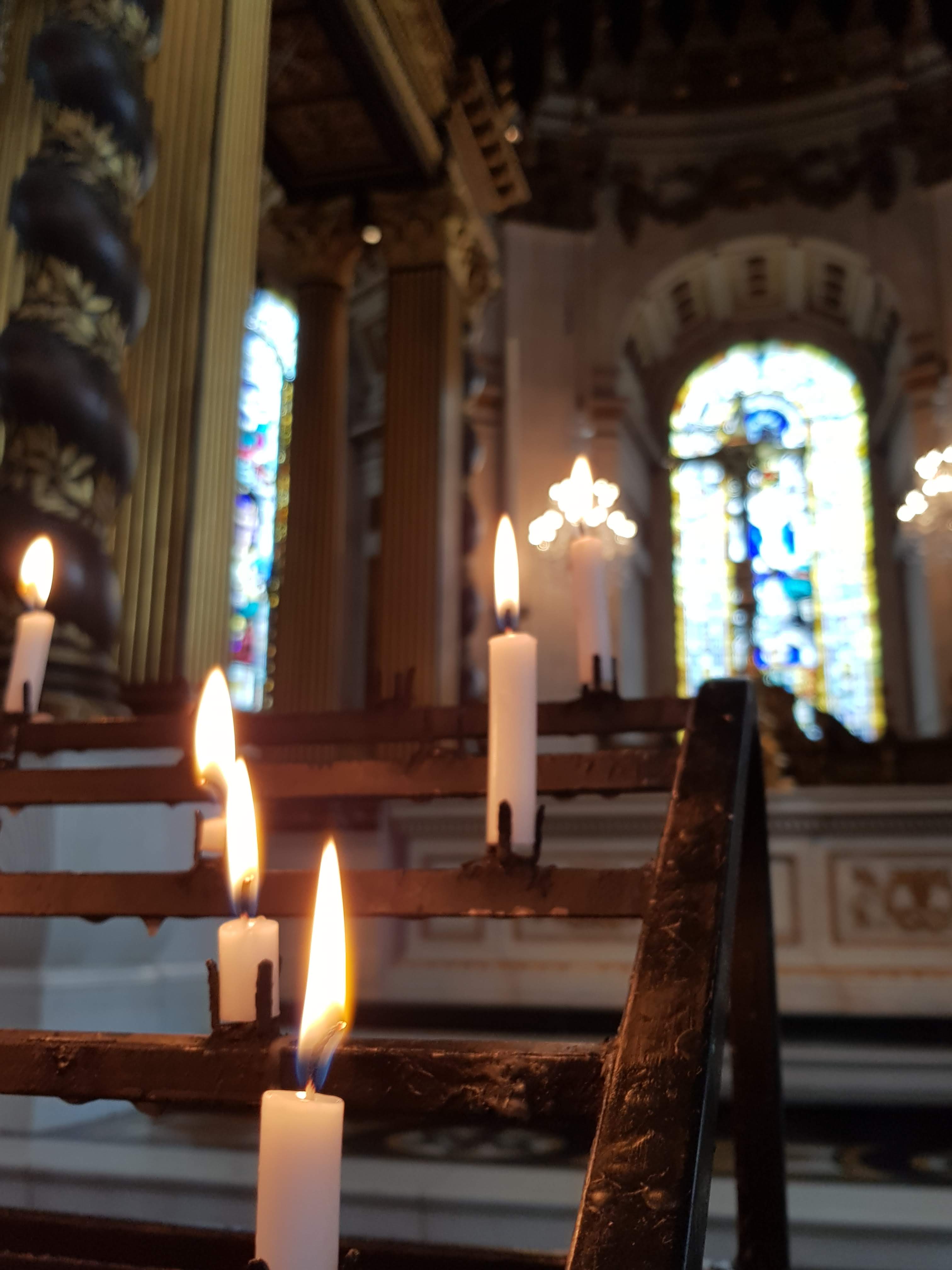
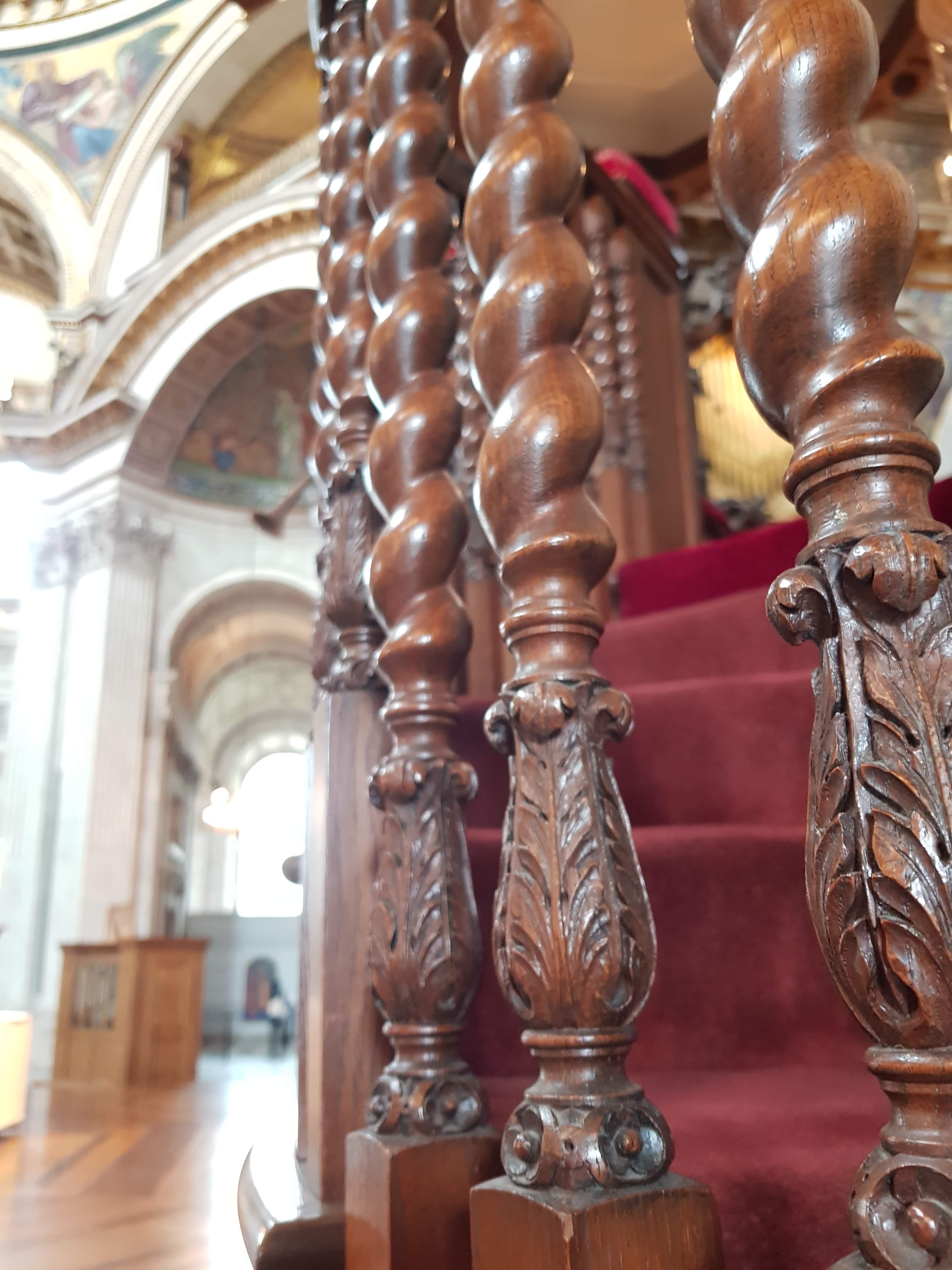
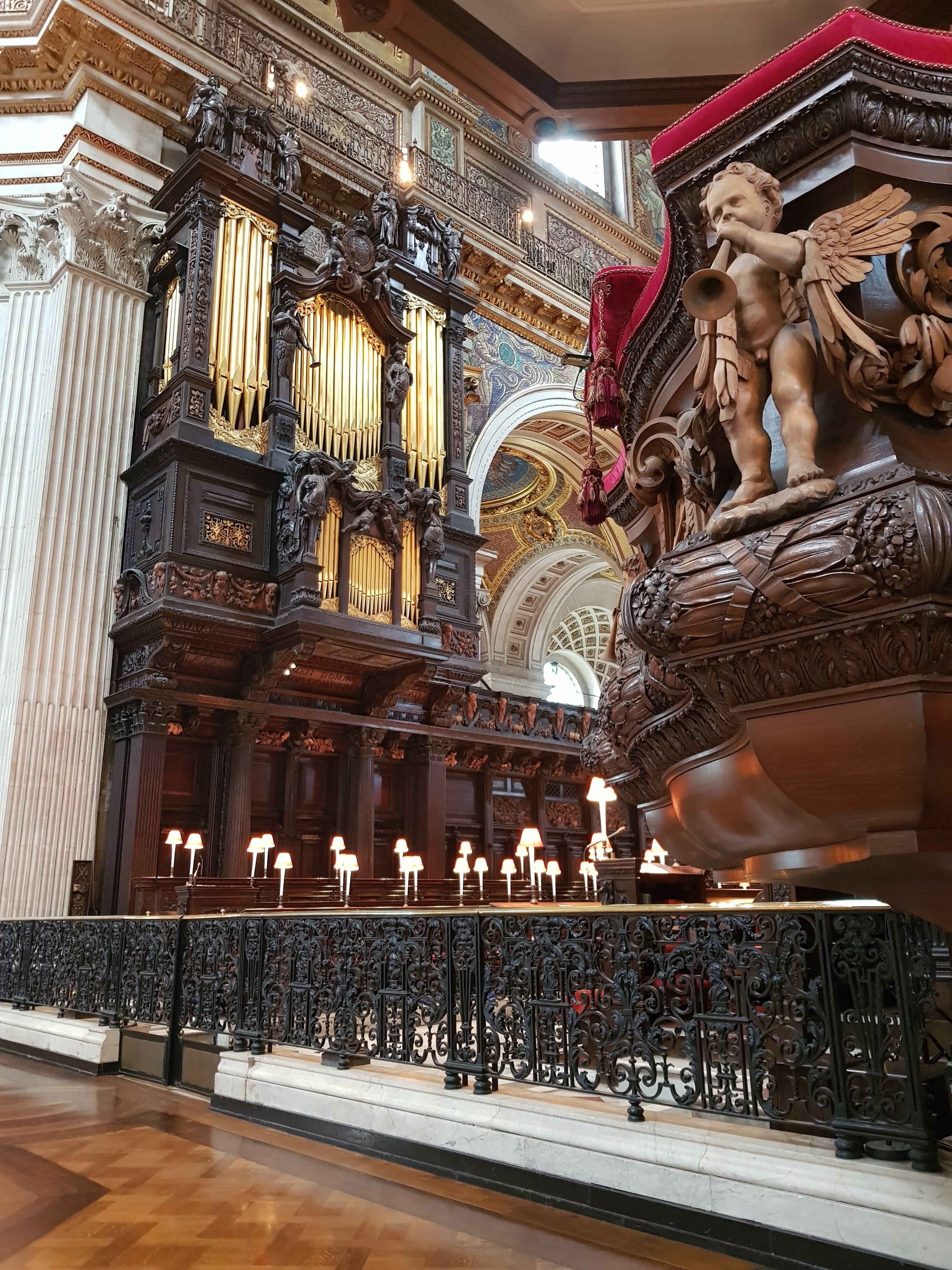
St Paul’s also boast some very beautiful English features, including 18th century delicate wooden carpentry, the third largest organ in the UK, and of course a good level of stained glass windows!

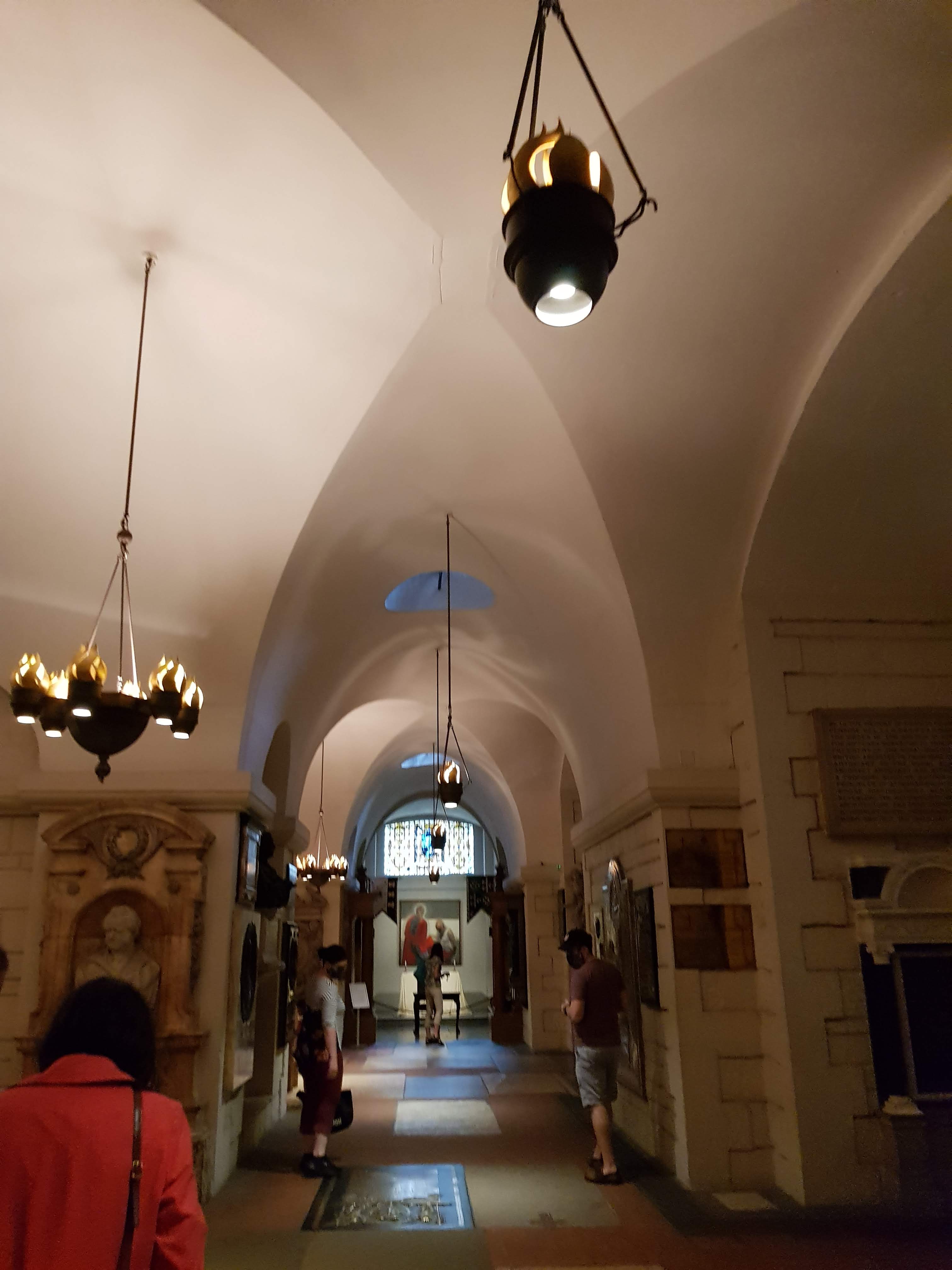
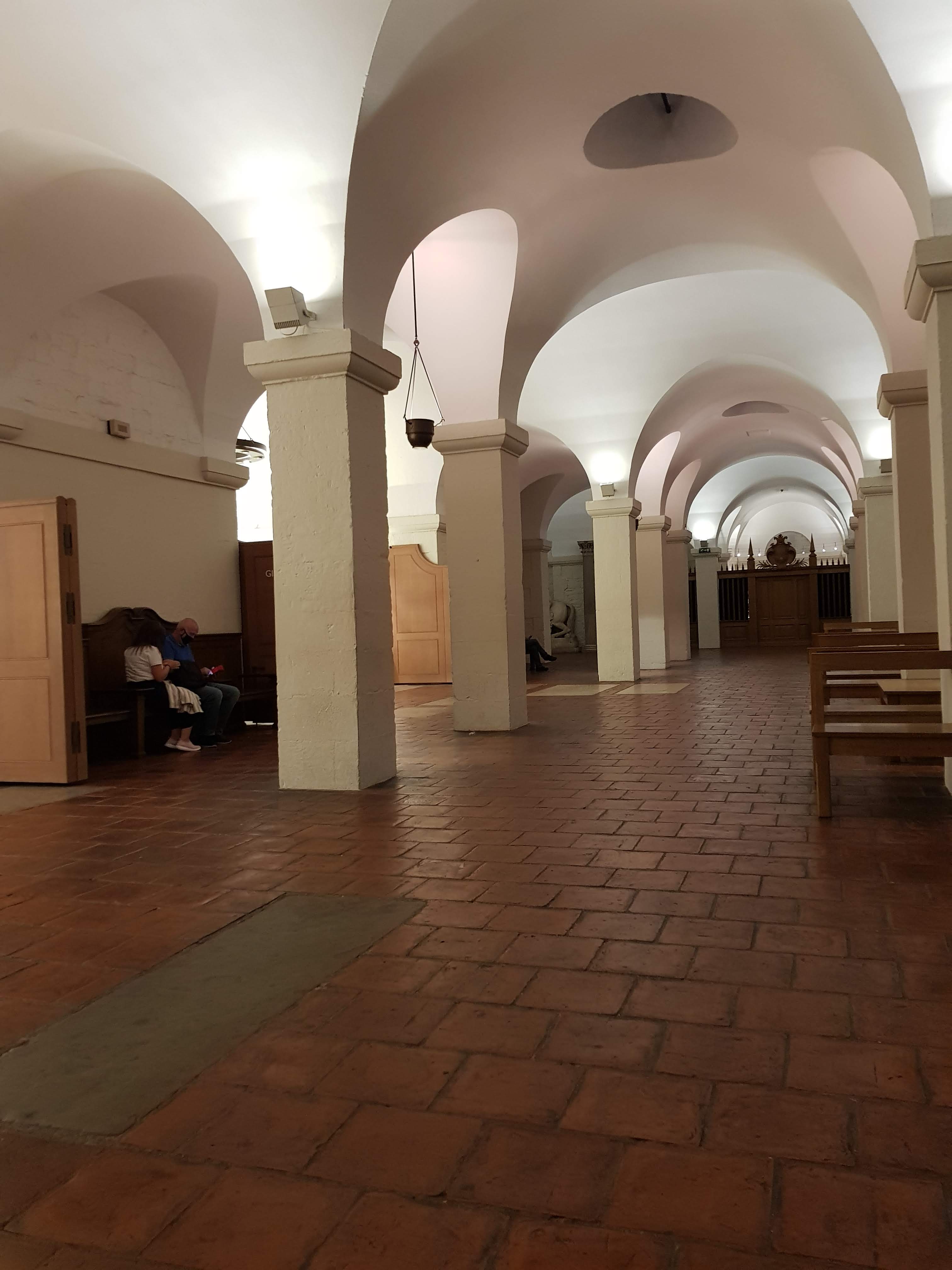
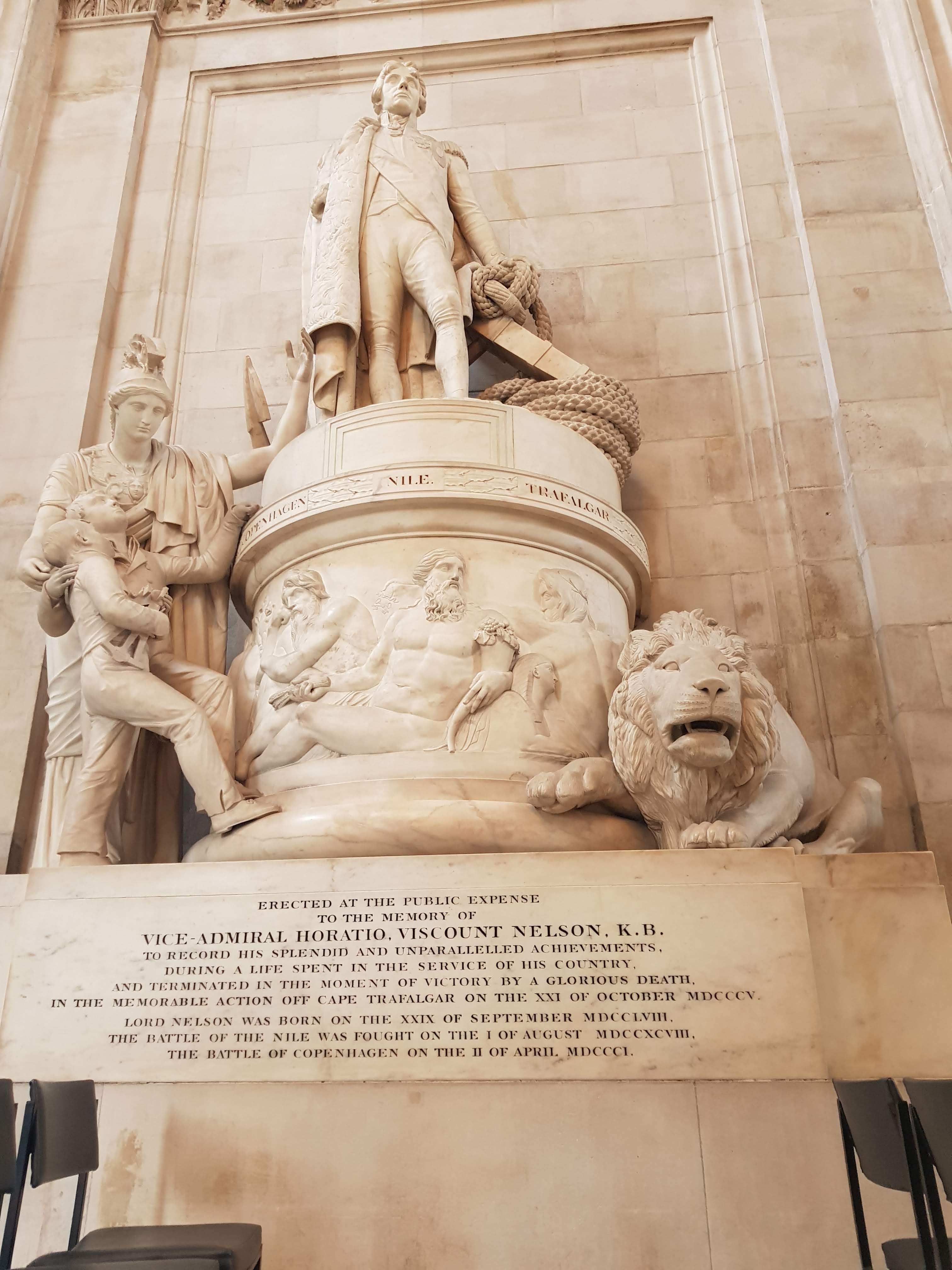
The ground floor of the cathedral is not the only level available to visitors. Visitors can also go up to the galleries, and go downstairs into the crypt of the cathedral. Other crypts that I have seen, have had very rough walls, dingy smells and pokey spaces. This is not the case at St Pauls, I was really suprised at the look and feel of the crypt. It is a large, reasonable open, and light space. It actually has a very modern, and contemporary feel to it. This seems so strange, in such a historic building. In this part of the cathedral, there are some memorials and tombs of important figures from English history, such as Norfolk’s very own Horatio Nelson. There is also a chapel space to sit peacefully, toilets and a gift shop!

Artwork

There is a mix of artwork at the cathedral, from beautiful ceiling paintings, to wooden and stone sculptures. The focus is clearly on the magnificent ceiling paintings of bible figures and scripture such as the apostles, and so in the nave, the sculptures/memorials are fairly thinned out except for a few large pieces. On the other hand, in the south aisle alongside the nave, there are several memorial sculptures detailing key figures in English history and their achievements.

Steps to roof and galleries

Arguably, the most iconic part of St Paul’s Cathedral is the dome, and within the dome and below it are two galleries that visitors can see. Unfortunately, these were both closed when I visited, but I still had the ‘pleasure’ of climbing the 376 steps to the roof, before I discovered I could not access the galleries that day. On the bright side though, whilst the stairs left me breathless (not in a good way), there were lots of seats to stop at on the way up, and medieval graffiti carved into the walls that i could appreciate whilst trying to stabilise myself!

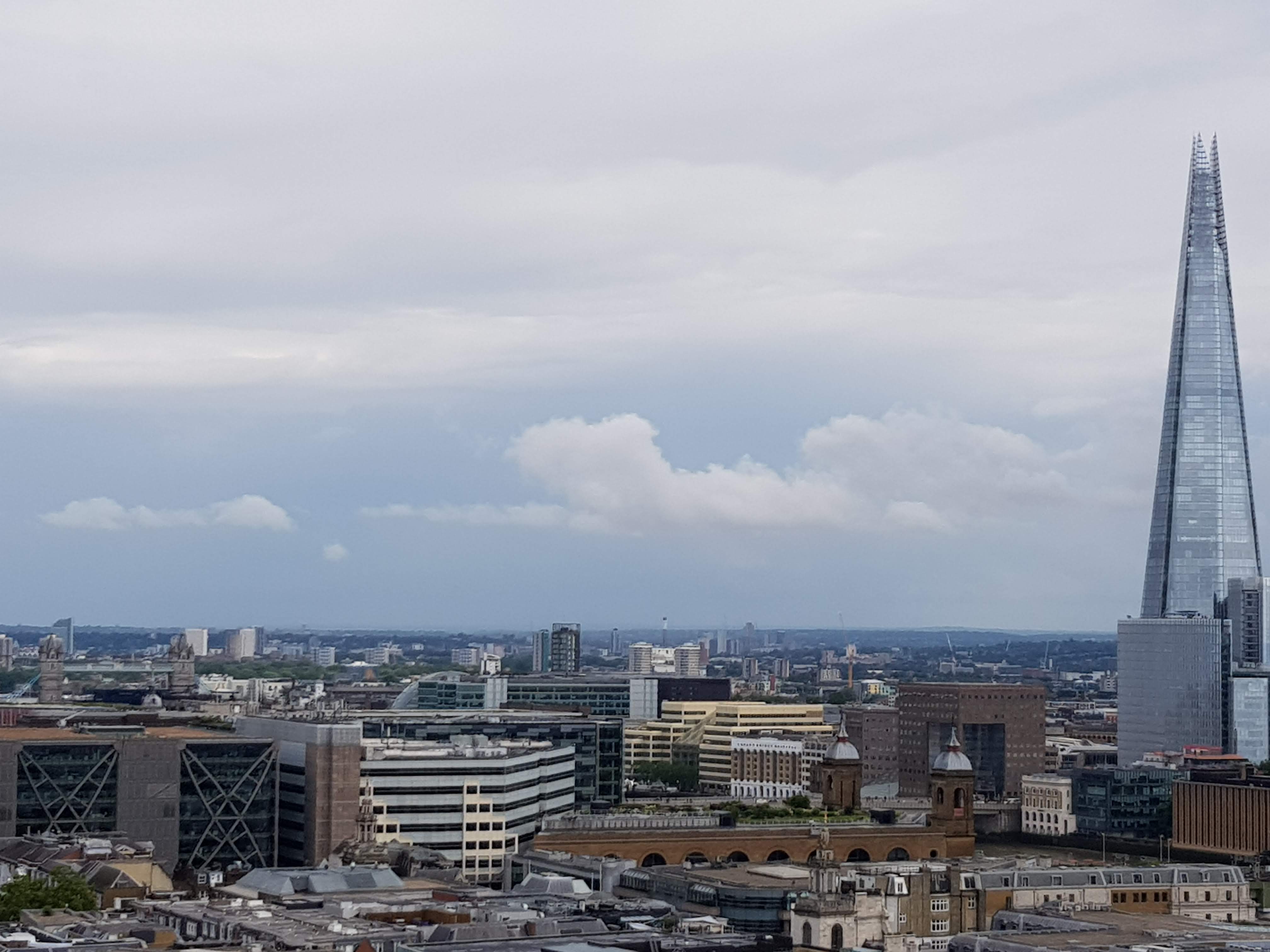
View from St Paul’s – Shard

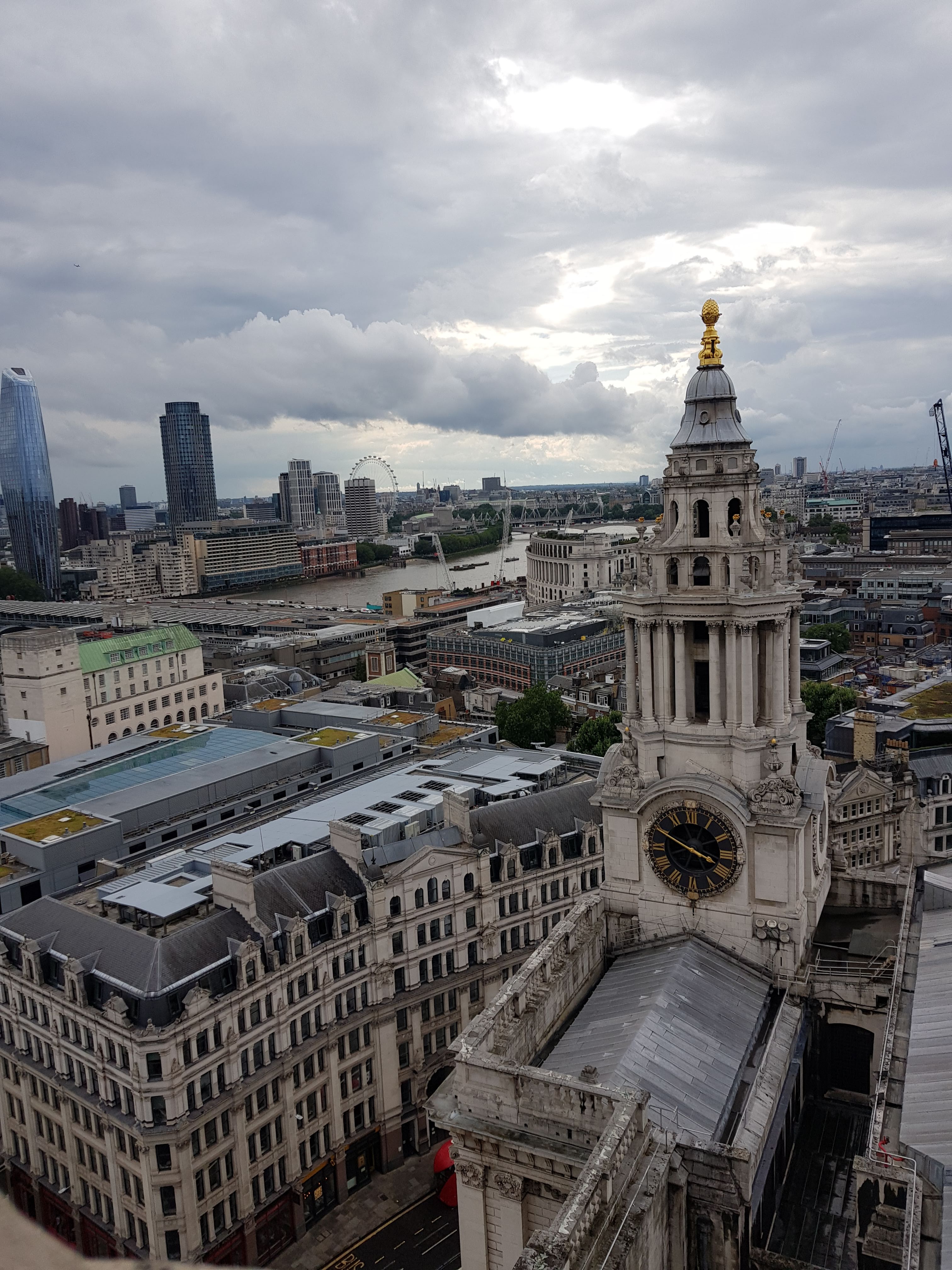
The climb wasn’t a waste! From the roof, you can still walk around the dome and see the London skyline, including the shard, sky garden, london eye, and look more up close at St Paul’s bell towers. I actually happened to be on the roof when the bells were ringing out, which I thought was pretty special.

Overall, I think that St Paul’s was very interesting, had a great booking system, and good content. I was disappointed that I could not see the galleries, but the views made up for it, and I understand their need to do renovations, especially whilst they are quieter. I would recommend a visit, and if you are brave enough, climb the steps and listen to the bells…. equally if you really do struggle, there is an elevator… they just wouldn’t let me use it!

Me at St Paul’s Cathedral London