Tag Archives: culture

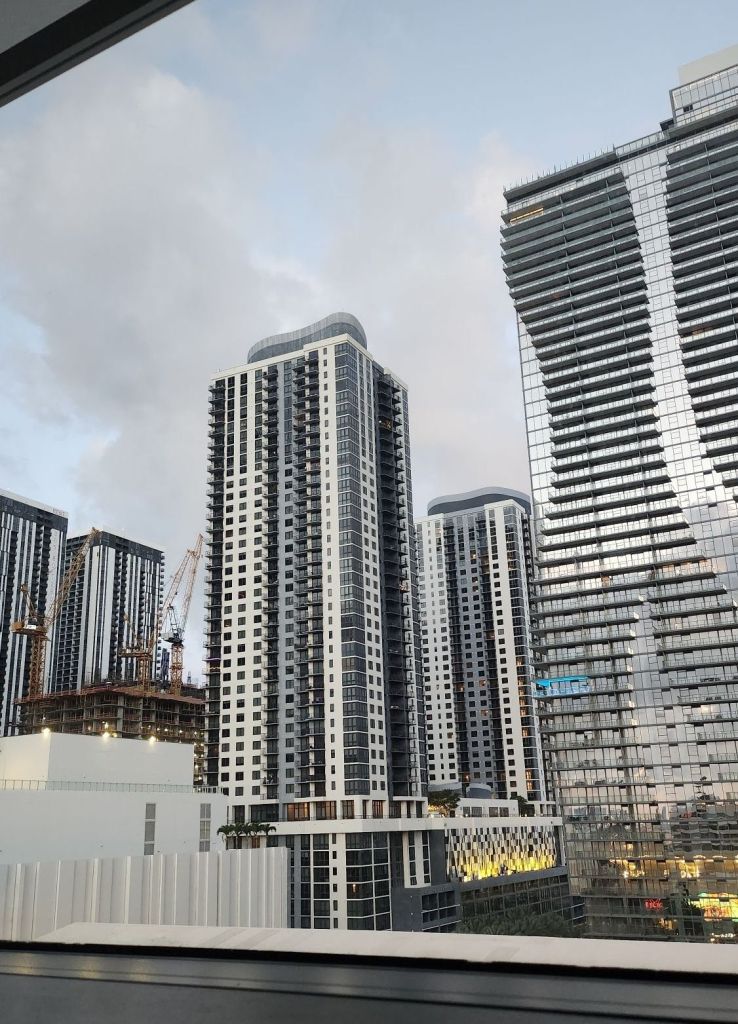
Magic City: Miami, USA

This Spring I travelled to the ‘Magic City’, Miami, before taking a trip around parts of South US and slowly North to the ‘Capitol of the Midwest’, Chicago.

All Aboard for Miami

I boarded a flight from Heathrow to Miami International Airport and after 9 hours of squeezing into American Airline’s Economy seating, we arrived. My first impression in Miami Airport was all confusion.

All the staff were greeting me in Spanish. I wondered if there was another flight coming in from South America… why was everyone talking Spanish?!

Next, I was given a fright by the Immigration Officer. He told me I had lied and made false statements in my Visa Waiver application. I protested I hadn’t, but apparently I had already been approved entry before so shouldn’t have applied again. So I was double approved! That doesn’t seem like a bad thing to me… but they do get quite sensitive over these things round there. Well, after making me afraid he was going to turn me back around, he eventually let me in…

After then proceeding to get ripped off by the taxi driver, it wasn’t turning out to be a great first impression, and I was a little frazzled!
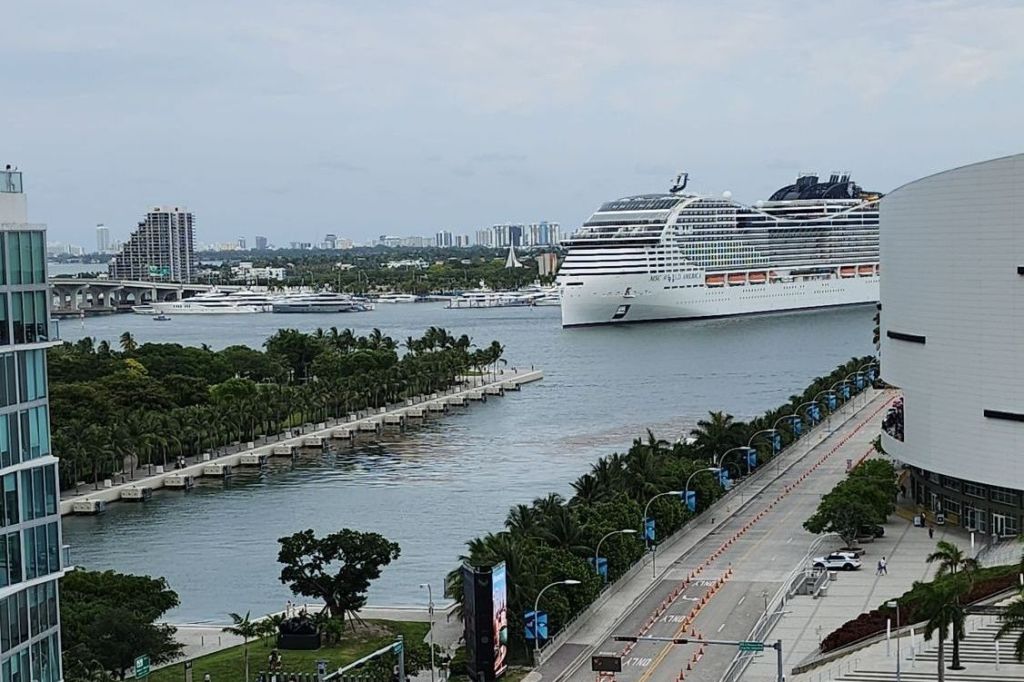
Once, I reached the hotel, I decided to reset and headed out for dinner… My modern hotel was located in downtown Miami and very close to the action. Miami has two key areas; downtown and Miami Beach. Miami Beach is on an island and accessible by bridge. In downtown, the harbour area is super lively and this is where we found Bayside Market, which is loaded with lines of restaurants, shops and excursion stands to satisfy the many tourists that visit. This is also the site of Pier 5, a famous fishing pier, that is now the dock for various sightseeing boats, yachts and a lively cocktail and music venue.
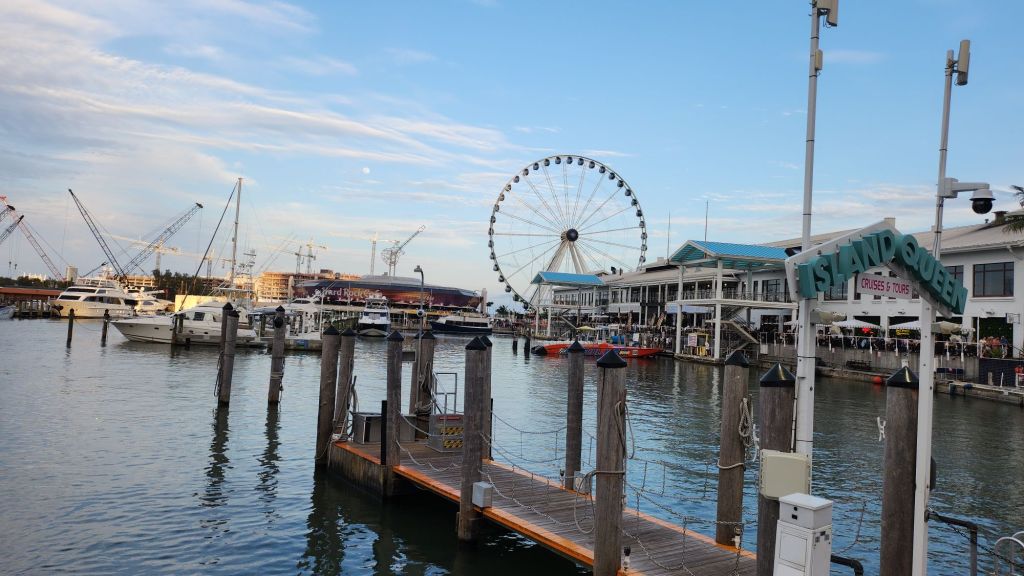
The drinks were flowing and many people were salsa dancing around, so the vibes were good. As we sat down in one of the many Latin restaurants for the well known Cuban sandwich that Miami offers, with so many spanish speakers around me, I decided it was time to investigate, what was up with all the spanish?

So it turns out, that Miami is actually the Latin capital of the United States, due to its close proximity to Cuba and Latin American countries. A huge immigration of Cubans to Miami began in 1959 after the Cuban Revolution, and over several decades, large groups of people from Columbia, Nicaragua and Guatemala continued to arrive in the city as conflicts rose within their own nations. There’s actually a lovely old building in the centre of downtown (and in front of my hotel) that was originally the arrivals location for immigrants as they arrived for processing into USA. So that is how Miami became the vibrant Latin hub that it is now. I was not expecting it at all, but it was a really pleasant surprise!

I only had a few days in Miami, and so time efficiency was very important. In order to see as much as possible, I decided to opt for the city sighteeing bus pass. There are several ‘Big Bus’ tours that work their way around the city, and a 24 hour pass worked well for me to see the main highlights. I did notice though that Miami did offer a lot of options for public transport, if you are doing one area at a time, there are free public trams, as well as a free metro line and some other low priced metros. It seems like a lot of investment has gone into public transport here which is brilliant. For me, I wanted to get the tour information too, so the bus tour gave me a chance to stick my headphones in and find out all I needed to know.

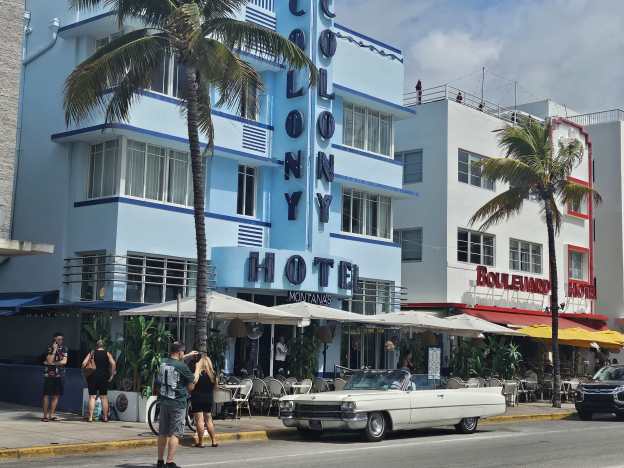
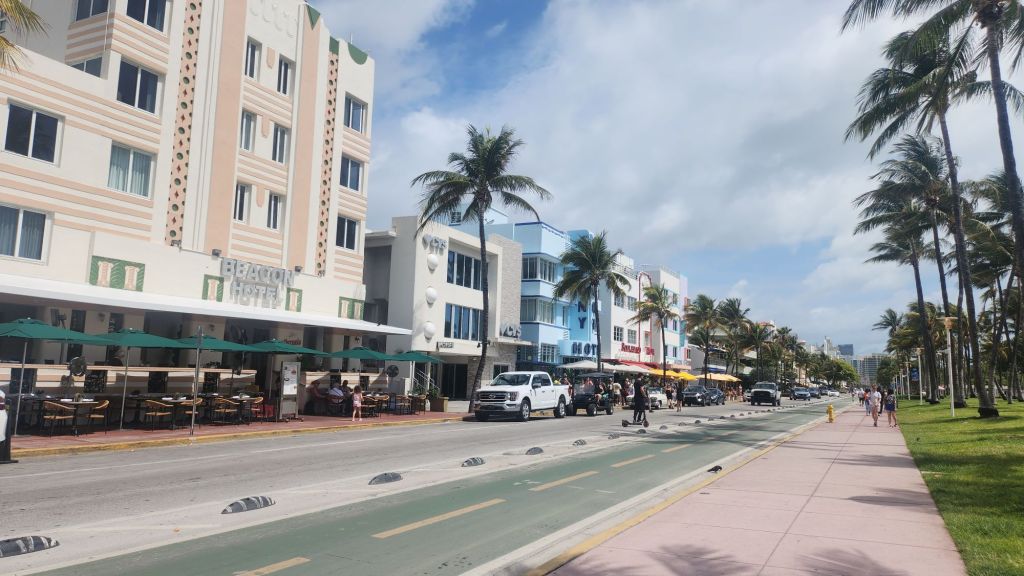
So with my bus ticket in hand, I hopped on board and made my way across a very windy bridge, with views of the harbour and over to Miami Beach. This is where I stopped off at the famous Ocean Drive and South Beach. Ocean Drive is a mile long strip of palm trees and art deco cafes and hotels. It has been used in many different TV shows and movies and does feel like you are being taken back in time, having just left the glitsy skyscapers of downtown. I walked along the street before detouring off to the side to check out the beach.
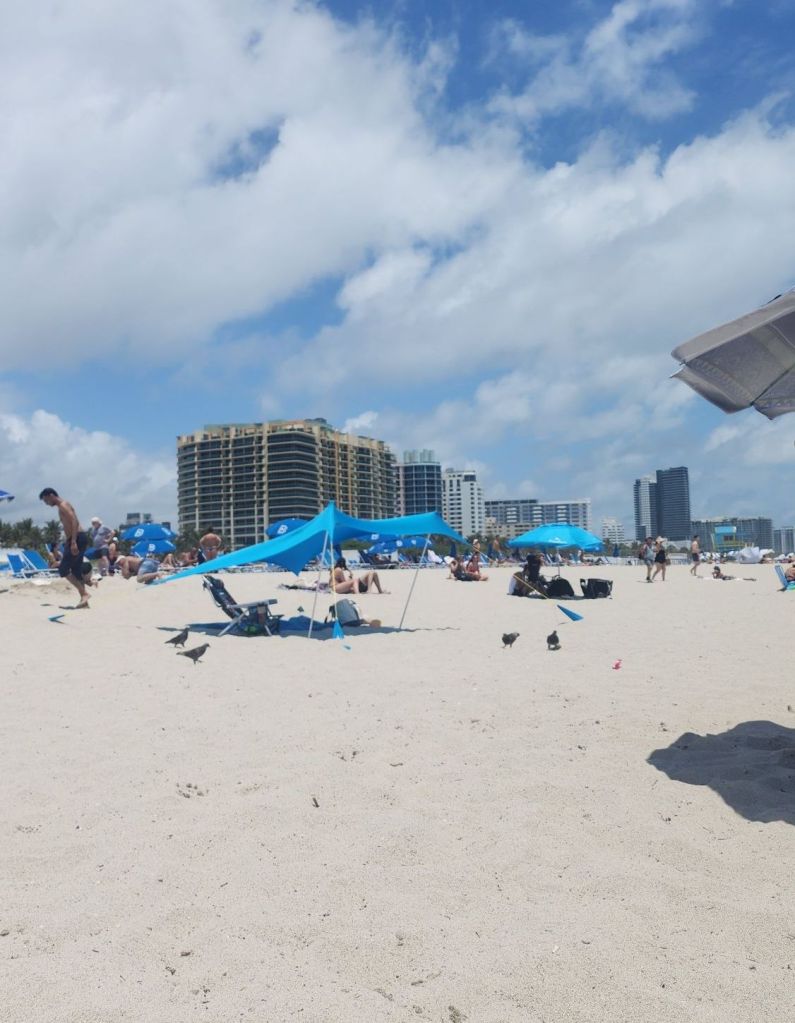
Strangely, I always imagined that the beach would be right in front of the pavement but there is actually a large area of park and bushes to the side before you can reach the beach, and then once on the beach its very wide, so unlike what I thought, its actually a little bit of hard work to get onto the beach. Naturally, in May, the day was very hot and I was looking forward to a good swim. Whilst it was refreshing to have a swim, the beach was rammed with people and there are no facilities to buy a drink or food actually on the beach. I was thankful for the leftover sandwich I had in my bag. The water was nice but honestly I think I am spoilt by beaches, as there is so much hype for Miami beach, but genuinely, I have had better beaches across the Caribbean and also in parts of Portugal and Spain.
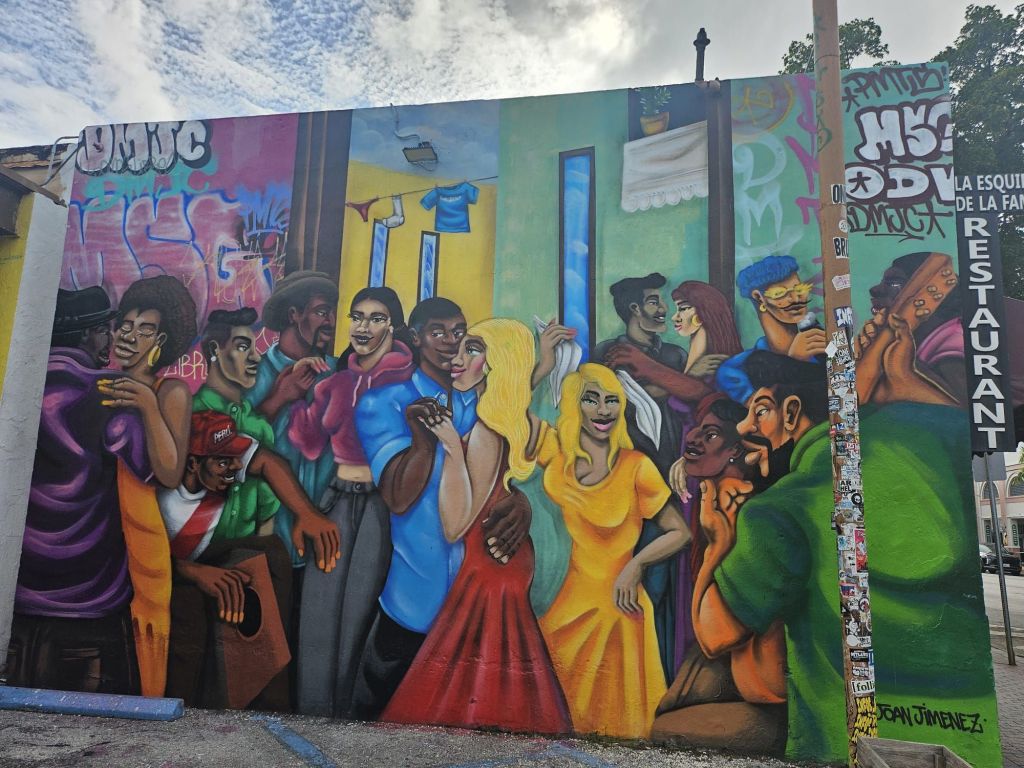
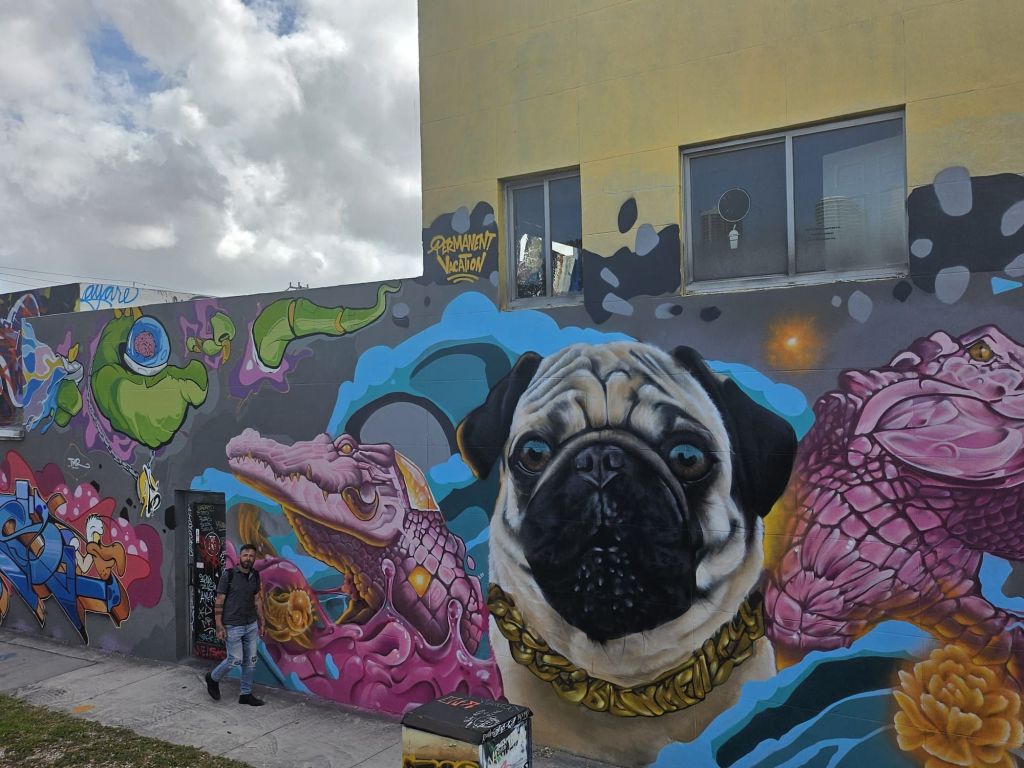
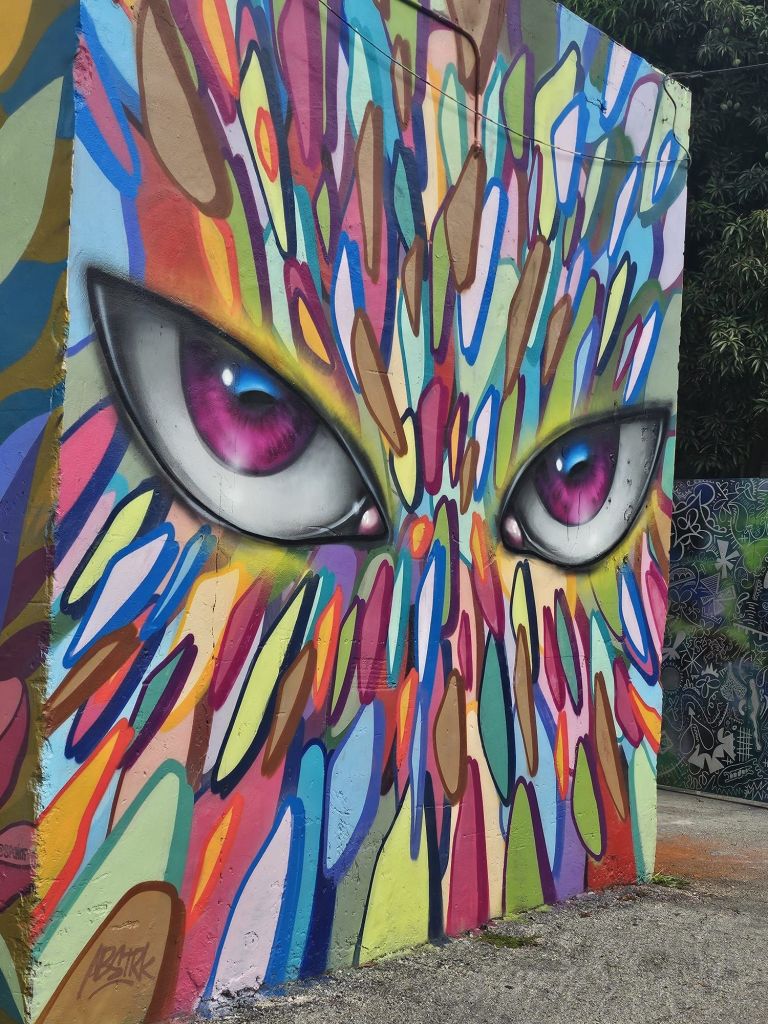
After my little time on the sand, I made my way back onto the bus and headed over to Miami’s Design District and onwards to Wynwood Walls. Both of these locations demonstrate Miami’s lively art scene. The Design District uses modern art and architecture to create a flashy shopping district whereas Wynwood Walls is a fairly empty area except for a maze of street murals, that has given it the title of the world’s biggest outdoor art museum. It was easy to just enjoy cruising around on the bus to see these huge murals, as by this time my feet were hurting and I just wanted to relax and look out at the art.
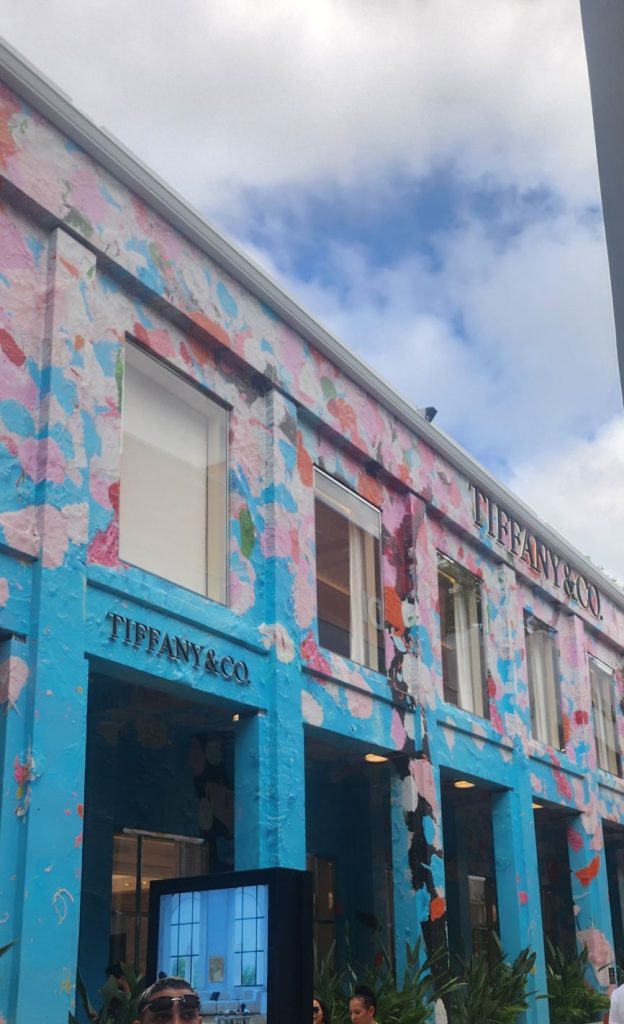
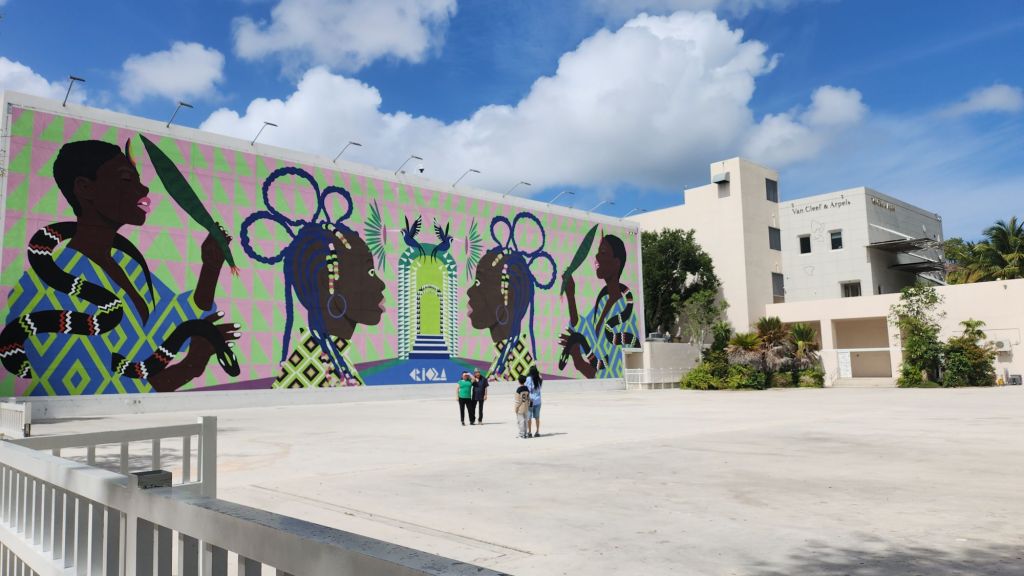
Probably my favourite spot in the city was ‘Little Havana’, a small Cuban neighbourhood with lots of eateries and bars, and plenty of live Cuban music. This was a really lovely place to relax and soak up the Latin vibes. It was a great way to enjoy the rest of the afternoon and I definitely felt happy to have found this really unique part of Miami.
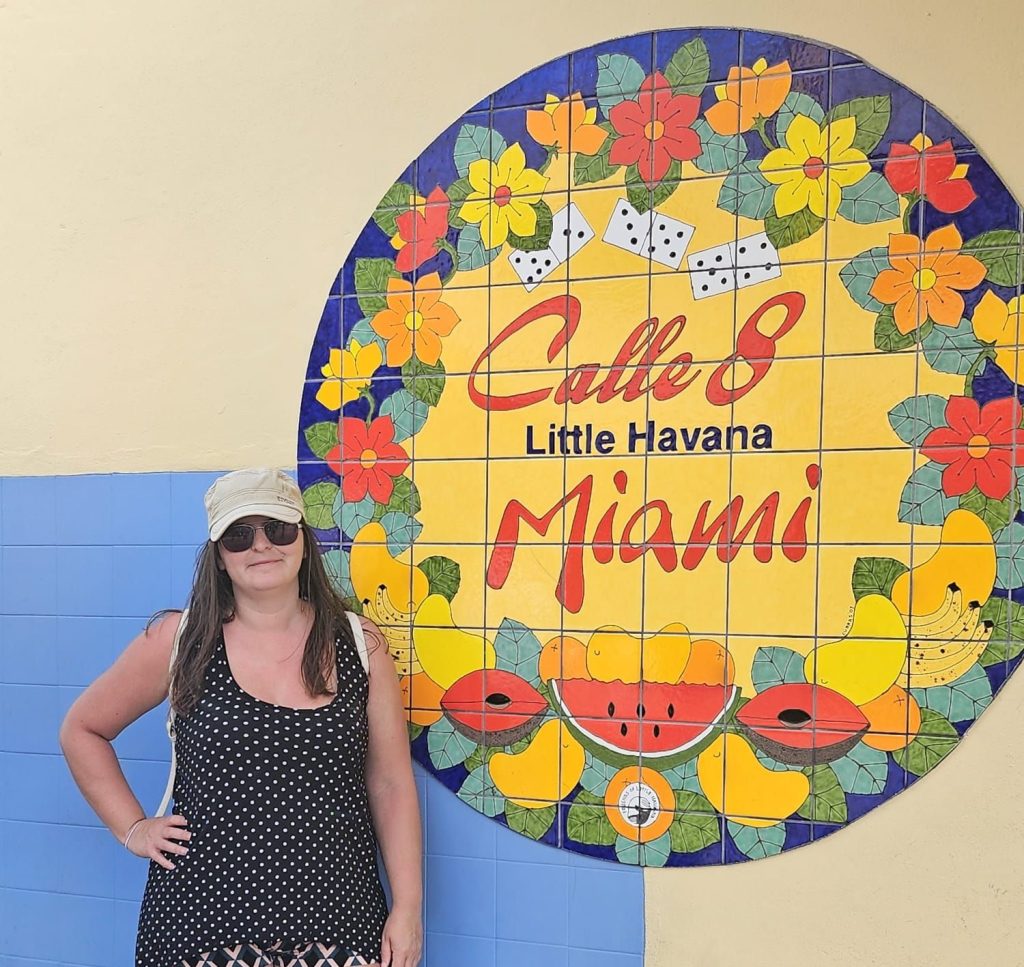
Little Havana Miami

So with one more day in Florida, I decided to take an excursion to Everglades National Park. I had been once before on a previous visit to the state but that was for a night tour and I hadn’t had much luck seeing the alligators, so I decided to have a try during the day. Only about an hour from Miami, it was easy to access the Everglades which is a wetland area covering around 2 million acres of Florida.
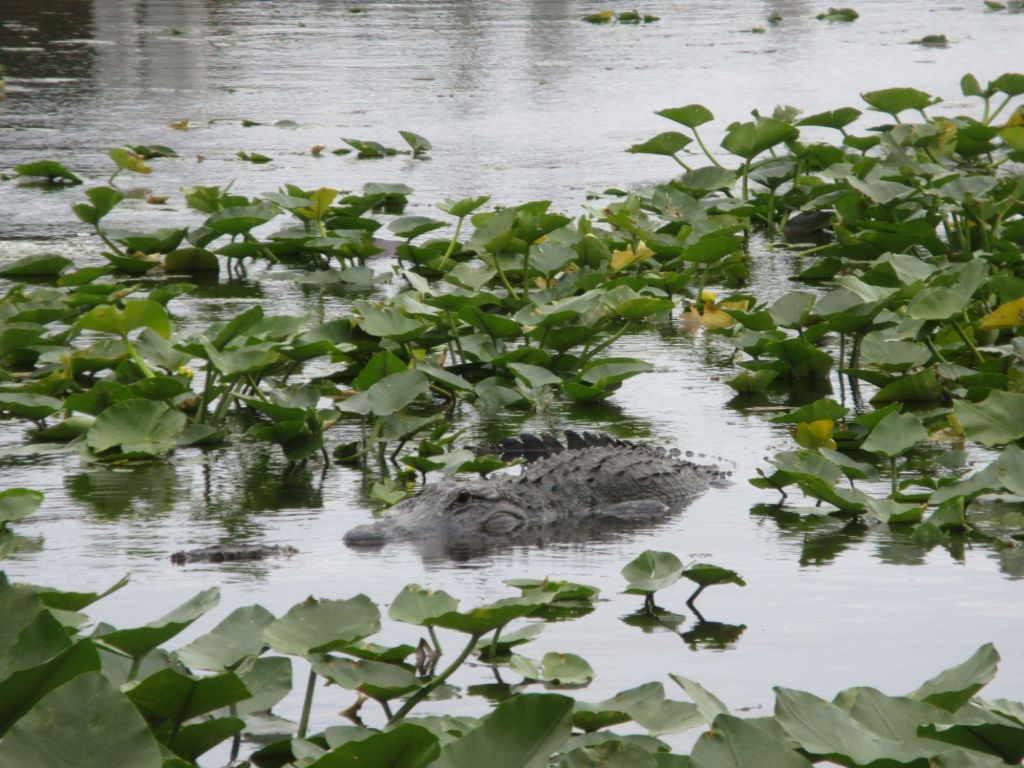
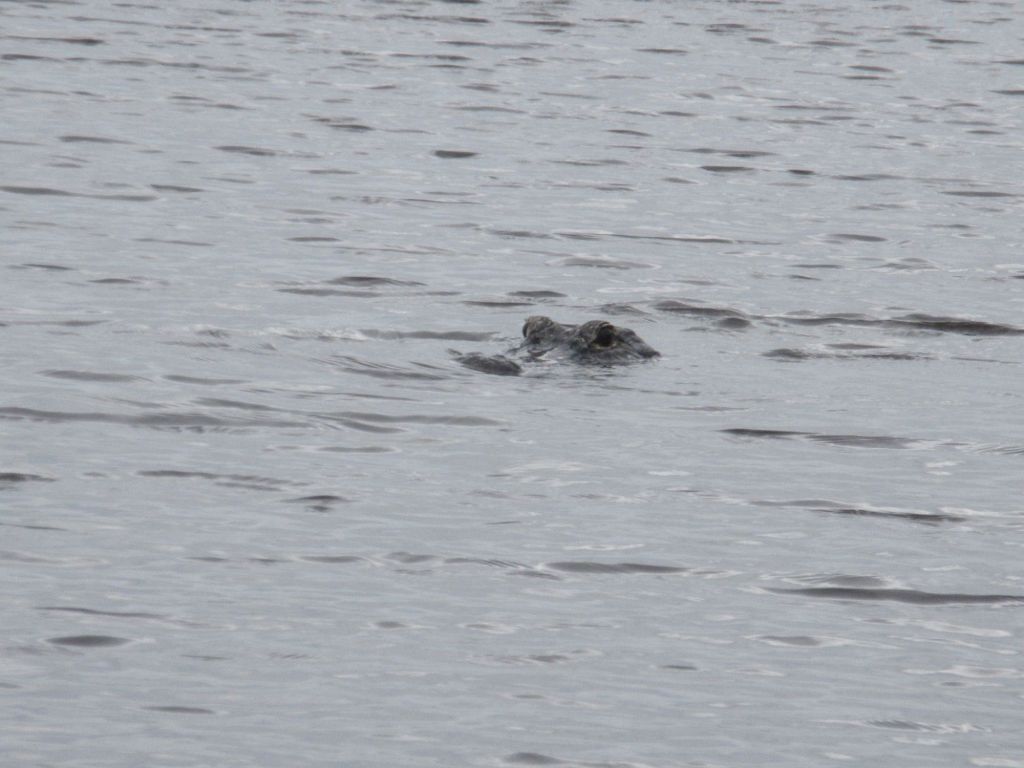
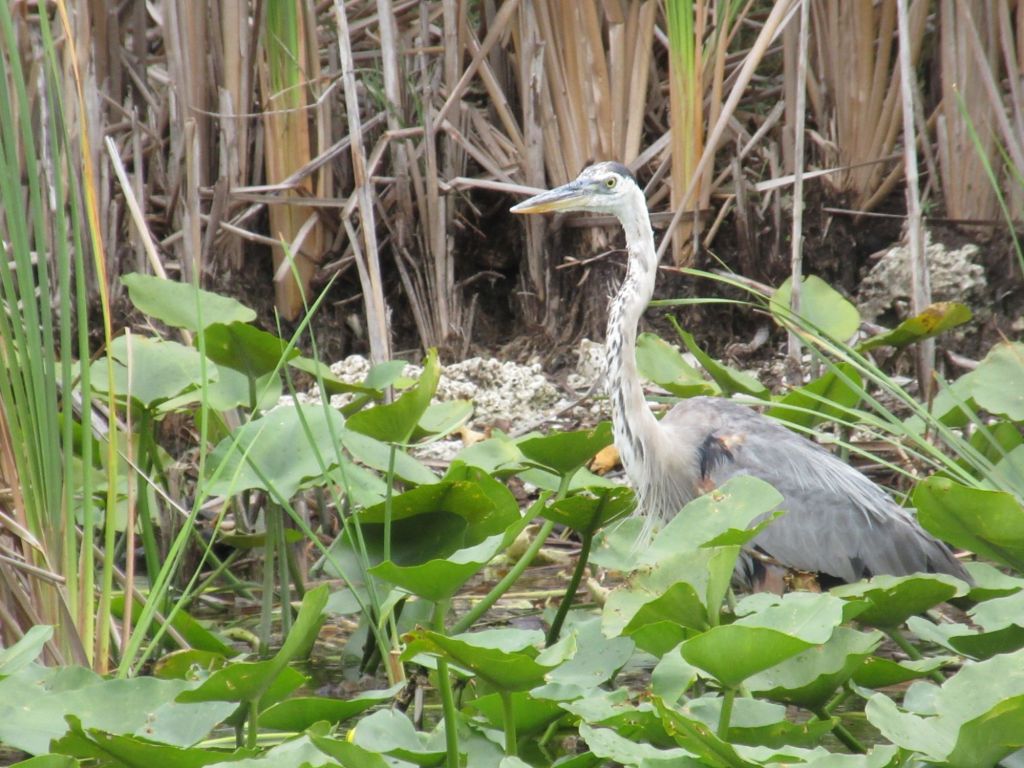
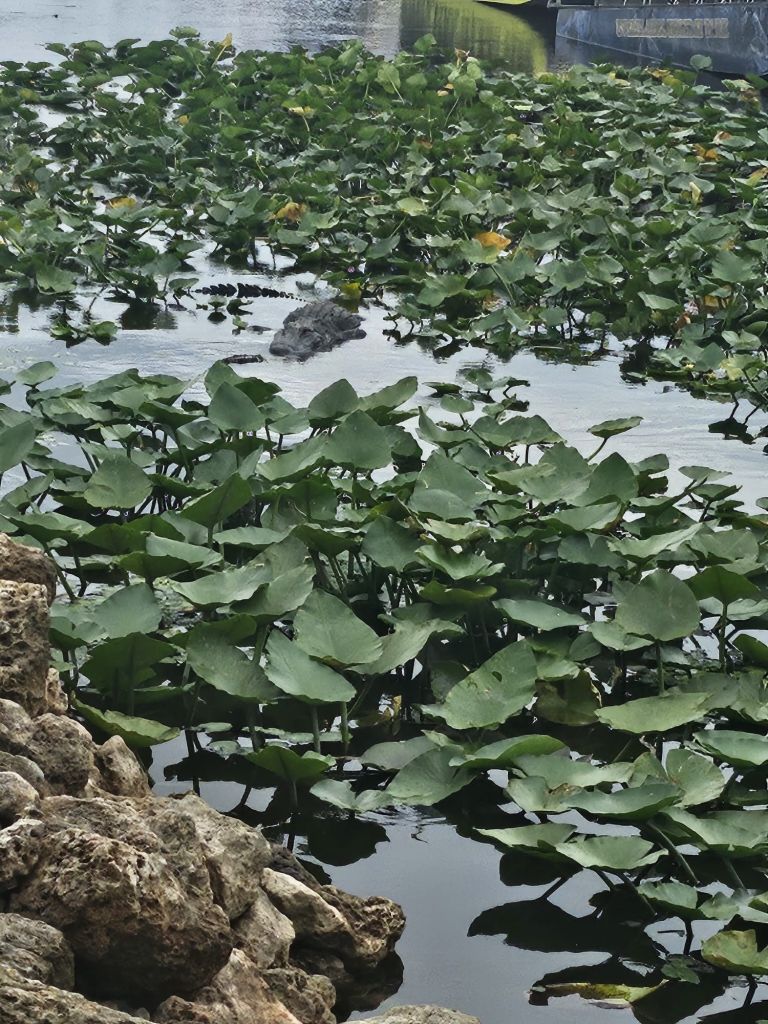
Alligators, Crocodiles, Turtles, and a variety of birds can all be found here, as well as many visitors travelling the water by Airboat. Travelling around on an Airboat is quite the experience in itself, as the loud fan on the back blows you around the water, until a ‘gator is spotted and all of a sudden you are spinning in circles to see one. It is good fun and depending on the time of the year, you might see quite abit. I saw a number of alligators and definitely enjoyed the experience. I think if I had more time to spend there though it would be nice to go a little more into the national park rather than just the typical day excursion.

For my final night in Miami, I enjoyed a dinner at Bubba Gump. Even though, its a chain and we even have one in London now, it is delicious! I love the shrimp and the movie props for ‘Forrest Gump’ are a lot of fun. As well, it is worth saying that this was the most affordable meal in Miami. Miami is not for those of us with shallow pockets!
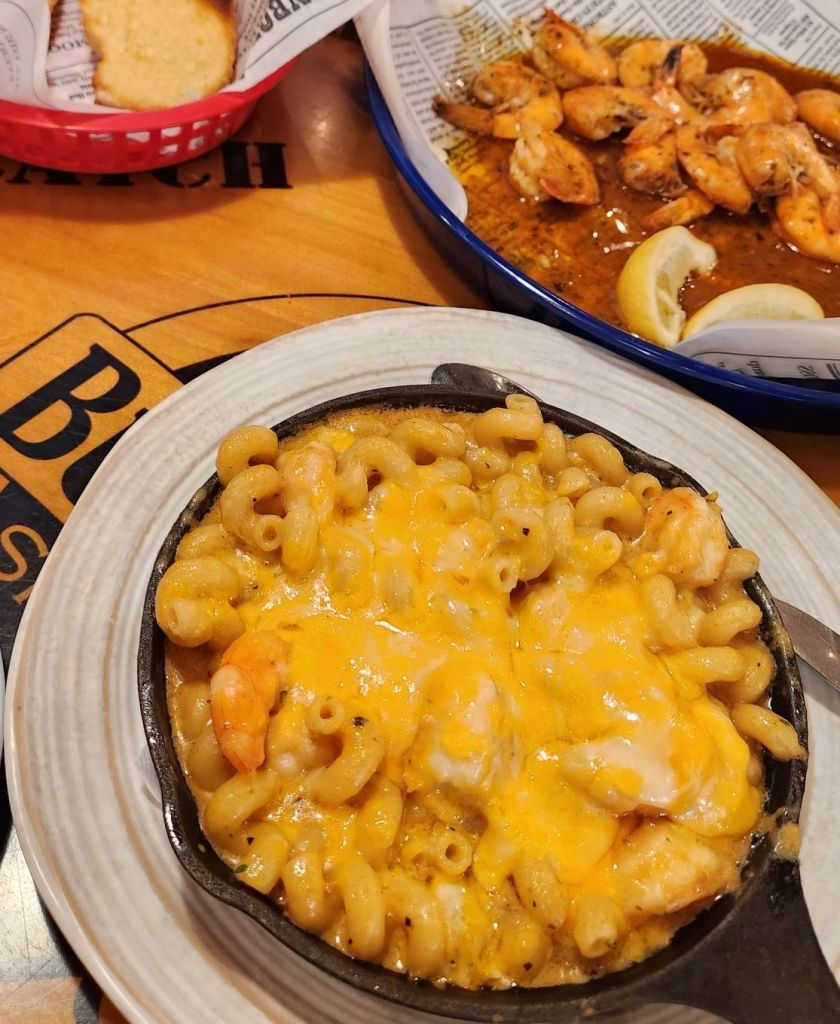
Overall, Miami gave me a nice few days. It’s a nice location for some fun and glamour and I really enjoyed the Latin feeling but it will probably be a one off location for me.. though I do imagine I will be there again one day, probably joining a cruise ship!

Me at Bubba Gump

A Touch of Norway

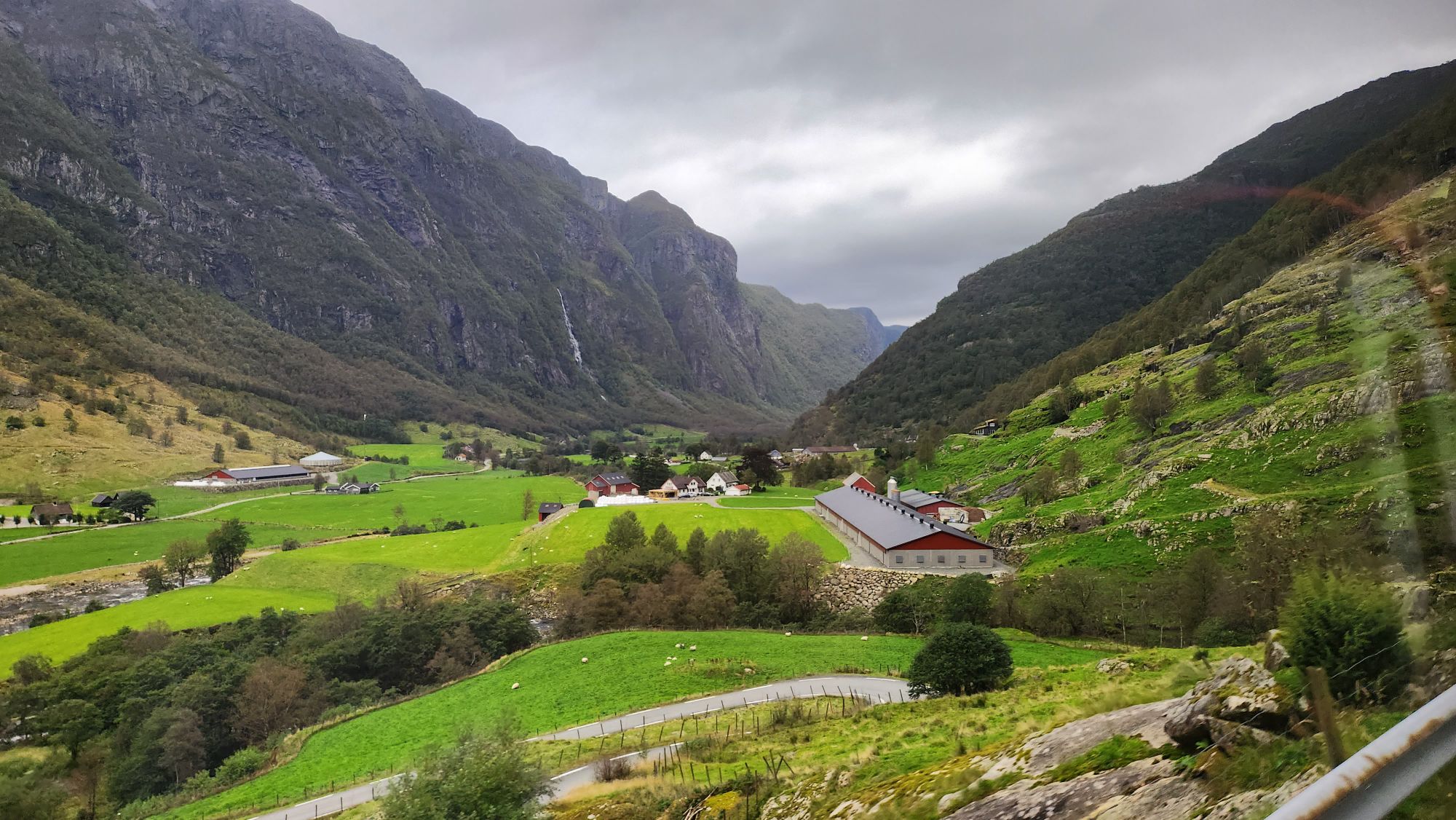
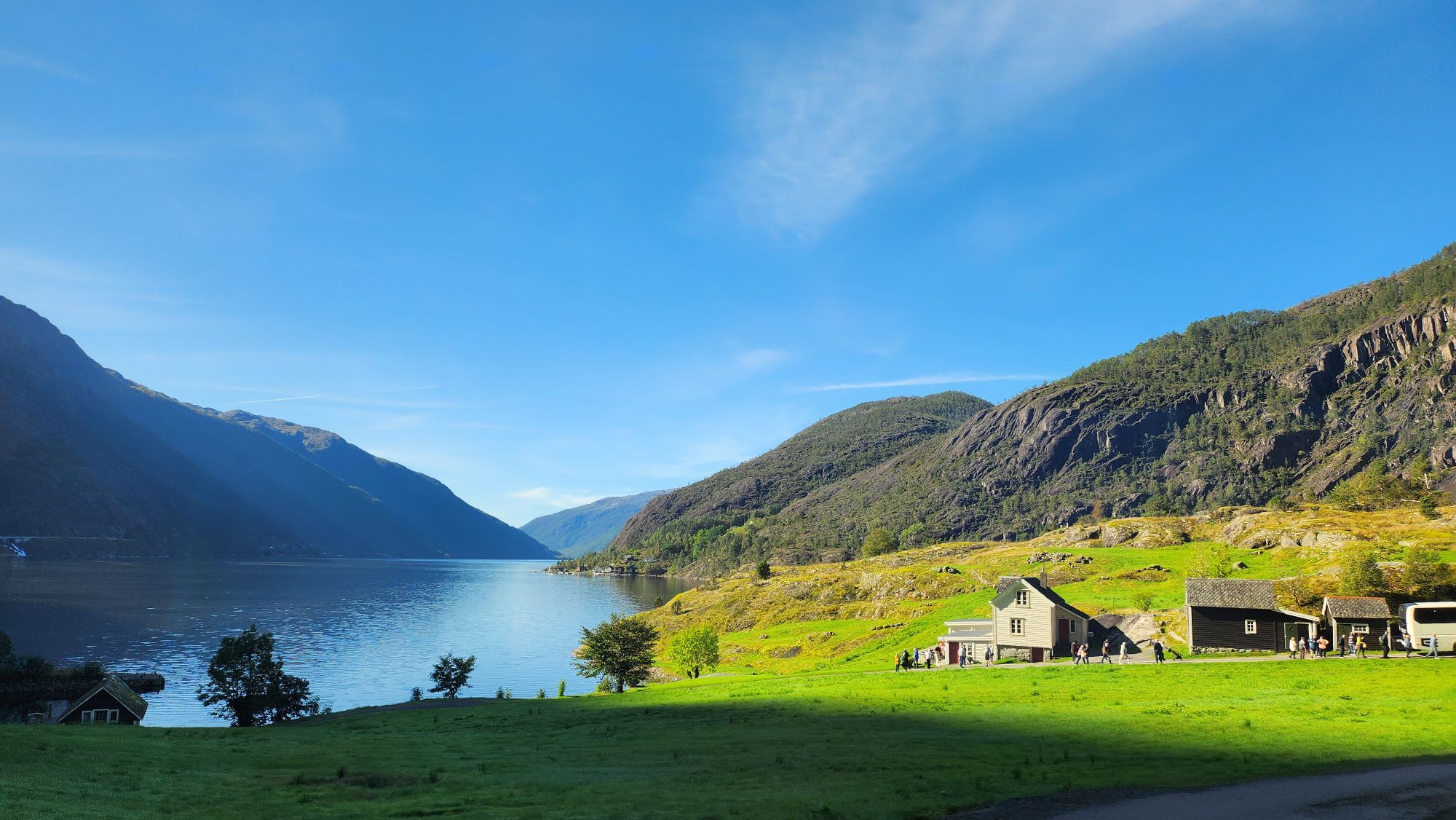
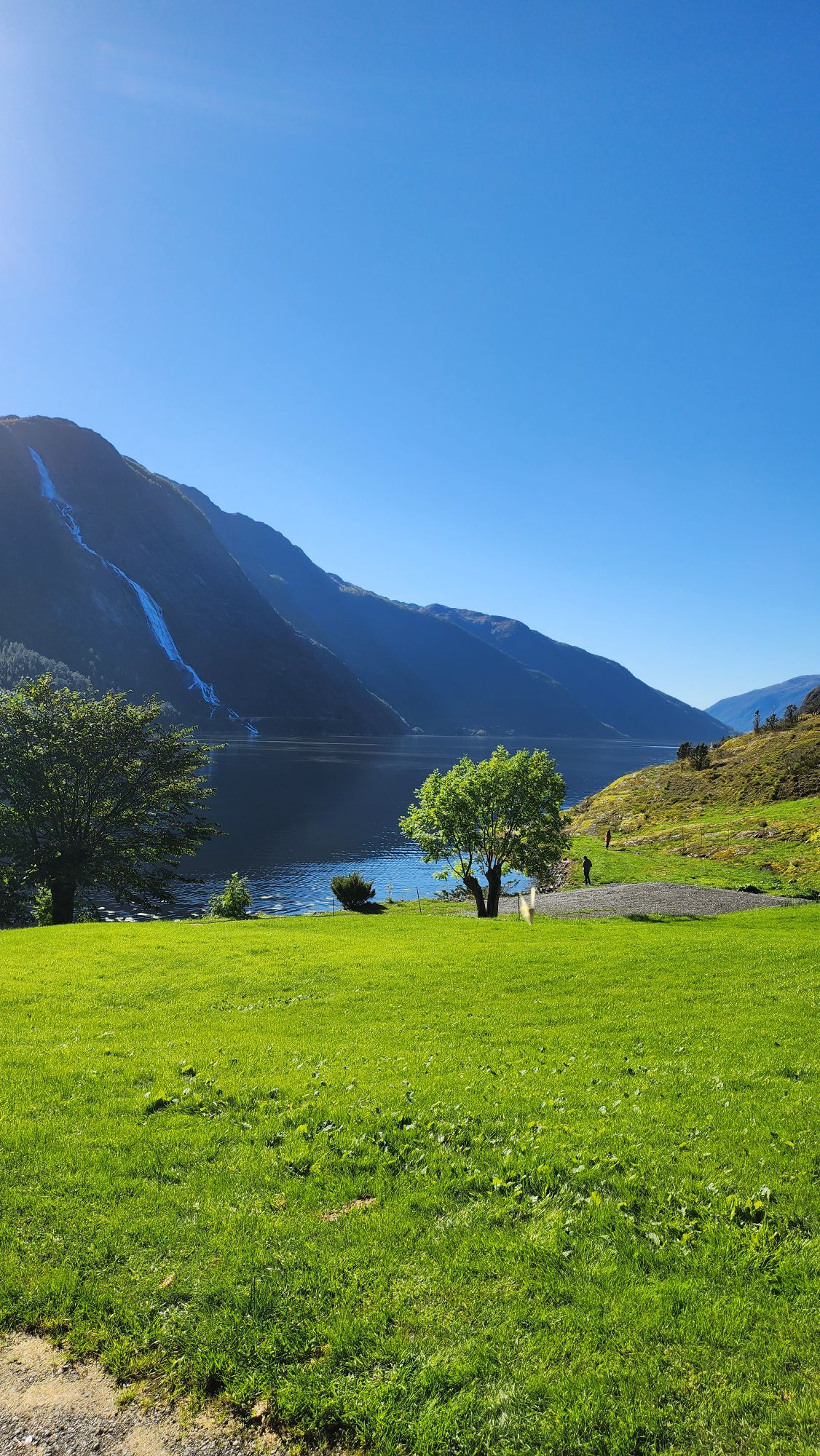
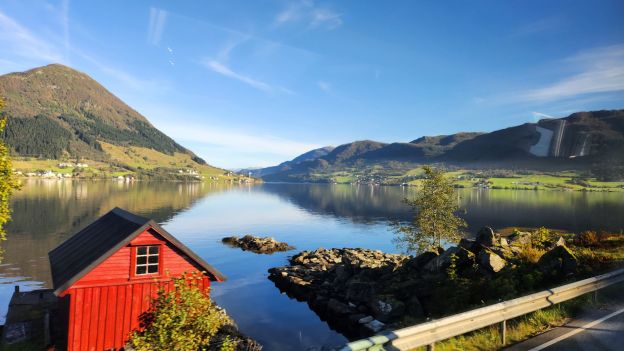
After years of wanting to visit the Scandinavian nation of Norway, but my plans always being scrapped last minute, last year, I finally made it to this luscious land. As I expected this country was a green heaven of rolling grasses and waterfalls, that I would be happy to get lost in.

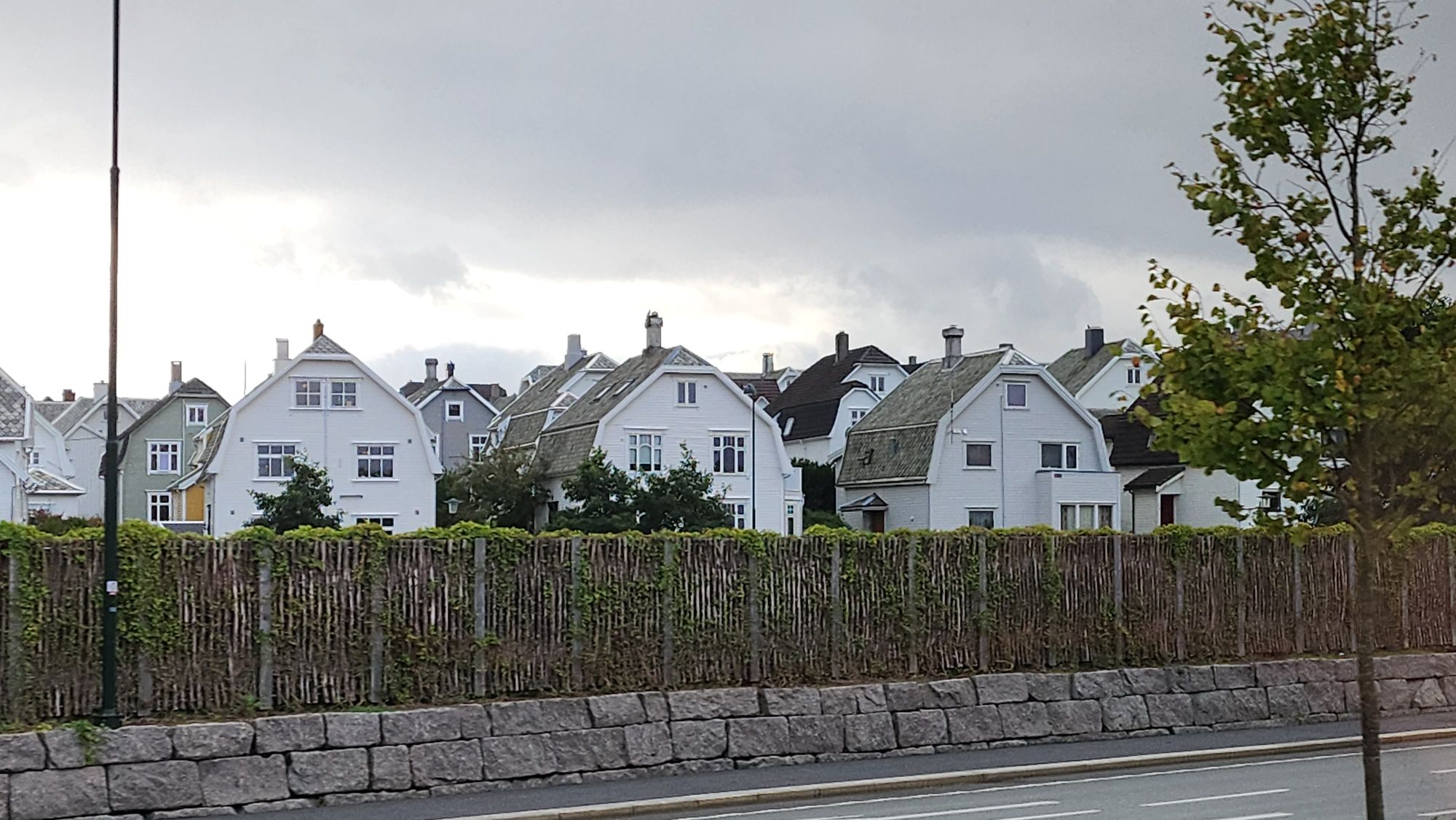
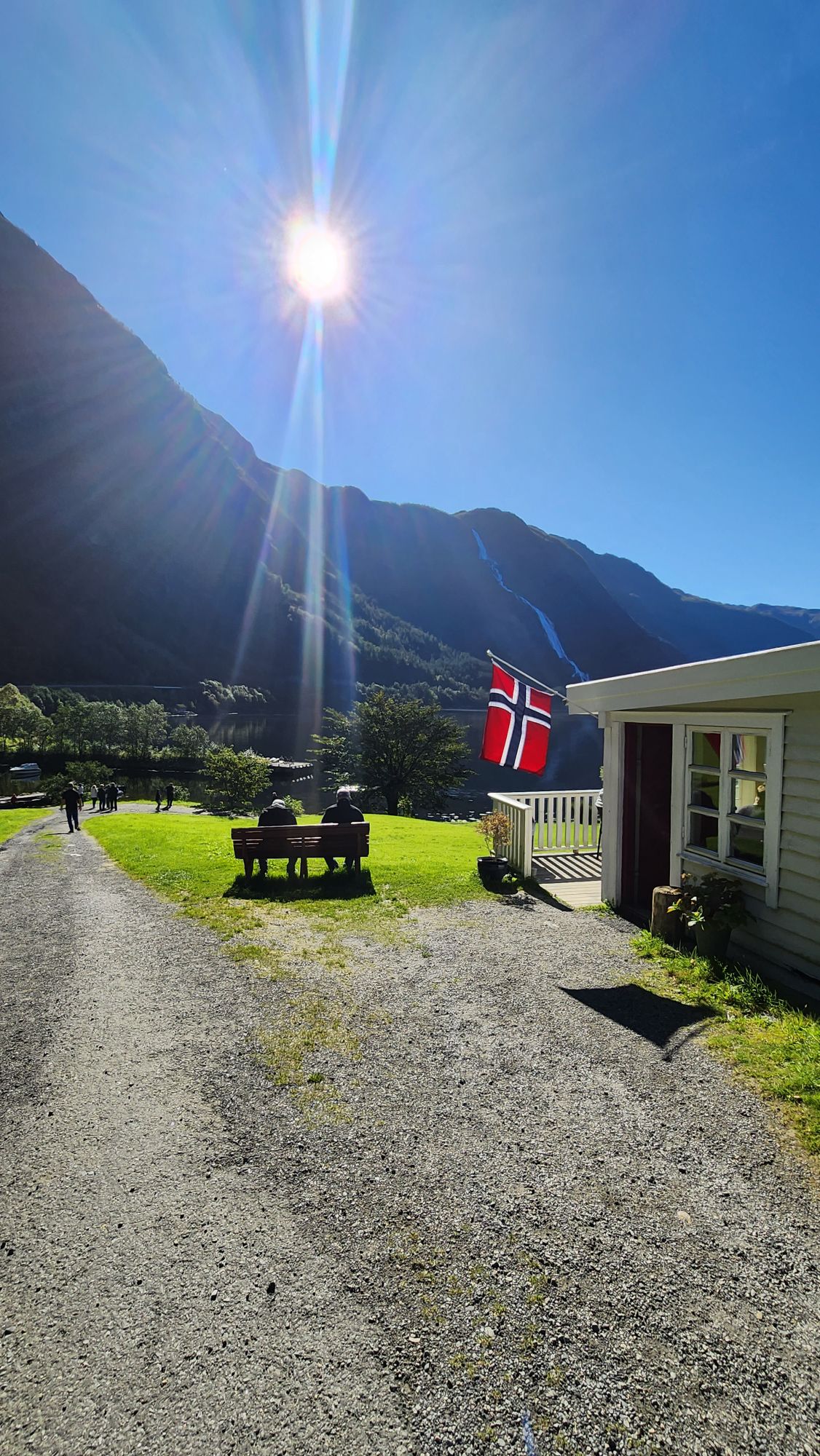
My journey took me along the coastline to some key port towns and inland to some beautiful scenic locations, which wasn’t hard as it seemed everywhere I turned, there was heavenly landscapes to see. I felt like I had walked into a movie with little wooden houses, and waterfalls everywhere you turned, it just needed a viking or two and the dream would be complete!

Waterfalls

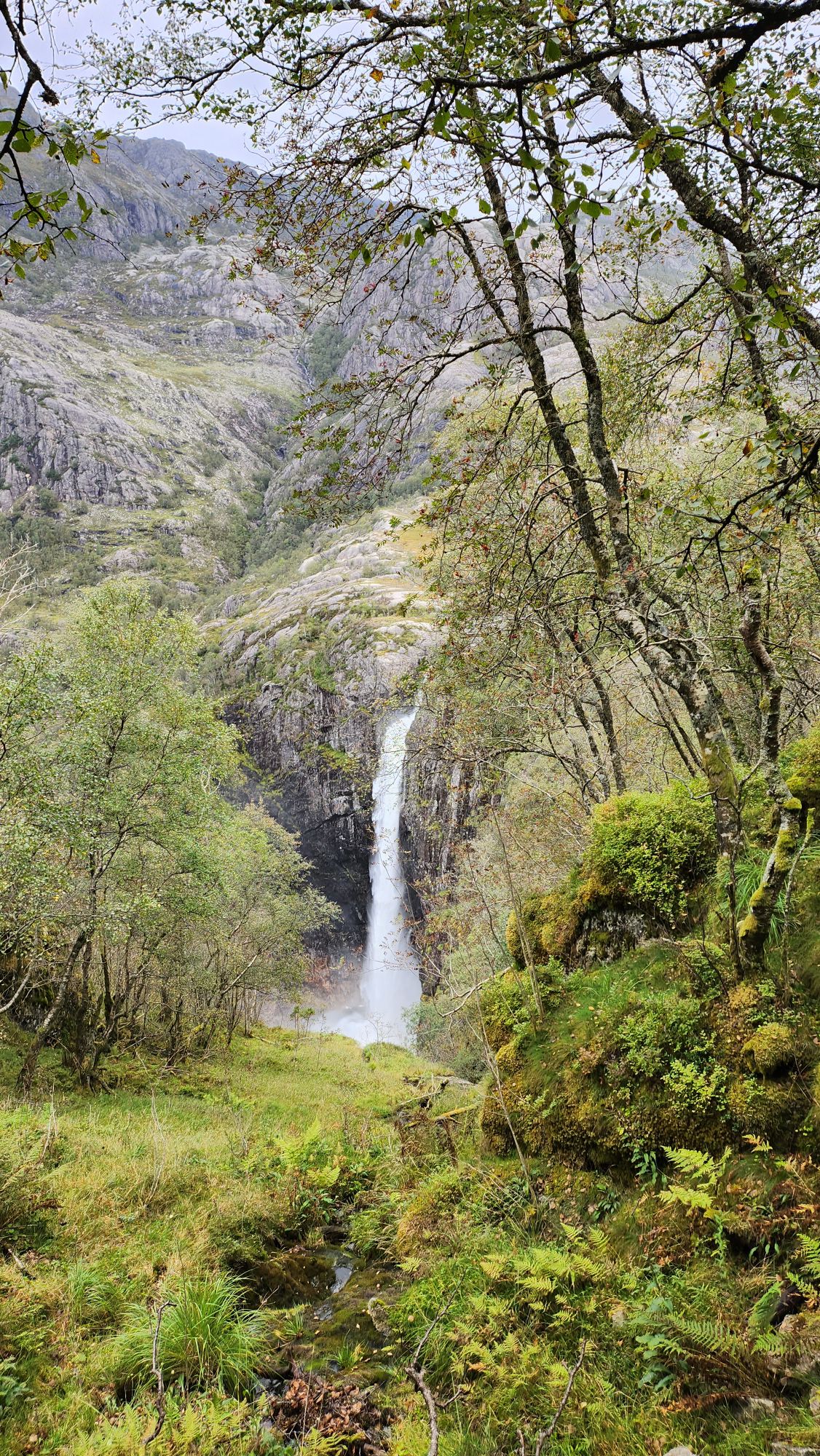
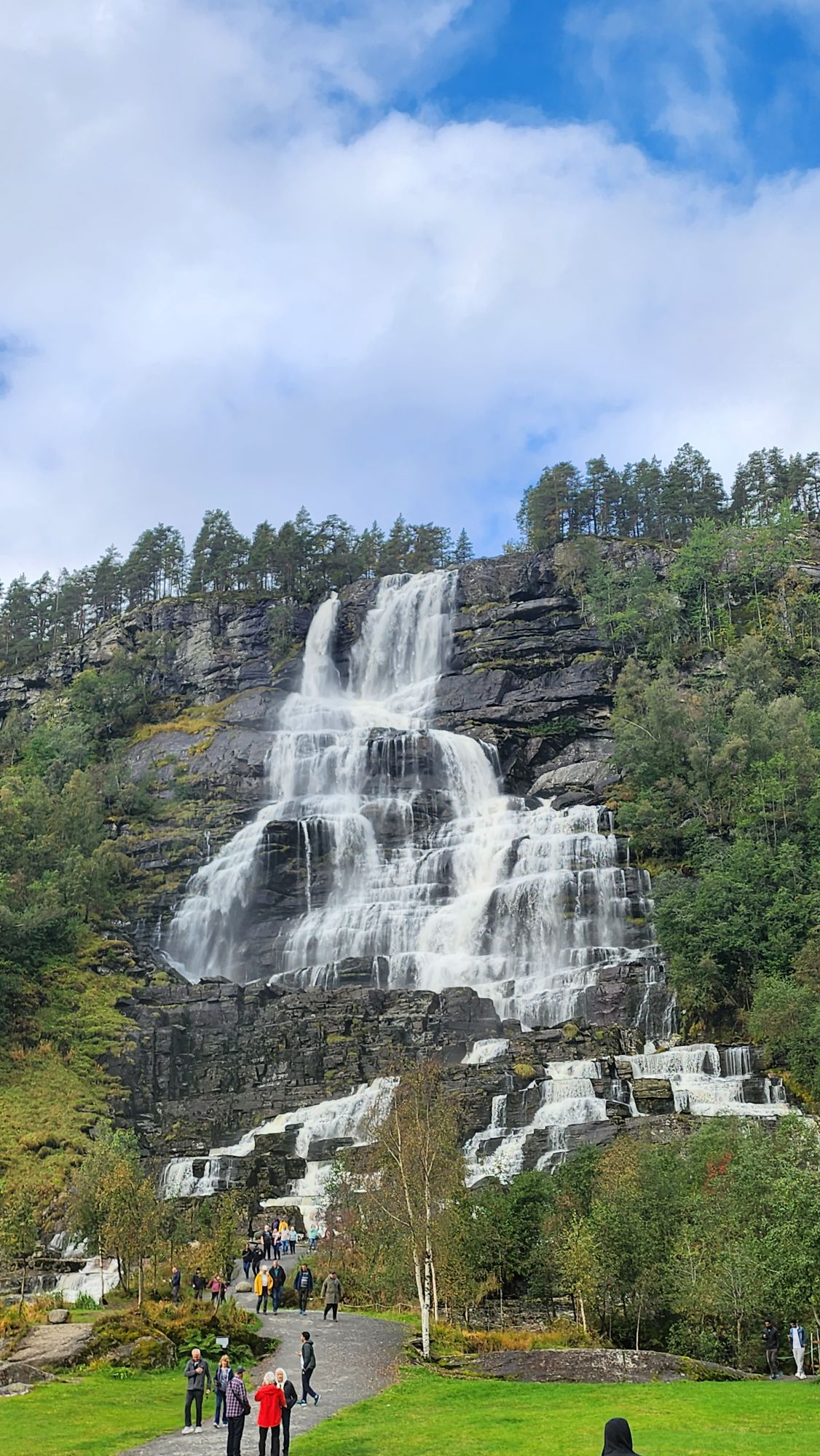
I really am not exaggerating when I say I was seeing waterfalls everywhere, this was really the scenario. From little trickles, to huge falls, there was simply one waterfall after another. Norway is actually nicknamed the ‘land of a thousand waterfalls’ and has some of the tallest waterfalls in the world.

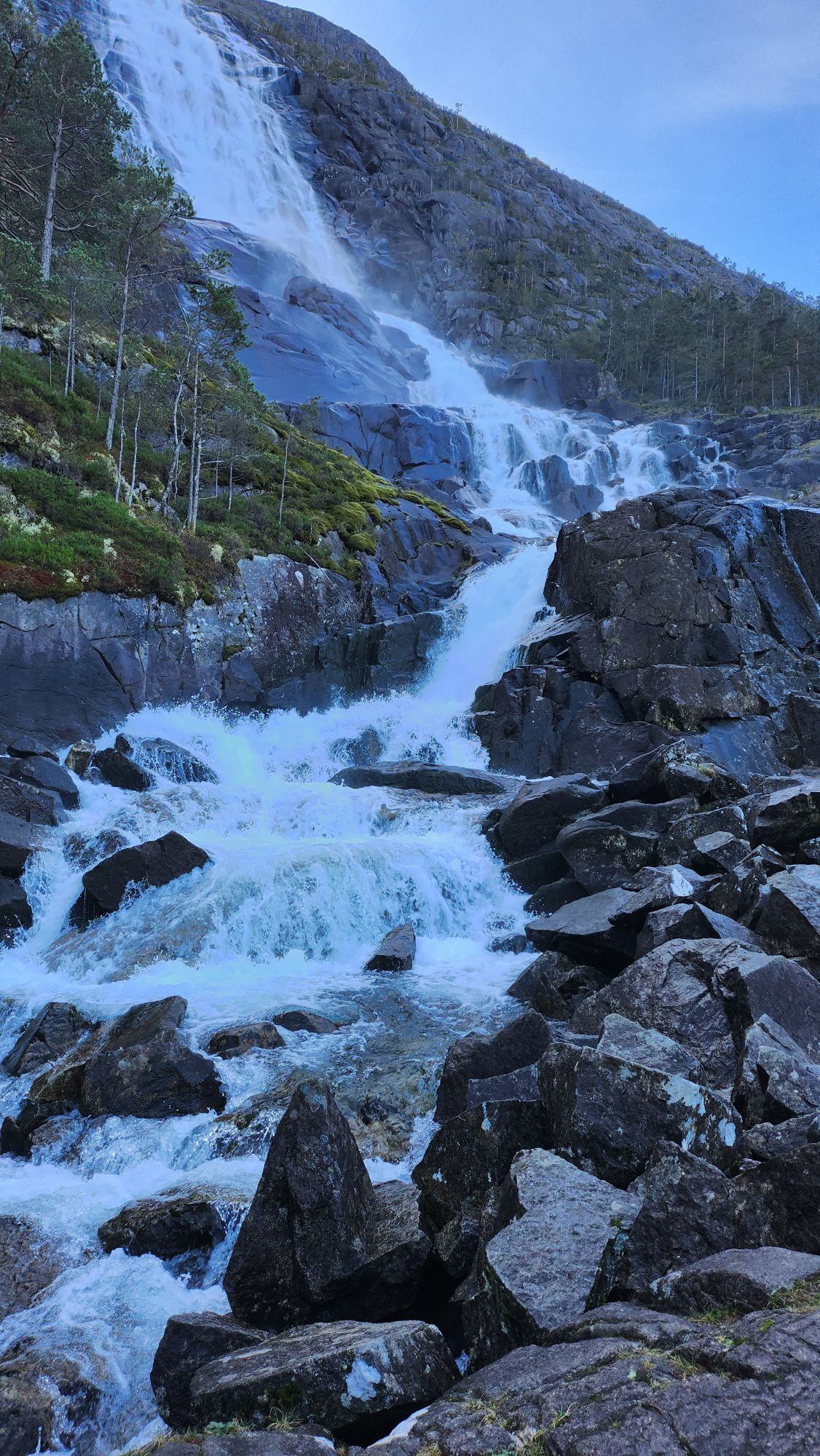
Whilst I didn’t actually have to go any distance to see a waterfall, I did make the effort to visit a few big ones. I visited Kjosfossen, Tvindefossen, Manafossen, and Langfossen. So here is a clue I worked out… anytime you see ‘foss’ in the name, it means waterfall. Before you start thinking that is where we get the word ‘faucet’ tap from; I already thought of that and the evidence is not there to support it I am afraid, but it would make a lot of sense…

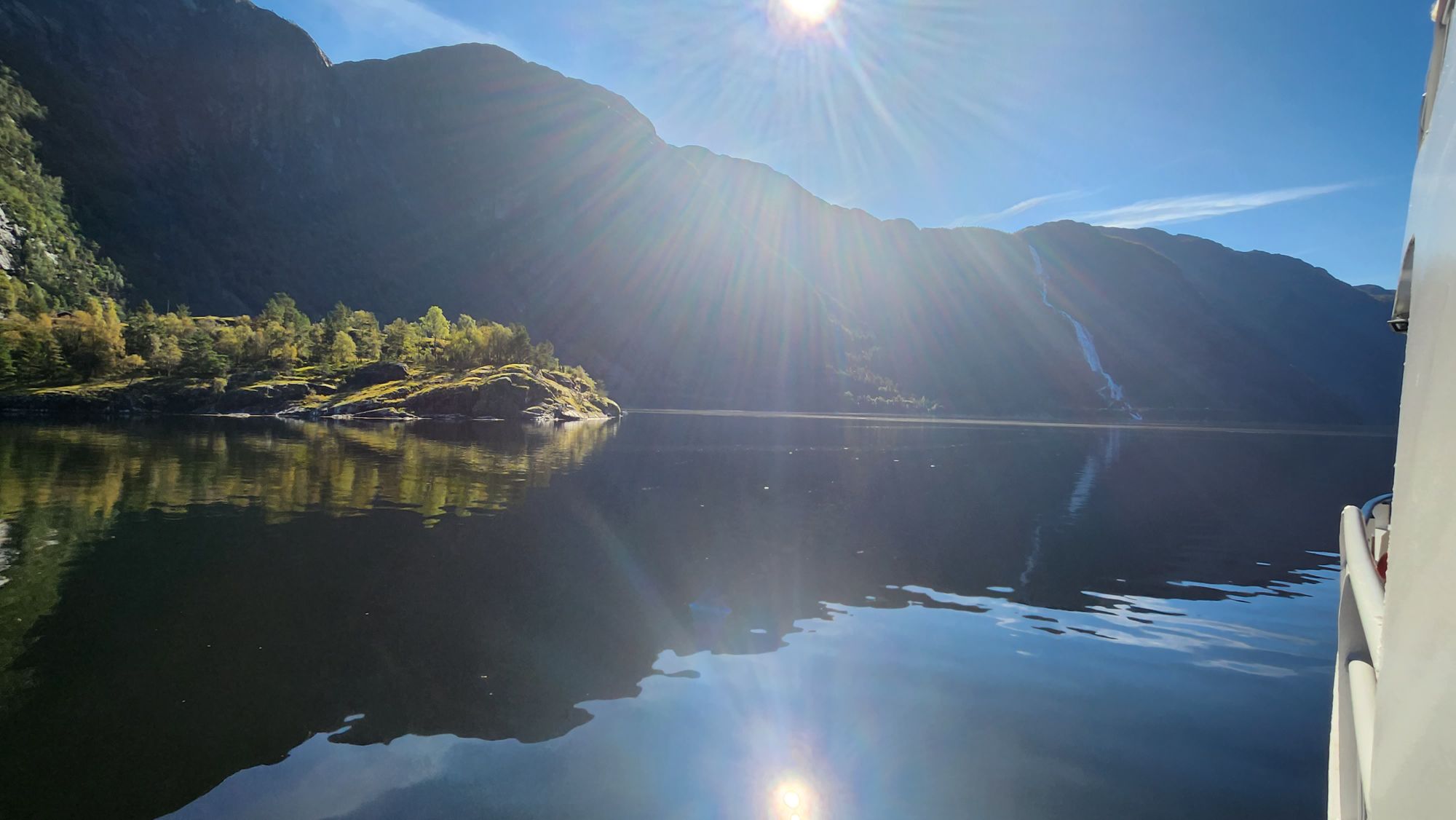
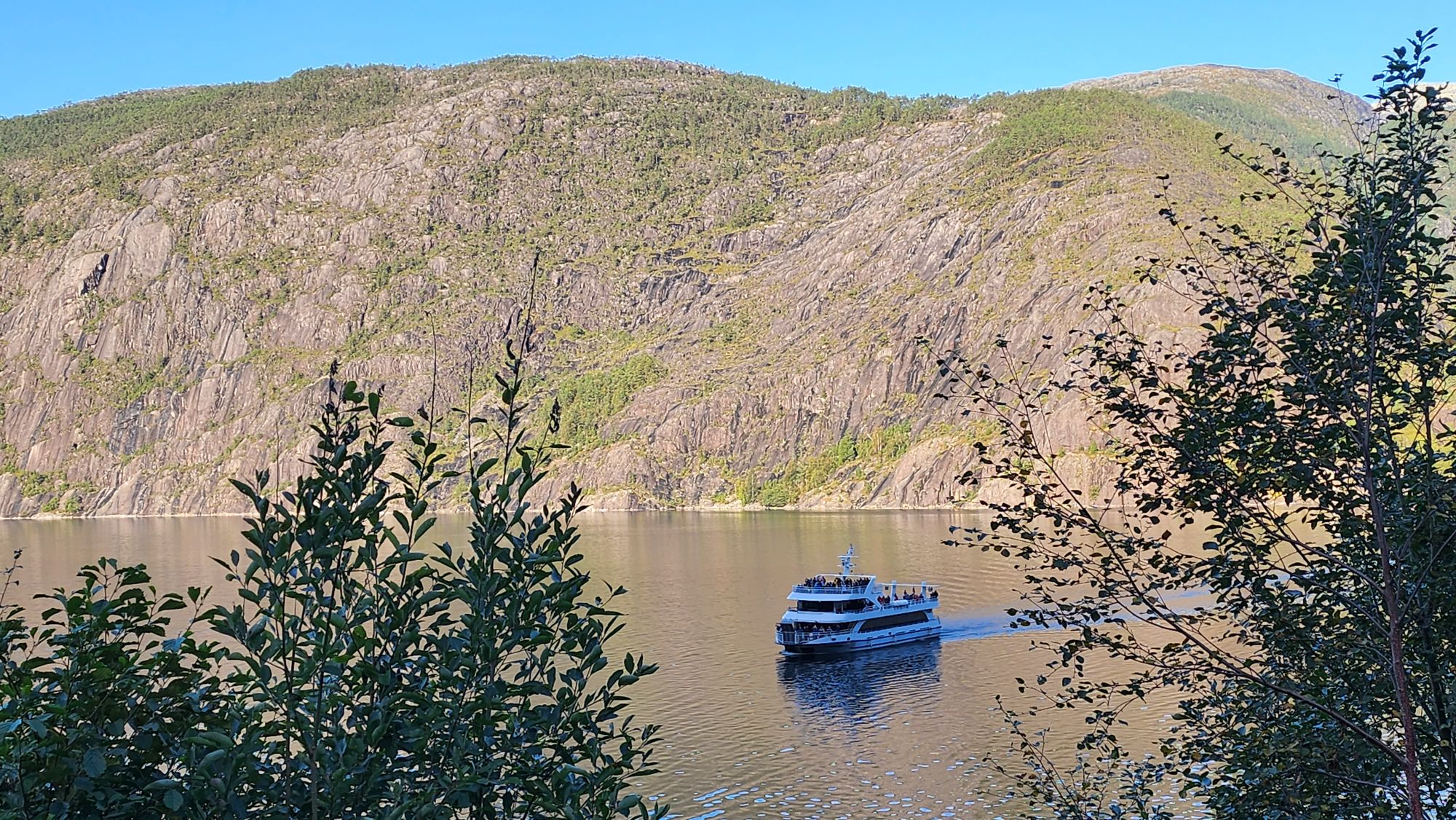
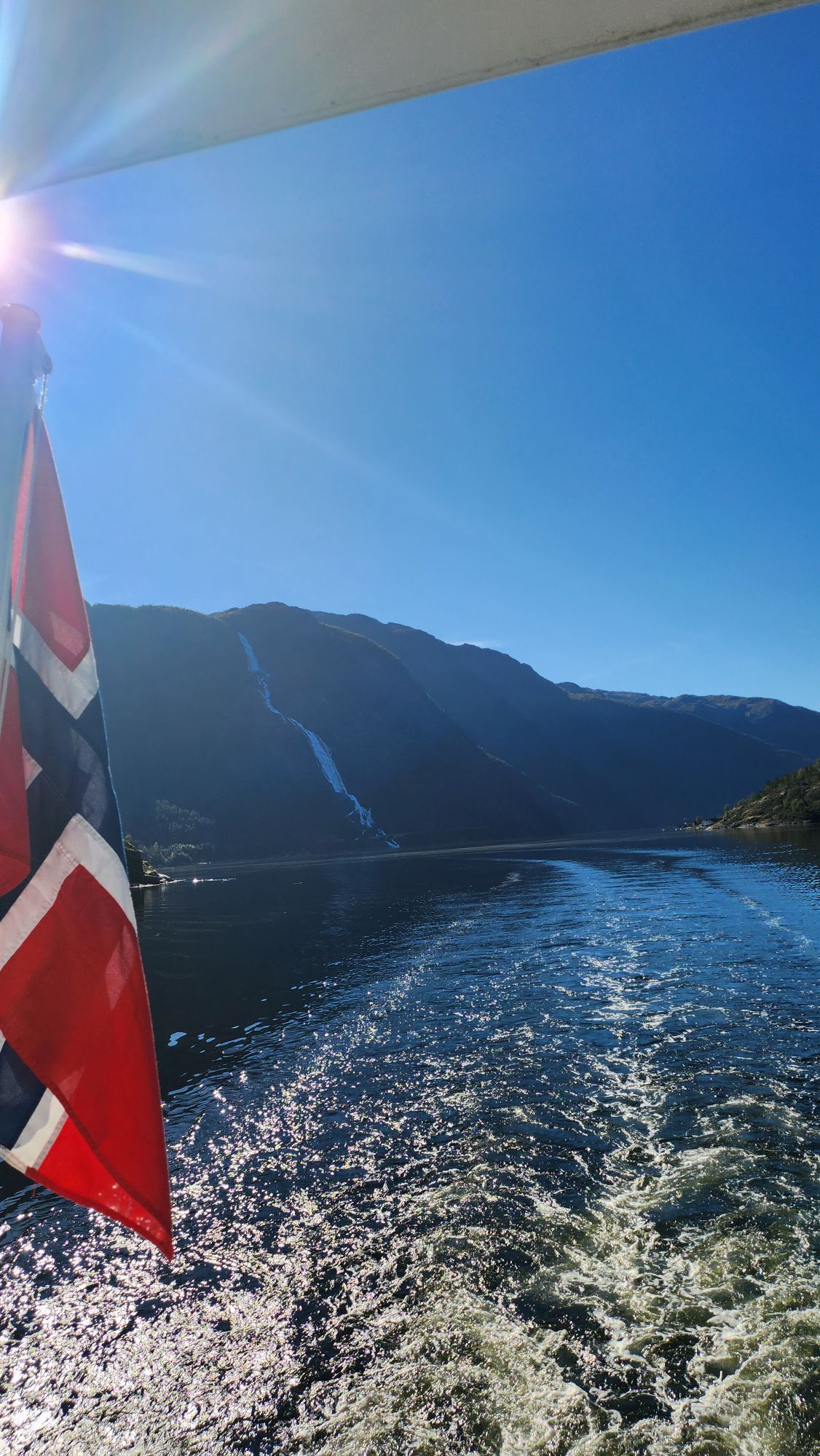
All the waterfalls had their own charm but Langfossen was particularly impressive. A road bridge has been built over half the fall and so you can get pretty close for photos from there, but even closer by boat! After viewing it from the road, I jumped on a tour boat that literally mounted the waterfall as it entered the fjord, (so much so that I was concerned), and the tour guide picked up a bucket and scooped up some falling water for me to taste. The guide said that there was a legend that if you drink from the falls you would become more fertile, particularly the men, so of course, the men on the boat were taking extra servings.

Reflections

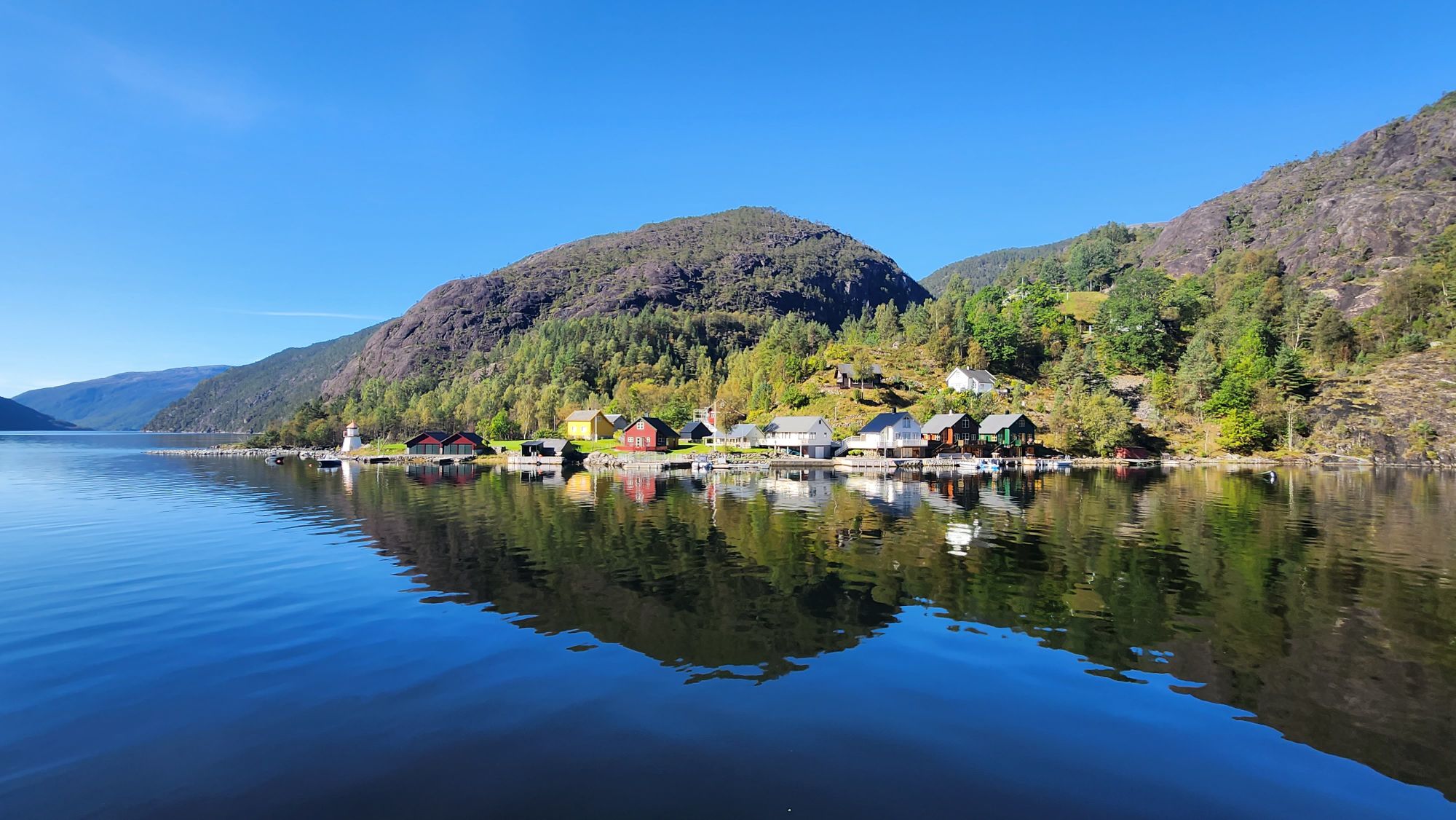
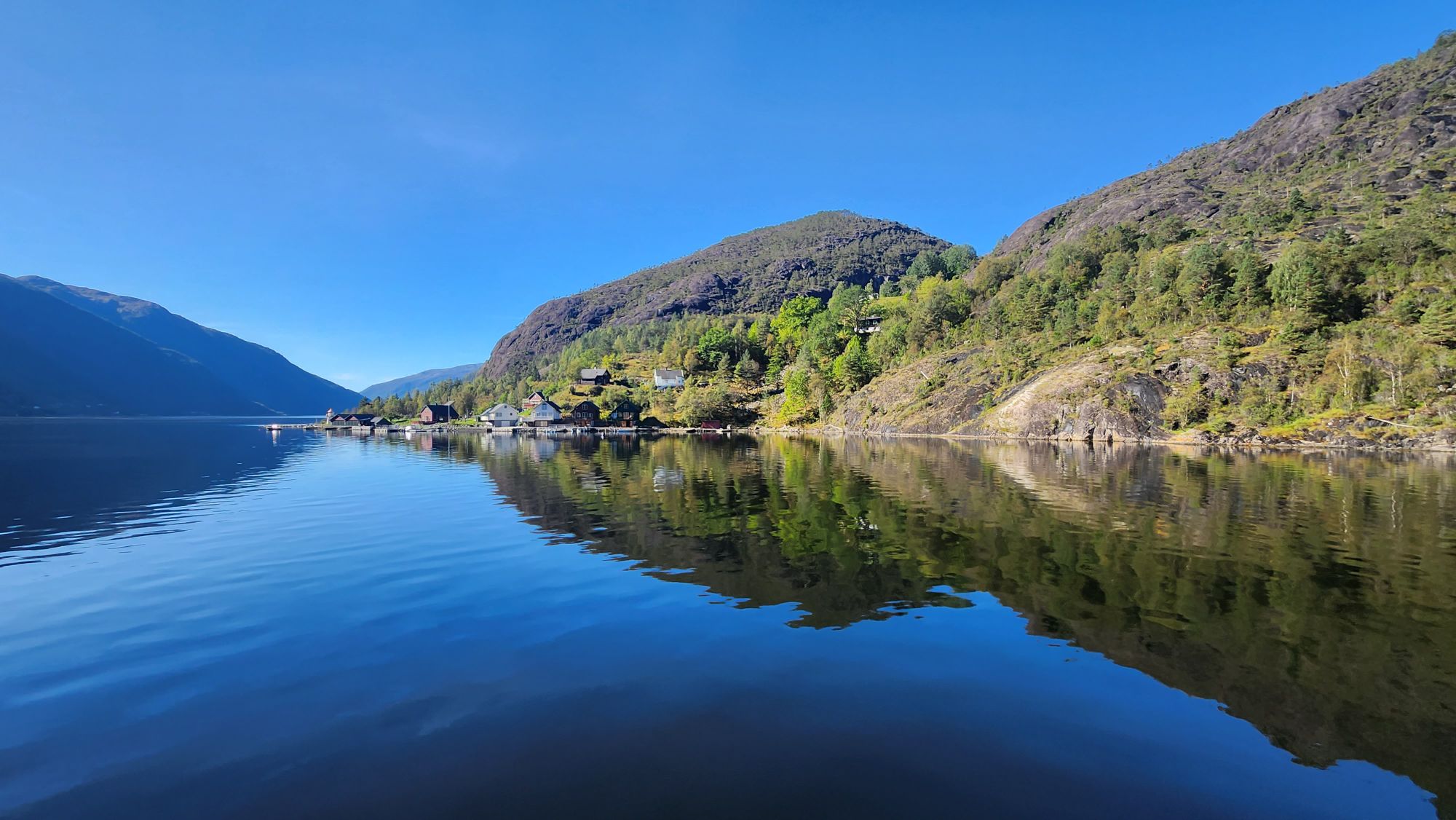
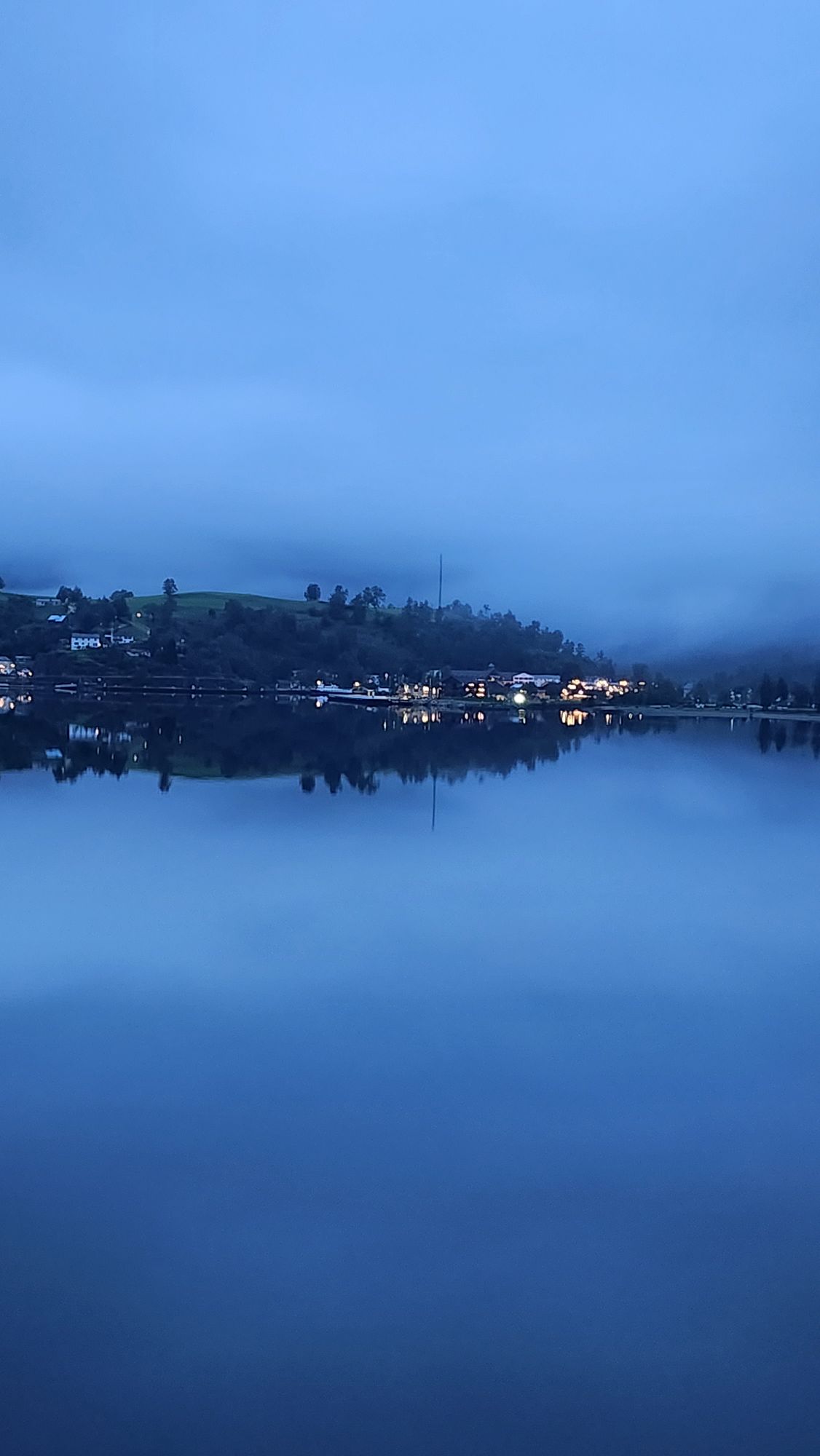
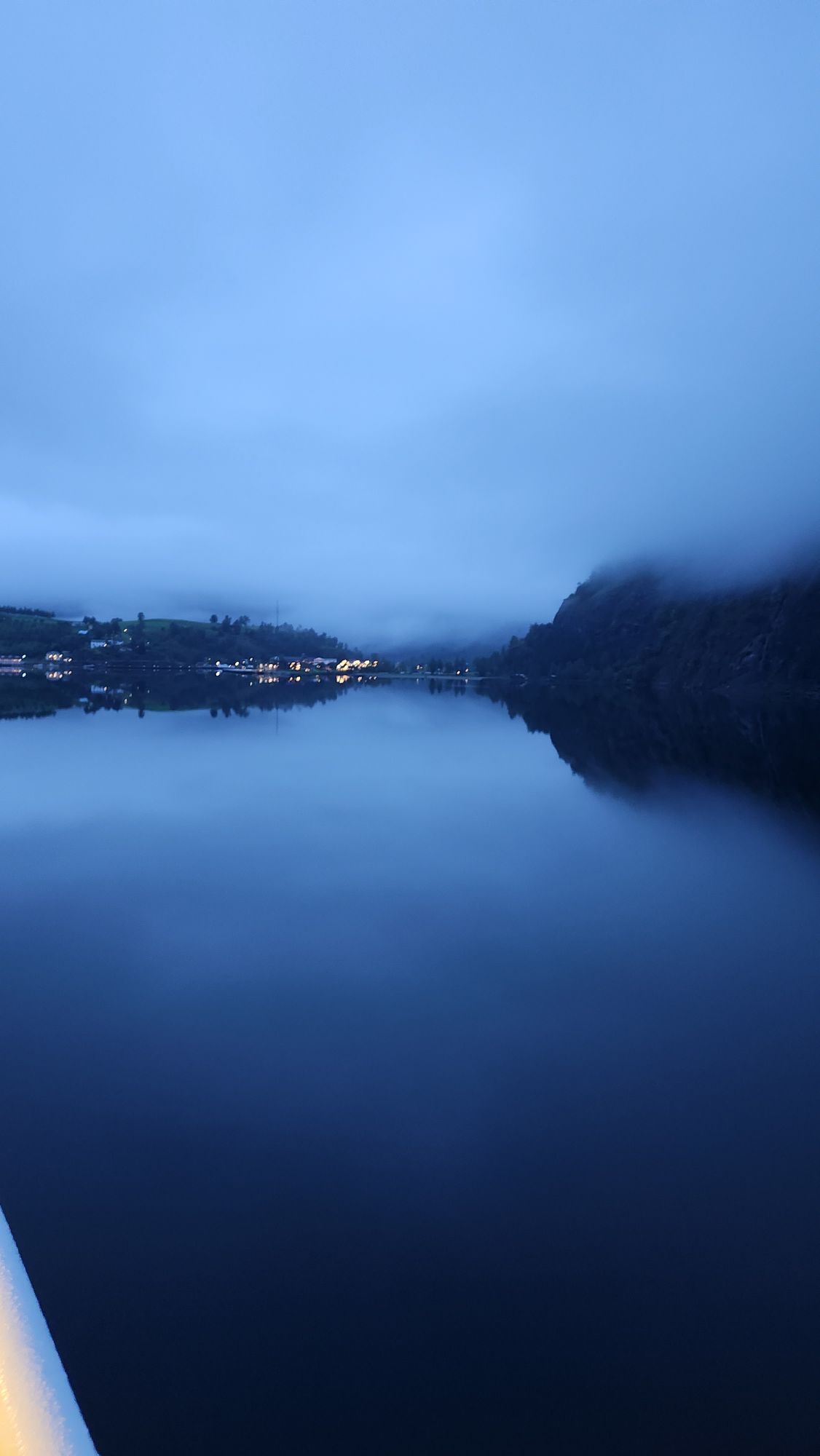
I know that ‘reflections’ is a strange subheading but I feel that it is something special about Norway that I can not describe another way. I have never been to a destination that has provided me with so many mirror or kaleidoscope like views. I saw these trippy images whilst sailing on the fjords, which are Norway’s famous sea inlets, that are characterised as long,narrow and deep, and formed from glaciers, that left behind beautiful valleys.

At multiple times during the trip, I would get up early to look out at the water, and it just messed with my head to see the crystal clear reflections that these fjords created. The water is so still and glimmered and it is really hard to tell where land and water meet as everything is just mirrored endlessly. It’s really magical and I loved it, next time I go, I want to do some kayaking so that I can get closer to the water and get even more amazing photos.

Wide spaces

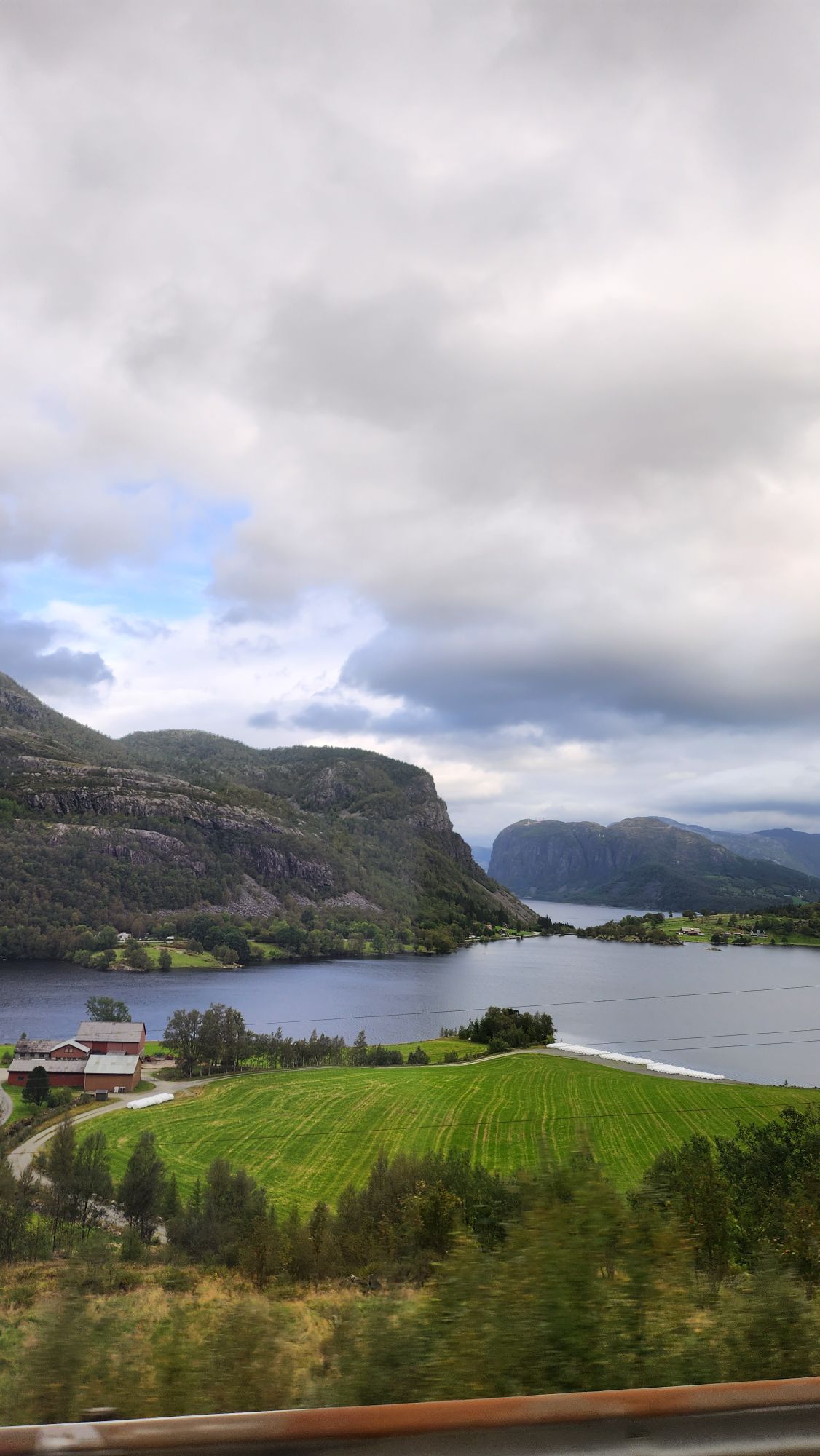
Of course, not only are the waters spectacular, but the huge green landscapes are a great match to them. I was struck by how much of the area was perfectly trimmed rolling grasses, miles of picture perfect lawns, and its no suprise that there is a big tradition of insulating houses with turf covered roofs.

Beyond the grass, there are many smallholdings, vast pine forests, and brilliant ridges and mountains to hike. Some of the most popular are Pulpit Rock, a huge mountain plateau for the perfect Instagram shot, or another similar one is Trolltunga (troll’s tongue)! I would love the opportunity to return to Norway and spend more time exploring the big landscapes here, on foot.

Scenic Railway

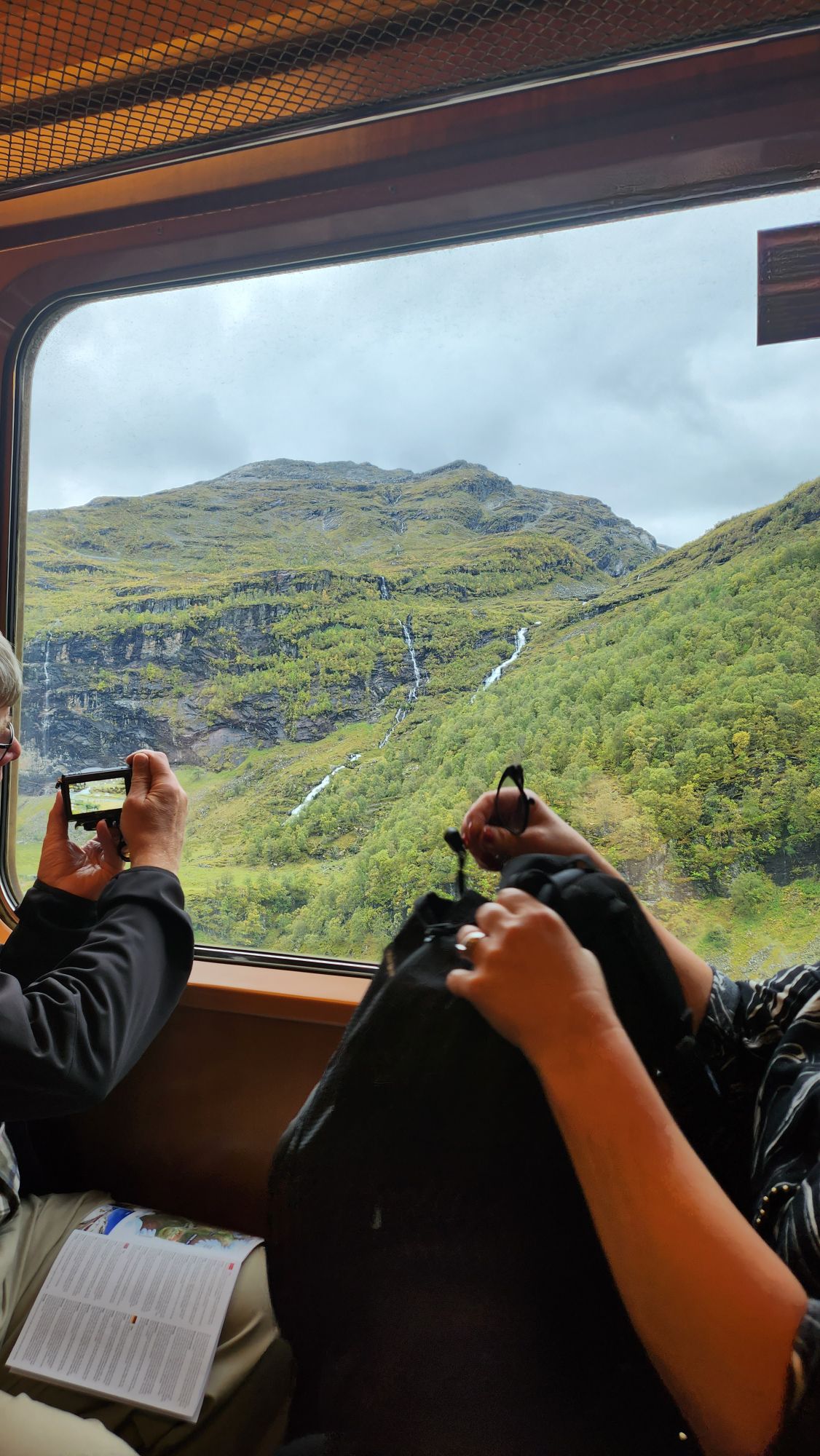
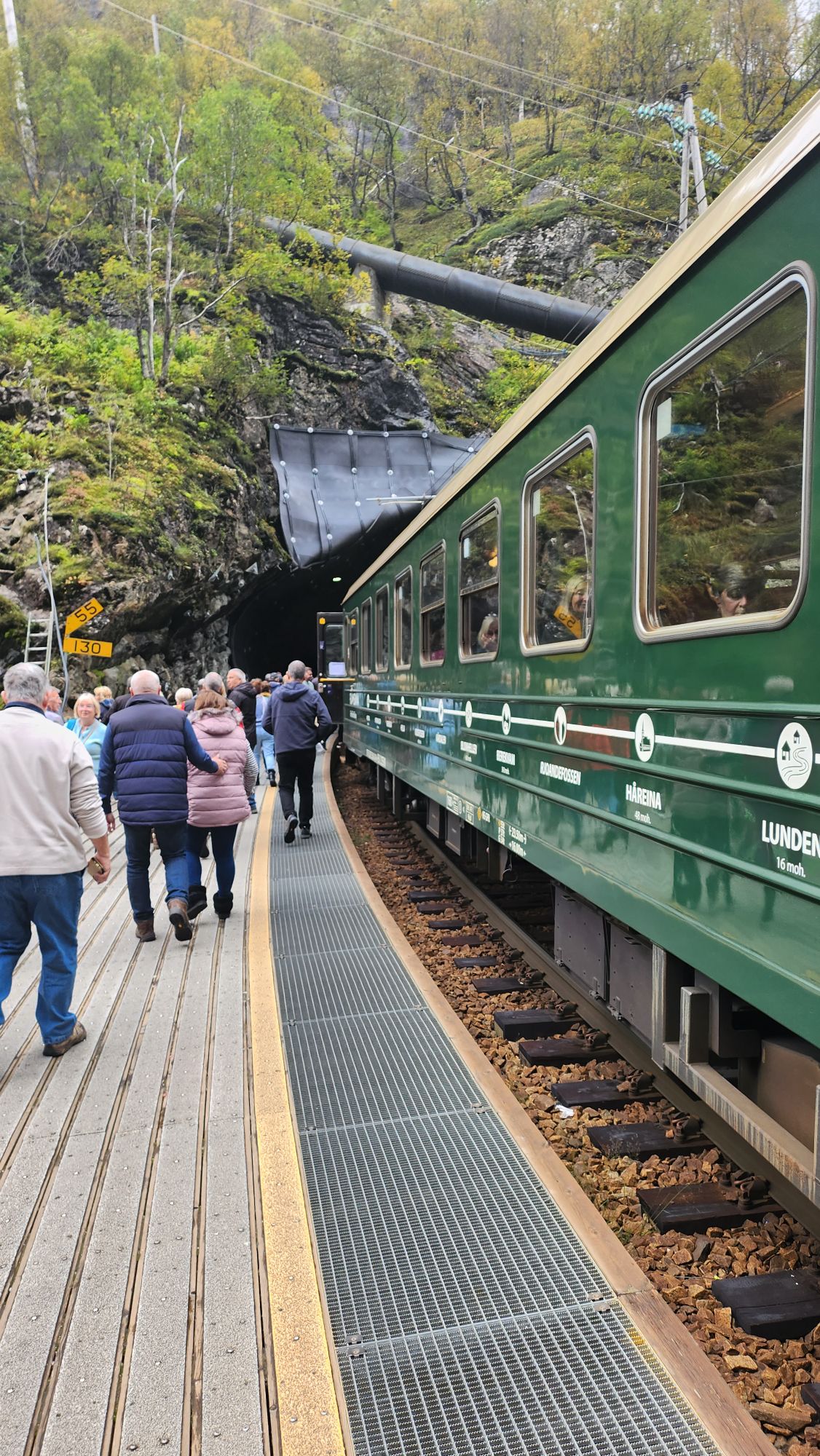
In the beautiful little town of Flam, I had the opportunity to travel on one of the world’s most beautiful railway journeys. I boarded the Flam railway train from Flam and took a round trip via Myrdal, with a stop to see a huge ‘foss’ with classical music in the air, and a dancing actor jumping out to welcome me and the other passengers. There to portray another waterfall legend of a lady of the falls, the guide later told me that the ‘lady’ dancing around was actually two different local men dressed up as the same lady, to fool the tourists by quickly jumping out in different locations.

The journey was pretty pleasant and the views were great, but it was crowded, which makes it hard to enjoy when everyone has their cameras pressed against the windows!

Overall, I just loved Norway. As a nature lover, and someone that is keen to go for long walks in the fresh air, I could almost see myself relocating to Norway. The only thing keeping me away is the cold winters, but there is no question that I will be visiting again. Next time for longer, and hopefully with my someone special to enjoy it with.

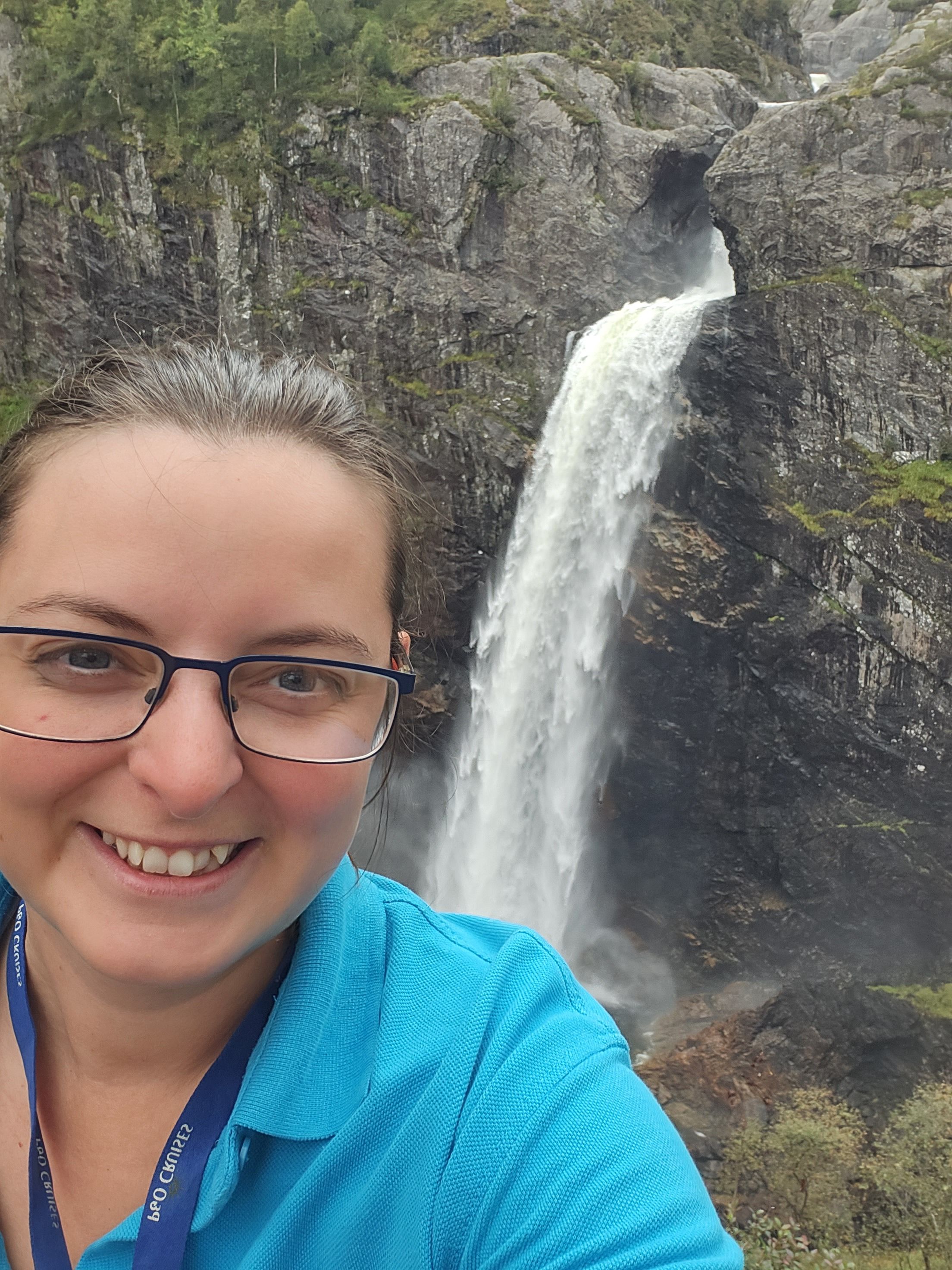
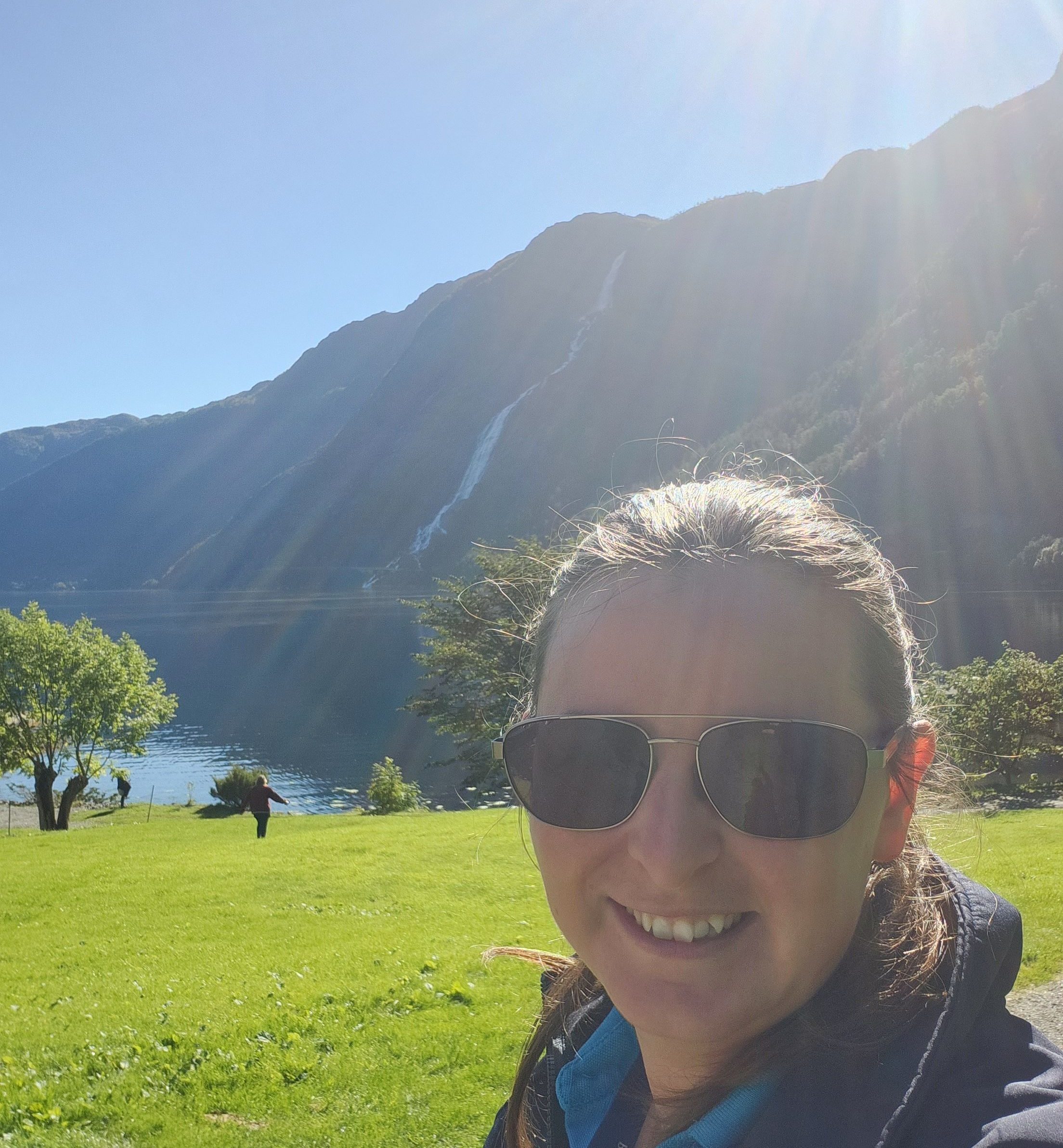
Me in Norway

India: Where culture, colour and faith collide (Part Two)

After almost a week exploring the North of India, I flew South for a few days in the state of Goa and a short stop in Mumbai. This was a chance to see coastlines, cityscape and countryside of this huge nation.

North Goa

On arrival in North Goa’s Mopa Airport, I felt the humidity hit me like walking into a sauna, and began to recognise the familiar scenes of holiday makers as we made our way through town. This southern region of India is known for being a holiday location for nationals and foreigners alike.

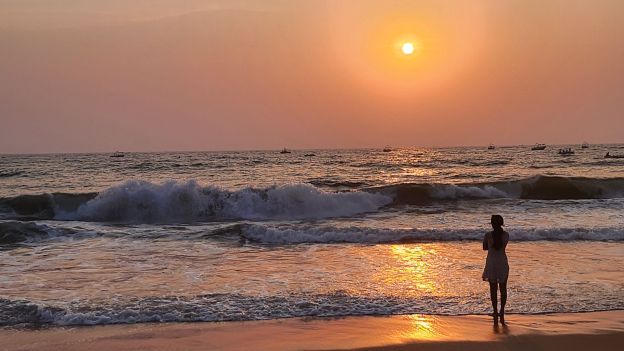
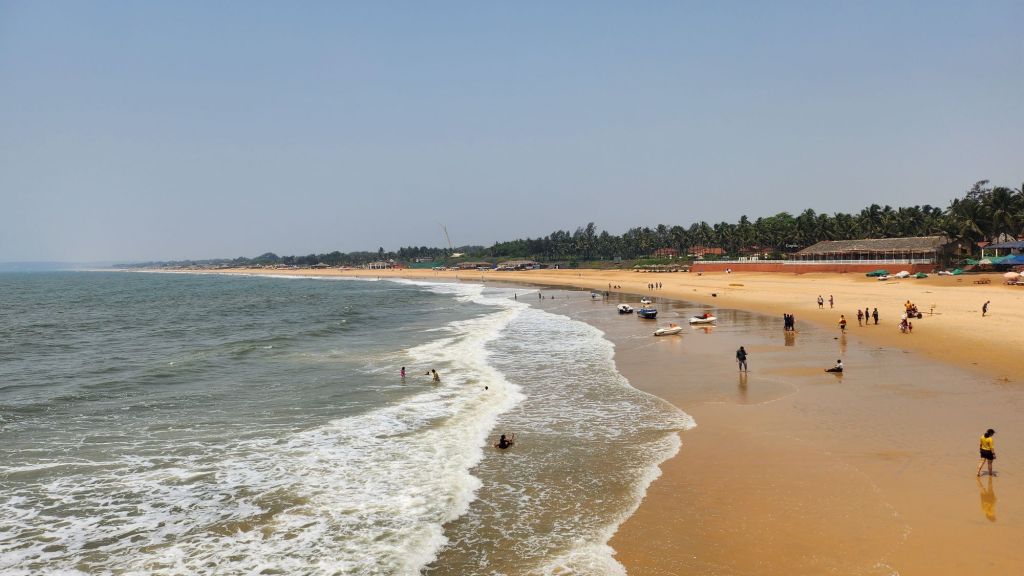
The North of Goa is much more commercialised for visitors with bars, shopping and large hotel chains, whilst the South is a sleepy, wild and undeveloped area. We stayed in the area of Candolim, right by the beach. I got to have my lazy day on the beach and a lovely shoulder massage on my sunbed with very little hassle at all. I’ve learnt that most of the Indian people I know do not actually like to go to the beach to sunbathe or swim, so by day it is pretty quiet there. Its only at sunset and into the evening when the crowds begin to gather. I have never seen so many people on the beach in the evening, it was hard to move around amongst the crowds.

The next day we hired a motorbike for the day for a grand total of £5! Motorbike transportation is really common in India, and I have enjoyed now a number of motorbike trips in different countries as a passenger riding pillion. Normally, from an unexpected new local friend, which always makes it extra fun!

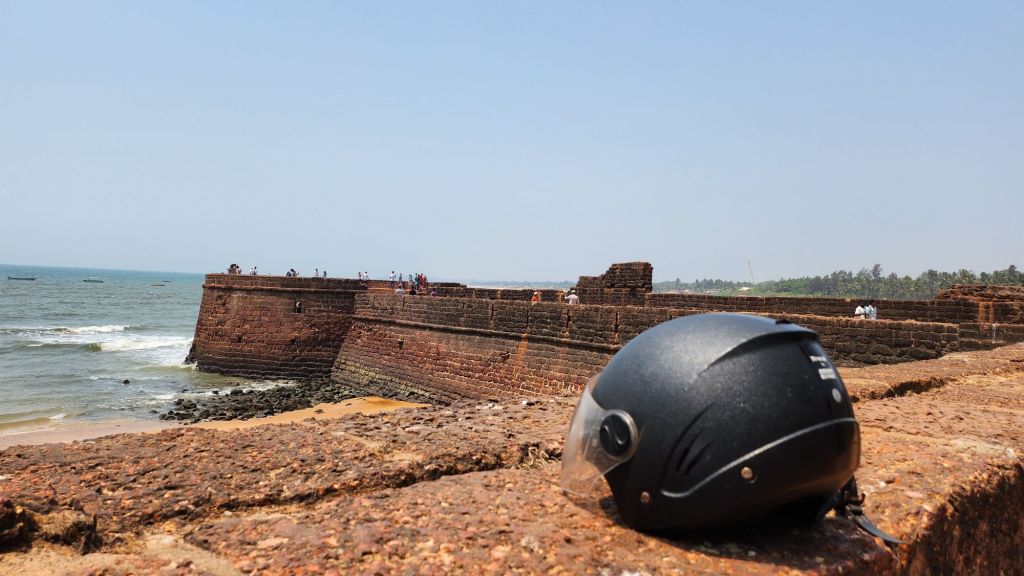
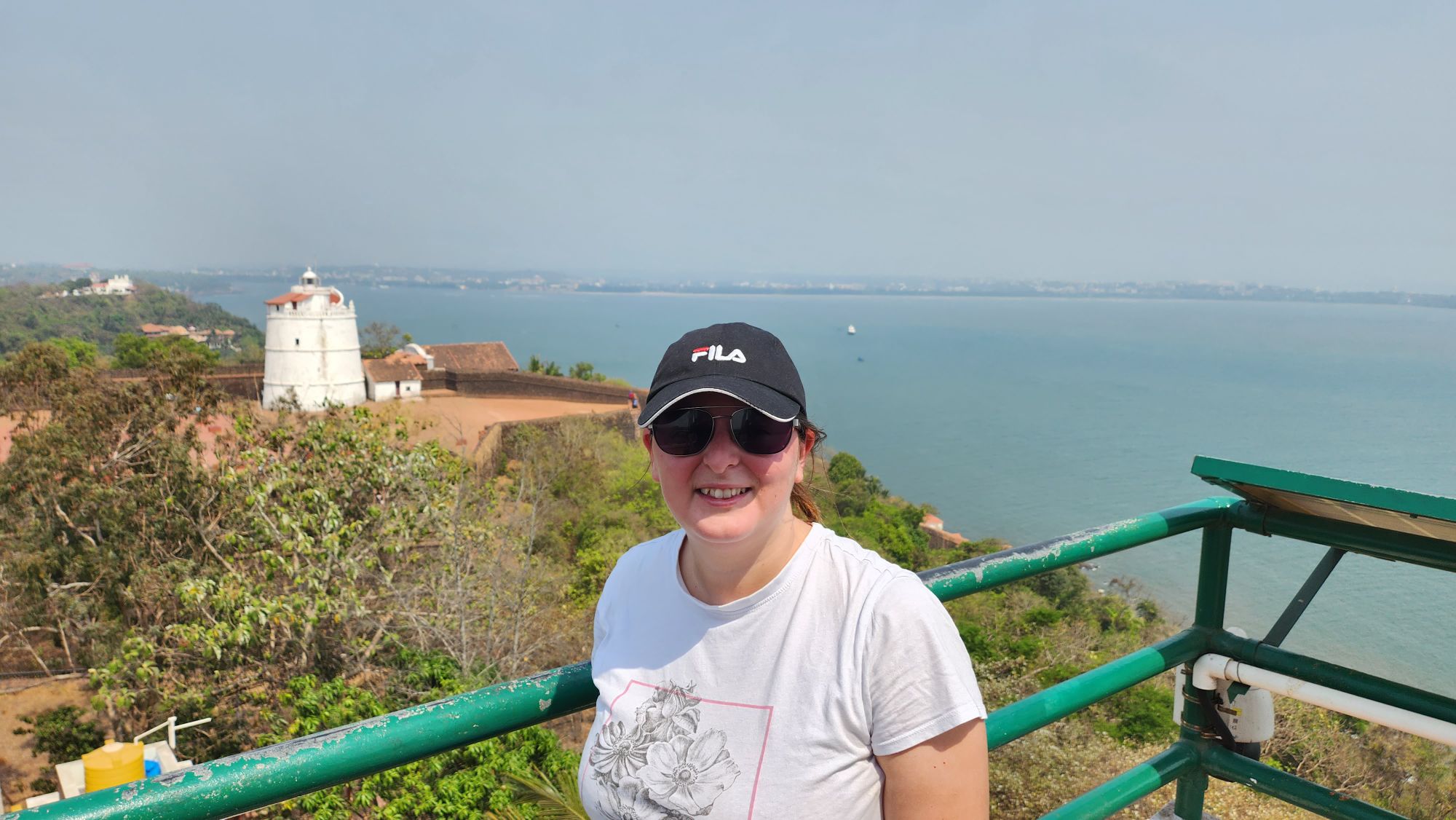
My friend drove us around the area to see historic forts and a nearby lighthouse. I would say though that climbing a lighthouse in the high temperatures of South India is somewhat challenging, to say the least.. I was gasping for air by the time I pushed my head through the hatch door at the top! North Goa has a few attractions and viewpoints to visit, but the main activity is relaxation, and food it seems. This is actually the only part of India where you can find beef, because of the high volume of Catholic Indians rather than Hindu. I was advised not to trust it though, as you don’t know how long it has been sitting there and I was still suffering with Delhi Belly.
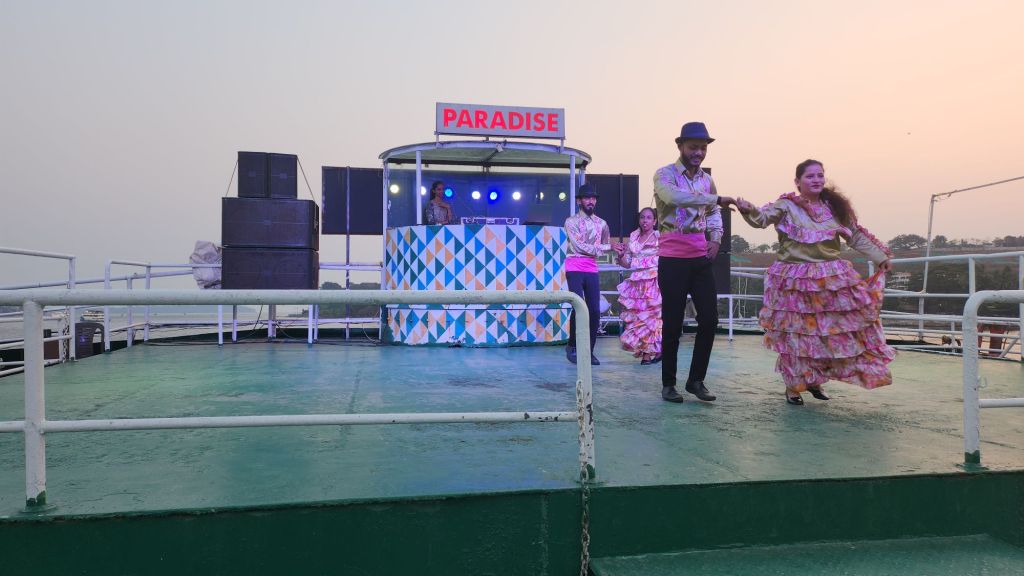
My friend arranged for a special river cruise to entertain us in the evening, with traditional dancing, and even I tried to do a little dancing, though I was not that good!
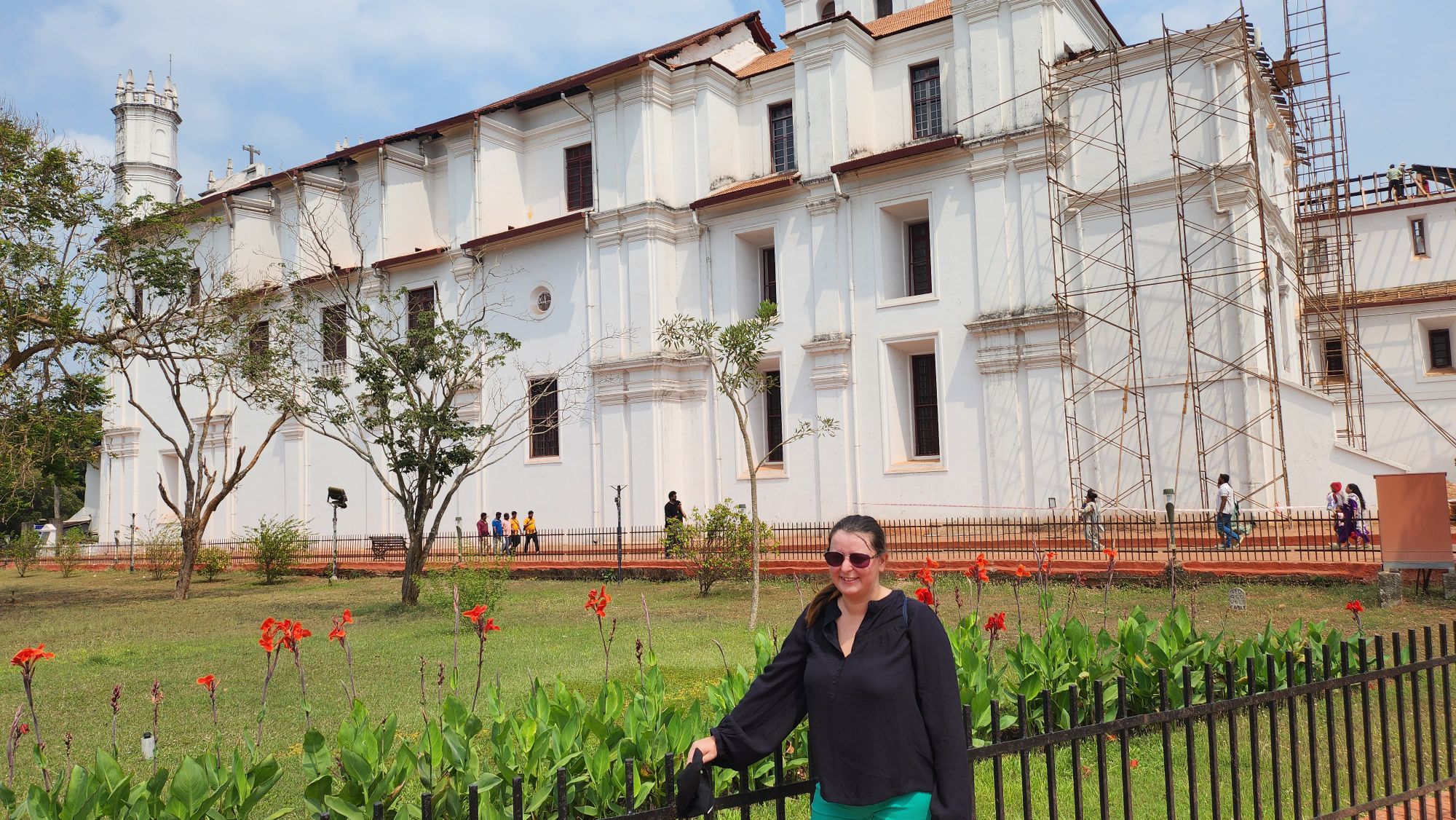
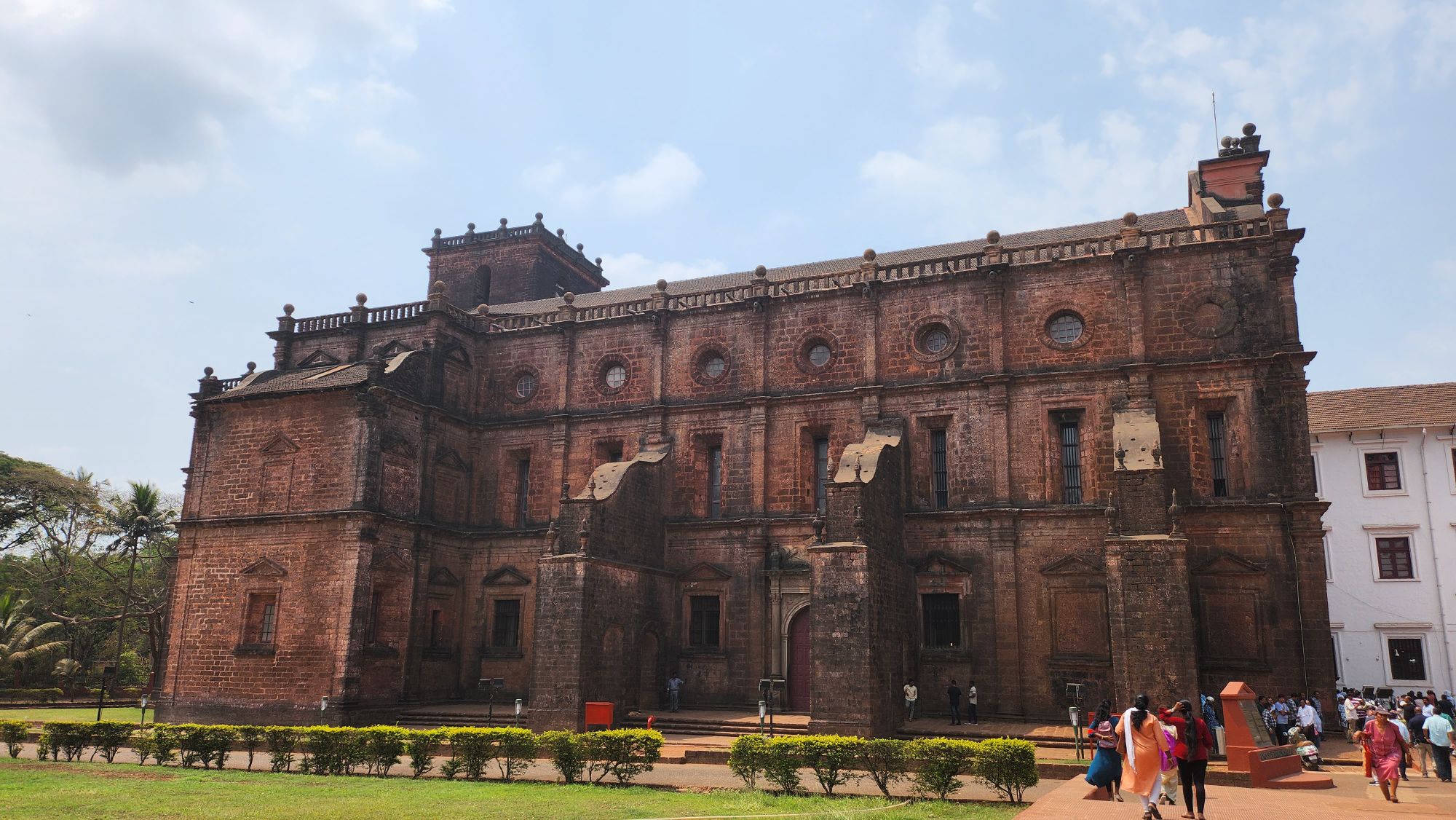
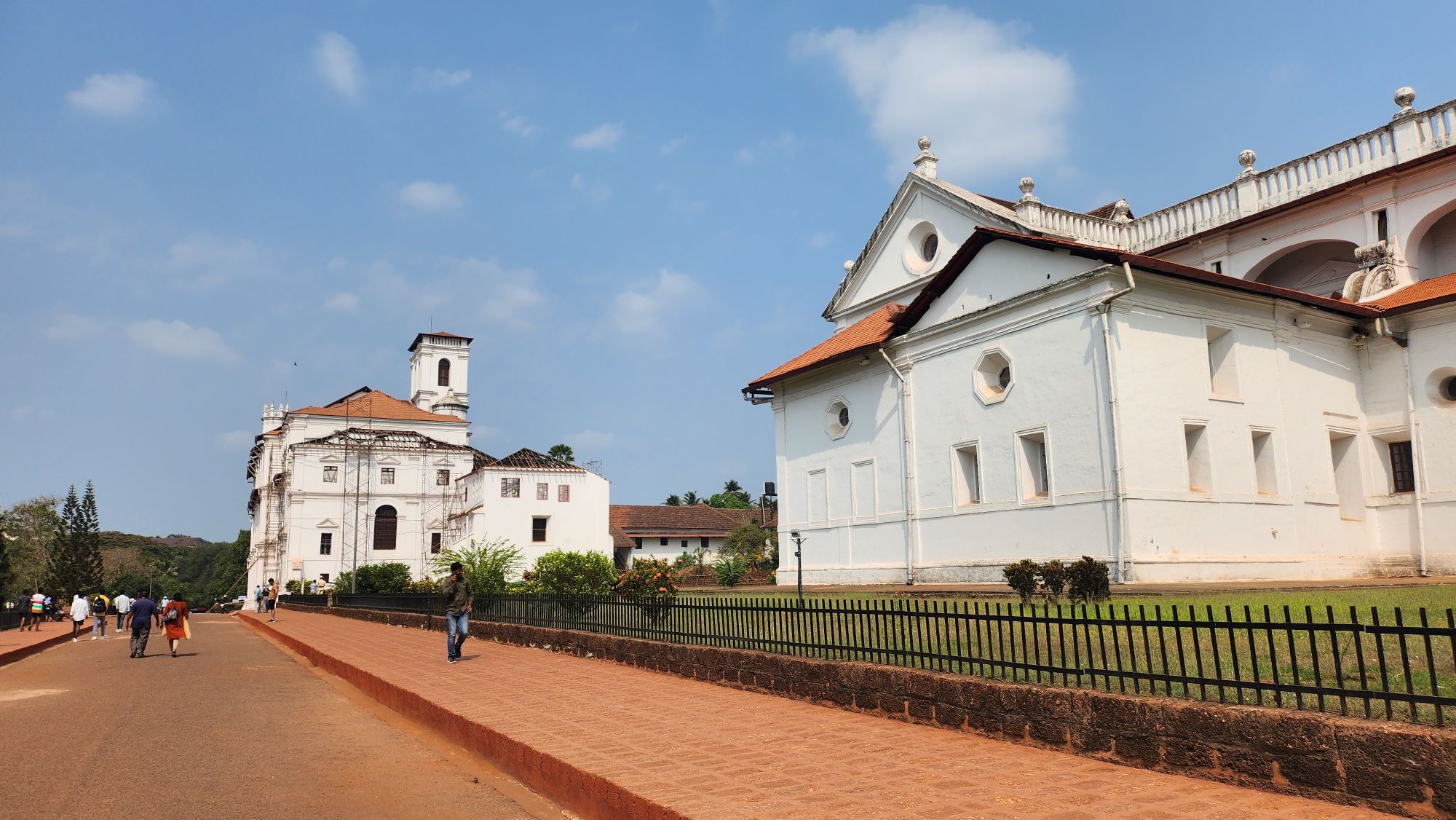
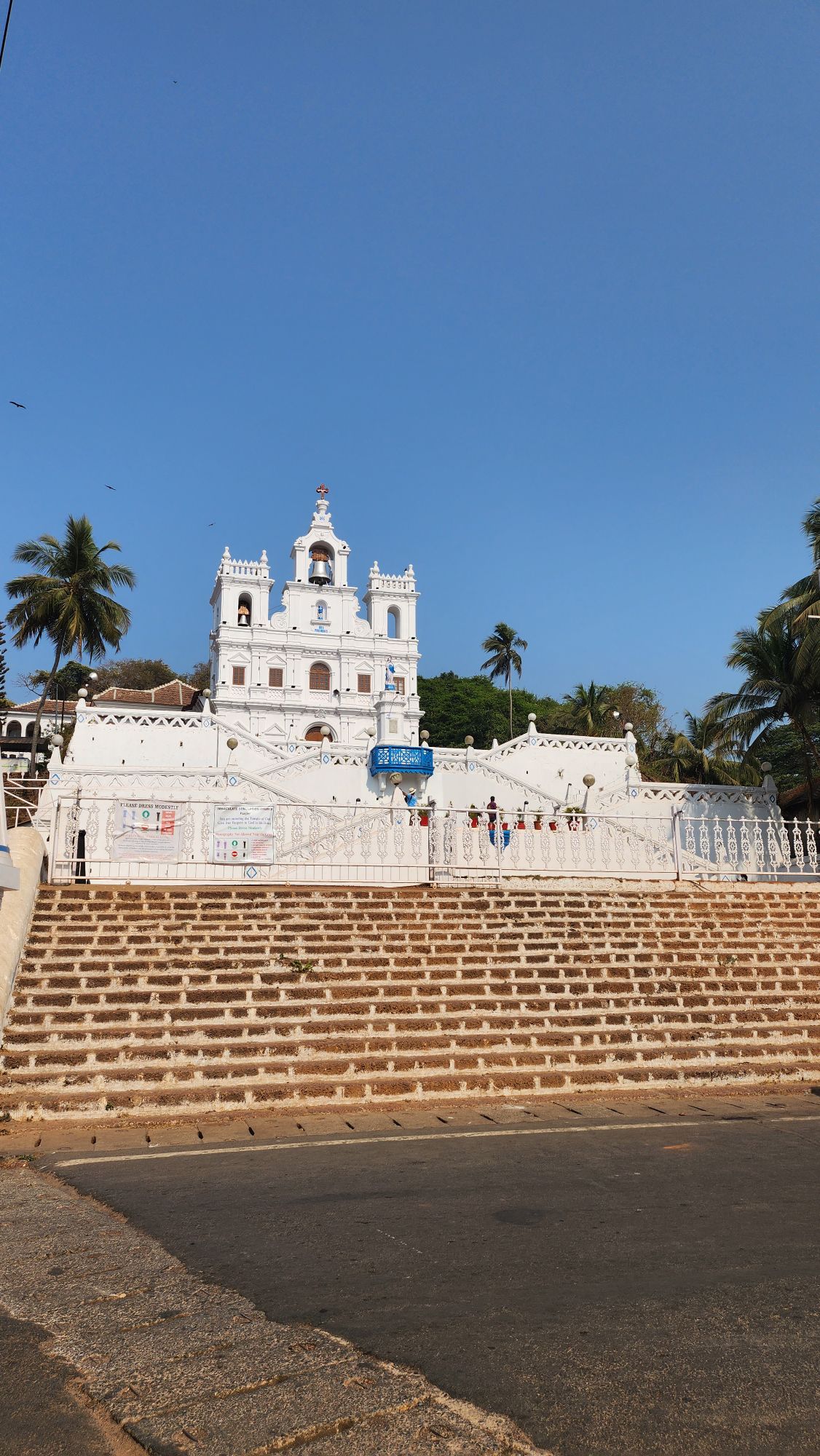
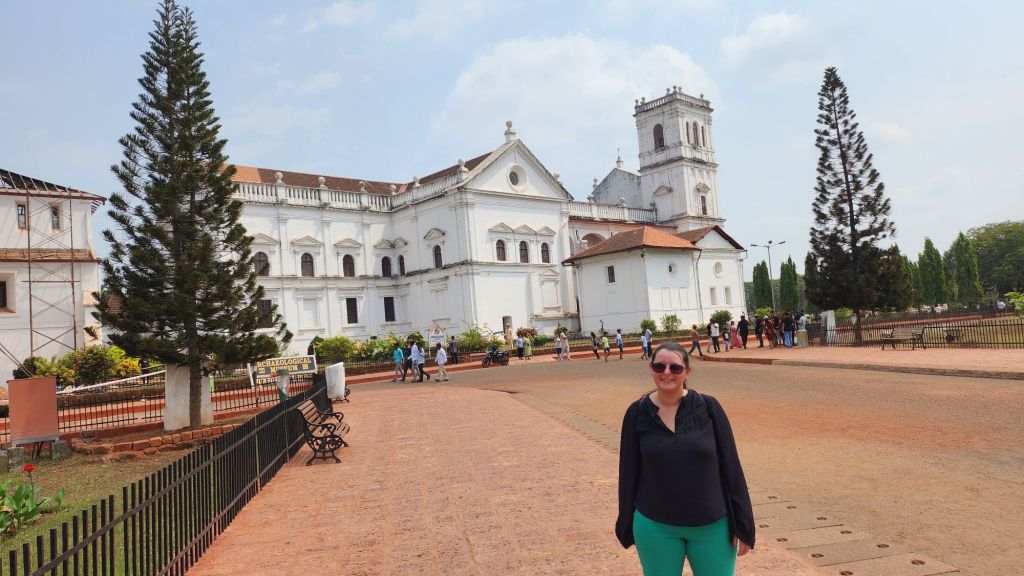
Next day, we were in a taxi this time, visiting the bigger attractions, including the famous churches of Goa. Goa was for a long time ruled by the Portuguese exclusively and so much of the heritage remains. Many people speak Portuguese, and follow the Roman Catholic religion and you can see scatters of original buildings and churches left behind and many still in use. Some of the main churches are all found in one conserved square that is full of visitors. This was a little strange to see a familiar piece of Europe, smack bang in the middle of one the largest countries in Asia. The churches looked very traditional and we were even lucky enough to see a wedding service.

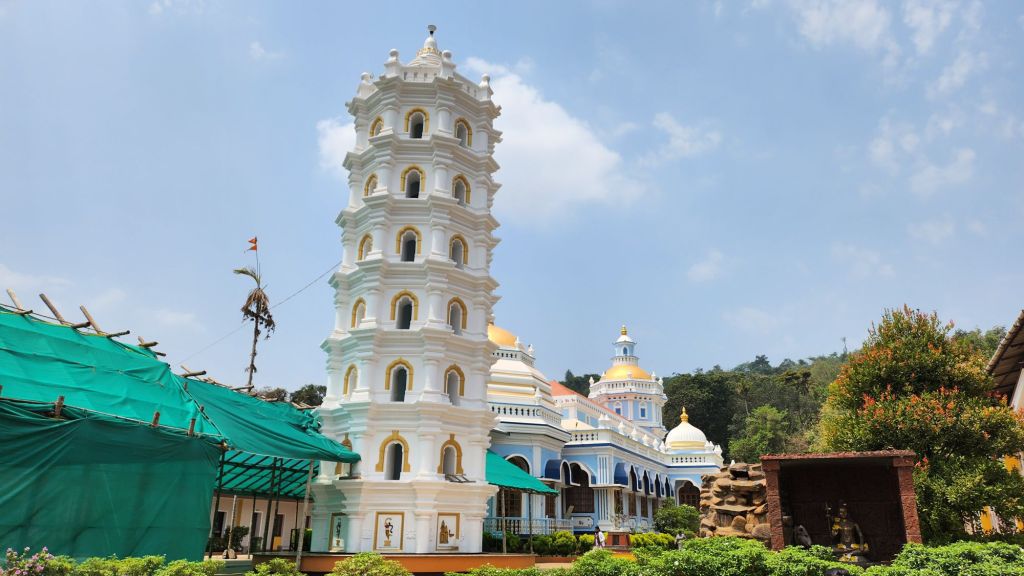
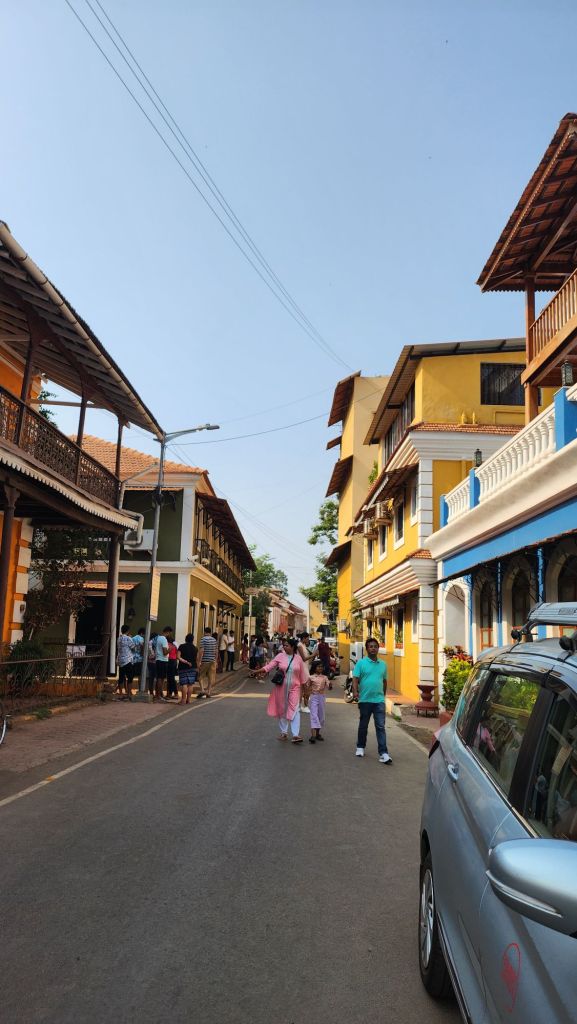
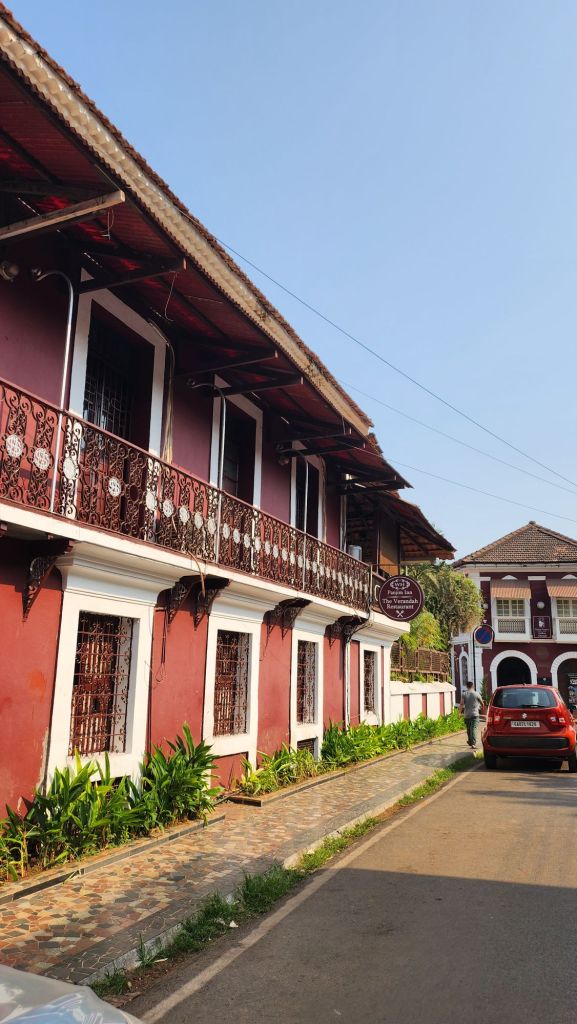
We also visited the famous coloured houses which really only make up a few quiet streets, before finding ourselves at a known Hindu temple that was quite large in the area. Full of kiosks selling snacks and drinks on arrival at the parking area, then as we arrived to the Shree Mangueshi temple, shoes and socks had to be removed and I began the painful and embarrassing dance on my tippy toes, as my bare feet burnt against the concrete boiling in the sun outside. Inside was the opportunity to move clockwise around the temple and make an offering to the shrine. Many Hindus gathered in the centre of the temple to carry out their prayers. After a quick wiz around, I hopped about with my shoes half hung back on and headed back to the taxi to the next location.

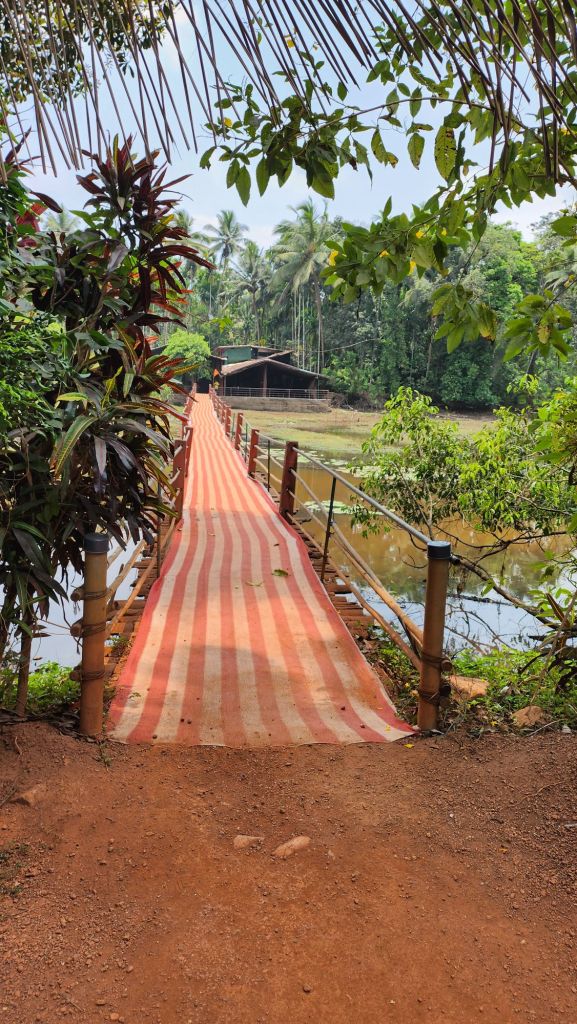
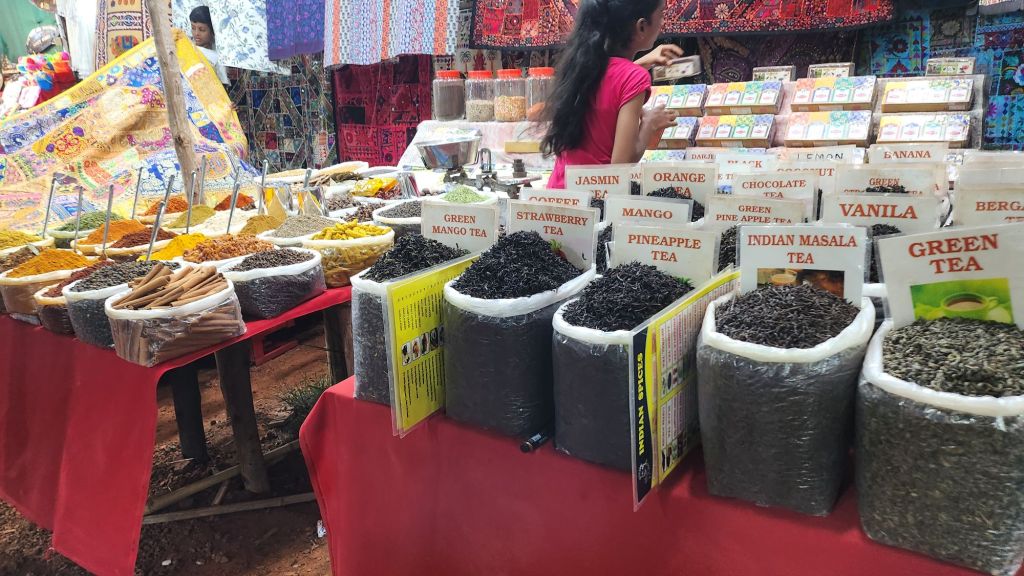
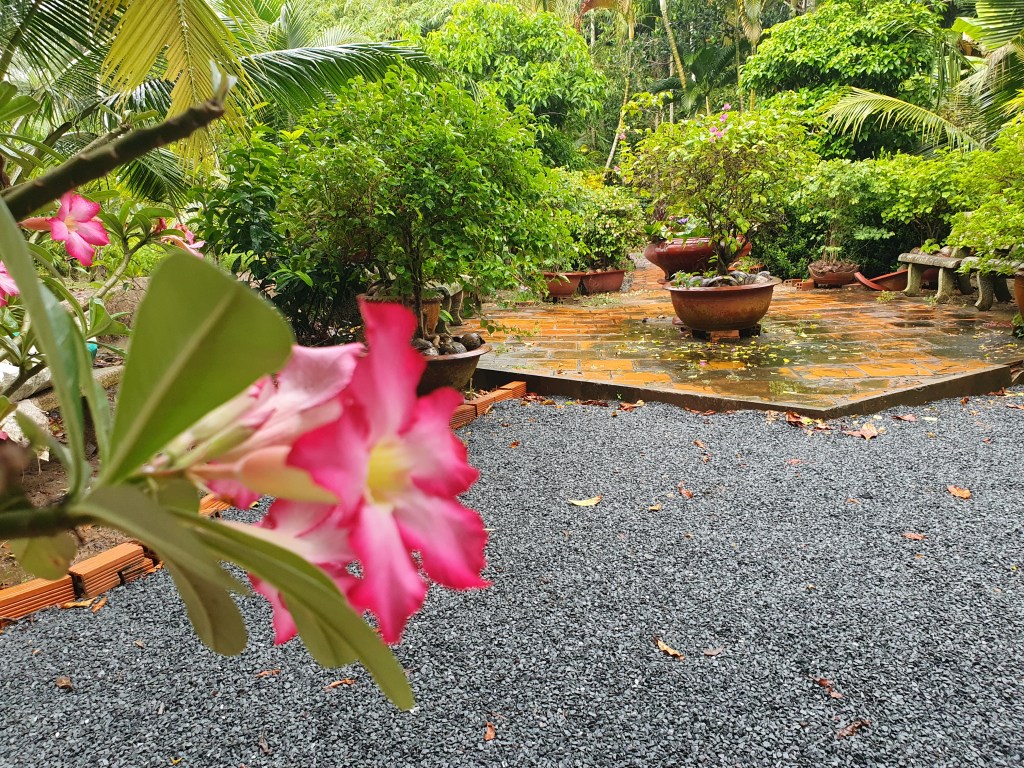
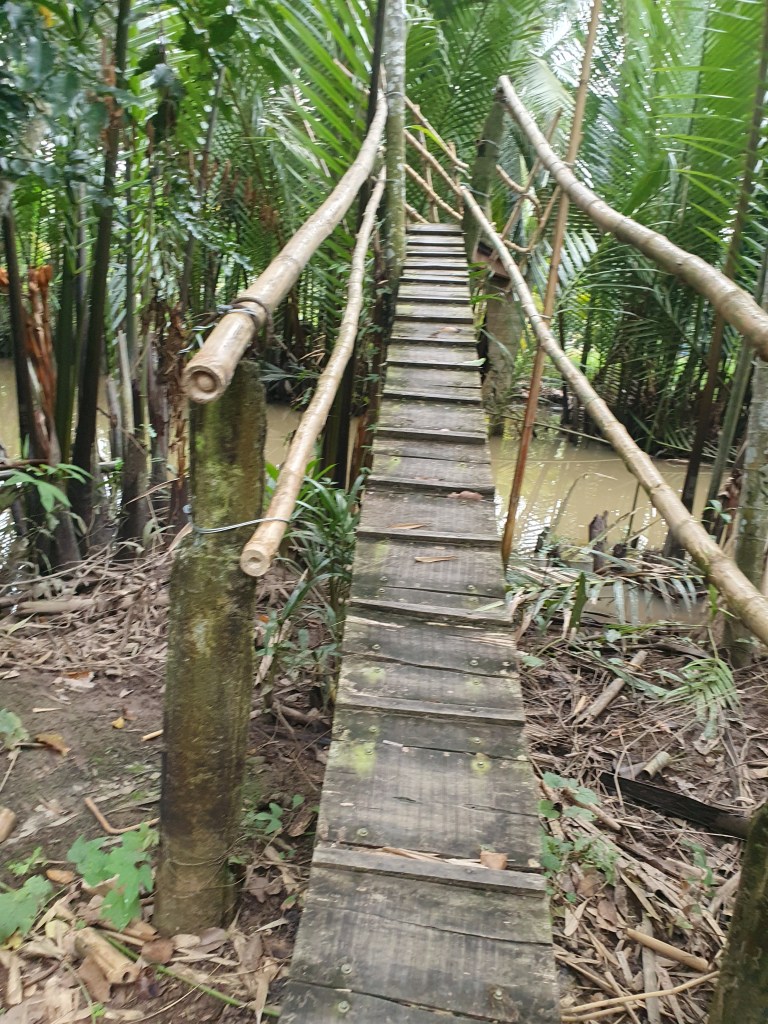
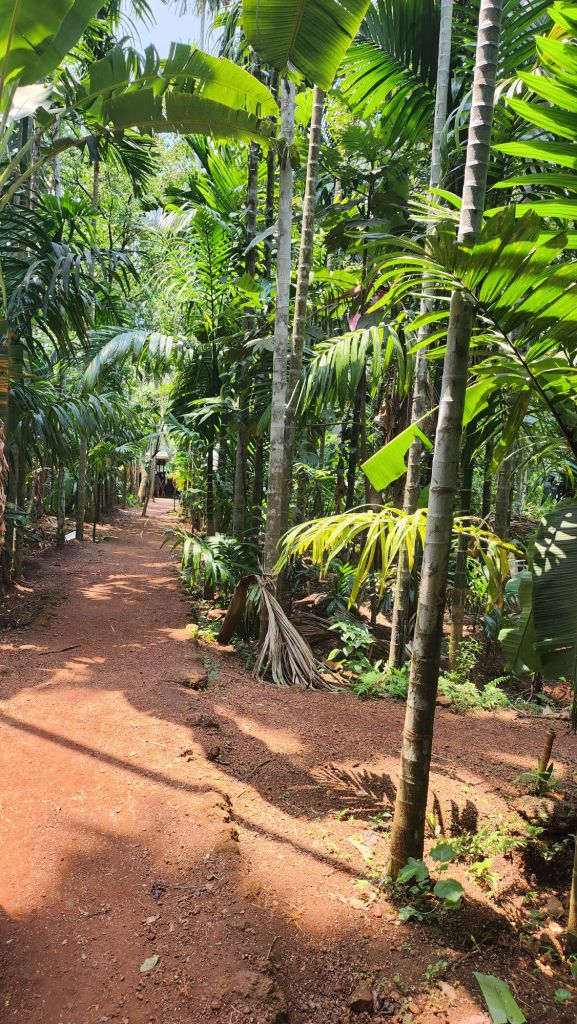
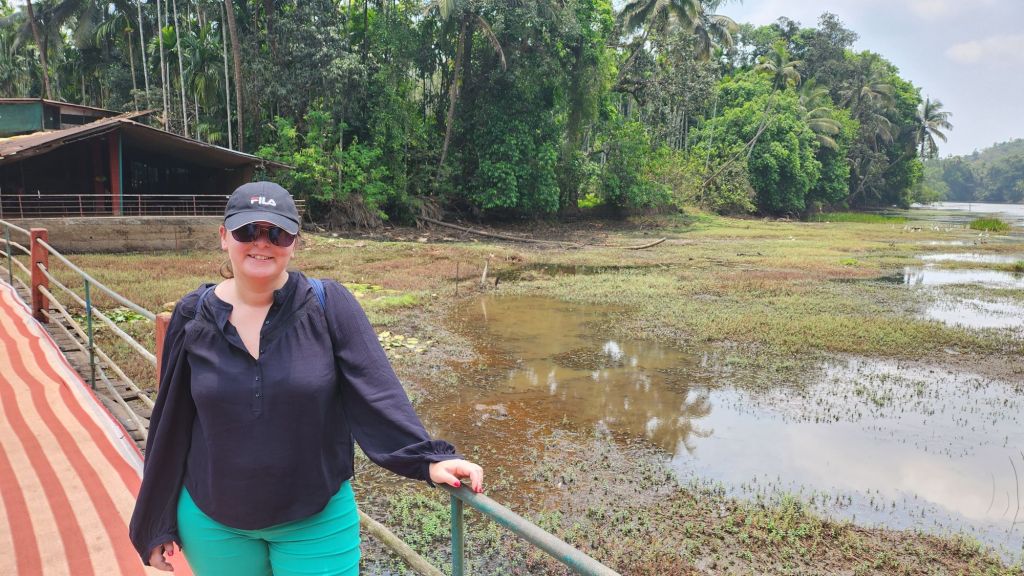
The best thing of the day in my opinion… the Tropical Spice Plantation. We drove into the bush to a beautiful site, with a rustic wooden bridge over a river for an entrance. On entry you are greeted with flowers and herbal tea to enjoy before your guided tour around the forest, and the guide allows you to see, smell and sample the different plants that make up this treasure chest of spices that India owns. Amongst them was cloves, nutmeg, vanilla and cardamom.

The local guide brought it to life when talking about the different spices they use traditionally at home that come from these native plants. Something about being in the green foliage makes me very happy, and even though I was struggling with the heat, the natural landscape provided some shade and nourishment for me. The plantation provided a buffet lunch as well so I was able to taste the spices in freshly cooked recipes.

Throughout the day, it was really nice talking to our taxi driver as we were driven around. He told us about his background, and how he was part of one of the many native tribal communities. He told us his very sad story about how the societal views of a traditional India, is still negatively affecting so many young Indians today though. He told us that the girl he wished to be married to, whom he had been dating for seven years, was not allowed to marry him because they are from different communities. My heart felt for the guy, as it is not the first story I have heard of this.

Parents forcing their children into unwanted marriages, and casting them out for relations outside their community; in worst case scenarios, leading to violence and public executions for those who disobey. Political parties and local committees are regularly set up to monitor and address the relationships of young people. The systems dictating societies in India (especially in rural areas) are very complex and consist of castes (a class system), religion, geographic area you are from, wealth, and ethnicity. For many families, every tick has to be in the correct box for your potential partner to ever be considered. An unfair and outdated viewpoint in my opinion for what is a very fast growing developing country. The poor taxi driver had a hard road to go down to try to be with the person he loves.

Mumbai

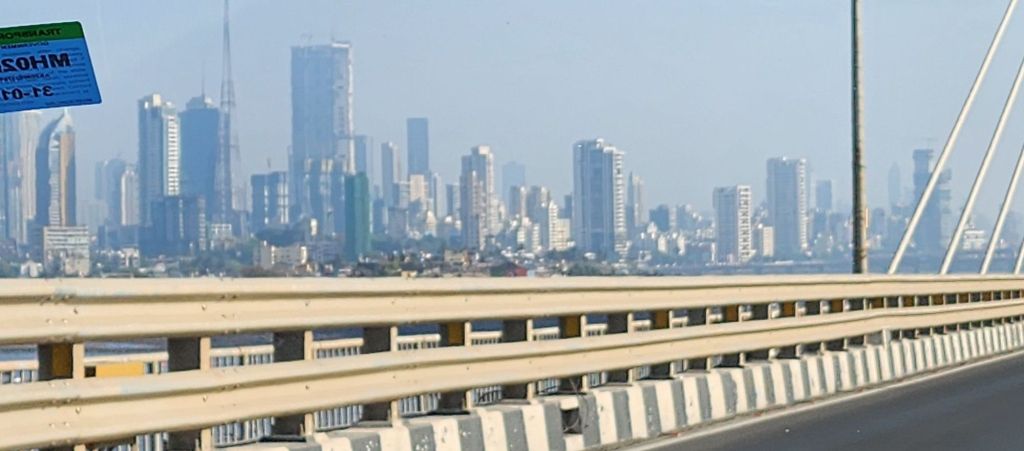
This dark side of India played on my mind as we travelled from Goa to India’s modern metropolitan city of Mumbai. Formally known as ‘Bombay’, Mumbai is India’s largest city, and thankfully, the home city of my lovely friend that was happy to show me the sights.

Mumbai Skyline

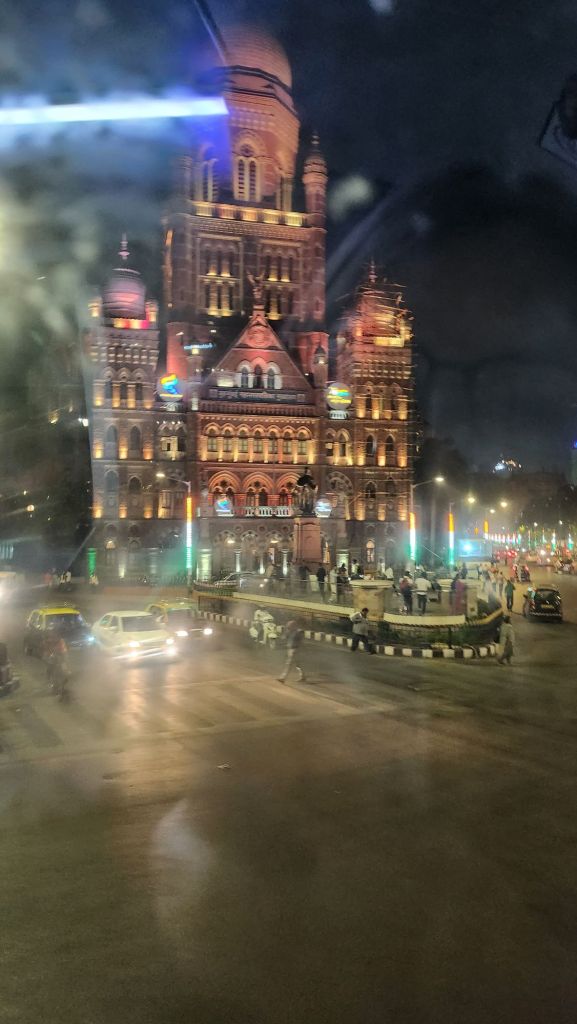
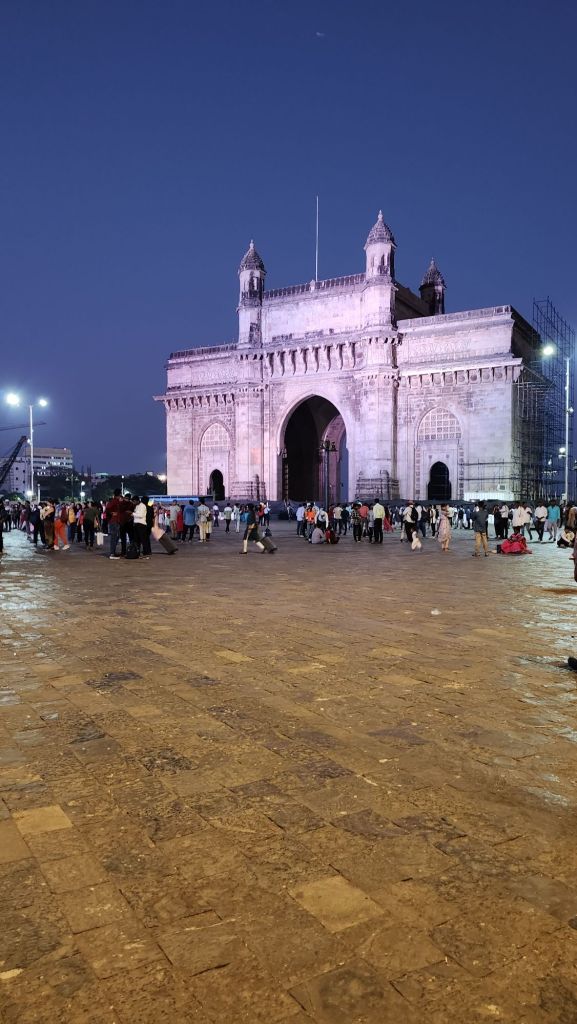
We only stayed for a short time before our onward journey to the Philippines, and in that time we managed to squeeze in a collection of local sights and have a few laughs too! We took a night time sightseeing bus to the Gateway to India, Marine Drive, Taj Mahal Palace, and the train station. All huge spectacular buildings with people surrounding them like buzzing bees to a hive.

We also visited the science museum amongst other great collections in the city, but the astronomy show at the Planetarium was literally out of this world! They had shows in different languages at different times and I had never been to an astronomy show like this before so I was really impressed.

My friend took me for a delicious dinner at a famous restaurant, Cafe Modegar, where murals are painted around the walls, with themes of the city in good humour and western as well as local food can be obtained. The restaurant has a big menu, a jukebox and lots of chequered table-clothed tables squeezed back to back.

The funniest and craziest part of the trip had to be when we ventured to a local shopping mall to buy me a new suitcase. The taxi driver decided to place the bag on top of the taxi without strapping it down (against our instructions) and it went flying off and into main traffic going 70mph along the new motorway in downtown Mumbai! He then began to reverse back against the traffic to retrieve it and fought off another driver who tried to steal it before we got pulled over by the police. All very stressful but my suitcase survived and officially passed the hardiness test for travels to come!

Before our feet left the ground of India and went onwards to the Philippines, we enjoyed a delightful time at Mumbai’s airport lounge for a bargain price of £30 each, inclusive of food, drinks and a complimentary foot massage. I shall definitely use it again. It was a good way to say a temporary ‘alavida’ to India.

Overall, India was a whirlwind of sights and cultures for me to see in such a short amount of time. With many friends residing there, I know that I will be back again, and I want to see more of the rural areas of the South next time. India has a lot to offer visitors in beauty, history and diversity and it is a difficult balance to create. In the future, I want to learn more about the customs, festivals and people that call this huge nation home.

Me in Goa’s church district

India: Where culture, colour and faith collide (Part One)

After years of socialising with my Indian friends, I came across a cheap flight to India and decided to travel there, sometimes alone, and sometimes with friends. I was somewhat prepared for what I might find, but there were still surprises along the way, as I scraped on just the surface of one of the largest countries on the planet, with the largest overall population in the world.

The North – Delhi, Agra and Rajasthan

Dehli

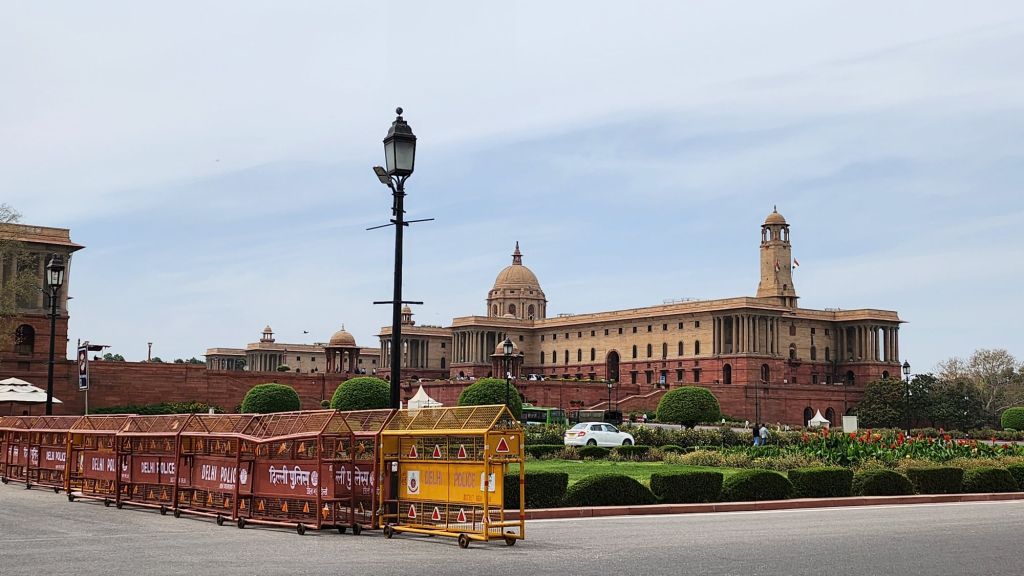
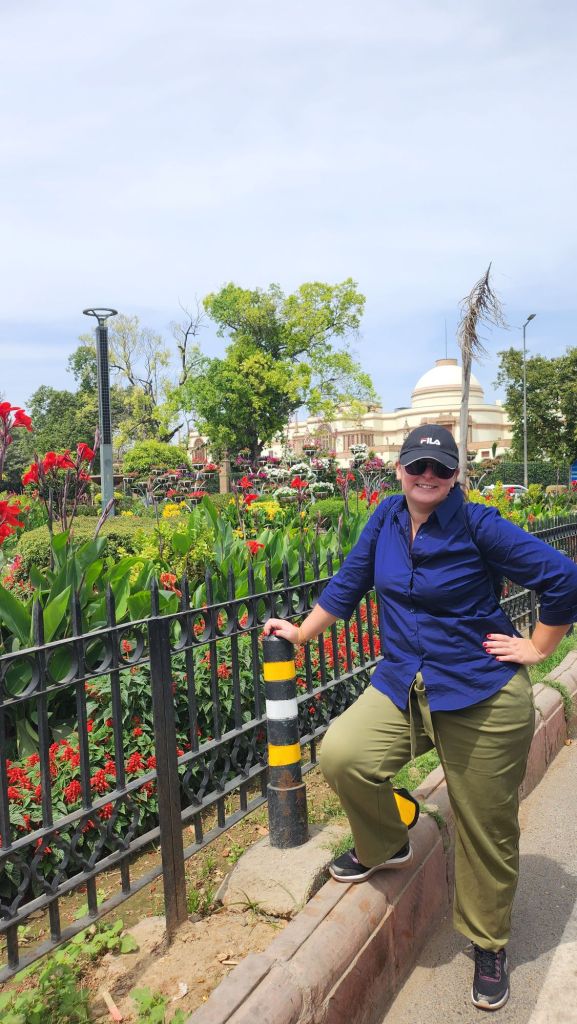
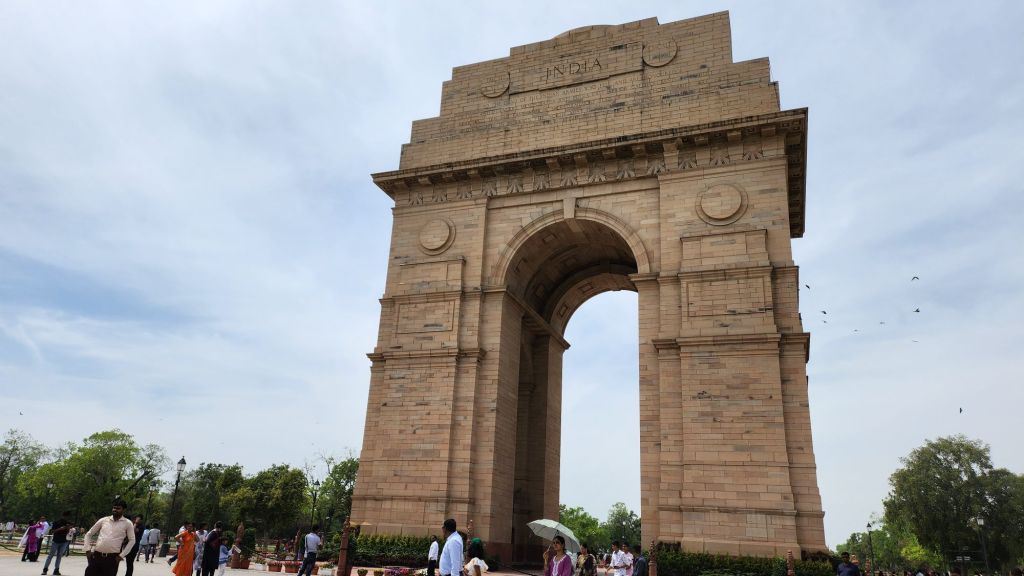
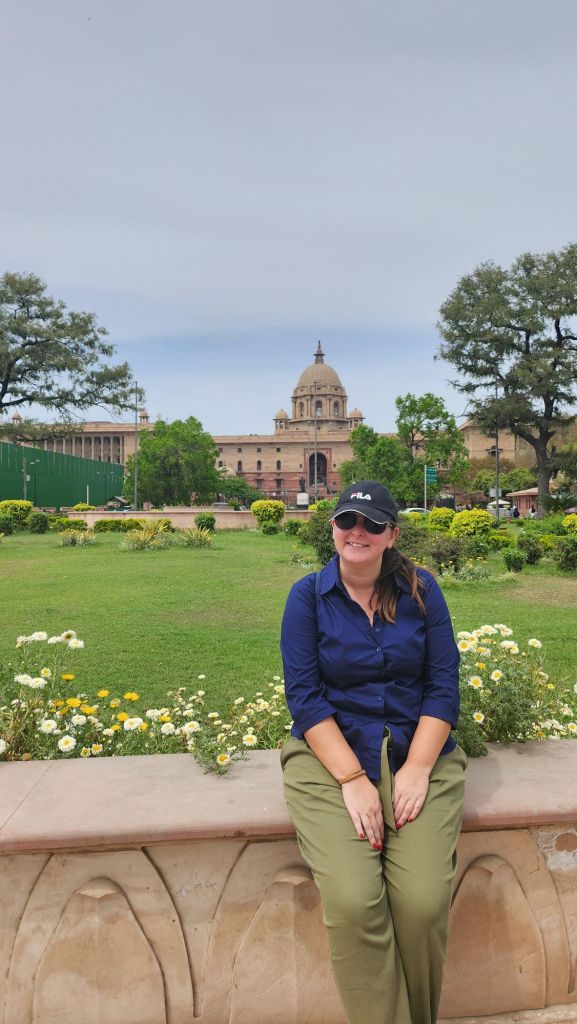
I came into Delhi Airport and was met by a close friend that guided my through the madness and crowds to the city. We hired a tuk tuk for the day and the very enthusiastic driver drove us all around the main landmarks of New Delhi, the Capital of India. The India Gate monument commemorating those lost in the first world war. Surrounded in park and crowds, this looks similar to an ‘arc de triomphe’ in Europe.

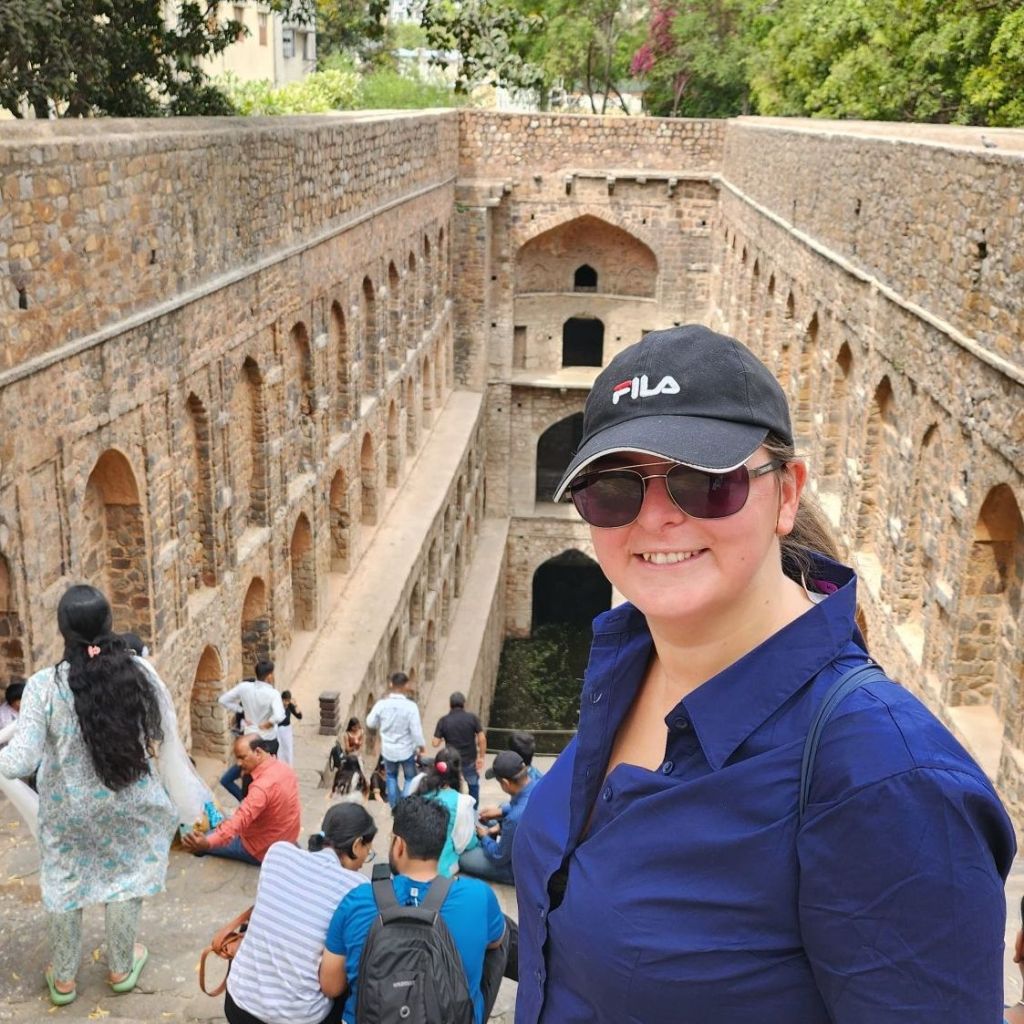
As we jumped back on the Tuk Tuk we saw many more buildings that were government or national monuments like the Red Fort, but I hadn’t realised that as it was Monday (actually Easter Monday), most things were closed, but it was so so very hot, I was happy to see it from the outside and keep moving. With having the local driver I think we actually saw a lot more smaller places that I would not have expected, for example an old water reservoir which was particularly impressive due to its architecture.

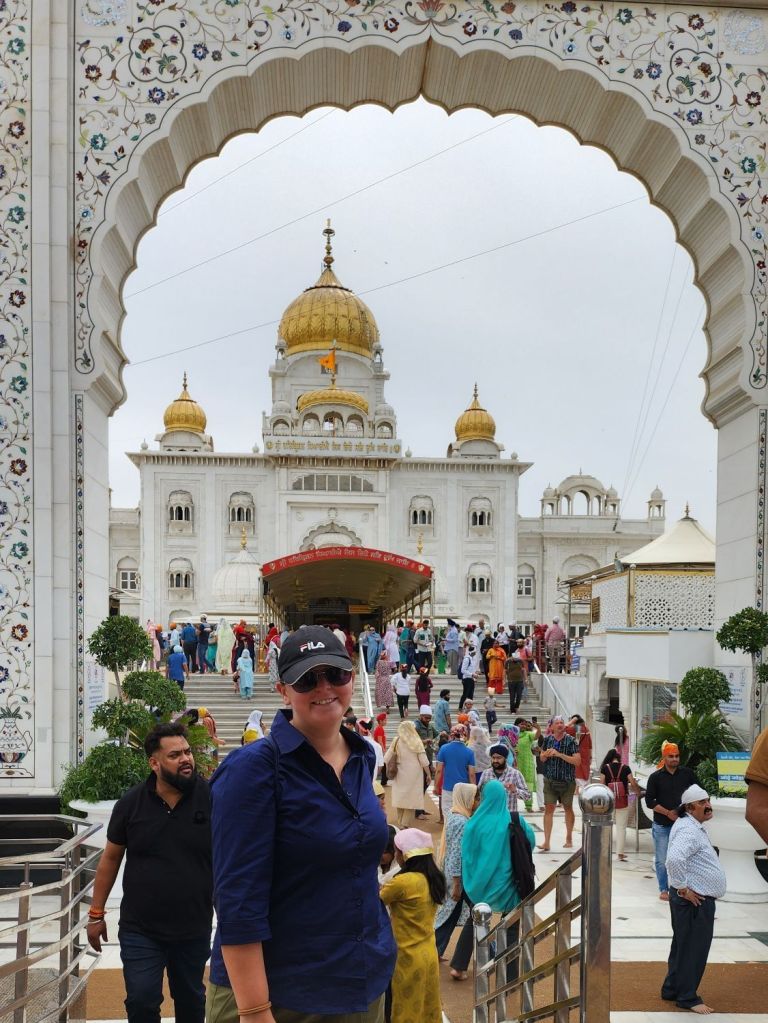
I did manage to visit a few religious spots as well, a beautiful and busy mosque site, which was rammed with muslims for ramadan, and also the Gurudwara Bangla Sahib, or Golden Temple.

The golden temple site is an important location for Sikhs. This beautiful location took you away from some of the hustle and bustle and to a quieter place where it was my first experience taking off my shoes, washing my feet and walking around a sikh space. Outside you could see the impressive golden structure and also some sort of large pole with fabric which sikhs use to replace their turban everyday.

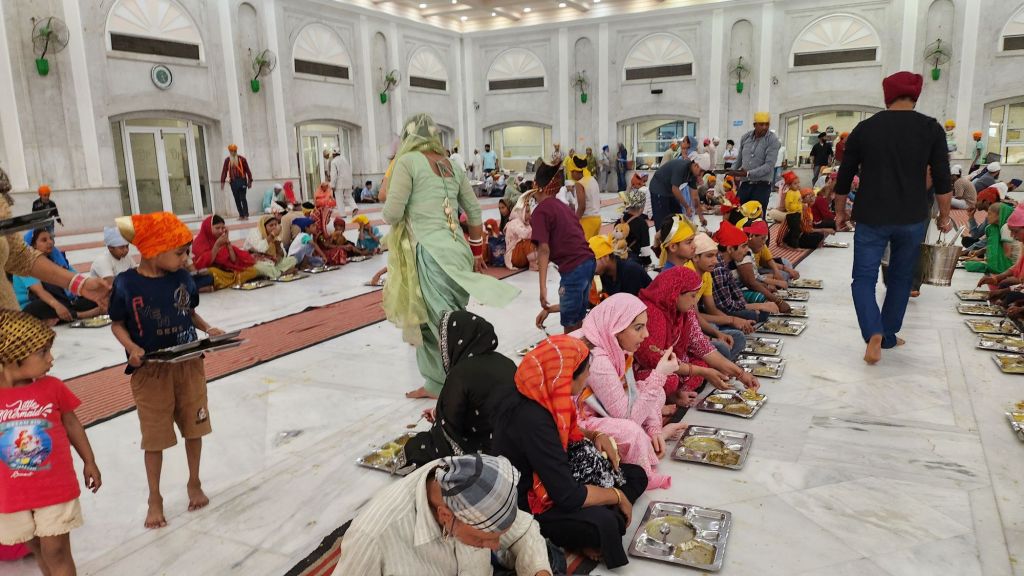
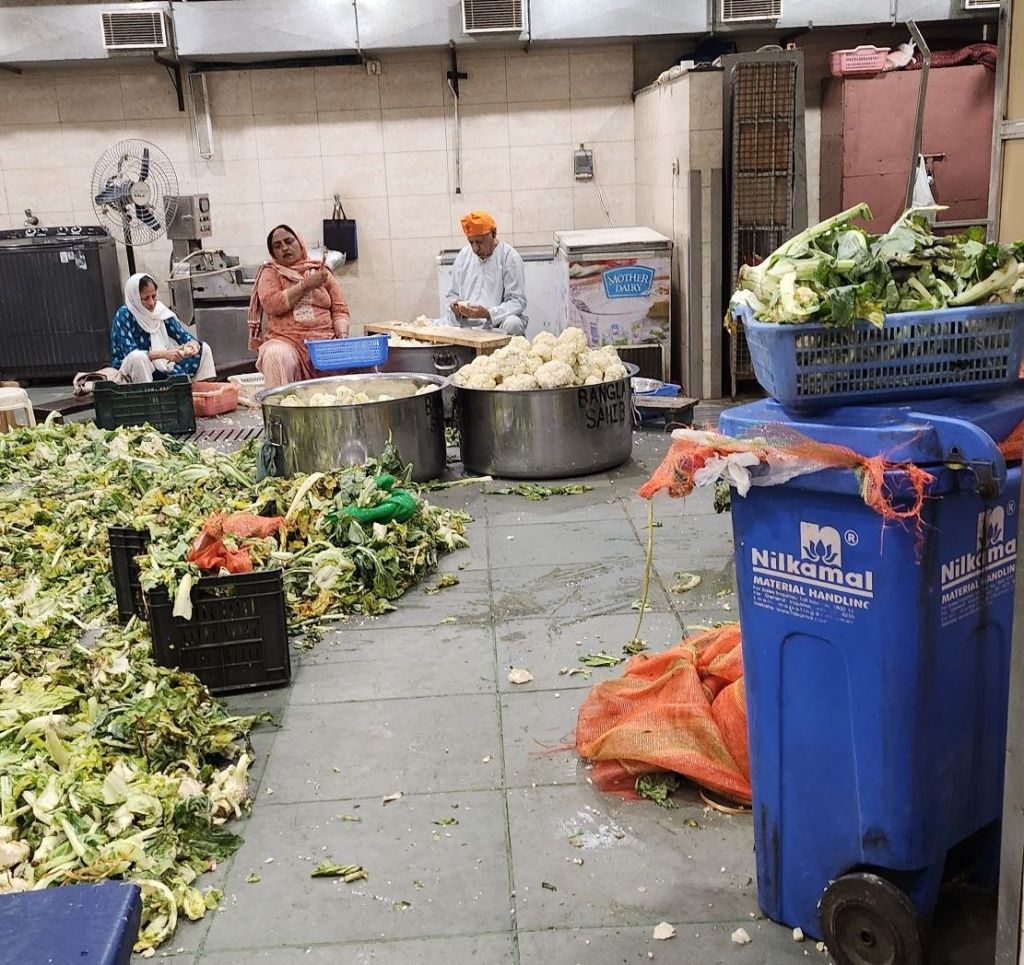
This religious site also houses a large community kitchen and dining hall, where several volunteers come everyday to make free meals for their community. People wait in crowds outside for their turn to take a seat and eat what has been provided. This was a really impressive operation.

There are four main religions in India; Hinduism, Islam, Christianity and Sikhism. The popularity of the religion varies with the region of India you visit, and as I continued on my journey, I learnt more about the ancient and present day conflicts this still causes unfortunately.

At night, as the air cooled, the streets became alive with people selling their wears and street food being available. I was offered things at triple the price due to my obvious foreigner look, so my friend had to purchase what I wanted for me whilst I hide around the corner. He was very successful, coming away with some bangles and clothes for me. I am now all set for my next Indian celebration.

I tried to stay away from the street food, as I had three weeks away ahead of me, and did not want to have a bad belly. (Little did I know this would happen despite me being careful, and last from day 2 to day 12). I went to the best rated restaurants though, and had some delicious curries, and oh my god, I love cheese naan so much. The food in Delhi is supposed to be some of the best, and I would have to agree.

Agra

The next day we were up early in the morning to head to Agra, the home of Taj Mahal. India being a huge place, it takes ages to get everywhere, and this is no exception, Agra is a 3 hour drive from Delhi, and I arranged a private car and tour to take us there and see the sights. There was little to see on the route but that was fine as it started at about 3am.

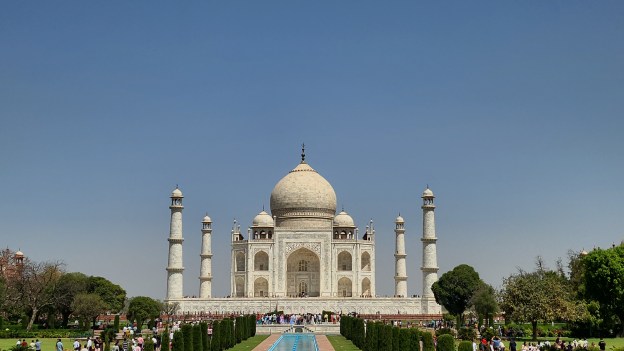
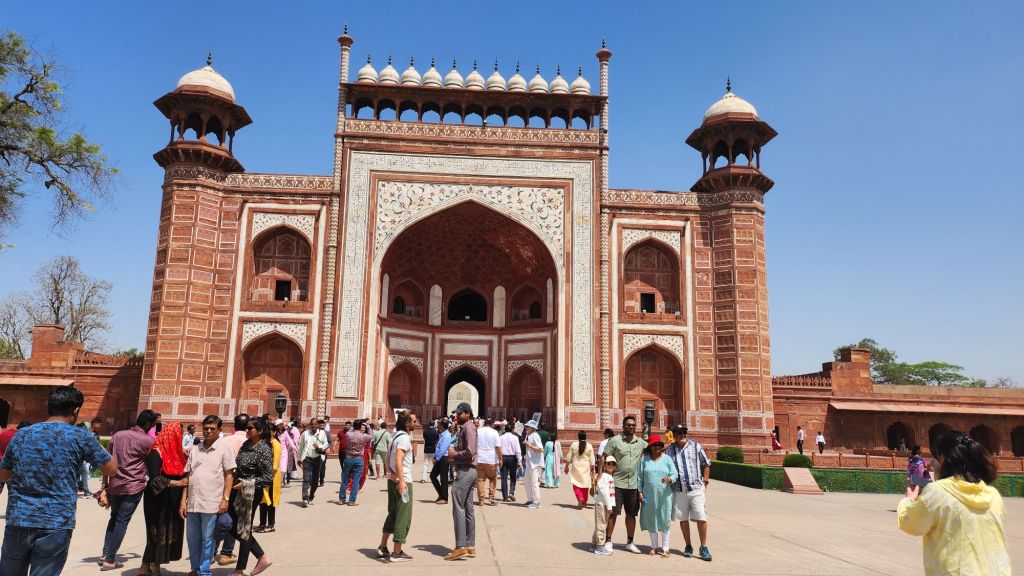
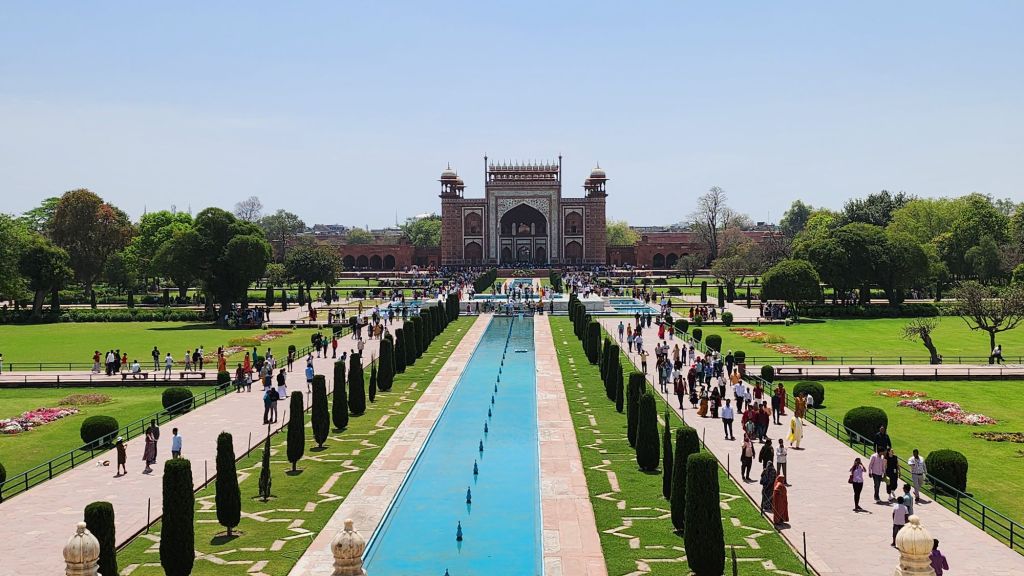
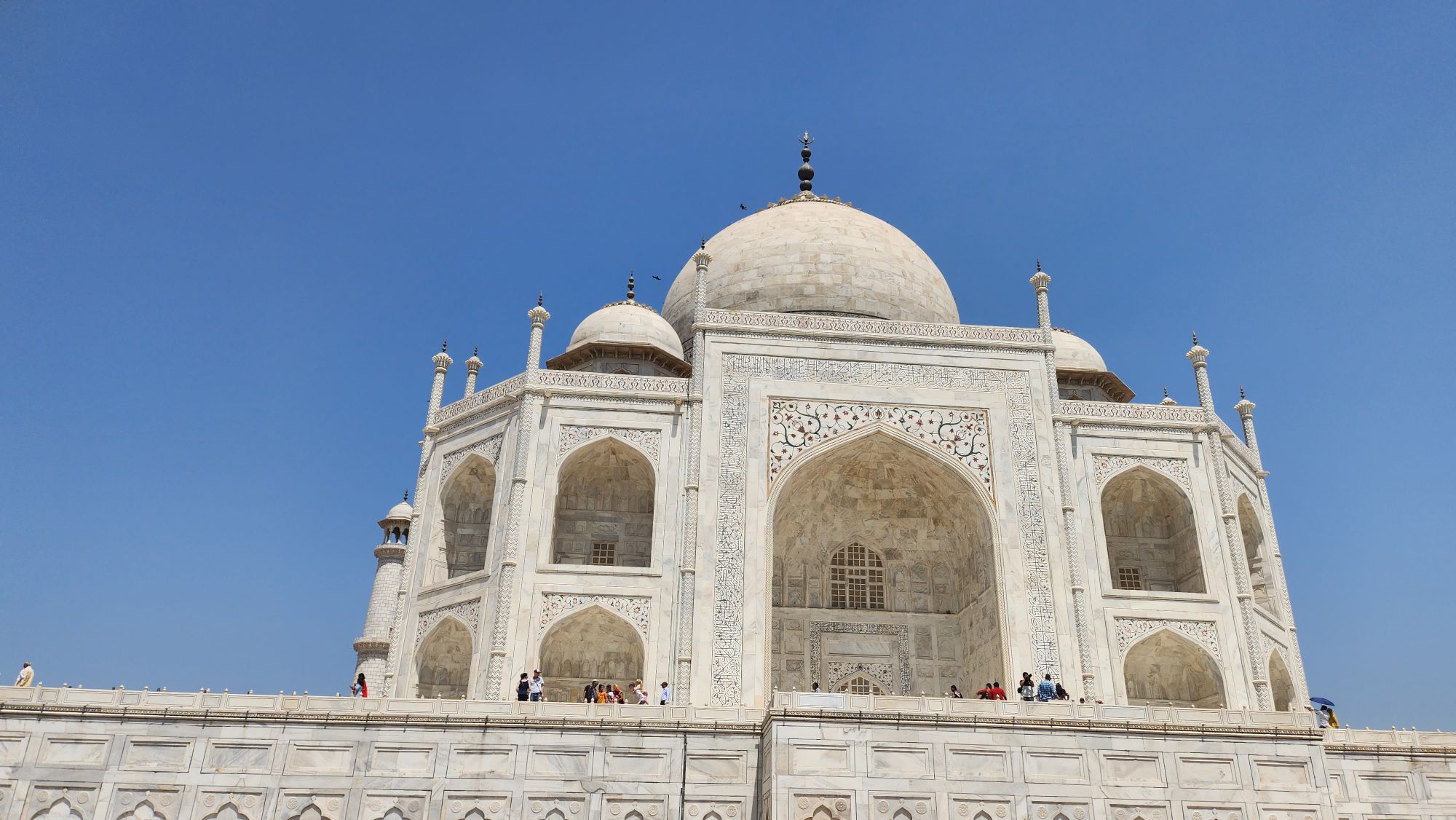
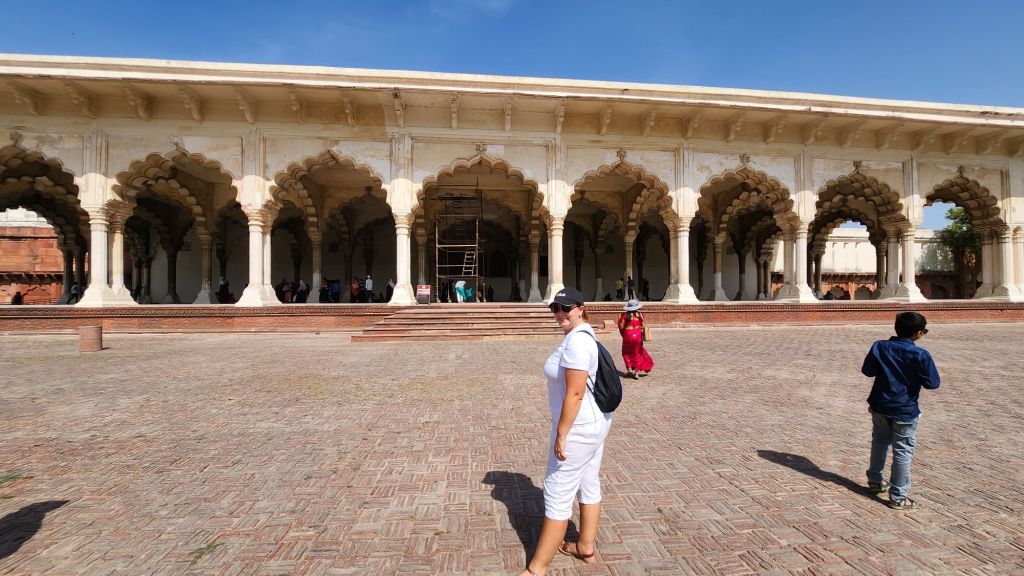
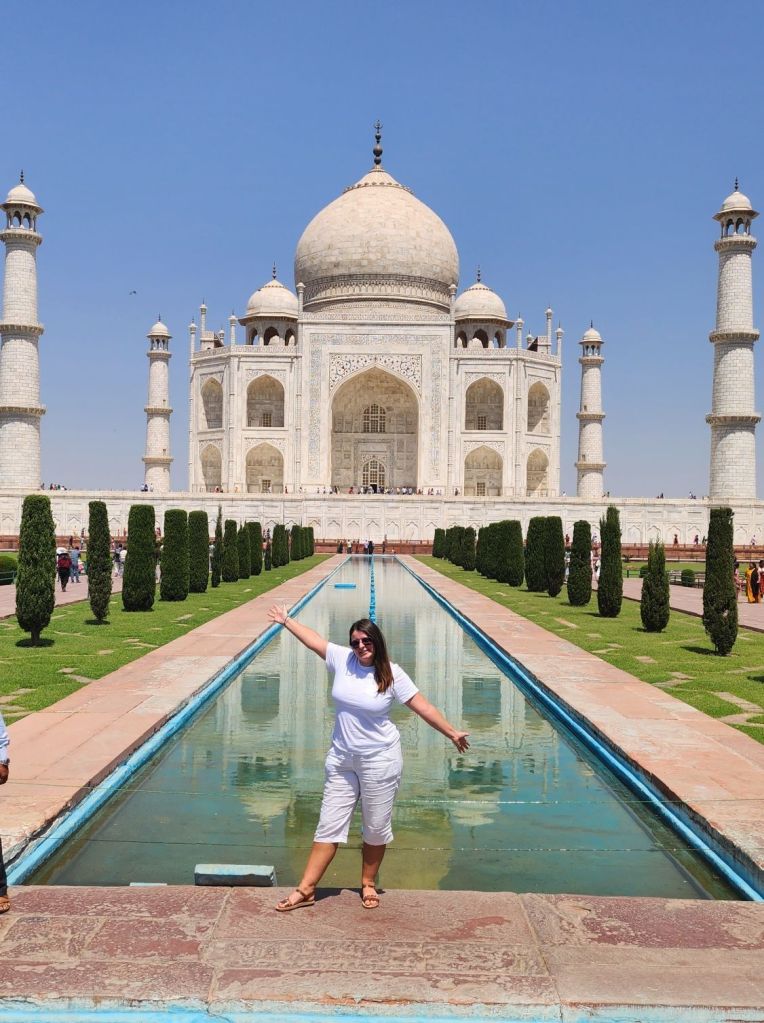
On arrival at Taj Mahal site with our guide, we were seperated in to men and women’s security which is the norm in India, for scanning and privacy. We then went into the huge site and crossed through the impressive gates before our first views of Taj Mahal.

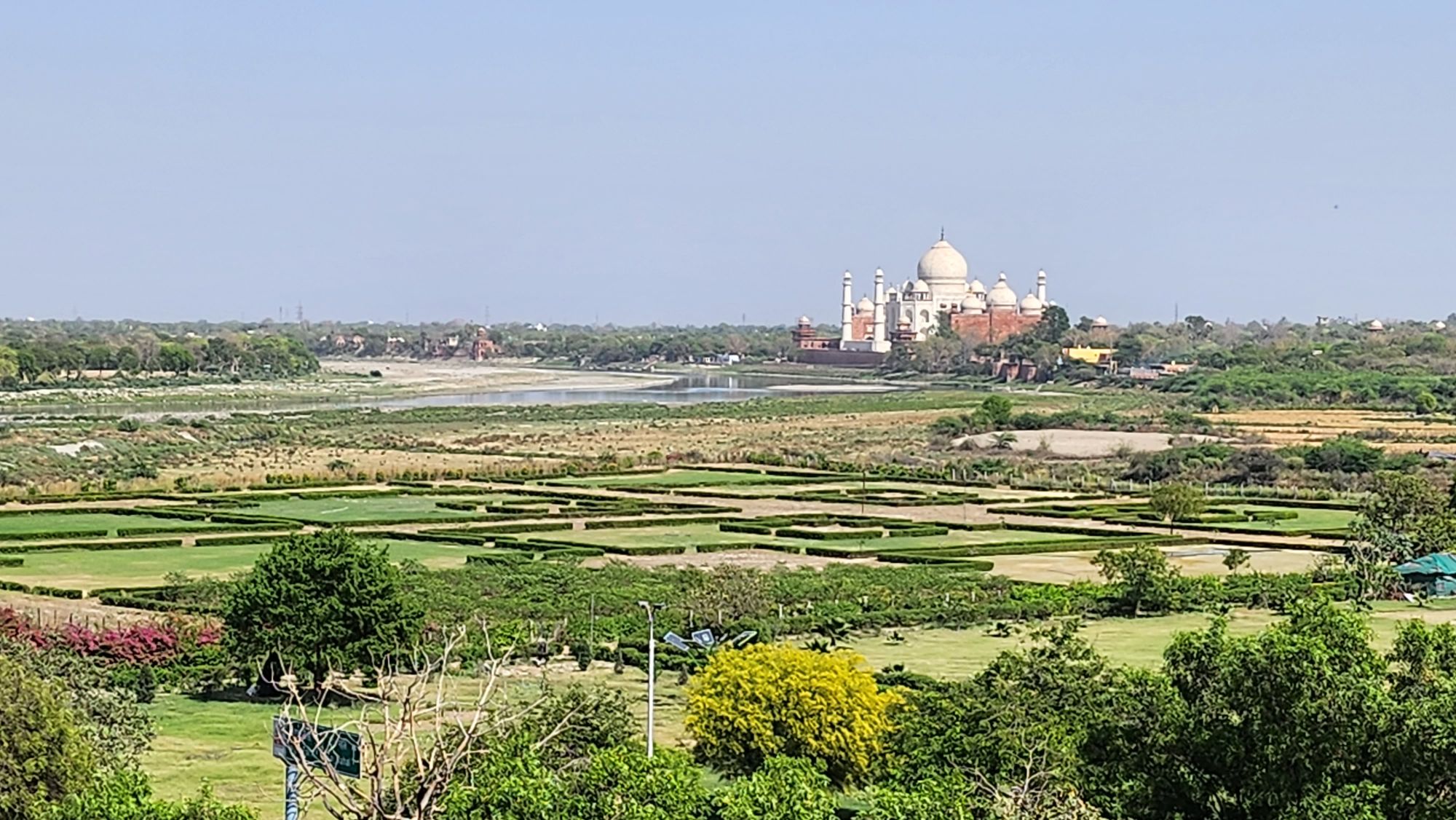
The romantic story behind the building is that it was built as a mouseleum by the Mughal Emperor in the 1600s for his favourite wife Mumtaz Mahal. We also found out that he had actually wanted to build one for himself opposite to the Taj Mahal, on the other side of the river, and it would have been a reflection of the original, but after construction started, his son put a stop to it, as he was spending too much money. His son later led a rebellion and captured his father, imprisoning him in Agra Fort and stealing his throne, eventually leading to the decline of the empire.

As we wandered the grounds, our guide told us many stories of the Emperors or Kings of the different regions and the different dynasties that held power. Many of the dynasties still exist today, and in their regions the royal families are without power but are still wealthy and well respected.

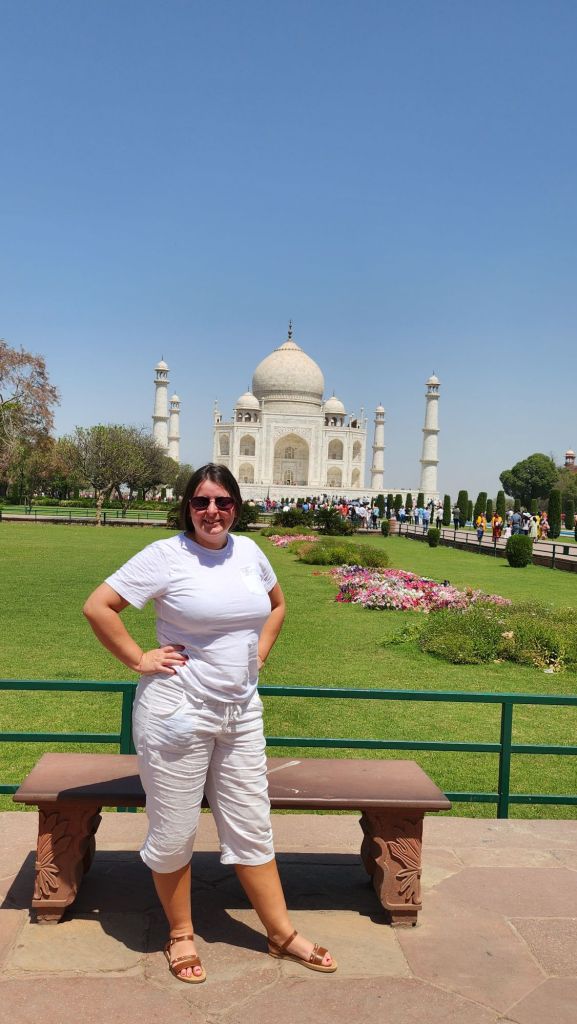
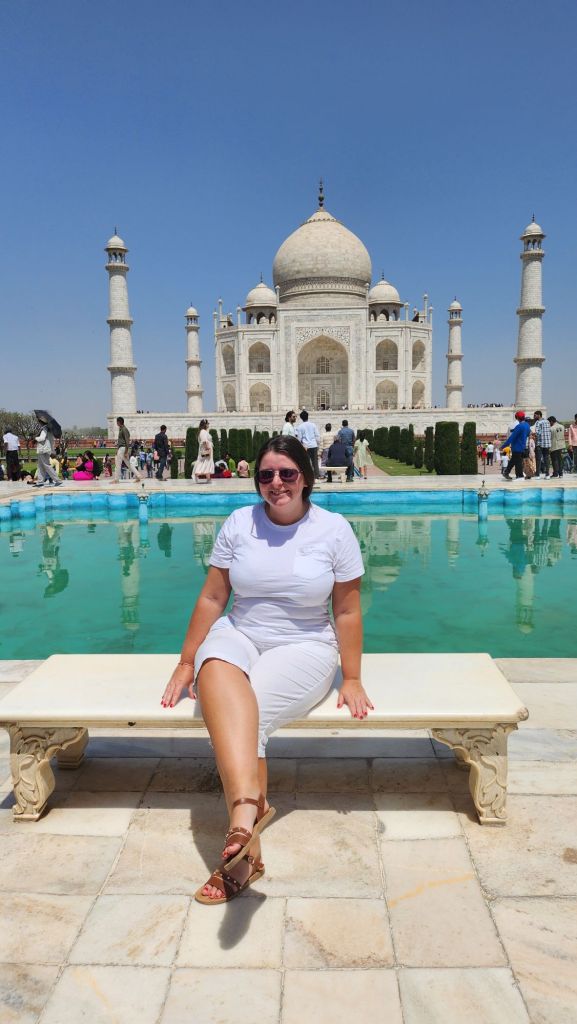
The gardens are well kept and there is a good order of security to allow people to follow the right paths and not allow them to wander all over, and consequently ruin the photos. I even managed to get a photo on the famous Princess Diana bench without too much hassle!

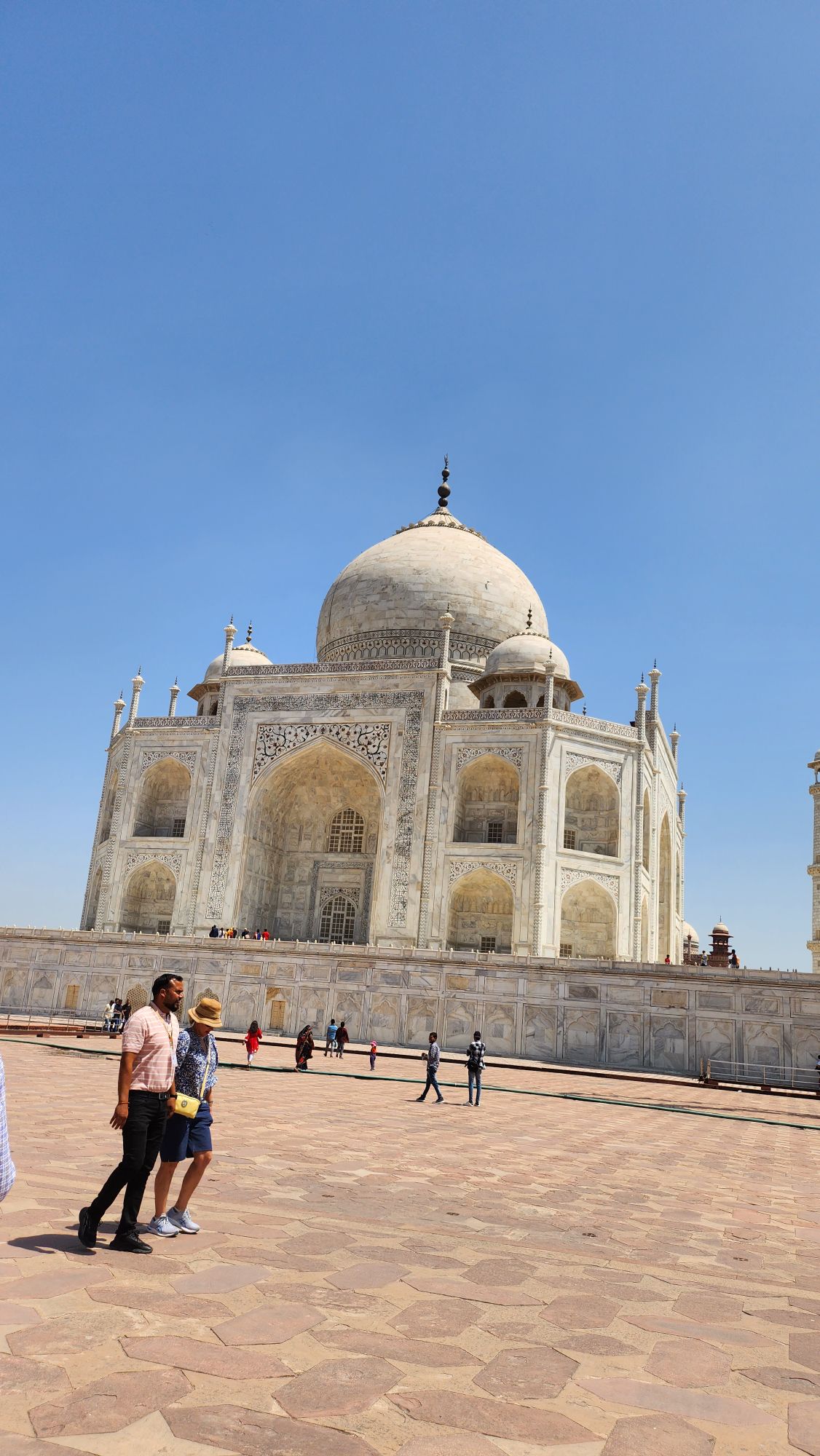
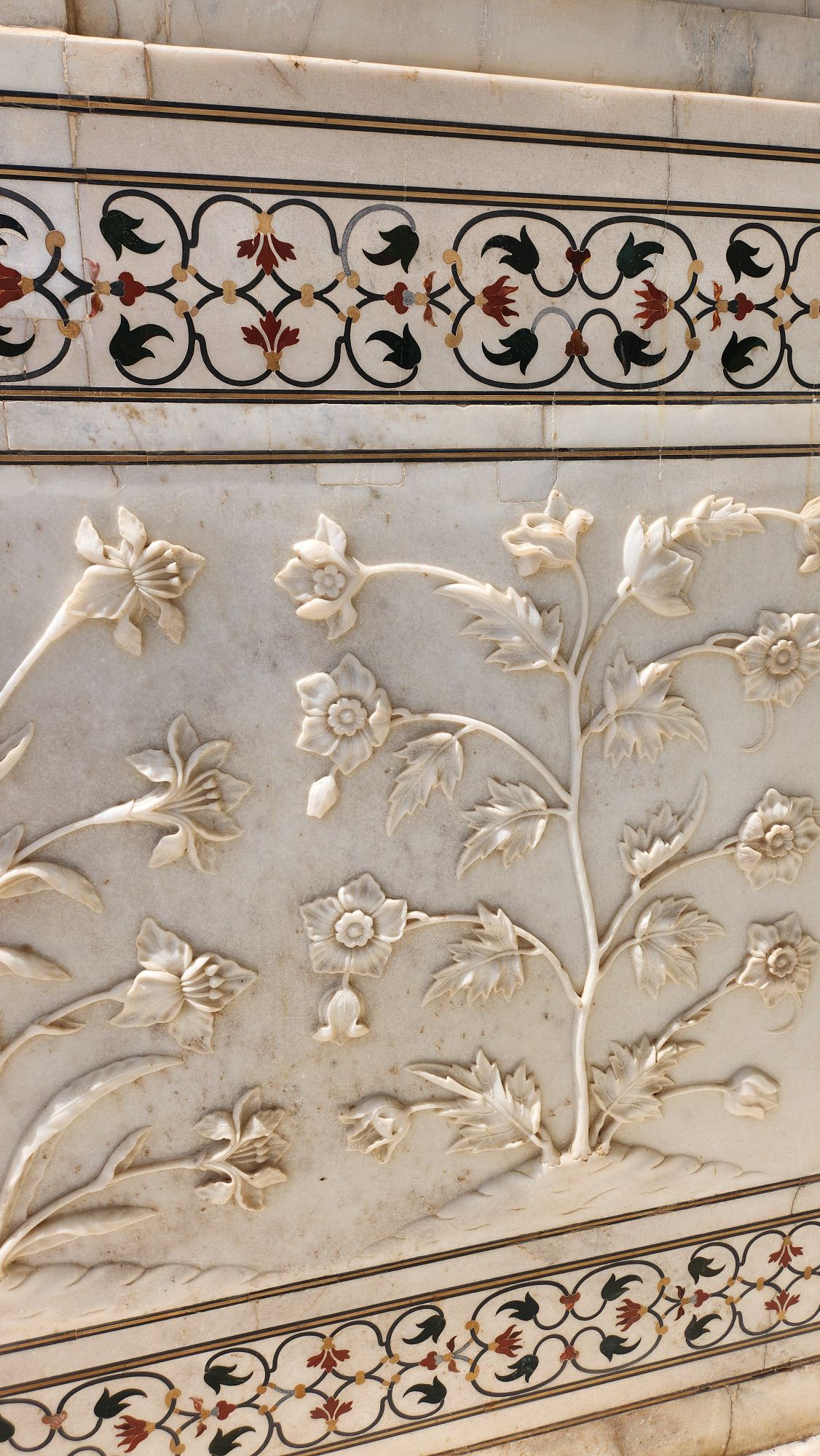
On approaching the mausoleum itself, you start to see the decoration of it. It is inlaid with many jewels that have been flattened down to look as if they were painted, but on touch you can feel that they are real. To my embarrassment, I learnt that the best jewels were taken by the British and one lies in our crown. I had to shake my head at this. Inside the building it is quite plain and small, centred around the tomb.

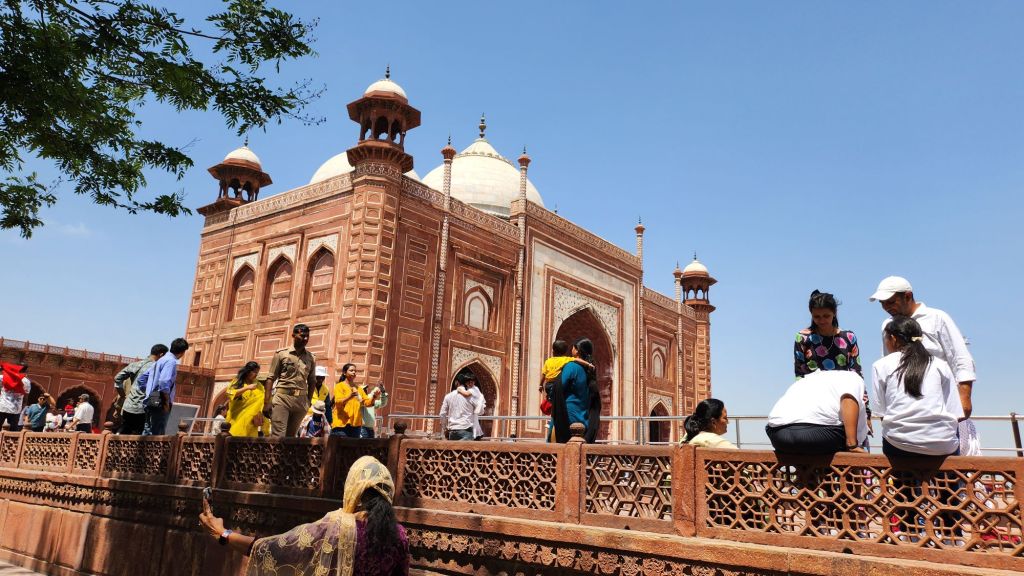
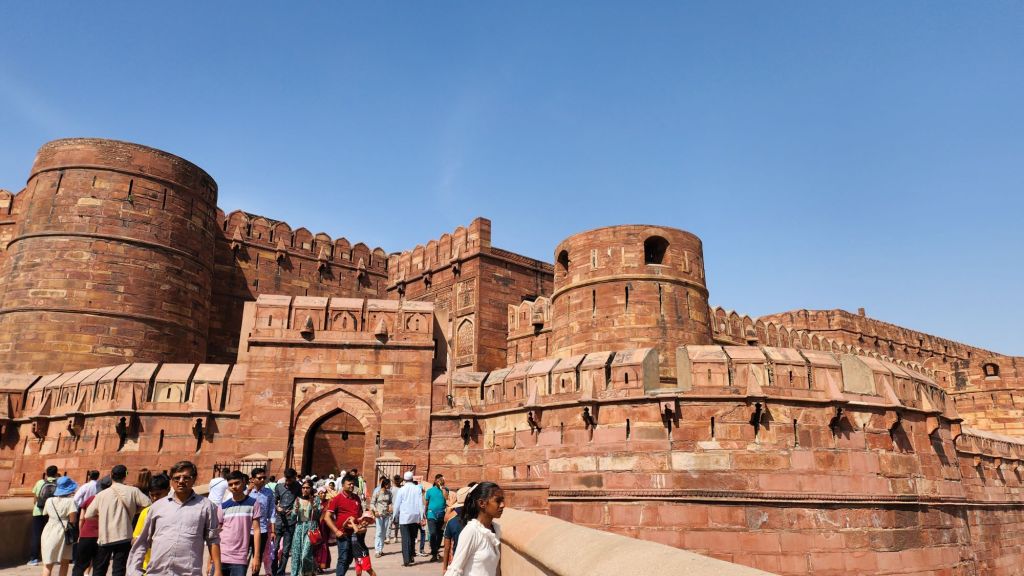
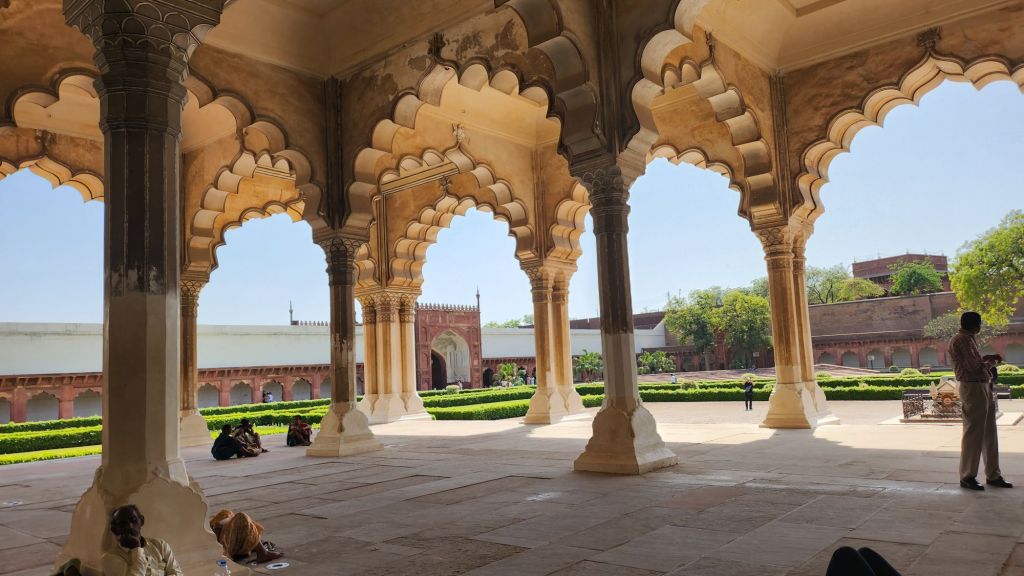
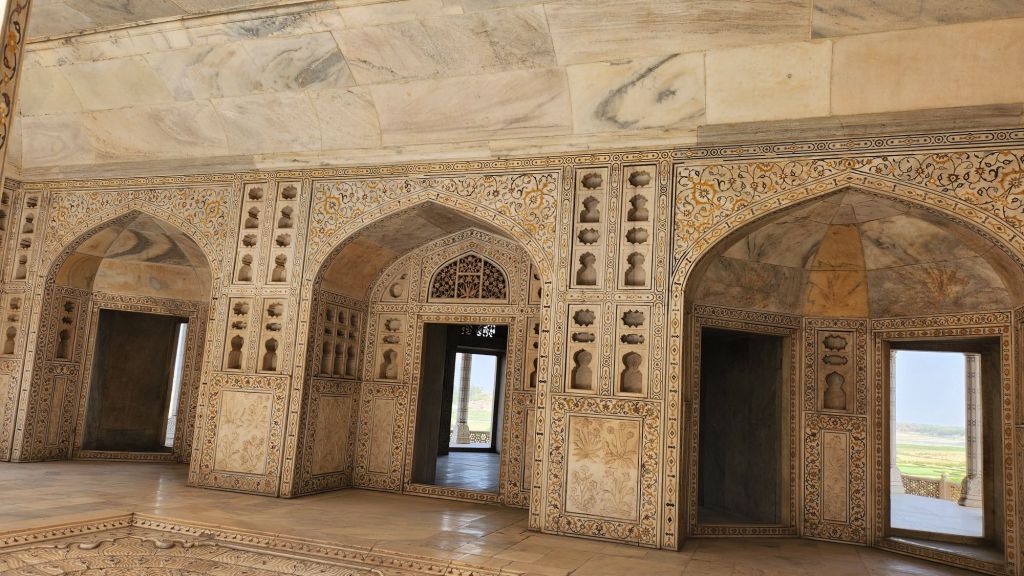
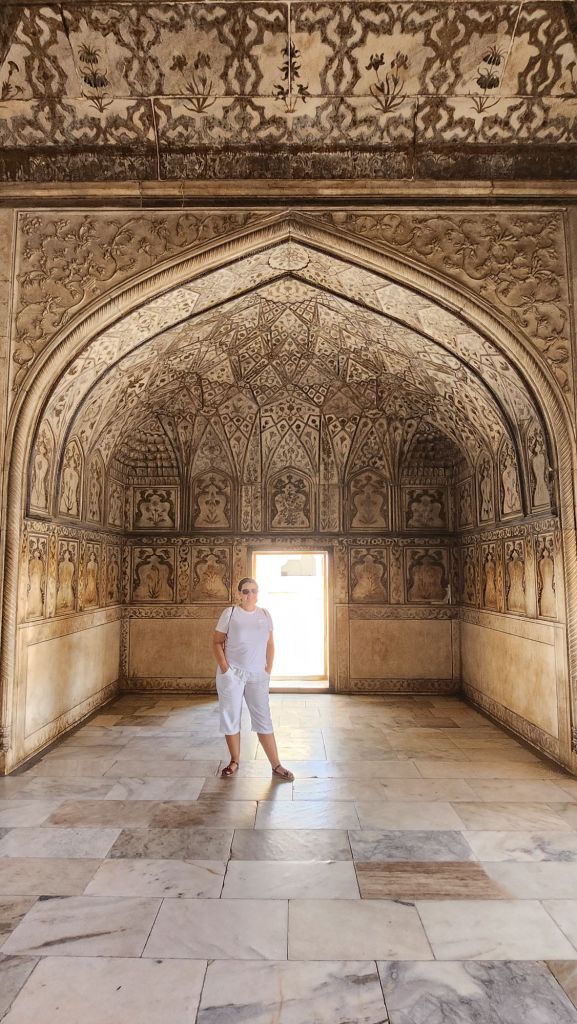
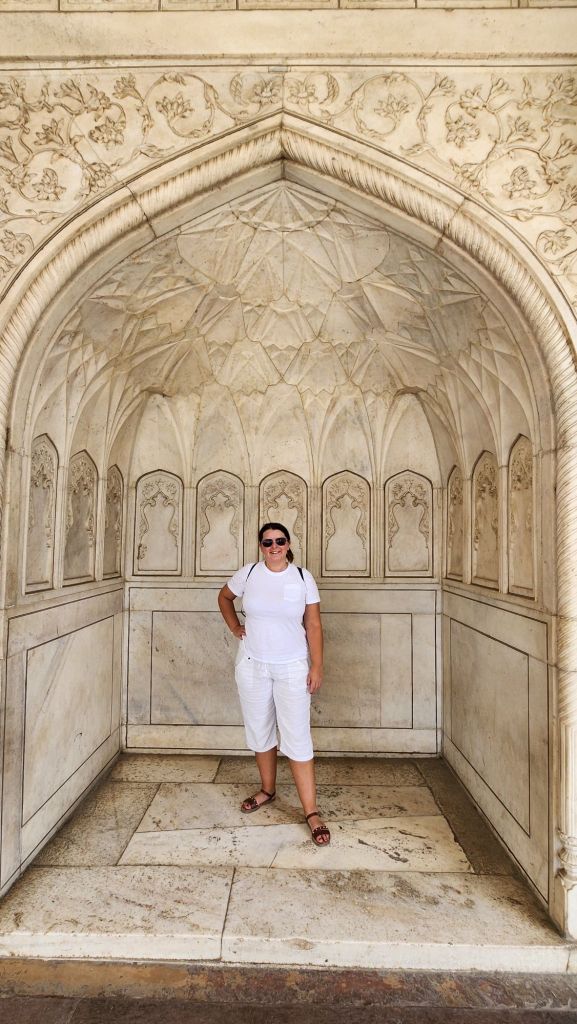
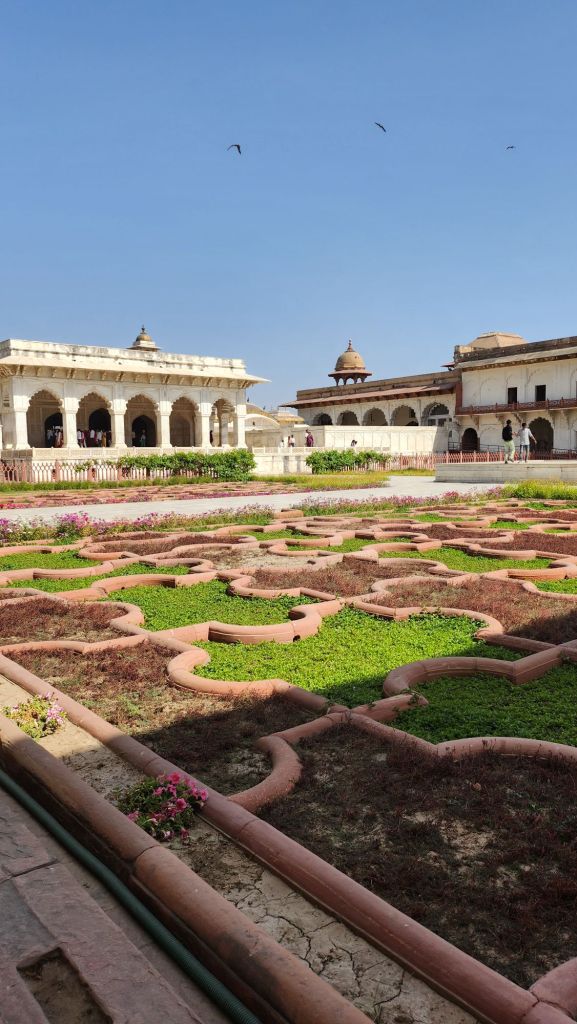
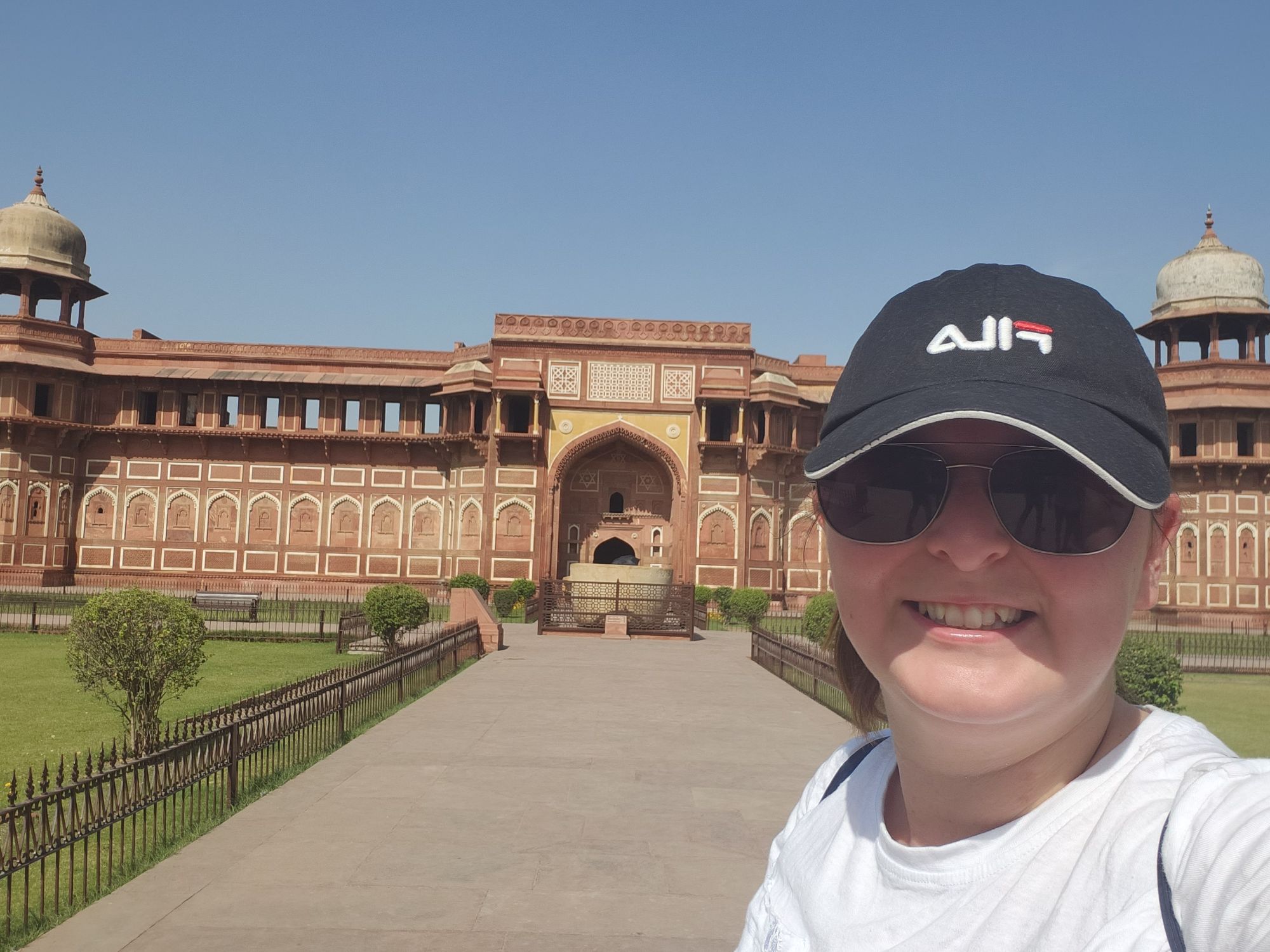
Visiting Agra Fort close by, the location of the emperors captivity, you can see that Akbar the Great, whom built it as a military fort and royal residence, had respect and tolerance for many of the religions. He decorated the Agra Fort with many religious symbols including the swastika which in Western Europe is known for a dark and twisted history but originally is the symbol for hinduism. He even married hindu princesses including Jodha Bai who famously was his favourite wife and his chief consort.

This huge great red coloured fort is vast in passages and areas that would have once housed royal rooms. In one location you can see a strange optical illusion. A view of the Taj Mahal where as you get further away, it looks larger. Completely confused me!

Rajasthan – Jaipur

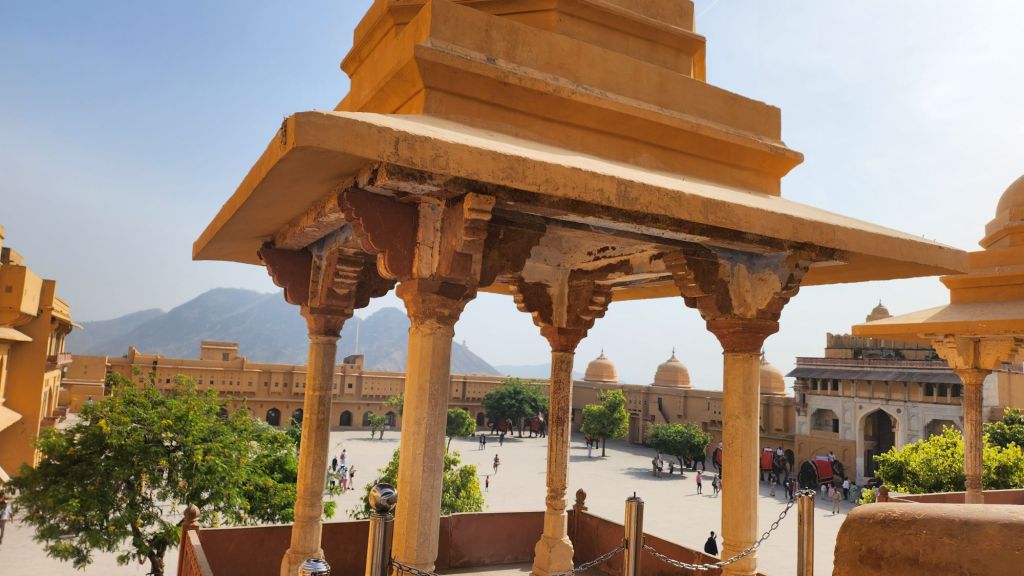
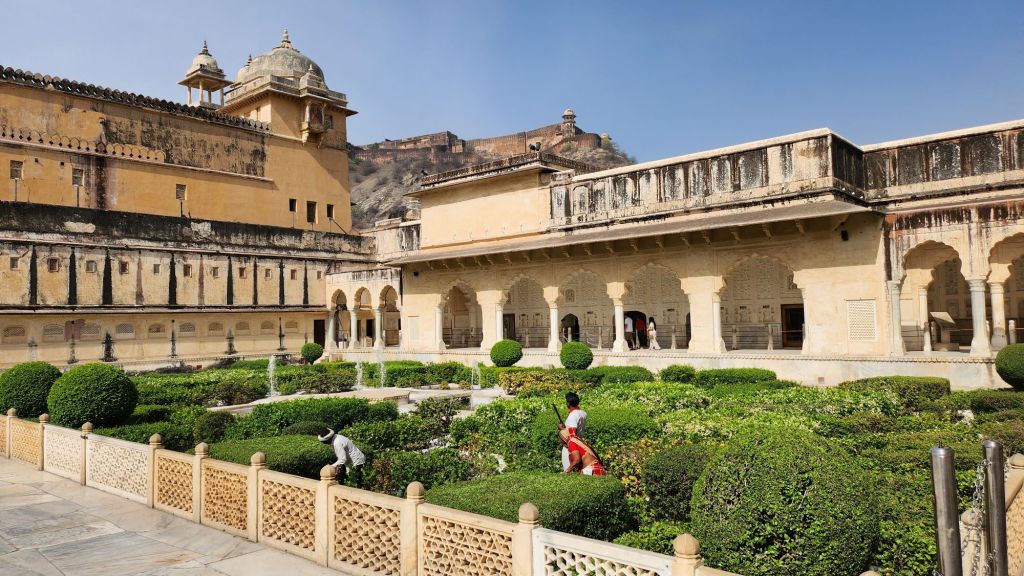
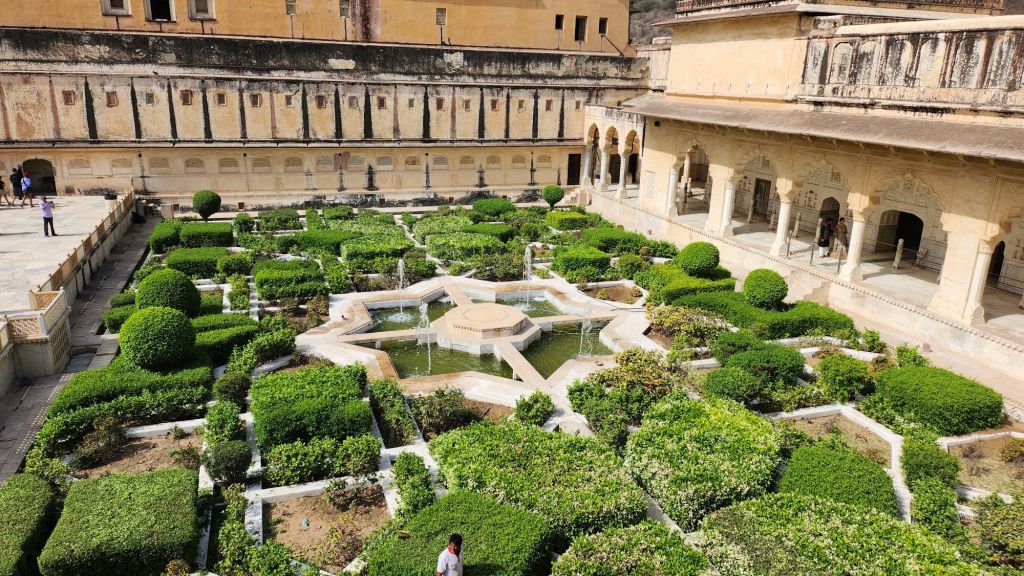
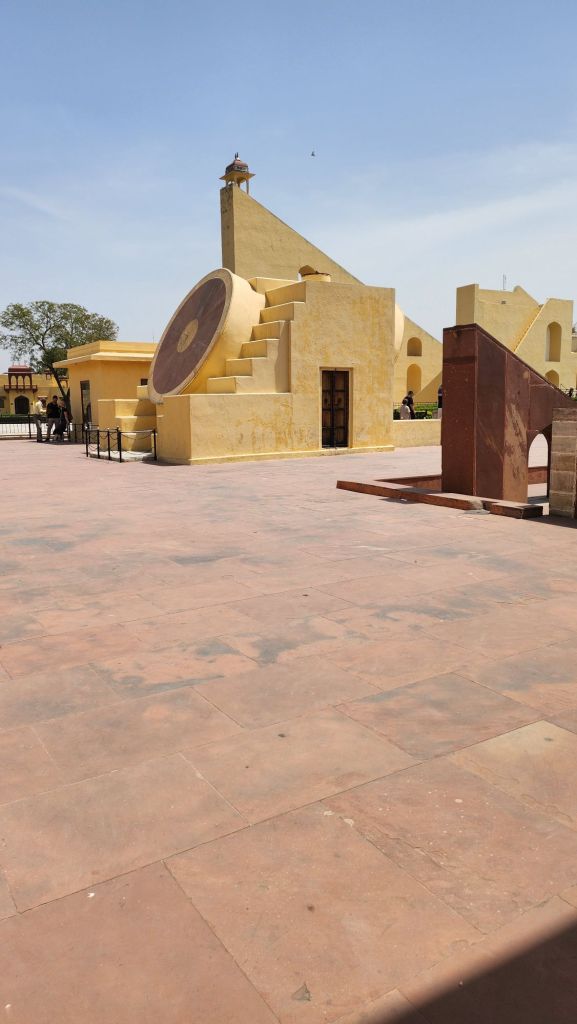
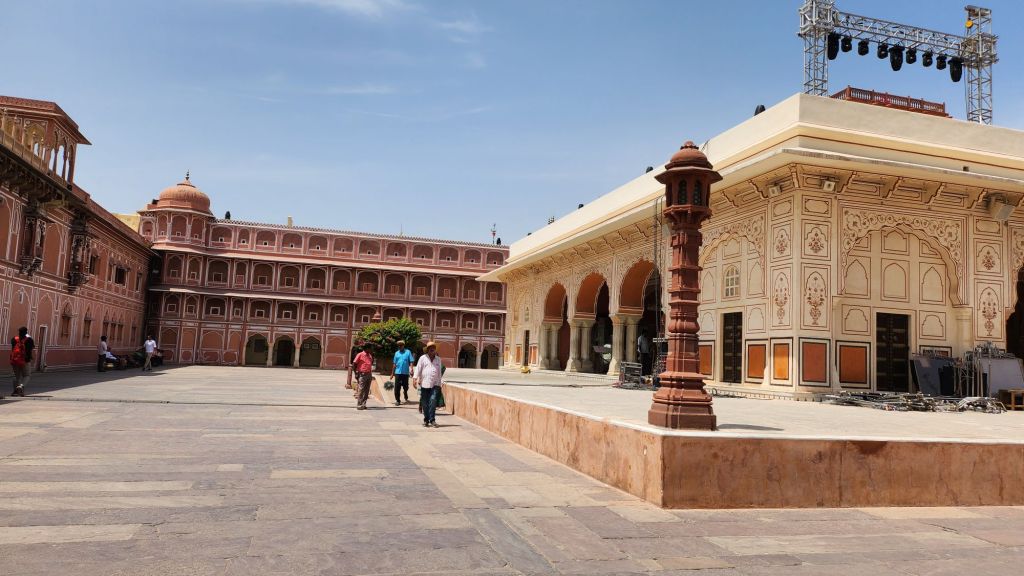
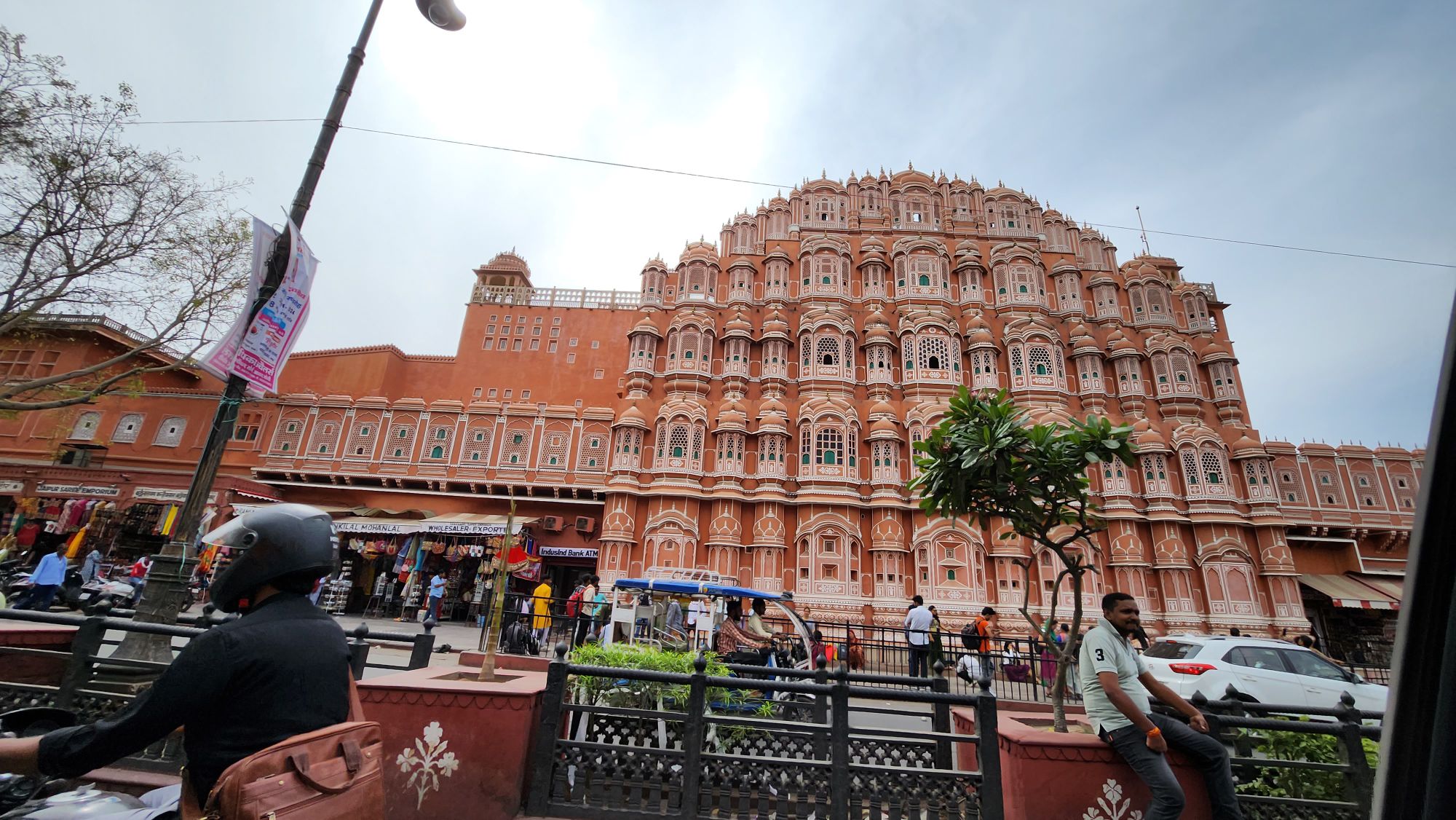
The next day we were on the road to Jaipur. The pink city is the final part of the ‘Golden Triangle’, the famous tourist route, made up of Delhi, Agra and Jaipur. The capital of the Rajasthan region, the city is famous for being the royal home of the region’s king and for its pink buildings making it very recognisable. In the city we travelled with our guide from palace to palace, through a fort and even to an interesting observatory park full of large sundial sculptures.

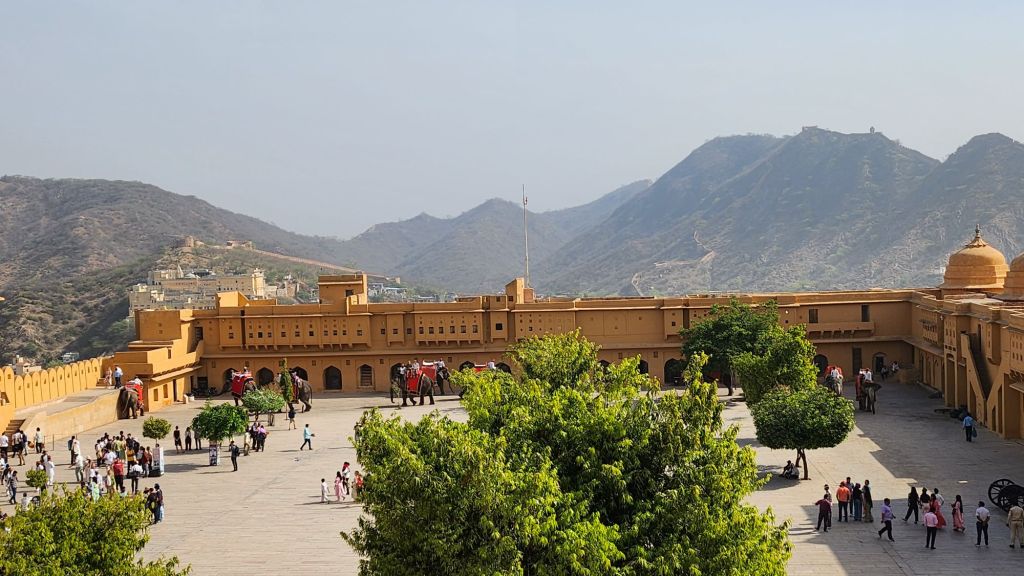
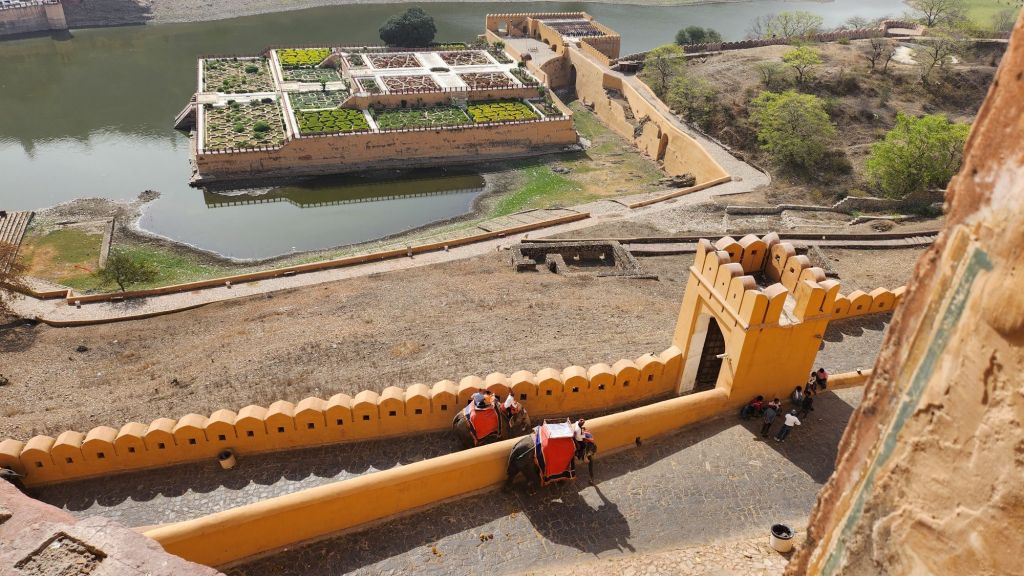
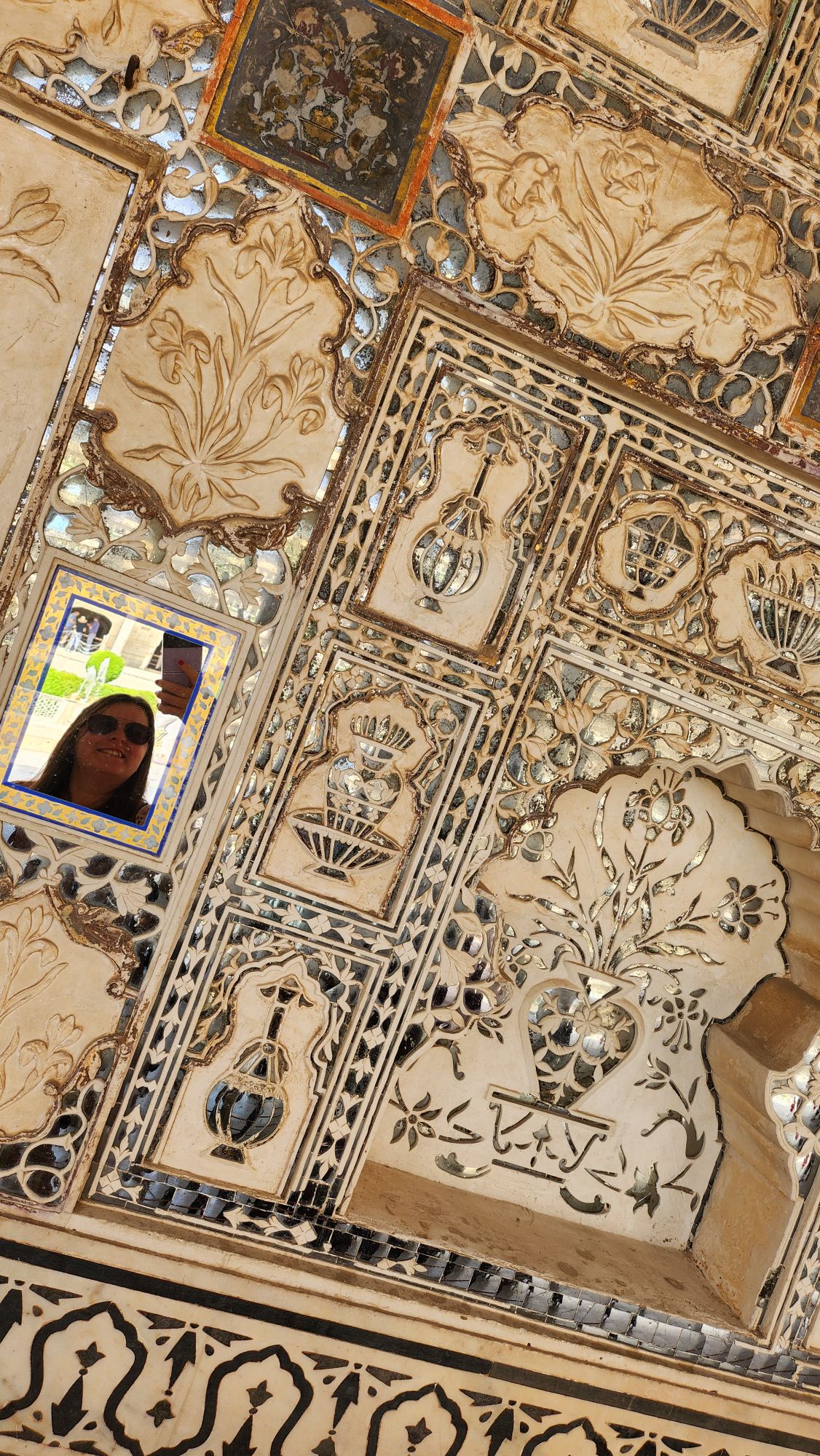
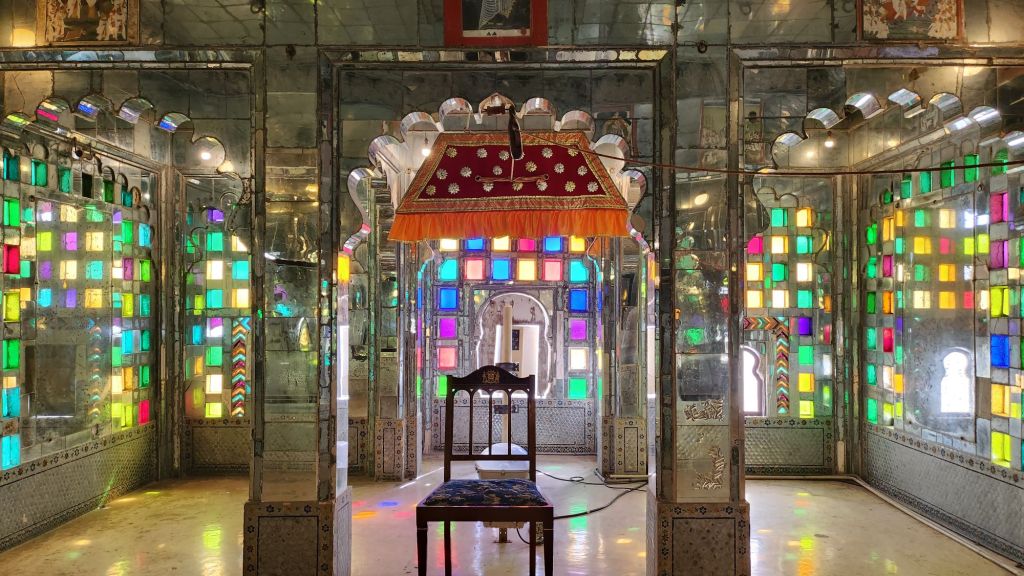
In the palaces, the royals were obviously big fans of mirrors, as there were rooms covered in mirrors, which also seemed to be used for keeping an eye on the other people in the room. Jaipur was obviously trying to keep the royal VIP feeling going as well, as elephants marched through the streets merging with modern traffic, taking tourists up and down the large hills to the palace.

Our guide in Jaipur was sadly not as pleasant as the one in Agra. He seemed to be a lot more bias in his views and heavily supportive in his stories to the hindu people, whilst quite against the islamic people, this did put a spoil on things a little as my friend is a practicing muslim, and I found the guide to be quite rude. This also extended to him, not acknowledging me fully as a woman compared to my male friend. This meant that we did ignore him a little and unfortunately gave us a bad taste in Jaipur.

Whilst the palaces and sights were beautiful, by the afternoon, I was suffering from the heat and struggling. Going at one of the hottest times of the year, was not my smartest move. I was taking lots of opportunities to rest and break, and by the end, I had to say enough was enough, and we made our way to the train station. This was the start of a ‘fast’ train journey of 8 hours to the lake city of Udaipur. My final destination of the North.

Rajasthan – Udaipur

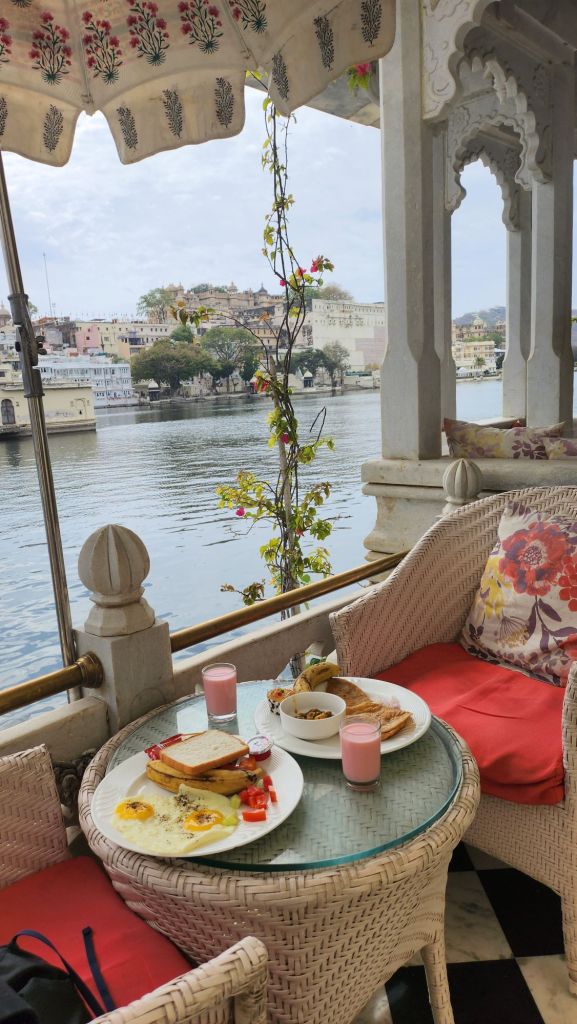
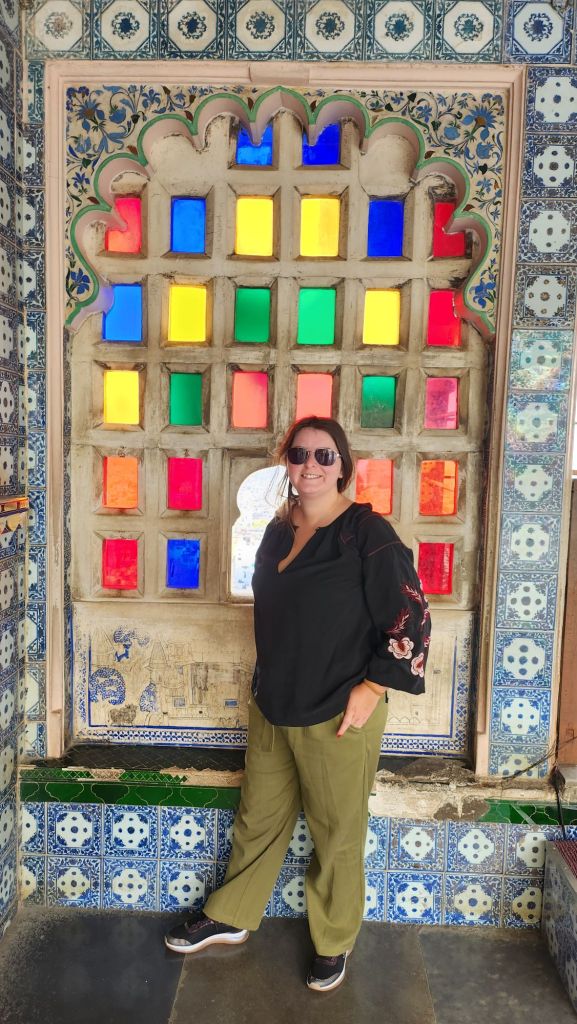
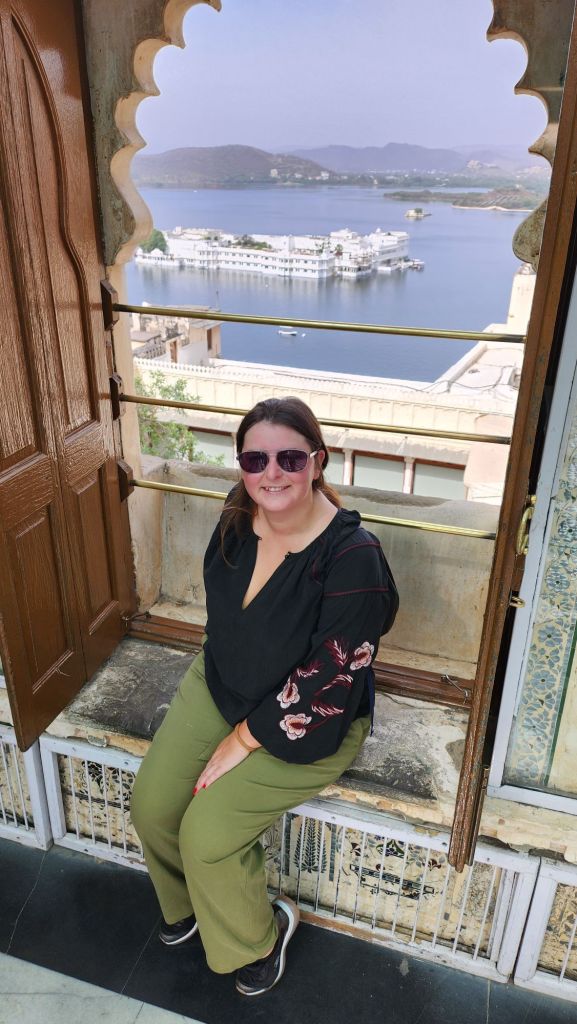
Arriving in Udaipur late at night, I jumped on a tuk tuk to my hotel, Lake Pichola. A beautiful hotel on the picturesque lake and a room with a intricately carved balcony to sit in. It was a gorgeous hotel, with a charming building, beautiful views, and a flute player to serenade me during breakfast. What more can you want!

The other guests staying there were clearly very wealthy, and its no surprise as it was the most luxurious place I had stayed. I did end up in an amusing conversation with one family, when the father could not wrap his head around me being alone there, and kept re-asking me if I was with anyone, and each time I said no, he was shocked and his wife and daughter were laughing at him. I don’t think those girls had quite the same freedom… As I continued to discover in my trip, the women and young people in general in India are quite restricted.

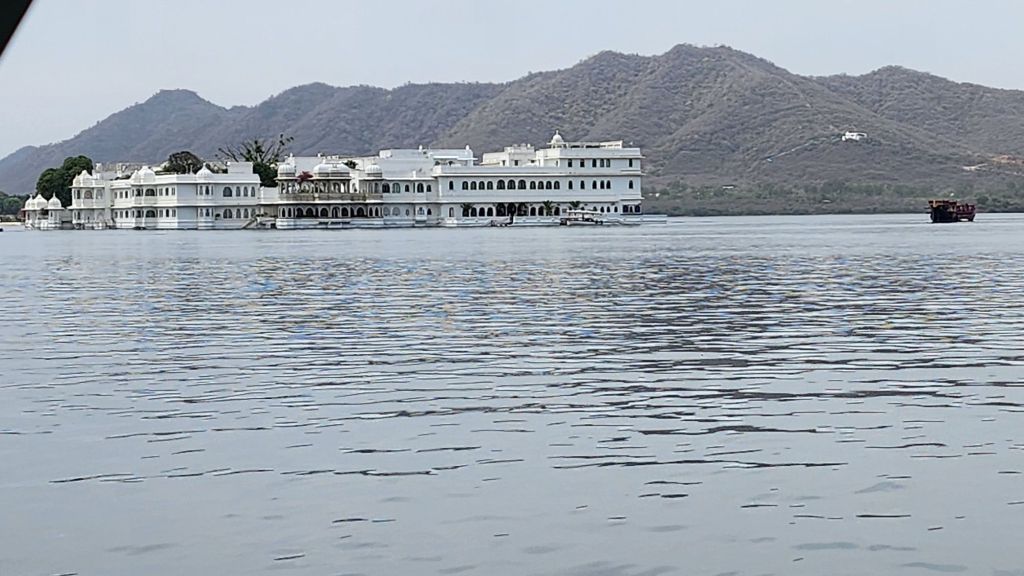
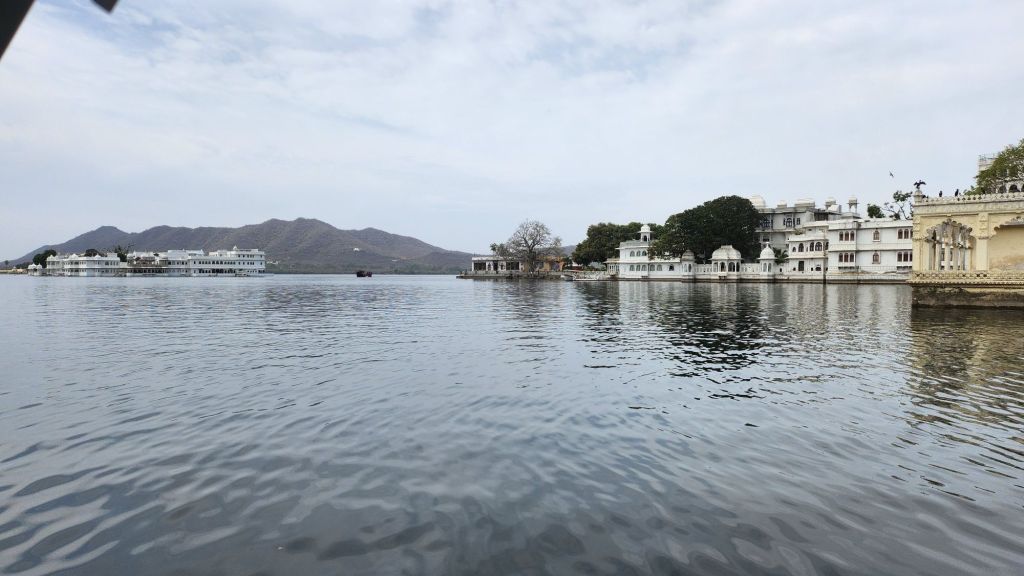
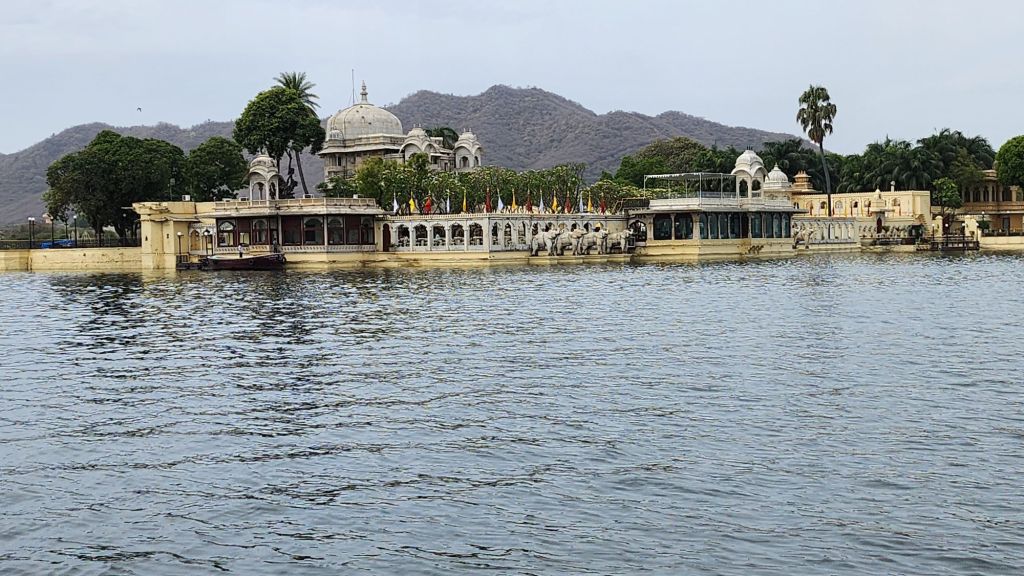
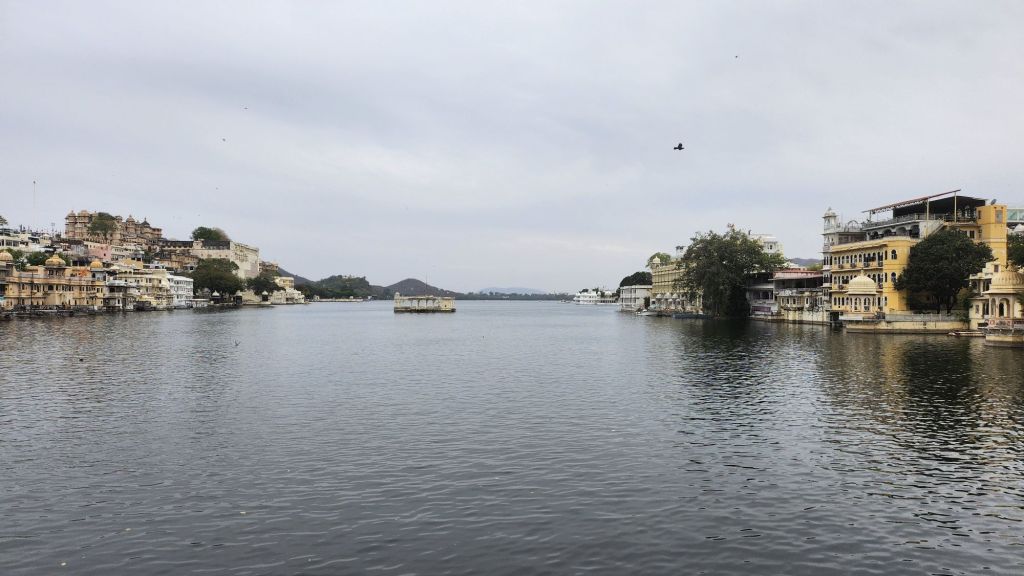
I had one full day to enjoy, and so I took a boat trip of the lake to see more of the views around me, and saw the famous Taj hotel owned by the king, floating in the middle of the lake, and only accessible by boat. I then wondered the streets by myself, making connections with some of the people that called the city home.

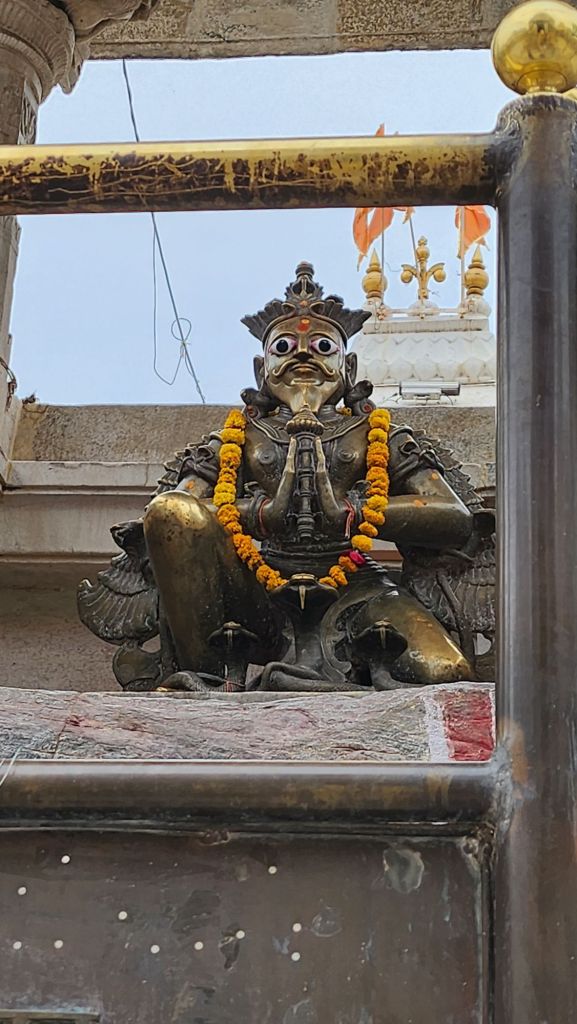
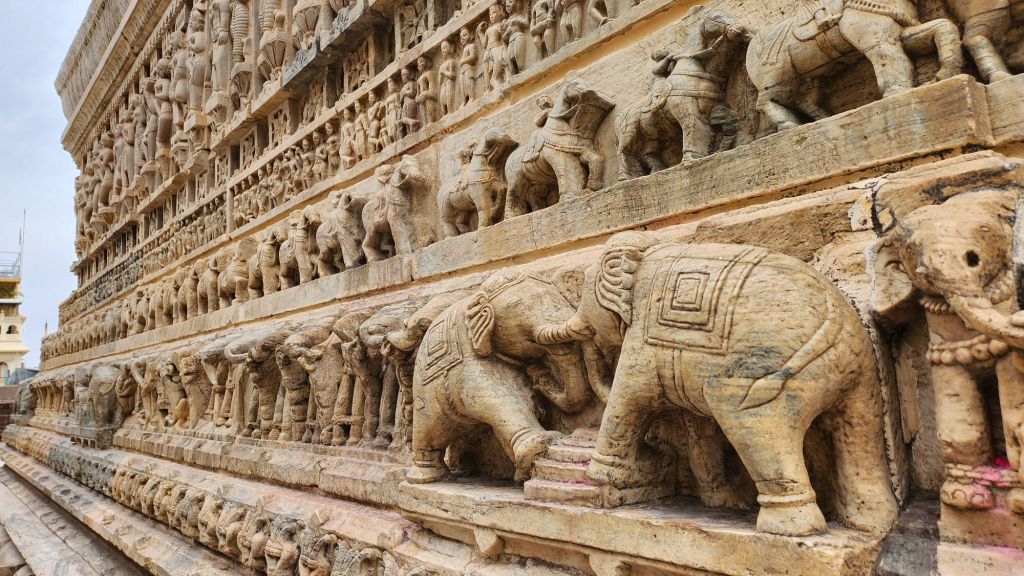
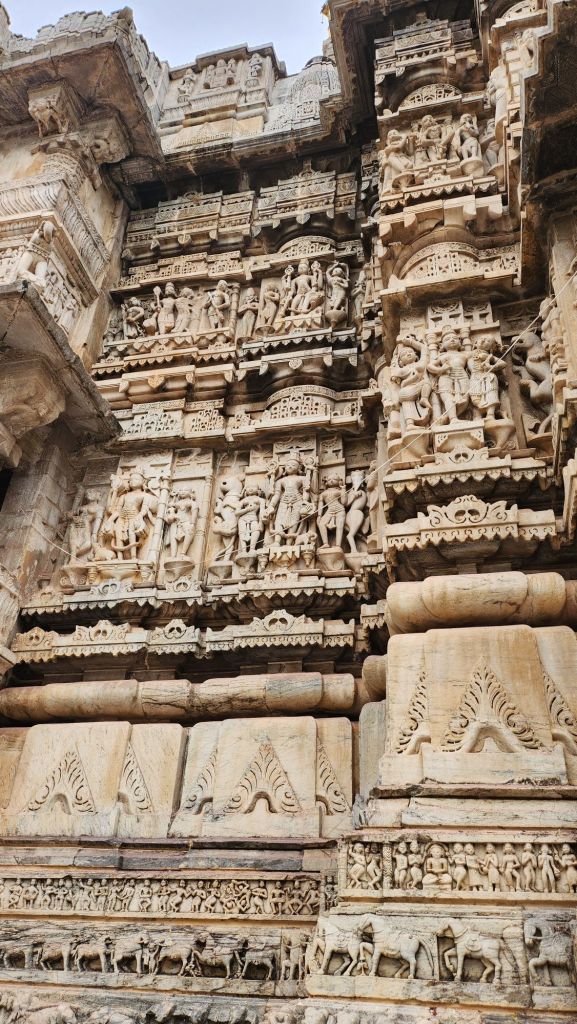
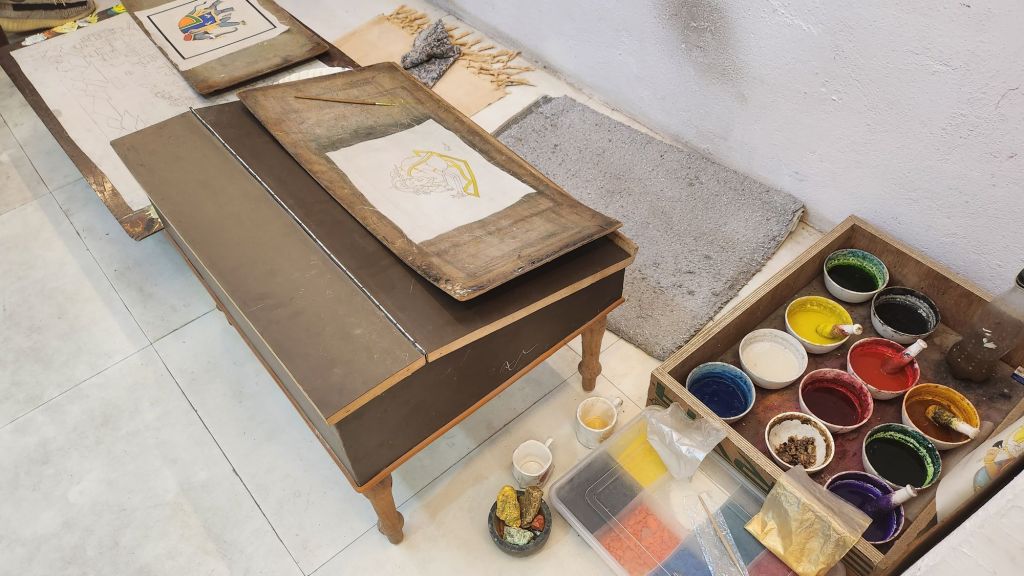
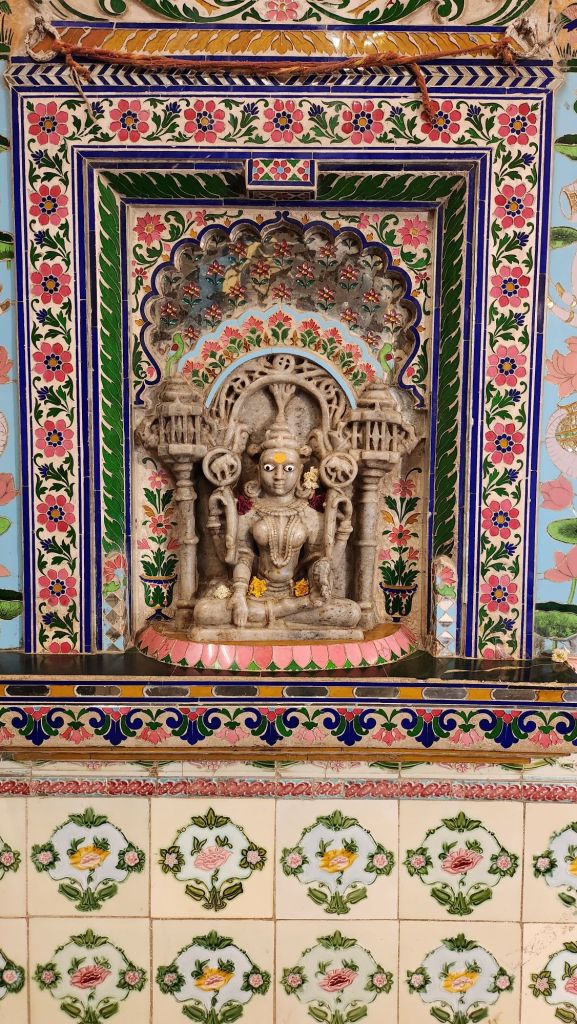
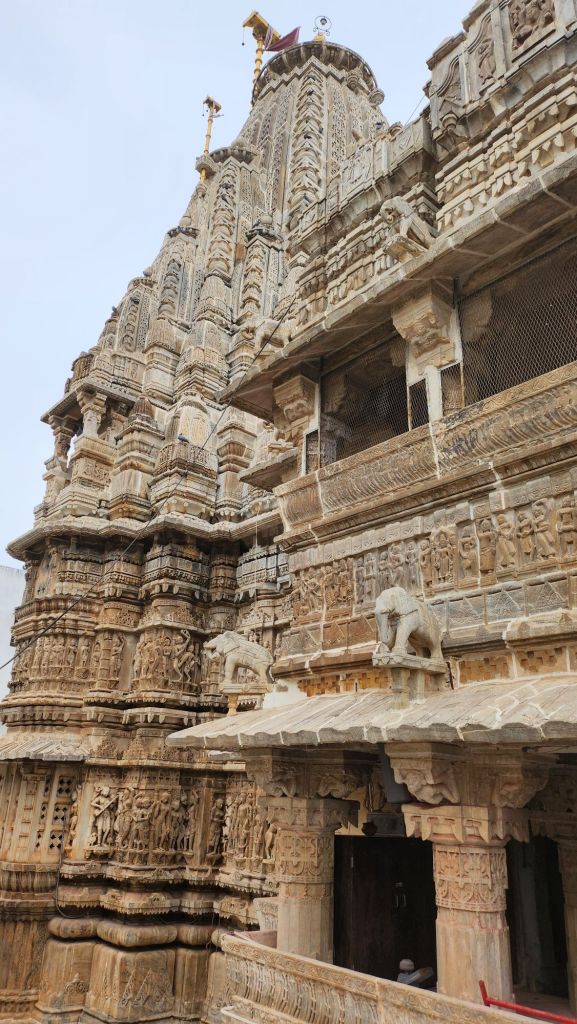
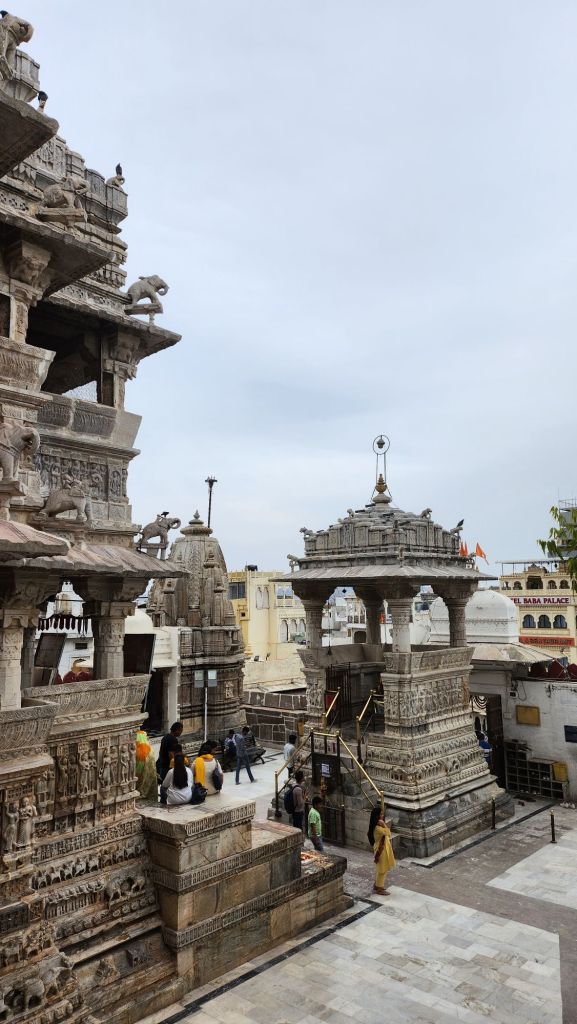
I visited a hindu temple that was made of old stone and was covered in hundreds of carvings, depicting different people, gods and elephants especially. One of the caretakers of the temple showed me around and explained the manner in which I should enter. Shoeless and in a clockwise route. I gave a donation of flowers and thanked him for his time before I ventured into the old cellar home there where people lived and worked painting art with traditional minerals, stones and vegetables, and of course I bought one for my collection.

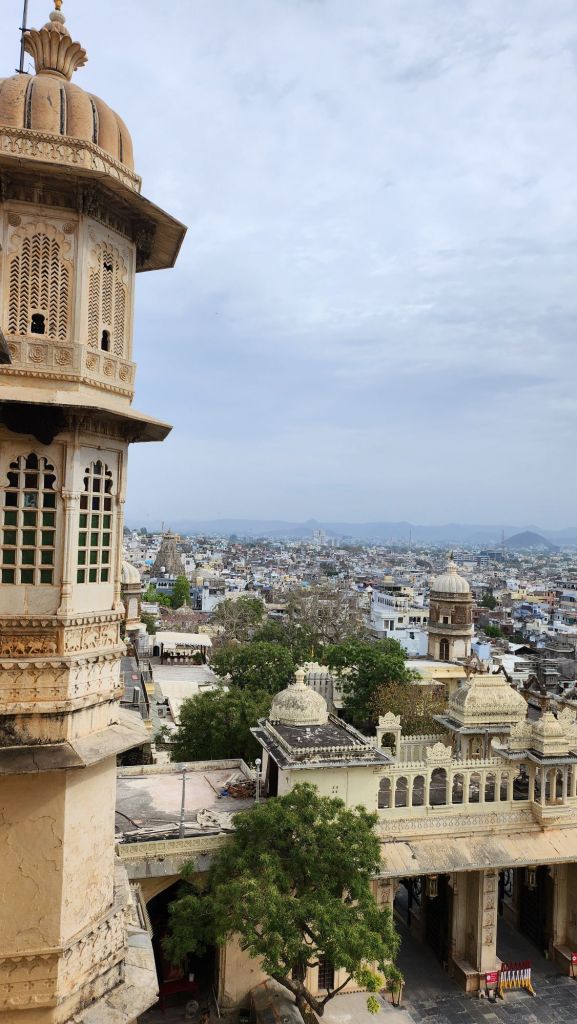
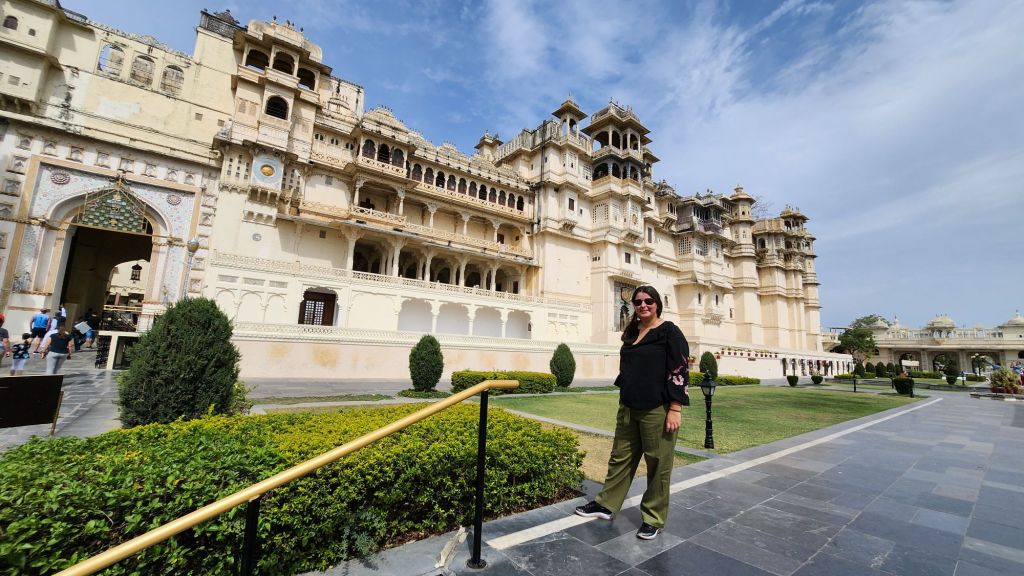
I met another man that invited me out to the hindu celebration that was taking place in the evening and showed me a walking route around the town that I could follow back to the hotel. Lastly, I visited the city palace and learnt a bit more about the royal family there. Apparently the current prince comes to work there everyday alongside everyone else to make the best of the attraction. I was quite surprised to hear that he works as another ordinary man.

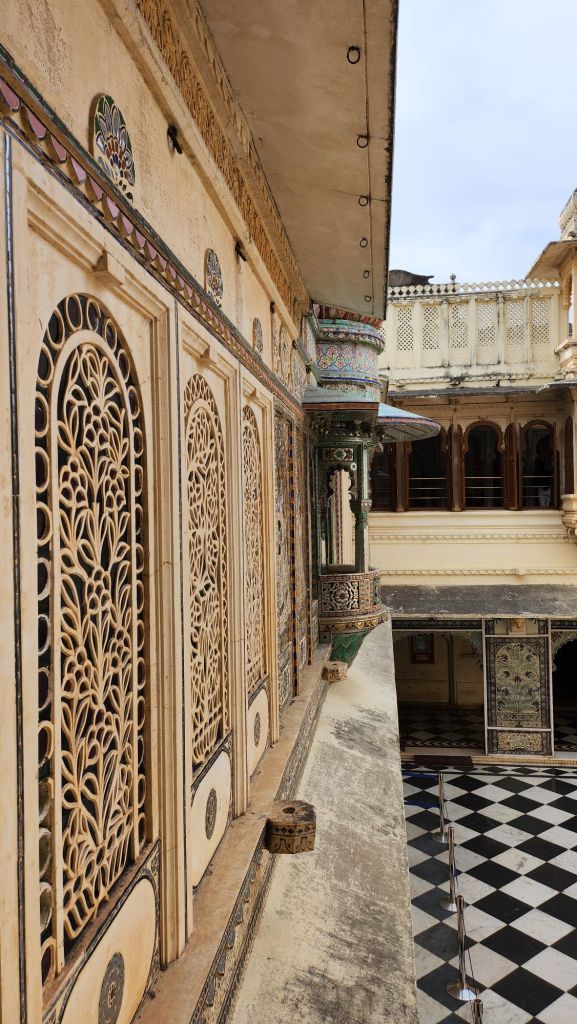
The palace was another impressive sight and had beautiful rooms, and artwork, old elephant carriages, and I was even told about the event of elephant trunk ‘tug of war’ where people would come to watch and take bets on which elephant would be able pull the other forward when their trunks were tied together. This was a bit sad, but it did explain some of the art work I had seen and been confused about.

I really liked Udaipur and it was very romantic, I would love to return with someone special and stay longer. That was the North part done for me for this trip, and it was really culturally enriching with so much history, it was hard to not get confused by it all! But now it was time to fly South to Goa…

Vietnam: North to South – Part Two

Continuing my journey South from my previous days in North and Central Vietnam, I explored Hoi An, the Meekong Delta and Ho Chi Minh City.

Hoi An

A shopping mecca, this city is well known for its markets, historic trading houses, and modern day fashion boutique stores. The best value shopping you can do is on tailor made clothing.

There are many tailors offering good prices on any design you would like made with a huge selection of fabrics and can make it in under 24 hours! Very impressive. They will also keep your measurements in file for three years in case you want more made and shipped home.

I could not resist the chance to purchase a new formal ball gown, and the price was a bargain. I gave them a photo of what l wanted and came back the next afternoon to find it all done, and looking beautiful.

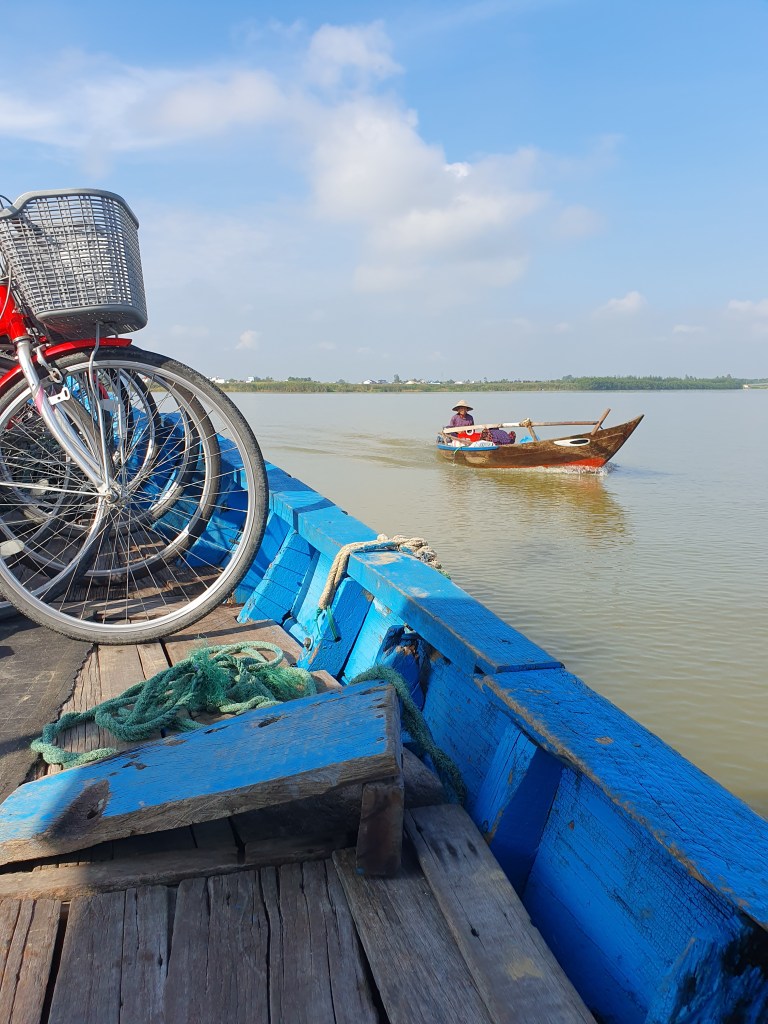
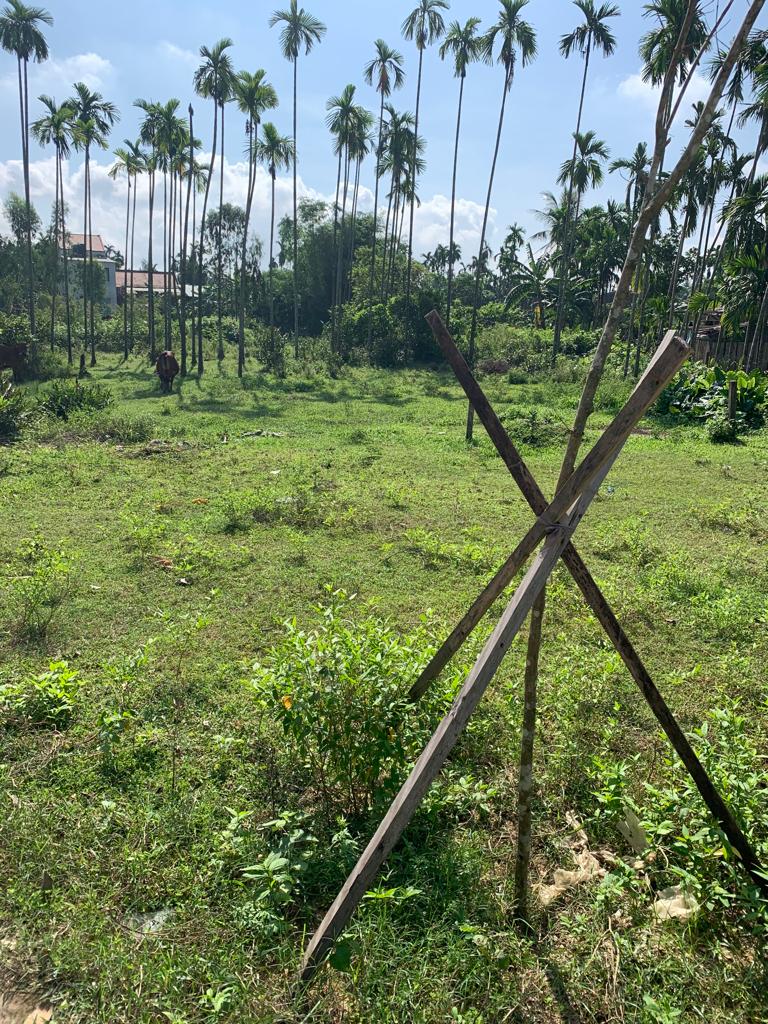
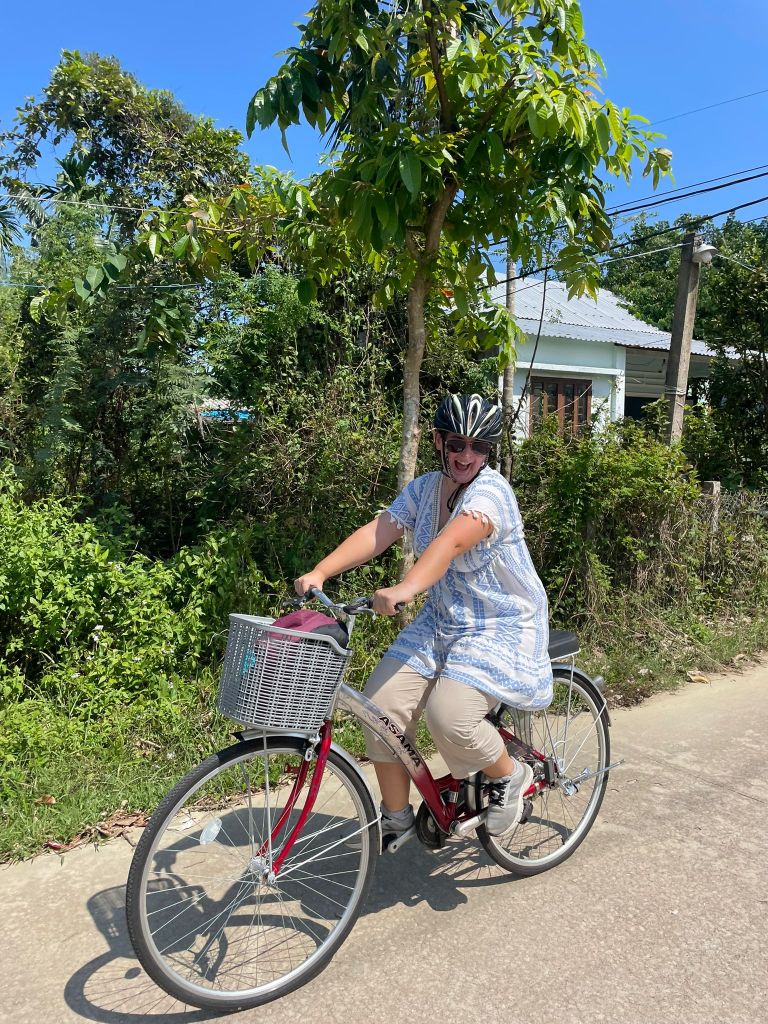
On another day in Hoi An, I secured my bike helmet once again and headed onto a ferry to two main islands for a cycle tour. I had the chance to visit three local families and see how they made their living from the land around them.

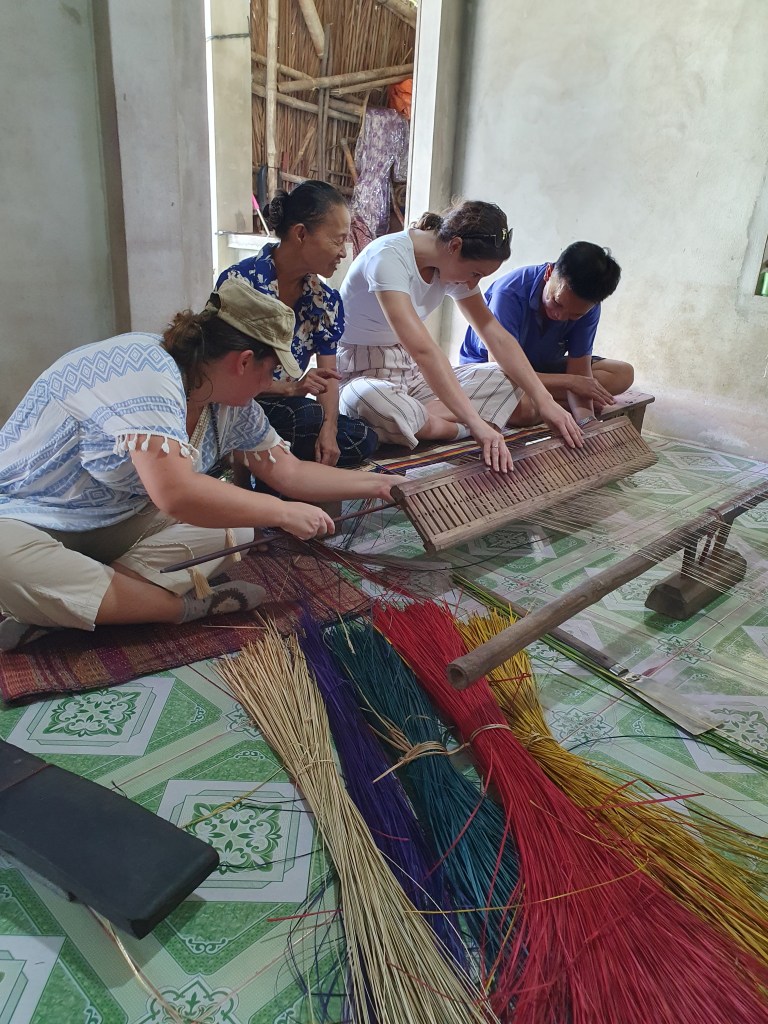
One family showed us how they spent from 4am to 9pm using dried and dyed reeds from the garden to make floor, bed and table mats. I had a try at it and it was not as easy as it looked!

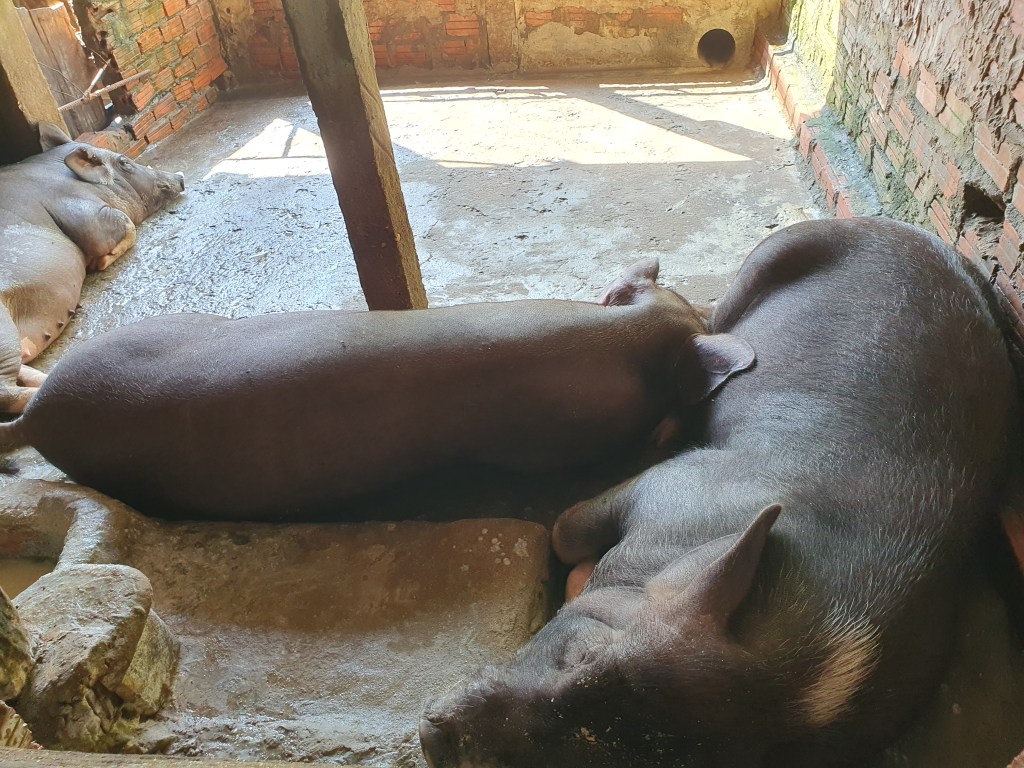
Another family invited us to sing together after showing us their in home process of making rice wine to sell to the people in their community. This was very impressive in its sustainability. For example the man (who was a one legged veteran – making it more impressive) kept pigs and he used the ‘pigshit gas’ as its locally known to fuel the fires that are used to run his operation!

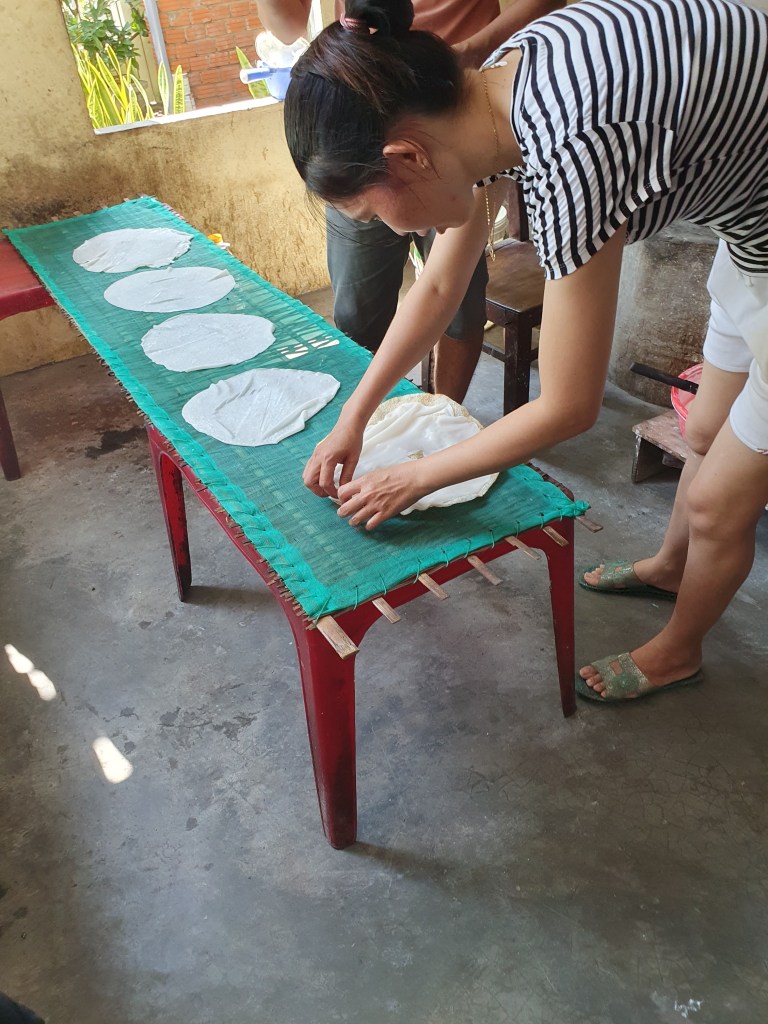
Lastly, we got a chance to hand make our own rice noodles and enjoy a delicious lunch full of local ingredients.

The best thing was, in all of this, I never fell off the bike! Even when I thought I could pass out from the heat!

Ho Chi Minh City / Saigon

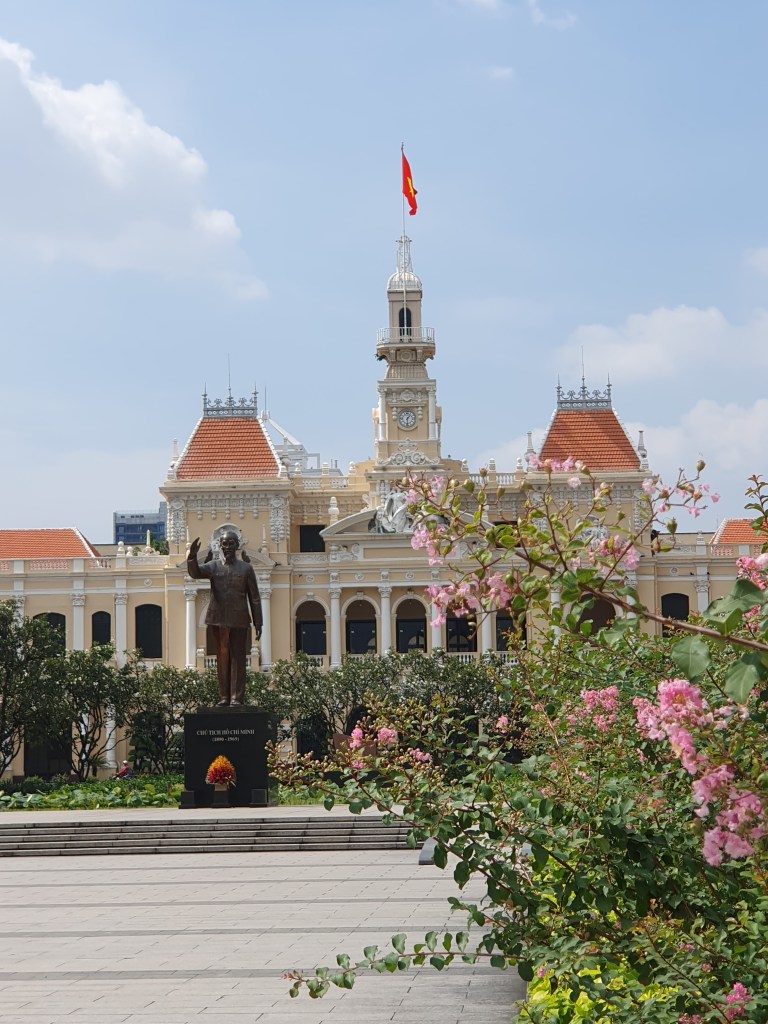
In the early hours of the morning we took a short flight with Vietnam Airlines to Ho Chi Minh City. The city is referred to by many as Saigon, as this is its former name. Since the end of the Vietnam War, the city was renamed after its victorious communist leader, Ho Chi Minh. There are many monuments and images of him throughout Vietnam, as his party still stands in place today.

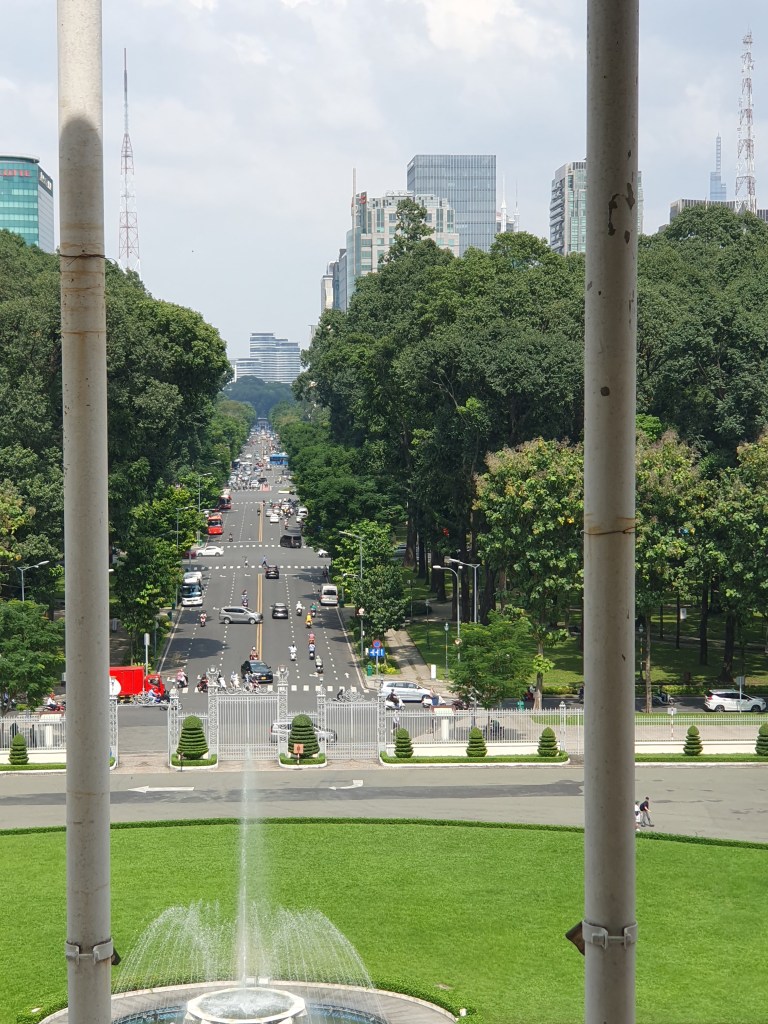
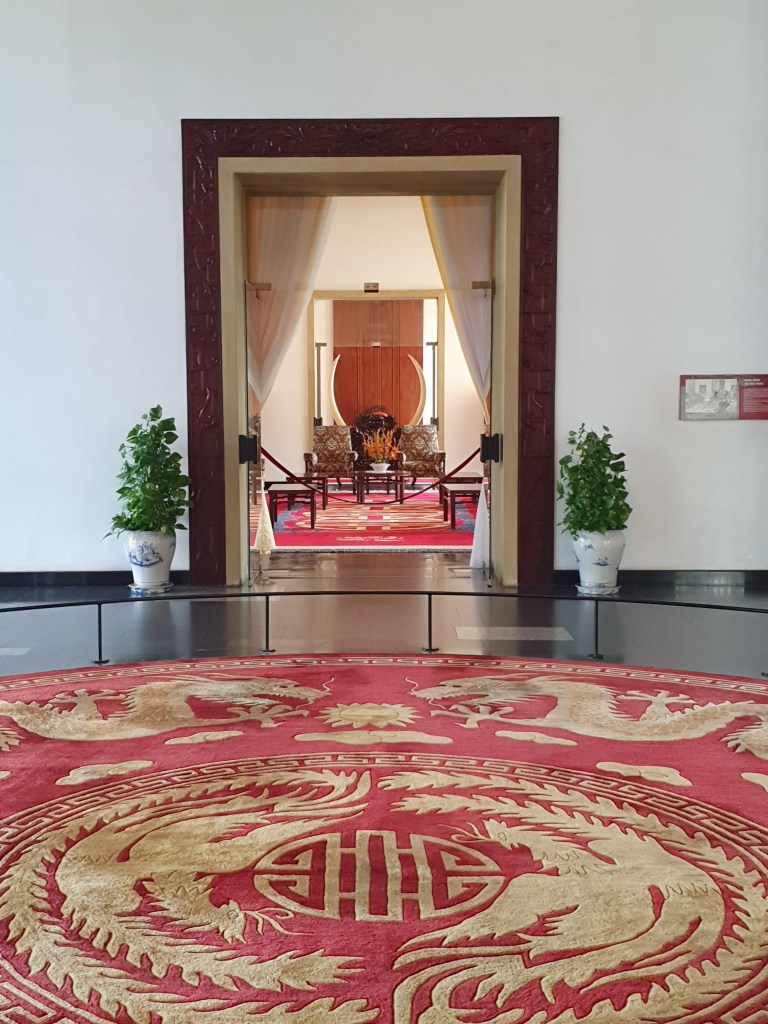
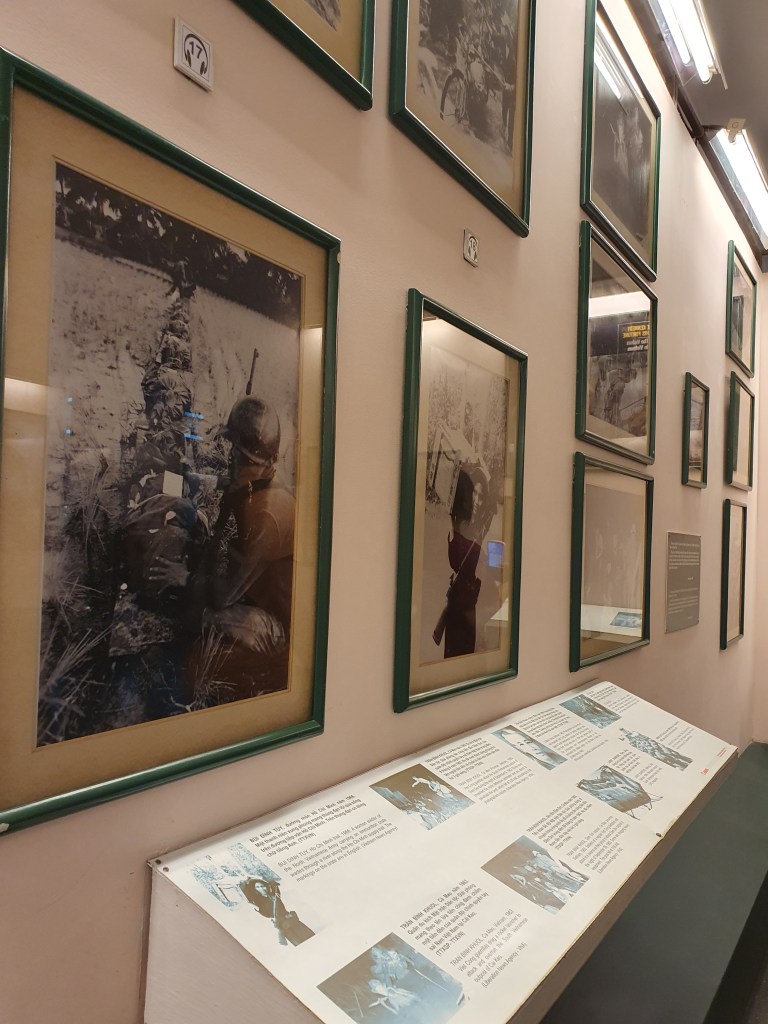
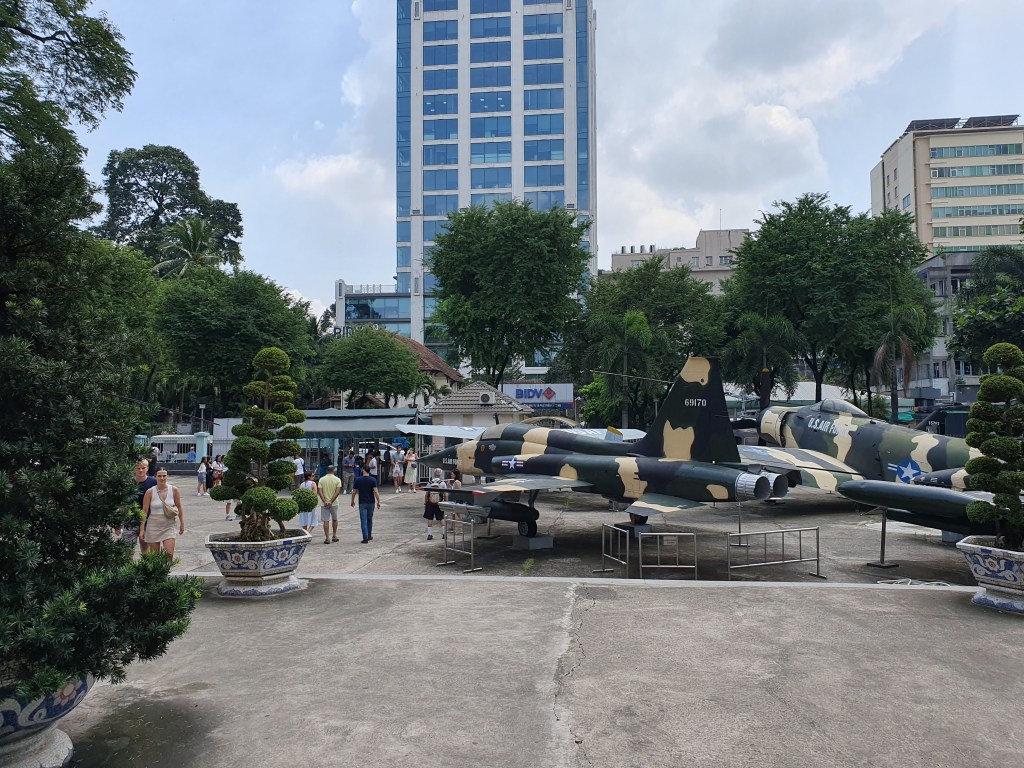
In HCM City you can visit only a few attractions like the Independence Palace, former state home of the president, and the War Remnants Museum, which is an impressive and informative space to learn about the war history in Vietnam. It is really complex as many other countries have been involved in commanding the country and has left a lot of wounds behind.

I found the museum to be a little one sided but this makes sense as it will have been censored by the government, before publishing. The most striking elements of the museum was the information about the ‘agent orange’ chemical that had been used. It is now considered a war crime and has left many generations of people, severely deformed. I could see this on the street when some people may be passing or begging, and I suspected that they were victims of this.

Aside from these visitor attractions, HCM offers plenty of places to eat and shop, but it is very modern and definitely, for me, not the highlight of the trip.

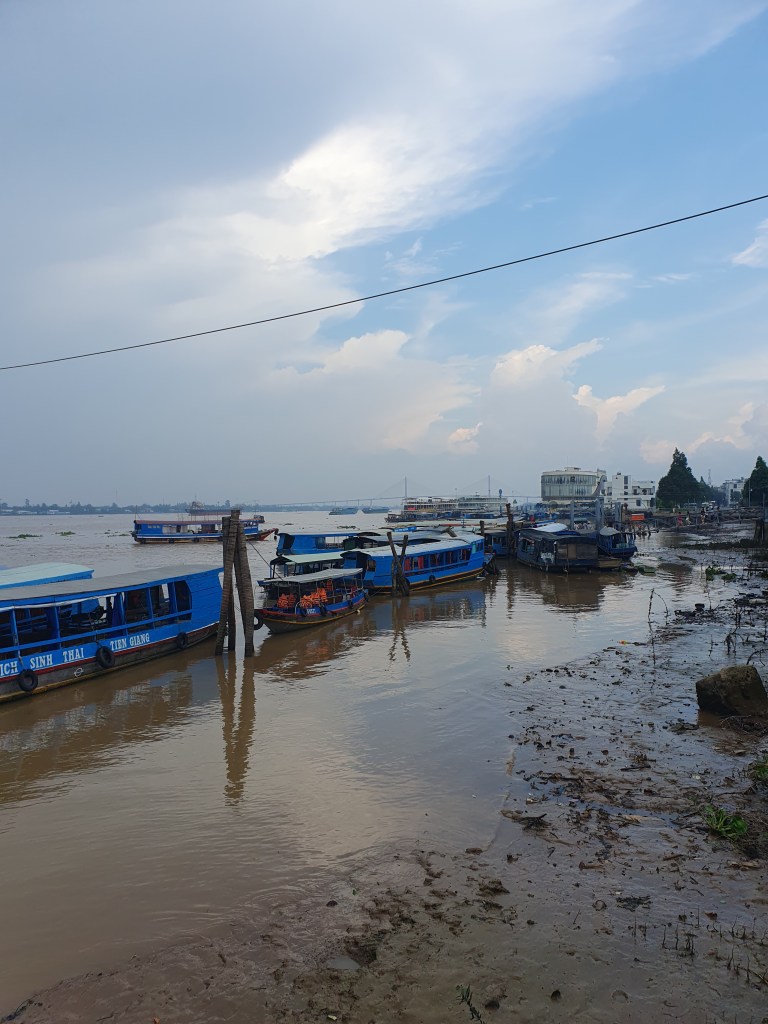
In about two hours drive from the city you can visit the Meekong Delta. The most South I went, this wetland area offers plenty of boat rides to different islands where you can see different markets, temples and localised farming.

I spent the day visiting a few different islands by boat, and had the opportunity to see local coconuts being shredded up into coconut milk and turned into sweets and wrapped by hand. I did actually get carried away and bought 6 packets for the price of 5! I think I got a bit silly.

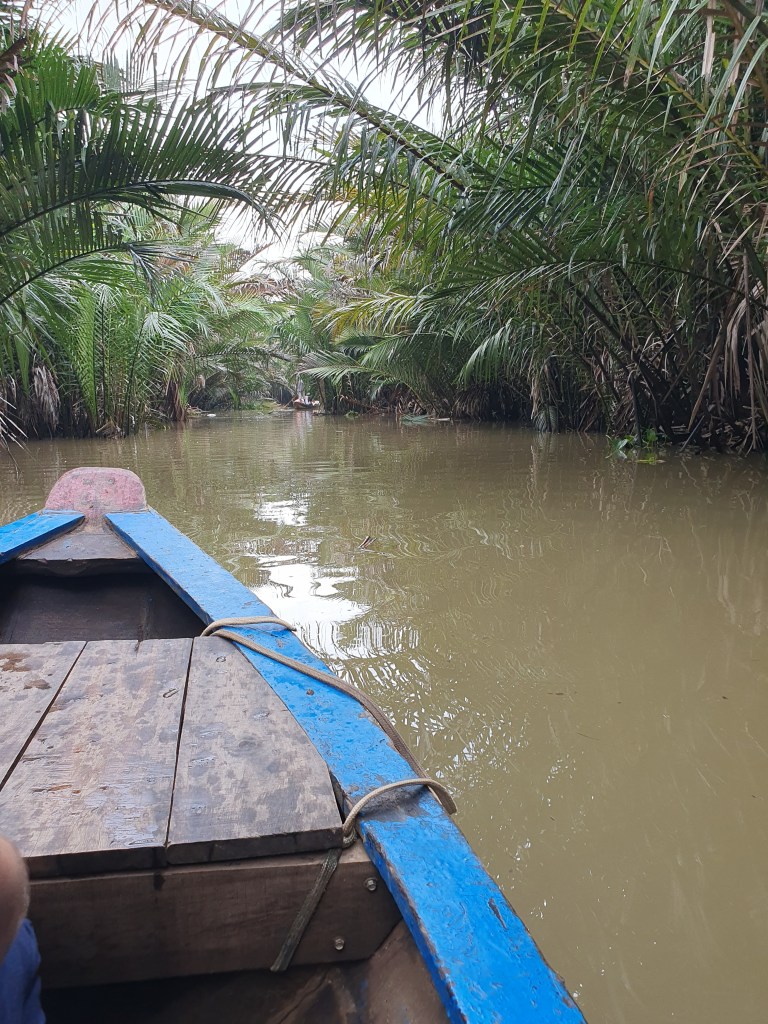
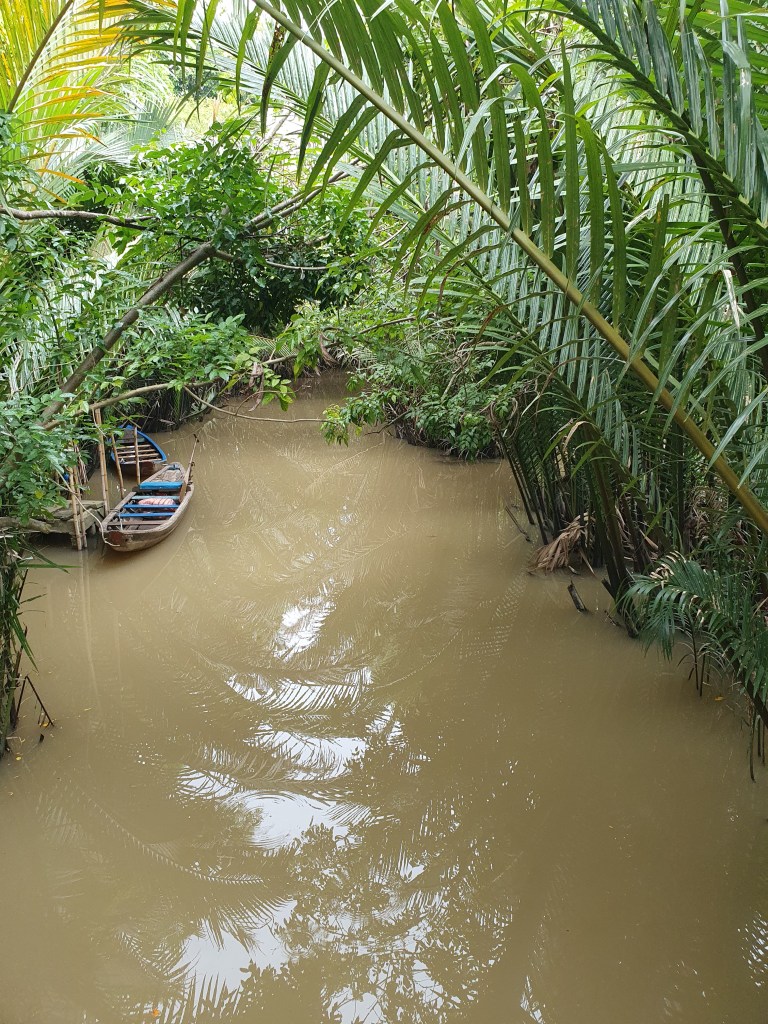
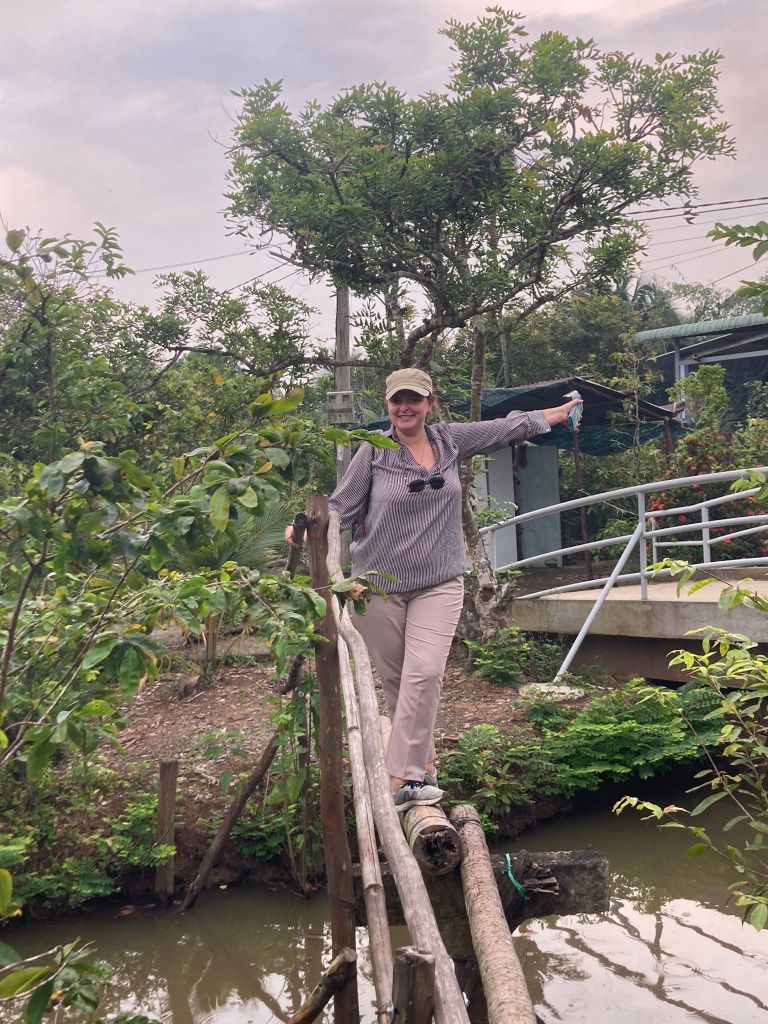
I also visited some local people’s garden and tried some of their homegrown fruits, including a Vietnamese Kiwi, that is a local delicacy, and tastes nothing like Kiwi from home! I also had a chance to play a monostring instrument that is traditional there, and much harder to do well then it looks! To finish off, I had a chance to enjoy a traditional wooden row boat ride through the bush before heading back to the city.

Overall, Vietnam was a great chance to dip my toe into Asia. The people have been super friendly; I always felt safe, and appreciated. The holiday was great value and I would happily revisit. In the Meekong Delta you can even take a boat cruise out there onto Cambodia, Laos and Thailand. This could be a lot of fun!

Vietnam: North to South – Part One

Booked only a week before, after my trip to Israel was cancelled last minute, I decided to have my first go at Asia this month. Vietnam was on offer so I went for it and discovered a crazy and unique way of life with amazing food and very friendly people.

Getting there

The travel to Vietnam was very very long, whilst the flight duration may say 16hrs by the time we had travelled to Heathrow, and waited around in Bangkok and then traveled to the hotel we had stacked up over 24 hrs of travel. I had thought I’d planned out to miss my jetlag but it actually took 3 days of waking up at 3am to get over it.

We flew with Thai Airways which had tight seating but plenty of hospitality from the crew and the aeroplane food was some of the best I have had. On arrival to Hanoi airport, our taxi driver was waiting for us and we got to our hotel in about half an hour, after seeing some of the cityscape lit up at night.

Hanoi

We stayed in a hotel for our first few nights in Hanoi city. The hotel was immediately a relief with a welcome drink on arrival, a porter to carry our bags and a free upgrade to a very nice room. It was all going well, until my 3am visit to the bathroom…

That is when I discovered scuttling across the floor, the biggest cockroach I have ever seen. When you are already sat on the toilet half way through a wee too, the only choice is to throw your legs in the air! I found myself doing toilet balances at 3am to avoid it. Unsure what to do I spent the rest of the night with a light on unsure what to do and worried if I fell asleep I would wake up with a cockroach on my face. It took me a few days to get past this fear and just accept the potential for creepy crawlies around me.

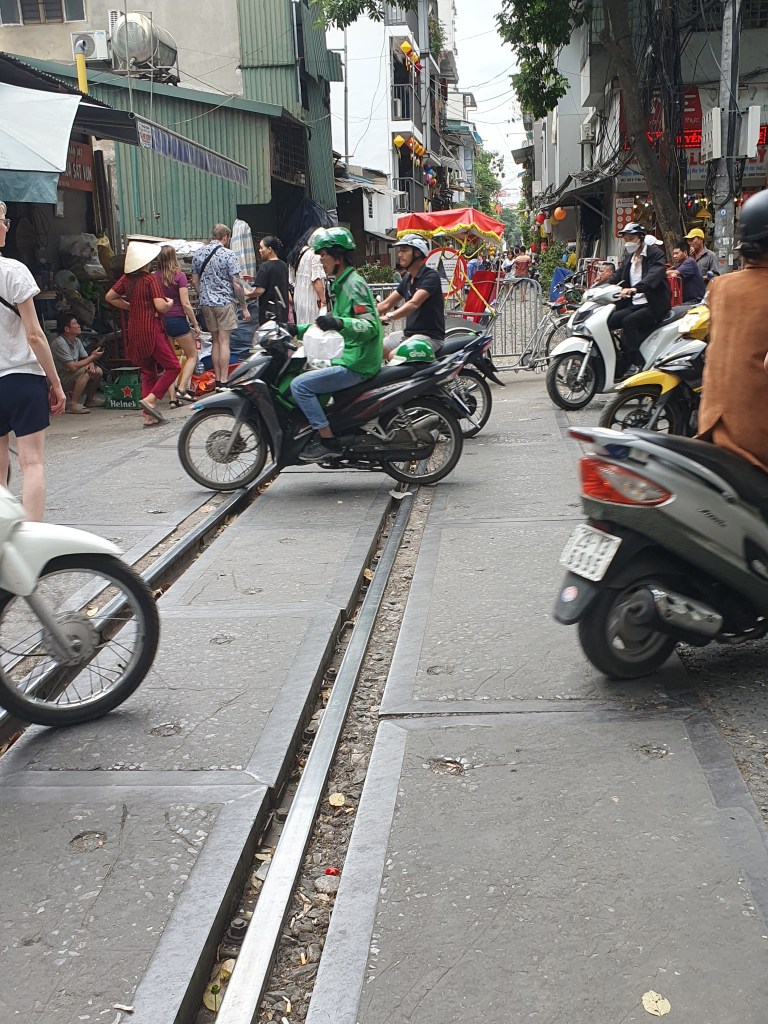
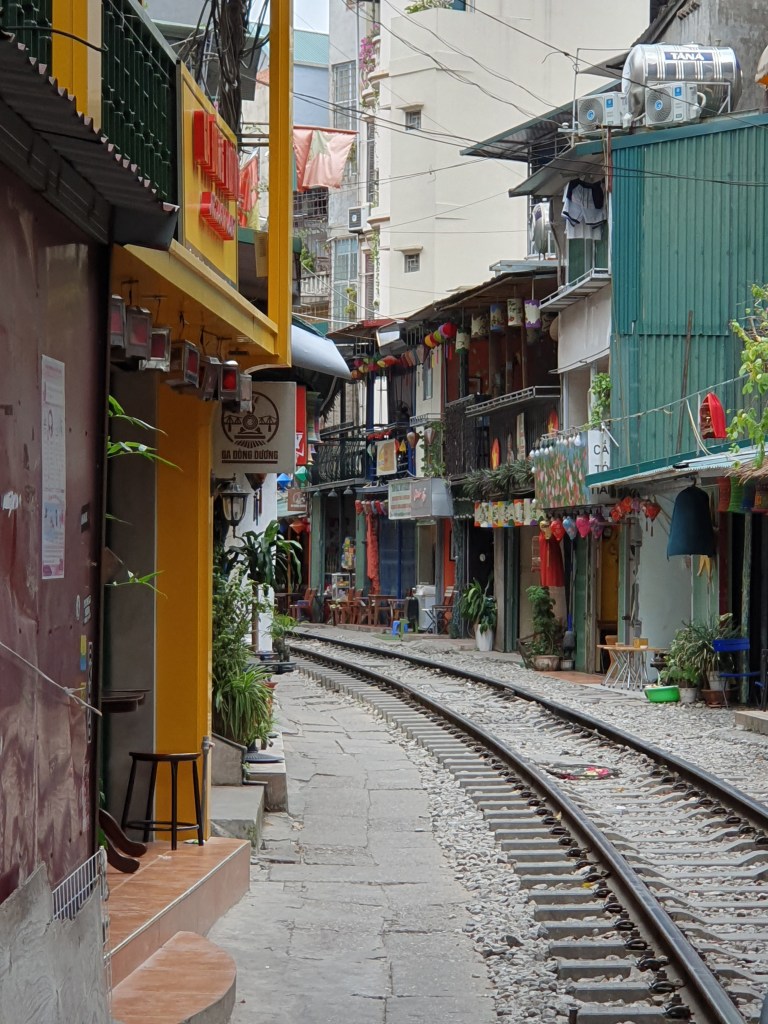
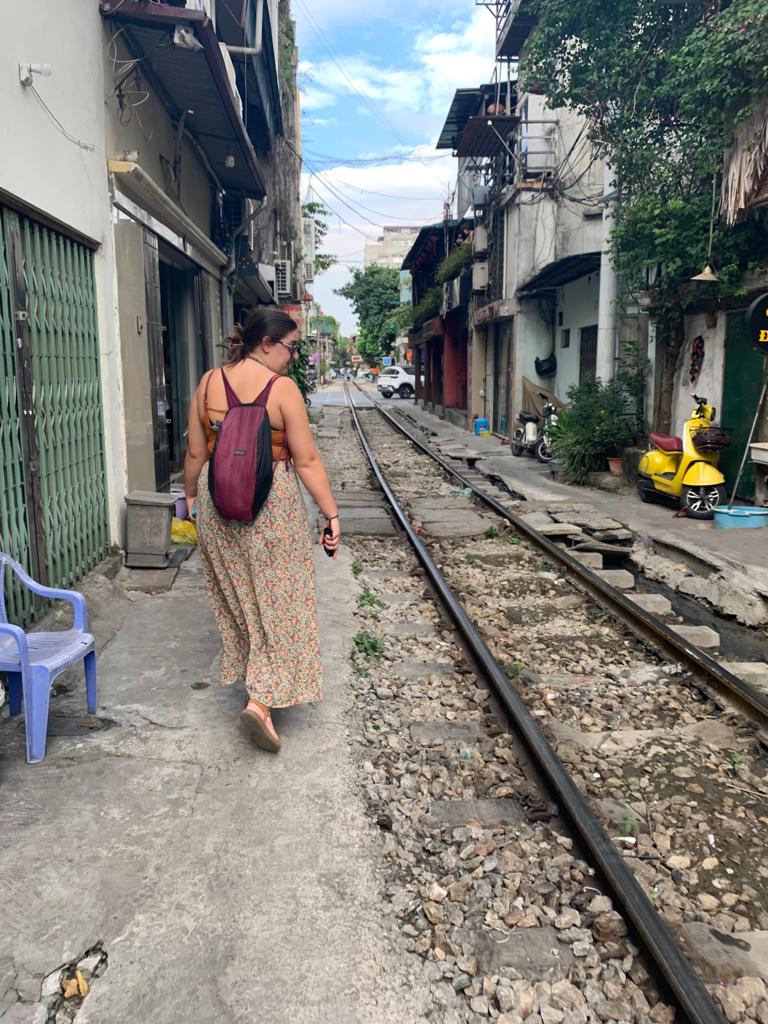
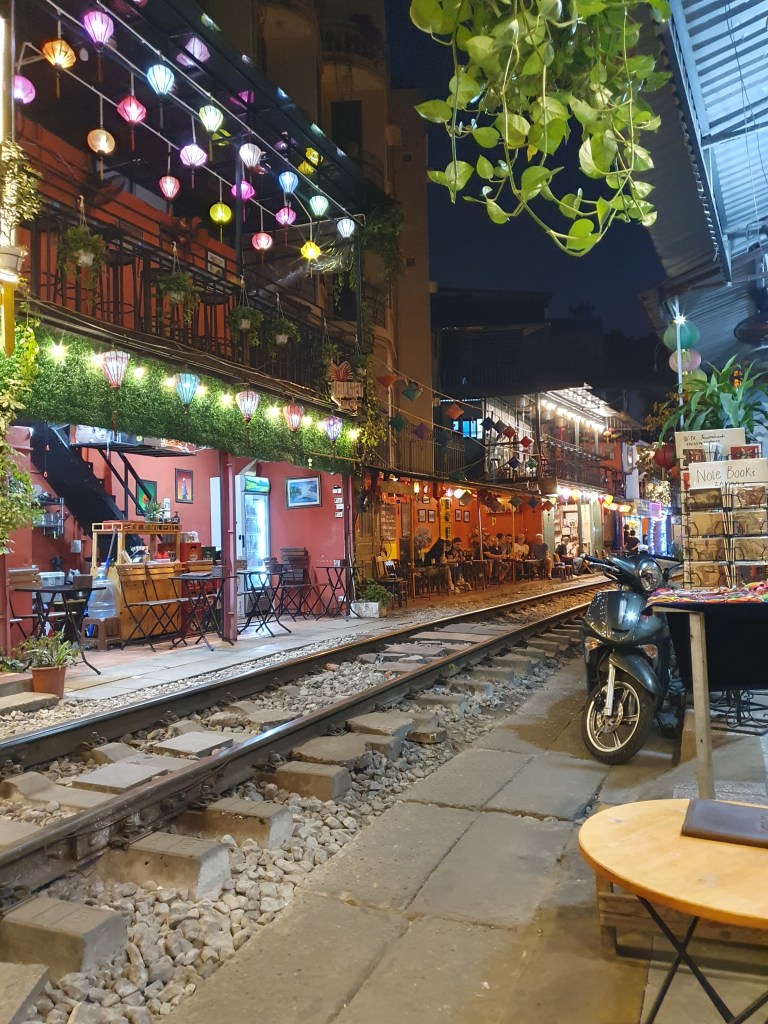
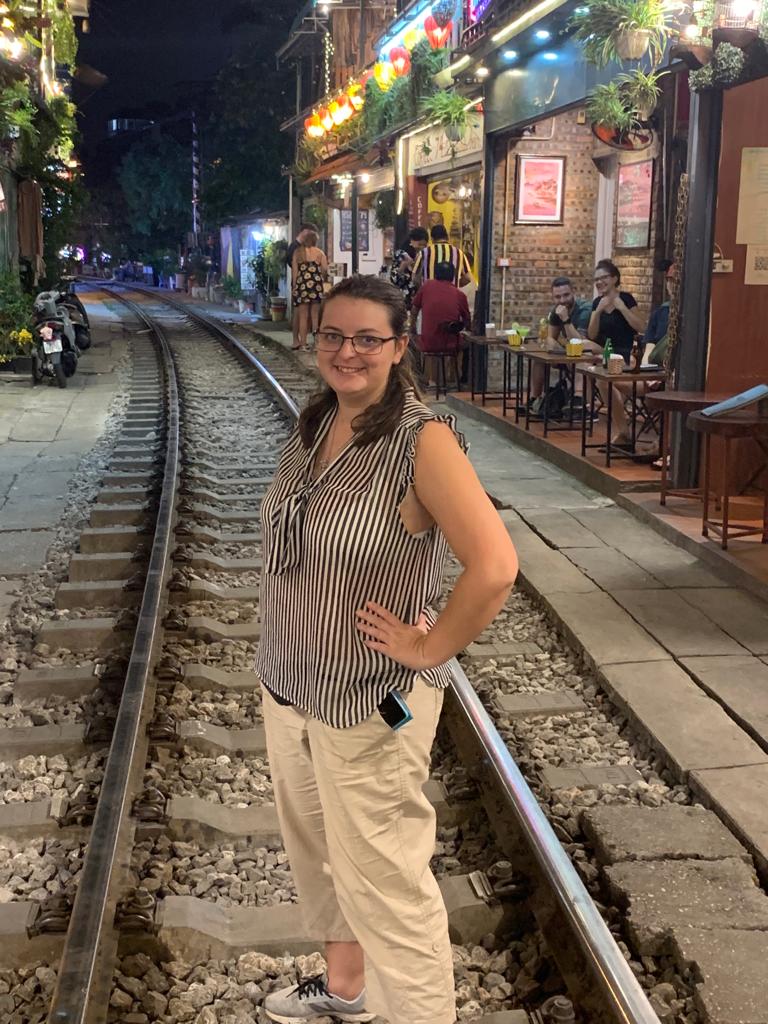
Venturing out of the hotel into the city was another experience of taking your life in your hands. The traffic is some of the craziest I have ever seen. There is no pavement due to mopeds being parked all over it and to cross the road you must do what the locals do and just walk slowly and confidently over (like you’re sleepwalking) and hope nothing hits you! The roads here are so congested that they even have a street that is famous for a train that comes through as well as all the pedestrians and bikes and ends up about an inch from your face!

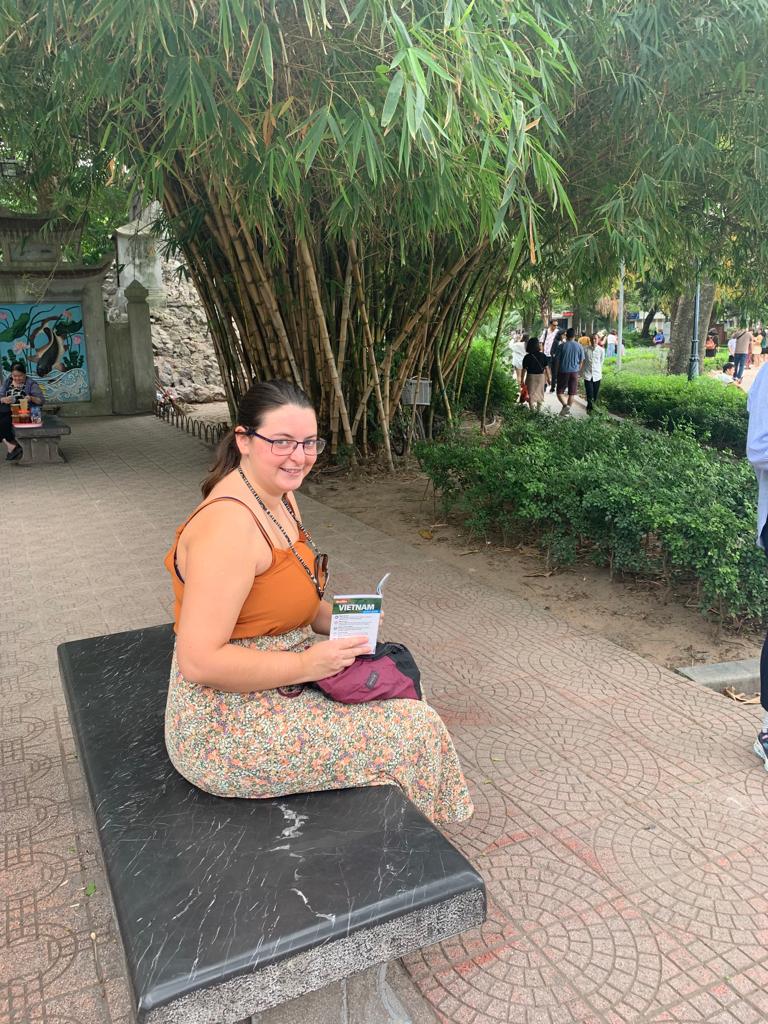
We cautiously took the steps from our hotel down to the famous lake which thankfully is pedestrianised around the edge and began to explore our first attractions.

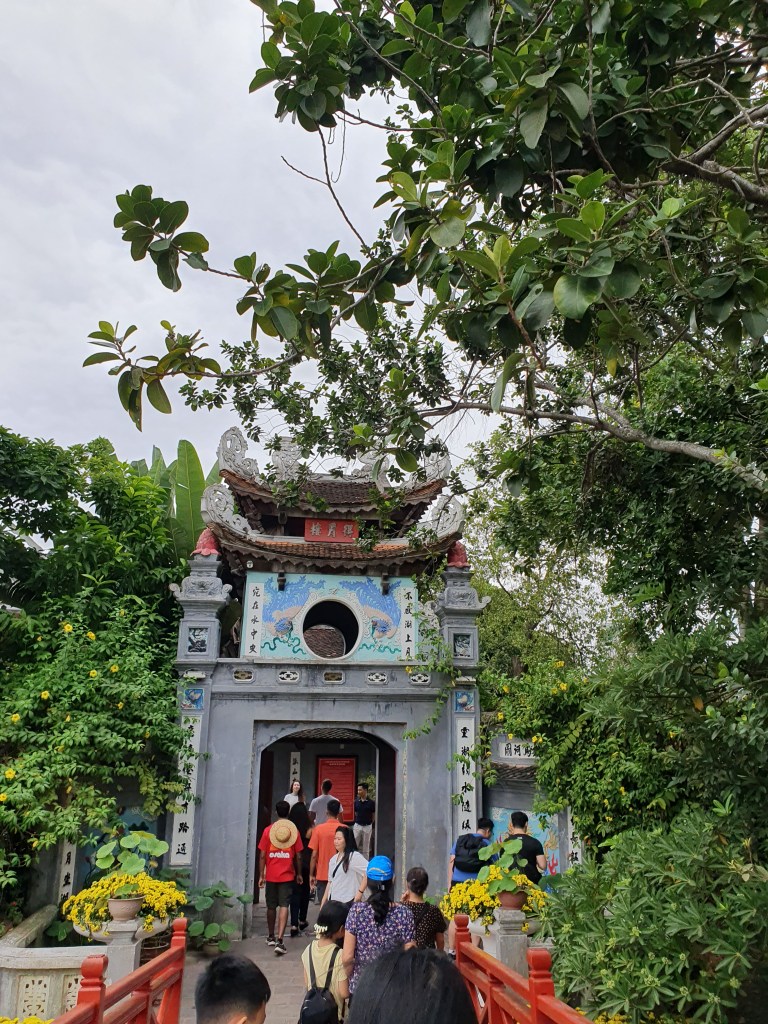
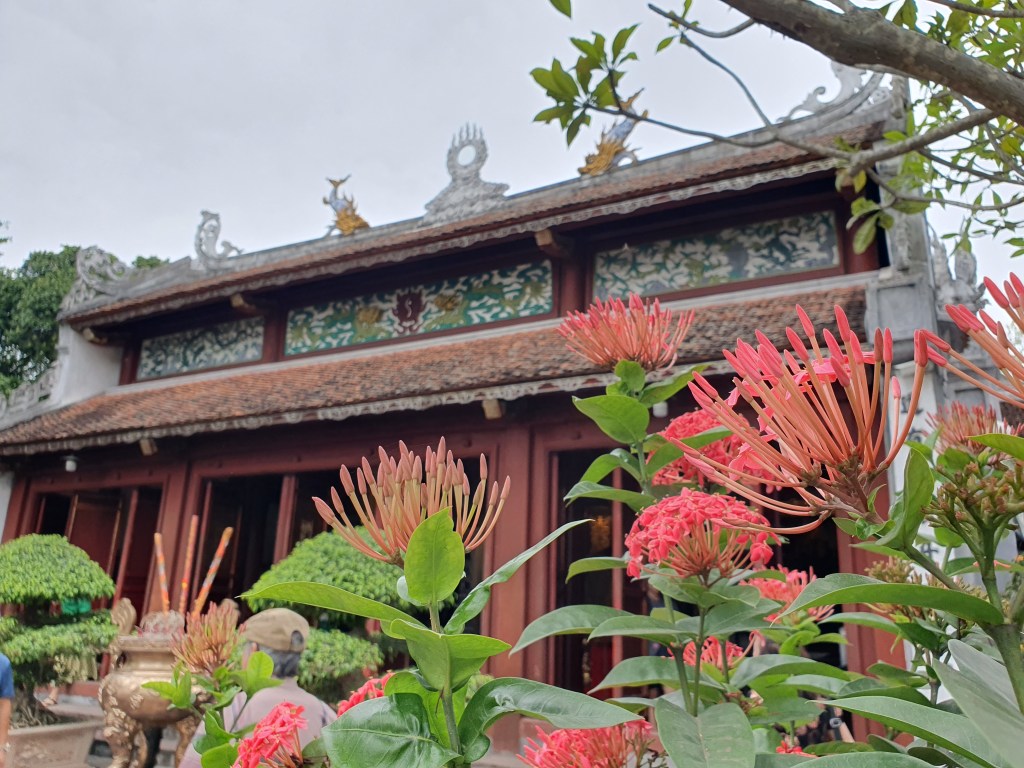
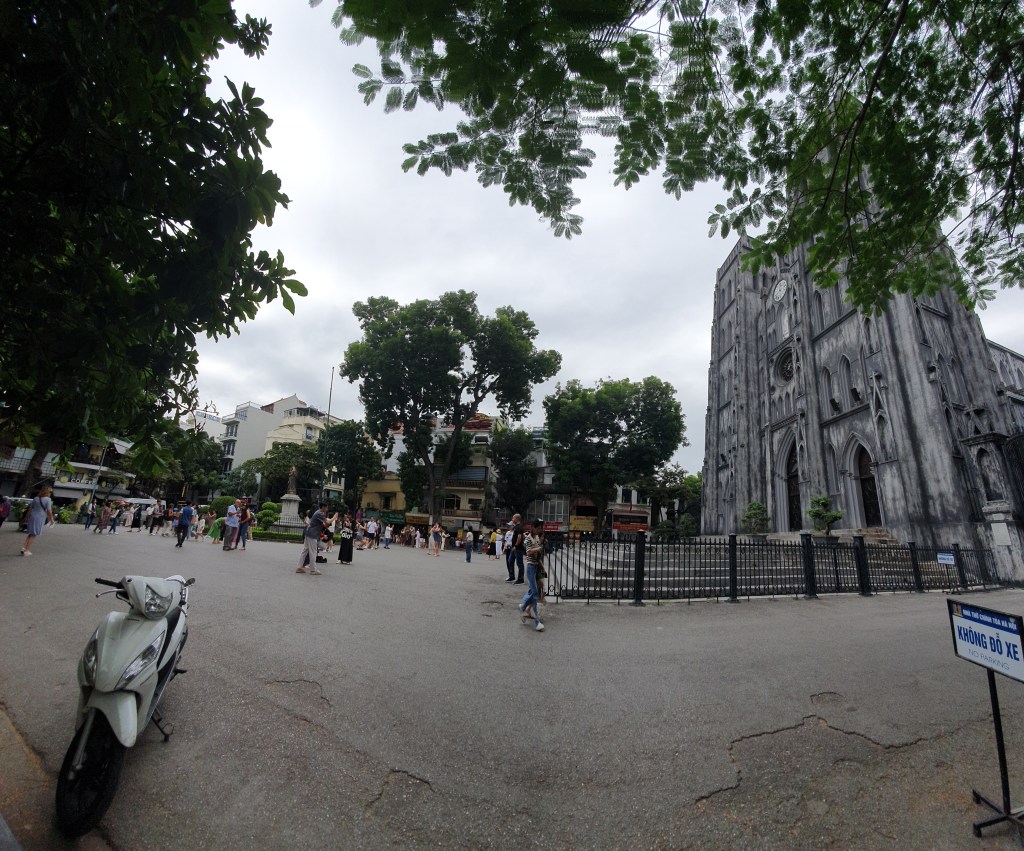
First on the agenda was a few impressive buddhist temples, and also the St Joseph Cathedral. This gothic cathedral looks so strange with all the little asian shacks around it and motorbikes everywhere. I couldn’t go in unfortunately but I imagined it was similar to other catholic ones I have seen. A little bit of Europe in the middle of this crazy South East Asia whirlwind. I later found out from my guide that the french actually governed Vietnam for centuries and is the reason for some catholism here and that they now use alphabetic letters instead of chinese characters. Something to be grateful for as a tourist!

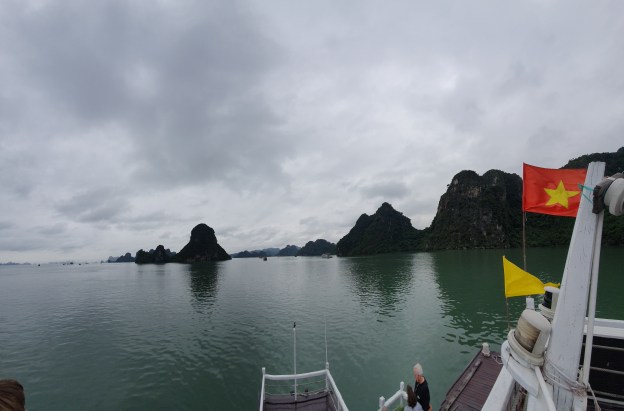
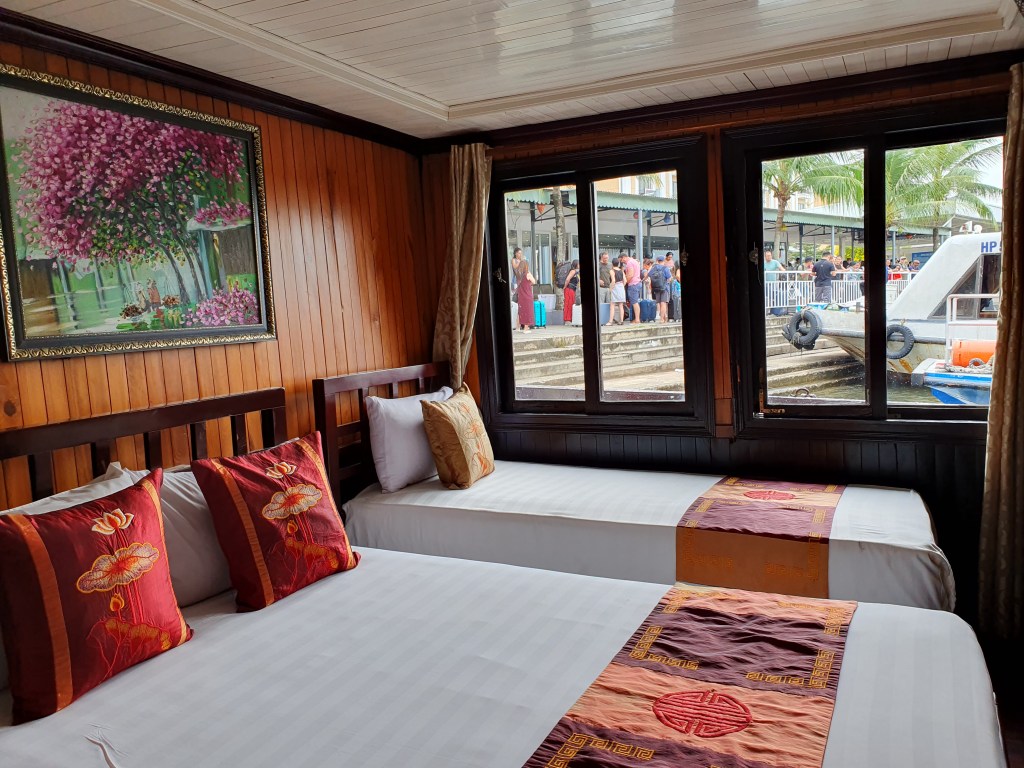
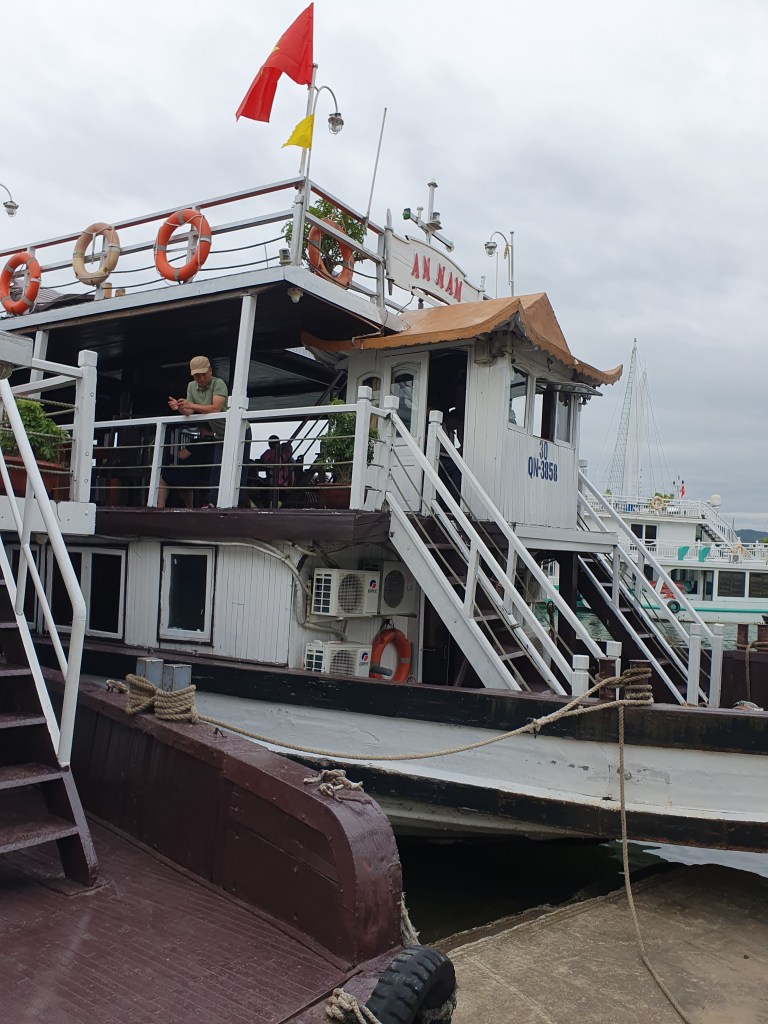
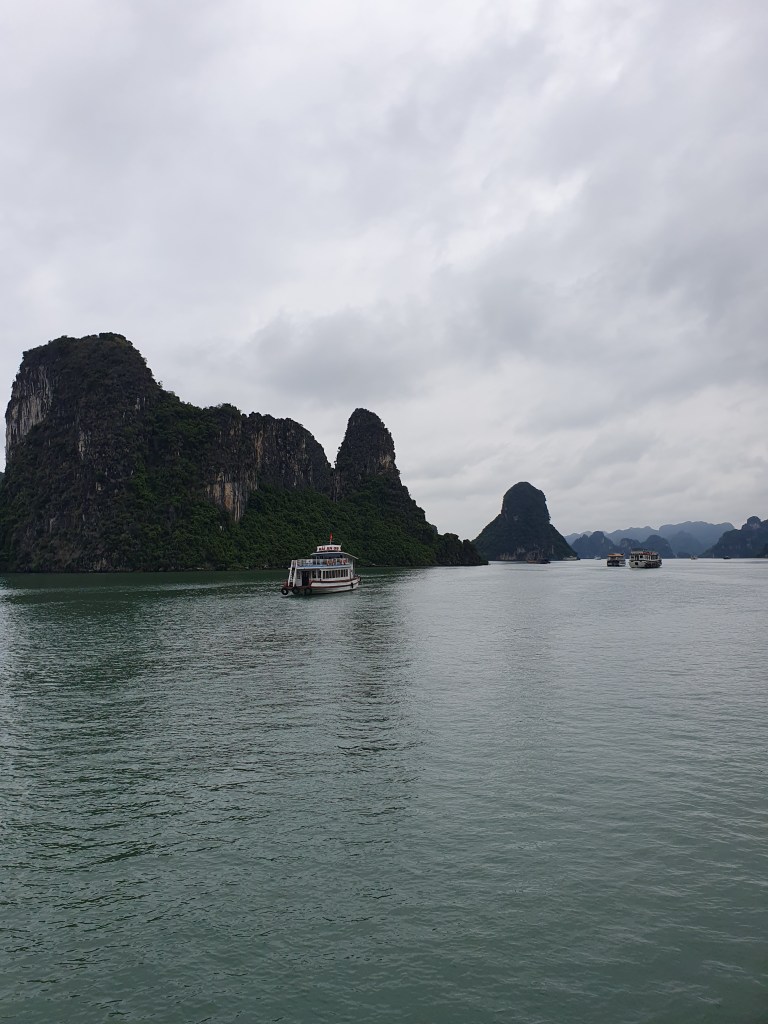
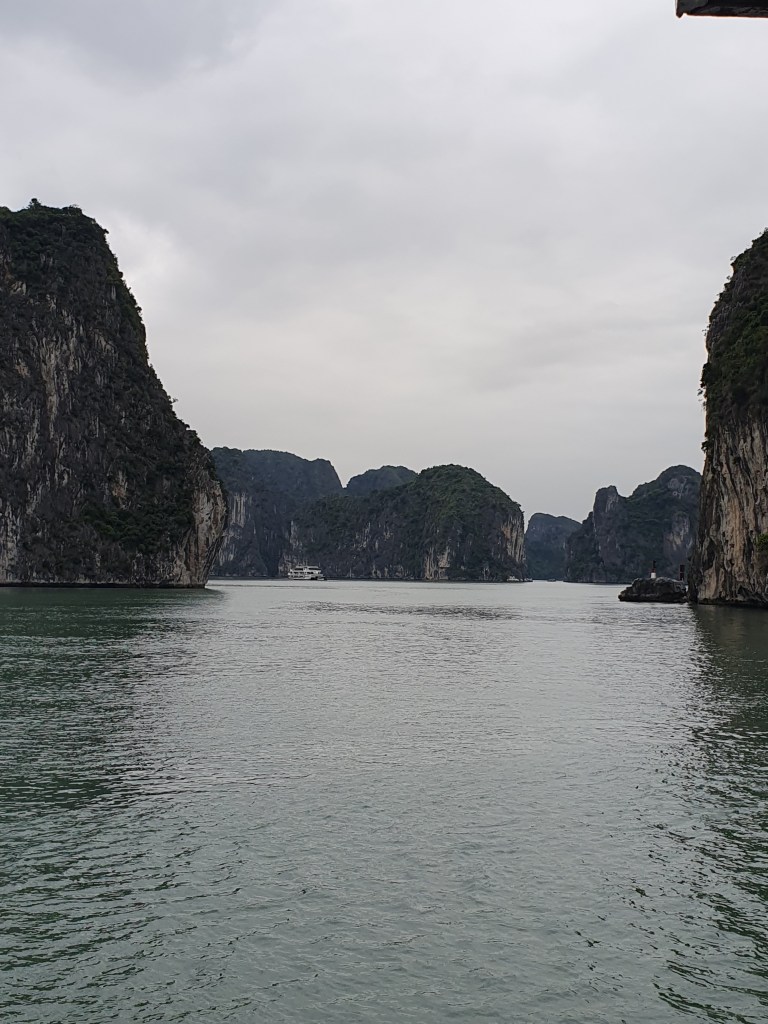
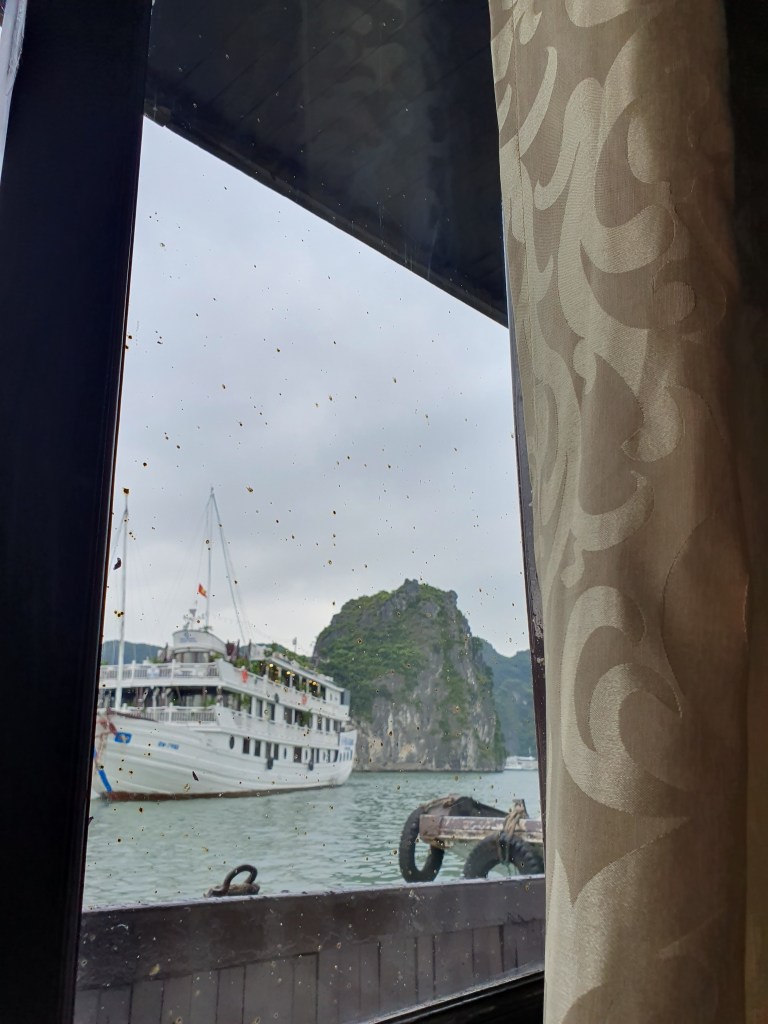
Another day in Hanoi took us on our four hour bus ride to Halong Bay, the famous world wonder that is an absolutely huge bay and once a very important port full of huge bouldering islands. We had a relaxing overnight boat cruise here where the service was amazing and we enjoyed an impressive selection of seafood and bar service on a boat all to ourselves in our small group of nine.

There are many local caves on the islands to explore and we ventured into one, and then towards dusk I had the pleasure of exploring an empty and calm section of the bay by kayak. The only thing that was man made around me was a small floating pearl farm where oysters were floating below growing pearls for fine jewellrey.

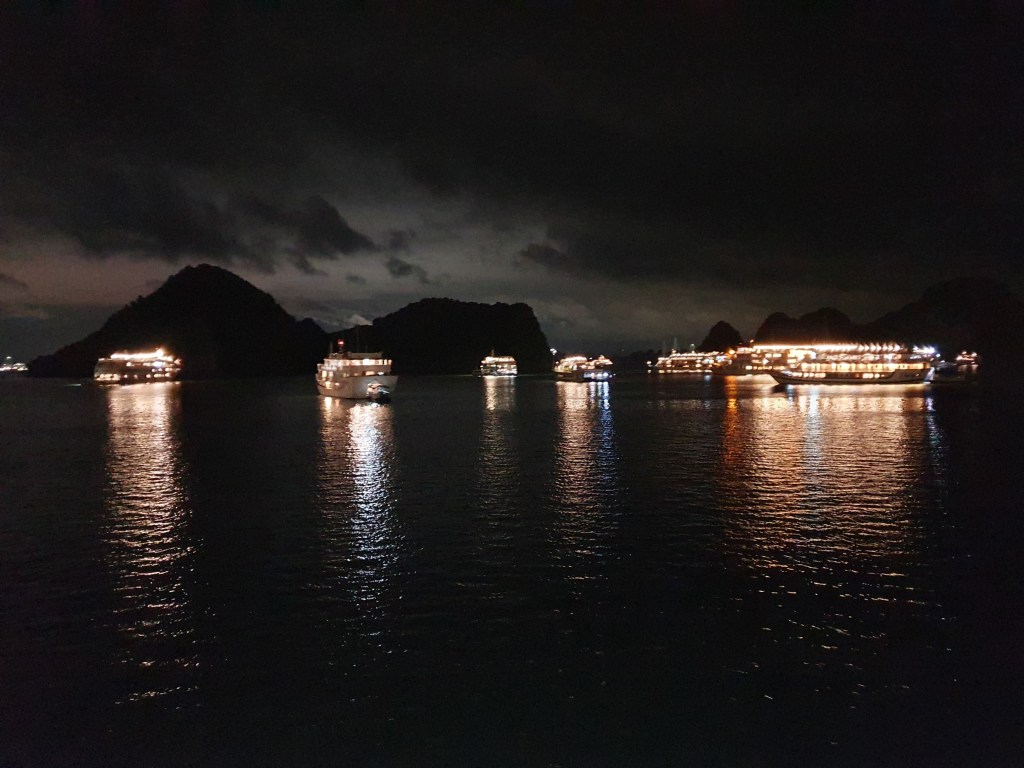
At night all the boats have to gather in one part of the bay so you can enjoy the sounds of distant karaokes and good times from your neighbours all around you.

We also got the opportunity to see some amazing charitable organisations on our route from Halong Bay. Two groups of crafters that were helping their community by making things to sell, one was doing it for the environment and the other for the disabled. I will touch more on this in a later blog.

Back in Hanoi, we had one more opportunity to look around. We tried for a third time to see the train on train street, but this time at night. The train schedules on the internet were all wrong, so we got there badly timed and when we tried to wait the police made us leave, even though we were half way through a paid meal. Overall, I would say only go to train street if you are happy to waste a lot of time and maybe only see the tracks.

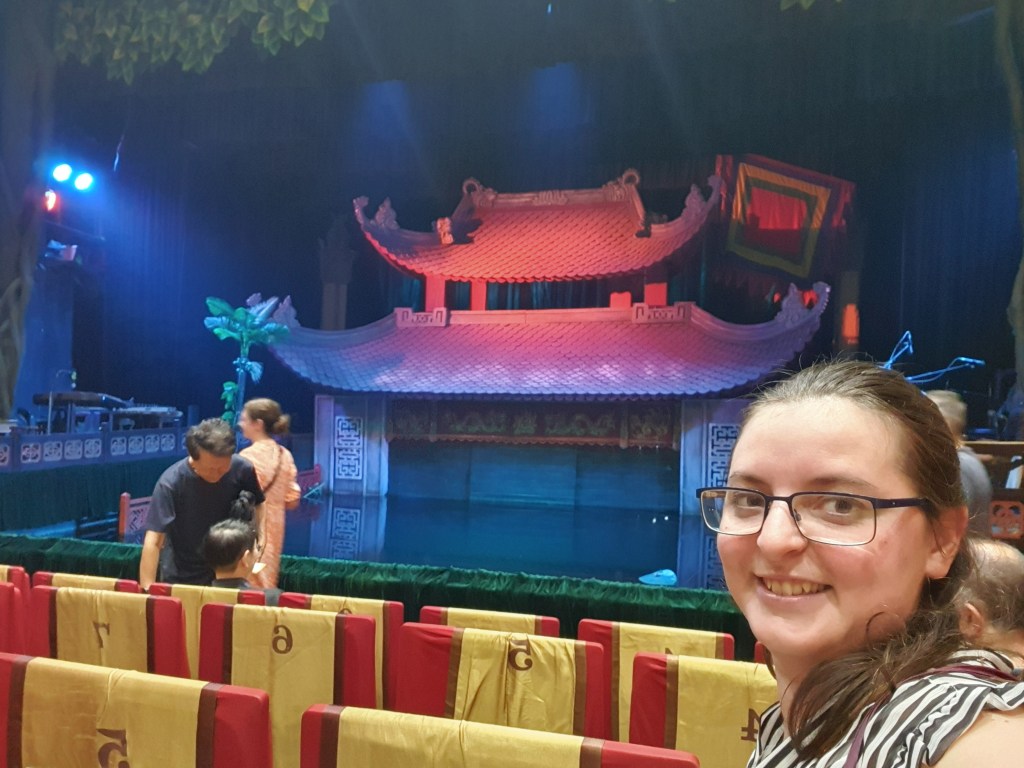
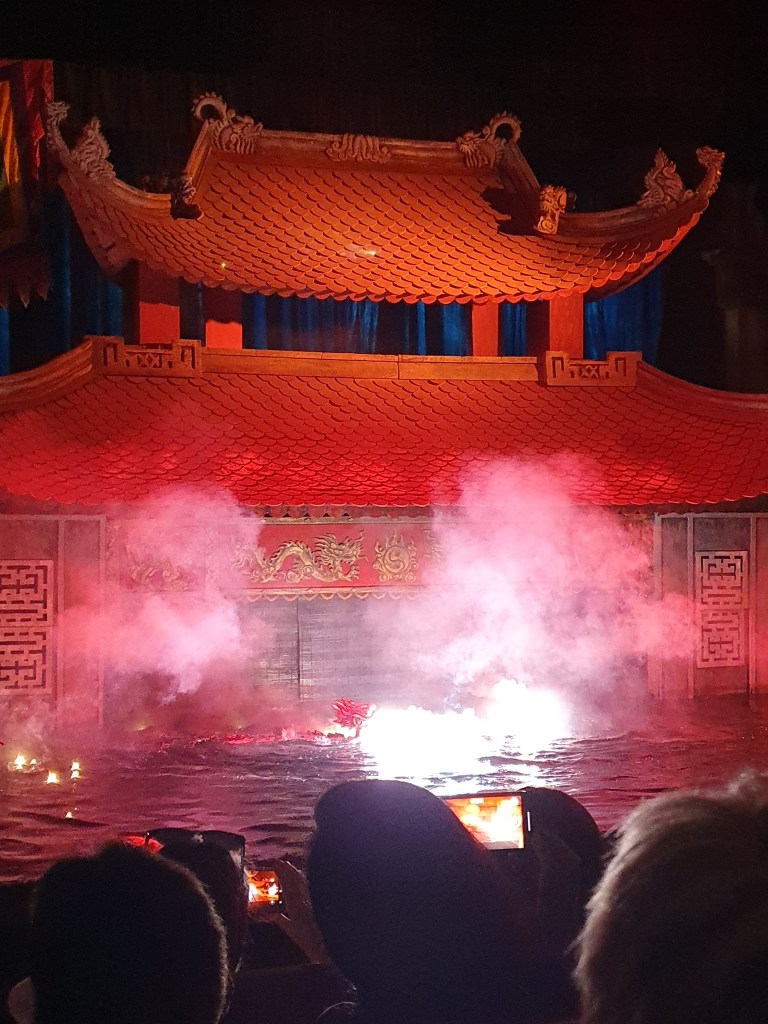
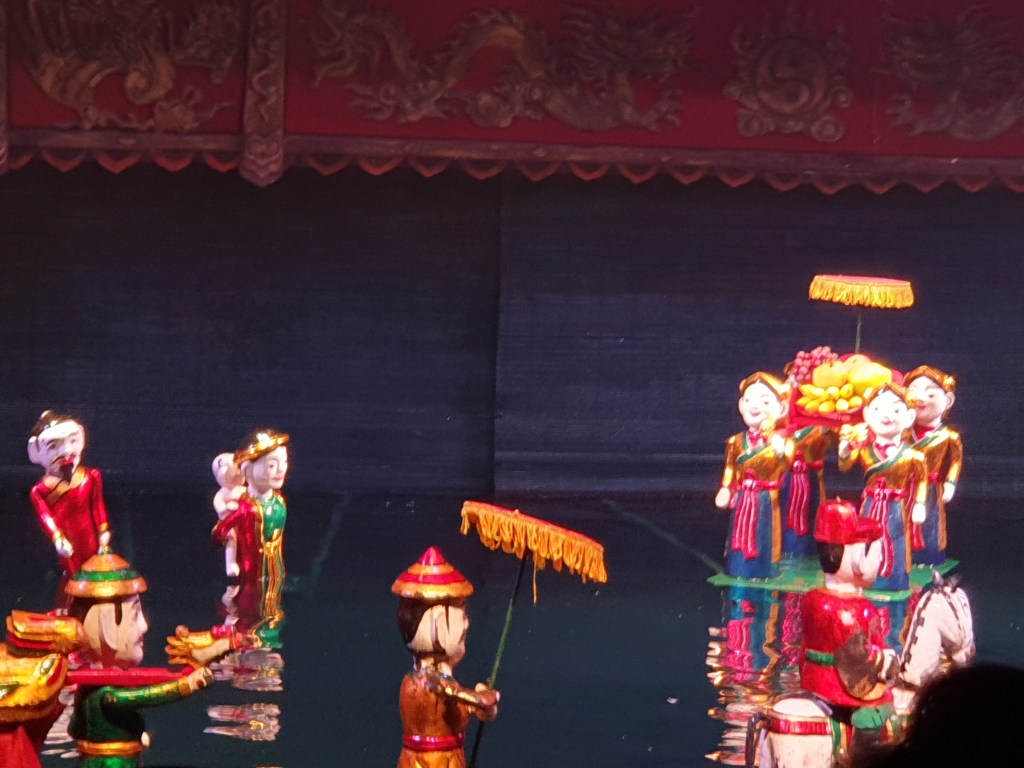
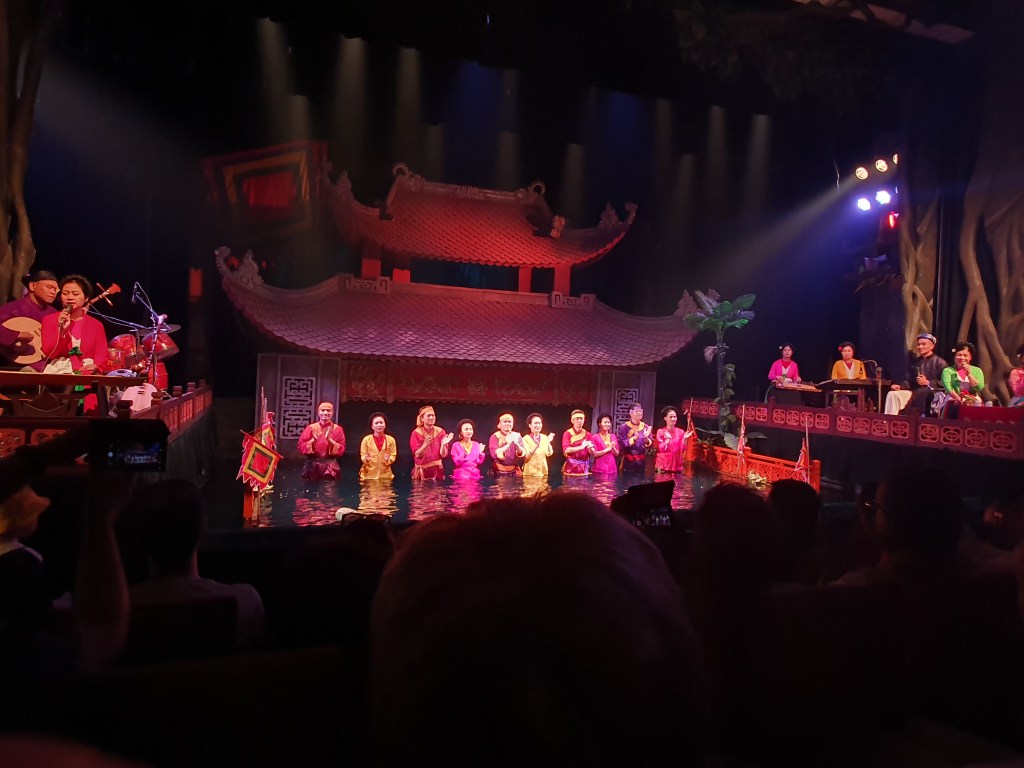
Something that was well worth it for only about £6 and 1 hour was the Thang Long water puppet show by the lake. This show was a traditional artform telling folk stories of Vietnam in their language and with singing, using puppets within a big pool of water.

I wasn’t sure if it would be entertaining enough, but it was actually very funny at times and the show somehow managed to use smoke and fireworks on the water aswell which I dont even understand how. The best part may have been the music though. There was an orchestra of local folk musicians playing traditional and strange instruments and all in vietnamese formal wear. Overall it was super impressive!

Hue

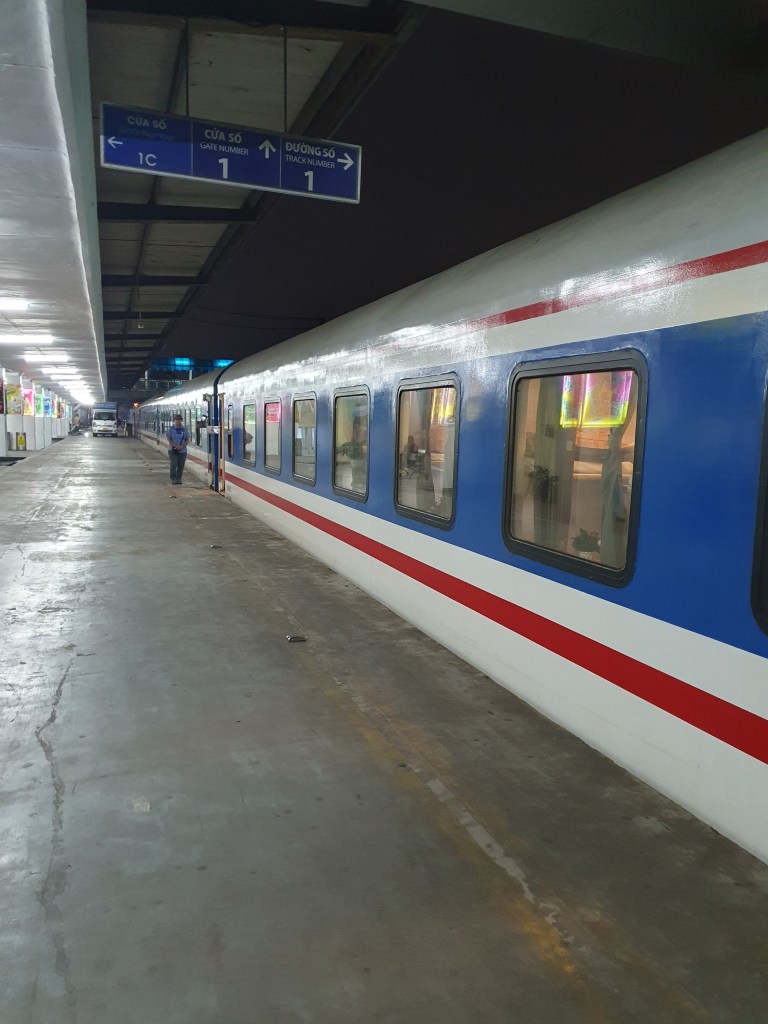
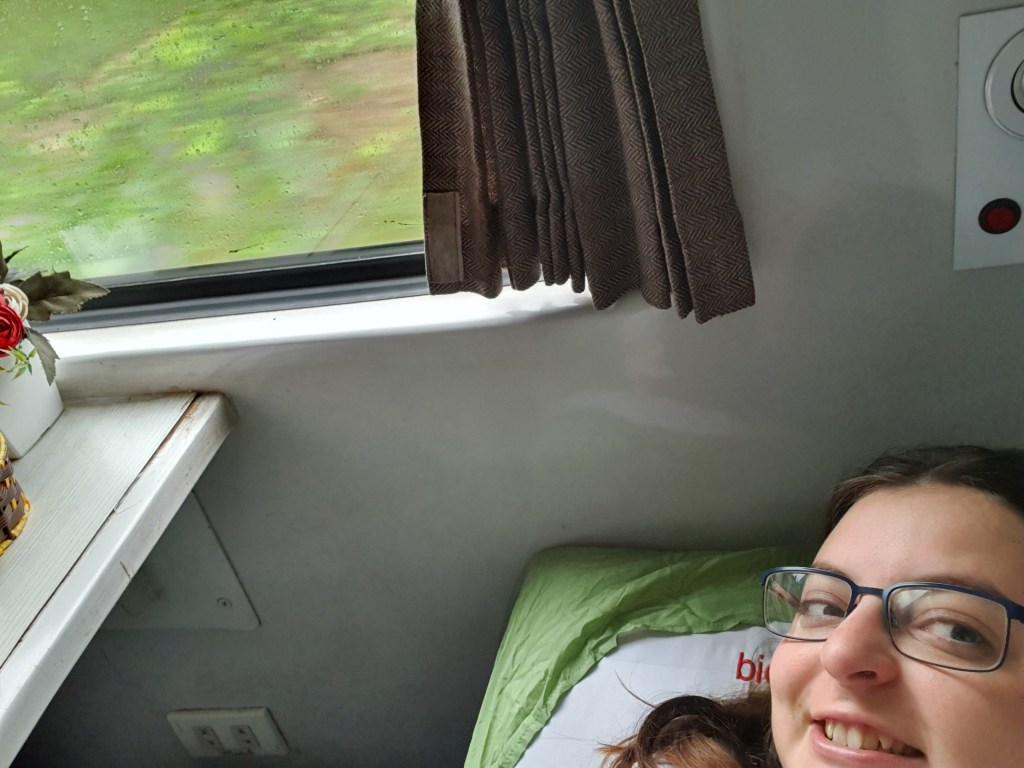
Writing this section of the blog at 4am from a twelve hour sleeper train from Hanoi to Hue. Sharing a bunkbed in a room with three other travellers, I feel quite at home and I am enjoying the bumpy swaying of the carriage more than expected.

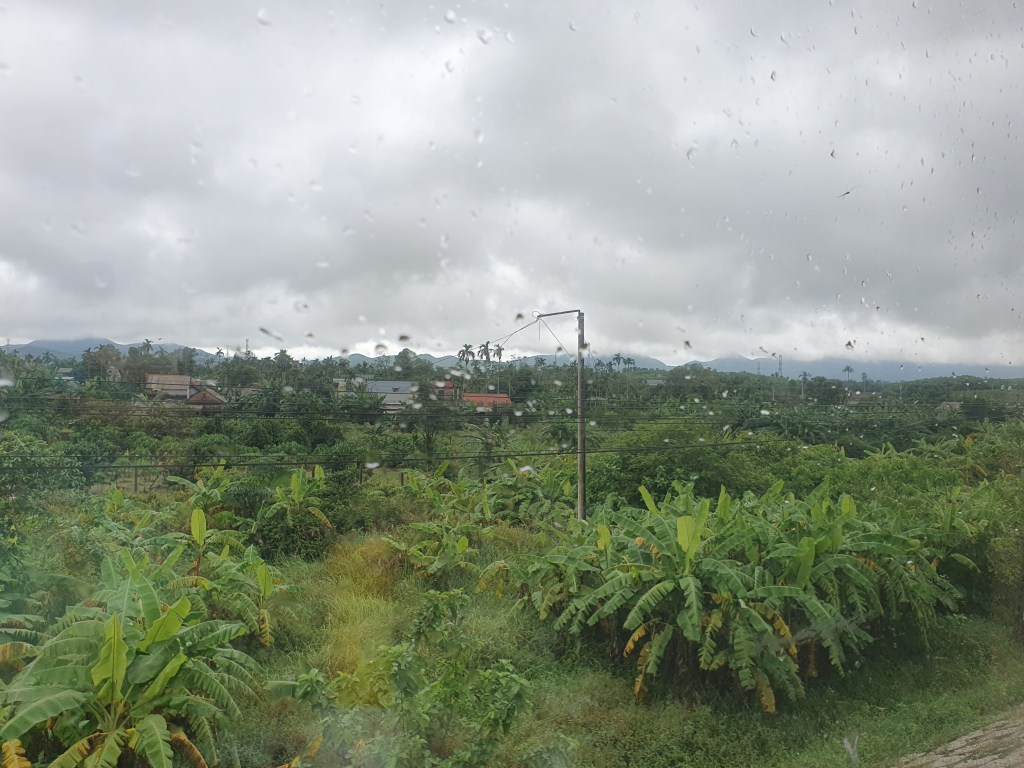
At night I can see the reflections of the train in nearby waters and marshlands and the odd distant light of a farmer or two working in the fields and by day the scenery becomes many small villages and plenty of rain!

The train has different classes, we are in a 4 berth, but there are 6 berth and then soft reclining seats and hard seats (for those true hardasses – literally). My room is quite good with a little mattress, space under the bed and a table with a selection of sweets.

The only thing that has been a horror is as expected, the bathroom situation. There is either a squat room for guess what.. squatting, or there is a western style toilet. The toilet started off okay but now I can tell you that by 4am it is not okay. Its a horror show. I am trying to figure out how I can not pee now until 11am. Note to self, must purchase a she-wee for travels!

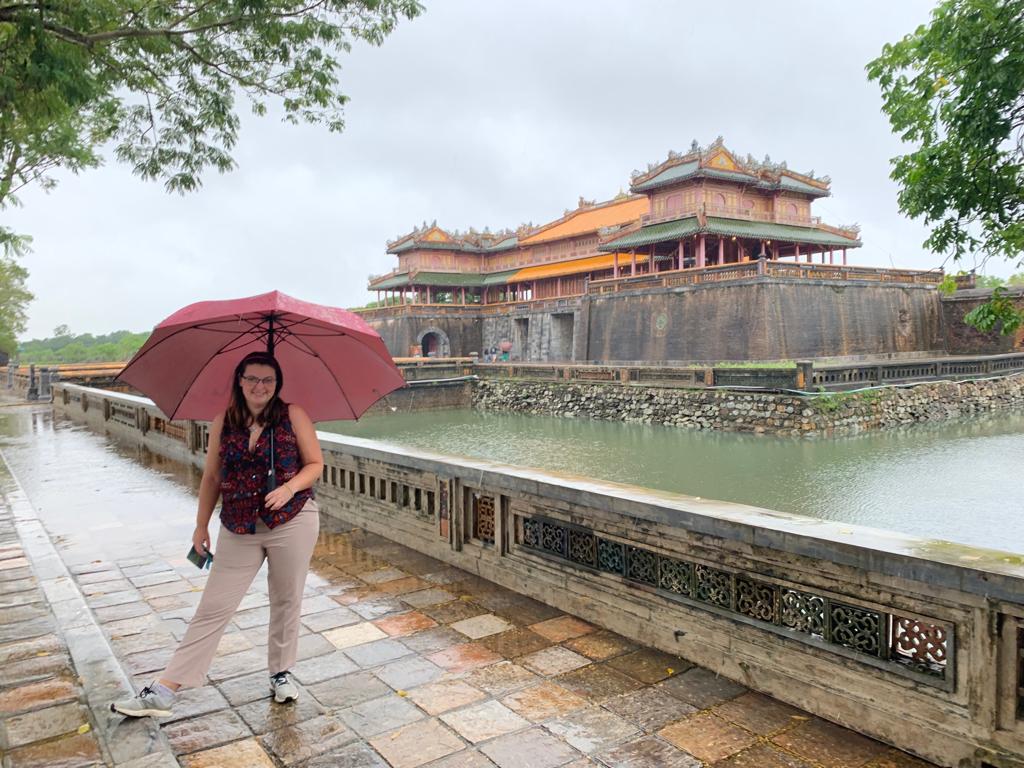
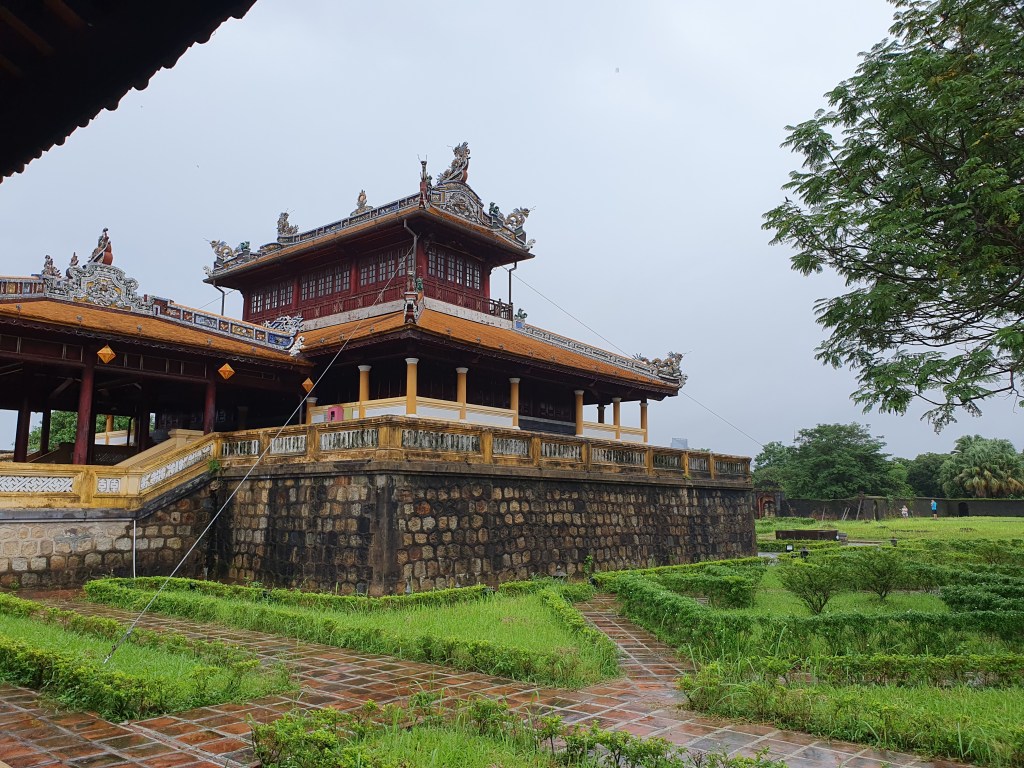
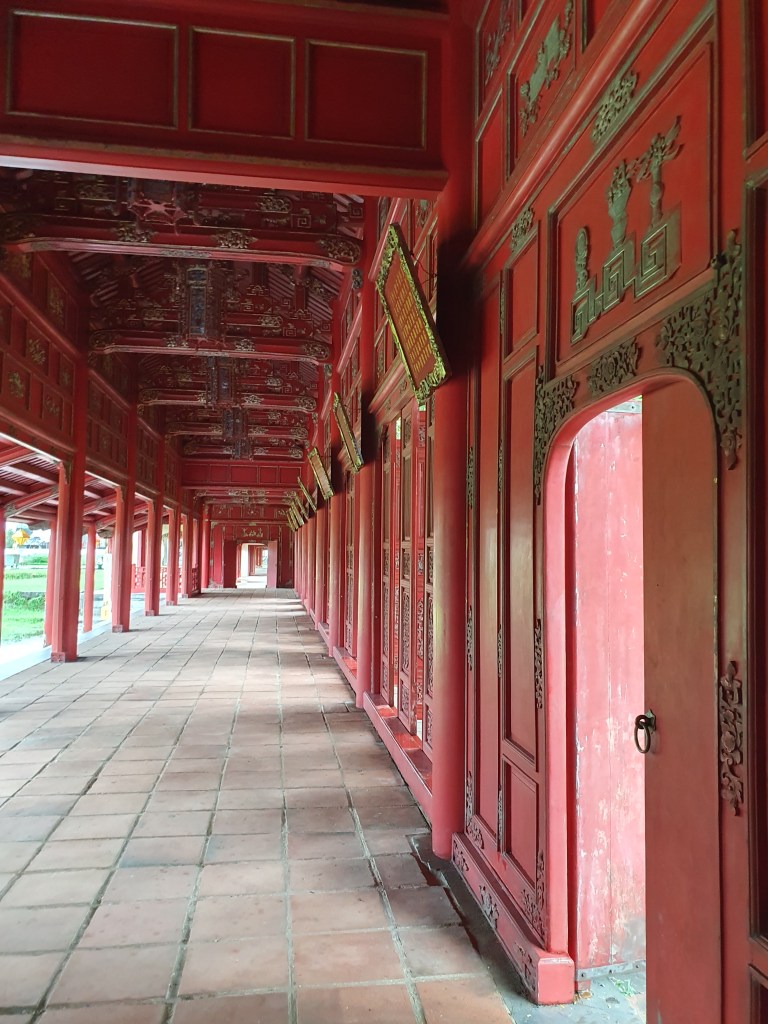
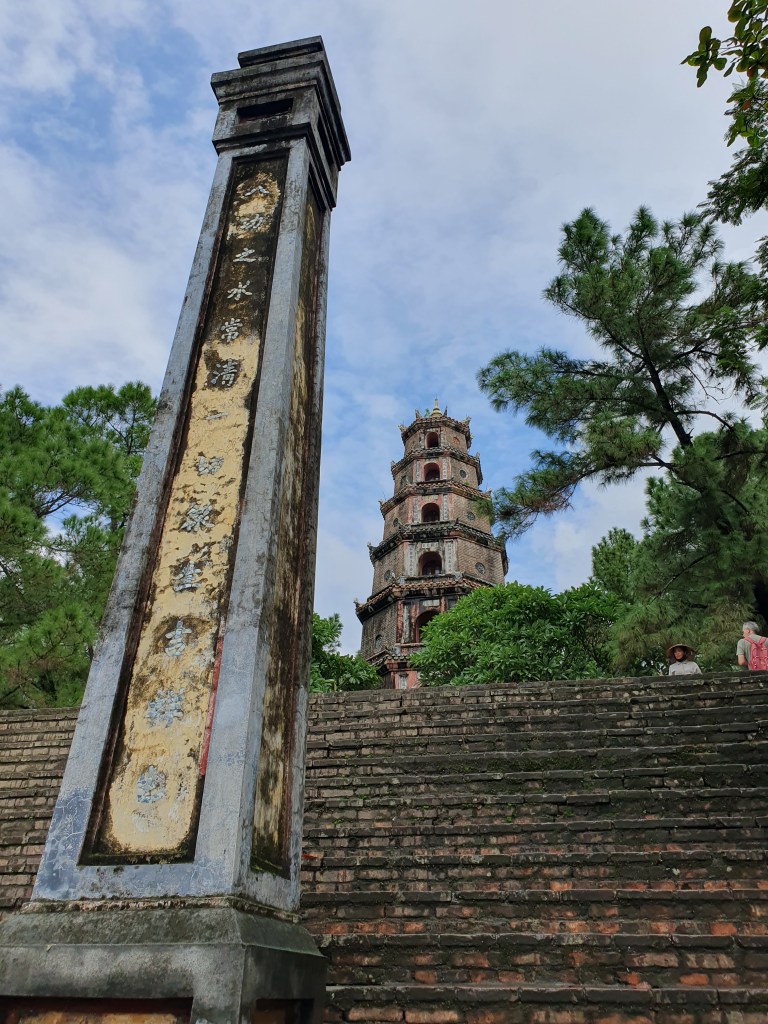
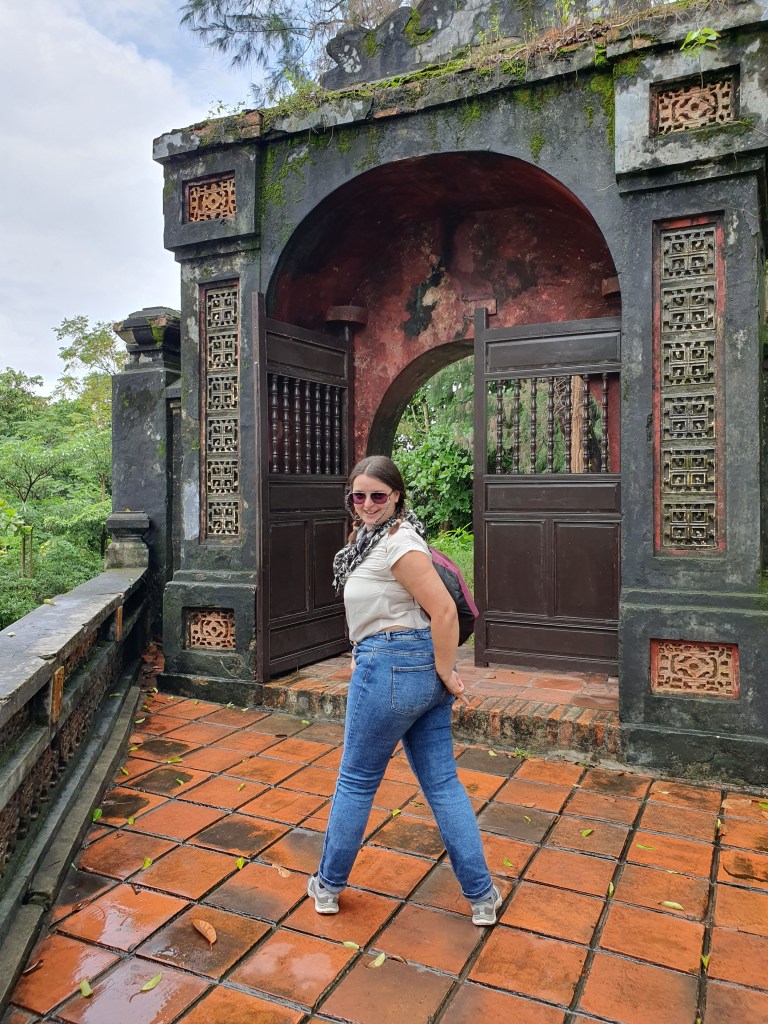
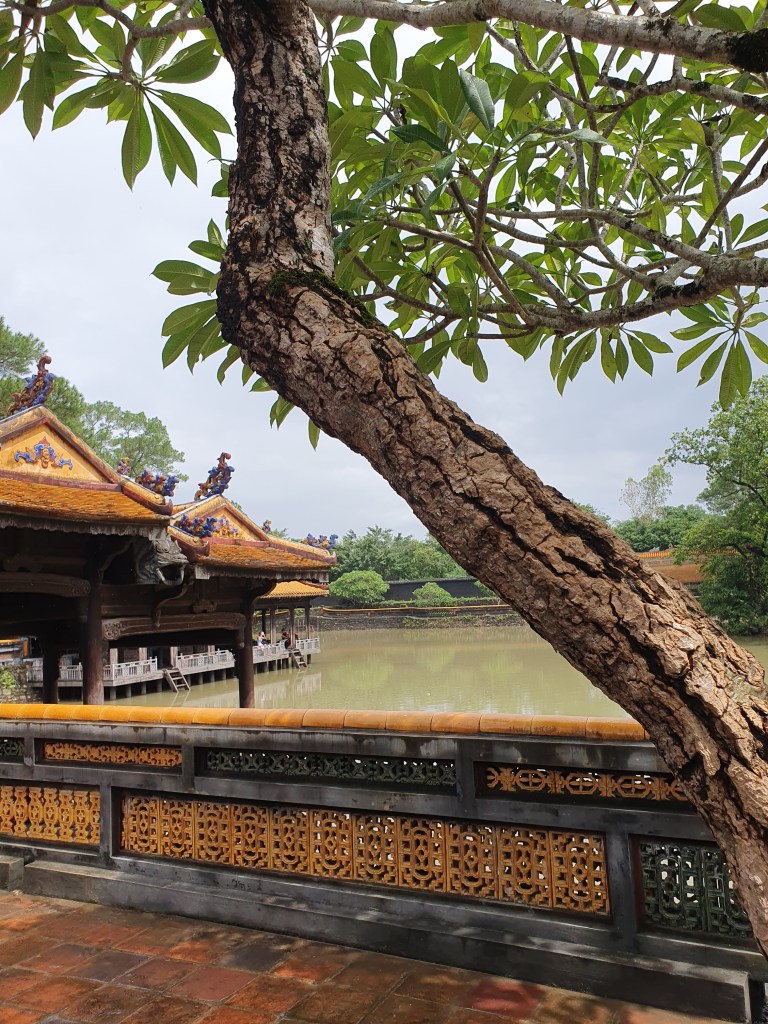
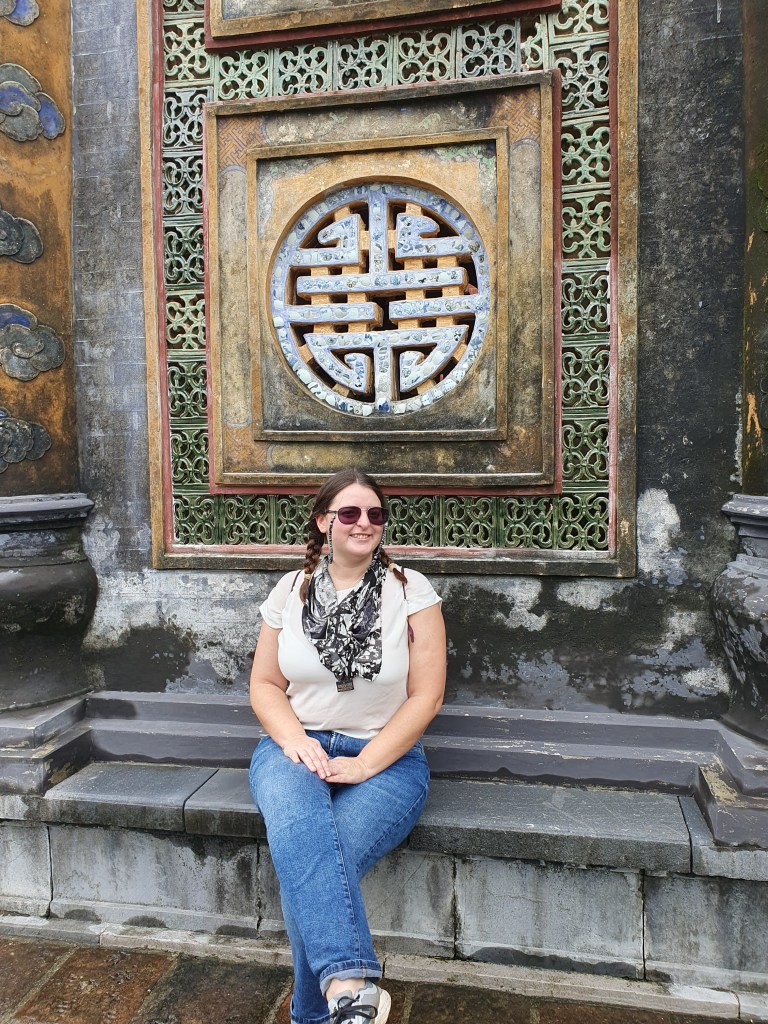
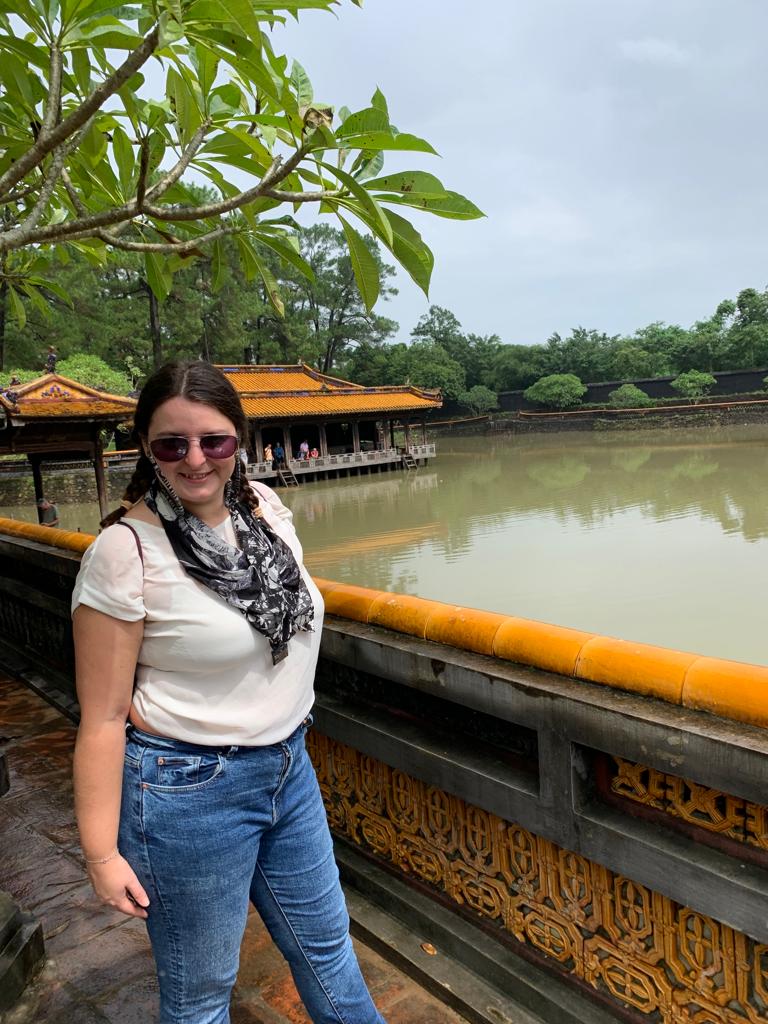
Once we got to Hue and freshened up at our hotel, with an umbrella in hand, we were guided to the ancient citadel. Hue was historically the imperial capital and home of the kings of Vietnam. It still has the 21 metre thick walls surrounding it and many of the original buildings either still exist or have been rebuilt or are in the process of being rebuilt after collapsing from weather or war bomb damage.

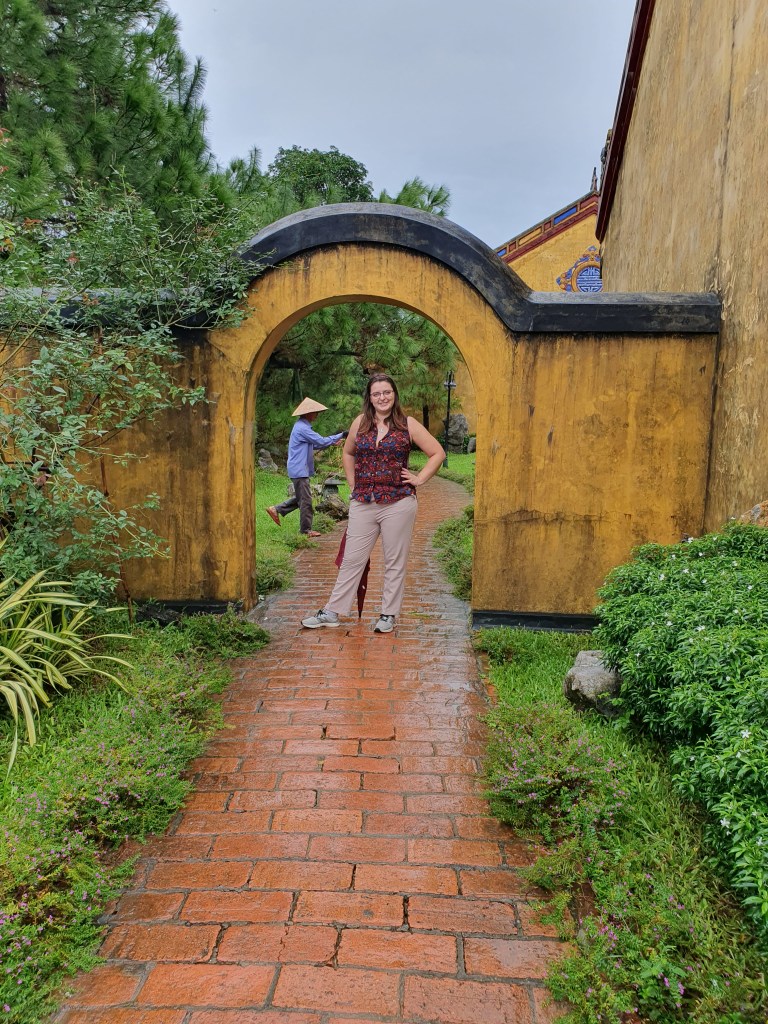
The site is very pretty and a bit of a maze to walk around if you do not have a guide. It is mostly an outside visit except for a few locations where you can visit inside after slipping off your travelling shoes. I Particularly enjoyed the king’s gardens with many bonsai trees and bright green foliage. Obviously, due to all the rain, but green is my favourite colour so I’m okay with that!

The stories about the kings were interesting too. Kings were seen as Gods by the people, but for many centuries the kings were actually puppets for the french to put their influence over Vietnam. The kings ranged from 7 year old boys to a man that went from being a king to a french pilot. So random!

Later in the evening I had dinner with a local family that had been there for generations and the lady’s grandfather had been a direct servant of the king. The family now are well off in the area but still cannot afford to travel much and still work very hard. It is becoming apparent how hard people in Vietnam work to make a minimal living.

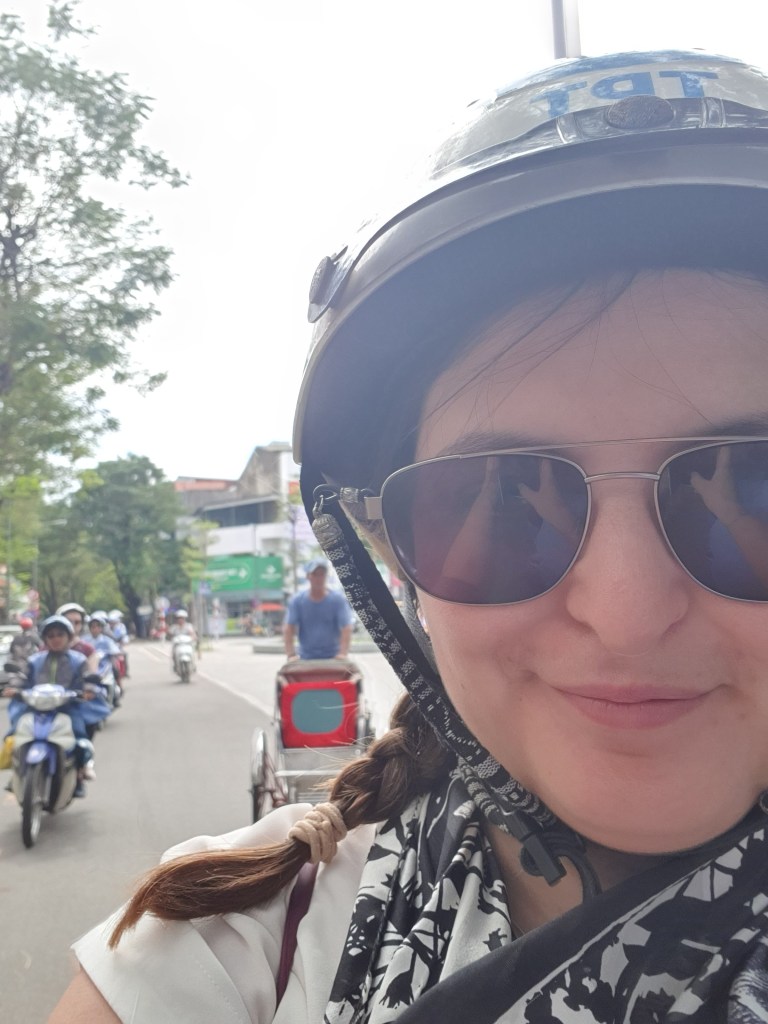
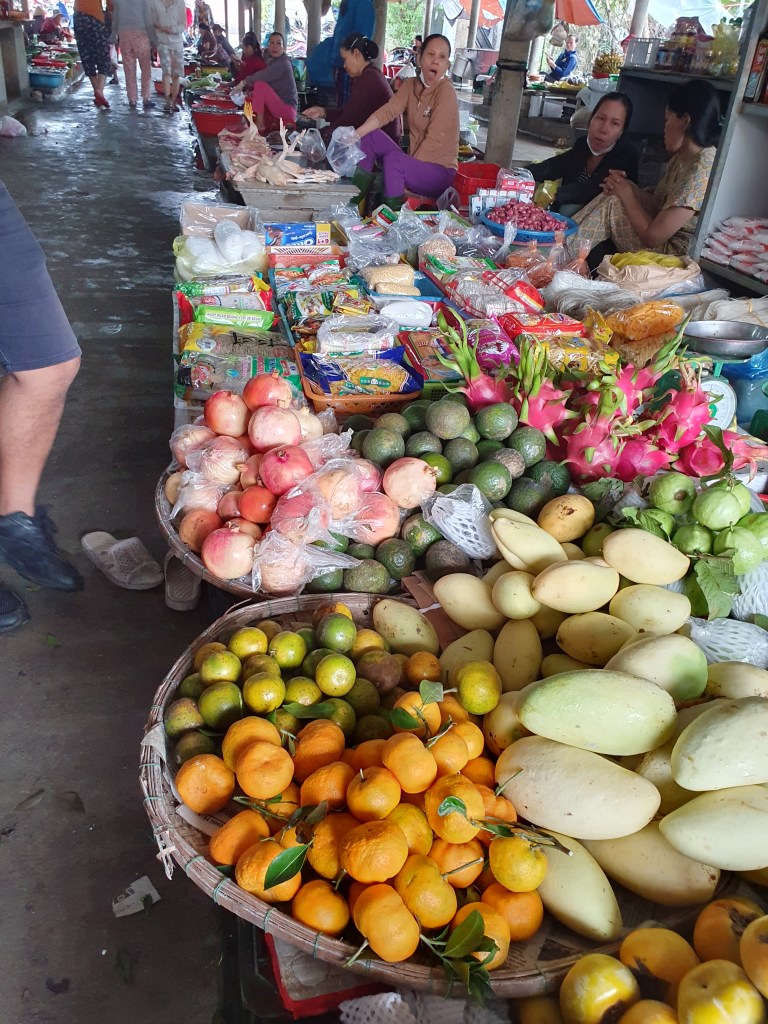
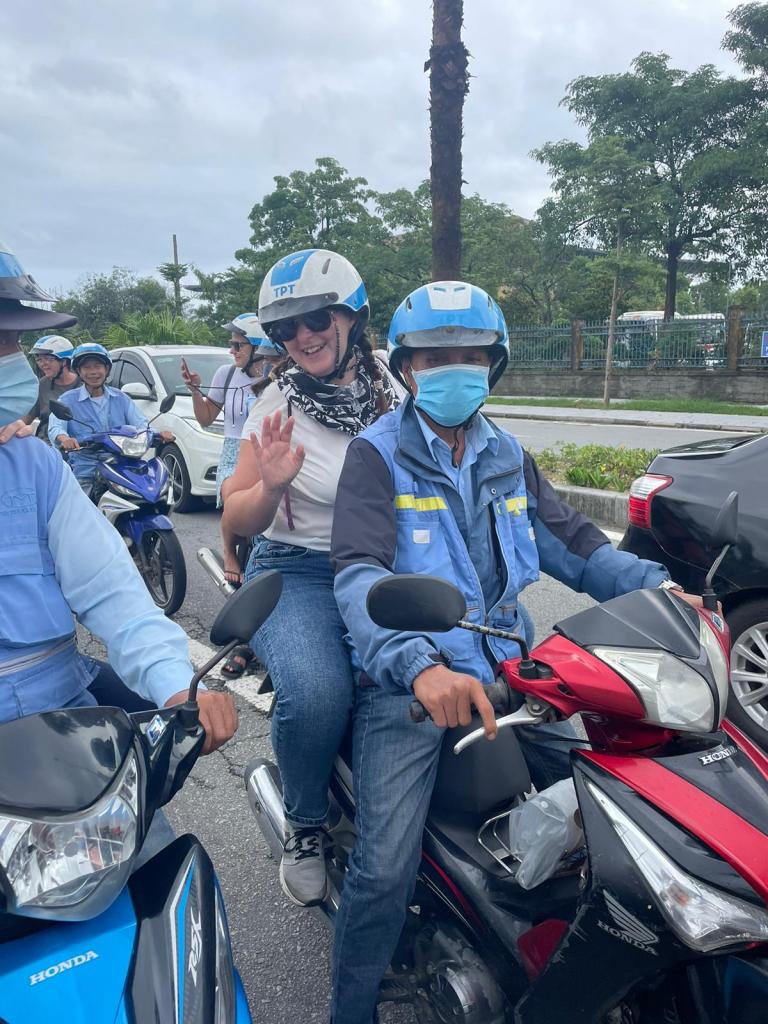
The next day in Hue, we ventured around the surrounding countryside and the town centre by motorbike. This thrilling experience was one I will never forget I imagine, it was an adreline rush full of beauty and culture. As I rode pillion to a Vietnamese man named (‘kern’) I explored a king’s final resting place, a local fresh market (where it is so fresh that the animals are still alive), and a local monk community. What a thrill!

Next day we move on to the South to Hoi An… in my part 2 blog.

Me at Halong Bay

Valencia: A City of Design

A city full of history and creativity. This large city has been designed into separate sections; an old town, a suburban area and the new arts and sciences city complex. I really enjoyed exploring what the city had to offer.

City of Arts & Sciences

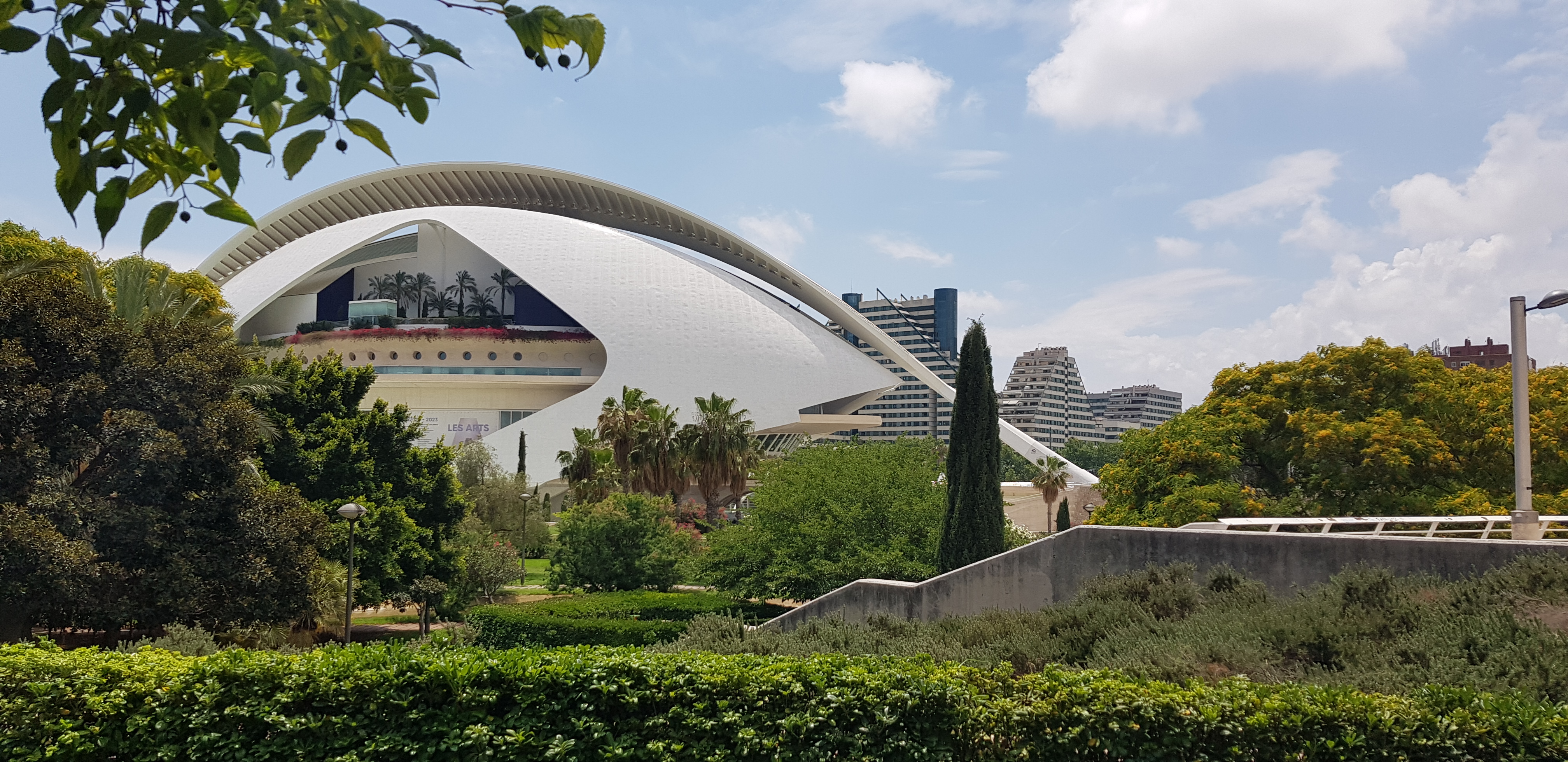
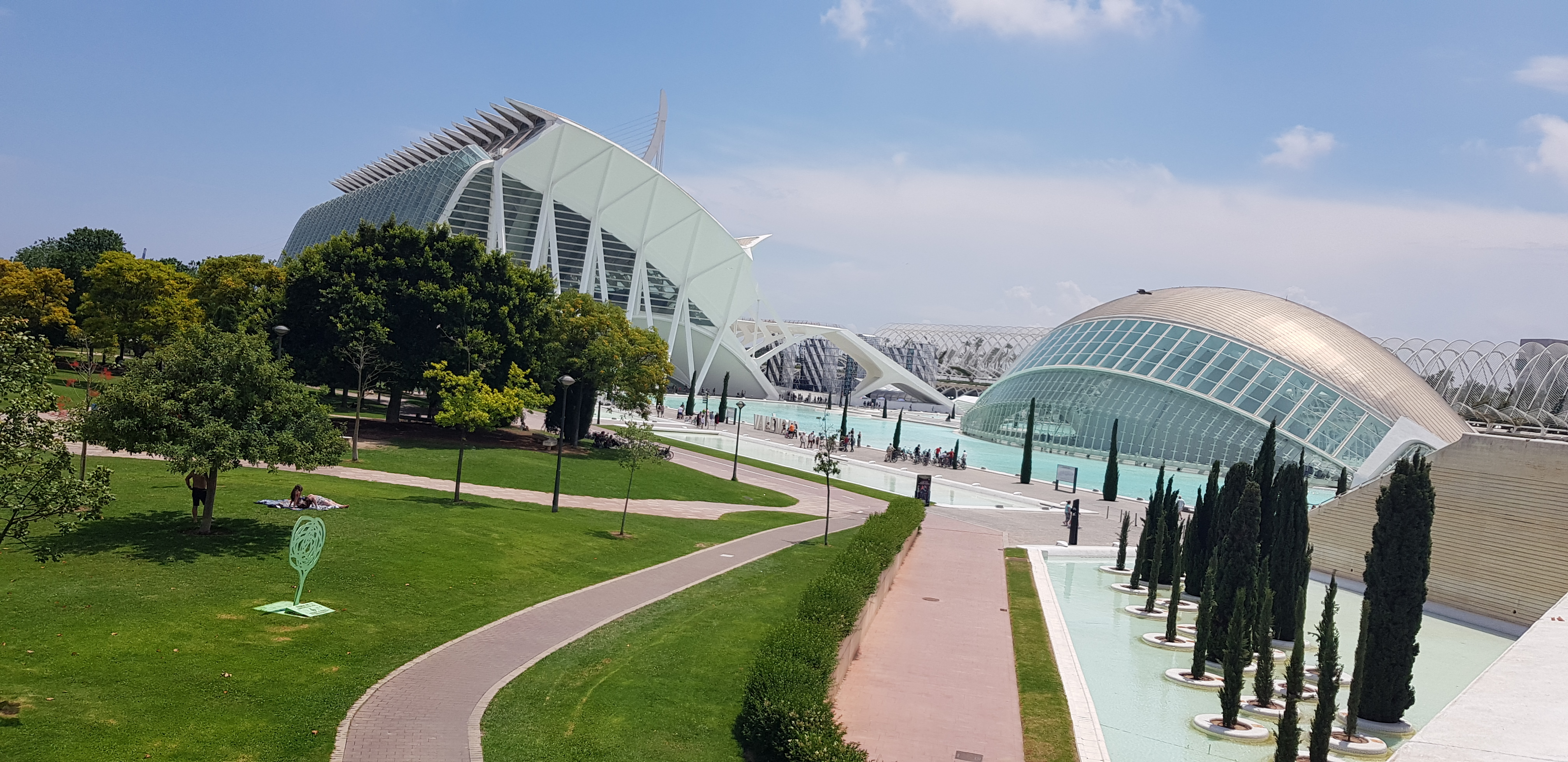
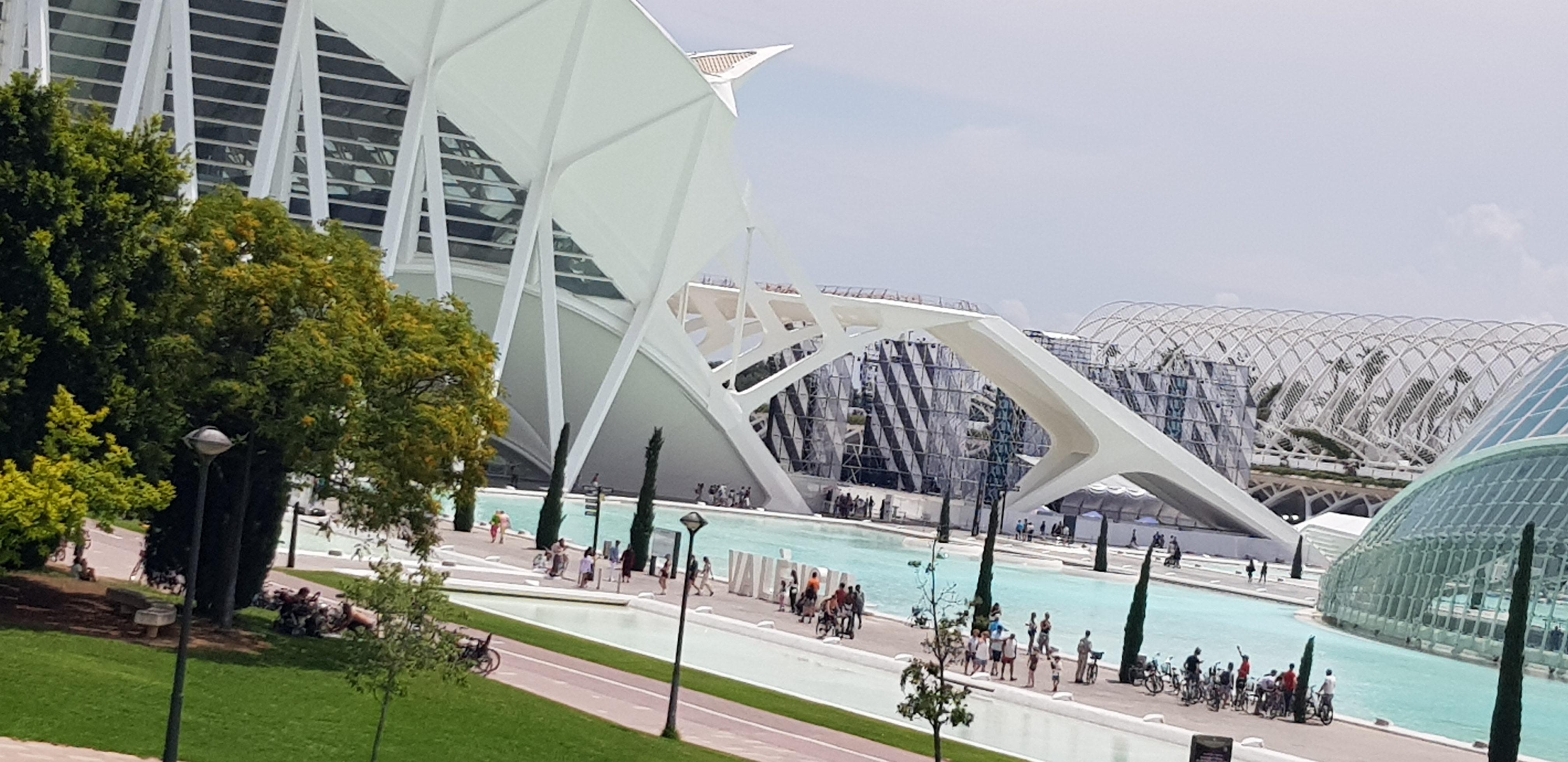
The City of Arts and Sciences is a modern tourism zone on the outskirts of the city offering open park spaces to relax, museums to visit, the oceanografica (world famous aquarium) and a manmade lake where you can do stand up paddle boarding if the feeling strikes you!

This impressive site has a mixture of buildings that have been specifically designed by architects to reflect specific shapes and content. The site really wowed me when I first saw it on a drive by, especially one building that is cleverly shaped as an eye!

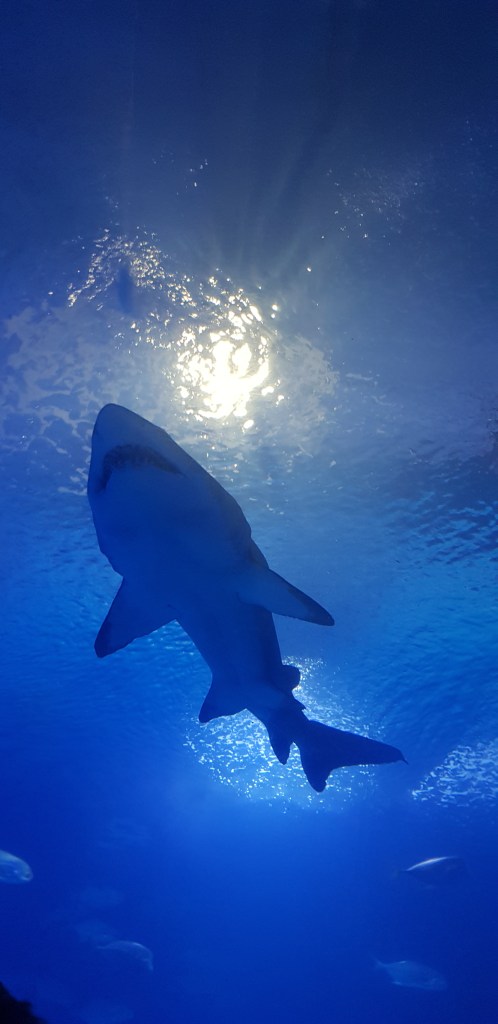
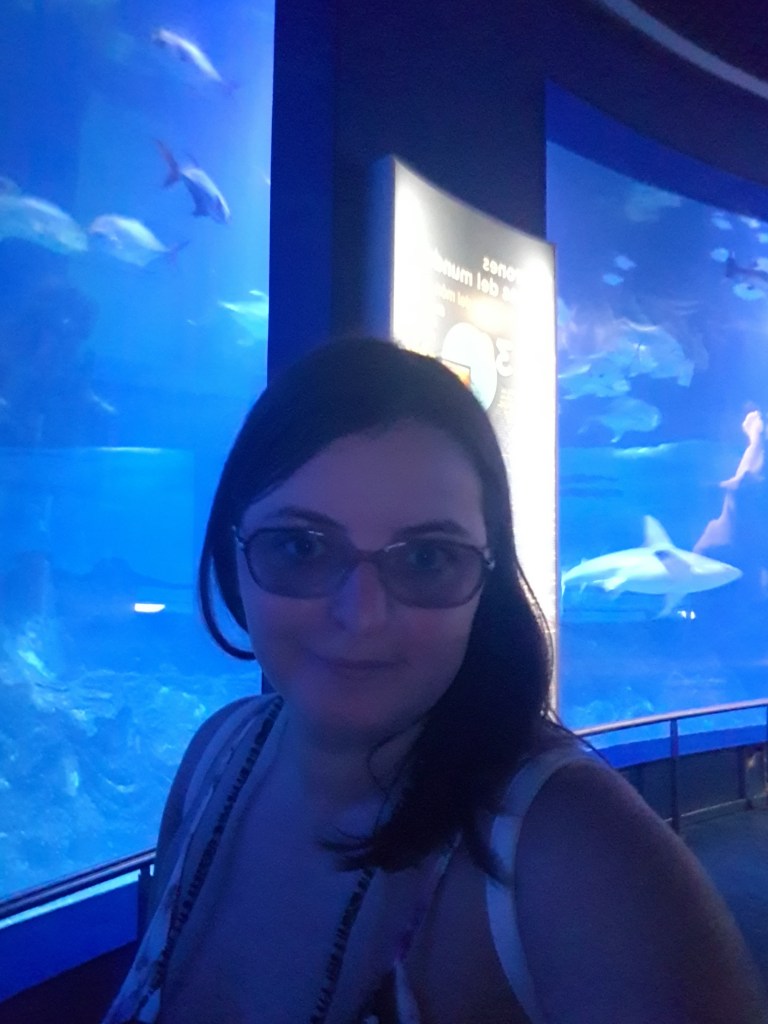
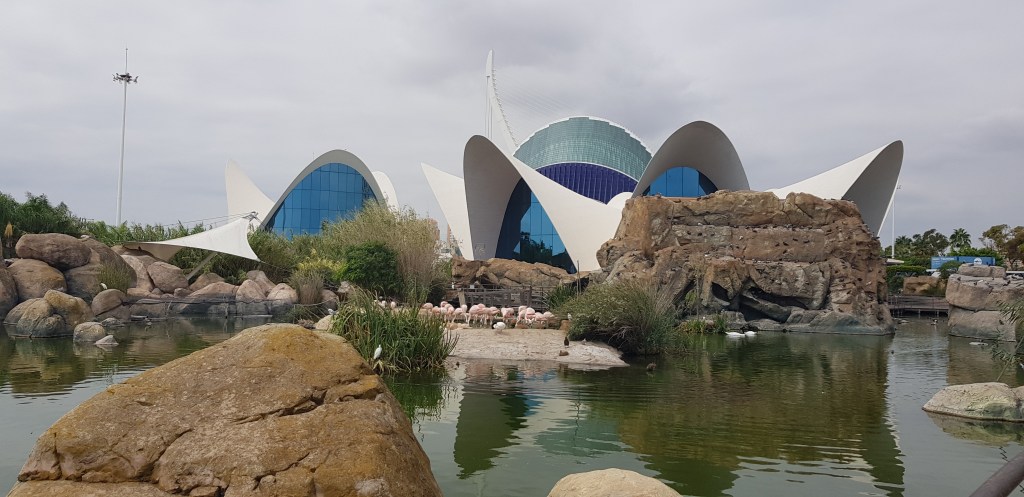
One of the times I visited here, I decided to go to the Oceanografic attraction, Europe’s largest aquarium. The site is very well designed with different sections of the park devoted to different world climates; Tropics, Mediterranean, Wetlands etc. The attraction has impressive underground displays of huge tanks and tunnels of sharks, stingrays and a variety of fish. There is also a huge dome simulating the Antarctic for the penguins, an aviary dome, and a huge theatre for dolphin shows.

I was really impressed with the layout of the park and the displays offered, but I cannot help but lean on the opinion of my cabin mate, a yoga teaching vegan, that the containment of Whales and even Dolphins is not right. This is not something that usually bothers me and on visiting Seaworld Florida behind the scenes and other locations, sometimes these animals are rescued and rehabilitated which is great, but looking in Valencia at a single beluga whale circling a small enclosure considering its size, I could not help but feel bad. In this case, I say ‘set him free’!

Old Town

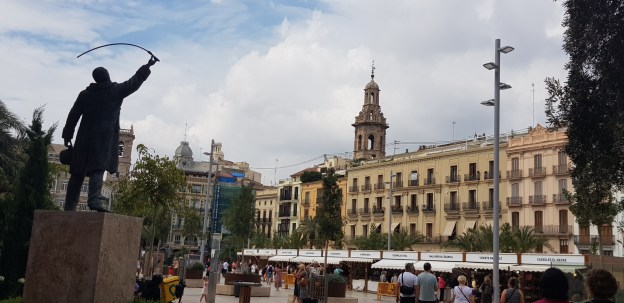
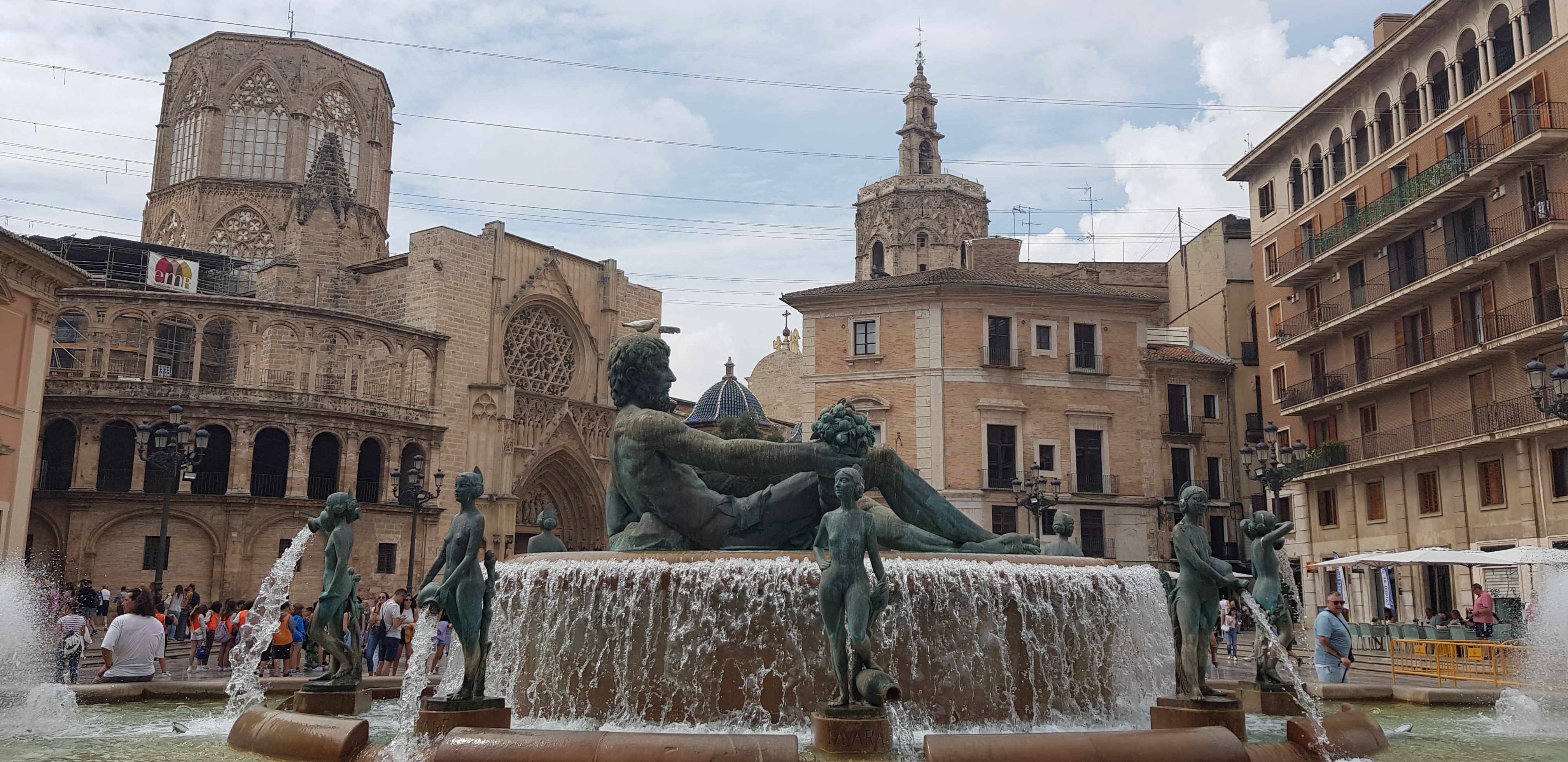
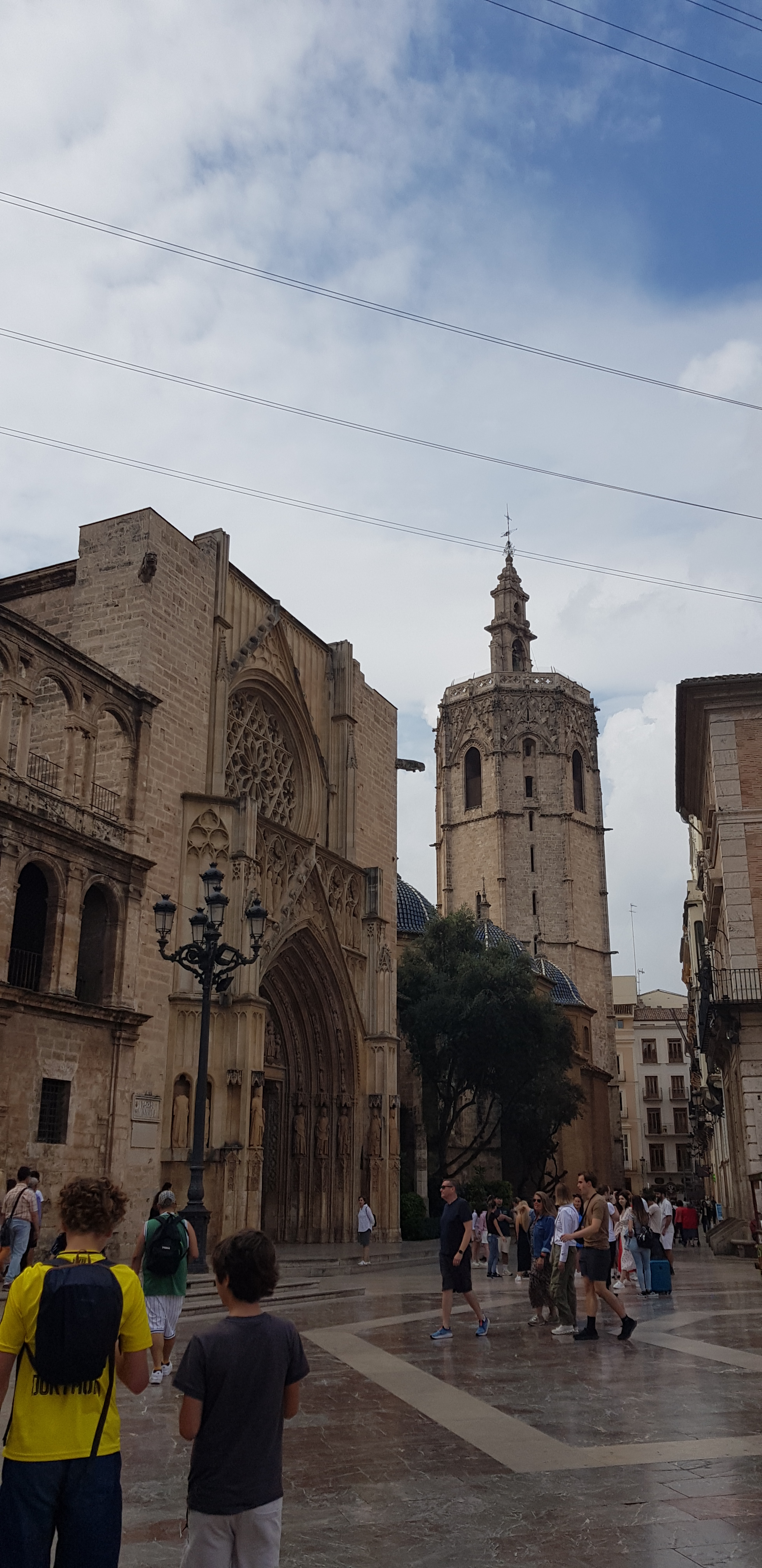
Back in the historic city centre of Valencia which is now mostly pedestrianized, I found a pleasant array of squares, churches and an undeniable charm surrounding me.

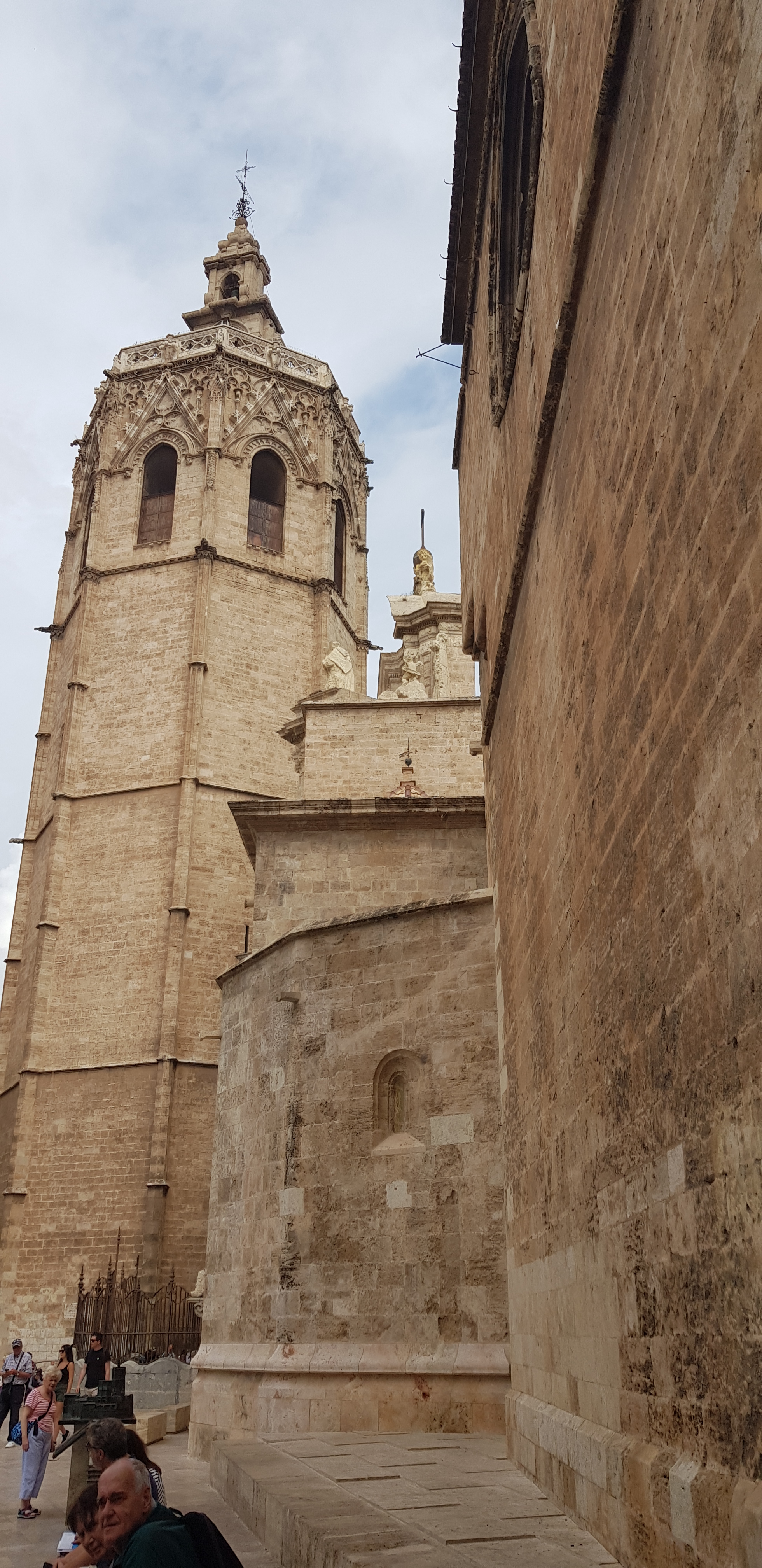
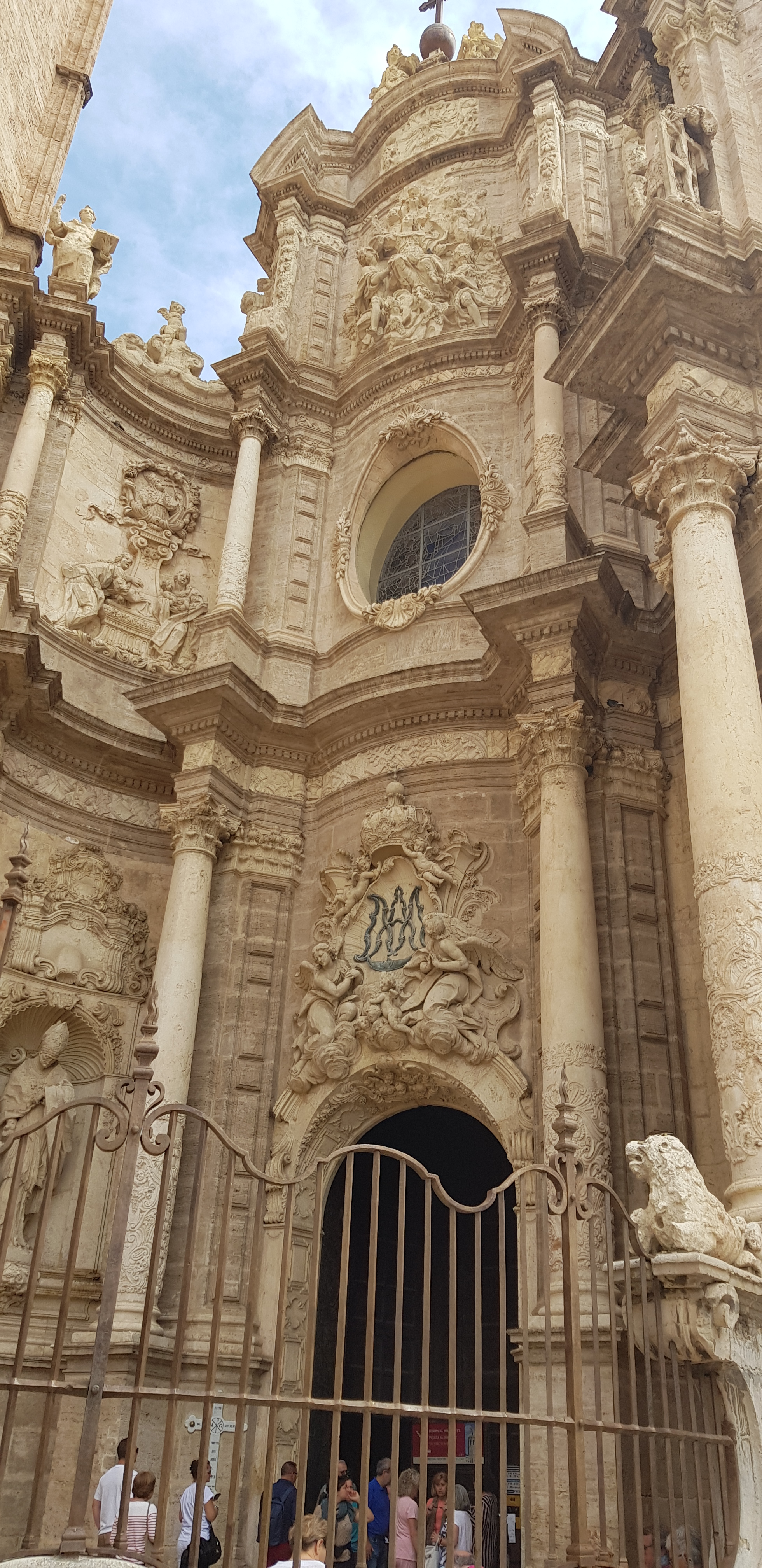
The cathedral is very beautiful and has a particularly striking tower that can be instantly recognised, to set Valencia apart. When visiting the cathedral, I decided to climb the many steps of the tower which allowed me to enjoy great views of the old town and further, as well as see the tower bell up close.

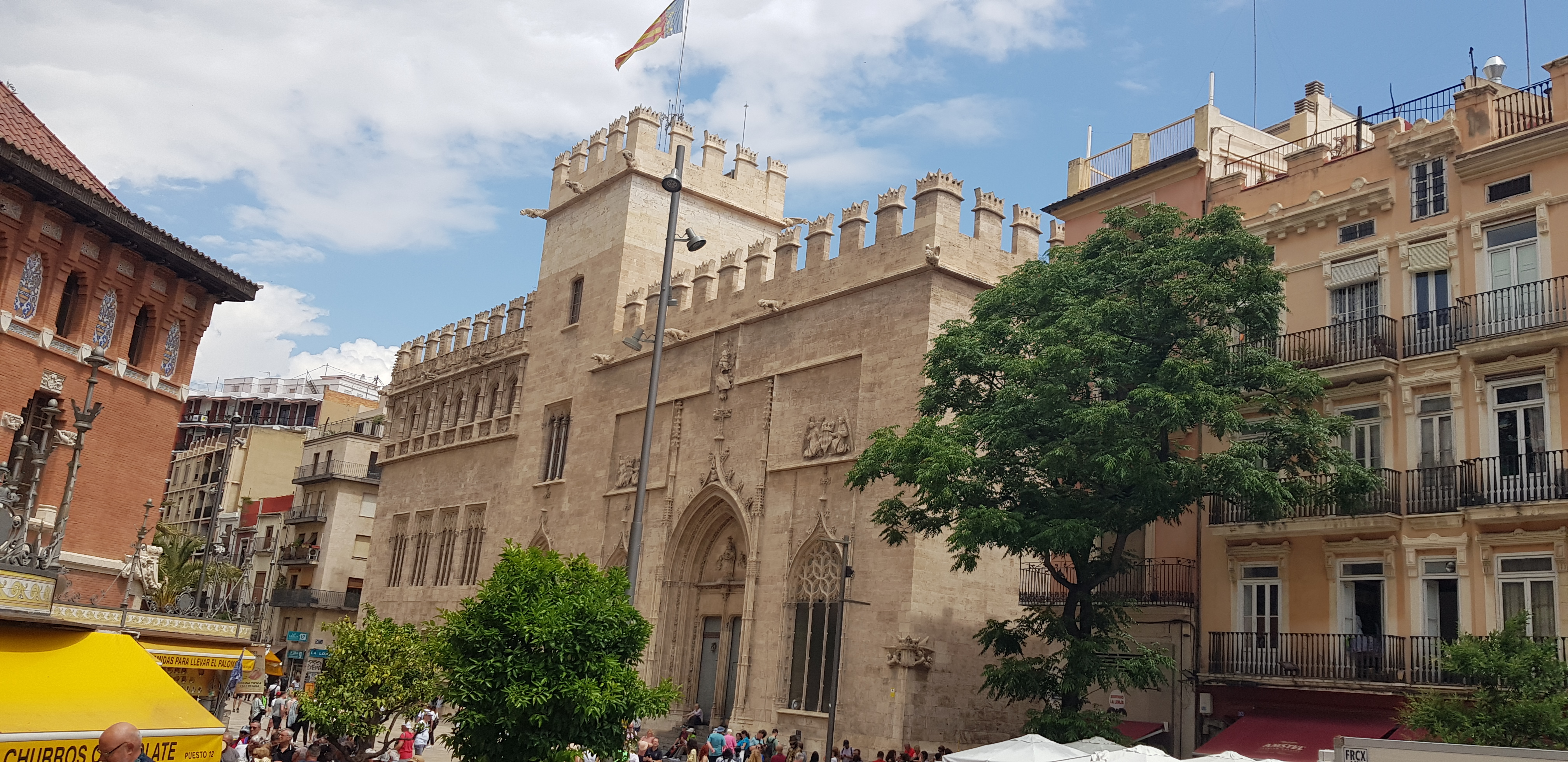
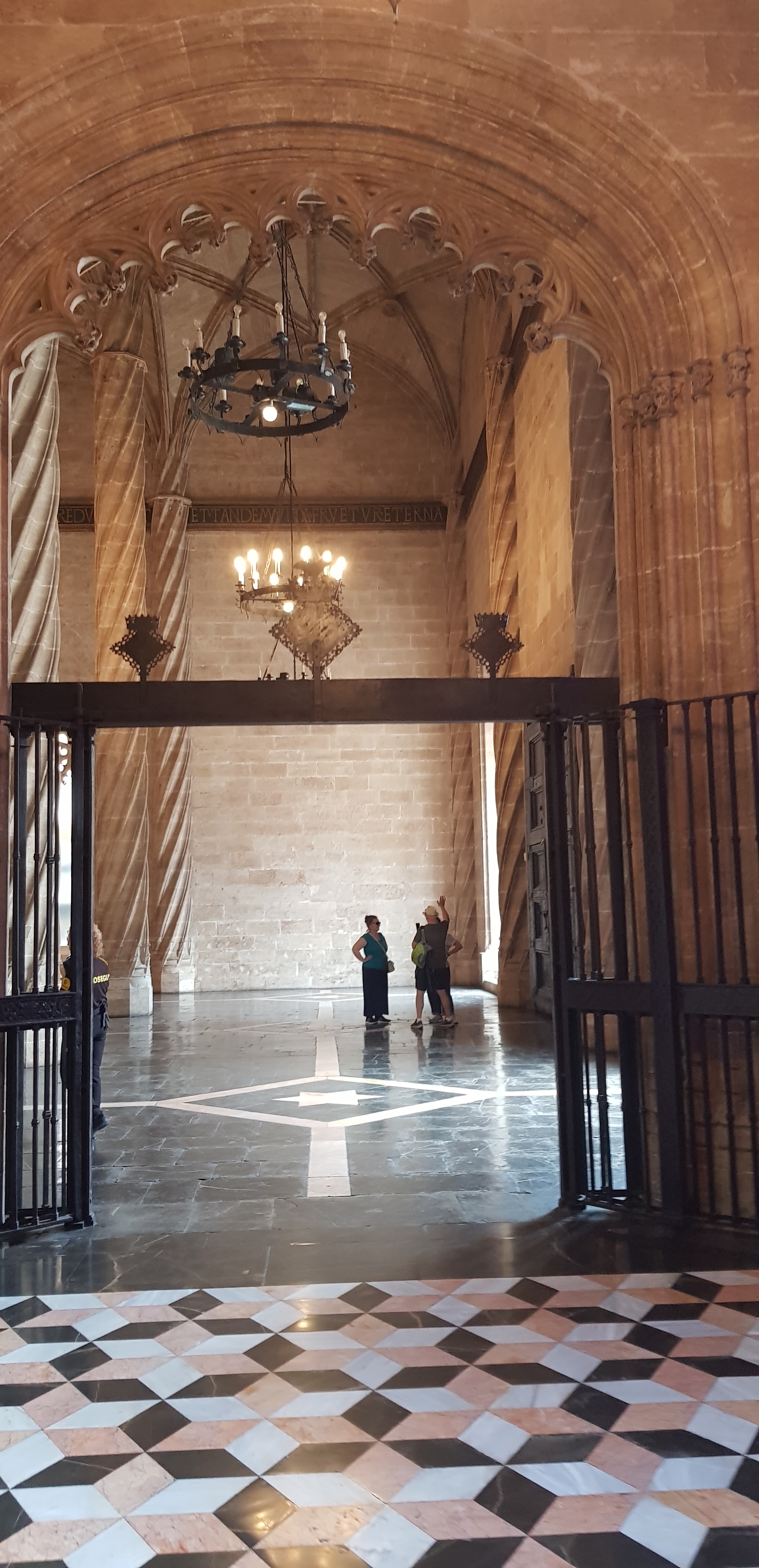
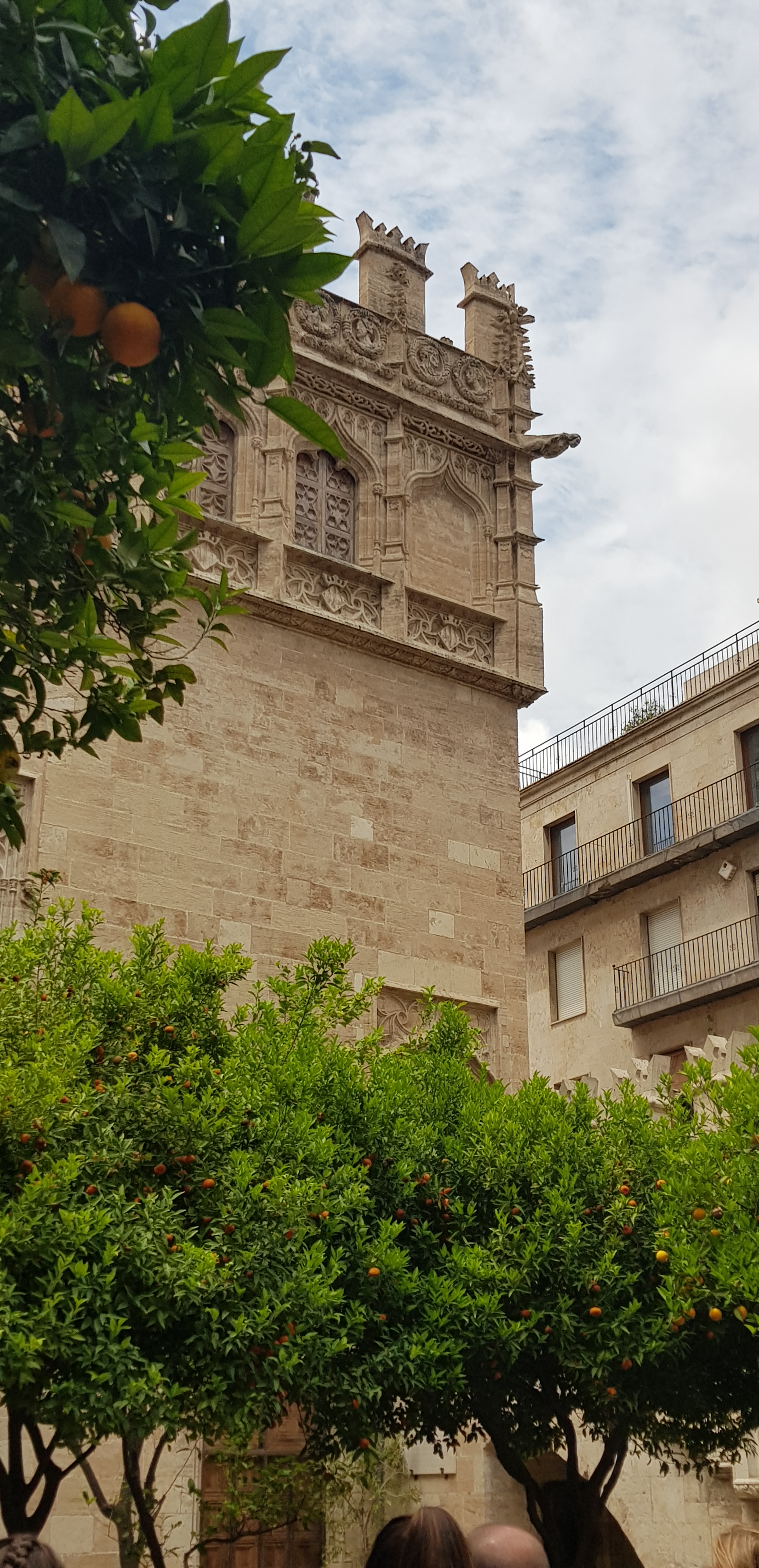
Ten minutes or less walking from the cathedral and I came across two major attractions for the city. La Lonja which looks like a small castle but it was actually once a place where business deals were struck and tradesmen met to sell their product. Valencia has for centuries been a center for the production and trade of textiles and ceramics. It is not expensive to enter and it has a small garden, and a few rooms to visit which are mostly empty allowing you to appreciate the stonework and design of the venue.

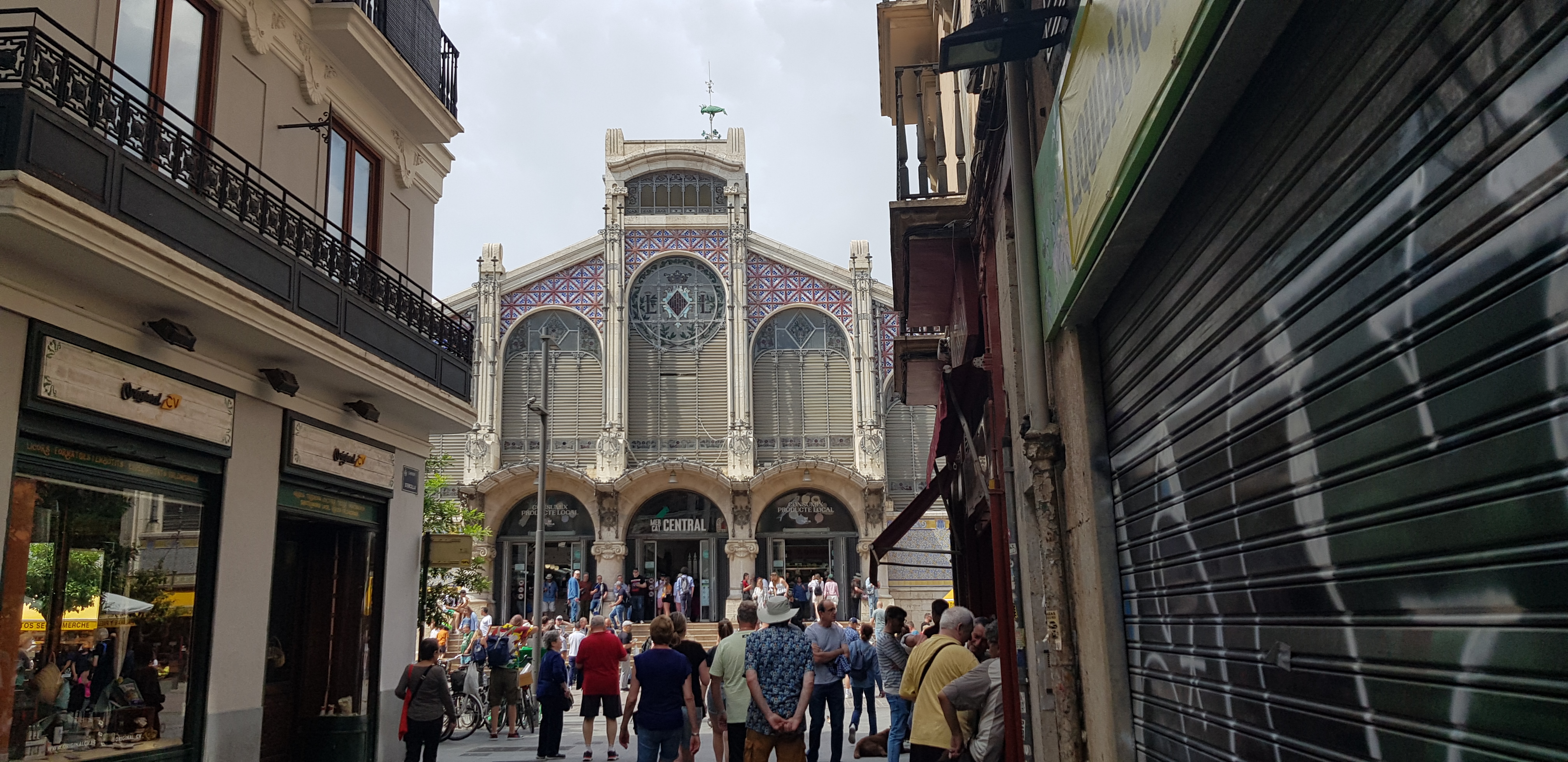
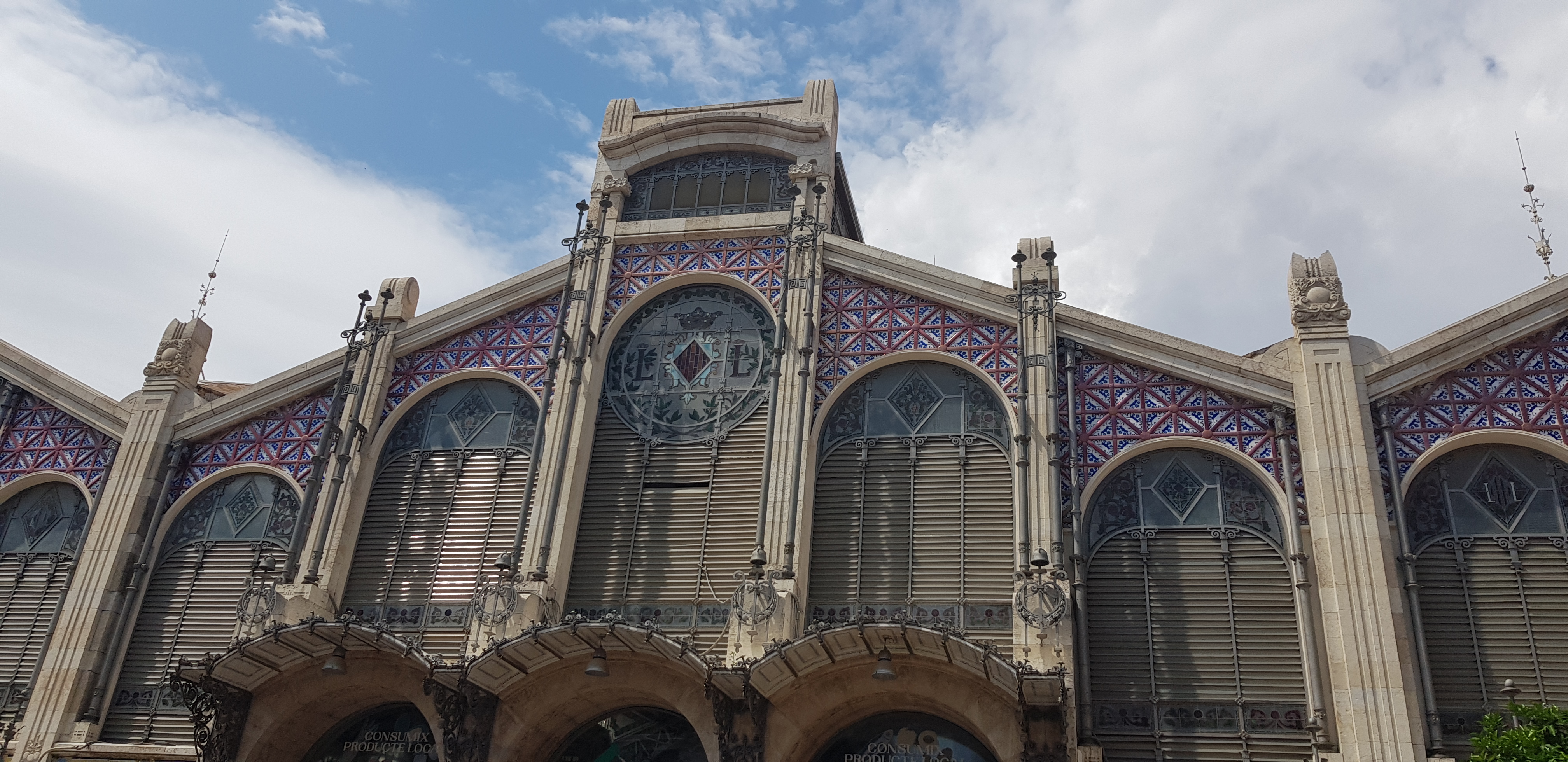
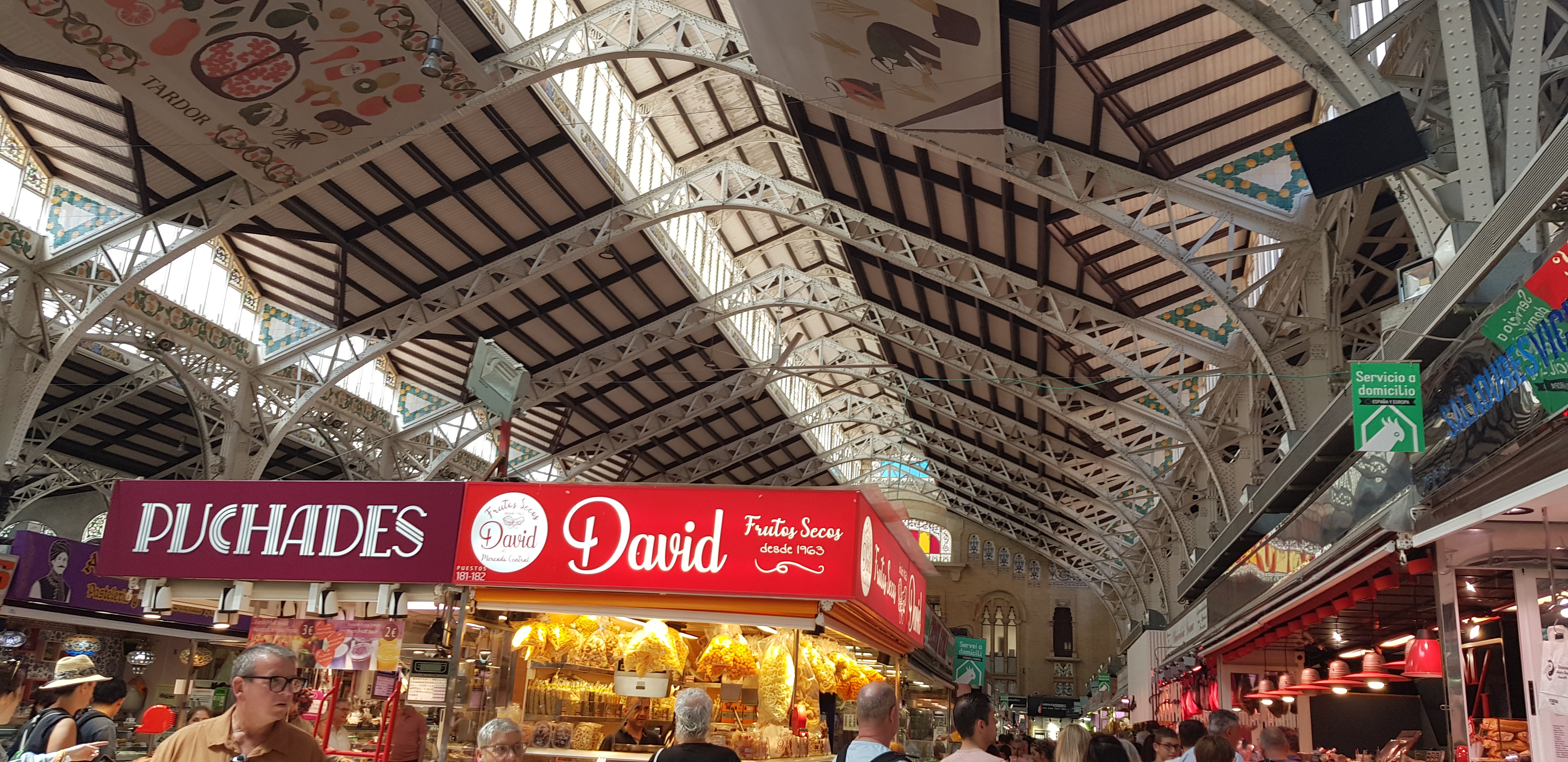
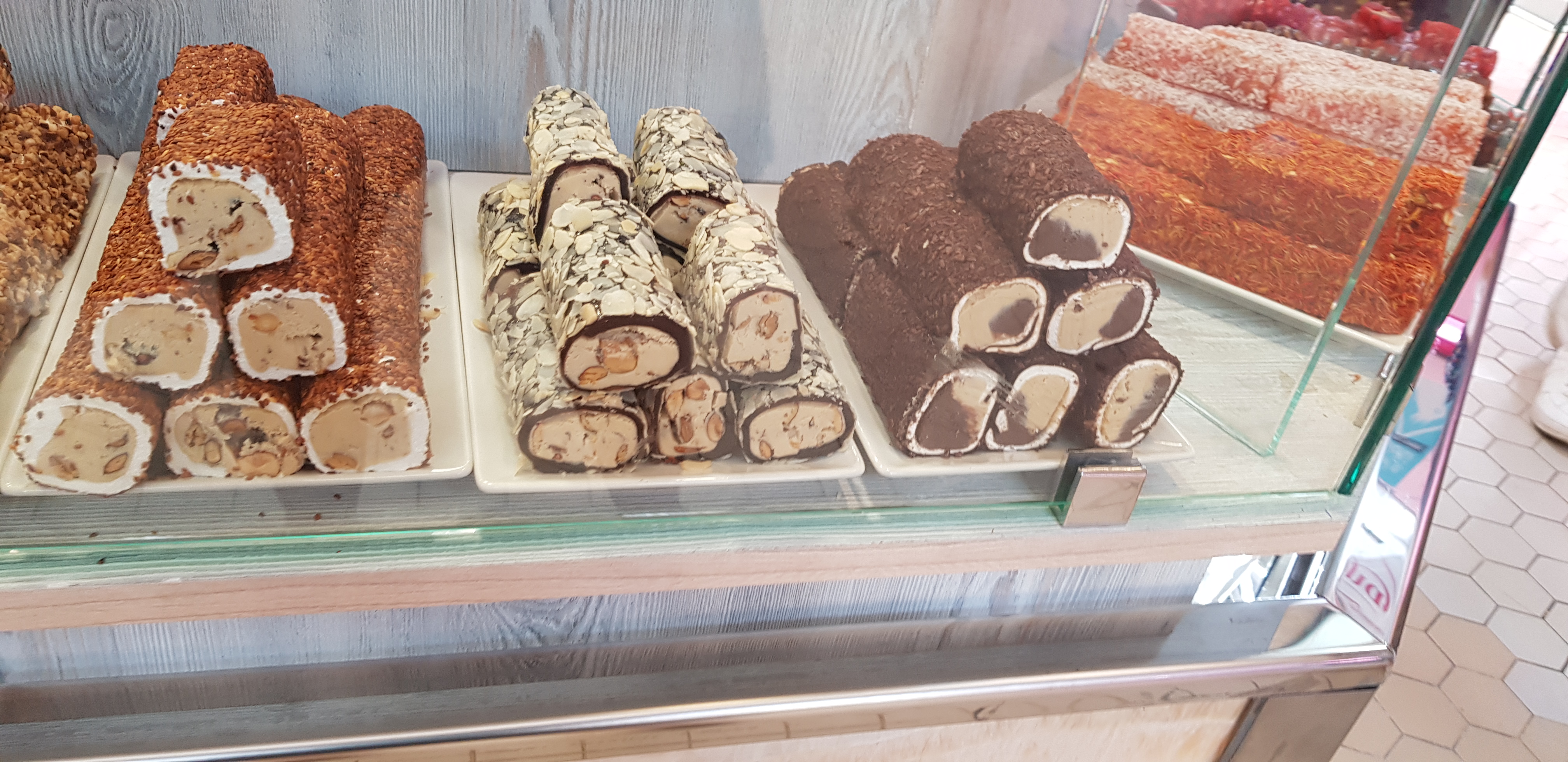
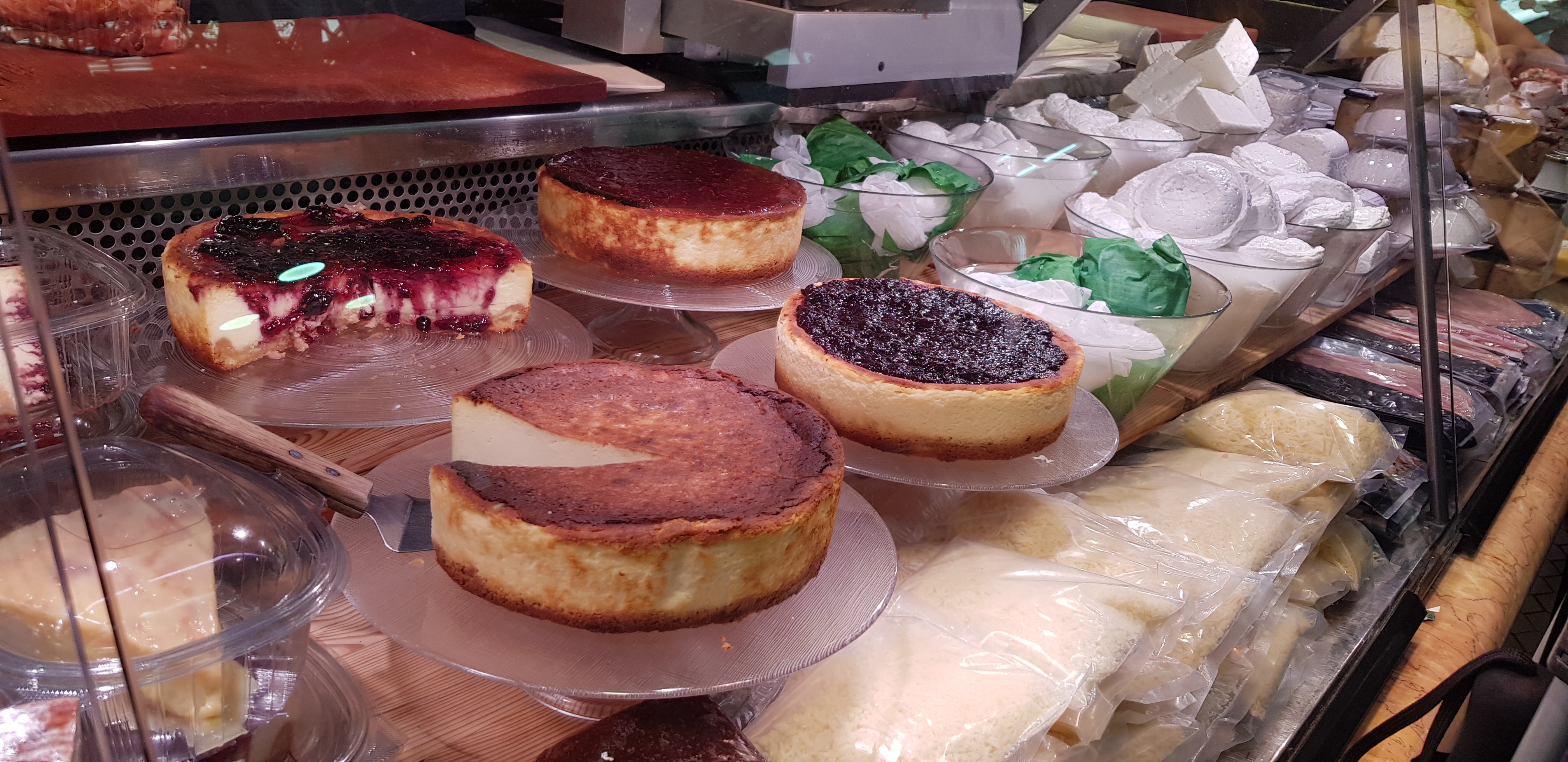
It makes it even more appropriate that just opposite this beautiful building, is the central market. One of the biggest that I have ever visited in Spain, and one of the largest in Europe; it covers more than 8,000 square metres (86,000 sq ft), and approximately 900 stalls. The fresh produce on offer is tasty and fills the space with aroma, and the glass venue of an Art Nouveau is a wonder to enter even without eating anything.. I took advantage of this location and bought my team a mix of tasty treats including gluten free and vegan varieties for the fusspots.

Outside the city centre

Bioparc

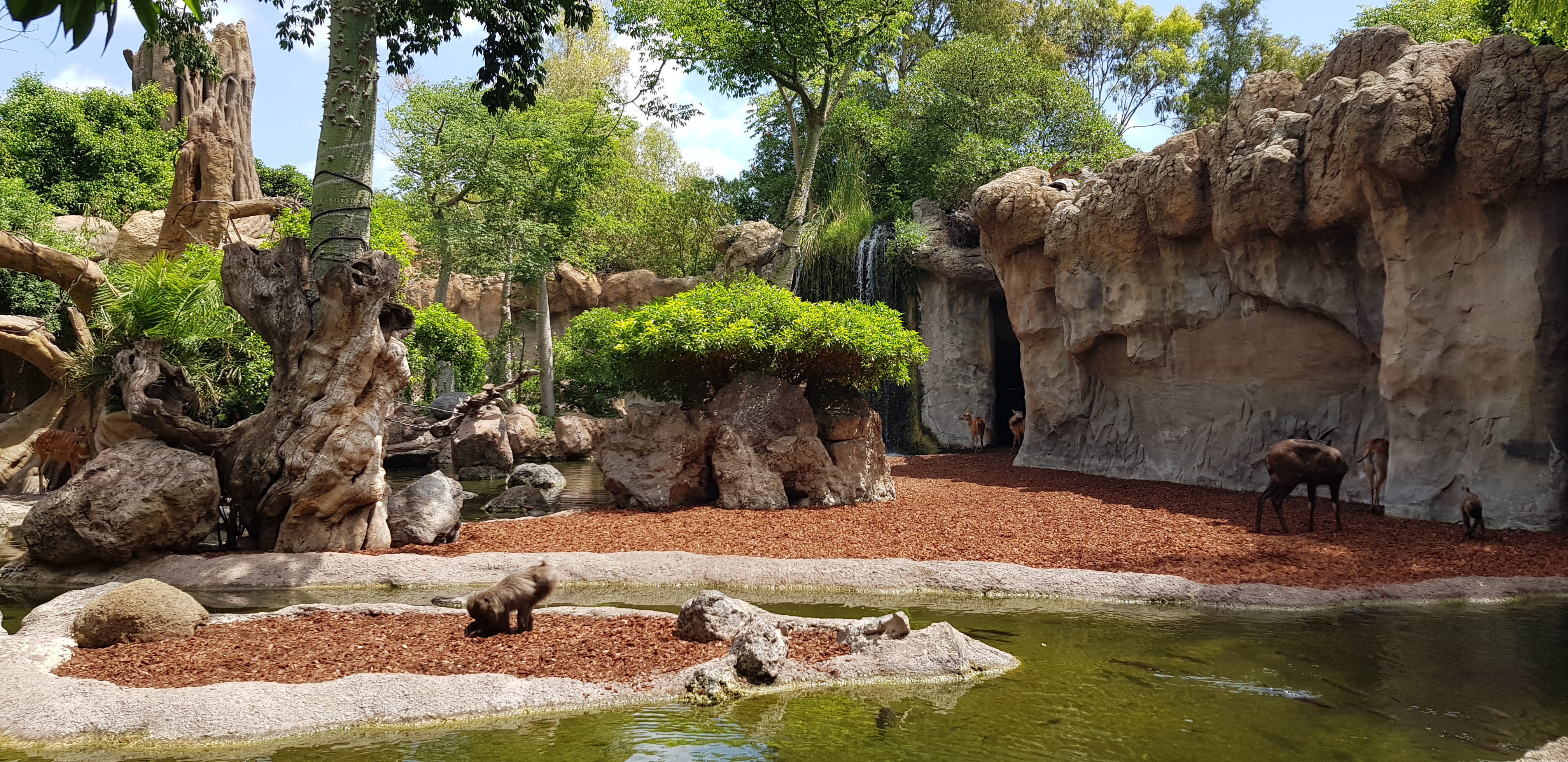
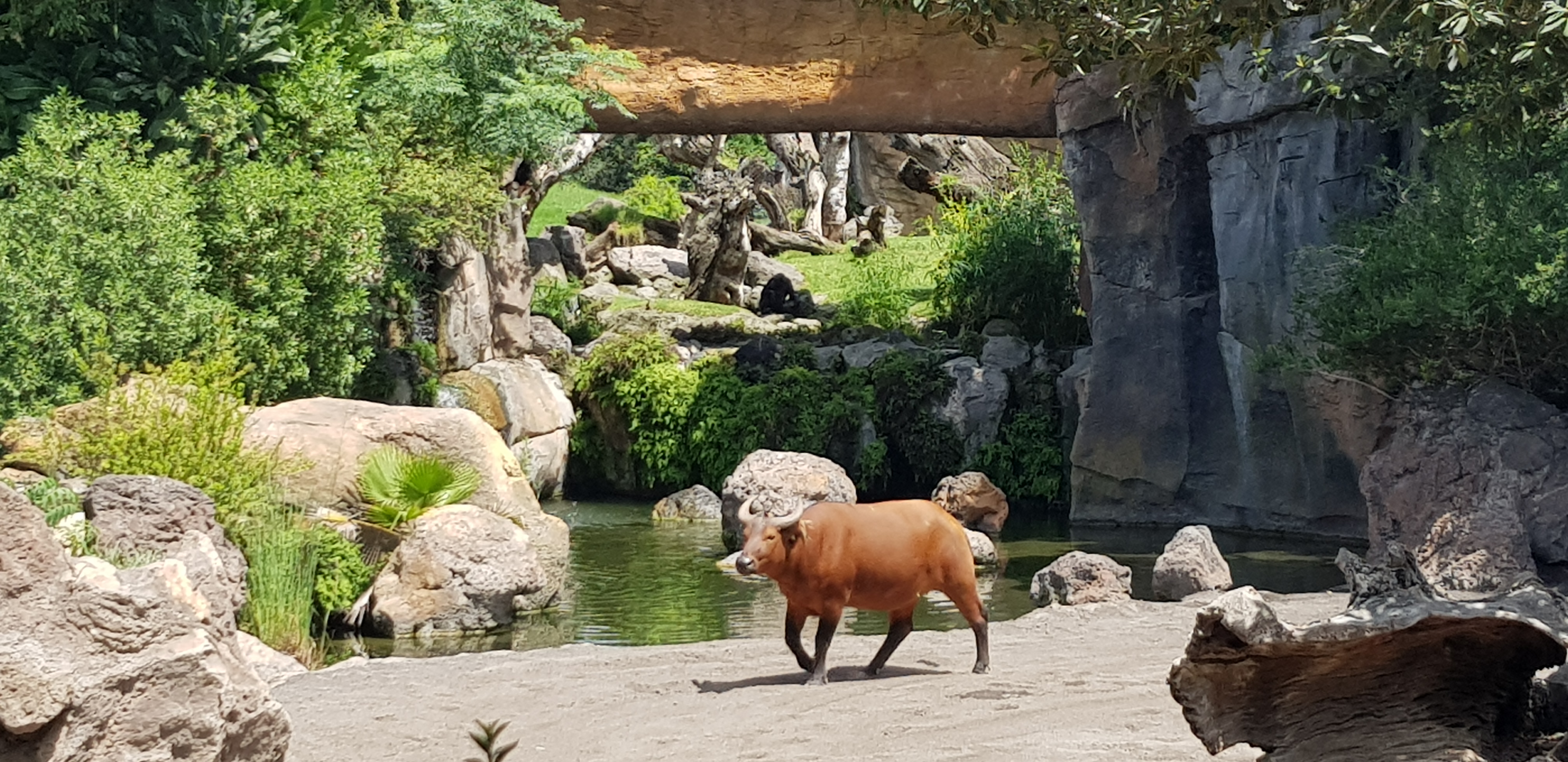
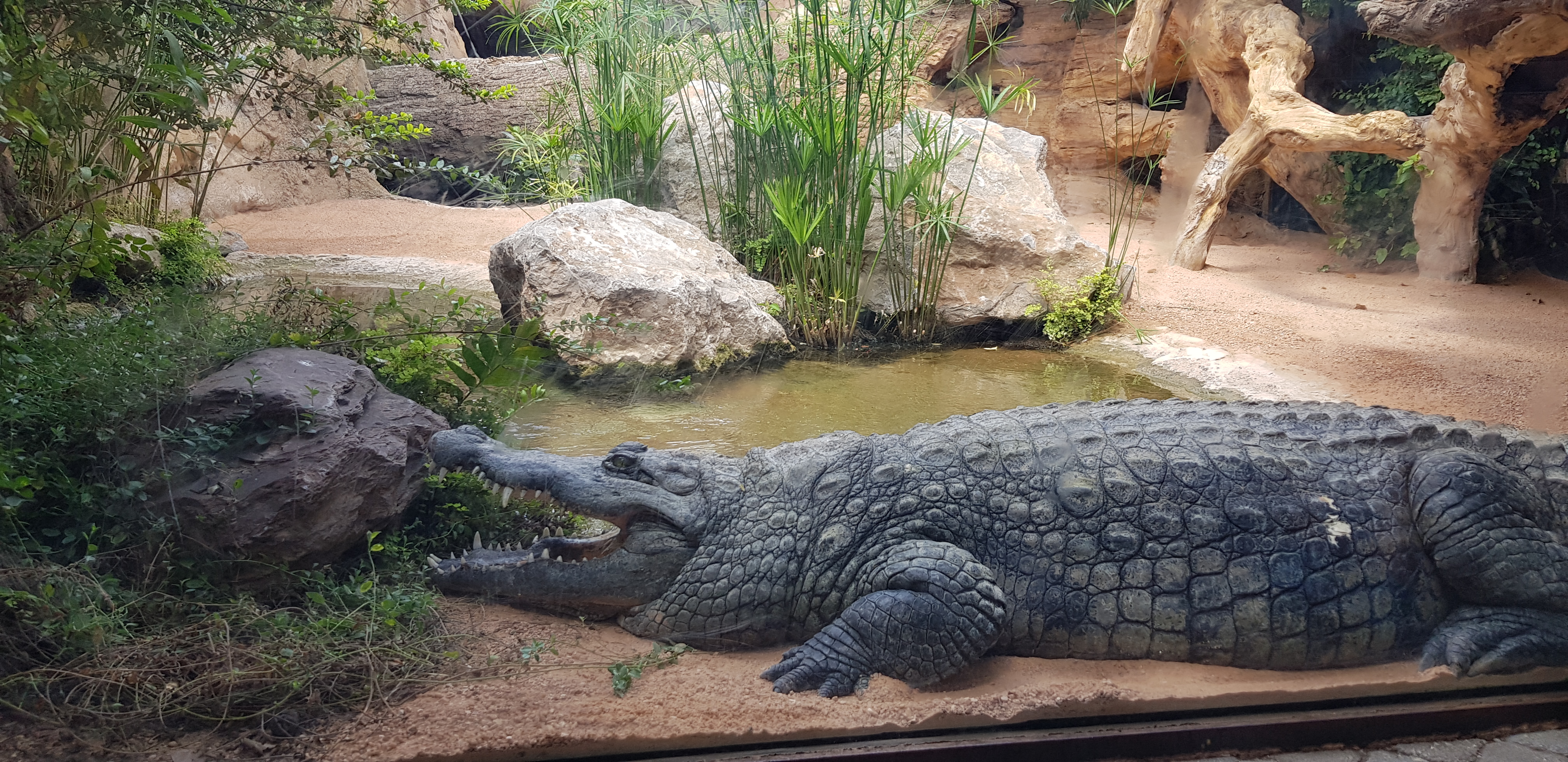
A little outside of the city and you can find the beautiful Bioparc Wildlife Park. This park has a concept that is leaning away from traditional zoo enclosures and is more towards maximising the engagement between the visitors and animals.

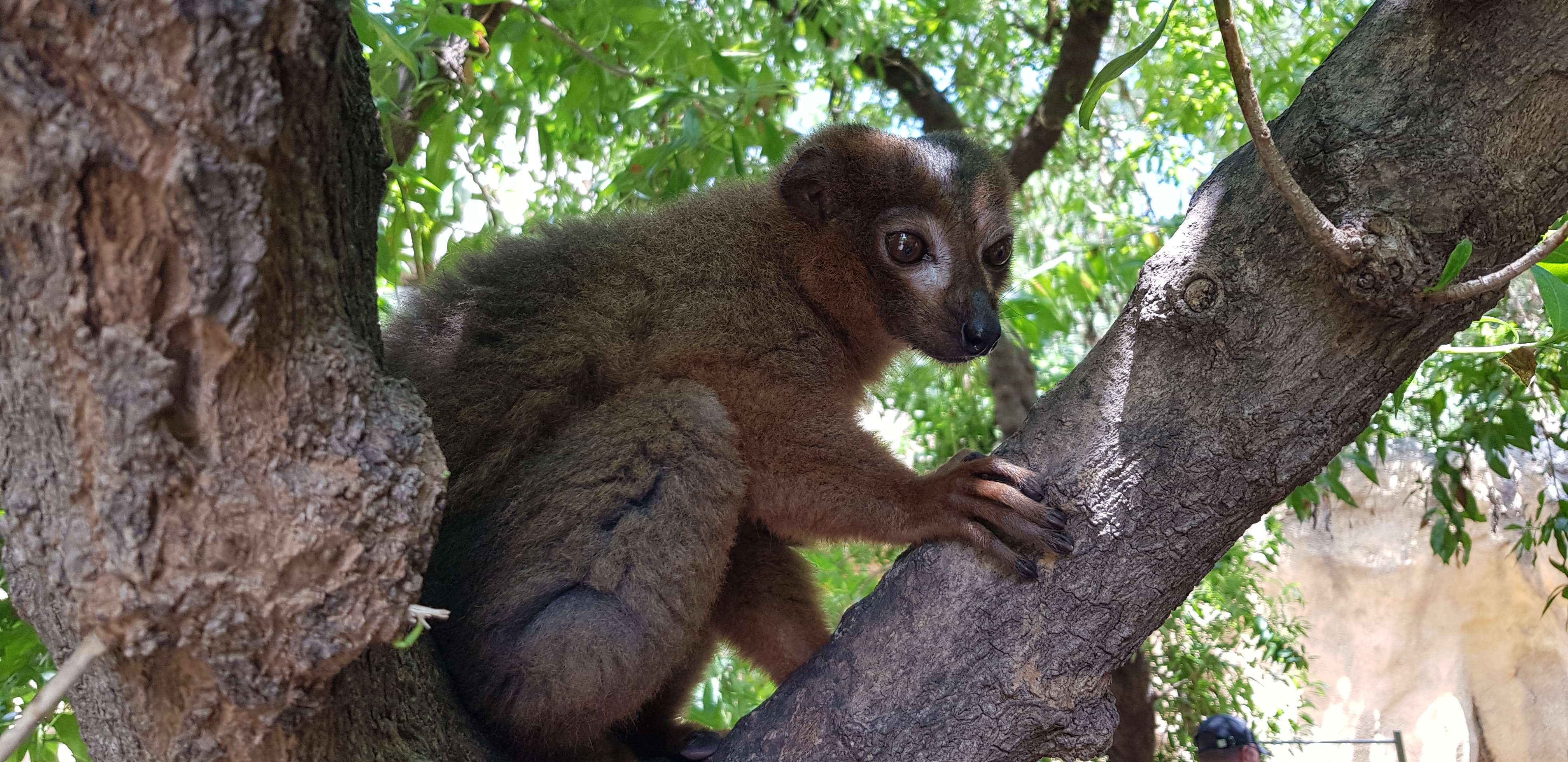
When I visited I assumed it would be just like any other zoo, but it was actually quite impressive. I have decided that Valencia does not do its visitor attractions half assed. Bioparc is very impressive, its not a huge park but what is there has maximised the space and given the animals a very wild environment to enjoy. My favourite parts were lemurs running around my feet, elephants showering themselves and a hippo that i could see both under the water and over it.

Albufera Natural Park

Another place that you can visit and see some wildlife if you’re lucky is the Albufera Natural Park. Thats Albufera, Valencia not Albufeira, Portugal to be clear for those getting confused!

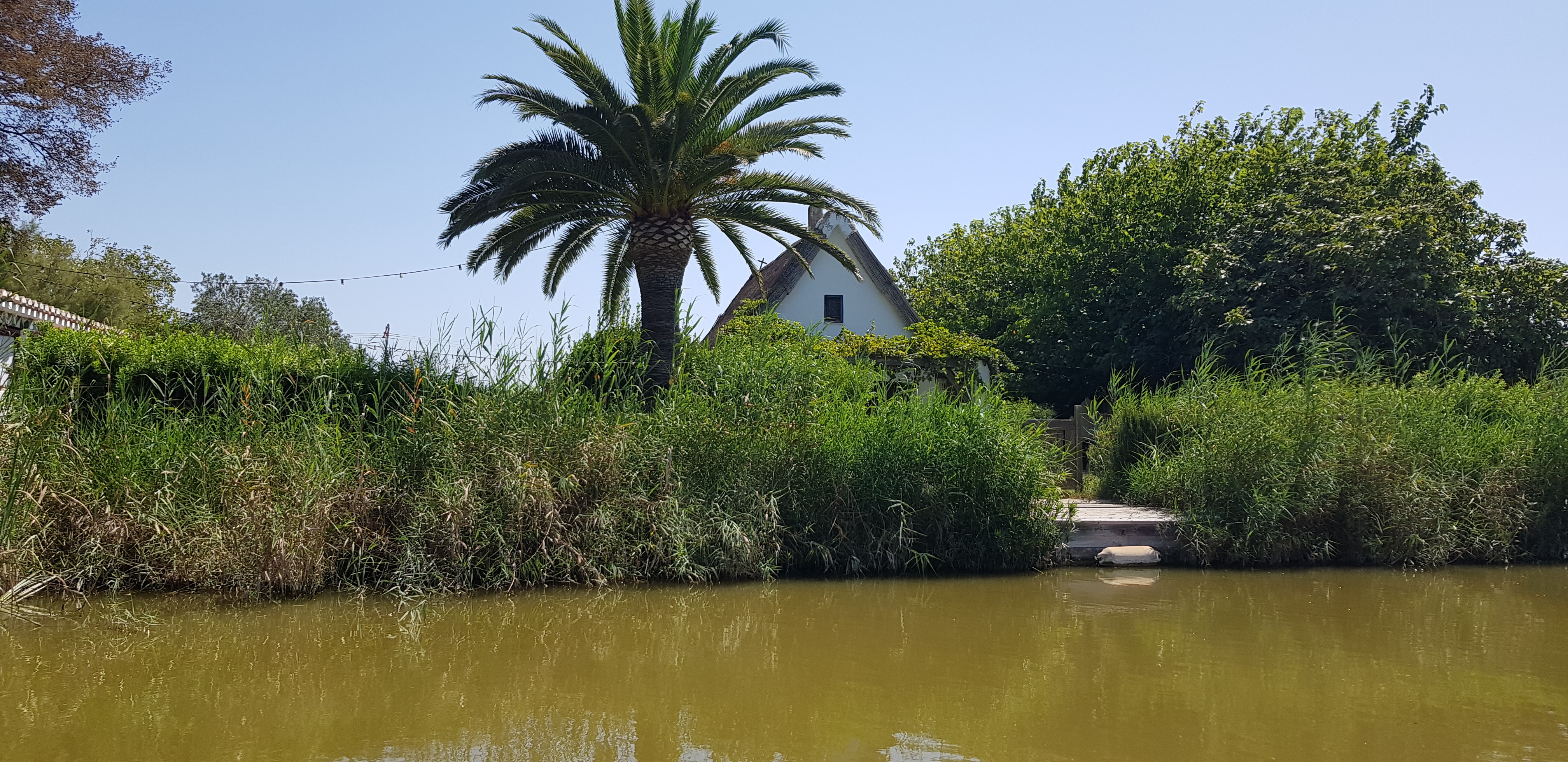
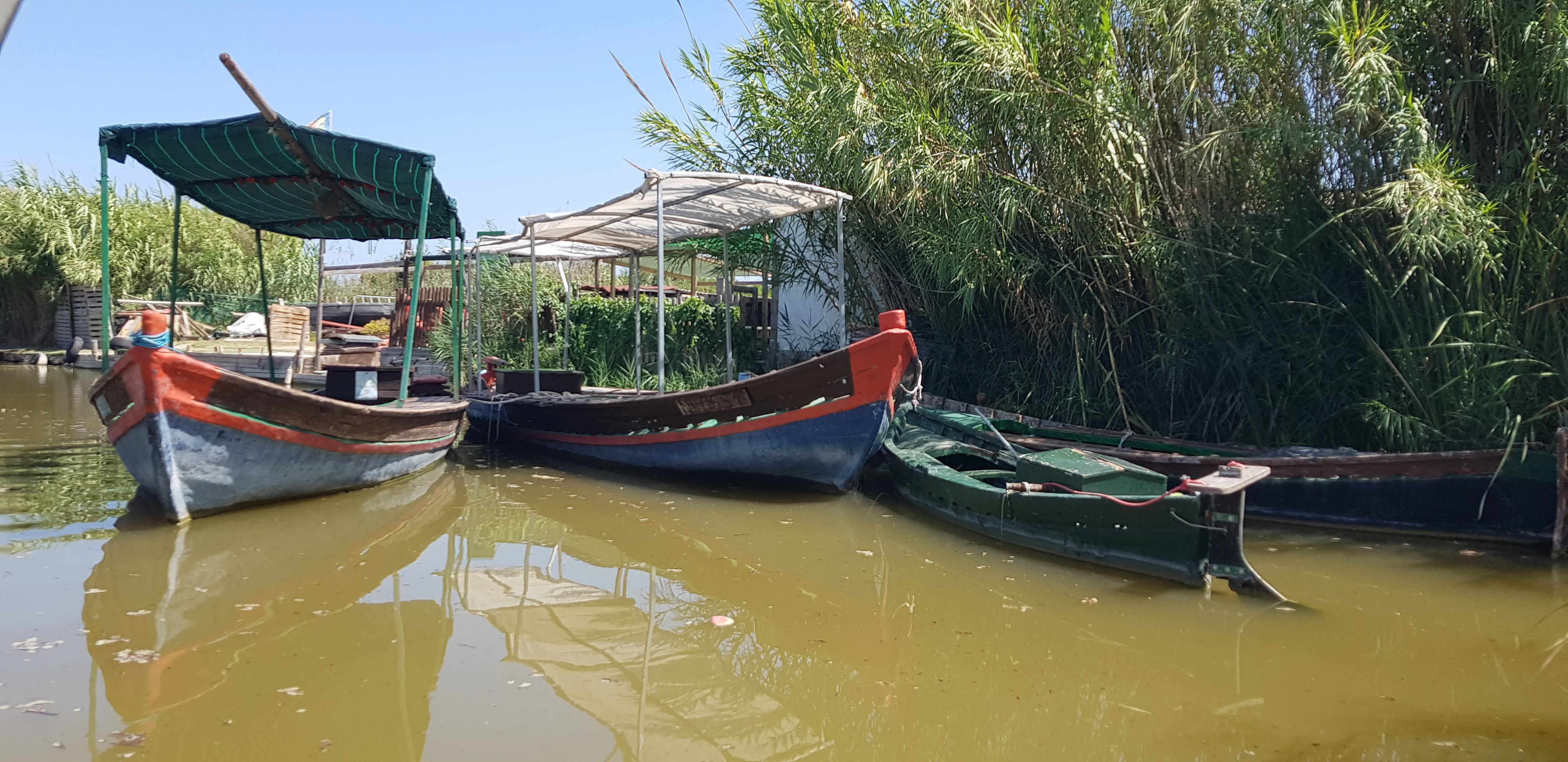
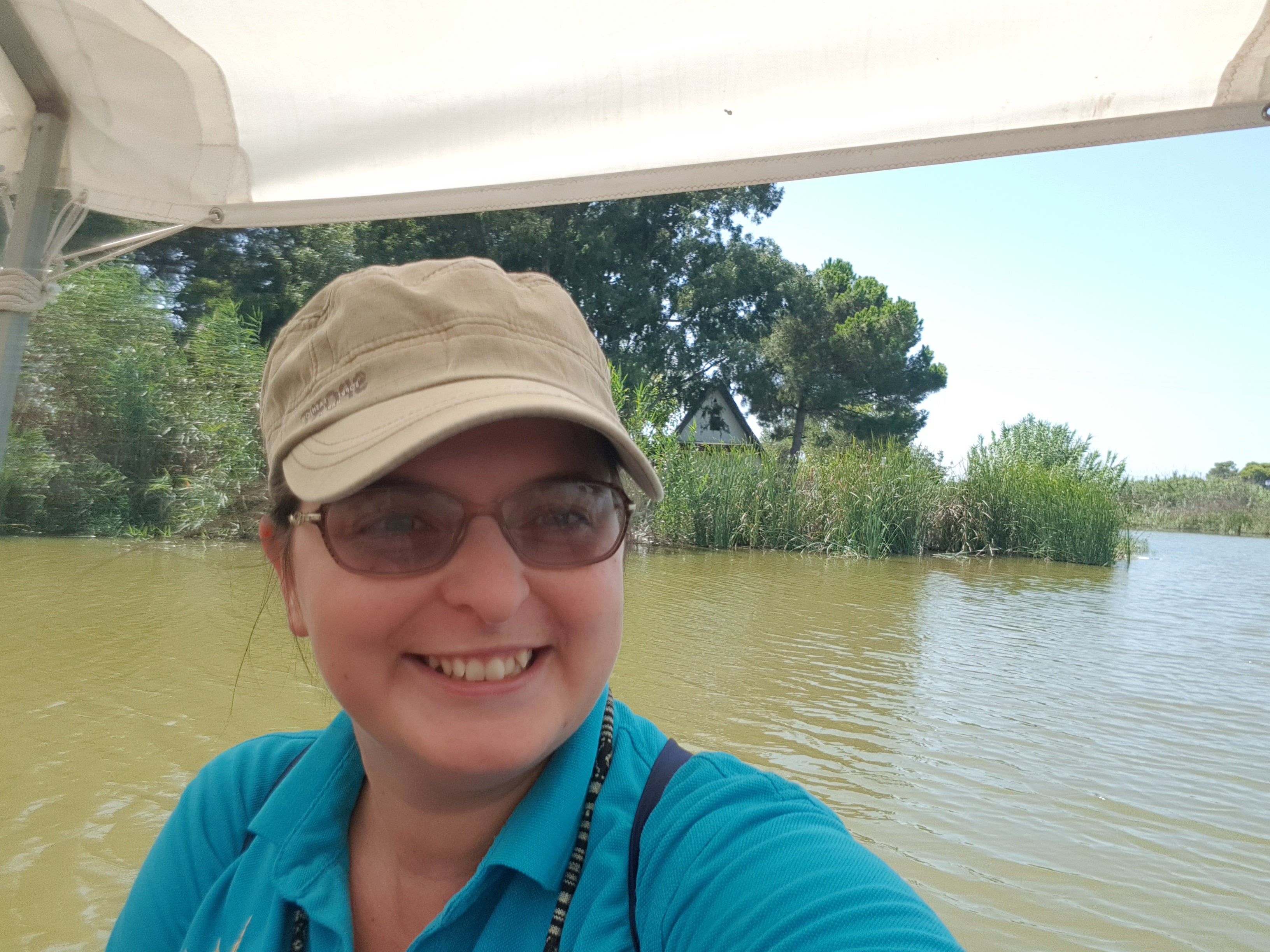
On my tour of Albufera Natural Park, I enjoyed a traditional wooden boat ride on the waterways surrounded by rice fields. I relaxed and enjoyed a homemade valencian sweet drink and spent some time spotting birds and eels from the comfort of the boat.

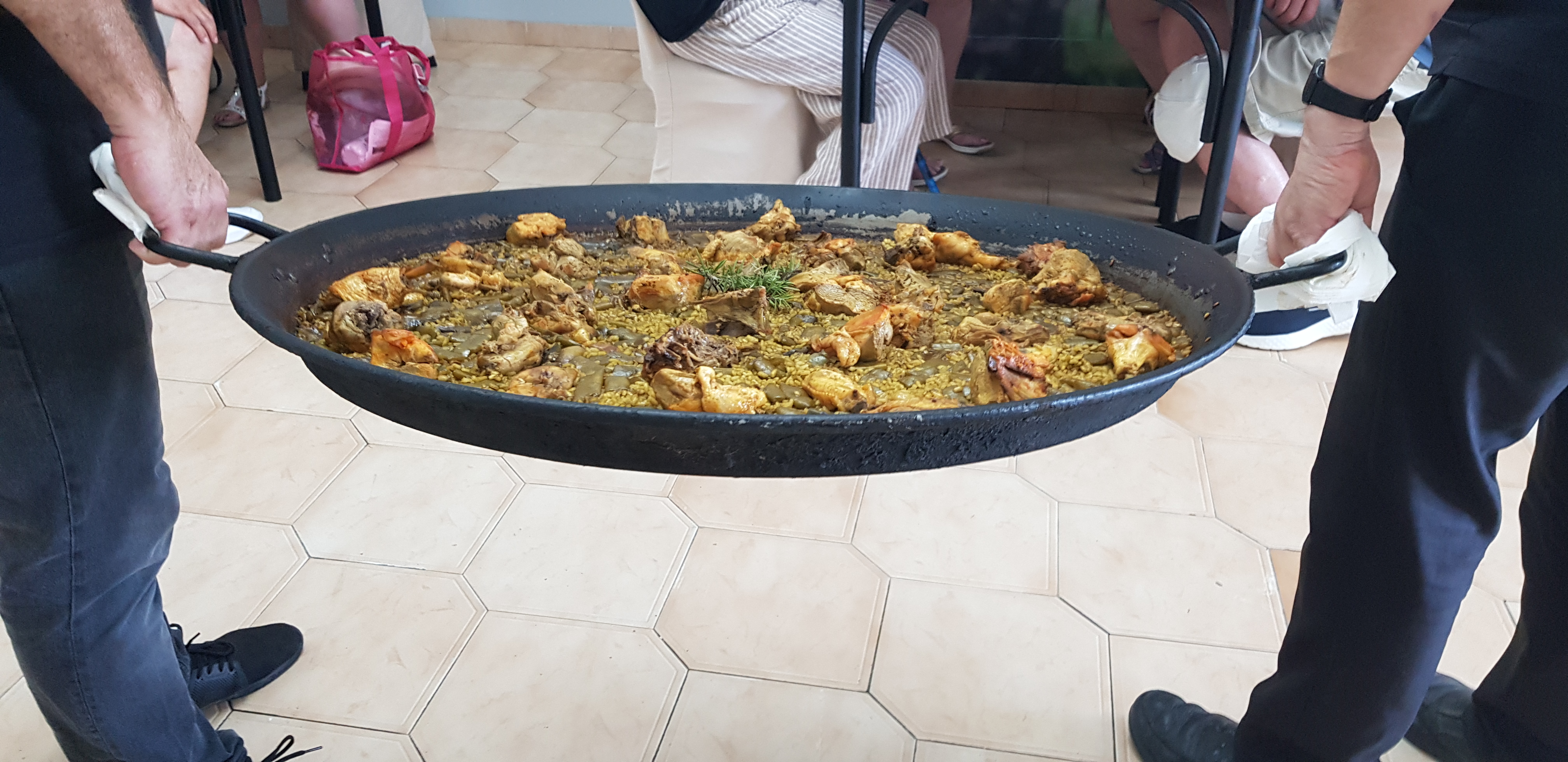
Afterwards, I enjoyed a gorgeous valencian Paella made with local ingredients including rice from the surrounding fields. It was very tasty!

Overall, I have really had a great time visiting Valencia and it is very diverse in what it has to offer. It is a big place, but I would hope it does not get any bigger, as it would be a shame for it to lose its charm!

Tarragona: A city of Human Towers and Romans

An hour from Barcelona, is the charming Roman town of Tarragona, which continues to thrive as a peaceful place to shop, explore and relax. This pretty port city is a lesser known escape from the hustle and bustle of Gaudi’s Barcelona.

Tarragona, Write your own story video

I visited Tarragona for an afternoon in June and found it to be much more than I expected. All I knew was that it was Roman. I expected a village with some ruins. It is however a vibrant location where historic artefacts and modern lifestyle has been intertwined to create a remarkable space.

A World Heritage City

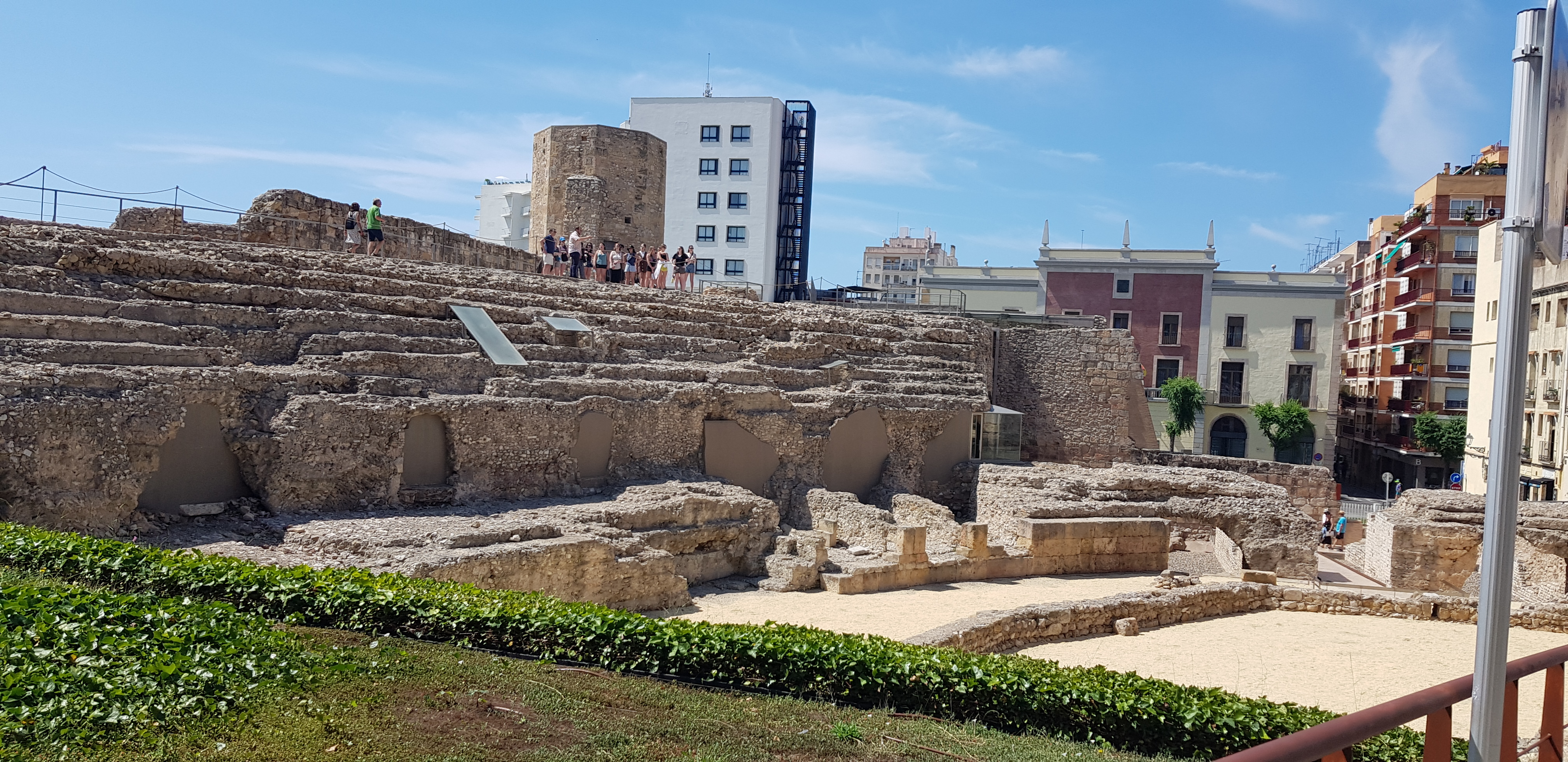
Tarragona is the only World Heritage City in Catalonia, and one of the main reasons is because of its Roman history. It was once the capital of the Roman’s Hispanic empire. The city was extremely important to the empire, and still has many monuments in existence today to visit and see. Not only can you visit individual monuments such as amphitheater, walls, aqueduct, and forum, but the city also offers a themed Roman walking route, tours, and even a Roman festival called Tarraco Viva to celebrate its heritage in May each year.

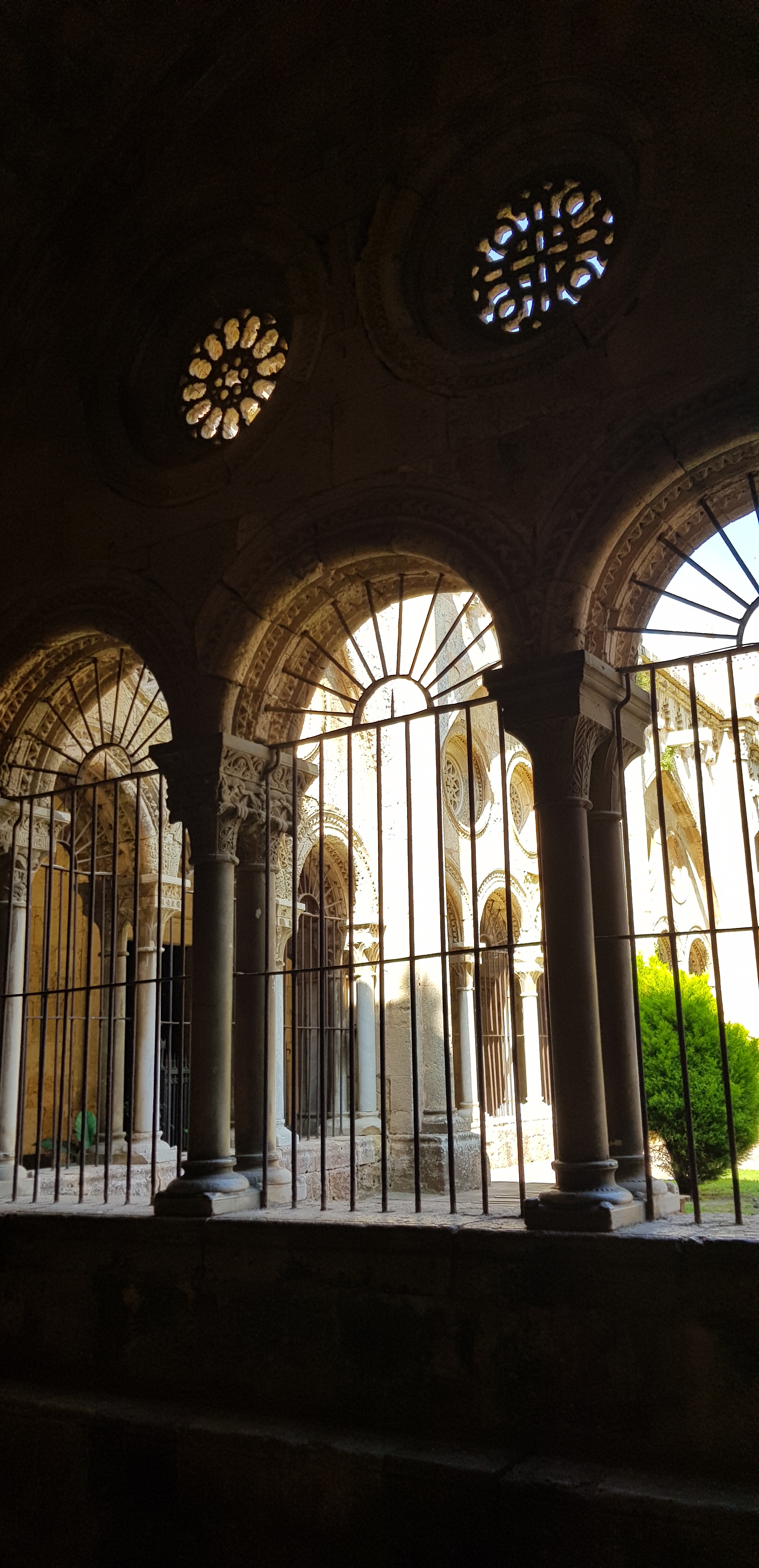
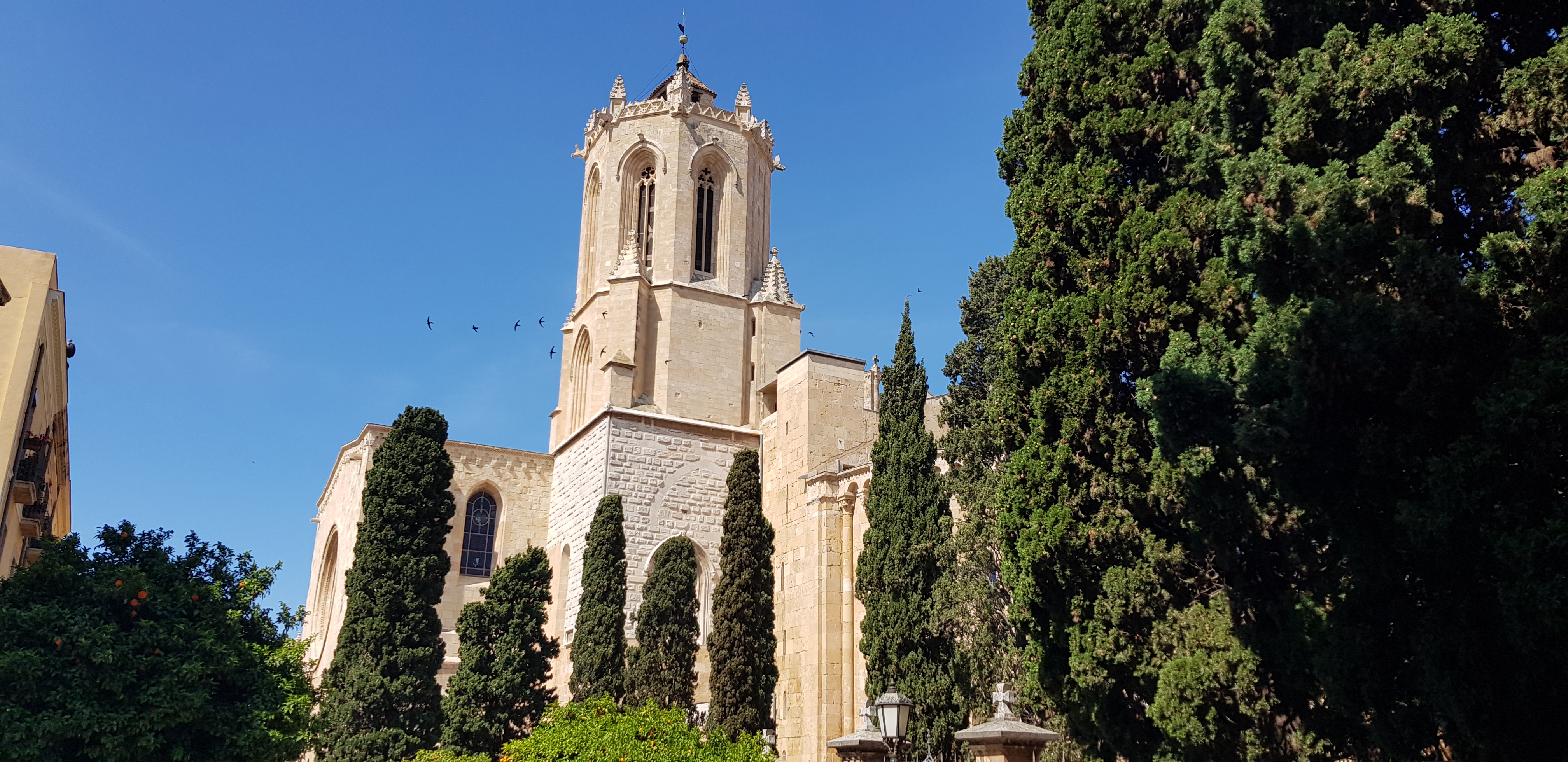
I am a huge history fan and so I was happy to see plenty of old buildings and structures, and hear the stories of the city and its importance to the Romans. I had a whistle-stop walk through of the cathedral, and I would have happily spent more time there as its quite a large space to explore.

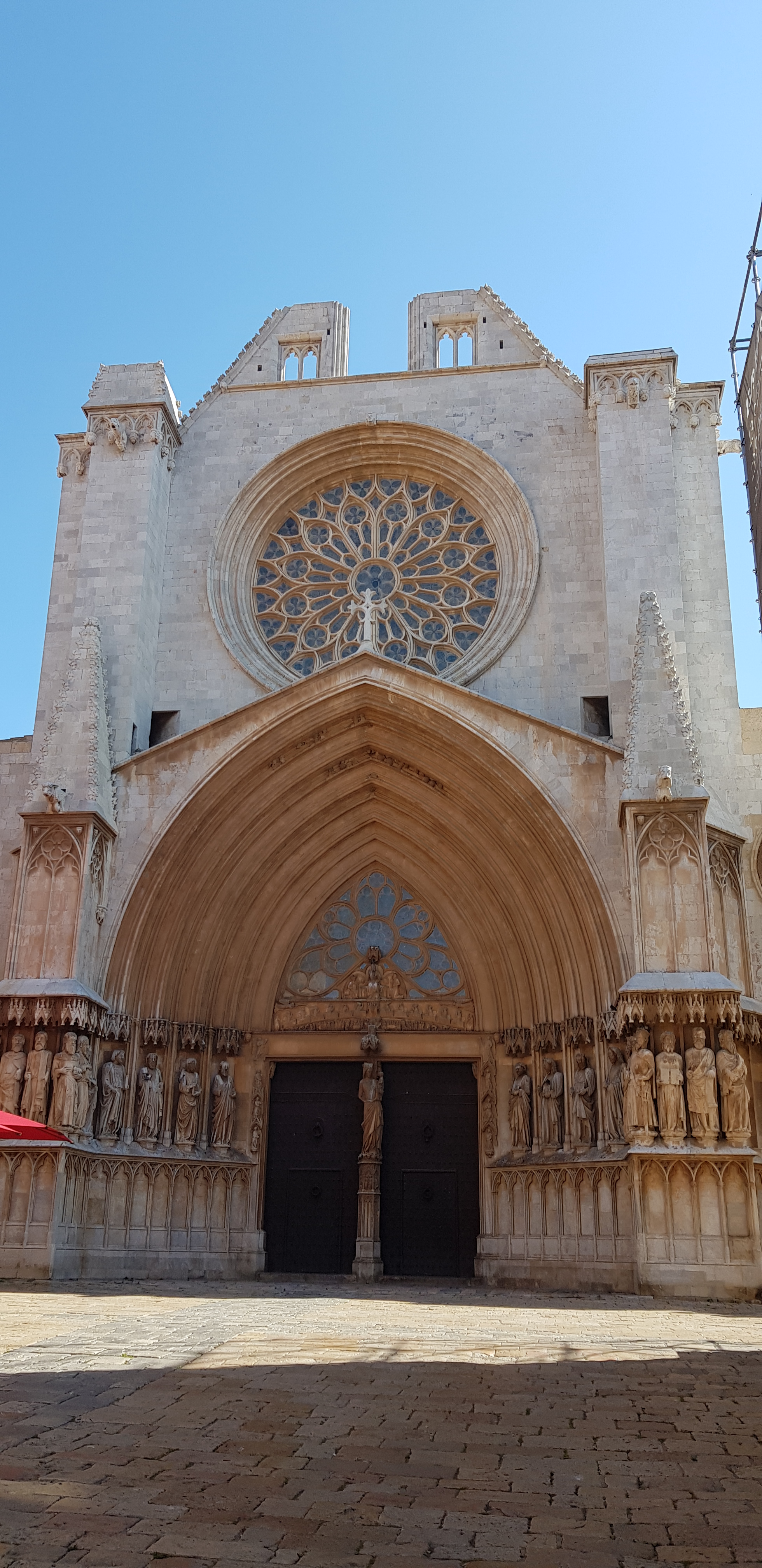
The Cathedral is easy to recognize from many travel and culture documentaries, as the location that begins the walk of human towers. Human towers or castles ‘Colles Castelleres’ are exactly how it sounds. Originating in Tarragona from Valencian dancing, the events consist of large teams of people standing on each others shoulders to create a human tower. They then take a walk (as a tower) from the Cathedral and through the streets of the city. Visitors travel for many miles to watch this event and residents will open their balconies up to people to view. I would love to return to see this event from a short distance, but I am not totally convinced that I would want to be anywhere near the bottom of the tower… or the top! Apparently, the top of the tower is normally reserved for the tiniest members of the group, so young children and toddlers get the honor of being the shining star at the top!
Exploring the modern city

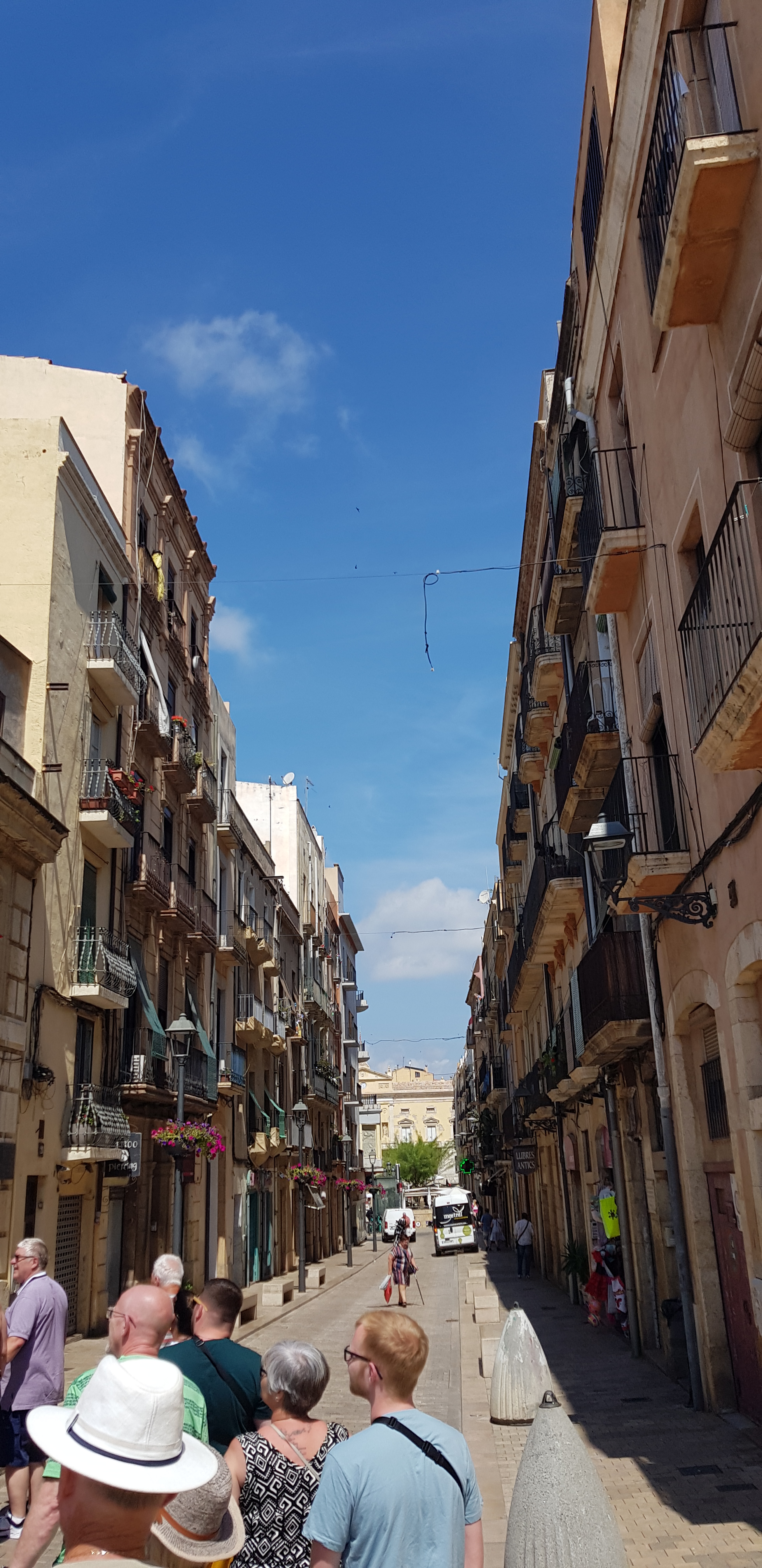
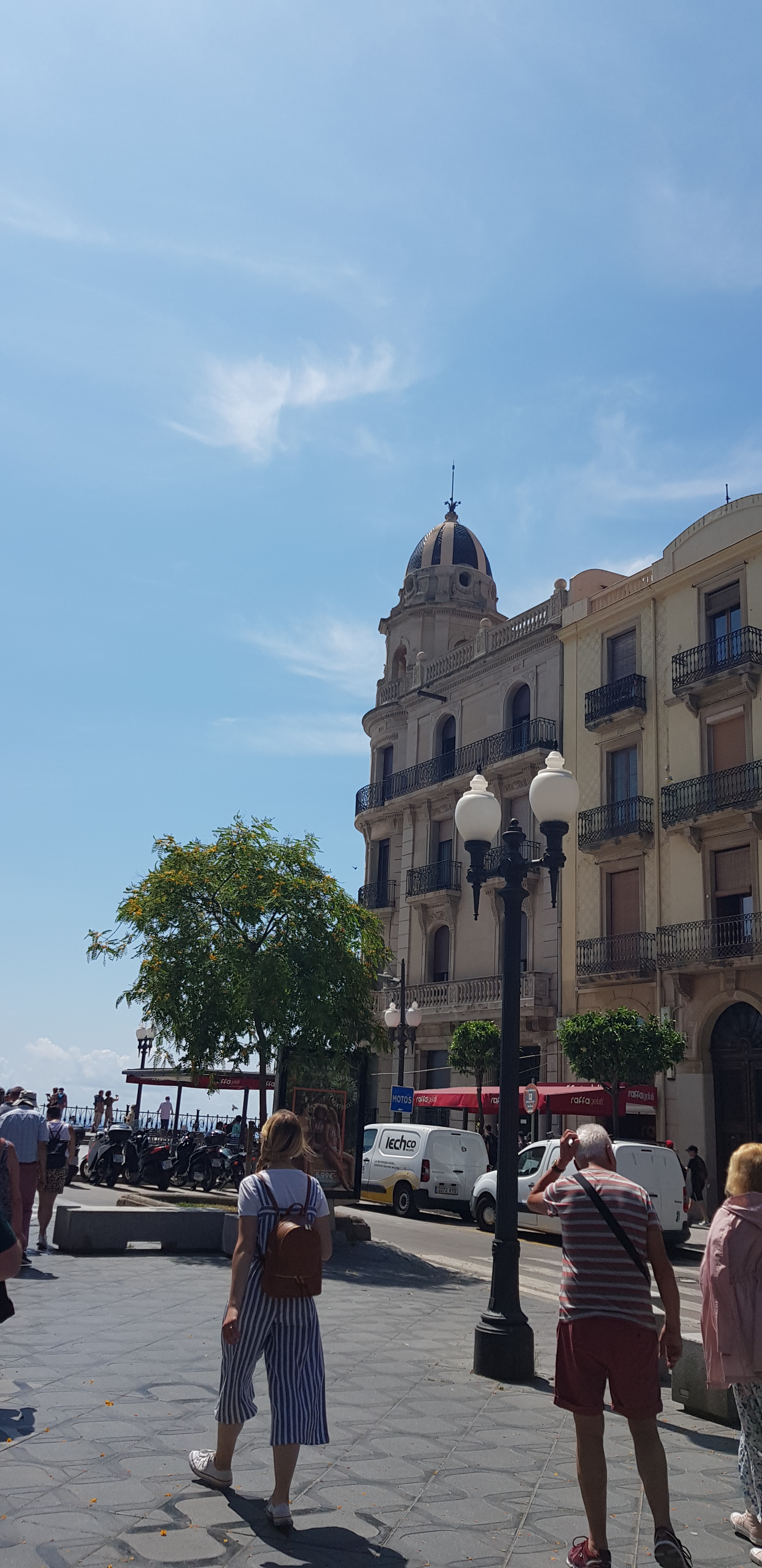
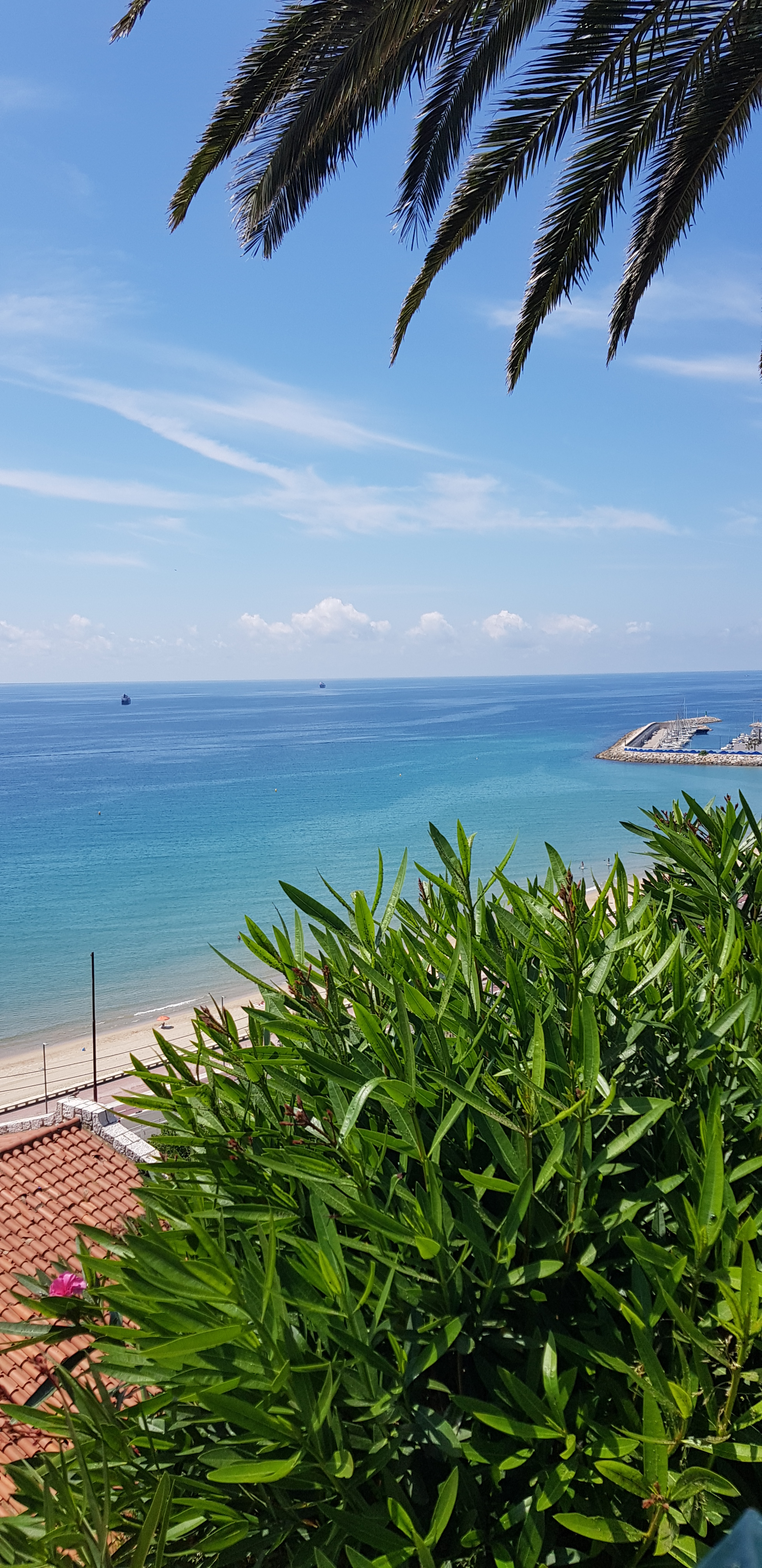
Whilst appreciating the historic framework of the city, you can also enjoy the facilities on offer today. Tarragona offers modern shopping and dining in its high street La Rambla Nova, as well as the opportunity to eat fresh cuisine at its central market. Looking to relax? You can make your way to the ‘Balcony of the Mediterranean’ at the top of La Rambla Nova. Here you can view a straight view along the coastline and relax on a bench or make your way down to the sandy beaches below. The only downside is that the beach and the town are separated by the railway track, so you have to walk quite far before you can cross over into the beach. The long balcony promenade provides a beautiful scene to wonder along the edge of the city and towards the marina.

Port and Serrallo area

In the port area of the city, typical seafood restaurants can be found, as well as beautiful scenery of fisherman pulling in the fresh day’s catch. This also happens to be the city’s museum district, being home to the port museum, archeological museum and the historic lighthouse and city clock.

Generally, I found Tarragona to be a very peaceful city with a lot to offer all in one place. I would happily visit again and even spend a good few days here.

An introduction to the Azores: Sao Miguel and Terceira

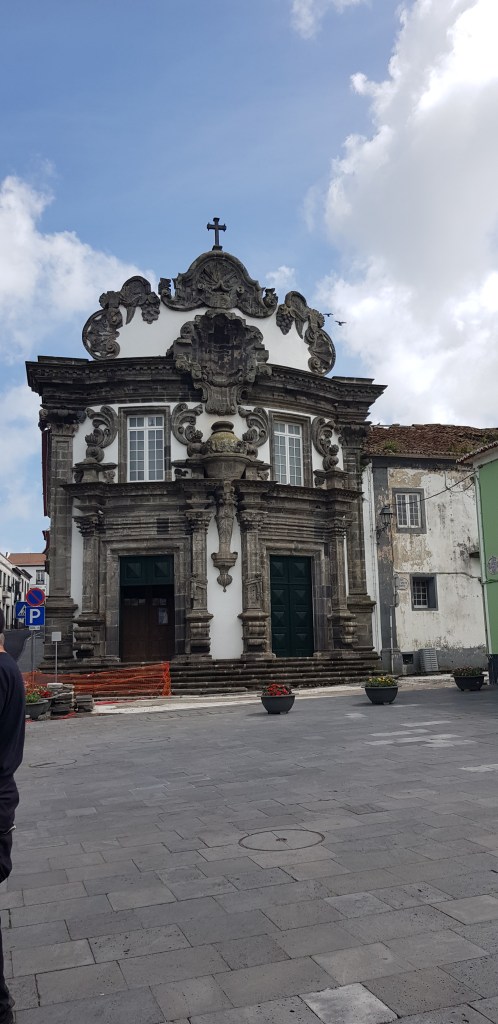
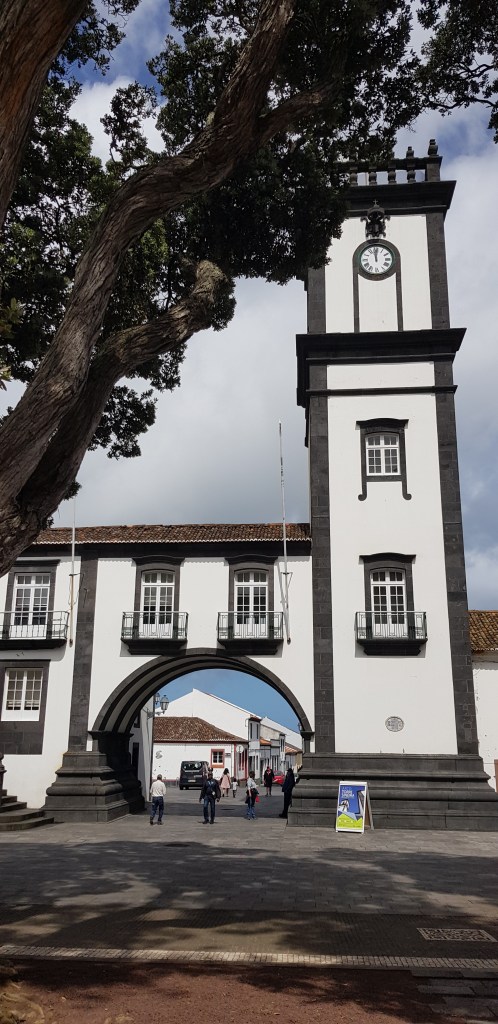
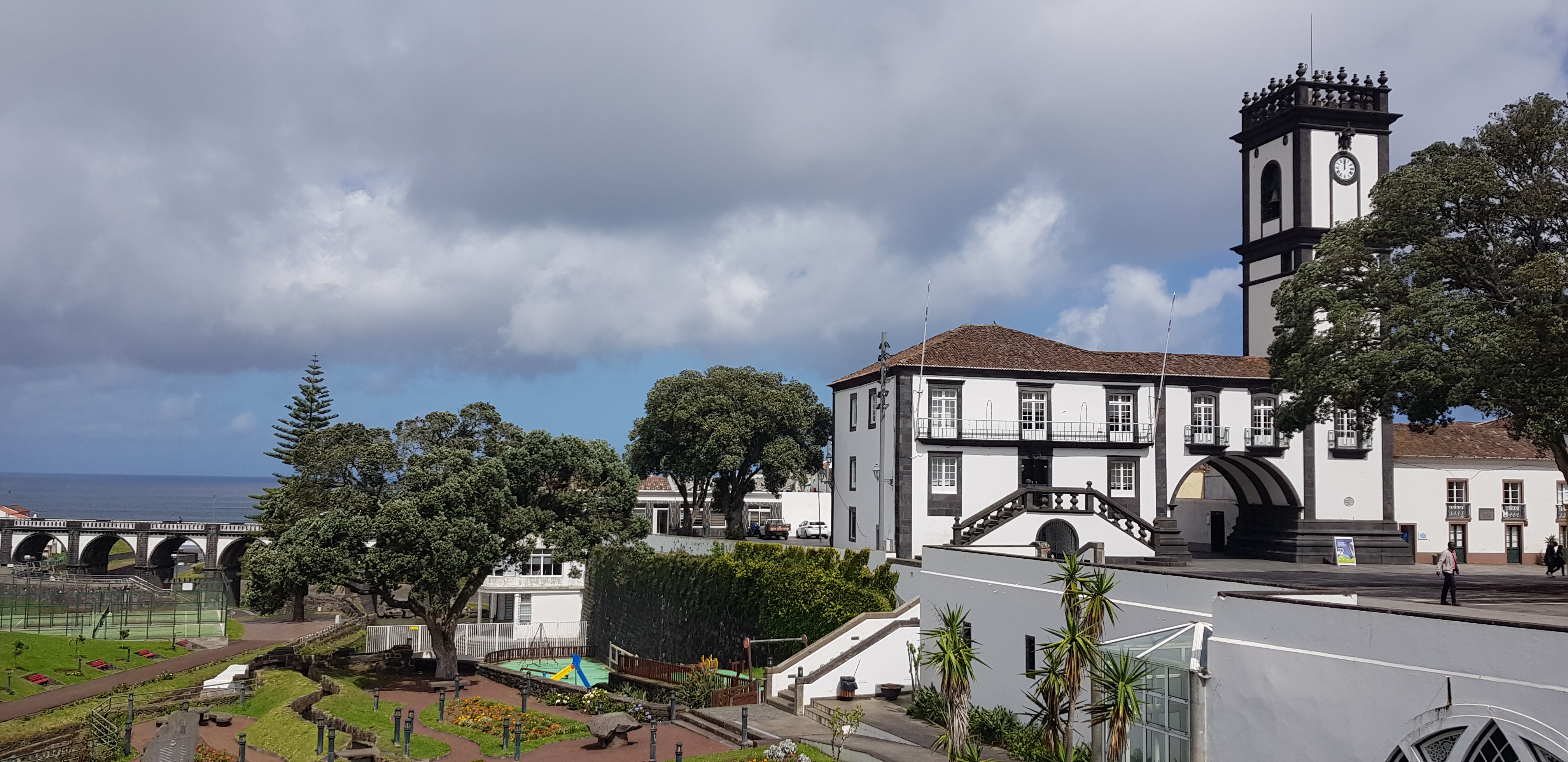
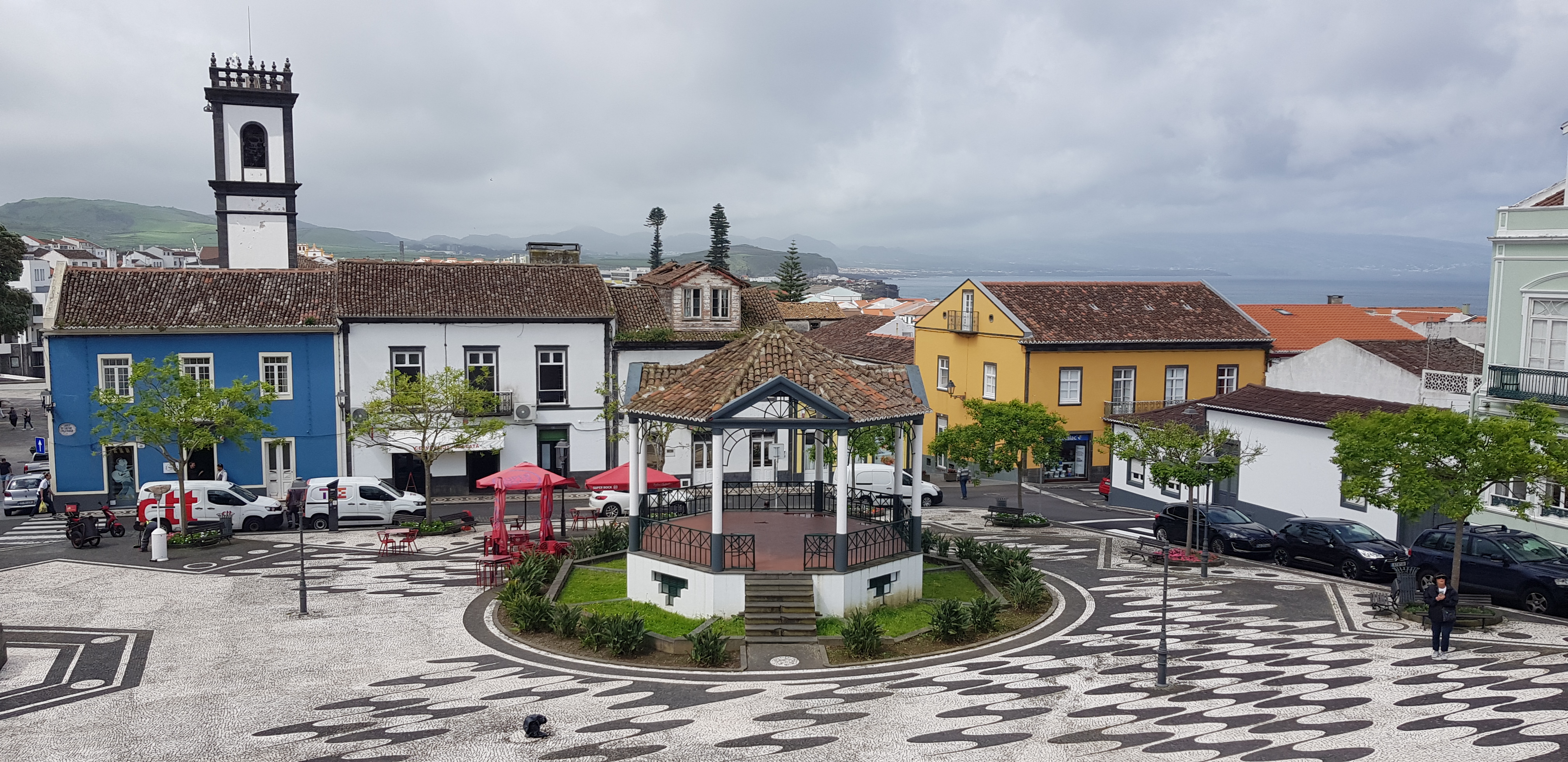
An archipelago of Portuguese islands in the middle of the Atlantic Ocean, I visited two of the nine islands in the Azores, and explored beautiful villages and towns, natural landscapes and learnt about an authentic culture of people.

I had wanted to visit the Azores for over a decade, and hoped that one day I would be able to go for my honeymoon, because it looked so beautiful in all the images I had seen… Well, many years later, and no ring on my hand, I decided I could wait no longer, and I booked myself a trip from Lisbon to Sao Miguel, and a group of tours to enjoy across two of the main islands.

Sao Miguel

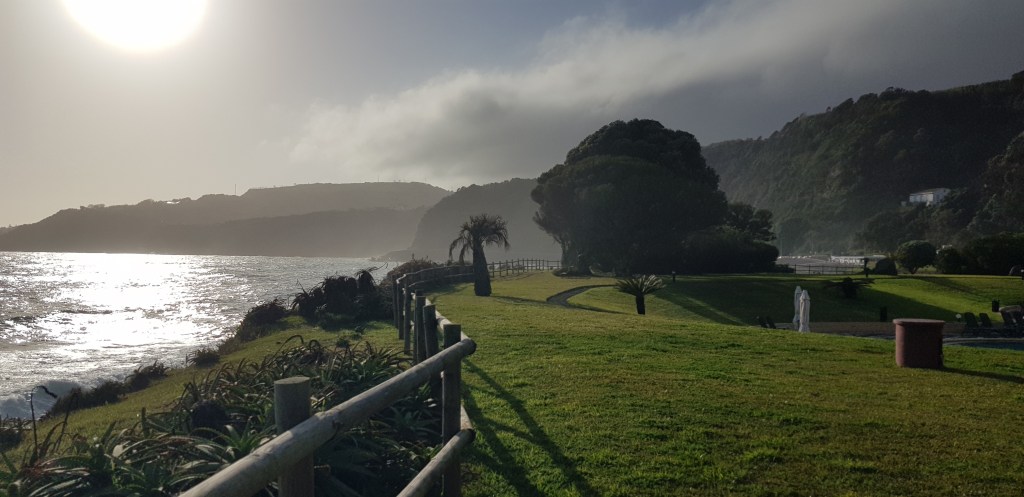
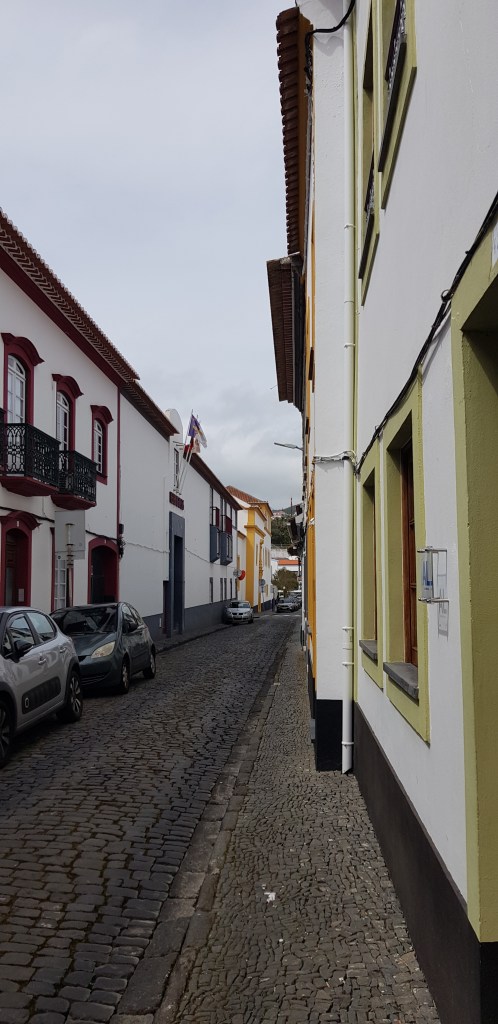
The main island of Sao Miguel is the largest of the group of nine islands, and has the main gateway airport to the other islands. It is also the busiest. The island’s capital, Ponta Delgada, has a vibrant feel with many shops, restaurants and a few hotels. I stayed away from Ponta Delgada in a 5* hotel near a beach, but it was fairly remote. Thankfully, I had two tours booked to see the island, as well as being able to access a local walking trail nearby.

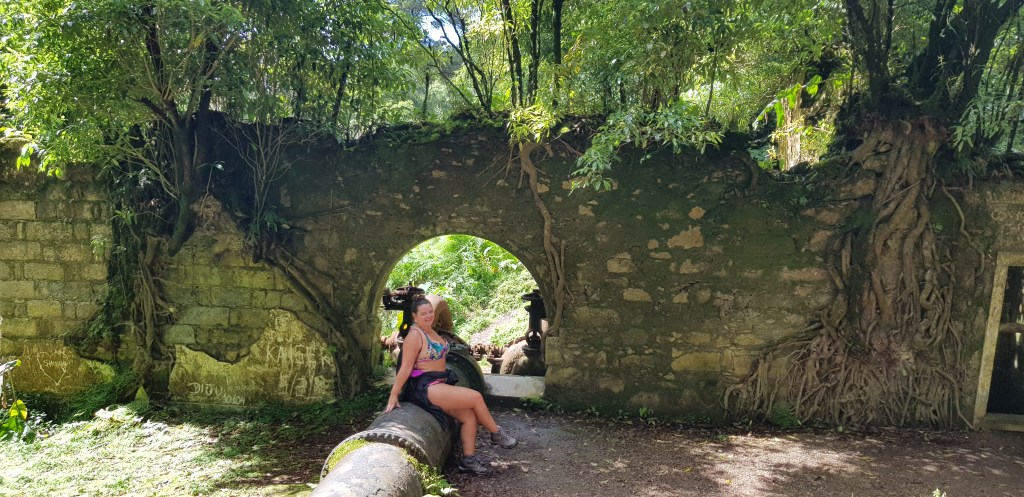
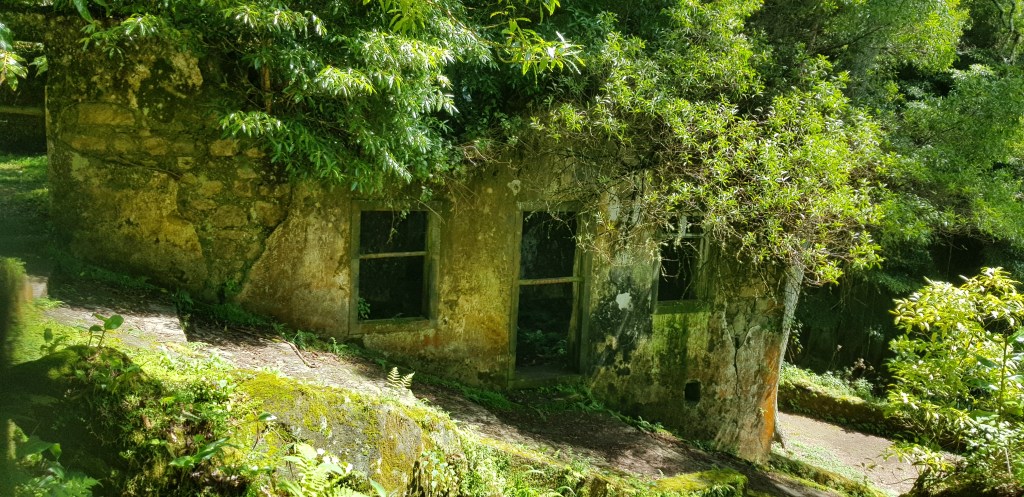
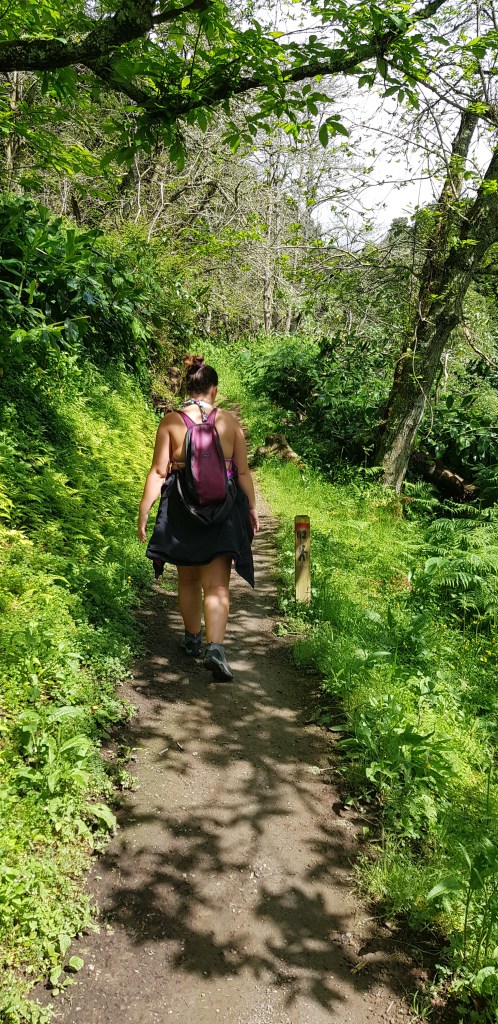
The walk that I decided to do near the hotel was following the river nearby uphill and leading to a set of abandoned hydro-electrical stations in the forest. The Azores islands are known for their efforts in alternative renewable energy, especially hydro electricity and wind farms.

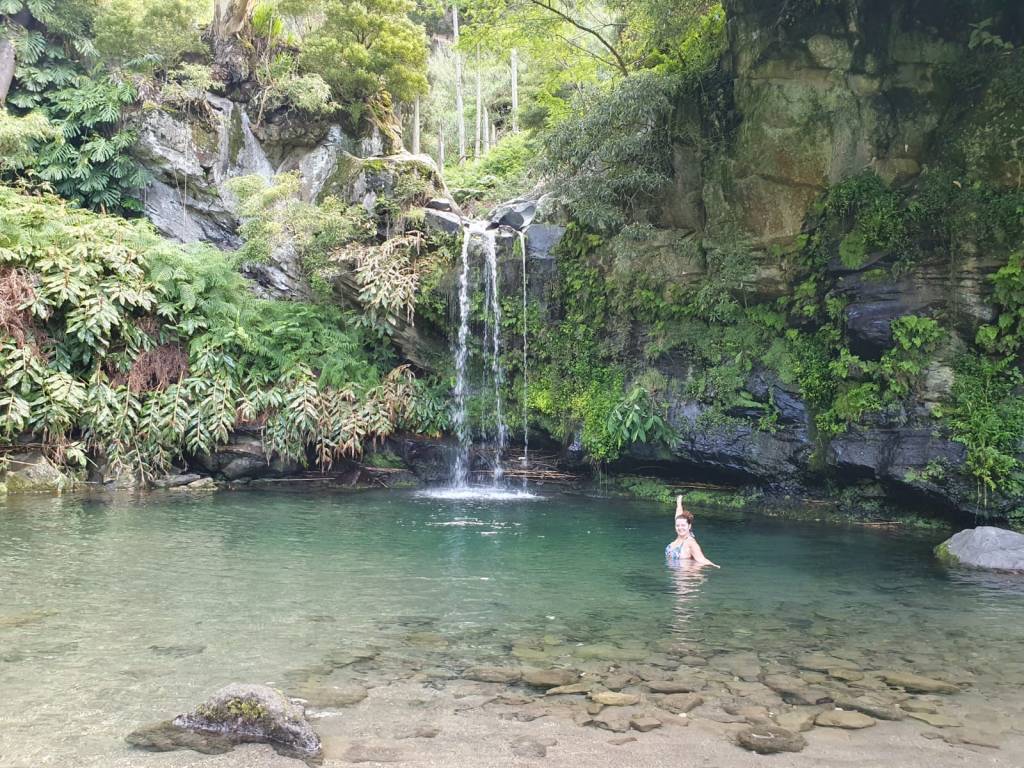
These old stations, combined with a dip in a gorgeous little waterfall, made for an interesting walk with a lot of interest in photo opportunities. I felt like I was in scenery that I remember from the TV series ‘Lost’, with abandoned stations locked between the trees and pipes running through the ground. Like at any moment, I will discover a secret hatch!

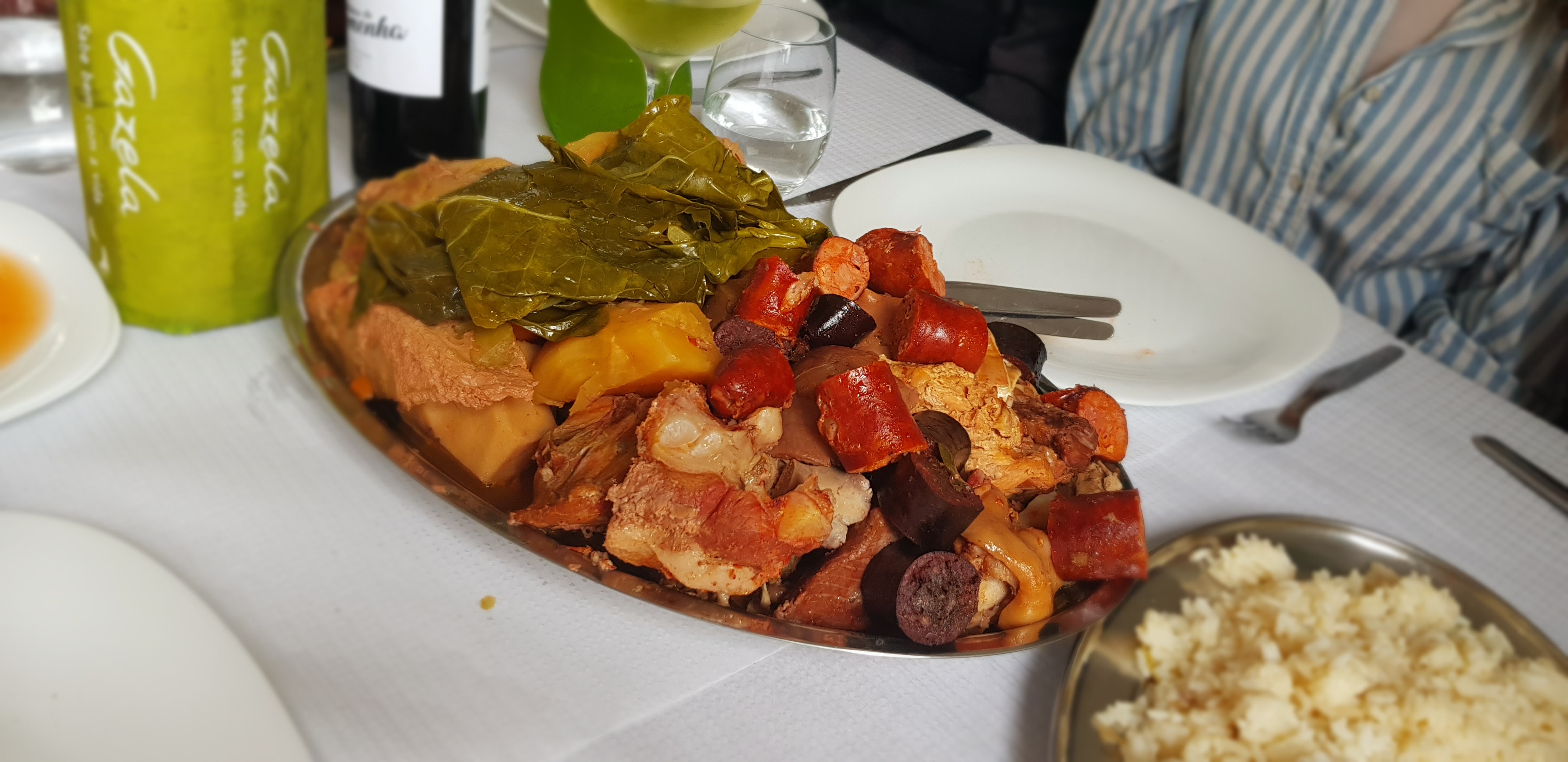
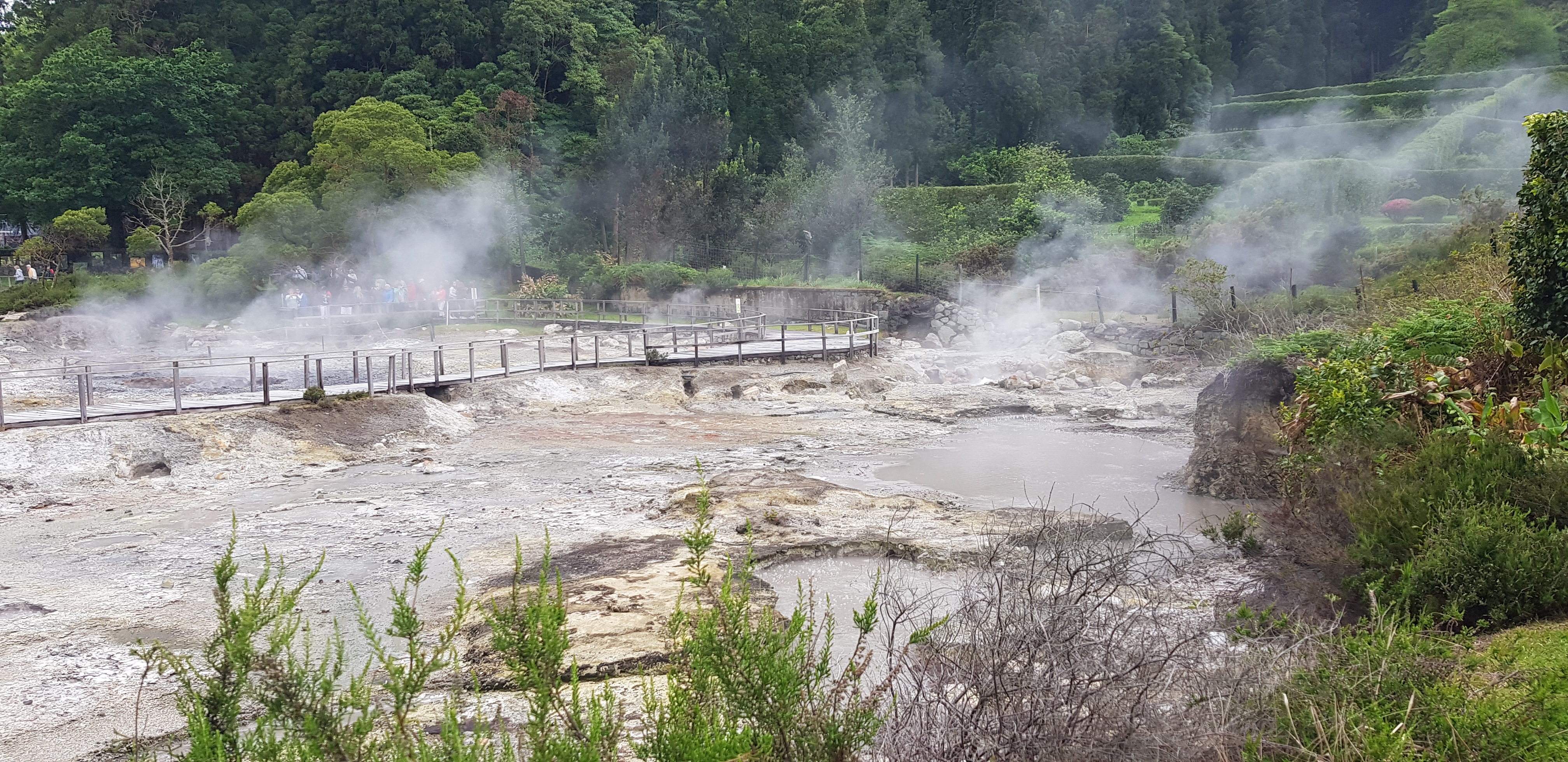
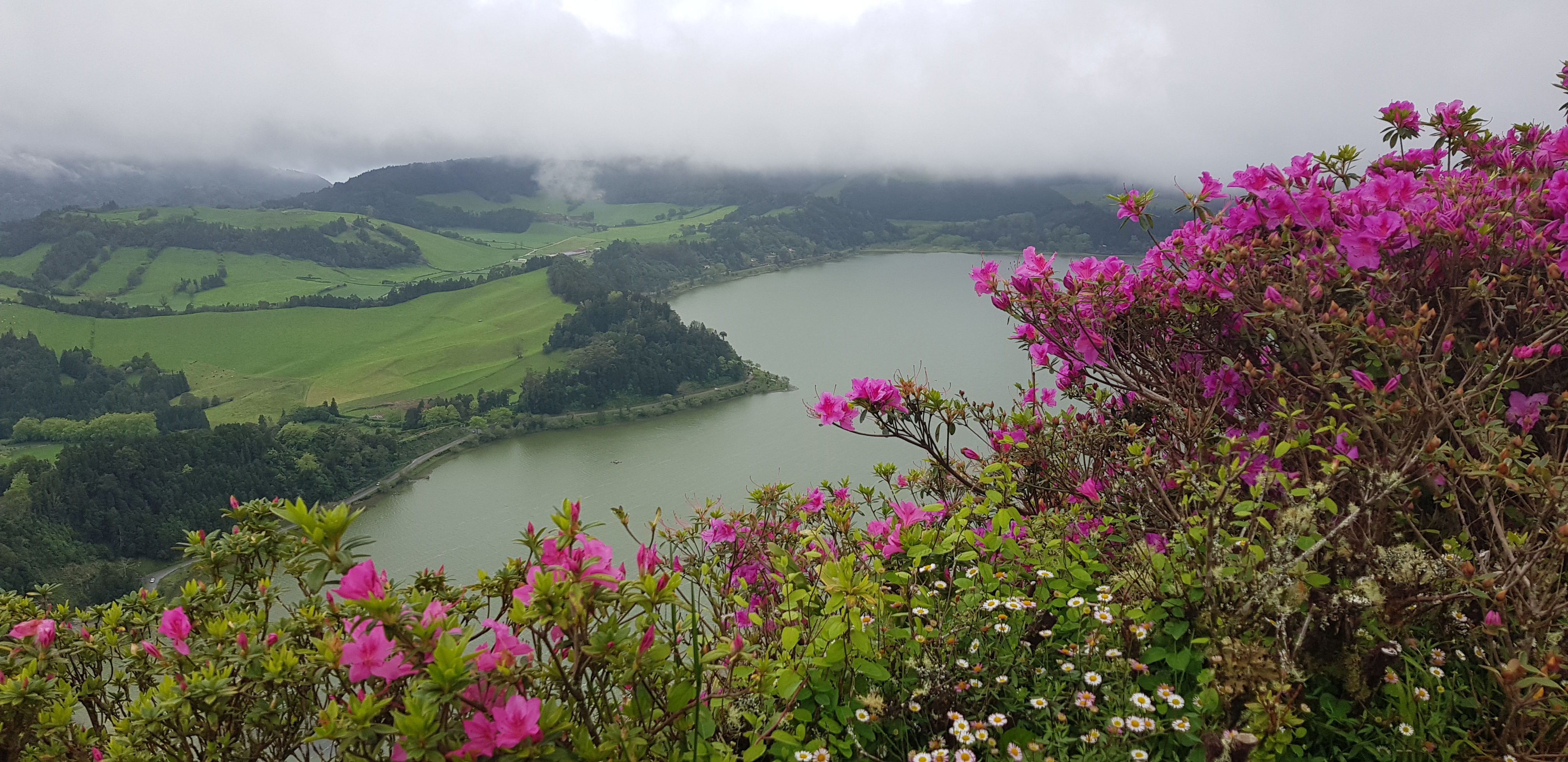
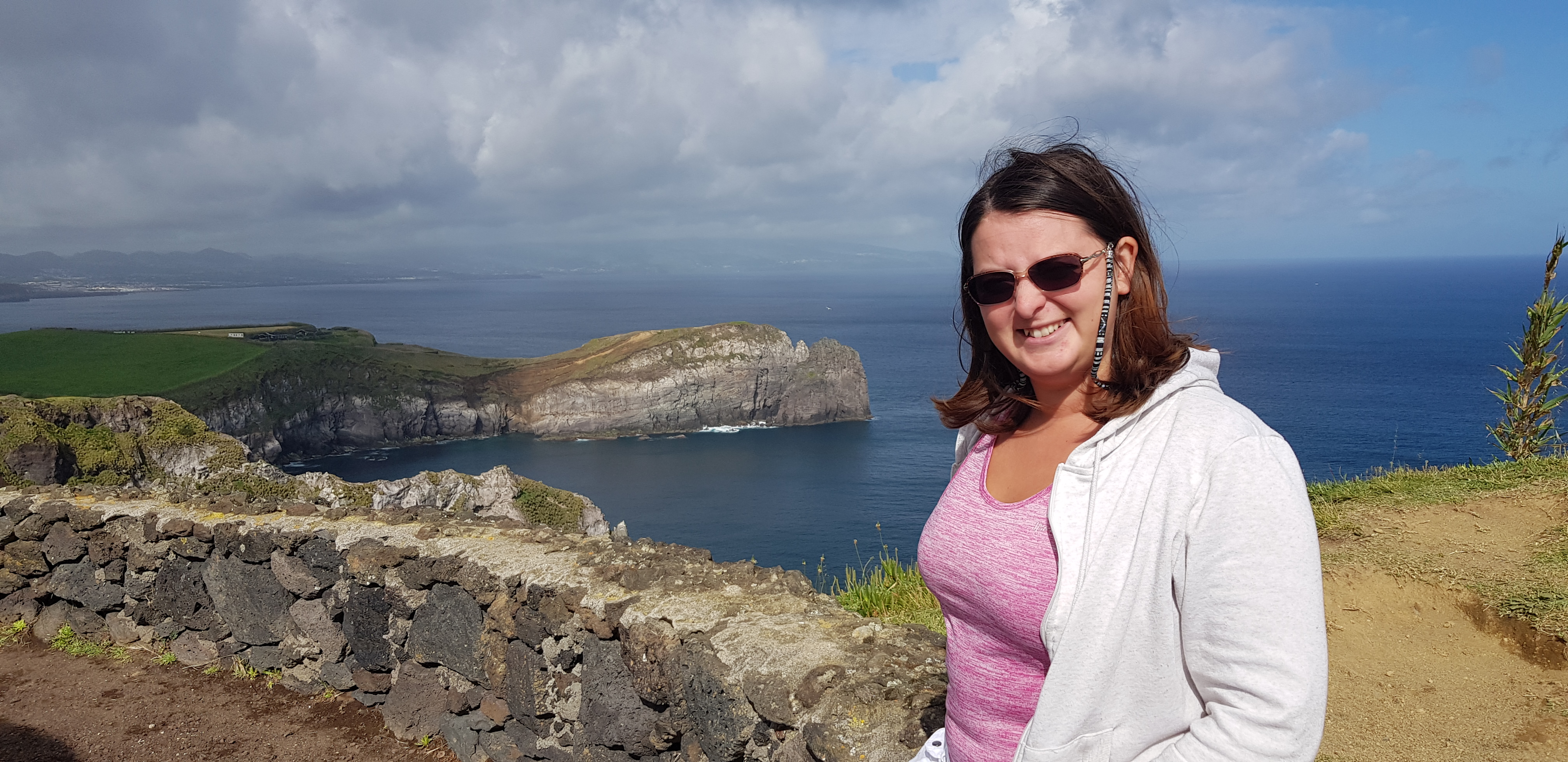
On the tours I’d booked, I was able to visit a variety of lookout points, and some beautiful villages/towns, such as Ribeira Grande (Big Stream) which had lovely scenery. We visited an active volcano area where our lunch (a traditional portuguese recipe) was buried and slow cooked by the warm ground.

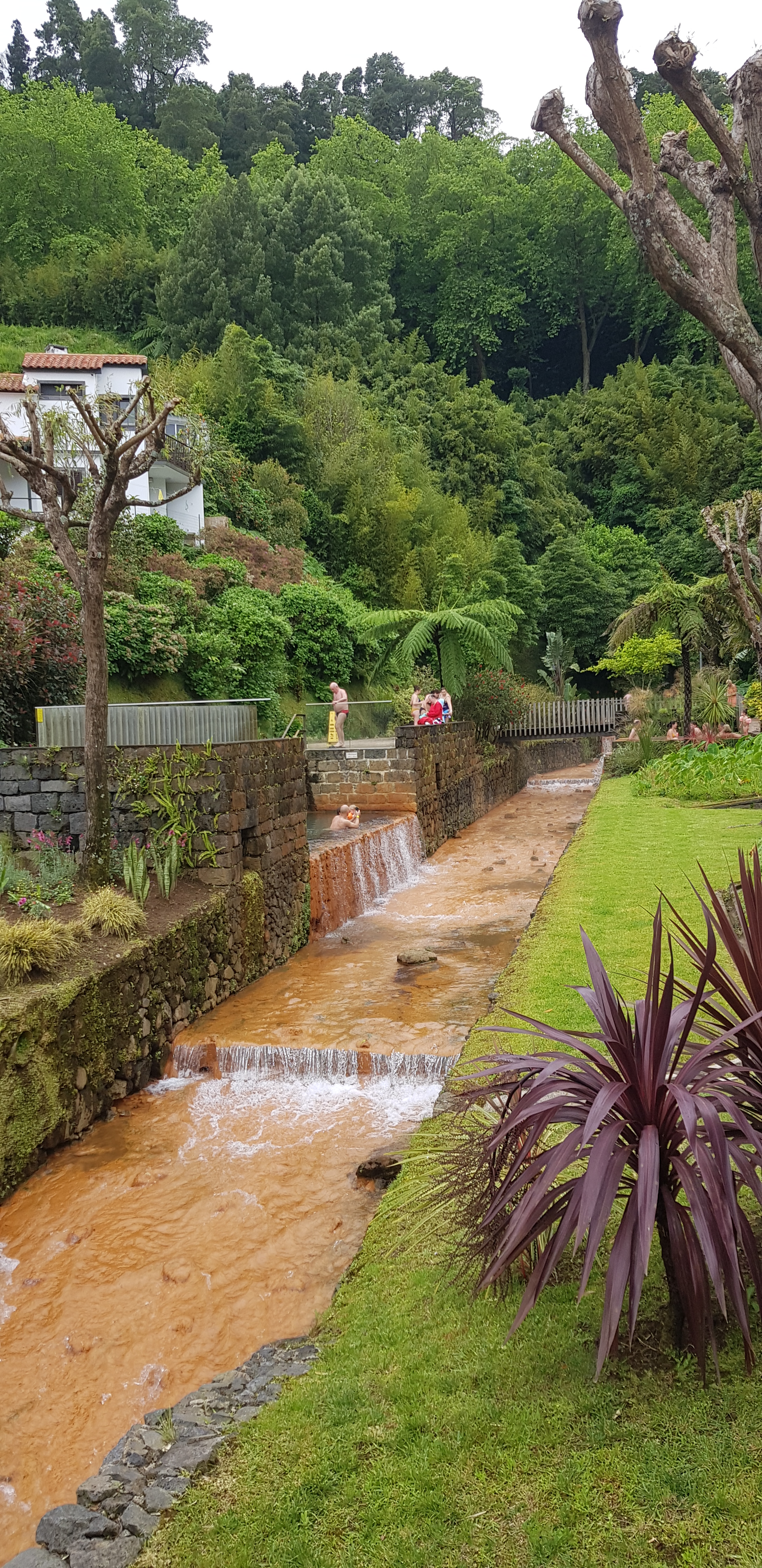
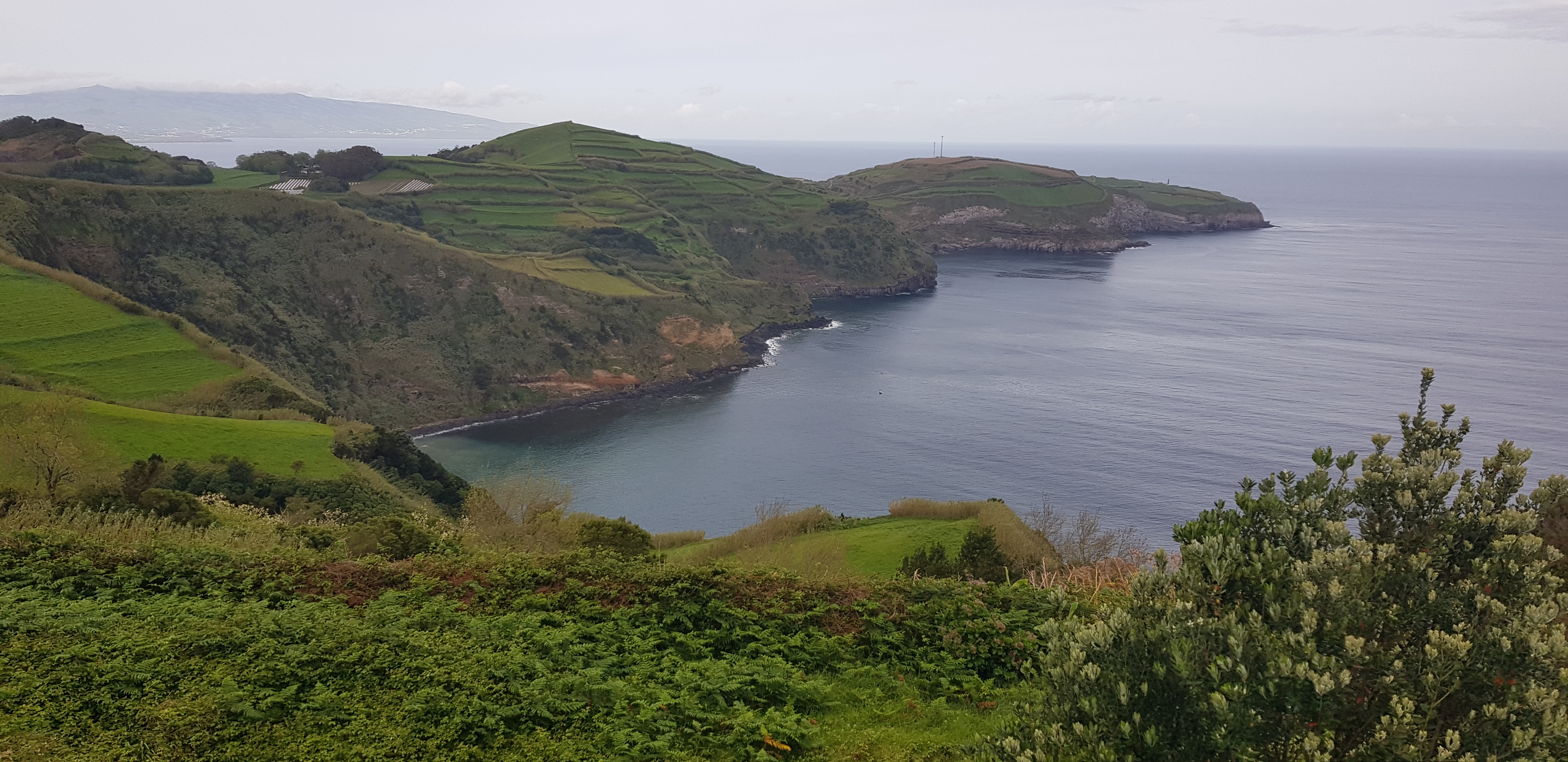
We also visited a geothermal spa, and the well known patchwork viewpoint where you can see thousands of smallholding farms stitched together from above.

Terceira

A few days later, and with a 45 minute flight, I was in the second island of Terceira. This lovely round island, has a lot to offer and is not yet as built up as Sao Miguel. I was in a lovely hotel in a secondary town away from the capital of Angra do Heroismo.

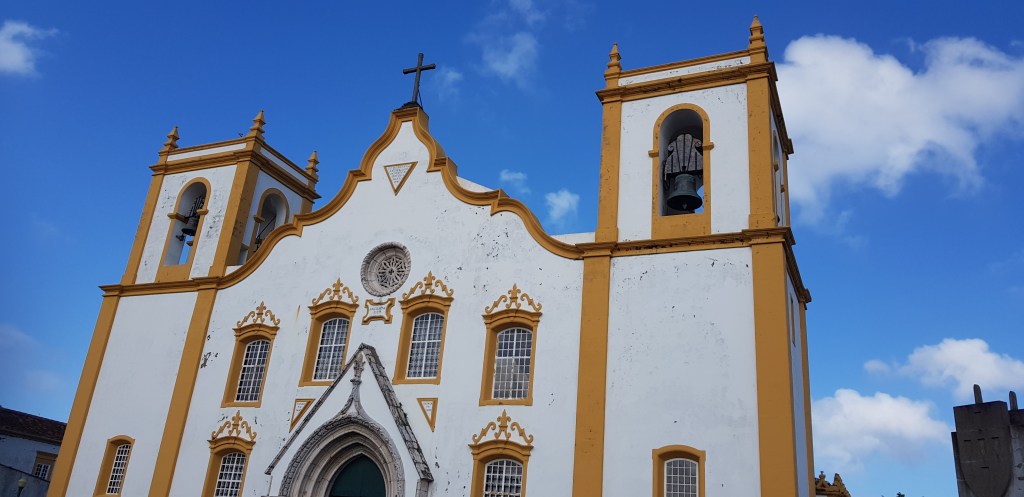
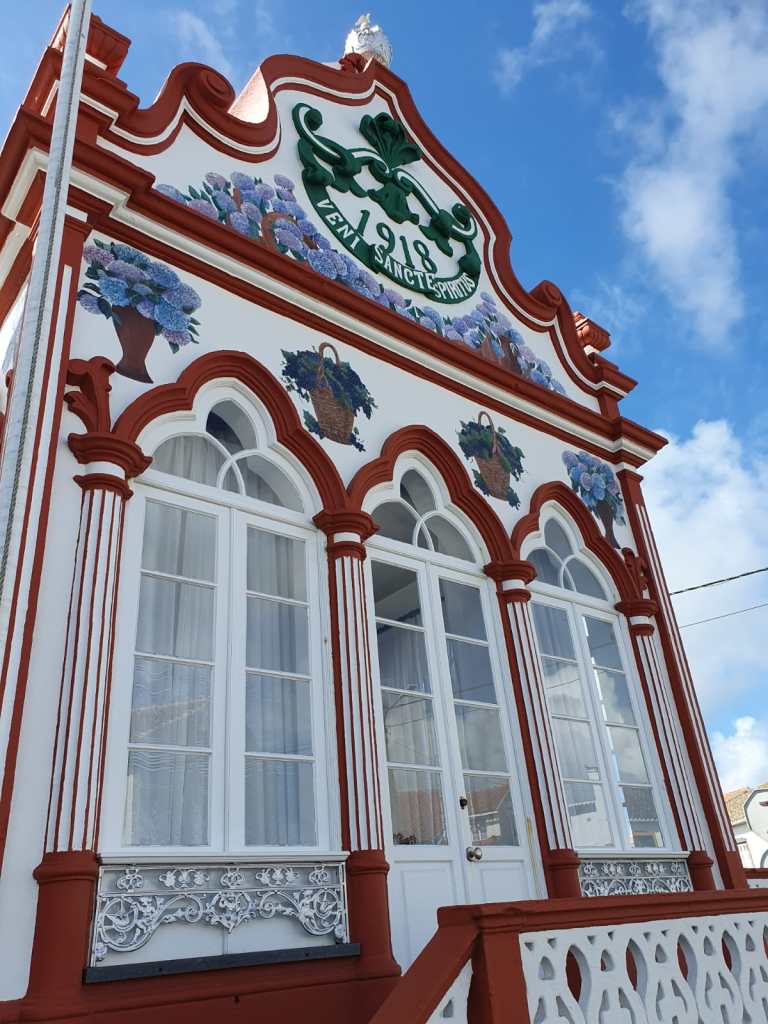
The villages and towns in Terceira are very traditional, and still have many unique customs that they uphold. For example they have a program of events where they have a ‘running of the bulls’ in the streets. This is not to copy the ones in Spain though, it is a unique memorial event to celebrate the farmer and bull heroes that drove the Spanish out of Terceira during a big battle, where the bulls were let loose on the army! Led by a woman villager too! Very cool. You will also find beautiful chapels in every village that are purely for the devotion to the holy spirit, and used at only one time of the year.

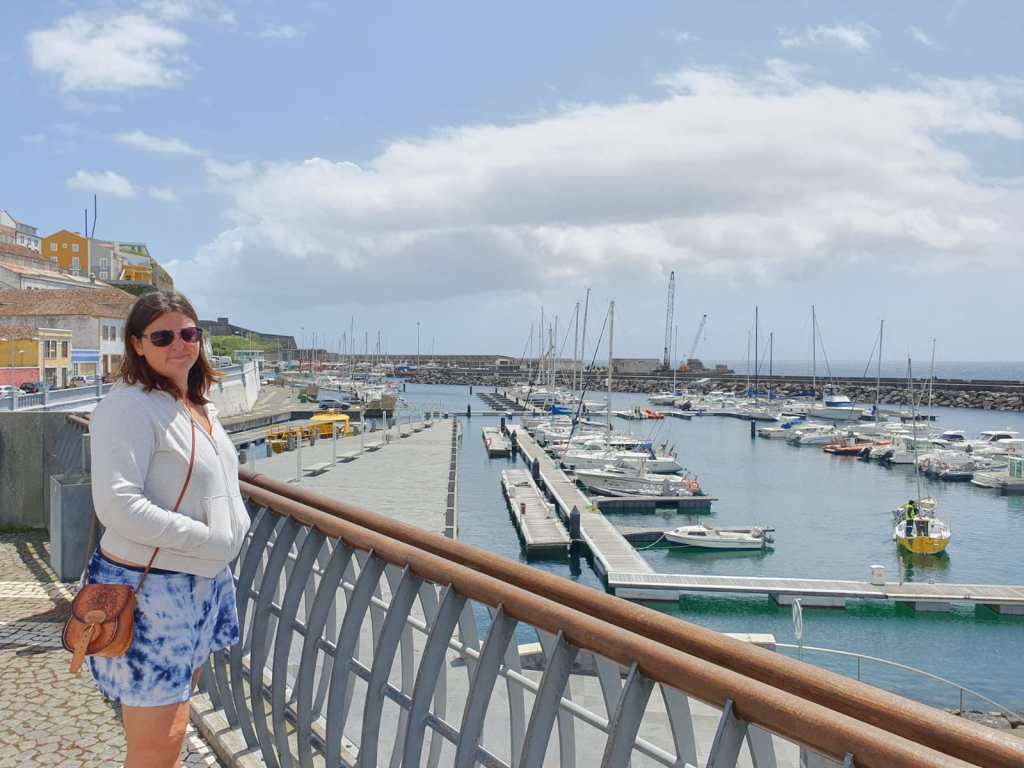
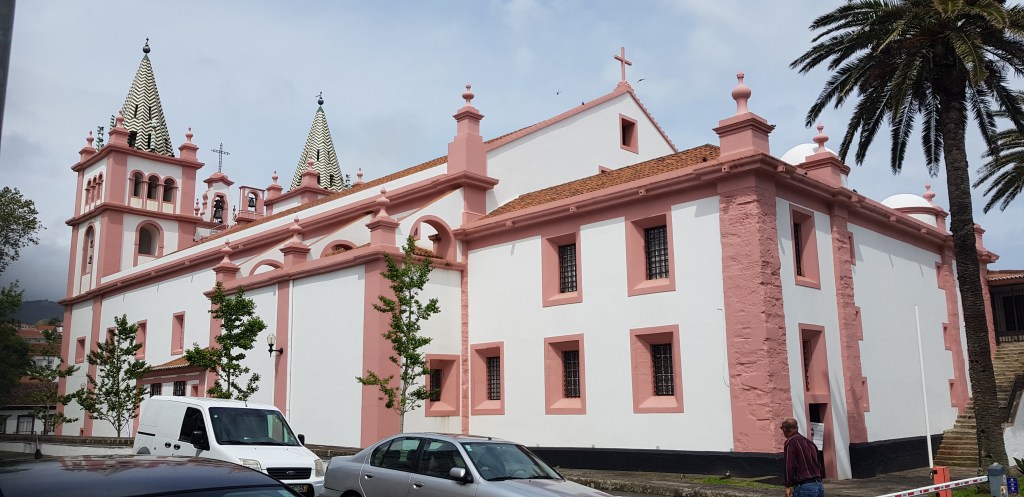
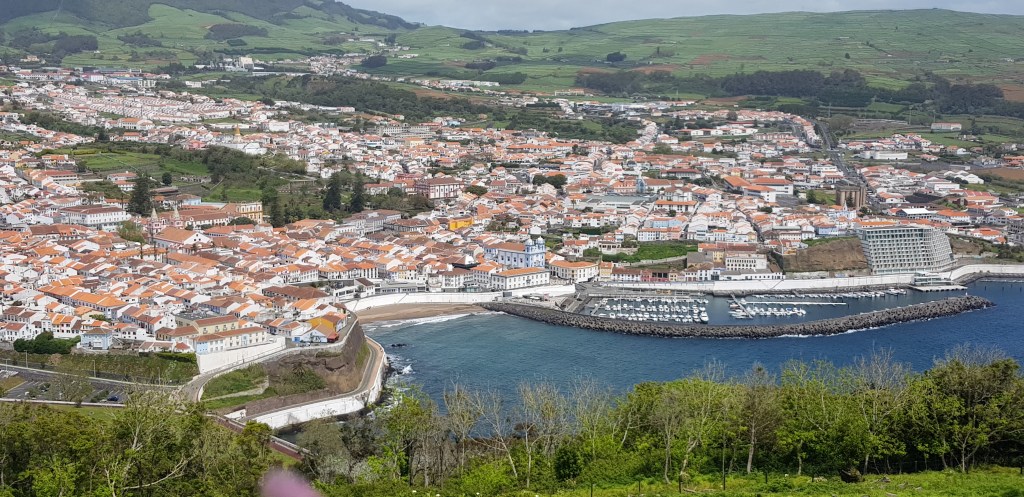
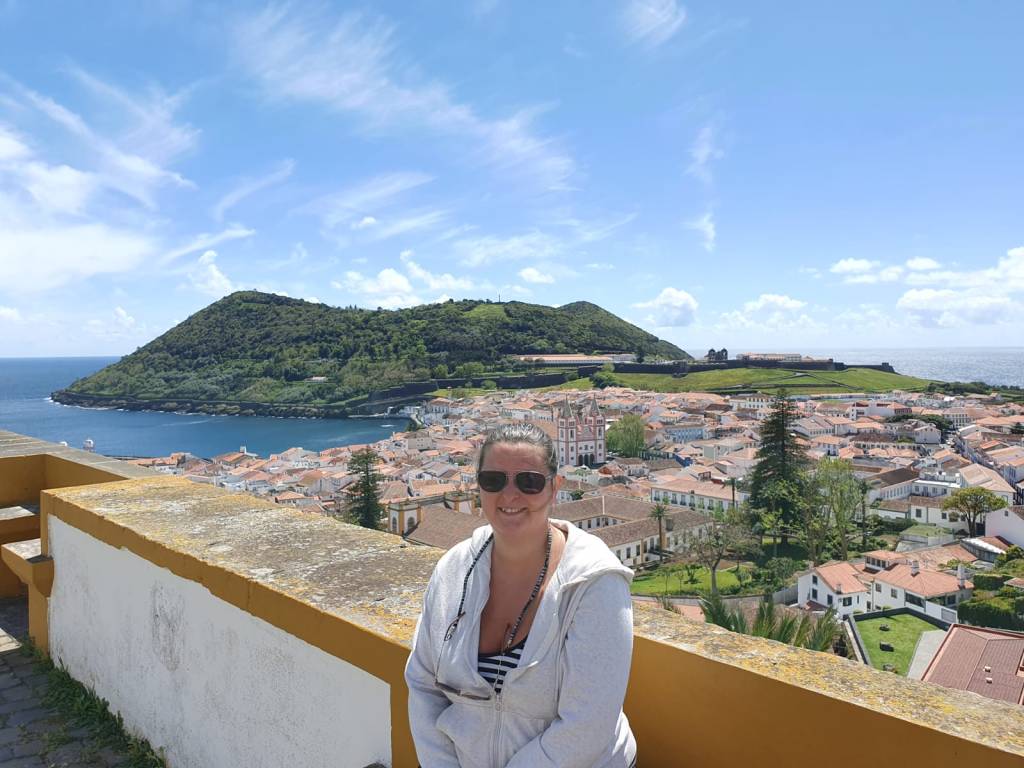
Angra do Heroismo is a beautiful little city with colourful buildings and a pleasant marina area. The colours of the buildings are apparently routed originally in the island’s link to trades with India and the spices and materials that were brought. The island also has been home to an American airfield and base since WW2 and so is rich in an international community. The city is actually a UNESCO Heritage Site due to its historic importance as a transatlantic crossing point, it is head of the diocese of the Azores, and it was actually capital of Portugal twice, replacing Lisbon!

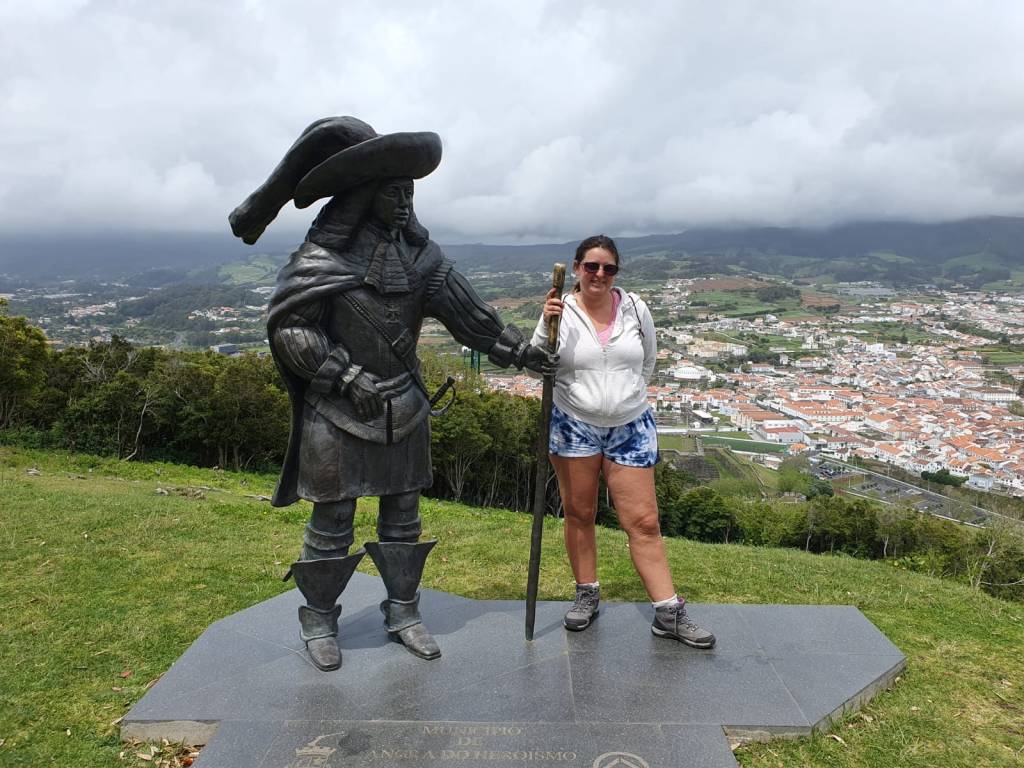
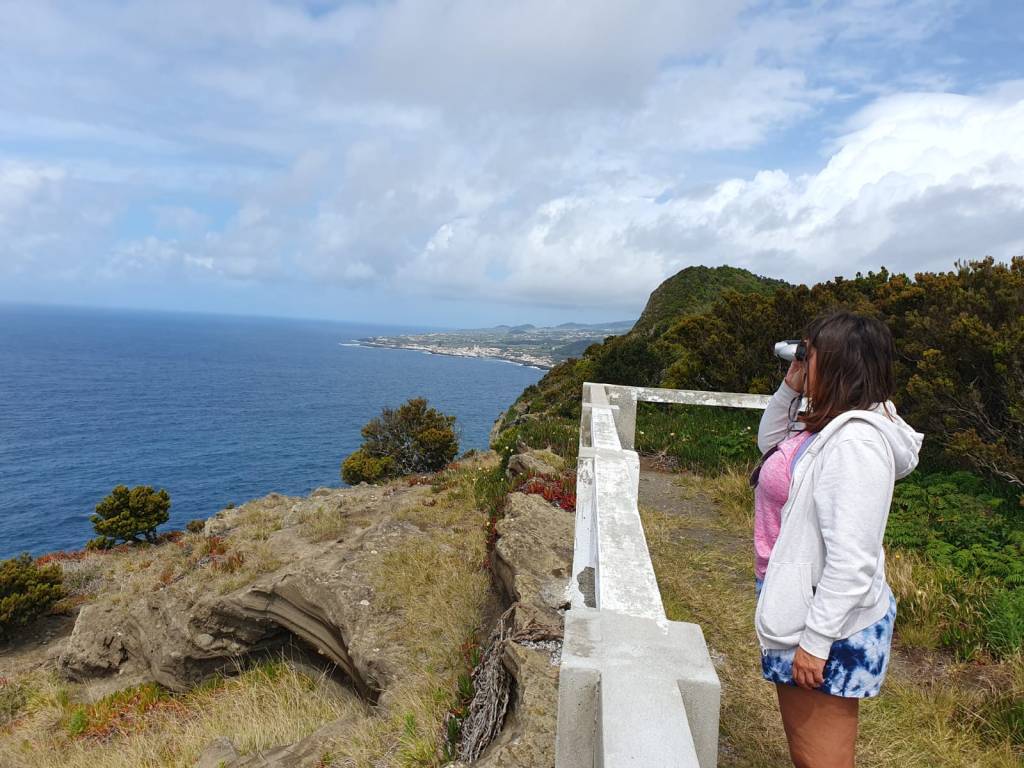
The city also has an active military base for Portugal on their Monte Brazil connected to the main city, it is actually an extinct volcano and now a nature reserve for walkers and family picnics. I spent a morning walking around this mountain where I found there to be a lot of stops to enjoy on the trail, including fort ruins, an old whale watching tower, a viewpoint of the city, and a set of aviaries. When you visit the cross statue viewpoint, you will also find a set of military guns pointing towards the city. I thought this was quite strange, until I discovered that the military base was actually built by the Spanish when they temporarily took over the island, and pointed the guns back on to the city as a way of warning off the very unhappy Portuguese people below!

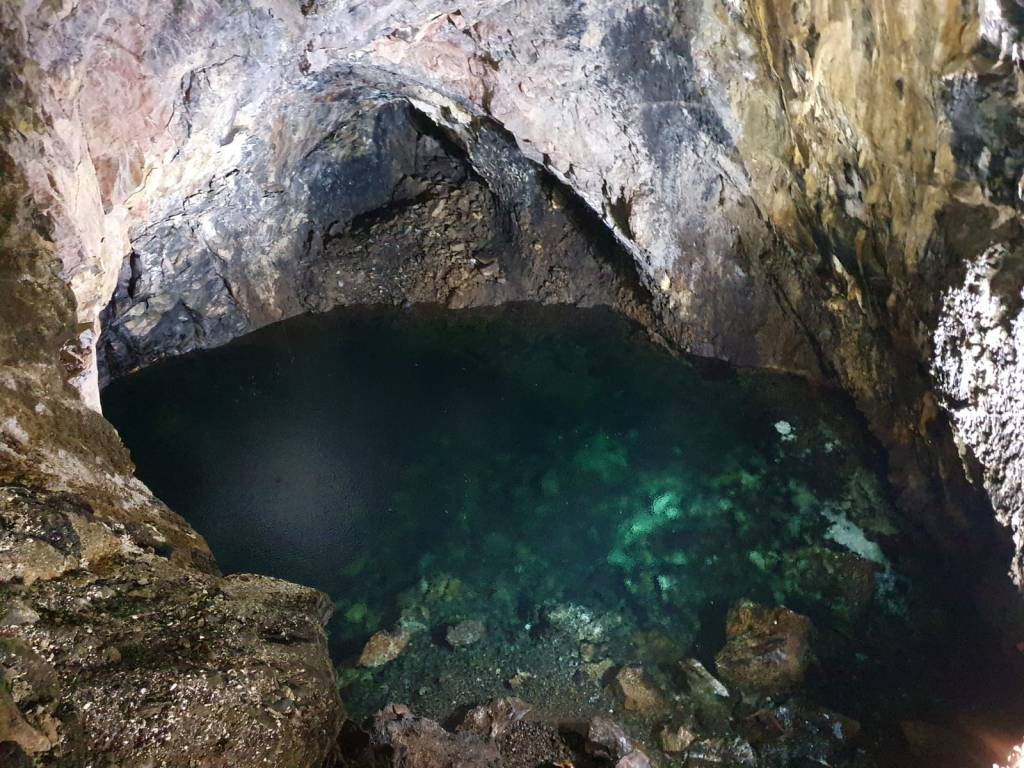
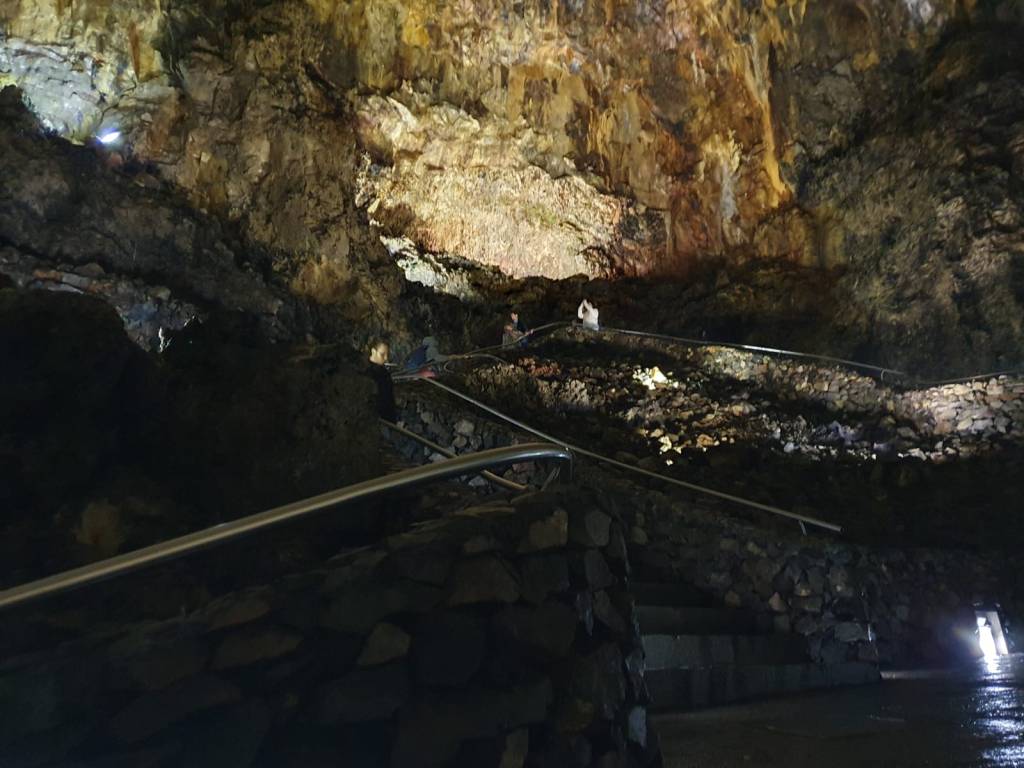
This mountain is just one of many volcanos on the island, the entire Azores group is a collection of volcano eruptions, and have plenty of collapsed, active and also extinct volcanoes. One volcano in Terceira is very special because you can visit the lava canal directly via a tunnel. and walk around over the top of the solidified lava from the last eruption around 2000 years ago. Algar do Cavao is very special and one of the more unique attractions I have been to. It was discovered only in the last century, when a farmer’s cows kept going missing… it turned out that they were falling through the huge crater hole!

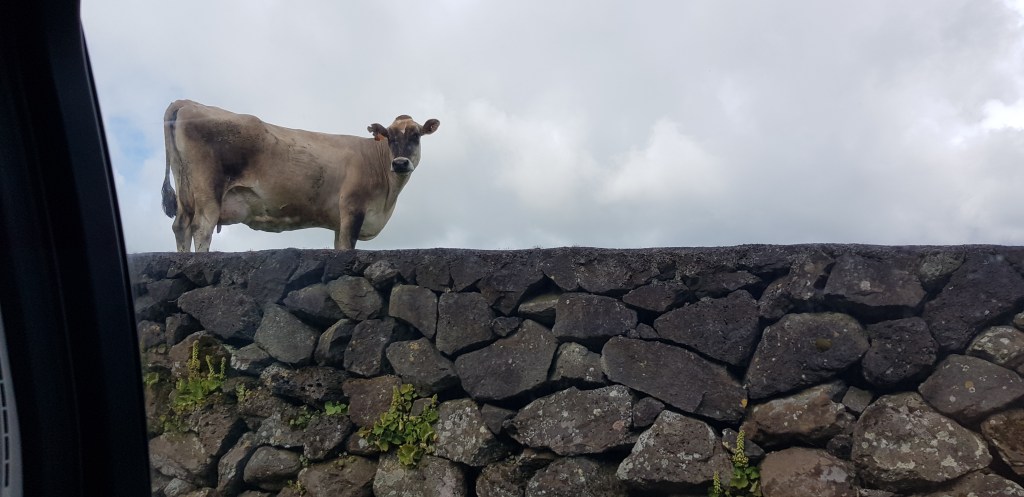
Finally, speaking of cows, there are about 2 cows for every inhabitant on these islands. The biggest industry for these islands is dairy produce, and the amazing thing is that it is all made up of smallholdings and many family ran farms pulling together their resources with other farms across the area to make cheeses, milk, ice cream and more. You are never short of a cow, and someone that knows a lot about them!

Overall, I loved visiting the Azores, and now feel determined to visit all of the nine islands and find my favourite. It is an easy place to visit from Lisbon and I am in Portugal often, so I don’t think it will be long before I am back!

Lisbon: The City of Seven Hills

I have visited Lisbon several times for short day trips, but this Spring, I stayed over for a two night break between destinations. This city with what feels like many more than just seven hills, is full of life and culture throughout.

Travelling to Lisbon

I travelled to Lisbon by Train on this occasion from the Algarve’s Lagos, in the South. This was about a four hour journey with one change, and then once in Lisbon there are several main stations you can arrive in. From there, buses, trams and metro are possible.

Neighbourhoods: Alfama and Barrio Alta

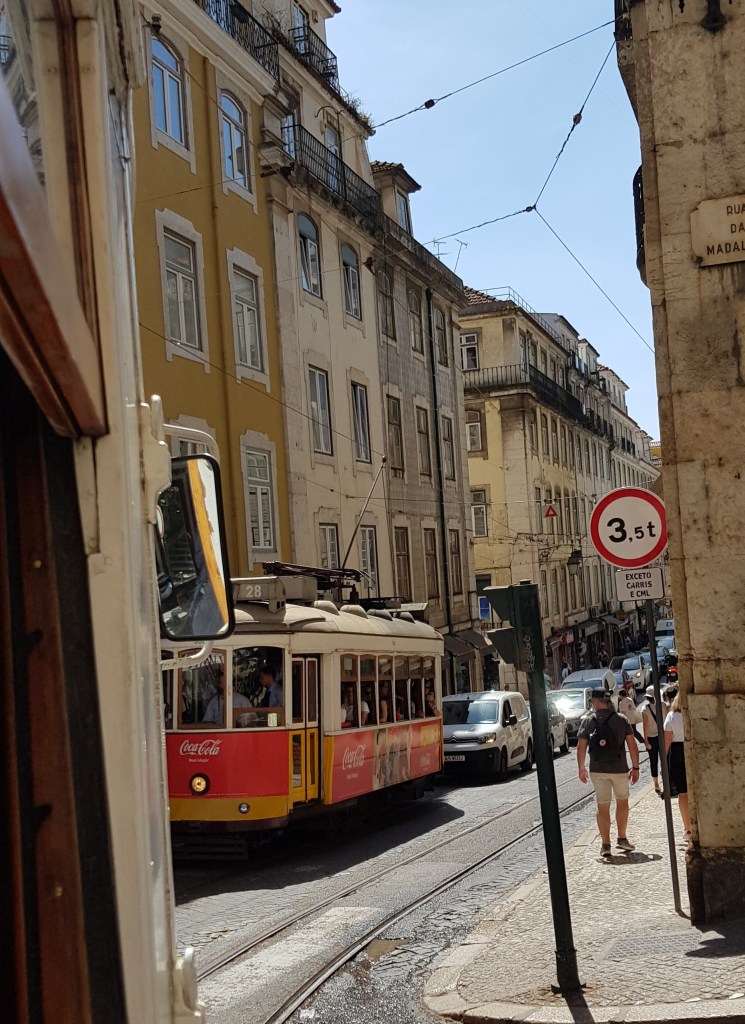
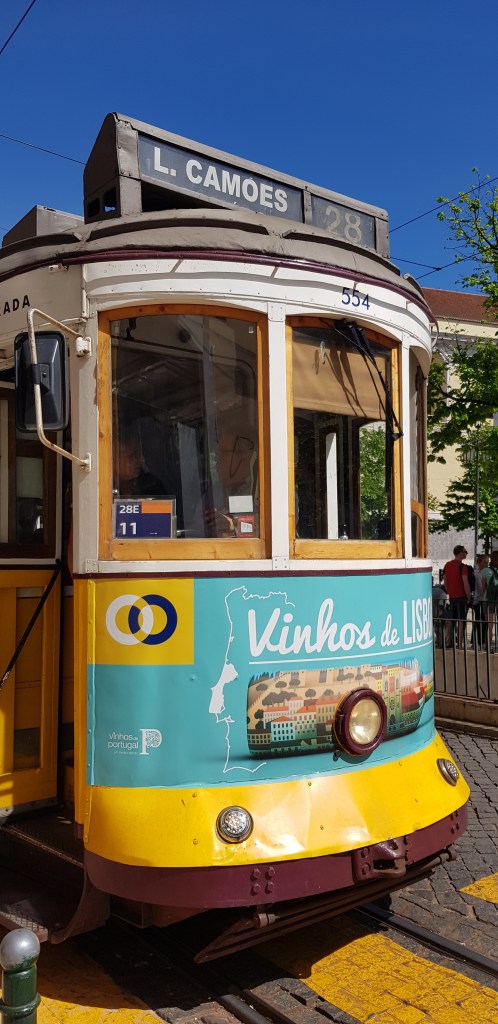
I stayed in the neighbourhood of Alfama which is one of the oldest parts of the city near to the river. I selected this area of the city because it is rich in culture, close to tram 28 which is the main tram to run through the touristic areas, and its an area with many fado houses.

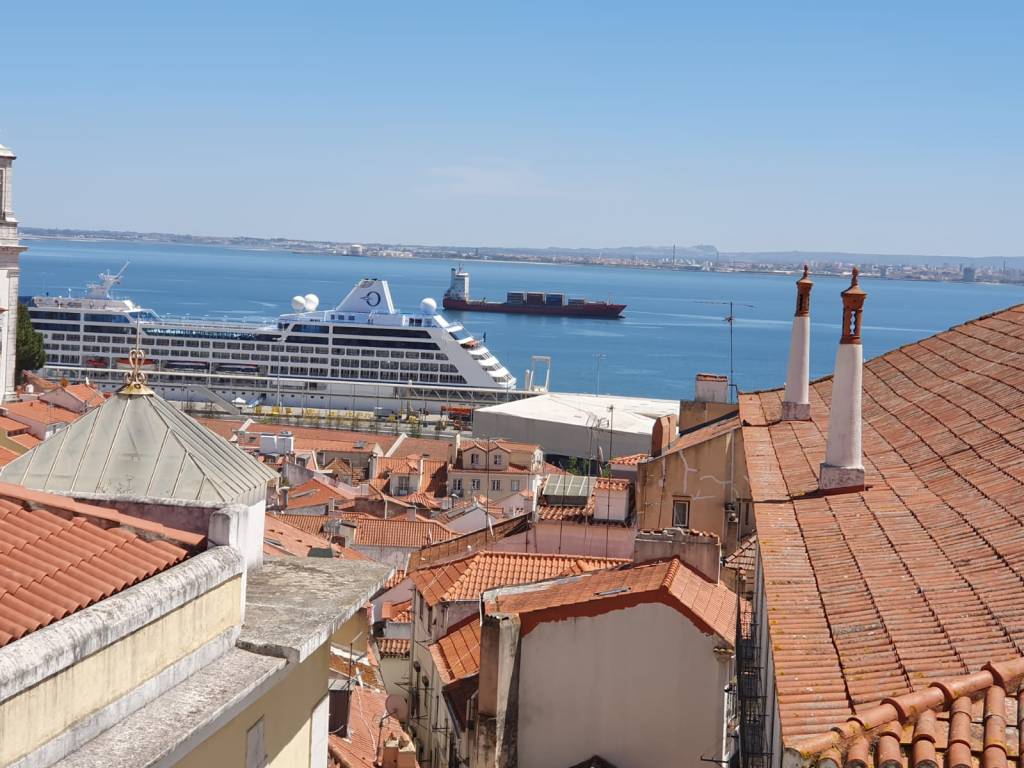
I chose to stay in Convento de Salvador, which is a beautifully refurbished convent on the hill. It was very clean and minimal and still had the old layout and foundations of the convent. Our view of the river and downhill street was wonderful aswell.

It is easy to follow the river from Alfama along the promenade towards the Belem tower, or you can jump on the tram to head either towards the castle in one direction or towards Barrio Alto.

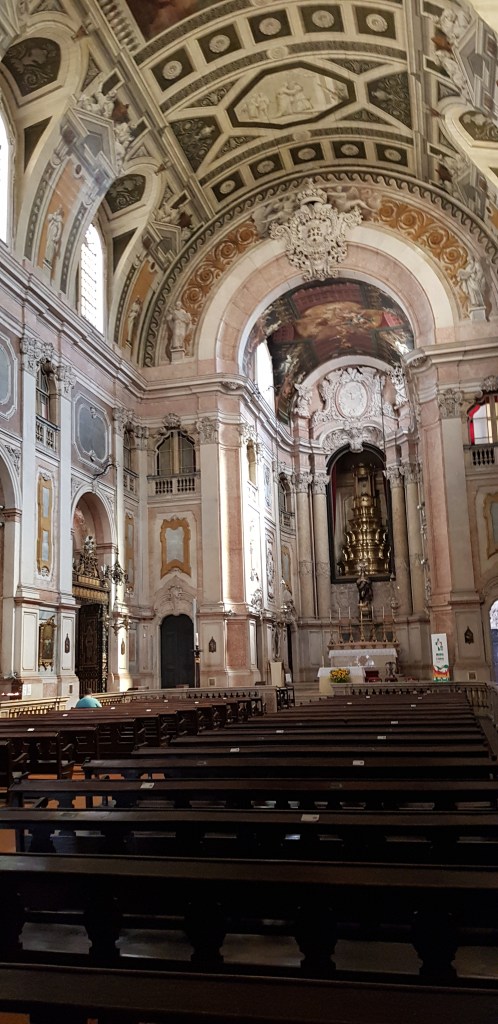
Barrio Alto is a bustling area full of shops, restaurants and squares with street performances at night. Wondering the squares to listen to music, enjoying a pastel de Nata and venturing to some of the local gardens can all be enjoyed within walking distance from here. There are also some wonderful churches, I visited two churches from the italian community that were very beautiful.

The must see monuments / attractions

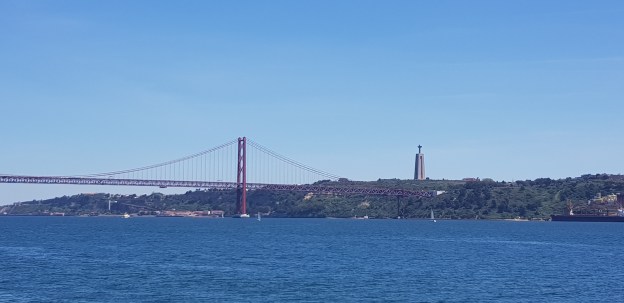
  • Belem Tower – A monument to remember the power and colonisation by Portugal, it sits at the riverside and you can also see the bridge and christ statue from here.
  • Jeronimos Monastery – A huge monastery facing large public squares and standing to the front of the botanical gardens and presidential palaces.
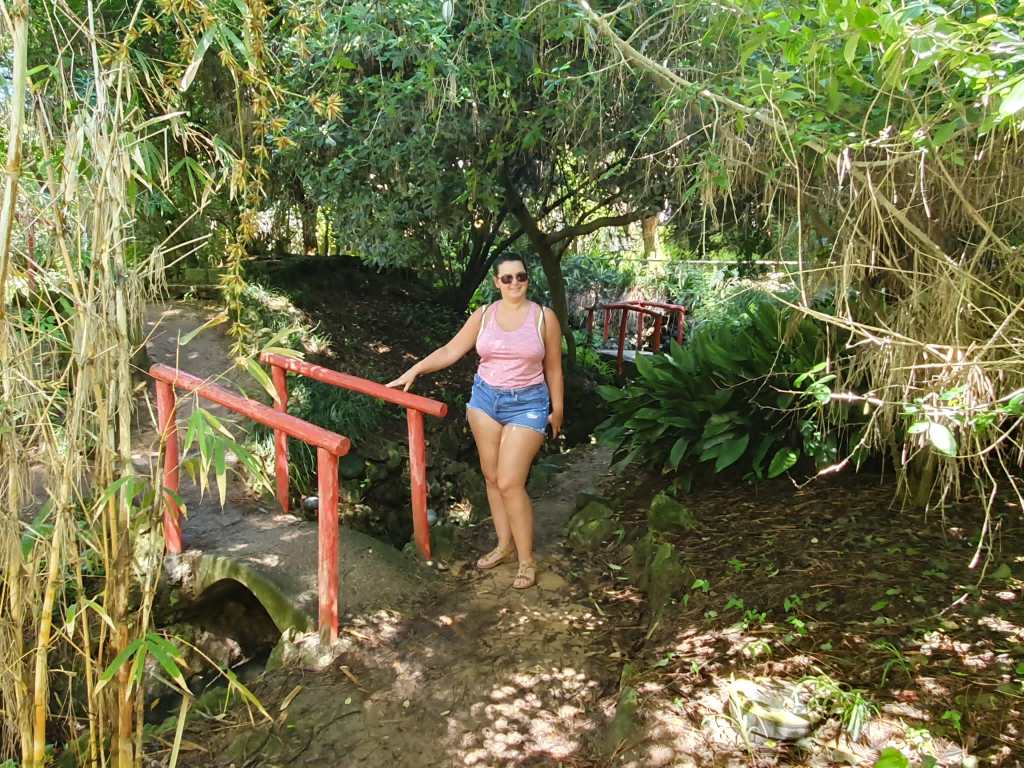
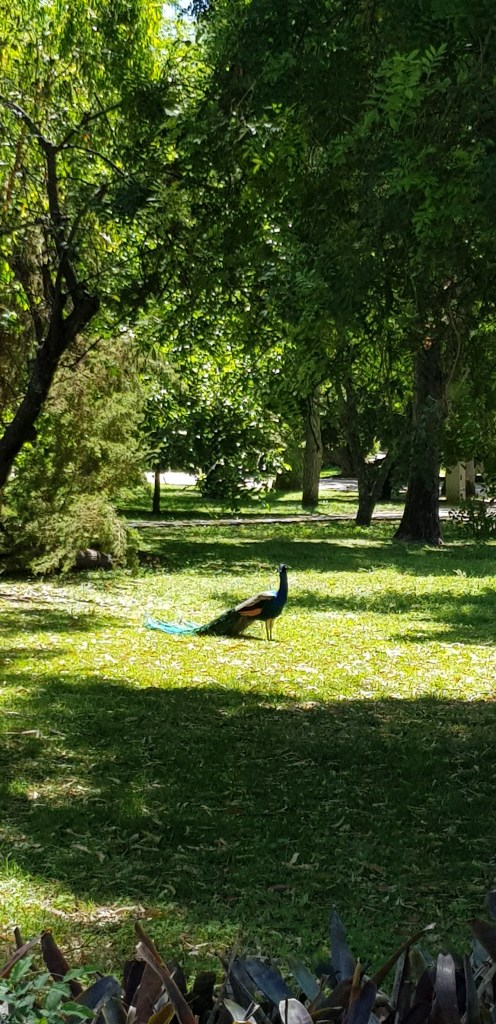
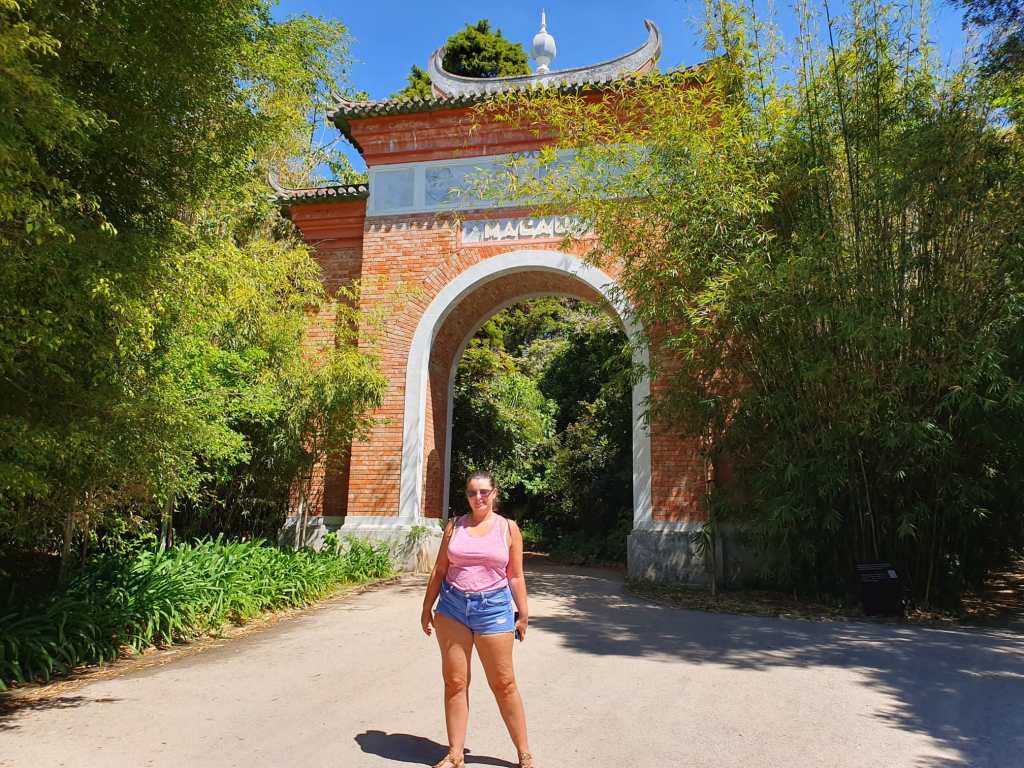
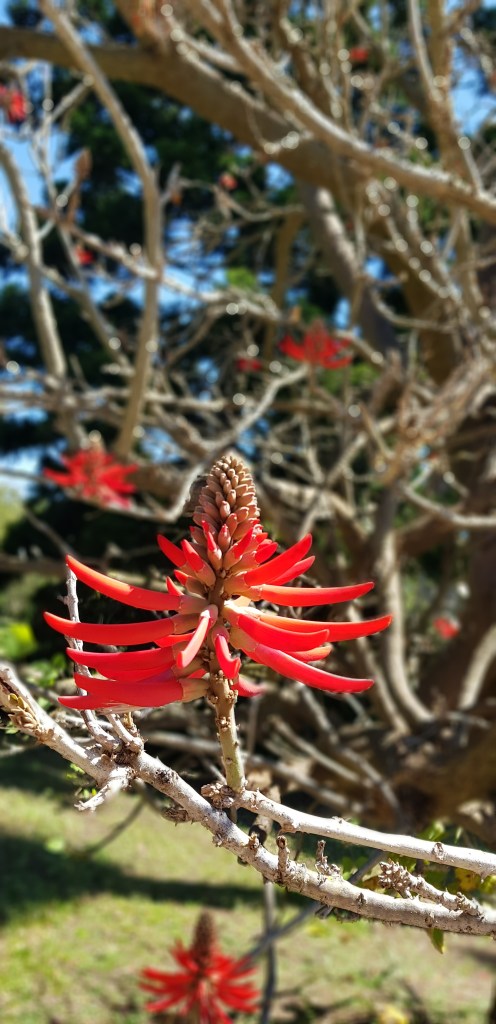
  • Botanical Gardens – A beatiful setting to spend some hours in the afternoon seeing a variety of interesting trees and flowers, an oriental garden, old buildings, african sculptures and many peacocks.
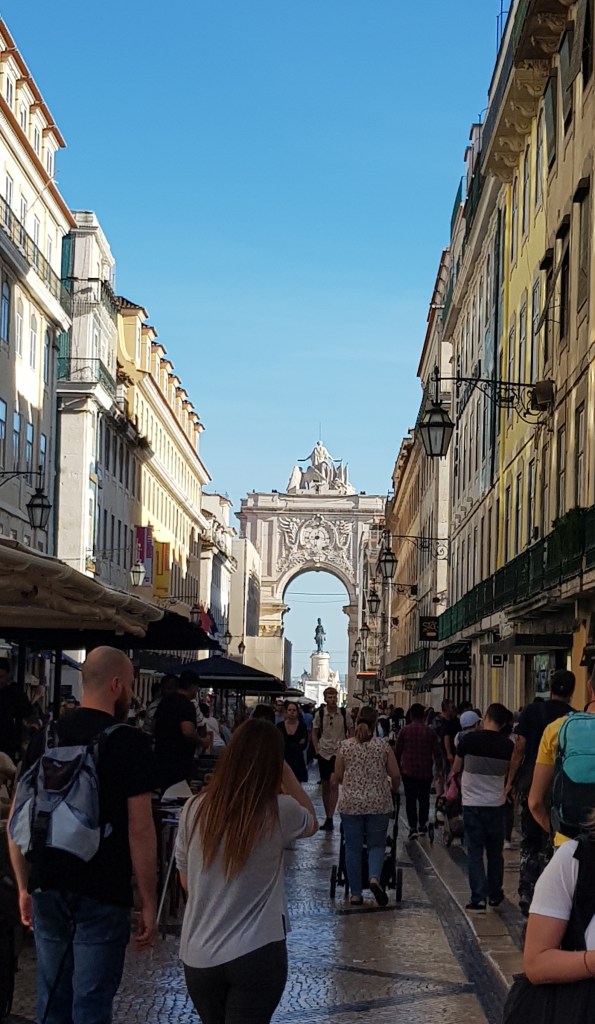
  • Commercial Plaza – The location of a huge statue, the tourist information offices and a great gathering place for events.

Fado

Near my hotel were several Fado houses. These are traditional houses which have evening shows (normally with dinner) of traditional portuguese fado music. This is deep, very sad singing and guitar, supposedly derived from the soul.

The music is very relaxing to listen to, and when visiting the fado house, it was of the utmost importance that guests did not talk and food was not served out by staff during the music out of respect. So, several breaks were needed to dish out food and for conversation. This was good for me as it meant I actually slowed down and savored my food.

There is also a Fado museum downhill in Alfama. It has a lot of information about Fado but it is difficult to navigate and understand the information at hand, and I felt a lot more could be done to improve its guest experience.

To conclude…

I like Lisbon a lot, it is one of my favourite cities. It is vibrant and proud of its heritage. Next stop is another portuguese area, the Azores…