Tag Archives: Churches

Historic Ely and Stained Glass Museum

As I sit in my room, unable to travel due to Covid -19, it seems like a good time to catch up on my draft blogs! So… this short piece is all about a day trip we made to the city of Ely.
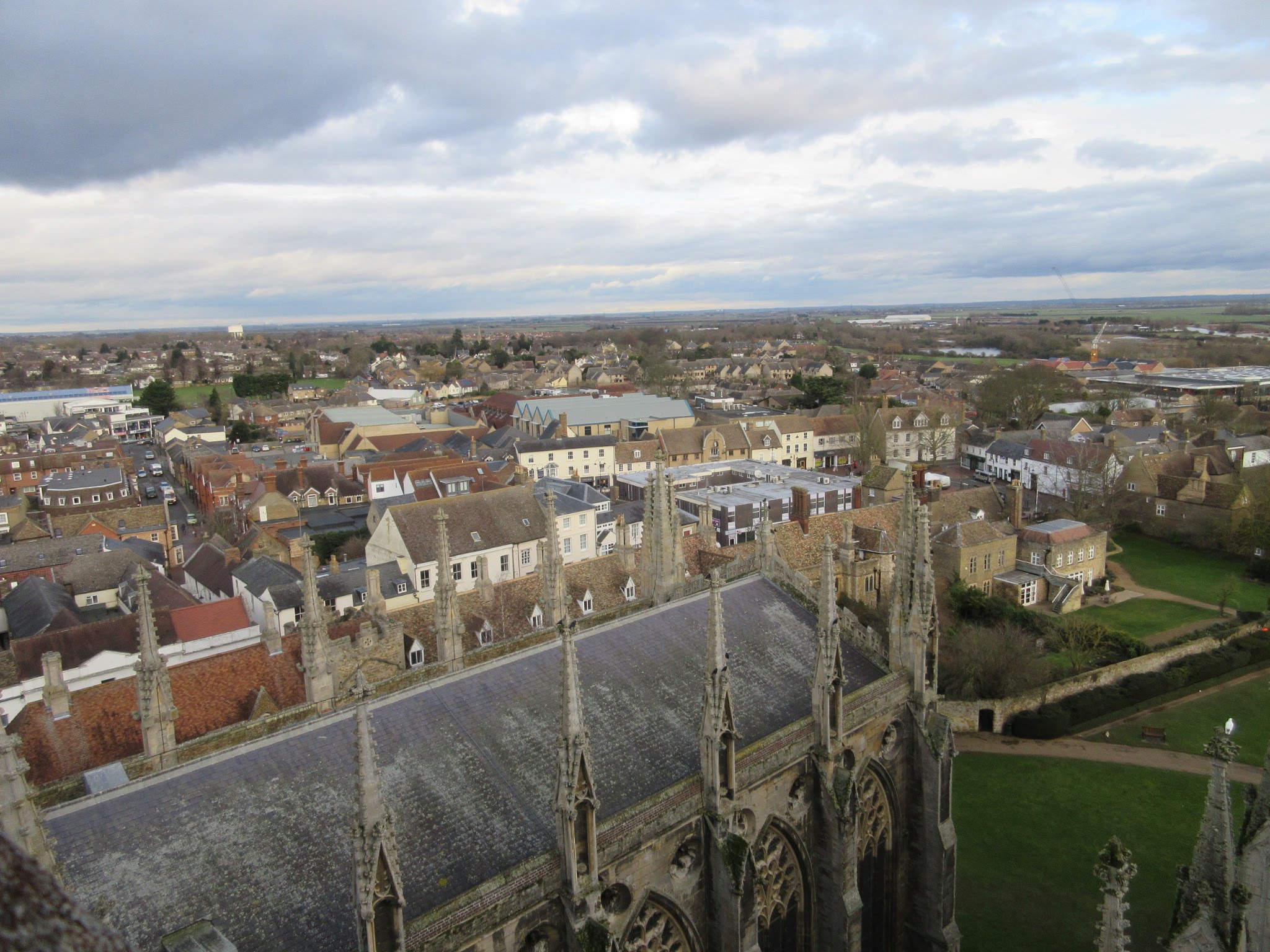
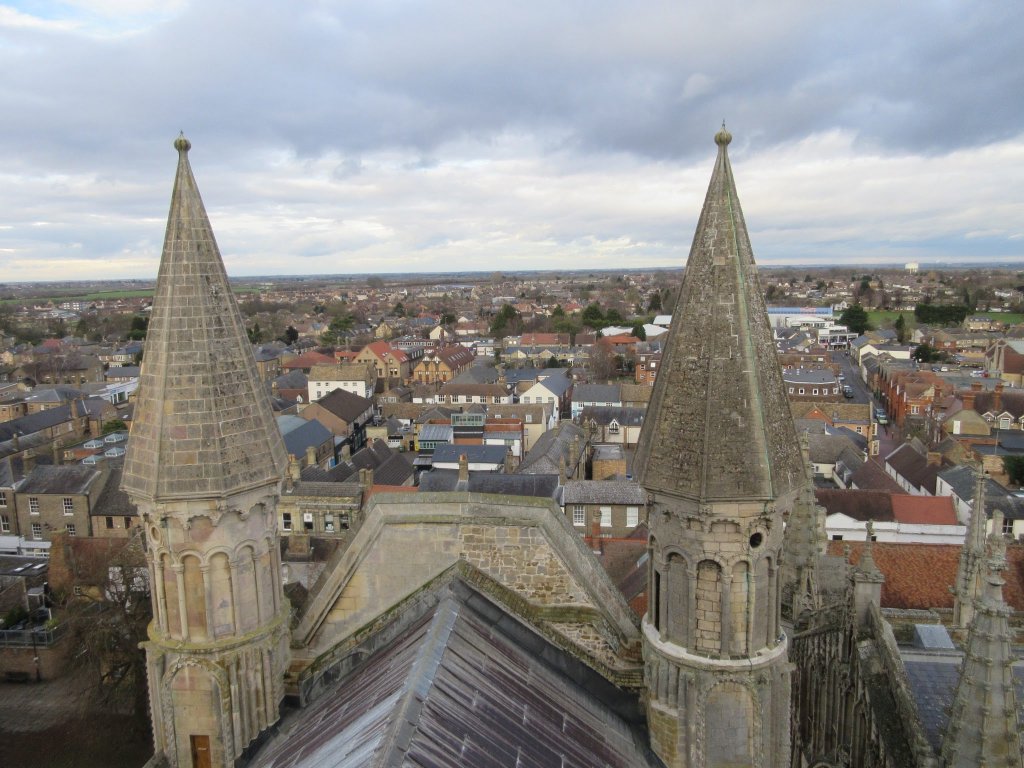
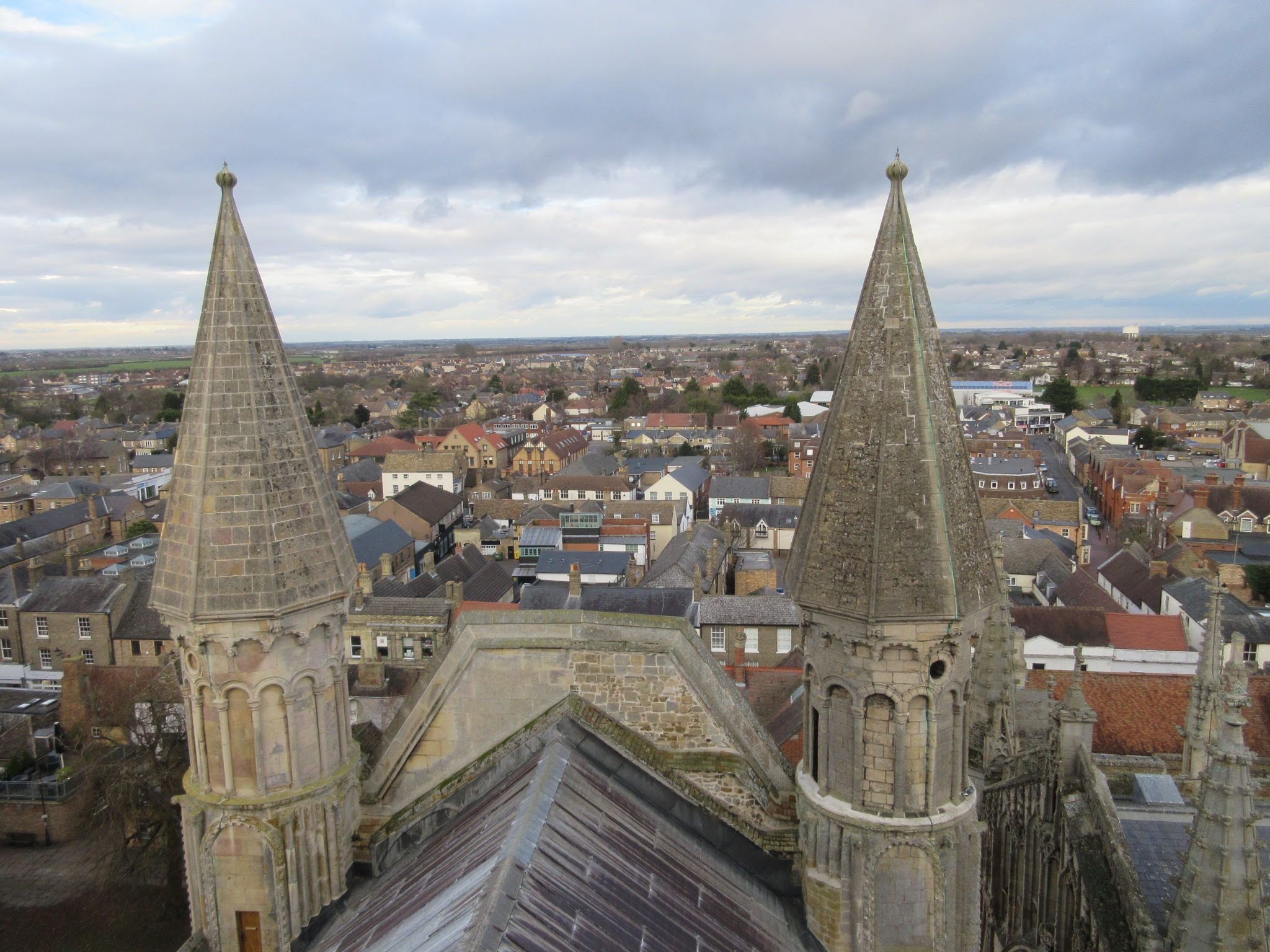
View from Ely Cathedral roof

Ely is a small city (second smallest in England) in Cambridgeshire, less than two hours drive or train journey from where I live. If you have read my previous blogs you will see that I have a strong interest in history, and especially churches. So for my birthday a few years ago, we decided to visit Ely as I heard lots of good things about the cathedral there and the special Stained Glass Museum!

It was really easy to travel to the city and park and the drive was actually quite pleasant as you pass by many long stretching fenlands. The area is actually so clear and flat that you can see the cathedral dominating the landscape as you approach the city.
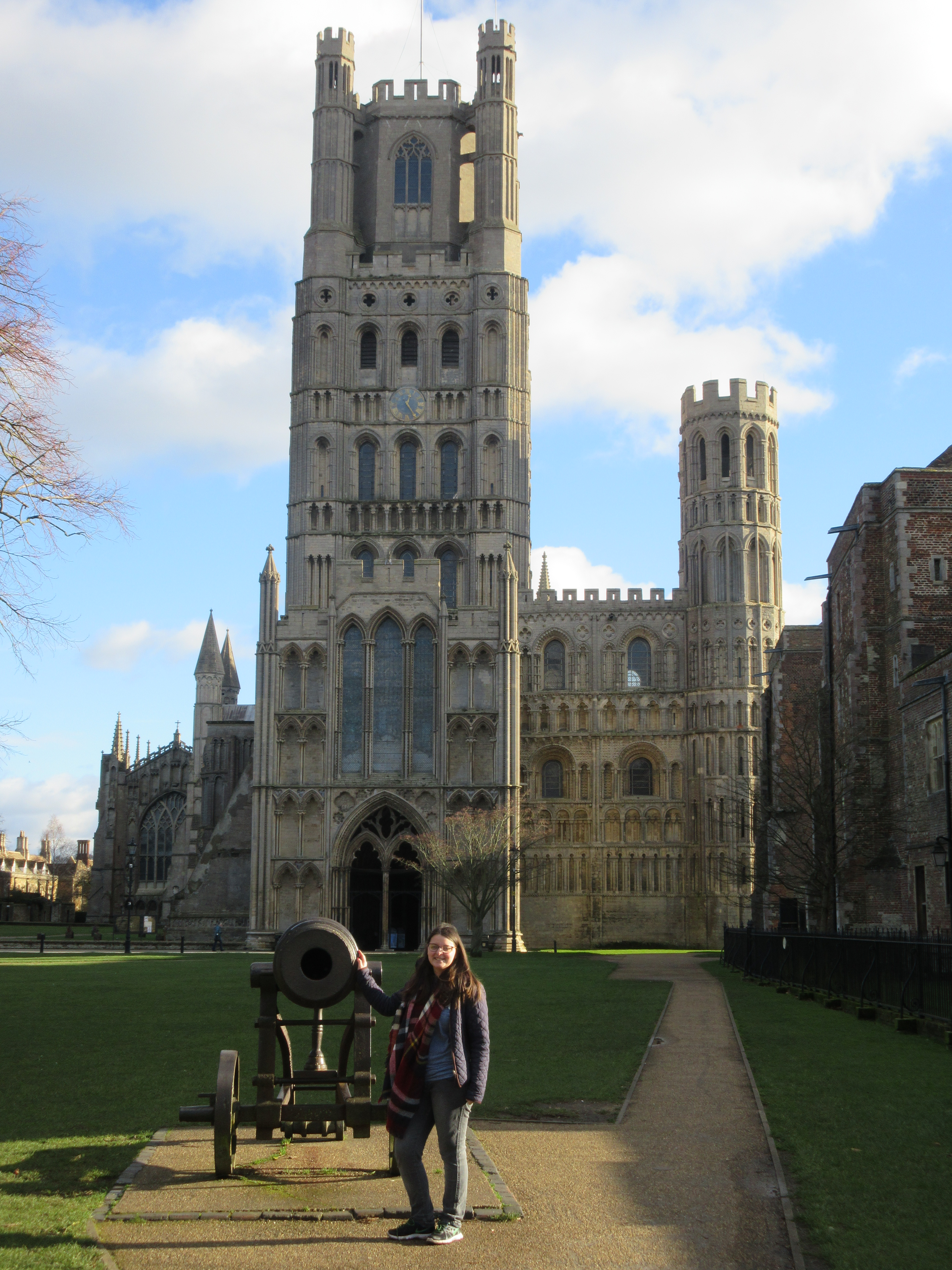
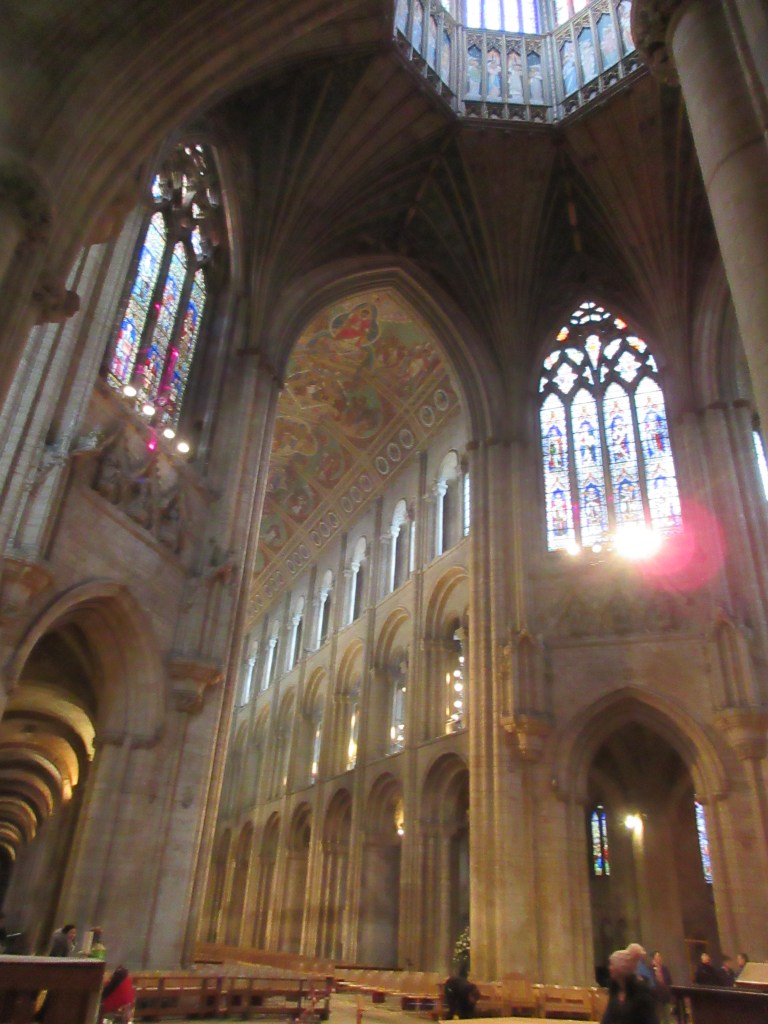
Ely Cathedral

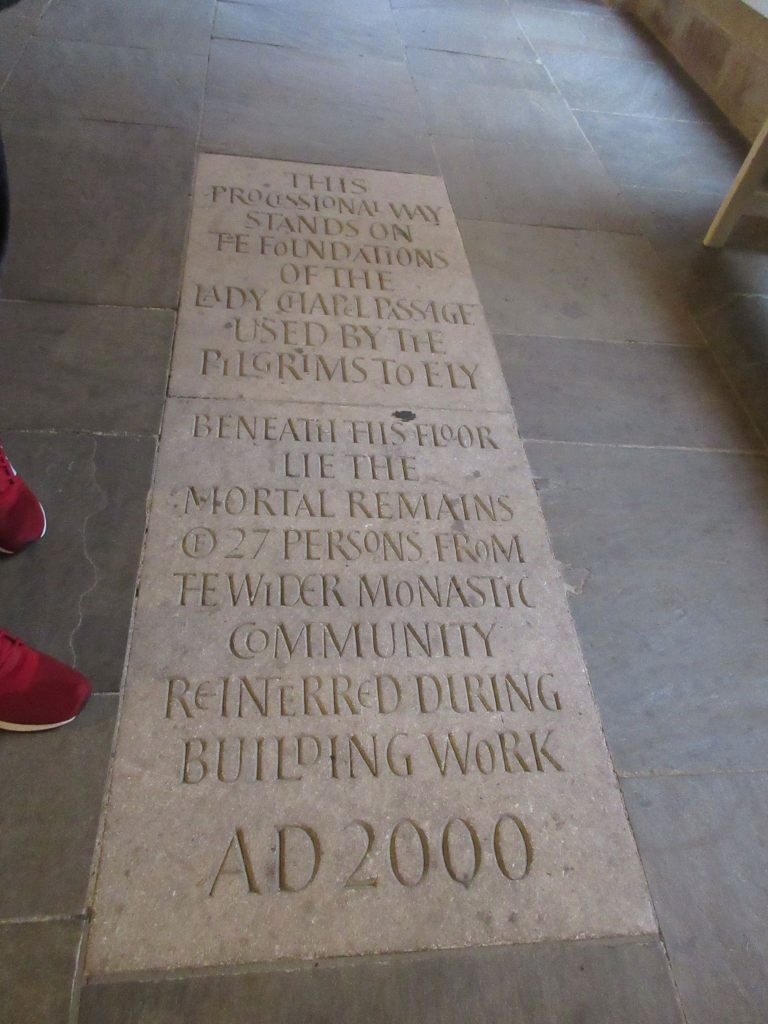
The Ely cathedral site was originally a monastery founded by St Etheldreda, the granddaughter of an East Anglian King. She died of ill health, and later became a saint, and a shrine was built for her at the site, which pilgrims to the area would visit. In 970 it was refounded as an abbey for Benedictine monks (same as the Norwich Cathedral)! The current building was created in the 11th century and the abbey became a cathedral in 1109. It continued to have a monastic purpose until 1539 when Henry VIII dissolved all the monasteries in England. Unfortunately, St Etheldreda’s Shrine was destroyed due to this, but there is a marker within the cathedral, to show visitors where it once stood, and St Etheldreda is still remembered there.

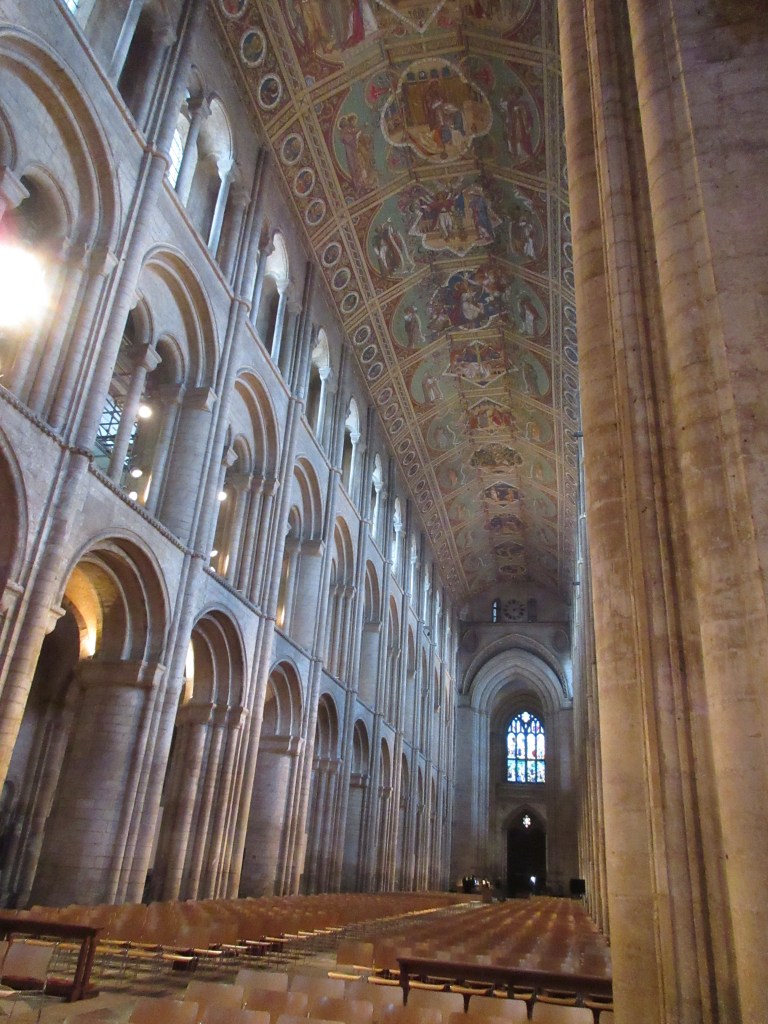
The cathedral itself is famous for its unique Octagon tower and for being a very long cathedral (fourth longest in the country at 537ft). It does seem as if the cathedral goes on forever and it looks quite magnificent against the landscape there. It is actually nicknamed the ‘ship of the fens’. When we went, we found lots of interesting features to discover inside, especially some of the poses of various statues and the grandeur of the lady chapel and art there.
Tower Tour

We were welcomed quickly on arrival by volunteers, and decided to book onto a tower tour to climb the various levels of the cathedral, see the lantern area and get up onto the roof! At the time, I think that we paid around £20 each for this, but from looking at the website today, it seems that they are charging more at the moment, due to the extra safety measures in place.
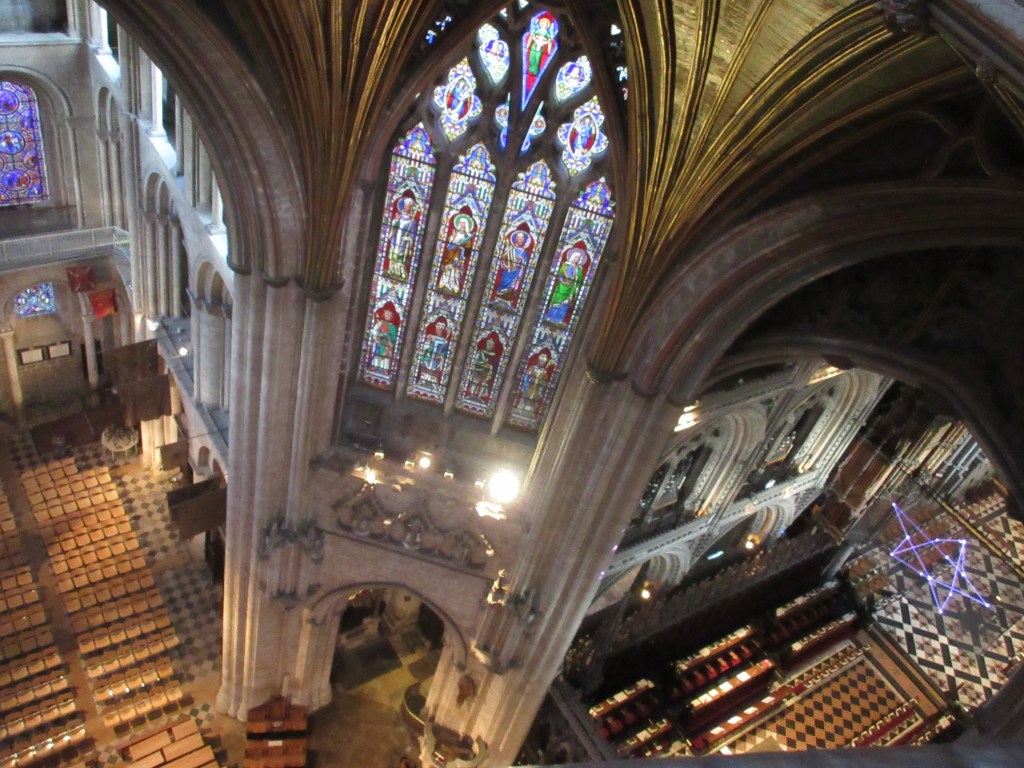
The views throughout the tour were brilliant! It seemed extremely high when climbing the steps, and you had to be a little careful in places. As you’d expect, the higher you get, the more narrow and un-nerving the climb can become. Getting up to the roof is well worth it though, to see the detailed stone work of the roof design up close, and the view of the city and fens stretching out in front of you.

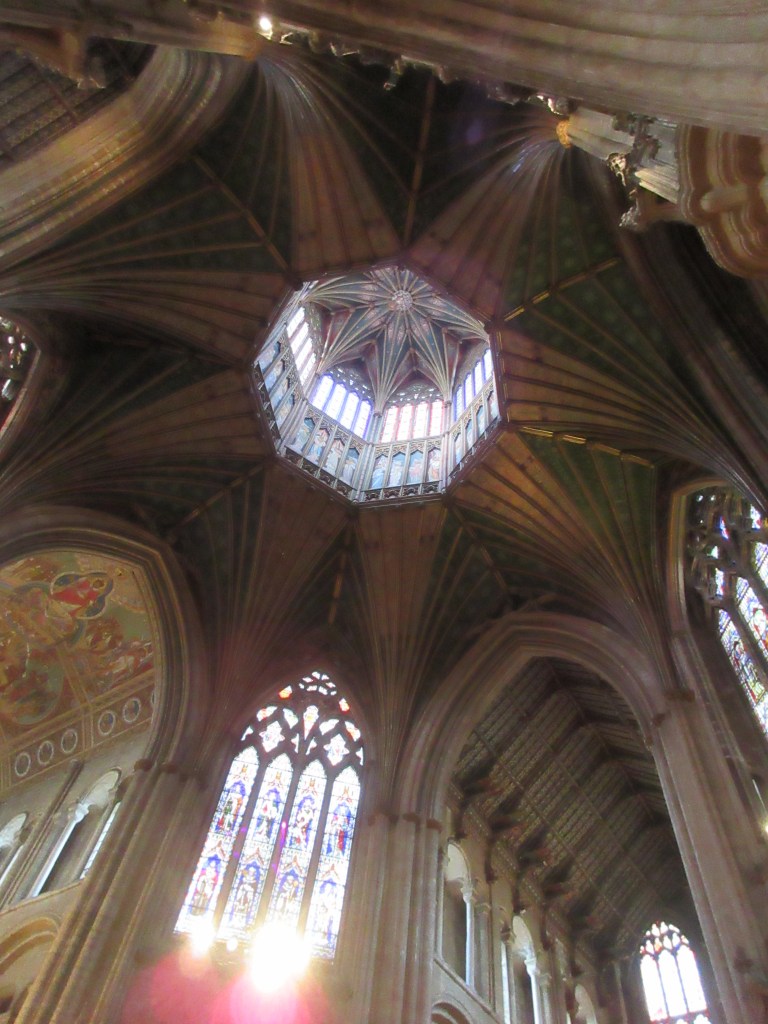
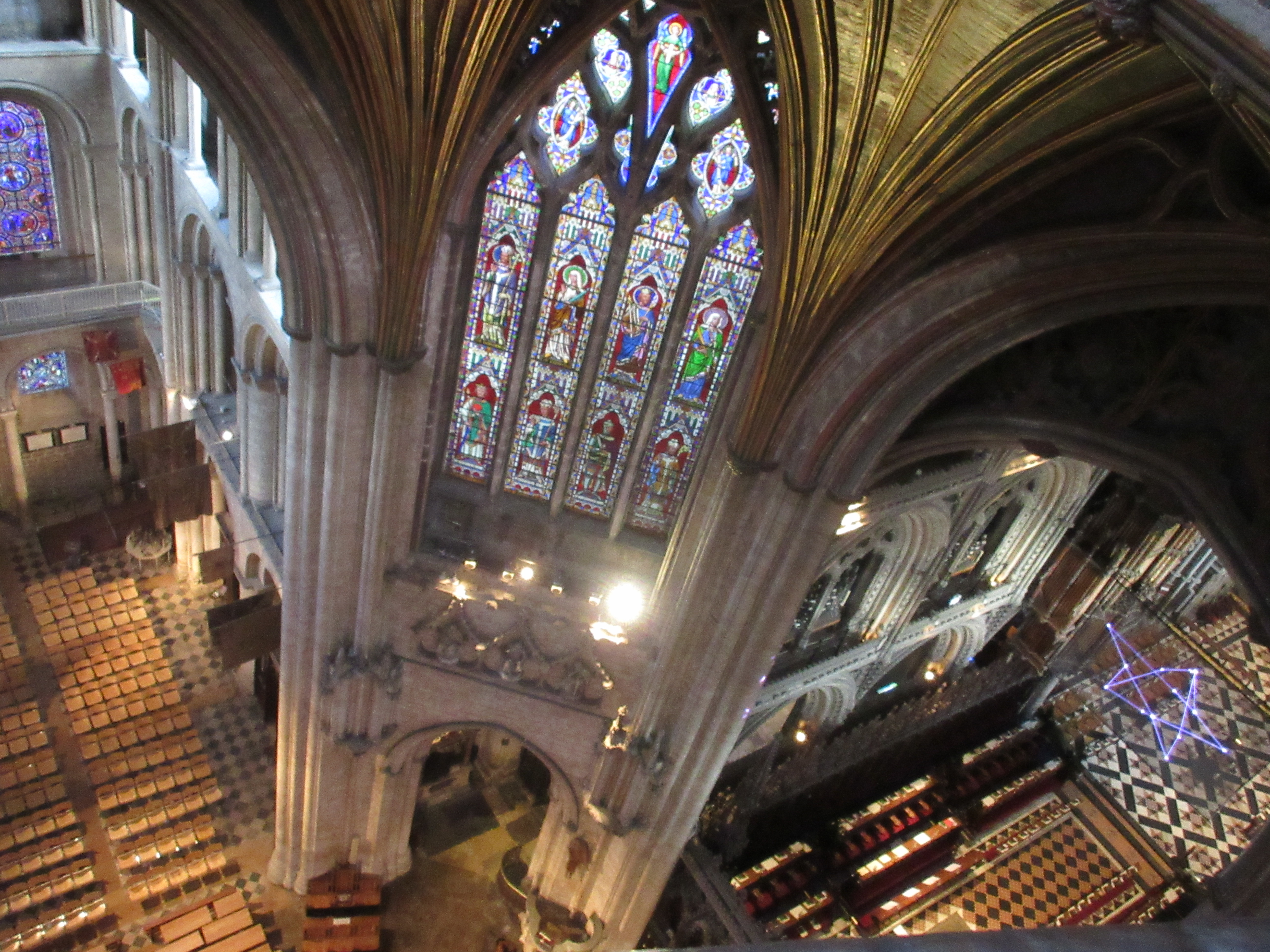
The coolest part of the tour, in my opinion… was the lantern area. The octagonal shape came about following a rethink of the tower when the original Norman one was replaced. It took eighteen years to build and apparently the shape is a symbol that relates to the link between earth and heaven, and time/ eternity. The whole cathedral is centred around the octagon.

The lantern (an internal open space within the tower structure), really blew me away. Mostly, because of the materials used. The lantern area is constructed by hundreds of tons of wood and lead. You can see how raw this wood is up close though, the giant (60ft long) oak beams are pretty much entire trees diagonally stretching the space. Each one is around 1000 years old and still extremely strong. When we went on the tour, you could look up close and touch the wood, and it feels like you are actually able to visualise the ancient forests that these would have travelled from. The oak beams also have a number of graffiti markings carved in from key times in history, which adds to how special it is!
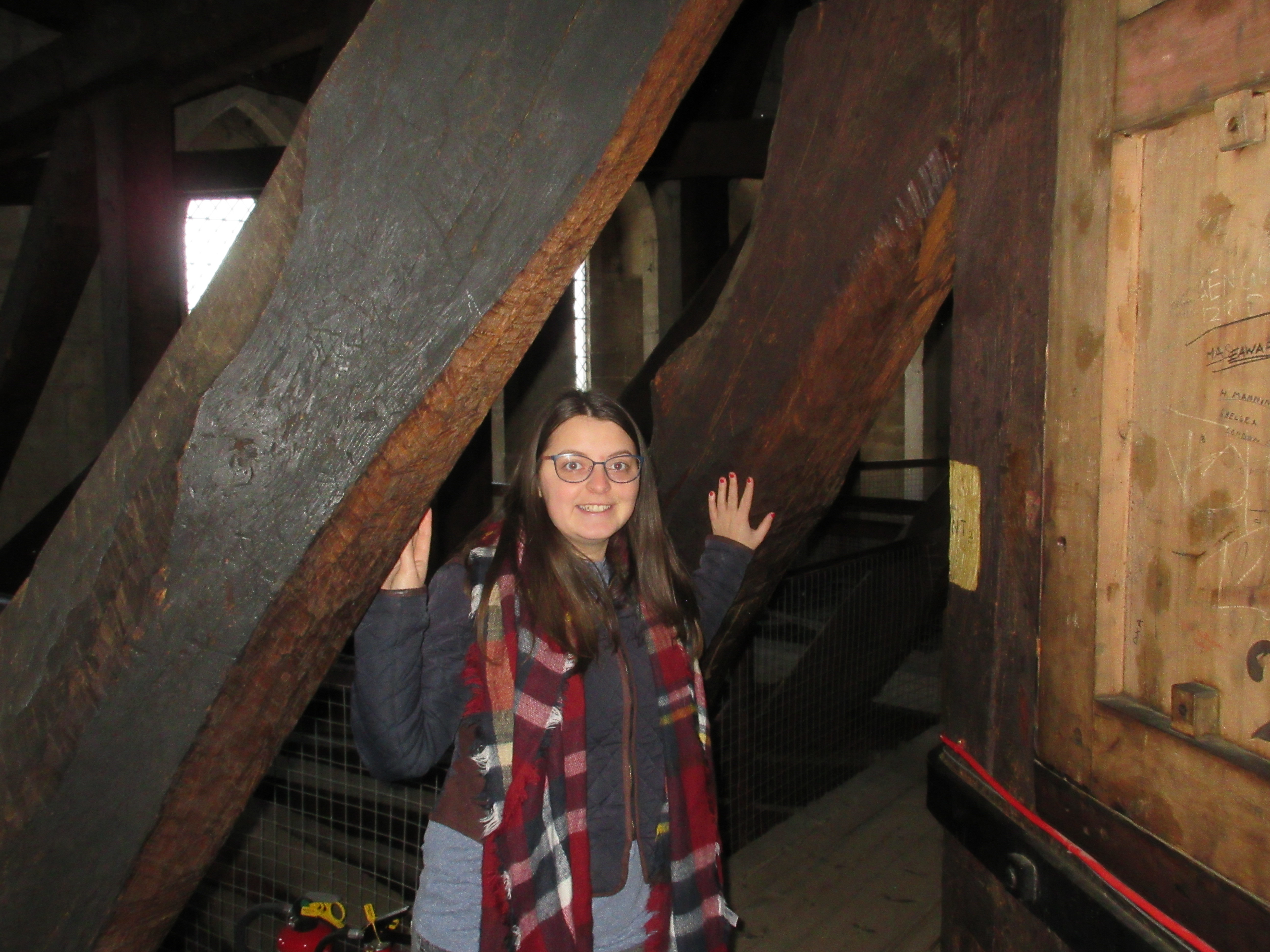
Amazing lantern area

Stained Glass Museum

Of course, the other amazing thing to see in the cathedral is the Stained Glass Museum! I love stained glass, and had been hearing about the museum for a while. I believe there is only the Ely museum and a museum in central London that specialises in the history of stained glass. In Ely, you can pay a little more for your cathedral ticket, so that it includes the museum entry too.

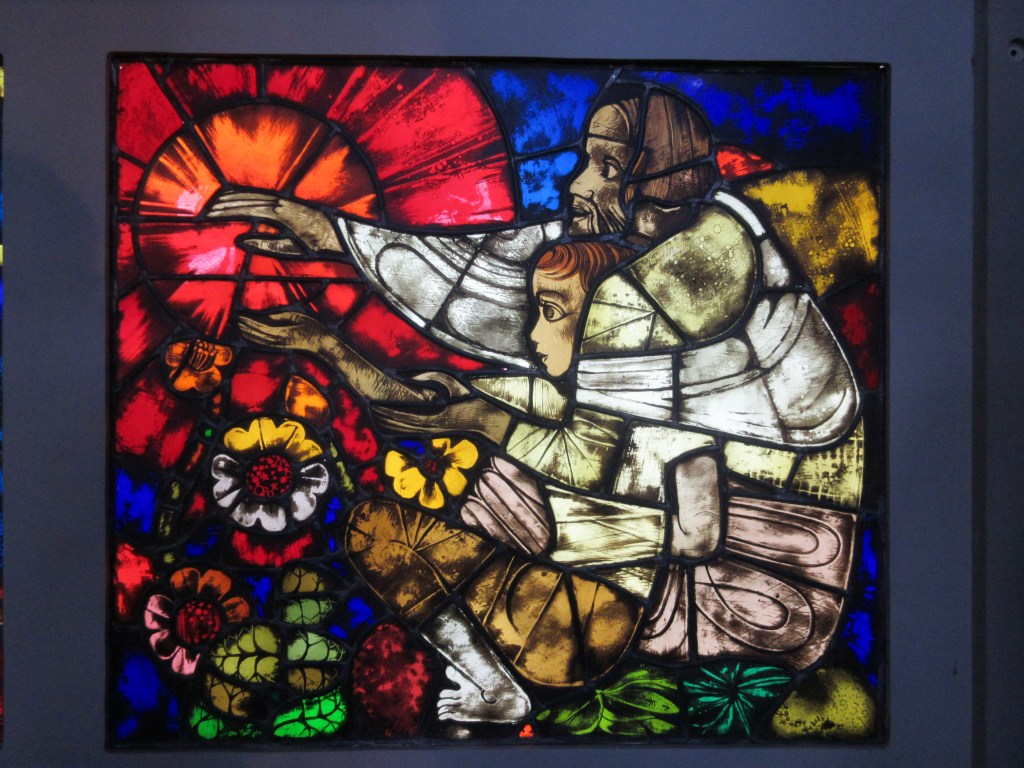
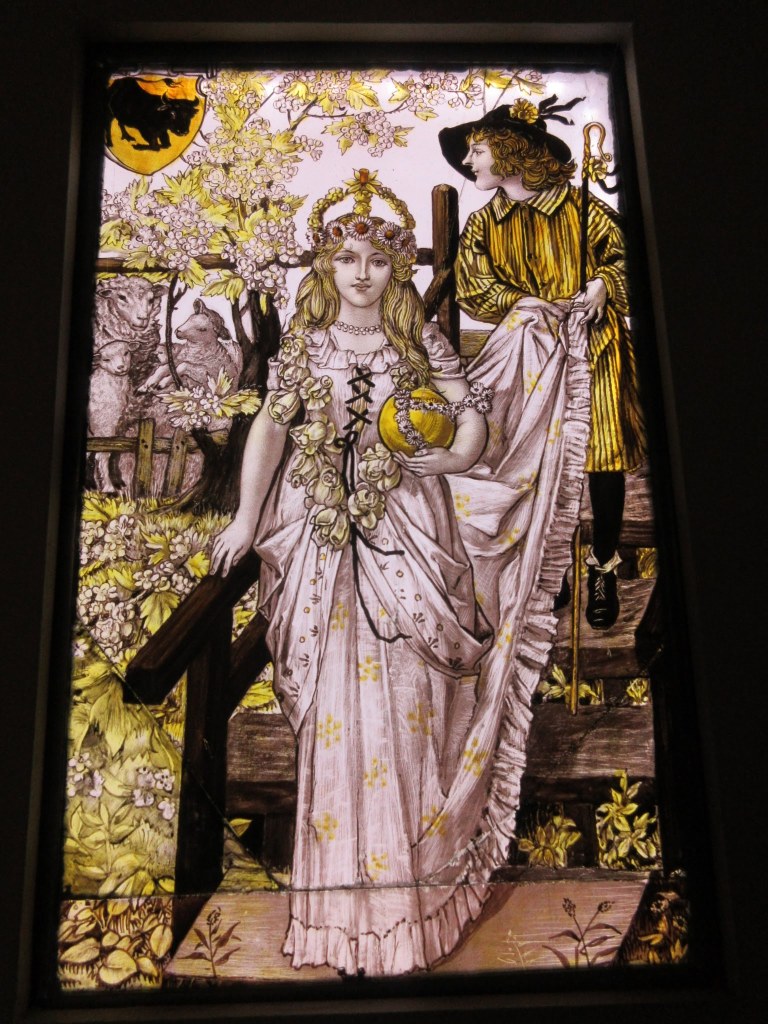
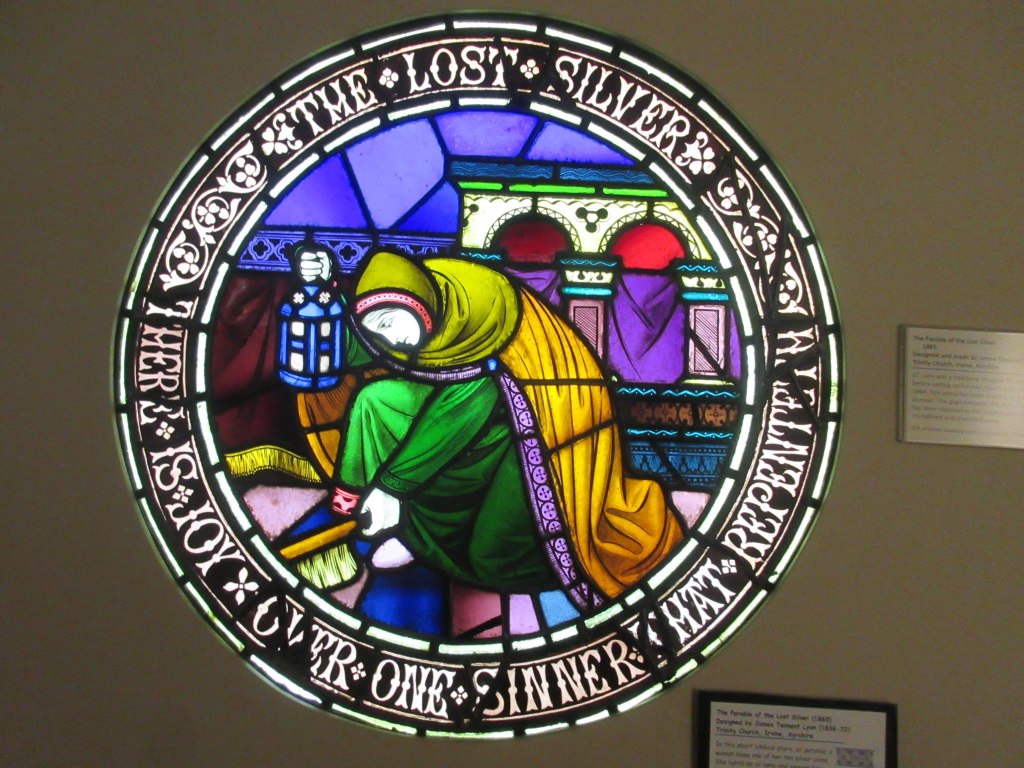
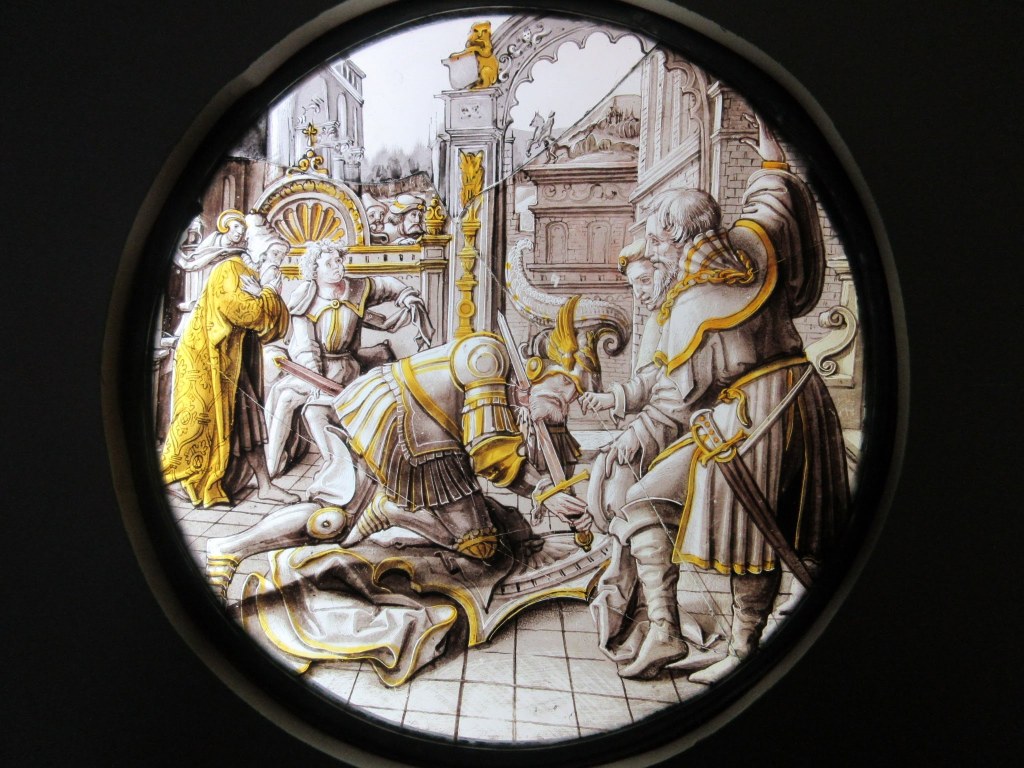
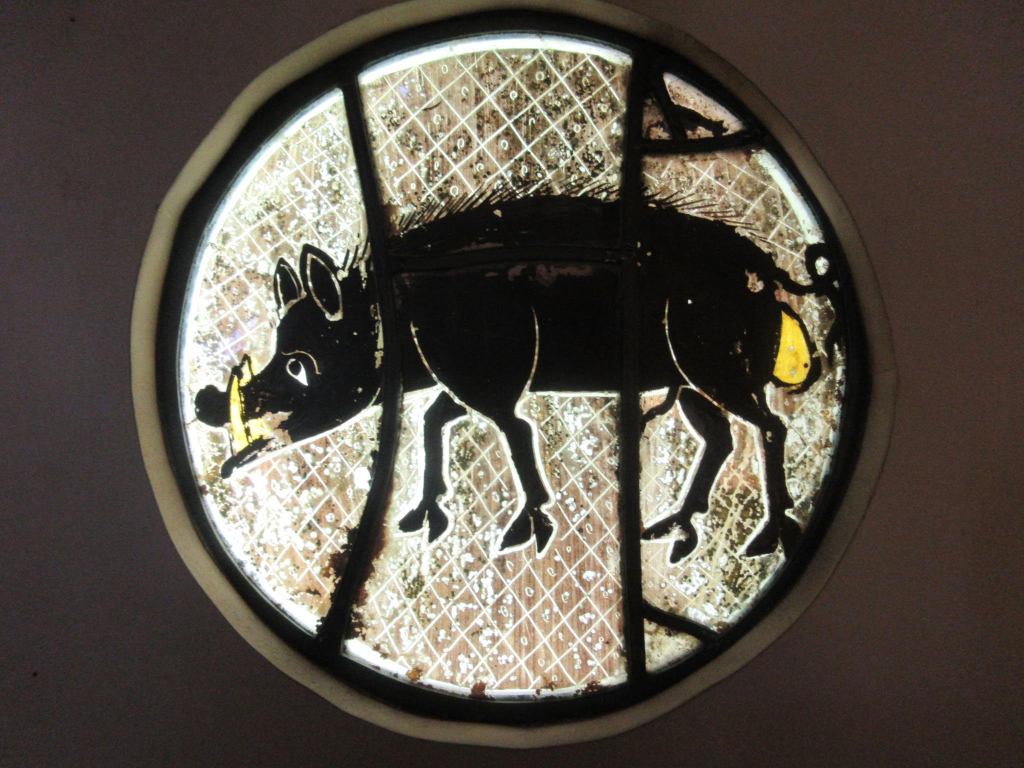
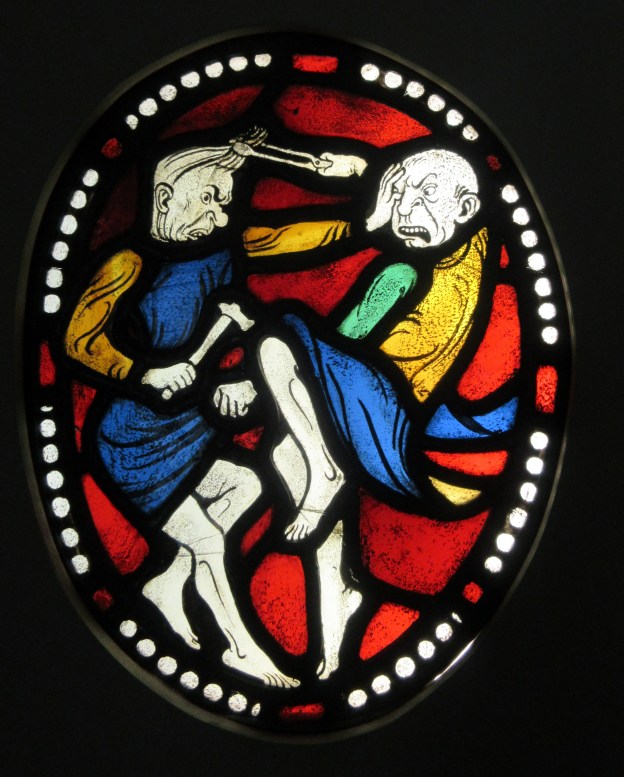
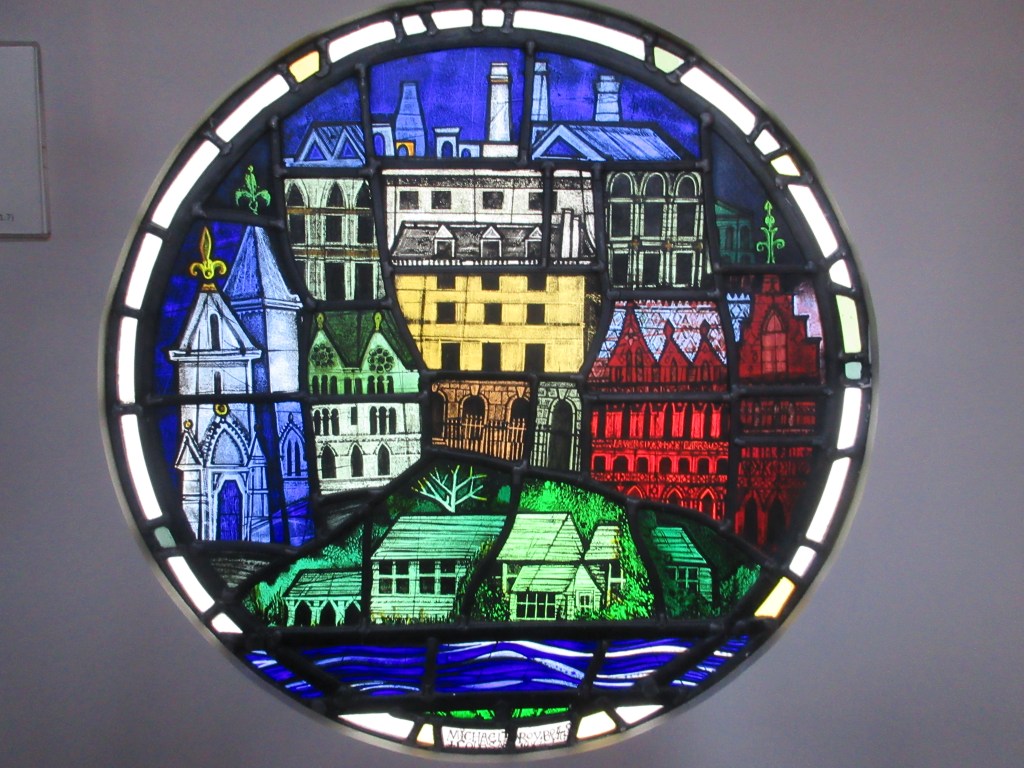
When we visited, the museum was under some refurbishment, but we were still fully able to enjoy our visit. There was an introductory video explaining to visitors how stained glass was originally made, and some of the history. They then have a full gallery of stained glass over time from different locations. The varying images and stories within the stained glass was really interesting and the craftmanship is so professional that you can really respect this ancient art. Something that I picked up from the visit which I have found useful since, was the fact that you can tell the older glass from the later glass, from the colour pallette used. Originally the artists only had use of a very limited number of colours and methods to place them on the glass. Artists used yellow frequently, so if it is heavy in yellow and little else, it is probably quite old!

Loved all the below windows!
We spent a lot of time enjoying the cathedral, our tower tour and the stained glass museum, and with the addition of lunch, the day was almost gone. We did have time for a final short walk around the city and lovely waterside before heading home, though. This is when we realised that Ely was also the home of Oliver Cromwell!

Oliver Cromwell was an English General who took over the ruling of the British Isles in 1653 under the name of Lord Protector. This was after he led armies against King Charles I during the English Civil War. He ruled the country as a dictator until his death, five years later.

Oliver Cromwell’s parents were from Ely and he lived here with his own family for about ten years. You can visit their former house which also houses information about the civil war and doubles as the Tourist Information Centre. Unfortunately, we didn’t have enough time left to visit, but I certainly would like to come back and visit this as the English Civil War seems really intriguing to learn about, when the Parliamentarians (Roundheads) and Royalists (Cavaliers) fought for power over the way Britain was governed.
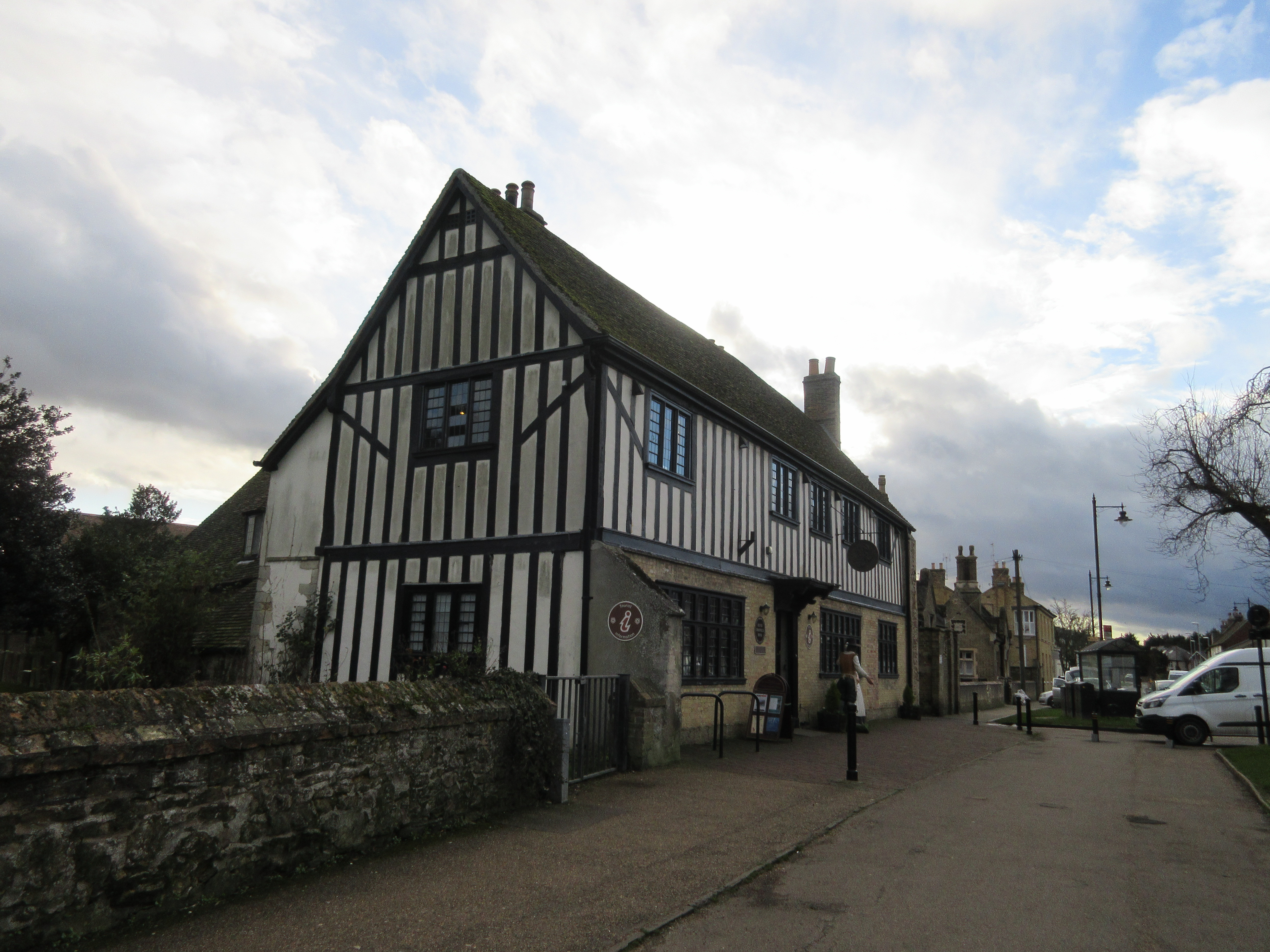
Cromwell’s house

Overall, I thought Ely was very pretty, and the history is fascinating. I will definitely return as it is so close to Norwich, and perhaps spend the weekend there, next time.
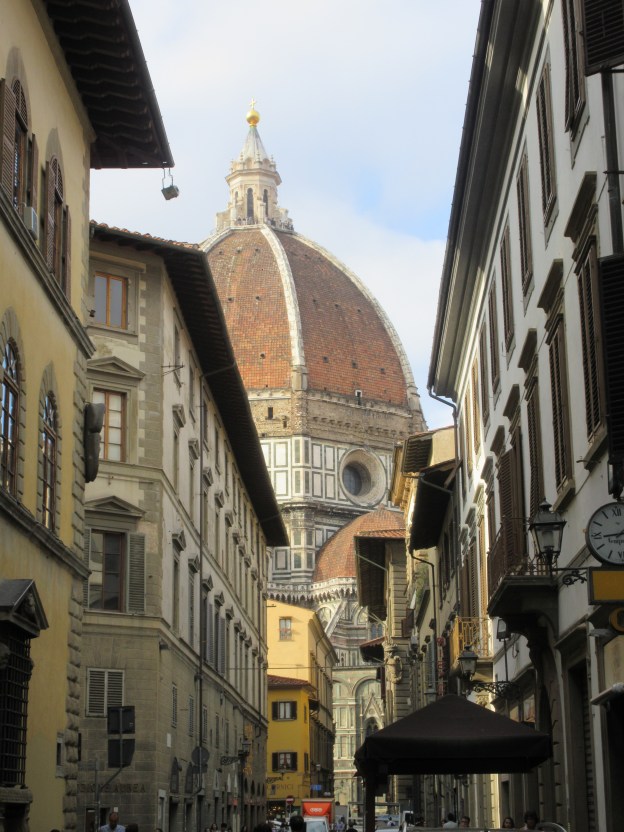
Street with Duomo of Florence (Cathedral)

The best of Tuscany; Florence & Pisa

This is a blog that I meant to post a while back but didn’t get around to it. Hopefully, it will make some good post lockdown reading… Please check the actual websites for attractions for Covid-19 related information, I have not updated the information to reflect any new rules.

Last Autumn I visited Florence and Pisa with a friend and it was a great opportunity to do a fun twin centre trip within the Tuscany area.

We decided to visit Florence as it is a bucket list destination known for its beautiful architecture and cultural atmosphere. We wanted to make the most of the close location to Pisa and so decided to spend two nights in Florence and then travel by train to Pisa and stay one night there. This was especially convenient because our flight was from Pisa.

A city of art

Florence is well known for its art galleries, specifically art from the Renaissance period.  We visited the two main galleries; Uffizi and Accademia, but everywhere you went housed some sort of artistic reference. Even the walls of buildings had sculptures, frescos and patterns to admire.

With the style of art that is popular here, you can see hundreds of different views and interpretations of the same religious stories over and over again. Some really popular ones included of course; The Annunciation (Mary finding out from Gabriel that she would give birth to Jesus), The adoration of the Magi (the presentation of gifts to Jesus by the three kings), and The Crucifixion of Christ (I think everyone knows this story).

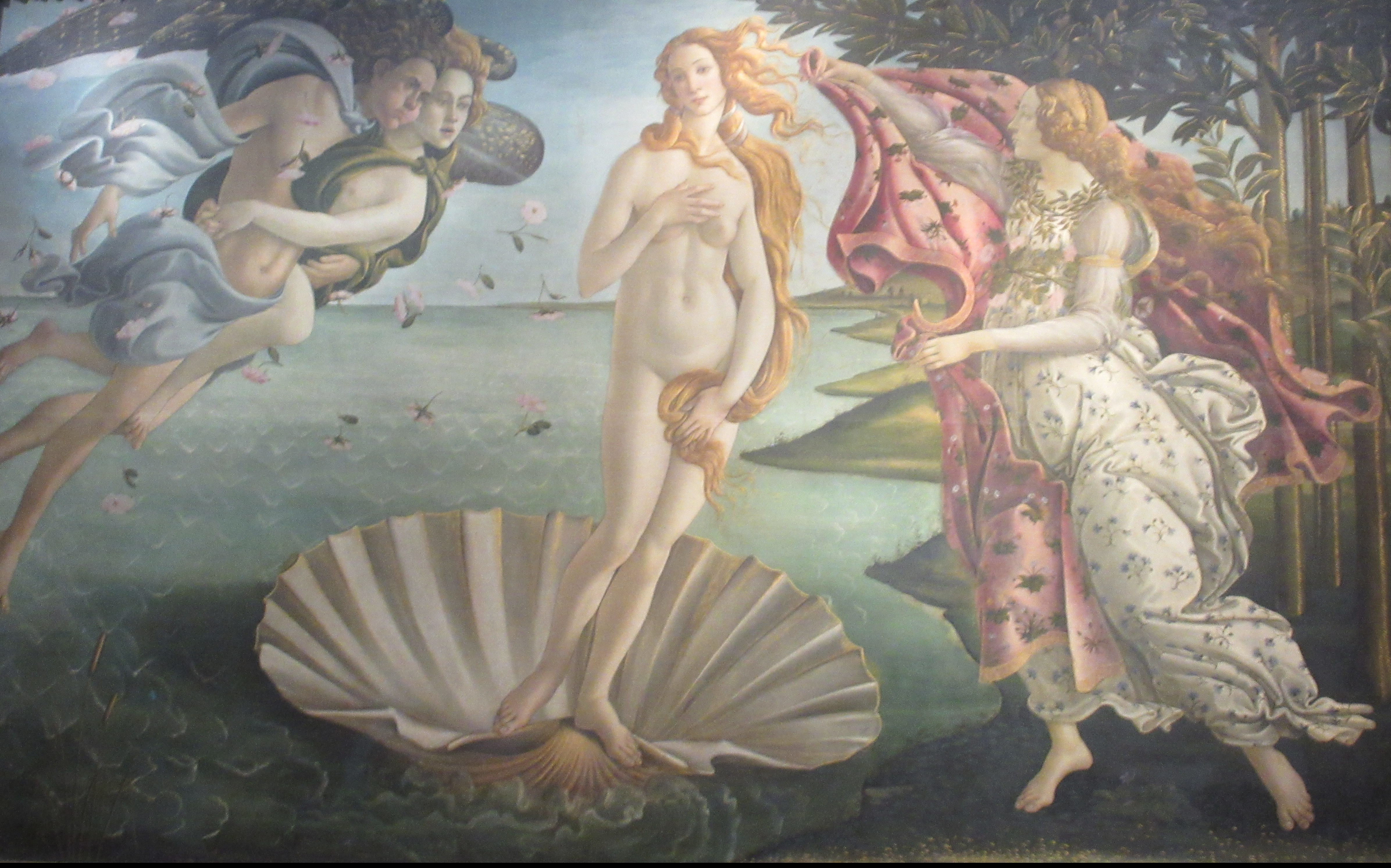
There were also some really odd ones that caught my eye such as the ‘Birth of Venus’ by Sandro Botticelli. This painting from the 1400s shows the Greek goddess, Venus arriving nude on the shore of what is most likely Cyprus, fully grown in a large clam shell.

Birth of Venus

Birth of Venus

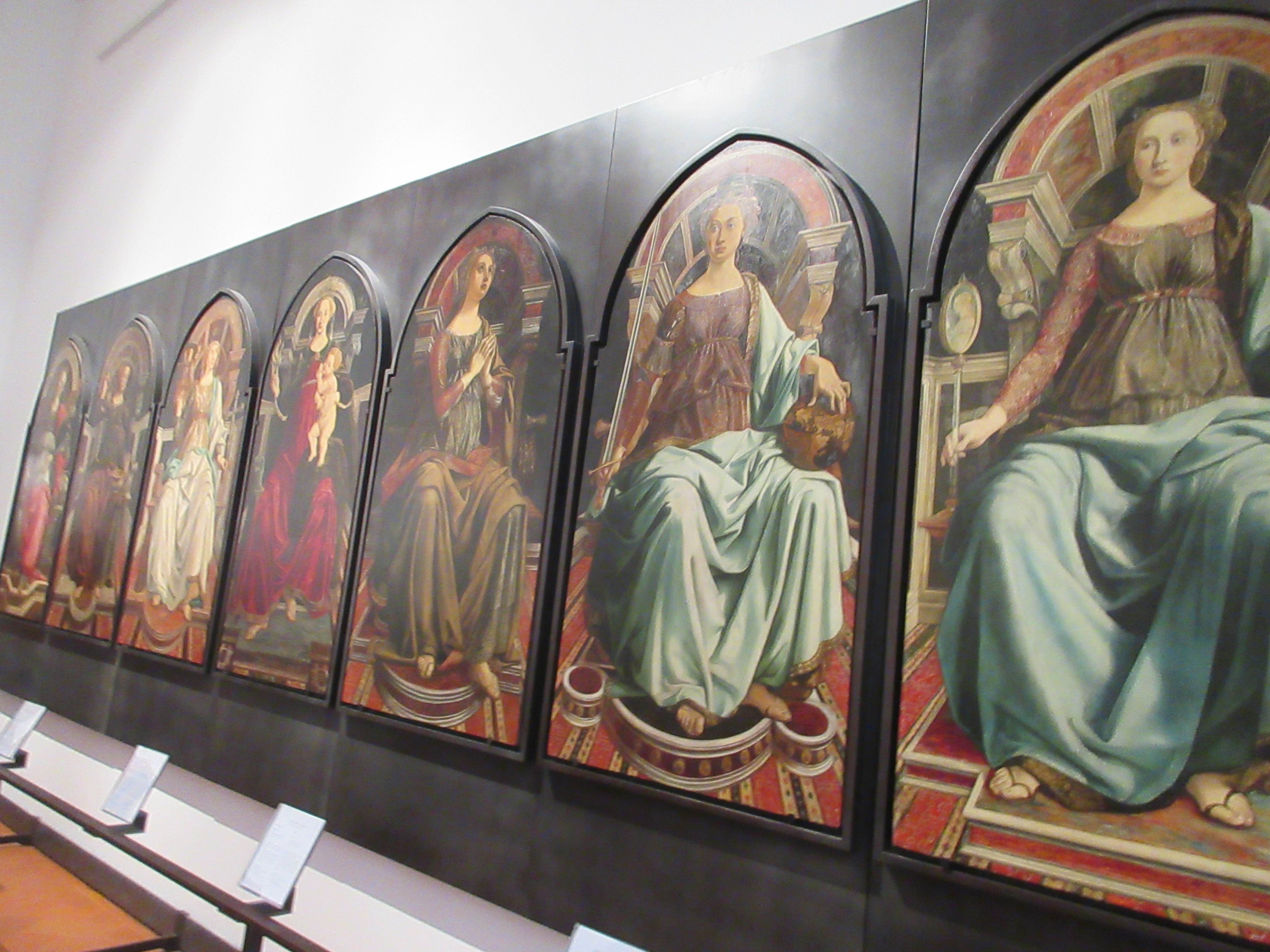
Another interesting piece that I really liked was ‘The Seven Virtues’ by Piero del Pollaiolo which Botticelli helped complete. It was commissioned by a court, for the judges’ high seat backs. The court decided that they wanted a painting of each of the virtues — the “three Christian values” (Faith, Hope, and Charity) and the “four universal values” (Temperance, Prudence, Fortitude, and Justice). These were really interesting, with each lady looking different in their expressions and holding something different in their hand; for example faith who holds a crucifix, justice who holds a sword and globe, and hope who holds her hands in prayer.

IMG_5617

Seven Virtues

The Uffizi gallery is probably the most popular attraction in Florence and holds a massive collection of paintings across an absolutely huge building. People can spend a whole day in this gallery, but on average you should allow up to 3 hours. There is also a good chance that you will have to queue for a long time! We waited over an hour to get into the building.

The Accademia Gallery is much smaller and it houses many sculptures.


It is also home to Michelangelo’s David, the most famous statue in the world. Originally located in Piazza della Signoria where there is now a copy in its place. There are other copies of this icon around the city including a bronze statue at the Piazzale Michelangelo.


The amount of art in this city was simply overwhelming and after a few galleries we felt completely mind boggled by it all. If you have no interest in art at all, this probably isn’t the place for you!

The historic buildings

With strong catholic connections, Florence holds many historic churches and buildings. The most popular one to see is the Duomo (Cathedral) along with the Giotto’s Campanile (Bell Tower) and Baptistery. You can get access to all these buildings and the museum on one ticket, but again be prepared to queue for a long period of time to get into the cathedral, and also for the bell tower.

You can pay extra to climb the dome of the cathedral which we considered doing, but after climbing the 414 steps of the Campanile we didn’t have the energy to climb, plus the tower is actually taller than the Duomo so the views were probably just as good if not better.


The opening times of the buildings can be quite frustrating as they don’t open until 10am so if you want to make an early start then you have to find some way to fill your time before you can go in. We had an extra large breakfast! Also be aware that these are catholic buildings where you will be required to cover up! We kept light cardigans and leggings in our bags so we could quickly cover up without carrying around too much weight the rest of the day.


The Santa Maria Novella church was also a lovely place to visit though we did find the pricing very difficult to understand as it didn’t seem to be well communicated to us when we tried to go in.

Viewpoints

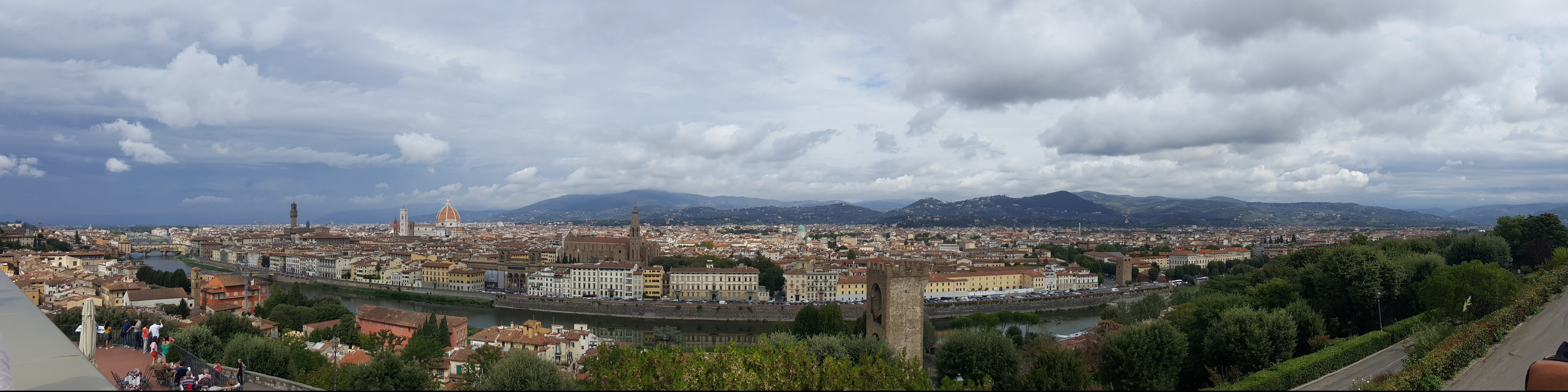
There were a couple of great viewpoints that we found in Florence, including Piazzele Michelangelo, which is quite far from the centre, and is best travelled to by bus. Especially as to reach it by foot you have to climb a lot of very steep steps! The Piazzele is very popular for tourists and can be quite busy; with people, vehicles and food vans. Apparently it looks great at sunset but we only saw it during the day, it looked very pretty during the day as well though.

Piazzele Michelangelo

Piazzele Michelangelo

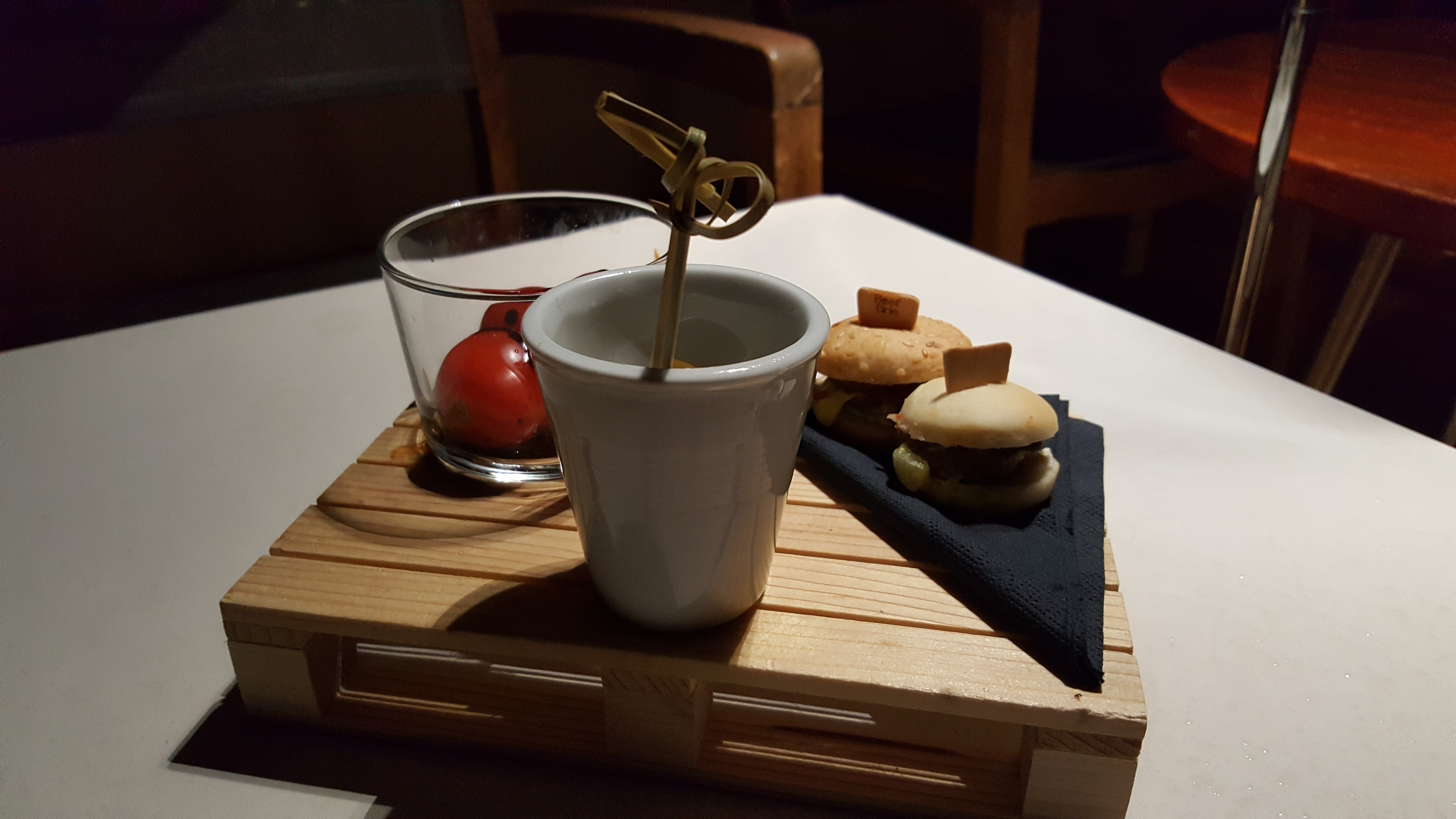
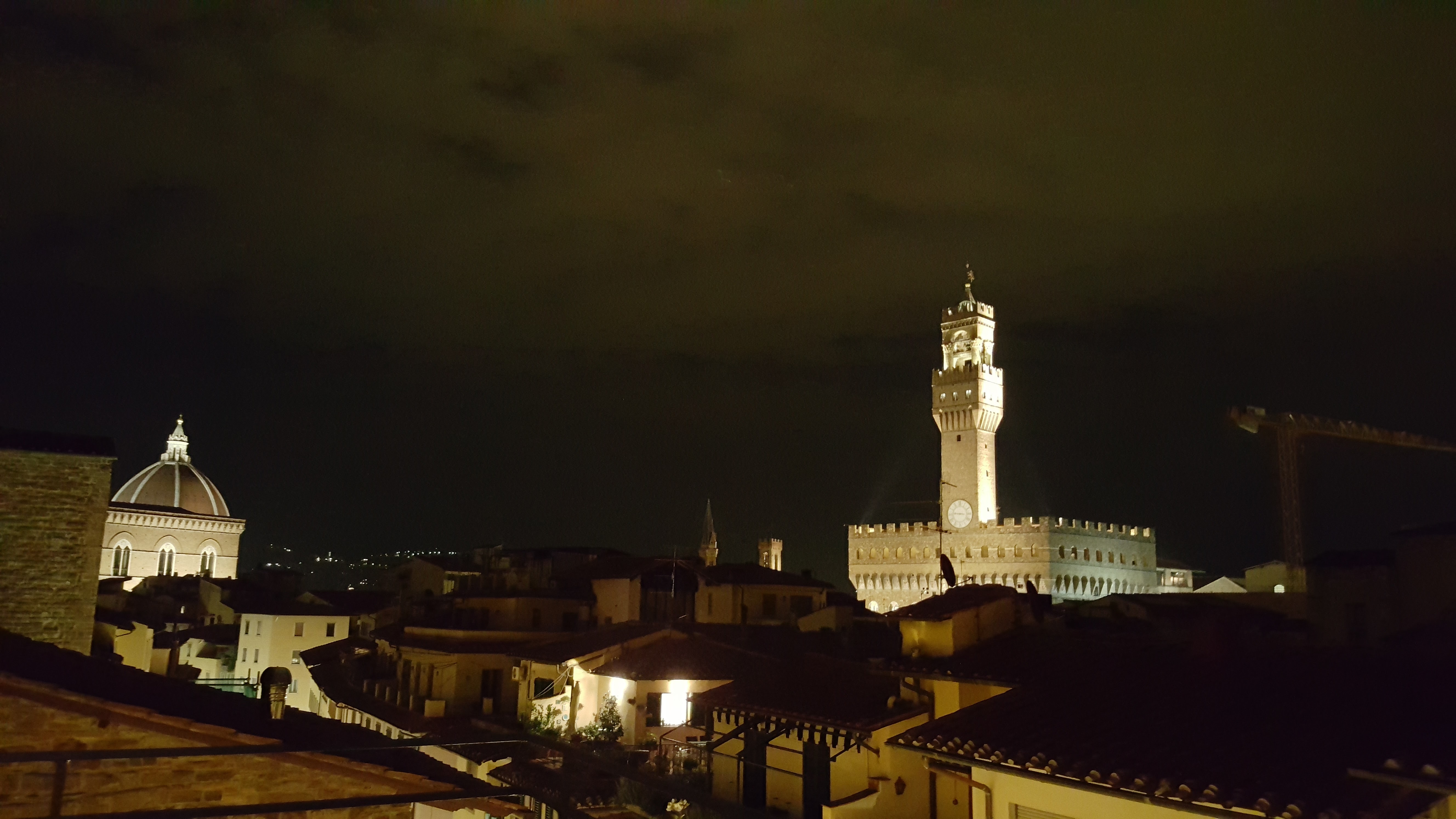
La Terrazza Continentale is also a great place to view some of the city centre. This was more of a special find… a roof bar tucked on top of the Continental Hotel. This is a very fancy bar and quite expensive, so we just had the one cocktail with our free snacks! It started raining too so we didn’t stay long but it was great to see the views and feel part of the Florence night scene. Also the elevator was very cool, but I will leave you to discover that yourself!

La Terrazza Continentale

A couple of free sliders at La Terrazza Continentale

La Terrazza Continentale

La Terrazza Continentale

The town of Fiesole

Whilst in Florence I wanted to take the opportunity to visit the town of Fiesole just 300 meters up the hill from Florence. My grandmother had often told me about the town as she lived their with my mother around 30 years ago and so I was curious to see it for myself.

This has a very different feel to the City of Florence as a very quiet local town only a short bus ride away which has great views of Florence and what seemed to be local vineyards and farmlands. There was also a lovely little church and a site of Roman ruins to see. We were only there for around two hours so I am sure there is plenty more to explore in the town for next time I visit the Tuscany area.


The train journey to Pisa was only around 10 Euros and takes about one hour. This short journey meant we could still have a full day in Florence before leaving for Pisa to have dinner in a lovely Pizzeria in Pisa and explore the city in the evening as well as the following day.

Pisa

The city of Pisa is normally just an excursion for many tourists but it was really interesting to see the city by night as well as day. The city actually has a booming nightlife with a large university residing over the river, the city fills with students by night and has a number of bars and cheap eateries to enjoy.

During the day we looked around the shops, saw Pisa’s Duomo, and baptistery and also their bell tower better known as ‘the leaning tower of Pisa’. The tower is normally open for tower tours but was sold out when we were there, I also don’t know that I would want to climb up a tower that is mid way through falling down! Apparently the tower keeps falling and so every so many years they have to refill the dip with cement again and prop it back up… sounds a bit risky to me!

There was also a museum that gave some background about the tower and an exhibition of different fresco paintings available to see.

Overall, this was a fun area to spend a few days, and I would definitely return. I would probably book more time away next time and spend some time in the rural parts of the region to see the contrast, and taste some of the local foods.

Me in Florence

Me in Florence


ancient bath house

Bath: England’s Natural Spa

My partner and I decided to visit Bath in Somerset on our way from Norwich to Pembrokeshire in Wales. This was a great place to stop as it was a nice half way point to break the journey up and had lots to keep us busy during our one night stay. I hadn’t realised until arriving that Bath is actually the only place in England with hot springs and just how important it was to this city’s initial existence.

IMG_4494.JPGThe Roman Baths

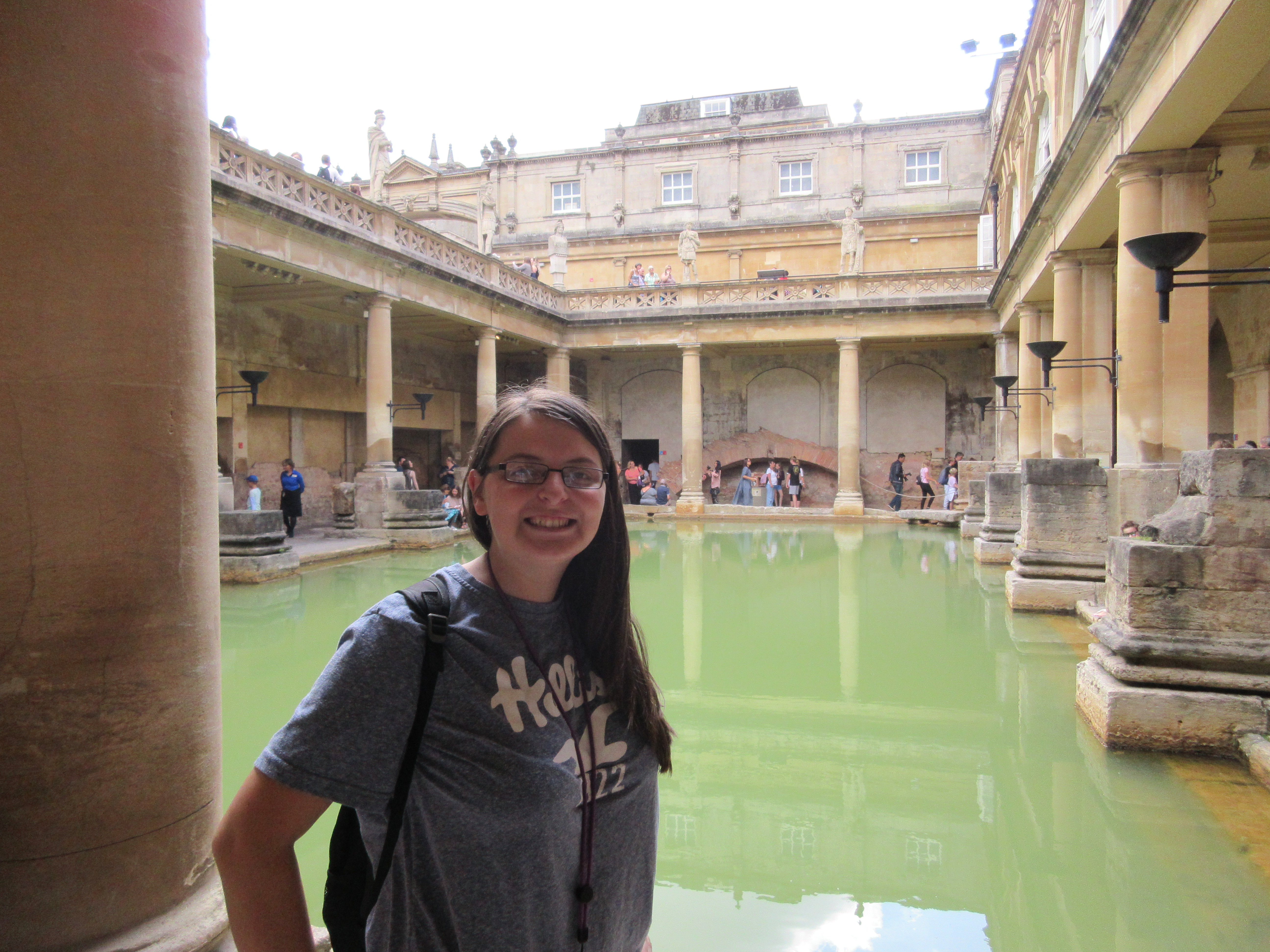
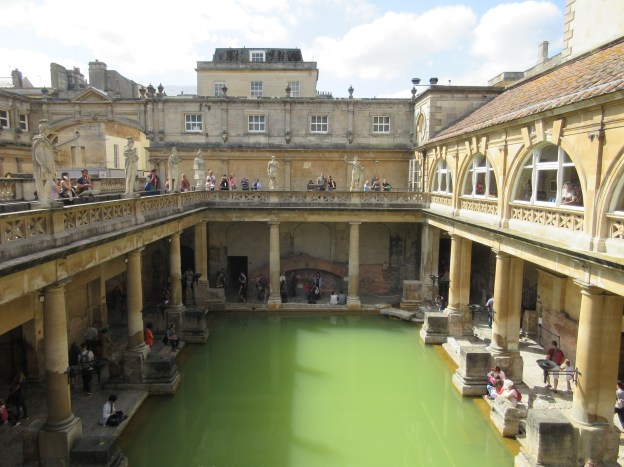
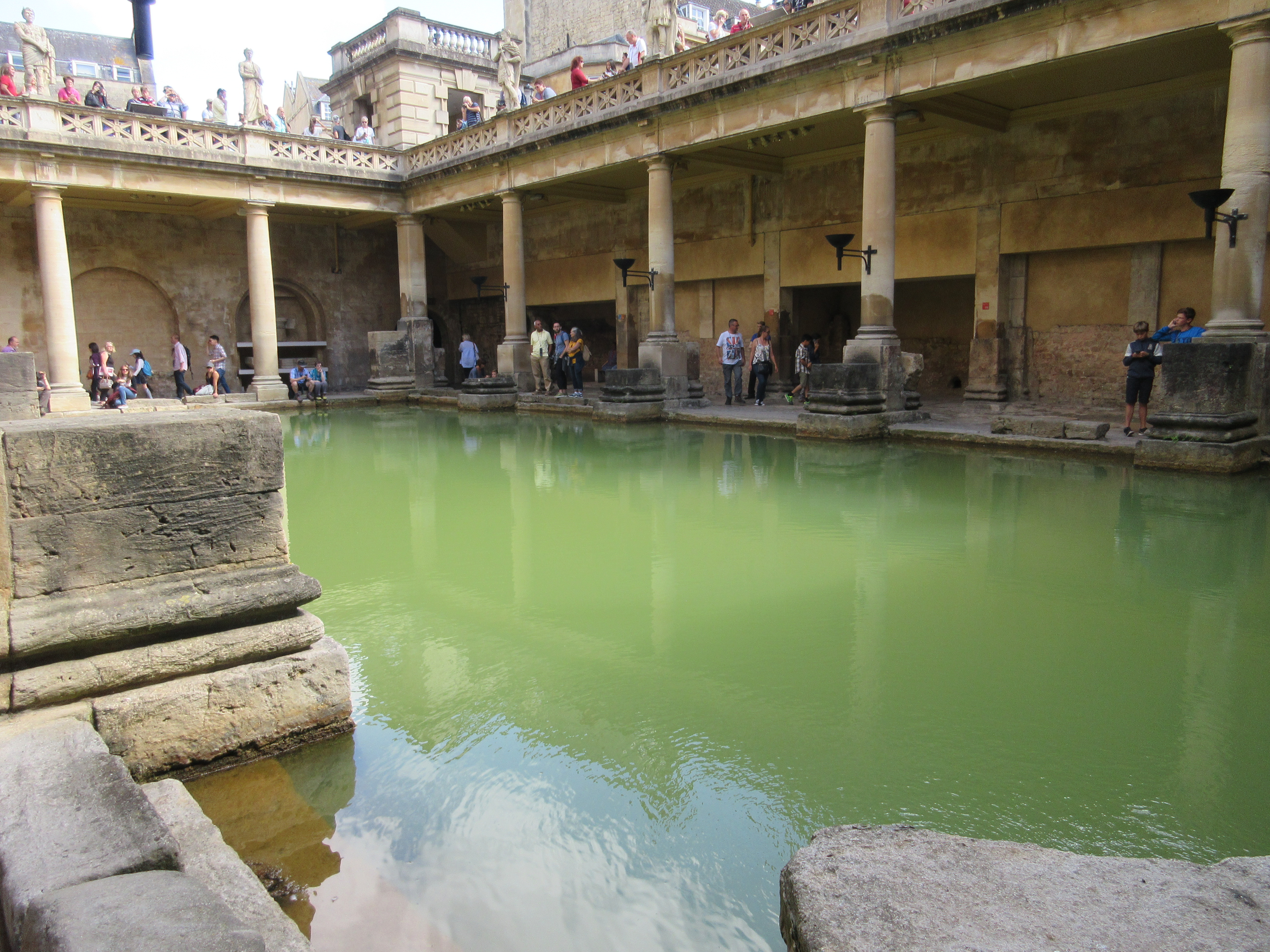
Of course we visited the historic Roman Baths that Bath is famous for. The visitor attraction was well laid out taking you through different parts of the building and the museum before you arrived outside by the main bath. Self guided audio equipment was available to use and there were regular free guided tours to enjoy that gave some insight into the history. It turns out that the springs in Bath were first discovered as warm bubbling mud by the Celts who thought it was a gift from the goddess Sulis. Later when the Romans came along they recognised the water with the god Minerva, but not to upset the locals, they kept the Celt name, and the area became known as Aquae Sulis, “the waters of Sulis”.

The tour was brilliant and explained to us all the strange beliefs that the Romans had which the baths played a key part in. For example 130 metal tablets were found at the bottom of the baths which Romans visiting the bath had written on and thrown in, in an attempt to curse people they didn’t like, mainly people that had stolen their clothes. We were also able to handle replicas of the sort of tools servants would use to shave and clean the visitors to the baths and the process in which people came in and used the facilities.

The baths were lost for a number of years when they fell into disrepair, however they were rediscovered by the Victorians whom rejuvenated them. This is evident in the baths when visiting, the only original remains is the building work from the knee down, above that is Victorian & Georgian additions, which were put in place to replicate the original Roman layout.

Overall the museum and attraction experience were top notch, we even got to try a taste of the water at the end… although I was not a fan of the taste, it was a nice touch!

Thermae Bath Spa

Previous to visiting the town, we had read that going to the Thermae Bath Spa to bathe in the spring waters was a must, so I was really excited to do this. The Spa experience was expensive though and difficult to decide on, because you are given an option of either paying for the single small Georgian bath to bathe in, or the more expensive package of all the modern other baths, wellness suite and rooftop bath, but this excludes the Georgian bath. So already before going in you have to decide if you want the historical atmosphere or the relaxation factor.

We went for the more expensive package to get more out of our ticket and see more of the attraction, in hindsight though I think this might have been the wrong choice. Whilst the facilities were good inside, and quite clean (which is a very important factor in a public bath), I did find the experience to be quite underwhelming and overpriced. The main bath indoors just had the feel of a leisure center pool, and the rooftop pool had uninspiring views and crowds of people inside it. The wellness suite was somewhat interesting but each room was quite less than you expected, except for the Roman steam room which was quite good because it had just SO much steam and felt slightly more authentic and themed than the rest of the spa.

For the price we paid, I had hoped to be amazed by the spa but if you weren’t reading signs that said you were in the spring water, you wouldn’t even know you were in a Bath spa, rather than any other spa in the country. Having spent time abroad at the Blue Lagoon in Iceland and at Turkish and Roman spas elsewhere, it was quite disappointing.

Bath Abbey & Georgian Architecture

All around the town of Bath is Georgian architecture and the matching Bath stone. This includes at the Bath Abbey which was beautifully designed with huge and detailed stained glassed windows. The building was unusually covered throughout with wall and floor memorials, many more than you would normally see in a church or cathedral of this size. We were very lucky to witness the choir whilst visiting as well giving us a great atmospheric visit, and whilst inside we could hear the hymns, stepping outside was a square full of musical busking.

The town center has plenty to offer shoppers with a variety of local independent and chain stores, as well as street traders and entertainment. We really enjoyed looking around and seeing what was on offer, including having a delicious dinner at the Aqua restaurant. We read the great reviews for the restaurant and decided to see if they could squeeze us in. We managed to get a table and had a lovely evening. The restaurant was set out to match the bath theme with blue mosaics and was set in a former church so immediately got a ‘big tick’ from me. We had a great waiter that offered us a selection of Italian cuisine. I had the Linguine Gamberoni & my partner had Pork Cheeks, both meals were amazing. I would highly recommend the restaurant for a bit of fine dining.
In general, we really enjoyed Bath and I would be happy to stay there again on my next trip to the West side of the country. It has great history, shopping and lots of outside places to enjoy.

IMG_4527

Exploring Europe’s Churches, Chapels & Cathedrals

I have always loved to visit old buildings when exploring a destination and there is no better example of a building that has seen a town moving through the centuries than the local church.

I have seen many places of worship across the continent and they never seize to astonish me with their beauty, history and creativity. There are so many styles of architecture and amazing pieces of art available to see so I never get bored of taking a pew and enjoying the views inside.

A bit of peace…

Visiting a ‘house of God’ has always given me a great feeling of peace and helped me to relax in times of stress. The composure felt with visiting might be down to the quiet atmosphere, the generous community spirit or the comfort of knowing that you are walking in the same footsteps as many for centuries before you.

These are the places where families and friends gather to celebrate key moments in their lives, discuss important issues and deal with troubling emotions. The stories that are held in the walls of these temples are vast and intriguing and makes it no wonder that church tourism is one of the most popular forms of heritage tourism.

Church Tourism

With St Paul’s Cathedral and Westminster Abbey being in the top ten paid attractions in the UK and many church groups trying to zone in on the tourist market through new innovations, religious buildings have never been more interesting.

Whilst in many parts of Europe churches are still used solely for worship, there are several cathedrals and churches in main cities and within the UK that are diversifying their offering to satisfy the curiosity of tourists. Services offered to tourists include: guided tours, information displays, gifts, events, and trails.

A snapshot of some of the most beautiful Churches, Monasteries, Cathedrals and Chapels i have seen across Europe…

Many churches that are part of the Churches Conservation Trust have even gone a step further by re-purposing the churches for modern activities such as rock concerts and ‘champing’, the new trend of camping inside one of these beautiful churches.

Norfolk’s Churches

In my home county of Norfolk there are no shortage of churches and in Norwich it is said that there is a church for every week of the year. This makes for a beautiful landscape where you are almost guaranteed to see a church spire on the horizon whilst driving through the countryside.


With churches towering over the Norfolk Broads, the coast and the farmlands of the county you can experience amazing views of the area, whilst discovering the interesting history and culture of the English county inside.

Some of the most inviting and innovative churches include St Michael’s in Aylsham, St Michael’s in Booton and St Peter & St Paul in Salle.

St Peter & St Paul in Salle near Reepham was built between 1400 and 1450 and restored around 1900. Salle church is rumoured to be the burial site of the unfortunate Anne Boleyn, the former wife of King Henry VIII. The Boleyns lived in the village as early as 1318, only getting status later when they aquired Blickling Hall; the nearby Jacobean estate. Features include a chancel roof with carvings showing scenes from the life of Christ.

St Michael & All Angels in Booton also near Reepham is known as the ‘Cathedral of Fields’ because of its a remarkable example of great architecture. It was designed and built in 1891 by Revd Whitwell Elwin, a descendant of the famous Pocahontas.  Booton church has full sized carved angels, a timber framed roof, and colourful stained glass windows.

St Michael’s in Aylsham was built in the early 14th century. The rood screen dates to 1507 and there is also a medieval crypt uncovered during renovations of the church. This church is still a buzzing community hub in the charming market town of Aylsham today.

Keep up the good work!

Whether in the UK or abroad, churches, cathedrals, chapels and monasteries can all be a brilliant place to learn about local heritage and traditions. It is great to see so many church teams trying to attract new visitors and I hope this carries on with the support and partnership of the community to keep these historic buildings around for future generations to enjoy.