Tag Archives: art

Magic City: Miami, USA

This Spring I travelled to the ‘Magic City’, Miami, before taking a trip around parts of South US and slowly North to the ‘Capitol of the Midwest’, Chicago.

All Aboard for Miami

I boarded a flight from Heathrow to Miami International Airport and after 9 hours of squeezing into American Airline’s Economy seating, we arrived. My first impression in Miami Airport was all confusion.

All the staff were greeting me in Spanish. I wondered if there was another flight coming in from South America… why was everyone talking Spanish?!

Next, I was given a fright by the Immigration Officer. He told me I had lied and made false statements in my Visa Waiver application. I protested I hadn’t, but apparently I had already been approved entry before so shouldn’t have applied again. So I was double approved! That doesn’t seem like a bad thing to me… but they do get quite sensitive over these things round there. Well, after making me afraid he was going to turn me back around, he eventually let me in…

After then proceeding to get ripped off by the taxi driver, it wasn’t turning out to be a great first impression, and I was a little frazzled!
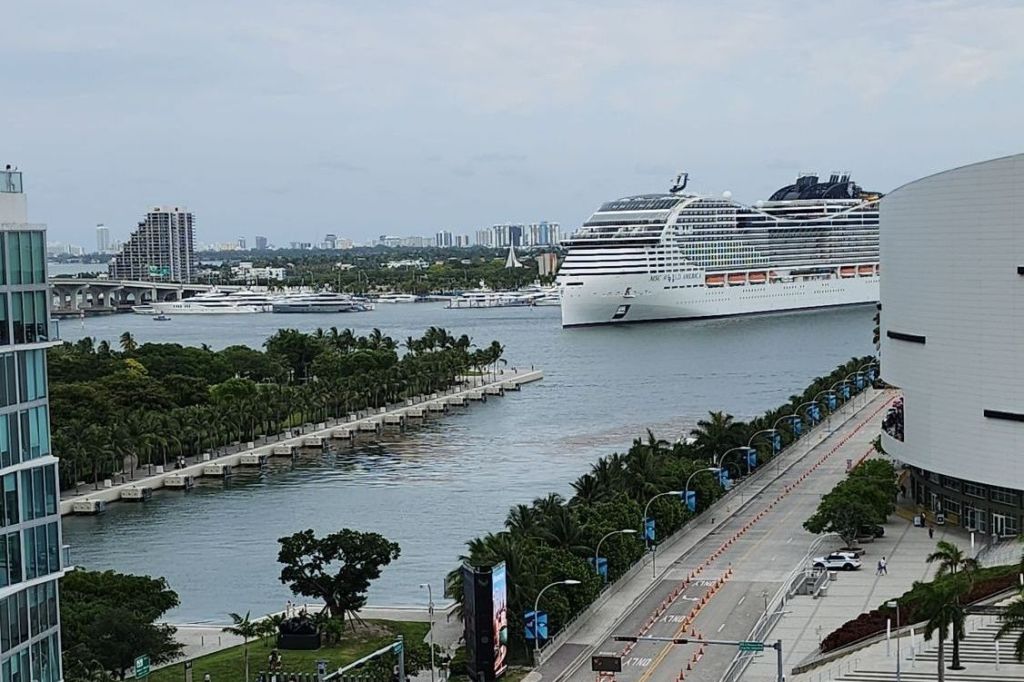
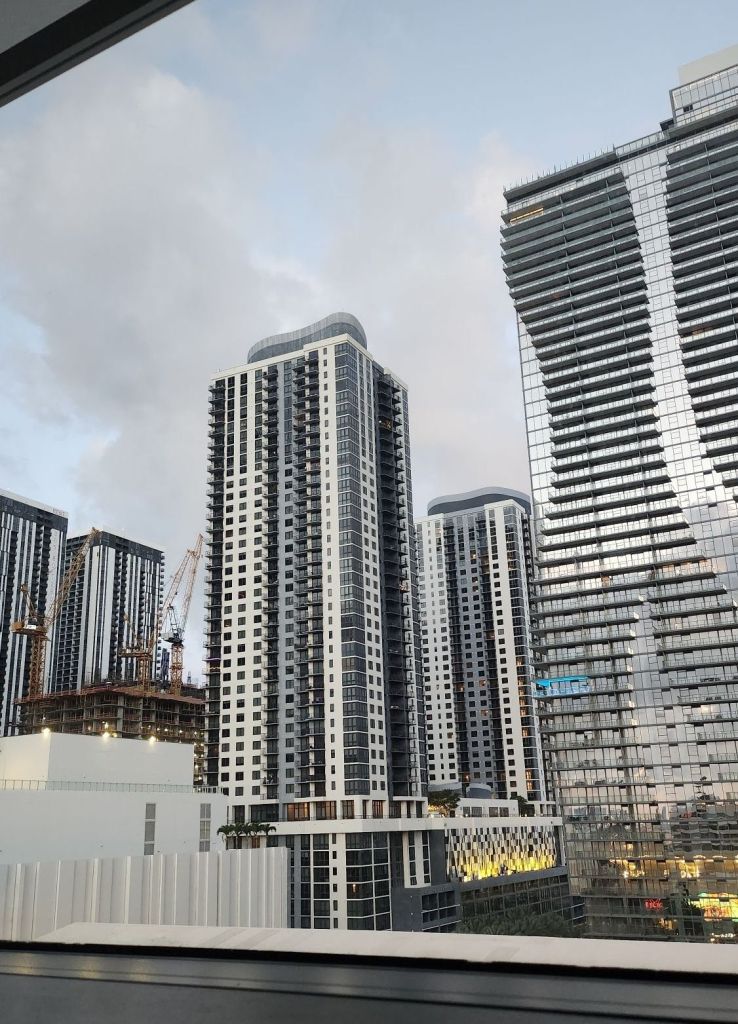
Once, I reached the hotel, I decided to reset and headed out for dinner… My modern hotel was located in downtown Miami and very close to the action. Miami has two key areas; downtown and Miami Beach. Miami Beach is on an island and accessible by bridge. In downtown, the harbour area is super lively and this is where we found Bayside Market, which is loaded with lines of restaurants, shops and excursion stands to satisfy the many tourists that visit. This is also the site of Pier 5, a famous fishing pier, that is now the dock for various sightseeing boats, yachts and a lively cocktail and music venue.
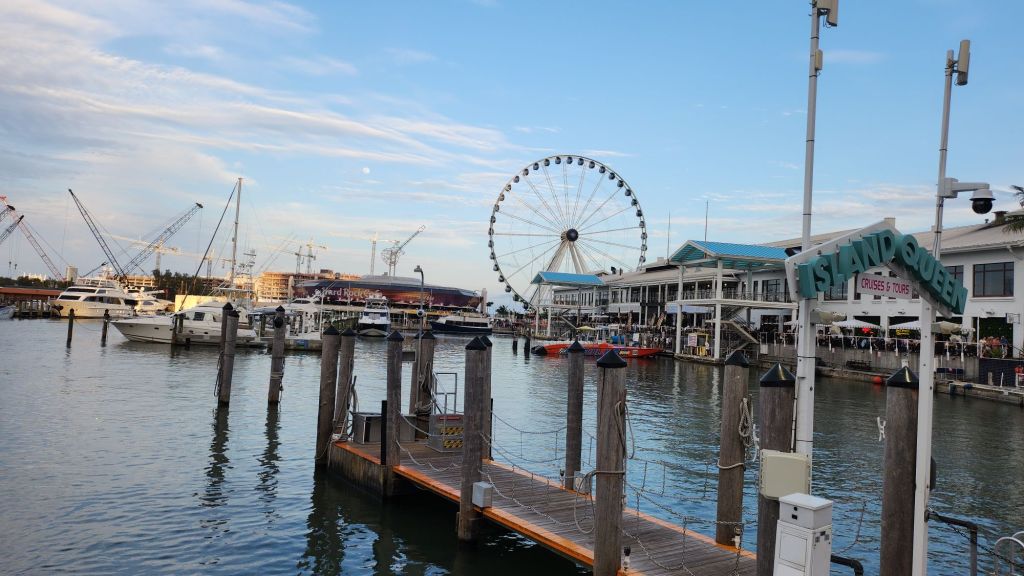
The drinks were flowing and many people were salsa dancing around, so the vibes were good. As we sat down in one of the many Latin restaurants for the well known Cuban sandwich that Miami offers, with so many spanish speakers around me, I decided it was time to investigate, what was up with all the spanish?

So it turns out, that Miami is actually the Latin capital of the United States, due to its close proximity to Cuba and Latin American countries. A huge immigration of Cubans to Miami began in 1959 after the Cuban Revolution, and over several decades, large groups of people from Columbia, Nicaragua and Guatemala continued to arrive in the city as conflicts rose within their own nations. There’s actually a lovely old building in the centre of downtown (and in front of my hotel) that was originally the arrivals location for immigrants as they arrived for processing into USA. So that is how Miami became the vibrant Latin hub that it is now. I was not expecting it at all, but it was a really pleasant surprise!

I only had a few days in Miami, and so time efficiency was very important. In order to see as much as possible, I decided to opt for the city sighteeing bus pass. There are several ‘Big Bus’ tours that work their way around the city, and a 24 hour pass worked well for me to see the main highlights. I did notice though that Miami did offer a lot of options for public transport, if you are doing one area at a time, there are free public trams, as well as a free metro line and some other low priced metros. It seems like a lot of investment has gone into public transport here which is brilliant. For me, I wanted to get the tour information too, so the bus tour gave me a chance to stick my headphones in and find out all I needed to know.

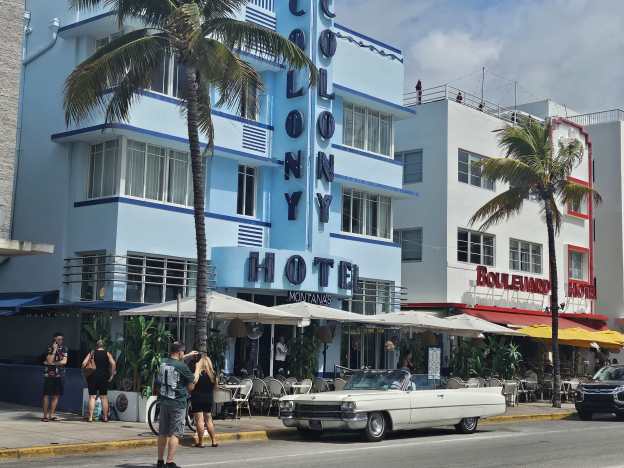
So with my bus ticket in hand, I hopped on board and made my way across a very windy bridge, with views of the harbour and over to Miami Beach. This is where I stopped off at the famous Ocean Drive and South Beach. Ocean Drive is a mile long strip of palm trees and art deco cafes and hotels. It has been used in many different TV shows and movies and does feel like you are being taken back in time, having just left the glitsy skyscapers of downtown. I walked along the street before detouring off to the side to check out the beach.
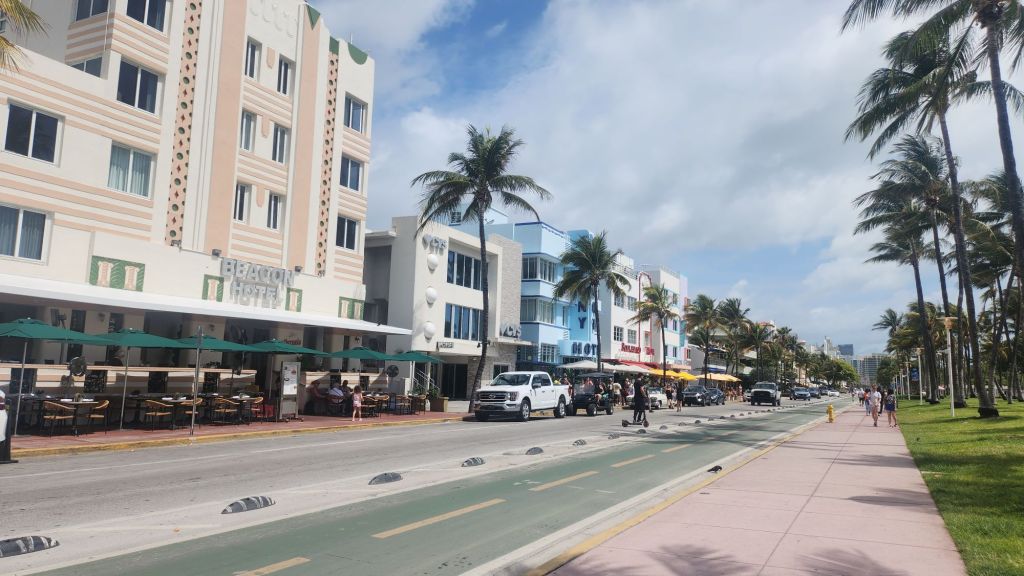
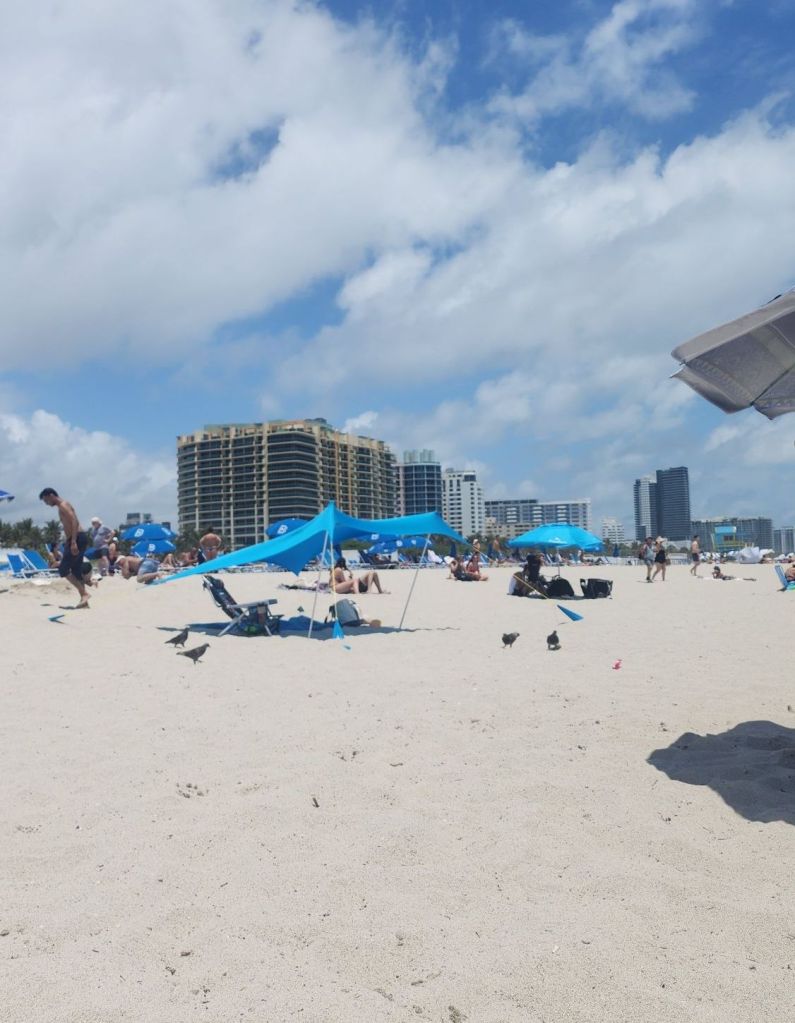
Strangely, I always imagined that the beach would be right in front of the pavement but there is actually a large area of park and bushes to the side before you can reach the beach, and then once on the beach its very wide, so unlike what I thought, its actually a little bit of hard work to get onto the beach. Naturally, in May, the day was very hot and I was looking forward to a good swim. Whilst it was refreshing to have a swim, the beach was rammed with people and there are no facilities to buy a drink or food actually on the beach. I was thankful for the leftover sandwich I had in my bag. The water was nice but honestly I think I am spoilt by beaches, as there is so much hype for Miami beach, but genuinely, I have had better beaches across the Caribbean and also in parts of Portugal and Spain.
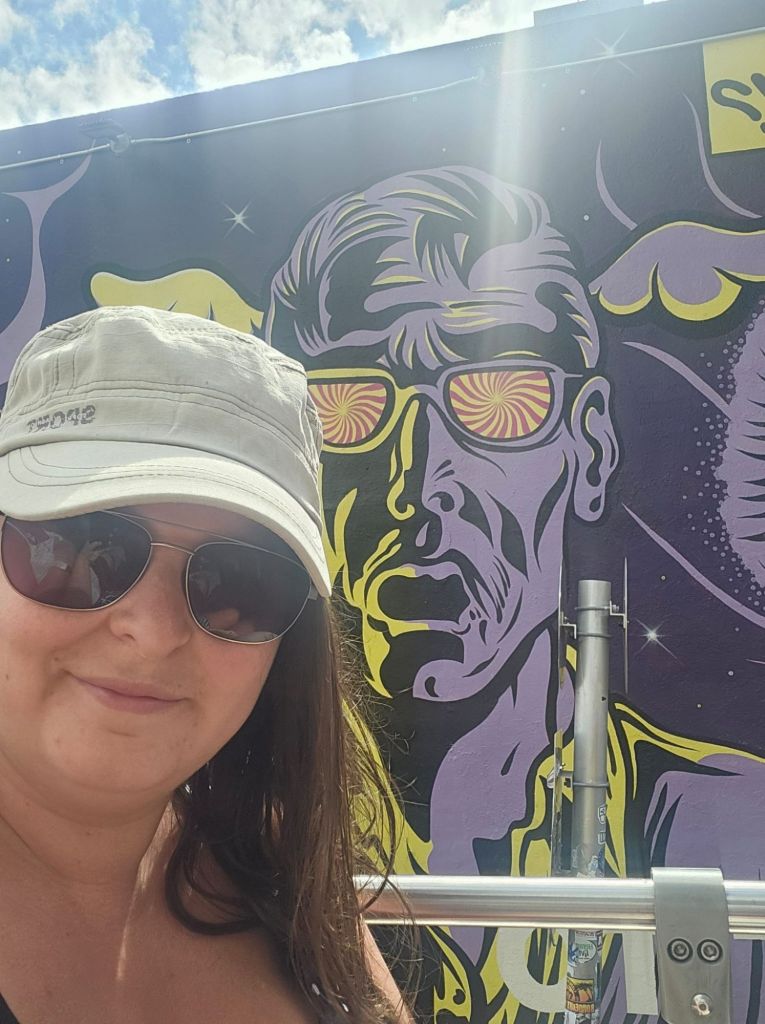
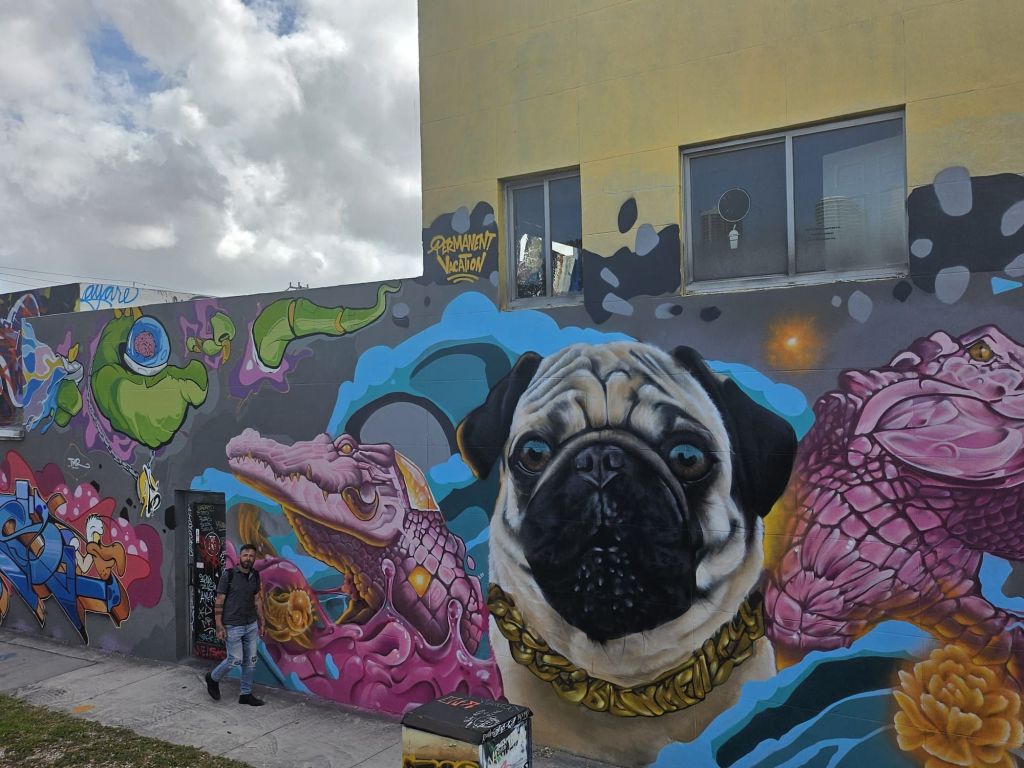
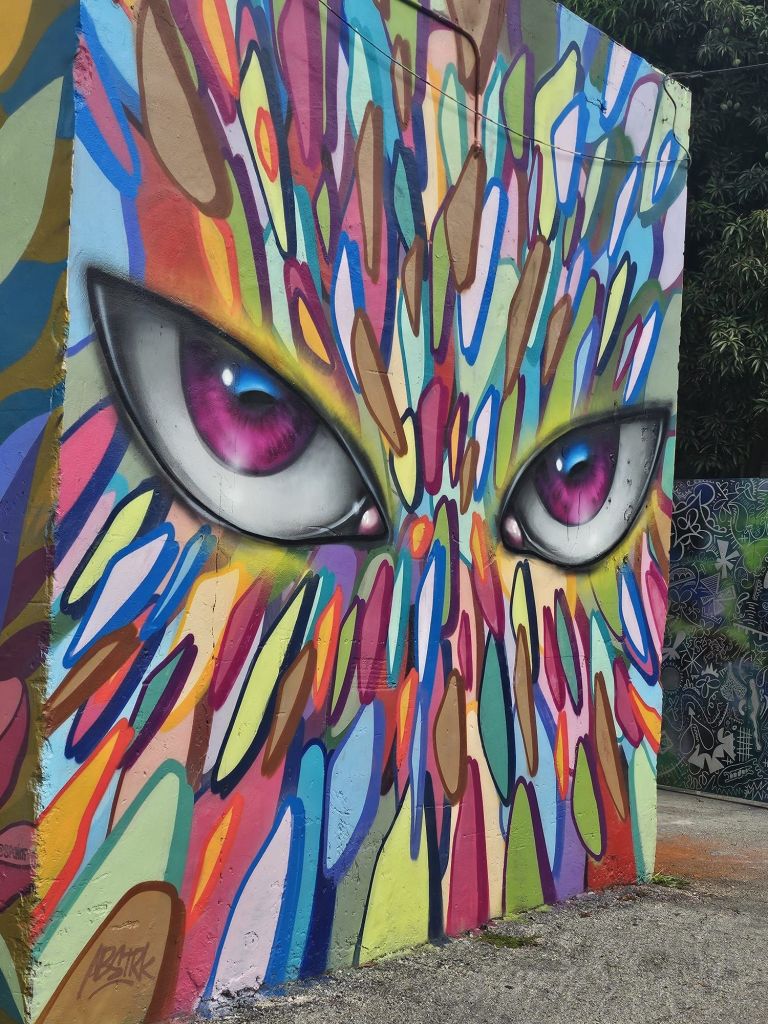
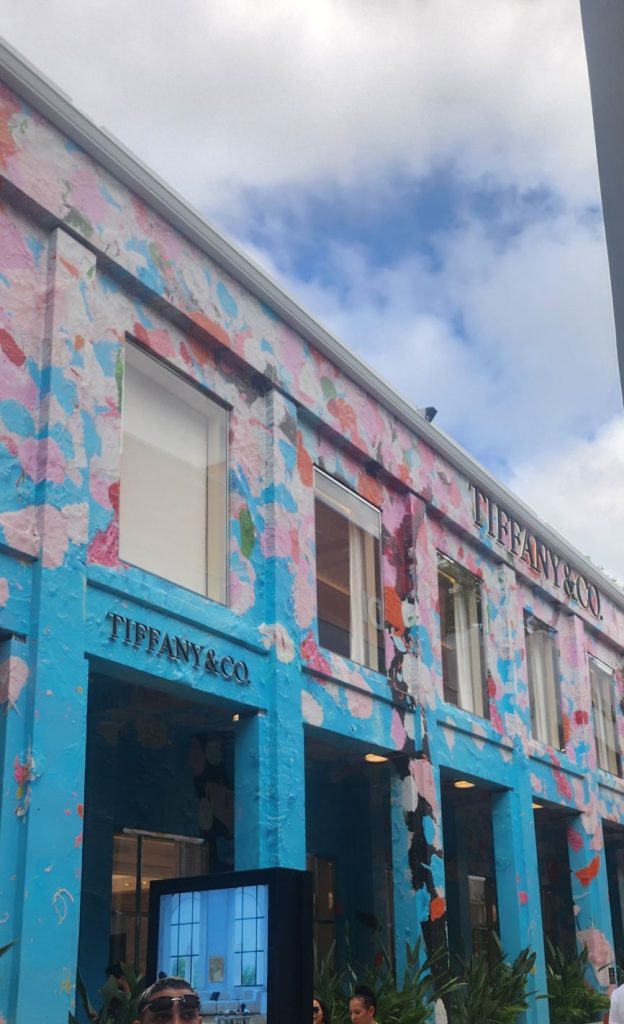
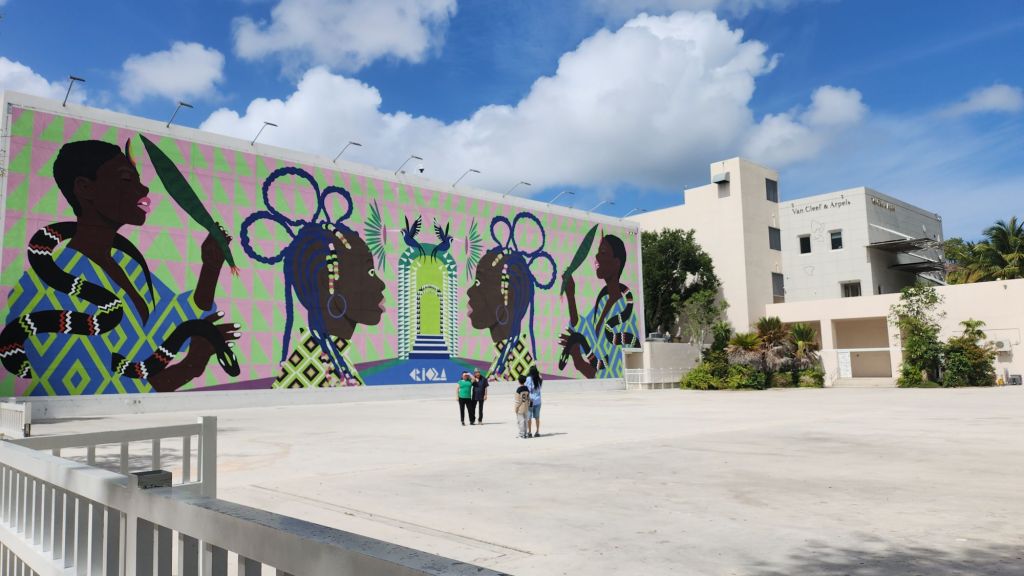
After my little time on the sand, I made my way back onto the bus and headed over to Miami’s Design District and onwards to Wynwood Walls. Both of these locations demonstrate Miami’s lively art scene. The Design District uses modern art and architecture to create a flashy shopping district whereas Wynwood Walls is a fairly empty area except for a maze of street murals, that has given it the title of the world’s biggest outdoor art museum. It was easy to just enjoy cruising around on the bus to see these huge murals, as by this time my feet were hurting and I just wanted to relax and look out at the art.
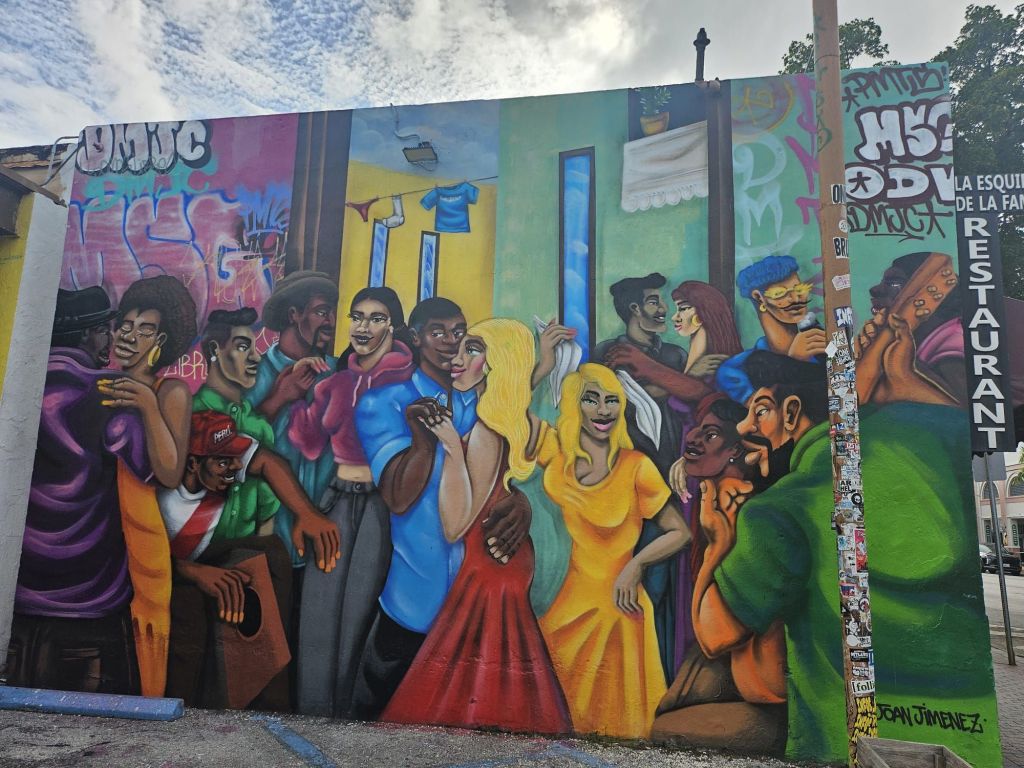
Probably my favourite spot in the city was ‘Little Havana’, a small Cuban neighbourhood with lots of eateries and bars, and plenty of live Cuban music. This was a really lovely place to relax and soak up the Latin vibes. It was a great way to enjoy the rest of the afternoon and I definitely felt happy to have found this really unique part of Miami.
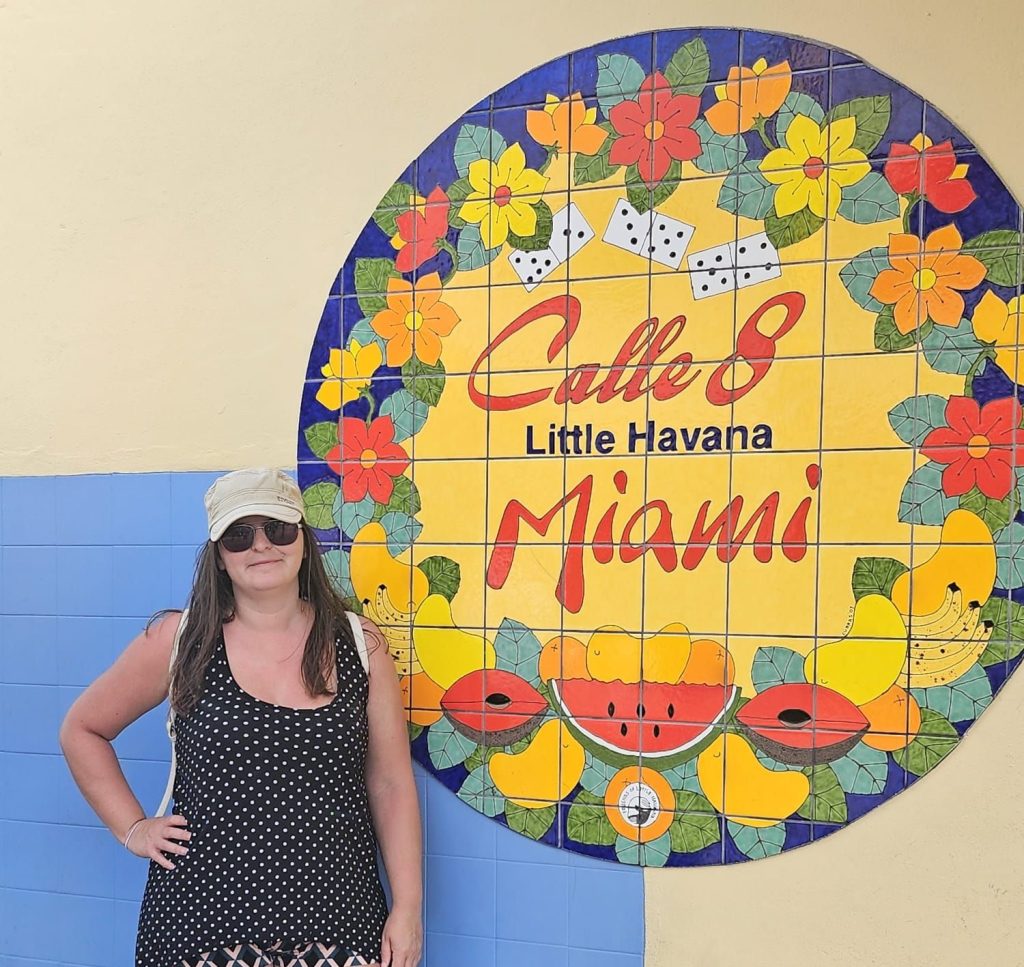
Little Havana Miami

So with one more day in Florida, I decided to take an excursion to Everglades National Park. I had been once before on a previous visit to the state but that was for a night tour and I hadn’t had much luck seeing the alligators, so I decided to have a try during the day. Only about an hour from Miami, it was easy to access the Everglades which is a wetland area covering around 2 million acres of Florida.
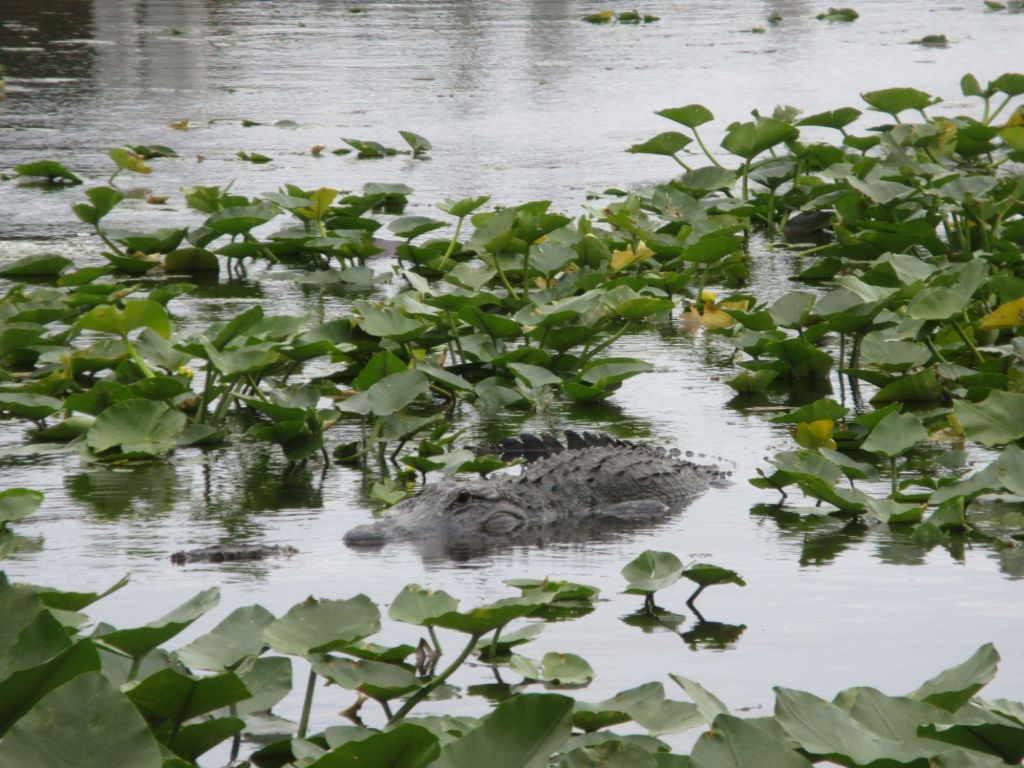
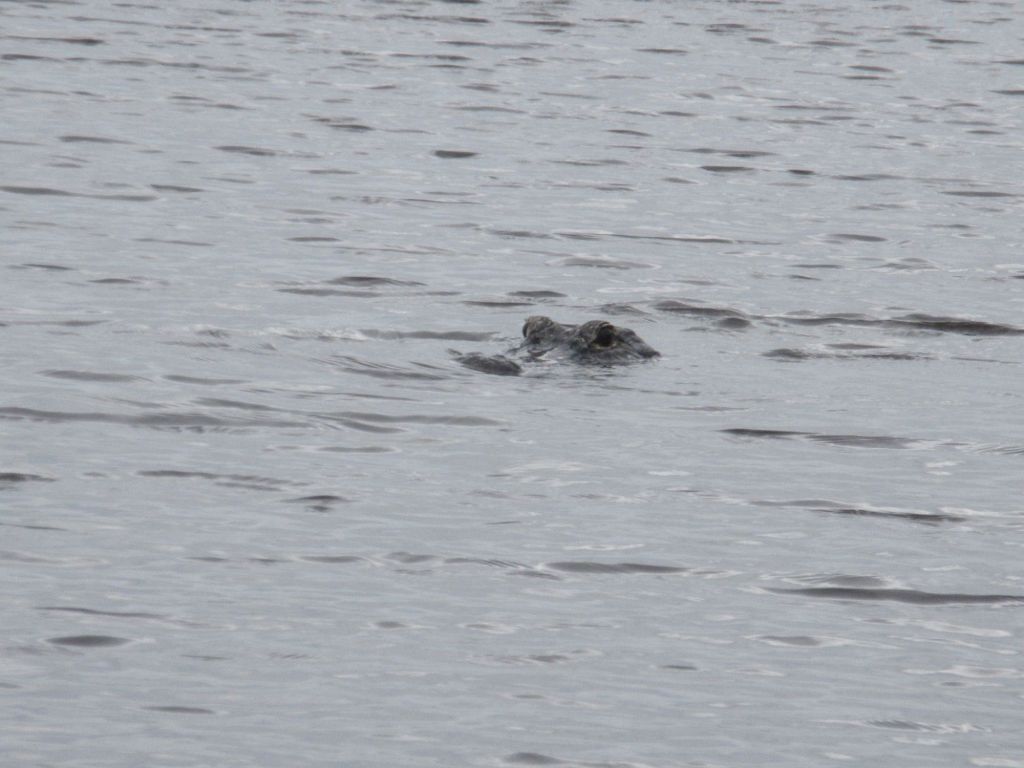
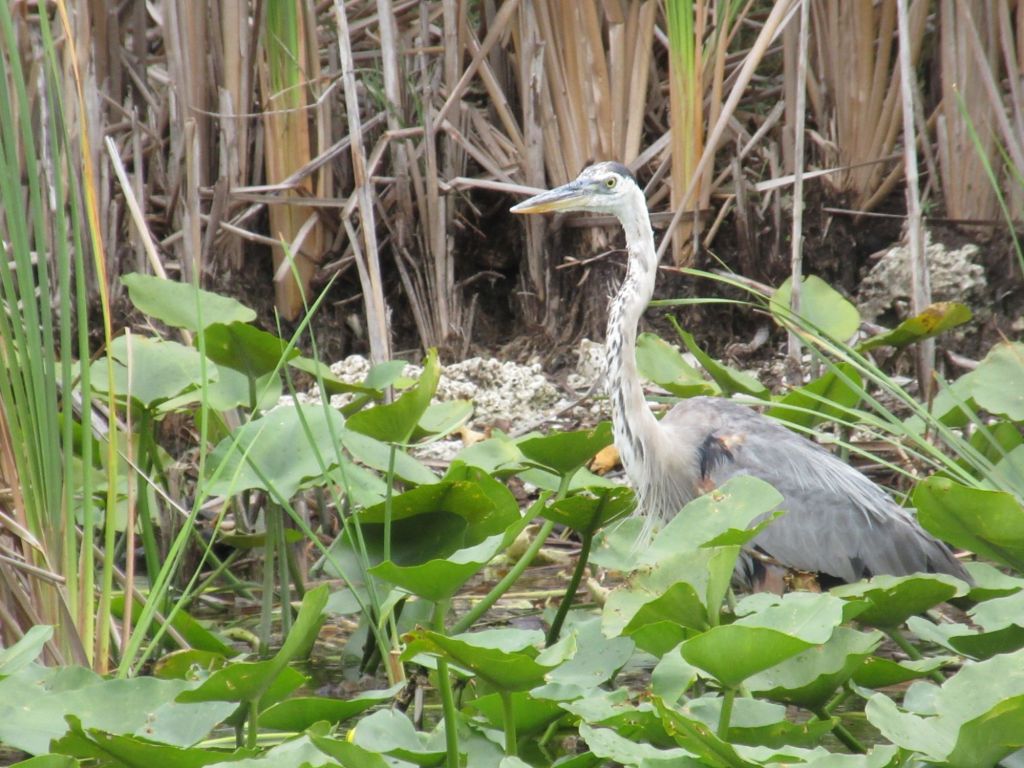
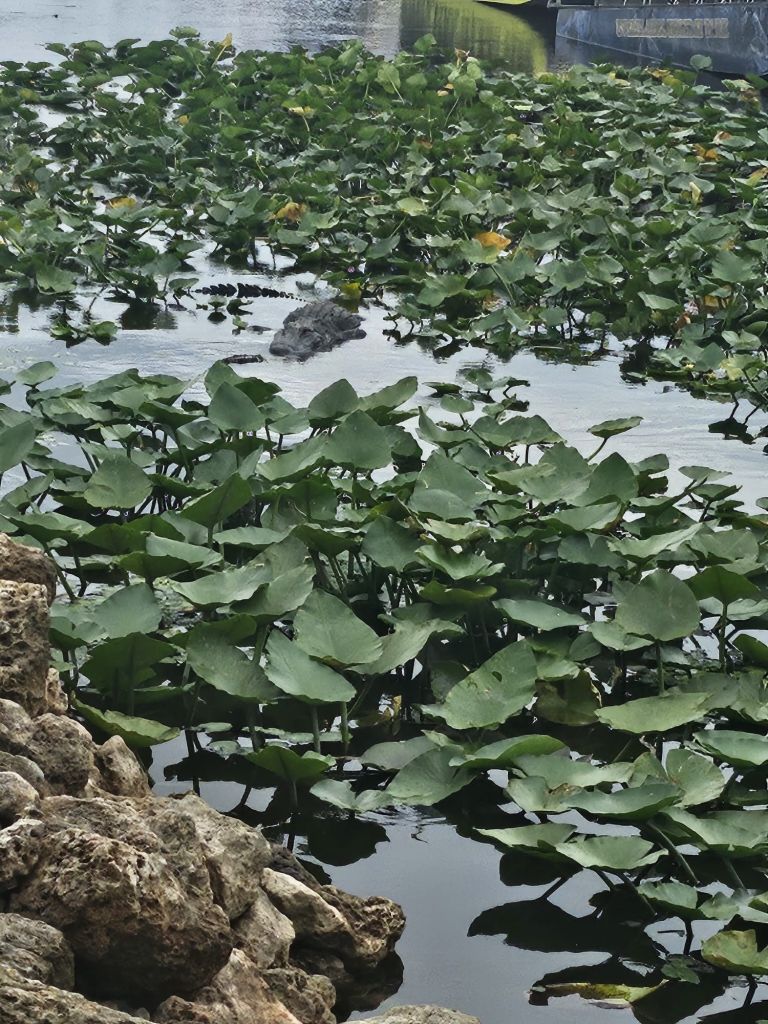
Alligators, Crocodiles, Turtles, and a variety of birds can all be found here, as well as many visitors travelling the water by Airboat. Travelling around on an Airboat is quite the experience in itself, as the loud fan on the back blows you around the water, until a ‘gator is spotted and all of a sudden you are spinning in circles to see one. It is good fun and depending on the time of the year, you might see quite abit. I saw a number of alligators and definitely enjoyed the experience. I think if I had more time to spend there though it would be nice to go a little more into the national park rather than just the typical day excursion.

For my final night in Miami, I enjoyed a dinner at Bubba Gump. Even though, its a chain and we even have one in London now, it is delicious! I love the shrimp and the movie props for ‘Forrest Gump’ are a lot of fun. As well, it is worth saying that this was the most affordable meal in Miami. Miami is not for those of us with shallow pockets!
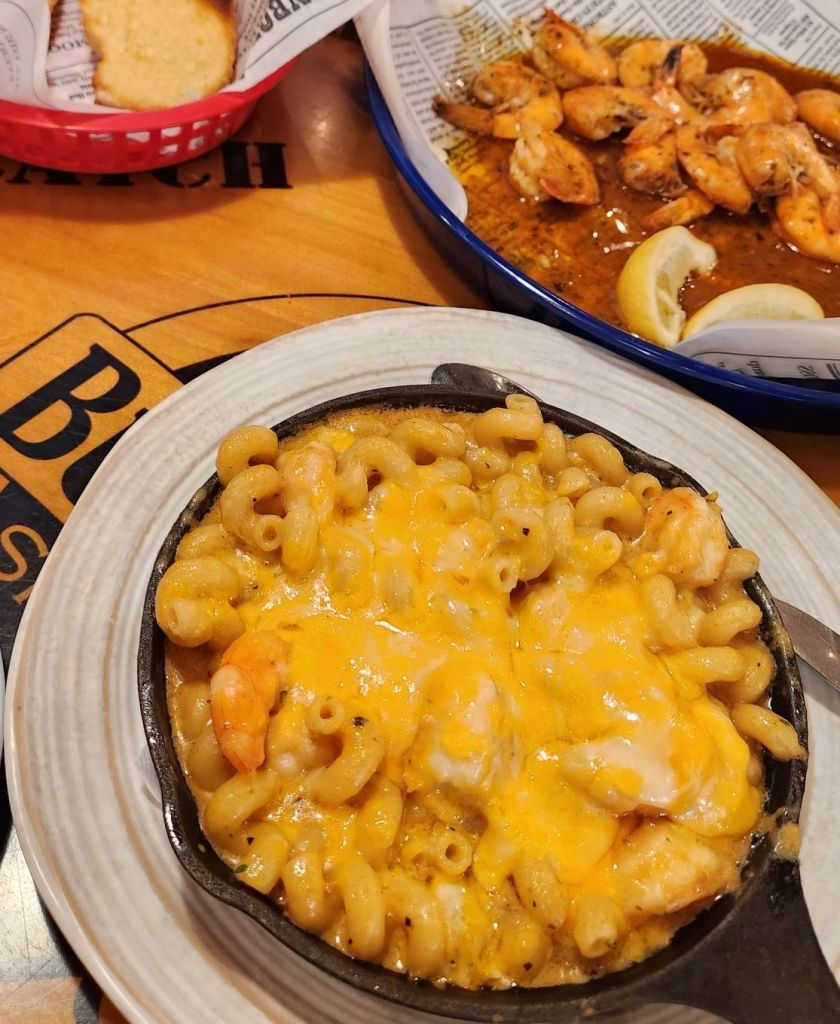
Overall, Miami gave me a nice few days. It’s a nice location for some fun and glamour and I really enjoyed the Latin feeling but it will probably be a one off location for me.. though I do imagine I will be there again one day, probably joining a cruise ship!

Me at Bubba Gump

A colourful dip into the Baltic

With a few weeks sailing the Baltic sea, I managed to experience an Autumnal viewpoint of a collection of European cities; Helsinki, Tallinn, Visby, Copenhagen and Hamburg. With some glimpses of sunshine and lots of rain, I was able to wonder the highlights of these important places and you will quickly figure out which were my favourite.

Helsinki, Finland

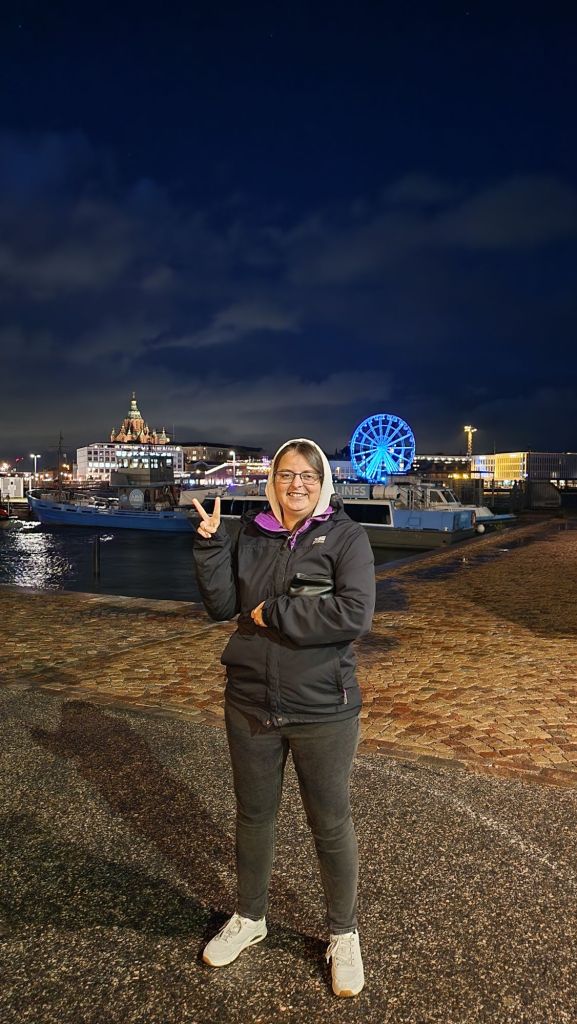
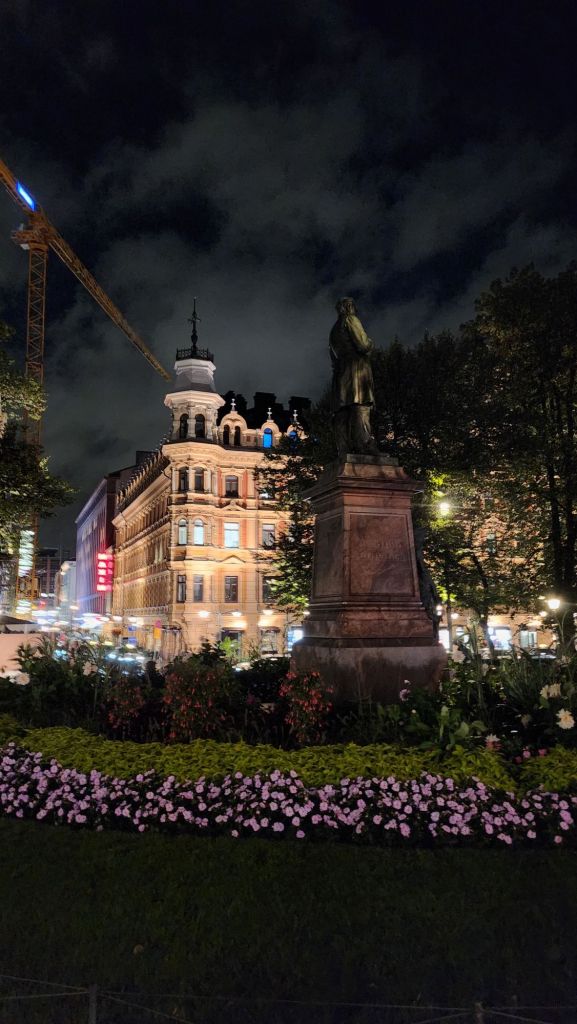
My two day visit to Helsinki was absolutely full of rain, and was very chilly but I still managed to venture out and see some of what was on offer. Just racing around in the back of a Tuk Tuk, I could see that the city was keen on design. There were so many striking buildings of brick and cement, and a clear futuristic feel.

During the day, there seemed to be a reasonable amount of activity, especially in the public saunas where I could see people steaming up and then jumping in the cold waterways that surrounded the city. Sauna culture is huge in Finland, and many people even have saunas in their homes. The Finns are very keen on wellness, which I know first hand from the lovely yoga mad vegan Finnish roommate I once had. She was all about health for the mind, body and soul.

My Finnish friend also loved to be asleep early but now I think she is not uncommon because when I tried to go for dinner out on  a Friday night in Helsinki.. there was not a soul to be seen. There were so little restaurants open, I ended up only going to a Kebab house! And having the wierdest kebab ever, might I add. According to the locals I asked, this is not unusual here. It is definitely the quietest capital city I have ever seen.

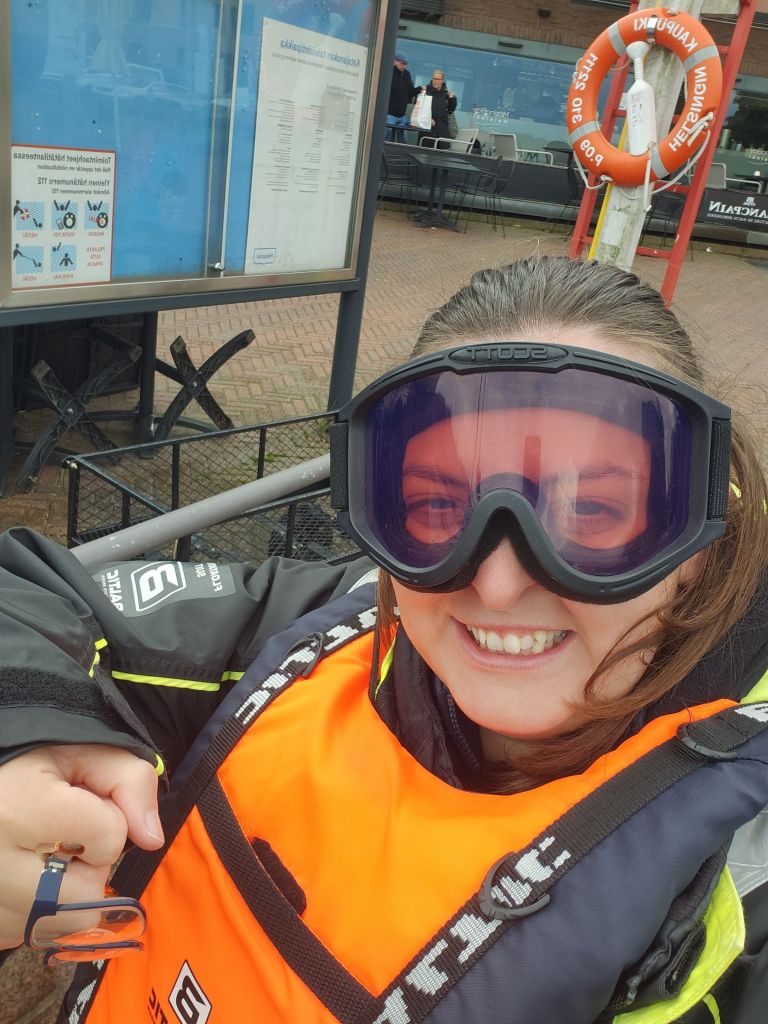
One of the most interesting things about Finland to me, was the history. I learnt a lot more about this country’s past when taking a rib ride to another island in Finland’s huge archipelago of more than 75,818 islands.

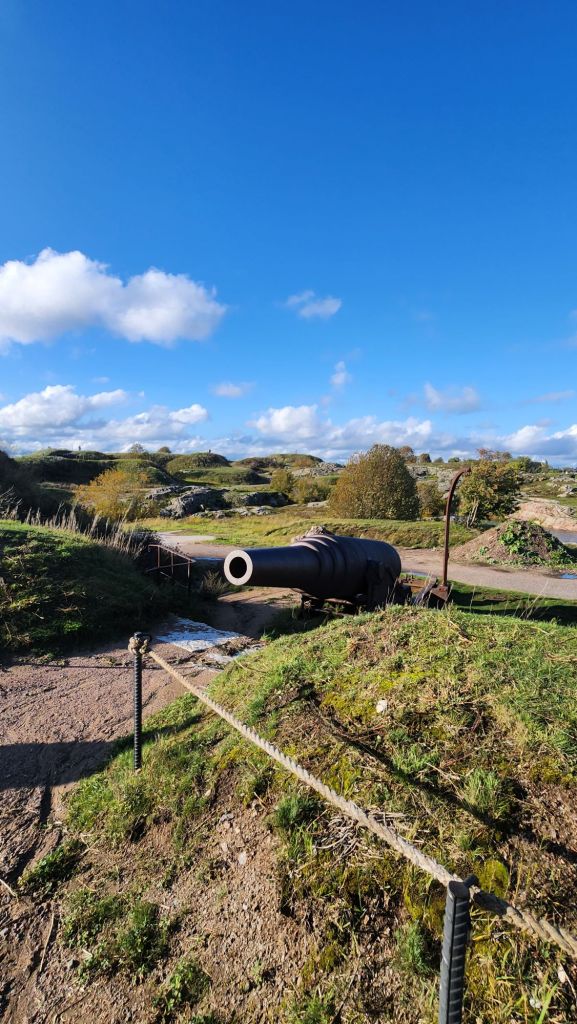
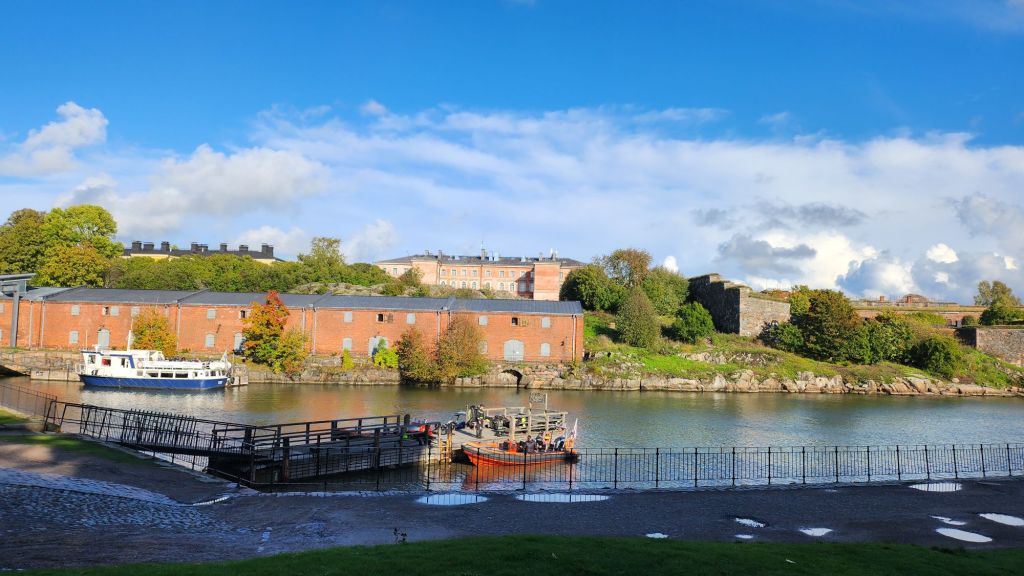
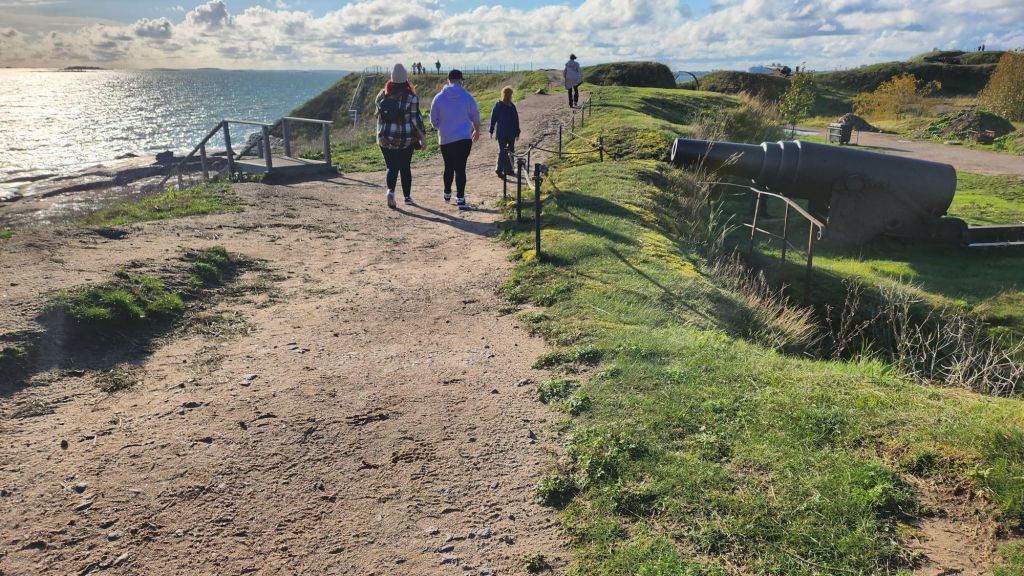
I visited Suomenlinna Island which was once a military base for Sweden, during its rule over Finland.

Finland has had a long history of being conquered, with lots of fighting here between Sweden and Russia for territory over Finland. This is one of the reasons why the Finns are now quite multilingual.

The guided walk I took around this island was very enjoyable and had great views  although it was bracingly cold!

Overall, chilly but calm Finland was a good introduction to my Baltics adventure.

Onwards to Tallinn, Estonia...

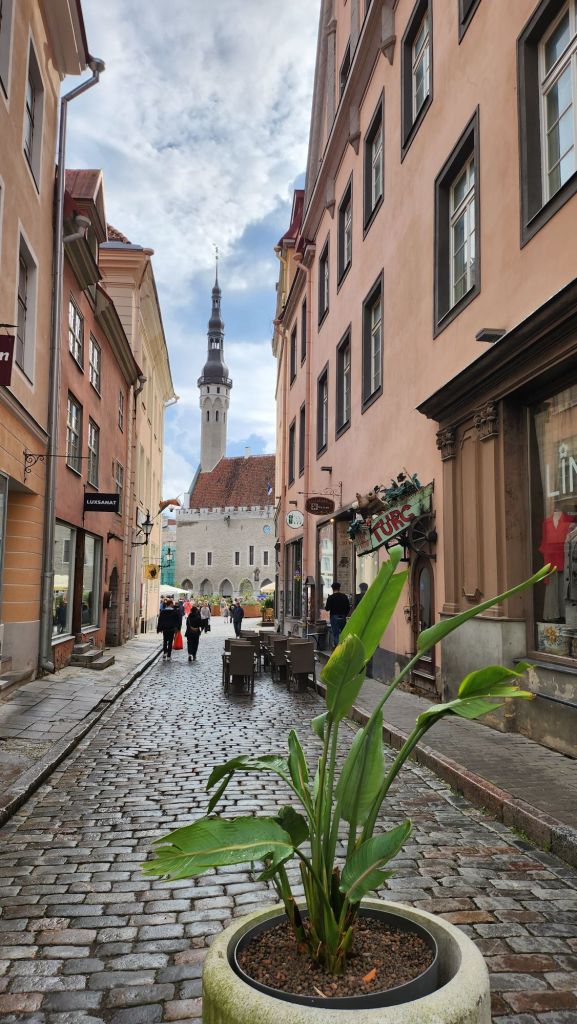
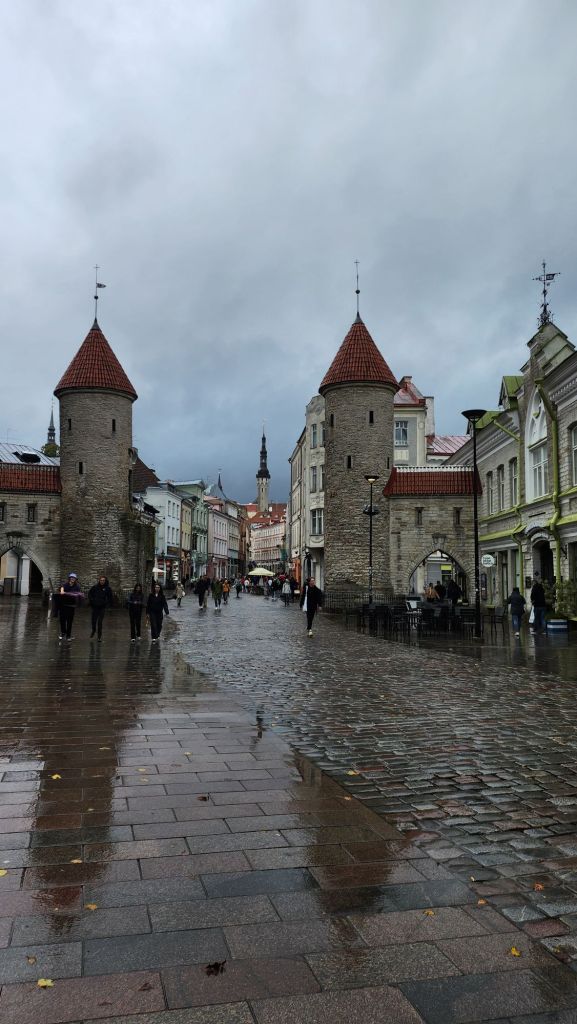
Tallinn’s old medieval town is a UNESCO World Heritage Site, and is a beautiful little place to explore.

I felt like I had been transported back in time, and into a fairytale book in Tallinn. The city has a beautiful stone gateway with pretty turrets as you enter and then I continued to see more of these Rapunzel type turrets as well as picturesque church steeples and sweet little town squares. There were traditional markets and shops and I found myself a very tasty bakery.

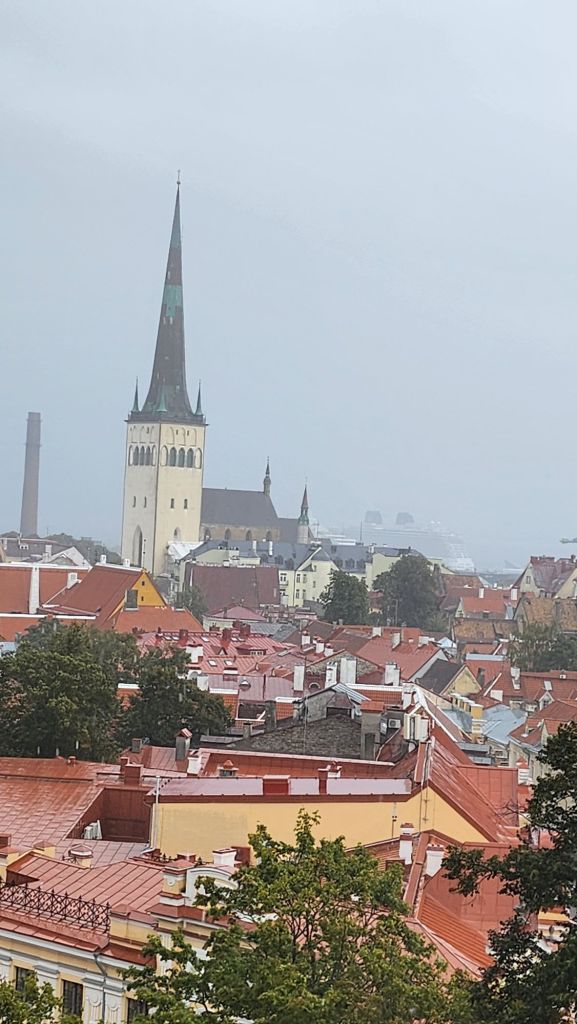
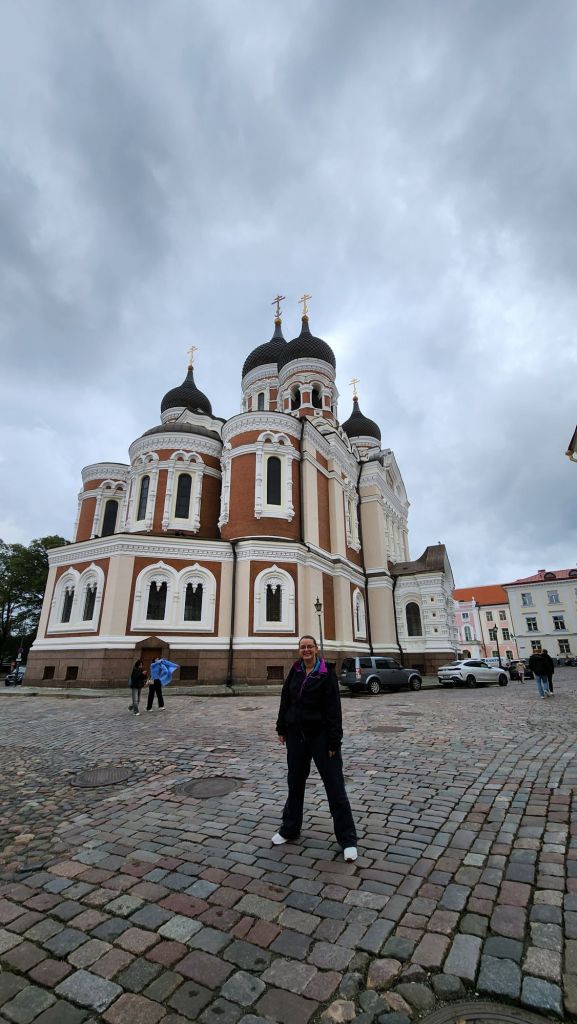
As I walked my way up to a viewpoint on what was becoming a very rainy day, I could also see their Russian built church which whilst beautiful, told the instant story of their conquered history too.

Next stop Visby, Sweden

Now ordinarily, I think Visby must be a very sleepy place. I was lucky enough though to visit when they were having a food festival!

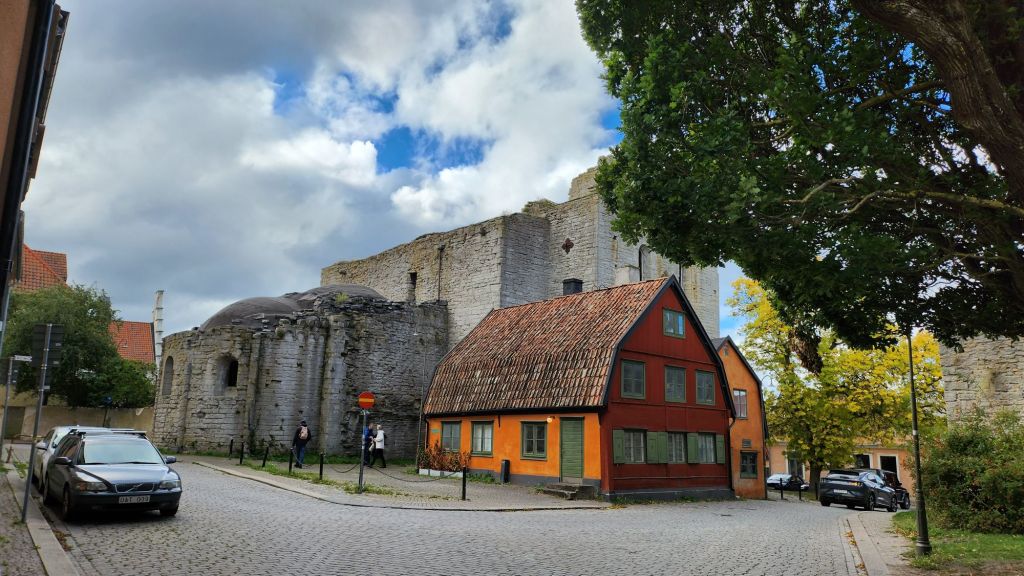
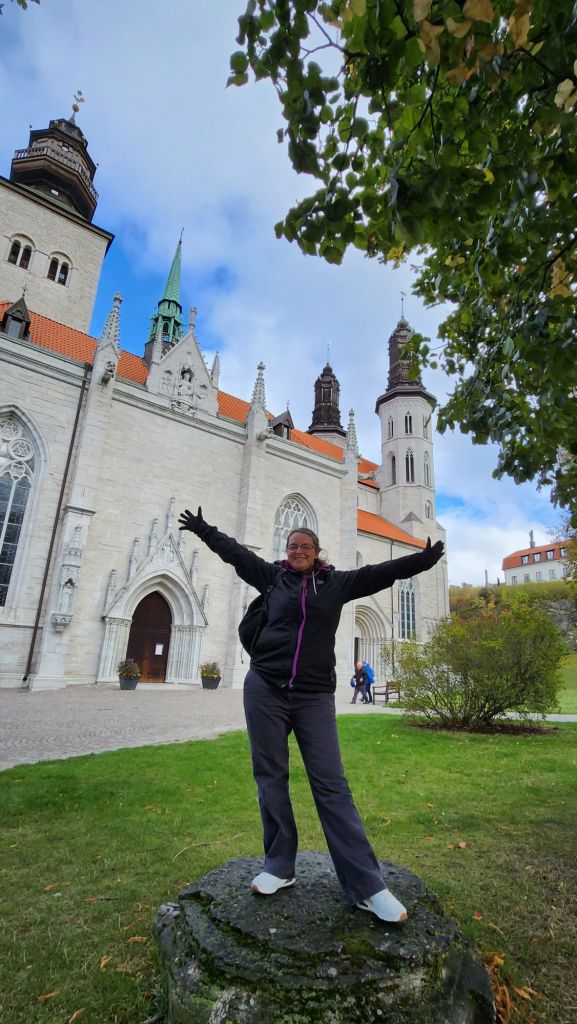
Visby is actually a heritage city on one of Sweden’s islands, named Gotland. This is again a fairytale location but here you get that traditional Viking feel from the design of the place.

The old walls, houses and cathedral are all impressive, but as I mentioned, it was a food festival, so I was taken in by a very tasty and unusual Bison Stroganoff and an amazing selection of cheeses!

After some delicious food and music, I had a wonder around before rejoining my ship to go onwards to Copenhagen.

Copenhagen, Denmark

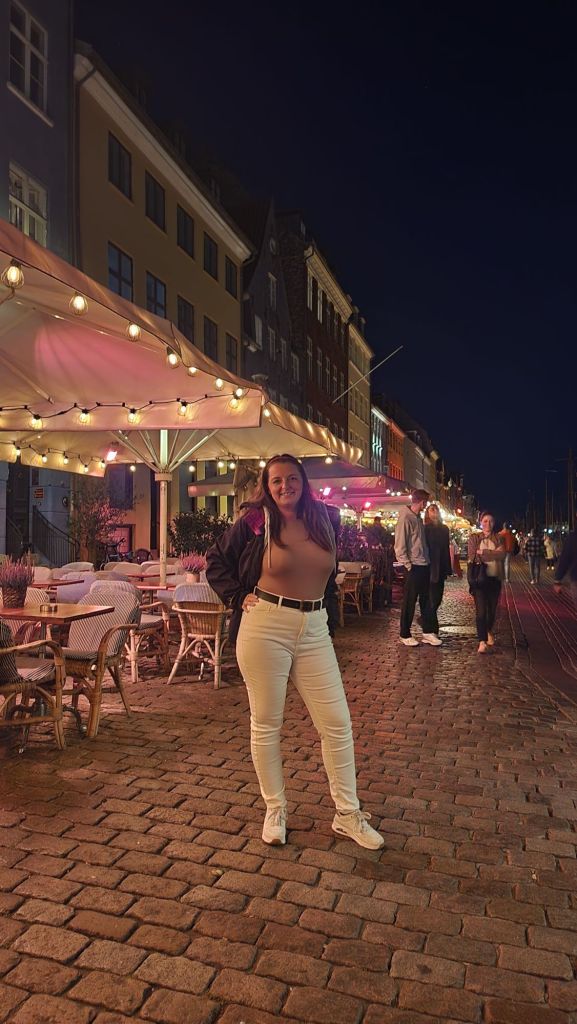
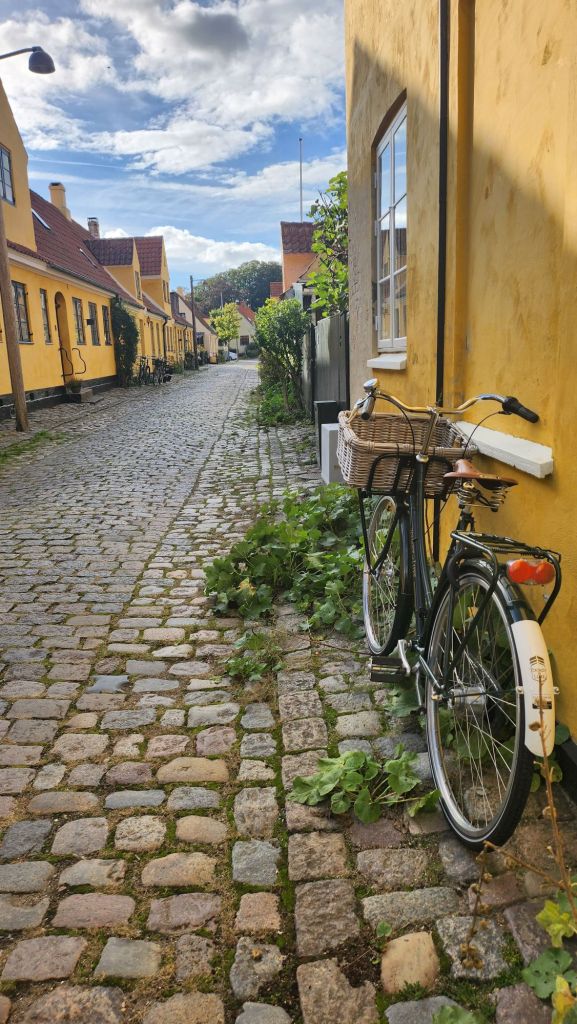
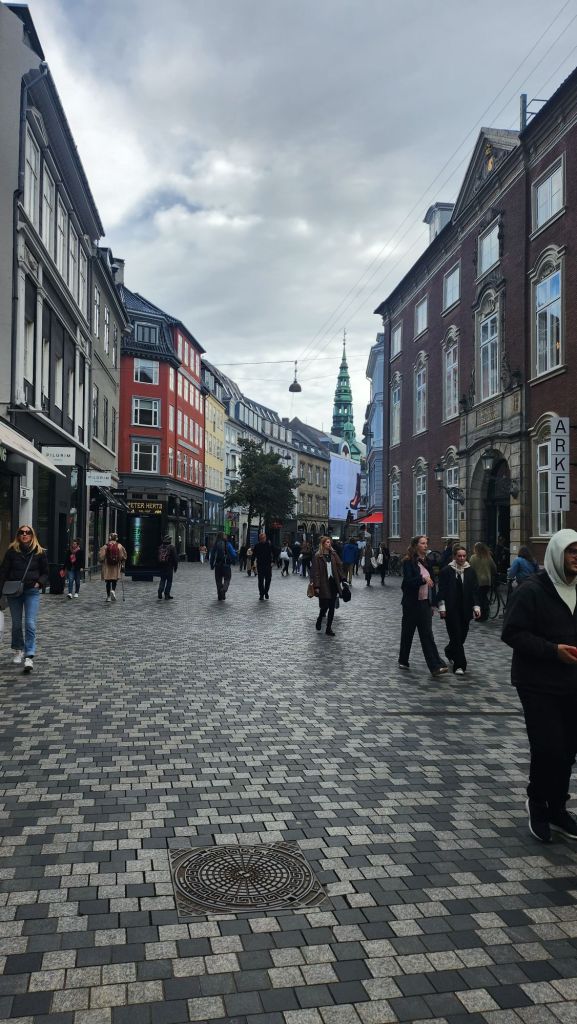
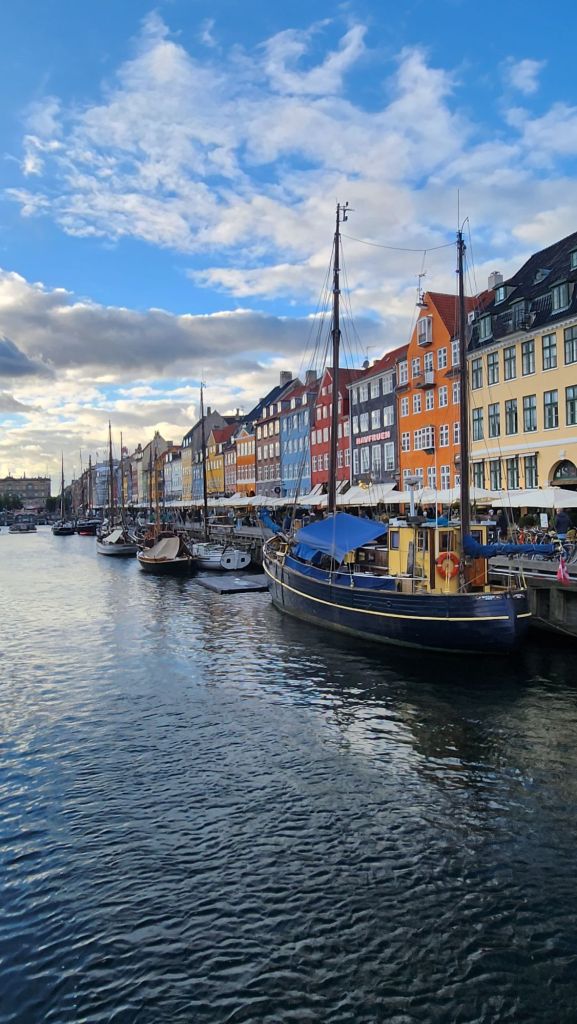
Copenhagen was certainly very colourful in their city vibes and friendly people. The city is full of hustle and bustle, mainly around their famous harbour and in the form of the speedy cyclists that zoom around the city.

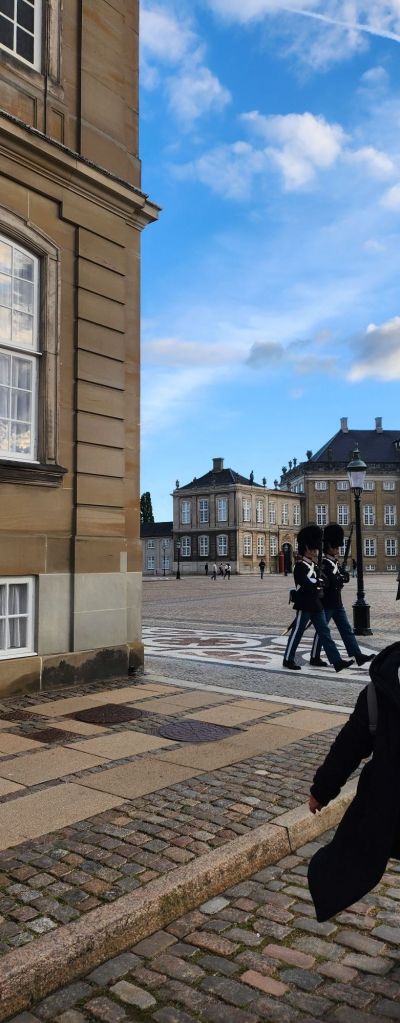
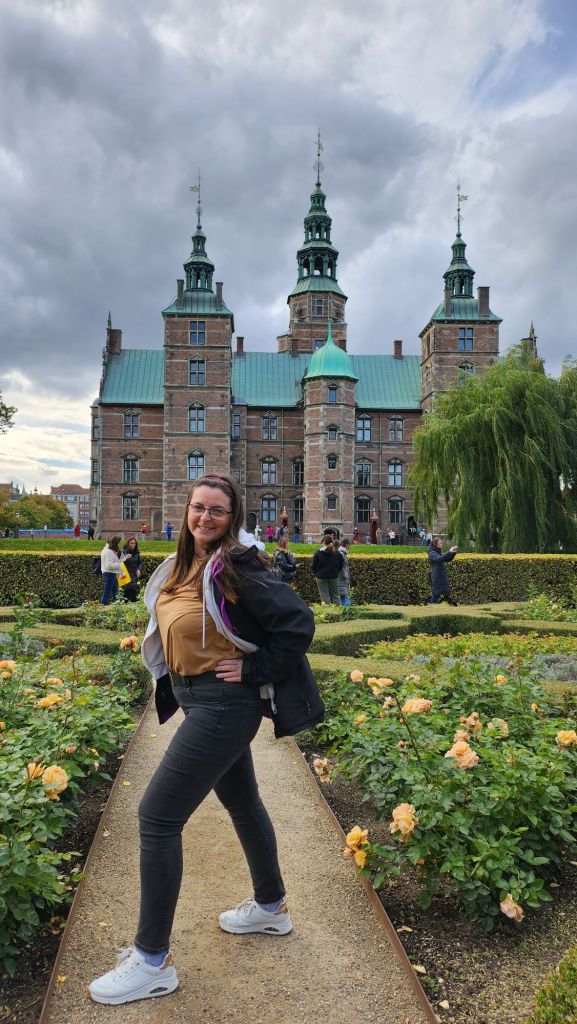
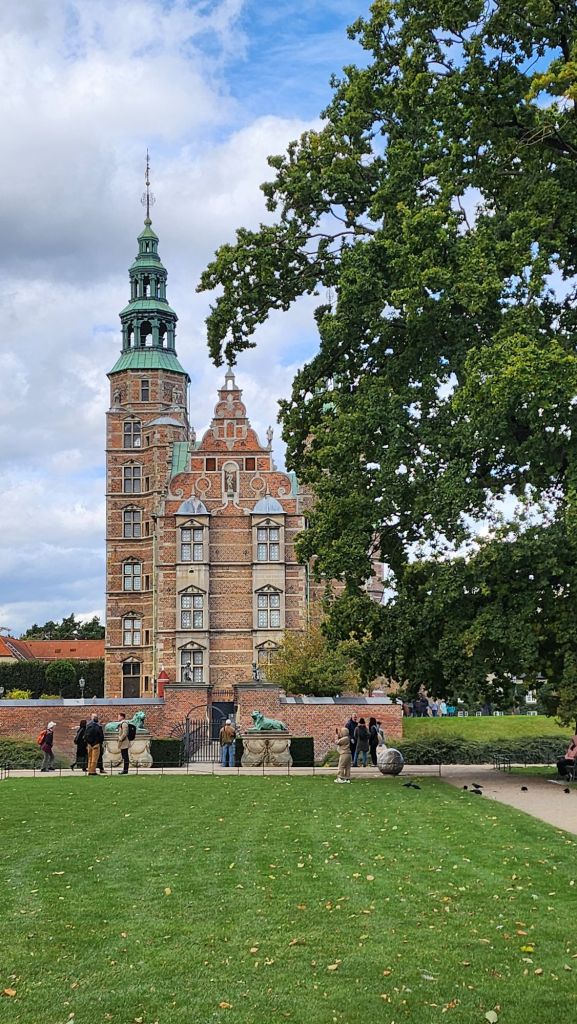
On foot, I explored the impressive palace squares with their palace guards and procession that could easily compete with London’s own. I also ventured further to the gardens of the pretty Rosenborg Castle and tried some very odd plant food from the public food hall which wasn’t half bad. Later, it was time for a relaxing dinner at one of the harbour’s many restaurants where heaters and blankets were much appreciated in the night air.

I found myself talking to a guy from Argentina that had moved to Denmark. It seems to be the place for many people wanting to run away to a new country and has a lot of easy visa rules for this. On a visit to a sleepy harbour town outside the city, my guide was also telling me about his move from UK to Denmark, after meeting his danish girlfriend. The girls across all of Scandinavia are known for their beauty.

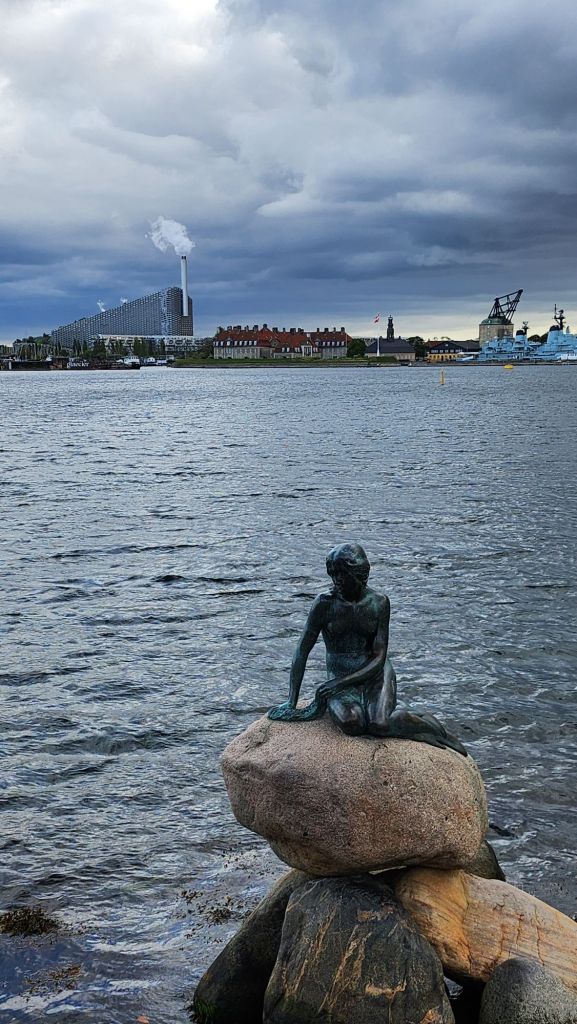
One girl is well known in the city, and that is the little mermaid. A true lurer of men in mythology. The statue sits on the outskirts of the city and is a world famous symbol of Denmark. Whilst well known, for me she was very underwhelming. Sitting alone on the waterside, (except for all the tourists), she didn’t actually look like a mermaid. Apparently, she was actually based on the sculptor’s wife. She was probably the part of the city that was least interesting.

Finally, after all these other places, I can’t forget to mention my afternoon in Hamburg.

Hamburg, Germany

I have been to other parts of Germany and had never thought much about visiting Hamburg. Once there, I was captured by it’s charm.

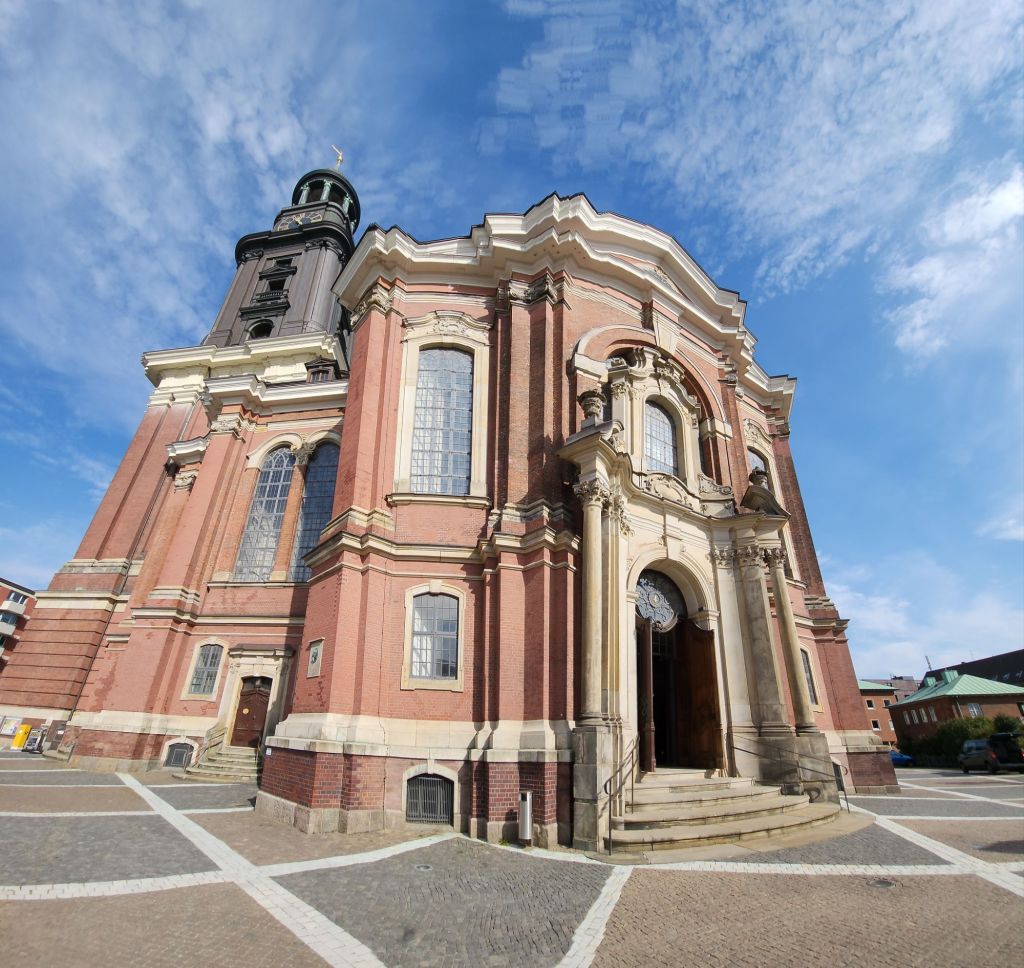
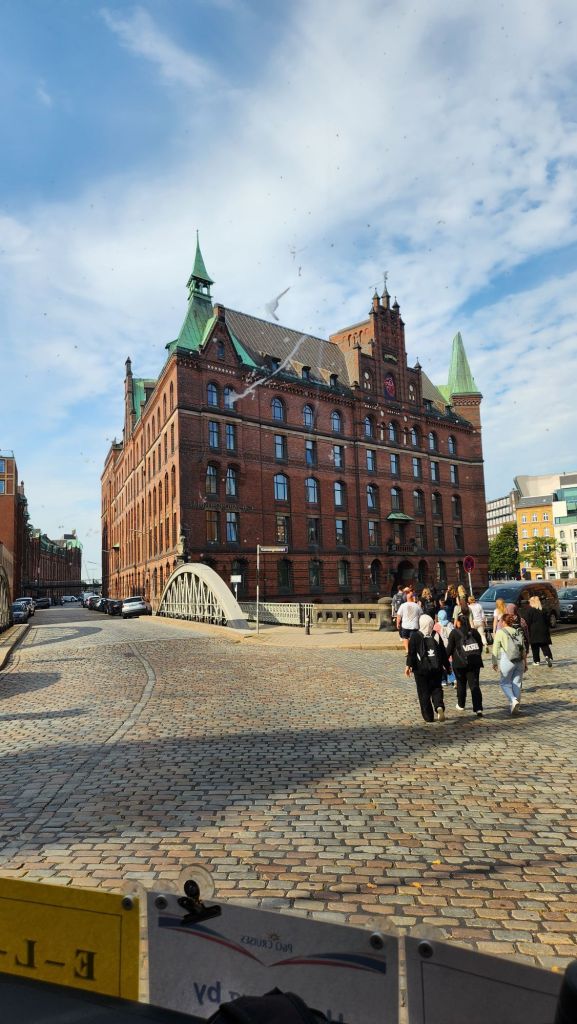
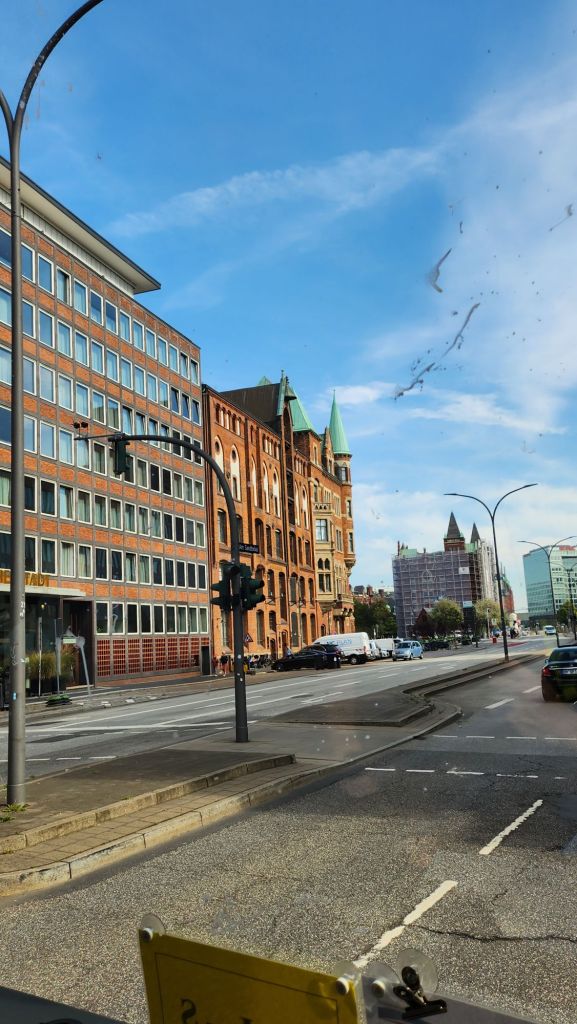
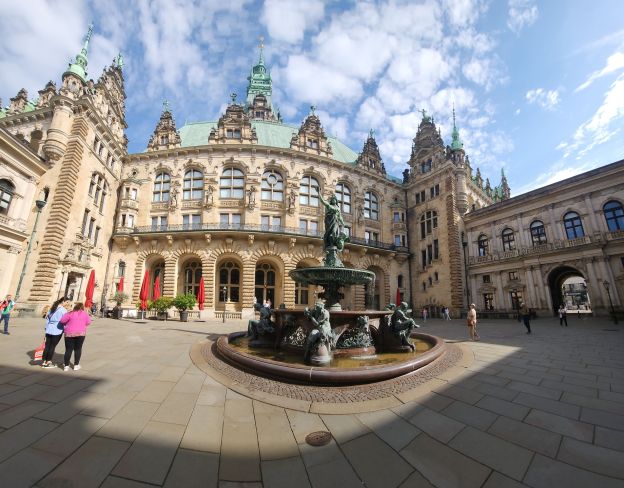
This red brick city has a famous port and historic district called Spiekerstadt, which is full of converted warehouses and factories that gives a post industrial redesign vibe.

Apparently the city has actually grown on land that has been man made over the original marsh areas that were here. Tons of sand is actually brought into the newest HafenCity to raise its level higher, for construction to be done on a more stable foundation. I went to a part of the city that was still being built and could just see masses of sand there. You can get the sense for the different heights of the city just driving around though.

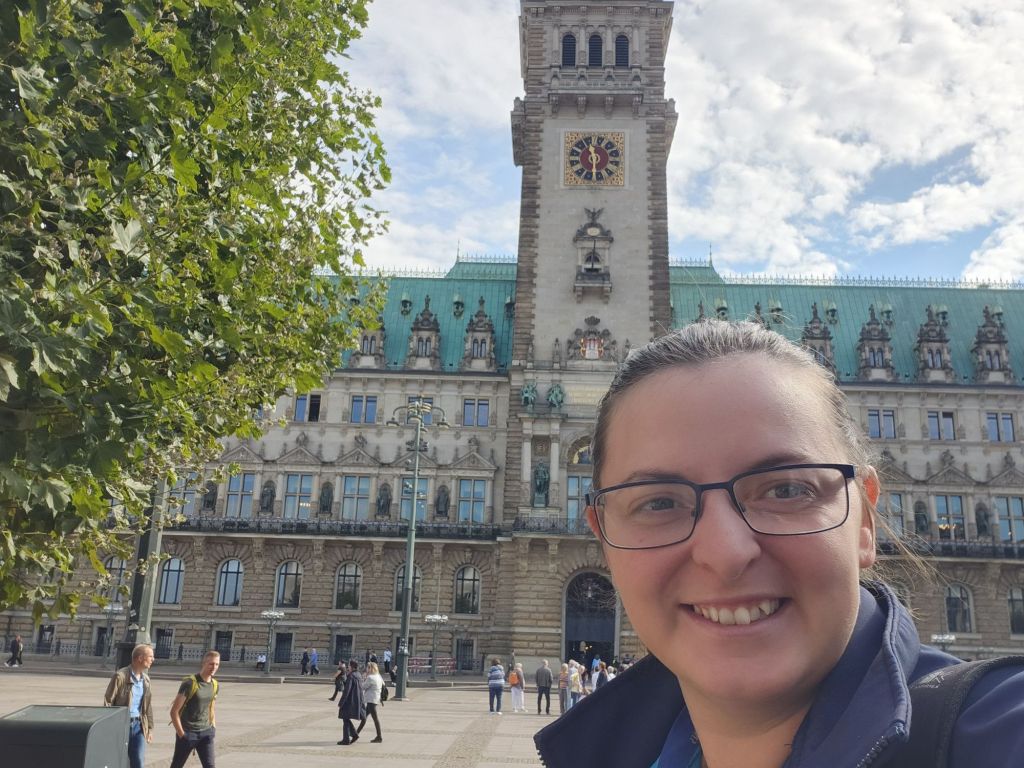
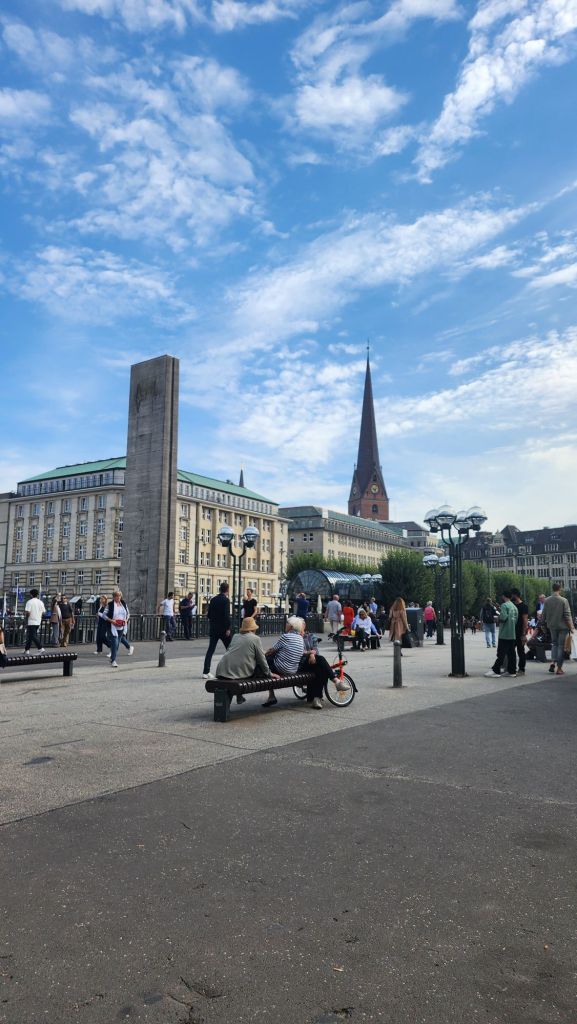
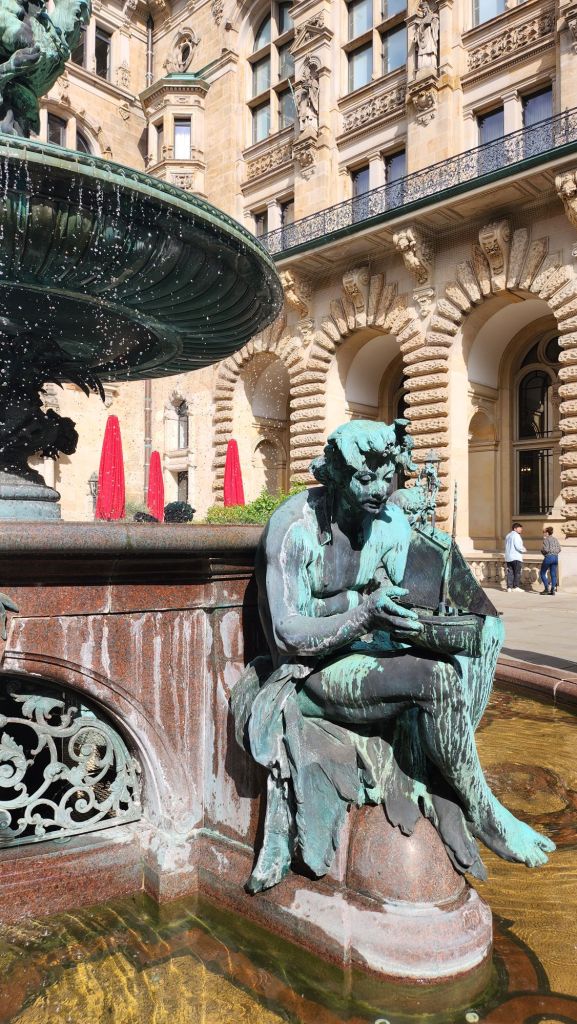
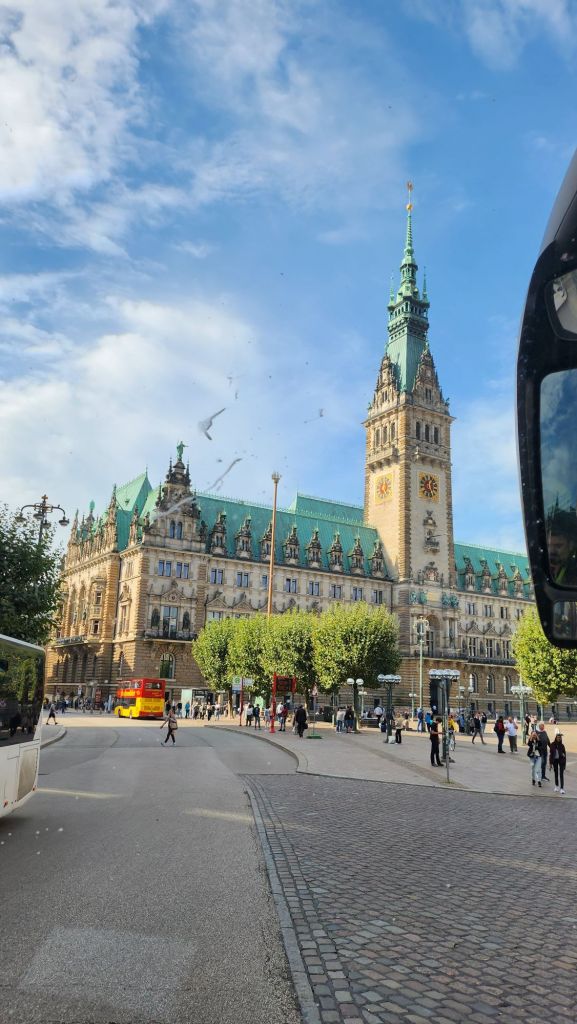
Walking around the city, there is a lot of life in the streets as well as an intricate network of canals and a gorgeous town hall. I really enjoyed my short time here and would love to revisit. I hear that the nightlife is also well worth it!

So overall, my little dip into the Baltic was a great introduction and even though these places are all in the same part of the world, they all definitely had their own unique identity.

India: Where culture, colour and faith collide (Part Two)

After almost a week exploring the North of India, I flew South for a few days in the state of Goa and a short stop in Mumbai. This was a chance to see coastlines, cityscape and countryside of this huge nation.

North Goa

On arrival in North Goa’s Mopa Airport, I felt the humidity hit me like walking into a sauna, and began to recognise the familiar scenes of holiday makers as we made our way through town. This southern region of India is known for being a holiday location for nationals and foreigners alike.

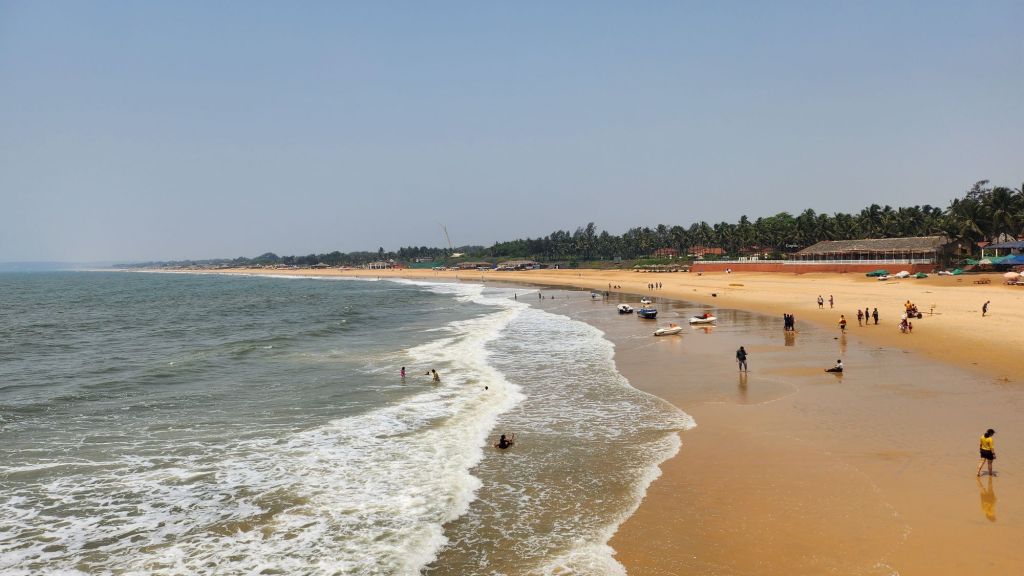
The North of Goa is much more commercialised for visitors with bars, shopping and large hotel chains, whilst the South is a sleepy, wild and undeveloped area. We stayed in the area of Candolim, right by the beach. I got to have my lazy day on the beach and a lovely shoulder massage on my sunbed with very little hassle at all. I’ve learnt that most of the Indian people I know do not actually like to go to the beach to sunbathe or swim, so by day it is pretty quiet there. Its only at sunset and into the evening when the crowds begin to gather. I have never seen so many people on the beach in the evening, it was hard to move around amongst the crowds.

The next day we hired a motorbike for the day for a grand total of £5! Motorbike transportation is really common in India, and I have enjoyed now a number of motorbike trips in different countries as a passenger riding pillion. Normally, from an unexpected new local friend, which always makes it extra fun!

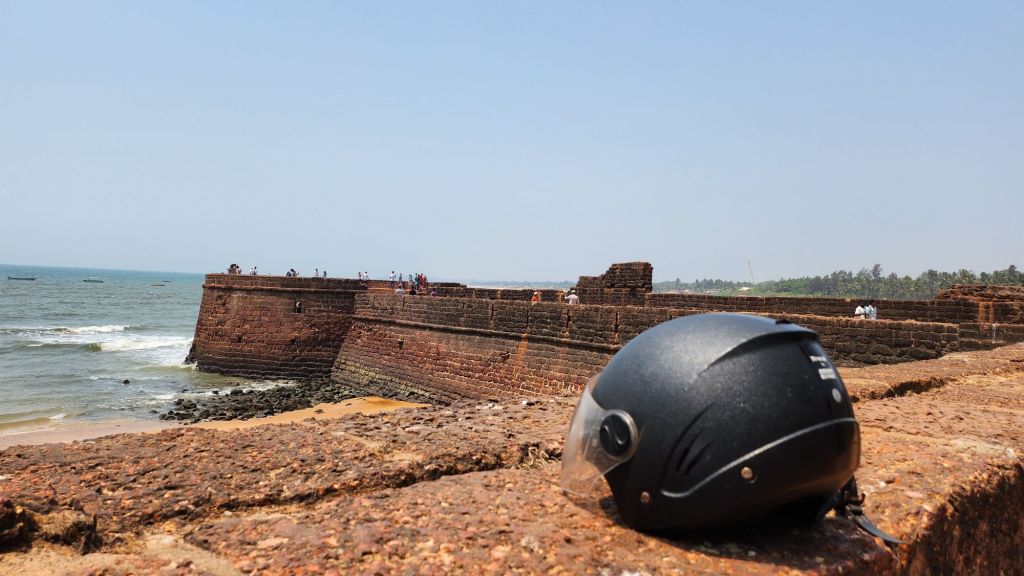
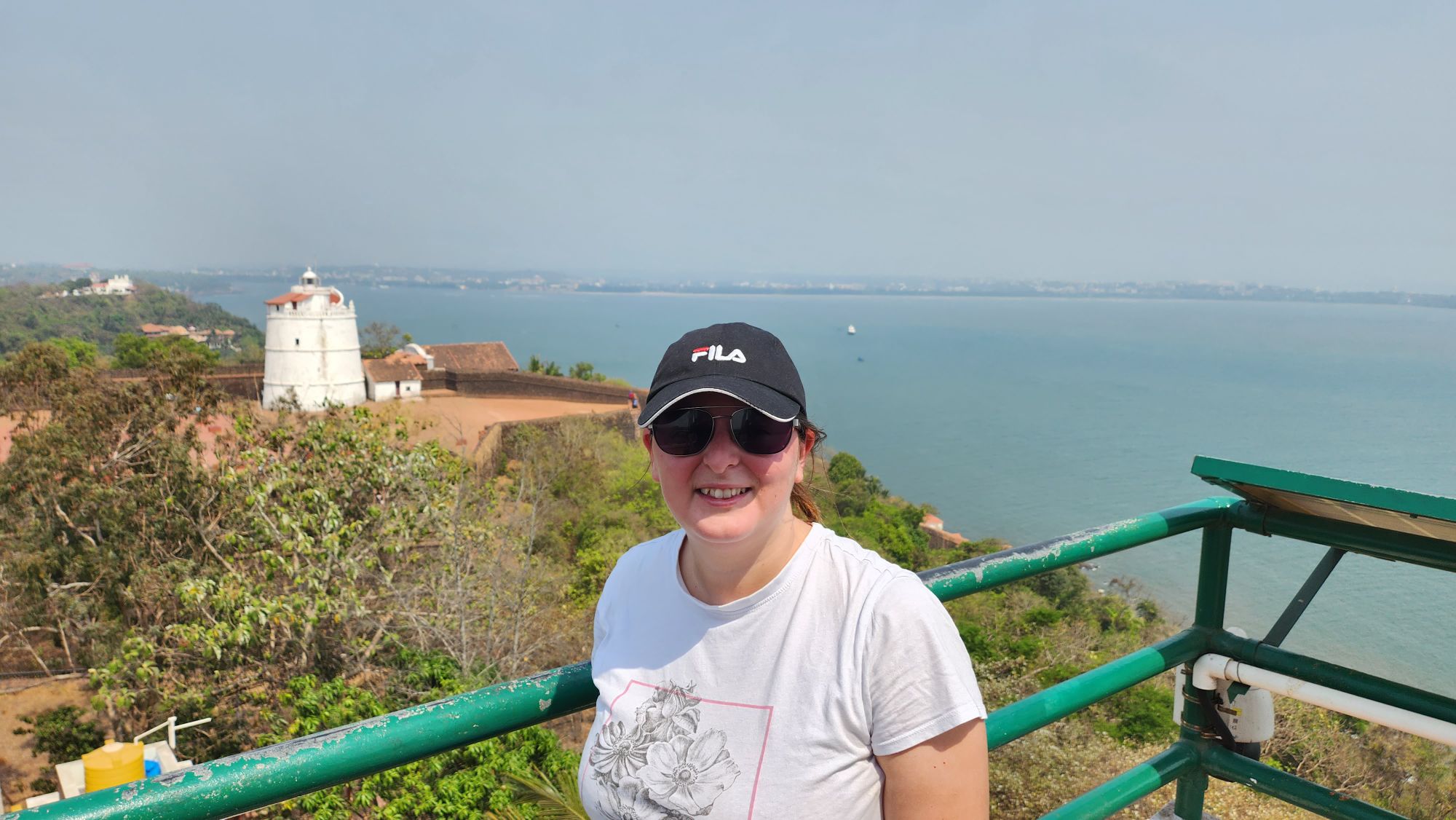
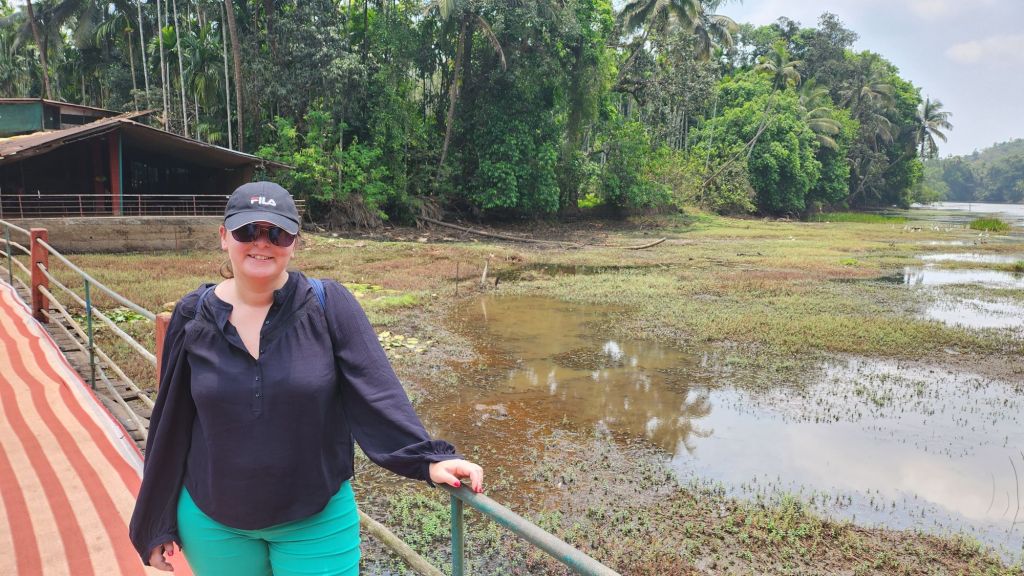
My friend drove us around the area to see historic forts and a nearby lighthouse. I would say though that climbing a lighthouse in the high temperatures of South India is somewhat challenging, to say the least.. I was gasping for air by the time I pushed my head through the hatch door at the top! North Goa has a few attractions and viewpoints to visit, but the main activity is relaxation, and food it seems. This is actually the only part of India where you can find beef, because of the high volume of Catholic Indians rather than Hindu. I was advised not to trust it though, as you don’t know how long it has been sitting there and I was still suffering with Delhi Belly.

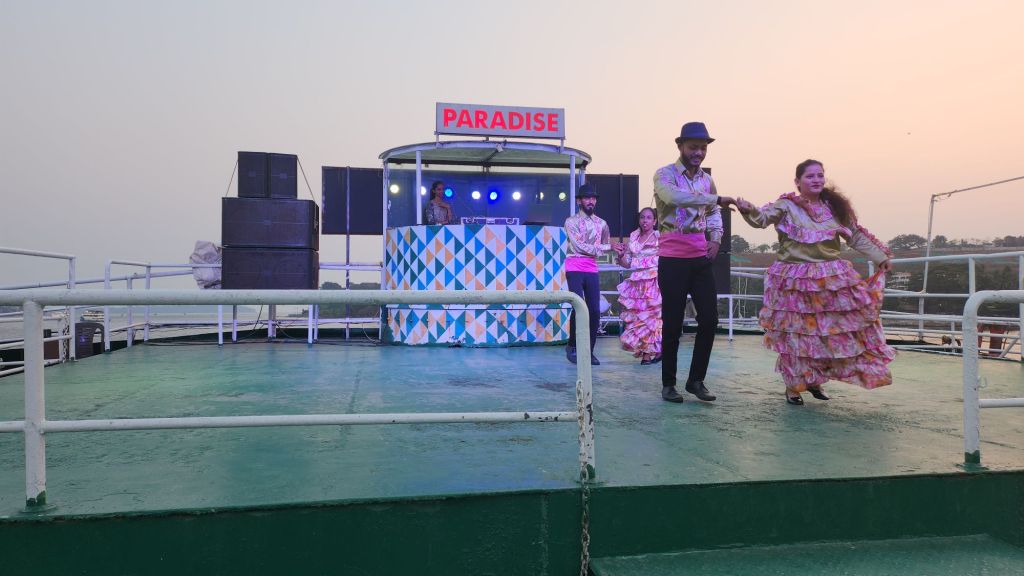
My friend arranged for a special river cruise to entertain us in the evening, with traditional dancing, and even I tried to do a little dancing, though I was not that good!
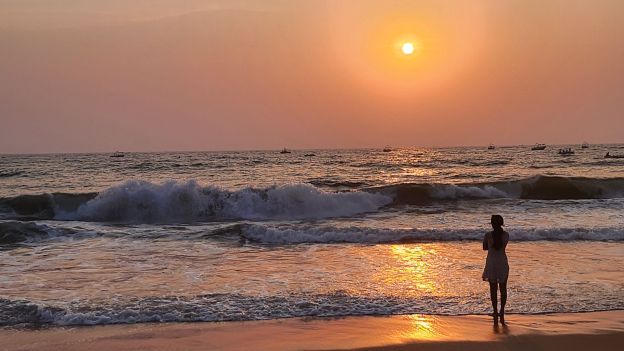
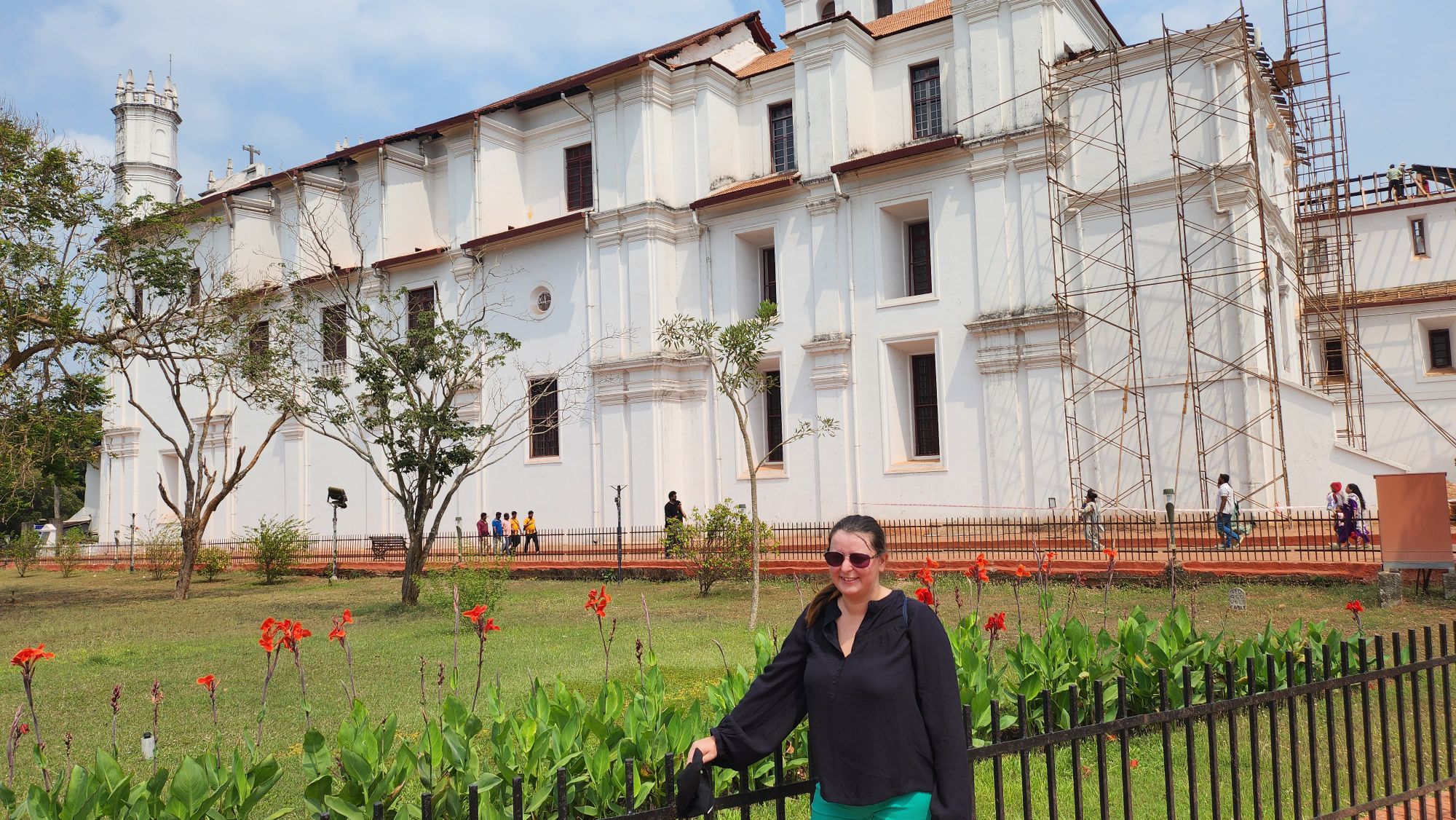
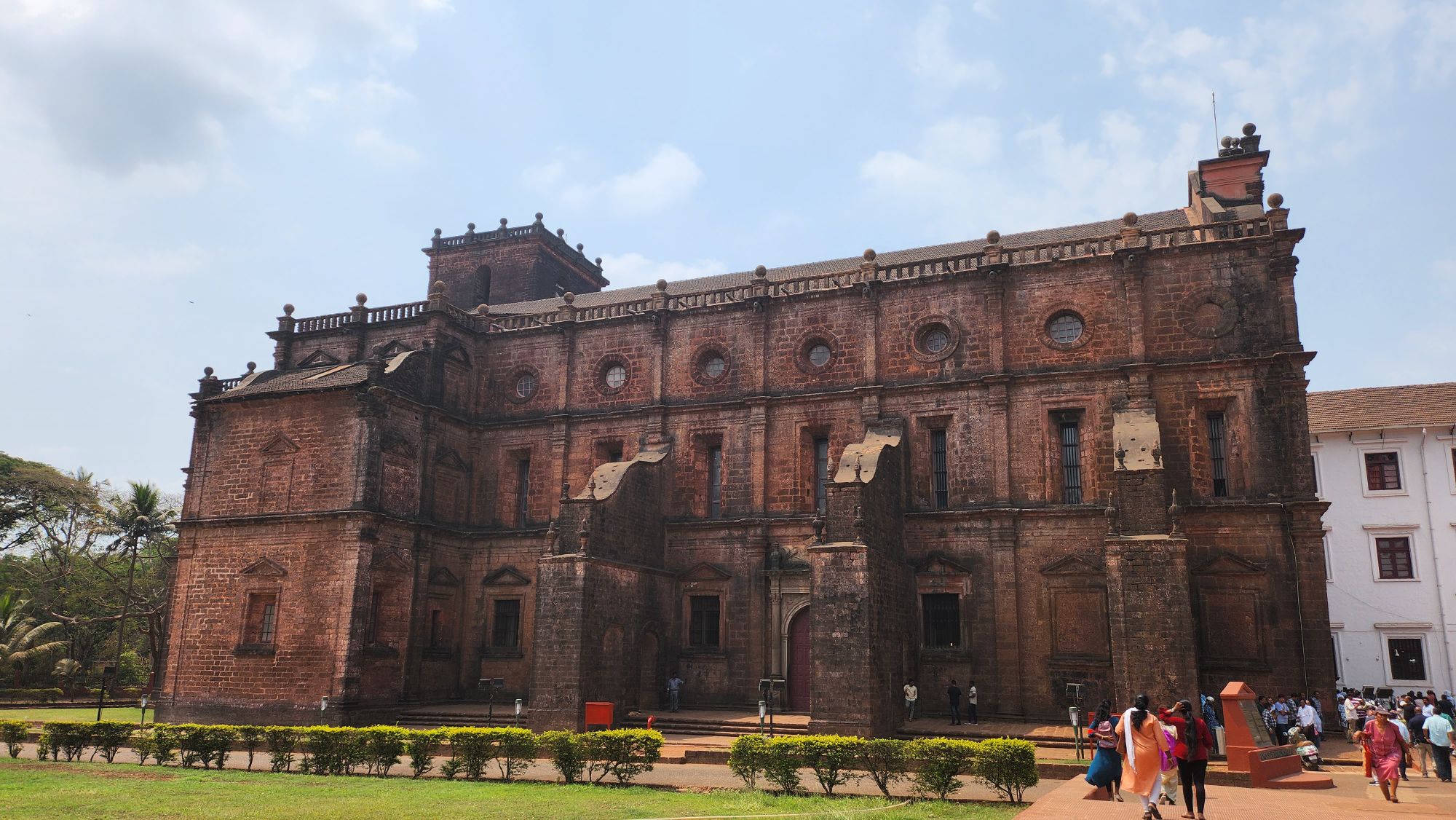
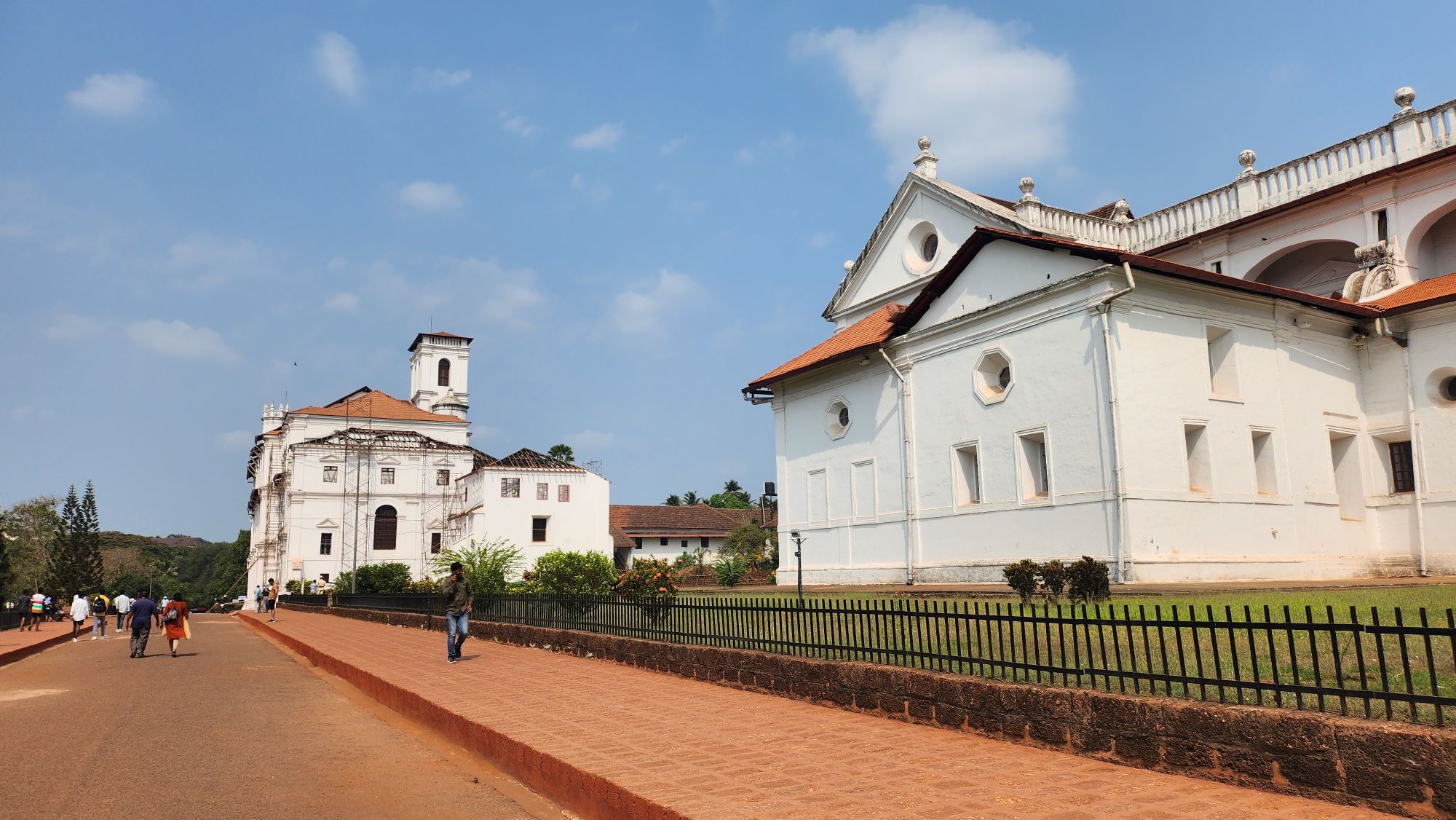
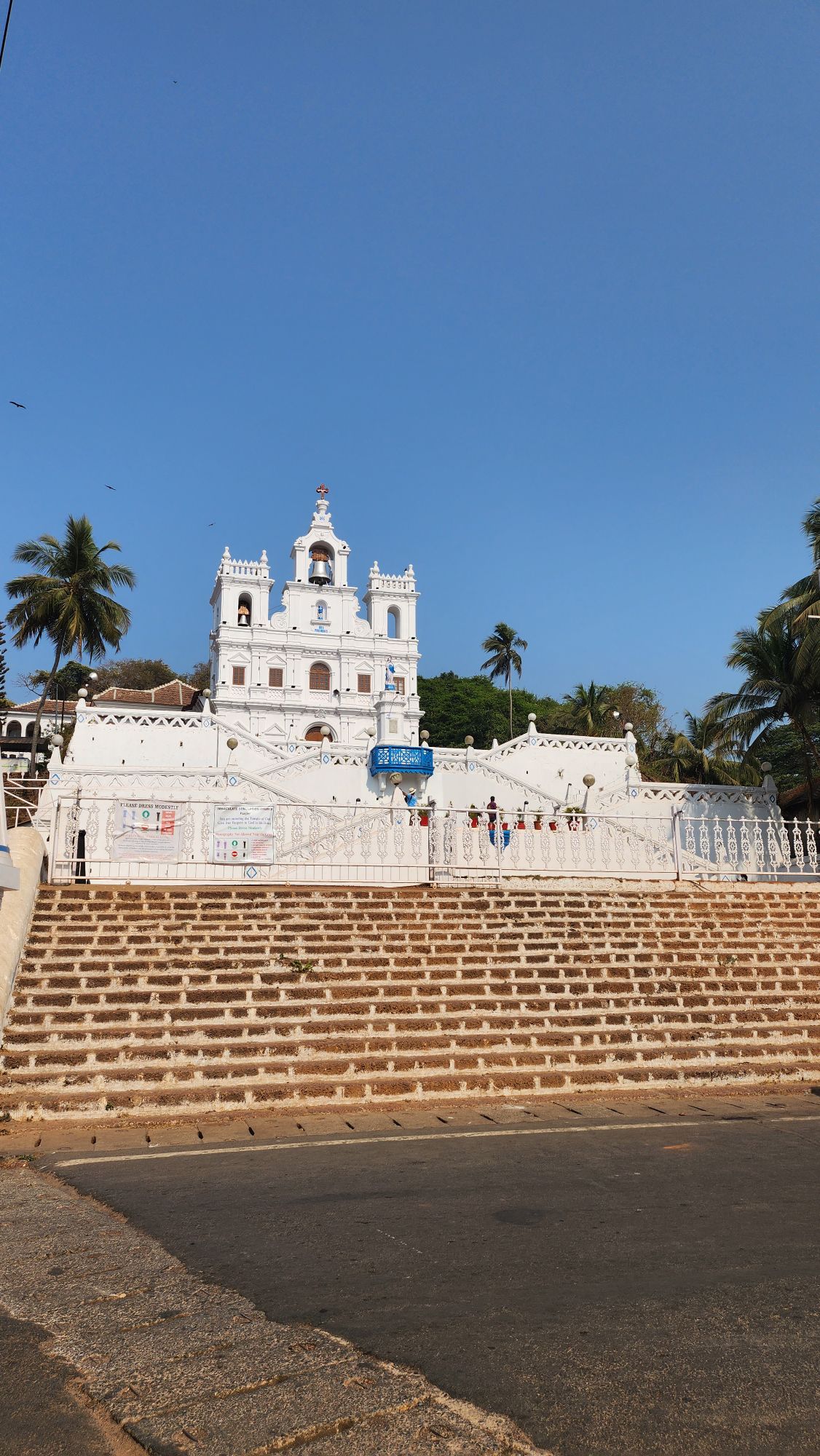
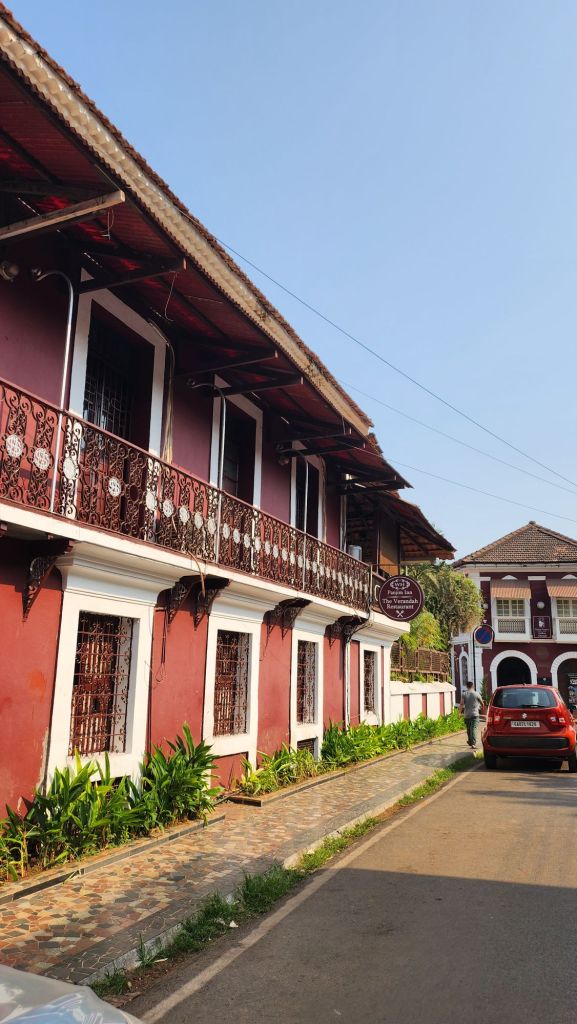
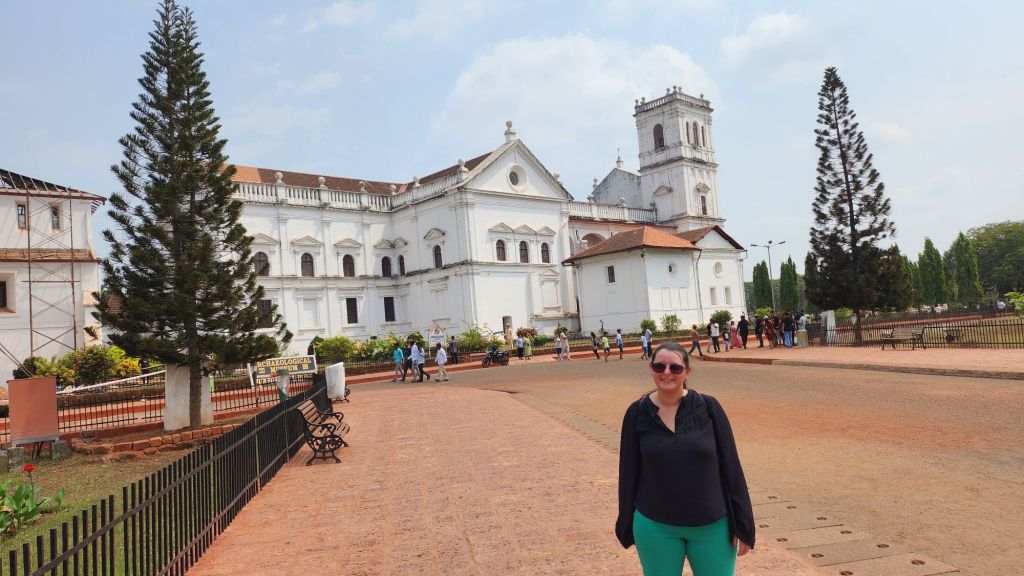
Next day, we were in a taxi this time, visiting the bigger attractions, including the famous churches of Goa. Goa was for a long time ruled by the Portuguese exclusively and so much of the heritage remains. Many people speak Portuguese, and follow the Roman Catholic religion and you can see scatters of original buildings and churches left behind and many still in use. Some of the main churches are all found in one conserved square that is full of visitors. This was a little strange to see a familiar piece of Europe, smack bang in the middle of one the largest countries in Asia. The churches looked very traditional and we were even lucky enough to see a wedding service.

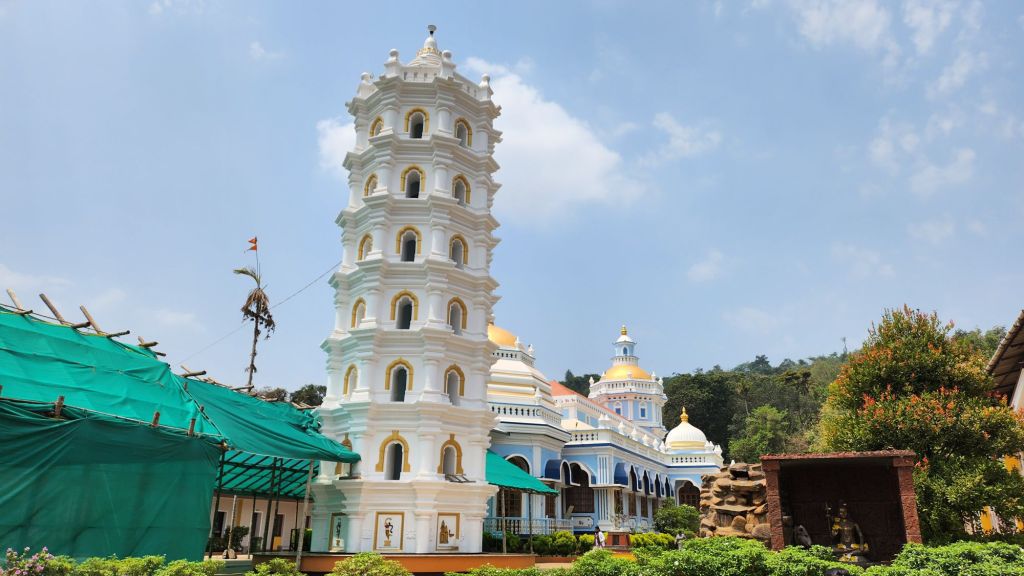
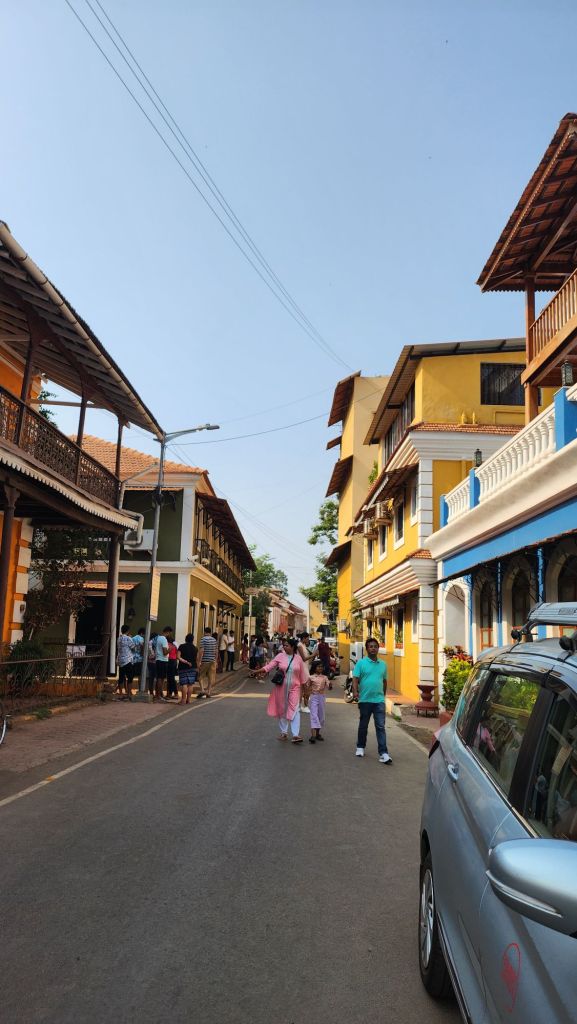
We also visited the famous coloured houses which really only make up a few quiet streets, before finding ourselves at a known Hindu temple that was quite large in the area. Full of kiosks selling snacks and drinks on arrival at the parking area, then as we arrived to the Shree Mangueshi temple, shoes and socks had to be removed and I began the painful and embarrassing dance on my tippy toes, as my bare feet burnt against the concrete boiling in the sun outside. Inside was the opportunity to move clockwise around the temple and make an offering to the shrine. Many Hindus gathered in the centre of the temple to carry out their prayers. After a quick wiz around, I hopped about with my shoes half hung back on and headed back to the taxi to the next location.

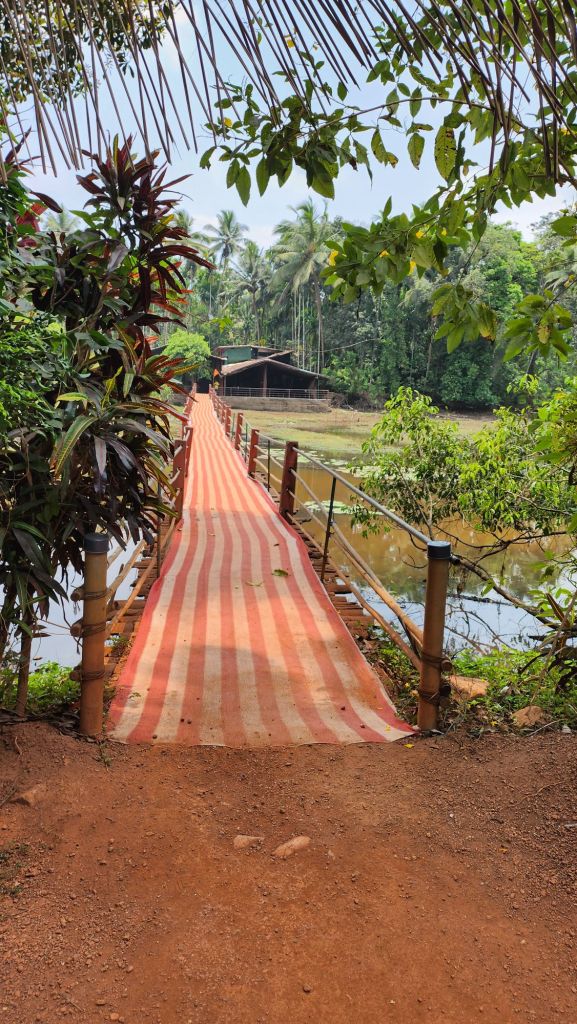
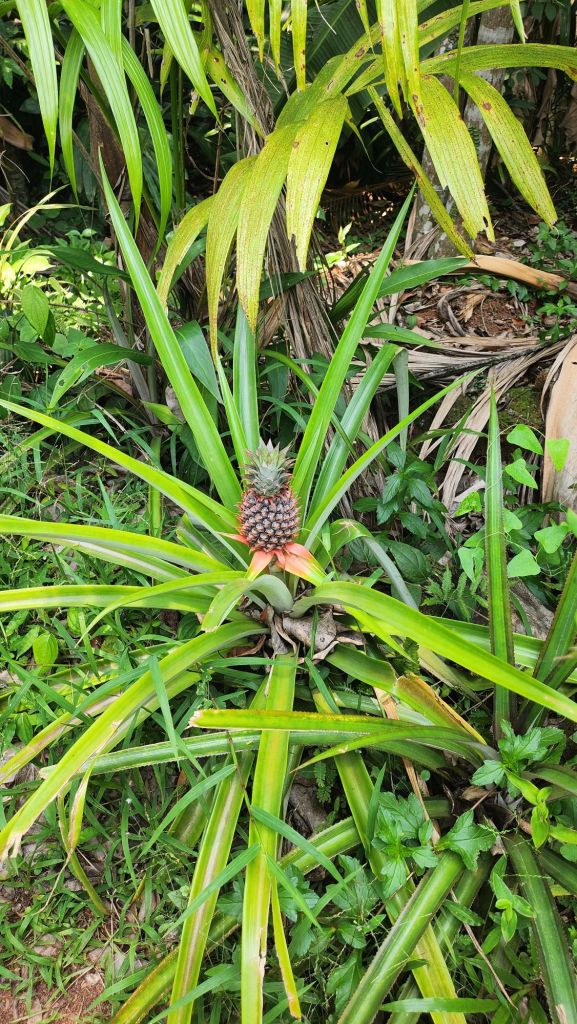
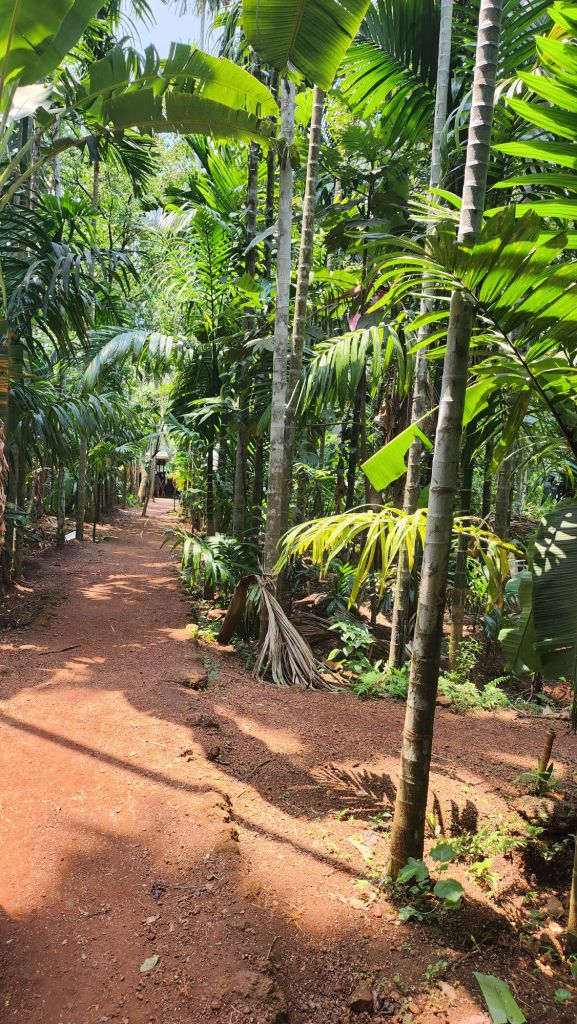
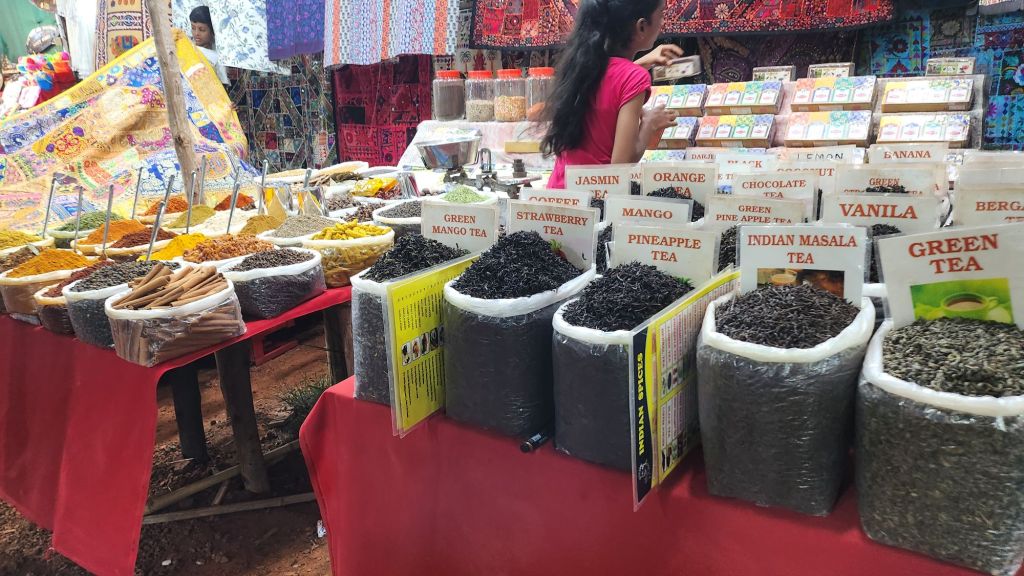
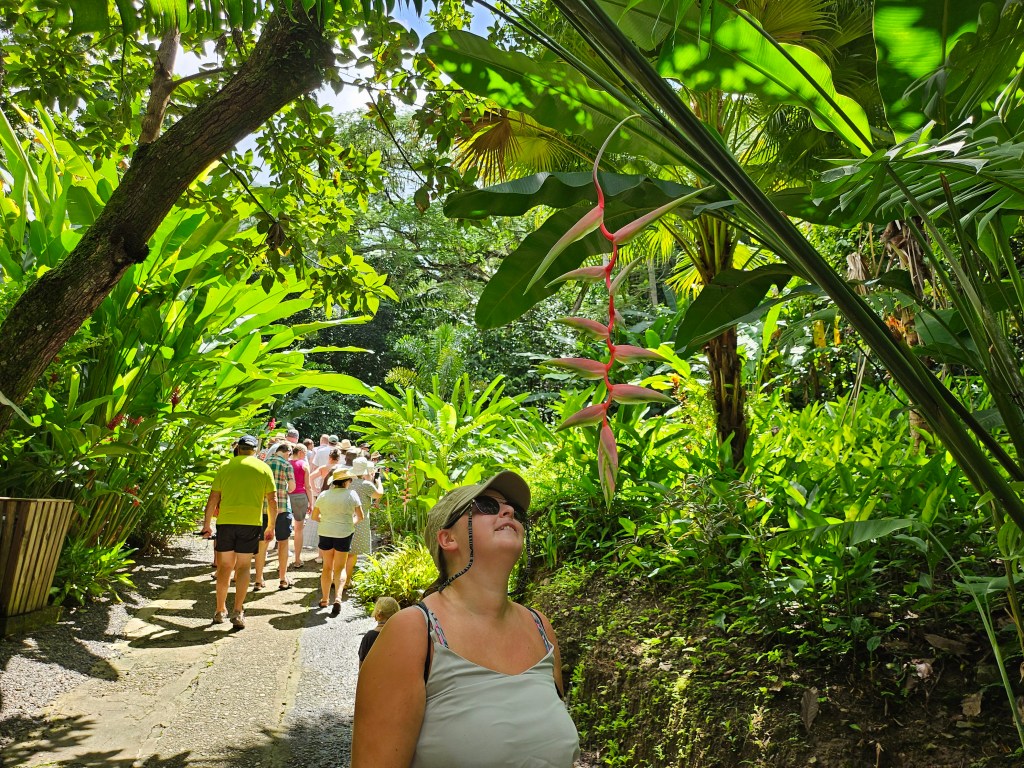
The best thing of the day in my opinion… the Tropical Spice Plantation. We drove into the bush to a beautiful site, with a rustic wooden bridge over a river for an entrance. On entry you are greeted with flowers and herbal tea to enjoy before your guided tour around the forest, and the guide allows you to see, smell and sample the different plants that make up this treasure chest of spices that India owns. Amongst them was cloves, nutmeg, vanilla and cardamom.

The local guide brought it to life when talking about the different spices they use traditionally at home that come from these native plants. Something about being in the green foliage makes me very happy, and even though I was struggling with the heat, the natural landscape provided some shade and nourishment for me. The plantation provided a buffet lunch as well so I was able to taste the spices in freshly cooked recipes.

Throughout the day, it was really nice talking to our taxi driver as we were driven around. He told us about his background, and how he was part of one of the many native tribal communities. He told us his very sad story about how the societal views of a traditional India, is still negatively affecting so many young Indians today though. He told us that the girl he wished to be married to, whom he had been dating for seven years, was not allowed to marry him because they are from different communities. My heart felt for the guy, as it is not the first story I have heard of this.

Parents forcing their children into unwanted marriages, and casting them out for relations outside their community; in worst case scenarios, leading to violence and public executions for those who disobey. Political parties and local committees are regularly set up to monitor and address the relationships of young people. The systems dictating societies in India (especially in rural areas) are very complex and consist of castes (a class system), religion, geographic area you are from, wealth, and ethnicity. For many families, every tick has to be in the correct box for your potential partner to ever be considered. An unfair and outdated viewpoint in my opinion for what is a very fast growing developing country. The poor taxi driver had a hard road to go down to try to be with the person he loves.

Mumbai

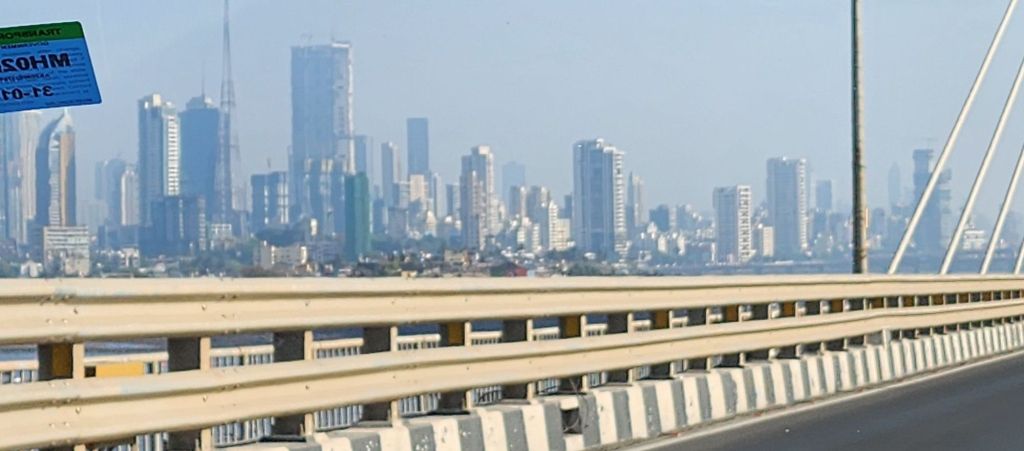
This dark side of India played on my mind as we travelled from Goa to India’s modern metropolitan city of Mumbai. Formally known as ‘Bombay’, Mumbai is India’s largest city, and thankfully, the home city of my lovely friend that was happy to show me the sights.

Mumbai Skyline

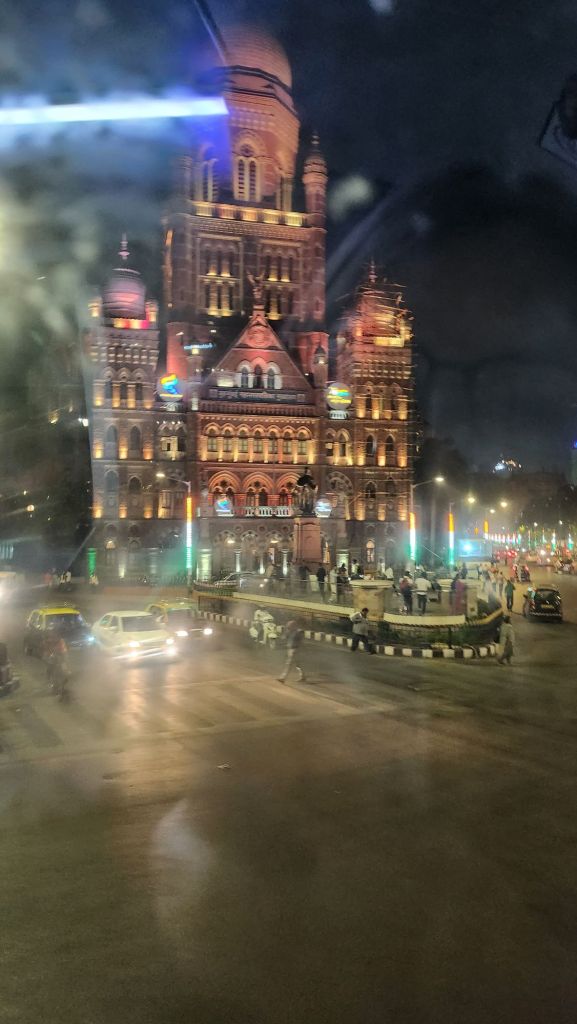
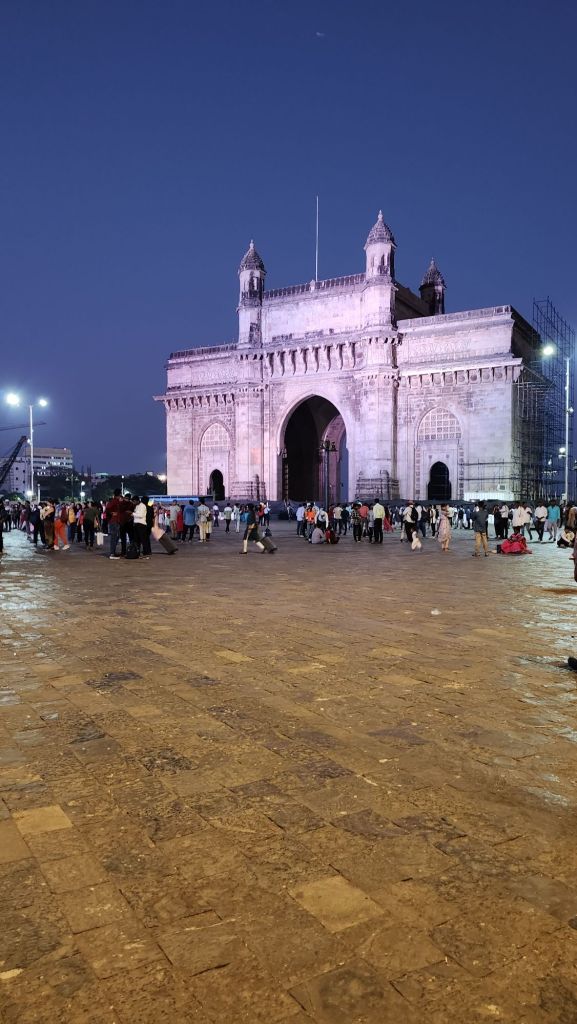
We only stayed for a short time before our onward journey to the Philippines, and in that time we managed to squeeze in a collection of local sights and have a few laughs too! We took a night time sightseeing bus to the Gateway to India, Marine Drive, Taj Mahal Palace, and the train station. All huge spectacular buildings with people surrounding them like buzzing bees to a hive.

We also visited the science museum amongst other great collections in the city, but the astronomy show at the Planetarium was literally out of this world! They had shows in different languages at different times and I had never been to an astronomy show like this before so I was really impressed.

My friend took me for a delicious dinner at a famous restaurant, Cafe Modegar, where murals are painted around the walls, with themes of the city in good humour and western as well as local food can be obtained. The restaurant has a big menu, a jukebox and lots of chequered table-clothed tables squeezed back to back.

The funniest and craziest part of the trip had to be when we ventured to a local shopping mall to buy me a new suitcase. The taxi driver decided to place the bag on top of the taxi without strapping it down (against our instructions) and it went flying off and into main traffic going 70mph along the new motorway in downtown Mumbai! He then began to reverse back against the traffic to retrieve it and fought off another driver who tried to steal it before we got pulled over by the police. All very stressful but my suitcase survived and officially passed the hardiness test for travels to come!

Before our feet left the ground of India and went onwards to the Philippines, we enjoyed a delightful time at Mumbai’s airport lounge for a bargain price of £30 each, inclusive of food, drinks and a complimentary foot massage. I shall definitely use it again. It was a good way to say a temporary ‘alavida’ to India.

Overall, India was a whirlwind of sights and cultures for me to see in such a short amount of time. With many friends residing there, I know that I will be back again, and I want to see more of the rural areas of the South next time. India has a lot to offer visitors in beauty, history and diversity and it is a difficult balance to create. In the future, I want to learn more about the customs, festivals and people that call this huge nation home.

Me in Goa’s church district

Things I never thought I’d be collecting as a traveller

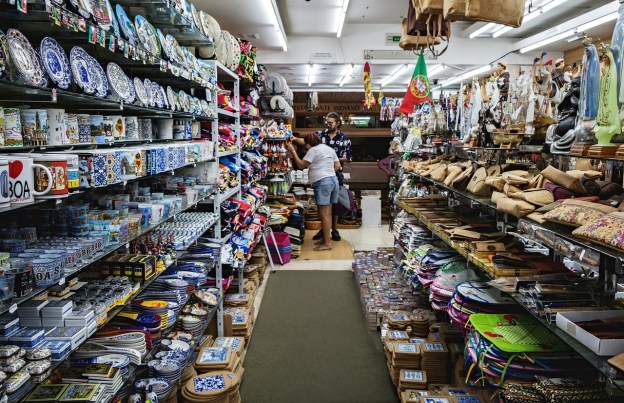
Most people go on holiday and try and always bring back a fridge magnet, a funny t-shirt, a pack of fags or generally something that they could easily find in the airport duty free shop. Us long term globetrotters though… we always have to be a bit different… and our collections are abit stranger.

I realised after a short time of backpacking that if I would buy regular souvenirs everywhere I went, my money would run out fast, my bag would get very heavy and eventually when im home again, my house would be full of crap… so I came up with some other ideas of what to collect!

Rocks and shells

When I started travelling and didn’t want to spend much money or add much weight to my bag, I would carefully select a pebble or shell from interesting places I visited. I had gravel from volcanic springs of iceland, and shells from ushuaia at the end of the world.

The initial intention was to end up with a beautiful catalogued display. Good intentions don’t always work out though.

For starters, many countries will not allow you to take out or bring in natural materials like shells. So you have to know the rules where you are.

Secondly, whilst pebbles are sturdy, shells tend to break, and when a shell breaks into hundreds of sharp small pieces in your bag full of all your clothes, you tend to have regrets.

The final nail in the coffin that ended my collecting these though was when i was moving around my boxes of rocks that had all been labelled with cute string tags. The box got shook, and all the labels fell off and so now all my rocks are without labels and I cant remember where each one came from. Rendering them abit pointless!

Passport stamps

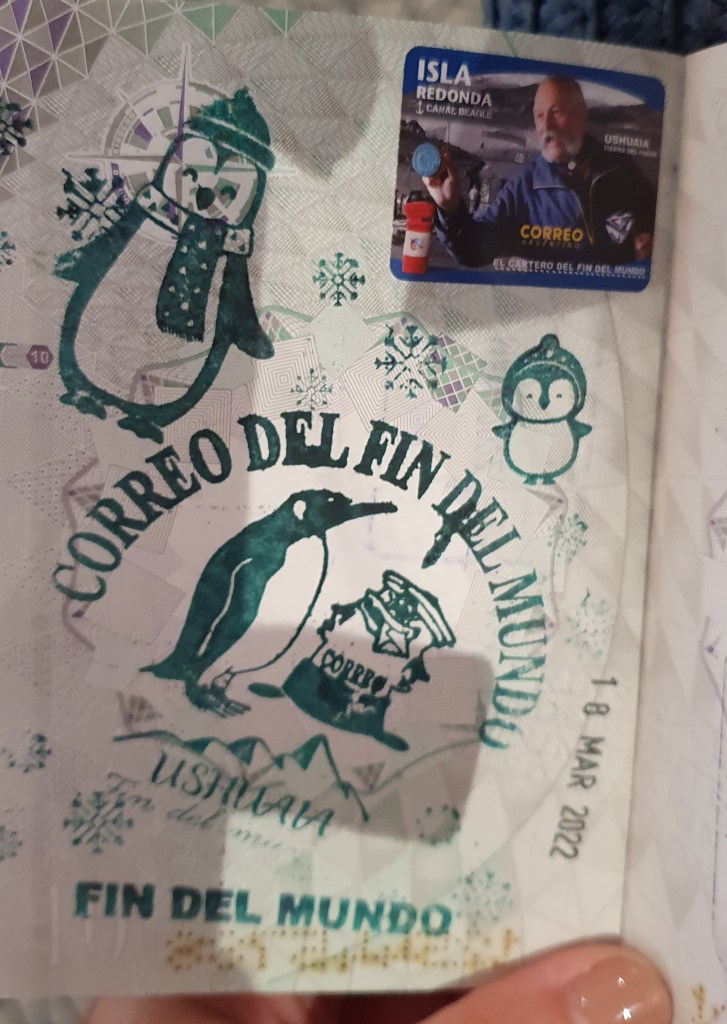
After I got a very unique stamp in my passport from ushuaia, and after collecting stamps in my pilgrim passport during my camino, I started to get quite excited about getting my passport stamped at immigration.

I am now in a habit of counting how many passport pages I have left and how many stamps it might take to fill it. I have seven years left on my current passport and about six pages so im hopeful that I can fill it!

Its a bit bad actually as it makes me want do extra stops in countries just for the stamp!
Badges / Patches

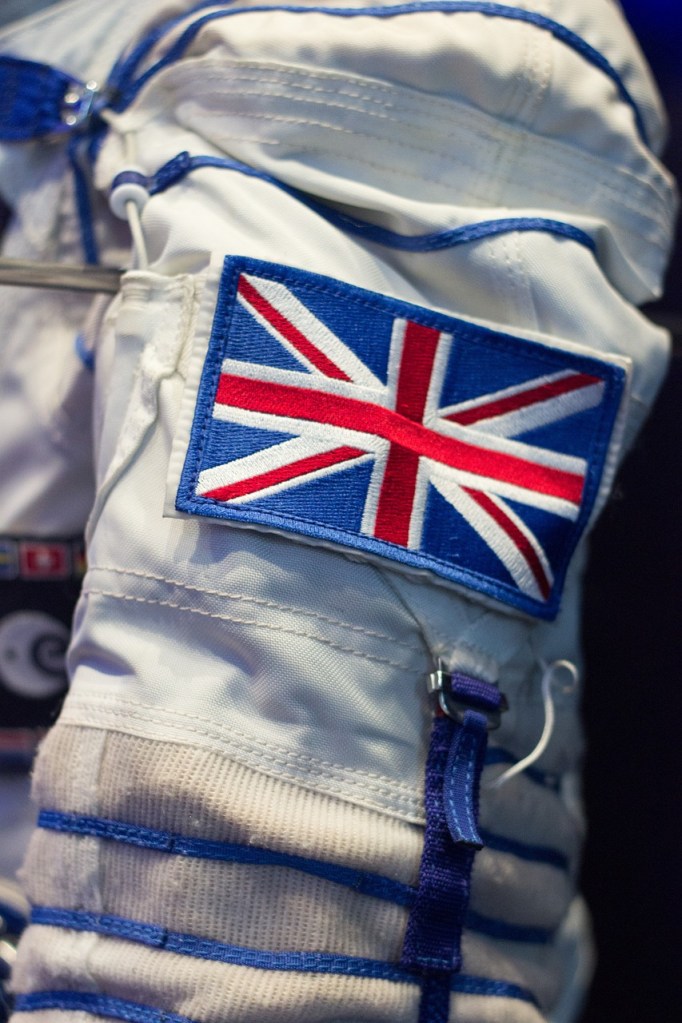
I always felt a bit jealous seeing experienced travellers with so many cool patches or badges on their bags or jackets and so I decided to start collecting these.

I have a bright green 40L backpack and I want to slowly cover it with patches but the downside is that it takes a lot of effort to sew them all on, and eventually I will run out of space and have to start a new one… but then all my patches won’t be together.

I may have started something difficult to end, especially when your are a little OCD like me!
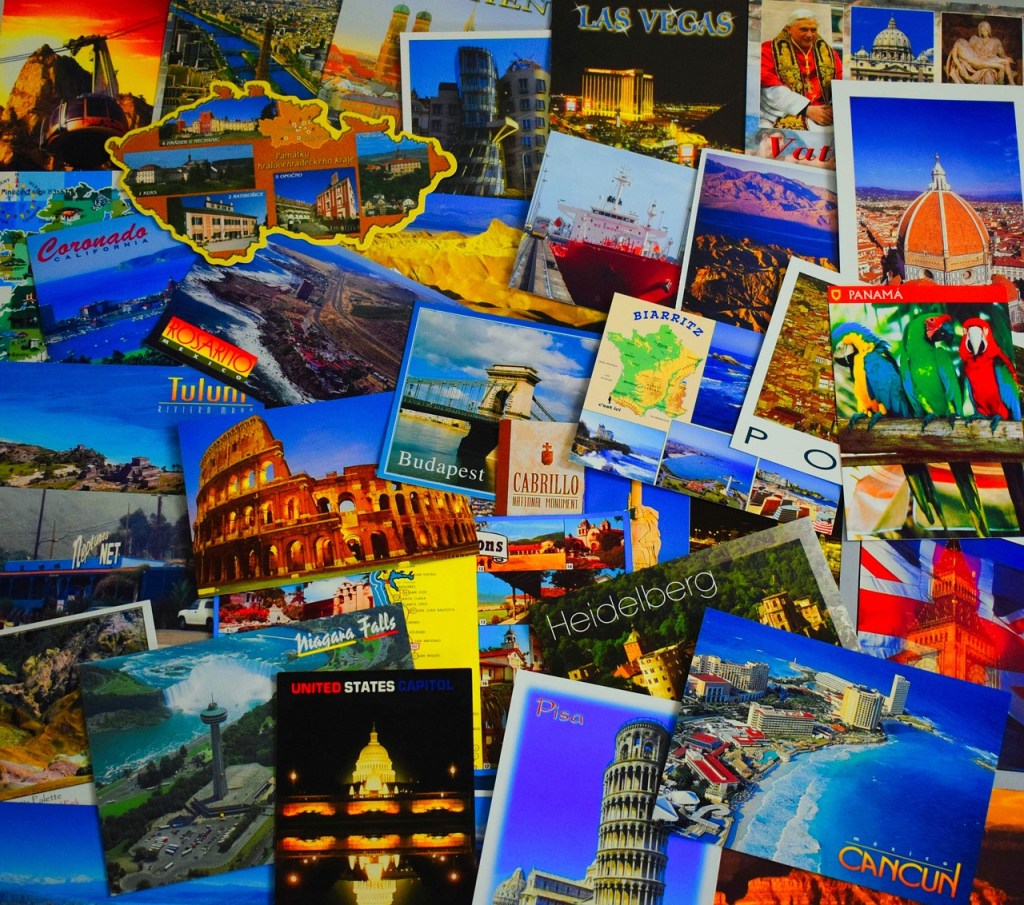
Postcards

A bit more of a standard one, one postcard per country is a nice way to have a really good photo at the beginning of my photo albums.

I love sending postcards even though it is getting more and more pricey for the stamps. I always buy an extra one for me just for the photo though.

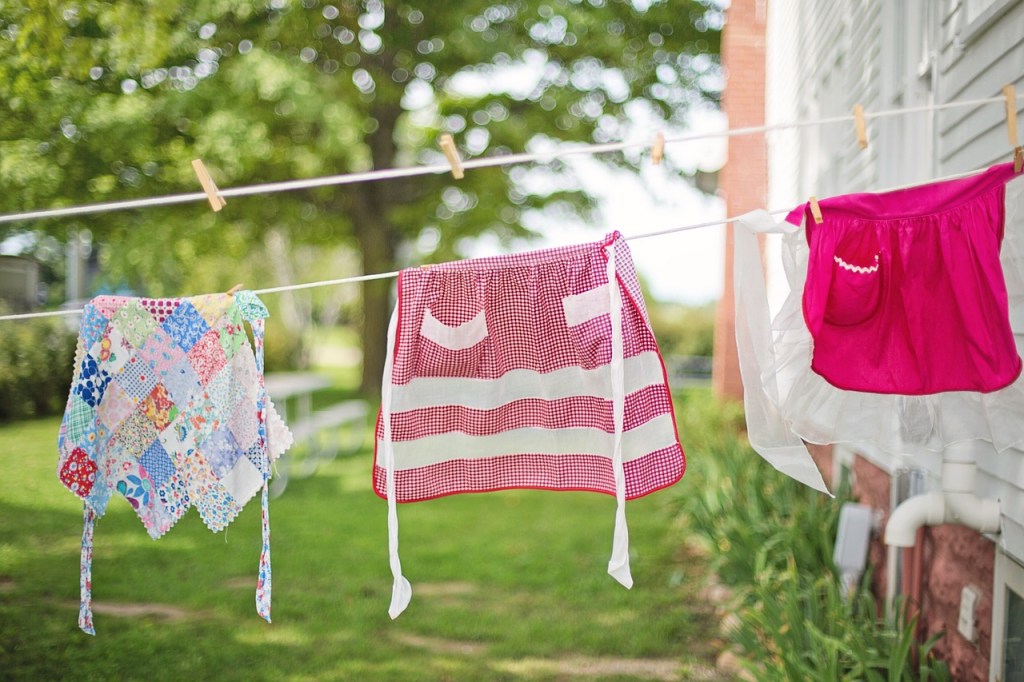
Aprons

This one is not mine but I decided to include it as its a wierd one. Another traveller I know likes to collect aprons for her mum with the names of the locations on. This is because her mum loves to cook.

This isnt the easiest thing to collect though as its not the standard souvenir. I have been with her many times before when she has struggled to find one!

Basic words and profanities of different languages

I keep a note page in my phone of all the phrases (helpful, funny and rude) that I have learnt from my international friends.

It is always fun to suprise people by responding in their own language when they are not expecting it! The only problem is when they then try to have a full conversation with you and you only know the few phrases…

So far I have collected phrases in hindi, urdu, swahili, romanian, german, spanish, chilean slang, vietnamese, tegalog, and hebrew.

The amount of Indian friends I have now, I feel inspired to try to learn more hindi and I have already downloaded an app but we will see how this affects my spanish learning!

Ideas

Of course the one thing I end up collecting in abundance with each new place and new travelling companion I meet, is more ideas on where to go next. This is definitely my most costly collection but will also end up being the most memorable…

I’m curious to know what other travellers collect, leave a comment below!

Lisbon: The City of Seven Hills

I have visited Lisbon several times for short day trips, but this Spring, I stayed over for a two night break between destinations. This city with what feels like many more than just seven hills, is full of life and culture throughout.

Travelling to Lisbon

I travelled to Lisbon by Train on this occasion from the Algarve’s Lagos, in the South. This was about a four hour journey with one change, and then once in Lisbon there are several main stations you can arrive in. From there, buses, trams and metro are possible.

Neighbourhoods: Alfama and Barrio Alta

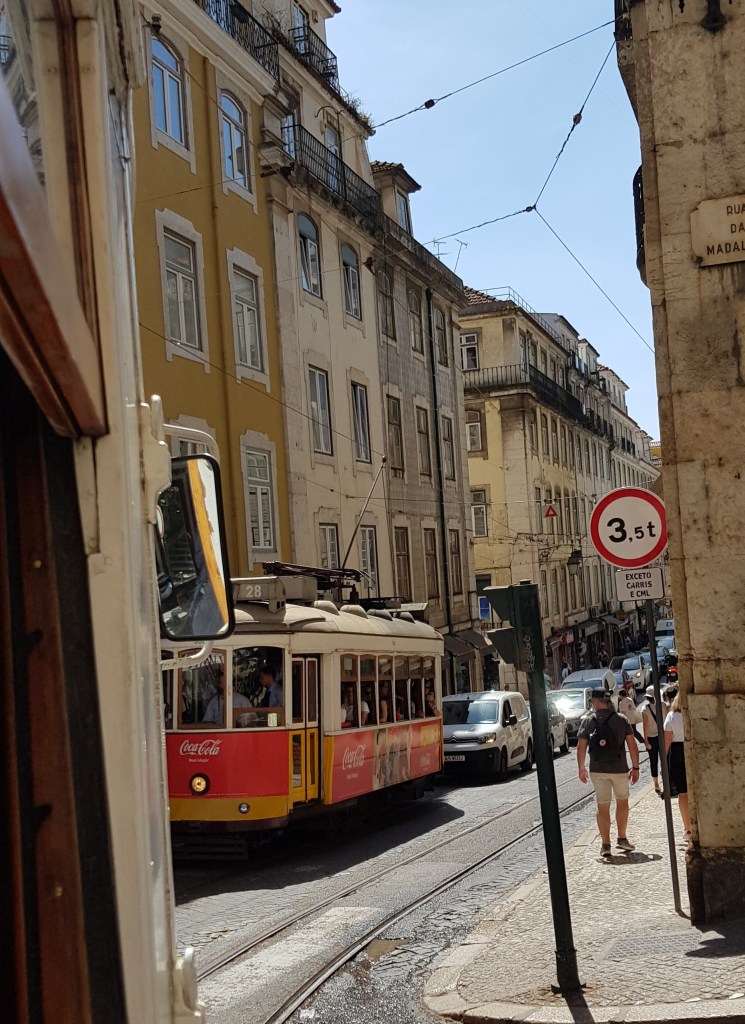
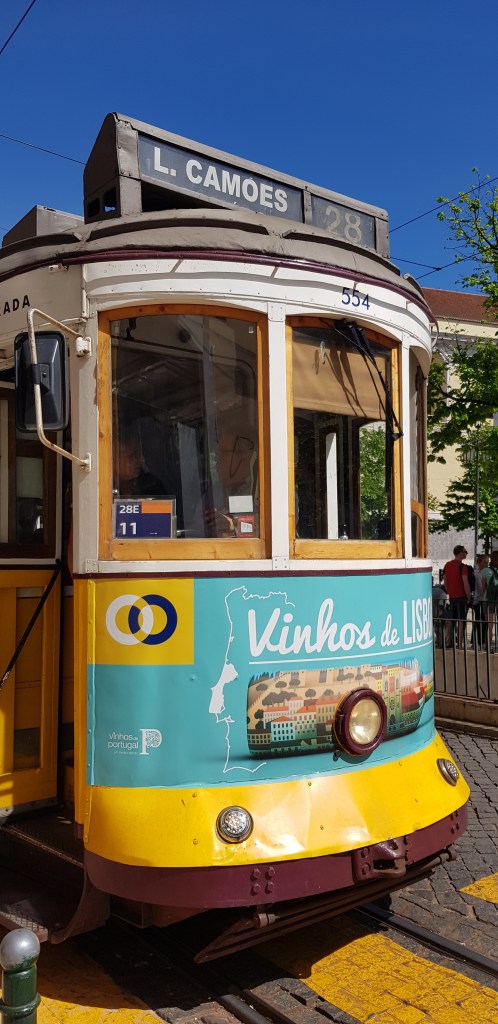
I stayed in the neighbourhood of Alfama which is one of the oldest parts of the city near to the river. I selected this area of the city because it is rich in culture, close to tram 28 which is the main tram to run through the touristic areas, and its an area with many fado houses.

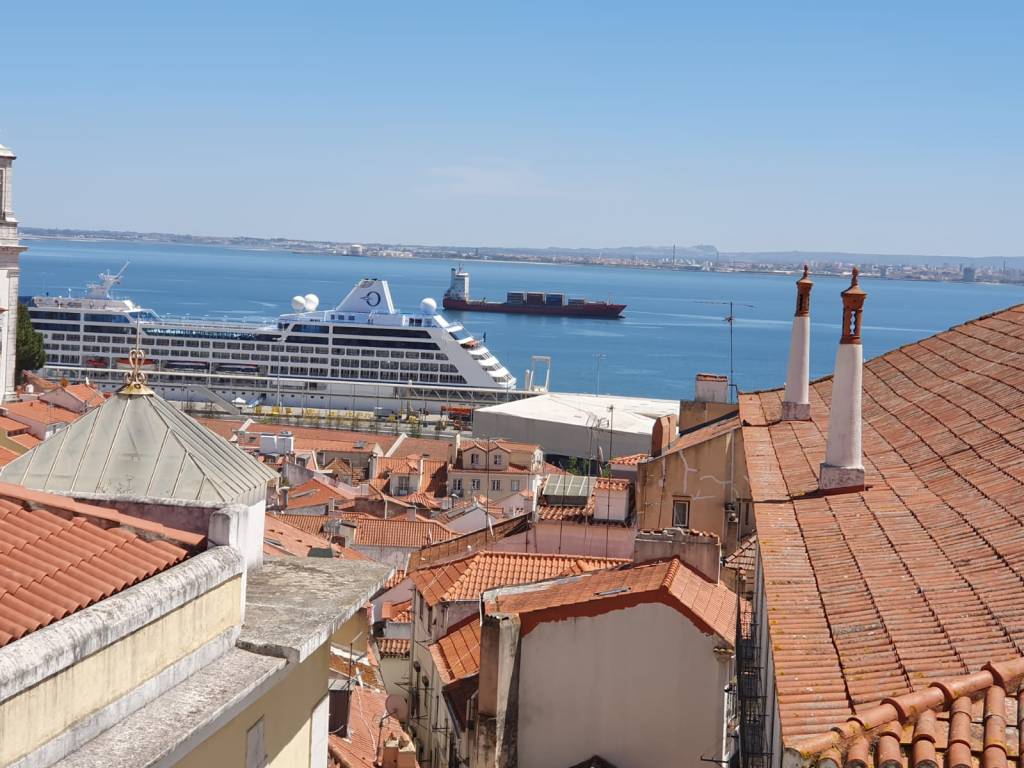
I chose to stay in Convento de Salvador, which is a beautifully refurbished convent on the hill. It was very clean and minimal and still had the old layout and foundations of the convent. Our view of the river and downhill street was wonderful aswell.

It is easy to follow the river from Alfama along the promenade towards the Belem tower, or you can jump on the tram to head either towards the castle in one direction or towards Barrio Alto.

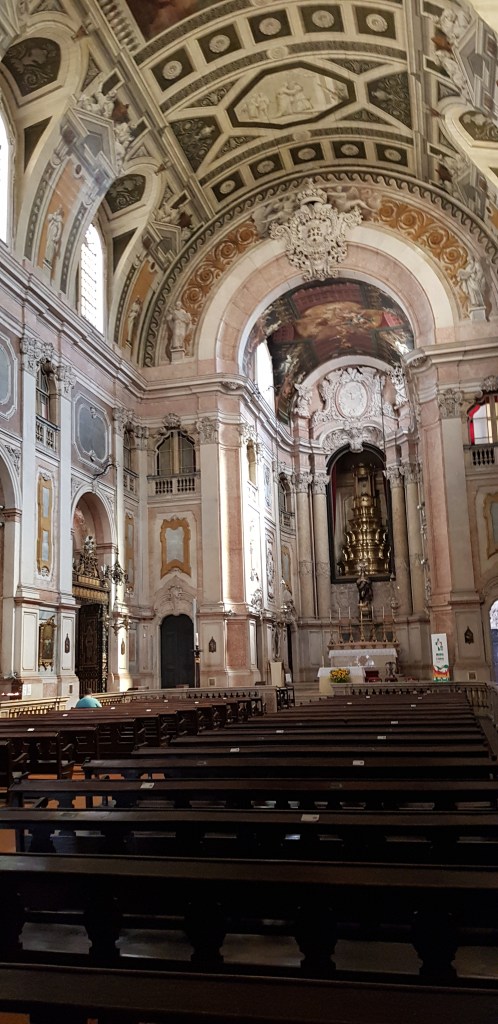
Barrio Alto is a bustling area full of shops, restaurants and squares with street performances at night. Wondering the squares to listen to music, enjoying a pastel de Nata and venturing to some of the local gardens can all be enjoyed within walking distance from here. There are also some wonderful churches, I visited two churches from the italian community that were very beautiful.

The must see monuments / attractions

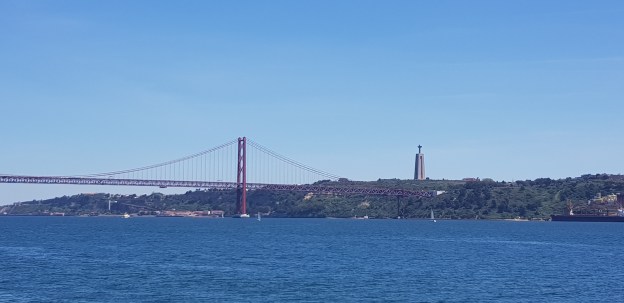
  • Belem Tower – A monument to remember the power and colonisation by Portugal, it sits at the riverside and you can also see the bridge and christ statue from here.
  • Jeronimos Monastery – A huge monastery facing large public squares and standing to the front of the botanical gardens and presidential palaces.
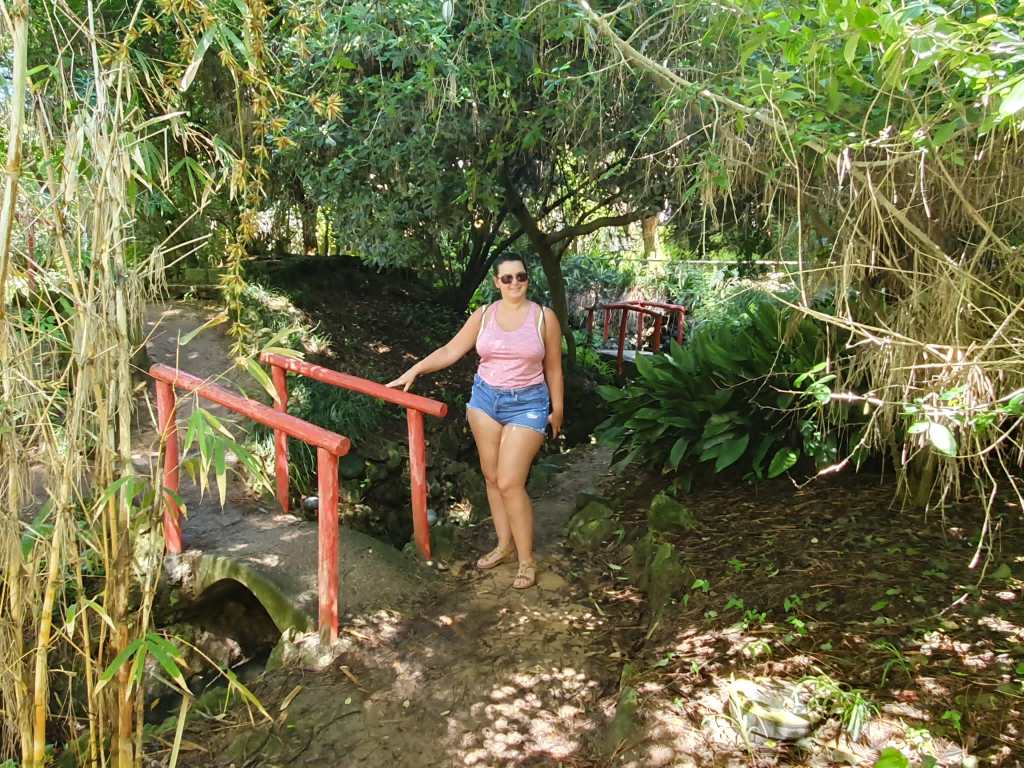
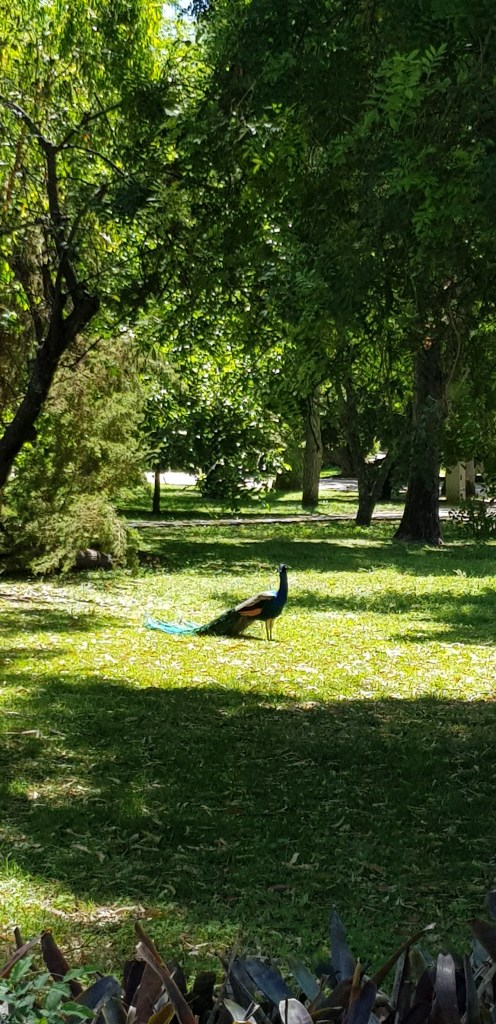
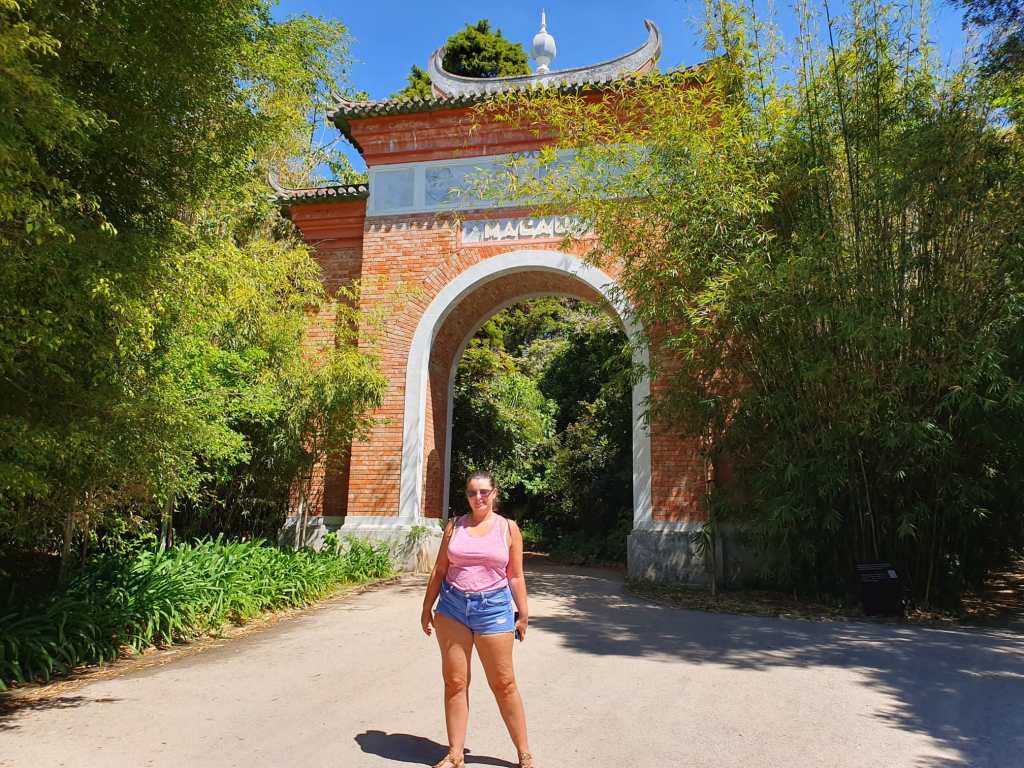
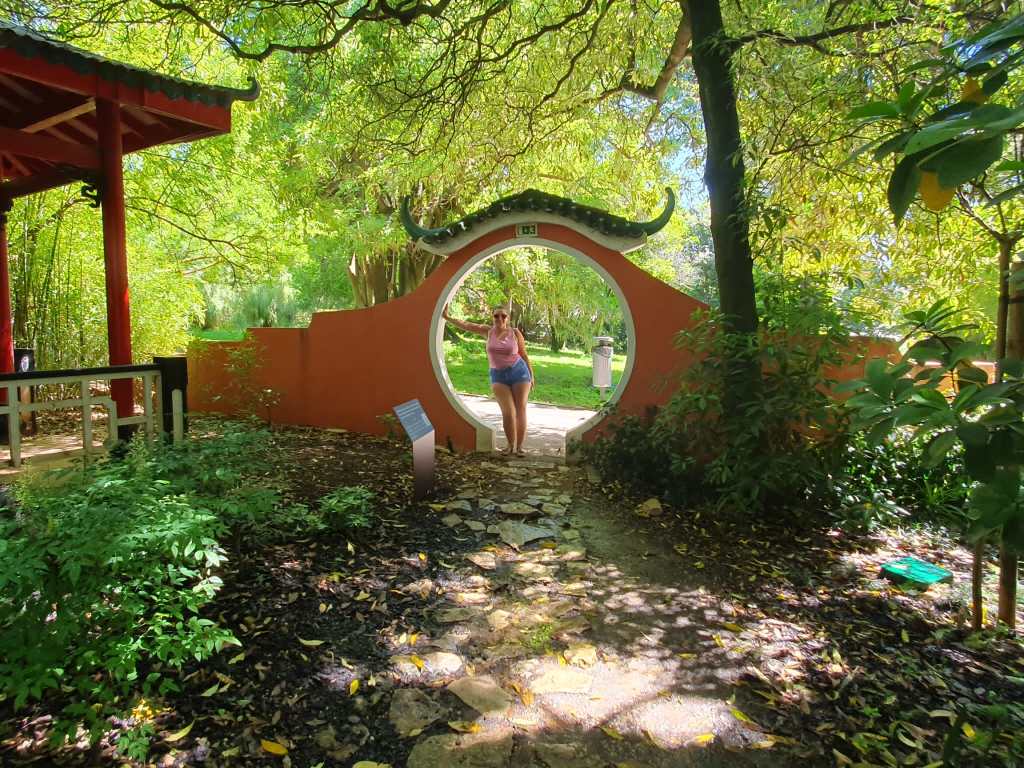
  • Botanical Gardens – A beatiful setting to spend some hours in the afternoon seeing a variety of interesting trees and flowers, an oriental garden, old buildings, african sculptures and many peacocks.
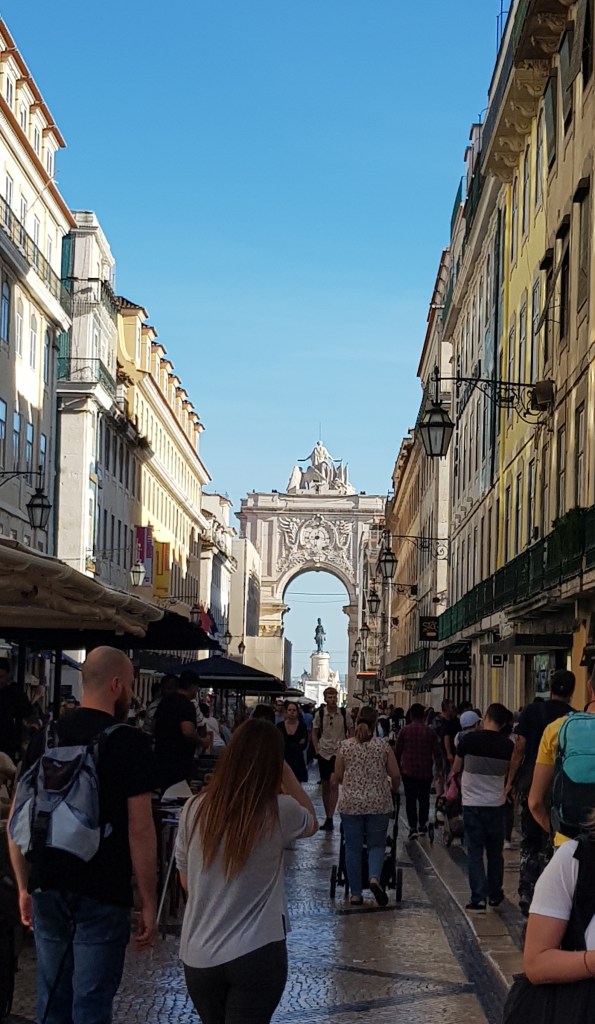
  • Commercial Plaza – The location of a huge statue, the tourist information offices and a great gathering place for events.

Fado

Near my hotel were several Fado houses. These are traditional houses which have evening shows (normally with dinner) of traditional portuguese fado music. This is deep, very sad singing and guitar, supposedly derived from the soul.

The music is very relaxing to listen to, and when visiting the fado house, it was of the utmost importance that guests did not talk and food was not served out by staff during the music out of respect. So, several breaks were needed to dish out food and for conversation. This was good for me as it meant I actually slowed down and savored my food.

There is also a Fado museum downhill in Alfama. It has a lot of information about Fado but it is difficult to navigate and understand the information at hand, and I felt a lot more could be done to improve its guest experience.

To conclude…

I like Lisbon a lot, it is one of my favourite cities. It is vibrant and proud of its heritage. Next stop is another portuguese area, the Azores…

Easter in bonny Scotland

This Easter weekend, I threw my bag over my shoulder and took a six hour train ride to Edinburgh! The capital of Scotland became my base to explore my neighbouring country with friends.

The journey from Norwich was much faster than I expected, and a lot easier than I think driving would be. On arrival in Edinburgh’s train station, we were already surrounded in shopping and restaurant opportunities as well as the gorgeous Prince Street Gardens. A great introduction to the city. We made our way to our AirBnB on the edge of the city centre, and got ready for a night on the town!

Exploring Edinburgh

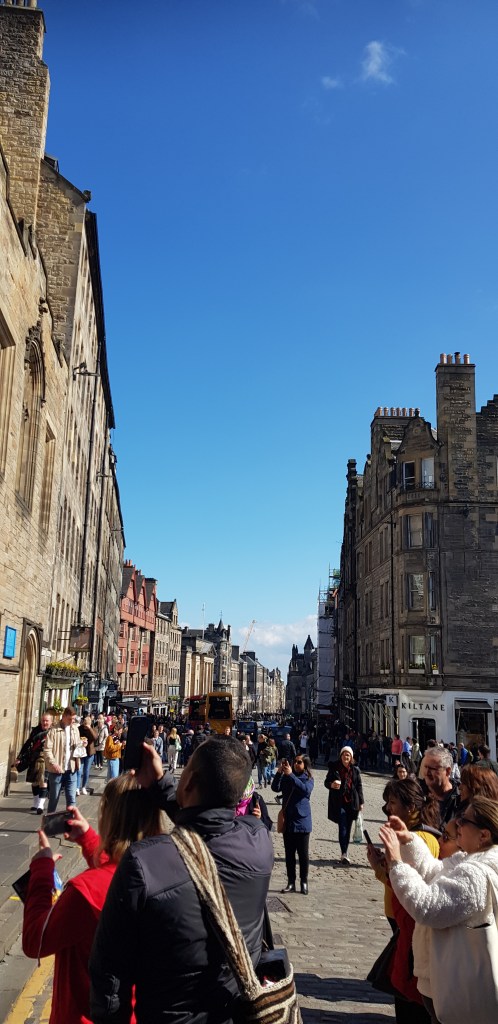
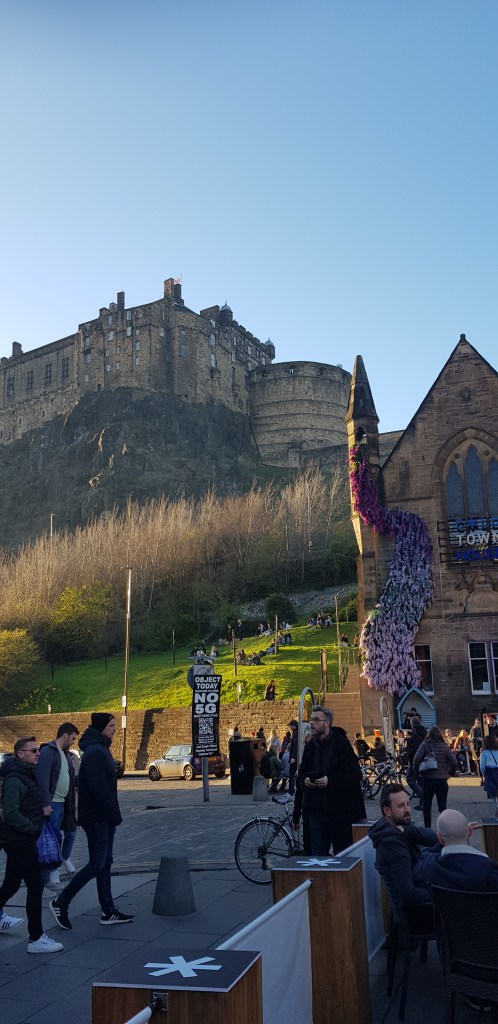
As a capital city, there is of course a lot of areas to explore during the day and at night. We found the most buzzing area was just down the hill from the castle, where the market takes place and there are lines of restaurants and bars with outdoor seating to enjoy the living city atmosphere. I would say that the city can be expensive for an evening out, especially if you want to enjoy a cocktail… or two… or three! That may have a small part to do with the high number of stag and hen do groups we saw stumbling around town dressed in kilts and veils!

On our first full day we ticked off a bunch of the main attractions and had a fab time doing it, in one of the most rare sunny days that Scotland has mustered!

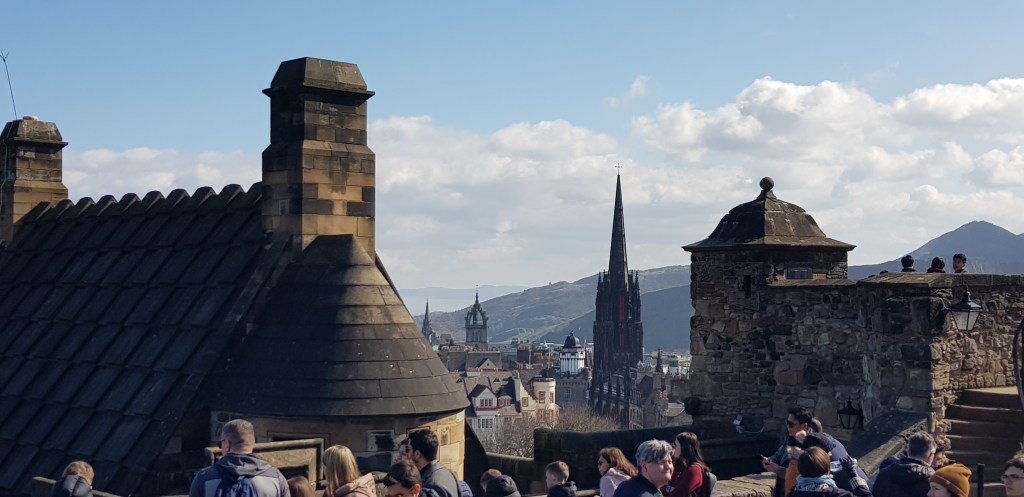
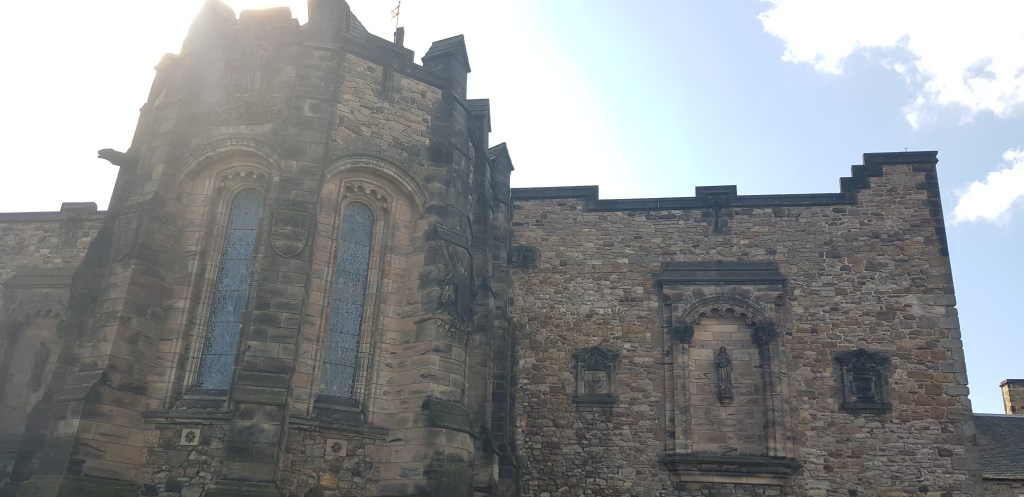
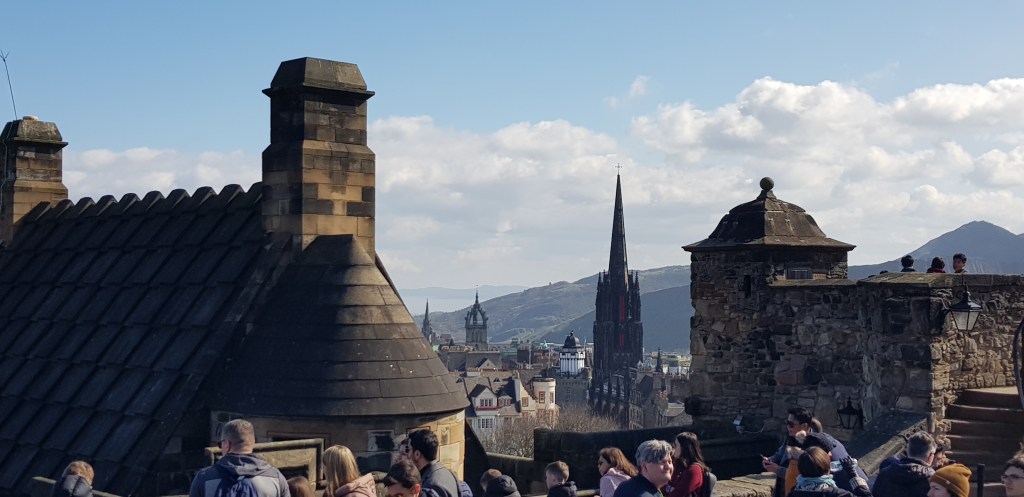
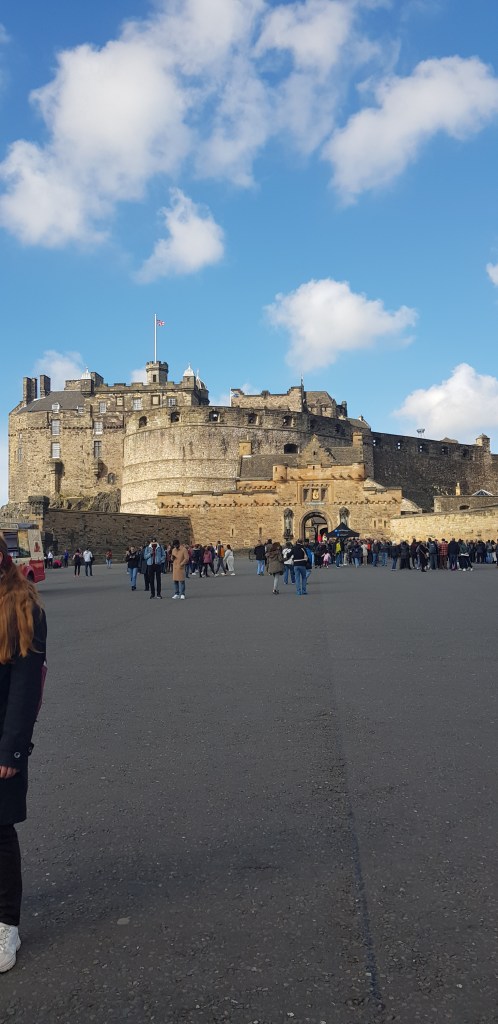
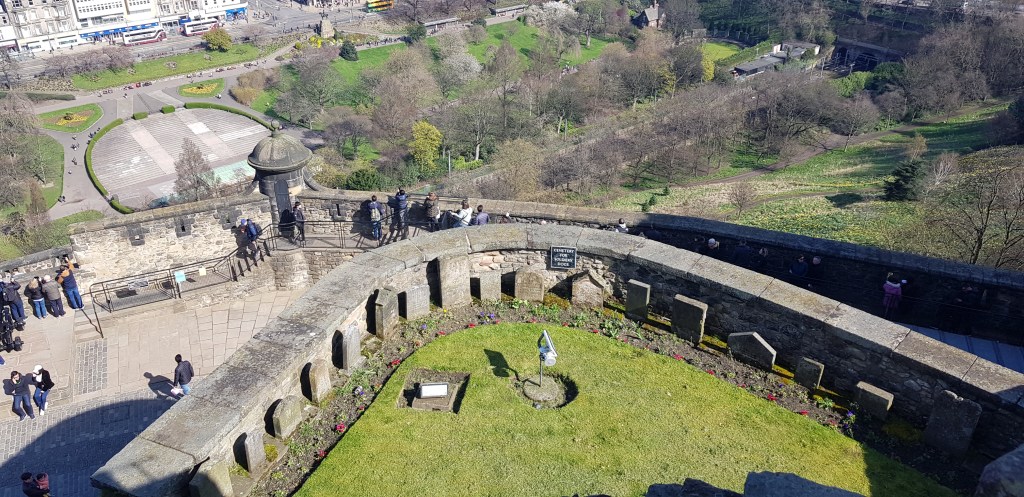
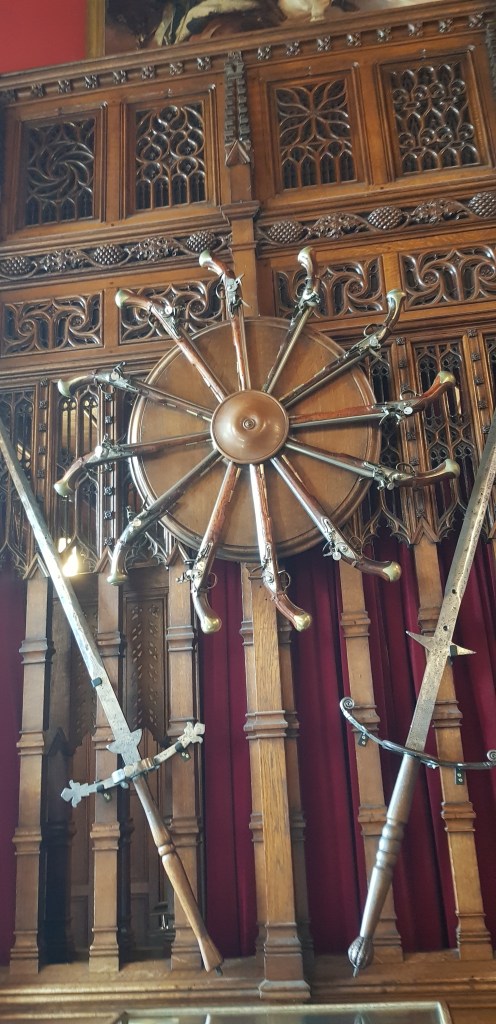
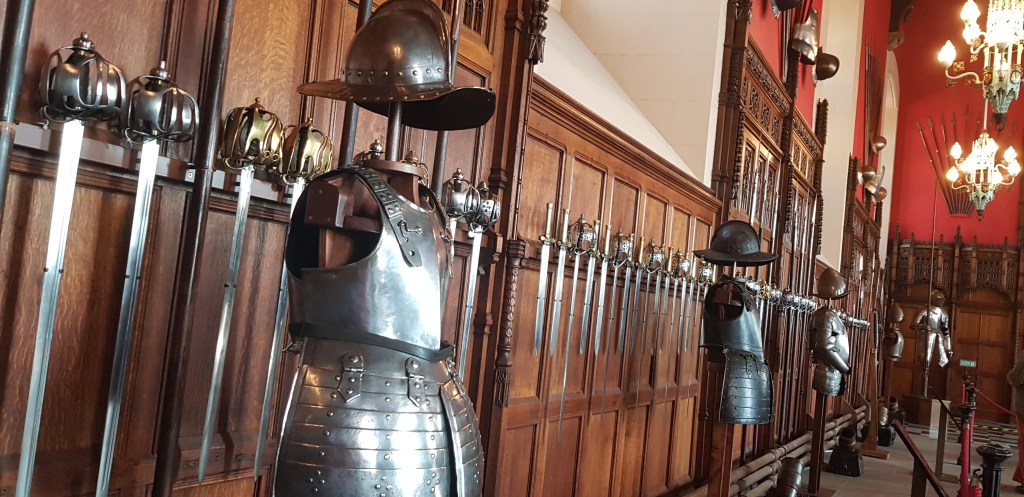
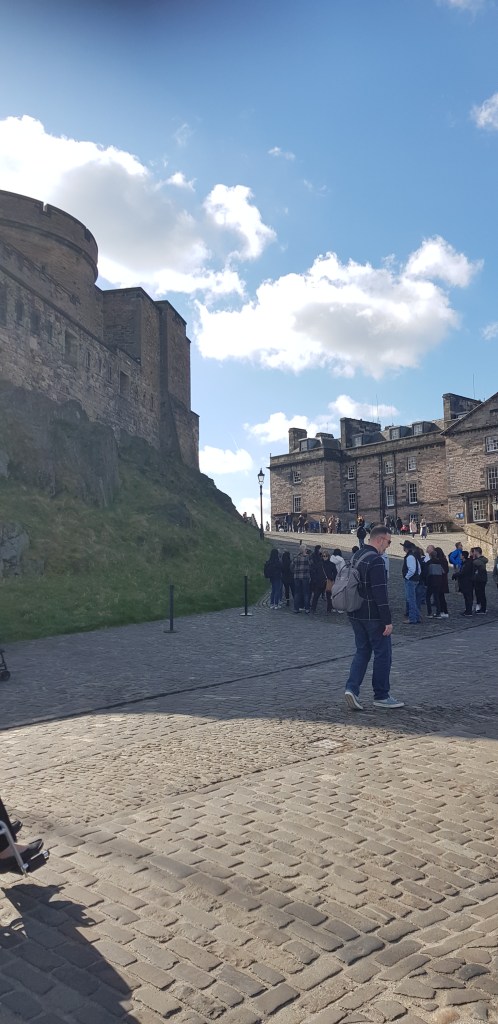
One of the most popular attractions that we saw was Edinburgh Castle. Once I recovered from climbing the steps, I was able to appreciate the awe of the castle that was surrounded by tourists. From the entrance of the castle you can see an amazing view of the city, and as you enter into the castle complex, the views continue from different angles, including far away landmarks, and up close ones; like the soldier’s dog cemetery…

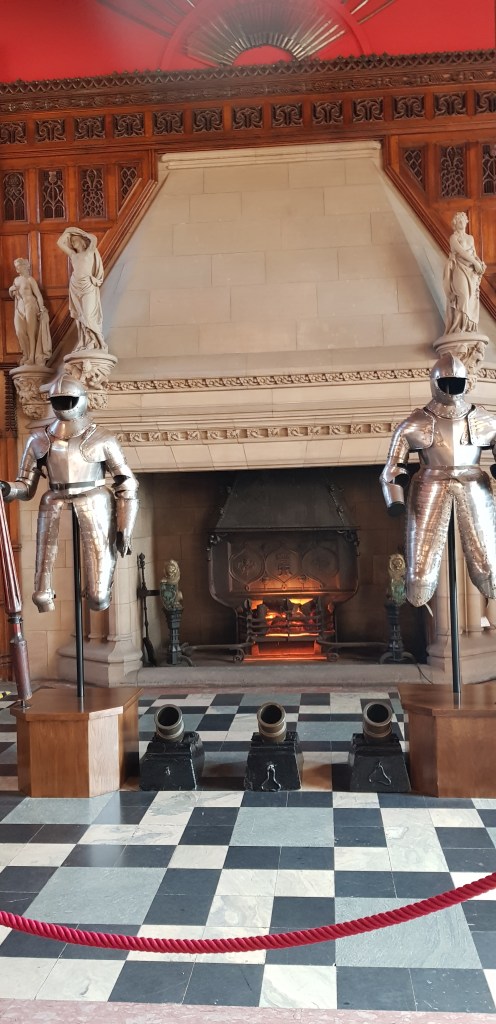
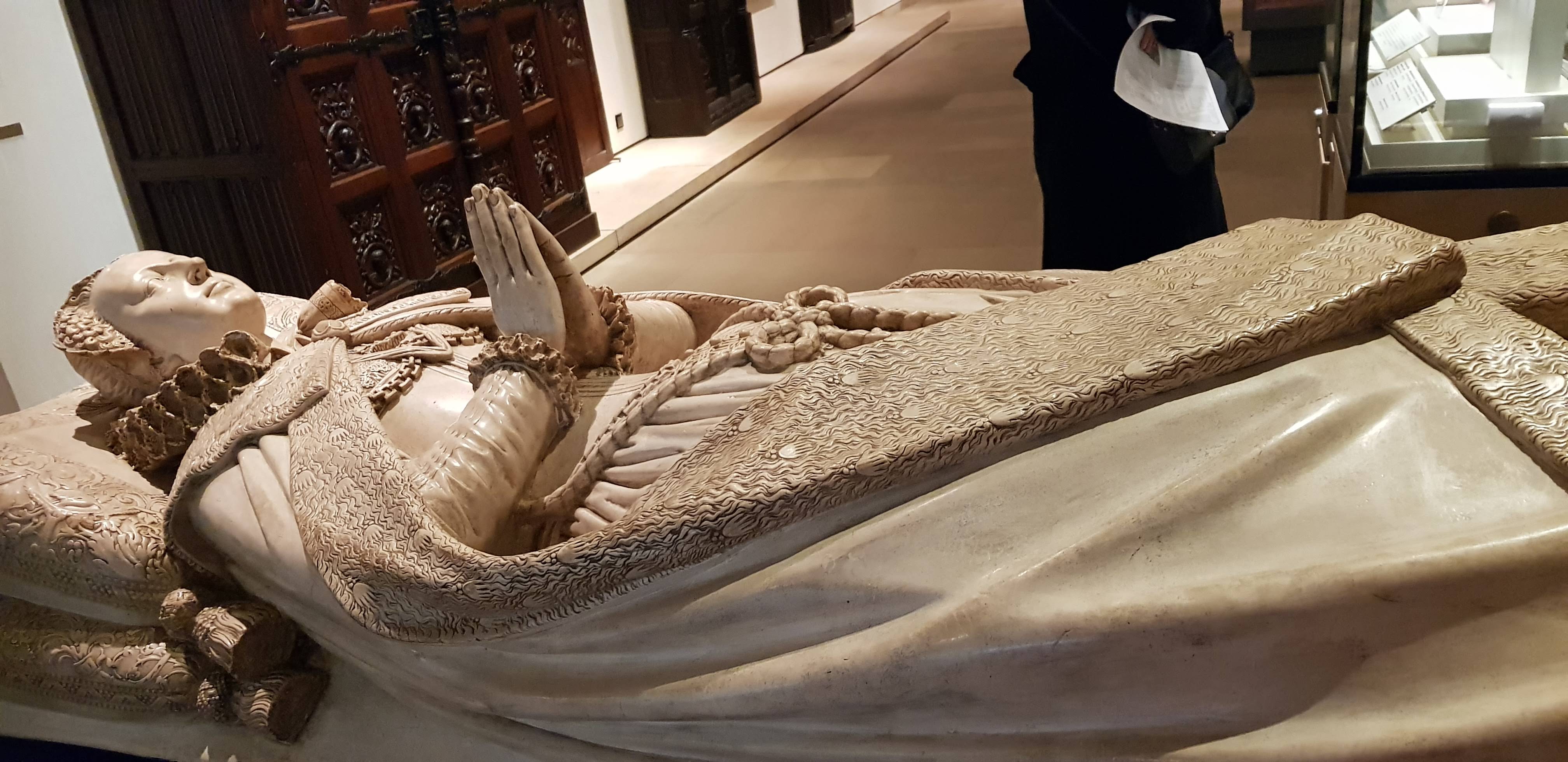
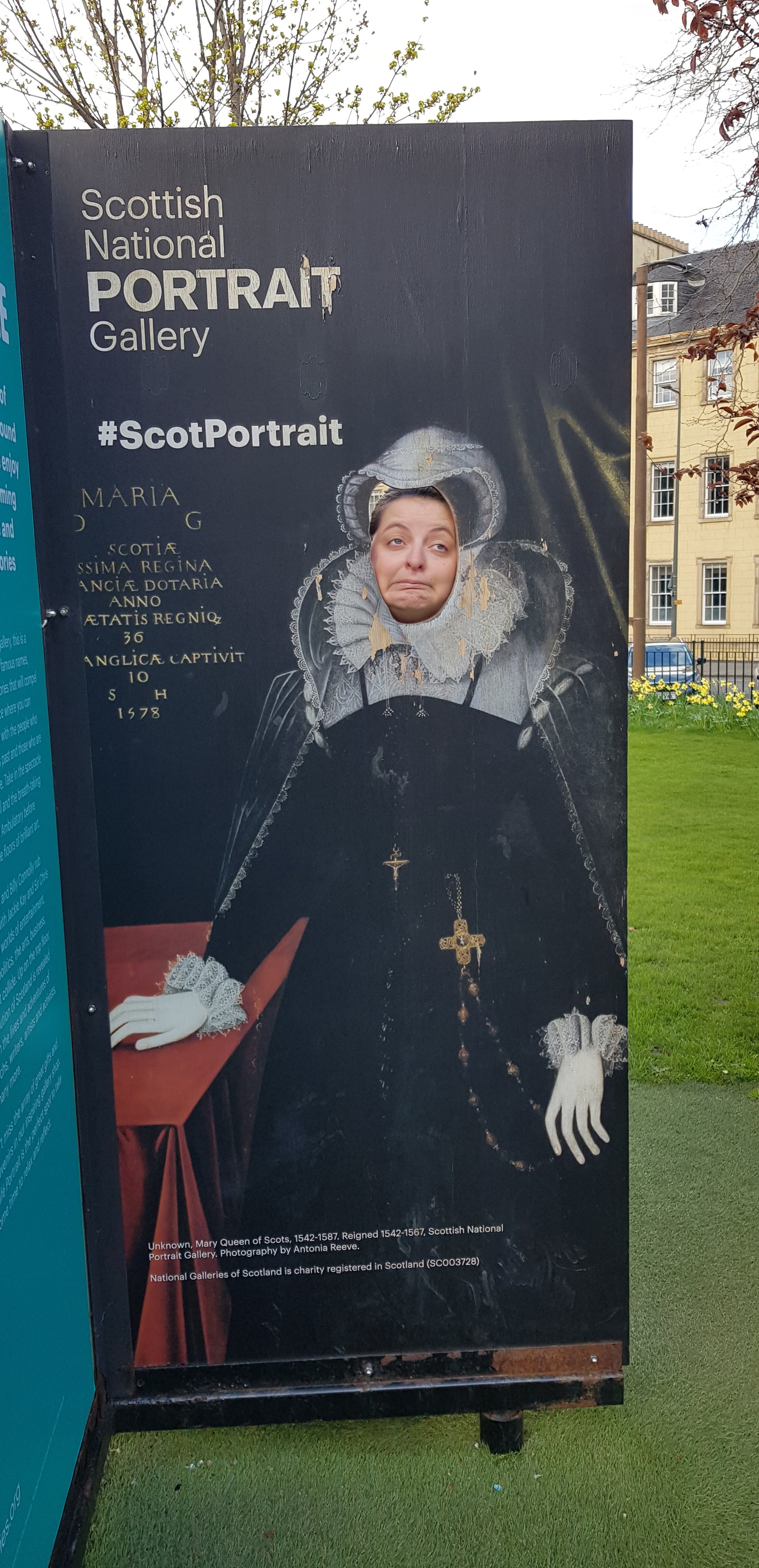
From inside the castle, you can visit the old chapel, prisons, crown jewels, staterooms and much more. The information provided was really good and I particularly enjoyed learning more about the Scottish Monarchy and particularly Mary, Queen of Scots, who is an extremely interesting woman in history. She spent her life fighting for her rights as Queen and being sought out by her enemies, and she was very unlucky in love repeatedly. She still managed though to bring life to the first King of both Scotland and England.

Two very different images of Mary, Queen of Scots

If you only had a few hours to in Edinburgh and wanted to learn about the history and see the whole city at once, the castle is definitely, the ‘must see’ place.

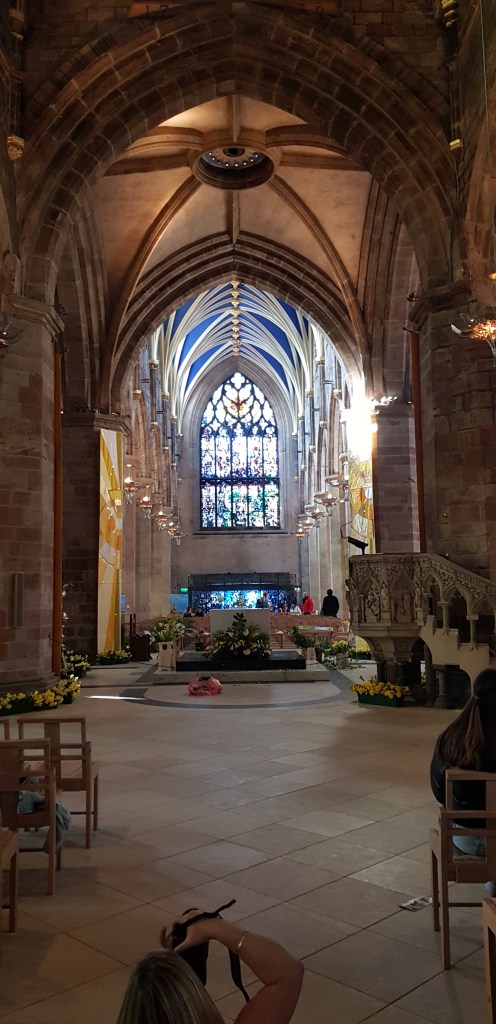
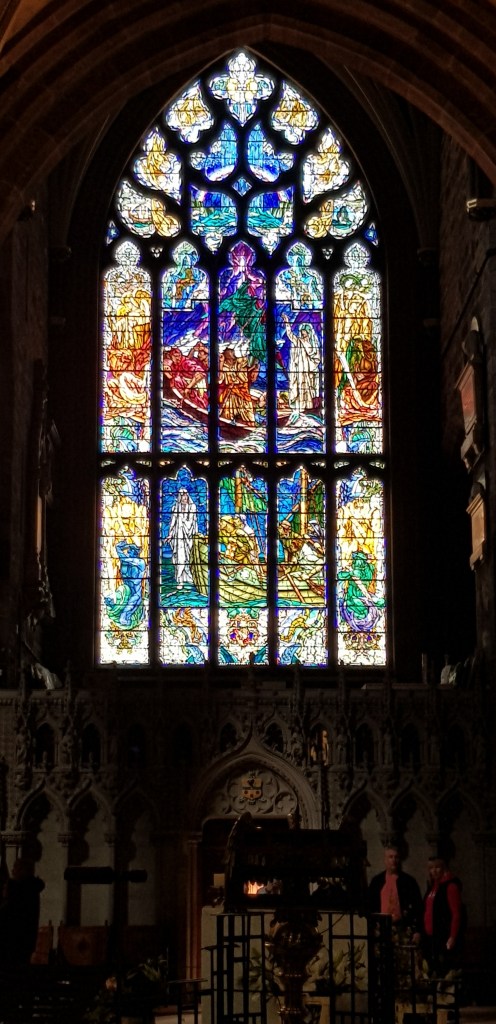
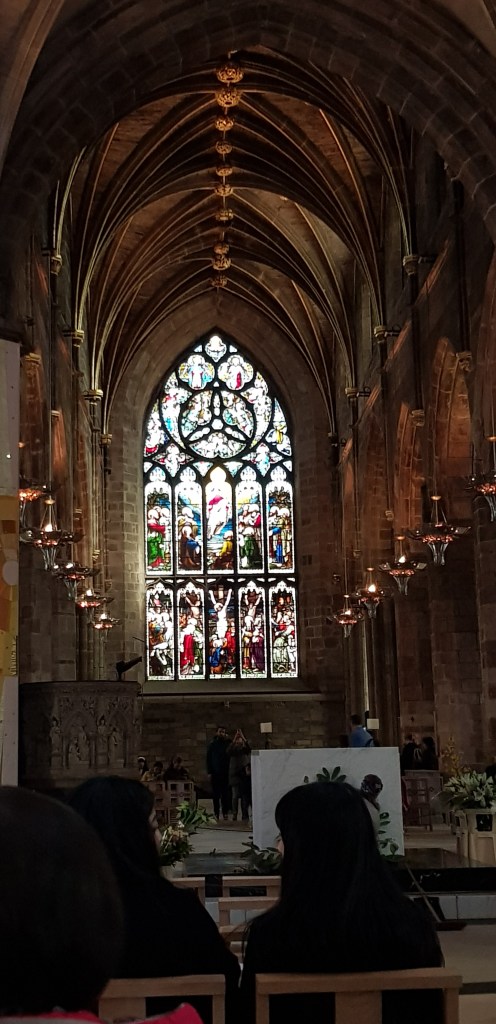
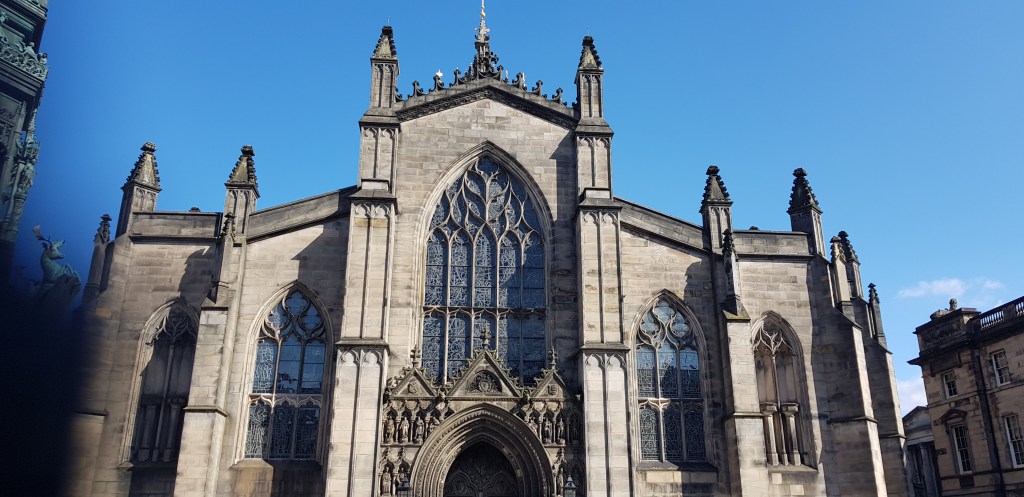
After leaving the castle we wondered down the ‘mile’ which is the long tourist filled street where you are never short of hearing a bagpipe or being able to find yourself your own brand of Tartan. Not far along, I came to the St Giles Cathedral, which was a nice place to just take a seat and enjoy the ambience, and the cool escape from the hectic busy centre outside the doors.

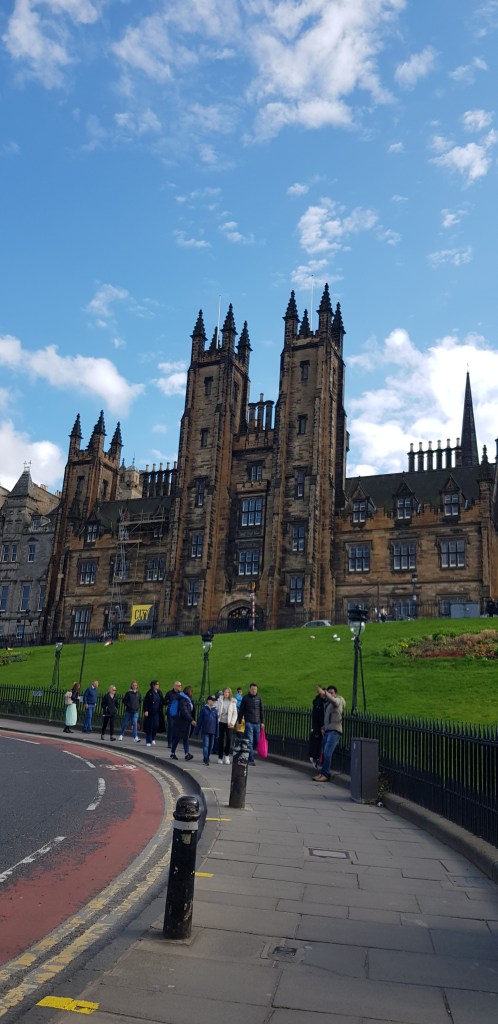
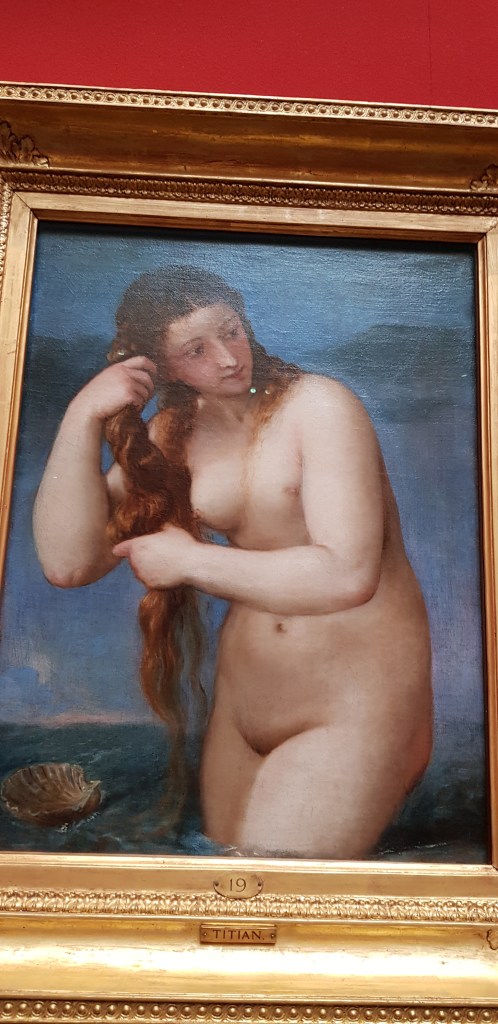
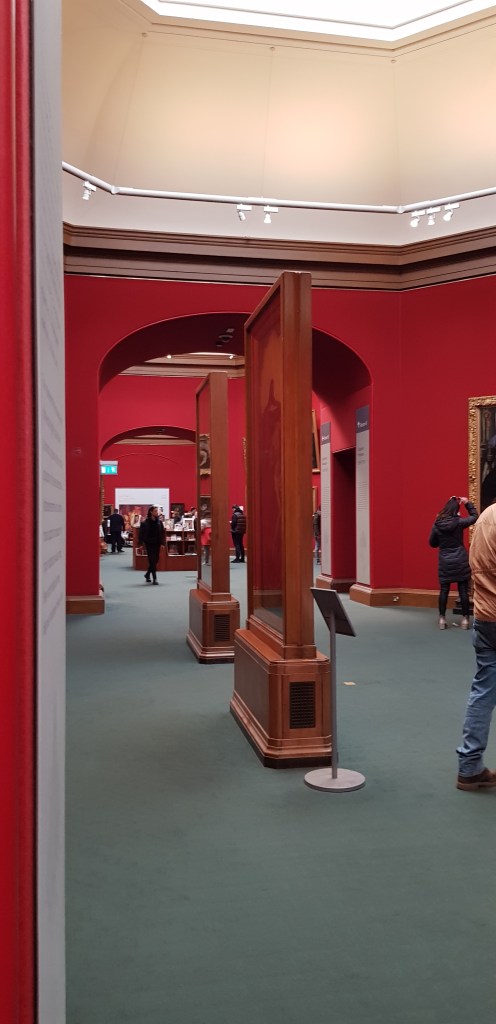
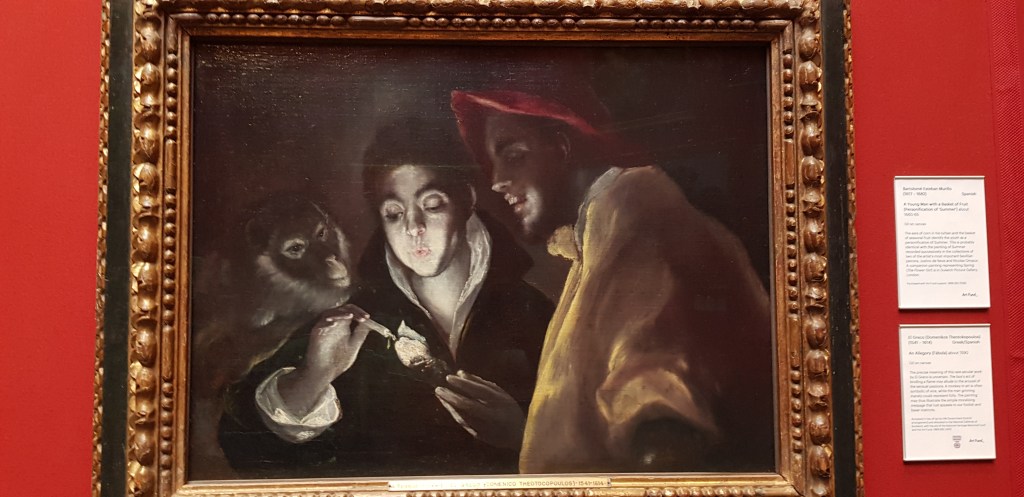
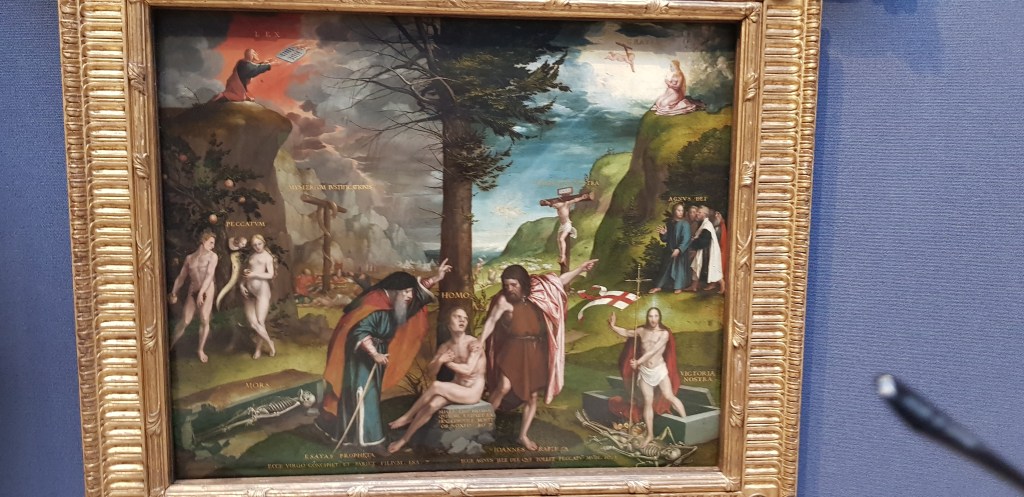
After a little break, I delved into more inspiring arts and information by visiting both the National Gallery and the Museum of Scotland. Both had great information and exhibits, but the gallery was definitely less daunting than the very large museum.

The Scottish Highlands within easy reach…

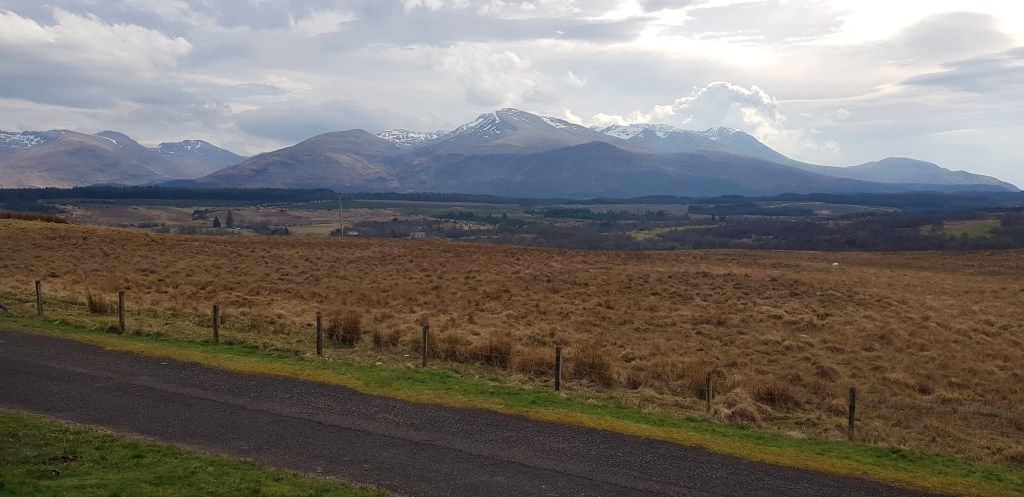
On our last full day which also happened to be Easter Sunday, we decided to go on a full day tour of the highlands. The tour was on a coach with many other visitors from around the world, and was led by a very good looking Scot in a kilt, who kept insisting he did not feel the cold when he blasted the air conditioning on full and me and my friends were going blue…

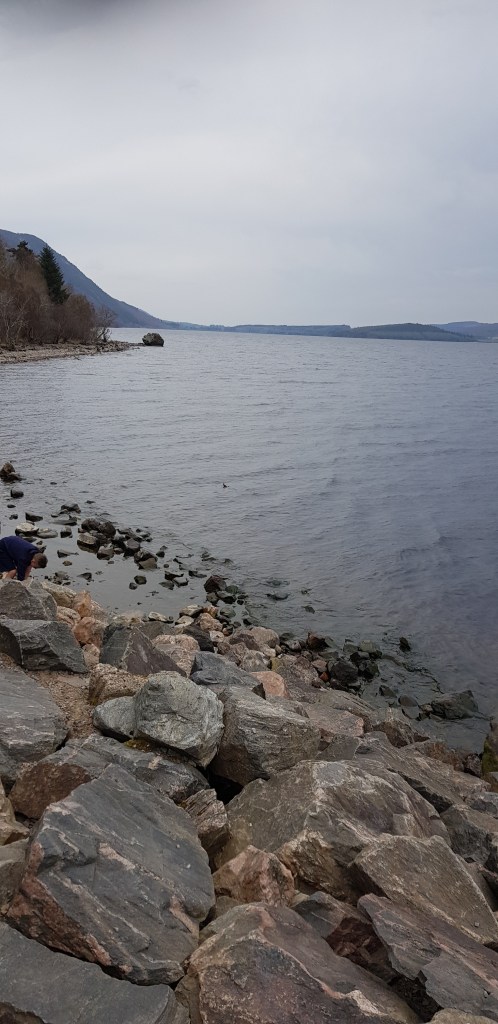
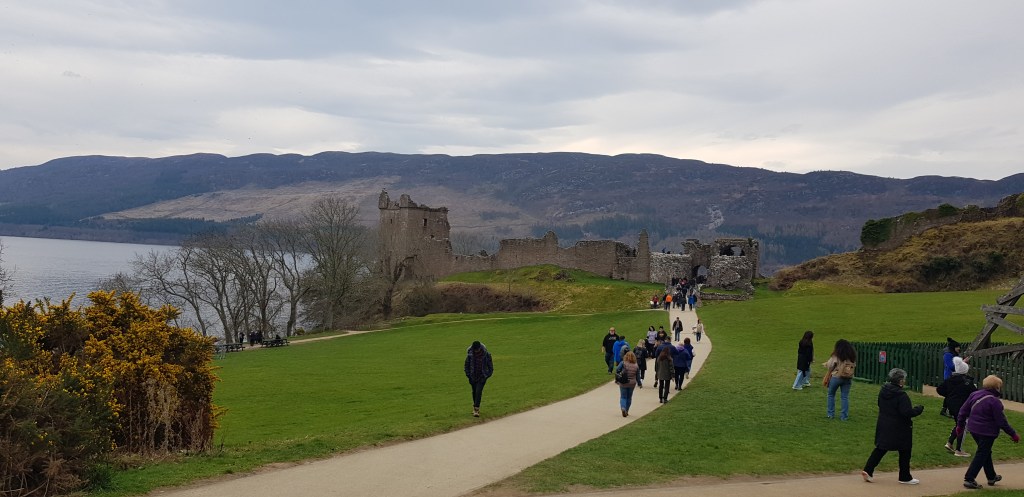
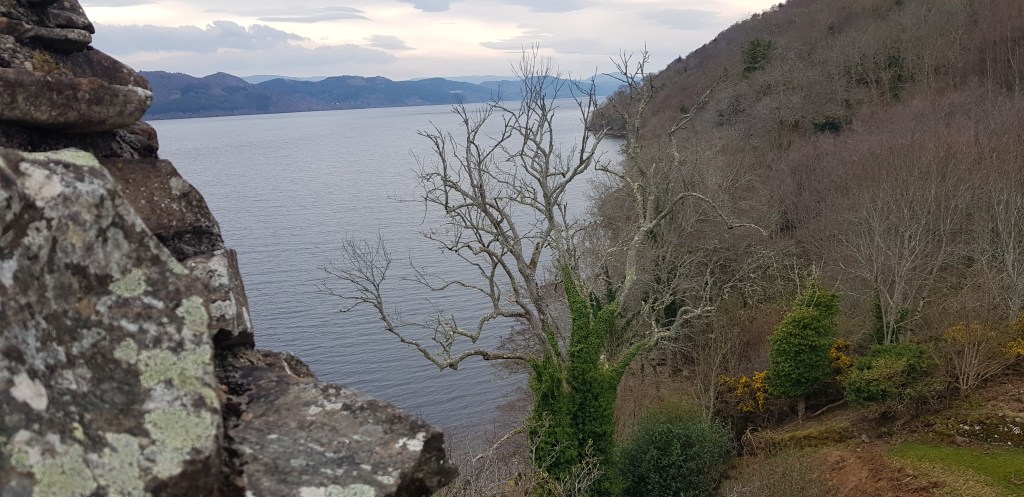
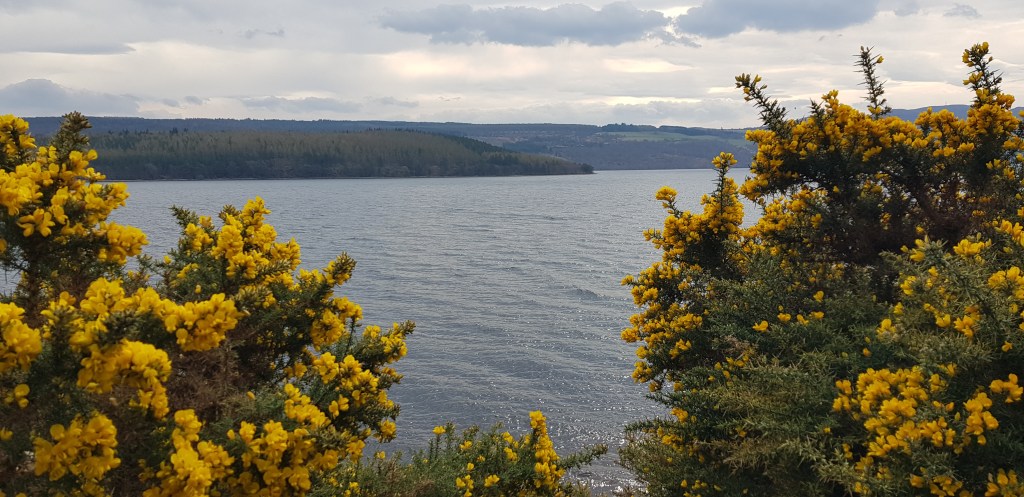
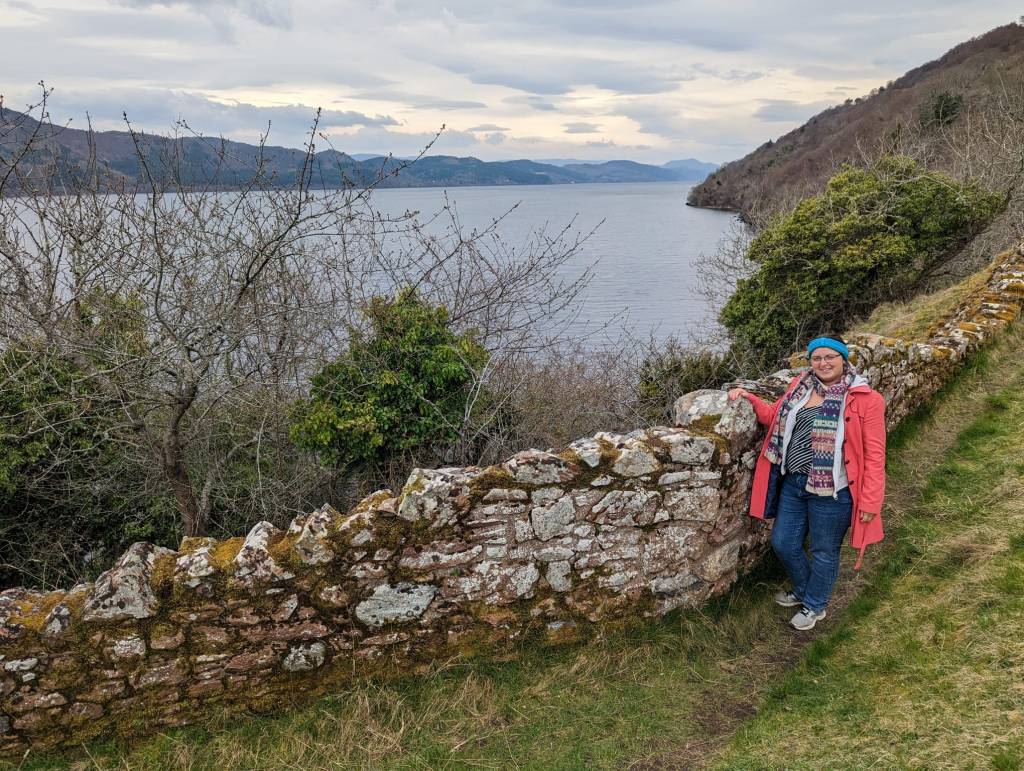
The tour visited some key locations like Glen Coe, and local castles and villages, but the big one was Loch Ness. We visited in by road, and then took a cruise on the lake, which in hindsight was very crowded with tourists, and this was during the beginning of Spring, so not the busiest time of the year. The lake itself though is incredibly large! It apparently is so deep and wide that you could fit the whole population of the world inside several times over. I don’t know why, but I was expecting something a bit smaller, so I was impressed. It is just a shame that this was the day that the Scottish weather came to visit and we were all stuck in the wind and cold, but we did avoid the rain!

Farewell to Edinburgh

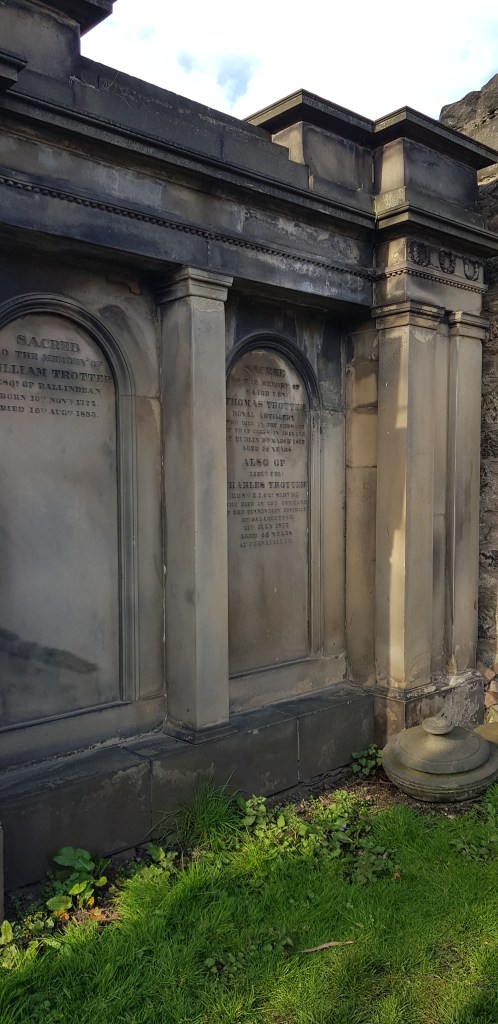
Before leaving the city on our final morning, we did a little exploring of the local cemetery and were able to see and secure photos of the grave of the infamous Thomas Riddle. That’s right, the dark lord himself. Well… actually, it is the grave of someone with the same name, apparently J K Rowling took the names of many of the Harry Potter characters from this very same graveyard. Spooky!

Finally, it was time to jump back on the train and bid farewell to the capital of Scotland. I pondered on it, and decided that I would be happy to return to Edinburgh and see more of the highlands and Isles too, but for now it was just time to take a long nap all the way home…

Buenos Aires, Argentina: Paris of the Americas (Part Two)

Following my first trip to Buenos Aires, I returned to the capital city at the end of my three month trip around Argentina to have a final week there, enjoying some attractions I had not been able to visit in my first visit. This time I was joined by a travel companion and was staying in a luxury hotel.

A focus on Evita

Following my first visit to Buenos Aires, and visiting the grave of Evita, a famous Argentine first lady, this time round, I visited the Evita museum. I was keen to learn more about her life and work for the state. The museum is housed in a previous home for the poor that was set up through a foundation that Evita begun. The museum has several rooms with projections of Evita’s film clips as an actress, her speeches as an activist and also a viewing gallery for her red carpet gowns.

I found the museum to be really interesting but unfortunately photos were not allowed. The information was really good about her early life, career, relationship with president Peron, and her death. I learnt that she had a lot more involvement in charity work than I had realised. She also won the vice presidency but turned it down, which I was not aware of. After finishing our look around the museum, we had a tasty lunch in the museum’s restaurant which has a very nice courtyard.

A walk around the parks

I was able to visit a few more of the park’s in Buenos Aires this time, although not all of them, as the rosalade (rose garden) was closed for upkeep.. very annoying. I did manage to visit both the Botanical Garden and the Eco Parque which are next door to each other. This took a full morning, and both parks were worth a look, and free to enter.

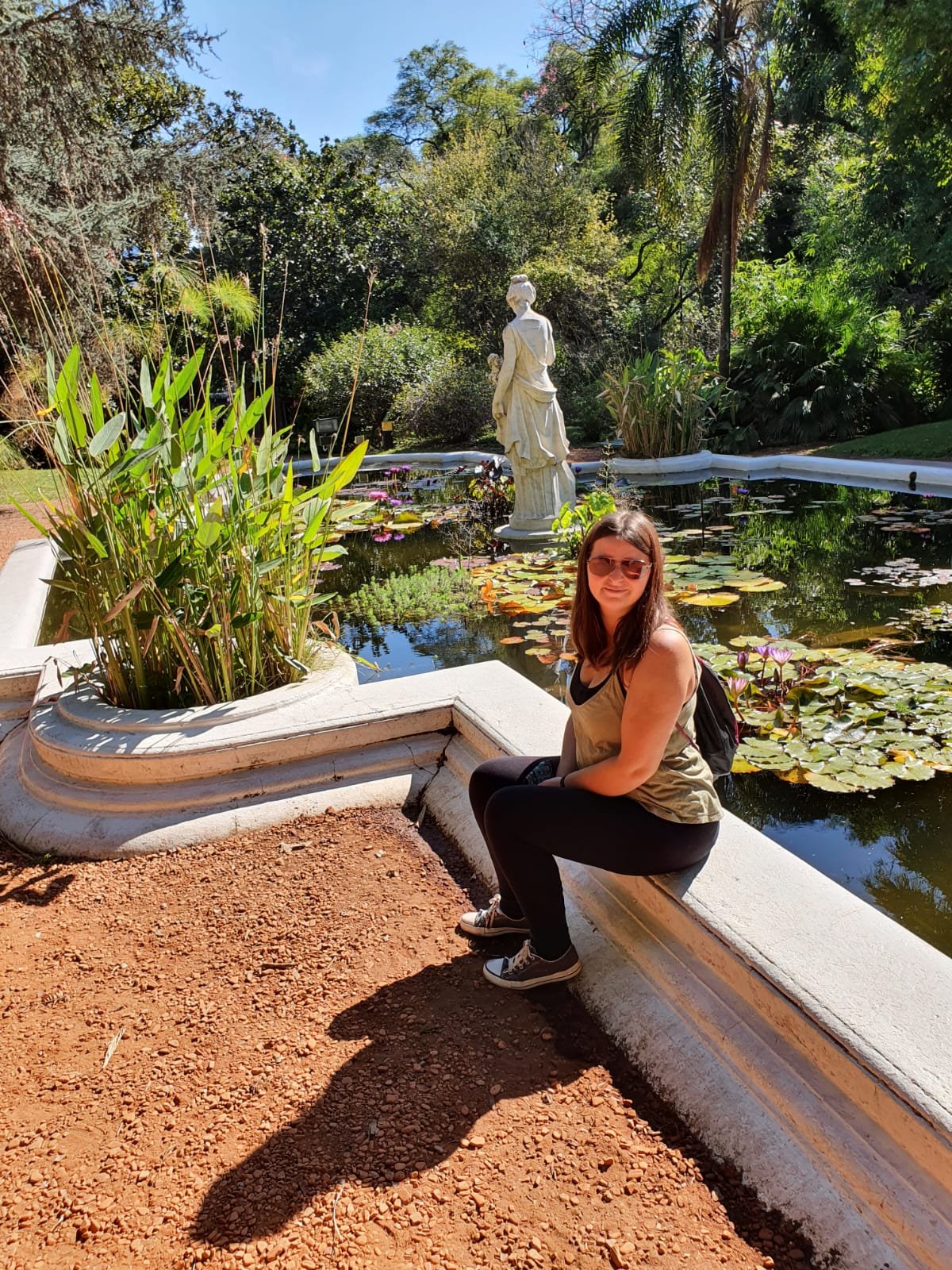
The botanical garden has many exotic plants and large trees as expected, and had attempted to theme different sections by different garden styles, for example french or italian.

The Eco Parque is a very different experience. This pretty park used to be a zoo with many large exotic animals, and elegant victorian styled animal houses. In recent decades, most of the animals have been moved to other locations, or sent back to their natural habitat.

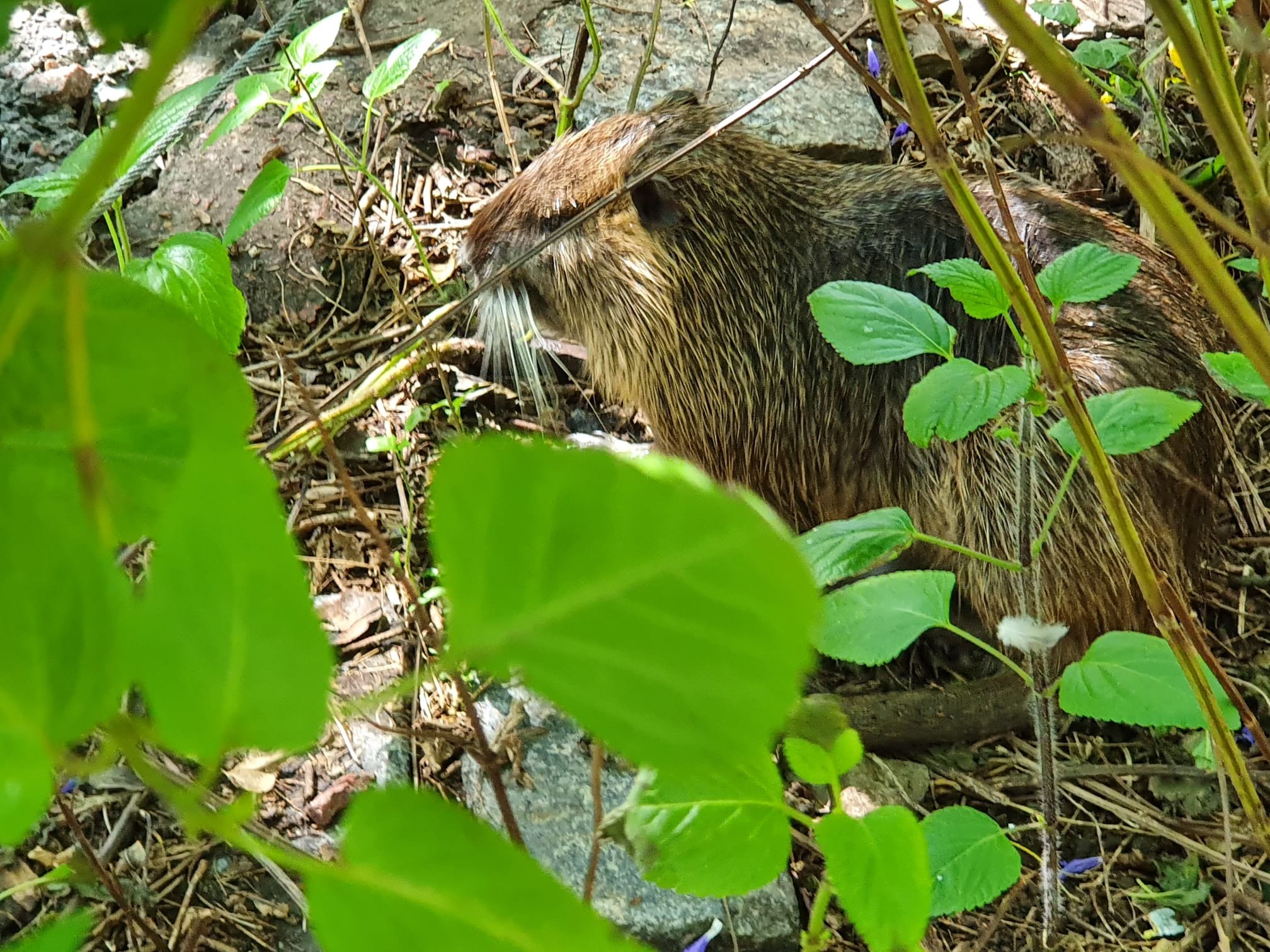
There are a few that still roam through the park though, because they are either too old or unwell to move, or do not need to be relocated. The park still has an old camel, plenty of capybaras, strange half rabbit half deer things, and even some monkeys. It is a pleasant place to take a walk in the middle of this huge city, as you never know what new animal will be around the corner.

Nightlife

In the evening, I was lucky enough to be rejoined by my German traveller friends again as they also finished their journey in BA. We headed out to Palermo Hollywood for a night of clubbing and mischief. After a night that lasted until around 6am, I was glad for my full hotel continental breakfast the next day!

La Plata

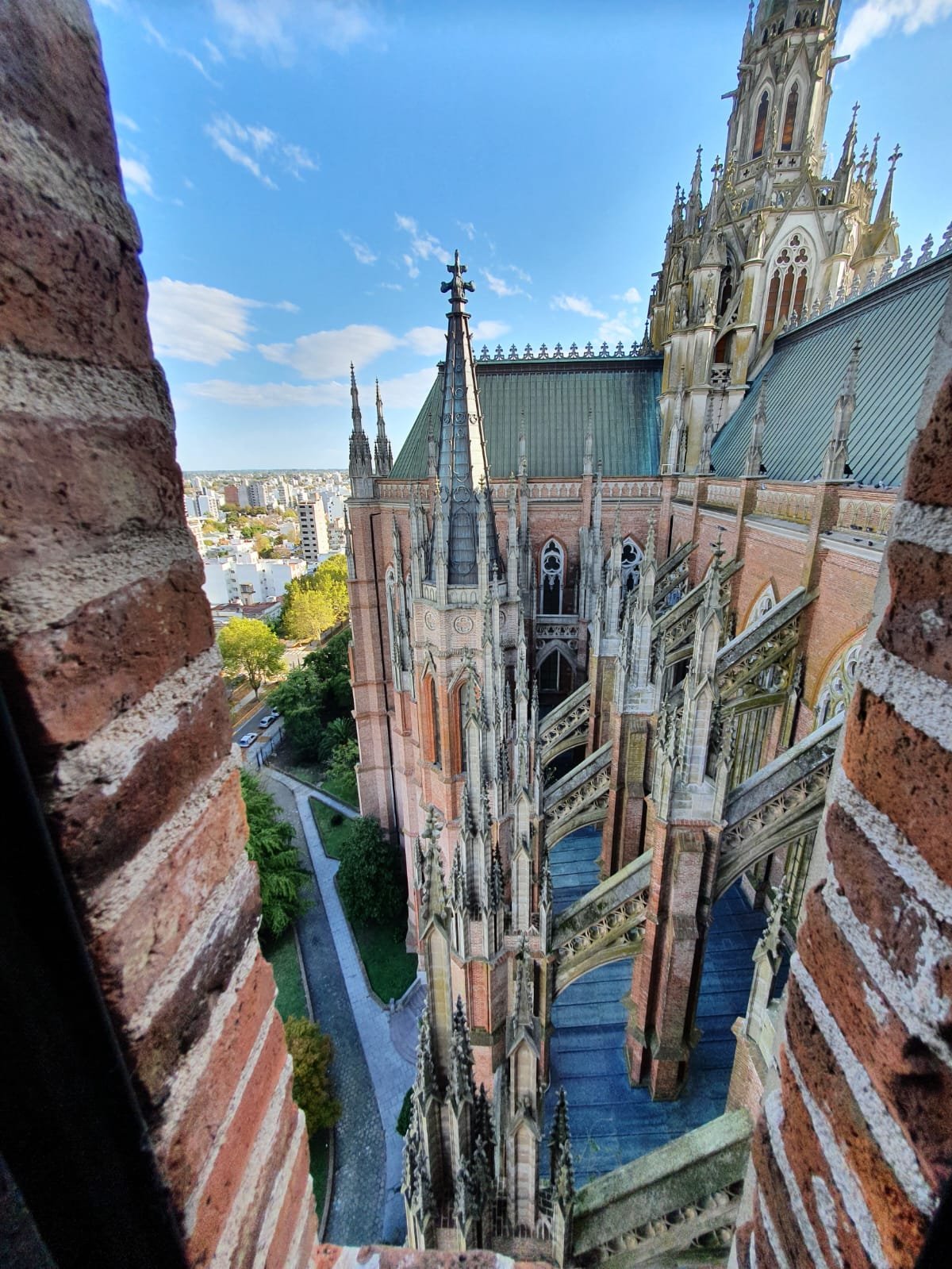
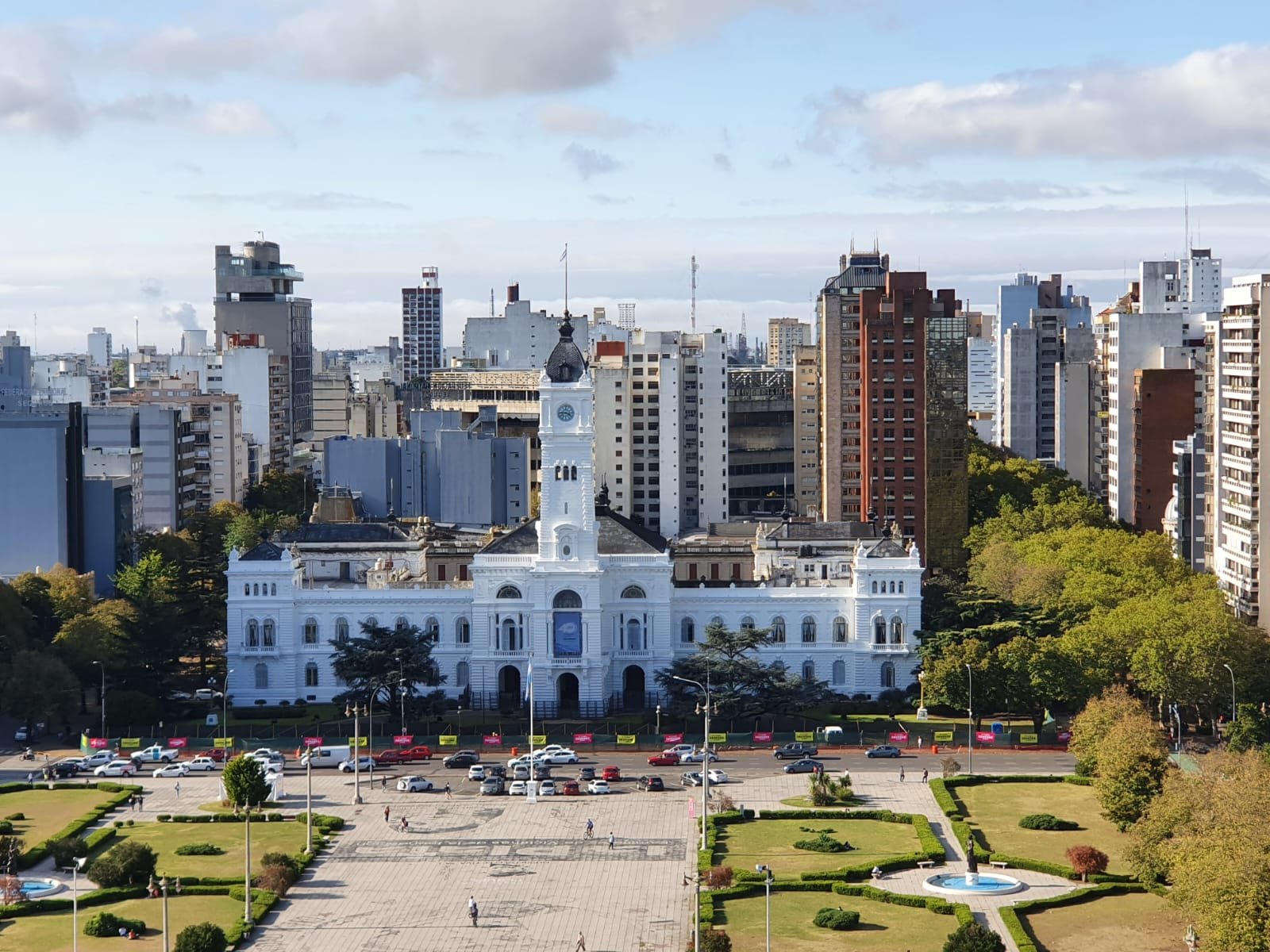
For a day out, we decided to visit the capital of the Province, the city called La Plata. The city was easy to get to, only 90 minutes on the train, and the main attraction there is a beautiful cathedral.

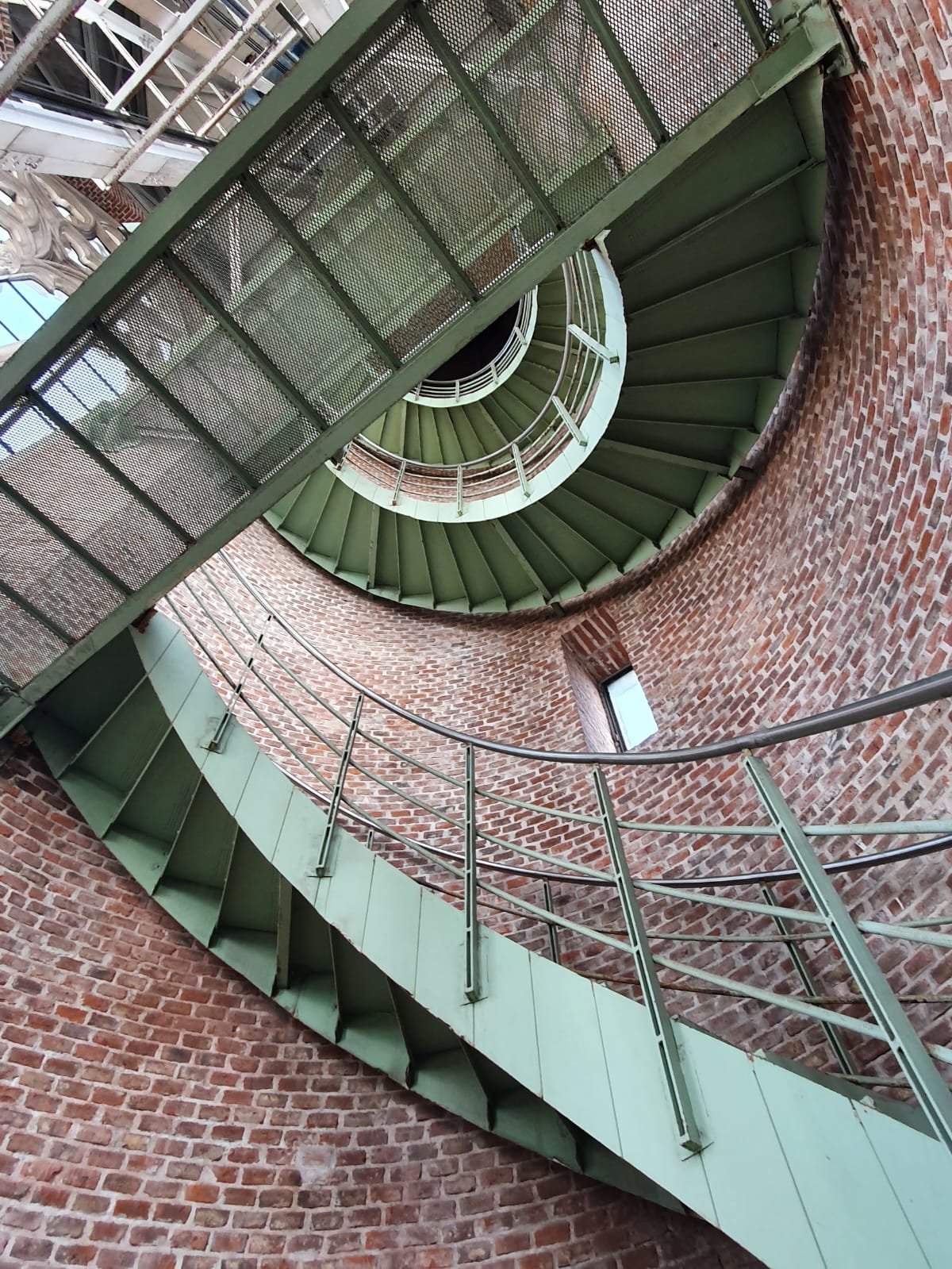
The cathedral is gorgeous on the inside, and as well as the main church, the attraction offers exploration of the crypt with a museum about its construction and original pieces, the opportunity to be lifted up the tower, and a sweet restaurant. A lovely morning out.

Horse riding in the Pampas

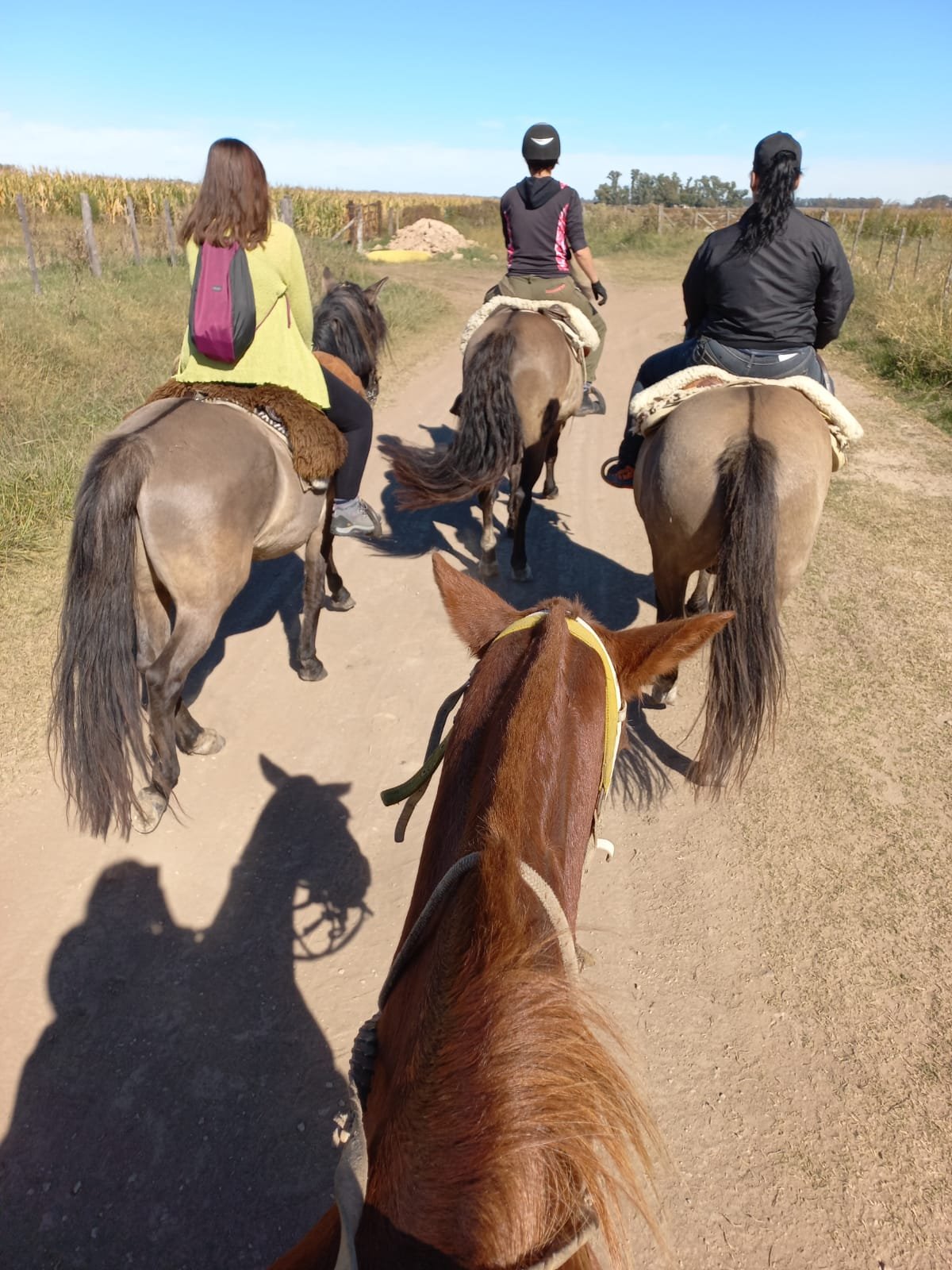
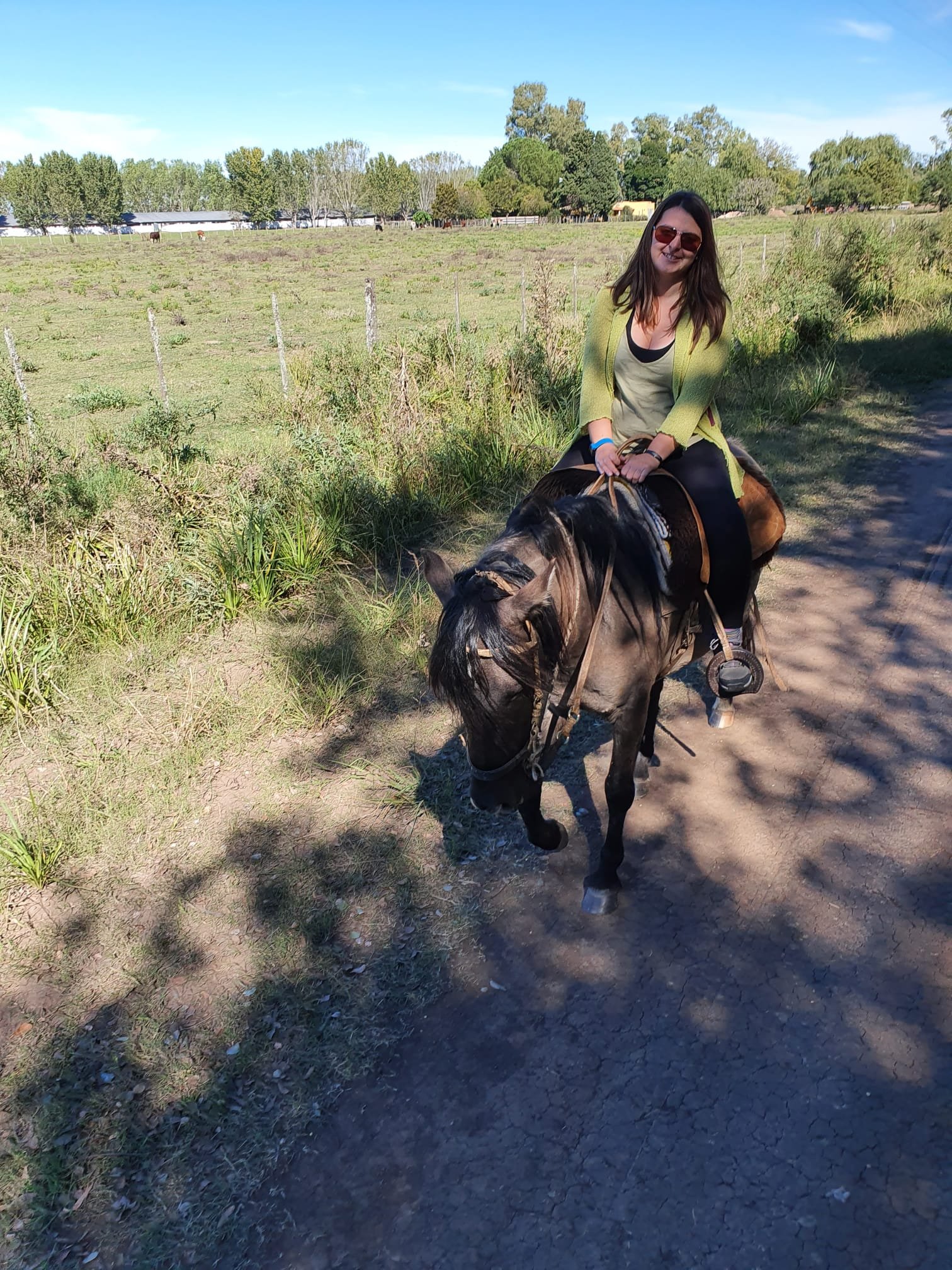
The province of Buenos Aires is part of the ‘Pampas’ region, and this is where the gauchos (Argentine cowboys) farm cattle the most. So, I decided to book us a day of horse riding in the area.

The four hour riding experience included a traditional asado lunch at the house of a local which was pretty special, and the horse riding itself was an unforgettable experience. For good and bad reasons…

The horse I was given, was a little young and barely broken in. This was coupled by the style of gaucho riding which is very different compared to english riding. The saddles and riding kit on the horse is very different and there is no front to the saddles. You are also expected to ride one handed and without a riding hat.

Whilst a little nervous about my horse’s behaviour, I took on the challenge. We rode through long grasses, roads, ditches, and woodlands and after trotting, cantering and a little bucking by my horse, I did manage to stay on the horse! Even though I was a little banged up. The experience was good fun, but the major downer was the extreme amount of mosquito bites I endured all over my legs  i was rubbing toothpaste on my legs for days after! (Fun fact: it takes out the itch).

Lunch in Uruguay

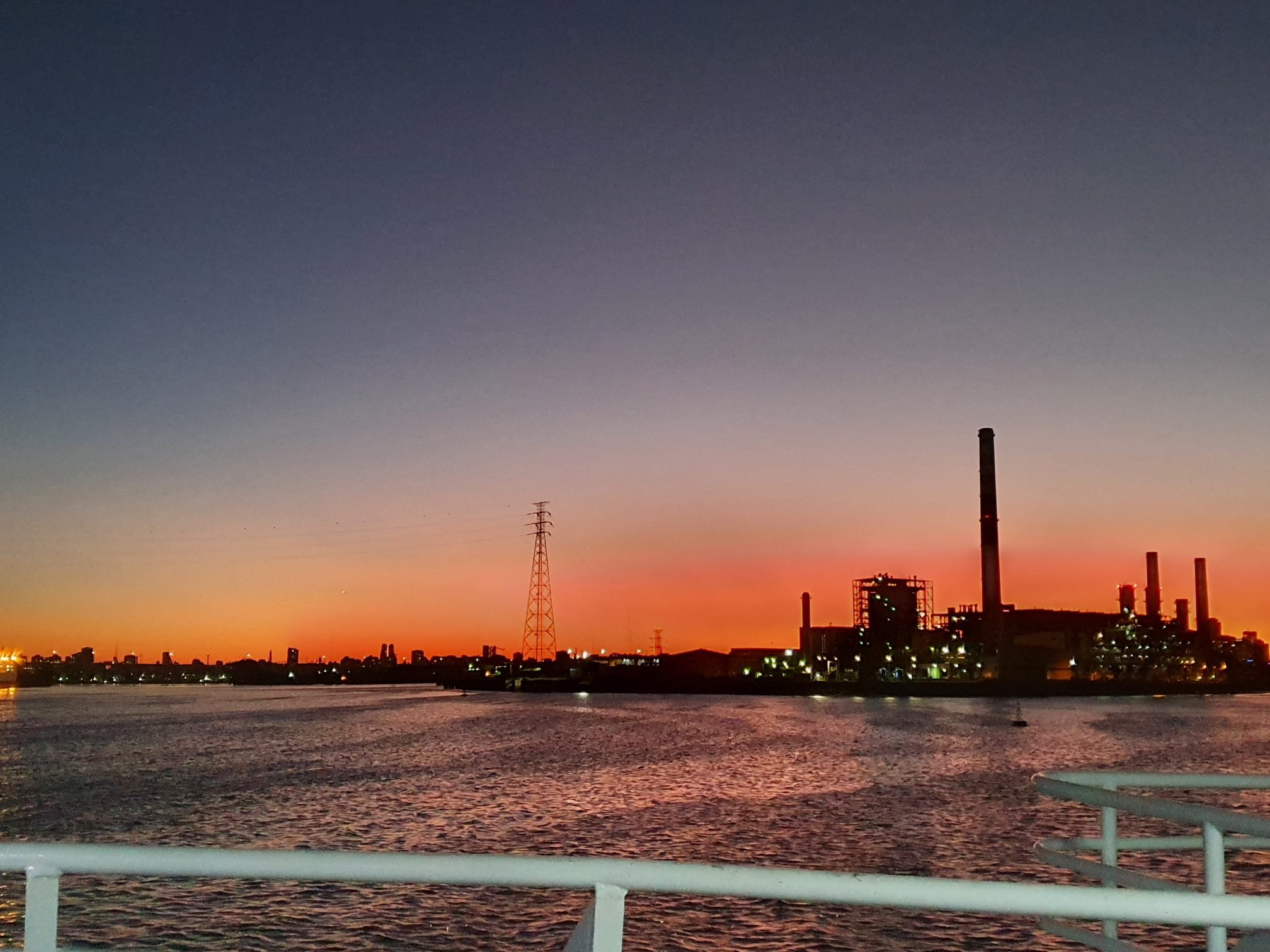
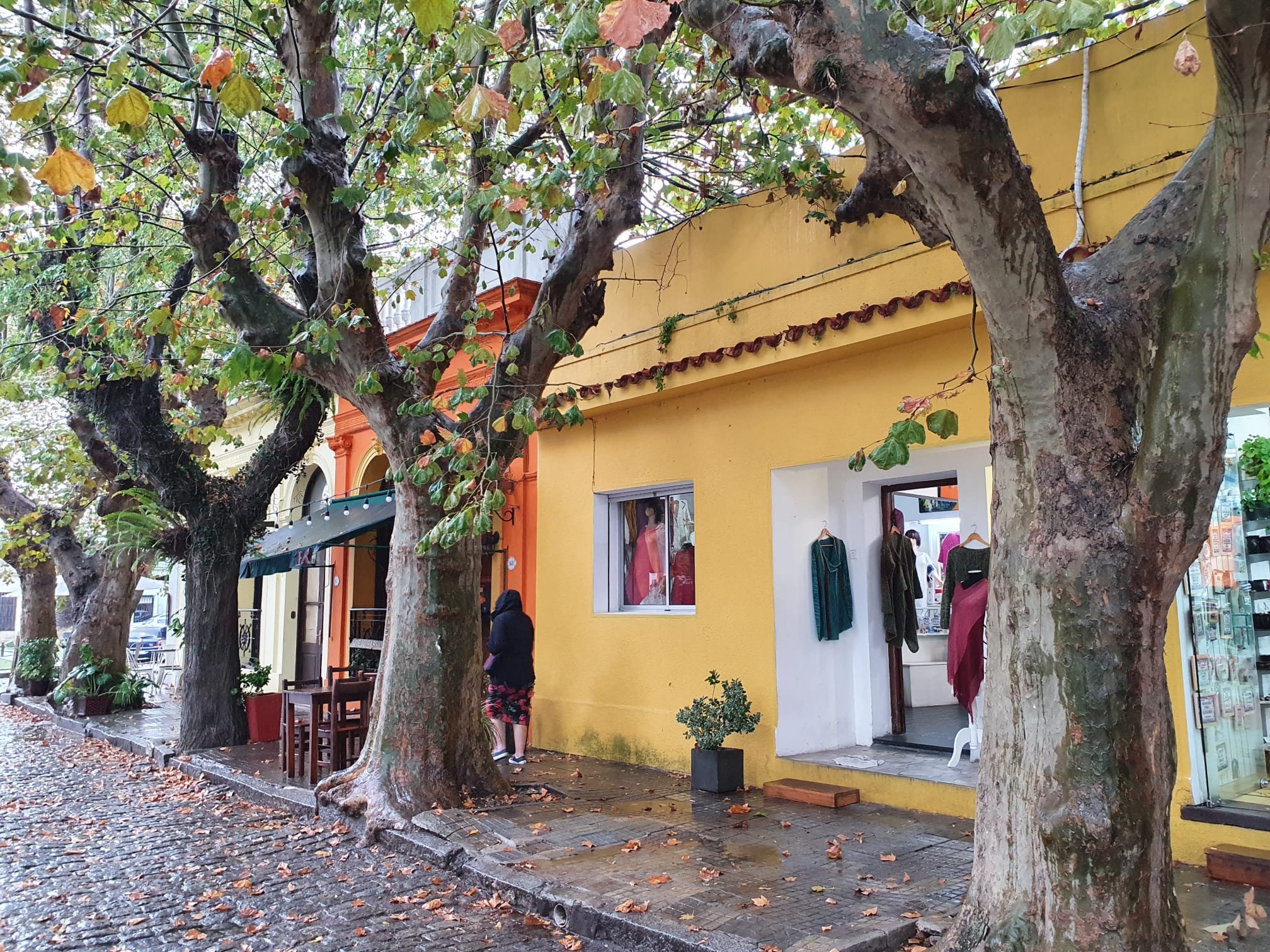
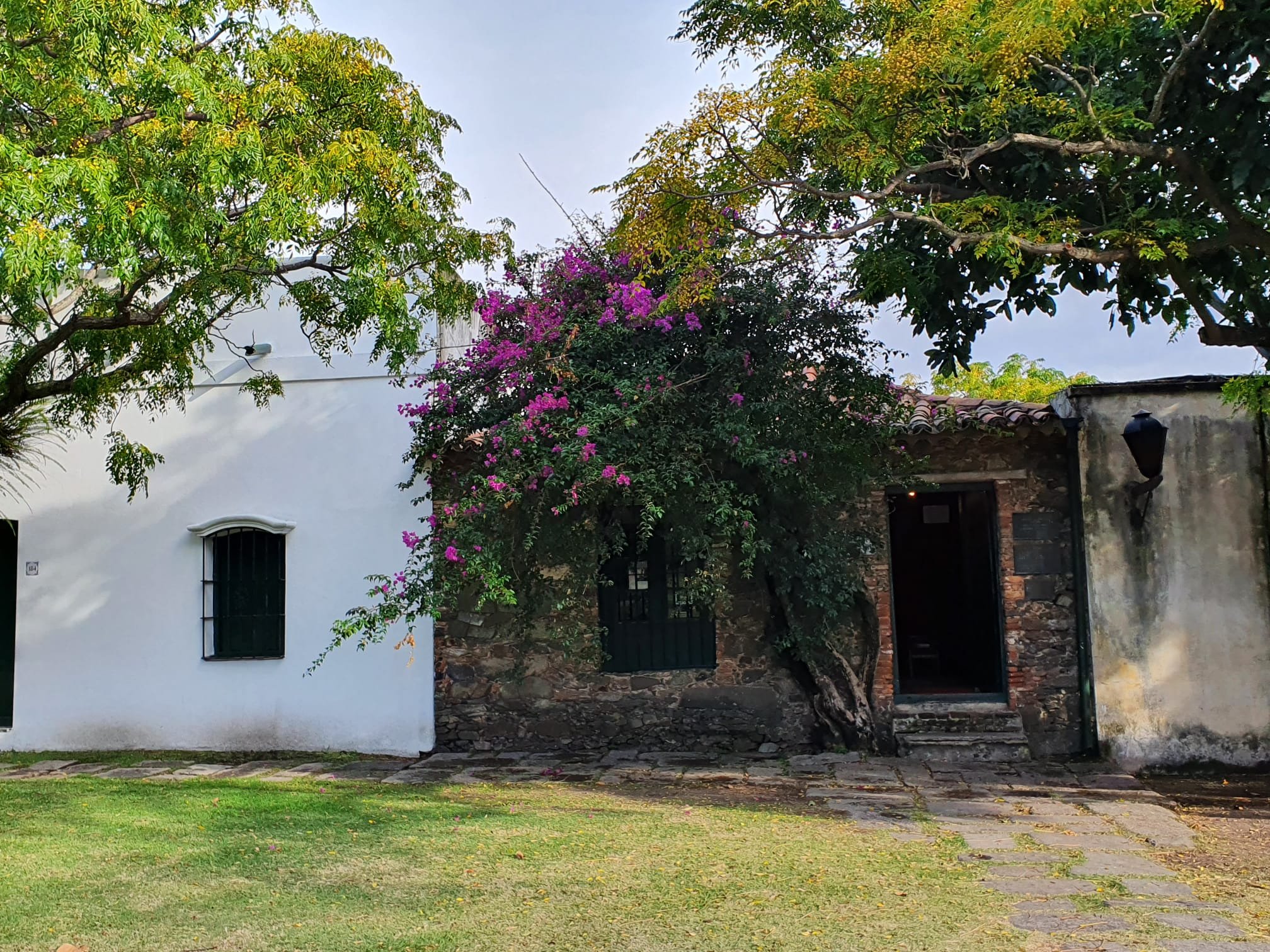
We became aware that you could visit Uruguay easily from Buenos Aires’ port by crossing in the river ferry for around an hour. It’s always tempting to cross another country off the list if the opportunity arises, so we booked our ferry tickets and took the pleasant ride across to a town called Colonia del Sacramento. From here you can also take a bus to Montevideo (Uruguay’s capital) but we decided to save that for another trip. Colonia del Sacramento is a picturesque town with a very portuguese style to it, from when it was colonised by Portugal.

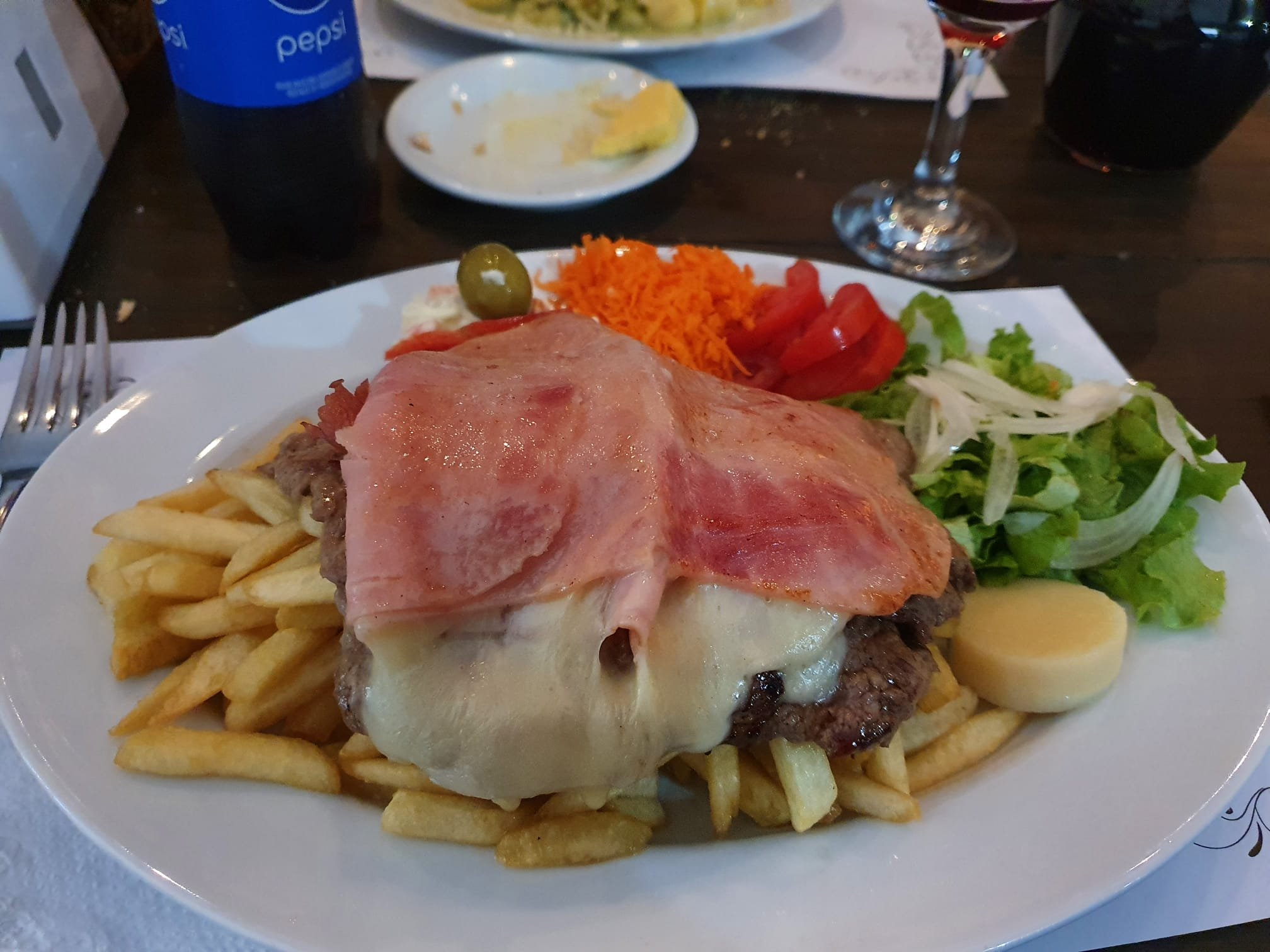
There are a couple of small museums and a church in the town to enjoy, and we had a long and luscious lunch of a traditional Uruguay dish called ‘chivito’. This is like a giant inside out meaty sandwich. Like Argentina, Uruguay also does not skimp on food portions.

Before we knew it, it was time to take the ferry back across the river. We had a good laugh about how we left the country just fot lunch though! 🤣

Tango

You can’t visit Buenos Aires and not watch a little Tango, as the traditional dance of the city. Not only can you see people dance this in the streets of Caminito in Boca, there are also plenty of theatres offering shows and classes. I wanted to do a class but they were multiple hours and I felt too lazy about it, plus I only had walking boots to dance with.

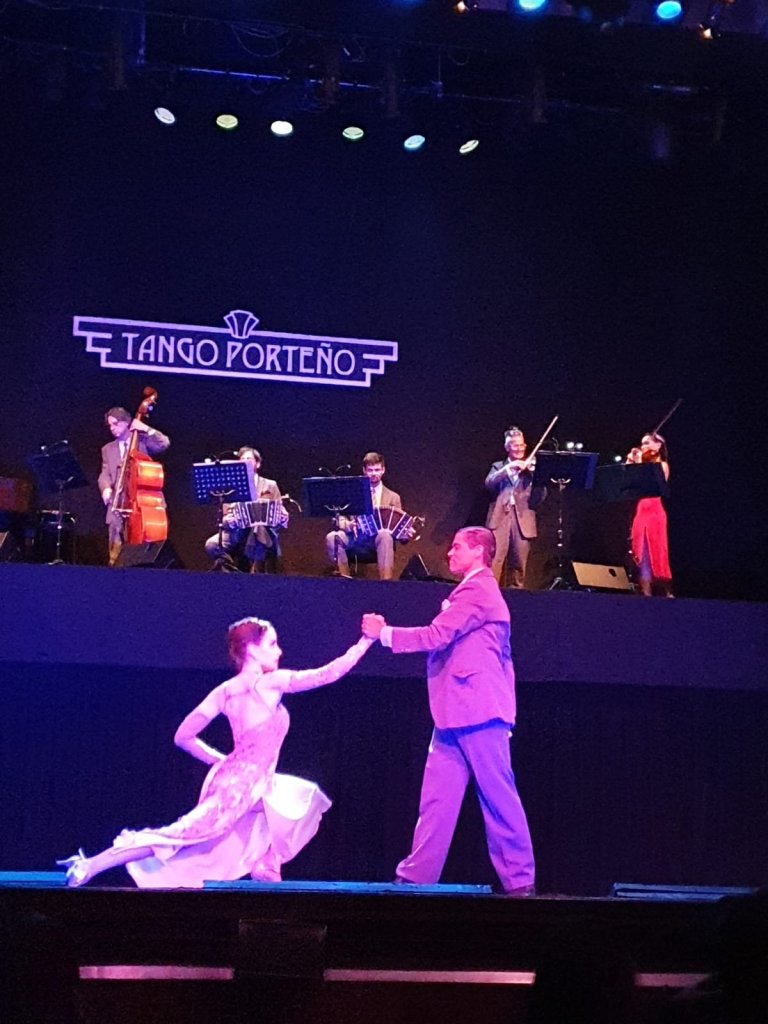
I did decide to book a show and after a little research, I booked a show at Teatro Porteno. You had an option of paying for the show on its own or with dinner included. I chose to purchase just the show which was about £23 but then on arrival, we were also provided with another menu to pick and choose food. We went for some empanadas and a delicious ham and cheeses board.

The show itself was amazing! Focused on locations around Buenos Aires, there was a variety of styles of Tango on display. They also had an act that used drums and cattle whips to create impressive rhythms with the music. I was really glad I visited.

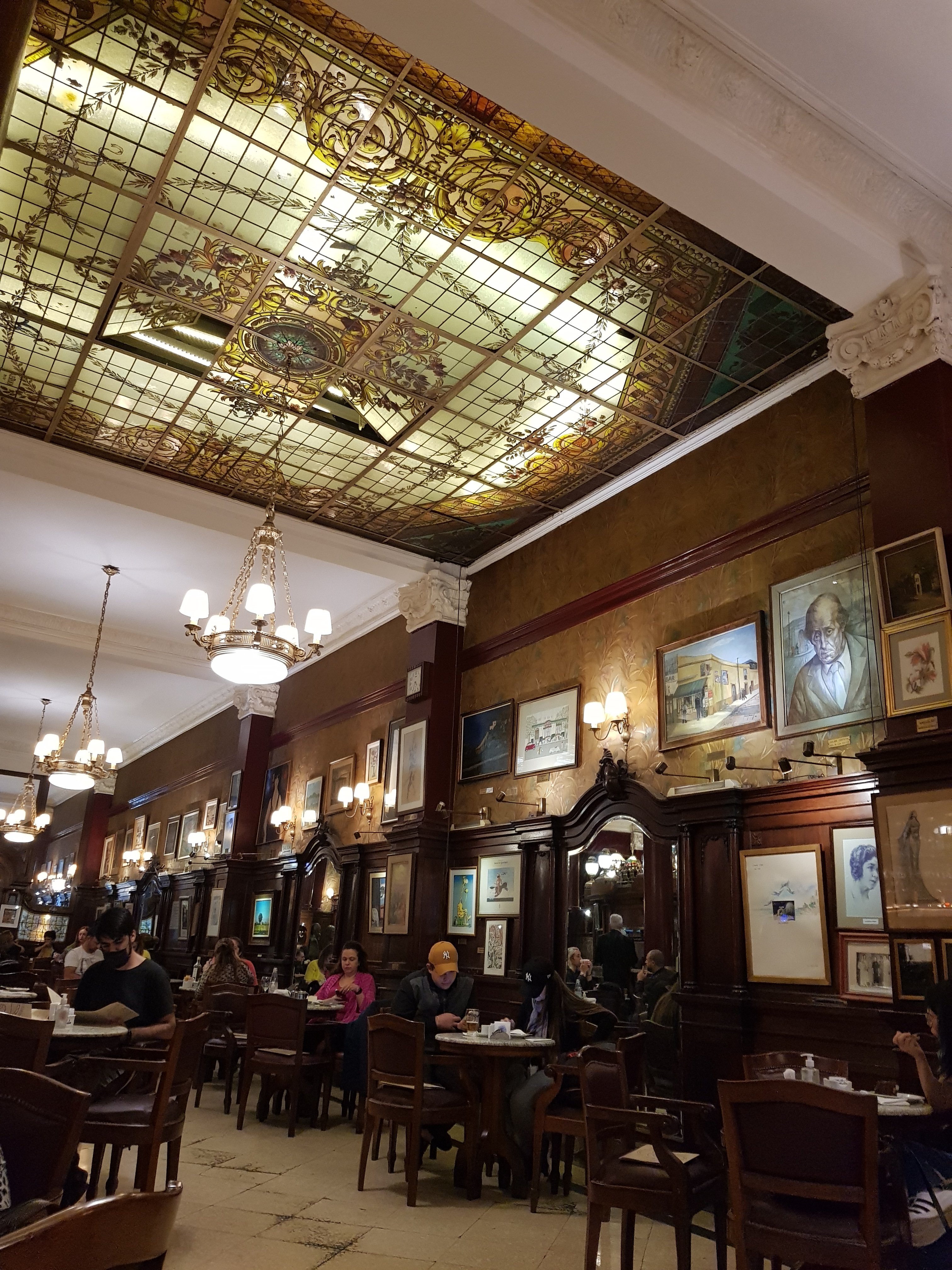
Another location where tango can be viewed and learnt is Cafe Tortoni. This is one of the oldest and most fabulous cafes in Buenos Aires. The decor is very traditional italian/ bohemian and many famous faces have eaten here. We decided to visit for a merienda (afternoon snack) and really enjoyed our visit with some great sandwiches and cake.

There were plenty of other bits and pieces I experienced in this bustling capital, but these were definitely the highlights. My return to the UK following Buenos Aires was a very long journey, but also gave me time to reflect on my amazing journey around this beautiful country.

After my return to the UK, I will soon be embarking on my next journey, working on board a cruise ship around the Mediterranean…

Corrientes, Argentina & Ibera National Park

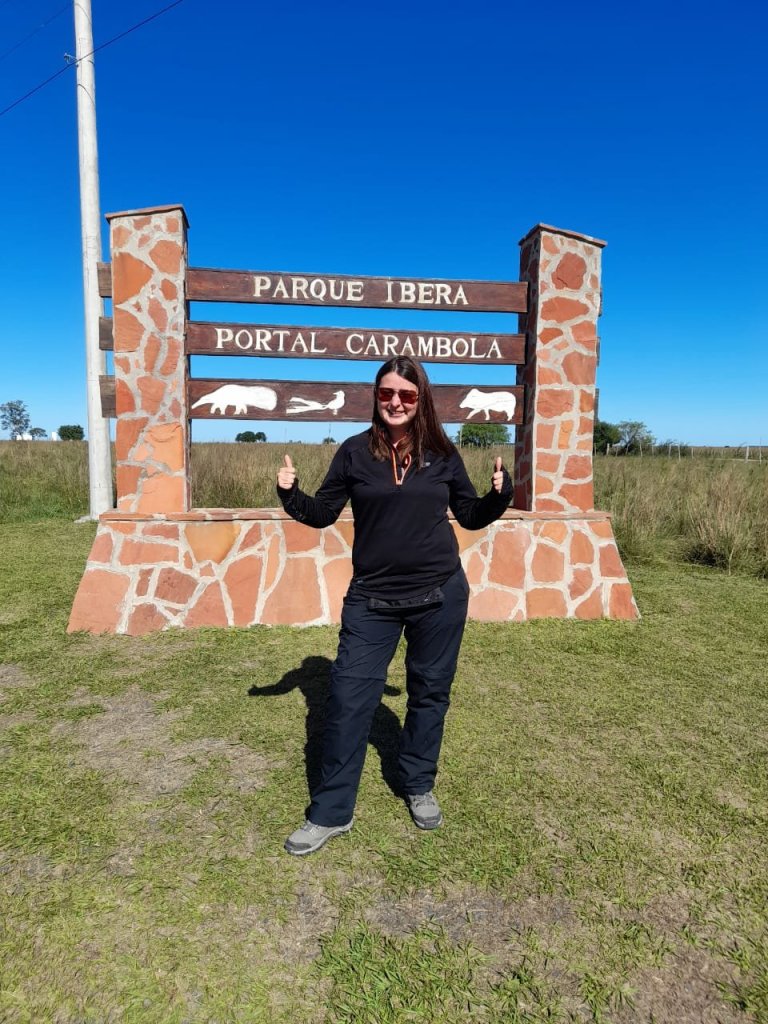
Corrientes city was supposed to just be a stopover on my way to Iguazu National Park, but due to the bus schedules, I had to stay for almost three nights. This ended up being a stroke of luck as not only could I enjoy the city, but especially because I was able to visit Argentina’s biggest National Park, and the world’s second largest wetland, Ibera National Park.

Corrientes city is the capital of the Corrientes province in the North of Argentina. I wasn’t sure what to expect as many people asked me ‘why are you going there?’. There is little publicised about this city or the nearby national park to visitors. It is still one of the world’s less explored locations. I am very happy about this. The city has a mix of some modern amenities but also a lot of old school traditions. Ever seen a road sign that says that pulling your horse and wagon through is prohibited? Now, I can say that I have. There are plenty of people still using horses to get around, and it is brilliant to see. Made me feel that maybe I could get picked up and trotted away by a local cowboy!

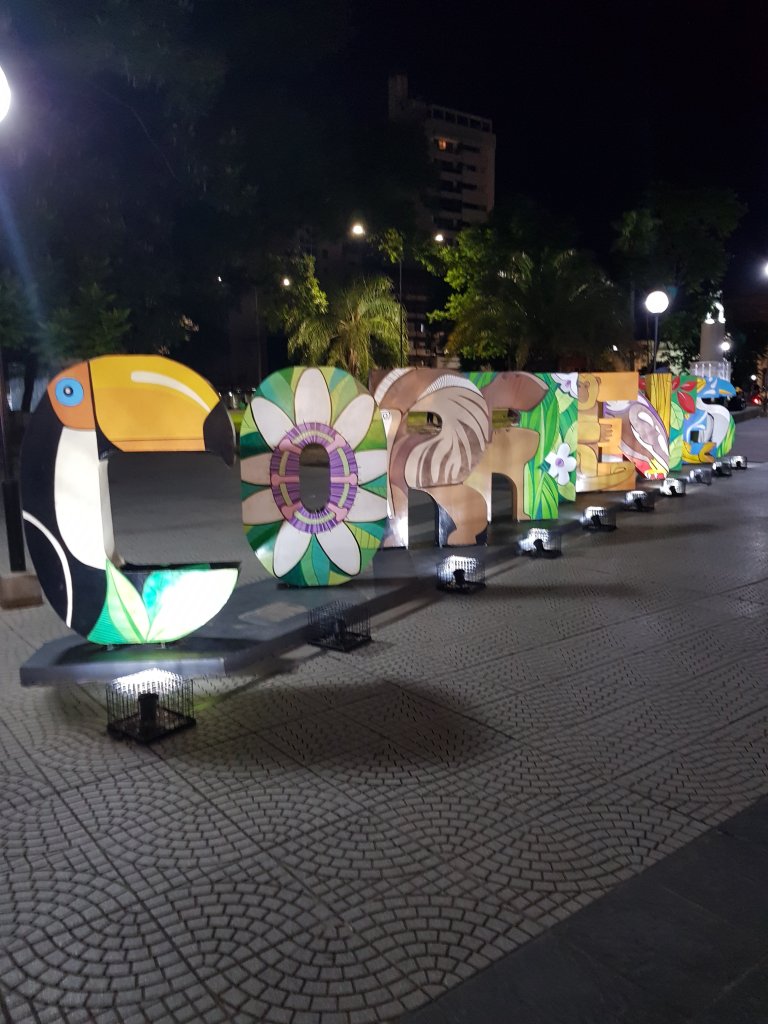
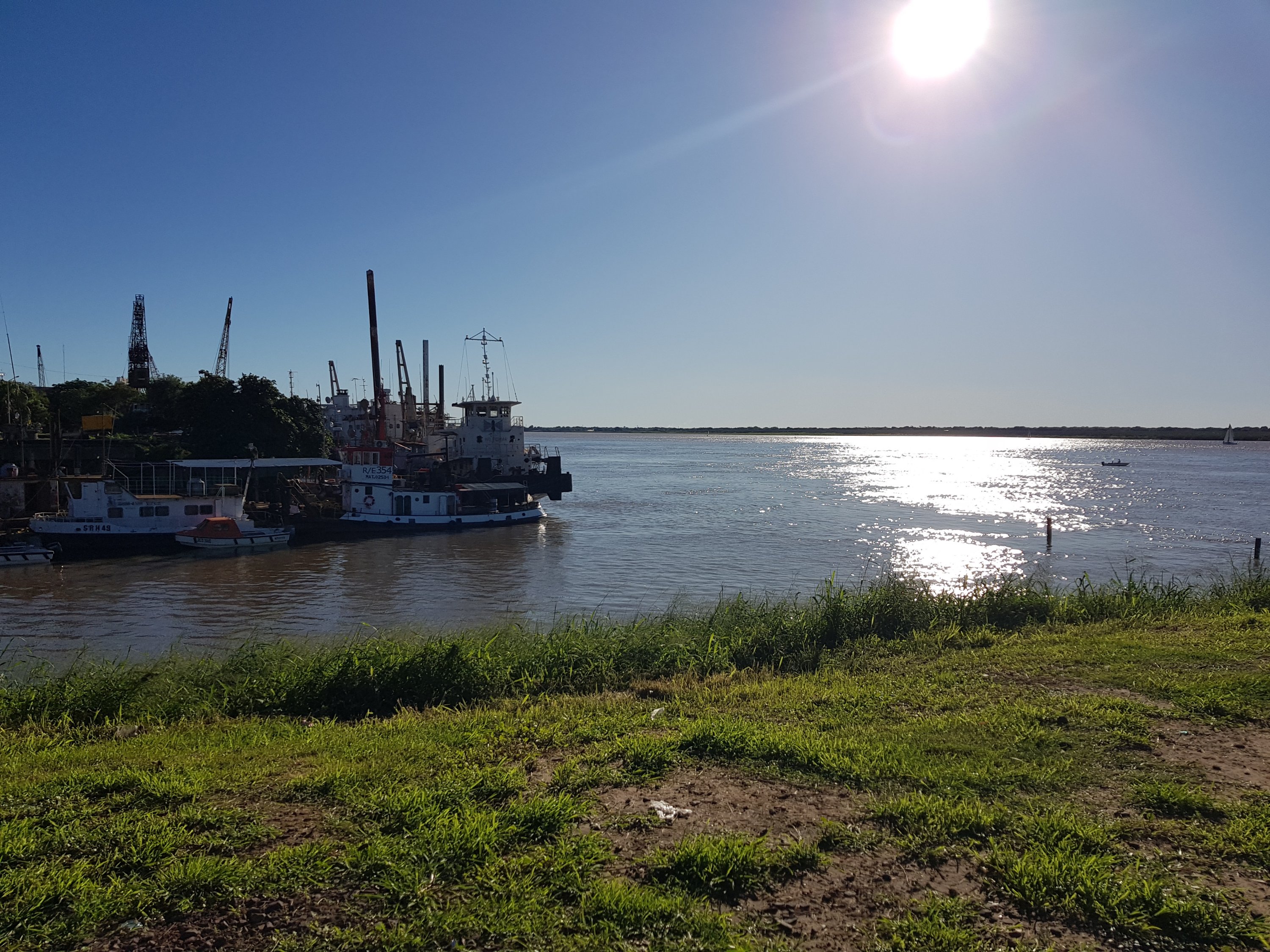
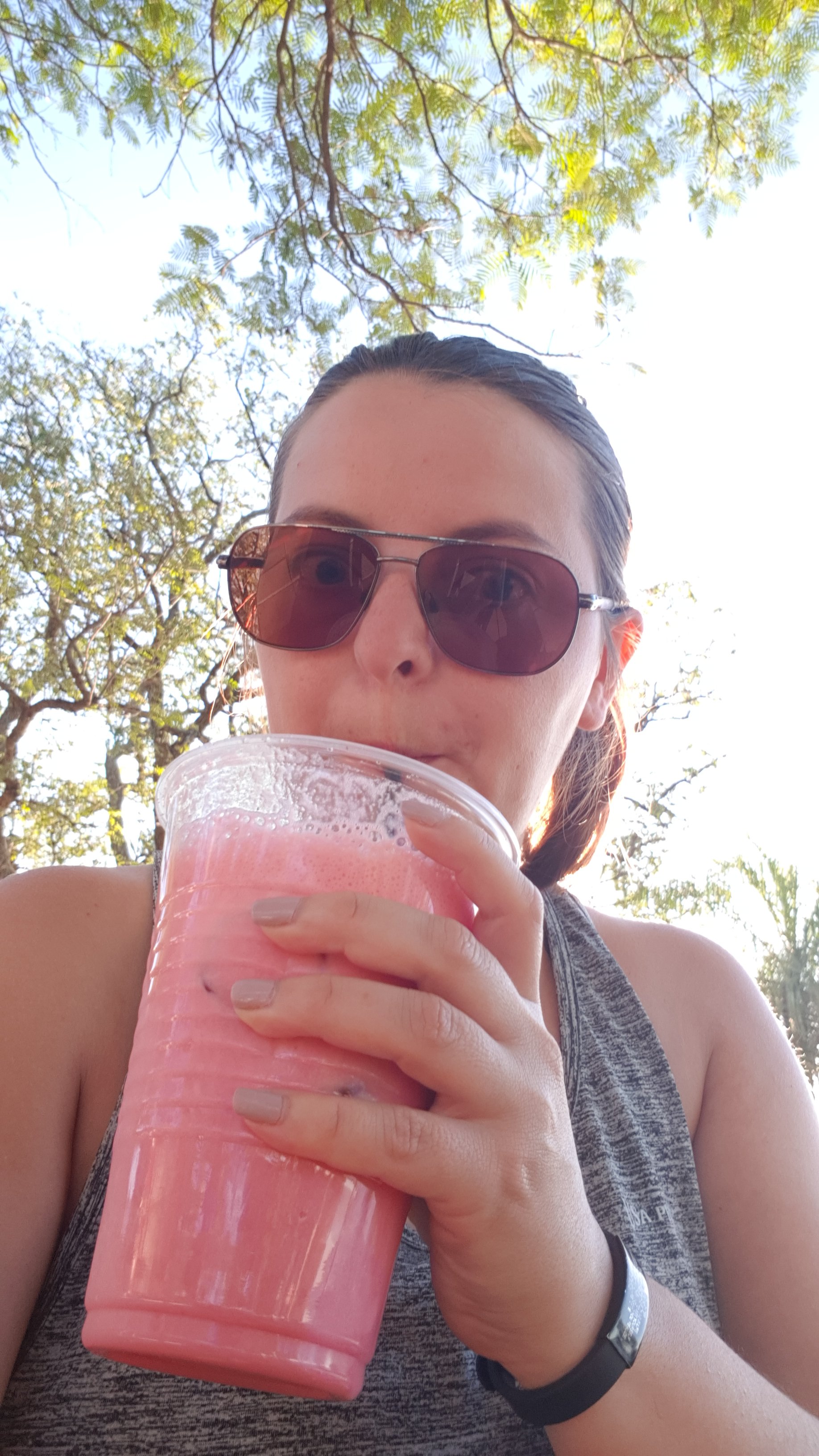
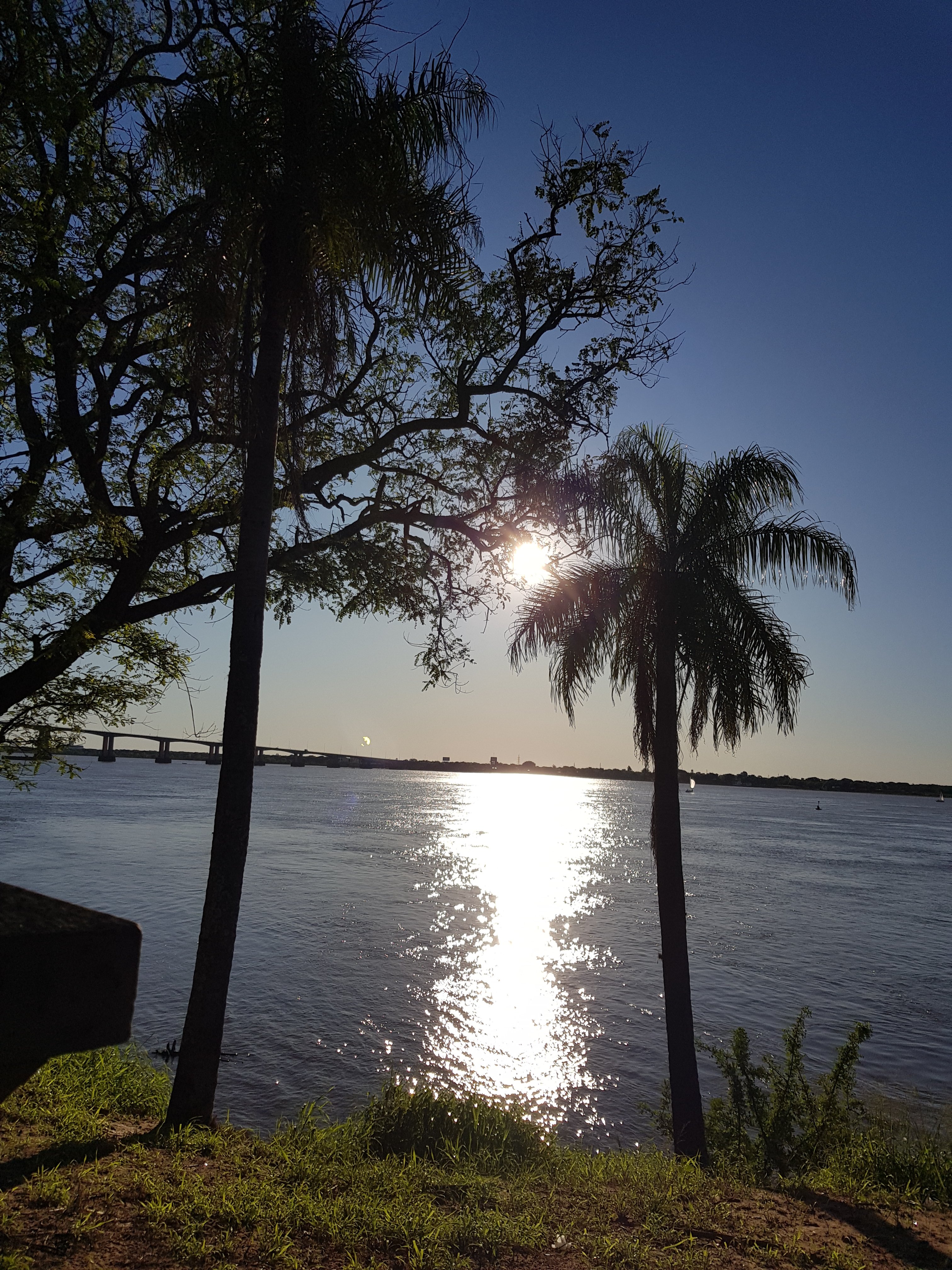
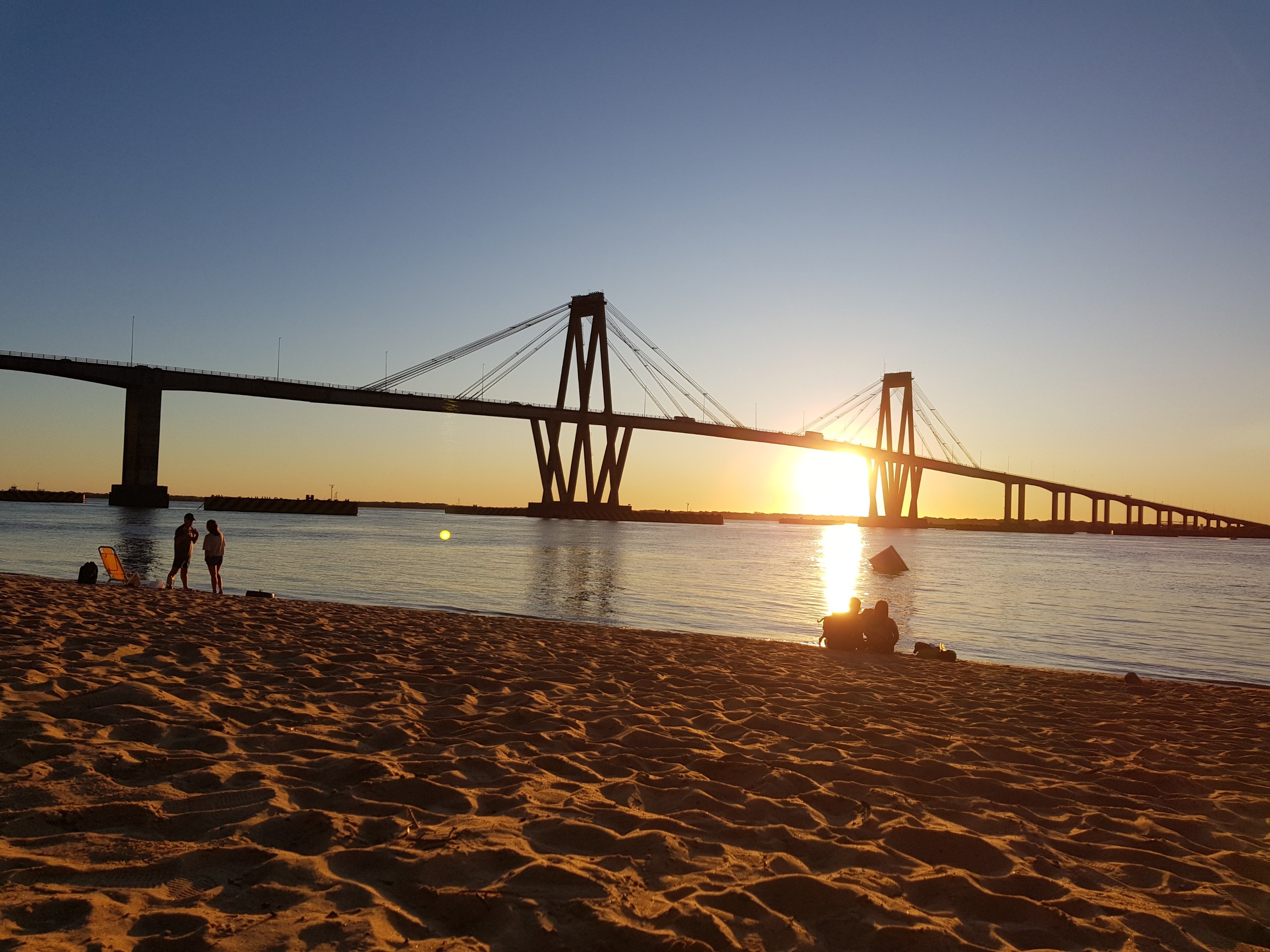
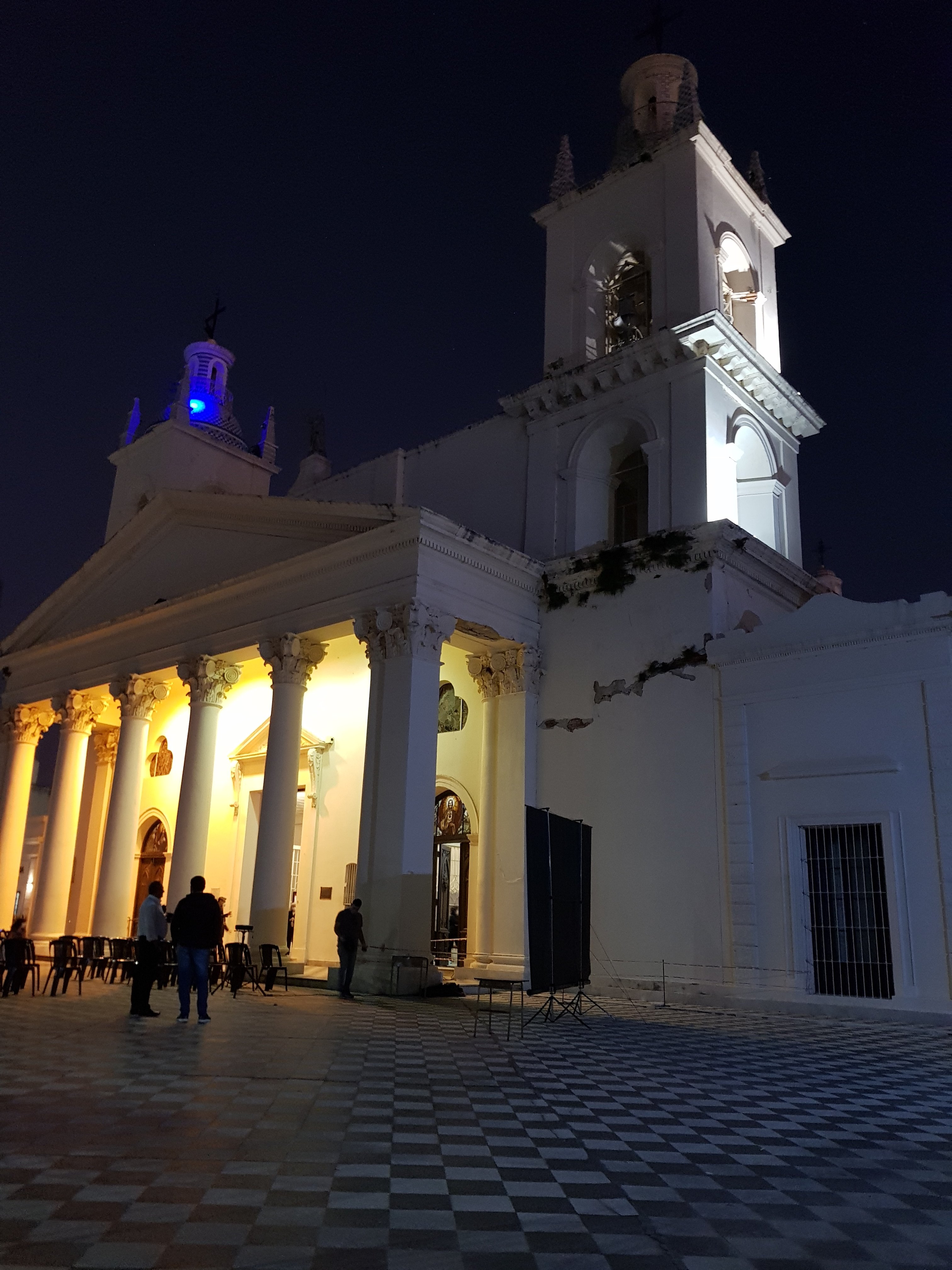
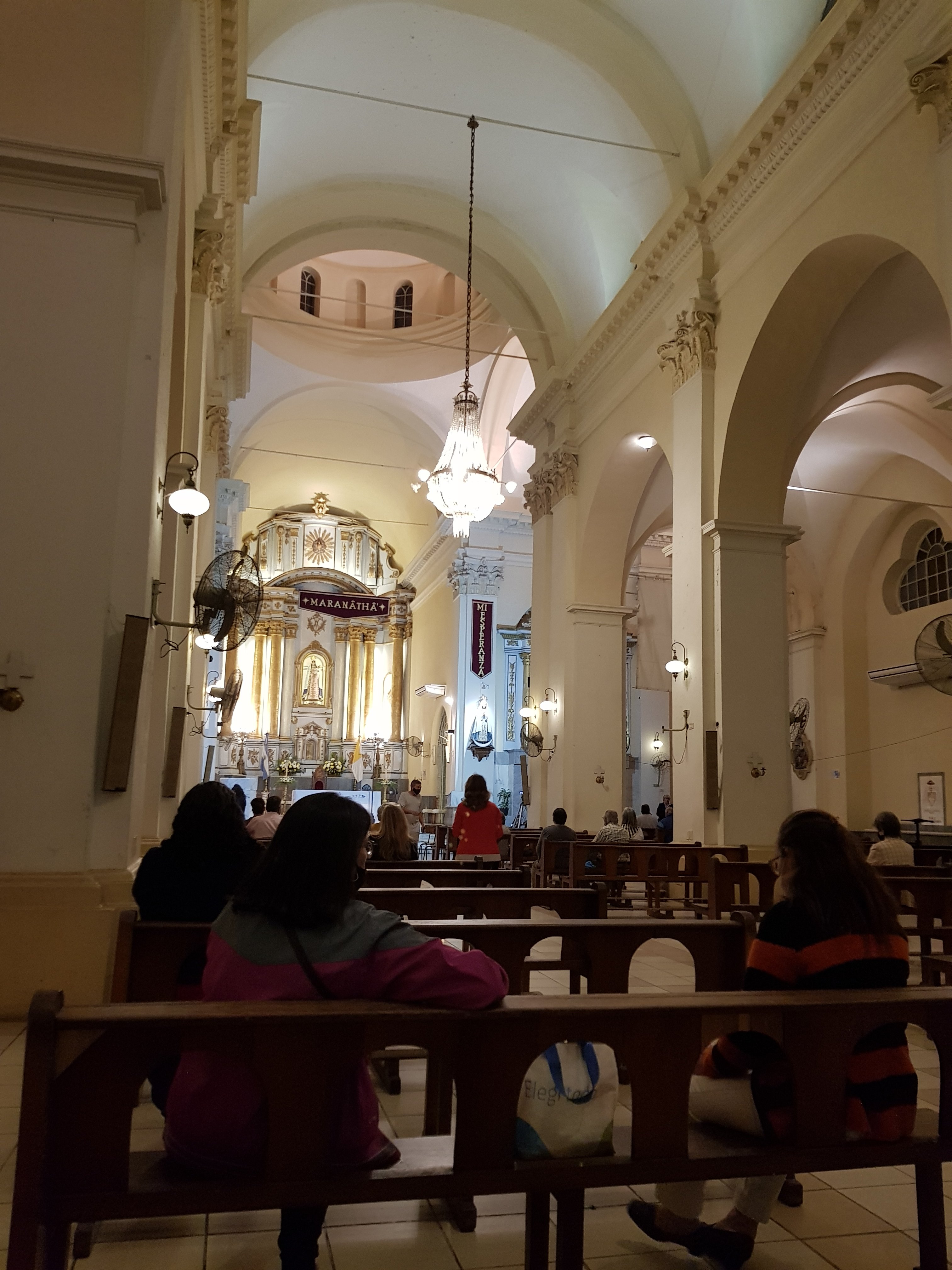
The city sits within this huge wetland area and has the huge Parana river separating it from the next big town. This huge river provides a promenade to enjoy and some beaches, so it is a good place to relax. I enjoyed a local ‘chipa’ (dough cooked over bamboo) and a smoothie whilst enjoying the sunset here. Later in the evening, I had a pleasant experience at the holy week mass in the main cathedral.

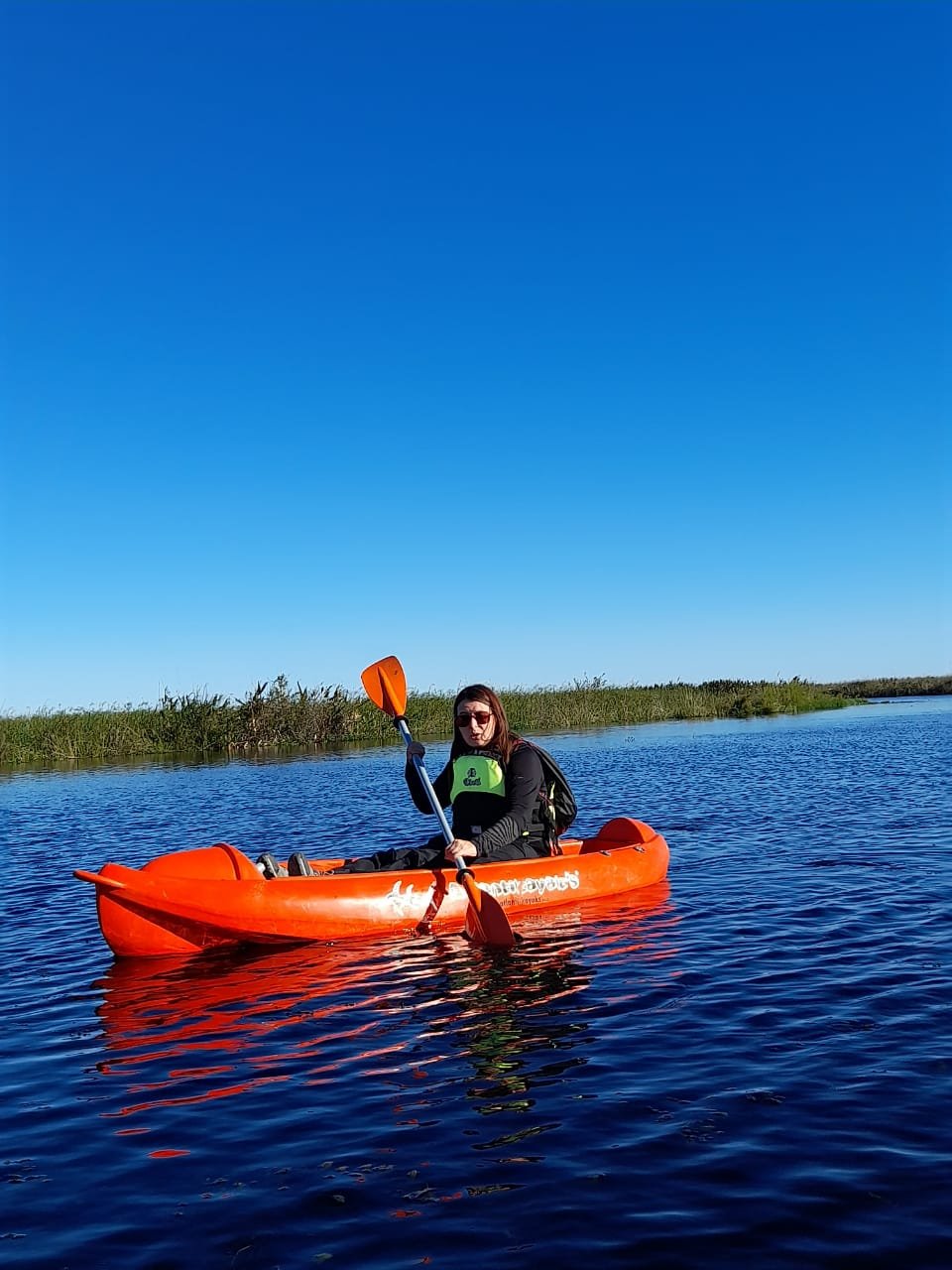
It was the week of Easter when I visited, and so all the local tour agencies were very busy. I was worried I would not be able to get out to Ibera National Park (also known as Esteros del Ibera), as it is 2.5 hours from the city, and I didn’t have the confidence to hire a car alone to this wild area. After some long whatsapp conversations with a few agencies, they managed to arrange a private transfer to Concepcion, which is a town that offers one of the access points into the park, and a long kayak trip on the rivers and bogs!

The Park is about 1 million and three hundred thousand acres in size. It not only comprises of rivers, bogs and lakes, but also grasslands, forests and savannas, depending on the part of the park you are in. The park is abundant in wildlife and is used to reintroduce many indigenous species. Deers, anteaters, caimans, and even tigers called Yaguareté can be found here.

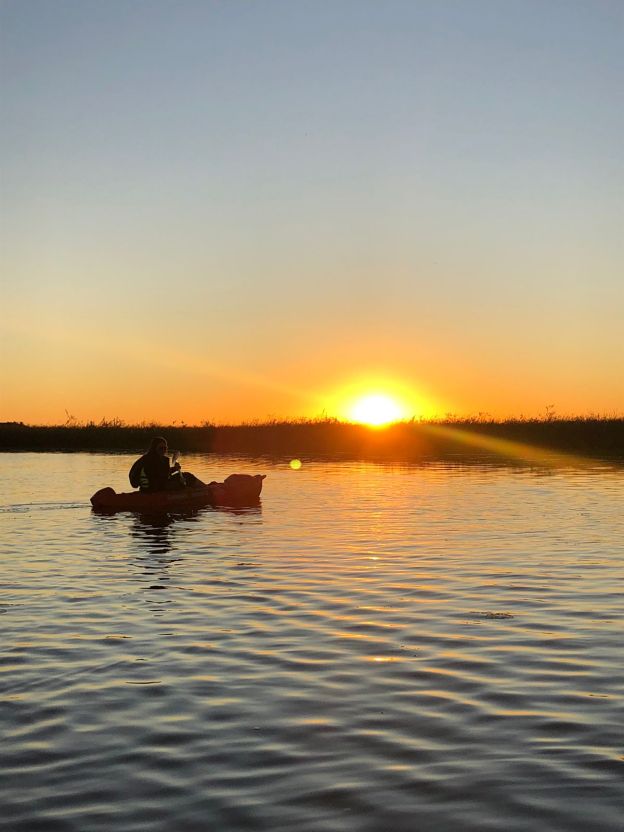
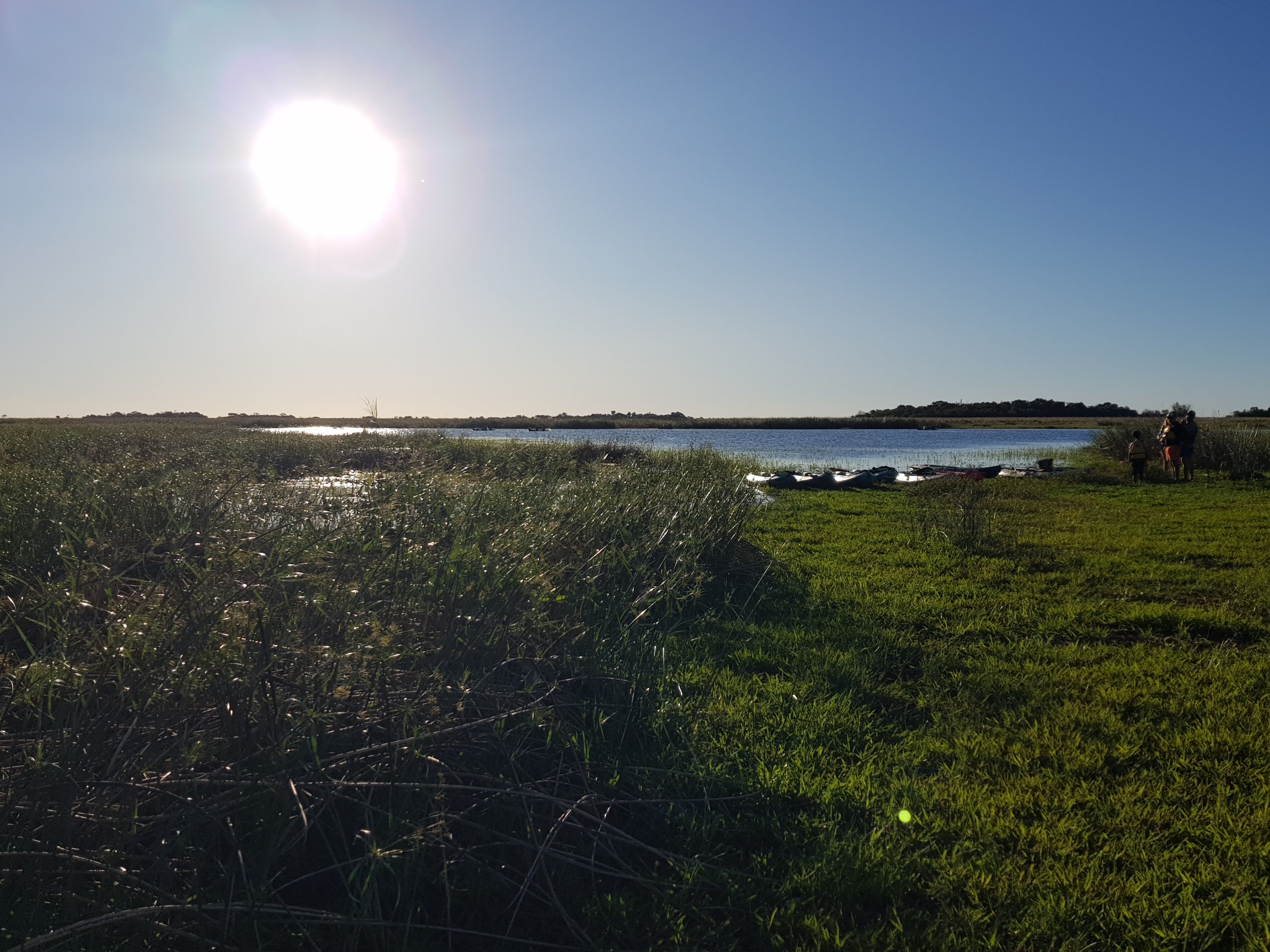
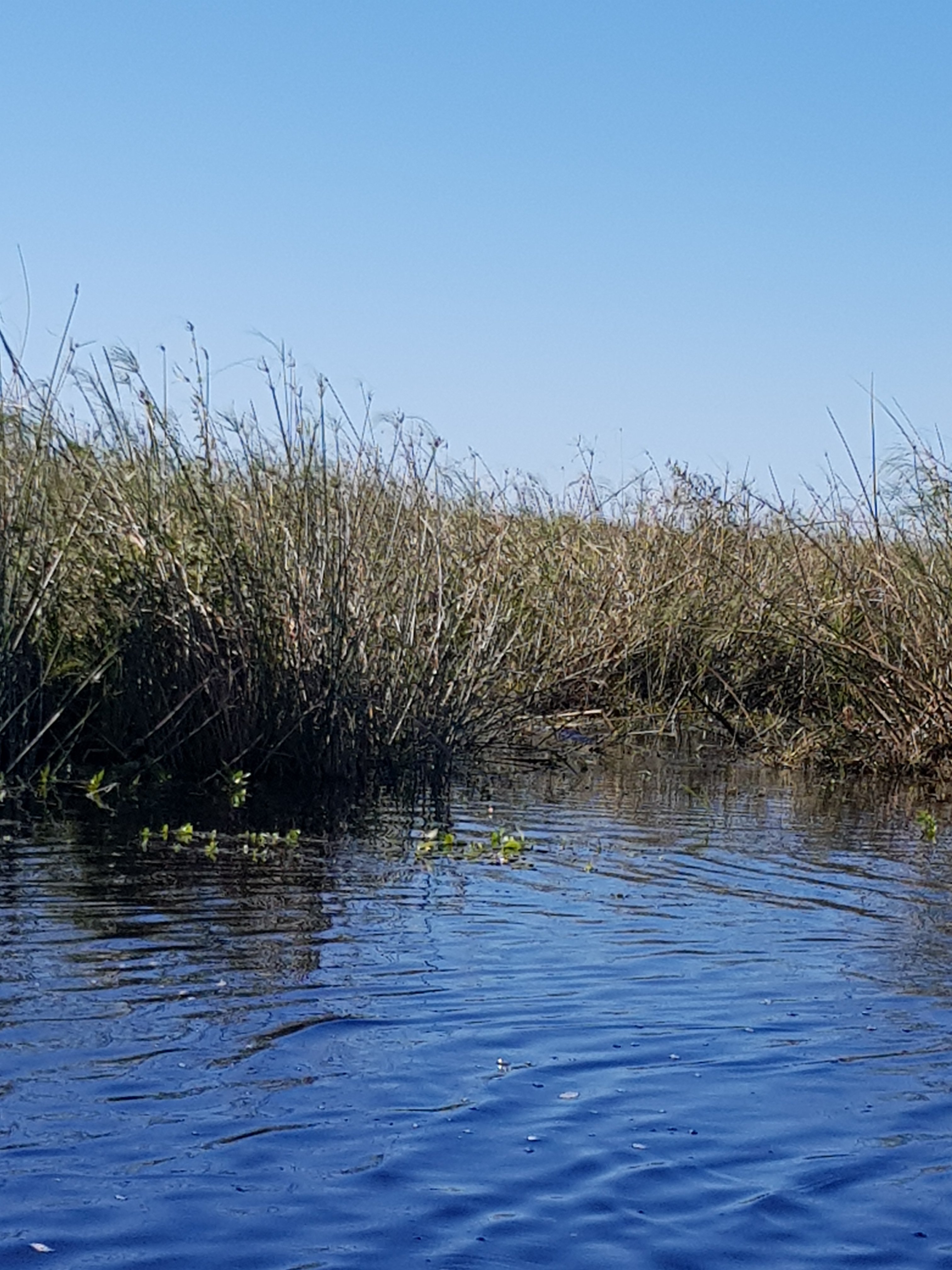
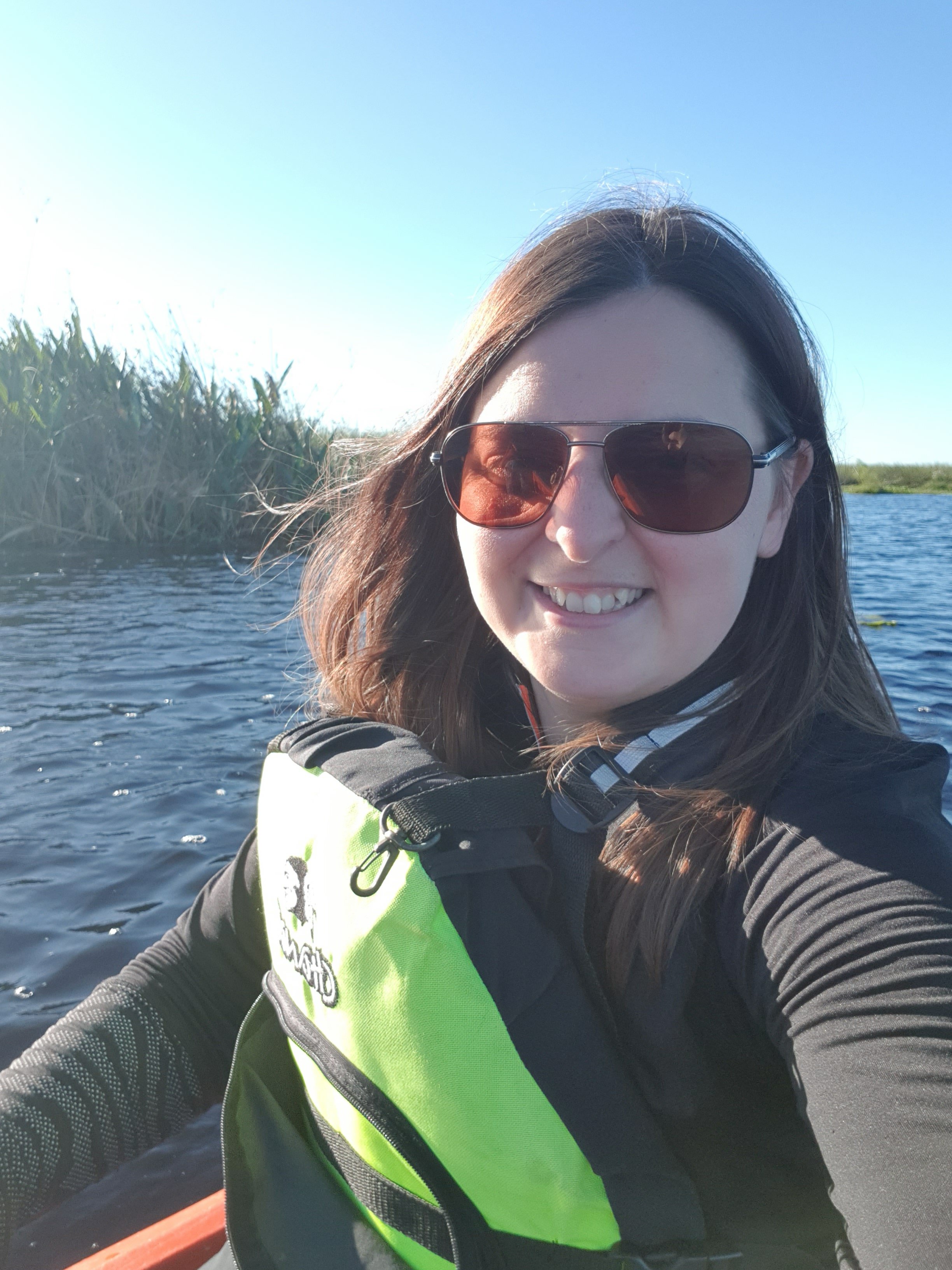
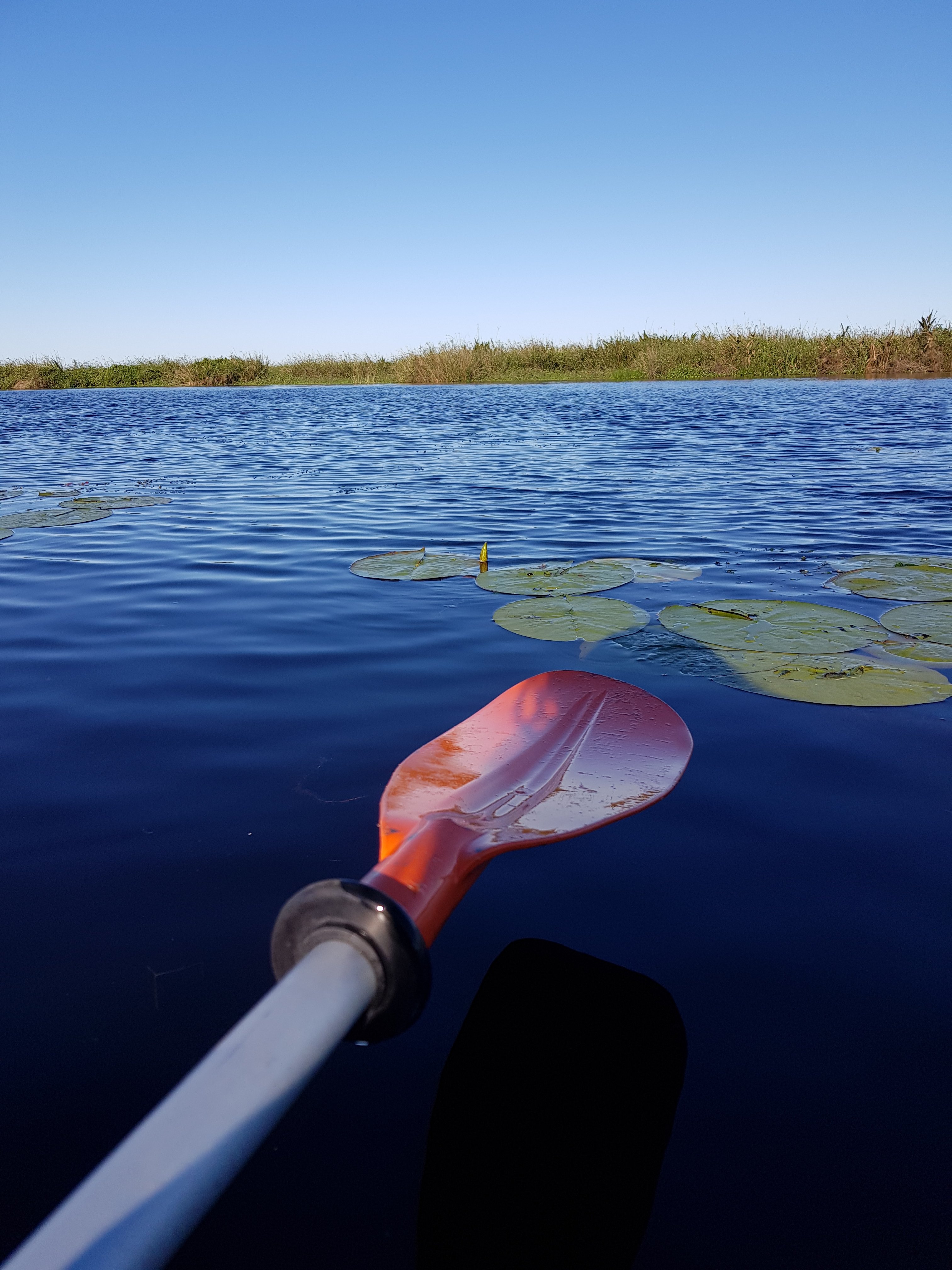
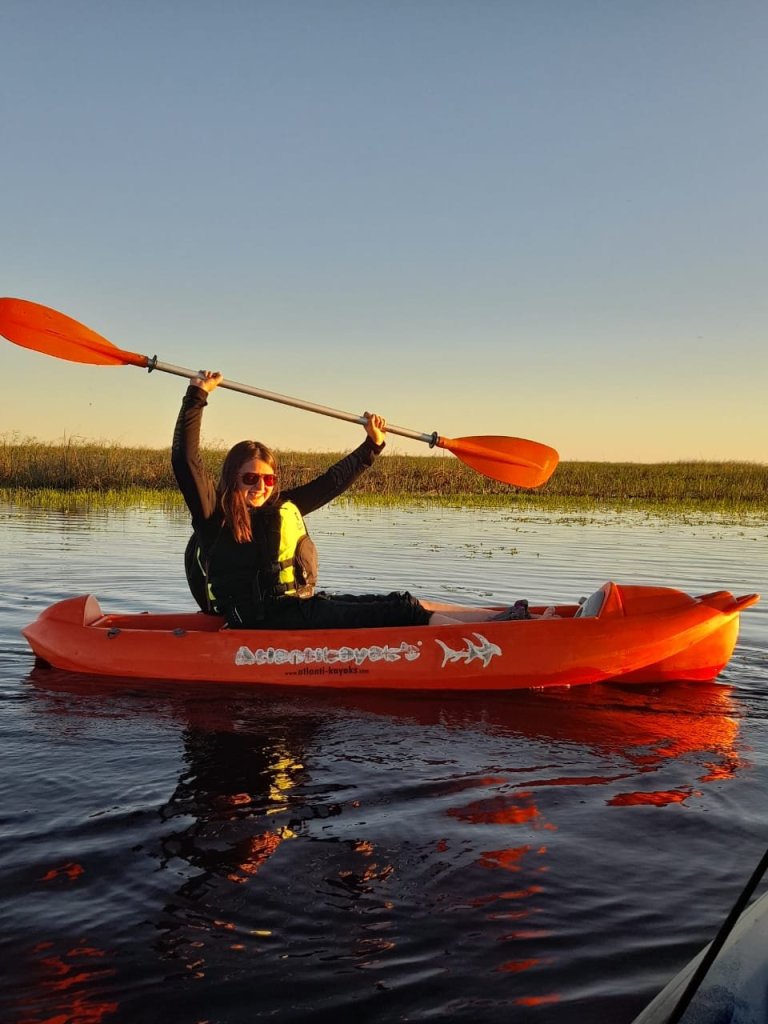
I set off in my kayak with a group of Argentine people surrounded in marshy waters with lily pads all around. Within ten minutes I saw my first caimen, specifically a Yacare caiman which is medium sized (growing up to 3 metres). It was just poking out of the water, until I got a little closer, then I could see it slip away with that long tail swimming side to side. Amazing! Within half an hour, I had seen another two. It was such a cool experience. I was a little nervous, but the guide assured me that they would not attack, and they did seem quite timid really.

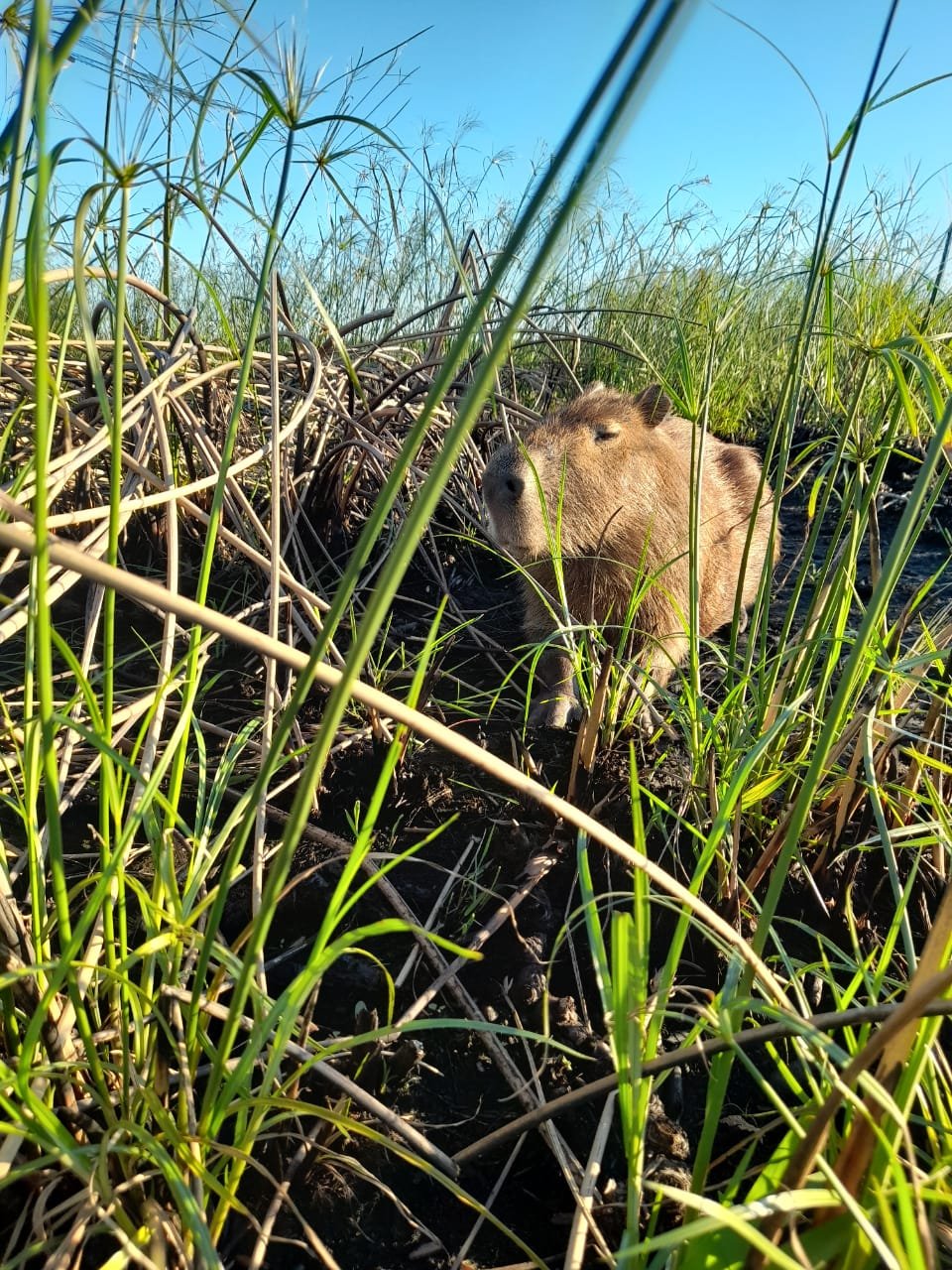
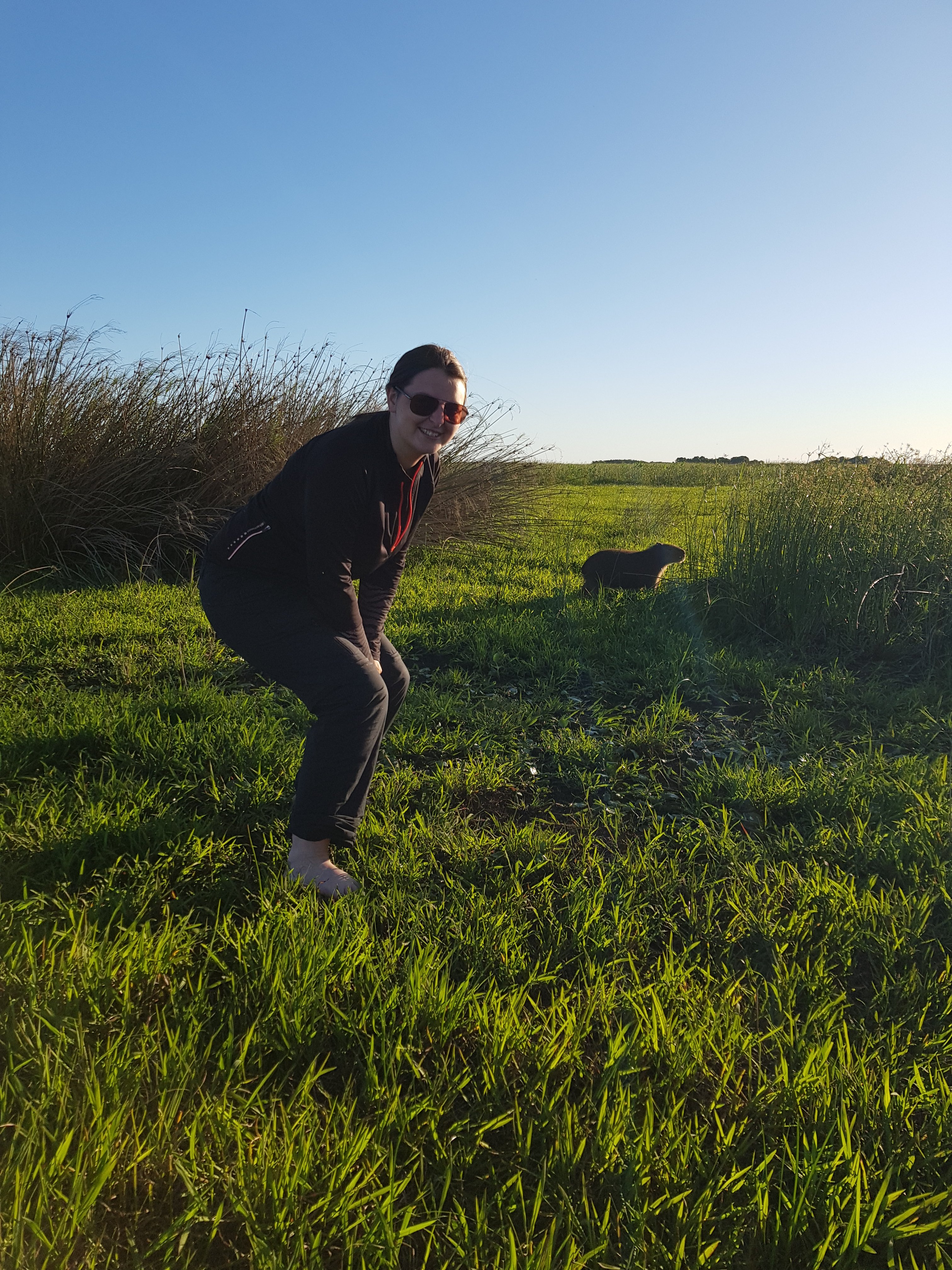
As I continued to row along, I saw beautiful and noisy birds of different colours, and enjoyed the scenery. We stopped for a picnic on top of the grasses, and as we began to dig into our sandwiches, a big Carpincho came by to have a look. These animals are known for being the biggest rodents in the world, and there are plenty of them in this national park. Shortly after this we saw a deer, followed by an owl, and even a south american racoon! I was very happy, I felt like all the animals had come out to see us.

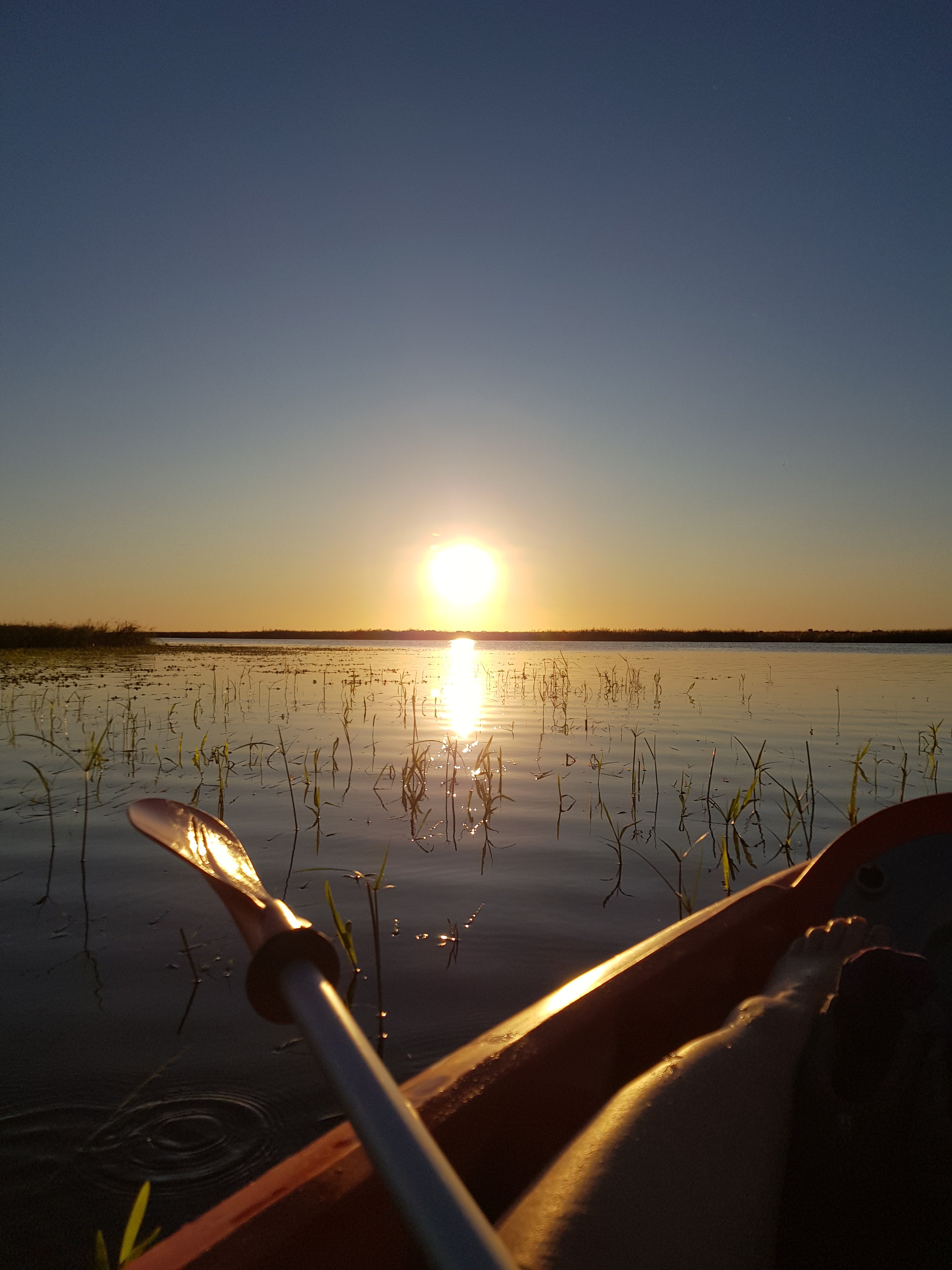
I began to row back with a view of the sunsetting on one side, and a full moon on the other. One of the most beautiful scenes of my life.

The park can be explored by kayak, motor boat and by horse! Although.. you and the horse will have to get a little wet. I would love to return here and stay in the park itself for a few more days exploring other parts, because, just WOW!

The adventure isn’t over yet though, next stop Iguazu National Park! EEEEeeekkkk!

Cordoba, Argentina: ‘City of Bells’ / ‘La Docta’ / Cultural Capital

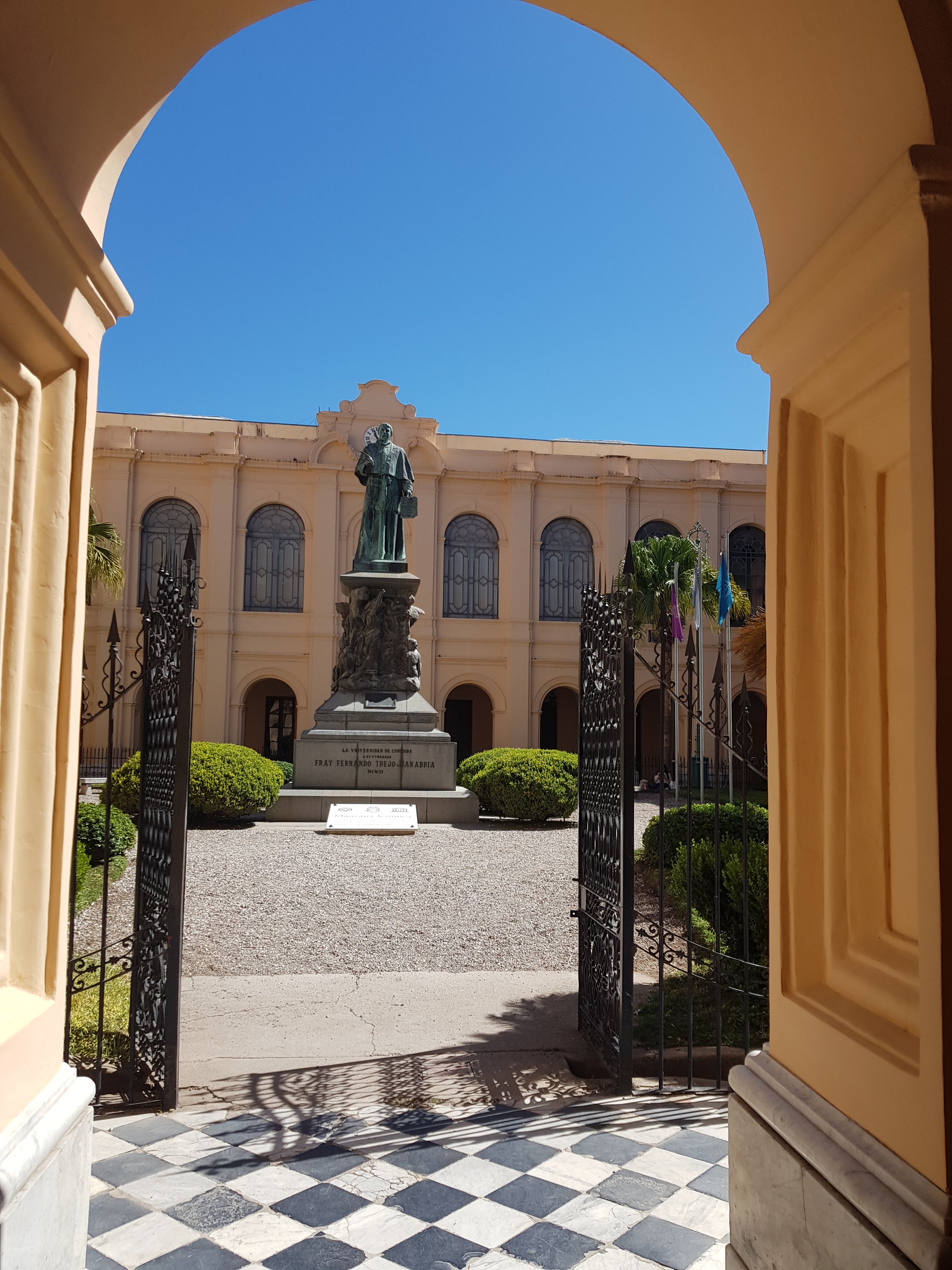
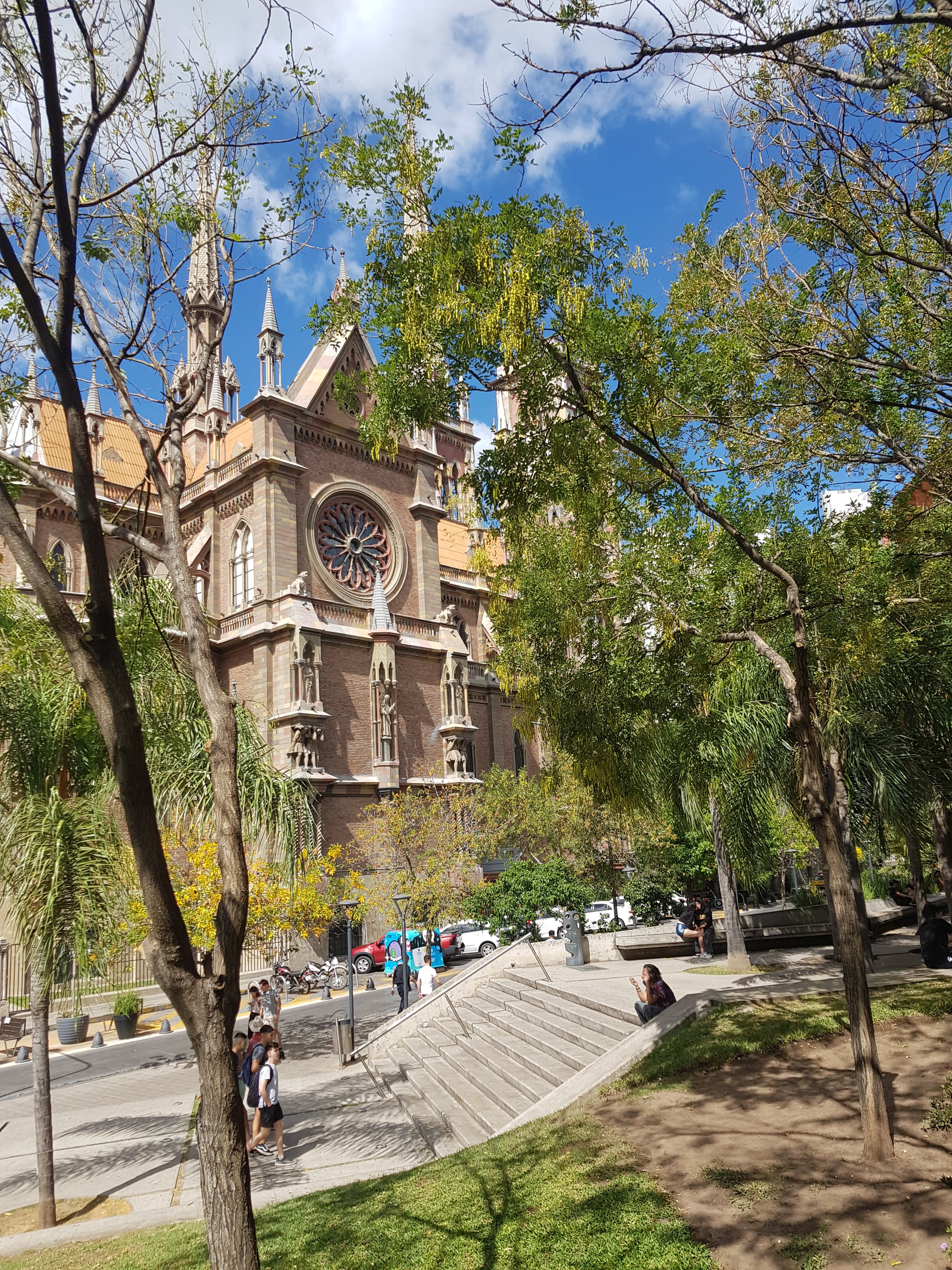
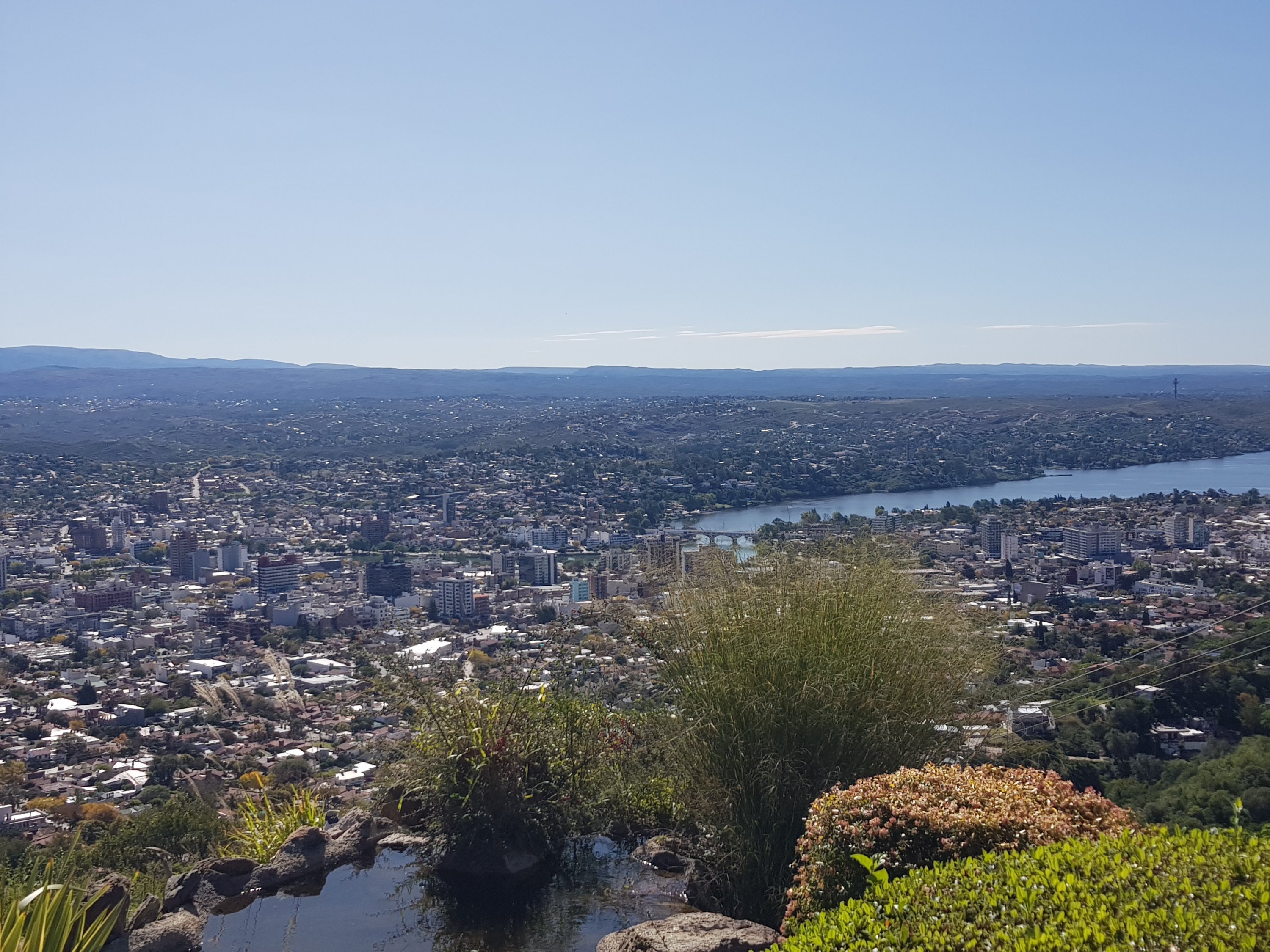
The second largest city in Argentina, after Buenos Aires, Cordoba links the Capital and Pampas region to the North West. This huge city is well known for many things, and sits within the rolling Sierras landscape. It was founded by Jesuits, leading to one of its many nicknames ‘la docta’ meaning ‘the wise’, because of the Jesuits founding the first university there that became a jewel for the city. The city is thought to have been named Cordoba in honour of the founder’s wife who was from Cordoba in Spain. What a romantic gesture! Anyway… I was in Cordoba for six nights and had a blast!

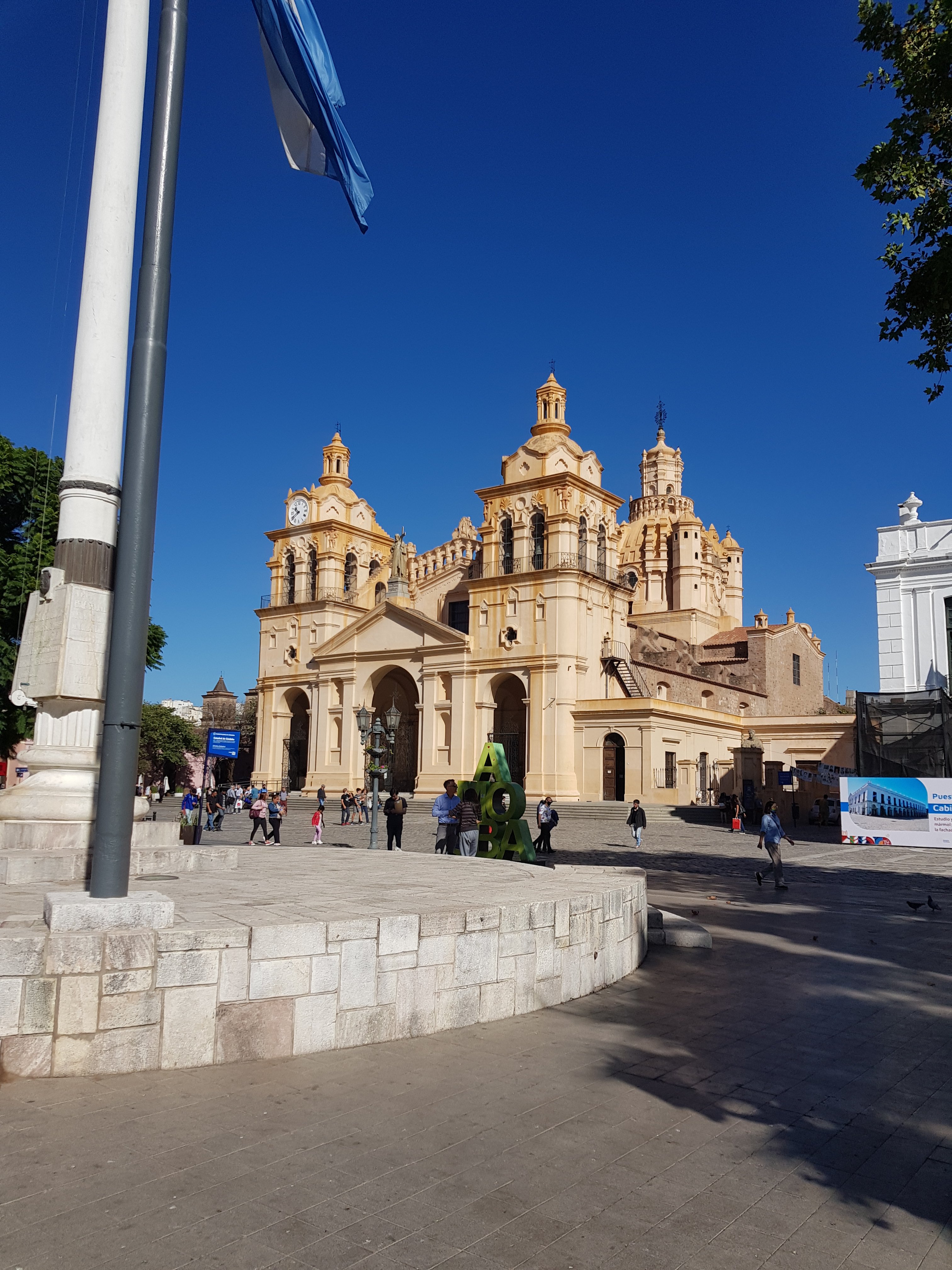
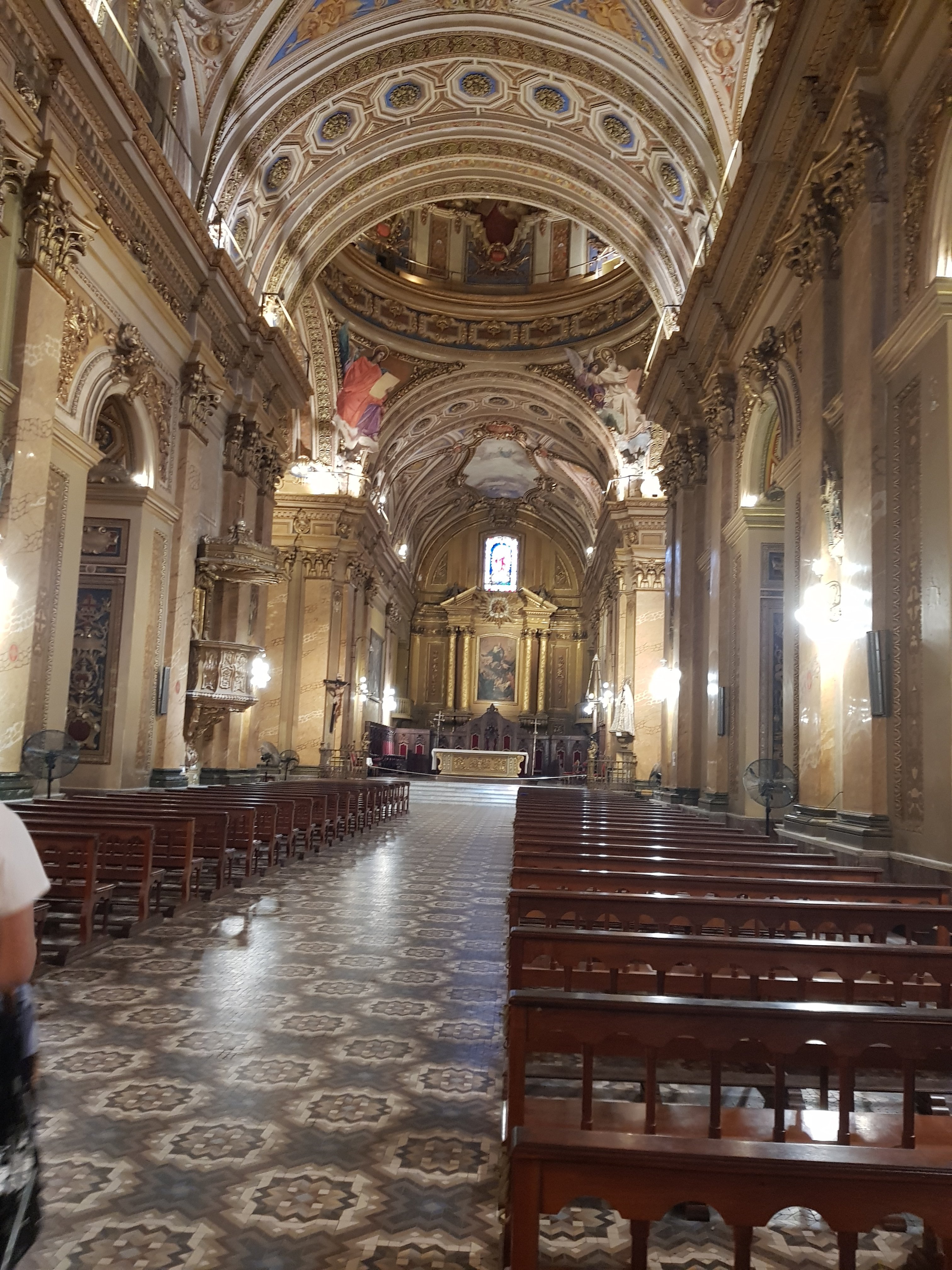
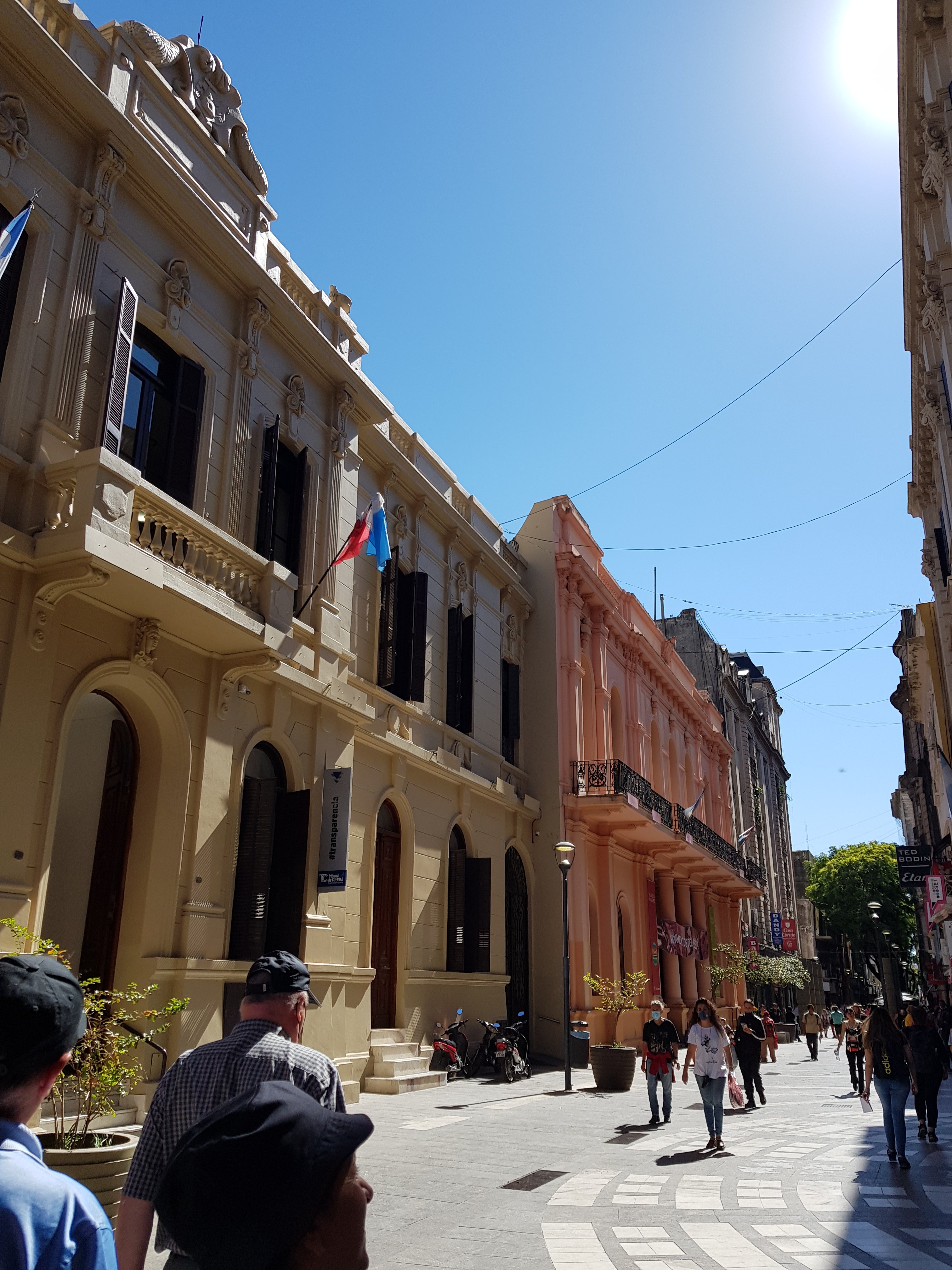
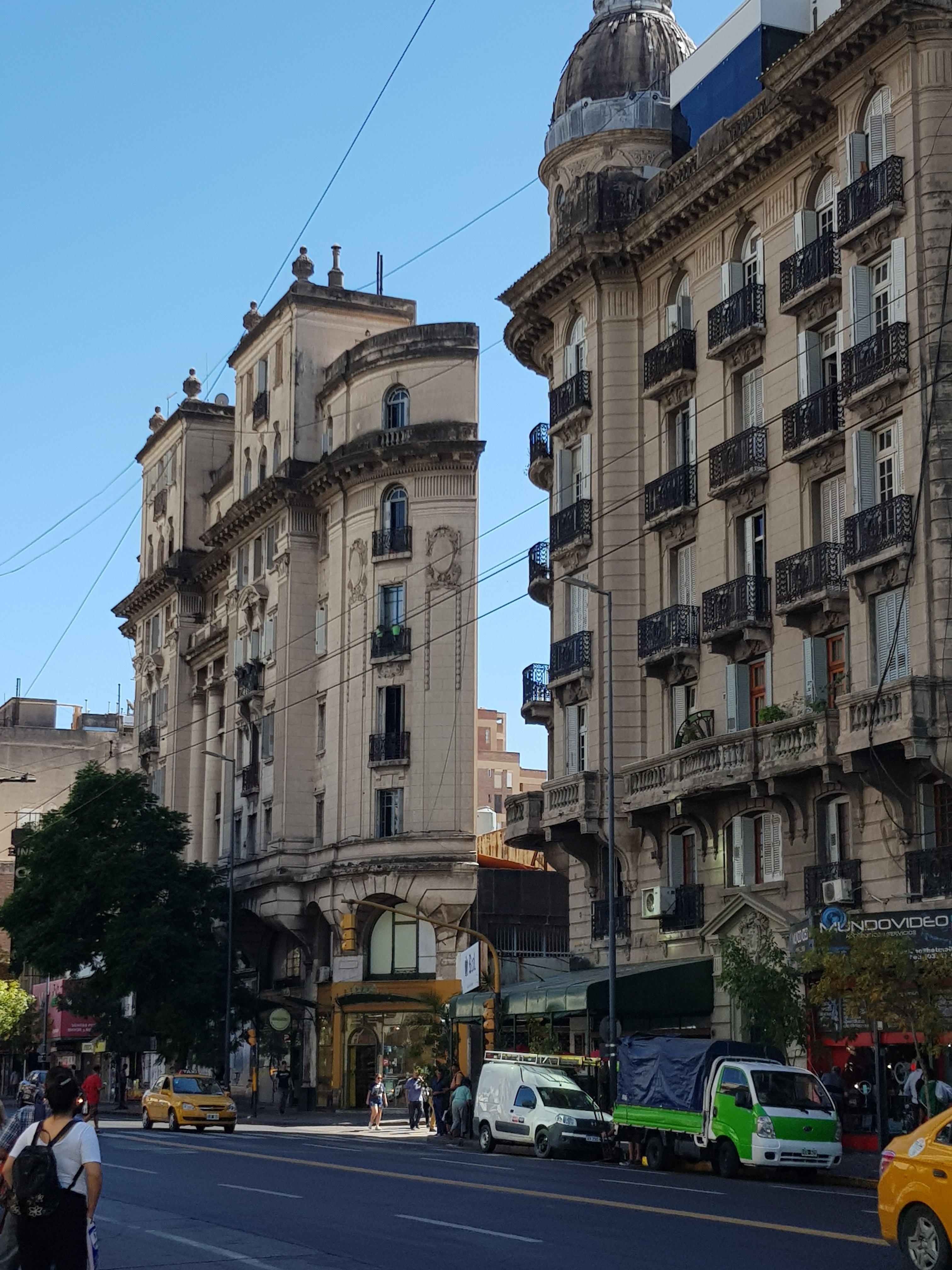
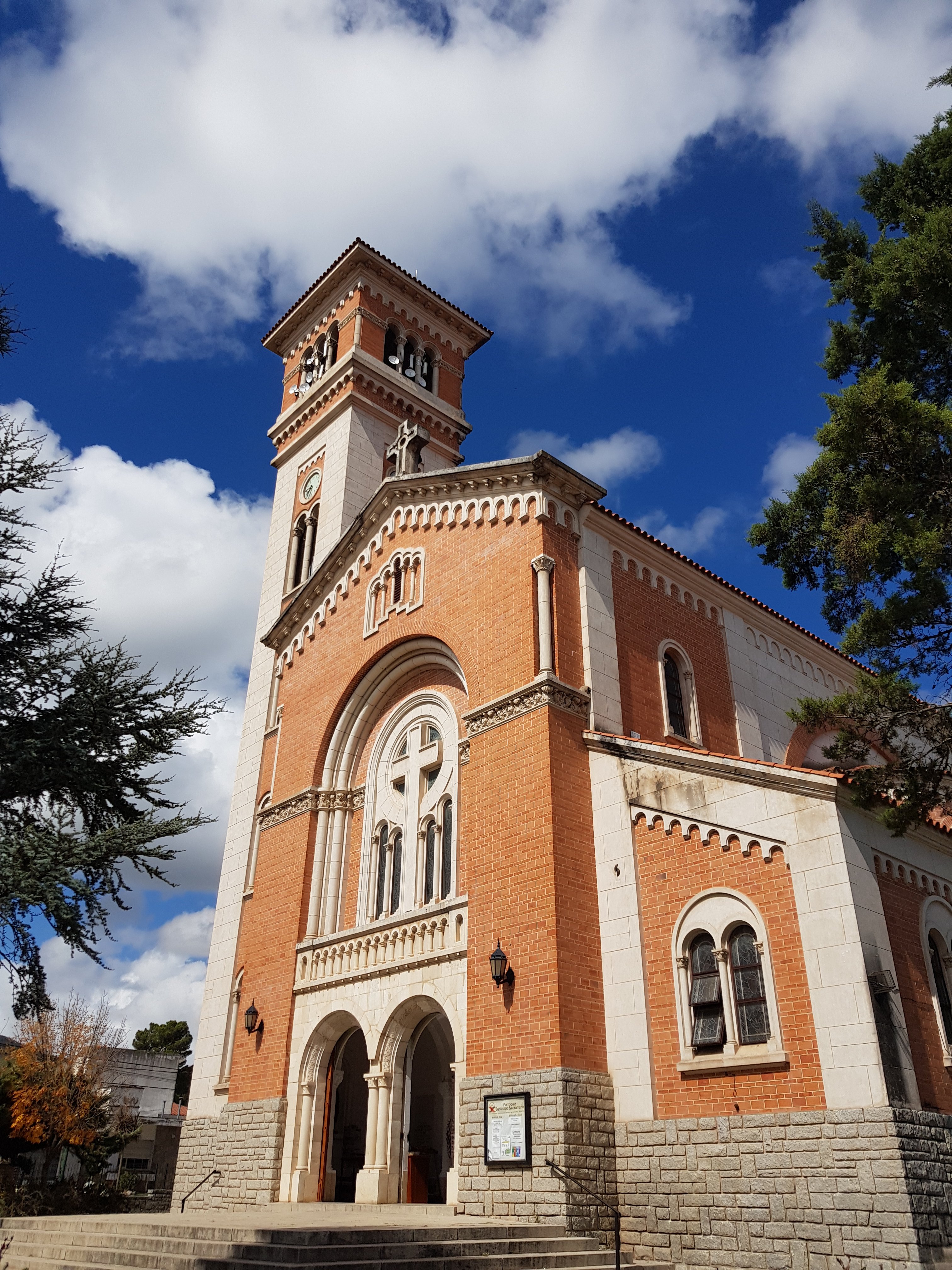
The city has not only history, culture and good food, but is also bustling with modern amenities and a great nightlife. On my first day in Cordoba, I went on a free walking tour which showed me around the old part of the city, and inside the gorgeous cathedral.

In this tour I made friends that I would enjoy the company of for the rest of the week. As well as a feisty Mexican and two South Koreans in my hostel, and two locals I enjoyed dinner with. 🙂

I joined my new friends in the first evening for a night in Guemes. This bohemian part of the city, has a collection of trendy restaurants, bars and clubs. We danced the night away to the modern music of Argentina and the odd hit for the states until 4am. It was a good night.

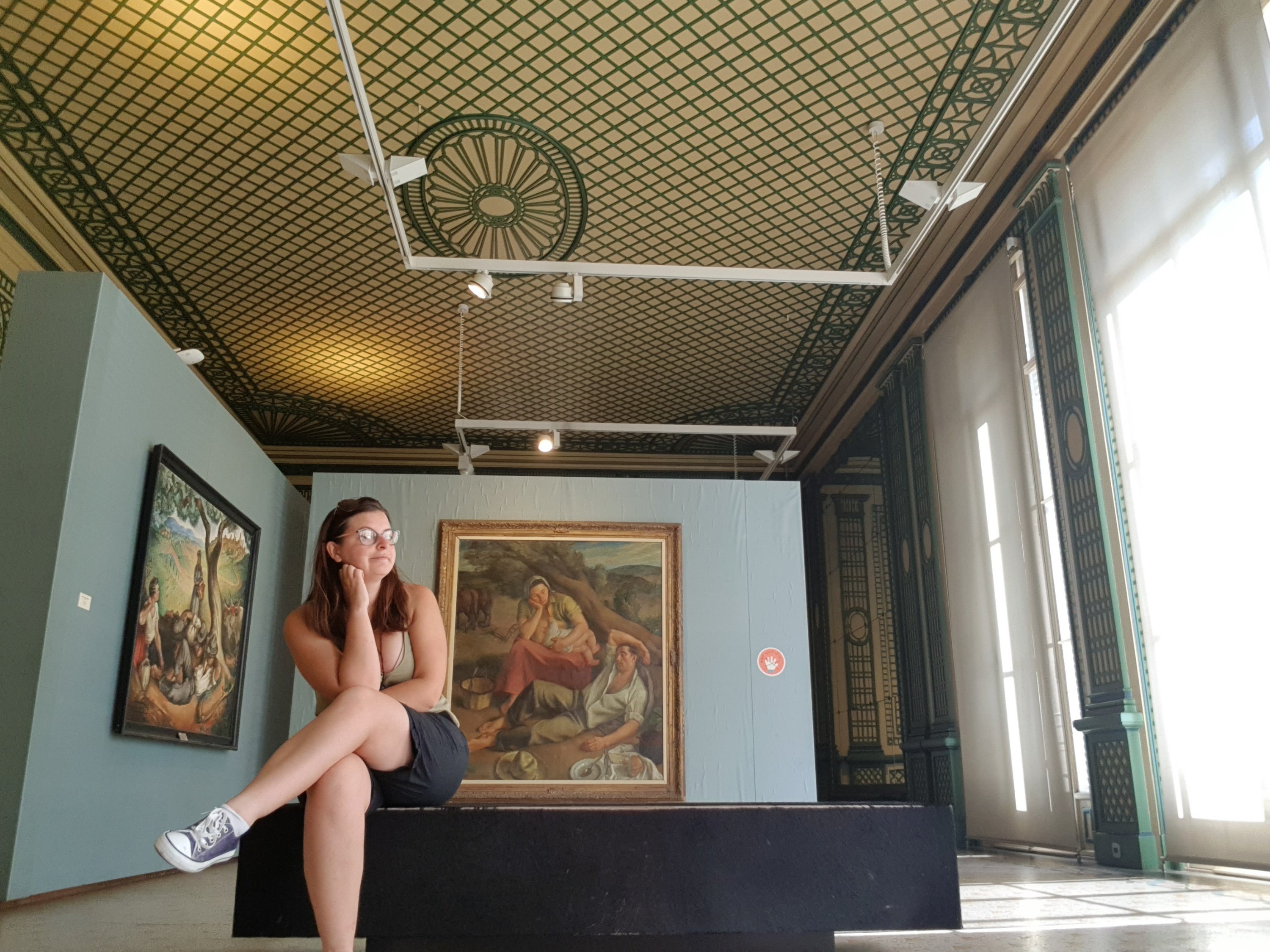
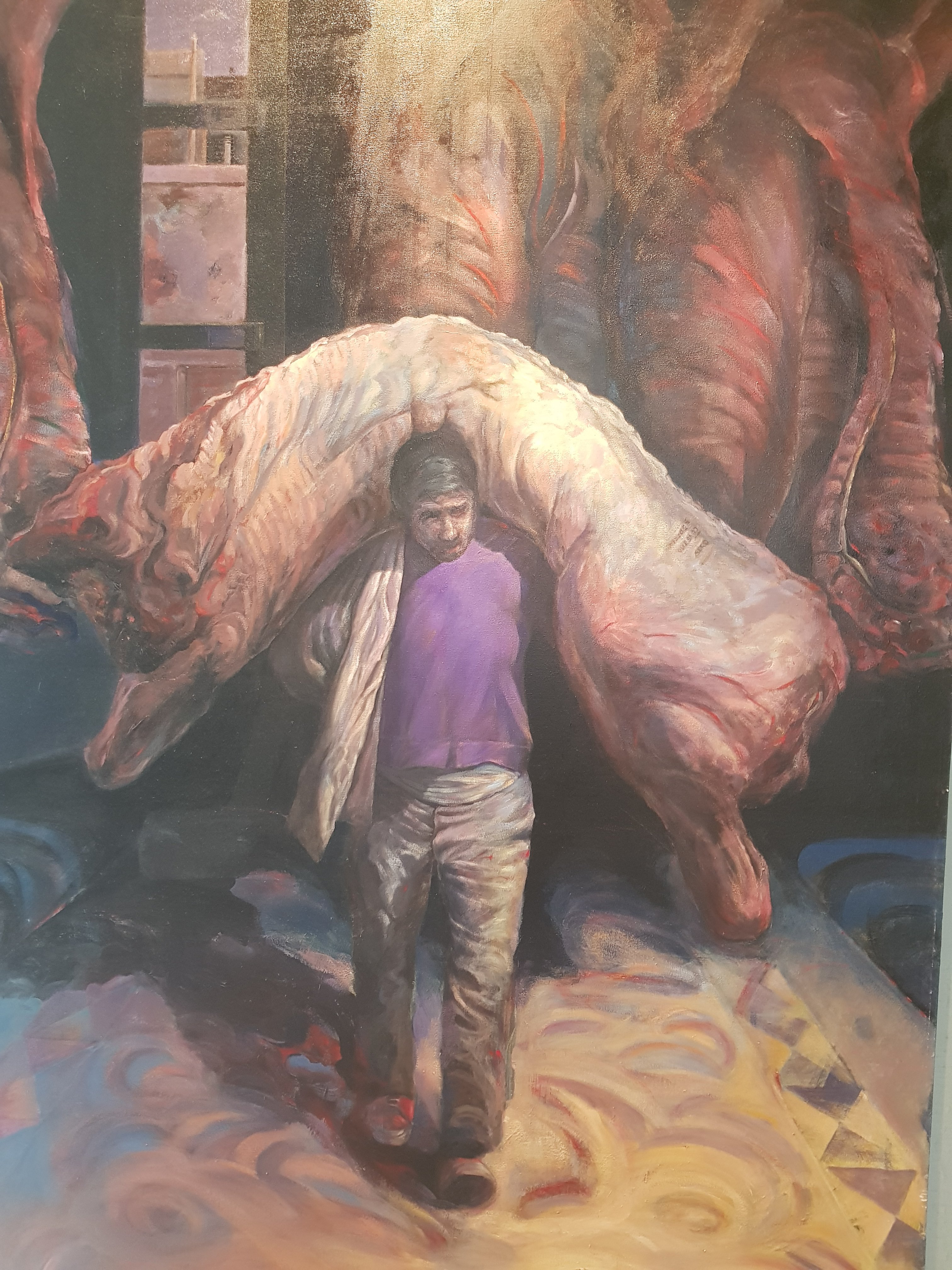
There are plenty of museums and things to enjoy inside the city, and I had particular fun visiting the various shops and one of the fine art museums.

‘Dirty War’

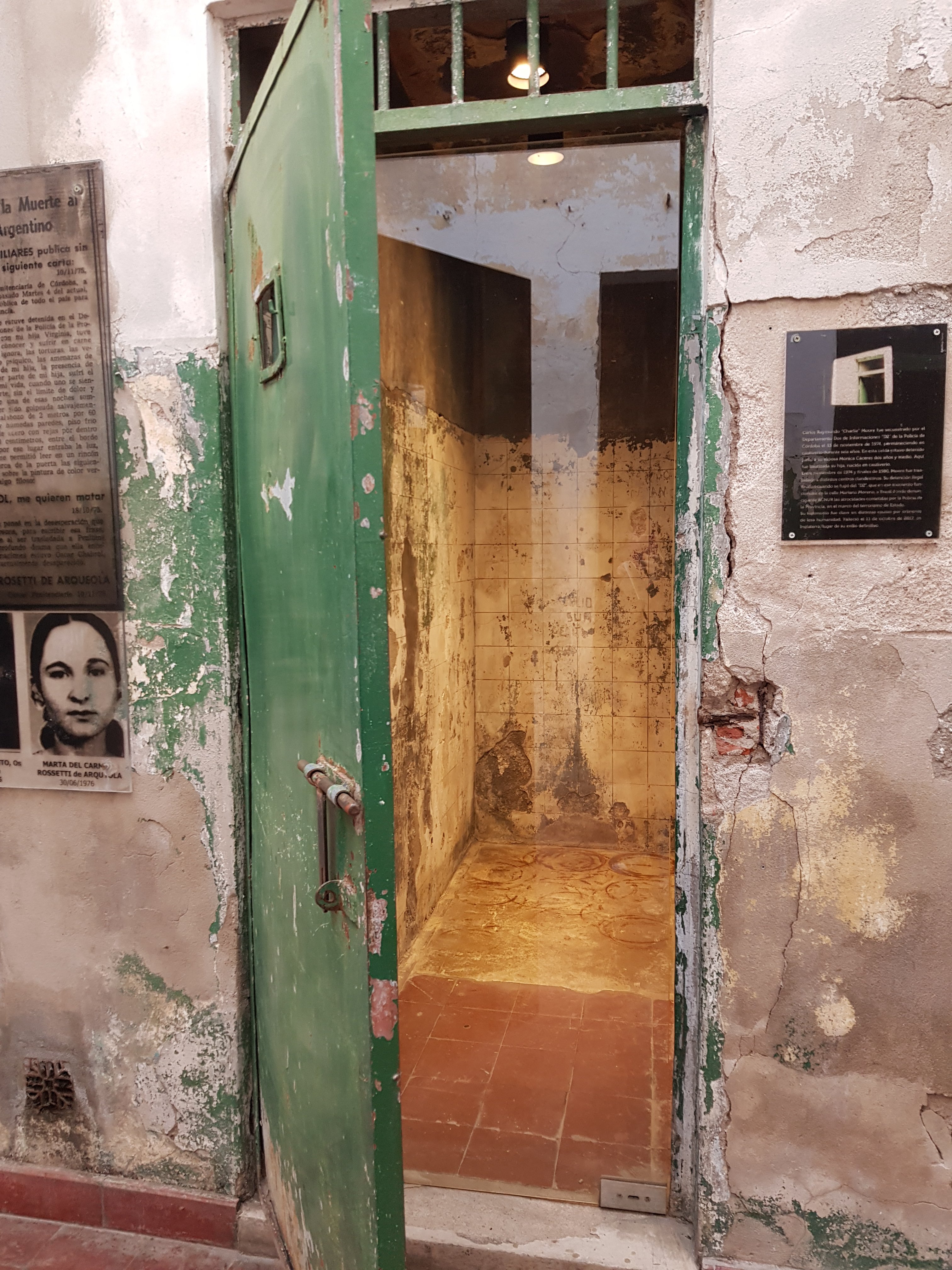
Another interesting piece of history that was clearly dominant in Cordoba,was the remembering of the ‘Dirty War’. During the ’70s there were a series of kidnappings, torturings, and murders of Argentine people by their military government at the time. Anyone that criticised or opposed the government in anyway was abducted, and many were never seen again, becoming one of ‘the disappeared’.

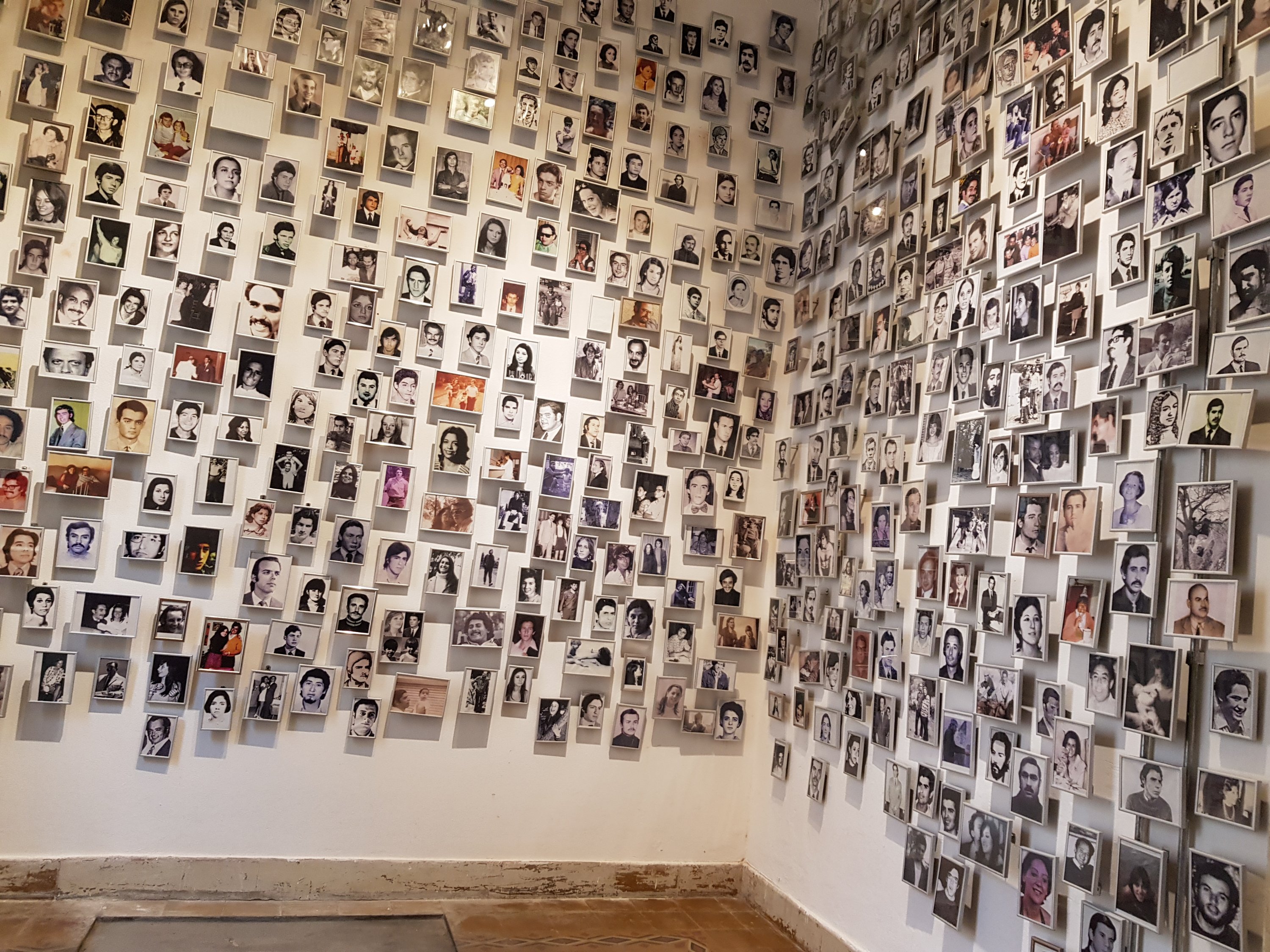
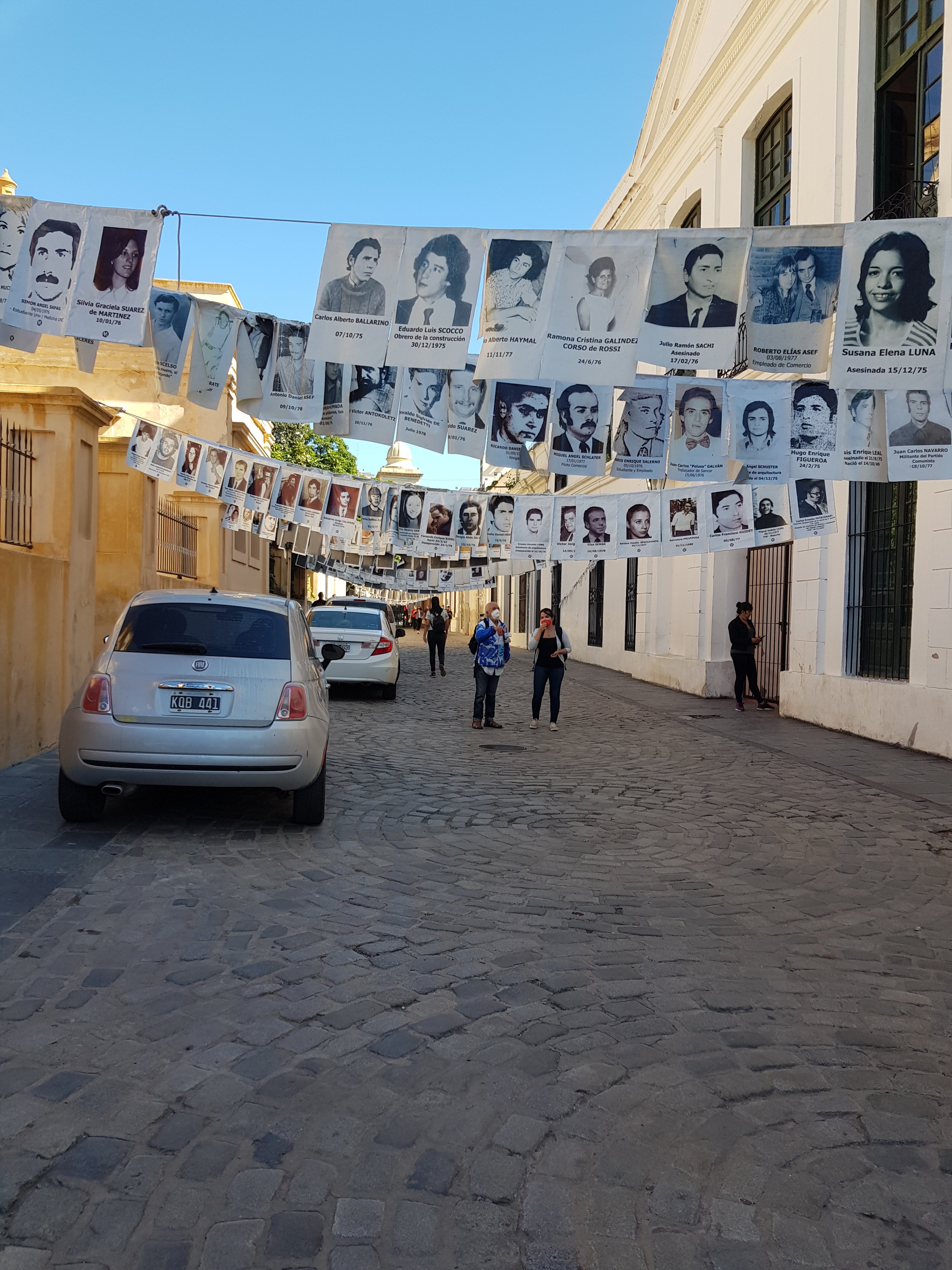
There were up to 30,000 people that went missing including students and pregnant women. Many of the pregnant women were killed and their babies were illegally adopted by government officials. Every thursday people still gather to protest what happened and ask for any information about what happened to their loved ones. If an Argentine person has questions about their identity, they can even access a free DNA test to check that they are not one of the stolen children.

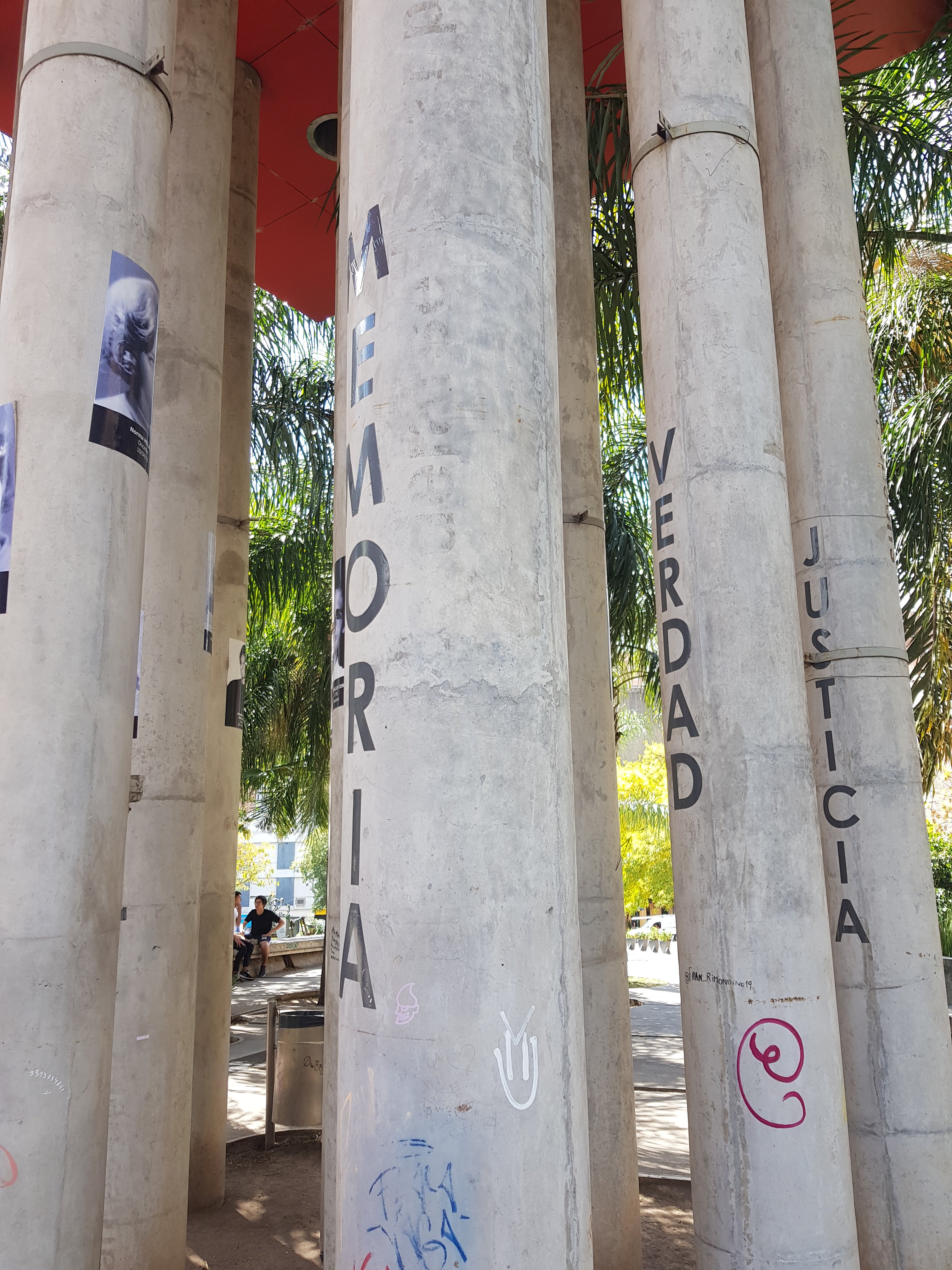
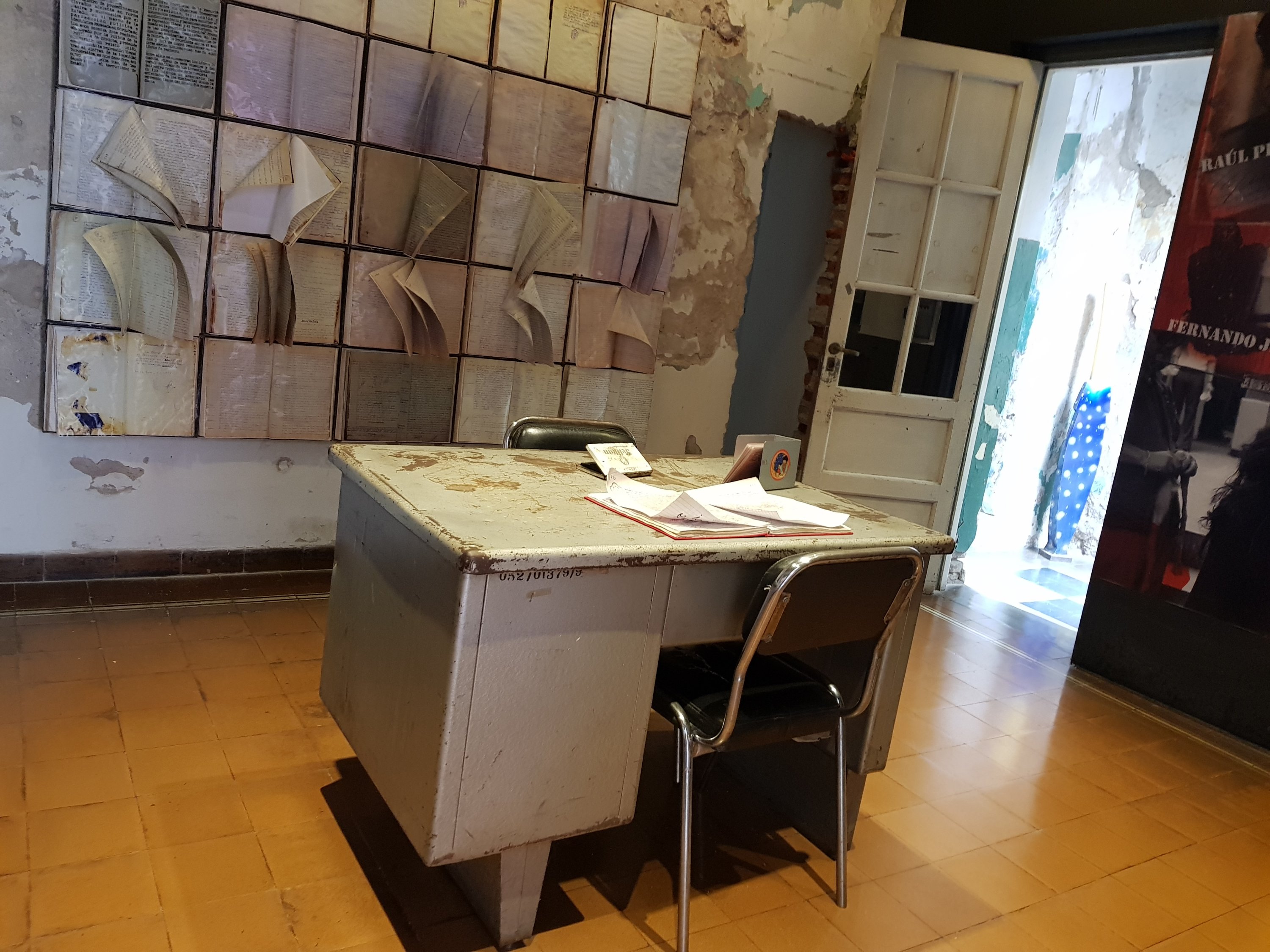
The history is shocking, and appalling and there is a museum to remember this in the centre of Cordoba. It is housed in the former official building where people were taken, tortured, and killed. It has several testimonies of people that were present there, photographs and possessions of victims. The city itself also has statements, photos and symbols in memory of the tragedy around different parts of the city, even though this happened throughout the country.

Surrounding the city

Outside of the city, there are plenty of towns and scenic drives to enjoy. There are also a few towns that were colonised by Germans, and so have German style architecture and attractions. Unfortunately, the tours to these locations were all booked so I could not visit, but I did enjoy the authentic company of my new German friends, so I was happy with that! Some of my new travel buddies had hired a car for the day, and invited me to join them on a tour of the area.

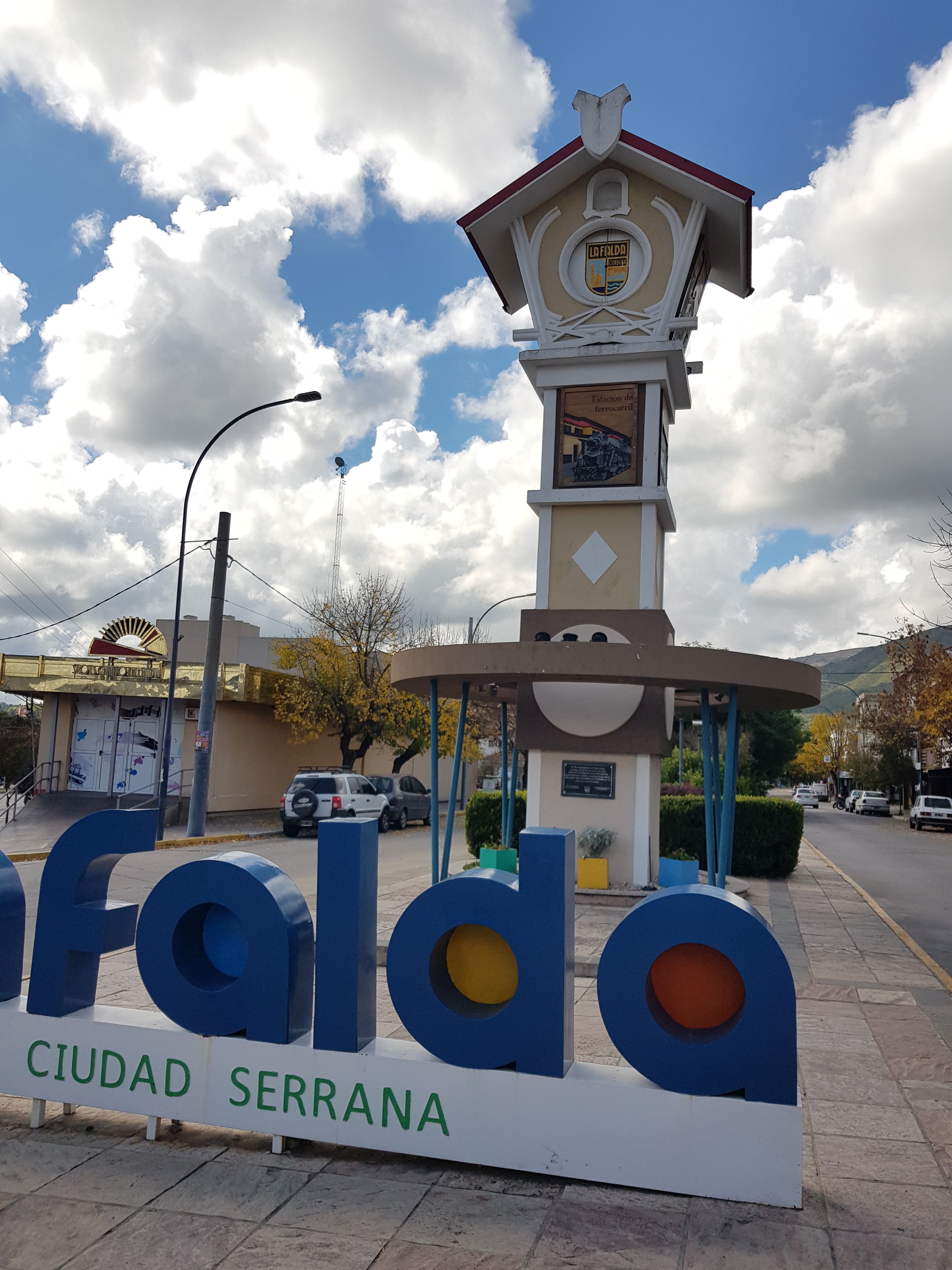
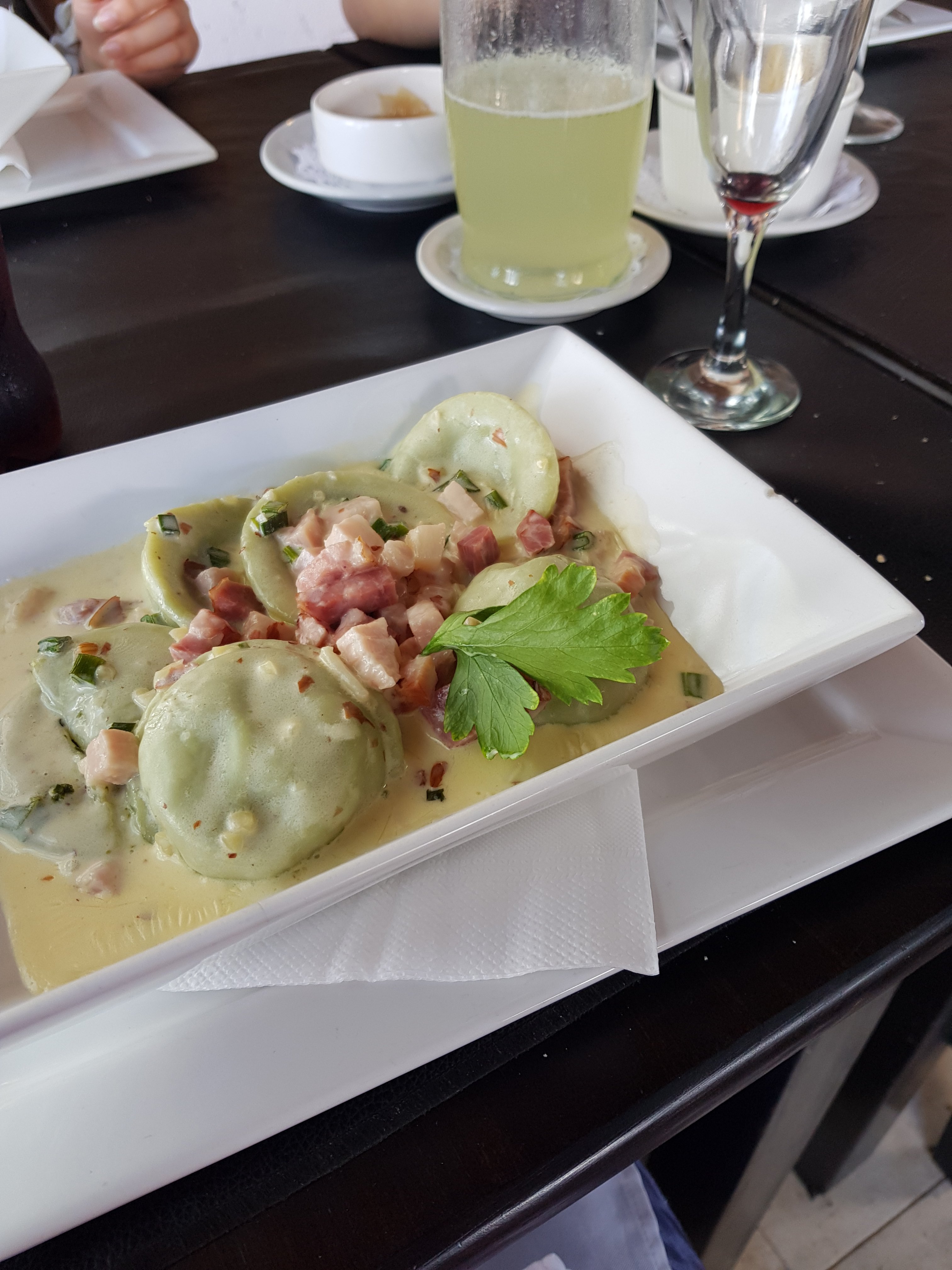
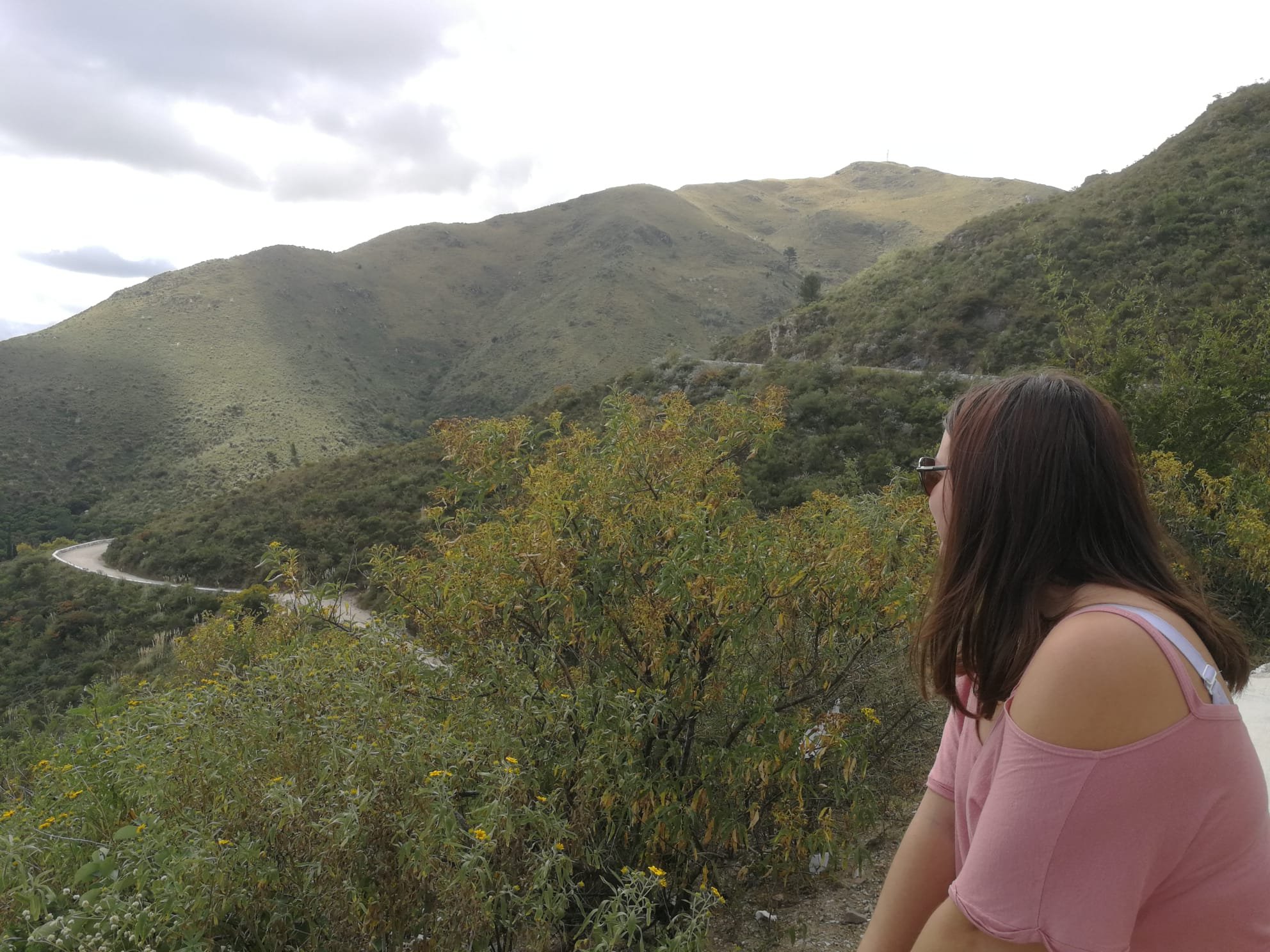
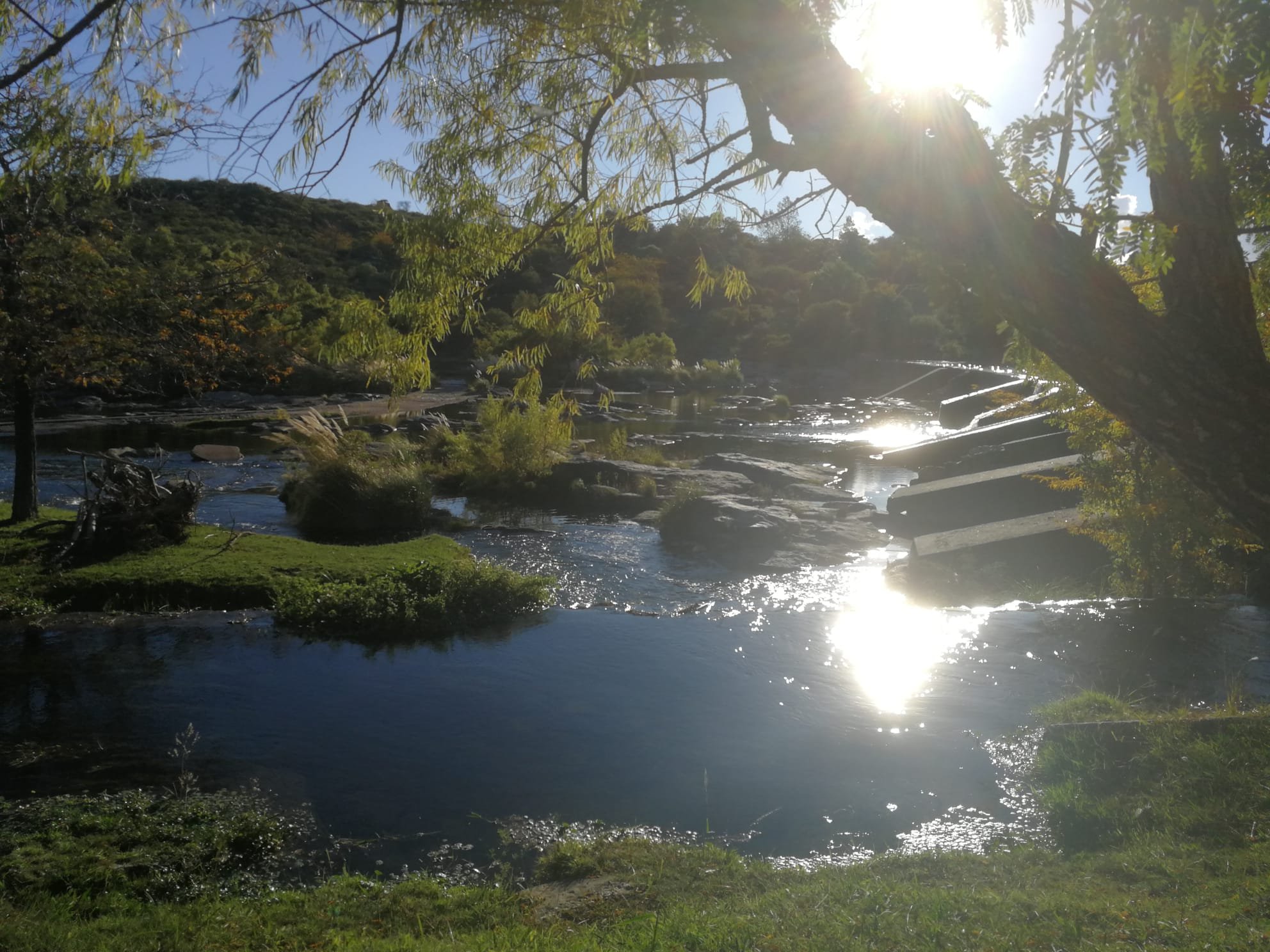
We followed google maps out into the hills and drove along the ‘El Camino del Cuadrado’ a road that winds around mountains, and takes you to a town called La Falda. This town has a pretty little church, a cuckoo clock, and a restaurant with heavenly pasta, and complimentary sangria! We stopped in a nature reserve on the way back and joined the locals in a dip in the river under the sunset, and it was super relaxing. On the way back over the hills, we drove back to the city amongst lightning throwing clouds, with the radio blasting.

Later in the evening, I joined the Germans at their hostel for some games, drinks and laughs. Our friend from Holland joined later, and brought some friends from her hostel. There was plenty of laughter and conversation at our little party in the hostel, with two guys from Germany, a guy from Ireland, a girl from Holland, a girl from France, a guy from Brazil, a guy from Argentina, and little English me. These last minute adventures and meetings of like minded people are so rewarding, and possibly the best part about travelling.

I spent the following days recovering from the late nights, relaxing and visiting nearby towns within easy reach from the bus station.

Cordoba is a great city, and I would say that it has something for everyone, but ultimately it is a place to relax, dine and enjoy. Next stop.. Corrientes.

Salta, Argentina: ‘la linda’

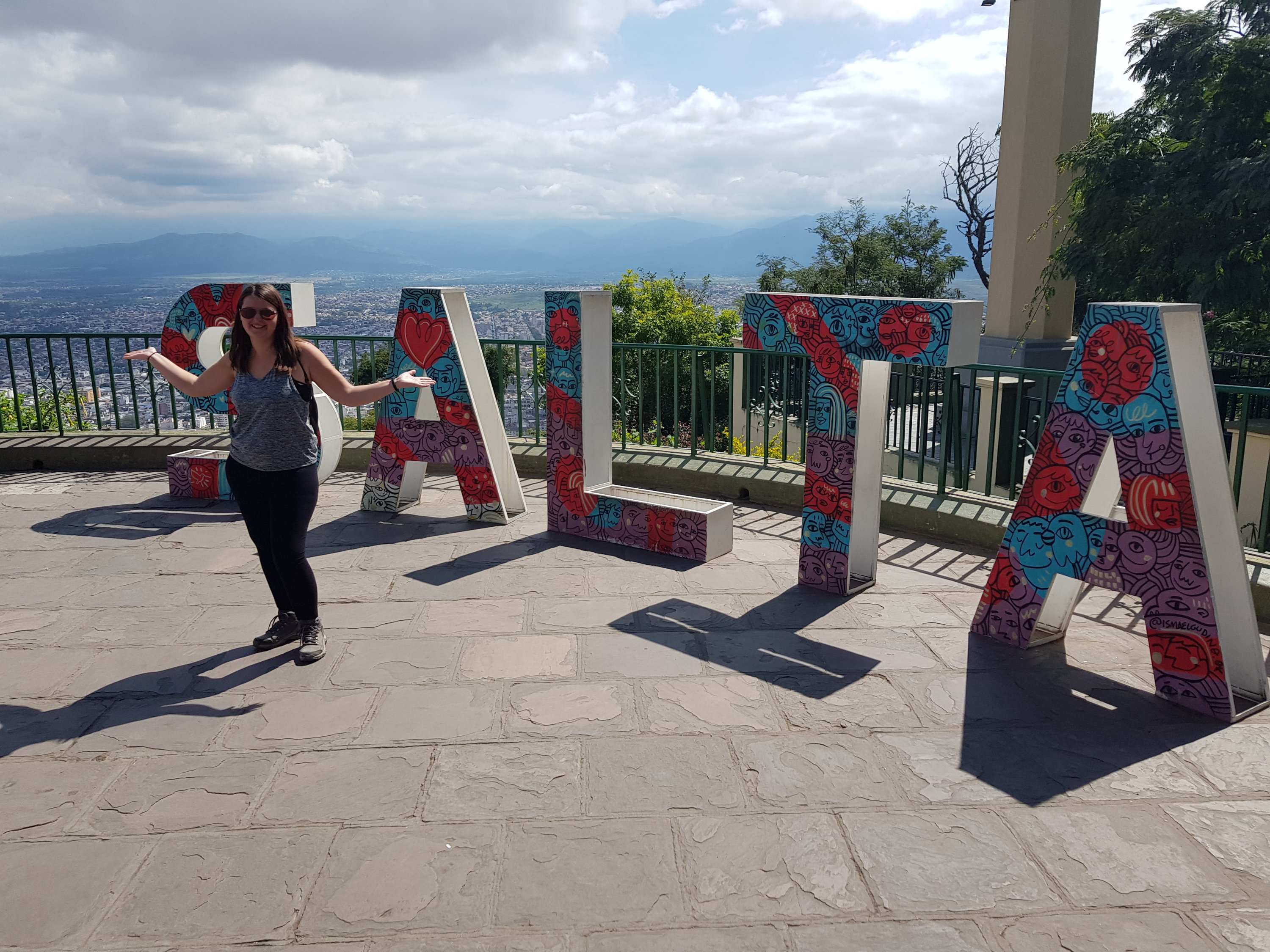
I had a six day stay in ‘la linda’ (the beautiful) city of Salta. This gorgeous city truly deserves its nickname, as it is without doubt the most beautiful city I have visited in Argentina. The city is inviting with friendly people, great architecture and intense surrounding landscapes.

Salta is located in the North West of Argentina, and has a surprisingly green landscape considering that this is where the country’s desert landscape starts to come into play, as the roads begin to lead towards Bolivia.

Inside the city

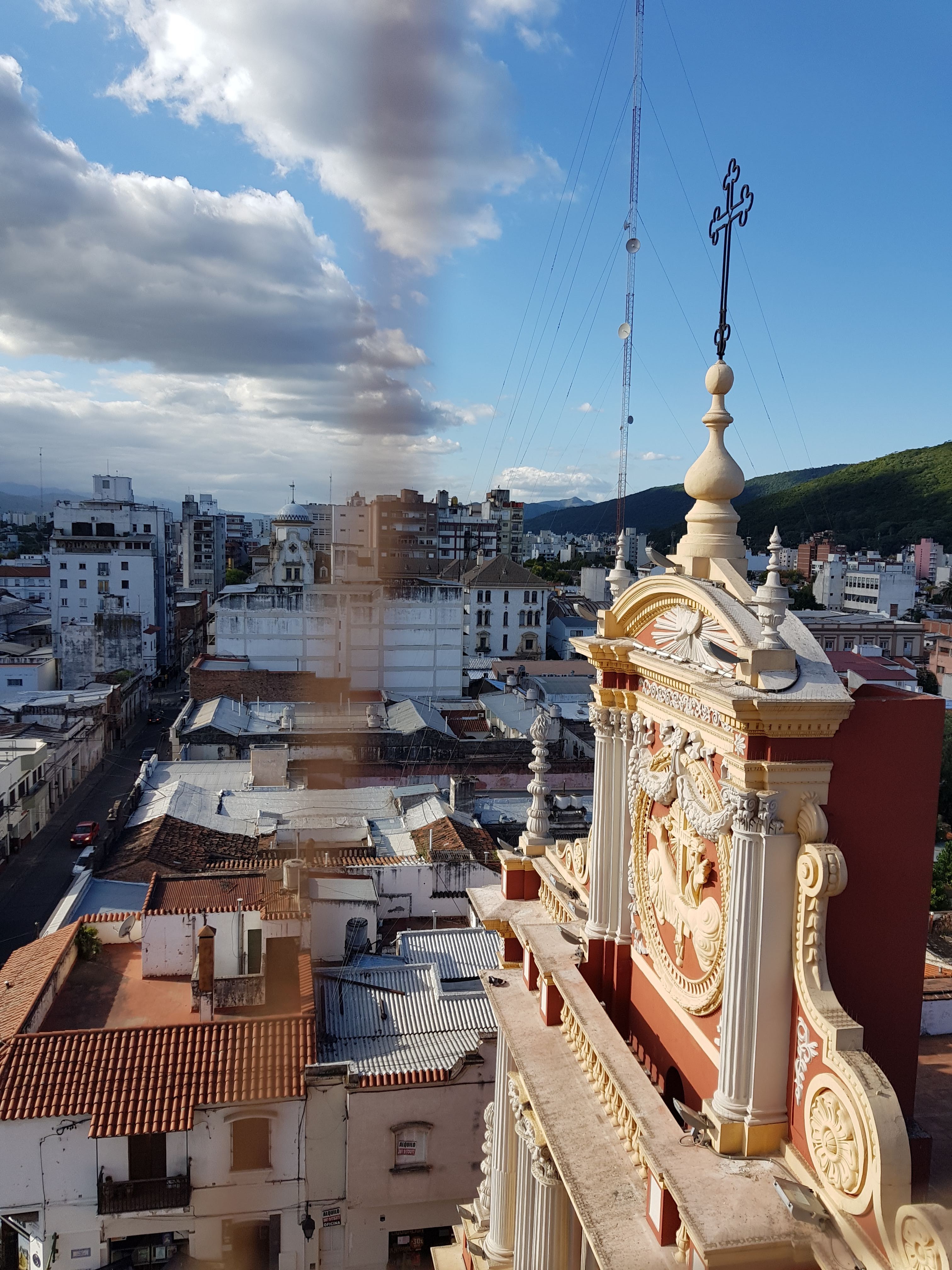
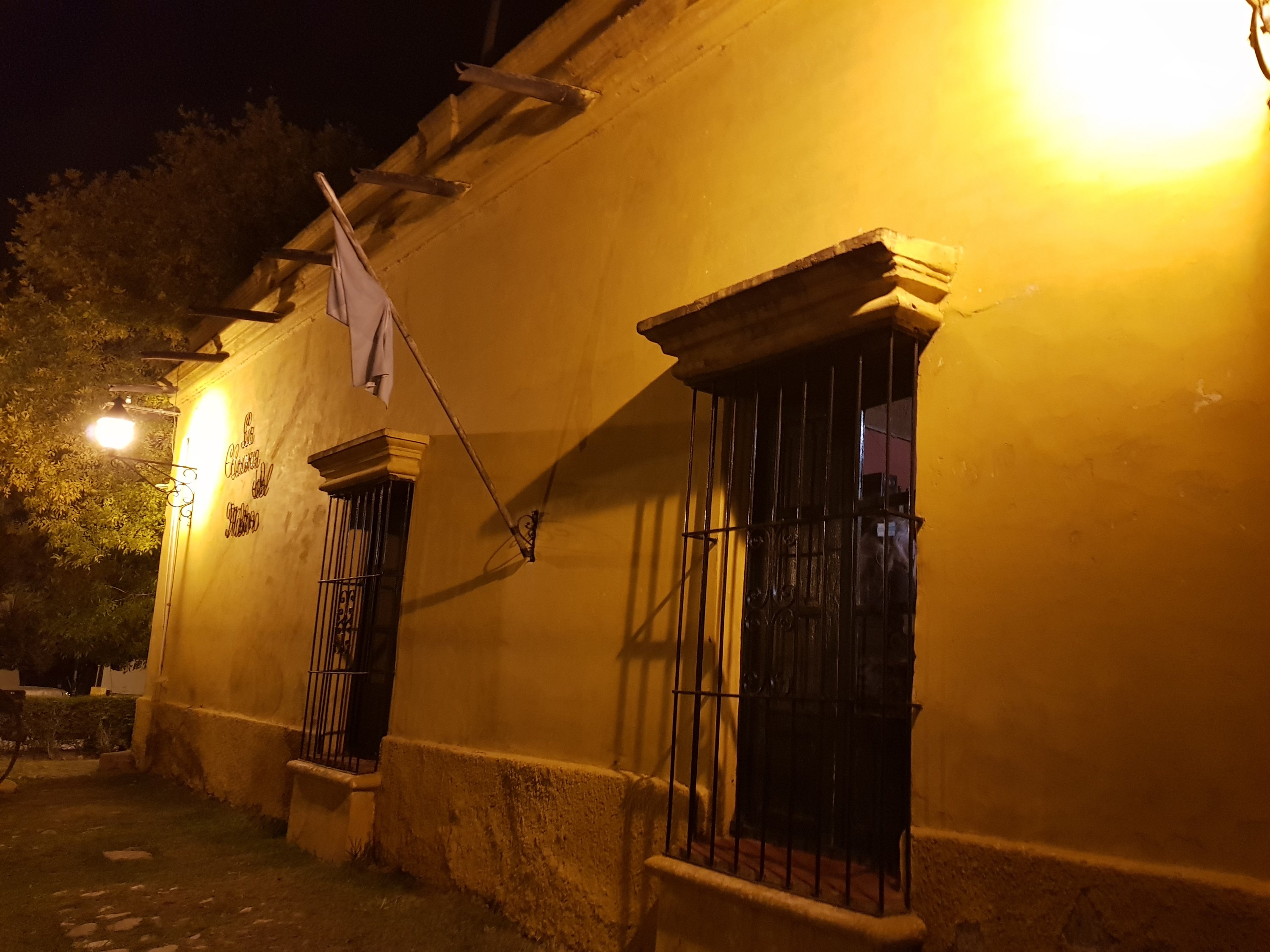
Within the city surrounded by lush green hills, there are plenty of old churches and buildings to explore. From San Martin’s plaza in the centre, spanning out, it is a pleasure to the eyes to look at the colorful and colonial buildings.

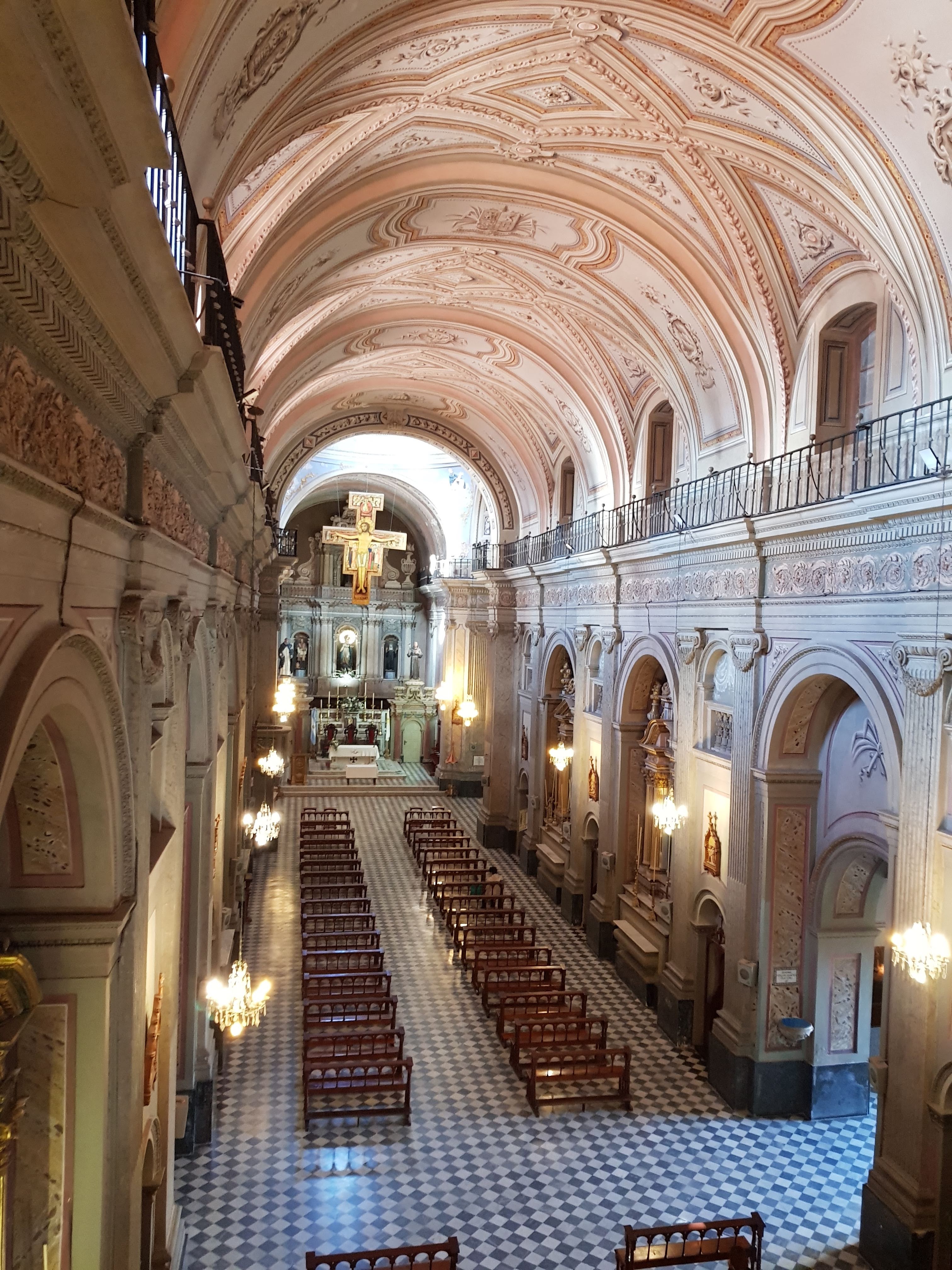
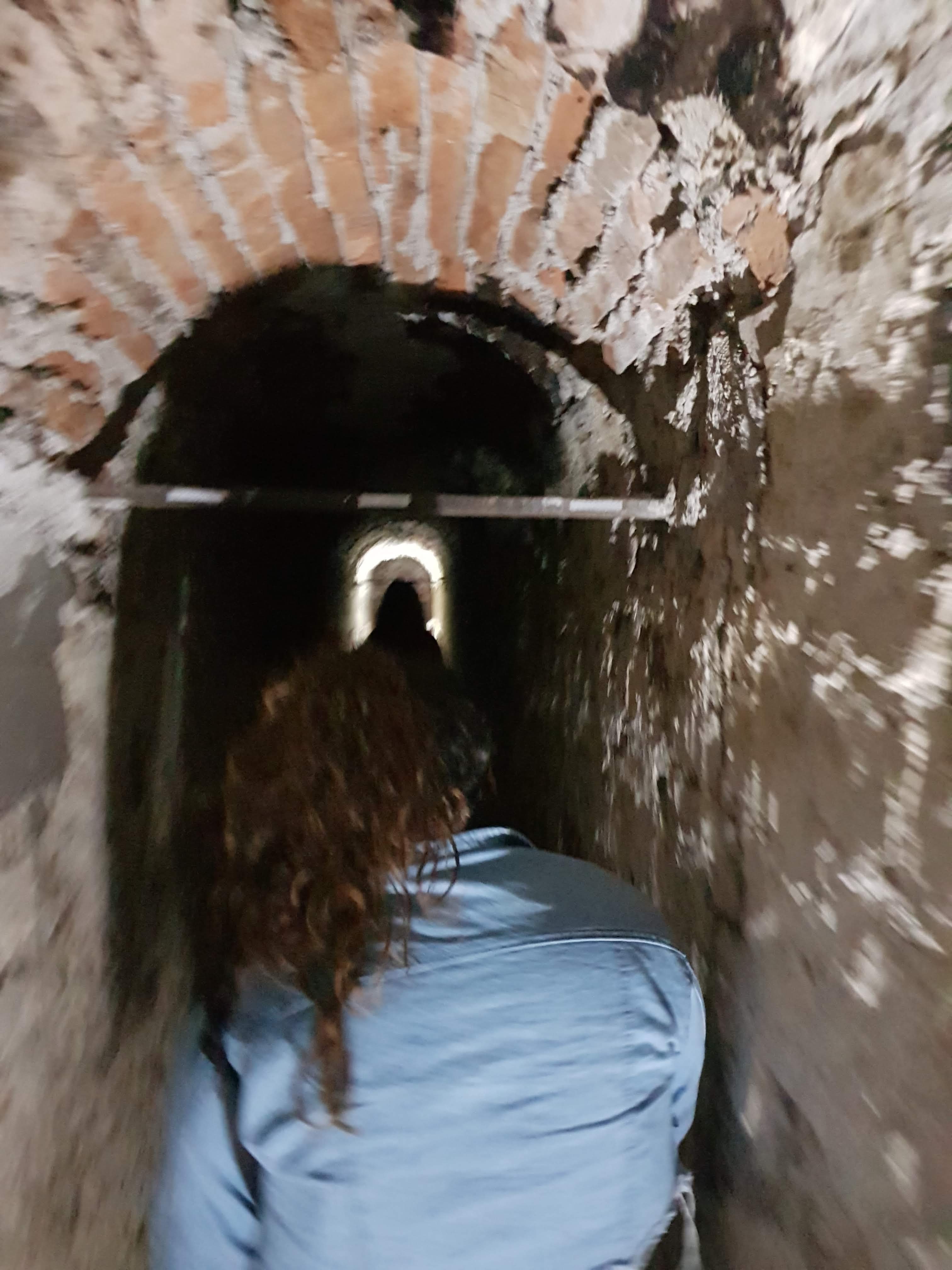
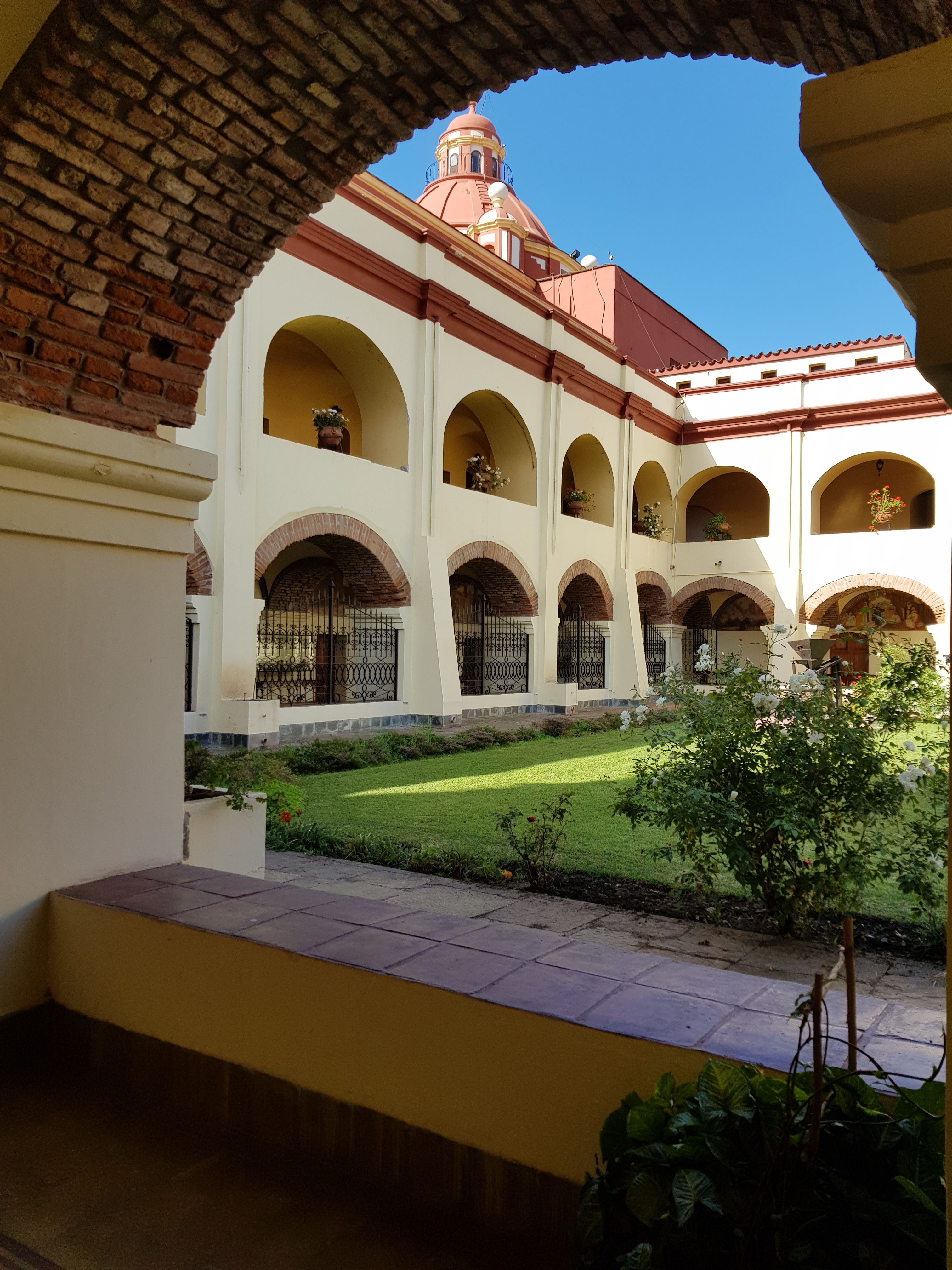
The cathedral is of course a must see, but there is also a church and monasetry to San Francisco. I stopped here to see the museum to find that there was a tour provided in Spanish and English of the monastery. This was an excellent tour which cost the equivalent of £2.50! The guide took us through old tunnels, and courtyards, to the top of the church nave, and we were able to climb the bell tower. This was a good moment for me, as everyone else was struggling to climb the tower, and I was fine! This is unusual, obviously, my months of trekking have been effective!

On the tour, I befriended a lady from England, we had drinks together and it turned out that her husband was working near Salta, to set up a lithium mine! Lithium mines are big money in Argentina and Chile at the moment apparently, I never even realised that they existed!

As well as churches, the city has a number of excellent museums to explore. I went to several, and there were two that were really impressive. The first museum is the museum of high altitude archeology. This small museum is centred around the nearby mountains and the ancient inca people. Unfortunately, I could not take any photos inside, but it was astonishing.

The main discovery that the museum focuses on is the find of three inca children that were sacrificed on top of a nearby mountain. They were found with several dolls and other objects, all in pristine condition… including the bodies of the three children. Frozen by the cold conditions, these three inca children (2 girls and a boy of different ages) are preserved and on display (one per season). When I visited, the 7 year old boy was on display, he is huddled over and still has all his skin, clothes and his hair! You can even see the dead lice in his hair. I have never seen anything like it before. Of course, it is amazing but also very sad. This museum is a must visit, if you can stomach seeing the kids.

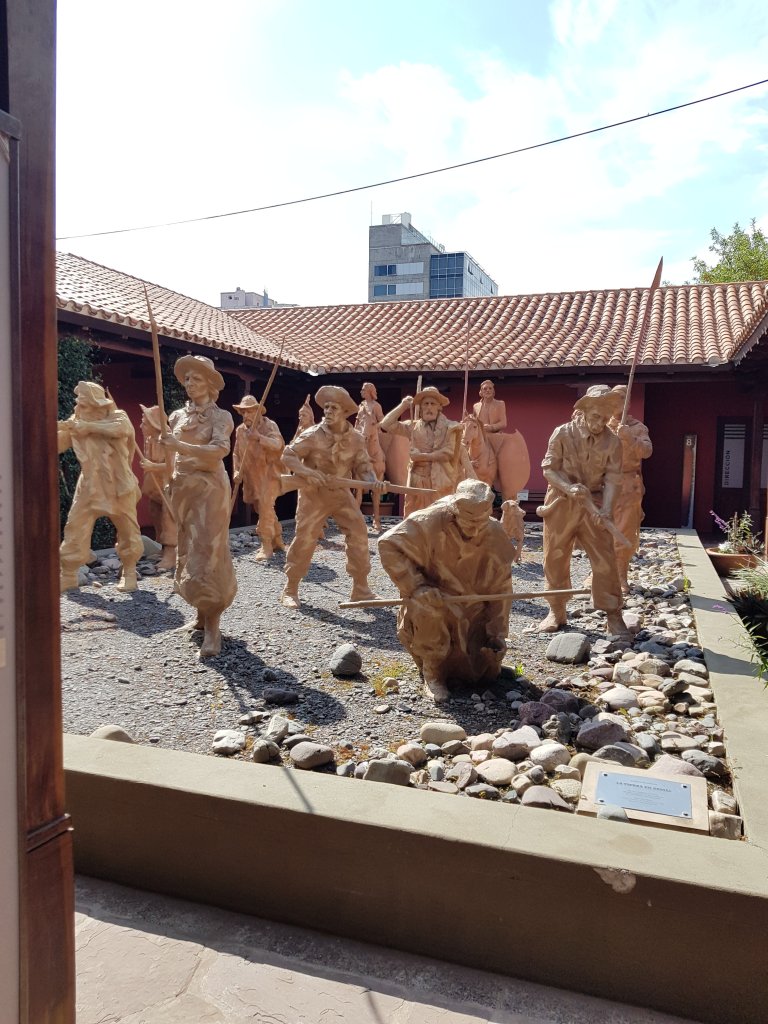
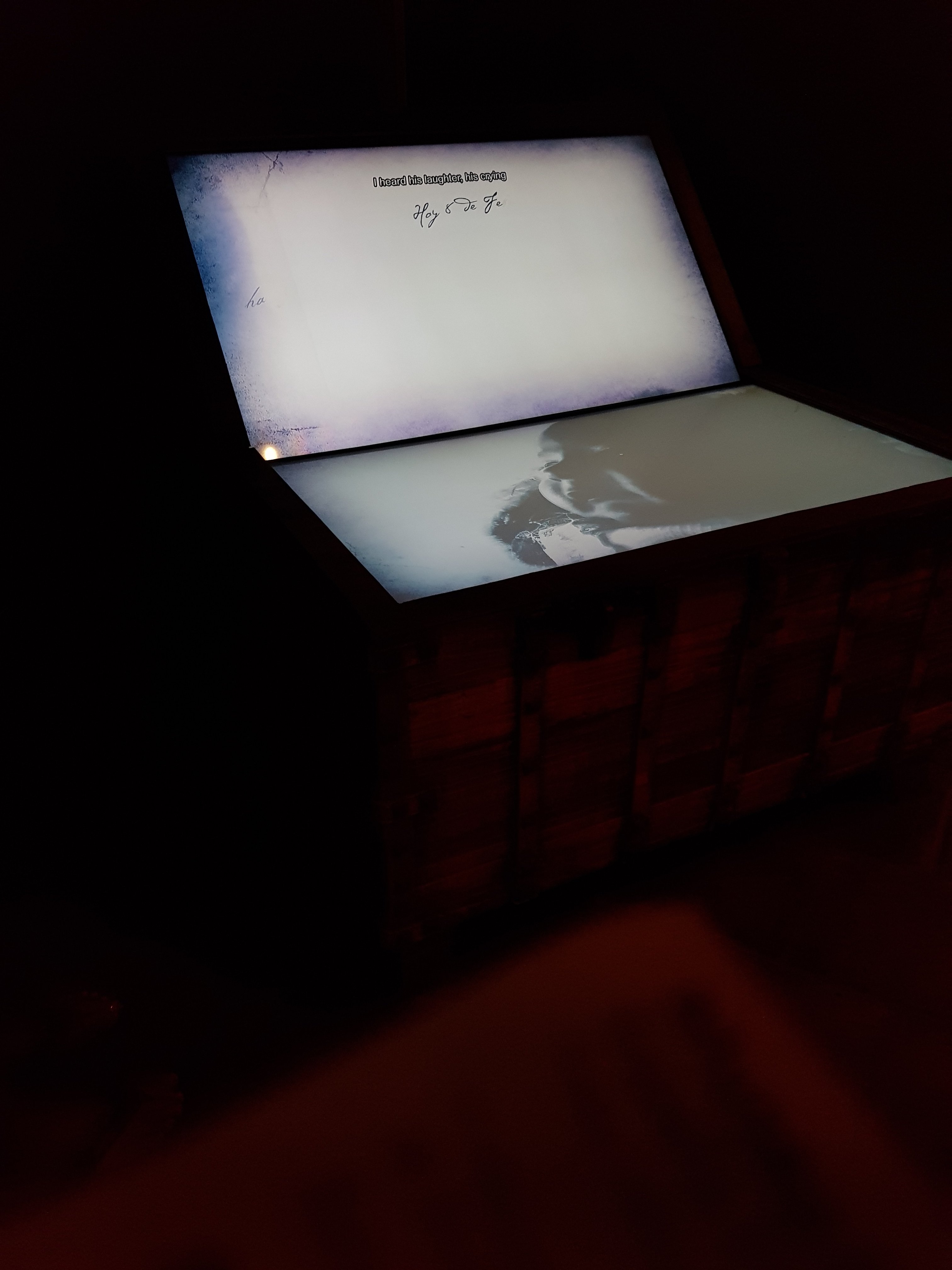
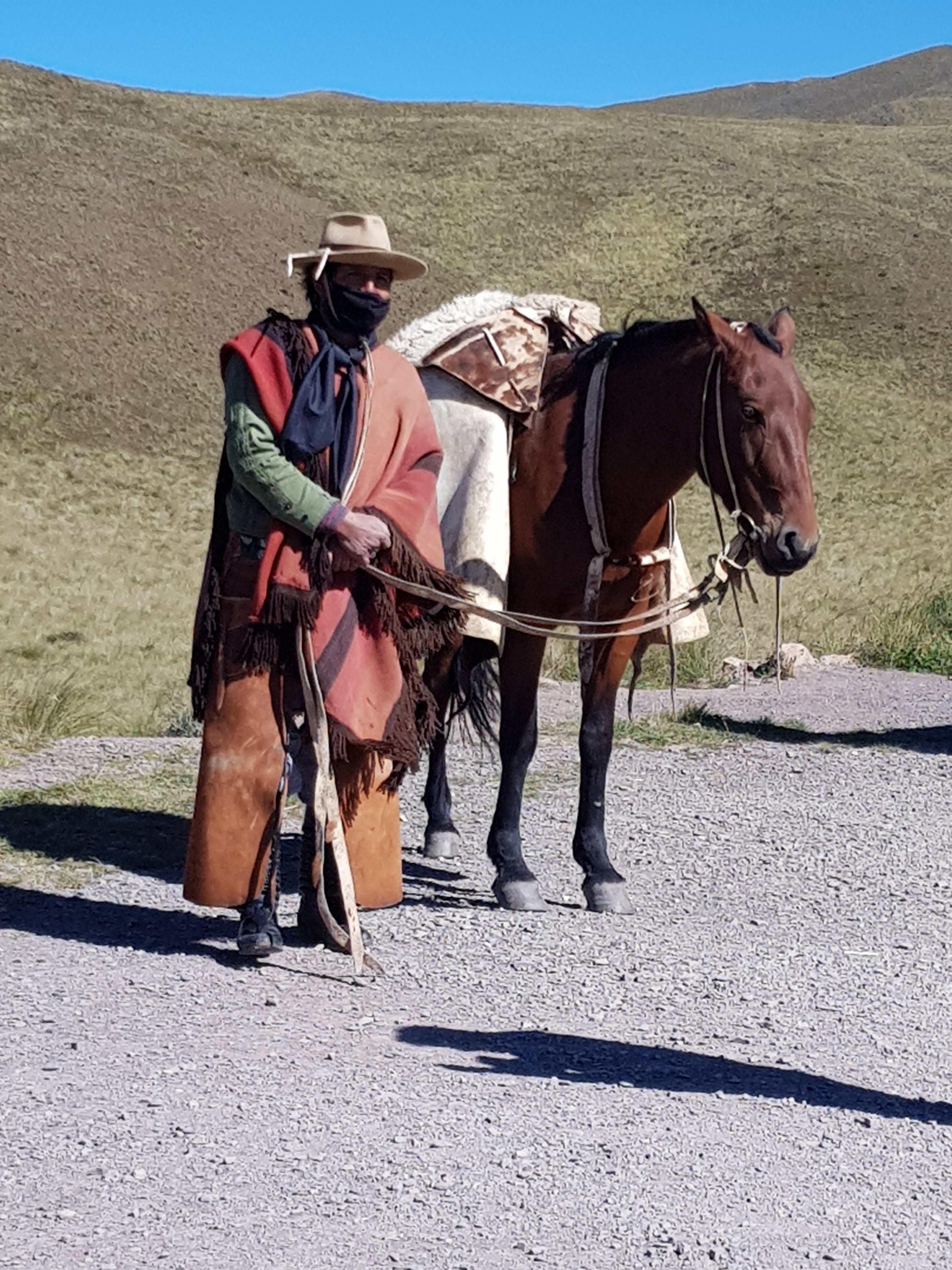
Another museum, that was very good was a bit of a surprise. All week long, I had heard (in spanish) bits and pieces about General Guemes. A historic hero of Argentina, but I was struggling to understand the history, so I visited the Guemes museum. This museum is housed in the original family home of Guemes. The great thing about the museum is that with the use of sensors and projections it is completely immersive. Pictures and treasure chests coming alive in front of your eyes to tell you the story of Guemes. It turned out he was a Gaucho (Argentine cowboy) that led an army of Gauchos over many years to resist invasion from Royalists. He seemed to be very impressive, and by the end actually sacrificed himself in order to not surrender.

During another day of my trip, I had the good fortune to spend the day with a lovely guy from the city. We spent some time at another museum, had lunch in a historic bodega overlooking the central square, and then rode the cable car to the top of the nearby hill/mountain for a gorgeous view of the city below. The area at the top of the cable car attraction has a few restaurants, the view point, and a winding path of waterfalls to relax by.

Day trips

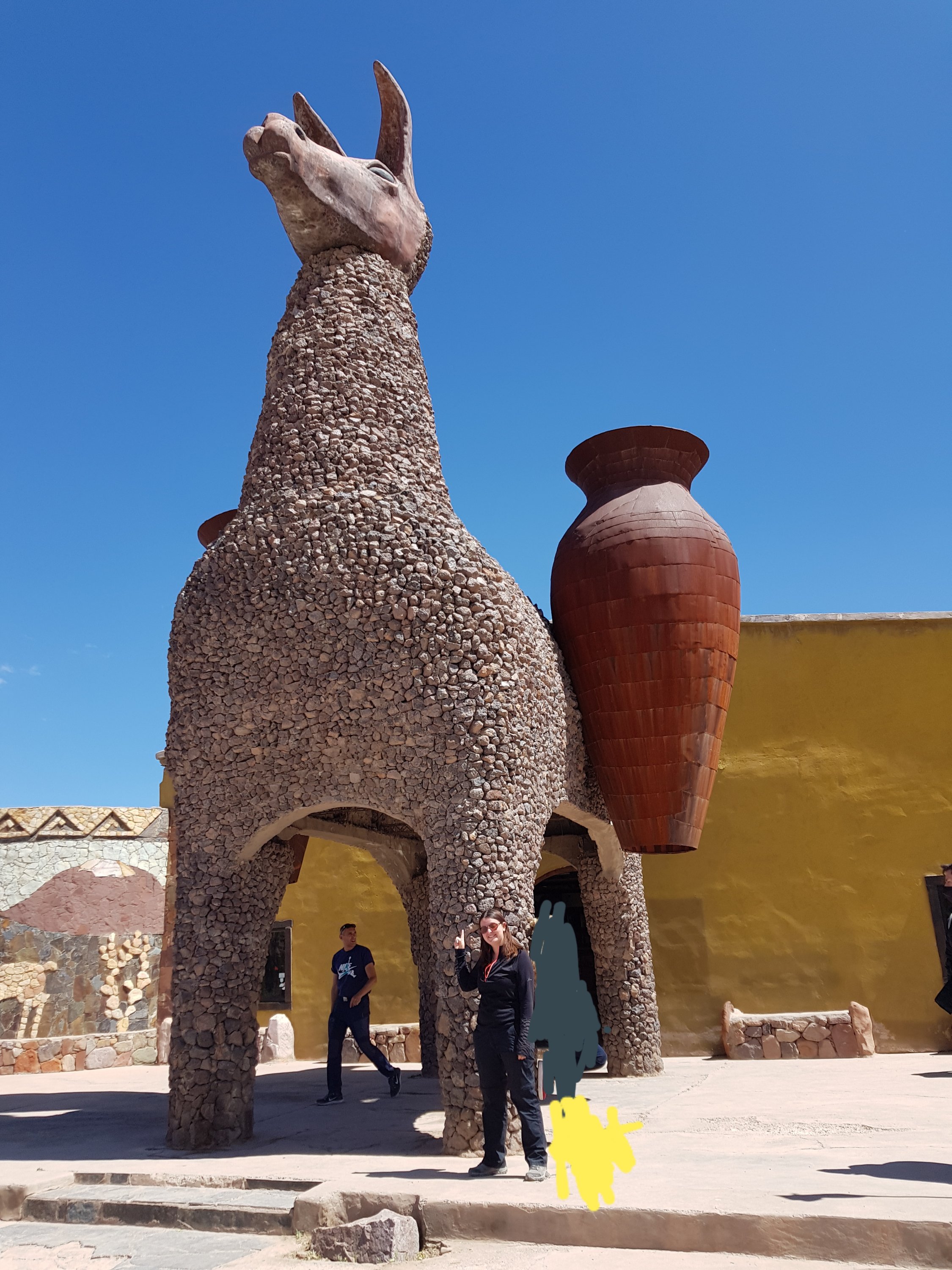
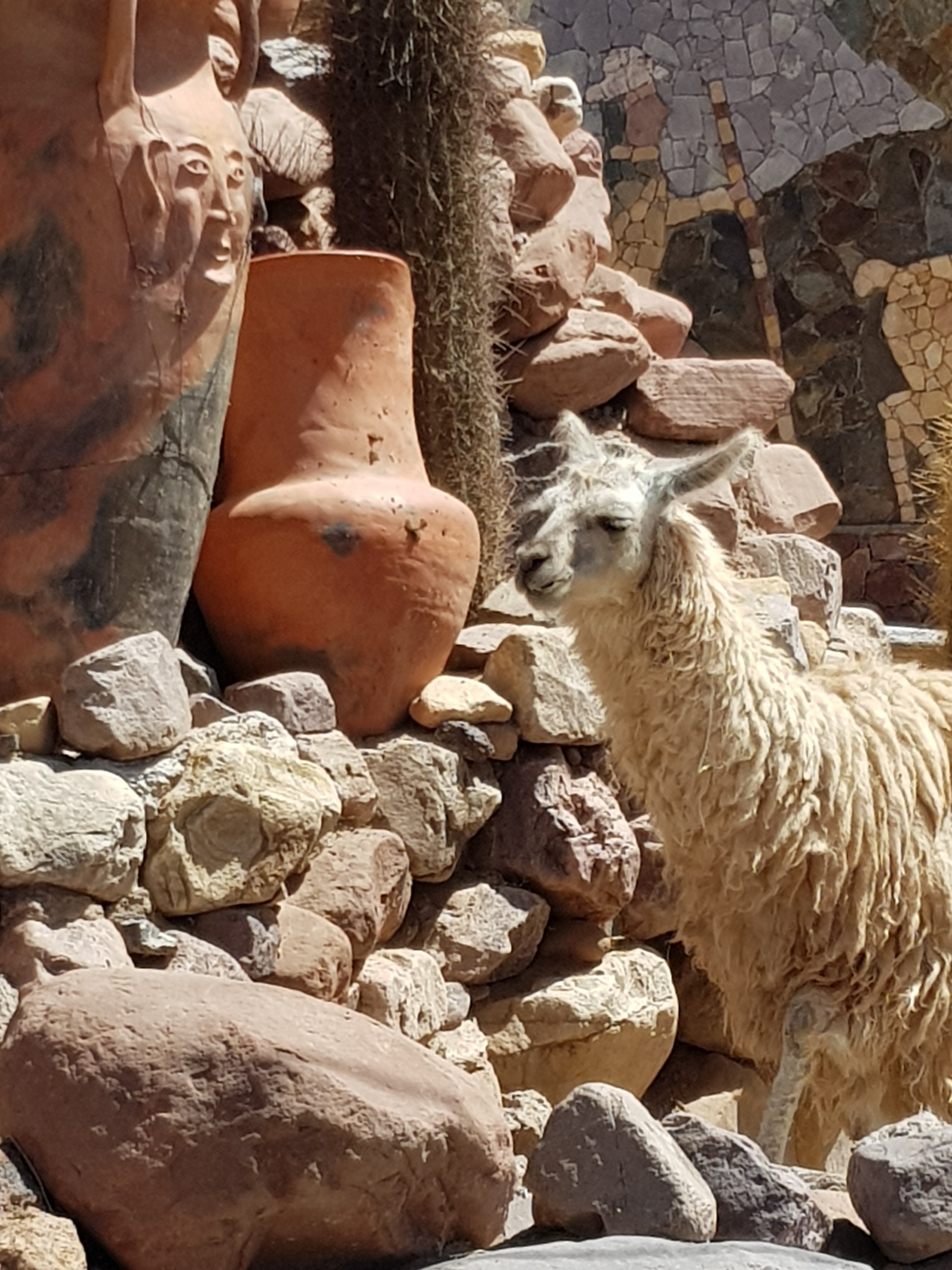
During my time in Salta, I went on three separate day excursions. There is so much to visit in this region, that you need to be choosy about what you visit. There are several villages and towns where you can enjoy local culture, buy artisan crafted gifts, and enjoy authentic cuisine. I was even able to visit a demonstration of how local pottery is made, fired and used, on a local llama farm!

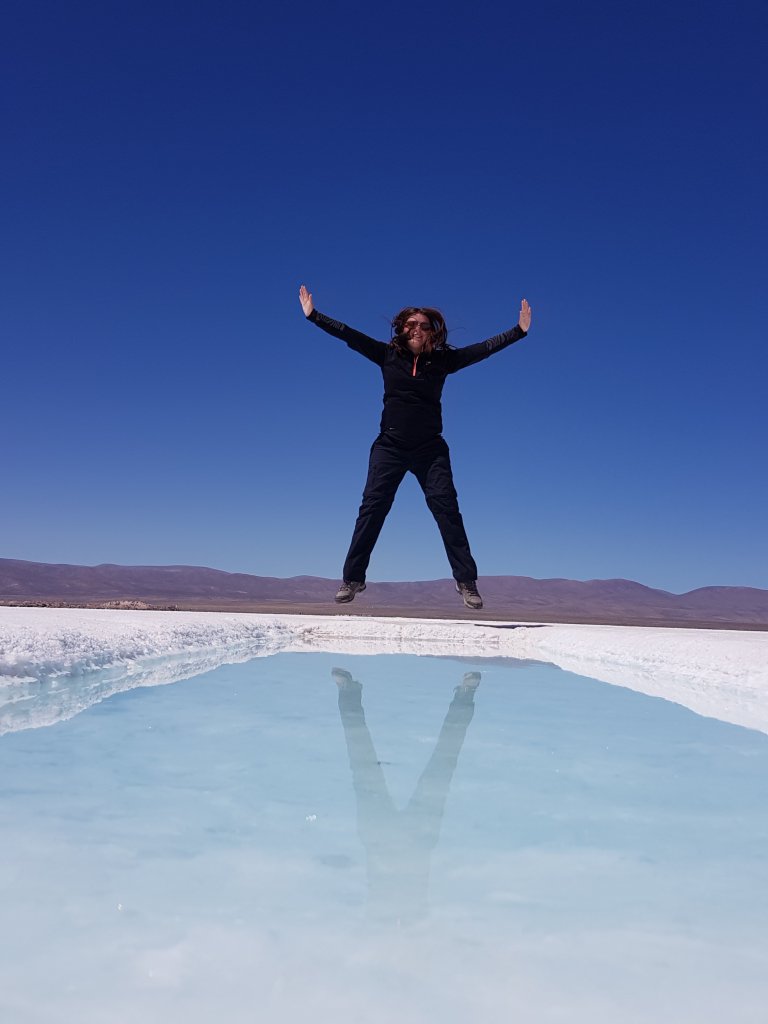
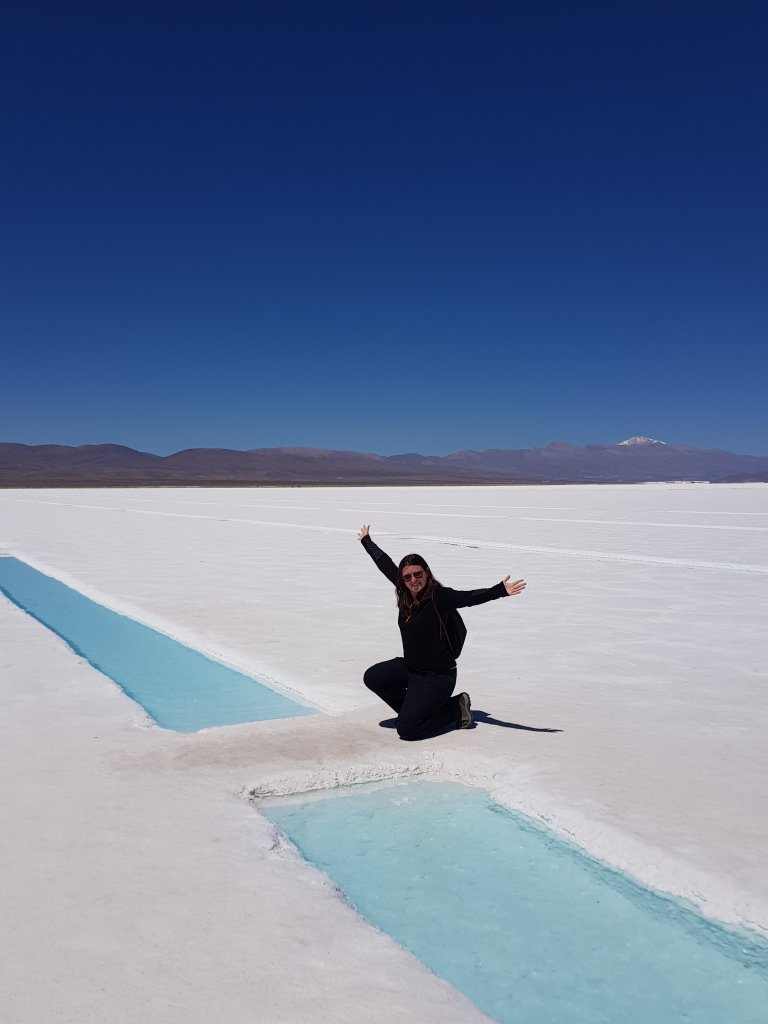
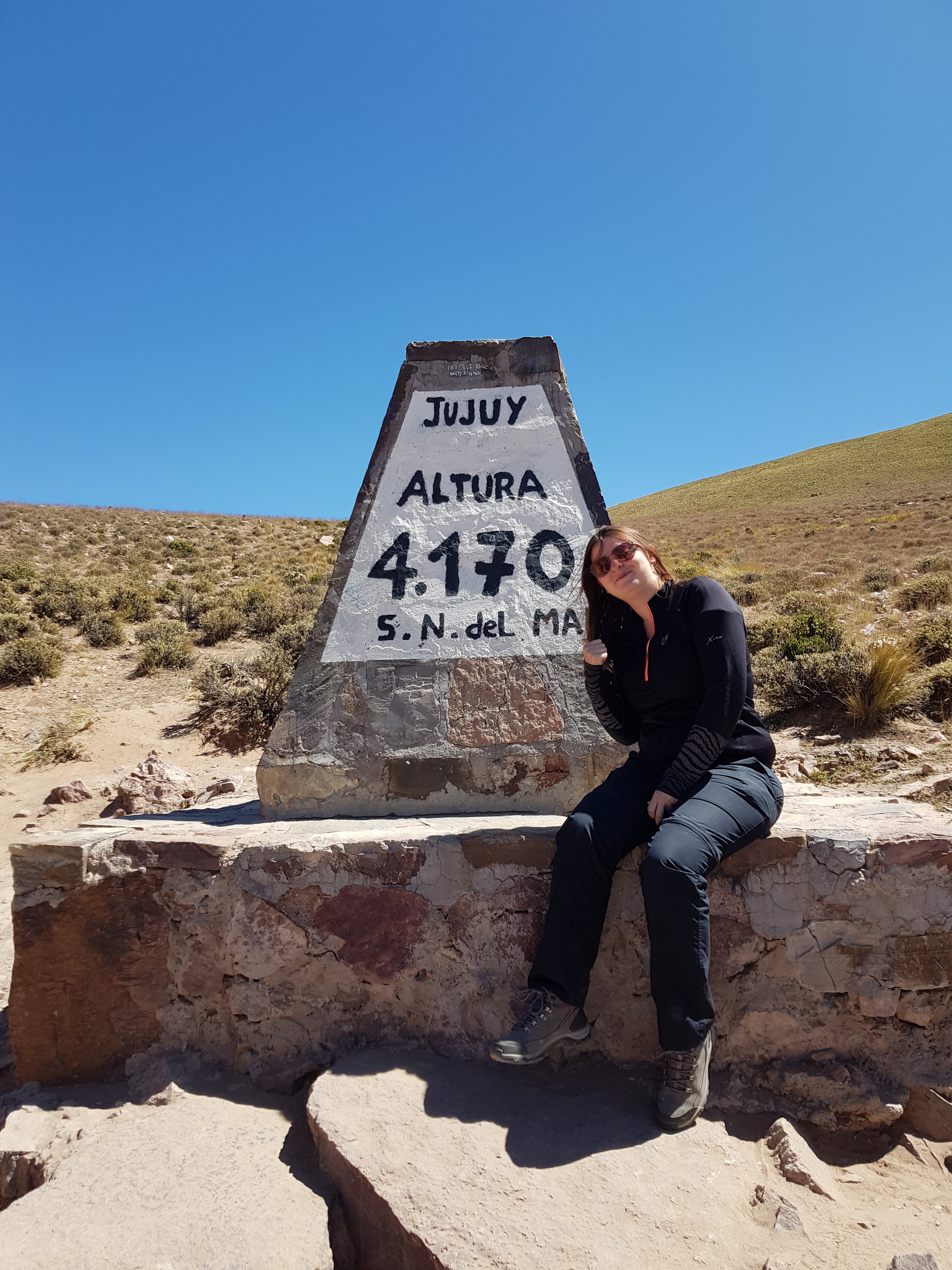
The highlights for me were two very different landscapes available to see a few hours (in different directions) from the city. The first, was found following a network of jungle landscapes and climbing to altitude of over 4000 metres. Eventually climbing down again to a huge area of salt flats, called Salinas Grandes.

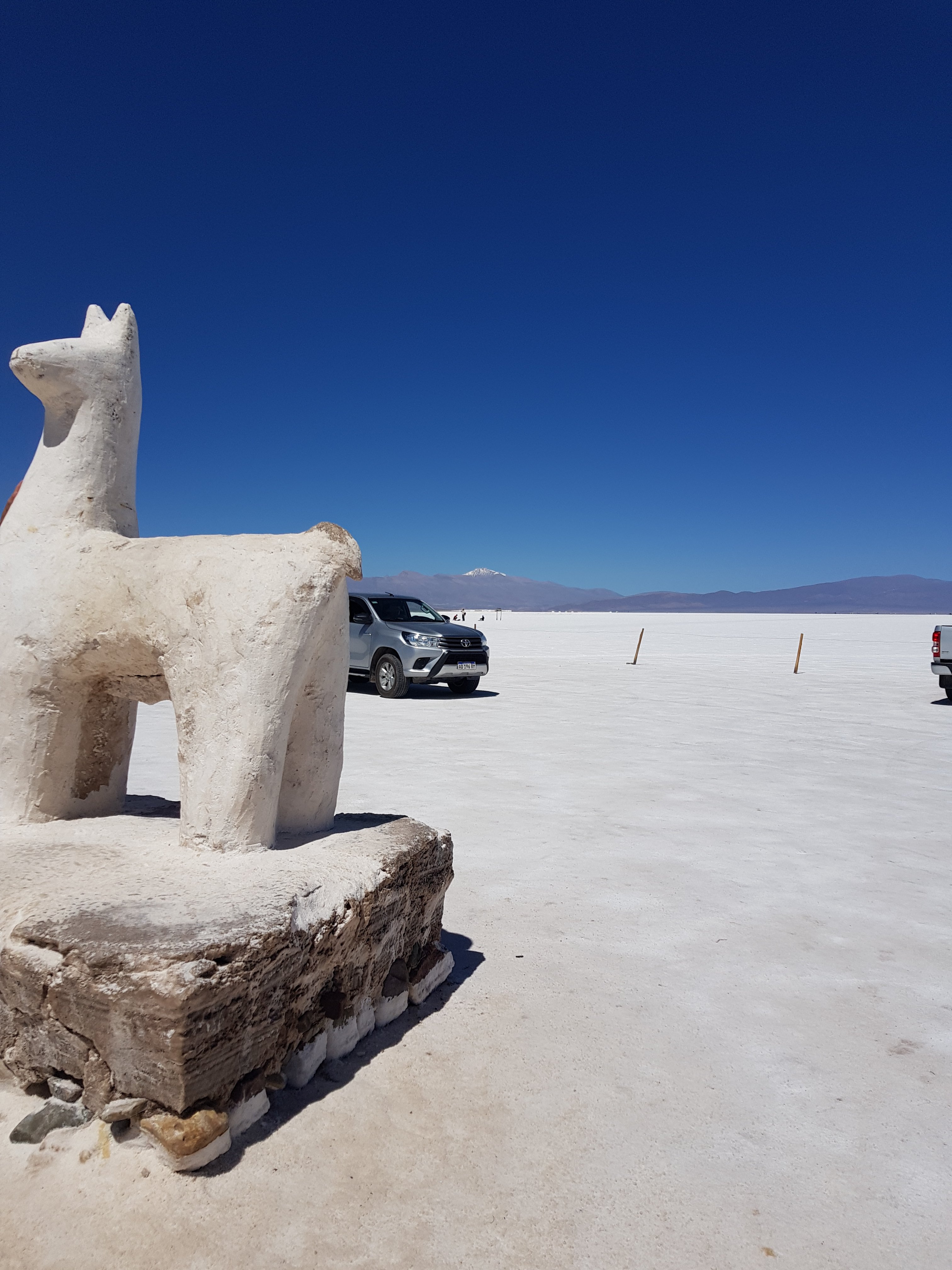
Similar to the salt flats in Bolvia, this site is simply a flat bright white landscape as far as you can see. Salt is mined from here, and for a few quid you can wonder the salt flats and take amazing photos. The local people also gather here to sell gifts crafted from the salt. I bought a little llama made of salt!

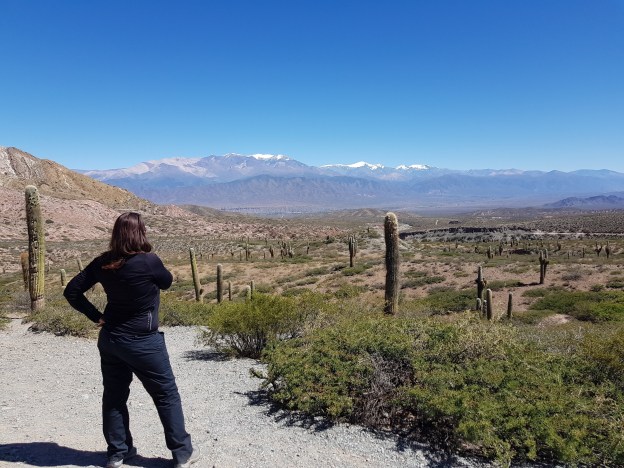
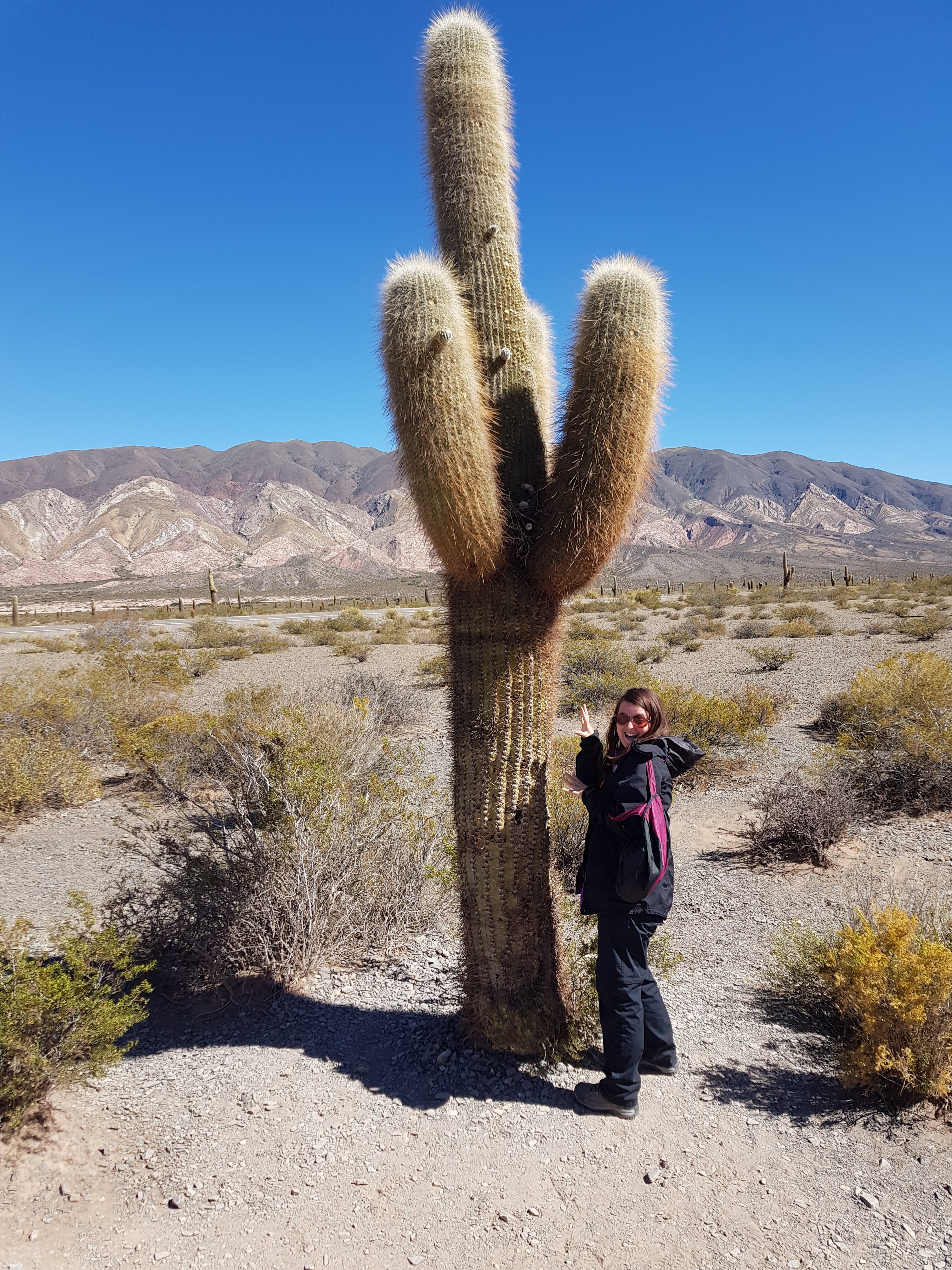
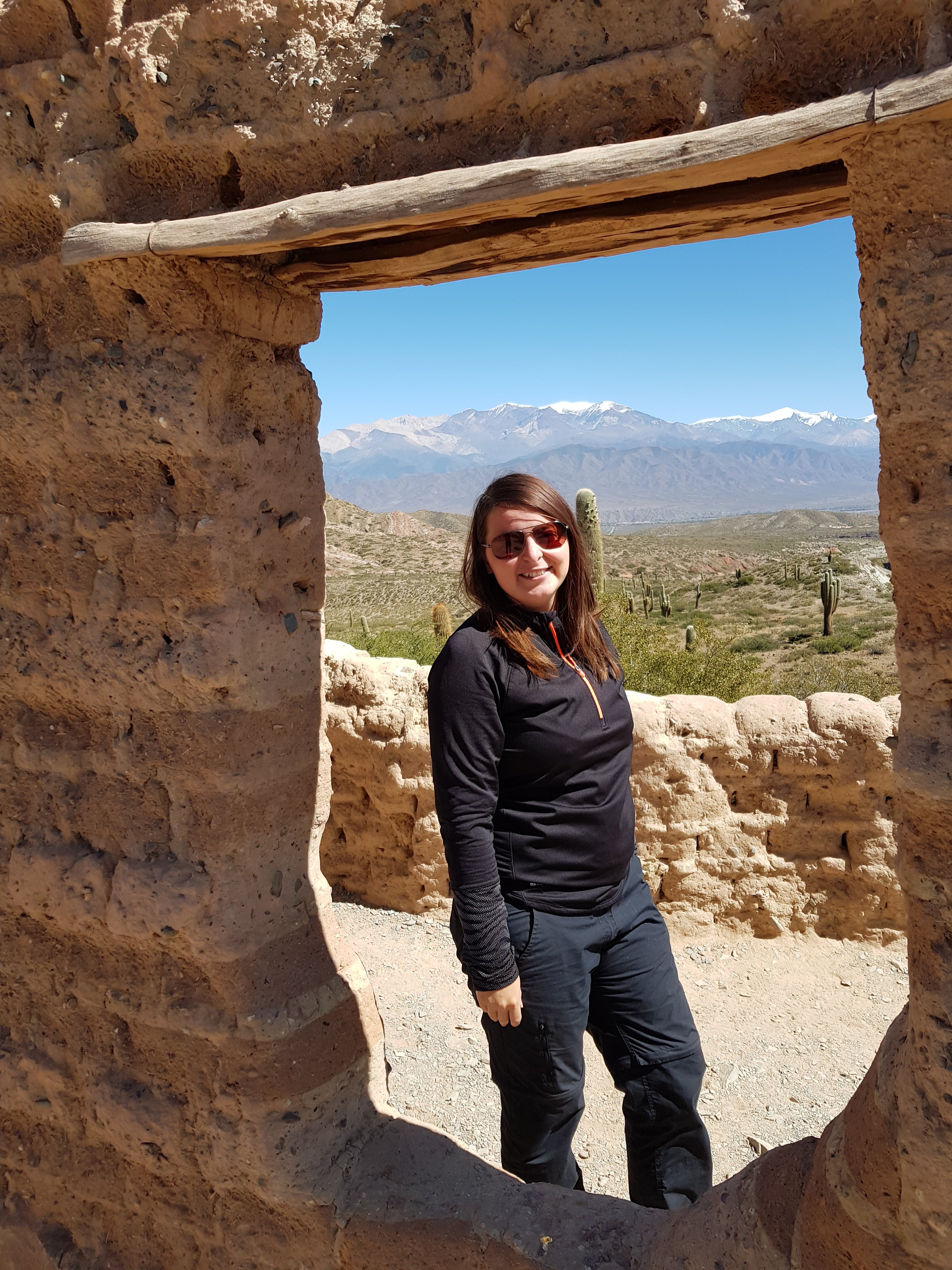
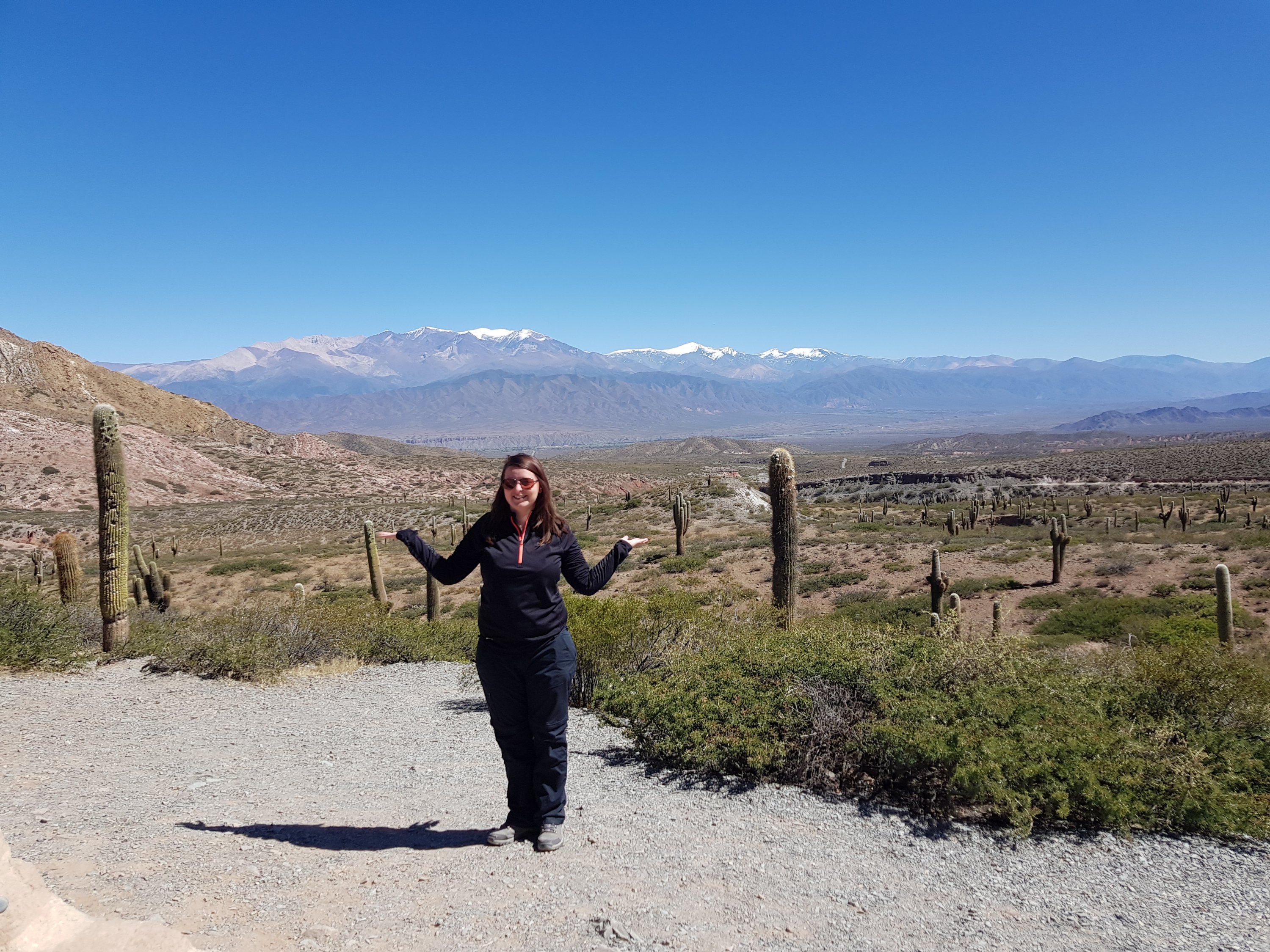
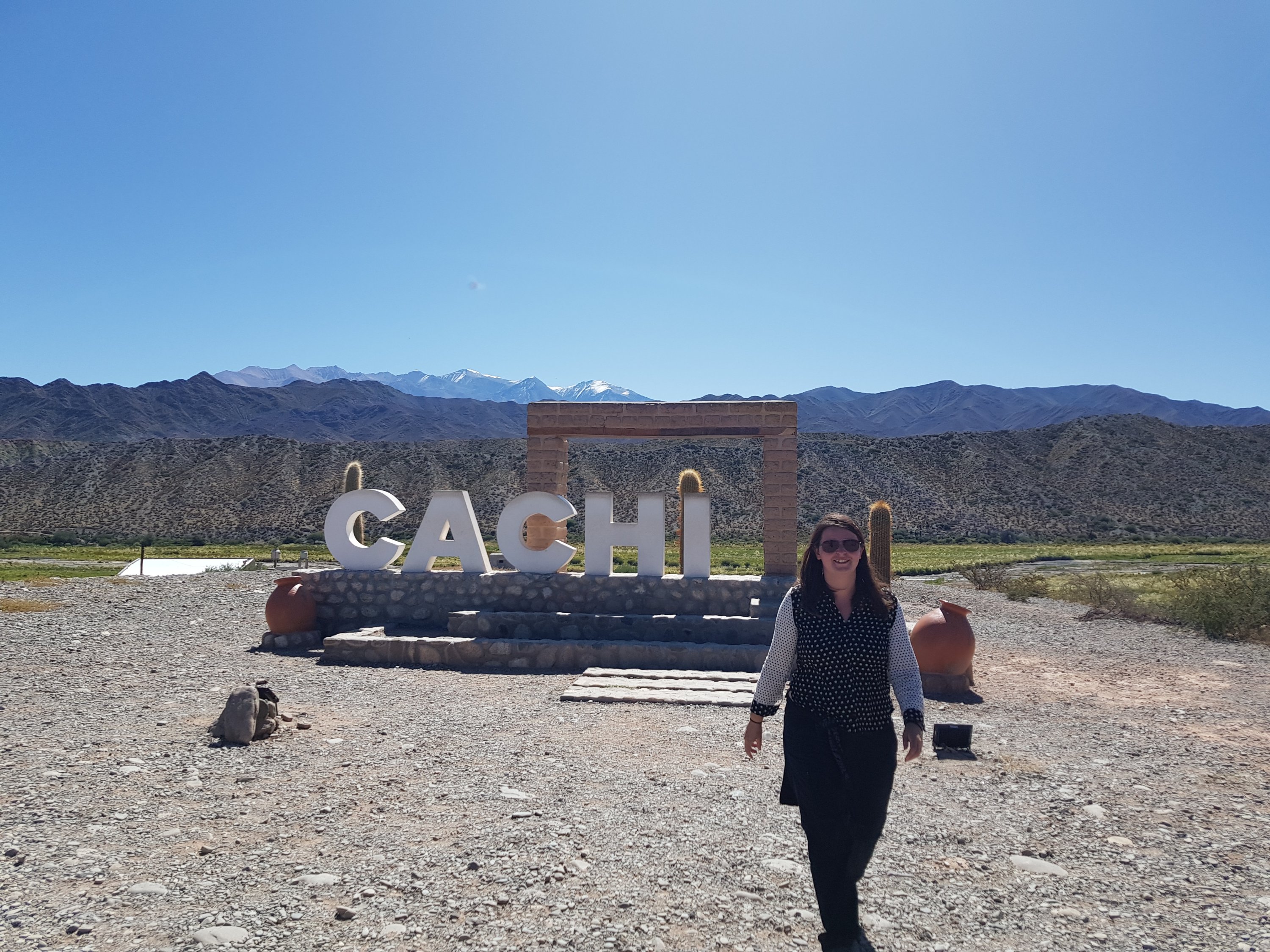
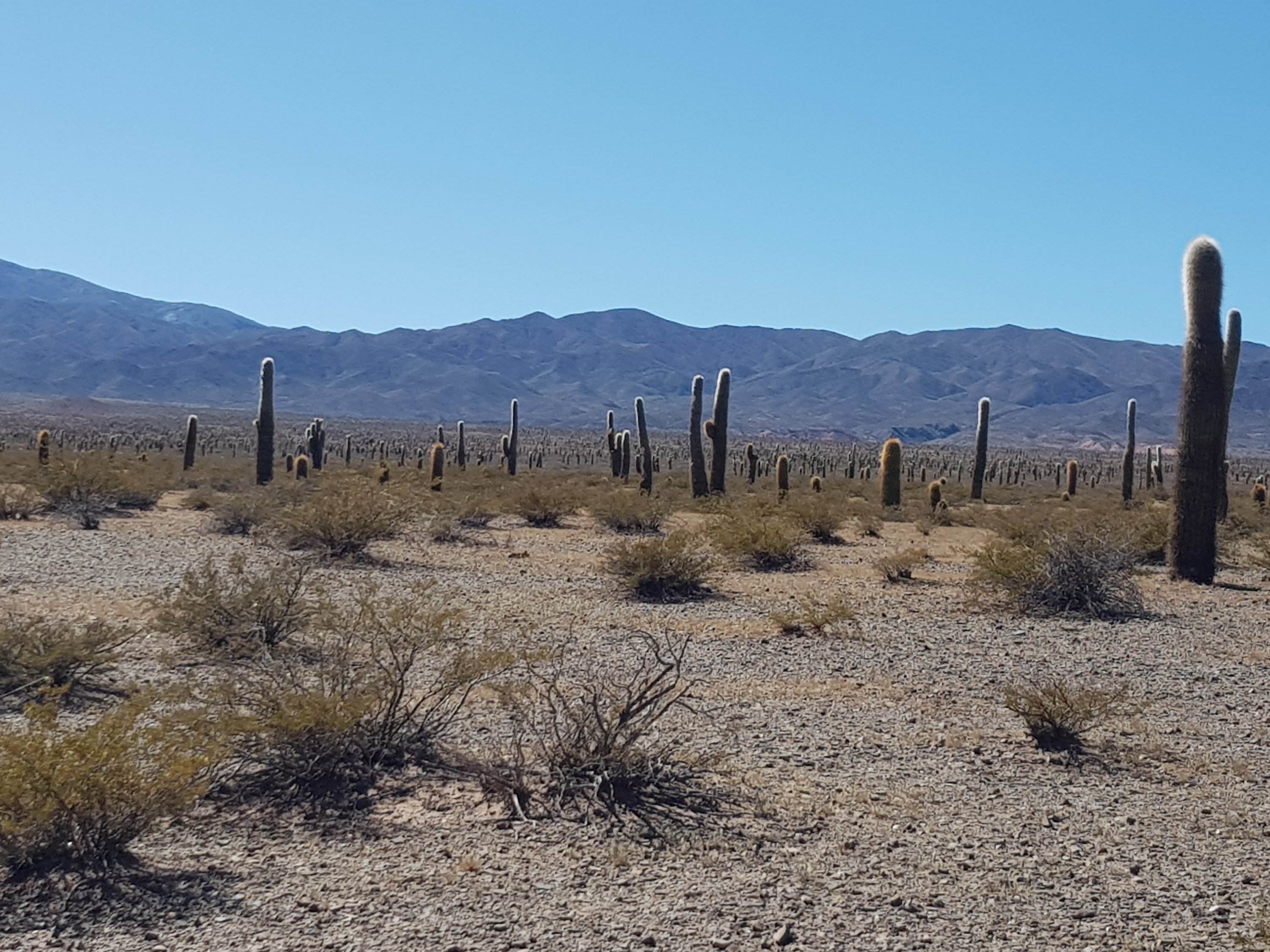
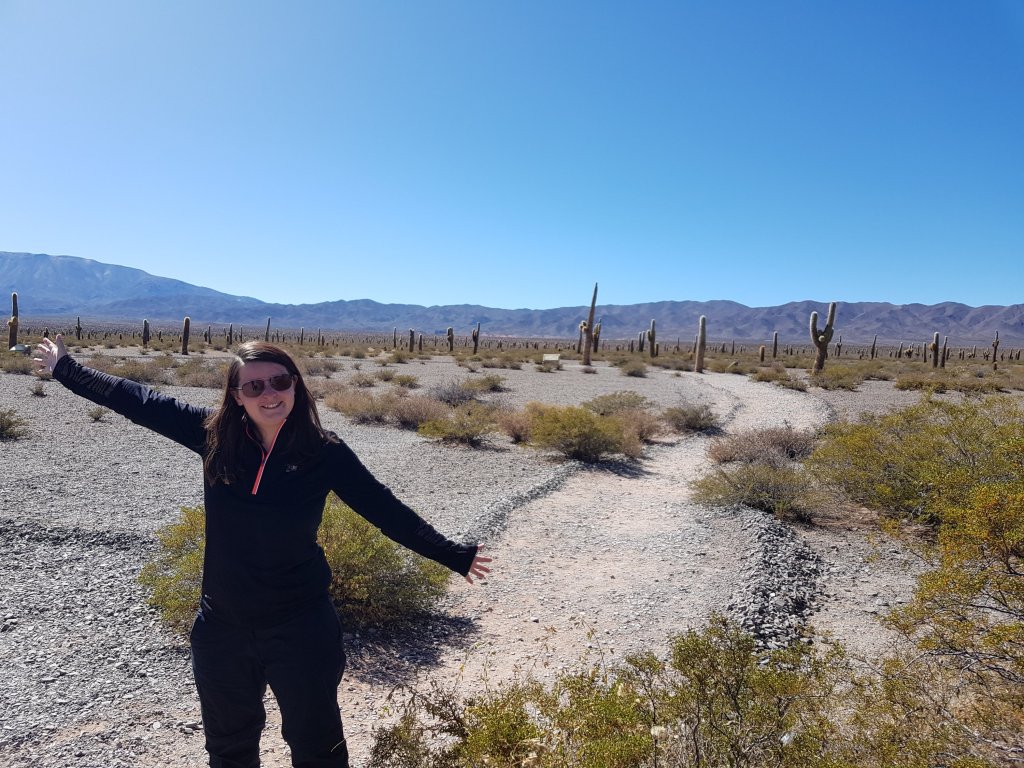
The other amazing landscape, was in the Los Cordones National Park on route to a town called Cachi. This is a desert of giant cacti. Easily over 8 or 9 metres in height, these cacti tower over everything else and go for many miles and up in to the hills. Apparently, it is because of this that many of the old ‘wild west’ movies were filmed in this area. I felt like it was definitely the right setting for it, and I was very aware of where the minibus was the entire time, so not to get left out in this very baron area.

Evenings

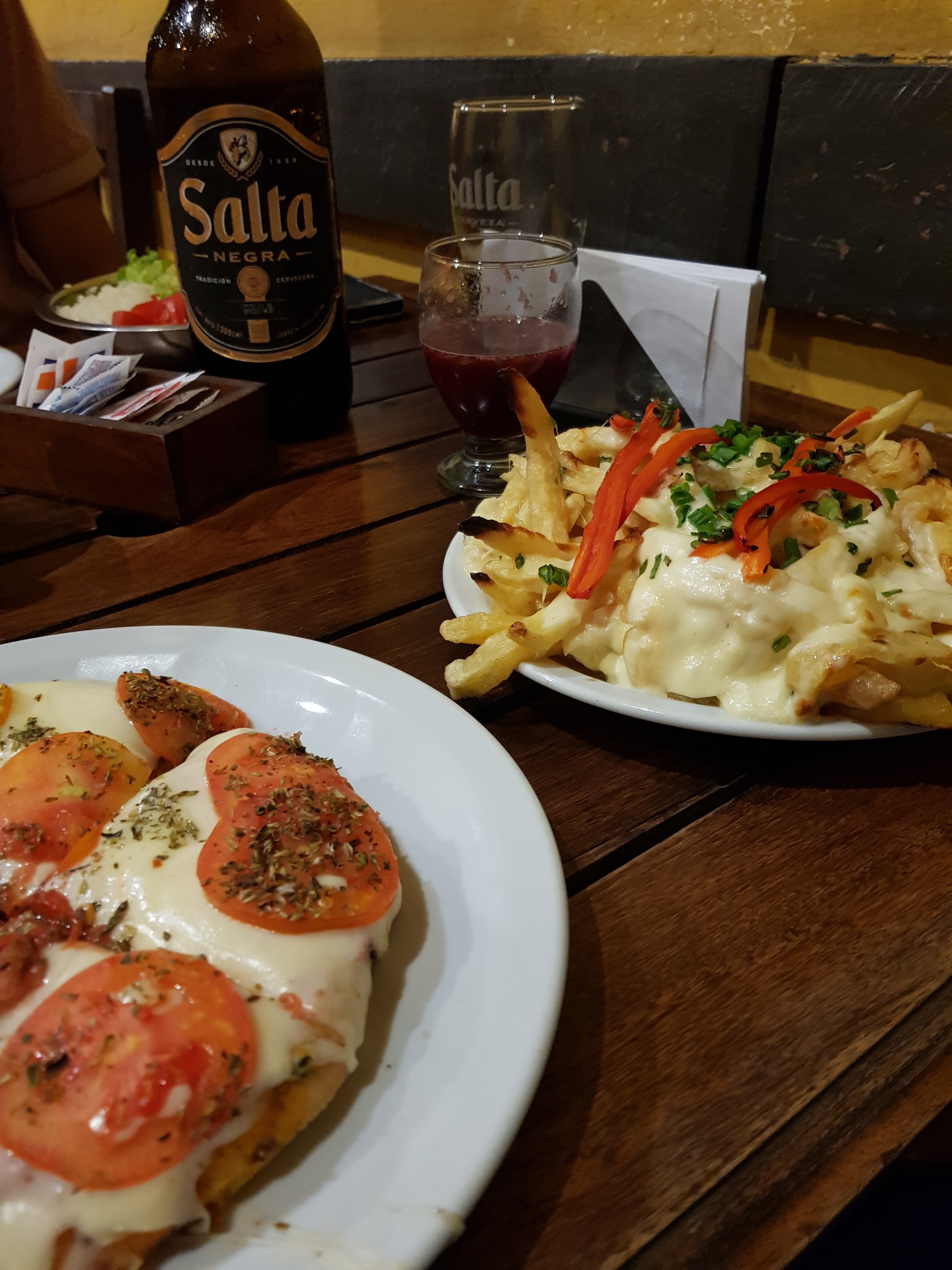
I spent my evenings relaxing with a great new friend from Brazil. We enjoyed dining in the range of restaurants in the city, and also visited a local Pena scene. A Pena is a local folklore show, but the restaurant we visited, had performances in different rooms of this old house by the diners themselves. Every time music in one room stopped, another room began to sound out with acoustic guitar or beautiful singing. It was a unique experience.

Overall, Salta stole my heart a little. A beautiful place in every way, with rich culture and history. I would definitely visit again, and would recommend a visit there to anyone in the area. Next stop, Cordoba…