Tag Archives: animals

Buenos Aires, Argentina: Paris of the Americas (Part Two)

Following my first trip to Buenos Aires, I returned to the capital city at the end of my three month trip around Argentina to have a final week there, enjoying some attractions I had not been able to visit in my first visit. This time I was joined by a travel companion and was staying in a luxury hotel.

A focus on Evita

Following my first visit to Buenos Aires, and visiting the grave of Evita, a famous Argentine first lady, this time round, I visited the Evita museum. I was keen to learn more about her life and work for the state. The museum is housed in a previous home for the poor that was set up through a foundation that Evita begun. The museum has several rooms with projections of Evita’s film clips as an actress, her speeches as an activist and also a viewing gallery for her red carpet gowns.
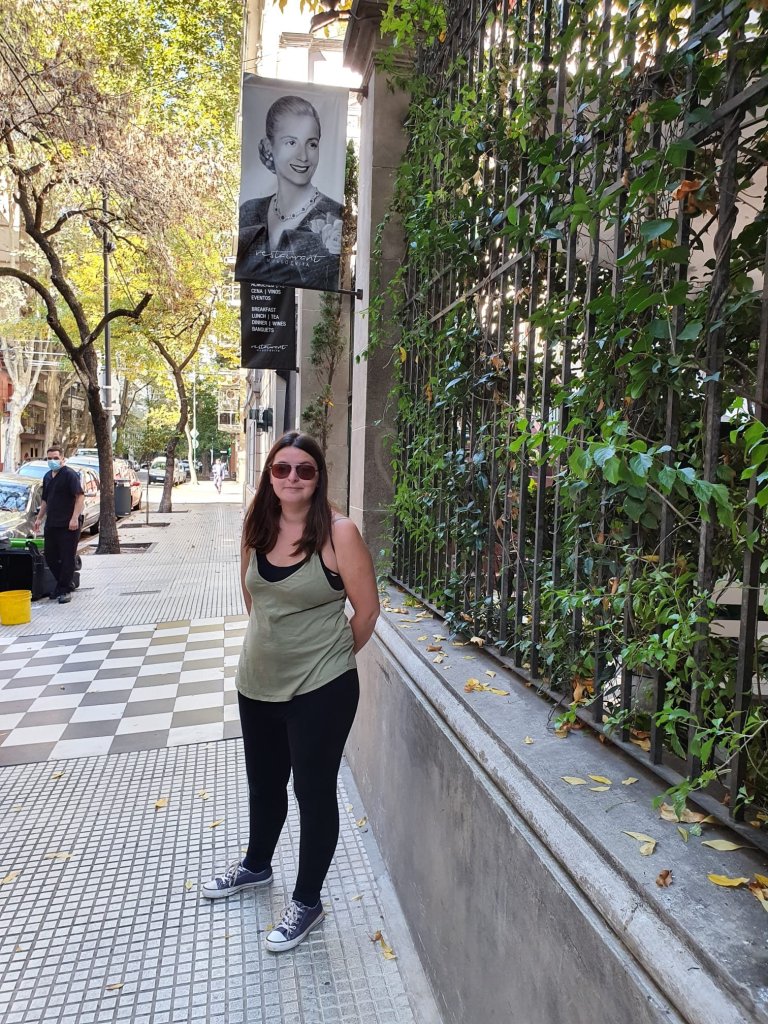
I found the museum to be really interesting but unfortunately photos were not allowed. The information was really good about her early life, career, relationship with president Peron, and her death. I learnt that she had a lot more involvement in charity work than I had realised. She also won the vice presidency but turned it down, which I was not aware of. After finishing our look around the museum, we had a tasty lunch in the museum’s restaurant which has a very nice courtyard.

A walk around the parks

I was able to visit a few more of the park’s in Buenos Aires this time, although not all of them, as the rosalade (rose garden) was closed for upkeep.. very annoying. I did manage to visit both the Botanical Garden and the Eco Parque which are next door to each other. This took a full morning, and both parks were worth a look, and free to enter.

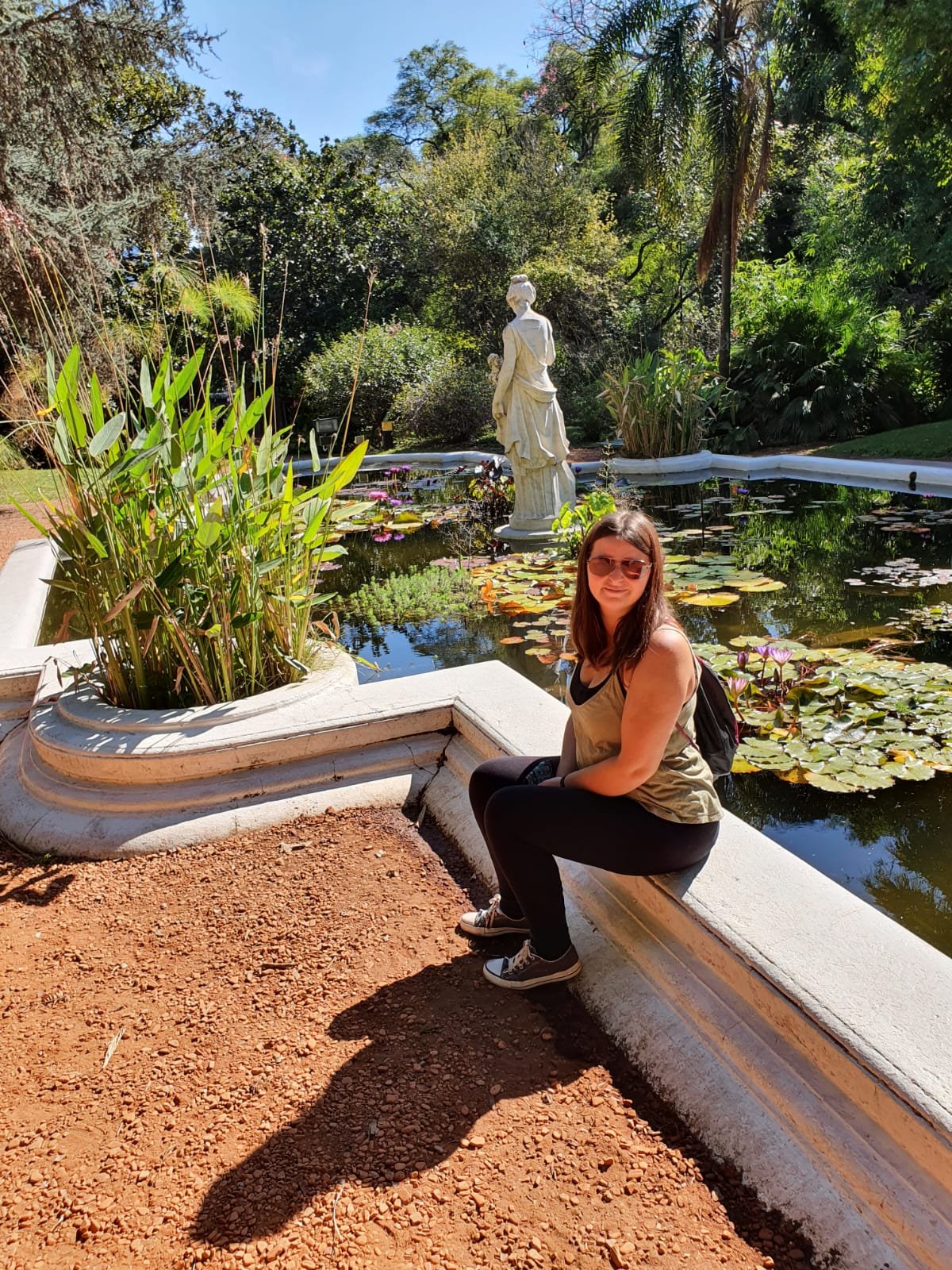
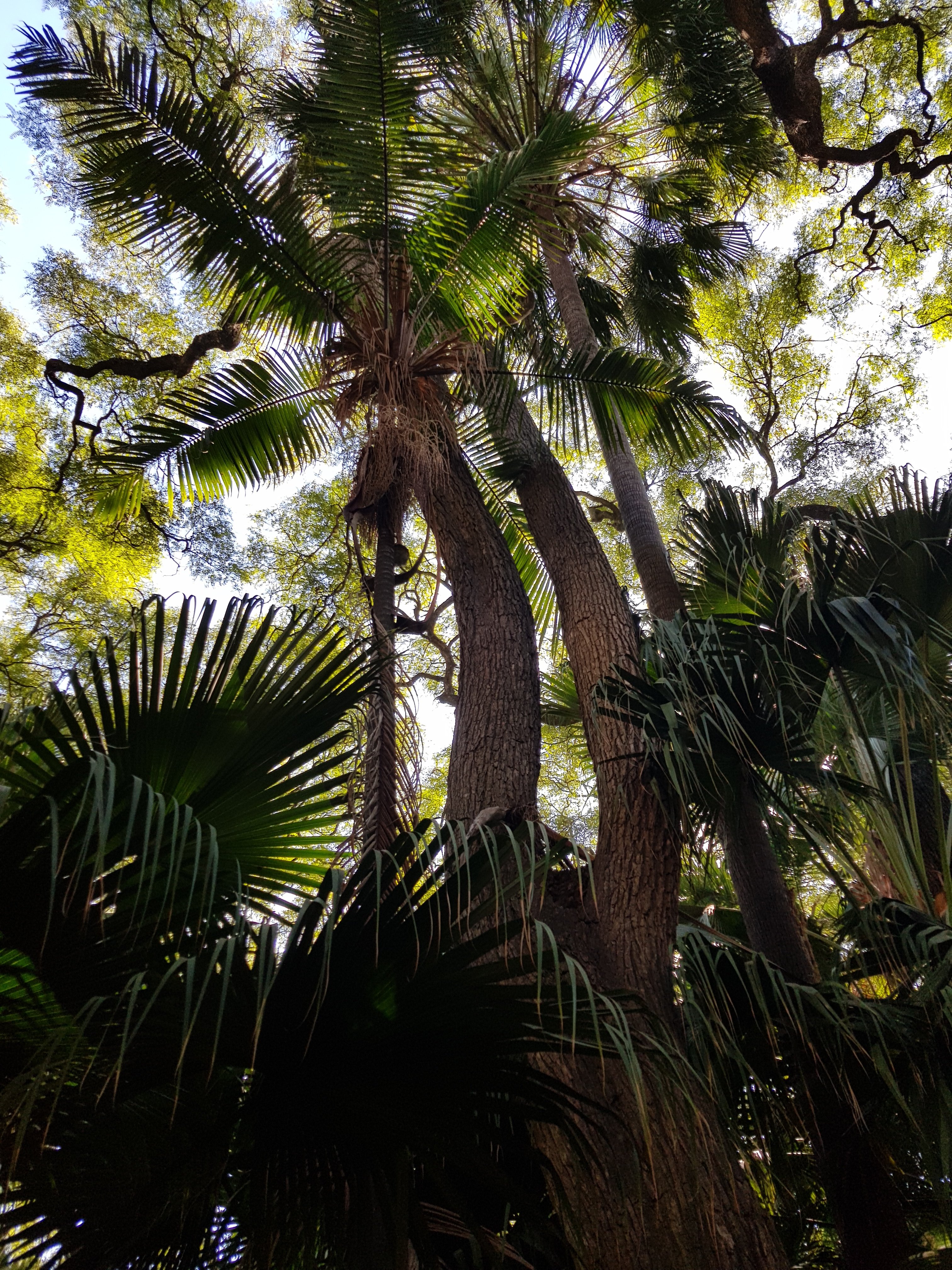
The botanical garden has many exotic plants and large trees as expected, and had attempted to theme different sections by different garden styles, for example french or italian.

The Eco Parque is a very different experience. This pretty park used to be a zoo with many large exotic animals, and elegant victorian styled animal houses. In recent decades, most of the animals have been moved to other locations, or sent back to their natural habitat.
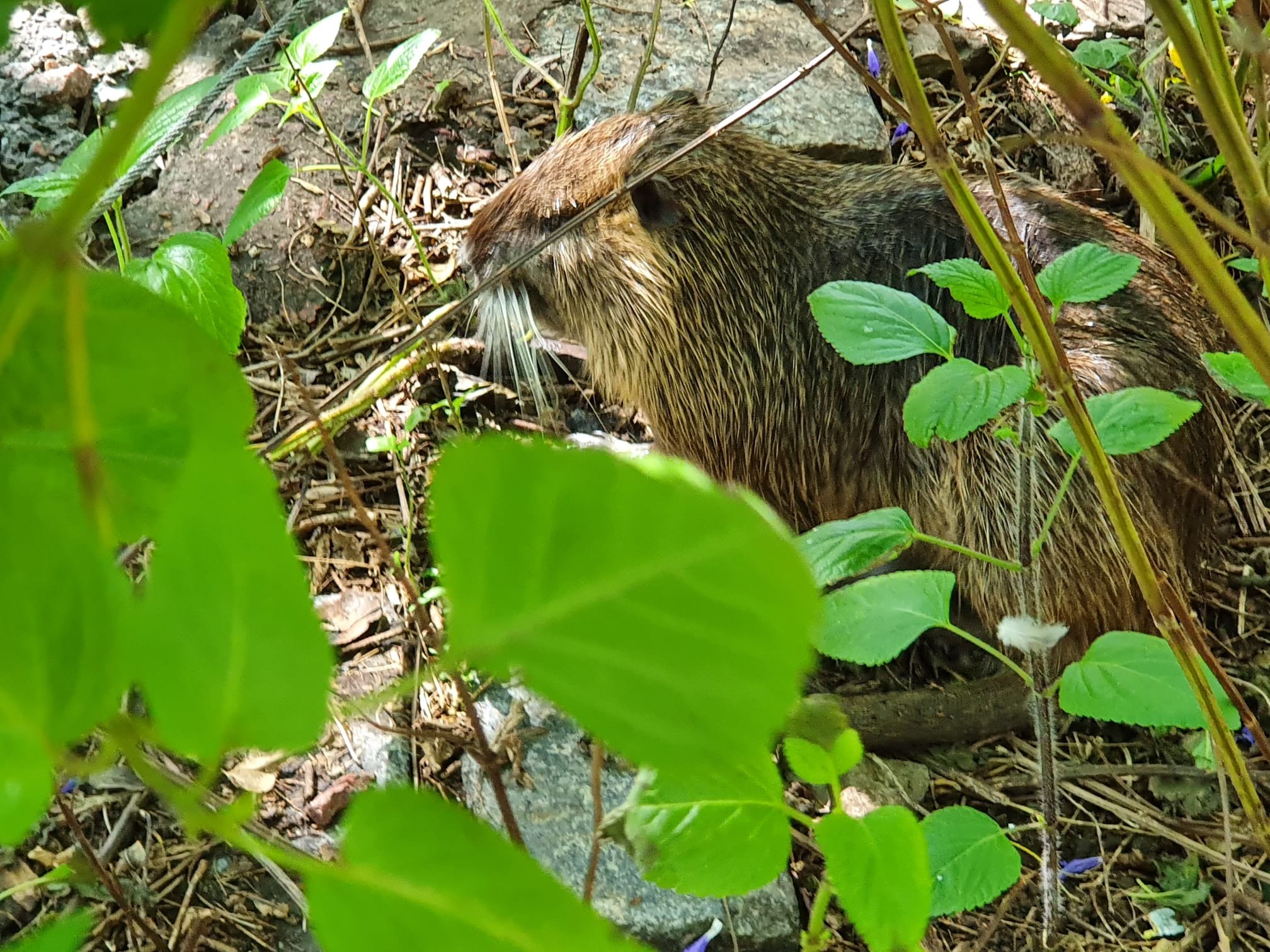
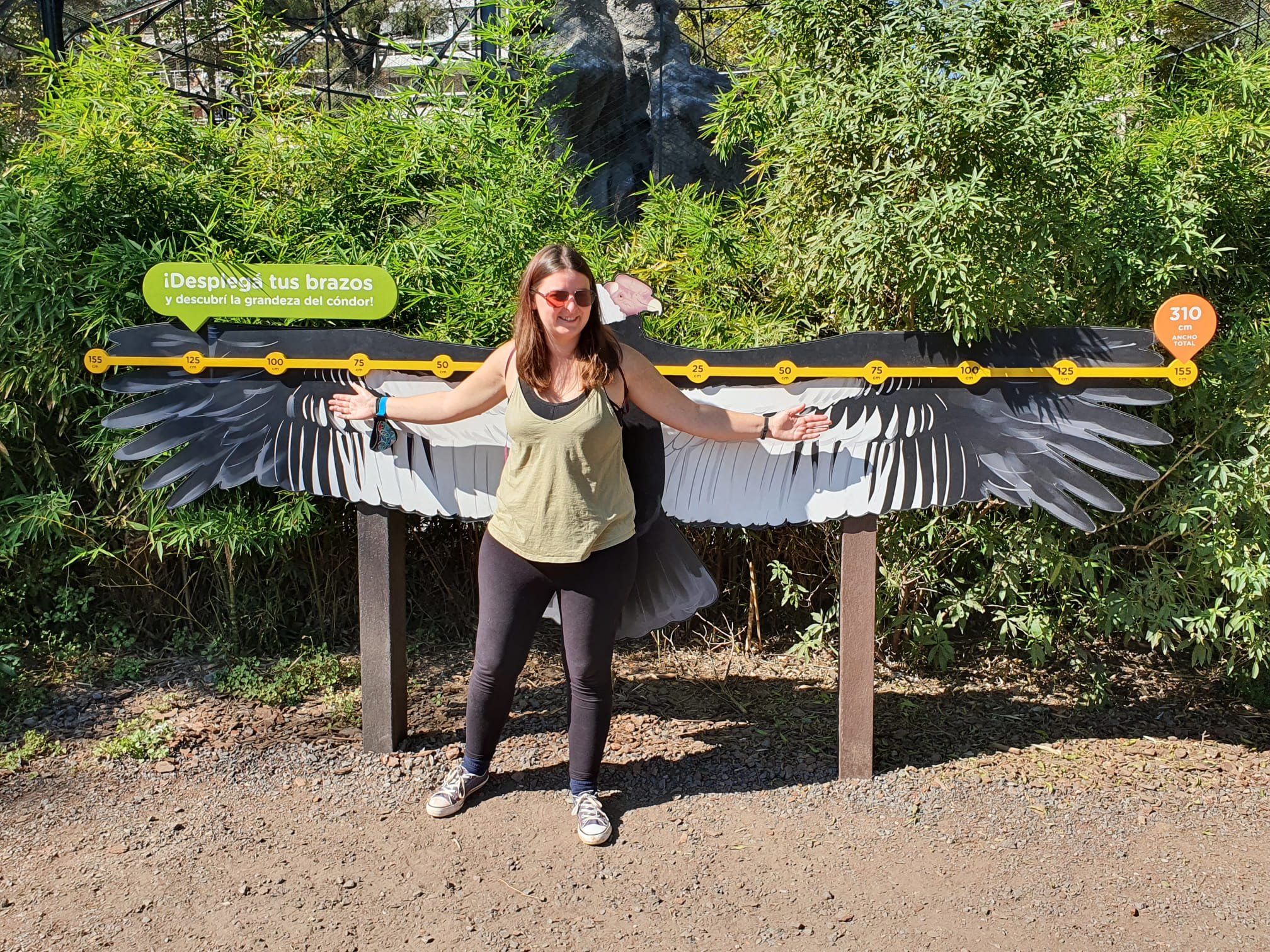
There are a few that still roam through the park though, because they are either too old or unwell to move, or do not need to be relocated. The park still has an old camel, plenty of capybaras, strange half rabbit half deer things, and even some monkeys. It is a pleasant place to take a walk in the middle of this huge city, as you never know what new animal will be around the corner.

Nightlife

In the evening, I was lucky enough to be rejoined by my German traveller friends again as they also finished their journey in BA. We headed out to Palermo Hollywood for a night of clubbing and mischief. After a night that lasted until around 6am, I was glad for my full hotel continental breakfast the next day!

La Plata

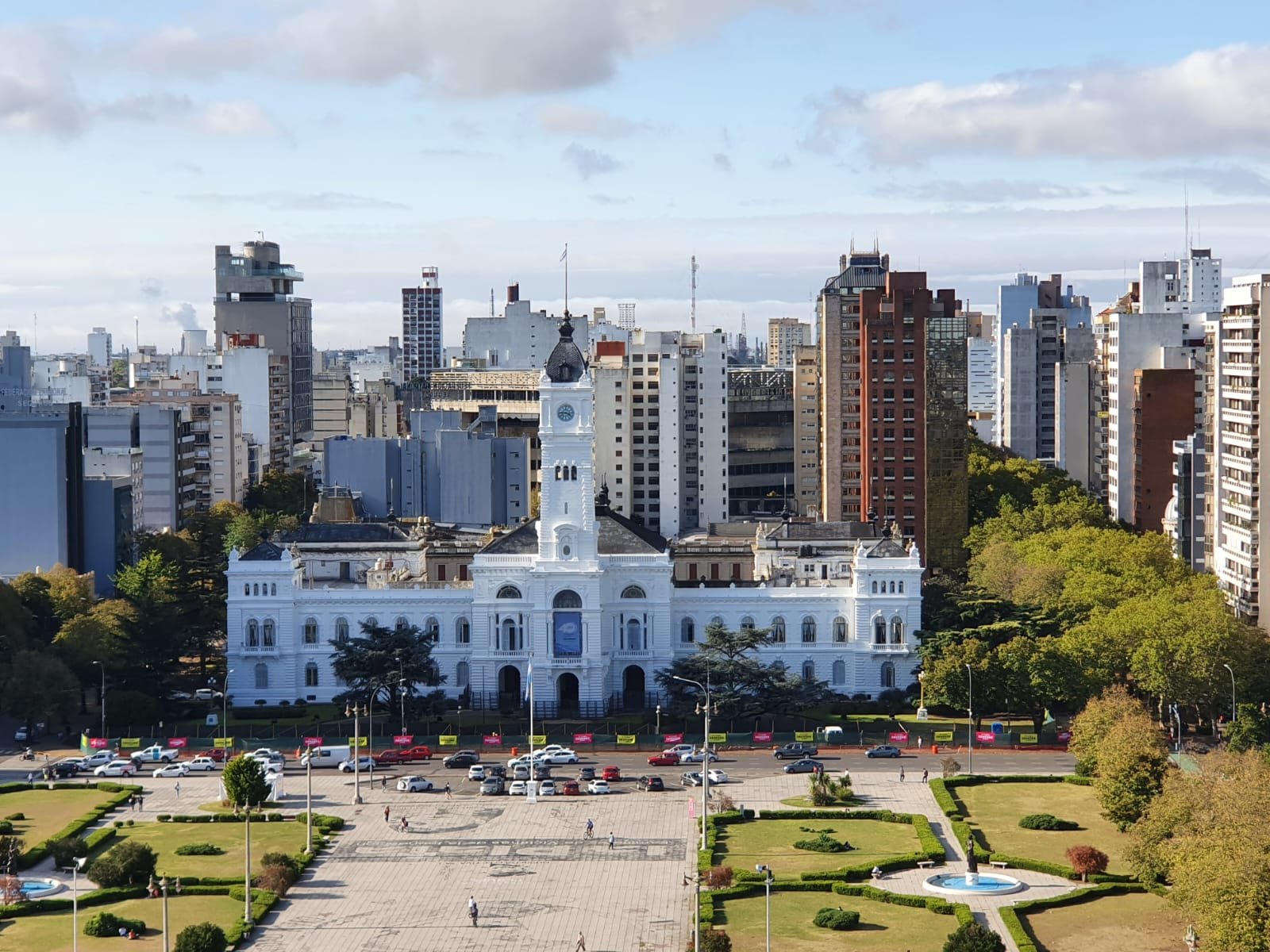
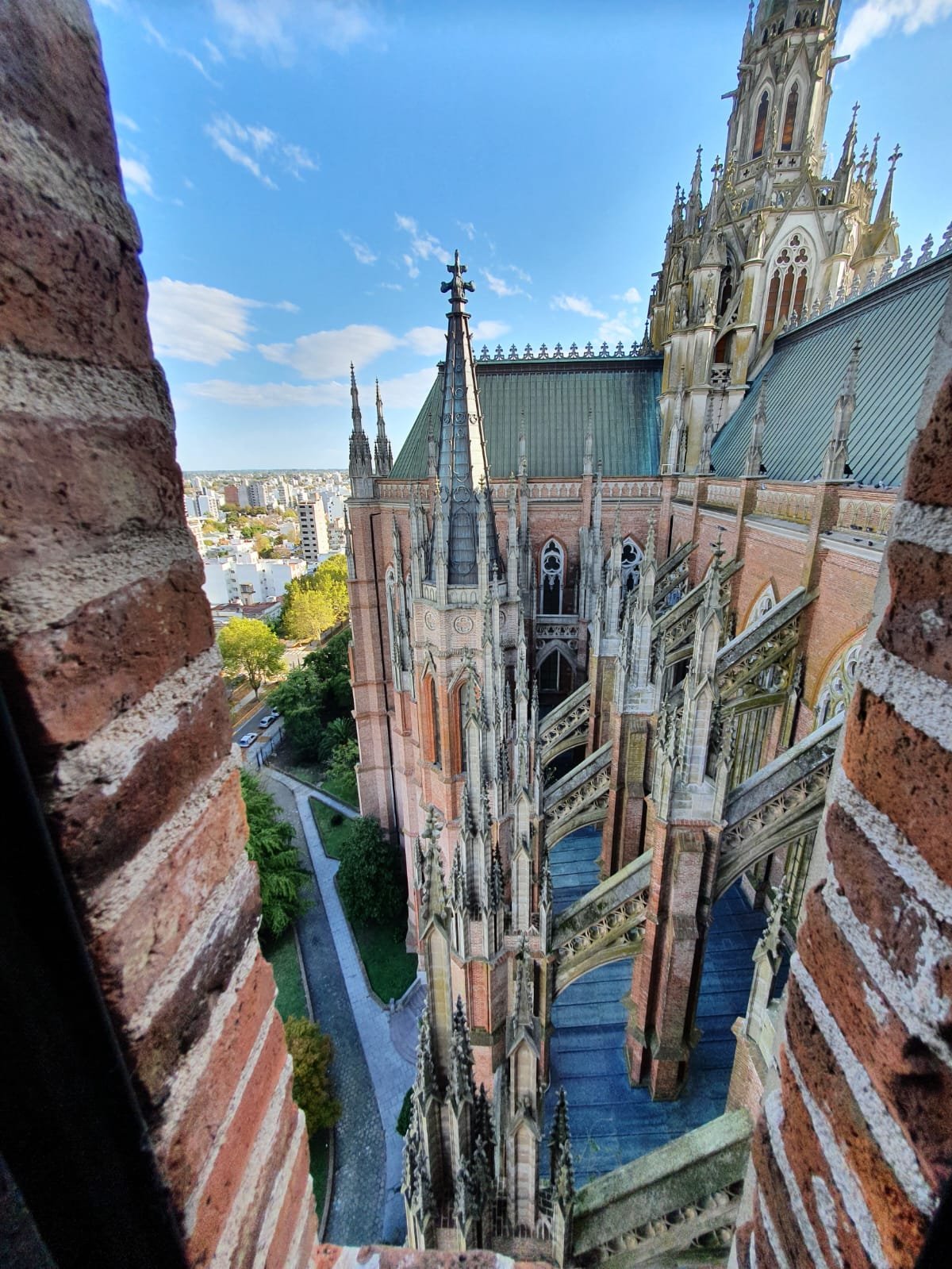
For a day out, we decided to visit the capital of the Province, the city called La Plata. The city was easy to get to, only 90 minutes on the train, and the main attraction there is a beautiful cathedral.

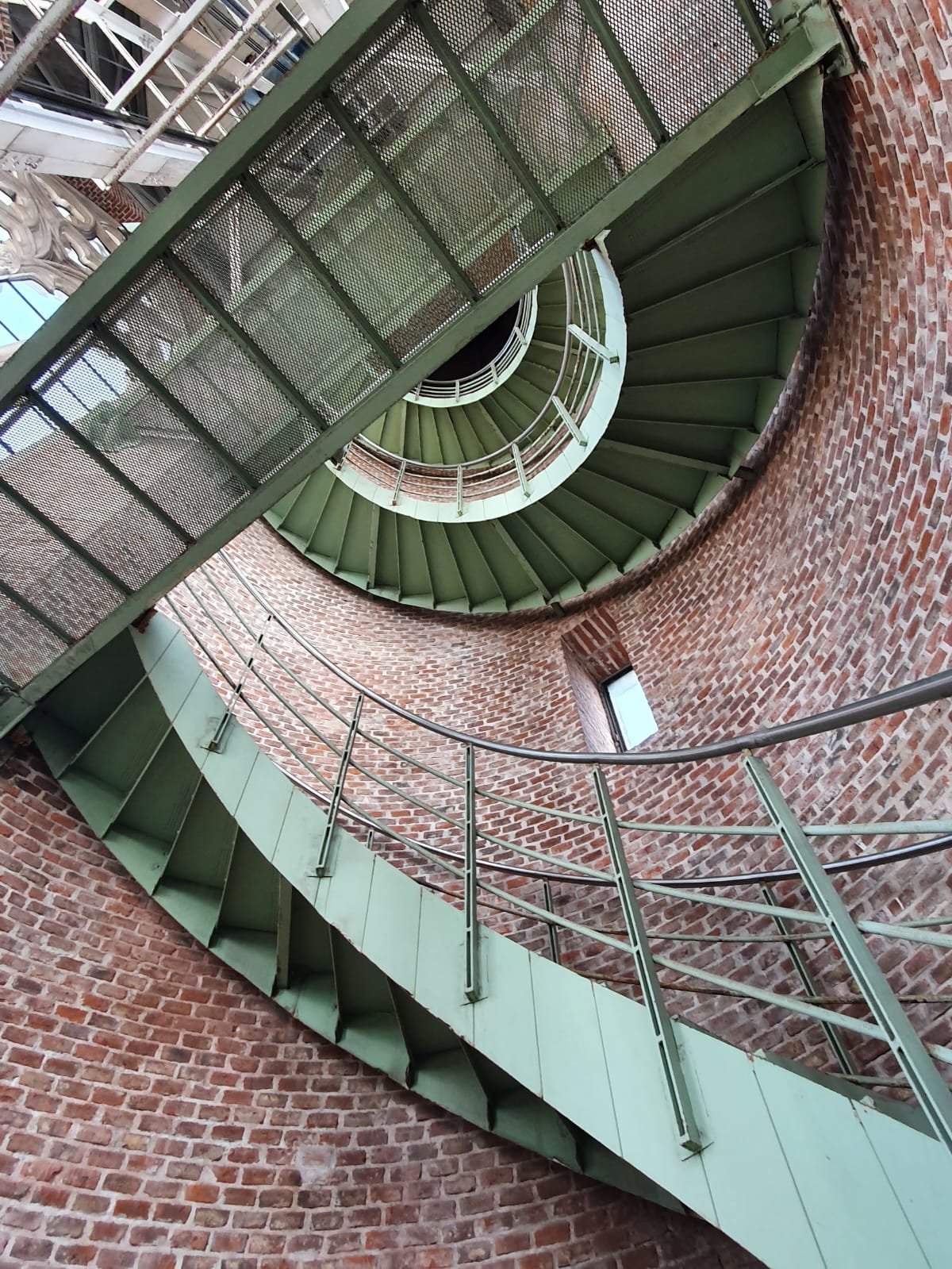
The cathedral is gorgeous on the inside, and as well as the main church, the attraction offers exploration of the crypt with a museum about its construction and original pieces, the opportunity to be lifted up the tower, and a sweet restaurant. A lovely morning out.

Horse riding in the Pampas

The province of Buenos Aires is part of the ‘Pampas’ region, and this is where the gauchos (Argentine cowboys) farm cattle the most. So, I decided to book us a day of horse riding in the area.

The four hour riding experience included a traditional asado lunch at the house of a local which was pretty special, and the horse riding itself was an unforgettable experience. For good and bad reasons…
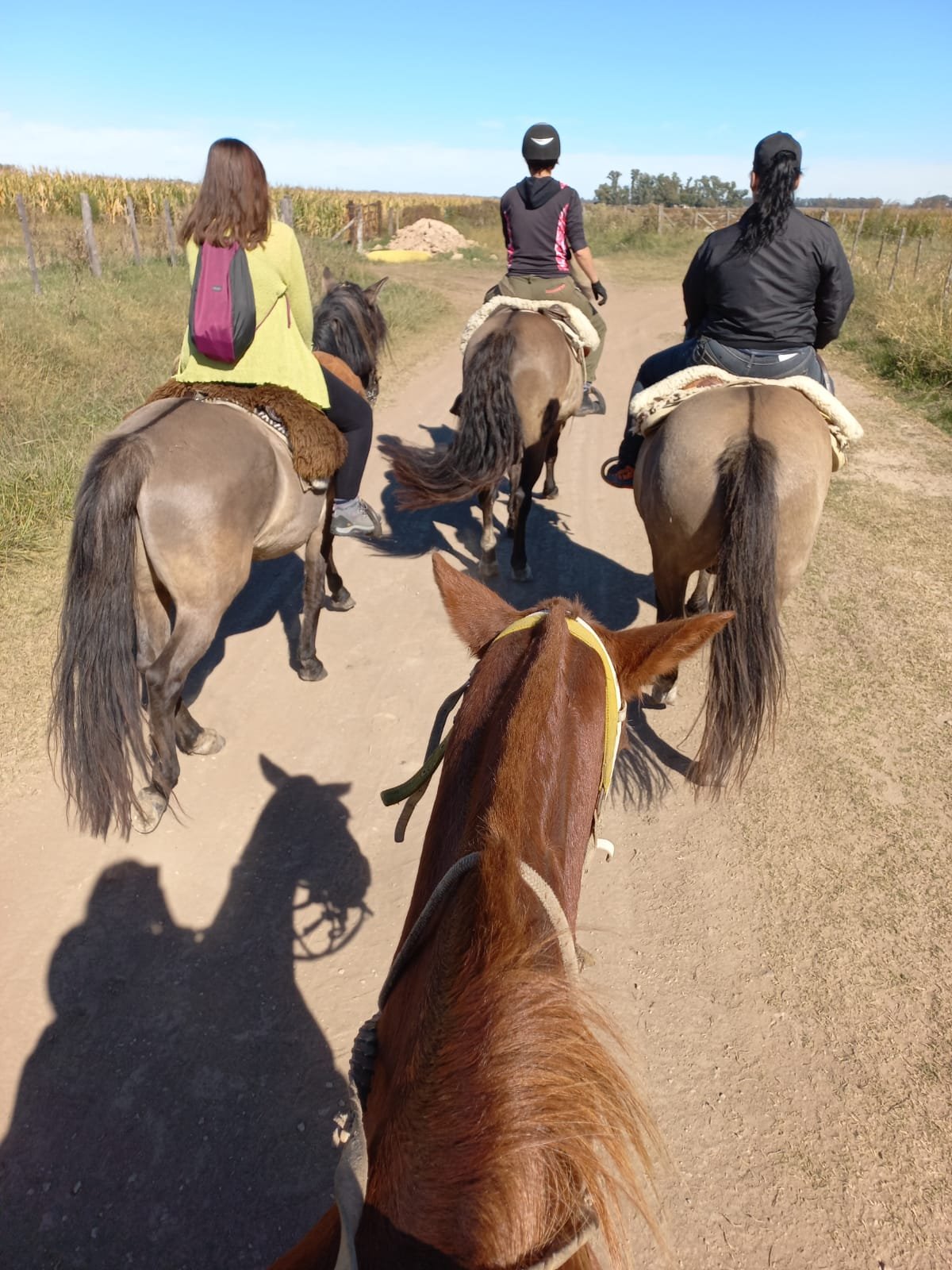
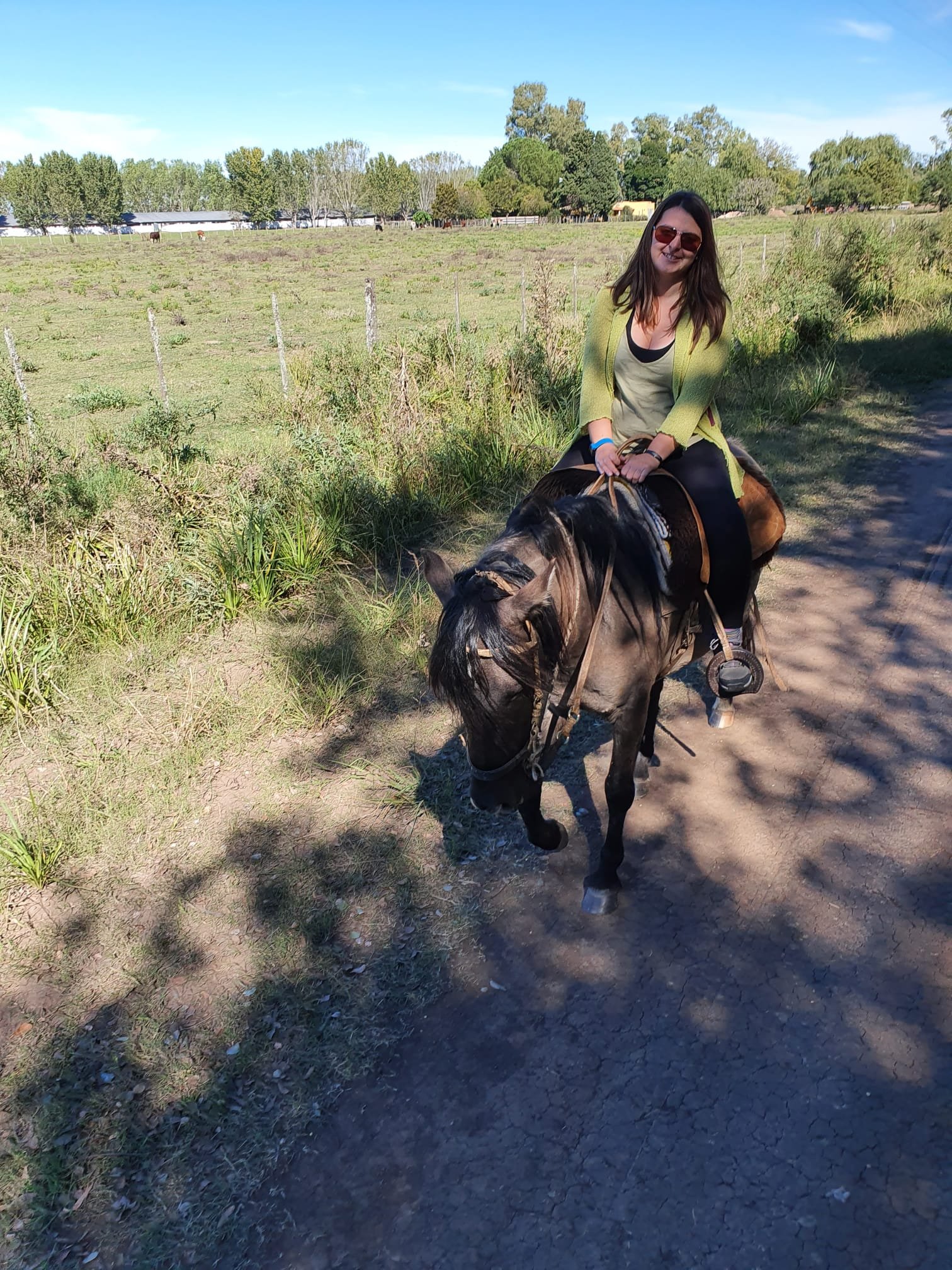
The horse I was given, was a little young and barely broken in. This was coupled by the style of gaucho riding which is very different compared to english riding. The saddles and riding kit on the horse is very different and there is no front to the saddles. You are also expected to ride one handed and without a riding hat.

Whilst a little nervous about my horse’s behaviour, I took on the challenge. We rode through long grasses, roads, ditches, and woodlands and after trotting, cantering and a little bucking by my horse, I did manage to stay on the horse! Even though I was a little banged up. The experience was good fun, but the major downer was the extreme amount of mosquito bites I endured all over my legs  i was rubbing toothpaste on my legs for days after! (Fun fact: it takes out the itch).

Lunch in Uruguay

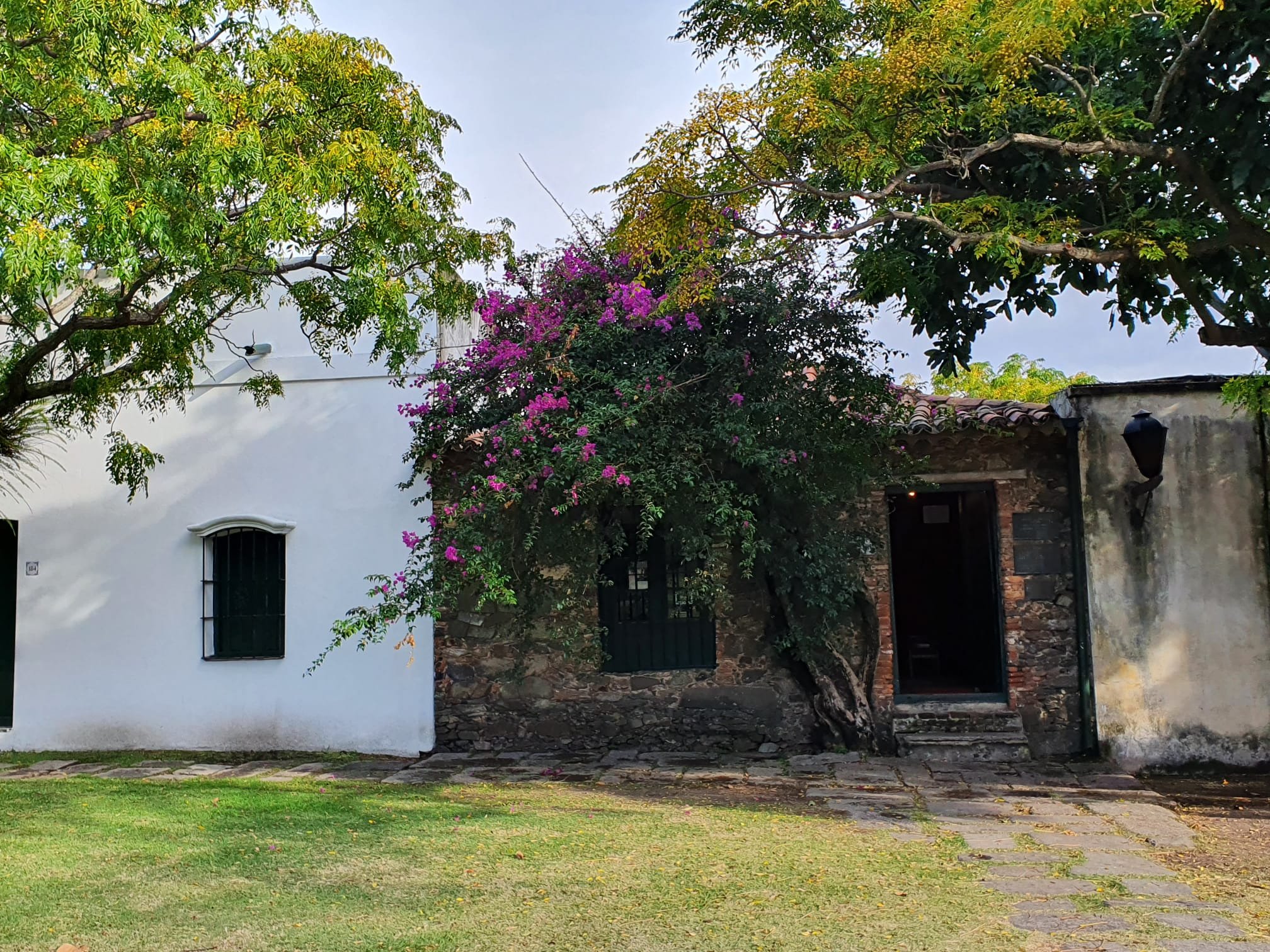
We became aware that you could visit Uruguay easily from Buenos Aires’ port by crossing in the river ferry for around an hour. It’s always tempting to cross another country off the list if the opportunity arises, so we booked our ferry tickets and took the pleasant ride across to a town called Colonia del Sacramento. From here you can also take a bus to Montevideo (Uruguay’s capital) but we decided to save that for another trip. Colonia del Sacramento is a picturesque town with a very portuguese style to it, from when it was colonised by Portugal.
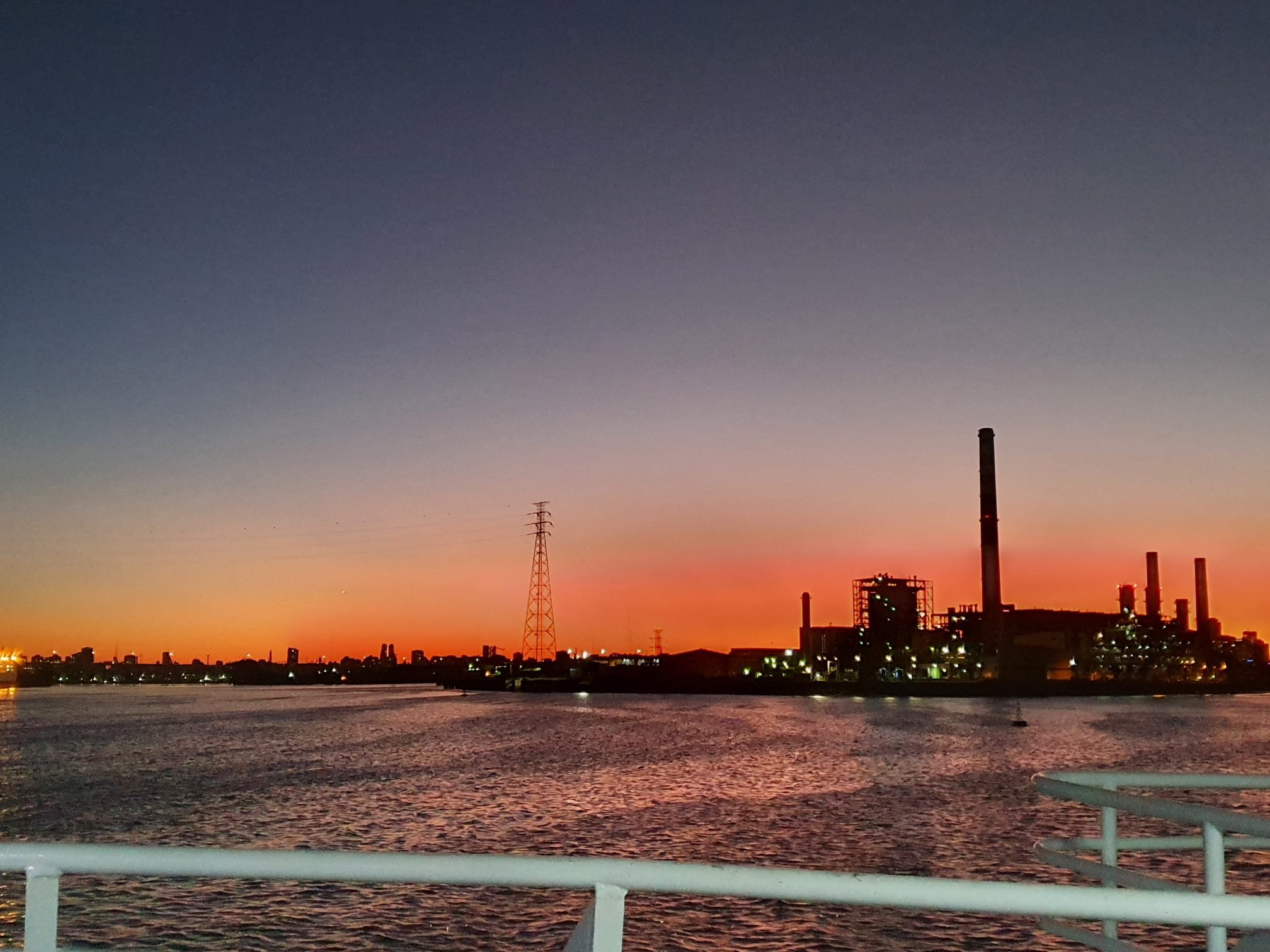
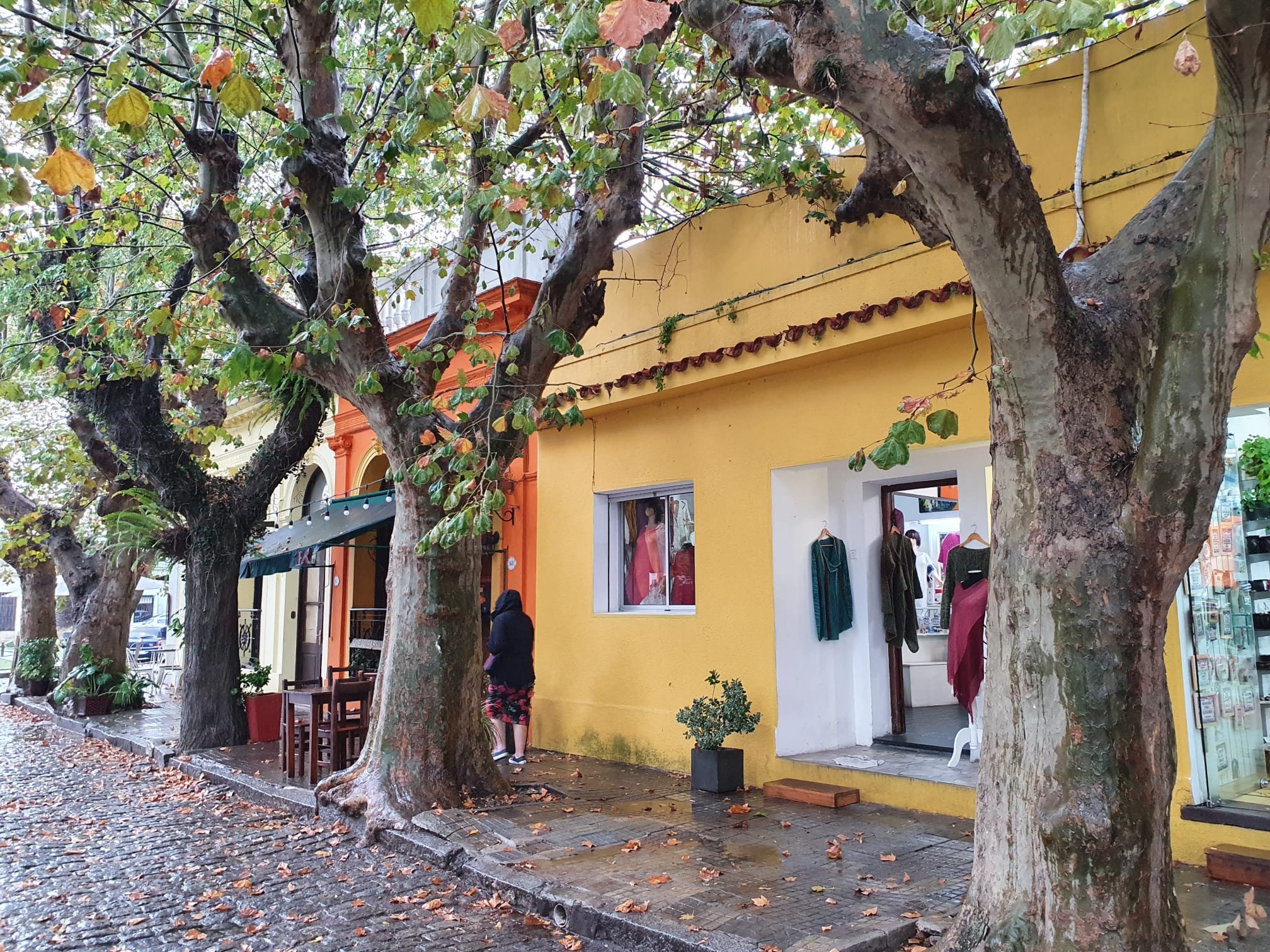
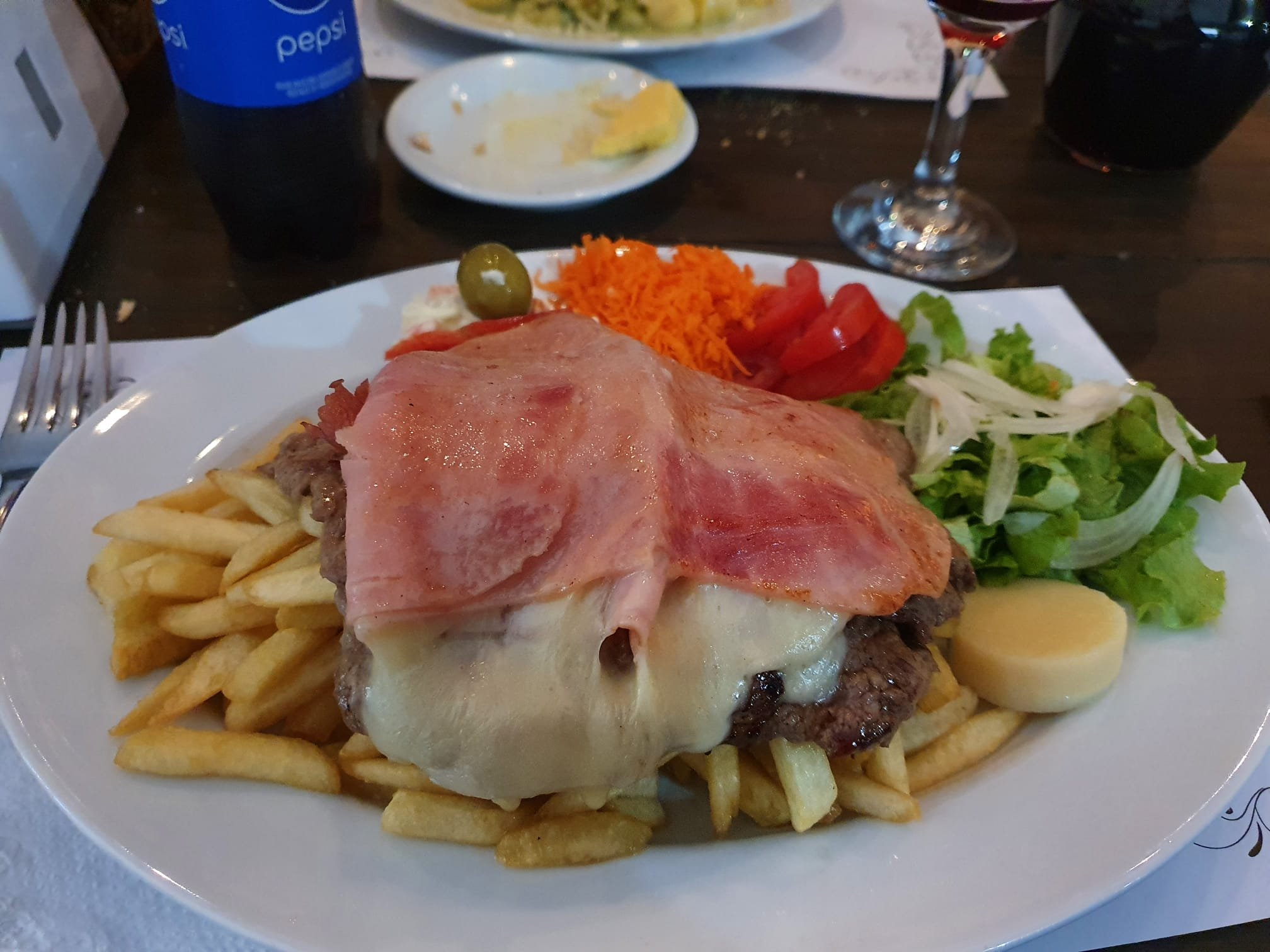
There are a couple of small museums and a church in the town to enjoy, and we had a long and luscious lunch of a traditional Uruguay dish called ‘chivito’. This is like a giant inside out meaty sandwich. Like Argentina, Uruguay also does not skimp on food portions.

Before we knew it, it was time to take the ferry back across the river. We had a good laugh about how we left the country just fot lunch though! 🤣

Tango

You can’t visit Buenos Aires and not watch a little Tango, as the traditional dance of the city. Not only can you see people dance this in the streets of Caminito in Boca, there are also plenty of theatres offering shows and classes. I wanted to do a class but they were multiple hours and I felt too lazy about it, plus I only had walking boots to dance with.

I did decide to book a show and after a little research, I booked a show at Teatro Porteno. You had an option of paying for the show on its own or with dinner included. I chose to purchase just the show which was about £23 but then on arrival, we were also provided with another menu to pick and choose food. We went for some empanadas and a delicious ham and cheeses board.
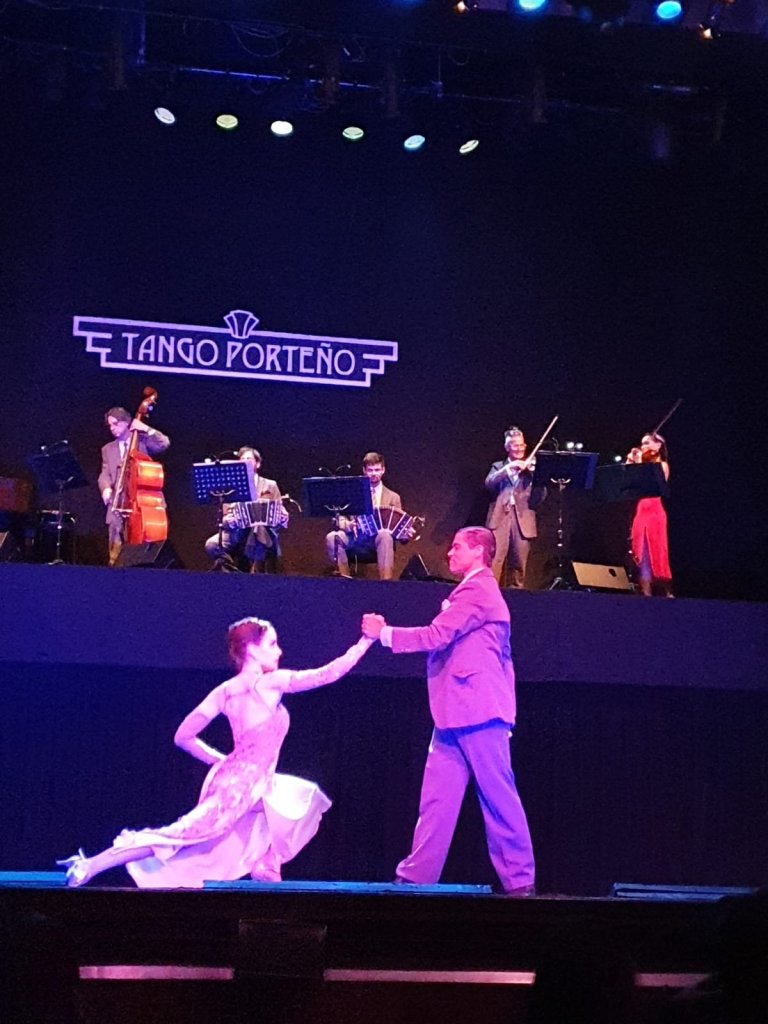
The show itself was amazing! Focused on locations around Buenos Aires, there was a variety of styles of Tango on display. They also had an act that used drums and cattle whips to create impressive rhythms with the music. I was really glad I visited.

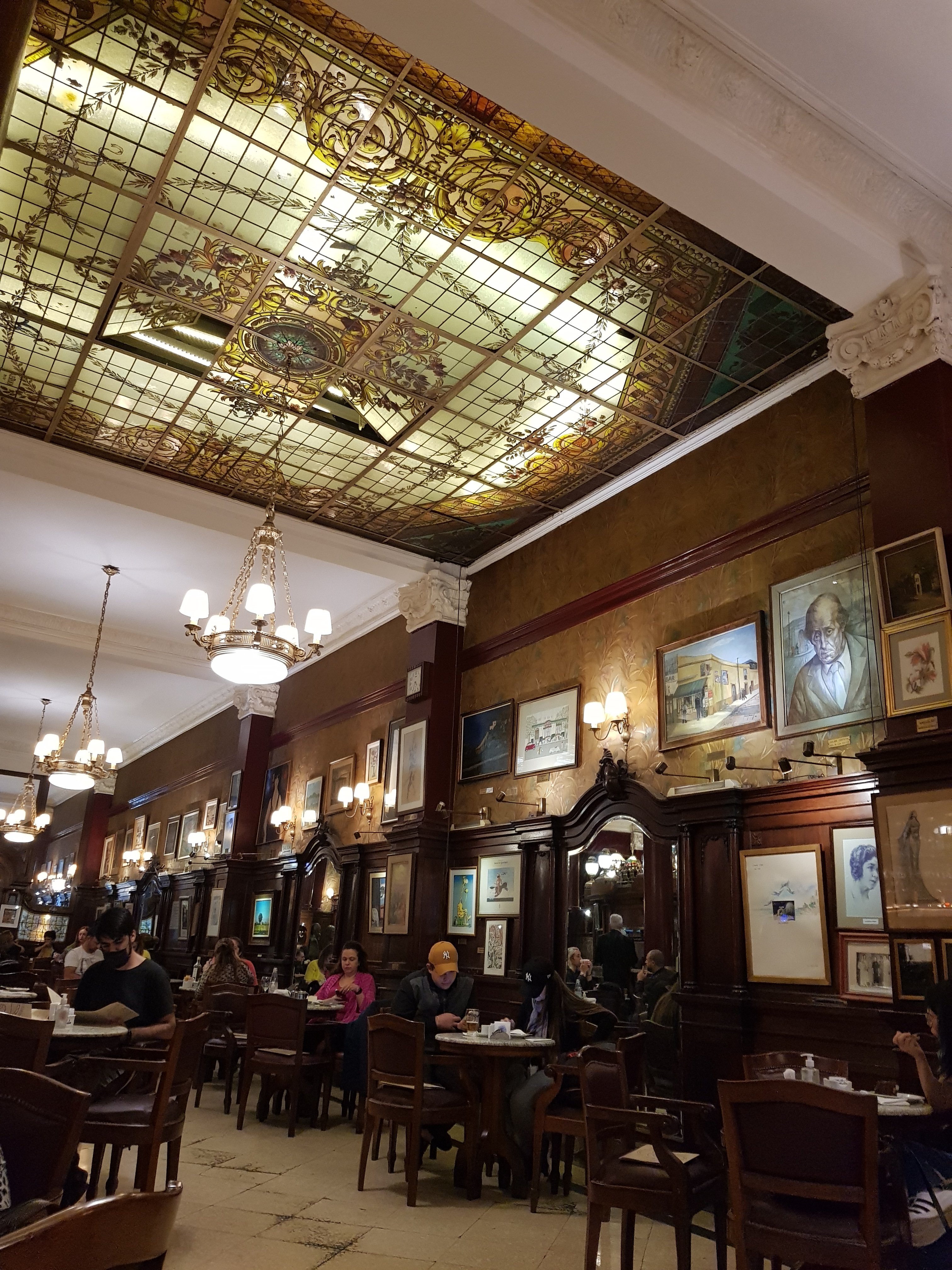
Another location where tango can be viewed and learnt is Cafe Tortoni. This is one of the oldest and most fabulous cafes in Buenos Aires. The decor is very traditional italian/ bohemian and many famous faces have eaten here. We decided to visit for a merienda (afternoon snack) and really enjoyed our visit with some great sandwiches and cake.
There were plenty of other bits and pieces I experienced in this bustling capital, but these were definitely the highlights. My return to the UK following Buenos Aires was a very long journey, but also gave me time to reflect on my amazing journey around this beautiful country.

After my return to the UK, I will soon be embarking on my next journey, working on board a cruise ship around the Mediterranean…
Iguazu Falls, Argentina; World Wonder of Nature

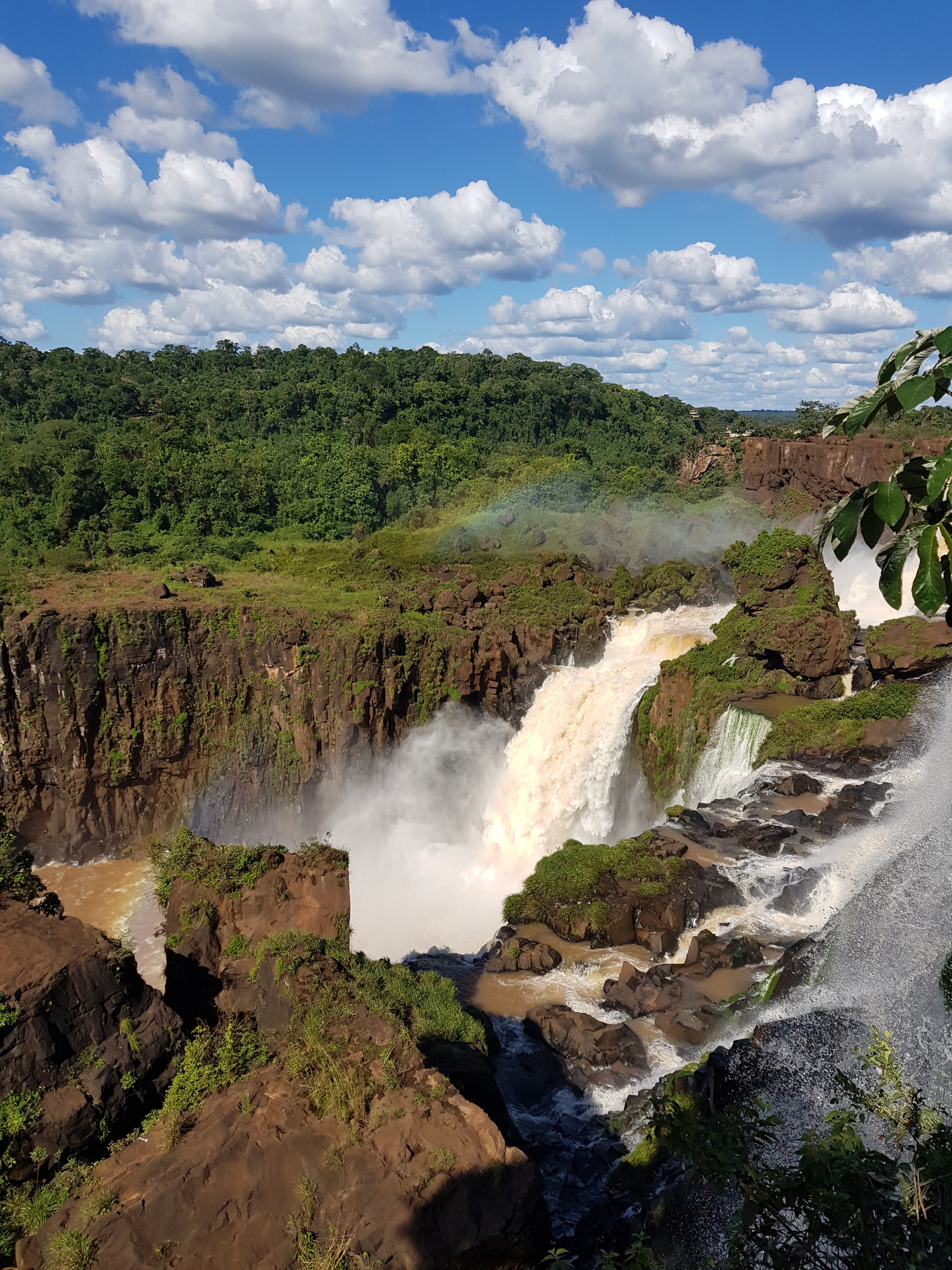
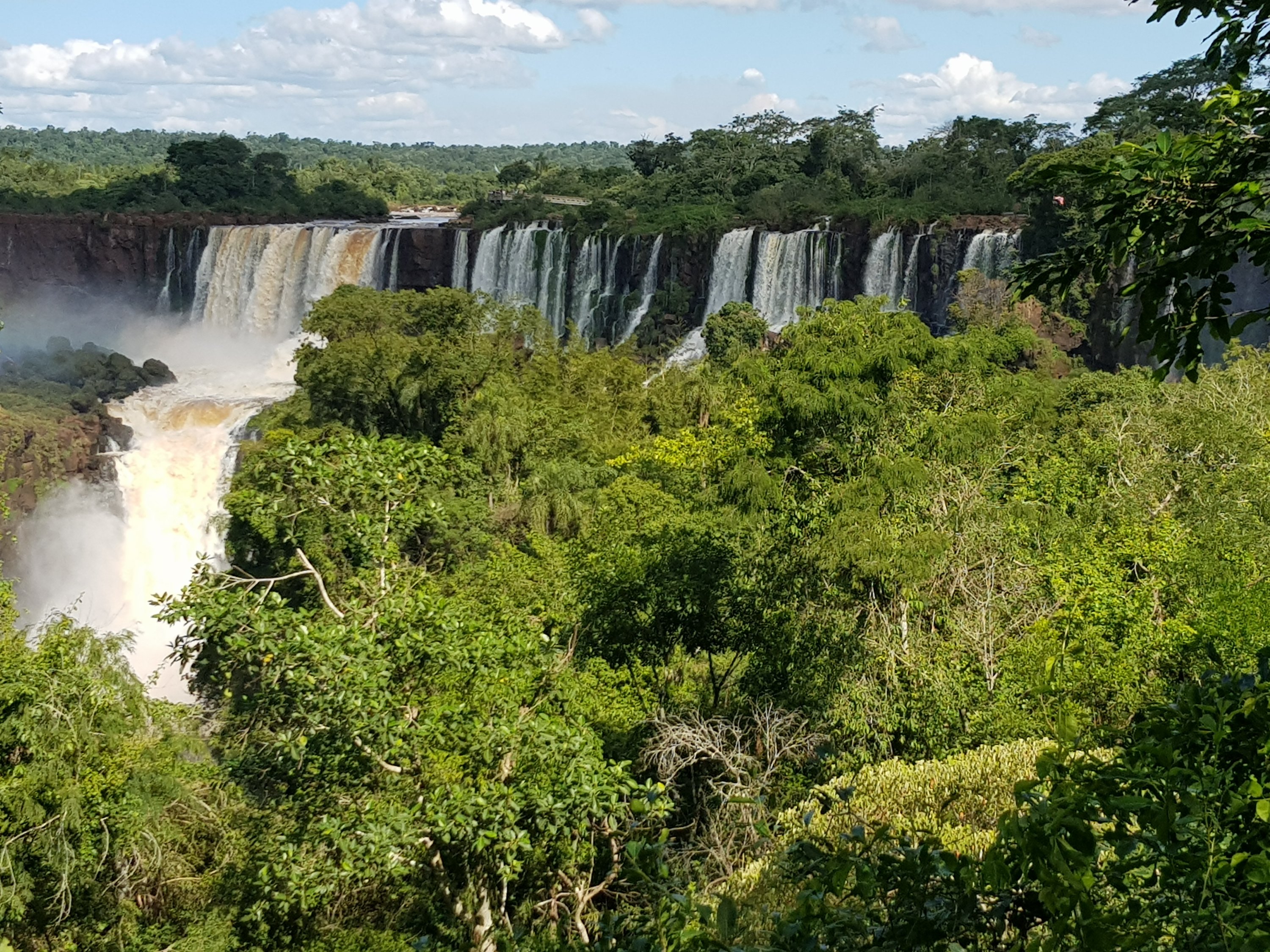
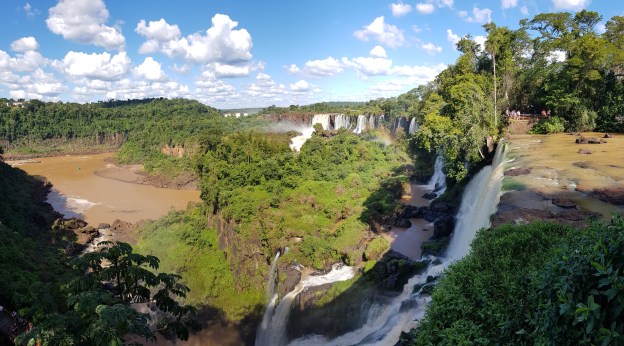
The Iguazu Falls meaning ‘big water’ in the native Guarani language, is a huge set of waterfalls set within the Misiones Jungle, at the Iguazu National Park. This world wonder provides a border between Argentina and Brazil, and a unique habitat for plants, trees, birds and other rare wild animals. I visited Iguazu for two days of exploring in the jungle and relaxing with good food and company.

Arriving in Puerto Iguazu

After a fifteen hour bus journey from Corrientes, I finally arrived at Puerto Iguazu. This town is the nearest settlement to the Argentina side of the Iguazu National Park. The town has several hotels and plenty of restaurants for relaxing evenings after exploring the jungle. I met up with a travel companion at this point, and we stayed in a hotel that was surrounded in jungle plants and had a very nice pool!

The jungle by day

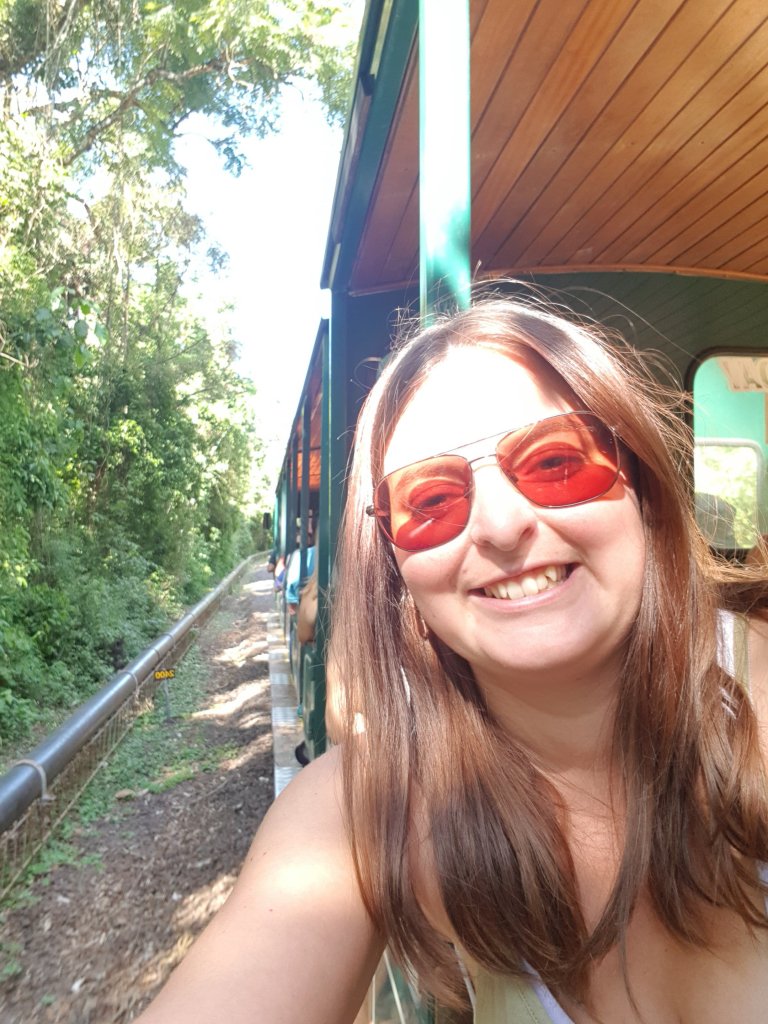
During my two days in Iguazu, I visited the national park on both days. The national park is under 30 minutes from the town, and on arrival there is a large visitor centre, cafe, and ticket offices. The park also has paved pathways to lead you through specific parts of the jungle, and various refreshment points. The most surprising piece of infrastructure was the park’s jungle train. It runs on a 3km track to take visitors to the largest fall that is furthest away, and is included in the admission for the park. It is also worth knowing that your second day in the park gets a discount if you show your previous ticket.

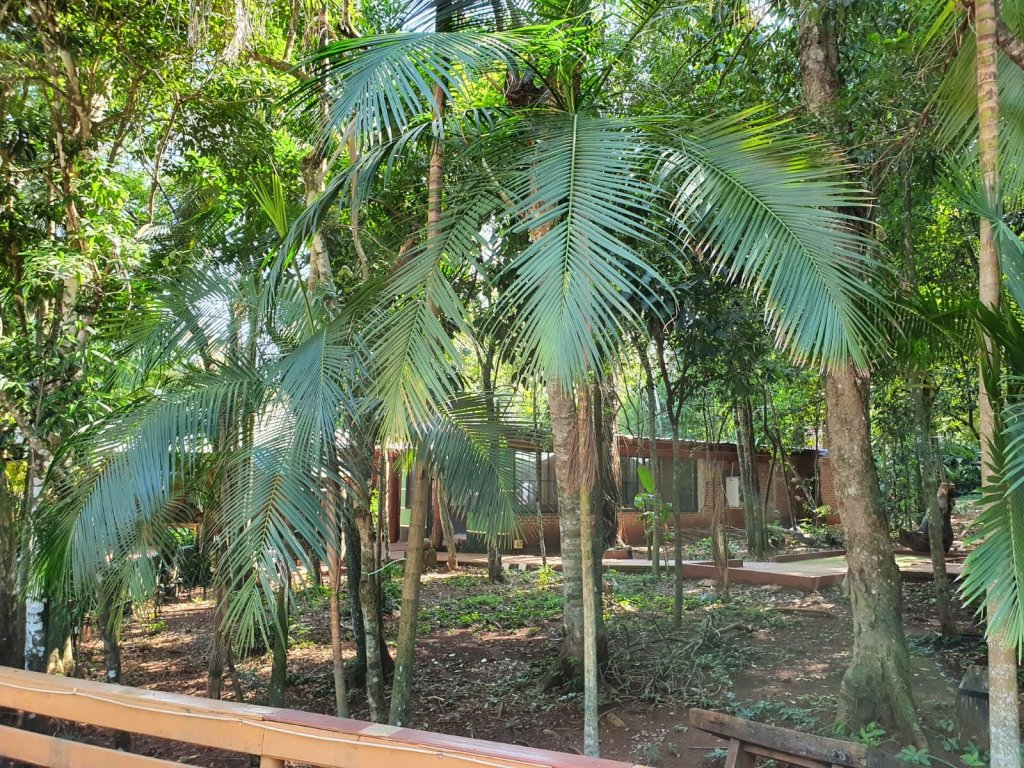
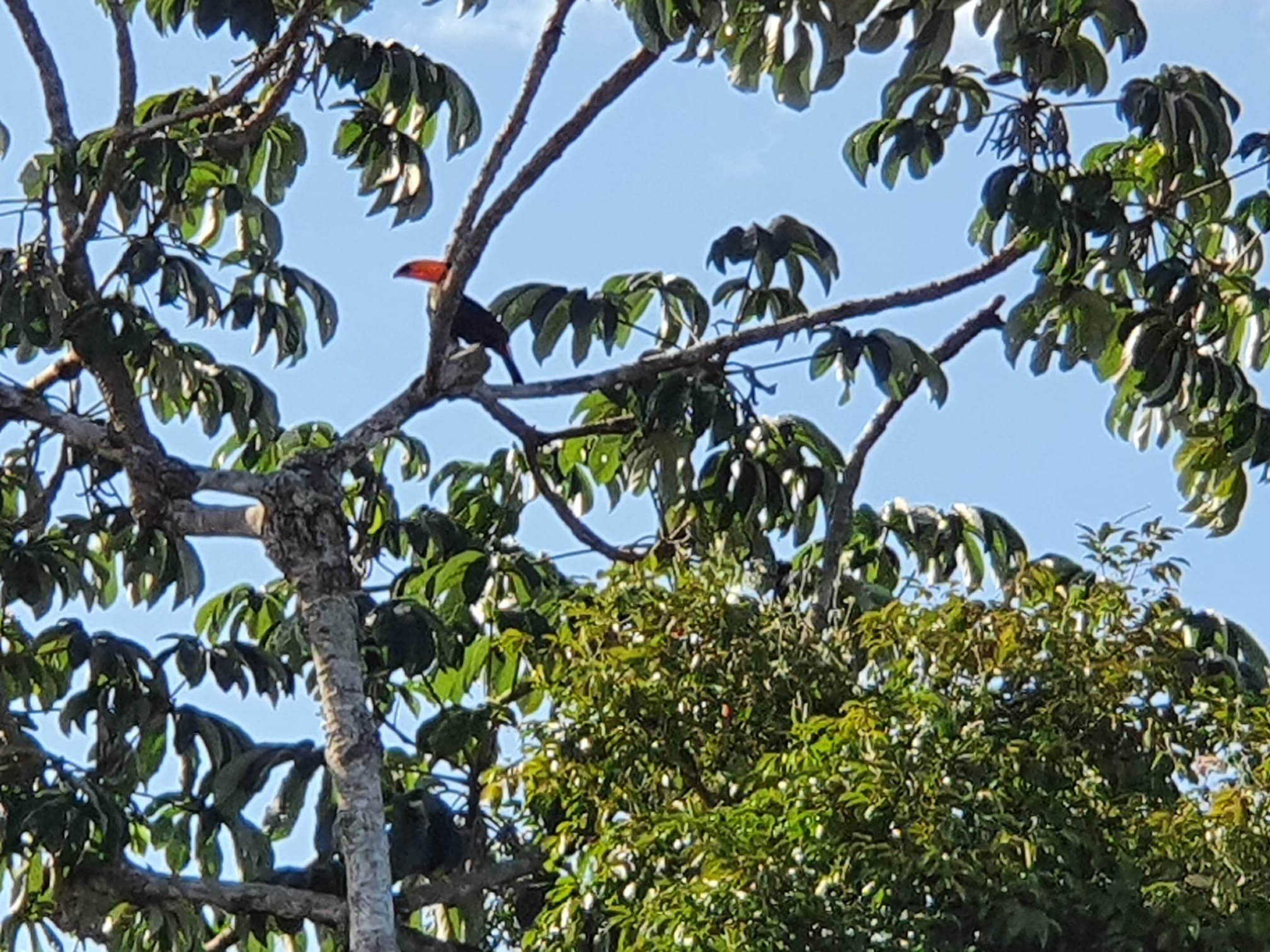
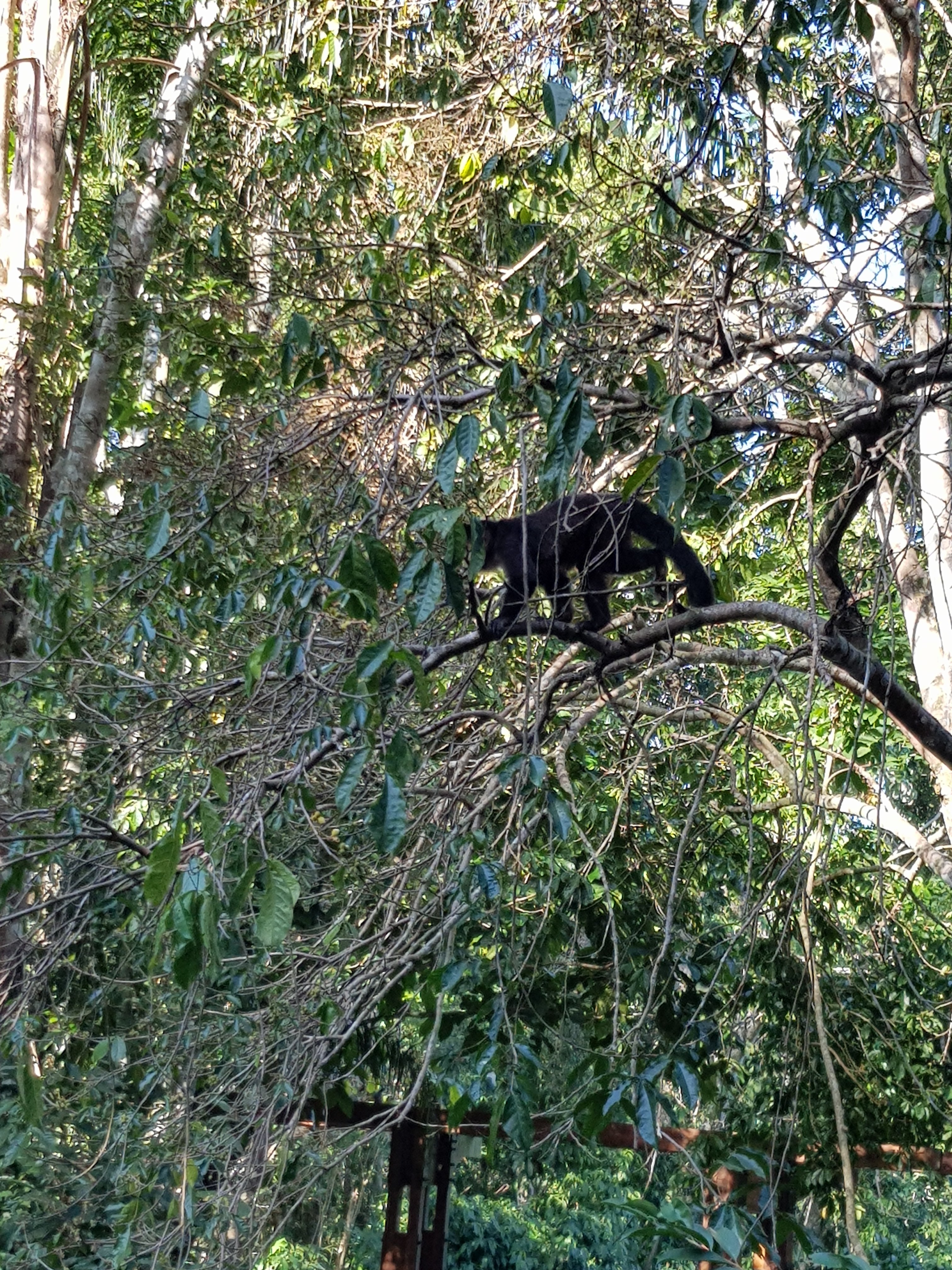
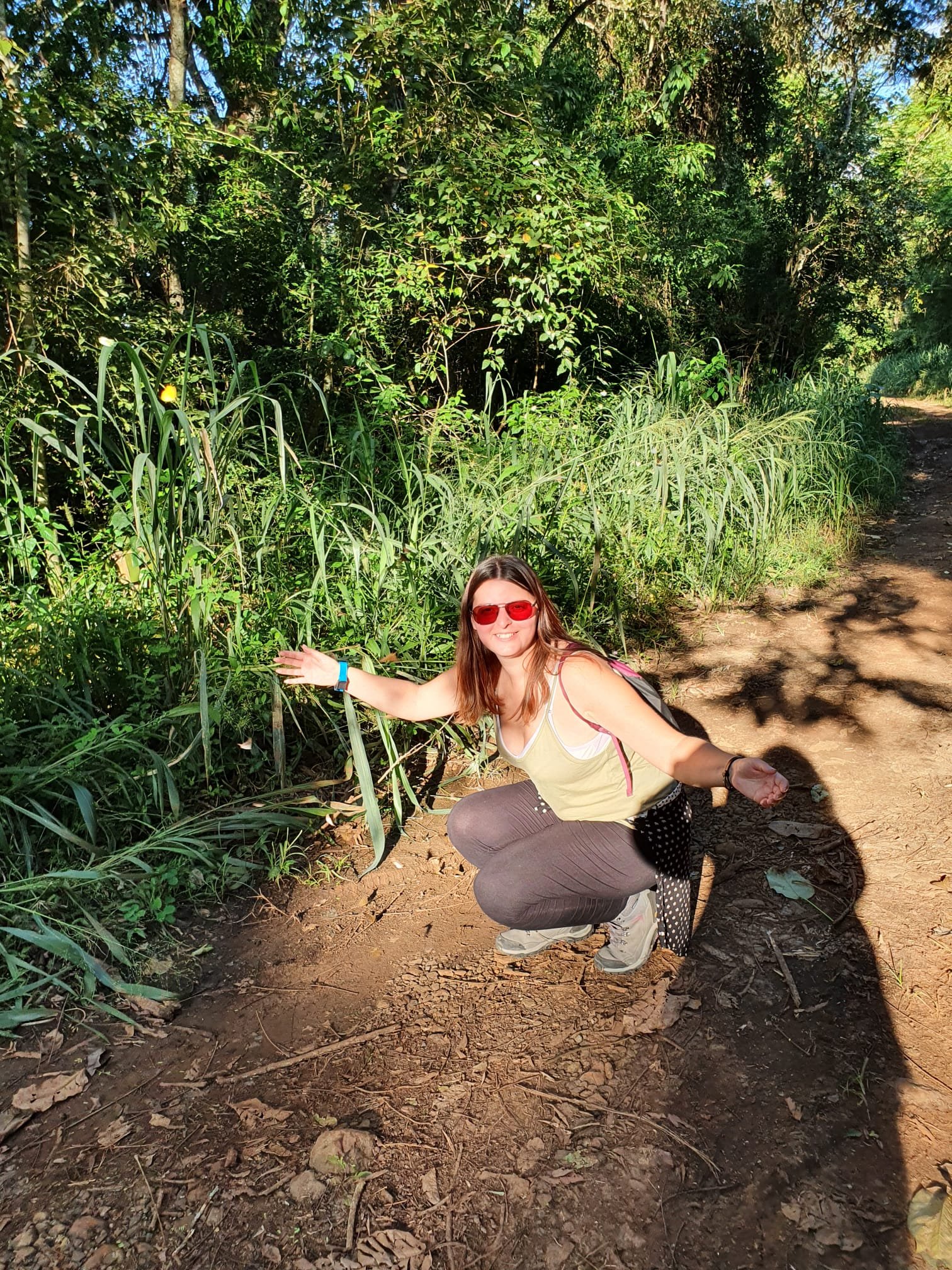
Whilst there was some human structures, the park in no way looked ‘well kept’. It is a very wild area and I was amazed at the amount of animals that I was able to see roaming around. In my short time there I was able to see monkeys, capybaras, coatis, toucans, parrots and condors. There were also beautiful insects to see such as colourful butterflies, and huge ant hills with ants carrying leaves back and forth. There were also pumas and jaguars in the park, but they kept to themselves!

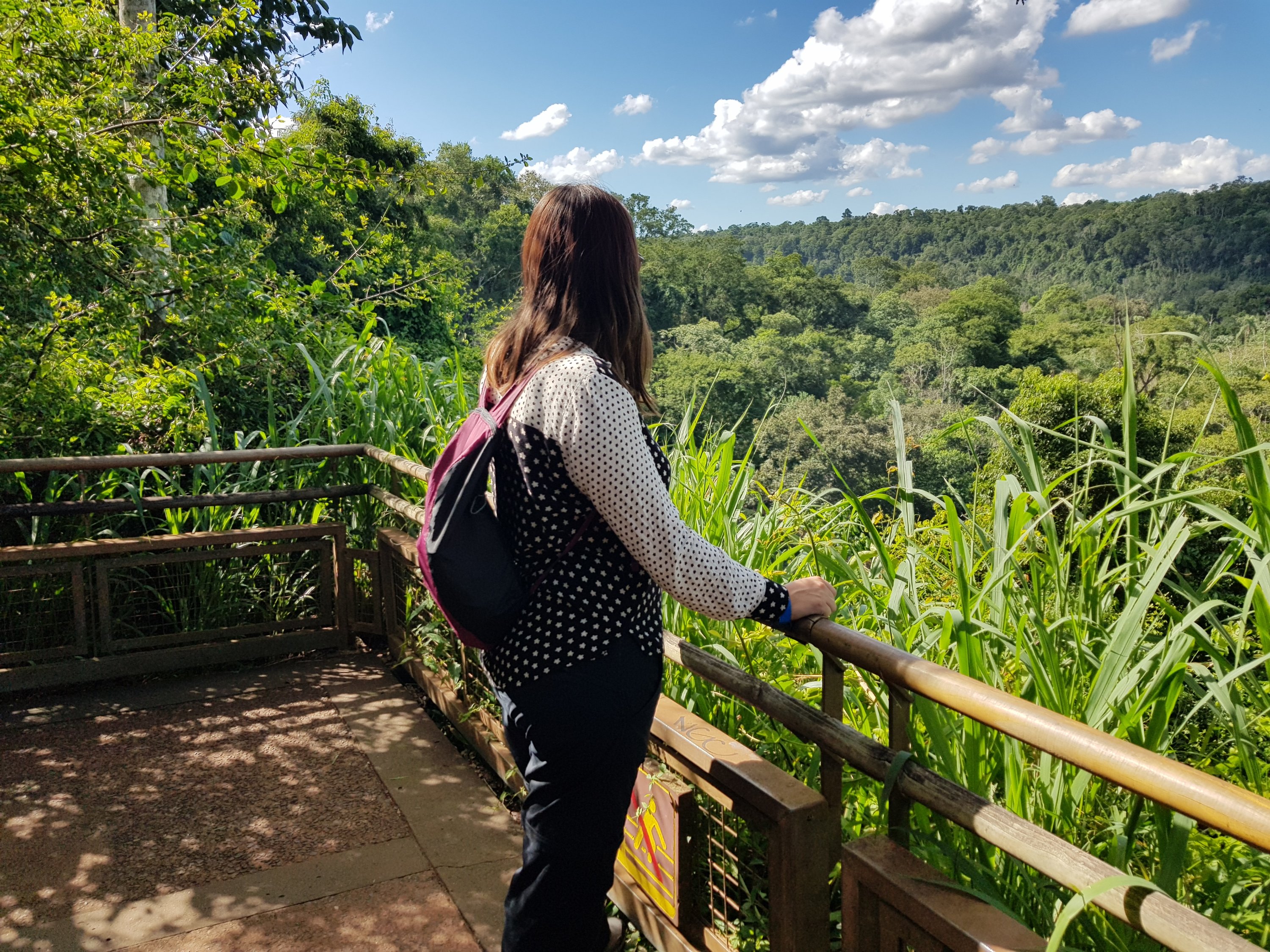
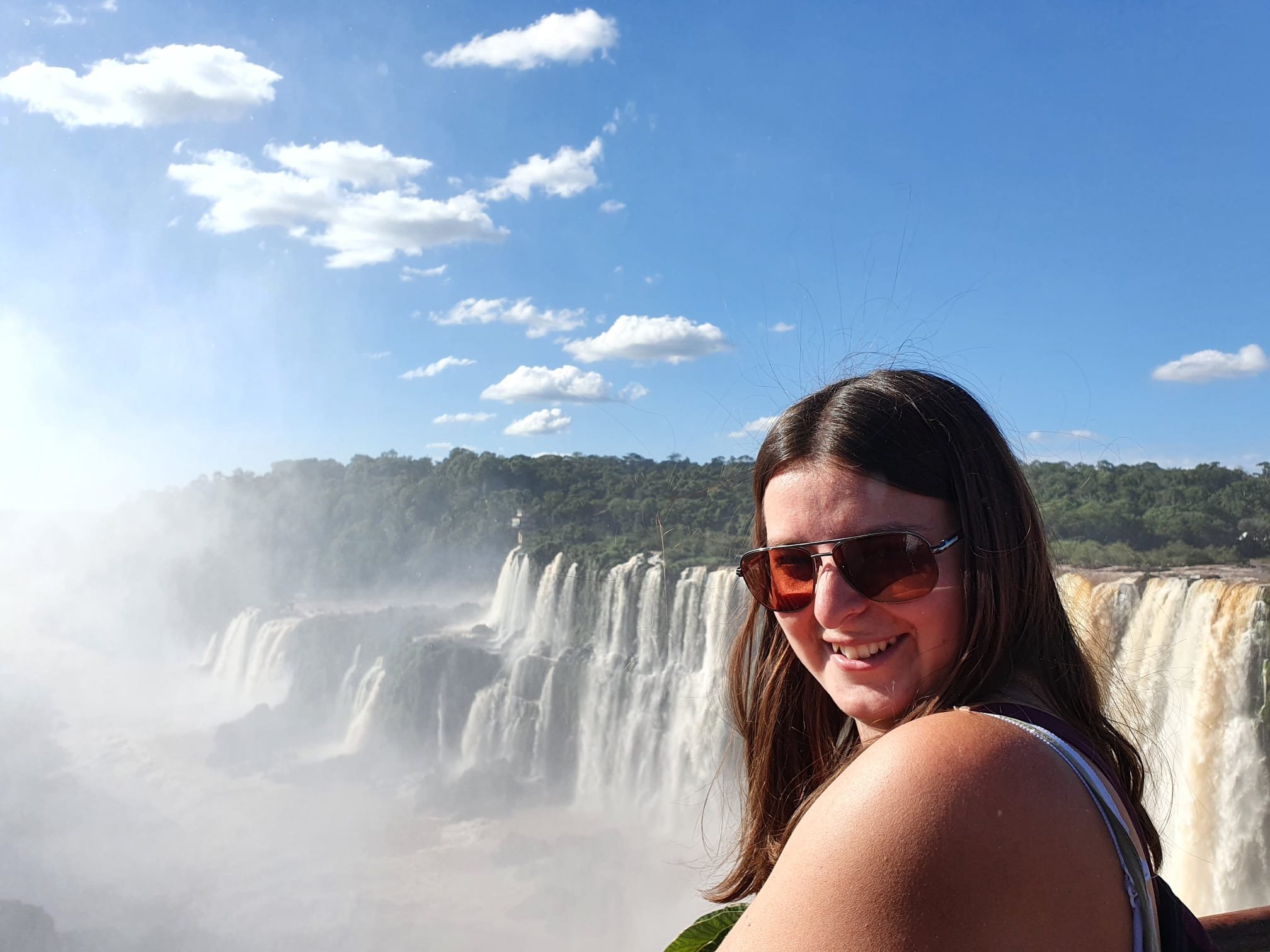
The jungle path led us through overlapping canopies of huge and unusual trees, until we reached the huge Iguazu river that flows through the park. To cross, there is a number of metal bridges to lead visitors to the largest fall ‘Giganta Del Diablo‘ (Devil’s throat). From here you can view the huge fall from a platform. There are several other paths to the other falls and other features of the park too. It seemed that everywhere you turned, there was a new wonder to behold! We only chose to walk around but other experiences are also offered, such as a river cruise, 4×4 drives, and repel experiences.

The jungle by night

Once a month, during a full moon cycle, there are a few days when you can visit Iguazu Jungle during the night, for a moonlight walk. I was excited to book this, and emailed the national park administration in advance to arrange my moonlight walk, followed by a traditional Argentine buffet.

There were at least twenty people in my group walk, and a guide that gave us a little information, but mostly warned us to not stray from the group, as the Jaguars would be out hunting! Slightly terrifying!

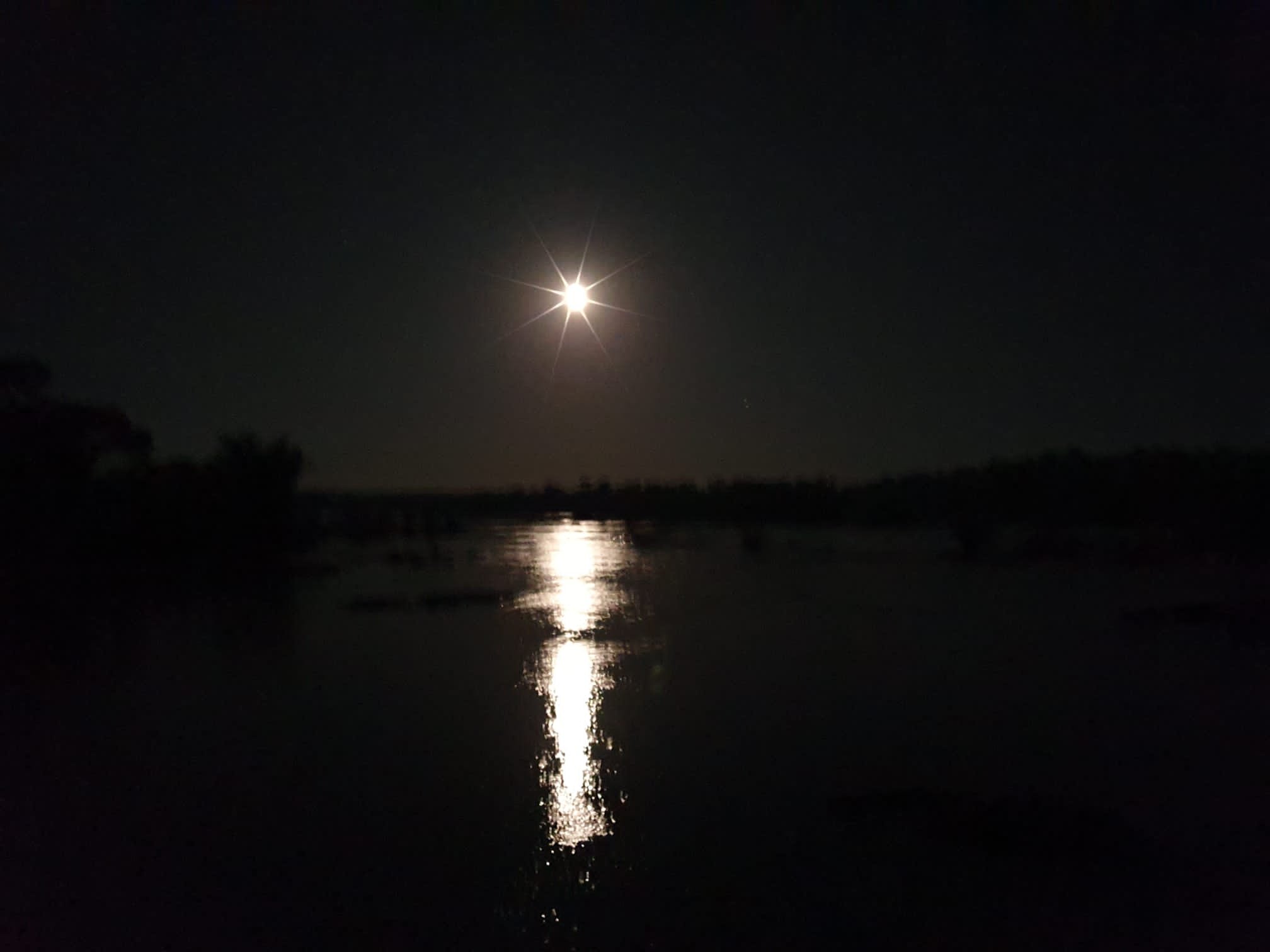
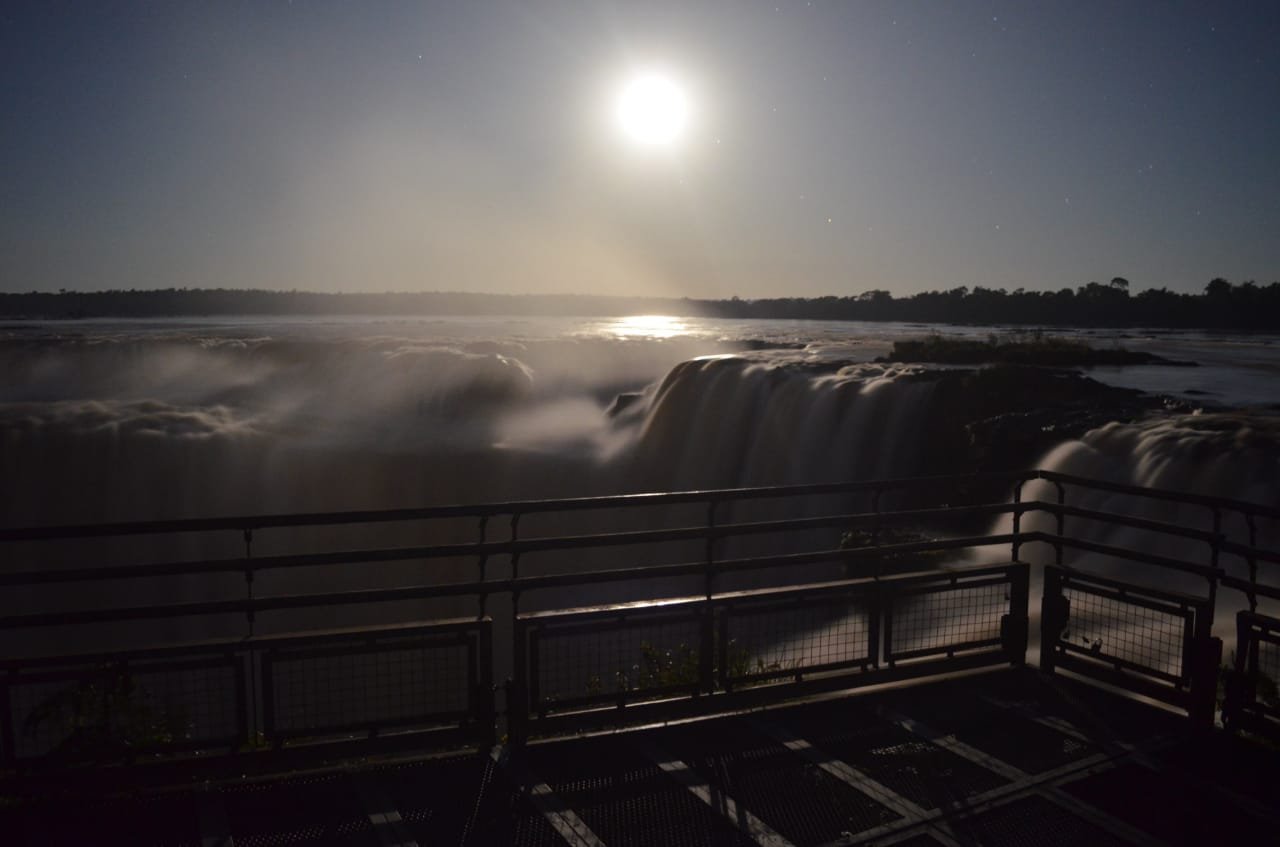
The tour used no lighting at all, not even a flashlight, we were entirely guided by moonlight. This made it quite special, as we could mainly just rely on the sounds of the jungle. We made our way through to the Devil’s Throat, over the many bridges, with the moon reflecting over the river water. The humidity in the jungle during the day had now dropped down to the ground, causing the bridges to be wet and slippery, which really added to the fear factor.

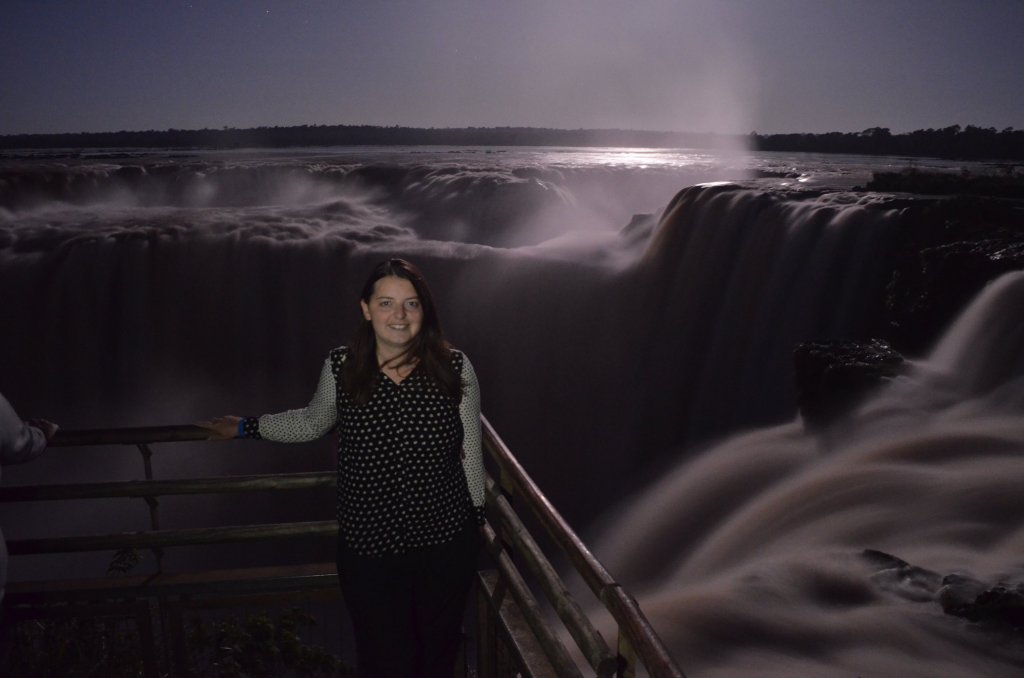
When we finally arrived at the waterfall, it was absolutely beautiful to see by moonlight. It shimmered in white and silver as it fell to the depth below, and the noise of it was deafening amongst the silence.

After the moonlight walk, we wondered to the national park’s restaurant for our traditional buffet. The restaurant was quite fancy, and had a huge parilla barbeque cooking meat of all kinds. I must have had at least three plates of food at that restaurant, as well as a dessert. I was stuffed, but it was also absolutely delicious!

After my weekend in the jungle, I set off to return to Buenos Aires for my final two weeks in Argentina. Iguazu certainly earns its title as a natural world wonder, it is an astonishing place with an abundance of wildlife, and I would be happy to revisit!

Corrientes, Argentina & Ibera National Park

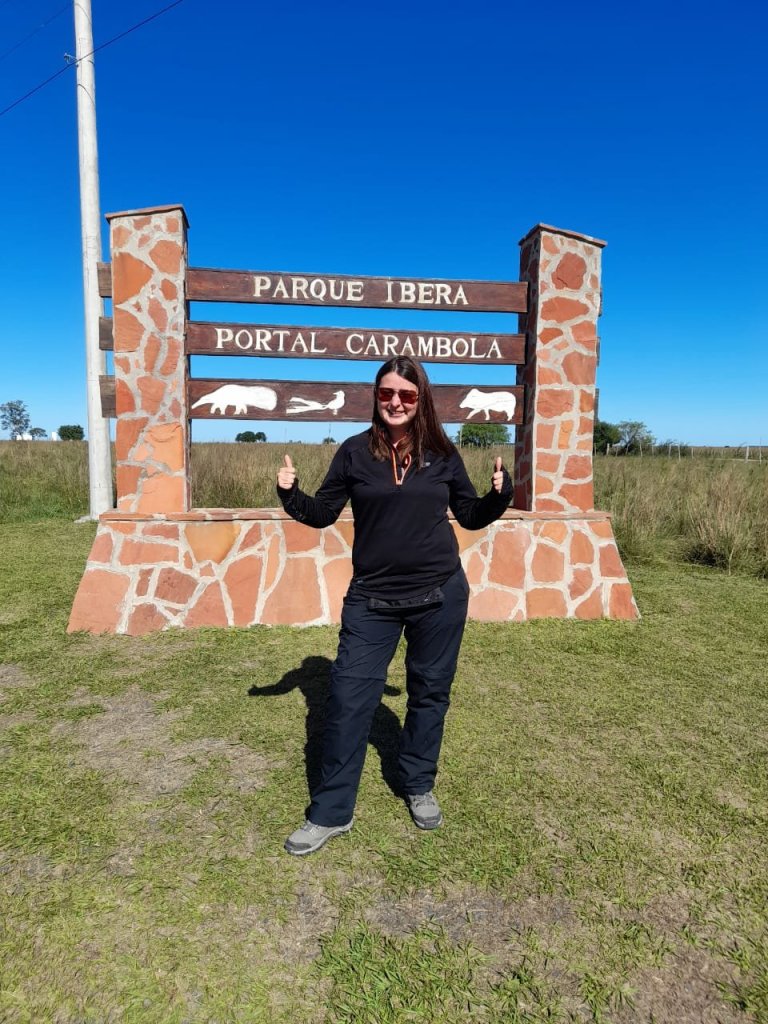
Corrientes city was supposed to just be a stopover on my way to Iguazu National Park, but due to the bus schedules, I had to stay for almost three nights. This ended up being a stroke of luck as not only could I enjoy the city, but especially because I was able to visit Argentina’s biggest National Park, and the world’s second largest wetland, Ibera National Park.

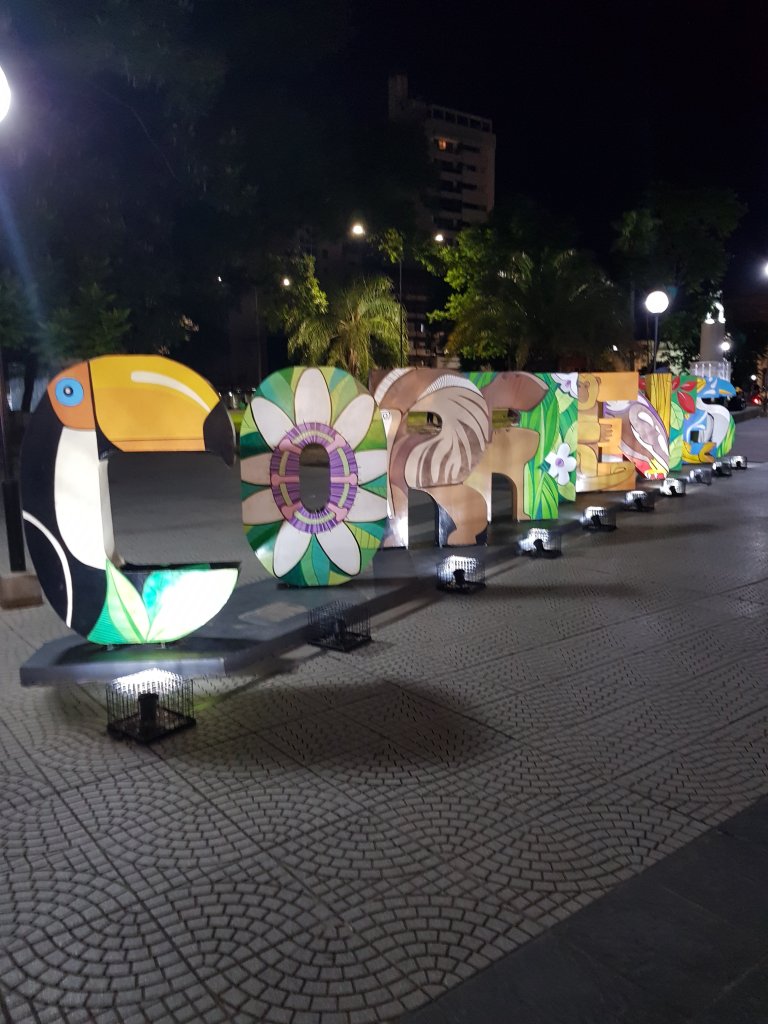
Corrientes city is the capital of the Corrientes province in the North of Argentina. I wasn’t sure what to expect as many people asked me ‘why are you going there?’. There is little publicised about this city or the nearby national park to visitors. It is still one of the world’s less explored locations. I am very happy about this. The city has a mix of some modern amenities but also a lot of old school traditions. Ever seen a road sign that says that pulling your horse and wagon through is prohibited? Now, I can say that I have. There are plenty of people still using horses to get around, and it is brilliant to see. Made me feel that maybe I could get picked up and trotted away by a local cowboy!

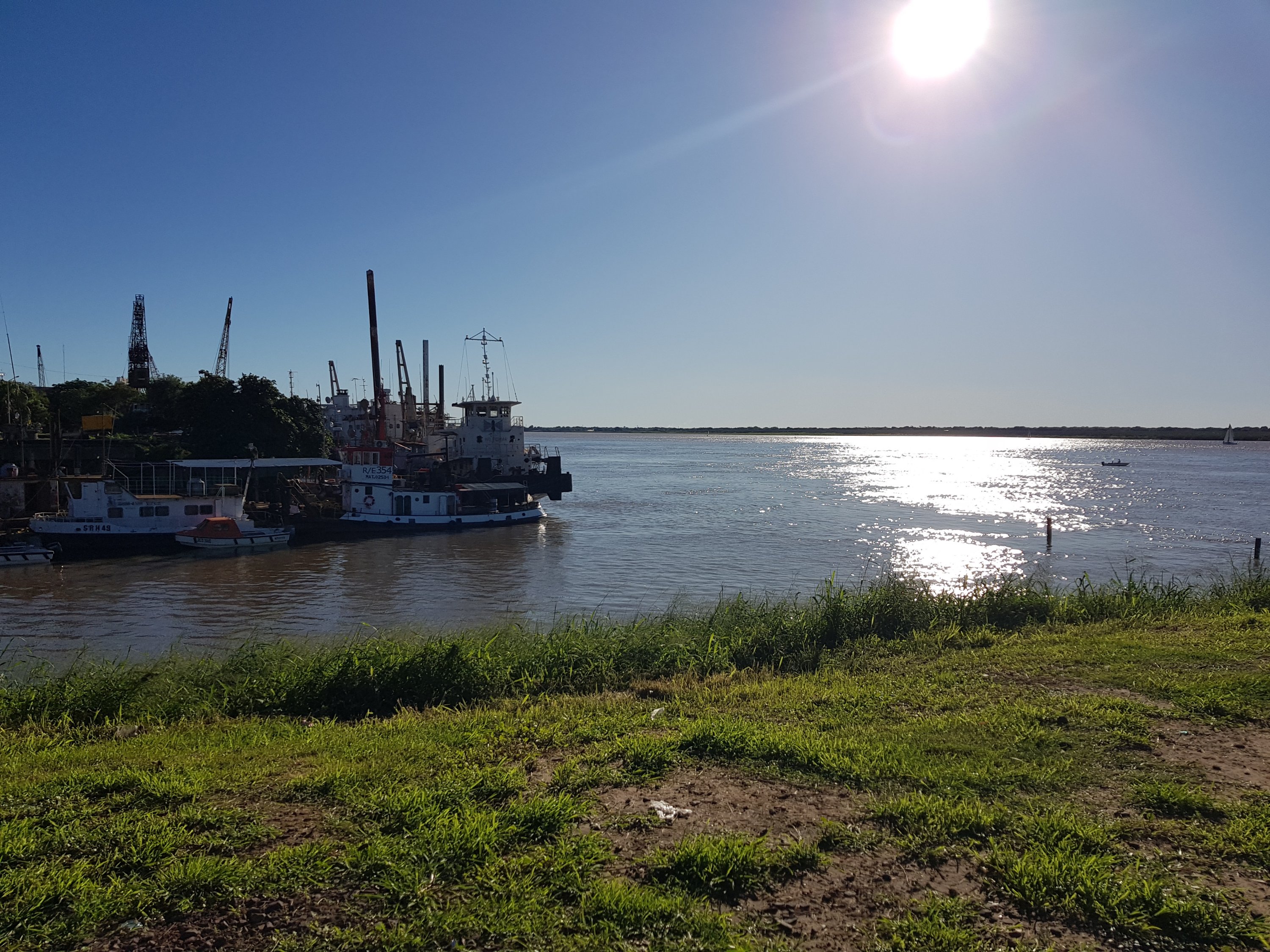
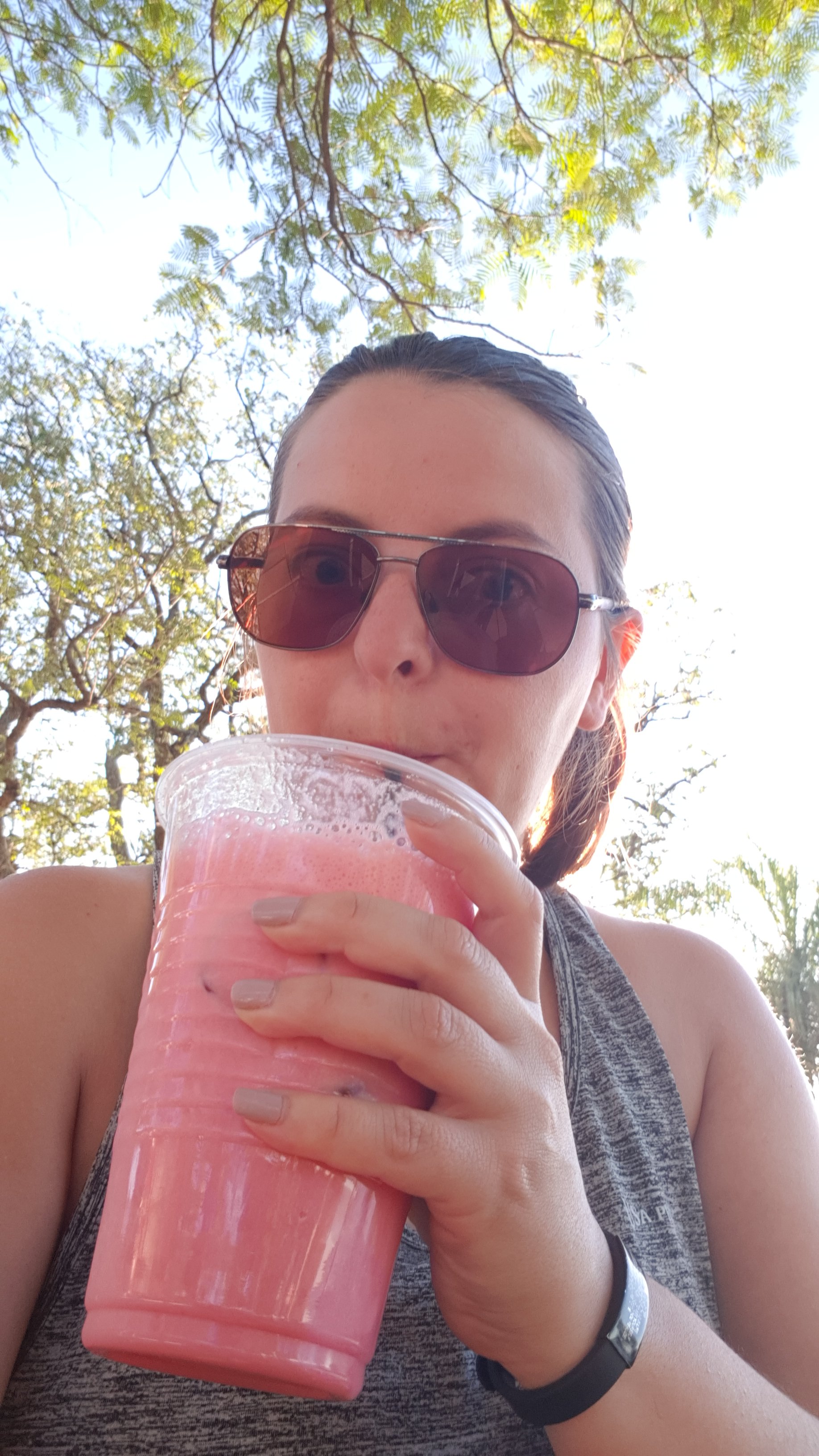
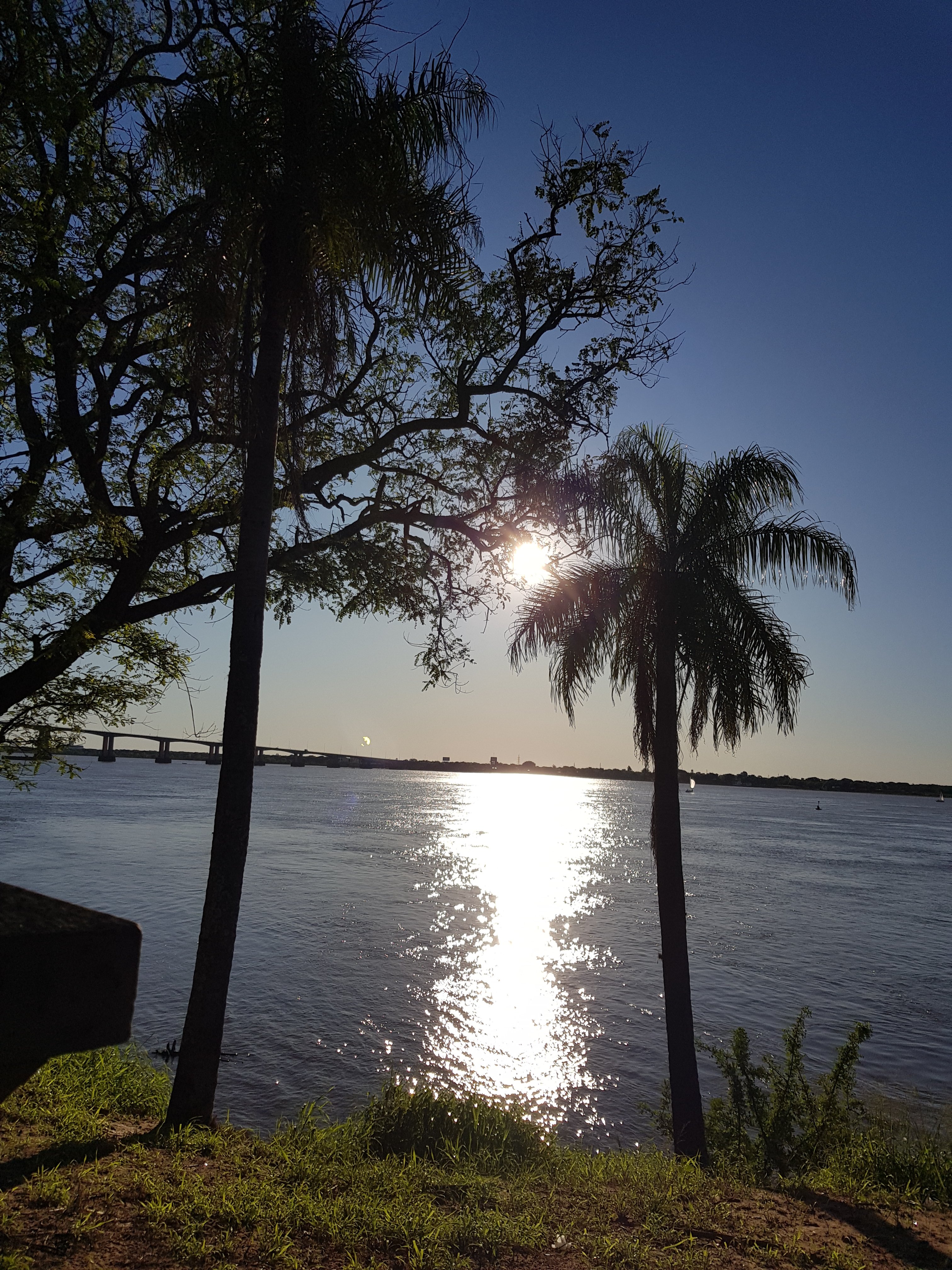
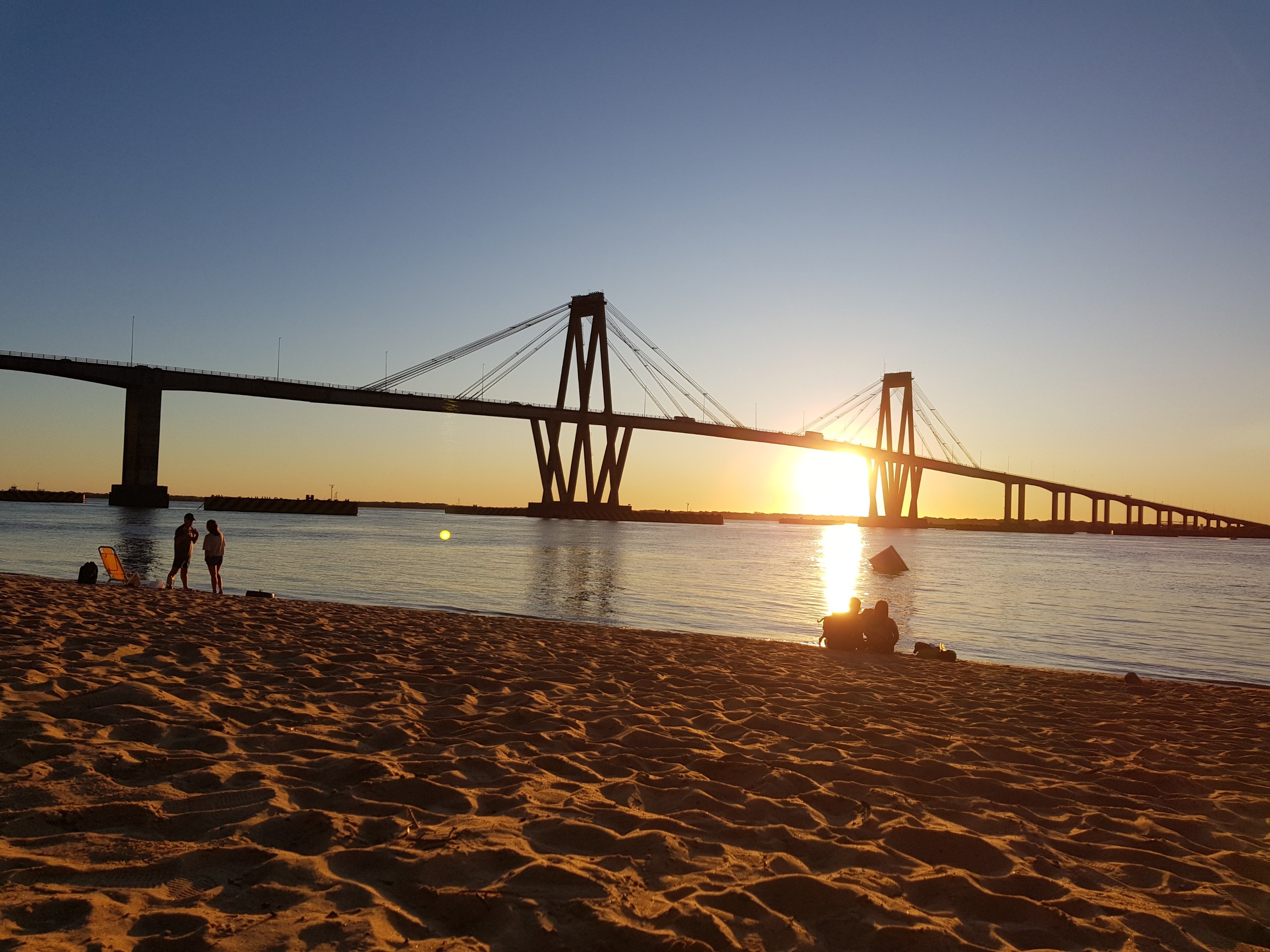
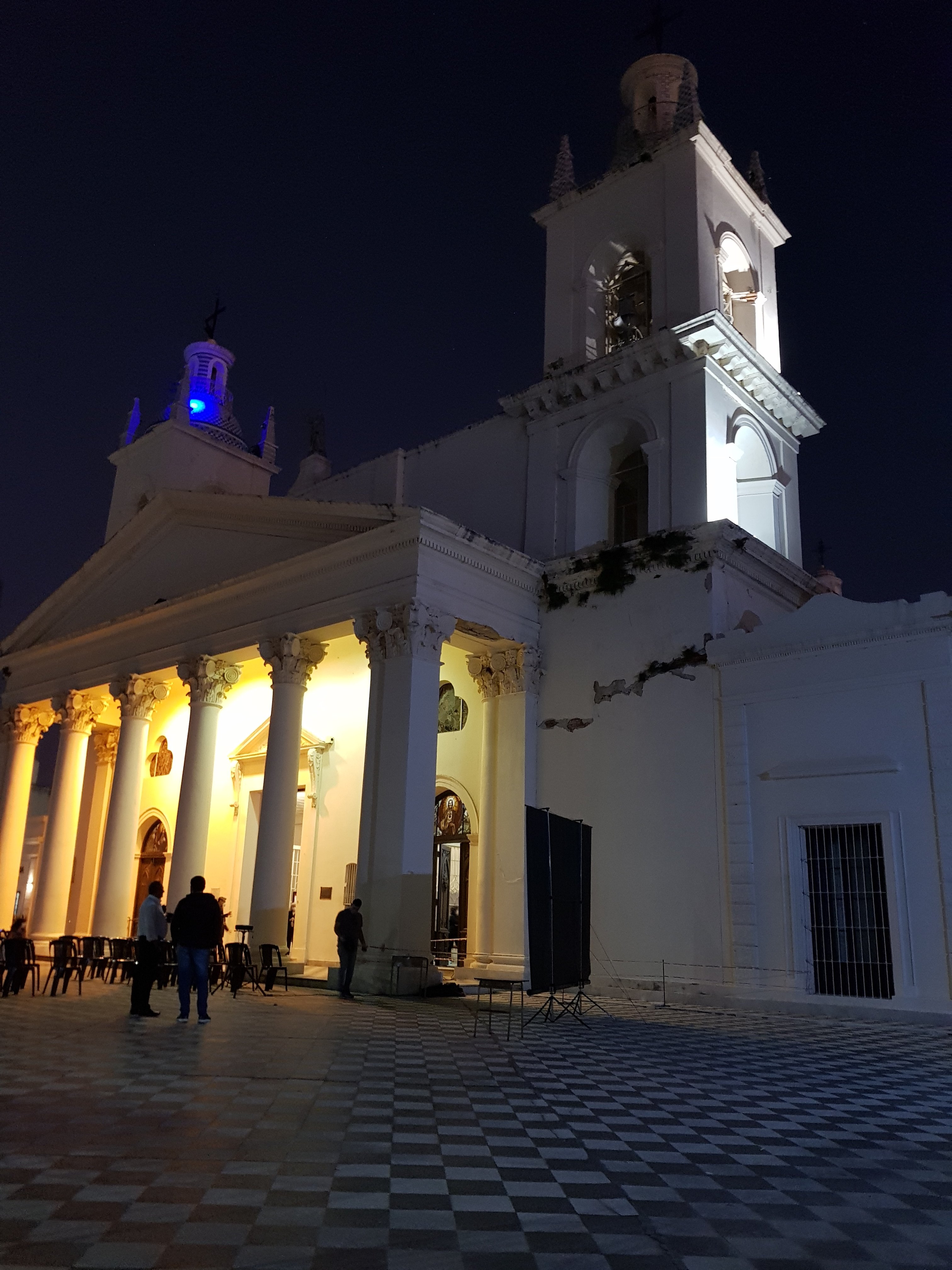
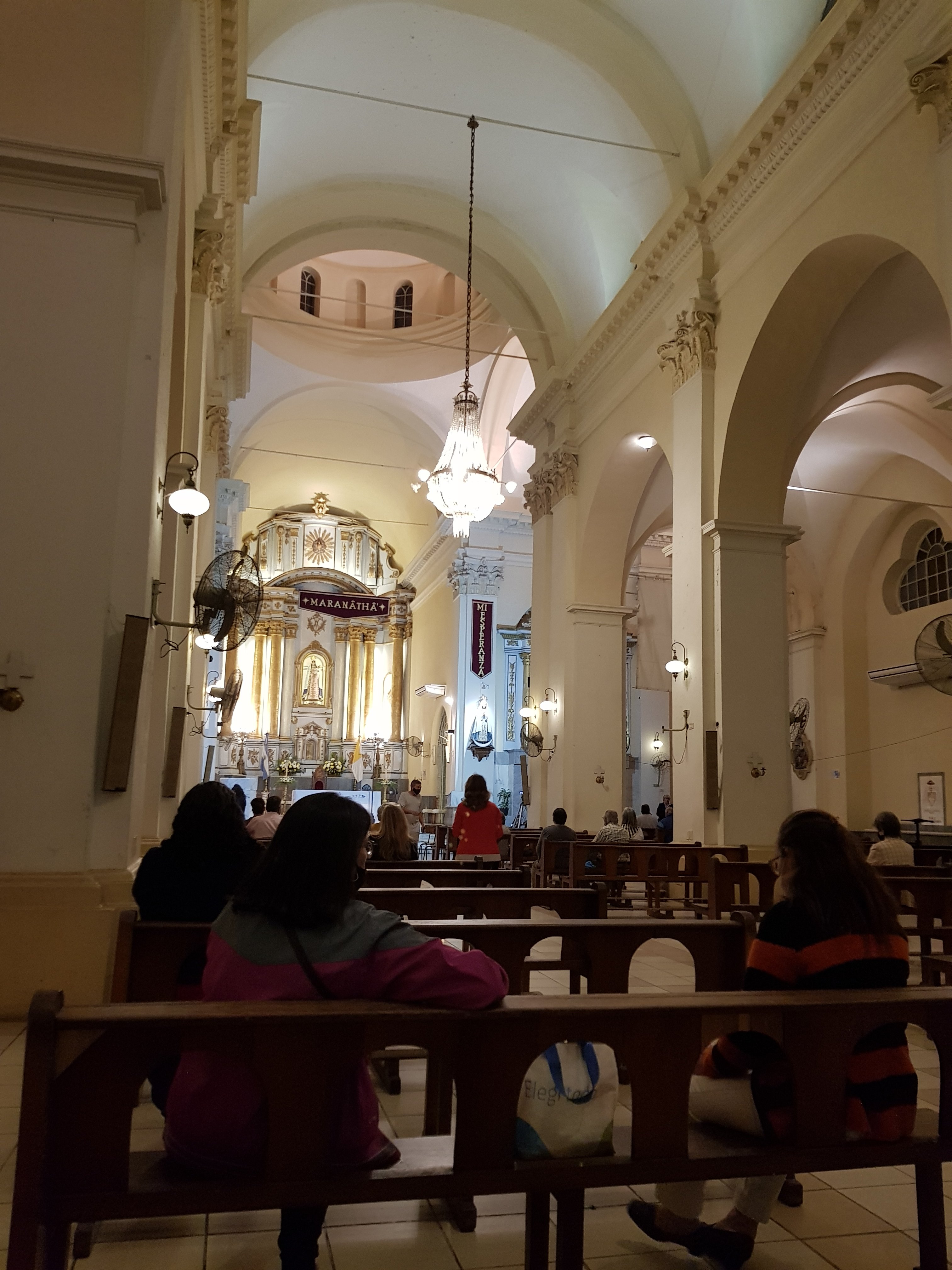
The city sits within this huge wetland area and has the huge Parana river separating it from the next big town. This huge river provides a promenade to enjoy and some beaches, so it is a good place to relax. I enjoyed a local ‘chipa’ (dough cooked over bamboo) and a smoothie whilst enjoying the sunset here. Later in the evening, I had a pleasant experience at the holy week mass in the main cathedral.

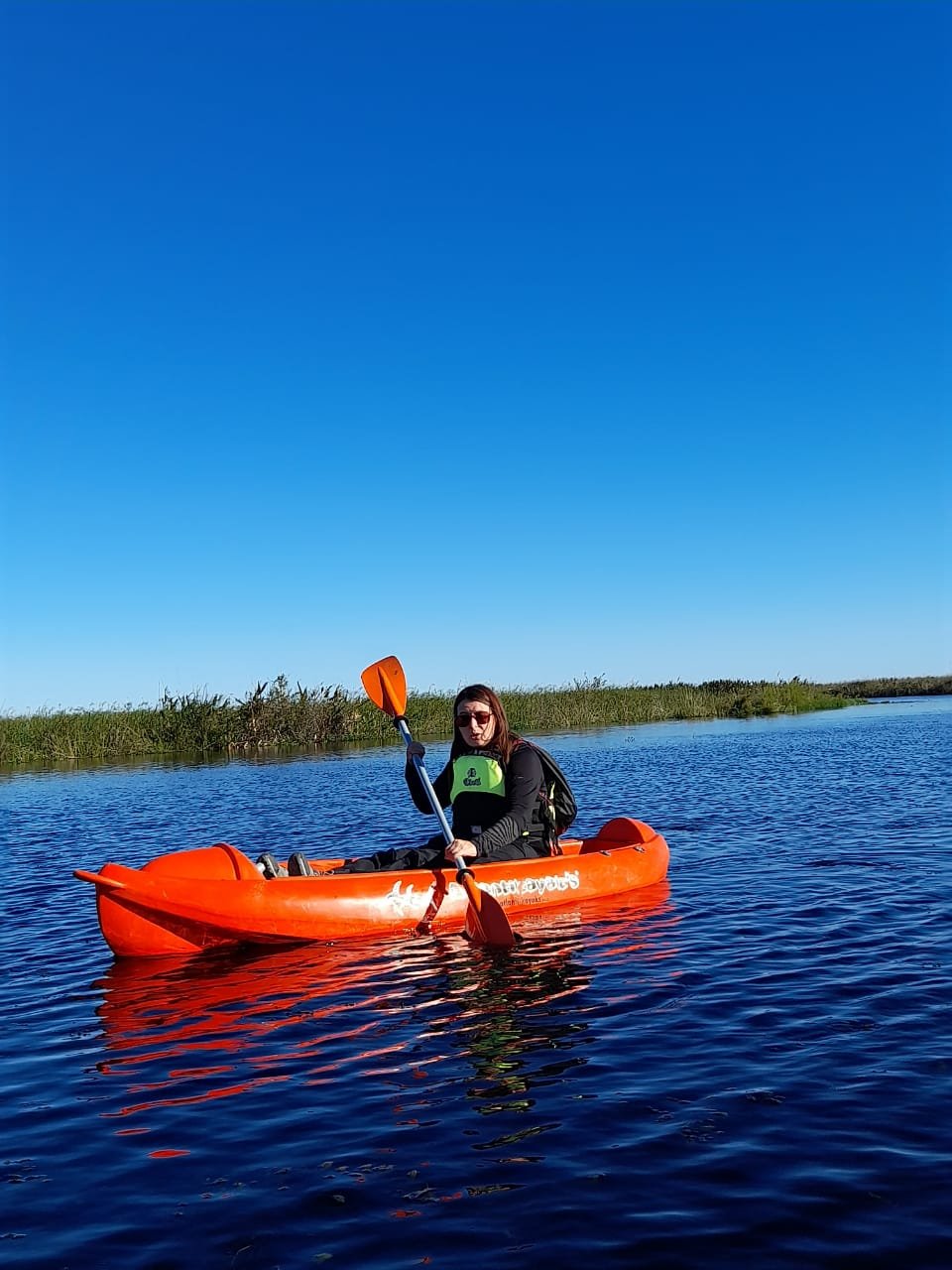
It was the week of Easter when I visited, and so all the local tour agencies were very busy. I was worried I would not be able to get out to Ibera National Park (also known as Esteros del Ibera), as it is 2.5 hours from the city, and I didn’t have the confidence to hire a car alone to this wild area. After some long whatsapp conversations with a few agencies, they managed to arrange a private transfer to Concepcion, which is a town that offers one of the access points into the park, and a long kayak trip on the rivers and bogs!

The Park is about 1 million and three hundred thousand acres in size. It not only comprises of rivers, bogs and lakes, but also grasslands, forests and savannas, depending on the part of the park you are in. The park is abundant in wildlife and is used to reintroduce many indigenous species. Deers, anteaters, caimans, and even tigers called Yaguareté can be found here.

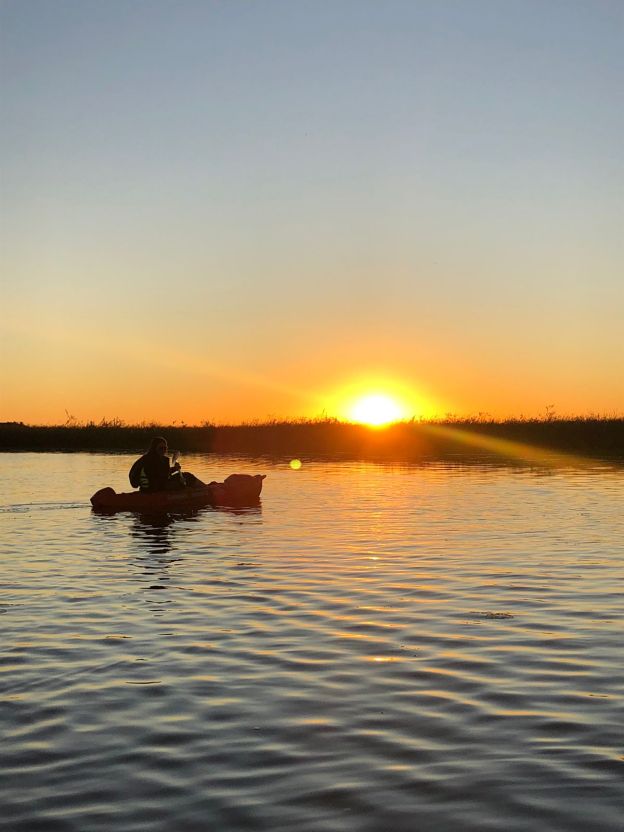
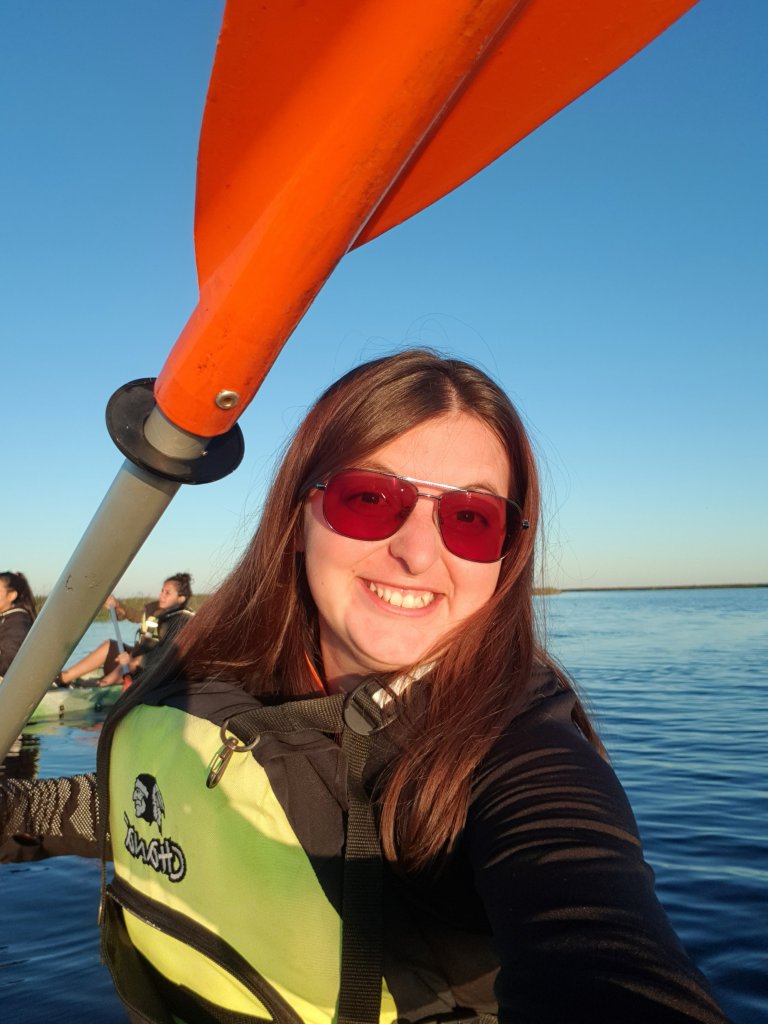
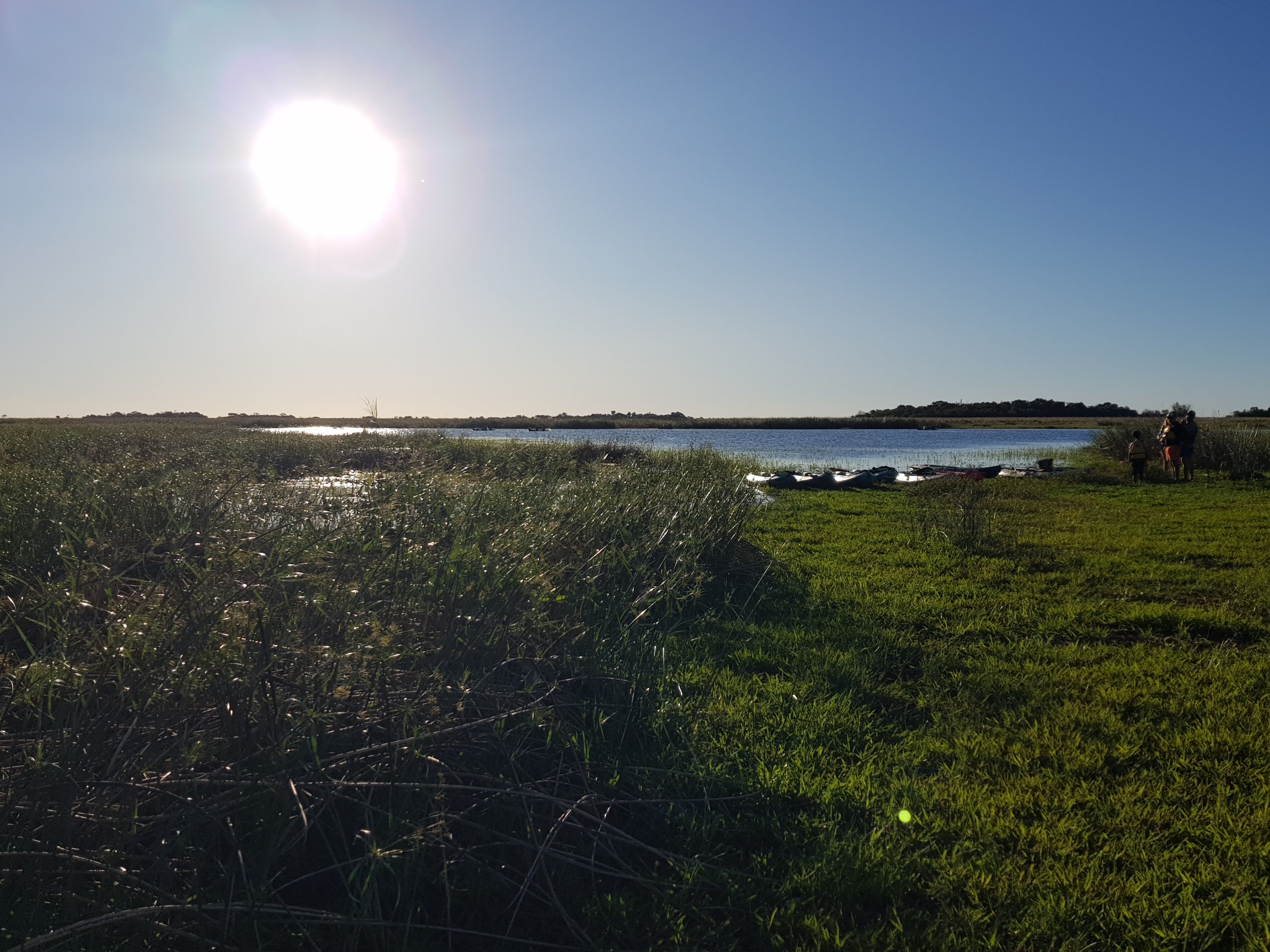
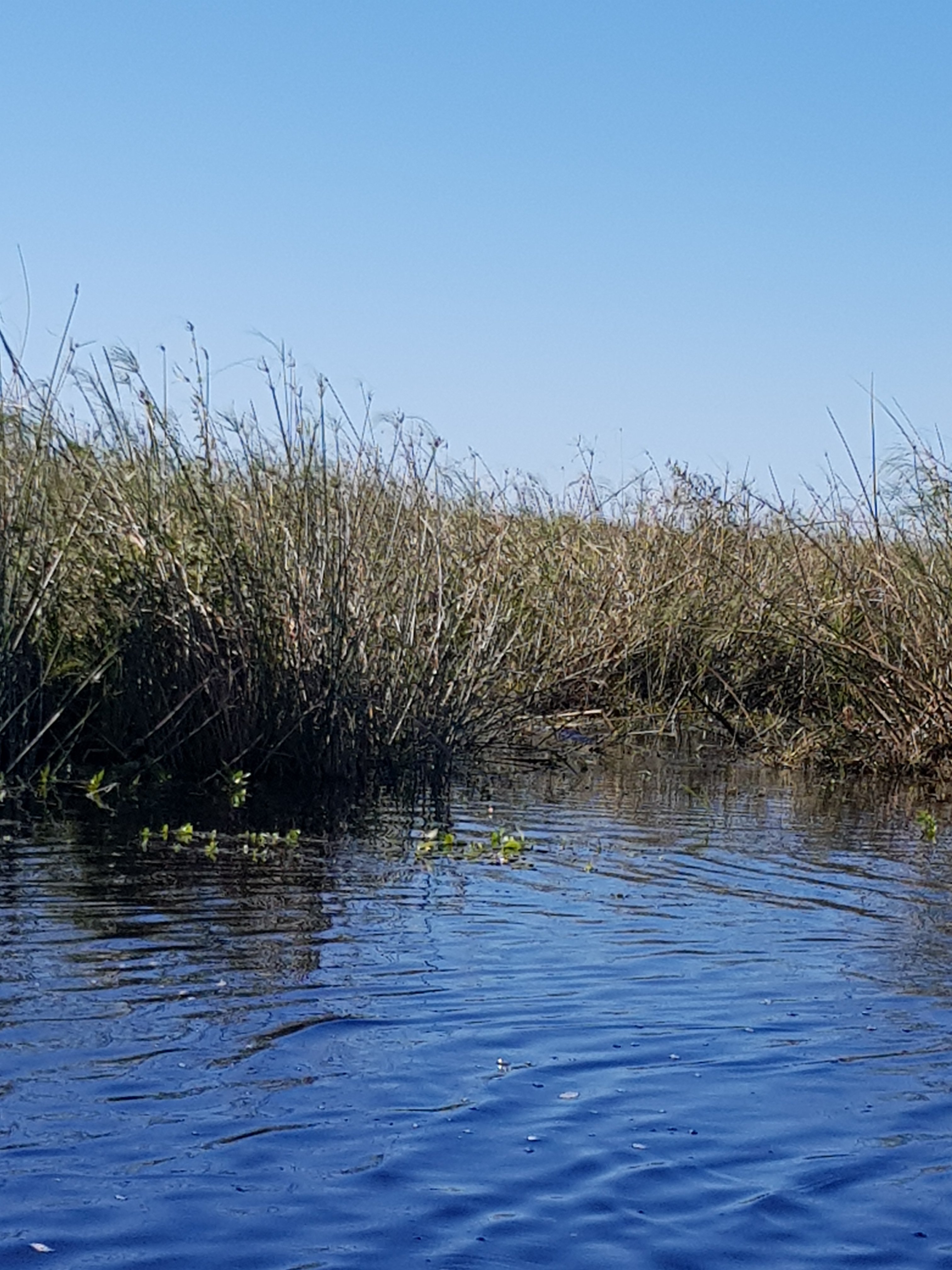
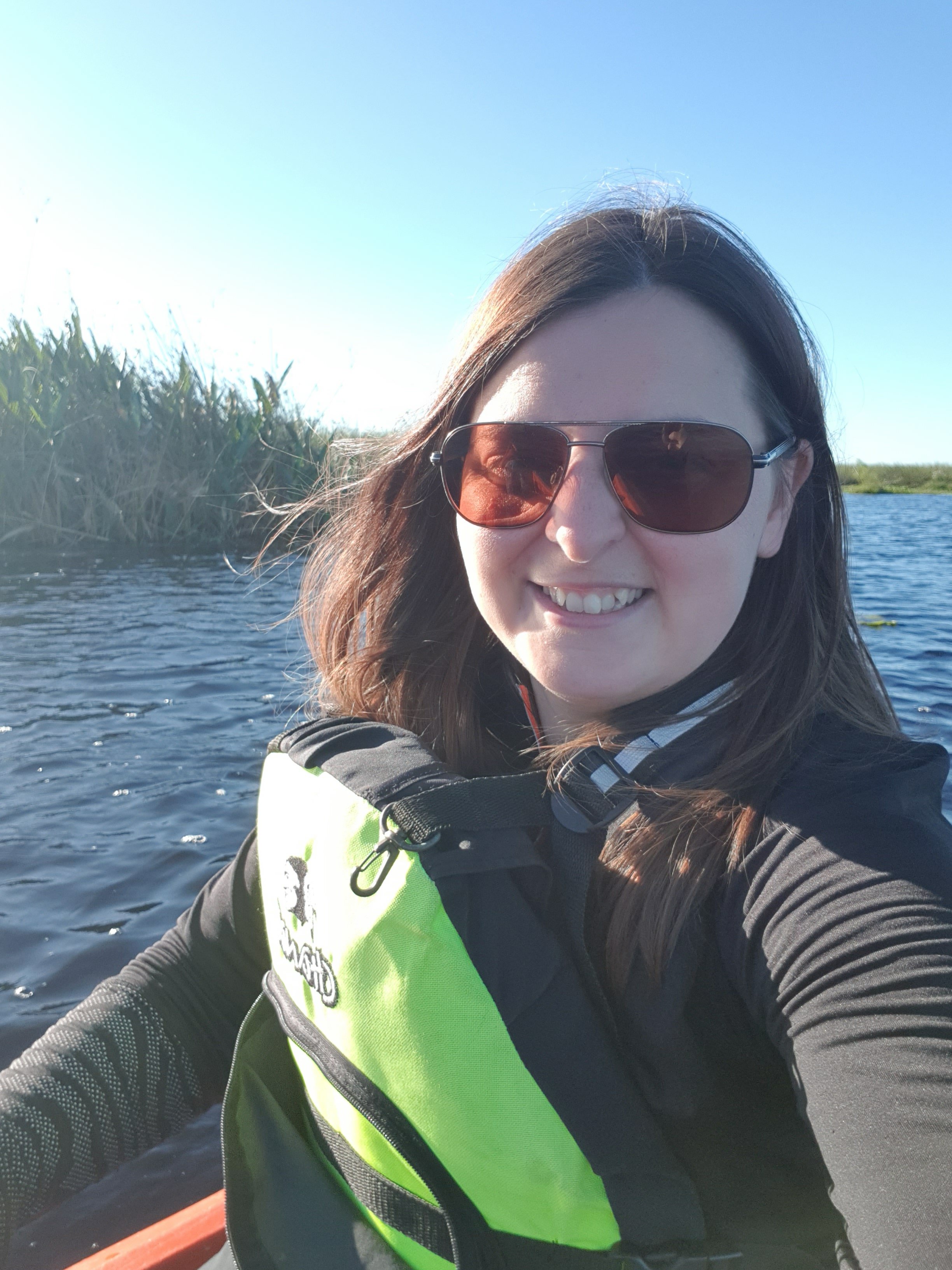
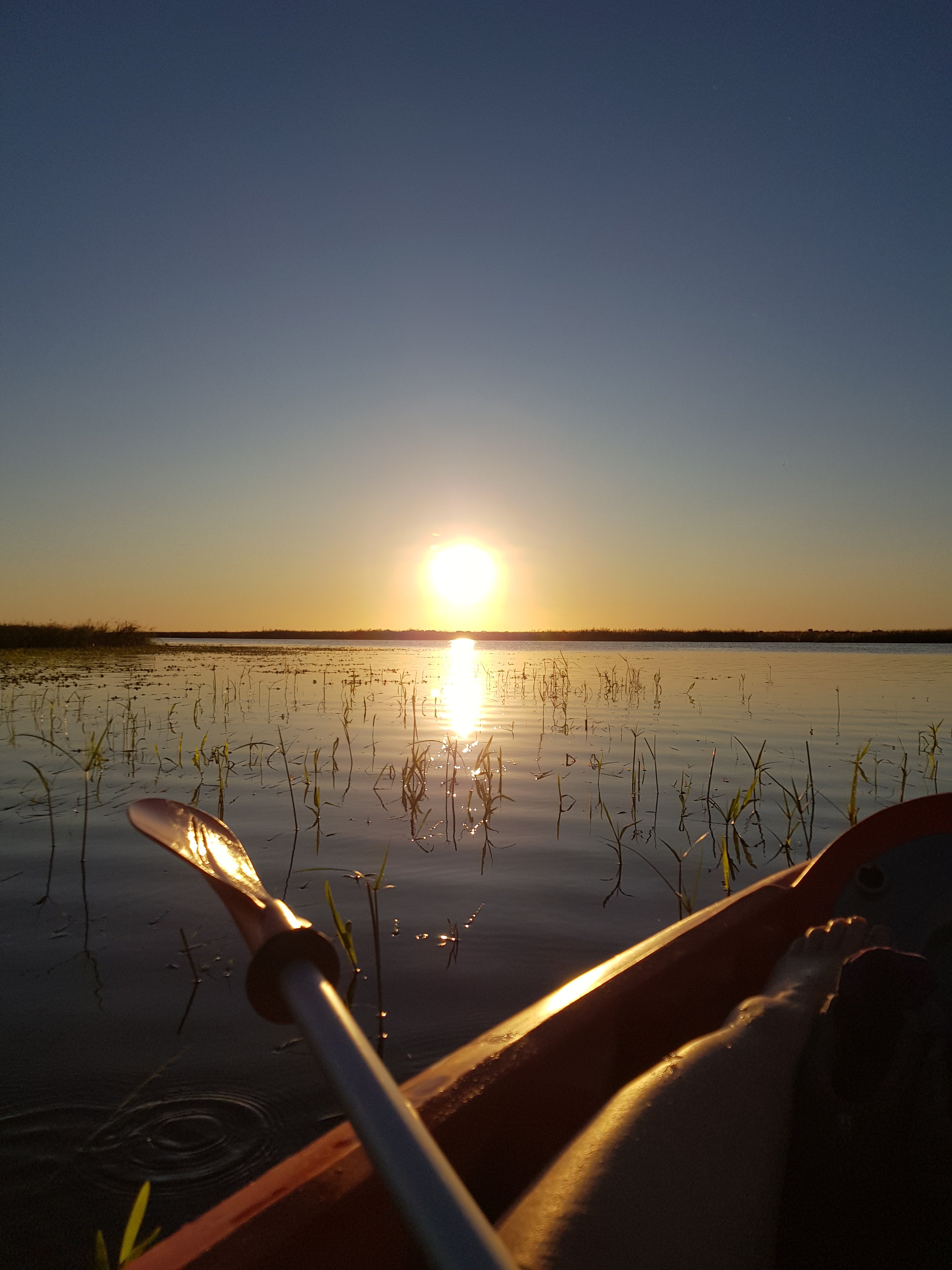
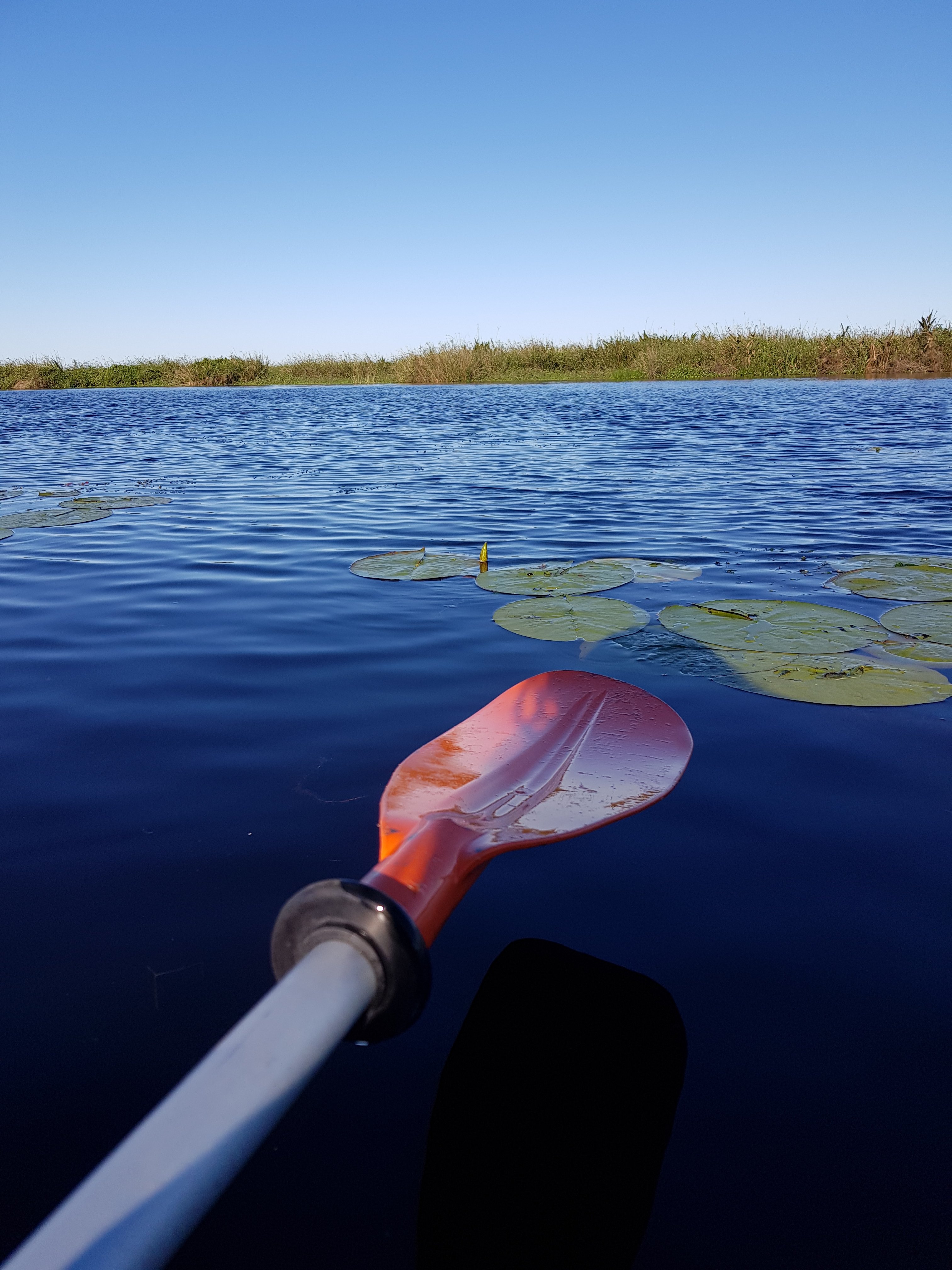
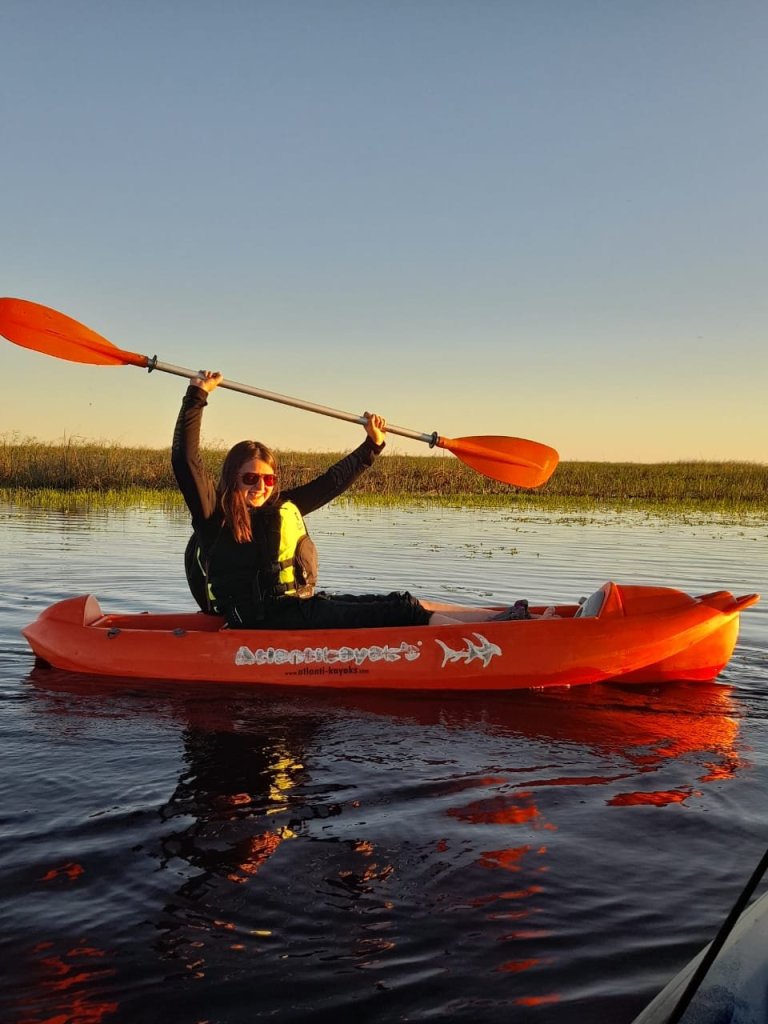
I set off in my kayak with a group of Argentine people surrounded in marshy waters with lily pads all around. Within ten minutes I saw my first caimen, specifically a Yacare caiman which is medium sized (growing up to 3 metres). It was just poking out of the water, until I got a little closer, then I could see it slip away with that long tail swimming side to side. Amazing! Within half an hour, I had seen another two. It was such a cool experience. I was a little nervous, but the guide assured me that they would not attack, and they did seem quite timid really.

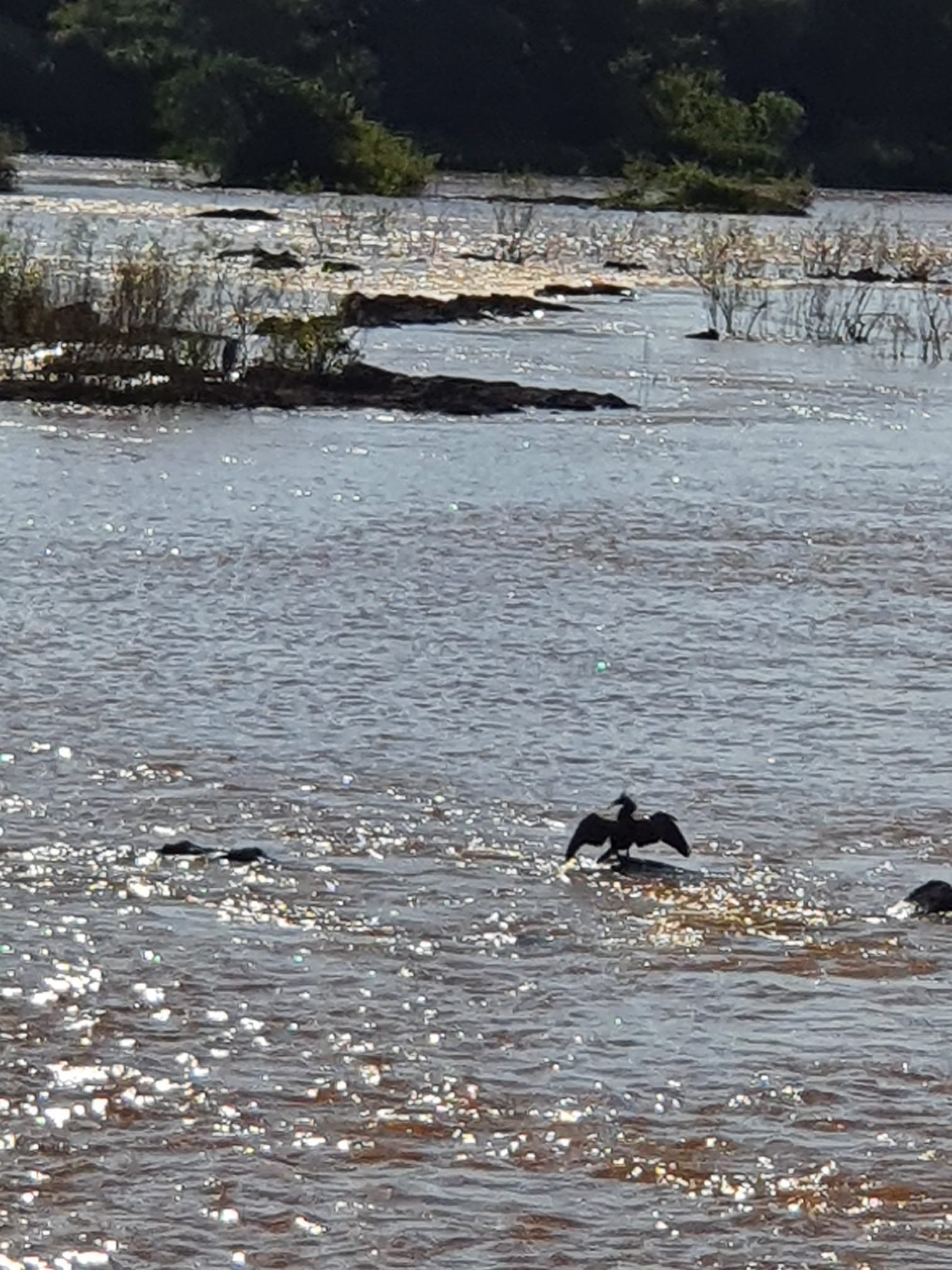
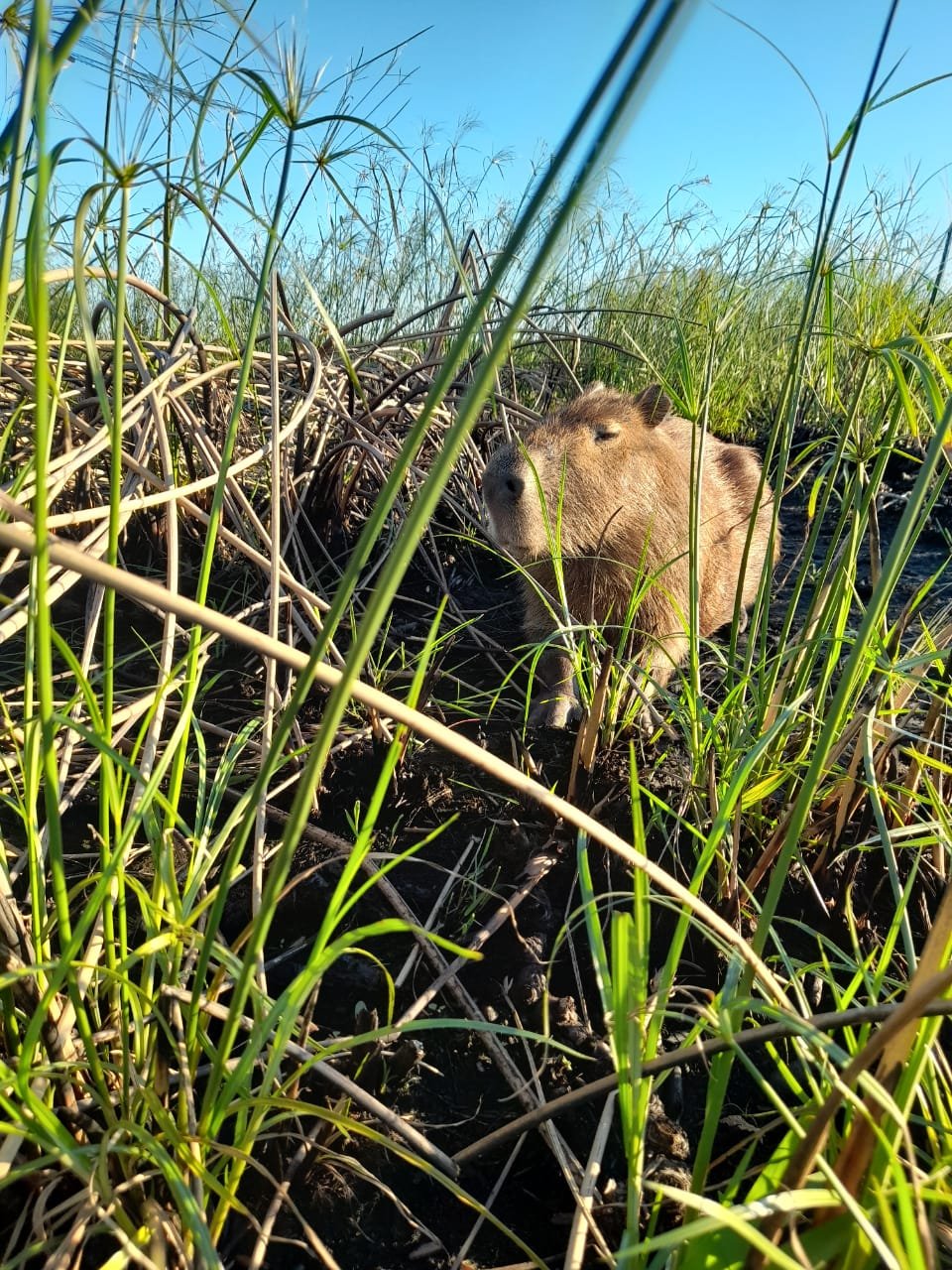
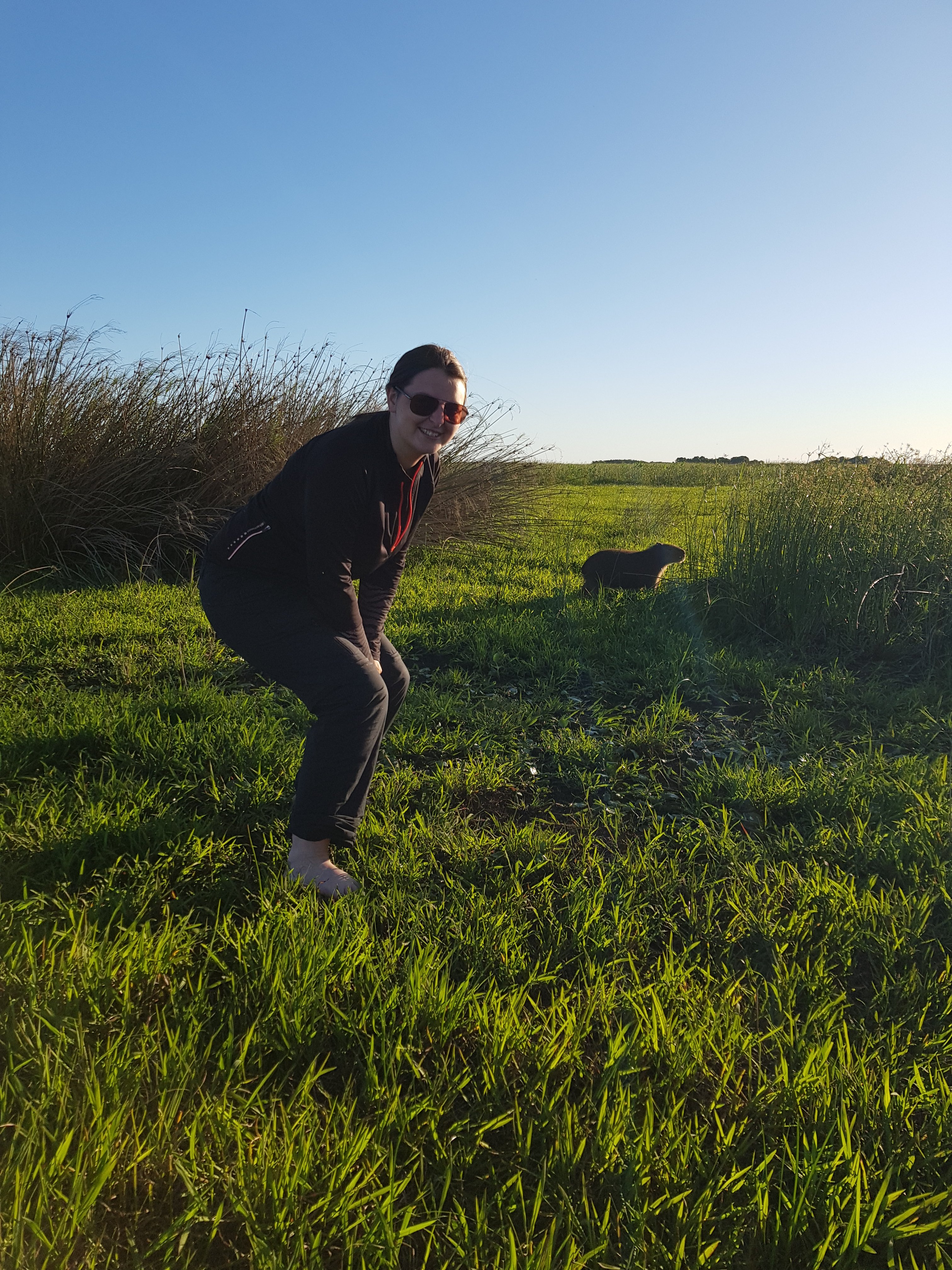
As I continued to row along, I saw beautiful and noisy birds of different colours, and enjoyed the scenery. We stopped for a picnic on top of the grasses, and as we began to dig into our sandwiches, a big Carpincho came by to have a look. These animals are known for being the biggest rodents in the world, and there are plenty of them in this national park. Shortly after this we saw a deer, followed by an owl, and even a south american racoon! I was very happy, I felt like all the animals had come out to see us.

I began to row back with a view of the sunsetting on one side, and a full moon on the other. One of the most beautiful scenes of my life.

The park can be explored by kayak, motor boat and by horse! Although.. you and the horse will have to get a little wet. I would love to return here and stay in the park itself for a few more days exploring other parts, because, just WOW!

The adventure isn’t over yet though, next stop Iguazu National Park! EEEEeeekkkk!

Tips for surviving a 24+ hour bus journey with your sanity

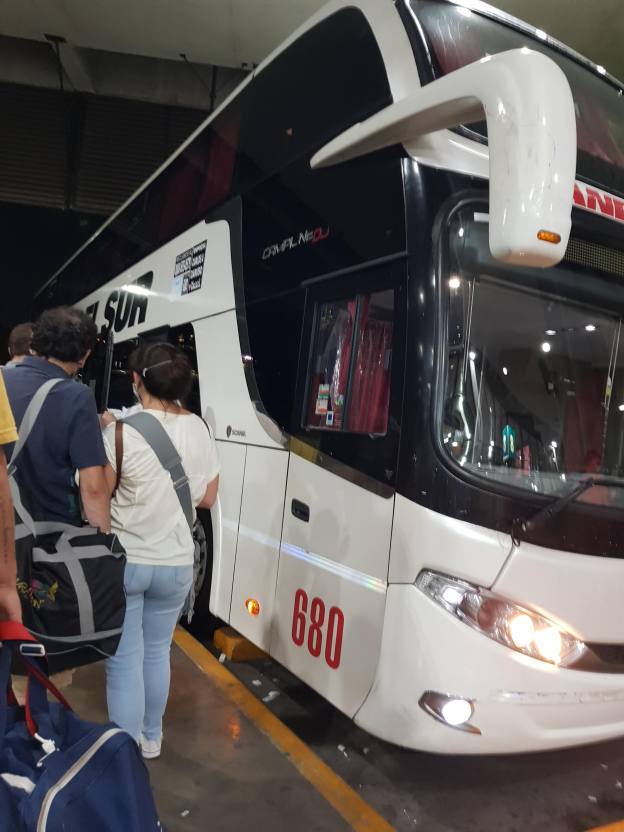
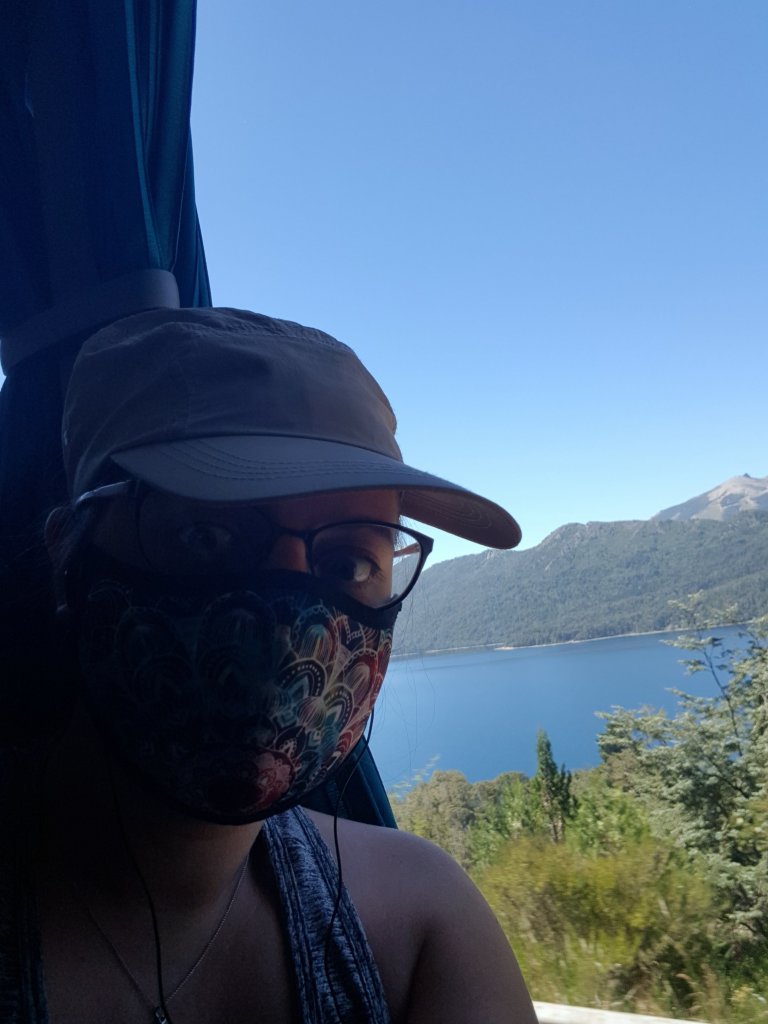
When travelling in South America, large buses/coaches/colectivos/micros are the main form of long distance transport. It is not uncommon to travel for over 24 hours on the bus to get to your destination, as the distances between towns and cities are vast. Whilst the scenery might be amazing, you can only look out of a window for so long. Thankfully, most of the buses offer decent seats, the occasional rest stop and if you are lucky then you could have a shared TV playing movies (in spanish or silent). To survive the inevitable boredom, it is wise to follow some of the below tips.

Snacks

I have seen a few hopeless tourists embark on a 24+ hout bus journey with no food in hand, and then moan about being hungry for several hours. There are normally rest stops but you cannot guarantee what food will be on sale, or the regularity of the stops. Go prepared. There will not be a fridge so choose savoury items that will keep. Empanadas is a great choice. A large bottle of water is a good idea, but also kids sized fruit juice cartons can come in handy, to give you some much needed vitamins. I made sure to keep all my snacks in a separate bag to my main rucksack so that I could keep it on the seat with me, and not disturb everyone each time I needed something from the overhead shelf.

Batteries

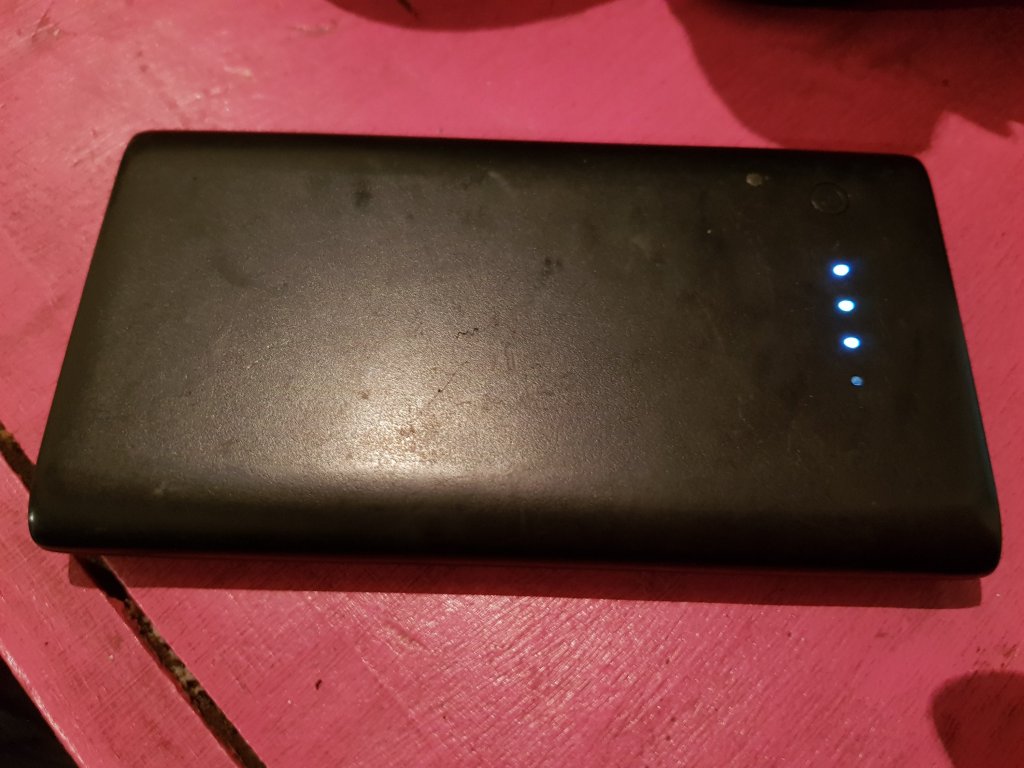
Whilst some of the buses have USB chargers over the seats, this is not the case with all of them. I have found a portable charger (fully charged beforehand) to be invaluable. You can bet that you will not be able to access any signal or internet for the majority of your journey either so there is no need to waste charge on your phone trying and failing to get 4G. Put your phone on airplane mode, and you will be surprised how long it lasts you.

Bathrooms

There is normally one toilet on the bus and toilets at your infrequent rest stops. You can be assured that the hygiene of toilets being occupied by 30+ people in a short period, will not be good. Not only can you expect poor hygiene, but also dodgy locks and no toilet paper is common. Take tissue and anti-bacterial gel with you, I can not stress this enough. It is also not a bad idea to carry some pills to avoid any unexpected stomach problems on a strenuous and very shared journey. To give you an example of the demands of the on bus toilet… on a 26 hour journey, I put off going in the bus toilet as long as I could, until I could wait no more. I took myself to have a wee, to the toilet which by this point (hour 20 maybe) was a state. There was not only no tissue, but also no water in the tap, and I had thought the door was locked. Apparently not. When I went to pull up my pants, another lady threw the door open, and said “I’m sorry but I have to go in, I am going to be sick”. She then vomited into the only toilet for a bus full of people about four times. I did not use the toilet again that journey.

Offline entertainment

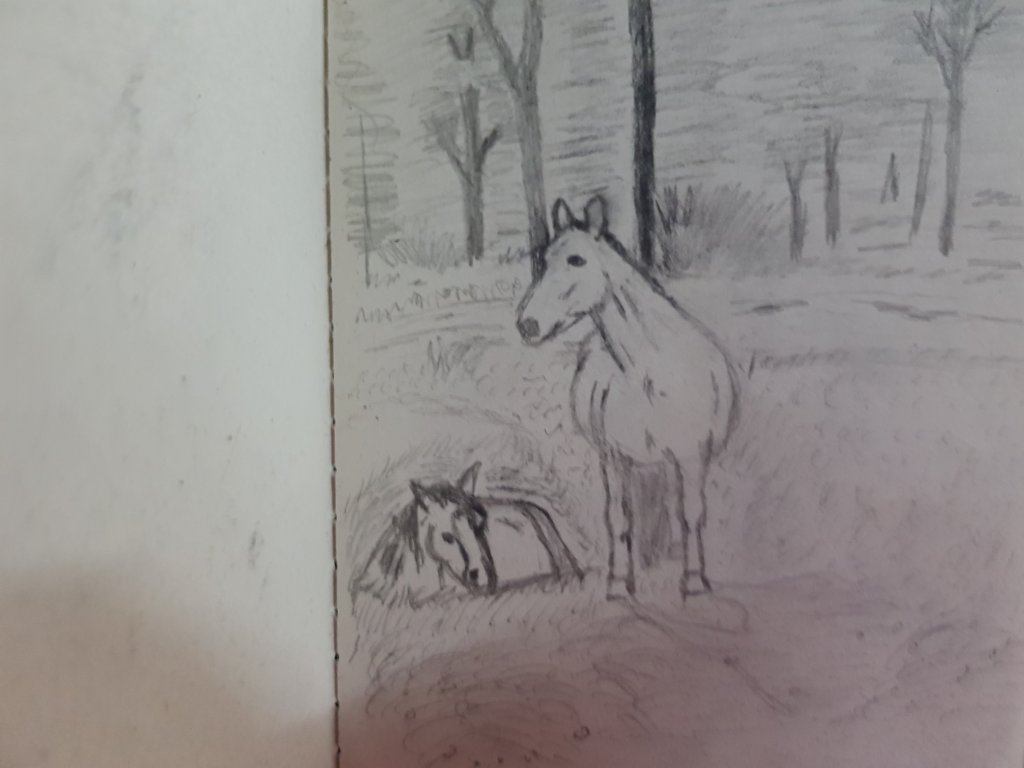
Before your long journey, do an audit of your phone/tablet/laptop apps. How many of them can you use offline? There are actually a lot of games that you can access offline that can provide some easy entertainment. I have become a regular player of the offline chess.com app at the this point, but I am still struggling to beat the computer… Previously downloaded tv series and movies on streaming services like Netflix or Disney+ or music from Spotify can also be a great way to kill off the long hours. You can also take to the traditional pencil and paper, and do some sketching, or journaling. I have been improving my sketching by drawing copies of photos I have taken of local scenery and wildlife. If all else fails, maybe bring a book?

My recent sketches in my pocket notepad

Offline work

If you have the sort of job that you can work offline with, such as writing, then this can easily be a way to lose some time. If you are feeling like you want to put that time to good use. It is a good idea to test this out before your journey by disconnecting yourself from WiFi at your hostel, to see that everything works okay before you start promising on deadlines to be completed. I have been burnt by this myself when I assumed that the Microsoft Word on my chromebook would still work okay offline, it turned out that it was still powered by an online service, so I missed out on doing hours of work.

Sleeping

If you are on a long journey by bus, you will be travelling overnight, and testing out those reclining seats to the maximum. It can be cold on the bus in the evening, as you have not been moving around much, and the drivers always seem to crank up the AC for some reason. Probably to stay awake themselves. The problem is, this also keeps me awake. If you have a light blanket or something to put over yourself, make it reachable. I tried to get my coat from the overhead shelf in the middle of the night (4am), and it was very dark, and very awkward when in pulling my coat out, I accidently knocked a shoe off the shelf and it fell and hit the sleeping passenger in the face who was sitting in front of me. It was really bad.

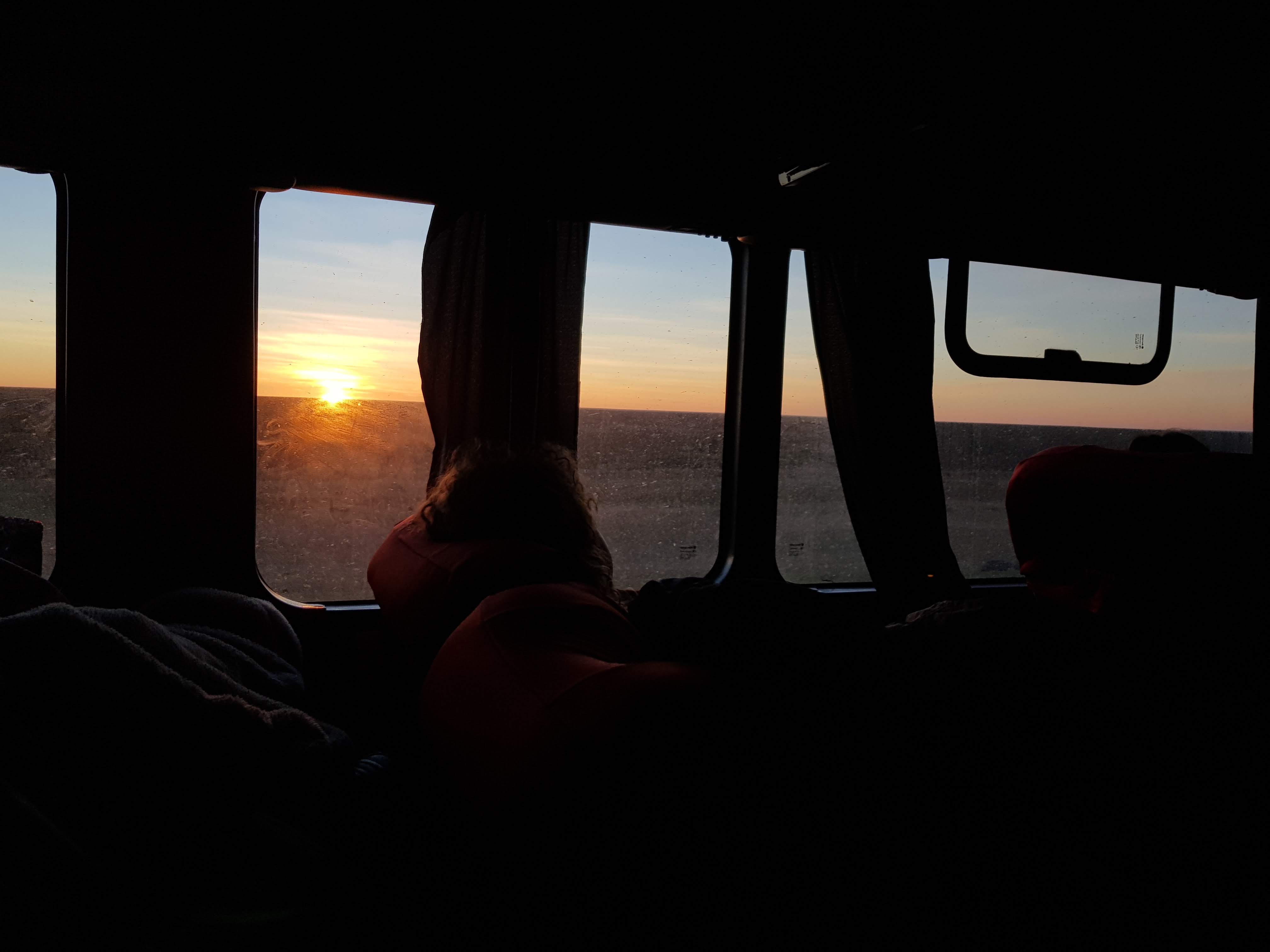
Sometimes, being awake when everyone else is asleep can be a blessing though. It is super quiet, and you might see an amazing sunrise that everyone else misses. That is what happened to me on one journey…

Overall, don’t underestimate the planning needed before your long road trip. If you put in a little effort to prepare, you will be glad you did.