After years of socialising with my Indian friends, I came across a cheap flight to India and decided to travel there, sometimes alone, and sometimes with friends. I was somewhat prepared for what I might find, but there were still surprises along the way, as I scraped on just the surface of one of the largest countries on the planet, with the largest overall population in the world.
The North – Delhi, Agra and Rajasthan
Dehli
I came into Delhi Airport and was met by a close friend that guided my through the madness and crowds to the city. We hired a tuk tuk for the day and the very enthusiastic driver drove us all around the main landmarks of New Delhi, the Capital of India. The India Gate monument commemorating those lost in the first world war. Surrounded in park and crowds, this looks similar to an ‘arc de triomphe’ in Europe.
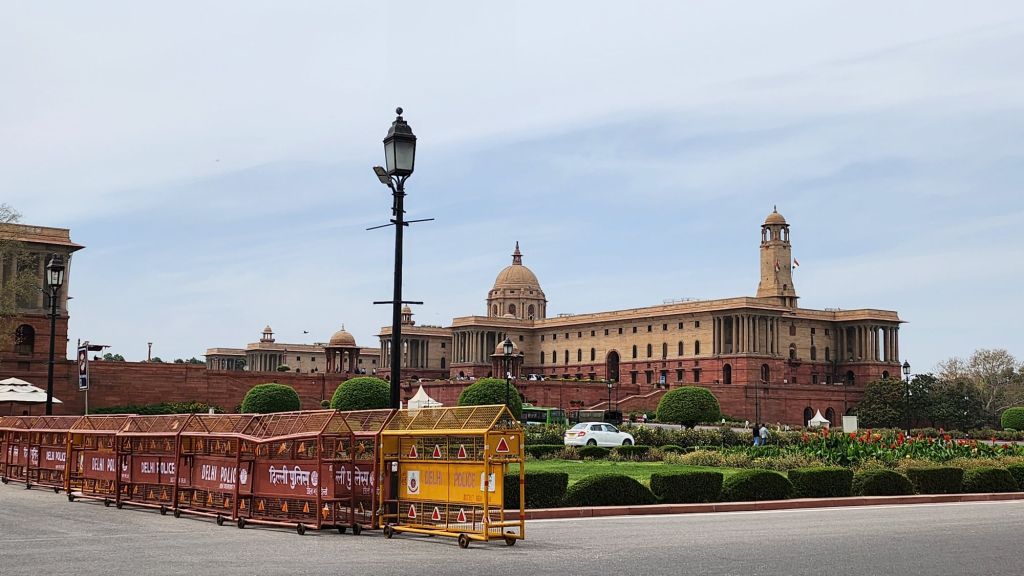
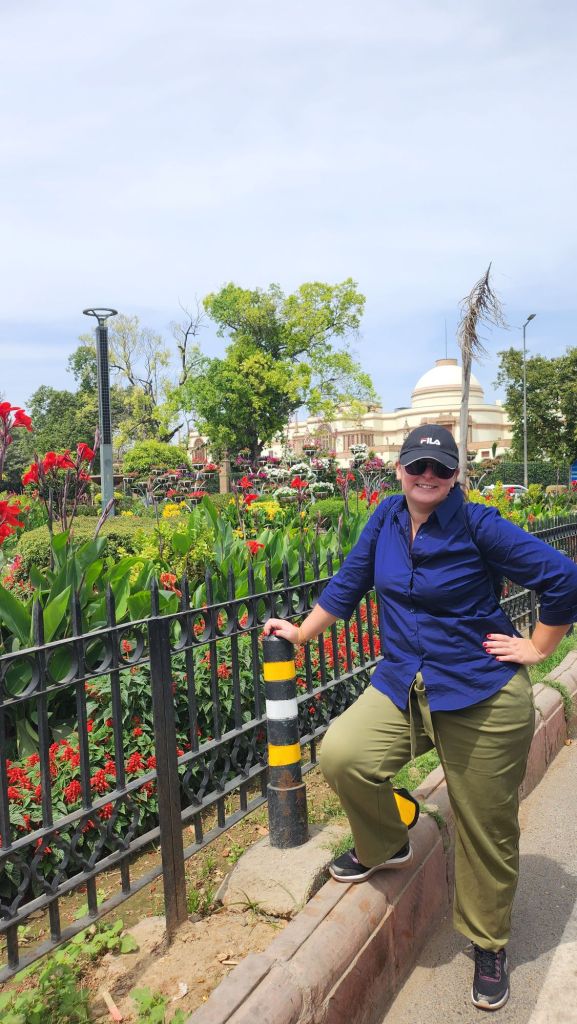
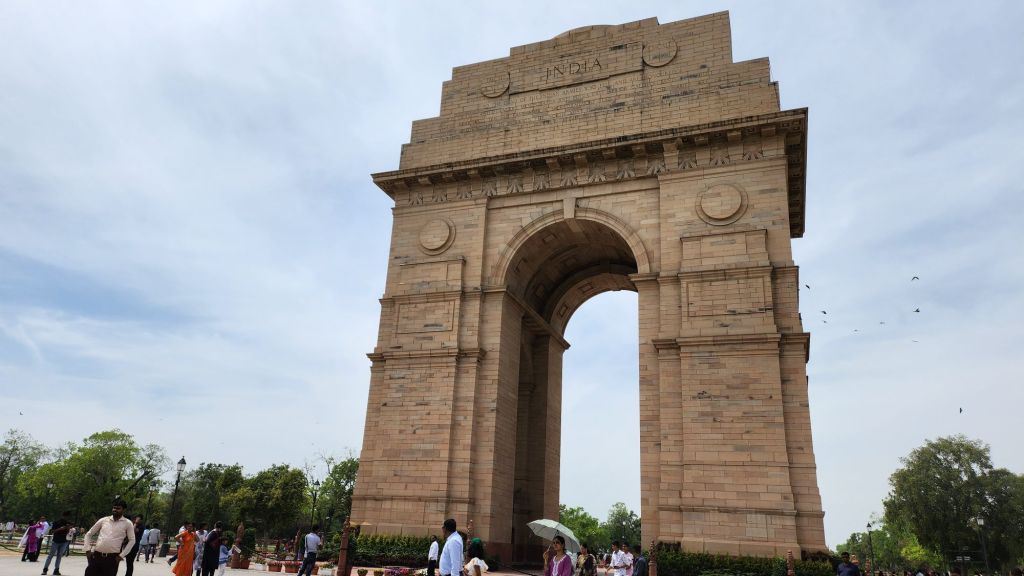
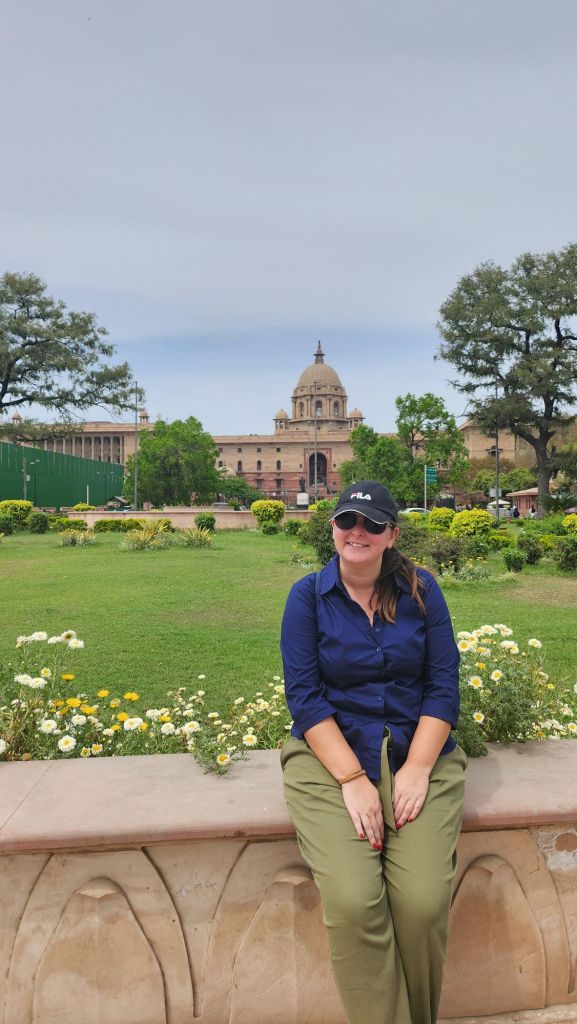

As we jumped back on the Tuk Tuk we saw many more buildings that were government or national monuments like the Red Fort, but I hadn’t realised that as it was Monday (actually Easter Monday), most things were closed, but it was so so very hot, I was happy to see it from the outside and keep moving. With having the local driver I think we actually saw a lot more smaller places that I would not have expected, for example an old water reservoir which was particularly impressive due to its architecture.
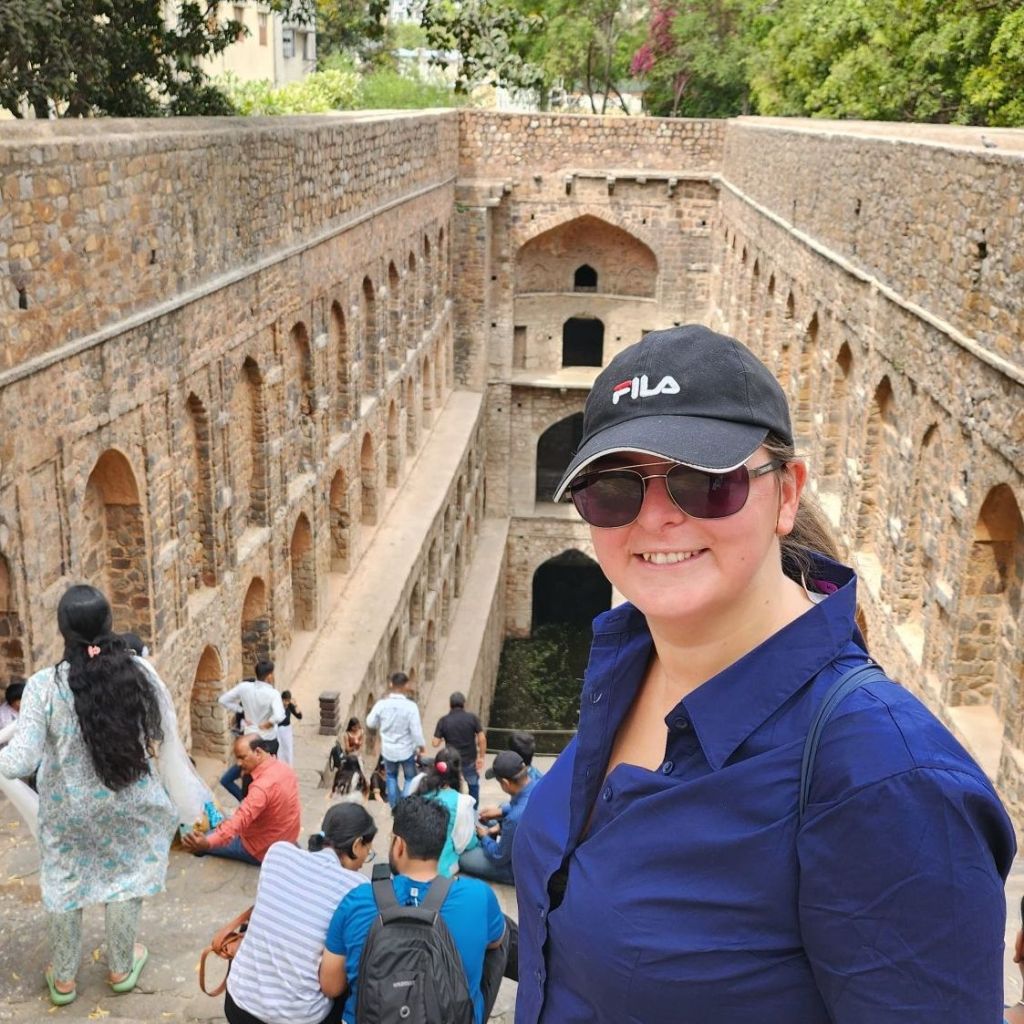
I did manage to visit a few religious spots as well, a beautiful and busy mosque site, which was rammed with muslims for ramadan, and also the Gurudwara Bangla Sahib, or Golden Temple.
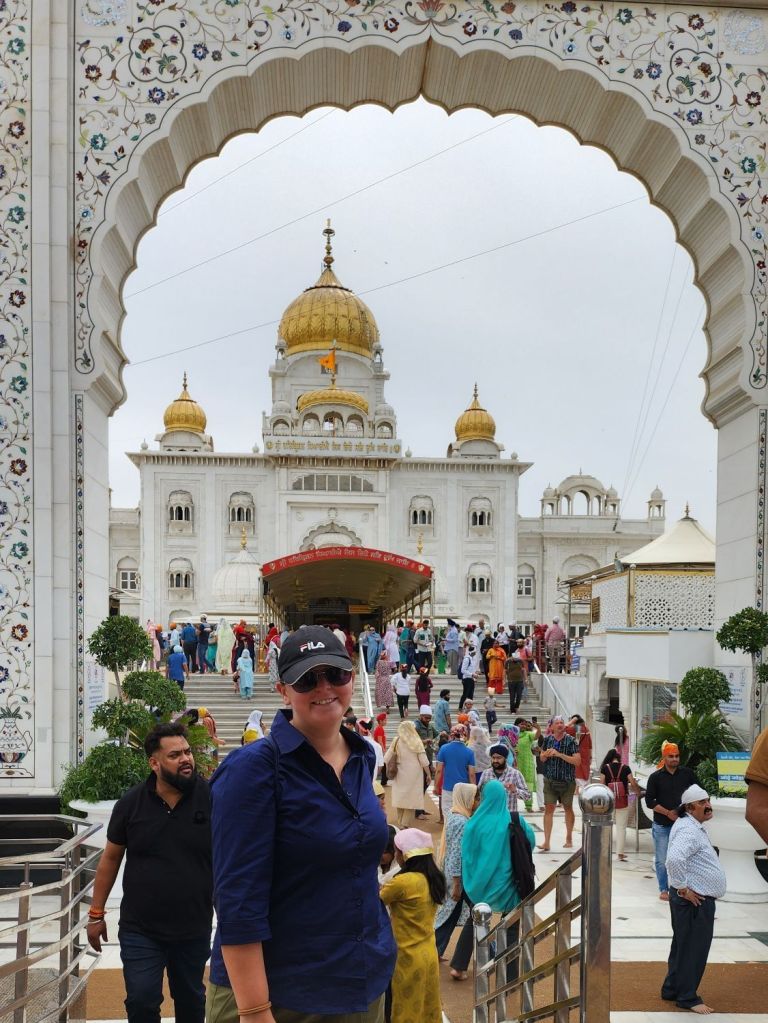
The golden temple site is an important location for Sikhs. This beautiful location took you away from some of the hustle and bustle and to a quieter place where it was my first experience taking off my shoes, washing my feet and walking around a sikh space. Outside you could see the impressive golden structure and also some sort of large pole with fabric which sikhs use to replace their turban everyday.
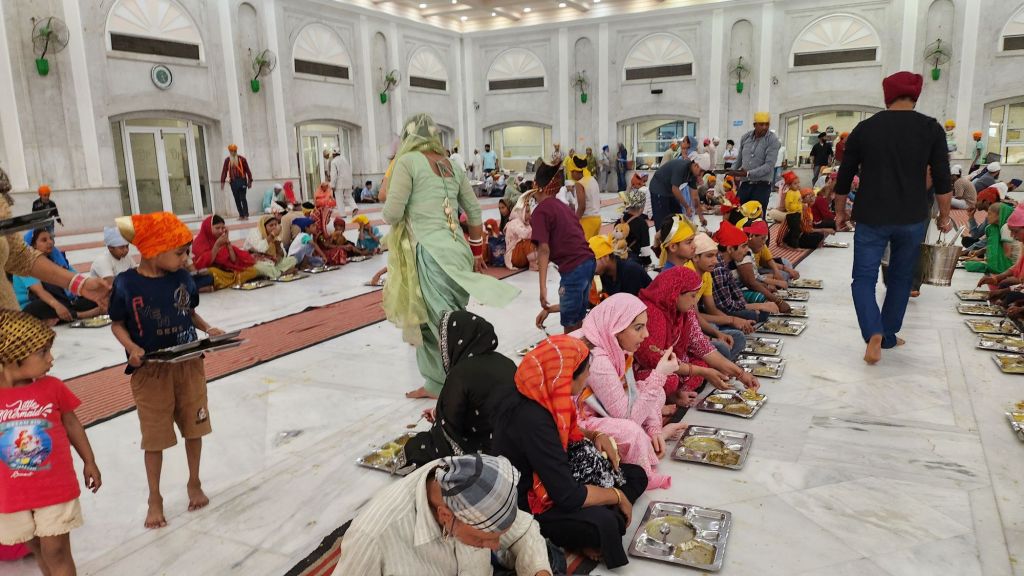
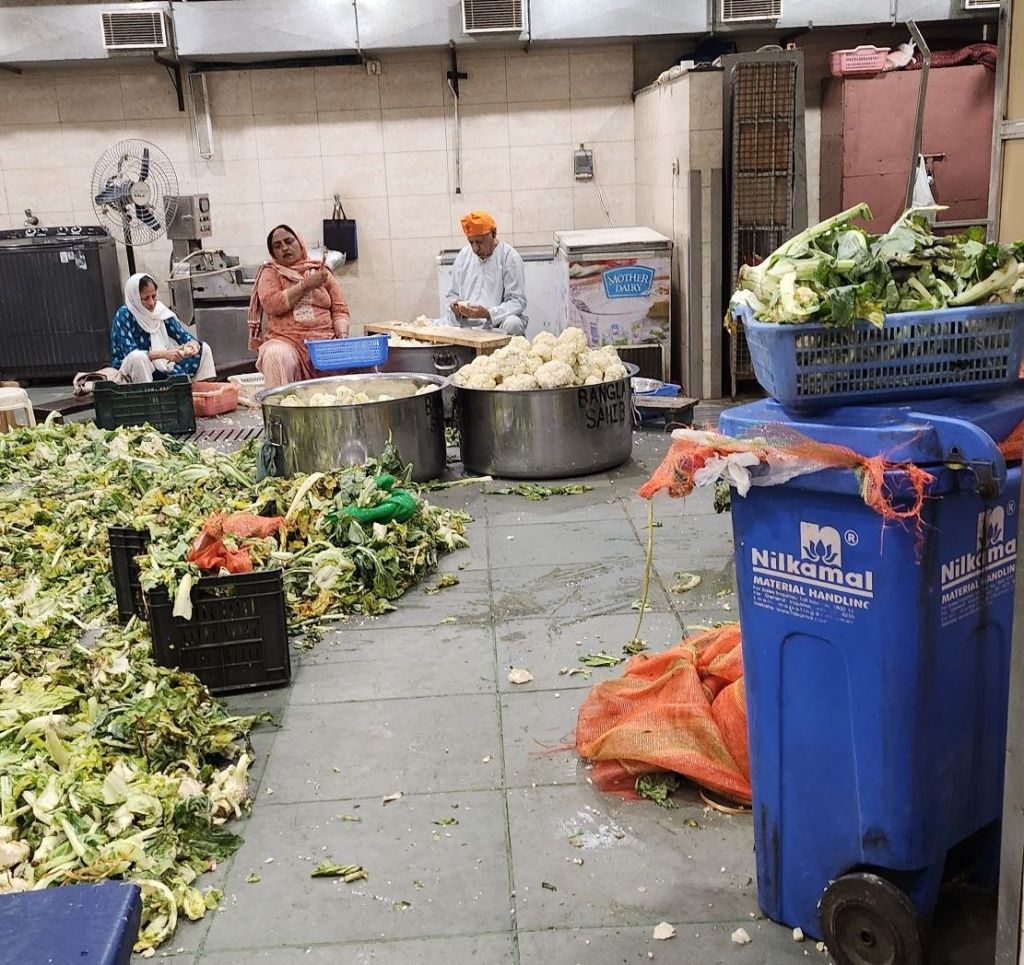
This religious site also houses a large community kitchen and dining hall, where several volunteers come everyday to make free meals for their community. People wait in crowds outside for their turn to take a seat and eat what has been provided. This was a really impressive operation.
There are four main religions in India; Hinduism, Islam, Christianity and Sikhism. The popularity of the religion varies with the region of India you visit, and as I continued on my journey, I learnt more about the ancient and present day conflicts this still causes unfortunately.
At night, as the air cooled, the streets became alive with people selling their wears and street food being available. I was offered things at triple the price due to my obvious foreigner look, so my friend had to purchase what I wanted for me whilst I hide around the corner. He was very successful, coming away with some bangles and clothes for me. I am now all set for my next Indian celebration.
I tried to stay away from the street food, as I had three weeks away ahead of me, and did not want to have a bad belly. (Little did I know this would happen despite me being careful, and last from day 2 to day 12). I went to the best rated restaurants though, and had some delicious curries, and oh my god, I love cheese naan so much. The food in Delhi is supposed to be some of the best, and I would have to agree.
Agra
The next day we were up early in the morning to head to Agra, the home of Taj Mahal. India being a huge place, it takes ages to get everywhere, and this is no exception, Agra is a 3 hour drive from Delhi, and I arranged a private car and tour to take us there and see the sights. There was little to see on the route but that was fine as it started at about 3am.
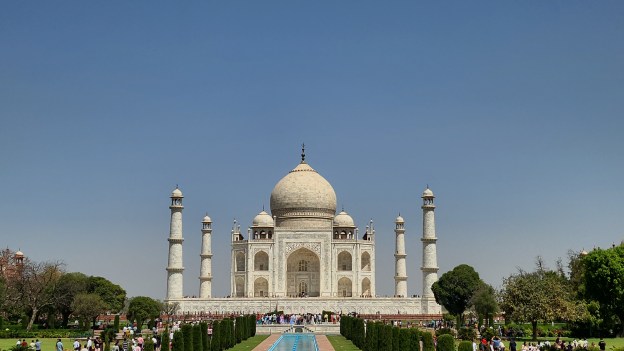
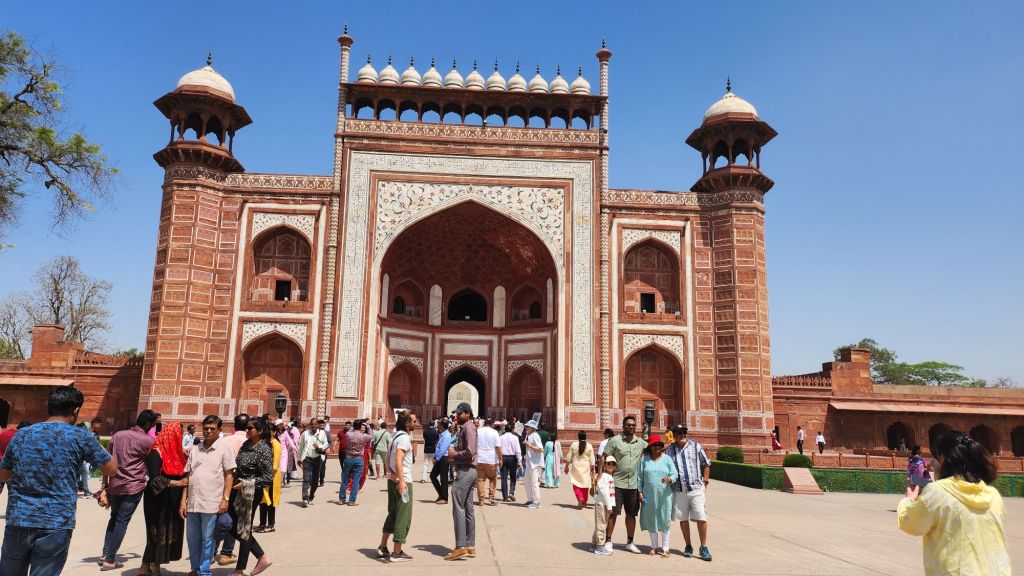
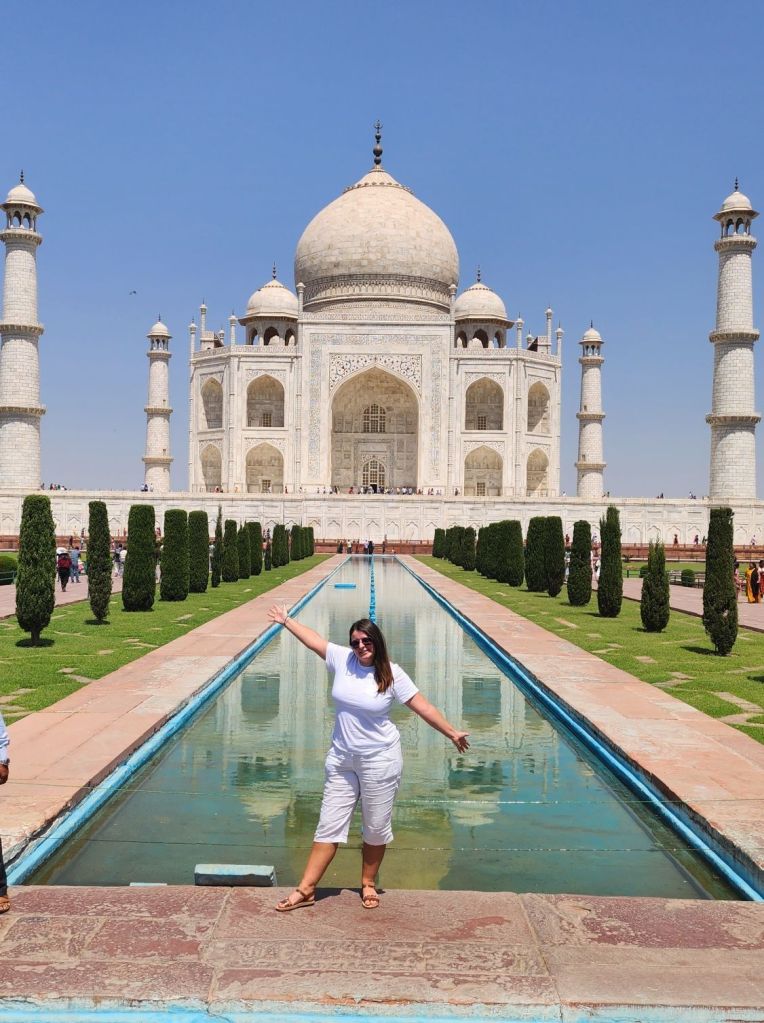
On arrival at Taj Mahal site with our guide, we were seperated in to men and women’s security which is the norm in India, for scanning and privacy. We then went into the huge site and crossed through the impressive gates before our first views of Taj Mahal.
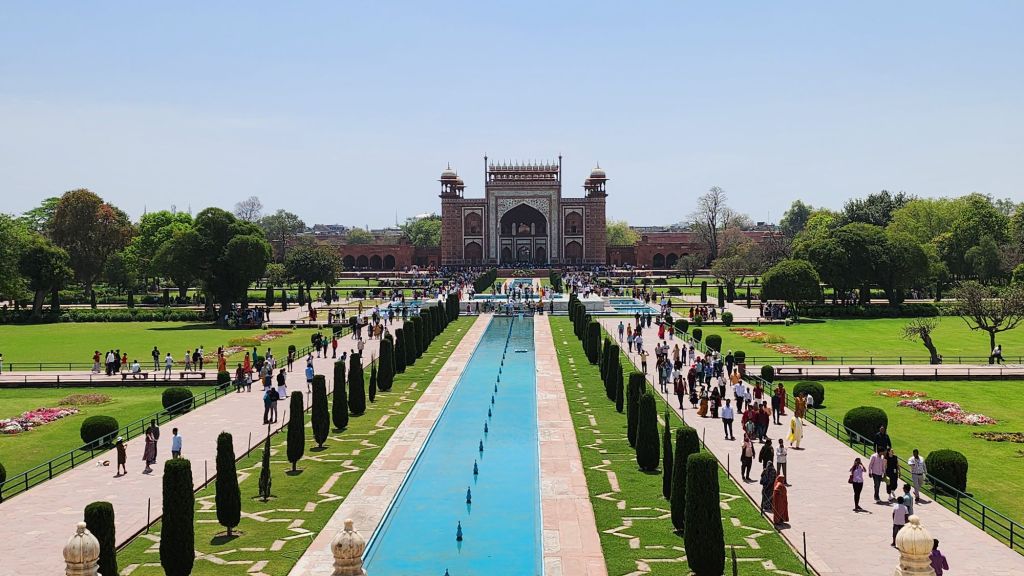
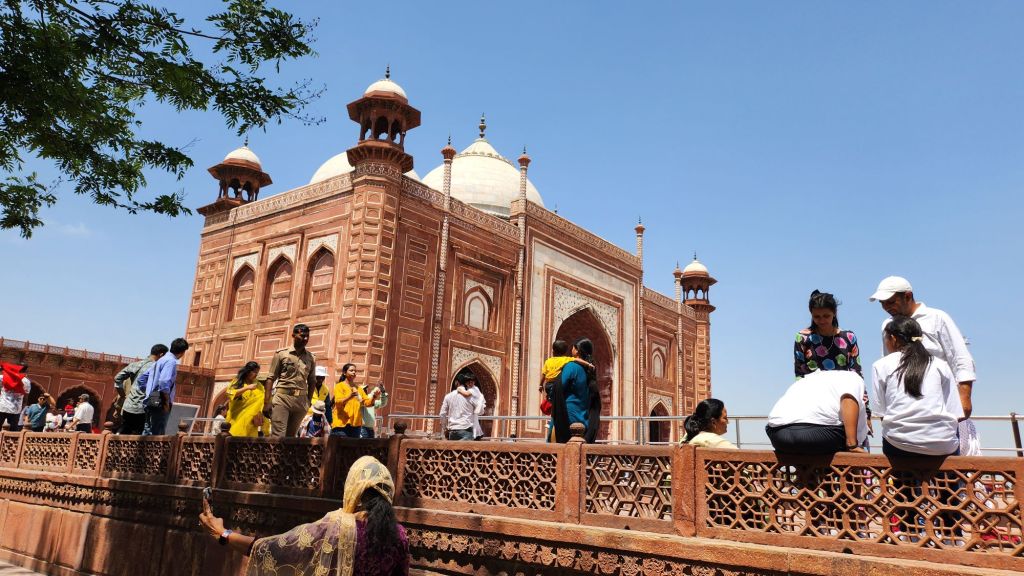
The romantic story behind the building is that it was built as a mouseleum by the Mughal Emperor in the 1600s for his favourite wife Mumtaz Mahal. We also found out that he had actually wanted to build one for himself opposite to the Taj Mahal, on the other side of the river, and it would have been a reflection of the original, but after construction started, his son put a stop to it, as he was spending too much money. His son later led a rebellion and captured his father, imprisoning him in Agra Fort and stealing his throne, eventually leading to the decline of the empire.
As we wandered the grounds, our guide told us many stories of the Emperors or Kings of the different regions and the different dynasties that held power. Many of the dynasties still exist today, and in their regions the royal families are without power but are still wealthy and well respected.
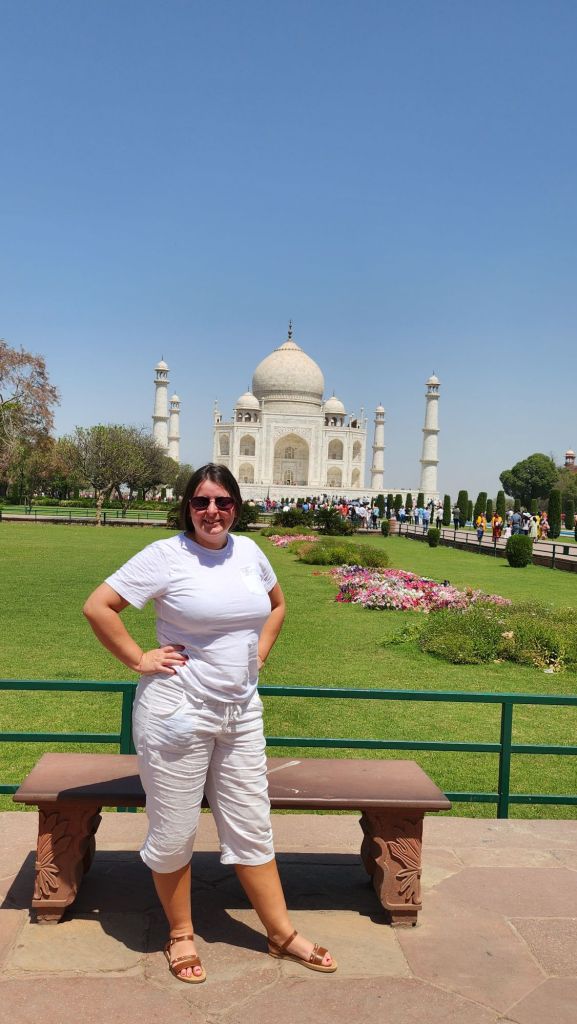
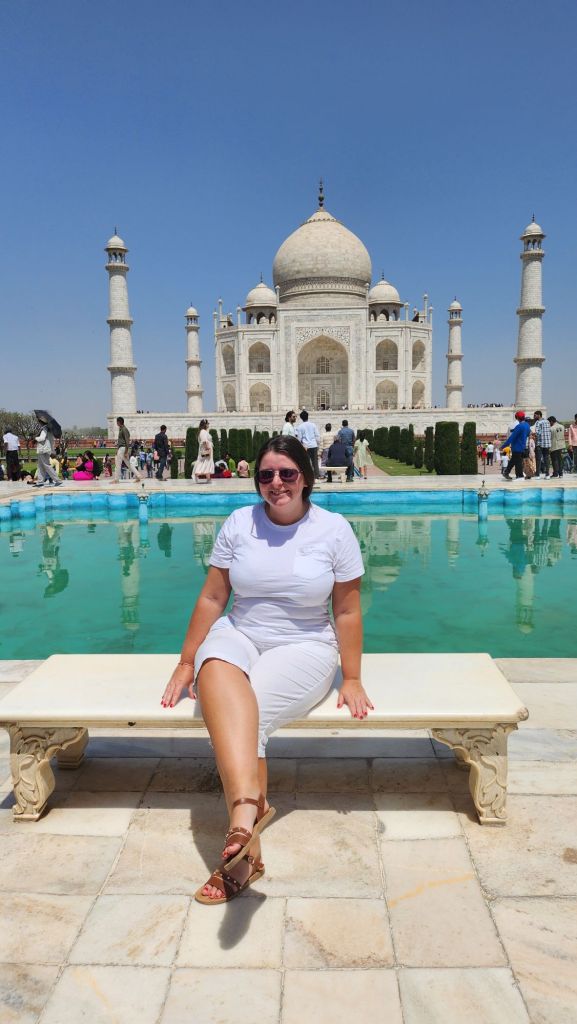
The gardens are well kept and there is a good order of security to allow people to follow the right paths and not allow them to wander all over, and consequently ruin the photos. I even managed to get a photo on the famous Princess Diana bench without too much hassle!
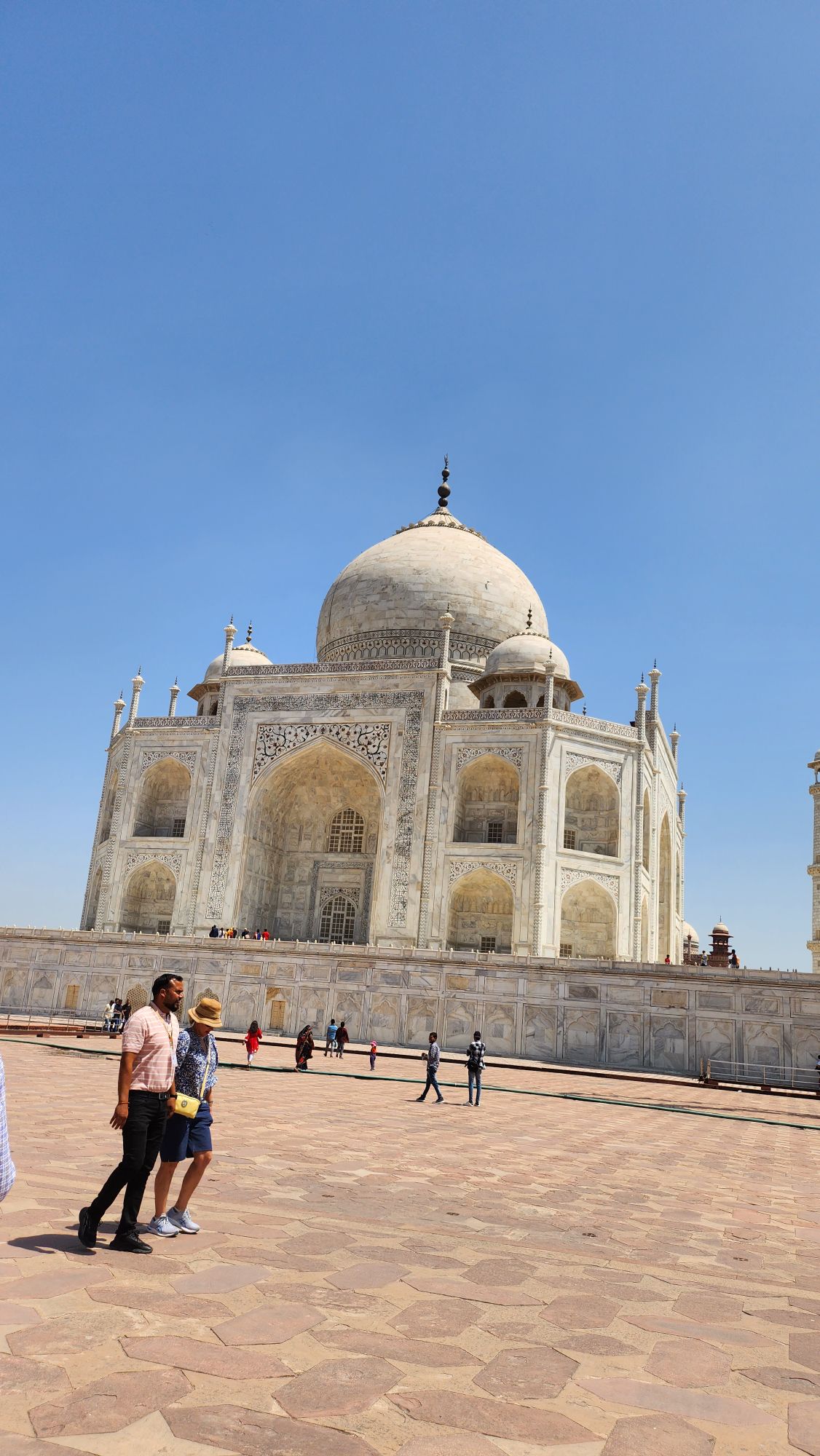
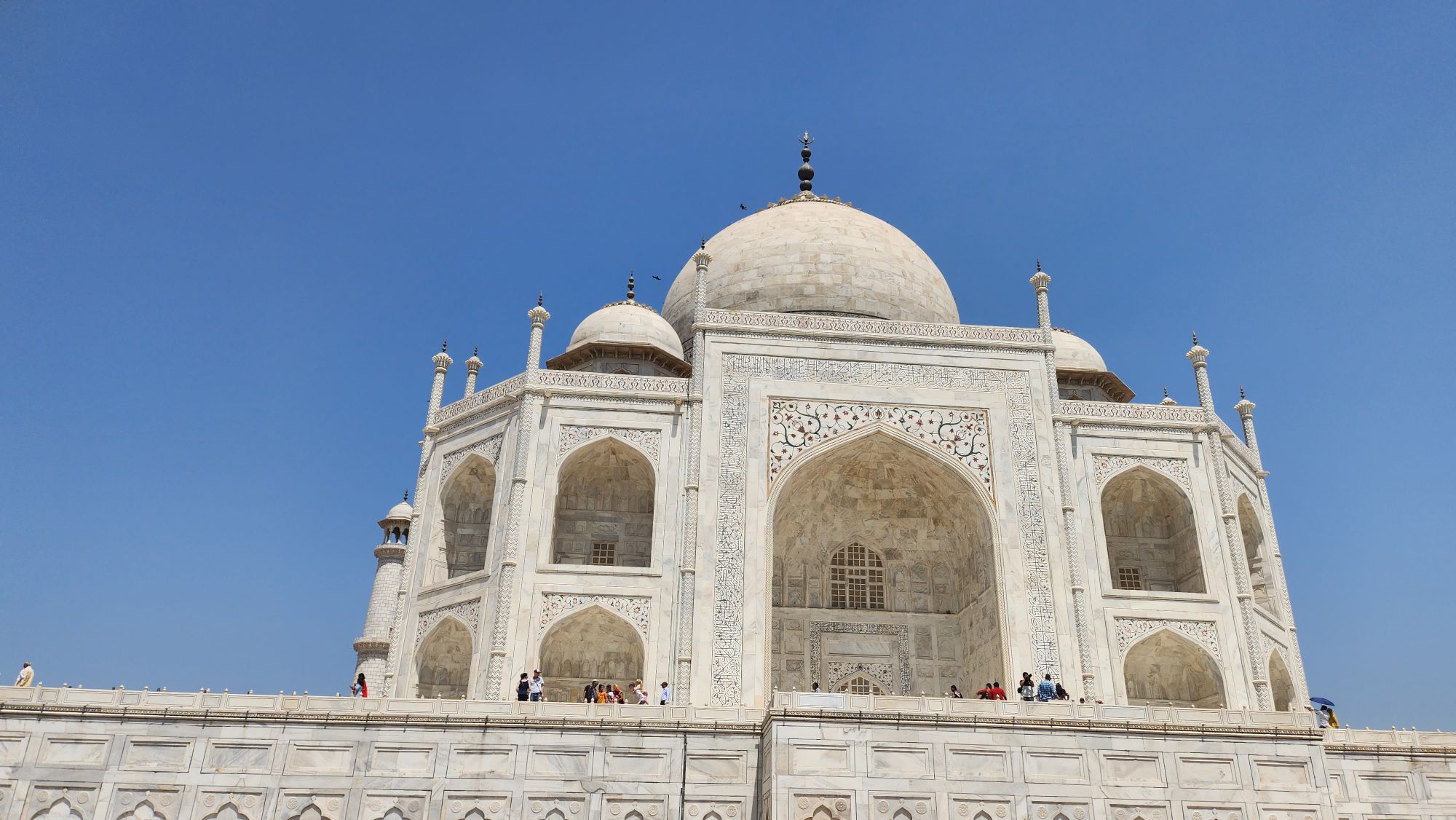
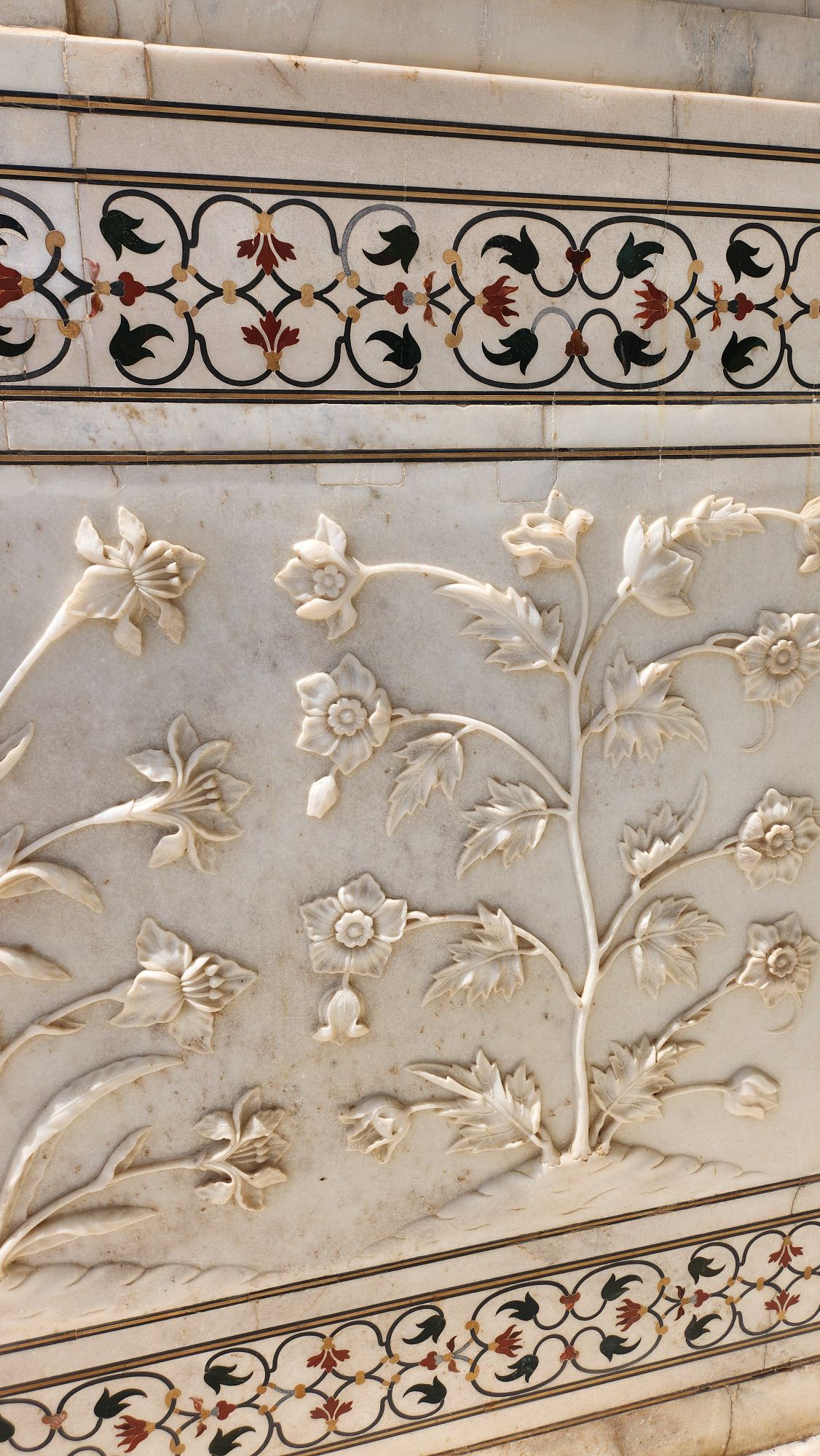
On approaching the mausoleum itself, you start to see the decoration of it. It is inlaid with many jewels that have been flattened down to look as if they were painted, but on touch you can feel that they are real. To my embarrassment, I learnt that the best jewels were taken by the British and one lies in our crown. I had to shake my head at this. Inside the building it is quite plain and small, centred around the tomb.
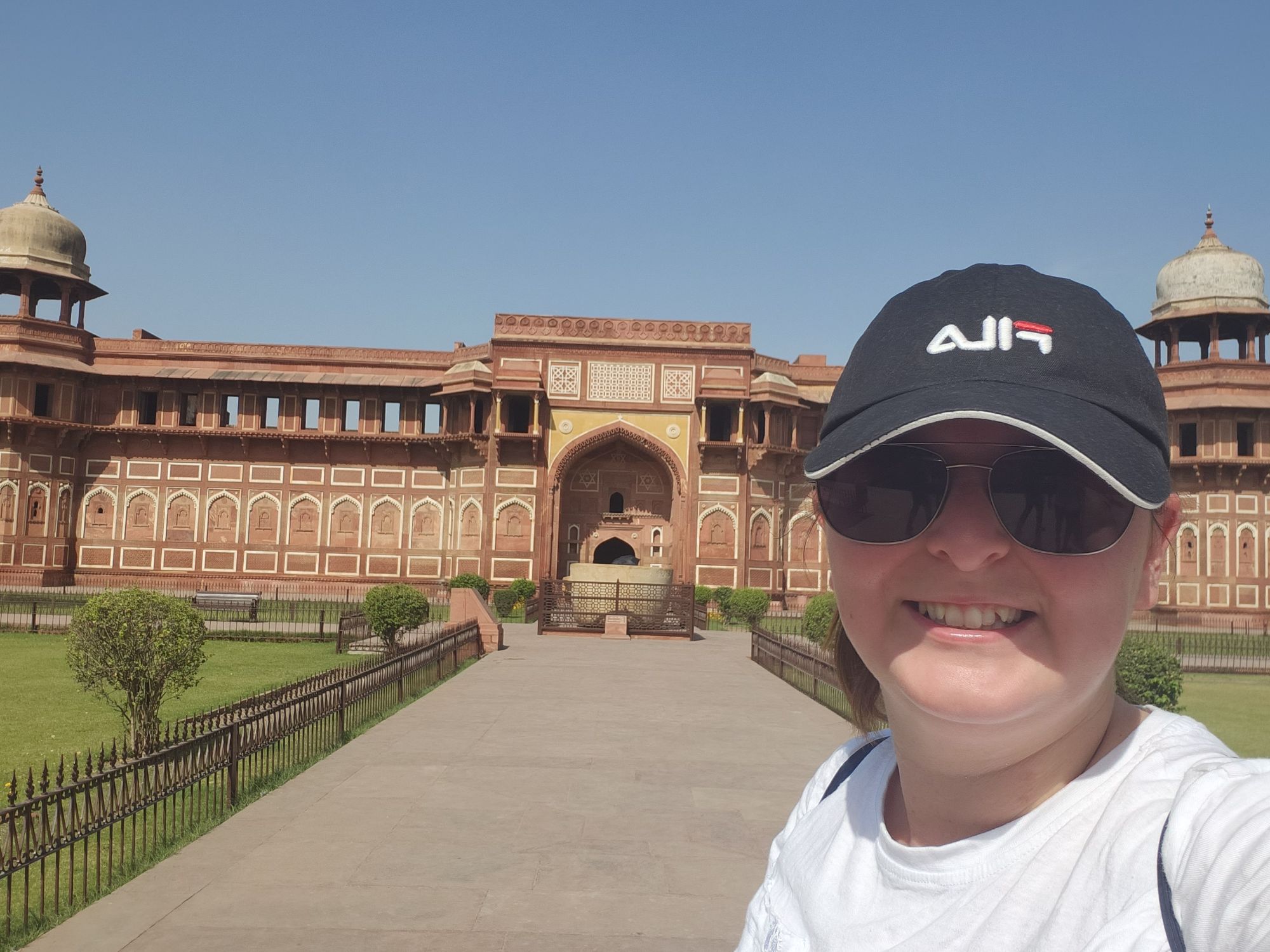
Visiting Agra Fort close by, the location of the emperors captivity, you can see that Akbar the Great, whom built it as a military fort and royal residence, had respect and tolerance for many of the religions. He decorated the Agra Fort with many religious symbols including the swastika which in Western Europe is known for a dark and twisted history but originally is the symbol for hinduism. He even married hindu princesses including Jodha Bai who famously was his favourite wife and his chief consort.
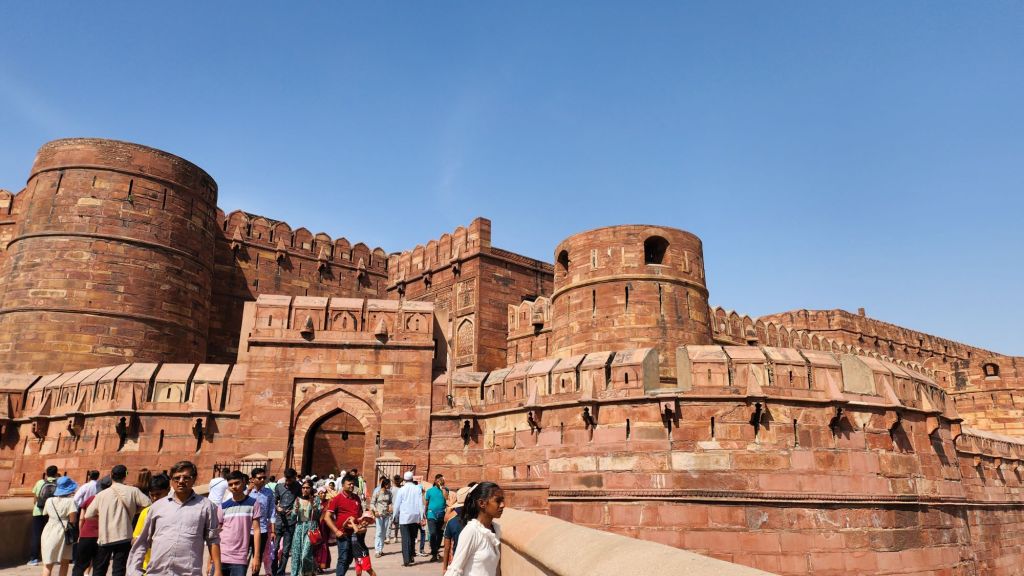
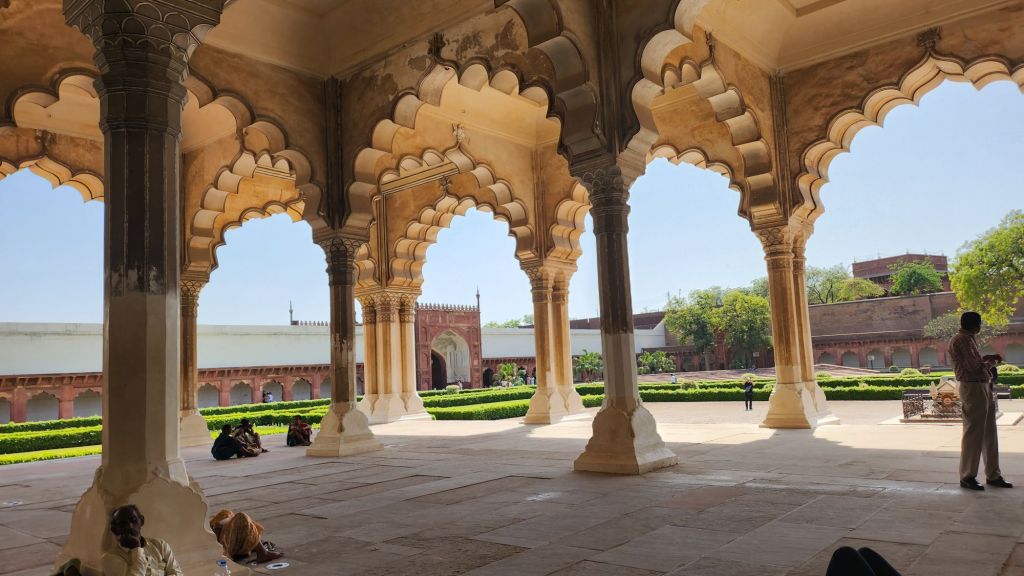
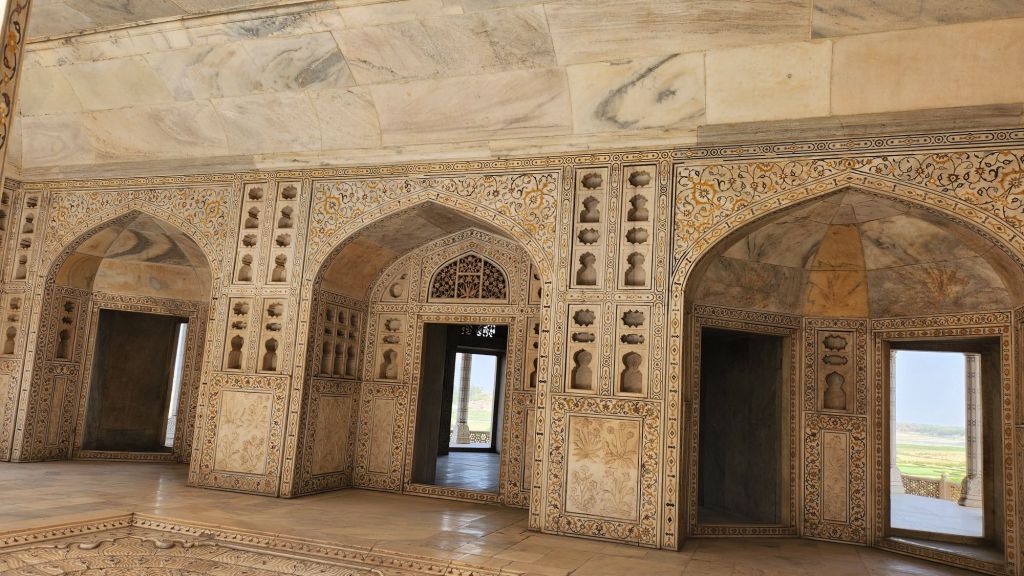
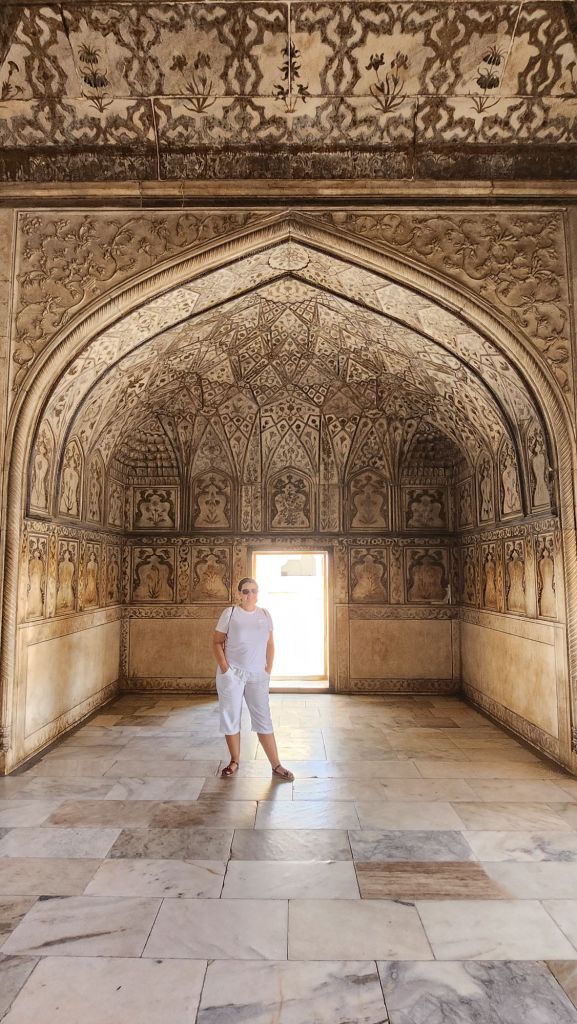
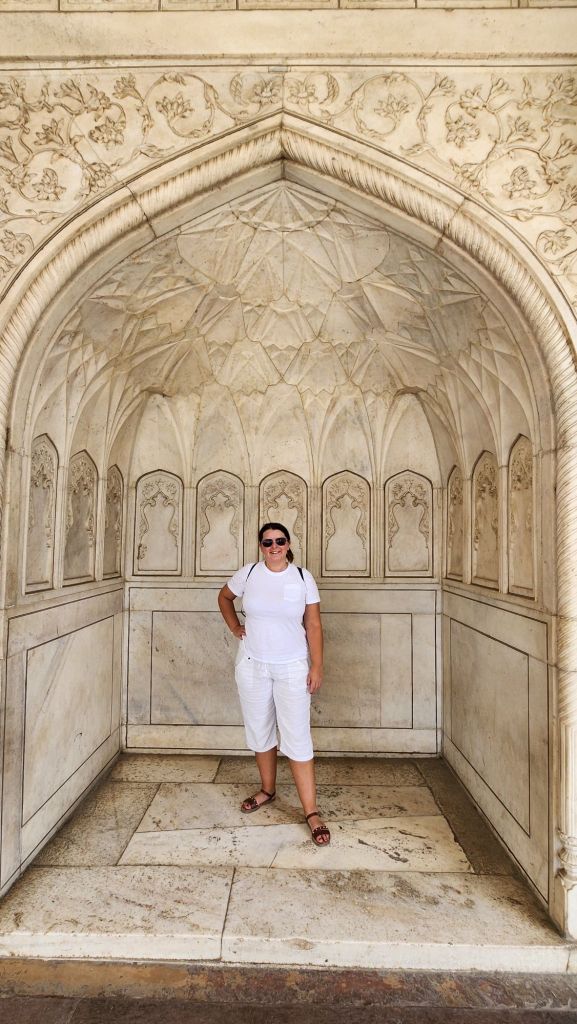
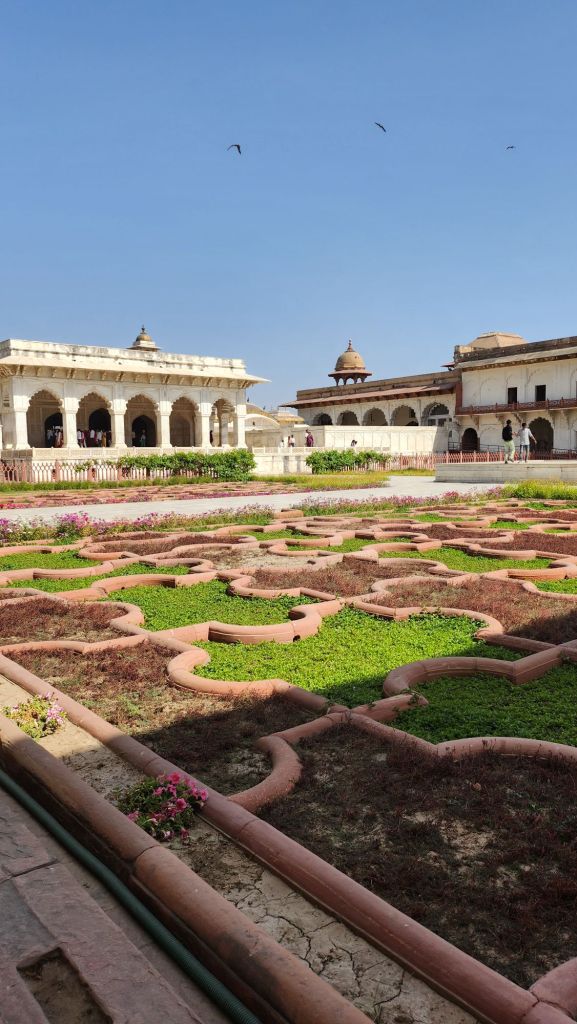
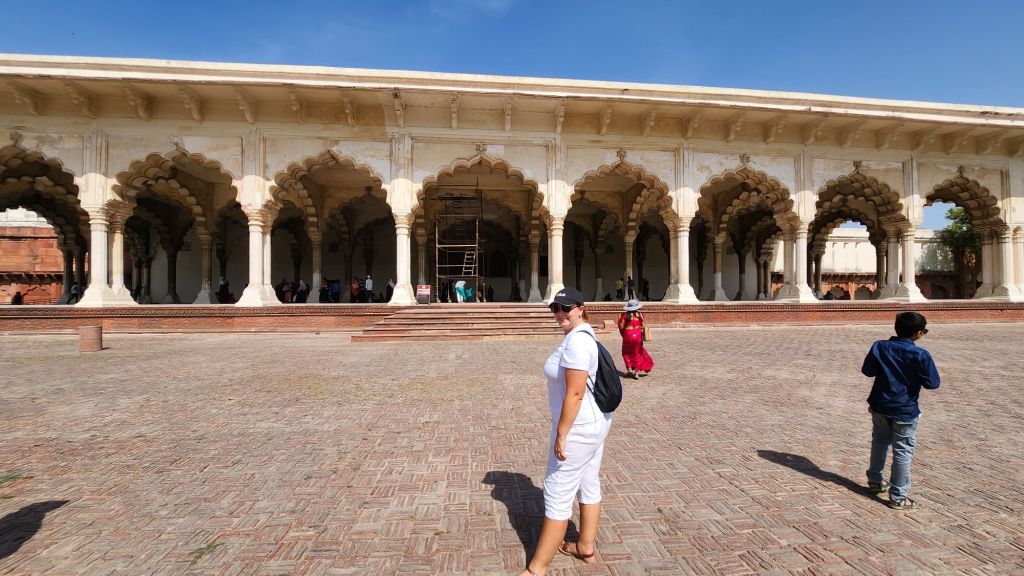
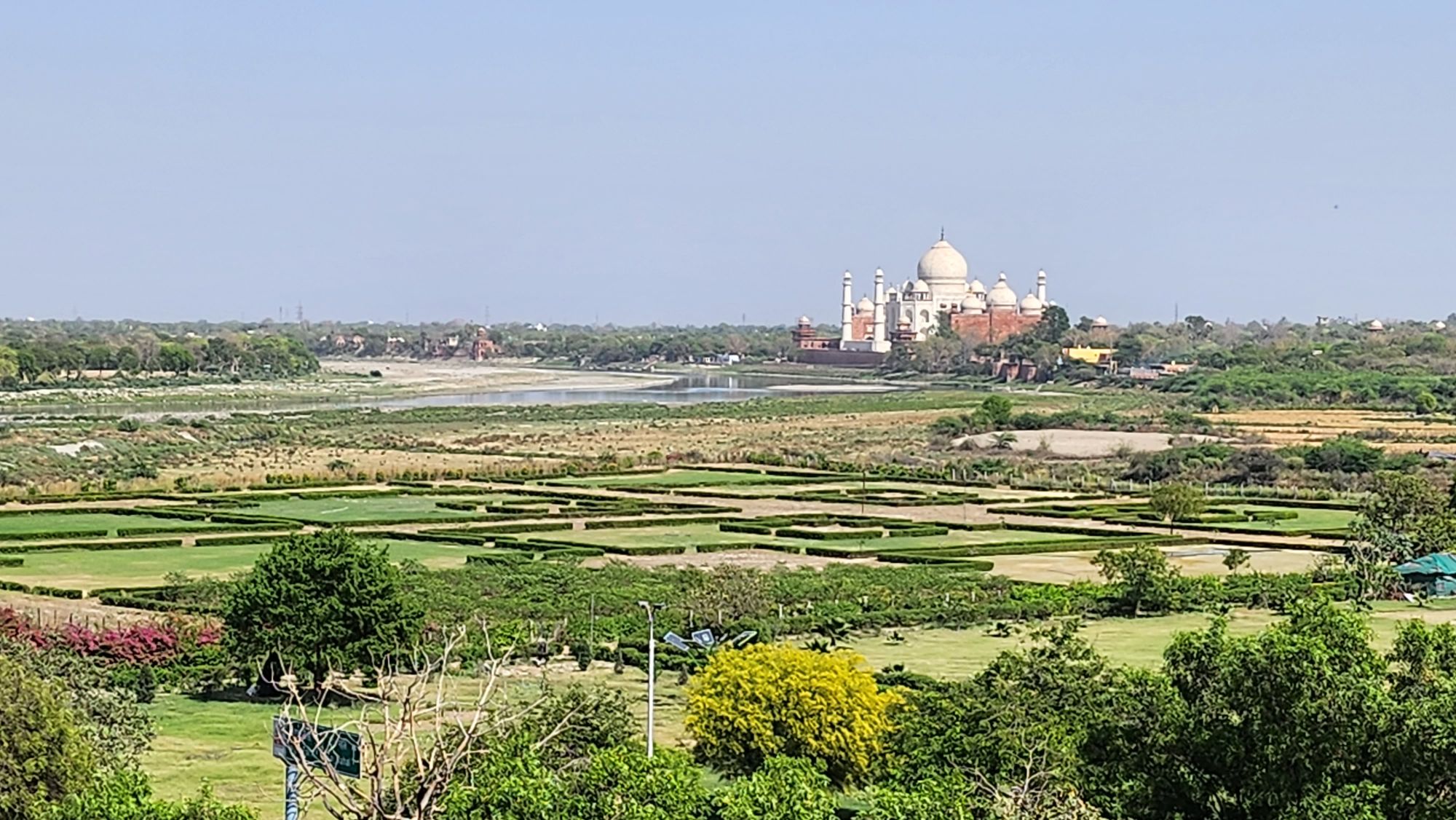
This huge great red coloured fort is vast in passages and areas that would have once housed royal rooms. In one location you can see a strange optical illusion. A view of the Taj Mahal where as you get further away, it looks larger. Completely confused me!
Rajasthan – Jaipur
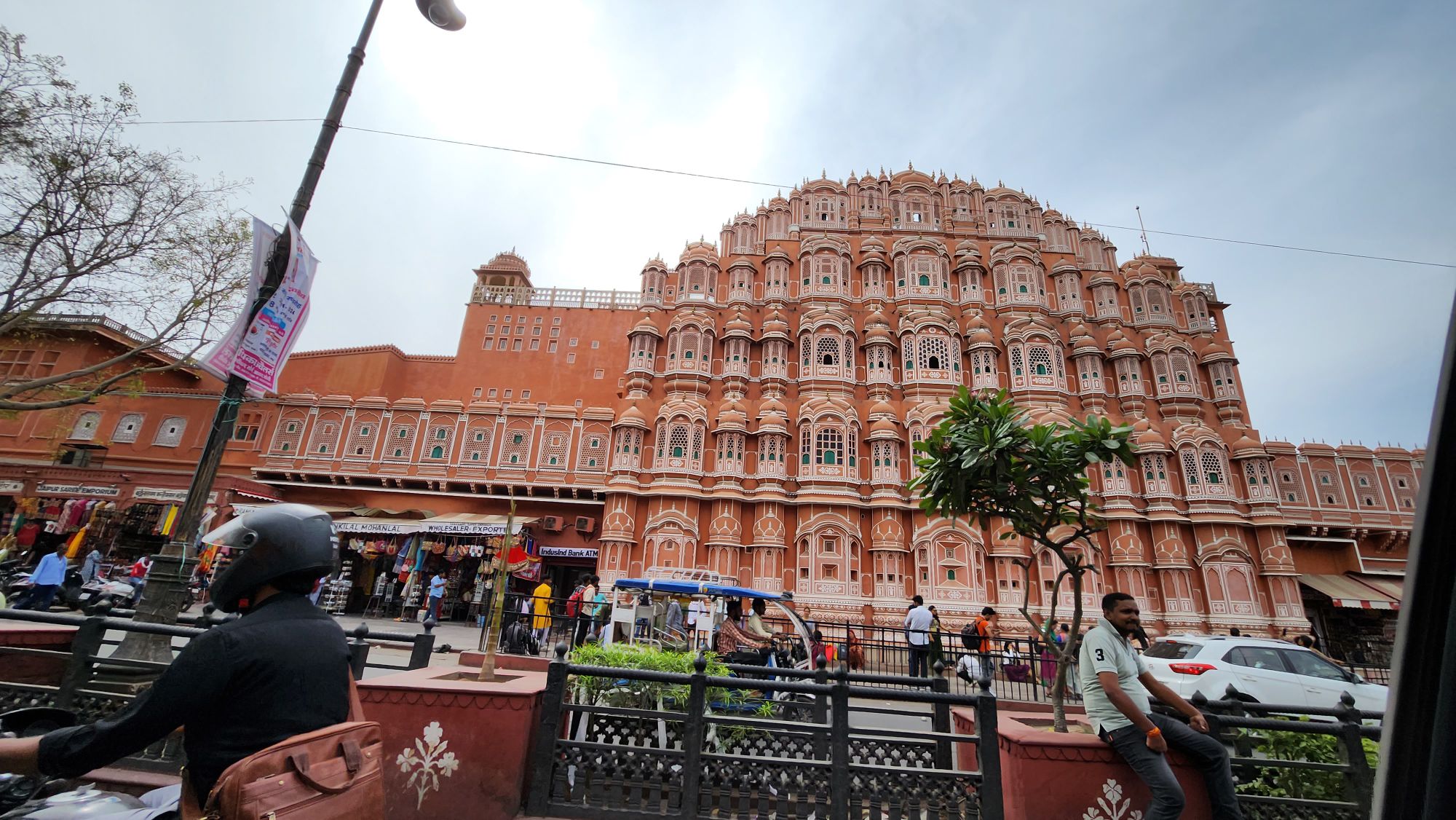
The next day we were on the road to Jaipur. The pink city is the final part of the ‘Golden Triangle’, the famous tourist route, made up of Delhi, Agra and Jaipur. The capital of the Rajasthan region, the city is famous for being the royal home of the region’s king and for its pink buildings making it very recognisable. In the city we travelled with our guide from palace to palace, through a fort and even to an interesting observatory park full of large sundial sculptures.

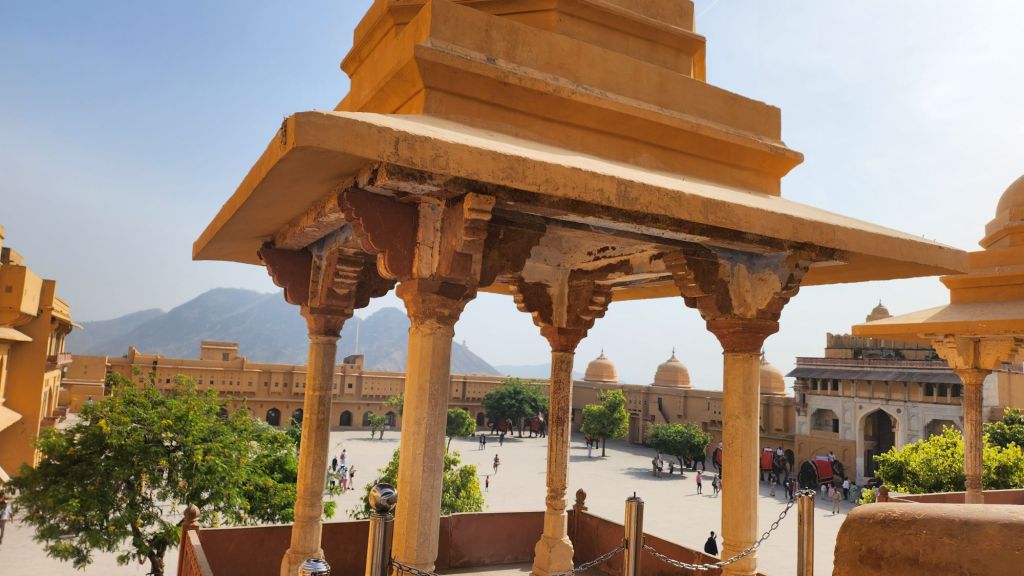
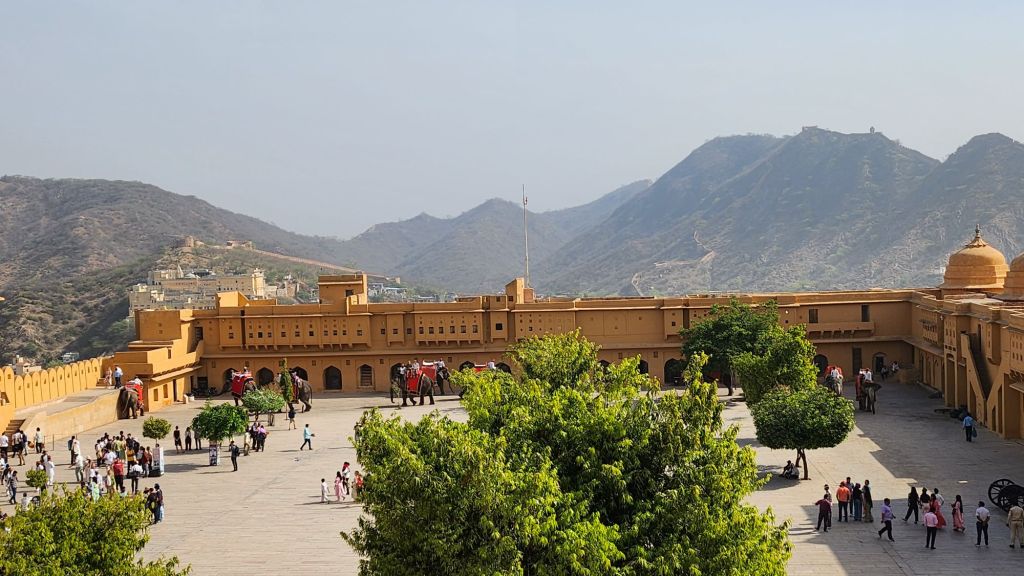
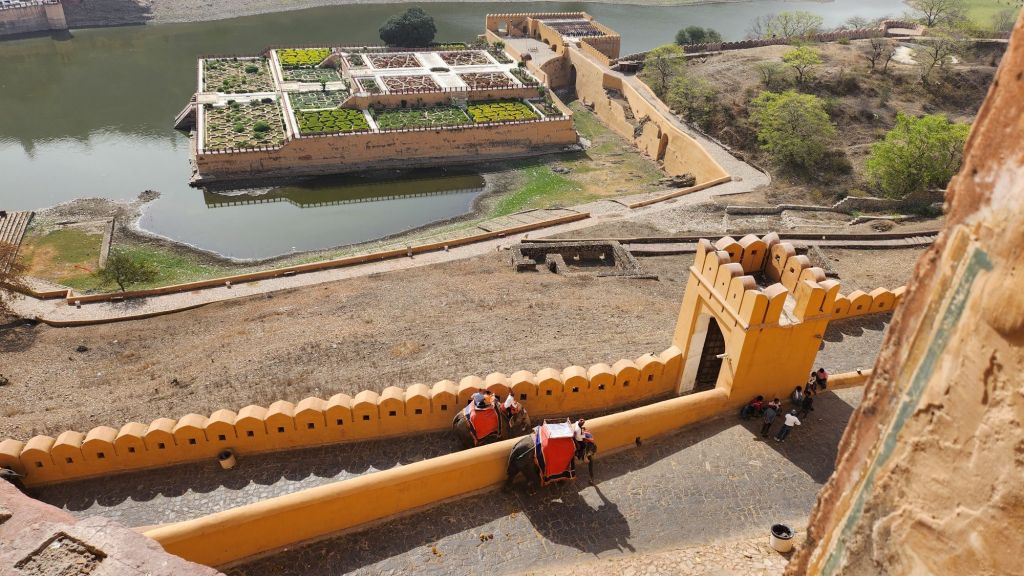

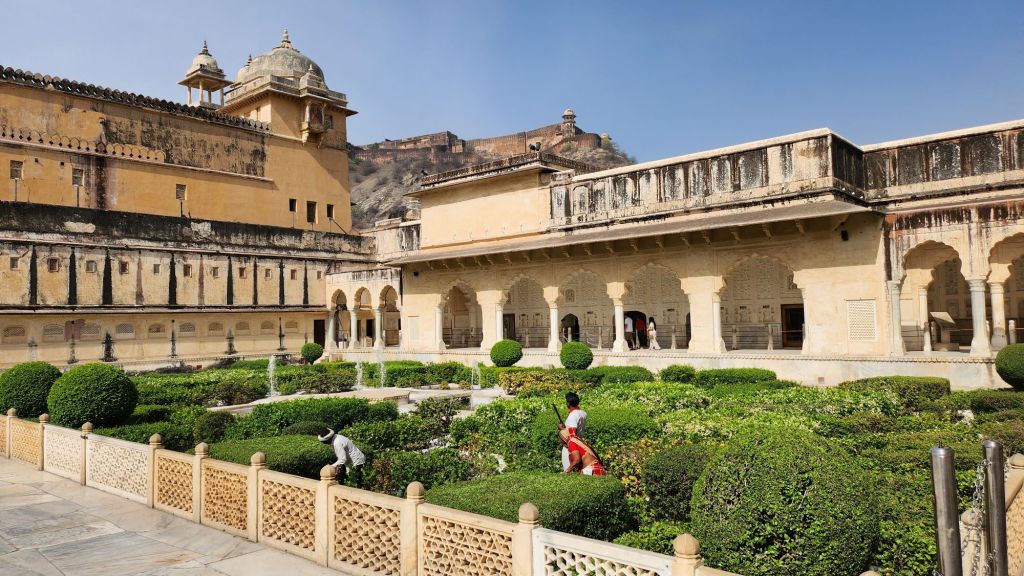
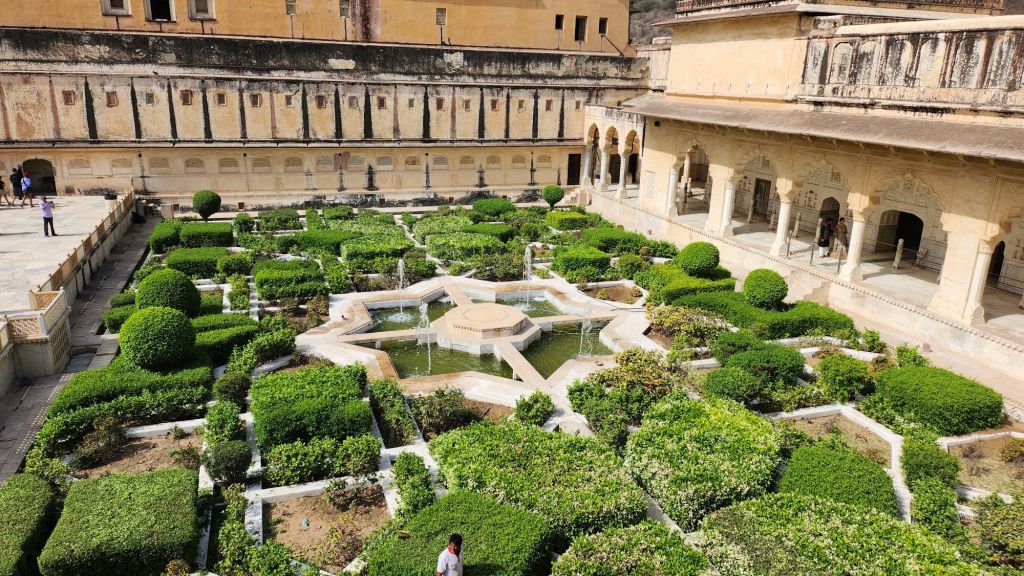
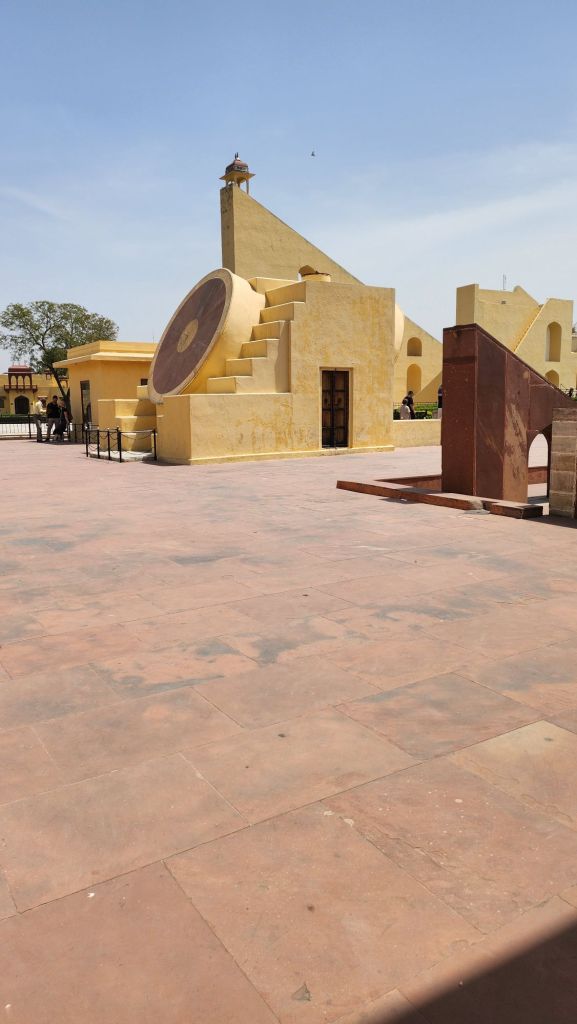
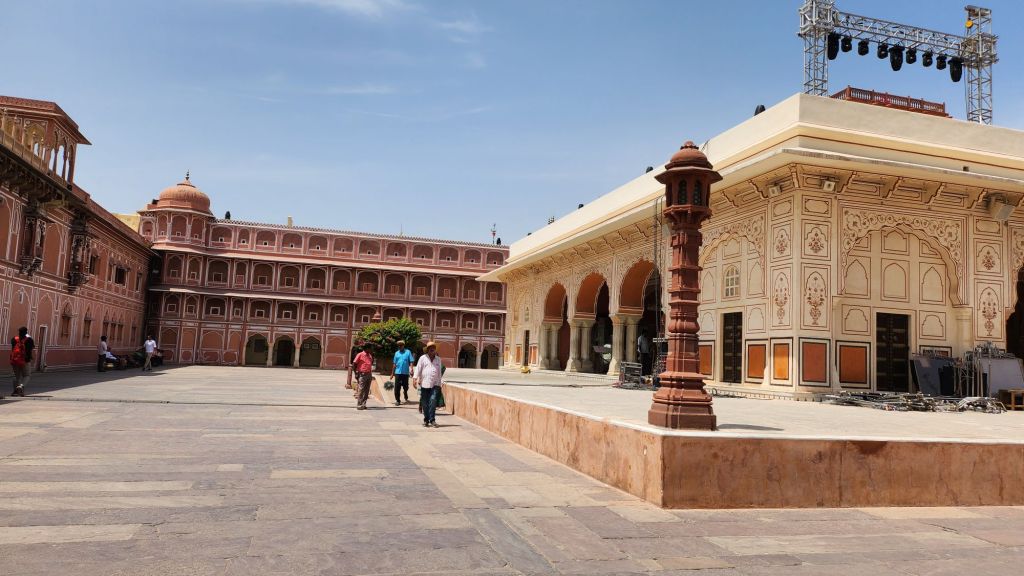
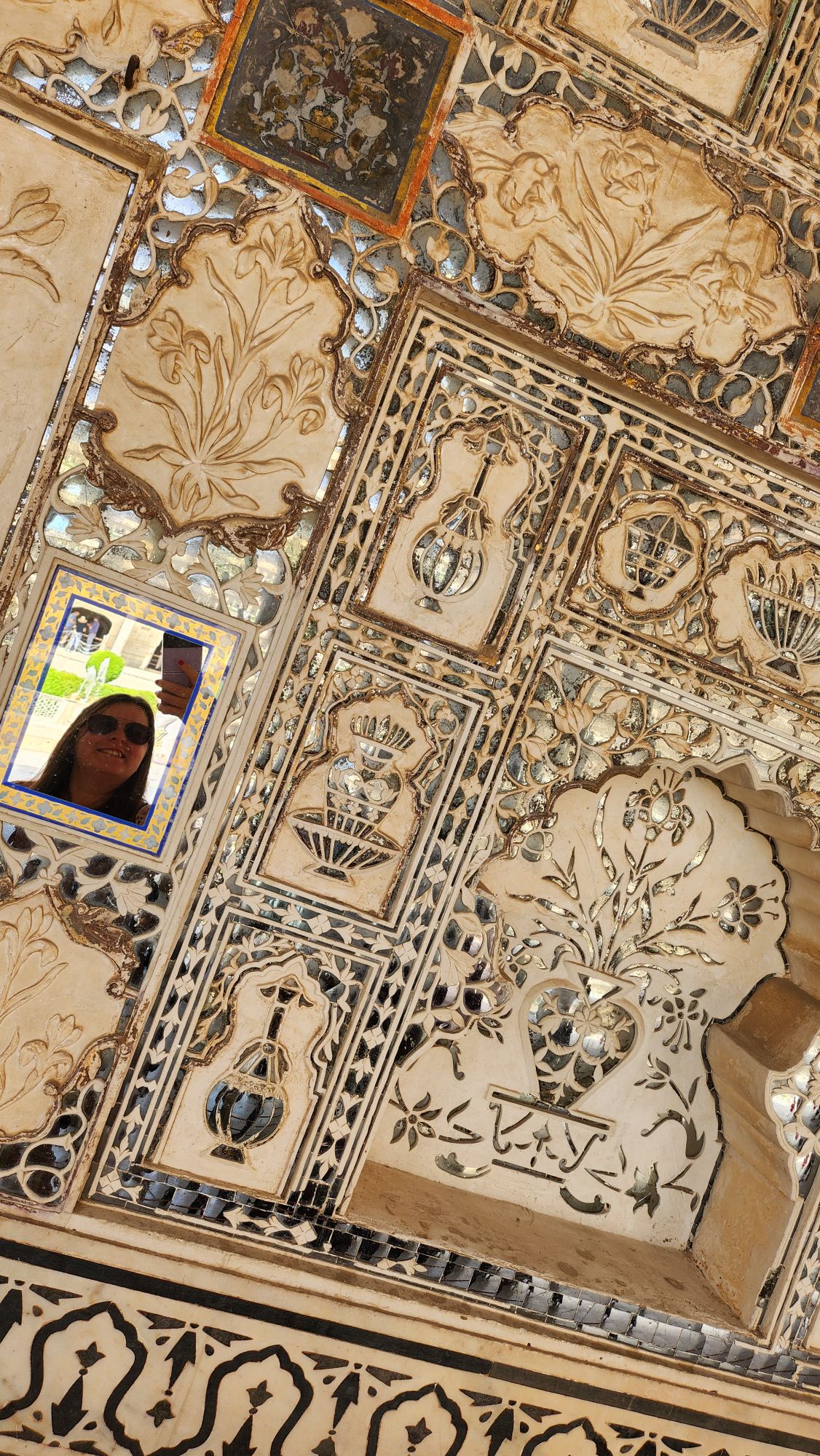
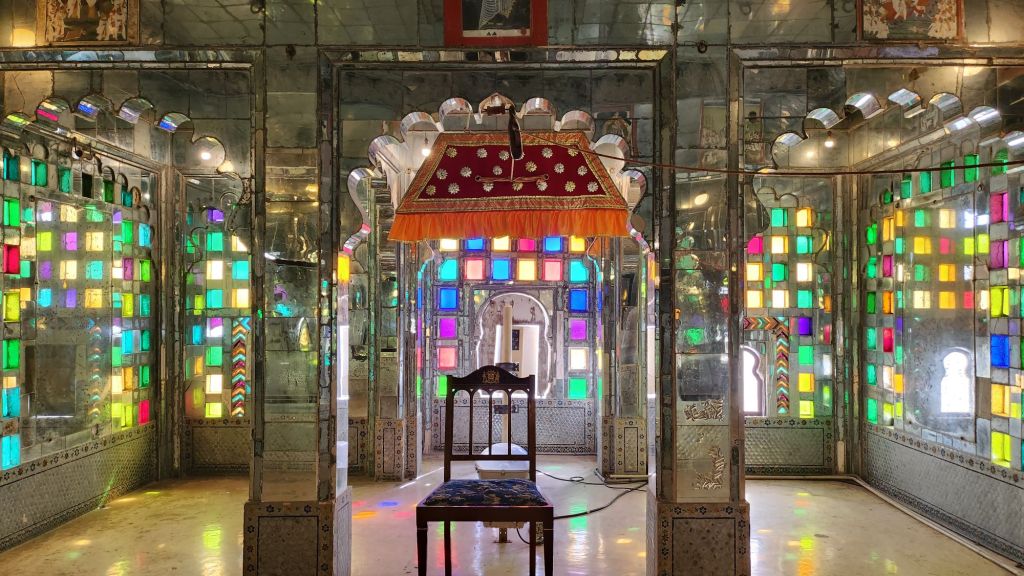
In the palaces, the royals were obviously big fans of mirrors, as there were rooms covered in mirrors, which also seemed to be used for keeping an eye on the other people in the room. Jaipur was obviously trying to keep the royal VIP feeling going as well, as elephants marched through the streets merging with modern traffic, taking tourists up and down the large hills to the palace.

Our guide in Jaipur was sadly not as pleasant as the one in Agra. He seemed to be a lot more bias in his views and heavily supportive in his stories to the hindu people, whilst quite against the islamic people, this did put a spoil on things a little as my friend is a practicing muslim, and I found the guide to be quite rude. This also extended to him, not acknowledging me fully as a woman compared to my male friend. This meant that we did ignore him a little and unfortunately gave us a bad taste in Jaipur.
Whilst the palaces and sights were beautiful, by the afternoon, I was suffering from the heat and struggling. Going at one of the hottest times of the year, was not my smartest move. I was taking lots of opportunities to rest and break, and by the end, I had to say enough was enough, and we made our way to the train station. This was the start of a ‘fast’ train journey of 8 hours to the lake city of Udaipur. My final destination of the North.

Rajasthan – Udaipur
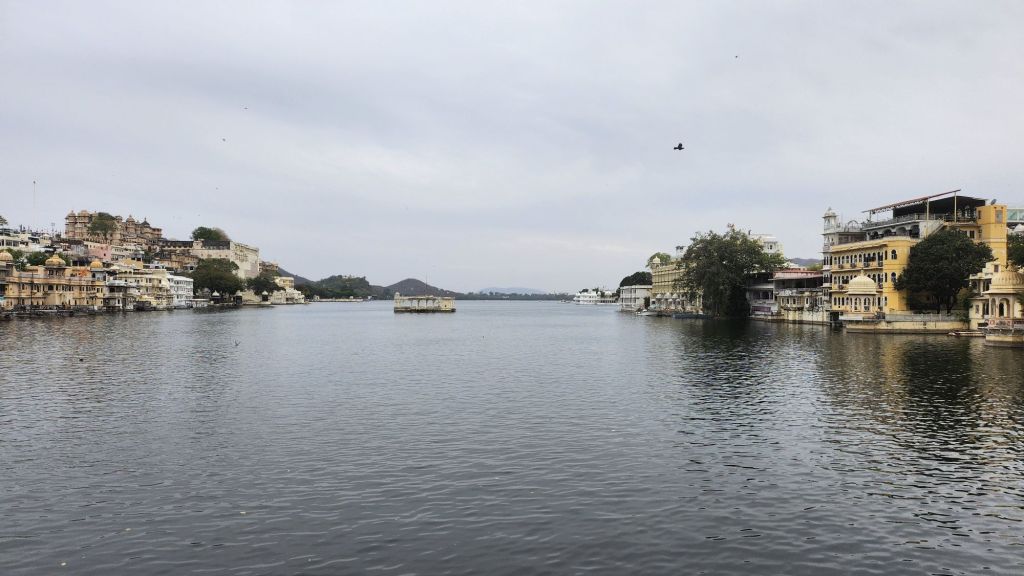
Arriving in Udaipur late at night, I jumped on a tuk tuk to my hotel, Lake Pichola. A beautiful hotel on the picturesque lake and a room with a intricately carved balcony to sit in. It was a gorgeous hotel, with a charming building, beautiful views, and a flute player to serenade me during breakfast. What more can you want!
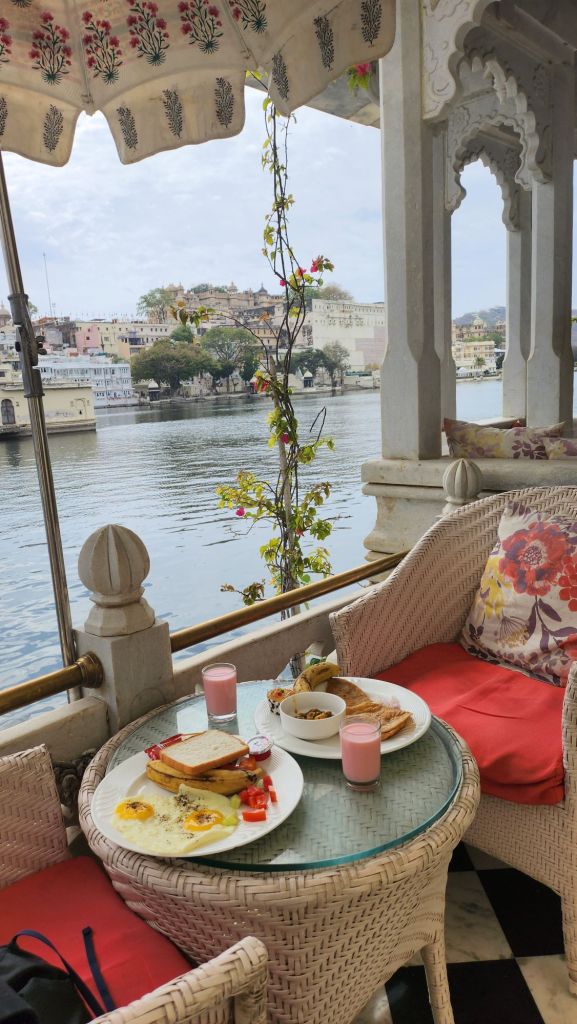
The other guests staying there were clearly very wealthy, and its no surprise as it was the most luxurious place I had stayed. I did end up in an amusing conversation with one family, when the father could not wrap his head around me being alone there, and kept re-asking me if I was with anyone, and each time I said no, he was shocked and his wife and daughter were laughing at him. I don’t think those girls had quite the same freedom… As I continued to discover in my trip, the women and young people in general in India are quite restricted.
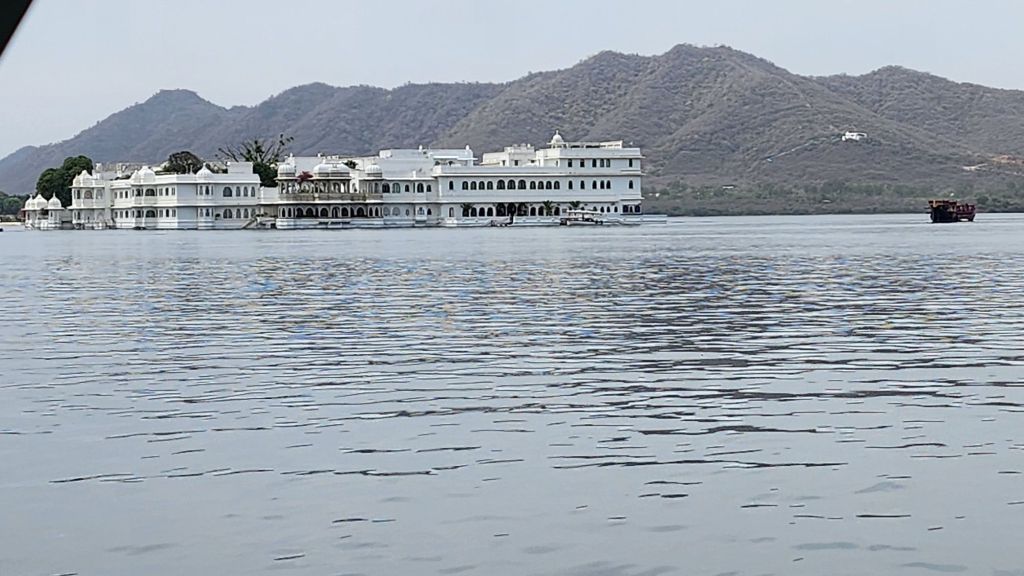
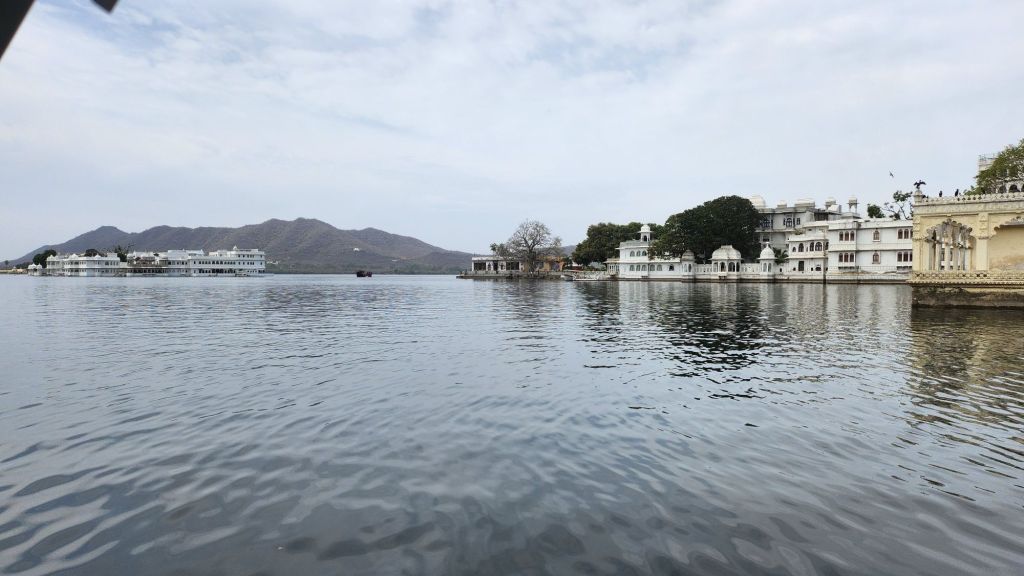
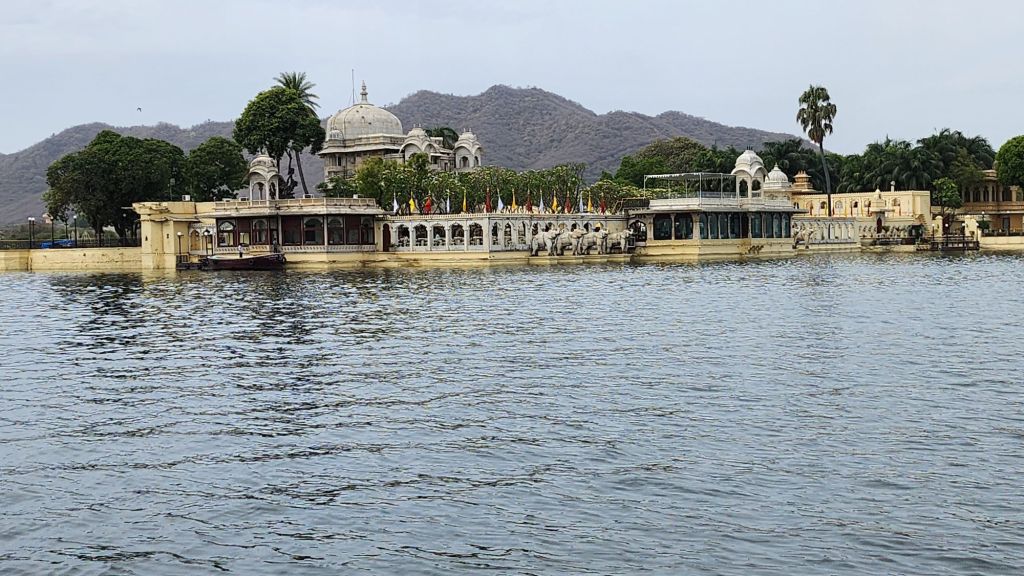
I had one full day to enjoy, and so I took a boat trip of the lake to see more of the views around me, and saw the famous Taj hotel owned by the king, floating in the middle of the lake, and only accessible by boat. I then wondered the streets by myself, making connections with some of the people that called the city home.
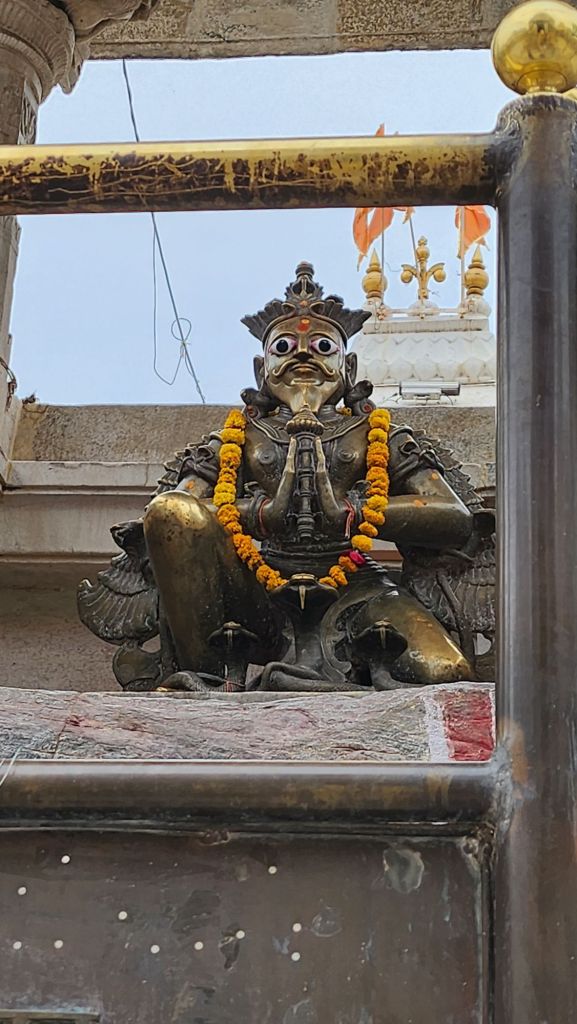
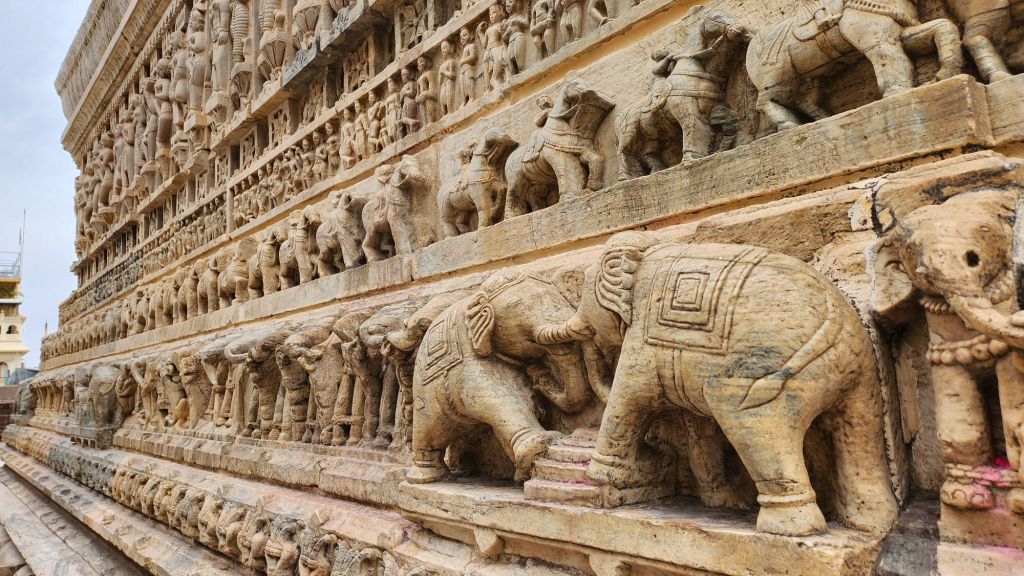
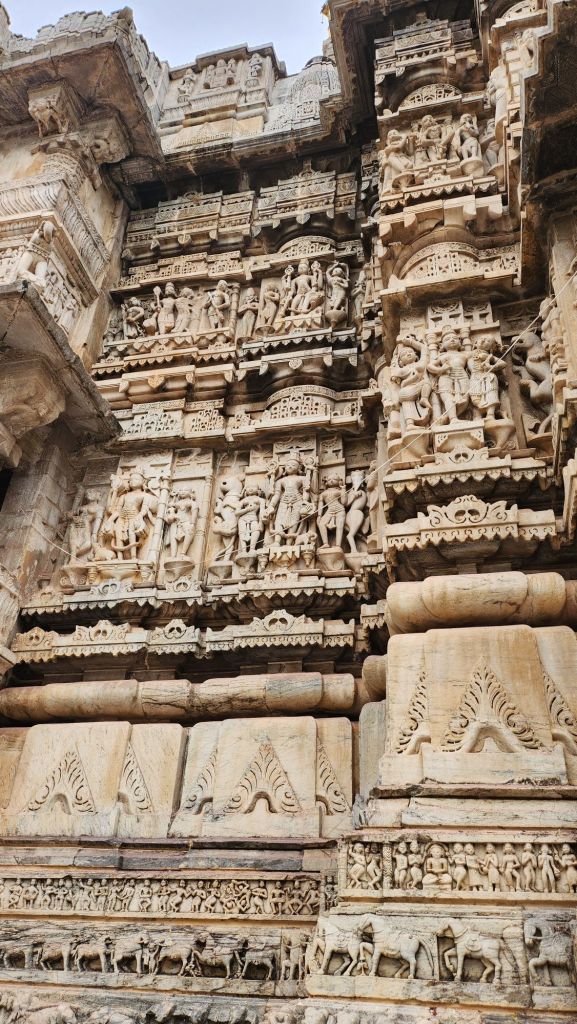
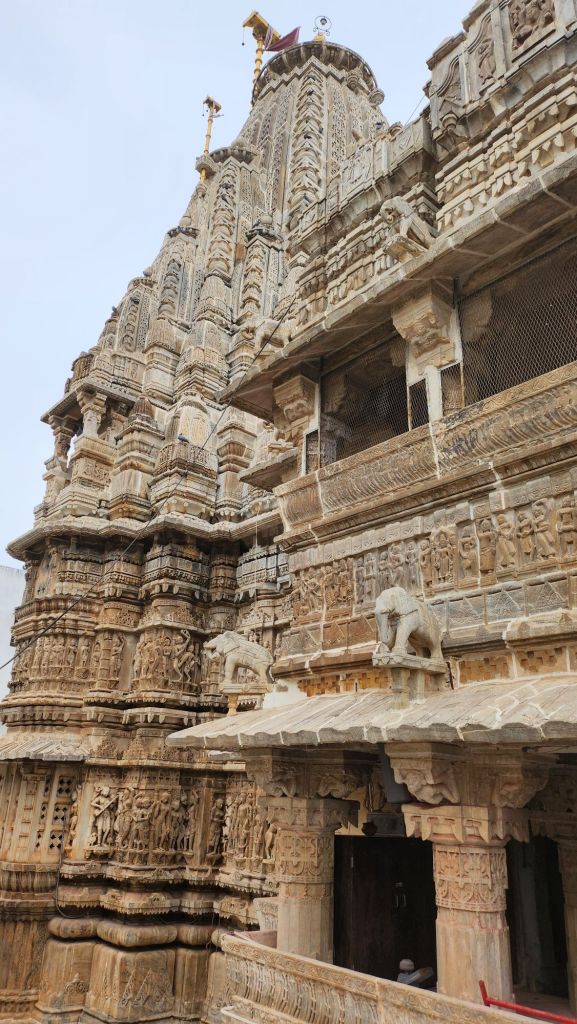
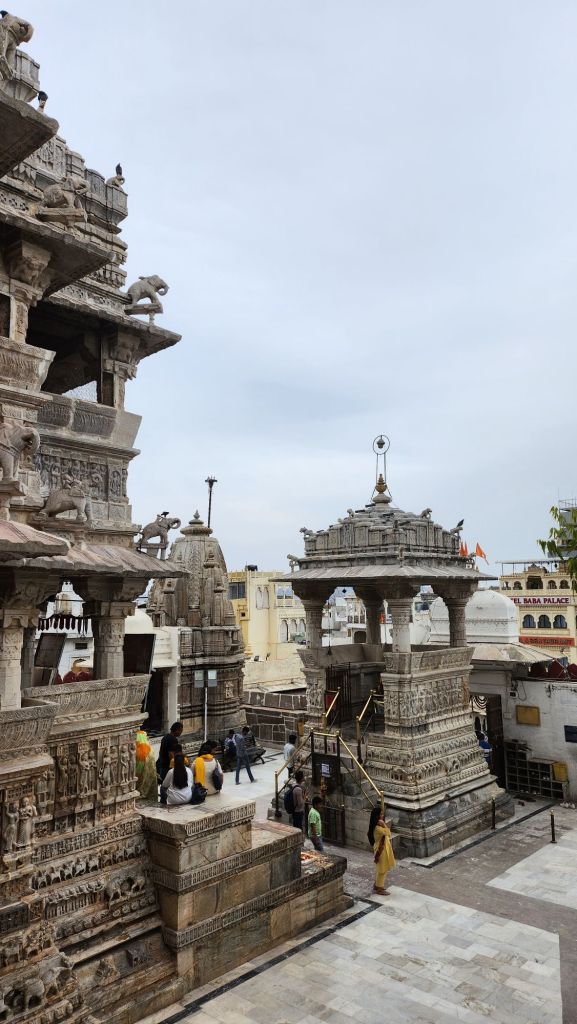
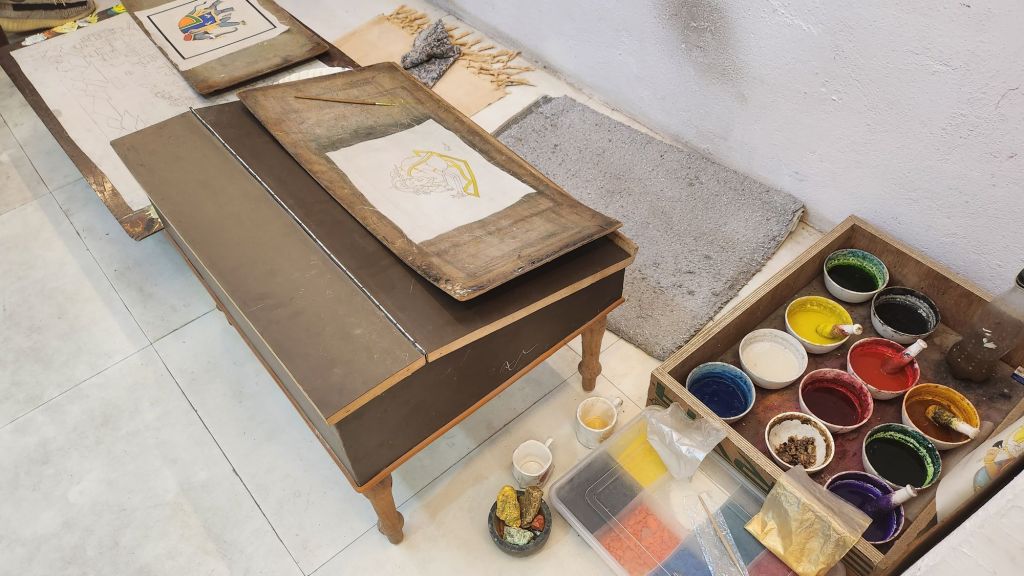
I visited a hindu temple that was made of old stone and was covered in hundreds of carvings, depicting different people, gods and elephants especially. One of the caretakers of the temple showed me around and explained the manner in which I should enter. Shoeless and in a clockwise route. I gave a donation of flowers and thanked him for his time before I ventured into the old cellar home there where people lived and worked painting art with traditional minerals, stones and vegetables, and of course I bought one for my collection.

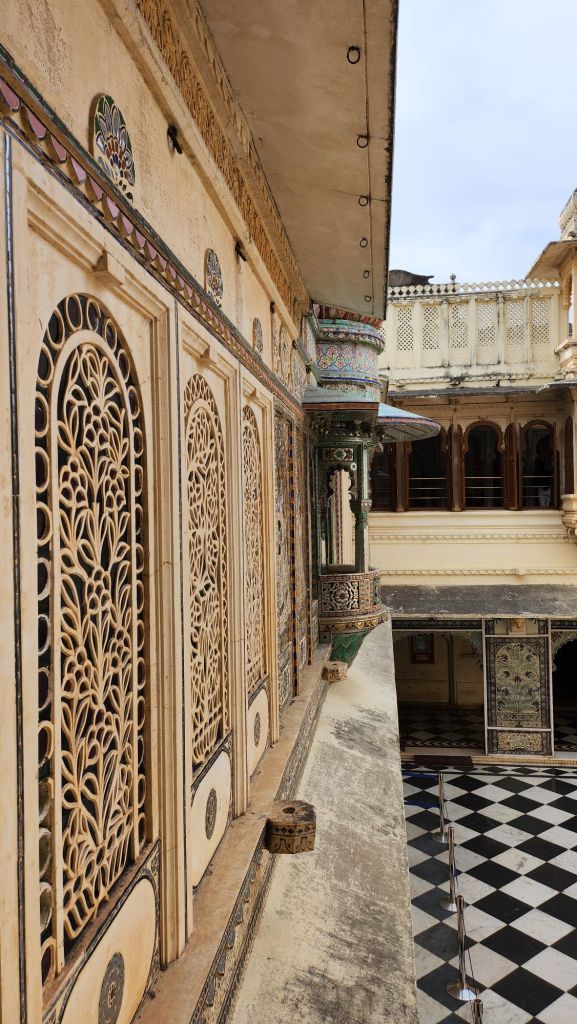
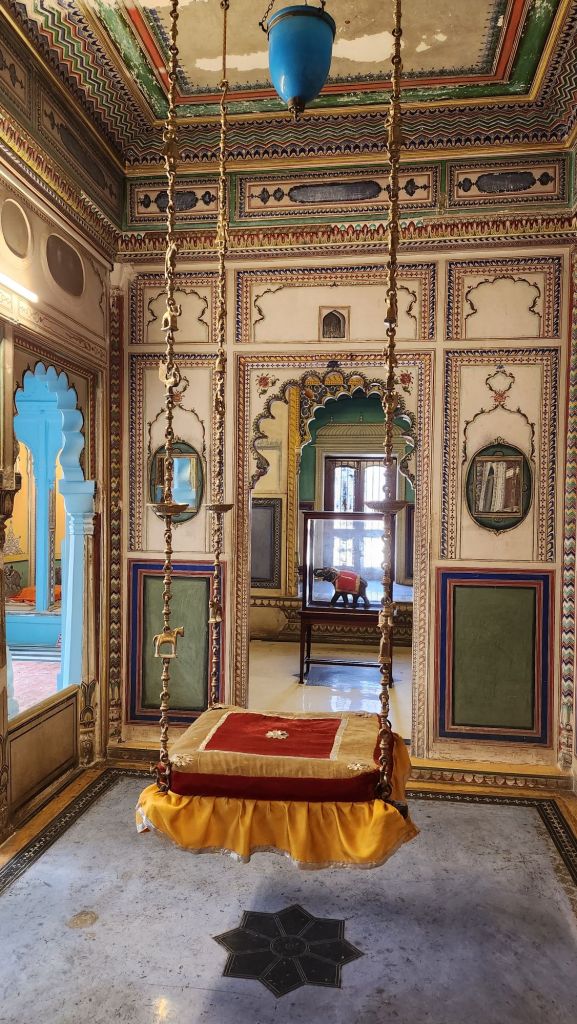
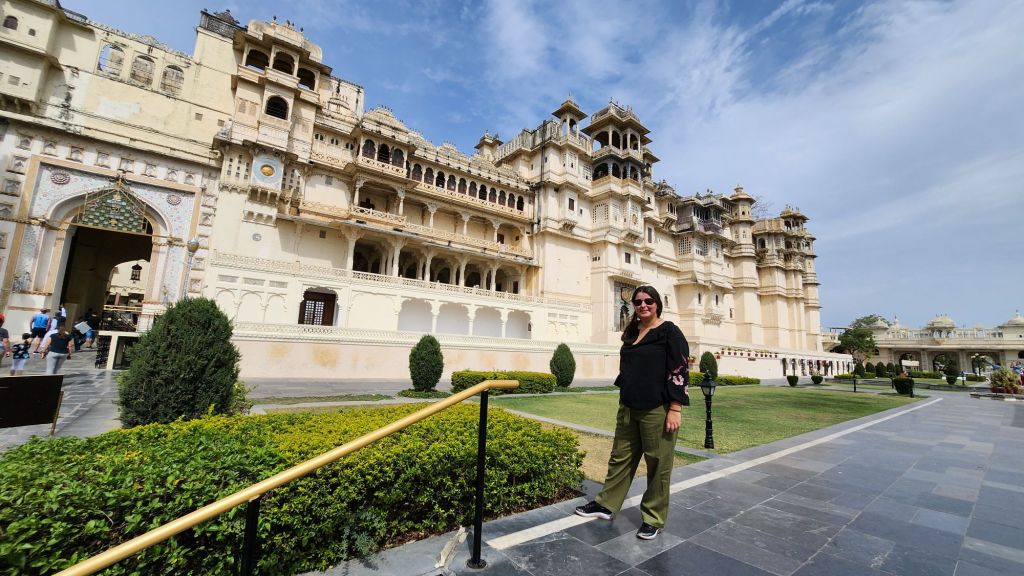
I met another man that invited me out to the hindu celebration that was taking place in the evening and showed me a walking route around the town that I could follow back to the hotel. Lastly, I visited the city palace and learnt a bit more about the royal family there. Apparently the current prince comes to work there everyday alongside everyone else to make the best of the attraction. I was quite surprised to hear that he works as another ordinary man.
The palace was another impressive sight and had beautiful rooms, and artwork, old elephant carriages, and I was even told about the event of elephant trunk ‘tug of war’ where people would come to watch and take bets on which elephant would be able pull the other forward when their trunks were tied together. This was a bit sad, but it did explain some of the art work I had seen and been confused about.
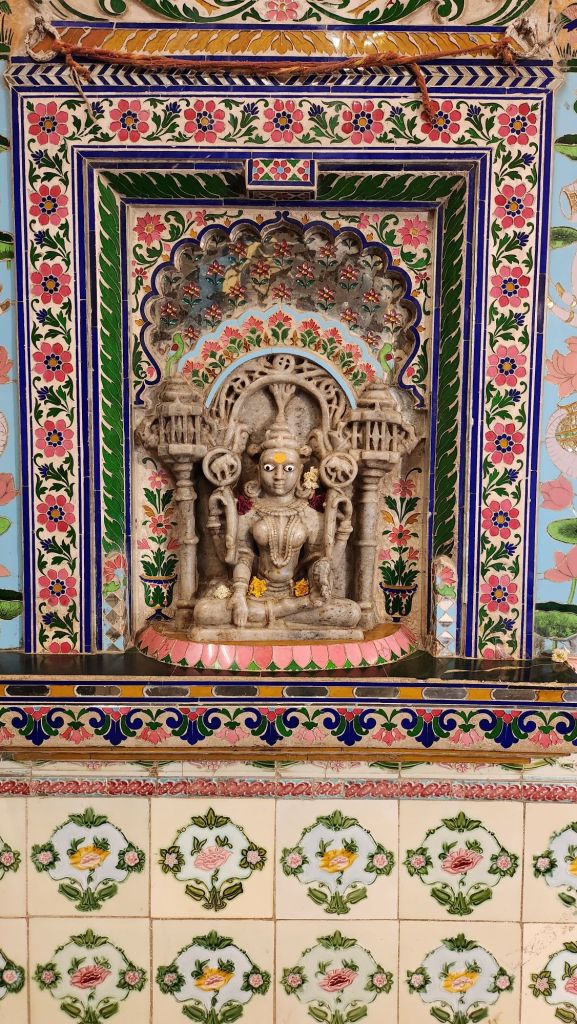
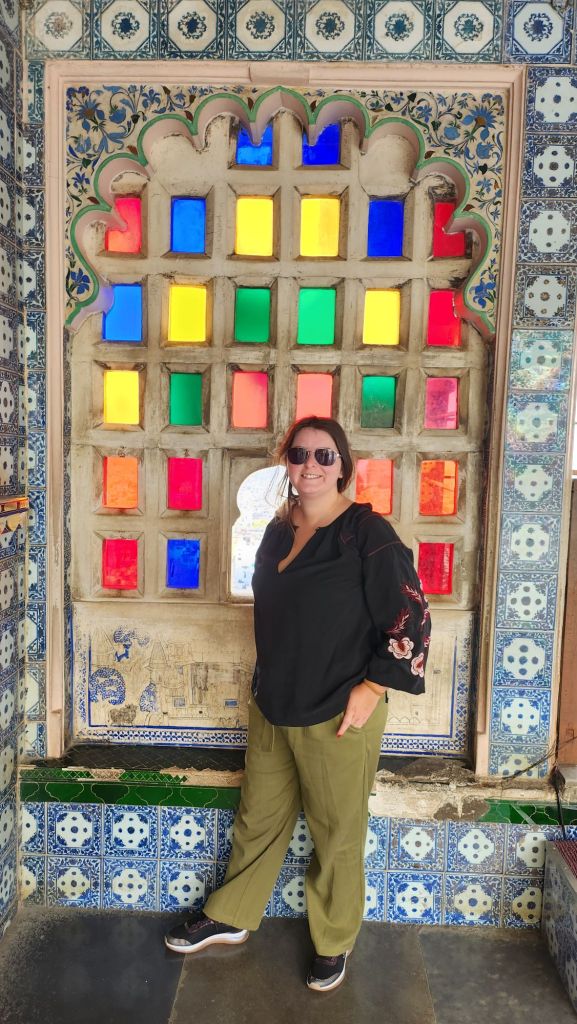
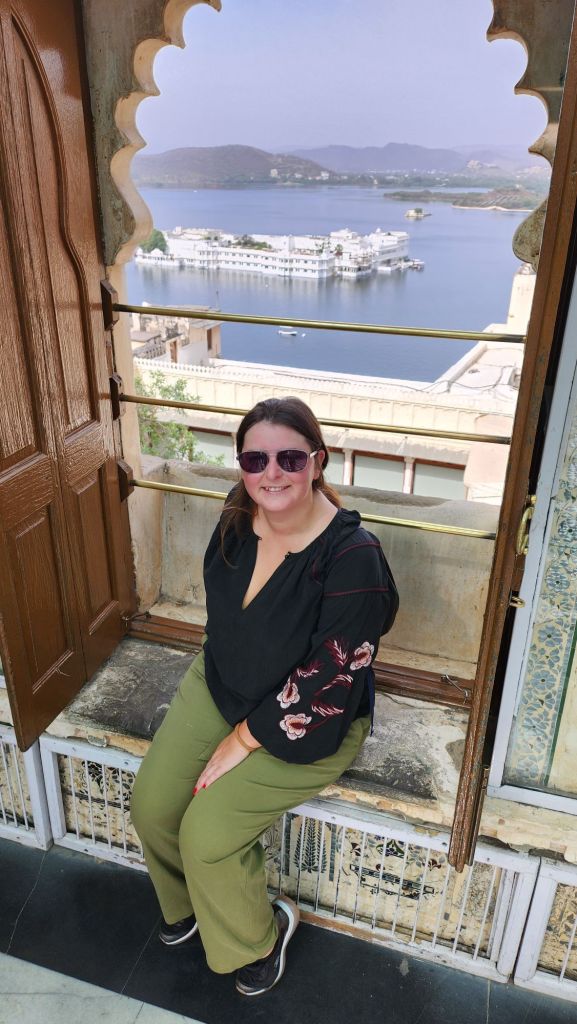
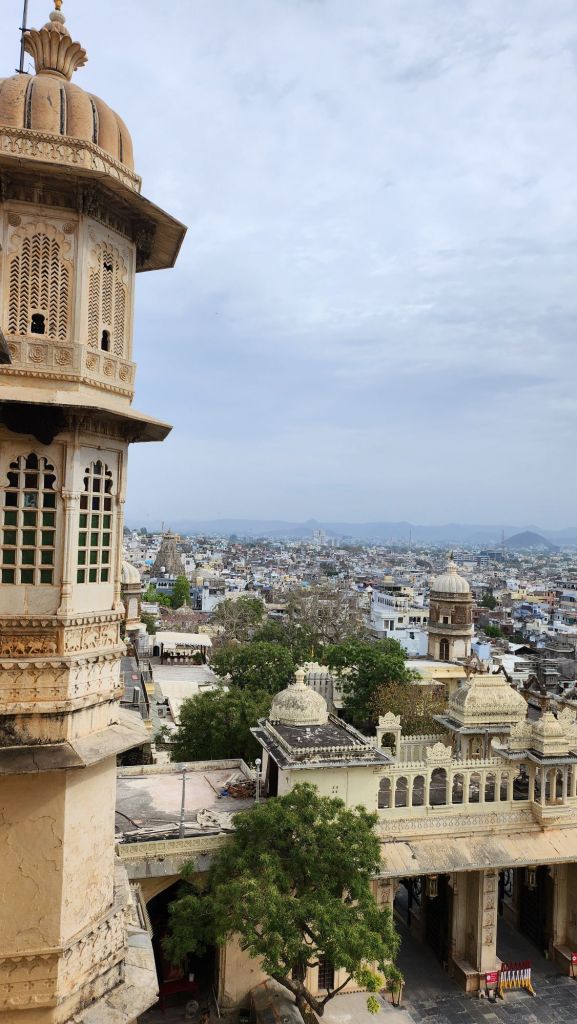
I really liked Udaipur and it was very romantic, I would love to return with someone special and stay longer. That was the North part done for me for this trip, and it was really culturally enriching with so much history, it was hard to not get confused by it all! But now it was time to fly South to Goa…
 Go Go Chlo
Pingback: India: Where culture, colour and faith collide (Part Two) | Go Go Chlo